
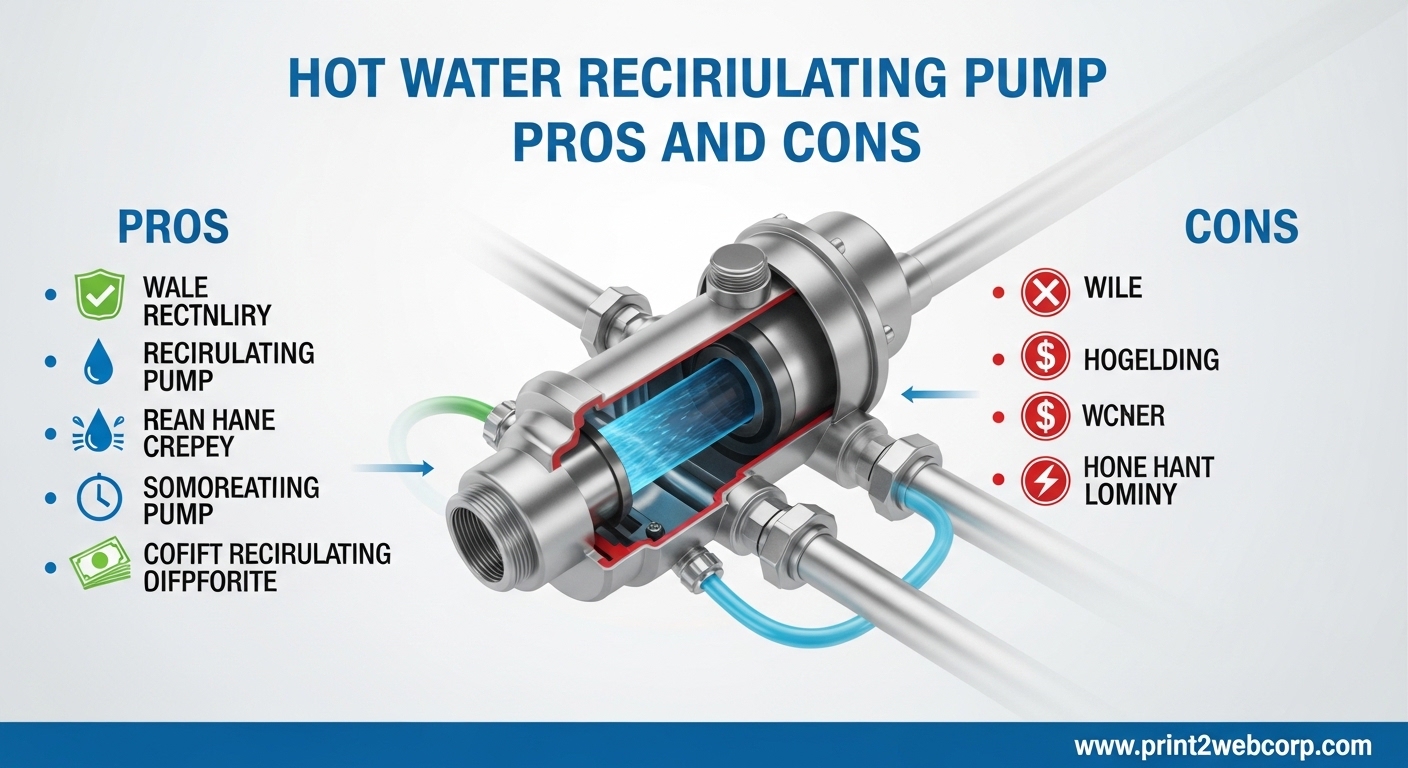
You step into the shower, turn on the hot water tap, and wait. And wait. Thirty seconds pass, then forty-five. Finally, warm water emerges, followed by hot. This daily ritual wastes time, water, and patience. A hot water recirculating pump promises to eliminate this inconvenience entirely. But like any home upgrade, it comes with trade-offs worth understanding before you invest.
I’ve spent years researching home plumbing systems and talking with homeowners who’ve made this upgrade. Some swear by the luxury of instant hot water. Others regret the installation after discovering unexpected drawbacks on their utility bills. The truth lies somewhere in between. Your specific situation, home layout, and priorities determine whether this investment makes sense for you.
This guide breaks down the complete picture of hot water recirculating pump pros and cons in 2026. We’ll examine real costs, actual energy impacts, water savings potential, and the practical considerations most contractors forget to mention. By the end, you’ll know exactly whether this upgrade belongs in your home.
What Is a Hot Water Recirculating Pump?
A hot water recirculating pump is a small circulation device installed on your water heater that keeps hot water moving through your pipes continuously or on demand. Instead of waiting for hot water to travel from your heater to your faucet, the pump maintains a loop of hot water ready at each fixture.
Think of it like this: without a pump, hot water sits stagnant in your pipes between uses. It cools down, forcing you to run the tap until fresh hot water arrives. The recirculating pump eliminates this wait by keeping hot water constantly circulating or available at a moment’s notice.
The system works through two main configurations. Homes with a dedicated return line have a complete loop where water circulates back to the heater. Most existing homes without this line use the cold water piping as a return path, installing a special valve under the sink farthest from the heater.
Key components include the circulation pump itself, a check valve to prevent backflow, and often a temperature sensor or timer. Advanced models include motion sensors, smart controls, and variable speed operation for maximum efficiency.
Types of Hot Water Recirculating Pumps
Understanding the different system types helps you choose the right setup for your home and budget.
Dedicated Return Line Systems: Installed during new construction or major renovations, these systems include a dedicated pipe that returns cooled water to the heater. This is the most efficient configuration since it keeps hot and cold water completely separate. If you’re building a new home or doing major plumbing work, this is the ideal time to install this type.
Retrofit Systems: Most existing homes use this type, which utilizes the existing cold water line as a return path. A special thermostatic valve installed under the sink farthest from the heater allows cooled water to circulate back while keeping hot water available at fixtures. Installation typically takes 1-2 hours and requires no new piping.
Timer-Controlled Pumps: These run only during preset hours when you typically need hot water, such as morning and evening. This configuration significantly reduces energy waste compared to continuous operation.
On-Demand Systems: Activated by a button, motion sensor, or remote, these circulate hot water only when you need it. The most energy-efficient option, though slightly less convenient than continuous systems.
Pros of Hot Water Recirculating Pumps
The benefits of installing a recirculating pump go beyond mere convenience. Let’s examine each advantage in detail.
Instant Hot Water Convenience: The most obvious benefit is eliminating the wait for hot water at every faucet, shower, and appliance. Turn on the tap, and hot water appears immediately. This convenience transforms daily routines—no more cold morning showers, no more wasted time standing at the sink, no more temperature fluctuations when someone flushes a toilet during your shower.
Significant Water Conservation: The average household wastes 11,461 gallons of water annually waiting for hot water to arrive at fixtures. With four people each waiting 60 seconds twice daily for hot water, that’s over 30 gallons down the drain daily. In water-conscious regions like California and the Southwest, this savings alone can justify the investment. Environmentally conscious homeowners appreciate reducing their water footprint without changing habits.
Energy Savings on Water Heating: While the pump itself uses electricity, it reduces the energy your water heater consumes. You’re not heating fresh cold water to replace what you wasted down the drain. The recirculated water stays warm and requires less reheating. Studies show net energy savings of 10-15% on water heating costs for typical families, offsetting much of the pump’s electricity consumption.
Increased Home Value: Real estate professionals increasingly view recirculating pumps as a desirable feature, especially in luxury homes and new construction. Buyers appreciate the convenience and view it as a sign of quality construction. The installation adds tangible value to your property, making it more attractive when you eventually sell.
Protection Against Pipe Freezing: In colder climates, the constant movement of water through pipes helps prevent freezing during winter months. While not a substitute for proper insulation, the circulation provides an additional layer of protection for vulnerable pipes running through unheated spaces.
Better Performance with Tankless Water Heaters: Tankless systems already have a delay before delivering hot water. Adding a recirculating pump specifically designed for tankless units can dramatically improve performance, though you must verify compatibility to avoid warranty issues.
Customizable Operation: Modern pumps offer timers, smart controls, and even app-based management. You can program operation for specific hours, link to motion sensors, or control remotely. This flexibility allows you to maximize convenience while minimizing energy waste.
Cons of Hot Water Recirculating Pumps
The drawbacks are equally important to consider. Let’s be honest about what can go wrong.
Initial Installation Costs: Quality pumps cost between $100 and $300 for the unit alone. Professional installation adds $500 to $1,000 depending on your plumbing configuration. DIY installation is possible for retrofit systems but requires plumbing knowledge and comfort working with your water heater connections. This upfront investment gives many homeowners pause, especially when they can’t predict actual savings.
Energy Consumption: The pump uses electricity continuously or on a schedule. Typical models consume 25-100 watts depending on the design. Continuous operation can add $50-150 annually to your electric bill in high-rate areas. Timer-controlled systems reduce this cost significantly, but it’s still an ongoing expense you didn’t have before. In regions with cheap water and expensive electricity, the energy cost may exceed water savings.
Heat Loss Through Pipes: As hot water circulates through your pipes, some heat escapes into surrounding spaces. In winter, this contributes slightly to home heating. In summer, it’s pure waste. Insulated pipes reduce this loss, but few homeowners fully insulate their entire plumbing system. The continuous circulation means your water heater works harder to maintain temperature, partially offsetting energy savings from reduced water waste.
Lukewarm Cold Water: Retrofit systems that use the cold water line as a return path can cause cold water taps to deliver lukewarm water initially. This happens because some hot water mixes into the cold line during circulation. The problem is most noticeable during the first few seconds after turning on a cold tap. Special thermostatic valves minimize but don’t eliminate this annoyance.
Maintenance Requirements: Recirculating pumps have moving parts that eventually fail. Most units last 10-15 years with proper maintenance, but pump replacement costs $150-400 installed. The sensor valves in retrofit systems need replacement every 3-5 years at $30-80 each. These ongoing maintenance costs erode your savings over time. Pumps can also develop leaks at connection points, requiring periodic inspection.
Flow-Accelerated Corrosion: Few contractors mention this risk, but it’s real. The constant movement of water through copper pipes can accelerate corrosion, especially in homes with acidic water or older plumbing. This phenomenon, known as flow-accelerated corrosion, can significantly reduce pipe lifespan. Installing a flow-restricting valve and monitoring water pH can mitigate but not eliminate this risk.
Tankless Water Heater Warranty Issues: Many tankless water heater manufacturers specifically warn against recirculation pumps. The frequent cycling caused by continuous circulation can shorten heat exchanger life. Always verify compatibility with your tankless manufacturer before installation. Some units require specific recirculation kits to maintain warranty coverage.
Noise Considerations: While modern pumps are quieter than older models, some homeowners find the hum noticeable, especially at night. Pumps installed near bedrooms or living areas may disturb light sleepers. Location during installation is critical to minimize this annoyance.
Complexity Equals More Potential Problems: Any added mechanical system introduces new failure points. Electrical connections can fail, timers can malfunction, sensors can drift. While reliable overall, the system requires periodic attention to maintain optimal performance.
Costs and Installation Considerations
Understanding the complete financial picture helps you make an informed decision.
Equipment Costs: Basic retrofit pumps start around $100 for timer-controlled models. Advanced units with smart features, motion sensors, and variable speed operation cost $200-400. Dedicated return line systems typically use more powerful pumps in the $250-500 range. Choose quality over the cheapest option—reliability matters for a device that runs continuously.
Installation Costs: DIY retrofit installation takes 1-2 hours for handy homeowners comfortable with plumbing connections. Professional installation costs $300-600 depending on your location and plumbing complexity. Dedicated return line systems require significantly more labor during construction or renovation, typically adding $1,000-2,000 to plumbing costs.
Operating Costs: Calculate your annual pump operation by multiplying wattage by hours of operation, then by your electricity rate. A 40-watt pump running 12 hours daily at $0.14 per kWh costs approximately $25 annually. Timer-controlled operation can reduce this by 60-70%. Continuous operation in high-electricity-rate areas like California and Hawaii can exceed $150 annually.
Water Savings Value: Multiply your household’s wasted water by your water rate. At 11,461 gallons annually and $0.012 per gallon (national average), that’s $138 in water savings. In arid regions with rates at $0.02-0.03 per gallon, savings reach $230-345 annually. Sewer fees often equal water charges, effectively doubling your savings in many municipalities.
Return on Investment: With $500 total installed cost, $50 annual electricity cost, and $200 annual water savings, you break even in roughly 3-4 years. Higher water rates or DIY installation accelerates ROI to 2-3 years. Lower water rates or expensive electricity can extend payback to 5-7 years. The convenience benefit has financial value only you can assign.
Frequently Asked Questions
What are the disadvantages of a recirculating pump?
The main disadvantages include upfront costs ($100-300 for the unit plus installation), ongoing electricity consumption (typically $25-150 annually depending on usage), potential lukewarm cold water at faucets, maintenance requirements including sensor valve replacement every 3-5 years, and potential warranty issues with tankless water heaters. Some homes also experience flow-accelerated corrosion in copper pipes over time.
Is a hot water recirculation system worth it?
A recirculation system is worth it for most homeowners with water heaters located far from bathrooms, especially in multi-story homes or houses with long pipe runs. The convenience of instant hot water combined with water savings of 11,000+ gallons annually typically justifies the investment within 3-4 years. However, homes with short pipe runs or very expensive electricity may see longer payback periods.
Does a hot water recirculating pump use a lot of electricity?
Most recirculating pumps use 25-100 watts of power. Continuous operation costs approximately $50-150 annually depending on local electricity rates. Timer-controlled systems running only during peak usage hours reduce this to $15-40 annually. While not insignificant, this cost is typically offset by water savings and reduced water heating energy for most households.
What is the life expectancy of a hot water recirculating pump?
Quality recirculating pumps typically last 10-15 years with proper maintenance. Factors affecting lifespan include water quality, installation quality, operating hours, and whether the system runs continuously or on a timer. The thermostatic sensor valves in retrofit systems usually require replacement every 3-5 years. Choosing a reputable brand and having professional installation maximizes longevity.
Final Verdict
After weighing all the pros and cons of hot water recirculating pumps, the decision comes down to your specific circumstances and priorities.
Ideal candidates for installation include: Homes with water heaters far from bathrooms, multi-story houses, families of three or more people, regions with high water costs, and anyone who values convenience highly. If you’re building a new home or doing major plumbing work, installing a dedicated return line system is a no-brainer—the convenience and water savings justify the modest additional cost.
Consider skipping this upgrade if: Your water heater is close to most fixtures, you live alone or as a couple with minimal hot water needs, your electricity rates are extremely high, you have a tankless water heater without compatible recirculation options, or you’re planning to move within 2-3 years. The payback period simply won’t justify the investment in these scenarios.
For most homeowners in typical situations, a timer-controlled retrofit system offers the best balance of convenience, efficiency, and value. You get instant hot water during peak usage hours while minimizing wasted energy during times when you don’t need it.
The bottom line on hot water recirculating pump pros and cons in 2026: this upgrade delivers genuine convenience and water savings for a reasonable investment, but it’s not right for every home. Assess your specific situation, calculate the ROI for your household, and decide whether the luxury of instant hot water is worth the cost for you.
Leave a Reply