
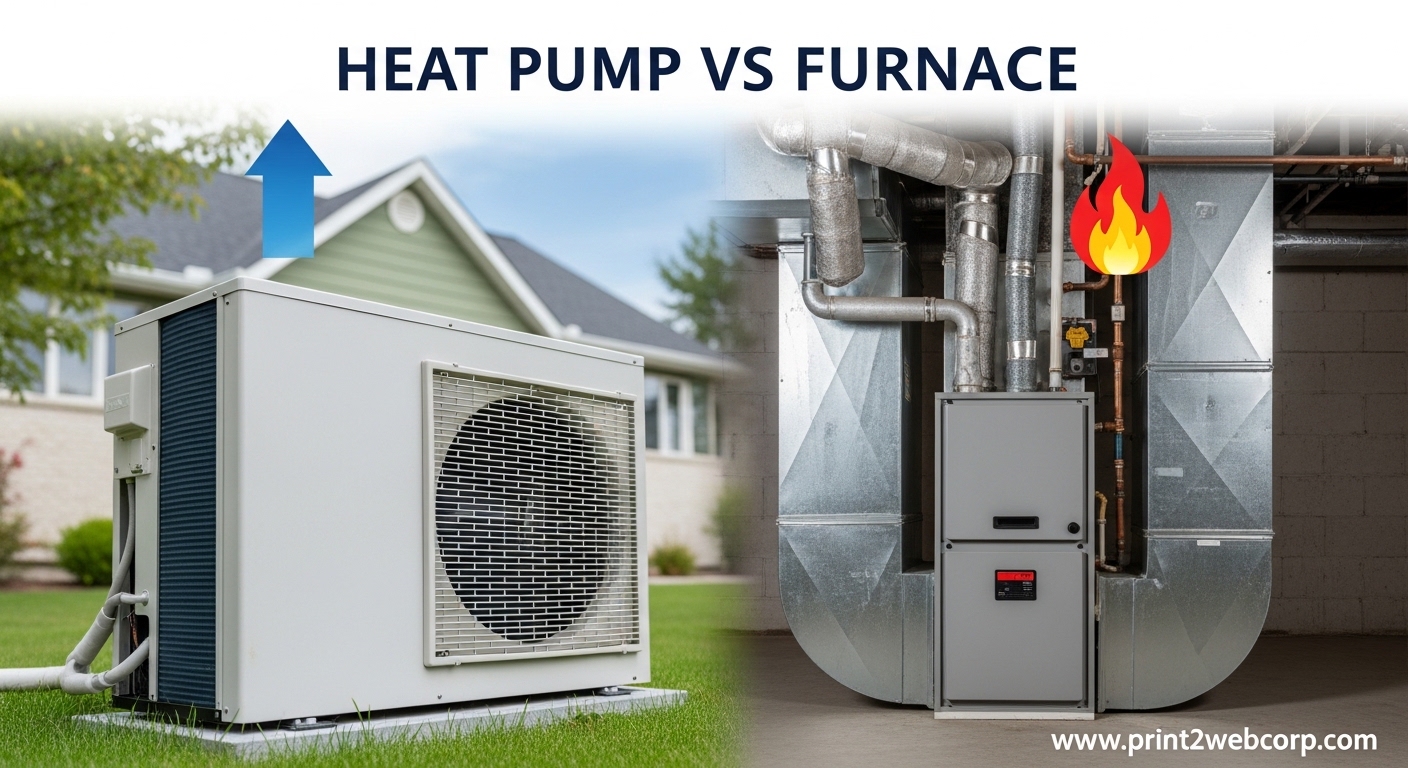
Choosing between a heat pump vs furnace is one of the most important decisions you’ll make for your home comfort. I’ve spent years researching HVAC systems, and I’ll tell you upfront: there’s no universal winner. The right choice depends entirely on your climate, budget, and home setup. Heat pumps can slash your energy bills by up to 50% but struggle in extreme cold. Furnaces deliver reliable heat in frigid temperatures but cost more to operate. This guide breaks down everything you need to know to make the right choice.
Heat Pump Vs Furnace: How They Work
Understanding the fundamental difference between these systems is crucial. A heat pump doesn’t generate heat—it moves it. Using electricity and refrigerant, a heat pump extracts heat from the outside air (even when it’s cold) and transfers it indoors. In summer, it reverses the process to cool your home. This heat transfer capability makes heat pumps incredibly efficient, often 200-300% efficient compared to 95% for top furnaces.
A furnace generates heat by burning fuel. Gas furnaces burn natural gas or propane, while electric furnaces use heating elements. The combustion process creates heat that’s then distributed through ductwork. Furnaces are simpler machines with one job: heating. This focused approach makes them reliable, especially in harsh winter conditions. The heat they produce is consistently hot and immediate.
The key difference comes down to heat creation vs. heat transfer. Furnaces create new heat through combustion or resistance heating. Heat pumps relocate existing heat from one place to another. This distinction drives almost every other difference in performance, cost, and efficiency between the two systems.
Energy Efficiency Comparison
When it comes to efficiency, heat pumps have a clear advantage in most conditions. Heat pump efficiency is measured by HSPF (Heating Seasonal Performance Factor) and SEER (Seasonal Energy Efficiency Ratio). Modern heat pumps typically achieve HSPF ratings of 8-10 and SEER ratings of 15-20, translating to 200-300% efficiency. This means for every unit of electricity consumed, they deliver 2-3 units of heat.
Furnace efficiency is measured by AFUE (Annual Fuel Utilization Efficiency). Standard furnaces range from 80-98% AFUE. A 95% AFUE furnace converts 95% of fuel energy into heat, losing 5% through venting. Even the most efficient furnace can’t exceed 100% efficiency due to the laws of thermodynamics—burning fuel always has waste. This fundamental ceiling puts furnaces at a disadvantage compared to heat pump technology.
The efficiency gap narrows in extreme cold. When temperatures drop below freezing, heat pumps lose efficiency and may rely on auxiliary electric heat. This backup heat is 100% efficient at best, similar to an electric furnace. In these conditions, the efficiency advantage diminishes. However, for most of the heating season in moderate climates, heat pumps maintain significant efficiency advantages that translate to lower energy bills.
Cold Weather Performance
Heat pump vs furnace performance in winter reveals a critical difference. Furnaces perform consistently regardless of outdoor temperature. Whether it’s 30°F or -20°F, a gas furnace delivers the same heat output. Your home stays warm no matter how brutal the weather gets. This reliability is why furnaces remain popular in northern states and Canada where extreme cold is common.
Heat pumps struggle as temperatures drop. Their efficiency and heating capacity decline steadily below freezing. Older models lose significant effectiveness around 25-30°F. Modern cold-climate heat pumps have improved dramatically, maintaining performance down to 0°F or lower. Some premium models can extract heat even at -15°F, though output is reduced. When temperatures plummet too low, heat pumps activate emergency heat strips, which are expensive to operate.
For homeowners in regions with harsh winters, this limitation is serious. If you experience extended periods below 20°F, a heat pump may not keep up without costly auxiliary heat. However, if your winter temperatures rarely dip below freezing, a heat pump handles winter weather just fine. Climate is the single most important factor in this decision.
Cost Comparison: Upfront and Operating
Heat pump vs furnace costs vary significantly depending on your situation. Upfront installation costs typically favor furnaces. A new gas furnace costs $4,000-8,000 installed, while a heat pump system runs $5,000-12,000. The higher heat pump cost reflects the more complex technology and the fact that it’s both a heating and cooling system. If you need both heating and air conditioning replaced, the heat pump price becomes more competitive since you’re only buying one unit instead of two separate systems.
Operating costs tell a different story. Heat pumps generally cost 30-50% less to run than gas furnaces in moderate climates. Electricity rates versus gas prices in your area determine the exact savings. In regions with expensive electricity and cheap natural gas, the advantage shrinks. Where electricity is affordable and gas is costly, heat pumps win big. A typical household might save $500-1,000 annually with a heat pump versus a gas furnace in a mild climate.
Don’t forget about rebates and tax credits. Many federal, state, and utility incentives support heat pump adoption because of their environmental benefits. The Inflation Reduction Act offers tax credits up to $2,000 for qualifying heat pump installations. Some utilities provide additional rebates. These incentives can significantly reduce the effective upfront cost, making heat pumps more affordable from day one.
Heat Quality and Comfort Differences
One often-overlooked difference is heat quality. Furnace heat feels different from heat pump heat. Gas furnaces produce hot, dry air that quickly raises indoor temperature. The heat feels intense and immediate. This hot, dry air can lower indoor humidity significantly, potentially causing dry skin, static electricity, and discomfort. Some people prefer this dry heat, while others find it uncomfortable.
Heat pumps deliver gentler, more humid warmth. Because heat pumps don’t burn fuel, they don’t dry out the air as dramatically. The heat feels more subtle and consistent, maintaining better humidity levels. This can be especially beneficial in winter when indoor air already tends to be dry. The trade-off is that heat pump air feels cooler coming from the vents—typically 85-95°F versus furnace air at 120-140°F. Some homeowners mistake this lower temperature for insufficient heating, even though the home stays comfortable.
Temperature consistency is another factor. Heat pumps provide steady, even heating by running for longer periods at lower output. Many modern models use variable-speed compressors that adjust output precisely to match heating needs. Furnaces typically cycle on and off, creating temperature swings between cycles. If you prioritize consistent temperature and better humidity control, heat pumps have an advantage. If you prefer quick, intense heat bursts, furnaces deliver.
Maintenance and Lifespan
Heat pump vs furnace maintenance requirements differ. Heat pumps require year-round attention since they handle both heating and cooling. Expect annual professional maintenance covering both modes. Filter changes every 1-3 months are essential. Heat pumps have more components that can fail—compressors, reversing valves, expansion valves—so repair costs can be higher. The outdoor unit is exposed to weather, potentially affecting longevity.
Furnaces need annual maintenance before heating season. This typically involves cleaning burners, checking heat exchangers, inspecting gas connections, and testing safety controls. Filter changes are equally important. Gas furnaces have fewer moving parts than heat pumps, which can mean fewer repairs. However, furnaces pose combustion-related risks if not properly maintained—carbon monoxide dangers are real but manageable with proper care and CO detectors.
Lifespan favors furnaces slightly. A well-maintained gas furnace typically lasts 15-20 years. Heat pumps generally last 10-15 years due to more complex components and year-round use. However, if you’re replacing both a furnace and central air conditioner, the heat pump lifespan comparison becomes more balanced since you’re comparing one unit’s lifespan to two separate systems. Proper maintenance is the biggest factor in longevity for either system.
For homeowners who want to handle some maintenance themselves, HVAC surge protection is worth considering to protect your system from electrical damage. And if indoor air quality is a priority, you might want to explore indoor air quality and dehumidification options to complement your heating system.
Environmental Impact
The environmental comparison is increasingly important to many homeowners. Heat pumps produce zero on-site emissions since they run on electricity. As the electrical grid gets cleaner with more renewable energy, heat pump carbon footprints continue decreasing. Studies show heat pumps reduce household carbon emissions by 38-53% compared to gas furnaces in most U.S. regions. This advantage will only grow as green energy expands.
Gas furnaces burn fossil fuel and produce carbon dioxide directly at your home. Even high-efficiency models emit CO2 with every heating cycle. If reducing your carbon footprint matters, heat pumps are clearly the better choice. Some regions are even moving to ban new gas furnace installations in favor of electric heat pumps as part of climate initiatives.
Refrigerant is the environmental caveat for heat pumps. Older models used R-410A refrigerant, which has high global warming potential. Newer models use R-32 or other environmentally friendlier alternatives. When choosing a heat pump, consider the refrigerant type and ensure proper installation to prevent leaks. Despite this concern, heat pumps remain the more environmentally friendly option overall.
Which Is Right for You?
Choose a Heat Pump If…
You live in a climate with mild winters where temperatures rarely drop below 25-30°F. The Southeast, Pacific Northwest, and most of the Sun Belt are ideal heat pump territories. You want both heating and cooling from one efficient system. You’re interested in lower operating costs and potential long-term savings. Environmental impact matters to you. You have access to electrical service and reasonable electricity rates. You qualify for heat pump rebates or tax credits that make installation more affordable.
Choose a Furnace If…
You live in a region with harsh winters and sustained temperatures below 20°F. The northern tier states, New England, and mountainous areas are classic furnace country. You want proven, reliable heating that won’t struggle in extreme cold. Your home already has gas infrastructure. You prefer the intense, immediate heat that only combustion can provide. Upfront cost is a major concern and furnaces are significantly cheaper in your area. You don’t want to worry about backup heat systems.
Consider a Dual Fuel System If…
You want the best of both worlds. Dual fuel systems pair a heat pump with a gas furnace. The heat pump handles heating down to a set temperature (usually 25-35°F), then automatically switches to the furnace when it gets too cold. This approach maximizes heat pump efficiency during mild weather while maintaining furnace reliability for extreme cold. The higher upfront cost (you’re buying two systems) pays off in climates with variable winter weather.
Frequently Asked Questions
Which is better, a heat pump or a furnace?
Neither is universally better—it depends on your climate. Heat pumps are superior in mild climates (temperatures above 25-30°F) where they can cut heating costs by 30-50%. Furnaces are better in cold climates with harsh winters where they provide reliable heat regardless of outdoor temperature. In extreme cold regions, a dual fuel system combining both technologies often works best.
What are the disadvantages of a heat pump?
Heat pumps struggle in extreme cold, losing efficiency below freezing and becoming ineffective around 10-15°F for older models. They deliver cooler air from vents (85-95°F vs 120-140°F from furnaces), which some users perceive as insufficient heating. Heat pumps have higher upfront costs and shorter lifespans (10-15 years vs 15-20 for furnaces). They also require more maintenance since they run year-round for both heating and cooling.
How much is a heat pump for a 2000 square foot house?
A complete heat pump system for a 2000 square foot house typically costs $7,000-12,000 installed. This includes the outdoor unit, indoor air handler or coil, new thermostat, and refrigerant lines. Higher-efficiency models and complex installations approach the upper end of this range. Don’t forget to factor in available rebates and tax credits (up to $2,000 federal credit) which can reduce the effective cost significantly.
Why don’t contractors like heat pumps?
The perception that contractors dislike heat pumps is often outdated. Many contractors resisted older heat pump models that genuinely struggled in cold weather and were prone to failure. However, modern cold-climate heat pumps have improved dramatically. Some contractors in very cold regions still prefer furnaces because they’re simpler, more familiar, and guaranteed to work regardless of temperature. The best contractors will recommend the right system for your specific climate rather than having a blanket preference.
Can a heat pump replace a furnace in cold climates?
Modern cold-climate heat pumps can replace furnaces in temperatures as low as -5°F to -15°F, but they work harder and lose efficiency in extreme cold. For regions with frequent temperatures below 10-15°F, a furnace or dual fuel system remains the most reliable choice. The decision depends on your specific winter patterns—if you have occasional cold snaps, a heat pump with backup heat may suffice. If you experience sustained extreme cold, a furnace is still the safer bet.
Final Verdict
Heat pumps vs furnaces ultimately comes down to climate and priorities. If you live in a mild climate and want efficient heating and cooling from one system with lower operating costs, a heat pump is your best bet. If you face harsh winters and need reliable heat no matter how cold it gets, a furnace remains the superior choice. The middle ground—dual fuel systems—offers the efficiency of heat pumps for most of the year with furnace backup for extreme cold. Consider your local weather patterns, utility rates, available rebates, and long-term plans for your home. The right system will keep you comfortable for years while fitting your budget and environmental values.
Leave a Reply