
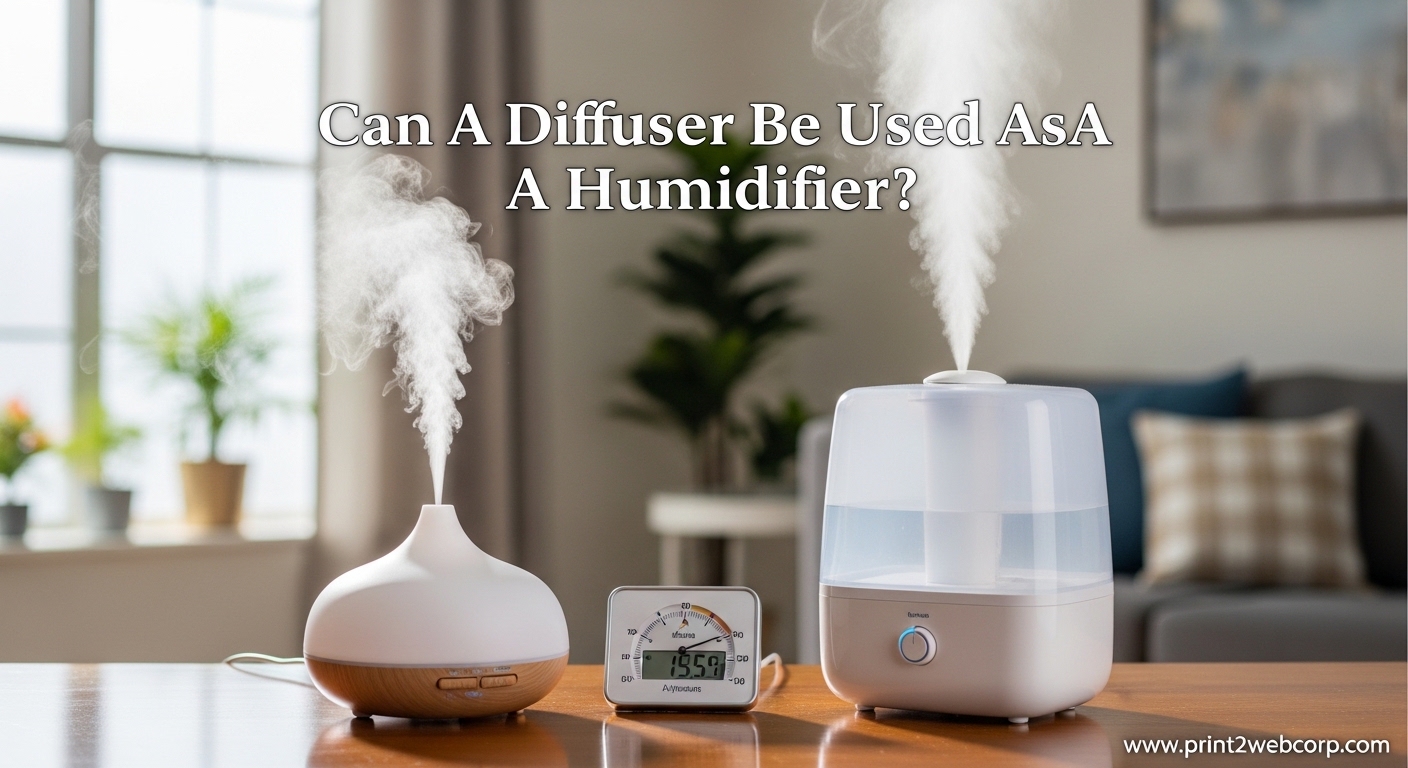
Yes, a diffuser can be used as a small-scale humidifier, but with important limitations. If you’re wondering whether that essential oil diffuser sitting on your nightstand can double as a humidifier, the short answer is yes – it can add moisture to the air, just not enough to effectively humidify an entire room.
Many people ask this question when trying to decide between buying one device or two, or when looking for ways to add moisture to a dry space without investing in additional equipment. Understanding the differences between these devices helps you make the right choice for your needs.
Can a Diffuser Be Used as a Humidifier?
Yes, a diffuser can function as a humidifier in small spaces, but it cannot replace a dedicated humidifier for whole-room humidity needs. The key difference lies in capacity and output. A typical diffuser holds 100-300ml of water and runs for 3-6 hours, while a humidifier holds 1-6 liters and can run for 12-24 hours or more.
The moisture output is also significantly different. A diffuser releases a fine mist primarily designed to carry essential oil particles into the air, with moisture as a byproduct. A humidifier is engineered specifically to release substantial amounts of water vapor to increase indoor humidity levels effectively.
What is an Essential Oil Diffuser?
An essential oil diffuser is a device designed to disperse aromatic essential oils into the air for aromatherapy benefits. Most modern diffusers use ultrasonic technology, which vibrates water at high frequencies to create a fine mist that carries essential oil particles into the air.
Diffusers come in two main categories. Active diffusers use electricity to disperse oils – ultrasonic models create mist, while nebulizing diffusers use air pressure to break oils into microscopic particles without water. Passive diffusers, like reed diffusers or ceramic rings, rely on natural evaporation and don’t add any moisture to the air.
The primary purpose of a diffuser is aromatherapy – releasing scents for mood enhancement, relaxation, or respiratory support. Any humidity benefit is secondary to this main function.
What is a Humidifier?
A humidifier is an appliance specifically designed to increase moisture levels in indoor air. Dry air can cause various problems – static electricity, cracked furniture, irritated sinuses, dry skin, and respiratory discomfort. A humidifier addresses these issues by adding water vapor to the air.
There are several types of humidifiers. Evaporative humidifiers use a fan to blow air through a wet wick or filter, allowing water to evaporate naturally into the air. Steam vaporizers boil water to create warm mist, which then cools slightly as it enters the room. Ultrasonic humidifiers use high-frequency vibrations to create a cool mist without heat, similar to diffusers but with much larger capacity and output.
Humidifiers are measured by their output capacity – how many square feet they can effectively humidify – and typically feature adjustable humidity settings and automatic shut-off when the desired humidity level is reached.
Diffuser vs Humidifier: Key Differences at a Glance
| Feature | Diffuser | Humidifier |
|---|---|---|
| Primary Purpose | Aromatherapy and scent dispersion | Adding moisture to dry air |
| Water Capacity | 100-300ml (0.1-0.3 liters) | 1-6 liters or more |
| Moisture Output | 20-50ml/hour | 200-500ml/hour |
| Room Coverage | Up to 100 sq ft | 300-1000+ sq ft |
| Runtime | 3-6 hours | 12-24+ hours |
| Essential Oils | Designed for oils | Not compatible (can damage unit) |
Understanding the Capacity Difference
The most significant practical difference between diffusers and humidifiers is capacity. A standard diffuser might hold 150ml of water – about half a cup. Even running continuously, this amount of water will evaporate completely within 4-6 hours, releasing minimal moisture into your space.
By contrast, a basic bedroom humidifier typically holds at least 1 liter of water, with many models holding 4-6 liters. This larger capacity means the device can run continuously for 12-24 hours or more, consistently adding moisture to the air throughout the day or night.
Actual testing shows the difference clearly. In one comparison, a humidifier increased room humidity from 22% to 26% in 30 minutes, while a diffuser only achieved a 1% increase in the same timeframe. The humidifier was four times more effective at adding moisture to the air.
When a Diffuser CAN Work as a Humidifier
Despite its limitations, a diffuser can provide adequate humidity for certain situations. If you need to add moisture to a very small space – like a bathroom, a reading nook, or a single plant’s immediate area – a diffuser may be sufficient.
Diffusers work best for targeted humidity needs. For example, if you have one tropical plant that needs extra moisture, placing a diffuser nearby can create a small humid microclimate around that plant without needing to humidify the entire room.
Temporary moisture needs are also well-suited to diffusers. If you’re doing a yoga session and want some aromatherapy with a slight humidity boost, or if you’re working at your desk and want both scent and a bit of moisture, a diffuser serves both purposes simultaneously.
Using a Diffuser for Plants
Plant parents often ask if diffusers work for increasing humidity around plants. The answer depends on your setup. For a few small plants grouped together, a diffuser placed nearby can help create a more humid microclimate, especially if you position it so the mist drifts toward the plants.
Tropical plants like calatheas, ferns, and prayer plants appreciate humidity levels above 50%. In dry homes, especially during winter when heating systems dry the air, a diffuser can provide the extra moisture these plants need. Just remember that a diffuser affects only a small area, so it works best for grouped plants rather than plants scattered throughout a room.
For larger plant collections or whole-room humidity needs, a humidifier is the better choice. It will maintain consistent humidity levels that benefit all your plants, not just those nearest to the device.
Using a Diffuser for Baby’s Room
Parents often look for ways to add gentle moisture to a baby’s room, especially during cold and flu season or when congestion is an issue. A diffuser can provide light humidity along with soothing scents like lavender or eucalyptus (age-appropriate for your child).
However, for babies with actual congestion or respiratory issues, a dedicated humidifier is recommended. The moisture output from a diffuser simply isn’t sufficient to provide meaningful relief for congestion or to maintain the 40-60% humidity level recommended for baby comfort and health.
If you choose to use a diffuser in a baby’s room, place it safely away from the crib, use only baby-safe essential oils at appropriate dilution, and never leave it running unattended for extended periods.
Diffuser vs Humidifier for Sinus Relief
For sinus congestion and dry sinuses, moisture helps thin mucus and soothe irritated tissues. A humidifier is the better choice here because it can add enough moisture to the air to make a noticeable difference in sinus comfort.
That said, a diffuser can provide some sinus relief when used with appropriate essential oils like eucalyptus, peppermint, or tea tree. The combination of light humidity and decongestant scents may offer mild relief for minor sinus discomfort.
For chronic sinus issues, frequent sinus infections, or severe congestion, a humidifier – potentially combined with essential oils in a separate diffuser – will be more effective than relying on a diffuser alone.
When You Need a Dedicated Humidifier
There are clear situations where a diffuser simply won’t meet your humidity needs. If you’re trying to humidify an entire bedroom, living room, or other large space, a humidifier is essential. The capacity and output of a diffuser cannot overcome the volume of air in a standard room.
Health conditions like eczema, severe dry skin, frequent nosebleeds, or chronic respiratory issues require consistent humidity levels that only a humidifier can maintain. The National Institutes of Health recommends 40-60% humidity for health and comfort – a level diffusers cannot achieve or sustain in any meaningful way.
Winter months in dry climates often create indoor humidity levels below 20%. Raising humidity to a comfortable level requires significant moisture output that exceeds diffuser capabilities. Similarly, if you’re using heating or air conditioning that dries the air, a humidifier is necessary to counteract this effect.
For monitoring and controlling specific humidity levels, humidifiers offer built-in hygrometers and adjustable settings that diffusers lack. This precision matters for health conditions and for protecting wood furniture, musical instruments, and electronics from dry air damage.
Important Safety Warning: Essential Oils and Humidifiers
A critical point that cannot be overstated: never add essential oils to a humidifier. While diffusers are designed to handle essential oils, humidifiers are not. The plastic components, tanks, and internal mechanisms of humidifiers are not made to withstand the corrosive properties of essential oils.
Adding oils to a humidifier can cause the plastic to degrade and crack over time, create buildup that clogs the mechanism, and potentially void your warranty. Some humidifier manufacturers explicitly state that using essential oils will damage the unit.
If you want both humidification and aromatherapy, use two separate devices – a humidifier for moisture and a diffuser for essential oils. Running them simultaneously gives you the benefits of both without risking damage to either device.
How to Humidify Without a Humidifier
If you don’t have a humidifier and aren’t ready to buy one, there are alternative ways to add moisture to dry air. Bowls of water placed near heat sources will slowly evaporate, adding humidity to the room. Houseplants naturally release moisture through transpiration, and grouping several plants together increases this effect.
Air-drying laundry indoors adds significant moisture to the air. Leaving the bathroom door open during showers allows steam to circulate into other rooms. For localized humidity, you can create a humidity tray for plants by placing pebbles in a shallow tray, adding water, and setting plants on top the pebbles above the water level.
These methods work for mild dryness but cannot match the consistent output of a humidifier. For significant humidity needs, especially for health reasons, a dedicated humidifier remains the most effective solution.
Frequently Asked Questions
Can I use a diffuser with just water as a humidifier?
Yes, you can use a diffuser with just water instead of essential oils. It will release moisture into the air, but the output is limited – typically 20-50ml per hour compared to 200-500ml per hour from a humidifier. This works for small spaces under 100 square feet or targeted humidity needs like a single plant area.
How can I humidify my room without a humidifier?
Several methods can add moisture to dry air without a humidifier: place bowls of water near heat sources, air-dry laundry indoors, keep houseplants (they release moisture through transpiration), leave bathroom doors open during showers, and create humidity trays with pebbles and water for plants. These methods work for mild dryness but cannot match the output of a dedicated humidifier for significant humidity needs.
Do you need a humidifier if you have a diffuser?
It depends on your needs. If you only need light humidity for a small space or want aromatherapy with minor moisture benefits, a diffuser may suffice. However, if you need to humidify an entire room, maintain specific humidity levels for health reasons, or address significant dry air issues, a dedicated humidifier is necessary. Many people use both – a humidifier for whole-room moisture and a diffuser for aromatherapy.
Can I run my diffuser all night as a humidifier?
You can run most diffuser models overnight, but they will typically run out of water after 4-6 hours. The light humidity output won’t significantly change room humidity levels, but may help slightly with dryness in the immediate area. For meaningful overnight humidification, especially for congestion or dry skin relief, a humidifier with larger capacity and longer runtime is more effective.
Final Verdict
Can a diffuser be used as a humidifier? Yes – for small spaces and light humidity needs. But if you’re looking to effectively humidify a room, address health concerns related to dry air, or maintain specific humidity levels, a dedicated humidifier is the better choice.
Many households benefit from having both devices: a humidifier for maintaining comfortable humidity levels throughout the home, and a diffuser for enjoying aromatherapy benefits with targeted, light moisture. Using them together gives you the best of both worlds without compromising on either function.
Choose based on your specific needs. For aromatherapy with minor humidity benefits in a small area, a diffuser alone may suffice. For whole-room humidity, health-related moisture needs, or consistent humidity control, invest in a quality humidifier. And remember – never add essential oils to your humidifier, as this can damage the unit and void warranties.
Leave a Reply