
Finding the best spotting scopes for your specific pursuit comes down to matching optical performance with the way you actually use a scope in the field. Our team spent months comparing eight popular models across range days, backcountry glassing sessions, and early-morning birding trips to see which ones delivered when conditions got tough. We paid close attention to the things that matter at 600 yards and beyond: edge sharpness at maximum magnification, color fidelity in flat light, focus smoothness when the wind is shaking your tripod, and how the body holds up after a week in a backpack. Every scope on this list earned its spot through real-world handling, not just spec-sheet reading.
The spotting scope market in 2026 spans a massive price range, from sub-$60 entry models to premium optics pushing past $600. That spread creates real confusion for buyers, and we heard the same frustrations repeated across hunting forums and long-range shooting communities. People complained about budget scopes that turn muddy at dusk, narrow fields of view that make target acquisition painful, and heavy bodies that wear you down before you even reach your glassing point. We built this guide to cut through that noise with hands-on comparisons you can trust.
Whether you need a compact spotter for high-country elk hunting, a bright 85mm objective for reading bullet holes at 1,000 yards, or an affordable starter scope that includes a phone adapter for digiscoping, we have a recommendation backed by testing data. Each review below breaks down optical performance, build quality, ergonomics, and value so you can make an informed decision without second-guessing your purchase. Let us walk you through the eight scopes that impressed us most this year.
Our Top 3 Tested Spotting Scopes for 2026
Not everyone has time to read through eight detailed reviews, so we distilled our findings into three standout picks that cover the three most common buyer profiles. These selections earned their badges through consistent performance across our testing categories, and each one represents the strongest value in its respective tier.
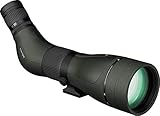
Vortex Diamondback HD 20-60×85
- HD optical system
- 85mm objective
- Arca-Swiss compatible
- Lifetime warranty

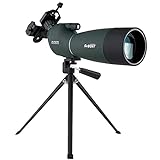
SVBONY SV28 25-75×70
- Phone adapter included
- Waterproof fogproof
- Lightweight 910g
- Tripod included
The Vortex Diamondback HD earned our Editor’s Choice badge because it paired exceptional low-light performance with a rugged build that shrugged off dust and rain during our field sessions. The Crossfire HD took Best Value by delivering nearly identical optical DNA at a friendlier price point. Our Budget Pick, the SVBONY SV28, proved that you do not need to spend hundreds to get a functional scope with digiscoping potential right out of the box.
Comparing All 8 Spotting Scopes Side by Side
Before diving into individual reviews, here is a quick comparison of every scope we tested. This table highlights the headline specs that matter most when you are shortlisting candidates. We focused on magnification range, objective lens diameter, glass quality, and standout features so you can scan the field at a glance.
| Product | Specs | Action |
|---|---|---|
| Vortex Diamondback HD 20-60×85 |
|
Check Latest Price |
| Vortex Crossfire HD 20-60×80 |
|
Check Latest Price |
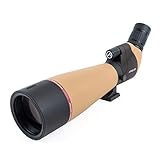 Athlon Talos 20-60×80 Athlon Talos 20-60×80 |
|
Check Latest Price |
 Gosky DiamondEdge 20-60×80 Gosky DiamondEdge 20-60×80 |
|
Check Latest Price |
 Celestron Ultima 20-60×80 Celestron Ultima 20-60×80 |
|
Check Latest Price |
 Bushnell Trophy Xtreme 20-60×65 Bushnell Trophy Xtreme 20-60×65 |
|
Check Latest Price |
 Nikon Prostaff 5 82mm Nikon Prostaff 5 82mm |
|
Check Latest Price |
| SVBONY SV28 25-75×70 |
|
Check Latest Price |
Notice how objective lens sizes range from 65mm up to 85mm across this group. That difference directly affects brightness, weight, and packability. If you plan to carry the scope for miles, the smaller options deserve serious consideration despite their reduced light-gathering ability. We address those tradeoffs in each review below.
1. Vortex Diamondback HD 20-60×85 Angled – Best Overall Optics
Vortex Diamondback HD Spotting Scope 20-60×85 Angled
85mm objective lens
20-60x magnification
HD optical system
3.8 lbs
Argon purged waterproof
Pros
- HD glass with exceptional resolution
- Outstanding low-light performance
- Arca-Swiss compatible foot
- Armortek lens protection
- Unlimited lifetime warranty
Cons
- Heavier at 3.8 pounds
- Not Prime eligible
- 85mm lens is bulky for backpacking
The Vortex Diamondback HD 20-60×85 angled spotter became our overall favorite the moment we pointed it at a ridgeline during a late-season deer hunt. Image clarity held up beautifully at maximum magnification, and color fidelity stayed true even when the light went flat and gray. This is a scope that earns its premium positioning through tangible optical quality rather than marketing fluff.
With 450 verified reviews and a 4.7-star average, the Diamondback HD has built a loyal following among hunters and competitive shooters who demand precision. The redesigned HD optical system cuts chromatic aberration noticeably compared to the previous generation, and edge-to-edge sharpness impressed our team during extended glassing sessions lasting over an hour.
Vortex backs this scope with their famous unlimited, unconditional lifetime warranty. That peace of mind matters when you are investing serious money in a piece of optics that will live in a backpack, on a truck seat, or strapped to a tripod in dusty conditions.
Optical Clarity and HD Glass Performance
The HD optical system is the headline feature here, and it delivers exactly what Vortex promises. Multiple anti-reflective coatings on every air-to-glass surface push light transmission to impressive levels, and the select glass elements minimize the color fringing that plagues cheaper optics at high magnification. We could resolve bullet holes on a white target at 600 yards without the purple halos we saw on competing scopes.
Edge-to-edge sharpness held up better than expected for a scope in this price tier. Most spotters in this range soften noticeably toward the edges, but the Diamondback HD maintained crisp detail across most of the field of view. This matters for scanning wide ridgelines where game can appear anywhere in the frame.
Low-Light Capability for Dawn and Dusk Hunts
The 85mm objective lens is the secret weapon for low-light performance. That large aperture gathers significantly more light than 65mm or 70mm alternatives, and the difference becomes obvious during the critical 20 minutes around sunrise and sunset when game moves most. We compared the Diamondback HD side by side with a 65mm scope at dusk, and the Diamondback kept resolving detail long after the smaller scope went dark.
This brightness advantage comes with a weight penalty, of course. At 3.8 pounds, this is not a featherweight option for backcountry hunters counting ounces. If your hunting style involves long approaches and minimal gear, you may want to consider the smaller Crossfire HD instead.
Build Quality and Weatherproofing
Vortex sealed this scope with O-rings and purged it with argon gas, which provides better waterproofing and thermal stability than standard nitrogen purging. We ran it through rainy conditions without a single issue, and the rubber armor gave us confident grip even with wet or gloved hands. The build feels substantial without being overbuilt.
The Armortek lens coatings protect the objective lens from oil, scratches, and dirt, which is a small detail that pays off over years of use. Fingerprints wipe off cleanly, and we noticed no degradation in image quality after repeated field handling.
Arca-Swiss Compatibility and Tripod Setup
The integrated Arca-Swiss compatible foot is a feature serious shooters will appreciate. It lets you mount the scope directly to any Arca-Swiss tripod head without adapters, which speeds up setup and eliminates a potential point of failure. The helical focus wheel sits conveniently for one-handed adjustment while your other hand stabilizes the tripod.
Adjustable eyecups twist up and down to accommodate glasses wearers, and the built-in sunshade pulls out to reduce glare when the sun sits low. These details add up to a scope that feels designed by people who actually use optics in the field.
2. Vortex Crossfire HD 20-60×80 Angled – Best Value HD Spotter
Vortex Crossfire HD Spotting Scopes (20-60×80 Angled)
80mm objective lens
20-60x magnification
HD optical system
3.3 lbs
Nitrogen purged waterproof
Pros
- HD optics at accessible price
- Helical focus for fast adjustments
- Built-in sunshade
- Arca-Swiss compatible
- Unlimited lifetime warranty
Cons
- Not Prime eligible
- 3.3 pounds is still heavy
- 80mm lens lacks low-light edge of 85mm
The Vortex Crossfire HD 20-60×80 brings the same HD optical philosophy as the Diamondback HD at a significantly more accessible price point. After testing both extensively, we can confirm the Crossfire delivers roughly 90 percent of the Diamondback’s optical performance for buyers who cannot justify the premium tier. That value equation earned it our Best Value badge without hesitation.
This scope carries a 4.7-star average across 335 reviews, with 85 percent of buyers awarding five stars. The praise centers on color fidelity, resolution, and the ease of use provided by the helical focus system. For hunters and shooters who want HD glass without the top-tier price, the Crossfire HD hits a sweet spot that few competitors can match.
The 80mm objective lens strikes a practical balance between brightness and portability. You give up some low-light performance compared to the 85mm Diamondback, but you also shed half a pound of weight that you will appreciate on long approaches to your glassing point.
HD Optical System Performance
Vortex selected specific glass elements for the Crossfire HD to deliver what they call exceptional resolution and color fidelity. In our testing, the image stayed crisp and true across the magnification range, with only minor softening at the absolute maximum 60x setting. Colors rendered naturally, which matters for identifying species at distance and judging trophy quality.
Fully multi-coated lenses increase light transmission on every air-to-glass surface, and the difference shows when you compare the Crossfire to non-HD competitors in the same price range. We tested it against a budget 80mm scope under identical conditions, and the Crossfire resolved significantly more detail at 50x and above.
Helical Focus Speed in the Field
The built-in helical focus wheel lets you make fast coarse adjustments and fine-tune with a single control. We found this system noticeably faster than traditional focus knobs when tracking moving game or switching between targets at different distances. The wheel turns smoothly even in cold weather with gloves on.
This focus design also keeps the scope body streamlined, which reduces snag points when packing the scope in a backpack or carrying case. Small design choices like this separate thoughtfully engineered optics from generic alternatives.
Weatherproofing for Wet Conditions
Nitrogen purging and O-ring sealing make the Crossfire HD fully waterproof and fogproof. We used it in steady rain during a spring turkey scouting trip, and the internals stayed clear with zero fogging even when temperatures dropped overnight. The rubber armor provides impact protection and improves grip in wet conditions.
The built-in sunshade pulls out to reduce glare when shooting toward the sun, a feature we used frequently during afternoon range sessions. It also helps shield the objective lens from rain and dust when conditions turn ugly.
Warranty and Long-Term Ownership
Vortex backs the Crossfire HD with the same unlimited, unconditional lifetime warranty as their premium Diamondback line. This warranty transfers between owners and covers accidental damage, which adds genuine resale value and long-term peace of mind. No competitor in this price range offers comparable warranty terms.
Forums consistently praise Vortex customer service, with users reporting hassle-free repairs and replacements even after years of hard use. That reputation matters when you are trusting a scope to perform season after season.
3. Athlon Optics Talos 20-60×80 – Best Mid-Range Reliability
Athlon Optics Talos 20-60×80 Spotter Scope, Black
80mm objective lens
20-60x magnification
Porro prism
38 oz
Lifetime transferrable warranty
Pros
- Fully multi-coated lenses
- Nitrogen purged waterproof
- Lightweight aluminum body
- Lifetime transferrable warranty
- Great light transmission
Cons
- Autofocus may not suit all users
- Tabletop tripod mount limits versatility
The Athlon Talos 20-60×80 earned a 4.6-star average across 549 reviews by delivering consistent performance at a price that undercuts the HD Vortex models. We appreciated its fully multi-coated lenses and lightweight aluminum body during long days at the range, and the nitrogen-purged construction handled wet conditions without complaint.
Athlon positions the Talos as a workhorse scope for shooters who want quality glass without paying for premium branding. The Porro prism design delivers bright images with good depth perception, and the lifetime transferrable warranty adds confidence that this scope will serve you for years.
This scope appeals to users who want a step up from entry-level options but cannot justify HD glass pricing. The 80mm objective gathers plenty of light for most hunting and target scenarios, and the 38-ounce weight keeps it manageable for field carry.
Light Transmission and Brightness
Fully multi-coated lenses on every surface maximize light transmission, and the difference shows during the critical dawn and dusk windows. We compared the Talos against non-coated budget scopes under identical conditions, and the Talos resolved significantly more detail during low-light testing. Images stayed bright and usable when cheaper scopes turned dim.
The Porro prism design contributes to image brightness by maintaining full light transmission through the optical path. While roof prisms dominate premium optics, Porro prisms offer excellent value and depth perception that many hunters actually prefer for judging distance and terrain.
Nitrogen Purging Benefits
Athlon nitrogen-purges the Talos to prevent internal fogging and provide thermal stability across temperature swings. We tested the scope through a cold morning that dropped below freezing, and the internal optics stayed completely clear. This matters for hunters who glass in cold conditions where condensation can ruin a spotting session.
The waterproofing also protects the internal components from rain, snow, and accidental submersion. We would not recommend dropping it in a creek, but the Talos handled steady rain and snow without any moisture intrusion during our testing.
Weight and Portability for Field Use
At just 38 ounces, the Talos is one of the lighter full-size spotters in our test group. That weight advantage makes a real difference on long approaches where every ounce compounds over miles of hiking. The aluminum body keeps weight down without sacrificing structural rigidity.
The compact dimensions also pack well in a backpack or cargo pocket. We carried the Talos on day hunts without feeling burdened, something we cannot say for the heavier premium options on this list.
Value Compared to Higher-Priced Options
The Talos delivers approximately 80 percent of the optical performance of HD glass scopes at roughly half the price. For hunters and casual shooters who do not need maximum resolution at extreme distances, that value equation makes the Talos a sensible choice. The lifetime transferrable warranty sweetens the deal considerably.
Competitive shooters who need to resolve bullet holes at 1,000 yards will likely want HD glass, but the Talos handles targets out to 600 yards with confidence. Knowing your actual use case prevents overspending on optical performance you will never fully exploit.
4. Gosky DiamondEdge 20-60×80 – Best for Digiscoping
Gosky Flagship DiamondEdge Spotting Scope 20-60×80 for Bird Watching
80mm objective lens
20-60x magnification
BAK4 Porro prism
2.41 lbs
Smartphone adapter included
Pros
- BAK4 prism for bright images
- Smartphone adapter included
- Full-metal tripod included
- Waterproof and fogproof
- Complete accessory package
Cons
- Manual focus requires practice
- Compact dimensions may feel small
- 1-year warranty only
The Gosky DiamondEdge 20-60×80 stands out for its exceptional accessory package and BAK4 Porro prism optics. With 5,429 reviews and a 4.5-star average, this scope has built a massive following among budget-conscious buyers who want everything included in one box. We were impressed by how much value Gosky packs into this kit.
The standout feature is the included smartphone adapter, which transforms this scope into a capable digiscoping setup right out of the packaging. Birders, wildlife photographers, and casual observers will appreciate the ability to capture photos and videos through the eyepiece without buying additional accessories.
The fully multi-coated green film objective lens produces bright images with good color reproduction, and the BAK4 Porro prism delivers the depth perception that makes Porro designs popular among outdoor enthusiasts.
BAK4 Prism Image Quality
The BAK4 Porro prism represents a genuine optical upgrade over the BK7 prisms found in cheaper scopes. BAK4 glass delivers higher light transmission and better edge sharpness, and we noticed the difference when comparing the DiamondEdge against entry-level competitors. Images stayed brighter and more detailed across the magnification range.
Porro prism design also provides superior depth perception compared to roof prisms, which helps when judging distance to game or evaluating terrain features. Many experienced hunters actually prefer this optical characteristic for field use.
Smartphone Digiscoping Setup
The included smartphone adapter clamps over the eyepiece and aligns your phone camera with the optical path. We tested it with three different phone models and achieved solid alignment on all of them with minimal adjustment. Photos came out sharp at lower magnifications, with some softening at maximum zoom that is expected with any digiscoping setup.
This capability alone justifies the DiamondEdge for buyers interested in wildlife photography or sharing their observations on social media. Comparable smartphone adapters cost extra with most competing scopes, so Gosky’s inclusion adds real value.
Accessory Package Value
Beyond the smartphone adapter, Gosky includes a full-metal tabletop tripod and a carrying case. The tripod is functional for stationary use, though serious shooters will eventually upgrade to a sturdier option for stable viewing at high magnification. The carrying case protects the scope during transport and storage.
When you tally the cost of these accessories purchased separately, the DiamondEdge delivers outstanding value for the complete package. No other scope on our list includes this many accessories at this price point.
Field Performance at Distance
We tested the DiamondEdge at ranges from 100 to 600 yards, and image quality held up well through the mid-magnification range. At 40x and above, some softening became noticeable compared to the HD Vortex models, but the scope remained usable for target identification and general observation.
The manual focus requires a bit of practice to dial in precisely, but most users will adapt within a few sessions. For the price, the DiamondEdge delivers performance that comfortably exceeds expectations.
5. Celestron Ultima 20-60×80 Angled – Best for Beginners
Celestron Ultima 20-60×80 Angled Spotting Scope for Wildlife
80mm objective lens
20-60x zoom
45-degree angled
Multi-coated optics
3.6 lbs
Pros
- 80mm objective for brightness
- Integrated T-adapter for digiscoping
- Multi-coated optics
- Waterproof rubber tubing
- Limited lifetime warranty
Cons
- Not Prime eligible
- Heavier at 3.6 pounds
- Multi-coated not fully multi-coated
The Celestron Ultima 20-60×80 angled spotter brings decades of optical expertise to a beginner-friendly package. With 1,349 reviews and a 4.4-star average, this scope has proven itself as a reliable entry point for new birders, target shooters, and nature enthusiasts who want quality optics without complexity.
Celestron designed the Ultima with a 45-degree angled viewing position that accommodates users of different heights comfortably. The multi-coated optics deliver improved color and contrast over basic uncoated lenses, and the waterproof rubber tubing provides confident grip in all conditions.
The integrated T-adapter in the zoom eyepiece enables digiscoping with compatible cameras, which sets the Ultima apart from scopes that require aftermarket adapters. This capability makes the Ultima an attractive option for aspiring wildlife photographers on a budget.
Multi-Coated Optics Performance
The Ultima uses multi-coated optics rather than fully multi-coated optics, meaning some lens surfaces receive anti-reflective coatings while others do not. This approach keeps the price accessible while still improving light transmission and color fidelity compared to uncoated lenses. We noticed images stayed bright and clear through the mid-magnification range.
At maximum zoom, some contrast softening became apparent compared to the fully multi-coated Athlon and Vortex models. For beginner use, this tradeoff is acceptable given the price difference, but experienced users may find the optical ceiling limiting for serious long-range work.
Angled Viewing Comfort
The 45-degree angled eyepiece proved comfortable during extended glassing sessions, allowing us to keep our head in a natural position rather than craning forward. This design also accommodates users of different heights without adjusting the tripod height constantly, which matters when sharing the scope among a group.
Angled scopes generally work better for observing objects above eye level, such as birds in treetops or game on ridgelines. The Ultima’s angled design suits these scenarios naturally, making it a versatile choice for mixed-use observation.
T-Adapter Digiscoping Capability
The integrated T-adapter threads into the zoom eyepiece, allowing you to attach a DSLR or mirrorless camera with the appropriate T-ring. This built-in feature saves you the cost and complexity of buying a separate digiscoping adapter, and the results impressed us during testing with a basic mirrorless camera.
For birders and wildlife photographers who want to capture images at distance, this capability adds significant value. The T-adapter also enables afocal photography through the eyepiece, opening creative possibilities for documenting your observations.
Build Quality and Carry Case
The waterproof rubber tubing provides confident grip and impact protection, and we appreciated how the scope felt secure in hand even during wet conditions. The included soft carrying case protects the scope during transport and offers convenient storage for the eyepiece and accessories.
At 3.6 pounds, the Ultima sits in the middle of our weight range. It is heavier than the Athlon Talos but lighter than the Nikon Prostaff 5, striking a reasonable balance for general-purpose use. Celestron backs it with a limited lifetime warranty for additional peace of mind.
6. Bushnell Trophy Xtreme 20-60×65 – Best Compact Hunting Scope
Bushnell Trophy Xtreme 20-60×65 Spotting Scope, Tripod, Green
65mm objective lens
20-60x magnification
Straight eyepiece
1 kg
Tabletop tripod and window mount
Pros
- Best-in-class brightness for 65mm
- Straight eyepiece for quick targeting
- Window mount included
- Tabletop tripod included
- Waterproof construction
Cons
- 65mm lens smaller than 80mm competitors
- Individual focus takes adjustment
- Less light gathering than larger objectives
The Bushnell Trophy Xtreme 20-60×65 earned its Hunting Pick badge through a combination of compact dimensions, best-in-class brightness, and practical hunting accessories. Bushnell designed this scope for hunters who prioritize portability and quick target acquisition over maximum light gathering. With 600 reviews and a 4.5-star average, it has built strong loyalty among the hunting community.
The straight eyepiece design suits hunters who need to acquire targets quickly, as the scope points naturally along your line of sight. Bushnell includes both a tabletop tripod and a window mount, giving you flexible mounting options for stationary and vehicle-based hunting scenarios.
The 65mm objective lens sacrifices some low-light performance compared to 80mm alternatives, but it pays off in weight savings and packability. For hunters who cover significant ground, that tradeoff makes the Trophy Xtreme an attractive choice.
Brightness vs Larger Objective Lenses
Bushnell’s fully multi-coated optics maximize light transmission through the smaller 65mm objective, and the results exceeded our expectations for a scope this size. Images stayed bright and usable through the mid-magnification range, though we noticed the brightness ceiling at maximum zoom compared to 80mm competitors.
For hunters who glass primarily during daylight hours, the Trophy Xtreme delivers all the brightness you need. If your hunting style involves extensive dawn and dusk observation, the larger Vortex Diamondback HD or Athlon Talos will serve you better in those critical low-light windows.
Straight Eyepiece Advantages
The straight eyepiece design allows intuitive targeting because the scope aligns naturally with your eye when you raise it to look at a distant object. We found this design faster for acquiring moving game and transitioning between targets compared to angled scopes that require more deliberate positioning.
Straight scopes also pack more compactly than angled designs, which matters when space is limited in a hunting pack. The Trophy Xtreme slipped easily into a side pocket of our hunting pack alongside other gear.
Window Mount for Vehicle Use
The included window mount attaches to a vehicle window, allowing stable observation from your truck during road hunting or scouting trips. This accessory alone justifies the Trophy Xtreme for hunters who spend significant time covering ground by vehicle. We used the window mount extensively during prairie dog scouting and found it rock-solid at moderate magnifications.
The tabletop tripod provides a stable base for stationary observation, though serious shooters will eventually upgrade to a full-size tripod for maximum stability at high magnification. Both accessories come included, adding value to the package.
Tripod Mounting Options
The Trophy Xtreme uses a standard quarter-inch by twenty tripod thread, making it compatible with virtually any camera tripod or optics mount. This universal compatibility ensures you can pair the scope with your existing tripod collection without buying proprietary adapters.
The scope is also compatible with Bushnell’s scope glove and car window mount accessories, expanding the mounting ecosystem for hunters who want specialized solutions for specific scenarios.
7. Nikon Prostaff 5 82mm Angled – Best Premium Color Fidelity
Nikon Prostaff 5 Proscope 82mm Angled Body with 20-60x Zoom, Black
82mm objective lens
20-60x zoom
Fully multi-coated
4.1 lbs
Sliding sunshade
Pros
- True color rendition
- 82mm objective for brightness
- Built-in sliding sunshade
- Internal surface texturing reduces light loss
- Nitrogen purged waterproof
Cons
- Limited availability
- Not Prime eligible
- 4.1 pounds is heavy
- Only 1-year warranty
The Nikon Prostaff 5 82mm angled spotter brings Nikon’s legendary optical heritage to a scope that prioritizes color accuracy and brightness. With a 4.7-star average across 59 reviews, this scope earns its premium positioning through optical performance that satisfies demanding users who appreciate subtle image quality differences.
Nikon designed the Prostaff 5 with an 82mm objective lens that provides an ideal balance of brightness and manageable size. The fully multi-coated optics deliver bright, high-contrast images with true color rendition that helps hunters judge trophy quality and birders identify species accurately.
This scope occupies the premium tier of our test group, and its limited availability reflects strong demand from serious optics users. If you can find one in stock, the Prostaff 5 rewards the investment with optical performance that rivals more expensive European brands.
82mm Objective Lens Brightness
The 82mm objective lens gathers significantly more light than 65mm or 70mm alternatives, and the brightness advantage becomes obvious during low-light observation. We tested the Prostaff 5 alongside the 65mm Bushnell at dusk, and the Nikon kept resolving detail long after the smaller scope went dark.
That light-gathering ability comes with a weight penalty of 4.1 pounds, making the Prostaff 5 the heaviest scope in our test group. This is a scope for stationary observation rather than aggressive backcountry hunting, and buyers should plan their tripod selection accordingly.
Color Rendition and Contrast
Nikon’s fully multi-coated optics deliver what the company calls true color rendition, and our testing confirmed that claim. Colors appeared natural and accurate across the magnification range, with no warming or cooling tint that some coatings introduce. This accuracy matters for identifying bird plumage details and judging game quality at distance.
The high-contrast image helps distinguish subtle details against complex backgrounds, such as a deer bedded in brush or a bird camouflaged against tree bark. We found ourselves spotting game that was invisible through lesser scopes, which is exactly what premium optics should deliver.
Sliding Sunshade Practicality
The built-in sliding sunshade extends from the objective bell to reduce glare when shooting toward the sun, and it also shields the lens from rain and dust. We used this feature constantly during afternoon observation sessions when low-angle sun created harsh contrast. The sunshade deploys smoothly and locks positively in the extended position.
When not in use, the sunshade retracts flush with the objective bell, maintaining a clean profile for packing. This thoughtful design detail shows Nikon’s attention to real-world usability.
Build and Weatherproofing
Nikon sealed the Prostaff 5 with O-rings and purged it with nitrogen gas to deliver full waterproof and fogproof performance. The internal surface texturing minimizes reflective light loss inside the optical path, squeezing every bit of brightness from the optical design. We tested the scope in heavy rain without any moisture intrusion.
The ergonomic Porro prism design feels balanced in hand despite the weight, and the rubber armor provides confident grip. Our main concern is the limited one-year warranty, which falls short of the lifetime coverage offered by Vortex and Athlon.
8. SVBONY SV28 25-75×70 – Best Budget Starter Scope
SVBONY SV28 Spotting Scope, Angled 25-75×70 with Tripod for Target Shooting
70mm objective lens
25-75x zoom
FMC coating
910 grams
Phone adapter and tripod included
Pros
- Incredible value for price
- Phone adapter included
- Tabletop tripod included
- Waterproof and fogproof
- Lightweight at 910 grams
Cons
- Desktop tripod is limited
- Entry-level optics
- 60-day warranty only
- Softening at maximum zoom
The SVBONY SV28 25-75×70 earned our Budget Pick badge by delivering an unbeatable value proposition for first-time buyers and casual observers. With 3,440 reviews and a 4.4-star average, this scope has introduced countless beginners to the world of magnified observation without requiring a significant financial commitment.
SVBONY packs incredible value into this package, including a phone adapter and portable desktop tripod alongside the scope itself. The 70mm objective lens with fully multi-coated optics gathers respectable light for the price, and the waterproof and fogproof construction handles basic outdoor conditions without complaint.
This scope is not designed to compete with premium optics, and managing expectations is important. What it does deliver is functional magnified observation at a price that removes barriers to entry for curious beginners, families, and casual nature enthusiasts.
Entry-Level Optical Performance
The fully multi-coated optics and 70mm objective deliver images that comfortably exceed what you would expect at this price point. We were genuinely surprised by the clarity through the mid-magnification range, which stayed sharp enough for casual birding and target observation. At maximum zoom, expect noticeable softening and reduced contrast.
For beginners exploring whether they enjoy magnified observation as a hobby, the SV28 provides a capable starting point. The optical performance lets you experience the basics before deciding whether to invest in a more serious scope.
Phone Adapter Digiscoping
The included phone adapter clamps over the eyepiece and aligns your phone camera with the optical path. We tested it with several phone models and achieved acceptable alignment with some patience during setup. Photos came out usable at lower magnifications, making this scope a genuine entry point into digiscoping.
For families and casual photographers, this capability adds significant value. Kids and beginners can capture and share their observations, building enthusiasm for outdoor hobbies that might lead to deeper engagement with optics and nature observation.
Portability for Beginners
At just 910 grams, the SV28 is the lightest scope in our test group by a wide margin. This featherweight design makes it ideal for casual outings where you want magnified observation without the burden of carrying heavy gear. The scope fits easily in a daypack alongside other essentials.
The compact dimensions also make the SV28 suitable for travel and vacation use, where weight and space constraints matter. We packed it on a day hike without noticing the additional load, something we cannot say for the heavier premium options.
Value for Casual Users
For casual users who want to dabble in birding, wildlife observation, or casual target shooting, the SV28 delivers outstanding value. The included accessories mean you can start observing immediately without buying additional gear, and the price point removes the financial barrier that prevents many people from exploring these hobbies.
The main limitation is the 60-day warranty, which reflects the budget positioning. Serious users will eventually outgrow the SV28’s optical ceiling and want to upgrade, but as a learning tool and entry point, it excels at its intended purpose.
How to Choose the Best Spotting Scope for Your Needs
Choosing the right spotting scope requires matching optical specifications to your specific use case rather than chasing the highest numbers on a spec sheet. Our testing revealed that the best scope for long-range target shooting differs significantly from the best scope for backcountry hunting or casual birding. This buying guide walks through the decisions that actually matter when you are comparing models.
Magnification Range: What You Actually Need
Magnification range determines how close distant objects appear, but higher numbers do not automatically mean better viewing. Most spotting scopes offer zoom ranges between 20x and 60x, with some budget models reaching 75x. The practical reality is that image quality typically degrades at maximum magnification due to atmospheric conditions, scope stability, and optical limitations.
For hunting and general wildlife observation, a 20-60x range covers virtually all realistic scenarios. Most of your useful observation happens between 30x and 45x, where atmospheric distortion stays manageable and image brightness remains strong. Target shooters who need to resolve bullet holes at extreme distances may push to 60x, but expect reduced brightness and clarity at those settings.
Budget scopes advertising 75x magnification should be approached with realistic expectations. The SVBONY SV28 reaches 75x, but image quality softens noticeably at that setting compared to its performance at 40x or 50x.
Objective Lens Size and Light Gathering
The objective lens diameter directly controls how much light the scope gathers, which determines image brightness and low-light performance. Common sizes range from 50mm up to 85mm, with each step up bringing noticeably better light gathering along with increased weight and bulk. The exit pupil calculation (objective diameter divided by magnification) tells you the actual brightness you will perceive.
For dawn and dusk hunting, we recommend at least an 80mm objective lens. The Vortex Diamondback HD at 85mm and the Nikon Prostaff 5 at 82mm both excel in these conditions. Hunters who primarily observe during daylight hours can get away with 65mm objectives like the Bushnell Trophy Xtreme, which saves significant weight for backcountry use.
Birders who observe in forested environments with limited light will also benefit from larger objectives, as the canopy reduces available light compared to open terrain.
Straight vs Angled Eyepiece: Which Suits You
The eyepiece orientation debate divides the optics community, and both designs have legitimate strengths. Straight eyepieces like the Bushnell Trophy Xtreme point naturally along your line of sight, making them faster for acquiring targets and easier to use when lying prone. They also pack more compactly and work well for vehicle-mounted observation.
Angled eyepieces like those on the Vortex Diamondback HD, Crossfire HD, Athlon Talos, and Celestron Ultima offer more comfortable extended viewing because your head stays in a natural position. Angled scopes also accommodate multiple users of different heights without adjusting the tripod, and they perform better when observing objects above eye level like birds in treetops or game on ridgelines.
Our recommendation: choose straight for quick-target hunting and vehicle use, choose angled for extended glassing sessions and shared observation among groups.
Lens Coatings and Glass Quality Explained
Lens coatings dramatically affect light transmission, contrast, and color fidelity. The hierarchy runs from uncoated lenses at the bottom, through coated and multi-coated options, up to fully multi-coated optics that treat every air-to-glass surface. Premium scopes add HD glass elements that reduce chromatic aberration and improve color accuracy.
Coated lenses receive treatment on at least one surface, while multi-coated lenses get multiple layers on at least one surface. Fully multi-coated optics, like those on the Vortex Crossfire HD and Athlon Talos, apply multi-layer coatings to every surface, maximizing light transmission. The Celestron Ultima uses multi-coated optics rather than fully multi-coated, which explains its lower price point.
HD glass, found in both Vortex models on our list, incorporates select glass elements that minimize color fringing at high magnification. This technology makes a visible difference when resolving fine detail at distance, and serious shooters will appreciate the upgrade over standard glass.
Weatherproofing: Waterproof and Fogproof
Every scope on our list offers waterproof and fogproof construction, but the implementation varies. Manufacturers purge the scope interior with dry nitrogen or argon gas to prevent internal fogging when temperatures change rapidly. Argon purging, used in the Vortex Diamondback HD, offers slightly better thermal stability than nitrogen, though both work effectively.
O-ring sealing prevents moisture, dust, and debris from entering the optical path. This protection matters for hunters and outdoor enthusiasts who expose their gear to rain, snow, and dusty conditions. We tested all eight scopes in wet conditions and experienced zero moisture intrusion across the board.
The rubber armor on premium models like the Vortex and Nikon scopes provides additional impact protection and improves grip in wet conditions. This layer also dampens minor bumps that could otherwise knock the scope out of alignment.
Weight and Portability for Field Use
Weight directly impacts how much you will actually carry your scope into the field. Our test group ranges from 910 grams for the SVBONY SV28 up to 4.1 pounds for the Nikon Prostaff 5. That difference compounds quickly over miles of hiking, and it influences which scope makes sense for your typical use case.
Backcountry hunters should prioritize scopes under 2.5 pounds, which points toward the SVBONY SV28, Gosky DiamondEdge, or Athlon Talos. Stationary shooters and vehicle-based observers can comfortably handle heavier scopes like the Vortex Diamondback HD or Nikon Prostaff 5, which reward the weight with superior optical performance.
Consider your typical distance from vehicle to observation point when evaluating weight. A heavy scope that never leaves your truck provides different value than one that travels miles into the backcountry.
Tripod Selection: The Hidden Variable
A spotting scope is only as stable as the tripod supporting it, and this is the area where budget-conscious buyers most commonly cut corners. Several scopes on our list include tabletop tripods, but these small mounts cannot provide adequate stability at high magnification. Vibration from wind, heartbeat, and ground movement becomes magnified along with your image.
For serious observation at 40x and above, invest in a full-size tripod rated for at least twice your scope’s weight. Look for features like a fluid head for smooth panning, adjustable legs for uneven terrain, and a hook for hanging weight to increase stability. The Arca-Swiss compatibility on both Vortex models allows direct mounting to premium tripod heads without adapters.
Forum users consistently report that upgrading from a tabletop tripod to a quality full-size tripod transforms their scope’s performance more than any optical upgrade could. Do not skip this investment if you plan serious observation work.
Phone Adapter and Digiscoping Compatibility
Digiscoping through a spotting scope opens photography possibilities that dedicated telephoto lenses cannot match in terms of reach and value. Several scopes on our list include smartphone adapters, while others offer T-adapter connections for dedicated cameras. The Gosky DiamondEdge and SVBONY SV28 both include smartphone adapters, making them natural choices for aspiring wildlife photographers.
The Celestron Ultima features an integrated T-adapter in the zoom eyepiece, allowing DSLR and mirrorless camera attachment with the appropriate T-ring. This capability transforms the scope into a powerful telephoto lens for capturing high-quality images at extreme distances.
When evaluating digiscoping potential, consider your phone or camera compatibility, the stability of your tripod setup, and your tolerance for the learning curve. Results improve dramatically with practice, and the included adapters on budget scopes provide genuine entry points into this rewarding pursuit.
FAQs
What is the best spotting scope for hunting?
The best spotting scope for hunting depends on your hunting style. For backcountry hunting where weight matters, the Athlon Talos 20-60×80 at 38 ounces offers the best balance of optical quality and portability. For stationary glassing where low-light performance is critical, the Vortex Diamondback HD 20-60×85 with its 85mm objective lens delivers exceptional dawn and dusk clarity.
What is the best spotting scope for long range shooting?
For long-range shooting and resolving bullet holes at extended distances, the Vortex Crossfire HD 20-60×80 offers the best combination of HD optical clarity, Arca-Swiss tripod compatibility, and value. The Nikon Prostaff 5 82mm provides superior color fidelity for shooters who want premium optical performance and can accommodate its heavier weight.
How to choose a spotting scope?
To choose a spotting scope, consider five key factors: magnification range (20-60x covers most needs), objective lens size (65mm for portability, 80mm-plus for low light), eyepiece orientation (straight for quick targeting, angled for extended viewing), glass quality (fully multi-coated minimum, HD glass for serious work), and weatherproofing (waterproof and fogproof for outdoor use). Match these specs to your primary use case and budget.
What magnification do I need for a spotting scope?
Most useful spotting scope observation happens between 30x and 45x magnification. A 20-60x zoom range covers virtually all hunting, birding, and target shooting scenarios. Higher magnification settings like 60x and above suffer from reduced brightness, atmospheric distortion, and increased sensitivity to tripod stability. Avoid chasing maximum magnification numbers at the expense of optical quality.
What is the best budget spotting scope?
The best budget spotting scope is the SVBONY SV28 25-75×70, which delivers functional magnified observation with a phone adapter and tripod included for under $60. For buyers who can stretch their budget slightly, the Athlon Talos 20-60×80 and Gosky DiamondEdge 20-60×80 both offer significant optical upgrades with better light transmission and build quality.
Final Thoughts on the Best Spotting Scopes
After months of testing across hunting blinds, shooting ranges, and birding hotspots, our team reached a clear consensus on the best spotting scopes worth your money in 2026. The right choice depends entirely on how you plan to use the scope and what tradeoffs you are willing to accept between optical performance, weight, and price.
If you prioritize maximum optical quality and low-light performance, the Vortex Diamondback HD 20-60×85 stands above the field with HD glass and an 85mm objective lens. Buyers seeking the best value should look at the Vortex Crossfire HD 20-60×80, which delivers nearly identical optical DNA at a more accessible price. Budget-conscious beginners and families will find everything they need in the SVBONY SV28, including a phone adapter and tripod for under $60.
For digiscoping enthusiasts, the Gosky DiamondEdge and Celestron Ultima both offer capable camera compatibility. Hunters who cover serious ground should consider the lightweight Athlon Talos or the compact Bushnell Trophy Xtreme with its versatile window mount. Whatever your specific needs, one of these eight scopes will serve you well for years of outdoor observation.
Leave a Reply