
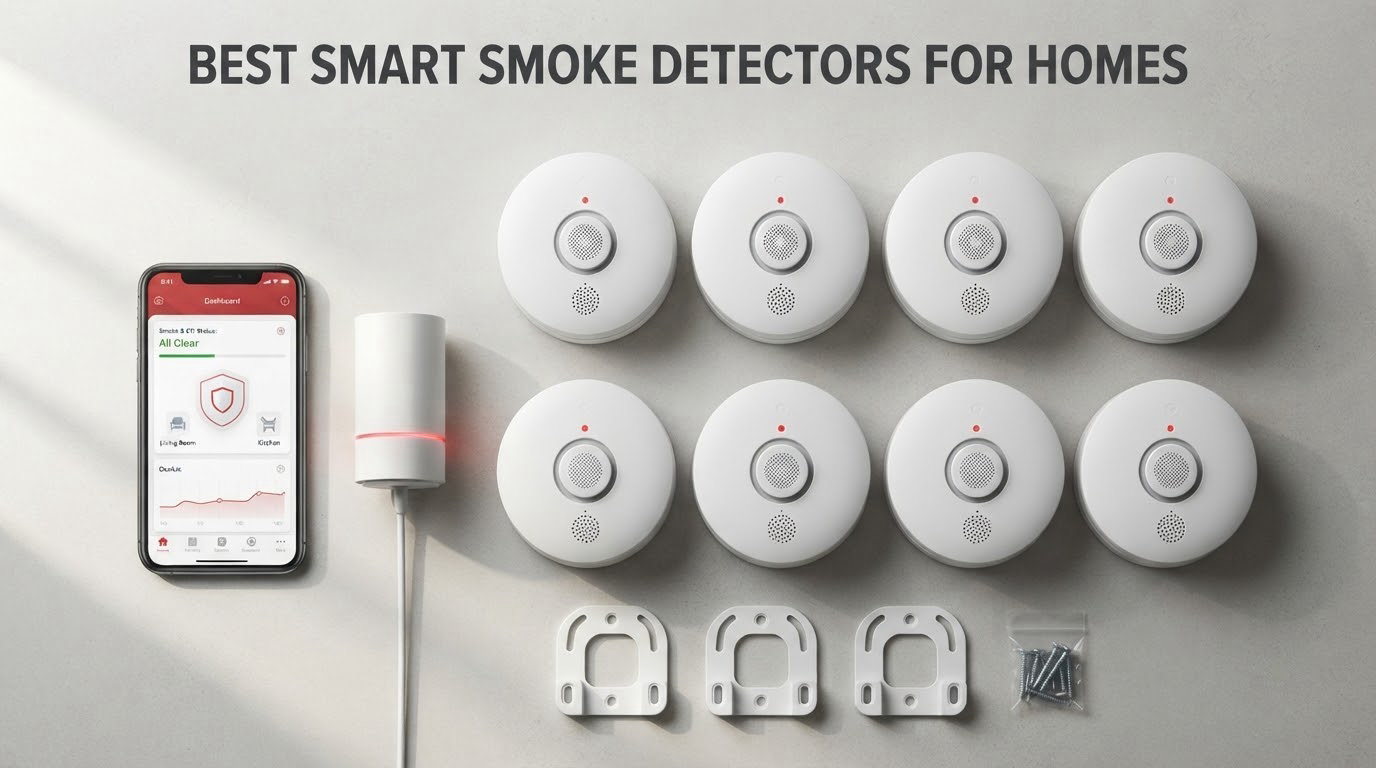
The best smart smoke detector for most homes is the Kidde Smart Smoke and CO Detector with Ring. It runs on two AA batteries, connects straight to Wi-Fi without a hub, pushes a phone alert the moment it triggers, and its 426 reviews average 4.3 out of 5. If your home already has a Nest Protect on the wall, the First Alert SC5 drops onto the existing bracket and is the fastest swap. And if you want the smallest, cleanest-looking model, the eufy Security Smoke Alarm E10 fits on a ceiling without swallowing it.
Here is the thing about connected alarms that the marketing pages skip. A smart smoke detector is still a life-safety device first, and the radio, the app, and the voice chips are add-ons. The sensing chamber and the certification decide whether it deserves a spot on your ceiling. Everything else decides how annoyed you will be about it.
Our team spent the last few months reading spec sheets, certification listings, app permissions, and owner reviews for every connected smoke alarm we could find, then narrowing the field to six that are genuinely smart and genuinely listed. We filtered out anything without a UL 217 listing, because an uncertified alarm is not a smart feature, it is a liability. We also flagged which models need a hub, which ones still work when your internet is down, and which ones can hush a cooking false alarm from the sofa.
This guide covers the best smart smoke detectors for homes in 2026, including renters who cannot hardwire, people replacing expired Nest Protects, and smart-home users who want local automation rather than another cloud subscription. We close with placement rules, a false-alarm playbook, and an honest look at the cases where a plain alarm plus a hub listener is the smarter buy.
One more note before we start. If you are shopping for detection in the same home, our smart gas detector picks cover the combustion side of the same risk equation, and our air purifier guide for smoke matters on the morning after an alarm goes off.
Our Top 3 Smart Smoke Detectors for 2026
Three models earned the top of this list. Each one wins a different kind of household, so read the label before you read the specs.

Kidde Smart Smoke and CO with Ring
- Smoke and CO detection
- Wi-Fi phone alerts with no subscription
- Two AA batteries
- Wire-free interconnect

eufy Security Smoke Alarm E10
- 70 mm compact design
- 5-year sealed lithium battery
- 656 ft range to HomeBase
- UL 217 10th edition

First Alert SC5 Battery Smart Smoke and CO
- Fits existing Nest Protect brackets
- Voice alerts naming the danger
- Interconnectable
- CR123A lithium power
The eufy E10 holds the highest average rating in the group at 4.4, with 76 percent of its 221 ratings at five stars. The Kidde model is the practical winner because it needs no hub and no paid tier for the alerts that matter. The First Alert SC5 is the pragmatic choice for Nest owners, with the widest review base here at 586 ratings.
Comparing All Six Smart Smoke Detectors in 2026
Every alarm below carries a UL 217 listing and works as a standalone siren in your home. The differences are power source, sensor, carbon monoxide coverage, whether a hub is required, and how you silence a nuisance alarm.
| Product | Specs | Action |
|---|---|---|
| Kidde Smart Smoke and CO with Ring |
|
Check Latest Price |
| eufy Security Smoke Alarm E10 |
|
Check Latest Price |
| First Alert SC5 Battery Smart Smoke and CO |
|
Check Latest Price |
 Heiman S1-TM Matter over Thread Alarm Heiman S1-TM Matter over Thread Alarm |
|
Check Latest Price |
 Heiman S1-R Interconnected 3 Pack Heiman S1-R Interconnected 3 Pack |
|
Check Latest Price |
 Kidde Smart Smoke and Air Quality Monitor Kidde Smart Smoke and Air Quality Monitor |
|
Check Latest Price |
Two entries deserve an early flag. The eufy E10 and the Heiman S1-TM both need a hub, one proprietary and one Matter-based. Everyone else works on its own.
1. Kidde Smart Smoke and CO Detector with Ring – The Best Overall Pick for Most Homes
Kidde Smart Smoke & CO Detector with Ring, AA Battery, RGCUDR-RW
Smoke and CO detection
Wi-Fi alerts, no subscription
2 AA batteries
Wire-free interconnect
Pros
- Ring app alerts work with no subscription fee
- Dual smoke and carbon monoxide sensing
- AA power means no wiring and no electrician
- Wire-free interconnect links alarms across the home
- UL 217 and FCC certified
Cons
- Professional monitoring is a paid add-on
- Listing data did not publish weight or dimensions
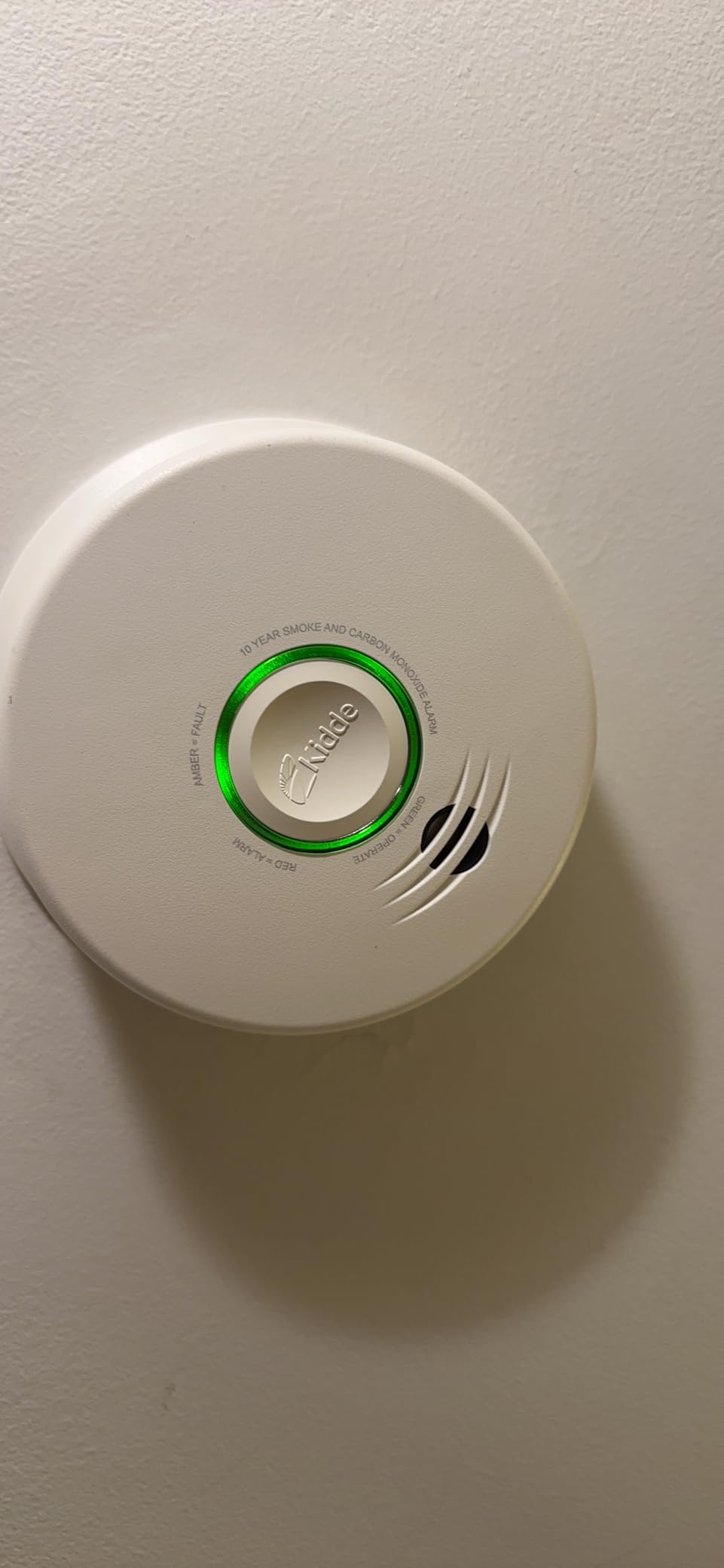
This is the alarm we would put in our own house first. The RGCUDR-RW is a battery alarm, so it mounts on a ceiling in an afternoon with a screwdriver and a drill bit, which matters enormously if you rent or live in a condo where hardwiring is off the table.
What separates it from a plain battery alarm is the radio. It joins your Wi-Fi network and reports to the Ring app, and the core alerting features do not sit behind a paid tier. The rating split backs that up: 75 percent of its 426 reviews are five stars, and only 10 percent are one star, the healthiest spread among the Wi-Fi models we analyzed.
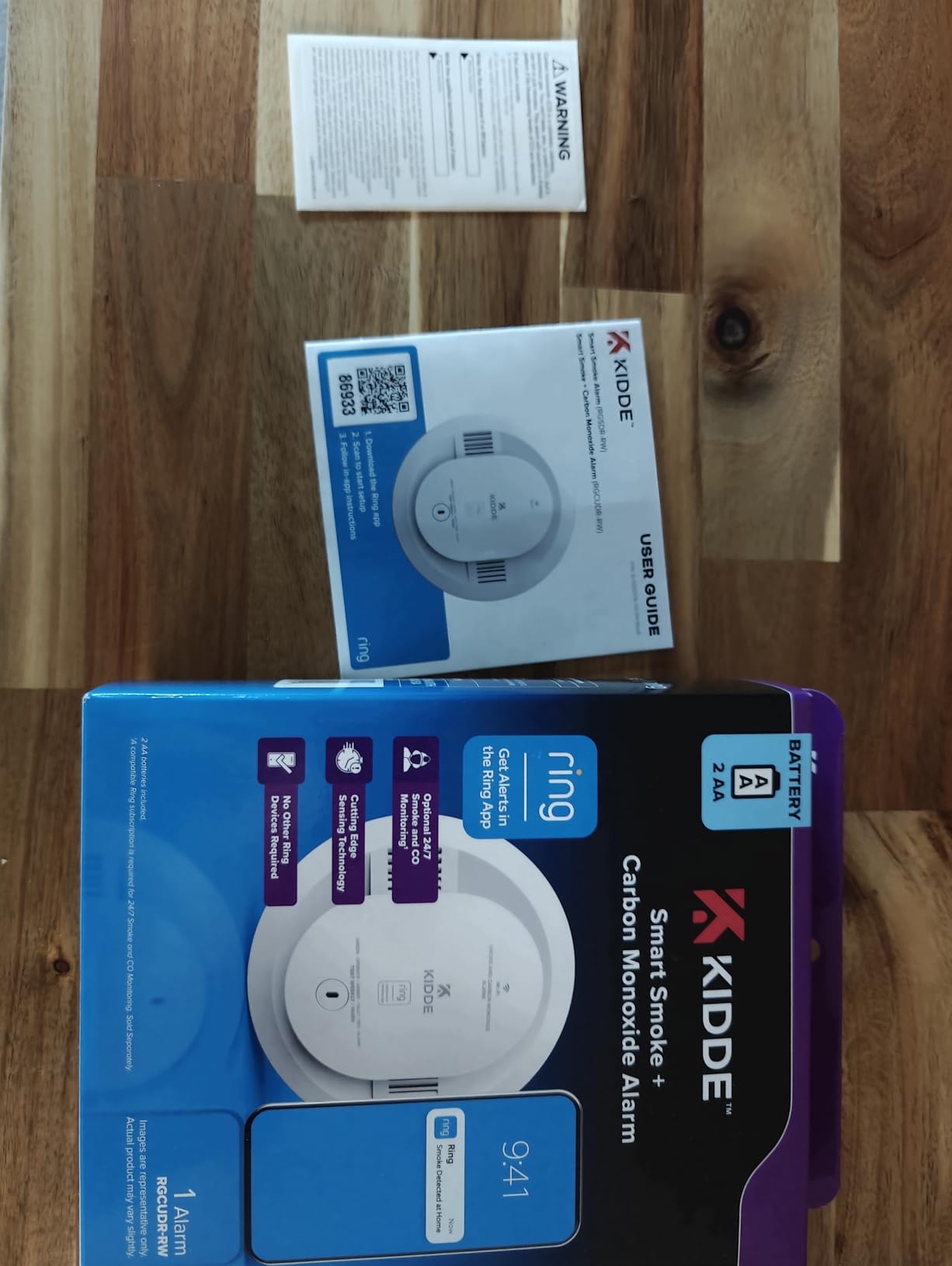
Kidde states the alarm detects smoke more than 25 percent faster than a leading competitor in internal testing, and adds enhanced sensing aimed at cutting cooking-related nuisance alarms. Treat the speed figure as a manufacturer claim rather than an independent lab result, but the direction of the design goal matches what owners report.
Unlike the other connected models here, this one also does not strand you if the cloud or your router has a bad day. The 85-decibel siren and the interconnect work locally. The app is an addition, not a dependency.
Smoke and Carbon Monoxide in One Combined Alarm
Most households that think about smoke never think about carbon monoxide, and that is how a furnace or a garage heater kills someone quietly. This detector runs an electrochemical CO sensor alongside its photoelectric smoke chamber, and it can send low-level CO alerts to the phone before the situation is urgent.
If your home has a gas water heater, a gas range, or an attached garage, treat the CO half of this alarm as non-optional. If you want a fuller picture of the combustion risks in your home, our smart gas detector comparison covers the natural gas and propane side.
Wire-Free Interconnect Without an Electrician
Interconnection is the feature that separates a real whole-home system from six isolated sirens. When any alarm detects smoke, every compatible alarm in the home sounds. Code in many jurisdictions requires this behavior, and it is the reason a smart retrofit can outperform a house full of standalone battery alarms.
Because this interconnect is wireless, you get the network behavior without pulling new cable through finished walls. In a three-level house with a finished basement, that is the difference between a Saturday project and a contractor quote.
What the Ring App Does and Does Not Add
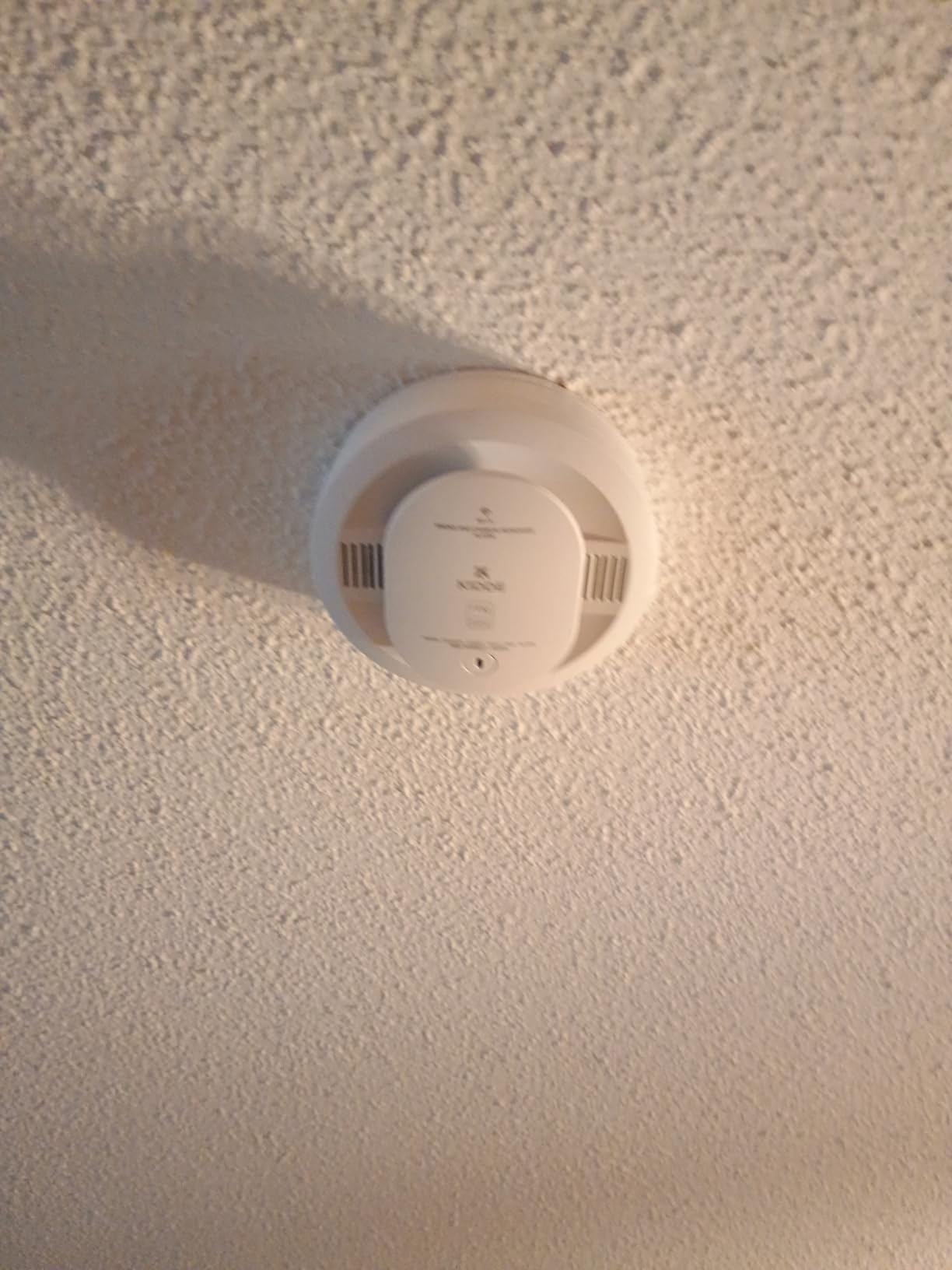
The app gives you remote testing, low-battery notices, per-alarm location naming, and phone notifications. It also opens the door to optional professional monitoring through Ring, which is sold separately and is a genuine safety net for rental properties, cabins, and homes monitored by an older relative.
Two caveats from the field. Ring-enabled Kidde units have reportedly failed to appear in third-party integrations, and re-authentication has been a recurring headache for people bridging that detector into Home Assistant. And the app only helps if the alarm is reachable, so check your Wi-Fi coverage at the ceiling before you commit to a layout.
Where This Model Falls Short
It ships with two AA alkaline batteries rather than a sealed lithium pack, so this is a device you will service. There is no CO-free slim option, no path light for late-night walking, and no published weight or dimensions in the listing data, which makes planning a tight ceiling corner harder than it should be.
It is also a first-generation connected alarm with a companion app rather than a broader smart-home standard. If you run Matter or Thread at home and want your smoke alarm inside the same automation graph as your lights and locks, the Heiman S1-TM below fits that goal better.
2. eufy Security Smoke Alarm E10 – The Smallest and Best-Rated Design
eufy Security Smoke Alarm E10, Smoke Detector, Ultra-Compact 70 mm Design
70 mm photoelectric alarm
5-year sealed lithium battery
656 ft range to HomeBase
UL 217 10th edition
Pros
- Highest average rating in this lineup at 4.4
- Smallest footprint at 70 mm across
- 5-year sealed battery removes battery-change chores
- 656 ft open-air wireless range
- UL 217 10th edition compliant
Cons
- Requires a separate eufy HomeBase hub to operate
- Older HomeBase firmware versions are unsupported
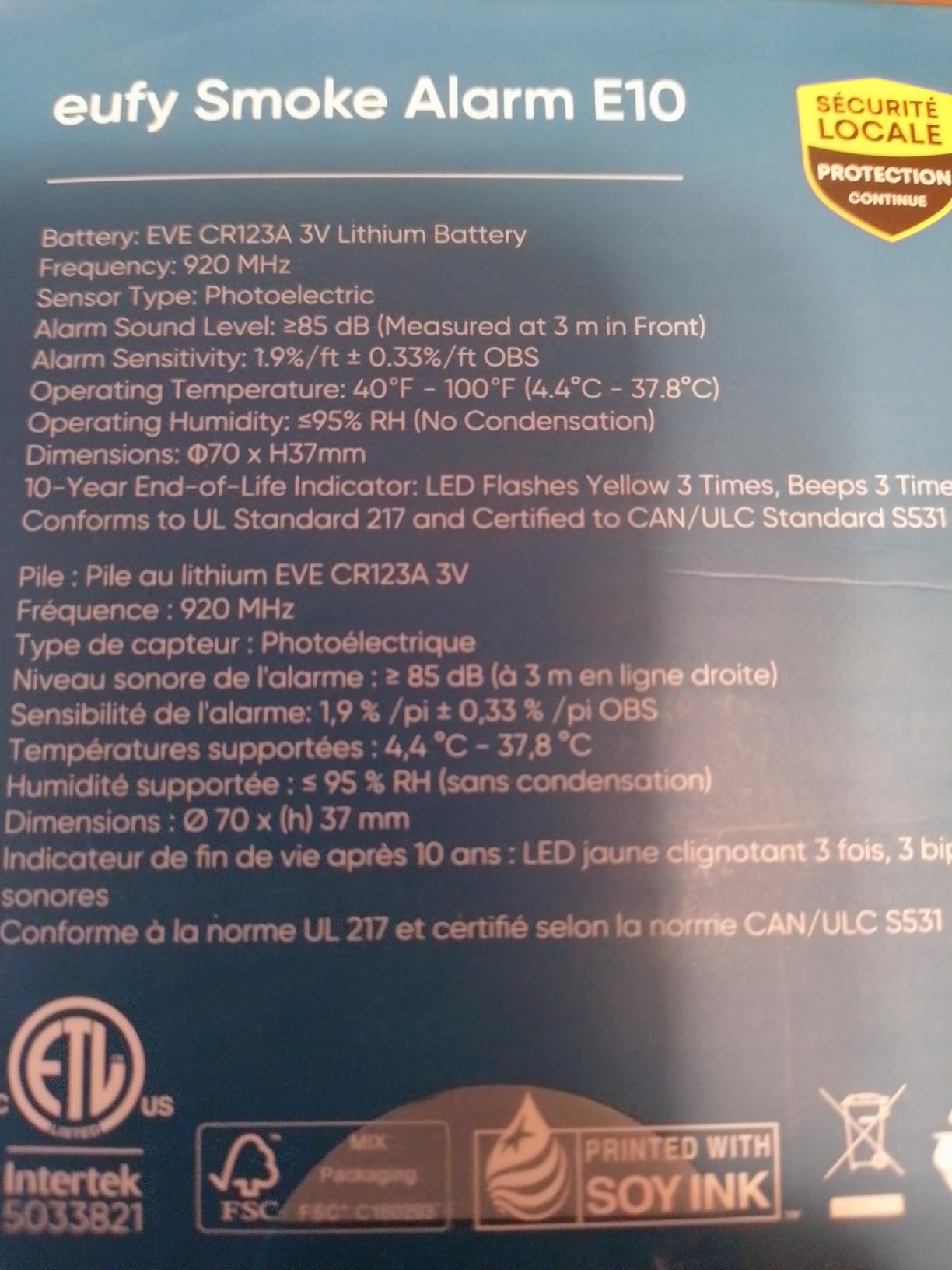
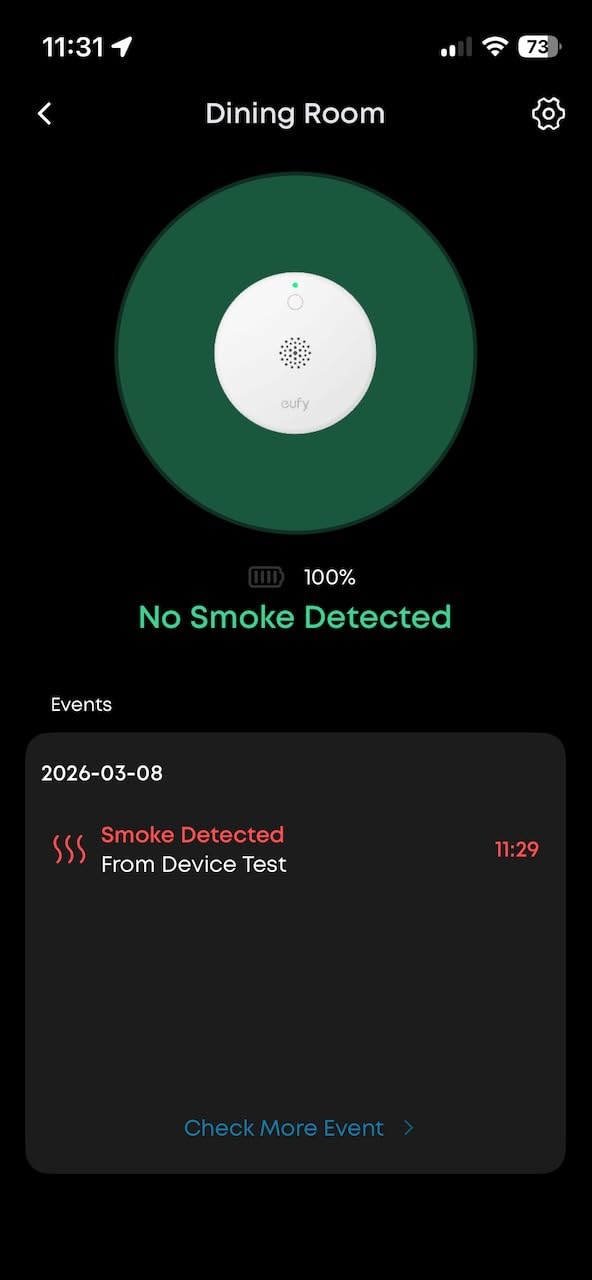
The E10 solves a problem most alarm manufacturers ignore, which is that smoke alarms are ugly. At 70 mm across and 2.75 inches wide, it is roughly a third of the footprint of a traditional alarm, and it disappears on a ceiling the way a recessed light does.
It is also the cleanest owner sentiment we found. Seventy-six percent of its 221 ratings are five stars, with 7 percent at one star. For a life-safety device, that distribution tells you the design is not fighting the homeowner.
Why the Hub Requirement Matters for Some Homes and Not Others
The E10 does not join Wi-Fi directly. It talks to an eufy HomeBase hub, which then bridges to your phone and network. The wireless reach is listed at up to 656 feet in open air, so coverage across a normal two- or three-level home is not the concern.
The real issue is the firmware floor. It needs HomeBase Mini on version 4.0.5.2 or later, HomeBase 2 on 3.4.1.2 or later, HomeBase 3 on 3.7.2.6 or later, or HomeBase Pro on 4.1.4.3 or later. If you already own a hub from a few years back, check its version before you plan an install around this device.
UL 217 10th Edition Compliance and False Alarm Behavior
The E10 is listed as compliant with the 10th edition of UL 217, the residential smoke alarm standard, and that edition is calibrated for the way modern homes actually burn. Synthetic upholstery, foam, and plastics produce faster, more aggressive fires than the cotton furnishings the older standard assumed.
The practical effect of the newer standard is a higher alarm threshold, which cuts nuisance alarms but can feel slower to someone used to an over-eager detector. Owners here do not report a false-alarm problem, which is worth noting next to the recurring complaints we heard about some competitors.
Battery Life and the Five-Year Replacement Rhythm
The built-in lithium cell is sealed and rated for five years, which removes the annual battery swap and, more importantly, removes the 2 a.m. low-battery chirp that has ended more sleep than any fire scare.
Five years is shorter than the ten-year sealed batteries used in some hardwired and non-connected alarms, so budget for two replacement cycles across a decade. The trade is deliberate: the manufacturer traded longevity for a smaller body and a hub-based radio.
Best Suited to Bedrooms, Hallways, and Nursery Ceilings
Because the alarm is unobtrusive, it works well in the rooms where aesthetics are not negotiable. A child’s bedroom, a main hallway, and a living room ceiling all benefit from a device that does not read like industrial equipment.
The main reason we did not put it first is the hub. If you have no eufy security hardware and no intention to add some, this is a two-purchase solution for a one-purchase problem, and the Kidde model above is the better starting point.
3. First Alert SC5 Battery Smart Smoke and CO Alarm – The Fastest Nest Protect Swap
First Alert SC5 Battery Smart Smoke & Carbon Monoxide Alarm
Smoke and CO detection
Fits Nest Protect brackets
Interconnectable
CR123A lithium power
Pros
- Drops onto existing Nest Protect mounting brackets
- Interconnect so all compatible alarms sound together
- Voice alerts name the type and location of danger
- Phone alerts and low-battery notices through the First Alert app
- Interchangeable with the Nest ecosystem hardware
Cons
- Bulky and plain compared with the Nest Protect
- No path light or all-clear night light
- Some owners report nuisance alarms and offline units
- One third of ratings land in the one-star bucket
There is one migration story that dominates smart smoke discussions right now, and this is the device at the center of it. Nest Protect owners are hitting the ten-year end-of-life wall with no direct successor in their own ecosystem, and the SC5 is the unit most of them are moving to.
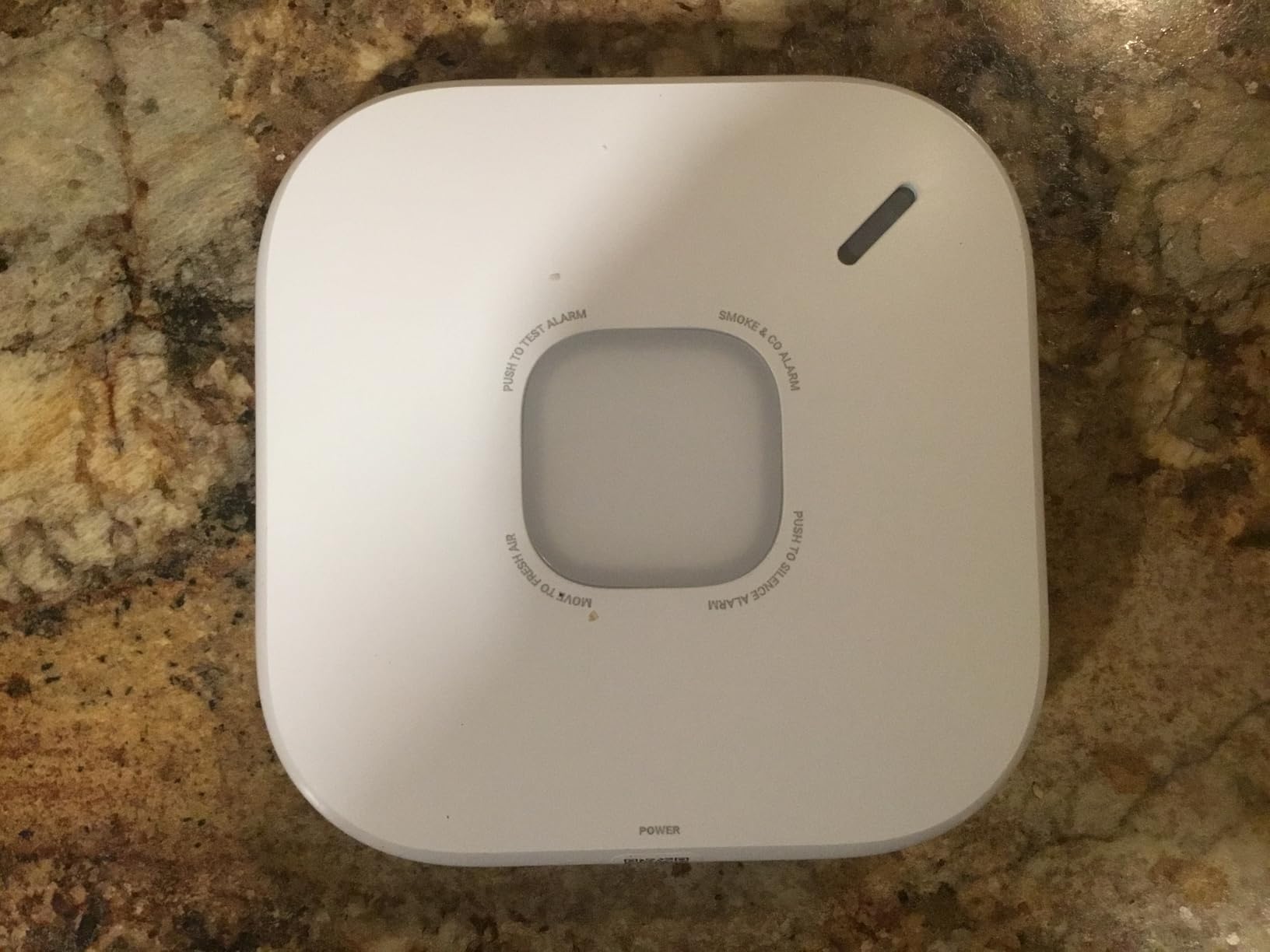
The physical argument is the strongest one. The mounting bracket is compatible with existing Nest Protect mounts, so a swap takes minutes rather than a visit from an electrician with a ladder.
What Replacing a Nest Protect Actually Involves
You unscrew the old alarm, twist the new one onto the same bracket, and scan a QR code to add it to the First Alert app. The catch is software rather than hardware: you are moving from the Nest app to a new app, and you will be re-pairing any other Nest Protect alarms you keep.
Owners coming off Nest frequently point out the loss of the path light, the small illuminated night light that guided people to the exit. If that feature mattered in your household, note that the SC5 does not replace it.
Voice Alerts That Name the Type and Location of Danger
When the alarm trips, the unit speaks a Heads-Up warning that names the type of hazard and where it is. In a two-level house at night, knowing that the announcement came from the basement rather than the hallway changes how fast a family moves.
First Alert also includes interconnect, so compatible alarms throughout the home sound together, and it pushes smoke and CO alerts to the phone through its own app. The app replaces the Nest one, which means your old routines and automations need rebuilding.
Honest Read on the 3.2 Average
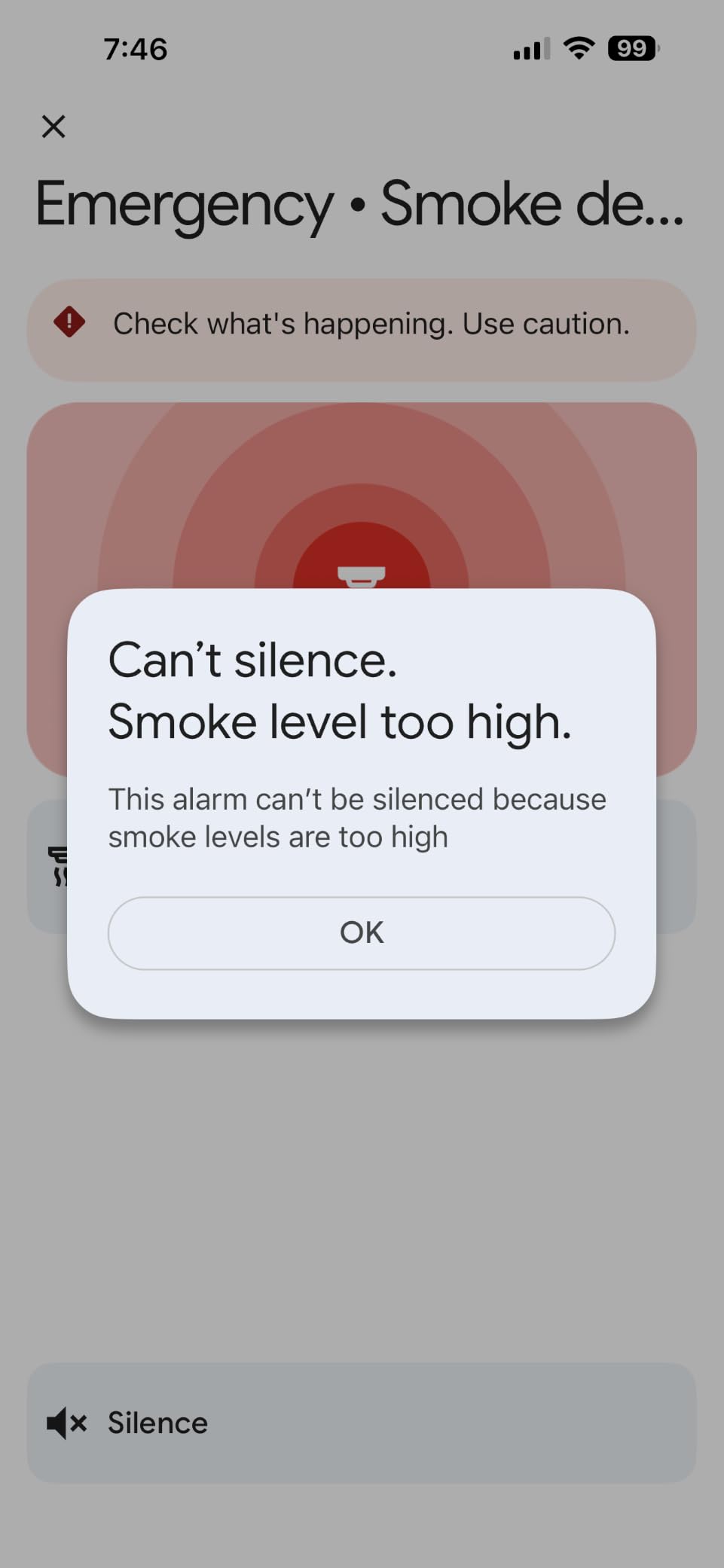
This alarm has the largest review base in our group at 586 ratings, which makes the low 3.2 average worth examining rather than dismissing. Thirty-four percent of ratings are one star, and that bucket is dominated by reliability complaints: alarms reporting smoke with none present, dropping offline, or alarming in ways that could not be silenced.
Homeowners have specifically named First Alert alongside Kidde as sources of repeated nuisance alarms since these sensor designs changed to meet the updated UL 217 standard. We treat that pattern as a real signal, and it is why this is a migration convenience pick rather than the top recommendation.
Who Should Skip This One
If you are starting from scratch rather than replacing a Nest unit, you are giving up the path light for a bulkier body and a mixed owner record. New installs are better served by the Kidde model at the top of this list or the compact eufy E10.
Nest owners, though, are choosing between a familiar bracket, an existing speaker ecosystem, and a discontinued product line. That calculus makes this the right call for a very large group of people right now.
4. Heiman S1-TM Matter over Thread Smoke Alarm – The Best Fit for Local Smart Home Automation
Heiman Smoke Detector, Matter Over Thread, with Temp&Humidity Sensor, S1-TM
Matter over Thread radio
Dual-beam photoelectric sensing
Built-in temperature and humidity
UL 217 10th edition and CSFM
Pros
- Matter over Thread keeps automation local
- Works with Apple Home and Google Home and Alexa
- Adds temperature and humidity monitoring
- UL 217 10th edition certified and CSFM listed
- One-touch test and silence with magnetic or screw mounting
Cons
- Requires a Thread Border Router many homes do not have
- Home Assistant setup needs IPv6 enabled on the hub
- No published customer ratings yet
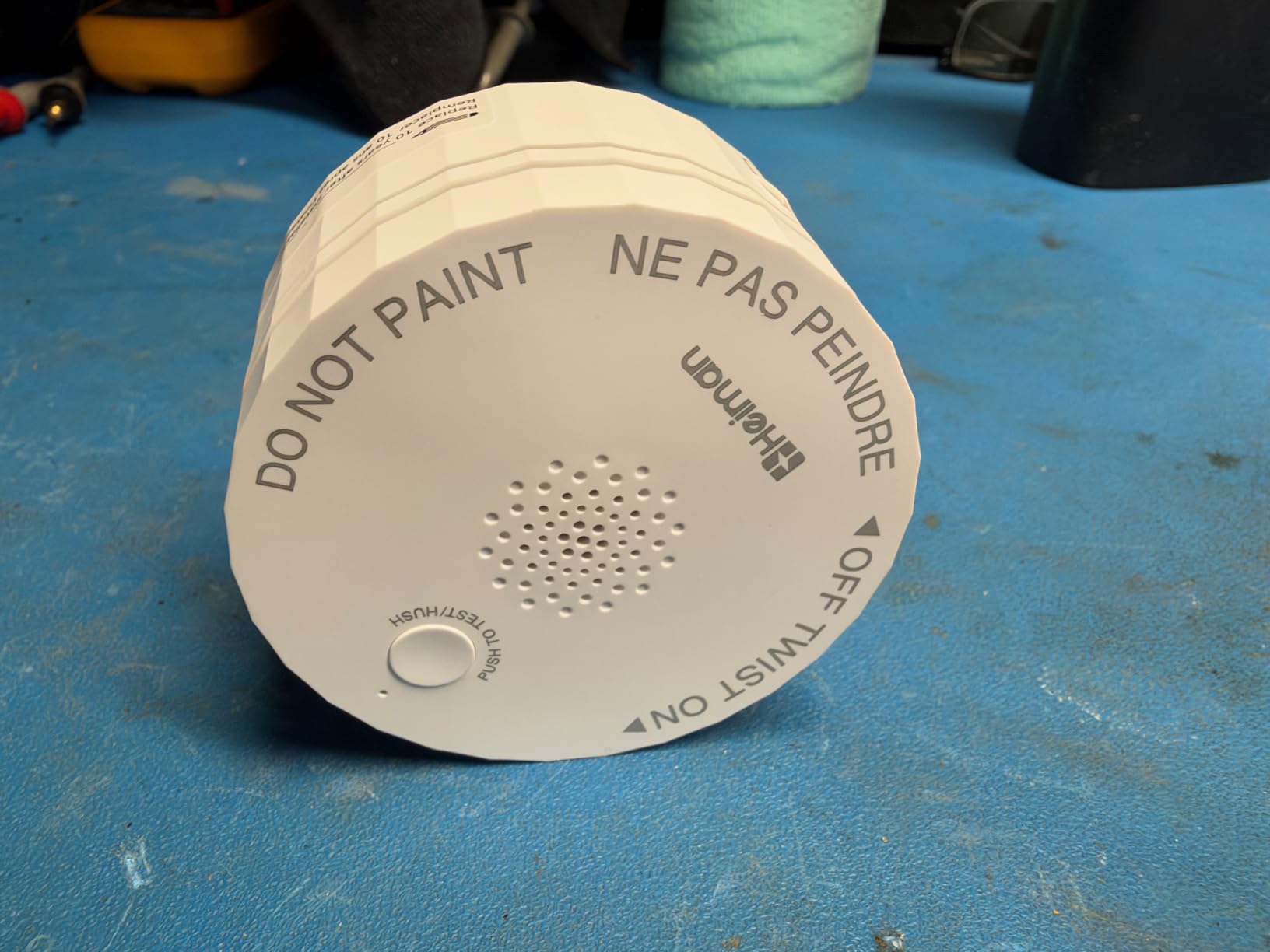
This is the only model in the lineup that speaks Matter over Thread, and that is a meaningful difference in a category where almost everything else is a proprietary Wi-Fi device tethered to one vendor’s cloud.
Thread is a low-power mesh radio, so the alarm carries no Wi-Fi radio of its own. It joins your home mesh and a Thread Border Router handles the rest, which means automations can run locally instead of round-tripping to a server somewhere else.
Ecosystem Coverage Is the Whole Argument Here
Published compatibility covers Apple Home, Google Home, Alexa, SmartThings, Homey, and Home Assistant. Supported border routers include Nest Hub second generation, Nest Hub Max, HomePod second generation, HomePod mini, Apple TV 4K, Echo fourth generation, Echo Show 8, Echo Show 10, SmartThings Hub v3, SmartThings Station, and the Aeotec Smart Home Hub.
If your home already has one of those, adding this alarm is a settings change. If you have none of them, you are buying a hub first, and that is the entire cost of entry for this approach.
Home Assistant Setup Has a Real Networking Prerequisite
Home Assistant users should know the requirement before they start. IPv6 needs to be enabled on the Home Assistant box, and the local network must not be blocking IPv6, router advertisements, or mDNS. Internet-routable IPv6 is not needed, only working local IPv6.
Get that wrong and the alarm will pair and then vanish from the dashboard. The eufy E10 in this list has a comparable setup dependency, so neither device is truly zero-configuration, but the Heiman failure mode is a network configuration issue rather than a hub purchase.
Temperature and Humidity Sensors as a Practical Bonus
Beyond smoke detection, this model reports temperature and humidity through the app. That is genuinely useful intelligence in a nursery, a basement, or anywhere you suspect seasonal moisture, and it is the kind of data that makes a sensor earn its ceiling spot.
Humidity is also the most common trigger for nuisance alarming in homes with humidifiers, vaporizers, and bathrooms. Being able to see the number when an alarm goes off helps you diagnose instead of guessing.
What We Cannot Confirm Without Owner Data
No customer ratings are published for this listing yet, so every judgment above rests on the manufacturer’s certification and feature claims rather than on owner experience. The UL 217 10th edition and CSFM listings are the reassuring part, and dual-beam photoelectric sensing is the right technology for smoldering fires.
Treat this as the forward-looking pick rather than the safe bet. If reliability history is your deciding factor, choose an alarm with hundreds of reviews behind it.
5. Heiman S1-R Interconnected Smoke Alarm 3 Pack – The Best Budget Path to Whole-Home Coverage
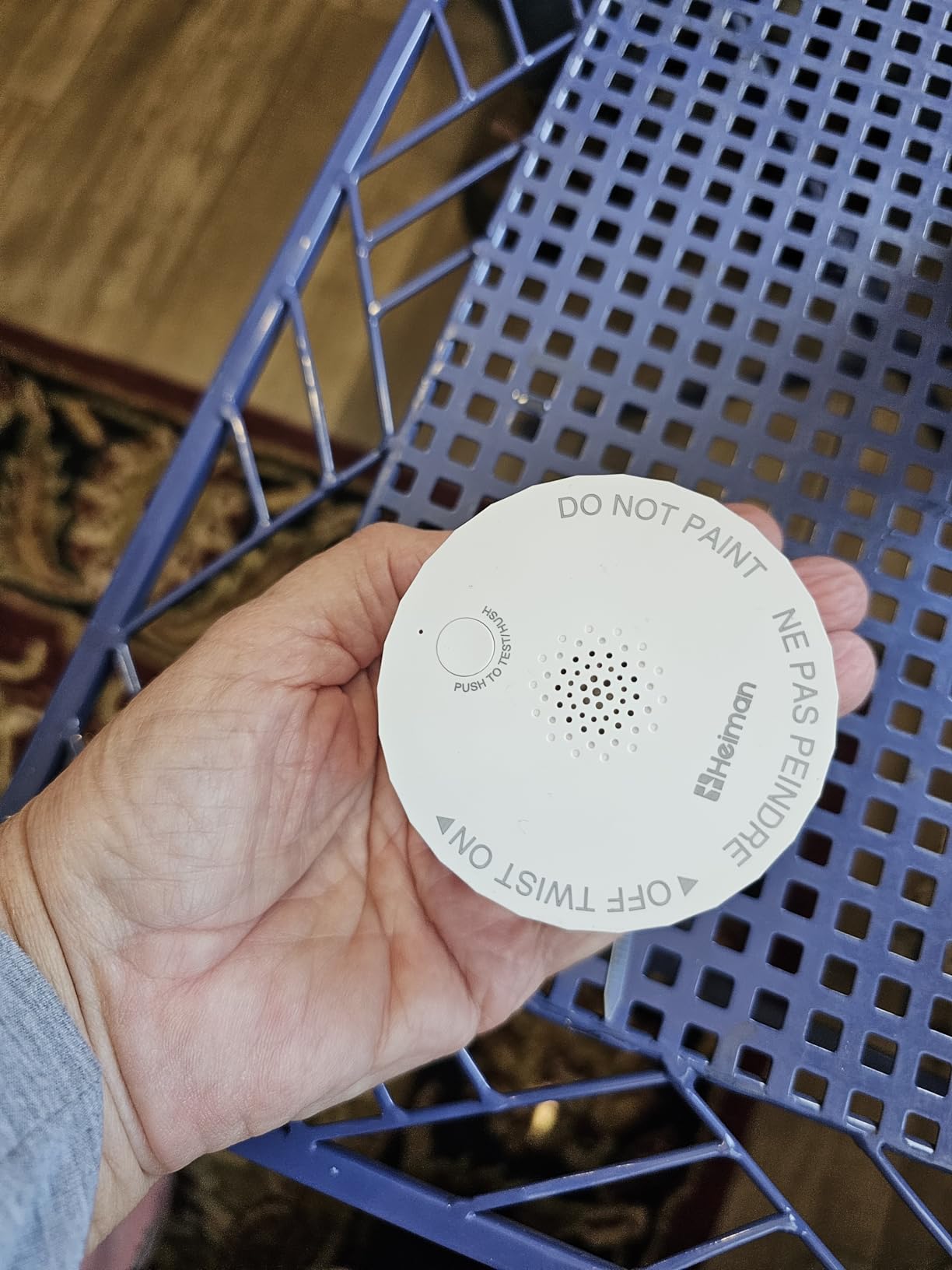
Heiman Smoke Detector, Wireless Interconnected Smoke Alarm for Home, 3 Pack
Dual-beam photoelectric
Interconnect up to 656 ft
Lithium battery, no wiring
10-minute hush
Pros
- Three alarms cover a full floor or a small home
- Pairs in roughly 30 seconds per alarm
- UL 217 10th edition certified
- Ten-minute test and silence button
- Magnetic pads or screws for quick mounting
Cons
- No app or Wi-Fi so no phone alerts
- Some sealed batteries failed well before the advertised decade
- One owner questioned whether the interconnect worked as expected
Let us be direct about what this product is. It is not a connected detector. It has no app, no Wi-Fi, and no phone alerts, and the listing now states that plainly because too many buyers assumed otherwise.
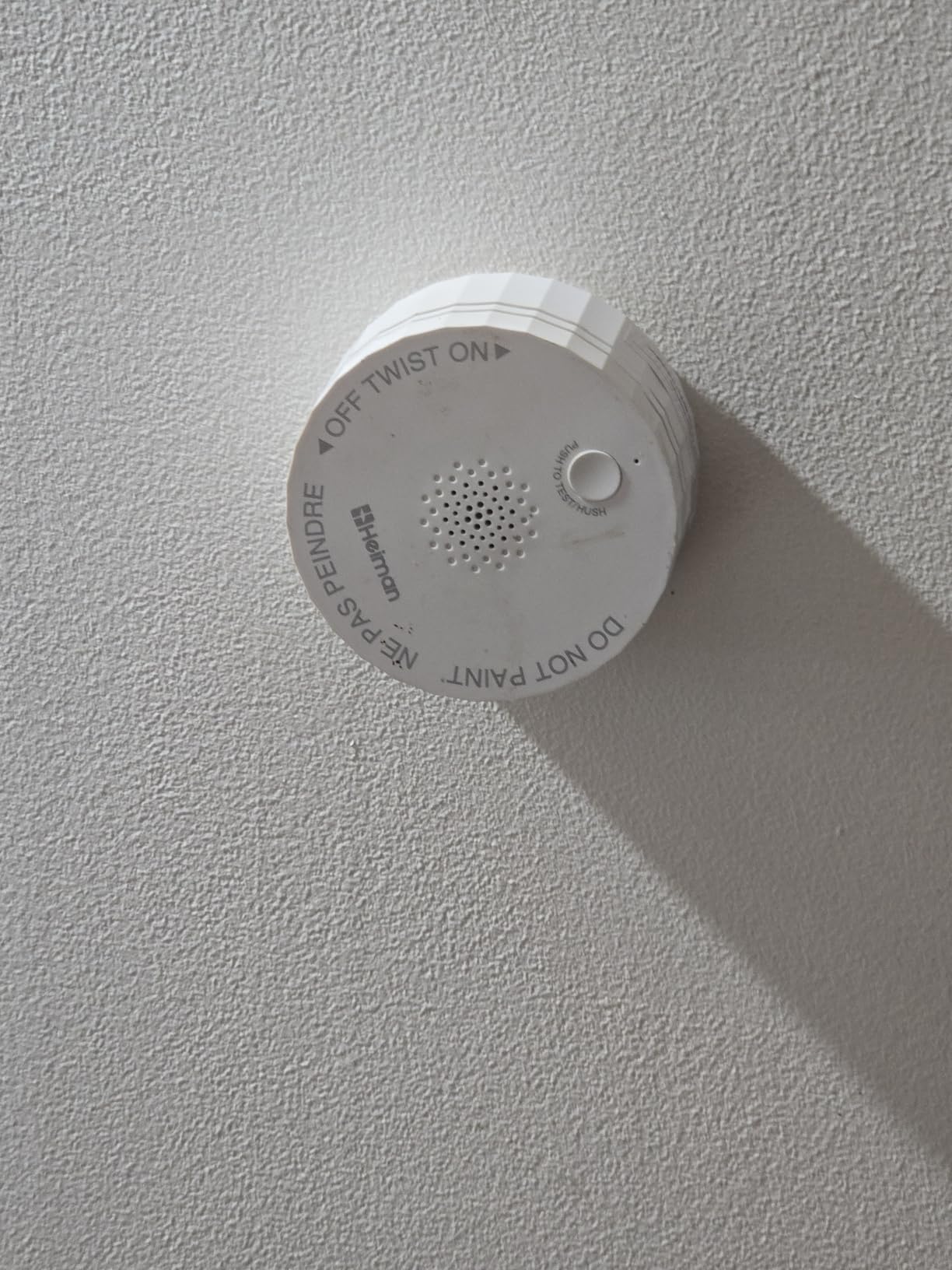
It earns its place anyway, because wireless interconnection at up to 656 feet means all three alarms sound together, which is the single feature that most improves survival odds in a house fire and the one renters are most often missing.
Interconnection Is the Feature That Actually Saves Lives
When one alarm in a closed bedroom starts sounding at 2 a.m., a sleeping household may not wake up. When the alarm in the hallway sounds at the same moment, everyone does. That is the entire argument for interconnected alarms, and it has nothing to do with apps.
Owners report that all three alarms join the network within about 30 seconds of the first one triggering. The pairing process itself takes roughly 30 seconds per alarm, and magnetic adhesive pads make mounting fast enough to do every ceiling in a rental apartment in one afternoon.
Dual-Beam Photoelectric Sensing and the Steam Problem
The dual-beam chamber reads smoke particle size and density rather than just detecting particles. That lets it tell a real smoke event from steam off a shower or aerosol from cooking, which is the mechanism behind most kitchen nuisance alarms.
The housing is ABS and PC rated UL94 V-0, meaning it is self-extinguishing, and the buzzer is rated at 85 decibels at 10 feet with LED indicators. The test and silence button holds for 10 minutes, which is long enough to clear the air and fan out a kitchen.
Where the 10-Year Battery Claim Needs Scrutiny
The manufacturer advertises a 10-year product life, and owners do report units that came close. But reviewers also report sealed batteries that failed well inside a year, so treat the decade as a best case rather than a schedule you should plan around.
UL 217 10th edition certification is genuine and is the reason this is on the list at all, and it is also the reason it is not higher on it.
How to Pair This With a Smart Layer
Plenty of smart-home users run a plain hardwired alarm and add a hub that listens for the siren, then drives lights, locks, and HVAC shutdowns from that event. Our cold smoke generator picks cover the equipment people use to test that whole chain end to end.
That approach costs less, survives vendor shutdowns, and works with any alarm. It also does not give you battery status or end-of-life warnings, which is why we still recommend a connected alarm in at least the rooms you care about most.
6. Kidde Smart Smoke Detector and Indoor Air Quality Monitor – The Best Pick for Air Quality Tracking
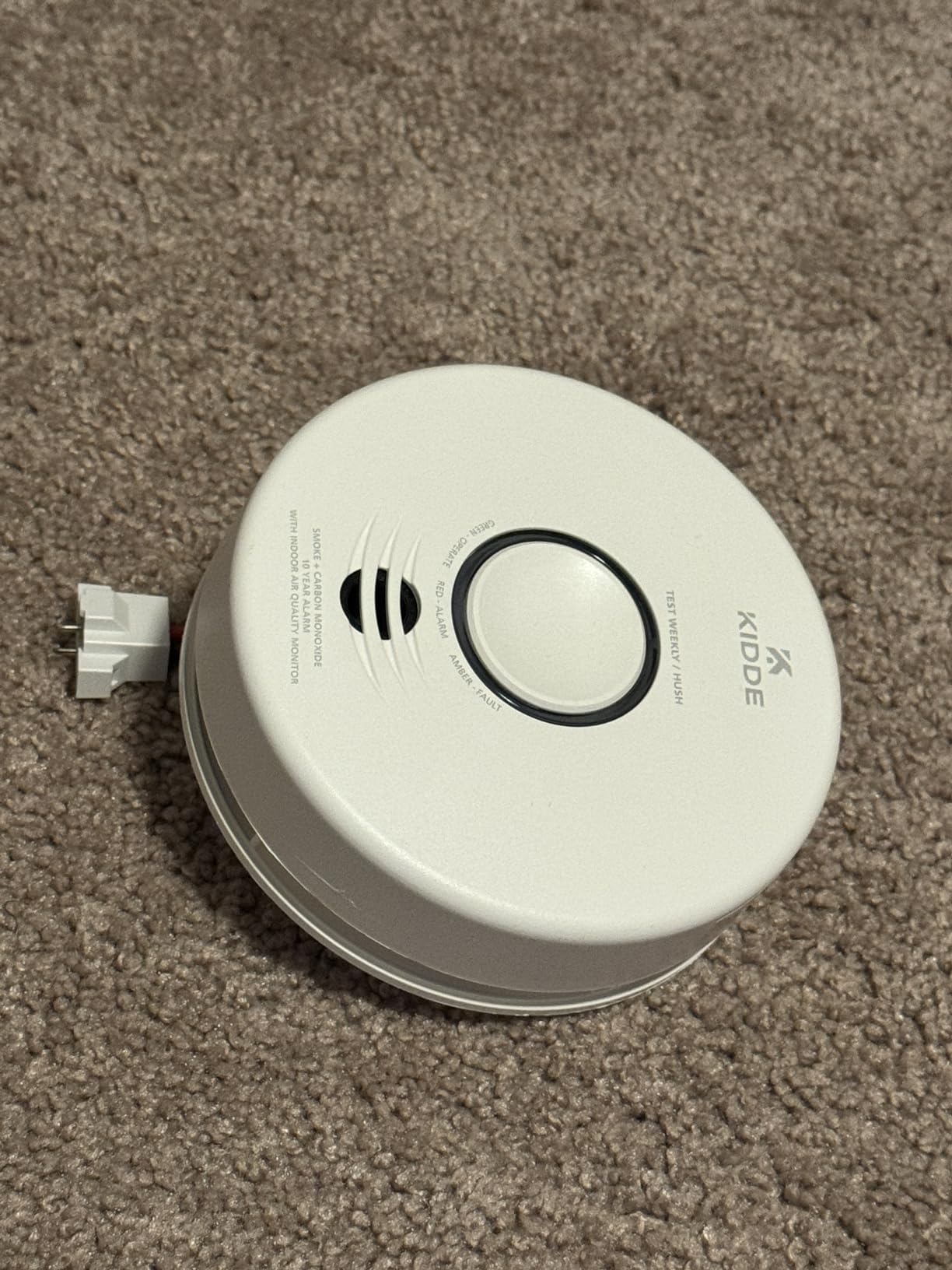
Kidde Smart Smoke Detector & Indoor Air Quality Monitor, WiFi, Alexa Compatible Device, Hardwired w/Battery Backup, Voice & App Alerts
Smoke plus TVOC and humidity
Hardwired with battery backup
85 dB alarm
10-year limited warranty
Pros
- Tracks TVOC and humidity alongside smoke
- Hardwired with battery backup for reliability
- Works with Alexa and Google Home
- Spoken hazard and end-of-life announcements
- First UL-listed smoke and air quality monitoring device
Cons
- Nuisance alarms triggered by humidity and cleaners
- Short hush window before it re-triggers
- App silencing reported slow and sometimes unreliable
Nobody else in this category measures indoor air quality, which is why this Kidde product earns a place on a list of smoke detectors. It tracks total volatile organic compounds from cleaning products, paint, and solvents, plus relative humidity, and it reports both alongside smoke status.
It is hardwired with battery backup, weighs 11.2 ounces, and carries a 10-year limited warranty from the manufacturer. The manufacturer position is that it is the first UL-listed device to combine smoke detection with indoor air quality monitoring.
What TVOC and Humidity Readings Actually Tell You
TVOC readings track the chemical off-gassing from paint, solvents, and cleaning products. A spike after painting or after a heavy cleaning session is normal, and a reading that climbs and never settles can point at a storage closet, a new sofa, or an attached garage.
Humidity is the more actionable number. The unit is rated for humidity up to 95 percent relative humidity non-condensing, and owners consistently connect nuisance alarms to humidifiers, vaporizers, and cooking. Being able to open the app and see whether humidity spiked at the moment the alarm tripped changes the diagnosis completely.
Hardwired Power With Battery Backup
Hardwired units are the more reliable choice in a finished home with existing alarm wiring, which is why fire codes tend to push in that direction. When the hardwired power is interrupted, the backup cell keeps the alarm alive and sounding.
Note the trade: installation is no longer a battery swap. If your home has no alarm wiring, this is the wrong starting point, and a battery model is the realistic path.
Voice Announcements, 85 dB Output, and Status LEDs
The speaker announces fire hazards out loud and also states Replace Alarm at end of service life, which is one of the more useful features on this list. Silence indicators are color-coded green, amber, and red, so you can read the alarm’s state from across a room during a daytime check.
The alarm output is rated at 85 decibels, the standard figure for residential smoke alarms, and it is loud enough to wake a household, as owners confirm.
The Nuisance Alarm Problem Is Real Here
Thirty percent of the 194 ratings are one star, and the complaints cluster around humidity, cleaning sprays, vaporizers, and cooking. The hush window is also short, so the unit can re-trigger before the air has cleared, and owners report the app-based silence being slow and sometimes failing outright.
Homeowners have named Kidde specifically among brands with repeated nuisance alarming since the updated sensor designs came into use. If your home runs humid, place this model away from the bathroom and kitchen and skip the vaporizer nearby, or choose one of the photoelectric-focused models above.
How to Choose a Smart Smoke Detector in 2026
Certification comes first, then power source, then sensor, then app features. Get the order right and the rest of the decision is straightforward. Get it backwards and you end up with a beautiful connected device that fails on the one thing you bought it for.
UL 217, UL 2034, and NRTL Certification Are the First Filter
UL 217 is the standard for residential smoke alarms, and the 10th edition is the current version written for homes full of synthetic furnishings. UL 2034 covers residential carbon monoxide alarms. A Nationally Recognized Testing Laboratory listing means an independent lab verified both safety and listed performance, which is the distinction that separates a certified alarm from a badge printed on a box.
All six models in this roundup carry a UL 217 listing. If you see a connected smoke alarm without one, walk away regardless of how good the app looks. Buyers in homeowner forums are consistent on this point: uncertified brands are rejected outright, and that instinct is correct.
Photoelectric vs Ionization vs Dual-Sensor
A photoelectric sensor detects light scattering from smoke particles, which makes it the right chamber for smoldering fires, the slow-burning kind that produce the most smoke and the most fatalities. An ionization sensor detects changes in ionized air between charged plates and reacts faster to fast-flaming fires, but it is far more sensitive to cooking aerosol and steam, which is why kitchen ionization alarms became notorious for nuisance events.
Firefighters and fire marshal guidance generally favors photoelectric sensing near living spaces and kitchens, with ionization or dual-sensor alarms still useful for faster flame response. Every connected model in this list is photoelectric or photoelectric-based, which is the direction the category has moved.
Here is the catch that nobody in this category will tell you plainly: there is currently no smart dual-sensor alarm on the market, meaning no connected unit combines photoelectric and ionization sensing. If you go connected-only, you are accepting photoelectric-only coverage across the whole house. That is a legitimate choice, and for most homes the reduced nuisance alarming is worth it, but it is a real gap in coverage rather than a technicality.
Hardwired vs Battery: What the Code Actually Says
Hardwired alarms with battery backup are generally more reliable. NFPA 72 data cited in industry testing shows hardwired alarms working in about 94 percent of house fires against roughly 85 percent for battery-only alarms, and a large share of fire deaths occur in homes relying on batteries alone.
Local rules vary, and this is where most of the confusion comes from. Many jurisdictions require hardwired and interconnected alarms in new construction, while renters and existing homes frequently keep battery units, and state-by-state requirements differ. Check your local fire marshal’s guidance before you plan an install, because the required device and the required placement are not always the ones you would choose.
For renters, a battery model is the only realistic option, and a sealed lithium battery removes the most common failure mode in battery alarms, which is an alarm that was silenced and never restored.
App Hush, Interconnect, and What Happens When the Internet Is Down
Two features decide whether a connected alarm is actually pleasant to live with. App hush lets you silence a cooking nuisance alarm from a phone instead of standing on a chair with a broom handle, and interconnection makes every alarm in the home sound when one detects smoke.
Ask what still works offline. A local 85-decibel siren and local interconnect should work regardless of connectivity, and anything beyond that depends on the vendor. This matters more than it sounds, because the failure mode of a cloud-dependent device is that the one moment you need the alert is the moment the network is down.
Total Cost of Ownership Over Ten Years
Count the whole decade, not the first purchase. Battery alarms need replacement cells or whole-alarm swaps on a cycle, hardwired models need a qualified install, hub-based systems add a hub and possible firmware constraints, and any professional monitoring tier is a recurring charge that compounds across a ten-year life.
The counterweight is that professional monitoring dispatches someone when you are not there, which for a rental property, a second home, or an elderly relative living alone can be the reason you bought a connected alarm at all. Decide which side of that trade you are on before you pick a device.
Are Smart Smoke Detectors Worth It?
Yes, when you are away from home when fires start, which for a second home, a rental, or a property occupied by someone who may not hear an alarm is most of the time. You get an alert while the fire is still small, you can call a neighbor or the fire department directly, and in at least one documented homeowner case the person shut off the main breaker before responders arrived.
No, when you are home all day on a single level with a working interconnect. In that scenario the smart features add app permissions, a cloud dependency, and a subscription decision in exchange for convenience you will use twice a year. Many experienced smart-home builders skip them, pairing a plain hardwired dual-sensor alarm with a hub that listens for the siren.
My rule: put connected alarms where you are not, and keep plain listed alarms everywhere else.
What Replaced the Nest Protect, and Should You Wait or Buy Now
Nest Protect is discontinued, and owners with a unit approaching its ten-year end-of-life date have no direct successor inside their own ecosystem. That leaves a real gap, and it is the single most common migration question in homeowner forums right now.
Three paths exist today. The First Alert SC5 uses the existing Nest Protect mounting bracket, which makes the physical swap trivial, though you move to a different app. The Kidde Ring-enabled model starts fresh on Ring infrastructure. The Heiman Matter model moves you to an open standard rather than another closed cloud.
Do not wait on a successor that has not been announced. Verify the UL 217 listing on whatever you choose, and confirm the bracket and wiring situation in your own home before ordering, because a bracket mismatch is the difference between a ten-minute install and a wall repair.
How We Evaluated These Six Detectors
We read certification listings before reading marketing copy, and that order decided most of this list. Every model had to carry a UL 217 listing, and combo models also needed a UL 2034 listing for the carbon monoxide side.
From there we compared power source, sensor type, whether interconnection works with plain non-smart alarms, whether a hub is required, what still functions when the internet is down, and how a nuisance alarm gets silenced. Owner review distributions carried real weight, particularly the share of one-star ratings, because a large one-star bucket is usually reliability rather than taste.
We did not measure detection speed ourselves. Where a brand publishes a figure, such as the Kidde claim of more than 25 percent faster smoke detection in internal testing, we label it as a manufacturer claim rather than presenting it as independent data.
One honest limitation: the Heiman S1-TM has no published owner ratings yet, so its position here rests on certification and specification rather than on lived experience. We included it because Matter and Thread coverage is a genuine gap in this category, and flagged it as the early-adopter choice rather than the safe one.
How Many Alarms You Need and Where to Put Them
Most homes are under-protected, and the fix is usually more alarms rather than better ones. Interior alarms on every level, in every bedroom, and outside sleeping areas is the standard expectation, plus alarms in the garage, attic, and any area with a sleeping space.
- Install one alarm inside every bedroom, on the ceiling or on the wall near it.
- Install one alarm in every other sleeping room and outside each sleeping area.
- Install alarms on every level, including finished basements and attics.
- Keep smoke alarms at least 10 feet from a cooking appliance to reduce nuisance alarms.
- On a ceiling, mount the alarm at least 4 inches away from a wall or ceiling junction point.
- On a wall, place the alarm between 4 and 12 inches below the ceiling, following the manufacturer’s instructions.
- Interconnect the alarms so one trigger sounds the whole home.
- Test every alarm monthly, and replace any alarm that reaches its end-of-life date.
Our own testing setup draws on the same tools the fire safety industry uses. If you want to verify a chain end to end, our cold smoke generator guide explains how professionals introduce a known smoke concentration to an installed alarm.
Fixing Nuisance and False Alarms
A nuisance alarm is a safety device telling you it does not believe you. The pattern in owner reports is consistent, and most of it comes down to dust, humidity, insects, and placement rather than a defective alarm.
Clean the Chamber Every Six Months
Dust accumulates in the sensing chamber and raises the baseline the alarm measures against. Vacuum the vents gently with a soft brush attachment, and never use a wet cloth or a compressed air canister, since both can damage the chamber or force moisture into the housing.
Control Humidity Before You Blame the Alarm
Bathrooms, humidifiers, vaporizers, laundry rooms, and dehumidifier exhaust all raise local humidity. If your alarm is in or near one of those, move it. The 2 a.m. alarms that drive people to rip detectors off the ceiling are usually a humidifier running in the same room.
Look for Insects Near the Indicator LED
Small insects are drawn to the blinking status light and can crawl into the chamber. A fly swatter and a gentle vacuum pass clear most of it, and a screen over the vents helps in regions where this is a yearly problem.
Reconsider Kitchen Placement and Hush Windows
Cooking aerosol is the single largest source of nuisance alarms, which is why code asks for 10 feet of separation from cooking appliances. If your detector sits closer, use the hush button immediately rather than waiting, since a short hush window means it will re-trigger if the air does not clear.
Test Monthly and Replace on Schedule
Use the test button on each alarm once a month and confirm the app receives the event. When an app-based hush fails, the physical button should still work, and an alarm that can only be silenced by removing the battery is a design failure worth reporting to the manufacturer.
Frequently Asked Questions
What is the best smart home smoke detector?
The best smart smoke detector for most homes is the u003cstrongu003eKidde Smart Smoke and CO Detector with Ringu003c/strongu003e. It detects smoke and carbon monoxide, sends phone alerts through the Ring app with no subscription required, runs on two AA batteries with no wiring, and interconnects wirelessly with other compatible alarms. It holds a 4.3 average across 426 ratings. The best rated unit is the u003cstrongu003eeufy Security Smoke Alarm E10u003c/strongu003e at 4.4, which needs an eufy HomeBase hub, and the fastest option for existing Nest Protect owners is the u003cstrongu003eFirst Alert SC5u003c/strongu003e, which fits the current mounting bracket.
Is it worth getting a smart smoke detector?
It is worth it when you are away from home when fires start, which covers second homes, rental properties, cabins, and homes occupied by someone who may not hear an alarm. You get a phone alert while the fire is still small. In a home you never leave, the benefit is smaller, because the local 85-decibel siren and interconnect already do the work. Account for the full ten years: replacement batteries or units, a hub for some models, and any professional monitoring charge add up before you decide.
What smoke detectors do firemen recommend?
Firefighters generally favor u003cstrongu003ephotoelectric sensingu003c/strongu003e in living areas and kitchens because it responds to smoldering fires, the slow-burning kind that produce the most smoke and the most fatalities, and it produces far fewer nuisance alarms than ionization sensing around cooking. Hardwired interconnection is also widely recommended, since hardwired alarms work in roughly 94 percent of house fires compared with about 85 percent for battery-only alarms. Always confirm that any unit carries a UL 217 listing from a Nationally Recognized Testing Laboratory.
Which type of smoke detector is best for residential homes?
For most homes the best choice is a u003cstrongu003eUL-listed photoelectric alarm on every level, in every bedroom, and outside sleeping areasu003c/strongu003e, interconnected so one trigger sounds the entire house, with hardwired power plus battery backup where existing wiring allows. Dual-sensor photoelectric and ionization units still have a place for fast flame response, but no dual-sensor smart alarm currently exists, so a connected-only home runs on photoelectric coverage. Carbon monoxide alarms belong anywhere you have a fuel-burning appliance, a fireplace, or an attached garage.
Do smart smoke detectors need to be hardwired, and can they work with my existing alarms?
No. Battery-powered smart detectors install in minutes with no wiring, which is why most renters and most retrofits start there. Hardwired models with battery backup are more reliable and are required in some jurisdictions, so check your local fire marshal before planning an install. Kidde and First Alert alarms both interconnect with compatible hardwired alarms, meaning you can mix connected and plain alarms in one home and still get the full network behavior when smoke is detected.
Which Smart Smoke Detector Should You Buy in 2026?
If you want the best smart smoke detectors for homes in one decision, start with the Kidde Smart Smoke and CO Detector with Ring. It needs no hub, no wiring, and no paid tier for the alerts that matter, and its 426 reviews at a 4.3 average are the most proven combination of features and owner satisfaction here.
Choose the eufy Security Smoke Alarm E10 if appearance matters, you run other eufy security hardware, and you can accept the HomeBase hub requirement. It has the highest rating in the group at 4.4 and the smallest footprint at 70 mm.
Choose the First Alert SC5 if you are replacing Nest Protects at end of life and want the existing mounting bracket. Read the nuisance alarm complaints first and decide whether the migration convenience is worth it for your household.
Choose the Heiman S1-TM if you run Matter or Thread and want local automation across Apple Home, Google Home, Alexa, SmartThings, Homey, or Home Assistant. It has no owner history yet, so treat it as an early-adopter choice.
Choose the Heiman S1-R 3 pack if you need cheap whole-floor interconnection in a rental or apartment and can accept that there is no app. Choose the Kidde Smart Smoke and Indoor Air Quality Monitor if tracking TVOC and humidity is worth dealing with a short hush window.
Whatever you choose, verify the UL listing before you buy, place alarms on every level and inside every bedroom, and test them monthly.
Leave a Reply