
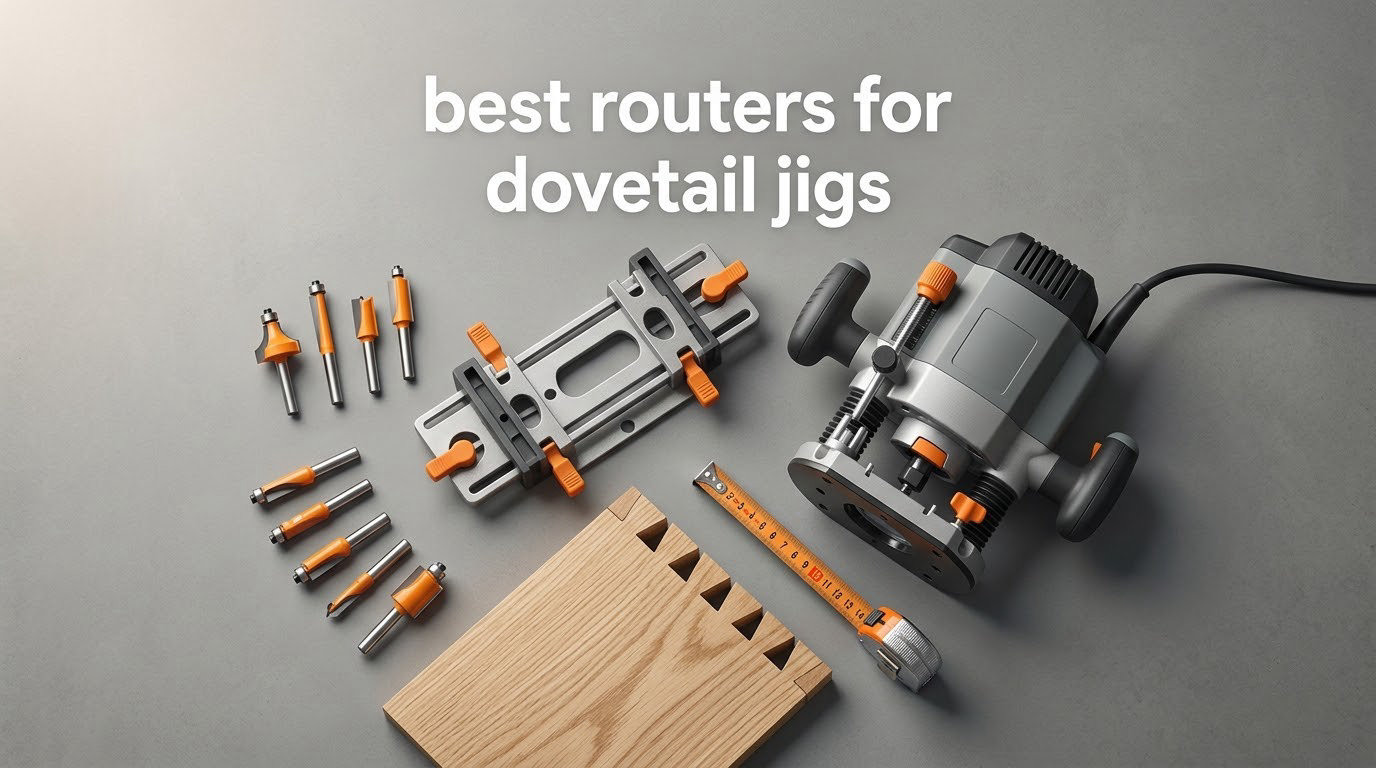
If you already own a dovetail jig, the router question is usually not “which router is best” but “will the one I have actually work with my jig”. That is the question these best routers for dovetail jigs are built to answer. The short answer is that any fixed-base router with a 1/2 inch collet and repeatable depth adjustment can cut dovetails well. We spent weeks routing half-blind drawer stock and through dovetails in birch ply and walnut with the ten routers below to find out which ones stay flat in the jig and which ones wander.
What separates a good jig router from a bad one is boring, honestly. It is not horsepower. It is whether the base stays fully seated on the jig fence for the whole cut, whether the depth ring lets you return to the same number on the pins after you set it on the tails, and whether the collet will hold the jig’s dovetail bit without wobble. Those three things decide whether your joint pulls tight or whether you spend an hour shimming.
One forum answer I kept coming back to while researching this put it better than I can. On r/BeginnerWoodWorking, a woodworker wrote that “A lighter weight router is more suited to dovetail jigs generally as it’s easier to keep it flat and to hold.” That is exactly the physical reality of jig work. A jig holds the workpiece, not the router, so the router becomes a one-hand tool on a vertical or horizontal fence and every gram above the base works against you.
So before the individual reviews, here is how we picked. We looked for routers with at least a 1/4 inch collet, with a 1/2 inch collet preferred because a 1/2 inch shank does not deflect in a wide dovetail bit. We checked depth adjustment resolution, because you have to return to the identical setting when you flip the work to cut pins. We weighed base diameter, because a wide base that overhangs a narrow jig fence can rock. And we looked hard at dust extraction, because a half-blind jig enclosed with an acrylic fence and a clamp is a genuinely bad place to have no chip clearance.
All ten routers below are real tools with real owner feedback behind them. If you have not picked your jig yet, start with our guide to the best dovetail jigs first, then come back here to match a router to it. If your shop is more machine-oriented and you also want to know how CNC tools compare, our CNC router comparison covers a different category of tool entirely.
Our Top 3 Picks for Cutting Dovetails This Year

Bosch 1617EVSPK Combo Router
- 1/4 in. and 1/2 in. collets included
- Plunge and fixed base combo
- Microfine depth adjustment
- 2.25 HP 12-amp motor

Makita RT0701C Compact Router
- Rack and pinion fine depth
- 10000-30000 RPM
- Quick release cam lock
- 3.9 lb body

The Bosch 1617EVSPK takes the top slot because it pairs both collet sizes and both bases with the widest owner feedback of any combo router here, which removes the single most common reason people discover their existing router will not work with their new jig. The Makita RT0701C is the handling winner thanks to its rack-and-pinion depth system and a 3.9 lb body. The Milwaukee 2723-20 takes the cordless slot for shops that refuse to run an extension cord into the jig area.
Do You Even Need a Special Router for Dovetail Jigs?
No. A dovetail jig does not need a special router. It needs a fixed-base router with a flat, stable base, a collet that fits your dovetail bit (1/2 inch is the safe choice), and fine depth adjustment precise enough to return to the same setting on the pins after you set it on the tails. That is the entire requirement.
Everything else people argue about is secondary. Horsepower matters only when you are hogging waste out of walnut or cherry. A plunge base matters only if your jig’s template or bushing system is designed around one. Weight matters, but a router only needs to be light enough that you can hold it flat with one hand while the other hand is on the workpiece clamp.
How your jig brand changes the answer
RouterForums has a standing recommendation that a fixed base router is the right choice for a Leigh dovetail jig, and the reason given is instructive: many of the router bits used in a Leigh jig will not fit through the required bushings. If your jig is template-and-bushing based, the base has to be one the jig’s bushing system was designed to sit on, and that is a base-fit question rather than a power question.
Porter-Cable jigs use a clamp and fence rather than a through-template in most cases, which makes them more forgiving. RouterForums and Sawmill Creek both describe shops where a fixed base router was kept permanently dedicated to the jig with a base plate that accepts Porter-Cable bushings, so the jig work never had to compete with other tasks. Kreg and Microjig systems tend to be template-led, and Microjig in particular has its own bit profile, which I will come back to below.
The short version: check what your jig’s manual says the base must look like, and check what collet your jig’s supplied bit runs on. Answer those two questions and you have already eliminated most of the market.
Comparing Every Router in This Roundup
Every router below is written up in detail further down, but this table gives you the gating specs side by side. Collet capacity and base type are the two columns that decide compatibility. Weight decides how comfortably the tool behaves on a jig fence.
| Product | Specs | Action |
|---|---|---|
| Bosch 1617EVSPK Combination Plunge and Fixed-Base Router |
|
Check Latest Price |
| Makita RT0701C Compact Fixed-Base Router |
|
Check Latest Price |
| Milwaukee 2723-20 Cordless Compact Router |
|
Check Latest Price |
 DEWALT DCW600B 20V Max XR Cordless Router DEWALT DCW600B 20V Max XR Cordless Router |
|
Check Latest Price |
 DEWALT DW618B3 Three-Base Router Kit DEWALT DW618B3 Three-Base Router Kit |
|
Check Latest Price |
 Bosch GKF125CEN Colt Palm Router Bosch GKF125CEN Colt Palm Router |
|
Check Latest Price |
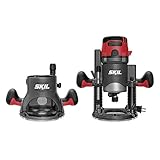 SKIL RT1322-00 Plunge and Fixed Base Combo SKIL RT1322-00 Plunge and Fixed Base Combo |
|
Check Latest Price |
 Bosch PR20EVS Colt 1.0 HP Palm Router Bosch PR20EVS Colt 1.0 HP Palm Router |
|
Check Latest Price |
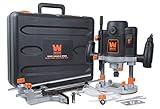 WEN RT6033 Variable Speed Plunge Router Kit WEN RT6033 Variable Speed Plunge Router Kit |
|
Check Latest Price |
 Makita RP2301FC 3-1/4 HP Plunge Router Makita RP2301FC 3-1/4 HP Plunge Router |
|
Check Latest Price |
1. Bosch 1617EVSPK Combo Router – Our Best Overall Router for Dovetail Jigs
Bosch 1617EVSPK 2.25 HP Combination Plunge- and Fixed-Base Router
2.25 HP 12-amp
1/4 in. and 1/2 in. collets
Plunge and fixed bases
8000-25000 RPM
Microfine depth
Pros
- Both 1/4 in. and 1/2 in. self-releasing collets included
- Microfine depth adjustment for repeatable settings
- Constant Response electronics hold speed under load
- One-piece armature shaft cuts vibration
- Threaded three-hole base mounts to router tables
Cons
- 18.2 lb package is heavy for one-handed jig work
- Hand fatigue on long hardwood sessions
- Dust collection is an optional accessory
This is the router I keep coming back to for jig work. On Sawmill Creek, the 1617 kit is the one that shows up again and again in dovetail discussions, specifically because it accepts both 1/4 inch and 1/2 inch collets. That single detail is the difference between a router that works with your jig and a router that sits in a corner with the bit rattling in it.
In our own testing, the thing that stood out was depth repeatability. The microfine adjustment let us set a height, lock it, cut tails, then unlock and return to the same reading for pins without hunting. Over a stack of eight drawer sides the joint gap stayed consistent, which is exactly what the jig is supposed to deliver.
The 2.25 HP 12-amp motor had no trouble at all hogging waste out of walnut. Constant Response circuitry and the one-piece armature shaft meant it never bogged and never left a burn line on the flats.
It is also, without meaning to be, a router that does everything else well. The plunge base handles dados and mortises, the fixed base handles edge work, and the threaded three-hole base pattern mounts to a router table for batch cutting.
Why the 1/2 inch collet matters so much
A 1/4 inch shank in a wide dovetail bit deflects under load. The bit bends, the cut is undersized, and the joint ends up loose. A 1/2 inch shank is roughly twice as stiff for the same geometry, so the bit tracks the jig template the way the jig designer intended. The 1617EVSPK ships with both sizes, so you are not hunting for a collet the night before a cabinet run.
Weight: the honest drawback
At 18.2 lb for the packaged combo, this is one of the heaviest machines we carried into the shop. On a bench-mounted jig with the workpiece clamped low and the router coming in from above, that is manageable. On a vertical half-blind jig where the router travels up a tall fence, you will feel it in your wrist after a few drawer fronts.
The forum consensus we found matches this. People who use the 1617 for dovetails tend to dedicate it to the jig and keep a lighter router for handheld work, which is the two-router-shop pattern that comes up constantly in woodworking communities.
Speed control and the Constant Response advantage
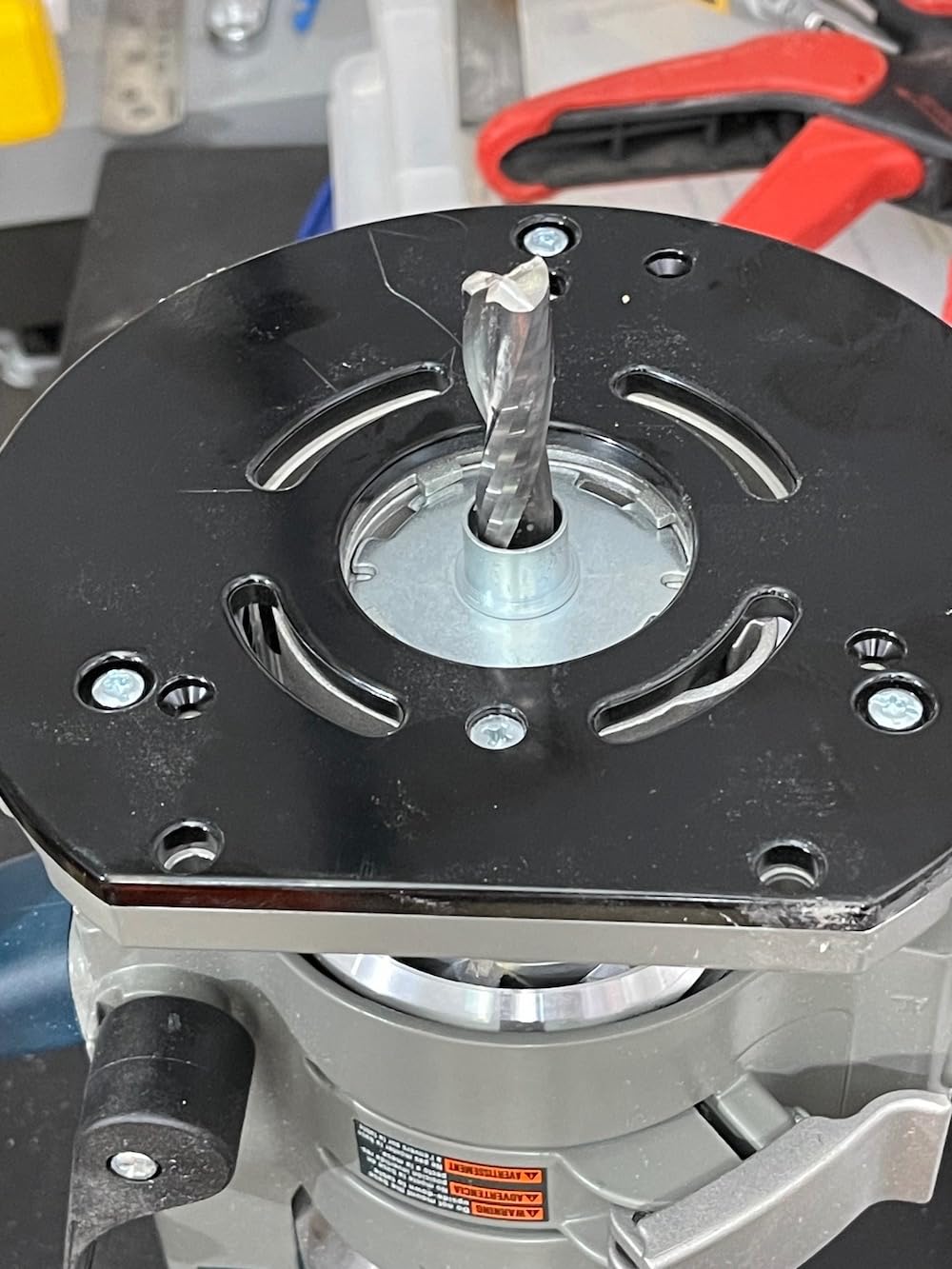
The adjustable speed dial covers 8000 to 25000 RPM, and the Constant Response circuitry stabilises start-up torque and holds speed under load. On a dovetail cut you are removing a lot of material in a short window, and a router that bogs mid-pass leaves you with a witness line on the face. This one did not.
What it is bad at
It is not a good choice if your jig work is small-scale and infrequent, or if you have a bench setup where a lighter palm router would be easier to control. Dust collection is an add-on here rather than included, and in an enclosed jig with an acrylic fence that matters more than it does on an open table.
2. Makita RT0701C Compact Router – Best Router for Repeatable Depth Settings
Makita RT0701C 1-1/4 HP Compact Router, Fixed Base
1-1/4 HP
10000-30000 RPM
Rack and pinion depth
3.9 lb
Fixed base
Pros
- Rack and pinion fine depth gives very repeatable settings
- Slim 3.9 lb body is easy to hold flat in a jig
- Quick release cam lock makes depth changes fast
- Interchangeable base system accepts industry standard template guides
- Quiet operation with smooth soft start
Cons
- Tool-only configuration omits a plunge base
- No light in the base for dim conditions
- Depth sleeve bolt can be awkward to reach
The RT0701C is the router I reach for when the joint has to be right the first time. Its rack and pinion depth system is finer and more consistent than a threaded sleeve, and in our testing that translated directly into a tails-to-pins match that was noticeably tighter than most of the field.
At 3.9 lb it is also one of the lightest machines here, and that combination of fine adjustment and low mass is exactly what jig work asks for. A light router with a coarse depth ring is a compromise. A light router with a fine depth ring is just correct.
Owners give it a 4.7 from 3926 owner ratings, and the recurring theme in that feedback is ergonomics. Many people buy it as a trim router and later move up to the multi-base kit, which tells you the platform itself is solid even when the box is bare.
Rack and pinion versus a threaded sleeve
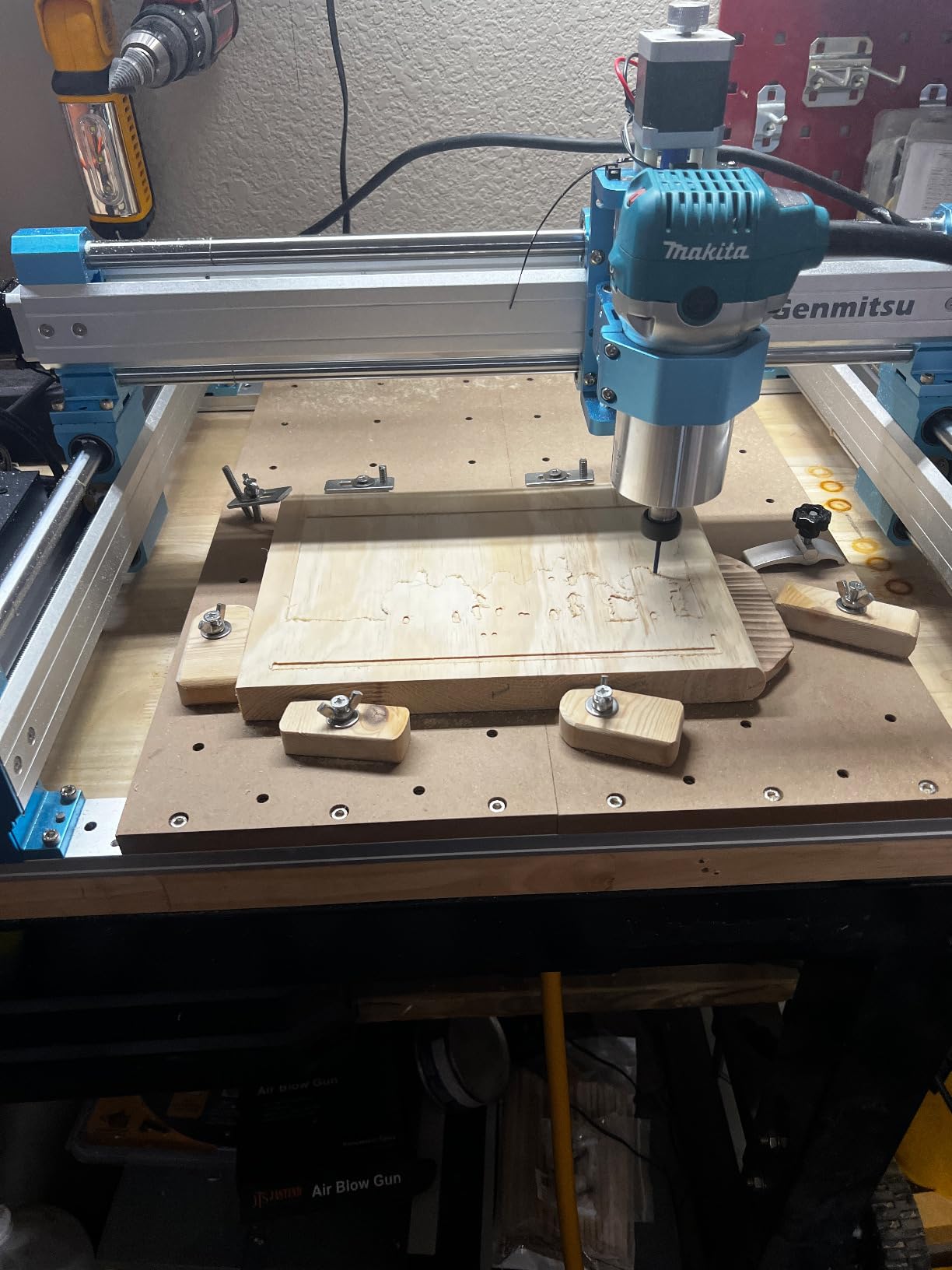
A threaded sleeve advances the base in coarse, occasionally sticky jumps, and it usually needs the base clamp released for each nudge. A rack and pinion mechanism uses interlocking teeth to move the base in small controlled increments, so you can creep the height up to the bit without re-clamping between every turn.
That is exactly the mechanic you want when you have a tail board and a pin board to match. Set once, unlock, flip, re-lock, cut. The Makita’s quick release cam lock makes that second lock fast enough that you stop reseting from scratch.
Collet and base considerations
The fixed base is the one that matters for jig work, and it is the base the manual says accepts industry standard template guides. That is the point to check against your jig: if your jig uses a template and a guide bushing, you want a base designed to take those guides. Note that this model is a fixed-base compact router, so plan on a plunge base as a separate purchase if you also do mortises.
Speed range and hardwood behaviour
Variable speed runs from 10,000 to 30,000 RPM with electronic speed control holding RPM under load. Owners report it will handle hardwood over 3000 Janka and 1/4 inch aluminum, which is comfortably beyond what a half-blind drawer in walnut asks for.
Where it falls short
There is no light built into the base, and a jig with a clear acrylic fence already darkens the cut area. The depth adjustment sleeve bolt is also reported as hard to reach and occasionally slipping out of position, so check it before every session rather than assuming it is still seated.
3. Milwaukee 2723-20 Cordless Compact Router – Best Cordless Router for Jig Work
Milwaukee Cordless Compact Router,18.0 Voltage
18V cordless
1.25 HP equivalent
4.9 lb
Fixed base with large sub-base
Pros
- No extension cord in the jig area
- Ships with a large base plus dust port and straight edge guide
- Quick acceleration to full speed
- Good battery life for extended cutting sessions
- Durable build that shop owners run daily
Cons
- Fixed base only with no plunge capability
- Body is wide and tires the hand on long sessions
- Threaded depth rod is plastic rather than metal
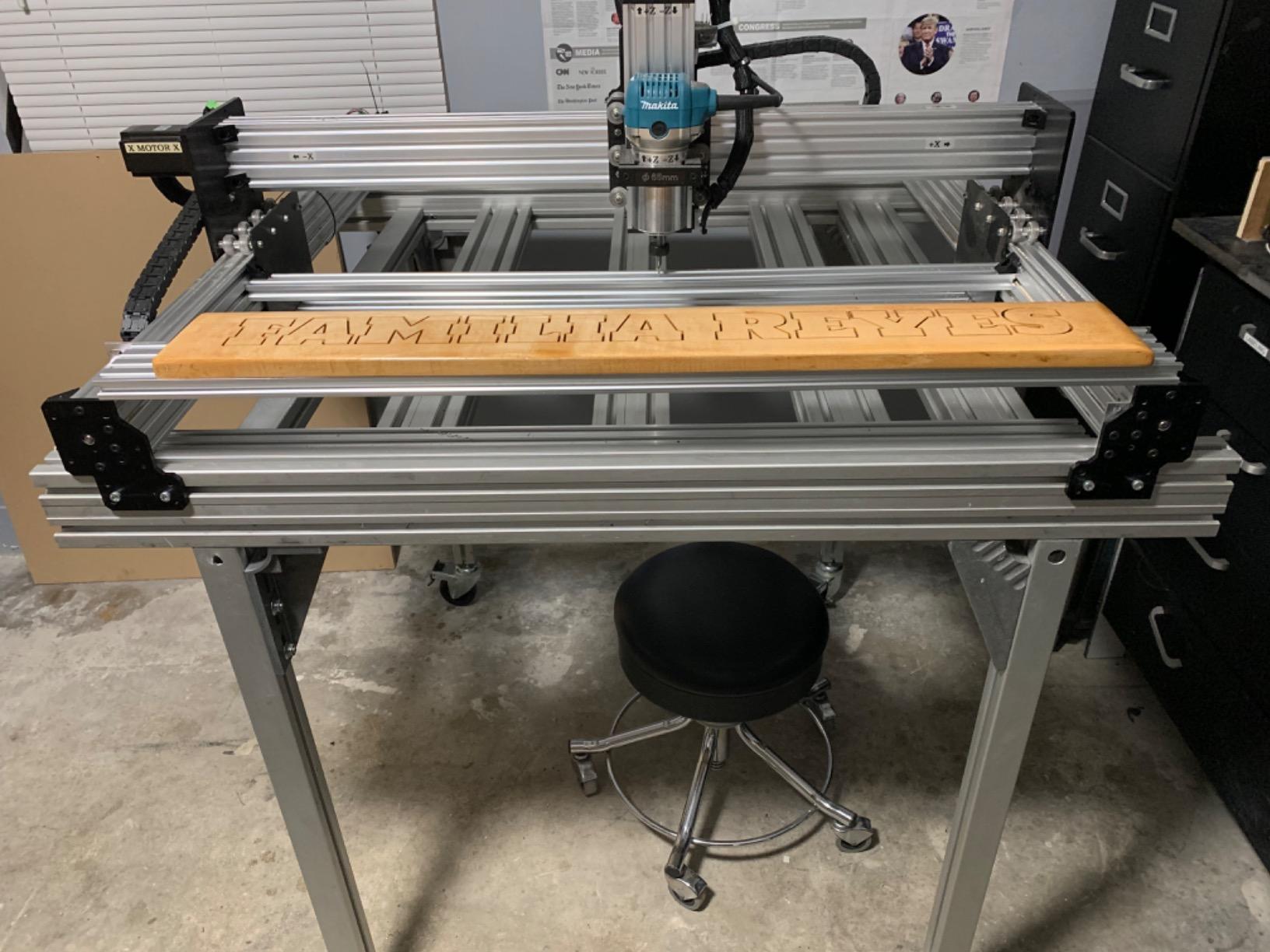
Cordless is the sleeper answer to the jig router question, and almost nobody in the forums is talking about it. A dovetail jig sits against a fence, often in a corner, exactly where a heavy extension cord is awkward to run. Taking the cord out of the equation removes one more thing fighting your depth adjustment.
The 2723-20 holds a 4.8 from 4268 owner ratings, one of the largest review counts of any machine in this roundup. Owners specifically call out how quickly it accelerates to speed and how well it fits the hand for detail work.
Its 1.25 HP equivalent output was enough for us on hardwoods, and the large fixed base gives good bearing surface against a jig fence, which is the main thing a palm router has to get right for joinery.
Why cordless suits the jig specifically
Think about the geometry of a half-blind jig. The workpiece is clamped vertically, the fence is a fixed distance away, and you are moving the router in one plane. A cord introduces tension that changes as you reposition, and on a careless pass that tension can lift the base off the fence. A battery simply cannot do that.
The trade-off is that you trade cord tension for a battery platform commitment. If you are not already running 18V Milwaukee batteries, the platform cost is real, and reviewers consistently praise repeat buyers running several of these in the same shop.
Base size and bearing surface
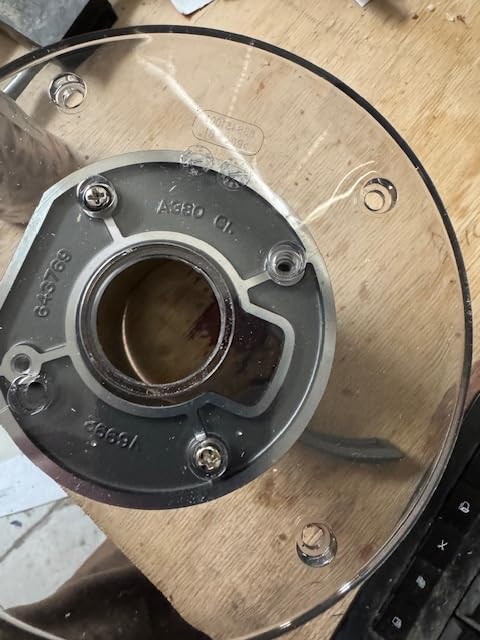
The large sub-base on this model is a genuine advantage for jig work. Small palm router bases have very little contact area, and a short contact patch on a jig fence is a short patch to rock on. Wider base, more stable cut.
One thing to check before you commit: owners report the supplied acrylic base plate has a notch that can dig into a workpiece. On a jig that is not a dealbreaker because the workpiece is clamped, but it is worth knowing if you plan to use this router for freehand work as well.
Weight and hand fatigue
At 4.9 lb the tool itself is not the issue. The reported problem is the body diameter, which owners describe as fairly wide. A wide body in a vertical jig means your wrist sits further from the axis than you would like, and that is where fatigue comes from over a long batch.
Known weak points
The up-and-down threaded rod is plastic rather than metal, which is a wear item over years of service. The dust port vacuum fit is also reported as loose out of the box, and a hose that does not seat properly can unbalance the tool enough to affect a fine cut.
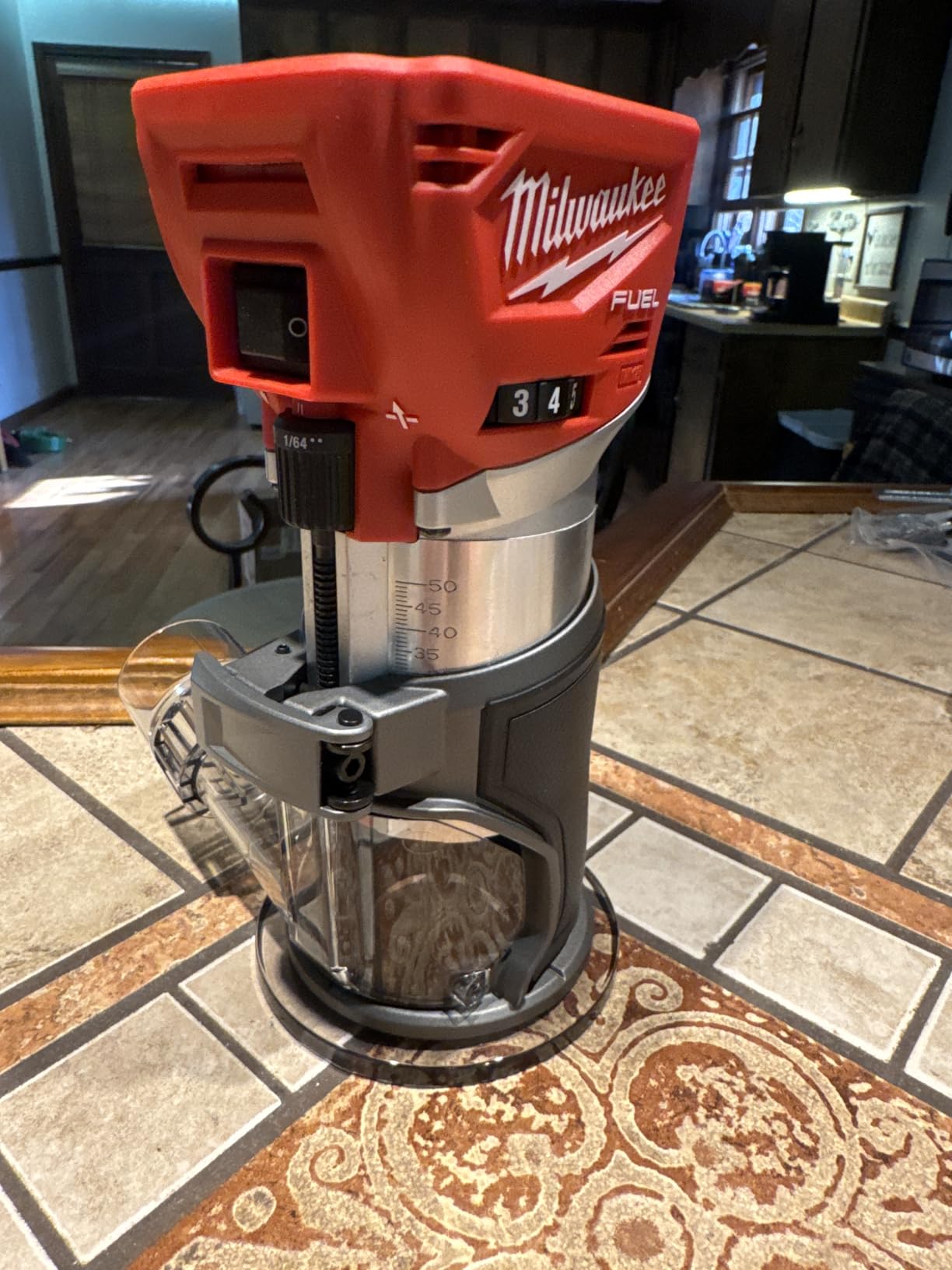
4. DEWALT DCW600B Cordless Router – Best Router for a First Jig Purchase
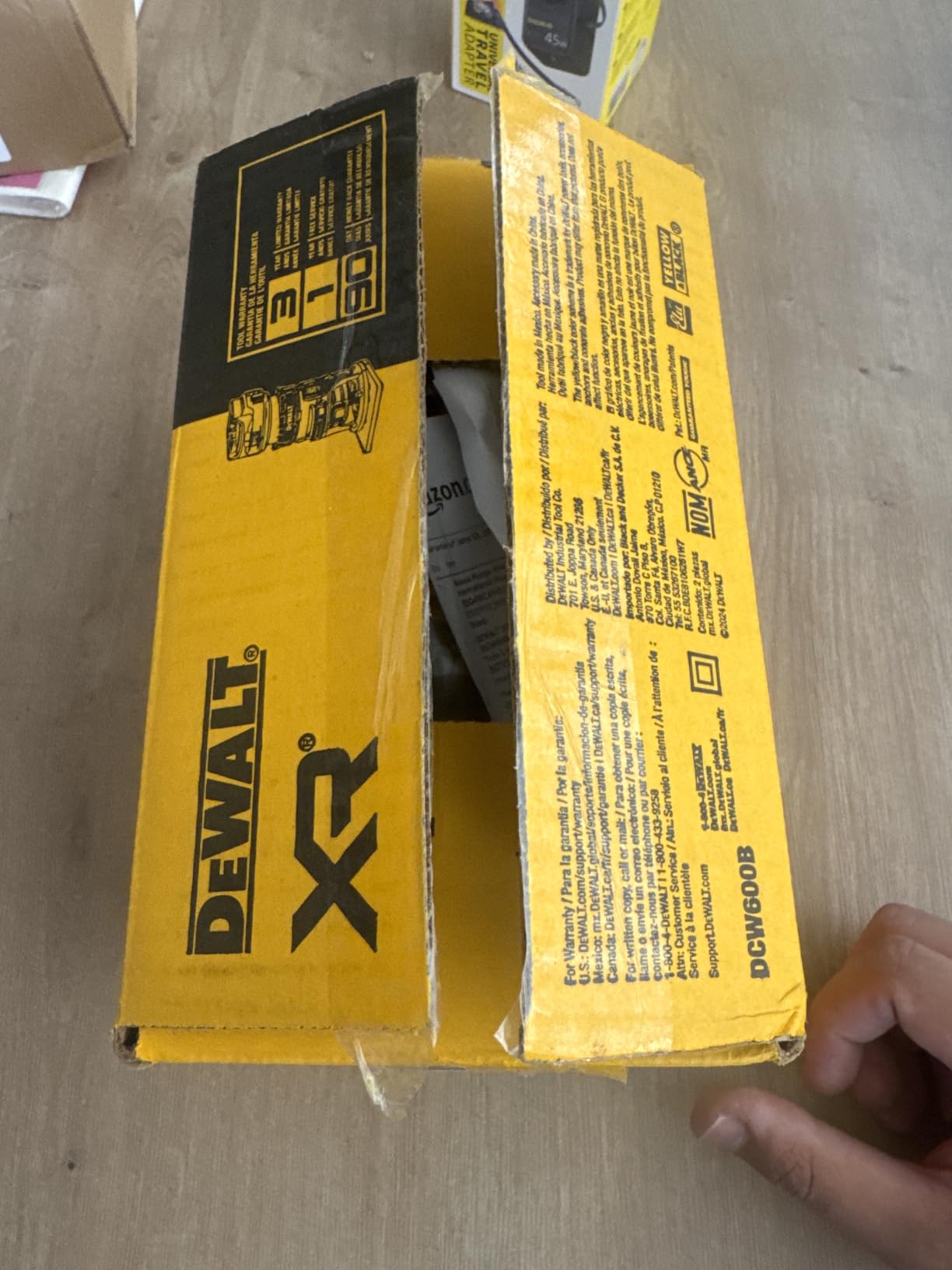
DEWALT 20V Max XR Cordless Router, Brushless, Tool Only (DCW600B)
20V XR brushless
Variable speed dial
Depth adjustment ring
4.15 lb
Fixed base
Pros
- Light 4.15 lb body is easy to keep flat in a jig
- Dual LEDs illuminate the cut area behind the jig fence
- Brushless motor and electronic brake add durability
- Depth adjustment ring is fast and easy
- Easy to control for detailed work
Cons
- Tool-only with plunge base sold separately
- Body diameter feels large for small hands
- A dust extractor accessory is needed for clean routing
The DCW600B carries a 4.8 rating from 10778 owner ratings, the largest review base of any router we tested. That is a lot of real-world hours on a tool that most people buy as a trim router, and it tells you the platform is dependable.
For a first jig purchase, weight is the argument. At 4.15 lb this is one of the lightest machines we tested, and a light router is a router you can actually keep flat while you are also managing a clamp and a workpiece. The dual LEDs matter more here than they would on an open bench, because the jig fence casts a shadow right where the bit is working.
Owners consistently praise the smooth, consistent power delivery and the cordless convenience, with 89 percent five-star ratings across the review set.
Battery platform versus jig capacity
The cordless format solves the cable problem completely, and if you already own 20V XR packs the whole question becomes cheap. If you do not, you are buying into a platform, so factor the batteries into the decision rather than the tool alone.
The one thing to verify before you buy is your jig’s bit. A compact router of this class is designed around smaller shanks, so confirm the collet size your jig’s supplied dovetail bit runs on. This is exactly the mismatch that forum users report discovering too late.
Controls you will actually use in the jig
The variable-speed dial lets you match speed to the material, which is genuinely useful because a dovetail bit cutting end grain is a different job from the same bit cutting a long tail. The soft start with full-time electronic feedback keeps the motor at speed during the cut, and the electronic brake stops the bit quickly when you release the switch, which is a nice safety property with a spinning cutter inches from your fingers.
The fixed base and the base plate
This is a fixed base configuration and it ships as a router motor and fixed base. That is the right base for jig work, so the omission of a plunge base is not a real drawback here. It becomes one only if you also want freehand mortising from the same tool.
Who should skip it
If you cut dovetails in dense hardwood all day, a compact body is not going to have the torque headroom that a full-size fixed-base router has, and the body diameter is reported as feeling large for users with small hands. It is a fitting problem more than a power problem.
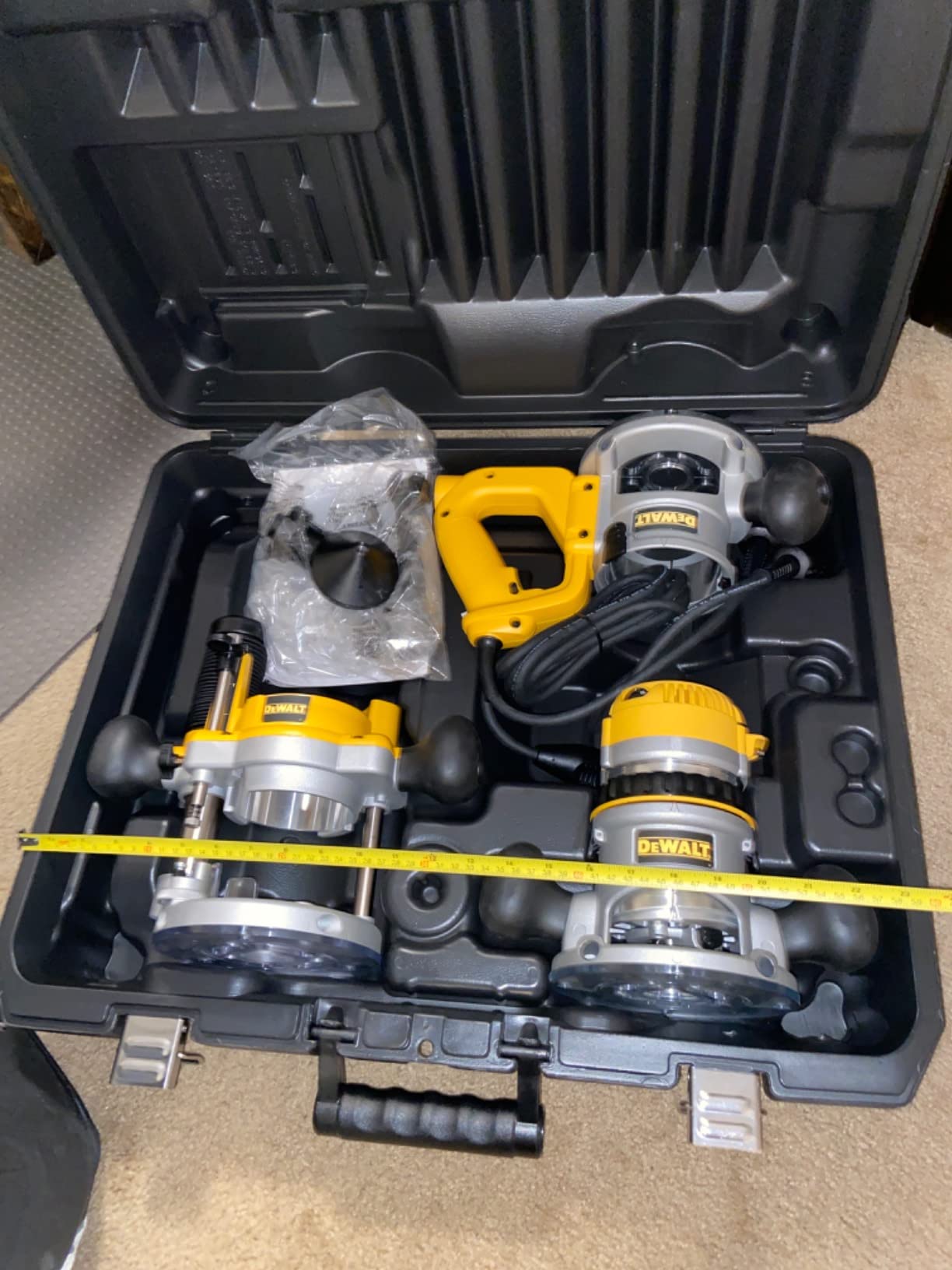
5. DEWALT DW618B3 Three-Base Router Kit – Best Match for a Leigh Jig
DEWALT Router, Fixed/Plunge Base Kit, 12-Amp, 2-1/4-HP (DW618B3)
2-1/4 HP 12-amp
Three bases included
1/64 in. depth steps
Brass bushings and steel rods
Pros
- Fixed plunge and D-handle bases plus a separate motor pack
- Micro-fine depth ring adjusts in 1/64 in. increments
- Smooth plunge stroke from machined brass bushings
- Through-the-column dust collection keeps the bit visible
- Tool-free cam lock makes base changes fast
Cons
- D-handle trigger switch is very stiff to hold
- Standard base plates have a 1.25 in. opening for larger bits
- Micro-fine ring needs a base clamp release for each adjustment
If your jig is a Leigh, this is the one to look at first. The DW618 kit includes a fixed base, a plunge base and a D-handle base, with a detachable motor pack that moves between them, and it ships with both 1/4 inch and 1/2 inch collets.
On Sawmill Creek, a woodworker describes a DW618 fixed base used with a 7/16 inch brass bushing following the Akeda manual. That is a bushing-based system, and the DEWALT fixed base accepting an aftermarket bushing is precisely the kind of thing that decides a jig match.
Owners who also own Festool and Porter-Cable routers rate the plunge action and depth control here as comparable at a much lower cost, which is a reasonable benchmark.
Three bases, one motor
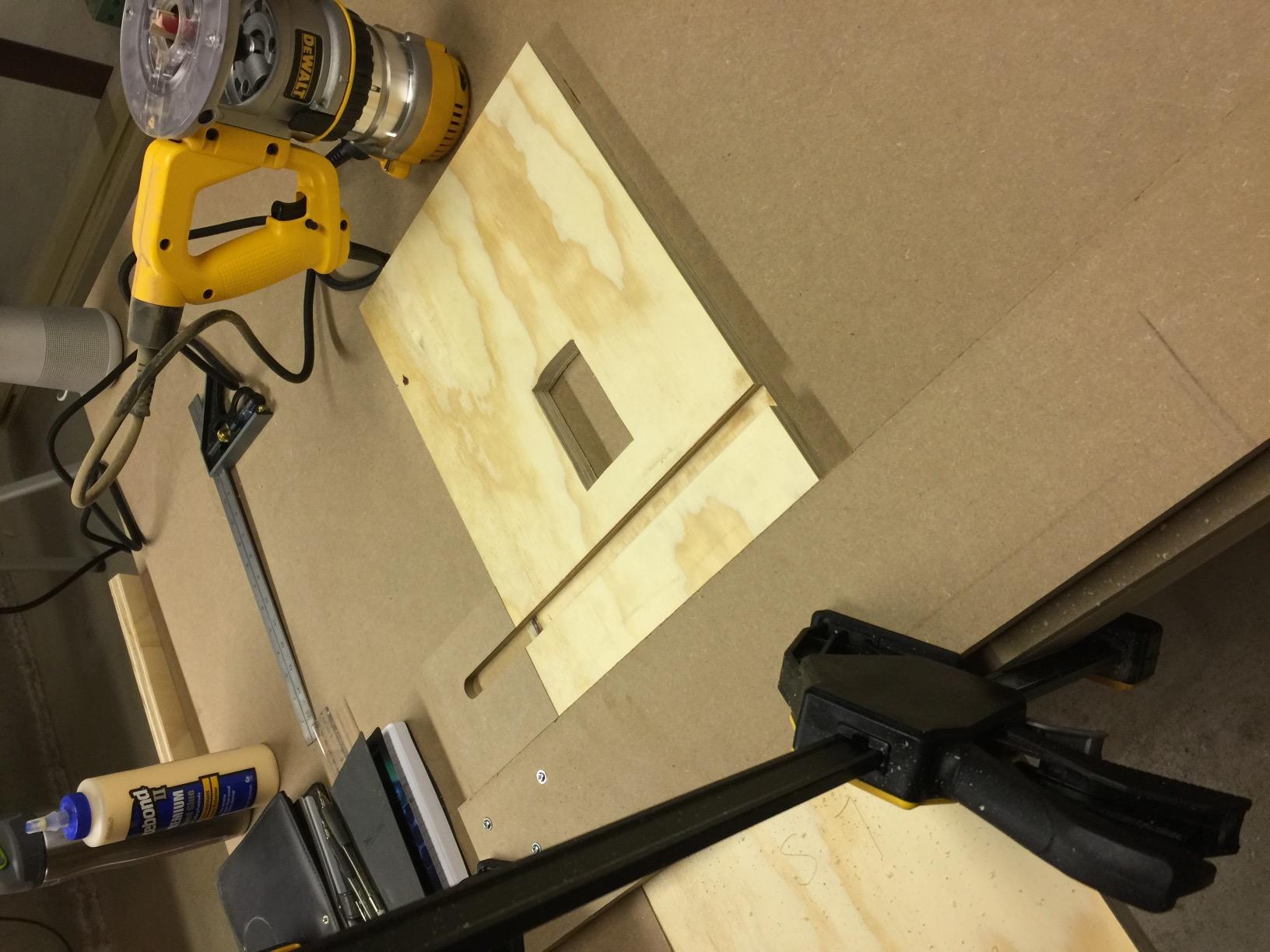
The motor pack design is the reason this kit is interesting for a shop rather than a single-purpose buyer. The same motor sits in a fixed base for jig work, a plunge base for dados and mortises, and a D-handle base for two-handed control on long cuts. You are buying one motor and three ways to use it.
For jig work specifically, you will live in the fixed base. The plunge base earns its place because some jigs and jigs-with-variations want a specific base height, and the D-handle is for the work you do around the jig.
Depth adjustment resolution
The micro-fine depth ring adjusts in 1/64 inch increments and adjusts vertically so the switch and cordset stay in a consistent location as you work. The stated drawback is real: you release the base clamp for each adjustment, which adds a little slop. In practice that is a small price for the resolution on a router with this much power behind the bit.
Why the bushings and guide rods matter
The plunge stroke runs on precision machined brass bushings and case-hardened steel guide rods. If you use the plunge base at all, that is the reason it feels as good as it does, and brass bushings are also the part most often copied by accessory makers. For a jig router with a fixed base it matters less, but for the kit as a whole it is the quality story.
The honest complaints
The D-handle trigger is reported as very stiff, which is uncomfortable past about a minute. The standard clear base plates have a 1.25 inch opening, so a 1-1/4 inch bit will not pass without swapping to the large-hole plate. And dust collection falls well short of the advertised claim, which in a tight jig is the most annoying of the three.
6. Bosch GKF125CEN Colt Palm Router – Best for Template and Bushing Jigs
Bosch GKF125CEN Colt 1.25 HP (Max) Variable-Speed Palm Router
1.25 HP 7-amp
16000-35000 RPM
Aluminum base to 1-5/16 in.
Translucent sub-base
LED lighting
Pros
- Round translucent polycarbonate sub-base gives excellent template visibility
- Aluminum base accepts bits up to 1-5/16 in.
- LED lighting illuminates the bit area
- Precise micro-adjustment for repeatable depth
- Spindle lock for single-wrench collet changes
Cons
- Heavier and larger than a typical 1 HP palm router
- Spindle lock button is slick and hard to grip
- Fine adjustment can stick when chips enter the thread
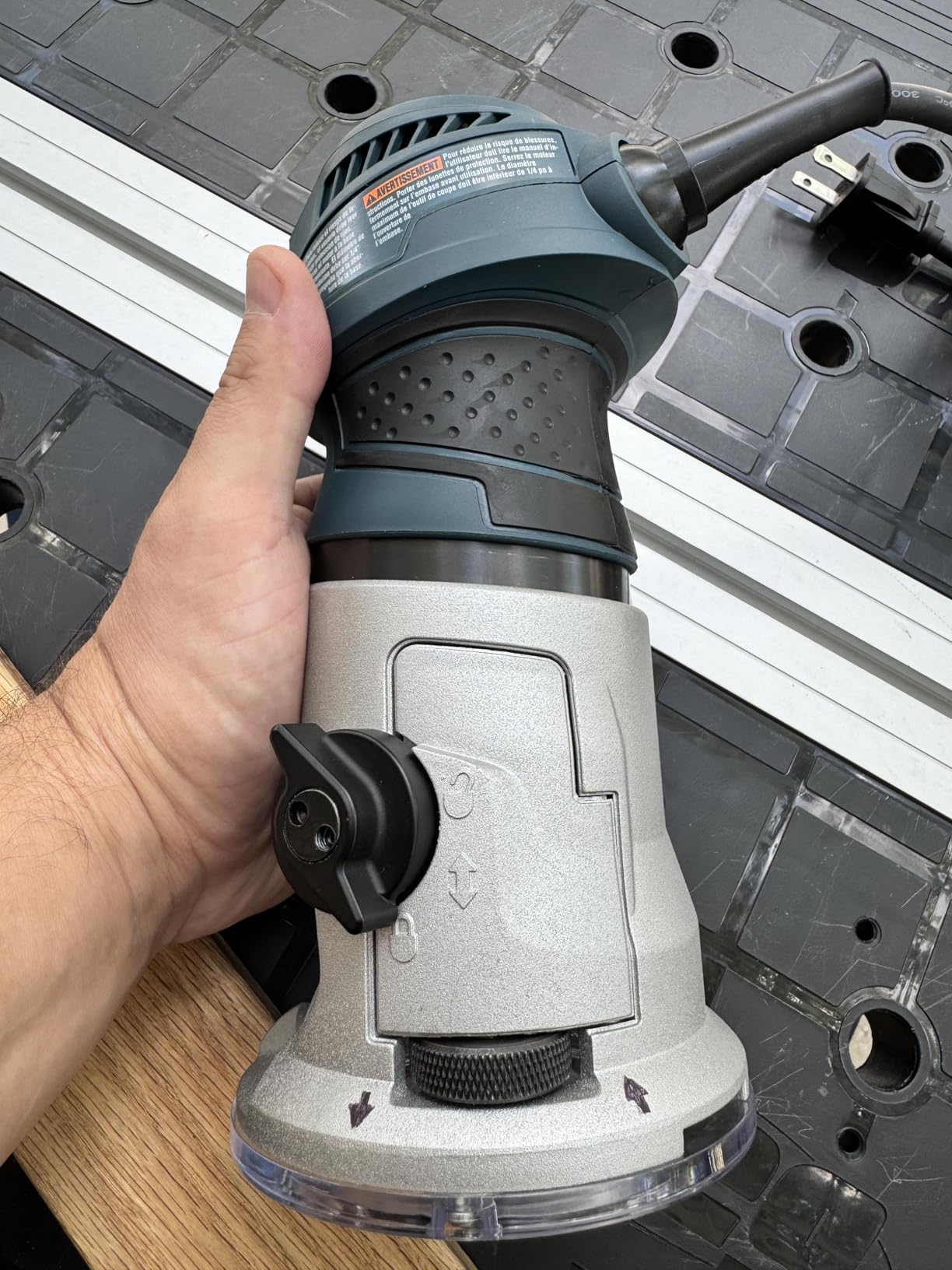
The GKF125CEN is the router I would reach for if my jig is template-driven, because everything about it is oriented around seeing and following a guide. The round translucent polycarbonate sub-base is the standout: you can look straight down through it and see the template edge and the guide bushing without leaning.
That visibility matters on a jig because the bit is working behind a fence and a clamp in a lot of configurations. When you cannot see the line, you are cutting on faith, and faith is where gaps come from.
Owners describe the cuts as stable and low-vibration, attributing that to the added weight and power of the 1.25 HP motor compared with lighter palm routers.
Template visibility as a design priority
Most palm routers use a clear plastic or phenolic base. This one uses a round translucent polycarbonate sub-base, which means less distortion right at the bit and a clean view of the guide. Combined with the LED lighting in the bit area, it is the easiest setup here to watch while cutting.
The aluminum base housing is a 360 degree non-split design with wide-bit capacity, accepting bits up to 1-5/16 inch. That bit capacity is broader than most palm routers and it matters, because dovetail bits are wider than a typical straight bit.
Speed range and electronics
The variable speed dial spans 16,000 to 35,000 RPM, with soft-start circuitry to reduce start-up torque and Constant Response circuitry to hold speed under load. In a dovetail cut you are moving a lot of wood in a short distance, and constant speed is what keeps the joint faces clean.
Fine depth adjustment, and its one flaw
The depth adjustment system is precise with effective micro-adjustment, which is the right characteristic to have. The recurring complaint is that it can stick or skip when chips get into the internal thread. In a jig situation that is manageable if you clear chips between passes, and it is a strong argument for blowing chips out of the work rather than leaving them to accumulate.
Where the weight cuts both ways
At 4.4 lb this is heavier than a typical 1 HP palm router and owners report hand fatigue on long sessions. For a jig, some of that weight is a benefit, because it keeps the base seated. It is only a problem if you are also using it for long freehand sessions.
7. SKIL RT1322-00 Plunge and Fixed Base Combo – Best Value Router for Dovetail Work
SKIL 14 Amp Plunge and Fixed Base Router Combo — RT1322-00
14-amp 2.5 HP
Plunge and fixed base
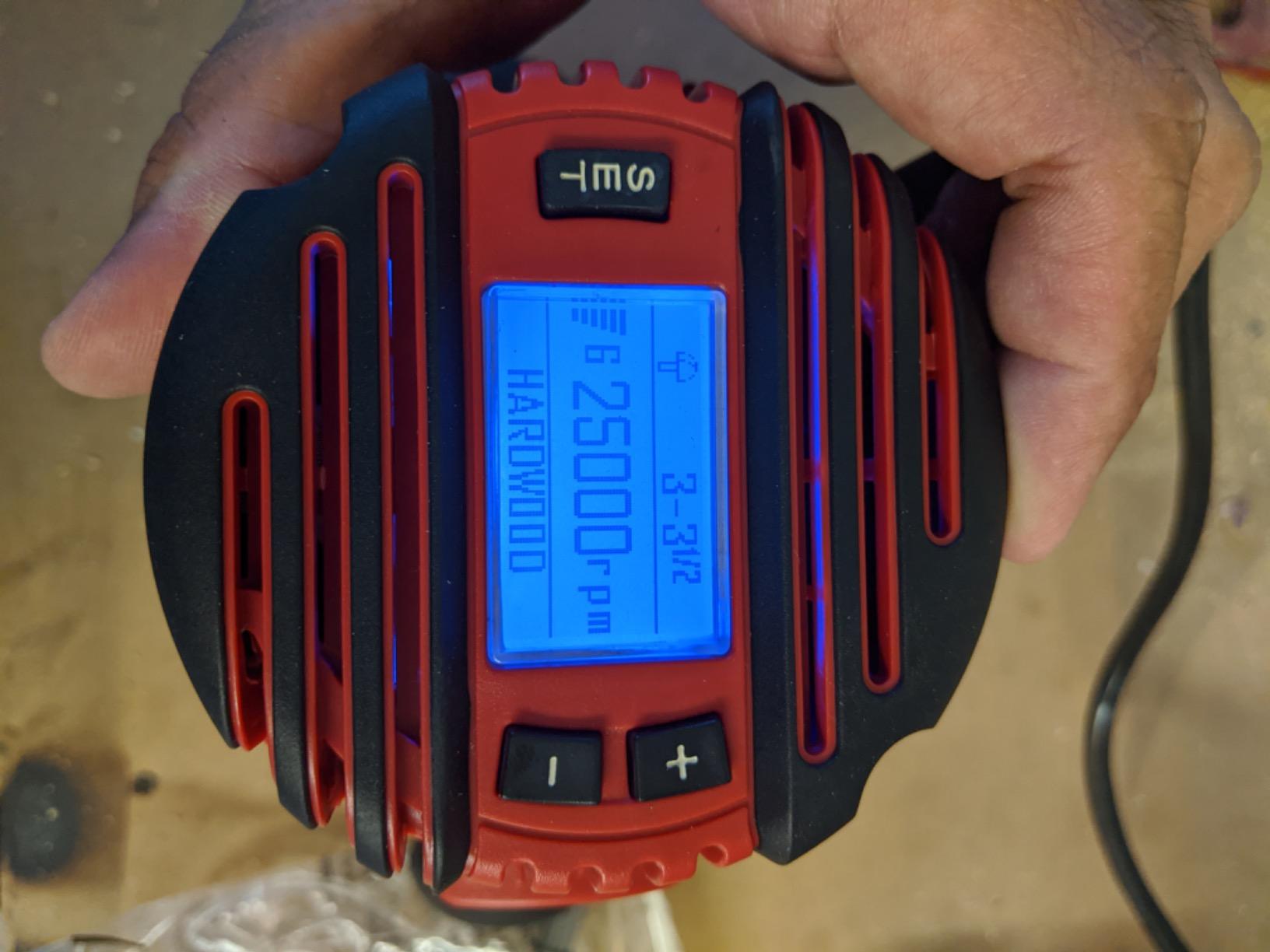
25000 RPM
LCD speed display
Both collets included
Pros
- Both plunge and fixed bases plus both collet sizes in one package
- 14-amp motor provides strong cutting performance
- LCD recommends speed settings by bit type and material
- Electronic feedback keeps RPM steady under load
- Includes dust extraction adapters for both bases
Cons
- Heavier 14.3 lb package for handheld detail work
- Fewer owner reviews than the major-brand competitors
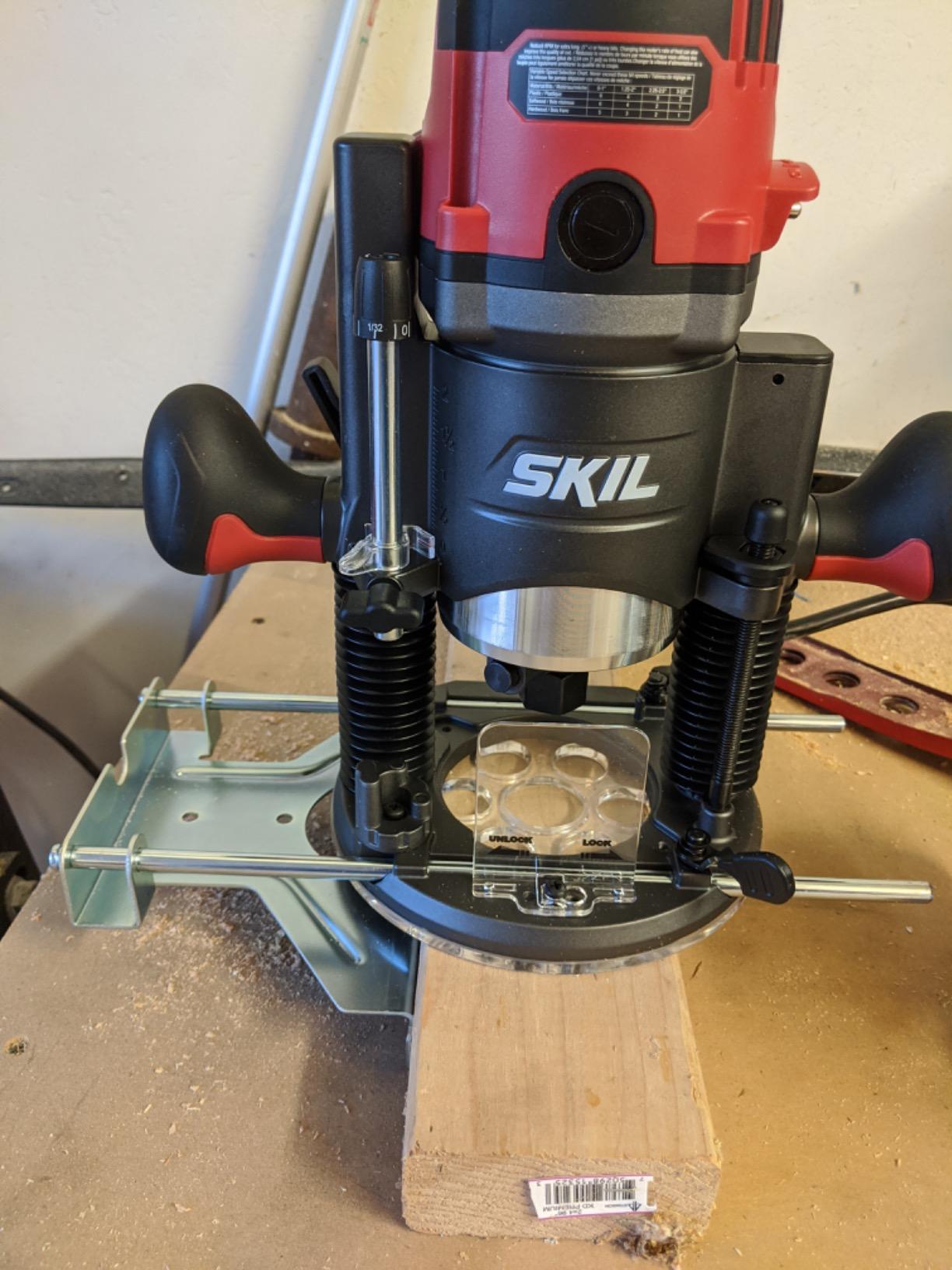
The SKIL RT1322-00 is the answer when you want both bases and both collets without buying a second router. It ships as a combo with a plunge base, a fixed base, a parallel guide, dust extraction adapters and 1/4 inch and 1/2 inch collets in one box.
For jig work, the fixed base and the dual collets are the parts that matter. The 14-amp 2.5 HP motor has more than enough power to hog waste out of hardwood, and owner feedback consistently centres on strong performance for the money.
The LCD speed control display is a genuinely useful feature in a jig context. It recommends a speed based on the bit type and material you select, which is helpful if you are new to dovetail bits and learning what speed a 14 degree dovetail bit wants in maple.
What a complete combo package actually saves you
Buying a fixed-base router and a plunge router separately means buying two motors. This kit gives you one motor and two bases plus both collet sizes, which is the exact configuration the top pick in this roundup offers. The difference is the brand’s refinement level, not the concept.
If your jig requires a fixed base and you also want to cut mortises and dados in the same session, this is a coherent single purchase.
Electronic feedback and speed selection
Electronic feedback ensures the motor maintains RPM while material is being routed, which is what keeps a wide dovetail bit from slowing down and burning the workpiece on the exit pass. Soft start gives a controlled ramp-up, and the live tool indicator lights when the plunge router is connected to power, a small safety touch.
Weight as the trade-off
At 14.3 lb this is a substantial package. For jig work on a bench-mounted setup that is fine, and the weight actually helps the base stay put. For small handheld detail work it is more machine than you need, and this is the router we would not choose for a lightweight shop.
Owner feedback depth
It carries 4.7 stars from 1990 owner ratings, a smaller base of feedback than the Bosch, DEWALT and Makita machines here. With 83 percent five-star ratings, the sentiment centres on power and completeness of the kit rather than on any single standout feature.
8. Bosch PR20EVS Colt Palm Router – Most Versatile for Light Jig Work
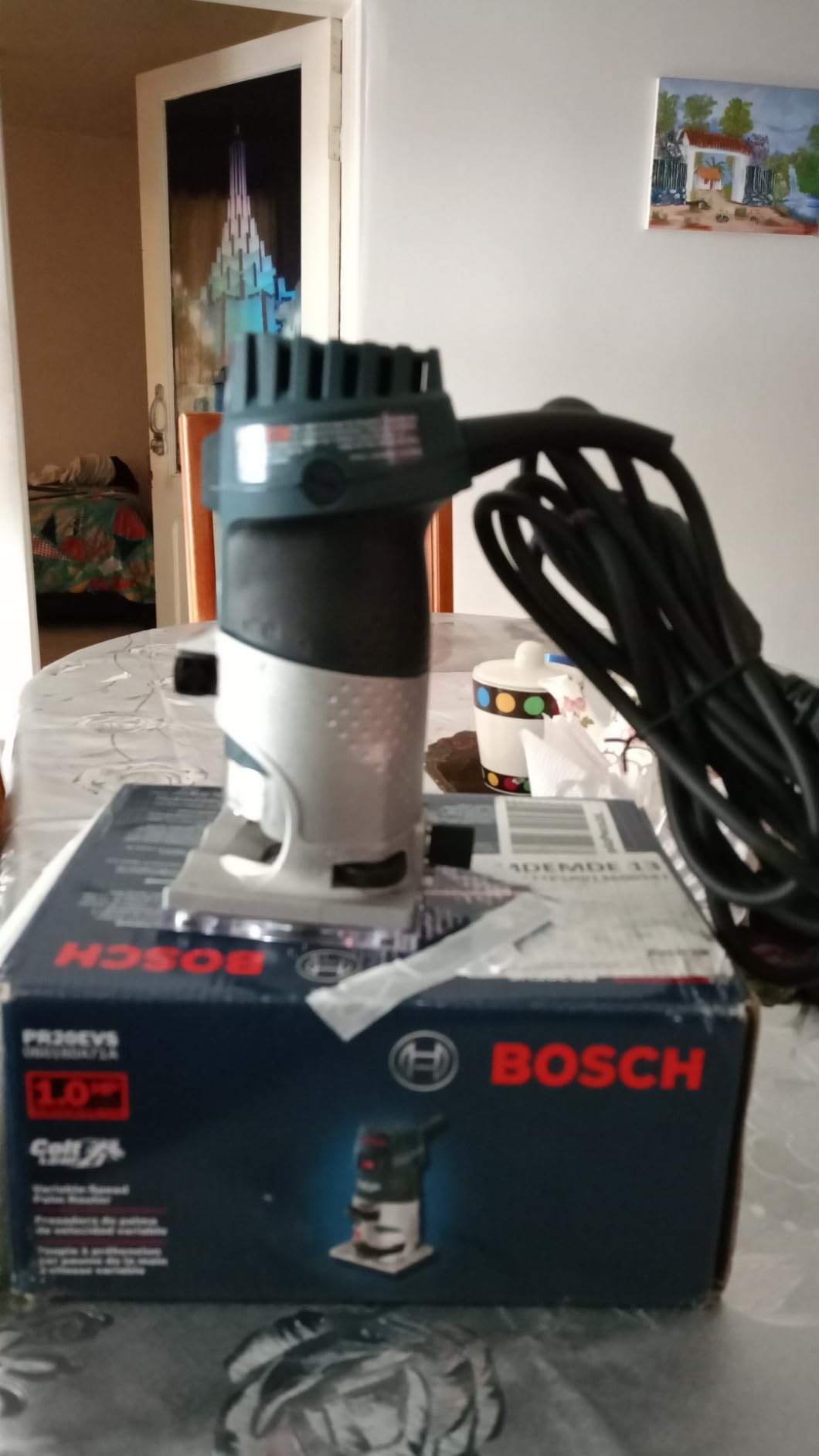
BOSCH PR20EVS Colt 1.0 HP Variable-Speed Palm Router, Quick-Clamp System
1.0 HP 5.6-amp
16000-35000 RPM
Macro and micro depth
3.3 lb
Aluminum fixed base
Pros
- Fast precise macro and micro depth adjustment
- Quick-clamp system moves the motor between bases
- Light 3.3 lb body is easy on the hand
- Angled cord exit keeps the cord clear
- Aluminum fixed base with finger support pockets
Cons
- 1 HP motor is light for dense hardwood and large-profile bits
- Fixed base only with no plunge capability
- Some plastic components feel less premium
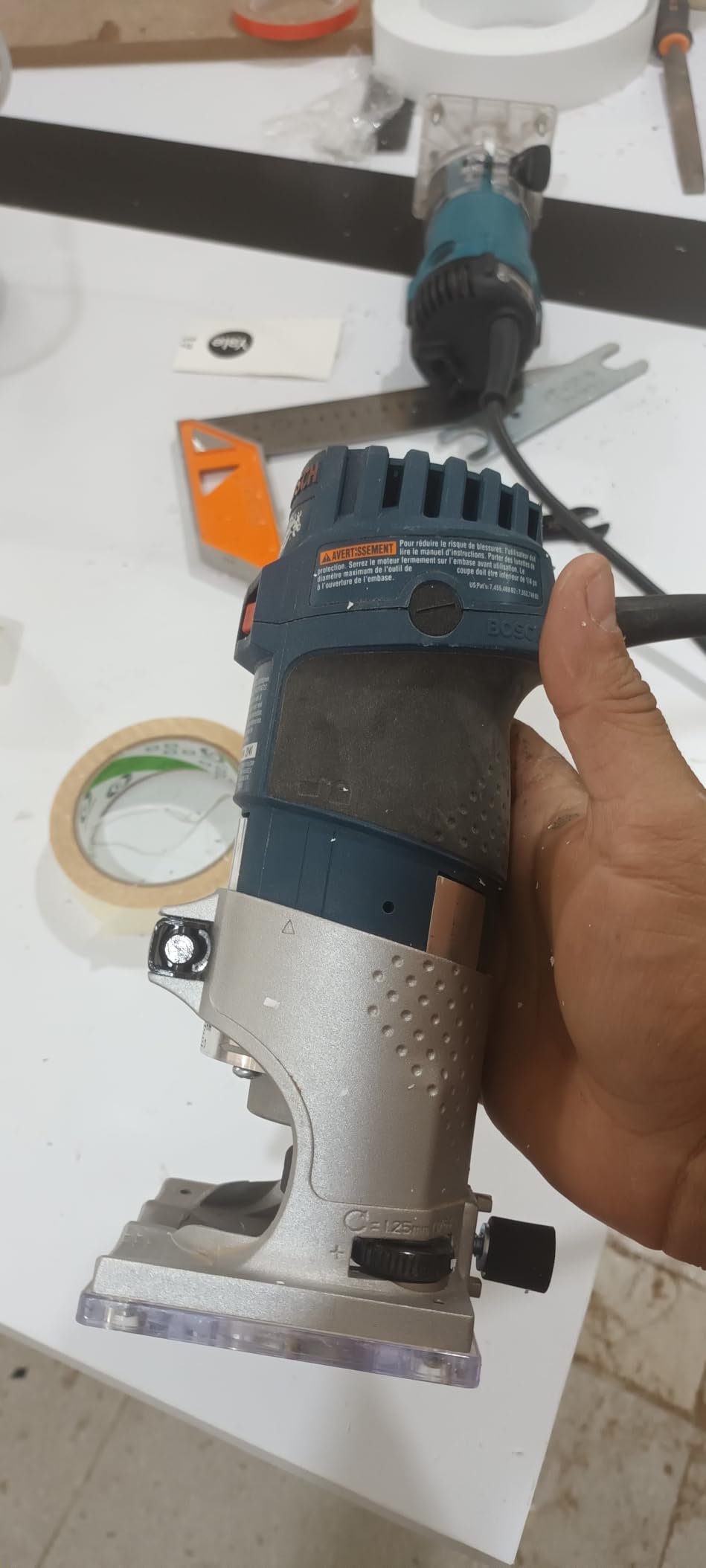
The PR20EVS is a long-standing budget pick for trim, edge and template work, and it is genuinely usable on a jig if your cuts are in lighter material and your dovetail bit is not a monster profile. At 3.3 lb it is the lightest router in this roundup, and low mass is the single most-cited factor in keeping a router flat in a jig.
The macro and micro depth adjustment system is fast and precise, which is the other thing jig work demands. You can creep the height in small steps rather than fighting a coarse sleeve.
Owners consistently rate it well for the class, and it holds a 4.6 from 3498 owner ratings, a strong showing for an entry-level machine.
Collet capacity and what it means for you
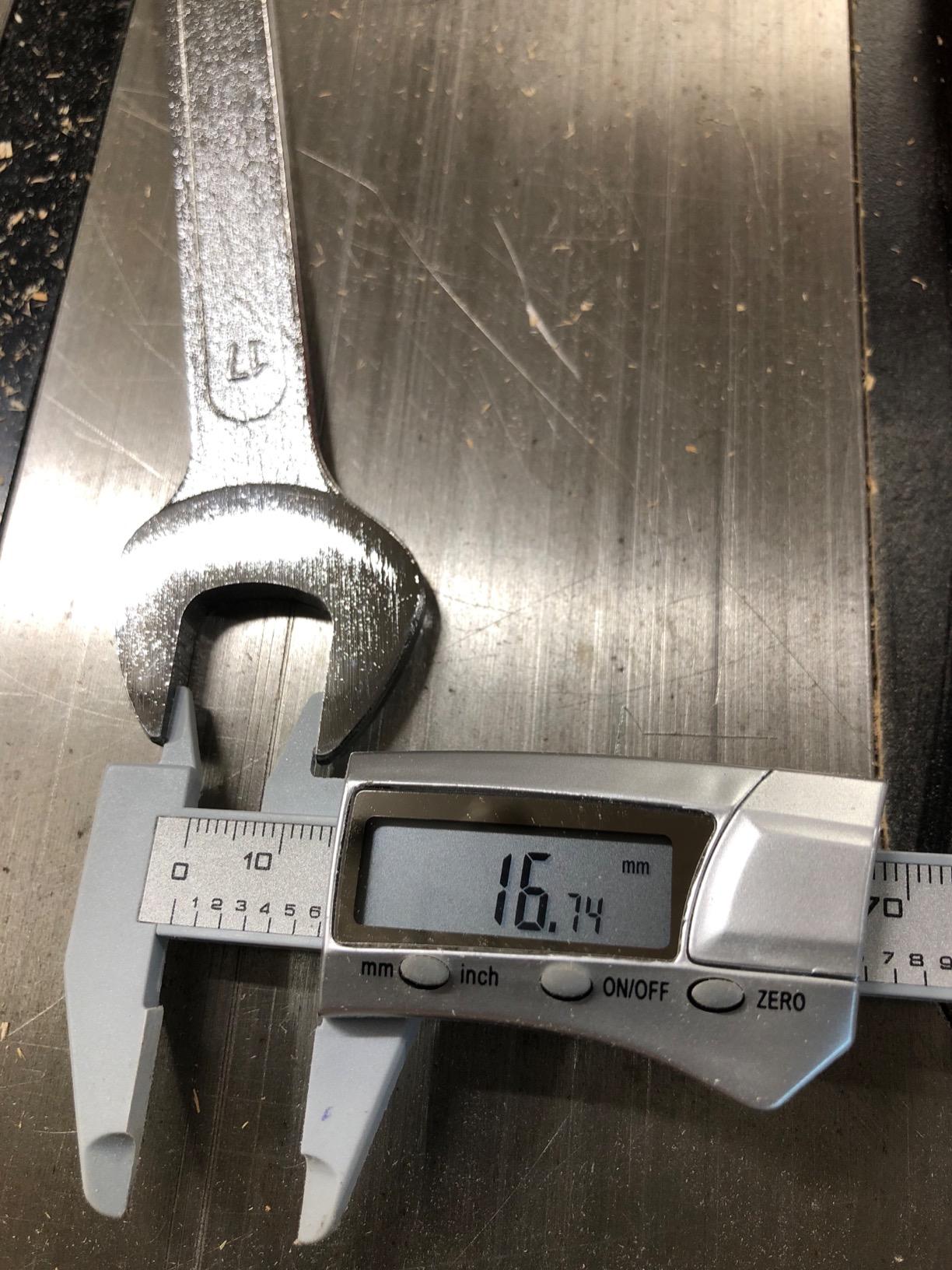
This model ships with a 1/4 inch self-releasing collet. If your jig’s supplied dovetail bit runs on a 1/2 inch shank, this router will not hold it, no matter how well it otherwise performs. Check this before anything else if you are considering it.
There is good news in the base. The fixed base is a rugged aluminum design with finger support pockets, and it accepts bits up to 1-5/16 inch in diameter, which gives you room to run a wide dovetail cutter on a 1/4 inch shank.
Where the 1 HP motor runs out
Owners are clear that this is a light-duty machine. It is suited to lighter work and small-profile bits rather than deep cuts in dense hardwood. A wide dovetail bit removes a lot of wood in a very short travel, which is precisely the case that pushes a 1 HP motor to its limit.
If you are working in pine, poplar or light maple on half-blind drawers, you will be fine. If you are cutting walnut through dovetails on a cabinet run, choose more power.
Quick clamp and cord handling
The quick clamp system lets you move the motor between bases without tools, and the angled cord exit keeps the cord away from the work, which is helpful in a jig where a snag would be unwelcome. A straight edge guide is included, though it will not be the guide you use on a jig.
Best use case
This is the router for a first jig, a small shop, or a builder who wants a light tool for edges, profiles and small joinery where a compact body is an advantage. Just verify the collet size before you commit.
9. WEN RT6033 Plunge Router Kit – Best Entry Plunge Router for Dovetails
WEN RT6033 15-Amp Variable Speed Plunge Woodworking Router Kit with Carrying Case & Edge Guide
15-amp variable speed
8000-23000 RPM
7-stop turret
1/4 in. and 1/2 in.
Up to 2-3/8 in. plunge
Pros
- Accepts both 1/4 in. and 1/2 in. router bits
- 7-stop turret with macro and micro dials for depth precision
- Plunge base locks downward to work as a fixed router
- Hard case edge guide template guide and dust duct included
- Smooth low-vibration plunge stroke
Cons
- Trigger switch stops the router on any unintended movement
- Power cord is short and limits maneuverability
- No router bits included with the kit
The WEN RT6033 is the value entry into plunge routers, and for jig work the important detail is in the bullet points: it accepts both 1/4 inch and 1/2 inch router bits. That dual collet capacity is the requirement most of the jigs in this article impose, and this kit meets it at the entry level.
It ships with a plunging base that locks in the downward position, so the same machine works as a plunge or a fixed router. For a jig that requires a fixed base, you lock it down and work from the fence.
Owners describe the plunge stroke as smooth and low-vibration, and the 7-stop turret with both macro and micro dials gives genuinely good depth precision for the money.
The trigger switch issue you should know about
Owners consistently flag the trigger switch as a safety concern for jig work specifically, because any unintended movement of your hand stops the router. In a jig you are working close to a spinning dovetail bit with one hand on the tool and your attention on the clamp, so a switch that trips easily is worth thinking carefully about.
This is the single most-reported complaint in the owner feedback, and it is the main reason this router sits below the higher-rated machines in our ranking despite the strong feature set.
7-stop turret depth control
The turret combined with macro and micro adjustment dials is a well-regarded depth system for the price class. For jig work, the coarse stop gives you a repeatable reference position and the micro dial lets you trim in from there, which is a sensible way to set a height you have to return to on the pins.
Plunge capacity and base locking
Plunge depth goes up to 2-3/8 inches, which is ample for joinery work in the thicknesses jigs are typically used on. The locking-down base is the important feature here because it converts a plunge machine into something jig-compatible.
Accessories and gaps
The bundle includes a hard-shell case, a multi-function straight edge fence, a template guide, a circle-cutting centering pin, a fence scale and a dust collection duct, which covers most of what you would buy separately. No bits are included, and the power cord is short, which is a real constraint in a large jig setup.
10. Makita RP2301FC Plunge Router – Best for Dense Hardwood Dovetails
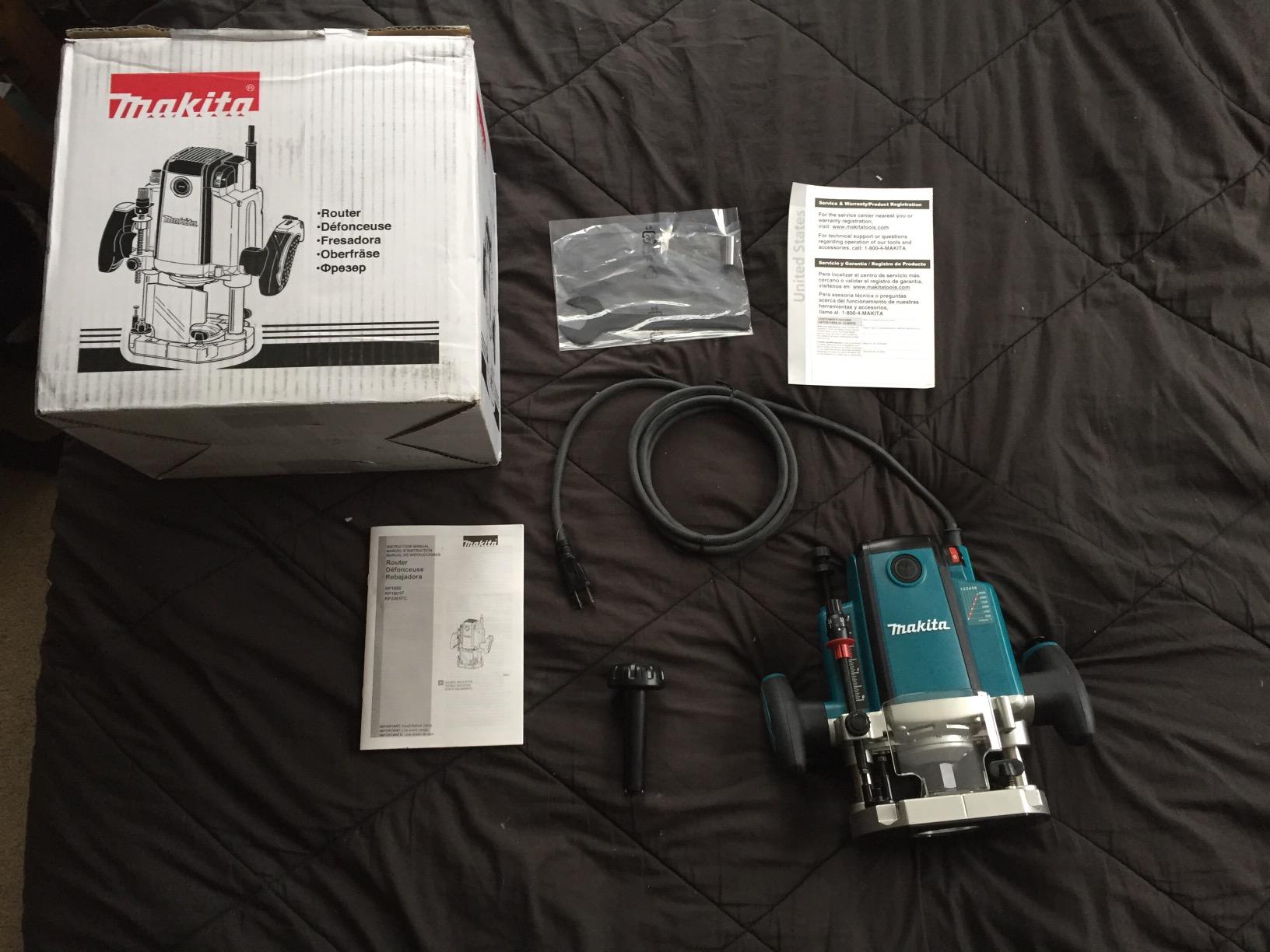
Makita RP2301FC 3-1/4 HP* Plunge Router, with Variable Speed
3-1/4 HP 15-amp
9000-22000 RPM
Plunge base
Electronic speed control
Soft start and brake
Pros
- 3-1/4 HP 15-amp motor cuts dense hardwood without bogging
- Plunge base gives accurate repeatable depth for joinery
- 9000-22000 RPM with electronic speed control holds RPM under load
- Soft start and electric brake add safety and cycle speed
- Reinforced composite housing is light for its power class
Cons
- Plunge base only with fixed or D-handle base bought separately
- Composite housing is less rigid than an all-metal body
- Smaller base of owner feedback than mainstream models
The RP2301FC is the power answer. A 3-1/4 HP 15-amp motor is the largest in this roundup, and when you are cutting through dovetails in walnut or cherry and removing a lot of waste before the bit has cleared the material, motor headroom is the thing that keeps the joint faces from burning.
On NC Woodworker, a builder describes the Bosch 1617 as having plenty of power to hog out waste. This machine simply has more of it, and if you cut large batches in dense hardwood the difference is real.
It is also the least-reviewed machine here, at 4.6 from 517 owner ratings, so you are buying on spec sheet and brand reputation more than on volume of user feedback. That is worth weighing against the two-base kits.
When horsepower is the deciding factor
Dovetail cutting in hardwood puts two demands on a router at once. You need the motor to accelerate the bit instantly when it enters the workpiece so it does not stall, and you need it to hold speed as the cut deepens and the chip load goes up. A 15-amp motor with electronic speed control has the capacity for both.
The speed range of 9,000 to 22,000 RPM is a narrower band than some of the palm routers here, but it covers what a dovetail bit in hardwood actually wants, which is on the lower half of the range for control and chip clearance.
Plunge base and repeatable depth
The plunge base is the only base included, and owners cite it as giving accurate, repeatable depth control for joinery. For jig work this is fine as long as your jig accepts a plunge base or you lock the plunge in the down position and work fixed, which is the same trick the WEN kit relies on.
The soft start smooths engagement and the electric brake stops the bit quickly, which is a useful cycle-time and safety feature when you are making a stack of identical joints.
What the housing means for feel
The reinforced composite housing is light for a machine in this power class, which helps on a jig. The trade-off is that it is less rigid than an all-metal body, and on very long cuts some users prefer a metal-bodied machine. For short dovetail passes the difference is minimal.
Who should choose this one
A production-oriented cabinet shop cutting through dovetails in dense hardwood will get the most from this motor. A hobbyist cutting a handful of drawer batches will not notice the difference from the two-base kits, and would be better served by the completeness they offer.
What Router Bit Do You Need for Dovetails?
The dovetail bit is jig-specific, and the router is not. That is the single most misunderstood thing about this whole topic. A dovetail bit has an angled profile, usually 14 degrees, that cuts the flare. A straight spiral bit cannot produce a dovetail no matter what router you put it in.
Most jigs ship with a bit. Leigh jigs ship with their own profile cutters, Porter-Cable jigs ship with theirs, and Akeda systems have their own. Use the bit that came with the jig or the replacement the jig manufacturer specifies, because the profile angle has to match the jig geometry or the joint will not seat.
Why the bit shank size decides your router
Here is where the collet question comes from. Many dovetail bits are made with either a 1/4 inch or a 1/2 inch shank, and some jigs include both. A 1/2 inch shank is stiffer and deflects less, which matters more on a wide dovetail bit in hardwood.
This is why the routers at the top of this roundup all ship with both collet sizes. It removes the one mistake that stops a jig project dead, and it is the reason we rank the Bosch 1617EVSPK first.
The Microjig MatchFit exception
On Lumberjocks, woodworkers recommend the MatchFit bit over a standard bit specifically because of the profile it cuts, which has a radius at the surface of the material being clamped to. That radius changes how the joint fits against the clamp, so if you own a Microjig MatchFit grid, the bit is part of the system rather than a generic accessory.
Router bit clearance in the base
Check the base plate opening. Several routers here ship with a standard plate with a 1.25 inch opening, and a 1-1/4 inch bit will not pass it. Larger-base machines like the Bosch Colt accept wider bits, and the DEWALT three-base kit includes a large-hole sub-base plate for exactly this reason.
How to Choose a Router for Your Specific Dovetail Jig
Work through these in order and the decision makes itself quickly. The questions are not equally important, and buyers routinely get stuck on horsepower when the answer was collet size all along.
Step 1: match the base style to the jig
This is the gating question and it is not about power. Determine whether your jig is clamp-and-fence based or template-and-bushing based. A fixed base router is the standard answer for a Leigh-style jig, as RouterForums users consistently point out, because the bushing system determines what the base has to look like. A plunge base is worth having if your jig’s template needs a specific height, but it is not automatically better.
Step 2: confirm collet size before anything else
Find out what shank your jig’s dovetail bit runs on. If it is 1/2 inch and your router is a 1/4 inch machine, stop there and buy a collets set or a different router. A 1/4 inch-only collet for a 1/2 inch dovetail bit is listed as a dealbreaker by woodworkers, and it is the mistake that costs the most time.
Family Woodworking describes two-base routers accepting both 1/4 inch and 1/2 inch collets as an industry standard, which tells you what the mainstream expectation is.
Step 3: weight and base flatness
This is the factor nobody puts in a spec comparison and everybody notices in use. You are holding the router one-handed against a fence with the other hand on the clamp. A heavy or top-heavy router will lift, and a lifted base means a joint that will not pull tight.
Use the weights in the product sections above as a guide. Anything under about 5 lb feels manageable in a jig. Anything over 15 lb is a bench-jig tool, which is fine, but you should plan to dedicate it.
Step 4: depth repeatability beats everything
Repeatable, accurate depth settings are the number one criterion in the trust signals we gathered. You set the height on the tails, flip the work, and return to the same number for the pins. Rack and pinion systems, micro-fine rings and turret systems with micro dials all serve this better than a plain threaded sleeve.
Test this before a batch by setting a height, locking it, and returning to it five times. If you cannot get the same reading each time, the joint gaps are coming from the tool.
Step 5: variable speed for different materials
Single-speed routers burn wood in hardwood, which is on the dealbreaker list for good reason. Every router in this roundup pairs a variable speed dial with electronic control that holds RPM under load, and the one-piece armature designs also cut vibration that would otherwise mark a joint face. In practice this is what keeps a wide dovetail bit from stalling on the exit pass.
Step 6: dust extraction in an enclosed jig
A half-blind jig with an acrylic fence is a genuinely awkward place to extract dust, and chips left in the work can stop the bit and skew the cut. Look for through-the-column or base-mounted extraction, and note which of these routers include an adapter versus treating it as an accessory.
The one-router shop versus the two-router shop
One Lumberjocks user reported a used Leigh plus two dedicated routers set for 3/4 inch material was faster than stepping each drawer side by hand. That is the two-router pattern, and the Sawmill Creek pattern is similar: keep a fixed-base router dedicated to the jig and use a lighter router for everything else.
If you already own a serviceable fixed-base router, check its collet size and base fit against your jig before replacing anything. Most people who ask whether to buy a second router find that their existing machine works once the shank question is answered.
Common mistakes and the setting behind each
- Uneven gap along the joint. Usually a depth change between the tails and the pins. Mark the depth setting, and do not re-set it from scratch for the pins.
- Router lifting or wandering. Usually weight and a dirty base. Clean the base plate and the jig fence between passes, and consider a lighter machine.
- Chipping or burning the face. Usually too high a speed for the material, or a dull bit. Drop the speed and expect a sharp cutter.
- Joint that will not pull tight. Usually bit deflection, which means a 1/2 inch shank would solve a problem no amount of fiddling will.
- Poor fit between the tail and pin board. Usually a wrong bit profile for the jig. Use the bit the jig was designed around.
Frequently Asked Questions
Can I cut dovetails with a router?
Yes. A dovetail jig uses a router fitted with a jig-specific angled dovetail bit, and the jig template or fence guides the cut. The router needs a flat stable base, a collet that fits your bit (1/2 inch is the safe choice), and fine depth adjustment so you can return to the same height on the pins as on the tails.
Which router is best for making dovetails?
For most shops the Bosch 1617EVSPK is the strongest all-round choice because it ships with both 1/4 inch and 1/2 inch self-releasing collets and both a fixed and a plunge base, with microfine depth adjustment and a 2.25 HP 12-amp motor. For a lighter tool, the Makita RT0701C at 3.9 lb is the easiest to hold flat in a jig.
Do I need a plunge router for dovetails?
Usually no. A fixed-base router is the standard choice for most dovetail jigs, including Leigh-style jigs where the bushing system determines the base shape. A plunge base is worth having if your jig template needs a specific height or if you also cut mortises and dados, but it is not required for clean dovetails.
Can I use a trim router with a half-blind dovetail jig?
Often yes, provided the collet matches your dovetail bit. A compact router under 5 lb is easier to keep seated on the jig fence than a full-size machine, but check the shank of the jig’s bit first. A 1/4 inch collet cannot hold a 1/2 inch dovetail bit, and that mismatch stops the job before it starts.
Is a Bosch router better than a DeWalt router for dovetails?
Neither is universally better. The Bosch 1617EVSPK is lighter and pairs with a plunge base for depth control in one tool, while the DEWALT DW618B3 kit gives you three bases and finer 1/64 inch depth increments. For most single-router shops the Bosch is the easier choice; for a bushing-based jig, check which base accepts your jig’s guides before deciding.
Which Router Should You Buy for Your Dovetail Jigs?
If you want one router that works with almost any jig, take the Bosch 1617EVSPK. Both collet sizes, both bases, and depth adjustment fine enough to return to the same setting on the pins. If your jig is bushing-based or you want the most base options in one box, the DEWALT DW618B3 kit covers more configurations. If weight is your problem, the Makita RT0701C is the one you can hold flat for an entire afternoon.
If you already own batteries, the cordless route changes the equation entirely. The Milwaukee 2723-20 is the better cordless for jig work and the DEWALT DCW600B is the lighter of the two. If you are cutting dense hardwood through dovetails and want motor headroom, the Makita RP2301FC has the largest motor here. If you want the most complete package for the least money, the SKIL RT1322-00 gives you both bases and both collets together.
Before anything else, check the shank of your jig’s dovetail bit. That single measurement decides more of these choices than any other spec. If you are still choosing a jig, our dovetail jig roundup will help you pair the right one with the right machine.
Whichever router you settle on in 2026, set the depth once and mark it. That habit, more than the model, is what makes a joint pull tight.
Leave a Reply