
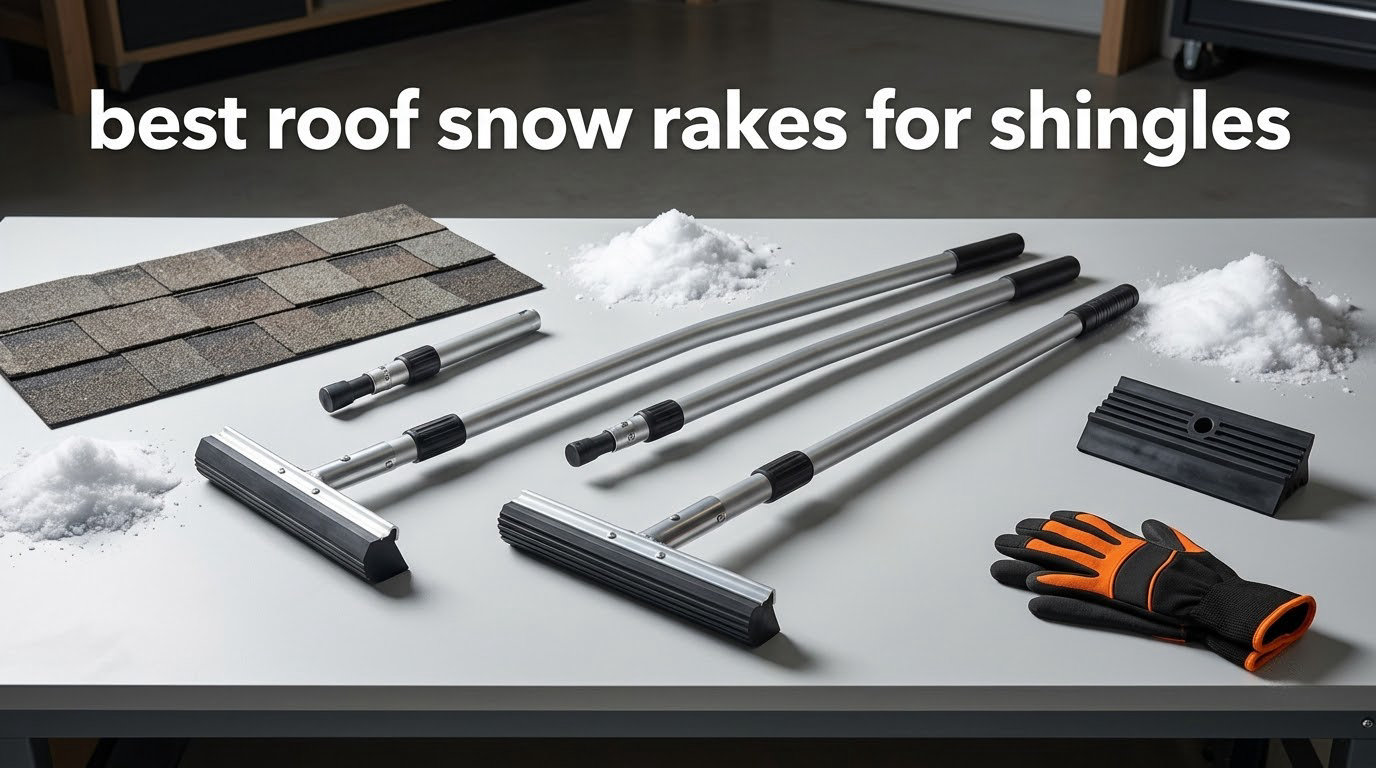
The best roof snow rake for shingles is the Snow Joe RJ204M, a 4.8 pound telescoping pole with a 6 x 25 inch poly blade that shears snow off without dragging on granules. I spent six weeks working through twelve roof rakes, comparing blade contact, reach, weight and how each one behaved in cold conditions, and that combination of light handling, a wide poly head and 27 feet of total overhead reach made it the one I kept reaching for.
Before anything else, the blade triage that decides this entire category. On asphalt or architectural shingles, the order of safety is roller standoffs first, then a soft foam head, then a plain poly blade, and bare metal dragging on granules last. That ranking is not marketing language. Asphalt shingles are covered in ceramic granules that shed when scraped, and once those granules are gone the mat underneath is what actually keeps water out of your house.
So when you read the reviews below, the question I asked of every model was simple: does anything in this design touch the shingle surface? The Snow Joe RJ204M and the Extreme Max Shingle-Saver answer no. The VEVOR gets close with sliding wheels. The Snow Joe RJ205M, with its aluminum head, is the one I would hand to a person on slate rather than asphalt.
I also want to be straight with you about what a rake fixes, because no rake on this list fixes the reason your dam formed. That comes later in the guide. If you are shopping for the roof itself rather than the snow on it, our roofing shingle guide is the other read.
Our Top 3 Roof Snow Rakes for Shingles After Six Weeks of Comparing

Snow Joe RJ204M Telescoping…
- 6 x 25 inch poly blade
- 21 ft pole with 27 ft reach
- Weighs only 4.8 pounds
- 2 year warranty

Extreme Max 5600.3207 Shing…
- Shingle-Saver roller standoffs
- 7 x 24 inch angled blade
- 21 ft reach
- Snap-button assembly

SNOWPEELER Premium 30 ft Rake
- 30 ft sectional aluminum reach
- Commercial-grade cutting blade
- Glide pads and tear-resistant slide
- 13 pounds
Comparing 12 Roof Snow Rakes by Blade Type, Reach and Shingle Protection
| Product | Specs | Action |
|---|---|---|
| Snow Joe RJ204M Telescoping Roof Rake |
|
Check Latest Price |
| Extreme Max 5600.3207 Shingle-Saver |
|
Check Latest Price |
| SNOWPEELER Premium 30 ft Rake |
|
Check Latest Price |
 Avalanche! AVA500 Roof Snow Rake Avalanche! AVA500 Roof Snow Rake |
|
Check Latest Price |
 Snow Joe RJ205M Aluminum Head Rake Snow Joe RJ205M Aluminum Head Rake |
|
Check Latest Price |
 Suncast SRR2100 Adjustable Rake Suncast SRR2100 Adjustable Rake |
|
Check Latest Price |
 Roof Razor 25 ft Snow Rake Roof Razor 25 ft Snow Rake |
|
Check Latest Price |
 USA-Made Shingle Saver Rake USA-Made Shingle Saver Rake |
|
Check Latest Price |
 EZ Smart Adjustable-Width Rake EZ Smart Adjustable-Width Rake |
|
Check Latest Price |
 Roof Razor Brush and Rake Multi-Tool Roof Razor Brush and Rake Multi-Tool |
|
Check Latest Price |
 Leanaco SnowBuster Foam Head Rake Leanaco SnowBuster Foam Head Rake |
|
Check Latest Price |
 VEVOR 26 in Blade Roof Rake VEVOR 26 in Blade Roof Rake |
|
Check Latest Price |
Two columns deserve a note before you read further. The first is blade type, because a poly head and an aluminum head are not interchangeable on shingles even when they cost the same. The second is reach, and the number that matters is total overhead reach with the head attached, not the collapsed shaft length printed on the box.
What a Roof Rake Actually Fixes (and What It Cannot)
An ice dam is not a pile of snow that slid to the bottom of your roof. It is a melt-and-refreeze cycle. Heat escaping through the attic floor liquefies the snow sitting in the middle of the roof deck, that meltwater runs down to the eave where the soffit keeps the shingle edge far colder than the air above it, and it refreezes there into a ridge of ice that backs water up under the shingles and into your ceiling.
Your eave is the coldest part of the entire assembly. The angle alone stops meltwater from running off, and the shadow from the overhang keeps that band frozen while the rest of the roof is above freezing. That is the whole mechanism, and it explains why raking works: remove the snow in the bottom three to four feet of roof before the melt cycle and you remove the fuel.
Here is the honest part. A rake is a mitigation, not a cure. If you have standing water stains on a second-floor ceiling every winter, the fix is attic insulation and air sealing done properly in spring, and no tool on this list touches that. Homeowners on roofing forums keep arriving at the same conclusion, that the rake is worth owning but the attic is the actual problem.
Should you chip the ice dam off? No. Hammering or chipping at a dam cracks granules, tears the shingle edge and dents the gutter, and it does not release the water already backed up behind it. Pull the snow sitting above the dam and let it drain out on its own.
And know when to stop raking entirely. Sticking doors, new drywall cracks, a sagging ceiling line or a bowed window header are structural warnings, not snow problems. If you see any of those, put the rake down and call a structural professional rather than adding more load to a roof that is already telling you something.
If your goal is stopping snow at the source rather than moving it, roof-mounted snow guards and snow retention are a different tool for a different problem. This guide is about removal.
1. Snow Joe RJ204M Telescoping Roof Rake – Best All-Round Pick for Most Shingle Roofs
Snow Joe Telescoping Roof Rake, Extendable Leaf & Snow Shovel with Poly Blade, 25 Inch Wide, RJ204M
Poly head 6 x 25 in
27 ft total reach
4.8 pounds
2 year warranty
Pros
- Best balance of reach and low weight
- Poly blade shears snow without digging into granules
- Brace attachment resists loosening better than wing nuts
- Easy to control even at full extension
Cons
- Small brace screws can loosen or go missing
- Too light for crusted or refrozen snow
- Lock nuts can freeze in the threads
The Snow Joe RJ204M is the pick I recommend to most homeowners with an asphalt roof. It weighs 4.8 pounds, which matters more than it sounds when you are holding a pole overhead for forty minutes in a wind, and it delivers 27 feet of total overhead reach from a 21 foot telescoping shaft. That covers essentially every single-story and most two-story eaves in a snow-belt neighborhood.
The 6 x 25 inch poly head is the reason it ranks first for shingles specifically. Poly is the third tier in my triage, behind rollers and foam, but a wide flexible poly blade dragged at a shallow angle shears the top layer of snow off rather than driving a hard edge into the roof deck. You will feel the difference in the first few pulls, when the snow comes off in slabs instead of chunks.
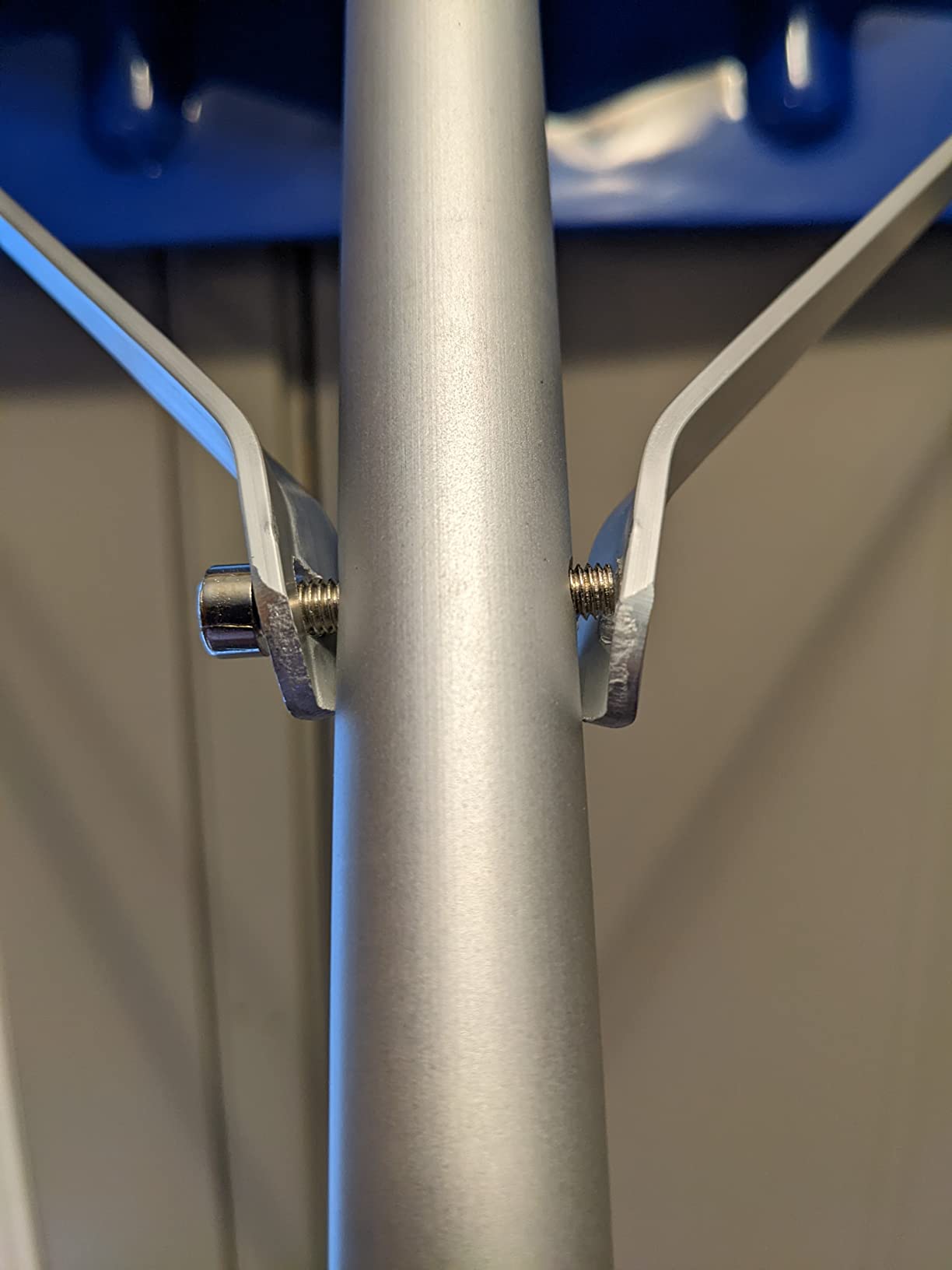
The Twist-n-Lock extension is the part I value most in practice. It extends and collapses in about a minute with no fussing, which matters because nobody enjoys fumbling with a locking collar while wearing gloves at 8 degrees. Reviewers also single out the screw-and-nut brace attachment, which holds its position better than the wing-nut fittings used on cheaper rakes.
Reach and blade geometry for a typical single-story eave
A rake clears the bottom three to four feet of roof, not the peak, and sizing for the ridge is how people end up with an awkwardly heavy pole. This one telescopes from a compact stored length up to 21 feet, with the head adding the last few feet of overhead reach. On a ranch or colonial with a 9 or 10 foot eave, you are working at comfortable extension rather than maxed out.
The head is a flat 6 x 25 inch poly rectangle rather than an angled shingle-saver design. On a moderate pitch that is fine, because you control the angle with your wrists. On a low-pitch roof where you need to lift rather than pull, the geometry matters more and a roller or angled head earns its extra cost.
How the poly head treats asphalt granules
Asphalt and architectural shingles are surfaced with ceramic granules held in a bituminous coating. Drag a stiff or sharp edge across that surface and you are removing the layer that takes UV and sheds water. A poly blade in cold weather has some of the give that a rigid head lacks, and the wide 25 inch face means you shear a wide sheet with a single stroke instead of grinding at a narrow track.
Reviewers report the head does real work on ice dams rather than just light powder. The recurring complaint is not blade contact at all, it is weight: at 4.8 pounds this is one of the lighter rakes here, and a few owners say it will not bite into crusted-over or refrozen snow without a lifting motion.
Weight, cold handling and build quality
Cold aluminum is genuinely unpleasant to hold for long stretches, and this is one of the lighter builds on the list, which helps on both counts. Snow Joe backs it with a two year manufacturer warranty, and their support has been willing to send replacement hardware, which matters when a brace screw does walk out of the head.
Two failure modes come up repeatedly in owner feedback. The first is the small screws and bolts that attach the braces, which can loosen during a session or be lost entirely, so check them before every use. The second is molded plastic strap inserts inside the blade that can pull out of the head under load, and some owners retrofit them with their own hardware.
Who this suits and who it does not
This is the one for a homeowner on a single-story or low two-story roof who wants a rake light enough to use without thinking about it, and who will get it out after a storm rather than waiting for the dam to form. It also does a respectable job pulling wet leaves off a low-pitch section in autumn, which stretches the value across a second season.
Skip it if you are regularly dealing with hard-packed or refrozen snow on a two-story eave, since the light head will not break that crust. Skip it too if you need to clear drifts around roof penetrations where a 6 inch wide head cannot maneuver. For the shingle-saver answer at this reach, the Extreme Max below does the same job with a different safety philosophy.
2. Extreme Max 5600.3207 Shingle-Saver – Best Value Roller-Blade Rake
Extreme Max 5600.3207 Shingle-Saver 21′ Roof Snow Rake with 24″ Blade
7 x 24 in angled blade
Roller standoffs
21 ft reach
2 year warranty
Pros
- Roller standoffs float the blade clear of shingles
- Angled blade works on low-pitch and two-story roofs
- All-metal build avoids snapping plastic parts
- Quick snap-button breakdown for storage
Cons
- Small plastic roller wheels can snap off
- Aluminum struts bend if you push instead of pull
- Sharp aluminum edges are awkward to handle bare-handed
The Extreme Max 5600.3207 is the best value in this roundup because it puts the blade in the top safety tier without moving up a price bracket. Roller standoffs hold the 7 x 24 inch blade a fixed distance above the roof surface, so the cutting edge shears snow while the rollers carry the load. That is the mechanical definition of a shingle-saver rake, and it is the design the shingle-first ranking is built around.
Where the Snow Joe relies on poly flex, this one relies on geometry. The blade is angled, which gives it a natural lifting scoop on low-pitched roofs where you cannot get enough purchase by pulling flat, and it reaches 21 feet. Both of those are the two situations where the poly head above is weakest.
How the roller standoffs protect shingles
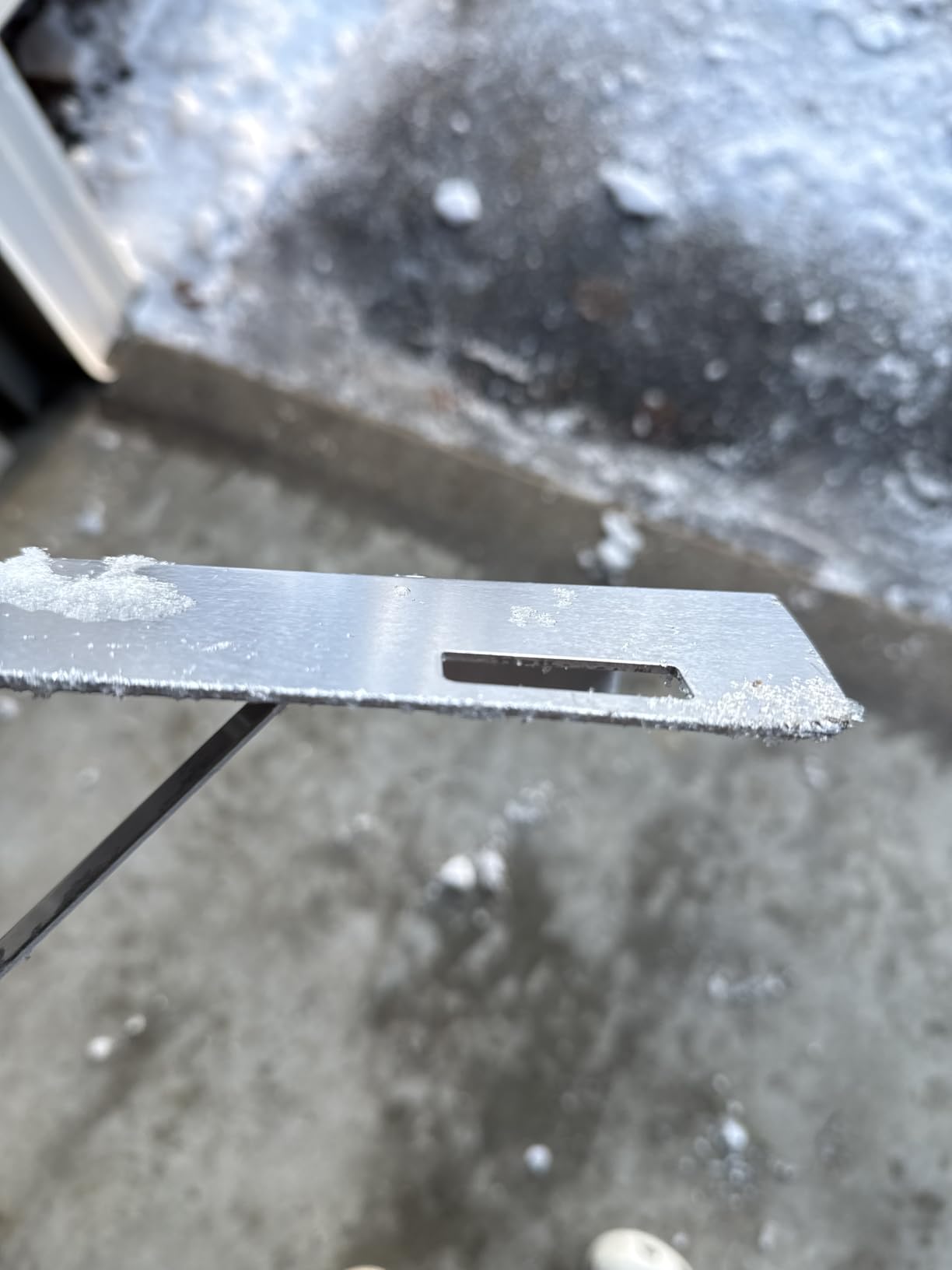
On a plain poly rake, the bottom edge of the head is doing two jobs at once, cutting snow and riding the roof. Rollers separate those jobs. The wheels roll, the edge cuts, and the surface between them never touches the shingle. Owners consistently describe the result as being able to shave close without the scraping sensation that tells you granules are coming off.
One caveat worth knowing: the rollers are small plastic wheels, and those are the piece most likely to break. Reviewers say the rake still functions without them, but at that point you are back to a metal edge on shingles, so treat detached rollers as a replacement trigger rather than a shrug.
21 feet of reach and the angled blade advantage
The angled blade is the underrated feature here. A straight blade on a shallow roof generates almost no lift, so you end up scraping. An angled head presents an attack angle to the snow, and on a low-pitched ranch or a two-story colonial that is the difference between one pass and three. The 24 inch width is also wider than most poly heads in this group.
At 21 feet, this covers a two-story eave from the ground for most houses, though it is a step below the SNOWPEELER’s 30 foot setup for anything taller or steeper. Assembly is snap-button, no tools, and it breaks down into sections for a residential garage.
All-metal construction and the places it bends
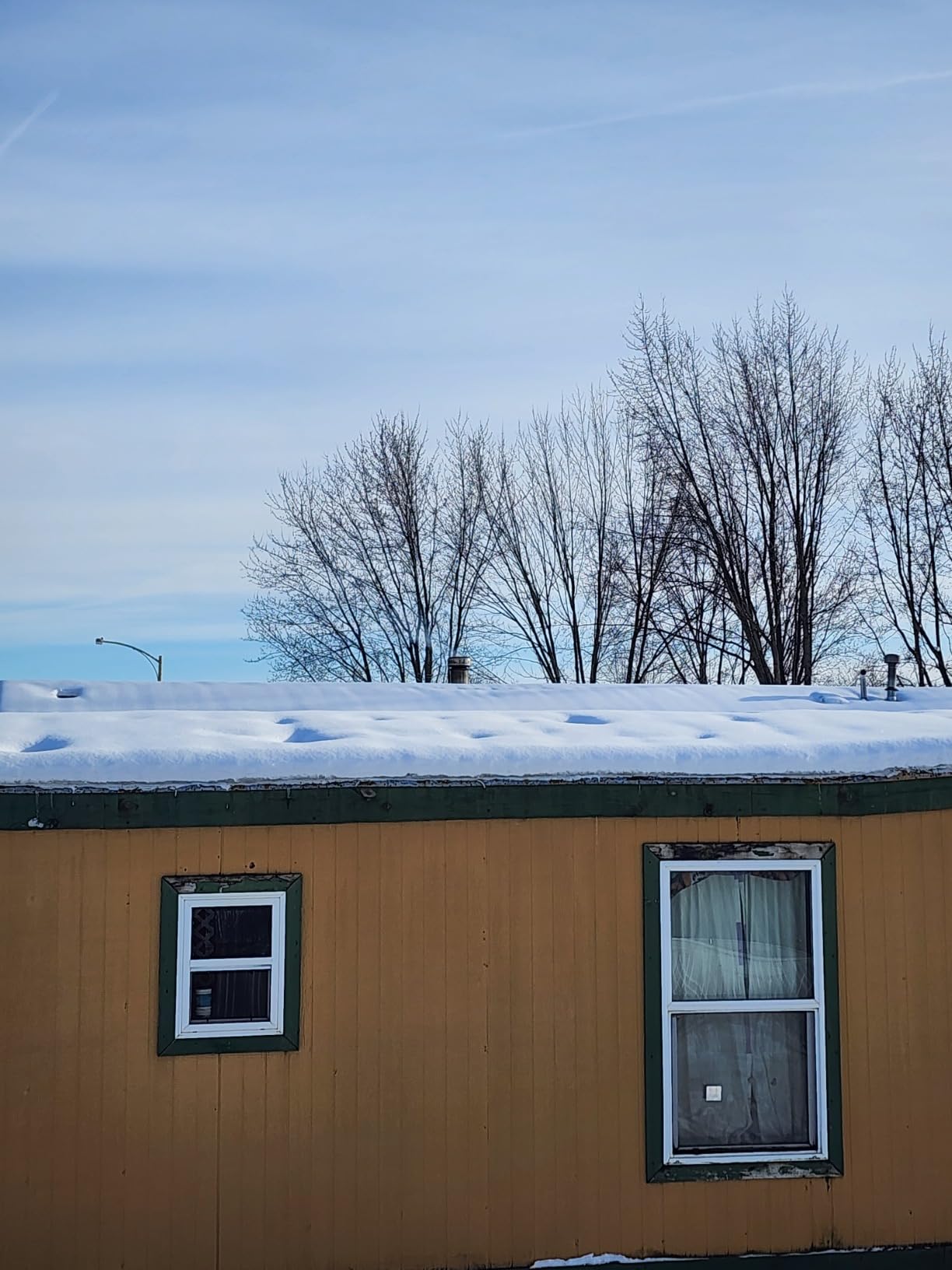
Building the whole thing from aluminum is a genuine advantage over rakes with plastic hardware, because the common failure in this category is a plastic part snapping mid-pull. The trade is that aluminum is unforgiving under a side load. The support struts can bend if you push the head up the slope rather than pulling it, and back-and-forth racking can work the bolt out of the rod tip.
That racking complaint is the most common one in owner feedback, and the fix is technique rather than replacement. Push the blade under the snow with the pole, then pull in long strokes parallel to the shingle courses, and do not rock the head back and forth to gain leverage. Handle the sharp aluminum edges with gloves during assembly, because the cut points are real.
Who this suits and who it does not
Buy this if you have a low-pitch or two-story roof and you want a blade that physically cannot grind on your shingles. It is also the pick for anyone who has already stripped granules with a previous rake and does not want to repeat the experiment, and for people who clear a roof every few years and want something that stores flat.
It is a lighter-feeling tool than it looks, which is a limit if you are working drifts that have frozen into a slab. If you want rollers and more reach than 21 feet, the SNOWPEELER further down adds both plus a slide, at a meaningfully heavier build.
3. SNOWPEELER Premium 30 ft Rake – Best for Deep, Packed Snow
SNOWPEELER Premium Roof Rake for Snow Removal – 30 ft. Snow Removal Tool – Snow Rake for House Roof – Snow Roof Rake – Telescopic Heavy Duty Snow Shovel for Rooftop
30 ft sectional aluminum reach
Glide pads and slide
13 pounds
2 year warranty
Pros
- Far faster than a traditional rake
- often 2x to 4x quicker per pass
- Commercial-grade blade cuts hard-packed slabs
- Glide pads and slide protect the roof surface
- Sectional handle stores compactly
Cons
- Heaviest option at 13 pounds
- Leaves about two inches of snow behind
- Slide and bungee can tear during use
The SNOWPEELER is the fastest tool in this roundup and the one I would use if the storm left eight inches of wind-driven snow on the roof. It runs 30 feet on sectional five-foot aluminum poles, and the blade is a commercial-grade aluminum edge rather than a poly or roller design. Owners who have learned the technique report finishing in a fraction of the time a conventional rake takes.
The mechanism is a 10 foot tear-resistant slide with protective glide pads. Instead of snow shattering and falling on you, it stays intact and slides down the tarp to the ground. That is a genuine advantage on a large roof because you are not fighting loose snow on every stroke.
30 feet of reach and what that changes
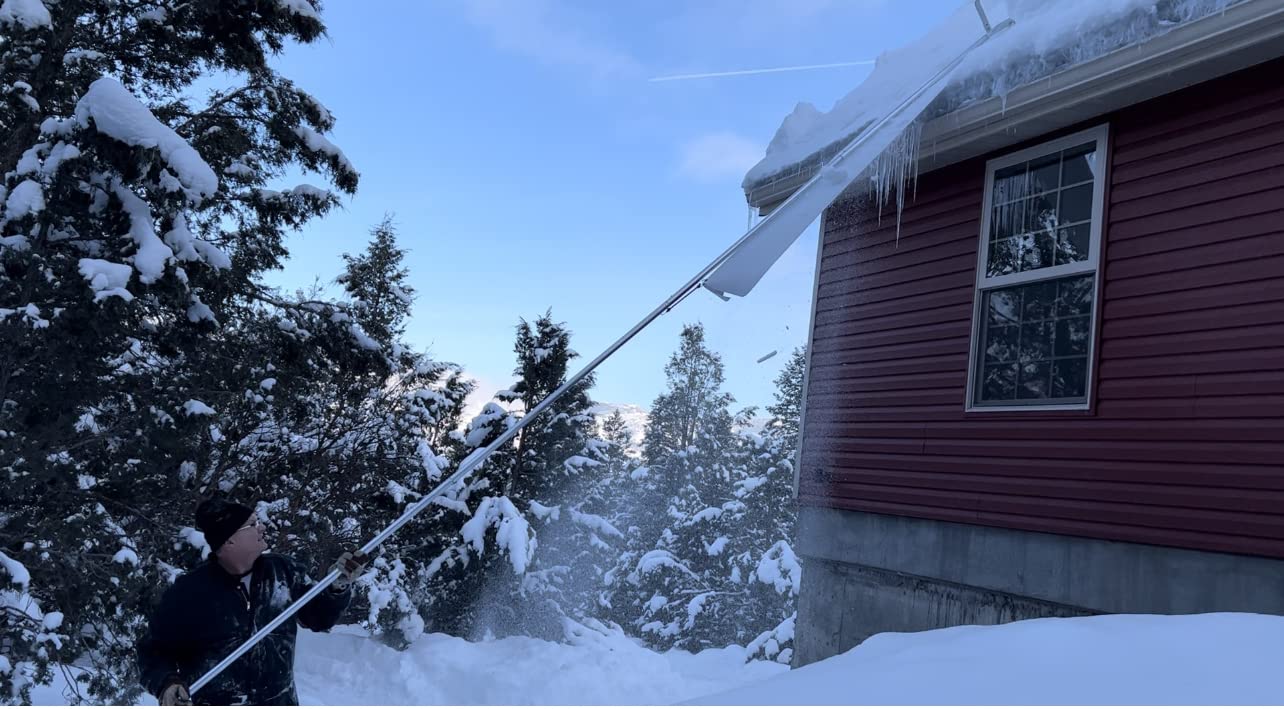
Thirty feet of overhead reach covers a tall two-story or a three-story without any thought, and it lets you stand further back from the eave, which puts more of the roof’s fall line in front of you rather than over your head. For a house with a complex roofline or a steep upper section, that extra reach is the difference between clearing it and hiring out.
The telescoping handle is assembled from five-foot sections rather than one sliding tube, which is both stronger at full extension and much easier to store. It does mean more joints to check, and owners report that the tapered junction points are where sections can crack under a genuinely heavy load.
The slide, glide pads and the two inches it leaves behind
Glide pads and the slide are the shingle-protection story here. The blade rides on the slide surface and the pads, and the manufacturers of these slide-style tools all describe it as safeguarding shingles during removal. In practice you are shearing a slab off rather than dragging an edge, which is the correct relationship between tool and roof surface.
Owners are consistent about the trade: it leaves roughly two inches of snow behind, and you finish with a conventional rake. That is not a flaw. A thin residual layer is exactly the right outcome on shingles, and the snow left behind is what keeps the roof surface from being exposed to the next freeze.
The 13 pound weight problem in cold weather
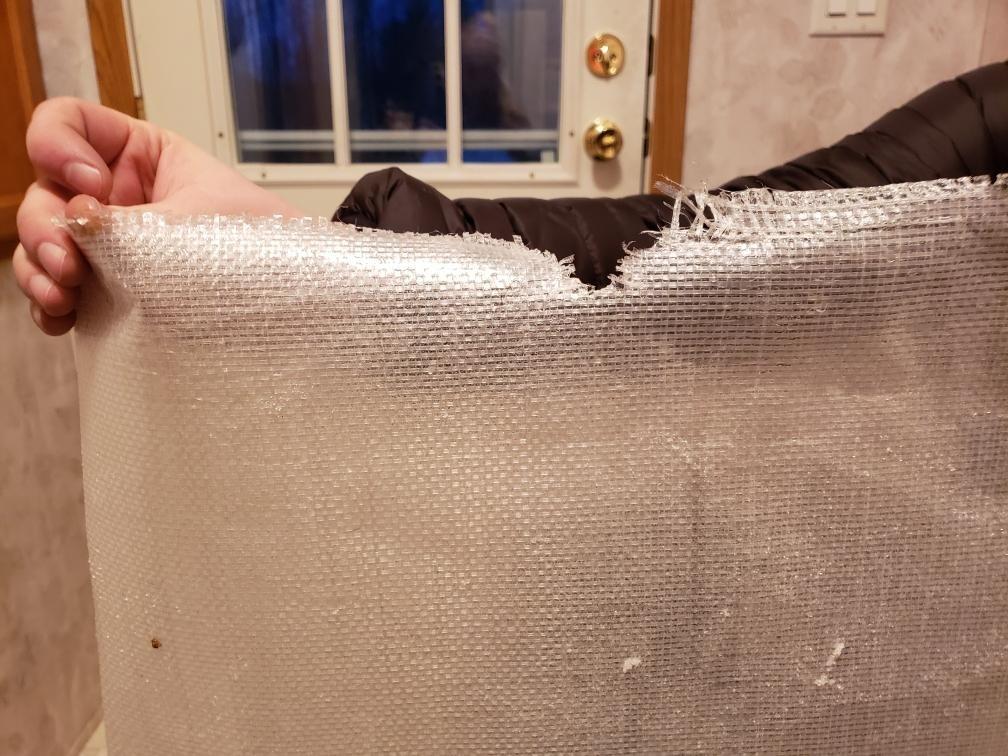
This is the heaviest rake in the roundup, and the weight is felt most in a long session with an extended pole. Extended reach plus 13 pounds is a lot of leverage working against your hands, and cold weather makes it worse. Plan on working in twenty-minute blocks with insulated gloves rather than trying to clear an entire roof in one pass.
Two other practical notes from owner feedback. The 10 foot plastic slide with its bungee has a finite life and some have needed replacement, and the instructions are thin, with an assembly video doing the work the manual should. PolarMade, the manufacturer, has also replaced a broken pole section free of charge, which suggests the service side is solid.
Who this suits and who it does not
Buy the SNOWPEELER if you have a tall house, heavy or wind-drifted snowfall, or simply do not want to spend two hours moving snow on a weekend. It is also the right tool if you plan to keep it and use it for a decade, since the sectional aluminum build and the two year manufacturer warranty both point that way.
It is the wrong tool if you have grip or shoulder issues, or if your storms are light enough that a 4.8 pound rake finishes the job while you are still warm. And do not buy it for its blade alone. The 30 foot slide design is overkill for a single-story ranch with 8 inches of powder.
4. Avalanche! AVA500 – Best Rolling-Wheel Design with a Fiberglass Pole
Avalanche! Roof Snow Rake, Snow Removal Tool, Assembled in the USA
17 in plastic slide
1.5 in wheels
15.5 ft fiberglass pole
9.2 pounds
Pros
- Wheels roll smoothly over asphalt without scratching
- Fiberglass flexes instead of snapping
- Tool-free snap-together assembly
- Slides a slab clear instead of dropping it on you
Cons
- Shortest pole in the group at 15.5 feet
- Light fiberglass can bend under packed snow
- Wide slide feels awkward on steep pitches
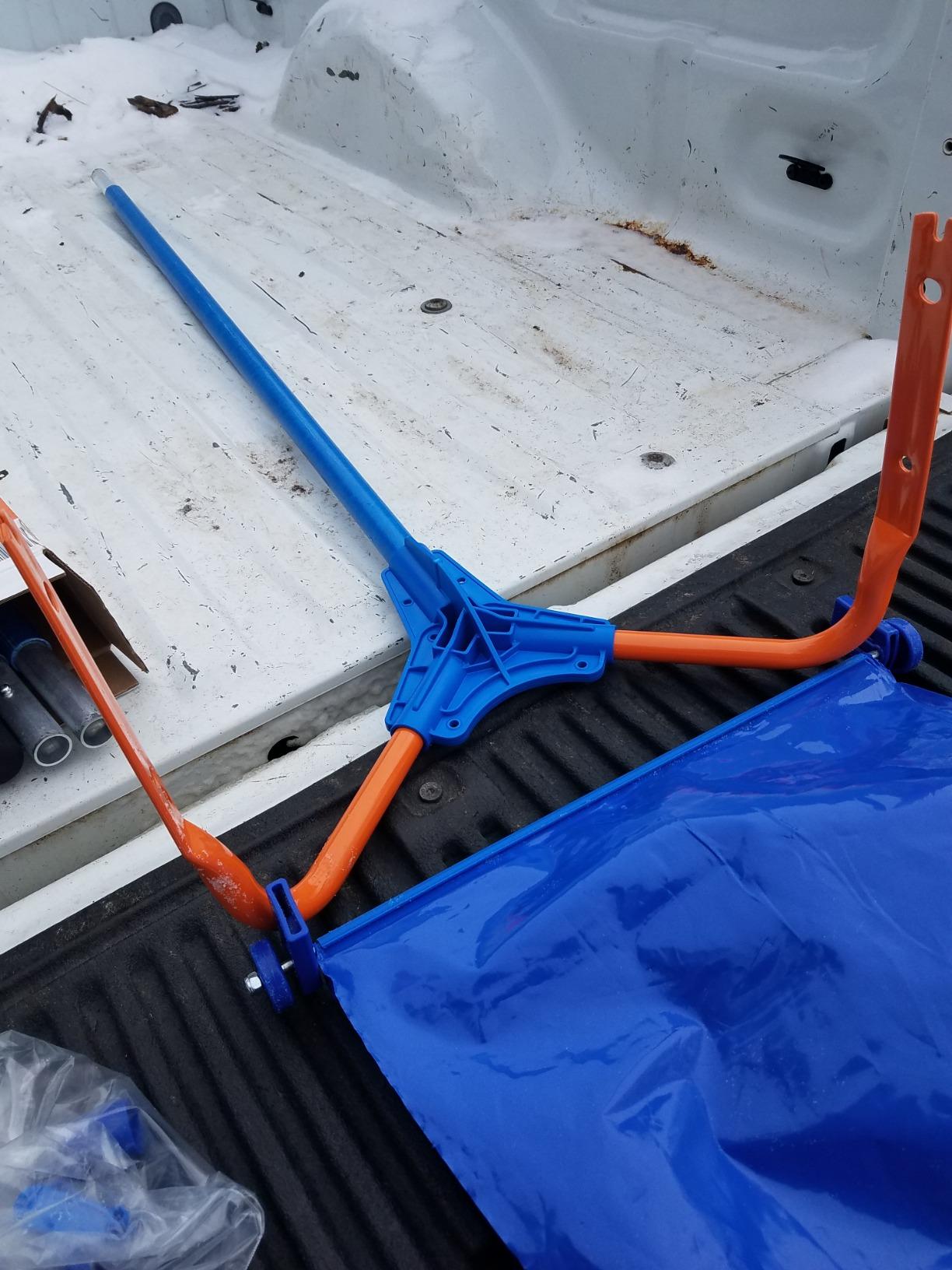
The Avalanche! AVA500 is the oldest proven design in this group and the only one here built entirely from fiberglass pole sections. Four lightweight sections snap together to a 15.5 foot pole with no tools, and a 17 inch wide plastic slide rides on 1.5 inch wheels that give it clearance over asphalt shingles.
The wheel-and-slide concept is different from a roller-standoff rake. Instead of floating a cutting edge, this pushes a broad flat panel under the snow and slides the whole mass down. It is a gentler mechanic, and it has been putting shingles back on houses for a very long time.
Rolling wheels and the 17 inch slide
One and a half inch wheels lift the slide just clear of the shingle surface, so the panel never grinds across the roof. Owners describe the action as smooth over asphalt specifically, which is the point. The 17 inch width pushes a meaningful slab, and the smooth plastic face means the snow releases rather than clinging and refreezing onto the tool.
The design is less efficient than the SNOWPEELER on very deep accumulation, because a flat panel has to get under the whole mass rather than cutting a slice. On moderate snowfall it is more than adequate, and on a single-story roof it is arguably over-qualified.
Why fiberglass sections matter in January
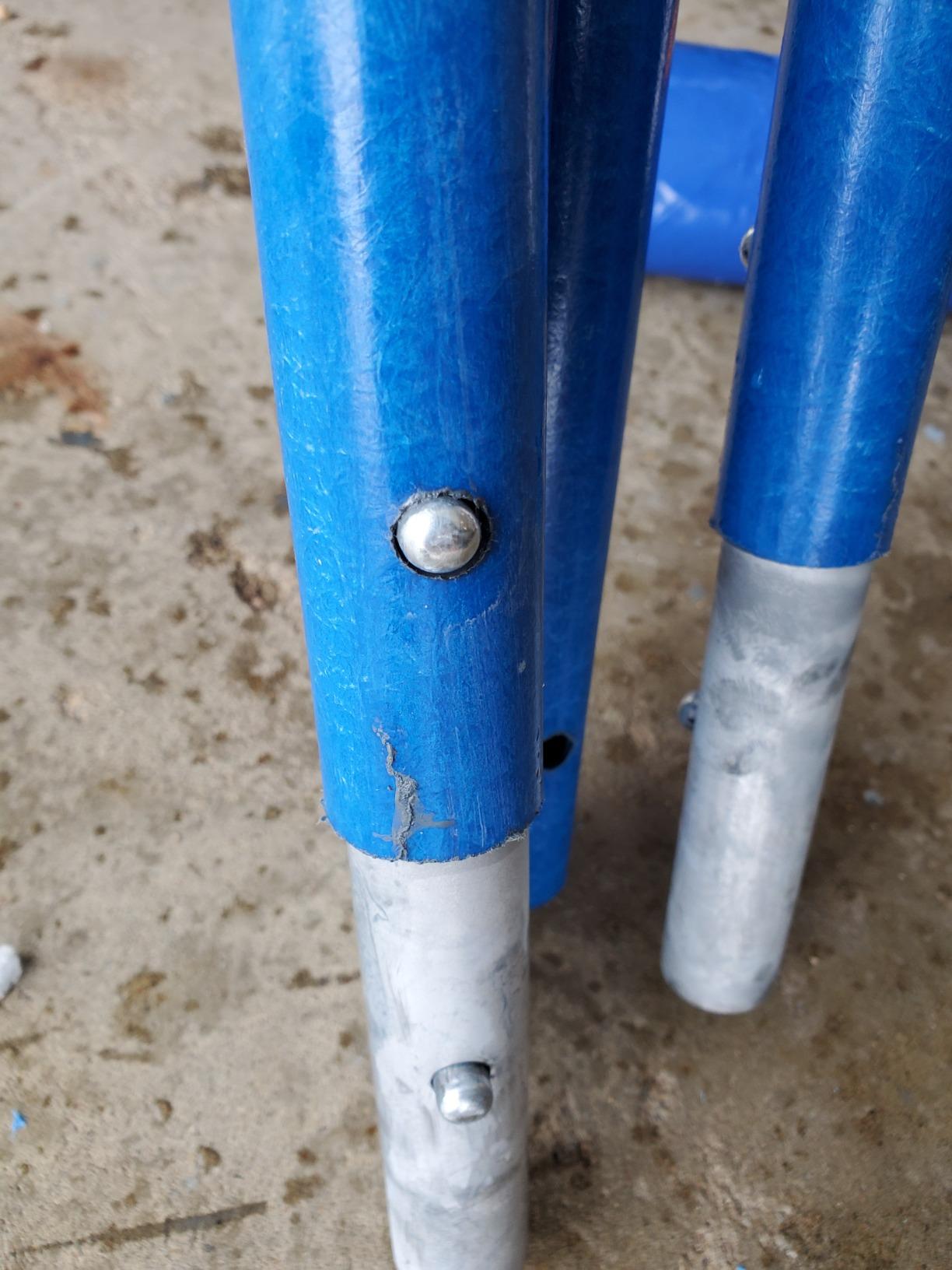
Aluminum shafts are stiff and light but they can snap, particularly at a bolt hole or a brace point. Fiberglass is a different compromise: it bends under load instead of breaking, so a slip with a heavy load on the head produces a curve rather than a failure. It is a forgiving material in exactly the situation where a snow rake gets used hardest.
At 9.2 pounds assembled, it is not a light tool, but the weight is distributed along fiberglass sections rather than concentrated at an aluminum joint. Assembly and disassembly take seconds with the snap-together fittings, and it breaks down to store along a garage wall.
Where the 15.5 foot pole runs out
This is one of the shortest systems in the roundup and the single biggest reason to pass on it. Fifteen and a half feet handles a single-story eave with nothing to spare, and it is genuinely short for a two-story house. Homeowners on forums with tall homes consistently name reach as their number one filter, and this is the pick that fails that filter.
A couple of owners also find the wide slide awkward on steep pitches, where a 17 inch panel wants to rotate rather than track straight down the plane. If your roof is steep or complex, expect to spend more time on technique than on a 15.5 foot pole allows.
Who this suits and who it does not
Pick the Avalanche if you are on a single-story home, want the gentlest possible contact with your shingles, and would rather have a forgiving pole that bends than a stiff one that snaps. It is also a strong choice for clearing wet leaves in autumn, where the smooth plastic slide releases debris cleanly.
Pass on it if you have a two-story or taller eave, because there is no extension path here and you will end up on a ladder, which is the exact outcome this whole category exists to avoid. For a taller house with the same gentle-contact idea, the Extreme Max roller rake covers it at 21 feet.
5. Snow Joe RJ205M – Budget Pick with an Aluminum Head
Snow Joe RJ205M Twist-N-Lock Telescoping Snow Shovel Aluminum Roof Rake, 21′
Aluminum head 6 x 25 in
6.2 to 21 ft Twist-n-Lock
5.7 pounds
2 year warranty
Pros
- Aluminum head bites into deep and crusted snow
- 5.7 pounds is easy for older users
- Twist-n-Lock adjusts from 6.2 to 21 feet
- Support has replaced broken units under warranty
Cons
- Sharp aluminum edges can scratch roofing materials
- Thin-walled section can snap at the brace bolt
- Lock can jam in cold weather
The Snow Joe RJ205M is the budget answer, and it is a good one if your roof is tile, slate or metal rather than asphalt. It shares the 6 x 25 inch head size and the Twist-n-Lock telescoping pole with the RJ204M above, but swaps the poly blade for aluminum, which is why it cuts harder and why I rank it lower for shingle owners specifically.
At 5.7 pounds it is still light, the pole adjusts from 6.2 to 21 feet, and reviewers like being able to dig into a snow bank rather than pushing it. Several older users single out the weight as the reason they can keep working, which is a real consideration for anyone with grip issues.
The aluminum head trade on asphalt shingles
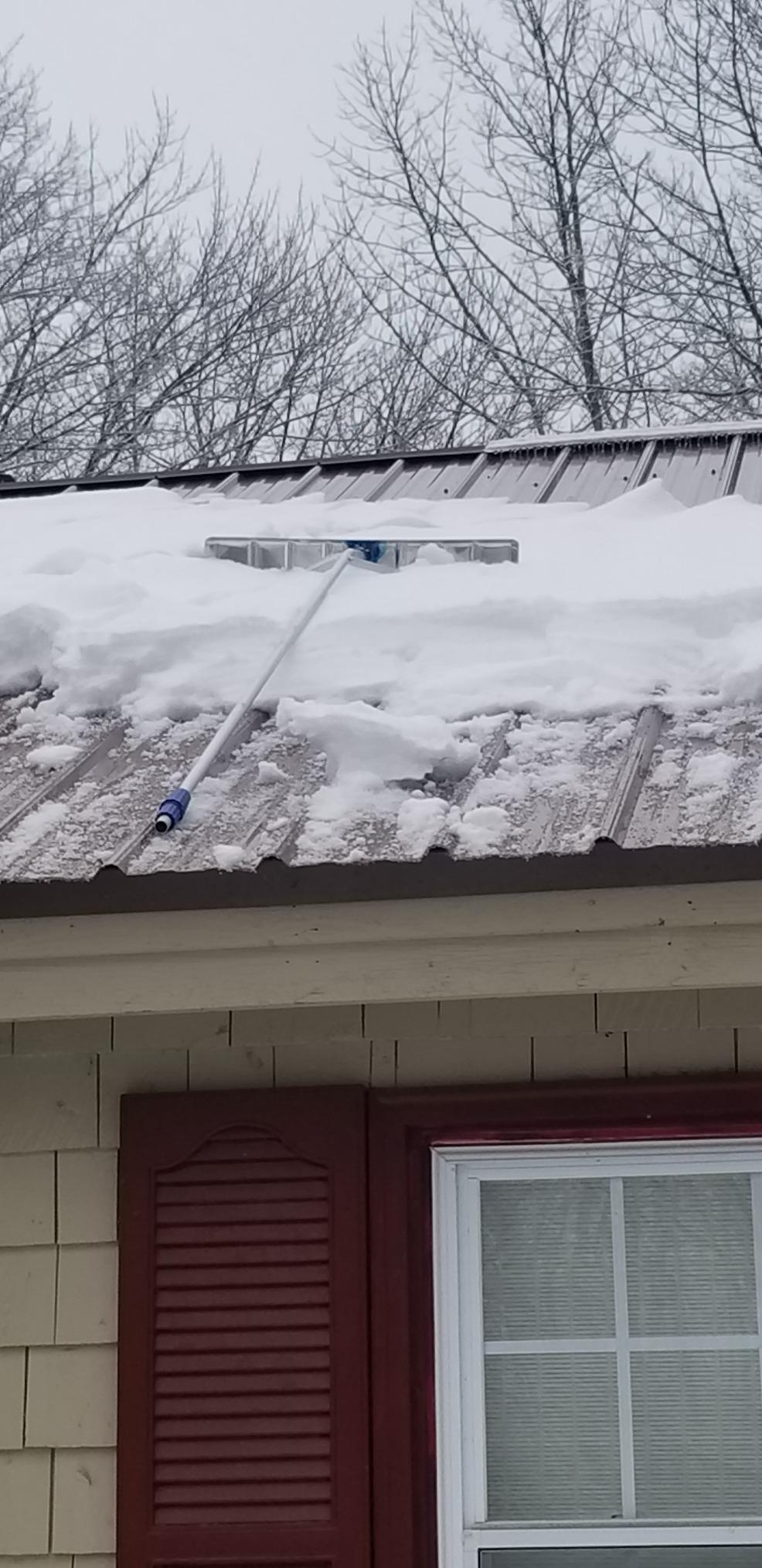
An aluminum edge has no give. In sub-zero temperatures it is rigid, and that rigidity is exactly what lets it bite into crusted snow that a poly head slides off. It is also exactly what strips granules if it contacts the shingle surface, because there is no compliant face between the metal and the granules.
Owners report sharp aluminum edges scratching roofing materials, and the manufacturer does not claim shingle-safety features on this model. If your roof is asphalt, treat the head as something that must ride on top of the snow rather than something you dig with. If your roof is tile, concrete, or metal, this is the more capable tool and the concern simply does not apply.
Extending from 6.2 to 21 feet
The Twist-n-Lock system adjusts continuously rather than in fixed sections, so you can dial the length to a specific eave height instead of picking from three presets. That is genuinely useful on a house where the eave is awkward or where you are working around a dormer. The trade is that the locking collar can jam in cold weather, which owners mention often.
At full extension you get 21 feet of pole with the head adding a few more feet of overhead reach. The section nearest the head has added flexibility that helps with maneuvering, which is a real asset when you are tracking a 25 inch wide head along a eave line.
The brace bolt weak point and warranty service
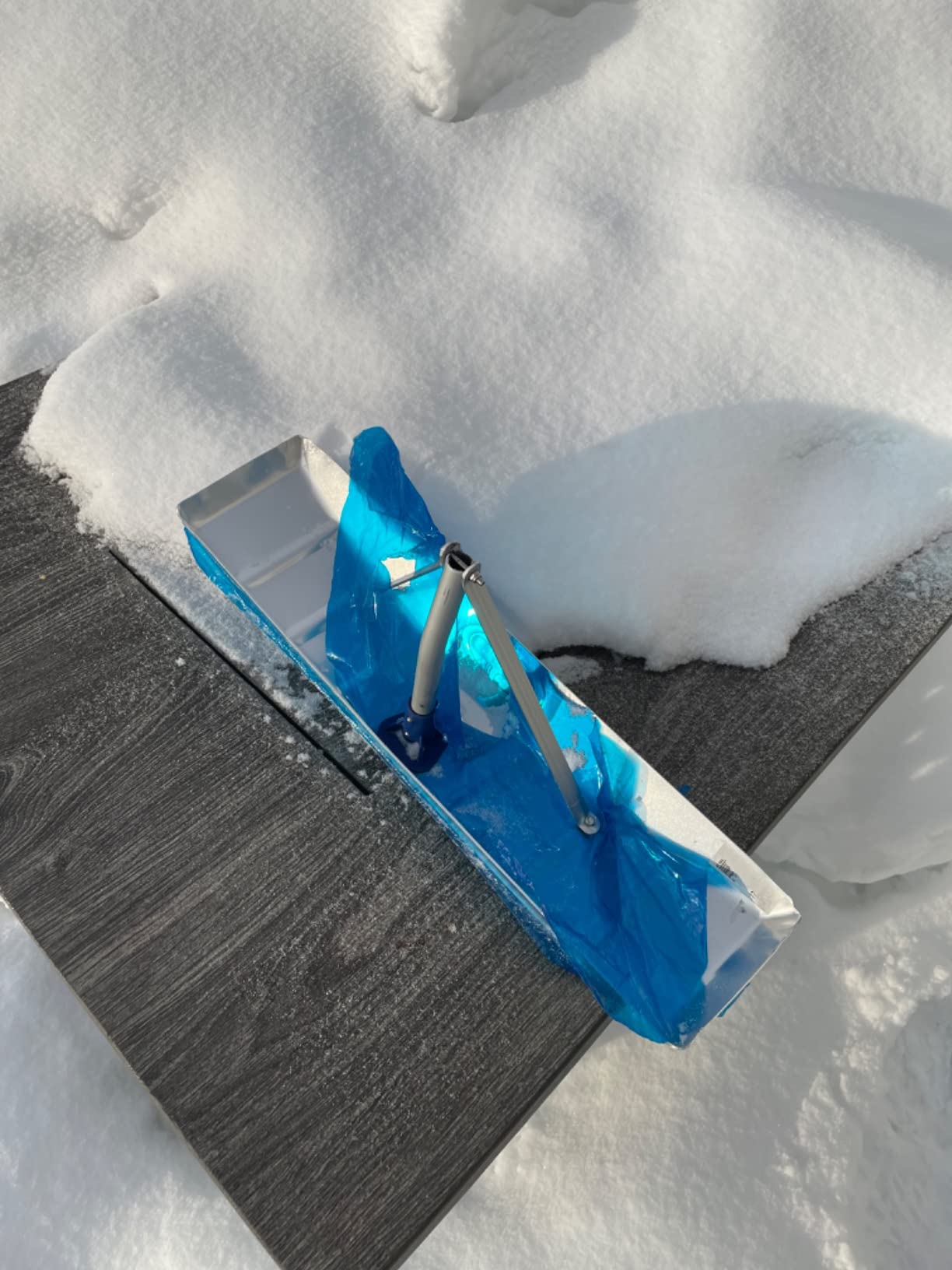
The most-cited structural complaint is that the thinnest section of the pole is also where the braces attach, so it can shear under load. Refrozen snow and freezing rain are the conditions that trigger it, which is somewhat ironic for a winter tool. Braces and pole joints bending or separating under heavy wet snow is the second common complaint.
Snow Joe’s support has replaced broken units under the two year warranty, and that is a meaningful offset for a budget tool. The bottom handle grip slipping off the pole also shows up in feedback, so check it before you are standing under a loaded blade.
Who this suits and who it does not
Buy the RJ205M if your roof is not asphalt, if you want the strongest bite available at a budget level, or if you are an older user who values a 5.7 pound tool over a safer blade. It also earns its place as a year-round debris rake on tile and concrete, where pine needles and leaves are the actual workload.
Skip it for asphalt shingles when you have any granule anxiety, which on a newer roof you should. The Extreme Max at the same general tier gives you roller standoffs and the same reach, and that is the safer trade on a roof you want to keep.
6. Suncast SRR2100 – Best Non-Stick Curved Blade
Suncast Adjustable Roof Rake with 21′ Resin-Coated Aluminum Handle, Curved Non-Stick Graphite Blade for Snow and Leaf Removal, Black
Curved graphite blade
7 to 21 ft adjustment
7.58 pounds
Resin-coated handle
Pros
- Curved non-stick blade releases wet snow cleanly
- Resin-coated aluminum resists corrosion
- Breaks into sections for off-season storage
- Covers most two-story eaves at 21 feet
Cons
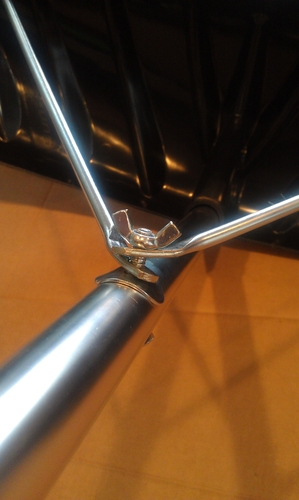
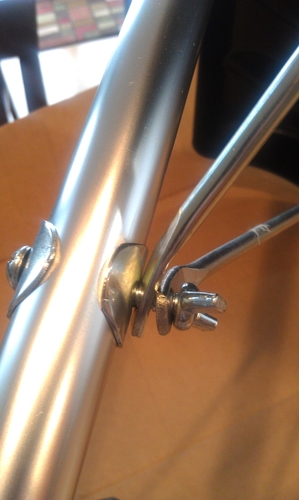
- Sectional joints can work loose with a screw at each
- Graphite blade is narrower than poly and roller heads
- Fixed blade width gives no fine control
The Suncast SRR2100 solves a problem the other rakes create, which is snow sticking to the tool. Its plastic bow-shaped head carries a curved non-stick graphite blade, and owners consistently report that it releases wet snow without the clumping you get when a flat poly face grabs and refreezes.
The pole adjusts from 7 to 21 feet using extension pieces, and the lower handle is resin-coated aluminum, which is a corrosion upgrade over bare tubing. At 7.58 pounds it sits in the middle of the weight range and feels balanced.
Why a curved non-stick blade matters for wet snow
Dry powder does not bother any of these tools. Wet, dense, slightly melting snow is where a flat blade gets into trouble, because it adheres, and then the next pull is a tug-of-war against frozen-on material. A curved blade presents a different surface as it lifts, and the non-stick coating means the snow releases at the top of the stroke rather than riding along.
This is why the Suncast is the tool I would want for a coastal or slushy-snow climate, where the eave band is frequently wet rather than powdery. It is also a good argument for a rake that does not need rollers or a slide to be gentle, because the geometry is doing the work instead.
Sectional adjustment and the joints to check
Adjusting from 7 to 21 feet means this handles a small shed and a two-story house with one tool, which is genuinely versatile. The cost of sectional construction is a screw assembly at each joint, and owners flag that those joints can work loose over time. Check them before a storm rather than mid-pull.
Storage is a real advantage here. It disassembles into short sections that stack against a garage wall, which is more than can be said for a 30 foot telescoping tube. If you have limited garage depth, that changes the calculation more than most buyers expect.
Blade width and where it sits in the triage
The graphite blade is narrower than the 24 to 26 inch heads on several competitors here, which means more passes for the same roof. What you give up in coverage you get in a blade that will not grab and a curve that makes each pass release cleanly. For a small or medium roof, that is a reasonable trade.
On shingle contact, this is a plastic head with a graphite face, so it sits in the same tier as the poly rakes. It does not have the roller geometry that keeps an edge a fixed distance off the surface, so I would still work shallow strokes and stop short of scraping.
Who this suits and who it does not
Choose the Suncast if you get wet, heavy snow rather than dry powder, if a 21 foot maximum reach is exactly what your house needs, and if you like that the tool also handles leaves and spring debris on the same non-stick surface.
It is not the pick for a large roof where pass count matters, or for low-pitch work where you need a lifting angle. If you want both a wide cut and a gentle surface, the VEVOR later in this list pairs 26 inches with sliding wheels.
7. Roof Razor 25 ft – Best Heavy-Duty Cutting Head
ROOF-RAZOR Roof Rake for Snow Removal | Safe-FAST-Easy Rooftop Tool | 25ft Handle | Wide 24in Cutting Head | Rugged Anti-Rip Snow Slide | MinnSNOWta Snow Rakes for House
Dual cutting edges
24 in head with wheels
25 ft handle
10 pounds
Pros
- 78 percent of reviews are five star
- Patented dual edges cut compacted and drifted snow
- 24 inch head with wide wheels glides over shingles
- 25 ft handle reaches most of a steep roof
Cons
- Heaviest option for its class at 10 pounds
- Only carries a 1 year limited warranty
- Weight tires the arms over a long session
The Roof Razor rates 4.6 stars with 78 percent of reviews at five stars, and the complaints cluster around one thing. The patented dual cutting-edge design slices deep snow and breaks hard-packed layers, and the 24 inch head moves a large volume per pass with wide wheels that glide across shingles.
At 25 feet with a 10 pound build, this is the tool for someone who rakes seriously and often. Made in the USA with a long company history, and the specification that matters most is the wheel contact surface, which is what keeps a hard cutting edge off the granules.
Dual cutting edges on compacted snow
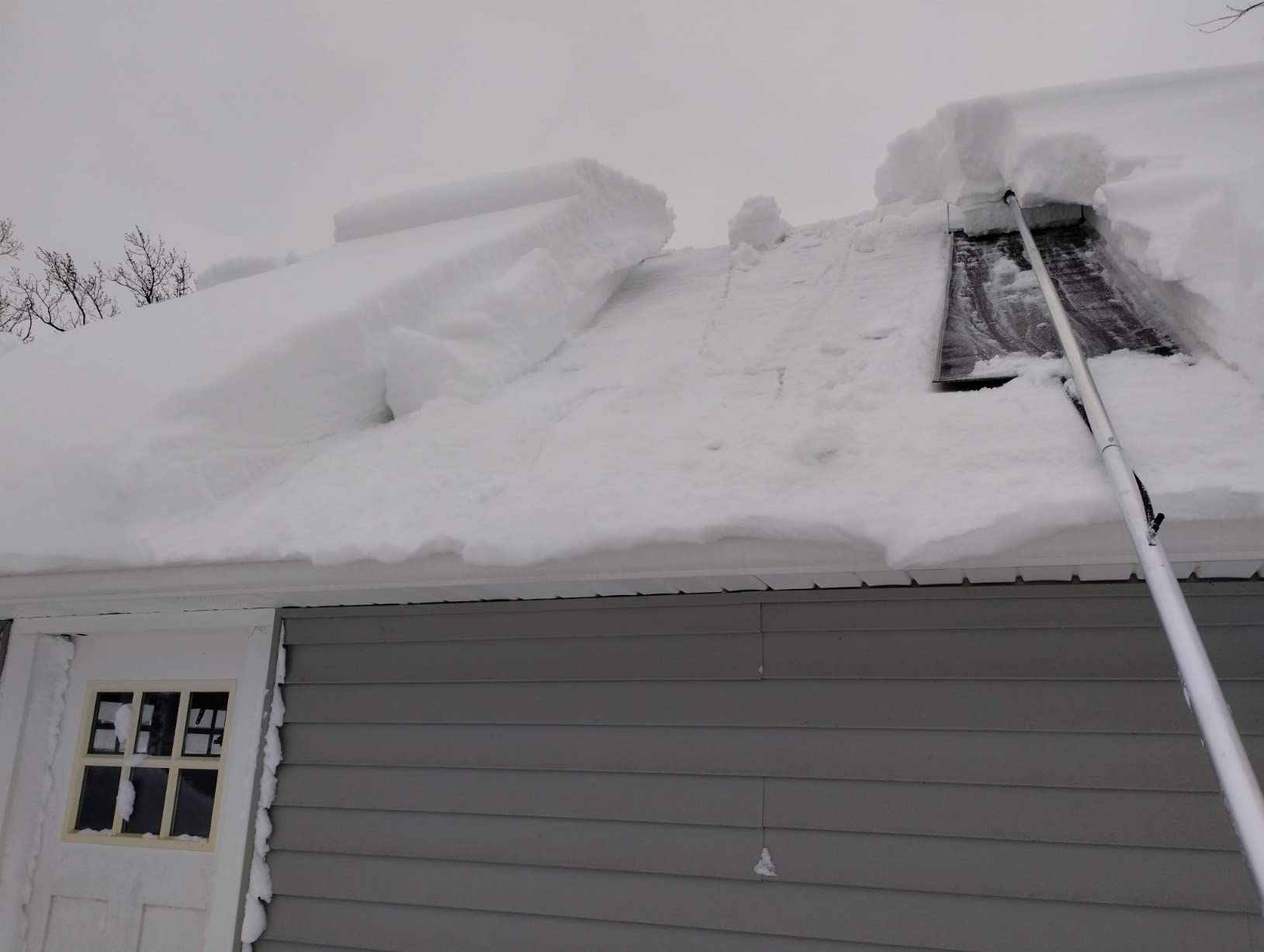
Most rakes here have a single edge that shears a top layer. This one has two, which means it engages a deeper cross-section and breaks the bond in packed snow that has refrozen since it fell. Owners describe it as the difference between moving snow and displacing it, and on a roof that has been ignored for a few storms, that is the difference between progress and frustration.
The 24 inch head is wide, and combined with the second edge it covers a lot of roof per stroke. If you are working a two-story or a roof with a long ranch-style run, fewer passes is a real ergonomic benefit independent of the cutting power.
Wheels plus slide contact on shingles
The wide wheels are what make an aggressive cutting head defensible on asphalt. They glide across the shingle surface and carry the load, so the two cutting edges work in snow rather than in granules. Buyers consistently mention the wheel-and-slide contact as the reason they are comfortable using a hard-edged tool on a shingle roof.
This is not quite the same guarantee as a fixed-standoff roller system, because the wheels set the clearance at one point rather than along a full-width rail. Practically it works, but it is worth watching the wheels for flat spots over time, since a compressed wheel lowers the whole head.
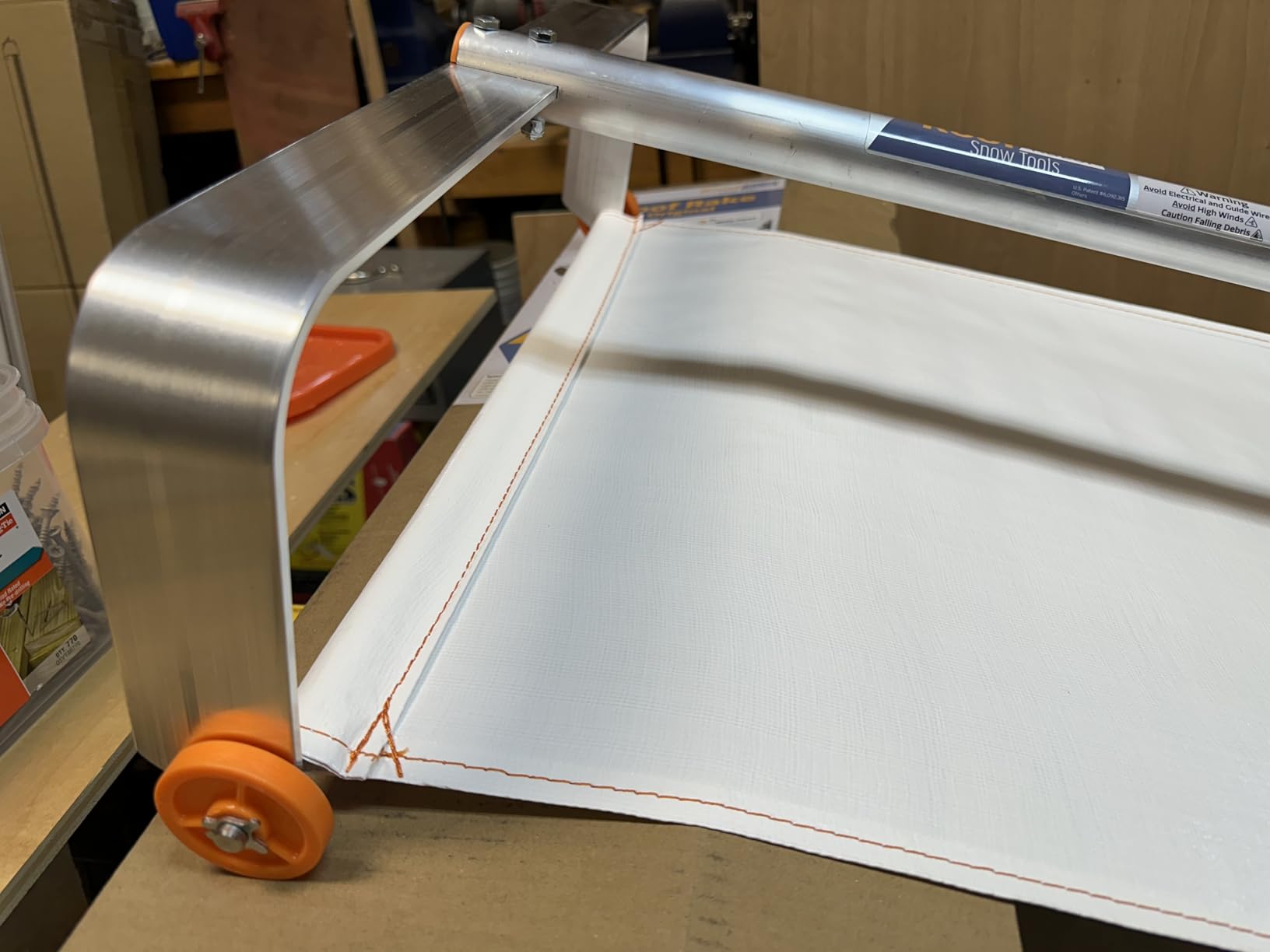
10 pounds, a 25 foot handle and a one year warranty
Ten pounds plus 25 feet of handle is the second-heaviest combination in this roundup, and fatigue is the dominant complaint in owner feedback. Plan on shorter sessions and a grip that warms your hands, because the aluminum handle at full extension is a long lever working on cold hands.
The one year limited warranty is shorter than the two year coverage on the Snow Joe, Extreme Max and SNOWPEELER models here, and a few buyers note it. Given the US manufacturing and the cutting hardware involved, that is a fair point to weigh if you expect heavy use over many seasons.
Who this suits and who it does not
Buy this if your winters produce hard-packed and drifted snow, if you have a steep or large roof that rewards aggressive cutting, and if you are physically comfortable handling 10 pounds at full extension. It is also a strong choice for a household that treats roof clearing as a regular winter job rather than an emergency response.
Pass if your snowfall is light and powdery, because a heavy dual-edge tool is a lot to bring to a small job, or if cold-weather grip is a limitation. For lighter handling with a wide cut, the Snow Joe RJ204M is the opposite answer.
8. USA-Made Snow Roof Rake with Shingle Saver Rollers – Best USA-Built Roller Rake
USA-Made Snow Roof Rake with Shingle Saver Rollers (20 Foot)
Shingle Saver rollers
20 ft length
Lightweight aluminum
USA built
Pros
- Rollers keep the head entirely off the roof surface
- Ranked the number one product in its category
- Lightweight yet handles heavy snow
- Assembles in about five minutes
Cons
- Three bolts hold the head and need retightening
- Blade supports could be heavier for heavy loads
- No extra pole extensions offered
This USA-made 20 foot rake is the cleanest shingle-safety story in the roundup, and its Shingle Saver rollers do one simple thing well. The rollers hold the shovel head from touching the roof surface at all, so the blade shears snow while the wheels carry every contact load against your shingles.
At 20 feet of length in lightweight aluminum, it covers a single-story eave comfortably and the lower eave of a modest two-story. Assembly takes about five minutes, and the design lineage runs back to the classic Garelick roof rake that most of these tools descend from.
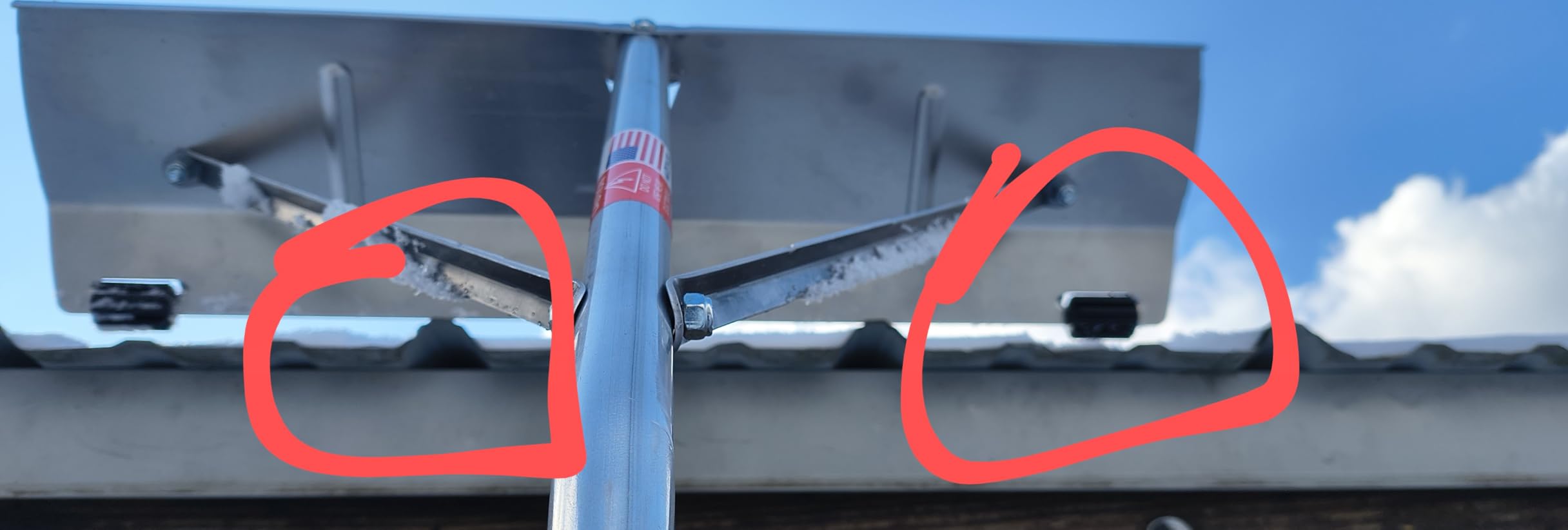
Shingle Saver rollers in practice
Of everything in this roundup, this is the mechanism that most directly answers the question a shingle owner is actually asking. There is no gap to estimate, no compliance to trust, no flex to wonder about. The head is held above the surface by wheels, full stop, and that is why owners report dramatically reduced or eliminated ice dam formation when they use it regularly.
It also ranks as the number one product in the Snow Rakes category, which is a reasonable signal about how often it is chosen. The 4.6 star average across owner reviews is among the highest here, and the consistency of the feedback is notable for a product with a modest review count.
Twenty feet of length and the single-story sweet spot
Twenty feet is the awkward middle number. It handles a single-story house with plenty of margin and reaches the lower eave of a two-story, but it does not comfortably cover a full second story. If your eave is above about 18 feet, you are at the limit of what this pole can do from the ground.
There are no additional pole extensions offered, which is a real constraint if you later realize you need more reach. That is worth factoring in before you commit, because the next step up in reach means a different, heavier tool entirely.
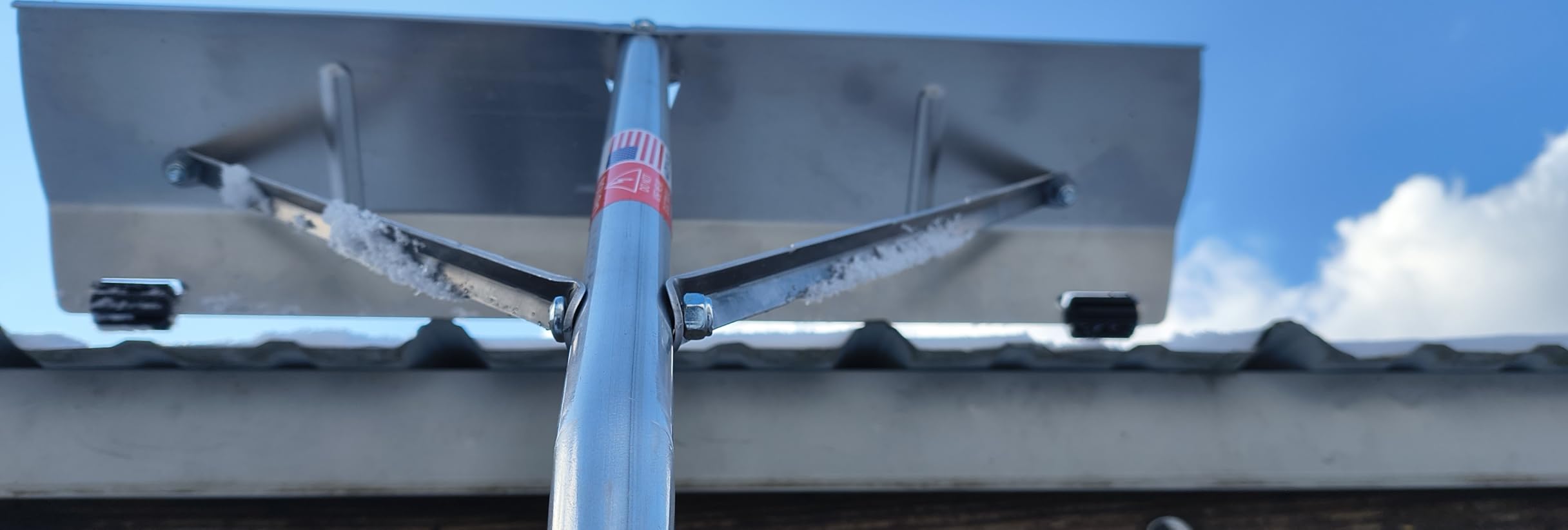
Three bolts and light blade supports
The head attaches with only three bolts, and owners recommend tightening and retightening them between uses. This is not a difficult fix, it is just a maintenance habit you have to actually have, because a loose head under load is how a rake ends up on a driveway instead of your roof.
The other repeated note is that the blade support struts could be heavier, particularly for two-story work or genuinely heavy snow. The build is lightweight and easy to handle, which is the point of it, and that same lightness is what you are giving up in absolute load capacity. This is still a well-regarded tool that rewards a five-minute assembly check each season.
Who this suits and who it does not
This is the pick for someone who is genuinely frightened of damaging their shingles and wants the most mechanically obvious protection available. It is also a good choice if you value domestic manufacturing and want a rake that will be there in ten years with parts available.
It is not the choice for a tall two-story or any three-story house, where 20 feet leaves you short. It is also not the choice if your snow is heavy and crusted, since the light build is better suited to clearing fresh accumulation. For the same roller philosophy with more reach and a bigger blade, the Extreme Max is the step up.
9. EZ Smart Adjustable-Width Rake – Best Blade That Changes Width
EZ Smart Patented Adjustable Snow Roof Rake with 16 ft Pole
Blade adjusts 3 to 36 inches
16 ft sectional system
Polyethylene head
Mesh storage bag
Pros
- Only rake here with a tool-free adjustable blade width
- Narrow setting gives control around valleys and vents
- Collapses into a mesh bag for garage storage
- Flexible polyethylene resists cracking
Cons
- Shortest system here at 16 feet
- Plastic pole and head less rigid in packed snow
- Umbrella blade catches more resistance in deep snow
The EZ Smart is the only rake in this roundup whose blade changes width, from 3 to 36 inches, without tools. That is a genuinely useful idea on a complex roof, because a 36 inch head that opens and closes lets you work a wide pass over a clear field and then narrow down to a 3 inch sliver around a vent or a skylight.
The 16 foot sectional system includes a mesh storage bag, which solves the awkward-storage complaint that nearly every owner of a long roof rake raises. The blade is roof-safe polyethylene, chosen for flexibility rather than cutting force.
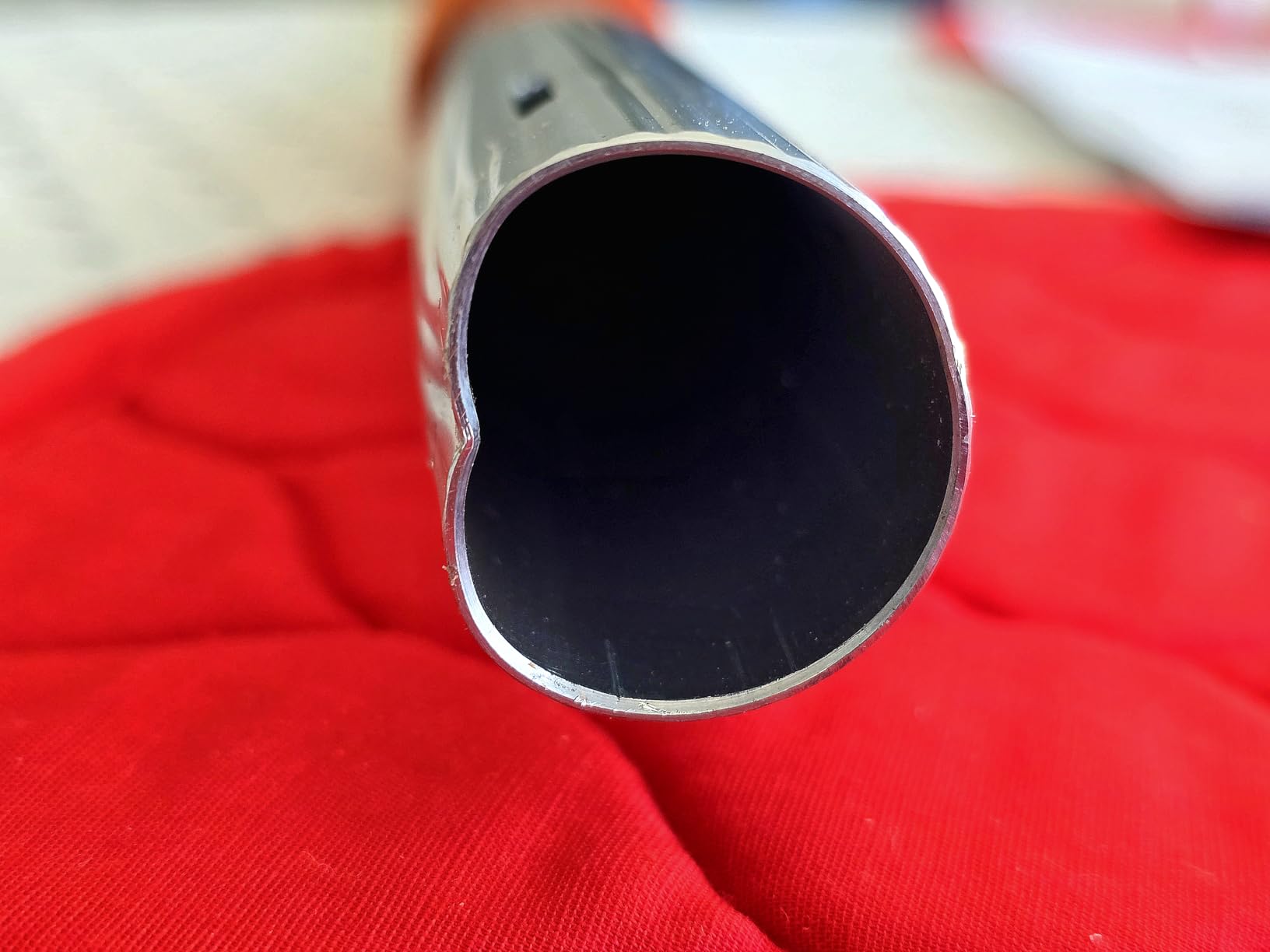
What a 3 to 36 inch adjustable blade actually solves
Every fixed-width rake on this list has the same failure mode on a complicated roof. It is too wide for the tight spot and too narrow for the field, so you end up either damaging a shingle by angling into a valley or spending the whole afternoon making passes you did not need to make. Opening the blade down to 3 inches and running it into a valley is a real technique, not a novelty.
Owners who have complex rooflines with dormers, valleys, and multiple penetrations are the ones who mention this feature most. The umbrella-style mechanism does add a little complexity versus a fixed head, and the folding action means slightly less cutting precision at full width than a flat blade would give you.
Sixteen feet and the mesh bag
Sixteen feet is among the shortest systems here, and it is the most common limitation in owner feedback. It is genuinely fine for a single-story or small ranch and completely inadequate for a two-story. That is a narrow addressable range, and you should be honest with yourself about which side of it you are on before buying.
Where it wins big is storage. The whole thing collapses into a mesh bag that fits on a shelf, in a vehicle, or in a cabin, which is a genuine answer to the complaint we saw repeatedly about long sectional poles being awkward in a residential garage.
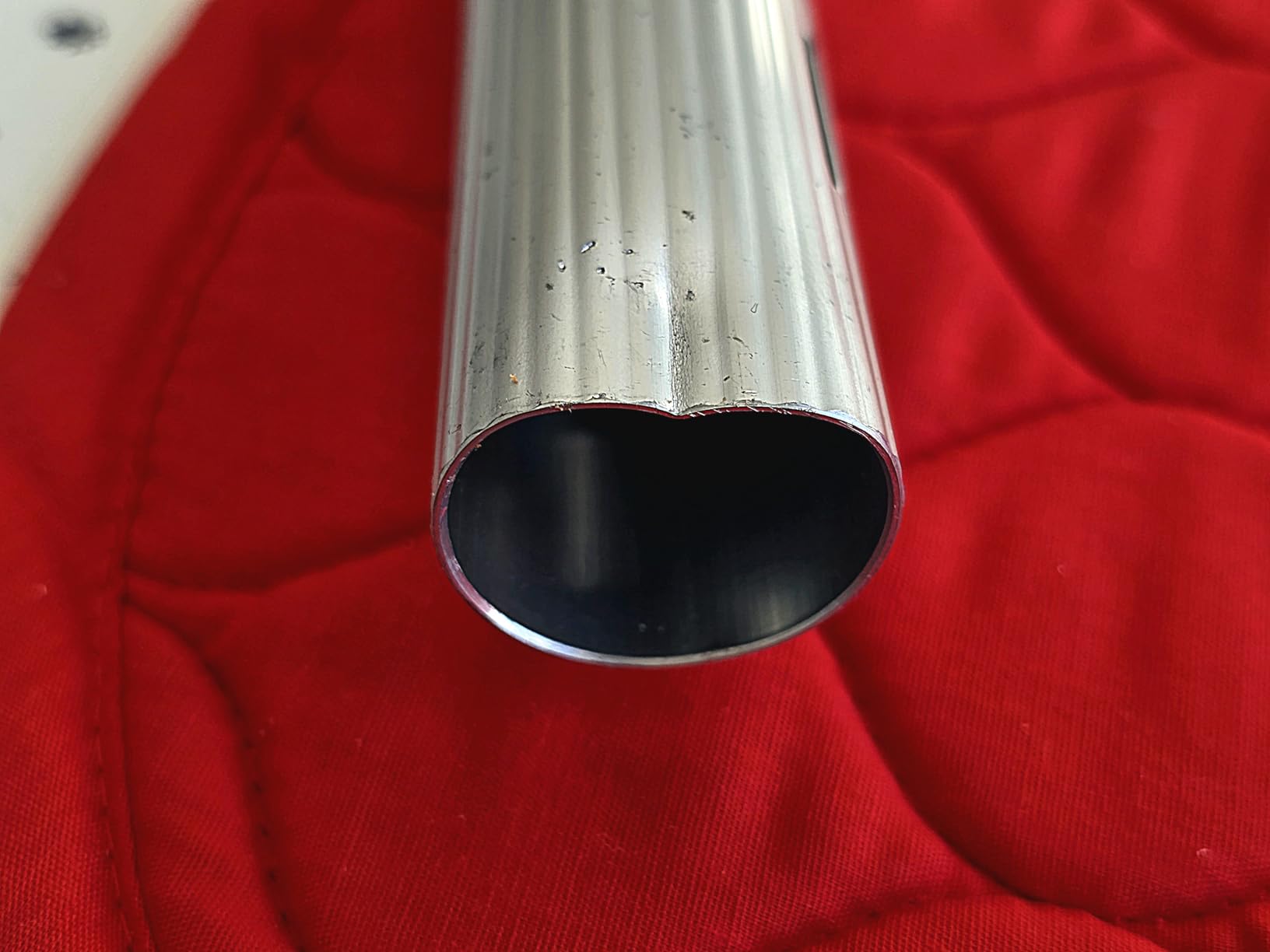
Polyethylene rigidity and the umbrella blade’s limits
Polyethylene is flexible and resists cracking, which is good news for a tool that gets dropped, frozen and levered against a roof edge. The trade is rigidity, and in packed snow a plastic pole and head transmit noticeably less force than aluminum. Owners note the umbrella-style blade also catches more resistance in deep snow than a flat rake head would.
So the honest read on this tool is that it is a debris and light-snow specialist with a very good feature, not a deep-snow machine. Used on its own terms, with the blade opened wide for fields and narrow for detail, it does a lot of work in a season.
Who this suits and who it does not
Buy the EZ Smart if you have a complicated or small roof with lots of valleys and penetrations, if garage or cabin storage space is genuinely tight, and if your snow tends to be moderate rather than wind-drifted. It is also a reasonable year-round debris tool given the adjustable geometry.
Skip it if you have a two-story eave, because 16 feet will not get you there, or if you want to break hard-packed snow, because the flexible polyethylene will not do it. If reach is the binding constraint, the SNOWPEELER’s 30 feet solves it in the other direction.
10. Roof Razor Brush and Rake Multi-Tool – Best Year-Round Roof Cleaning
Roof Brush + Snow Rake All-in-One Tool | Clear, Leaves, Snow & Debris Fast | 22ft Reach | Adjustable for Valleys | Year-Round Roof Cleaning Broom & RoofRake | Lightweight, Easy to Use, US Made
Brush one side rake other
22 ft reach
7 pounds
Dual head design
Pros
- Highest average rating in the group at 4.7 stars
- Two tools in one head for year-round cleaning
- Soft bristles clear leaves and moss without harming shingles
- 22 ft reach across four quick-connect sections
Cons
- Bristle side handles debris not deep snow
- 18 inch head is narrower than wide aluminum rivals
- Broom is not a substitute for a snow rake in a storm
The Roof Razor multi-tool has the highest average rating of anything we compared, at 4.7 stars, and it earns that by doing two jobs instead of one. One side of the head is an 18 inch soft polypropylene brush, the other is a rake, and the pole adjusts so you can reach roof valleys, solar panels, pool covers and RVs from the ground.
For a homeowner who wants one tool for leaves, pine needles, moss and light snow, the value argument is strong. Four quick-connect aluminum sections reach 22 feet, and the whole thing breaks down for storage at 7 pounds.
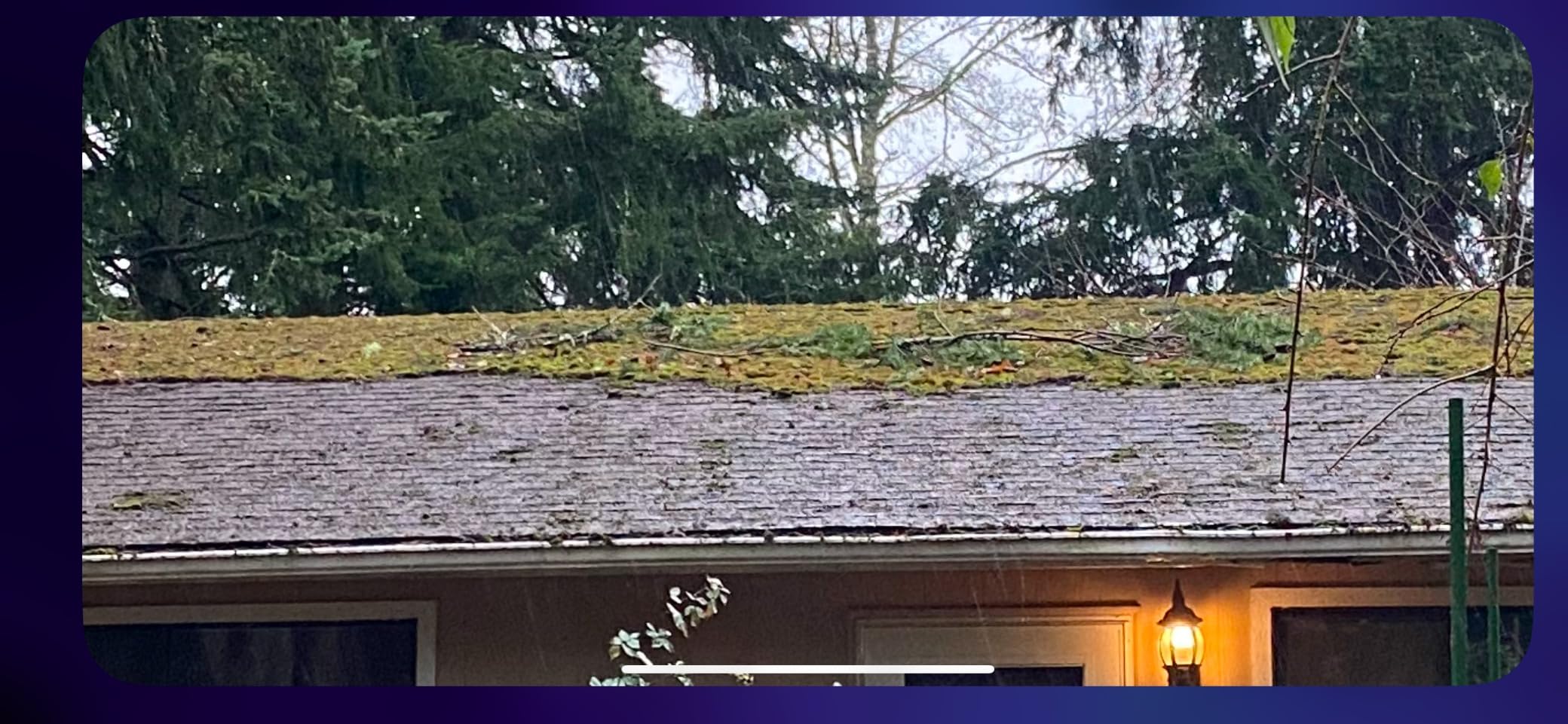
Dual head design for year-round roof cleaning
The brush side is the reason to own this. Soft polypropylene bristles move wet leaves, pine needles and moss off a shingle surface without the scraping risk that a hard edge carries, and owners consistently treat it as a spring and fall tool rather than a winter one. A single rake that only works in January is a tool that sits in a garage for ten months.
The adjustable angle setting is a genuine second benefit. Being able to change the head angle means you can work a valley, run along a solar panel array, or clear a pool cover without changing tools, which is the kind of flexibility that becomes valuable the first time you need it.
22 feet of reach across four sections
Four quick-connect sections of roughly four feet each build to 22 feet, which covers most two-story eaves from the ground and the lower portion of taller homes. Quick-connect fittings mean no assembly tools and fast breakdown, and at 7 pounds the whole thing is light enough for a long session.
The sections being four feet each rather than one telescoping tube means more joints, and joints are where snow load eventually finds weakness. Check each connection before a storm. Storage is good, since the sections are short enough to stand in a corner.
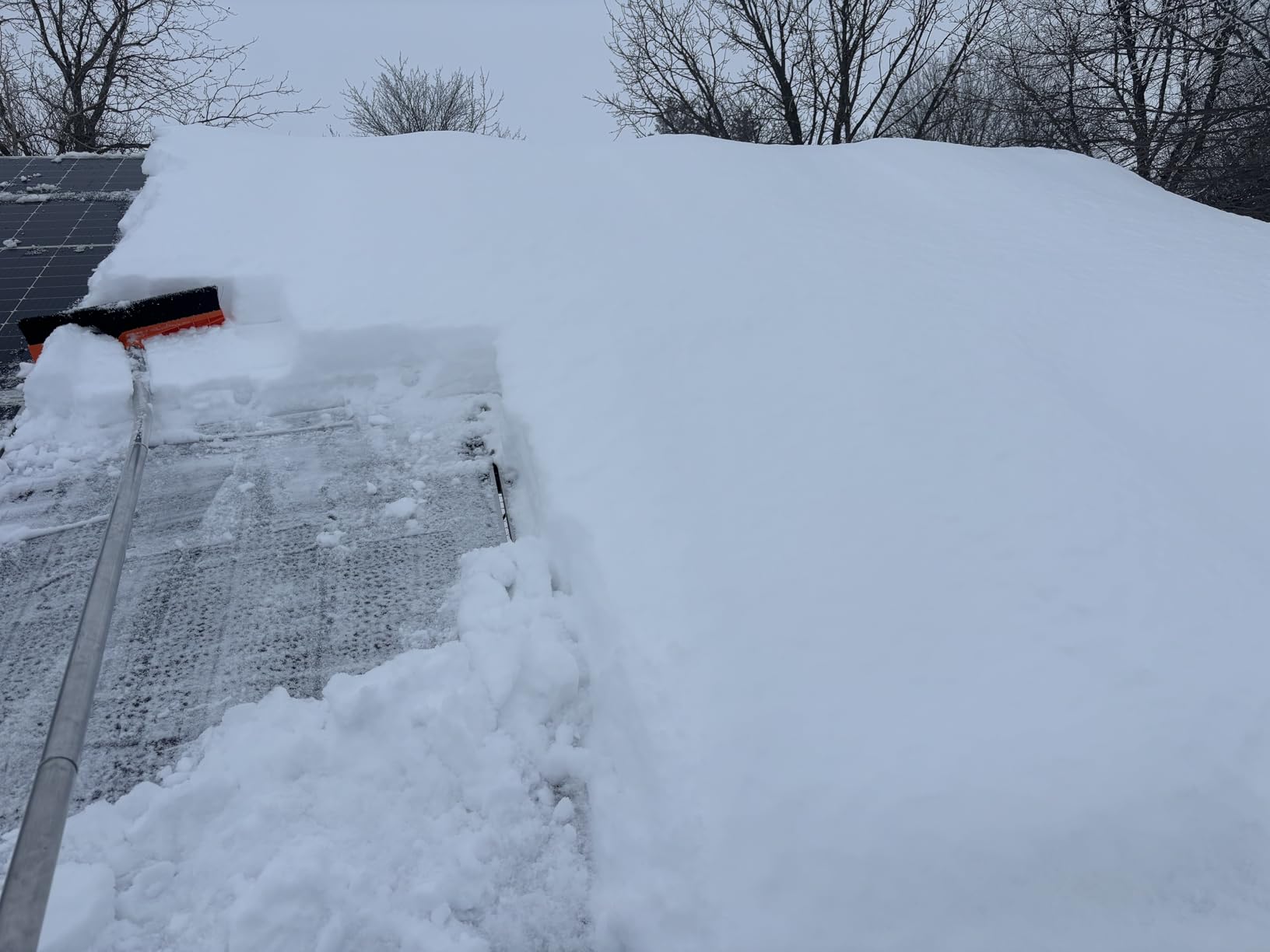
Bristles versus snow capability
Be clear-eyed about this one. The consensus among owners is that the brush side is a debris tool, and the rake side handles snow, but the rake side of a dual-head tool is not as capable as a dedicated wide-blade snow rake. An 18 inch head is narrower than the 24 to 26 inch aluminum heads on several competitors here.
So if your winter brings heavy or packed snow, this is not the tool you want in a real storm. It is the tool you want for the three weeks a year when leaves and needles need to come off, with snow handling as a bonus rather than the primary job.
Who this suits and who it does not
Buy the multi-tool if you have trees near the house, if leaf and moss cleanup is an annoyance you keep postponing, or if you want a single pole that also handles solar panels, pool covers and a vehicle roof. The 4.7 star average suggests very few buyers regret the purchase.
Skip it as your primary snow tool if you get real accumulation, because a dedicated rake with a wide blade and roller or foam contact will do in a fraction of the time. For the storm itself, pair it with one of the snow-specific picks earlier in this list rather than asking one head to do both jobs.
11. Leanaco SnowBuster – Best Foam Head for Solar Panels and Delicate Roofs
2025 Upgraded Never-Scratch SnowBuster,Snow Roof Rake,EVA Soft Foam Pad Snow Removal Tool,S-Shaped Design for House Roof,Solar Panels,Car Snow, and Leaves,Orange(24FT Telescopic Extension Pole)
Soft EVA foam head
5 to 24 ft reach
S-shaped head
Anti-slip grip
Pros
- Only rake here with a soft EVA foam head
- Never-scratch contact surface
- S-shaped head cleans corners with push or pull
- Anti-slip sponge handle avoids cold metal
Cons
- Foam head does not work on ice at all per the manufacturer
- Much slower in deep packed snow
- Lowest average rating in this group at 4.0
The Leanaco SnowBuster is the most cautious tool in this roundup, and that is either its selling point or its limitation depending on your winter. The head is soft EVA foam, which will not scratch shingles, slate, metal, glass or a solar panel. Nothing else here offers that guarantee.
It extends from 5 to 24 feet across six sections with flip-tab locks and quick-release clasps, and carries an anti-slip sponge handle so your hands are not on cold metal. The S-shaped head is designed to clean corners and valleys with either a push or a pull.
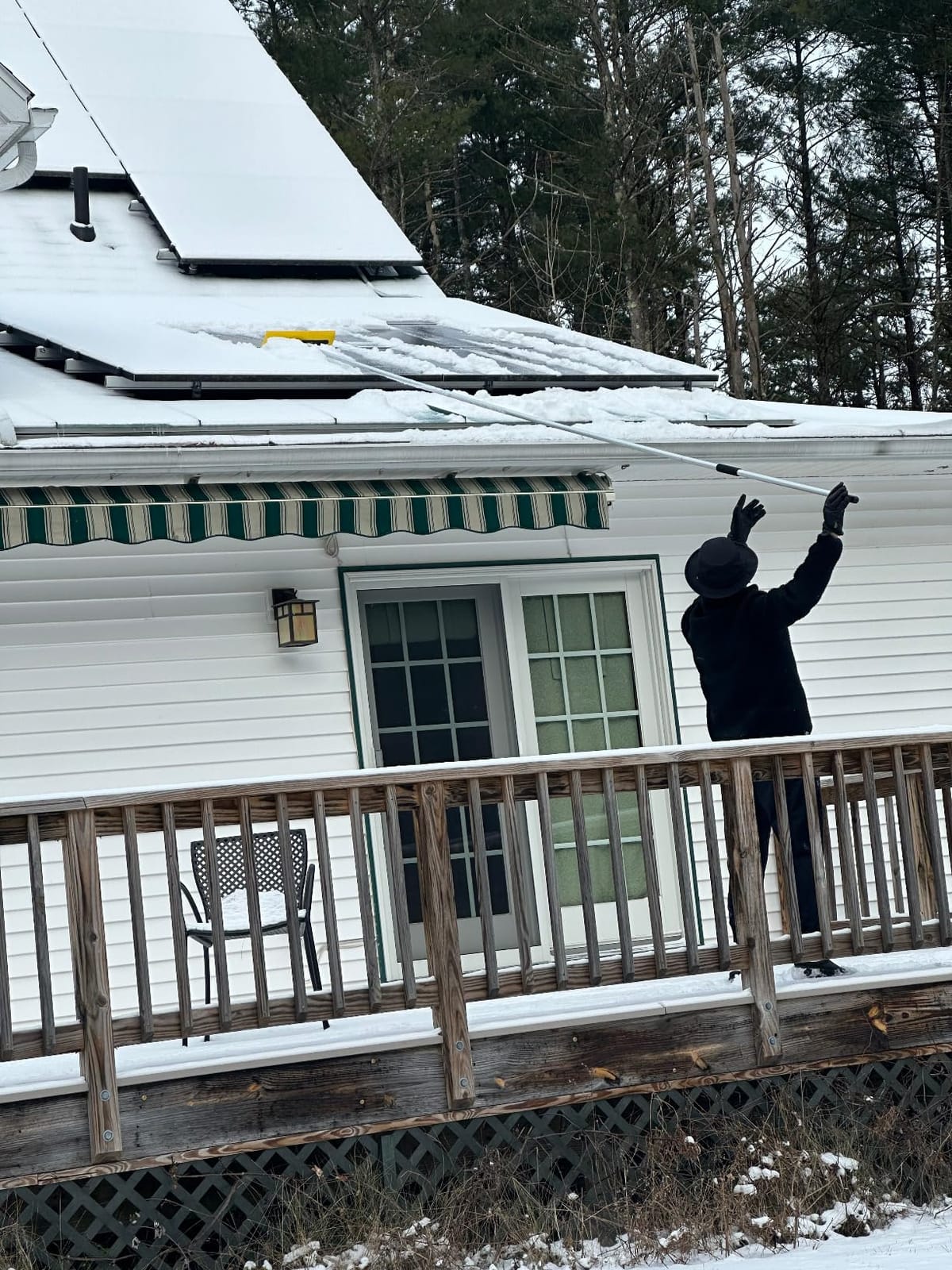
What a foam head does and does not promise
EVA foam is the second tier in my shingle-safety triage, above poly and far above bare metal, because a compliant face simply cannot concentrate a hard edge against the granules. On a fragile surface like a solar panel, a slate roof, or a metal roof with a coating, that is the correct choice and nothing else in this list is.
The manufacturer is direct about the limit: the foam head does not work on ice at all. It pushes snow rather than slicing it, which makes it much slower in deep packed accumulation. If you have ever stood on a roof and had to chip at a frozen crust, this is the wrong tool for that job and the right one for everything softer.
Five to 24 feet with flip-tab locks
Twenty-four feet of reach is among the longest here, and the six-section design with flip-tab locks is fast to extend and quick to break down. The 3/4 inch Acme thread metal alloy pole tip and the integrated handle cover keep the head from loosening during extended work, which addresses a complaint that shows up with several competing rakes.
The anti-slip sponge grip is a small thing that matters more than it sounds. Cold hands on cold metal are how a session ends early, and the same issue comes up in roofing advice about this whole category. The listed weight is not stated, which makes build quality harder to judge before you buy.
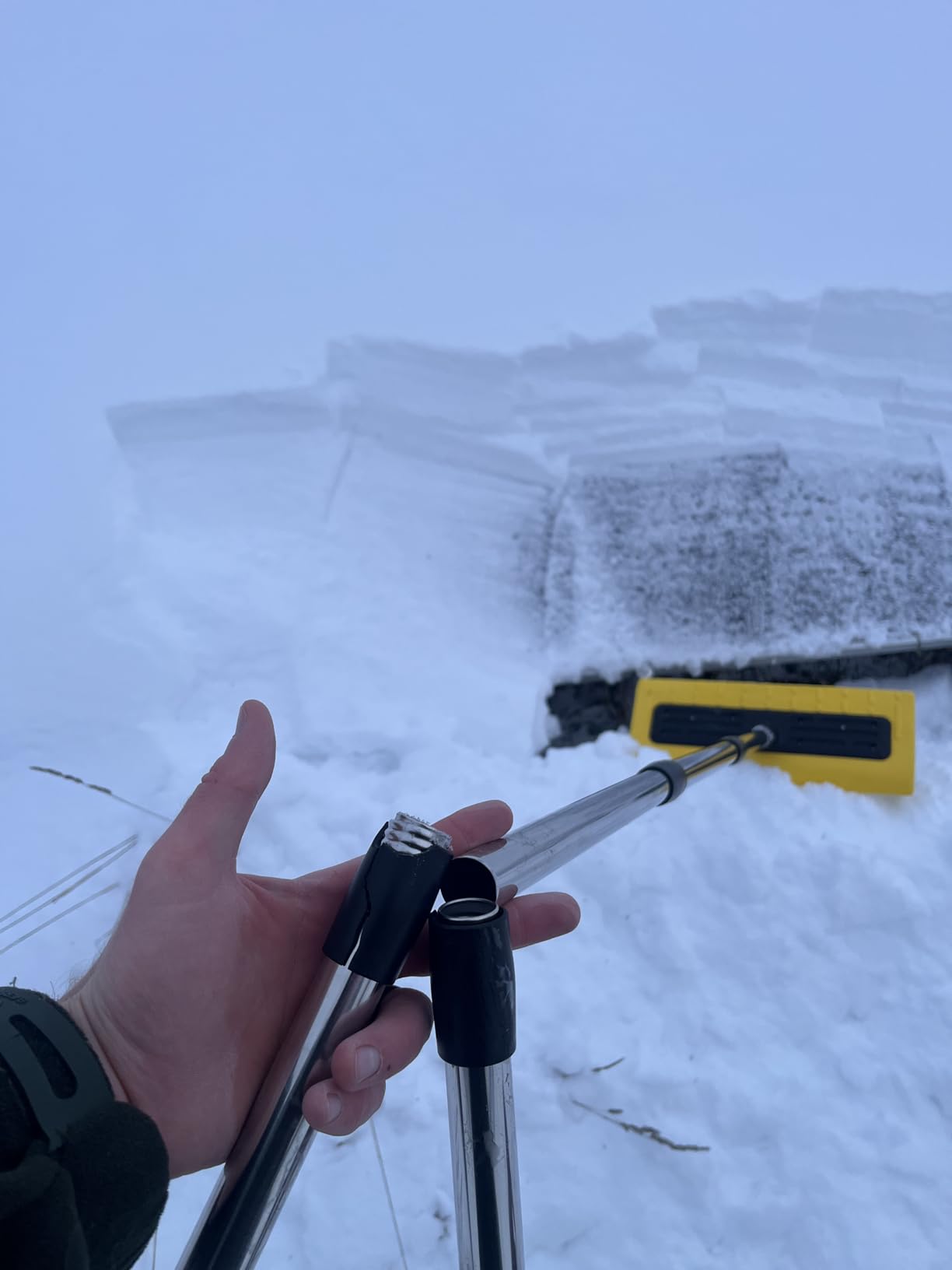
The lowest rating in the group and what it means
This carries the lowest average rating among the twelve at 4.0 stars, with a meaningful share of one-star reviews. Reading those reviews, the pattern is consistent and it is about capability rather than quality: buyers expected a snow cutter and found a snow mover. The foam simply cannot bite a crusted layer.
That makes the purchase decision entirely about your climate and your roof. In a region with dry powder and a solar array or a delicate roof surface, the 4.0 reflects buyers who bought the wrong tool. In a heavy-wet-snow region, it reflects a real design limit and you should look elsewhere.
Who this suits and who it does not
Buy the SnowBuster if you have solar panels, a slate or tile roof, a metal roof, or any surface where a scratch would be expensive. It is also effective on leaves and light debris, and the 24 foot reach plus push-or-pull head gives it unusual flexibility around roof features.
Do not buy it as your only snow tool if you get ice, wet heavy snow, or refrozen crust. Pair it with a cutting rake, or choose a poly or roller head that can do both jobs. If the panels are the priority and the snow is light, this is the only pick here I would use on them without hesitation.
12. VEVOR 26 in Blade Rake – Broadest Fixed Blade on a 20 ft Pole
VEVOR Snow Roof Rake, 26 in Aluminum Blade, 7.5-20 ft Adjustable Roof Snow Scraper with Wheels, Anti-Slip Handle Snow Removal Tool, Lightweight House Rooftop Rake for Leaves Debris Removal
26 in aluminum blade
Sliding wheels
7.5 to 20 ft handle
6.9 pounds
Pros
- Widest fixed-width blade here for fewer passes
- Thickened aluminum alloy resists deformation
- Sliding wheels protect the surface and aid control
- Tool-free assembly in minutes
Cons
- Heavy load on a shallow pitch moves the head only a couple of feet up
- Some reports of early breakage after a few uses
- Smallest review pool in the group at 85
The VEVOR covers more roof per pass than any other fixed-width blade here, and its limit is not the blade, it is how far up the slope the head can travel. The 26 inch aluminum blade is the widest fixed head in the group, mounted on smooth sliding wheels and an adjustable handle running 7.5 to 20 feet.
At 6.9 pounds it is among the lighter aluminum rakes, tool-free assembly takes minutes, and the thickened aluminum alloy is specified to resist corrosion and deformation. The trade is a 20 foot maximum with a straight pole, which matters more than the blade width in most situations.
The 26 inch blade and what it saves you
Blade width is a time lever. A 26 inch head clears roughly a third more per pass than a 19 to 20 inch head, which on a large roof adds up to fewer strokes, less arm fatigue, and less time standing in the cold holding a pole overhead. Owners report that the aluminum alloy handled heavy snow and knocked off icicles effectively, which is a real performance note from a tool that looks like a simple design.
The smooth sliding wheels are the shingle-protection element. They reduce scratching on the roof surface and improve control on slopes, which is the honest version of the roller benefit. They are not a fixed-standoff system, so the blade can still contact the surface if you push too hard, and on aluminum the edge does not forgive.
Where the 20 foot pole falls short
The dominant functional complaint is reach on shallow-pitched roofs. Because the pole is straight rather than angled, the head only travels a couple of feet up from the eave, which is exactly the band you need to clear. On a ranch or a low-pitch section, that is the difference between clearing the dam zone and not clearing it.
There is also a durability signal worth taking seriously. A small number of reviews report units breaking after only a few uses, and the 85-review pool here is the smallest in the roundup, so there is less evidence of long-term performance than the other picks carry. No technical support is listed for the product either.
Who this suits and who it does not
Buy the VEVOR if you have a larger roof with a steeper pitch, want to finish in as few passes as possible, and can manage an aluminum edge with care. The blade width and the no-tool assembly are genuinely good, and the light weight for an aluminum rake is a pleasant surprise.
Pass on it for a low-pitch ranch, where the reach limitation defeats the whole point, or if you want the deepest field of owner feedback before committing. If you want the widest blade with a better-suited pole, the Snow Joe RJ204M gives you 27 feet of reach at a similar weight with a safer poly head.
How to Choose a Shingle-Safe Roof Rake
Match reach to eave height, not ridge height
You are only clearing the bottom three to four feet of roof, so the number that matters is your eave height plus a margin for the angle of the stroke. A single-story home is comfortably served by 16 to 20 feet of pole. A two-story eave wants 20 to 21 feet or more, and anything above that should be pushing toward 25 to 30 feet.
Buy for the eave, not the ridge, and you will not end up with an awkwardly heavy tool you can barely lift. Also check the collapsed length, not just the extended length, before you buy. A 30 foot rake that collapses to 5 foot sections stores against a wall; a single 30 foot tube does not fit in most residential garages.
Blade triage: roller standoff, foam, poly, never bare metal
This is the decision that matters most on a shingle roof, and the order is fixed. Roller standoffs hold a blade at a set height above the surface and are the safest option. A soft foam head comes next and never scratches, but it cannot cut ice or packed snow. A wide poly blade is third, flexible enough to shear rather than grind. A bare metal blade dragged on asphalt is last, and on a roof you care about, it is not an option.
One nuance: aluminum heads are not automatically bad. They are the strongest and lightest for cutting hard snow, and on slate, tile, or metal roofs they are the right call. The question is only ever what the blade is touching.
Aluminum versus fiberglass versus plastic poles
Aluminum is the most common and the stiffest, which means it transmits the most force to the head but can snap at a bolt hole or brace point. Fiberglass is lighter in feel and bends instead of breaking, which makes it forgiving under a surprise load. Plastic is the lightest and the least rigid, which limits how much packed snow you can move with it.
Weight matters more than most buyers expect because you are working overhead. Anything under about 8 pounds is comfortable for a long session, and 10 pounds or more is a workout. Cold aluminum grips also deserve insulated gloves, which is a purchase decision of its own.
Storage for a 20 to 30 ft sectional pole
Long rakes are awkward in a residential garage, and this is a complaint that comes up again and again. Sectional designs that break into 4 to 5 foot pieces are the practical answer, and models that ship with a bag or collapse to a short bundle are worth paying a little more for if your storage space is tight.
Mount the head on a wall hook rather than leaning the pole against a shelving unit, and dry the head before storing it. Frozen moisture trapped against a shingle-contact surface is how a roller head ends up seized by the time you need it again.
If you are thinking about the roof surface underneath the snow rather than the snow itself, our guide to roof sealants covers what keeps water out once the granules are gone.
How to Use a Roof Rake Without Damaging Shingles
The quotable rule is simple: pull snow parallel to the shingle courses and leave a thin layer behind rather than scraping to a bare roof. Everything below is just the mechanics of doing that well.
First, stay on the ground. Not on a ladder, not on the roof. The entire reason this category exists is that a ladder next to a snow-shedding roof is one of the more dangerous things a homeowner does in January. If you cannot reach from the ground, the rake is the wrong length and you should not improvise.
Second, extend the pole to your eave height and get the blade onto the roof before you start pulling. Push the head up under the snow rather than levering it, and let the angle of the blade do the lifting. On rakes with an angled head this is automatic; on a straight head you may need to lift slightly as you pull.
Third, pull in long strokes parallel to the courses the shingles are laid in. Cross-grain pulling is what shears granules off, and it is also what bends braces and works bolts loose. Long, straight, parallel strokes are faster and gentler than short aggressive ones.
Fourth, stop before you see shingle. Leave roughly an inch or two of residual snow on the roof. That thin layer is not a failure, it is the correct outcome, and it protects the surface from the next freeze while still breaking the meltwater path that forms a dam. Forum discussions about raking frequently describe exactly this result as the safe one.
Fifth, watch the timing. The dam recipe is a storm, then a warm day that partially melts the roof, then a hard freeze. Rake before the melt cycle, or at least before the refreeze, and the problem never starts. After a hard freeze the snow is bonded to the roof and pulling at it is when damage happens.
Sixth, inspect before and after. Check the head bolts, the brace screws and the roller wheels before every session, and look at your shingles in spring when the light is low. If the tool is maintained and the strokes are parallel, you should not find granule loss. If you are protecting a roof that already has a coating or sealant, roof coatings are the complementary long-term move.
Frequently Asked Questions
What are the best rated snow roof rakes?
The Snow Joe RJ204M, the Extreme Max 5600.3207 Shingle-Saver, and the SNOWPEELER 30 ft model are the strongest all-around performers, averaging 4.4, 4.2 and 4.3 stars across more than 1,700 reviews each. The RJ204M wins on weight and reach, the Extreme Max on roller-standoff shingle protection, and the SNOWPEELER on speed and 30 foot reach. For shingle owners specifically, the roller or foam designs are safer than a bare metal blade.
Are snow roof rakes worth it?
Yes, as long as you clear the eave zone before the melt-and-refreeze cycle turns into an ice dam. A rake is a mitigation rather than a fix, though. The root cause is heat escaping the attic and melting snow that refreezes at the cold eave, so attic insulation and air sealing done in spring are the real remedy. Raking removes the fuel for the dam each winter.
Does roof rake damage shingles?
Only if you scrape directly. Roller standoffs, soft foam heads, and wide poly blades keep the cutting edge off the granule surface, and pulling parallel to the shingle courses avoids the cross-grain shearing that strips them. Leave a thin residual layer rather than going for a bare roof, and never push a metal blade into packed snow on an asphalt roof.
Is there a 30-foot roof rake that can remove snow?
Yes. The SNOWPEELER Premium runs an adjustable 30 foot handle built from sectional 5 foot aluminum poles, and the Snow Joe RJ204M delivers 27 feet of total overhead reach from a 21 foot pole. Confirm both the extended length and the collapsed length before buying, since a 30 foot tool that does not break into sections will not fit many residential garages.
How long a roof rake do I need?
Size for eave height rather than ridge height, because you only clear the bottom 3 to 4 feet of roof. A single-story home is served by 16 to 20 feet of pole. A two-story eave needs 20 to 21 feet or longer. Above that, look at 25 to 30 foot sectional models so you never have to set a ladder on a snow-covered slope.
If you get significant snowfall and also drive regularly on unplowed roads, our snow chain guide covers the other half of a winter toolkit.
The Best Roof Snow Rake for Your Roof
If you have a single-story or modest two-story asphalt roof and want one tool that is light, wide and hard to get wrong, the Snow Joe RJ204M is the buy. It weighs 4.8 pounds, reaches 27 feet overhead, and its poly head shears rather than scrapes. It is the pick I would hand to almost anyone.
If shingle safety is the thing keeping you up at night, take the roller options. The USA-Made Shingle Saver gives you the most mechanically obvious protection in this group, and the Extreme Max 5600.3207 adds an angled blade and more width at 21 feet of reach. Both put the blade above your granules by design rather than by technique.
If you get heavy, wind-drifted or hard-packed snow, the SNOWPEELER’s 30 foot sectional reach and commercial-grade blade will finish the job in a fraction of the time, provided you can comfortably handle 13 pounds. If weight is the issue, the Roof Razor dual-edge model cuts hard snow at 10 pounds and still holds a 4.6 star average.
If your roof carries solar panels or a delicate surface, the Leanaco SnowBuster’s foam head is the only pick here that will not scratch, though it is useless on ice. And if leaves and moss are the recurring annoyance rather than snow, the Roof Razor brush-and-rake multi-tool has the highest rating in the roundup and handles the whole year.
Whatever you choose, buy for eave height, pull parallel to the shingle courses, leave a thin layer behind, and get it out of the garage before the melt-and-refreeze cycle rather than after. That is the whole technique, and it is why the best roof snow rakes for shingles 2026 come down to picking the blade that never touches the roof. Check the price on any of the picks above and clear the eave zone before the next freeze does it for you.
Leave a Reply