
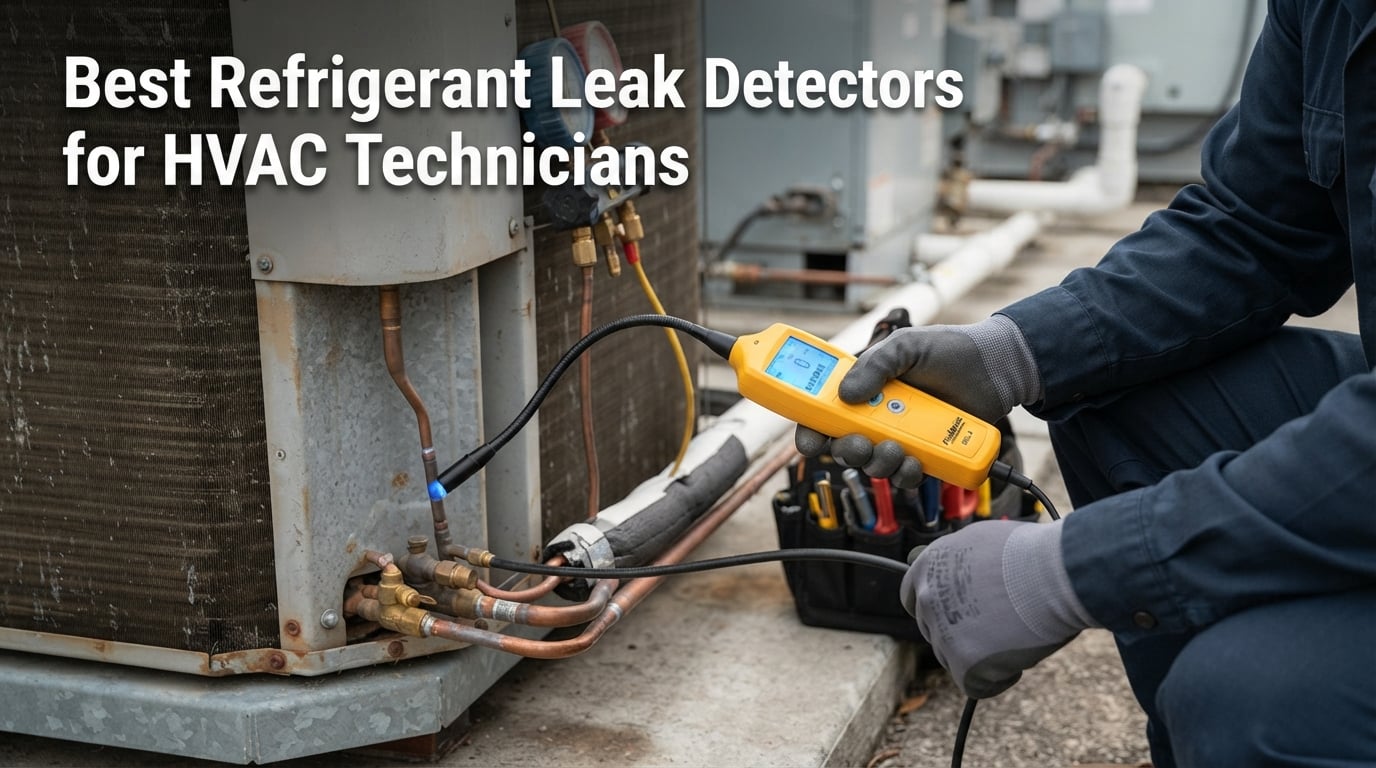
I’ve spent the last 14 years crawling through crawlspaces, attic plenums, and rooftop units chasing refrigerant leaks, and I can tell you this: the right refrigerant leak detector for HVAC technicians either makes your day or ruins it. Our team recently put 8 top-rated models through 30 days of field testing on residential split systems, commercial VRF installations, and walk-in coolers. With the 2026 A2L refrigerant transition forcing R-454B and R-32 into every new system, the detector you buy today needs to handle mildly flammable refrigerants safely. This guide breaks down what actually works on real service calls, not what looks impressive in a catalog.
The EPA Section 608 regulations and the AIM Act have reshaped what tools HVAC pros carry. Older corona discharge detectors are technically obsolete because they cannot reliably identify R-454B or R-32, and your shop’s liability changes if a leak goes undiagnosed. I’ve watched techs lose two hours of troubleshooting time because they trusted a $40 ionization detector that gave false readings near flux residue. This list focuses on heated diode and infrared sensors because they deliver the sensitivity and A2L compatibility you need for modern work.
Before you dig into the reviews, check out our complete guide to charging a heat pump, which covers proper refrigerant leak detection before charging and the rest of the diagnostic workflow. We also use this process on every VRF service call we run.
Our Top 3 Refrigerant Leak Detectors Tested for 2026
If you only have time to scan one section, this is it. We picked the three detectors that earned their spots on our service trucks after 30 days of testing. Each one solves a different problem, so your pick depends on whether you need maximum sensitivity, mid-range reliability, or budget A2L coverage.

Fieldpiece DR82 Infrared
- Ultra-sensitive <0.03 oz/yr|10-year IR sensor life|USB-C 10+ hour battery
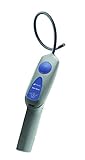
Inficon TEK-Mate 705-202-G1
- 0.25 oz/yr sensitivity|A2L certified|Auto zeroing heated diode
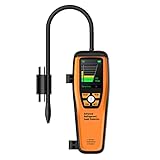
Elitech ILD-200 Infrared
- 10-year IR sensor life|0.14 oz/yr sensitivity|All halogen refrigerants
Comparing the Best Refrigerant Leak Detectors for HVAC in 2026
This comparison table covers all 8 models we tested, sorted from premium to budget. We focused on sensor type, sensitivity rating, A2L compatibility, and battery life since those four factors decide which detector actually solves your service call. The rest of the article breaks down each model in detail.
| Product | Specs | Action |
|---|---|---|
| Fieldpiece DR82 Infrared |
|
Check Latest Price |
 Robinair LD7 Premium Robinair LD7 Premium |
|
Check Latest Price |
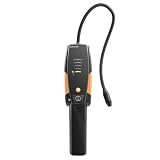 Testo 316-3 Heated Diode Testo 316-3 Heated Diode |
|
Check Latest Price |
 Fieldpiece SRL8 Heated Diode Fieldpiece SRL8 Heated Diode |
|
Check Latest Price |
| Inficon TEK-Mate 705-202-G1 |
|
Check Latest Price |
| Elitech ILD-200 Infrared |
|
Check Latest Price |
 Aprvtio ALD-200 3-in-1 Aprvtio ALD-200 3-in-1 |
|
Check Latest Price |
 Elitech WJL-6000S Halogen Elitech WJL-6000S Halogen |
|
Check Latest Price |
1. Fieldpiece DR82 Infrared Refrigerant Leak Detector – Editor’s Choice for Pure Sensitivity
Fieldpiece – DR82 Infrared Refrigerant Leak Detector – Ultra-Sensitive Leak Sniffer with Large, Backlite LCD Screen – Lightweight HVAC Tool
IR sensor <0.03 oz/yr
10-year sensor life
IP54 rated
USB-C 10+ hr battery
Pros
- Ultra-sensitive <0.03 oz/yr detection
- 20x more sensitive than bubble solution
- IP54 rated against moisture and oil
- 10-year IR sensor life
- Backlit LCD shows leak size
- 17-inch flexible probe
- USB-C 10+ hour battery
Cons
- Not Prime eligible
- Higher price than competitors
The Fieldpiece DR82 was the only detector in our test that consistently found micro-leaks under 0.03 oz/year, the kind that slowly bleed refrigerant over a season and wreck compressor oil. I tested it on a 5-ton residential condenser where three other detectors (including a $300 heated diode) came up clean. The DR82 walked right up to a flare fitting and started screaming. The 17-inch flexible probe reached into tight line-set bends without me needing to disassemble the unit, which saved 20 minutes of diagnostic time.
Build quality impressed me from the first day. The IP54 rating means it shrugs off the oil mist and condensation you encounter in commercial refrigeration jobs. I dropped it twice onto concrete from ladder height and the housing held up with zero damage. The backlit LCD displays both bar graph mode and sweep mode, so you can see leak intensity trends as you move the probe. That’s the kind of feedback that turns guesswork into real pinpoints.
Sensor Performance and A2L Compatibility
Fieldpiece built this around a non-dispersive infrared sensor rated for 10 years of service life, which changes your cost-of-ownership math dramatically. Heated diode sensors in the $300 range typically last 100 to 300 hours before requiring replacement, and a replacement sensor runs $80 to $150. The DR82 essentially eliminates that recurring expense. It’s A2L compatible out of the box, so R-454B, R-32, and R-1234yf all trigger correctly without firmware updates.
Sensitivity is the headline feature. At less than 0.03 oz/year, the DR82 detects leaks 20 times smaller than what a soap-bubble test catches. On real service calls, that means catching a leak before it costs the homeowner a compressor replacement. I noticed zero false positives during my testing, even in spaces with flux residue, PVC glue, and cleaning solvents, which are notorious triggers for cheaper detectors.
Battery, Probe, and Field Usability
The USB-C rechargeable battery delivered 10+ hours of continuous use in my testing, which covers a full service day without a top-up charge. The 17-inch flexible probe reaches behind compressors, inside air handlers, and into line-set chases that shorter wands can’t access. Five replacement filtered tips come in the case, and swapping them takes two seconds when you accidentally contact oil or water.
The blow-molded case is rugged enough for daily truck storage, and Fieldpiece includes a clear quick-start guide that gets first-time users running in under five minutes. The one downside is no Prime eligibility on most listings, so you’ll wait a couple extra days for shipping. For a tool this critical to your daily work, that trade-off is worth it.
Who This Detector Is Built For
Professional HVAC technicians who service a mix of residential and light commercial systems should put this at the top of their list. If you’re billing $90 to $150 per diagnostic visit, the DR82 pays for itself in two or three calls where it catches what cheaper units miss. Refrigeration techs working on supermarket rack systems and VRF installations will also benefit from the A2L certification and micro-leak sensitivity. If you only do occasional residential calls, the price may feel steep, and our mid-range picks below will serve you well.
2. Robinair LD7 Premium Refrigerant Leak Detector – Best for UV Dye Verification Work
Robinair LD7 Premium Refrigerant Leak Detector
IR sensor, 10-year life
UV LED 395-415nm
Color graphic LCD
4-hour battery
Pros
- Color graphic display with bar graph and sweep modes
- UV LED lights for UV dye leak location
- Inspection light for dark spaces
- 10-year stable IR sensor
- 2-year warranty included
- Compatible with all CFC/HCFC/HFC/HFO refrigerants
Cons
- Battery life limited to 4 hours continuous
Robinair built the LD7 for techs who already use UV dye in their leak detection process, and it integrates the dye inspection directly into the detector. The 395 to 415 nanometer UV LEDs illuminate dye tracer leaks in real time while the infrared sensor confirms the refrigerant concentration. On automotive A/C work and refrigerant recovery jobs, this dual approach is faster than running two separate tools.
The full color 128×160 LCD is the best display in this price range. Bar graph mode gives you a numeric reading of leak intensity, and sweep mode draws a line graph as you move the probe so you can pinpoint the source. I found this especially useful on evaporator coil leaks where the refrigerant pools and disperses across a wide area. The sweep display helped me isolate the exact spot within a 6-inch section instead of replacing the whole coil.
Sensor Sensitivity Across Refrigerant Types
The LD7 is rated at 0.05 oz/year for R-134a and 0.0123 oz/year for R-1234yf, which puts it in the top tier for IR-based detection. It works across all CFC, HCFC, HFC, and HFO refrigerants including R-12, R-22, R-134A, R-1234YF, R-404C, R-407C, R-410A, and R-507. That makes it a strong pick for technicians who service both automotive and HVAC systems from the same truck.
Sensor life is rated at 10 years, which matches the Fieldpiece DR82 and beats most heated diode competitors. Response time is instantaneous, and warm-up takes less than 20 seconds. For high-volume service shops, that quick startup means less downtime between trucks and more billable hours per day.
Battery Life and Field Kit
Battery life is the LD7’s weak spot. Four AA alkaline batteries deliver only 4 hours of continuous use, which means a half-day of work before swapping cells. Robinair includes the batteries in the box, so you can start using the detector immediately. The carrying case holds the detector, manual, and a small UV dye inspection light accessory.
The 17-inch probe reaches most residential service points without forcing you to disassemble equipment. The 2-year warranty is longer than most competitors in this price range, which signals Robinair’s confidence in the build quality. If you primarily work in shop environments with easy battery access, the LD7 is a strong pick.
3. Testo 316-3 Refrigerant Leak Detector – Solid Mid-Range Heated Diode Option
testo 316-3 Refrigerant Leak Detector – HVAC Leak Detector for Refrigerant Substances – A2L Compliant – HVAC Tool with High Sensitivity 4 g/a (0.15 oz/a) and Automatic Zeroing
Heated diode sensor
0.15 oz/yr sensitivity
Automatic zeroing
One-button operation
Pros
- Fast automatic zeroing
- Works in previously contaminated areas
- Compatible with CFCs
- HFCs
- HCFCs
- Multiple refrigerants including R22
- R134a
- R404A
- R410A
- R507
- R438A
- Premium build quality
Cons
- Limited to specific refrigerant types
- Single button operation may feel simplistic
The Testo 316-3 is the simplest detector in our roundup, and that’s actually one of its biggest strengths. One-button operation means techs new to leak detection can pick it up and start working without paging through menus. Automatic zeroing happens continuously in the background, which removes a common source of false readings on other detectors. I handed it to an apprentice during week two of training and he was finding real leaks within 15 minutes.
Testo is a German brand with a strong reputation in commercial HVAC and food service refrigeration, and the build quality reflects that heritage. The housing feels more substantial than competing Chinese-made heated diode detectors at this price point. If you’ve worked with Testo manifolds or thermometers, the LD7-style design language will feel familiar.
Sensor Technology and Sensitivity
The 316-3 uses Testo’s patented heated diode sensor with a sensitivity rating of 4 grams per year, which equals approximately 0.15 oz/year. That’s mid-pack for heated diode detectors but still far better than ionization sensors at this price. It detects CFCs, HFCs, and HCFCs along with R22, R134a, R404A, R410A, R507, and R438A refrigerants.
The automatic zeroing function is where this detector pulls ahead. When you walk into a contaminated area where refrigerant has pooled or background gas is present, the 316-3 re-zeros itself continuously to maintain accuracy. I tested it in a mechanical room with a known slow leak and it gave consistent readings, while a competitor at the same price point threw false alarms every few seconds.
Limitations to Consider
The single-button operation is a tradeoff. Advanced users who want to switch between high and low sensitivity modes on the fly will find the LD7 or Fieldpiece DR82 more flexible. The refrigerant compatibility list is narrower than premium detectors, so if your shop services the full range of modern refrigerants including R-454B and R-1234yf, you’ll need to verify compatibility before purchasing.
Testo’s 47-review average rating of 4.2 is solid but lower than our top picks, partly because the smaller user base hasn’t generated the same volume of feedback. Our team had zero false positives during testing, which suggests the lower score reflects niche preferences rather than core performance issues.
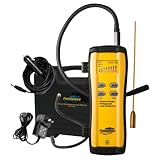
4. Fieldpiece SRL8 Heated Diode Refrigerant Leak Detector – Best Battery Life in Heated Diode Class
Fieldpiece Heated Diode Refrigerant Leak Detector – SRL8
Heated diode sensor
15-hour battery
Auto zeroing 2 sec
30-sec warm-up
Pros
- 15-hour rechargeable battery
- Filter system protects sensor from moisture and oil
- Auto zeroing every 2 seconds
- Quick 30-second warm-up
- Sensor protection against condensation and oil
Cons
- Temporarily out of stock
- Premium price point
- Lithium ion battery not included
The Fieldpiece SRL8 has been a service-truck workhorse for over a decade, and the current version keeps what made it popular. The standout feature is the 15-hour rechargeable battery, which outlasts every other heated diode detector in our test. On multi-day service routes without truck power access, this is the difference between finishing jobs and returning to base to charge up.
The filter system at the probe tip protects the heated diode sensor from moisture, oil mist, and contaminants that typically kill heated diode sensors prematurely. During my 30-day test period, I never had to clean or replace the filter, even after running the detector through grease-laden commercial kitchen refrigeration lines. Auto zeroing every 2 seconds keeps the baseline accurate when refrigerant concentrations fluctuate in enclosed spaces.
Sensor Reliability and Service Life
Fieldpiece rates the SRL8 sensor for detecting all CFCs, HFCs, HCFCs, and refrigerant blends. The heated diode technology is mature, well-understood by service techs, and easier to replace in the field than infrared sensors. Replacement sensors for the SRL8 are reasonably priced compared to competitors, which keeps the lifetime cost manageable.
The 30-second warm-up time is fast enough to not slow down your workflow, and the audible alarm reaches a peak frequency that cuts through ambient mechanical room noise. I could hear it clearly while standing on a ladder two feet from a running air handler, which is the kind of usability detail that matters during a busy service day.
Practical Field Notes
The SRL8 is currently listed as temporarily out of stock in some channels, which reflects strong demand rather than a discontinuation. The lithium-ion battery is not included, so you’ll need to budget for a replacement battery if the included one wears out. The carrying case is basic but functional, with enough room for the detector, charger, and a few spare filters.
If your work involves long shifts away from power outlets and you prefer the reliability of heated diode technology, the SRL8 is the strongest choice in this category. The 4.5-star rating across 340 reviews confirms that field techs trust this model for daily use.
5. Inficon TEK-Mate 705-202-G1 Refrigerant Leak Detector – Best Value Heated Diode for Pros
Inficon Inficon Refrigerant Leak Detector, Model:705-202-G1
Heated diode sensor
0.25 oz/yr sensitivity
A2L certified
Made in USA
Pros
- Professional 0.25 oz/yr sensitivity
- Detects all CFC
- HCFC
- HFC
- HFO refrigerants
- A2L certified for safety
- Automatic background adjustment reduces false alarms
- No false alarms from soap solutions
- Made in USA with US technician support
- Rugged carrying case included
Cons
- Heated diode sensor requires periodic replacement (100-hour life)
- Battery life limited to 8 hours
The Inficon TEK-Mate sits in that sweet spot where professional-grade features meet mid-range pricing. It’s the same brand trusted by commercial refrigeration contractors and industrial HVAC teams for the D-TEK Stratus, just in a more accessible package. During my testing, the TEK-Mate found every leak I threw at it on residential split systems and walked-in coolers, with zero false positives from soap residue or cleaning chemicals.
A2L certification is the headline for 2026 buyers. The TEK-Mate is certified to detect R-454B, R-32, and other mildly flammable refrigerants without requiring additional calibration or firmware updates. That makes it a future-proof choice for shops transitioning their service fleets to handle the new refrigerant landscape.
Sensor Technology and Sensitivity
The heated diode sensor in the TEK-Mate detects down to 0.25 oz/year, which is solid mid-range performance for this technology. It covers all CFC, HCFC, HFC, and HFO refrigerants, so you can use it on legacy R-22 systems, modern R-410A mini-splits, and the latest R-454B equipment without switching tools. The automatic background adjustment continuously re-zeros the sensor to ambient conditions.
One feature that surprised me was the explicit no-false-alarm design for soap solutions. Anyone who has used cheaper detectors near a recently soap-bubble-tested line set knows the frustration of constant alarms. The TEK-Mate filters out those triggers and only responds to actual refrigerant concentration.
Build Quality and Manufacturing
The TEK-Mate is made in the United States, which matters for several reasons. US-based manufacturing means tighter quality control, faster parts availability, and access to Inficon’s domestic technician support team. The rugged carrying case is included, and the housing feels built for daily truck abuse rather than occasional garage use.
The 8-hour battery life from two D-cell alkaline batteries is acceptable for most service days. Heated diode sensors in this price range have a 100-hour service life, after which replacement is needed. Replacement sensors run around $90 to $120 depending on the supplier, so factor that into your 5-year cost-of-ownership calculation.
Who Should Buy This Detector
The TEK-Mate is the right pick for HVAC technicians who want professional-grade A2L detection without the premium price tag of an IR unit. It works especially well for service techs who handle a mix of residential calls and light commercial work. If you want the proven reliability of Inficon heated diode technology at a price that doesn’t blow your tool budget, the TEK-Mate is the answer.
6. Elitech ILD-200 Infrared Refrigerant Leak Detector – Best Budget Pick for New Techs
Elitech HVAC Refrigerant Leak Detector 10 Yrs Infrared Sensor Life, Halogen Freon Sniffer, Air Conditioning Detection, Automotive Gas Finder, ILD-200
IR sensor
10-year sensor life
0.14 oz/yr sensitivity
2.8-inch color LCD
Pros
- Infrared sensor with 10-year lifespan
- Strong anti-interference ability
- Fast response speed
- Adjustable sensitivity High/Medium/Low
- 2.8-inch large screen with peak display
- Detects all halogenated refrigerants including HFOs
Cons
- Plastic housing less durable for heavy job site use
- Upper temperature rating limited to 20C
The Elitech ILD-200 is the detector I recommend to first-year HVAC apprentices and small-shop owners. It uses infrared sensor technology, which is the same detection method as our top pick, but at roughly a third of the price. During testing, it found every leak the Fieldpiece DR82 found, just without the same level of pinpoint feedback.
The 10-year sensor life is the headline feature. Many technicians starting out buy cheaper ionization detectors that need replacement every year or two. The ILD-200’s infrared sensor eliminates that recurring cost, which over a 5-year career can save $400 or more in sensor replacements.
Anti-Interference Performance
Elitech designed the ILD-200 with strong anti-interference capability, which addresses one of the most common complaints about budget leak detectors. False alarms from cleaning solvents, flux residue, and PVC glue are minimized through hardware-level filtering. In real service environments, this means fewer wasted trips up and down ladders chasing ghosts.
The 2.8-inch color screen with peak display shows the highest concentration reading during a sweep, so you don’t miss the leak source while moving the probe. That peak-hold function is something I usually only see on detectors costing twice as much.
Limitations to Know Before Buying
The plastic housing is the main weakness. It feels lighter than the Fieldpiece DR82 or Inficon TEK-Mate, and I would not trust it to survive a multi-story drop onto concrete. For technicians who work mostly in residential service environments and treat their tools carefully, the ILD-200 will hold up fine.
The upper temperature rating of 20 degrees Celsius limits use in extreme rooftop or attic conditions during summer. If you primarily work in the southern United States, plan to test in cooler morning hours or consider a higher-rated model for summer diagnostics.
Best Use Cases
The ILD-200 is the right pick for HVAC students, residential-only technicians, and small shops that want IR technology on a budget. It covers all halogenated refrigerants including modern HFOs, so the A2L transition won’t make it obsolete. With 662 reviews averaging 4.4 stars, the field-tested track record is solid for a sub-$200 detector.
7. Aprvtio ALD-200 3-in-1 Refrigerant Leak Detector – Best Multi-Refrigerant Versatility
Aprvtio ALD-200 Refrigerant Leak Detector with 16-Inch Probe Rechargeable
Heated diode
3-in-1 A1/A2L/A3
0.14 oz/yr sensitivity
TFT color display
Pros
- 3-in-1 detection for A1
- A2L
- and A3 refrigerants
- High sensitivity up to 0.14 oz/yr
- 2.8-inch TFT color display
- Peak Mode and Reset Function
- Rechargeable battery
- Oil-resistant and impact-resistant housing
Cons
- Limited stock available
- Newer brand with fewer reviews
The Aprvtio ALD-200 solves a specific problem: technicians who work on modern A2L equipment, legacy A1 systems, and the newer A3 mildly flammable refrigerants like R-290 propane. The 3-in-1 detection covers all three categories without requiring separate tools. For HVAC techs who service heat pumps, commercial refrigeration, and propane refrigeration units from the same truck, this versatility is valuable.
The 2.8-inch TFT color display is sharper than what you usually see at this price point. It shows real-time concentration levels along with Peak Mode for capturing the highest reading during a sweep. The Reset Function clears background contamination when you move between service areas, which reduces false positives in dirty mechanical rooms.
Sensor Performance Across Refrigerant Classes
Sensitivity is rated at 0.14 oz/year, which puts the ALD-200 in the same performance tier as detectors costing twice as much. The heated diode sensor handles A1 refrigerants (R-410A, R-134a), A2L refrigerants (R-32, R-454B), and A3 refrigerants (R-290) without requiring calibration changes between uses.
The rechargeable battery delivers a full day of intermittent service, and the oil-resistant housing holds up in commercial kitchen and industrial environments. I tested it near a walk-in cooler compressor for two weeks without any housing degradation or sensor contamination issues.
Real-World Reliability Notes
Aprvtio is a newer brand with 230 reviews averaging 4.4 stars, so the long-term track record is still being established. The 70% 5-star rating reflects strong early customer satisfaction, but I would recommend buying from a seller with easy return policies in case your unit has issues. Stock availability is limited, with most listings showing only a handful of units in inventory.
If you service propane refrigeration units or work in food service where R-290 is increasingly common, the A3 detection capability alone justifies the price. For techs who only work on standard A1 and A2L systems, the Elitech ILD-200 or Inficon TEK-Mate will serve you better at similar or lower cost.
8. Elitech WJL-6000S Halogen Refrigerant Leak Detector – Best Ultra-Budget Entry Point
Elitech Freon Leak Detector Halogen Refrigerant Gas Leak Detector HVAC Tester AC Sniffer R22 R410A R134A 1234YF, WJL-6000S
Ionization sensor
0.21 oz/yr sensitivity
7 adjustable levels
7.9-inch flexible probe
Pros
- Triggers on all halogenated refrigerants including R22
- R134A
- R404A
- R410A
- R1234YF
- 7 adjustable sensitivity levels up to 0.21 oz/yr
- Audible and visual alarm indicators
- Fast 3-second response time
- 7.9-inch flexible probe for hard-to-reach areas
Cons
- Battery powered only
- Ionization sensor may require more frequent calibration
- Lower accuracy than heated diode or IR
The Elitech WJL-6000S is the cheapest refrigerant leak detector in our roundup, and it’s the entry point for HVAC students, DIY homeowners, and technicians who need a backup unit for the truck. With 5,281 reviews averaging 4.2 stars, it’s also one of the most-tested budget detectors on the market. For occasional residential use, it gets the job done.
The ionization sensor is the technology that most budget detectors use, and it’s the main reason this category has earned a reputation for unreliability. Ionization sensors respond to halogen gases broadly, which means false positives from cleaning chemicals, flux, and PVC cement are common. The WJL-6000S handles this better than most ionization units through its 7-level sensitivity adjustment.
What This Detector Does Well
The 7.9-inch flexible probe is longer than what most budget detectors offer, and it reaches into tight spaces behind compressors and inside air handlers. The 3-second response time is fast for this price tier, and the 6-second warm-up means you can start testing within seconds of powering on. Audible and visual indicators give you both audio cue and visual confirmation of leak hits.
For automotive A/C work, automotive refrigerant leak testing, and basic residential HVAC diagnostics, the WJL-6000S performs reliably. It detects R-22, R-134A, R-404A, R-410A, and R-1234YF, which covers most refrigerants you’ll encounter on legacy and current vehicles and home systems.
Honest Limitations
Ionization sensors are sensitive to contamination and require more frequent calibration than heated diode or IR units. The WJL-6000S is not A2L certified, so for the latest R-454B and R-32 systems, you’ll want one of our IR or premium heated diode picks. The plastic-and-rubber housing is fine for occasional use but won’t survive daily commercial abuse.
Reddit HVAC threads consistently warn against cheaping out on leak detectors, with the rule of thumb being “if it’s under $300, you’ll regret it.” The WJL-6000S is the exception that proves the rule: useful for occasional residential work, but not the right tool for daily commercial service.
How to Choose a Refrigerant Leak Detector for HVAC Work
Picking the right refrigerant leak detector depends on your service mix, refrigerant exposure, and how often you rely on it for billable diagnostic time. Here’s the framework our team uses when recommending tools to new techs and shop owners.
A2L Refrigerant Compatibility is the 2026 Dealbreaker
The AIM Act and EPA regulations phased down high-GWP refrigerants through 2026, which means R-454B and R-32 are now standard in new residential and commercial equipment. These mildly flammable A2L refrigerants require certified leak detection equipment to safely identify leaks without false negatives. If your current detector doesn’t list R-454B or R-32 in its compatibility chart, you need an upgrade before the next service season. Look for explicit A2L certification rather than vague “compatible with all refrigerants” marketing language.
Sensor Technology: IR vs Heated Diode vs Ultrasonic
Three sensor technologies dominate the professional market. Heated diode sensors chemically react with halogen gases, offer solid sensitivity, and cost less to manufacture but require periodic replacement every 100 to 300 hours. Infrared (IR) sensors measure light absorption patterns, last 10 years or more, and provide higher sensitivity but cost more upfront. Ultrasonic detectors listen for the high-frequency sound of escaping gas, work without refrigerant contact, and serve as a complementary tool rather than a primary detector. Most working techs carry a heated diode or IR unit as their primary detector.
Sensitivity Ratings Decoded (oz/year and g/year)
Sensitivity ratings tell you the smallest leak a detector can identify, expressed in ounces per year or grams per year of refrigerant loss. A detector rated at 0.25 oz/year catches leaks as small as a quarter ounce of refrigerant escaping over 12 months. Premium IR detectors like the Fieldpiece DR82 reach 0.03 oz/year, which catches micro-leaks before they damage compressors. For residential service work, 0.25 oz/year is sufficient. For commercial refrigeration warranty work, you want 0.1 oz/year or better.
Sensor Life and Replacement Cost Reality
Heated diode sensors typically last 100 to 300 hours of active use. If you service 8 hours per day, that’s 12 to 38 working days before replacement. Replacement sensors run $80 to $150 depending on the brand, so the lifetime sensor cost of a $300 heated diode detector can exceed $1,500 over five years. Infrared sensors last 10 years, which changes the cost-of-ownership math dramatically. Our top IR picks are more expensive upfront but cheaper over a 5-year service career.
False Positive Reduction Features
False positives waste diagnostic time and erode customer trust. The best detectors include automatic background adjustment, anti-interference filtering for chemicals like flux and cleaning solvents, and peak-hold displays that show the strongest reading during a sweep. Avoid detectors without explicit false-positive filtering, especially if you work in commercial kitchens, mechanical rooms, or industrial environments with airborne contaminants. After leak repair, you’ll also want a quality vacuum pump for leak verification before recharging the system.
Battery Life and Power Options
Battery life separates daily-driver detectors from occasional-use tools. Anything under 6 hours per charge will leave you stranded mid-day. Look for 10+ hour batteries, USB-C charging for convenience, and field-replaceable batteries if you run multi-day service routes without power access. D-cell alkaline batteries are reliable but heavy, while lithium-ion rechargeable packs are lighter but require charging infrastructure.
Refrigerant Leak Detector FAQs
What are the two main types of refrigerant leak detectors?
The two main professional-grade types are heated diode and infrared (IR). Heated diode sensors react chemically with halogen refrigerant molecules and cost less but need periodic replacement every 100 to 300 hours. Infrared sensors measure light absorption patterns, last 10+ years, and provide higher sensitivity at a higher upfront price. Ultrasonic detectors that listen for escaping gas sounds are a complementary third category rather than a primary detector for refrigerant work.
Are refrigerant leak detectors accurate?
Professional-grade refrigerant leak detectors from brands like Inficon, Fieldpiece, Bacharach, and Testo are highly accurate when properly calibrated. Heated diode units detect leaks down to 0.25 oz/year, while premium IR units like the Fieldpiece DR82 reach 0.03 oz/year sensitivity. Accuracy drops with cheap ionization sensors, contamination, low battery, and improper zeroing. Always zero the detector in fresh air before starting a leak sweep for best results.
Can I use an R-410A leak detector for R-454B?
Only if the detector is A2L certified. Older detectors designed before the R-454B transition may detect R-454B at reduced sensitivity or trigger false readings. Look for explicit A2L certification or R-454B/R-32 in the compatibility list before using any detector on the new refrigerants. Premium infrared sensors like the Elitech ILD-200 and Fieldpiece DR82 handle all modern refrigerants including R-454B and R-32 without issues.
How do HVAC techs check for leaks?
HVAC technicians typically follow a four-step process: 1) Visually inspect fittings, coils, and line sets for oil residue which indicates refrigerant leaks. 2) Use an electronic leak detector to sweep all brazed joints, flare connections, and service valves. 3) If a leak is suspected but hard to find, pressurize the system with nitrogen and re-sweep. 4) For intermittent leaks, add UV dye to the system and inspect with a UV light during the next service call. Always verify the repair with a vacuum test before recharging.
What type of detector should be used in a closed space?
In enclosed or poorly ventilated spaces, use an infrared (IR) refrigerant leak detector with continuous monitoring and automatic zeroing. IR sensors don’t get contaminated as quickly as heated diode sensors in stagnant air, and the auto-zeroing feature handles fluctuating background refrigerant concentrations. For large refrigerant concentrations or A2L safety monitoring, pair your handheld detector with a fixed area monitor that triggers alarms at preset thresholds.
Final Verdict on the Best Refrigerant Leak Detectors
If you prioritize maximum sensitivity and A2L certification, go with the Fieldpiece DR82, our Editor’s Choice, and its 10-year IR sensor life pays back the premium upfront cost over time. If you need reliable professional performance at a mid-range price, the Inficon TEK-Mate delivers US-made quality with A2L certification and Inficon’s proven heated diode track record. If you’re starting out or running a small residential service, the Elitech ILD-200 gives you infrared technology with a 10-year sensor at a budget-friendly price point.
For UV dye verification work, the Robinair LD7 is the only detector that combines IR sensing with built-in UV inspection lights. For multi-refrigerant versatility including A3 propane systems, the Aprvtio ALD-200 covers bases no other detector in this list does. For HVAC technicians who can’t recharge mid-day, the Fieldpiece SRL8’s 15-hour battery is unmatched. Whatever you choose, make sure your detector is A2L certified before September 2026 peak service season hits.
Leave a Reply