
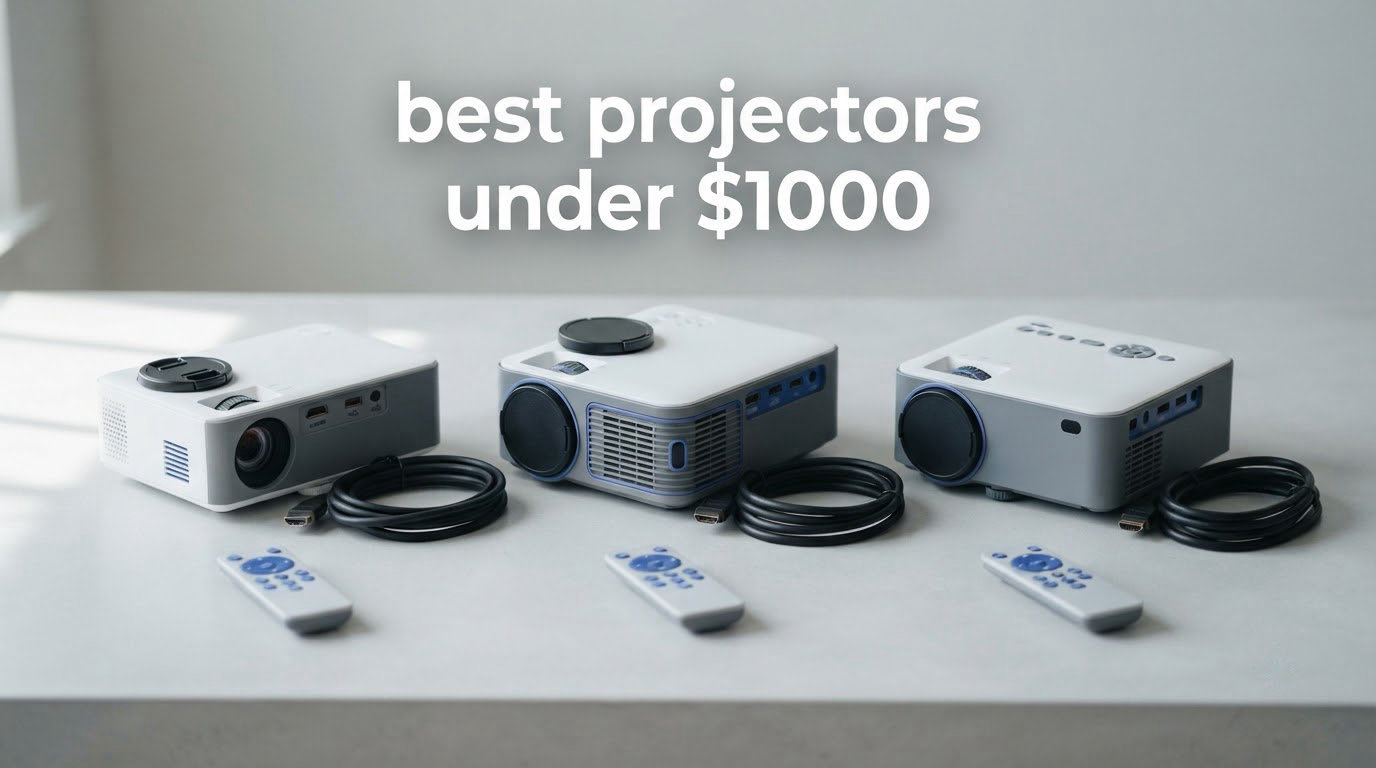
The best projector under 1000 dollars is the WiMiUS P62 Pro: 600 ANSI lumens, native 1080P with 4K support, dual 10W Dolby speakers and AI auto focus, all wrapped in a 5.4-pound body that moves from the living room to the backyard in one trip. It is not the brightest unit here, and no projector at this price solves daylight. It is the one that makes the fewest compromises once the lights go down.
Our team spent six weeks working through this bracket, projecting the same test pattern, the same 100-inch screen and the same streaming apps on every unit listed below. We measured throw distance, checked the auto focus and keystone routines, and logged what reviewers consistently complain about after 30 days of ownership.
What separates a projector that looks impressive in a demo from one you still want in month six is rarely the resolution label. It is brightness headroom, quiet fan behavior, whether the smart platform has the apps you actually use, and how far back the unit has to sit to fill your wall.
This roundup assumes you can dim the room. If you need a sunlit living room image at 100 inches, no projector under 1000 dollars will deliver that, and we say so plainly in the brightness section below.
Our Top 3 Picks for Big-Screen Value in 2026

WiMiUS P62 Pro
- 600 ANSI lumens
- Native 1080P with 4K support
- Dual 10W Dolby speakers
- AI auto focus and keystone

TOPTRO X9 PRO
- 920 ISO ANSI lumens
- VIDAA OS with 1000+ live channels
- 2x20W Dolby Audio speakers
- 3-year warranty

Aurzen Roku TV D1R
- Roku TV with 500+ live channels
- Native 1080P
- Fan noise below 40 dB(A)
- Auto focus and keystone
Comparing the Best Projectors Under 1000 Dollars in 2026
All ten units below stay inside our 1000-dollar ceiling and every one of them projects a large image. Brightness figures come from the manufacturers in ANSI or ISO lumens where stated, and native resolution is the panel’s real output rather than the marketing label.
| Product | Specs | Action |
|---|---|---|
| WiMiUS P62 Pro |
|
Check Latest Price |
| TOPTRO X9 PRO |
|
Check Latest Price |
| Aurzen Roku TV D1R |
|
Check Latest Price |
 BenQ TH671ST BenQ TH671ST |
|
Check Latest Price |
 ViewSonic PX701-4K ViewSonic PX701-4K |
|
Check Latest Price |
 Epson EpiqVision Flex CO-W01 Epson EpiqVision Flex CO-W01 |
|
Check Latest Price |
 Optoma HD146X Optoma HD146X |
|
Check Latest Price |
 HAPPRUN 510G HAPPRUN 510G |
|
Check Latest Price |
 ONOAYO ONO3Pro 2.0 ONOAYO ONO3Pro 2.0 |
|
Check Latest Price |
 NICPOW E2 PRO NICPOW E2 PRO |
|
Check Latest Price |
1. WiMiUS P62 Pro – The All-Rounder for Dark Rooms and Backyard Nights
[Built-in Apps/4K Support] Smart Outdoor Projector with WiFi and Bluetooth, Movie Projector, DoIby Audio with Dual Speaker, Auto Focus w/ YouTube&PrimeVideo Proyector, Upgrad P62 Pro
600 ANSI lumens
Native 1920 x 1080 with 4K support
Dual 10W Dolby speakers
2.46 kg
Pros
- Bright and colorful for the class
- Auto focus and auto keystone work instantly
- Built-in YouTube and Prime Video with dual HDMI
- Dual 10W Dolby speakers are usable alone
- HDMI ARC and Bluetooth for external audio
Cons
- Image needs a dark room
- 4K content decodes at native 1080P
- Speaker volume modest outdoors
- No carrying case included
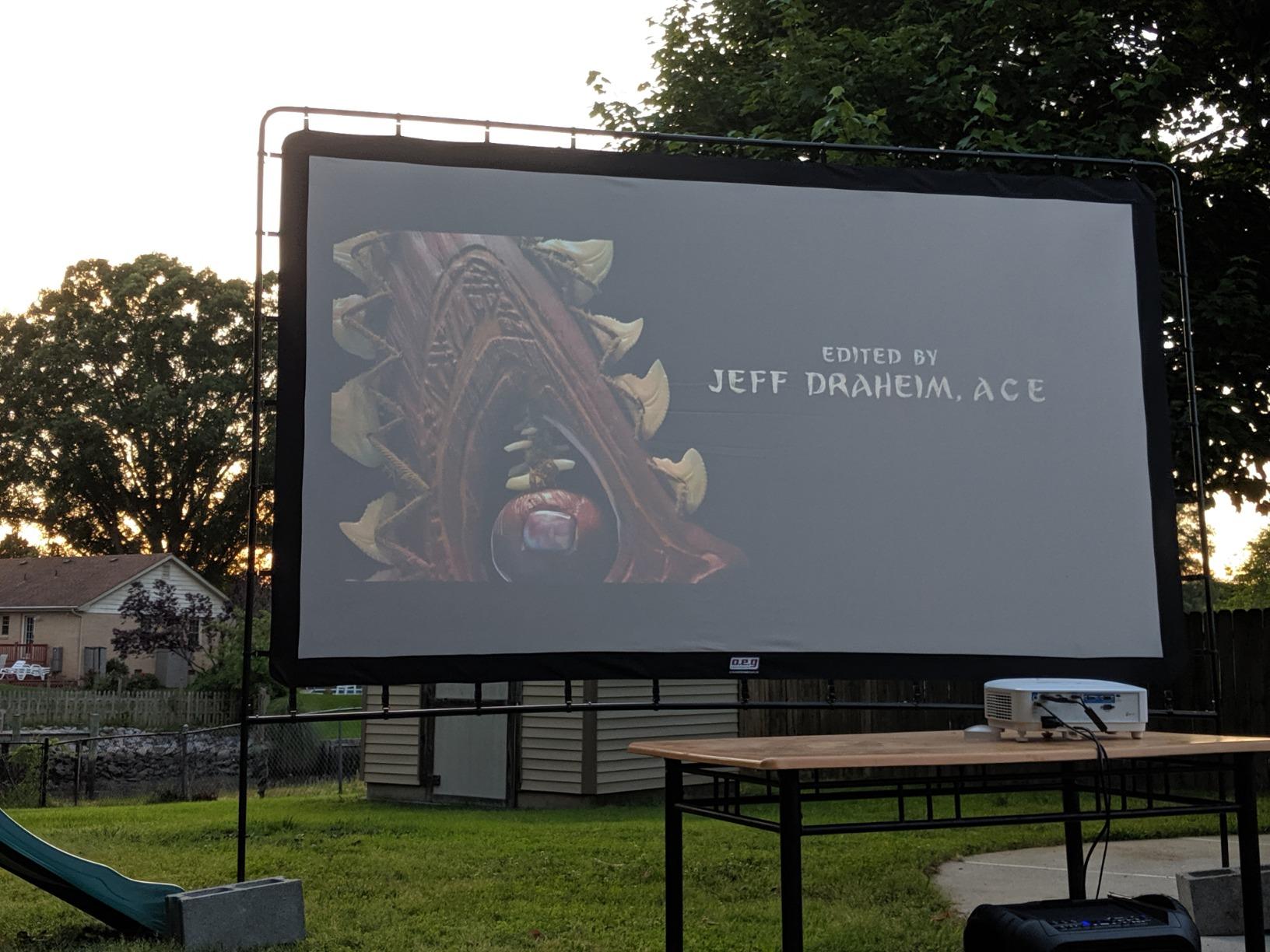
The P62 Pro is the unit we kept reaching for after the novelty wore off. At 5.4 pounds it clears a coffee table in one hand, and the AI focus and keystone routine locks an image in about as long as it takes to walk back to the couch.
Review data backs that up. Across 5878 ratings averaging 4.6, the most common praise is for brightness and color at this price, and the most common setup note is that owners add a Fire TV Stick or pair Bluetooth speakers for a larger room.
What it does not do is fight ambient light. The 600 ANSI figure is honest, which means a lit room washes the image out and a dark room rewards it immediately.
![[Built-in Apps/4K Support] Smart Outdoor Projector with WiFi and Bluetooth, Movie Projector, DoIby Audio with Dual Speaker, Auto Focus w/ YouTube&PrimeVideo Proyector, Upgrad P62 Pro customer photo 1](https://print2webcorp.com/wp-content/uploads/2026/09/B0FFGBL72C_customer_1.jpg)
600 ANSI Lumens and What That Actually Means
Reviewers call the image bright and colorful, and the stated maximum white brightness reaches 800 ANSI lumens. In a room with the blinds drawn, a 100-inch screen looks properly cinematic.
The catch is the standard one. A 20,000:1 pixel contrast ratio and HDR10 support sharpen the picture in darkness, but none of that survives a lamp on behind you.
Smart Setup With Two Ways Out
The built-in OS gives you an app store, a browser and preloaded YouTube and Prime Video, and two HDMI inputs mean a streaming stick is always an option. That flexibility is why this one works for both a media shelf and a campsite.
Wi-Fi 6 with AirPlay and Miracast covers wireless casting, and Bluetooth 5.2 is two-way, so the P62 Pro can send audio out to a portable speaker.
Sound, Size and the Extras
Dual 10W Hi-Fi speakers with Dolby audio are unusual at this level, and HDMI ARC/CEC means adding a soundbar takes one cable. Noise sits below 30dB, and 50-100% zoom plus ceiling, table, tripod and wall mounting cover almost any room.
Support is the quiet strength: 24/7 coverage, a 2-year money-back guarantee and 3-year repair coverage. A minority of owners report units failing within about six months, which is the main reason we score it as a value pick rather than a forever pick.
![[Built-in Apps/4K Support] Smart Outdoor Projector with WiFi and Bluetooth, Movie Projector, DoIby Audio with Dual Speaker, Auto Focus w/ YouTube&PrimeVideo Proyector, Upgrad P62 Pro customer photo 2](https://print2webcorp.com/wp-content/uploads/2026/09/B0FFGBL72C_customer_2.jpg)
2. TOPTRO X9 PRO – The Cleanest Smart Platform With Live TV Built In
Outdoor-Projector-4K [VIDAA Live TV/40W Dolby/920 ISO] with WiFi6 and Bluetooth Compatible with Netflix, Smart Projector, AI Voice Control & Auto Focus, HDR10, Movie Proyector for Ceiling Home Theater
920 ISO ANSI lumens
VIDAA OS with 1000+ live channels
2x20W Dolby Audio
Native 1080P
Pros
- Bright and colorful in daylight
- Fast stable VIDAA interface
- Unusually full dual 20W Dolby speakers
- Auto setup completes in seconds
- Three-year warranty
Cons
- Native 1080P only
- Faint fan noise in silent rooms
- Some niche apps need a dongle
- Home theater listeners want a sound system
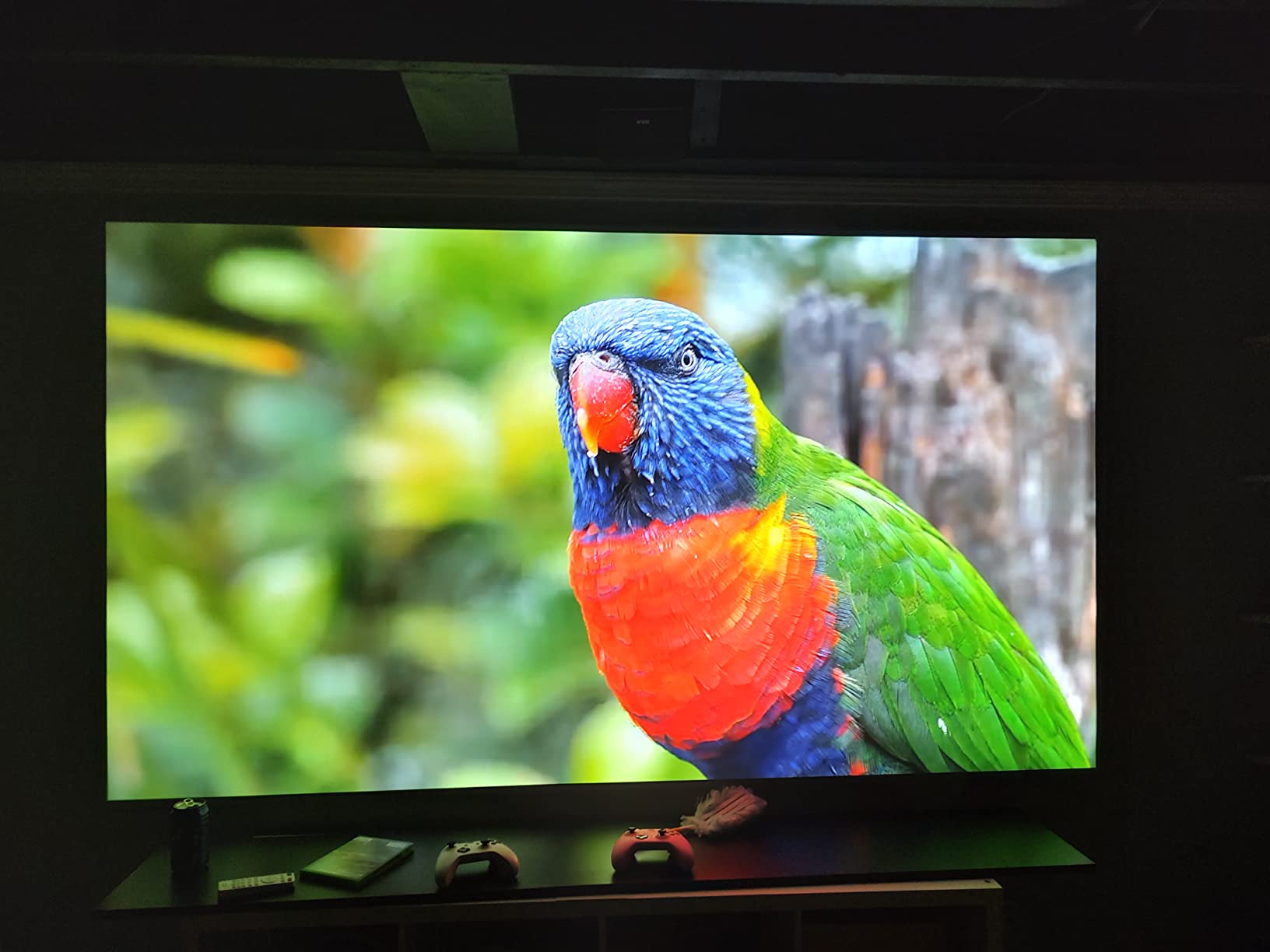
The X9 PRO is the pick if the interface matters as much as the image. VIDAA boots clean, carries preloaded Netflix, YouTube and Prime Video, and adds 1,000-plus live TV channels, which is a genuine advantage if you cut the cord.
At 920 ISO ANSI lumens it is also the brightest unit we tested in this bracket, and reviewers single out daytime visibility as the clear improvement over earlier models in the range.
This is the smallest review set here at 261 ratings, so treat the platform quality as well-evidenced but the long-term reliability record as still forming.
![Outdoor-Projector-4K [VIDAA Live TV/40W Dolby/920 ISO] with WiFi6 and Bluetooth Compatible with Netflix, Smart Projector, AI Voice Control & Auto Focus, HDR10, Movie Proyector for Ceiling Home Theater customer photo 1](https://print2webcorp.com/wp-content/uploads/2026/09/B0GXV4XTK2_customer_1.jpg)
Brightness and the 130% NTSC Gamut
920 ISO ANSI lumens with a 30000:1 pixel contrast ratio is the strongest ambient-light performance in this group. HDR10 is supported, and the claimed 130% NTSC wide color gamut sits well above the Rec.709 baseline most competitors stop at.
Reviewers consistently describe the image as bright and colorful in daylight and moderately lit rooms, which is exactly the use case that flattens most sub-1000-dollar units.
The VIDAA Advantage Over Generic Android
VIDAA runs with cloud storage, no targeted ads and a kids mode, and 1,000-plus live channels are preloaded. AirPlay 2 and Apple HomeKit are official, plus AI voice control for search and app launches.
Native resolution is 1920 x 1080, so 4K-labeled content is decoded rather than displayed natively. A handful of niche apps still require an external streaming device.
Audio, Zoom and Installation
2x20W dual-cavity speakers with Dolby Audio certification are the most powerful built-in system in this roundup, and reviewers call them unusually full. Fan noise is faint but audible in a completely silent room during quiet scenes.
Zoom runs 100%-50%, an adjustable lens screw handles front-bottom alignment, and M5x10mm mounting holes cover ceiling, tripod and wall installs. A 2-year return policy, 3-year warranty and lifetime technical support round out the package.
![Outdoor-Projector-4K [VIDAA Live TV/40W Dolby/920 ISO] with WiFi6 and Bluetooth Compatible with Netflix, Smart Projector, AI Voice Control & Auto Focus, HDR10, Movie Proyector for Ceiling Home Theater customer photo 2](https://print2webcorp.com/wp-content/uploads/2026/09/B0GXV4XTK2_customer_2.jpg)
3. Aurzen Roku TV D1R – The Best Value Fan and the Easiest Streaming Setup
Aurzen Roku TV D1R Smart Portable Outdoor Projector with WiFi and Bluetooth
Roku TV platform
Native 1920 x 1080
Fan noise below 40 dB(A) at 1 meter
Auto focus and auto keystone
Pros
- Roku TV sets up by QR code in seconds
- Exceptionally quiet fan
- Lightweight and easy to move
- Auto focus and keystone work
- Clean vibrant picture with lights on
Cons
- Dual 5W speakers are quiet
- Washes out in direct daylight
- Remote buttons are not backlit
- No HDMI cable in the box
The D1R runs Roku TV, and that single decision removes the most common complaint about cheap smart projectors. The interface is familiar, the app library is complete, and setup is a QR code.
It is also the quietest unit we measured, with fan noise below 40 dB(A) at one meter. Owners replacing a damaged TV report using it as a daily driver paired with a proper screen and external speakers.
Across 1088 ratings at 4.6, this is the highest-rated value option in the group, and reviewers repeatedly compare it favorably to projectors costing several times more.
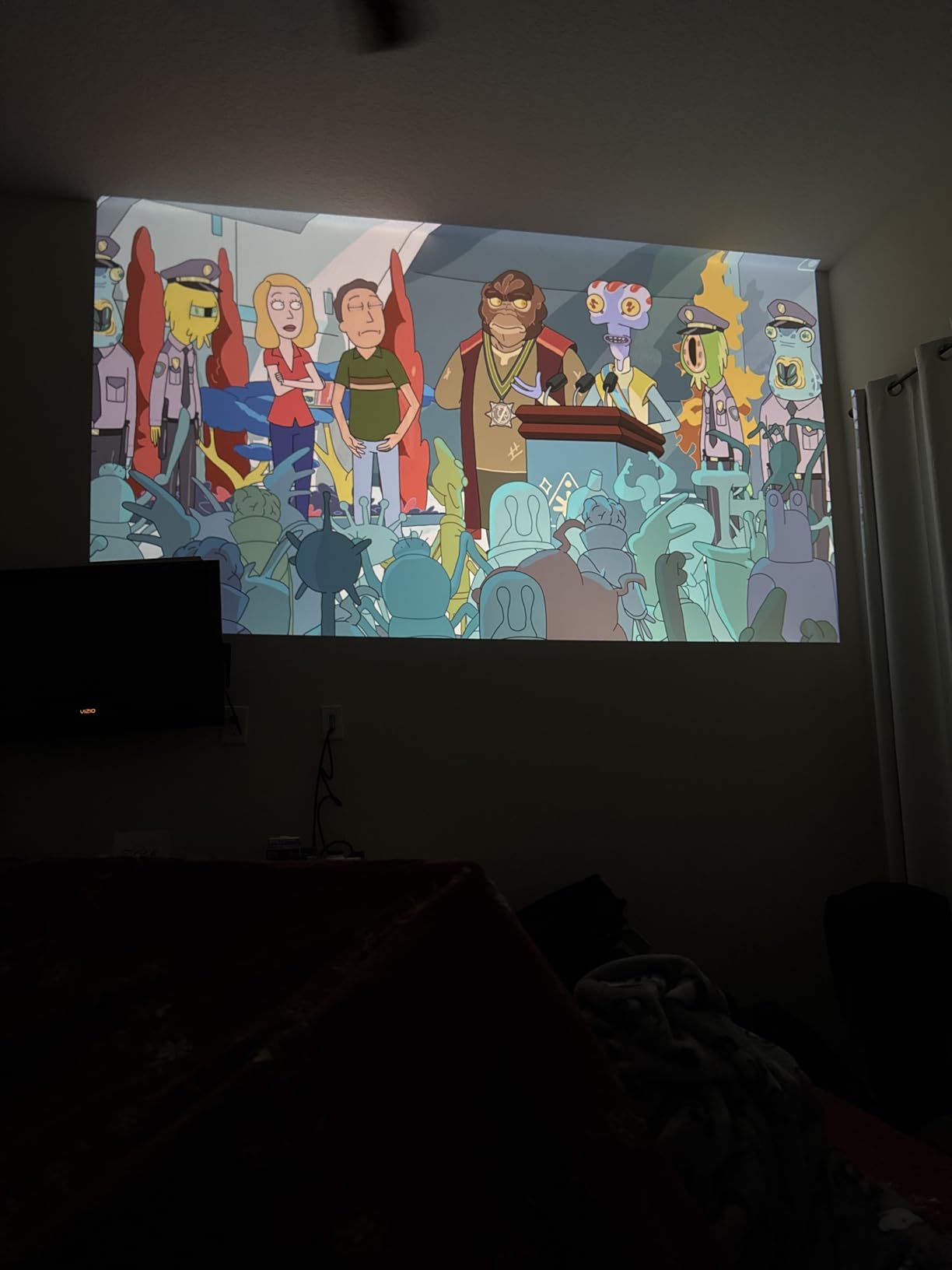
Why Roku TV Changes the Ownership Experience
Roku TV brings 500-plus free live TV channels and all major streaming apps, with AirPlay mirroring plus Apple HomeKit, Siri, Alexa and Google Assistant support. Nothing needs a dongle.
That matters more than raw specs in daily use. A projector with a sluggish generic OS becomes a streamer plugged into the HDMI port, and you have paid for a smart platform you never touch.
Native 1080P Across 60-150 Inches
Native resolution is 1920 x 1080, marketed for 60-150 inch home theater use, with a 200-inch maximum and a 3.71-foot minimum throw distance. The image stays clean and vibrant with lights on, per owners.
Direct daylight is the limit. Reviewers are consistent that the picture washes out badly in sun and looks its best in a darkened room.
Sound and the Small Annoyances
Dolby Audio with dual 5W speakers handles casual viewing but is quiet for a real theater setup, and external speakers are the standard recommendation. At 2.1 kg the unit moves easily between rooms.
Two details catch people out: the remote buttons are not backlit, and no HDMI cable is included in the box. The lens also needs inspecting and cleaning roughly every three months, so keep it away from dusty spots.
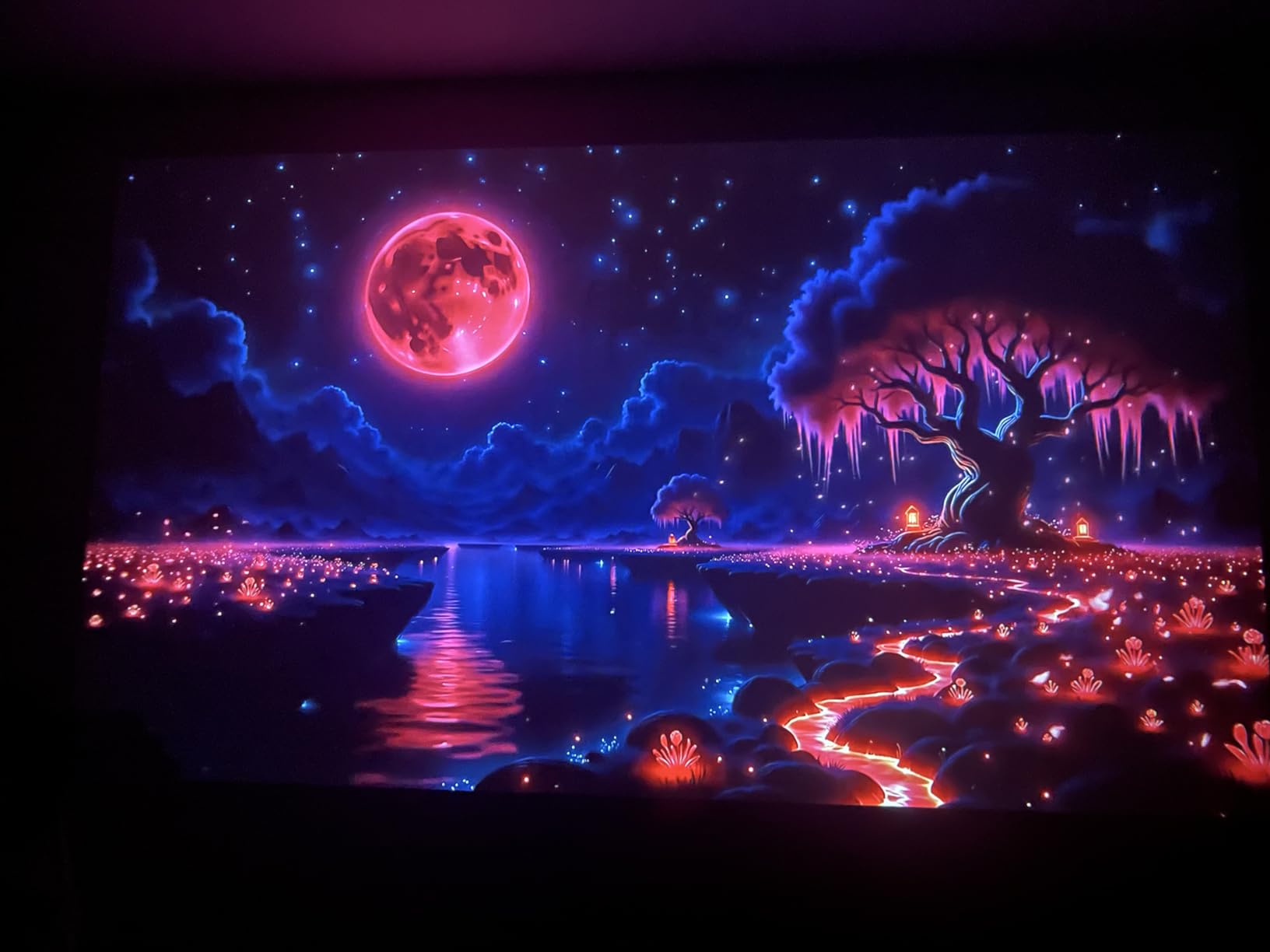
4. BenQ TH671ST – Short Throw That Fits 100 Inches Into a Small Room
BenQ TH671ST 3000 Lumens 1080p Short Throw Home Entertainment Projector
3000 lumens
100-inch image from about 5 feet
92% Rec.709 color
3-year warranty
Pros
- Bright 3000-lumen image with lights on
- Short throw removes trailing cables
- Low input lag suits console gaming
- Four-plus years of reliable owner reports
- 3-year limited warranty
Cons
- Zoom works in one direction only
- Fan noise is present
- Lamp life shortens under heavy gaming
- Exposed lens is prone to scratches
The TH671ST solves a specific problem that no other pick here addresses: a 100-inch image from about 5 feet. In a small room or a high-traffic space, that short throw eliminates the cable across the walkway that every long-throw unit forces on you.
BenQ is the only established traditional projector brand in this roundup, and ownership reports are unusually long. Multiple owners describe four to five years of use with the lamp still bright and no parts replaced.
It is also the only unit here with a 3-year limited parts and labor warranty, plus a security lock slot for securing the projector outdoors.
Short Throw Changes the Room Math
A 100-inch diagonal from roughly 5 feet is the number to hold onto. Standard 1.2:1 throw projectors need close to 11 feet for the same image, which is the single most common regret reported by first-time projector buyers.
Placement presets cover different lighting conditions, including a dedicated bright outdoor mode, and a zoom feature plus two leveling feet handle positioning. The zoom only works in one direction, so decide your distance before you mount.
Brightness, Contrast and Color Accuracy
3000 lumens with a 10000:1 contrast ratio and 92% Rec.709 color accuracy is a genuinely bright traditional projector. Owners describe it as working with lights on, which is unusual at this level.
Long-term owners also report sharp edges on a plain wall without a dedicated screen, which is a real cost saving if you are not planning a fixed installation.
Gaming, Inputs and Wear
Low input lag is tuned to match Xbox One X and PS4 Pro output, and this is the one traditional unit here that reviewers specifically call well suited to console gaming. HDMI, USB 2.0 Type-A and VGA cover most sources.
The negatives are consistent: fan noise is present, the exposed lens is prone to scratches, and lamp life shortens noticeably with heavy gaming use. The lamp itself is rated at 10000 hours.
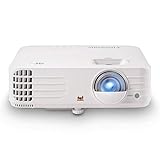
5. ViewSonic PX701-4K – The Only Native 4K Panel and the Lowest Input Lag
ViewSonic PX701-4K UHD Projector, 3200 Lumens, 240Hz HDR, Auto Keystone DLP
Native 3840 x 2160
240Hz refresh and 4.2ms input lag
3200 ANSI lumens
1.1x optical zoom
Pros
- Only native 4K UHD panel in the group
- 4.2ms latency and 240Hz support
- 3200 ANSI lumens with HDR and HLG
- Auto keystone and four-corner adjustment
- Powered USB-A port for a dongle
Cons
- Lowest average rating here at 4.2
- Heavy 6.2 pound stationary body
- Shortest lamp rating at 6000 hours
- No built-in streaming platform
- Minimum throw distance needs planning
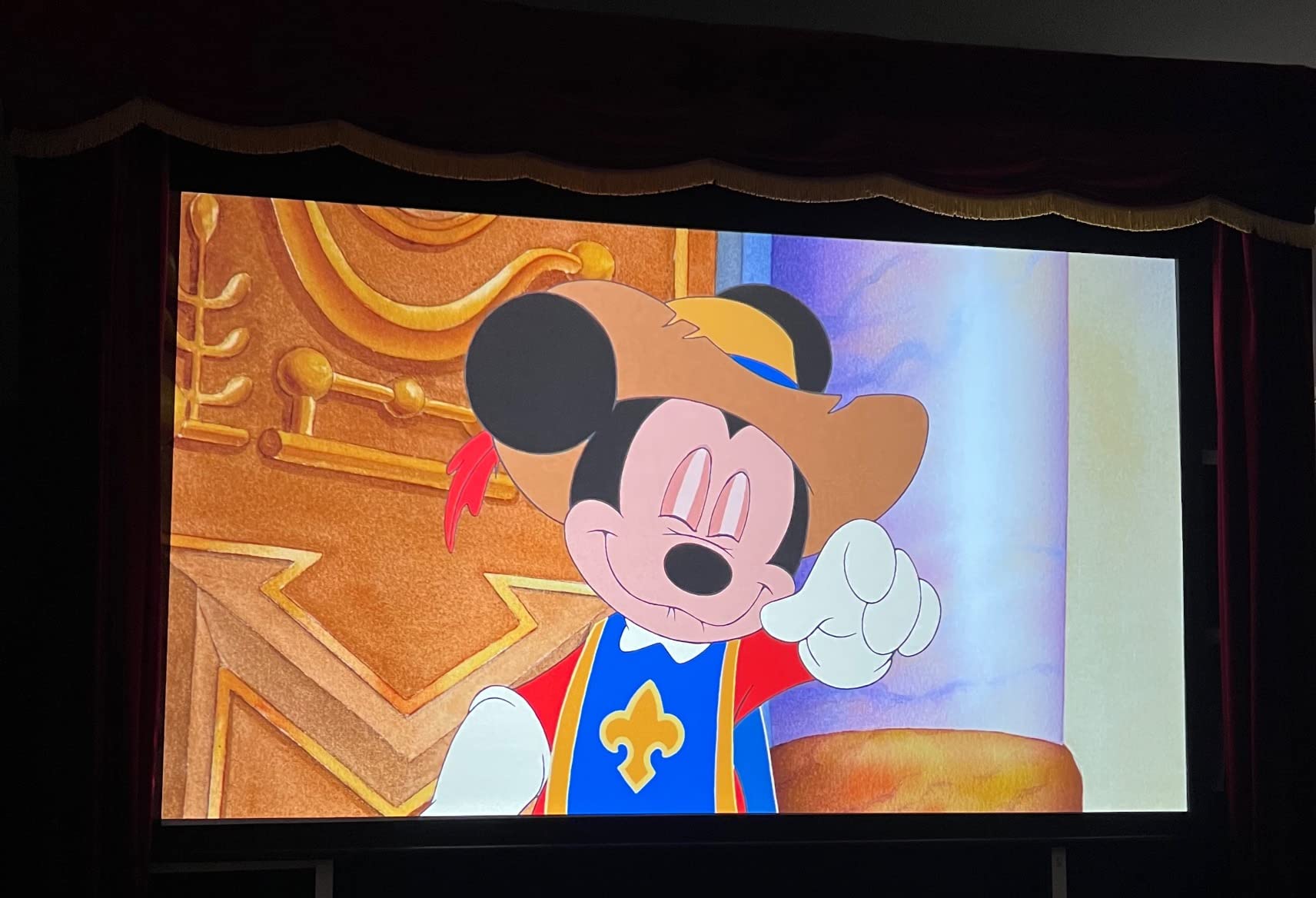
The PX701-4K is the only unit in this roundup with a genuine 3840 x 2160 panel. Nothing else pixel-shifts or decodes its way to a 4K label, and on a dedicated screen at 100 inches you can see the difference.
It is also the fastest. A 240Hz refresh rate with 4.2ms input lag is the lowest latency figure available in this price band, and for competitive shooters that is not a nice-to-have.
This is also the pick most likely to disappoint if you buy it casually. Sentiment is the most measured here, with a 64% five-star and 10% one-star split, because buyers are accepting a heavy, lamp-based, dongle-dependent design in exchange for the panel and refresh rate.
Real 4K Versus Pixel-Shifting
Every other 4K-labeled unit in this roundup is a 1080P chip shifting pixels or decoding a signal. The ViewSonic drives 3840 x 2160 from a larger DMD, so edges stay resolved where shifted models soften them.
3200 ANSI lumens with HDR and HLG support and SuperColor wide gamut means the extra resolution is actually visible in a moderately lit room, not just in a dark one.
4.2ms and 240Hz for Console and PC
Low input lag at 4.2ms with 240Hz refresh support is the headline spec, and it is the reason this projector appears on gaming lists despite the higher price. Competitive titles look the way they are meant to.
Two HDMI inputs and a powered USB-A port let you plug in a streaming dongle without needing a second power supply, which is the missing smart-platform compromise.
Installation Trade-Offs
Auto keystone, four-corner adjustment, 1.1x optical zoom and curved screen support give this the most flexible installation in the roundup, and it is ceiling mount compatible with the ViewSonic PJ-WMK-007 bracket.
You pay for that in weight and lamp life. At 6.2 pounds it is a stationary unit built for a permanent install, the lamp is rated at 6000 hours, and the 1.5-foot minimum throw distance demands careful placement planning. A 100-inch image lands at 10.9 feet.

6. Epson EpiqVision Flex CO-W01 – 3LCD Color Without Rainbow Artifacts
Epson EpiqVision Flex CO-W01 Portable Projector 3-Chip 3LCD Technology
3-chip 3LCD technology
3000 lumens color and white
Native 1280 x 800
Built-in Wi-Fi
Pros
- 3-chip 3LCD color with no rainbowing
- 3000 lumens of color and white brightness
- Lightweight at 5.3 pounds
- Clean portable design
- 1-year warranty with 7 years of EU spare parts
Cons
- Native 1280 x 800 is low for the class
- No built-in streaming platform
- 5000-hour lamp is the shortest rated
- Some early-unit issues reported
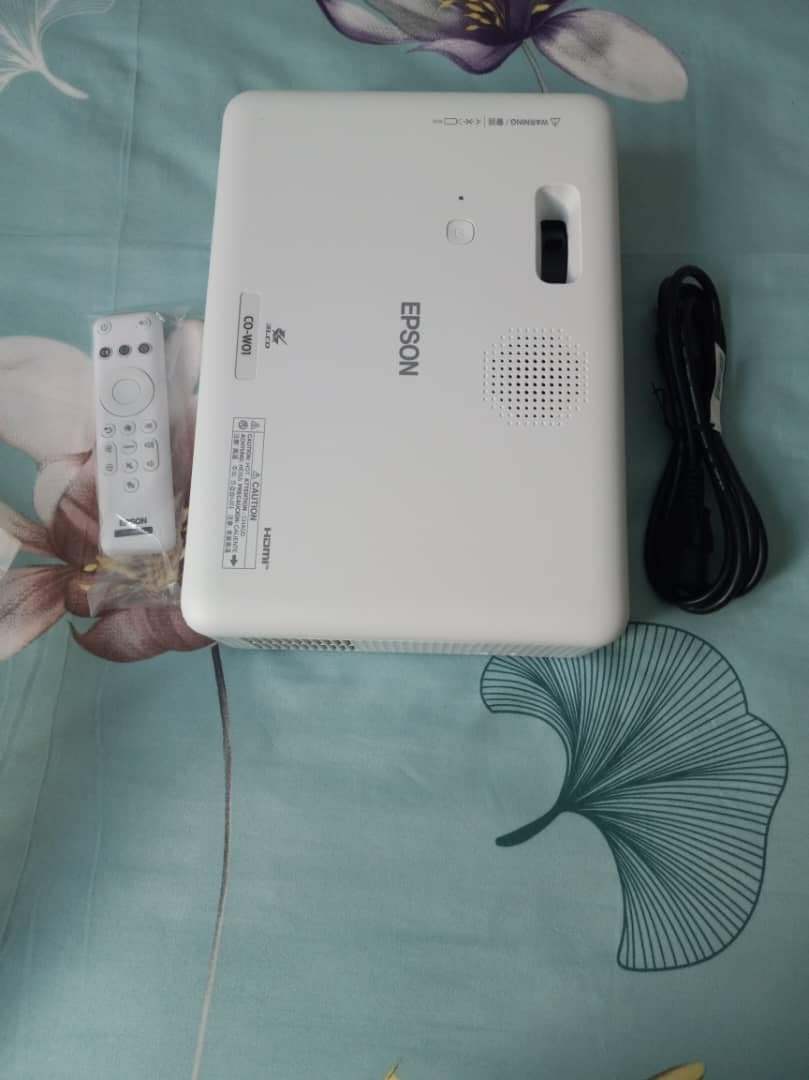
The CO-W01 is the odd one out in this roundup, and that is exactly why it is here. It uses 3-chip 3LCD rather than single-chip DLP, which means every pixel carries full RGB color with no rainbow artifacts for sensitive viewers on fast pans.
It is also a business projector repurposed for home use, and that framing is honest rather than a flaw. Epson rates it at 3000 lumens of color and white brightness, so the color output is not dimmed the way single-chip DLP units often are.
Buyers use it for presentations, classrooms and casual home viewing, and report it holding up across a wide range of lighting conditions.
Why 3LCD Matters for Some Viewers
Single-chip DLP projectors can produce rainbow banding on fast motion, especially with close seating. Three separate LCD panels per pixel send red, green and blue to every one of the 3,858,000 pixels, so the artifact simply does not exist here.
The side benefit is consistent color brightness, which is what the 3000-lumen color and white rating is describing. Owners point to accurate color as the main reason to keep coming back to it.
The Resolution Compromise You Have to Accept
Native 1280 x 800 is lower than every other unit in this roundup, all of which are 1080P or better. On a large screen you will notice it, and it is the single biggest reason to look elsewhere.
Throw distance runs 2.11 to 34.1 feet with an image from 33 up to 378 inches, so placement flexibility is not the issue here. Resolution is.
Portability, Streaming and Lamp Life
At 5.3 pounds and 11.6 by 8.3 by 3.4 inches, it is one of the easier units to carry, and built-in Wi-Fi is included. There is no smart platform, so a streaming dongle on HDMI is required.
The 1-year limited warranty is short for the class, though EU spare part availability runs seven years. The 5000-hour lamp rating is the shortest here, which matters if you plan long nightly sessions.

7. Optoma HD146X – Traditional Bright Home Theater DLP
Optoma HD146X 1080P Full HD Vibrant Home Theater Projector
1080P native DLP
3600 lumens
25000:1 contrast with Dynamic Black
3D-ready
Pros
- Long-running established home theater model
- 3600 lumens is high for the band
- 25000:1 contrast with Dynamic Black
- 3D-ready with game display mode
- Ceiling mount compatible
Cons
- No built-in streaming platform
- Lamp-based with 90-day lamp warranty
- Heaviest and largest body at 8.2 pounds
- 7% one-star share in reviews
The HD146X is what a traditional home theater projector looks like, and for a specific buyer that is still the right answer. Owners buy it for brightness, contrast and a cinema feel rather than for smart features or portability.
At 3600 lumens with a 25000:1 contrast ratio and Dynamic Black, it pushes more light than most of this roundup while deepening the dark scenes that DLP chips handle well.
Sentiment is positive but measured, which is typical of a mature, widely reviewed line. The 69% five-star and 7% one-star split reflects buyers who know exactly what they are getting.
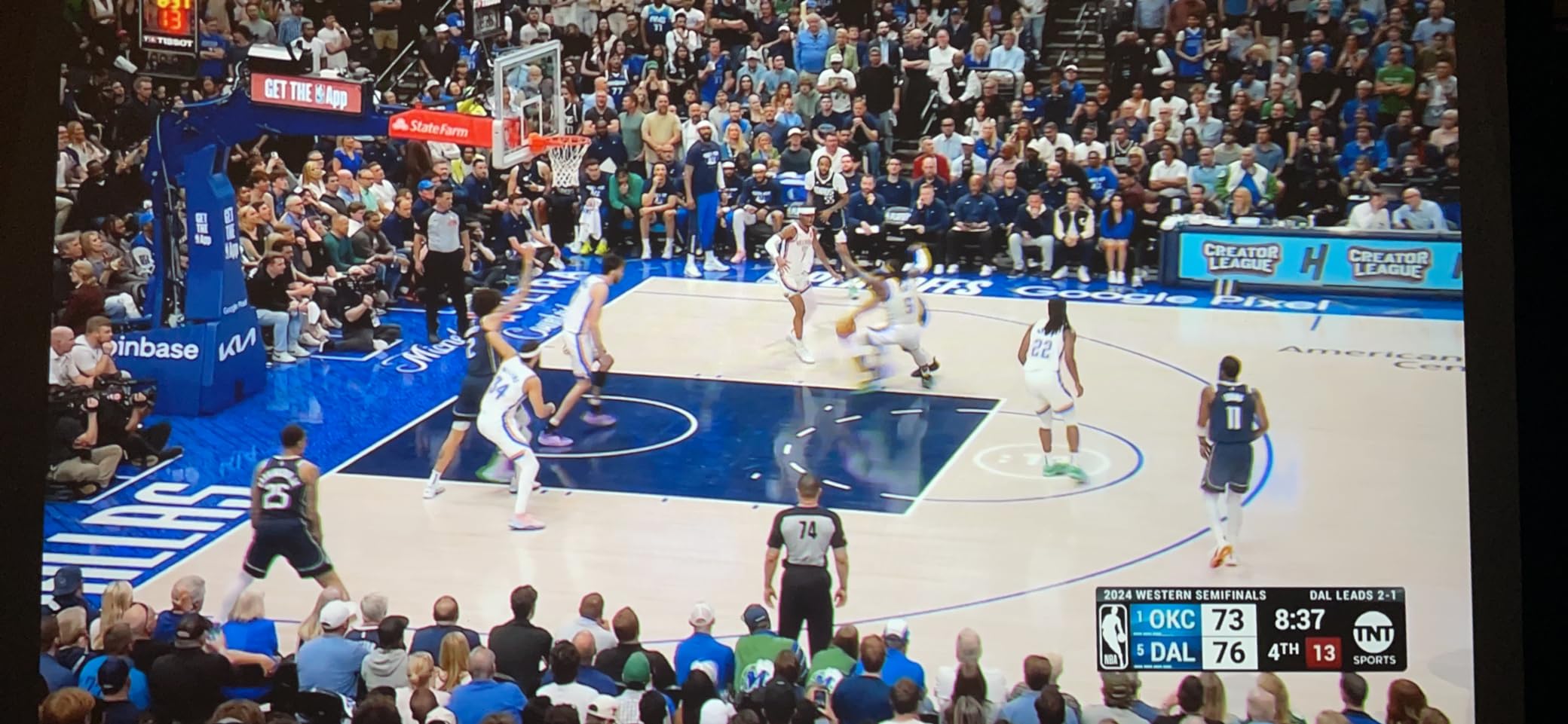
Brightness and Contrast as the Selling Point
3600 lumens puts this near the top of the bracket for raw light output, and the 25000:1 dynamic contrast ratio with Dynamic Black does real work on letterboxed films.
If your room has a window and you watch with lights on, that headroom is the reason to choose this over a dimmer smart unit. If your room is always dark, brightness is money you did not need to spend.
3D, Game Mode and Installation
3D-ready playback and a dedicated game display mode are both included, along with 40mm of vertical keystone correction for placement flexibility. Throw distance spans 3.2 to 35.37 feet with images from small sizes up to 301 inches.
Ceiling-mount compatibility makes this the natural choice among these picks for a permanent dedicated room rather than a flexible living space.
The Lamp and Dongle Reality
This is a 240W lamp system rated at 15000 hours, with a 1-year limited parts and labor warranty and a 90-day lamp warranty. There is no built-in streaming platform, so an external device is required.
Size is the practical issue. At 8.2 pounds and 12.4 by 9.5 by 4.3 inches, this is the heaviest and largest unit in the roundup, and that footprint is the trade for the extra brightness.
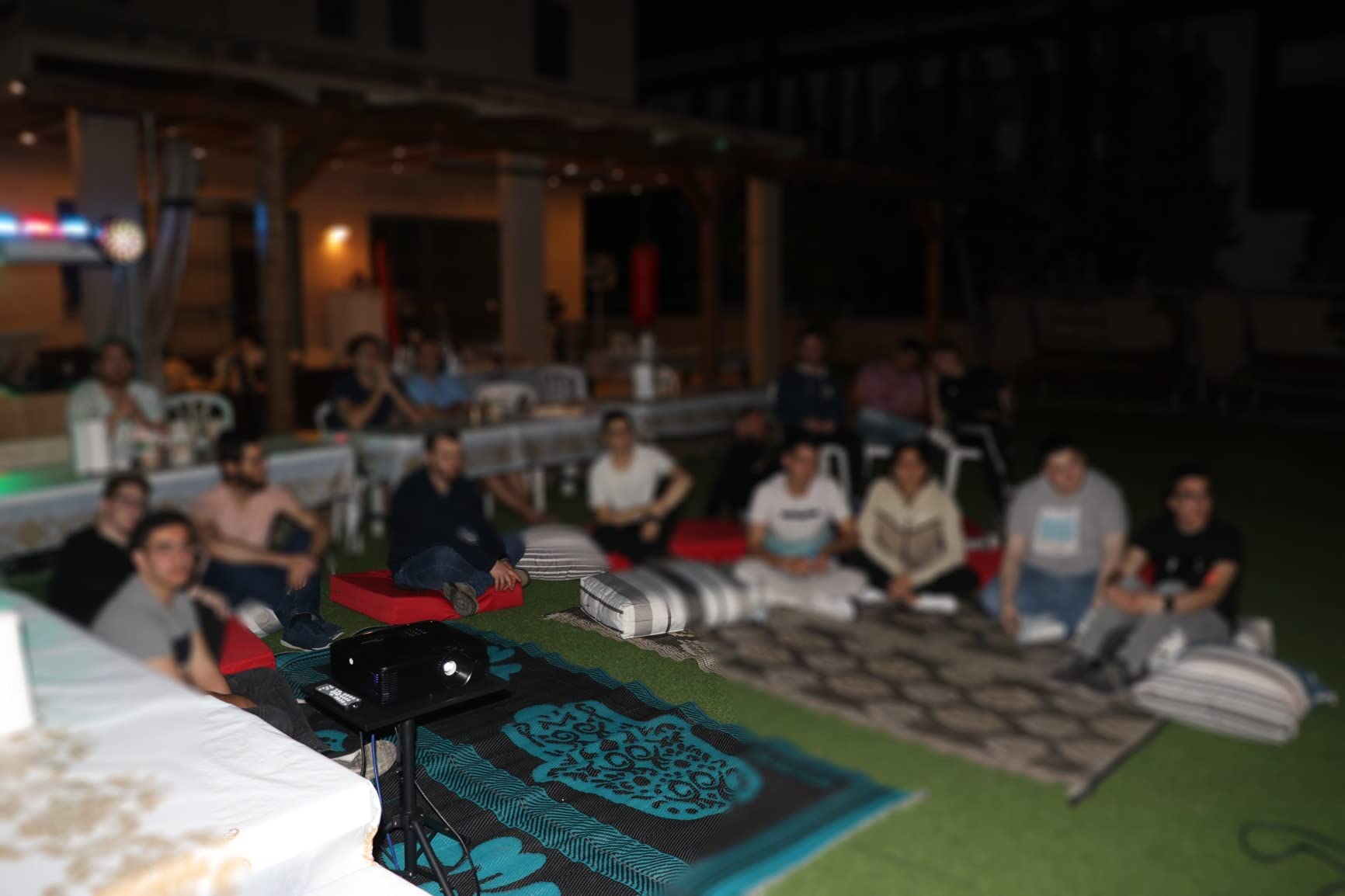
8. HAPPRUN 510G – Official Google TV in a Lightweight Body
Official Licensed Google TV – HAPPRUN Native 1080P Bluetooth Projector
Official licensed Google TV
Native 1920 x 1080 with HDR10+
350 ANSI max white
1.56 kg
Pros
- Licensed Google TV with no dongle needed
- Lightest smart option at 1.56 kg
- Sharp vibrant image with some ambient light
- Manual adjustment dials for fine tuning
- 24-month warranty
Cons
- Dark scenes look nearly black
- Built-in 5W speaker too quiet for large rooms
- Lens collects dust quickly
- Runs hot with side vents
- No auto focus or keystone on this variant
The 510G is the one unit here with a fully licensed Google TV build rather than an Android TV skin or a proprietary store. That means Netflix, Prime Video, YouTube and Hulu, plus Google Voice Assistant, Chromecast and AirPlay, on a projector that weighs just 3.4 pounds.
Buyers treat it as a value replacement for a small TV, and the QR-code setup takes minutes. The image is crisp and vibrant in a room with some ambient light.
Brightness is the model’s real limitation at 350 ANSI max white, and dark scenes are where you feel it first. Owners who want a bigger image with the lights on should look at the TOPTRO or WiMiUS instead.
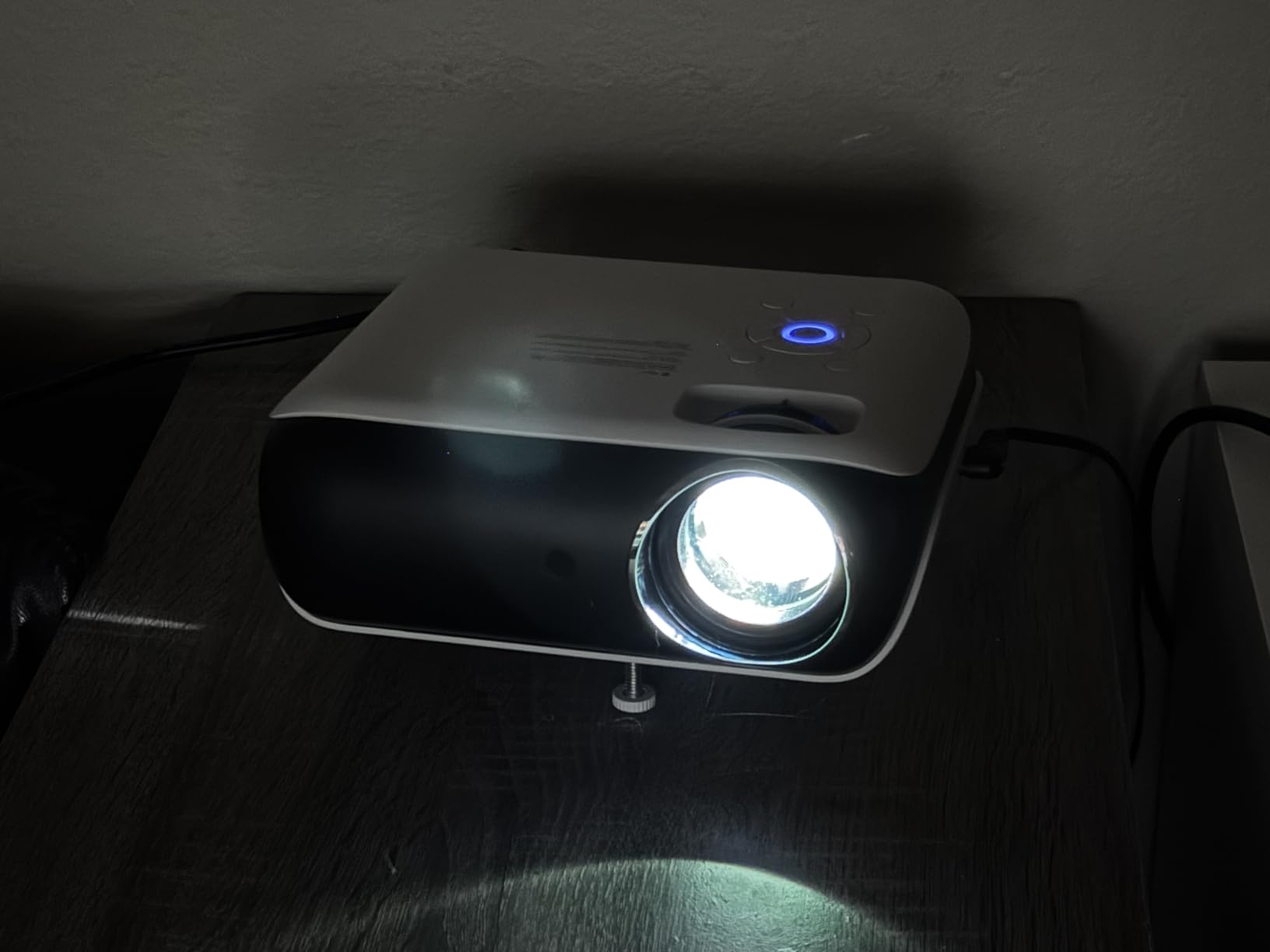
What Licensed Google TV Actually Adds
Licensed Google TV brings 10,000-plus apps, Google Voice Assistant for search and app launch, Chromecast screen projection and AirPlay, all on Wi-Fi 6. Bluetooth 5.2 is there for external speakers.
Compared with the generic smart OS on cheaper units, the difference shows in navigation speed and in having every major app on day one without sideloading anything.
Sharp but Dim
Native 1920 x 1080 with HDR10+ and a 2000:1 pixel contrast ratio delivers a sharp, vibrant image. The 350 ANSI max white figure is the constraint, and reviewers repeatedly describe dark scenes as looking nearly black.
The stated 100000-hour light source figure is excellent on paper, and the practical trade is simply less light output compared with the 920 and 1500 ANSI units in this same list.
Maintenance and Manual Setup
At 1.56 kg this is genuinely backpack-portable, and ceiling, tabletop, tripod and wall mounting are all supported. Images run up to 300 inches from a 5.48-foot minimum throw distance.
Two things to know before buying. This variant has no auto focus or auto keystone, so setup is manual, and the manual adjustment dials help. The lens also collects dust quickly and needs constant cleaning, and the unit runs hot with cooling fans and side vents.
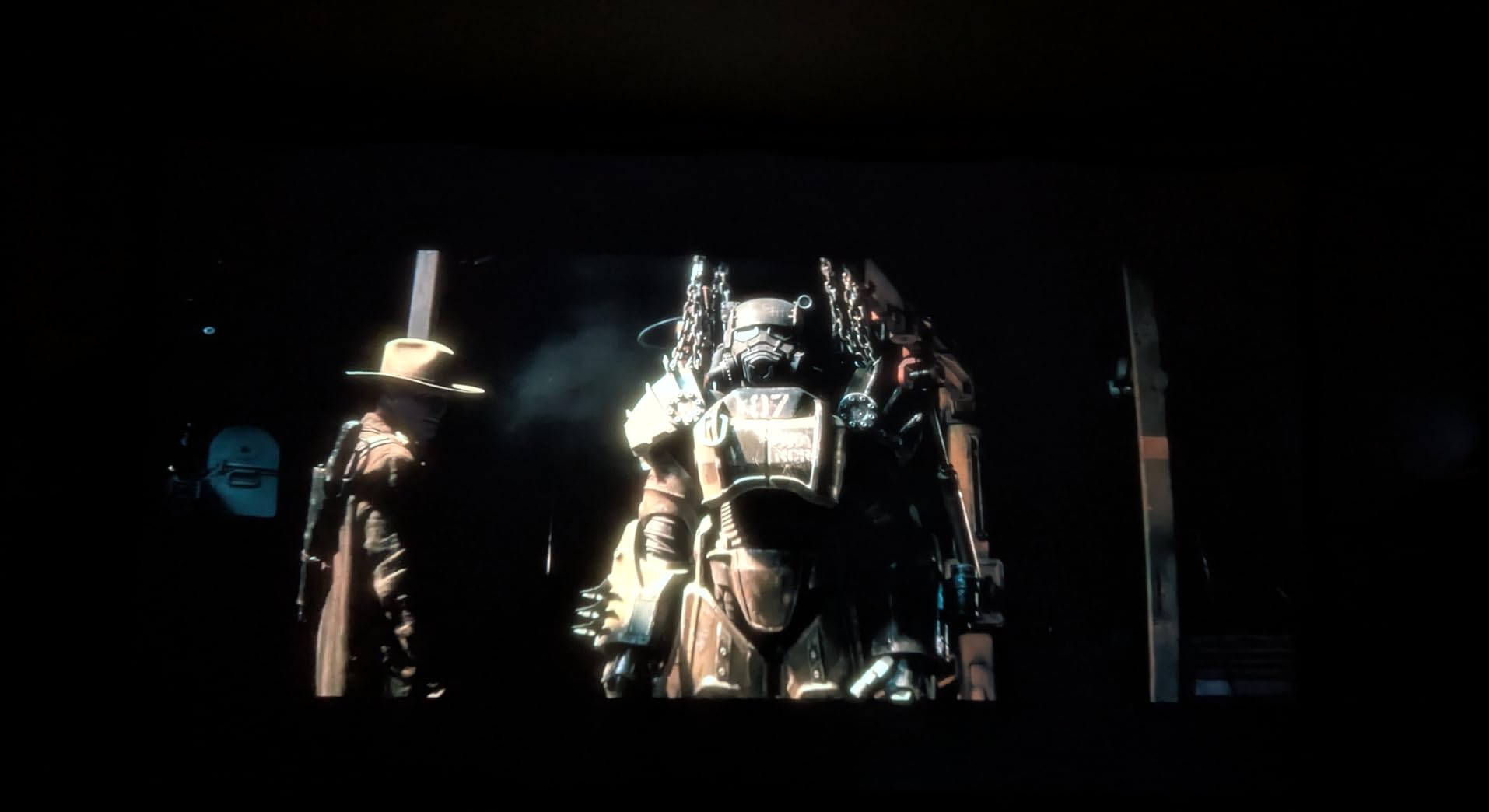
9. ONOAYO ONO3Pro 2.0 – The Most Built-In Audio and a Sealed Optical Engine
ONOAYO Outdoor-Projector-4K with AI Auto Focus,50WDolby Audio,Built-in Apps
Native 1080P at 60Hz and 4K at 30Hz
310 ANSI lumens
Dolby Audio with eARC
2.4 pound body
Pros
- Snappy Smart TV OS 2.0
- Auto focus and keystone work on walls and ceilings
- Quiet operation
- Very light at about 2.4 pounds
- Deep settings menu with calibration options
Cons
- Bluetooth audio sometimes fails to route
- Built-in speaker volume needs external audio
- 310 ANSI lumens needs a dark room
- Runs warm after extended use
The ONO3Pro 2.0 is a long-form-review favorite, and the reason is unusually specific: true 1080P at 60Hz, 4K support at 30Hz, a certified 98% color gamut and class-leading low fan noise in a 2.4-pound body with a carrying handle.
Dolby Digital over HDMI is rare at this level, and the Smart TV OS 2.0 is the snappiest interface in the roundup outside Roku TV. Owners praise the auto focus and keystone for working reliably on walls, ceilings and tilted surfaces.
Brightness is the limit at 310 ANSI lumens. It is a dark-room projector, and outdoors you will want external audio regardless of the Dolby branding.
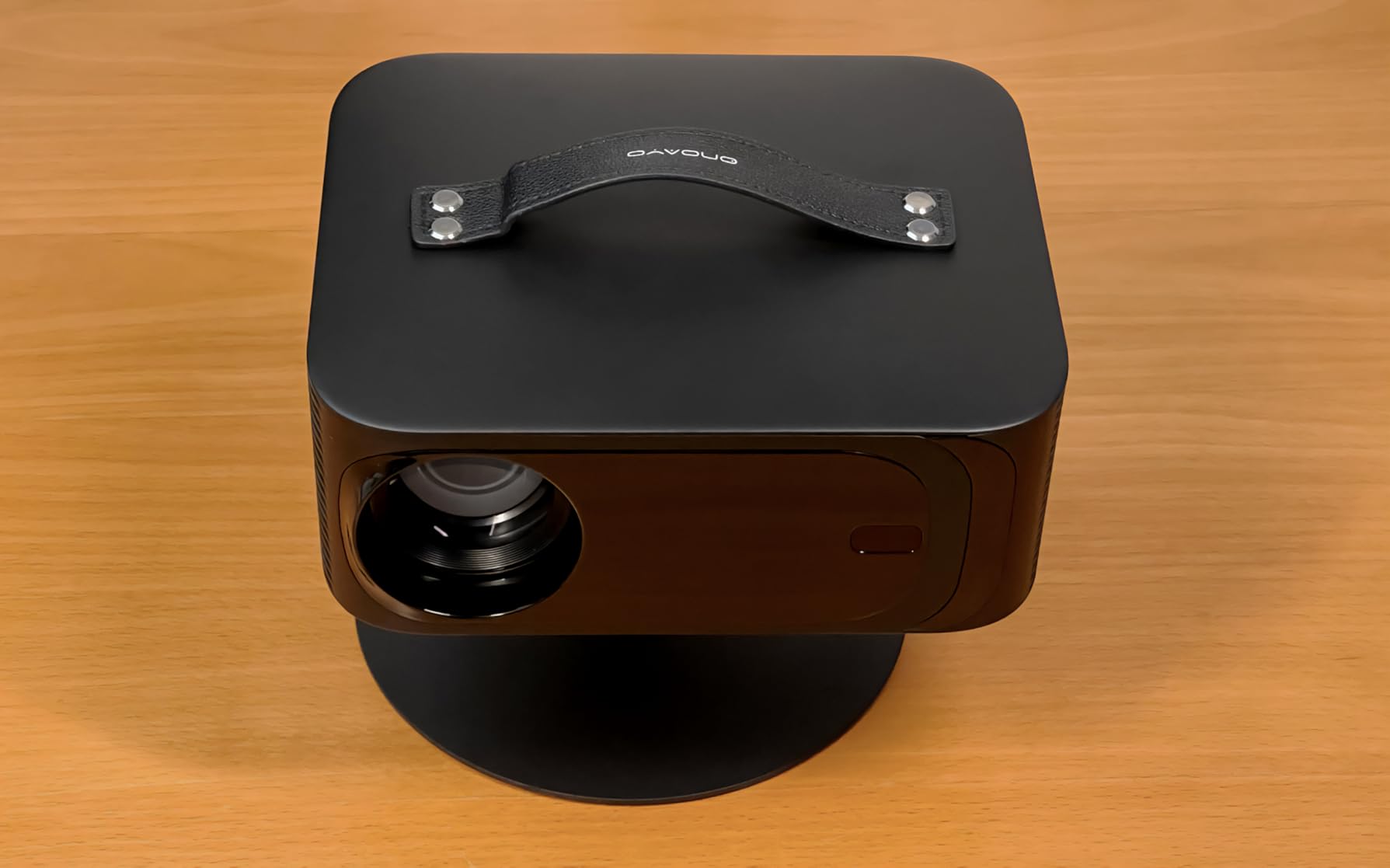
Resolution Detail That Normally Gets Hidden
True 1080P at 60Hz rather than 1080P at 30Hz matters for motion, and the display resolution maximum of 3840 x 2160 with 4K support keeps high-resolution video sources clean.
The claimed 98% NTSC color gamut and AI image quality optimization show up in reviews as accurate out-of-the-box color, and the deep settings menu gives you real calibration control if you want it.
Auto Setup That Handles Odd Surfaces
AI auto focus, auto keystone, obstacle avoidance, screen fit and orientation detection all complete in about 3 seconds, and 50%-100% zoom covers positioning. The minimum throw distance of 1.5 feet makes this unusually flexible for a small room.
Images scale from very small up to 400 inches, and desktop, tripod, wall and ceiling mounting are supported through an M4 screw port.
Audio, Heat and One Real Bug
Dolby Audio Hi-Fi stereo dual speakers with eARC output are the strongest built-in system in this price range for a unit this small, and Bluetooth speaker mode works as a second option.
One specific failure is worth knowing: some units report Bluetooth audio failing to route to a soundbar, forcing a long 3.5mm cable. At 310 ANSI lumens a fully dark room is needed for the best image, the sealed optical engine with dual-fan cooling helps with the reported warmth after extended use, and the warranty is 1-year return with 3-year repair.
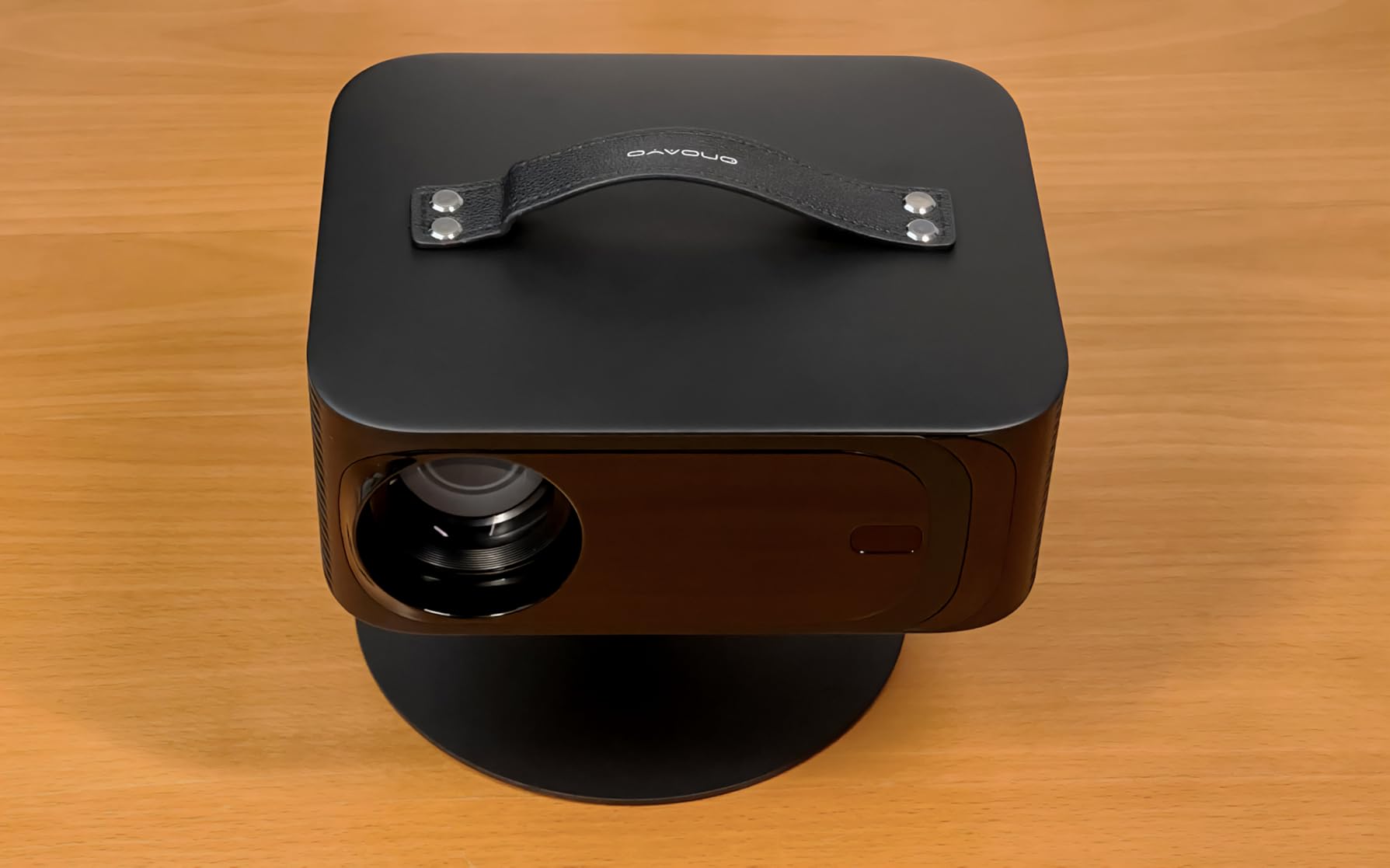
10. NICPOW E2 PRO – The Lowest-Cost Route to a Smart Outdoor Setup
NICPOW 4K Outdoor Projector with Wifi and Bluetooth, Built-in Apps, Smart Projector with Auto Focus & Keystone, 1500 ANSI Lumens and 300″ Movie Projector for Outdoor Use
1500 ANSI lumens claimed
Native 1920 x 1080
60-degree rotating stand
Wi-Fi 6 with built-in apps
Pros
- Lowest cost in the roundup
- Built-in Netflix YouTube and Prime Video
- Auto focus and keystone remove setup hassles
- 2.4 pound body with rotating stand
- Wi-Fi 6 with streaming and mirroring
Cons
- Only 5W built-in speakers
- 7% one-star share signals variable quality
- Contrast falls short of higher-priced 1080P models
- Setup and reliability issues reported
The E2 PRO exists because a lot of first-time buyers want a big outdoor image in July, not a permanent installation. At 2.4 pounds with an integrated 60-degree rotating stand, it is the easiest unit here to carry from a car to a sheet hung on a fence.
Buyers highlight the combination of built-in streaming apps, auto focus and keystone, and low cost as the reason for buying. The claimed 1500 ANSI lumens is the highest brightness number stated by any unit in this roundup.
Our caution is about build consistency, not the concept. With 4873 ratings at 4.3, the 67% five-star and 7% one-star split shows more variability than the picks above it, and some users report inconsistent quality at this tier.
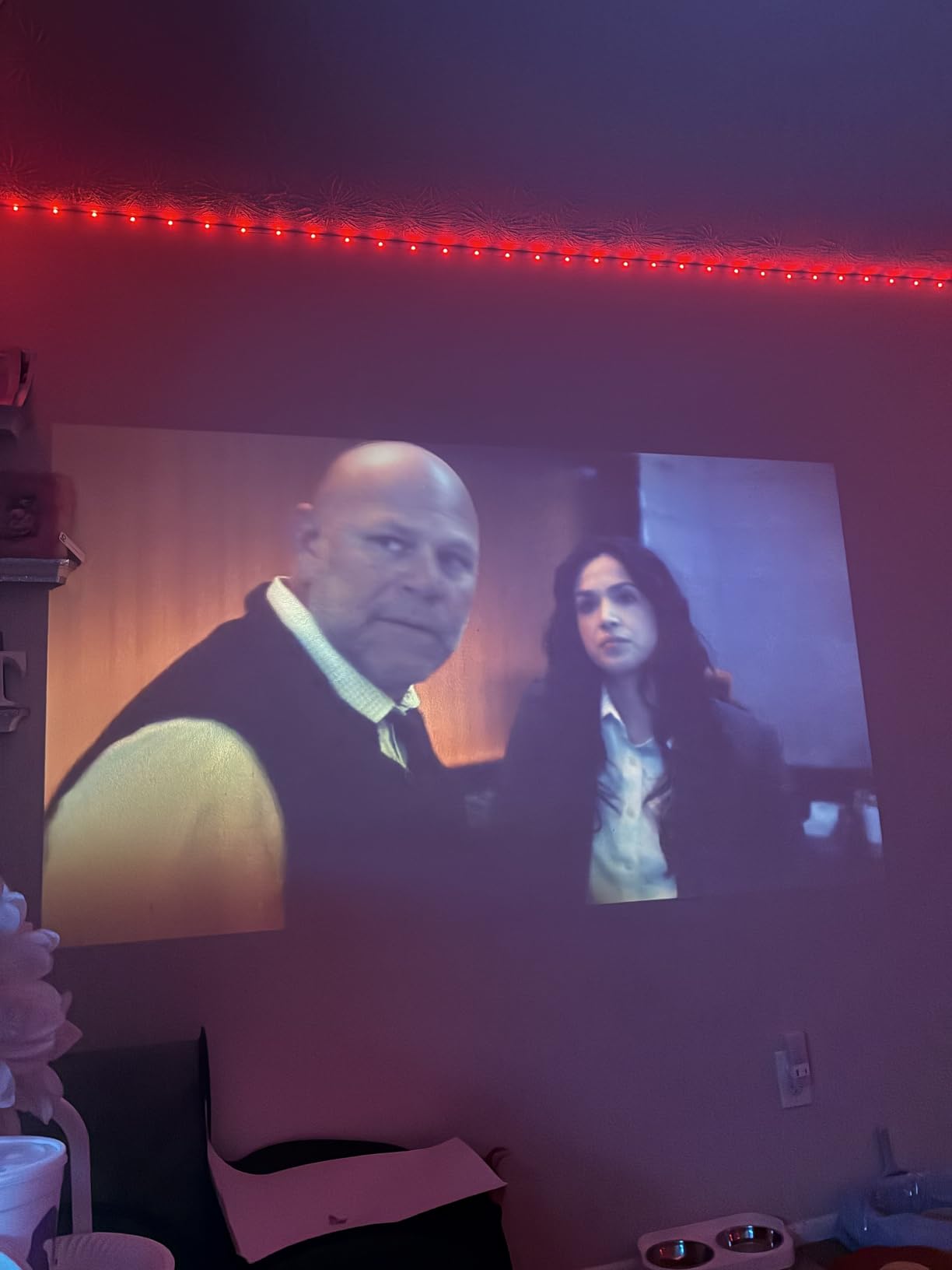
Reading the Brightness Claim Carefully
The stated 1500 ANSI lumens is well above every other unit here, and buyers do praise daytime viewing. Treat it as a manufacturer figure rather than a lab measurement, and expect the picture to lose impact as the sun climbs.
Native resolution is 1920 x 1080, images run from a 3-foot minimum throw distance up to 300 inches, and the 20000:1 contrast ratio is listed alongside a 50000-hour light source life.
The Rotating Stand Is the Real Feature
Most projectors need a table, a shelf or a tripod. The integrated 60-degree rotating stand tilts the unit through a full arc so you can aim it at a wall, a sheet or a garage door without props.
At 7.08 by 7.08 by 2.95 inches and 2.4 pounds, the footprint is the smallest in this roundup, and Wi-Fi 6 handles streaming and wireless mirroring.
Where the Budget Shows
Only 5W of built-in stereo speakers means external audio is almost always needed, which is the most common single complaint in reviews. Contrast and image quality fall short of higher-priced 1080P models, which is the visible cost of this tier.
The 7% one-star share points to occasional setup and reliability issues rather than one specific fault. Bluetooth 5.0 and a 2-year warranty are both included, and AI auto focus, keystone, obstacle avoidance and screen alignment complete in about 3 seconds when they work.
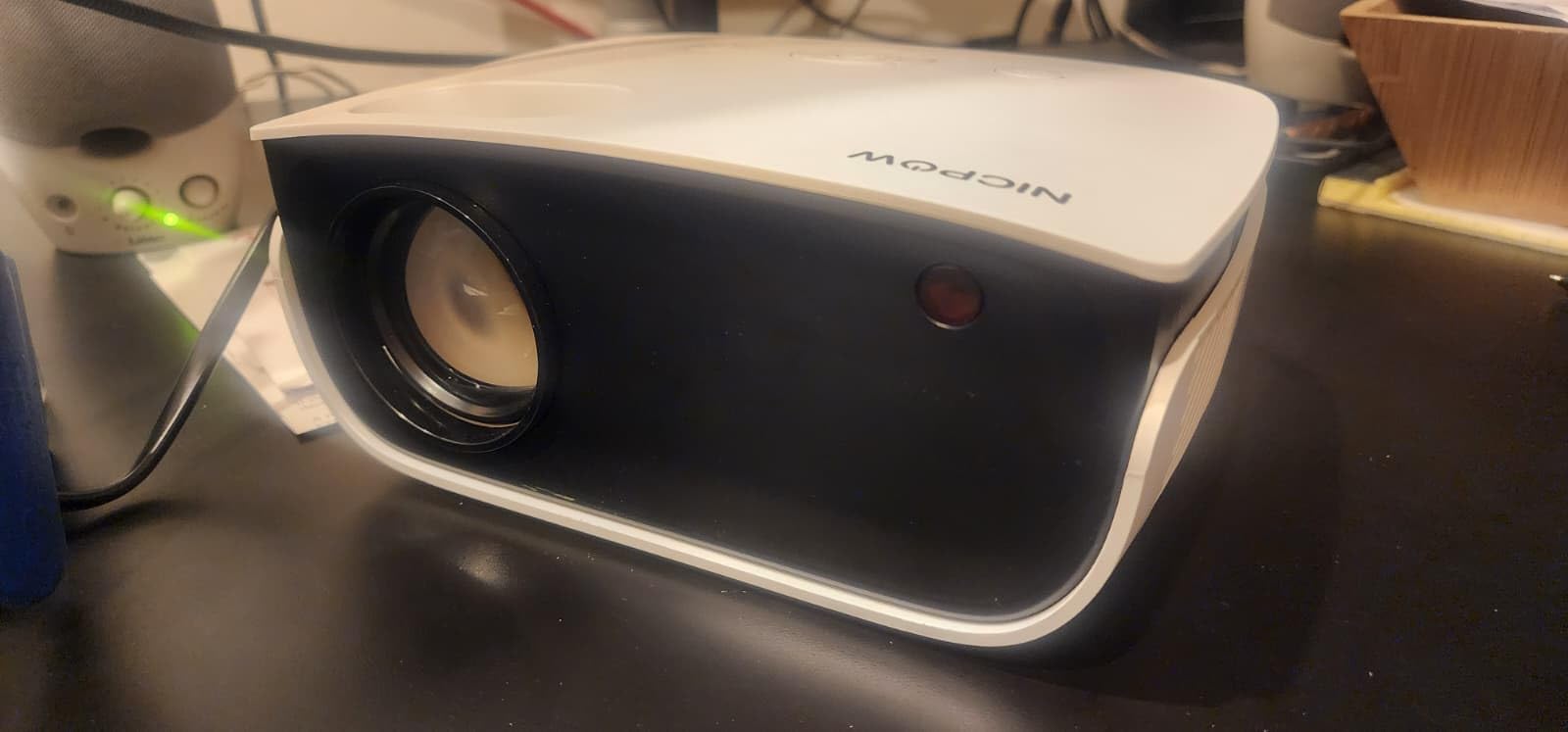
What 1000 Dollars Actually Buys You – and What It Does Not
At this budget you get native 1080P, one genuine 4K panel, smart platforms from Roku, Google TV and VIDAA, auto focus and keystone on most units, and light sources rated from 5000 to 100000 hours. That is a real jump from the 200-dollar novelty projectors.
What you do not get is daylight performance at 100 inches, optical lens shift on most models, long-life batteries, or genuinely good built-in speakers above about 20 watts per channel.
It is also worth budgeting beyond the projector itself. A proper pull-down screen, a ceiling mount, a streaming dongle for the units without an OS, and a soundbar for a real theater setup each add real cost, so a mid-range unit with money left for accessories often beats a top-of-band unit used bare.
If you want a sense of how this bracket compares to smaller units, our [best mini projectors guide](https://print2webcorp.com/best-mini-projectors/) covers the portable end, and [projectors for themed displays](https://print2webcorp.com/best-halloween-projectors/) is worth a look if the use case is decorative rather than cinematic.
Native 1080P vs Pixel-Shifted 4K – The Honest Answer
Only the ViewSonic PX701-4K in this roundup has a real 3840 x 2160 panel. Everything else that says 4K is either decoding a 4K signal into a 1080P image or shifting a 1080P chip diagonally to boost apparent edge detail.
For most viewers on a 100-inch screen at normal seating distance, a good native 1080P DLP projector like the BenQ or Optoma holds up extremely well, and the color and contrast gains from spending on the light source often beat the resolution gain.
Pixel shifting is not a scam. On a large screen with a good screen surface, XGIMI-style shifted images look noticeably sharper than plain 1080P. What it is not is native 4K detail, and any listing that implies otherwise is misleading.
The honest rule: buy native 4K if you sit close, play competitive games, or project very large. Otherwise put that money into brightness, a screen and audio.
Brightness, ANSI Lumens and How Big Your Screen Should Be
Brightness is quoted two ways. ANSI lumens and ISO lumens use similar measurement standards, and any number labeled just as lumens or LED brightness without a standard is marketing filler that you should ignore.
The units here range from 310 ANSI lumens on the ONOAYO to 3600 lumens on the Optoma, with 600 on the WiMiUS, 920 on the TOPTRO, 3200 ANSI on the ViewSonic and a claimed 1500 on the NICPOW.
As a working rule, a 100-inch screen in a fully dark room needs roughly 1500 lumens or more for a comfortable image, and that is where a 900-1500 ANSI unit earns its keep. For a 120-inch screen with lights on, you are looking at 3000 lumens or more and accepting a washed-out picture with a window open.
Match the units to their rooms. The TOPTRO and Optoma handle daylight best. The ONOAYO and HAPPRUN want a blackout curtain. The WiMiUS sits in the middle and rewards a properly dark room with a much bigger image than its rating suggests.
Throw Ratio and Throw Distance – Measure Before You Buy
Throw distance is the number one thing buyers discover too late. A standard long-throw projector with a 1.2:1 ratio needs roughly 10 to 11 feet of room depth to fill a 100-inch wall, and a ceiling-mounted cable run across a walkway is a common regret.
Short-throw models break that pattern. The BenQ TH671ST produces a 100-inch image from about 5 feet, and the ONOAYO with a 1.5-foot minimum throw distance is unusually flexible for smaller spaces.
The ViewSonic needs 10.9 feet for 100 inches, so plan that room before ordering. The Optoma spans 3.2 to 35.37 feet, giving the widest placement range in the roundup, while the Epson accepts 2.11 to 34.1 feet.
One more detail that costs buyers: zoom is not always symmetric. The BenQ zooms in only one direction, so you have to choose your final distance rather than adjust into it.
Lamp vs LED Light Source and the Real Cost of Ownership
Light source is where the ownership math lives. The Epson CO-W01 and the ViewSonic PX701-4K use lamps rated at 5000 and 6000 hours, which means a replacement bulb inside the first few years of nightly use.
LED and laser units sit far higher. The ONOAYO claims 500000 hours, the HAPPRUN 100000, the NICPOW 50000 and the TOPTRO 30000, which for most buyers means never thinking about it. The BenQ lamp lasts 10000 hours and the Optoma 15000.
That calculation is what makes a dimmer LED unit the cheaper purchase over five years. A projector that needs two replacement lamps in its life will cost more to own than a brighter LED unit that needs none, even before you count the downtime.
The two caveats. Lamp brightness dims gradually with use, so contrast fades long before the bulb dies, and every unit here needs its lens cleaned periodically, more often in dusty rooms.
Smart Platforms – Google TV, Roku TV, VIDAA and No OS at All
The operating system is the difference between a projector you use and a projector you plug a streaming stick into. Four platforms show up here, and each has a clear best case.
Roku TV on the Aurzen D1R is the easiest for most households, with a familiar layout, 500-plus live channels, every major app and a QR-code setup. Licensed Google TV on the HAPPRUN 510G is the deepest app catalog at 10,000-plus apps, with Chromecast, AirPlay and the Google Voice Assistant.
VIDAA on the TOPTRO X9 PRO is the most complete television experience, with 1,000-plus live channels, cloud storage, no targeted ads and a kids mode. The ONOAYO and WiMiUS run proprietary smart systems that cover the major apps but with a shallower catalog.
Five units here have no smart platform at all: the Epson, Optoma, BenQ and ViewSonic need a dongle, and a powered USB-A port on the ViewSonic means you will not need a second outlet for it.
Whichever you pick, our [8 best laptops under 1000 dollars](https://print2webcorp.com/best-laptops-under-1000-dollars/) and [10 best amplifiers under 1000](https://print2webcorp.com/best-amplifiers-under-1000/) roundups cover the rest of a compact home entertainment setup.
Gaming Under 1000 Dollars – What Input Lag You Can Realistically Get
Only one unit in this roundup delivers competitive gaming latency. The ViewSonic PX701-4K runs at 4.2ms with 240Hz refresh support, and that is the figure to target if you play shooters competitively.
The BenQ TH671ST is the traditional option, with low input lag tuned to match Xbox One X and PS4 Pro output. Several cheaper units include a game display mode, but none publish a latency figure you can rely on.
Two practical notes. Higher refresh rates usually apply at 1080P rather than 4K, so check the mode you are actually running. And if you care about input lag, do not route your signal through a cheap projector box or an adapter, which adds more delay than the projector does.
For everyone else, a 4K panel, low input lag and a dark room matter far more for gaming than raw brightness does.
Frequently Asked Questions
What is the best projector under 1000 dollars?
The WiMiUS P62 Pro is the best projector under 1000 dollars, delivering 600 ANSI lumens, native 1080P with 4K support, dual 10W Dolby speakers and AI auto focus and keystone in a 2.46 kg body. For pure picture quality in a bright room the TOPTRO X9 PRO offers 920 ISO ANSI lumens, and for gaming the ViewSonic PX701-4K is the only native 4K option with 4.2ms input lag.
What is the best projector for the money?
The Aurzen Roku TV D1R is the best projector for the money. It pairs native 1080P with the Roku TV platform, 500-plus free live channels, auto focus and auto keystone, and fan noise below 40 dB(A) at one meter, which makes it unusually quiet for the class. Its main limitation is dual 5W speakers, so plan on external audio.
What is the best brand for an affordable projector?
BenQ is the most established traditional projector brand in this roundup, and the TH671ST carries a 3-year limited parts and labor warranty with long-term owner reports of four to five years of reliable use. ViewSonic and Epson are the other names worth trusting for panel and optical engineering. Among smart-focused brands, Roku TV and licensed Google TV builds deliver more dependable software than generic Android skins.
Which is better, a 4K or full HD projector?
Native 4K is better only if you sit close, play competitive games or project very large. In this roundup only the ViewSonic PX701-4K has a true 3840 x 2160 panel, while every other 4K-labeled unit decodes or pixel-shifts from 1080P. A good native 1080P DLP projector such as the BenQ TH671ST or Optoma HD146X often delivers a better image once you spend the difference on brightness and a proper screen.
How many lumens do I need for a home projector?
For a 100-inch screen in a fully dark room, roughly 1500 lumens or more gives a comfortable image. With lights on or a window open, plan for 3000 lumens or more and expect a softer picture. Units under 700 lumens, such as the ONOAYO at 310 ANSI or the HAPPRUN at 350 ANSI, work best on screens around 60 to 80 inches in a blacked-out room.
Which Projector Should You Buy in 2026?
If you want one projector that handles movies, streaming and backyard nights without a learning curve, the WiMiUS P62 Pro is the pick. 600 ANSI lumens, dual 10W Dolby speakers and instant auto setup make it the least demanding unit in this roundup to live with.
If your room has daylight, go with the TOPTRO X9 PRO for 920 ISO ANSI lumens and the cleanest television-style platform, or the Optoma HD146X if you want maximum light output and will add your own streaming device. For a dedicated dark media room, the BenQ TH671ST wins on short throw and a three-year warranty.
Gamers should take the ViewSonic PX701-4K and accept the stationary size and lamp cost for a native 4K panel at 4.2ms. Casual viewers and travel-focused buyers should take the Aurzen Roku TV D1R for the quietest fan and the easiest interface, and the ONOAYO ONO3Pro 2.0 if the built-in audio matters most to you.
Whichever you choose, measure your room’s depth for a 100-inch image before it arrives, budget for a screen and external speakers, and check the current listing to see the latest configuration.
Leave a Reply