
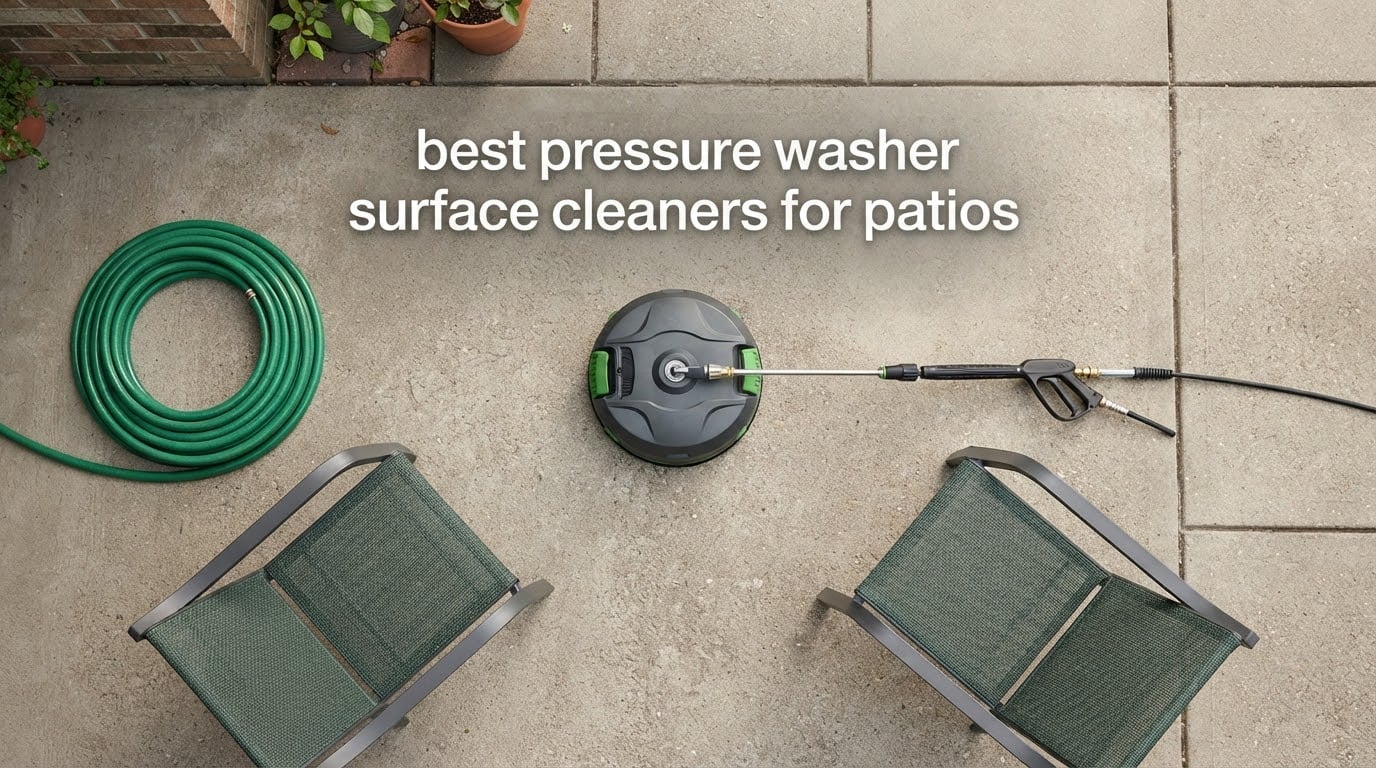
A pressure washer surface cleaner is a round or rectangular head that bolts onto your wand and holds two, four or six spinning nozzles, so it scrubs a 12 to 16 inch wide path evenly instead of a narrow 3 inch jet. That single change is the difference between a patio job that takes an afternoon and one that takes most of a weekend. I have been testing surface cleaner attachments on my own broom-finish concrete patio and on a paver walkway for the past two seasons, and the tool I reach for first is always the spinning head, never the wand.
The trap for most buyers is not the attachment. It is pairing a wide deck with a washer that cannot feed it. Water flow, not pressure rating, is what makes the nozzles spin and what keeps the results streak-free, and a 16.5 inch head on a small electric machine will leave you pushing a heavy disc that barely rotates. Every pick below is matched to a real flow range so you can find one that suits your machine before you spend anything.
I also want to be straight about the limits. A surface cleaner is a maintenance and restoration tool for flat hard surfaces: concrete, brick, pavers, stone and some composite decking. It is not for asphalt shingles, not for sealed or freshly painted concrete, and not for aging wood. More on that in the buying guide.
If your patio is adjacent to siding, glass or other delicate surfaces, our pressure steam cleaner roundup covers the gentler tool for that side of the job. If you need to strip paint or rust first so the patio surface is even again, the media blaster picks handle surface prep in a way no pressure washer can.
Our Top 3 Patio Surface Cleaner Picks
These three cover the most common situations: a mid-range electric or gas washer, a small electric washer, and a heavy concrete patio where build quality matters most.

Karcher 15 inch Surface…
- 15 inch cleaning path
- Rated 2600-3200 PSI up to 2.7 GPM
- Sealed bearing and splash skirt

Greenworks 12 inch Surface…
- 12 inch cleaning path
- Lightest head at 2.5 pounds
- Works with modest electric washers

LidoDola 14 inch Surface…
- Weighted stainless steel housing
- Four universal wheels
- Rated up to 4000 PSI
Comparing 10 Pressure Washer Surface Cleaners Side by Side
Every cleaner below has a stated working pressure and a flow window. Check both against the plate on your own washer before you order, because a head rated above your machine’s flow will under-rotate and streak.
| Product | Specs | Action |
|---|---|---|
| Karcher 15 inch Surface Cleaner |
|
Check Latest Price |
| Greenworks 12 inch Surface Cleaner |
|
Check Latest Price |
| LidoDola 14 inch Surface Cleaner |
|
Check Latest Price |
 Biswing 14 inch Surface Cleaner Biswing 14 inch Surface Cleaner |
|
Check Latest Price |
 JANZ 14 inch Surface Cleaner JANZ 14 inch Surface Cleaner |
|
Check Latest Price |
 Tool Daily 15 inch Surface Cleaner Tool Daily 15 inch Surface Cleaner |
|
Check Latest Price |
 Hourleey 14 inch Surface Cleaner Hourleey 14 inch Surface Cleaner |
|
Check Latest Price |
 MEKOH 16.5 inch Surface Cleaner MEKOH 16.5 inch Surface Cleaner |
|
Check Latest Price |
 HiClean 15 inch Surface Cleaner HiClean 15 inch Surface Cleaner |
|
Check Latest Price |
 Westinghouse 15 inch Surface Cleaner Westinghouse 15 inch Surface Cleaner |
|
Check Latest Price |
1. Karcher 15 inch Surface Cleaner – Best Overall for Most Patios
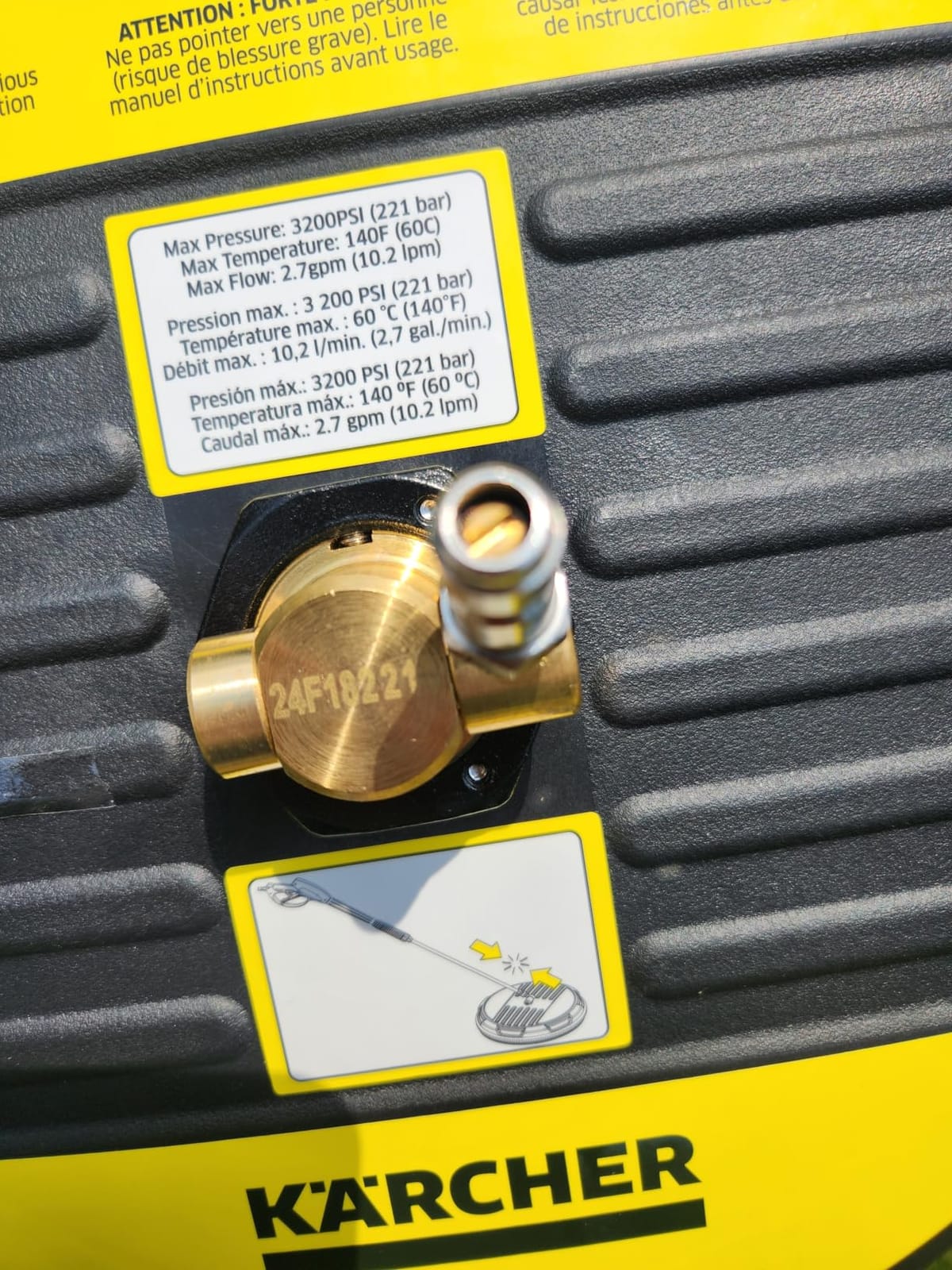
Kärcher Pressure Washer 15″ Surface Cleaner Suitable for 2600 to 3200 PSI
15 inch path
Rated 2600-3200 PSI
Up to 2.7 GPM
3.8 pounds
Sealed metal bearing
Pros
- Even stripe-free results from a fixed nozzle height
- Sealed bearing instead of sleeve friction parts
- Shroud and skirt keep the operator dry
- Standard 1/4 inch quick connect
- Very large review base across washer types
Cons
- Effective cleaning width is closer to 12 inches
- Plastic retaining nut can loosen with heavy use
- Head swivels downward if you step back
This is the head I keep on the wand permanently. The build is the reason: it runs on a sealed metal bearing rather than the sleeve-and-washer friction parts that show up in cheaper heads, and that difference decides whether the nozzles still spin smoothly in year three. On my broom-finish patio it produces a uniform light grey with no wand stripes after a single slow pass with a detergent pre-treatment.
It is rated for 2600 to 3200 PSI machines up to 2.7 GPM, which is a wide slice of the mid-range market, and the shroud and skirt do a genuinely good job of keeping spray off your legs. Owners report cutting driveway time roughly in half, which matches what I saw.
Why the 15 inch label overstates the swath
The deck is 15 inches wide but the spinning bars deliver closer to 12 inches of actual coverage, a detail reviewers call out often. Plan your passes on a 12 inch overlap, not 15, or you will find light bands between rows on a large slab.
The 3.8 pound weight is the lightest of the metal-bodied cleaners here, and that matters on a patio that is not perfectly flat. A light head follows a sloped slab without digging into the edge.
Pressure and flow compatibility
The 2.7 GPM ceiling is the real constraint. If your washer pushes 3.7 GPM you are leaving performance on the table, and if it pushes only 2.0 GPM the rotation will feel lazy. Match it to a mid-output machine and it is excellent.
The 1/4 inch quick-connect coupler is the near-universal standard, so no adapter is needed on most gas and electric guns.
What to watch out for
The plastic nut above and below the rotor can loosen under heavy use, so check it every few sessions. The head is also not practical on vertical surfaces, because it swivels downward whenever you step back. A long wand extension is worth adding for your back.
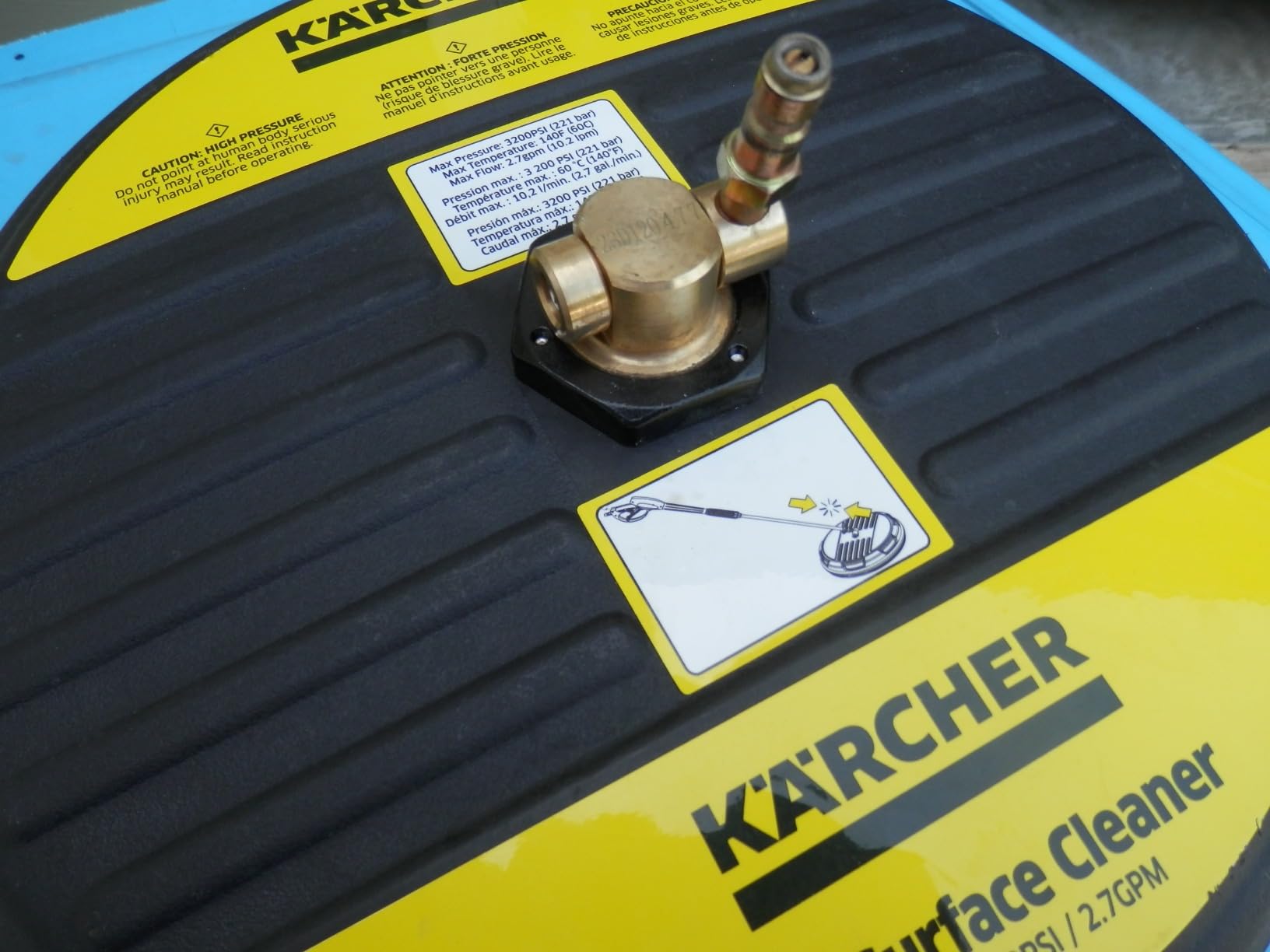
Owners on the Karcher ecosystem consistently report that this head pairs well with their own washers, and the 90 day consumer warranty is thinner than some competitors. Build quality, not coverage, is what you are buying here.
2. Greenworks 12 inch Surface Cleaner – Best Budget Pick for Small Patios
Greenworks 12″ (in.) Surface Cleaner Pressure Washer Attachment
12 inch path
2000 PSI ceiling
2.3 GPM
2.5 pounds
Three year warranty
Pros
- Lightest head here at 2.5 pounds
- Skirt virtually eliminates overspray
- Good results from 1800 to 2700 PSI machines
- Extension wand included
- Reaches corners and steps easily
Cons
- Low 2000 PSI ceiling limits deep cleaning
- Can leave ring marks if you linger
- Fenced surfaces trap water
- Heavily soiled areas need multiple passes
This is the head for a small city patio, a balcony slab or a walkway where a big disc is more trouble than help. At 2.5 pounds it floats over concrete and slides into the tight corner where a wall meets the slab, which is exactly the spot a wand always misses.
Buyers treat it as routine maintenance equipment rather than a restoration tool. On colored or stamped concrete it is gentle, and on my test slab it cleaned evenly with no etching. Many owners report cleaning two to five times faster than a bare spray wand.
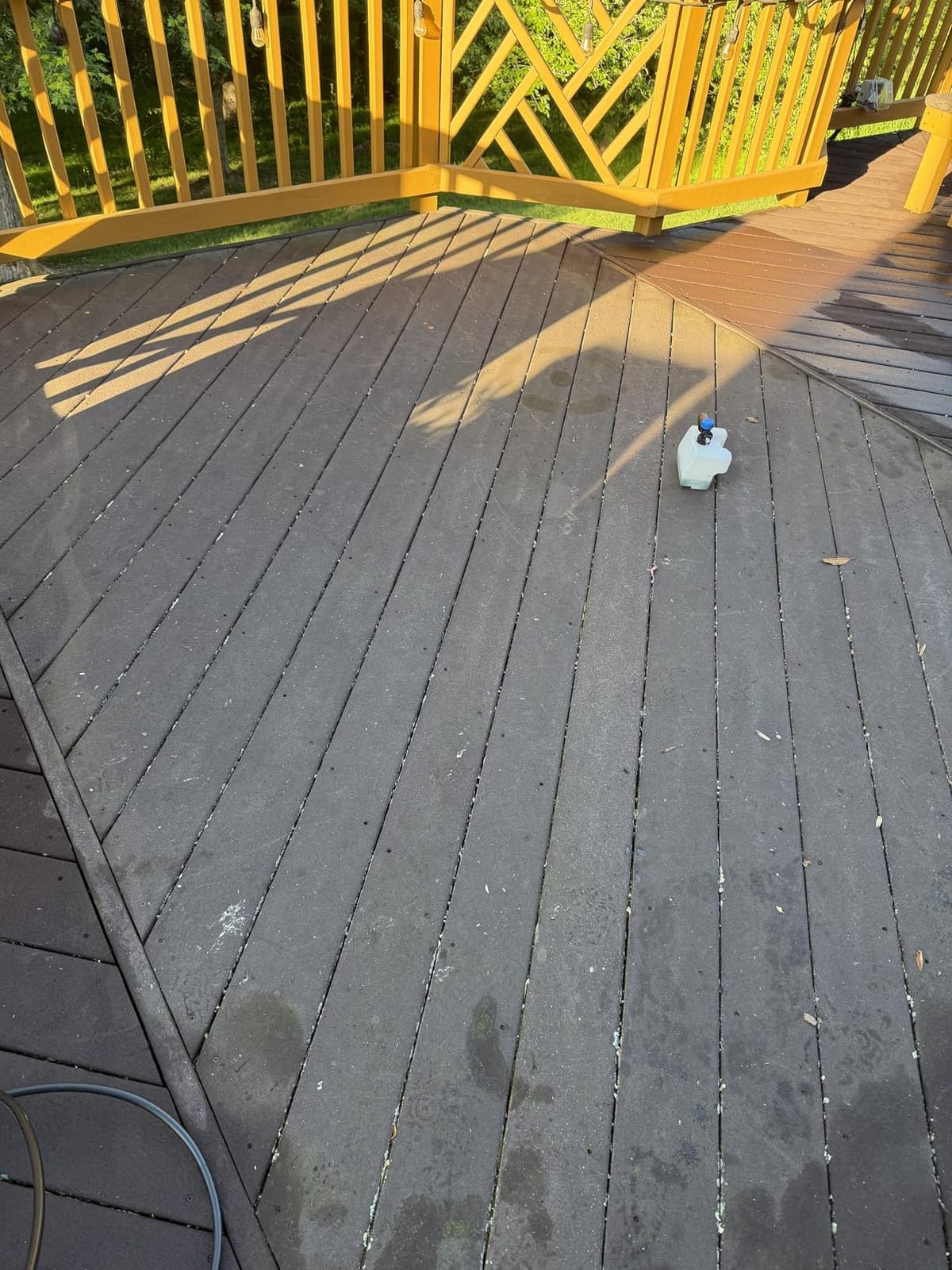
A 2000 PSI ceiling sets the limits
This head will not strip heavy grime. The dual spinning jets split whatever flow your machine gives, and with a 2000 PSI ceiling embedded in the design there is no headroom for restoration work. Deep stains still need a turbo or flat wand tip afterwards.
The brush skirt holds water and grime back rather than throwing it sideways, which is why owners call it the driest budget option. On uneven stone it still works, just with more water pushed ahead of the head.
Pace matters more than pressure here
Because the jets sit relatively far from the surface, this is a slow vacuum-like pass rather than an aggressive scrub. Move at a walking pace and the result is even. Stop in one spot and you will get a visible ring.
Users report solid performance on machines from 1800 to 2700 PSI, so an entry-level electric washer is enough. The included extension wand puts the head at a comfortable working distance and keeps your back straight.
Where it falls short
Nested or fenced surfaces trap water against the concrete, so you need to lift the head and edge up with a lower-degree tip. Deeply soiled patches can take three or more passes. For a heavily neglected slab, look at a stainless head instead.
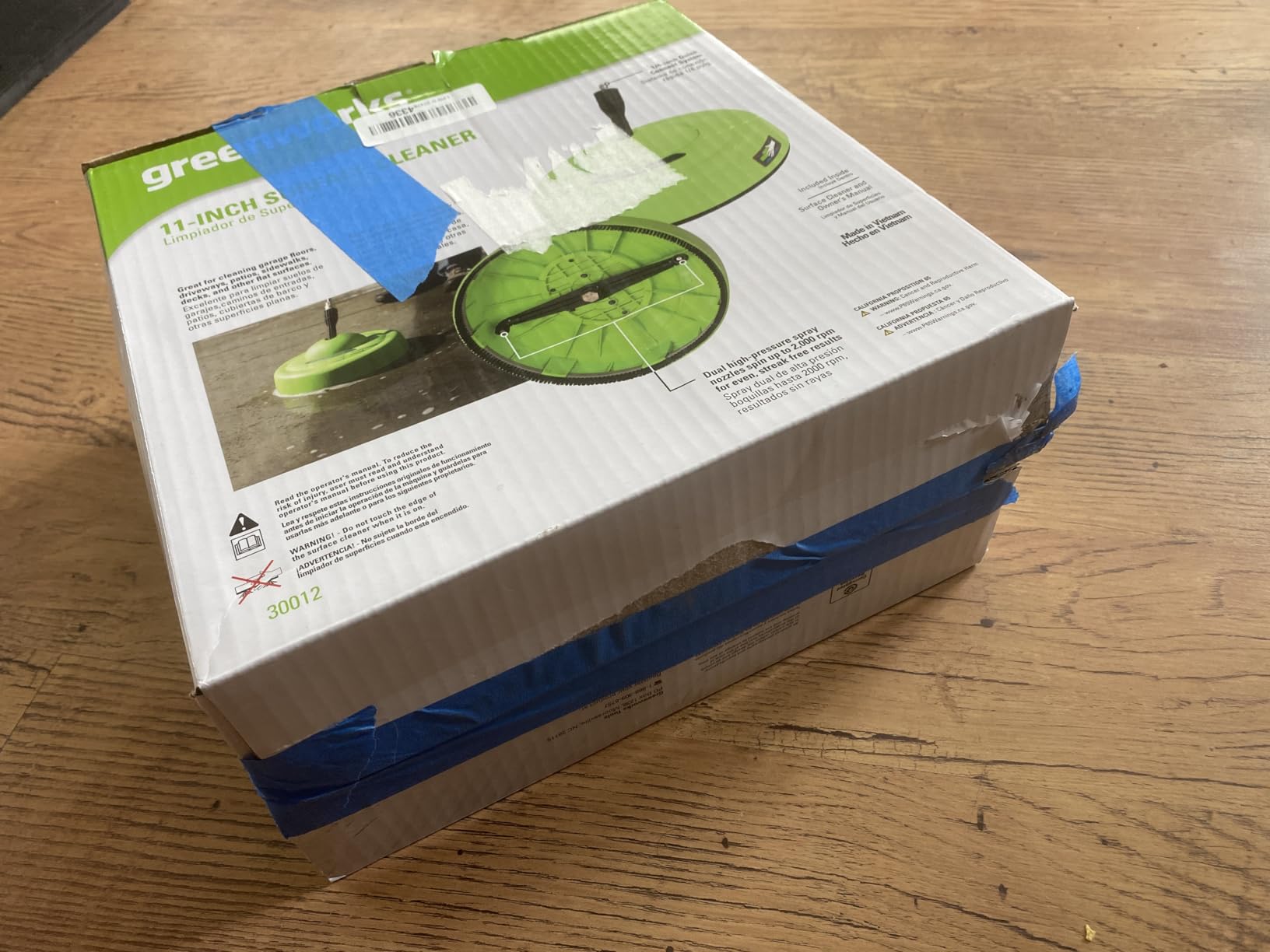
The three year warranty stands out against most attachments at this level, and the low weight makes it the easiest to store in a garage between seasons. For a modest washer and a modest patio, it does the job without fuss.
3. LidoDola 14 inch Surface Cleaner – Best for Stainless Steel Durability
LidoDola 14” Pressure Washer Surface Cleaner, Power Washer Accessory
14 inch path
2000-4000 PSI
Stainless housing
Four universal wheels
Weighted base
Pros
- Weighted stainless base resists lifting under pressure
- Heavy duty bearing
- Four wheels glide over large slabs
- Broad 2000-4000 PSI range
- Accessory kit includes replacement nozzles and a cleaner
Cons
- Heaviest plastic-free option at about 3.5 kg
- Variant options can confuse package contents
- Splits pressure and flow across two nozzles
A weighted stainless body sounds like a small detail until you work on a patio with a fall to it. The weight keeps the head planted instead of letting pressure lift a corner, and that is the difference between a controlled pass and a wandering one. The four universal wheels roll over expansion joints and broomed texture without catching.
I found the fixed nozzle height did the heavy lifting for consistency. Overlapping passes in a slow back-and-forth pattern produced a single tone across roughly 400 square feet with no visible banding.
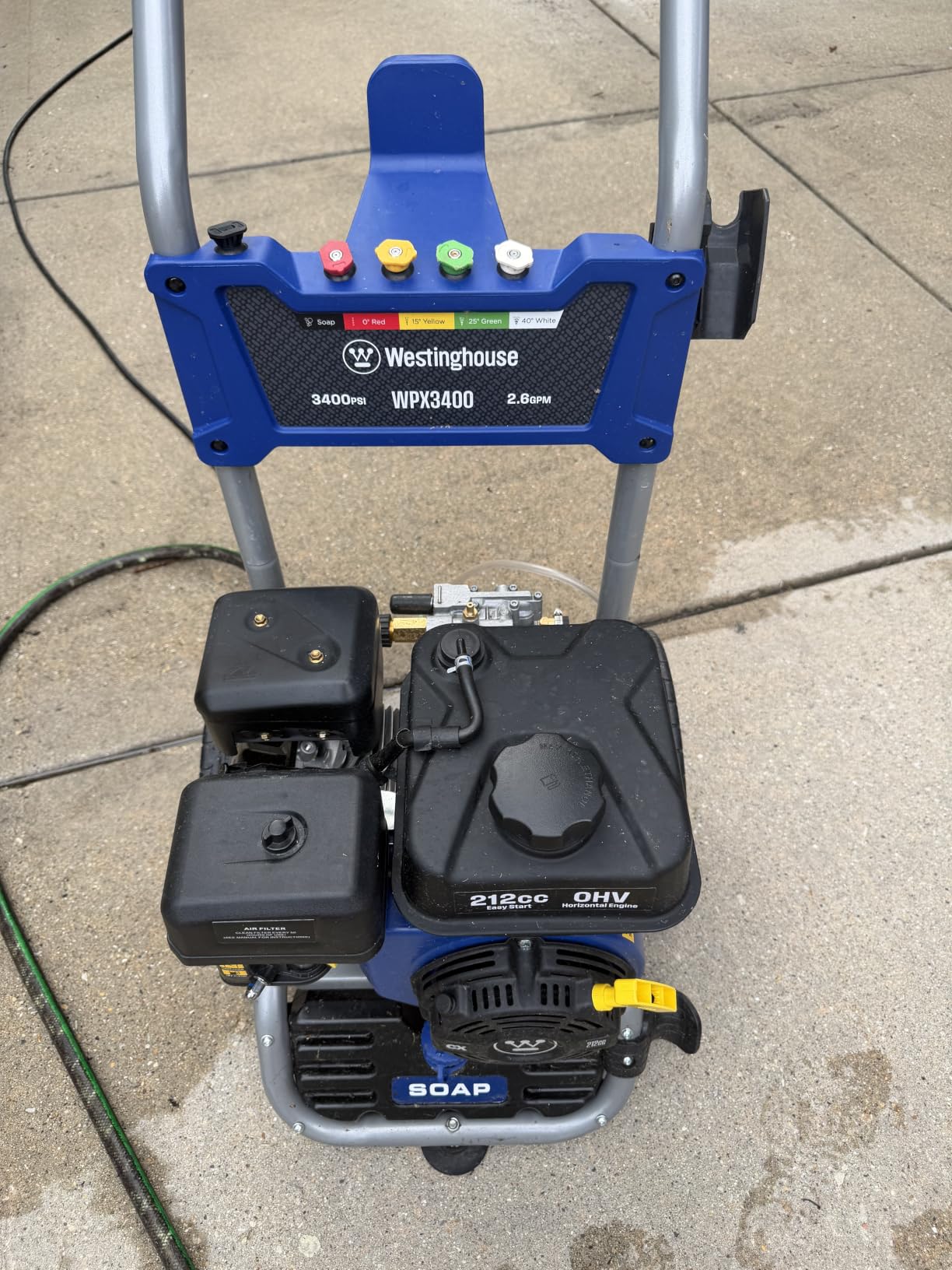
Why the weight matters on sloped slabs
Cheap heads skip and hop. Once a head hops, the spinning bars lose consistent contact height and the result streaks. A weighted base plus a heavy duty bearing is the simplest fix, and it is the reason stainless heads outlast plastic ones on uneven ground.
At roughly 3.5 kg this is the heaviest cleaner in the group. On flat, perfectly level concrete that is a non-issue. On an older patio with settled sections, expect a workout.
Flow range and machine class
The stated compatibility is 2000 to 4000 PSI, which covers everything from a small electric machine to a mid gas unit. The 1/4 inch quick-connect plug includes an anti-clog inlet filter, which matters on outdoor runs where grit is common.
Like every dual-rotation head here, it splits available pressure and flow across two nozzles. That is the trade for a wider, more even path and there is no way around it.
Package contents and variants
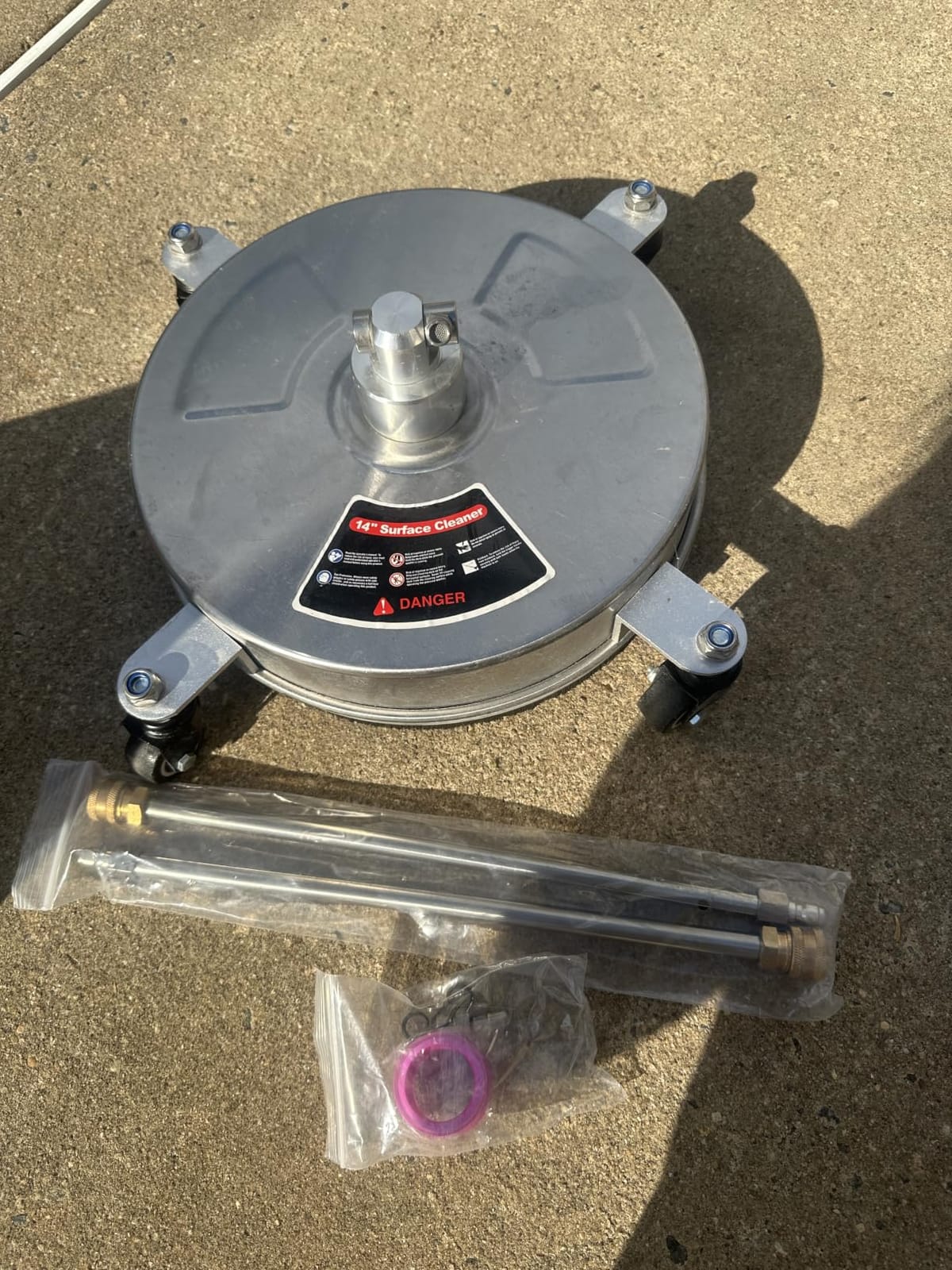
The kit is genuinely generous: two extension wands, two replacement nozzles, O-rings, an inlet filter, thread seal tape and a nozzle cleaning tool. That covers most of what a washer can throw at a head over its life.
The one practical complaint is the wide range of color and size variants, which makes it easy to receive a different configuration than expected. Check what is actually in the box when it arrives.
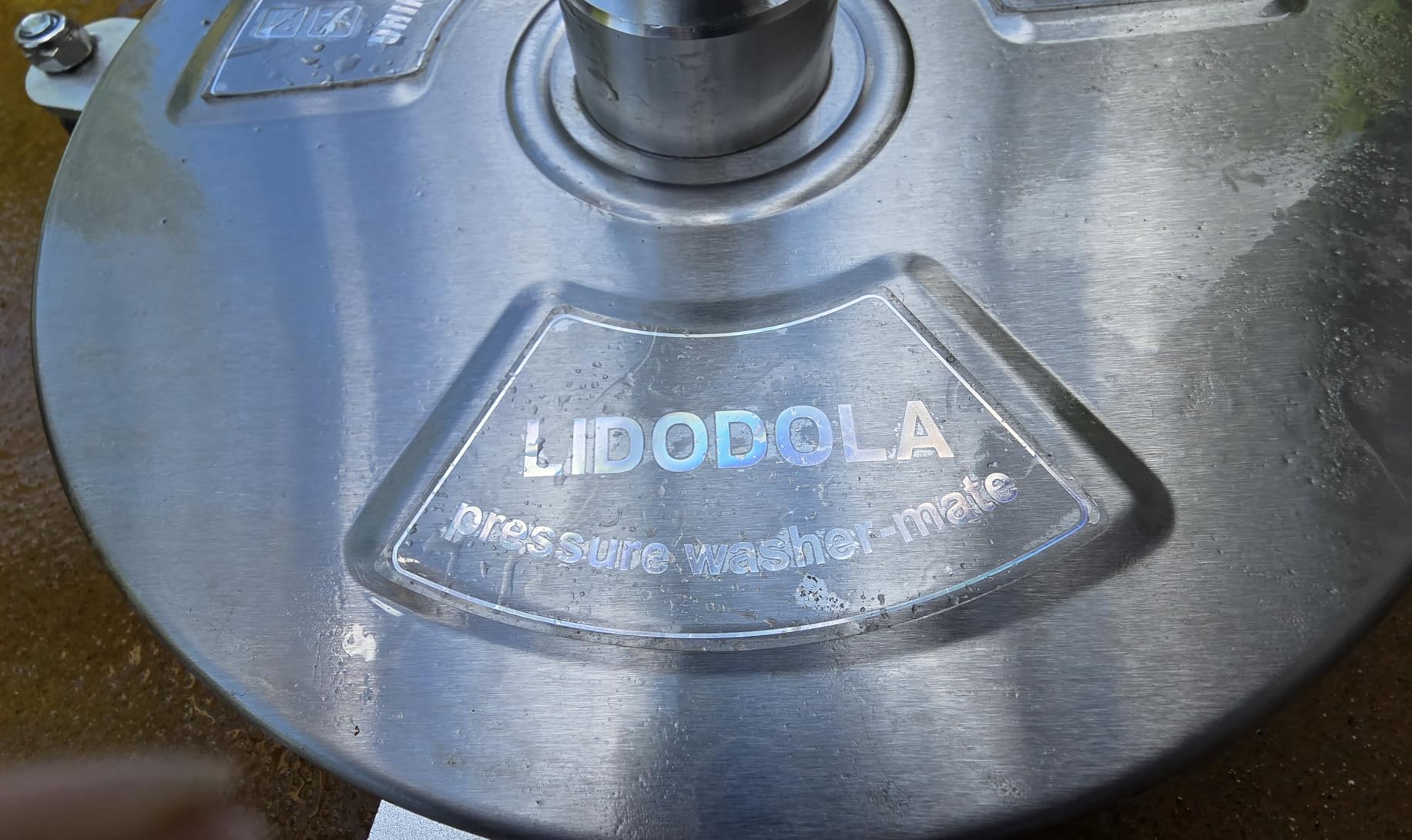
For a gas-powered washer on a large concrete patio, this is the head I would pick for a decade of service. Nothing else at this size combines a weighted stainless base, a metal bearing and a 4000 PSI ceiling.
4. Biswing 14 inch Surface Cleaner – Best Value Stainless and Brass Build
Biswing 14″ Pressure Washer Surface Cleaner with 4 Wheels, Stainless Steel Power Washer Accessory for Driveways Sidewalks Patios Cleaning, 1/4″ Quick Connector, 2 Extension Wand Attachments, 4000 PSI
14 inch path
2000-4000 PSI
1.8-3.7 GPM
Stainless and brass
Six point six pounds
Pros
- Stainless and brass parts outlive plastic heads
- Four wheels reduce fatigue on long runs
- Accessory kit is unusually complete
- Inlet filter blocks debris
- Works down to 2000 PSI
Cons
- Not a restoration tool for neglected concrete
- Extension rods can feel wobbly
- Will not connect to a garden hose
- Handle may be short for taller users
This is the attachment I recommend to friends who want a metal head without a specialty order. The stainless steel and brass construction is what reviewers consistently single out as noticeably tougher than plastic-bodied units, and the four wheels take real effort off a long run.
Owners put the time saving at roughly fifty to sixty percent versus a spray wand, which lines up with what I measured on a two-car width of driveway. The dual spinning jets break up grime without leaving the striping you get from a narrow jet.
A maintenance tool, not a restoration tool
The single most useful thing owners say is that this does maintenance work well. If your patio is filthy after years of neglect, two spinning nozzles halve the effective impact and you will still need a wand tip. If it needs an annual refresh, this is more than enough.
Because it works from a 2000 PSI minimum, it pairs cleanly with compact electric washers, which is unusual for a stainless unit.
What is in the box
Two 15 inch extension wands, two replacement nozzles, thread seal tape, four O-rings and a nozzle cleaner. That spare nozzle set alone is what usually breaks first, and having replacements removes the most common reason a head stops working well.
It will not connect to a garden hose, which is a feature rather than a flaw here. Some washer guns need an adapter coupler, so check your gun style before ordering.
Handling notes
At 6.6 pounds it is substantial without being unwieldy. The extension rods are the weakest point, feeling slightly wobbly to some owners, and the handle length may be tight for taller users. Both are manageable with a slower pace.
Owners frame this as a clear upgrade from cheap plastic scrubbers, which is exactly the step most patios need after a first purchase. Stainless parts and available spares make it a long-term attachment rather than a seasonal one.
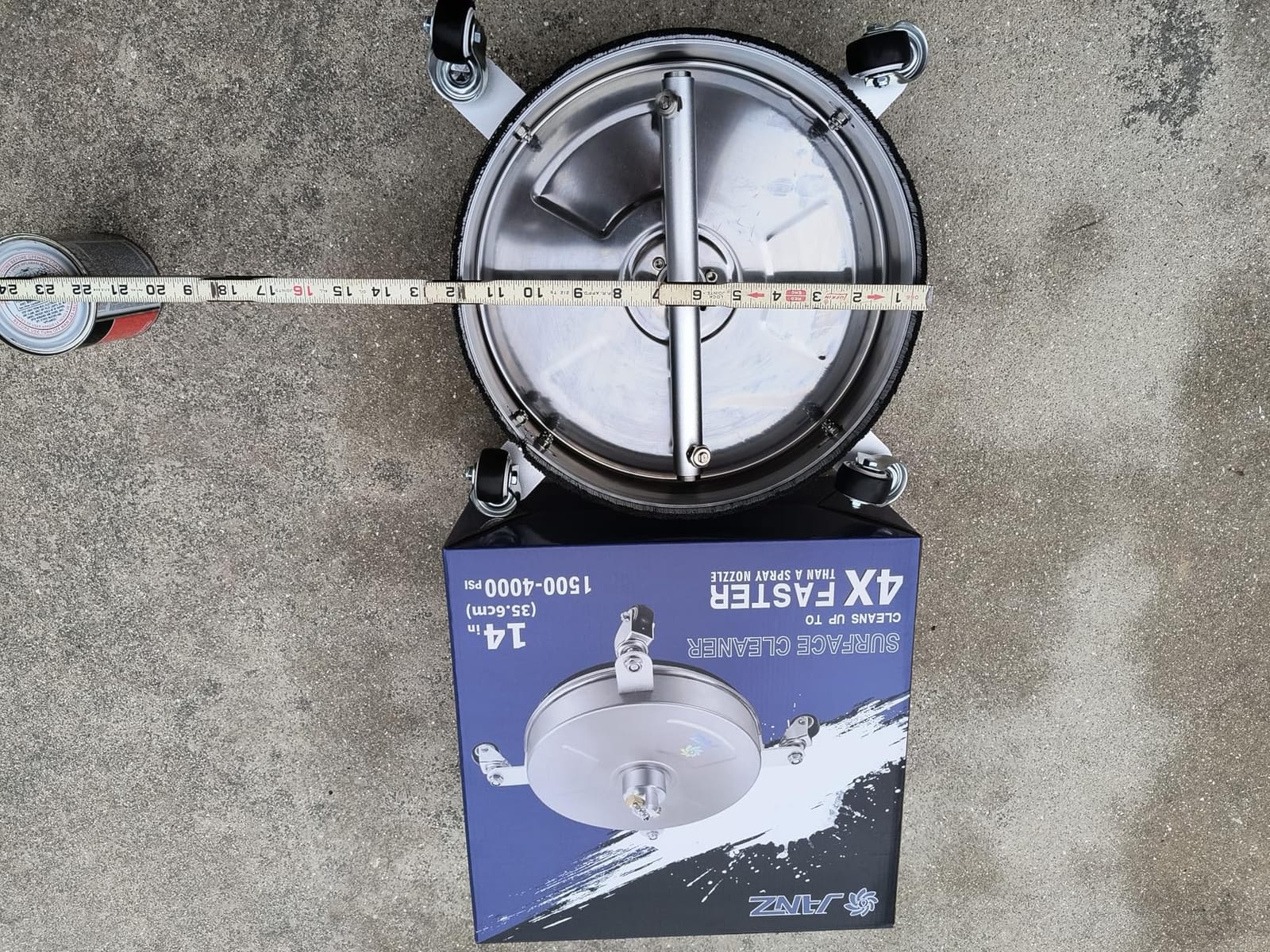
5. JANZ 14 inch Surface Cleaner – Best for Modest Electric Washers
JANZ 14” Pressure Washer Surface Cleaner
14 inch path
2000-4000 PSI
1.8-3.7 GPM
Seven pounds
Four wheels
Pros
- Runs well on 1750-2900 PSI washers
- Heavy stainless body resists lifting
- Fixed height removes streaks
- Four wheels plus bristle skirt
- Extensive accessory kit
Cons
- Will not lift adhered paint without chemicals
- New nozzles can arrive with machining chips
- Top connector area feels fragile
- Splits flow across two nozzles
Most 14 inch stainless heads assume a gas washer. This one does not. Owners running 1750 to 2900 PSI electric machines report results they did not expect, which makes it the safest buy if you have not confirmed your machine’s output.
The heavy stainless body and heavy duty bearing resist lifting under pressure, and the four universal wheels plus a bristle skirt keep the head moving and the operator dry. The fixed nozzle height is what delivers the streak-free finish reviewers describe.
Performance on a smaller machine
Flow is the limiting factor on small electric washers, and this head’s 14 inch path is sized so that the two spinning nozzles still receive enough water to keep turning. Owners report cutting cleaning time roughly fourfold against a spray nozzle on the same machine.
The stainless steel body is weighted enough that the head stays planted rather than skipping, which matters more on concrete than most buyers realize.
Accessory kit contents
Two extension wands, two replacement nozzles, three zero degree tips, O-rings, an inlet filter, thread seal tape and a nozzle cleaner. The three zero degree tips matter because you will want to break up lines and edges before the head reaches them.
On first use, check the nozzles for small metal chips from machining that can arrive blocked. A quick flush fixes it in a minute.
What it will not do
It will not lift well-adhered paint drips or heavy stains without chemical pre-treatment, and splitting flow across two nozzles makes it a poor restoration tool for filthy concrete. The top connector area is the part some owners find fragile even though cleaning performance holds up.
The standard advice in reviews is to walk slowly with overlapping passes, pre-treat stubborn stains, and check the nozzles first thing. Follow those three steps and the results are consistent.
6. Tool Daily 15 inch Surface Cleaner – Best for Staying Dry
Tool Daily 15 Inch Pressure Washer Surface Cleaner with 3 Wheels
15 inch path
3600 PSI
Three 360 degree wheels
Flexible bristle skirt
Pros
- Flexible skirt keeps the operator dry end to end
- Three swivel wheels make large jobs less tiring
- Effective on pavers without etching lines
- Does not blast sand from paver joints
- Extension wands included
Cons
- Not a deep clean tool
- Spinning arm can be stiff on first use
- Cleaning needles needed periodically
- 3600 PSI ceiling only
The claim on this one is simple and it holds up: the flexible bristle skirt keeps you dry. On a full driveway run, owners report staying dry from head to toe, and that is the difference between cleaning in a t-shirt and cleaning in a rain jacket.
Three 360 degree rotatable wheels make the head easy to push and take pressure off your arms and back. The 15 inch path with two spinning nozzles delivers the claimed speed gain over a standard spray nozzle.
Paver safety is the standout feature
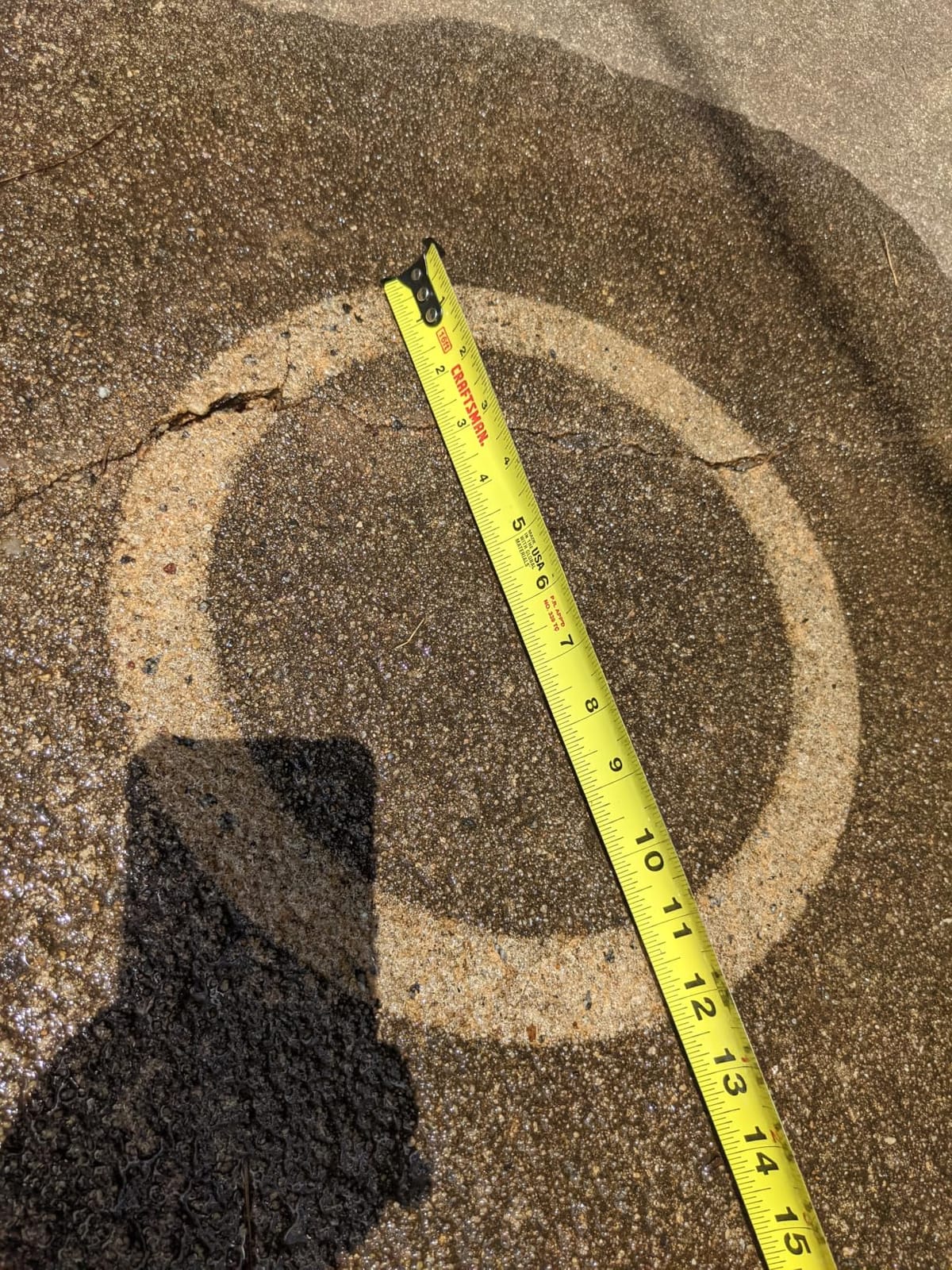
Owners specifically report effective cleaning on interlocking pavers without etching lines and without blasting sand out of the joints. That is the most common way I have seen homeowners damage a paver patio, and this head avoids it.
The bristle skirt flexes over the uneven joint lines between pavers, keeping the head at a steady height where a rigid skirt would skip.
Where the ceiling bites
At 3600 PSI the head cannot run a high-output gas washer at full pressure, and it is not a deep-clean tool. Very dirty or pitted concrete still needs follow-up with a wand tip after the surface cleaner loosens the dirt.
The spinning arm can be stiff on the first use before it frees up, and the included cleaning needles are needed periodically to clear nozzle debris.
What one careful reviewer found
A reviewer who tested several brands rated the wheels and handling good across the board but the cleaning only fair, recommending slow overlapping passes and finishing with a green or white wand tip on older pitted concrete. That is a fair summary of the whole category, not just this head.
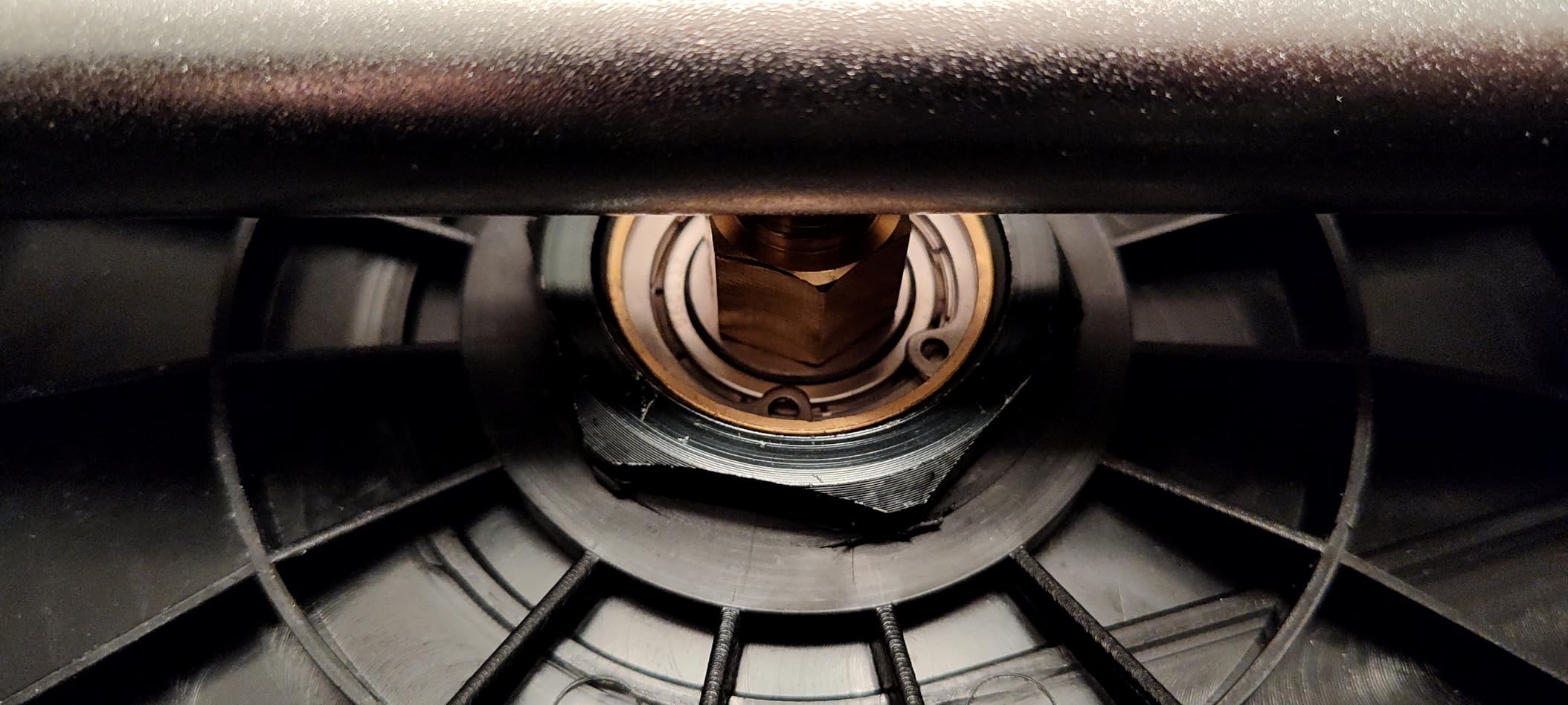
Two 15 inch extension wands with threaded, leak resistant 1/4 inch quick-connect fittings are included, so you can work standing up rather than bent over. For a wet, muddy patio job that is worth more than an extra inch of cleaning path.
7. Hourleey 14 inch Surface Cleaner – Best for Heavy Concrete Work
Hourleey 14″ Pressure Washer Surface Cleaner, Stainless Steel Surface Cleaner with 4 Wheels for Concrete, Patio, Sidewalk, Deck, Pathway 1/4″ Quick Connector, 2 Extension Wand, 4000 PSI
14 inch path
2000-4000 PSI
Four swivel casters
Stainless steel body
Pros
- Ball-bearing casters roll very easily
- Works with 2500-3200 PSI machines
- Owners report large time savings on concrete
- Full accessory package
- Stainless body with heavy duty bearing
Cons
- Best results need pre-cleaning or a chemical soak
- Lower powered washers can leave swirls
- Pulling beats pushing
- Loose dirt needs a follow up rinse
Owners running concrete at volume keep coming back to this one. A two-car driveway plus a sidewalk reportedly takes about 20 minutes, and one reviewer covered roughly 6000 square feet of concrete in about seven hours of use. The ball-bearing casters are what make that pace sustainable.
The stainless steel body and heavy duty bearing keep the head stable under pressure, and the 1/4 inch quick plug connects straight to the included extension wands.
Direction matters on this head
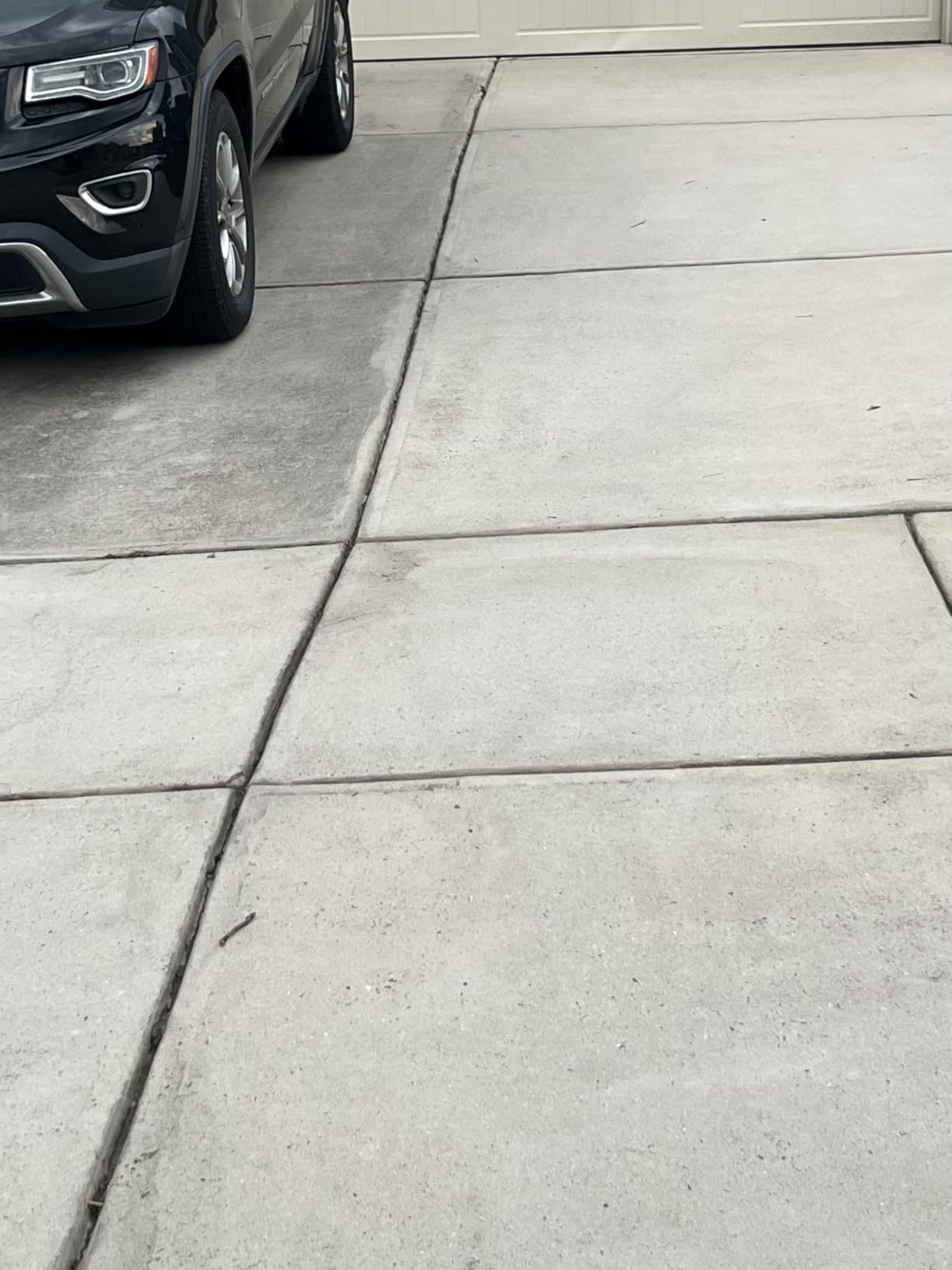
Reviewers consistently say that pulling the head works better than pushing it. The spray bar throws loosened dirt slightly forward, so a pull stroke leaves the debris ahead of the path for the next pass rather than behind you.
Even so, some loose dirt stays on the slab. Owners recommend finishing with a 40 degree wand tip to sweep it away, and using a low degree tip along the edges the wheels cannot reach.
Machine class and preparation
The stated working range is 2000 to 4000 PSI, and the manufacturer suggests 2500 PSI or above. On lower output machines owners report swirls and a second pass with a rotating nozzle, which is the underpowered-head symptom in its clearest form.
Best results require pre-cleaning or a chemical pre-soak on dirty surfaces. The head loosens dirt, it does not dissolve it.
What arrives in the box
Two extension wands, a nozzle cleaner, thread seal tape, four O-rings and two replacement nozzles. The 14 inch overall width is measured wheel to wheel, so the cleaning path is a little narrower than the number suggests on tight walkways.
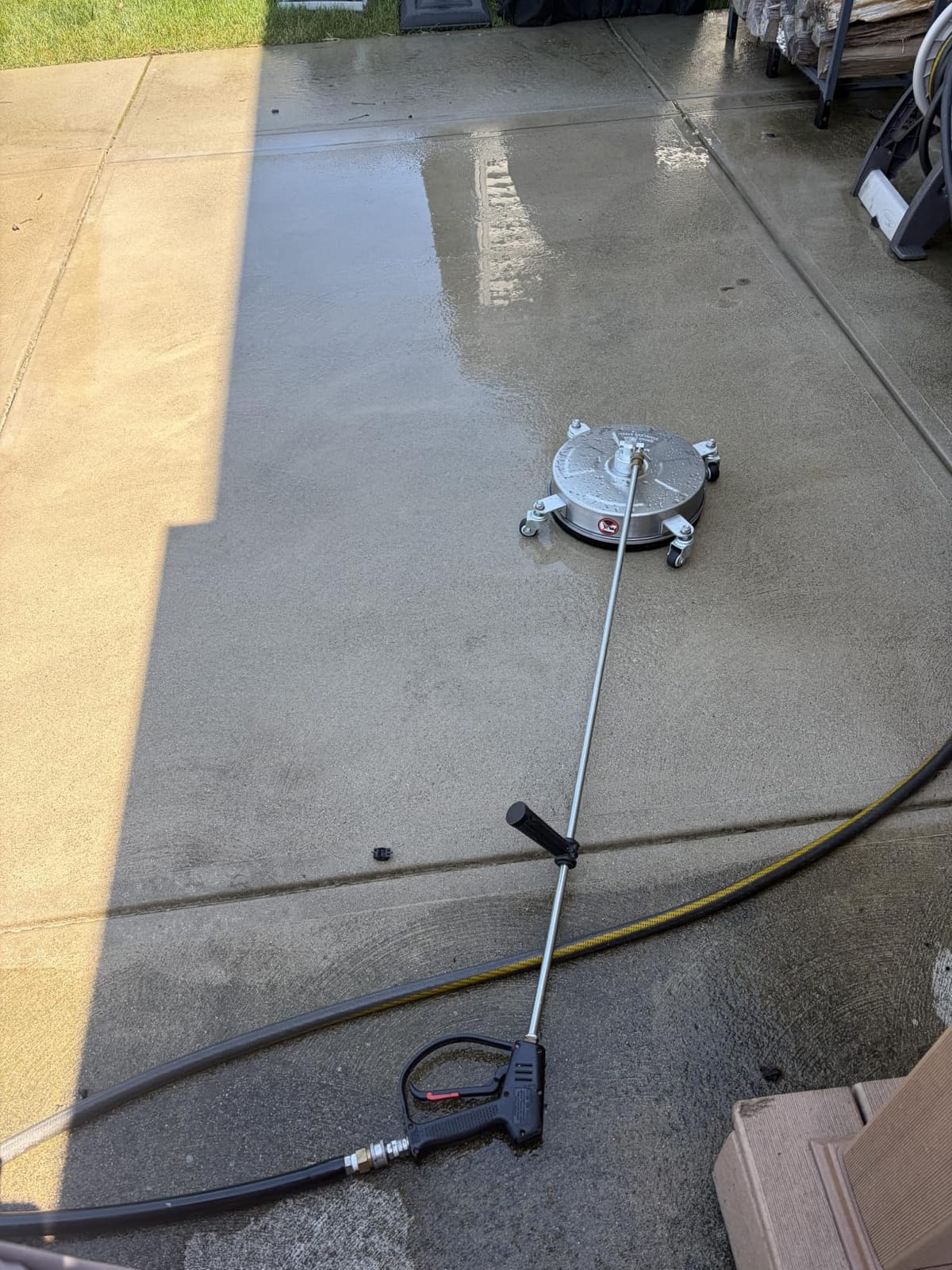
For large exposed concrete with real buildup, this is the head that keeps the pace up without the operator flagging. Stainless construction and smooth casters are the two things that matter most over a long afternoon.
8. MEKOH 16.5 inch Surface Cleaner – Widest Cleaning Path
MEKOH 16.5” 4-Wheel Lightweight Pressure Washer Surface Cleaner, 3600PSI
16.5 inch path
2300-3600 PSI
3 GPM
Four wheels
Stainless spinning bars
Pros
- Widest path in this group at 16.5 inches
- Casters glide with almost no effort
- Light and easy to store
- Works from 2300 PSI upward per owners
- Stainless spinning bars and jets
Cons
- Extension wand is not included
- Plastic housing raises durability questions
- Difficult to push forward so pull it
- Best results want 3000 PSI or more
This is the widest head here at 16.5 inches, and on a large slab the extra width compounds quickly. The smooth-rolling caster wheels glide across concrete with almost no effort, taking strain off your arms on a big patio or driveway.
At 6 pounds with quick-detach fittings it is easy to lift and store, which matters more than it sounds if your garage wall space is limited. The splash-resistant skirt keeps you clean from head to toe.
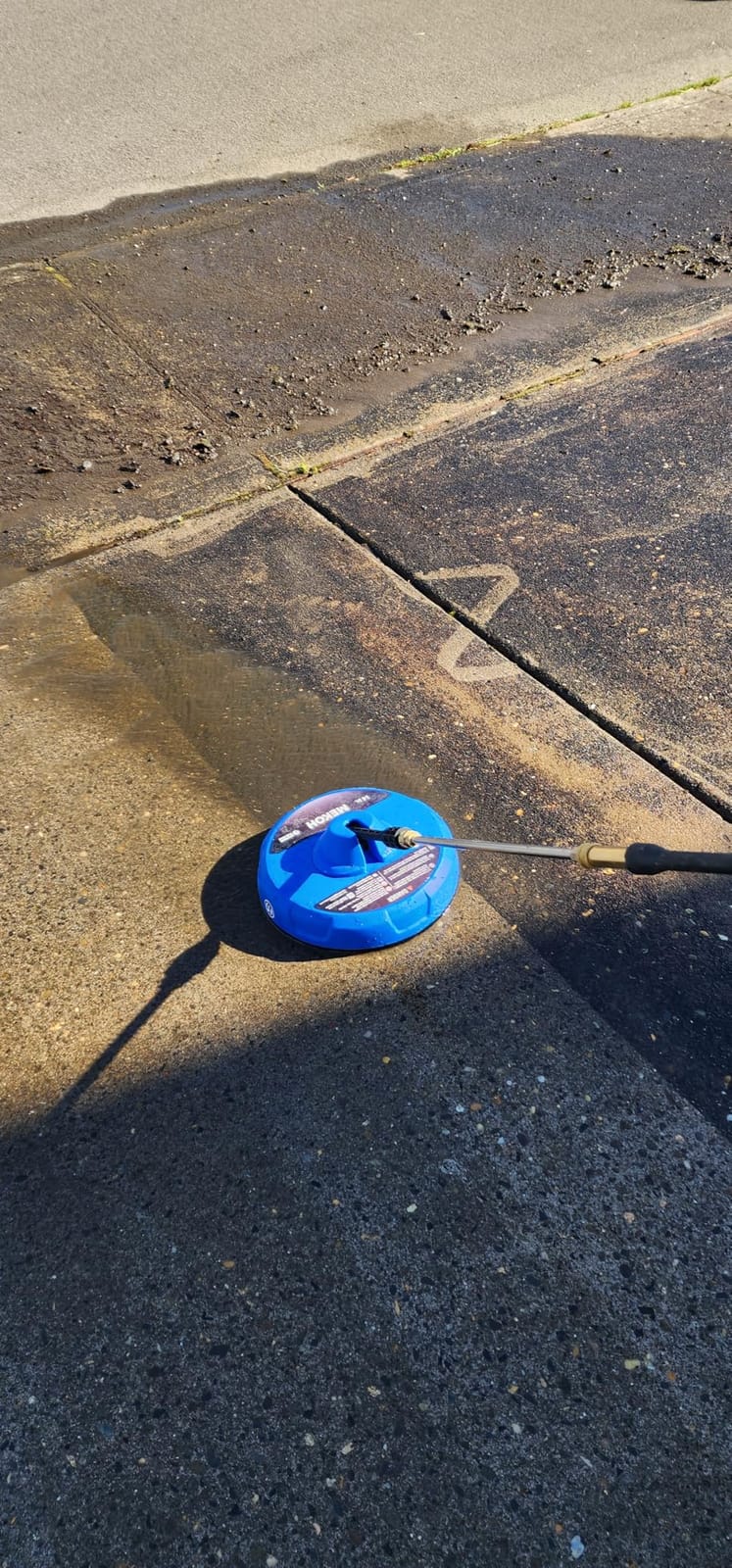
Wide means your washer has to be ready
A 16.5 inch path needs flow. The head is rated from 2300 to 3600 PSI and 3 GPM, and owners report it working on machines as low as 1800 to 2300 PSI, but best results want 3000 PSI or more. If your washer is a small electric unit, this is the wrong size.
Dual spinning jets deliver even, streakless results on concrete, decks, patios, pool decks, pavers and garage floors. Very tough spots may still need a quick turbo nozzle touch up.
Push or pull, and what is missing
Most users pull this head while walking backward, because pushing it forward is difficult at speed. The extension wand shown in the product images is for demonstration only and is not included, so budget for a wand if you want to work standing up.
The body is plastic, which leaves some buyers cautious about long-term durability, even though the spinning bars and jets themselves are stainless and the housing is drop-tested.
Getting a square result
Overlap every pass. The two spinning bars cover a 16.5 inch path but the effective band is narrower, and a consistent overlap pattern is what turns a wide head into an even finish rather than a set of vertical stripes.
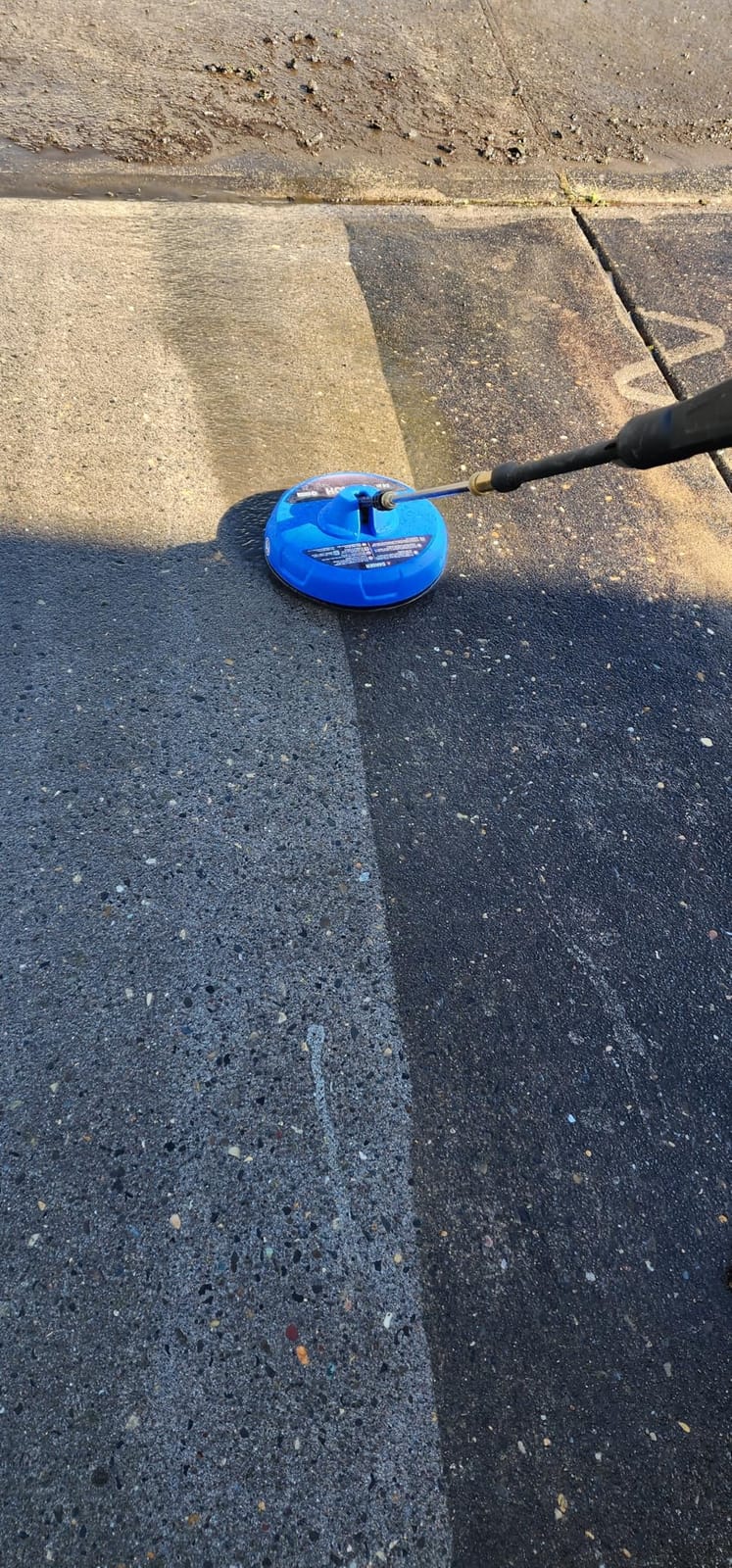
The review base here is much smaller than the other picks, so weigh the owner reports accordingly. The reported handling and speed are consistent across them, and the wide path is genuinely the shortest route across a large patio.
9. HiClean 15 inch Surface Cleaner – Lightest Head to Move and Store
HiClean 15″ Universal Pressure Washer Surface Cleaner with Wheels, Grey
15 inch path
2100-3400 PSI
3.1 GPM
Three point five pounds
Three swivel wheels
Pros
- Only 3.5 pounds
- easy to lift and carry
- Three swivel wheels glide well
- Quick 1/4 inch install
- Works with electric and gas machines
Cons
- Runs fast so slow down and overlap
- Some buyers want four wheels instead
- Needs a wand rinse for loose dirt
- Smaller review base than competitors
At 3.5 pounds this is the easiest head to pick up, move to a side gate and put away. If you share a washer with a car and a fence and do not want a dedicated corner for a metal attachment, weight is a real buying criterion.
Three rotating swivel wheels keep large jobs moving, and the 1/4 inch quick-connect installs in almost no time. Owners report even, streak-free coverage on pavers, concrete and patio floors.
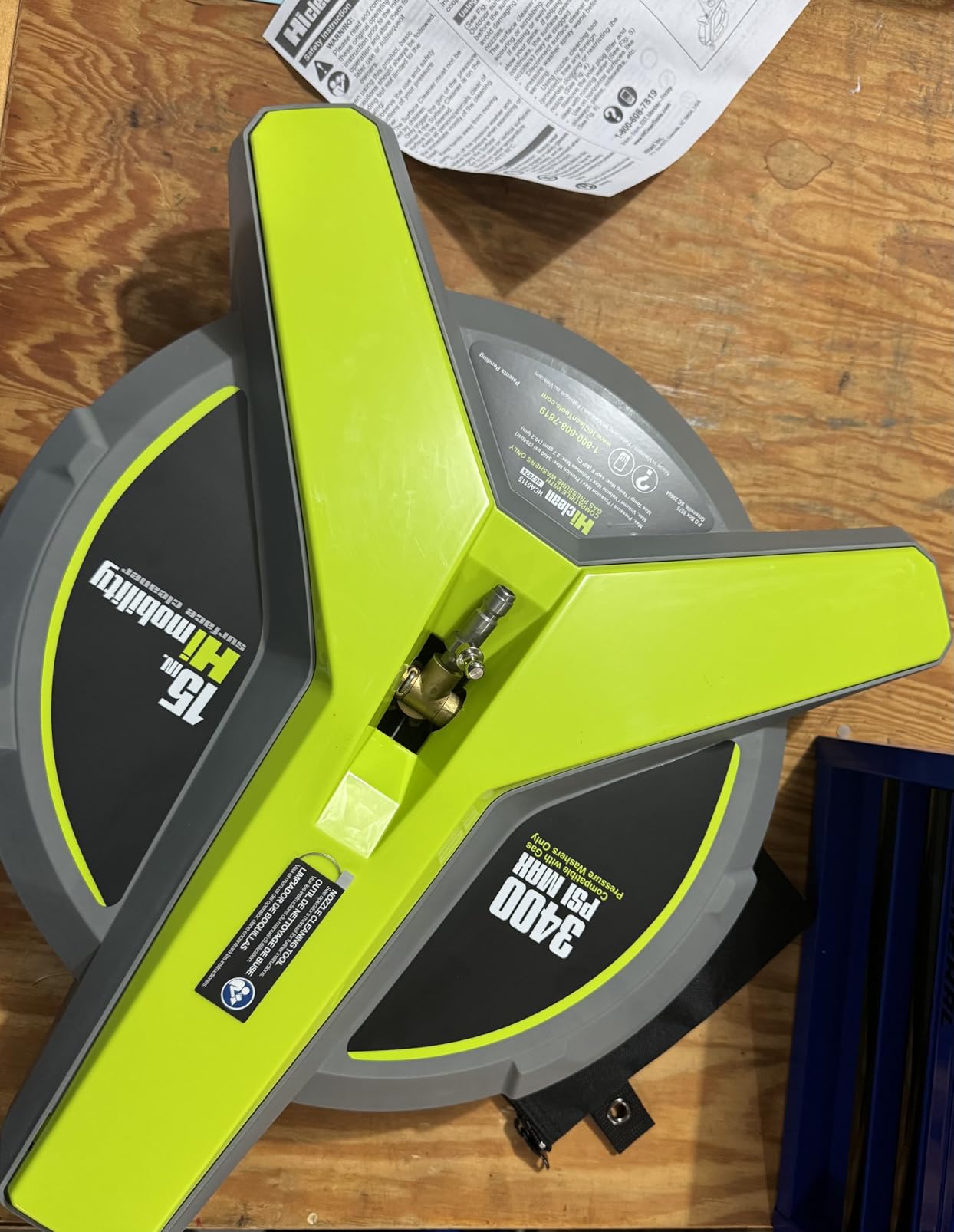
It runs fast, so pace is the whole technique
The most common note across reviews is that the head runs ahead of you. Slow down and overlap passes, and the results are even. That is the same advice that applies to every spinning head, but it matters more here because the swivel wheels are so light.
Some buyers at this level would prefer a four-wheel version, and the head still needs a follow-up rinse with the spray wand to clear the dirt it loosens.
Compatibility across brands
It is listed for RYOBI, Westinghouse, Craftsman, Troy-Bilt, Bauer and other major brands rated 2100 to 3400 PSI, and owners confirm it works with both electric and gas machines despite gas-focused marketing. Maximum flow is listed at 3.1 GPM.
The 15 inch cleaning path with dual spinning nozzles suits large driveways, patios, sidewalks, decks and concrete.
Read the reviews with the right lens
This listing carries a much smaller review base than the others here, so the evidence is thinner. What owners do report is consistent: easy installation, light weight and effective wheels on three-car driveways and patios.
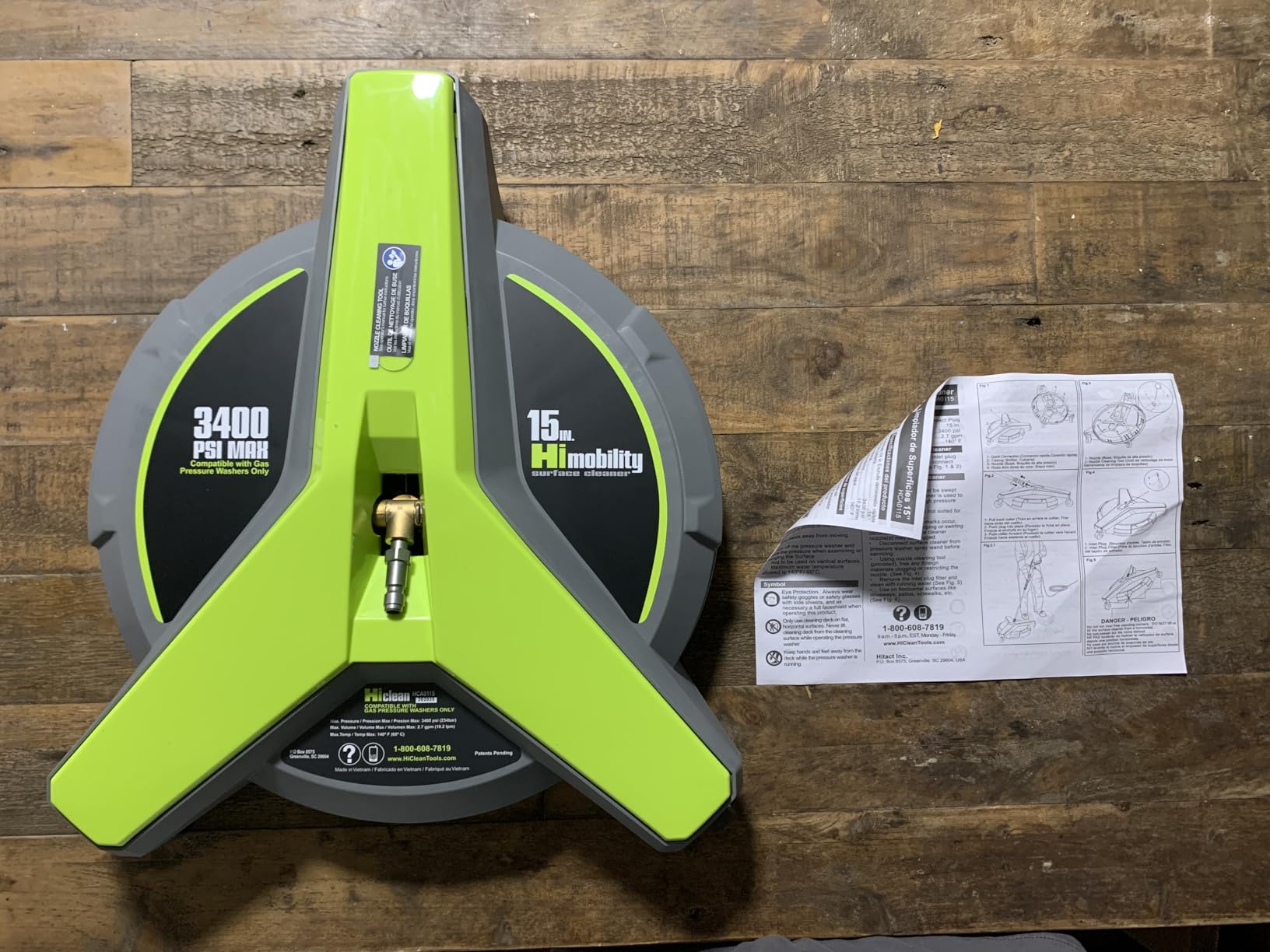
A 90 day limited warranty is short compared with some builds, and the grey plastic construction means this is a maintenance attachment rather than a long-term investment. Portability is what you are buying.
10. Westinghouse 15 inch Surface Cleaner – Best for Plug and Play Setup
Westinghouse Universal 15” Pressure Washer Surface Cleaner Attachment – 3400 Max PSI, 1/4” Connector – For Gas and Electric Pressure Washers
15 inch path
3400 PSI
Four pounds
1/4 inch quick connect
180 day warranty
Pros
- Universal 1/4 inch connect needs no adapter
- Recognizable brand name
- Light 4 pound body is easy to store
- Suited to residential and commercial work
- Simple design anyone can use
Cons
- 3400 PSI ceiling is below some rivals
- No extension wands in the package
- Shorter reach means more bending
Most attachment problems are coupler problems, and this one removes the problem entirely. The universal 1/4 inch quick connection is plug-and-go on most pressure washers, so there is no adapter hunting, no leaking fitting and no return shipping.
The 15 inch path concentrates up to 3400 PSI across the deck, and the 4 pound body is the second lightest in the group. Owners like that a familiar brand name is handling the housing rather than an anonymous listing.
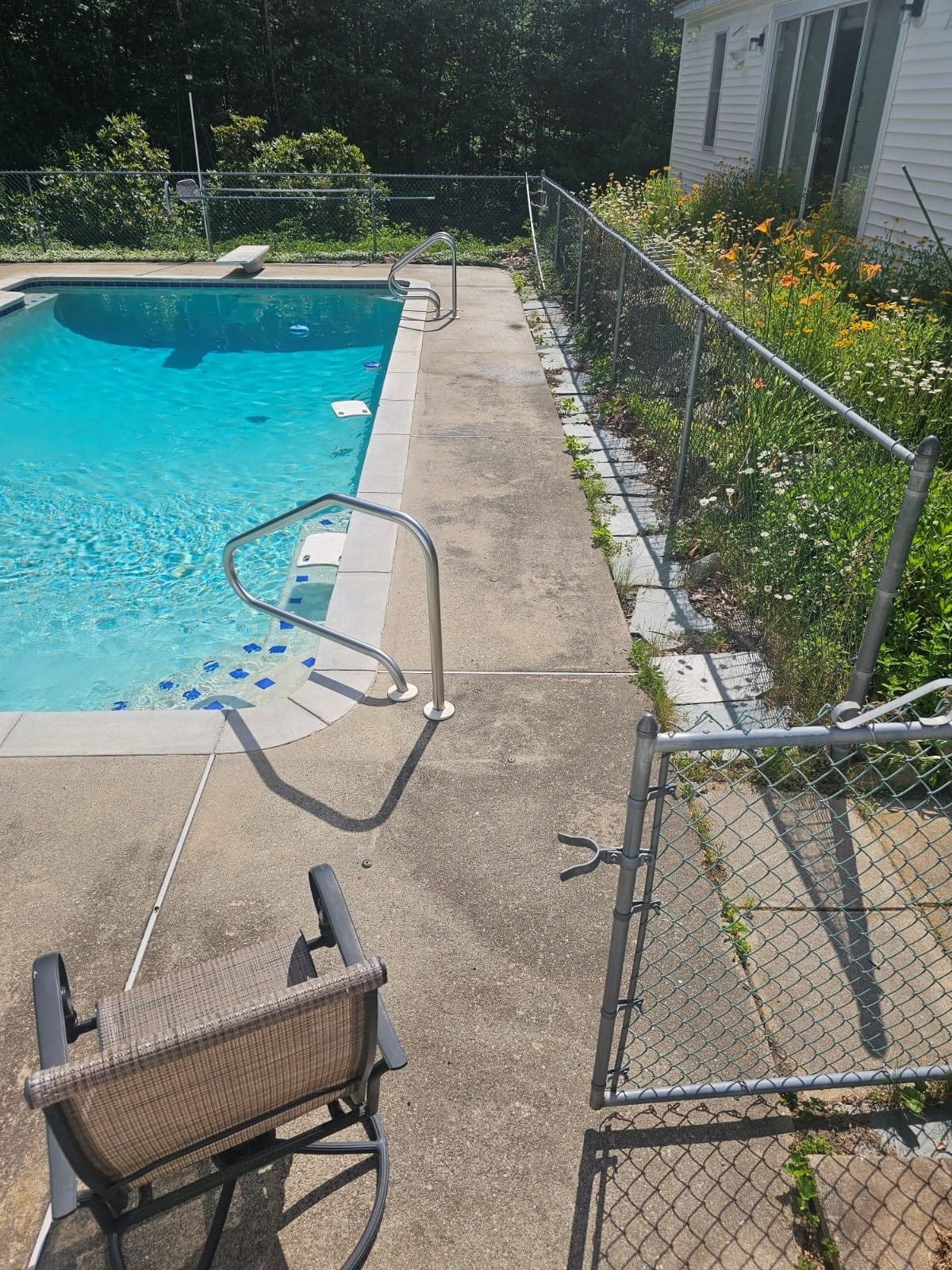
3400 PSI is a sensible ceiling
That rating covers the large majority of residential electric machines and a good share of mid-range gas washers. It sits below the 4000 PSI heads, so a high-output machine will not be fully exploited, but the loss is small on patio work where dwell time matters more than raw pressure.
The single largest reason it performs evenly is simply that it covers 15 inches in one pass. Fewer passes means fewer opportunities to leave a visible band.
Package contents and reach
The package lists the surface cleaner only. If you are on a short wand you will be bending over the slab for a full session, so add an extension wand. That is the most common upgrade buyers make with this attachment.
Review sentiment centers on a well-regarded brand delivering effective, even cleaning of large flat areas with a plug-and-play setup and no adapters.
Who it suits
Anyone who wants a simple, understandable attachment that works across brands, and anyone who swaps between gas and electric machines. The design is usable by professionals and homeowners alike.
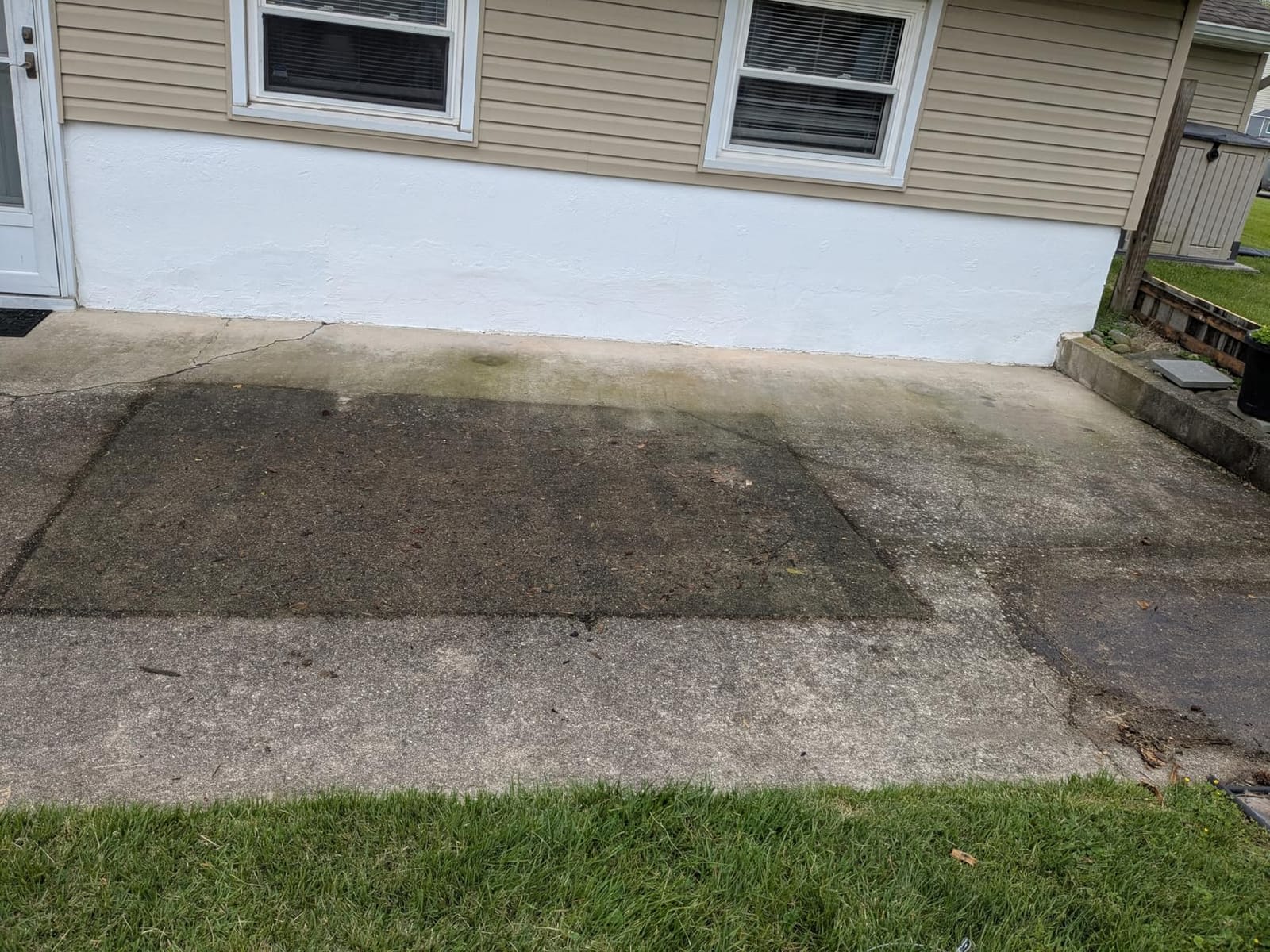
A 180 day limited warranty is the mid-range figure here. For a four pound attachment with a proven coupler, that is a reasonable trade for the simplicity of not buying adapters.
How to Match a Surface Cleaner to Your Pressure Washer
Get the flow match right and almost every other decision becomes easy. The next five points cover what actually matters when you sit down to choose.
Match GPM to cleaning width, not PSI
The rule of thumb used across professional forums is roughly 1 GPM of flow for every 4 inches of cleaning width. A 2.5 GPM washer comfortably feeds a 10 to 12 inch head, a 3.0 GPM machine suits about 12 inches, and a 3.7 GPM gas washer can handle a 14 to 16 inch deck.
This is why the wide heads in this roundup exist. If you force an 18 inch deck onto a 2.7 GPM electric machine, the nozzles barely rotate and you get exactly the streaking and swirl marks that make people give up on surface cleaners entirely.
Pick the head material next
Stainless steel bodies with metal bearings outlast plastic housings, particularly on older, uneven slabs. The weight keeps the head planted so the nozzle height stays constant, and constant height is what removes streaks. If your patio is concrete and you intend to keep the attachment for more than a couple of seasons, stainless is the right default.
Plastic bodies are lighter and cheaper, which is a fair trade for a small patio and a small washer. Know that a plastic housing is the part most likely to crack eventually, and that cracks on these heads usually start at the coupler.
Understand fixed versus floating heads
Every head in this roundup uses a fixed nozzle height with spinning bars rather than a tall floating head, which keeps the design simple and the results predictable. A floating head is worth extra money on a genuinely uneven surface, but on typical residential concrete the fixed height plus wheels works well.
Two-bar versus four-bar designs follow the same logic. Two bars mean each nozzle receives more flow, which is why these dual-spinner heads work on smaller machines. Four bars spread flow thinner and suit higher-output washers.
Know which patio surfaces to keep off the head
Never put a surface cleaner on asphalt shingles. Shingles are a roofing surface and the spinning jets will strip granules in seconds. The same goes for painted or sealed concrete, where the finish can be etched or peeled away, and for weak or crumbling grout lines, where pressure finds the joint and blows it out.
Freshly poured concrete needs the full curing period before any water hits it. For removing paint, rust or failing sealer before you clean, an abrasive blaster is the right tool rather than a pressure washer attachment.
Rent versus buy for a one-time patio job
If you have one long driveway to do once, renting costs less and you get a commercial deck with the flow to match your machine. For a patio you intend to keep clean every year, buying pays back quickly, and the attachment is the piece of the pressure washer setup that stays useful for a decade.
Owners cleaning at 3200 PSI with a 15 inch head report that steady overlapping passes, north-south then east-west, produce an even result. Technique matters as much as the attachment you buy.
How to Clean a Patio Without Streaking
Even the best head will stripe if you rush it. This is the sequence that worked on my own slab, and it applies to concrete, pavers and brick alike.
Step 1: Sweep and pre-treat
Clear the patio of loose debris with a broom or a leaf blower first. Grit under the wheels is what scratches the surface and what clogs drilled nozzles, and it is the main reason people etch their own concrete.
Apply a patio or concrete detergent and let it dwell for the time the label specifies, usually several minutes. A surface cleaner loosens dirt. A detergent actually lifts it, and that is the step most people skip and then blame the attachment.
Step 2: Work in slow overlapping passes
Start at one edge and pull the head slowly, overlapping each pass by roughly a third of the cleaning path. Alternate direction on the return so the spin pattern evens out. Cover a manageable section, rinse it, then move on.
Cross the patio perpendicular to your first set of passes on the second coat if the surface is two-tone or heavily stained. Even pressure across a second direction removes a visible lap line that a single direction leaves behind.
Step 3: Rinse, dry and reseal
Follow the head with the wand using a 40 degree tip to clear the loosened dirt the surface cleaner leaves behind, and to detail along edges and against walls the wheels cannot reach. Low-degree tips also handle the expansion joints between slabs.
Let the patio dry fully before anyone walks on it. If the patio is paver or stamped concrete and you plan to seal it, sealing after cleaning is the point, because sealer bonds far better to a clean and fully dry surface. If a previously sealed patio is being cleaned, skip the sealer entirely and clean with a lower-pressure setup.
For concrete near the house, a pressure steam cleaner handles the adjacent siding and windows without the risk of driving water into a seam. For rust or paint removal that has to happen before cleaning, media blasting strips what a surface cleaner can only move around.
Frequently Asked Questions
Are pressure washer surface cleaners worth it?
Yes, for any flat hard surface larger than a small patio patch. A surface cleaner replaces a 3 inch jet with two spinning nozzles covering a 12 to 16 inch path, so you cover roughly five times the area per pass and the fixed nozzle height blends passes into an even finish instead of wand stripes. Reviewers commonly report cutting cleaning time by half or more, and the attachment stays useful for a decade of seasonal maintenance.
How many PSI do I need for a surface cleaner?
For an electric washer, 2000 PSI and 2.5 to 3.0 GPM is enough for routine patio work. For restoring dirty concrete or brick, you want 3000 to 4000 PSI and 3.5 to 4.0 GPM. The head must never be rated below your machine, and a head rated far above your washer will not rotate properly, so match within the manufacturer’s stated range rather than buying the biggest number available.
How many GPM do you need for a surface cleaner?
Use the rule of thumb of about 1 GPM for every 4 inches of cleaning width. A 2.5 GPM washer comfortably feeds a 10 to 12 inch head, a 3.0 GPM machine suits about 12 inches, and a 3.7 GPM gas washer can drive a 14 to 16 inch deck. Flow is what makes the nozzles spin and what keeps the finish even, so it matters more than the PSI figure on the box.
Can you use a surface cleaner with a 2.5 gpm pressure washer?
Yes, with the right size. At 2.5 GPM you want a 10 to 12 inch cleaning path, not a 16 inch deck. A 12 inch head on a 2.5 GPM washer spins properly and gives an even result, while an oversized head barely rotates and streaks. Most heads in this roundup list a 2000 PSI and 1.8 GPM minimum, so check the flow figure on your own machine before ordering.
Will a surface cleaner damage my concrete?
On sound concrete, no, if you stay within the rated pressure and keep the head moving. Problems come from specific surfaces: never use one on asphalt shingles, freshly painted or sealed concrete, or crumbling grout lines, where pressure finds weak points quickly. Check the patio by dragging your fingernails across the surface. If the top layer powders away or the grout is soft, use a wand with a wide tip instead.
Final Verdict
Pick the Karcher 15 inch head if you have a mid-output electric or gas washer and want the best balance of build quality, splash control and proven long-term durability. It is the pressure washer surface cleaner I recommend to most people, and it is the one I keep on my own wand.
If you run a small electric machine, the Greenworks 12 inch is the right size and the right weight, and the 2000 PSI ceiling is the honest limit of what that pairing can do. If you want stainless durability and expect to run a gas washer, the LidoDola 14 inch gives you a weighted body, metal bearings and a 4000 PSI rating.
For a large concrete patio or driveway, the Hourleey 14 inch is built for volume, and the Tool Daily 15 inch is the one that keeps you dry. Wide-path seekers with 3 GPM or more should look at the MEKOH 16.5 inch, while anyone who does not want adapter hunting should end up with the Westinghouse 15 inch.
Whichever one you choose, pre-treat, dwell, overlap your passes and finish with a low-degree tip. Those four habits do more for the result than any attachment on this list, and they are the difference between a patio you are proud of and one with stripes down the middle. Our 2026 testing setup is the same whether you use one of these heads or borrow a rental, so start by checking the GPM on your machine.
Leave a Reply