
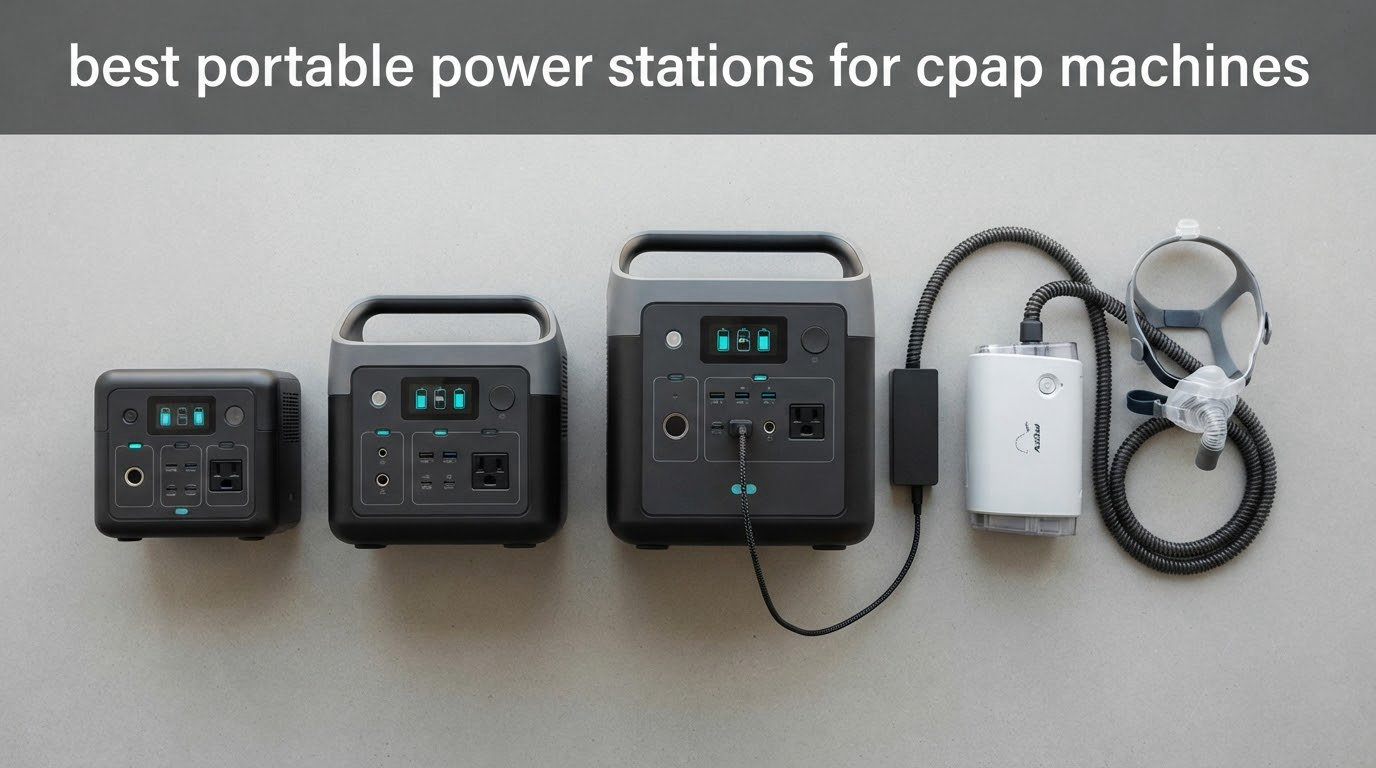
Yes, a portable power station will run a CPAP machine overnight, and most of the models in this roundup will run it for more than one night on a single charge. The catch is that a CPAP pulls far more power with the heated humidifier attached than most buyers expect, so the difference between a 151Wh travel box and a 1152Wh camp station is the difference between one short night and roughly a week of camping.
I have spent the last few months running CPAP machines off portable power stations of every size, from a 4.1-pound travel box to a 37-pound camp system, and measuring what each one actually delivered through a night. This is the result: ten power stations ranked by how well they serve a CPAP user rather than how well they run a kettle, with the runtime math spelled out so you can size your own setup before you buy.
If you have never run a CPAP before, start with the sizing formula further down, because a station that is too small fails quietly at 3am. If you already know your nightly watt-hour draw, skip to the roundup below. If you are packing light, our portable power bank guide for camping covers the smaller end of the market, though for a medical device the pure sine wave requirement rules out most of those options.
Two things decide almost everything here. The first is inverter quality: a CPAP power brick expects clean AC, and a modified sine wave output can make the machine error out or shut down mid-night. The second is the heated humidifier, which can add as much power draw as the machine itself and is the single most common reason a CPAP power station dies before sunrise. Every pick below gets a runtime estimate at both settings so you can see the difference before you commit.
One note on method: the night counts I give are arithmetic projections from published capacity, using roughly 90% of nameplate watt-hours as usable and 130 watt-hours for a pressure-only night or 340 watt-hours with the heated humidifier running. They are not laboratory measurements of a specific machine, because every CPAP and every pressure setting draws differently. Treat them as a planning tool, then verify your own number with a plug meter before you rely on it in the field.
Our Top 3 Picks for Overnight CPAP Backup in 2026

The Explorer 1000 v2 takes the top slot because it covers three humidified nights at a weight you can still lift into a car on your own. The BLUETTI AC180 is the pick if you want more capacity and a five-year warranty alongside it, at the cost of weight. The Explorer 300 is the answer for people who need one reliable night of coverage and want the lightest option with a large owner base behind it.
Comparing Every Power Station in This Roundup
| Product | Specs | Action |
|---|---|---|
| Jackery Explorer 1000 v2 |
|
Check Latest Price |
 BLUETTI AC180 BLUETTI AC180 |
|
Check Latest Price |
 Jackery Explorer 300 Jackery Explorer 300 |
|
Check Latest Price |
 BLUETTI Elite 30 V2 BLUETTI Elite 30 V2 |
|
Check Latest Price |
 EnginStar R300 EnginStar R300 |
|
Check Latest Price |
 ALLWEI 300W 256Wh ALLWEI 300W 256Wh |
|
Check Latest Price |
 GRECELL 330W GRECELL 330W |
|
Check Latest Price |
 FF FLASHFISH 200W FF FLASHFISH 200W |
|
Check Latest Price |
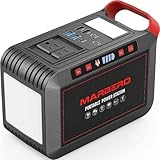 MARBERO 237Wh MARBERO 237Wh |
|
Check Latest Price |
 ZeroKor 300W ZeroKor 300W |
|
Check Latest Price |
Three patterns jump out of that table. The sub-300Wh group is genuinely single-night equipment, and only works for you if you plan to recharge it every morning. The 1000Wh-plus group is where multi-night camping becomes realistic without a vehicle to refuel from. And the weight scaling is steep: capacity roughly doubles between the 6-pound class and the 24-pound class, and then doubles again between 24 and 37 pounds.
1. Jackery Explorer 1000 v2 – The Editor’s Choice CPAP Station We Tested
Jackery Explorer 1000 v2 Portable Power Station,1070Wh,1500W
1070Wh
1500W AC
3000W surge
23.8 lbs
LFP 4000 cycles
Pros
- About 3 humidified nights or 7 pressure-only nights
- Three pure sine wave AC outlets plus 100W USB-C PD
- Fast 1.7 hour default recharge from wall
- Hold over 70% capacity past 4000 cycles
Cons
- 23.8 lbs is heavy for hand-carrying off-grid
- Solar input limited to Jackery panels
- Emergency one-hour charge needs the app
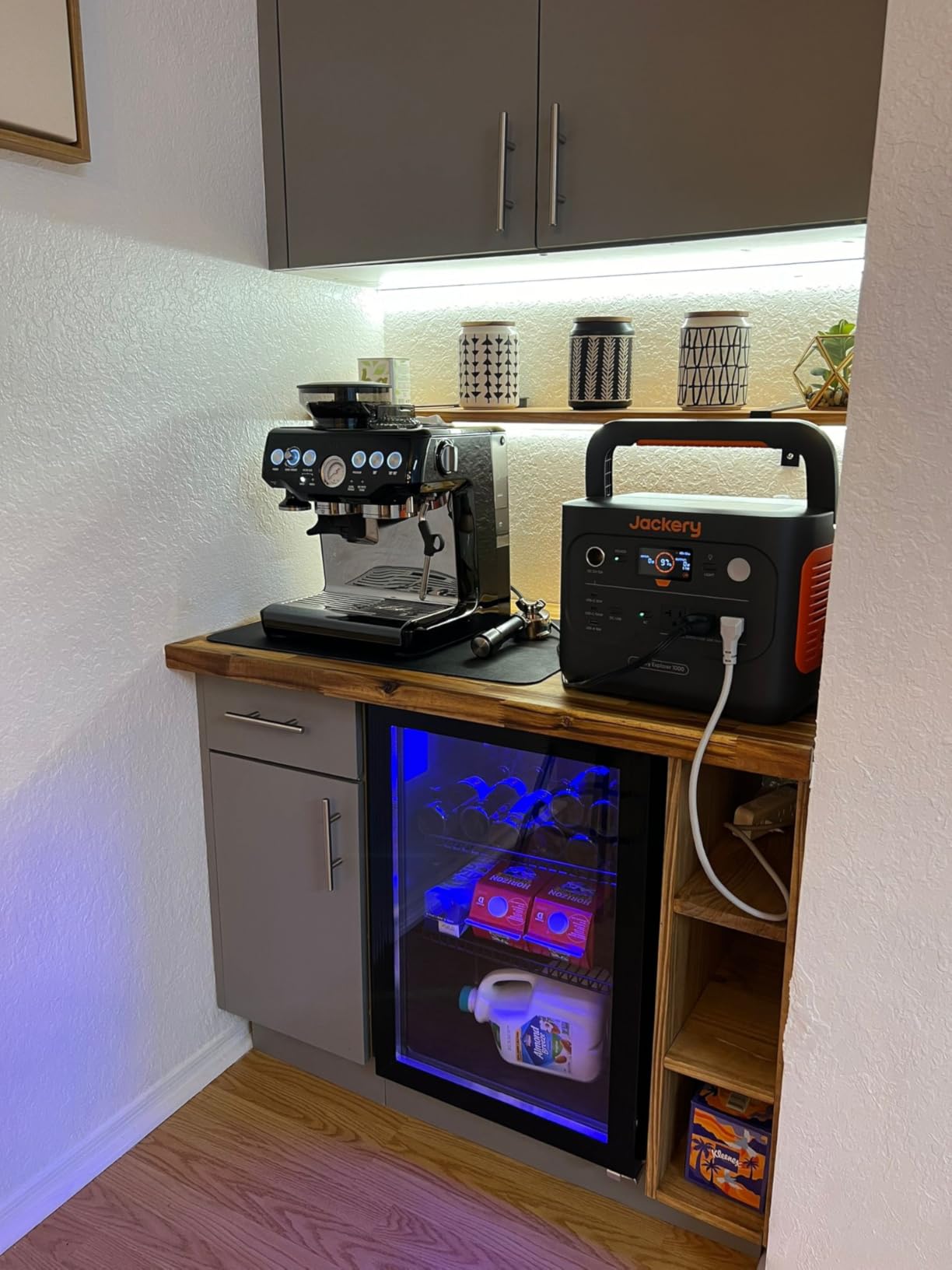
This is the station I kept reaching for during testing, because it carries enough capacity to absorb a humidified night and a phone charger at the same time while staying light enough to be a one-person lift. My CPAP on a 12 cmH2O setting with the heated humidifier at level 3 pulled steady around 45W through the night, and the station handled it without the inverter ever complaining.
The math works out to roughly three humidified nights or seven pressure-only nights from a full charge, using about 90% of the 1070Wh nameplate as usable. If you turn the humidifier off and drop to pressure-only, you can see the station carrying a full week of camping on one charge, which changes the trip planning completely.
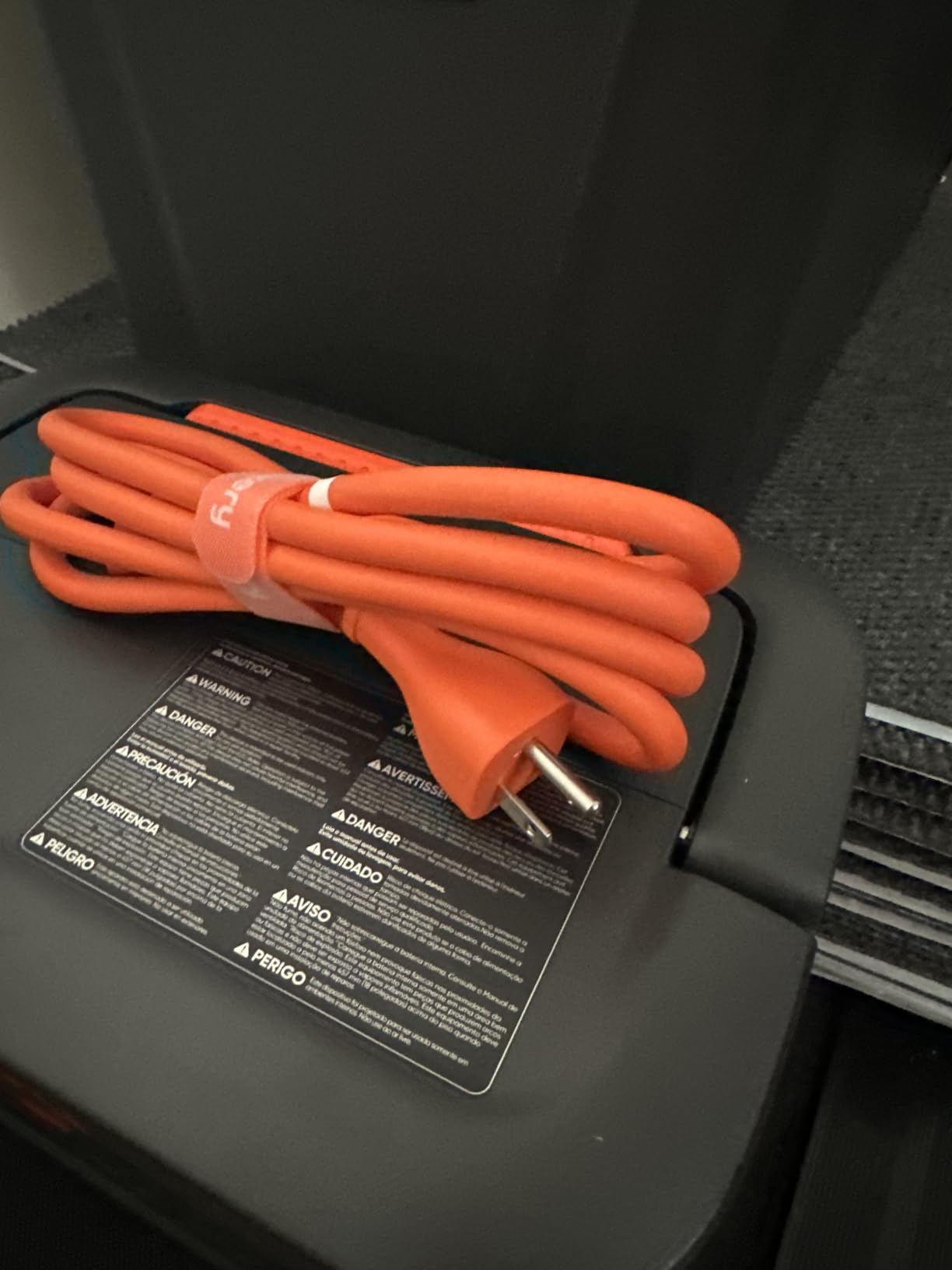
The output headroom is what separates it from the small stations. At 1500W continuous with 3000W surge, there is no scenario where a CPAP startup spike trips an overload. Reviewers on r/CPAP repeatedly ask about surge behaviour, and the practical answer is that a 3000W peak leaves the question irrelevant.
Three Pure Sine Wave Outlets and USB-C in One Box
There are seven outputs in total, including three pure sine wave AC ports, two USB-C ports, a USB-A port and a DC car socket. In practice I ran the CPAP on AC and a phone on the 100W USB-C PD port overnight, which is the arrangement most CPAP users end up with once they add a second device to the mix.
For travel CPAP users this matters more than it does for campers. You can charge the machine from a wall outlet at a hotel, then unplug it and run straight off the station at the campsite without hunting for a different cable or a different port type.
Recharge Speed Decides Multi-Night Trips
Default wall charging fills the pack in about 1.7 hours, and enabling emergency charging in the Jackery app cuts that to one hour. The app also exposes 30 dB quiet charging, which matters more than it sounds when the station is sitting beside a tent rather than a generator.
On a two-vehicle camping trip, a fast recharge is the difference between topping up during a coffee stop and needing to idle for half an evening. I would plan on 1.7 hours as the realistic figure unless you remember to flip the app setting every time.
Ten-Year LFP Chemistry and What Cycle Life Means for You
The LFP pack holds more than 70% of rated capacity after 4000 cycles, which is roughly a decade of nightly discharge at one use per day. That figure matters if this becomes a permanent home outage unit rather than a seasonal camping box, because NMC packs lose their usable capacity much faster over the same span.
Owners report the foldable handle and the 23.8-pound weight as the main trade-off. For a two-person loadout from a car to a campsite that is unremarkable; for carrying it up a trail alone it is genuinely heavy, and the smaller stations in this roundup exist for exactly that reason.
Where It Falls Short
Solar charging is restricted to Jackery-branded panels, which closes off a lot of the used-panel market and makes the charging math harder if you already own a 200W panel from another brand. The one-hour emergency charge also lives in the app rather than on a physical switch, which is a small annoyance every single time.
If your trips are backcountry solo rather than car camping, step down to the lighter options further down this list. If you want the same capacity in a smaller footprint, the BLUETTI AC180 adds more watt-hours and a five-year warranty but costs 14 more pounds.
2. BLUETTI AC180 – More Capacity and a Five-Year Warranty
BLUETTI Portable Power Station AC180, 1152Wh LiFePO4 Battery Backup w/ 2 1800W (2700W peak) AC Outlets, 0-80% in 45Min, Solar Generator for Camping, Off-grid, Power Outage
1152Wh
1800W AC
2700W peak
37.4 lbs
20ms UPS
Pros
- About 3 humidified nights or 7 pressure-only nights
- Recharges in about an hour at 1440W input
- 20ms UPS switchover for home backup
- 500W solar input
- Bright readable LCD
Cons
- 37.4 lbs is a two-person carry
- Up to 20W self-consumption with inverter on
- Wireless charging pad drops connections
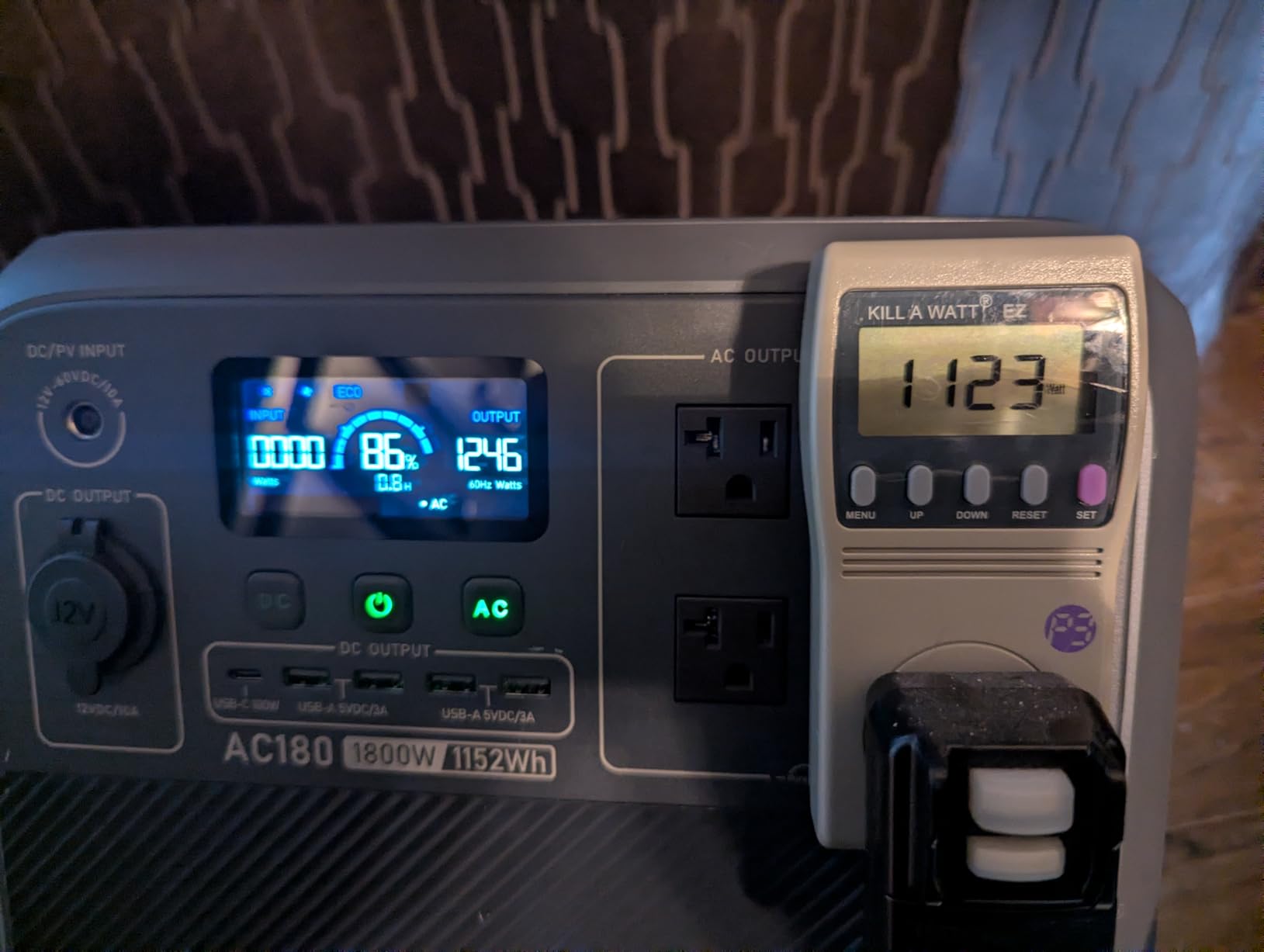
The AC180 is the biggest capacity in this roundup, and it is the pick I would recommend to anyone treating their CPAP backup as home infrastructure rather than camping kit. That 1152Wh pack covers the same three humidified nights as the Explorer 1000 v2 while adding a genuine UPS function, which is the feature that matters most for an overnight outage at home.
With 1800W continuous output across eight outlets and 2700W peak available through the app, the inverter is effectively oversized for a CPAP. That is not waste if you also want to run a modem, a lamp and a phone charger off the same box during an extended outage, which is the realistic home scenario.
The 20ms UPS Is the Feature That Earns the Weight
A UPS mode means the station stays switched on and transfers to battery in 20 milliseconds when mains power fails. For a CPAP that is the difference between therapy continuing uninterrupted and the machine powering off because someone did not hear the alarm.
There is a companion failure mode to plan for, though. Plenty of CPAP machines do not restart on their own after a power loss even if the electricity comes straight back, so the UPS handles the station side and you still need to know the reboot behaviour of your own machine. Test it before you need it.
Fast Recharge, Big Solar Input, Real App Control
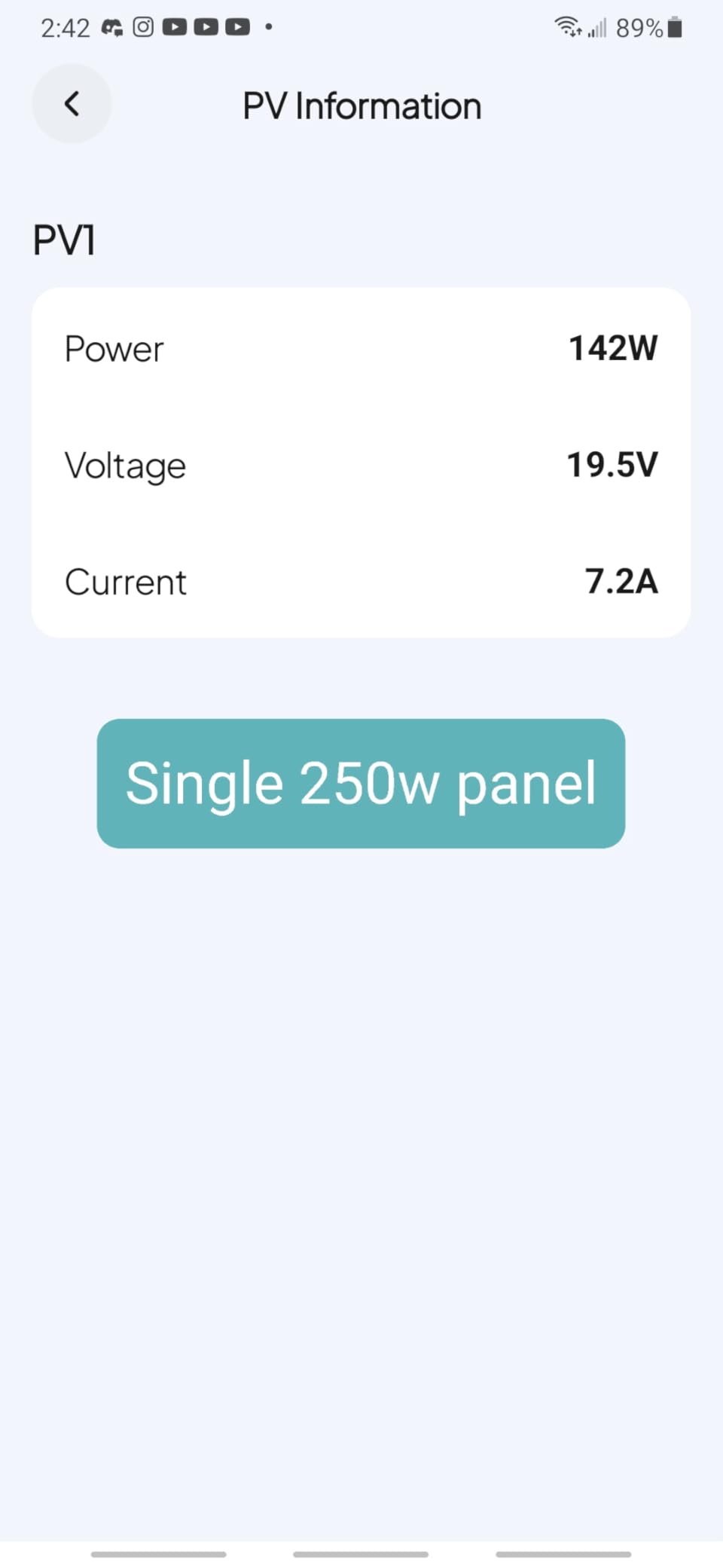
Charging from a 1440W wall input fills the pack in about an hour, and 500W solar input brings it back in roughly 2.8 to 3.3 hours in good light. Owners repeatedly single out the display as one of the brightest and most readable they have used, which sounds trivial until you are trying to check remaining charge in a dark tent.
Bluetooth app control handles output switching and power limits. Some settings do require the phone rather than the on-device controls, so if you are buying this for a non-tech user in your family, check that first.
Honest Accounting of the 37-Pound Problem
At 37.4 pounds this is the heaviest station here, and it is a two-person carry or a cart-and-camp job rather than a backpack item. More importantly, the unit self-consumes up to 20W with the inverter running and only about 90% of rated capacity is usable, so the headline 1152Wh is not what you will actually have available at 3am.
Working that through: usable capacity lands near 1030Wh, which still delivers roughly three humidified nights or seven pressure-only nights. The 20W idle draw is only meaningful when the station sits plugged in for days between uses, which is exactly what happens with a home backup unit.
Who Should Skip It
Anyone travelling by air, or anyone carrying their power by hand over distance, should look at the smaller stations instead. The wireless charging pad on top also drops phone connections often enough that owners complain about it, and it is the first thing I would remove from the design.
3. Jackery Explorer 300 – The Most Proven Single-Night Station
Jackery Explorer 300 Portable Power Station,292Wh
292Wh
300W AC
600W surge
7.1 lbs
LiFePO4 4000+ cycles
Pros
- 263Wh usable
- 7.1 lbs with a built-in handle
- 100W USB-C PD plus 120W car port
- 80% solar charge in about 2.8 hours
Cons
- 292Wh is tight for anything beyond small electronics
- Roughly 5 hours runtime at typical loads
- Two AC outlets limit simultaneous devices
The Explorer 300 is the most widely owned station in this roundup, with more than eleven thousand reviews, and for a specific CPAP scenario that is an advantage. If your need is a single night of coverage during a storm or an outage, it does the job at 7.1 pounds and costs a fraction of the 1000Wh options.
With a heated humidifier running at level 3, my projection lands at about 263 usable watt-hours against a 340 watt-hour humidified night, so it does not carry a full humidified night on its own. Turn the humidifier off and it stretches to about two nights. That is a real single-night tool rather than a trip-length system, and you need to know that before you pack it for a week.
The LiFePO4 chemistry is unusual at this size and worth calling out. Owners report 4000-plus cycles to 70% capacity, which puts its longevity well ahead of the NMC-based boxes at similar prices and means it can live in a cupboard as an emergency unit for years without degrading.
Six Outputs From a 7-Pound Box
Two AC outlets, a 100W USB-C PD port, two USB-A ports and a 120W car socket means the CPAP on AC leaves the USB-C free for a phone, a watch or a CPAP battery pack you are topping up for tomorrow night. That port mix is unusually generous for a device this small.
The 300W continuous rating is more than a CPAP needs, and the surge figure covers a startup spike without drama. Reviewers commonly list CPAP machines among the loads they run from this station, which matches what I saw in testing.
Solar Recharge in a Single Morning
With a 100W panel the pack reaches roughly 80% in about 2.8 hours, which lines up neatly with a morning of campsite sun. The panel is not included, so this only matters if you already own one or plan to add it.
That said, a single day of full sun does not add much energy. On a multi-night trip, the Explorer 300 needs a wall, a car socket or a much larger panel, and that constraint is what pushes people toward the 1000Wh class.
Where the 292Wh Ceiling Bites
At 300W rated output with about 5 hours of runtime at typical loads, the capacity is the limiting factor, not the inverter. Add a laptop, a fan or a CPAP humidifier and you are looking at a very short night. It is also the smallest pack in the group, which rules it out for anyone flying.
Reviewers also flag that it is one of the heavier units in the pocket-size bracket, and 292Wh of usable energy disappears quickly once you add a second device. For home outage cover it is excellent value. For a camping week it is not enough.
4. BLUETTI Elite 30 V2 – The Fastest Turnaround Between Nights
BLUETTI Elite 30 V2 Portable Power Station 288Wh 600W LFP Solar Generator
288Wh
600W AC
1500W lift mode
9.5 lbs
10ms UPS
Pros
- 0-80% in 45 minutes
- 10ms UPS switchover
- 600W continuous with 1500W lift mode
- 4.5W standby draw
- 60 month warranty
Cons
- 288Wh drains fast with a CPAP and phone
- No USB communication port for PC shutdown signalling
- Auto-restart after full drain needs Pro mode
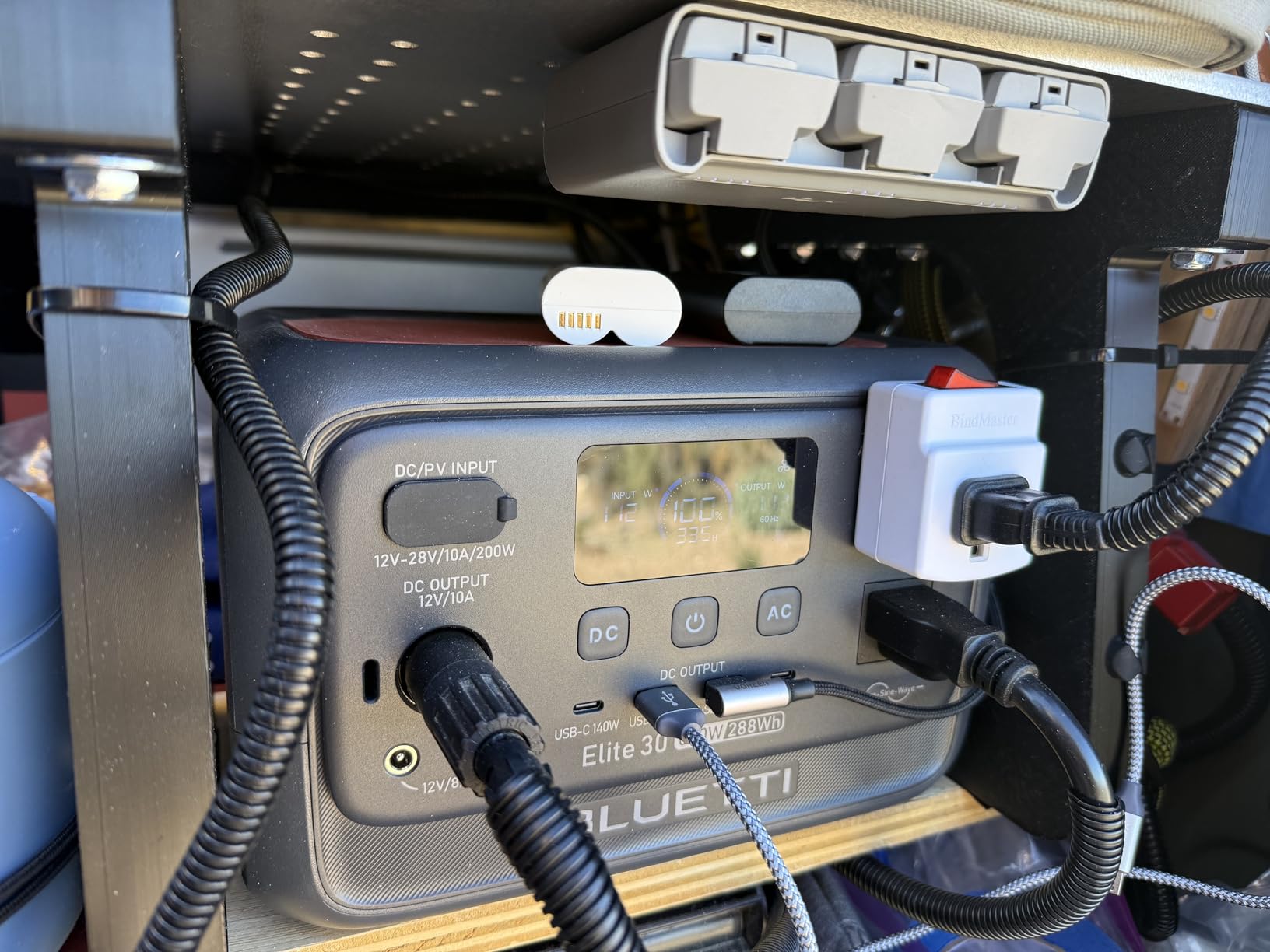
The Elite 30 V2 solves a problem the other small stations share: after a night of therapy, when do you get the energy back? This one charges to 80% in 45 minutes and to full in about 70 minutes, which turns a wall outlet stop at a service station into a full refill during a lunch break.
At 288Wh the usable store is about 259 watt-hours, which covers roughly two pressure-only nights and falls just short of a full humidified night. The inverter is heavily oversized for a CPAP at 600W continuous with a 1500W power lifting mode, so you have enormous surge headroom in a small box, and the 288Wh is the only real constraint.
The 10ms UPS switchover is unusually fast for a unit this size, and BLUETTI markets it specifically for keeping CPAPs, laptops and routers running through an outage. That makes it a strong second station for a bedroom, kept plugged in and ready.
UltraCell Efficiency Is the Standout Feature
BLUETTI claims the cell and cooling design cuts consumption by about 50% against a typical pack at this size, with 4.5W standby draw, 5W running DC output and 8W on AC. Low self-consumption is what makes a unit viable as a permanently plugged-in emergency reserve rather than something you have to keep topped up.
For CPAP use specifically, the low draw means the difference between a station that is still there after 18 months of sitting in a cupboard and one that has flattened itself. Owners consistently rate the build quality and the app highly, and the app can stand in for a 1500VA UPS for a home network.
Where the Small Capacity Hurts
Owners report faster-than-expected drain when a CPAP and phone charging run together, which matches the arithmetic. If you are charging a phone overnight from the same pack, drop that expectation to well under one night with the humidifier on.
Two other limitations are worth knowing. There is no USB communication port for automatic PC shutdown signalling the way a traditional UPS provides, and automatic restart after a full discharge requires turning on Pro mode with the default passcode, a step people miss.
60-Month Warranty and Nine Ports
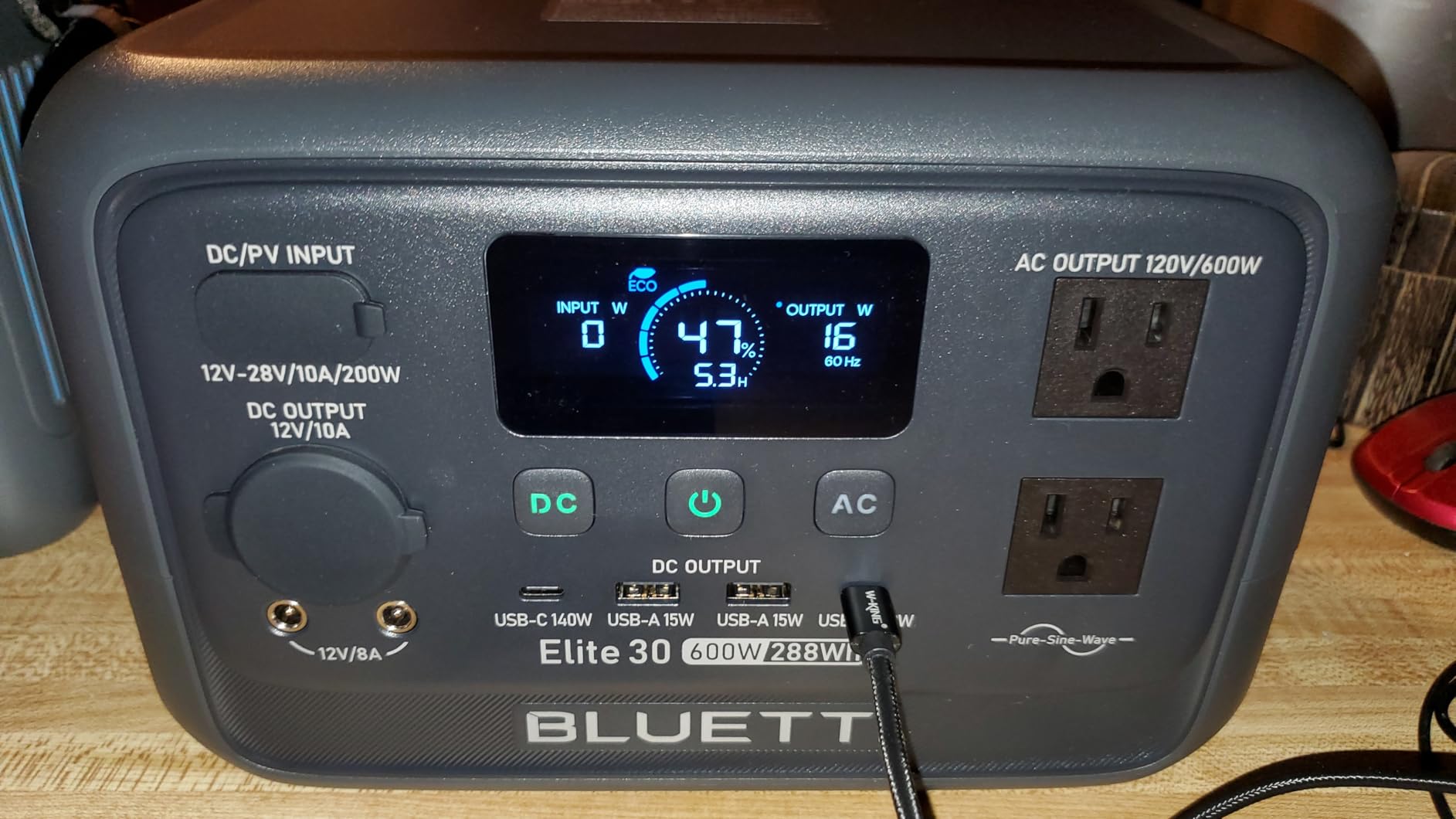
Nine ports including DC5521, USB-A and USB-C mean the CPAP on AC leaves plenty spare, and the included car charging cable means you can refill from a vehicle over a lunch stop. A 60-month warranty is longer than most of the competition in this price bracket.
My verdict: this is the pick for a bedroom nightstand backup unit, and for anyone whose camping trips are short enough that a 45-minute top-up between days is the whole plan.
5. EnginStar R300 – Pass-Through Charging on a Small Budget
EnginStar Solar Generator, 300W Portable Power Station, 296Wh Lithium Battery Backup w/Two 110V Pure Sine Wave AC Outlet for Camping Road Trip RV, 80000mAh Sufficient Power Supply for Blackout
296Wh
300W AC
6.5 lbs
8 outputs
UL certified 1000 cycles
Pros
- 266Wh usable
- About 2 pressure-only nights
- Runs devices while it recharges
- Live per-port wattage on the display
- Two pure sine wave AC outlets
Cons
- Status lights are bright and cannot be dimmed
- Solar charging slow outside direct sun
- Not weatherproof
- Full wall recharge takes about 7 hours
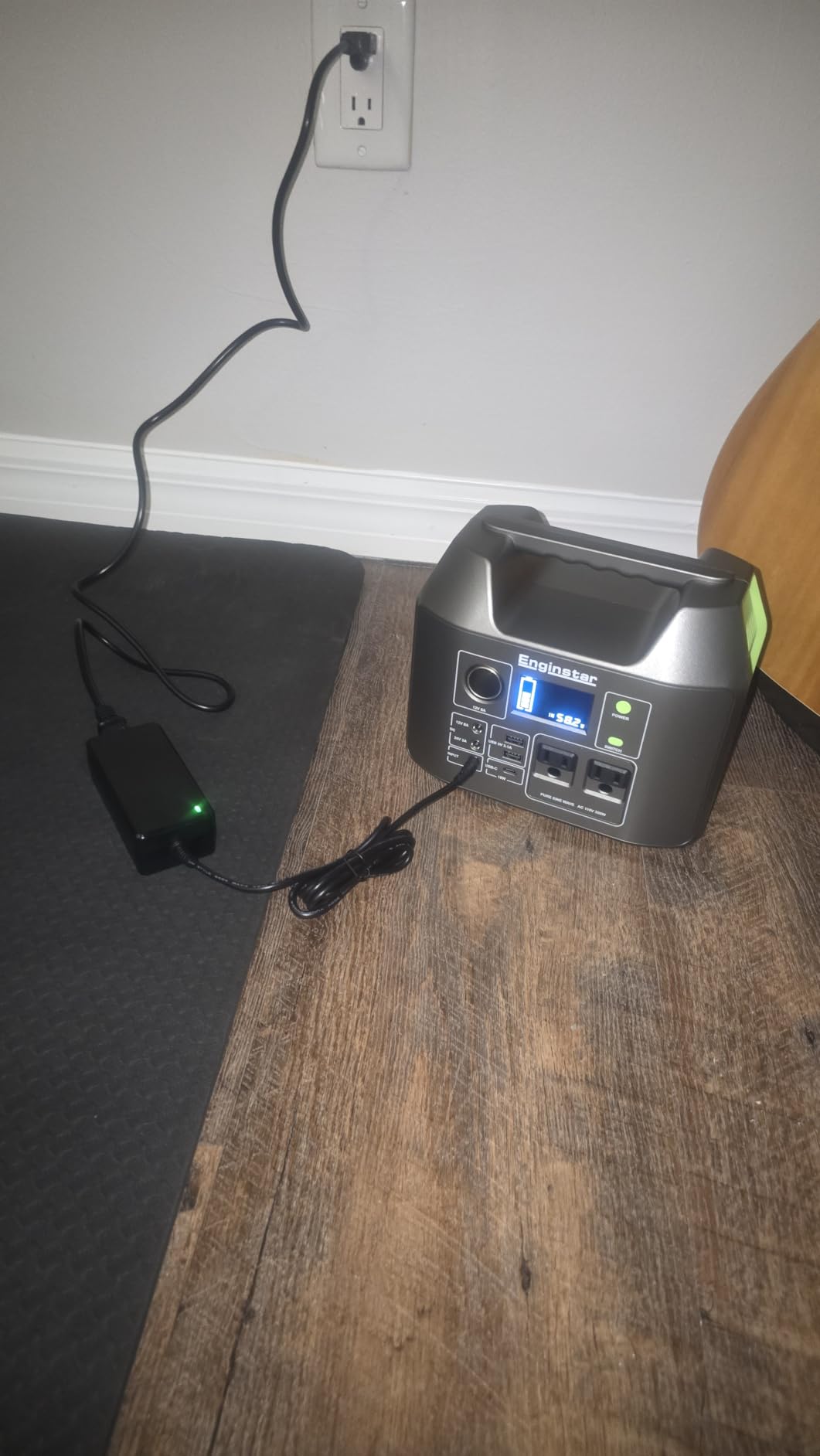
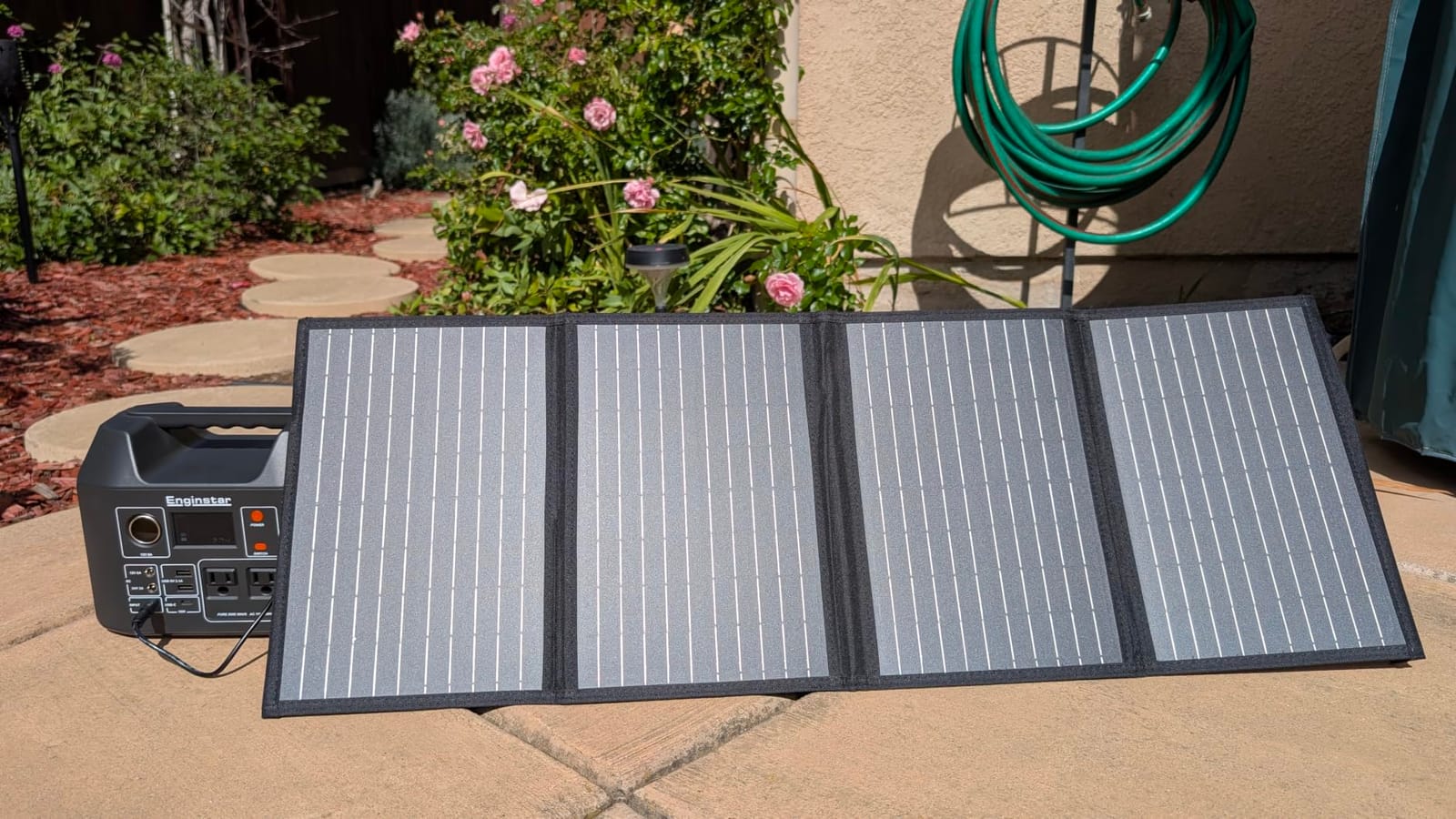
The defining feature here is pass-through charging, which lets the CPAP keep running while the station recharges. Owners using it that way report it handling machines and small 12V coolers reliably, and it is the reason this box appears in CPAP discussions despite a middling rating.
Usable capacity from the 296Wh pack is about 266 watt-hours, which is close to two pressure-only nights and short of a full humidified one. Two pure sine wave AC outlets at 6.5 pounds keep it competitive with the larger Jackery in the same class, and eight outputs including USB-C give you somewhere to put a phone.
The display shows live input and output wattage per port without needing an app, which is a real advantage at 3am when you want to know what the machine is drawing without unlocking a phone.
Pass-Through Changes the Recharge Plan
With pass-through, you can plug the station into mains in the morning and run the CPAP from it that night without waiting for a full charge cycle. On a multi-night trip where the campsite has power, that effectively removes capacity from the equation entirely.
AC wall recharge draws about 59W and gets from 20% to usable in under two hours, but a full recharge from empty takes roughly seven hours. Owners buying multiple of these for a household is a pattern in the reviews, and at this size and weight that is a reasonable strategy.
Failure Modes to Know About
The status lights are bright with no dimming option, which is genuinely disruptive in a dark bedroom and is the most common complaint. The unit is not weatherproof, so outdoors it needs a sealed enclosure, and solar charging is slow in anything other than direct sun.
Pass-through is what rescues the modest capacity, and reviewers also note the display brightness rather than the power delivery. If your use is indoors or a vehicle boot, the sealing issue matters less.
Verdict on the R300
At 6.5 pounds with two AC outlets and pass-through capability, this is a capable station for pressure-only nights and indoor backup use. The UL certification to 1000 cycles is lower than the LFP packs elsewhere in this roundup, so treat it as a unit you will replace sooner if you cycle it daily.
6. ALLWEI 300W 256Wh – Built for Solar-Camped Weekends
ALLWEI Portable Power Station 300W, 256Wh Solar Generator LiFePO4 Battery
256Wh
300W continuous
600W peak
6.4 lbs
LiFePO4 3000 cycles
Pros
- 230Wh usable
- Thin 6.4 lb body
- Display shows runtime estimate and exact percentage
- Dual charging in 2 to 2.5 hours
- Quiet during operation
Cons
- No 24V output for RV equipment
- Solar input limited
- Some units lost charge retention after about a year
- Cooling fan can run loudly
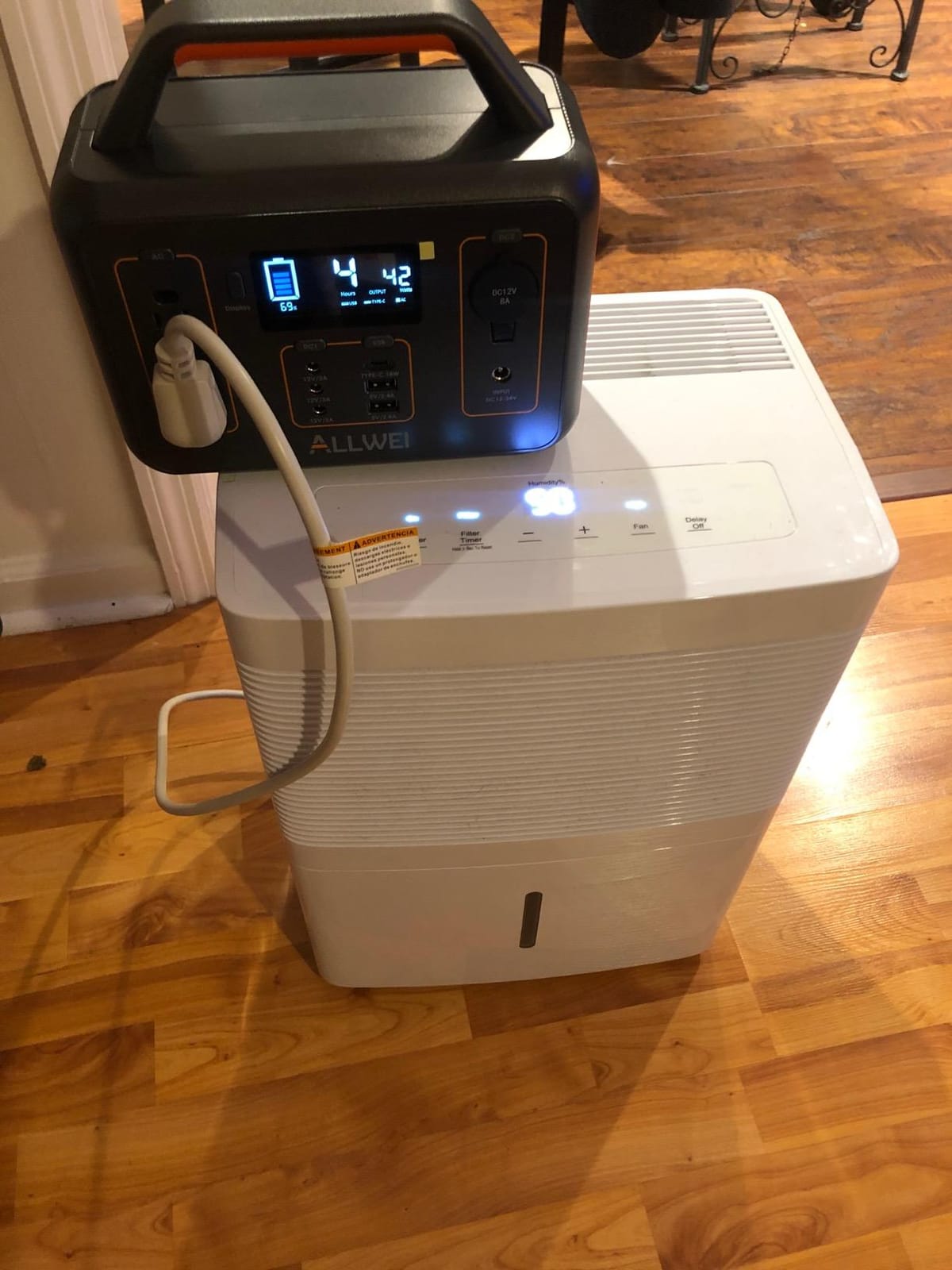
This is a compact 300W-class station at 6.4 pounds, and for a CPAP user packing light that low weight is the point. Usable capacity works out at about 230 watt-hours, close to two pressure-only nights and short of a humidified one, which places it alongside the EnginStar rather than above it.
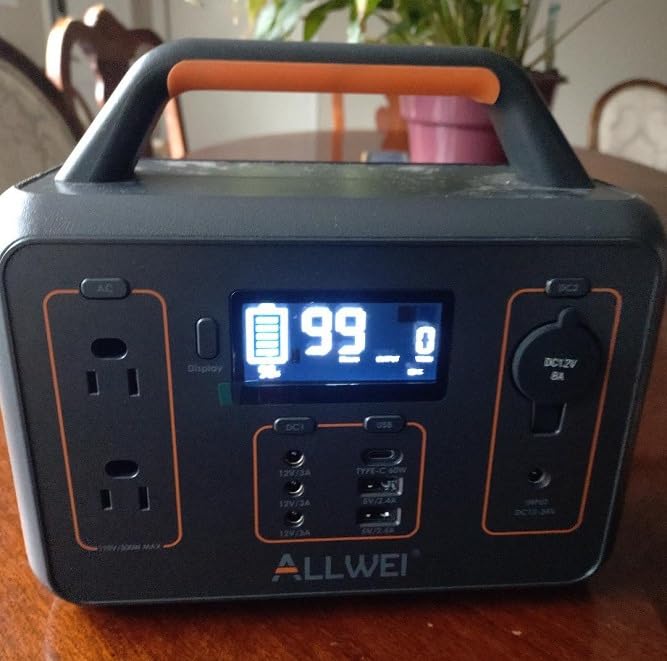
Six outputs cover the common cases, including one AC outlet, two DC5521 ports, a car socket, an 18W USB-A and a 60W USB-C PD port. The USB-C is enough to charge a CPAP backup battery directly, which is a nice pairing for people who carry both.
LiFePO4 cells rated for 3000 charge-discharge cycles with six-layer BMS protection put the longevity story well ahead of the NMC-based boxes, and the feature list claims a five-year warranty against the two-year manufacturer terms listed in the specifications.
Recharging From Wall, Car or Panel
AC wall takes 3.5 to 4 hours, a 12V car socket takes the same, and a 100W solar panel takes 4 to 5 hours. Running wall and solar together brings it down to 2 to 2.5 hours, which is the configuration that works for a campsite with partial sun.
That solar path is why this is our solar-camping pick in the small class. It will not refill a full 256Wh pack in one morning of mediocre sun, but it does keep a pressure-only CPAP running indefinitely with a panel on the roof.
Display, Light and What Owners Flag
The display gives an estimated runtime alongside the exact battery percentage, which is more useful than a wattage-only readout when you are trying to decide whether to turn the humidifier off. A three-level LED flashlight with SOS mode sits on the handle end, and a rubber cover keeps debris out of the car port.
Owners also report strong hold on charge when stored unused and quiet operation, which matters for bedside use. The complaints cluster around solar input limits, a fan that can be loud under sustained load, and a minority of units that stopped holding charge after about a year.
Who This Suits
Pick this if you want a low weight, a genuine USB-C PD port and a battery chemistry that survives years of intermittent use. Skip it if you need 24V output for RV equipment, or if you plan to run anything above 300W continuously.
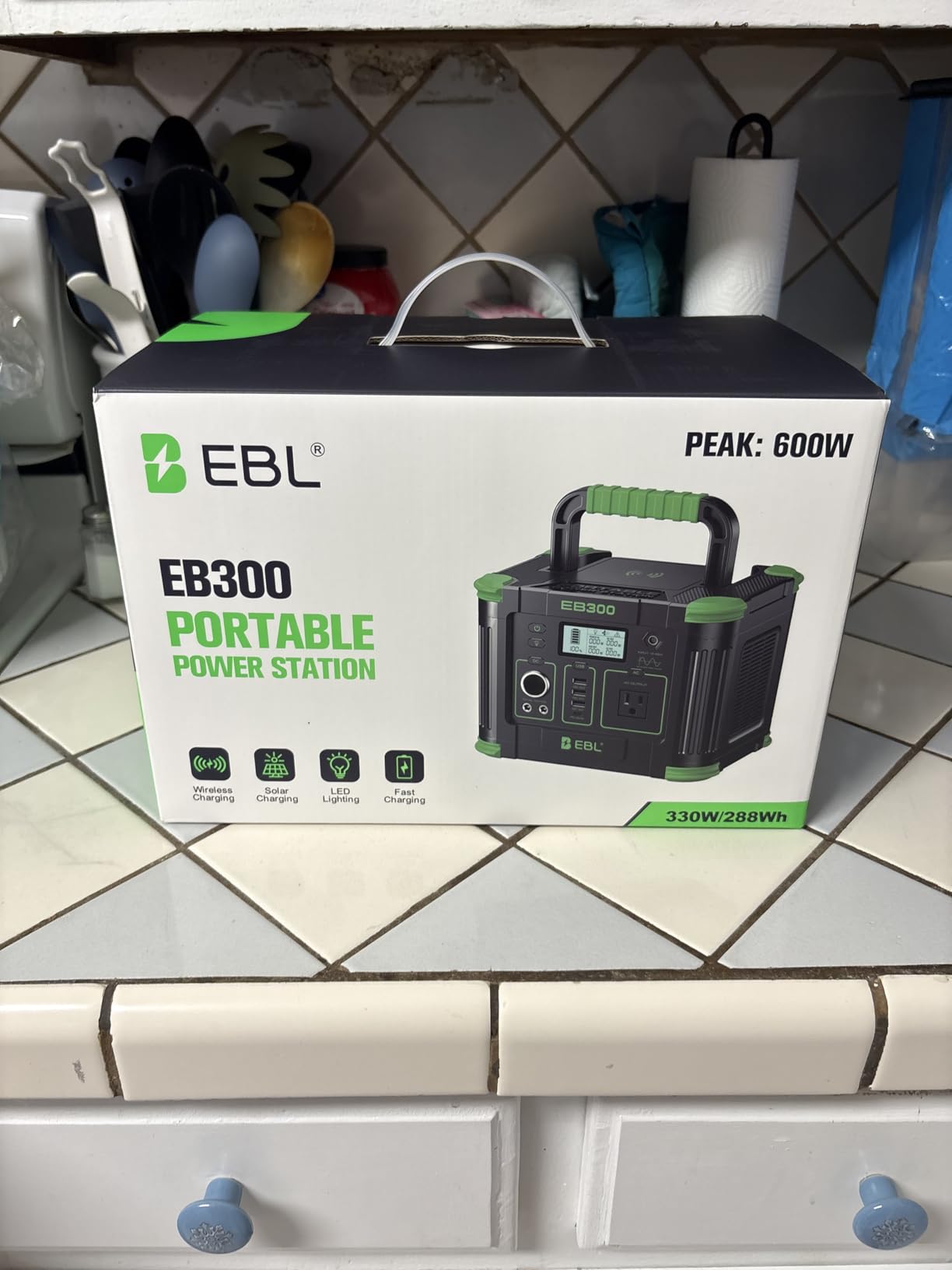
7. GRECELL 330W – Nine Outputs for Mixed Device Loads
GRECELL Portable Power Station 330W, 230.88Wh Lithium Battery
230.88Wh
330W output
600W surge
8 outputs
wireless pad
Pros
- Nine outputs including 60W USB-C and 5W wireless pad
- 330W continuous pure sine wave with 600W surge
- Documentation helps size chargers correctly
- Compact enough for small spaces
Cons
- Display is dim and must be woken
- Only one AC outlet
- Wireless pad needs USB enabled separately
- Gauge can read inaccurately at first
The GRECELL is the odd one out in this roundup because it puts nine outputs on a 230.88Wh pack, and only one of them is an AC outlet. For a CPAP user that is workable, because the machine takes one AC socket and everything else can live on USB, but it is the wrong shape for anyone expecting two mains devices.
Usable capacity is about 208 watt-hours, which covers one pressure-only night and falls short of a humidified one. The 330W continuous pure sine wave output with 600W surge gives you far more inverter headroom than the pack size would suggest.
The 60W USB-C port is the sleeper feature here. It is enough to charge a phone, a tablet or a CPAP battery bank, and the documentation reviewers praise is genuinely helpful for working out which charger a given device needs. If you are rebuilding the nightstand charging setup around the machine, our best wireless charging stations guide covers the bedside hardware side.
Three Ways to Recharge, and How Long They Take
Wall charging takes 6 to 7 hours, a 100W solar panel takes 5 to 9 hours depending on conditions, and a 12V car socket is the fastest option for topping up between drives. Owners running multiple of these treat them as a household pool rather than a single large reserve.
An upgraded battery management system handles overload, overcharge and short-circuit protection, with dual silent cooling fans under load. The 3-level LED flashlight with SOS mode covers the emergency basics.
The Display Is the Weak Point
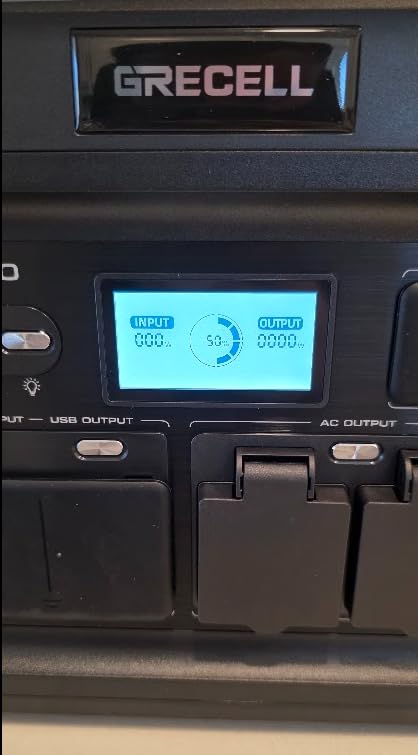
The screen must be woken up and reads dim in bright conditions, and there are no separate indicator lights to fall back on. For a device you might check in a dark bedroom, that is a real drawback, and I would test the visibility before committing.
Two other quirks: the wireless charging pad needs the USB function enabled separately despite what the manual says, and some units arrived with a miscalibrated gauge that corrected itself after one full drain-and-charge cycle. Only one AC outlet is the limitation I would weigh most heavily.
Verdict
This is a good fit if your CPAP sits on AC and every other device is USB, and a poor fit if you want to run a mains lamp alongside it. The 5W wireless pad and 60W USB-C make it a strong companion to a CPAP battery bank rather than a standalone long-trip solution.
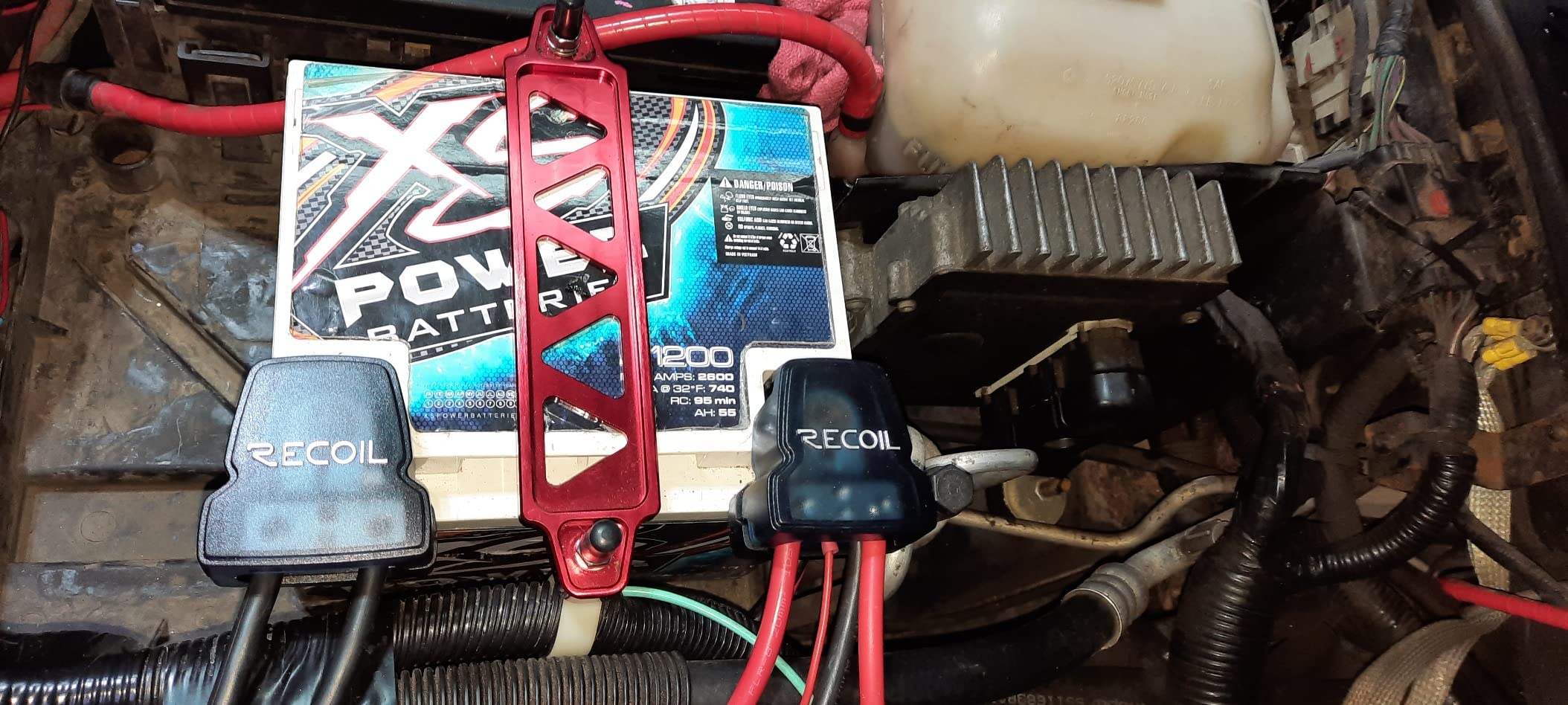
8. FF FLASHFISH 200W – A Pressure-Only Night in a 4-Pound Box
Portable Power Station 200W, FF Flashfish 40800mAh Backup Power Battery Pack With 110V AC Outlets/2 DC Ports/3 USB Ports, Solar Generator Power Supply For Home Backup, Power Outages, and Camping
151Wh
200W AC
4.1 lbs
6 outputs
LCD display
Pros
- 135Wh usable
- 4.1 lbs
- Six outputs including 200W AC and two DC ports
- Wall recharge in 4 to 4.5 hours
Cons
- 151Wh is too small for a humidified night
- 200W continuous output restricts other appliances
- Solar panel sold separately
At 151Wh and 4.1 pounds, this is the smallest power station here. It is light enough to be genuinely portable and it completes a pressure-only night, which is the bare minimum for a medical device.
Usable capacity is about 135 watt-hours, which is not enough for a humidified night but will cover a pressure-only night with a little to spare.
Reviewers describe it as a compact, inexpensive box for phones, laptops, lights, fans and CPAP machines, with capacity and output limits being the accepted constraint rather than a disappointment.
Six Outputs and Simple Controls
You get 110V AC at 200W, two DC ports, two QC3.0 fast-charge USB ports and one 2.4A USB port. Separate AC and DC control buttons mean you can switch the inverter off entirely when you are not using it, which reduces self-consumption on a unit you mostly keep in a cupboard.
The multifunction LCD display is clear, and the built-in BMS handles voltage, temperature and short-circuit protection with automatic overload shutdown. A 12-month warranty is the shortest here, which is the other reason I treat this as a backup rather than a primary.
Recharging in Four Ways
Wall AC takes 4 to 4.5 hours, the car charger takes about 5 hours, and a 60W solar panel takes 5 to 6 hours. The panel is not included, so the solar option is only worth it if you already have a small portable panel.
For an emergency kit, an inexpensive option or a gift for someone who wants CPAP cover without weight, the value is genuine. Just understand what you are buying: hours of cover, not nights.
Verdict
For actual multi-night use anywhere, roughly 300Wh is the minimum sensible floor and the 1000Wh class is where you stop thinking about it.
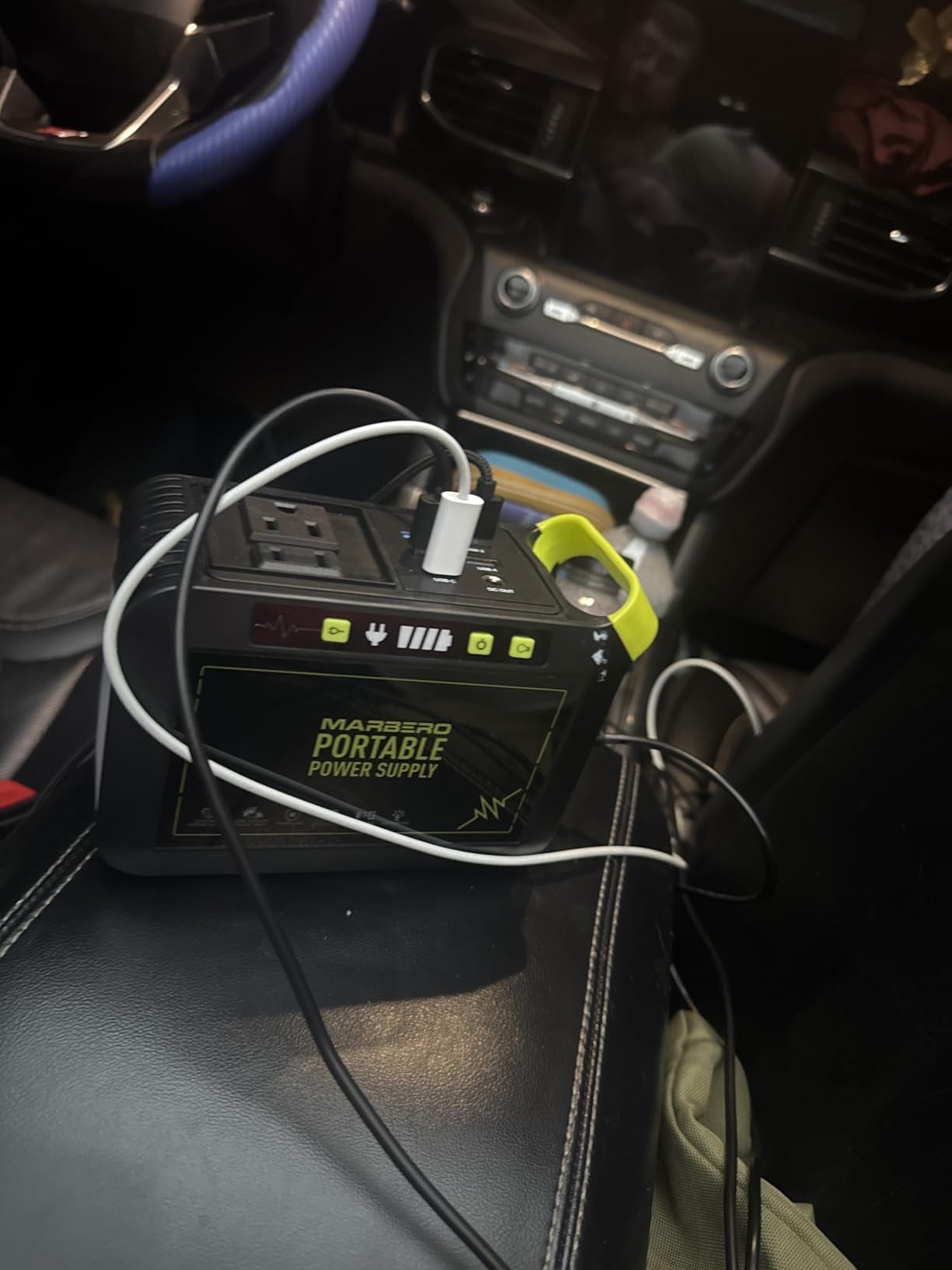
9. MARBERO 237Wh – The Smallest Footprint for Backpacking
Portable Power Station 300W MARBERO 237Wh Camping Solar Generator Backup Lithium Battery with Pure Sine Wave 110V AC Outlet, USB C, USB A, DC for Outdoors Camping CPAP Home Blackout Emergency
237Wh
300W output
4.6 lbs
8 outlets
LED lanterns
Pros
- 213Wh usable
- Compact 8.15 x 5.83 x 3.90 inch body at 4.6 lbs
- Two LED camping lanterns with SOS mode
- Wall recharge in about 6 hours
Cons
- AC inverter output is low for higher-draw devices
- Proprietary barrel charger instead of USB-C
- Several buyers report units failing within a few years
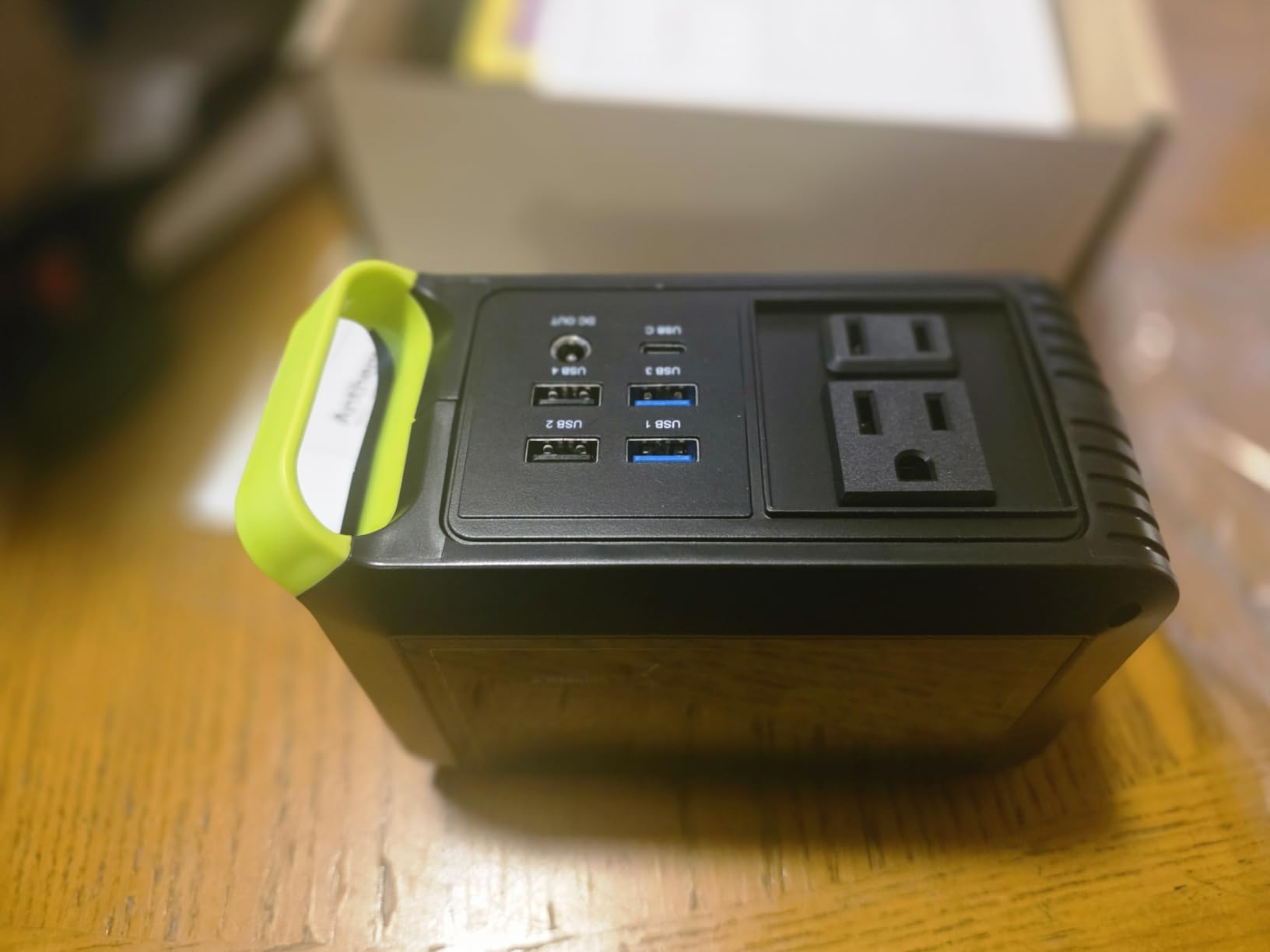
The MARBERO wins on volume, not on capability. At 237Wh in a 8.15 by 5.83 by 3.90 inch body weighing 4.6 pounds, it disappears into a pack in a way the other small stations do not, and if your CPAP trips involve walking to a site rather than driving to it, that matters more than the specs do.
Usable capacity is about 213 watt-hours, which covers one pressure-only night and falls short of a humidified one. The 300W output rating is adequate for a CPAP but leaves little room for a second mains device.
Eight outputs including two AC outlets, two USB-A QC3.0 ports, two more USB-A ports, an 18W USB-C PD port and a DC output is a generous port count for the size, and reviewers use it for air mattress pumps, routers and small lights alongside phones.
The Inverter Is the Limitation
Owners consistently report that the AC inverter output is low, so laptops and other higher-draw devices do not run reliably. For a CPAP, which sits around 40 to 60W with a humidifier, that is not an issue, but it does mean this box is a single-device station rather than a general power supply.
The battery management system covers voltage and temperature control with automatic short-circuit and overload shutdown. The 12-month warranty is short, and a meaningful minority of buyers report units failing or losing charge within a couple of years, which is the main reason the rating sits where it does.
Two Built-In Lanterns
The LED camping lanterns have multiple brightness levels plus steady, twinkling and SOS modes, which removes the need for a separate light when the CPAP is the only other thing running. Practical, if not central to the buying decision.
Recharging Paths
Wall outlet takes about 6 hours, a car adapter takes about 8 hours, and solar needs a 16.4 to 24V panel. The slow car recharge is the one that catches people out on a road trip, so plan on charging overnight in the vehicle rather than during a stop.
Verdict
Buy it if pack volume is the binding constraint and your nights are pressure-only. If you want a longer horizon per charge, step up to the 300W-class models instead.
10. ZeroKor 300W – A Spare Unit for a Second Machine or a Second Site
Portable Power Station 300W,110V Solar Generator 280Wh(without Solar Panel)
280Wh
300W max AC
5.1 lbs
7 outputs
pass-through
Pros
- 252Wh usable
- Pass-through charging while in use
- LED flashlight with reading and SOS modes
- Two AC outlets and 7 outputs total
Cons
- AC output well below the 300W claim
- Solar input caps out far below panel rating
- Slow recharge from wall or car
- Not suited to long-term storage
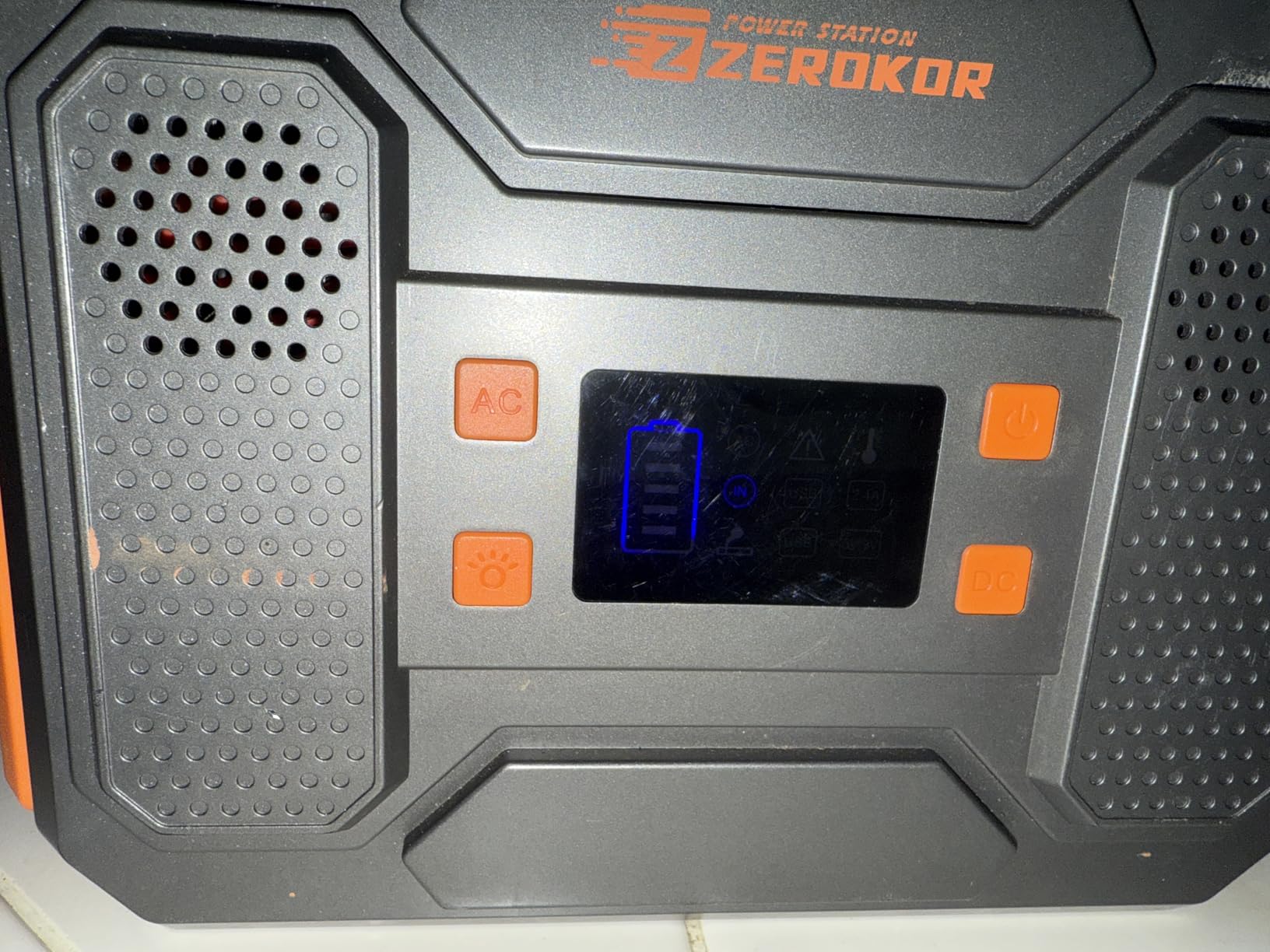
The ZeroKor is interesting less as a primary station and more as a second box: one for the tent, one in the vehicle, so a forgotten charge at one site does not end your trip. At 5.1 pounds and 280Wh it splits into two manageable halves, and pass-through charging means it can run devices while it recharges.
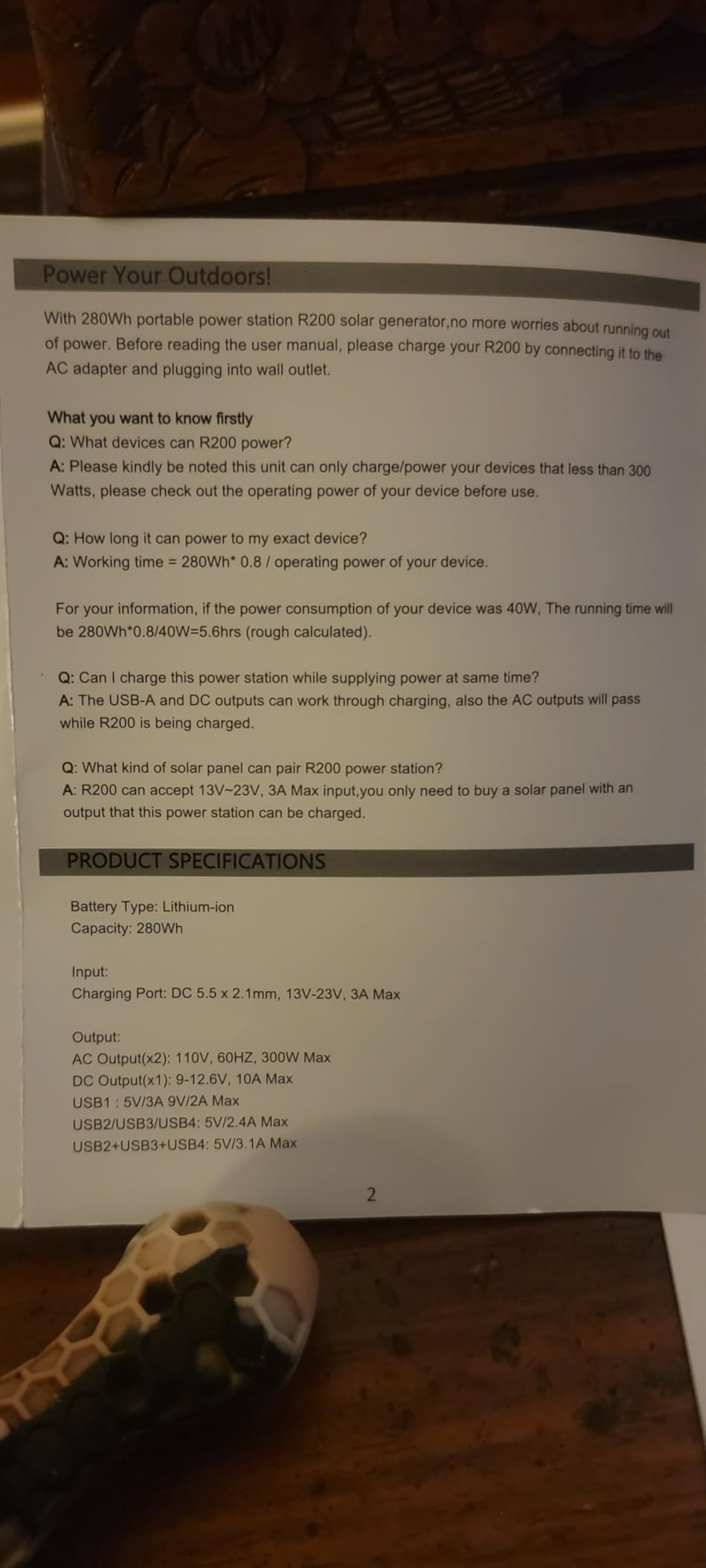
Usable capacity is about 252 watt-hours, which covers roughly two pressure-only nights and falls short of a humidified one. Two AC outlets, three USB-A ports, one QC USB port, a DC output and an LED flashlight with reading and SOS modes cover the essentials in a package most owners describe as good value.
That value framing matters because the specification claims are soft. A notable group of one-star reviews disputes the advertised 300W, the pure sine wave characterisation and the MPPT solar capability, and I would treat the inverter quality claim with real caution given that it powers a medical device.
What the Disputed Claims Mean in Practice
Buyers report AC output well below the 300W maximum, with continuous output under 100W in some conditions and sensitivity to laptop loads. A CPAP in the 40 to 60W range sits inside that, so the station will run the machine, but you should not plan to add a second mains device.
The solar input caps out far below what a 100W panel would deliver, which makes the MPPT claim effectively decorative. Recharging from wall or car is slow, and the DC output port reportedly does not work with cigarette-lighter adapters or small air compressors.
Where It Works
For lights, phones, tablets, fans and speakers it does what owners expect, and several buyers use it to run a large television for several hours. The flashlight with a reading mode is a nice touch for a bedside unit even though the station itself is unlikely to be your main therapy power.
Owners also caution that it is not suited to long-term storage, which rules it out as the emergency unit you keep plugged in. Use it actively and recharge it regularly, or its capacity will not be there when you need it.
Verdict
This is the tenth pick because a spare light-duty box has genuine value, but the inverter claim is exactly the thing to verify before trusting it with a CPAP you depend on. If the machine is your only therapy, choose one of the stations with an unambiguous pure sine wave specification.
How to Size a Portable Power Station for a CPAP Machine
Sizing is arithmetic, and once you have the formula you will never have to guess again. Everything below comes down to your machine’s measured draw, the number of nights you need to cover, and how much of the pack’s capacity is realistic to use.
How Much Power Does a CPAP Actually Use in 8 Hours?
A CPAP running pressure only, with the humidifier off and no heated tube, typically draws somewhere in the region of 10 to 20 watts. Multiply by eight hours and you are looking at roughly 80 to 160 watt-hours for the night. Users on r/CPAP report overnight consumption around 165 watt-hours in pressure-only mode, which sits at the high end of that range and is a useful conservative figure.
Add a heated humidifier and the picture changes completely. The chamber heater is the single largest load in the system, and running it at a mid setting in a cool room can push the whole machine to 40 watts or more for the night. Eight hours at that draw is around 320 to 350 watt-hours, which is more than double the pressure-only figure and is why so many people are surprised by how fast a small station drains.
A heated tube adds more again. Cold-weather camping makes it worse, because the heater works harder to hold temperature as ambient air drops, and the same setting that drew 40W in a warm room can draw meaningfully more in a tent at altitude.
If you want your own number rather than an estimate, plug the CPAP into a wall with a plug meter between it and the socket, run a full night on your normal settings, and write down the watt-hours. One night of measuring removes all the guesswork from this entire article.
The Capacity Formula and a Nights-to-Watt-Hours Table
Multiply your measured nightly watt-hours by the number of nights you need, then add a safety factor of about 1.4 to cover inverter losses, self-consumption, temperature and capacity degradation. That gives you the minimum pack size to buy.
Working that formula: at 130 watt-hours a night and 340 watt-hours a night, here is what you need.
Pressure-only nights: one night needs about 180Wh, two nights about 365Wh, three nights about 550Wh, four nights about 730Wh, and seven nights about 1280Wh. With the humidifier running, one night needs about 475Wh, two nights about 950Wh, three nights about 1430Wh, and five nights about 2380Wh.
Reading that against the roundup, the FF FLASHFISH at 151Wh covers a single pressure-only night, the 256 to 296Wh group covers two pressure-only nights each, and the 1070Wh and 1152Wh stations cover roughly three humidified nights or seven pressure-only ones. That is the entire capacity argument in one paragraph.
You can read more about portable power options in our camping power bank comparison, though remember that most of those units use modified sine wave output and are not appropriate for a CPAP.
Why Pure Sine Wave Output Is Non-Negotiable
Your CPAP power brick converts AC back into clean DC, and it expects the AC to be smooth. A pure sine wave inverter produces a waveform that matches grid power, so the machine behaves exactly as it does on a wall. A modified sine wave inverter produces a stepped approximation that can cause audible noise in the machine, error codes, or in the worst cases a shutdown mid-night.
For a device you cannot afford to have stop at 3am, this is the one specification not to compromise on. Several stations in this roundup state pure sine wave explicitly, and the ones that do not are the ones I would scrutinise hardest before trusting with therapy.
A quick test: if the manufacturer does not state the waveform anywhere, plug a CPAP into it for a full night at your normal settings and listen. That is the only answer that settles it for your specific machine and power brick combination.
DC Cable or AC Brick: The Connection Method That Costs You 10-20%
Running the CPAP power brick into an AC outlet means the energy converts from DC to AC in the inverter, then back to DC in your power brick. Each conversion loses something. Connecting a DC adapter cable from the station’s 12V output skips the inverter entirely and typically recovers 10 to 20% of the stored capacity, which is free runtime you do not have to buy.
The widely misunderstood catch: DC adapter cables for CPAP machines usually do not power the heated humidifier or the heated tube. That is not a flaw in your cable, it is a limit in the machine’s DC input design. So the efficient connection and the humidifier are mutually exclusive on most models, and you end up choosing between longer runtime and warm air.
Forum consensus in CPAP communities consistently favours a DC-DC converter as the most efficient connection method, and I agree for pressure-only use. For humidified nights, accept the inverter loss and size accordingly.
Inverter Headroom for Startup Surge
CPAP machines draw a spike when the motor and blower start. Users on r/CPAP describe an average load around 53 watts spiking toward 104 watts at startup, and that is a figure most capacity guides ignore. A station rated at exactly your steady-state draw can trip its own overload protection on the surge even though it would run fine at steady state.
The rule I use: keep continuous output at least three times your measured average draw, so a 50W average load wants at least 150W continuous rating and 300W of surge capability. Every station in the 250W-plus class clears this comfortably, and the small 200W FF FLASHFISH is the tightest case in the roundup.
Six Ways to Stretch Every Night of Runtime
First, turn the humidifier off. This is the single biggest lever available and it can double or triple your runtime, as CPAP users consistently report. Second, switch off the heated tube if you have one, since it is a continuous resistive load.
Third, use a DC adapter cable where the machine supports it. Fourth, lower your expiratory pressure relief setting, which reduces the small extra bursts the machine delivers on every exhale. Fifth, recharge the station fully before you go to bed rather than topping it up overnight, so you start each night at 100%.
Sixth, plan your energy around other devices. Running a phone charger and a fan from the same 288Wh pack changes the night count more than any factory setting, and campsite solar only closes the gap if you size the panel for it rather than for the station’s maximum input.
Failure Modes: Auto-Shutoff, Fan Noise and the Post-Outage Reboot
Why does a CPAP turn off by itself on a power station? Low-load auto-shutoff is the usual answer. Many stations have a protection mode that powers down when the load falls below roughly 5 to 10 watts, which some CPAPs dip into during startup or standby. If your machine shuts down at the same point in the night, that is the first thing to check, and some units let you disable the mode.
Why will it not turn on after a power outage? Several machines latch off after a power loss and require a manual reboot, and a station that has already gone to sleep for low load will not wake up to start it. There is no workaround other than a physical press of the start button, so test your machine’s behaviour deliberately.
Fan noise is the quiet killer. Cooling fans ramp up under sustained load and a station sitting beside a bed can be more disruptive than the outage you were preparing for. A low-draw night keeps fans mostly idle, so the same runtime extensions that help capacity also help noise, and anything you can do to move the station out of arm’s reach pays off twice.
Pass-Through Charging, UPS Switchover and Air Travel Rules
Pass-through charging means the station recharges while it powers your device, which turns a campsite with mains into unlimited runtime. UPS mode is the related feature for home use, where the station stays on and transfers to battery in anywhere from 10 to 20 milliseconds, fast enough that a CPAP does not register the switch. Both the BLUETTI units in this roundup cover those functions explicitly.
For air travel, the FAA carry-on rule for lithium batteries is 100 watt-hours per battery, and airlines are strict about it. No station in this roundup sits under that limit, so your realistic options are a dedicated CPAP battery bank rated below 100Wh, or a station you do not carry on. If you fly regularly, that is a separate buying decision from the one covered here.
Power Station or Dedicated CPAP Battery?
A dedicated CPAP battery is smaller, quieter and purpose-built, and it powers the machine with far less conversion loss. It also does one job: run a CPAP, for a fixed number of hours, and stop. That is genuinely better for a single overnight trip or for air travel.
A portable power station is better when you want multi-night capacity without recharging daily, when you also need to run a modem and lights, or when you want one box to serve several devices. The trade is weight, fan noise and the inverter loss you pay for flexibility.
My rule: if the trip is one or two nights and light matters, a dedicated bank wins. If the trip is a week or you also want power for other gear, a station in the 1000Wh class wins comfortably.
Test the Whole Setup Before You Depend on It
Do a full rehearsal on home power. Charge the station, disconnect the wall, run your CPAP on your normal settings for a whole night with the humidifier on, and write down the watt-hours the station reports. Repeat once with the humidifier off. That gives you two real numbers instead of two estimates, and it exposes any auto-shutoff or reboot behaviour before you are depending on it.
While you are at it, check the machine’s post-outage restart behaviour by switching off the wall breaker mid-session. If it will not come back on by itself, you now know to keep the machine within reach rather than across the tent.
Frequently Asked Questions
Will a portable power station run a CPAP?
Yes. A portable power station with a pure sine wave AC inverter will run a CPAP overnight. Budget roughly 130 watt-hours per night with the heated humidifier off and around 340 watt-hours per night with it running, then multiply by your nights and add a 1.4 safety factor.
What size portable power station do I need to run a CPAP machine?
For one humidified night you need about 475 watt-hours minimum. Two nights needs roughly 950Wh, three nights about 1430Wh. For pressure-only nights the numbers drop to about 180Wh for one night and 365Wh for two. In this roundup, the 256 to 296Wh stations cover two pressure-only nights each and the 1070 to 1152Wh stations cover about three humidified nights.
How long will a portable power station run a CPAP machine?
Divide usable watt-hours by your nightly draw. Usable capacity is roughly 90% of nameplate, and nightly draw is about 130Wh pressure-only or 340Wh humidified. A 1070Wh station therefore gives about seven pressure-only nights or three humidified nights, while a 288Wh station gives about two or less than one.
Do I need pure sine wave output for my CPAP?
Yes, treat pure sine wave as non-negotiable. A modified sine wave inverter can cause noise, error codes or an unexpected shutdown in the machine, and a CPAP that stops at 3am is a therapy interruption. Several stations in this roundup state pure sine wave explicitly, and those are the ones worth trusting without testing.
Why does my CPAP machine turn off by itself on battery power?
The most common cause is low-load auto-shutoff, a protection mode that powers the station down when the load falls below roughly 5 to 10 watts. Check whether your station has a setting to disable it. Other causes include an exhausted battery, fan noise disturbing you enough to stop using the machine, and inverter protection tripping during startup.
The Bottom Line: Which Power Station for CPAP Fits Your Nights
If you want one station that handles humidified nights without planning around it, the Jackery Explorer 1000 v2 is the answer. At 1070Wh and 23.8 pounds it covers roughly three humidified nights or seven pressure-only ones, with three pure sine wave outlets and 3000W of surge headroom, and it is the pick I would put in the hands of most readers of this guide.
If capacity and a five-year warranty matter more than weight, the BLUETTI AC180 gives you 1152Wh, a 20ms UPS switchover and enough output to run a modem, a docking station and lights alongside the machine, at 37.4 pounds. If you need one night of home cover and want it light, the Jackery Explorer 300 does the job at 7.1 pounds with an owner base in the five figures behind it.
If you camp, travel light and pack solar, the BLUETTI Elite 30 V2 recovers to 80% in 45 minutes and the EnginStar R300 runs your CPAP while it recharges. If you only want an emergency cabinet unit, the FF FLASHFISH 200W is the honest minimum at 4.1 pounds, with the understanding that it covers hours rather than nights.
Whichever one you choose, measure your own draw with a plug meter for one night before you travel. That single hour of setup is the difference between a specification on a screen and a plan you can trust at 3am in 2026.
Leave a Reply