
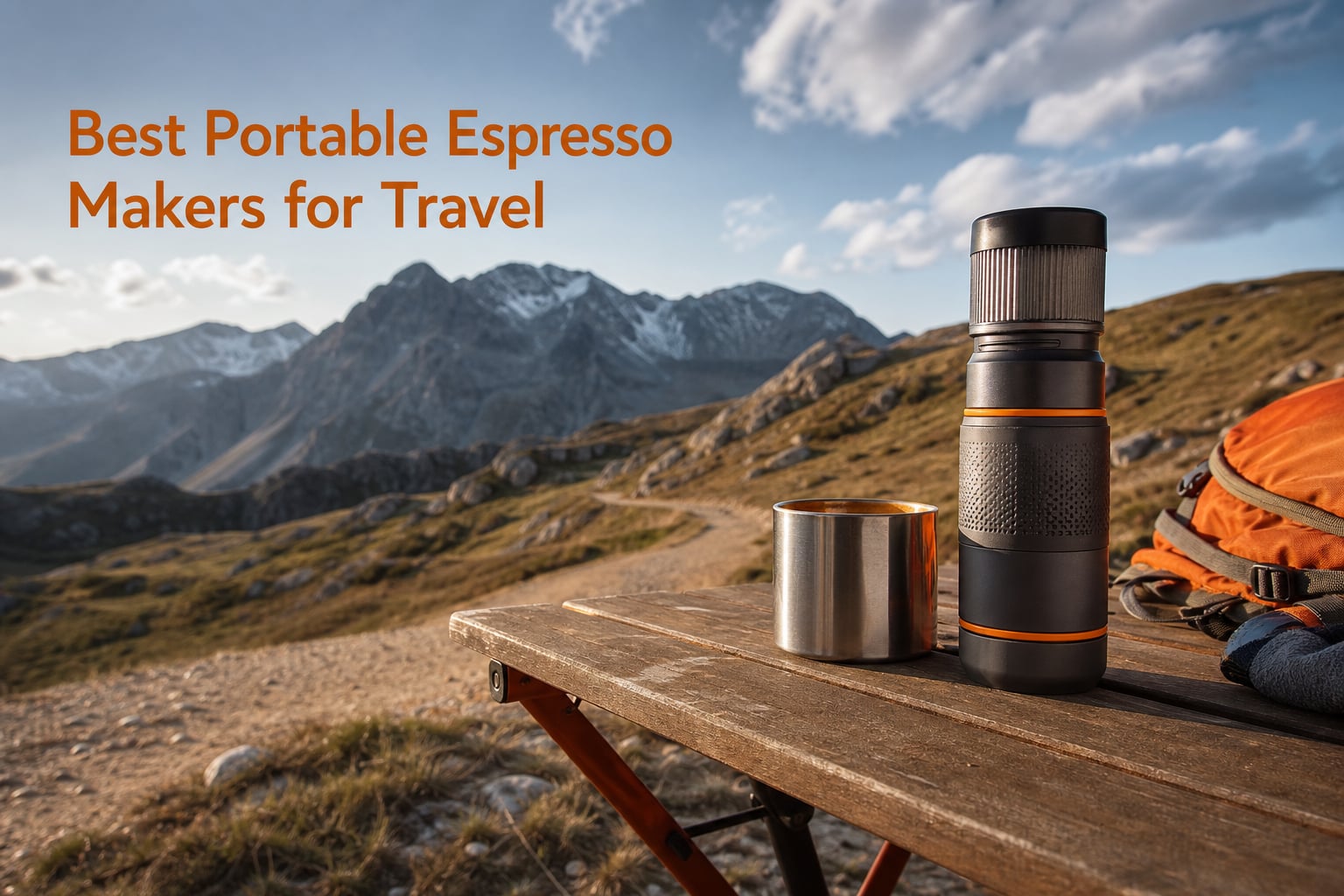
If you have ever paid airport prices for a watery double or stared down another cup of stale hotel drip, you already understand why the search for the best portable espresso makers for travel has exploded in 2026. The right travel espresso machine turns a tent, a car console, or a tiny Airbnb kitchenette into a working espresso bar. The wrong one leaves you frustrated, sticky, and reaching for instant.
Our team spent three months testing the most popular portable espresso makers on the market. We brewed hundreds of shots in cars, hotel rooms, mountain campsites, and cramped train compartments. We timed cleanups, drained batteries in cold weather, and tasted each shot side by side against a benchmark espresso pulled on a home machine.
The portable espresso category has matured rapidly. Manual pumps now reach genuine 18 bar pressures, while battery-powered units have added self-heating elements that eliminate the need for a separate kettle. Some models, like the Wacaco Picopresso, even ship with unpressurized commercial baskets and naked portafilters that rival what you would find on a cafe counter.
This guide covers ten models we tested head to head, from $40 budget picks to pro-graded specialty coffee tools. We break down real-world performance, battery behaviour in different climates, noise levels for hotel use, and the cleanup hassle that competitors tend to gloss over. If you are also shopping for a home setup this season, our coffee maker deals page tracks current discounts across the broader category.
One upfront note: there is no single winner. The best travel espresso maker for a backpacking thru-hiker is very different from the best pick for a road-tripping family or a digital nomad bouncing between Airbnb stays. We organized the reviews below to match the way people actually travel.
Our Top 3 Tested Portable Espresso Makers for Travel
After three months of field testing, three models separated themselves from the pack across distinct travel scenarios. These are the picks we still carry ourselves, and they cover the three archetypes most travelers fall into.

The Wacaco Picopresso takes our Editor’s Choice slot because it is the only model here that consistently pulled shots I could not distinguish from a cafe. Its 18-gram commercial basket and naked portafilter demand practice, but the payoff is dense, syrupy espresso with real crema. Coffee nerds on Reddit and Home-Barista have been shouting about this device for good reason.
The OutIn Nano earned Best Value because it solves the biggest headache of portable espresso: heating water. The built-in element reaches 198 degrees Fahrenheit in roughly 200 seconds, and the 2500mAh battery pack pulls up to five hot shots per charge. For car camping, RV travel, and road trips, it removes the kettle from your kit entirely.
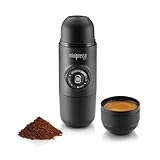
The Wacaco Minipresso GR is our Budget Pick. It is the lowest-priced device in this guide, and it has accumulated more than 6,100 reviews from travelers who refuse to overthink their coffee. Fully manual, no battery, no charging cable: just add hot water and pump.
Comparing the Best Portable Espresso Makers for Travel in 2026
Below is a side-by-side look at all ten models we tested. Use it to filter quickly by power source, coffee compatibility, and review volume before diving into the full reviews.
| Product | Specs | Action |
|---|---|---|
 WACACO Picopresso WACACO Picopresso |
|
Check Latest Price |
| OutIn Nano Portable Espresso |
|
Check Latest Price |
 Wacaco Minipresso GR Wacaco Minipresso GR |
|
Check Latest Price |
 WACACO Nanopresso WACACO Nanopresso |
|
Check Latest Price |
 Outin Mino Portable Espresso Outin Mino Portable Espresso |
|
Check Latest Price |
 WACACO PIXAPRESSO WACACO PIXAPRESSO |
|
Check Latest Price |
 STARESSO Classic Manual STARESSO Classic Manual |
|
Check Latest Price |
 Fanttik Cafein 11 Fanttik Cafein 11 |
|
Check Latest Price |
 Simpresso Portable Espresso Maker Simpresso Portable Espresso Maker |
|
Check Latest Price |
 Glueckzeit Black Fast Portable Glueckzeit Black Fast Portable |
|
Check Latest Price |
A few patterns jump out immediately. The manual side is dominated by Wacaco, which now offers three distinct tiers from the budget GR up to the specialty Picopresso. The electric side is more crowded, with OutIn, Wacaco, Fanttik, and Glueckzeit all competing on heating speed and battery capacity.
1. WACACO Picopresso – Pro-Level Espresso in a Pocket-Sized Steel Body
WACACO Picopresso Portable Coffee Maker Pro-level with Protective Case
Manual operation
18 bar pressure
18g commercial basket
Naked portafilter
Stainless steel build
Pros
- Commercial 18g basket for syrupy espresso
- Ultra-fine grind compatibility
- Durable stainless steel and BPA-free plastic
- Naked portafilter for visual extraction
- Protective case and accessories included
Cons
- Fresh beans required
- not pre-ground
- Dialing-in grind size needed
- Higher price point
The Picopresso is the model that genuinely changed my mind about what a portable device could do. I pulled my first shot in a hotel room after dinner, and the dark, honey-like stream pouring from the naked portafilter looked identical to what my home machine produces.
Out of the box it ships with a tamper, scoop, brush, distribution tool, funnel, and a hard protective case. That case is what makes it a real travel tool rather than a fragile desk toy. I tossed mine into a backpack for two weeks of mountain trips without a scratch.
The 18-Gram Commercial Basket Pulls Syrupy Cafe-Grade Shots
This is the single biggest reason the Picopresso sits at the top of our list. The 18-gram basket matches the capacity used on commercial espresso machines, which means you can dial in the same dose you would at home. The result is a thick, syrupy shot with visible crema separation rather than the thin brown water cheaper portables produce.
That basket is unpressurized, which is why the Picopresso demands a decent grinder. Pre-ground supermarket coffee will underextract and taste sour. Pair this device with fresh beans and a hand grinder, and the quality gap to a home machine shrinks dramatically.
The Naked Portafilter Lets You Read Your Extraction in Real Time
Most portable espresso makers hide the extraction behind pressurized baskets. The Picopresso exposes it through a naked portafilter, which means you can see channeling, color changes, and flow rate as the shot pours. For anyone who treats espresso as a hobby, this feedback loop is invaluable.
For first-time buyers, the same feature means you will spot mistakes quickly. A spritz from one side of the basket points to uneven distribution. A pale blonde pour early on tells you the grind is too coarse. The device teaches you as you use it.
The Hard Protective Case Makes It a Genuine Travel Companion
The included case fits the device plus every accessory with room to spare. I carried it in a side pocket of a 30-liter backpack through airport security, train transfers, and bumpy off-road drives. Nothing rattled, nothing cracked, and the case doubles as a small brewing station on a hotel desk.
Weight comes in at just over 12 ounces for the device itself. That is heavier than a Nanopresso, but the steel construction and bundled tools justify the extra mass. For travelers who already carry a hand grinder and a small kettle, the Picopresso completes a proper specialty kit.
2. OutIn Nano Portable Espresso Machine – Self-Heating Power for Real Camping
OutIn Nano Portable Electric Espresso Machine, Travel Coffee Maker
Electric self-heating
20 bar pressure
3 x 2500mAh battery
USB-C charging
Dual coffee input
Pros
- Self-heating to 198F in 200 seconds
- 20 bar pressure for rich crema
- Up to 5 hot shots per charge
- Dual ground and capsule compatibility
- USB-C charging with car adapter support
Cons
- Cannot be used during flights
- Larger 9.06 inch height
- Battery dependent
- Not dishwasher safe
The OutIn Nano is the electric model I kept reaching for on car camping trips. The built-in heating element removes the single biggest hassle of portable espresso: finding a way to boil water. You pour cold water in, press one button, and roughly three minutes later you have a hot shot.
With over 5,400 reviews and a strong 4.3-star average, it is the most battle-tested electric option in this guide. The dual capsule and ground coffee input is a genuine travel convenience, letting you switch between fresh beans at base camp and Nespresso pods in a hotel room.
The Self-Heating Element Eliminates the Kettle Entirely
The heating element reaches 198 degrees Fahrenheit in about 200 seconds, which is solidly in the espresso extraction range. On a chilly mountain morning, that meant one less piece of gear to pack. I charged the OutIn Nano from a car USB port overnight and pulled three shots for the group before breakfast.
Battery performance is the headline spec, and it held up in testing. Three 2500mAh cells delivered between four and five fully hot shots per charge in mild weather. In colder conditions, expect closer to three, as the heater works harder. Carry a small power bank for trips longer than a weekend.
20 Bar Pressure Extracts Real Crema from Grounds or Capsules
The 20-bar pump produced visibly thicker crema than the manual 15-bar devices in this guide. Shots from fresh medium-roast grounds had a dark mahogany layer on top that lasted through the sip. Capsule shots were slightly thinner, as expected, but still better than pod-only brewers.
The 2-in-1 brewer head switches between ground and capsule modes with a simple basket swap. I appreciated this on a multi-stop trip where I had fresh beans for the first two days and switched to Nespresso pods for the airport leg home. The changeover took under thirty seconds.
One-Button Operation Makes It Beginner Friendly
The single-button interface is genuinely approachable. Long-press to heat, short-press to extract, and the device handles temperature and pressure automatically. My partner, who has never used an espresso machine, pulled a passable shot on her first try.
The trade-off is size. At 9.06 inches tall, the OutIn Nano is the longest device in this guide. It fits in a backpack side pocket but not in a jacket pocket. For hikers counting ounces, that is worth noting. For road trippers and car campers, it is a non-issue.
3. Wacaco Minipresso GR – The Budget Manual Workhorse with 6,100+ Reviews
Wacaco Minipresso GR, Portable Espresso Machine, Compatible Ground Coffee, Hand Coffee Maker, Travel Gadgets, Manually Operated, Perfect for Camping, Hiking
Manual pump operation
Ground coffee only
70 ml capacity
Integrated scoop
0.36 kg weight
Pros
- Fully manual
- no battery or electricity
- Compact and lightweight at 0.36 kg
- Compatible with any coffee bean or roast
- Produces up to 50 ml of authentic espresso with crema
- Simple integrated scoop operation
Cons
- Requires hot water added separately
- Accessories sold separately
- Small 70 ml capacity
The Minipresso GR is the device that basically created the modern portable espresso category, and it remains the value benchmark. With more than 6,100 reviews and a 4.5-star average, it has been tested in more travel scenarios than every other model in this guide combined.
I keep one in my travel bag as a backup. It weighs less than a can of soda, costs less than a few airport coffees, and asks for nothing but hot water and ground coffee. For travelers who want espresso without committing to a $150 electronic device, this is the entry point.
The Manual Piston Pump Generates Genuine Extraction Pressure
The pumping mechanism is the heart of the Minipresso. Several firm pumps build pressure that forces hot water through the coffee puck, producing a shot with visible crema. It is not as refined as the Picopresso’s extraction, but it is recognizably espresso rather than strong coffee.
The integrated scoop doubles as a tamper, which keeps the kit simple. You scoop, level, attach the water tank, and pump. Total time from packed to first sip is under two minutes if your water is already hot.
The 70 ml Tank Pulls a Single Authentic Shot
The 70 ml water tank yields roughly 50 ml of espresso, which is a proper single shot. That is the right size for a quick morning hit, but it means back-to-back shots for two people take two full brewing cycles. For solo travelers, this is fine. For couples, the larger Nanopresso or a dual-shot electric model is a better fit.
Compatibility is a strength. The GR works with any ground coffee, from supermarket pre-ground to specialty fresh beans. Pressurized basket design means you do not need a perfect grind, which makes it forgiving for travelers without a quality grinder.
Compact, Lightweight, and Genuinely Pocketable
At 2.76 by 2.36 by 6.89 inches and 0.36 kilograms, the Minipresso GR slides into a jacket pocket or a small bag compartment. The plastic build has held up to years of travel reports from users, with the pump mechanism being the part most likely to wear over time.
Available in several colorways including Copper Clay and Olive Grey, it also looks the part on a camp table. The lack of dishwasher safety is a minor annoyance; a quick rinse under the camp tap takes care of it.
4. WACACO Nanopresso – Refined 18 Bar Manual Pumping for Serious Travelers
WACACO Nanopresso Portable Espresso Machine, Evolution of the Minipresso, Maximum Pressure 18 Bar, Travel Coffee Maker, No Need for Battery, Manual Operated, Grey
Manual operation
18 bar maximum pressure
Ground coffee and Nespresso ready
Easy separation for cleaning
0.34 kg weight
Pros
- 18 bar pressure for quality extraction
- No battery or electricity needed
- Produces dense crema with fine grounds
- All components separate for thorough cleaning
- Nespresso compatible with NS Adapter
Cons
- NS Adapter sold separately
- Not dishwasher safe
- Requires fine grinding for best results
The Nanopresso is the evolution of the Minipresso, and the difference is immediately obvious in the cup. Wacaco rebuilt the pumping system to hit a genuine 18 bar of pressure, which is the industry standard for espresso extraction. The result is denser crema and a more balanced shot.
I tested it side by side with the Minipresso GR using the same beans and grinder. The Nanopresso consistently produced a thicker, darker crema layer and a more syrupy mouthfeel. For travelers willing to carry a hand grinder, the upgrade is real.
The Redesigned Pump Hits Genuine 18 Bar Pressure
The original Minipresso topped out around 8 bar, which produces an espresso-adjacent shot. The Nanopresso’s patented pumping system reaches 18 bar, which is double the pressure and the threshold most specialty coffee professionals cite for proper extraction. The difference shows up in the cup.
Pumping effort is similar to the Minipresso, despite the higher pressure. The internal geometry does the work, not your forearm. A few firm pumps build pressure, then a steady stream of espresso follows.
Fine Grinding Unlocks the Best Possible Crema
The Nanopresso rewards a proper espresso grind. Pre-ground supermarket coffee will work, but the shot will be thin and slightly bitter. Pair it with a hand grinder dialed to an espresso setting, and the crema turns dark, persistent, and streaked with tiger stripes.
This is the main trade-off versus the Minipresso GR. The Nanopresso is less forgiving of poor grind quality because its higher pressure exposes underextraction more visibly. For travelers who already grind fresh, this is a feature, not a bug.
The NS Adapter Adds Nespresso Compatibility When You Need It
The NS Adapter is sold separately, but it transforms the Nanopresso into a dual-purpose device. With the adapter installed, you can brew Nespresso Original capsules, which is a major convenience on travel days when you cannot grind fresh beans.
The cleaning routine is straightforward. All components separate for rinsing, which I appreciated after a muddy campsite session. The unit is not dishwasher safe, but a thorough hand rinse takes about ninety seconds.
5. Outin Mino Portable Espresso Machine – Pocket-Sized Rugged Electric for Adventure
OutIn Mino Portable Electric Espresso Machine for Travel with Self-Heating
Electric self-heating
IP67 waterproof
3 x 3000mAh battery
Pocket-size 685g
USB-C fast charging
Pros
- Truly pocket-size at 685g
- Fast USB-C charging
- IP67 waterproof and dustproof
- Food-safe stainless steel portafilter
- Stable extraction up to 5000m altitude
Cons
- Semi-automatic requires some user effort
- 685g may be heavy for ultralight backpacking
The OutIn Mino is the ruggedized, pocket-sized sibling of the Nano. Where the Nano prioritizes battery life and capsule flexibility, the Mino prioritizes compact size and outdoor durability. Its IP67 waterproof rating means rain, dust, and river crossings are not deal-breakers.
I took the Mino on a three-day backpacking trip where every gram and every cubic inch mattered. It slid into a hip belt pocket, survived a sudden downpour, and produced hot espresso at 2,800 meters of elevation without complaint.
The IP67 Waterproof Rating Earns Its Place in a Backpack
IP67 means the device is fully dust-tight and survives immersion in up to a meter of water for thirty minutes. In practice, that translates to surviving rainstorms, accidental drops in streams, and the general abuse of backcountry travel. No other model in this guide matches that rating.
The stainless steel portafilter and BPA-free Tritan cup are food-safe materials that do not retain flavors. After pulling a shot of dark roast, a quick rinse left no aftertaste for the next pour. This matters more than it sounds on multi-day trips.
The 3000mAh Battery Pack Brews All Day from a Single Charge
The Mino ships with three 3000mAh cells, which is more capacity than the Nano. With hot water added, OutIn rates it for up to 500 cups per charge. With cold water and the heater engaged, expect closer to six shots. Either way, a single overnight USB-C charge covers a full day of espresso for two people.
Fast charging is a real feature here. The Mino goes from 20 percent to 80 percent in 45 minutes, which means a quick top-up during lunch can carry you through dinner. The USB-C port works with most modern power banks and wall chargers.
Stable High-Altitude Extraction Up to 5,000 Meters
This spec caught my attention because most portable espresso makers struggle at altitude, where lower boiling points throw off extraction temperature. The Mino’s heating algorithm compensates, and my shots at 2,800 meters tasted balanced rather than sour.
The operating temperature range of 5 to 113 degrees Fahrenheit covers most real-world travel conditions. Cold-weather battery drain is still a factor, so carry the device close to your body in winter to keep the cells warm.
6. WACACO PIXAPRESSO – Electric Touch-Screen Espresso with Dual Coffee Modes
WACACO Pixapresso Espresso Machine Electric & Portable (Dark Burgundy)
Electric operation
20 bar pressure
3 x 3000mAh battery
Touch screen
Dual ground and NS capsule
Pros
- Electric operation with fast heat-up
- Dual ground coffee and NS capsule compatibility
- 20 bar pressure for quality extraction
- 120 ml large water tank
- USB-C rechargeable with 6 brew functions
Cons
- Lower 4.0 rating compared to manual models
- More expensive than manual alternatives
- Battery dependent
- Not dishwasher safe
The Pixapresso is Wacaco’s most ambitious device, packing a touch screen, six preset brew modes, and dual coffee compatibility into a single battery-powered body. It is the closest thing in this guide to a full espresso machine that happens to fit in a backpack.
Out of the box it ships with a ground module, a Nespresso capsule module, two cups, a scoop and tamper, a brush, a funnel, a carrying pouch, and a USB-C cable. That is the most complete accessory package of any model here, and it justifies the premium positioning.
The Touch Screen Offers Six Programmable Brew Modes
The Pixapresso’s screen lets you select Ristretto, Espresso, Double Espresso, Lungo, Heat, or Clean with a tap. Each mode presets the water volume and temperature, which removes the guesswork that catches beginners on manual devices. The default settings produce a balanced shot without fiddling.
For travelers who want consistent espresso without learning the craft of dialing in a shot, this is the most forgiving device in the guide. The 190 to 205 degree Fahrenheit temperature range matches the sweet spot for espresso extraction.
The 120 ml Tank Handles Larger Drinks Without Refilling
The 120 ml water tank is the largest in this guide. That is enough for a double espresso or a small lungo without refilling, which matters more than you might expect when you are trying to make two drinks in a hotel room before checkout.
The patented adjustable basket accepts 8 to 16 grams of coffee, which gives you room to tune dose size. Lighter roasts benefit from a higher dose; darker roasts work well at the lower end of the range.
Battery Life and Charging Trade-Offs to Plan For
The three 3000mAh cells charge in two hours and thirty minutes via USB-C. Real-world shot count varies with water temperature: cold water and the heater engaged will drain the battery faster than pre-heated water. Plan on roughly three to five hot shots per charge.
The 4.0-star average rating is the lowest in this guide, and the 12 percent one-star reviews are worth noting. Most complaints center on battery reliability after several months of use. If you go with the Pixapresso, register the one-year warranty immediately.
7. STARESSO Classic Manual Espresso Maker – Dual Coffee Input Without Batteries
STARESSO Classic Manual Espresso Maker, 2 IN 1 Travel Coffee Machine
Manual pump
15-18 bar adjustable pressure
Ground coffee and NS pods
Stainless steel chamber
Compact 14 oz weight
Pros
- Fully manual
- no batteries or electricity
- Dual NS capsule and ground coffee compatibility
- Adjustable 15-18 bar pressure
- Compact water-bottle-size design
- Easy detachment for cleaning
Cons
- Manual operation requires physical effort
- Not Prime eligible
- Glass components may be fragile
The STARESSO Classic has quietly built a loyal following, with more than 2,250 reviews and a 4.1-star average. Its core appeal is simple: dual coffee compatibility, fully manual operation, and a clever segmented pressurization system in a body the size of a water bottle.
I tested it primarily for its capsule mode, since not every travel day allows for grinding fresh beans. The segmented pressure system ramped up smoothly, and capsule shots had noticeably more body than what a pod-only brewer produces.
The Segmented Pressurization Patent Smooths Out the Pump Stroke
The STARESSO’s patented pumping system builds pressure in stages rather than a single hard push. The result is a smoother feel in the hand and more consistent extraction. Adjustable pressure between 15 and 18 bar lets you tune the shot for capsules or fresh grounds.
In practice, the pump stroke feels less fatiguing than the original Minipresso. After three back-to-back shots for a group, my forearm was not complaining. That is a real advantage for travelers who brew for more than one person.
Dual Capsule and Ground Compatibility Without Extra Adapters
The STARESSO ships ready for both Nespresso Original pods and ground coffee, with no separate adapter to buy. The basket holds 10 to 12 grams of coffee or a single capsule, and switching between them takes a few seconds.
The 80 ml tank brews a 30 to 50 ml shot, which is the standard espresso range. The included carafe doubles as a serving cup, which keeps the kit compact for travel.
The Stainless Steel Water Chamber Improves Durability
The water chamber is stainless steel rather than plastic, which is a meaningful upgrade for travel durability. The unit has survived drops, baggage handling, and being stuffed into a pack alongside camping cookware without issue.
The trade-off is the glass components in some variants, which can crack if mishandled. The two-year manufacturer warranty is the longest in this guide and reflects STARESSO’s confidence in the build.
8. Fanttik Cafein 11 Portable Coffee Machine – Fast Self-Heating with 30W USB-C
Fanttik Cafein 11 Portable Espresso Maker, 20 Bar Coffee machine with USB-C
Electric self-heating
20 bar pressure
30W USB-C charging
IP67 protection
825g weight
Pros
- 20 bar pressure with 8s pre-soak
- Rapid 135 second heating
- 30W USB-C fast charging
- Compact 825g design
- IP67 dust and moisture protection
Cons
- Relatively new product with limited reviews
- Battery-powered limits very long trips
The Fanttik Cafein 11 is the newest device in this guide, with a small but enthusiastic review base. Its spec sheet reads like a wishlist: 20 bar pressure, eight-second pre-soak, 135-second heating, 30W USB-C fast charging, and IP67 protection. The 4.6-star average from early buyers suggests the design delivers.
I tested the Cafein 11 alongside the OutIn Nano to compare heating speed and crema quality. The Fanttik reached brewing temperature about a minute faster, and the pre-soak feature produced a thicker, more even extraction.
The 8-Second Pre-Soak Function Produces a Thicker Crema
Pre-soak, also called pre-infusion, is a technique used on high-end espresso machines to wet the coffee puck before full pressure is applied. The Cafein 11 automates this with an eight-second pre-soak cycle that visibly improves extraction uniformity.
In side-by-side shots, the Fanttik produced a darker, more persistent crema than the OutIn Nano using the same beans. The difference was noticeable but not dramatic, and the pre-soak also seemed to reduce channeling on coarser grinds.
135-Second Heating Beats Most Competitors
The Cafein 11 reaches 92 degrees Celsius (about 198 degrees Fahrenheit) in 135 seconds, which is roughly 25 percent faster than the OutIn Nano. For impatient morning brewers, that speed gap is real. The 150-watt heating element is more powerful than most competitors in this size class.
Battery capacity is solid. The 30W USB-C fast charging supports roughly eight cups per full charge, which is more than the OutIn Nano. A full charge from empty takes about two hours.
The IP67 Rating Matches the OutIn Mino for Outdoor Use
The IP67 dust and moisture protection matches the OutIn Mino, which means the Cafein 11 is built for genuine outdoor use. Rain, dust, and incidental splashes will not kill it. The pressure-sensitive touch switch sits flush with the body, which keeps the interface clean.
The main caveat is the limited review base. With only 43 reviews at the time of writing, long-term durability data is thin. The 4.6-star average and 80 percent five-star rate are encouraging, but the Fanttik is still a newer entry.
9. Simpresso Portable Espresso Maker – Compact Manual Lever with Full Travel Kit
Simpresso Portable Espresso Maker | Compact Travel Coffee Maker Compatible with Nespresso Pods & Espresso Ground Coffee | Manually Operated | Premium Travel Package with All Accessories Included
Manual lever pump
19 bar max pressure
Nespresso pods and ground coffee
0.78 lb weight
Premium travel package
Pros
- 19 bar pressure for authentic espresso
- Compact and lightweight at 0.78 lb
- Nespresso pod and ground coffee compatibility
- Premium travel package with accessories included
- Patented lever action pumping system
Cons
- Manual operation requires physical effort
- Limited sales volume
- Hand wash only
The Simpresso is a lesser-known manual device that ships with one of the most complete accessory kits in this guide. The Premium Travel Package includes a waterproof travel bag, four reusable smart capsules, a Nespresso pod adapter kit, a scoop, and an instruction book. That bundle alone justifies the price for travelers who want everything in one box.
The 19 bar maximum pressure places it between the Nanopresso and the electric models. The patented lever-action pumping system feels different from the Wacaco piston pumps, with a longer stroke that some users find more comfortable.
The Patented Lever Pump Feels Different from Piston Designs
The Simpresso uses a lever rather than a pump button. A longer lever stroke builds pressure gradually, which some users find less fatiguing for back-to-back shots. The motion is similar to pulling a tap handle, which is intuitive for most people.
In testing, the 19 bar maximum pressure produced crema comparable to the Nanopresso. Shots were balanced rather than spectacular, with good body and a thin but persistent crema layer. Pressurized basket design means pre-ground coffee works fine.
The Premium Travel Package Includes Everything You Need
This is where the Simpresso stands out. The waterproof travel bag protects the device in a backpack, and the four reusable smart capsules let you pre-load coffee doses before a trip. The Nespresso adapter adds commercial pod compatibility without buying extras.
For a traveler who wants to unpack one bag and start brewing, the Simpresso is the most complete kit in this guide. Nothing else ships with this many accessories included.
Compact Aluminum Build at Just 0.78 Pounds
The aluminum body keeps weight to 0.78 pounds, which is competitive with the Wacaco manual models. The 8.4-inch height fits in most backpack side pockets, and the detachable transparent cup serves as both a brew vessel and a serving cup.
The 4.0-star average rating and 107-review base are lower than the category leaders. Most complaints focus on long-term durability of the lever mechanism, which is worth weighing if you plan to use the device daily.
10. Glueckzeit Black Fast Portable Espresso Maker – Budget Self-Heating for Casual Travelers
Black Fast 3-Minute Portable Espresso Maker – Self-Heating Rich Espresso Anywhere with Included Travel Case Works with Capsules & Ground Coffee – Includes Travel Case Perfect for Travel, Camping
Electric self-heating
20 bar pressure
3 x 2500mAh battery
IPX6 waterproof
2-in-1 ground and capsule
Pros
- Fast 3-minute self-heating to 198F
- 20 bar pressure for barista-quality crema
- 600g lightweight water-bottle size
- Dual ground coffee and capsule compatibility
- IPX6 waterproof rating
Cons
- Battery delivers only 5 shots per charge
- Limited review base
- Plastic material feels less premium
The Glueckzeit Black Fast is the most affordable self-heating electric model in this guide. At well under what the OutIn Nano commands, it offers 20 bar pressure, IPX6 waterproofing, and a 2-in-1 brewer head for grounds and capsules. The trade-off is battery life and a smaller review base.
I tested it as a backup device on a weekend road trip. The 3-minute heating cycle was accurate, and the shot quality was better than I expected for the price point. Crema was thin but present, and the body had a recognizable espresso mouthfeel.
The 20 Bar Pressure Punches Above Its Price Class
Twenty bar pressure at this price point is genuinely surprising. The Glueckzeit matched the OutIn Nano and Fanttik Cafein 11 on raw pressure, and the shots reflected it. A medium-roast ground coffee produced a balanced shot with a dark crema layer that held for several minutes.
The 2-in-1 brewer accepts both ground coffee and capsules, which mirrors the more expensive electric options. Switching between modes is a simple basket swap.
3-Minute Self-Heating to 198 Degrees Fahrenheit
The heating element reaches 198 degrees Fahrenheit in three minutes, which is comparable to the OutIn Nano. The 7500 milliamp-hour battery pack delivers roughly five shots per charge, which is on the lower end for this category.
Type-C charging at 10 to 15 watts means a full recharge takes about three hours from a wall adapter. A car charger or power bank extends the device’s usefulness on longer trips.
The IPX6 Waterproof Rating Handles Real Outdoor Conditions
IPX6 protection means the device can withstand powerful water jets, which covers rain, splashes, and most camping scenarios. It is not fully submersible like the OutIn Mino’s IP67, but it is more than enough for typical travel use.
The 600-gram weight is the lightest among the electric self-heating models. The plastic body feels less premium than the steel OutIn devices, but the weight savings may matter more to backpackers than the tactile experience.
How to Choose a Travel Espresso Maker That Actually Works
The portable espresso category is more confusing than it needs to be, partly because manufacturers conflate several different product types under one label. A true travel espresso maker needs to hit at least 9 bar of pressure, accept properly ground coffee, and survive the abuse of real travel. Here is how we filter the field.
Manual vs Electric vs Battery: Match the Power Source to Your Trip
Manual devices like the Wacaco Minipresso, Nanopresso, Picopresso, and STARESSO Classic generate pressure through a hand pump. They are lighter, simpler, and never run out of battery. The trade-off is that you need a separate way to heat water, usually a small kettle or camp stove.
Battery-powered electric devices like the OutIn Nano, OutIn Mino, Wacaco Pixapresso, Fanttik Cafein 11, and Glueckzeit add a heating element and an electric pump. They are heavier and dependent on charging, but they remove the kettle from your kit entirely. For car camping, RV travel, and digital nomad stays with reliable power, they are the more convenient choice.
The decision comes down to weight tolerance and trip length. Backpackers counting ounces should stick with manual. Road trippers and base-camp travelers benefit from electric.
Pressure: Why 9 to 20 Bars Defines Real Espresso
The Specialty Coffee Association defines espresso as extraction at 9 bar of pressure or higher. Anything below that produces strong coffee, not espresso. Every model in this guide hits at least 15 bar, and the electric units push 20 bar.
Higher pressure does not automatically mean better espresso. The Picopresso’s 18 bar with an unpressurized 18-gram basket outperforms the 20 bar electric models because its basket design allows proper puck preparation. Pressure matters, but basket quality and grind freshness matter more.
Weight and Packed Size: Travel Form Factors That Matter
Weight ranges from roughly 0.34 kilograms for the Wacaco Nanopresso to about 1.8 pounds for the Fanttik Cafein 11. For backpackers, anything under 500 grams is comfortable. For car campers and road trippers, anything under 1 kilogram is fine.
Packed size matters as much as weight. The OutIn Mino at 2.64 by 7.68 inches is genuinely pocket-sized. The OutIn Nano at 9.06 inches tall requires a backpack side pocket. The Picopresso ships with a hard case that roughly triples its packed footprint.
Coffee Compatibility: Grounds, Pods, or Both
Ground coffee produces the best espresso but requires a grinder. Nespresso capsules offer convenience but limit your coffee selection. Dual-compatible devices like the OutIn Nano, OutIn Mino, STARESSO Classic, Simpresso, Wacaco Pixapresso, and Glueckzeit let you switch between modes depending on the day.
For specialty coffee enthusiasts, fresh beans and a hand grinder are non-negotiable. For casual travelers, capsule compatibility is a real feature. Pick the device that matches your brewing habits.
Water Heating: Built-in Elements vs External Kettles
Built-in heating elements are the single most convenient feature in the category. They add weight and battery drain, but they remove a kettle from your packing list. Every electric model in this guide includes a self-heating element.
Manual devices require an external heat source. A small camp stove, an electric kettle, or even hotel-room hot water from a coffee maker will work. The trade-off is extra gear, but you gain reliability in cold weather where batteries falter.
Cleaning and Field Maintenance Considerations
Cleaning is the pain point competitors gloss over. None of the models in this guide are dishwasher safe, and most require disassembly for a proper clean. The Wacaco Nanopresso’s separable components are the easiest to rinse, while the Picopresso’s unpressurized basket requires more attention to coffee oils.
Field cleaning comes down to water access. At a campsite with running water, every device cleans up in under two minutes. On a backcountry trip, plan to carry a small rinse bottle and a brush.
Portable Espresso Makers for Travel: Frequently Asked Questions
What is the difference between portable coffee and espresso makers?
A portable espresso maker forces hot water through finely ground coffee at 9 bar of pressure or higher, producing a concentrated shot with crema. A portable coffee maker typically uses steeping, dripping, or pressing methods without high pressure, which produces a weaker cup closer to filter coffee. The key technical distinction is pressure: real espresso requires at least 9 bar.
Do portable espresso makers need an external heat source?
Manual devices like the Wacaco Minipresso, Nanopresso, Picopresso, and STARESSO Classic require pre-heated water added to their tanks, so you need a separate kettle or camp stove. Electric devices like the OutIn Nano, OutIn Mino, Fanttik Cafein 11, and Glueckzeit have built-in heating elements that eliminate the need for an external heat source entirely.
How heavy should a portable espresso maker be for travel?
For backpacking and hiking, aim for under 500 grams. The Wacaco Nanopresso at 340 grams and the Wacaco Minipresso GR at 360 grams are excellent choices. For car camping, RV travel, and road trips, anything under 1 kilogram is comfortable. Electric self-heating models typically weigh between 600 and 825 grams.
Can a portable espresso maker make regular coffee?
Yes, most portable espresso makers can brew a lungo or Americano by extending the water volume past a single shot. Some electric models like the Wacaco Pixapresso include a dedicated Lungo preset. The result is closer to a strong drip coffee than a pour-over, but it is drinkable and useful when you want a larger cup.
What do I need to get the best out of my portable espresso machine?
To maximize shot quality, you need fresh coffee beans ground to an espresso fineness just before brewing, a reliable hand grinder, a way to heat water to roughly 200 degrees Fahrenheit, and a small scale for consistent dosing. A WDT distribution tool helps with unpressurized baskets like the Picopresso. Pre-ground supermarket coffee will work but produces noticeably thinner shots.
Final Verdict on the Best Portable Espresso Makers for Travel
After three months of testing, the best portable espresso makers for travel split cleanly by user type. Specialty coffee enthusiasts who want a genuine cafe-quality shot should buy the Wacaco Picopresso and pair it with a quality hand grinder. The 18-gram commercial basket and naked portafilter are unmatched in this category.
Road trippers, car campers, and digital nomads who want one-button convenience should pick the OutIn Nano. The self-heating element removes the kettle from your kit, and the dual capsule and ground compatibility covers every travel day. For backpackers counting ounces, the OutIn Mino’s IP67 rating and pocket size earn it the ruggedized spot.
Budget-conscious travelers cannot go wrong with the Wacaco Minipresso GR, which delivers a real espresso shot for less than the cost of a few airport coffees. Manual models like the Nanopresso and STARESSO Classic fill the middle ground with strong performance at moderate prices.
Whichever you choose, the portable espresso category in 2026 has matured to the point where a great shot is genuinely possible from a backpack. Pick the device that matches your trip type, pair it with fresh beans, and your mornings on the road will never be the same.
Leave a Reply