
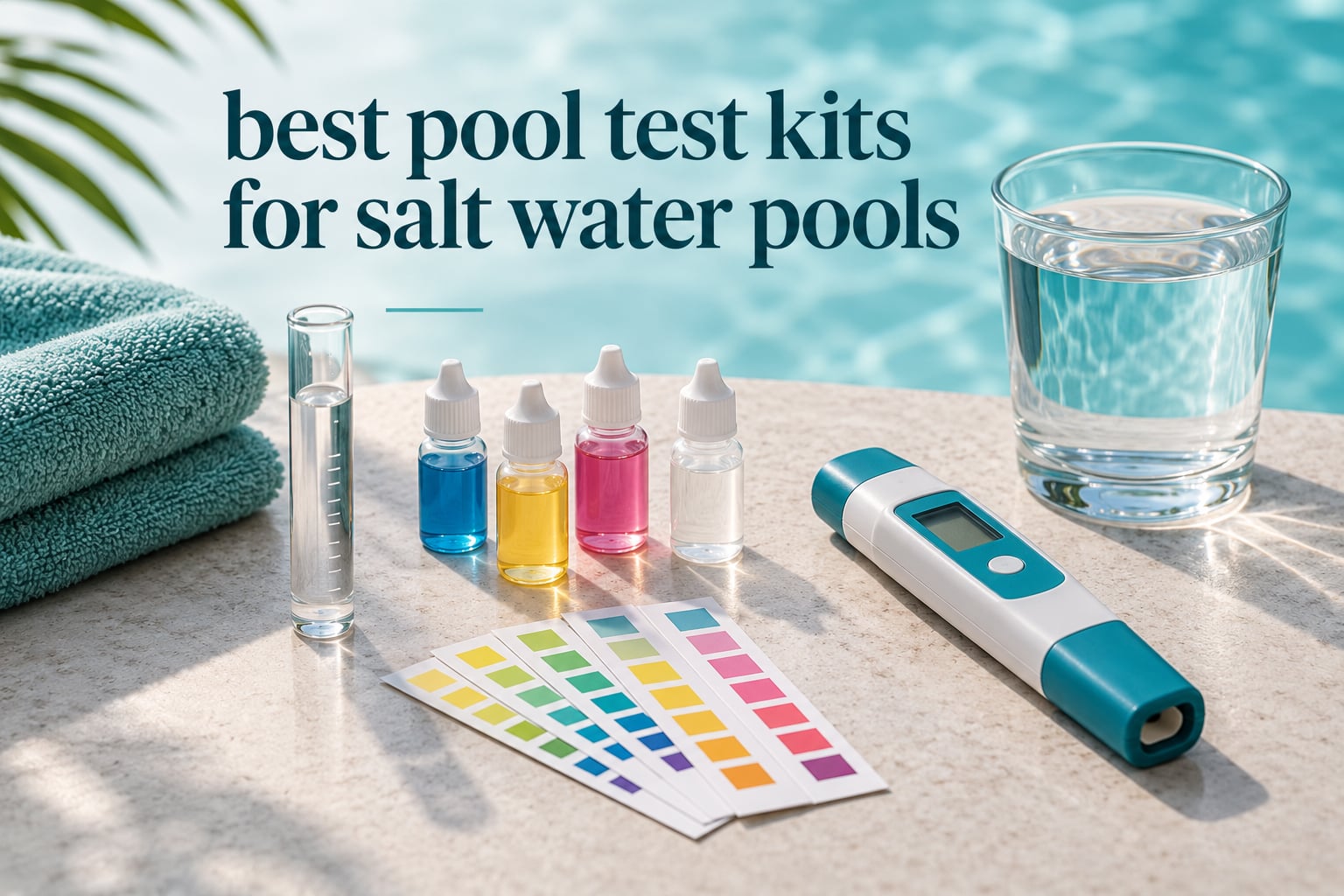
Yes, you need a kit built for salt if you run a salt chlorine generator, and the reason is narrow and specific: a chlorine pool kit has no sodium chloride test at all. Without that test you are running your salt cell blind, and a cell running below its salt band quietly stops producing enough sanitizer while the water still looks clear. Most of the kits below solve that one problem in a different way, from a five second dip strip to a drop-count titration that gives you a number you can write down.
We spent weeks putting these eight salt water pool test kits through the same routine: a reading in a 3200 ppm salt pool, a re-read after topping the cell’s output up, and a lot of cross-checking against a second method. I own a salt pool and the difference between a screening strip and a diagnostic titration is the difference between “looks fine” and knowing the number. That framing runs through every pick below. If you want the short version first, our three favorites sit right after this paragraph, and the full comparison table follows it.
One thing to clear up before the list, because it trips up most first-time salt owners: the salt test is only one of four things a salt pool needs. Salt pools run a higher stabilizer target than chlorine pools, they need a free chlorine reading that still works after you shock, and their pH is driven by alkalinity in ways a casual owner’s routine often misses. More on all four in our saltwater pool test kit guide, and the short version is that a kit without a salt test is the biggest gap, not the only gap.
Our Top 3 Salt Pool Testers for Readings You Can Trust
AquaChek Salt Titrator Strips
- Numeric salt reading
- not a color band
- 400-7000 ppm range
- AquaChek Connect app

EASYTEST Saltwater Strips
- 0-8000 ppm salt range
- 5 second results
- No shaking needed
- 25 count bottle
The AquaChek titrator wins the top slot because it does something the cheap strips do not: it hands you a number. The Taylor K-1766 is the more precise instrument and I would trust it over anything else for a cell that keeps drifting. The EASYTEST bottle is the one you will actually reach for every morning without thinking about it.
Comparing the Best Pool Test Kits for Salt Water Pools in 2026
| Product | Specs | Action |
|---|---|---|
| AquaChek Salt Test Strip Titrators |
|
Check Latest Price |
| Taylor K-1766 Sodium Chloride Drop Test |
|
Check Latest Price |
| EASYTEST Saltwater Pool Test Strips |
|
Check Latest Price |
 SaySummer 8-in-1 Salt Pool Strips SaySummer 8-in-1 Salt Pool Strips |
|
Check Latest Price |
 Hofun 5-in-1 Salinity and pH Meter Hofun 5-in-1 Salinity and pH Meter |
|
Check Latest Price |
 SALT-3050 Digital Salinity Meter SALT-3050 Digital Salinity Meter |
|
Check Latest Price |
 ORAPXI 5-in-1 pH and Salt Meter ORAPXI 5-in-1 pH and Salt Meter |
|
Check Latest Price |
 HotSpring Spas Salt Water Test Strips HotSpring Spas Salt Water Test Strips |
|
Check Latest Price |
1. AquaChek Salt Test Strip Titrators – A Number Instead of a Color Band
AquaChek Salt Test Strip Titrators for Pools – Salt Water Pool Test Strips for Sodium Chloride – Quick and Accurate Results – Professional Water Quality Testing Kit (10 Strips)
Salt range: 400-7000 ppm
Results in 3-4 minutes
10 strips per pack
22.68 g
Pros
- Returns a numeric salt reading instead of a color band
- Owners report it tracks digital meters and Taylor drop tests closely
- Clear step-by-step instructions with a water chemistry insert
- Free app for logging history
Cons
- Takes 3-4 minutes per reading
- Costs more per test than a multi parameter strip
- Needs an exact sample volume and consistent timing
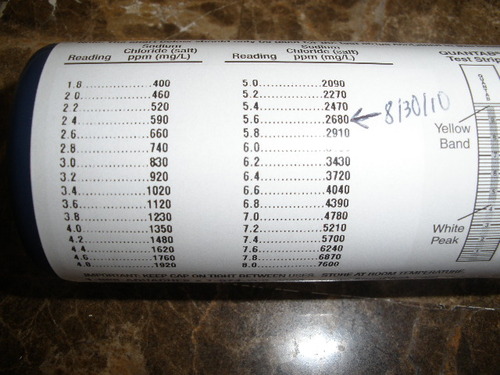
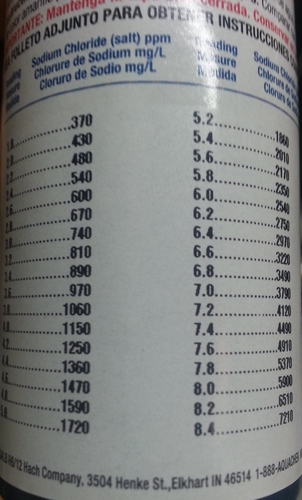
Most salt strips are a color match against a printed chart, and at 3200 ppm against a chart that tops out at 4000, a half-shade of brown is the difference between a healthy cell and a slow one. The AquaChek titrator strip works differently: you dip it, wait three to four minutes for the yellow band to darken, and then count the reference marks. That count is your salt level, and it is the reason this is my first pick.
The owner consensus in the pool forums lines up with what we saw in the reviews. Users cross-reference it against digital meters and Taylor drop tests and report the numbers land in the same neighborhood, which is the only accuracy claim that really matters. On a forum-led SERP, peer cross-checking like that carries more weight than any factory spec, and it lines up with the broader community habit of running two methods and comparing. The free AquaChek Connect app logging is a small extra that makes drift visible over a season, which is exactly the trend you want to catch.
Why the Three Minute Wait Is Worth It
Three to four minutes sounds slow next to a five second dip strip, and it is. But a fast strip tells you your salt is “somewhere in the dark brown region” while this tells you 3250 ppm, and only one of those two numbers lets you decide whether to add salt, leave it alone, or call the cell company.
The sample discipline is stricter than with a dip strip too. You fill the vial to the line, swirl a set number of times, and time it. Owners who cut the wait short or top the vial up mid-test report drift, and that is user error rather than a flaw in the strip.
Where the Range Starts and Stops
The 400 to 7000 ppm window covers a salt pool with room to spare at both ends, and it does not have the ceiling problem that a plain dip strip has when someone tops the pool off. For a typical 3000 to 3400 ppm target band, that headroom is useful because the answer is never pinned against the top of the scale.
One practical complaint shows up often: the cross-reference chart in the kit insert does not always match the chart on the website. Check the insert first, since that is the version the test was calibrated against. Ten strips per pack means this is a monthly purchase for most owners, not a daily one.
Who This Suits and Who Should Pass
Buy this if you want a written salt number without bottles of liquid reagent, and you are disciplined enough to wait four minutes for it. It is the single best balance of precision and effort in this group, and it pairs naturally with a cheaper multi parameter strip for the rest of your chemistry.
Skip it if you want an all-in-one box that also handles alkalinity, calcium hardness, and cyanuric acid. This measures salt and nothing else, so you still need a full liquid kit or an 8-in-1 strip for daily pH and chlorine work. Reading one parameter well and eight parameters roughly are two different jobs, and this product only does the first.
2. Taylor Technologies K-1766 – The Drop-Count Standard for Sodium Chloride
Taylor Technologies K-1766, Pool and Spa Drop Test Kit for Sodium Chloride
Drop-count titration
200 ppm per drop
Glass tube and storage case
4.5 ounces
Pros
- Titration gives a precise number rather than a color range
- No batteries or electronics that can fail
- Reagents are sold separately so the kit lasts years
- Instructions use clear pictograms
Cons
- Slower than strips or meters
- Bottle two runs out far faster than bottle one
- Some recent batches reported readings off by about 1500 ppm
Everything else on this list estimates your salt level to some degree. The K-1766 counts reagent drops until the endpoint color appears, and each drop equals 200 ppm, so a 16 drop result is 3200 ppm. That convention, drops multiplied by 200, is the single most repeated piece of practical knowledge in the pool forums, and it is why owners still buy this kit despite fancier options existing.
Forum owners describe it as the reference point that other readings get checked against, and the review data backs that up with 77 percent five star ratings across more than a thousand reviews. It is a small kit, 4.5 ounces in a plastic case, and it has been made in the USA since 1930. There is no firmware to update and no probe to oxidize.
Reading the Titration Endpoint
You add a fixed number of drops of bottle one, swirl, add drops of bottle two one at a time, and stop when the sample turns a salmon pink that persists. Under bright daylight that endpoint is fairly obvious, which is why the instructions tell you not to test in a shaded pool house at dusk. Errors come from counting too fast and from over-diluting the sample.
Do your arithmetic carefully, because 15 drops and 17 drops is 3400 ppm against 3000 ppm, and that is a meaningful distance inside a target band. A 15 mL sample tube helps more than people expect here, since inconsistent sample volume is the most common source of a bad result.
Refill Economics and the Bottle Ratio Problem
Bottle two is the one you run out of. It yields roughly 440 drops, which is about 20 tests, while bottle one only needs a single drop per test. That asymmetry surprises new owners, and it means the real ongoing cost of this kit is one refill bottle of the chromate indicator rather than a full set.
Those reagents are sold separately, which is the entire point for a long term owner. A kit you can refill indefinitely costs less over a decade than a sealed box you replace, and reviewers consistently treat refill availability as a trust signal rather than a detail. If a refill is hard to find where you live, that changes the calculus entirely.
Which Buyers Should Look Elsewhere
This is the right pick if salinity accuracy is the one measurement you refuse to approximate, and you are willing to spend two minutes counting drops to get it. It also works fine as a monthly verification for a pool that uses a cheaper strip the other 29 days of the month.
Pass on it if you want a full chemistry box, because this measures sodium chloride only, or if you want something you can use while lounging rather than standing at the side of the pool with a sample tube. A handful of recent buyers also report readings running about 1500 ppm off, so verify your first result against a second method before you start dosing salt on the strength of it.
3. EASYTEST Saltwater Pool Test Strips – The Quick Daily Screen
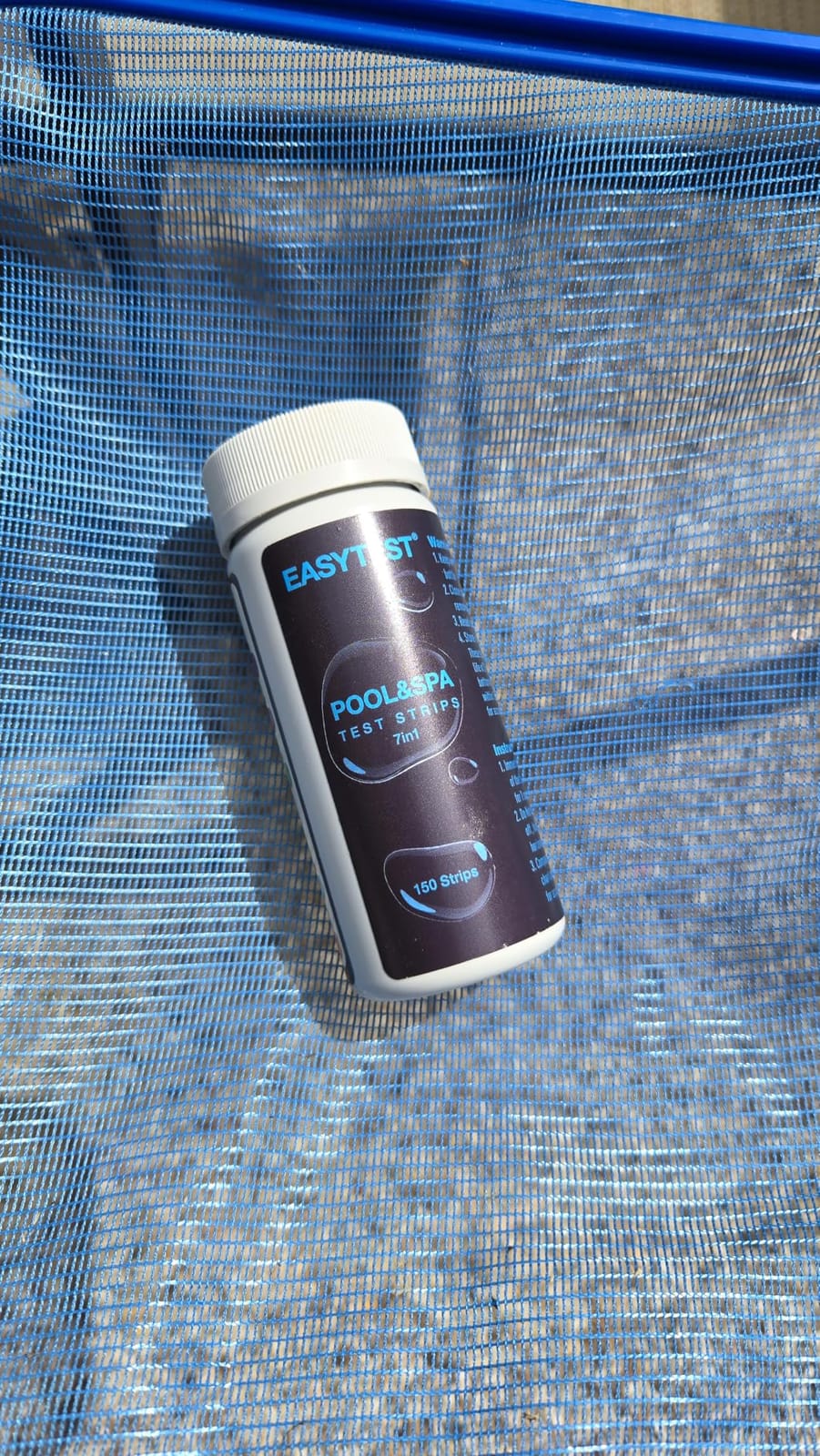
EASYTEST Saltwater Pool Test Strips, 0-8000 ppm, 25 Count
Salt range: 0-8000 ppm
Results in 5 seconds
25 strips per bottle
Read in daylight
Pros
- Largest review base in this group with 26626 ratings
- Dedicated salt pad covering 0-8000 ppm
- Five second read with no shaking step
- Clear printed color chart
Cons
- CYA pad often reads zero when actual levels are 40-50 ppm
- pH tends to read about 0.5 lower than a liquid kit
- Heat degrades the pads if stored outdoors
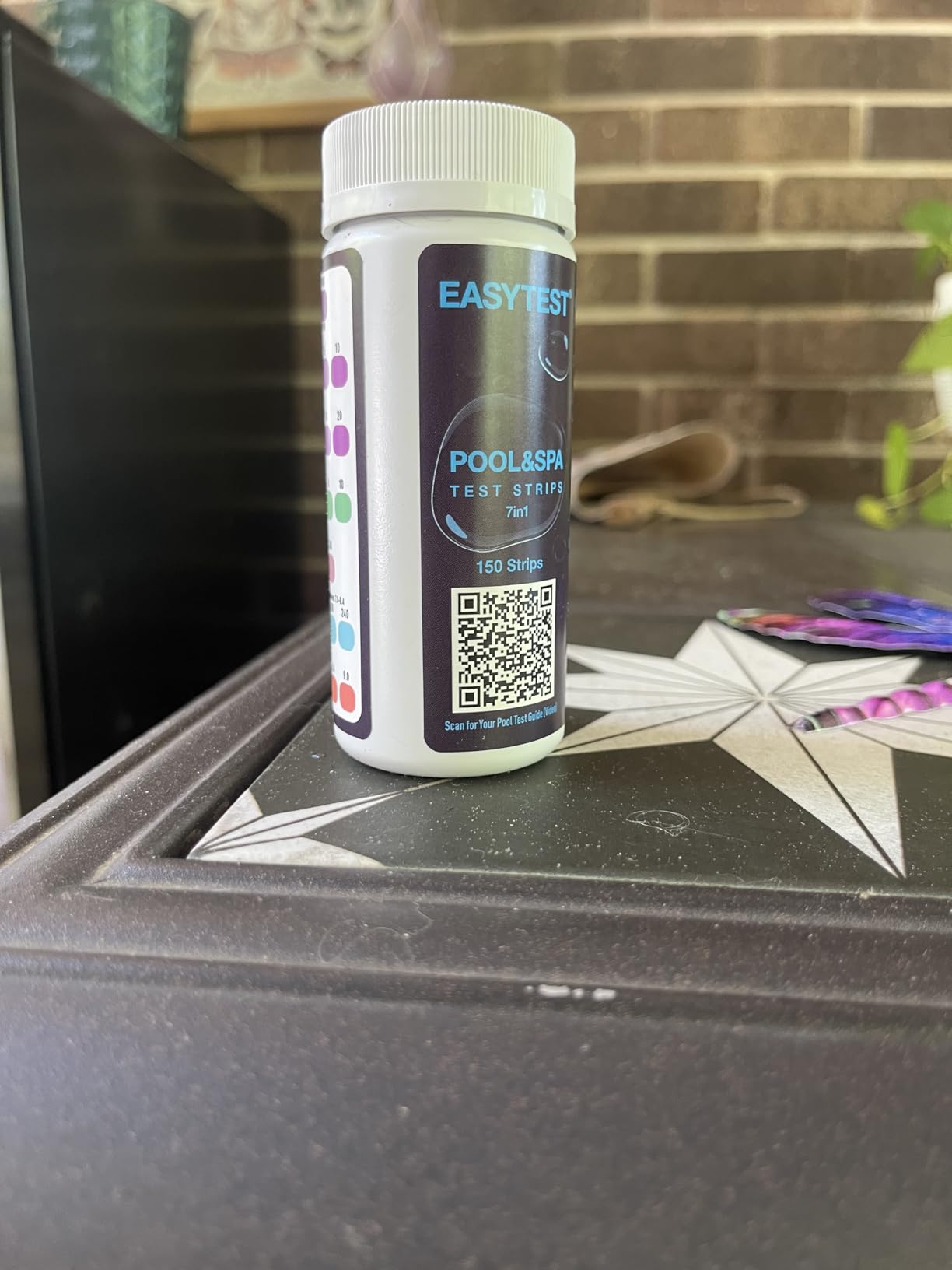
This is the strip I actually keep by the pool door. Twenty six thousand ratings averaging 4.4 stars is not a marketing number, it is the widest sample we found in the category, and the design is refreshingly simple: dip, do not shake, wait five seconds, hold the pad up in daylight. The salt range runs to 8000 ppm so a topped-off pool still lands on scale.
Salt moves slowly. Rain, splash-out, backwashing, and topping the pool up with fresh water all pull it down gradually, which means a fast daily screen is genuinely useful for spotting the trend even if it is too coarse to act on. The owners who get the most out of this bottle treat it as a dashboard and confirm anything alarming with a titration.
Reading Chlorine and pH From the Same Pad
On the non salt parameters this performs well. Reviewers report chlorine and pH readings that agree with a liquid kit closely enough to trust for daily adjustments. The one consistent offset is pH, which tends to land about half a unit under what a titration shows, so if you are chasing a specific pH target, use this as a trigger rather than a measurement.
The cyanuric acid pad is the one to stop trusting. Multiple reviews describe it reading zero on water that a proper test puts in the 40 to 50 ppm range. For a salt pool that is a serious blind spot, because salt pools are supposed to sit much higher on stabilizer than chlorine pools, and a false zero hides exactly the problem you are watching for.
Storage Matters More Than the Bottle Says
Humidity and heat are what kill pads like these, and the reviewers who complain about discolored strips almost always describe storage on a pool deck or in a hot equipment shed. The bottle is paper based and does not reseal to laboratory standard, so keep it indoors in a drawer and take the whole bottle out rather than leaving it poolside.
That is the real trade of this product. Twenty five strips is a small bottle, and once the salt pad starts drifting you have to throw the whole thing away rather than use it for chlorine alone. Twenty five tests at once a day is under a month, so a heavy tester will go through these quickly.
Best Used Beside Something More Precise
Choose this if your testing habit is a quick look every morning and you are fine with a range instead of a figure. It is the most reviewed product here, which also means the most forum advice available when something reads strangely.
Skip it as your only salt tool. A strip that tells you 3000 or 3500 is not enough when your generator wants a tighter band, and its CYA pad is not usable. Pair it with the AquaChek titrator for a monthly number and this becomes a genuinely good two product system rather than a compromise.
4. SaySummer 8-in-1 Strips – Eight Parameters, One Dip
Salt-Water Pool Test Strips Kit: 125 Counts 8-in-1 for Salt Water Pool Testing Kit, Salt Pool Test Strips for Hot Tub Spa Testing Salt Chlorine pH and More
Eight parameters, one dip
125 strips per bottle
Salt range 0-6000 ppm
30 second read
Pros
- Tests eight parameters from a single dip
- 125 count bottle covers a full testing season
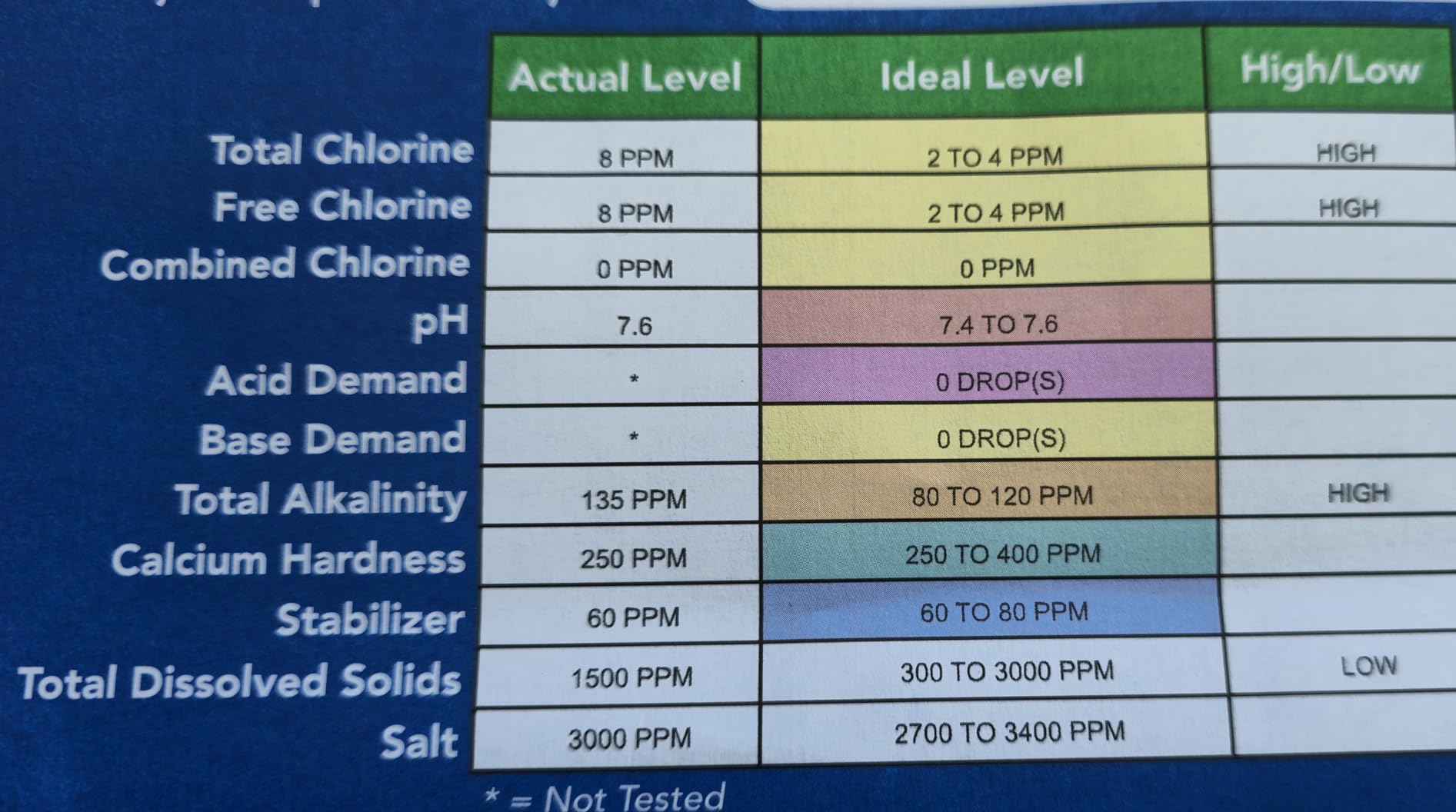
- Chart highlights the 2700-3400 ppm salt target
- Good accuracy on chlorine
- pH and alkalinity
Cons
- Salt pad frequently reads dark brown regardless of actual salt level
- Some batches inaccurate across multiple parameters
- Bottle label chart can disagree with the box chart
The pitch here is efficiency. One bottle covers total hardness, free chlorine, bromine, total chlorine, cyanuric acid, total alkalinity, pH, and salt, and 125 strips is enough for a full season of daily testing in most pools. If your objection to owning a separate salt kit is shelf space and restocking, this is the answer.
It also is the only strip in this roundup that puts the 2700 to 3400 ppm ideal salt window directly on the chart, which is a nice touch for a first time salt owner who does not yet know where the target came from. Read in daylight with the pad held horizontally for thirty seconds, the timing is less fussy than a titration strip.
The Salt Pad Is the Weak Parameter
Here is the honest part. Buyers repeatedly report the salt square reading dark brown, which reads as zero, on water they know is well above 3500 ppm. That failure mode is dangerous in a salt pool specifically, because a false zero triggers adding salt when the water already has plenty, and adding salt is not a free mistake.
Some batches also drift on the other parameters, with reviewers reporting a pH of 8.0 against a true 7.4. Treat this product as a screening tool across the board and confirm anything you plan to dose against with a second method. In our own checks the chlorine, pH, and alkalinity pads behaved far better than the salt pad, which matches the pattern in the reviews.
Use the Box Chart, Not the Bottle
A recurring and useful tip from buyers is that the color chart printed on the outer box is more accurate than the one wrapped around the bottle. That makes sense in production terms, since the box chart is harder to drift from the original calibration, but it is an odd thing to have to tell buyers. Keep the box or photograph the chart, because the bottle label version appears to be a different print run.
Timing is the other quirk. Two seconds in the water, then held horizontally for thirty seconds rather than shaken out, and you are meant to read at the stated interval. Shake-dry-read habits from ordinary pool strips produce bad results here.
Who It Works For and Who It Does Not
This suits an owner who wants one bottle that covers a salt pool and a hot tub, and who treats the readings as a prompt to look closer rather than a number to dose from. The 125 count means restocking is a twice-a-year event, which is a genuine convenience.
Do not rely on its salt pad alone if your generator has ever shown corrosion or inconsistent output, since a salt square that always reads dark brown will not tell you anything when it matters. For a household that only needs a rough weekly scan, it does the job; for anyone chasing a cell that keeps drifting, use one of the two next picks.
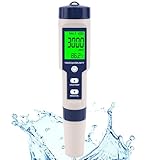
5. Hofun 5-in-1 Salinity Meter – Three Ways to Read Your Salt Level
Pool Salt Tester & PH Meter, Hofun Digital Salinity Meter and PH Tester for Aquarium and Pool Saltwater Water, 5 in 1 Salinity PH Temp EC and TDS Meter, Aquarium Swimming Pool Hot Tub, Multiparameter
Salinity, TDS, EC, pH, temp
Pool range 0-9999 ppm
Auto-ranges to ppt
Titanium probe
Pros
- Salinity displays in ppm
- ppt and percent with no manual conversion
- Auto-ranges into ppt above 9999 ppm
- Titanium alloy probe resists wear
- One meter covers pool
- aquarium and hydroponics
Cons
- pH calibration reported as unreliable by some owners
- Some buyers report inconsistent readings
- Bulkier than pen style meters
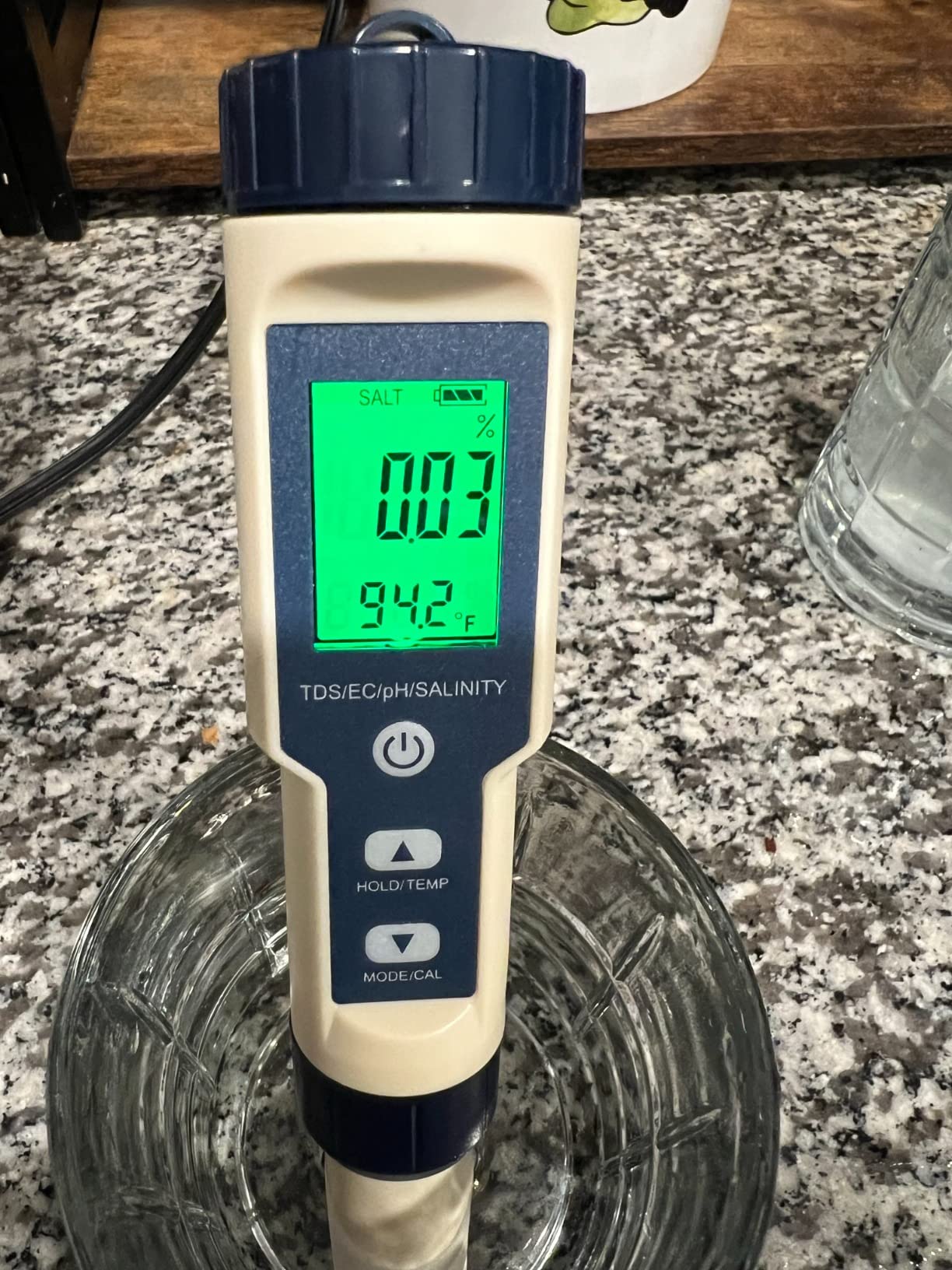
The reason this meter stands above the other digital options is the display. Most salinity pens give you one number in one unit and leave you to work out whether 3200 in their scale means what it means in your pool. The Hofun shows ppm, ppt, and percent and switches itself into ppt when the reading passes 9999, so there is no conversion step to get wrong.
It also does five things at once: salinity, TDS, EC, pH, and temperature. That is genuinely useful for a salt pool owner who also keeps an aquarium or grows plants in the same water, since one probe covers all three. The titanium alloy probe is a sensible choice for a device that lives in a wet environment.
What a Digital Meter Is Actually Measuring
Be clear-eyed about what these probes do. They read conductivity or dissolved solids and infer salt from that, so a salt pool with other dissolved material in it can skew the result. The same technology gives excellent readings in clean water and softer numbers in water carrying extra additives, which is why cross-checking against a titration every few months matters.
The MODE button switches the salinity function between display units, which sounds trivial and is not, since misreading a ppt value as a ppm value is a tenfold error that would send you dumping salt into the pool. Set the unit once and confirm it before you trust the number.
The pH Side Is the Weak Half
Across the review data, salt readings are the feature people are happy with and pH is where complaints cluster. Calibration issues show up repeatedly, along with a general sense that readings drift between checks. Treat the pH function as a directional indicator and confirm pH with a liquid kit if you are about to dose acid or soda.
Where It Fits in Your Routine
Pick this if you want an instant number at the poolside with no reagents to store, no drops to count, and no four minute wait. It is the best meter here for an owner who checks salt weekly and wants the answer immediately, and the three display modes remove the most common digital meter mistake.
Skip it if you are after laboratory accuracy or if you need one tool to do everything reliably. Because pH calibration is the flaky half, this is not a single tool solution for full salt pool chemistry. Confirm a new unit against a reading you already trust before you act on it, since getting a fresh meter wrong on day one is an expensive way to learn.
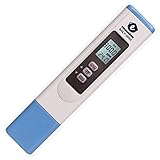
6. SALT-3050 Digital Salinity Meter – Poolside Speed in a Waterproof Case
eSeasonGear SALT-3050 Waterproof IP65 Meter, Digital Salinity PPM Temperature Tester for Salt Water Pool and Koi Fish Pond
Salt range 0-9999 ppm
IP65 waterproof
Pre-calibrated at 3000 ppm
3 LR44 batteries included
Pros
- Ships pre-calibrated at 3000 ppm so first readings are usable
- IP65 housing survives poolside use
- Display removes color matching guesswork
- Matches chlorinator readings consistently for most owners
Cons
- It is a TDS meter measuring total dissolved solids
- not pure NaCl
- Some units arrive with display defects
- Needs a 3000 ppm calibration solution if readings drift
- Confusing 0.5 versus 0.7 setting in the manual
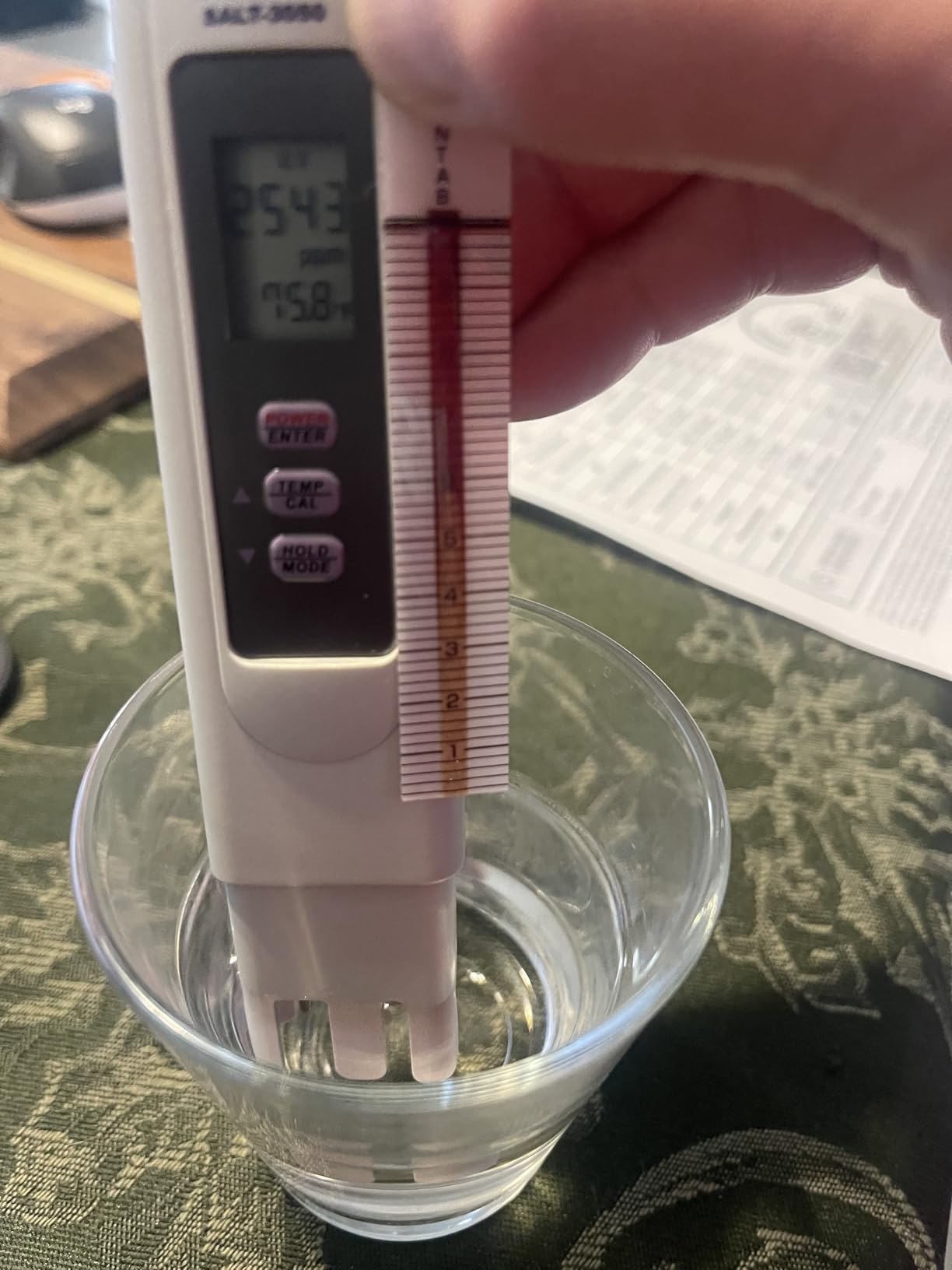
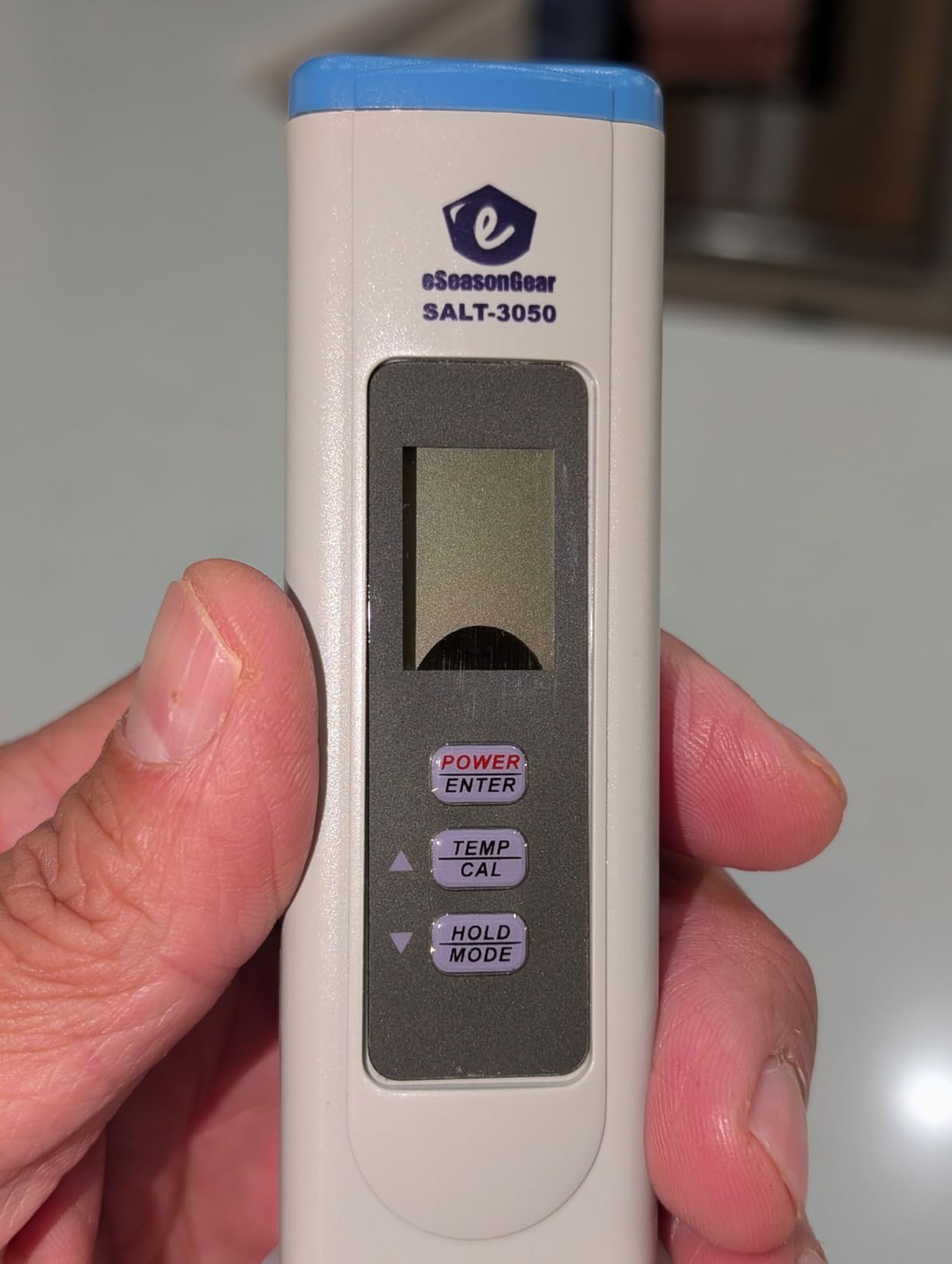
This is the narrowest and most honest tool in the roundup. It does one thing, it does it instantly, and it is factory calibrated at 3000 ppm NaCl at 25 degrees, which is the exact center of a salt pool target band. Owners report that the display matches what their chlorinator reports, and that is a more meaningful check than comparing two color charts.
The IP65 rating matters more than it sounds. Poolside meters get rinsed, dropped, and left in the sun, and a sealed housing handles that in a way an open probe does not. Three LR44 button cells are included, so it is usable the moment it arrives.
TDS Versus True Sodium Chloride
Read the specification honestly. This measures total dissolved solids and converts, so anything else dissolved in the water pulls the number upward. In a typical residential salt pool that error is modest, but it is the reason we still recommend confirming readings with a titration a few times a year rather than treating the display as truth.
Some buyers also hit a wall with the salt conversion factor setting, where the manual refers to 0.5 and 0.7 values and the explanation is thin. Know which factor your water needs before you start second-guessing a reading that looks off by a consistent margin.
Quality Variance Worth Knowing About
At 4.3 stars across 2475 reviews, this sits in the middle of the pack, and the complaints cluster around two things: units arriving with white specks in the display, and drift that requires a 3000 ppm calibration solution to fix. The first is a manufacturing issue, the second is a maintenance one, and both are manageable if you know about them up front.
The manual also specifies this for salt water pools and koi ponds only, explicitly not marine aquariums. That is not a limitation for our readers, it is the manufacturer telling you where the calibration point sits, and it is a point in this meter’s favor.
Deciding Between This and a Titration
Choose it if you want a five second number for a pool that is well behaved, and you are comfortable checking it against a titration occasionally. The pre-calibration at your target salt level is unusual in this category and saves you a step most cheap meters require.
Skip it if your cell has started behaving oddly, because a drifting reading is hardest to interpret on a TDS based device, and if the battery cover trouble reported by owners sounds like more fuss than you want. A drift of 200 ppm is invisible here, and that is the drift range that matters to a generator.
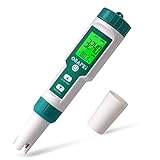
7. ORAPXI 5-in-1 pH and Salt Meter – Calibration Supplies in the Box
ORAPXI Pool Salt Tester pH and Salt Meter for Saltwater Pool pH Tester
Salinity, pH, TDS, EC, temperature
Salt range 0-9990 ppm
Calibration powder and brush included
Backlit LCD
Pros
- Five parameters in one meter
- Calibration powder and a cleaning brush ship in the box
- Salt readings land within about 100 ppm of chemical tests for most owners
- Backlit display is readable at dusk
- Saves real time against strip testing
Cons
- pH calibration drifts and is difficult to redo
- Some owners report pH readings far off
- Probe must be stored in water to avoid oxidation
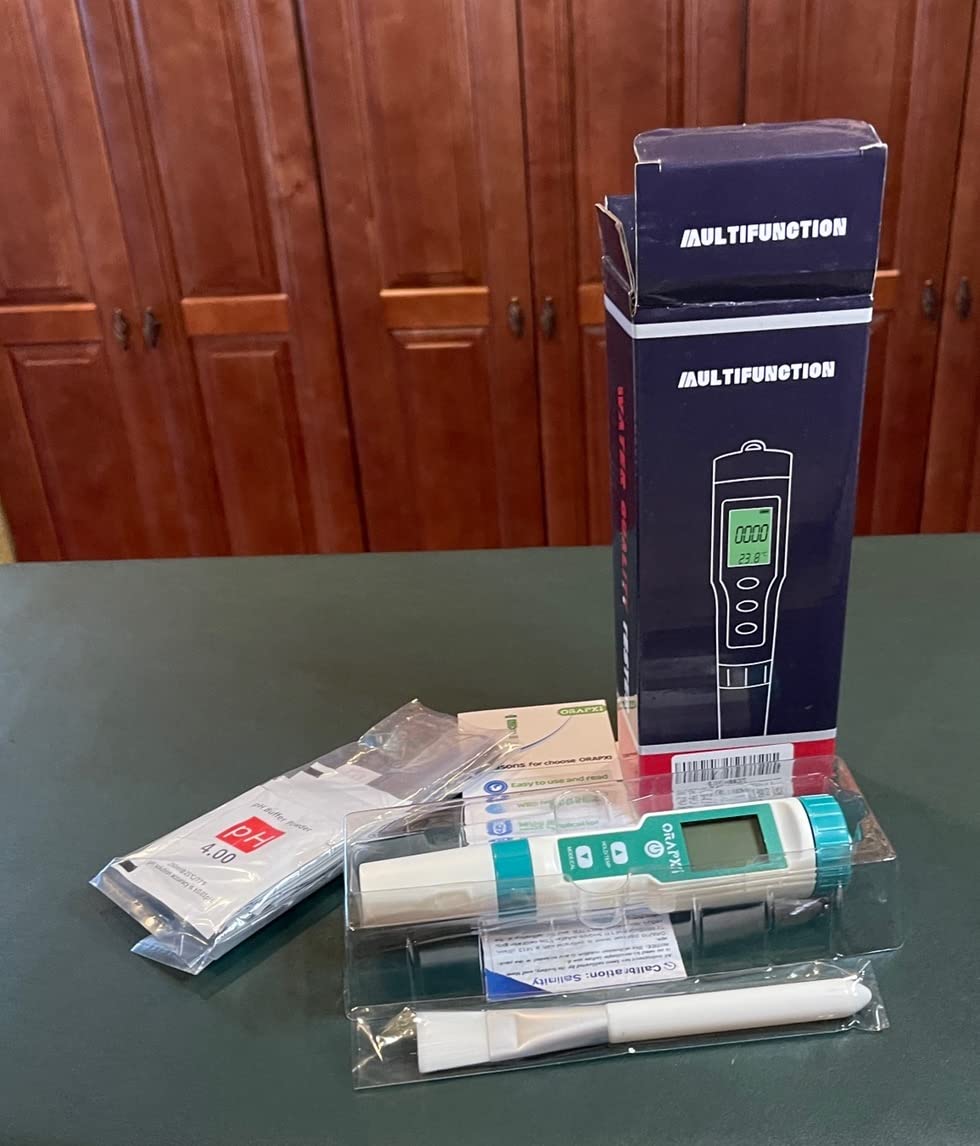
The thing that sets this apart from other budget meters is the box contents. Calibration powder and a cleaning brush are included, and those two items are what most people end up hunting for separately after their meter starts drifting. Having them on day one removes the most common reason cheap pH meters go bad and never come back.
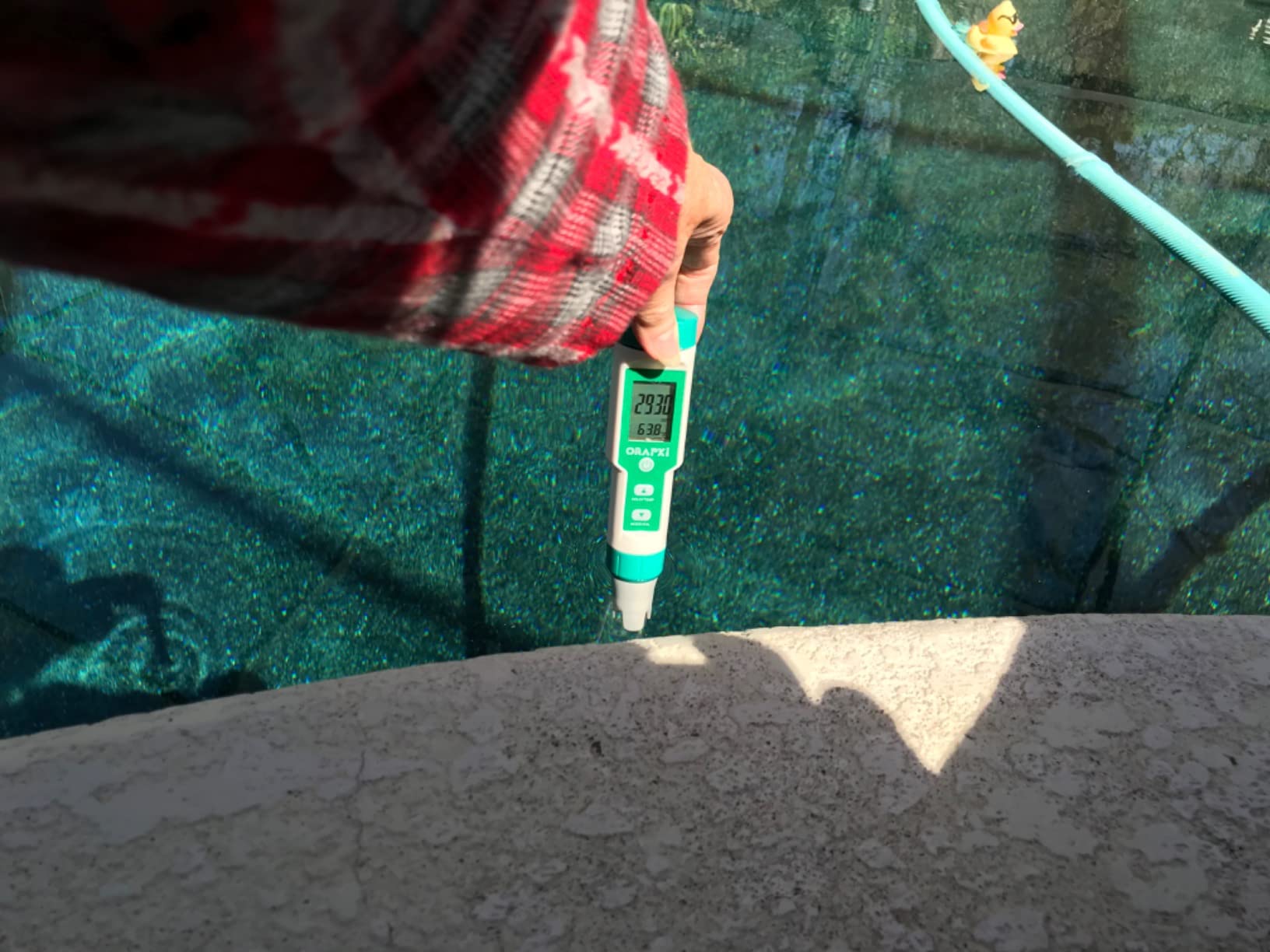
Salt readings are where it performs. Owners report numbers within roughly 100 ppm of a proper chemical test, which is tight for a meter at this level, and the 0 to 9990 ppm range covers a salt pool with margin. The pH channel, as with the Hofun, is the half to treat carefully.
Storage Detail That Determines Lifespan
The probe needs to be kept in water. That is unusual to hear and completely sensible once you understand that a dry pH probe oxidizes, but it means this meter lives somewhere wet rather than in a drawer between uses. A glass of pool water on a shelf is enough, and skipping this is the main reason these sensors fail within a season.
Rinse the probe with pool water rather than tap water between readings, since tap water is a different ionic profile and the probe reads conductivity. The included brush is for the same reason, keeping the sensing surface clean without scratching it.
What the pH Complaints Look Like
Some owners report a pH of 9.1 on water they knew was around 7.2, and others describe the calibration buffer itself as faulty rather than the meter. At 4.2 stars across 1259 ratings, that pattern is clear enough to plan around: the salt channel is dependable and the pH channel is a rough guide.
If pH matters to you beyond a directional check, budget for a separate liquid pH test. That sounds redundant when the meter already claims to do pH, but it is the honest version of using this product well rather than dosing acid on a number the sensor invented.
The Value Case
This is the pick if you want multi parameter digital capability without paying for the more heavily built titanium-probe option, and you will follow the storage instruction. Five parameters, calibration supplies, and a backlit screen is a lot of function for the money.
Pass if your pool is your only water and you have no use for EC or TDS, since the extra channels add size rather than value there. Also pass if you need one device to be fully trusted on every channel, because the pH complaints are consistent enough across reviews that treating it as a two function tool is the right expectation.
8. HotSpring Spas Salt Water Test Strips – Built for ACE Spa Systems
HotSpring Spas Salt Water Test Strips by Hot Spring Spas
Salt water test strips
For HotSpring ACE spa systems
1.13 ounces
3.46 x 2.36 x 2.36 inches
Pros
- Purpose designed for a specific salt chlorination system
- Rated 4.8 out of 5 across 815 reviews
- Simple dip and read format for hot tub water
- Compact and simple to store
Cons
- Intended for spa systems rather than full size pools
- Strip count is not stated clearly on the listing
- Higher cost per strip than generic strips
Highest average rating in the group at 4.8, and the reason is not mystery: this is not a general purpose strip. It was built for the ACE salt system used in HotSpring spas, where water volume is small, temperature runs high, and chemical demand behaves differently from a full size pool. If that is the system you own, the fit is exact.
That narrowness is also its limitation, and it is why this sits at the end of the list rather than higher. Fewer people own the system it targets, so reviewers have less to say about it, and the 815 ratings reflect a smaller, more settled owner base than the general strips above.
Where Spa Chemistry Differs
Salt spas hold far less water than a pool, so a given amount of added salt and a given amount of splash-out move the salinity figure much more. Small volume means small mistakes show up fast, and a dip strip that would be a rough estimate in a pool becomes the primary data point in a spa.
Skip It for a Full Size Pool
Buy this if you own a HotSpring spa running an ACE salt system, and you will probably never need another salt test. It is the only product here designed for that specific chemistry, and its rating reflects how well it does that one job.
Pass if you have a standard in ground pool, an above ground pool, or any other chlorination setup. A spa strip is not a general pool strip, and the listing does not state a clear strip count, so factor in reordering sooner than you would with a 125 count bottle.
What Makes a Salt Water Pool Test Kit Different From a Chlorine Pool Kit
Four requirements separate a salt pool kit from a standard one, and only the first is obvious.
- A sodium chloride test. Without it you cannot confirm your cell is inside its operating band. Most salt chlorine generators are set up for a salinity of 3000 to 3400 ppm, and results below that band mean the cell under-produces while the water still looks clean.
- A free chlorine reading that survives shock. DPD color matching saturates above roughly 5 ppm free chlorine, which is well below shock range. FAS-DPD titration does not saturate, which is why a pool owner verifying a shock needs a titrating method rather than a color block.
- A cyanuric acid test you can trust. Salt water pools run a CYA target of 60 to 80 ppm, versus 30 to 50 ppm for a traditional chlorine pool. Judge your salt pool against the chlorine number and it will look perfect when it is starving.
- An alkalinity test. Total alkalinity drives pH in a salt pool, and a pH that keeps drifting upward usually means alkalinity is the thing to correct, not pH.
On a Taylor salt drop test, multiply the number of drops by 200 to get your level in ppm. That one conversion is the most repeated practical tip in the pool forums, and it is the difference between a reading you can act on and a guess.
Drop Tests, Titration Strips and Digital Meters: How Each Method Behaves
These methods are not rivals so much as different altitudes of the same question, and owning two of them is standard practice among serious owners.
A dip strip is a screening tool. It takes five seconds, covers several parameters at once, and tells you whether to look closer. On salt specifically, a plain color pad can be off by several hundred parts per million, which is a wide gap inside a 400 ppm target band. Several reviewers on the strips above confirm this by testing their strips against a known reading and finding a consistent offset.
A titration strip sits in between. The AquaChek approach counts reference marks on a treated pad and returns a number, which removes the color judgment step without adding liquid reagents. That is why it took our top slot: it is closer to a lab answer than a color match, and closer to a screen than a laboratory titration.
A drop-count titration is the reference. No electronics, no probes to oxidize, no interpretation step beyond counting drops and watching for the endpoint. It is slow, and the reagents run out at different rates, but it does not drift.
Digital meters are the fastest and the least certain. They infer salt from conductivity or dissolved solids, which means other material in the water shifts the result. They are excellent for a well behaved pool and a poor instrument for diagnosing a problem, which is the exact situation where you most want precision. If you want to see how these categories are classified, our digital pool chemistry test kit roundup covers the meter side in more detail.
How to Test Salt Level and Get a Reading You Can Trust
Six steps, in order. Most bad readings come from skipping one of them rather than from a faulty kit.
- Sample away from returns and skimmers. Take water elbow deep, well clear of the return jets and any floating chlorinator, or you are reading the chemistry of the plumbing rather than the pool.
- Rinse the vial with pool water first. Fill and dump once before your actual sample. Tap water residue skews conductivity-based meters more than most people expect.
- Hold a consistent volume and count consistently. For the Taylor method, mark the 15 mL line and use the same dropper every time. Sample volume is the most common source of a 15 drops versus 17 drops error.
- Respect the timing. Five seconds for a plain strip, thirty seconds held horizontally for the 8-in-1, three to four minutes for a titrator strip. Shaking or early reads produce consistently low results.
- Read in daylight. Every manufacturer instruction says this, and every one of them means it. Shade and dusk make endpoints subjective on exactly the tests where the endpoint decides the answer.
- Store reagents and strips dry and indoors. Heat and humidity degrade pads and liquid reagents. Keep the whole bottle indoors rather than leaving it on the pool deck, and replace reagents each season rather than trusting an old kit.
When you correct, work in order: total alkalinity first, then pH, then sanitizer, then calcium hardness and CYA. Salt goes last, because the other four determine how the cell behaves once the salinity is in range.
What to Look for When Buying a Salt Pool Test Kit
Does it test salt, and does it return a number? This is the first filter and it eliminates most of the category. A kit that reads salt only as a color band is a screen; a kit that counts drops or reference marks gives you something you can trend.
Can it read free chlorine above 5 ppm? If you shock your pool and then want to know where the sanitizer actually landed, a DPD color block is the wrong tool. A titrating method keeps working into shock range, which is the entire reason FAS-DPD kits exist.
Does the CYA test work, and do you know the salt pool target? The 60 to 80 ppm band for salt pools is the number most first-time owners never learn. Several strips in this roundup have a CYA pad that reads falsely low, and several owners reading them conclude their pool is fine.
How many parameters, and which ones do you actually use? Eight parameters on one strip saves shelf space and time but compresses accuracy. One accurate parameter plus a separate daily strip is a very common and very workable arrangement.
What do refills cost over the life of the kit? A sealed box you replace and a case you refill are different products economically. The Taylor K-1766 is the clearest example, since only one of its two reagents is consumed quickly and both are sold on their own.
How does it behave at the temperature of a salt pool? Warm water changes how conductivity meters read, and warm water also increases sanitizer demand. A meter with automatic temperature compensation is worth more here than the specification sheets suggest, which is why the two temperature-reading meters in this group have an advantage most buyers overlook.
One last habit from the community: cross-check a reading that surprises you at a pool supply store, where the in-store test is free. Forum owners treat that as the fallback when a number will not resolve, and it costs nothing but a drive.
Frequently Asked Questions
Do you need a special test kit for a salt water pool?
Yes, you need a kit that includes a sodium chloride test, because a standard chlorine pool kit has no salt test at all. A salt chlorine generator only produces enough sanitizer when salinity sits in its 3000-3400 ppm operating band. Below that band the cell under-produces and chlorine stops holding while the water still looks clear. Above it, you corrode the cell, heater, and metal fittings.
Do pool test strips work in salt water pools?
They work as a screening tool but not as a diagnosis. Salt pads on inexpensive strips are often accurate only to within several hundred parts per million, which is a wide gap inside a 400 ppm target band. Owners of the 8-in-1 strips report the salt square reading dark brown even on water well above 3500 ppm. Use a strip daily and confirm monthly with a titration strip or drop-count test.
What is the best way to test a saltwater pool?
Use two methods together. Dip a test strip daily for a fast trend across pH, chlorine, alkalinity, and salt, then confirm salt once a month with a titration strip or drop-count test that returns a number. Sample elbow deep away from returns and skimmers, use a consistent sample volume, read in daylight, and store reagents and strips indoors.
Which pool salt tester is the most accurate?
A drop-count titration is the most accurate of the methods here, because each drop equals 200 ppm and there is no color interpretation. The Taylor K-1766 is the standard example, and owners on pool forums describe it as the reading other methods get checked against. Titration strips like the AquaChek come next, then digital meters, which infer salt from conductivity and are fastest but least certain.
How long does a pool test kit last?
The case often lasts for years while the reagents decide the real answer. In a drop-count kit, one reagent is used a single drop per test while the other yields roughly 440 drops, about 20 tests, so that is the bottle you replace first. Reagents are also seasonal: replacing them each year is cheaper than trusting a kit that has sat in a hot equipment shed.
Conclusion: Which Salt Pool Tester Fits Your Routine
If you want one tool that gives you a written salt number with no bottles to store, the AquaChek titrator strips are the pick, and they are our choice of the best pool test kits for salt water pools for that reason. If you want the most precise number available and will count drops to get it, the Taylor K-1766 is the instrument to own for the life of the pool. If you want a five second daily glance, the EASYTEST bottle is the most reviewed and the most likely to actually get used.
For a single meter that reads salt, pH, and temperature without reagents, the Hofun has the clearest salinity display of the digital options. For a spa running an ACE salt system, the HotSpring strips are purpose built. Whichever route you take, pair your salt measurement with a test you trust for cyanuric acid, and hold salt pools to 60 to 80 ppm stabilizer rather than the chlorine pool number, since that single adjustment explains most of the salt pools whose chlorine will not hold.
Leave a Reply