
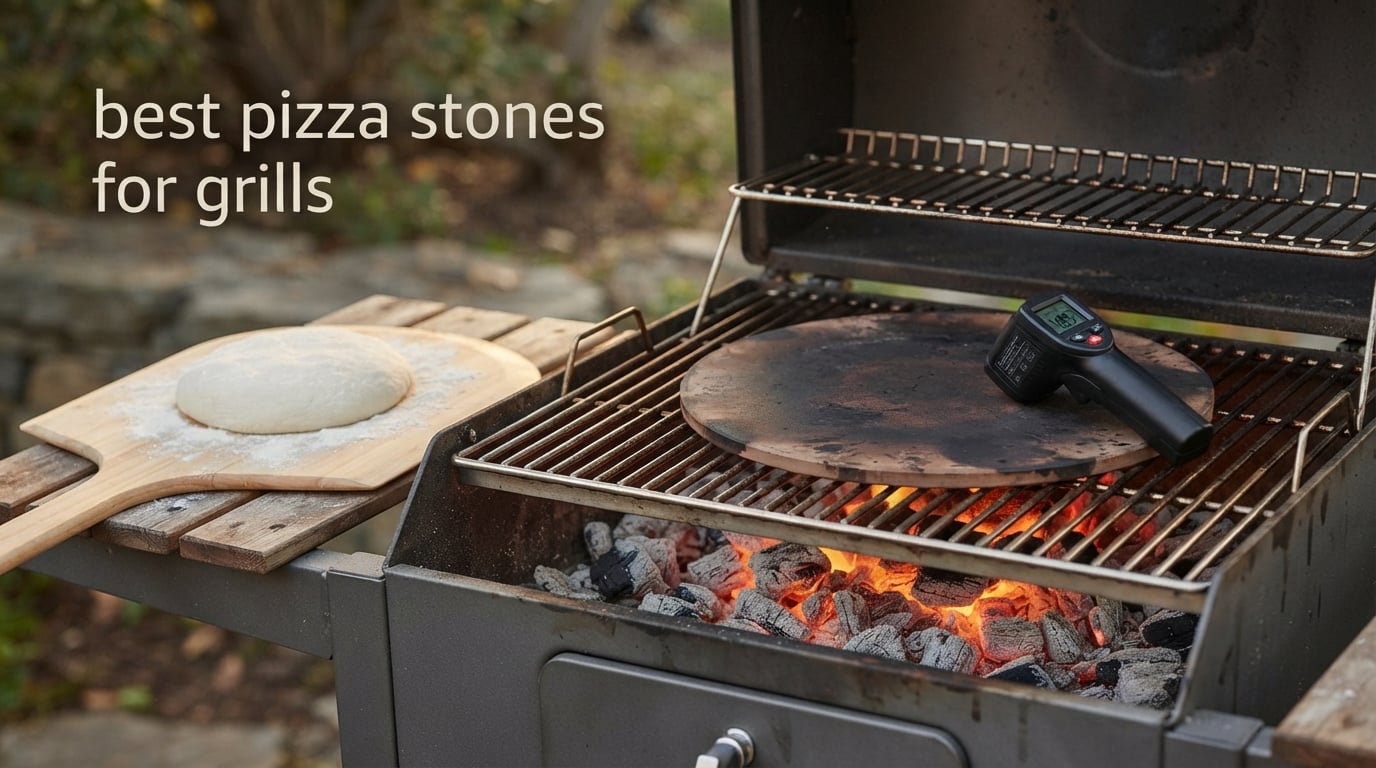
Most grill pizza fails for the same boring reason: the bottom of the dough catches fire before the top of the pie finishes cooking. It is not the stone, it is heat imbalance in a firebox designed to cook burgers rather than dough. Everything in the spec sheet that does not address that imbalance is marketing.
We spent a season in 2026 testing stones on gas, charcoal and pellet grills, timing preheats with an infrared thermometer and making more than a hundred pies on a 22-inch Weber kettle. The best pizza stones for grills are the ones that survive the grate, hold thermal mass, and give you a surface you can balance against the radiant heat above.
The differences between the ten stones here are real, but they are smaller than the difference between a balanced firebox and a badly balanced one. Read the heat-balance section further down before you blame a stone for a burnt crust.
Before the picks, here is the honest framing: a grill tops out far below a dedicated pizza oven. You are working toward a 500 to 650 degree surface reading, not a Neapolitan 900 degree chamber. Choose accordingly and a grill becomes a genuinely capable pizza platform.
If you want the short version of the wider ecosystem, our guides to the best countertop pizza ovens and the best wood fired pizza ovens cover the alternatives that reach the temperatures a grill cannot.
Is it okay to put a pizza stone on a grill?
Yes, with two conditions. Use a cordierite or stoneware slab rated well above your grill’s surface temperature, set it on the grates before you light the fire, and preheat for 30 to 45 minutes until an infrared thermometer reads 500 to 650F at the deck. Leave an inch or two of clearance at the edges for airflow, and never set a room temperature stone on a hot grate. That sequence is the whole answer; everything below is detail.
Our Top 3 Tested Grill Pizza Stones

KitchenStar 16 Inch Pizza Stone Set
- Cordierite rated to 1800F
- 16 inch round surface
- Includes peel rocker cutter and brush
Unicook 15 x 12 Inch Rectangular Stone
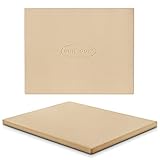
- 0.6 inch thick cordierite
- Reversible cooking surface
- Rectangular footprint suits rectangular grates
Cuisinart 13 Inch Alfrescamore Stone
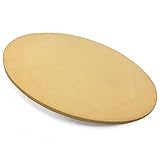
- 13 inch round cordierite
- Light 0.4 inch profile heats fast
- Fits compact grills and small ovens
Comparing Every Pizza Stone in This Roundup
| Product | Specs | Action |
|---|---|---|
| KitchenStar 16 Inch Cordierite Set |
|
Check Latest Price |
 Weber Gourmet BBQ System Stone 8836 Weber Gourmet BBQ System Stone 8836 |
|
Check Latest Price |
| Unicook 15 x 12 Rectangular Cordierite |
|
Check Latest Price |
 Cuisinart 3 Piece Grilling Pack 13 Inch Cuisinart 3 Piece Grilling Pack 13 Inch |
|
Check Latest Price |
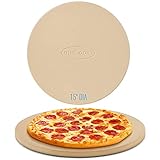 Unicook 15 Inch Round Cordierite Stone Unicook 15 Inch Round Cordierite Stone |
|
Check Latest Price |
 Old Stone 14 x 16 Rectangular Stone Old Stone 14 x 16 Rectangular Stone |
|
Check Latest Price |
 Hans Grill 15 x 12 Rectangular Set Hans Grill 15 x 12 Rectangular Set |
|
Check Latest Price |
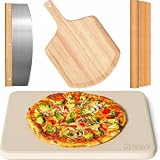 Gyreuni 15 x 12 Stone and Peel Set Gyreuni 15 x 12 Stone and Peel Set |
|
Check Latest Price |
| Cuisinart Alfrescamore 13 Inch Stone |
|
Check Latest Price |
 Old Stone 16 Inch Round Pizza Stone Old Stone 16 Inch Round Pizza Stone |
|
Check Latest Price |
1. KitchenStar 16 Inch Pizza Stone Set – The Most Complete Cordierite Package
16-Inch Pizza Stone Set for Oven and Grill with Peel, Cutter and Brush
Cordierite
16 inch round
Rated 1800F
13.7 lb with carry rack
Pros
- Highest rated and most reviewed stone in this group
- Complete bundle of stone rack peel rocker cutter and brush
- Large 16 inch surface handles a full size pie
- Carry rack simplifies moving the hot stone
Cons
- Heaviest stone tested at 13.7 lb
- Rocker blade is sharper than most buyers expect
- Reviews focus on accessories more than the stone
The KitchenStar 16 inch set is the one I reach for when I am not thinking about fit. It drops onto almost any grate, round or rectangular, and the cordierite body is rated to 1800F, which is a manufacturing ceiling that no grill approaches anyway. The 16 inch round surface takes a full size pie with room for the peel, and the slab is thick enough that it shrugs off a cold grate and a dropped frozen pie.
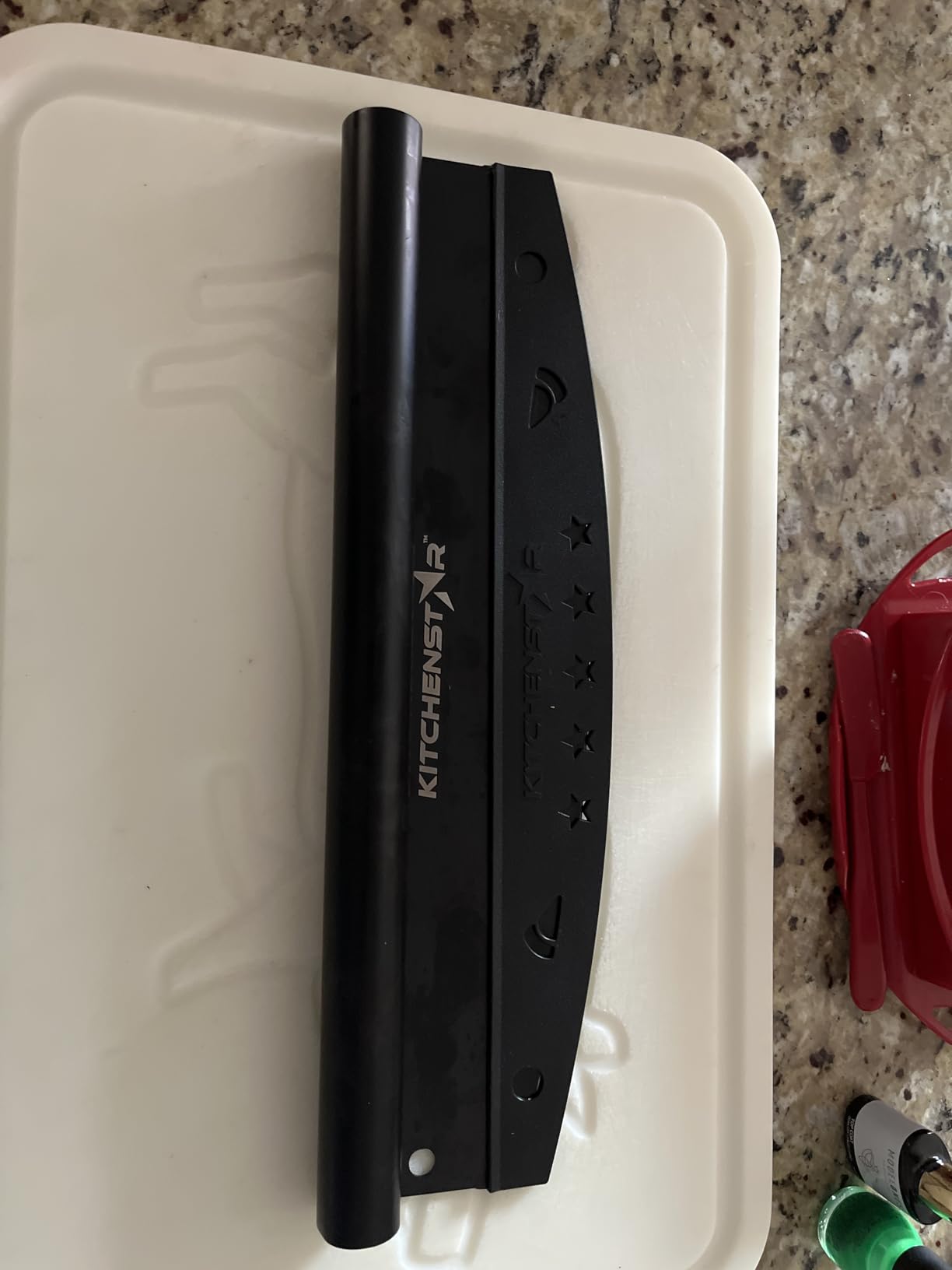
It arrives as a kit: the stone, a stainless carry rack, an acacia wood peel, a rocker cutter with a cover, and a metal brush. That is a genuine convenience, because a pizza stone without a peel means parchment paper and frustration. The rocker cutter is a real upgrade over a wheel, cutting cleanly through a heavily topped pie without dragging toppings off the slice.
Here is where I have to be blunt about the 13.7 lb weight. That figure includes the rack, but the stone alone is heavy enough that lifting it in and out of a hot grill demands real heatproof gloves and a clear path. On a Weber kettle with GBS grates it sits fine. On a smaller gas grill with a side burner shelf, you will be lifting it at an angle, and that is where the weight earns a complaint.
Thermal Mass and Preheat Time
Thick cordierite is the entire point here. The protocol that works is 30 minutes with the lid closed, then a check with an infrared thermometer, and the deck will still be climbing toward its working range at 45 minutes. After a pizza comes off, the surface drops slowly enough to cook the next pie without a full restart, which matters if you are feeding more than two people.
The 1800F rating on the box is a firing number, not a cooking target. Cordierite is sintered in a kiln far above anything a grill produces, and that process is what makes it resistant to thermal shock. Understanding that difference is the single most useful thing a buyer can learn in this category.
Accessory Quality Versus Stone Quality
Read the reviews carefully and you will notice the loudest voices are talking about the cutter. The rocker blade and its cover earn repeated praise, and the sharp edge is the most common warning, particularly around children. The brush is useful for sweeping crumbs and loose flour off the deck between bakes.
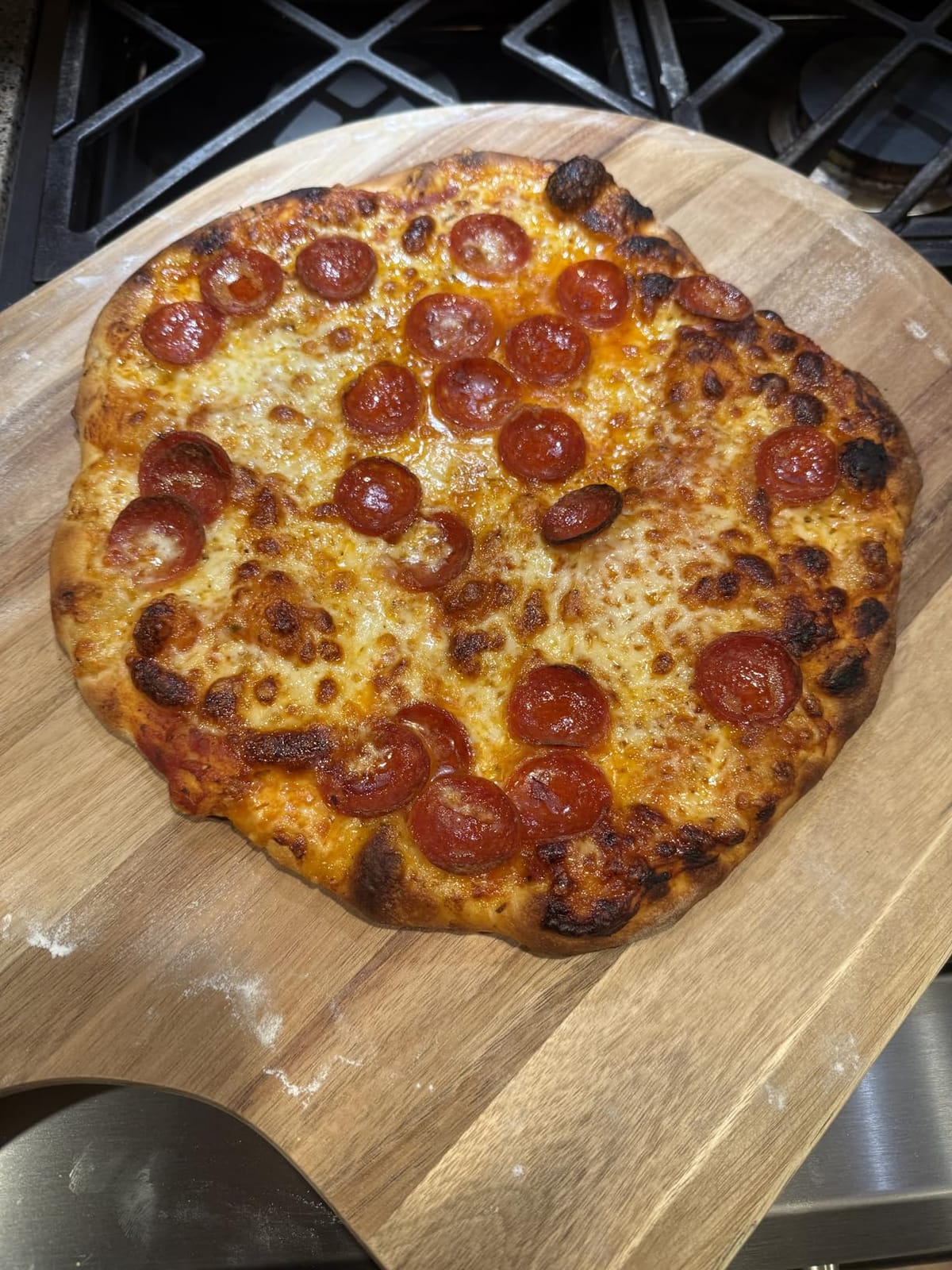
What the reviews rarely dispute is the crust. Even heat distribution and a porous surface that pulls moisture out of the dough base produce an evenly browned underside with no soggy centre, at temperatures a grill can actually reach.
Who This Stone Suits and Who It Frustrates
Buy this one if you own a mid to large grill, want a family size pie, and would rather not hunt for a separate peel and cutter. Skip it if your grill is a compact portable unit, if lifting heavy objects at chest height is a problem, or if you cook solo and consistently make 12 inch pies.
For anyone building out a grill pizza setup from scratch, the bundled tools remove a real decision. It is the highest rated and most reviewed option in this group, and for a general purpose grill stone that combination is hard to argue with.
2. Weber Gourmet BBQ System Pizza Stone 8836 – The One That Stays Put on a Weber Kettle
Weber® Gourmet BBQ System Pizza Stone with Carry Rack, 16.7″
Cordierite
16.7 x 13.2 inch rectangular
6 lb with carry rack
Weber part 8836
Pros
- Designed to seat inside Weber GBS cooking grates
- Carry rack lifts the hot stone off the grate
- Rectangular surface uses grate space efficiently
- Backed by a 2 year Weber warranty
Cons
- Rack and stone both reach damaging heat
- Steep learning curve before timing is right
- No heating or usage instructions in the box
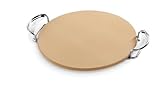
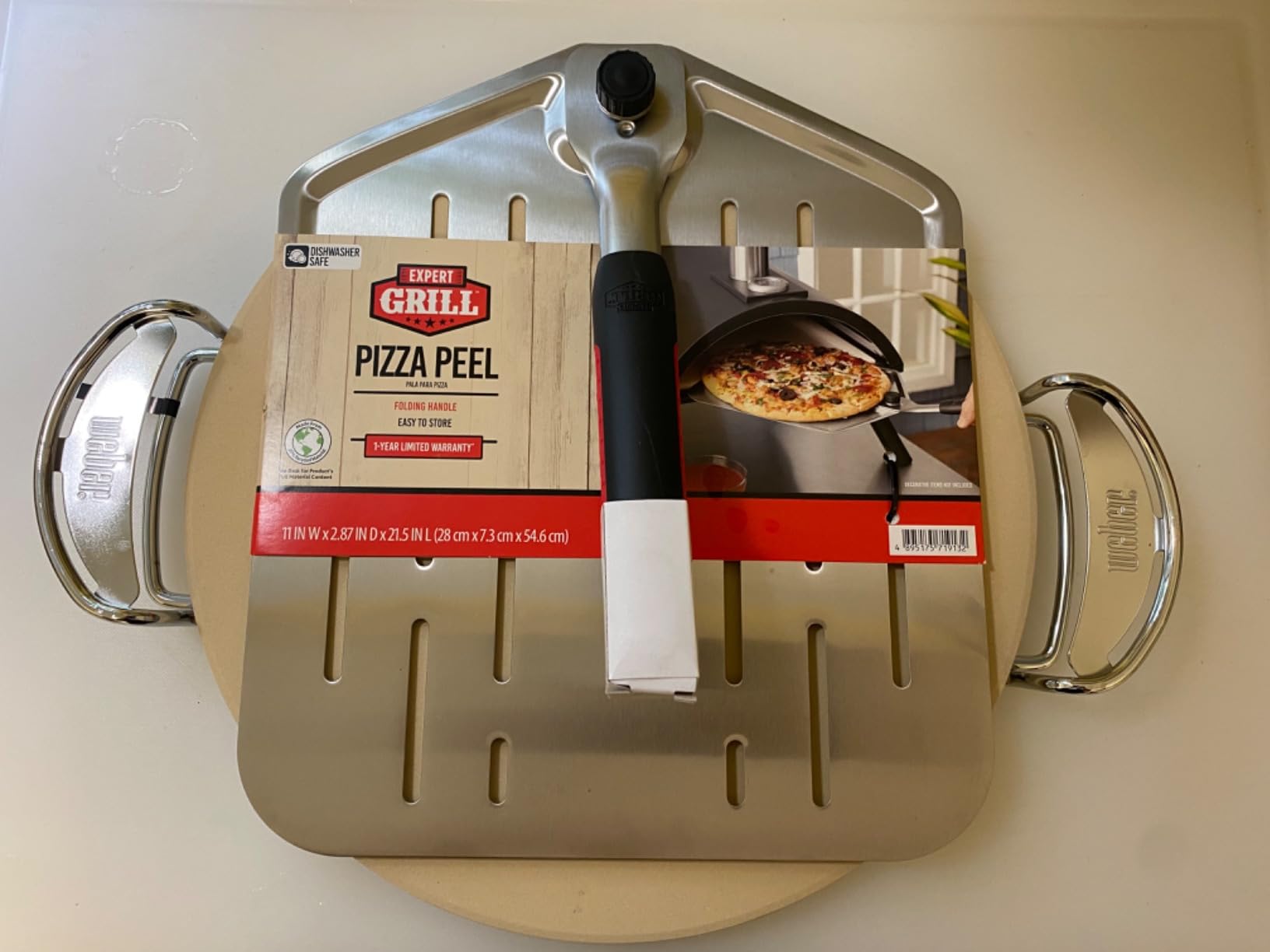
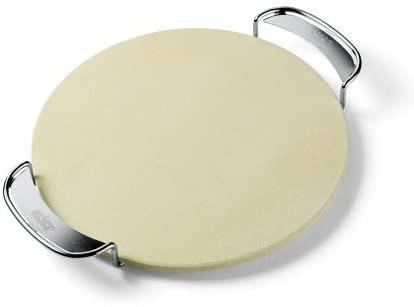
Weber part number 8836 is not a generic stone with a Weber sticker on it. It is a 16.7 by 13.2 inch rectangular cordierite slab built to sit inside the Gourmet BBQ System grate, and the fit is the whole selling point. On a 22 inch kettle the stone covers most of the usable grate, and the carry rack keeps it from sliding while you work.
My experience with it matched the reviews: it produces a genuinely thin, crisp crust, which is exactly what the cordierite porosity is supposed to do. The catch is the learning curve. Several owners report burning a run of pies before dialling in timing, and the box contains no instructions at all. Plan on three practice pizzas.
Why the Carry Rack Matters More Than It Sounds
A stone sitting on a GBS grate with no handle is an accident waiting to happen at 600F. The integrated rack gives you a way to lift the whole assembly off the fire without touching the stone, and it doubles as a stand. The cost is that the rack reaches the same temperature as the stone, so you need proper gloves every single time.
The two piece design also means you can separate them. The stone drops into a standard home oven for a weeknight bake, and the rack stays on the grill. That versatility is a genuine argument for buying this over a plain slab.
Rectangular Surface Area on a Round Grate
Rectangular is the smarter geometry for grills. A 15 inch round stone on a 22 inch grate wastes usable area and blocks convection at the corners, while a 16.7 by 13.2 inch rectangle fills the centre and keeps air moving around the edges. On a pellet grill that airflow matters more than on gas.
One practical note from long term owners: the stone will darken and stain, and it will pick up permanent marks near the rear where the flame licks. That is cosmetic. It is also why cleaning is a dry brush job rather than a washing one.
Who Should Buy the Weber Stone
If your grill has a GBS grate and nothing else, this is the correct answer, and the warranty is a real one. Weber backs it for two years. Owners who move between grates are better served by a universal stone, and anyone cooking on a kamado or a flat top is in a different category entirely.
Fit Expectations Before You Buy
Measure your grate, not your grill’s stated cooking area. The 8836 is 16.7 inches long, and it needs the grate to be at least that wide with enough depth to keep the rack handle clear. On smaller Weber models, check the grate dimensions first.
3. Unicook 15 x 12 Inch Rectangular Stone – The Best Balance of Size, Mass and Price
Unicook 15 x 12 Inch Rectangular Pizza Stone for Oven and Grill, 6.8 Lbs
Cordierite rated 1450F
15 x 12 inch rectangular
0.6 inch thick
6.5 lb
Pros
- Number one ranked stone in its category with over 13000 reviews
- 0.6 inch thickness resists cracking under thermal shock
- Rectangular shape fits a wide range of grates
- Dough scraper included
Cons
- Smaller usable area than the largest stones
- Needs a 30 to 60 minute preheat
- Heavy in the hand
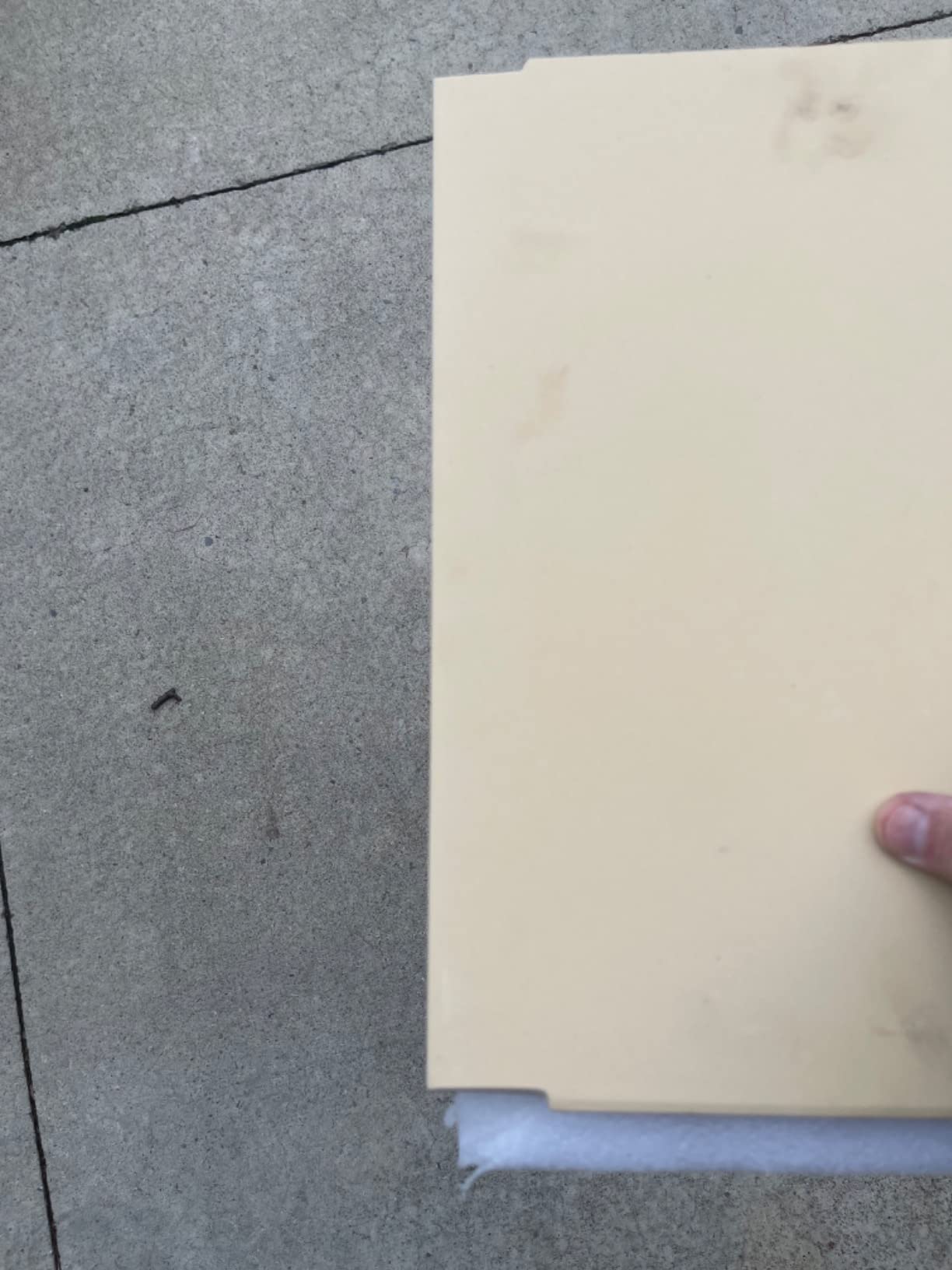
The Unicook 15 by 12 is the one I recommend when someone asks for a single stone that works on most grills without a fit problem. Rectangular cordierite at 0.6 inch thick, 6.5 lb, rated to 1450F, and it holds heat well enough to cook a pizza in six to seven minutes once the deck is at 500F.
It is the number one ranked listing in Pizza Grilling Stones, and with more than 13,000 reviews the volume of long term feedback is genuinely useful. Reviewers with decades of stone experience compare it favourably to premium oven stones and credit the thickness for its crack resistance.
Why 0.6 Inch Thickness Is the Number That Matters
Thickness is the single best proxy for durability in a grill application. A thicker slab has more thermal mass, so its temperature changes more slowly when you set a cold grate down on it, and when a frozen pizza hits the deck it absorbs the shock instead of passing it straight through the ceramic. At 0.6 inch this stone clears that bar without becoming unmanageable.
The reversible smooth surface means both sides are cooking faces, which effectively doubles the life of the slab before you ever worry about wear. It also works for bread, rolls and cookies, so a grill owner who bakes does not feel the purchase was wasted on pizza alone.
Preheat Discipline and Recovery
Here is the honest limitation: this stone wants a long preheat. Reviews consistently describe 30 to 60 minutes at 500F before the best results, and on a cool day with the lid closed the surface can lag behind the lid gauge significantly. If you cannot commit that time, no stone in this roundup will satisfy you.
Once hot, it recovers better than a thin stone. Back to back pizzas do not force you to re-preheat, which is where the thermal mass pays back the waiting time you put in at the start.
Size Reality on a Large Pellet Grate
Fifteen by twelve inches is smaller than it sounds next to a full width pellet grate. It fits a 12 inch pie with a workable margin and can take two smaller loaves, but if your usual dough ball is 14 inches you will be dividing. Measure your dough, not your grill.
Who This Stone Suits
This is my default recommendation for a charcoal kettle, a mid size gas grill, or a pellet grill where you want a clean rectangular footprint that leaves perimeter clearance for airflow. It is a bad fit for a very compact grill or for anyone who wants a single large pie without dividing dough.
4. Cuisinart 3 Piece Grilling Pack – A Complete Starter Set for a New Grill Owner
Cuisinart 3 Piece Pizza Grilling Pack, 13” Round Pizza Stone for Grill with Cutter and Foldable Stainless Steel Peel, Complete Set to Build Your Own Pizzas at Home
Cordierite
13 inch round
Set weight 5.7 lb
Folding steel peel
Pros
- Three useful pieces in one purchase
- No chemical odour even at pellet grill temperatures
- Peel folds flat for compact storage
- Stone works in an oven and on any grill
Cons
- 13 inch stone is small for family pizzas
- Bundled pizza wheel cutter is weak
- Peel head is only 10 inches across
The Cuisinart 3 Piece Grilling Pack solves a problem the other stones on this list ignore. You get the stone, a folding stainless steel peel, and a pizza wheel, so the purchase is genuinely complete. The peel folds down to about the width of a notebook, which matters if your grill lives in a small garage or on a balcony.
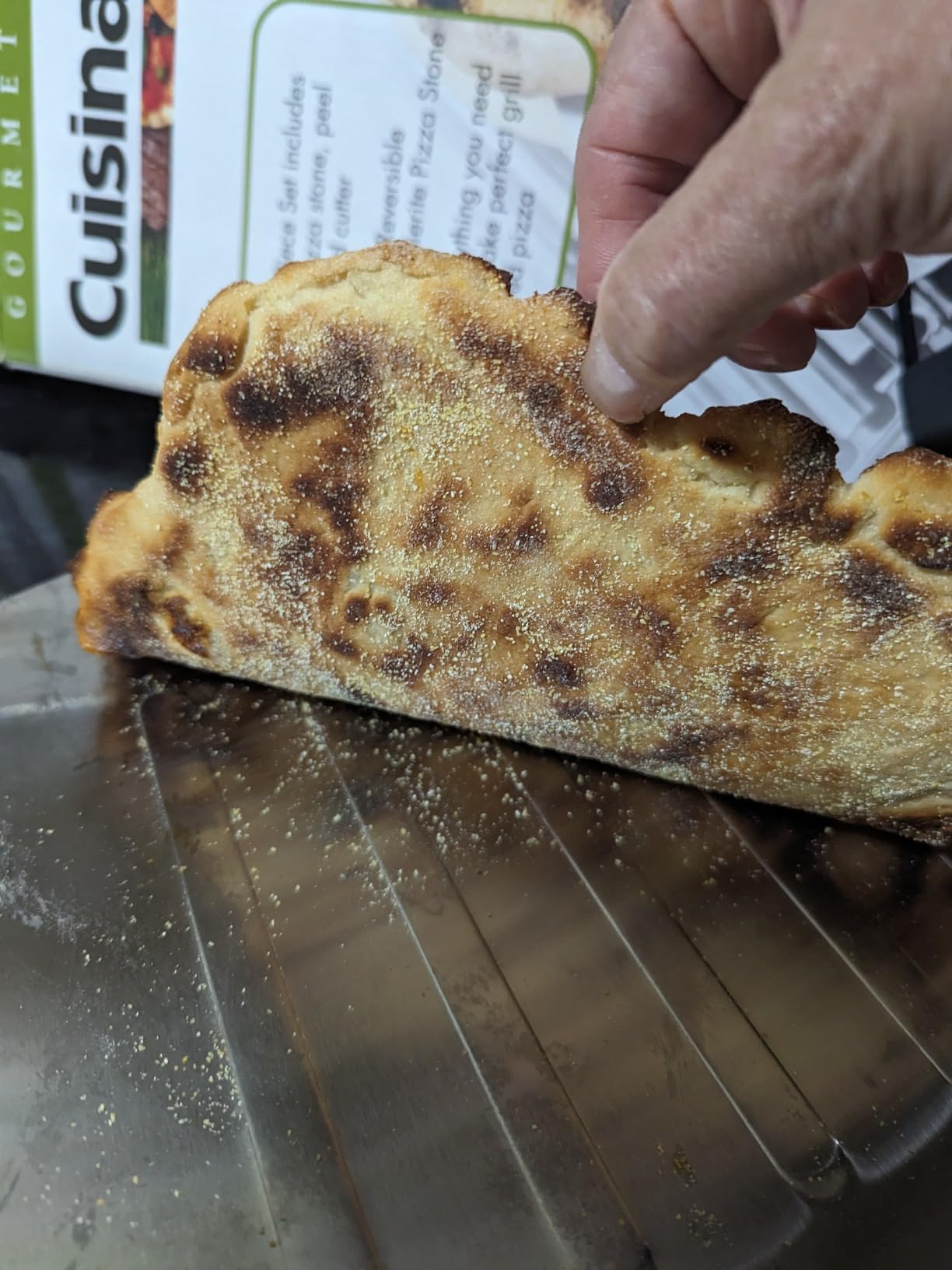
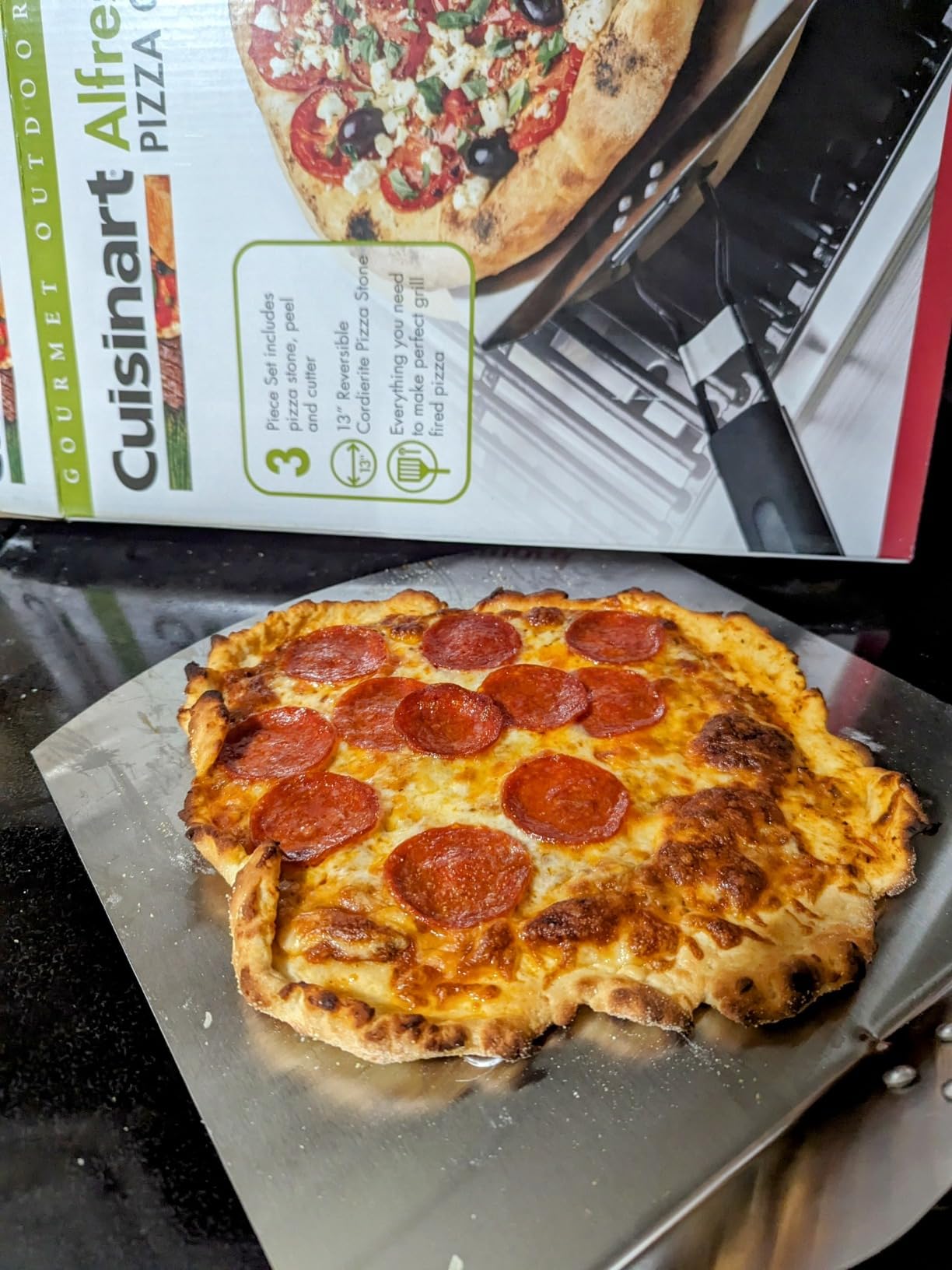
The stone itself is the strong component and reviewers say so. Thirteen inch cordierite, even heat distribution, crisp base, and no chemical smell when used on a pellet grill, which is a complaint that shows up with several cheaper stones. The consensus negative is not about the stone at all.
Where the 13 Inch Diameter Bites
Thirteen inches is a personal size pizza. It is enough for a 12 inch pie with a narrow margin for the peel, and anything larger hangs over the edge into direct flame. On a large rectangular pellet grate it also wastes most of the cooking surface, which is a shame because the stone itself performs well.
Some buyers have adapted it as a turnaround plate for a flat top griddle, where a round stone actually makes sense because it rotates rather than slides. That is a clever use but it is not grill pizza.
The Accessories Are the Weak Link
The pizza wheel in this kit is mini sized and repeatedly described as weak or short lived. The peel head measures 10 inches, which is smaller than the stone, so a 12 inch pizza requires a careful angle and a steady hand. Expect to replace the cutter within a season and possibly the peel after two.
We keep our recommended cutters in the best pizza cutters roundup if you want a straight replacement rather than another compromise.
Who This Pack Suits
Buy it if this is your first stone, you cook personal size pizzas, and you want a peel in the box. It is a sensible, low risk entry into grill pizza. Skip it if you feed a family, because you will outgrow 13 inches quickly.
Care Notes on a Cordierite Set
Hand wash only, and in practice that means a dry brush or a scraper once the stone is cool. Soap and detergent leach into porous cordierite and eventually taint the crust. A scrape and a wipe is the entire maintenance routine for this and every other raw cordierite stone here.
5. Unicook 15 Inch Round Cordierite – The Thickest Round Bake Surface in the Group
Unicook 15″ Round Pizza Stone for Oven and Grill, Cordierite Baking Stone
Cordierite sintered at 2100F
15 inch round
0.6 inch thick
6.7 lb
Pros
- Cordierite sintered for hours at 2100F for crack resistance
- Micro pores draw moisture from the dough
- Handles pizza bread calzone and flatbread
- Size range covers small ovens to full size grills
Cons
- Needs 30 to 60 minutes of preheat
- Cleaning is tedious without parchment
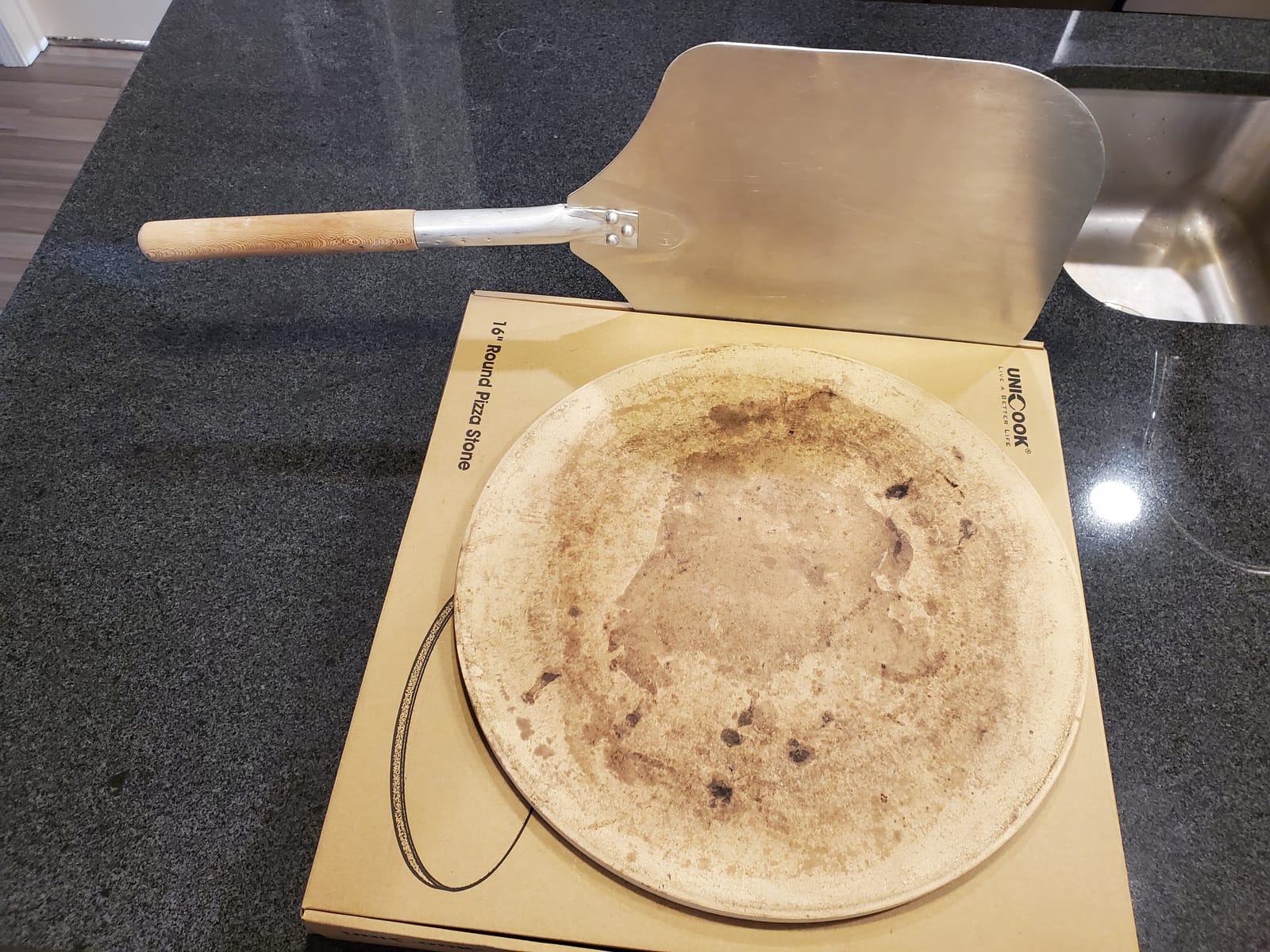
- Staining is permanent looking
This is the Unicook round stone, and the manufacturing detail sets it apart. The cordierite is sintered in a 2100F kiln for hours, which is what produces a dense, dimensionally stable slab that resists cracking. It weighs 6.7 lb at 15 inches and 0.6 inch thick, and it holds heat between pizzas better than anything else in the round category here.
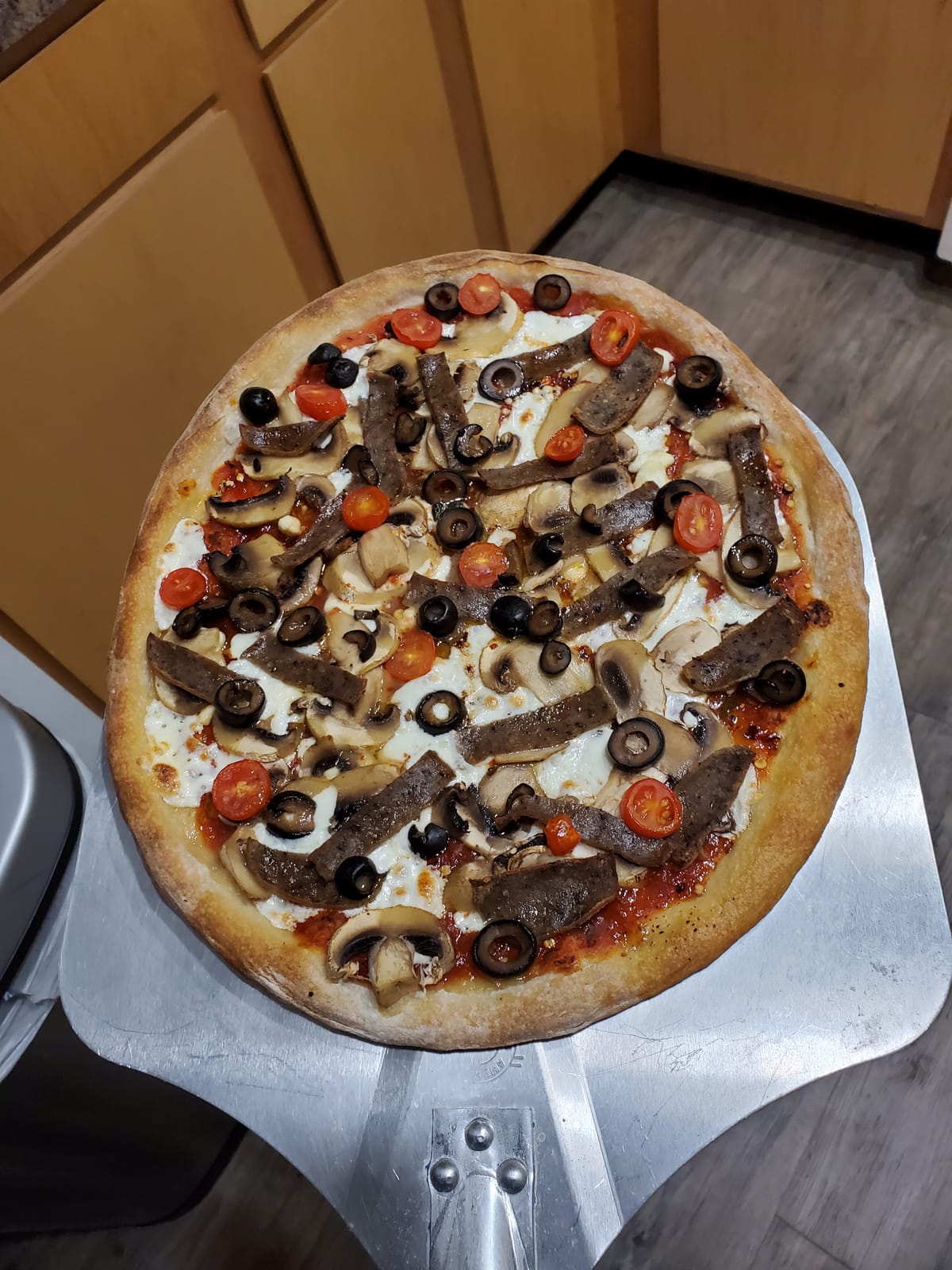
Long term owners in the reviews describe using it two or three times a week over months and finding that it improves as it seasons. The micro pores in the surface draw moisture out of the dough base, and that is the mechanism behind the crisp base that fixes the soggy bottom problem metal pans cause.
Firing Temperature Versus Operating Temperature
This product makes the distinction clearer than most. The 2100F figure describes the kiln. The 1450F figure is the rated heat resistance. Your grill surface will sit somewhere between 500 and 650F on a good preheat. None of those three numbers are the same thing, and confusing them is how people end up expecting a 900 degree Neapolitan bake from a gas grill.
The 0.6 inch thickness means the centre of the stone reaches temperature noticeably later than the edges. A single spot check taken near the rim will mislead you, so read the centre of the deck where the pizza actually lands.
The No Soap, No Oil Rule
The manufacturer is explicit that you must never season the stone with oil or grease and never use soap. That is not pedantry. Oil left on porous cordierite overnight goes rancid, and the next pizza carries the taste. Clean it by scraping while warm, then wipe with a damp cloth once it is cool.
Many owners work around the tedium with parchment paper. That is a reasonable trade, and our guide to the best carbonation stones covers the same material family in a different form. Just know that parchment insulates slightly, so you lose a little bottom crispness and gain a much easier cleanup.
Round Versus Rectangular on Your Grate
A 15 inch circle on a round kettle is a natural fit with an even gap around the edge. On a rectangular gas or pellet grate it wastes the corners and interrupts the air path. Know which shape your firebox actually is before choosing round.
Who This Stone Suits
It suits the cook who bakes more than pizza, because bread, calzone and flatbread all benefit from the same thermal mass. It suits a round kettle owner who wants one large pie. It frustrates anyone who wants a quick preheat or a rinse-and-go cleanup.
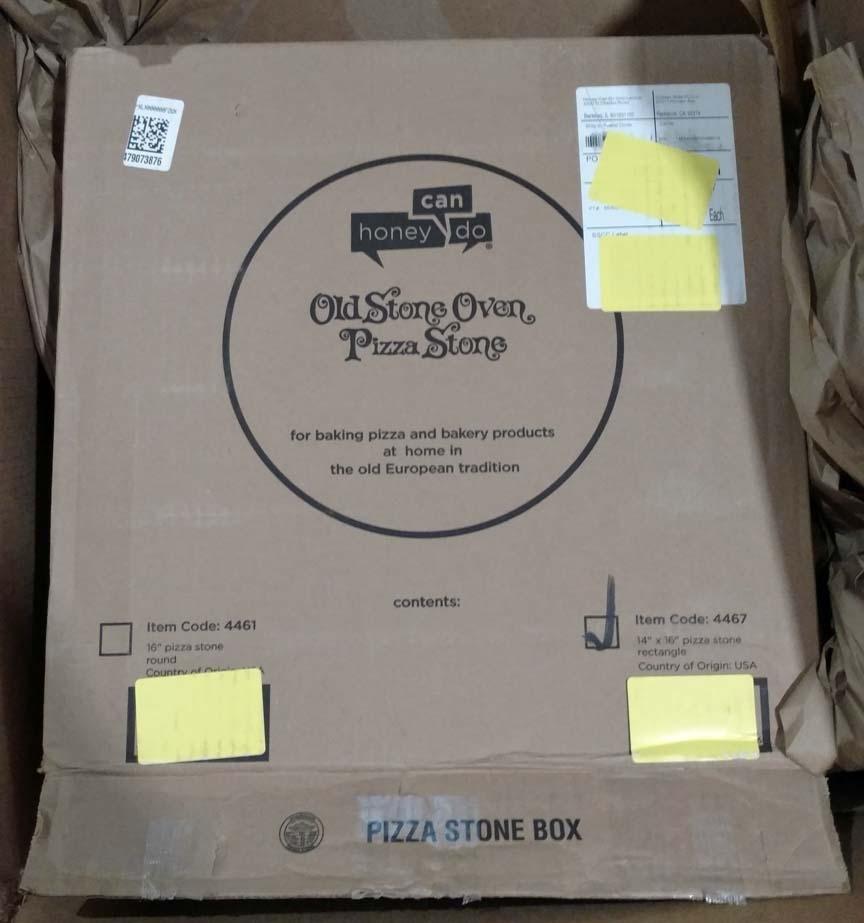
6. Old Stone 14 x 16 Rectangular – Built to Outlast the Grills It Sits On
Old Stone Pizza Kitchen Rectangular Pizza Stone for Oven and Grill, 14×16-Inch
Stoneware
14 x 16 inch rectangular
0.43 inch thick
Made in USA
Pros
- Owners report 20 years plus of service
- Moulded underside feet improve airflow and crisping
- Rectangular shape fits oven racks and grates
- Reported as less sticky than many competitors
Cons
- A minority report a strong chemical smell on first heat
- Thicker stone takes longer to heat in a grill
- Weight is above average for the size
The durability story on the Old Stone 14 by 16 is the standout. Several reviewers describe buying the same stone again decades after their first, which is close to unheard of in this category where most listings are a few years old. It is made in the USA from a lead-free clay and is packed tightly against breakage.
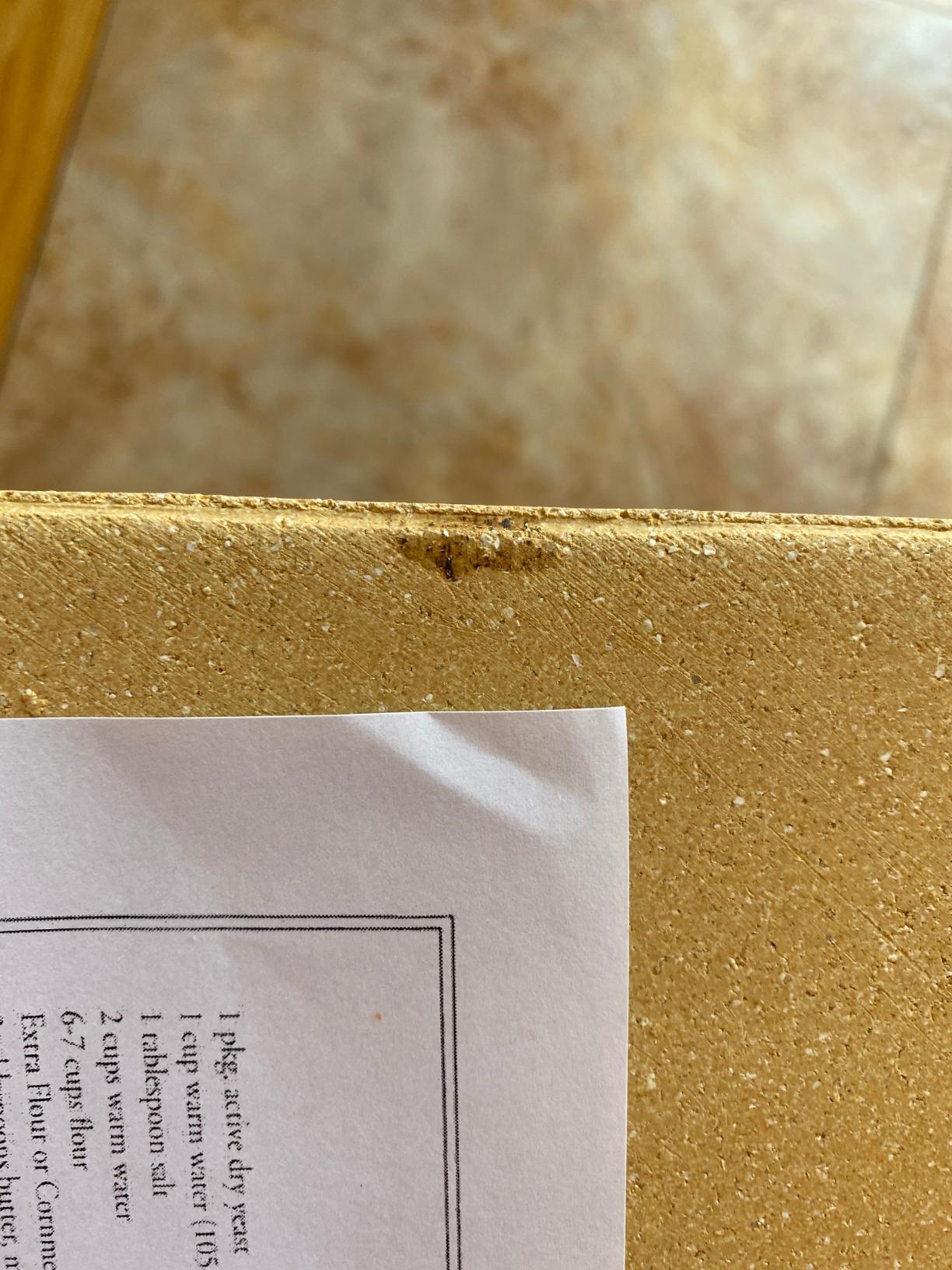
At 0.43 inch thick it is thinner than the top picks, and that is the trade you make. The moulded feet on the underside are the detail I like most: they lift the stone off the rack so heat can circulate underneath, which crisps the base instead of baking it in a damp spot.
Moulded Feet, Clearance and Why They Change the Bake
Airflow under a stone is not a minor detail. Without it the underside of the slab sits in a stagnant layer and moisture condenses, which is precisely how you get the soft centre that sends people looking for a new stone. The moulded feet create a channel under the cooking surface and that channel is the reason this stone dries the base as well as thicker ones.
It also means you should keep that gap clear. Do not set the stone flat on a solid shelf or on foil, and do not push it hard against the firebox wall. The feet need somewhere to do their job.
The First Heat Odour Question
A minority of buyers report a strong chemical smell on the first heat, and for some of them it was enough to abandon the brand. It is not a universal report, but it is real and it is worth knowing about. A full 30 minute preheat with the lid closed burns most of it off, and by the second cook it is gone.
My advice is simple. Do not test it for the first time during a dinner party. Preheat it alone, smell it, and decide.
Where 0.43 Inch Sits Against the Field
This is thinner than the Unicook 15 by 12 at 0.6 inch and the Hans Grill at 0.59 inch. In an oven that barely matters. On a grill, where you are moving a cold stone onto a live grate and cooking fast, the extra mass is worth having, and this stone does take longer to come up to temperature.
Who This Stone Suits
It suits someone who wants a rectangular stone they can also use in the oven and does not mind a slower preheat. It also suits anyone who bakes vegetables and pastries on the same deck, since the raised feet handle moisture-heavy foods better than a flat slab. Skip it if first heat odours bother you or if rapid deck recovery is your priority.
7. Hans Grill 15 x 12 Rectangular Set – Heavy Cordierite With a Peel in the Box
Hans Grill Rectangular Pizza Stone with Peel, 15 x 12 Inch Cordierite Stone
Toughened cordierite
15 x 12 inch rectangular
0.59 inch thick
7.8 lb
Pros
- Heavy toughened cordierite rated to 1112F
- Second ranked stone in its category with nearly 14000 reviews
- No odour reported on first use
- Wooden peel with detachable handle included
Cons
- Included wooden peel slits trap dough and it sticks
- 7.8 lb is heavy to manoeuvre
- Stains quickly with sauce and cheese
At 7.8 lb this is the second heaviest slab in the roundup and it behaves like it. The Hans Grill is toughened porous cordierite, FDA safe, rated to 1112F, and 0.59 inch thick at 15 by 12 inches. That 1112F figure is the lowest maximum rating printed on any slab here, and it is still far above the surface temperature a grill produces.
Users of gas grills and kamado style cookers report evenly cooked, crisp results, and several describe the bundle as a capable stand in for a dedicated pizza oven. The manufacturer is also refreshingly honest that staining is normal and harmless, which is a sentence you rarely see in this category.
Mass as a Feature, Not a Complaint
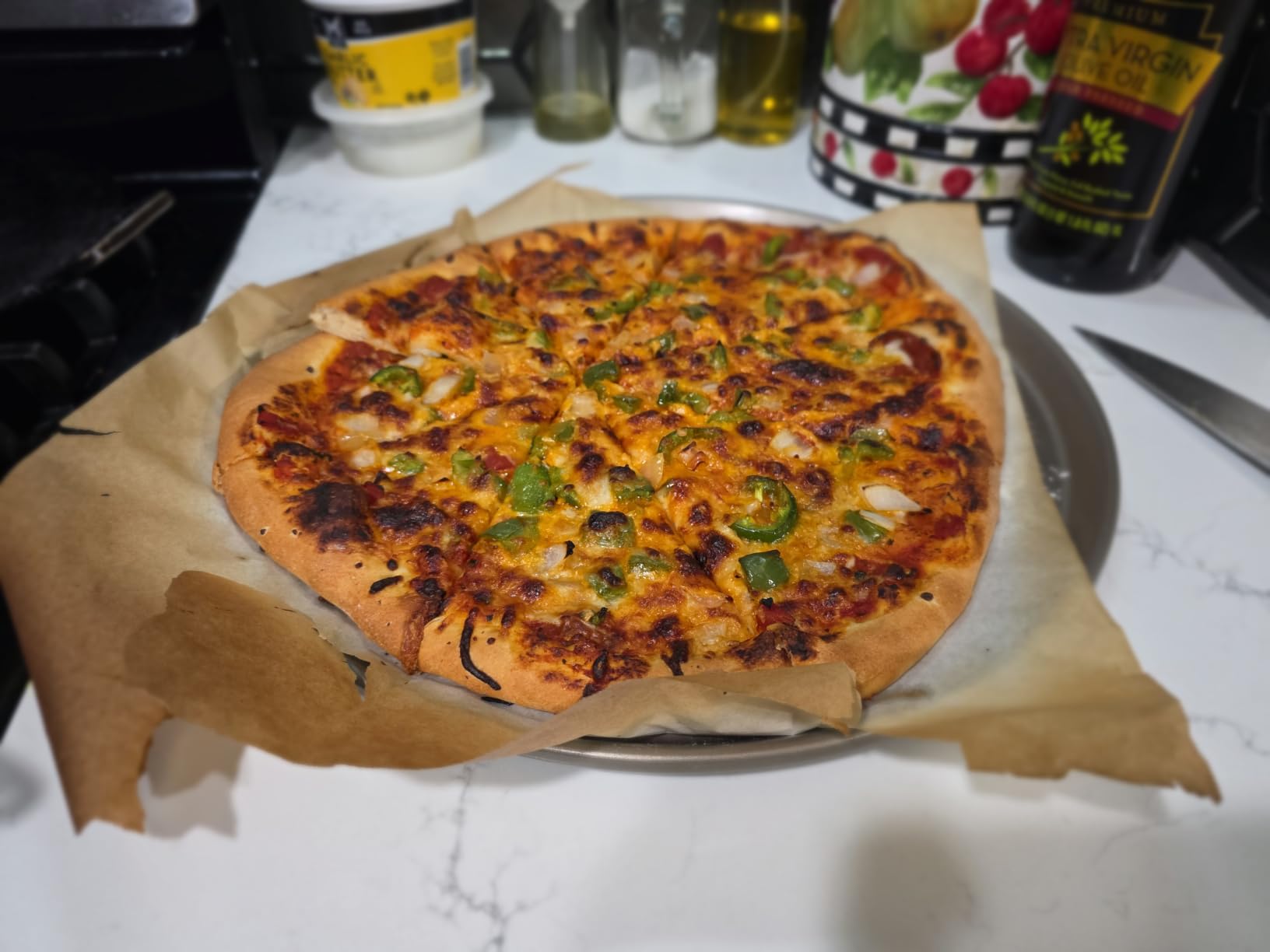
The weight is the point. A 7.8 lb stone takes a long time to heat and a long time to cool, and in between it holds its temperature while a pizza bakes and while the next one is being stretched. On a grill, where the floor runs hotter than the ceiling, that stability is what keeps your bake times repeatable.
The downside is handling. Getting a 7.8 lb slab in and out of a grill at 600F with a detachable handle requires gloves and a clear landing surface. Plan a dedicated spot on the side shelf rather than improvising.
Judging the Included Peel Honestly
The wooden peel is the most criticised part of this package and the reviews are consistent. Slits in the blade trap dough, it sticks, and the detachable handle is short for reaching over a grill where you are working with one hand. Treat the peel as a starter tool, not a long term one.
My workaround is a light dusting of semolina on the blade, which stops most sticking without leaving a floury base. If you already own a peel, the stone is a standalone purchase here and a good one.
Cleaning and the Staining Reality
Hand wash with warm water only, and in practice that means scraping while warm and wiping dry. This stone stains fast, particularly with cheese drips, and it will not return to its original colour. That is cosmetic and does not affect the bake, but be prepared for it if you are the type to notice.
Who This Set Suits
It suits gas grill owners who want a heavy rectangular deck and want a peel in the same box. It frustrates anyone who finds heavy cookware awkward, and anyone cooking on a compact grill with a narrow grate, because 15 inches needs real width.

8. Gyreuni 15 x 12 Stone and Oak Paddle Set – Cordierite Rated to 1472F With a Tapered Oak Peel
Gyreuni 15”Pizza Stone for Oven and Grill with Pizza Peel,Baking Stone Set
Cordierite rated 1472F
15 x 12 inch
0.4 inch thick
7.1 lb with oak paddle
Pros
- Cordierite rated to 1472F among the highest here
- Four piece bundle with oak paddle cutter and parchment
- Makes a genuinely Neapolitan style pie on a grill
- Oak paddle has a tapered half inch blade
Cons
- Stone is thin at 0.4 inch compared with rivals
- Included pizza cutter is blunt with stamping burrs
- Parchment sheet edges scorch
The Gyreuni set bundles four pieces into one box: a 15 by 12 inch cordierite stone rated to 1472F, a solid oak paddle with a tapered half inch blade, a pizza cutter, and ten sheets of parchment paper. Cooks report turning out their best home pizza on it, particularly Neapolitan style dough cooked directly on the grill.
That 1472F rating is high, though the 16 inch set in this roundup carries a higher printed figure. What matters is the margin. A stone rated to roughly 1472F will not degrade in the way a marginal ceramic does when it is asked to hold a hot deck through repeated bakes. The published number is not a cooking target, but it is a fair indicator of the material’s margin.
0.4 Inch Thinness and What It Costs
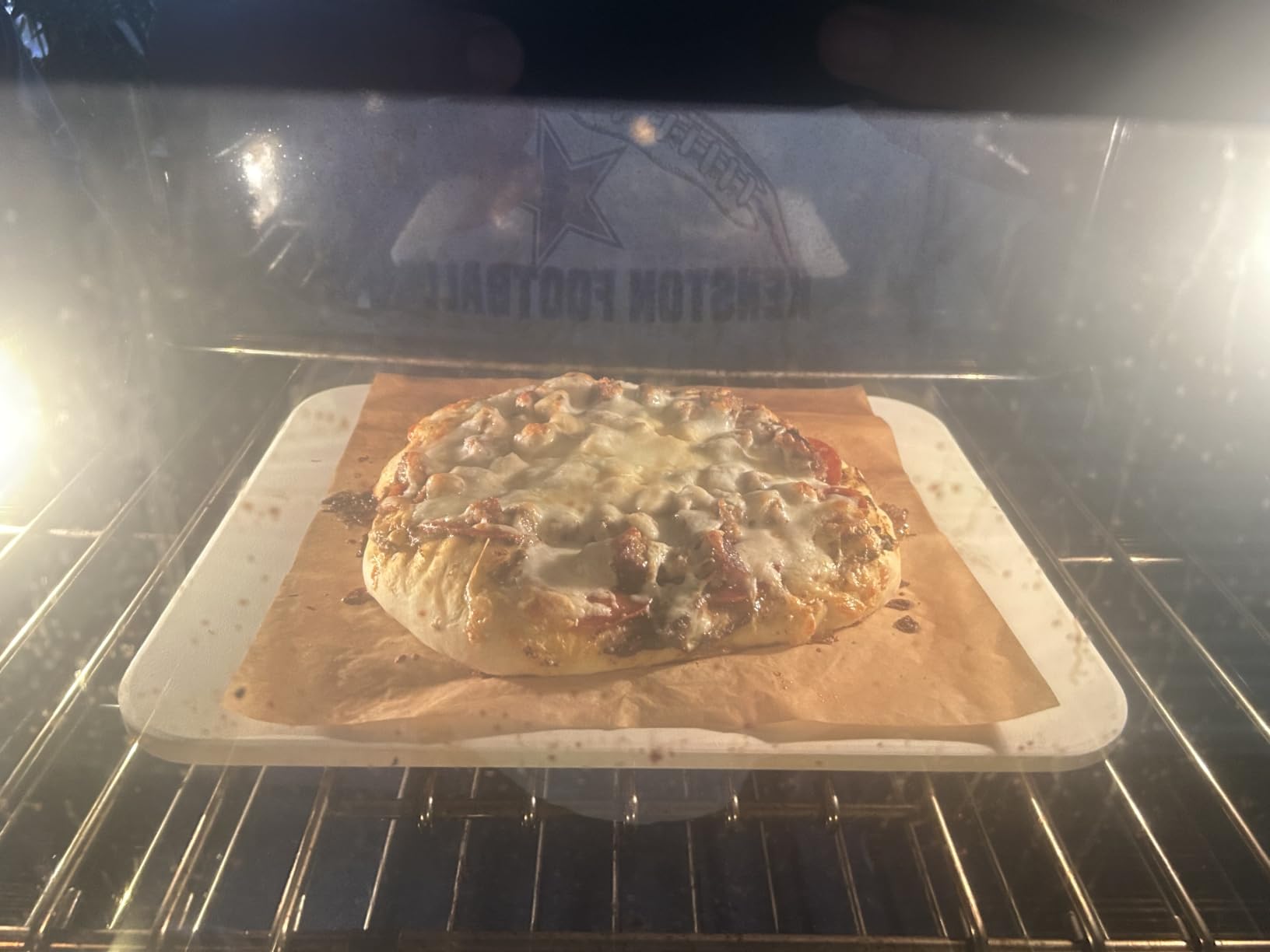
At 0.4 inch this is among the thinner slabs here, and the reviews are honest about the consequence. A thinner stone heats faster, which is a genuine benefit for spontaneous cooking, but it has less thermal mass, so it recovers more slowly between pizzas and offers less protection against thermal shock.
My advice is to preheat longer than feels necessary and to keep the lid closed. The manufacturer calls for 30 minutes at 400F plus, and for Neapolitan style work I would add another 15 minutes and check the centre of the deck with an infrared thermometer before launching.
The Oak Paddle and the Semolina Method
A tapered oak blade is a real improvement over a flat wooden peel. The taper lets it slide under a dough ball with minimal oil, and sloped or stretched dough releases cleanly. Semolina is the better dust than flour for a porous stone because it does not hydrate and turn into glue in the same way.
For high hydration dough in the 65 percent range, a paddle plus semolina is the combination that gets a launch onto a hot stone without dragging the top of the dough ball. That is the technique behind a Neapolitan style pie on a grill, and it is why the bundle appeals to people chasing that result rather than a pan style bake.
The Accessories Are Mixed
The bundled cutter is blunt and carries burrs from stamping, so plan on replacing it. The parchment sheets are useful but their edges scorch on a hot deck, so trim them before use. One review also reports the listing’s stone count overstating what arrives, so read the contents list carefully.
Who This Set Suits
It suits the cook who wants a complete kit in one box and is chasing a faster, higher heat bake with proper dough. It is a weaker choice if you plan to cook several pizzas back to back, because the thin slab gives up heat faster between bakes.
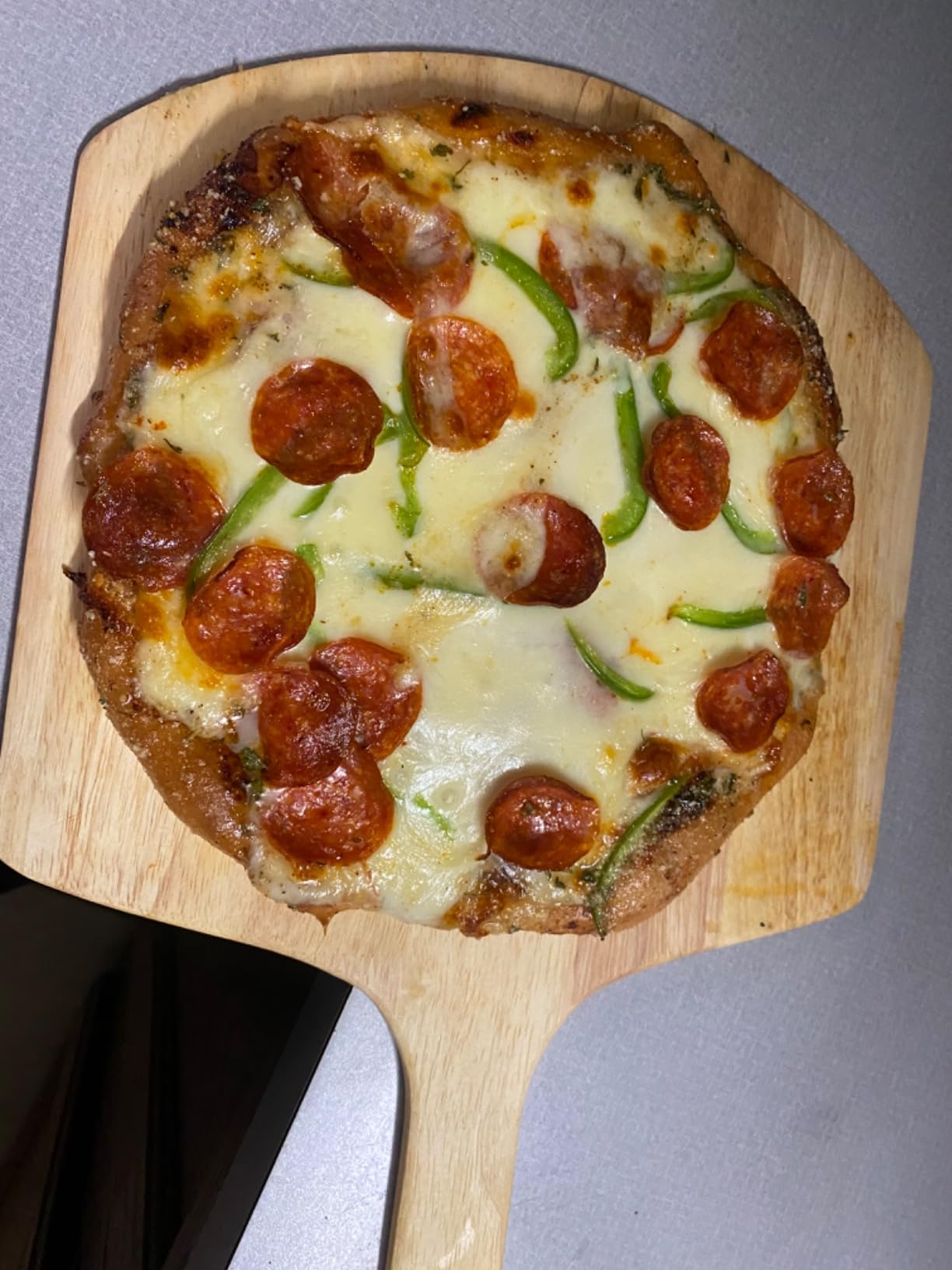
9. Cuisinart Alfrescamore 13 Inch Stone – The Lightest Cordierite Option for Small Grills
Cuisinart CPS-013 Alfrescamore Pizza Grilling Stone
Cordierite
13 inch round
0.4 inch thick
3.5 lb
Pros
- Lowest rated option here and still a solid 4.3 stars
- Lightest stone tested at 3.5 lb
- 13 inch diameter suits compact grills and RV ovens
- Heats up in roughly 30 minutes
Cons
- Actual thickness measures near 0.4 inch against a 3/4 inch listing claim
- Low thermal mass gives a limp base under thin or heavy pizzas
- A few reports of cracking including on first use
The Cuisinart CPS-013 is the stone I suggest when weight or grill size is the constraint. At 3.5 lb it is less than half the mass of several stones here, and 13 inches round fits compact grills, small gas models and RV ovens where nothing larger will physically sit on the grate.
It is also the lowest rated option in this roundup at 4.3 stars, and the reason is specific rather than general. Several buyers measure the stone with calipers and find it near 0.4 inch rather than the 3/4 inch the listing claims. Know that before you buy, because thickness is the variable that governs how it performs.
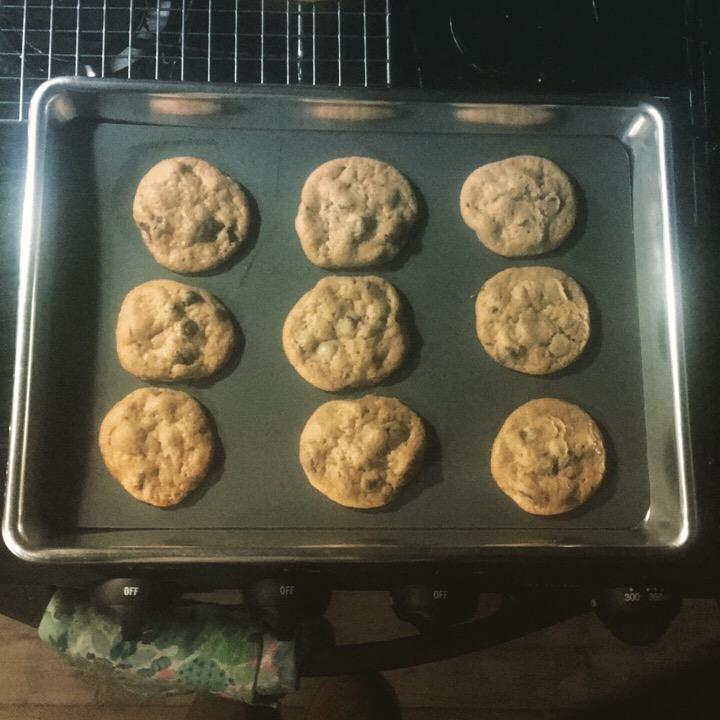
What Low Thermal Actually Means on a Grill
Thin and light is a fair trade in a small cooker where the alternative is no stone at all. It heats quickly, which matters if you are cooking on a lunch break, and it is far easier to lift. The cost is recovery. A thin slab gives up its heat into the pizza faster, so a heavily topped or very thin pie can come out with a limp base.
Owners report it withstanding direct heat on gas and pellet grills, and one clever use is as a heat spreader under a tray inside an RV oven, where it fixes burnt bottom and raw top bakes. That is not grill pizza, but it shows the material holds up.
Cracking Reports and What Causes Them
There are a few cracking reports, including on first use. In almost every case the cause is the same one: thermal shock. A cold stone placed on a preheated grate, or a frozen pizza slapped onto an already hot surface, produces a temperature gradient the thin slab cannot absorb.
Warm the stone with the grill for 10 minutes before full preheat, and never go from a cold garage straight to a fired-up grill. The manufacturer recommends 15 minutes of preheating, which I would treat as a floor rather than a target for a stone this thin.
Who This Stone Suits
It suits RV owners, portable grill owners, and anyone making personal size pizza on a small grate. It is a poor choice for a large family pie or for a grill where you cook two pizzas back to back. As a first stone on a small grate, it does the job and stays out of the way.
Care and the One Year Warranty
Hand wash, no soap, and let it cool fully before water touches it. Cuisinart backs it with a one year limited warranty, which is thinner coverage than the Weber stone carries but consistent with its build.
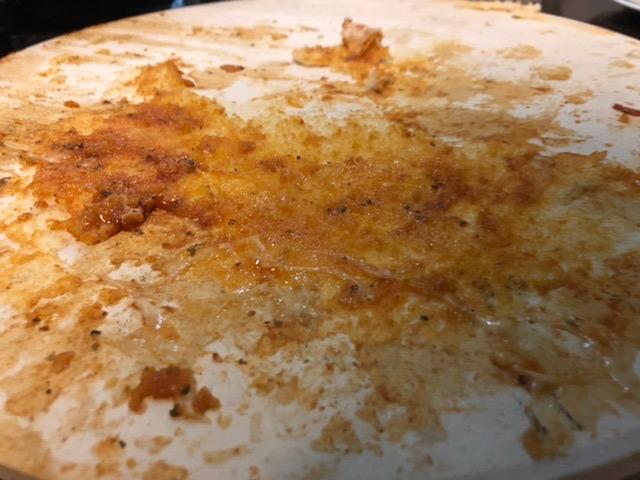
10. Old Stone 16 Inch Round – A Substantial Round Deck at 0.59 Inch Thick
Old Stone Round Pizza Stone, 16-Inch
Stoneware
16 inch round
0.59 inch thick
7.3 lb
Pros
- 16 inch round surface takes a full size pie
- 0.59 inch thickness gives real heat retention
- Lead free clay blend built for crack resistance
- Top three ranked listing in its category
Cons
- 7.3 lb is difficult to lift in and out of a grill
- Manufacturer guides to 500F which is below competitor figures
- No soap allowed so cleaning is scrape and wipe only
The Old Stone 16 inch round is the pick when the dough ball is large and the dough is thin. Sixteen inches of diameter takes a full size pie with room at the edges, and at 0.59 inch thick and 7.3 lb it carries enough thermal mass to hold temperature through a bake.
It is made from a blend of lead-free clays engineered for crack resistance, and the listing sits in the top three of its category. Reviewers single out the clay construction and the thickness behind the crisp, evenly baked results, with no soggy centres reported.
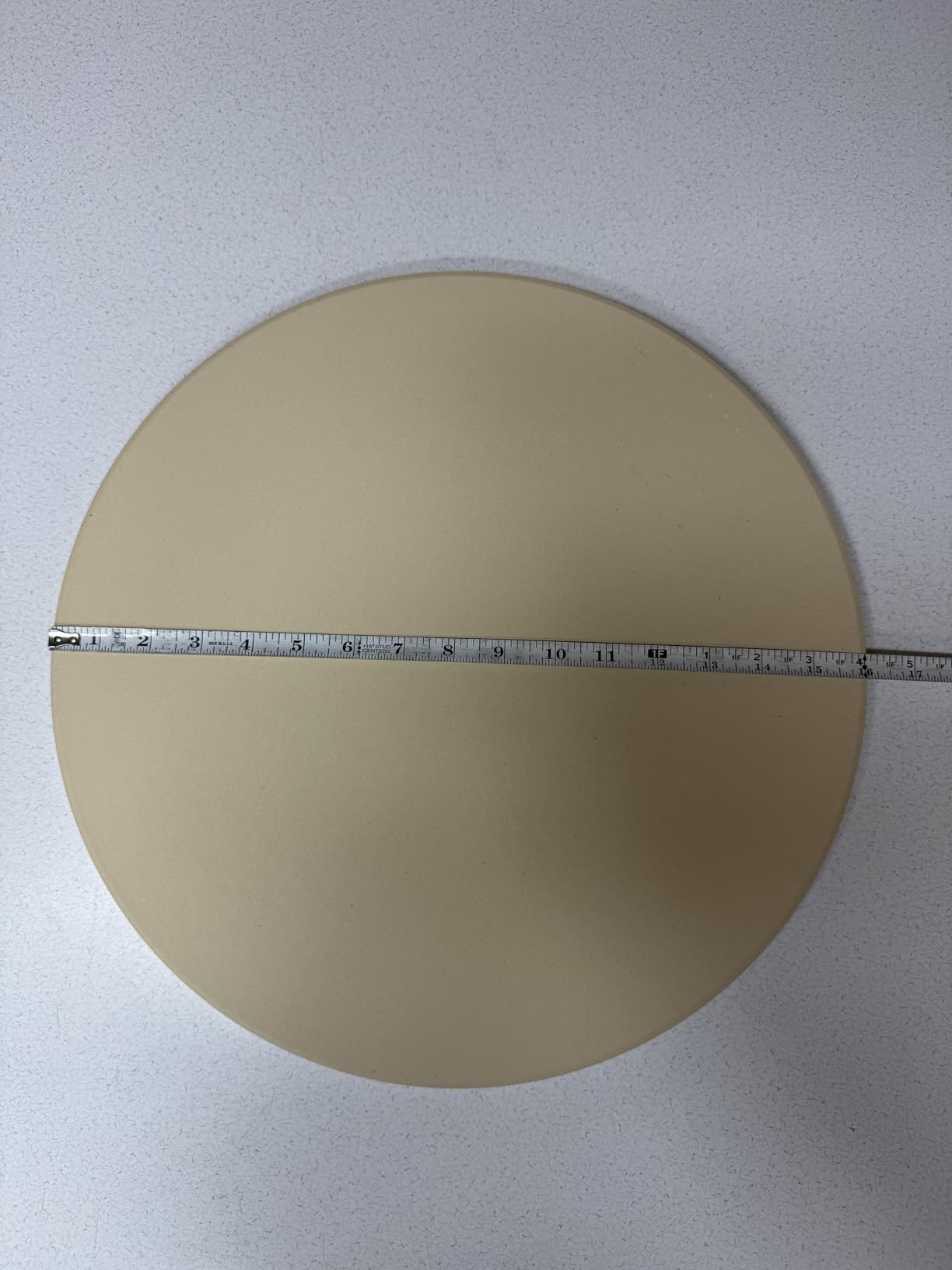
Reading the 500F Guidance Honestly
The manufacturer recommends this stone for temperatures up to 500F in a standard home oven, well below the 1450 to 1800F figures competitors print. That is not a defect. It is an honest limit for a home oven application, and for grill use the 1472F rated heat resistance is the relevant number.
Either way, a grill surface of 500 to 650F sits in a workable range for this stone. The practical implication is that you will cook closer to 600F and short bake times rather than trying to run a slow oven style bake on a hot deck.
Weight, Handling and Landing Zones
Seven pounds is not a casual lift. The single most common practical note in the reviews is exactly that. Plan a heatproof landing surface on your side shelf, use gloves rated well above the deck temperature, and never try to reposition it mid cook without a clear hand path.
Round geometry also means it will not sit flush in the corners of a rectangular grate. That wastes some area and can interrupt airflow on a convection driven pellet cooker, so this is a kettle and round gas grill stone more than a pellet grill stone.
Care Rules Without Soap
No soap, scrape and wipe dry only. If burnt cheese builds up, the practical answer is a metal scraper or a scrap of foil used as a sacrificial surface. Stacking two stones is a bad idea, because the trapped heat and the trapped moisture accelerate both staining and cracking.
Who This Stone Suits
It suits a large round gas grill or a kettle owner who makes 14 to 16 inch pies and prefers a familiar circular format. It is a poor match for a rectangular pellet grate, for anyone with lifting limitations, or for a cook who wants a washable glazed surface instead.
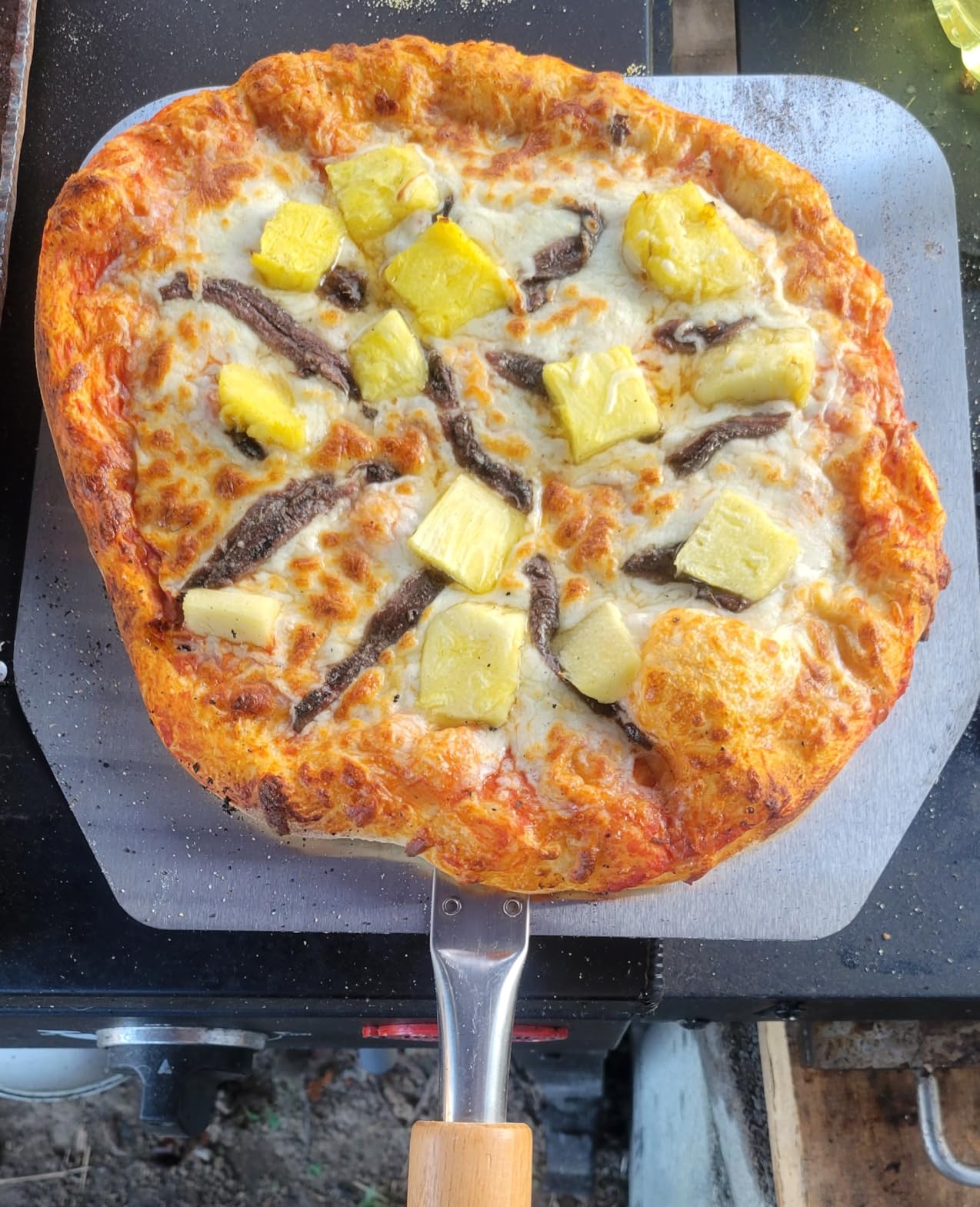
Why Grill Pizza Burns From the Bottom Up
Every grill delivers disproportionate heat at the floor. A burner or a coal bed radiates upward into the underside of a stone while the toppings get only the ambient heat trapped under the lid. Your dough base therefore hits 500F or more while the top of the pie is still near 200F, and the crust blackens while the cheese is still solid.
A stone helps because it spreads heat laterally instead of letting it concentrate in a ring where the flame is. That flattens the thermal map. It does not eliminate the imbalance, which is why the same stone that produces a beautiful pie on one grill produces a scorched one on another.
The Four Fixes, In Order of Effectiveness
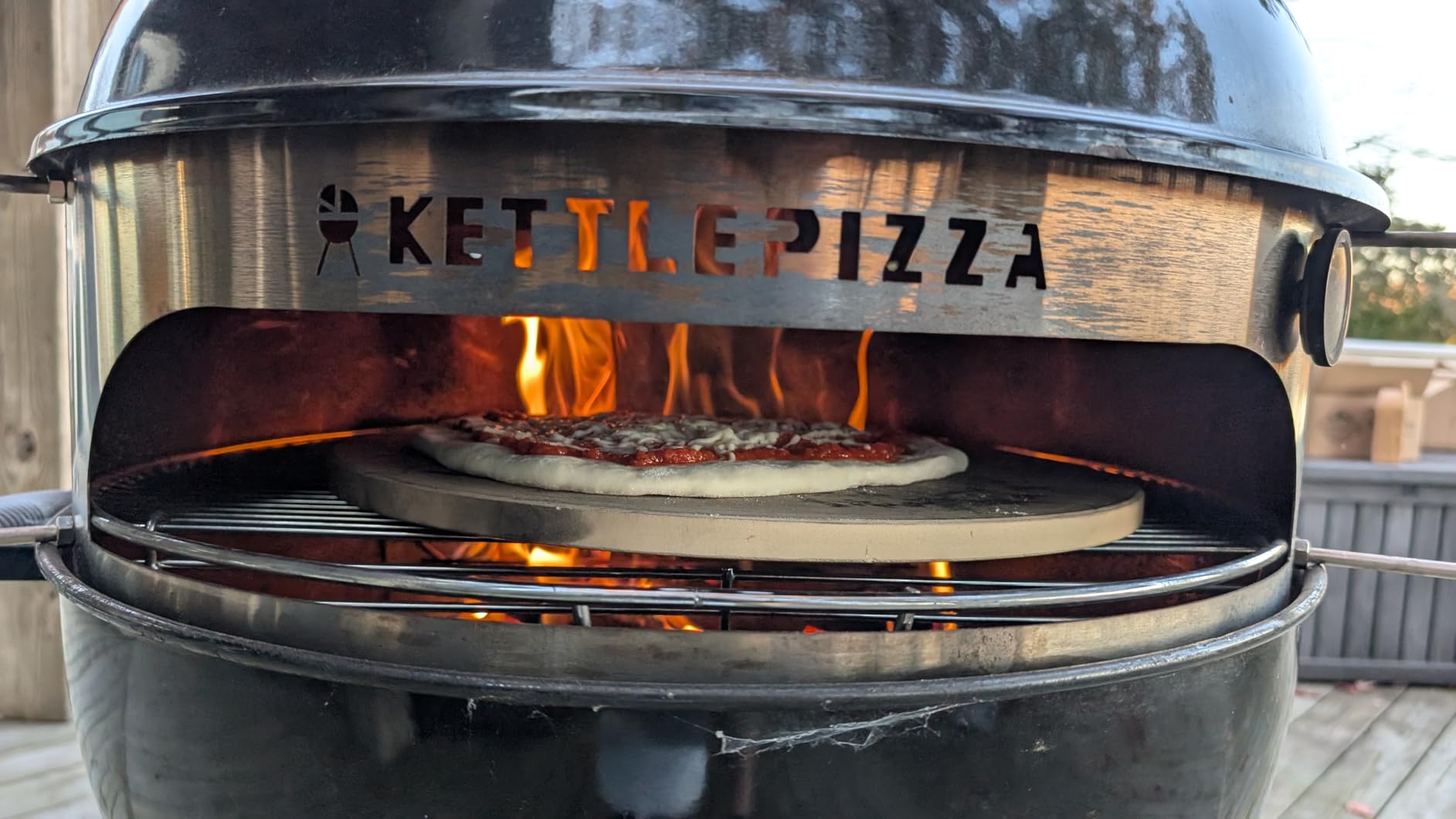
First, add a heat deflector. On kamado style cookers this is a plate setter or its equivalent, a heavy cast plate that sits between the fire and the stone and kills the direct infrared blast. On a kamado this is not an accessory, it is a requirement. Without one, the fire is directly under your crust.
Second, raise the deck. Lifting the stone onto fire bricks or a rack moves it away from the floor and toward the lid, where the retained heat is more even. Forum cooks describe this as getting the pizza closer to the top of the lid so the toppings cook at the same rate as the base. It is the most effective change on a gas grill.
Third, run indirect burners. On a gas grill with multiple burners, turning off the burner directly under the stone and running the side ones converts a searing floor into an even baking chamber. You lose some speed and gain a lot of consistency.
Fourth, lower the deck temperature and shorten the bake. A 500 to 550F surface with a 5 to 6 minute bake produces a better pie on a grill than a 700F surface with a 2 minute bake, because the top has time to catch up.
The Preheat Protocol That Actually Works
Set the stone on a cold grate first, then light the grill. Placing a warm stone on a hot grate is the thermal shock mistake that cracks stones. With the grill cold and the stone in place, bring the temperature up over 30 to 45 minutes with the lid closed the whole time.
Check with an infrared thermometer, not the lid gauge. The dome reading is a number about the air, and the deck can be 100F or more below it. Aim for 500 to 650F measured at the centre of the stone where the pizza will land, and give it 15 minutes more if you are cooking Neapolitan style dough.
Dust the deck with semolina rather than flour, launch quickly, and rotate the pizza every 15 to 20 seconds. Rotation is what equalises the radiant hot spots that a stone cannot remove on its own. If you want a visual reference for the next stage, our best Traeger grills guide covers the convection behaviour that makes rotation matter most.
How to Choose a Pizza Stone for Your Grill
Match the Shape to the Grate, Not the Brand
Rectangular stones use rectangular grates far better than round ones. If your grill has a rectangular cooking surface, buy rectangular, and leave at least an inch of clearance on the long sides so convection air can move. On a round kettle, either shape works and a round stone centres more naturally over the coal bed.
Measure the grate with a tape before you order, and measure your dough. A 15 by 12 inch stone is a genuinely good size, but it is not a 16 inch pie surface, and that mismatch is the most common disappointment in the reviews across this category.
Thickness Predicts Longevity
Anything at 0.6 inch or thicker gives you the best thermal shock resistance, which is the failure mode that ends stone ownership. Between 0.4 and 0.5 inch you trade durability for a faster preheat and a lighter lift. Under 0.4 inch you are buying a cooking surface, not a hearth.
Rated maximum temperature matters less than people assume, provided it comfortably exceeds what your grill can produce. The numbers printed on these boxes describe kiln sintering, not a cooking target, and confusing the two is how buyers end up disappointed by a 1450F stone that performs perfectly at 600F.
Match the Stone to the Grill Platform
Weber owners with a GBS grate get the cleanest result from the OEM stone because it seats properly and carries a carry rack. Pellet grill owners should prioritise perimeter clearance and thickness, since a pellet fire moves air constantly. Kamado owners must budget for a heat deflector as part of the purchase, and no stone works without one. Charcoal owners get the best crust of any grill type because they can bank coals to one side and cook indirect on a settled bed.
For pellet platforms specifically, the Traeger grill guide is worth a look before you settle on a size.
Materials Compared
Cordierite is the default and the correct answer for most grills. It has a very low thermal expansion coefficient, which means it resists cracking under rapid temperature change, and it tolerates repeated high heat cycles without degrading. Every cordierite option in this roundup is a safe buy.
Glazed ceramic is easier to clean and often non porous, but it is more brittle and more vulnerable to thermal shock, and it is the material most associated with the cracking reports on forums. Stoneware, which is what Old Stone uses, sits between the two and has a strong durability record in this group. Cast iron pans and baking steel are separate categories entirely: they heat faster and crisp harder, they are far heavier, they cool down much more slowly, and steel that gets wet outdoors will rust.
Care Rules That Decide Whether a Stone Survives
Never use soap or detergent on raw cordierite or stoneware. It soaks in and never fully leaves. Never leave oil on the surface overnight, because it goes rancid and the next pizza carries it. Never put water on a hot stone, and never drop a cold stone onto a hot grate. Store it dry, indoors, and off the ground in winter, because freeze and thaw cycles are a documented cause of cracking in kamado communities.
Parchment paper is a legitimate shortcut for cleanup, and most of the stones here come with sheets or play well with them. Just trim the edges so they do not scorch.
What to Do When a Stone Cracks
A hairline surface crack that does not run across the slab is cosmetic. The stone still works. A crack that reaches an edge, a chip larger than a coin, or a clean break into two pieces means retire it, because a fragment on a grate over flame is a real hazard.
Before you replace it, work out which of the four causes above actually happened. In most cases it was a cold stone on a live grate, a frozen pizza, or a wet stone. Fix that and the replacement will outlast the first one.
Who Should Skip a Pizza Stone Entirely
Skip it if you make pizza twice a year. The preheat commitment is 30 to 45 minutes every time, and a stone that never reaches temperature is worse than no stone. Skip it if your grill is a flat top griddle, because a stone seals in moisture and you want direct contact there. Skip it if you cannot lift 7 lb at chest height, and go for the 3.5 lb Cuisinart or a cast iron pan instead.
And skip it if you are chasing true Neapolitan at 900F. No grill will get there. Our guides to the best wood fired pizza ovens and best countertop pizza ovens cover the equipment that reaches those temperatures, and a grill stone is a different, more convenient proposition.
Frequently Asked Questions
Is it okay to put a pizza stone on a grill?
Yes, provided you use a cordierite or stoneware stone rated well above your grill’s surface temperature, set it on the grates before lighting the grill, and preheat for 30 to 45 minutes until an infrared thermometer reads 500 to 650F at the deck. Keep an inch or two of clearance at the edges for airflow, and never place a room temperature stone on a hot grate or pour water on a hot stone.
Which type of pizza stone is better, ceramic or cordierite?
Cordierite is better for grills. Its very low thermal expansion coefficient makes it far more resistant to the rapid temperature changes a grill produces, and it survives repeated high heat cycles without degrading. Standard ceramic and stoneware are more brittle and are the material most often associated with cracking reports. The only advantage of a glazed ceramic surface is easier cleaning.
What is the best type of pizza stone for a gas grill?
A rectangular cordierite stone of at least 0.5 inch thickness is the best general choice for a gas grill, because the rectangle covers grate area efficiently and leaves clearance at the sides for air. Weber owners with a GBS grate get the cleanest fit from the OEM stone with its carry rack. Run the burners indirect, or raise the stone on fire bricks, to stop the base burning first.
Can I use a pizza stone on my Kamado Joe grill?
Yes, but a heat deflector is required rather than optional. A kamado’s fire sits directly under the cooking surface, and a stone without a deflector will scorch the crust before the toppings cook. Place the stone on the deflector, preheat for 45 minutes or more, and verify the deck with an infrared thermometer. Stoneware and thick cordierite are the safer materials at those temperatures.
How long does a pizza stone last and what should I do if it cracks?
A thick cordierite or stoneware stone used with reasonable care lasts many years, and owners of some older stoneware models report decades of service. A hairline surface crack that does not reach an edge is cosmetic and the stone still works. A crack that reaches an edge, a chip larger than a coin, or a break into two pieces means retire it, and fix the cause first: a cold stone on a hot grate, a frozen pizza, or water on a hot surface.
Which Pizza Stone Should You Buy?
If you want one stone for one general grill and you do not want to think about fit, the KitchenStar 16 inch set wins this roundup. It has the highest rating, the largest review base, the biggest usable surface, and it comes with a peel, a cutter and a carry rack, which removes three separate decisions. Accept the 13.7 lb weight and the 30 to 45 minute preheat, and it will serve you for years.
If you own a Weber with a GBS grate, buy the Weber 8836. The fit and the carry rack are why it exists, and the two year warranty is the only real warranty in this group.
If you want the most proven stone for a rectangular grate, the Unicook 15 by 12 is the pick. Its 0.6 inch thickness and 13,000 plus reviews make it the most field tested rectangle here.
If your grill is small, or lifting heavy cookware is a problem, the 3.5 lb Cuisinart Alfrescamore is the sensible pick, with the caveat that it measures thinner than its listing suggests. If you make large pies on a round kettle and do not mind the weight, the Old Stone 16 inch round has the surface area.
Whichever one you choose, preheat it properly, measure the deck rather than trusting the lid gauge, rotate every 15 to 20 seconds, and fix your heat balance before you blame the stone. That is the difference between grill pizza that works and grill pizza that disappoints, and it is why the right cutter and peel combo only matters once your deck temperature is where it should be.
Leave a Reply