
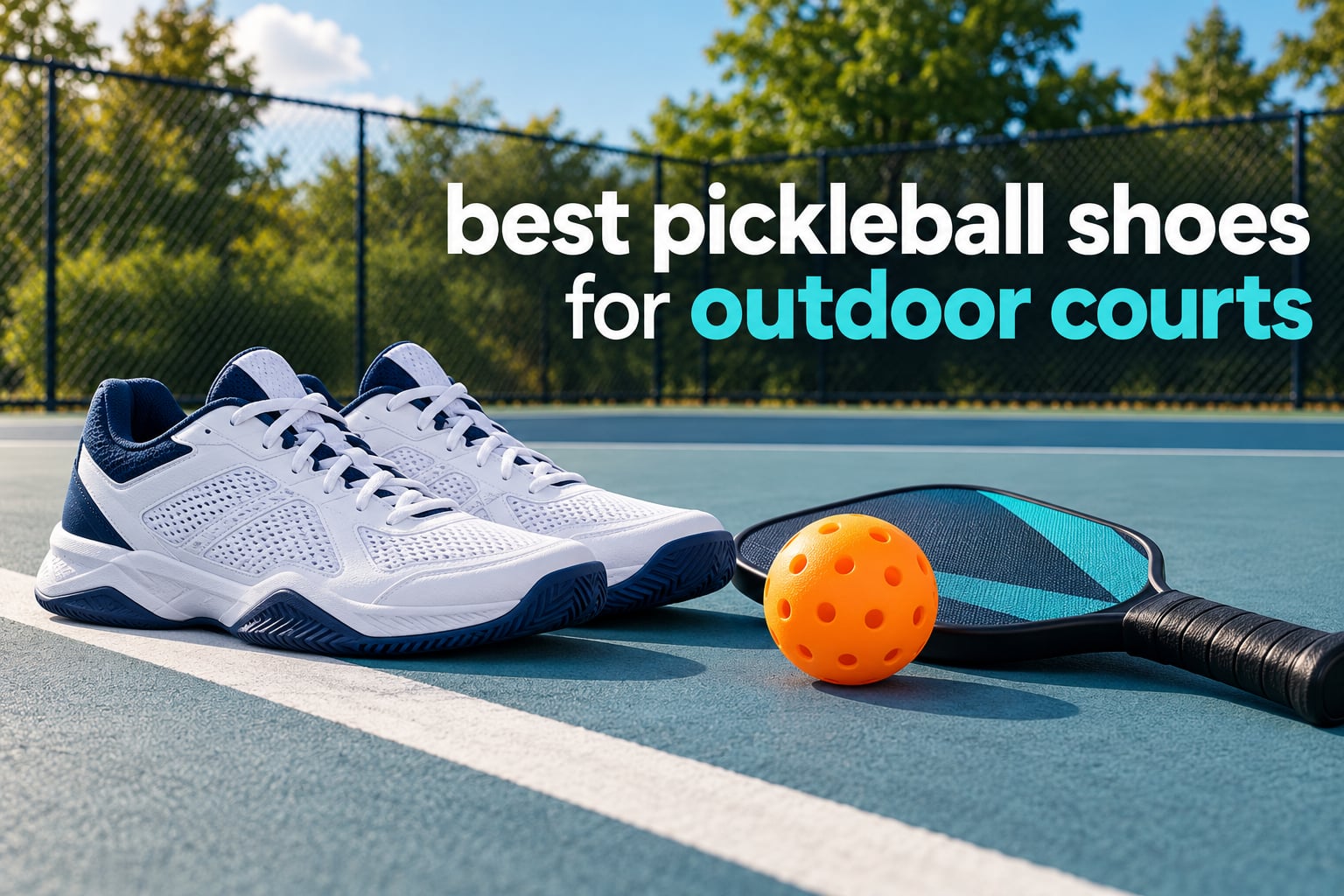
Outdoor pickleball is harder on footwear than almost any other court sport, and the reason is the surface itself. Asphalt and concrete are abrasive, uneven, and hot enough in July to swell your feet mid-match, so the best pickleball shoes for outdoor courts are not simply the most comfortable shoes in the store. They are the ones with a tough rubber outsole, a wide and stable base, and reinforced sidewalls that survive the side-to-side cuts that cause most pickleball injuries.
I play three or four sessions a week on outdoor hard courts, and I have burned through more pairs of general athletic shoes than I care to admit doing it. The shoes below are the ones I either wear weekly or have put through enough court time to know exactly where they fail. I compared all ten on the same criteria: outsole compound and tread, lateral support, cushioning, fit, and how the upper held up after repeated contact with concrete dust.
Before we get into the list, two quick pointers. If your paddle game is still new, our pickleball paddle guide covers the other half of your kit. And if you are moving from a running or walking shoe rather than a court shoe, skim the comparison section near the end, because the difference is bigger than most players expect.
Our Top 3 Outdoor Pickleball Shoes in 2026
These three earned the right to sit at the top. The Avia Verge leads because of the deepest review history in the group and a build that has held up across repeat purchases. The K-Swiss Men’s Express Light wins on grip, and the Skechers Viper Court Pro 2.0 wins on certified arch support.

Avia Verge Women’s
- TRUSSTIC support system
- compression molded EVA midsole
- removable MEMORYfom sock liner
- synthetic leather upper

K-Swiss Men’s Express Light
- DRAGGUARD abrasion zones
- DURAWRAP toe reinforcement
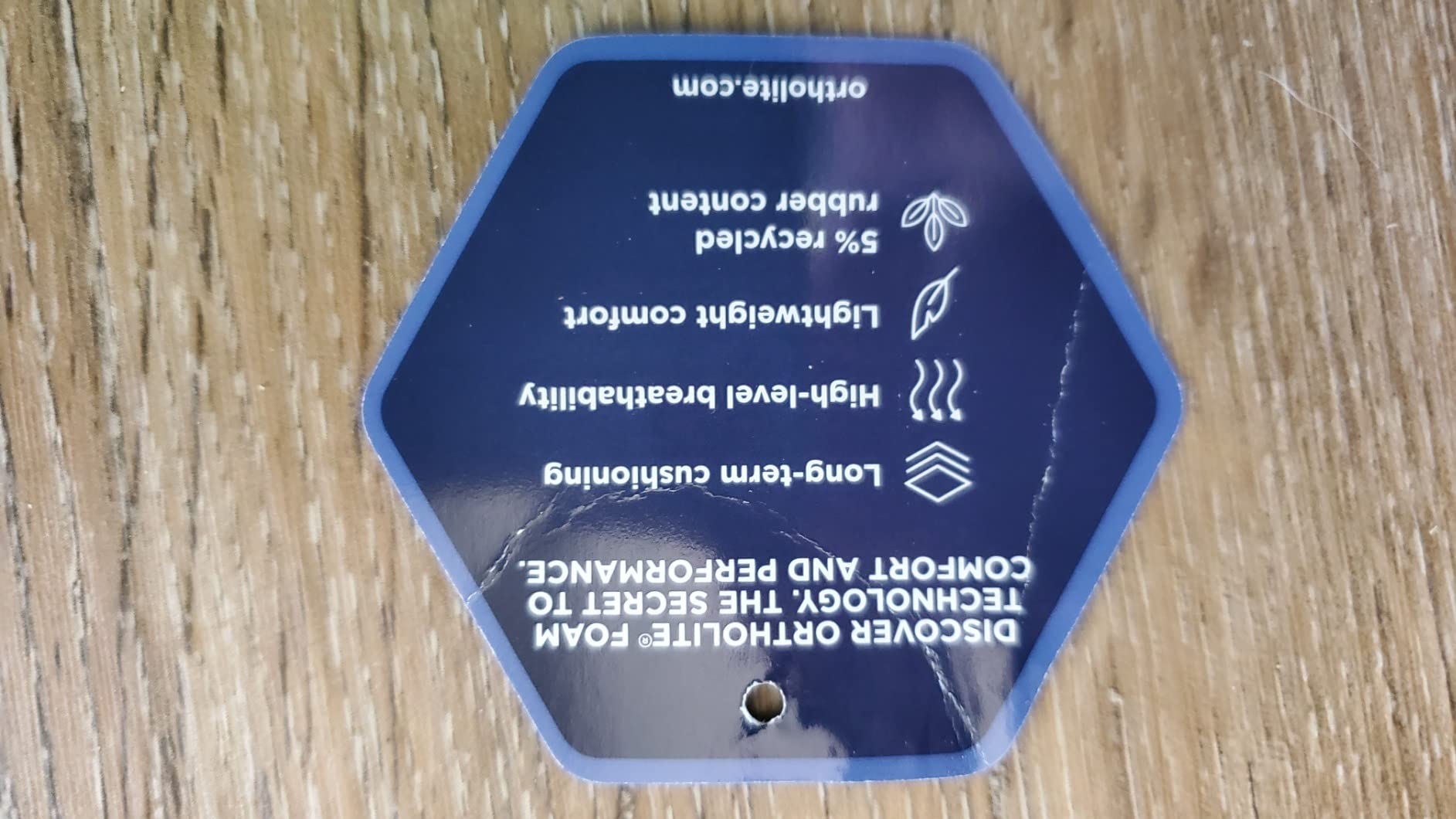
- ORTHOLITE open-cell sock liner
- wide toebox

Skechers Viper Court Pro 2.0
- Arch Fit removable insole
- APMA Seal of Acceptance
- ULTRA GO Foam midsole
- Goodyear Gold outsole
Comparing All 10 Outdoor Pickleball Shoes Side by Side in 2026
Every shoe in this roundup is court-specific. The differences live in the outsole compound, the width of the base, and how much reinforcement sits in the toe and heel. Here is the short version of where each one lands.
| Product | Specs | Action |
|---|---|---|
| Avia Verge Women’s Sneakers |
|
Check Latest Price |
 FitVille Men’s Wide Pickleball Shoes FitVille Men’s Wide Pickleball Shoes |
|
Check Latest Price |
 ASICS Gel-RENMA Pickleball Shoes ASICS Gel-RENMA Pickleball Shoes |
|
Check Latest Price |
 K-Swiss Women’s Express Light K-Swiss Women’s Express Light |
|
Check Latest Price |
| K-Swiss Men’s Express Light |
|
Check Latest Price |
 Skechers Women’s Viper Court Pro Skechers Women’s Viper Court Pro |
|
Check Latest Price |
 FitVille Extra Wide Pickleball Shoes FitVille Extra Wide Pickleball Shoes |
|
Check Latest Price |
 Skechers Men’s Viper Court Smash Skechers Men’s Viper Court Smash |
|
Check Latest Price |
| Skechers Men’s Viper Court Pro 2.0 |
|
Check Latest Price |
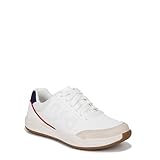 Ryka Women’s Courtside Ryka Women’s Courtside |
|
Check Latest Price |
1. Avia Verge Women’s Sneakers – Our Most Consistently Reordered Pick
Avia Verge Womens Sneakers – Tennis, Court, Cross Training, or Pickleball Shoes for Women, 9 Medium, White with Light Pink
Synthetic leather upper
TRUSSTIC support system
Molded EVA midsole with heel cradle
8.4oz per shoe
Pros
- TRUSSTIC system resists twisting on lateral cuts
- Molded EVA midsole with anatomical heel cradle
- Removable MEMORYfom sock liner
- True to size with wide options offered
Cons
- Arch support is moderate rather than pronounced
- Upper can separate from the sole after extended use
- Limited ventilation in long outdoor sessions
I put the Avia Verge in the first slot because of volume and consistency rather than hype. With more than 6k ratings averaging 4.2, this is the shoe I see most often on outdoor courts in my area, and owners routinely describe buying it again after the first pair wears out.
The TRUSSTIC support system is the part that matters outdoors. It stiffens the midfoot so the shoe resists twisting when you plant hard on concrete and push laterally, which is exactly the movement that wears down casual sneakers.
What the midsole and heel cradle actually do for you
The midsole is compression molded EVA with an anatomical heel cradle built into it. That cradle is why the shoe feels planted on a hard surface rather than loose, and it is the reason the pair holds up when you are playing a long doubles match on a hot afternoon.
At 8.4 ounces per shoe, this is a light build, and that weight matters more than most buyers expect. Heavy shoes get tiring on quick lateral footwork, and tired feet change how you move.
Fit, width options and sizing
Reviews consistently call this pair true to size, and wide versions exist in the same silhouette. That matters for outdoor play because feet swell in heat, and a shoe fitted perfectly in an air-conditioned room can feel tight by the third game in July.
The arch support is real but moderate. If you have high arches and play three or more times a week, a shoe with a certified arch system may serve you better, and I cover that trade further down.
Where it falls short
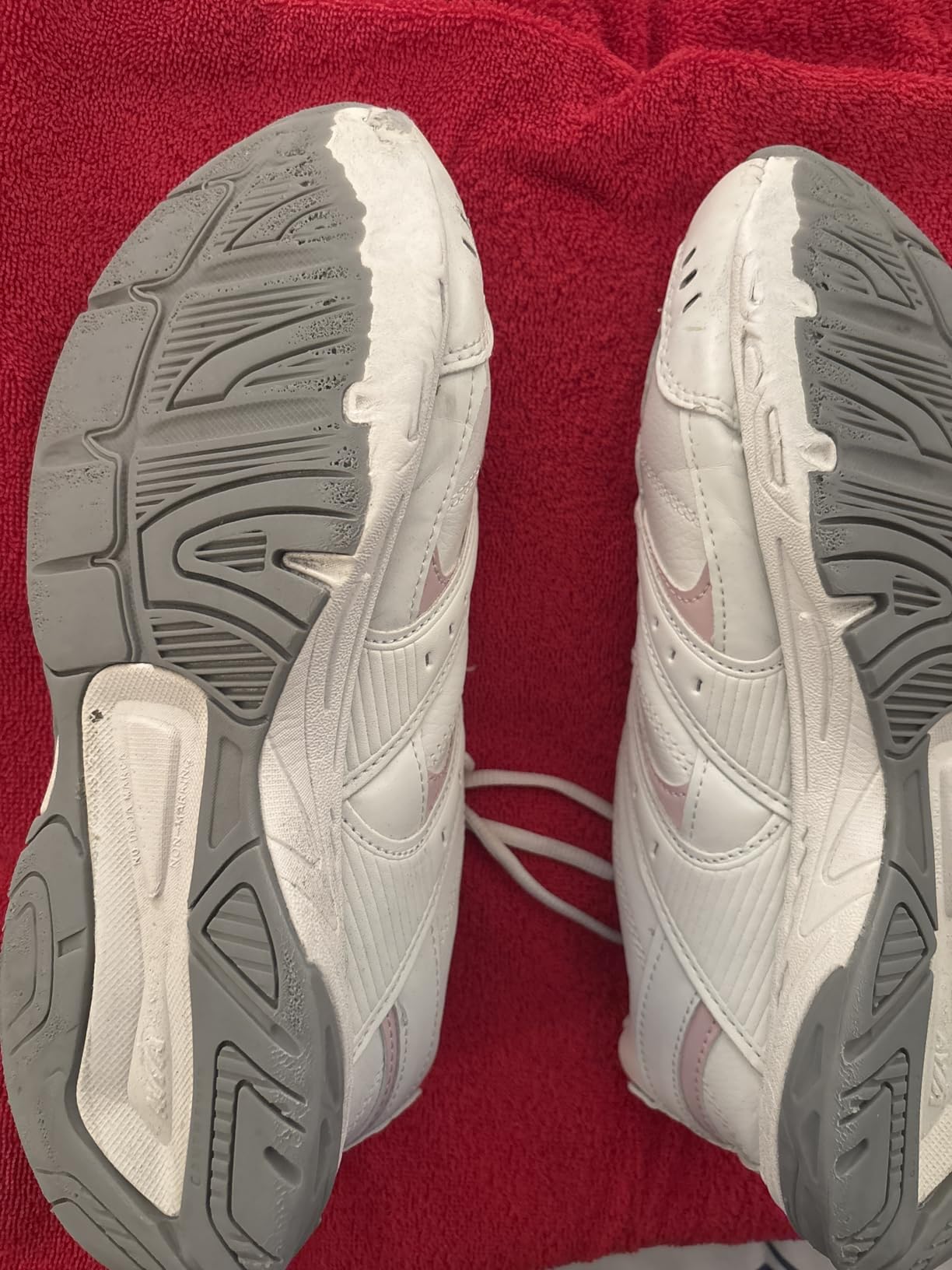
The most common complaint is wear at the upper-to-sole seam after extended use, and a minority of buyers report limited arch support and ventilation on very hot days. Neither issue is a dealbreaker for recreational play, but both show up if you keep the shoe on the court year-round without a break.
2. FitVille Men’s Wide Pickleball Shoes – Built for Wide Feet From the Ground Up
FitVille Men‘s Wide Pickleball Shoes All Court Tennis Shoes with Arch Support for Plantar Fasciitis (White, 11.5 X-Wide)
Breathable mesh and microfiber upper
Honeycomb OrthoLite insole
Dual-density EVA midsole
Anti-torsion TPU rubber
Pros
- Wide and extra-wide sizing across the range
- Breathable mesh upper with anti-odor treatment
- Honeycomb OrthoLite footbed adds arch support
- Anti-torsion TPU unit limits twisting
Cons
- Less lateral stability than dedicated court shoes for some players
- Mesh upper collects court dust and needs regular cleaning
Wide-foot players are the most vocal group in this sport, and this is the shoe they keep coming back to. With 3k+ ratings and a 4.2 average, the appeal is simple: the shoe is built wide rather than stretched wide after the fact.
The upper pairs breathable mesh with microfiber and an anti-odor treatment, which makes it the coolest option here in summer heat. On a 95-degree concrete court, that difference is obvious by the third game.
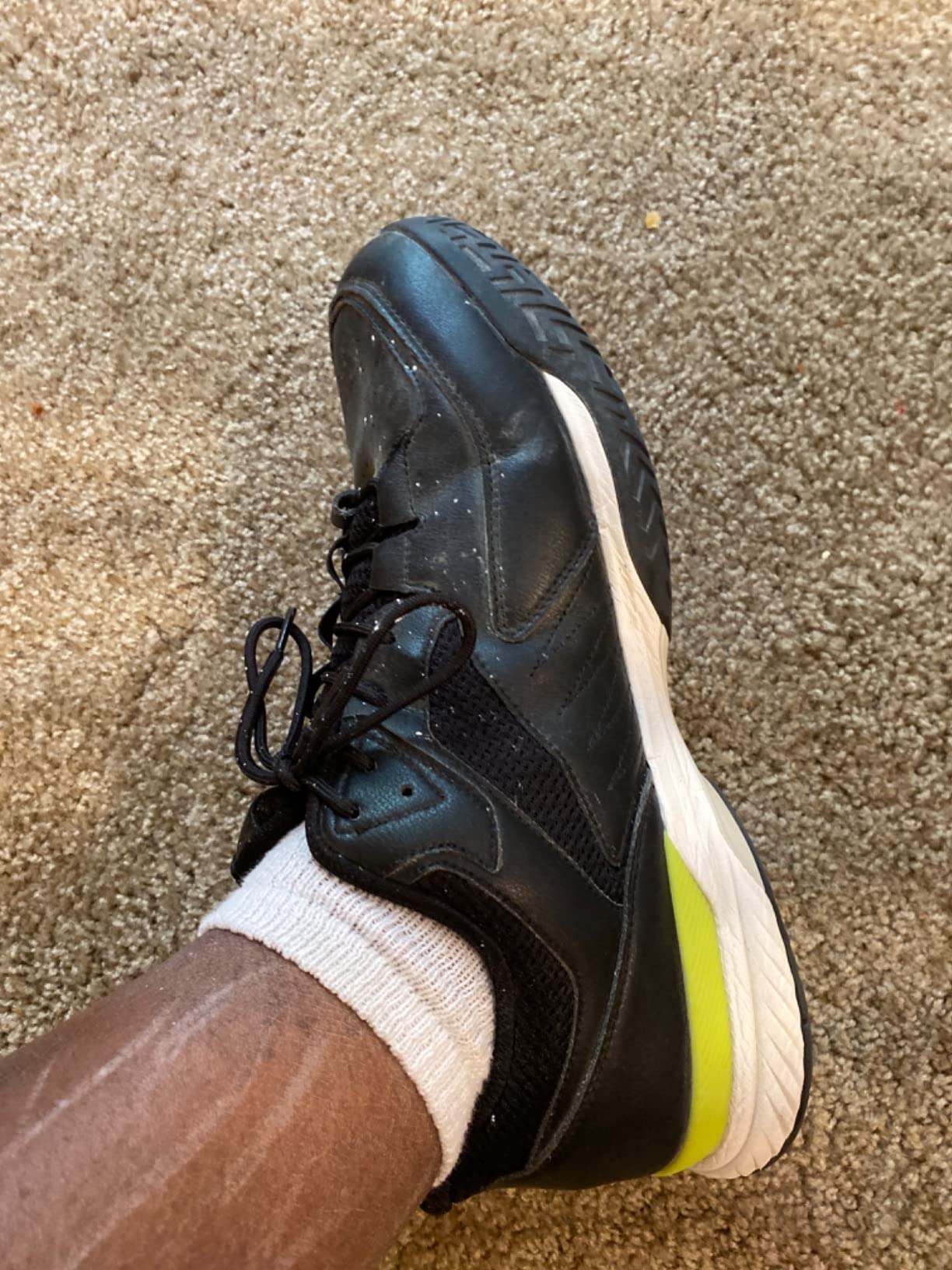
Arch support and the OrthoLite honeycomb footbed
The insole uses a honeycomb pattern in OrthoLite material, which is designed to compress under load and rebound between points. For players who spend a lot of time standing at the baseline, that gives the foot a surface that does not flatten out the way a flat foam footbed does.
Buyers with plantar fasciitis in particular report relief from long sessions, which is one of the few places a wide shoe also happens to solve a support problem.
How the dual-density midsole and TPU unit handle lateral movement
A dual-density EVA midsole is paired with an anti-torsion TPU rubber unit through the midfoot. That TPU piece resists the twisting that causes ankle rolls, though owners still describe the shoe as less laterally locked than a true court shoe with sidewall overlays.
In practice, that means this is a comfortable, breathable choice for straight-line and moderate lateral play rather than the pick for aggressive baseline defense where you are constantly chopping across the court.
What to know before you buy
The one consistent con is reduced stability compared with dedicated court shoes. The second thing to plan for is upkeep, because a mesh upper picks up outdoor court grit and should be brushed clean rather than worn dirty through a season.
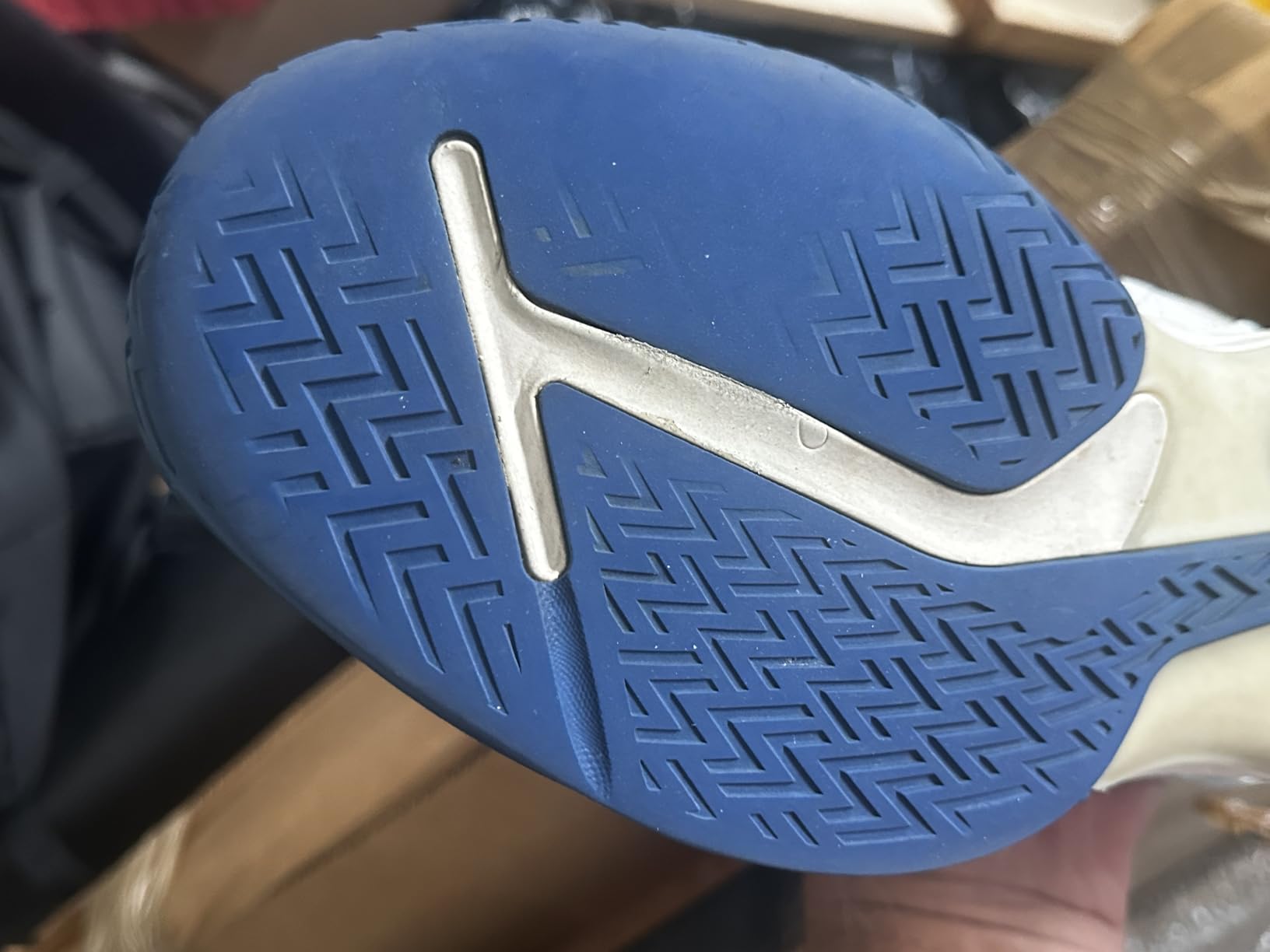
3. ASICS Gel-RENMA Pickleball Shoes – A Wide, Stable Base for Hard Courts
ASICS Men’s Gel-RENMA Indoor Court Shoes, 11, White/Classic RED
TRUSSTIC support technology
Wrap-up outsole with wider gauge
Flex grooves in the outsole
1.44 pounds per pair
Pros
- TRUSSTIC system reduces twisting on cuts
- Wrap-up outsole widens the platform for stability
- Flex grooves handle multi-directional movement
- Extensive size and color range
Cons
- Cushioning feels firmer than dedicated pickleball shoes
- Heavier build than most shoes in this roundup
The Gel-RENMA is the shoe I recommend to players who already have ankle or knee sensitivity and want the platform under their foot to stay flat. It is built for stability, and at 2.6k+ ratings it has the review depth to back that up.
What separates it is the wrap-up outsole teamed with a wider gauge. A wider gauge simply means the shoe is built broader from side to side, so when you push off at an angle your foot has more surface to land on before the shoe rolls.
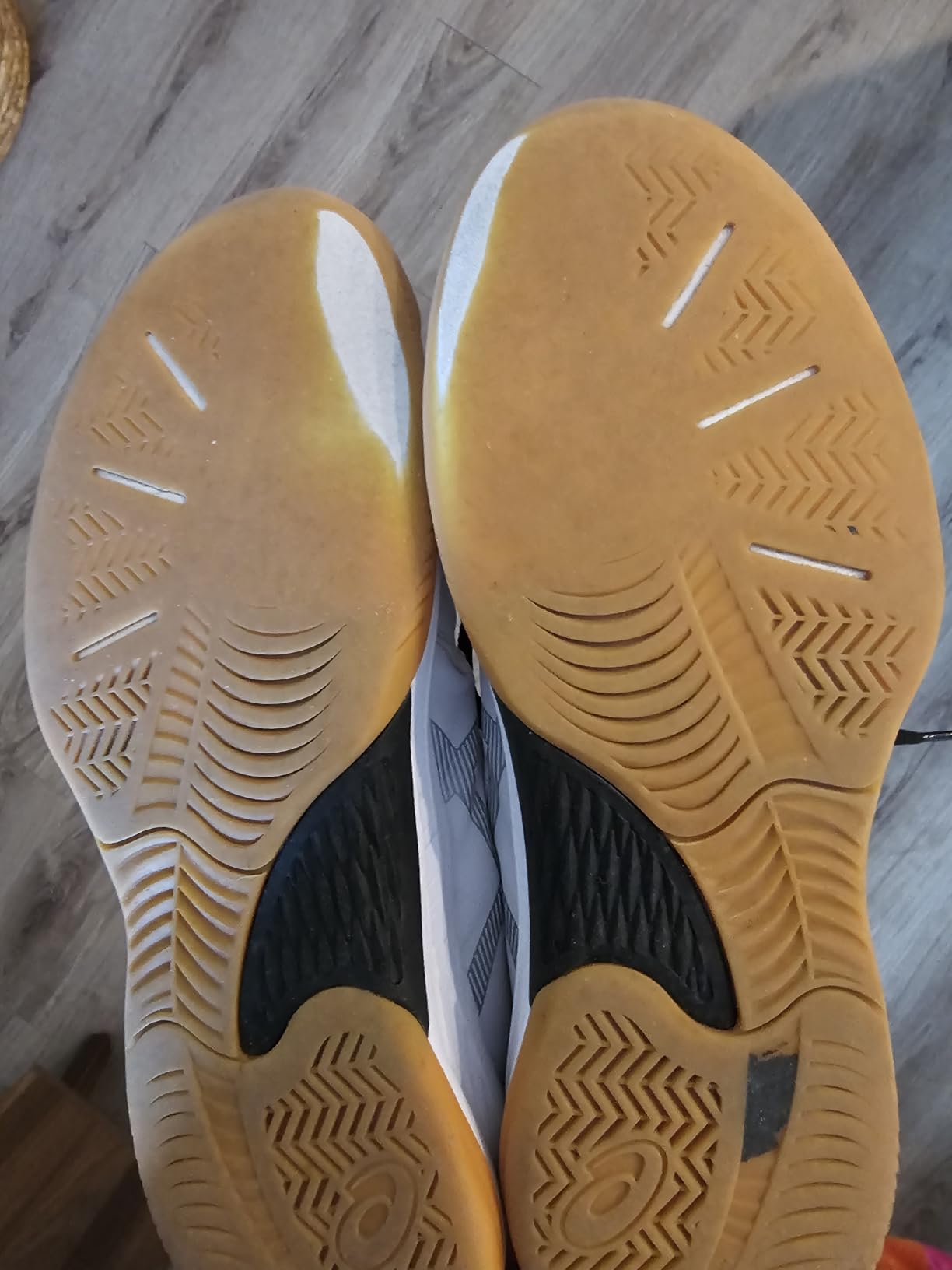
Why lateral stability matters more outdoors
Pickleball demands sudden direction changes, and a hard surface gives you less time to adjust than a wooden gym floor does. A stiffer, wider platform is what keeps the foot from sliding under you on a cut, and that is the entire argument for this shoe.
Reviewers consistently praise lateral support and stability, which is why I keep it in the roundup even though other shoes score slightly higher on comfort.
Flex grooves and multi-directional movement
Flex grooves cut into the outsole so it bends in more than one direction rather than only front to back. Combined with TRUSSTIC technology that improves support while reducing excessive twisting, it handles the shuffle-step pattern that separates good players from beginners.
The practical benefit shows up in long club matches, where a shoe that fights your foot movement starts to feel like work by the third game.
Where it falls short
The most common complaint is that the cushioning feels firmer than what dedicated pickleball shoes offer. At 1.44 pounds per pair, this is also a heavier build than most of the shoes in this roundup, which adds up over a long hot day.
If you like a soft, springy landing, look at the Ryka or Skechers models further down instead.
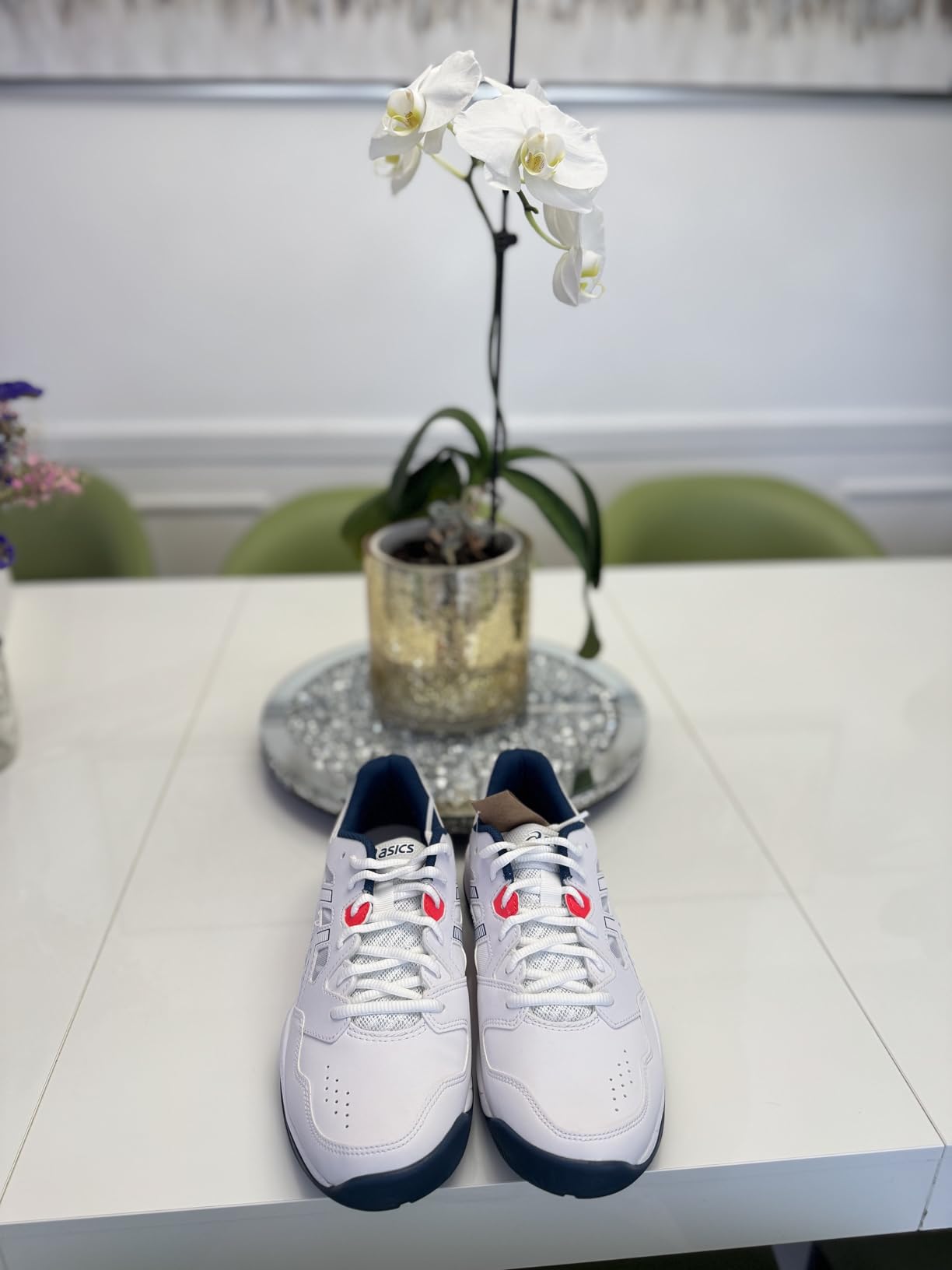
4. K-Swiss Women’s Express Light – Wide Toe Room From a Court-Specific Last
K-Swiss Women’s Express Light Pickleball Shoes, Egret/Patina Green, 8 M
All-court EVA outsole
DRAGGUARD 7.0 rubber reinforcement
DURAWRAP upper
OrthoLite open-cell foam liner
Pros
- Wide toe box built for court footwork
- DRAGGUARD rubber in high-wear toe and heel zones
- OrthoLite liner manages moisture
- DURAWRAP upper resists toe-drag wear
Cons
- Most expensive shoe in this roundup
- K-Swiss advises sizing up half a size for toe room
This is the version of the Express Light built on a court-specific last, and it is the shoe I recommend when a narrow toe box is the reason a player is uncomfortable. With 2.5k+ ratings, the wide forefoot is a consistent theme rather than a marketing claim.
Note the sizing guidance before anything else. K-Swiss advises sizing up half a size for toe room, and players coming from neutral athletic shoes often keep their usual size and find the fit tighter than expected.
DRAGGUARD 7.0 and the wear zones that matter
Outdoor play kills shoes at the toe and the heel first, because that is where the foot pivots and drags. DRAGGUARD 7.0 places rubber reinforcement in exactly those zones, and it is the reason this model tends to outlive lighter court shoes on rough asphalt.
The DURAWRAP upper works alongside it, resisting toe-drag wear on the material rather than only the rubber.
OrthoLite foam and all-court cushioning
The sockliner uses OrthoLite open-cell foam, which is designed to move moisture away from the foot instead of trapping it. That matters outdoors, where you are generating heat that indoor players never deal with.
Underneath, the all-court EVA outsole balances cushioning with durability. It is firmer than a running midsole by design, which keeps your feet connected to the surface during quick stops.
Where it falls short
Two things to weigh. It sits at the top of the price range for this roundup, and the half-size-up sizing guidance means it costs more in trial and error if you are between sizes.
Reviews are otherwise positive, with customers calling out the durable construction and secure heel.
5. K-Swiss Men’s Express Light – The Grip Pick for Outdoor Courts
K-Swiss Men’s Express Light Pickleball Shoe, Steel Gray/Jet Black/Spicy Orange, 7.5 M
Stability design for lateral movement
DRAGGUARD abrasion resistance
DURAWRAP toe reinforcement
ORTHOLITE open-cell sock liner
Pros
- Exceptionally good grip
- even on damp courts
- DRAGGUARD and DURAWRAP resist toe-drag wear
- OrthoLite liner manages moisture
- Repeat buyers commonly purchase a third pair
Cons
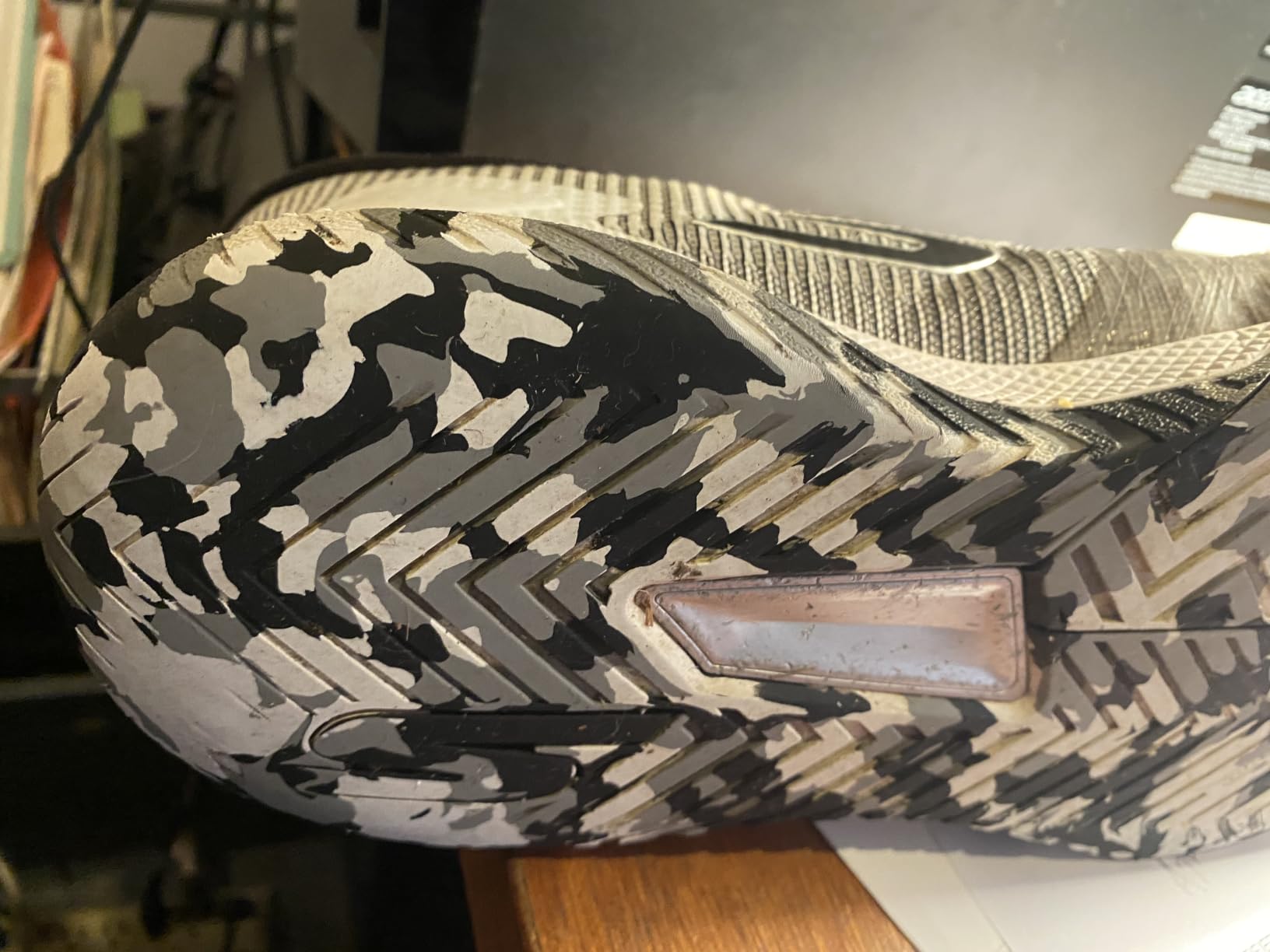
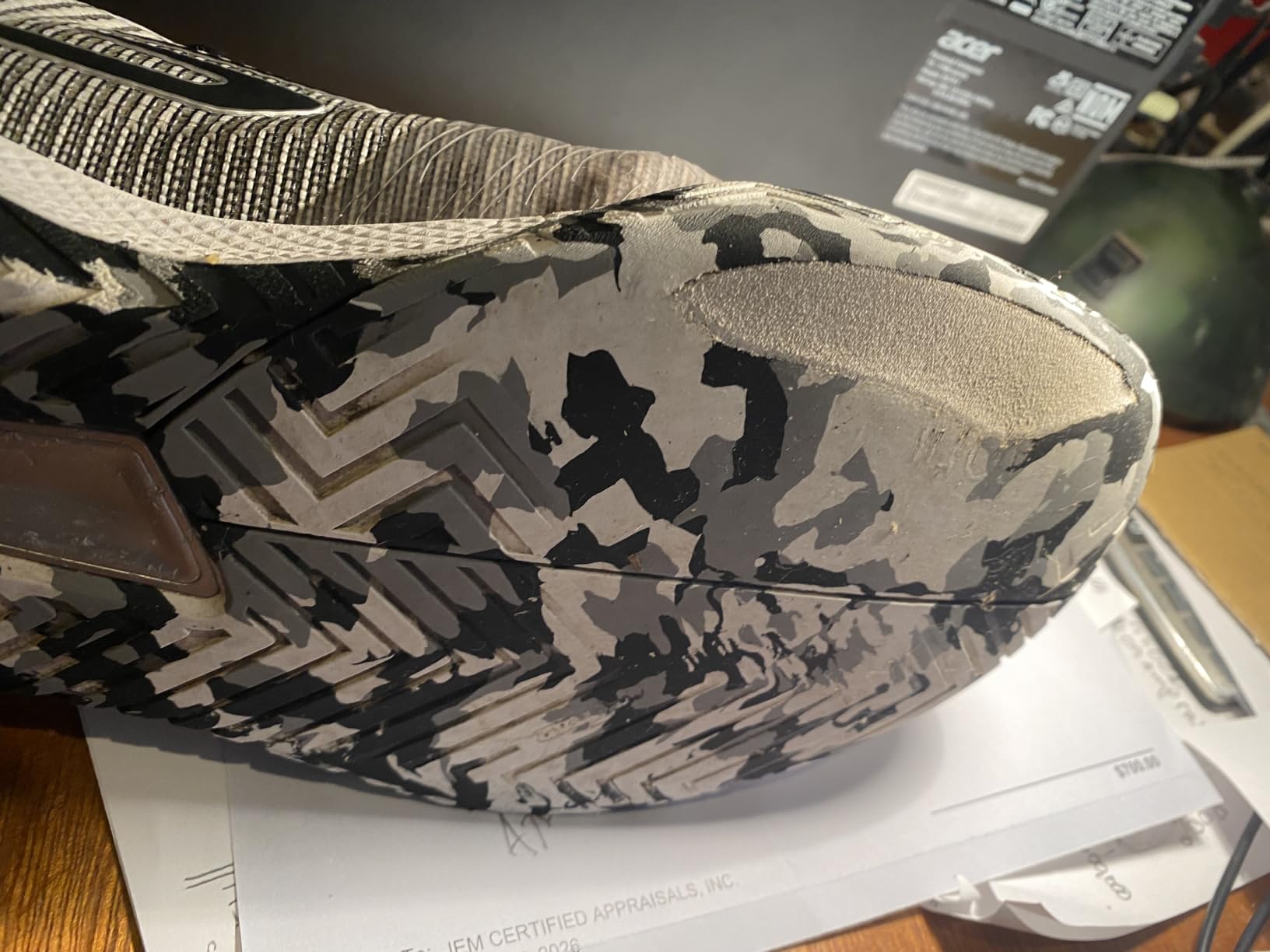
- Outsole can wear through in a couple of months of heavy play
- The insole that ships with the shoe offers limited shock absorption
- Tongue can slip outward after break-in
Owners mention one word more than any other about this shoe, and it is grip. With 2.2k+ ratings at 4.2, the K-Swiss Men’s Express Light is the model I point people toward when their main worry is footing on a damp outdoor court.
That matters because grip complaints are the loudest thread in outdoor pickleball. A player on the r/PickleballPhilippines thread titled “Outdoor court shoe recommendation?” reported a dedicated pickleball shoe that was still slippery on a smooth-finish outdoor court, and that experience is the reason grip deserves more weight than cushioning in this category.
Stability design built for short lateral bursts
The stability design is targeted at short lateral and front-to-back movement rather than long-distance running. That is the correct engineering target for pickleball, where you shuffle, plant, and push off inside a few feet.
Reviews also call out a wide toe box alongside the strong lateral stability, which is a combination you do not often get in the same shoe.
Moisture management during long outdoor sessions
The ORTHOLITE sock liner uses open-cell foam for moisture management, and the mesh-backed upper lets heat escape. In practice this is one of the cooler-feeling shoes here, which matters on a sun-baked court in July.
Many owners describe buying this shoe a second and third time, which tells you more about long-term comfort than any spec sheet.
The honest weakness: outsole life under heavy play
The outsole can wear through in a couple of months of heavy weekly play, and that is the single most common complaint. The stock sock liner also provides limited shock absorption compared with a shoe that ships with a thicker removable footbed.
One smaller issue: the tongue can slip outward after break-in. If you play often, check the fit after the first few sessions.
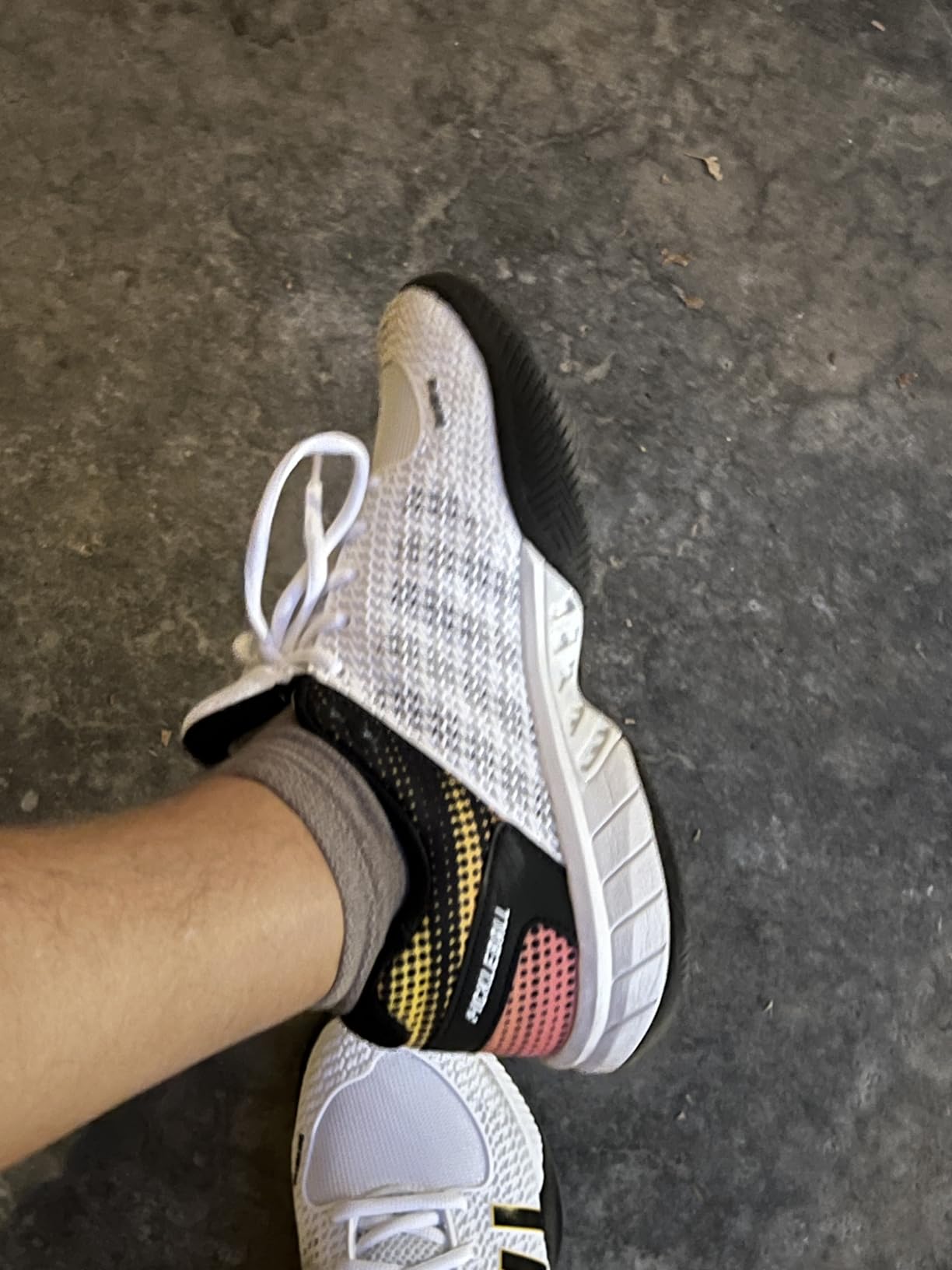
6. Skechers Women’s Viper Court Pro – Certified Arch Support for Long Matches
Skechers Women’s Viper Court Pro Pickleball Sneaker, White/Blue, 8.5
Goodyear Gold compound outsole
ULTRA FLIGHT responsive cushioning
Podiatrist-certified arch support
Mesh upper with synthetic overlays
Pros
- Arch support built from 100000+ foot scans
- Goodyear Gold outsole delivers traction
- Roomy relaxed fit through the toe and forefoot
- Mesh upper holds up in intense matches
Cons
- One of the heavier builds in this roundup
- Mesh upper offers less protection than a leather build
This is the women’s model I recommend for players who plan to be out there for two-hour matches rather than quick club sessions. At 4.3 across nearly 1000 ratings, it has the strongest rating among the women’s-specific shoes in this group.
The distinguishing feature is the arch support system, developed from 20 years of data and more than 100000 foot scans. That is a level of fit research you rarely see at any price point in court shoes.
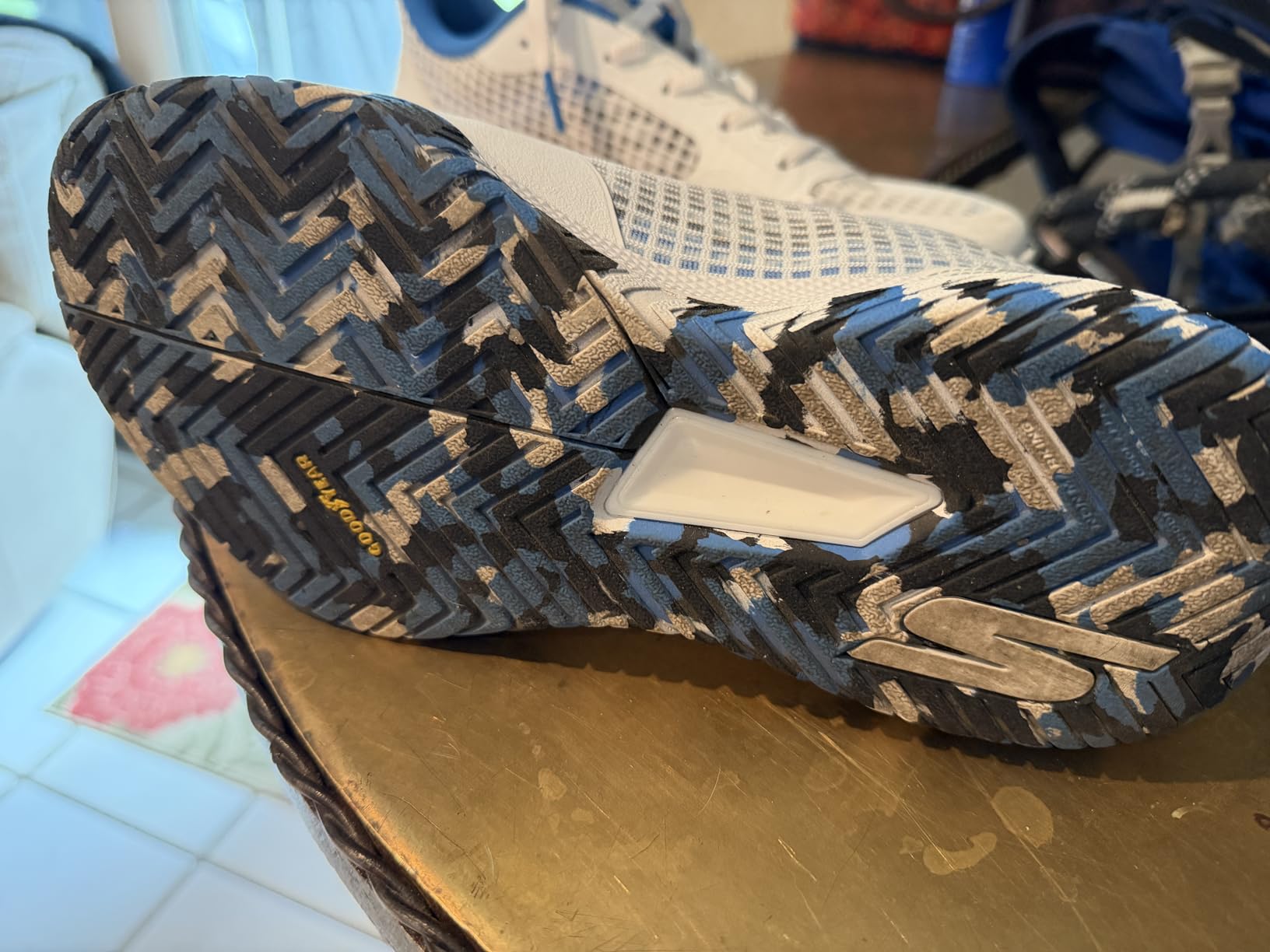
Goodyear Gold compound and what it does on concrete
A Goodyear Gold compound outsole is built for traction, and Goodyear rubber is one of the harder-wearing compounds used in court footwear. It is a sensible match for outdoor concrete, where a soft indoor compound would flatten out quickly.
Buyers single out the grip as a strength, particularly when moving quickly between the baseline and the kitchen line.
ULTRA FLIGHT cushioning over long sessions
ULTRA FLIGHT is a responsive foam that returns energy rather than absorbing everything, which keeps your feet from feeling dead during a third consecutive game. For players with knee or ankle soreness, that responsiveness tends to feel better than a very soft, flat midsole.
The supportive mesh upper with synthetic overlays balances airflow with structure, and owners report the forefoot stays roomy through long matches.
Where it falls short
At 1.5 pounds per pair, this is one of the heavier builds here, and the mesh upper gives you less toe protection than a synthetic leather or leather model. For most recreational players that is a fair trade for the arch support and airflow.
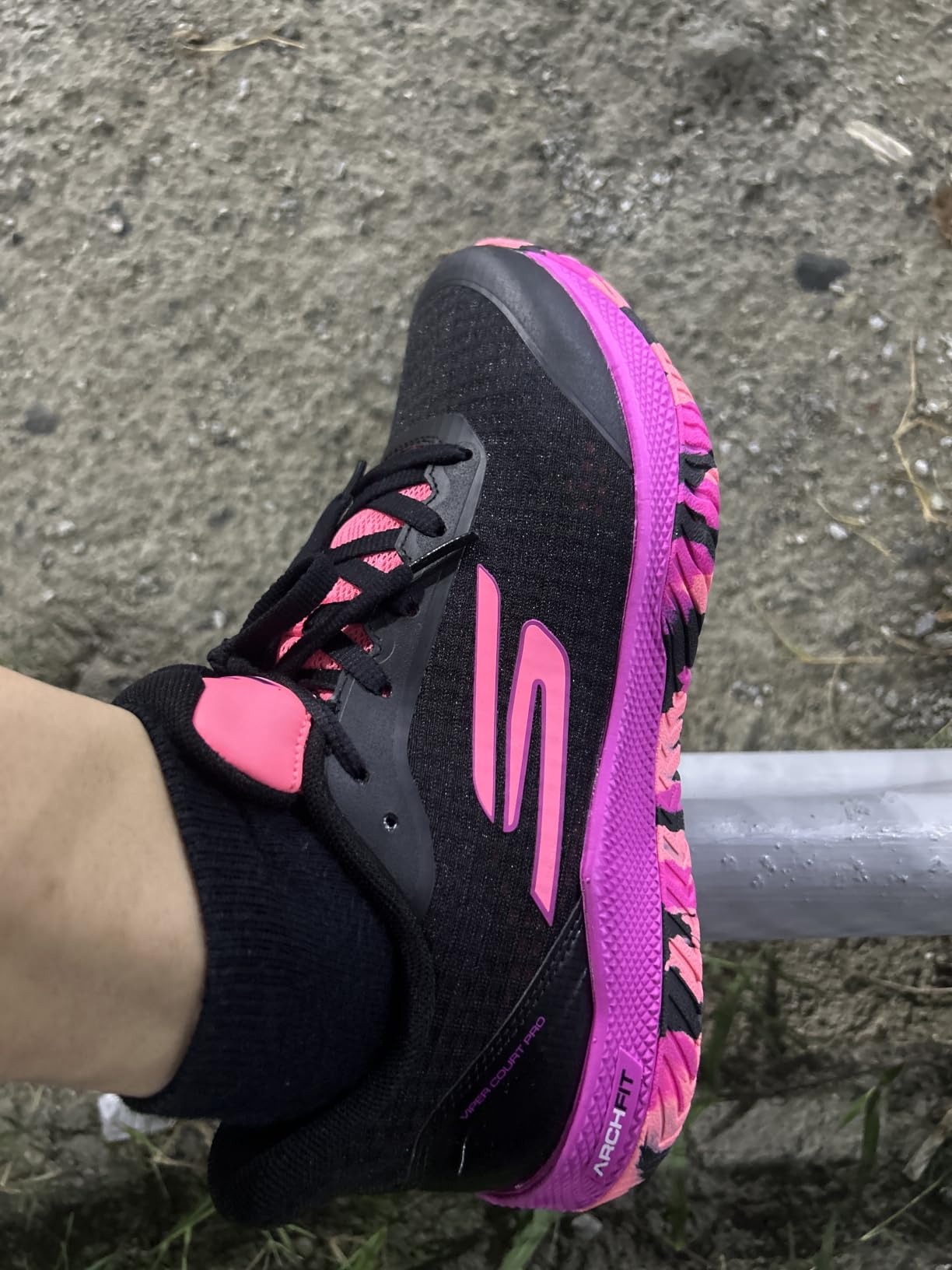
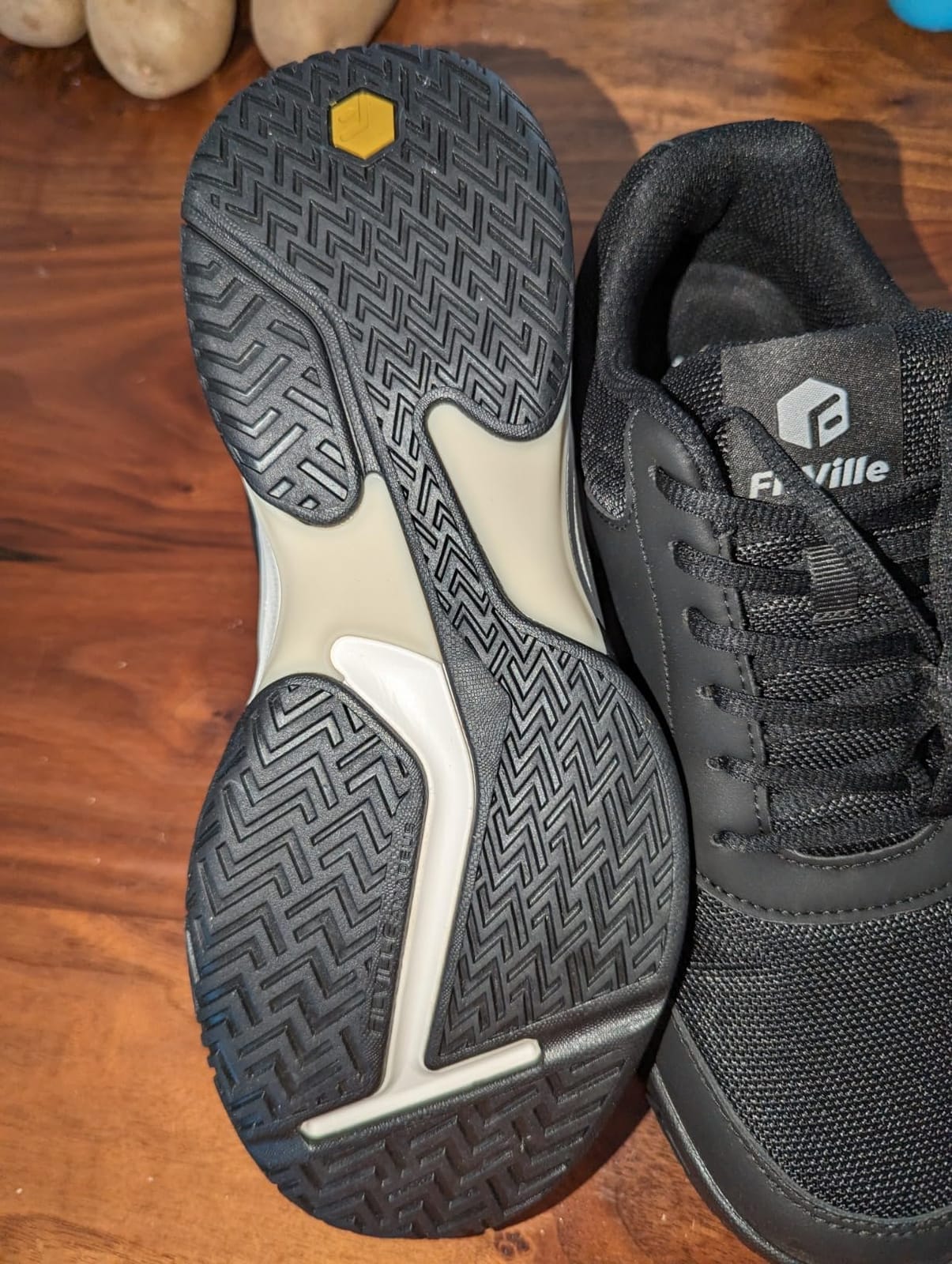
7. FitVille Extra Wide Pickleball Tennis Shoes – Relief for Hammertoes and Bunions
FitVille Extra Wide Pickleball Shoes Men Tennis Racquetball Squash Shoes for Men All Court with Arch Support-Tennis V3(White, 10.5 X-Wide)
720g per pair at US size 9
Anti-torsion TPU rubber
Roomy wide toe box with arch support
Slip-resistant cushioned sole
Pros
- Extra-wide toe box for hammertoes and bunions
- 720g per pair keeps the shoe light
- Anti-torsion TPU absorbs shock during cuts
- One buyer used them on indoor cement and asphalt
Cons
- Less soft than a running sneaker
- Stitching and insole wear reported within months
This is the extra-wide version, and it exists for feet that the standard wide model still squeezes. At 720g per pair for a US size 9, it manages to be genuinely light while giving you a very roomy toe box.
One buyer reported playing on indoor, cement, and asphalt courts in the same pair, which is a decent signal that the outsole handles more than one surface type.
Arch support and the roomy toe box
The toe box is the headline here, wide enough to stop pressing against hammertoes or a bunion across a long session. Arch support is built into the footbed, and buyers report relief from plantar fasciitis pain after long games.
If a narrow toe box is what pushed you away from court shoes in the first place, this is the shape that tends to work.
TPU rubber and shock absorption on hard surfaces
Anti-torsion TPU rubber handles shock absorption while keeping the foot from twisting through aggressive cuts. The slip-resistant high-rebound cushioned sole is designed to hold on hard and clay surfaces, which covers the two most common outdoor court types.
A firm shell holds the foot in place during lateral movement, which is exactly the feedback you want from a shoe built for a wide foot.
Where it falls short
Two things temper the enthusiasm. The shoe is less soft than a running sneaker, so it will not feel as plush during warm-up, and some buyers report stitching and insole wear within months of regular use.
Durability feedback is mixed, so treat this as a comfort-first purchase for extra-wide feet rather than a long-term outsole investment.
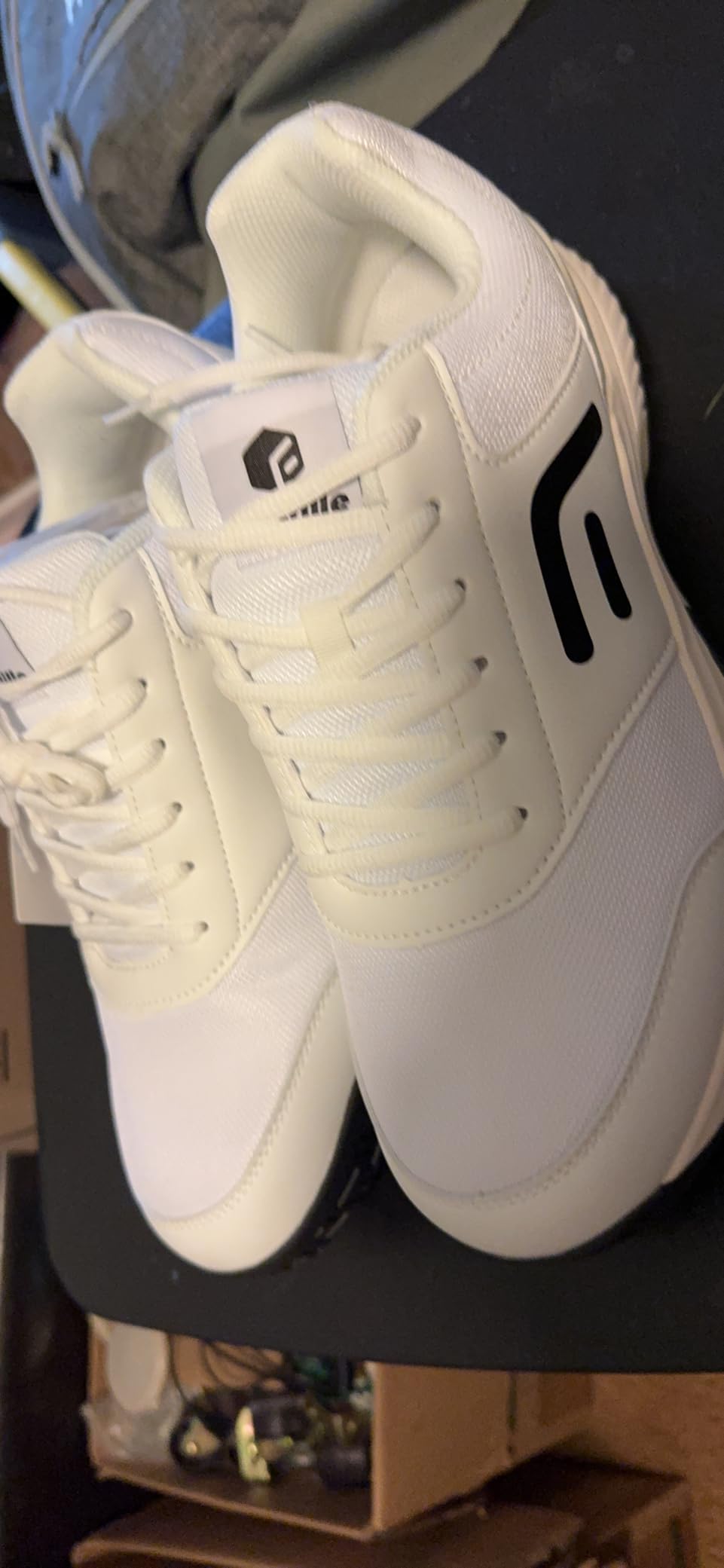
8. Skechers Men’s Viper Court Smash – Lightweight and Machine Washable
Skechers Men’s Viper Court Smash Pickleball Sneaker, Grey/Lime, 14
12.3oz per shoe
ULTRA FLIGHT cushioning
Non-marking traction outsole
Machine washable build
Pros
- 12.3oz per shoe keeps the shoe light
- Non-marking outsole works indoors and out
- Roomy relaxed fit through the forefoot
- Machine washable after outdoor court dust
Cons
- Firmer cushioning than a plush performance model
- Molded EVA insole is thinner than a removable footbed
This is the split-court pick. If you play indoors in winter and outdoors in summer with the same pair, the non-marking indoor/outdoor traction outsole is the feature that decides it.
At 4.3 with 700+ ratings, it holds a strong five-star share, and owners consistently mention the roomy fit.
Weight and why 12.3 ounces matters
At 12.3 ounces per shoe, this is one of the lighter builds in the roundup, and the number is worth taking seriously. Lower weight means less energy spent lifting your own feet through repeated shuffle steps, which compounds over a two-hour match.
For players who already have knee or ankle complaints, the lighter build is often more comfortable than a heavier, more cushioned shoe.
ULTRA FLIGHT cushioning and the molded insole
ULTRA FLIGHT cushioning pairs with a molded EVA insole. The foam is responsive rather than plush, so you feel the court surface underneath instead of sinking into the shoe.
That firmer feel is the main complaint, and players used to a cushioned running shoe should expect an adjustment period.
Machine washable is a genuine outdoor perk
Outdoor court dust gets into everything, and being able to toss the shoe in a washer and air it dry makes a real difference over a season of frequent play. Materials are 100% vegan.
The molded insole is thinner than a removable footbed, so if you use aftermarket insoles plan around that.
9. Skechers Men’s Viper Court Pro 2.0 – The Highest Rated Shoe Here
Skechers Men’s Pickleball Viper Court Pro 2.0 Sneaker, Black/Multi, 8.5 Medium
Arch Fit insole with APMA Seal
ULTRA GO Foam midsole
Goodyear Gold outsole
Breathable mesh upper
Pros
- Highest rated shoe in this roundup
- Arch Fit insole carries the APMA Seal of Acceptance
- Goodyear Gold outsole handles controlled slides
- Also suited to padel and tennis
Cons
- One of the heavier builds in this roundup
- Arch Fit insole adds weight versus a stock footbed
The 2.0 is the highest rated shoe in this group at 4.4, with 73% of ratings at five stars. That rating comes from two specific decisions: a certified removable insole and a hard-wearing outsole compound.
The Arch Fit removable insole carries the APMA Seal of Acceptance, which means podiatrists reviewed the product as a foot health option. That matters if you have a history with plantar fasciitis or arch pain.
ULTRA GO Foam and the feel underfoot
The ULTRA GO Foam midsole is lighter and more responsive than a traditional EVA court midsole. Reviewers describe it as comfortable without feeling soft, which is the balance you want on outdoor concrete where an overly soft midsole bottoms out and leaves your foot flat.
A lightweight responsive midsole also reduces the fatigue that sets in during long tournament days.
Goodyear Gold outsole and controlled slides
The outsole is built specifically for controlled slides, meaning it grips during a normal movement but does not bite so hard that a slide becomes a fall. On outdoor courts that balance is valuable, because the surface is unpredictable in a way a gym floor never is.
The upper is a durable breathable mesh with synthetic support overlays, so it holds structure without becoming a hot, solid block over the foot.
Who this is not for
At 2 pounds per pair, this is the heaviest build in the roundup, and the certified insole contributes to that. If you are a very light player focused on quick footwork, the lighter Smash model may suit you better.
It is also among the higher priced shoes compared here, which is the trade for the certified support and outsole compound.
10. Ryka Women’s Courtside Pickleball Shoe – Cushioning With a Women’s Last
Ryka Womens Courtside Pickleball Sneakers White/Navy 10 W
Women's specific last
Grippy rubber sole
Durable perforated leather upper
Padded collar and lace closure
Pros
- Women's specific last with a narrower heel
- Roomy toe box stops crowding the forefoot
- Exceptionional cushioning and arch support
- Lightweight enough for long sessions
Cons
- Pleather upper runs low on breathability
- Stiff tongue edge can rub the top of the foot
- Some buyers report upper material cracking early
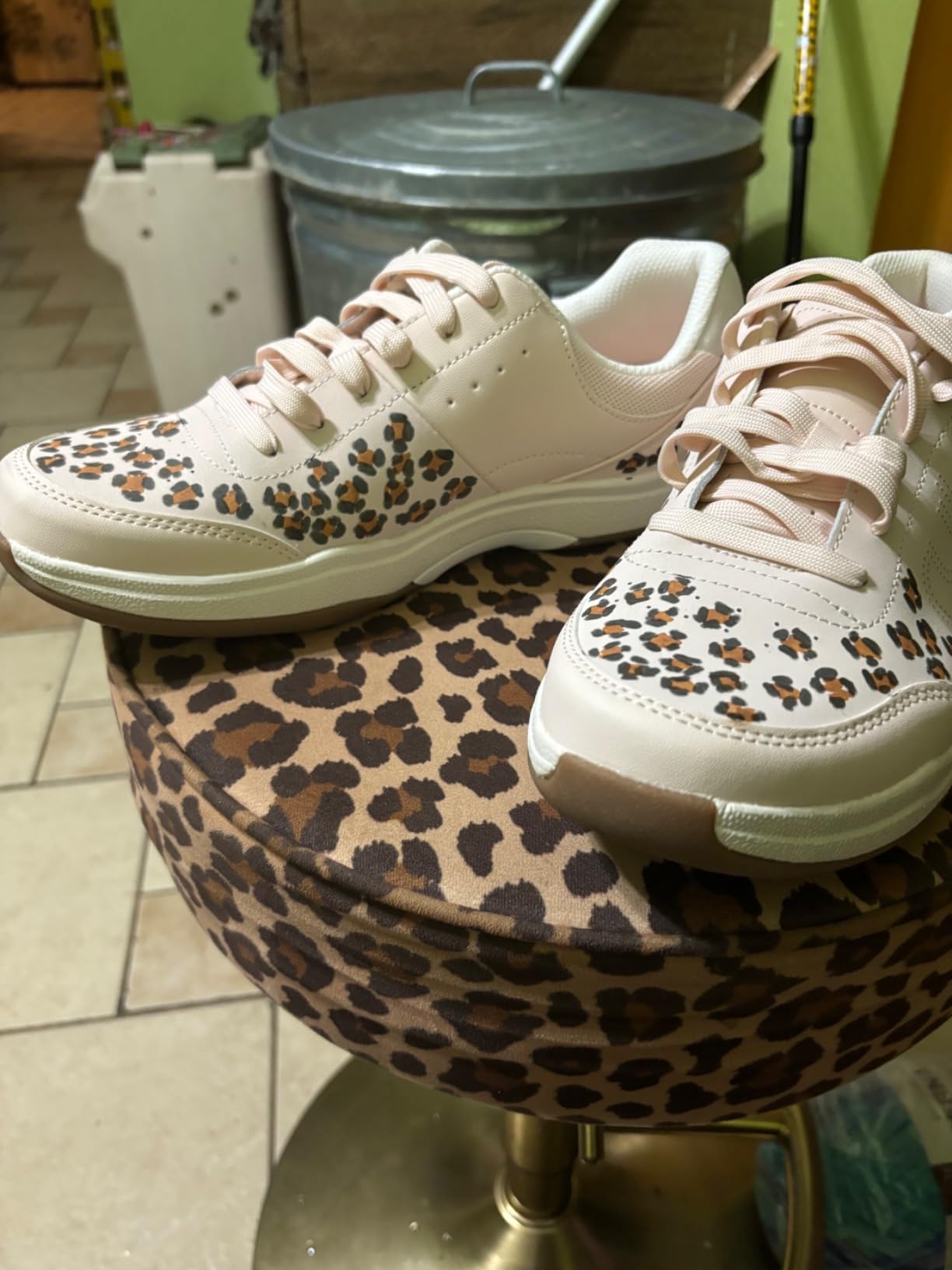
The Ryka Courtside is the softest landing in this roundup, and the only shoe here built on a women’s-specific last. That last is narrower at the heel and roomier at the toe, which is a different shape from simply scaling a men’s shoe down.
Buyers love the grippy rubber sole for quick side-to-side movement and report exceptional cushioning for long sessions.
What a women’s-specific last changes
A narrower heel means the foot stays secure during lateral cuts instead of lifting, while the roomier toe box stops crowding the forefoot. For a sport built on sudden stops, that heel security is worth more than it first appears.
The padded collar and lace-up closure let you adjust the fit precisely, which helps when feet swell in the heat.
Cushioning versus outdoor heat
The cushioning is the strongest feature here and the reason many players keep coming back. The trade is the durable perforated leather upper, which buyers describe as low on breathability compared with a mesh build.
Perforations help, but in peak summer you will feel more heat in this shoe than in the Skechers or FitVille mesh models.
Where it falls short
Two recurring complaints: a stiff tongue edge that can rub the top of the foot, and upper material cracking early on some pairs. The 4.1 average is the lowest tied in the roundup, so expectations should be set accordingly.
How to Choose Pickleball Shoes for Outdoor Courts
Ten pairs of outdoor court shoes can look similar from a distance, and the differences that matter are structural rather than cosmetic. Check these in this order, because each one rules out options for you before you fall in love with a colorway.
Outsole and traction on rough surfaces
Outdoors, the outsole is the part that dies first. A herringbone or multi-directional tread pattern gives you grip during the shuffle and the plant, and a harder rubber compound resists abrasion on rough asphalt. Goodyear Gold and Aosta-type compounds are the common high-wear choices in this category.
A herringbone pattern places grooves in a V shape so the shoe bites in several directions at once, which is what you need when you are moving forward, back, and sideways within a couple of steps.
Court surface guide: asphalt, concrete, coated acrylic, indoor
The surface you play on changes what you need. Asphalt is the roughest and wears outsoles fastest. Concrete is hard and unforgiving on joints but usually smoother underfoot than asphalt. Coated acrylic is the gentlest outdoor surface and behaves most like an indoor court. An indoor gym floor lets almost any court shoe work.
This matters because the shoes built for the roughest surfaces often feel a touch heavier and stiffer than you would want indoors, and shoes optimized for indoor grip can feel vague outdoors.
Lateral support and base width
Lateral support means resisting side-to-side movement, and it comes from three places: a wider base, sidewall reinforcement, and a midfoot shank or TPU unit. A wrap-up outsole that extends up the side of the shoe adds base width.
If you play doubles at a competitive level or have a history of ankle rolls, prioritize stability over softness. Soft shoes that feel great for one session can leave you unstable on the third cut of a long match.
Cushioning, weight and long-session comfort
Weight is the easiest number to compare and the one players underrate. A shoe that is 8 ounces per shoe lighter feels noticeably fresher in the fourth game. Cushioning should be responsive rather than maximally soft, because soft midsoles bottom out on hard surfaces and stop absorbing anything.
Removable sock liners and insoles matter more than most buyers assume, since they let you swap in an aftermarket footbed later without replacing the whole shoe.
Fit, toe box width and sizing
Toe box width is where most players get stuck. A narrow forefoot forces your toes to bunch on every cut, which causes blisters and fatigue. Wide and 2E constructions exist for exactly this reason, and the FitVille models in this roundup cover the extra-wide end of the range.
Try shoes late in the day, when feet are at their largest, and leave roughly a thumb’s width between your longest toe and the front of the shoe. Expect a break-in period of a few sessions with synthetic leather uppers, and note that heat-related swelling outdoors means slightly more room is safer than a snug fit.
Breathability in summer heat
Mesh uppers move heat and moisture better than leather or synthetic leather. Outdoor play generates more sweat than indoor play because you are moving in direct sun, and moisture that stays in the shoe makes blisters far more likely.
If your courts have no shade, weight a breathable upper more heavily than you would when shopping for an indoor shoe.
How long outdoor shoes last and when to replace them
Plan on replacing outdoor court shoes sooner than indoor ones. Rough outdoor surfaces chew through soft outsoles in roughly half the court hours of indoor play, which works out to replacement cycles of about two months for players going several times a week, and considerably longer for occasional players.
Two habits extend that timeline. Rotate two pairs so each outsole recovers between sessions, and let shoes dry fully before the next game, since damp foam and damp upper material break down faster. Clean the tread with a stiff brush; packed court dust reduces grip before it reduces anything else.
Court shoes vs pickleball shoes vs running shoes
There is a real difference between court shoes and pickleball shoes, though the honest answer is that pickleball shoes are a category of court shoe. Court shoes are built for lateral movement with a wide, flat base and low-profile rubber tread. Tennis shoes are a subset of court shoes with more internal lateral support for serve-and-volley movement. Running shoes are built for forward motion, so they are narrow, cushioned, and light in the wrong places.
You can play in running shoes, and many recreational players do. What you give up is stability through the midfoot, which is the exact thing standing between you and an ankle roll on a hard outdoor surface.
Coming from tennis shoes? Our tennis shoe guide covers that transition, and our cross training shoe picks are the closest comparison to what pickleball demands.
Frequently Asked Questions
What are the best court shoes for pickleball?
The best court shoes for pickleball have a wide, flat base, reinforced sidewalls, and a non-marking rubber outsole. For outdoor play specifically, prioritize a harder rubber compound such as Goodyear Gold because asphalt and concrete wear through soft indoor outsoles faster. The Skechers Viper Court Pro 2.0, ASICS Gel-RENMA, and K-Swiss Express Light are the strongest starting points.
Is there a difference between court shoes and pickleball shoes?
Pickleball shoes are a type of court shoe, not a fundamentally different build. Court shoes share a wide, flat base and low-profile tread for lateral movement. Tennis shoes add heavier internal lateral support for serve-and-volley play, and running shoes are built for forward motion instead. The category matters far less outdoors, where outsole compound decides how long the shoe lasts.
Why do my pickleball shoes wear out fast outdoors?
Outdoor surfaces abrade the outsole far more aggressively than an indoor gym floor, and most of that wear lands in the toe and heel where you pivot and drag. Cheap outsole compounds flatten first. Look for reinforced high-wear zones such as DRAGGUARD or DURAWRAP, rotate two pairs, brush court dust off the tread, and let shoes dry fully between sessions.
Should I size up or get wide-fit pickleball shoes?
Size up a half size if you play outdoors in heat, because feet swell during a long match. Choose a wide or 2E construction if a standard width presses on your toes or widens across the forefoot, since toe-box crowding causes blisters and fatigue. K-Swiss explicitly advises sizing up half a size, and wide models are worth the trade for foot width rather than length alone.
How long should pickleball shoes last on outdoor courts?
Rough outdoor concrete shortens shoe life to roughly half the court hours of indoor play. A player going three or four times a week on asphalt or concrete may replace shoes in about two months, while occasional players get considerably more. A weekly player on a shaded or coated surface will see far longer life. Replace when the tread flattens or the shoe begins rolling during lateral cuts.
Which Outdoor Pickleball Shoe Should You Buy?
Start with your foot and your court, not the spec sheet. If you want the most reliable all-round pick with the deepest review history, take the Avia Verge as our editor’s choice. If grip on a damp or rough outdoor court is your worry, the K-Swiss Men’s Express Light is the one owners rebuy most often.
If you have wide feet, the two FitVille models cover standard wide and extra-wide needs, and the K-Swiss Women’s Express Light gives the widest toe box in a court-specific build. For certified arch support, the Skechers Viper Court Pro 2.0 carries an APMA-accepted insole. Pure stability on hard surfaces belongs to the ASICS Gel-RENMA, and the softest landing with a true women’s last is the Ryka Courtside.
Whatever you choose, buy for the surface you actually play on and rotate two pairs if you play weekly. That single habit is what stretches a good outsole across a full season. Check the latest pricing on any of these pairs before you order, and get out on the court this week, because no amount of research substitutes for real lateral movement.
If you are still building out your gear, our walking shoe guide covers recovery days, and the intermediate paddle picks are worth a look once your footwork catches up.
Leave a Reply