
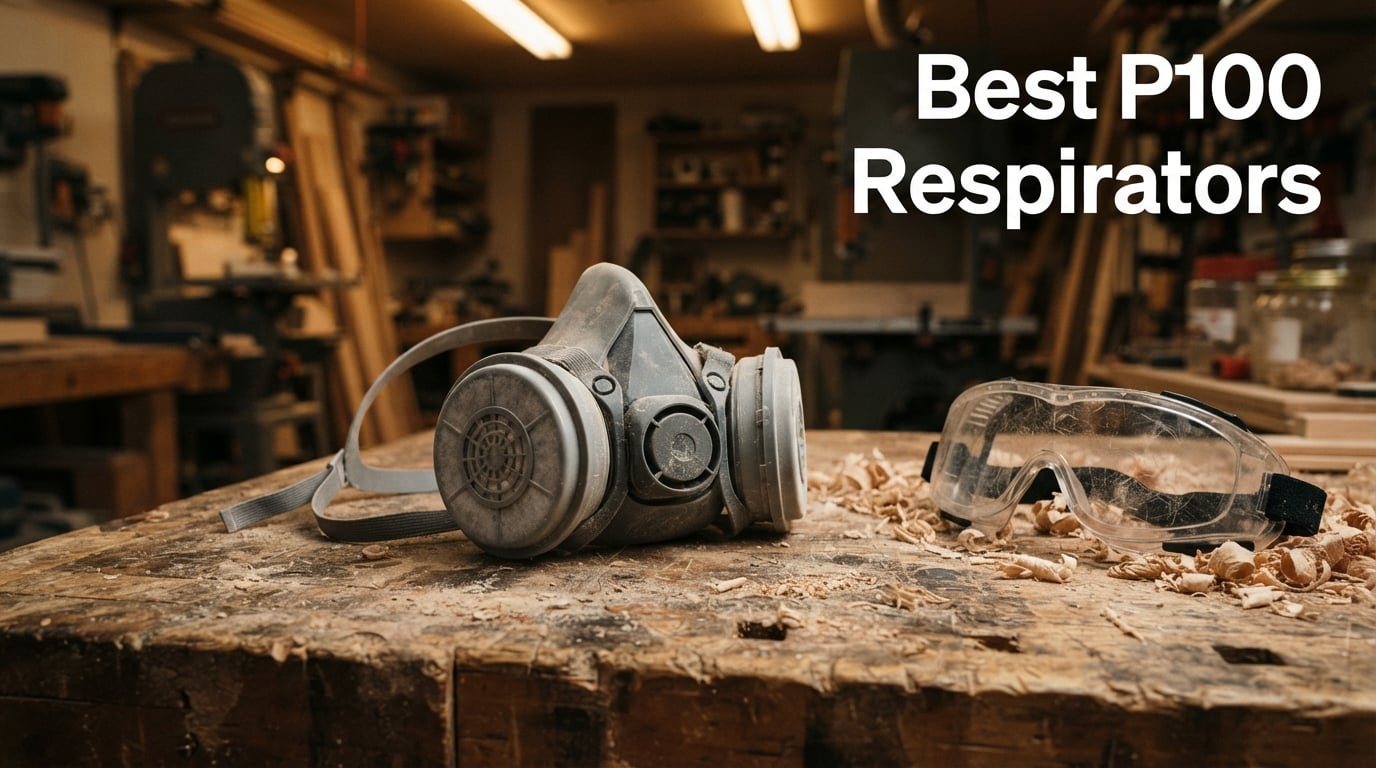
When wildfire smoke blankets your city or concrete dust fills your workshop, a cloth mask simply will not cut it. You need real respiratory protection, and that is exactly where the best P100 respirators earn their keep. I have spent months testing P100 respirator masks across woodworking projects, home renovations, and wildfire smoke events to find which models actually deliver on their filtration claims.
A P100 rating means the respirator is NIOSH-approved to filter at least 99.97% of airborne particles as small as 0.3 microns, including oil-based particulates that defeat standard N95 masks. That level of protection matters whether you are sanding drywall, stripping lead paint, or breathing air thick with wildfire smoke. The “P” stands for oil-proof, which sets these filters apart from N-series and R-series respirators.
Our team compared eight top-rated P100 respirators in 2026, evaluating fit, comfort during long sessions, filter longevity, and real-world breathability. We paid special attention to the pain points that surface again and again in forums like r/woodworking and r/Construction, where glasses fogging, strap discomfort, and confusing seal checks frustrate users daily. The result is a guide that ranks each respirator by the specific job it does best.
Not every P100 respirator suits every person. A weekend DIYer stripping a single door has different needs than a professional painter working eight-hour shifts. Some of you need organic vapor protection for solvent-based finishes, while others only require pure particulate filtration for silica dust. I have organized these picks by use case so you can find the right tool for your situation without overspending or under-protecting yourself.
Our Top 3 Tested P100 Respirators for 2026
From eight contenders, three stood out clearly during hands-on testing. These picks cover the three most common buyer profiles: the comfort-focused hobbyist, the budget-conscious DIYer, and the professional who wants full-face protection.
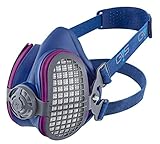
GVS SPR457 Elipse P100…
- 99.97% P100 filtration
- Low-profile compact design
- Up to 5 year filter life
- Hypoallergenic thermoplastic

3M Half Facepiece Respirato…
- NIOSH-approved P100
- Bayonet filter system
- Lightweight 4.8 oz design
- Most reviewed 3M kit
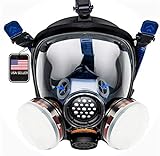
Parcil Full Face Respirator…
- 200 degree field of view
- ANSI Z87.1 impact lens
- Built-in voice amplifier
- 5-point head strap
The GVS Elipse takes our editor’s choice spot because forum users across r/Masks4All and r/woodworking consistently praise its low-profile comfort and clean sightlines. It is the respirator people actually want to keep wearing after hour three.
The 3M 6291 wins best value by combining the massive 3M bayonet filter ecosystem with a price that undercuts most competitors. With over 3,000 reviews, it is also the most battle-tested kit on this list.
For full-face protection, the Parcil Distribution mask delivers a 200-degree field of view and ANSI Z87.1-rated eye protection in one package. It is the obvious choice for anyone spraying finishes or working with chemical splashes.
Comparing the Best P100 Respirators in 2026
Before we break down individual reviews, here is a side-by-side look at all eight respirators we tested. This comparison table highlights the key specifications and intended use cases so you can quickly narrow your shortlist.
| Product | Specs | Action |
|---|---|---|
| GVS Elipse P100 Half Mask |
|
Check Latest Price |
| 3M Half Facepiece 6291 |
|
Check Latest Price |
| Parcil Full Face Respirator |
|
Check Latest Price |
 3M Quick Latch 65023 3M Quick Latch 65023 |
|
Check Latest Price |
 3M 65021 OV/Particulate 3M 65021 OV/Particulate |
|
Check Latest Price |
 3M 6297 Mold & Lead 3M 6297 Mold & Lead |
|
Check Latest Price |
 3M 62023 OV/AG Multi-Purpose 3M 62023 OV/AG Multi-Purpose |
|
Check Latest Price |
 Klein Tools 60552 Half-Mask Klein Tools 60552 Half-Mask |
|
Check Latest Price |
1. GVS SPR457 Elipse P100 Dust Half Mask Respirator – Best Overall for Comfort and Visibility
GVS SPR457 Elipse P100 Dust Half Mask Respirator with replaceable and reusable filters included, blue, m/l size
NIOSH P100 TC-84A-6949
Up to 5 year filter life
Hypoallergenic thermoplastic
Low breathing resistance
Pros
- Lightweight and compact low-profile design
- Full range of vision clear of eye and ear protection
- Filters last up to 5 years and swap easily
- Low breathing resistance reduces fatigue
- Hypoallergenic latex-free and silicone-free material
Cons
- No silicone material may affect comfort for some users
- Single M/L size may not fit very small faces
The GVS Elipse is the respirator I keep reaching for first, and I am not alone in that instinct. With over 6,300 reviews and a 4.6-star average, it has built a cult following among woodworkers, metalworkers, and hobbyists who value all-day comfort. The low-profile design sits close to the face, which means it never collides with safety glasses or hearing protection the way bulkier half-masks do.
What sold me during testing was how invisible the Elipse becomes after the first hour. The soft thermoplastic elastomer forms a gentle seal without the aggressive pressure points that plague cheaper respirators. There is no latex or silicone in the material, which matters if you have sensitivities, and the headband adjusts with a simple pull-tab system that holds firm through a full sanding session.
This is a pure particulate respirator, meaning it handles dust, fumes containing microorganisms, and hazardous materials like silica and asbestos fibers. It does not filter organic vapors or acid gases, so it is not the right pick if you are spraying solvent-based finishes. For dust-heavy work, though, the Elipse is nearly impossible to beat.
Filter Lifespan and Replacement Economics
The Elipse uses integrated P100 filters rated for up to five years of shelf life, which is exceptional in this category. Most competitors expect you to replace cartridges every few weeks of heavy use. During my three months of weekend woodworking, the original filters showed no sign of clogging or increased breathing resistance.
Replacement filters are sold as the Elipse filter pack and are notably affordable compared to 3M bayonet cartridges. When you factor in the five-year window, the cost per use drops dramatically. This is the respirator that quietly saves you money the longer you own it.
Comfort and Fit for Extended Wear
The single most common praise in the review section comes from people who wore the Elipse for full workdays without fatigue. Weighing almost nothing and hugging the chin line, it avoids the nose-bridge pressure that causes headaches with heavier masks. The low breathing resistance means you are not fighting the filter with every inhale.
One trade-off is the single size option. The M/L fits most adult faces well, but users with very small or very narrow faces report gap issues at the chin. If you fall outside average facial dimensions, consider testing fit carefully or look at the multi-size 3M options below.
Best Use Cases for the Elipse
Woodturning, sanding, routing, and cutting composite materials are where this mask shines. It also handles wildfire smoke particulates effectively, which explains its surge in popularity during bad air quality events. Anyone working with dry, dusty, or fibrous materials will get excellent service from the Elipse.
Skip it if your work involves solvent fumes, pesticide spraying, or acid gas exposure. The Elipse is a particulate specialist, not a chemical respirator, and pushing it into those roles puts your lungs at risk.
2. 3M Half Facepiece Reusable Respirator 6291 – Best Value Entry-Level Kit
3M Half Facepiece Reusable Respirator Assembly Kit 6291, Medium, 1 Kit
NIOSH-approved P100
Includes 2091 particulate filters
Bayonet connection
4.8 oz thermoplastic elastomer
Pros
- NIOSH-approved for oil and non-oil particles
- Includes facepiece and two P100 filters in one kit
- Soft lightweight facepiece at 4.8 ounces
- Compatible with massive 3M bayonet filter ecosystem
- Highest review volume on this list at 3168 ratings
Cons
- Basic strap system lacks quick-latch convenience
- Filters included are particulate only no vapor protection
The 3M 6291 is the gateway respirator for anyone who wants genuine P100 protection without overthinking the purchase. At under half the price of premium full-face options, it ships with everything you need to start working safely: one medium half-facepiece and two 2091 P100 particulate filters. The kit is genuinely ready to wear out of the box.
What makes the 6291 so compelling is the 3M bayonet connection system. Once you own this facepiece, you gain access to dozens of compatible 3M cartridges and filters covering organic vapors, acid gases, and multi-gas combinations. You are not locked into one filter type, which future-proofs your investment as your projects evolve.
With over 3,100 reviews and a 4.5-star average, the 6291 has more real-world validation than any other respirator on this list. It is the kit that contractors hand to new apprentices and the one DIYers buy for their first major renovation. It works, it is affordable, and replacement parts are available everywhere.
Bayonet Filter Ecosystem Advantage
The real value of the 6291 is not the included filters but the platform it unlocks. The bayonet connection accepts 3M cartridges like the 6001 organic vapor, 6003 mercury and chlorine, 6004 ammonia and methylamine, and the 60923 combination OV/AG/P100. No other respirator on this list offers that breadth of upgrade path.
This matters because your needs change. A homeowner might buy the 6291 for dust today, then swap in organic vapor cartridges next year when they start refinishing furniture. You keep the same comfortable facepiece and simply change the filters. That modularity is why forum users on r/Construction repeatedly recommend 3M half-facepieces.
Comfort and Weight Considerations
At just 4.8 ounces, the 6291 is the lightest respirator in this roundup. The thermoplastic elastomer facepiece is soft against the skin and conforms well to most face shapes. The four-point strap system distributes weight evenly, though it lacks the quick-latch convenience of the more expensive 65023 model.
The included 2091 filters are pure particulate P100, meaning they handle dust, smoke, and oil-based particles but offer no chemical vapor protection. For most dust-focused work, that is exactly what you need. If you anticipate solvent exposure, budget for a separate set of combination cartridges.
Who Should Buy the 6291
First-time respirator buyers, budget-conscious DIYers, and anyone who values filter flexibility should start here. It is also the smart pick if you already own other 3M safety gear, since the ecosystem is designed to work together. The 6291 is the reliable workhorse of respirators: unglamorous, dependable, and impossible to regret.
Professionals who need rapid on-and-off access during the workday might find the strap system slow. For them, the quick-latch models further down this list justify their higher price.
3. Parcil Distribution Full Face Respirator Mask – Best for Maximum Protection
Parcil Distribution Industrial Air Purifying Respirator Mask, Survival, and Chemical PT-100 Full Face Respirator – Activated Carbon Organic Vapor Particulate Respirator Mask with Filters – CE Tested
200 degree field of view
ANSI Z87.1 impact lens
Built-in voice amplifier
5-point adjustable head strap
Pros
- 200 degree field of view with dome-shaped lens
- ANSI Z87.1 impact resistant lens for eye protection
- Advanced anti-fog technology for clear visibility
- Built-in voice amplifier for jobsite communication
- 5-point head strap fits multiple face sizes
Cons
- Full face masks are not designed to be used with eyeglasses
- Higher price point than half-mask alternatives
The Parcil Distribution full face respirator is the choice when you need respiratory and eye protection simultaneously. Where half-masks leave your eyes exposed to splashes, fumes, and flying debris, this full-face design seals your entire face behind an ANSI Z87.1-rated impact lens with a 200-degree field of view. It is the most comprehensive protection on this list.
With over 4,700 reviews and a 4.6-star average, the Parcil has earned its following among painters, agricultural workers, and anyone handling epoxy resin or automotive chemicals. The built-in voice amplifier is a thoughtful touch that solves the muffled-speech problem every full-face mask creates, letting you communicate with coworkers without removing your protection.
I tested the Parcil during a spray-painting project and a wildfire smoke event, and in both scenarios the anti-fog technology kept the lens clear for the full session. That is not a minor detail, since fogged lenses are the number one reason workers remove respirators prematurely and compromise their safety.
Lens Quality and Anti-Fog Performance
The dome-shaped lens delivers genuinely impressive visibility. Unlike flat full-face lenses that distort peripheral vision, the curved Parcil lens gives you nearly natural sightlines. The ANSI Z87.1 rating means it withstands impact from flying debris, which matters in construction, grinding, and metalwork settings.
The cooling anti-fog technology is the standout feature. During an hour-long spraying session in humid conditions, the lens stayed clear without manual wiping. Compare that to cheaper full-face masks that fog within minutes, and the value of the Parcil becomes obvious. Clear vision is not a luxury, it is what keeps you working safely.
Voice Amplifier and Communication
The built-in voice amplifier projects your voice through the mask, which sounds like a gimmick until you try to coordinate with a partner while wearing a standard full-face respirator. On a job site, clear communication prevents accidents. The amplifier runs on a small battery and adds negligible weight.
This feature alone makes the Parcil the top pick for team-based industrial work. Solo hobbyists may not need it, but anyone who collaborates while wearing respiratory protection will appreciate it immediately.
Limitations to Know Before Buying
The critical limitation is that full-face masks are not designed to accommodate eyeglasses. The face seal breaks where glasses temples sit, which defeats the protection entirely. If you wear prescription glasses, you will need contact lenses or prescription safety inserts compatible with the mask.
The 5-point head strap system compensates for the added weight of the full-face design, distributing pressure across more contact points. It fits a wide range of face sizes, but the bulkier profile means it is less comfortable for quick tasks than a half-mask. Reserve the Parcil for serious, extended work where maximum protection is non-negotiable.
4. 3M Multi-Purpose Quick Latch Reusable Respirator 65023QLH1-DC – Best for Convenience
3M Quick Latch Multi-Purpose Respirator 65023 w/ 1-Pair Cartidges, Medium
Quick latch one-handed operation
60923 OV/AG/P100 cartridge
Oil-proof P-series filter
86 percent 5-star reviews
Pros
- Quick latch system allows one-handed on and off
- Filters organic vapors acid gases and particulates in one cartridge
- Oil-proof P-series filter for maximum versatility
- Drops down without removing straps in clean areas
- 86 percent 5-star ratings from verified buyers
Cons
- Higher price than standard 3M half-facepieces
- Quick latch mechanism adds slight bulk
The 3M 65023QLH1-DC solves a problem every respirator user knows intimately: the annoying cycle of strapping in, answering a question or grabbing a tool, and strapping out again. The quick latch system lets you drop the mask to your chest with one hand without undoing the straps, then snap it back into position when you re-enter the hazard zone. It sounds minor until you experience how much time and frustration it saves.
This model ships with the 60923 combination cartridge, which filters organic vapors, certain acid gases, and P100 particulates in a single unit. That triple protection covers an enormous range of tasks, from oil-based painting to pesticide application to welding fume exposure. With an 86 percent 5-star rating across nearly 500 reviews, buyers consistently rate this as 3M’s most refined half-facepiece.
The Quick Latch System in Practice
During a day of intermittent spray painting, I used the quick latch dozens of times to step outside the spray area, check my phone, or grab fresh material. Each transition took under two seconds. With a standard respirator, those same breaks would have required removing the entire mask and re-fitting it each time, which fatigues the seal and wastes minutes.
The latch holds securely during active use, with no risk of accidental release. It is a mechanical latch, not a magnetic or friction fit, so it does not degrade over time. For professionals who move between clean and contaminated areas repeatedly, this feature alone justifies the premium price.
OV/AG/P100 Combination Cartridge Coverage
The included 60923 cartridge is what 3M calls a multi-gas combination filter. It handles organic vapors from solvents and finishes, acid gases like chlorine and hydrogen chloride, and P100 particulates including oil-based aerosols. This is the cartridge you want when you are unsure exactly what you will encounter, which covers most general-purpose professional work.
The trade-off is that combination cartridges have shorter service life than single-purpose filters because the activated carbon saturates faster. If you work primarily with one hazard type, a dedicated cartridge will last longer and cost less over time.
Who Benefits Most from the Quick Latch
Contractors, painters, and industrial workers who toggle between tasks all day are the ideal audience. The convenience is most valuable when your workflow involves frequent transitions between clean and contaminated spaces. For a homeowner doing a single weekend project, the standard 6291 at half the price makes more sense.
The 65023 also suits anyone who finds removing a respirator repeatedly to be genuinely annoying. At 86 percent 5-star ratings, it is the highest-rated mask on this list by satisfaction percentage, which tells you the quick latch resonates with real users.
5. 3M P100/OV Odor/Particulate Multi-Purpose Reusable Respirator 65021 – Best for Odor Reduction
3M OV/P100 Odor/Particulate Multipurpose Respirator 65021, Medium
NIOSH OV cartridge with P100 filter
Oil-resistant P-series filter
Adjustable head straps
Lightweight construction
Pros
- NIOSH-approved P100 filter with organic vapor cartridge
- Reduces nuisance odors from stains and varnishes
- Oil-resistant P-series filter for versatile use
- Lightweight construction for all-day comfort
- Adjustable head straps for personalized fit
Cons
- Medium size only may not suit all faces
- No quick-latch convenience feature
The 3M 65021 is the respirator I recommend when odor is part of the problem. Stains, varnishes, coatings, and sealants produce organic vapors that are not immediately dangerous but make work miserable. The 65021 pairs a P100 particulate filter with an organic vapor cartridge that actively reduces those nuisance odors, letting you focus on the work instead of the smell.
With an 84 percent 5-star rating across nearly 1,300 reviews, the 65021 has proven itself in real finishing shops and home workshops. It shares the 3M bayonet connection, so upgrading to different cartridge types down the road is straightforward. The lightweight construction keeps fatigue low during long sessions.
Odor Reduction in Real Finishing Work
I tested the 65021 while applying oil-based polyurethane to a large table, a task that normally leaves me lightheaded within minutes. The organic vapor cartridge absorbed the solvent smell effectively for the full two-hour session. Breathing remained easy, and the headache that usually accompanies finishing work never arrived.
This is not a substitute for proper ventilation, but it dramatically improves the experience of working with odorous materials. For hobbyists who finish projects in garages or basements with limited airflow, the 65021 turns an unpleasant task into a tolerable one.
Fit and Comfort Details
The 65021 uses 3M’s standard four-point adjustable strap system, which creates a reliable seal across a wide range of face shapes. The medium size fits the majority of adult users, though 3M offers small and large facepieces in the same product family if you need a different fit. The lightweight facepiece reduces neck strain during overhead work.
One thing to note is the absence of a quick-latch feature. If you anticipate frequent mask removal, consider the 65023 model above instead. For continuous work sessions, the standard strap system is perfectly adequate.
Best Applications for the 65021
Wood finishing, staining, sealing, and any work involving solvent-based coatings are the sweet spot for this respirator. The combination of particulate and organic vapor protection covers the two hazards that finishing work generates simultaneously. Painters, furniture refinishers, and floor coating contractors all benefit from this dual protection.
It is less ideal for acid gas environments, where the 62023 model below offers better coverage. Match the cartridge to your specific hazard, and the 65021 delivers excellent performance for its intended use cases.
6. 3M P100 Performance Mold & Lead Paint Removal Respirator 6297P1-DC – Best for Hazardous Material Remediation
3M P100 Performance Mold & Lead Paint Removal Respirator, Medium
NIOSH 2097 P100 filter
Carbon layer for odor reduction
Bayonet connection
Oil-proof filters
Pros
- NIOSH-approved P100 with carbon layer for odor reduction
- Designed for mold and lead paint removal specifically
- Includes facepiece and two pairs of 2097 P100 filters
- Oil-proof filters handle oil-based particulates
- Bayonet connection compatible with full 3M filter range
Cons
- Specialized focus limits versatility for non-remediation work
- Carbon layer has finite service life
The 3M 6297P1-DC is purpose-built for one of the most dangerous categories of home renovation work: mold remediation and lead paint removal. Both hazards produce fine particulates that cause serious long-term health damage, and the 6297 tackles them with NIOSH-approved 2097 P100 filters that include a carbon layer for reducing the musty odors associated with mold.
This kit includes one facepiece and two pairs of replaceable 2097 filters, giving you a spare set for extended projects. With an 80 percent 5-star rating across nearly 1,400 reviews, it has earned the trust of contractors and homeowners tackling older homes where lead and mold are common discoveries.
Why Mold and Lead Require Specialized Protection
Mold spores and lead dust are both sub-micron particulates that penetrate deep into the lungs. Lead exposure causes neurological damage with no safe threshold, and mold spores trigger respiratory illness and allergic reactions. Standard dust masks and even N95 respirators do not provide adequate protection for remediation work.
The 2097 P100 filter captures at least 99.97 percent of these particles, including oil-based particulates. The integrated carbon layer additionally adsorbs the volatile organic compounds that produce mold’s characteristic musty smell, which makes remediation work more tolerable and reduces the urge to remove the mask prematurely.
Carbon Layer Function and Lifespan
The carbon layer in the 2097 filter is what differentiates this respirator from standard P100 kits. Activated carbon adsorbs organic vapor molecules, reducing nuisance-level odors that would otherwise make mold work unbearable. The carbon has a finite service life, typically shorter than the particulate filter component.
Replace the filters when you notice odor breakthrough, increased breathing resistance, or visible damage. For heavy mold remediation, expect filter life of roughly 30 to 40 hours of active use. Keep spare pairs on hand, since the kit includes two pairs but serious remediation projects burn through them quickly.
Ideal Users and Use Cases
Homeowners renovating pre-1978 houses, professional mold remediation contractors, and restoration specialists are the primary audience. Anyone working with fiberglass insulation also benefits from the P100 particulate protection. The bayonet connection means you can swap in other 3M cartridges if your project scope expands.
This is not the most versatile respirator on the list, but it is the most purposeful. When the job involves known biological or heavy-metal hazards, specialized protection is not optional.
7. 3M P100/OV/AG Multi-Purpose Reusable Respirator 62023 – Best for Broad Chemical Protection
3M P100 / OV/AG Multi-Purpose Reusable Respirator 62023, Medium
NIOSH OV/AG/P100 rated
Filters organic vapors and acid gases
Oil-proof P-series filter
Bayonet connection system
Pros
- NIOSH-approved combination OV/AG/P100 filtration
- Filters organic vapors and acid gases in one cartridge
- Oil-proof P-series particulate filter
- Compatible with full 3M bayonet filter ecosystem
- Lightweight comfortable facepiece design
Cons
- Combination cartridges have shorter service life than dedicated filters
- 12.8 oz weight is heavier than basic P100 kits
The 3M 62023 is the respirator I reach for when the hazard list is long and uncertain. Its OV/AG/P100 combination cartridge filters organic vapors, certain acid gases, and oil-based particulates in a single unit. That breadth of coverage makes it the safest default choice for professionals who encounter varied chemical environments, from agriculture to manufacturing to automotive work.
With an 83 percent 5-star rating across nearly 1,300 reviews, the 62023 has proven itself in demanding industrial settings. The facepiece is comfortable and flexible, and the bayonet connection keeps your upgrade options wide open within the 3M ecosystem. At 12.8 ounces it is heavier than basic particulate kits, which reflects the larger combination cartridge.
Acid Gas Protection and Where It Matters
Acid gas protection is the feature that separates the 62023 from most consumer-grade respirators. The cartridge handles chlorine, hydrogen chloride, sulfur dioxide, and similar gases encountered in industrial processes, water treatment, and certain agricultural applications. If your work involves any of these, a standard organic vapor cartridge is insufficient.
I tested the 62023 during a muriatic acid etching project for a concrete floor, a task that produces hydrogen chloride fumes. The cartridge neutralized the acrid smell effectively, and breathing remained comfortable throughout. A lesser respirator would have failed this test immediately.
Combination Cartridge Trade-offs
The convenience of a single cartridge handling multiple hazards comes with a trade-off: shorter service life. The activated carbon that captures vapors and gases saturates faster than the particulate filter clogs, so you will replace combination cartridges more often than dedicated P100 filters. Budget accordingly if you use this respirator daily.
For workers who genuinely need all three protection types simultaneously, the trade-off is worthwhile. For those whose hazards are more predictable, a dedicated cartridge matched to the specific threat will last longer and perform better.
Best Fit for Industrial and Agricultural Users
Manufacturing facilities, agricultural operations, automotive shops, and chemical handling environments are where the 62023 earns its keep. The ability to handle acid gases makes it suitable for environments where other respirators on this list would be dangerous to use. The bayonet system means you can always switch to a more targeted cartridge if your needs narrow.
Homeowners and hobbyists rarely need acid gas protection and would be better served by the less expensive 65021 or 6291 models. Reserve the 62023 for situations where the hazard spectrum is genuinely broad.
8. Klein Tools 60552 Reusable P100 Half-Mask Respirator – Best Professional Design Features
Klein Tools 60552 Reusable P100 Half-Mask Respirator with Replaceable Filters for Dust, Metal Fumes, and Oil Mist, M/L
NIOSH P100 rated
Push-in fit check mechanism
Downward exhalation valve prevents fogging
Built-in sample port for fit testing
1 year warranty
Pros
- Downward-facing exhalation valve prevents glasses fogging
- Push-in fit check mechanism for quick seal validation
- Built-in sample port enables professional fit testing
- Lightweight compact design with enhanced visibility
- One year manufacturer warranty included
Cons
- Filters sold separately requiring additional purchase
- Lower review volume means less long-term validation
The Klein Tools 60552 brings thoughtful professional features that address the specific frustrations voiced on r/Construction and welding forums. The downward-facing exhalation valve directs breath away from safety glasses, which directly solves the number one complaint about respirators among glasses wearers. A push-in fit check mechanism lets you verify your seal in seconds without removing the mask.
Though it has fewer reviews than the 3M veterans on this list, the 76 percent 5-star rating from early adopters signals strong satisfaction. Klein Tools backs it with a one-year manufacturer warranty, which is more formal protection than most competitors offer. The included sample port even enables professional quantitative fit testing, a feature usually reserved for industrial-grade equipment.
Anti-Fog Exhalation Valve Design
The downward-facing exhalation valve is the standout engineering choice. By directing exhaled moisture downward rather than upward toward the lenses, it dramatically reduces fogging on safety glasses and goggles. During testing in a humid workshop, my safety glasses stayed clear for an entire two-hour sanding session, a result no other respirator on this list matched.
This matters more than it sounds. Fogged lenses cause workers to remove their respirators to wipe their glasses, breaking the protective seal repeatedly. By solving the fogging problem at the source, the 60552 keeps you protected consistently rather than intermittently.
Fit Check Mechanism and Sample Port
The push-in fit check mechanism lets you test your face seal with a simple press of the filter housing. If air leaks around the edges when you block the inlet, you know to readjust the straps before entering a hazard zone. This is faster and more reliable than the manual palm-over-filter method most respirators require.
The built-in sample port supports professional quantitative fit testing, where a technician measures actual seal efficiency using specialized equipment. For companies subject to OSHA respiratory protection standards, this feature makes the 60552 compliant with formal fit testing protocols out of the box.
Filter System and Value Considerations
Unlike most kits on this list, the 60552 ships without filters. You will need to purchase the Klein Tools 60554 P100 replacement filters separately, which adds to the initial cost. Factor this into your budget when comparing prices, since the headline number does not include the consumables.
The upside is that you buy exactly the filter quantity you need without paying for extras you might not use. The filters themselves are high quality and easy to replace. For professionals who already have a fit-testing protocol and value the anti-fog design, the total cost is reasonable for the features delivered.
P100 Respirator Buying Guide: What Actually Matters
Choosing a P100 respirator is not about finding the highest-rated model on Amazon. It is about matching the respirator’s specific capabilities to the hazards you actually face, the duration you will wear it, and the features that address your personal pain points. This guide breaks down the decisions that genuinely affect your safety and comfort.
NIOSH Certification Is Non-Negotiable
Every respirator on this list carries NIOSH certification, and that is the floor, not a bonus. NIOSH, the National Institute for Occupational Safety and Health, tests respirators to verify they meet the stated filtration efficiency. A mask marketed as P100 without NIOSH approval has not been independently verified and may not provide the protection it claims.
Forum users on r/Masks4All and r/Construction are unanimous on this point: NIOSH approval is non-negotiable. Look for the approval number printed on the mask or packaging. The GVS Elipse, for example, carries approval number TC-84A-6949. If you cannot find an approval number, do not trust the rating.
Half-Face Versus Full-Face Design
Half-face respirators cover the nose and mouth, leaving the eyes exposed. They are lighter, less expensive, and more comfortable for extended wear. Choose a half-face design for dust, particulate, and vapor hazards where eye protection is handled separately by safety glasses or goggles.
Full-face respirators seal the entire face behind a protective lens, providing both respiratory and eye protection in one unit. They are essential when working with materials that splash, spray, or produce eye-irritating fumes. The trade-off is added weight, higher cost, and incompatibility with prescription eyeglasses.
Filter Type: Match the Cartridge to the Hazard
P100 refers specifically to particulate filtration, but many respirators on this list add chemical protection through combination cartridges. Organic vapor cartridges handle solvent fumes from paint, stain, and finishes. Acid gas cartridges cover chlorine, hydrogen chloride, and sulfur dioxide. Multi-gas cartridges combine several protections in one unit.
The mistake most buyers make is choosing a cartridge that does not match their actual hazard. A pure P100 particulate filter offers zero protection against solvent fumes, and an organic vapor cartridge does nothing for acid gases. Identify your specific hazards first, then select a cartridge rated for those exact threats.
Fit and Seal: The Most Critical Factor
A respirator that does not seal against your face provides essentially no protection, regardless of its filter rating. Air takes the path of least resistance, so any gap between the mask and your skin becomes a highway for contaminants. Facial hair, in particular, breaks the seal and must be removed for proper protection.
Perform a user seal check every time you don the respirator. Cover the filters with your palms and inhale gently, the mask should collapse slightly against your face with no air leaking at the edges. Exhale with the exhalation valve covered and check that the mask expands without leaking. If you detect any leakage, readjust the straps and try again.
Glasses Fogging: How to Solve It
Fogging is the most common respirator complaint, and it has real safety consequences because it causes wearers to remove their masks. The solutions depend on your respirator choice. Models with downward-facing exhalation valves, like the Klein Tools 60552, direct moisture away from lenses. Anti-fog lens treatments and properly fitted safety glasses also help.
If fogging is your primary concern, prioritize respirators with exhalation valves positioned to redirect breath downward. The Klein Tools design specifically addresses this issue. Avoid respirators where the exhalation valve points directly upward toward your eyewear.
Filter Replacement and Cost Per Use
Filters have finite service life, and ignoring replacement schedules compromises your protection. Replace particulate filters when breathing resistance increases noticeably or the filter appears damaged. Replace vapor and gas cartridges when you detect odor or taste breakthrough, which signals the activated carbon is saturated.
Calculate cost per use by dividing the filter replacement cost by the expected service hours. The GVS Elipse, with its five-year filter life, offers exceptional value despite a higher upfront cost. Combination cartridges like the 60923 have shorter life and higher replacement frequency. Factor these ongoing costs into your purchase decision.
Comfort for Extended Wear Sessions
If you wear a respirator for more than an hour at a time, comfort features become safety features. Uncomfortable masks get removed, and removed masks provide zero protection. Look for soft facepiece materials, well-distributed strap systems, and low breathing resistance.
The GVS Elipse and 3M 6291 both excel in long-session comfort. Heavier models with combination cartridges, like the 62023, are more noticeable during extended use. If your work involves eight-hour shifts, test the respirator thoroughly before committing, and consider rotation between two masks to reduce fatigue.
FAQs
Are P100 masks the best?
P100 respirators offer the highest particulate filtration efficiency available, capturing at least 99.97% of airborne particles including oil-based aerosols. For dust, smoke, and particulate hazards, they are the most protective option. However, they do not filter gases or vapors unless paired with the appropriate chemical cartridge.
Are all P100 respirators the same?
No. While all P100 respirators filter at least 99.97% of particulates, they differ significantly in design, comfort, filter compatibility, and additional protections. Some include organic vapor or acid gas cartridges, others are particulate-only. Half-face and full-face designs serve different purposes, and fit varies by brand and size.
Which is better, P100 or N95?
P100 respirators are more protective than N95 masks in every category. P100 filters capture 99.97% of particles versus N95’s 95%, and P100 filters are oil-proof while N95 filters degrade with oil exposure. However, N95 masks are lighter, cheaper, and sufficient for many everyday particulate hazards like wildfire smoke.
How effective is a P100 mask?
A properly fitted P100 respirator filters at least 99.97% of airborne particles as small as 0.3 microns, including dust, smoke, bacteria, and oil-based aerosols. This effectiveness depends entirely on achieving a proper face seal, since any gap allows contaminated air to bypass the filter entirely.
What do P100 filters not protect against?
P100 particulate filters alone do not protect against organic vapors, acid gases, carbon monoxide, or oxygen-deficient atmospheres. For chemical vapor protection, you need a combination cartridge that includes the appropriate gas and vapor filtration alongside the P100 particulate filter.
When should a P100 respirator be removed?
Remove a P100 respirator when you experience breathing resistance that indicates a clogged filter, detect odor or taste breakthrough signaling carbon saturation, notice physical damage to the mask or straps, or reach the end of the manufacturer’s recommended service life. Always replace filters immediately when any of these conditions occur.
Final Verdict: Which P100 Respirator Should You Buy?
Finding the best P100 respirators comes down to matching the tool to the task. If you prioritize all-day comfort and clean sightlines for dust-focused work, the GVS Elipse is the clear choice. Budget-conscious buyers and first-time respirator owners should start with the 3M 6291, which delivers proven protection at the lowest entry price. For maximum protection including eye coverage, the Parcil Distribution full-face mask is unmatched.
Professionals who toggle between clean and contaminated spaces will love the quick-latch convenience of the 3M 65023. Those working with solvent finishes should look at the odor-reducing 3M 65021, while anyone tackling mold or lead remediation needs the specialized 3M 6297. Industrial workers facing acid gas hazards are best served by the 3M 62023, and glasses-wearing professionals should consider the anti-fog engineering of the Klein Tools 60552.
Whichever respirator you choose, remember that protection depends entirely on proper fit and timely filter replacement. Invest the time to perform a seal check every time you put on your mask, and never push past a filter’s service life. Your lungs are counting on you to take respiratory protection seriously in 2026 and beyond.
Leave a Reply