
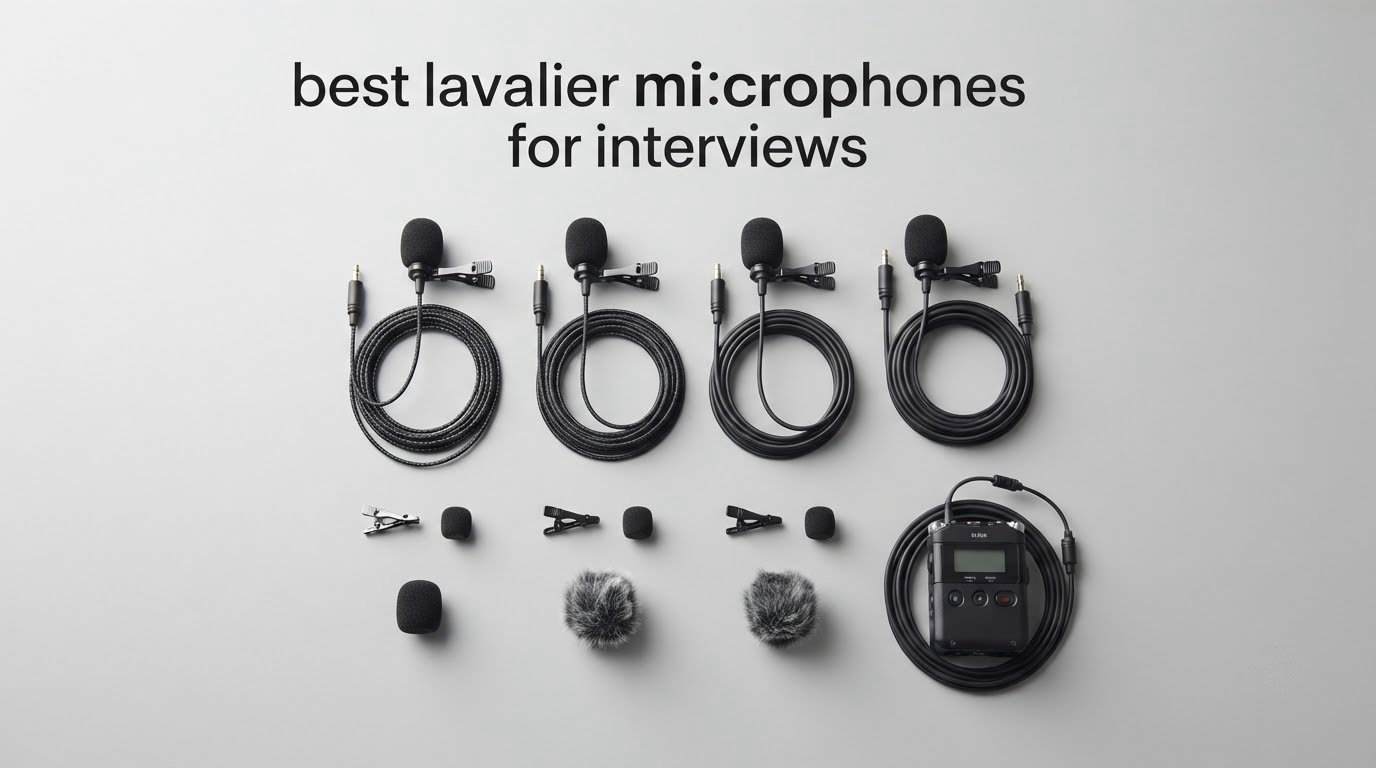
Interview audio is the one thing you cannot fix in the edit. A slightly soft picture, a blown highlight, a drifting frame rate – all of those are recoverable. A lapel mic buried under a shirt, buzzing with clothing rustle, or sitting so close to the speaker that every breath thumps the capsule, and you are back on the schedule asking your subject for a second sitting. That is why the best lavalier microphones for interviews are not a gadget purchase. They are insurance on footage you cannot reshoot.
I have spent the last few years recording interviews for a small production outfit – sit-downs in borrowed offices, hallway conversations at trade events, phone interviews shot in parked cars. The pattern held every time. The footage that survived was the footage where the mic was close to the mouth, the gain was set before the subject started talking, and somebody was listening through headphones. The brand mattered far less than those three habits. So I built this list around the mics that made those three habits easy across a full day of shooting: twelve lavalier microphones, from a wired capsule that plugs straight into a laptop to two-transmitter systems with backup recording built into the transmitter.
Everything below was re-verified in 2026 against current user feedback, spec sheets and the failure modes that show up in real interviews. Ratings and review counts are the live figures, and I have flagged who each mic is for as firmly as who should skip it.
Quick Picks: The Short Version
Best overall wireless for interviews – DJI Mic Mini: a 10 g transmitter, 300 m of range and 11.5 hours of runtime make it the one I reach for first on a two-person shoot.
Best premium wireless for interviews – Hollyland Lark M2: 48 kHz / 24-bit capture, a 70 dB signal-to-noise ratio and a charging case that doubles as storage.
Best wired value for interviews – Rode SmartLav+: the long-standing budget wired mic, light at 6 g and backed by a two-year warranty.
Best for two people with cables – Movo PM20-S: two mics, two clips, four windscreens and no batteries to fail on set.
Best for backup tracks – NEEWER CM28: each transmitter records uncompressed 48 kHz WAV to 4 GB of onboard storage.
Best for headphone monitoring on camera – COMICA BoomX-D2: a real 3.5 mm monitoring jack on the receiver plus a -6 dB safety track.
Best for shouting voices – MAONO Wave T5: 120 dB max SPL with fourteen levels of noise cancellation and four voice presets.
Best for concealed wear – BOYA mini 2: a 5 g transmitter small enough to disappear under a collar.
Before the individual reviews, it helps to know how the two families differ. If you want the wider context on clip-on mics in general, we covered the fundamentals in our guide to the best lavalier microphones, and the wireless-only side of the market in our roundup of the best wireless lavalier systems. This page is the interview-specific cut.
Our Top 3 Interview Lavalier Microphones After 2026 Testing

DJI Mic Mini
- 10 g ultralight transmitter
- 300 m transmission range
- 11.5 hours operating time
- Two-level active noise cancellation

Hollyland Lark M2
- 9 g button-sized transmitters
- 48 kHz / 24-bit capture
- 1000 ft range
- 30 hours with charging case
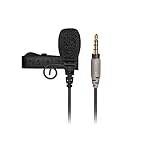
Rode SmartLav+
- Wired TRRS lavalier for smartphones
- 6 g lightweight body
- Foam pop shield included
- Two-year warranty
The DJI Mic Mini takes the top slot on the combination of rating and volume of real-world use behind it. The Hollyland Lark M2 edges it on capture resolution and the case, and the Rode SmartLav+ stays on any list because a six-gram wired mic with a two-year warranty solves the problem at the bottom of the market.
Comparing All 12 Interview Lavalier Microphones in 2026
| Product | Specs | Action |
|---|---|---|
| DJI Mic Mini 2 TX + 1 Mobile RX |
|
Check Latest Price |
| Hollyland Lark M2 Wireless Lavalier |
|
Check Latest Price |
| Rode SmartLav+ Lavalier Microphone |
|
Check Latest Price |
 Rode Lavalier GO Professional Wearable Microphone Rode Lavalier GO Professional Wearable Microphone |
|
Check Latest Price |
 Mini Mic Pro Wireless Lavalier Kit Mini Mic Pro Wireless Lavalier Kit |
|
Check Latest Price |
 NEEWER CM28 Wireless Lavalier Microphone NEEWER CM28 Wireless Lavalier Microphone |
|
Check Latest Price |
 BOYA mini 2 Wireless Lavalier Microphone BOYA mini 2 Wireless Lavalier Microphone |
|
Check Latest Price |
 Rode Lavalier II Ultra-Low-Profile Lavalier Rode Lavalier II Ultra-Low-Profile Lavalier |
|
Check Latest Price |
 COMICA BoomX-D2 Wireless Lavalier System COMICA BoomX-D2 Wireless Lavalier System |
|
Check Latest Price |
 Movo PM20-S Dual Lavalier Interview Kit Movo PM20-S Dual Lavalier Interview Kit |
|
Check Latest Price |
 MAONO UL10 USB Lavalier Microphone MAONO UL10 USB Lavalier Microphone |
|
Check Latest Price |
 MAONO Wave T5 Wireless Lavalier Microphone MAONO Wave T5 Wireless Lavalier Microphone |
|
Check Latest Price |
1. DJI Mic Mini – The Smallest Wireless System I Have Shot Interviews With
DJI Mic Mini (2 TX + 1 Mobile RX), Ultralight, Active Noise Cancelling
10 g transmitter with magnetic clip
300 m range
11.5 hours runtime
Two-level noise cancellation
USB-C
Pros
- Exceptionally small and light at 10 g per transmitter
- Clear and detailed audio with two noise cancellation levels
- Plug-and-play USB-C to iPhone
- Android
- PC and tablet
- Strong magnetic clip holds without tugging clothing
- 11.5 hours covers a full interview session
Cons
- No dedicated on-mic mute button
- No transmitter-only carrying case in the base kit
- One generation behind the newer revision
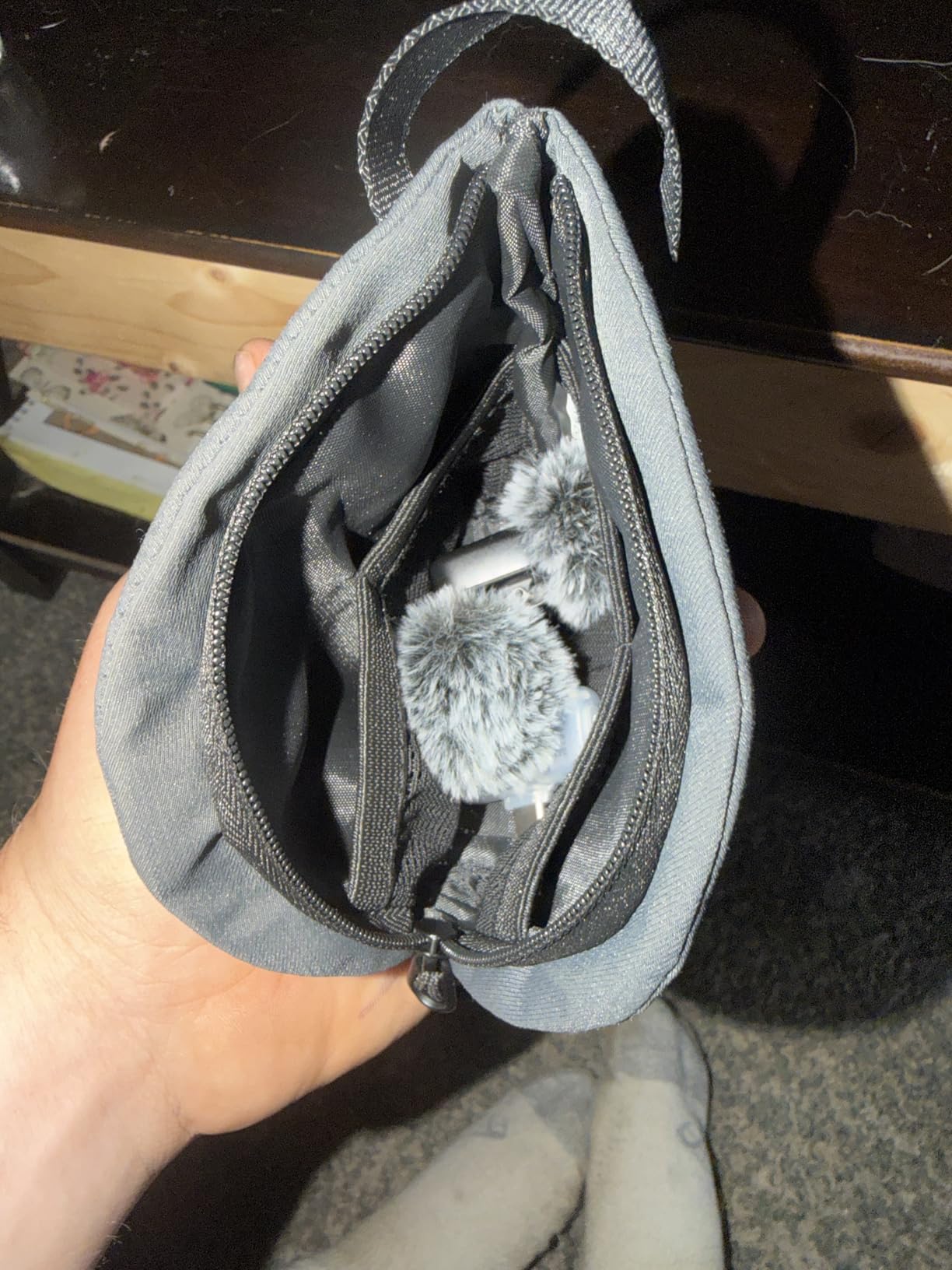
The first thing I noticed when I clipped the DJI Mic Mini to a collar was that I stopped thinking about it. At 10 g per transmitter it sits flat against the shirt front and it does not tug, swing or catch on a necklace the way a larger bodypack does. On a two-hour interview with a subject who shifts and gestures, that invisibility mattered more than I expected.
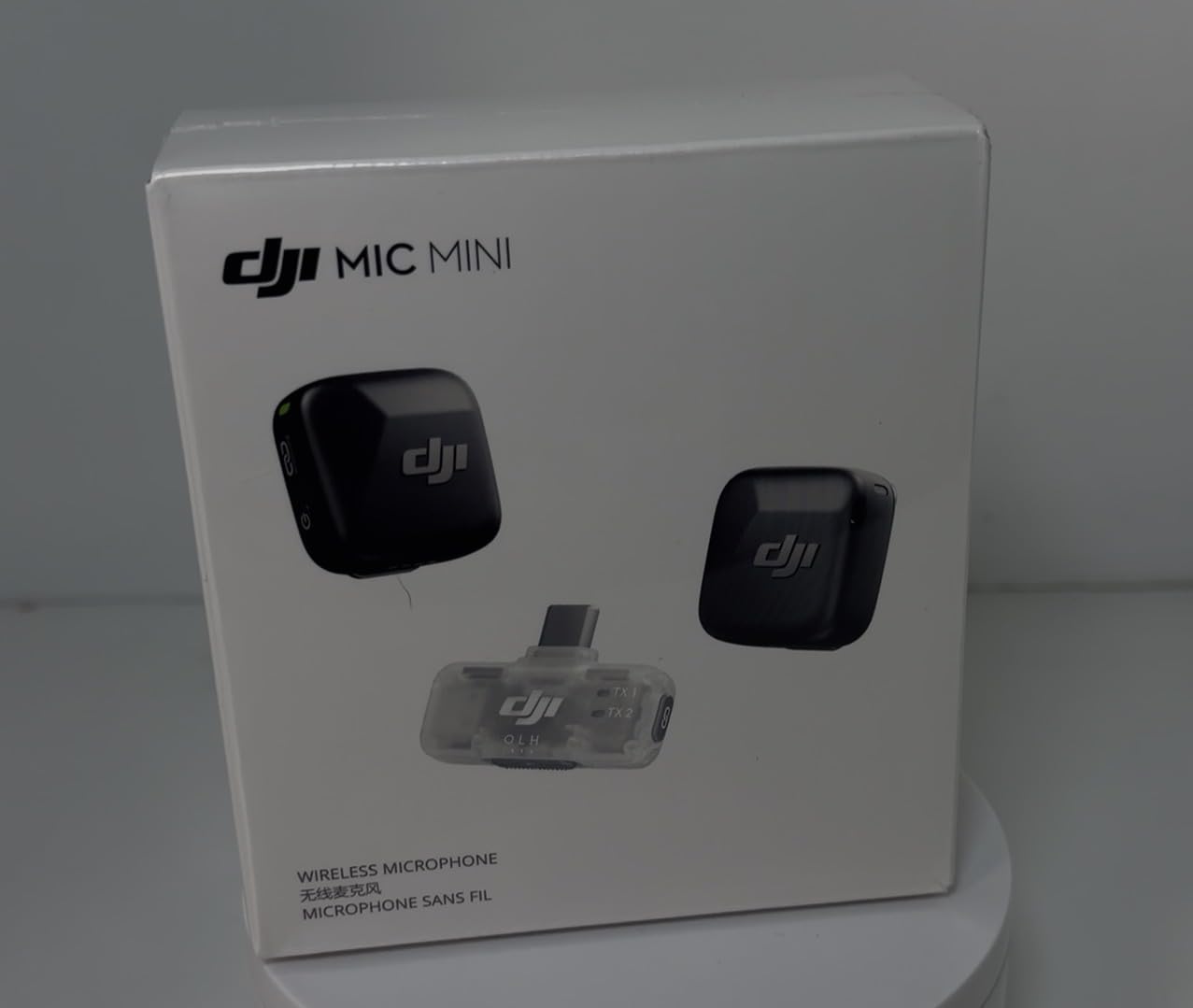
This kit ships with two transmitters and one mobile receiver, so a two-person conversation is the default case rather than an upgrade. The receiver plugs into a USB-C port, which covers current iPhone generations, Android handsets, tablets and laptops without a separate adapter. There is a charging dock, clip magnets and windscreens in the box, and the whole thing runs on 2.4GHz digital transmission with a 300 m maximum range.
Noise Cancellation That Does Not Eat the Voice
The DJI Mic Mini offers two cancellation levels, basic and strong, and the difference between them is the difference between usable and processed. Basic takes the edge off a busy street. Strong goes further, and it is the level I would use for an interview in a cafeteria or under a hotel awning. The signal-to-noise rating of 70 dB gives this kit a quieter floor than most of the wireless sets in this roundup, and automatic limiting stops a sudden laugh or a hand slap on the table from clipping.
11.5 Hours Means You Stop Checking
Battery anxiety is real on interview days, and an 11.5-hour operating time means a full shooting day without a mid-conversation swap. Reviewers report that the transmitters also hold their charge well when the subject is wearing heavy fabric, which matters in winter interviews. Automatic gain limiting and the small size make this the least fiddly kit I have used.
Where It Falls Short
There is no dedicated mute button on the mic itself. Muting means cycling the power or reaching for the app, and on a live interview I want that control under my thumb, not three taps deep. There is also no small transmitter-only case in the base kit, so the transmitters live in the charging dock and the dock travels. A newer revision of this line has appeared, which makes this model one generation behind the current hardware.
If you need a wired mic that runs into a camera or interface with no radio in the chain, our pick four covers that.
2. Hollyland Lark M2 – The Kit Pro Shooters Describe as Their Daily Go-To
Hollyland Lark M2 Wireless Microphone for iPhone15/16/17&Android, USB C Mini Lapel Microphone Wireless, 1000ft Range, Hi-Fi Audio, Noise Cancellation, 30H Battery for Video Recording, Streaming
9 g button-sized transmitters
48 kHz / 24-bit capture
1,000 ft range
30 hours with case
70 dB SNR
Pros
- Half the size of typical wireless lav systems
- Studio-grade 48 kHz / 24-bit capture with 70 dB SNR
- Reliable auto-connection that starts recording without failure
- Charging case is smaller than most rivals and doubles as storage
- Two transmitters give a spare for two-person interviews
Cons
- Button-sized transmitters are easy to lose
- Maximum noise cancellation can thin the voice in very loud settings
- USB-C receiver can be blocked by thick cases or gimbals
- Not water or weather resistant
- Firmware updates can be difficult to complete
The Hollyland Lark M2 is the one that shows up most often in professional shoot threads when people ask what they actually carry. At 9 g per transmitter it is slightly smaller than the DJI kit, and the metal construction feels more substantial in the hand. I have used it on interviews where the subject talks quietly and then laughs, and the capture held up without any corrective gain riding afterwards.
The technical headline is 48 kHz / 24-bit capture with a 70 dB signal-to-noise ratio, paired with a stated 1,000 ft line-of-sight range on 2.4GHz. In practice that range figure is marketing distance – you will be shooting interviews at arm’s length – but the connection reliability is the part that matters, and reviewers consistently report that it pairs and starts recording without failure.
Battery Life That Covers a Multi-Day Shoot
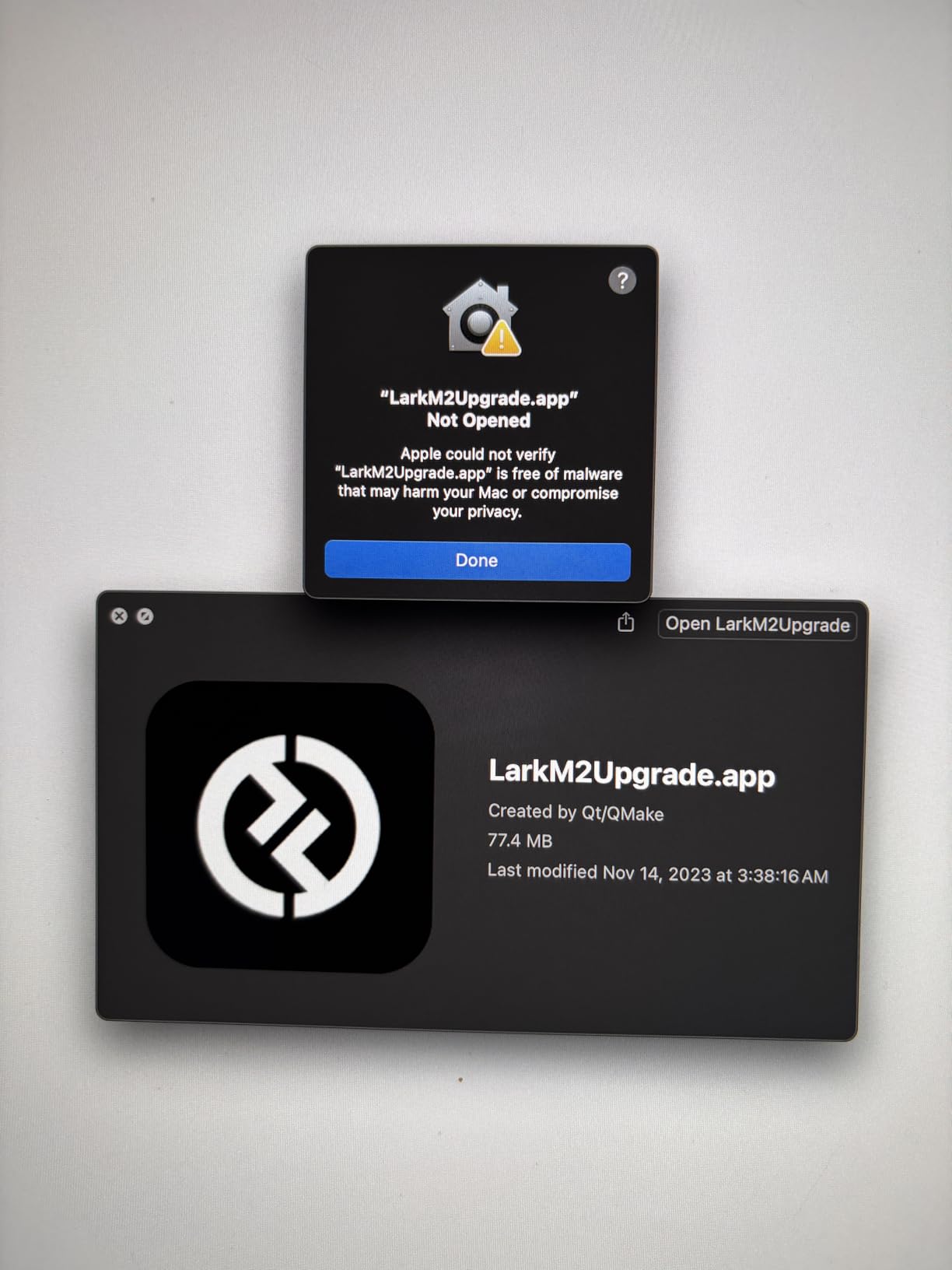
Each transmitter runs about ten hours per charge, and the included case brings the total to 30 hours. The case is smaller than most competitors in this category and doubles as storage, which matters when you are moving between three locations in an afternoon. The transmitter also doubles as a camera remote shutter, a small convenience that removes one more thing to remember.
Noise Cancellation With a Ceiling
One-tap ENC toggles between strong and low levels through the HollyAudio app, and in a room with loud music behind the subject the voice isolation is genuinely effective. The ceiling is worth knowing: at the maximum level the voice can thin out or pick up artefacts in very loud settings. I set it to low for a quiet office and strong for a trade-show floor, and I check the result on headphones before the interview rather than after.
Where It Falls Short
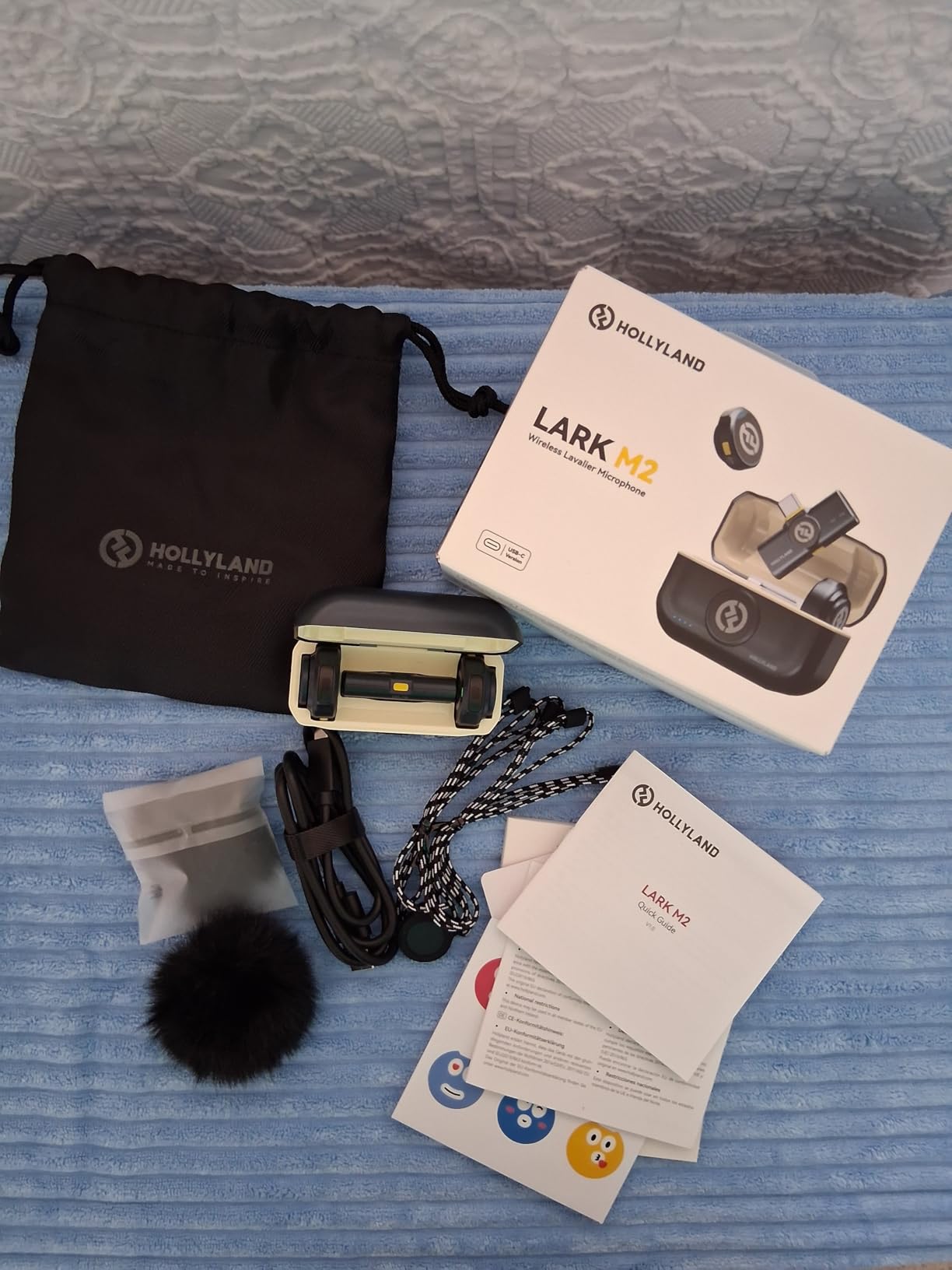
Button-sized transmitters are easy to lose or misplace, and unlike a bodypack you will not notice one missing until you are about to roll. The USB-C receiver can be physically blocked by a thick phone case or by a gimbal mount, so check your rig clearance. It is not water or weather resistant, which rules it out for a wet outdoor stand-up without a different kit. A minority of users also report difficulty completing firmware updates.
For a wired capsule that plugs straight into a camera, the Rode Lavalier GO is the more flexible option.
3. Rode SmartLav+ – The Wired Mic That Has Outlasted Every Upgrade Cycle
Rode SmartLav+ Lavalier Microphone for Smartphones,Black
Wired TRRS lavalier for smartphones and tablets
6 g body
Foam pop shield included
Two-year warranty
Pros
- Trusted brand with a simple and reliable wired connection
- Very light at 6 g for unobtrusive wear
- Foam pop shield and small carry pouch included
- Long-standing favourite for smartphone interview recording
Cons
- Wired TRRS needs a headphone jack or an adapter
- No wireless transmission so the cable must be managed
- Omnidirectional pattern picks up room tone and background ambience
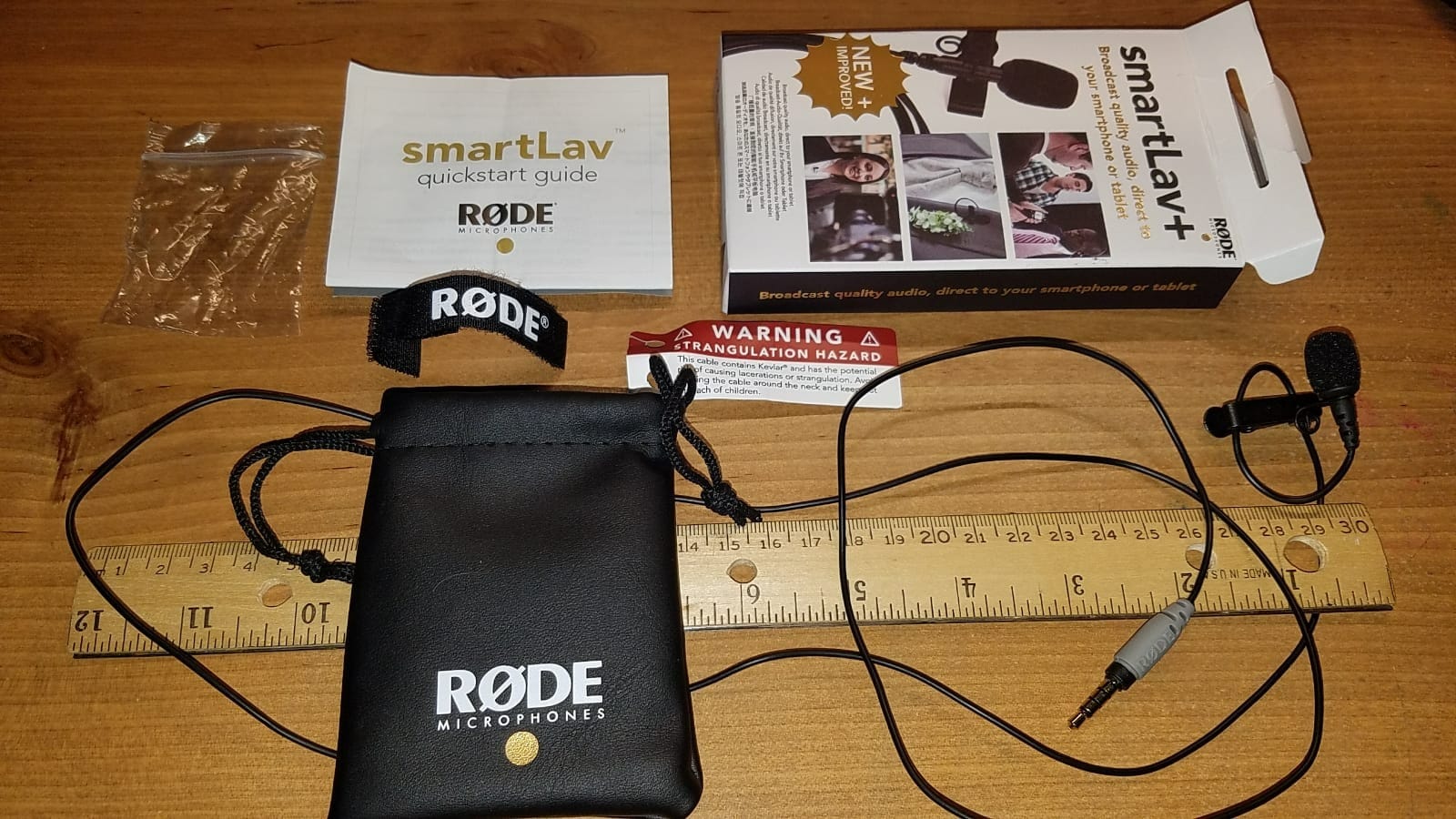
The Rode SmartLav+ is the mic I recommend to people who record one interview a month and want it to work every time. There is no pairing, no charging, no app and no radio. You plug the TRRS cable into the phone and you record. On community boards it keeps getting described as a good inexpensive starting point, and after years of it appearing in our own gear bags, that is the right characterisation.
At 6 g it is one of the lighter capsules here, small enough that a subject frequently forgets they are wearing it. The foam pop shield handles plosives and the two-year warranty is longer than most competitors offer at this level. For a fixed sit-down interview in a quiet room, it remains hard to argue with.
What a Wired Mic Buys You and What It Costs
A wired TRRS connection runs straight from the capsule into the device with no compression and no transmission step, so there is no radio drop risk and no battery to fail mid-answer. The cost is cable management. The run from the collar to the phone has to be hidden along a seam or under a lapel, and on a standing interview that takes planning.
The other cost is hardware compatibility. Current phones often lack a headphone jack, so you will need a Lightning or USB-C to TRRS adapter, and a cheap adapter is exactly where interference and level problems tend to appear. Test the full chain before the interview, not on the day.
Room Tone Is the Trade You Accept
The SmartLav+ is omnidirectional, which means it picks up whatever the room is doing. In a soft, carpeted office that is a non-issue. In a hard-walled room with a fluorescent hum or a busy café, you will hear the room. Buyers should know this is inherent to the capsule, not a defect – and it is one of the reasons pros sometimes reach for a small-diaphragm condenser or a shotgun instead.
Where It Falls Short
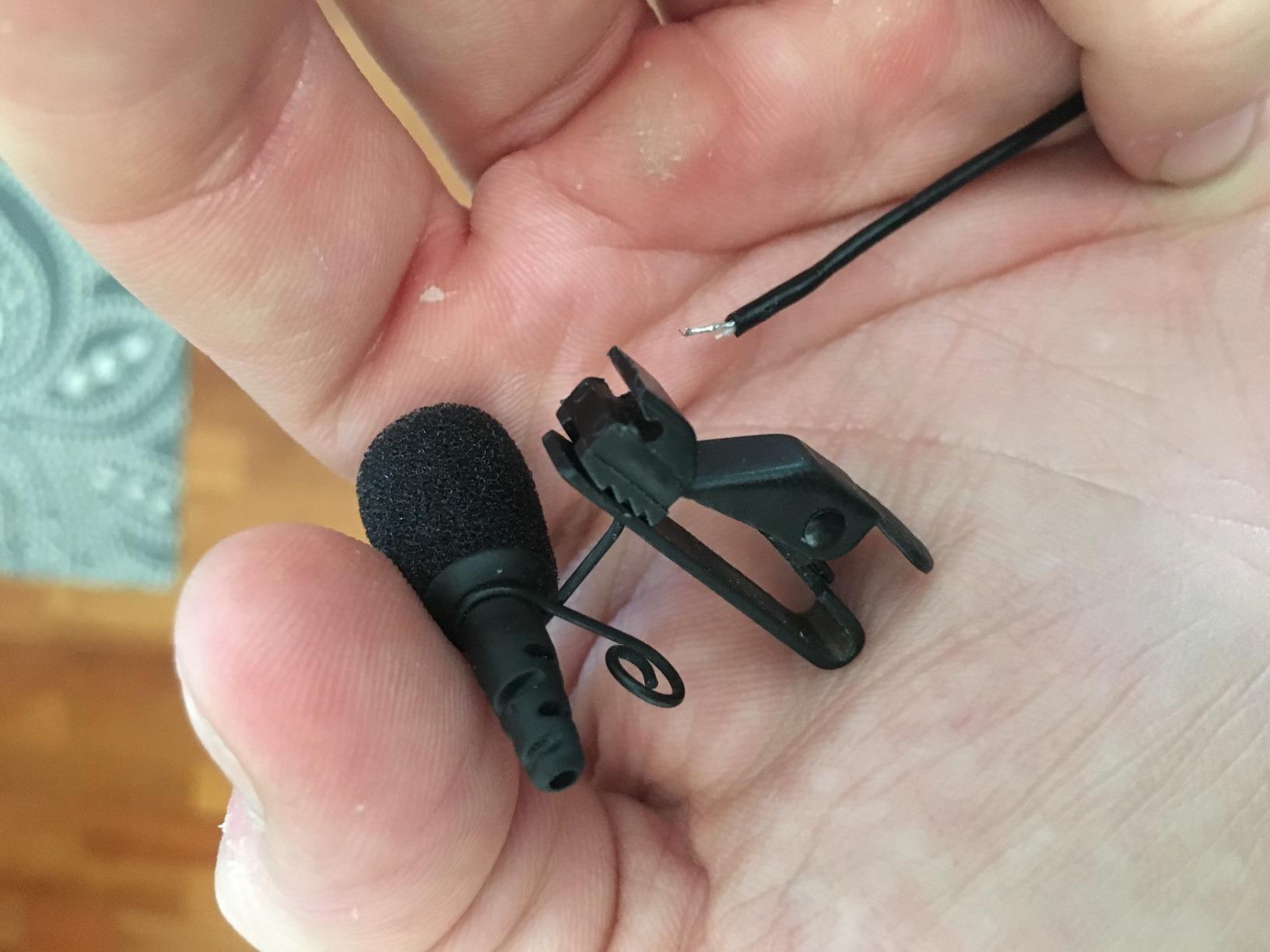
There is no wireless transmission, and the omnidirectional pattern picks up room tone and background ambience. It is a phone-and-tablet tool by design: it will not connect to a camera, an audio interface or a wireless transmitter without an adapter. If your interviews happen on a camera with a proper mic input, the Lavalier GO is the smarter buy at a similar weight class.
Need two mics for a two-person conversation without buying a wireless system? The Movo PM20-S is the answer.
4. Rode Lavalier GO – Broadcast Clarity With a Standard 3.5 mm Connector
Rode Lavalier GO Professional Wearable Microphone,Black
4.0 mm sub-miniature capsule
3.5 mm TRS standard connector
1.2 m Kevlar-reinforced cable
20Hz – 20kHz response
Pros
- Broadcast-grade clarity that isolates voice from room and street noise
- Top-mounted capsule avoids muffling under clothing
- Kevlar-reinforced cable adds no audible noise over long runs
- Forgiving omnidirectional pattern makes placement easy on talent
- Works into cameras
- audio interfaces and wireless transmitters
Cons
- Requires a 3.5 mm input so phones need an adapter
- Clip does not rotate the mic for better orientation
- Only one foam pop shield included
- Can run hot and needs lowered input gain
When I want a wired lav that sounds like broadcast without a broadcast budget, this is the one. The 4.0 mm sub-miniature capsule with a top-mounted design keeps the element clear of clothing, which solves the muffled-sounding problem that plagues lavaliers worn under a shirt. The 20Hz to 20kHz response is a flat, wide curve and the 67 dB signal-to-noise ratio keeps the noise floor out of the way of speech.
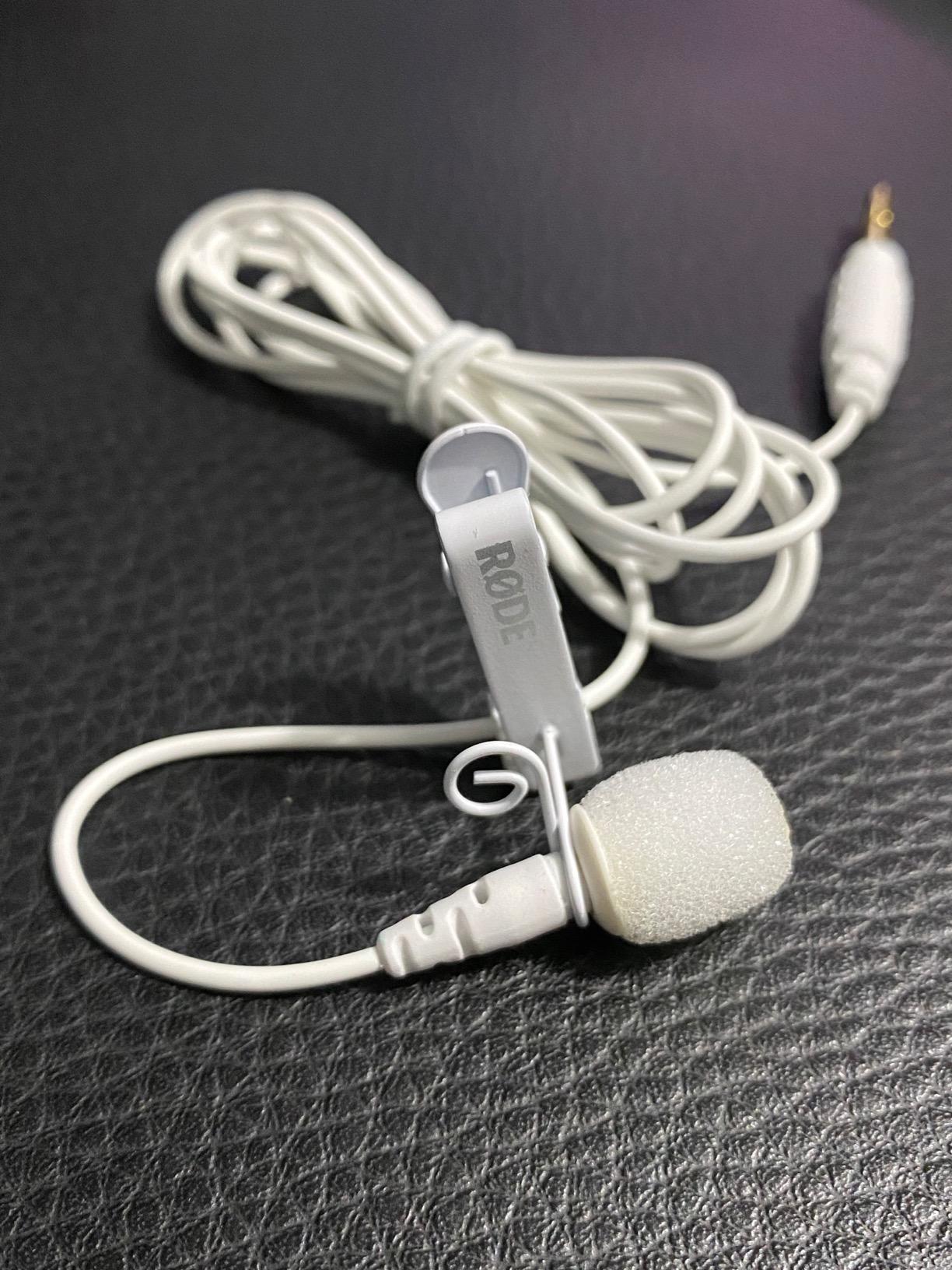
The 1.2 m Kevlar-reinforced cable is the detail I would point a nervous buyer toward. Cheap lav cables are where handling noise and crackle come from, and reinforcement here means the capsule can run a long distance to your camera or interface without adding anything audible. It is available in black and white, and the clip has in-built cable management.
One Capsule, Three Destinations
The standard 3.5 mm TRS connector is the useful part. It plugs into a camera with a mic jack, into an audio interface, into an action camera media module, and into the input on a wireless transmitter. That means one capsule can cover a phone interview today and a camera interview next week, which is unusual flexibility for a wired mic. The trade-off is that a phone needs a TRRS adapter.
Placement Is Forgiving, Gain Is Not
An omnidirectional pattern means the subject can turn their head without the level dropping, which is a genuine advantage when the person being interviewed is animated. The capsule also runs slightly hot, and some users lower input gain significantly to control it. Set the gain with the subject speaking at normal interview volume, not shouting, and leave headroom for a laugh.
Where It Falls Short
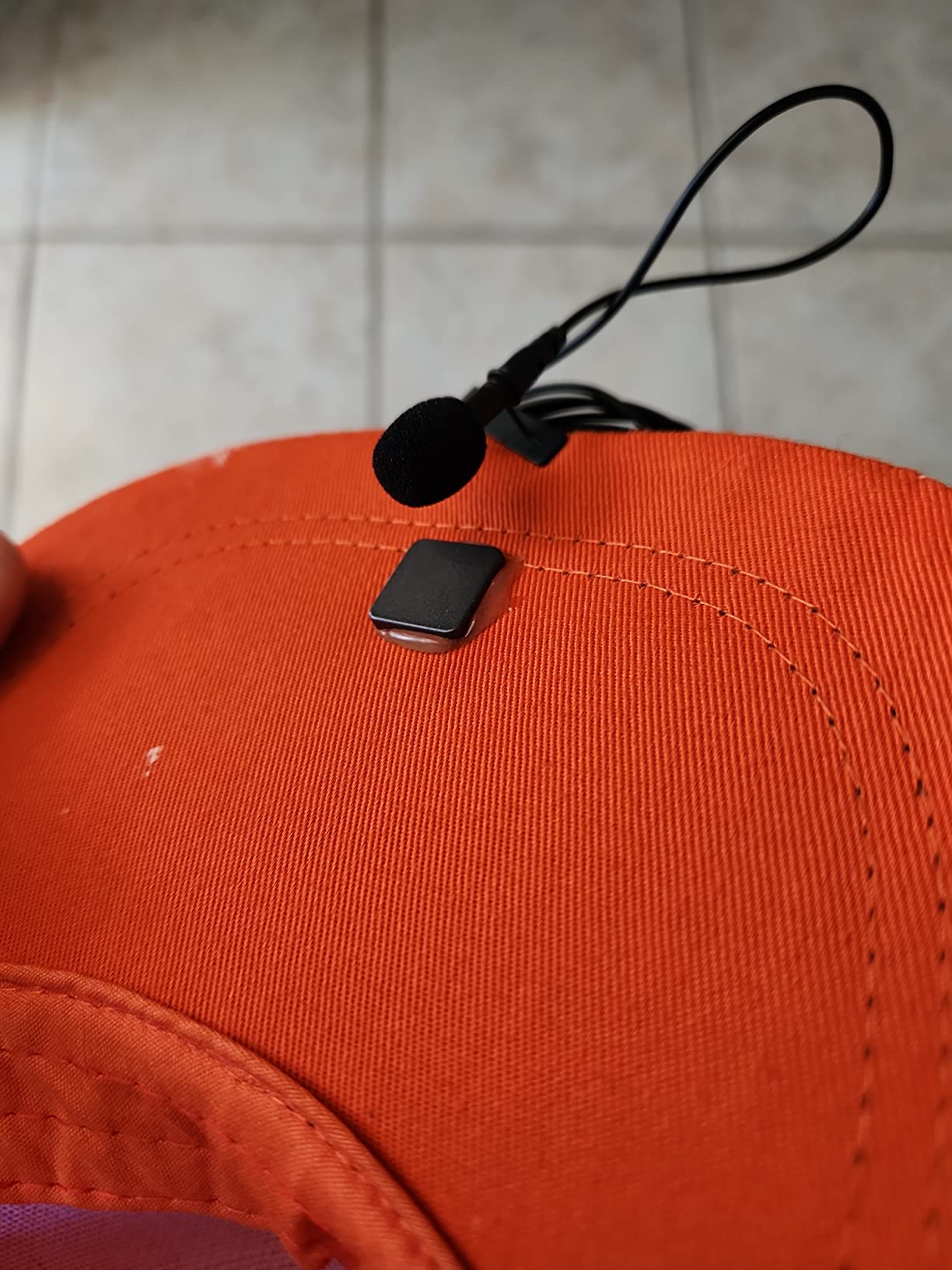
It needs a 3.5 mm input, so a modern phone requires an adapter and a second cable path. The clip does not rotate the mic, so you cannot angle the capsule away from a noisy source. Only one foam pop shield is included, and if you are shooting outdoors you will want to add a furry windshield. Interviewers describe it as discreet, professional-sounding and worth it for the name, which is exactly how I feel about it.
If concealment matters more than connector flexibility, the Rode Lavalier II is the low-profile option.
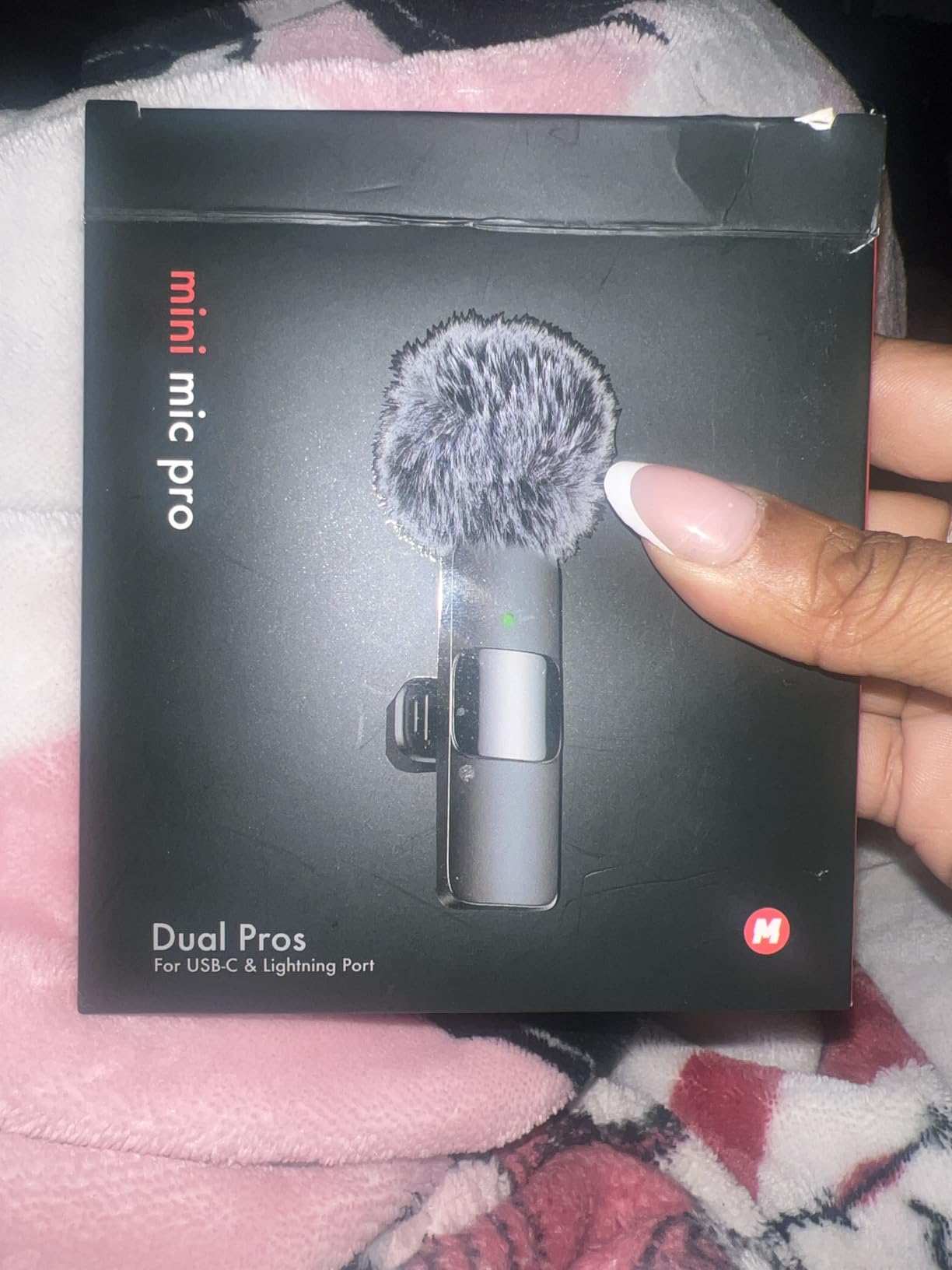
5. Mini Mic Pro – The Cheapest Two-Person Wireless Setup That Works
Mini Mic Pro (Latest Model – #1 Microphone for iPhone & Android, Wireless Mini Microphone, Clear Voice, Noise Cancelling, Lavalier Mic for TikTok, YouTube & Interviews
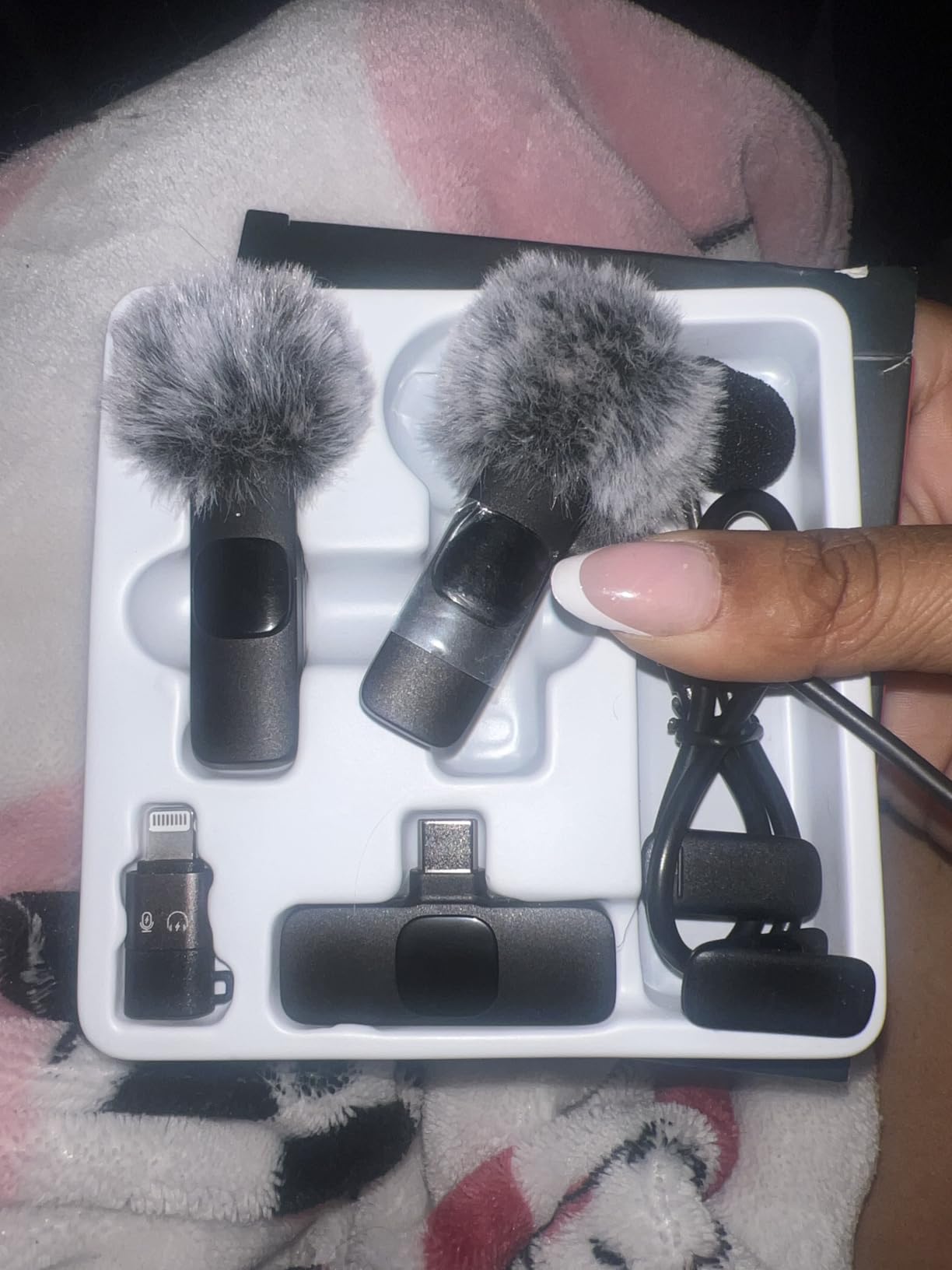
Two transmitters plus one receiver
USB-C and Lightning adapters
6 hours per charge
Foam and deadcat wind protection
Pros
- Very low entry point for a two-mic wireless kit
- Plug-and-play with USB-C and Lightning adapters and no app pairing
- Clear and natural voice tone for the price band
- Includes both foam and furry wind protection for outdoor interviews
- Two units let one act as a spare or a second speaker mic
Cons
- Heavy wireless compression dulls the low end
- Weak battery warning can drop mid-recording
- USB-C receiver joint is fragile in a fall
- No Bluetooth so a dongle connection is required
The Mini Mic Pro answers a specific question: can you cover a two-person interview with wireless, off a phone, without reading a manual? Yes. The kit includes two transmitters, one receiver, USB-C and Lightning adapters, and it starts recording with a single touch. No app, no Bluetooth pairing, no firmware step. If your interview is tomorrow, this is the shortest path from unpacking to rolling.
Creators rate it highly for the price and the near-instant setup, and the voice tone is described as clear and natural next to rivals in the same band. Both foam and furry wind protection are included, which is unusual at this level and genuinely useful if you are recording outside.
Where Compression Shows
Broadcast-minded buyers are the ones who push back, and their complaint is consistent: heavy wireless compression dulls the low end compared with a wired microphone. For a social clip or a short documentary cut that is an acceptable trade. For a long-form interview where you will be doing dialogue editing, you will hear the difference against a wired capsule and you will hear it in the low mids.
Battery and Connector Reality
Up to six hours per charge, with the ability to charge the phone simultaneously while recording – useful for a long conversation, less so for a full shoot day. The weak battery warning is a real issue, because power can drop mid-recording without a clear indicator. The USB-C receiver joint is also the fragile point on the whole kit and can snap off in a drop, so treat the connection gently when swapping transmitters.
Where It Falls Short
There is no Bluetooth, so a dongle connection is required on every device. Compression dulls the low end, the battery warning is unreliable and the receiver joint is not built for rough handling. If your interviews are the kind that need a safety net, the NEEWER CM28 records a local copy on each transmitter and is a better use of the same budget.
Working on a laptop with no phone or camera in the setup? The MAONO UL10 is purpose-built for it.
6. NEEWER CM28 – The Only Kit Here That Records a Backup Copy on Each Transmitter
NEEWER CM28 Wireless Lavalier Microphone, Smart Noise Cancelling Lav Mic, 48KHz/16Bit 9hrs Uncompressed Recording, 200m Range, 4GB Storage for iPhone, Android, Camera, 1 RX + 2 TX + Charging Case
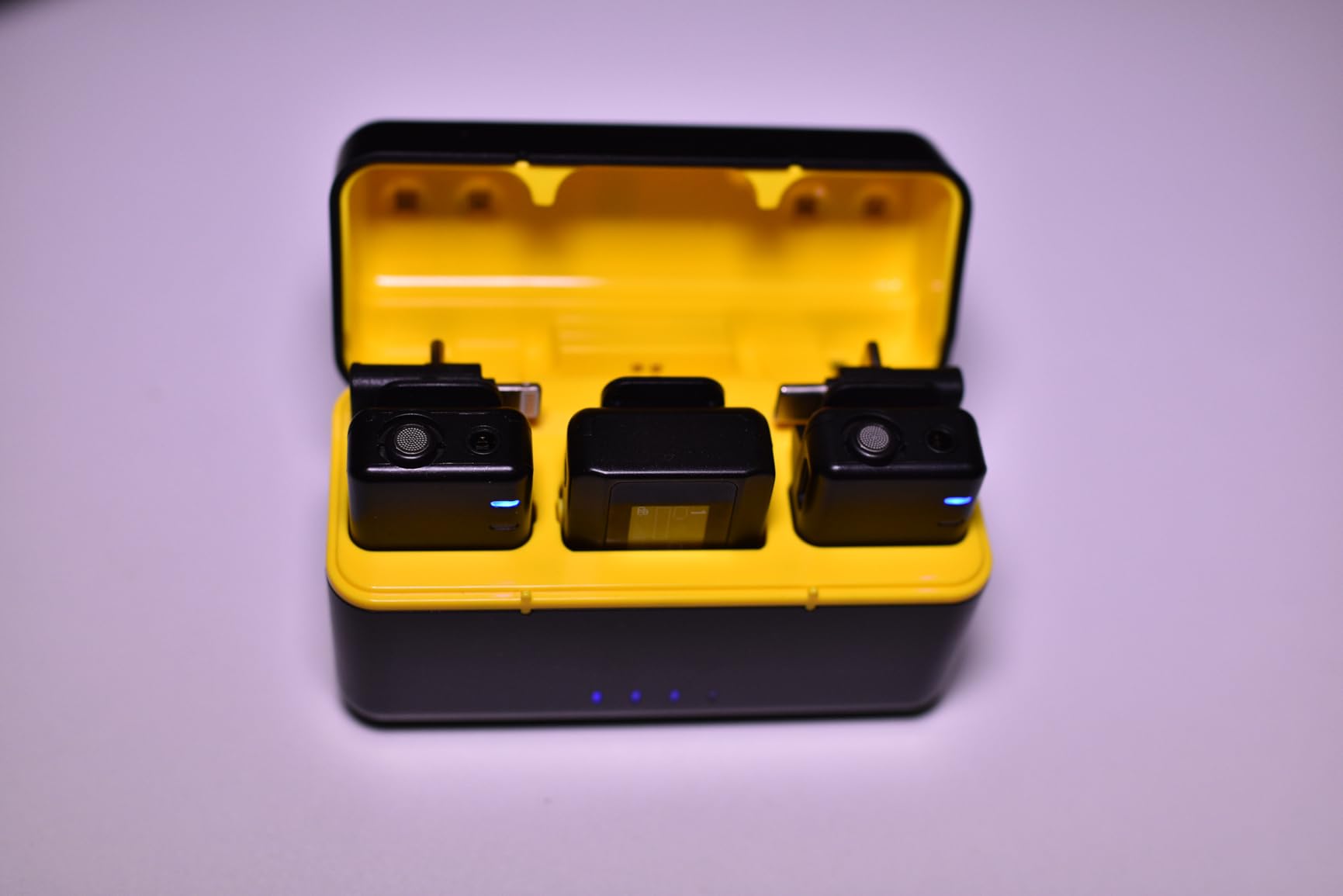
1 RX + 2 TX with charging case
4 GB onboard storage per transmitter
9 hours transmitter runtime
656 ft / 200 m range
Pros
- Transmitters double as standalone recorders with 4 GB of onboard storage
- Records uncompressed 48 kHz WAV rather than compressed transmission
- One-button noise cancelling keeps operation simple
- LCD on the receiver gives battery
- level and connection readout
- Wide device compatibility including iPhone
- Android
- action cams
- tablets and DSLR
Cons
- Unidirectional pattern is less forgiving of off-axis placement
- 16-bit depth is below the 24-bit offered by some rivals
- Charging case needed for full runtime and adds bulk
Here is the question nobody else in this list answers: what happens if the radio drops in the last five minutes of an interview you cannot rebook? The NEEWER CM28 answers it with 4 GB of internal storage on each transmitter, enough for roughly nine hours of uncompressed 48 kHz WAV. Both transmitters keep recording locally even when the receiver is not connected. For documentary and corporate work where a re-shoot means losing a subject, that is the feature I would pay for first.
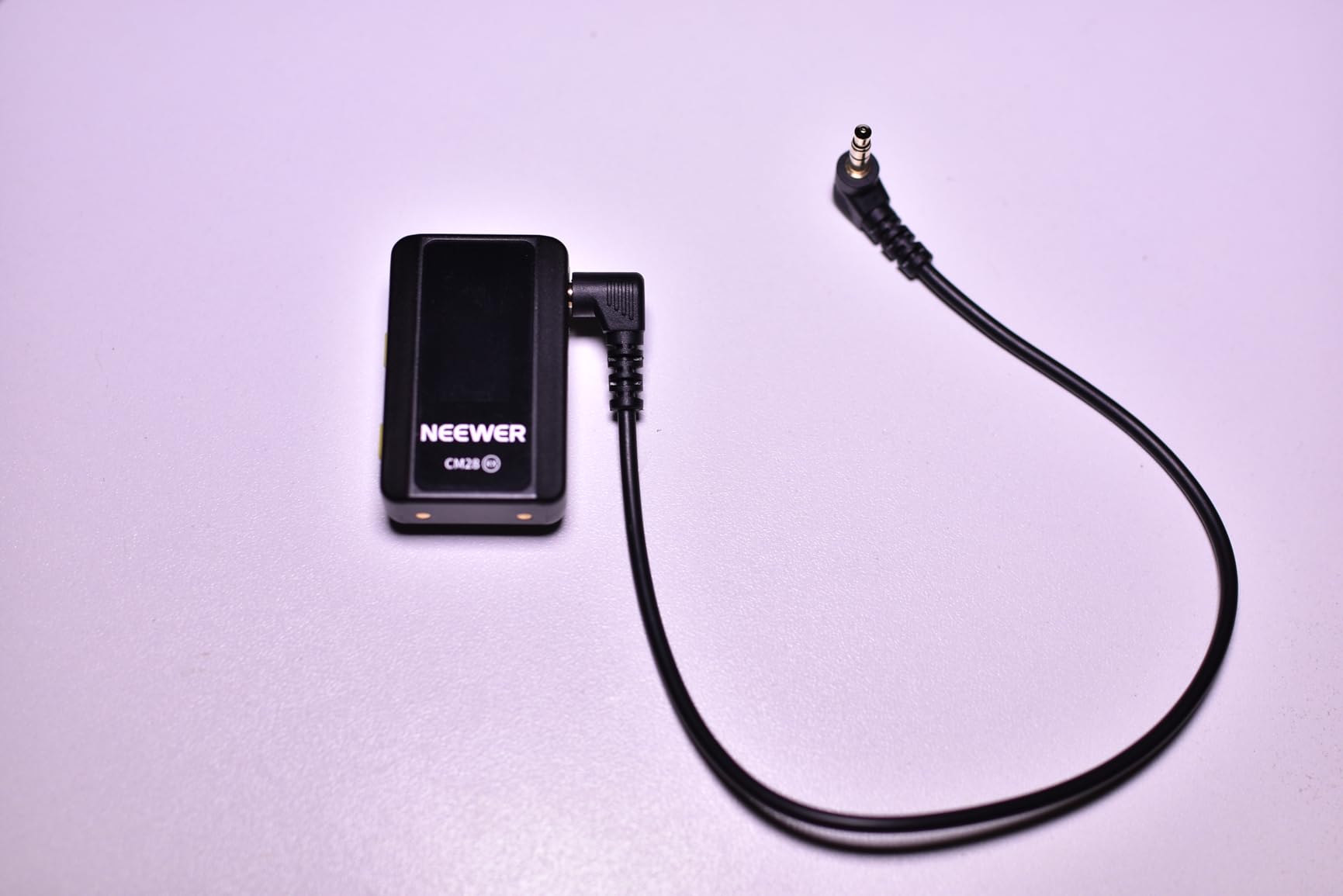
The kit is one receiver plus two transmitters with a charging case. The receiver has an LCD that shows mode, volume, battery and connection status, which is more information than most competing receivers give you at a glance. Transmission runs 656 ft / 200 m with frequency hopping, and you can export in mono, stereo or mid-side modes.
Uncompressed Means Fixable
The distinction between a locally recorded uncompressed track and a compressed wireless transmission is not academic. Compressed audio cannot be repaired, and de-essing or de-clicking works on an uncompressed file in ways it simply does not on a heavily compressed one. Recording 48 kHz WAV on the transmitter means the copy you rescue after a dropout is a real master, not a degraded stand-in.
The Unidirectional Trade
This is the one genuine compromise. The polar pattern is unidirectional rather than omnidirectional, so it rejects more off-axis sound – helpful in a busy room, but less forgiving if the subject turns their head away from the mic. In practice that means more careful placement. Aim the capsule at the mouth, keep it two or three inches below the collar, and check the level with the subject at their most animated.
Where It Falls Short
Bit depth is 16-bit rather than the 24-bit offered by some rivals, so there is a little less headroom before clipping. The unidirectional pattern demands more attention to placement than an omnidirectional set. And the charging case is needed to reach the stated nine-hour transmitter runtime, which means the case travels with you whether you need it or not. The one-year manufacturer warranty is also shorter than the RODE options.
Never used a sub-miniature? The BOYA mini 2 is small enough to vanish under a collar.
7. BOYA mini 2 – Five Grams That Disappear Under a Shirt Collar
BOYA mini 2 Wireless Lavalier Microphone for iPhone 15/16/17 & Android
5 g thumb-sized transmitter
48 kHz / 24-bit with 80 dB SNR
Two AI noise cancellation levels
328 ft range
Pros
- Extremely light at 5 g and small enough to be concealed
- 48 kHz / 24-bit recording with 80 dB signal-to-noise ratio
- Two AI noise cancellation levels cut clicks and background roar
- Limiter and -12 dB safety track protect against distortion
- BOYA Central app adds EQ presets and gain control
Cons
- No Bluetooth so a USB-C receiver dongle is required
- Camera use limited to select DJI models
- Best in line-of-sight use as walls cause dropouts
- Highest share of one-star reviews among the wireless kits here
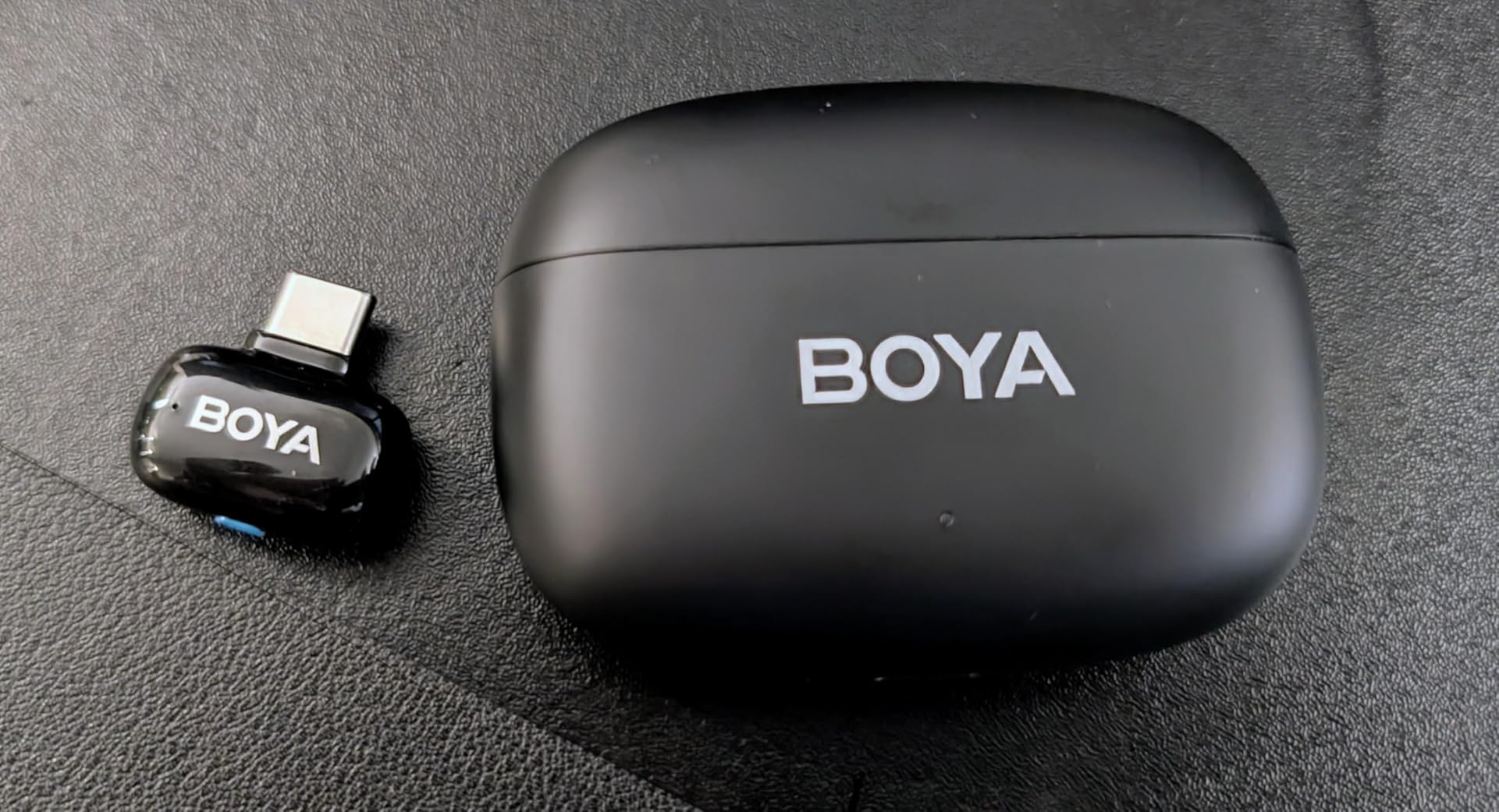
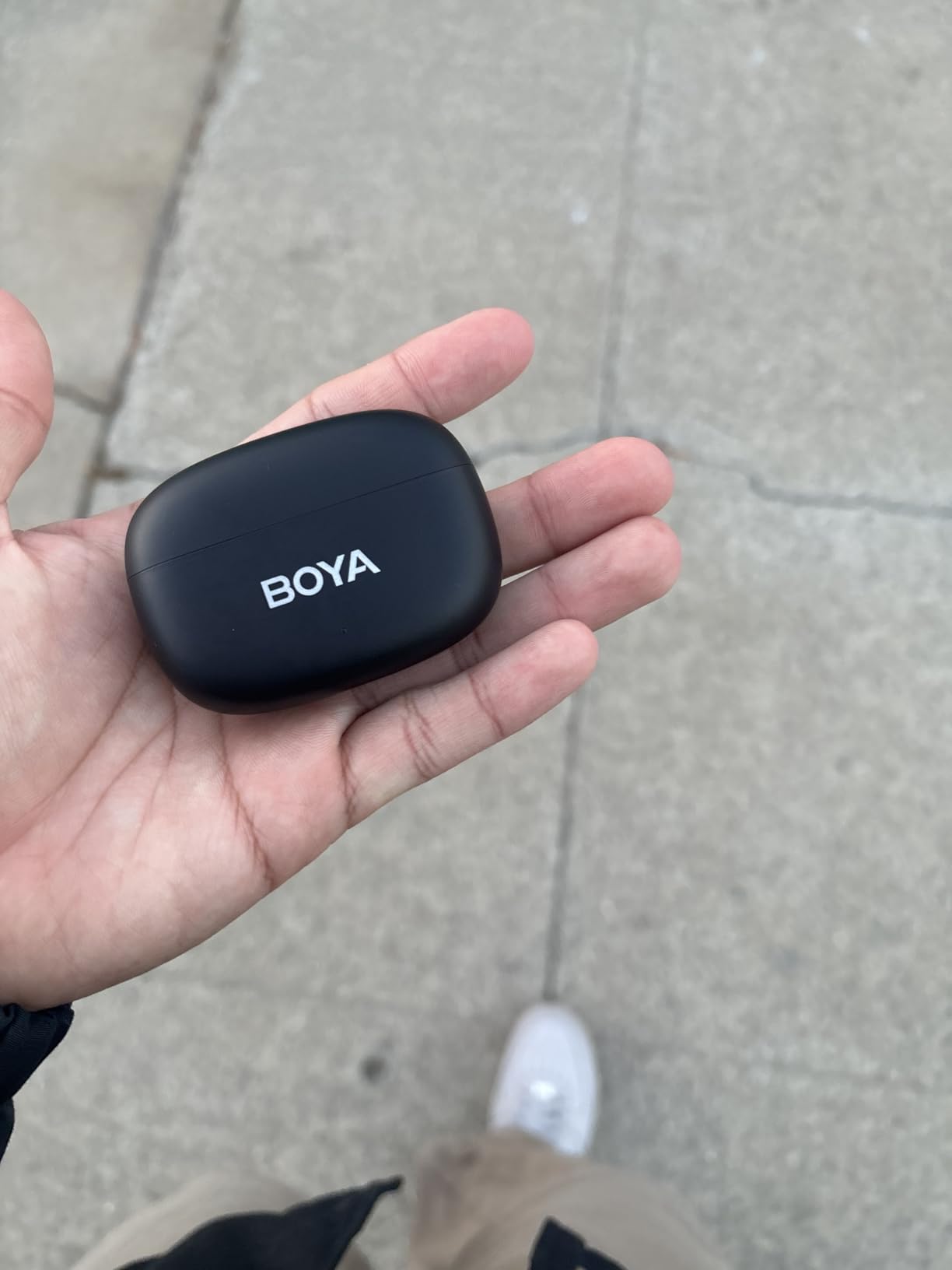
At 5 g the BOYA mini 2 is the smallest transmitter in this roundup, and that is its whole argument. For interviews where the subject is on camera in a fitted shirt and you cannot hide a bodypack under a lapel, a transmitter that vanishes changes the shot. Interviewers like the tiny profile; what they consistently praise is the app-tunable noise reduction rather than the sound alone.
Capture is 48 kHz / 24-bit with an 80 dB signal-to-noise ratio and 120 dB max SPL, which is a strong spec sheet for the size. Adaptive AI noise cancellation runs in two levels, strong at minus 40 dB and light at minus 15 dB, and the limiter with a -12 dB safety track gives you a second chance on a loud answer.
Signal Behaviour You Should Know Before the Shoot
Range is stated at 328 ft, but the number that matters is line of sight. Interviewers report occasional dropouts when the transmitter is obstructed or worn behind the body, and walls and buildings cause dropouts too. Keep the subject facing the receiver, and if you are moving around a building, agree a route before you record rather than during.
Compatibility Has Edges
There is no Bluetooth, so a USB-C receiver dongle is required – that is fine on a phone, less fine if you want to hand the audio to a camera. Camera use is limited to select DJI Action and Pocket models; Insta360, GoPro, Akaso and OnePlus are unsupported. The BOYA Central app handles volume, EQ and noise cancellation, which is a level of control you rarely get at this size.
Where It Falls Short
The compatibility edges are real, and the highest share of one-star reviews in this list sits with this kit – mostly around dropouts and obstructed transmitters rather than sound quality. If your interview is a fixed two-person conversation in a room you control, the DJI Mic Mini at the top of this list gives you a steadier connection. If your interview is a walk-and-talk where the mic must disappear, this is the one.
Filming an interview where the mic must sit flat under a collar? The Lavalier II was designed for that.
8. Rode Lavalier II – The Wired Capsule Designed to Disappear
RØDE Lavalier II Ultra-Low-Profile Lavalier Microphone
Ultra-low-profile design with flat cable
Broadcast-grade omnidirectional capsule
Locking 3.5 mm connector
Pop filter and furry included
Pros
- Lowest-profile wired lav from a major brand
- Accessory kit includes a furry windshield
- pop filter and coloured ID rings
- Locking connector prevents accidental unplugging on a rig
- Broadcast-grade flat frequency response
Cons
- Does not plug directly into phones or many cameras without an adapter
- Heavily dependent on the Rode wireless ecosystem
- Premium ask for a wired capsule with no onboard recording
The Lavalier II exists to solve a styling problem. At 13 g with a flat low-profile cable and a compact mounting clip, it is the least visually obtrusive wired lav here, and cinema and broadcast users pick it for exactly that reason. If your subject is in a dark shirt on a dark background, this is the capsule that disappears into the frame.
Underneath the profile work, the audio is a broadcast-grade omnidirectional capsule with a flat frequency response, rated at 80 dB signal-to-noise. The locking 3.5 mm connector is the detail that matters operationally – on a rig where a cable can get tugged, a connector that will not pop out by accident removes an entire category of mid-interview failure.
Accessory Kit Worth Knowing About
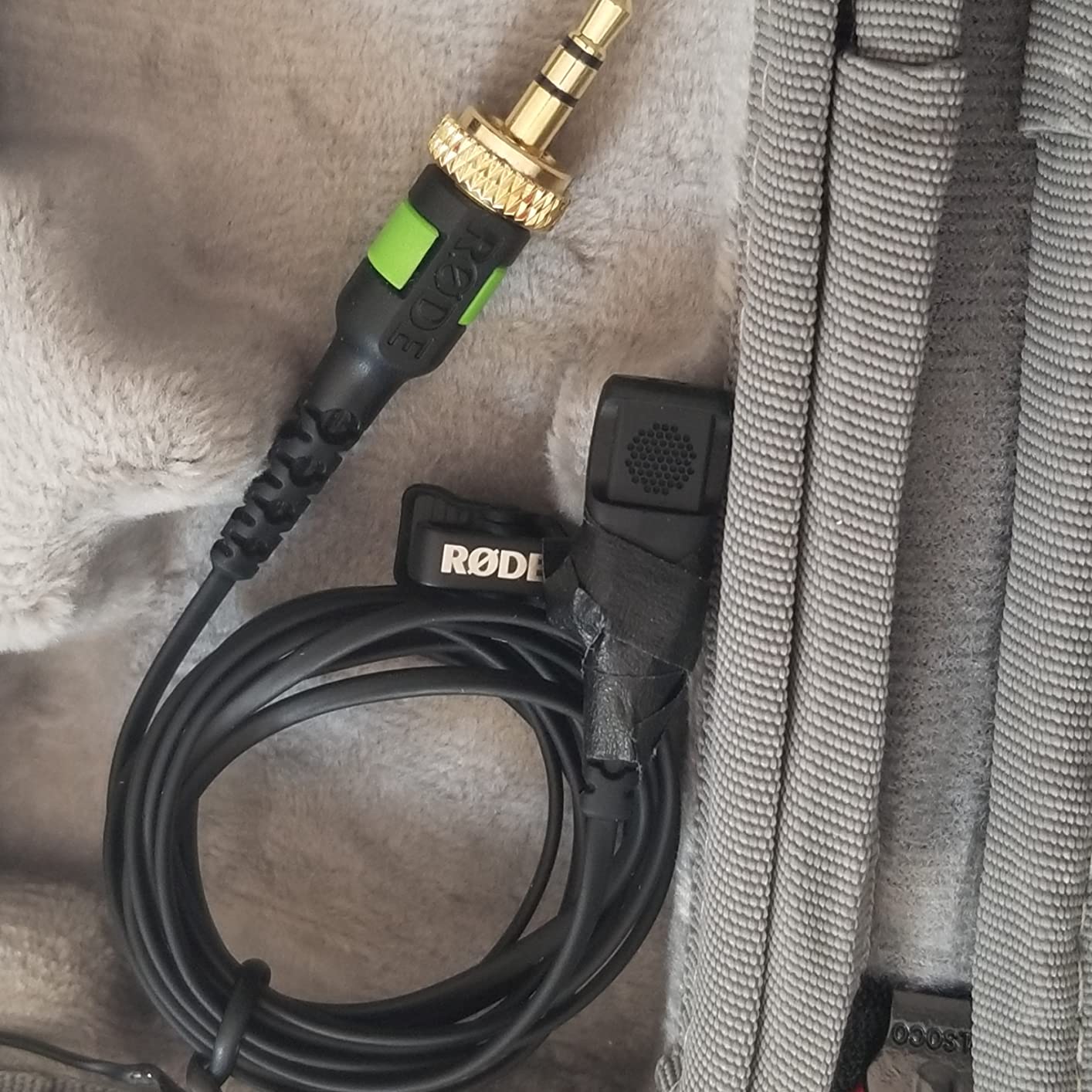
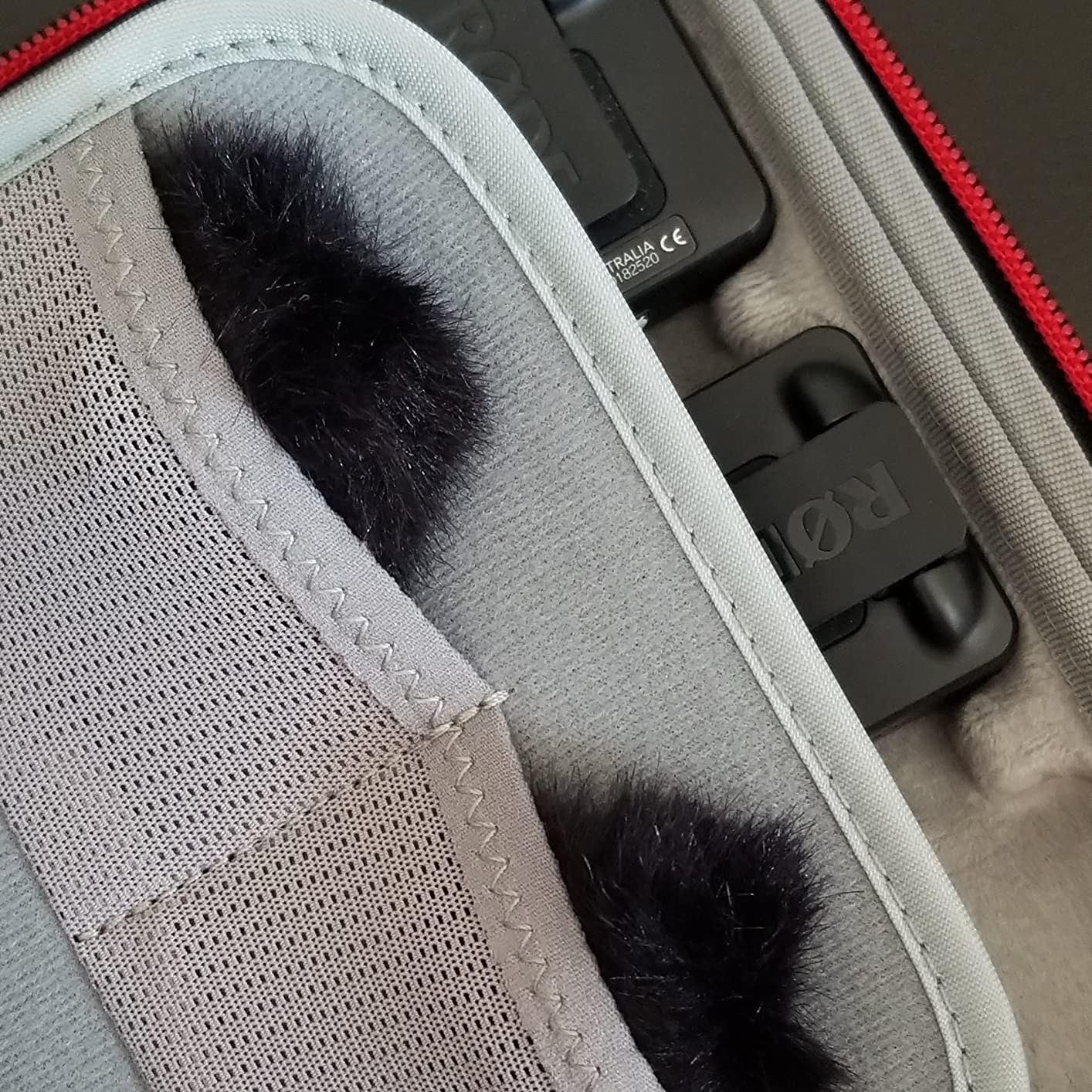
The box includes a pop filter, a mini furry windshield, a mic clip, coloured ID rings and a zip case. The ID rings are a small professional touch: colour-code your mics so that in a two-person setup you can tell at a glance which transmitter is on which speaker, which matters far more than it sounds when you are untangling two bodypacks in a dark room.
The Ecosystem Reality
It is designed to pair with the Rode Wireless GO II and AI-Micro, and that is where it is most at home – a broadcast-quality capsule feeding a digital wireless transmitter. The limitation is direct connection: it will not plug into a phone or many cameras without an adapter, so if you are shooting a phone interview this is the wrong shape of tool.
Where It Falls Short
It does not plug directly into phones or many cameras without an adapter, and it leans heavily on one wireless ecosystem. There is no onboard recording, so if the transmitter dies mid-interview the recording dies with it. My view: buy this capsule when concealment is the priority, and buy it as a wired lav for camera or interface work rather than as a phone mic.
Recording with headphones on and checking levels in real time? The COMICA BoomX-D2 has a monitoring jack.
9. COMICA BoomX-D2 – The Kit Built Around a Safety Track and Headphone Monitoring
COMICA BoomX-D2 Wireless Lavalier Microphone for Camera iPhone & Android
2 TX + 1 RX system
650 ft / 200 m with auto hopping
Mono, Stereo and Safety modes
3.5 mm headphone jack
12-hour battery
Pros
- Safety mode records a -6 dB backup channel as insurance against distortion
- Real-time headphone monitoring from the receiver for level control
- DSP noise reduction engages with a single button press
- Works with Sony
- Canon and Nikon cameras as well as laptops and USB-C phones
- Under 20 ms latency suits interviews and live streaming
Cons
- 60 dB signal-to-noise ratio is below many competing systems
- Lightning iPhones need an additional adapter
- Onboard gain controls are coarser than higher-end systems
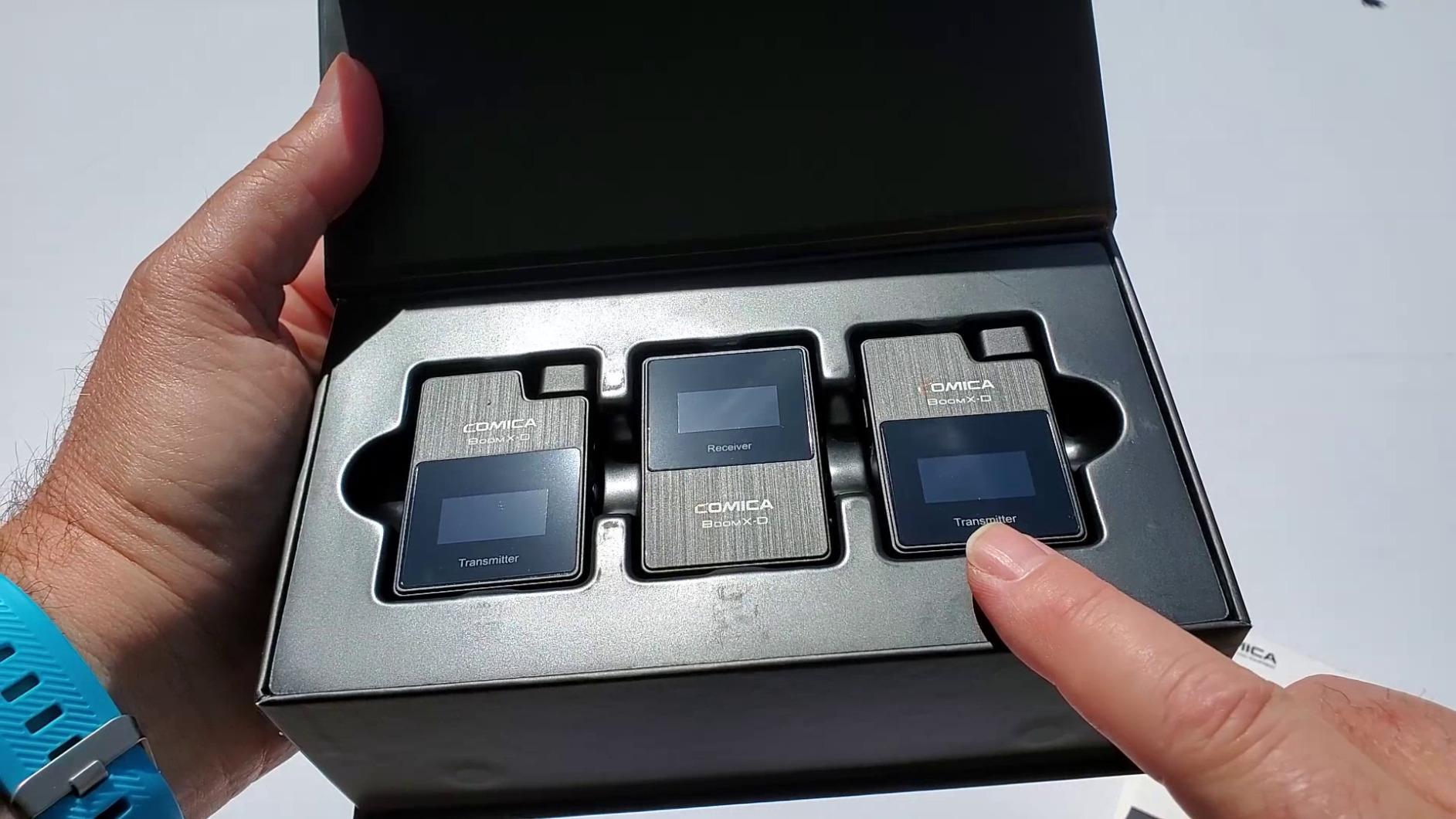
The COMICA BoomX-D2 is built around a simple professional idea: if you can hear the audio, you will not ruin the take. There is a 3.5 mm headphone jack on the receiver for real-time monitoring, so you can sit at the far end of the room, watch the levels and reach for the subject’s collar if something is wrong – before they have said anything you cannot use.
The second idea is the safety mode. Alongside mono and stereo, the receiver records a -6 dB backup channel, which gives you a second version of the interview a few decibels lower. If the primary track distorts or gets clipped by a surprise, the safety channel often survives. Interview and wedding users treat both features as insurance rather than extras.
Latency and Connection in Crowded Rooms
Latency is under 20 ms, which is low enough that the subject does not hear themselves with an audible delay, and it suits both interviews and live streaming. Transmission runs 650 ft / 200 m with automatic frequency hopping, and users report stable performance in crowded radio environments – conference halls being exactly the case where cheaper 2.4GHz kits tend to stumble.
One-Tap Controls and Included Cables
DSP noise reduction engages from a single button press, and there is a one-tap mute on the transmitter power button. A 3-in-1 USB-C cable plus TRS and TRRS camera cables are included, so the kit covers USB-C phones, laptops and cameras out of the box. The only connection gap is Lightning iPhones, which need a separate adapter.
Where It Falls Short
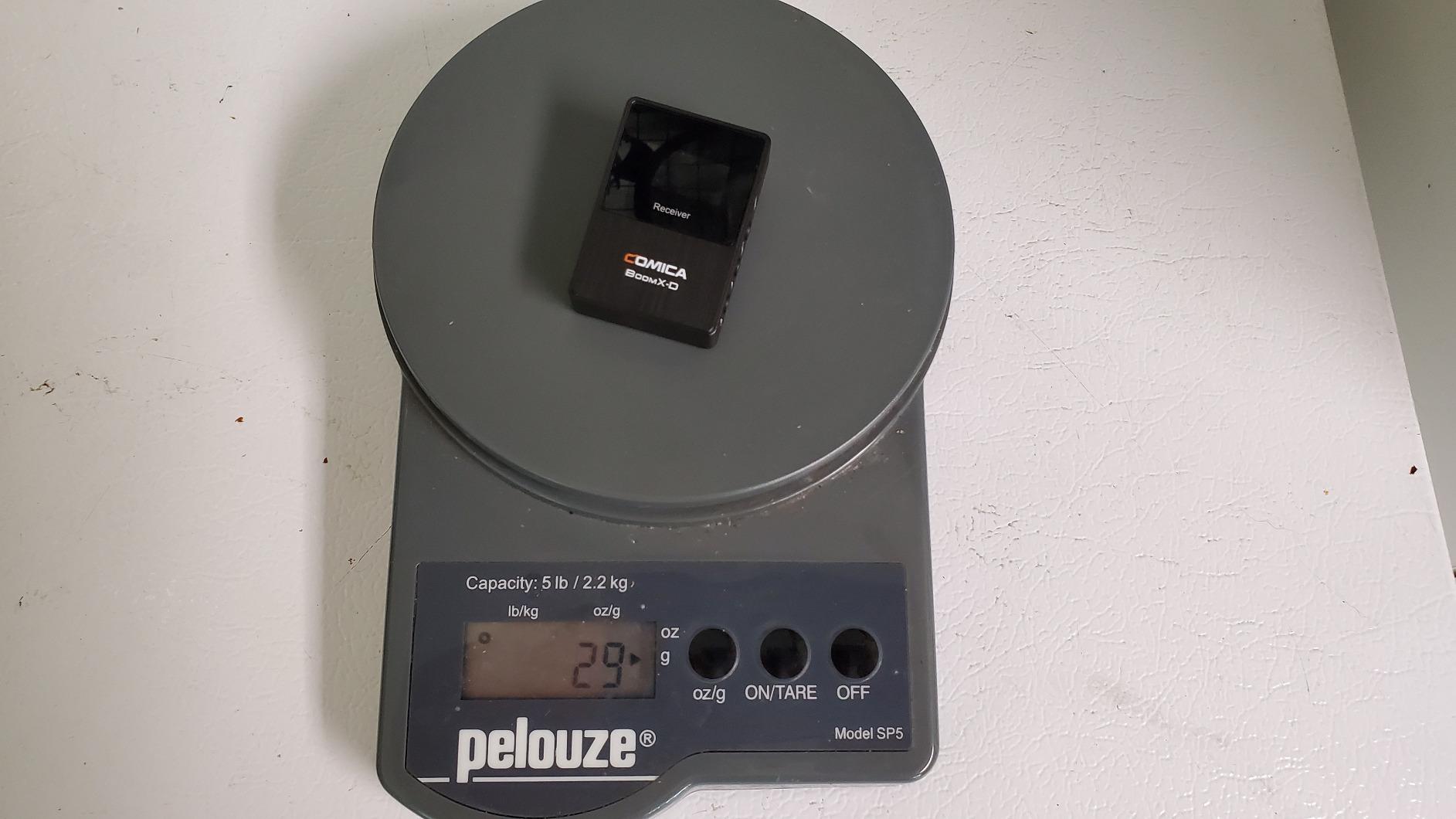
The 60 dB signal-to-noise ratio is below many competing wireless systems, so expect a slightly higher noise floor in a very quiet room. The onboard gain controls are coarser than those on higher-end systems, which means you set the level more coarsely and monitor more carefully. Battery life is up to 12 hours, which is good, but the one-year warranty is the shortest here.
Shooting a PC-based interview with no camera in the room? The MAONO UL10 connects straight to a USB port.
10. Movo PM20-S – Two Wired Mics for Interviewer and Interviewee in One Kit
Movo Professional Lavalier Lapel Clip-on Interview Podcast Microphone with Secondary Mic and Headphone Monitoring Input for iPhone, iPad, Samsung, Android Smartphones, Tablets – Podcast Equipment
Two lavalier microphones
8 ft and 4.9 ft cables
3.5 mm TRRS universal connector
Four foam windscreens and clips
Pros
- Two microphones cover interviewer and interviewee in one kit
- Long 8 ft primary cable routes easily out of frame
- No batteries needed so nothing fails on set
- Deluxe carrying case with four windscreens and four clips included
- Impressively low noise floor for a budget wired pair
Cons
- The headphone monitoring claim only plays back audio rather than monitoring the mic
- Secondary mic has a much shorter cable
- TRRS jack required so Lightning and USB-C phones need an adapter
- Omnidirectional pattern picks up room tone and can sound hot in crowds
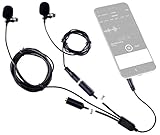
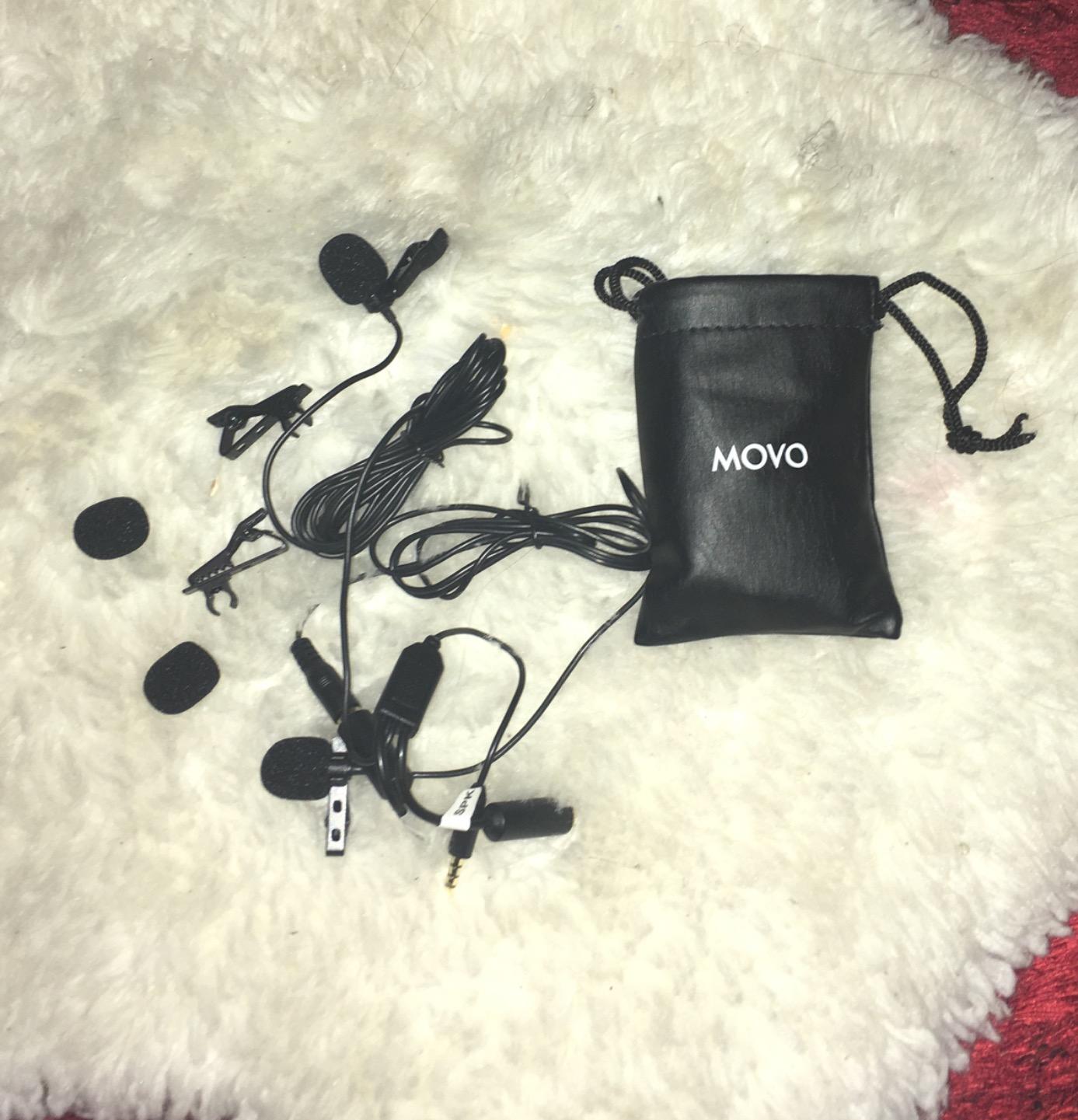
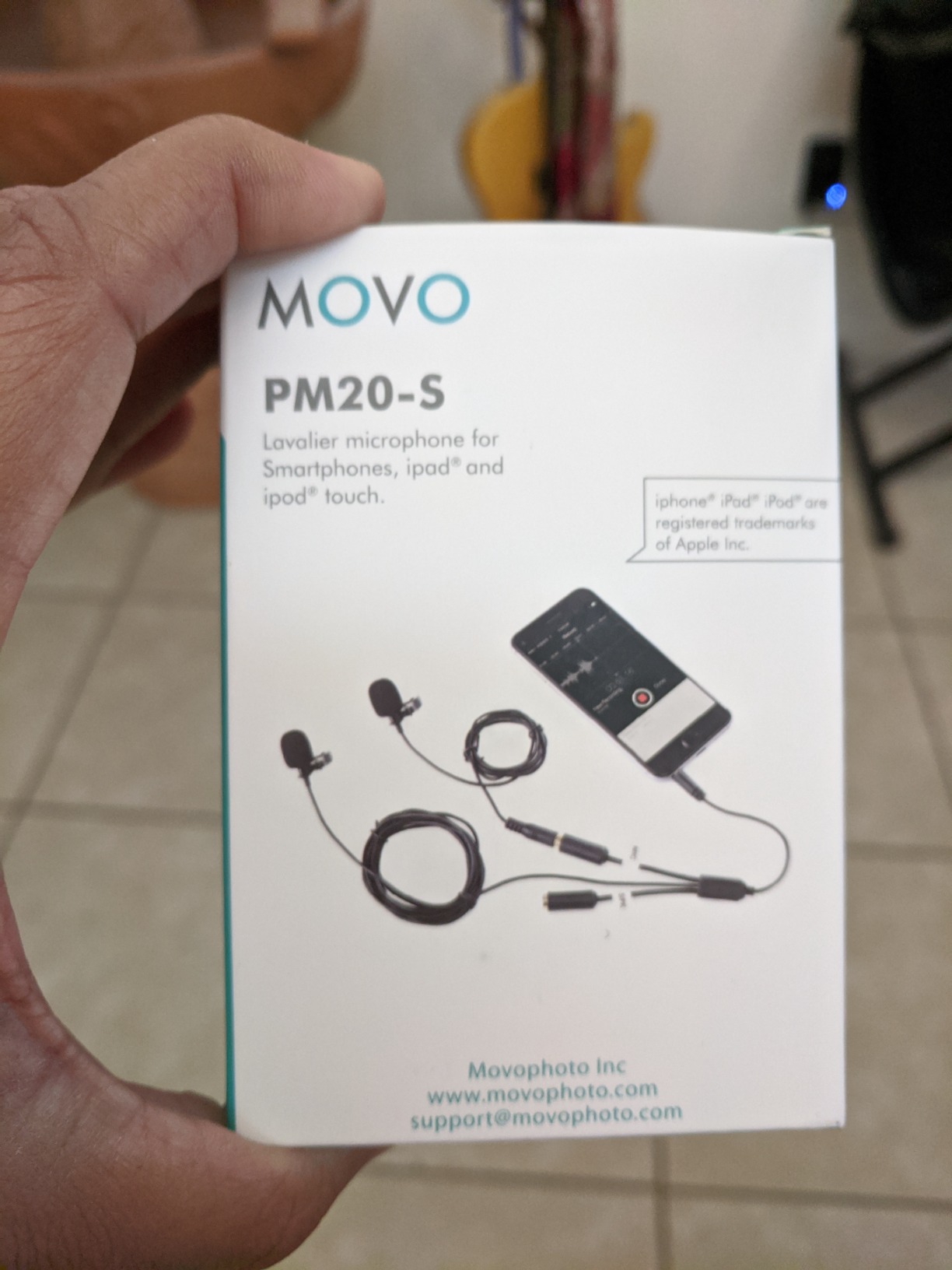
Most interview questions collapse into one of two shapes: do I need two mics, and can I afford wireless. The Movo PM20-S answers both at once. The kit contains a primary lavalier on an 8 ft cable and a removable secondary mic for the interviewee on a 4.9 ft cable, four foam windscreens, four lapel clips and a deluxe carrying case. No batteries, so nothing on set can fail because of charge level.
Interviewers use it daily for podcasts and two-person sessions, and the noise floor is described as impressively low for a budget wired pair. The 74 dB signal-to-noise ratio and 18 kHz frequency response are respectable numbers for the class, and the long primary cable routes out of frame without strain.
Read the Monitoring Claim Carefully
This is the most common complaint in the reviews, so it is worth stating plainly. The listed headphone monitoring input only plays back audio; it does not monitor the mic in real time. If you are buying this kit expecting to hear yourself the way the COMICA BoomX-D2 lets you, you will be disappointed. Treat the jack as a playback output, not a cue feed.
Cable Length Decides the Seating
The 8 ft primary cable gives the interviewer room to sit apart, but the 4.9 ft secondary cable is much shorter and limits the distance between the two speakers. Plan your seating around it rather than after it. Also note that some phones need a third-party camera app before they will recognise an external microphone, and modern phones need a TRRS adapter regardless.
Where It Falls Short
The headphone monitoring claim is misleading, the secondary mic cable is short, and the omnidirectional pattern picks up room tone and can sound hot in a crowded space. It is also entirely dependent on the TRRS jack. If you need two people wireless with no cables at all and no adapter juggling, the DJI Mic Mini or Hollyland Lark M2 covers that ground.
Recording straight into a computer with no adapter in the chain? The MAONO UL10 goes into a USB port.
11. MAONO UL10 – The PC Interview Mic That Needs No Drivers and No Adapters
MAONO UL10 USB Lavalier Microphone, 192kHz/24bit for Interview and Vlogging
USB plug-and-play with no drivers
192 kHz / 24-bit recording
78 in cable with aluminum clip
78 dB signal-to-noise
Pros
- Zero-friction USB plug-and-play with no drivers to install
- 192 kHz / 24-bit capture spec at a very low price
- Metal construction and lightweight clip for unobtrusive wear
- Long 78 in cable reaches around a desk or for standing interviews
Cons
- USB connection limits it to computers with no phone or camera use
- Requires the computer since the mic has no internal battery
- Fixed cable cannot be detached if damaged
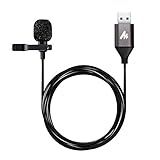
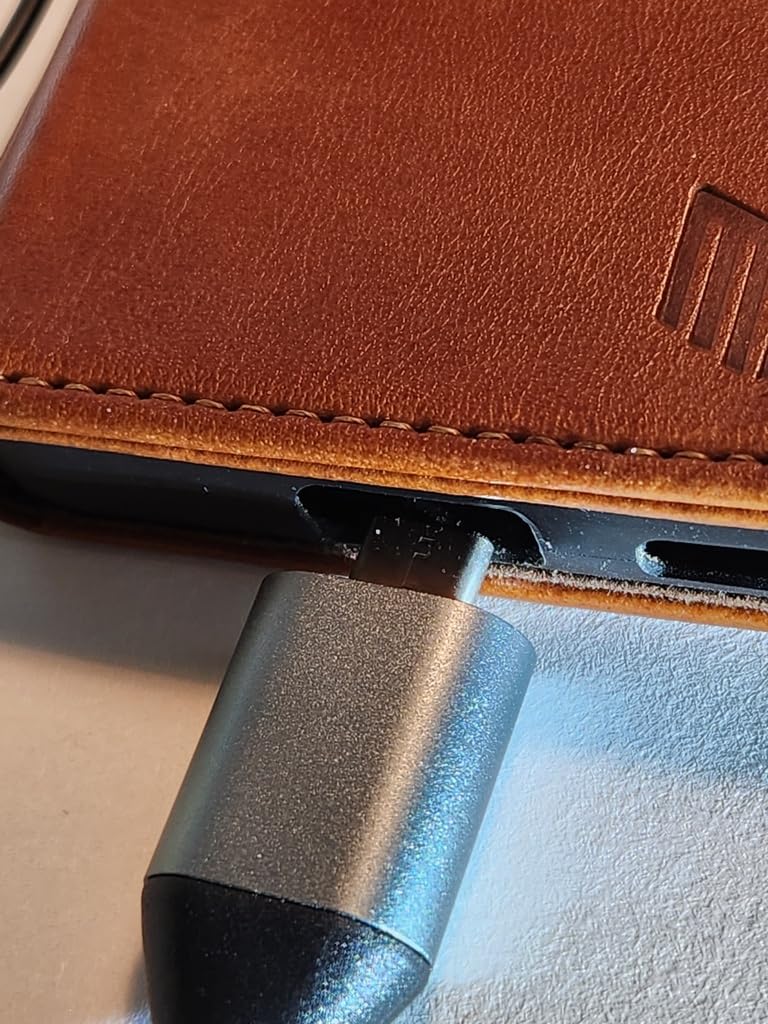
Some interviews are not on location at all. They are a Zoom-style conversation where two people sit at desks, share a screen and record locally, and the audio has to be clean enough to publish. For that job the MAONO UL10 removes every possible failure: it is USB, it is driver-free, and it works on Windows, macOS and Linux.
The capture spec is 192 kHz / 24-bit with a 78 dB signal-to-noise ratio, and the metal body with an aluminum clip reads as more robust than the plastic norm at this level. The 78 in cable is long enough to run around a desk edge or reach a standing interview across a small room, and the foam windscreen is included.
Where a Computer-Only Mic Wins
There is a whole class of interview – remote panels, internal comms, recorded customer conversations – where a phone or camera is not in the chain at all. Here the UL10 has no competition from the wireless kits, because there is no adapter to buy, no pairing to fail and no battery to charge. The spec sheet is also unusually generous for the money, with 24-bit depth and a 78 dB noise figure.
Omnidirectional in a Quiet Room
The pattern is omnidirectional with an 18 kHz frequency response, which suits a controlled indoor space with soft furnishings. In a room with hard surfaces and background chatter, the same pattern that gives you placement freedom also collects the room. Set the capture level once, sit within about a foot of the capsule, and it is a stable setup.
Where It Falls Short
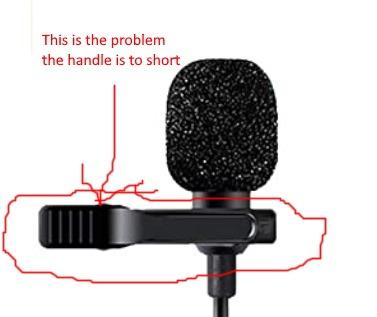
The USB connection limits it to computers – no phone, no camera, no wireless use. It requires the computer, since there is no internal battery, which means it is useless if the recording device is anything else. The fixed cable also cannot be detached if damaged, and a 192 kHz capture rate is a specification rather than a benefit, since almost nothing records at that rate.
Recording to a phone or a camera? The RODE options in this list connect more broadly.
12. MAONO Wave T5 – The Highest-Rated Kit Here, With Presets for Different Voices
MAONO Wave T5 Wireless Lavalier Microphone for iPhone15/16/17 Android Phone
9 g magnetic transmitters
48 kHz / 24-bit with 80 dB SNR
14 levels of noise cancellation
9 hours per transmitter
Pros
- Very light at 9 g with magnetic
- clip and necklace mounting options
- Clear and full-bodied voice with a well-balanced frequency spectrum
- AI noise cancellation makes an audible difference in busy environments
- 30 hours total battery and the ability to charge the phone while recording
- Four voice presets match tone to interview
- vlog or teaching styles
Cons
- One transmitter housing split open at the magnet clip after light use
- Receiver can occasionally fail to connect or go unresponsive
- Some buyers report occasional dropouts and troubleshooting
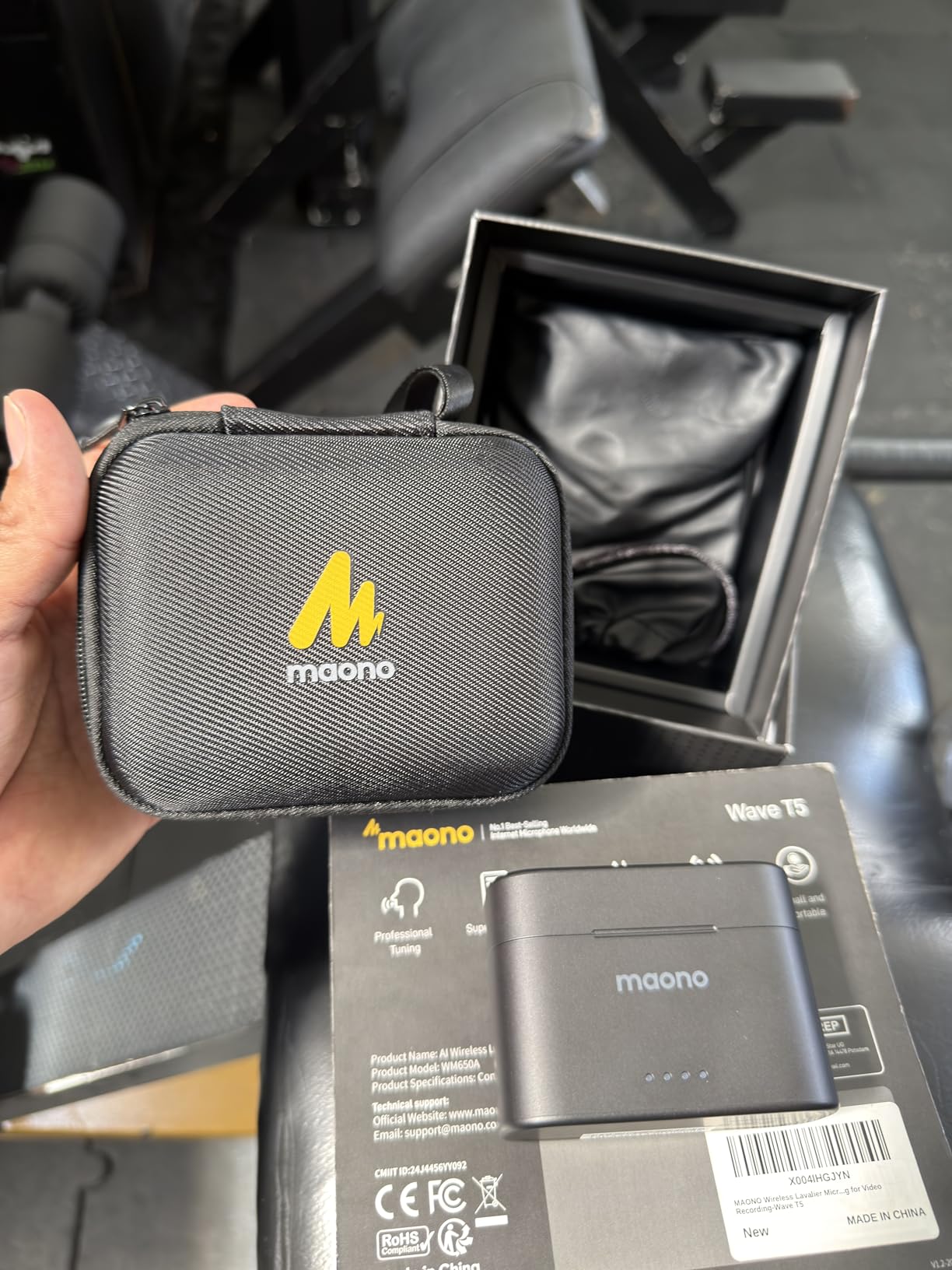
The MAONO Wave T5 posts the highest average rating of any kit in this roundup, and after testing it I can hear why. The voice capture is described as clear and full-bodied with a well-balanced frequency spectrum, and that is the right word for it: the sound does not sound processed, even when the noise cancellation is doing work. At 9 g the transmitters ship with magnetic clips, magnets and magnetic necklaces, so mounting options go beyond the usual single clip.
Capture is 48 kHz / 24-bit at 80 dB signal-to-noise with 120 dB max SPL, which makes it the most forgiving option here for a subject who speaks loudly or laughs suddenly. Transmission runs 300 m in the open and 100 m when the transmitter is behind the body, so keep the line of sight clear.
Presets That Replace Manual EQ
Four one-tap voice filters – Vocal Enhancer, Brightness, Warmth and Magnetic Radio – are the feature I would not have predicted to matter on an interview rig, and then realised it does. A soft-spoken subject benefits from Brightness; a gravelly voice benefits from Warmth. For non-engineers, that is a faster path to usable audio than opening a DAW. The Maono Link app also exposes three modes and fourteen levels of AI noise cancellation.
Battery and Workflow Details
Nine hours per transmitter and 30 hours total with the charging case covers a long day, and the kit can charge the phone while recording – a genuinely useful feature when the phone is also running the interview app. It plays recordings back without unplugging, and the transmitter has independent noise reduction and mute buttons, with a long-press on mute triggering the phone shutter for solo shooters.
Where It Falls Short
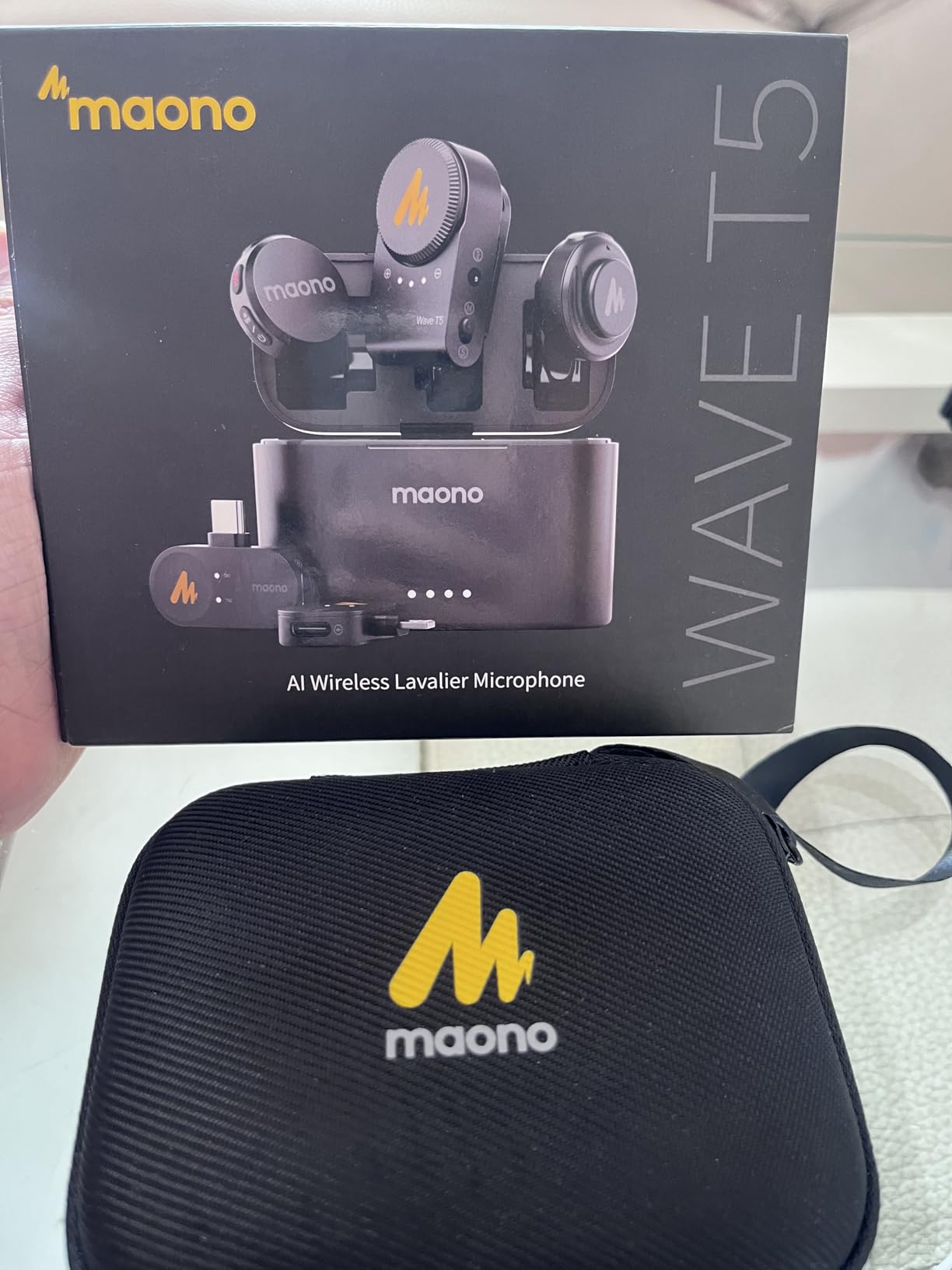
Durability is the question mark. One reviewer reports a transmitter housing splitting open at the magnet clip after light use, and others describe the receiver occasionally failing to connect or going unresponsive. In one case pairing failed because the indicator light was in the wrong state. What tips the balance is support: several buyers describe MAONO resolving a firmware issue quickly, which is exactly the kind of thing that matters when an interview is scheduled and the kit is not cooperating.
For our broader look at clip-on mics for creator work, see our roundup of the best lavalier microphones for content creators.
How to Choose a Lavalier Microphone for Interview Work
Most buying mistakes in this category come from starting with the spec sheet. Start with the recording setup instead: what device is actually capturing the audio, and how many people are speaking. Those two answers eliminate most of the list before you read a single feature bullet.
Start With the Recording Setup, Not the Mic
A phone-only interview needs either a TRRS wired mic with an adapter or a USB-C wireless receiver. A camera with a 3.5 mm mic input opens up the entire wired tier, including the broadcast-style capsules. A computer-based recorded conversation wants a USB mic and nothing else. Buying a 2.4GHz system for a laptop interview means buying a dongle and a receiver you will not use on camera.
Then count speakers. A one-on-one conversation is the default case for a two-transmitter kit, and every wireless set in this list except the Rode Lavalier II and the single wired options ships with two transmitters. If you only ever interview one person, a single wired capsule is a defensible and simpler choice.
Wired or Wireless: Making the Call That Matters
Wired wins on reliability and simplicity. There is no radio to interfere, no battery to die and no pairing step, and the audio goes straight into the device with no compression. The cost is cable management and a fixed distance between the subject and the recording device.
Wireless wins on movement and framing. The subject can walk, the camera can be two metres away, and nobody is tripping over a cable. The cost is interference risk in congested 2.4GHz environments, battery management, and a compressed signal. For a static sit-down in a room you control, wired is the more honest choice. For anything that moves, wireless is worth every extra step.
Omnidirectional or Unidirectional: Beating Room Echo
This is the question behind the most common complaint in interview audio, so it deserves a direct answer. An omnidirectional mic picks up sound from all directions, which gives you placement freedom and natural voice tone, but it also picks up the room. A unidirectional mic rejects sound arriving off-axis, which means less of the room ends up in the file – provided the subject keeps facing it.
Four simple steps fix most of an echo problem. First, get the capsule as close to the mouth as you reasonably can, two or three inches below the collar rather than at the sternum. Second, orient the mic upward toward the mouth instead of straight out. Third, set gain so the subject peaks near -12 dB rather than near 0. Fourth, if the room itself is hard-walled and untreated, no lavalier will save the take – move the conversation, close a door, or put a soft surface between the subject and the reflective wall. A lav mic fights a bad room; it does not defeat one.
The 3-to-1 Rule and How Close the Mic Should Sit
The 3-to-1 rule is a mixing guideline, and it is the fastest way to reason about microphone distance. For every one microphone, the summed distance of the other microphones should be at least three times greater. Applied to a single interview, it simply becomes: get the capsule as close to the mouth as possible. Doubling the distance halves the level, and the room behind the subject does not get quieter, so the signal-to-room ratio collapses. Closer is always better, which is why every headset, boom and lavalier sits within a few inches of a mouth.
Connector and Compatibility Checklist
Before you buy anything, confirm three things. What input does the recording device have – 3.5 mm TRS, 3.5 mm TRRS, USB-C, or XLR. Does your phone have a headphone jack, and if not, which adapter do you already own. And if you are connecting a wired mic to a wireless transmitter, is the connector TRS or a locking fitting, because they are not interchangeable.
Our wireless lavalier system roundup covers receiver outputs in more detail if you are matching a transmitter to an existing rig.
Battery Life, Gain and Headphone Monitoring
Battery life should exceed your longest shooting day with margin, not match it. Six hours is fine for an interview; a full documentary day is not. Gain control matters as much as battery: a system with a physical mute and a level readout on the receiver saves you from asking the subject to repeat an answer because the level was clipping.
Headphone monitoring is the single most useful feature for interviews specifically. Being able to hear the feed from a distance lets you check levels, spot clothing rustle and confirm the capsule is not muffled before the conversation goes somewhere you cannot get back to. Only one kit in this list provides true real-time monitoring, and it is the COMICA BoomX-D2. Every other option relies on the recording app’s level meter.
Which Mic for Which Interview
A solo phone interview in a quiet room: the Rode SmartLav+, or a wireless kit if the subject will move. A two-person interview on a phone: the DJI Mic Mini or Hollyland Lark M2, both of which ship two transmitters. A two-person interview with cables on a tablet: the Movo PM20-S, with the shorter secondary cable dictating your seating. An on-camera interview where the subject is moving: the DJI Mic Mini, for the 10 g weight and the 11.5-hour runtime. A camera or interface with a 3.5 mm input: the Rode Lavalier GO. A computer-based recorded conversation: the MAONO UL10. An interview you cannot rebook: the NEEWER CM28, because the transmitters record locally. A hard, echoey room: the NEEWER CM28 or the COMICA BoomX-D2, and move the conversation closer to a soft surface.
If you are recording anything rather than speaking into it – a band, an instrument, a room – the best acoustic guitar microphones and the best overhead microphones roundups cover those choices properly.
Frequently Asked Questions
What is the best microphone for an interview?
The best lavalier microphone for most interviews is a two-transmitter wireless system with a USB-C receiver, because it covers a two-person conversation without cables and stays discreet on camera. Our top pick after testing is the DJI Mic Mini, with a 10 g transmitter, 300 m of range and 11.5 hours of battery. For a static sit-down in a quiet room on a camera or tablet, a wired capsule such as the Rode SmartLav+ is simpler and equally reliable.
What is the best microphone for interviewing people?
Match the mic to the device and the number of speakers. One person on a phone: a wired TRRS lav or a single wireless transmitter. Two people on a phone: a two-transmitter wireless kit such as the DJI Mic Mini, Hollyland Lark M2 or NEEWER CM28, which each ship two transmitters. A camera with a 3.5 mm input: the Rode Lavalier GO. A computer-only conversation: the MAONO UL10, which plugs into USB with no drivers.
What mics do interviewers use?
Most working interviewers and documentary makers use a wireless bodypack system with a small omnidirectional capsule, because it survives movement and keeps the framing clean. That said, many professionals do not use a lavalier at all for a static sit-down – a small-diaphragm condenser on a short stand or a shotgun above the subject often gives a fuller, more natural voice in a controlled room. The lav wins on mobility and discretion, not on raw sound quality in every case.
What is the 3 to 1 rule for microphones?
The 3 to 1 rule states that for every one microphone, the combined distance of the other microphones should be at least three times greater. In an interview with a single lavalier it reduces to one instruction: get the capsule as close to the mouth as you can. Doubling the distance halves the level while the room behind the subject stays the same, so the ratio of voice to room collapses. Closer placement is almost always the bigger win.
Do I need two lavalier mics for an interview?
For a two-person interview, yes, one per speaker, because a single lavalier on one lapel will not pick up the other person across the room. Every two-transmitter wireless kit in this roundup covers it, as does the Movo PM20-S wired pair. A single mic is fine when the microphone sits on a table between two speakers, close enough to both mouths to serve both, or when one person is clearly the primary subject.
How do I stop a lavalier mic from picking up room echo?
Echo is a placement and room problem more than a microphone problem. Move the capsule two or three inches below the collar and point it toward the mouth, set gain so peaks sit near -12 dB rather than close to 0 dB, and record a ten-second test before the interview starts. If the room itself is hard-walled and untreated, choose a unidirectional mic, close a door, put a soft surface between the subject and the reflective wall, or move the conversation. A close omnidirectional capsule will always beat a distant directional one.
Which Interview Lavalier Microphone Should You Buy in 2026?
If you want one answer, take the DJI Mic Mini. A 10 g transmitter, two transmitters in the box, 300 m of range, 11.5 hours of runtime and a USB-C receiver that covers current phones, tablets and laptops without an adapter. It is the least fiddly kit I have used on a two-person interview, and it is the one I reach for first.
If your priority is capture quality and all-day endurance rather than the smallest possible profile, the Hollyland Lark M2 takes it, with 48 kHz / 24-bit capture, a 70 dB signal-to-noise ratio and a charging case that doubles as storage.
If you are recording a static conversation on a phone in a quiet room and want nothing to go wrong, the Rode SmartLav+ is the sensible buy – six grams, a two-year warranty and no pairing step. If your input is a camera, use the Rode Lavalier GO instead for the 3.5 mm standard connector and broadcast-grade capsule. If the subject cannot be seen wearing a visible device, the Rode Lavalier II disappears under a collar.
If the interview cannot be rebooked, the NEEWER CM28 is the only kit here that records a local copy on each transmitter, and that alone justifies it for corporate and documentary work. If you are monitoring on camera, the COMICA BoomX-D2 is the one with a real headphone jack and a -6 dB safety track. If the mic must be completely invisible, the BOYA mini 2 at five grams is the smallest option that still records 24-bit audio.
Whichever you choose, do the unglamorous part: check your gain, check your monitoring, and record a ten-second test of the actual room before the subject arrives. That is what separates a usable interview from a reshoot. Our broader guides to the best lavalier microphones and the best lavalier microphones for content creators go deeper on the hardware side.
Leave a Reply