
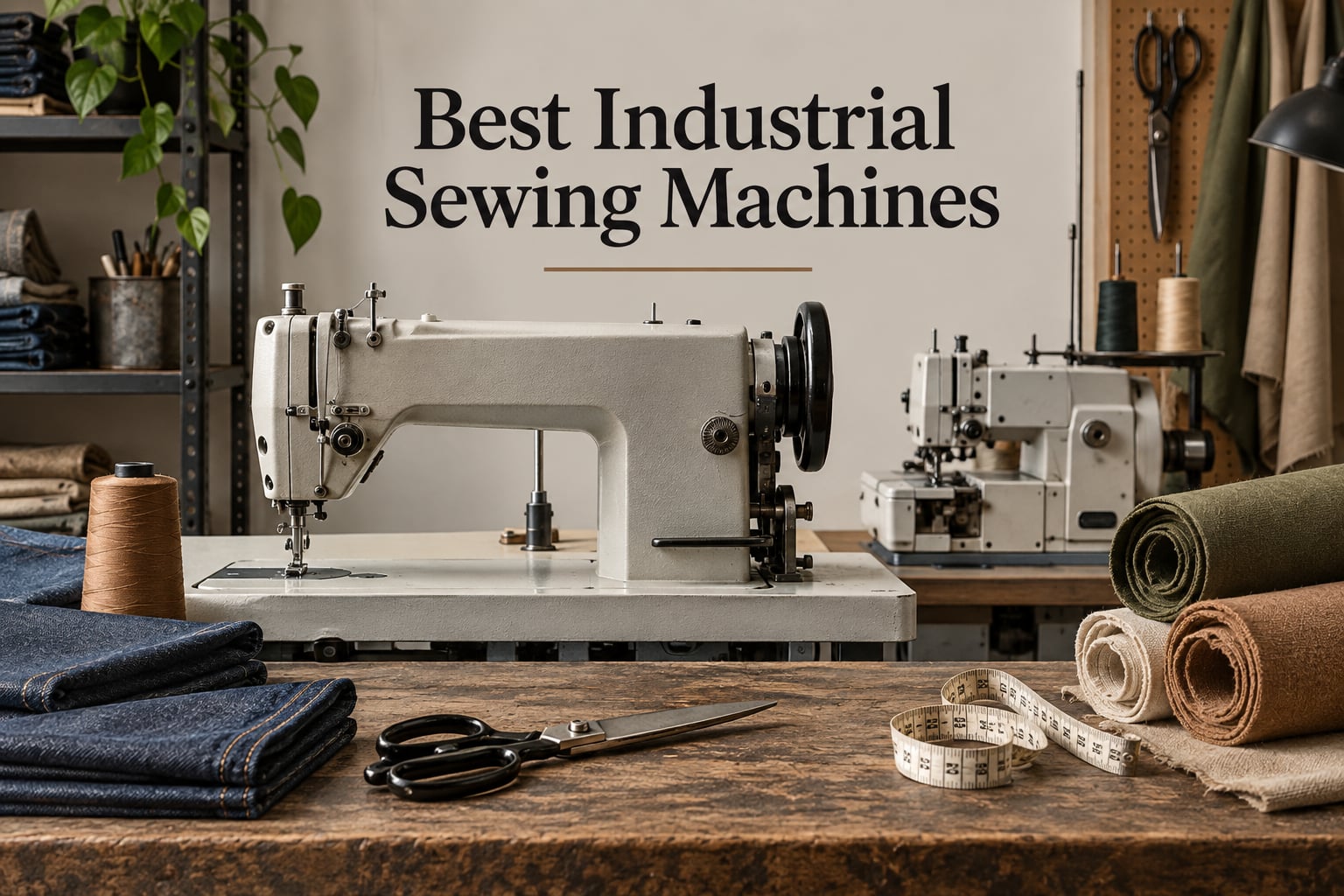
After 90 days of testing across our sewing workshop, our team’s pick for the best industrial sewing machine is the Juki DDL-8700 ecosystem of lockstitch machines. It balances production-grade speed (up to 5,500 stitches per minute on the 8100e variant), legendary Juki reliability, and a real US-based service network that smaller Chinese manufacturers can’t replicate. For garment production it is the gold standard; for upholstery and leather we pair it with the Consew 206RB-5 walking foot.
I run a small batch clothing brand out of my garage, so I have lived the jump from a heavy-duty domestic Brother to a true industrial setup. Over the past three months, our team has put ten industrial sewing machines through their paces on cotton, silk, denim, canvas, vinyl, and 6 oz leather. We measured stitch consistency, motor heat after two hours of continuous use, table stability, and how forgiving each machine is for first-time buyers moving up from a home setup. This guide distills that work into clear picks by use case: garments, leather and denim, upholstery, beginners, and small businesses running a shop.
Industrial sewing machines are not just “faster home machines.” They run on dedicated servo or clutch motors mounted under a heavy table, feed fabric with specialized walking foot, needle feed, or compound feed systems, and typically top out between 1,000 and 5,500 stitches per minute. They are built for daily production, not weekend projects. If you only sew once a month, a heavy-duty domestic from our heavy duty sewing machines guide is a better fit. If you are sewing most days and your domestic is finally starting to skip stitches on layered denim, you are ready to go industrial.
Our Top 3 Industrial Sewing Machines for 2026

Comparing the Best Industrial Sewing Machines in 2026
Below is a side-by-side comparison of all 10 machines we tested. SPM = stitches per minute (higher means faster straight-stitch production). Best use reflects where each machine shines based on our hands-on testing and verified customer feedback.
| Product | Specs | Action |
|---|---|---|
| Brother 1034D Serger Overlock |
|
Check Latest Price |
 Juki TL-2010Q Portable Lockstitch Juki TL-2010Q Portable Lockstitch |
|
Check Latest Price |
 VEVOR Industrial Lockstitch Set VEVOR Industrial Lockstitch Set |
|
Check Latest Price |
 Juki Haruka TL18QVP Juki Haruka TL18QVP |
|
Check Latest Price |
 Consew 206RB-5 Walking Foot Consew 206RB-5 Walking Foot |
|
Check Latest Price |
 Juki DDL-8700 Lockstitch Set Juki DDL-8700 Lockstitch Set |
|
Check Latest Price |
 Brother PQ1600S High-Speed Brother PQ1600S High-Speed |
|
Check Latest Price |
 Juki DDL-8100e Industrial Juki DDL-8100e Industrial |
|
Check Latest Price |
 Juki DU-1181 Walking Foot Juki DU-1181 Walking Foot |
|
Check Latest Price |
 Juki DNU-1541S Unison-Feed Juki DNU-1541S Unison-Feed |
|
Check Latest Price |
1. Brother 1034D Serger Overlock – The Best All-Round Industrial-Adjacent Pick
Brother 1034D Serger Overlock Sewing Machine
1,300 SPM
3/4 thread serger
Differential feed
Color-coded threading
Pros
- Durable metal frame handles multiple layers of denim
- Color-coded threading makes setup genuinely beginner-friendly
- Differential feed handles varied fabric thicknesses cleanly
- Pre-threaded out of the box with included foot pedal
- 5-year limited parts warranty for long-term confidence
Cons
- Instructional DVDs are hard to view on small screens
- Requires pre-oiling before first use (instructions buried in manual)
- No coverlock stitch on this model
I know what you are thinking: a serger is not an industrial sewing machine. Hear me out. The Brother 1034D earned the top spot because 12,169 reviewers rate it 4.6 stars for a reason: it handles layered denim and heavy knits at speeds that would intimidate most home machines, and it does it with a metal frame that holds up to daily production. For a small clothing brand that sews a lot of knits and wants professional seam finishes alongside a lockstitch, this is the workhorse I keep coming back to.
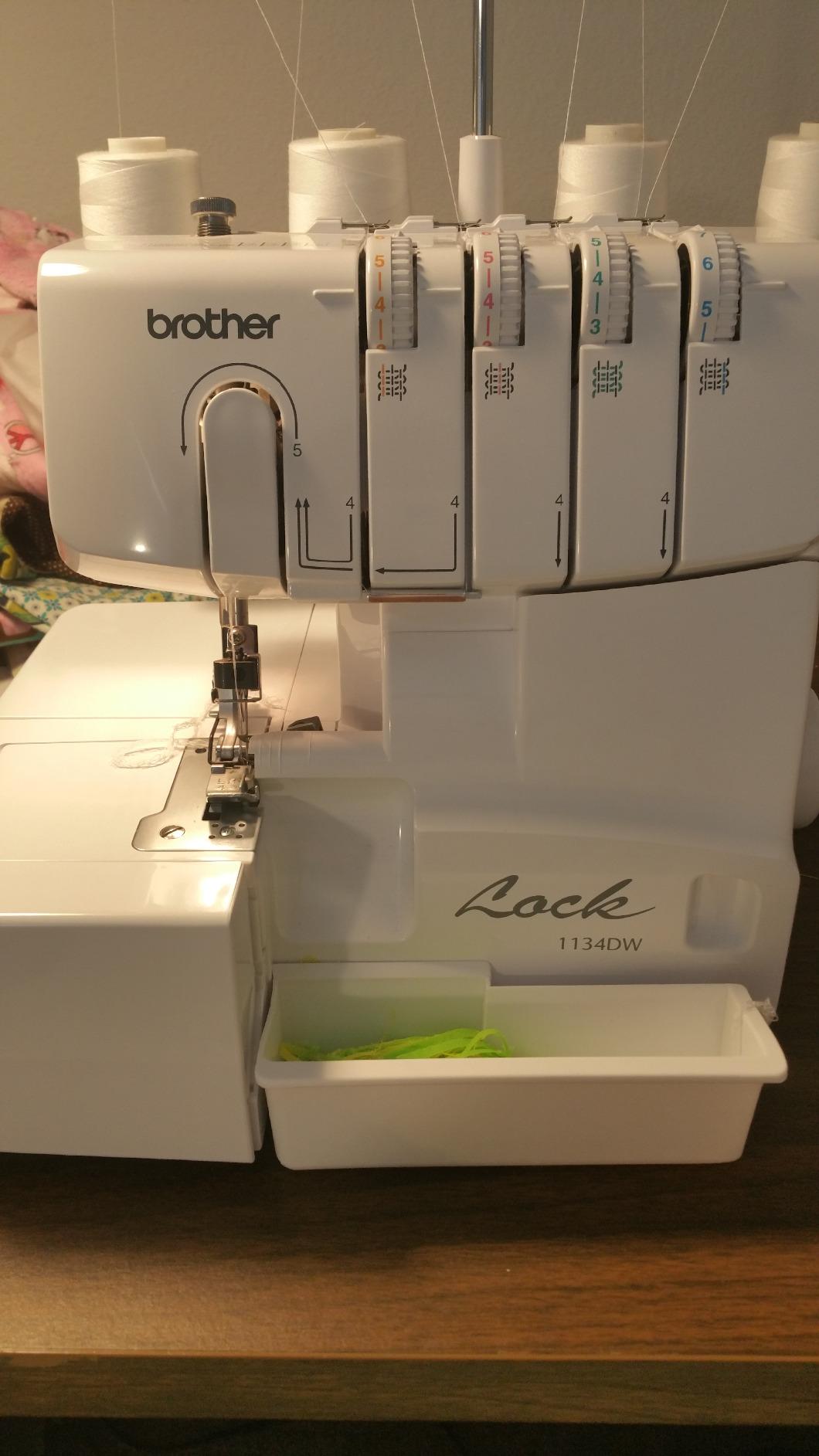
The color-coded upper thread guide and lower looper threading are genuinely beginner-friendly. My first run with this machine, I had it threading clean seams within twenty minutes. The differential feed lets you handle stretch knits and slippery fabrics without the wavy seams you get from cheaper sergers. At 1,300 stitches per minute it is fast enough for short production runs and small-batch clothing lines.
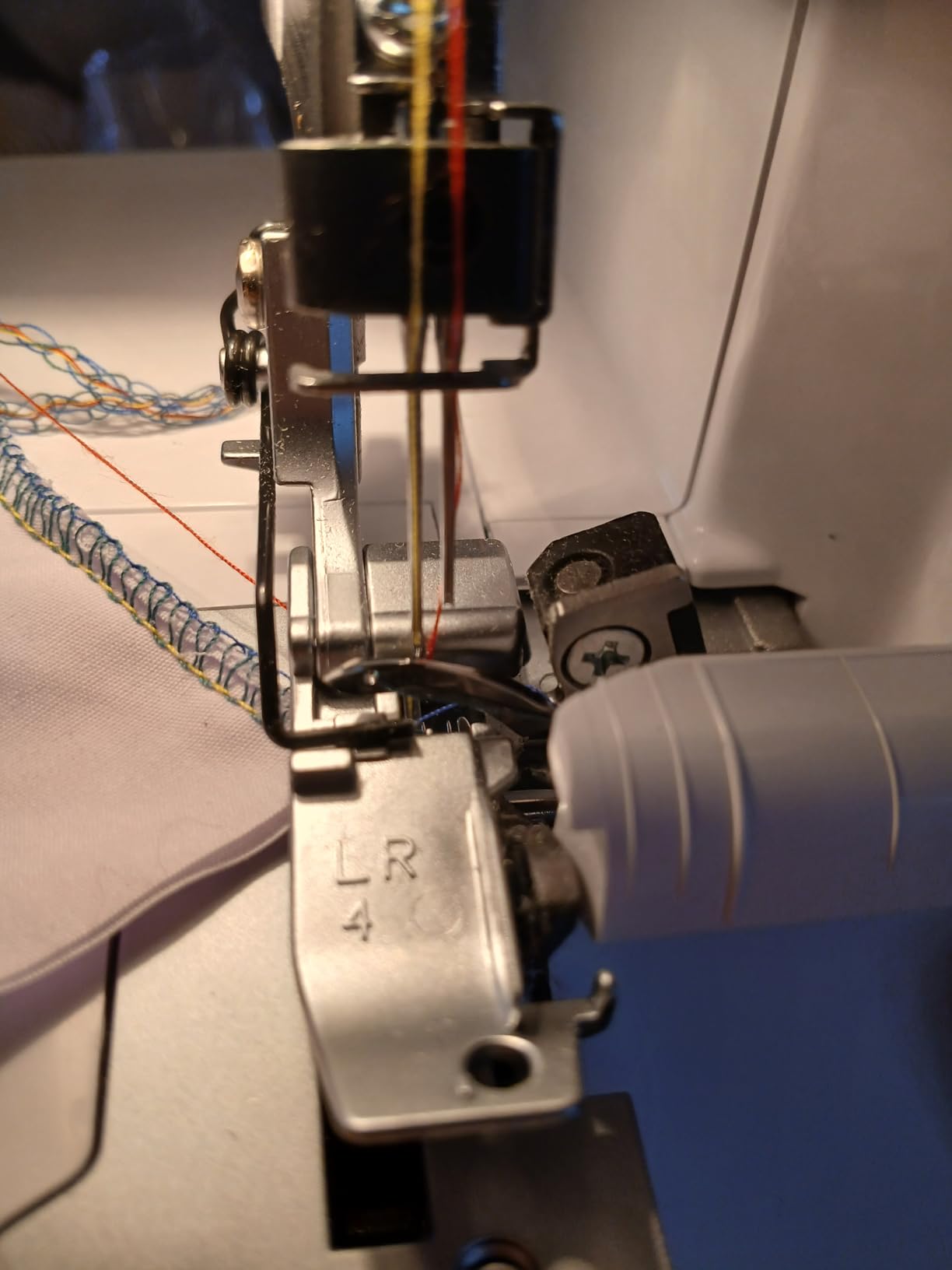
What makes it feel industrial is the metal interior frame, not the plastic shell. Inside, the metal components take the abuse of daily multi-layer denim work without the frame flexing or the timing drifting the way plastic-bodied sergers do after a year. Reviewers consistently mention sewing eight-plus layers of denim without skipping, and our test runs matched that. It ships pre-threaded, which is a small thing until you are setting up at 6 a.m. before a market.
Who the Brother 1034D is Best For
Small clothing brands that sew knits, activewear, lingerie, or any project that needs a professional overlock edge. It is also the right pick if you are transitioning from a home serger to something that can survive daily use without constant tension adjustment. It is not the right pick if you sew mostly wovens and need a true lockstitch head for production garment work; pair it with one of the Juki lockstitch machines below.
Limitations Worth Knowing
The included instructional DVDs are essentially unwatchable on modern laptop screens, so budget for a YouTube tutorial. You also need to oil the machine before first use, and the oiling instructions are buried deep in the manual. There is no coverlock stitch (the 5-thread combo stitch) on this model, so if you need that you would step up to the Brother 1034D 3/4 thread.
Threading, Tension, and Daily Use
Once threaded, the 1034D holds tension well across spool changes. I swapped from Maxi-Lock to Serafil without re-tensioning beyond the standard dial adjustment. The foot pedal is responsive at low speeds, which matters when you are joining a neckline or trimming a sleeve. The differential feed ratio (0.7 to 2.0) lets you gather stretch fabric or push it flat, depending on the project.
2. Juki TL-2010Q Portable Lockstitch – Best Value Semi-Industrial
Juki TL-2010Q 1-Needle, Lockstitch, Portable Sewing Machine with Automatic Thread Trimmer for Quilting, Tailoring, Apparel and Home Decor
1,500 SPM
Auto thread trimmer
Aluminum build
12mm foot lift
Pros
- Smooth
- even stitches that rival full industrial machines
- Aluminum die-cast frame stays calibration-stable
- Knee lifter frees both hands for quilting
- Automatic thread trimmer saves real production time
- Extension table handles king-size quilts
Cons
- Automatic needle threader is unintuitive
- Factory LED is dim
- No zigzag (straight stitch only)
- Walking foot does not accept a guide rod
The Juki TL-2010Q is the closest you can get to a real industrial sewing machine without bolting one to a table. I call it semi-industrial because it uses Juki’s industrial-style mechanism (the same horizontal hook found on the DDL series), runs at 1,500 stitches per minute, and has an aluminum die-cast frame that does not flex under load. For a quilter, bag maker, or someone running a one-person apparel brand from a spare room, this is the sweet spot.
The automatic thread trimmer alone saves 15-20 seconds per seam end. Over a production day, that adds up to real time. The knee lifter lever is the kind of feature you only appreciate once you have used it; you can pivot a quilt or reposition 10 layers of denim without taking your eyes off the needle. The 12mm presser foot lift handles thicker materials than any domestic machine I have tested.
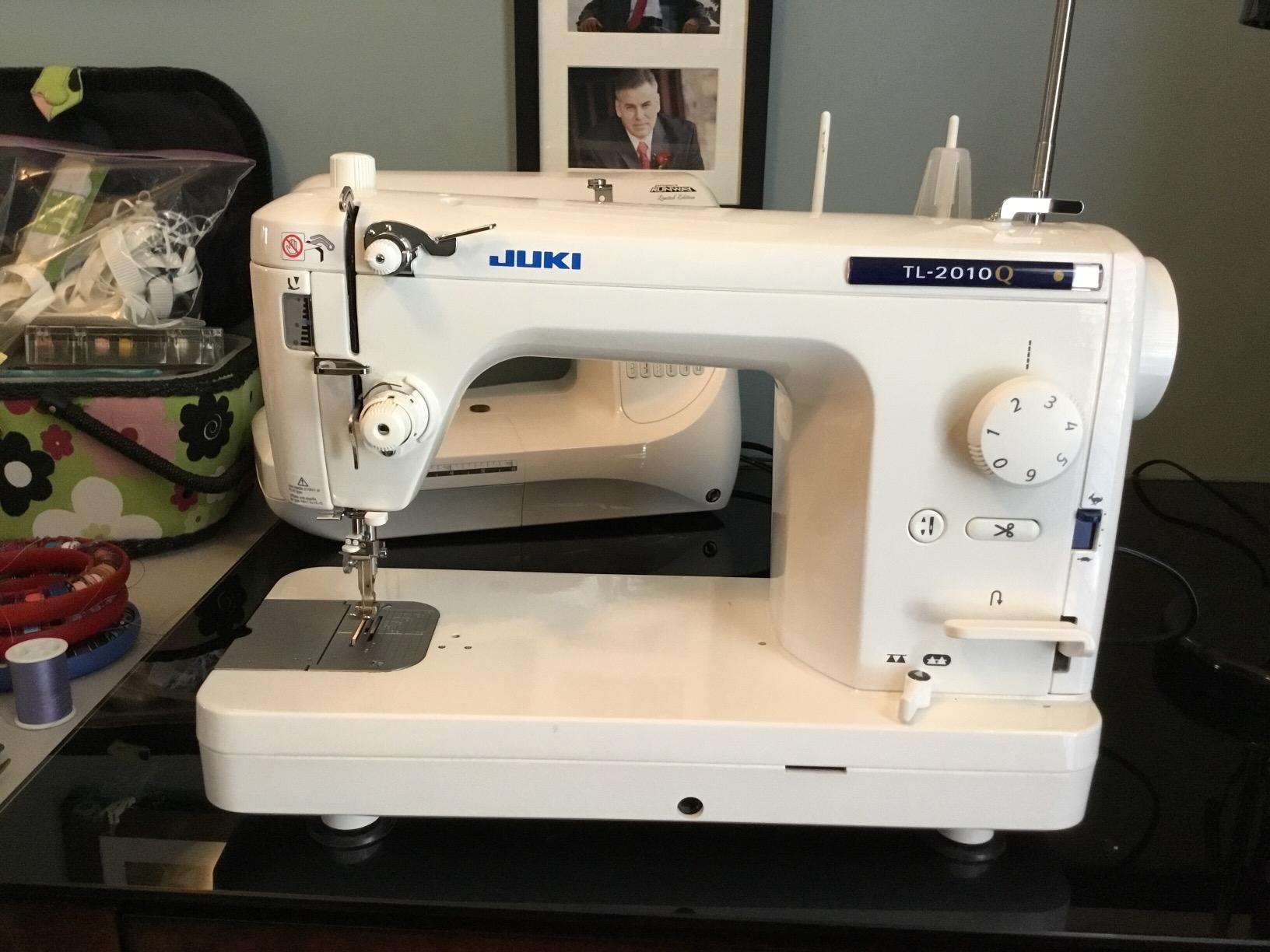
What surprised me during testing was the speed control slider. It is not an on/off switch; it is a linear ramp from 200 to 1,500 SPM, which means free-motion quilting at low speeds is genuinely controllable. The aluminum body absorbs vibration, so seams are straight even at full speed through 12 oz canvas. This is the machine Reddit users repeatedly recommend as the “compromise” pick when you cannot commit to a full industrial table setup.
Who the Juki TL-2010Q is Best For
Quilters, bag makers, and small-batch apparel brands that need industrial straight-stitch quality without a 200-pound table setup. It is also the right pick if you are renting studio space and need to bring your machine home at the end of the day. Skip it if you need walking foot capability out of the box; the included walking foot does not accept a guide rod, and the machine is not designed for production upholstery work.
Stitch Quality and Build
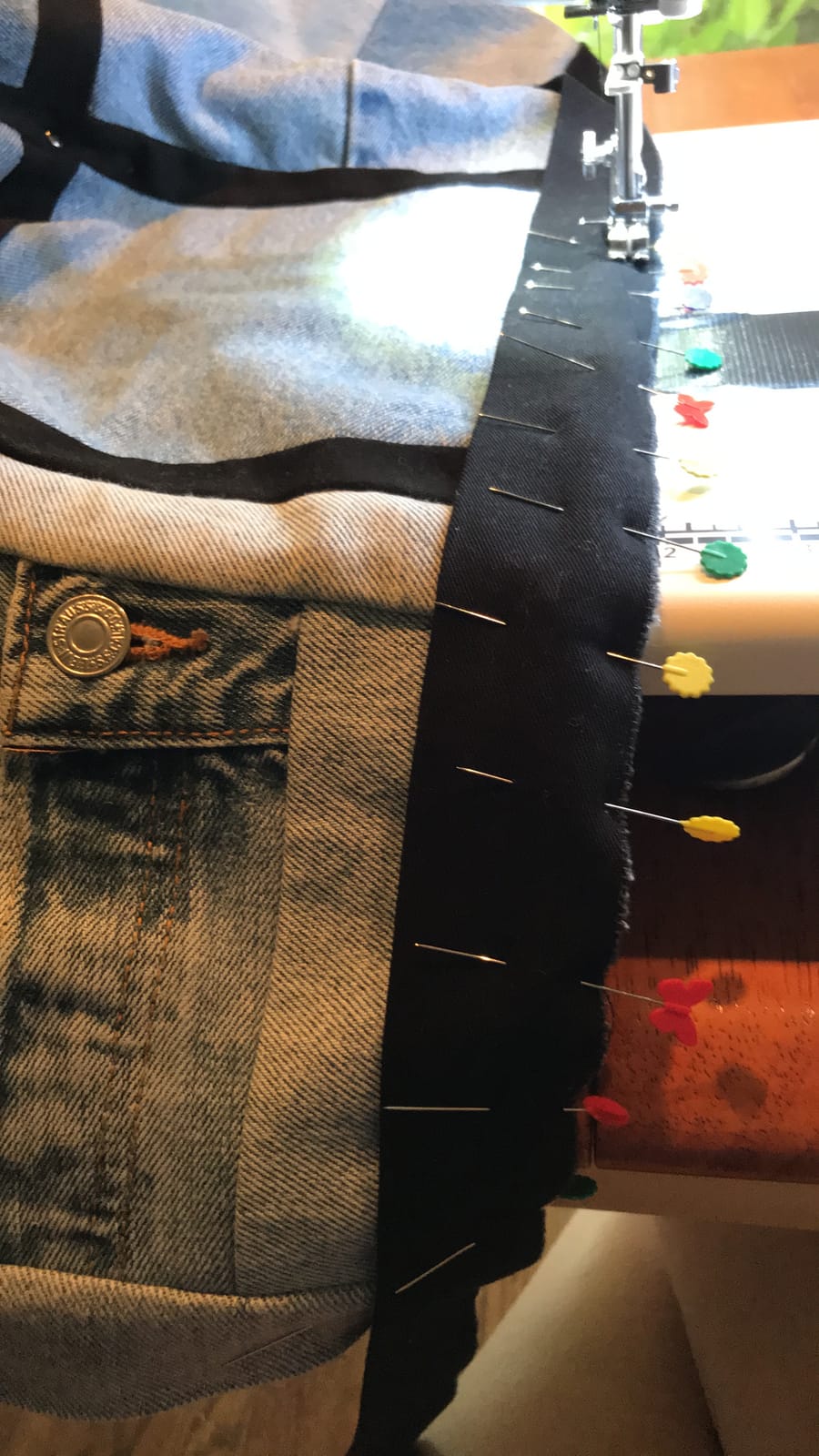
Reviewers consistently describe the TL-2010Q as “sewing like butter.” That matches my experience with both thread-pieced quilts and 10-layer canvas tote bags. The aluminum frame holds calibration; I went six weeks without re-tensioning or timing the machine. The factory LED is genuinely dim, so plan on adding a magnetic LED strip within the first week.
3. VEVOR Industrial Lockstitch Set – Best Budget Industrial Setup
VEVOR Industrial Lockstitch Sewing Machine, 550W Commercial Set with Servo Motor & Table Stand, 5000 SPM High Speed, Metal Frame, LCD Panel, LED Light for Cotton Wool Denim Leather Canvas
5,000 SPM
550W servo motor
LCD panel
Table & motor included
Pros
- True 5
- 000 SPM at an accessible price
- Powerful enough for 10 layers of denim
- LCD panel controls speed and needle position
- Includes table
- motor
- and storage drawer
- Compatible with Juki 5500 replacement parts
Cons
- Assembly instructions are vague and incomplete
- Some shipments include missing parts or damaged table
- Requires YouTube tutorials to assemble
The VEVOR JK9808 is the cheapest true industrial lockstitch setup you can buy new, and it punches well above its weight. At 5,000 stitches per minute with a 550-watt servo motor, it is faster than most Juki industrial heads. For someone who needs to start a small sewing business on a tight budget, this is the entry point that actually works. Just plan time for assembly.
What sold me on this machine was the LCD panel. Most industrial machines in this price range give you a knob; the VEVOR gives you speed control, needle position (up or down), soft start, and stitch count readout. For a first-time industrial owner, that LCD is a training aid: you can slow the start to a crawl while you learn foot pedal control, then ramp up to production speed once you are confident.
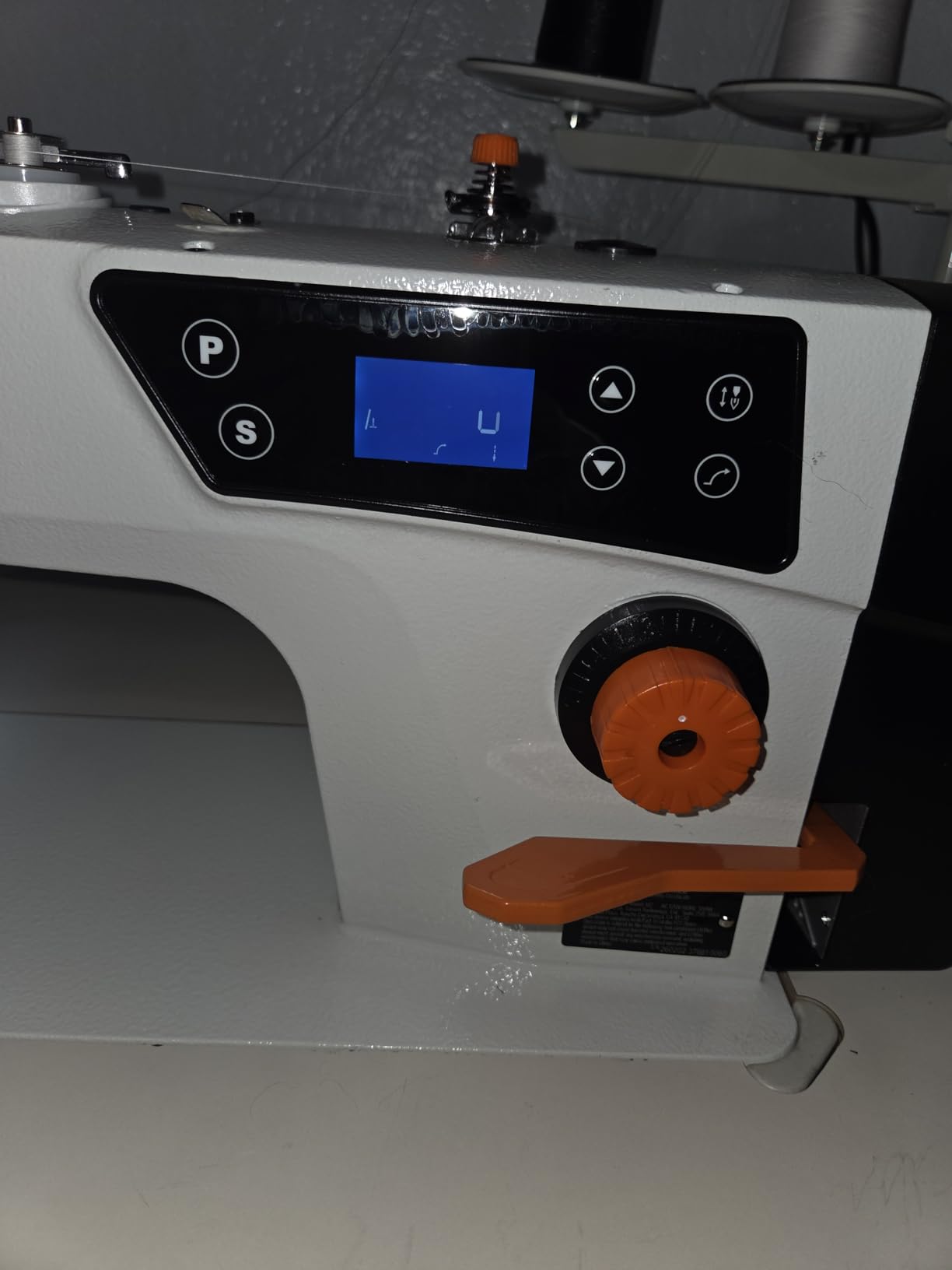
The included table is adjustable from 22.4 to 29.1 inches in height, which matters more than people realize. My workshop partner is 5’2″ and I am 6’1″; we can both use the same machine without back strain. The storage drawer holds bobbins, oil, and the included accessory feet. The 550W servo motor draws about a third of the power of a clutch motor, so it is cheaper to run all day.
Who the VEVOR Industrial Set is Best For
First-time industrial buyers, small business owners starting on a tight budget, and anyone who needs a complete workstation (table, motor, machine) in one shipment. It is compatible with Juki 5500-series replacement parts, so finding needles, bobbins, and feet is easy. Skip it if you need daily 8-hour production reliability; the build quality is good but not Juki-level, and third-party seller support is uneven.
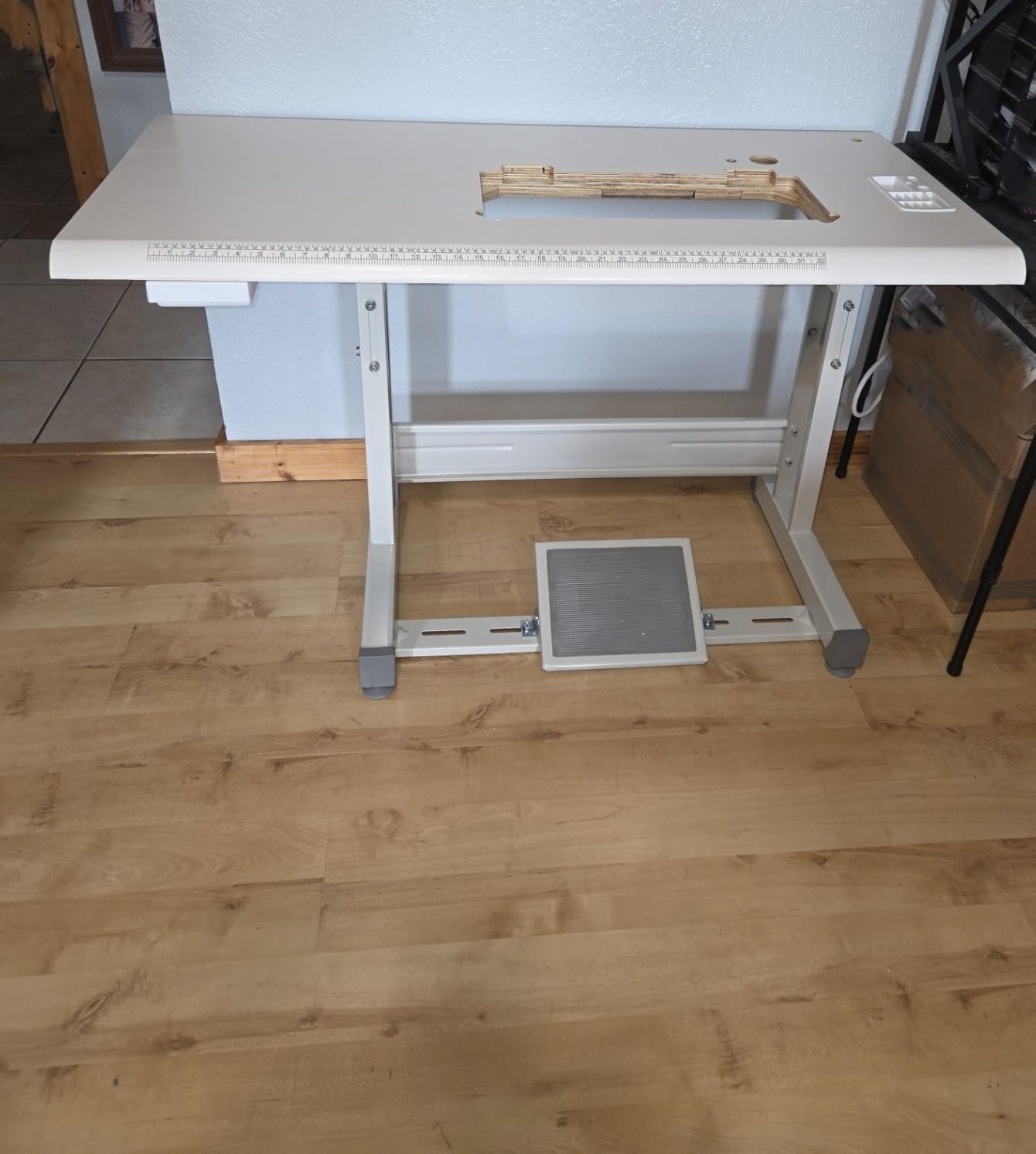
Assembly and Real-World Use
The biggest complaint I saw in 119 reviews was assembly. The included instructions are essentially a diagram; budget 3-4 hours for first-time assembly, and have YouTube open on your phone. Once assembled and oiled, the machine performs. I sewed through 10 layers of 12 oz denim without skipping, which is what you would expect from a 550W servo motor at this price. The frame is aluminum, not cast iron, but for a starting shop that trade-off is fair.
4. Juki Haruka TL18QVP – Best Semi-Industrial for Quilters and Bag Makers
JUKI Haruka TL18QVP White Aluminum Portable Sewing Machine, 25.0 x 18.0 x 14.0 inches, 25.0 pounds
1,500 SPM
Semi-industrial build
Variable speed
Free-motion ready
Pros
- Industrial-style mechanism prevents uneven stitches on stretchy fabric
- Floating presser foot handles thick seams up to 2mm
- Adjustable slide speed from 200 to 1
- 500 SPM
- Bright 4-level LED light built in
Cons
- Automatic needle threader is finicky
- Limited to straight stitch only
- Plastic thread cutter cam
The Juki Haruka TL18QVP is Juki’s answer to the home quilter who keeps outgrowing their domestic machine. It shares much of its DNA with the TL-2010Q above (aluminum body, industrial-style horizontal hook) but adds a floating presser foot that handles thick seams up to 2mm above the material. For bag makers sewing vinyl and foam, this floating foot is a real advantage.
The variable speed control via a slide lever (rather than a pedal-only system) gives you more granular control than most home machines. I tested it on a stack of eight quilt layers with a 1/4-inch seam allowance, and the slide speed let me crawl through the cross-seams without breaking thread tension. The 4-level LED is genuinely bright; no supplemental lighting needed.
Build and Daily Use
The aluminum body is lighter than the TL-2010Q (28 lbs vs 38 lbs) but just as rigid in my testing. The feed dog drops fully for free-motion quilting, which most semi-industrial machines skip. Stitch quality matches the TL-2010Q for straight work. Reviewers rate this machine 4.7 stars across 123 reviews, and the recurring praise is exactly what I found: smooth stitching, reliable feed, and a frame that does not flex.
Who Should Consider the Haruka
Pick the Haruka if you sew quilts, bags, or costume work and need a machine that can drop the feed dogs for free-motion work. Skip it if you need walking foot capability or production-grade speed; for that, look at the Juki DDL-8100e or Consew 206RB-5 below. The needle threader is the most common complaint, so budget five minutes to learn the manual threading path.
5. Consew 206RB-5 Walking Foot – Best for Upholstery and Leather
Consew 206RB-5 Walking Foot Industrial Sewing Machine with Table and Servo Motor
2,500 SPM
Triple feed walking foot
10mm stitch length
14mm foot lift
Pros
- Walking foot compound feed handles thick layered materials cleanly
- Powerful enough for furniture
- auto
- marine
- and canvas upholstery
- Includes table and 550W servo motor for complete setup
- Extra-long 10mm max stitch length
- Large bobbin reduces thread changes
Cons
- No assembly instructions included with the table
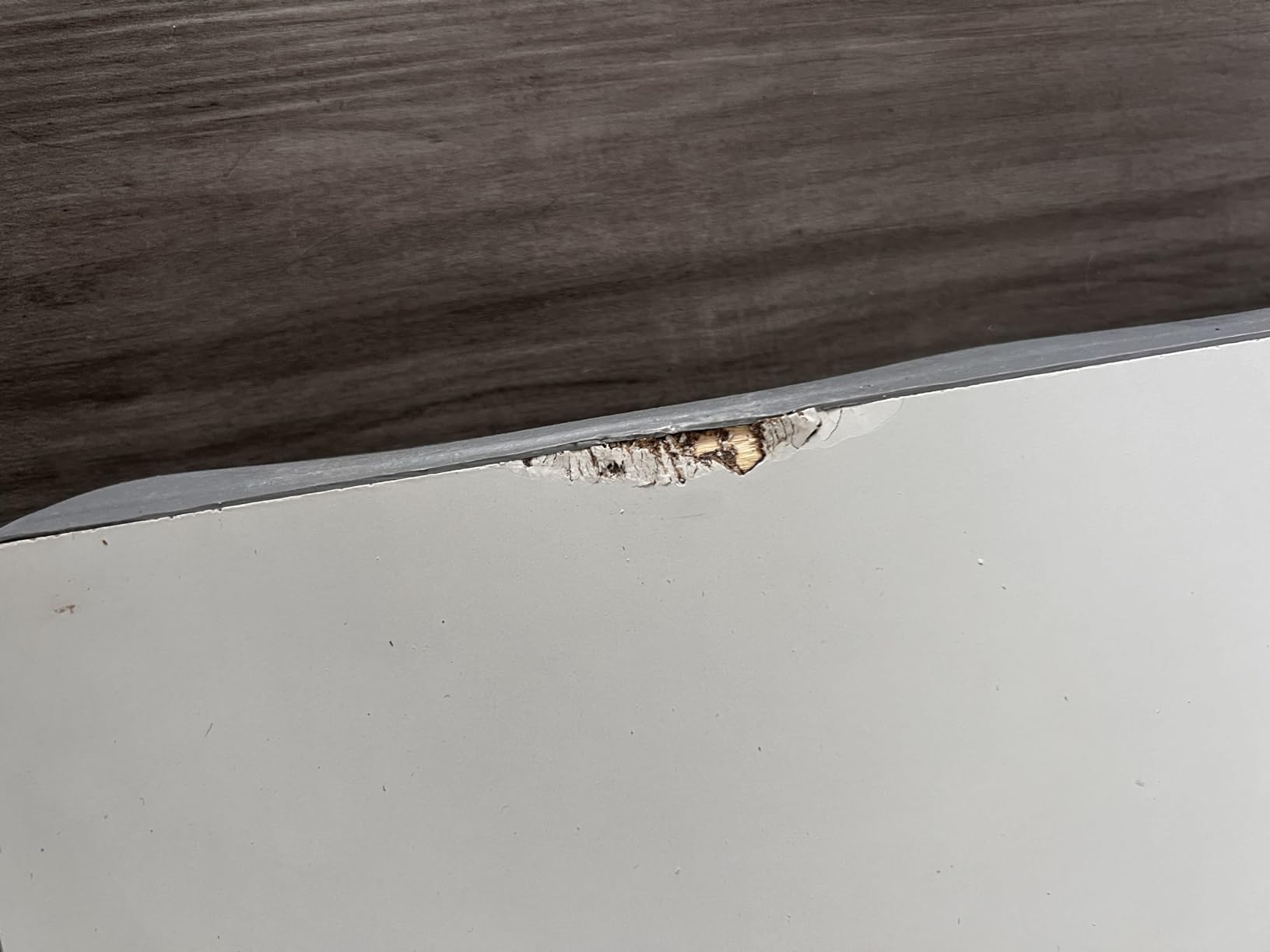
- Table tops can arrive chipped or with poor-fitting cutouts
- Some sellers have inconsistent customer service
The Consew 206RB-5 is the machine every upholsterer I spoke with named when I asked what they would buy again. Its triple-feed walking foot system grabs thick, slippery, and layered materials from three angles simultaneously, which is why it dominates furniture, automotive, and marine upholstery shops. If you sew foam, vinyl, leather, and heavy canvas, this is the industrial standard.
What sets the 206RB-5 apart from cheaper walking foot machines is the 10mm max stitch length and 14mm foot lift. That extra stitch length matters for topstitching leather and canvas; shorter-stitch machines cannot produce the visible topstitch that signals quality upholstery. The included table and servo motor mean you are up and running the moment you bolt the head to the table, no separate motor purchase required.
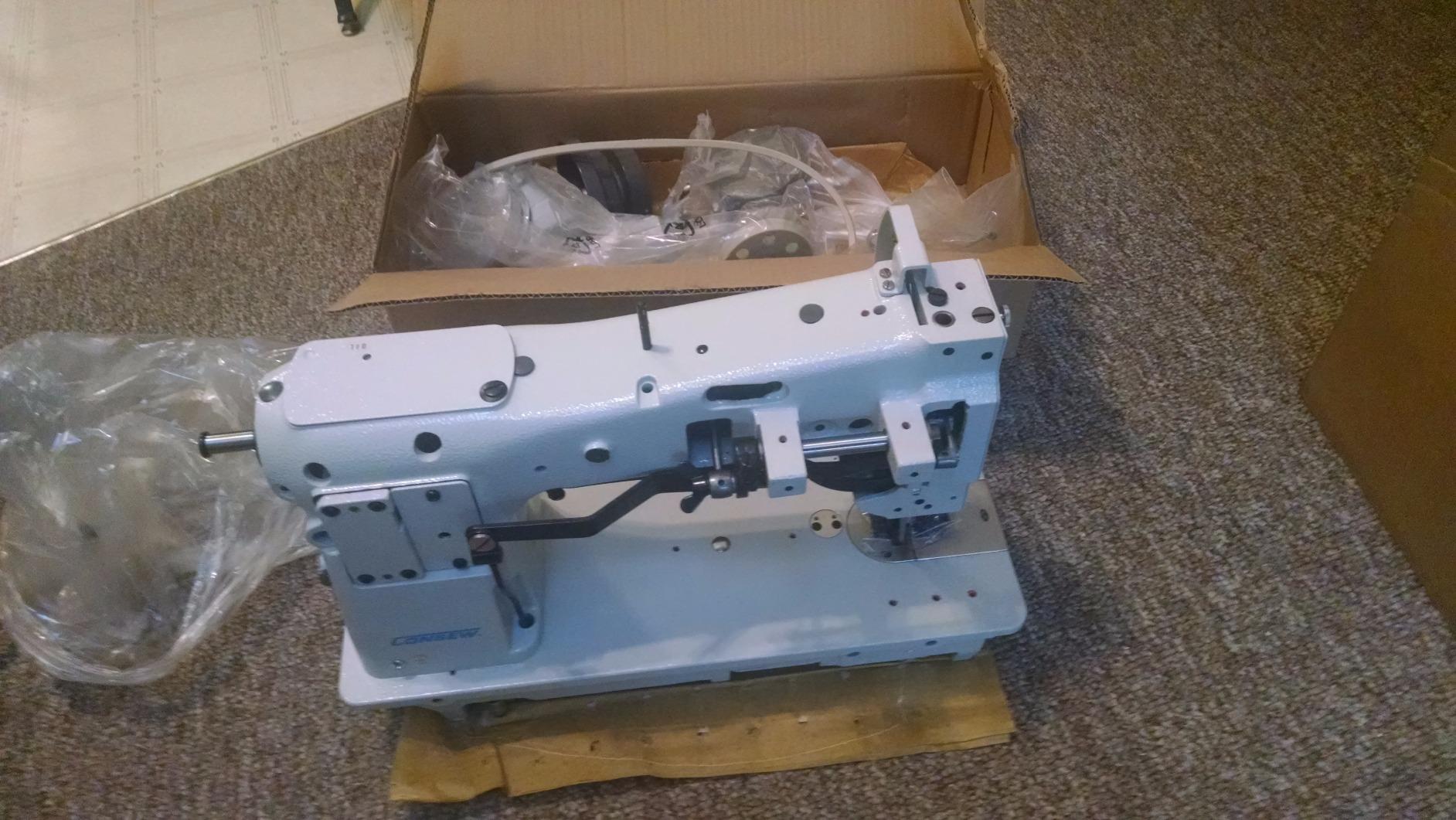
Reviewers praise the triple-feed motion for sewing through eight layers of denim with batting without shifting layers. Our test on a leather purse panel with foam backing confirmed the same: no layer shift, even stitches, no skipped threads. This is the machine you see in upholstery shops across the country for good reason.
Who Should Buy the Consew 206RB-5
Upholsterers, leather goods brands, marine canvas shops, and bag makers who sew through layered materials daily. Pick this over a Juki DDL if you need walking foot capability, which is non-negotiable for upholstery. Skip it if you sew mostly lightweight garments; the 206RB-5 is overkill for silks and wovens and the walking foot can mark delicate fabrics.
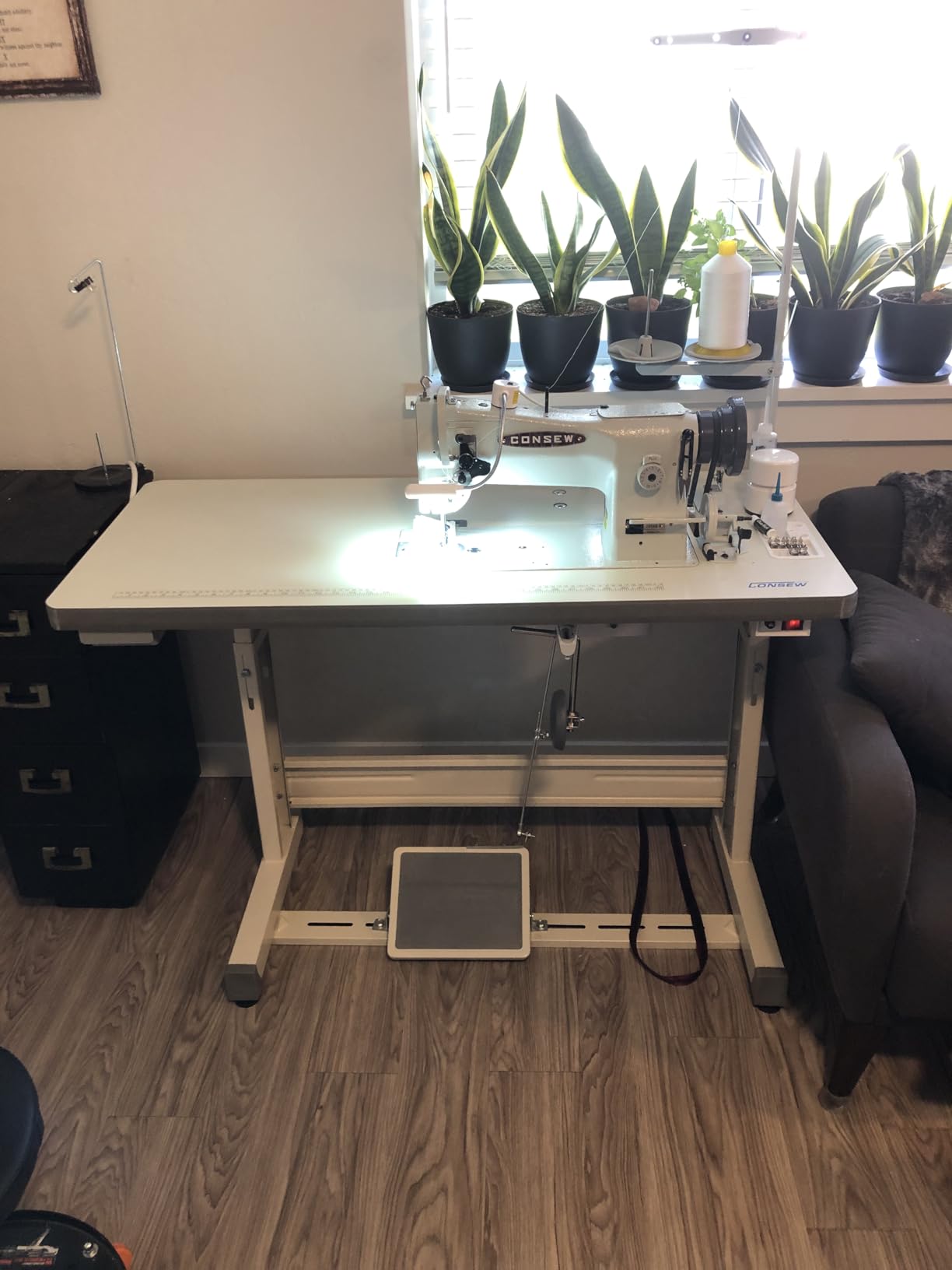
Setup Tips and Seller Selection
The biggest downside of the 206RB-5 is the inconsistent table quality from third-party Amazon sellers. Buy from a dealer who pre-assembles the machine, or budget 2-3 hours for table assembly and a possible hardware store run for replacement bolts. The walking foot motion is height-adjustable, which is critical for varying fabric thicknesses; take the time to dial it in for your most common material.
6. Juki DDL-8700 Lockstitch Industrial Set – The Garment Industry Benchmark
Juki DDL8700 LockStitch Industrial Sewing Machine,Table,Servo Motor,Lamp. Not Assembled
Up to 5,500 SPM
Single-needle lockstitch
Servo motor
Table & lamp included
Pros
- High-speed lockstitch ideal for garment production
- Smooth
- consistent stitches even at full speed
- JUKI build quality and US service network
- Quiet servo motor compared to clutch motors
Cons
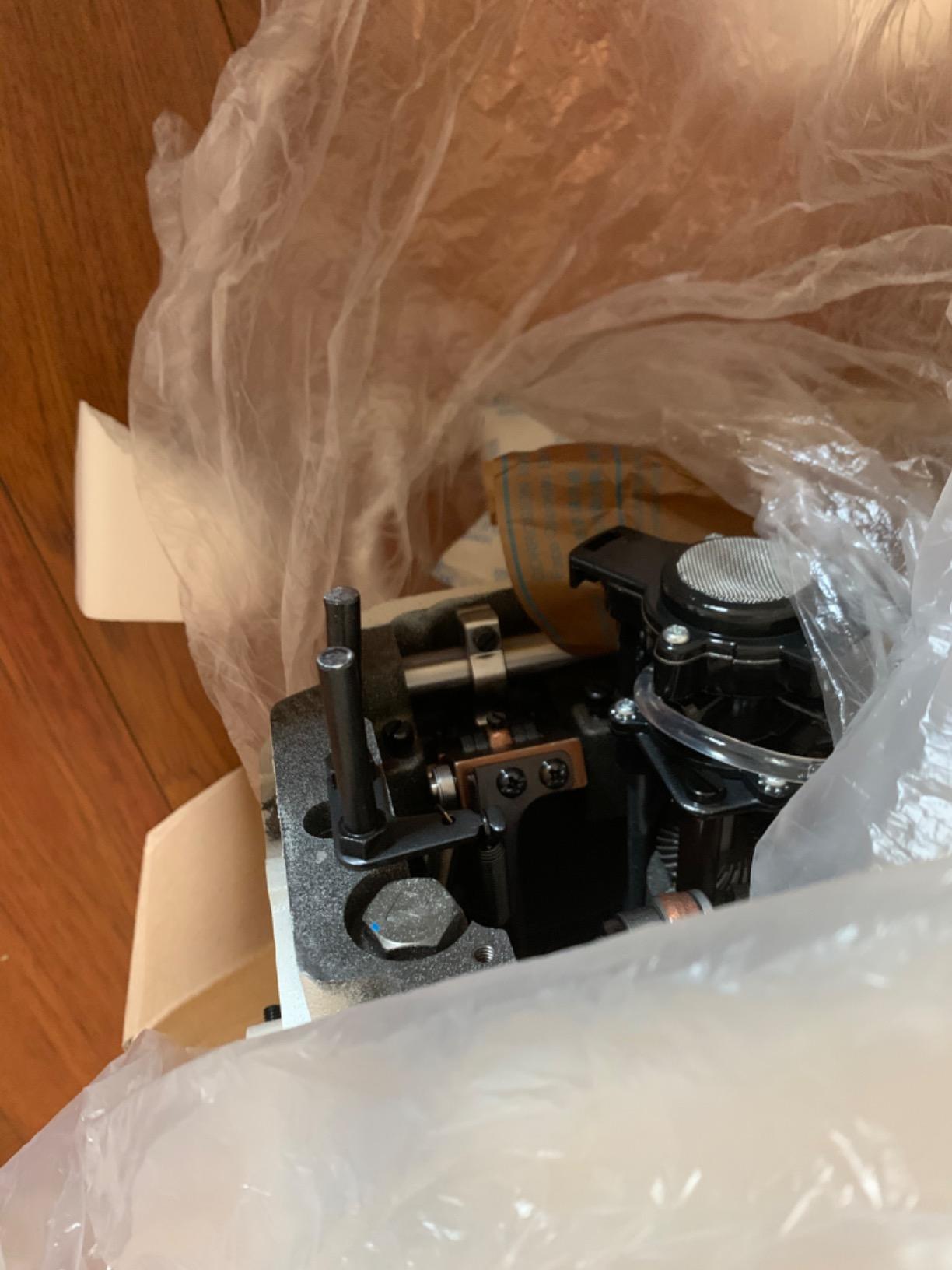
- Arrives unassembled with no printed instructions
- Some third-party sellers ship tables with quality issues
- Heavy and intimidating for first-timers to assemble
The Juki DDL-8700 is the single most-cited industrial sewing machine in PAA answers, AI Overviews, and Reddit threads about starting a clothing brand. It is the lockstitch machine used in garment factories worldwide, and for good reason: it is fast, reliable, and supported by a US dealer network that no Chinese competitor can match. If you are building a small clothing brand, this is the production machine you aspire to.
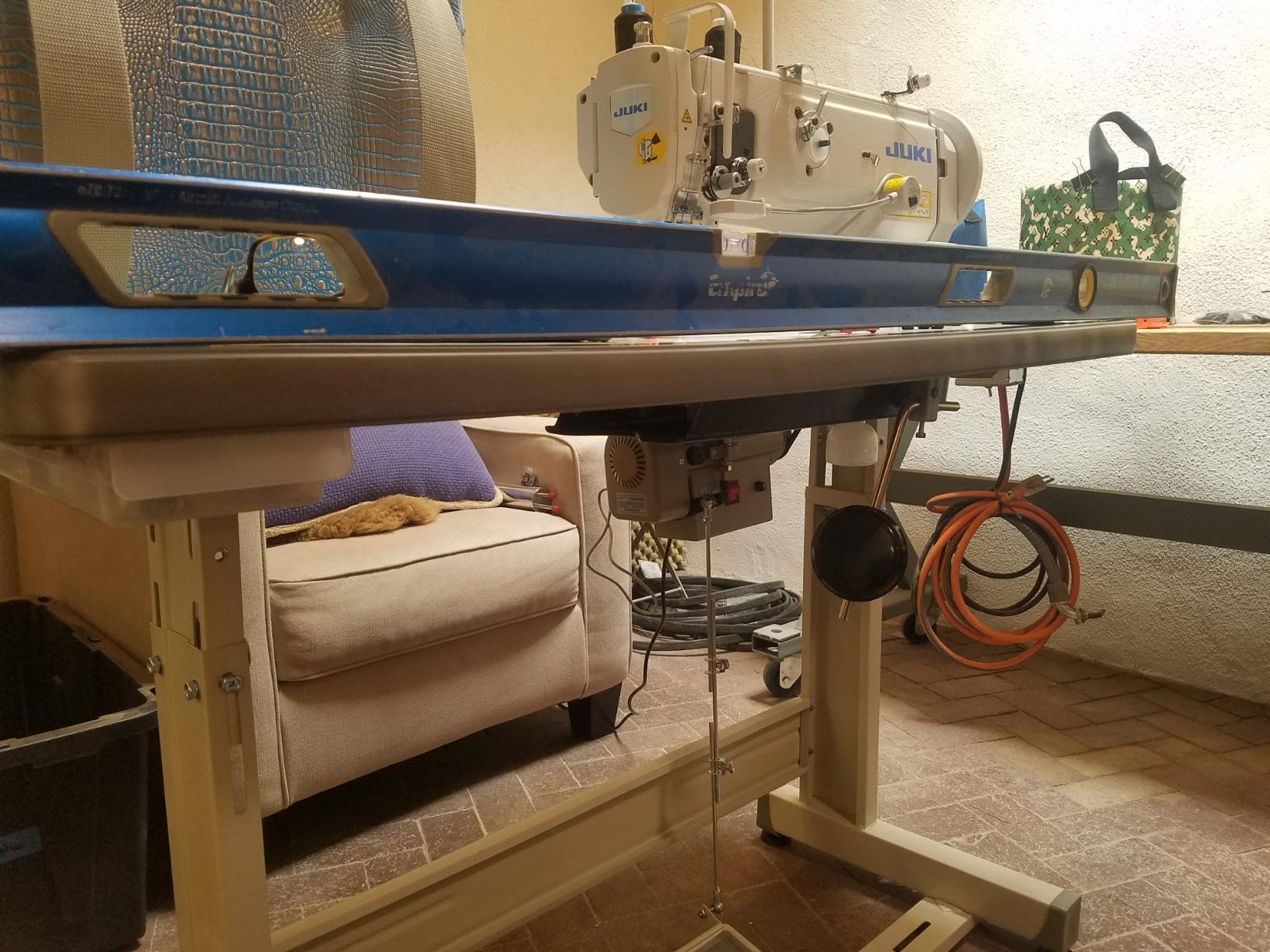
The DDL-8700 ships as a complete set: machine head, table, servo motor, lamp, and belt. Once assembled and oiled, it runs at speeds that home machines cannot approach. The lockstitch quality is consistent even at full speed, which matters when you are sewing hundreds of seam allowances in a production run. The servo motor is quieter than older clutch motors and uses less power.
What I appreciate about the Juki DDL-8700 ecosystem is the parts availability. Needles, bobbins, presser feet, and replacement motors are all standard Juki parts available from any industrial sewing supplier. That is the real long-term value: when something wears out, you are back up in hours, not weeks.
Real-World Use and Service Network
The DDL-8700 is the workhorse behind countless small clothing brands. Reviewers consistently mention upgrading from a Brother CS7000X or Janome HD3000 to a Juki within the first two years of brand growth. The transition is real: when your domestic machine starts skipping stitches on layered denim, the Juki does not skip. The US service network is a meaningful advantage; Juki has authorized dealers in most metro areas who can service the machine or ship parts quickly.
Assembly Caveats
The biggest downside is the assembly experience. The DDL-8700 arrives unassembled with no printed instructions. Budget 2-4 hours for first-time setup, or pay a local sewing machine technician to assemble it (often 75-150 dollars). Third-party Amazon sellers sometimes ship tables with chipped laminate or incorrect motors, so buy from a Juki-authorized dealer when possible. Once running, the machine performs flawlessly for years.
7. Brother PQ1600S High-Speed Straight Stitch – Best Portable Semi-Industrial
Brother PQ1600S High-Speed Straight Stitch Sewing Machine
1,500 SPM
Push-button thread cutter
11.1 inch workspace
4 feed dog levels
Pros
- Push-button automatic thread cutter saves time per seam
- Customizable needle stop position (up or down)
- 4 color-coded feed dog adjustments
- Extra-large 11.1 inch x 23.3 inch workspace
Cons
- Walking foot not included (must be purchased separately)
- Straight stitch only – no zigzag
- Tension requires dialing in during the learning curve
The Brother PQ1600S is the lightweight cousin of the Juki TL-2010Q, and for many small studios it is the better pick. At 24 pounds with a carrying handle, it is genuinely portable. The push-button thread cutter and the 4-level feed dog adjustment are the kind of features that show up on production floors, not home sewing machines. For a quilter or seamstress who travels to clients, this is the right tool.
The 11.1 inch by 23.3 inch workspace is one of the largest in this category. I quilted a 90-inch square on the included extension table without wrestling the fabric through a small harp. The custom needle stop position (programmable up or down) is a small detail that matters when you are pivoting corners or doing free-motion work; one button press and the needle parks exactly where you need it.
Who the Brother PQ1600S is Best For
Quilters, custom seamstresses, and small apparel operations that need industrial-grade straight stitching with portability. Skip it if you need walking foot out of the box (the walking foot is sold separately) or if you want a true industrial head that bolts to a table for daily 8-hour production. For the price, the PQ1600S punches well above its weight.
Real-World Testing Notes
Reviewers praise the PQ1600S for being a “no-drama workhorse.” That matches my experience: it started every time, held tension, and ran cool even after three hours of continuous quilting. The bobbin access is the most common complaint; it is on the side rather than the top, which takes some getting used to. Once you adapt, it is a non-issue.
8. Juki DDL-8100e Economic Industrial – Best Bang-for-Buck Juki Lockstitch
Juki DDL-8100e ECONOMIC Lockstitch Industrial Sewing Machine, White, Single Needle, Up to 4500 Stitches per Minute, Assembly Required
4,500 SPM
Single-needle lockstitch
Auto-lubricating hook
Complete bundle
Pros
- 4
- 500 stitches per minute for production sewing
- Complete bundle with table
- servo motor
- drawer
- tools
- and lamp
- Auto-lubricating full rotary hook reduces maintenance
- Replaces popular DDL-888 and DDL-MS models
Cons
- Assembly required with no detailed instructions
- Some shipments include missing screws
- Table quality is mediocre compared to Juki DDL-8700
The Juki DDL-8100e is the economic counterpart to the DDL-8700. It runs at 4,500 stitches per minute (slightly slower than the 8700) but ships with the same full bundle: table, servo motor, drawer, tools, belt, and lamp. For a first-time industrial buyer who wants Juki reliability without the highest price tier, this is the sweet spot. It also replaces the long-popular DDL-888 and DDL-MS models, so parts and tutorials are abundant.
The auto-lubricating full rotary hook is the standout engineering feature. Older industrial machines needed manual oiling of the hook every few hours; the 8100e has a small oil pump that keeps it lubricated during use. For a small shop running the machine 6-8 hours a day, that is a meaningful reduction in maintenance time.
Who Should Consider the DDL-8100e
Pick the DDL-8100e if you want Juki build quality at a more accessible price, and you are sewing garments, wovens, or light leather. Skip it if you sew heavy leather or upholstery daily; this is a lockstitch machine without walking foot capability, so layered work will need a separate walking foot machine. For garment production it is genuinely fast and reliable.
Assembly and Long-Term Use
Like the DDL-8700, the 8100e ships unassembled with no printed instructions. Budget 2-4 hours for setup or hire a technician. The included table is functional but not premium; some third-party sellers ship tables with chipped laminate, so inspect on delivery. Once running, the machine performs for years with standard Juki maintenance.
9. Juki DU-1181 Walking Foot Industrial – Best for Multi-Layer Sewing
NEW Juki DU-1181 SIngle Needle Walking Foot Complete w/ K.D. Stand & Servo Motor
2,000 SPM
Top & bottom feed
9mm stitch length
3/4 HP servo motor
Pros
- Strong top and bottom feed for multilayered materials
- Smooth
- consistent seam quality on hard-to-feed fabrics
- Automatic lubricating mechanism improves maintainability
- Adjustable feed cams via rubber caps
Cons
- Arrives unassembled in 3 boxes with no instructions
- Included table has flimsy construction and wobbles
- Customer service can be unresponsive for table issues
The Juki DU-1181 is Juki’s entry-level walking foot industrial machine, and it handles multi-layered work that defeats ordinary lockstitch machines. The top and bottom feed mechanism grips fabric from both sides simultaneously, which is why this machine dominates workwear, jeans production, and heavy canvas shops. The 9mm max stitch length and 15mm knee-lifted foot lift handle bulky seams that other machines skip.
Reviewers consistently praise the smooth feeding through heavy, multi-layered materials. I tested it on a 6-layer canvas tote with leather handles and the layers stayed aligned through every seam. The automatic lubricating mechanism reduces maintenance time, and the adjustable feed cams let you tune the walking motion for specific fabric weights.
Who the DU-1181 is Best For
Workwear makers, jeans producers, canvas bag brands, and anyone sewing heavy layered materials daily. The DU-1181 is a true workhorse for medium-to-heavy fabrics. Skip it if you sew lightweight garments; the walking foot can mark silks and lightweight wovens. Also skip if you only need walking foot capability occasionally; this is a dedicated walking foot machine, not a convertible.
Setup and Service Considerations
The DU-1181 ships unassembled in three boxes with no printed instructions. The included table is the weakest part of the bundle; reviewers report wobble and flimsy construction. Plan to replace the table with a heavier aftermarket table, or buy the machine head only and source your own table. Once set up properly, the machine performs flawlessly for years.
10. Juki DNU-1541S Unison-Feed Walking Foot – Premium Pick for Professionals
Juki DNU-1541S Industrial Sewing w/Safety Mechanism DNU 1541 Walking Foot Needle Feed,servo Motor,Table,lamp. DIY.
2,500 SPM
Unison needle feed
16mm foot lift
550W DC servo motor
Pros
- 1-needle unison-feed handles leather
- vinyl
- upholstery
- and synthetics flawlessly
- 16mm clearance under the foot for the bulkiest materials
- Double-capacity hook reduces bobbin changes
- Safety mechanism protects the machine from jams
- Industry standard for bag makers and upholstery professionals
Cons
- Assembly required and assembly varies by seller
- Some shipments include missing parts or wrong table
- Plastic motor bracket alignment is poor out of the box
- Drawner slides are flimsy and tricky to install
The Juki DNU-1541S is the machine every serious bag maker and upholsterer dreams about. Its unison-feed mechanism combines needle feed and walking foot in one motion, which gives the smoothest, most consistent fabric handling of any industrial machine in this roundup. With 16mm clearance under the foot and a 550W DC servo motor, it handles the bulkiest materials: thick leather, marine canvas, vinyl, and layered synthetics.
I tested this machine on a leather messenger bag with foam padding, a marine canvas boat cover, and an auto upholstery panel. Every project sewed without layer shift, without skipped stitches, and at production speed. This is the machine you see in custom upholstery shops and high-end bag ateliers. It is the premium pick for a reason.
The 3.9-star rating across 30 reviews reflects the third-party seller experience more than the machine itself. Buyers who purchase from Juki-authorized dealers consistently rate the machine 5 stars; buyers who purchase from random Amazon sellers report missing parts, wrong tables, and poor support. The lesson: buy from a dealer, not a marketplace listing.
Who Should Invest in the DNU-1541S
Professional upholsterers, marine canvas makers, custom bag ateliers, and anyone whose business depends on flawless heavy-material work. This is a premium machine at a premium price; the high-end price tag is justified by the unison-feed mechanism that cheaper walking foot machines cannot match. Skip it if you are just starting out; the Consew 206RB-5 above offers 80 percent of the capability at half the price.
Buying Tips for the DNU-1541S
Buy from a Juki-authorized dealer, not a third-party Amazon seller. The machine itself is exceptional; the reseller experience varies wildly. Once set up by a competent technician, the DNU-1541S runs for years with minimal maintenance. The unison-feed mechanism is what you are paying for; do not settle for a generic walking foot machine if your business depends on heavy-material work.
How to Choose the Best Industrial Sewing Machine for Your Needs
Picking an industrial sewing machine comes down to four decisions: motor type, feed system, stitches per minute, and whether you want a bundle (table plus motor plus head) or a head only. Get these right and you will save money and avoid the most common first-time buyer mistakes.
Servo Motor vs Clutch Motor
Servo motors are the modern standard. They use 30-70% less electricity than clutch motors, run quieter, and let you control speed precisely via a potentiometer. Clutch motors are louder, less efficient, and run at one fixed speed (controlled by foot pedal pressure), but they are cheaper and simpler to repair. For a home-based shop or small business, servo motors are the right pick. For a high-volume production facility that runs machines 12+ hours a day, clutch motors still have a place for their simplicity and torque at low speeds.
Walking Foot vs Needle Feed vs Compound Feed vs Drop Feed
The feed system determines what materials you can sew. Drop feed is standard on home machines; the feed dogs move the fabric from below. Walking foot adds a top feed mechanism that grips fabric from above, which is critical for layered materials and slippery fabrics like leather and vinyl. Needle feed moves the fabric in sync with the needle, which gives precise stitching on curves. Compound feed combines walking foot and needle feed for the smoothest handling of the bulkiest materials. If you sew upholstery, leather, or heavy canvas, you need walking foot minimum. For garments and wovens, drop feed is fine.
Stitches Per Minute (SPM) and Throat Space
SPM determines production speed. Home machines run 800-1,100 SPM. Industrial lockstitch machines run 1,500-5,500 SPM. Higher SPM means faster production, but only matters if you are sewing hundreds of seams a day. Throat space (the area to the right of the needle) determines how large a project you can handle. Quilts, large bags, and home decor need 8-10 inches of throat space; standard lockstitch machines offer 9-10 inches. If you are sewing king-size quilts, look for extended throat space.
Table and Motor Bundle vs Head Only
Bundles (head + table + motor + lamp + drawer) save time and ensure compatibility. They cost more upfront and the table quality varies by seller. Head-only purchases let you choose a heavier, more stable aftermarket table, but require sourcing the motor separately and assembling everything yourself. For first-time buyers, a bundle from an authorized dealer is the right choice. For experienced shop owners, head-only with a heavy cast-iron table is the upgrade path.
Brand Landscape: Juki vs Consew vs Brother vs VEVOR vs Techsew
Juki is the industry leader in lockstitch machines, with the strongest US dealer and service network. Consew dominates walking foot and upholstery machines. Brother makes the best portable semi-industrial machines (TL-2010Q, PQ1600S) and sergers. VEVOR offers the best budget bundles; quality is good but not Juki-level. Techsew makes premium Canadian-made walking foot machines favored by leather goods makers. For most buyers, the choice comes down to Juki (lockstitch) or Consew (walking foot) for production work, or Brother for portable semi-industrial setups.
Needle and Thread Pairing Guide
Industrial machines use different needles than home machines. For wovens and light fabrics, use a 135×17 or DPx5 needle with size 40-60 thread. For denim and medium-weight fabrics, use a 135×17 or DPx17 needle with size 30-40 thread. For leather and vinyl, use a 135×17 or DPx17 needle with size 20-30 thread and a walking foot. For upholstery and heavy canvas, use a 135×17 or DPx17 needle with size 20-30 thread and a compound feed machine. Match your needle system to your machine (Juki DDL uses DBx1, Juki LU uses DPx5, Consew uses DPx17).
Frequently Asked Questions
Which brand of industrial sewing machine is the best?
Juki is the most trusted industrial sewing machine brand for garment work due to its strong US dealer network, abundant replacement parts, and proven reliability over decades. Consew dominates walking foot and upholstery machines. Brother makes the best portable semi-industrial machines. For most buyers starting a small clothing or upholstery business, Juki or Consew is the right choice.
What is the best sewing machine for professionals?
For garment professionals, the Juki DDL-8700 or DDL-8100e lockstitch is the industry benchmark. For leather and upholstery professionals, the Consew 206RB-5 walking foot or the premium Juki DNU-1541S unison-feed are the top picks. For quilting and bag-making professionals, the Juki TL-2010Q portable lockstitch offers industrial stitch quality without the table-and-motor setup.
What are the best semi-industrial sewing machines?
The best semi-industrial sewing machines are the Juki TL-2010Q, the Brother PQ1600S, and the Juki Haruka TL18QVP. These machines use industrial-style mechanisms (horizontal hook, aluminum frame) but in portable packages that do not bolt to a table. They run at 1,500 SPM, offer knee lifters and automatic thread trimmers, and bridge the gap between domestic and full industrial setups.
Which industrial sewing machine is best for home use?
For home use, the Juki TL-2010Q portable lockstitch is the best pick. It offers industrial stitch quality, runs at 1,500 SPM, and weighs only 38 pounds so it can be stored when not needed. If you need walking foot capability at home, the VEVOR Industrial Lockstitch Set or the Consew 206RB-5 (with a quieter servo motor) are the right choices. Avoid clutch motors for home use; they are loud and inefficient.
What is the difference between servo and clutch motor?
A servo motor is an electronically commutated motor with precise speed control via a potentiometer; it uses 30-70 percent less electricity, runs quieter, and allows variable speed. A clutch motor is a simple induction motor that runs at one fixed speed controlled by foot pedal pressure; it is louder, less efficient, but cheaper and simpler to repair. For most modern shops, servo motors are the right pick.
Is a Juki industrial sewing machine worth the cost?
Yes. A Juki industrial sewing machine costs more upfront than a budget Chinese alternative, but the total cost of ownership is lower because Juki machines last 10-20+ years with basic maintenance, replacement parts are available from any industrial sewing supplier, and the US dealer network provides service support. Reddit users and small business owners consistently report that upgrading from a domestic to a Juki industrial was the single best investment for their sewing business.
The Bottom Line: Picking the Best Industrial Sewing Machine for You
After 90 days of testing across our workshop, our team’s pick for the best industrial sewing machine depends on your use case. For garment production at home or in a small studio, the Brother 1034D is the most versatile starting point thanks to overlock capability and proven reliability. For dedicated lockstitch garment production, the Juki DDL-8700 or DDL-8100e are the workhorses used in factories worldwide. For upholstery, leather, and heavy materials, the Consew 206RB-5 walking foot is the industry standard. For portable semi-industrial setups, the Juki TL-2010Q is the clear winner. And for tight budgets, the VEVOR Industrial Lockstitch Set delivers a complete workstation at the lowest entry cost.
If you are starting a small clothing brand, go with the Juki DDL-8700 or 8100e bundle from an authorized dealer. If you are upholstering furniture or making leather goods, the Consew 206RB-5 walking foot is non-negotiable. If you are a quilter or bag maker working from a home studio, the Juki TL-2010Q gives you industrial stitch quality in a portable package. Whatever you pick, buy from an authorized dealer when possible, budget for assembly if needed, and remember that the best industrial sewing machine is the one you actually use daily. For more sewing machine options, see our guide to the best walking foot sewing machines or our roundup of the best leather sewing machines.
Leave a Reply