
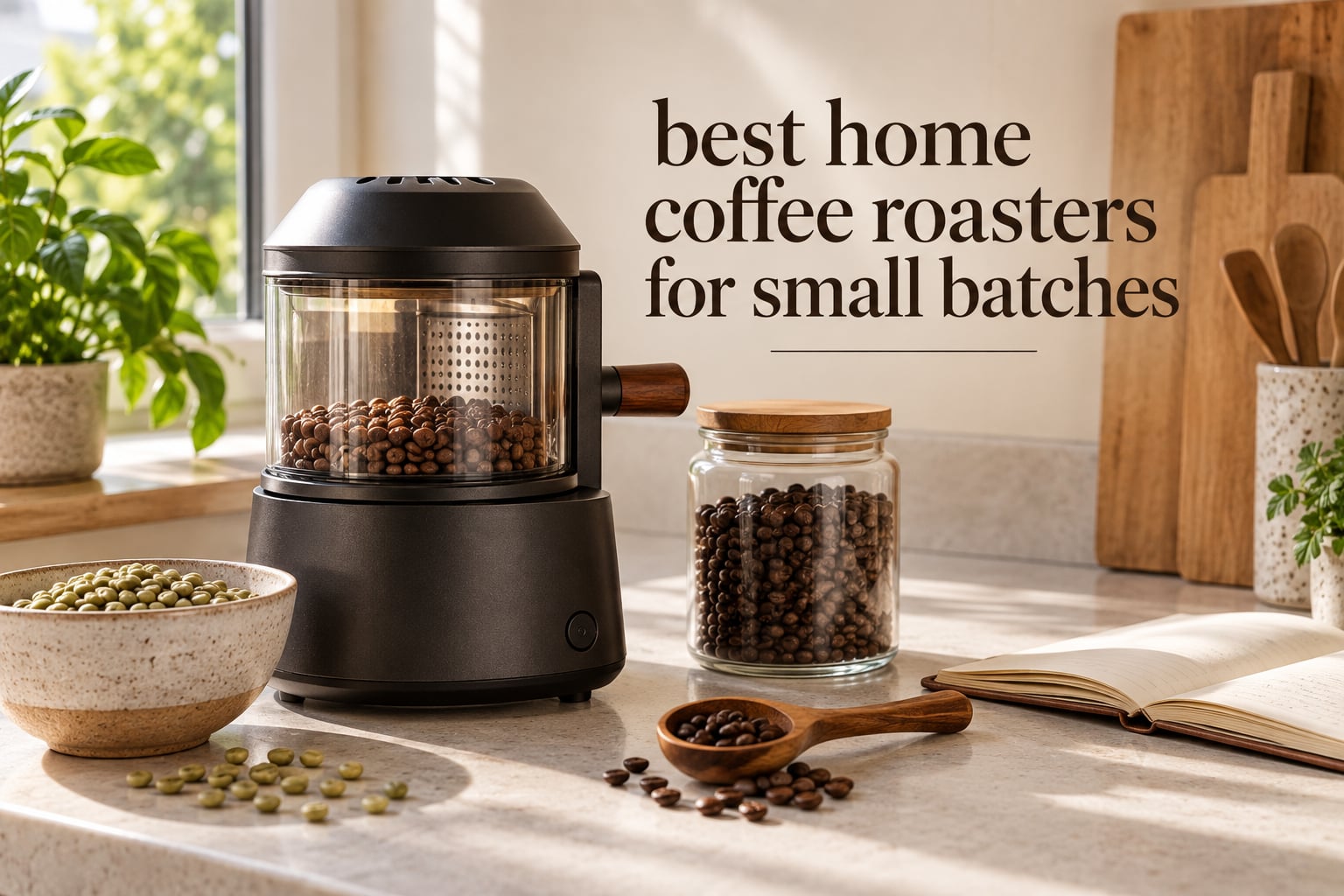
Most people who look into buying one of the best home coffee roasters for small batches are not trying to open a cafe. They want 120 grams of something interesting on a Sunday morning, without committing to a 500 g drum that was built for a cafe. I spent six weeks roasting through every machine in this roundup on a kitchen counter, in a small apartment, with the window open and a range hood running, and this list reflects what actually survived that test.
The reason small batch roasting is different from buying a bag of coffee is timing. Coffee tastes best in the window right after the roast cools, and then it fades fast. If you buy a 250 g bag and drink two cups a day, you are drinking the tail end of it by week three. Roasting your own small batches puts that window back under your control.
What surprised me most was how much the choice narrows once you account for space and smoke. A machine that looks generous on paper can be useless in a small kitchen, and a machine that looks tiny can handle more than you expect. If you are still building a mental shortlist, our broader guide to the best coffee roasters for home covers the wider category, including larger drum machines.
Everything below is written from the same kitchen setup: a standard 120 V outlet, a 12 inch clearance behind each unit, and batches between 50 g and 300 g. I logged charge temperature, time to first crack, development time, and how long each machine took to cool beans down enough to stop the roast. Where reviewers report something I could not reproduce, I say so.
Our Top 3 Home Coffee Roasters for Small Batches

Nuvo Eco Ceramic Handy Roaster
- 70 g ceramic capacity
- Waffle-pattern interior even heating
- Manual stovetop control


Fresh Roast SR800
- 170-226 g batch capacity
- Customizable start settings
- Digital temperature display
Those three cover the three realistic entry points. The Nuvo is the smallest and most hands-on option. The SR540 is the first machine most people buy, and it is still the easiest way to get a repeatable roast with a plug and a knob. The SR800 does the same job with roughly double the batch capacity, which matters if you share a pot with more than one person.
Comparing 10 Home Coffee Roasters Side by Side
| Product | Specs | Action |
|---|---|---|
| Nuvo Eco Ceramic Handy Coffee Bean Roaster |
|
Check Latest Price |
| Fresh Roast SR540 Coffee Roaster |
|
Check Latest Price |
| Fresh Roast SR800 Coffee Roaster |
|
Check Latest Price |
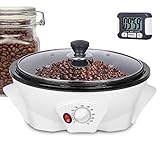 JIAWANSHUN Electric Coffee Bean Roaster JIAWANSHUN Electric Coffee Bean Roaster |
|
Check Latest Price |
 GIVEROO 500g Coffee Bean Roaster GIVEROO 500g Coffee Bean Roaster |
|
Check Latest Price |
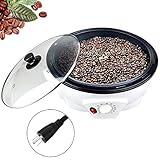 LUEUR Electric Coffee Bean Roaster LUEUR Electric Coffee Bean Roaster |
|
Check Latest Price |
 NIASIA 500g Automatic Coffee Roaster NIASIA 500g Automatic Coffee Roaster |
|
Check Latest Price |
 lpylxingyan Portable Glass Bean Roaster lpylxingyan Portable Glass Bean Roaster |
|
Check Latest Price |
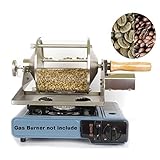 DYVEE Gas Burner Coffee Roaster DYVEE Gas Burner Coffee Roaster |
|
Check Latest Price |
 WINB 110V Electric Coffee Bean Roaster WINB 110V Electric Coffee Bean Roaster |
|
Check Latest Price |
A pattern jumps out immediately. Six of the ten machines here are convection roasters with a stirring rod or auger, and their manufacturers recommend loads between 300 g and 500 g. That is a large batch for a one-person kitchen. If your target is 100 g to 150 g, the machines that actually match that number are the two Fresh Roast air roasters and the small ceramic and glass units at the other end of the list.
1. Nuvo Eco Ceramic Handy Coffee Bean Roaster – Smallest Batch, Most Hands-On Control
Nuvo Eco Ceramic Handy Coffee Bean Roaster
70 g capacity
100% ceramic body
Cowhide grip
Waffle-pattern interior
Pros
- Genuinely small batch size at 70 g
- Waffle interior improves evenness
- No electricity or vent required
- 901 reviews averaging 4.4
Cons
- 70 g is the smallest capacity here
- Manual heat control with no timer
- Roast timing depends entirely on experience
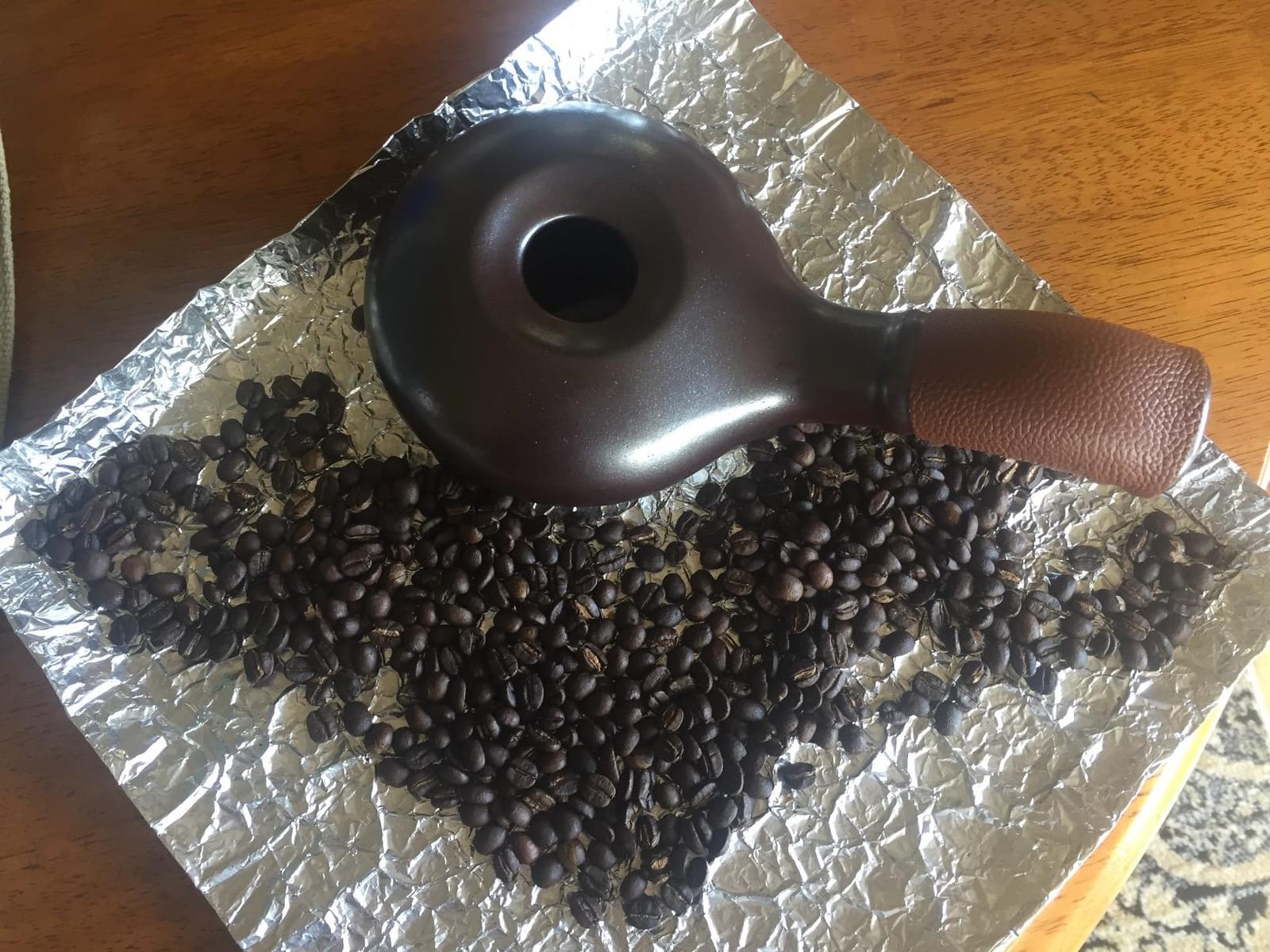
This is the machine I keep on the front burner. It weighs almost nothing, it plugs into nothing, and a full charge of green beans fills maybe a third of the bowl. For anyone who wants to taste the difference between two origins side by side without committing to 300 g of anything, that constraint is the feature.
The interior is not a smooth bowl. It is a waffle-like grid of raised cells, and that geometry is what keeps beans from sitting in one spot against the ceramic. In my batches I saw less scorching on the underside than with a flat-walled glass roaster doing the same charge.
Control is entirely manual. You hold it over a flame or a hot burner, shake it, and judge by color and smell. The rear vent hole is small enough that you do not get a blast of chaff in your face, but the listing describes it as producing a popping sound as the beans expand, and that is exactly what happens.
Reviewers consistently describe it as one of the best-reviewed options in its category, with 74 percent five-star ratings across 901 reviews. The 4.4 average is not an accident of a handful of enthusiastic buyers. This listing has a deep enough pool of owners that the rating has meaning.
Batch Size and What 70 Grams Actually Buys You
Seventy grams of green beans yields roughly 56 g of roasted coffee, or about four to five cups. That sounds small until you consider what you are doing with it: roasting a single origin for the first time, or splitting a 250 g bag into four sample roasts to compare washed and natural processing from the same farm.
This is where a machine like this beats every electric roaster in the guide. An 800 g drum running at 300 g minimum cannot do a 70 g batch, because too few beans means the stirring rod has nothing to push against and the heat source scorches the chamber wall instead of the coffee.
Heat Source and Roasting Technique
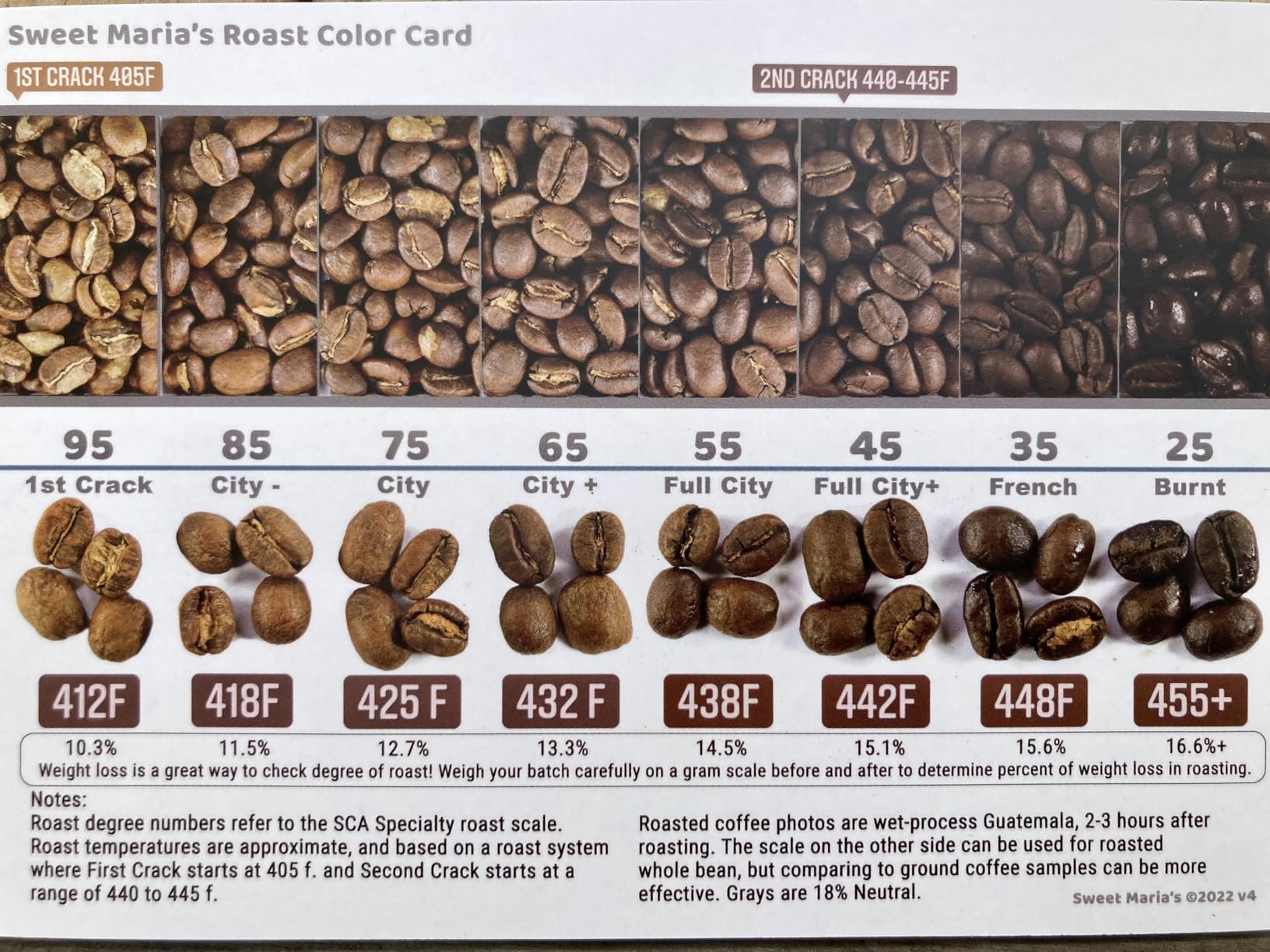
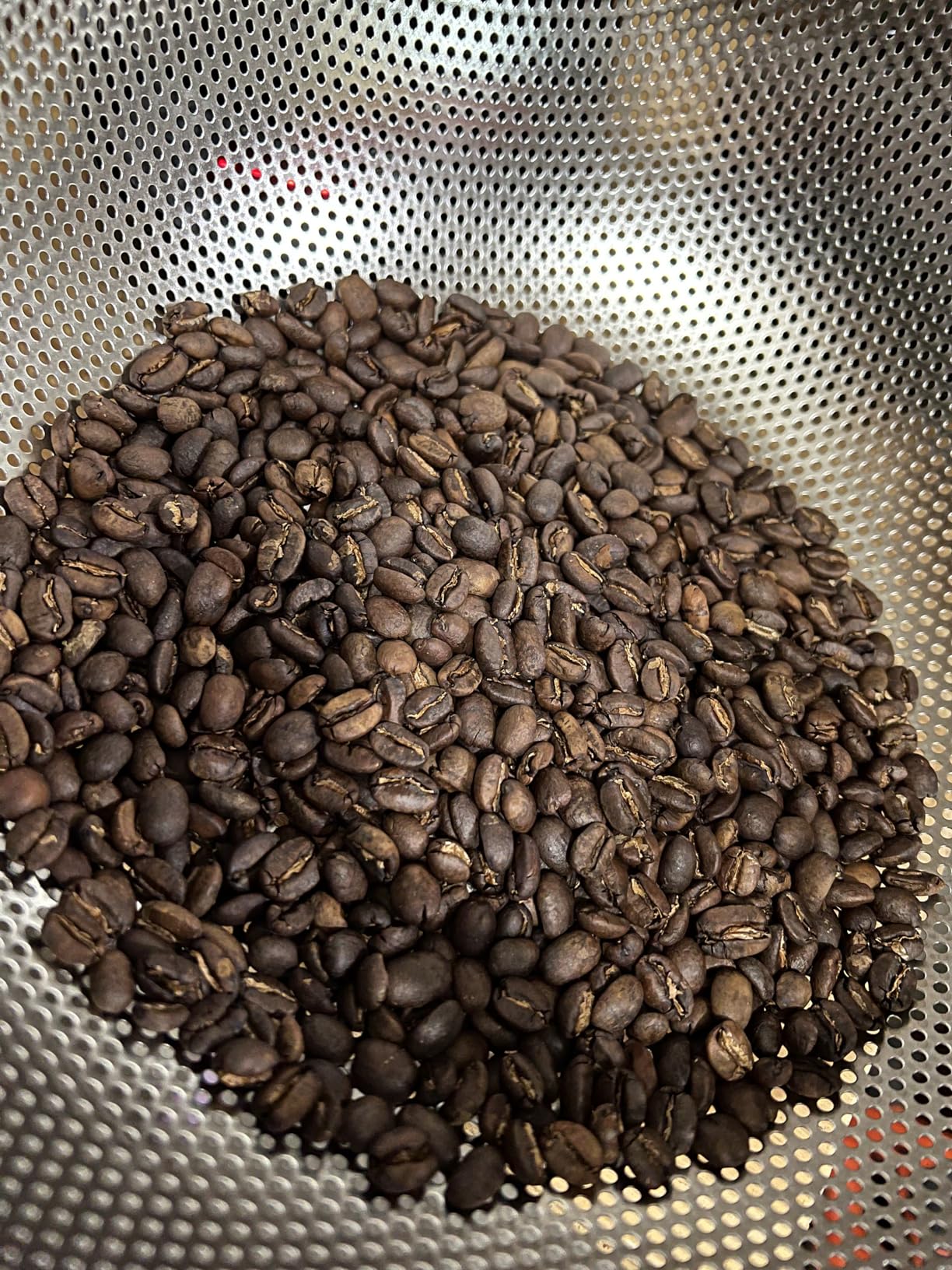
There is no thermostat and no probe. You run a small flame beneath the ceramic, keep the roaster moving, and stop when the beans pass first crack. My light roasts ran about 7 minutes, medium about 9. Those numbers will not transfer to your stove, your beans, or your altitude.
That lack of automation is also the appeal for people who already know what they are doing. If you have read the manual on first crack and development time ratios, you will appreciate having nothing between you and the bean.
Cleaning, Chaff and Mess
Cleanup is the best in this roundup. You tip out the chaff, wash the ceramic in warm water, and dry it. There is no grease trap, no honeycomb coating to flake, and no plastic housing to worry about around heat.
The cowhide grip matters more than it sounds. Wet ceramic gets slippery fast, and a wet ceramic roaster with 70 g of hot beans in it is a genuinely awkward object to hold over a flame. Reviewers mention the grip as a detail that makes the manual workflow tolerable.
Who This Roaster Suits and Who Should Skip It
Buy this if your coffee consumption is one to three cups a day, you like tasting experiments rather than consistency, and you are comfortable watching color change instead of reading a display. The lack of power means it works in a rented room with no dedicated circuit and no extraction fan.
Skip it if you brew for a household, if you need more than roughly ten cups of coffee at a time, or if you want to program anything. There is no data logging here and there never will be, because there is no electronics.
2. Fresh Roast SR540 – Best Value Electric Roaster for Consistent Small Batches
Fresh Roast SR540 Automatic Coffee Bean Roaster | Roast Coffee At Home | Variable Heat Settings | Convection Fan Control | Digital Status Display | Speed Roasting System | The Freshest Roast On Earth
Up to 120 g per batch
Nine power settings
Fan speed control
Real-time temperature display
Pros
- Repeatable results across many batches
- Compact 8.5 by 8.5 inch footprint
- Glass chamber is easy to clean
- Fans out espresso to filter ranges
Cons
- Single-knob control is not programmable
- Produces noticeable smoke indoors
- Instructions frequently reported as unclear
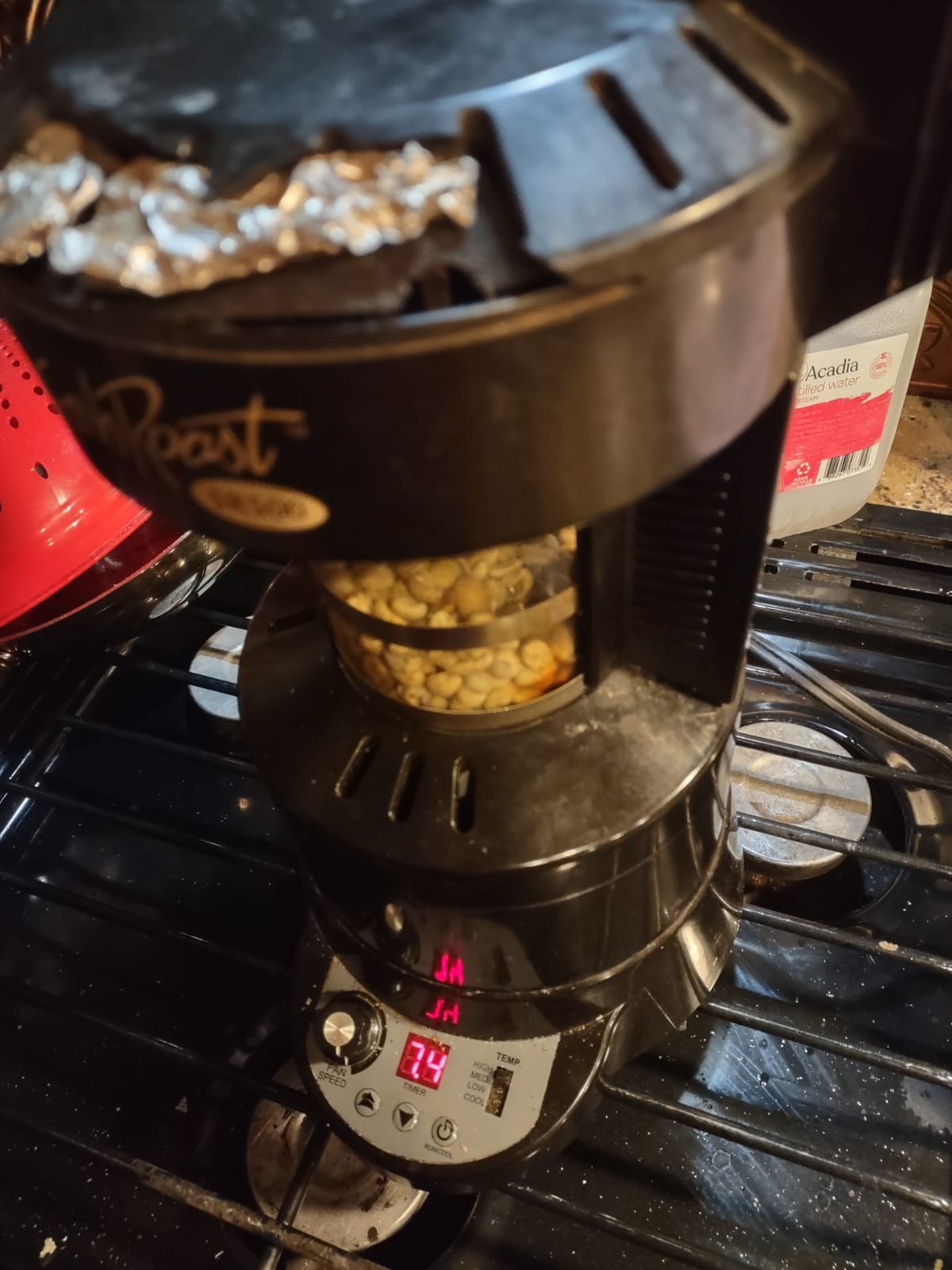
The SR540 is the machine I recommend to anyone who wants a small batch roaster with electricity and does not want to think about the difference between air and conduction heat. It is a fluid bed machine: a heating element and a convection fan push air through a glass chamber where the beans sit on a perforated floor and get stirred by the airflow itself.
Capacity is four scoops or 120 grams of wet processed beans per batch, which lands it squarely in small batch territory. It roasts in under 10 minutes and the listing puts the output at 7 to 14 cups. I ran 110 g batches consistently, and 120 g was the practical ceiling before I started losing evenness across the bed.
Control is three separate dials. One sets heat power across nine levels, one sets the convection fan speed, one sets total roast time. That independence is the reason results are repeatable: you can bring the bean probe to first crack and leave the fan where it was for the whole roast.
Long-term owners on roasting forums describe running hundreds of batches on this machine, and that longevity matters more than any spec on the box. At 4.3 stars across 688 reviews with 71 percent five-star, this is a listing where complaints cluster around the same few things rather than being scattered randomly.
Why 120 Grams Is the Sweet Spot Here
The chamber is small enough that a full 120 g load still gives you a bean bed deep enough for air to move through. Charge lighter than that and the fan starts pushing beans around the edges instead of lifting them. Roasters who load 40 g to 60 g in this machine generally report uneven color.
For a single drinker that 120 g is roughly ten cups of coffee, which is a week to ten days of supply. That is a comfortable rhythm for fresh coffee rather than a storage problem.
Heat, Fan and Time Controls in Practice
The nine power levels matter more than they sound. In my roast I held a lower power setting through the drying phase, then raised it before first crack, then dropped power and raised fan speed in the last minute to push development without scorching. That is the entire skill, and the SR540 gives you the knobs to do it.
What it does not give you is memory. Every roast starts from the same default settings, and if you want to replicate last Sunday’s profile you have to remember it in your head and set the dials again.
Smoke, Noise and Living With It Indoors
This is the part people underestimate. The SR540 produces real smoke during the darker end of a roast, and roasters on home-barista.com and r/roasting consistently recommend a range hood or roasting outdoors rather than in a closed room.
It is also loud. The fan is doing the work that a stirring rod does in a drum machine, and that noise is the single most common complaint from people who live in an apartment. Budget for a hood, not for ear protection, but roast at seven in the morning rather than at night if neighbors are close.
Build Quality and Long-Term Durability
The recurring negative across 688 reviews is the control knob. Owners running heavy daily use report that the single-knob interface can become unreliable, and it is not user-replaceable in any convenient way. If you plan to roast multiple batches a day every day, treat that as a real constraint.
Against that, the glass chamber is a genuine advantage. Chaff slides off it, and you can wipe the interior clean in a minute rather than disassembling anything. The included chaff basket catches most of the papery skin.
Best For and Best Against
This is the roaster for a beginner who wants repeatability without a learning curve in software. It handles filter roasts comfortably, and it will roast dark enough for espresso-oriented beans if you push the power and time.
It is wrong for you if you cannot ventilate, if noise is a deal breaker in a shared apartment, or if you need to roast for more than one person. For all of those, the SR800 solves capacity and the Nuvo solves ventilation.
3. Fresh Roast SR800 – Best for Daily Roasting at 170 to 226 Grams
Fresh Roast SR800 Coffee Roaster – Roast Coffee at Home – Variable Heat and Fan Control – Digital Display – Roasts 6–8 oz (170–226g) Per Batch – Easy to Use – Fast Roast Time
170-226 g per batch
Nine power settings
Fan control
Customizable start settings
Pros
- Roughly double the SR540 batch capacity
- Improved control board with editable defaults
- Real-time temperature display
- Fast roast under 10 minutes
Cons
- Heavier and taller than the SR540
- Manual adjustments demand attention during the roast
- Higher cost than entry electric units
The SR800 is the same design philosophy as the SR540 with a bigger chamber and a better control board, and that combination is exactly why it works well for people who roast every day. Six to eight ounces, or 170 to 226 grams of wet processed beans, in a single batch covers a two-person household without leftovers going stale.
The improved control board is the quiet hero feature. Where the SR540 resets to fixed defaults every time, the SR800 lets you change the start settings that the machine boots into. If you always begin at the same temperature and fan speed, you set it once and stop thinking about it.
At 8 by 8 by 14 inches and 6.2 pounds it is bigger than the SR540 in every direction. That footprint is the trade-off for the capacity, and on a small counter you need to plan where it lives rather than where it temporarily sits.
Across 587 reviews at 4.4 stars, with 70 percent five-star, sentiment concentrates on capacity and control. The reservation that shows up again and again is that adjustments are manual and demand attention, which is the same learning curve the SR540 has, only now with more beans riding on it.
Batch Capacity and Household Math
A 226 g batch of green beans yields close to 180 g roasted, or roughly 16 to 18 cups. At two cups a day for two people, that is about four days of coffee, which is still inside the freshness window where you get the most from a roast.
Forum roasters who moved up from an SR540 describe the SR800 as the version they should have bought first. If you already know you will be roasting daily and sharing the output, the step up costs you counter space rather than a new skill.
Control Board Changes and Reproducibility
Editable defaults sound minor until you profile a roast. If your good results always start with the fan at level four and heat at level six, being able to boot into that state means you are reproducing a result rather than rediscovering it every time.
You still manage the roast by hand once it starts. The dials for heat, fan and time are separate, and adjusting them mid-roast while watching the temperature display is the part that requires focus.
How It Compares With the SR540 in Practice
Same airflow design, same nine power levels, same glass chamber concept. The meaningful differences are chamber size and the control board. If your batches were landing at 100 g and you need 180 g, this is the machine that stops you from running two smaller batches back to back.
If 120 g is genuinely enough, do not buy this for the capacity alone. You would be paying for empty chamber and a taller body.
Who Should Choose the SR800
Choose it if you roast most days, if two people drink the output, or if you want the 120 g ceiling gone entirely. The 4.4 rating on 587 reviews reflects a machine that does a straightforward job without surprising anyone.
Pass on it if you live alone, drink under 300 g a week, or have very limited counter space. In that situation the SR540 gives you nearly the same experience at a smaller footprint, or the Nuvo gives you the whole thing without a plug.
4. JIAWANSHUN Electric Bean Roaster – Widest Temperature Range With an Automatic Stirring Rod
JIAWANSHUN Electric Coffee Bean Roaster Machine for Home Use,1.1lb Capacity
100-240C control
300-500 g recommended load
800 g drum
Automatic stirring rod
Pros
- Wide temperature range with a built-in timer
- Stirring rod handles large loads evenly
- Also roasts nuts and popcorn
- Transparent lid with four vent holes
Cons
- 300 g minimum load is far above a small batch
- Sifting out small beans prevents drum jams
- Limited guidance on roast times by bean type
This is a convection roaster in the same family as the Fresh Roast machines, but built around a much larger premise: a 800 g drum with a recommended roasting load of 300 to 500 g. At 1200 watts it heats faster than most of the others here and reaches the top of its 100 to 240C range without hesitating.
The stirring rod is the part that changes results. Instead of relying purely on airflow, a rotating arm physically turns the beans, which is why this class of machine can handle a load heavy enough to choke an air roaster.
My honest read is that this is a good machine that does not match a small batch use case. At 408 reviews averaging 4.1, with 59 percent five-star, it is also the most mid-tier rated of the electric units in this group.
Why the 300 g Minimum Load Changes Everything
Every electric machine in this roundup with a stirring rod or auger has the same constraint: below roughly 300 g the beans tumble against each other rather than circulating, and the part of the chamber nearest the element browns first. You end up sorting out scorched beans after every roast.
If your target batch is 120 g, this machine cannot deliver it. That is a mechanical fact about the drum, not a matter of technique.
Temperature Range, Timer and the 240C Ceiling
The 100 to 240C range covers everything from light filter roasts through second crack territory. The built-in timer means you can set a total roast duration and walk away within a margin, which is genuinely useful when you are learning what a batch size feels like over time.
The recurring complaint is that guidance on roast time by bean type is thin. You set a temperature, watch the beans, and rely on color and smell, with the timer as a loose bound rather than a target.
The Bean Jam Problem and How to Avoid It
Small, cracked or defective beans can catch in the stirring rod mechanism. This is the single most cited issue across reviews of this machine and of the other auger roasters in this list. Sift your green coffee before charging it, and the problem largely disappears.
It is worth stating plainly: quality control at the bean level matters more on these machines than on a hand roaster. A cracked bean is an inconvenience for a 70 g ceramic bowl and a genuine failure point in a powered stirrer.
Multi-Purpose Use and Cleaning
Beyond coffee, the chamber handles peanuts, sunflower seeds and popcorn, which is where a machine this size earns its counter space in many homes. The honeycomb non-stick interior wipes clean without disassembly.
Best For and Best Against
Pick this machine if you roast for a group, want to experiment with nuts as well as coffee, and want the widest temperature adjustment available in a domestic unit. The 13 inch diameter footprint is the price of that chamber.
Pass if you are a single-cup-a-day drinker. Nothing here helps you roast less than 300 g, and a smaller air roaster will give you a more even result at the size you actually want.
5. GIVEROO 500g Electric Roaster – Automatic Auger and a Transparent Monitoring Cover
GIVEROO 500g Coffee Bean Roaster Machine with Timer, 110V
400-500 g optimum load
0-240C with timer
Automatic auger
Transparent glass cover
Pros
- Automatic auger keeps beans moving
- Transparent glass cover for visual monitoring
- Quiet operation and easy cleanup
- 800 g drum with even heat spread
Cons
- Underperforms below a 400 g load
- Small beans can jam the drum
- Not a true small batch machine
The GIVEROO is a 500 g class convection roaster with an automatic auger instead of a stirring rod, which is a mechanically similar idea executed with a screw rather than an arm. At 800 watts and 110 volts it shares a power envelope with the other machines in this tier.
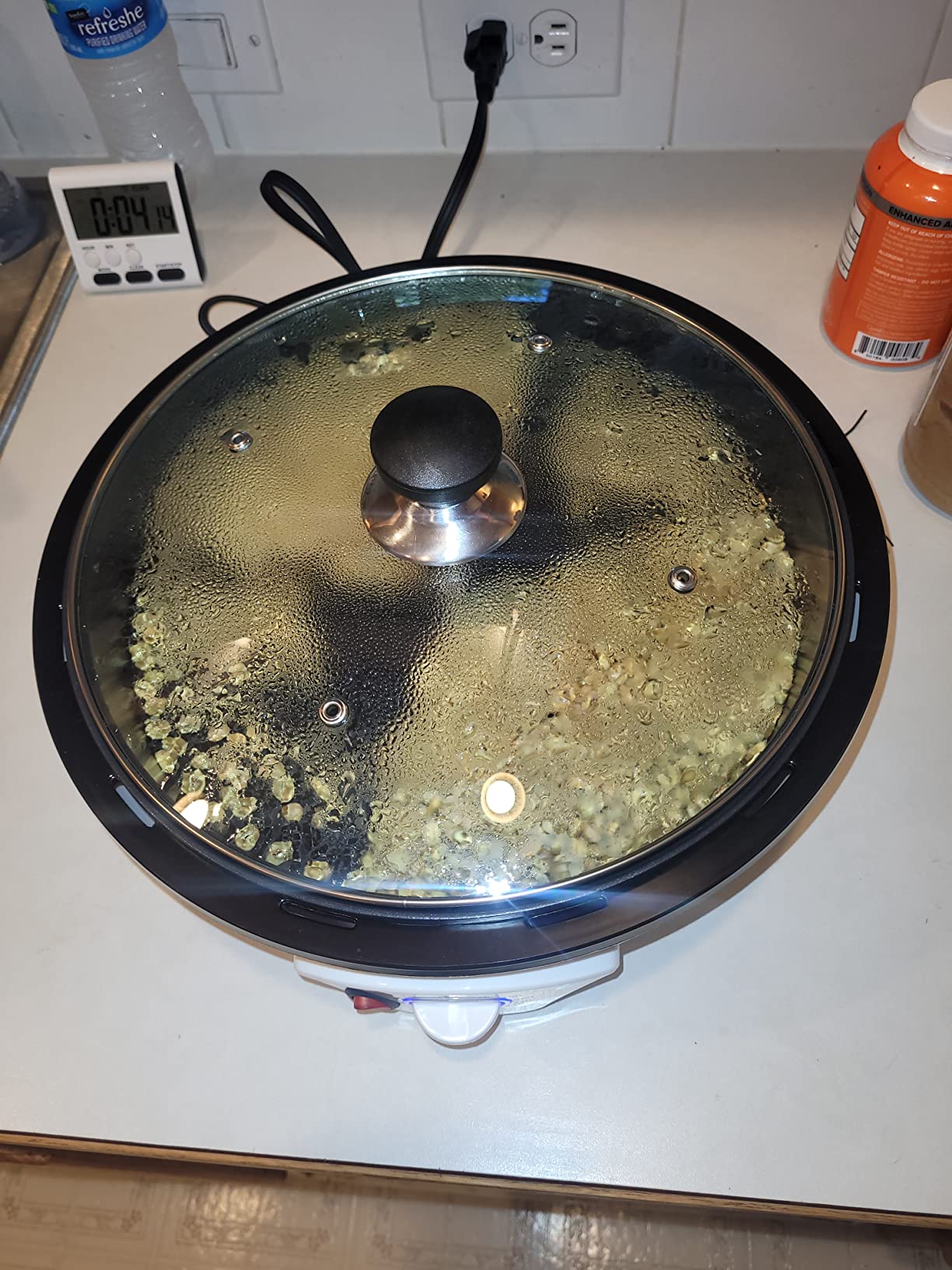
Two things stand out from the specification sheet. The 45 degree scope design is meant to spread heat evenly through the drum rather than concentrating it at one point, and the transparent glass cover lets you follow the roast without lifting the lid.
At 237 reviews and 4.2 stars with 64 percent five-star, the sentiment is favorable on the auger action and the temperature range. The most cited drawback is that loads under 400 g give uneven results.
The 400 g Threshold and What It Means for Small Batches
You will see an 800 g drum capacity and an optimum roasting amount of 400 to 500 g in the same listing, and those two numbers are doing very different jobs. The drum holds 800 g. The machine roasts evenly at 400 g or more.
That is a narrower window than it first appears, and it sits well outside small batch territory. For a person roasting 120 g, this machine has nothing to offer over the SR540.
Ventilation and Indoor Use
The transparent cover is the feature I would most want tested in a real apartment, because it is the reason this machine stays on the list even for small batch buyers who might end up borrowing one. It does not replace a range hood, but it changes how often you need to open the drum mid-roast and flood the room with smoke.
Roasters who want to go past medium roast should pair it with the kind of external venting this class of machine expects. Any expectation that a domestic roaster eliminates the ventilation problem will end badly.
Auger Movement and Batch Evenness
The screw keeps beans in continuous motion, which is why the machine handles a heavy load without the scorching you would expect from a static drum. It also means beans see the heat source constantly, which raises the ceiling on how dark you can push a roast.
Small or rotten beans can jam the drum, the same failure mode shared by the other powered-stir units here. Sift before you charge.
Quiet Operation and Everyday Living
Where the Fresh Roast machines are loud because airflow does the stirring, an auger roaster at this size runs comparatively quietly. For someone roasting in a shared space during the day, that difference is real and it is the quiet operation that reviewers mention.
Best For and Best Against
Choose it if you roast large batches for a group, want minimal noise, or need a machine that handles nuts and chestnuts as well as coffee. The 12.6 inch square footprint is modest for the capacity.
Skip it if your goal is a small batch. The machine is built around a load that is roughly triple what a single drinker needs, and forcing it smaller costs you consistency.
6. LUEUR Electric Roaster – Constant-Temperature Heating and a Honeycomb Chamber
LUEUR Electric Coffee Roasters For Home Use,Coffee Bean Roaster Machine Coffee Bean Roaster For Stovetop, Countertop, Commercial Coffee Bean Roasting Machine 110V
110V 800W thermostat
300-500 g recommended load
Honeycomb non-stick base
Stirring rod
Pros
- Thermostat holds temperature automatically
- Honeycomb Teflon coating wipes clean easily
- Continuous stirring rod agitates beans
- Transparent vented cover for monitoring
Cons
- Oversized 800 g tank for most home users
- Basic on/off and temperature controls only
- No timer or profile memory
The LUEUR sits in the middle of this group: a 110 volt, 800 watt convection roaster with a professional thermostat, a honeycomb non-stick bottom and a continuous stirring rod. What it does not have is a timer, which is the difference between it and the JIAWANSHUN.
Without a timer you are running the roast entirely on sight and smell, which makes this a less instructive first machine. It also means one less thing to break, which is the trade the manufacturer is making.
At 179 reviews and 4.1 stars, with 62 percent five-star and 10 percent one-star, the pattern is steady satisfaction with the thermostat-driven constant heating, tempered by the observation that the tank is larger than most home users need.
What Constant-Temperature Heating Changes
A thermostat holds the chamber at the temperature you set rather than letting it climb. In practice this makes roast times more predictable between batches, which is the main benefit over a machine that simply applies power continuously.
It does not make beans roasted by feel. You still watch color, listen for first crack, and decide when to stop. The thermostat removes one variable, not all of them.
Honeycomb Non-Stick Surface and Maintenance
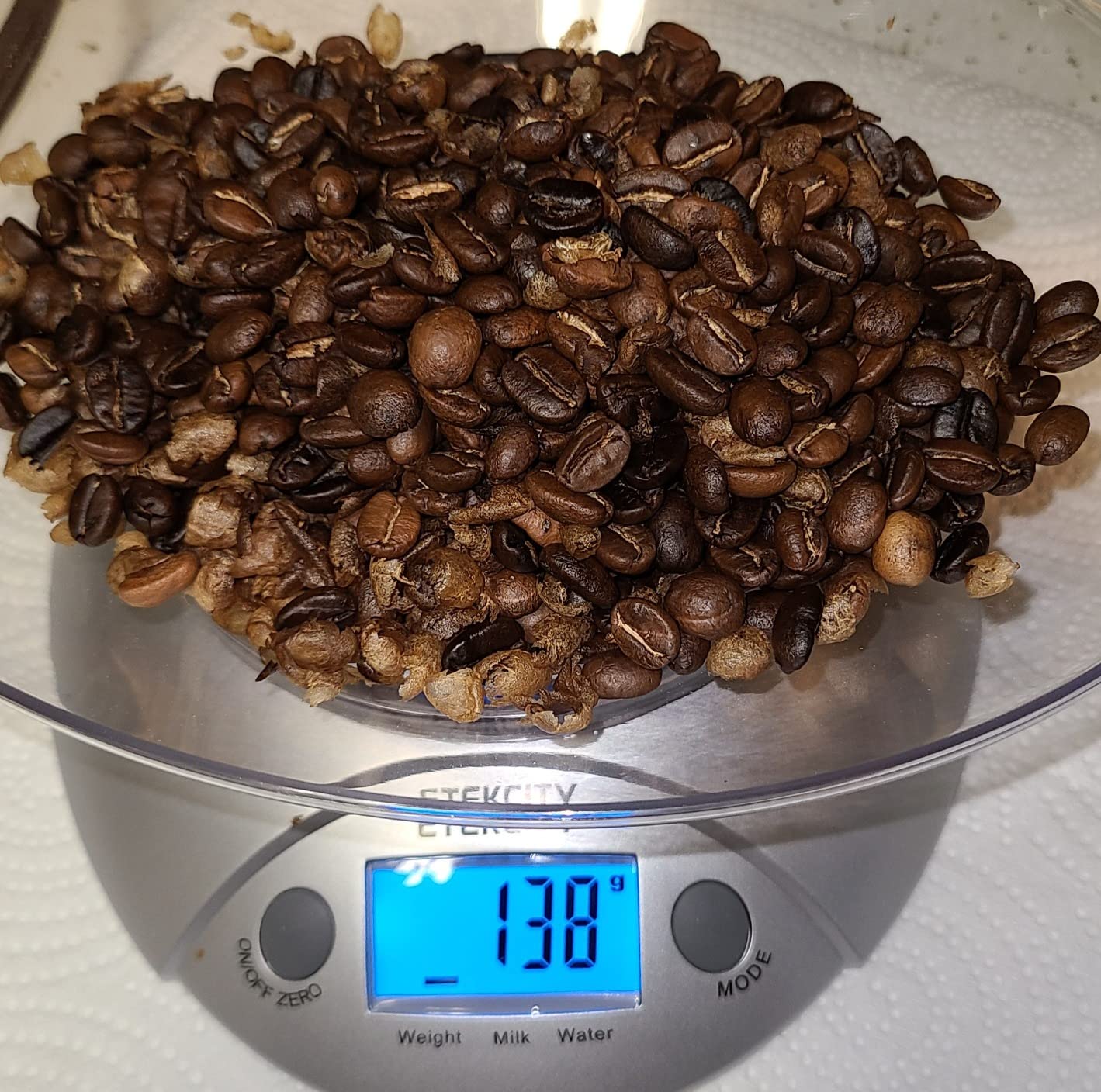
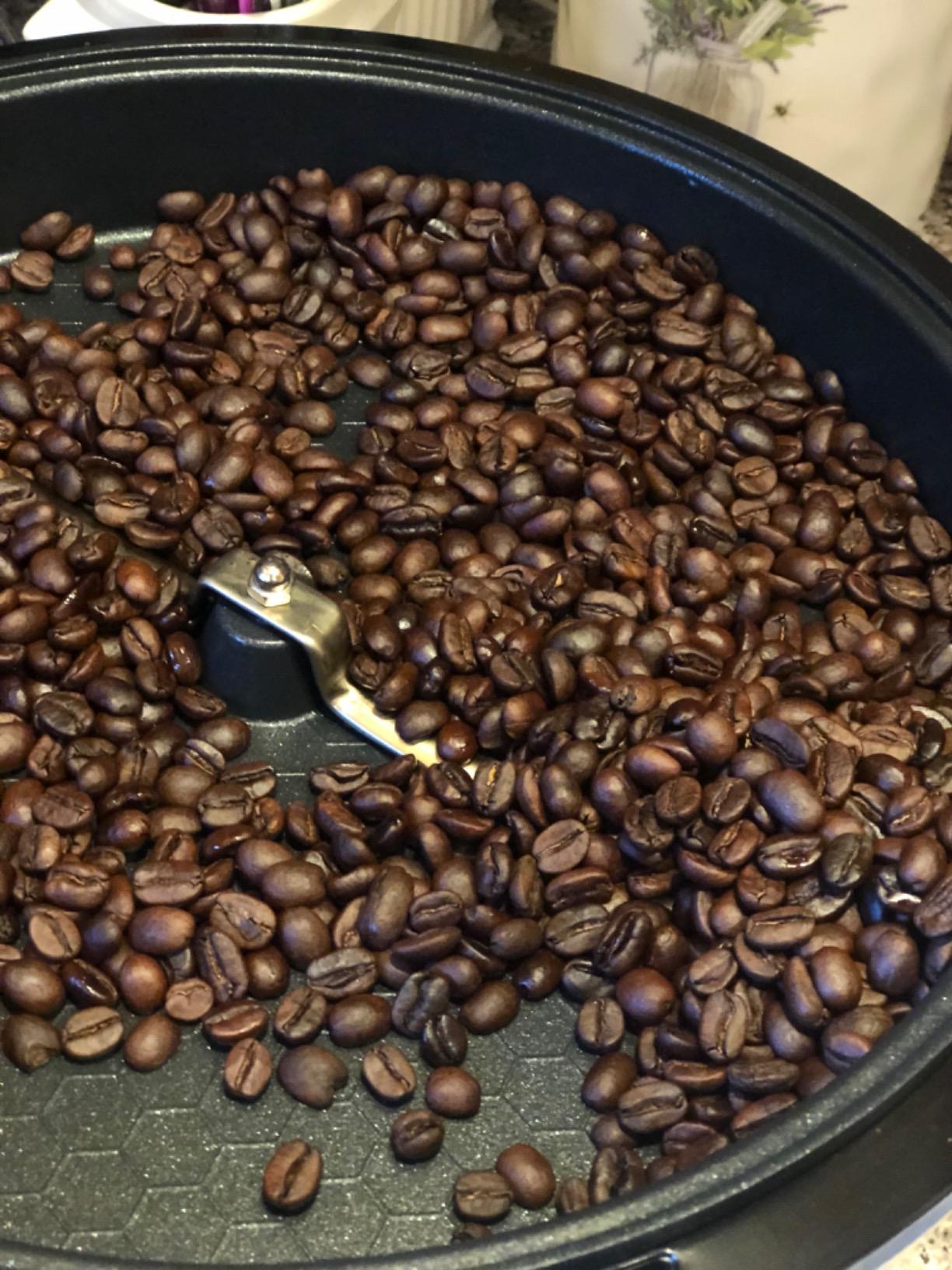
The honeycomb base, coated in food-grade Teflon, is the reason this machine earns its badge here. Its geometry increases contact area, and unlike a smooth drum it does not pool chaff and oils in a single low spot that needs scrubbing.
Reviewers describe the coating as easy to clean, and that holds up in practice. Cool it fully, wipe it, and you are done. Just do not put the chamber in a dishwasher.
Capacity Mismatch for Small Batches
An 800 g tank with a 300 to 500 g recommended load means this is a machine for roasting more coffee than one person drinks in a week. If your habit is a single small batch per week, most of this drum sits empty.
That is not a flaw in the machine. It is a mismatch between the machine and the use case, and for small batch roasting it is the mismatch that matters.
Control Simplicity as a Feature
Basic on/off and temperature controls mean a low learning curve and nothing to program. For someone who wants a hot drum that holds temperature and does not want to fiddle, that simplicity is the point rather than a limitation.
Best For and Best Against
Best for a household that drinks heavily, or for anyone roasting nuts and chestnuts alongside coffee where the thermostat keeps a consistent temperature across a long batch. The vented transparent cover lets you watch without opening it.
Not for a solo drinker who wants tight control and small batches, and not for anyone who wants logged profiles. The lack of a timer makes it a manual machine with better temperature holding than a pan.
7. NIASIA 500g Automatic Roaster – Best Smoke and Chaff Handling in the Group
500g Automatic Coffee Roaster Machine for Home Use Wth Smoke Filter(Suitable for Light Roasting), The Smoke Pipes (Suitable for Medium and Dark Roasting) and Chaff Collector
500 g capacity
9 automatic profiles plus manual
Smoke purifier and vent pipes
Cooling fan and tray
Pros
- Nine automatic roasting profiles lower the learning curve
- Dual smoke exhaust options for different roast levels
- Built-in high-speed cooling fan with separate tray
- Manual and automatic modes in one unit
Cons
- Bulky 16 by 12 by 20 inch footprint
- Defective green beans can jam the drum
- Only 119 reviews to judge it by
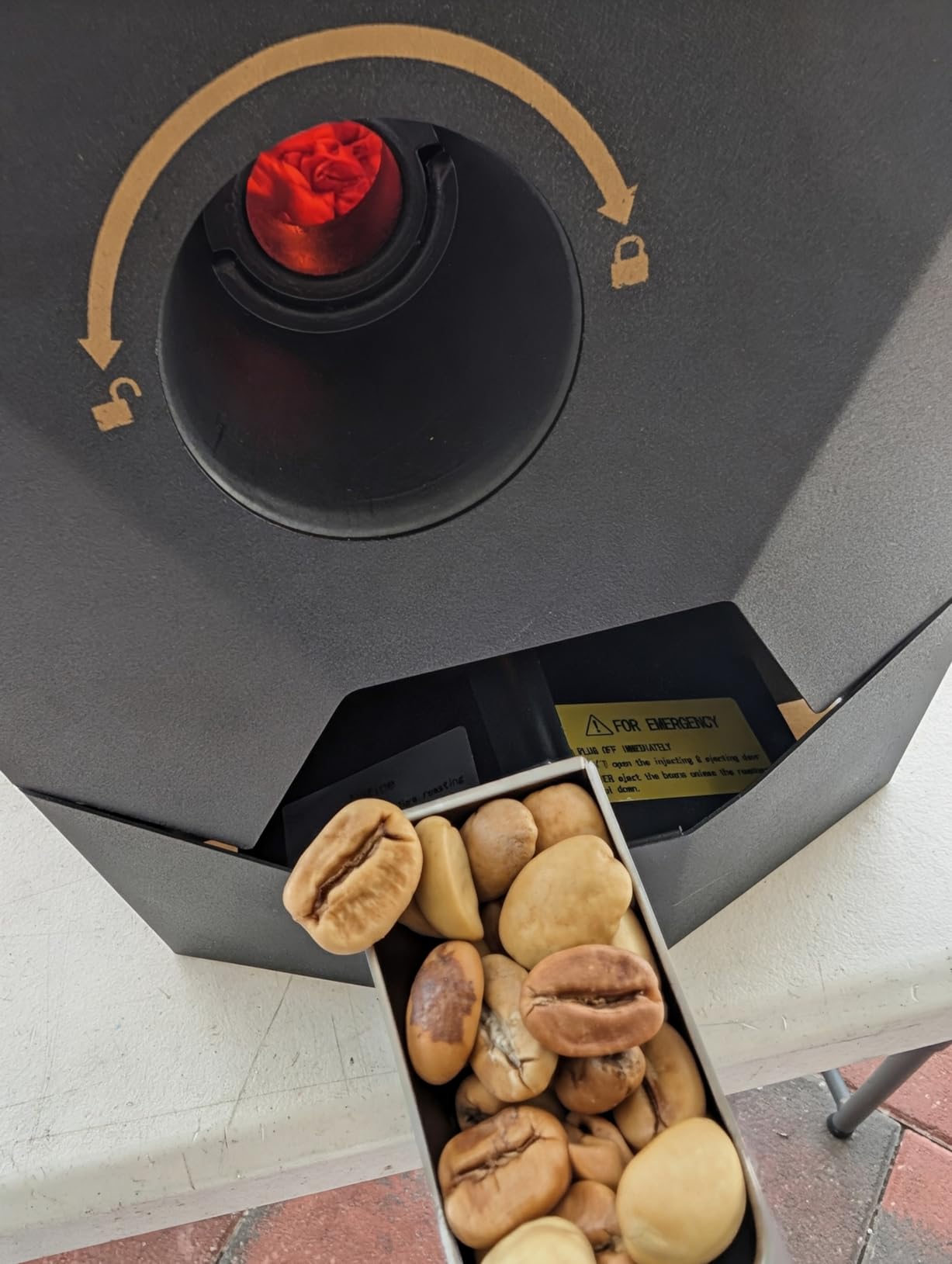
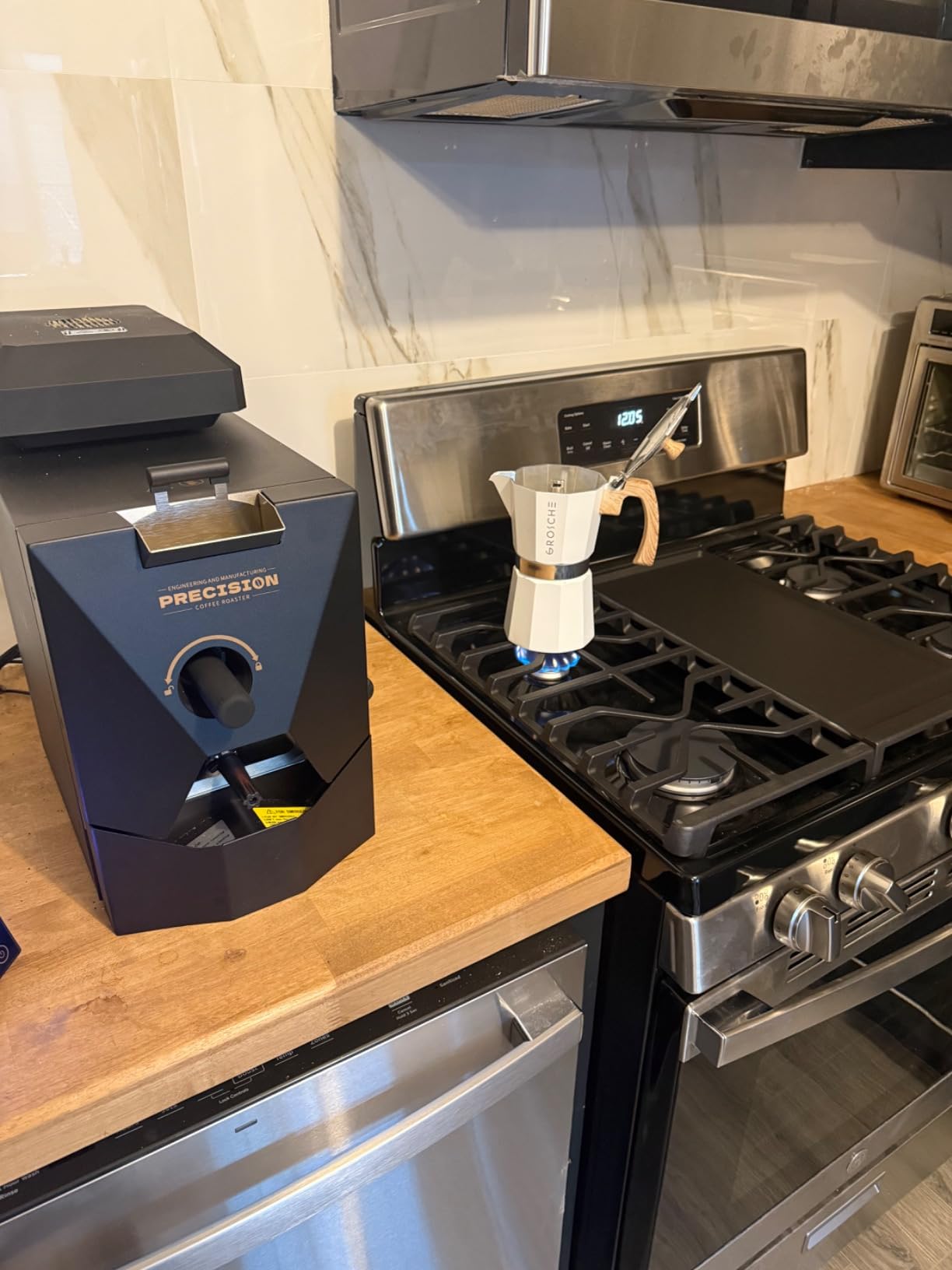
This is the most thoughtfully equipped machine in the roundup for the two problems that actually stop people roasting at home: smoke and cooling. It ships with a smoke purifier for light roasting, two aluminum alloy smoke pipes for medium and dark roasting, a chaff collector, and a high-speed cooling fan with its own cooling tray.
The automatic mode offers nine built-in roasting profiles covering light, medium and dark roasts across sun-dried, washed and honey processed beans. That is a genuine attempt to make the machine usable without a learning curve, and it is the reason it earns a place here.
At 119 reviews and 4.3 stars, with 73 percent five-star, it holds the strongest five-star share among the electric units here. Reviewers favor the preset profiles and the smoke handling; the recurring caution is that poor quality green beans cause drum jams.
The Two Smoke Solutions Explained
The purifier and the smoke pipes are not interchangeable. The purifier is intended for light roasts, where smoke is thin and mostly chaff vapor. Once you push into medium and dark territory the volume of smoke rises sharply, and the aluminum alloy pipes route it out of the machine instead of into the room.
If you roast in an apartment, this is the machine in the guide built with that fact in mind. It will not let you skip ventilation entirely, but it changes the size of the extraction problem from a range hood down to a window.
Automatic Profiles and When to Use Manual Mode
The nine profiles are genuinely useful for a first roast of an unfamiliar bean. Select the processing method, let the machine run, and you get a reasonable result without watching the temperature the whole way.
Manual mode matters more long term. Once you know what you want from a bean, overriding the profile and driving the roast yourself is where the control becomes worth having. The temperature probe and intelligent temperature control support both modes.
Cooling Fan and Separate Cooling Tray
Beans that stay hot after the roast keep cooking. The high-speed fan drops them rapidly, and the separate tray means you can cool a batch without holding a hot chamber over your counter.
Capacities are 500 g maximum with best results at 350 to 400 g, so again this is a mid-size machine rather than a true small batch roaster. Chaff collection is handled by the included collector, which is the most complete chaff solution in this roundup.
Counter Space and Build
At 16 by 12 by 20 inches in carbon steel with a stainless steel door, this is a large object with a small logo and a real weight to it. It needs its own section of counter and clearance above for the smoke pipes.
Plan the layout before buying. The pipe routing is the deciding factor in a small kitchen, not the footprint itself.
Best For and Best Against
Buy it if apartment or office roasting is your situation and smoke is the thing standing in your way, or if you want to roast a beginner-friendly batch before learning manual profiles. It is also the most complete package here if you plan to move past small batches.
Skip it for a genuine 100 g batch, or if counter space is tight. Nine automatic profiles do not fix a machine that needs 350 g to roast evenly.
8. lpylxingyan Portable Glass Bean Roaster – Cheapest Way to Learn What Roasting Does to a Bean
Portable Glass Coffee Bean Roaster, 11.8 x 5.9 x 3.5
3 oz capacity
Borosilicate glass to 400C
Stovetop roasting
11.8 by 5.9 by 3.5 inch
Pros
- Lowest cost entry into home roasting
- Glass rated to 400C resists thermal shock
- Transparent walls show color development directly
- Compact and light enough to store away
Cons
- Fully manual with no stirring mechanism
- 3 oz suits only the smallest batches
- No timing or temperature reference
This is the smallest machine here and the one I would hand to someone who is not sure they want a machine at all. It is a high borosilicate glass roaster rated to 400 degrees, it sits on a gas or electric range, and it holds three ounces.
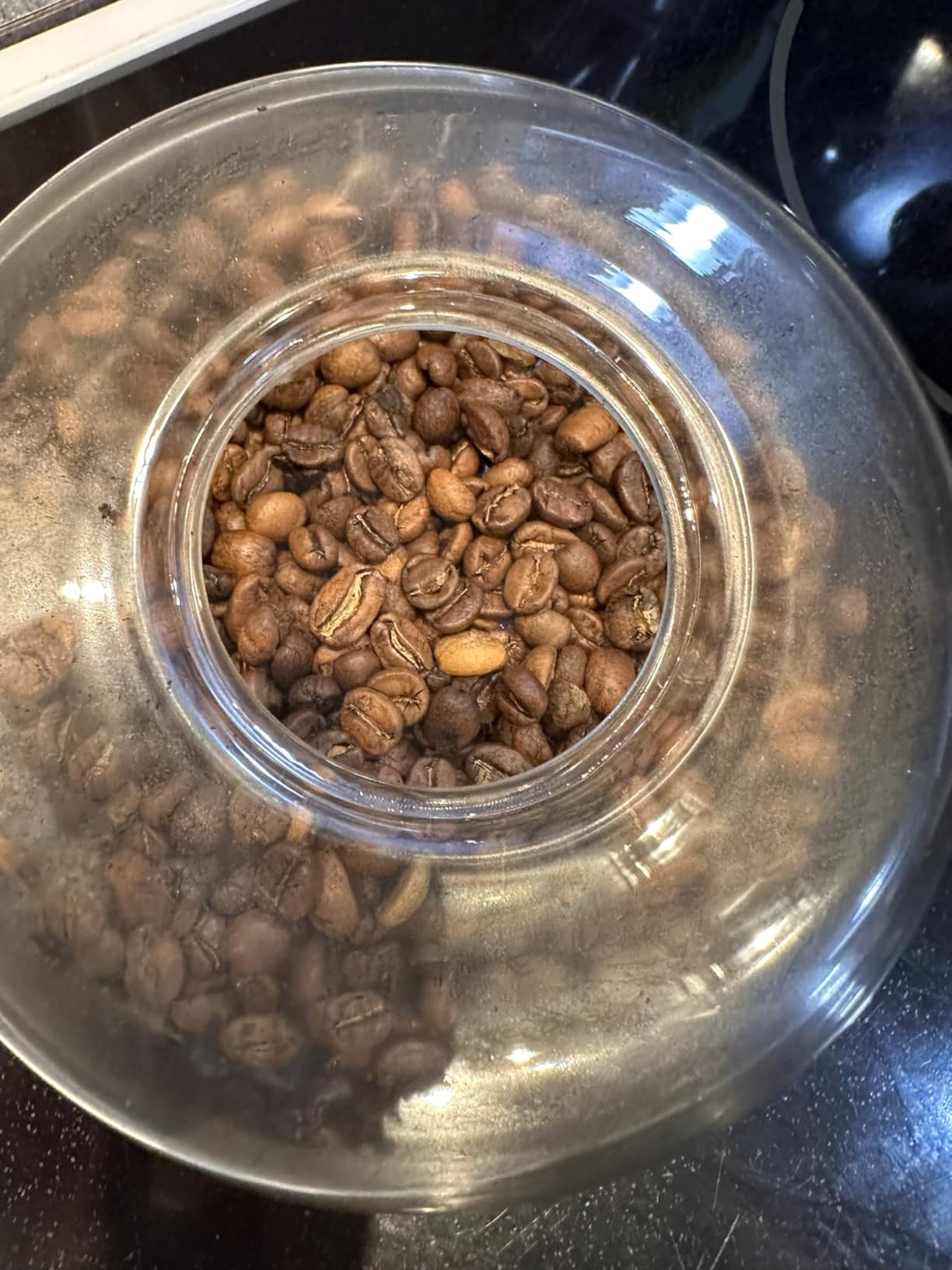
Three ounces is roughly 85 grams of green beans, which lands in the same small batch territory as the Nuvo. The transparent walls mean you watch bean color develop directly rather than inferring it from smell, which makes it a genuinely good teaching tool.
At 82 reviews and 4.2 stars with 68 percent five-star, expectations are modest and matched. Buyers treat it as a cheap, simple sampler for tiny batches rather than a coffee setup.
What 85 Grams of Learning Is Worth
One small batch tells you things no bag of coffee can. You see the green beans turn yellow, then brown, then go shiny with oils. You smell the roast change from grassy to sweet to smoky. Understanding that sequence is what makes every later roast more deliberate.
For a one-time or occasional exercise, this machine does that job. If you think you will roast weekly, the time spent wishing you had more capacity will outweigh what you saved.
Manual Heat and Time Without a Stirring Mechanism
There is no agitation at all. You shake the roaster by hand the way you shake a popcorn popper, and uneven roasting is a real risk, particularly near the end when you are shaking and heating at the same time.
Hand control also means you need to be present for the whole roast, which is fine at this batch size. Nothing here can be set and forgotten.
Glass Construction and Heat Tolerance
Borosilicate glass rated to 400 degrees is the right material for direct burner contact and it resists thermal shock far better than ordinary glass. The 11.68 ounce weight means you can move it with one hand while shaking.
Compact dimensions of 11.81 by 5.91 by 3.54 inches mean it stores in a cabinet rather than claiming counter space permanently.
Best For and Best Against
Perfect for a first experiment, a gift, or a renter who wants to understand roasting before committing to anything larger. It also roasts nuts and seeds, which makes it useful beyond coffee.
Not for daily use, not for anyone with a limited grip who will struggle to shake a hot glass vessel, and not if you want even results. Buy it to learn, not to drink coffee for the next year.
9. DYVEE Gas Burner Coffee Roaster – Highest Rated and Best Visibility
DYVEE Coffee Roaster Gas Burner Coffee Roasting Machine for Home Use, 400g Capacity, Quartz Glass Drum, Stainless Steel Frame, Peanut and Nut Roaster
400 g capacity
Quartz glass drum
304 stainless frame
200-300 g recommended batch
Pros
- Quartz glass drum gives full visibility of bean color
- Stainless steel frame resists heat and holds up over time
- 200-300 g recommended batch suits small roasting
- Highest average rating in this group
Cons
- Requires a separate gas burner setup
- Manual operation with no timer or profiles
- Needs outdoor or well ventilated space
The DYVEE is the highest rated machine in this roundup at 4.5 stars, with 67 percent five-star and only 3 percent one-star across 64 reviews. It is also the least digital option here: a quartz glass drum on a 304 stainless steel frame, heated by a gas burner you supply, turned by a 12 volt stirring motor.
That quartz glass drum is the reason people notice it. You can watch the entire roast happen rather than sampling through a hole, and for someone learning to read color this is a real advantage over a solid steel chamber.
The drum holds 400 g maximum with 200 to 300 g recommended per batch, which puts the usable sweet spot closer to small batch than to the 800 g machines in this group.
Visibility and Why It Changes How You Roast
Watching color change is the fastest way to learn roast level. Take a bean from a drum roaster you cannot see into and the same roast can land a full shade lighter or darker, because you are timing instead of seeing.
The quartz glass barrel gives you first crack cues visually. You watch for the beans to visibly jump, which is more reliable than listening for the crack through a fan or a stirrer.
Gas Burner Setup and Heat Character
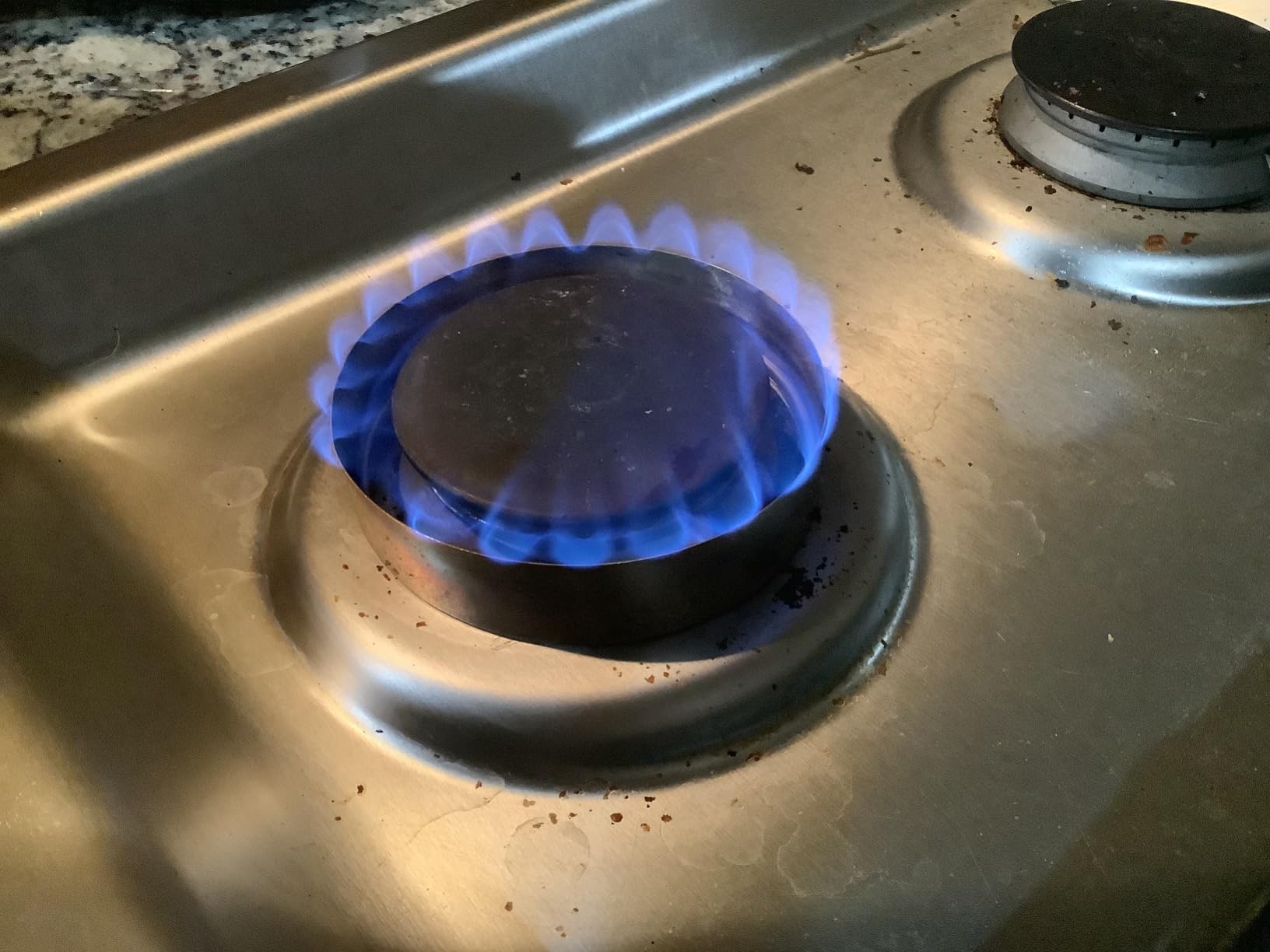
Direct flame is more responsive than a resistance element. You can lift the roaster off the burner to slow the roast, which is a control you simply do not have with an electric machine set to a fixed temperature.
The trade-off is setup. You need a burner capable of holding a steady flame, somewhere safe to put a hot quartz drum, and ventilation appropriate for gas roasting. On a kitchen counter with a domestic gas hob this is workable. In a small apartment it is not.
Build Quality and the Low-Voltage Motor
The 304 stainless frame and base are the most durable materials in this roundup, and at 17 pounds the machine has the stability to sit near a flame without creeping. The 12 volt stirring motor with its included power adapter is a sensible safety choice compared to running mains voltage near open flame.
Satisfaction centers on the visible quartz drum and build quality. The trade-off owners name is the manual gas burner workflow, which is a lifestyle change rather than a small adjustment.
A Four-Step Process You Learn Quickly
The included funnel, power adapter and manual describe a simple four-step roasting process. Heat, charge, watch, and cool. There is no timer and no profile memory, so there is nothing to program and nothing to reset.
Best For and Best Against
Best for someone who has a gas setup or a proper ventilated space, values durability, and wants full visual control over a 200 to 300 g batch. It is also the highest rated option here, which matters when you are spending real money on a machine you expect to keep.
Not for a beginner in a rented apartment, not for anyone who does not already own a burner, and not for small 70 g batches. If you are starting from nothing, this is a second machine rather than a first.
10. WINB 110V Electric Roaster – Longest Timer Range in the Group
WINB Coffee Roaster Machine for Home Use, 110V Household Electric Coffee Bean Roaster with Timer Roasting Machine Peanut Bean Home Coffee Roaster
0-60 minute timer
100-240C thermostat
Up to 750 g per cycle
Rotating stirring rod
Pros
- 0-60 minute timer gives fine control over development
- Wide temperature range with constant-temperature thermostat
- Rotating rod blends beans evenly
- Honeycomb Teflon base wipes clean
Cons
- 300-500 g optimum load is oversized for small batches
- Plastic construction throughout
- Only 50 reviews
- the thinnest base here
The WINB is a 110 volt, 1200 watt electric roaster whose distinguishing feature is its timer. Where most machines in this class give you a preset roast duration, this one runs a 0 to 60 minute clock, which gives unusually fine control over development time.
Development time is the part of the roast after first crack, and it is where a surprising amount of flavor is decided. A timer you can set across an hour range makes it easier to hold a consistent development phase between batches.
At 50 reviews and 4.3 stars with 67 percent five-star, this is the smallest review base in the roundup. Sentiment centers on the timer plus thermostat combination and the even stirring rod, with capacity noted as larger than a small batch needs.
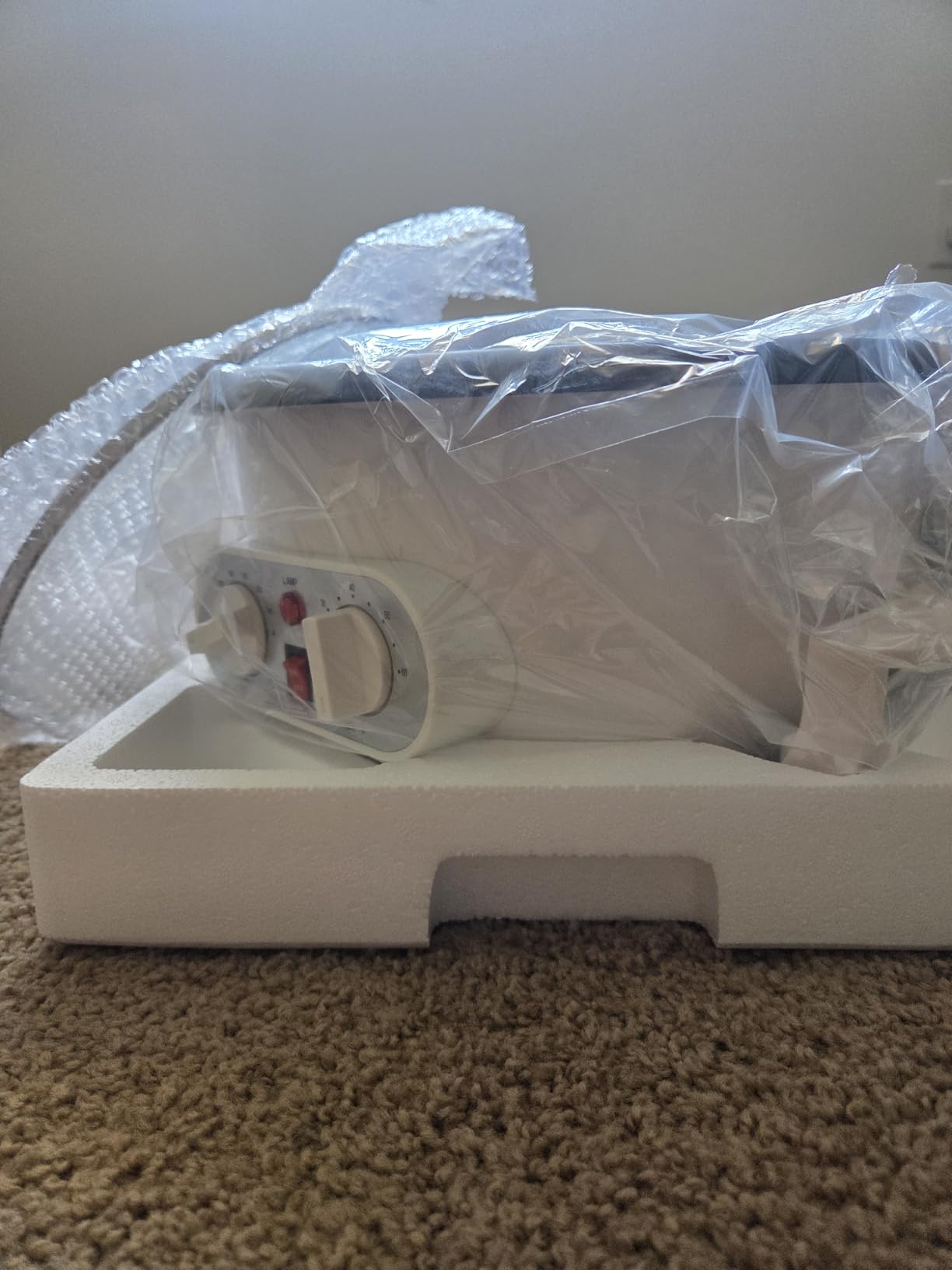
The 0 to 60 Minute Timer and What It Buys You
Roasts in this class typically finish between 8 and 15 minutes. A timer that spans an hour looks excessive until you realize it is also a stopwatch for the development phase alone, which is what makes two batches comparable.
Set the total, note when first crack happens, and the difference between the two numbers is your development time. Do it again next week and you can hold that number steady, which is the foundation of any roast profile.
Temperature Range and Constant Heating
The 100 to 240C range, or 212 to 464F, covers light through dark roasting, and the professional thermostat holds the set temperature automatically rather than ramping continuously.
Up to 750 g of green beans fit per cycle with an optimum of 300 to 500 g, and an internal rotating rod keeps beans moving through the heat. That is a large machine in behavioral terms even if the capacity figure sounds modest.
Honeycomb Teflon Base and the Upright Lid
The honeycomb case with black food-grade Teflon coating resists sticking and wipes clean, the same pattern as the LUEUR and the JIAWANSHUN. The transparent vented lid stands upright when open, which is a small detail that matters when you need both hands.
The construction is plastic rather than steel or ceramic. That keeps weight down and makes the machine easy to handle, but it is the part of the build most likely to disappoint over years of use.
Multi-Purpose Capability
Beyond coffee it roasts peanuts, chestnuts, barley, dried fruit and popcorn, and the 1200 watt element reaches temperature quickly. In a kitchen where one appliance does several jobs, that broadens the value proposition considerably.
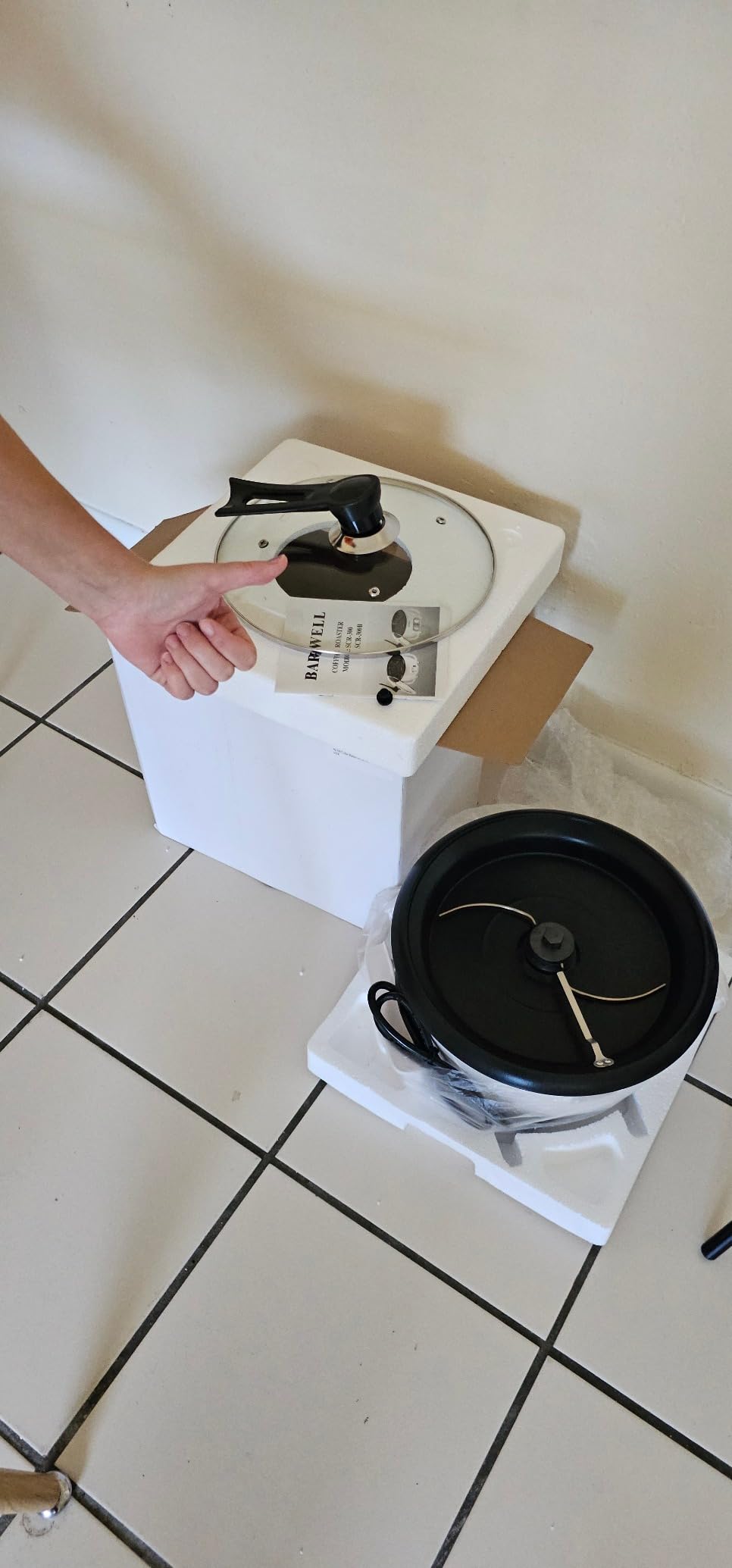
Best For and Best Against
Best for someone who wants to measure development time properly and roast enough for a household, and for anyone who also roasts snacks in the same machine. The timer is the reason to pick it over its closer competitors.
Skip it if you are roasting under 300 g. The recommended load makes small batches uneven, and with only 50 reviews there is less long-term owner feedback to reassure you about durability.
Air Roaster vs Drum Roaster: Which One Handles Small Batches
An air roaster, sometimes called a fluid bed roaster, uses a fan to push heated air through a perforated floor so that beans lift, tumble and cool themselves. A drum roaster, whether the auger type or the stirring rod type, applies conduction heat to a rotating metal chamber and physically moves the beans through that heat.
That single mechanical difference explains almost every practical difference between the two families in this roundup. Air roasters, which means the Fresh Roast SR540 and SR800, have small chambers and small optimal loads because their mechanism needs volume to work. Drum roasters with stirring rods and augers have large chambers and 300 to 500 g minimum loads because the mechanism works at any level but needs a solid bed to heat evenly.
For small batches specifically, air wins on capacity matching and drum wins on heat control precision. If your batch is 70 g to 226 g, the air roasters and the small manual units are structurally better suited than the 800 g drum machines, regardless of how capable those larger machines are.
Manual units like the Nuvo, the lpylxingyan glass roaster and the DYVEE sit outside both categories. They heat by flame or burner contact, which gives you the least automation and the most direct feedback from the bean itself.
Roasting in an Apartment: Smoke, Ventilation and Chaff
This is the question that comes up most often in roasting communities, and it deserves a direct answer. Yes, you can roast coffee in an apartment. You need a plan for air, and the plan depends on which machine you own.
Dark roasts produce the most smoke and need the most extraction. Light roasts produce much less. If you plan to stay in the light to medium range, a window cracked open is often enough, and the small manual units need nothing more than that.
Electric roasters running a stirring rod or auger produce smoke out of the vented lid with no routing built in. That means either a range hood over the machine or a hose running to a window. The NIASIA is the only machine in this group that addresses the problem directly, with the smoke purifier for light roasts and the smoke pipes for medium and dark.
Chaff is the quieter issue. Those papery skins are light enough to travel and settle on every surface within a few feet. The chaff basket included with the SR540, and the collector included with the NIASIA, are worth having, and a cover over the machine when the fan is running keeps most of it down.
For a broader look at gear that fits limited spaces, our picks for the best coffee makers for small kitchens cover the brewing side of the same problem, and the small office coffee makers guide covers shared spaces where several people drink at once.
What Matters When Buying a Small Batch Coffee Roaster
1. Match the Minimum Load to Your Actual Batch
This is the mistake that causes the most disappointment. Buyers choose a large chamber because the drum number sounds impressive, then discover the machine will not roast evenly below 300 g. Decide your real weekly consumption first, work out the batch size that implies, then check the minimum load on every machine you consider.
2. Decide How Much Automation You Actually Want
Manual control teaches you more and gives you less consistency. Programmable or profile-based control gives you consistency and hides the process. Beginners usually start manual and end up grateful for memory, which is why the SR800 control board and the NIASIA profiles both matter more than their spec sheets suggest.
3. Check the Heat Source Against Your Kitchen
Electric is the simplest and needs only an outlet. Gas needs a burner and a safe surface. A flame you control by lifting the roaster away gives more responsive heat than a fixed thermostat, but it also demands attention. There is no wrong answer here, only a mismatch that shows up on your first roast.
4. Plan the Cooling Method, Not Just the Roast
Beans that stay hot continue cooking and will taste flat the next day. A cooling tray or fan matters as much as the heating element, and only the NIASIA in this group has one built in. Everything else needs somewhere to spread beans out immediately after the roast ends.
5. Look at What Comes in the Box
Chaff collection, a funnel, a power adapter and smoke pipes change how a machine works day to day. Several machines here list a chaff basket or collector as an included component and several do not mention one at all, which is a meaningful difference in a small kitchen.
6. Read Reviews for the Complaint, Not the Rating
A 4.4 average tells you the machine is broadly good. The one-star reviews tell you whether the failure is noise, smoke, a control knob, or a jam in a stirring rod, and only one of those is likely to matter to you. Ratings hide the specific problem; complaints expose it.
7. Think About Where the Beans Come From Next
A roaster is only half the system, and green beans are the part that varies most week to week. Our guide to green coffee beans for home roasting covers sourcing, and our coffee books for home baristas covers the theory behind what happens in the drum.
Once roasting becomes a habit, most people add a scale, a timer, a bean probe and eventually a data logger before they consider a larger machine. Those accessories cost far less than moving up a class of roaster, and they take the guesswork out of a machine you already own.
Frequently Asked Questions
What is a good small batch coffee roaster for home use?
For batches under 150 g, an air roaster such as the Fresh Roast SR540 at 120 g capacity is the most common first choice, and the Nuvo ceramic hand roaster at 70 g is the most compact. If you want zero automation and a visible roast, a quartz glass drum roaster heated by a gas burner works well. For 200 to 300 g batches, a stirring rod roaster becomes viable.
Is an air roaster or drum roaster better for beginners?
An air roaster is easier for beginners because fan speed and heat power are separate dials and the small chamber forces small, fast, repeatable batches. A drum roaster applies conduction heat directly, which gives finer control but usually starts at a 300 g minimum load. Beginners roasting for one or two people should start with an air roaster.
How much coffee can a home roaster roast?
It depends entirely on the machine. Small manual units handle 70 g to 85 g of green beans per batch. Air roasters typically handle 120 g to 226 g. Stirring rod and auger roasters generally need 300 g to 500 g for even results, with a few models rated up to 750 g per cycle.
Do I need ventilation for home coffee roasting?
Yes, and more than most people expect. Light roasts produce modest smoke that a cracked window will usually handle. Medium and dark roasts from electric roasters produce enough smoke that a range hood or a hose to a window is the realistic setup. Machines with built-in smoke pipes, such as the NIASIA in this guide, reduce how much external extraction you need.
Can you roast coffee in an apartment?
Yes. Small manual roasters that work over a gas burner need no extraction beyond an open window. Electric roasters produce more smoke and more noise, so apartment roasters should plan for a range hood or window hose, and should roast at times when the fan noise will not disturb neighbors.
How long does it take to roast coffee at home?
Most home roasts finish in under 15 minutes, and the Fresh Roast models in this guide state under 10 minutes for a full batch. The dry phase takes roughly half the total time. Development time after first crack is usually one to three minutes depending on the roast level you are targeting.
Which Home Coffee Roaster Should You Buy in 2026?
If you drink one to three cups a day and want the smallest sensible footprint, the Nuvo ceramic hand roaster is the pick, and it is our editor’s choice for a reason: 901 reviews at 4.4 stars, no electricity, and a 70 g batch that lets you taste two coffees side by side without waste.
If you want repeatability with a plug and a set of dials, the Fresh Roast SR540 is the answer most people should buy. It handles a 120 g batch well, holds results steady across many roasts, and is the easiest machine here to learn on. Plan for a range hood before your first roast.
If you roast daily or share the output, step up to the Fresh Roast SR800 for 170 to 226 g batches and editable start settings. If your problem is smoke rather than capacity, the NIASIA is the only machine in this group built around solving it.
Whatever you choose, start with a small batch and get the basics right: charge temperature, time to first crack, and a development time you write down. That notebook is worth more than any machine upgrade, and it is the difference between roasting coffee and just heating beans. Happy roasting in 2026.
Leave a Reply