
Disclosure: We earn a commission from qualifying purchases made through the links on this page. That never changes which bikes we recommend.
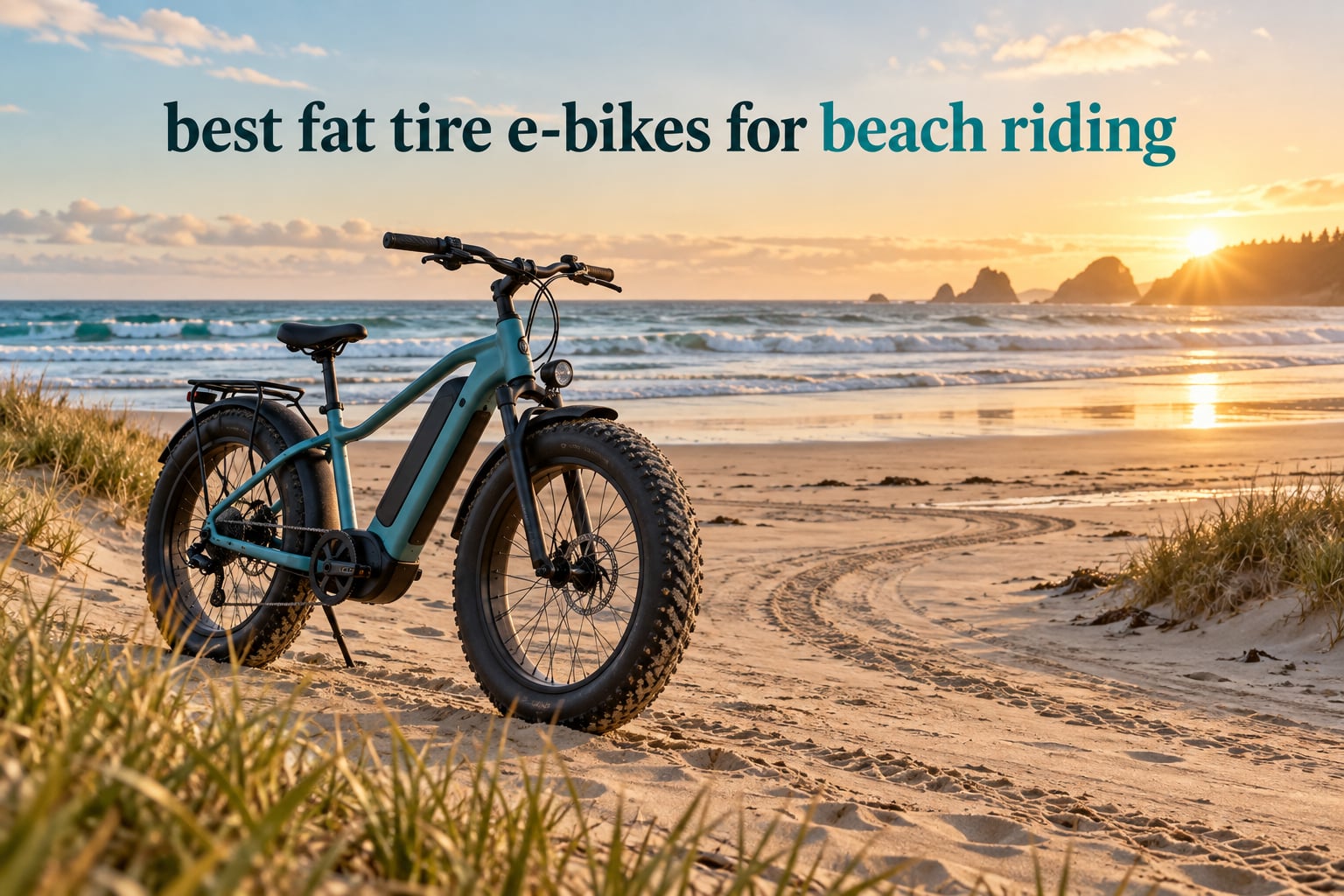
The Aipas M1 Pro is the best fat tire e-bike for beach riding in 2026. Its 26 x 4 inch tires, 110 Nm of torque, dual suspension and 500 lb load rating hold up on hardpack, wet packed sand and dune access roads. Riders who need a bike that fits in a car trunk should look at the Wooken 20 inch folder instead.
I have spent the last few years riding fat tire e-bikes on the same three surfaces every coastal rider cares about: firm hardpack near the tide line, soft dry sand above it, and the wet packed band a falling tide leaves behind. Those three surfaces are so different from each other that a single “best for beach” ranking is nearly useless on its own. This roundup is built around them, and the sand qualification section below comes before any product so you can disqualify the wrong bikes before you fall in love with one.
Twelve bikes made the cut. I weighted them on the axes that actually decide whether a ride ends at the water’s edge or ends with you dragging a bike up a dune: tire width, real torque in Nm, brakes, published weight, payload headroom and certification. Published weight gets more weight than most roundups give it, because the question riders ask first is not “how fast” but “can I lift this back out.” If you are still working out whether a fat bike suits you at all, our fat tire bike guide for snow and sand covers the non-electric side of the same decision.
Our Top 3 Fat Tire E-Bikes for Beach Riding in 2026

Aipas M1 Pro
- 26 x 4 inch fat tires
- 1800W peak motor
- 110 Nm torque
- 48V 17.5Ah removable battery
Funhang EB-S1
- 26 x 4.0 inch fat tires
- 1000W peak
- 66.6 Nm torque
- UL 2849 and UL 2271 certified
Two caveats on that short list. The Vivi ACE01 has the fewest written reviews of the three at 96, so its owner feedback is thinner than the other two. And neither the Funhang nor the Vivi has dual suspension, which matters more on sand than most spec sheets admit.
Every Fat Tire E-Bike in This Roundup at a Glance
Every bike below is listed with the same decision axes so you can compare them in one pass. Wheel size and tire width set floatation, torque sets whether the rear wheel spins or bogs, brakes matter most on the wet packed band, and weight decides whether you can recover the bike yourself.
| Product | Specs | Action |
|---|---|---|
| Aipas M1 Pro |
|
Check Latest Price |
 Wooken 20 Inch Folding Fat Tire Wooken 20 Inch Folding Fat Tire |
|
Check Latest Price |
| Funhang EB-S1 |
|
Check Latest Price |
 EUYBIKE Foldable Fat Tire EUYBIKE Foldable Fat Tire |
|
Check Latest Price |
 Jasion RetroVolt Jasion RetroVolt |
|
Check Latest Price |
 INVANTI EB16 INVANTI EB16 |
|
Check Latest Price |
 Jasion Thunder Jasion Thunder |
|
Check Latest Price |
 TST R004 TST R004 |
|
Check Latest Price |
 URLIFE T5 URLIFE T5 |
|
Check Latest Price |
 Vivi ACE01 Vivi ACE01 |
|
Check Latest Price |
 ESKUTE C300R-ST ESKUTE C300R-ST |
|
Check Latest Price |
 EOEOTWO E01 EOEOTWO E01 |
|
Check Latest Price |
Which Sand Are You Riding? Qualify Your Surface First
Most beach e-bike advice skips the question that decides everything, which is what is actually under the tires. Three surfaces, three completely different bikes.
Hardpack: firm sand near the waterline
Hardpack is the wet, packed band the tide leaves behind and the upper beach where the sand is firm enough to stand on. Almost any bike in this roundup handles it, and 26 inch wheels with 4 inch tires feel close to riding pavement. This is the one beach surface where a lighter, faster bike is genuinely the right answer.
Soft dry sand above the tide line
This is where the sport actually happens and where the specs earn their keep. Soft dry sand takes a bite out of the contact patch of any wheel, and the 20 inch wheels in this roundup dig in noticeably more than the 26 inch models. Deep, loose dry sand defeats even a well-equipped e-bike: if the sand is swallowing the bottom third of the wheel, walking the last hundred yards is the correct call, not buying a bigger bike.
Wet packed sand: the falling-tide case
Wet packed sand is firm underfoot but heavy and clinging, and it is where stopping distance matters most. Riders regularly describe mechanical disc brakes needing more hand force in these conditions, which is the main reason the hydraulic-braked bikes in this list score well. Keep your weight back and your braking early here.
One more variable decides whether you can finish a ride: getting the bike back. Weight is not a vanity spec on a beach. If your route crosses soft sand with no ramp, the published weight figure deserves more attention in your decision than peak wattage.
1. Aipas M1 Pro – Best Overall Fat Tire E-Bike for Beach Riding
Aipas M1 Pro Electric Bike for Adults, 26 x 4 Fat Tires, 48V 17.5Ah Battery
26 x 4 fat tires
110 Nm torque, 1800W peak
48V 17.5Ah removable battery
Dual suspension, 500 lb load
Pros
- 110 Nm of torque drives through soft sand
- 1800W peak motor climbs slopes up to 23 degrees
- Step-through frame fits 5 ft 5 in to 7 ft 2 in riders
- 48V 17.5Ah removable battery with real reports of 25+ miles per charge
- UL 2271 certified battery from SGS
Cons
- 88 lb is the second heaviest bike here
- Mechanical disc brakes need more lever force and one reviewer reported a weak rear brake
- Front suspension quality is inconsistent with binding and oil leak reports
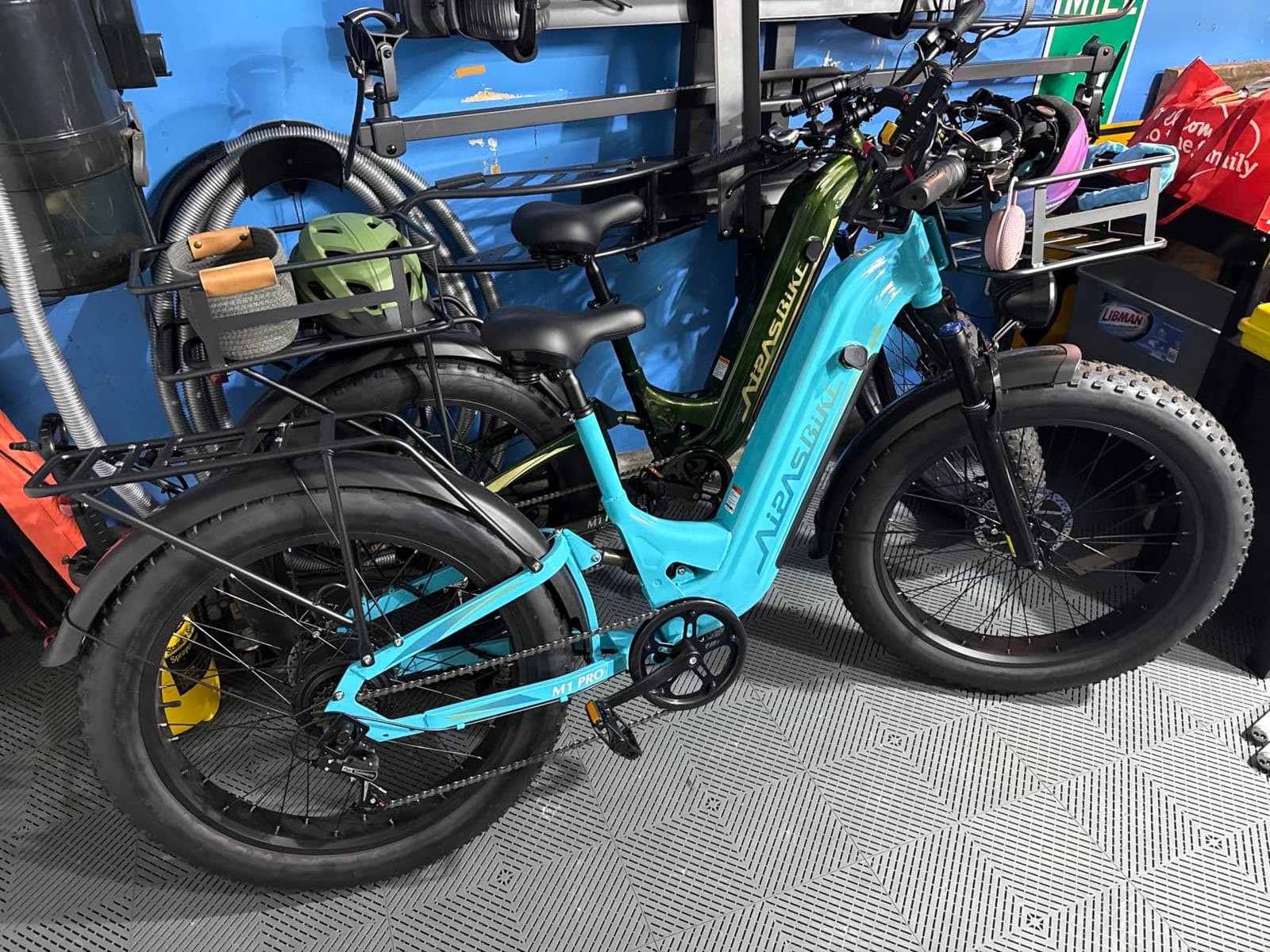
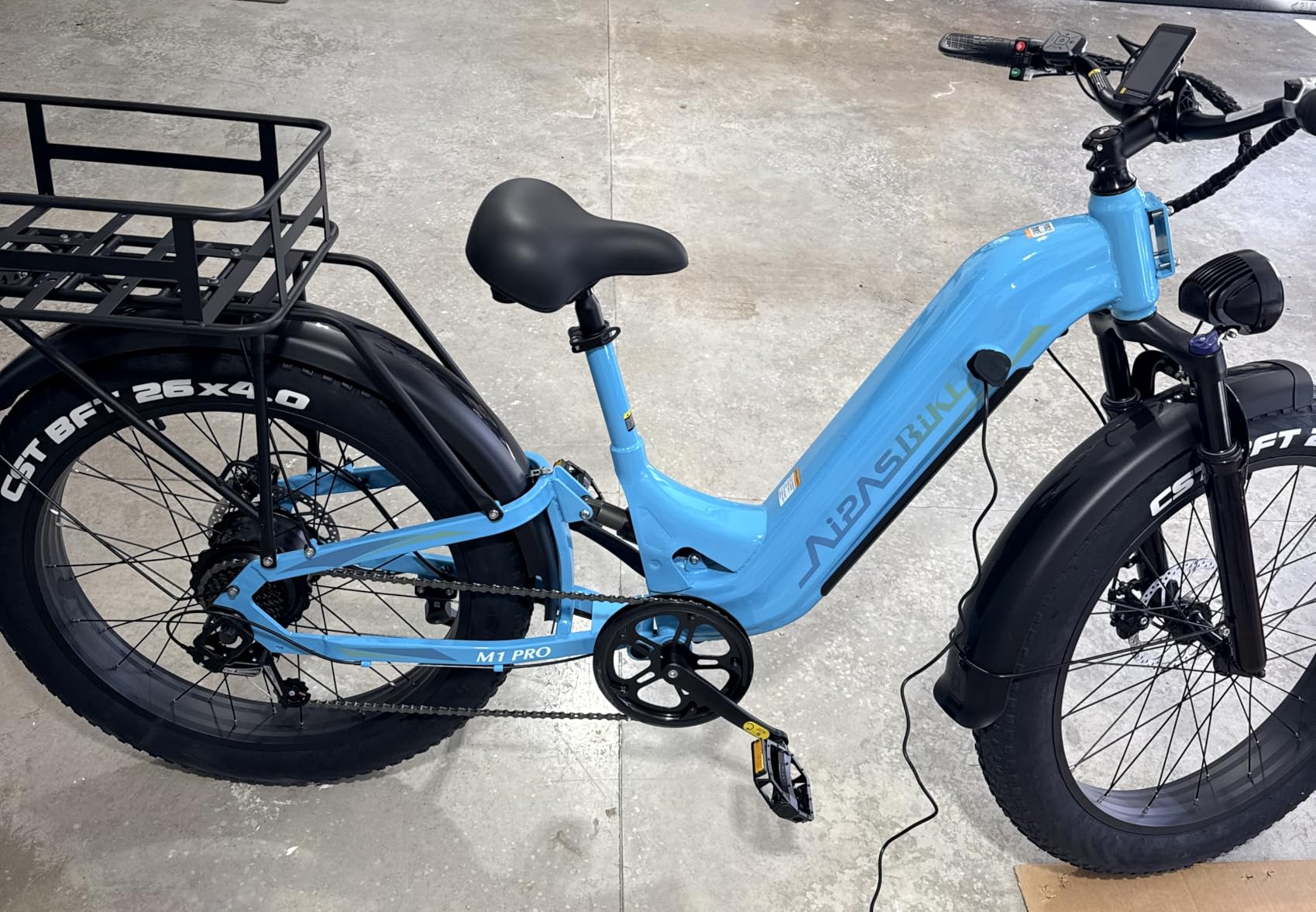
The M1 Pro is the bike I would put a friend on who rides three different surfaces in one afternoon. The 26 x 4 inch tires and 110 Nm of torque give it the best raw ability to move loose sand of anything here, and the step-through frame makes it the easiest to mount after a day in the water.
Owners consistently report real range well past the point most beach rides end, with several logging 25+ miles on a single charge of the 48V 17.5Ah pack. The battery is removable and the charging works on or off the bike, which matters when you are storing a salt-exposed machine in a garage rather than a house.
Torque and motor: the number that decides soft sand
At 110 Nm this is more torque than any other bike in the roundup, from a 750W nominal rear-hub motor peaking at 1800W. Torque is what keeps the rear wheel spinning in soft sand rather than carving a hole, and it is the figure that matters more than peak wattage once the tires start to sink.
Reviewers mention unlocking speeds well above the 20 mph out-of-box limit. On a beach that is rarely the point, but the headroom is what carries you out of a bogged patch once you get moving.
Weight, brakes and the self-recovery question
At 88 lb the M1 Pro is heavy, and the dual 180mm mechanical disc brakes need more hand force than the hydraulic setups on the Vivi ACE01 and Jasion Thunder. One detailed review described a rear brake that barely slowed the bike, so I would not ride wet packed sand on it without testing the brakes hard first.
The upside of the mass is payload: a 500 lb load rating is the joint highest here, which leaves real headroom for a cooler, a chair and a rod holder on the rear rack.
Who should skip it
Skip the M1 Pro if your route has no ramp and no firm line, because 88 lb is genuinely awkward to lift out of soft sand by yourself. Riders who want a bike they can load into a car without a second person should look at one of the folding options instead.
2. Wooken 20 Inch Folding Fat Tire – Best for Carrying and Storing
Wooken Electric Bike, 20”X4.0 Fat Tire Electric Bike for Adults
20 x 4.0 fat tires
500W motor, 750W peak
48V 480Wh IPX5 battery
Folding aluminum frame
Pros
- Folds into a car trunk or rides on public transit
- One of the lowest-cost 20 x 4.0 fat bikes in this group
- IPX5 waterproof removable battery that charges on or off the bike
- Four modes including a walking-speed booster assist
Cons
- 500W motor tops out near 19.8 mph
- Lowest 4.1 star rating here with a 10 percent one-star share
- Only front suspension is listed despite marketing referring to a dual shock system
The Wooken solves a problem no other bike on this list solves: getting a fat tire e-bike to a beach at all. The folding aluminum frame packs into a trunk or rides on transit, which is the difference between a beach you can reach and a beach you can only look at.
For firm hardpack and packed sand near the waterline, it does the job. The 20 x 4.0 tires are genuinely wide, and the 48V 480Wh IPX5 battery is sealed well enough for spray.
Why the 20 inch wheel is the compromise here
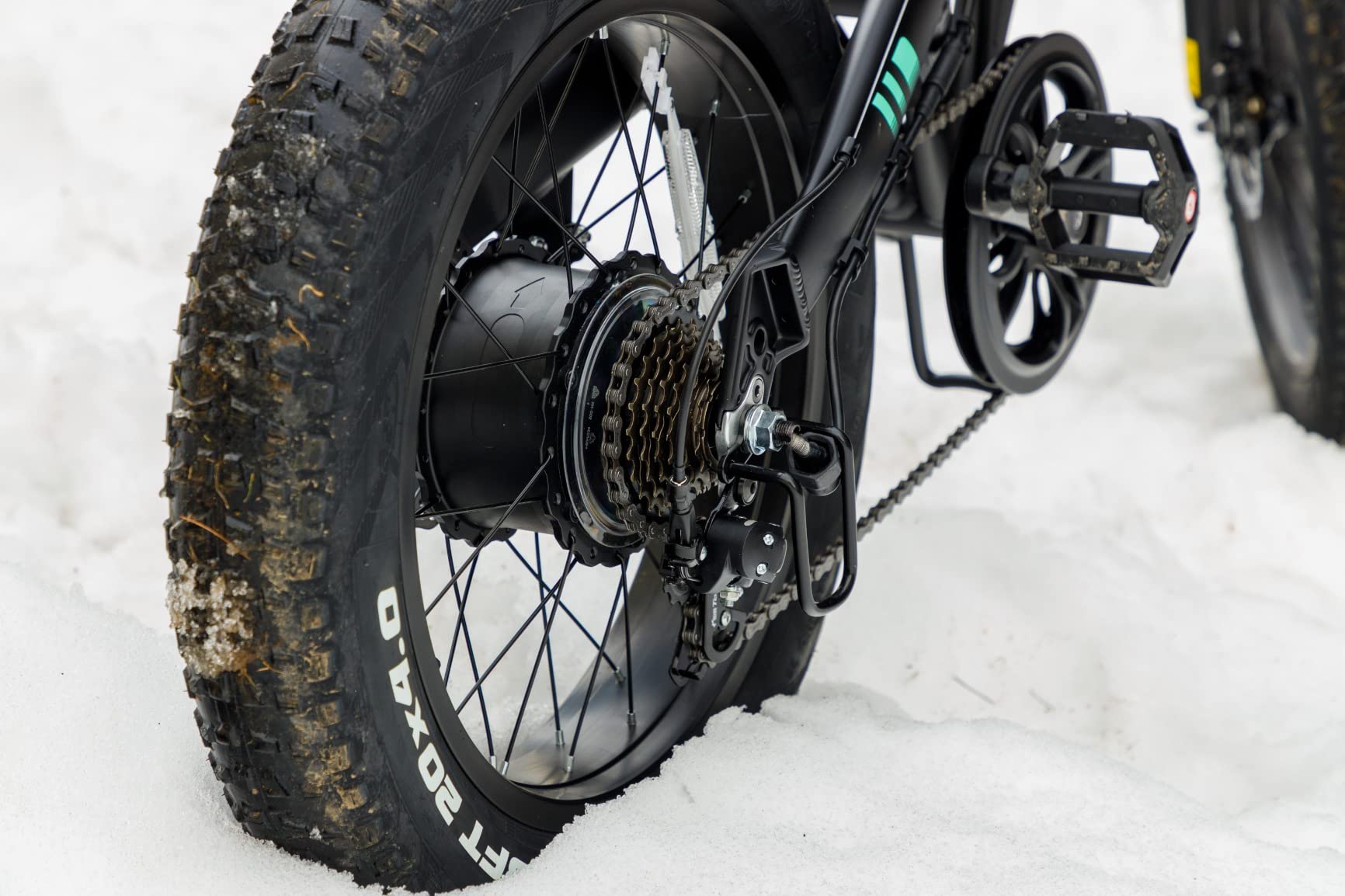
Twenty-inch wheels with 4 inch tires dig into loose ground that a 26 inch wheel would roll across. Riders on a folding bike are usually heading for packed access paths and boardwalk approaches rather than fresh dune sand, which is the scenario where that trade works in your favor.
Motor output is the other limit. At 500W nominal and 750W peak, this is the least powerful motor here, and it tops out near 19.8 mph in mode 3.
Suspension and braking, honestly
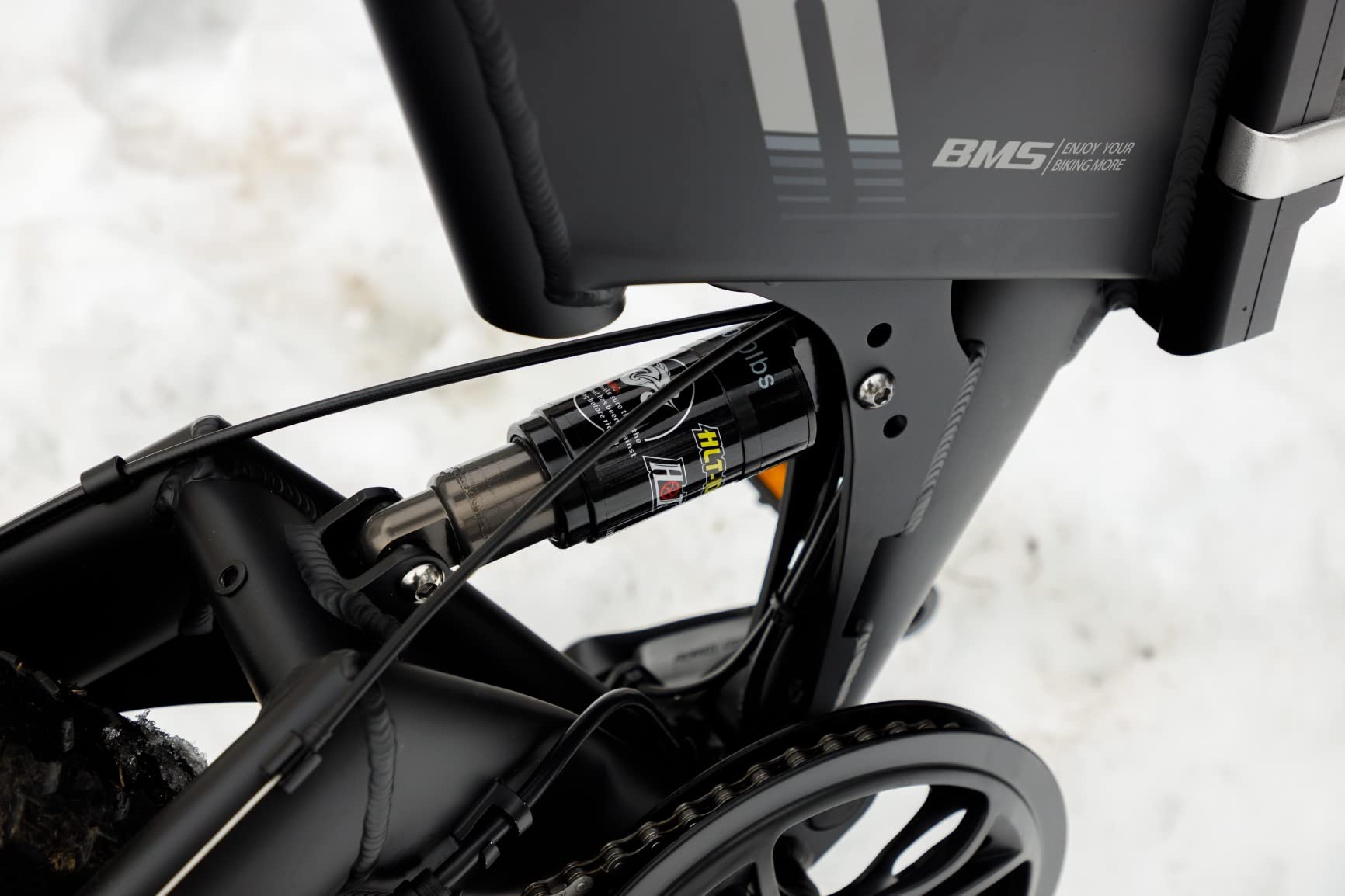
The listing mentions a dual shock absorber system, but the specifications only detail a lockable adjustable front fork. Treat it as front suspension. Dual disc brakes are standard and adequate on hardpack, but the hand-force complaints that come with cheap mechanical discs show up more on wet packed sand.
The 4.1 star rating is the lowest in this roundup, with roughly 10 percent of reviews at one star. That is the price tier talking, not a sand-specific failure.
Who should skip it
Skip the Wooken if soft dry sand is the point. A 500W motor on 20 inch wheels is the least sand-capable combination here, and you will feel it the moment the surface turns loose.
3. Funhang EB-S1 – Budget Pick Fat Tire E-Bike for Beach Days
Funhang Electric Bike for Adults, 1000W Peak Ebike, 20MPH 60Miles Electric Mountain Bike, 26″ Fat Tire Electric Bicycle with 48V 13AH Battery, Front Suspension,7 Speed, Rear Rack, UL 2849 Certified
26 x 4.0 fat tires
66.6 Nm torque, 1000W peak
48V 13Ah IPX5 battery
UL 2849 and UL 2271 certified
Pros
- UL 2849 whole-bike and UL 2271 battery certification for coastal salt air
- 26 x 4.0 tires praised for sand
- grass and golf-cart paths
- 60 lb rear cargo rack plus headlight
- taillight and turn signals
- 365-day warranty with lifetime after-sales service
Cons
- 70 lb is heavy to pedal unassisted
- Pedal assist level 1 has a high gear that gives little real pedalling
- Tires arrive under-inflated and need topping off to 20 PSI
The Funhang EB-S1 is the one I keep coming back to for riders who want certification without paying a premium for it. It carries both UL 2849 whole-bike and UL 2271 battery recognition through SGS and TUV, which is the single most-cited trust signal in coastal e-bike circles because it directly bears on what salt air does to wiring, chargers and controllers.
At 4.5 stars with 228 reviews it is also one of the better-rated bikes here, and owners single out the 26 x 4.0 tires as standout for sand and grass surfaces specifically.
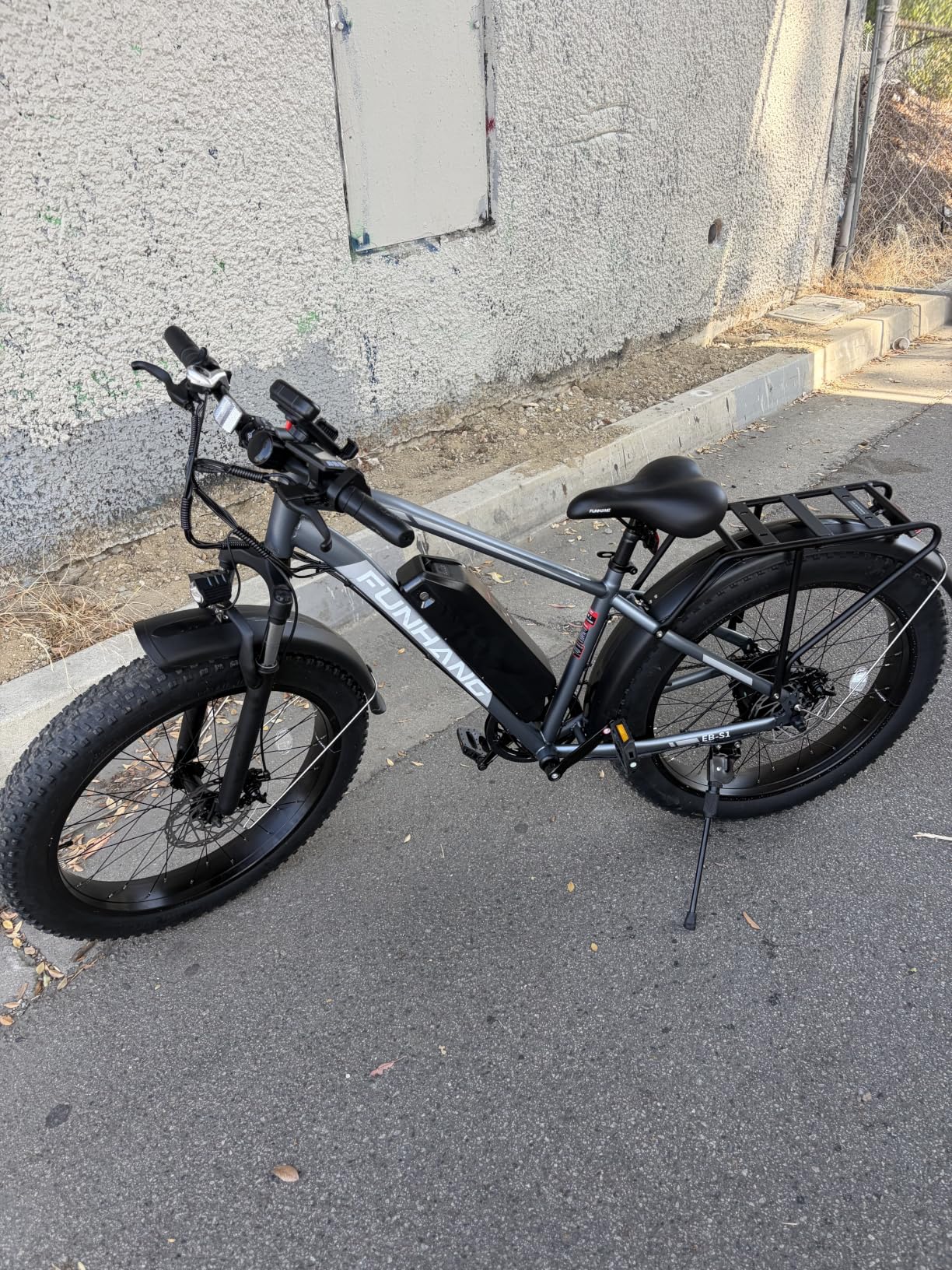
Rack payload and lighting for a day at the shore
The 60 lb rear cargo rack is genuinely useful here, and the headlight, taillight and turn signals form a safety package most rivals in this tier leave out. If you are hauling a cooler and a chair down to the water, the rack is the spec that changes the ride.
Two small assembly notes: the tires ship under-inflated and need topping up to the recommended 20 PSI, and the included Allen key stripped a bolt head for at least one owner.
What 66.6 Nm means on loose sand
That figure is the most modest of the 26 inch bikes here, and it is honest about it. On hardpack and packed sand it is more than enough. On genuinely soft dry sand you will be working the throttle more than a 110 Nm motor would.
Maximum weight capacity is listed at 330 lb, with a rider height range of 5’3″ to 6’2″. Check that before you buy if you are a taller or heavier rider.
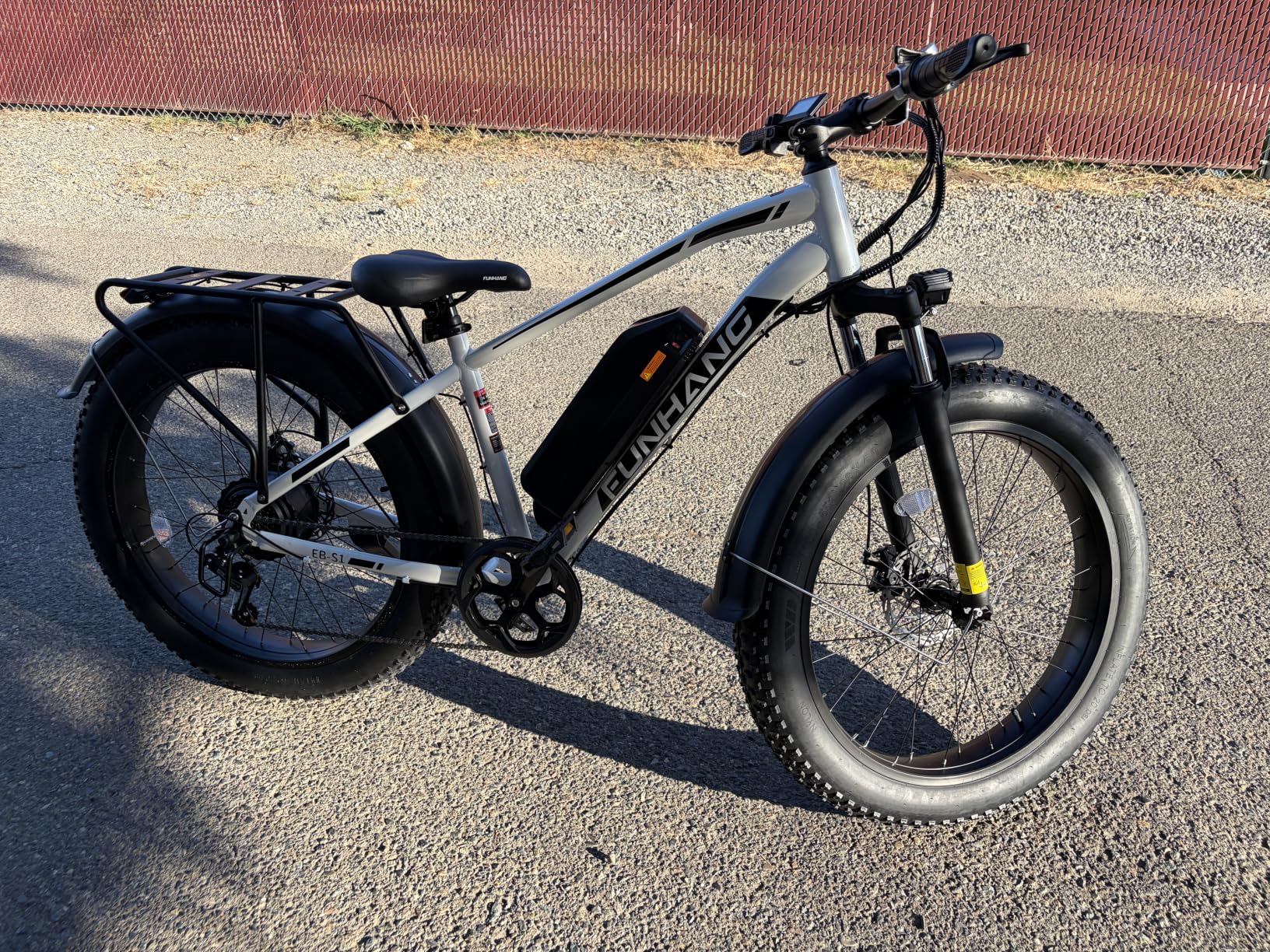
Who should skip it
Skip the EB-S1 if you weigh more than 330 lb, or if deep soft sand is the goal. It is the best-certified value beach bike here, not the most powerful one.
4. EUYBIKE Foldable Fat Tire – Best for a Big Battery in a Folding Frame
EUYBIKE Foldable Electric Bike for Adults, 48V 20Ah Removable Lithium Battery up to 80Miles, 20″ Fat Tire 1000W Peak Motor Dirt Ebike Adult Electric Bicycle for City Mountain E Bike Blue Black
20 x 3.0 fat tires
750W motor, 1000W peak
48V 20Ah removable battery
Foldable frame
Pros
- 48V 20Ah pack is among the largest in a folding frame here
- Owners report 32-36 mph real-world speed and good hill power
- Folds small enough to fit a Honda Civic or the cargo area of a Pathfinder
- Customer service replaced a faulty battery and a broken light quickly
Cons
- 20 x 3.0 inch tires offer less flotation than the 4.0 inch rivals
- Squeaky brakes that several owners plan to replace with hydraulics
- No rear suspension on the base square-tube build
The EUYBIKE folder is the compromise between capacity and portability. A 48V 20Ah battery in a frame that folds into a normal car is a rare combination, and one owner logged 140 miles with zero issues over extended use.
Its 4.6 star rating is the joint highest here, though the written feedback base of 80 reviews is small.
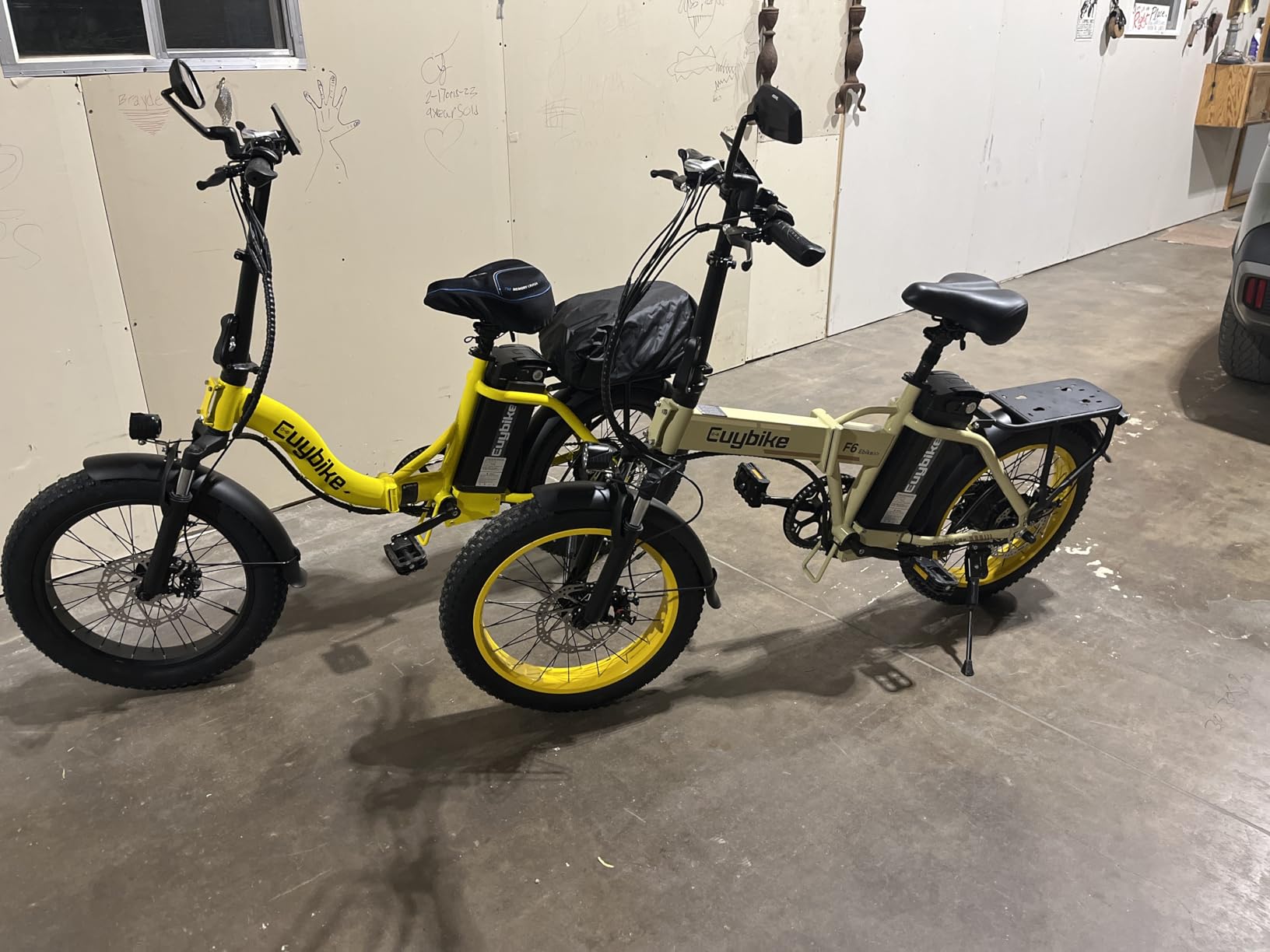
Tire width is where this one falls behind
At 3.0 inches, these tires are narrower than every other bike in the roundup. That is a meaningful floatation penalty on soft sand, and it is the single reason this is not higher on the list despite its strong motor and battery.
Some variants list 4 inch tires, so check the exact variant you are buying. On hardpack and packed sand, 3.0 inches is perfectly fine.
Suspension, brakes and certification gaps
The base square-tube version has front suspension only, and several owners describe bumps hitting hard as a result. Squeaky brakes are a recurring complaint, and several owners plan an upgrade to hydraulics, which is the right move if you will ride wet packed sand.
One reviewer flagged the absence of any UL certification mark on the battery, and real-world range falls well short of the advertised 50 miles electric and 80 miles pedal assist for most owners.
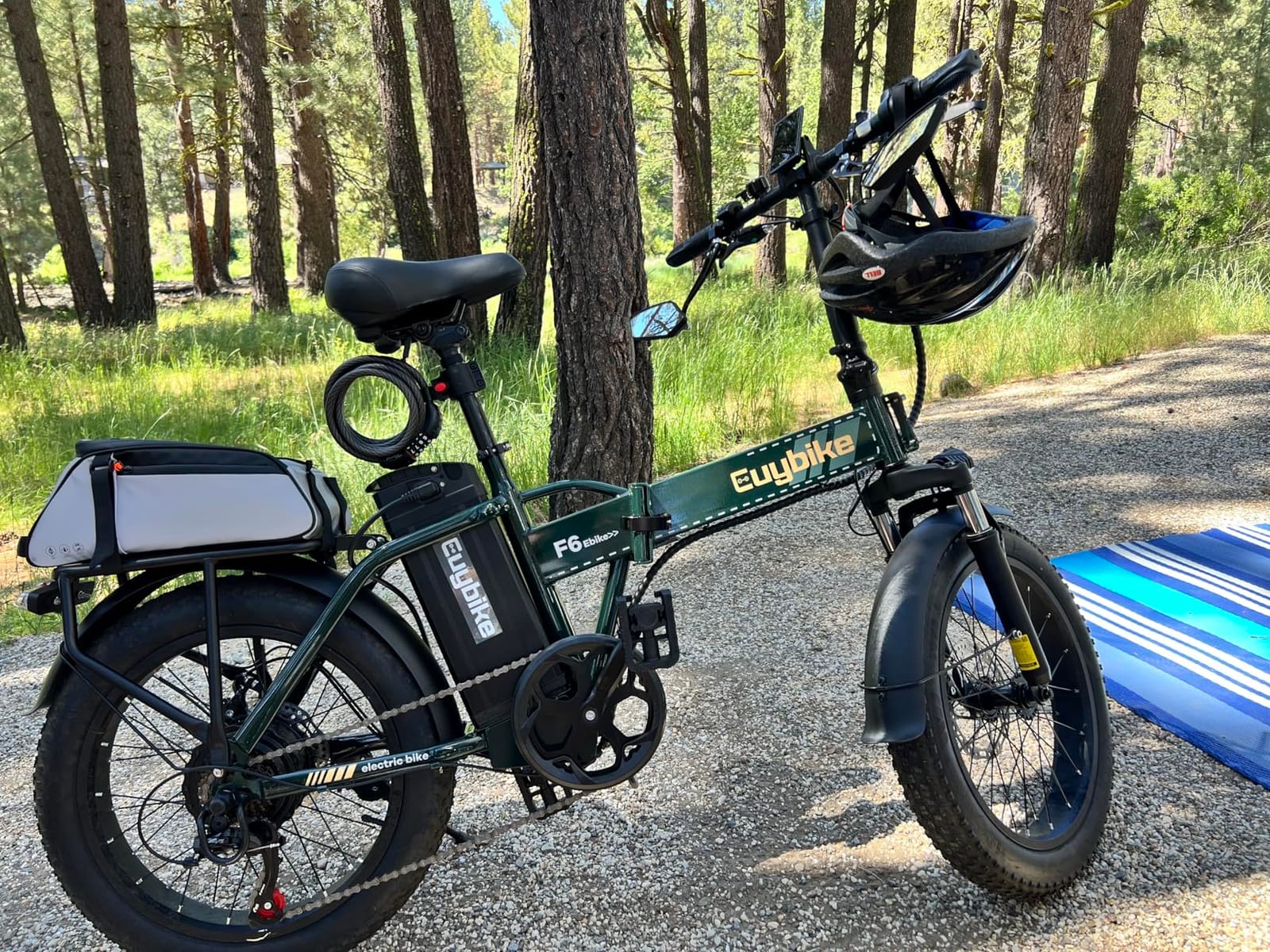
Who should skip it
Skip this one if soft sand is your target or if certification matters to you for coastal storage. It is a strong long-distance folder for firm surfaces, not a sand specialist.
5. Jasion RetroVolt – Best for Two-Person Beach Rides
Jasion RetroVolt Electric Bike, 70-Mile Range, 2000W Peak, Fat Tire
20 x 4.0 fat tires
2000W peak, 99 Nm torque
48V 15Ah removable battery
Rear seat pad for passengers
Pros
- Rear seat pad supports short passenger trips and errands
- 2000W peak with 99 Nm of torque starts confidently and climbs well
- Strong sales demand with a #2635 rank in Sports & Outdoors
- Bright headlight with horn plus brake-alert rear lighting
Cons
- 20 x 4.0 profile offers less flotation than 26 x 4.0 bikes
- 330 lb payload is below the 400-500 lb figures of some rivals
- Thin written owner feedback at 170 reviews
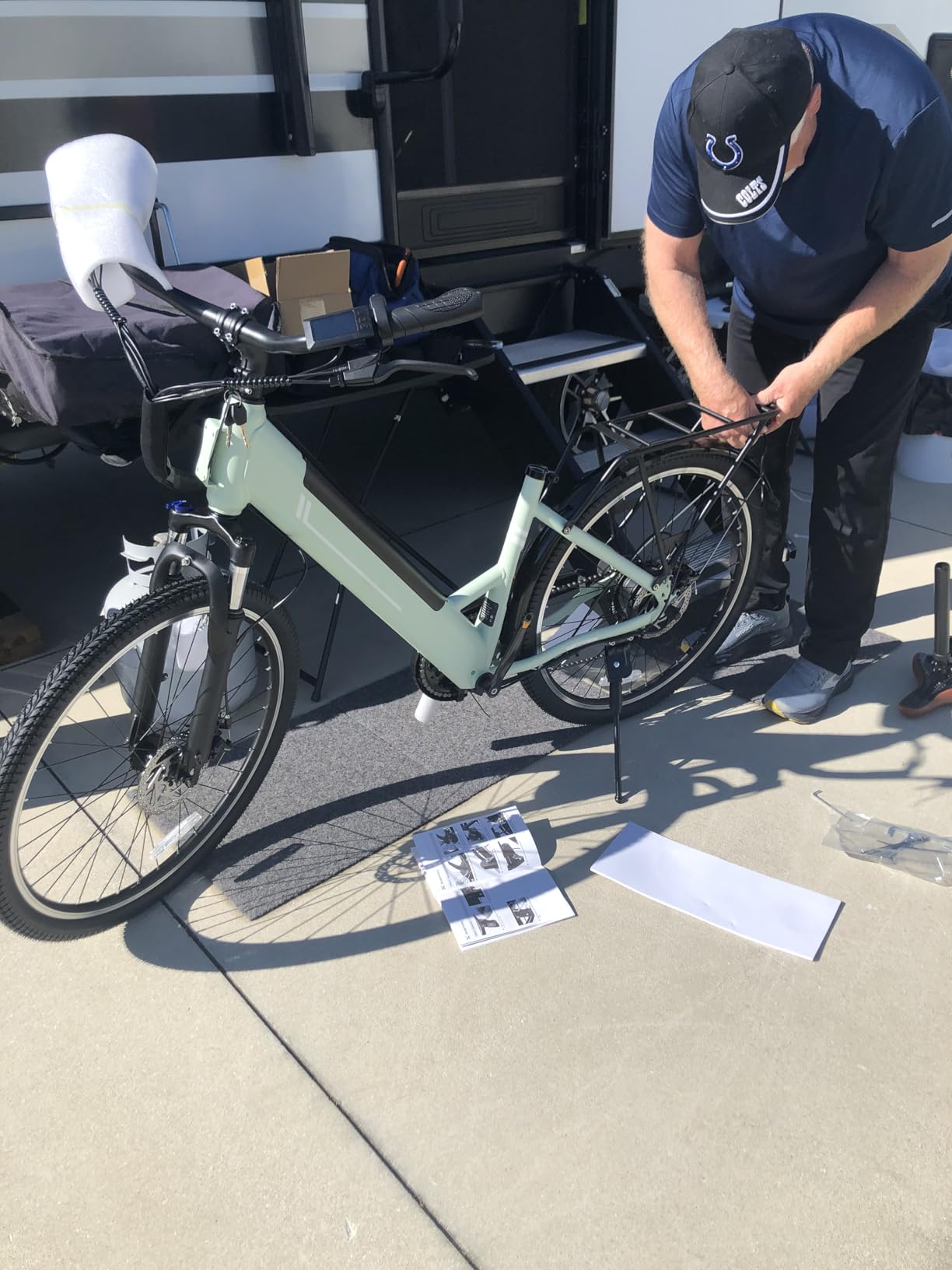
The RetroVolt is the only bike in this roundup built around a rear seat pad, and for a couple riding to the shoreline together that changes the whole trip. 2000W peak output with 99 Nm of torque is enough to move a passenger on packed sand without bogging.
It arrives 85% pre-installed, so setup is quick, and the moped-style frame suits riders from 5’4″ to 6’3″.
What the rear pad actually costs you
The 330 lb payload rating includes the second rider. That is well below the 400 lb and 450 lb figures on the Jasion Thunder and TST R004, so a heavier passenger pairing needs a different bike.
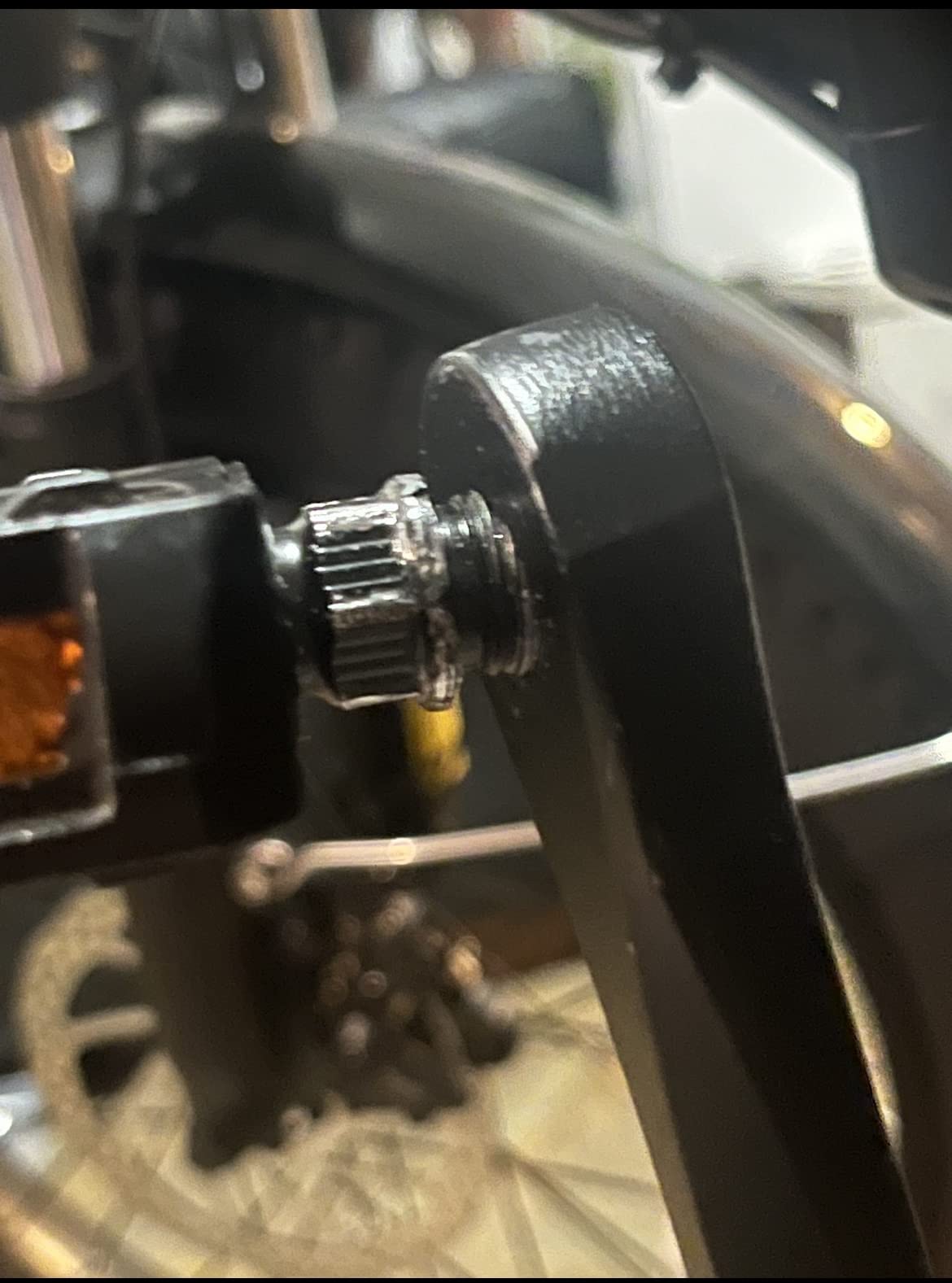
Dual suspension and 20 x 4.0 tires are credited by owners with better grip and comfort on beach routes and uneven streets, though the smaller wheel diameter gives up ground clearance to 26 inch bikes.
Range and charging in real conditions
The 48V 15Ah removable battery is UL-certified with a water-resistant design and a 5 to 6 hour recharge. Manufacturer range is quoted at up to 70 miles, which on a beach with two riders and a tailwind is a ceiling rather than a plan.
Who should skip it
Skip the RetroVolt for deep soft sand, where 20 inch wheels and a 330 lb rating are both working against you. It is built for couples on firm routes.
6. INVANTI EB16 – Best for Steep Dune Climbs
INVANTI Electric Bike for Adults, Electric Dirt Bike 750W Motor,20MPH 70 Miles E-Bike with 48V 15.6AH Removable Battery, 20″ All-Terrain Fat Tire EBike 7 Speeds Full Suspension
20 x 4.0 fat tires
750W peak motor, 35 degree slopes
48V 15.6Ah IP54 battery
Front and rear suspension
Pros
- 750W peak motor rated to handle 35 degree slopes
- IP54 waterproof removable battery with BMS
- UL 2271 and UL 2849 certification recognized by SGS
- Bright projector headlight readable in daylight
- One rider covered 80 km on PAS 1 without full depletion
Cons
- Around 85-87 lb makes assembly a two-person job
- Rim width is narrow for the advertised tire size
- which cuts stability on sand
- Fixed non-adjustable seat height excludes shorter and taller riders
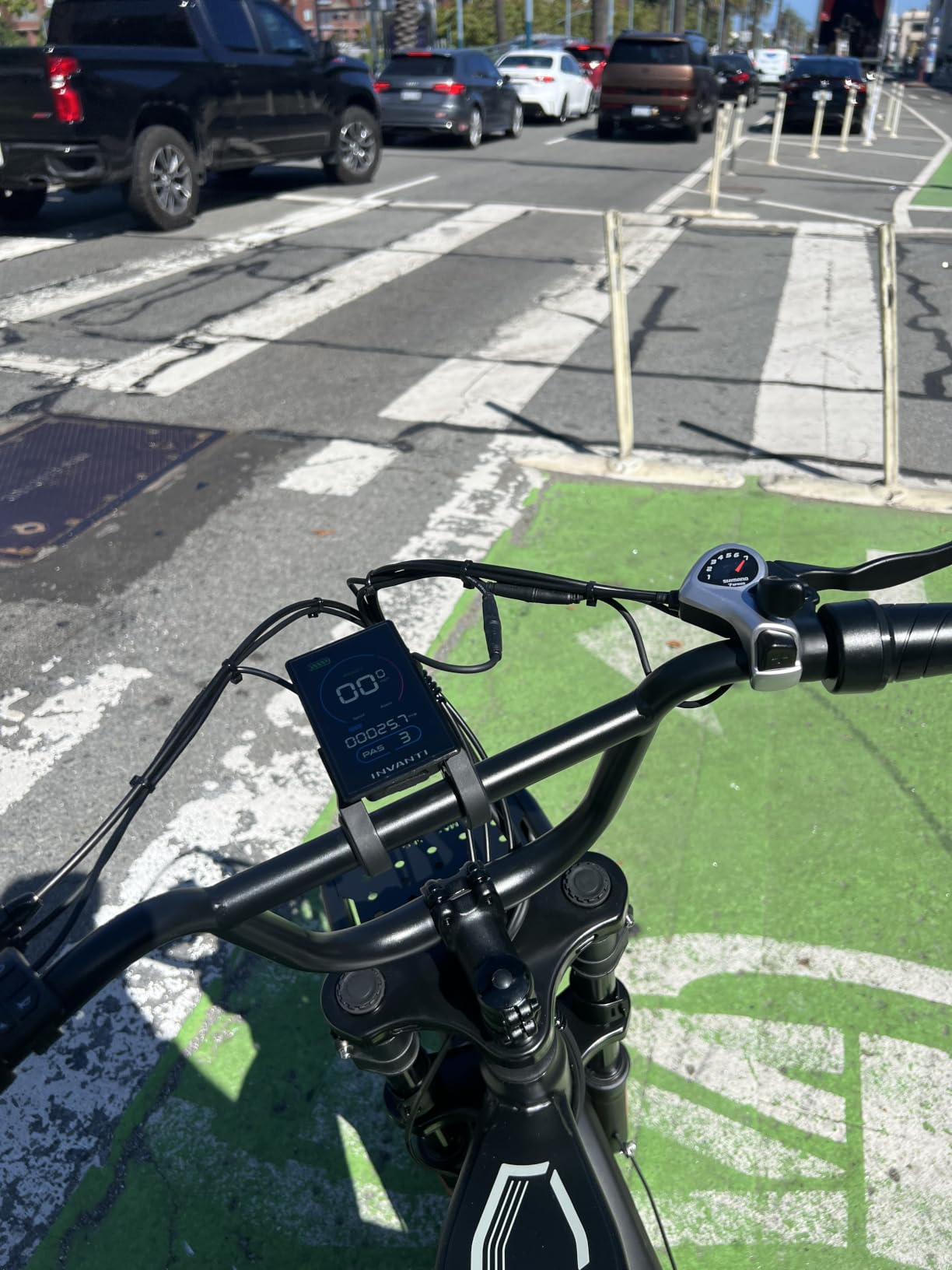
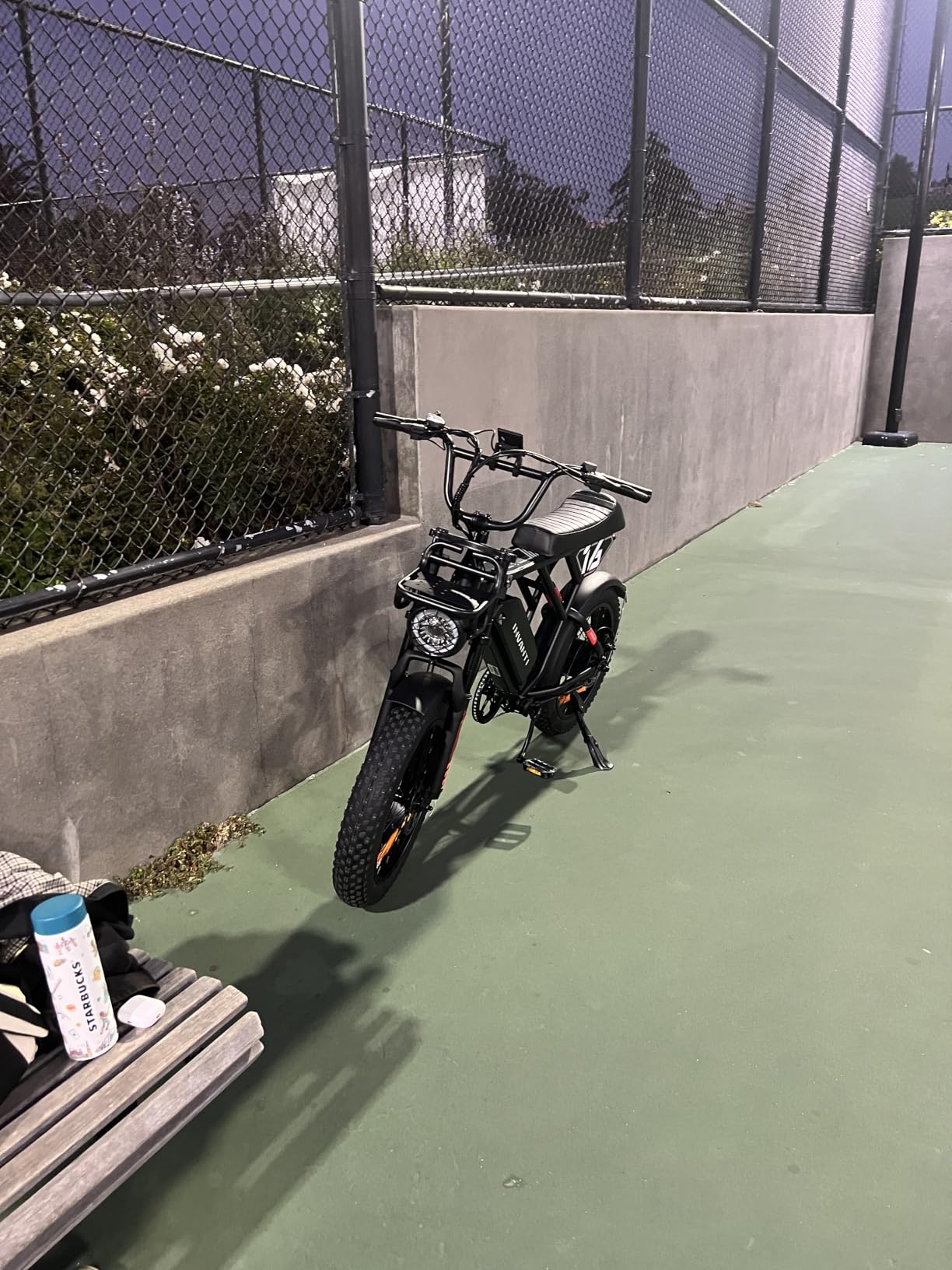
The EB16 is the dune-climb specialist. A claimed 35 degree slope rating is the steepest figure claimed by any bike here, and full front and rear suspension with an aluminum frame helps it hold traction on a loose incline.
It also folds, which is unusual for a bike of this weight class, and one owner reports it fits the back of a Jeep.
The narrow rim problem, stated plainly
Several owners flag that the rim width is narrow for the advertised 20 x 4.0 tire size. That matters on sand specifically: a tire wider than its rim deforms more, which is normally good for floatation, but a marginal rim gives up sidewall stability when you steer on a soft slope.
One detailed one-star review disputes the all-terrain claim outright, reporting thin rims and wobbly handlebars.
Weight, brakes and fit
At roughly 85 to 87 lb this is among the heaviest bikes here, and reviewers describe assembly as a two-person job. Mechanical disc brakes need noticeable hand effort at that weight, so wet packed sand demands earlier braking than you would expect.
The fixed seat height is the most limiting spec for real people. Riders under about 5’6″ and over about 6’0″ will struggle with the fit, and the wide frame and seat leave little thigh clearance in pedal-assist riding.
Who should skip it
Skip the EB16 if you cannot lift 86 lb, or if your height falls outside its fixed seat range. The slope capability is real and so are the fit limits.
7. Jasion Thunder – Best for Heavy Riders and Loaded Beach Days
Jasion Thunder Electric Bike for Adults,1800W Peak,26”x 4”Fat Tire E Bikes,80 Miles with 864Wh Removable Battery Ebike, 30+MPH Max Speed Bicycles,Hydraulic Brakes,Front Suspension,Patent
26 x 4 fat tires
1800W peak, 85 Nm torque
48V 18Ah 1040Wh battery
Dual hydraulic disc brakes
Pros
- Dual hydraulic disc brakes with a stated 2-second stop
- 400 lb load capacity leaves real payload headroom
- 48V 18Ah 1040Wh battery is the second largest here
- 7-speed Shimano drivetrain and integrated turn signals
- Remote security lock and smart ride tracking
Cons
- Front suspension only despite rivals offering dual at similar cost
- Wheel material is listed as plastic
- 6 percent one-star share is among the highest here
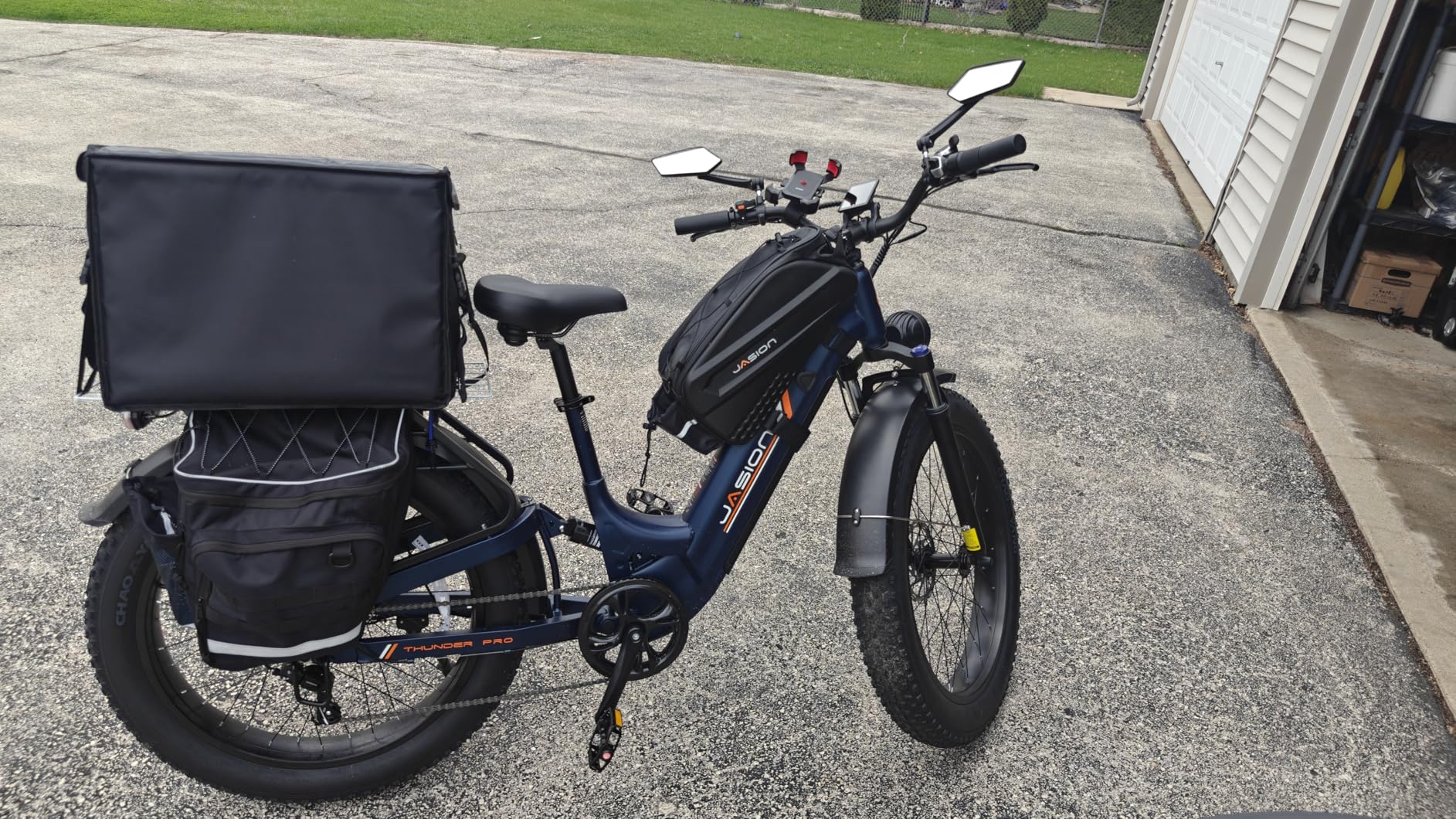
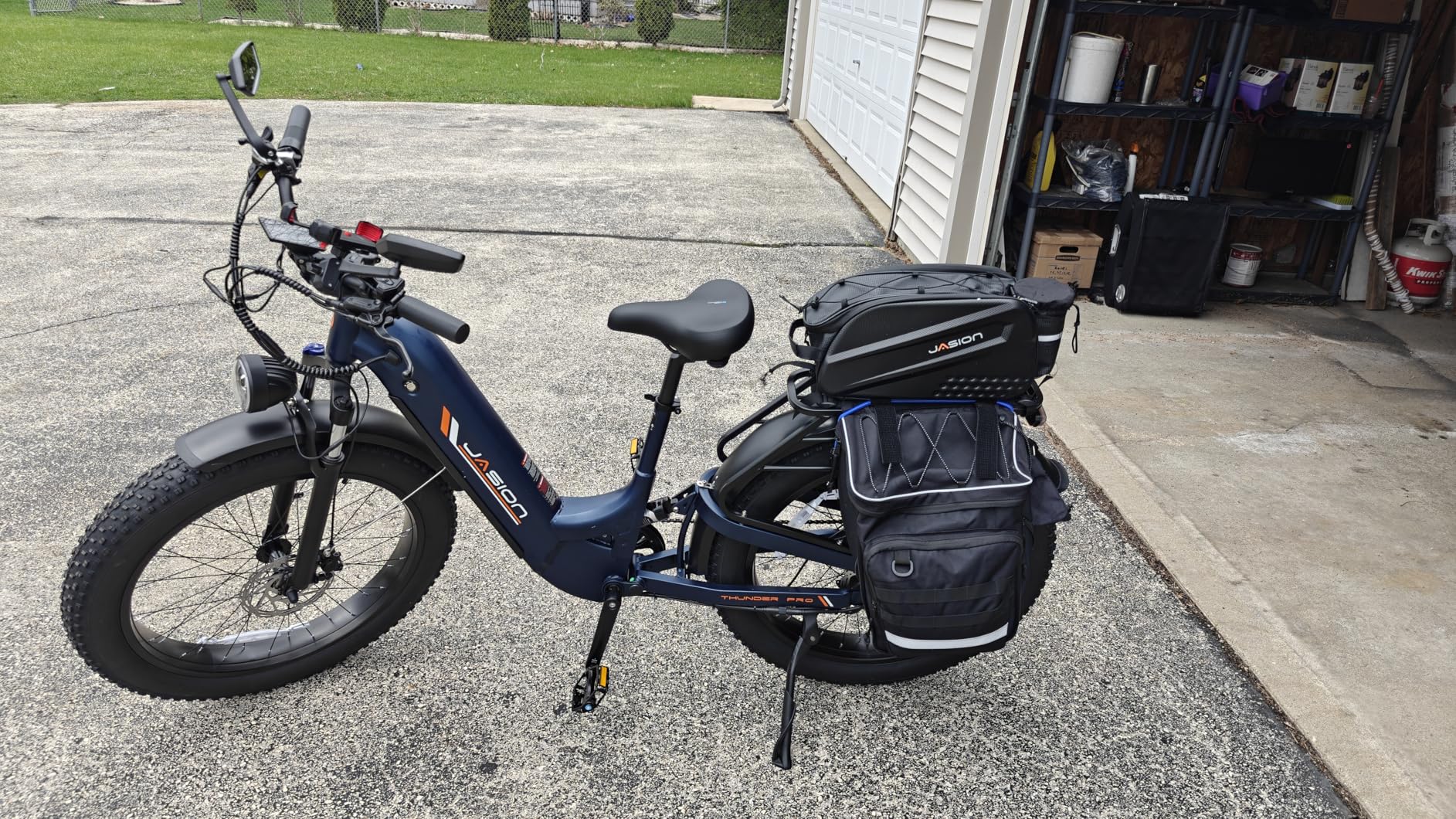
The Thunder is the one I recommend to heavier riders and to anyone hauling a serious load down the beach. A 400 lb capacity rating on an aluminum frame is meaningful headroom, and it is the only bike here with dual hydraulic disc brakes and a published two-second stop.
At 4.4 stars across 138 reviews it sits mid-pack on satisfaction, which reflects a bike that delivers on spec and gives up suspension to do it.
Brakes are the reason to buy this one
Hydraulic discs give you a one-finger lever pull and consistent modulation on wet packed sand, which is exactly where mechanical discs on these bikes demand too much hand force. For a heavier rider on a heavy surface, that is the single most valuable spec on the page.
The 1800W peak motor with 85 Nm of torque is plenty for loaded rides on firm ground, and five assist levels spanning a 10 mph cruise to 28 mph let you pick your own effort.
What the front-only suspension costs
With no rear shock, a choppy sand washboard section transmits straight into the rider. Several cheaper rivals here give you dual suspension instead, so this is a deliberate trade: the Thunder spends its budget on brakes, battery and drivetrain rather than suspension.
Wheel material listed as plastic is unusual for a bike in this class and worth checking against what actually arrives.
Who should skip it
Skip the Thunder if rough surface comfort matters more than braking authority, or if your local rules cap assist at 20 mph and you will not ride the faster modes.
8. TST R004 – Best Load Rating for Coolers and Beach Gear
TST Electric Bike for Adults, 48V 15Ah Battery for Urban Cycling, Fat Tire
20 x 4 fat tires
750W motor, 1500W peak
48V 15Ah waterproof battery
450 lb load at 66 lb weight
Pros
- Lightest bike in this roundup at a listed 66 lb
- 450 lb maximum load is the highest capacity here
- Lockable waterproof anti-theft removable battery
- Front and rear suspension with puncture-proof 20 x 4 tires
- Rear rack included
Cons
- Shortest warranty here at 180 days
- 10 percent one-star share is joint worst in the group
- 750W rated motor is modest next to the peak figures rivals advertise
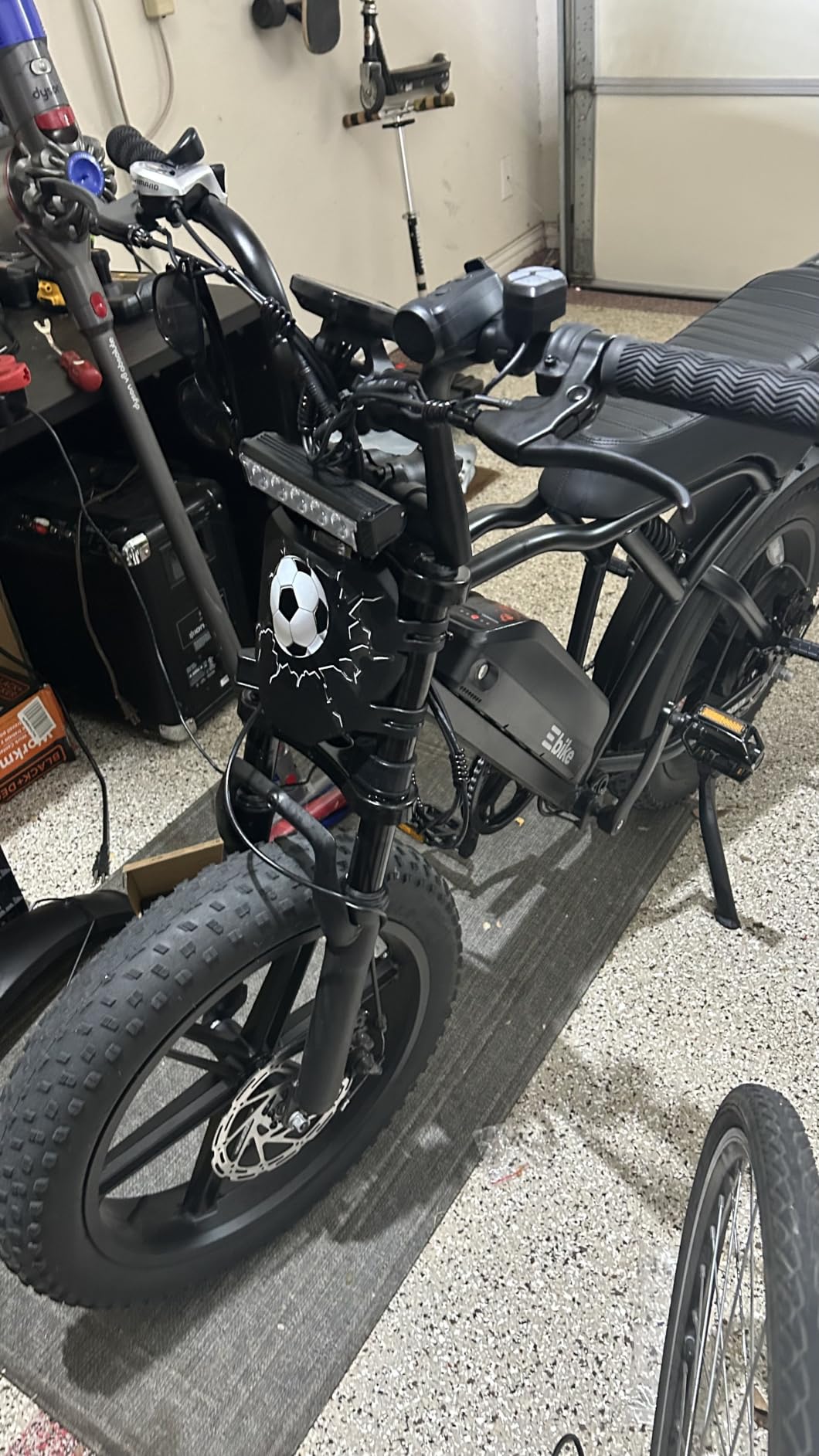
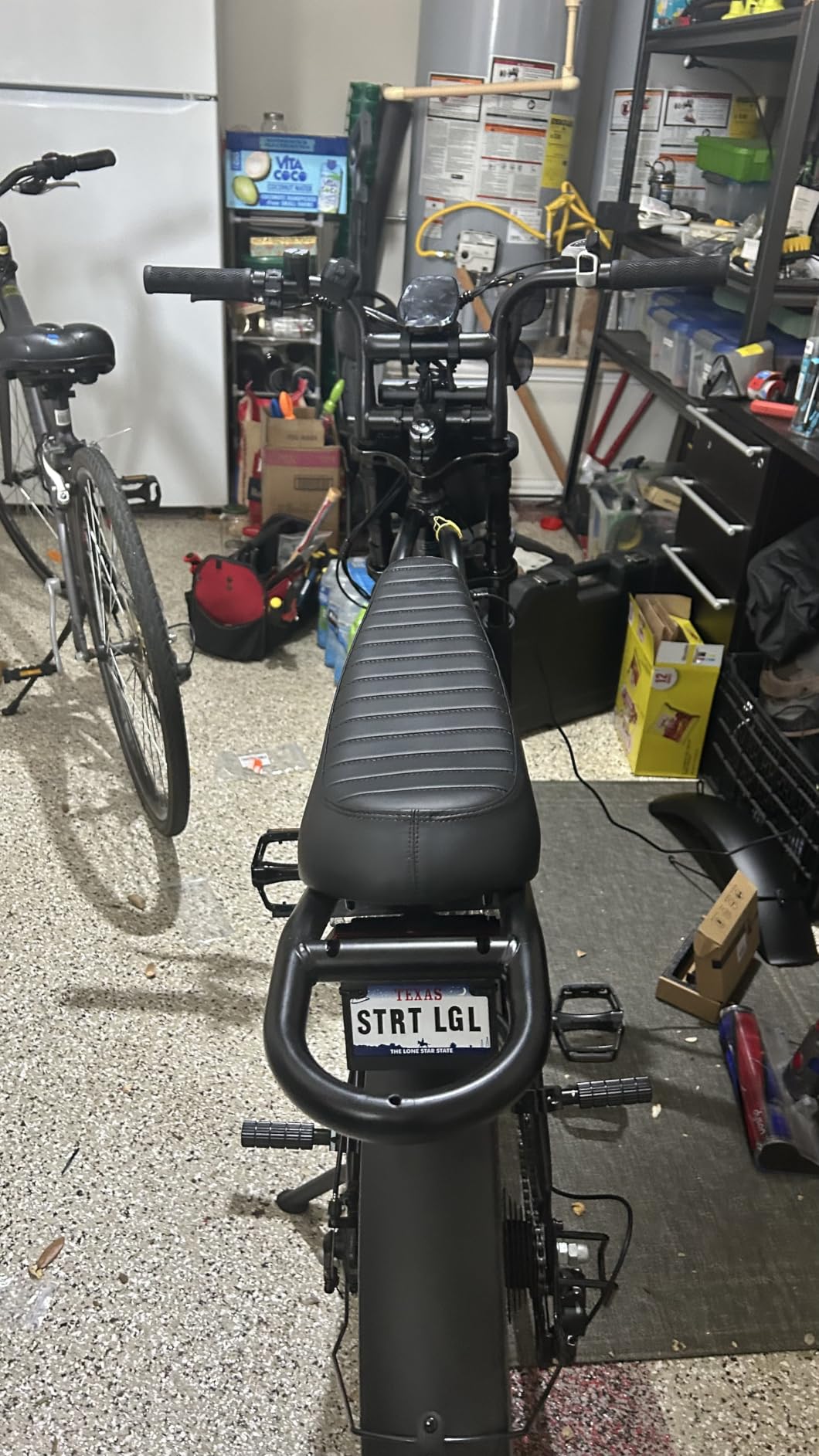
The TST R004 answers the self-recovery question better than anything else in this roundup. At a listed 66 lb it is roughly 20 lb lighter than the heaviest bikes here, and it still carries the highest load rating at 450 lb.
That combination is unusual. A bike you can actually lift and a bike you can load with a full cooler are usually opposites, and this one does both.
Weight as a safety feature
On a beach, the difference between a 66 lb bike and an 88 lb bike is the difference between dragging the front wheel out of a soft patch and dragging the whole bike. Owners who bog down in soft dry sand consistently say the same thing: the bike you can lift is worth more than the bike with more wattage.
Dual suspension and puncture-proof 20 x 4 tires round out a package that feels deliberately built for the recovery scenario.
Where the compromises sit
The 750W rated motor is modest next to the 1500W peak headline, and peak figures say more about the burst than the sustained climb. Brakes are mechanical with a linear pull style, which is less common and harder to find parts for.
The 180-day warranty is the shortest in this roundup by a wide margin. For a bike used near salt water, that is a real gap, and I would treat it as part of the purchase decision rather than a footnote.
Who should skip it
Skip the TST if warranty length matters to you or if you ride steep soft dunes, where the 750W motor will feel the limit before the tires do.
9. URLIFE T5 – Best Full Suspension That Folds for Storage
URLIFE Folding Electric Bike for Adults, 1500W Peak Motor Ebike, 60-80 Miles, 20”x4” Fat Tires with Quad-Link Full Suspension, 7-Speed & LED Display, UL 2849 Certified
20 x 4 fat tires
1500W peak, 80 Nm torque
Quad-link full suspension
UL 2849 certified
Pros
- Quad-link full suspension is rare at this tier
- 1500W peak with 80 Nm of torque handles 30 degree slopes
- UL 2849 certified electrical system
- Turn signals plus front and rear lights
- Folds while still carrying a 400 x 190 mm rear rack
Cons
- At about 79 lb the folded bike is too heavy to carry in one hand
- Specification listing conflicts
- showing 250 watts rated against a 1500W peak headline
- Alloy steel wheels and a carbon steel frame add weight
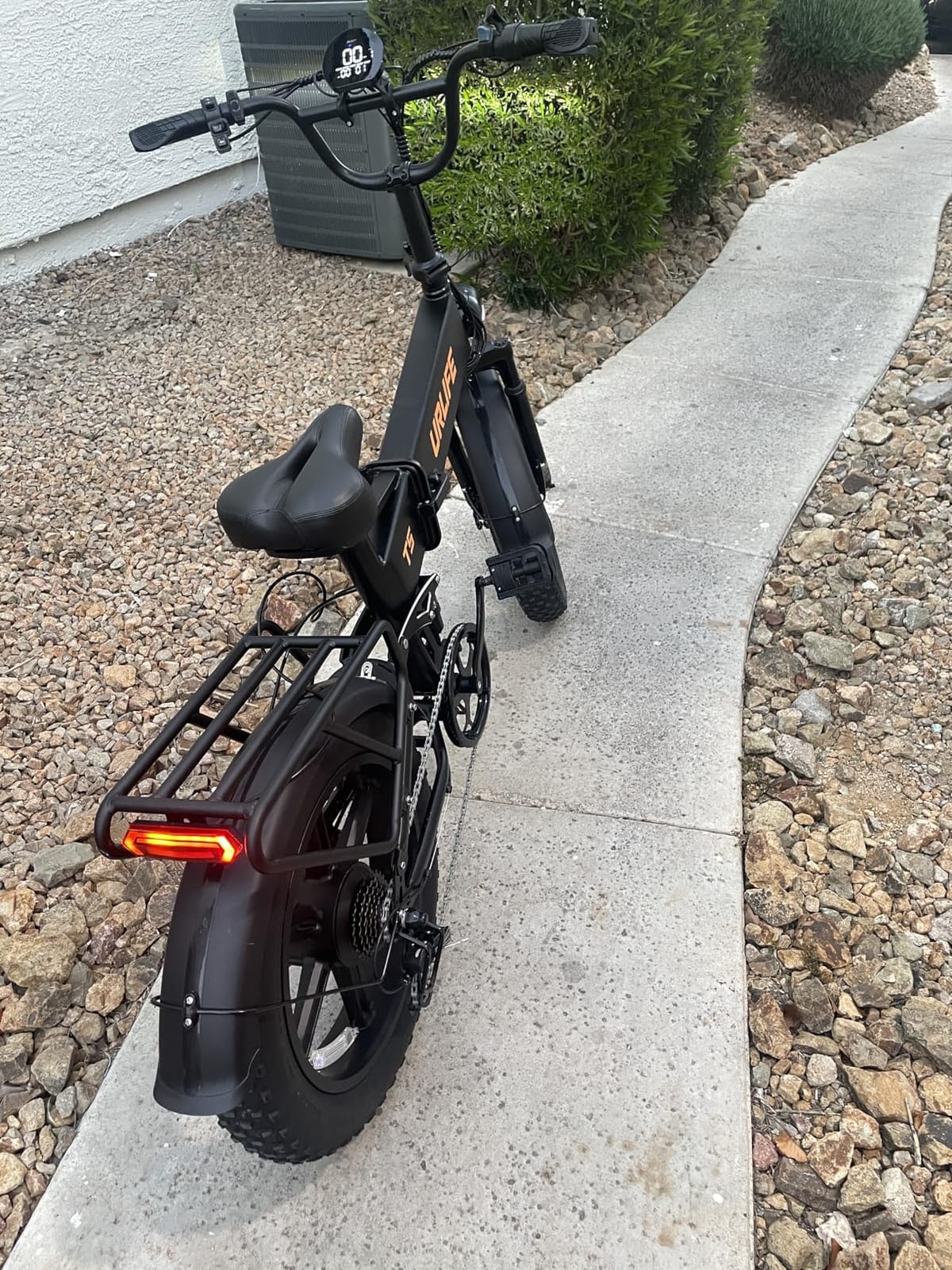
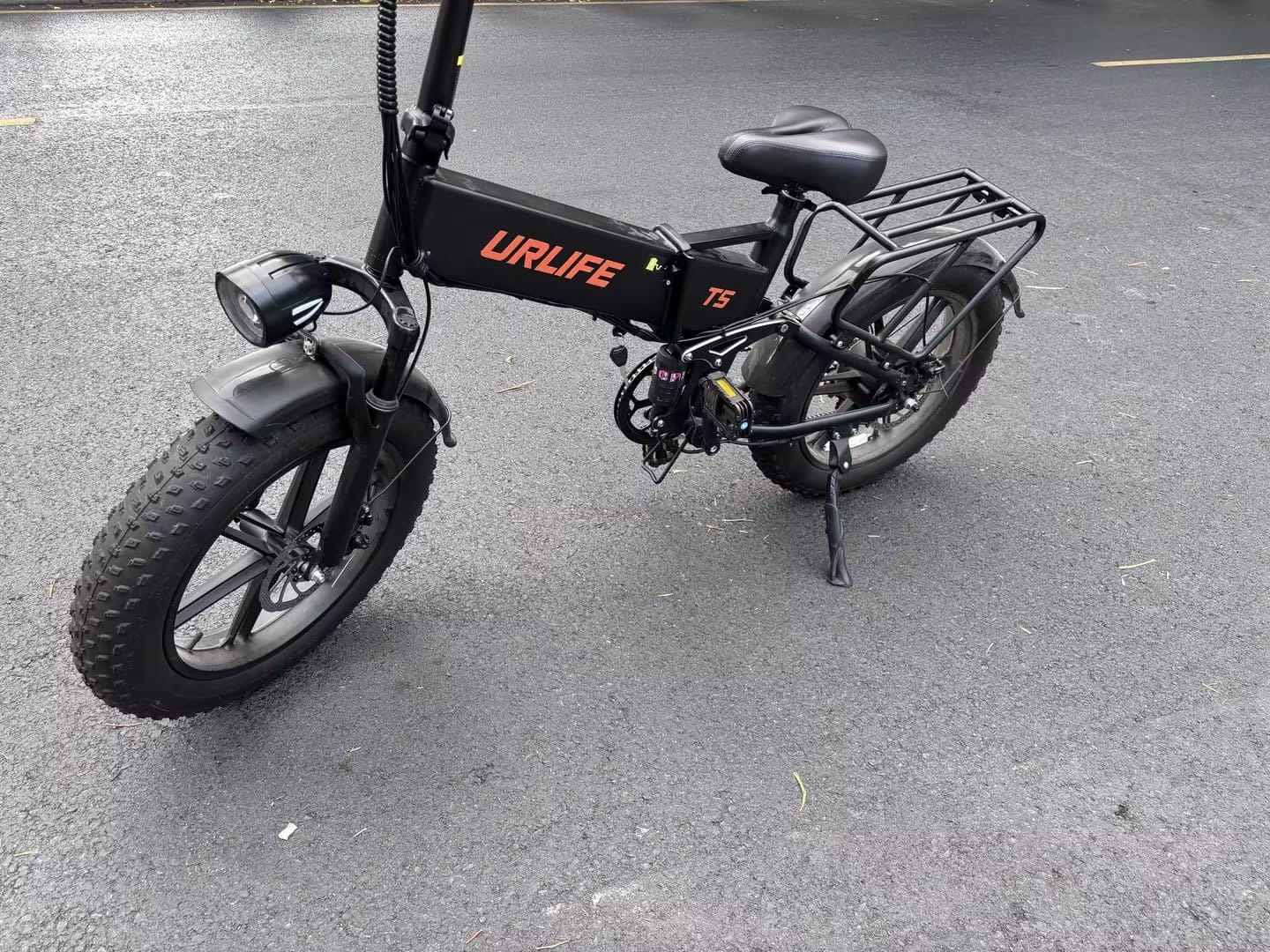
The T5 is the only bike here that pairs a folding frame with genuine quad-link full suspension, and on an uneven dune approach that combination is worth more than raw peak wattage. Suspension keeps the rear wheel in contact with loose ground instead of bouncing over it.
It is also one of very few here with turn signals and full UL 2849 certification on an electrical system.
Suspension versus weight
The quad-link rear design absorbs chop and keeps traction on soft surfaces, but the price is a 36 kg frame that folds without becoming light. At roughly 79 lb, this is a bike you fold to store, not one you carry up a flight of stairs.
Alloy steel wheels and a high carbon steel frame explain most of that mass, and both are worth thinking about in salt air.
Specification conflicts to check
The product details list rated power as 250 watts while the headline claims 1500W peak. Before buying, confirm with the seller which figure applies to the unit you receive, because the 80 Nm torque figure is the one that matters on sand.
The 4.1 star rating is tied for lowest here, with a relatively high three-star share suggesting mixed experiences rather than a single recurring fault.
Who should skip it
Skip the T5 if you need to carry the bike regularly or if you ride wet packed sand and want predictable braking, since the disc brakes here are mechanical.
10. Vivi ACE01 – Best Torque-Sensor Ride on Firm Sand
Vivi ACE01 Electric Bike for Adults,26″ x 4.0 Fat Tire Ebike,1500W Peak Motor Torque Sensor Electric Mountain Bike,20MPH Electric Bicycle with 48V 15AH Battery,Hydraulic Brake,Certified to UL2849
26 x 4.0 fat tires
750W rated, 1500W peak, 90 Nm torque
Torque sensor assist
48V 15Ah 21700 battery
Pros
- Torque sensor delivers smoother proportional power than cadence sensors
- Dual hydraulic disc brakes at a mid-range price
- UL 2849 and UL 2271 SGS certification
- 26 x 4.0 tires on an aluminum frame at 72 lb
- Fits riders from 5 ft 3 in to 6 ft 5 in
Cons
- Front suspension only with no rear shock
- 330 lb load capacity is the lowest in this roundup
- Specification text is incomplete on motor speed
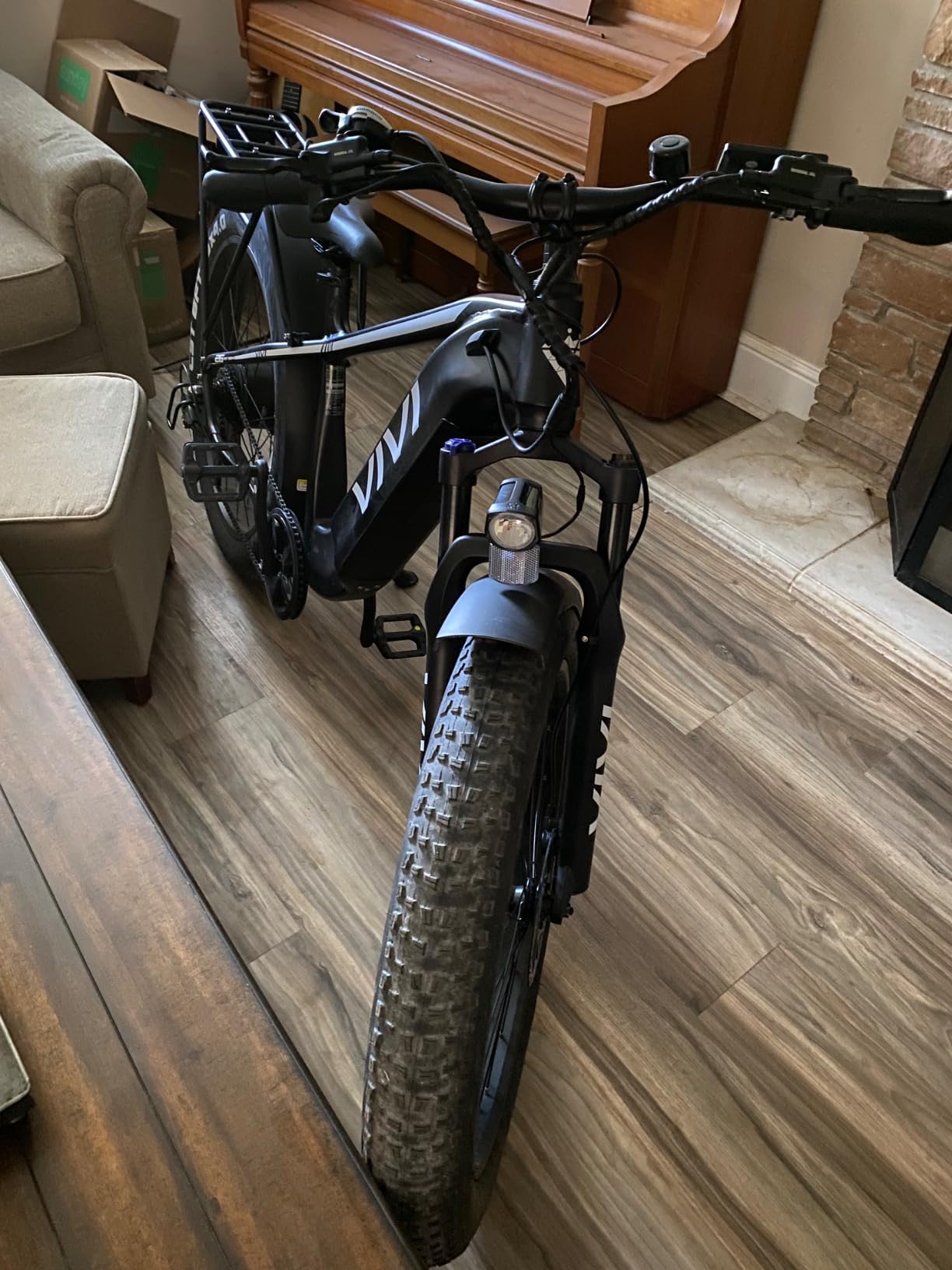
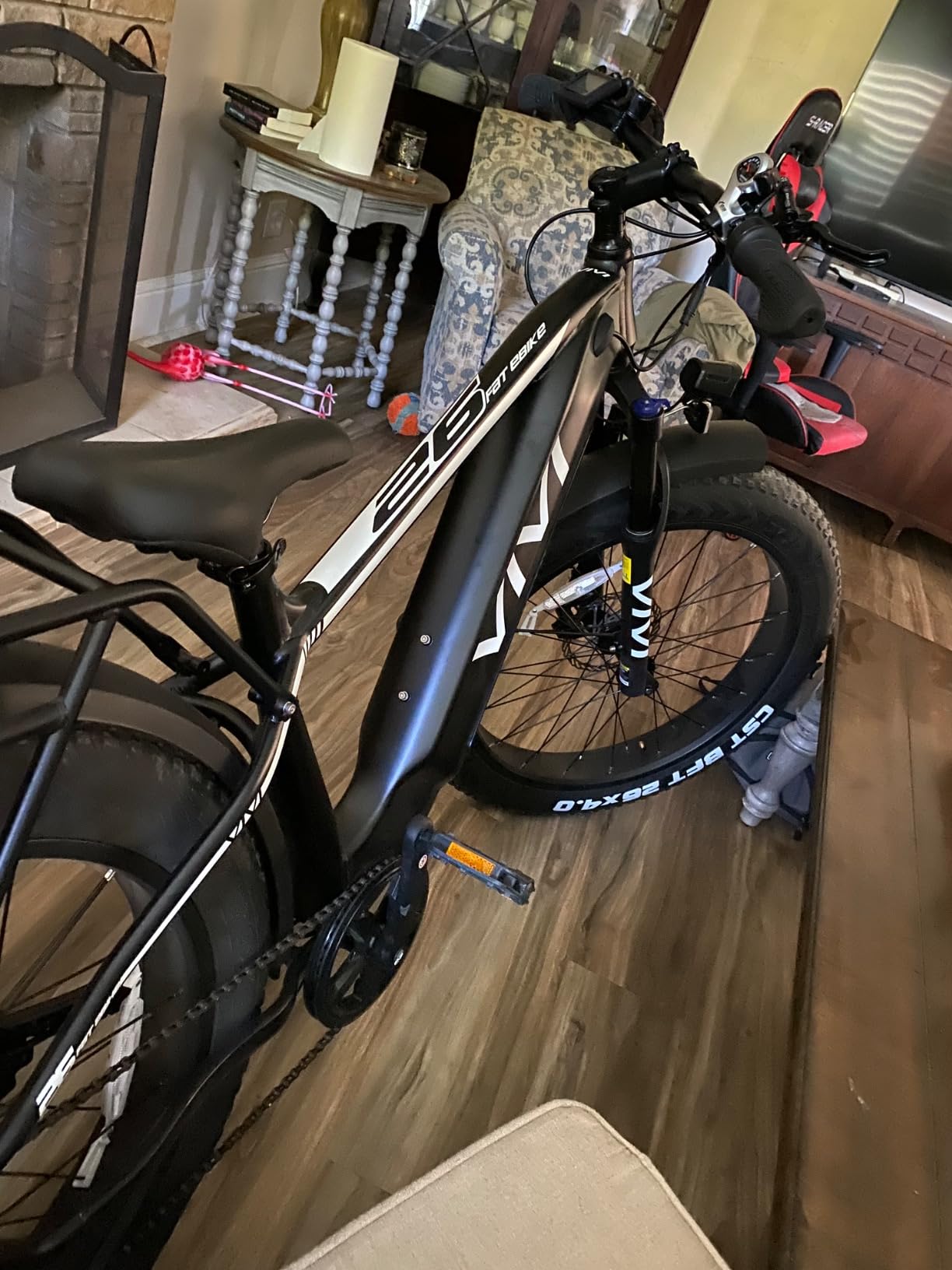
The ACE01 is the best component package at this tier, and the torque sensor is the feature that separates it. A torque sensor measures how hard you push on the pedals and dispenses power proportionally, so assist ramps in the way your legs expect instead of switching on at a fixed cadence.
On loose ground that smoothness matters, because abrupt power delivery is what makes a rear wheel dig in rather than drive through.
Why torque sensing beats cadence sensing on sand
With a cadence sensor, a heavy rider on a 26 x 4.0 tire can produce low enough cadence that assist never engages, then get a sudden surge the moment the wheel spins up. On sand that surge is exactly what you do not want. A torque sensor reads effort directly and feeds power in proportion, so the rear wheel keeps turning smoothly instead of spinning out.
The 21700-cell 48V 15Ah battery charges in 4 to 6 hours on a 3A charger, on or off the bike.
Brakes and the limits
Dual hydraulic discs at this price point are unusual, and they are the right call for the wet packed band where stopping distance matters most. Front suspension only means no rear shock over a sand washboard, and the 330 lb load rating is the lowest here, which matters if you plan to carry a passenger or a heavy cooler.
Who should skip it
Skip the ACE01 if you are a heavy rider, ride with a passenger, or plan long days on rough sand where a rear shock would earn its keep.
11. ESKUTE C300R-ST – Best Step-Through Bike for Long Days Out
ESKUTE Electric Bike for Adults – 48V20.8Ah 86 Miles Battery Commuter, 32+MPH, Peak 1800W Brushless Motor, 26×4.0 Fat Tire Step-Thru Cityrun Ebike, 8-Speed, Full Suspensions E-Bike, Blue
26 x 4.0 fat tires
1800W peak, up to 32 mph
48V 20.8Ah 998Wh battery
Step-thru with full suspension
Pros
- Largest battery in the roundup at 998.4Wh with a claimed 86 miles on PAS 1
- Step-through frame suits riders who cannot swing a leg over a top tube
- Only 8-speed bike here for finer gear steps on varied sand
- Full front and rear suspension on a step-thru frame
Cons
- Heaviest-feeling bike here
- with owners reporting they need help lifting it
- Handlebars repeatedly loosen and go wobbly
- Display is hard to read in direct full sun
The C300R-ST is the longest-day bike. A 998.4Wh removable battery with a claimed 86 miles on pedal assist level 1 means you can ride the shoreline in the morning and still have charge for the afternoon, and the under-mounted battery keeps the weight low and centered.
It rates 4.6 stars, the joint highest here, though the 48 written reviews are the fewest in the roundup, so long-term durability evidence is limited.
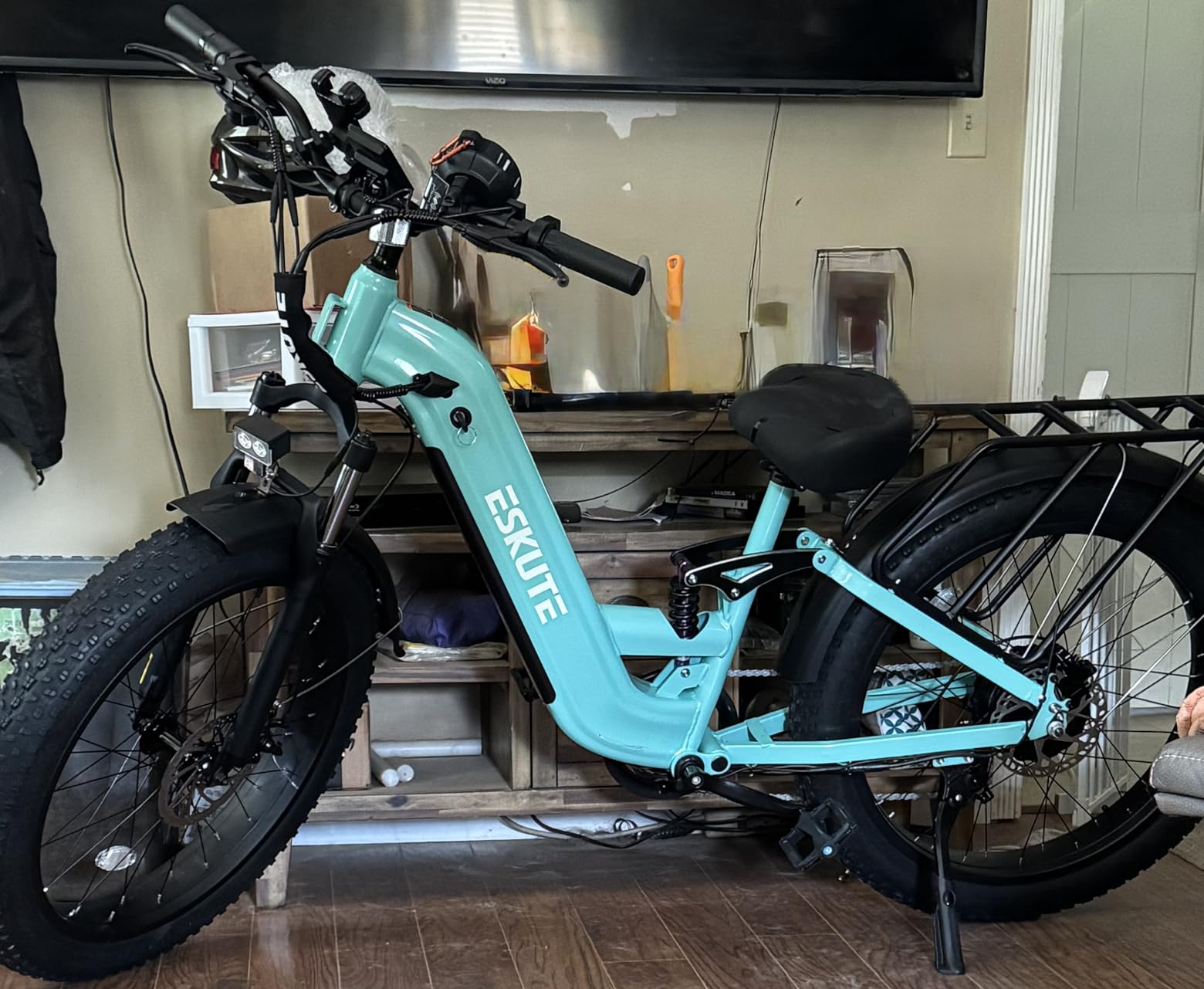
Step-through access and 8-speed gearing
The step-through frame is the accessibility feature here, and combined with full front and rear suspension it makes this the most comfortable bike for riders with limited hip mobility. The 8-speed drivetrain gives finer steps than the 7-speed norm, which pays off on the transition from hardpack to soft ground.
NFC card unlocking replaces a key, and the large central display shows the riding data you need mid-ride.
Weight and assembly are the weak points
Owners describe it as the heaviest-feeling bike here and say they need help lifting it. Assembly is the least pleasant part of the purchase: instructions lack close-up detail, a required frame bracket arrived loose in the box, and the front wheel is easy to install backwards.
The display is difficult to read in direct full sun, which matters on a beach. Some owners also reported unanswered phone support.
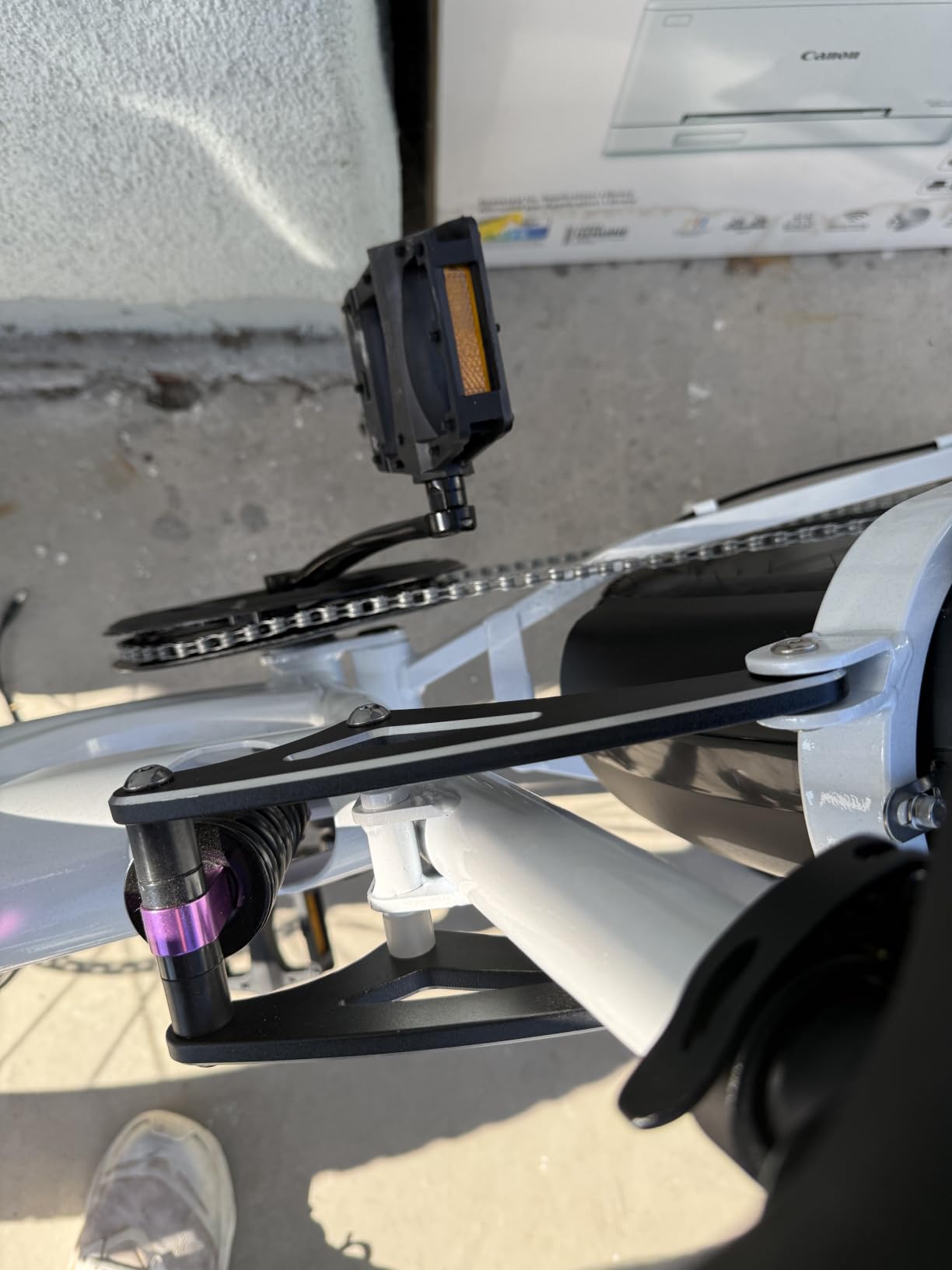
Who should skip it
Skip the C300R-ST if you plan to carry the bike, if you need a compact fold, or if you want the reassurance of a long owner history. The spec sheet is the most impressive here and the evidence base is the thinnest.
12. EOEOTWO E01 – Best for Speed Across Firm Hardpack
EOEOTWO Electric Bike for Adults, 26″ Fat Tire Ebikes, 48V 15Ah
26 x 4.0 fat tires
1500W peak motor
48V 15Ah 720Wh battery
UL 2849 certified
Pros
- Owners report 32-36 mph in all-electric mode on flat ground
- Handles soft sand and light trails well with smooth shifting under power
- SGS-tested UL 2849 certified electrical system
- Heavy-duty rear rack
- fenders and LED headlight included
Cons
- Front suspension only with owners asking for a rear-suspension version
- One review reports the battery and charger shorted each other out
- 33 kg weight is heavy despite the aluminum frame
The E01 is the fastest bike on firm ground in this roundup by owner report, with several riders logging 32 to 36 mph in all-electric mode on flat hardpack. For riders whose beach route is a firm access road rather than loose sand, that is a real advantage.
It is also the only bike here where reviewers describe the sand and trail handling favorably while simultaneously reporting serious top speed, which is unusual.
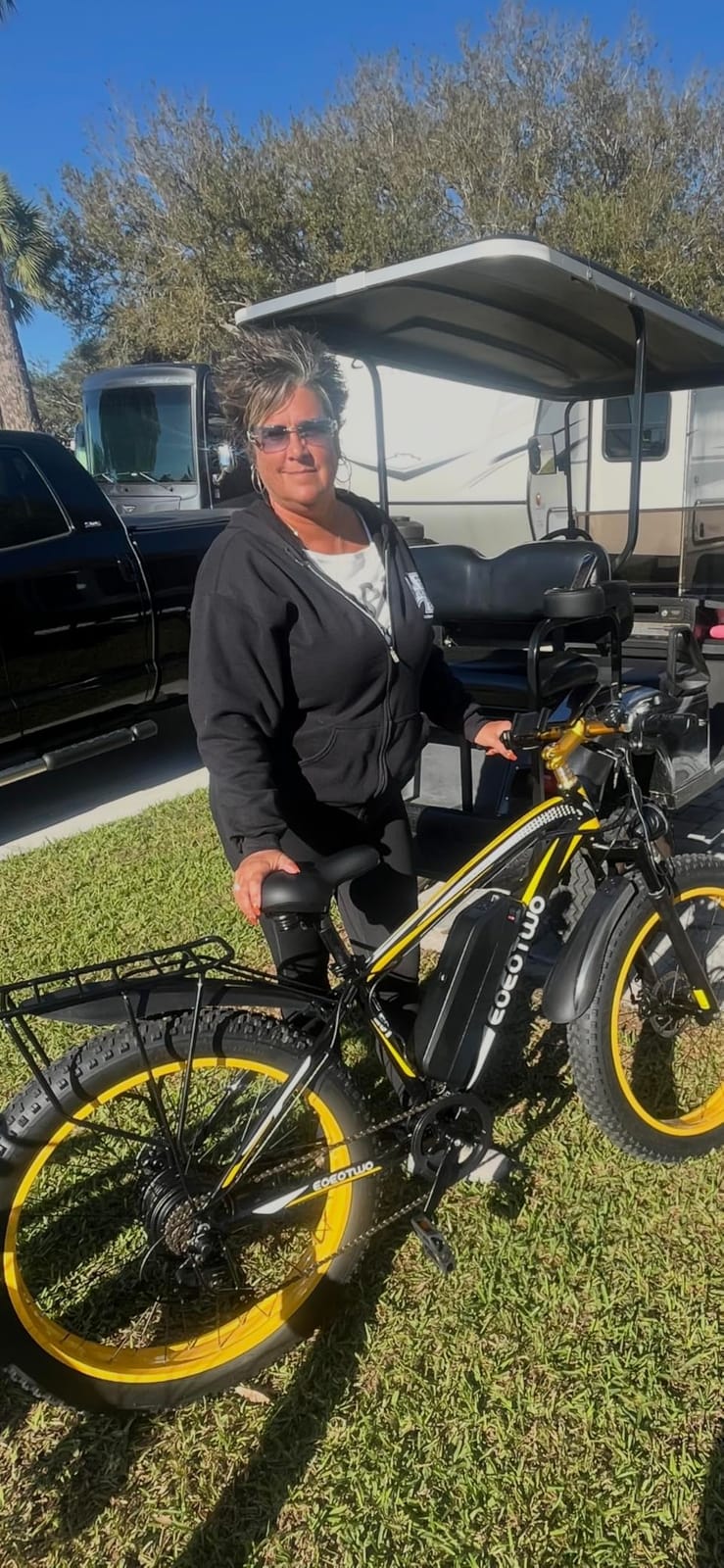
Accessories that come in the box
A heavy-duty rear rack, front and rear fenders and a bright LED headlight are all standard, which saves money and time compared with buying them separately. Five riding modes cover throttle, five levels of pedal assist, walk assist, cruise control and plain bicycle mode.
Two sets of keys lock both the bike and the battery, and the battery has a red and green charge status light.
Certification and the durability question
The electrical system is SGS-tested and UL 2849 certified, which matters for coastal storage. Against that, one detailed review describes a battery and charger failure within three uses, and the 9 percent one-star share is driven largely by battery and support complaints rather than riding issues.
At 33 kg the bike is heavy for an aluminum frame, and most owners plan to swap the stock tires since e-bike rubber is inexpensive.
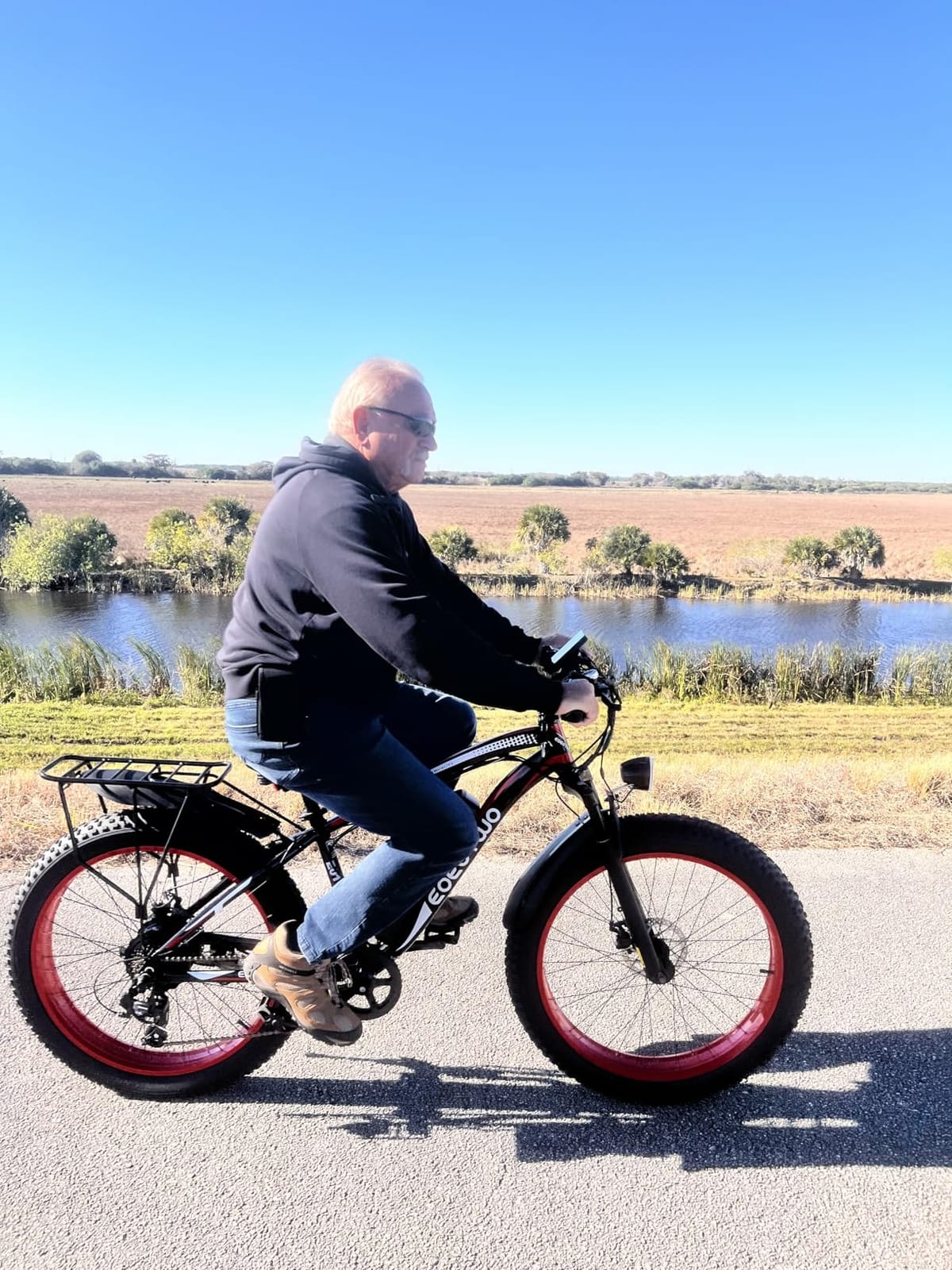
Who should skip it
Skip the E01 if wet packed sand braking is your main concern or if you need rear suspension, and weigh the single reported battery failure carefully against the otherwise strong owner sentiment.
Can You Ride a Fat Tire E-Bike on the Beach? Rules, Classes and Sand Types
Yes, but only where the rules allow it, and only on a surface that can carry the bike. Legally, e-bikes fall into three classes: Class 1 is pedal assist up to 20 mph with no throttle, Class 2 adds a throttle up to 20 mph, and Class 3 allows assist up to 28 mph. Most bike paths and boardwalks permit Class 1 and Class 2 only.
Beyond the class system, individual municipalities and beach districts pass their own ordinances, and many prohibit motor vehicles on the sand above the high-tide line during nesting season. Check your specific beach before you buy, not after.
Physically, the answer is also surface-dependent. Firm hardpack and packed sand are fine for any bike here. Soft dry sand needs wide tires and real torque. Deep loose dry sand defeats even a well-equipped e-bike, and walking is the correct answer rather than a bigger purchase.
Several riders describe the same pattern on their home routes: a known line with firm ground is rideable every year, while an unfamiliar route is where bikes get abandoned. Before your first ride, walk the route and find that line.
How to Ride an E-Bike on Sand Without Bogging Down
- Keep momentum. Sand is far easier to cross at speed than from a standstill. Start well before the soft patch rather than pedalling into it.
- Stand up over rises. Shift your weight off the saddle for dune crests so the wheels stay loaded and the rear wheel keeps driving instead of spinning.
- Use small throttle taps. Short, frequent inputs keep the rear wheel spinning smoothly. Full twists carve a hole and bury the tire.
- Turn wide and early. Fat tires steer slowly and a late input on loose ground throws the front end. Begin the turn well before you need it.
- Never deploy the kickstand. Center-mount stands sink into soft sand and drop the bike. Get off and walk it instead.
- Lower pressure before you go. Dropping to the low end of the tire range widens the contact patch and reduces rolling resistance. You will need a floor pump with a wide chuck, not a track pump.
Salt-Water Care: Washing and Storing After Every Beach Ride
Salt air and salt spray attack chains, bearings, cable housings and electrical connectors faster than most riders expect. Riders consistently name chain and bearing corrosion as the most common long-term complaint about coastal e-bikes. Five steps, every time.
- Rinse immediately with fresh water. Do it at the beach car park before you load the bike, and pay attention to the chain, cassette, derailleurs and motor housing.
- Clean the drivetrain. Wipe the chain down, then re-lube it with a wet-weather chain lube rated for salt and sand environments.
- Check for grit in pivots and bearings. Grit in a folding hinge or suspension pivot is the fastest way to wear it out. Wipe and lubricate before storage.
- Dry before you store it. Air dry the frame and spin the wheels to clear water from the hubs. Never store a wet bike in a sealed bag or shed.
- Remove the battery and store it indoors. A removable 48V pack carried inside near salt air survives far longer than one left in a garage or vehicle. Charge it away from direct sun.
A freshwater rinse bottle and wet-weather chain lube cost far less than a bearing replacement, and if you are also hauling gear to the shoreline a beach cart guide is a useful companion read. For shade and a base camp, our beach canopy picks cover that end of the day.
How to Choose a Fat Tire E-Bike for the Beach
Tire width: 3 inches versus 4 inches
Width is the floatation variable, and floatation is what lets a bike cross sand at all. At low pressure, a 4 inch tire deforms and spreads the rider’s weight over a much larger contact patch, so the sand never concentrates enough load under the wheel to drag it down. A 3 inch tire works fine on hardpack and starts to struggle where the surface turns loose.
Tire pressure is the single biggest adjustment
Fat tires run far below car pressures, typically in a 6 to 15 PSI operating range. Lower pressure widens the contact patch and lowers rolling resistance, which means more distance per pedal stroke in sand. Going too low risks pinch flats and rim damage, so check what the rim is rated for before you drop the pressure in the sand.
Torque matters more than peak wattage
Wattage tells you how hard the motor bursts. Torque in Nm tells you how much force reaches the rear wheel, which is what decides whether the wheel spins and drives or slips and digs. On sand, read the torque figure first. Bikes advertising 1800W peak with 80 Nm are less sand-capable than a 750W motor with 110 Nm.
Battery: treat published range as a ceiling
Every range number on a spec sheet is measured on pavement, usually at a moderate assist level, with an average rider and no headwind. On soft sand, with rolling resistance multiplied by tire deformation and a sea breeze on your back, expect substantially less. Riders describe a large drop on soft ground, so if your day depends on distance from the car park, size the battery up rather than trusting the claim.
20 inch versus 26 inch wheels
Twenty-inch wheels with 4 inch tires dig into loose ground that a 26 inch wheel rolls across, but they are lighter, cheaper, and fold or store far more easily. Twenty-six inch wheels give better floatation and ground clearance at the cost of weight. Riders switching to fat tires report that the larger contact patch is what makes firm hardpack feel predictable, and that 20 inch wheels feel nervous in genuinely soft sand.
Brakes: hydraulic over mechanical for wet packed sand
Wet packed sand is firm to stand on but heavy and clinging, and it lengthens stopping distances. Mechanical disc brakes need visibly more hand force than hydraulic discs under those conditions, which is a real concern on a heavy bike. If your route crosses the wet band, hydraulic discs are worth paying for.
Certification and weight: the coastal specifics
UL 2849 certifies the whole electrical system, covering battery, charger, controller and wiring together. UL 2271 covers the battery cells alone. For a bike stored near salt air, whole-bike certification is the one that matters, because it tests the parts that corrode. On weight, read the published figure as a recovery question: can you lift this bike out of a soft patch by yourself, and can you get it up the dune afterward? On a beach, that is a safety factor, not a spec.
Frequently Asked Questions
Can you ride a fat tire electric bike on the beach?
Yes, on firm hardpack, packed sand and wet sand near the waterline, where any of these bikes handles easily. It gets harder on soft dry sand above the tide line, where tire width, low pressure and motor torque decide whether you make it through. Deep loose dry sand defeats even a well-equipped e-bike, and walking the last stretch is the correct answer. Legally you also need to check local rules, since many beaches restrict e-bikes by class or ban them entirely.
What is the best fat tire electric bike for beach riding?
The Aipas M1 Pro is the best all-round choice. Its 26 x 4 inch tires, 110 Nm of torque, dual suspension and 500 lb load rating handle the widest range of beach surfaces, from hardpack to wet packed sand to dune access roads. The Vivi ACE01 is the pick for smooth pedal assist, and the TST R004 is the one to buy if being able to lift the bike out of soft sand matters more than raw power.
Are fat tire e-bikes better than regular e-bikes on sand?
Yes, decisively, and the reason is floatation rather than grip. At low pressure a 4 inch tire deforms and spreads the rider’s weight across a much larger contact patch, so the sand never concentrates enough load under the wheel to drag it down. A narrow-tire e-bike digs in and stops almost immediately on anything softer than a paved path. The difference is dramatic on soft sand and modest on firm hardpack, where almost any bike works.
What tire pressure should I run on sand?
Run fat tires near the low end of their rated range on sand, typically within a 6 to 15 PSI operating window. Lower pressure widens the contact patch and reduces rolling resistance, so you travel further per pedal stroke. Going too low risks pinch flats and rim damage, so confirm what your rim is rated for. You will need a floor pump with a wide chuck, since a standard track pump will not seat properly on a fat tire valve.
Should I get 20 inch or 26 inch wheels for beach riding?
Choose 26 inch if you ride loose or soft sand, because the larger wheel rolls over ground that 20 inch wheels dig into, and the bigger contact patch feels predictable on firm hardpack. Choose 20 inch if you need the bike to fold, store in a small space, or carry on public transit, since they weigh less. Several riders report 20 inch wheels feeling nervous in genuinely soft sand, which is the deciding factor for most beach riders.
How do I clean an electric bike after riding on the beach?
Rinse it with fresh water immediately at the car park, paying attention to the chain, cassette, derailleurs and motor housing. Wipe and re-lube the chain with a wet-weather lube, clear grit from folding hinges and suspension pivots, then air dry the frame before storing. Finally, remove the battery and keep it indoors, because a pack carried inside near salt air lasts far longer than one left in a garage or vehicle.
Final Verdict: Which Fat Tire E-Bike Fits Your Beach
If your beach is firm hardpack and packed sand with a ramp at the end, the Aipas M1 Pro is the best fat tire e-bike for beach riding overall. Its 110 Nm of torque and 26 x 4 inch tires cover more ground than anything else here, and the 500 lb load rating leaves room for beach gear.
If soft dry sand is your surface, stay on a 26 inch bike with real torque, and if you can lift your bike out of a bog, take the TST R004, which pairs the lowest weight here with the highest load rating. If you need the smoothest assist on firm ground, the Vivi ACE01 is the one with the torque sensor and hydraulic brakes. If the bike has to fit in a car, the Wooken folder is the practical answer, and the URLIFE T5 if you also want real rear suspension.
Before any of that, walk the route and find out whether the sand is hardpack, packed or genuinely loose. If it is the last one, no bike on this list is the right purchase.
Leave a Reply