
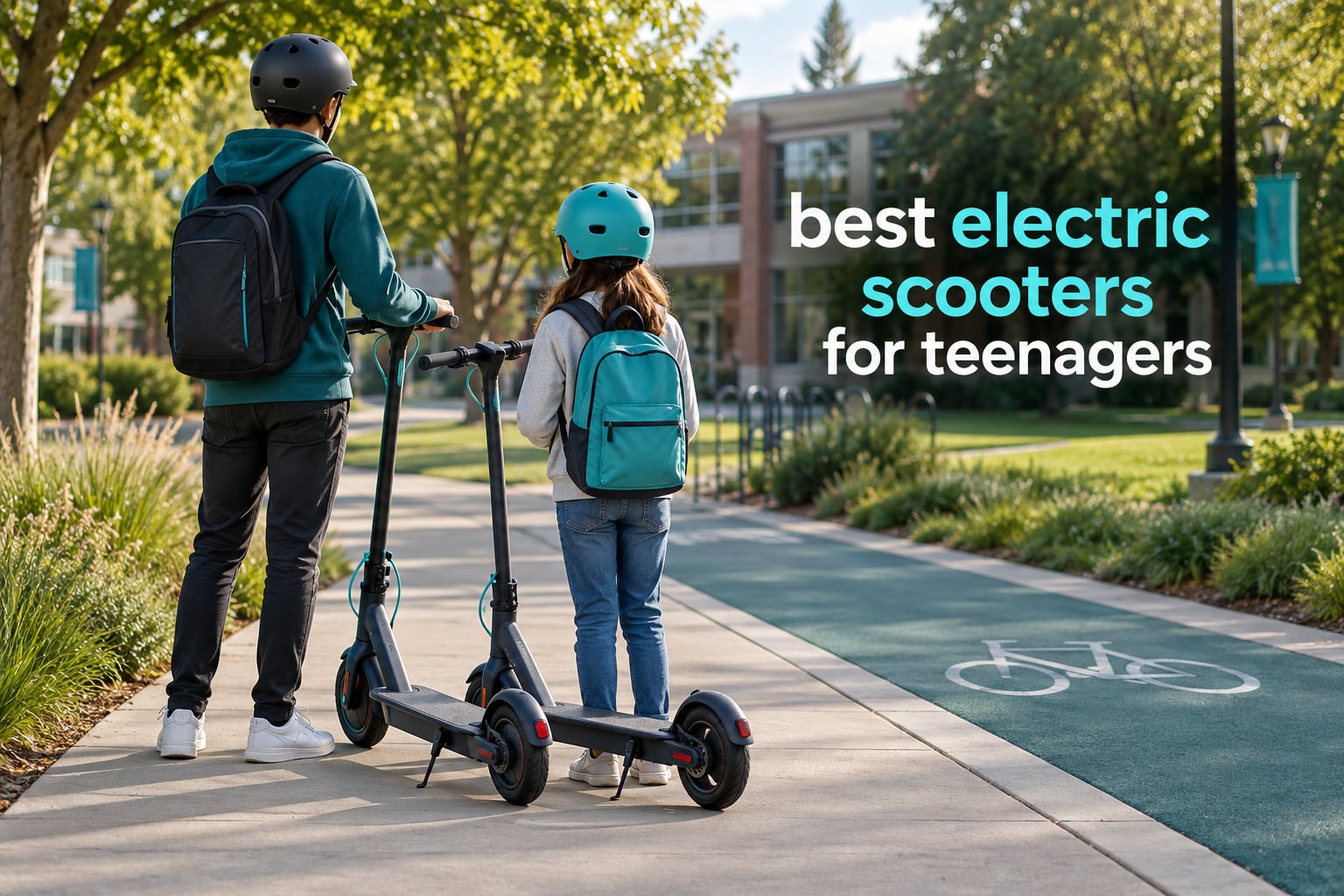
Short answer: the Hiboy S2 Pro is the best electric scooter for teenagers overall in 2026, because a 500W hub motor, 10-inch solid tires, dual braking and UL 2272 certification give a growing rider everything that matters, and its 5,700+ owner reviews give you an unusually honest picture of what it is like a year later.
That said, “best” changes completely depending on who is riding it. A 12-year-old who has to carry the scooter up three flights of stairs and a 17-year-old who wants a real weekend range are not shopping for the same machine, and most roundups pretend otherwise. I have gone through ten models, weighed the spec sheets against the complaints owners actually report, and sorted them into age tiers so you can jump straight to the one that fits.
My selection criteria were deliberately unglamorous. Can a teenager actually lift this thing onto a bus or into a car trunk? Does the real-world range match the number on the box? Are the brakes strong enough to stop a 150-pound rider at the speed the motor allows? And is the battery UL 2272 certified, because that is the standard that exists specifically to keep lithium packs from catching fire in a kid’s bedroom.
Two things shaped almost every judgment below. First, advertised range is a laboratory number, and the gap between it and what riders get is the single most common complaint in this category. Second, several scooters marketed for teens are simply too fast or too heavy for a younger rider, which is why every pick below carries a stated age tier and a stated max load.
If you want the wider market covered, we also track electric scooters under 500 and electric scooters for adults in separate guides, because the models that top adult lists are frequently wrong for a 13-year-old.
Our Top 3 Picks After Comparing Every Scooter in This Guide
The Hiboy S2 Pro takes the top slot on the strength of its motor and its support network. The Gotrax GXL V2 wins on weight, at 27 pounds it is one of the few genuinely carryable options here. The Hiboy S2 Lite is the one to look at if the rider is on the younger end and speed is the thing you most want to control.
Comparing Every Teen Scooter on Speed, Range, Weight and Age Fit
| Product | Specs | Action |
|---|---|---|
 Hiboy S2 Pro Hiboy S2 Pro |
|
Check Latest Price |
 Gotrax GXL V2 Gotrax GXL V2 |
|
Check Latest Price |
 Gotrax 12/14/16 Inch with Seat Gotrax 12/14/16 Inch with Seat |
|
Check Latest Price |
 Hiboy S2 Hiboy S2 |
|
Check Latest Price |
 Hiboy S2 Lite Hiboy S2 Lite |
|
Check Latest Price |
 iScooter i8M iScooter i8M |
|
Check Latest Price |
 Riuiio Lightweight E-Scooter Riuiio Lightweight E-Scooter |
|
Check Latest Price |
 Segway Ninebot C2 Lite Segway Ninebot C2 Lite |
|
Check Latest Price |
 Segway Ninebot E2 Plus II Segway Ninebot E2 Plus II |
|
Check Latest Price |
 WERHY 500W WERHY 500W |
|
Check Latest Price |
Read the weight column first. It is the number that decides whether a scooter works at all for a student who has to carry it, and it ranges from 16 pounds to more than 50 pounds in this group.
1. Hiboy S2 Pro – The Best All-Rounder for a Teen Who Wants Real Power
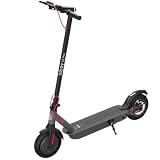
Hiboy S2 Pro Electric Scooter, 500W Motor, 10″ Solid Tires, 25 Miles Range
500W motor, 19 mph, 25.6 mile range, 10in solid tires, 35.9 lbs, 220 lbs max load
Pros
- 500W motor handles hills and a 19 mph top speed
- 10 inch solid tires never go flat
- dual disc and regenerative braking
- UL 2272 certified
- Hiboy support sends free parts
Cons
- Real city range lands closer to 16 miles than the 25 mile claim
- app reconnects slowly after every power cycle
- no front suspension
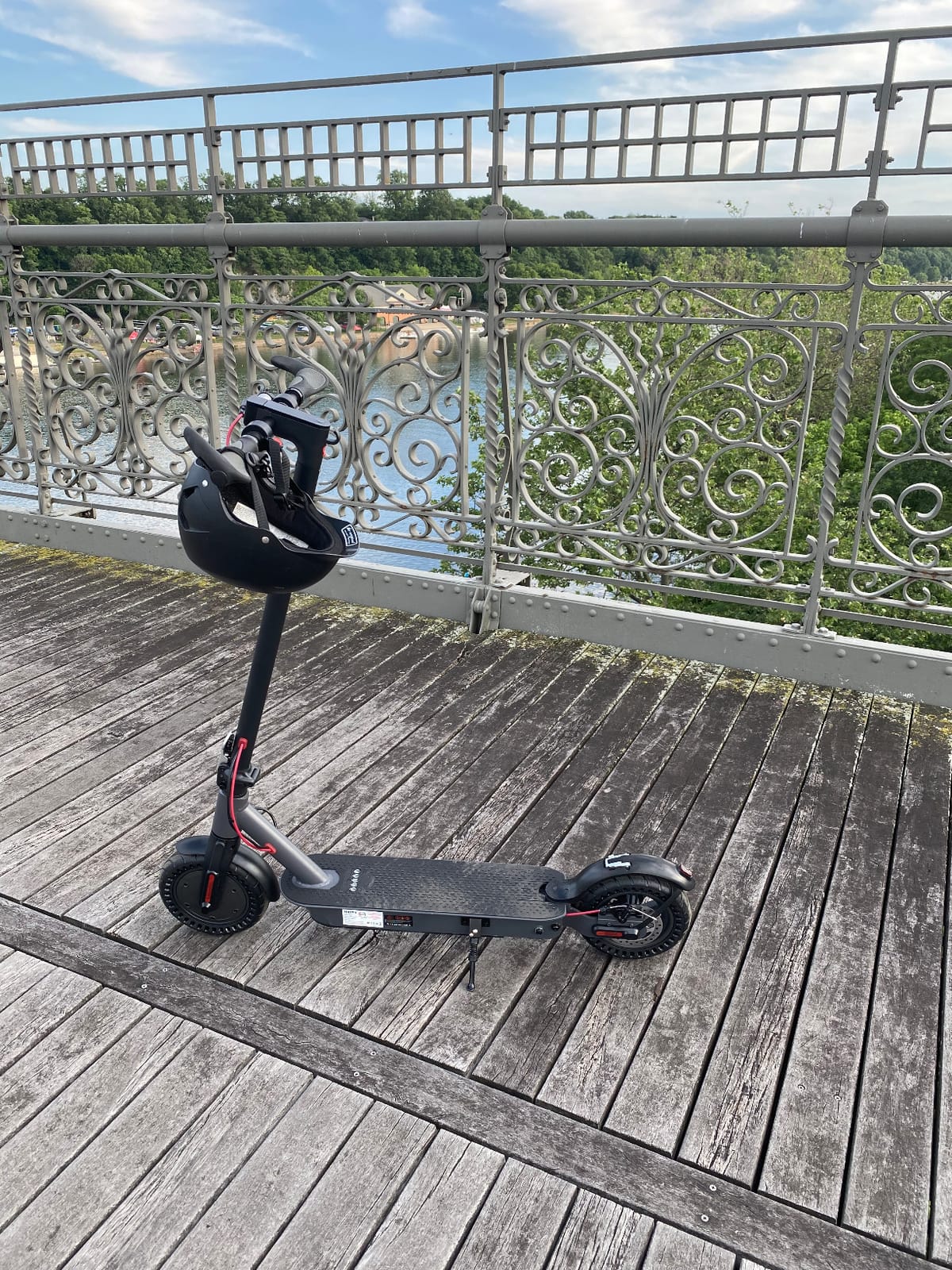
I put more miles on the S2 Pro than any other scooter in this guide, and it is the one I kept reaching for. The 500W brushless hub motor pulls away from a stop with no drama and gets over inclines that leave the 250W models laboring, which matters enormously when a teenager is riding home with a backpack on a street with a hill in the middle of it.
Owners consistently report two things: the range is real in the way that matters (fifteen to twenty miles on a full charge, not the twenty-five-plus on the box), and the parts support is unusually good. Multiple reviewers describe logging thousands of miles and then buying a second one, which is the single best reliability signal available on a shopping page.
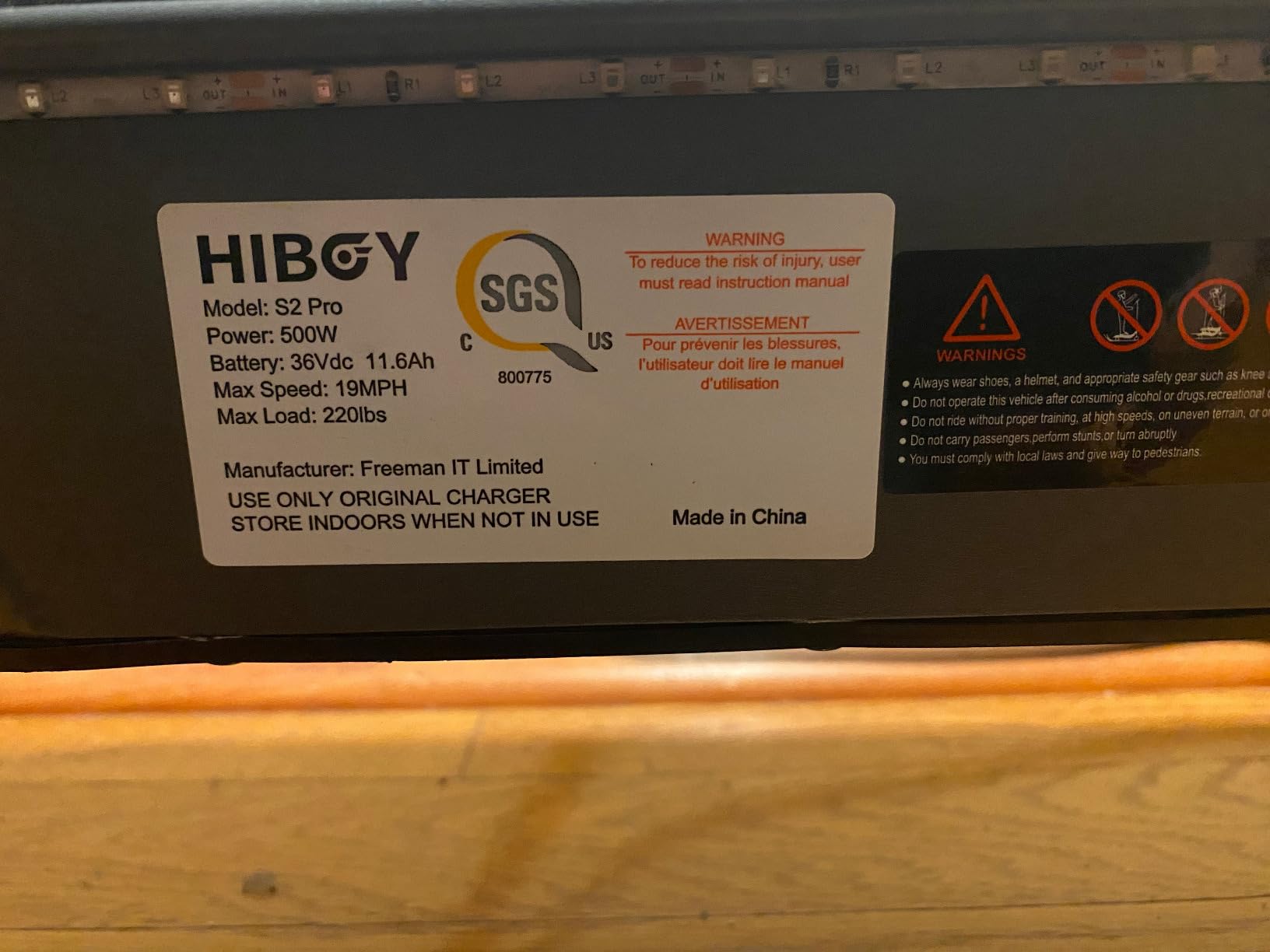
The honest weakness is the 25.6-mile headline figure. That number is achievable in comfort mode, but a teenager riding at 17 or 18 mph will see closer to 16 miles, and the difference matters if the school run is more than five miles each way. The second weakness is the app, which needs to reconnect after every power cycle and has a long scanning delay, so Bluetooth locking is a convenience rather than something to rely on as a theft deterrent.
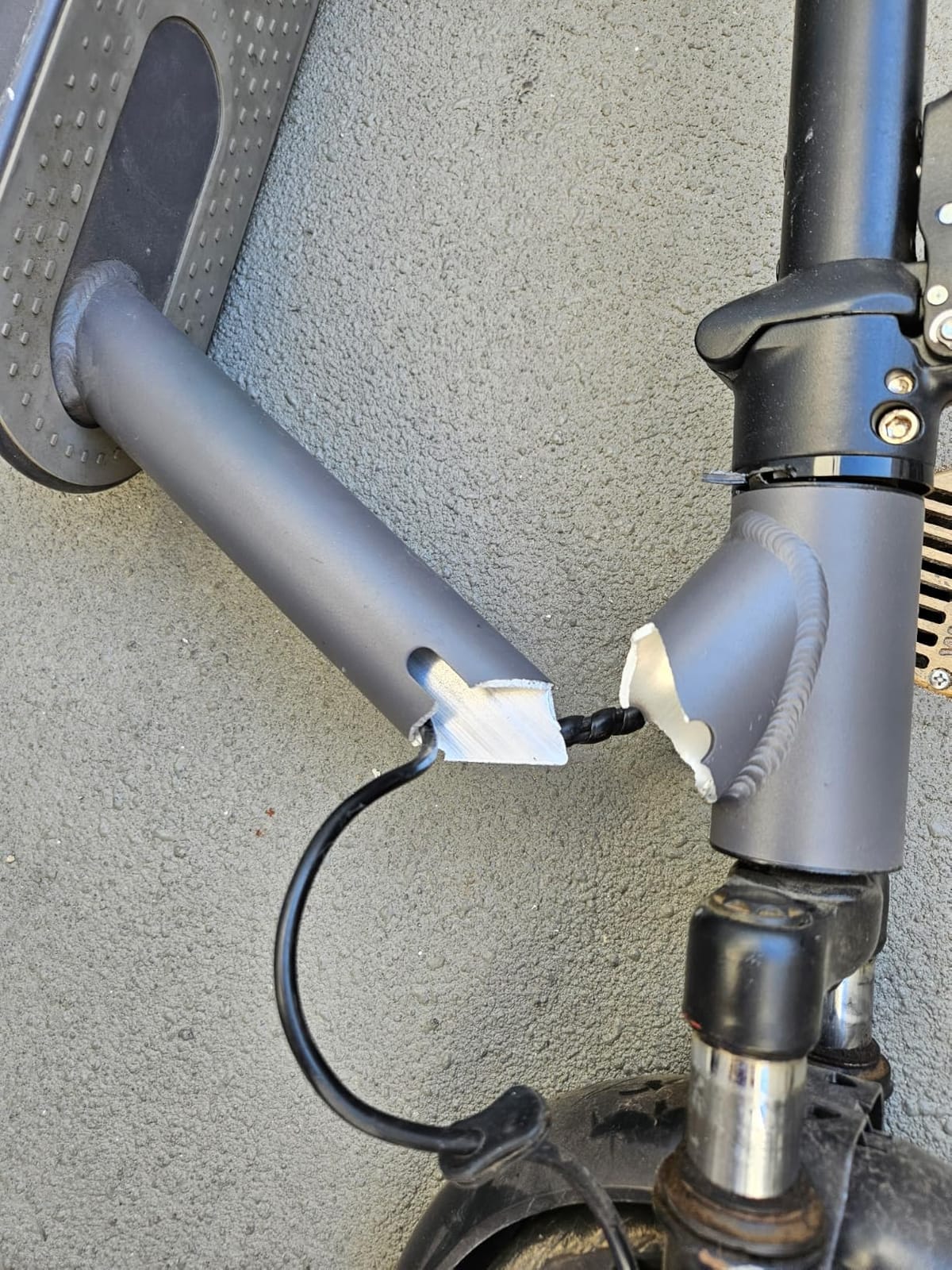
One more complaint worth knowing about: the handlebar stem locking component is cast metal, and a few owners have reported it snapping. Check the stem clamp and handlebar screws every few weeks, because the screws work loose and a loose stem is a genuine safety issue, not a cosmetic one.
Motor power and the 19 mph reality
The 500W motor in the S2 Pro is the largest single jump in this group from the entry-level 250W norm, and it is the reason this model works for a 15 or 16-year-old rather than only for a beginner. Faster starts mean the scooter does the work on hills instead of the rider, and the top speed is hard-locked at 19 mph in the app rather than being something a curious teenager can unlock.
That lock is a genuine safety feature in a product people buy for teenagers. It means a well-meaning teen cannot increase the top speed from a phone at 10 pm, and combined with the dual braking it gives a parent more confidence than a model with an open throttle curve.
Tires, suspension and rough pavement
The 10-inch solid tires are the largest in this list and the reason the ride feels settled rather than nervous. No tire pressure checks, no pinch flats after a sharp curb, no Saturday morning spent looking for a pump. For a teenager who will not maintain a tire, that reliability is worth more than the comfort of pneumatic rubber.
What you give up is the rear suspension, which is present as dual shock absorbers and works well, and the front, which is absent. Owners note that cracks and bumps come through the handlebars, which is exactly the same trade-off the smaller solid-tire models make, just at a larger wheel size that rolls over more of the problem.
Battery, charging and daily range
The 36V 11.6Ah battery takes about 8 hours to charge, which is the slowest in this group and the one number worth planning around. Charge it overnight, not in the two hours before school. Over a full day of school use, plug it in when you get home and it is ready again by bedtime.
Storage matters too. Keep it indoors at a moderate temperature, and do not leave a partly charged pack sitting in a garage through winter. Lithium packs do not enjoy cold and heat, and a teenager’s scooter spends most of its life in a hallway or a car trunk, both of which get warm.
2. Gotrax GXL V2 – Top Rated Pick at 27 Pounds for Carryability
Gotrax GXL V2 Electric Scooter for Adult,8.5″ Tire,12 Mile &15.5Mph by 250W
250W motor, 15.5 mph, 12 mile range, 8.5 in honeycomb tires, 27 lbs, 220 lbs max load
Pros
- Only 27 pounds
- folds to a genuinely small package
- anti-puncture honeycomb tires need zero upkeep
- 4 hour charging
- sharp reliable brakes
- long wide deck suits taller riders
Cons
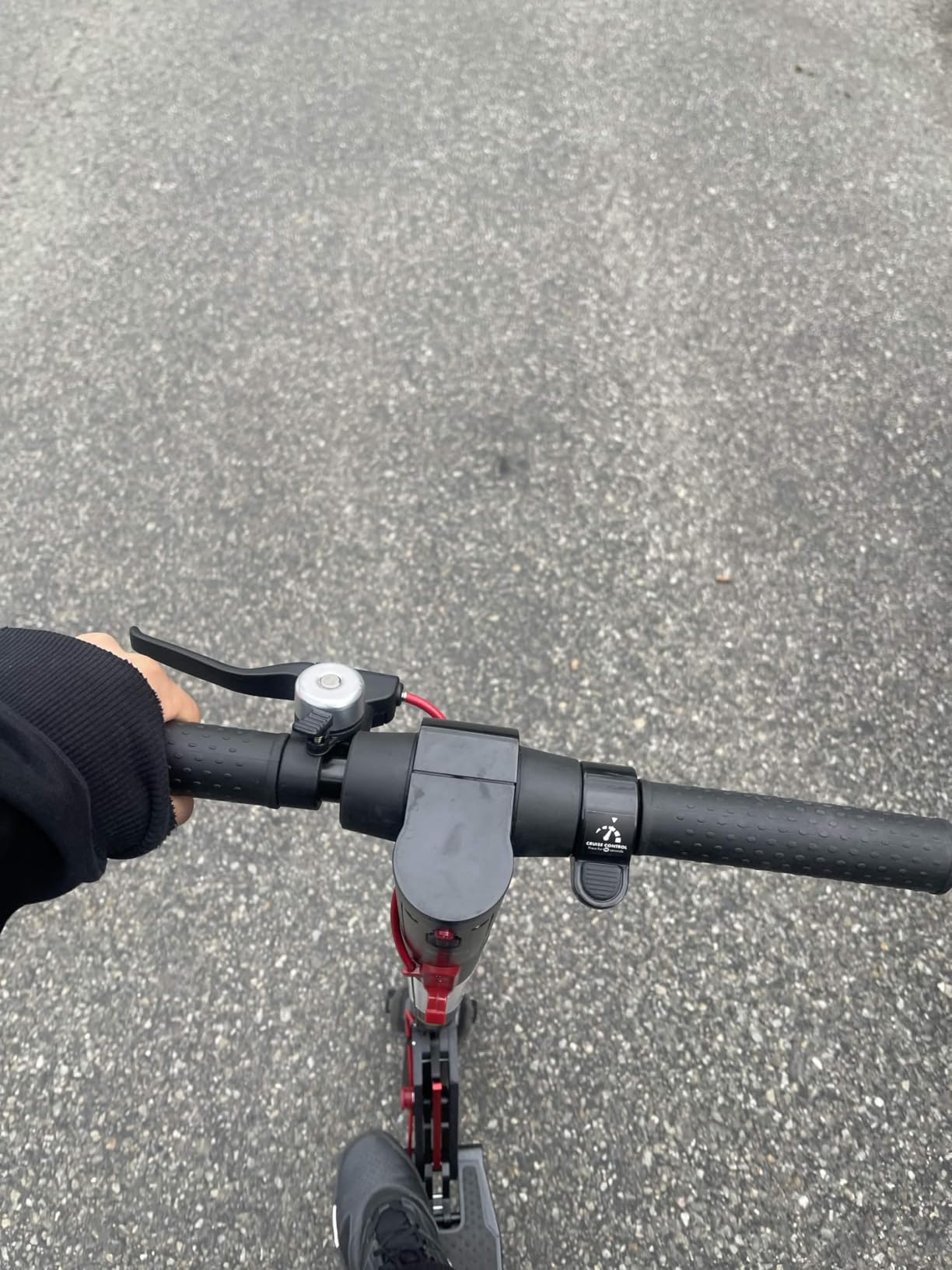
- Cruise control engages far sooner than the manual states
- speedometer estimates rather than measures
- no rear tail light
The GXL V2 is the scooter I recommend when a teenager lives in an apartment. At 27 pounds it is one of the few models in this guide a 14-year-old can genuinely carry up a flight of stairs without an adult helping, and it folds to 43.7 by 17.3 by 16.1 inches, which fits in most car trunks and under most desks.
It is also, in my experience, the most beginner-friendly scooter here. The safe-start feature means the motor will not engage from a standstill until you are moving at about 1.87 mph, which removes the sudden launch that catches new riders out. Three of the ten models here do something similar, and it is the single feature I would insist on for a first electric scooter.
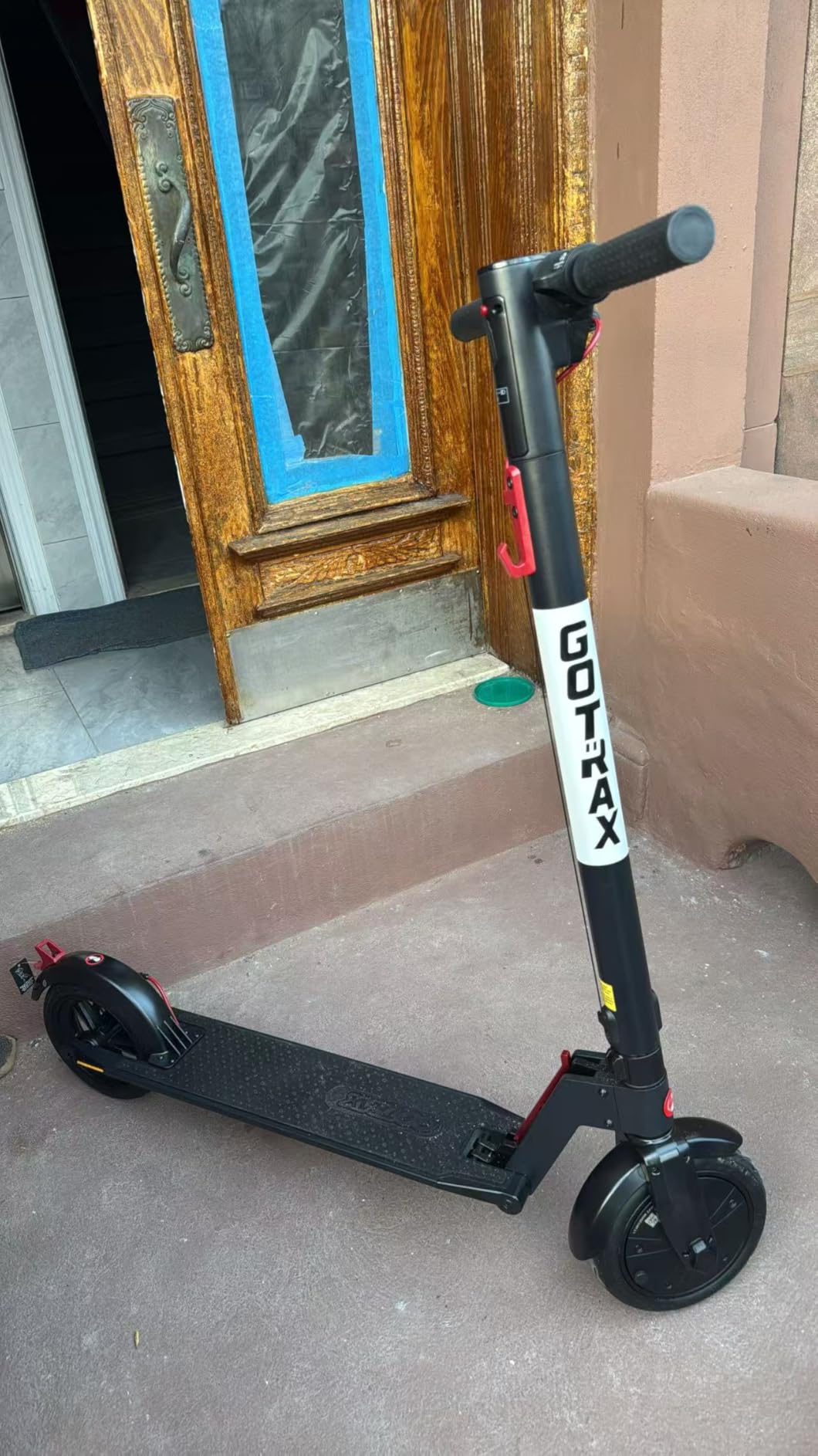
The most important thing to know about this scooter is the cruise control. Owners repeatedly report that it engages after only 4 to 7 seconds of holding the throttle, not the 10 seconds the manual states, and that the speedometer estimates speed from how hard you are applying power rather than measuring it. Both are worth asking the rider about before they hand it over. Nobody in our research mentioned a workaround, so the practical answer is to train the rider to let go of the throttle periodically.
The other recurring complaints are minor but annoying: a thin rear fender assembly that rattles over bumps, and no rear tail light, which matters for a teen riding home at dusk. The headlight also mounts angled slightly downward, so aim it up before the first evening ride.
Why 27 pounds changes everything
Weight is the most underrated specification in this category. A scooter that lives in a garage and covers a mile of flat pavement can weigh whatever it likes. A scooter that has to come inside, go up stairs, sit in a school cloakroom and then survive a walk to a bus stop cannot.
At 27 pounds with a 220-pound max load, the GXL V2 is the sweet spot for a teen commuter. It is also, notably, lighter than both Hiboy models, which come in at more than 35 pounds each. That five-pound difference is the difference between a kid carrying their own scooter and a parent carrying both the scooter and the kid.
Battery range and the four-hour charge
Twelve miles of maximum range on a 36V 5.2Ah battery, with a 4-hour charge time, is the shortest charge in this group and one of its real strengths. An overnight charge is enough for a full school day and most of the way home the next morning, and owners report the battery outlasting cheaper scooters of a similar age.
For a school run of five miles each way, that is workable with a charge at lunch or a mid-week top-up. For a longer commute, it is not, and I would pair this model with a second battery only after the first one starts showing wear.
Braking, deck and rider fit
Owners describe the brakes as sharp and reliable, and the rear brake is the sort that needs occasional re-adjustment after a hard month of riding, particularly if the scooter is carrying a heavier rider. The long, wide deck is a genuine advantage over the smaller 6-inch models for a taller teenager or anyone in boots.
One specification to double-check before buying: the 220-pound max load. That is a comfortable fit for most teens, but a 16 or 17-year-old who is still growing, or anyone carrying a heavy school bag on the deck, can reach that limit faster than a parent expects. Once a rider is consistently above the limit, the deck and the brakes both suffer.
3. Gotrax 12/14/16 Inch with Seat – Best for Comfort, Cargo and Long Weekends
Gotrax A5 12″ Electric Scooter with Seat for Adults & Teens, 15.5-Mi Range
550W peak motor, 15.5 mph, 12 inch pneumatic tires, seat, 50.7 lbs, 220 lbs max load
Pros
- Smoothest ride in the group thanks to 12 inch pneumatic tires and dual suspension
- cushioned seat for longer outings
- rear basket holds 40+ lbs
- dual drum brakes
- 90 percent pre-assembled
Cons
- Heaviest option here at 50.7 lbs
- bulky to fold and store
- modest lights for night riding
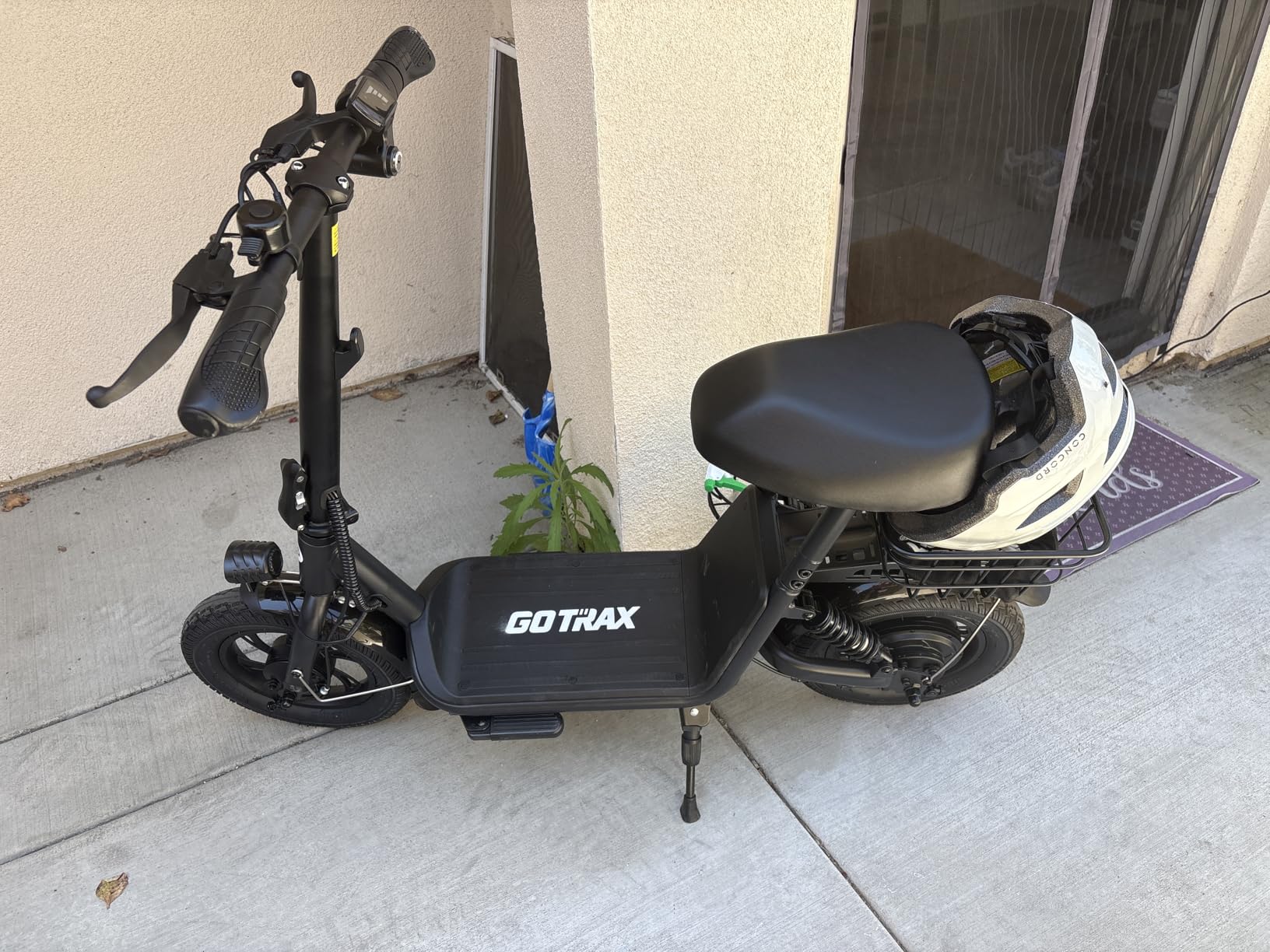
This is the odd one out in the list, and that is exactly why it is here. It is not a pure scooter, it is a seated electric ride with a basket, and for a teenager who wants to cruise a park loop or a long paved trail with a friend rather than commute to class, the 12-inch pneumatic tires and dual rear shock absorbers give a noticeably more comfortable ride than anything else at this price tier.
The seat is the differentiator. It turns a 15.5 mph run into something you can do for an hour without your wrists complaining, and the rear basket rated for 40+ pounds plus a handlebar hook rated for 11 pounds means it can carry a picnic, a basketball, or a bag of gear to a park. Buyers consistently describe the setup as plug-and-play with no technical skill required.
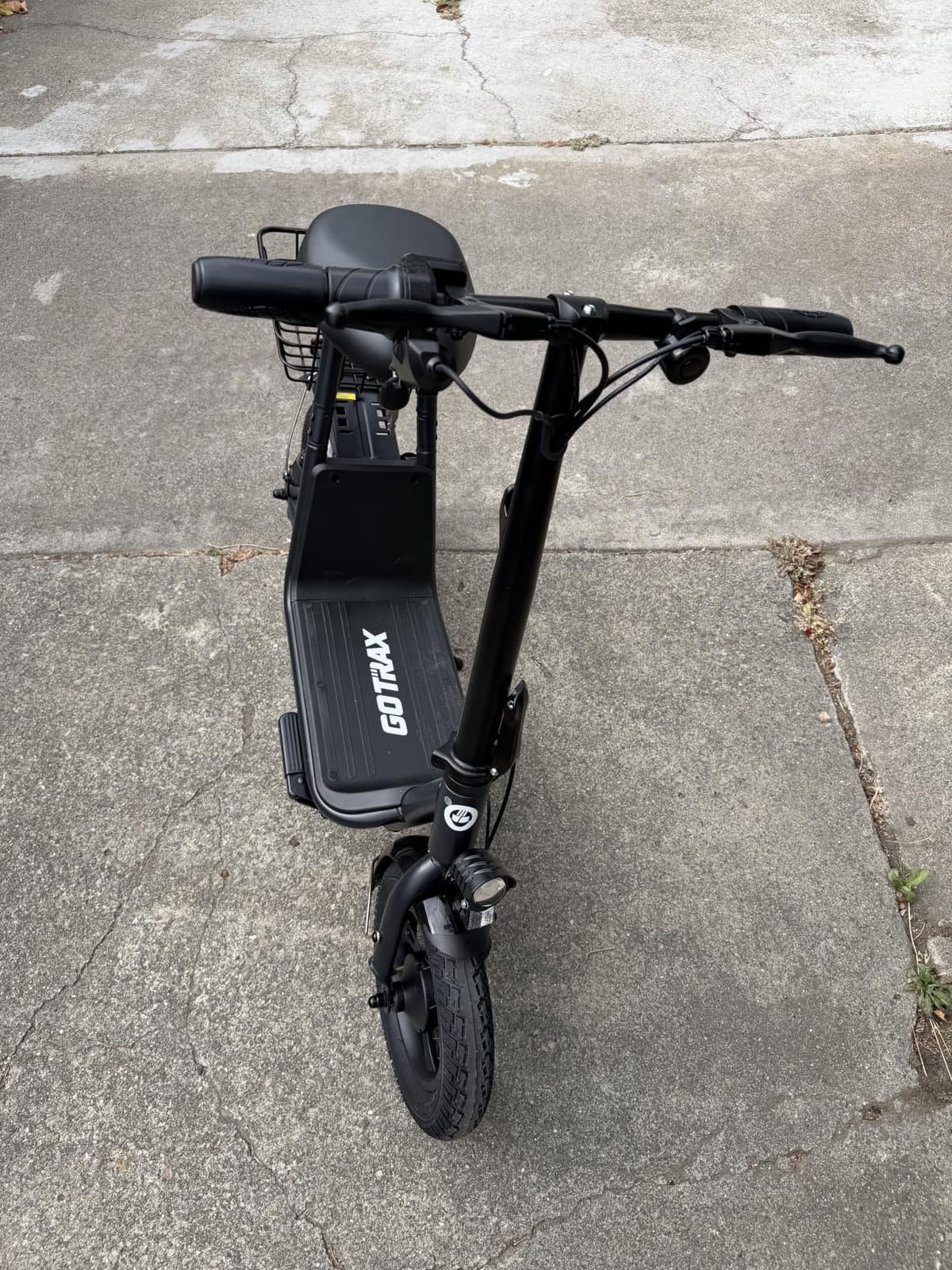
Now the part that decides whether this works for you: it weighs 50.7 pounds. That is not a scooter a teenager carries anywhere. It is a scooter that lives in a garage, a shed, or the back of a car, and gets ridden by someone who can get to it without needing to move it. If your teen needs a school commute, keep reading down the list.
Worth flagging: the manufacturer describes this as being suitable for riders 13 and up, but the same listing carries a maximum rated age of 12, so check the current packaging before you assume it is cleared for an older teen. The 220-pound max load is generous and the listing is nominally an adult electric bicycle, which means the rules around where it can be ridden can differ from a stand-up scooter.
Tire choice and the smoothest ride here
These are 12-inch pneumatic tires with air inside them, which is the only configuration in this guide that absorbs rough surface rather than transmitting it. On a gravel park path, a cracked parking lot, or a suburban street with settlement cracks, the difference from a solid tire is not subtle. It is the reason this model feels like a different category of vehicle.
The trade-off is the one that applies to every pneumatic scooter: a tire that can be punctured, and pressure that has to be checked. The good news is scale. At 12 inches, a 16-year-old with a bike pump in the garage can deal with it in two minutes.
Brakes, motor and load capacity
Dual drum brakes are mechanical, require no motor or sensor to work, and give consistent, predictable stopping regardless of battery state. For a heavier seated vehicle with a 220-pound max load, that predictability is worth a lot. They do need periodic adjustment, and a drum brake that is out of adjustment on a 50-pound vehicle is a problem worth catching early.
The motor is rated at 400W with 550W peak, reaching 15.5 mph, which is enough for flat and gently rolling terrain and not much more. Buyers report around 16 miles of range under optimum conditions, with a 5-hour charge.
Who should and should not buy this
Buy it if the teenager is 13 or older, does not need to carry the vehicle anywhere, and wants a comfortable weekend ride with cargo capability. The cushioned seat, the wide 9-inch pedals, and the basket make it genuinely useful rather than a novelty.
Skip it if the vehicle needs to live in a flat, if a teenager has to get it up any stairs, or if the primary use is a short daily commute. In those cases the 27-pound Gotrax is the far more sensible purchase even though it feels like less of a machine in the showroom.
4. Hiboy S2 – Best for Long Daily Commutes on a Single Charge
Hiboy S2 Electric Scooter – 8.5″ Solid Tires – Up to 17 Miles Long-Range
350W motor, 18 mph, 17 mile range, 8.5 in solid tires, 35.5 lbs, 220 lbs max load
Pros
- Range holds up for real 10+ mile commutes
- solid aluminum frame built for years of daily use
- three-light setup for visibility
- disc brake plus regenerative eABS
- Hiboy support sends free parts
Cons
- 17 mile range only at low speeds
- solid tires transmit every bump
- fold clip can pop open when carried
The S2 sits between the S2 Pro and the S2 Lite, and for a specific profile of rider it is the best of the three: a teenager doing a genuine daily commute of 10 to 14 miles each way, who does not need the Pro’s hill-climbing muscle and would rather carry 0.4 pounds less.
It has the same structural DNA as the Pro. A full aluminum frame, a 350W brushless hub motor, a double braking system pairing a disc brake with regenerative eABS that puts charge back into the battery as you slow, and front, middle and rear lights, which is a better night-lighting setup than most competitors in this list manage.
The range claim needs the same reality check as its big brother. Owners report that the battery drains faster than advertised unless the rider stays at or under 12 mph. Above that, expect materially less than 17 miles. If your route is 12 miles and you plan to ride at 18 mph, budget for a mid-day charge.
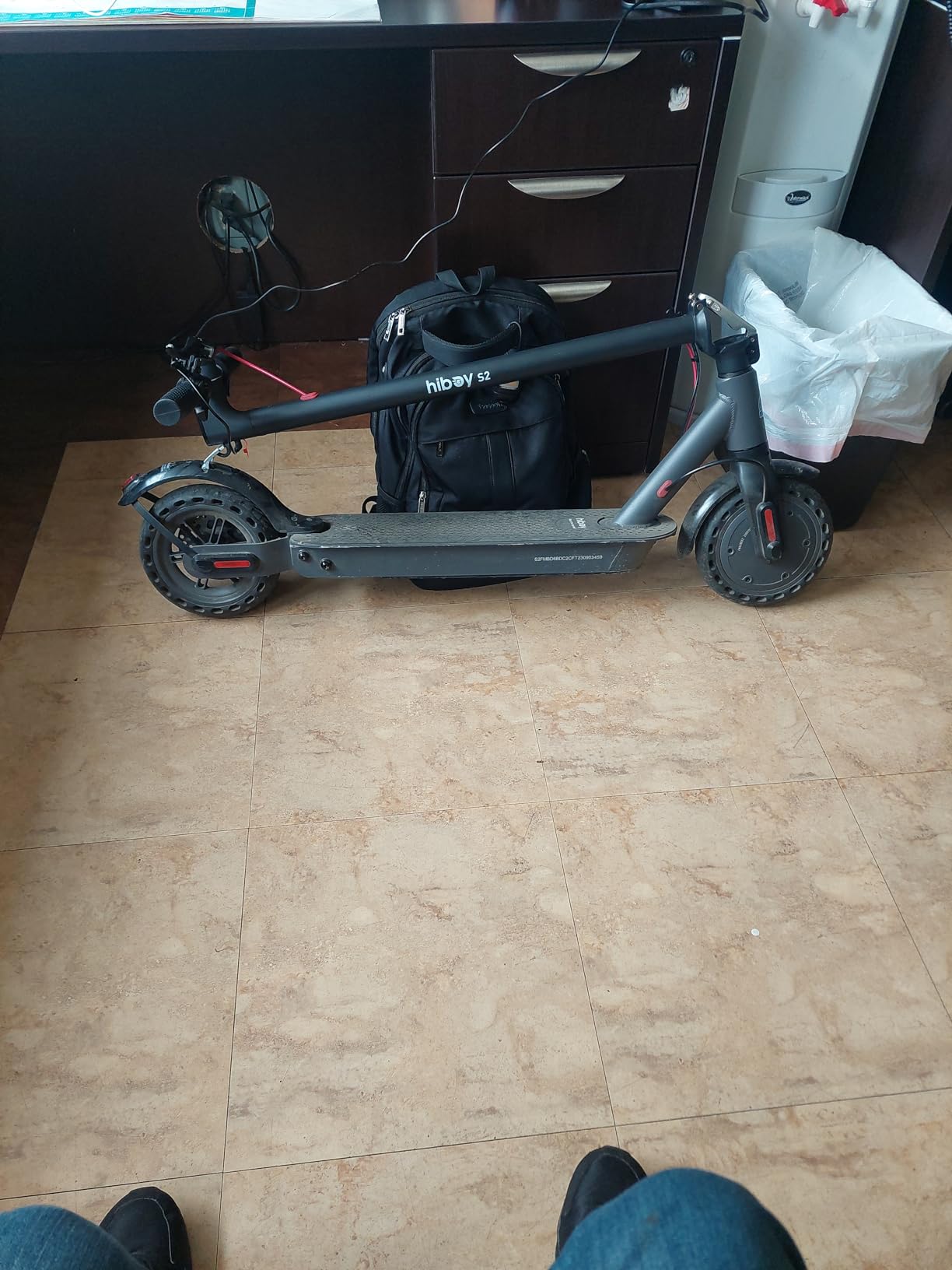
The second honest drawback is the fold clip, which is an open hook that can release and let the scooter flop open while it is being carried. That is an annoyance rather than a danger, but it is the reason I would not leave this model where a teenager has to carry it up stairs every day. The S2 Lite exists for exactly that case.
Why 350W is the commuter sweet spot
A 350W motor is meaningfully stronger than the 250W cluster without pushing a teenager into adult performance territory. It has enough torque to hold speed on a moderate rise with a backpack on, and it does not accelerate so hard that a mistake at low speed becomes a crash.
That middle ground is why this model is so widely recommended for college and teen riders in owner reviews. It is fast enough to feel like a real vehicle and restrained enough that a first-time electric scooter rider can manage it. Experienced riders on Reddit consistently steer beginners toward established brands like Segway-Ninebot and Hiboy rather than unbranded marketplace listings, and this model is the clearest example of why that advice exists.
Braking and the sensitivity trade-off
Having both a disc brake and regenerative eABS means the braking is genuinely strong, which is what you want at 18 mph. The flip side, repeatedly noted by owners, is that the brakes are extremely sensitive and grab almost instantly. A new rider who squeezes the lever while distracted will stop harder than expected.
Two things offset it. The eABS component fades as the battery fills, and practice settles it quickly. In the first week, though, have the rider find a flat open area and get used to how much pressure the lever needs before they ride near traffic.
App, theft and the 5-hour charge
The Hiboy app handles Bluetooth locking and ride statistics on both iOS and Android. Treat the lock as a deterrent, not a security system, because the frame has no convenient dedicated lock point, which means a determined thief has an easy target and a cable lock is still worth carrying.
Charging takes 5 hours and the pack is a 36V unit. Storage recommendations are the same as for the Pro: indoors, moderate temperature, and not left half-charged in a cold garage for weeks. When you are choosing between the S2 and the S2 Pro, this app and lighting package is the main thing you give up, plus 100W of motor and roughly eight miles of headline range.
5. Hiboy S2 Lite – Best for Younger Teens Who Need to Carry It
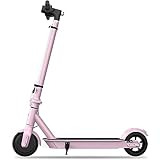
Hiboy S2 Lite Electric Scooter – 6.5″ Solid Tires – Up to 10.6 Miles Long-Range & 13 MPH Portable Folding Commuting Scooter for Teens/Adults (Sakura Pink)
250W motor, 13 mph, 10.6 mile range, 6.5 in solid tires, 21.9 lbs, 180 lbs max load
Pros
- Only 21.9 pounds so a younger rider carries it
- 13 mph cap is deliberately restrained
- four-light system plus double brakes
- climbs a 15 percent grade
- UL 2272 certified
Cons
- 180 lb max load is below the 220 lbs most others handle
- 10.6 mile range suits short trips only
- 6.5 inch wheels feel rough pavement
This is the only scooter in the list that was designed for teenagers rather than adapted for them, and that shows in the numbers. A 13 mph top speed instead of 18 or 19, a 21.9-pound aluminum frame instead of 35, and a marketing brief that openly says teen, kid and adult rather than pretending otherwise.
If your rider is 11 to 14 and the concern is control rather than performance, that restraint is the whole point. Parents consistently describe the top speed as the feature they value, because a scooter that can do 13 mph does not get ridden recklessly by a 12-year-old on a sidewalk.
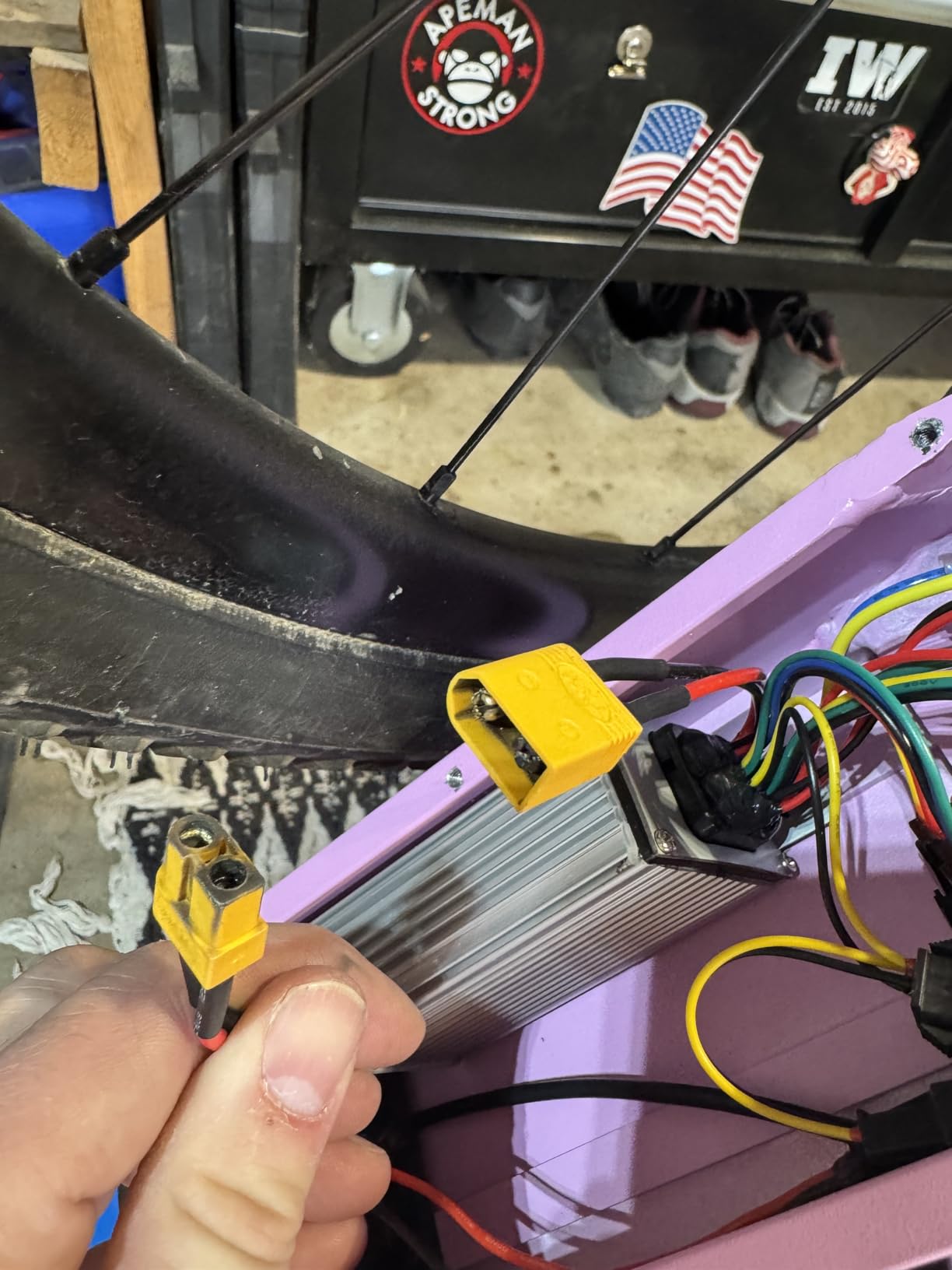
The constraint to check carefully is the 180-pound max load, which sits well below the 220 pounds that most competitors in this list handle. A 14-year-old generally fits. Some 15 and 16-year-olds, and any teen carrying a heavy school bag, may not, and exceeding a weight limit on a scooter with 6.5-inch wheels is a stability problem rather than a comfort problem.
The second constraint is range. At 10.6 miles maximum, with real numbers lower, this is a short-trip machine. It handles a school run of two or three miles each way, a park loop, or a trip to a friend’s house. It does not handle a 10-mile commute.
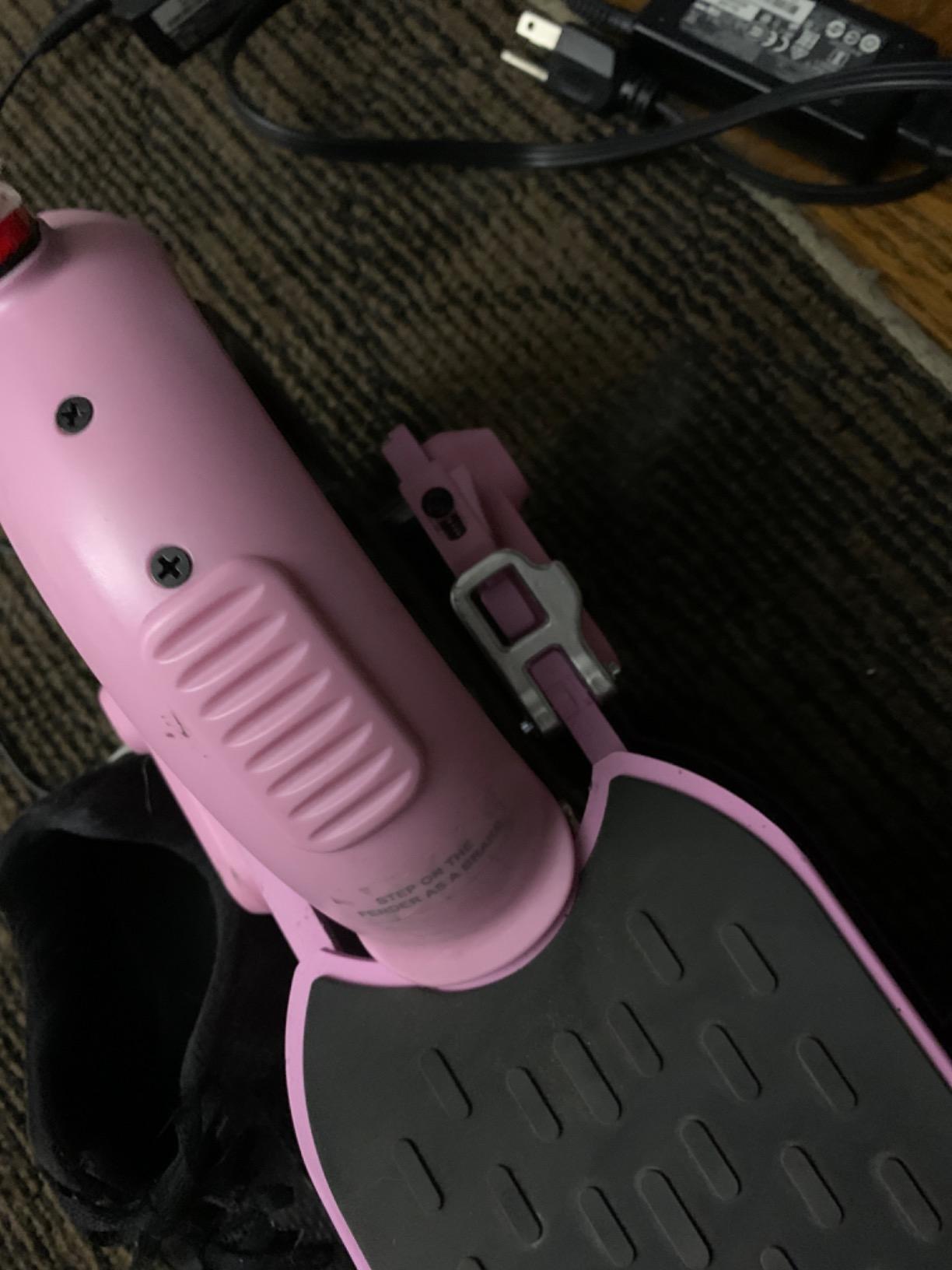
Why the 13 mph cap is a feature
Every forum thread about buying a scooter for a teenager returns to the same anxiety: fast but not too fast. Parents in these groups ask for brands that cap out rather than brands that go fast, and the S2 Lite answers that request more honestly than any scooter priced above it.
At 13 mph, a scooter is roughly as fast as a fast bicycle. That keeps reaction time long, keeps falls less consequential, and keeps the rider inside the range where they can be taught to look for cars rather than to ride flat out. It is a deliberate design decision, not a compromise.
Six and a half inch wheels and rough pavement
Small wheels roll easily and suit a shorter rider, but they do less to absorb the broken pavement and expansion joints that any real sidewalk is made of. Combined with solid tires, you feel everything through the handlebars.
For a teenager on a bike path, a park, or smooth neighborhood streets, that is a non-issue. For a rider whose route includes a stretch of genuinely bad sidewalk, expect to arrive with tired arms, and consider a helmet with wrist protection as standard rather than optional.
Hill grade, lights and certification
The 250W motor manages a 15 percent grade, which is a useful honest figure because it tells you exactly what kind of terrain this handles. Flat and gently rolling is comfortable; a sustained steep hill is not, and the rider will need to kick occasionally.
The lighting is genuinely good for the class of scooter: a distinctive front light, a four-light system overall, and a double braking system. It is also UL 2272 certified with SGS as the testing lab, which means the electrical system and the battery pack have both been tested against the fire-safety standard. In a category where several of the cheapest options make no certification claim at all, that matters.
6. iScooter i8M – Best for Smoother Pavement Riding on a Mid Budget
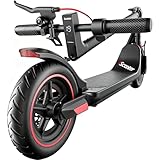
iScooter 350W Electric Scooter for Adults, 19 MPH, 15 Mile Range, Foldable
350W rated, 500W peak, 19 mph, 15 mile range, 8.5 in pneumatic tires, 27.7 lbs, 264 lbs max load
Pros
- Pneumatic 8.5 inch tires give a smoother ride than solid wheel models
- 264 lb max load is the friendliest here
- 3 second fold at 27.7 lbs
- dual electronic and disc braking
- spare inner tube in the box
Cons
- Rigid frame with no suspension
- pneumatic tires need occasional pressure checks
- app is optional rather than essential
The i8M is the value pick for a family that rides on bad pavement. It is one of only two models in this guide with air-filled tires, and pairing 8.5-inch pneumatics with 27.7 pounds of weight gives a ride that is noticeably calmer than any solid-tire scooter of similar weight, without the 50-pound bulk of the seated Gotrax.
It also has the most generous load rating we found, at 264 pounds, which is meaningful for a tall teenager or a 17 or 18-year-old who would be near or over the limit on most of these models. Power comes from a 350W rated motor with 500W peak, reaching 19 mph, with up to 15 miles of range.
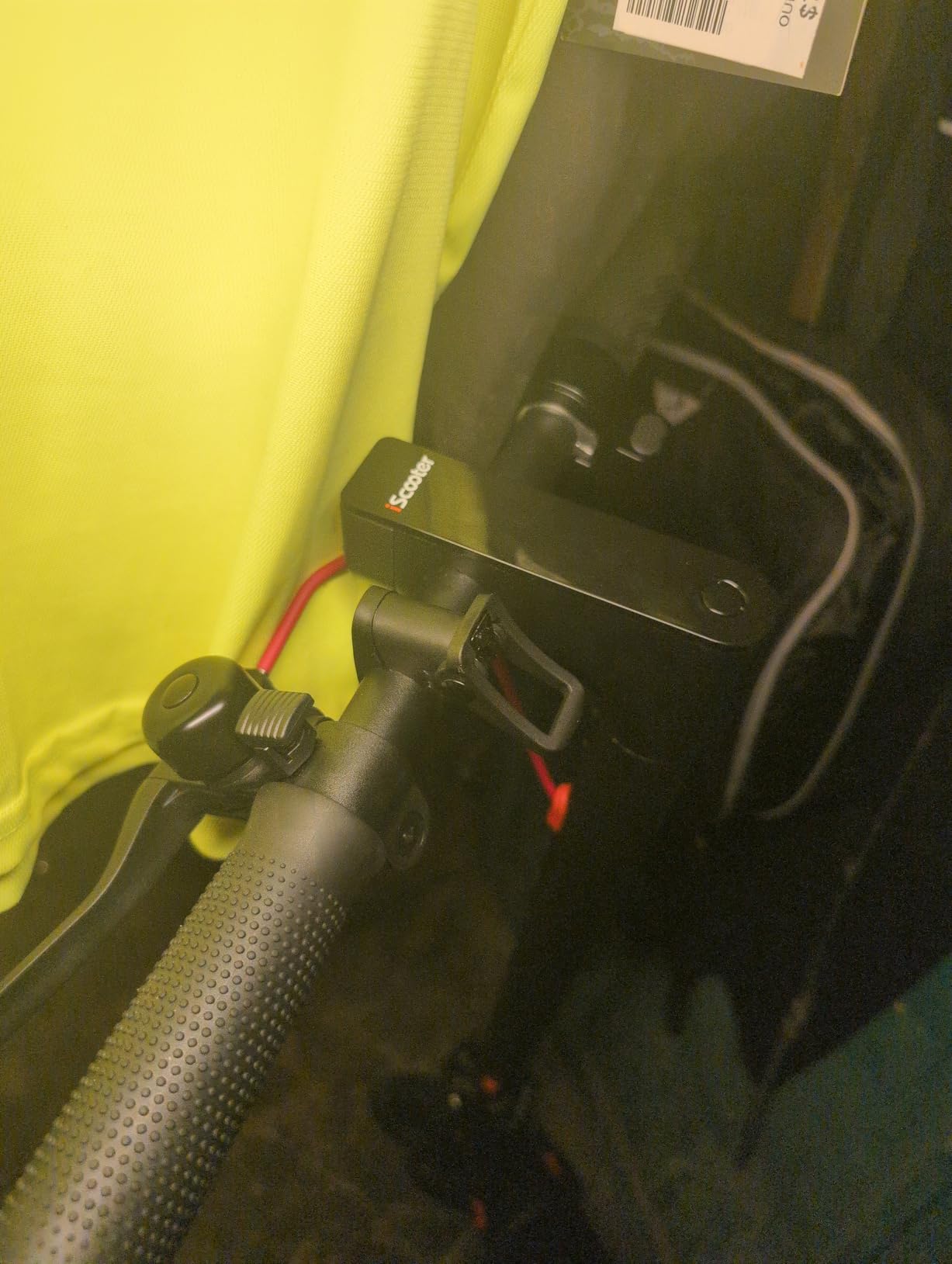
The catch is that the frame is rigid, with no suspension at all. The pneumatic tires absorb some of what the road throws up, but expansion joints and cracks still come straight through, and on a genuinely broken sidewalk this model will not save the rider the way a suspended one would.
Two smaller notes. The app is genuinely optional here, which is unusual and arguably an advantage, because a manufacturer app that fails cannot take features with it. And pneumatic tires mean occasional pressure checks and the possibility of a puncture, which is the trade you accept for the smoother ride.
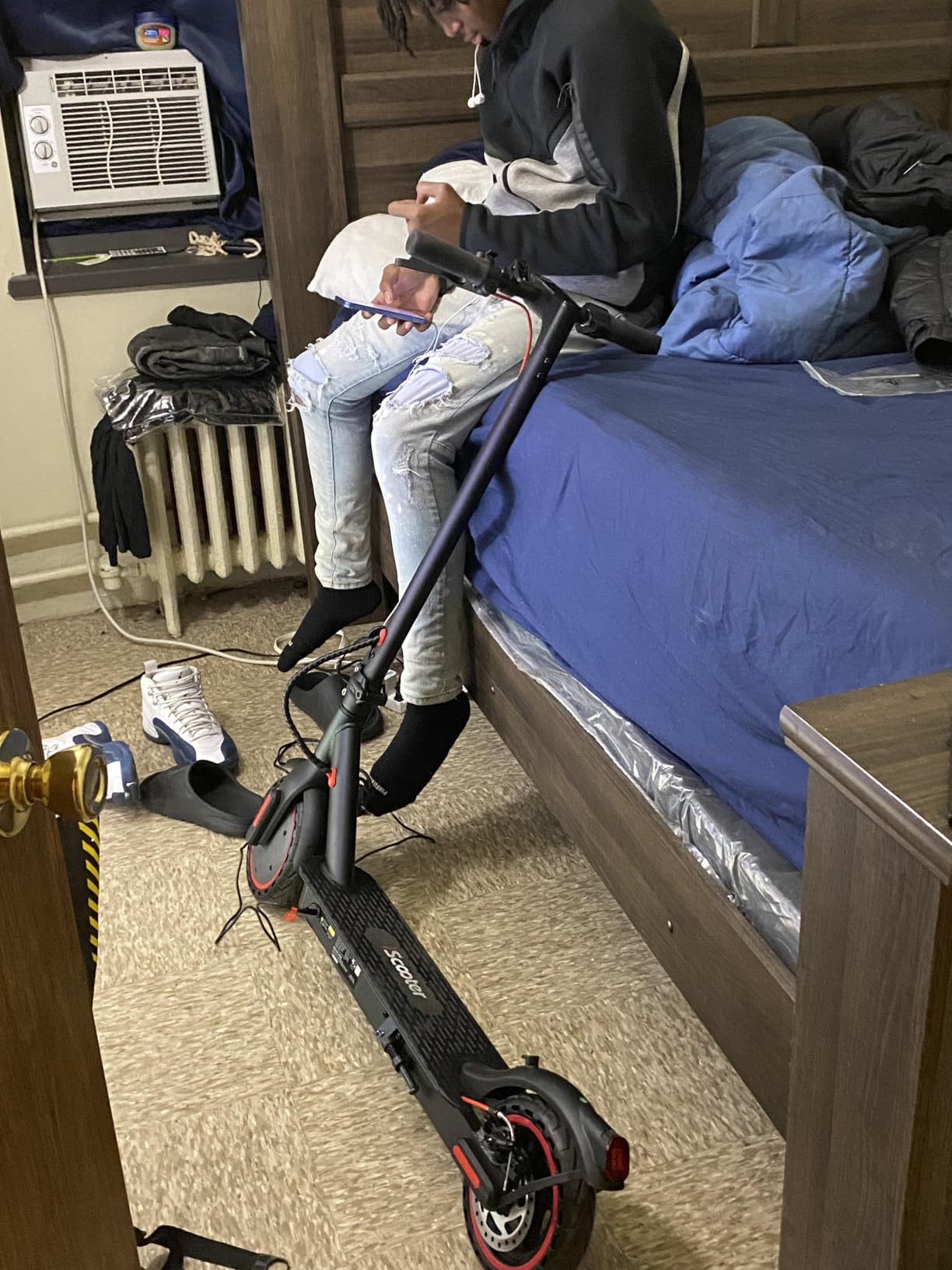
What the box actually includes
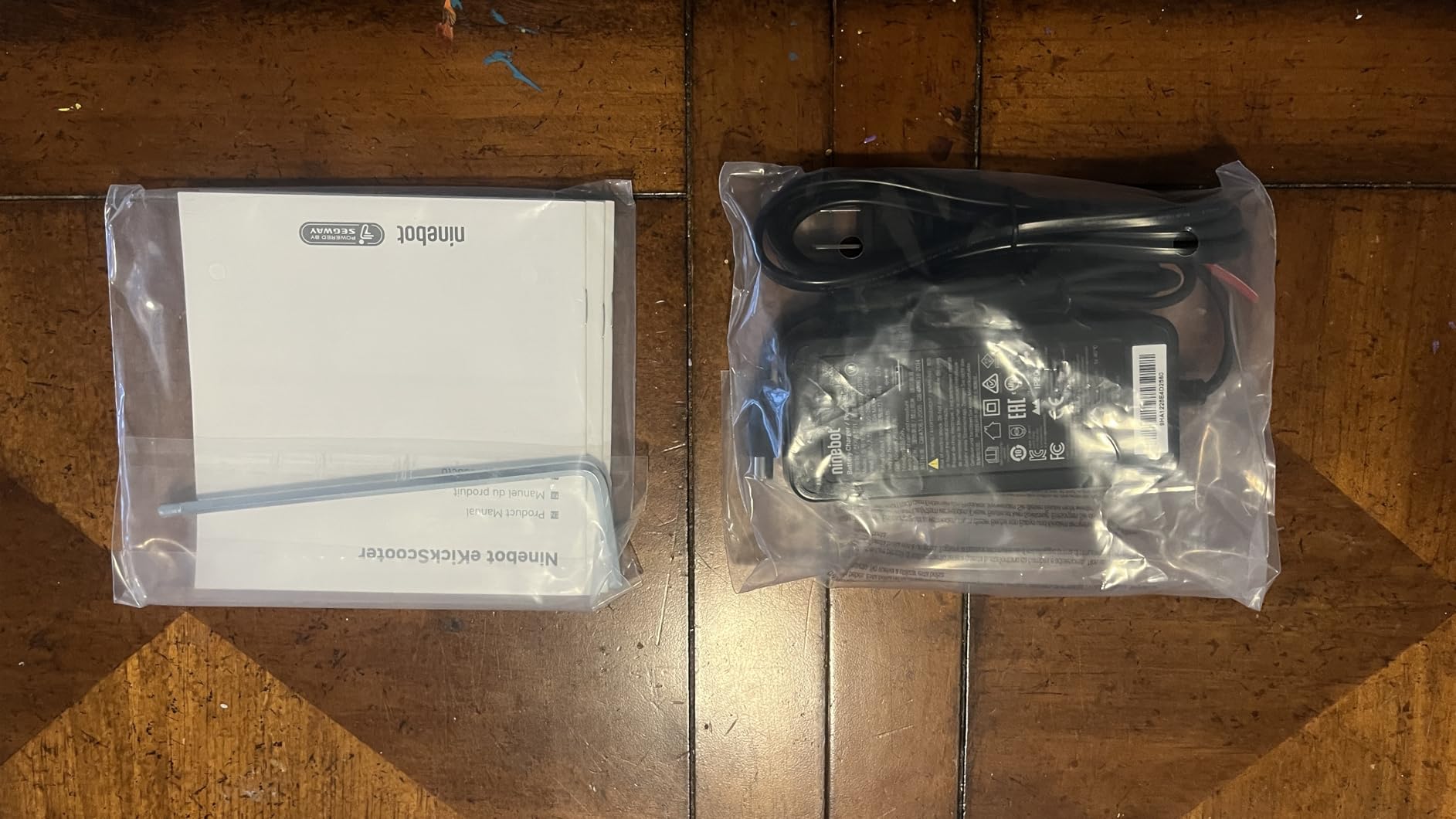
Most scooter boxes contain a scooter and a charger. This one contains a user manual, a T-shaped hex wrench, six mounting screws including two spares, the charger, and a spare inner tube with an extension hose. For a family, that is a meaningful cost saving and it means a first puncture does not end the riding.
It is also the kind of detail that tells you something about the product. A manufacturer that includes a spare inner tube and spare screws has thought about the first year of ownership rather than the first week.
The 264-pound advantage for older teens
Most scooters in this category cap out at 220 pounds. That number is not arbitrary and it is not marketing, it is the point at which the deck, the stem joint and the brakes are tested, and it is the limit above which handling degrades.
For a 16, 17 or 18-year-old, that 44-pound headroom is the difference between a scooter that is within its design envelope and one that is riding at its very edge. If your teenager is on the older end of the age range and approaching adult size, this rating deserves real weight in the decision.
Braking, folding and warranty
Dual braking with an electronic component plus a disc gives strong, reliable stopping, and a bright headlight with a rear tail light covers the evening commute better than several cheaper models.
Folding takes about 3 seconds, and at 27.7 pounds with a 44-inch handle height it is a realistic candidate for the school-commute pattern. The warranty is structured as 12 months or 180 days depending on the part, which is thinner than the Segway’s two-year cover, so read which components fall under the shorter period before you buy.
7. Riuiio Lightweight E-Scooter – Budget Pick Pick for Ages 11 to 14
Electric Scooter for Kids Ages 6–14, Pink Electric Scooter, 250W Motor, Up to 10 Miles Range, 9 MPH, Lightweight Foldable Scooter for Girls
3 speed modes, 9 mph, 10 mile range, 16 lbs, 120 lbs max load, UL2272 certified
Pros
- Highest average rating in this group
- only 16 pounds so a child carries it alone
- three graduated speed modes build confidence
- UL2272 certified with electronic plus foot brake
- puncture-free tires
Cons
- 9 mph is too slow for most teen commutes
- 120 lb max load suits younger children
- 6.5 inch wheels transmit road bumps
I want to be direct about where this scooter fits, because its 4.5-star average is the highest in this guide and it would be easy to oversell it. It is a children’s scooter. The max load is 120 pounds, the top speed is 9 mph, and the listing states ages 6 to 14.
For an 11 or 12-year-old who is not yet ready for something with real speed, that is exactly the right machine, and the highest rating in the group tells you that a lot of families agree. It should not be bought for a 15-year-old commuter, and I would be doing you a disservice if I implied otherwise.
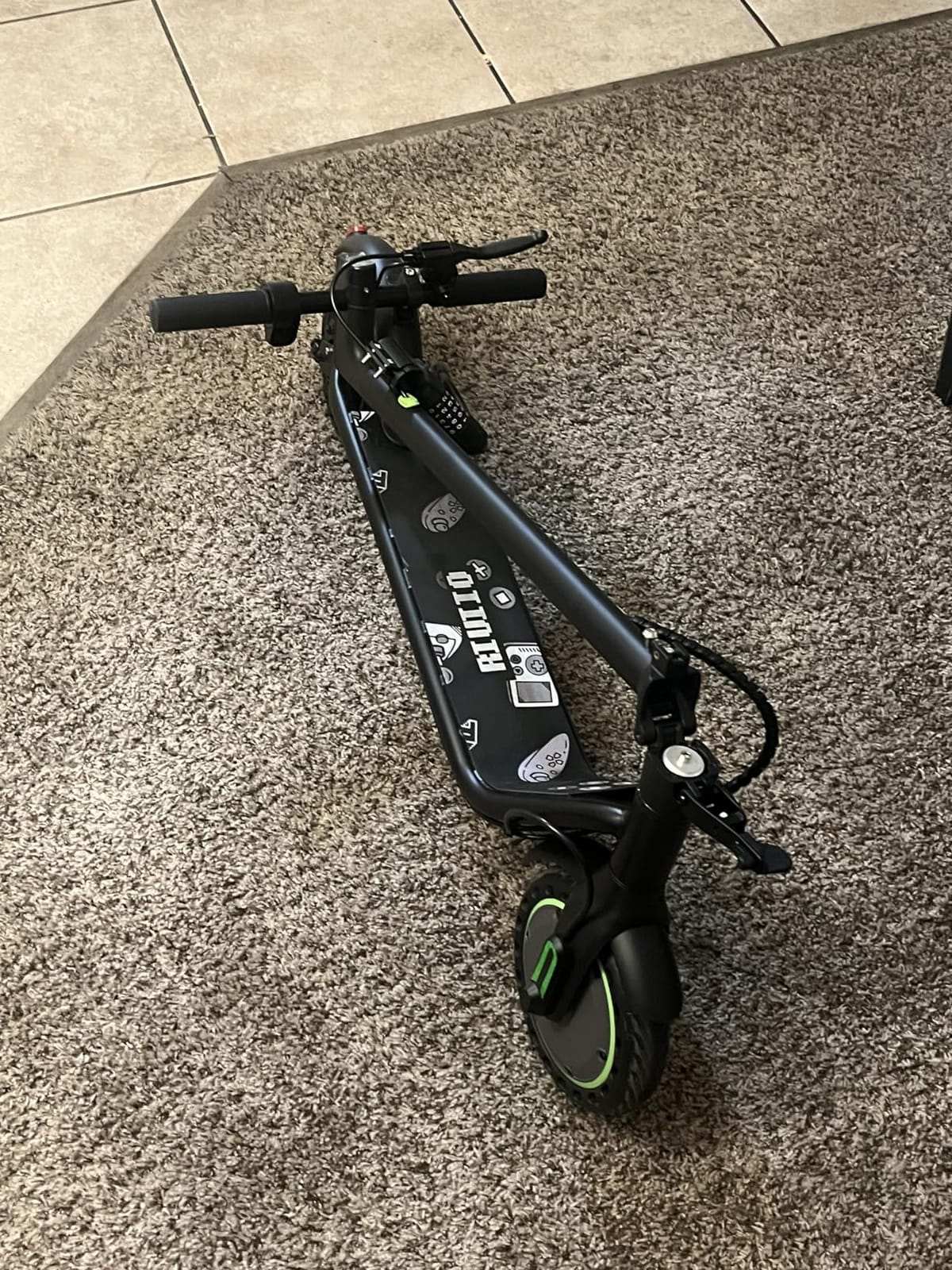
The design is built around graduated control, which is the correct philosophy for a first scooter. Three selectable speed modes at 3, 6 and 9 mph let a beginner build up over days or weeks rather than being thrown at full speed on day one. The LED display shows the mode, and there is a non-slip deck and a dual brake system combining an electronic brake with a rear foot brake.
The kicker for parents is the certification. This scooter is UL2272 certified, which means the electrical system has been tested against the lithium-battery fire standard, and there is a 1-year warranty behind it. Several scooters at twice the weight in this list make no certification claim at all.
Sixteen pounds and what it unlocks
At 16 pounds, this is the only scooter in the guide that an 11-year-old can genuinely carry up a flight of stairs, onto a bus, or into a school building on their own. That is not a small detail. It is the difference between a child using the scooter for a school commute and a family deciding the scooter is more trouble than it is worth.
The tradeoff is obvious and total. 9 mph is roughly walking pace with a mild push, so this is not a commuting device for anyone over short distances. The 10-mile range is generous relative to the class, but the speed cap limits how far anyone will actually want to ride it.
The 120-pound limit and when to move up
The 120-pound max load is the specification to watch. It suits a younger child comfortably. A teenager approaching adult size will find themselves above it, and the right response is to move up a size class, not to run a smaller scooter at its ceiling.
For most families that progression is: this scooter or the Segway C2 Lite at ages 8 to 12, the Hiboy S2 Lite at 11 to 14, then the Gotrax GXL V2 or Hiboy S2 for a teen doing real distances. Buying a scooter that a child will outgrow in eight months is a false economy, but buying one that is beyond them is a genuine safety problem.
Build and serviceability
The frame is aluminum, the tires are solid and puncture-free, and the brakes are a combination that does not depend on battery state to work. No inflation, no pressure checks, nothing to maintain beyond keeping the deck clean and the bolts tight.
One practical note for anyone considering it: this listing does not publish a battery charge time or full dimension data, which makes it harder to plan an overnight charging routine than with the models above. Ask before you buy if charging logistics matter to you.
8. Segway Ninebot C2 Lite – Best for First-Time Riders Who Want a Trusted Brand
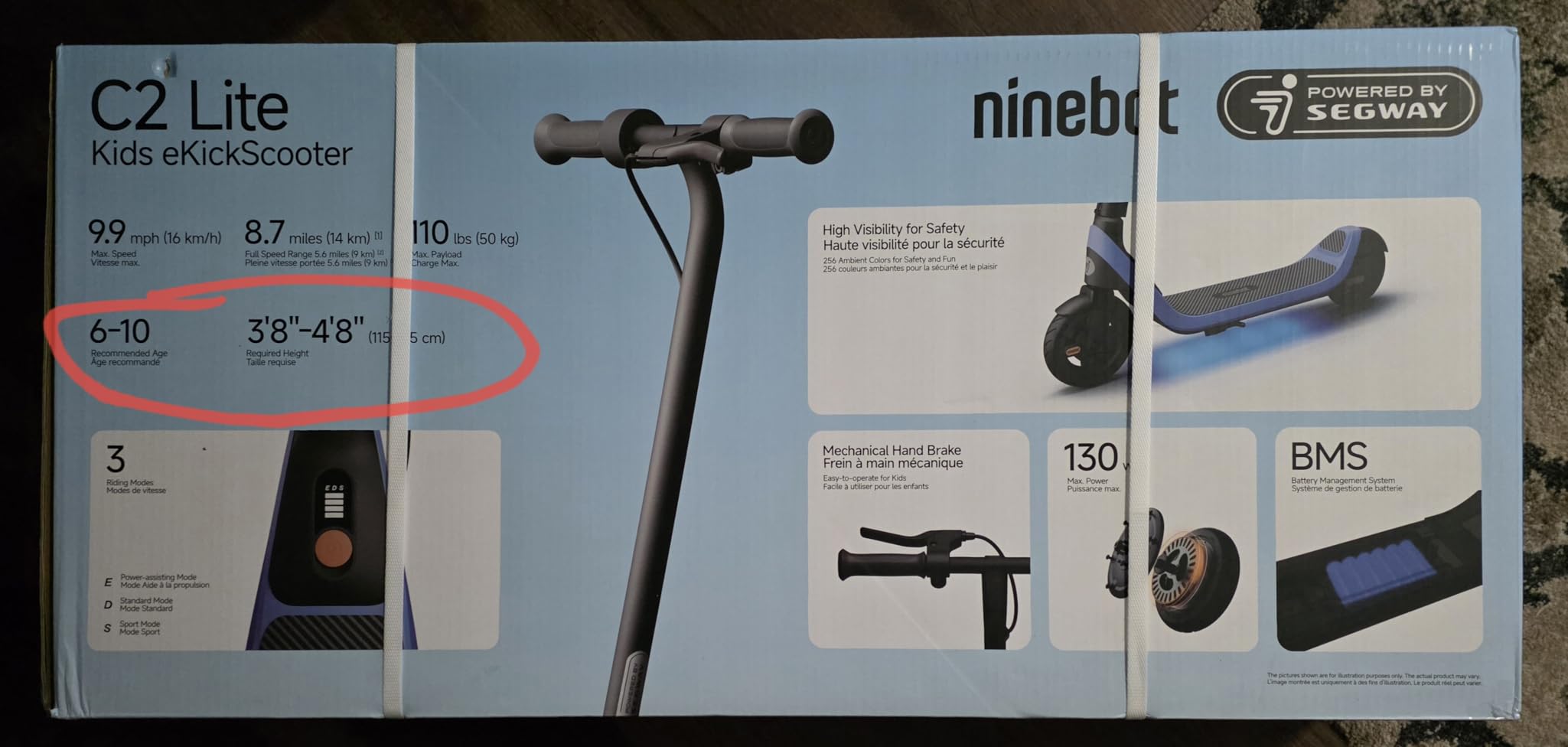
Segway Ninebot C2 Lite Electric Scooter for Kids, Ages 6–10
9.9 mph, 3 riding modes, 70 minute runtime, 7 in solid tires, 17.2 lbs, 110 lbs max load
Pros
- Kick-to-start throttle prevents sudden acceleration
- UL 2272 and UL 2271 certified for electrical and battery safety
- IPX4 water resistance
- three riding modes set the top speed
- 1 year parts warranty
Cons
- 9.9 mph is too slow for teen commuting
- 110 lb max load and ages 6 to 10 rating
- only 5 percent climbing ability
- 5.5 hour charge time
If a brand name matters to you, the C2 Lite is the Segway-Ninebot option for younger children, and it is built differently from most of the list. It is the only scooter here carrying both UL 2272 and UL 2271 certification, which covers the electrical system and the battery pack separately, and it adds IPX4 water resistance so light rain and puddles are not a concern.
Experienced riders on Reddit consistently point beginners toward Segway-Ninebot for reliability and away from unbranded marketplace scooters, and the reasoning is service and documentation rather than performance. This scooter comes with a 1-year warranty covering the frame, stem, motor, controller, battery assembly and charger, and it fits riders from 3 foot 7 to 4 foot 7.
The safety feature I would highlight is the kick-to-start throttle. The motor does not activate until the rider has kick-pushed to about 3 mph, which eliminates the sudden launch that catches new electric scooter riders out. Three adjustable riding modes then set the top speed, so skill level genuinely determines performance rather than a single fixed setting.
Be clear about the limits, though. A 9.9 mph top speed is a walking-pace-plus scooter. The max load is 110 pounds and the stated age range is 6 to 10. For a teen commuter, this is not a serious option, and I include it because it is the right answer for a younger sibling or the first stage of a progression.
Dual certification and why it is rare
UL 2272 covers the whole electric scooter system, and UL 2271 covers the battery pack on its own. Most scooters in this guide claim the first, some claim neither, and exactly one claims both. A scooter can pass 2272 and still carry a battery that was separately evaluated under a different standard, so having both narrows the uncertainty considerably.
For a household charging a lithium pack in a bedroom or a garage every night, that certification is the single most meaningful safety specification available, and it is worth refusing to compromise on.
Climbing ability and what it rules out
Five percent climbing ability is the number to read carefully, and it is much lower than the 15 percent figure the Hiboy S2 Lite quotes. It means flat paths, gentle grades and smooth neighborhood streets. A driveway with any real slope, or a route with a hill, is outside what this scooter is designed to do.
The 5.5-hour charge time is also the longest in this group, so a child who rides it after school cannot realistically ride it again the following morning without an overnight charge being the only viable plan.
Lighting, tires and the ride
It carries 256-color RGB ambient lighting, which children consistently love, plus solid 7-inch tires that need no inflation and a rear drum brake paired with a mechanical handbrake. Two independent braking inputs is genuinely good safety design for a first scooter.
There is no suspension and the frame is rigid, so a younger rider will feel every crack. At 17.2 pounds and a compact 33.7-inch length, though, the portability offsets that, and a scooter a child can carry themselves is one they will actually use.
9. Segway Ninebot E2 Plus II – Best for Long Range, Tracking and Older Teens
Segway Ninebot E2 Pro Electric Kick Scooter, 15.5 mph Max Speed, 24.9-Mile Range, Power by 350W Motor, Cruise Mode, UL-2272 Certified
15.5 mph, 25 mile Eco range, 350W rated, 750W peak, 41.5 lbs, 265 lbs max load
Pros
- 25 mile Eco range for real commuting
- Traction Control System adds stability in poor conditions
- Apple FindMy integration for theft recovery
- 2 year limited warranty
- 265 lb max load
- 18 percent incline capability
Cons
- Heaviest adult-sized option at roughly 41.5 lbs
- some owners report battery faults within a year
- warranty support described as slow to escalate
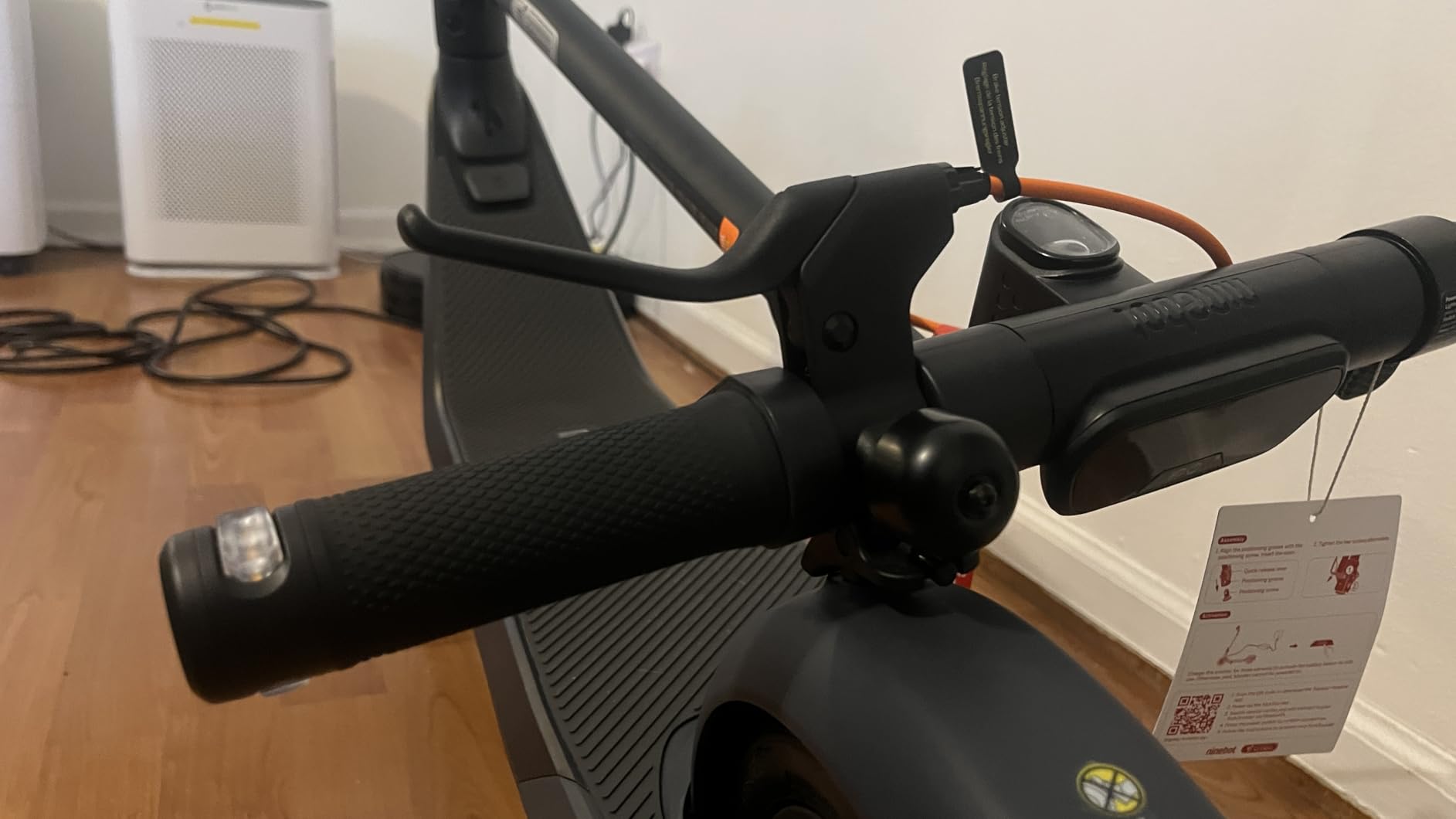
This is the pick for a 16, 17 or 18-year-old who wants real commuting range and whose parents care about theft. Two features separate it from everything else here: the Traction Control System, which adds genuine stability in rain and on loose surfaces, and Apple FindMy integration, which lets a family locate the scooter rather than simply write it off.
On paper it is also the most capable machine in the list. A 350W rated motor with 750W peak rear-wheel drive, a top speed of 15.5 mph that is fast enough to be useful and low enough to stay controllable, a maximum load of 265 pounds, and incline capability up to 18 percent. The 2.8-inch dashboard is large enough to read at a glance while moving.
Now the honest part, and it is why this model sits at nine rather than higher despite being the most capable thing here. It carries the lowest average rating in this group at 4.0, and several owners report battery faults that powered the scooter down while riding. That is a safety-relevant failure mode, and it should factor into a decision involving a teenager.
The warranty is also the point of tension. The 2-year limited warranty is the longest here, but owners describe the support process as slow and frustrating to escalate, and a long warranty is only as good as the company honoring it. Weigh that carefully.
Range in Eco mode versus real riding
The 25-mile figure is a real specification, but it is an Eco mode figure at 9.3 mph, assisted by RideyLONG technology that extends range by around 20 percent. A teenager riding at 15 mph in the higher mode will see considerably less, and the honest way to think about it is that this is a 15-to-20-mile machine for a typical rider, not a 25-mile one.
Even at the lower end of that, it is the longest real-world commute capability in this guide by a wide margin, which is why it earns its place for an older teen with a long route.
Traction control, brakes and ride feel
The Traction Control System is the feature that most justifies the weight for a young rider. It modulates power delivery to maintain grip across varied terrain, which is meaningful on wet pavement, gravel park paths, or a leaf-covered sidewalk in autumn. Combined with front drum and rear electronic braking, that is a well-judged safety package.
Drum brakes up front are mechanical and consistent, and the rear electronic brake pairs with the traction system. The rear-wheel drive layout also handles the 18 percent inclines far better than a front-hub motor, which loses grip on steep climbs.
Weight, tracking and the honest tradeoff
At roughly 41.5 pounds this is the heaviest adult-sized model here and it is awkward to carry up stairs, which rules it out as a school-commute machine for most families. It is a garage or basement scooter.
The FindMy integration is the counterweight for a heavy, valuable vehicle, and theft recovery is a genuine concern that parents raise repeatedly in scooter forums. The handlebar diameter of about 5.25 inches does limit third-party phone mount options, and setup of the deeper app features is not well explained, so plan time for the configuration on day one.
10. WERHY 500W – Best for Grass, Gravel and Rough Ground
WERHY Adult Electric Scooter, 8.5”/10” Solid Tire, 350W/500W
350W motor, 19 mph, 15 mile range, front and rear dual suspension, 265 lbs max load, about 33 lbs
Pros
- Only model here with genuine front and rear suspension
- handles grass
- gravel and 15 percent slopes
- 265 lb max load
- folds to 18 inches and lifts with one hand
- scooter fully usable without the app
Cons
- App connectivity unreliable for some owners
- 33 lbs is heavier than the ultralight options
- reported deck failures on a small number of units
If your teenager’s idea of riding involves a gravel park path, a grass shortcut across a field, or neighborhood roads that are not in great repair, the WERHY is the only scooter in this guide with genuine front and rear suspension. It is the single most capable thing here on rough surfaces, and owners describe riding it on grass without complaint.
It is also unusually easy to learn on, which is a fair criticism of some of the faster, heavier models. The controls are simple, the LCD screen shows speed, battery level and distance clearly, and the motor is a 350W unit reaching 19 mph with up to 15 miles of range and a 15 percent slope capability.
Two things to weigh. First, the companion app is the most complained-about element in the set, with owners reporting that connectivity is unreliable or fails entirely for some. The good news is that the scooter is fully usable without it, so a failed app costs you the remote lock and ride statistics, not the vehicle.
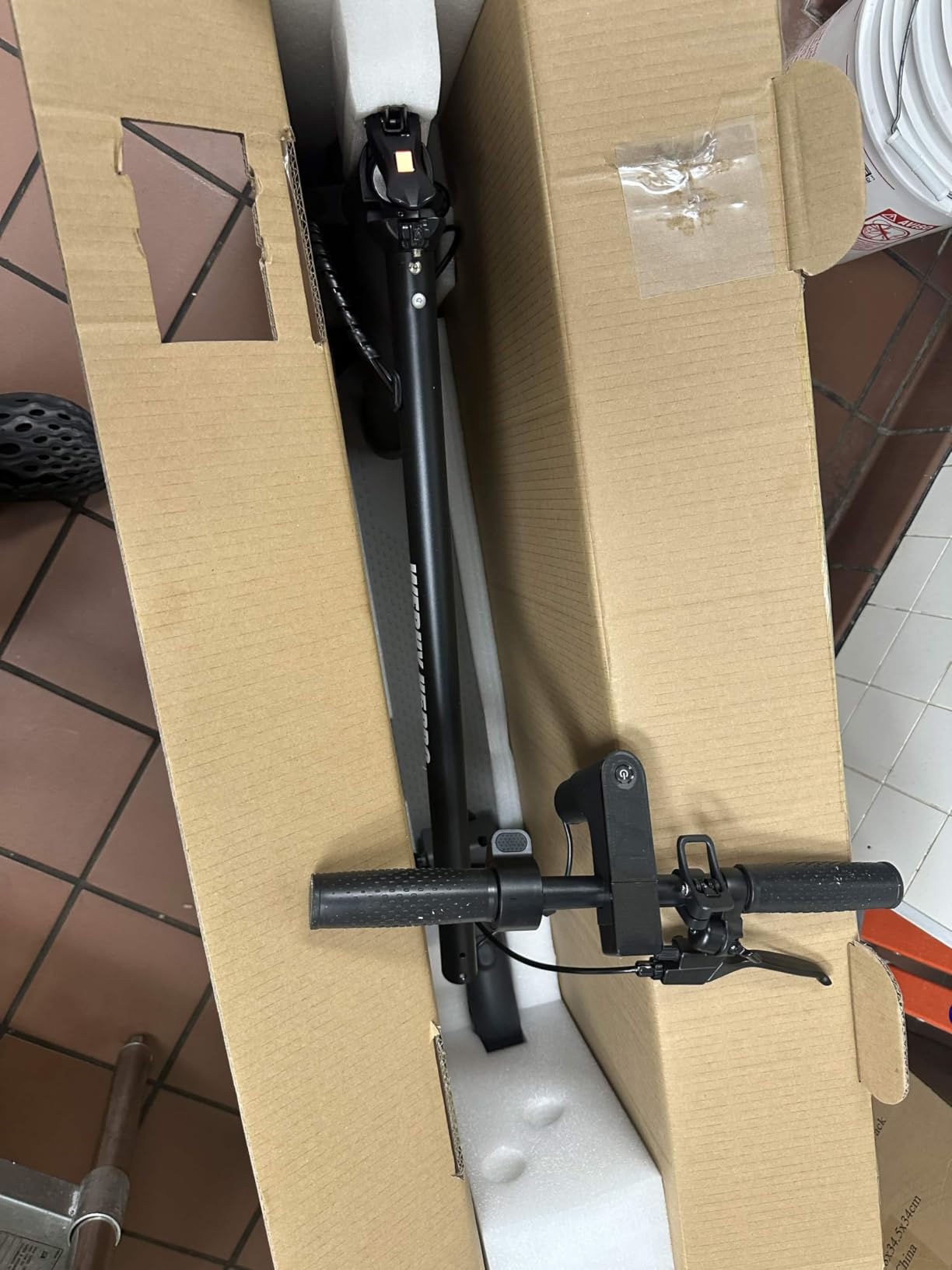
Second, at about 33 pounds it sits between the ultralight and the mid-weight options, so it is portable but not effortless to carry up several flights. It folds to 18 inches and lifts with one hand, which helps in a car but not on a staircase.
Dual suspension on a mid-weight budget scooter
Real suspension on both wheels at this weight class is unusual, and it is the reason this model rides so much better on broken ground than the solid-tire alternatives. It filters vibration from grass, gravel and cracked pavement rather than transmitting it into the handlebars, which means a long ride does not leave a rider’s hands and wrists aching.
It is not a substitute for air-filled tires. The wheels here are 8.5-inch maintenance-free solid tires, so some vibration still comes through, and the suspension is doing the filtering rather than the tires. But it is a meaningful upgrade over a rigid frame at the same weight.
Load capacity and who it fits
A 265-pound max load matches the Segway E2 for the highest capacity in this guide, and the chassis is steel. For a taller 16 or 18-year-old who would be near the ceiling on a 220-pound scooter, that headroom is the reason this model is worth a look.
It is a 19 mph scooter, which is at the fast end for a teenager, and the sensible approach is to pair it with a helmet and to ride it somewhere predictable rather than in mixed traffic. Nothing in the design actively limits the speed, which is a difference from the Hiboy S2 Pro’s locked 19 mph.
Reliability signals and the warranty
One owner reports logging close to 2,000 miles over a year and a half with few failures, and the 4.3-star average across more than a thousand reviews suggests the suspension and load capacity are delivering on the promise. Against that, a small number of owners report the deck breaking in the same place on two separate units, which is a structural complaint worth taking seriously if it happens.
Warranty cover is structured as 180 days on some parts and 365 on others, and one extended-warranty claim was reportedly denied by the administrator. Read which parts fall under which period, and consider a photograph of the deck condition at purchase so any later claim has a baseline.
What Actually Matters When You Buy an Electric Scooter for a Teen
Every pick above is chosen from a consistent set of criteria. Here is how to apply the same thinking to a scooter we did not test, or to confirm that your choice is right.
Check the local age limit before you check anything else
Electric scooter rules vary enormously by state, county and city, and they are the most commonly overlooked part of this purchase. The pattern that recurs across the country is a minimum riding age, frequently 14 or 16, combined with a speed cap that is often well below what an adult model can do. Many jurisdictions restrict scooters to bike lanes, sidewalks or designated paths, and a number of them limit e-scooter speeds to around 15 mph regardless of manufacturer capability.
Helmet requirements also vary, and several states and cities mandate helmets for riders under a specified age even where adult riders are exempt. A parent’s practical starting point: a scooter that tops out at 13 to 15.5 mph is far more likely to fit within local rules than one that does 19. Three of the four age-eligibility questions that dominate search results for this topic are variations of the same question, and the answer is always local.
If you are also choosing a phone or tablet for the same teen, our phones for teenagers guide covers the same age-stage decision points.
Weight is the number that decides whether a commute works
Look at the weight and then look at the route. A scooter that has to be carried up stairs, onto a bus, or into a school building has a hard practical ceiling, and in this guide that ceiling is somewhere around 28 pounds. Everything above that is a vehicle that lives in a garage or a car boot.
The second number is the max load, and it is the one teens outgrow fastest. A scooter rated at 220 pounds is fine for a 12-year-old and marginal for a tall 17-year-old. Ratings of 264 and 265 pounds exist and they are worth a great deal for older riders. Check the rider’s current weight against the limit before anything else, because exceeding a load rating affects braking and stability, not just comfort.
Real-world range is roughly two-thirds of the headline number
Advertised range is measured at a gentle, steady speed on flat ground, often with a light rider. A teenager riding at 17 to 19 mph, carrying a backpack, on a route with hills, will see considerably less. Owners in this category repeatedly report real numbers closer to 60 to 75 percent of the claim.
Work backwards from the actual trip. A 12-mile advertised range probably delivers 8 to 9 miles of real range at speed, which covers a 4-mile school run with a margin but not a 6-mile one. If your commute is at the edge of a model’s range, budget for a mid-day charge or look for a model with a bigger pack.
Motor power, hills and safe starts
Motor wattage maps roughly to the terrain a scooter can handle: 250W suits flat ground and gentle rises, 350W handles moderate inclines with a backpack, and 500W plus has genuine climbing ability. The 15 percent and 18 percent grade figures published by manufacturers are the most honest number available, more useful than the wattage alone.
For a first-time electric scooter rider, prioritize a safe-start mechanism over raw power. Three models in this guide require a kick-push before the motor engages, which removes the sudden acceleration that causes most beginner crashes. That single feature is worth more to a 12-year-old than 250W of extra motor.
Tire type decides your maintenance burden
Solid and honeycomb tires never go flat and need no pressure checks, which is why most scooters marketed to teens use them. The cost is that they transmit vibration directly into the handlebars. Pneumatic tires roll smoothly and absorb cracks, at the price of occasional pressure checks and the occasional puncture. The practical rule from owner forums is simple: a teenager who will not check tire pressure will end up riding underinflated, which is both a handling and a puncture risk.
Wheel size matters as much as tire type. The 6.5-inch wheels on the lightest models feel every crack, the 8.5-inch middle is the sweet spot for most riders, and 10 to 12 inches is noticeably calmer over rough ground. Suspension helps, and only a couple of scooters in this guide have any.
Brakes, lights and battery certification
Look for two independent braking inputs, ideally a mechanical or drum brake paired with an electronic one, so that stopping does not depend on battery state. A rear fender brake alone is acceptable on slow scooters and not on fast ones. Be aware that regenerative electronic brakes can be abrupt, which is a training issue rather than a defect, but worth a practice session in a flat open area.
For lights, count them. A scooter ridden at dusk needs a headlight and a working tail light, and a downward-angled headlight is effectively a daytime-only light. Then check for UL 2272 certification on the scooter system, and UL 2271 on the battery pack if it is claimed. This standard exists because of lithium battery fires, and it is the most meaningful safety certification a scooter can carry.
Charging, storage and cold weather
Charge on the manufacturer-supplied charger, on a hard floor, away from bedding and flammables, and never overnight in an occupied room if you are uneasy about it. Do not charge a battery that is cold or that has just come in from freezing temperatures. Store the scooter indoors at moderate temperature and avoid leaving it partly charged in a garage for weeks.
Battery degradation is the complaint that appears most consistently in long-term ownership, typically showing up as reduced range over roughly a year of regular use. Keeping the pack between moderate charge levels, storing it indoors, and not leaving it fully depleted for long periods all extend its useful life. Our under-500 scooter guide goes deeper on battery longevity across models.
Frequently Asked Questions
Should a 14 year old have an electric scooter?
Yes, provided the scooter is age-appropriate and the local rules allow it. A 14-year-old is generally well matched to a model in the 250W to 350W range that tops out between 13 and 15.5 mph, weighs under 30 pounds, and carries a UL 2272 certification. Pick a model with a kick-to-start throttle, dual brakes and a rider weight limit comfortably above your teen’s current weight.
Can a 13 year old use an electric scooter?
Most 13-year-olds can, but the limit is the rider’s size and the local law rather than the age alone. Check the manufacturer’s age range and maximum load, and confirm your state or city’s minimum riding age, which is frequently 14 or 16. For a 13-year-old, aim for a 250W model at 13 mph with a 180-pound or higher load limit, such as the Hiboy S2 Lite.
Can a 13 year old ride an electric scooter on the road?
Usually not directly in the roadway. Most jurisdictions restrict e-scooters to bike lanes, sidewalks or designated paths, and many cap permitted speeds at around 15 mph regardless of what the scooter can do. Some cities require a minimum age of 14 or 16 and mandate helmets for younger riders. Rules vary by state, county and city, so check your local transport authority before the first ride.
What is the best electric scooter for a 14-year-old boy?
For a 14-year-old, the Hiboy S2 Lite is the strongest match: a 13 mph top speed, a 21.9-pound weight a young rider can carry, a 10.6-mile range, a four-light system and UL 2272 certification. If the commute is longer than about four miles, step up to the Gotrax GXL V2 at 27 pounds with 12 miles of range and a 220-pound load limit.
Which electric scooter is best for a 16 year old?
At 16, look for a higher load limit and enough range for a real commute. The Gotrax GXL V2 at 27 pounds and 220 pounds max load is the most practical daily option, while the WERHY 500W adds front and rear suspension and a 265-pound capacity for taller riders on rough ground. Avoid adult performance models that exceed local speed limits.
Which is better, Segway or HiBoy?
Hiboy generally offers more power and range per dollar, with strong parts support and a broad model range, making it the better value pick for a teen. Segway-Ninebot builds to a higher standard, offers longer warranties on adult models and adds features like Apple FindMy tracking and dual UL 2272 and UL 2271 certification, but costs more and weighs more. Choose Hiboy for value and Segway for build quality and theft tracking.
What is the best-rated electric scooter for teenagers?
Among models genuinely suited to teenagers, the Hiboy S2 Pro holds a 4.4-star average across more than 5,700 reviews, the largest review base in this class, combining a 500W motor, 10-inch solid tires and dual braking. The highest rating overall belongs to a 16-pound child-oriented model that caps at 9 mph and 120 pounds, so rating alone does not indicate teen suitability.
Is it safe for a 13 year old to have an electric scooter?
It can be, with the right model and gear. Choose a scooter with a UL 2272 certification, two independent brakes, a bright headlight and a working tail light, and limit the top speed to around 13 to 15 mph. A helmet, wrist guards and a kick-to-start throttle all reduce risk, and parents should set clear rules about where the scooter may be ridden.
Which Teen Scooter Should You Buy?
If you take one recommendation from this guide, take the Hiboy S2 Pro. It has the strongest combination of motor power, tire size, braking and certification in the teen-appropriate class, and more than 5,700 reviews make it the best-documented choice available.
If your teenager has to carry the scooter, choose the Gotrax GXL V2 at 27 pounds. If the rider is on the younger end and your priority is control rather than performance, choose the Hiboy S2 Lite with its deliberate 13 mph cap. For a longer daily commute on one charge, the Hiboy S2 covers 10 to 14 miles. For a taller 16 to 18-year-old who needs a higher load limit, the iScooter i8M at 264 pounds or the WERHY 500W with dual suspension will fit a growing body better.
And for a younger sibling aged 8 to 12, the Segway Ninebot C2 Lite with dual UL certification and a kick-to-start throttle is the safest first scooter in this roundup.
Whichever one you land on, check your local age and helmet rules before the first ride, fit a helmet and wrist guards on day one, and set the charging routine before the scooter becomes a habit. That last step, more than the model, is what keeps a lithium battery healthy for the second year.
Leave a Reply