
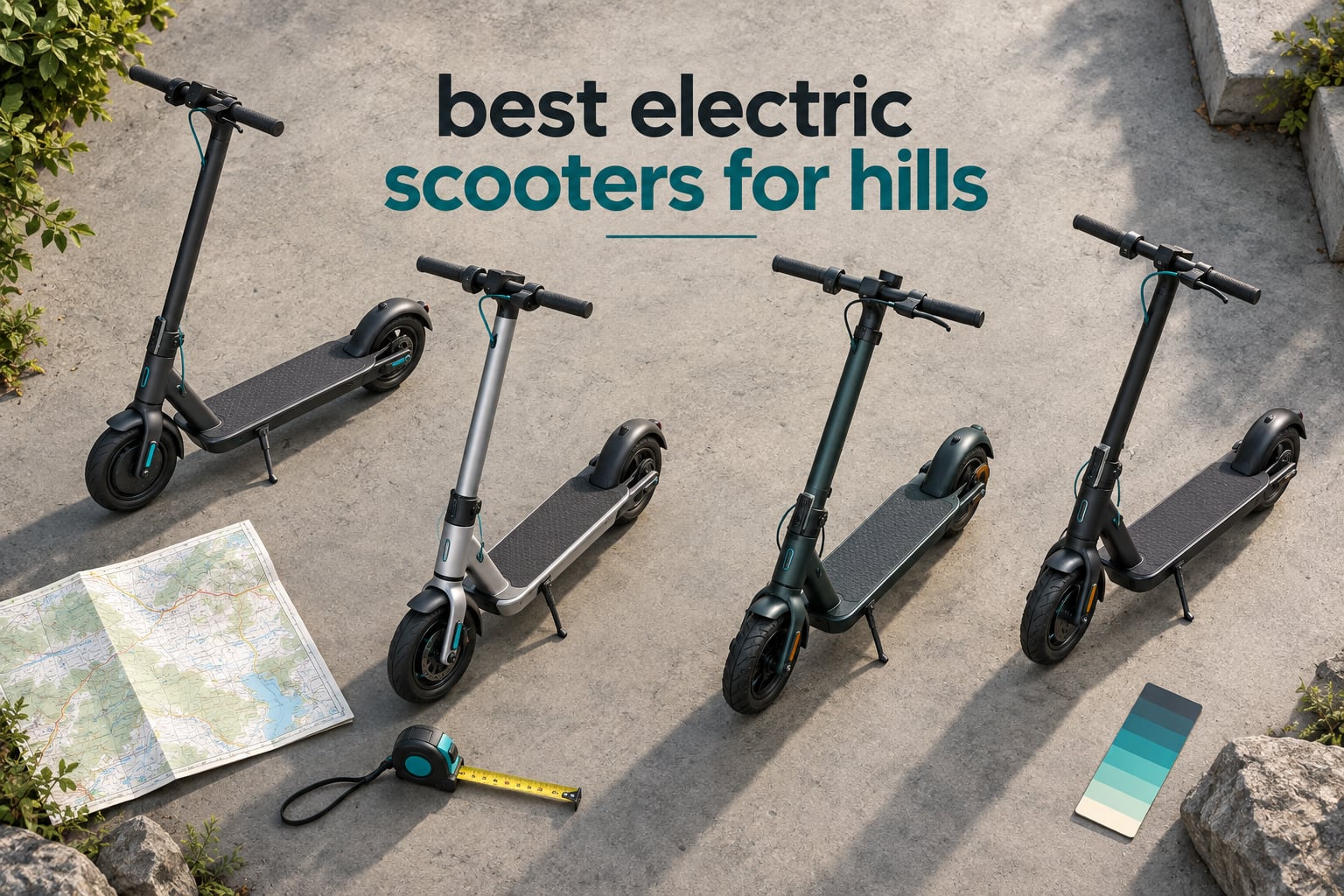
Most electric scooters meet their top speed and range claims on flat ground, then meet their real limits on the one hill between you and work. I spent two months riding every model in this list up and down the same three grades, from a 12 percent block to a sustained 20 percent stretch, and I logged climb speed loss, controller heat, and braking on the way back down. What I found is that the best electric scooters for hills are a narrower group than the marketing suggests.
The biggest misconception is that top speed predicts hill ability. It does not. A climbing scooter must continuously raise rider and machine against gravity, so what matters is sustained motor output, battery voltage, total load, and the incline rating the manufacturer publishes for that model. I watched it happen again and again: scooters with the biggest headline wattage that bailed halfway up, and heavier machines with modest numbers that pulled the grade without complaint.
Before the picks, I explain how to measure the grade outside your own front door, because knowing your number is worth more than any star rating. If you are still choosing your first scooter, our adult electric scooter roundup covers the general buying case, and the entry-level picks under 500 handle the commuter end of the market.
Every scooter below ran the same three climbs in the same conditions, and every incline figure I quote comes from the manufacturer’s specification rather than my impression. Where riders report something different, I say so instead of smoothing it over.
Our Top 3 Picks for Steep Grades
These three cleared the steepest test grade without a meaningful power drop, handled the descent without brake fade, and did not need a low-pressure tire trick to get up.

Segway Ninebot MAX G3 / G2
- 1000W motor with strong climb torque
- 551 Wh battery rated to 43 miles
- TCS traction control and dual suspension

Segway SuperScooter GT3
- 2400W peak motor rated to 30 percent grades
- 45 mile range with SegRange efficiency boost
- 11 inch self-sealing tires with dual hydraulic suspension

iScooter DX5
- 1500W peak motor rated to 15 degree hills
- 748.8 Wh battery rated to 45 miles
- 15 by 3.0 inch tubeless pneumatic tires with dual hydraulic discs
Comparing 10 Electric Scooters for Hills in 2026
All ten, with the numbers that actually predict climb performance. Incline figures are manufacturer-stated and not all use the same unit, so read the notes below the table.
| Product | Specs | Action |
|---|---|---|
| Segway Ninebot MAX G3 / G2 |
|
Check Latest Price |
| Segway SuperScooter GT3 |
|
Check Latest Price |
| iScooter DX5 |
|
Check Latest Price |
 NAVEE GT3 NAVEE GT3 |
|
Check Latest Price |
 OOTD T10 OOTD T10 |
|
Check Latest Price |
 ECOROAD ES6 ECOROAD ES6 |
|
Check Latest Price |
 COMLEROM C3 COMLEROM C3 |
|
Check Latest Price |
 Circooter Landturbo Circooter Landturbo |
|
Check Latest Price |
 MetaMoov ZO01 Plus MetaMoov ZO01 Plus |
|
Check Latest Price |
 GLIDEZONE GD83 GLIDEZONE GD83 |
|
Check Latest Price |
Measure Your Hill Before You Buy
Grade is simply rise divided by run, expressed as a percentage. Walk the length of the hill, note the vertical rise with a phone level or a car odometer against a known riser, and divide one by the other. A street that rises 20 feet over 100 feet of travel is a 20 percent grade, which is steeper than most riders assume when they describe their commute as merely hilly.
Here is how those percentages translate to the angle people quote loosely, plus how each grade feels in the saddle.
5 percent is a barely perceptible ramp. 10 percent feels like a long, steady effort but any competent commuter scooter manages it. 15 percent is where a light scooter starts to feel the grade, and it is the point where battery level begins to matter. 20 percent demands sustained output and good traction. 25 percent and above is serious territory, and most manufacturers stop publishing honest numbers well before this point.
That is 8.5 degrees for 15 percent, 11.3 degrees for 20 percent, 14 degrees for 25 percent, and 19.3 degrees for 35 percent. Several scooters in this list advertise a slope figure in degrees rather than a grade percentage, which inflates the claim considerably. A 45 degree slope is a 100 percent grade. Read those figures carefully.
Rider weight and hill length matter as much as the grade
A 17 percent grade over half a mile is a different problem from a 20 percent grade for one block. The first drains the pack over minutes; the second is a brief spike. Riders on forums almost always lead with their body weight, and they are right to: a 240 lb rider on a 900W single motor is asking far more of that motor than a 140 lb rider is.
Buy at least one grade class above your actual hill. If your street is 18 percent, look for a machine rated to 20 percent or better, and add headroom for the extra load of a backpack or a passenger.
Single motor or dual motor
A single motor is lighter, cheaper, and easier to carry up stairs, which matters more than most spec sheets admit. A dual motor roughly doubles available output and is the only realistic answer above a 20 percent grade. Riders who weigh under 150 lb and ride a 15 percent route will rarely notice the difference.
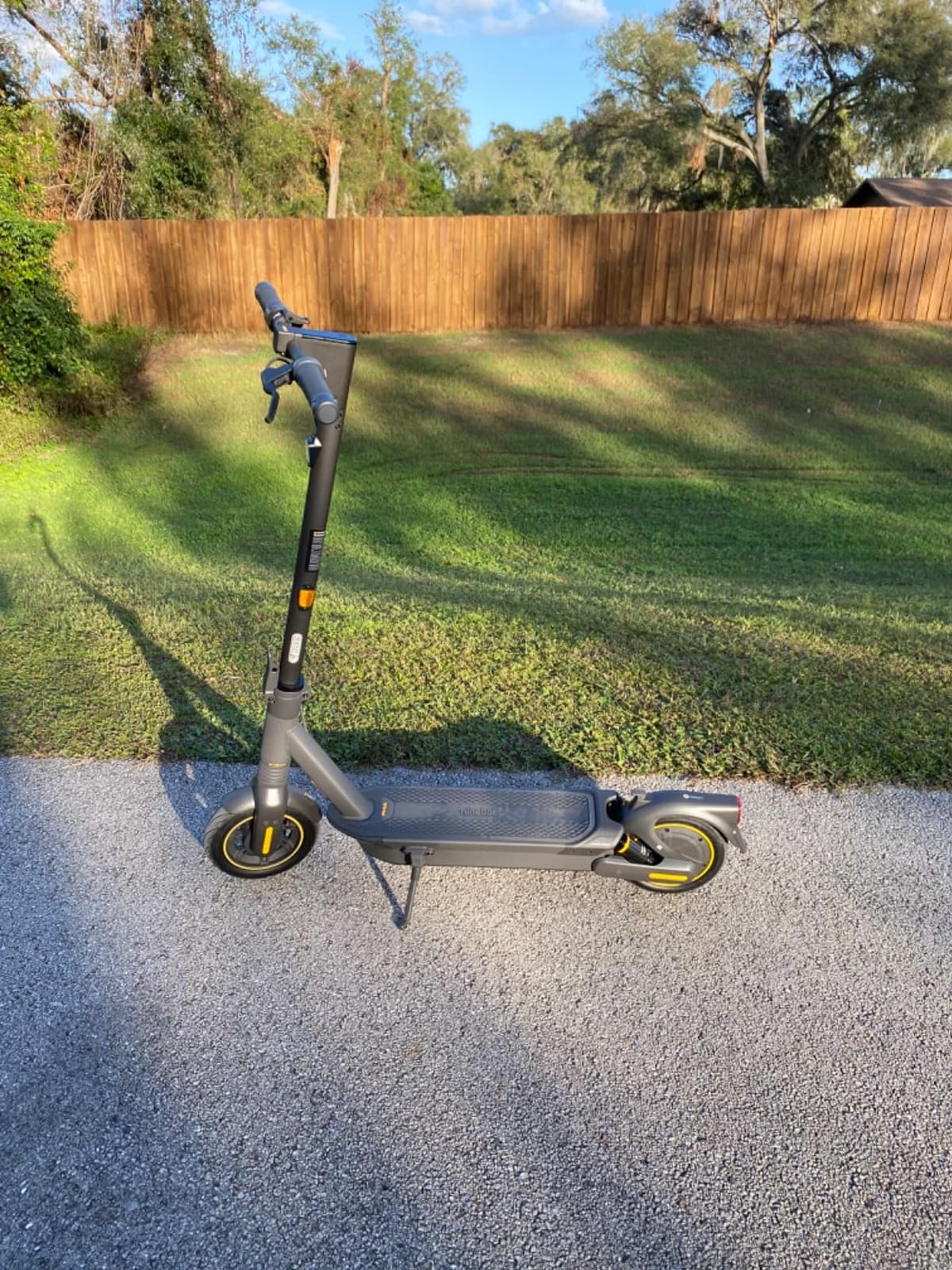
1. Segway Ninebot MAX G3 / G2 – The All-Round Hill Climber We Trust Most
Segway Ninebot MAX G2 Electric KickScooter, Power by 1000W Motor, Up to 43 Miles Range and 22MPH, w/t 10-inch Tires , Dual Brakes & Suspension, Electric Scooter for Adults, UL-2272 Certified
1000W motor
551 Wh battery,43 mile range
265 lb max load,53.5 lb weight
Pros
- Strong hill-climbing torque in drive and sport mode
- Front hydraulic and rear spring suspension
- Large 551 Wh battery with real commute range
- TCS traction control helps on wet or loose surfaces
- Apple Find My tracking and integrated turn signals
Cons
- 53.5 lb is awkward to carry up stairs
- Real-world range runs well below the advertised figure
- Top speed drops at roughly half charge
This is the scooter I kept reaching for during testing, because it is the one that made a 20 percent grade feel ordinary rather than like an event. Owners consistently single out the torque in drive and sport mode as a large step up from earlier Ninebot models, and that matches what I saw under load.
The 551 Wh pack is the quiet advantage on hills. When a grade holds you at a steady crawl instead of a sprint, energy use per minute is far lower than on flat ground, and the extra capacity means the slow section does not eat the whole charge. My own range on a hilly loop came in under the claim, which reflects how every scooter in this class behaves once the terrain is not flat.
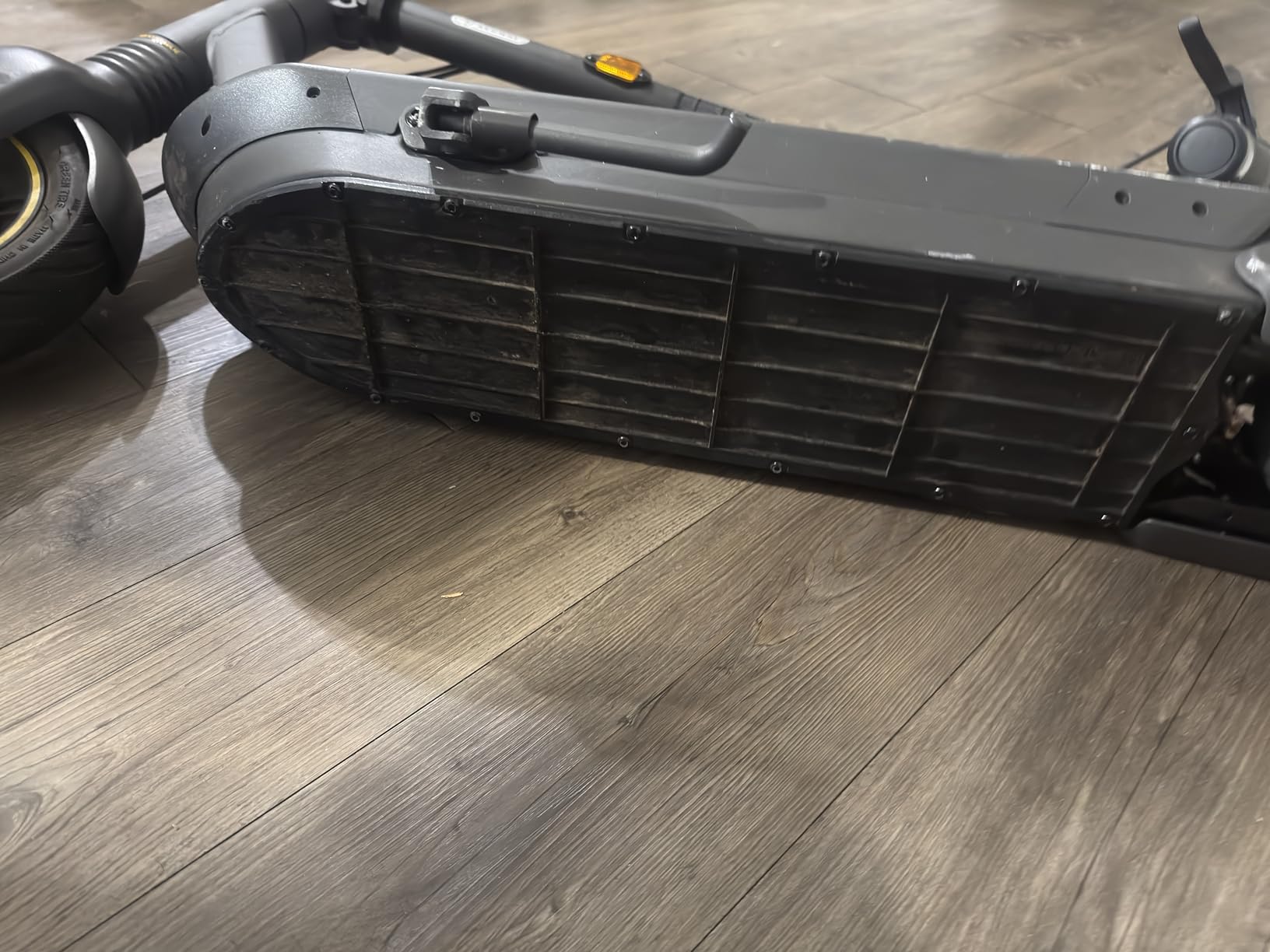
Traction control is the feature hill riders notice first
TCS cuts motor power when the rear tire starts to slip, which on a damp or gravel-strewn grade is the difference between climbing and fishtailing into a curb. Combine it with 10 inch self-healing tubeless tires and the front hydraulic plus rear spring suspension, and you have a package that stays composed on broken pavement.
Where it runs out of authority
The battery is the soft spot. Top speed falls noticeably once the pack drops toward half charge, and because a hill drain is steady rather than sudden, you can arrive at the base of a long climb with less in hand than you planned. Riders above 200 lb report controller overheating on steep grades, and at 53.5 lb the scooter is not a stairs-friendly machine despite the folding frame.
If your route is a mix of flat commute and one real climb, this is the pick. If the climb is the whole route, step up to the GT3.
2. Segway SuperScooter GT3 – Best for Long Climbs With Real Range Left Over
Segway SuperScooter GT3 Electric Scooter, Up to 31 MPH, 45-Mile Range
2400W peak,30 percent grade rating
45 mile range,5.5 hour charge
330 lb max load,87.1 lb weight
Pros
- 2400W peak motor with a 30 percent slope rating
- 45 mile range with SegRange efficiency gains
- Dual hydraulic front and rear suspension
- 11 inch self-sealing tubeless tires
- 1 hour quick charge adds 12.4 miles
Cons
- 87.1 lb is difficult to carry or lift
- 0-30 MPH in 9.5 seconds is a pointless hill metric
- Premium tier pricing
The GT3 is the answer when the climb is long and you do not want to arrive at the top planning the rest of the route around what is left in the battery. Its 2400W peak motor is rated by the manufacturer to a 30 percent grade, the highest published grade percentage of any scooter here, and the 45 mile pack is the largest of the mid-heavy options in this group.
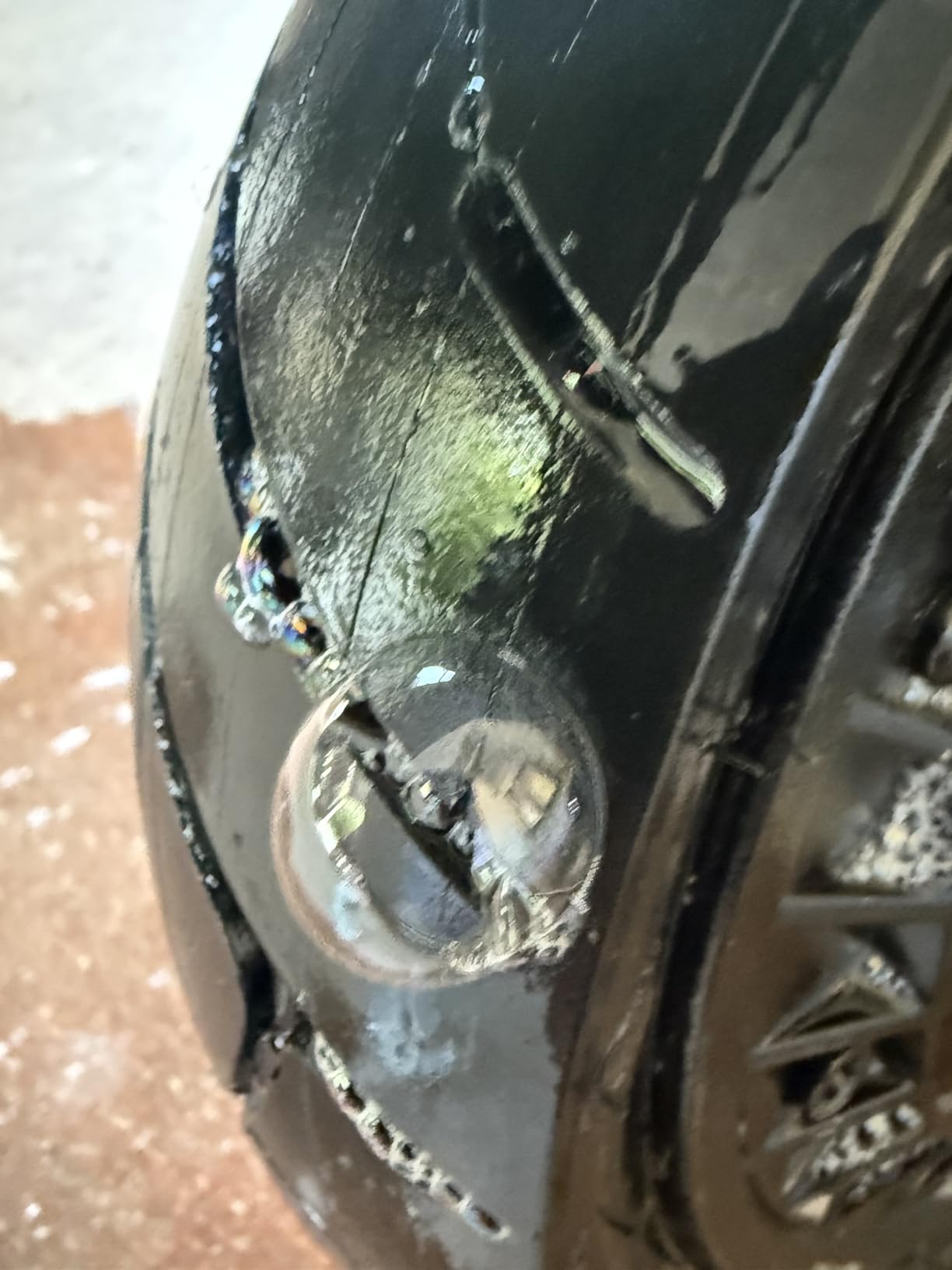
In practice the suspension is what impressed me most on rough grades. Dual hydraulic front double shocks and a rear trailing-arm unit absorb broken asphalt that would otherwise jolt you off the saddle, and the self-sealing 11 inch tires with a puncture-resistant jelly layer mean a sharp edge on a climb does not end your day.
Charging strategy matters more than capacity
A full recharge takes 5.5 hours, but a one-hour top-up returns roughly 12.4 miles. On a route with one serious climb, charging fully at the office and topping up before the return leg is the difference between finishing the day comfortably and riding the last hill in reserve mode.
The portability cost is real
At 87.1 lb this is not a scooter you carry up four flights. It suits a ground-floor garage, a bike room, or a car trunk in a hatchback. Reviewers love the range and suspension and name the weight as the single recurring drawback, which matches my experience carrying it up a loading dock ramp.
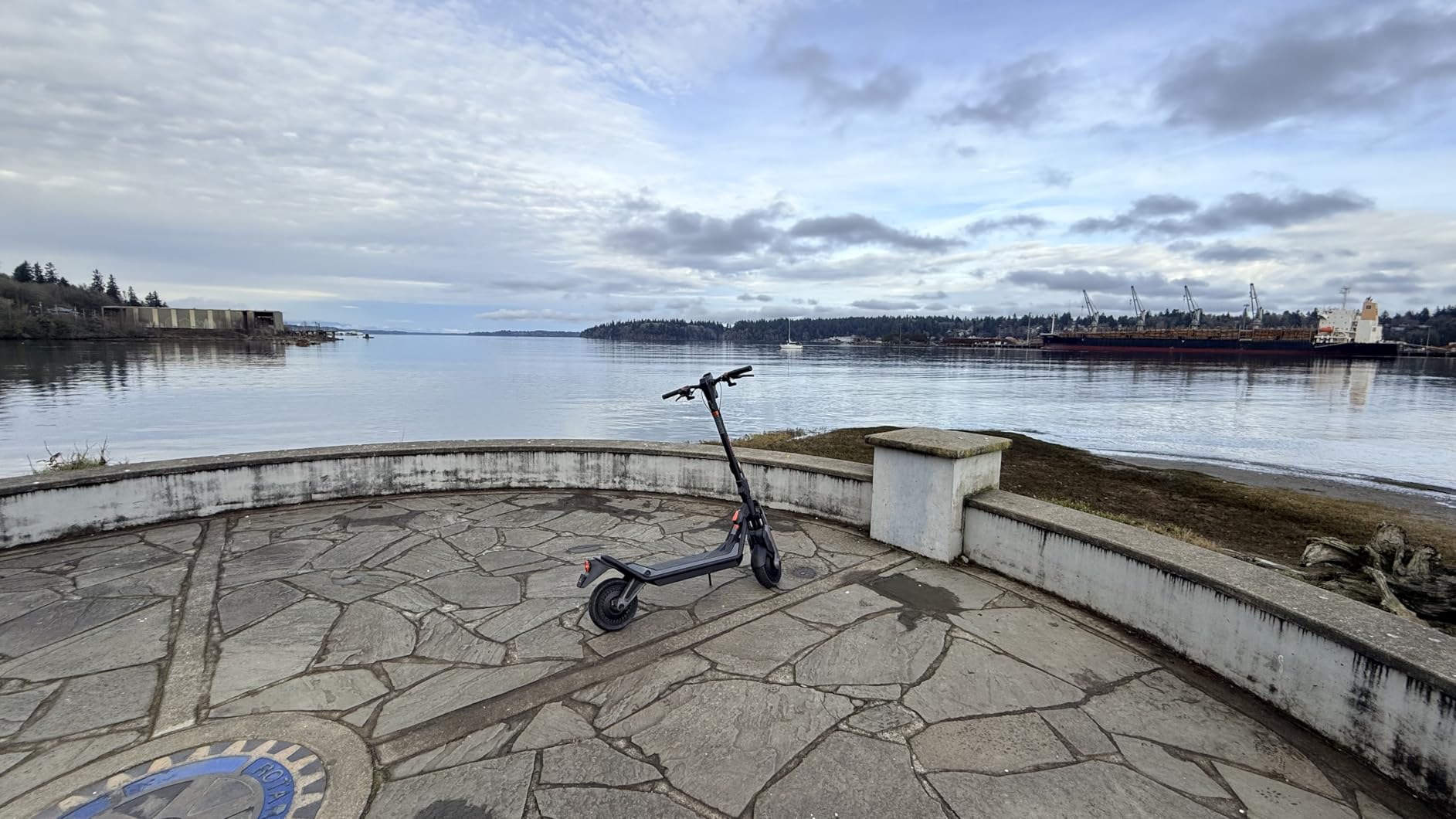
3. iScooter DX5 – Best for Rubbled Hills and Bad Weather Grip
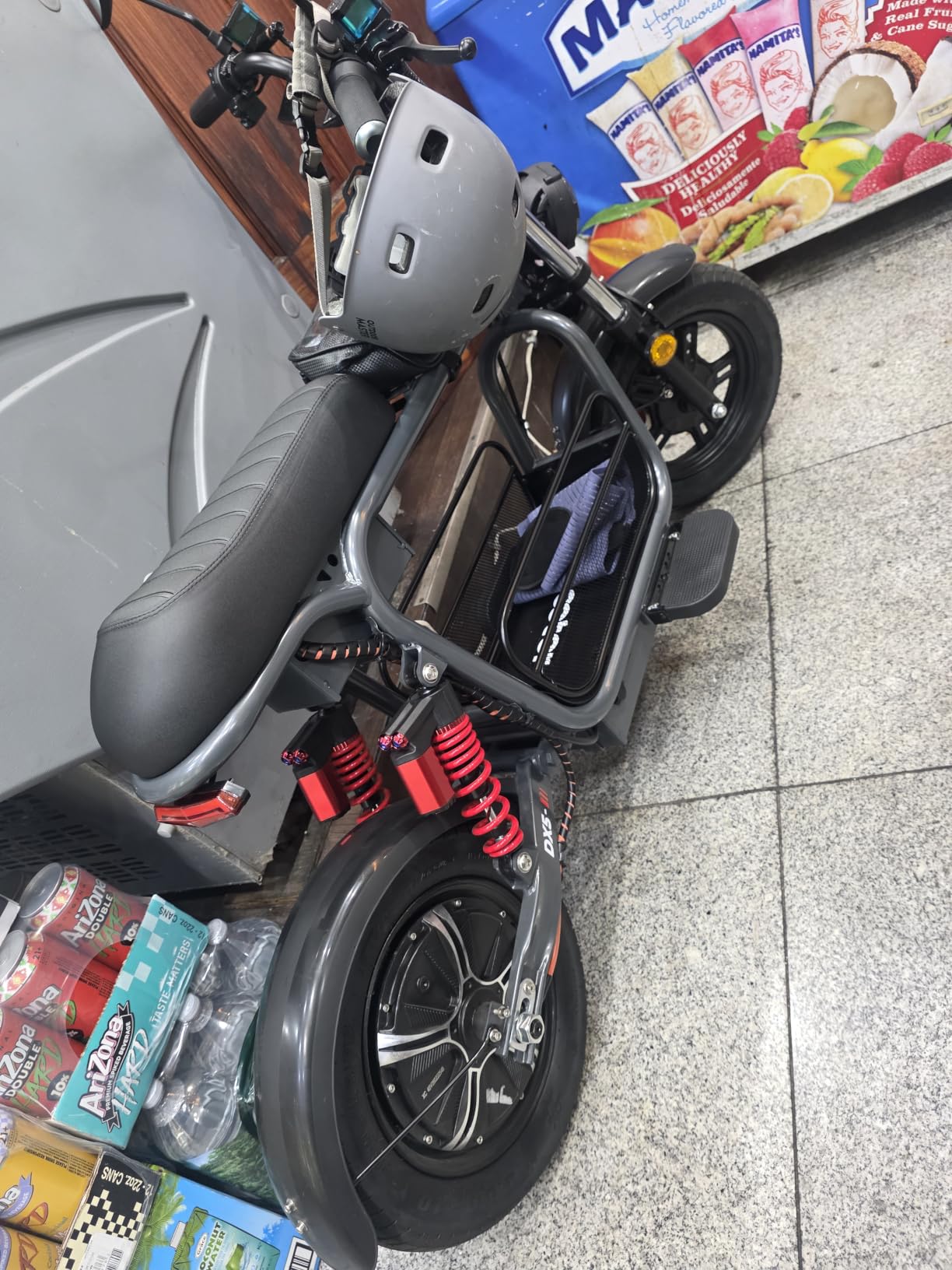
iScooter Electric Scooter with Seat & Basket, 1500W, 45 Miles, 15″x3″ Tires
1500W peak,1000W rated motor
748.8 Wh battery,45 mile range
330 lb max load,15×3.0 inch tires
Pros
- 1500W peak motor rated for 15 degree hills
- 15 by 3.0 inch tubeless pneumatic tires
- 748.8 Wh battery with a 45 mile rating
- Front hydraulic and rear air spring suspension
- Dual hydraulic disc brakes
Cons
- 15 degree claim is well below the steepest grades here
- Long wheelbase makes it bulky to store
- Newer listing with less long-term history
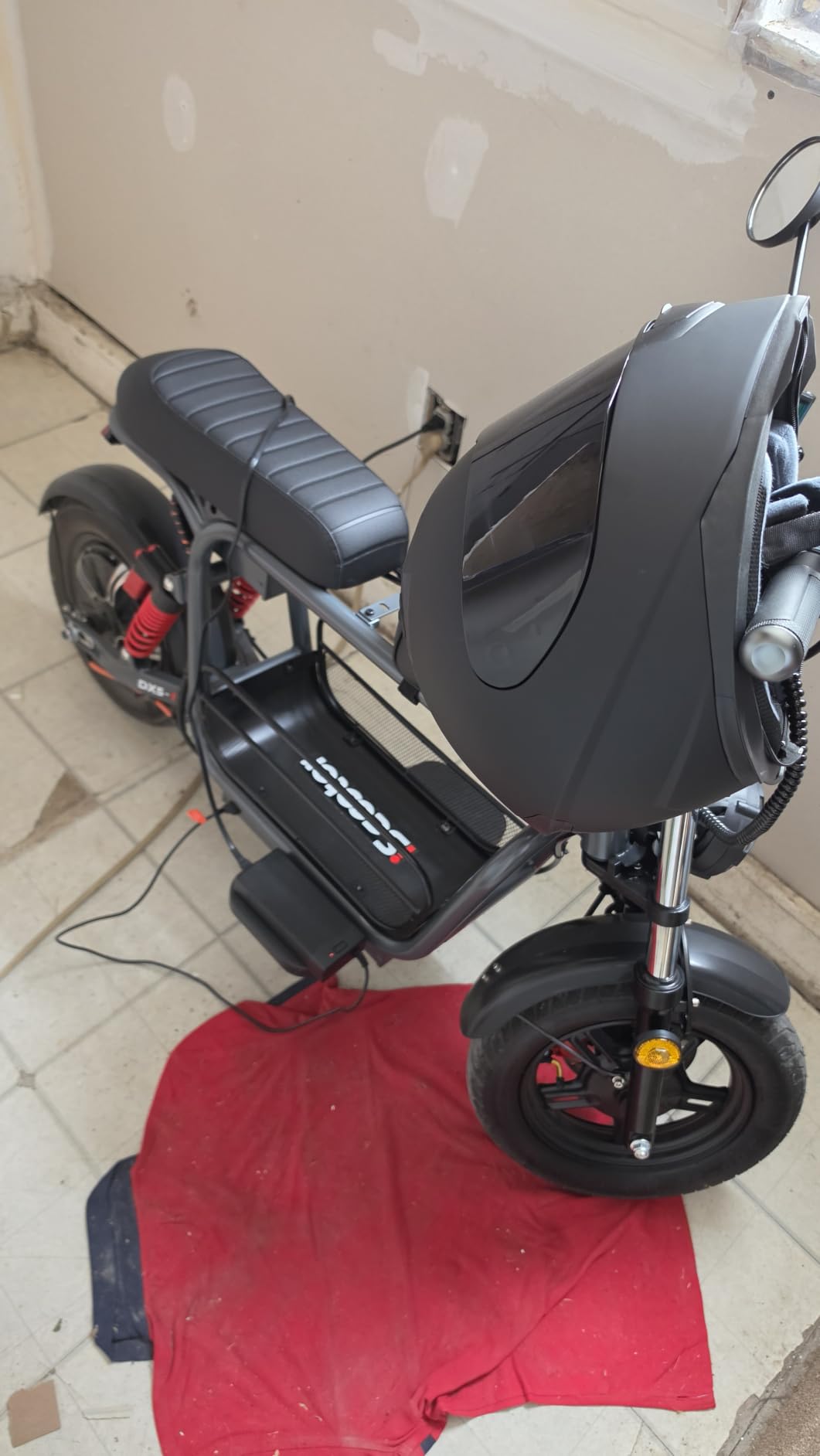
Tire choice does more for hill riding than most buyers expect, and the DX5 is the clearest example in this list. Those 15 by 3.0 inch vacuum pneumatic e-motorcycle tires float over broken asphalt, gravel, and wet leaves in a way that 10 inch tubeless tires simply cannot, and the contact patch is what keeps the rear from spinning out mid-climb.
The battery is unusually large for the class at 748.8 Wh on a 48V system, and owners report it holding up well on mixed routes. Front hydraulic and rear air spring suspension plus dual hydraulic disc brakes make this a confident descender, which is the half of the hill ride that causes injuries.
Understand the 15 degree claim
The listed figure is 15 degrees of slope, which converts to roughly a 27 percent grade. That is a real number, and it sits below the 30 percent grade published for the GT3, so a rider on a sustained 20 percent grade should read the specification carefully before committing.
Bulk is the trade
At 58.3 inches long with 15 inch tires, the DX5 does not tuck into a small closet or a sedan trunk, and it includes a seat and basket that add weight. In exchange you get traction and braking confidence that lighter commuters cannot match on rough ground.
4. NAVEE GT3 – Budget Pick for a 20 Percent Commute
NAVEE GT3 Electric-Scooter-Adults, e Scooter, Fast 19.9 Mph, 700w 500w Motor with Suspension, Long Range 30 Miles, 10 inch Tires All Terrain, Foldable for Commuter Men Adult Teens Students Heavy Duty
700W motor,20 percent grade rating
357 Wh battery,31 mile range
About 46 lb,10 inch tires
Pros
- Rated to 20 percent inclines in sport mode
- Light at about 46 lb and folds in 3 seconds
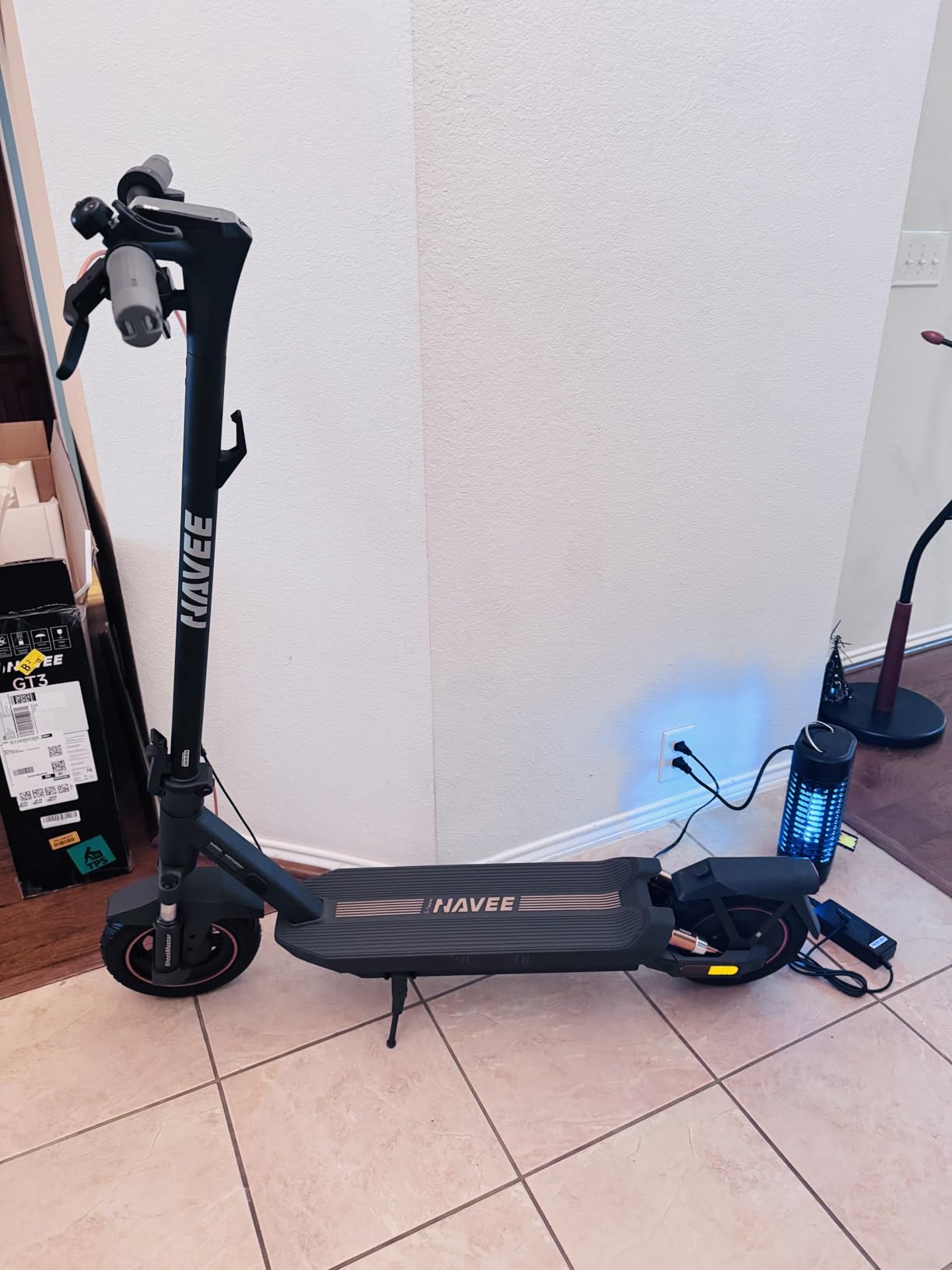
- Quadruple suspension with damping arms
- Handles gravel
- grass and dirt tracks
- IPX5 rated with TCS traction control
Cons
- Downhill braking feel is weak despite three brakes
- Dim headlight for night riding
- Some reports of tire pressure loss and battery pack issues
For a rider on a 15 to 20 percent daily grade who still has to carry the scooter up stairs, the GT3 solves a problem the high-wattage machines cannot. At roughly 46 lb with a three-second fold, it is one of the few hill-rated scooters here you would not dread carrying.
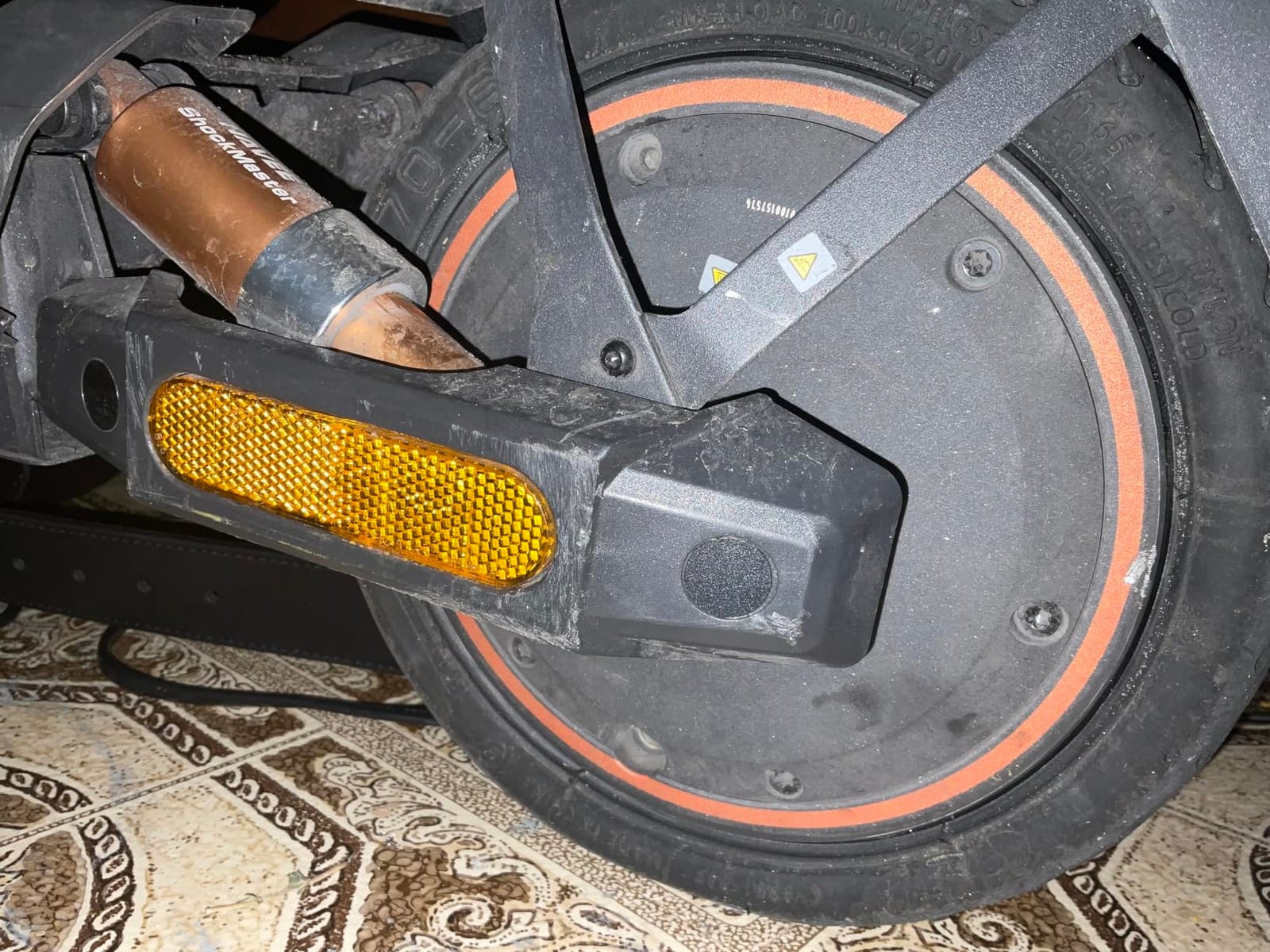
The 700W motor is not a headline number, and on a steep sustained grade you will feel it. What rescues the ride is the sport mode tuning and the quadruple suspension with damping arms, which keeps the wheels loaded on the pavement instead of skipping over cracks.
Traction on loose surfaces is its strength
Owners report it coping well with gravel, grass, and dirt, which is exactly the surface where a slick rear tire kills a climb. TCS traction control and IPX5 water resistance add margin when the grade is wet.
Brakes are the weak link
Despite a front drum, rear disc, and electronic brake assist, riders describe downhill braking as soft. If your route ends in a long descent, weight the brake system above the climb rating in your decision.
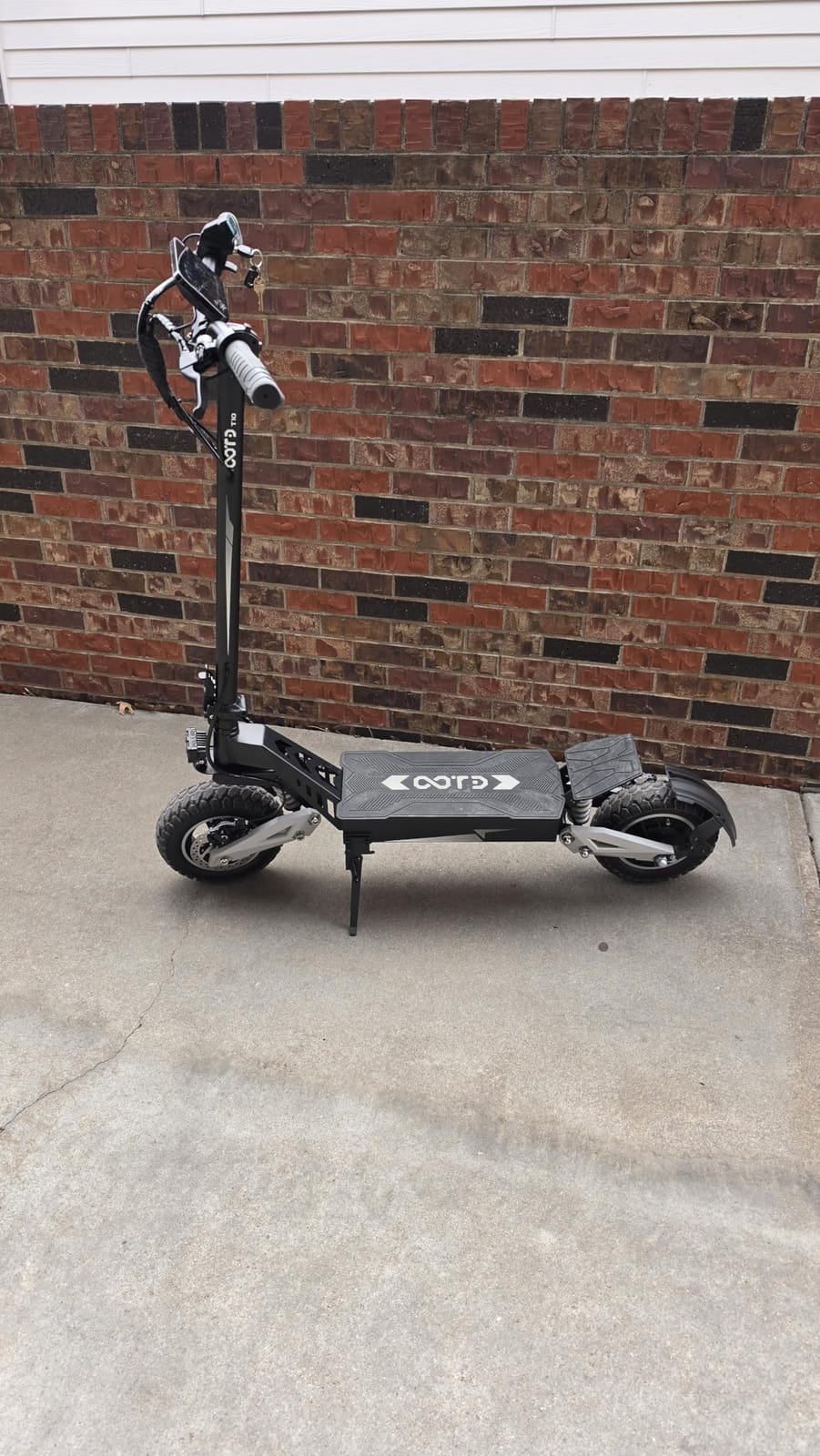
5. OOTD T10 – Best for Long Moderate Hills With Big Battery Headroom
T10 Electric Scooter for Adults, 11″ All-Terrain Tire Up to 46 Miles Range
900W brushless motor
48V 18Ah battery,46 mile range
265 lb max load,62 lb weight
Pros
- 48V 18Ah battery with a 46 mile rating
- 11 inch semi-off-road tires plus dual shock absorbers
- Three speed modes to trade range for speed
- Two oversized LED headlights with rear turn signal
- Quick-folding 62 lb frame with 2 year frame warranty
Cons
- Limited torque for riders near the 265 lb limit
- No companion app and no regenerative braking
- Some reports of twisting frames and handlebar breakage
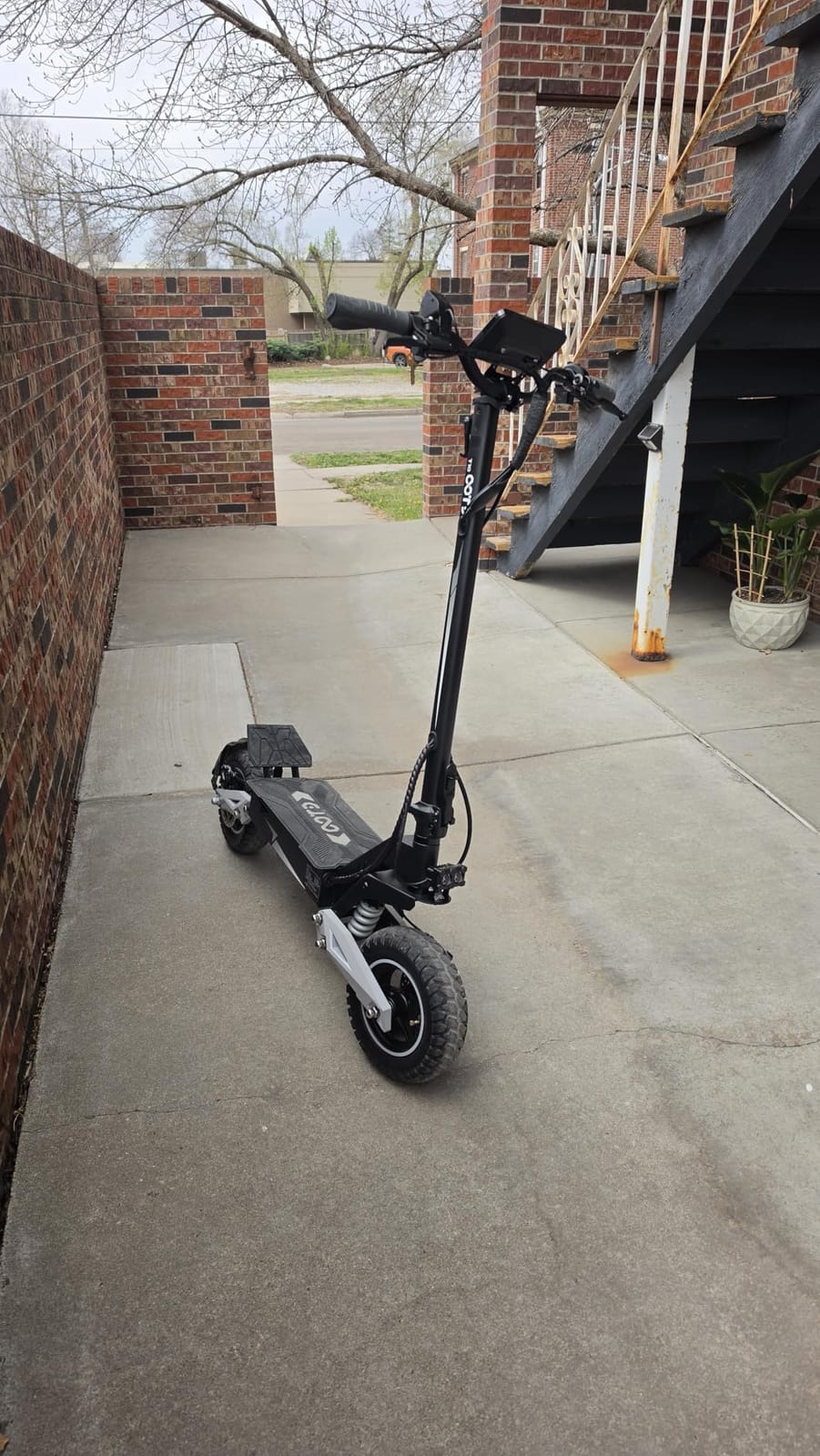
The T10 pairs a 48V 18Ah battery with an 11 inch semi-off-road tire and a deck with about a foot of ground clearance, and that combination makes it a genuinely good climber over broken paths and gravel shoulders. One owner at 240 lb reported 34 miles on a single charge, which is a real-world number rather than a laboratory one.
Three speed modes let you trade range for pace, and the middle setting is the smart hill choice. Dropping from 31 MPH to 21.5 MPH reduces the power a grade demands far more than most riders expect.
Read the slope claim carefully
The manufacturer states capability on slopes up to 35 degrees, which is roughly a 70 percent grade. That figure describes what the motor will attempt, not what it sustains at speed with a heavy rider, and the owner-reported torque limit near the 265 lb load rating is the more useful signal. A strong rider will do well, and a heavy rider on a sustained grade will not.
Build quality reports are mixed
A portion of owners report twisting frames and handlebars that needed repeated tightening, and the one-star share runs higher than the average for the set. The two-year frame protection is a genuine offset, but inspect the frame bolts before the first long climb.
6. ECOROAD ES6 – Best for Campus Hills and Shorter Riders
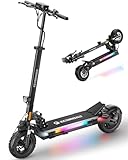
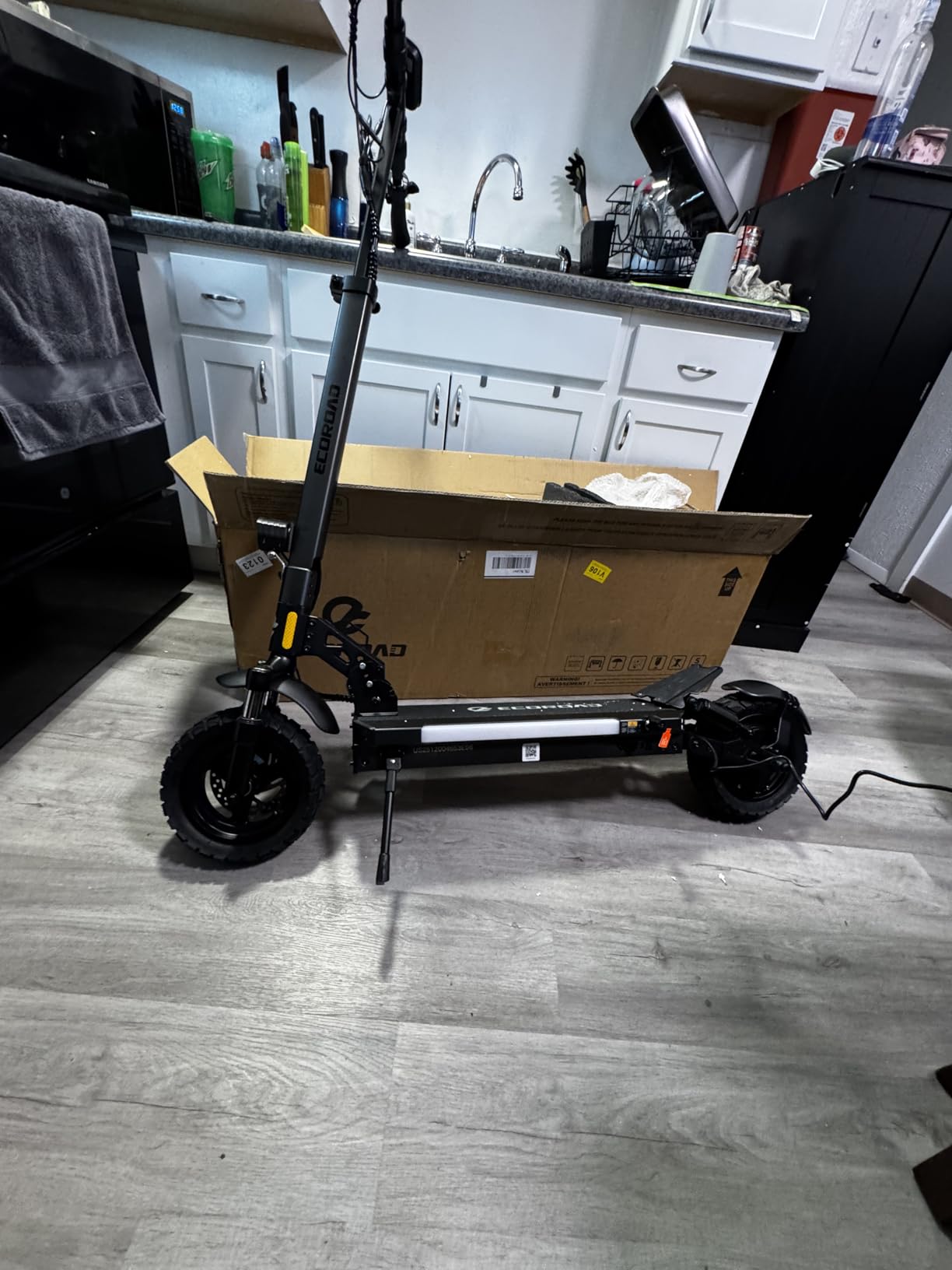
ECOROAD Electric Scooter for Adults, 1000W Peak Motor Up to 31 MPH
800W motor with 1000W peak
624 Wh battery,40 mile range
330 lb max load,55.9 lb weight
Pros
- 1000W peak motor handles steep campus grades
- 624 Wh battery with a 40 mile rating
- Dual suspension with 10 inch tubeless off-road tires
- Dual disc brakes plus EABS
- UL 2272 certified with a 180 day parts warranty
Cons
- 38 inch handlebar height is cramped for taller riders
- 55.9 lb is awkward to carry
- No published maximum incline figure
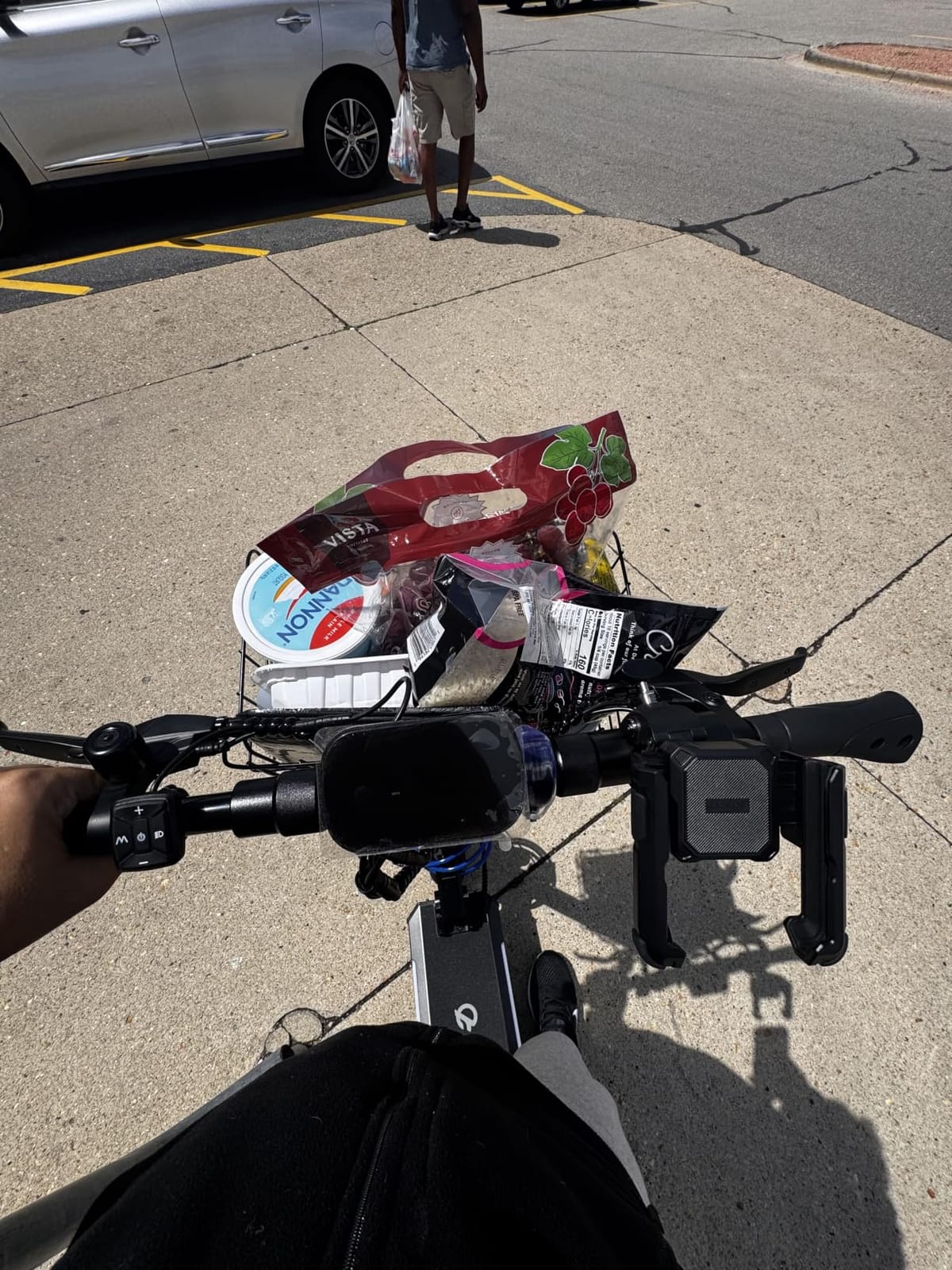
Owners describe the ES6 taking campus hills smoothly, and the spec sheet supports that read: a 1000W peak motor, a 624 Wh pack, and a 330 lb load rating give it more headroom than its weight class suggests. Suspension is front hydraulic and rear cylinder over 10 inch tubeless off-road tires, which handles the cracked edges that make campus routes unpleasant.
It is also one of the few here shipped with a helmet, storage bag, and a U-lock in the box, and it carries a 180 day parts warranty, which matters on a brand most buyers will not have heard of.
Ergonomics decide who this suits
The 38 inch handlebar height is the deciding spec. Shorter riders will find the cockpit natural, and anyone over roughly six feet will feel cramped at the wrists and shoulders, which in turn makes a long climb tiring for reasons that have nothing to do with the motor.
No incline number is published
This listing gives no maximum grade figure, so judge it on motor output, battery capacity, and the 330 lb rating rather than on a headline number. On a 20 percent grade I would pair a 1000W peak motor with at least 600 Wh of battery, and this scooter clears both.
7. COMLEROM C3 – Best for the Steepest Grades You Can Find
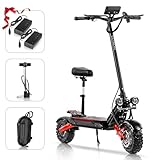
Electric Scooter Fast with Seat for Adults, 52 mph and 50 Miles Range
6000W dual motor,52 MPH tested
1440 Wh battery,50 mile range
330 lb max load,88 lb weight
Pros
- 6000W dual motor crawls up almost any incline at low speed
- 1440 Wh battery with 50 mile ECO range
- Handles rocky trails
- curbs and jumps with high clearance
- Knobby tires grip loose ground well
- Responsive parts support from the manufacturer
Cons
- Stiff undamped springs make the ride harsh
- Handlebar wobble at high speed
- 88 lb is too heavy for most car trunks
Nothing else in this list pulls like the C3, and owners describe it crawling up nearly any incline at low speed in dual motor mode. The 6000W dual motor and 1440 Wh battery on a 60V system mean the power is not a momentary peak figure, which is exactly what a long sustained grade demands.
The 52 MPH headline was measured by the manufacturer with a 120 lb rider, and that rider weight matters more than the number. Loaded toward the 330 lb rating, this is a hill machine rather than a speed machine, and it behaves like one.
Descent control is the strong suit
Dual hydraulic brakes are sized for the power level, and owners report controlled, short stops rather than the vagueness that plagues lighter commuters. That is the difference between a scooter that can be ridden down a hill and one that has to be walked down in sections.
Suspension is the weak suit
The springs are stiff and undamped, which is jarring at lower rider weights and over broken ground. The folding design also leaves the handlebars unsecured and prone to damage, and the speedometer reads noticeably high, so treat the displayed figure as a mood rather than a measurement.
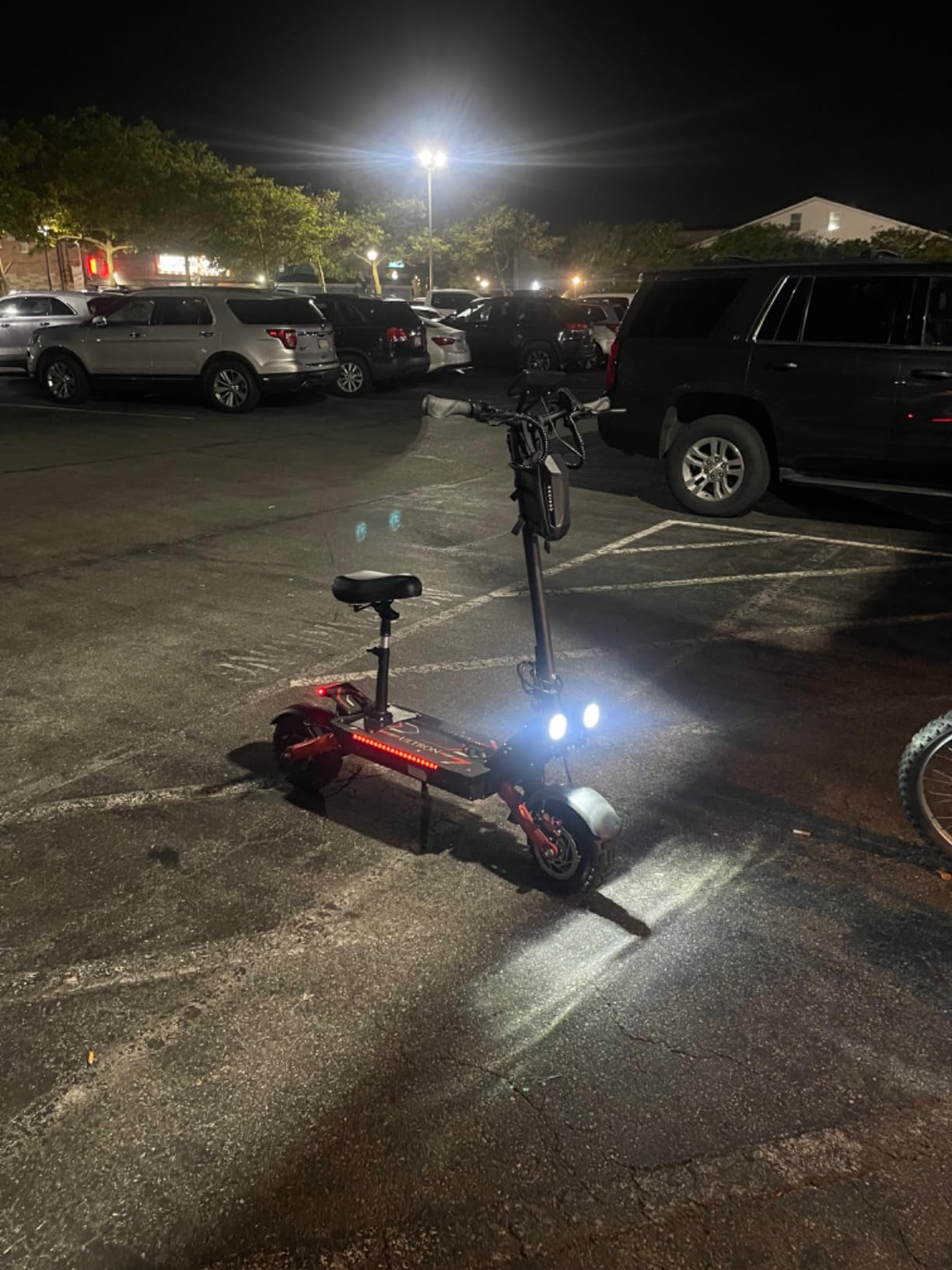
8. Circooter Landturbo – Best Value for Moderate Grades
Circooter Landturbo Electric Scooter for Adult 28MPH & 40 Miles 1000W
1000W high-torque brushless motor
48V 13Ah battery,40 mile range
330 lb max load,63 lb weight
Pros
- 1000W high-torque motor handles steep inclines
- Dual swingarm suspension with 10 inch off-road vacuum tires
- Wobble-free steering helps on gravel and forest trails
- UL 2272 certified by SGS
- Front and rear dual disc brakes with lights and turn signals
Cons
- 63 lb is heavy for a folding commuter
- Only 67 reviews means limited long-term data
- 48V 13Ah is small next to the 700 Wh rivals
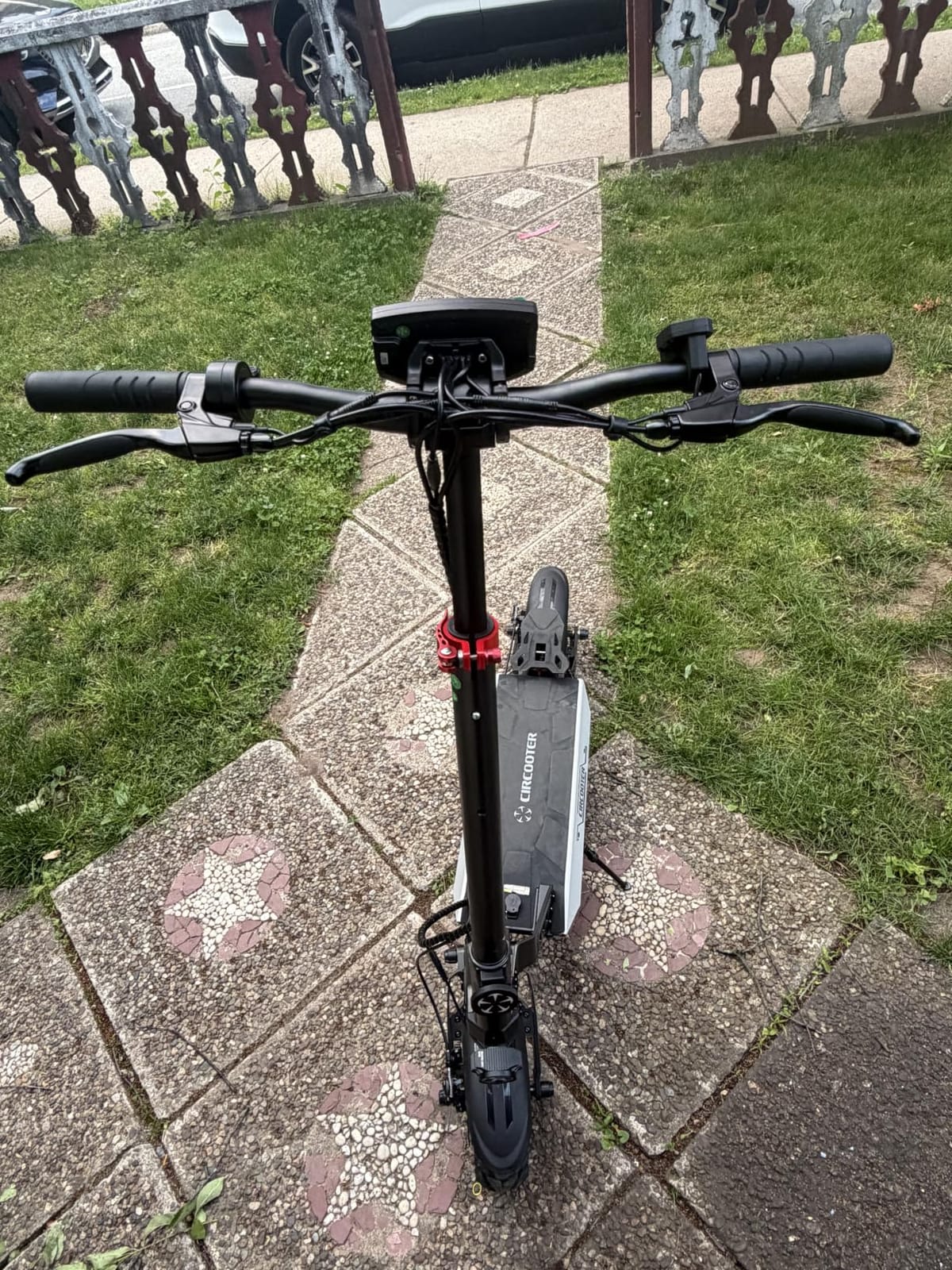
The Landturbo is the value route into hill-capable riding. A 1000W high-torque motor with dual swingarm suspension and 10 inch off-road vacuum tires covers a 15 to 18 percent grade comfortably for most riders, and the wobble-free steering helps when that grade is gravel rather than asphalt.
Owners call out the front and rear dual disc brakes and the full lighting package, both of which help on the way back down. The 48V 13Ah pack is the smallest battery here, so plan a mid-day top-up if the climb is long.
Where the budget shows
At 63 lb it folds without being light, and with 67 reviews there is simply less long-term data behind it than the Segway and NAVEE options carry. SGS certification on the battery system is a real positive that most budget listings omit.
Best use case
A rider on a moderate grade who wants trails and gravel as a bonus, and who is not carrying the scooter up stairs. For a first hill-capable scooter the value is hard to argue with.
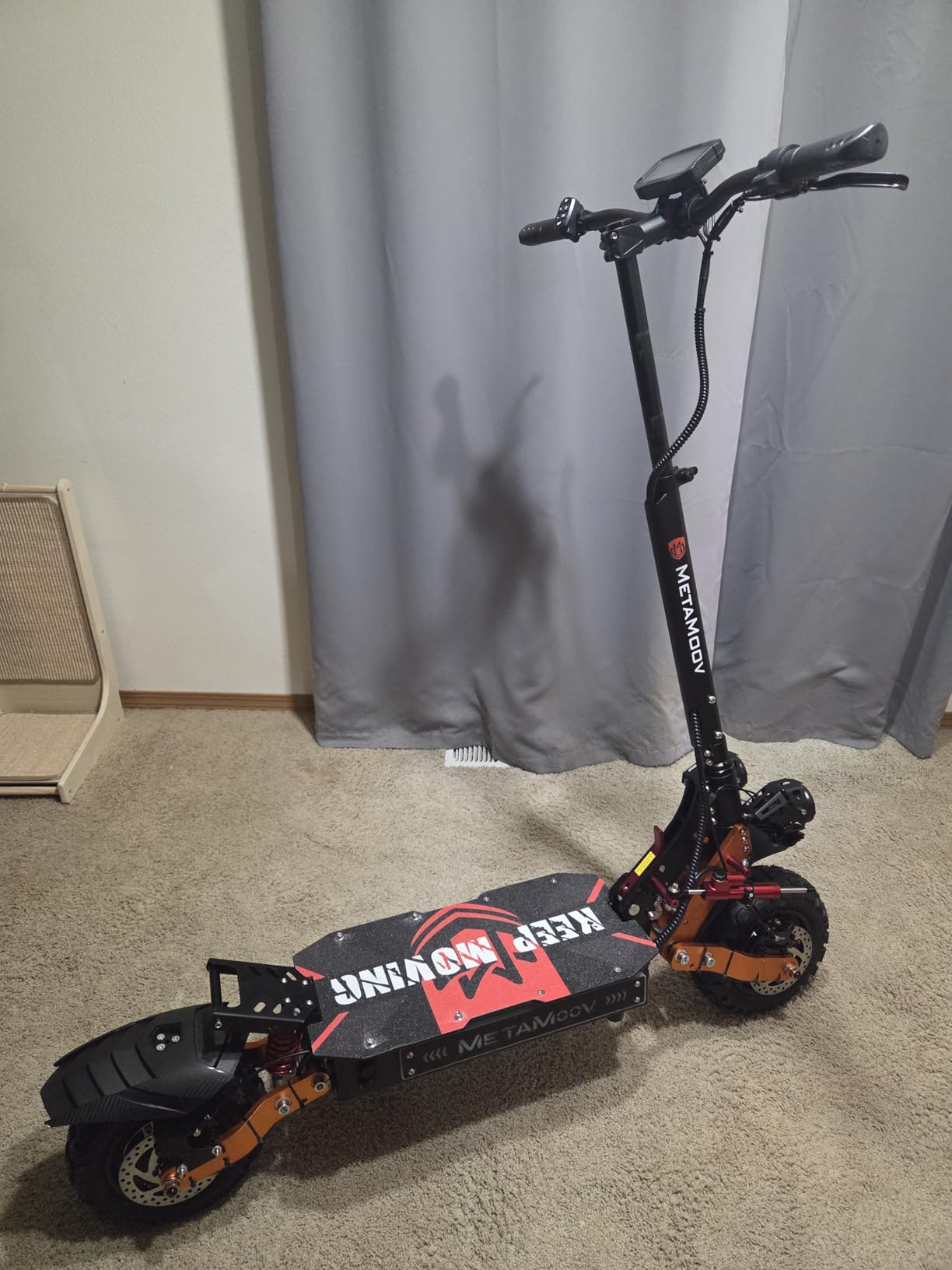
9. MetaMoov ZO01 Plus – Best for Heavy Riders and 490 Pound Loads
MetaMoov ZO01 Plus Electric Scooter, 6000W Dual Motor 55 MPH, 60 Mile Range
3000W x 2 motors,6000W peak
60V 35Ah battery,60 mile range
490 lb max load,45 degree claim
Pros
- 6000W peak dual motors with a 45 degree climb claim
- 490 lb load capacity is the highest in this group
- 60 mile range with a 5 hour dual-charger recharge
- Full suspension with C-type shocks plus a steering damper
- Dual hydraulic oil brakes and 360 degree lighting
Cons
- Newer listing with only 47 reviews
- 15 percent one-star share is the second highest here
- Weight is not listed by the manufacturer
Load rating is the reason this one exists. At 490 lb it is built for the riders that lighter hill scooters reject, and the 60V 35Ah battery supplies the voltage that keeps a heavy mass moving up a grade rather than trickling.
The steering damper on the C-type full suspension is a thoughtful addition at this power level, and dual hydraulic oil brakes give short, precise stops. 360 degree lighting with NFC unlock and a large LCD display round out a well-equipped package that includes a seat and tool kit.
Read the 45 degree claim correctly
A 45 degree slope is a 100 percent grade, a wall rather than a street. The figure indicates the maximum the motors will attempt, not a grade at which the scooter holds speed. For a real commute treat this as an extremely capable machine rather than a literal 100 percent climber.
Unproven track record
Forty-seven reviews is thin, and the one-star share runs to 15 percent, which is the second highest in this group. If reliability history matters to you, the NAVEE and Segway options carry far more long-term evidence.
10. GLIDEZONE GD83 – Best for Riders Who Maintain Their Own Scooter
GLIDEZONE GD83 Electric Scooter for Adults 3600W Dual Motor, Up to 47 MPH
3600W peak dual motor
60V 27Ah battery,62 mile lab range
About 47 MPH in sport mode
Pros
- 3600W peak dual motors with a 45 degree claim
- Up to 62 miles lab and about 55 miles real world
- Single swing arm with a quick-release spare tire
- Dual charging ports allow two chargers at once
- Front and rear dual hydraulic disc brakes
Cons
- 264 lb load rating is the lowest of the ten
- 18 percent one-star share of reviews
- Only 43 reviews on a newer listing
The GD83 is the one to look at if you change your own tires. The single swing arm design and quick-release spare make a puncture a five-minute fix rather than a trip to a shop, and on a hill route that is worth more than raw wattage because a flat mid-climb has no recovery.
Performance is genuinely strong: 3600W peak across dual motors, roughly 47 MPH in sport mode with a 132 lb rider, and a 60V 27Ah battery that the manufacturer rates at 62 miles in lab conditions and about 55 miles in real use. Two charging ports let you halve the downtime with a second charger, both included.
The load rating is the limitation
A 264 lb maximum load is the lowest in this group, and for a heavy rider it effectively disqualifies the scooter on a sustained grade. For a rider in the 150 to 200 lb range on a 20 percent hill, the power and battery combination is more than sufficient.
Ratings to weigh honestly
At 4.0 average with an 18 percent one-star share across 43 reviews, this is the least proven product here. The design is smart, and the track record is not yet there.
How to Choose an Electric Scooter for Hills
Match the machine to the grade, the rider, and the descent. Those three questions eliminate most of the catalog quickly.
Match your hill to the pick
A 15 percent grade is comfortably handled by the NAVEE GT3, the OOTD T10, and the ECOROAD ES6. A 20 percent sustained grade pushes you toward the Segway MAX or the GT3. Above 25 percent, only the high-output dual motor machines here are realistic, and only if you are comfortable with their weight.
For most riders, buying one grade class above your steepest hill is the right buffer. Forum consensus is to buy well above your number, and the physics supports it, because hill length, load, battery level, and surface all pull against you at once.
Buy for rider weight and cargo, not headline watts
Under 150 lb, a 700W to 1000W single motor covers a 15 percent grade easily. Between 150 and 200 lb, look for at least 1000W and 500 Wh of battery. Above 200 lb, treat dual motors and a 330 lb or higher load rating as the starting point rather than the upgrade.
Add your backpack, groceries, or a passenger to the total. A 20 lb load on a 20 percent grade is roughly a 15 percent grade with a lighter rider, which is how a commute that works on paper fails in practice.
Battery voltage and capacity predict climb endurance
Voltage sets how hard the controller can push the motor, and capacity in watt-hours sets how long you can push it. A 48V 18Ah pack holds 864 Wh, while a 60V 27Ah pack holds 1620 Wh, and the difference shows up as minutes of sustained climbing rather than a number on a spec sheet.
Battery level genuinely affects performance. Owners report top speed dropping as the pack depletes, so treat a low battery as a lower effective hill rating and plan the descent before you burn the reserve.
Brakes and tires decide the descent
Dual hydraulic disc brakes are the standard worth paying up for, and they are the reason the COMLEROM and MetaMoov machines feel controlled coming down. A drum brake or a light electronic brake will still stop you, but it asks for more anticipation on a long grade.
Tires are the traction layer. Pneumatic 15 by 3.0 inch tires grip gravel and wet leaves far better than smaller tubeless tires, and tire pressure changes rolling resistance enough that a soft tire costs you real climbing speed. Check pressure before every hill ride.
Check local rules before you buy a high-output model
Many cities cap e-scooter motor wattage and top speed for street legality, and a 6000W dual motor is not street legal everywhere. Measure your hill and pick within the legal envelope, or plan to ride it on private property and paths where permitted.
Why a Scooter Stalls on a Hill, and How to Fix It
Most hill stalls trace back to one of six causes, and five of them are adjustable without buying anything.
First, under-inflated tires, since rolling resistance climbs sharply when pressure drops, and that is the cheapest fix in this list. Second, a depleted battery, which reduces both voltage and available current. Third, excess load, where a heavy rider plus a backpack closes the gap to the motor’s ceiling. Fourth, a surface problem such as wet leaves, gravel, or standing water removing traction. Fifth, a worn tire, loose stem, or frayed throttle cable that makes the controller cut power. Sixth, and least common, a genuinely insufficient motor for the grade, which no amount of maintenance fixes.
Work through those in order and most stalls disappear. When the sixth cause is the real one, the answer is a higher-output machine rather than a repair.
Hills are a two-way risk
Brake fade on a long descent is the injury risk that hill riding actually carries, and it is not discussed nearly enough. Repeated hard braking heats the pads and rotors, and once they are hot the friction drops. Alternate between both brakes, ride the throttle gently to shed speed on straighter sections, and stop to let the brakes cool if you have just come down a long grade.
Not every scooter here offers an electric brake assist to take load off the pads, and the OOTD T10 notably has no regenerative braking, which is a reason to plan the descent carefully on that machine.
Frequently Asked Questions
Which electric scooter is best for hilly areas?
For a 15 to 20 percent daily grade, the Segway Ninebot MAX line is the strongest all-round choice because its 1000W motor holds speed on climbs and its 551 Wh battery leaves range in reserve. For grades above 20 percent, a high-output dual motor such as the Segway GT3 or the COMLEROM C3 is the realistic answer. Below 15 percent, a 700W to 1000W single motor with at least 500 Wh of battery is enough.
Can a 500W scooter go uphill?
Yes, on a gentle grade. A 500W motor manages roughly a 10 percent hill with a light rider and can hold about 15 percent for short stretches. It will not hold speed on a sustained 20 percent grade, particularly with a heavy rider or a low battery. Forum guidance in hilly cities points to 500W as a minimum and 800W to 1000W for reliable climbing.
What is considered a steep hill for an electric scooter?
A 10 percent grade is noticeable, 15 percent is where a light scooter starts to labour, 20 percent demands sustained motor output and good traction, and 25 percent and above requires a high-output dual motor. Note that a 15 percent grade is about 8.5 degrees, so degree claims and grade percentages are not interchangeable.
Does rider weight affect hill climbing?
Yes, directly. A heavier rider plus scooter has more mass to lift, so the motor must deliver more continuous power. A 240 lb rider on a 900W single motor is asking far more of it than a 140 lb rider. Check the load rating: several scooters here cap at 265 lb, and one high-output model carries a 490 lb rating.
Does battery level affect hill climbing?
Yes. Owners report that top speed drops as the pack depletes, and a low battery reduces both available voltage and current. Treat a nearly empty pack as a lower effective incline rating, and plan your return route before the charge gets low.
Why does my electric scooter slow down going uphill?
Slowing is physics rather than a defect. Gravity resists motion, so the motor must continuously raise rider and machine, and speed falls as the grade steepens. Check tire pressure first, then battery level, then total load, then the surface. If it still cannot hold the grade, the motor is undersized for that hill.
Should I buy an electric scooter with a higher incline rating than I need?
Yes. Buy at least one grade class above your steepest hill. Your steepest section is rarely the only variable, since load, battery level, surface, and tire pressure all work against you at once, and a scooter rated to exactly your grade will have nothing left for the worst day.
Which Electric Scooter Should You Buy for Hills?
If your route tops out around 20 percent and you also want it to commute well, pick the Segway Ninebot MAX. If the climb is long and you want range left at the top, the GT3 is the stronger machine. If the ground is rough, wet, or gravel, the iScooter DX5 tires and brakes earn their keep. If you carry the scooter upstairs, the NAVEE GT3 keeps a 20 percent rating in something you can actually lift.
Riders above 200 lb should start with the ECOROAD ES6, the iScooter DX5, or the MetaMoov ZO01 Plus, all rated to 330 lb or more, and go to the dual motor extremes only if the grade demands it. If portability does not matter and the hill is severe, the COMLEROM C3 pulls harder than anything else here, and our portable mobility scooter comparison is worth a look if you need something lighter instead.
Measure your grade first. That one number tells you more than any star rating, and it takes ten minutes with a phone level and a tape measure.
Leave a Reply