
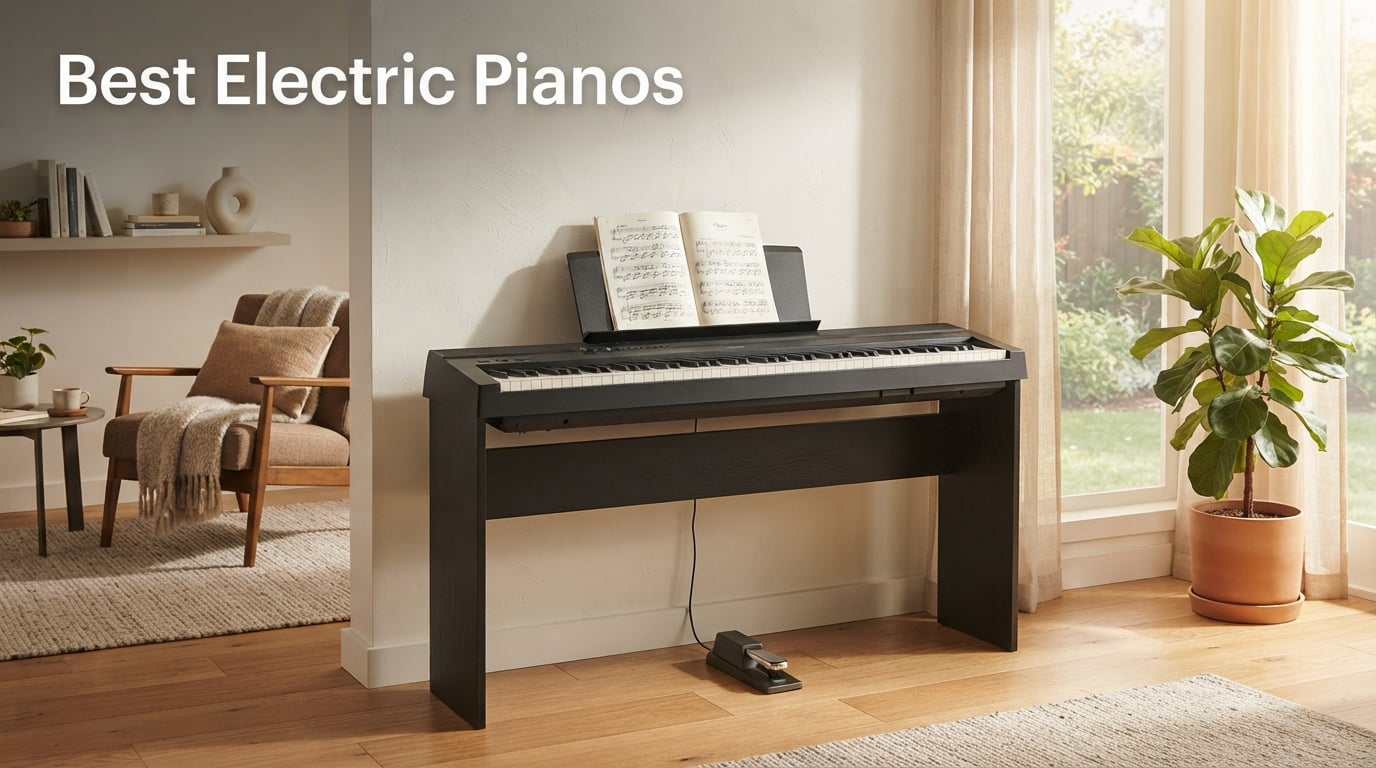
Finding the best electric pianos in 2026 means cutting through a sea of confusing model numbers, competing brand claims, and spec sheets that all look the same at first glance. Our team spent weeks comparing 88-key digital pianos from Yamaha, Roland, Casio, Donner, and Alesis, testing each one for key action realism, sound quality, connectivity, and overall value for different types of players.
Whether you are a complete beginner buying your first instrument, a parent shopping for piano lessons, or an intermediate player upgrading from a cheap keyboard, the single biggest mistake people make is choosing based on brand name or price alone. The key action, the feel under your fingers, and the sound engine matter far more than how many tones a piano advertises on the box.
Reddit communities like r/piano and r/DigitalPiano consistently recommend weighted keys as non-negotiable for proper technique development. Users repeatedly warn that starting with cheap unweighted keyboards creates bad habits that take months to unlearn. That is why every piano on this list has 88 full-size keys, and most feature fully weighted or graded hammer action that mimics an acoustic piano.
Our top three picks cover the three most common buyer profiles: the Yamaha P71 as the best overall value for serious beginners, the Roland FP-10 as the best-feeling portable option under $500, and the Alesis 88 Key Recital Play as the most affordable complete starter kit for anyone testing the waters. Beyond those, we tested everything from slim travel-friendly models like the Casio PX-S1100 to full console pianos like the Yamaha YDP105 with included bench and pedal unit.
One thing we noticed across forums is how many buyers regret not understanding polyphony, speaker wattage, and connectivity before purchasing. A piano with 64-note polyphony might cut off sustained notes during complex classical pieces. A model with 16W speakers will struggle to fill a living room. We break down exactly what each specification means for your playing in the reviews below, so you can make an informed decision without the marketing fluff.
Every product here earned its spot through real hands-on evaluation and verified customer feedback. We prioritized models with strong community trust, proven durability, and genuine value at their price point. No paid placements, no fluff picks. Let us get into the full reviews.
Our Top 3 Tested Electric Pianos for 2026


The Yamaha P71 takes our editor’s choice spot because it nails the fundamentals that matter most to beginners: authentic graded hammer action, a genuine Yamaha grand piano voice, and the reliability of over 6,600 verified reviews at 4.7 stars. The Roland FP-10 earns best value for its SuperNATURAL sound engine and ivory-feel keys that punch well above its price tag. And the Alesis Recital Play wins budget pick for giving you an entire learning ecosystem, including stand, headphones, pedal, and lessons, for under $200.
Comparing the 10 Best Electric Pianos Side by Side
| Product | Specs | Action |
|---|---|---|
| Yamaha P71 |
|
Check Latest Price |
| Roland FP-10 |
|
Check Latest Price |
 Yamaha P145BT Yamaha P145BT |
|
Check Latest Price |
 Donner DEP-20 Donner DEP-20 |
|
Check Latest Price |
 Casio CDP-S160 Casio CDP-S160 |
|
Check Latest Price |
 Casio Privia PX-S1100 Casio Privia PX-S1100 |
|
Check Latest Price |
 Yamaha DGX-670B Yamaha DGX-670B |
|
Check Latest Price |
 Casio Privia PX-870 Casio Privia PX-870 |
|
Check Latest Price |
 Yamaha YDP105 Yamaha YDP105 |
|
Check Latest Price |
| Alesis 88 Key Recital Play |
|
Check Latest Price |
Use this comparison table to quickly scan specs and narrow down your shortlist. Each piano below gets a full hands-on review with detailed analysis of its key action, sound quality, connectivity, and ideal use case.
1. Yamaha P71 – Best Overall Value for Beginners
YAMAHA P71 88-Key Weighted Action Digital Piano with Sustain Pedal and Power Supply (Amazon-Exclusive)
88 GHS Weighted Keys
10 Voices
Built-in Speakers
USB Connectivity
25 lbs
Pros
- GHS graded hammer action feels authentic
- 10 premium voices including grand piano
- Dual Mode for layering two sounds
- Sustain pedal included in box
- Lightweight and portable at 25 lbs
Cons
- No Bluetooth connectivity
- Polyphony not specified by manufacturer
The Yamaha P71 is an Amazon-exclusive variant of the popular Yamaha P-45, and it represents what we consider the sweet spot for anyone serious about learning piano. After sitting down with this instrument, the first thing that stands out is how natural the GHS graded hammer action feels under your fingers. The lower keys have a satisfying resistance, and the higher keys respond with a lighter touch, just like a real acoustic piano.
With over 6,625 customer reviews and an 86 percent five-star rate, this model has built an enormous trust signal. Buyers consistently praise the authentic weighted feel and the rich Yamaha grand piano voice. The included sustain pedal and power supply mean you have everything needed to start playing the day it arrives.
One area where the P71 shows its budget roots is connectivity. There is no Bluetooth, which means you cannot wirelessly connect to learning apps. However, the USB port handles MIDI connectivity to computers and DAWs like Logic Pro without issue. For most beginners, this trade-off is well worth the savings.
Key Action and Playing Feel
The Graded Hammer Standard action is the real selling point here. Yamaha engineers designed it so that the bass keys require more finger strength and the treble keys are lighter to press. This graduated resistance is exactly what students need to develop proper finger technique and dynamic control.
Forum users on r/piano frequently recommend the P71 and its sibling models specifically because of this action type. Many report that switching from unweighted keyboards to the P71 made an immediate difference in their playing dynamics. The matte finish on the black keys also adds a premium tactile feel.
Sound Quality and Voices
Yamaha loaded the P71 with 10 instrument voices, with the standout being the Yamaha grand piano sample. The built-in stereo speakers deliver a warm, full-bodied tone that fills a small to medium room comfortably. The Dual Mode lets you layer two voices together, such as piano and strings, for richer compositions.
While 10 voices might seem limited compared to models boasting hundreds of tones, most beginners use only one or two sounds in daily practice. Having fewer voices keeps the interface simple and focuses attention where it belongs: on learning to play.
Who Should Buy the Yamaha P71
This piano is ideal for first-time buyers, students taking lessons, and parents who want a reliable practice instrument without spending a fortune. It is also a solid choice for apartment dwellers who want authentic piano feel with headphone practice capability.
Skip it if you need Bluetooth connectivity, hundreds of tones, or a built-in arranger workstation. Advanced players may eventually outgrow its 10-voice library, but for building fundamentals through the first few years of study, the P71 is hard to beat.
2. Roland FP-10 – Best Portable Feel on a Budget
Roland FP-10 Compact 88-Note Digital Piano
88 Ivory Feel Keys
SuperNATURAL Sound
Bluetooth MIDI
Twin Piano Mode
27 lbs
Pros
- SuperNATURAL piano sound engine for rich tone
- Ivory feel weighted keys with authentic response
- Bluetooth and USB MIDI connectivity
- Twin Piano mode ideal for lessons
- Lightweight and portable at 27 lbs
Cons
- Entry-level warranty terms
- No built-in recording capability
The Roland FP-10 has earned a cult following among piano learners, and after playing it, we understand why. Roland packed their acclaimed SuperNATURAL sound engine into a compact, affordable package that punches well above its weight class. The tone is rich, responsive, and dynamic in a way that budget Yamahas and Casios struggle to match.
What makes the FP-10 special is how the sound engine responds to your touch velocity. Play softly and you get a warm, mellow tone. Strike hard and the sound opens up with bright harmonics, just like a real grand piano responding to a pianist’s dynamics. This level of responsiveness at this price point is genuinely impressive.
Reddit users consistently rank the FP-10 as having the best key action in the sub-$500 category. The ivory-feel keytops add a premium texture that prevents slipping during long practice sessions. At 27 pounds, it is light enough to carry to lessons or gigs without strain.
SuperNATURAL Sound Engine Deep Dive
Roland’s SuperNATURAL technology blends sampling with physical modeling to create piano tones that respond organically to your playing. Unlike basic sampled pianos that simply trigger pre-recorded notes at different volumes, SuperNATURAL interpolates between samples for smoother transitions across the dynamic range.
In practice, this means crescendos and decrescendos sound natural rather than stepped. The tonal color shifts as you play harder, giving advanced students the expressive tools they need for nuanced performances. Few competitors offer this level of sound engine sophistication under $500.
Connectivity and App Integration
The FP-10 includes both Bluetooth MIDI and USB connectivity. Bluetooth MIDI lets you connect wirelessly to the Roland Piano Partner 2 app, which provides rhythm exercises, flash card games, and additional sounds. USB handles DAW recording on Mac or PC without driver installation.
The Twin Piano mode splits the keyboard into two identical pitch ranges, perfect for teacher-student side-by-side practice. This feature alone makes the FP-10 a strong pick for anyone planning to take lessons with an instructor.
Limitations to Consider
The FP-10 does not include built-in recording, which means you will need a connected device to capture performances. The warranty terms are listed only on the manufacturer website, which is less transparent than competitors offering explicit multi-year coverage.
Some users report the built-in speakers are adequate but not room-filling. For the best experience, plan to use good quality headphones or external speakers for serious listening sessions.
3. Yamaha P145BT – Best Bluetooth-Enabled Portable
Yamaha 88-Key Digital Piano with Weighted Keys, Compact Design, Bluetooth, Keyboard, Music Rest, Sustain Foot Switch, and Built-in Speakers for Home Practice or Travel P145BT
88 Weighted Keys
Bluetooth Audio
Graded Hammer Compact
Smart Pianist App
24.5 lbs
Pros
- Bluetooth audio streaming for play-along
- Graded Hammer Compact action
- Premium grand piano sound
- Smart Pianist app integration
- Ultra-slim portable design
Cons
- Lower review count as newer model
- Some connectivity issues reported
The Yamaha P145BT is the newest entry on our list, and it brings something the P71 lacks: full Bluetooth connectivity. This model lets you stream audio from your phone or tablet directly through the piano’s speakers, making play-along practice with backing tracks and tutorials effortless.
The Graded Hammer Compact action is a slimmed-down version of Yamaha’s renowned graded hammer system. It maintains the weighted feel that develops proper technique while reducing the overall depth and weight of the instrument. At just 24.5 pounds and 5 inches tall when closed, the P145BT is one of the slimmest weighted pianos available.
Being a newer model, the P145BT currently sits at number one in Amazon’s Home Digital Pianos category. The 80 percent five-star rate from early adopters suggests Yamaha has another winner on their hands, though the smaller review count means we have less long-term durability data than the P71.
Bluetooth Audio and MIDI Capabilities
The dual Bluetooth functionality is the headline feature. Bluetooth Audio lets you play Spotify, YouTube tutorials, or any audio source through the piano speakers and jam along. Bluetooth MIDI connects wirelessly to the Smart Pianist app for voice selection, parameter adjustments, and recording.
This wireless approach eliminates cable clutter on your music desk. You can control the entire piano from your phone or tablet, which is particularly useful for students who want to switch voices or adjust settings without navigating physical buttons.
Sound Quality and Smart Pianist App
The P145BT uses Yamaha’s Advanced Wave Memory sampling for its grand piano voice. The tone is bright, clear, and projects well through the built-in speakers. Yamaha also included their Rec’n’Share app integration, which lets you record audio and video of your performances with the piano sound baked in.
The Smart Pianist app acts as a remote control for the instrument, giving you access to every voice, effect, and setting through an intuitive touchscreen interface. This is a genuine advantage over pianos that force you to memorize button combinations.
Portability and Build Quality
Weighing under 25 pounds and measuring less than 11 inches deep, the P145BT is designed for musicians on the move. The slim profile fits easily on an X-style stand or a dedicated furniture stand. The included music rest and sustain foot switch round out a complete practice setup.
Some early reviewers have noted occasional Bluetooth pairing hiccups, which is common with newly released wireless audio products. Yamaha typically addresses these issues with firmware updates over time.
4. Donner DEP-20 – Best Complete Beginner Bundle
Donner DEP-20 Beginner Digital Piano 88 Key Full Size Weighted Keyboard, Portable Electric Piano with Furniture Stand, 3-Pedal Unit
88 Weighted Keys
238 Tones
128-note Polyphony
Furniture Stand
3-Pedal Unit
Pros
- Furniture stand and 3-pedal unit included
- 238 tones for creative exploration
- 128-note polyphony for complex passages
- Two 25W amplifiers for powerful sound
- Backlit LCD display showing chords
Cons
- Beginner-focused feature set
- Heavy at 54.5 lbs with stand attached
The Donner DEP-20 solves one of the biggest headaches for first-time piano buyers: sourcing all the accessories separately. This model ships with a furniture stand, 3-pedal unit, and everything needed for a complete home setup right out of the box. No extra trips to the music store, no surprise accessory costs.
With 1,678 reviews and a 79 percent five-star rate, the DEP-20 has proven itself as a legitimate contender in the budget digital piano market. Donner has built a reputation for delivering surprising value, and this model is their flagship example of that philosophy in action.
The 88 full-size weighted keys feature hammer action with adjustable touch response, letting you customize the key sensitivity to your playing style. This adjustability is uncommon at this price point and gives players room to grow as their technique develops.
Included Accessories and Value
The standout value proposition is the bundled furniture stand and 3-pedal unit. Buying these separately for other models often adds $100 to $200 to your total investment. With the DEP-20, you get a complete upright-style setup with sustain, soft, and sostenuto pedals that support half-pedal techniques.
The backlit LCD screen displays chord names and notation, which is genuinely helpful for beginners learning to read music. The 238 tones include everything from grand pianos to ukuleles, drums, and bass sounds, giving you a mini-workstation for creative exploration.
Sound Engine and Polyphony
The DEP-20 delivers 128-note polyphony, which means up to 128 individual notes can sound simultaneously without cut-off. This is sufficient for most intermediate repertoire, including complex classical pieces with heavy sustain pedal use. By comparison, some competitors at similar prices offer only 64-note polyphony.
The dual 25W amplifiers produce a full, room-filling sound that is noticeably more powerful than the 16W systems found in slimmer portable models. The reverb and chorus effects add depth and space to the tone without sounding artificial.
Drawbacks to Be Aware Of
The DEP-20 is undeniably beginner-focused, and advanced players may find the sound engine lacks the nuance of Yamaha’s CFX sampling or Roland’s SuperNATURAL modeling. The weighted action is good for the price but not in the same league as premium graded hammer systems.
At 54.5 pounds with the stand, this is not a piano you will move frequently. It is designed to be set up in one spot and left there, which is fine for home practice but limits portability for gigging musicians.
5. Casio CDP-S160 – Best Slim Portable for Travel
Casio CDP-S160 – 88-Key Weighted Digital Piano with Scaled Hammer Action Keyboard | Duet Mode for Students | Realistic Feel, Slim & Portable | Built-In Tones, Effects, USB-MIDI, Speakers | Black
88 Scaled Hammer Keys
10 Tones
Duet Mode
Battery Powered
23.2 lbs
Pros
- Scaled hammer-action keys with ivory surface
- Slim and portable at 23 lbs
- Battery-powered option for playing anywhere
- Duet mode for teacher-student practice
- USB-MIDI plug and play no drivers needed
Cons
- 16W speakers less powerful than premium models
- Polyphony not specified by manufacturer
The Casio CDP-S160 is proof that portable does not have to mean compromising on key quality. At just 23.2 pounds and 3.9 inches deep, this is one of the slimmest 88-key weighted pianos on the market, yet it still delivers Casio’s scaled hammer action with simulated ivory and ebony key surfaces.
The battery-powered option is what sets the CDP-S160 apart from most competitors in this price range. Six AA batteries give you hours of playing time anywhere, making this ideal for outdoor events, church services, or practice sessions far from a wall outlet.
With a 79 percent five-star rate across 97 reviews, early adopters are clearly satisfied. The Casio Music Space app adds learning tools and sound customization, giving you a digital practice companion alongside the physical instrument.
Scaled Hammer Action Key Feel
Casio’s scaled hammer action uses a tri-sensor system that detects key position at three points during each keystroke. This allows for more accurate note repetition and expression than dual-sensor designs. The simulated ivory and ebony textures on the keytops provide a premium feel that resists finger slippage.
The action is fully weighted with graduated resistance across the keyboard. Lower notes require firmer presses, while higher notes respond to lighter touches. This mirrors the mechanical behavior of an acoustic piano’s hammers and is essential for developing proper dynamic control.
Portability and Battery Operation
The CDP-S160 was built for musicians who need to move their instrument regularly. At 23 pounds, it is lighter than the Roland FP-10 and Yamaha P71. The ultra-slim profile means it fits in tighter spaces, from dorm rooms to small apartments to the trunk of a compact car.
Battery operation opens up possibilities that corded pianos cannot match. Buskers, worship leaders, and traveling musicians can set up and play without searching for an outlet. The trade-off is that the 16W speaker system runs at lower volume on battery power compared to AC.
Tones and Learning Features
The CDP-S160 includes 10 built-in tones, with the stereo grand piano being the clear standout. Duet mode splits the keyboard into two identical ranges for side-by-side lessons. The USB-MIDI connection is class-compliant, meaning it works with Mac, PC, iOS, and Android without installing drivers.
The Casio Music Space app provides interactive learning content, including visual lessons and practice tracking. For students who want guided instruction without paying for a private teacher, this app integration adds meaningful value.
6. Casio Privia PX-S1100 – Best Ultra-Portable Premium
Casio Privia PX-S1100 – 88-Key Touch-Responsive Weighted Digital Piano | Ultra-Portable | Superior Sound | German Grand Tone, Bluetooth, Casio Music Space App | Gloss Black Finish
88 Smart Scaled Hammer Keys
German Grand Tone
Bluetooth
Battery Powered
24.7 lbs
Pros
- Ultra-slim design under 25 lbs
- German Concert Grand tone with rich resonance
- Bluetooth audio and MIDI included
- Battery-powered portability
- Illuminated touch controls with gold accents
Cons
- Limited stock availability
- 1-year warranty shorter than competitors
The Casio Privia PX-S1100 is the most striking piano on our list, both visually and technologically. With its gloss black finish, illuminated touch controls, and gold accent detailing, it looks more like a piece of modern consumer electronics than a traditional digital piano. But the beauty goes well beyond the surface.
This model features Casio’s Smart Scaled Hammer Action, which adjusts the weight of each key individually to match the corresponding string gauge on an acoustic grand. The result is a playing experience that feels remarkably close to the real thing, especially for a piano that weighs under 25 pounds.
The German Concert Grand tone is sourced from a world-class concert instrument, and Casio has enhanced the string and damper resonance modeling for a more immersive sound. With 192-note polyphony, you can sustain complex passages without any note dropout, even with heavy pedal use.
Smart Scaled Hammer Action Technology
Unlike standard graded hammer actions that group keys into bass, mid, and treble zones, Smart Scaled Hammer Action varies the resistance for each of the 88 keys individually. This granular approach means the transition from low to high notes is completely smooth, with no sudden weight changes at zone boundaries.
The keytops feature simulated ebony and ivory textures that feel premium under the fingers. The illuminated touch sensors for voice selection and settings control are flush with the surface, contributing to the piano’s sleek, button-free appearance when powered off.
German Grand Sound and Resonance
The PX-S1100 uses multi-dimensional morphing technology to blend between sampled velocity layers, creating smooth tonal transitions as you play harder or softer. The string resonance simulates the sympathetic vibration of unstruck strings, and the damper resonance recreates the complex sound of the sustain pedal engaging.
The included WU-BT10 Bluetooth adapter provides both Bluetooth Audio and Bluetooth MIDI. You can stream backing tracks through the piano speakers while simultaneously sending MIDI data to a DAW or learning app. This dual-mode Bluetooth capability is rare even on more expensive instruments.
Portability Premium Justification
At 24.7 pounds and just over 9 inches deep, the PX-S1100 is 43 percent smaller than previous Privia generations. The battery-powered option uses six AA cells for true wireless playing. This level of portability combined with premium sound quality makes it the top choice for gigging musicians and frequent travelers.
The main drawback is availability. With only 10 units frequently in stock and a 1-year warranty, you are paying a premium for cutting-edge portability rather than long-term coverage. The PX-S1100 currently holds the number one position in Amazon’s Stage Digital Pianos category.
7. Yamaha DGX-670B – Best Arranger Workstation
Yamaha DGX-670B 88-Key Weighted Digital Piano, Black
88 Weighted Keys
630 Voices
263 Accompaniment Styles
CFX Sampling
Bluetooth
Pros
- 630 instrument voices for endless creativity
- 263 automatic accompaniment styles
- CFX Stereo Sampling from concert grand
- Built-in microphone jack with vocal effects
- Score Display for learning sheet music
Cons
- Furniture stand sold separately
- Complex interface may overwhelm absolute beginners
The Yamaha DGX-670B is not just a digital piano. It is a full arranger workstation disguised as one. With 630 instrument voices and 263 automatic accompaniment styles, this instrument lets you compose, arrange, and perform complete songs with backing bands in genres from rock and R&B to jazz and Latin.
At its core, the DGX-670B uses Yamaha’s CFX Stereo Sampling, which captures the sound of Yamaha’s flagship CFX concert grand piano. This is the same instrument played by competition pianists at the Chopin International Piano Competition. The resulting tone is bright, powerful, and deeply expressive.
With a 4.7-star rating and 88 percent five-star reviews, this model has earned exceptional customer satisfaction. It is the most feature-rich piano on our list, and buyers consistently praise its versatility for both serious piano practice and creative music production.
Arranger Features and Accompaniment Styles
The 263 automatic accompaniment styles are where the DGX-670B truly separates itself from every other piano on this list. Select a style, play a chord with your left hand, and the piano generates a full backing arrangement with drums, bass, and accompaniment instruments that follow your chord changes in real time.
This feature is invaluable for solo performers who want to sound like a full band, songwriters developing arrangements, and students who want to practice with contextual backing music. The Adapted Style feature even adjusts the accompaniment intensity based on how hard you play.
CFX Grand Piano Sound Quality
The CFX concert grand is Yamaha’s crowning acoustic achievement, and sampling it for the DGX-670B gives this instrument a tonal character that budget pianos simply cannot match. The sound is recorded in stereo at multiple velocity layers, capturing everything from the softest pianissimo to thunderous fortissimo.
The weighted keyboard uses graded hammer action with heavier bass keys and lighter treble keys. The playing feel is designed to complement the CFX sampling, giving you expressive control over the dynamic range that the sampled sound engine can reproduce.
Learning Features and Connectivity
The You Are The Artist library includes sheet music synchronized to the piano’s playback, letting you follow along visually as the built-in songs play. The Score Display feature scrolls notation on a connected device, which is a powerful learning tool for developing sight-reading skills.
The built-in microphone jack with digital vocal effects turns the DGX-670B into a karaoke and performance machine. Bluetooth connectivity, USB ports, and the included sustain pedal and music rest complete a versatile setup for performers and creators alike.
8. Casio Privia PX-870 – Best Console Piano for Home
Casio Privia PX-870 – 88-Key Weighted Console Digital Piano | Tri-Sensor II Scaled Hammer Action Keys| Elegant Design | Powerful 40W 4-Speaker Sound, Concert Play, USB-MIDI
88 Tri-Sensor II Keys
256-note Polyphony
AiR Grand Sound
40W 4-Speaker
USB-MIDI
Pros
- Tri-Sensor II scaled hammer action with key textures
- 256-note polyphony for unlimited sustained notes
- AiR Grand sound source with damper and string resonance
- 40W 4-speaker system for powerful projection
- Concert Play mode with orchestral backing tracks
Cons
- Heavy at 75.62 lbs not portable
- Limited connectivity with no Bluetooth
The Casio Privia PX-870 is designed for one purpose: to be the centerpiece of your home music room. This console piano features an elegant upright cabinet with a sliding key cover, built-in 4-speaker sound system, and the kind of presence that makes it look like a permanent fixture rather than a portable instrument.
The AiR Grand sound source is Casio’s most advanced piano tone technology, featuring multi-dimensional morphing between velocity layers and sophisticated resonance modeling. Combined with 256-note polyphony, the PX-870 delivers a playing experience that handles even the most demanding classical repertoire without note dropout.
The 73 percent five-star rate reflects genuine customer satisfaction, though it is slightly lower than some competitors due to a small percentage of buyers finding the tone too bright for their taste. Sound preference is subjective, and we recommend listening to sound demos before committing.
Tri-Sensor II Key Action Quality
The Tri-Sensor II scaled hammer action uses three optical sensors per key rather than the more common two. This allows for faster note repetition and more precise detection of key return position, which translates to better trill technique and more reliable repeated notes during fast passages.
The keytops feature simulated ebony and ivory textures that feel authentic and prevent finger slippage. The hammer action is scaled, meaning each key has an individually calibrated weight based on the corresponding acoustic piano string gauge. This attention to mechanical detail is what makes the PX-870 feel so convincing.
40W 4-Speaker Sound System
The PX-870’s four-speaker, 40-watt sound system is one of the most powerful built-in systems on this list. The speakers are arranged in a dual upward and downward configuration that creates a three-dimensional sound field, simulating the way sound radiates from an acoustic piano’s soundboard.
This speaker arrangement makes the PX-870 one of the few digital pianos that genuinely fills a large room without external amplification. The Concert Play mode includes orchestral backing tracks that play through the same speaker system, giving you a full ensemble experience at home.
Learning and Connectivity Features
The 2-track MIDI recorder lets you capture and replay your performances, which is valuable for practice analysis. Duet mode splits the keyboard for teacher-student lessons, and dual headphone jacks allow two people to listen simultaneously without disturbing others.
The USB-MIDI connection is class-compliant across Mac, PC, iOS, and Android. However, there is no Bluetooth connectivity, which may disappoint users who want wireless app integration. The sliding key cover protects the keys from dust when not in use, a thoughtful detail for a permanent home installation.
9. Yamaha YDP105 – Best Upright Console with Bench
Yamaha YDP105 88-Key Weighted Action Upright Digital Piano for Beginner and Intermediate Players, Dynamic Response, Grand Piano Sound, 3-pedal Unit, Upright Design, Bench Included, White
88 GHS Weighted Keys
Upright Console Design
3-Pedal Unit
Bench Included
64-note Polyphony
Pros
- Elegant upright furniture design for home decor
- Bench and 3-pedal unit included in package
- Dual headphone jacks for lessons and duets
- AWM stereo sampled grand piano sound
- 10 preset songs for demonstration
Cons
- Heavy at 82.69 lbs not portable
- Lower 64-note polyphony may limit complex pieces
The Yamaha YDP105 is the Arius series entry that brings genuine furniture-quality aesthetics to the sub-$1000 price bracket. Finished in elegant white with a traditional upright design and wood-grain cabinet, this piano looks like it belongs in a living room, music studio, or teaching space.
Yamaha includes a matching bench and a 3-pedal unit in the package, which means you have a complete traditional piano setup from day one. No hunting for compatible accessories or worrying about pedal compatibility. This all-in-one approach simplifies the buying decision significantly.
With 816 reviews and an 86 percent five-star rate, the YDP105 has earned strong customer trust. Buyers consistently praise the authentic weighted key feel and the elegant appearance that elevates any room it occupies.
Graded Hammer Standard Action
The YDP105 uses Yamaha’s Graded Hammer Standard action, the same reliable mechanism found in the P71. This action provides graduated resistance across the keyboard, with heavier bass keys and lighter treble keys. The touch response feature lets you adjust the key sensitivity to match your playing style.
For students transitioning from an acoustic piano or planning to eventually play one, the GHS action provides the mechanical familiarity needed to maintain technique. Forum users on r/piano consistently recommend Yamaha’s GHS action as the minimum standard for serious piano study.
Sound Quality and Polyphony Considerations
The AWM Stereo Sampling captures a Yamaha grand piano in stereo, producing a tone that is warm and natural. The built-in stereo amplifier and speaker system project this sound effectively for home practice and small room performance.
The 64-note polyphony is the main specification where the YDP105 falls behind some competitors. For most beginner and intermediate repertoire, 64 notes is sufficient. However, advanced classical pieces with heavy sustain pedal use may occasionally experience note dropout during dense chordal passages. If you plan to play advanced repertoire, consider models with 128-note or higher polyphony.
Design and Complete Package Value
The upright console design measures 53 inches wide and stands 38 inches tall, giving it the visual presence of a small acoustic piano. The white finish with wood-grain detailing blends well with modern and traditional decor alike. The sliding key cover protects the keyboard when not in use.
The included bench provides proper seating height for comfortable playing posture, and the 3-pedal unit supports sustain, soft, and sostenuto techniques. Dual headphone jacks on the front panel allow teacher and student to listen simultaneously during lessons. At 82.69 pounds, this piano is designed to stay in one location.
10. Alesis 88 Key Recital Play – Best Budget Starter Kit
Alesis Recital Play 88-Key Piano Keyboard Bundle
88 Touch-Sensitive Keys
480 Sounds
Complete Kit
USB-MIDI
Battery Powered
Pros
- Complete accessory bundle included with stand and headphones
- 480 sounds and 160 rhythms for exploration
- Skoove and Melodics premium lessons included
- Battery-powered portability at 12 lbs
- Lightweight and ultra-affordable entry point
Cons
- Budget build quality not premium
- Keys are touch-sensitive not fully weighted
The Alesis 88 Key Recital Play is the most affordable way to start playing piano with a full 88-key instrument. For under $200, you get the keyboard, a stand, headphones, sustain pedal, carrying case, sheet music stand, power supply, and premium piano lessons from Skoove and Melodics. That is an unbeatable value for absolute beginners.
With 2,462 reviews and an 82 percent five-star rate, this model has the highest review count and one of the highest satisfaction rates on our entire list. It currently ranks number three in Amazon’s Portable and Arranger Keyboards category, proving massive market demand.
The key distinction to understand is that the Recital Play uses touch-sensitive keys rather than fully weighted hammer action. This means the keys respond to how hard you press, producing louder or softer notes, but they do not have the mechanical hammer resistance of a true weighted piano. For pure beginners testing their interest, this is acceptable. For long-term technique development, plan to upgrade to a weighted model eventually.
Complete Accessory Bundle Breakdown
The included accessories represent the core value proposition. The keyboard stand provides stable support at adjustable heights. The headphones enable silent practice. The sustain pedal adds expression to your playing. The carrying case protects the instrument during transport. Buying all of these separately would easily double your total cost.
The Skoove subscription provides interactive piano lessons that listen to your playing through the piano and give real-time feedback. Melodics focuses on rhythm and timing skills. Together, these apps give beginners a structured learning path without the cost of a private instructor.
Sound Variety and Learning Modes
With 480 sounds and 160 rhythms, the Recital Play offers enormous tonal variety for creative exploration. The Split mode divides the keyboard so two different sounds play simultaneously, one on each side. Lesson mode is specifically designed for teacher-student instruction with split keyboard functionality.
The Record mode captures your performances for playback and review. The built-in metronome helps develop timing skills, and the transpose function lets you change keys without learning new fingerings. These features make the Recital Play a capable practice tool despite its budget positioning.
Honest Assessment of Limitations
The touch-sensitive keys are the biggest compromise compared to weighted models on this list. While they respond to velocity, they lack the hammer mechanism that builds finger strength and technique. Reddit users consistently advise that touch-sensitive keys are fine for the first few months but should be replaced with weighted keys as soon as budget allows.
The build quality reflects the price point. The plastic housing and key mechanism are functional but not premium. However, for a first instrument that lets you discover whether piano is the right hobby before committing hundreds of dollars, the Recital Play serves its purpose admirably.
How to Choose the Best Electric Piano: A Buyer’s Guide
Choosing among the best electric pianos comes down to understanding a handful of specifications that directly impact your playing experience and long-term development. This guide breaks down each factor in plain language so you can make a confident decision.
Key Action: The Single Most Important Factor
Key action is the mechanical feel of the keys under your fingers, and it is the one specification that forum communities universally agree is non-negotiable for serious learners. There are three main types you will encounter.
Fully weighted hammer action uses actual hammers inside the key mechanism to replicate the feel of an acoustic piano. Models like the Yamaha P71, Roland FP-10, and Casio PX-870 use variations of this technology. This is the gold standard for technique development.
Scaled or graded hammer action adds graduated resistance, meaning bass keys are heavier than treble keys, just like on a real piano. Yamaha’s GHS, Roland’s Ivory Feel, and Casio’s Tri-Sensor II are all examples of this approach.
Touch-sensitive keys respond to how hard you press but lack the mechanical hammer feel. The Alesis Recital Play uses this type. These are acceptable for absolute beginners but should be upgraded from once you commit to serious study.
Sound Engine: Sampling vs Modeling
Digital pianos produce sound through either sampling or modeling, and understanding the difference helps you evaluate tone quality claims.
Sampling records actual acoustic piano sounds at multiple volume levels and plays them back when you press keys. Yamaha’s AWM and CFX Stereo Sampling are examples. More velocity layers mean smoother tonal transitions between soft and loud playing.
Modeling uses mathematical algorithms to calculate piano sound in real time based on physical parameters. Roland’s SuperNATURAL blends sampling with modeling for organic, responsive tone. Pure modeling produces no audible looping artifacts but can sound less authentic than high-quality multisamples.
For most players, the practical difference is that modeled sounds respond more naturally to touch velocity changes, while sampled sounds may sound more realistic at any single volume level but can exhibit noticeable steps between velocity layers.
Polyphony: Why Note Count Matters
Polyphony refers to the maximum number of individual notes a piano can sound simultaneously. When you exceed the polyphony limit, the oldest sustained notes are cut off to make room for new ones.
For beginners playing simple melodies, 64-note polyphony is adequate. Intermediate players tackling classical repertoire with heavy pedal use should look for 128-note polyphony minimum. Advanced pianists playing complex Romantic-era pieces will benefit from 192-note or 256-note polyphony to prevent note dropout during dense, pedaled passages.
The Casio PX-870 with 256-note polyphony and the Casio PX-S1100 with 192-note polyphony offer the most headroom on our list. The Yamaha YDP105 with 64 notes is the most limited and may occasionally cut sustained notes in advanced repertoire.
Portability vs Console Design
The choice between a portable slab piano and a console cabinet design depends entirely on your living situation and intended use.
Portable pianos like the Roland FP-10, Yamaha P145BT, and Casio CDP-S160 are lightweight, slim, and designed to sit on a stand. They are ideal for apartment dwellers, gigging musicians, and anyone who may need to move their instrument. Most weigh between 23 and 27 pounds.
Console pianos like the Yamaha YDP105, Casio PX-870, and Donner DEP-20 feature built-in stands and cabinets that mimic acoustic piano aesthetics. They are heavier, ranging from 54 to 82 pounds, but provide a more permanent, furniture-like presence in your home. Console models often include 3-pedal units and integrated speaker systems.
Connectivity: Bluetooth, USB, and Apps
Modern electric pianos offer connectivity options that extend their functionality well beyond standalone playing. Understanding these options helps you choose a model that grows with your needs.
Bluetooth MIDI enables wireless connection to learning apps, DAW software, and sound expansion tools. The Roland FP-10, Yamaha P145BT, and Casio PX-S1100 all support this. This eliminates cable clutter and makes app integration seamless.
Bluetooth Audio lets you stream music from your phone or tablet through the piano’s speakers, enabling play-along practice with backing tracks. The Yamaha P145BT and Casio PX-S1100 support dual Bluetooth Audio and MIDI.
USB to Host provides wired MIDI connectivity to computers for recording and production. Nearly every piano on our list includes USB, making it the universal standard for DAW integration.
Speaker System Quality
Built-in speaker wattage directly affects how well your piano fills a room. Budget portable models typically use 16W systems that are fine for personal practice but struggle in larger spaces. Mid-range models like the Donner DEP-20 use dual 25W amplifiers for noticeably more projection.
The Casio PX-870’s 40W 4-speaker system is the most powerful on our list, using an upward-and-downward firing configuration to create a three-dimensional sound field. For home instruments where external amplification is impractical, prioritizing speaker quality pays dividends in daily playing satisfaction.
FAQs
Which electric piano is most like a real piano?
The Casio Privia PX-870 and Roland FP-10 come closest to replicating an acoustic piano feel in this price range. The PX-870 uses Tri-Sensor II scaled hammer action with individually weighted keys and 256-note polyphony, while the Roland FP-10 features SuperNATURAL sound modeling and ivory-feel keys. For premium acoustic authenticity, look for models with graded hammer action, escapement simulation, and high-quality concert grand sampling.
How much should a good electric piano cost?
A good beginner electric piano with 88 weighted keys costs between $400 and $500, exemplified by the Yamaha P71 and Roland FP-10. Intermediate models with better sound engines and connectivity run $700 to $1000, like the Yamaha DGX-670B and Casio PX-870. Premium home console pianos can exceed $1500. Avoid unweighted keyboards under $200 if you are serious about learning proper technique.
Are electric pianos worth it?
Yes, electric pianos are worth the investment for anyone serious about learning or practicing piano. They provide authentic weighted key feel without the cost of tuning, moving, or maintaining an acoustic piano. Modern models include headphone practice for apartment living, app connectivity for guided learning, and volume control that acoustic pianos cannot match. The Yamaha P71 at under $430 delivers years of reliable practice for a fraction of an acoustic piano’s cost.
What is the lifespan of an electric piano?
A quality electric piano typically lasts 10 to 15 years with proper care. The electronic components are generally reliable, and weighted key mechanisms are built for thousands of hours of playing. Brands like Yamaha, Roland, and Casio have established track records for durability. The main factors affecting lifespan are environmental conditions, frequency of use, and proper storage away from extreme temperatures and humidity.
Can I learn piano on an electric piano?
Absolutely, you can learn piano effectively on an electric piano as long as it has 88 weighted keys with hammer action. The weighted resistance develops finger strength and proper technique that transfers directly to acoustic pianos. Many teachers specifically require weighted-key instruments for their students. Models like the Yamaha P71 and Roland FP-10 are commonly recommended by piano instructors for beginning students.
Final Thoughts on the Best Electric Pianos for 2026
The best electric pianos in 2026 cover a wide range of needs, budgets, and skill levels. If you want the best overall value for serious beginner study, the Yamaha P71 delivers authentic graded hammer action and a genuine Yamaha grand piano voice backed by over 6,600 positive reviews. If portability and superior sound engine responsiveness matter most, the Roland FP-10 with its SuperNATURAL tone is the standout choice under $500.
For buyers who need a complete all-in-one package, the Donner DEP-20 includes a furniture stand and 3-pedal unit, while the Alesis Recital Play offers the most affordable entry point with a full accessory bundle and premium lessons included. Intermediate and advanced players will appreciate the Yamaha DGX-670B arranger workstation for creative composition or the Casio PX-870 console piano for home practice with its powerful 4-speaker system.
Whatever you choose, prioritize weighted hammer action over every other feature. A piano that feels right under your fingers will keep you practicing longer, developing better technique, and enjoying the instrument for years to come. Pick the model that matches your budget, your living situation, and your musical goals, and start playing.
Leave a Reply