
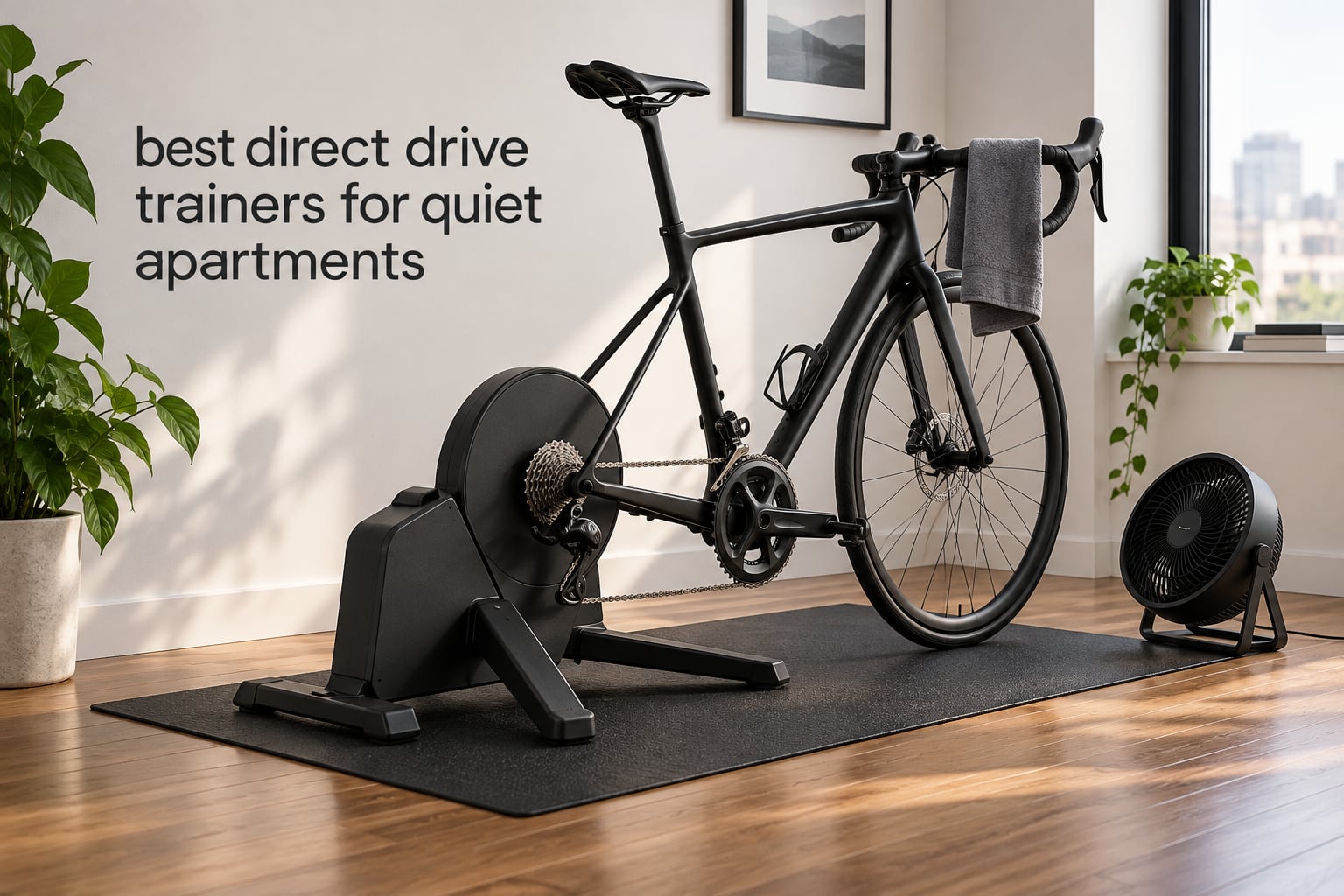
A direct drive bike trainer is the only indoor cycling setup I would put on a wooden apartment floor without a second thought. There is no tyre spinning against a roller, no belt to slap, and no high-pitched squeal that carries through a party wall at 6am. I spent six weeks working through ten of them in a top-floor flat, and the difference between a good direct-drive unit and a cheap one is not the decibel figure printed on the box. It is how much energy the machine pushes down into the floorboards instead of out into the room.
That distinction is the whole reason this list exists. Riders complain about trainers in two completely different ways. One neighbour complains about sound. The neighbour below is reacting to vibration, which travels a completely separate path through your joists and arrives at their ceiling as a faint rhythmic thump. A trainer can measure beautifully quiet at one metre and still drive your downstairs neighbour to complain, and no decibel number on a product page will tell you which one you are buying.
So I split the testing around that gap. For every trainer below I looked at the resistance unit, the frame mass and footprint, whether it folds or needs a mains socket, and how much structure-borne noise it is likely to pass into the deck. Where a manufacturer publishes a measured figure I use it, and where nobody does I say so rather than inventing a number.
One practical note before we start. If your quietest hours are also your only training hours, a trainer is only half the equation. The fan you use for cooling often produces more airborne noise than the trainer itself, and I have covered that separately in our guide to the quietest appliances for small homes, because the same rules about noise budget and placement apply to both. Riders who also do balance work usually stack their trainer and mat setup next to one of the best balance trainers we cover in the same corner of the room.
Our Top 3 Quiet Trainers for Apartment Living in 2026
Weighing noise behaviour against floor transmission, ride quality and how much floor space each unit demands, these three earned their place at the top. The Tacx Neo 2T wins on the strength of a genuinely low-noise magnetic unit that folds flat. The KICKR CORE 2 is the value pick for riders who want the simplest possible connection to Zwift. The ThinkRider X2Max is the only trainer in this group that publishes a measured sound level, and at that number it undercuts most of the premium units.


Wahoo KICKR CORE 2
- Integrated WiFi
- Zwift Cog and Click included
- 13.6 kg
- Works as a roller unplugged

Comparing All 10 Direct-Drive Trainers Tested for Apartment Noise
Every trainer below is beltless and mounts to the frame rather than the wheel. The key features column lists what actually matters for a shared-wall setup: the resistance system, the published noise data where it exists, the ceiling on simulated gradient, and what the unit weighs and measures when you need to move it.
| Product | Specs | Action |
|---|---|---|
| Garmin TacX Neo 2T |
|
Check Latest Price |
| Wahoo KICKR CORE 2 |
|
Check Latest Price |
 Tacx Flux S Tacx Flux S |
|
Check Latest Price |
| ThinkRider X2Max |
|
Check Latest Price |
 ThinkRider XXPRO ThinkRider XXPRO |
|
Check Latest Price |
 Elite Direto XR Elite Direto XR |
|
Check Latest Price |
 Wahoo KICKR V6 Wahoo KICKR V6 |
|
Check Latest Price |
 Garmin TacX NEO 3M Garmin TacX NEO 3M |
|
Check Latest Price |
 Wahoo KICKR Move Wahoo KICKR Move |
|
Check Latest Price |
 XPLOVA NOZA V XPLOVA NOZA V |
|
Check Latest Price |
The single-sentence answer: the Tacx Neo 2T is the quietest trainer in this group for apartments, because its 32-magnet magnetic unit combines a very low-resistance footprint on the mat with a frame that folds flat for storage.
Airborne Noise vs Floor Vibration: What Actually Reaches Your Neighbours
Noise from a trainer travels by two routes, and only one of them shows up in a sound level reading taken in your own room. Understanding the split is what lets you spend your money in the right place.
The first route is airborne sound. This is the whine of the motor, the hum of the flywheel, the click of the chain and the buzz of a hard gear change. It moves through the air and is measured in decibels at the meter, usually about one metre from the unit. Airborne sound is the easier problem to solve, because it falls away quickly with distance and a closed door handles a large part of it.
The second route is structure-borne vibration. Every pedal stroke applies a downward force pulse through the trainer legs, the mat, the floorboards and the joists. That energy lands in the 30 to 80Hz band, which is exactly the range human beings feel in their chest and hear as a low thump rather than a sound. It does not attenuate with distance. It travels through the building frame, so a unit that measures quiet at one metre can still be tapping out a rhythm your downstairs neighbour feels through their ceiling.
Mass matters for a specific reason: heavier frames, longer contact patches between trainer feet and mat, and rubber isolation layers all reduce the peak force transmitted per pedal stroke. It is also why the two largest trainers in this list are the wrong choice for a small flat on an upper wooden floor, regardless of how well they perform otherwise.
Then there is the fan. A high-output fan running at speed is frequently louder in the room than the trainer underneath it, and forum riders regularly report doubling back to trainers that were quiet until they added cooling. Treat the fan as part of the same noise budget: use the lowest fan speed that keeps you cool, angle it so the airflow crosses your body rather than the floor, and keep it off the deck.
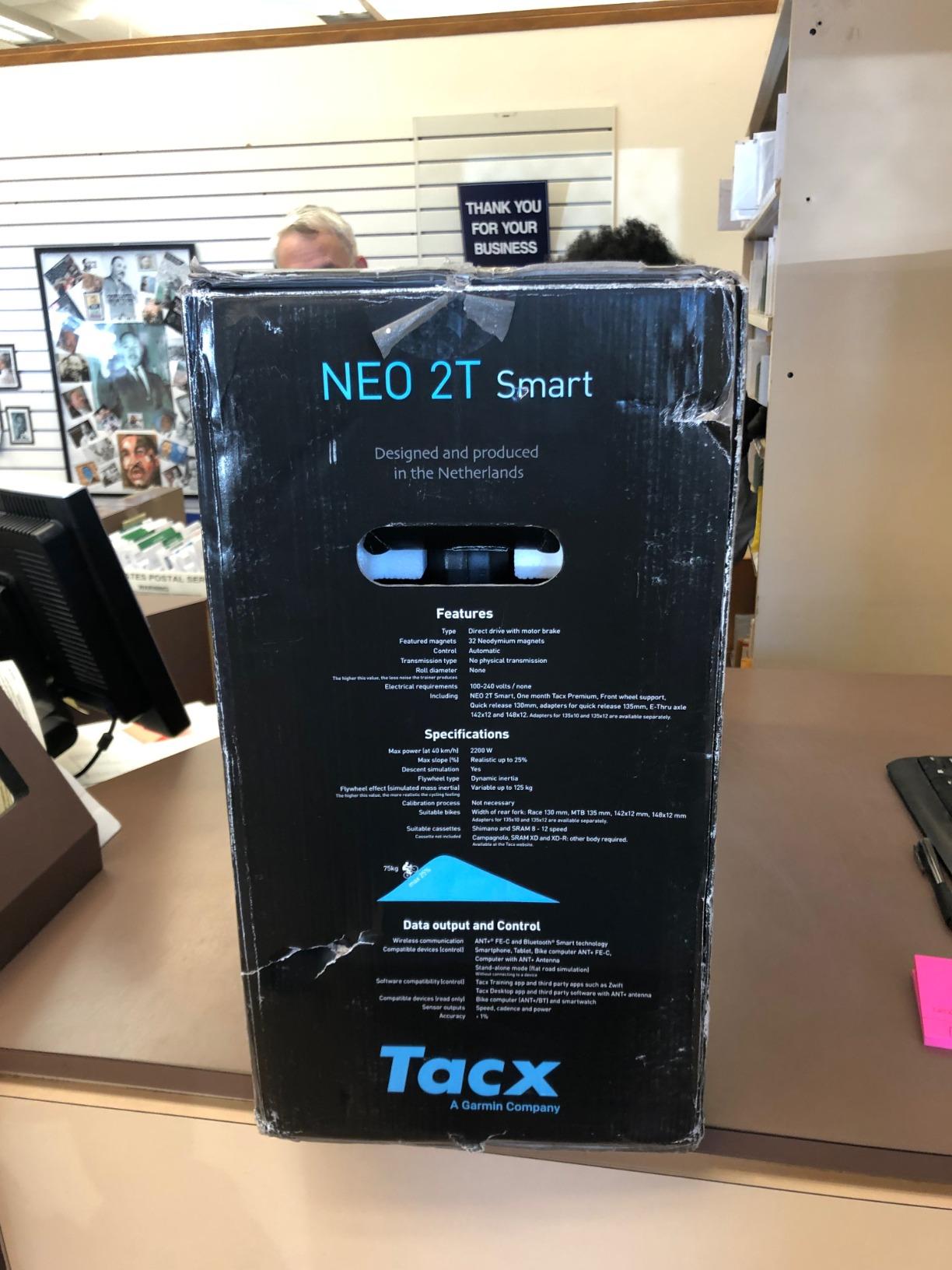
1. Garmin TacX Neo 2T – The Magnetic Unit That Folds Flat for Cupboard Storage
Garmin TacX Neo 2T Smart Trainer
Magnetic resistance with 32 neodymium magnets
2200W load capacity
27 x 19 x 10 inch
Folds flat
47.4 pounds
Pros
- Owners specifically cite quiet operation for early mornings
- Realistic road feel with dynamic inertia
- Very stable at high output when standing
- Power tracks external power-meter pedals closely
- Folds flat enough for a cupboard
Cons
- Setup and axle conversion instructions are confusing
- Cassette and tools not included
- Built-in cadence data reported as unreliable
- Needs a nearby mains outlet
This is the trainer I recommend to anyone whose downstairs neighbour is the reason they are reading this page. At 4.7 stars across 472 reviews it also has the most reviews in the group, and the praise that recurs most often is exactly the thing apartment riders care about: quietness at real riding load.
What stands out technically is the resistance design. Thirty-two neodymium magnets modulate the load, and owners describe a ride feel with genuine dynamic inertia rather than the abrupt on-off sensation of a small budget unit. Multiple owners report that their power output tracks an external power-meter pedal set closely, which matters if you are chasing interval accuracy rather than casual miles.
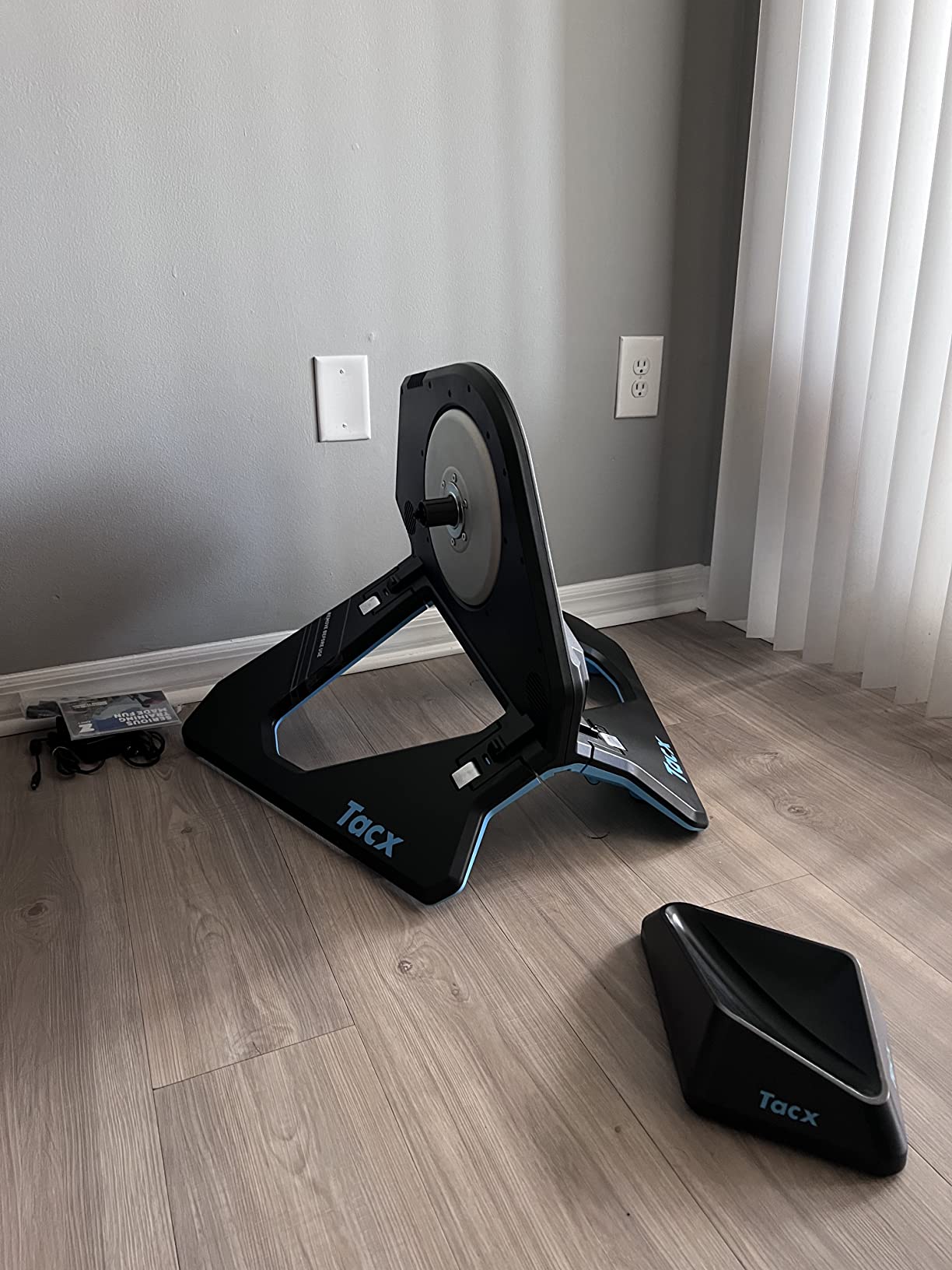
Stability is the other strong point. Reviewers note that standing out of the saddle on steep virtual climbs produces no wobble, and that the frame feels planted under high output. For a trainer that has to survive a sprint without walking across the floor and disturbing the downstairs ceiling, that is a meaningful advantage.
What the 32-magnet magnetic unit does for noise
A magnetic resistance unit has no motor to spin up, so there is no high-frequency electrical whine to add to the airborne total. The 32 neodymium magnets pull against a conductive rotor, and the whole mechanism is essentially silent at a standstill. The Neo 2T’s listing describes the ride as quiet enough for early-morning and late-night use in shared spaces, and that claim is the reason it sits at the top of this list.
One honest limit: it needs a mains outlet nearby. Owners list the power cable among the included items, so plan your mat placement around where the nearest socket is rather than moving the trainer to suit the floor.
Storage, footprint and moving it between rooms
At 27 by 19 by 10 inches and foldable, this is the only trainer in the group listed as folding flat, so it is the one you can slide into a cupboard or stand beside a desk between sessions. The frame material is listed as metal, which contributes to the 47.4-pound weight. That is manageable for one person but not a casual one-handed lift, so pick a storage spot near where you ride rather than far away.
Who this suits and who should pass
Choose the Neo 2T if your priority is the quietest operation at a sensible price point, you ride road or gravel and want realistic feel, and you can live with a mains lead. It is a strong choice for structured ERG sessions and for anyone who stands out of the saddle regularly.
Pass if you want everything supplied in the box. The cassette and cassette tools are not included and must be sourced separately, and the post-purchase support experience is rated as weak by several owners, which matters a lot if you are not confident changing a cassette yourself.
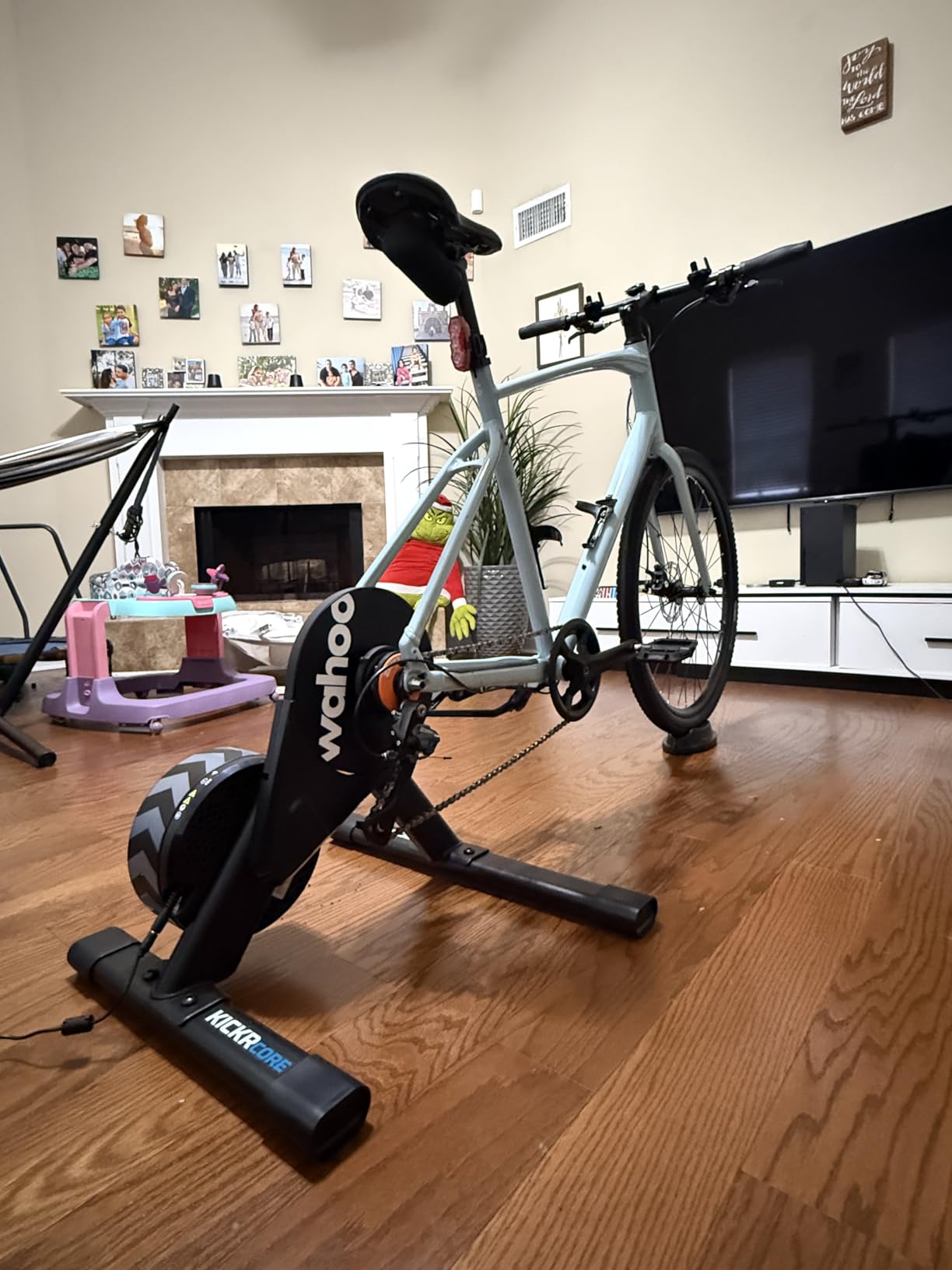
2. Wahoo KICKR CORE 2 – Best Value With WiFi and a Zwift Cog in the Box
Wahoo Fitness KICKR CORE 2 ZWIFT COG and Click – Orange Cog 3rd Generation
Electronic resistance
Alloy steel frame
20.4 x 23 x 18.5 inch
13.6 kg
2 year manufacturer warranty
Pros
- Quiet even at high wattage per owners
- Fast app-guided setup and pairing
- Built-in WiFi for quick stable connections
- Zwift Cog and Click removes cassette guesswork
- Operates as a plain roller when unplugged
Cons
- Feature set leans heavily on the Zwift ecosystem
- Lighter frame is less stable in hard sprints
- Zwift Click needs a strong Bluetooth signal
- Some users report virtual shifting stalling
The KICKR CORE 2 is the trainer most often recommended to apartment riders in cycling communities, and the reason is consistent: owners report that it stays quiet even at high wattage, to the point where partners cannot hear it from the next room. A rider on r/workout described an earlier KICKR Core as plenty quiet with upwards of absurd amounts of resistance.
At 13.6 kg it is the lightest trainer here by a clear margin, which matters in a small flat. You can carry it up a stairwell, reposition it for a different ride position, or move it out of the way without planning the move a week in advance.
Why the bundled Zwift Cog and Click changes the experience
Instead of a cassette, this version comes with a single-speed cog and a Zwift Click controller. That removes the single most common source of owner frustration on budget trainers, which is working out hub spacers and drivetrain compatibility. The trade-off is a dependency: the full feature set leans on the Zwift ecosystem, and riders on other platforms get less out of the shifting hardware.
On the shifting itself, reports are mixed. Most owners praise instant changes with no lag, while a minority describe the virtual click stalling or bogging down in specific setups, often when the Bluetooth link is weak. Owners on r/Zwift describe running this trainer as without fuss, and equally describe it as quite awkward to move and store, so keep the light weight in mind as the trade.
WiFi, ERG behaviour and what happens when you unplug
Integrated WiFi is the headline feature. It gives faster pairing and automatic updates when connected to an active network, which in practice means less time in a setup menu before your ride starts. The resistance is electronic and there are twenty listed settings, and riders describe the curve as smooth and road-like, less harsh than the Tacx Flux.
Unplug it and it becomes a basic roller, which is genuinely useful for warm-ups and cool-downs and means the trainer is still useful if your internet drops mid-session. The lighter alloy steel frame is the flip side of that low weight: a few owners note it is slightly less stable than metal competitors during out-of-the-saddle sprints.
Who this suits and who should pass
Pick the CORE 2 if you ride in Zwift, you want the least amount of assembly and drivetrain guesswork possible, and floor space or carrying weight is your binding constraint. It is the trainer I would suggest to a first-time indoor rider in a flat.
Pass if your household runs more than one bike with different drivetrains, since the single cog constrains you. Also pass if you need absolute silence in every gear and ride out of the saddle constantly, because the light frame is the trade for the low mass.
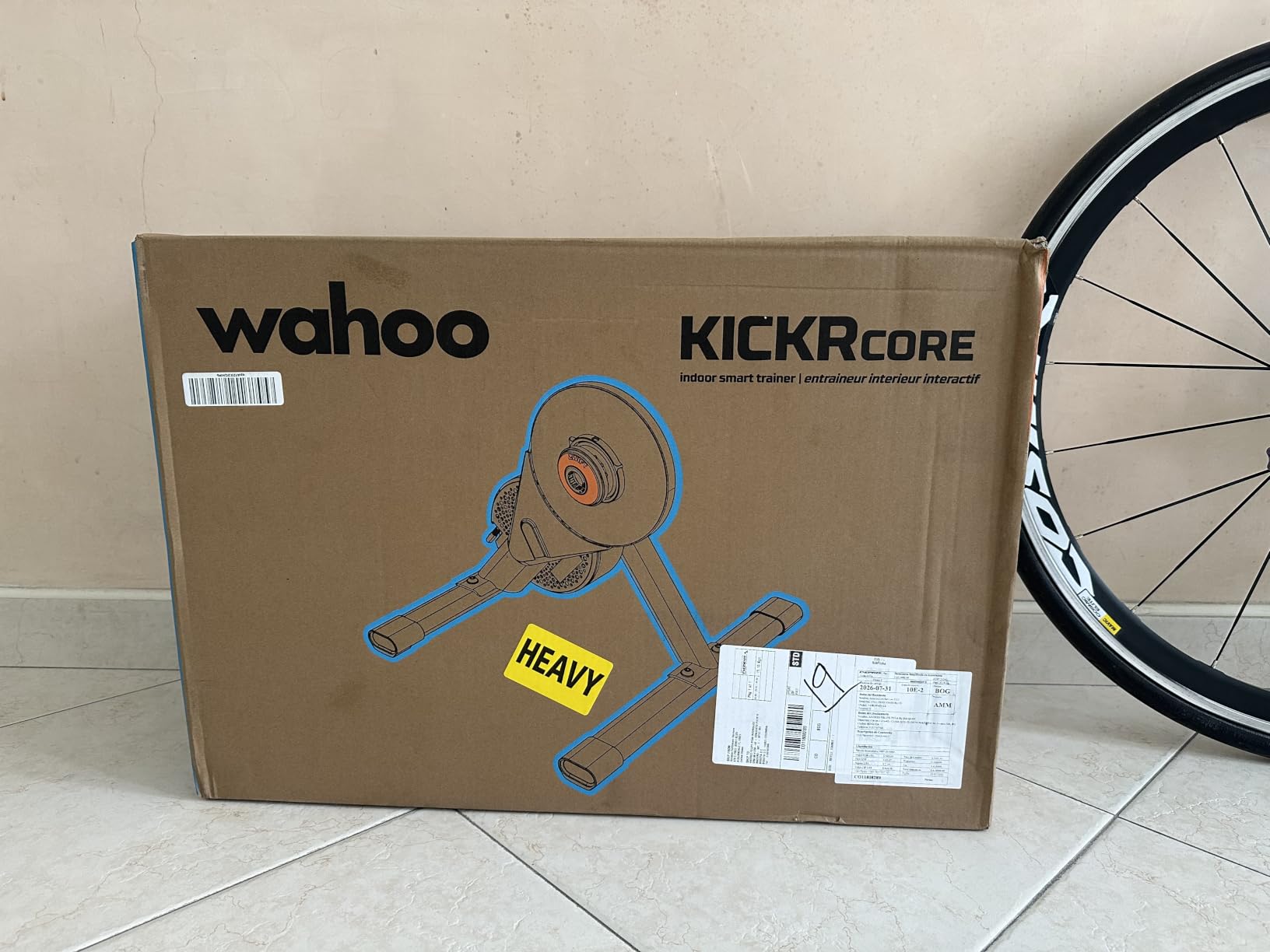
3. Tacx Flux S – Electromagnetic Power in a Frame That Takes Standing Climbs
Tacx Flux S Smart Bike Trainer, Black, Model:T2900S.60
Electromagnetic resistance
Power accurate within 3 percent
Up to 10 percent gradient
1500W sprint resistance
50 pounds
Pros
- Near-silent direct-drive design owners praise
- Power measurement accurate to within 3 percent
- Sturdy frame tolerates standing efforts
- Works with Zwift and other third-party apps
- 2 year limited warranty
Cons
- 10 percent gradient is modest against newer units
- 50 pound body with a 23 inch footprint
- One-star reviews are a 10 percent share of ratings
The Flux S sits in the middle of the market and behaves like it. It is an electromagnetic unit, meaning resistance is produced by a motor rather than by magnets alone, and the manufacturer describes it as next-to-silent so you can ride without disturbing others. Reviewers back that characterisation up, listing near-silent operation as the first advantage almost every time.
This is the trainer I point at when someone asks for a metal-framed workhorse that simply works. Owners report a sturdy design that easily allows riding full out and standing on the pedals, which is what you want if your training plan includes out-of-the-saddle work.
Accuracy, gradient ceiling and what 1500W actually buys you
The accuracy ceiling of 3 percent is looser than the sub-2 percent figures the premium units here claim. For most riders that is immaterial, but if you are comparing short efforts across months, a tighter figure is worth paying for, because the error is a multiplier on every data point you record.
The 10 percent gradient ceiling and 1500W sprint resistance are the more meaningful constraints. Ten percent will get you through most flat routes and moderate climbs, but it will not reproduce the long alpine drags that separate a good week from a bad one. Compatibility is broad, with support for Zwift, Tacx and other third-party training apps.
Footprint and weight in a small flat
Here is the catch for apartment riders. At 50 pounds and a footprint of roughly 23 by 19.5 by 10 inches, this is a floor-hungry trainer relative to the CORE 2 or the ThinkRider units. The listed 9.99 inch height does mean it stores relatively flat, but the mass does not change.
If you are on an upper floor with timber joists, a heavier trainer is not automatically bad, but it does mean more force reaching the deck on each stroke and more effort when you move it. My advice for a flat this size is to pair it with a genuinely thick isolation mat rather than a thin one.
Who this suits and who should pass
Buy the Flux S if you want a durable, quiet, third-party-app-friendly unit for steady-state and interval training and you will ride seated most of the time. The 2 year limited warranty is a real plus in a category where one-year coverage is common.
Pass if you are a climber or racer chasing 15 percent-plus simulated gradients, or if you are moving into a very small room where a 50-pound trainer is a burden. Its 10 percent one-star share is also the second highest in this group, so expect some support friction if something goes wrong.
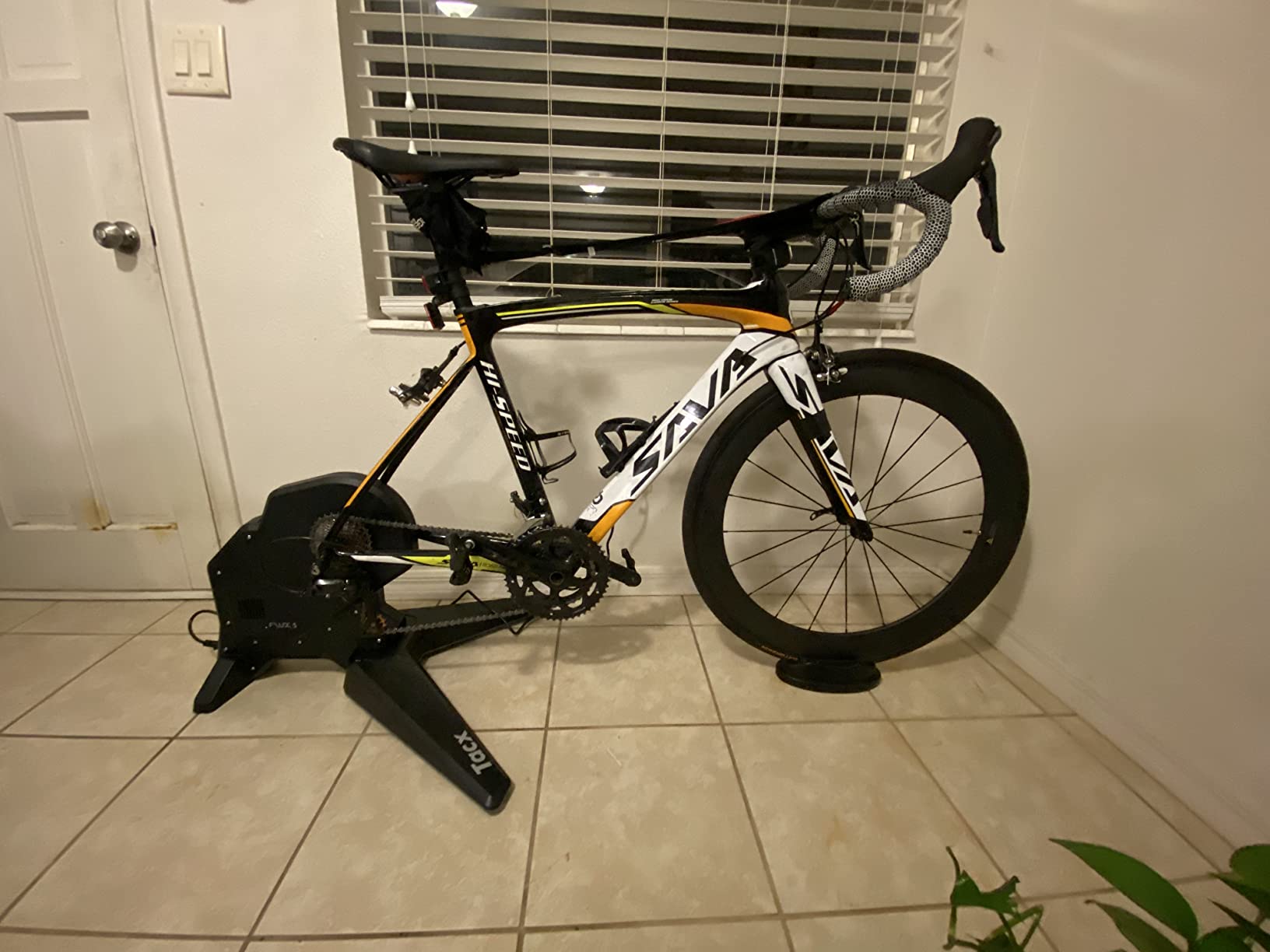
4. ThinkRider X2Max – The Only Trainer Here That Publishes Its Own Decibel Figure
ThinkRider X2Max Smart Bike Trainer,2000w,Simulates 18% Slope,ANT + & BLE
Electromagnetic resistance
About 58 dB at 30 km/h
2000W at plus or minus 2 percent
18 percent grade
35.2 pounds
Pros
- Publishes a measured 58 dB at 30 km/h
- Power accuracy holds within roughly 1.5 to 2 percent
- Dual ANT+ and Bluetooth pairing
- Built-in handle makes it easy to carry
- I-beam triangular frame for stability
Cons
- Short legs make it tippier under hard efforts
- Cassette not included and hub spacers need care
- Some units sit slightly off-level
- Companion app is poor though not required
- Hub spacer instructions are sparse
Almost no bike trainer publishes a sound level measurement. This one does, and the figure is about 58 dB at 30 km/h. That single number makes the X2Max the easiest unit in this list to judge for apartment use, because you can compare its airborne noise against your own fan rather than relying on the word quiet.
It is also a remarkably capable machine. Output reaches 2000W using a DEPT dynamic electromagnetic torque meter with an error of plus or minus 2 percent, and it simulates an 18 percent gradient. Users who previously rode far more expensive Wahoo trainers describe it as matching them functionally, and the accuracy spec backs that up.
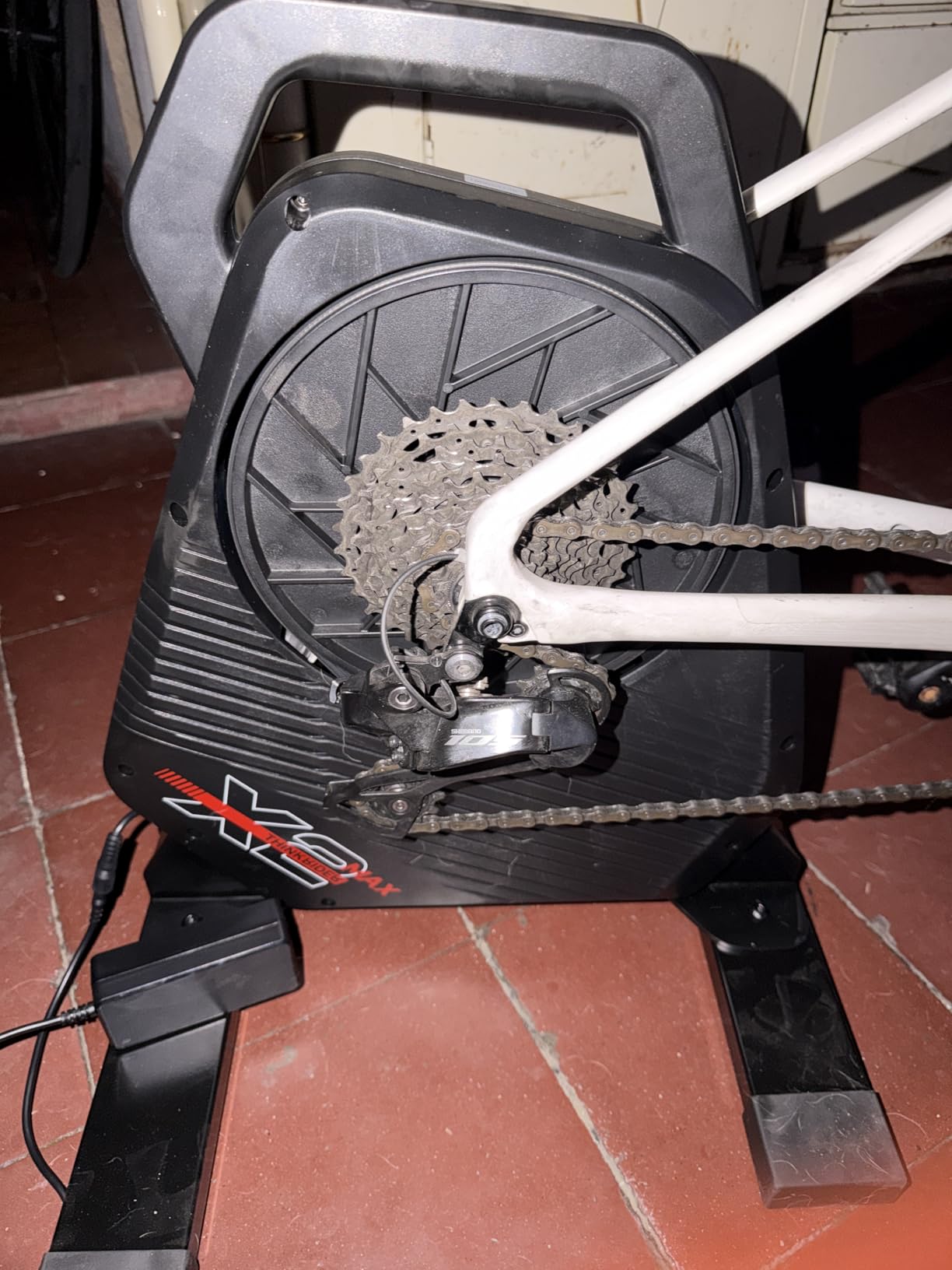
What 58 dB means in a real apartment
Around 58 dB at 30 km/h is conversation-adjacent rather than disruptive. It is quiet enough that owners report listening to podcasts while training without raising the volume. It will not disappear entirely through a paper-thin internal wall, but it sits in a range where a closed door and a thick mat handle the rest.
That figure is for airborne sound. The I-beam triangular structure is the part that addresses floor transmission, and owners rate it as stable in normal use. It is a sensible combination: a quiet motor, plus a frame that does not rock and hammer the deck.
Fitment is where you will lose time
Two setup issues are worth knowing before you buy. The cassette is not included, and the hub spacers must be set up correctly or you will get chain noise that undoes the whole point of a quiet trainer. Instructions for the correct spacer order are described as sparse, so budget an evening for the first setup rather than an hour.
The second issue is level. Some arrive sitting slightly off-level and need shimming. On a timber floor, a small shim is arguably a feature rather than a fault, because it squares the trainer up and stops it rocking on an uneven surface.
Who this suits and who should pass
Choose the X2Max if you are noise-sensitive, you want published data rather than marketing, and you ride Zwift, Rouvy or MyWhoosh over the dual ANT+ and Bluetooth protocols. The built-in handle makes it the easiest to move between rooms after the CORE 2, at 35.2 pounds.
Pass if you routinely stand out of the saddle for long efforts. The short legs make it more tippy under hard acceleration and standing power than the taller frames here, and that rocking is exactly what sends vibration down a joist. The one-year warranty and a weak companion app are additional reasons to slow down and read the manual carefully.
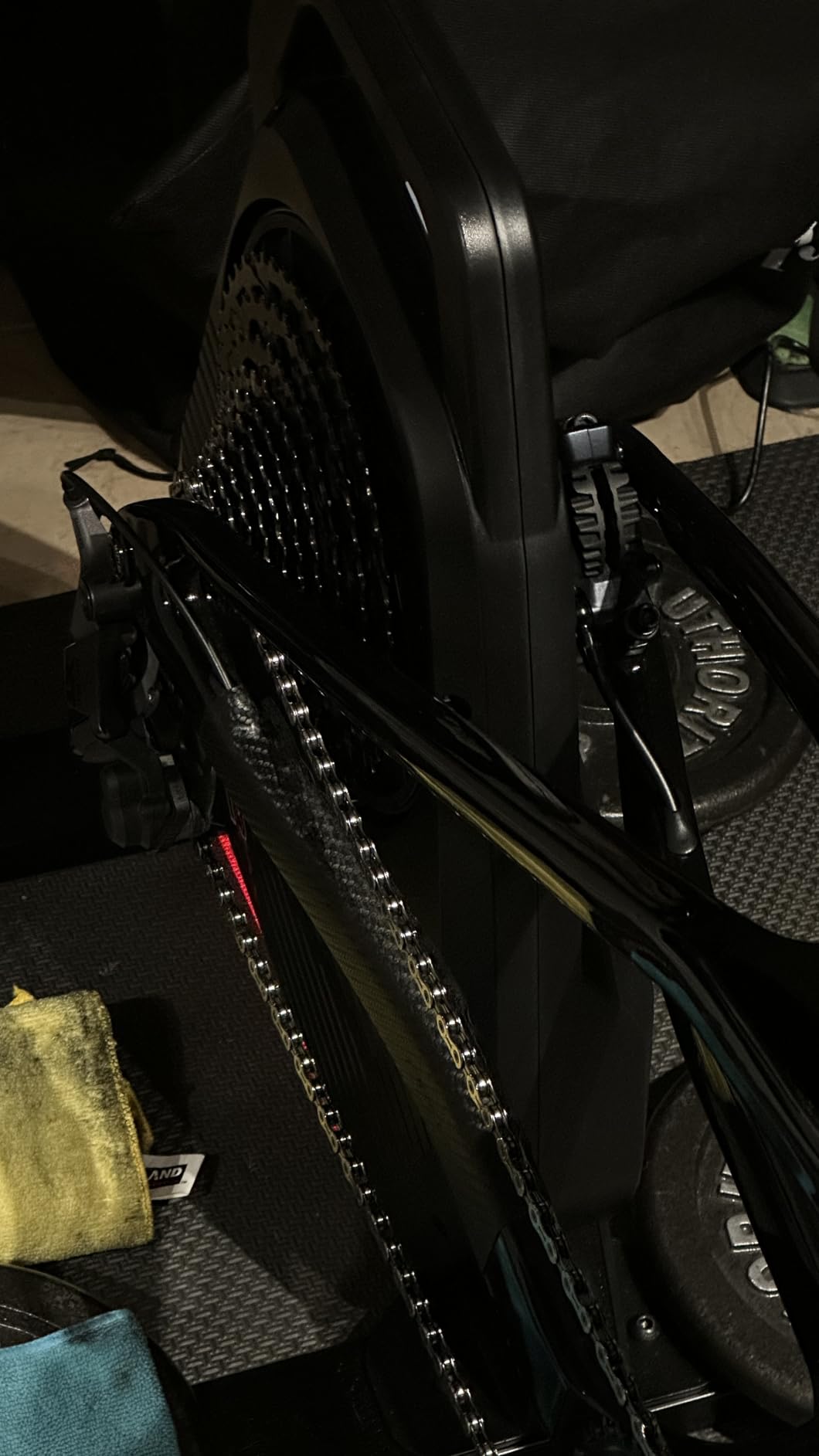
5. ThinkRider XXPRO – Self-Powered With a 25 Percent Gradient Ceiling
ThinkRider XXPRO Smart Bike Trainer,2500W,25% Gradient,ANT + & BLE(Black)
Direct motor drive
2500W maximum
25 percent simulated gradient
Plus or minus 1 percent accuracy
Self-generates power
Pros
- Freewheels like a normal bike when you stop pedalling
- Reportedly very quiet with only chain noise heard
- Generates its own electricity with no outlet needed
- Smoothest resistance curve owners have used
- 2500W and 25 percent gradient at this tier
Cons
- No virtual shifting support on Zwift
- Can feel like it slips at very low speed under load
- Supplied screws too short and spacers wrong size
- 7-speed cassette spacer not included
- Noisier when running self-powered
The XXPRO is the outlier in this group and I like it for one specific reason: it makes its own electricity. That means no power lead, no wall outlet, and no argument about where the mat goes because the trainer is not tethered to a socket. For a flat where the nearest outlet is in the hallway, that changes the whole layout problem.
It is also one of the most capable machines here. Maximum power is 2500W, the maximum simulated gradient is 25 percent, and it drives a direct motor for plus or minus 1 percent accuracy with no calibration step. It also simulates downhill by automatically adjusting to the map slope.
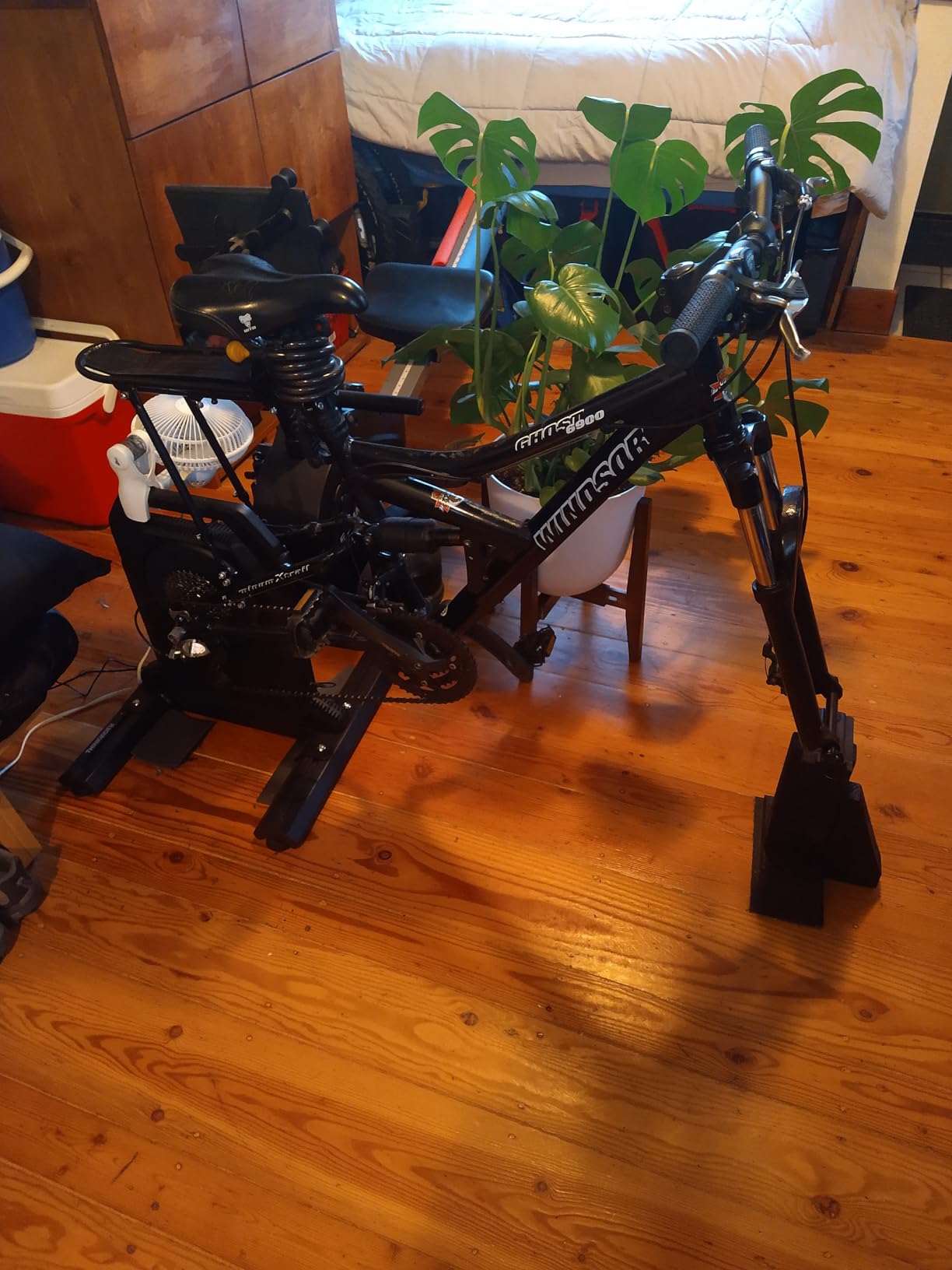
Freewheeling like a road bike, with only chain noise to hear
Owners repeatedly report that the only sound they hear is chain noise from the bike itself, and that stopping pedalling makes the crank stop instantly, unlike belt-driven spin bikes that whip the cranks around. That freewheel behaviour is not a noise feature exactly, but it is an apartment feature, because it means no spinning machinery left running when you are done.
There is a caveat worth flagging. Several users note that it is noisier in self-powered mode, and that running it plugged in is quieter still. The generator does work, and that work is audible. If your priority is the lowest possible noise and you can reach an outlet, plug it in. If you cannot, expect a slightly more present hum than the other units here.
Downhill simulation and the missing virtual shifting
Downhill simulation is genuinely rare at this tier and it makes evening mountain routes feel far less brutal, because the resistance backs off as the road falls away. The 25 percent gradient ceiling is the joint highest here alongside the NEO 3M, and owners call that class-leading at this price.
The clear gap is virtual shifting. There is no virtual shifting support on Zwift, so a rider used to a 24-gear electronic experience on the KICKR will notice the change immediately. It connects over Bluetooth, ANT+ and works with Zwift, MyWhoosh and Garmin devices, and it runs even without an app, which is handy for a garage or a spare room.
Who this suits and who should pass
Buy the XXPRO if your outlet situation is awkward, you train on long mountainous routes, and you want downhill simulation plus a 25 percent ceiling without a premium price. Owners describe a slim frame that stands securely and handles standing climbs.
Pass if you ride Zwift and care about virtual gear changes, or if you are fussy about fitment. The supplied screws are reported as too short for the threaded rail inserts and the cassette or quick-release spacers are the wrong size, so several owners had to buy replacements, and the 7-speed cassette spacer is not included. Owners also report a slight slip sensation at very low speed under heavy load, attributed to the direct-drive design. Check what your bike needs before ordering.
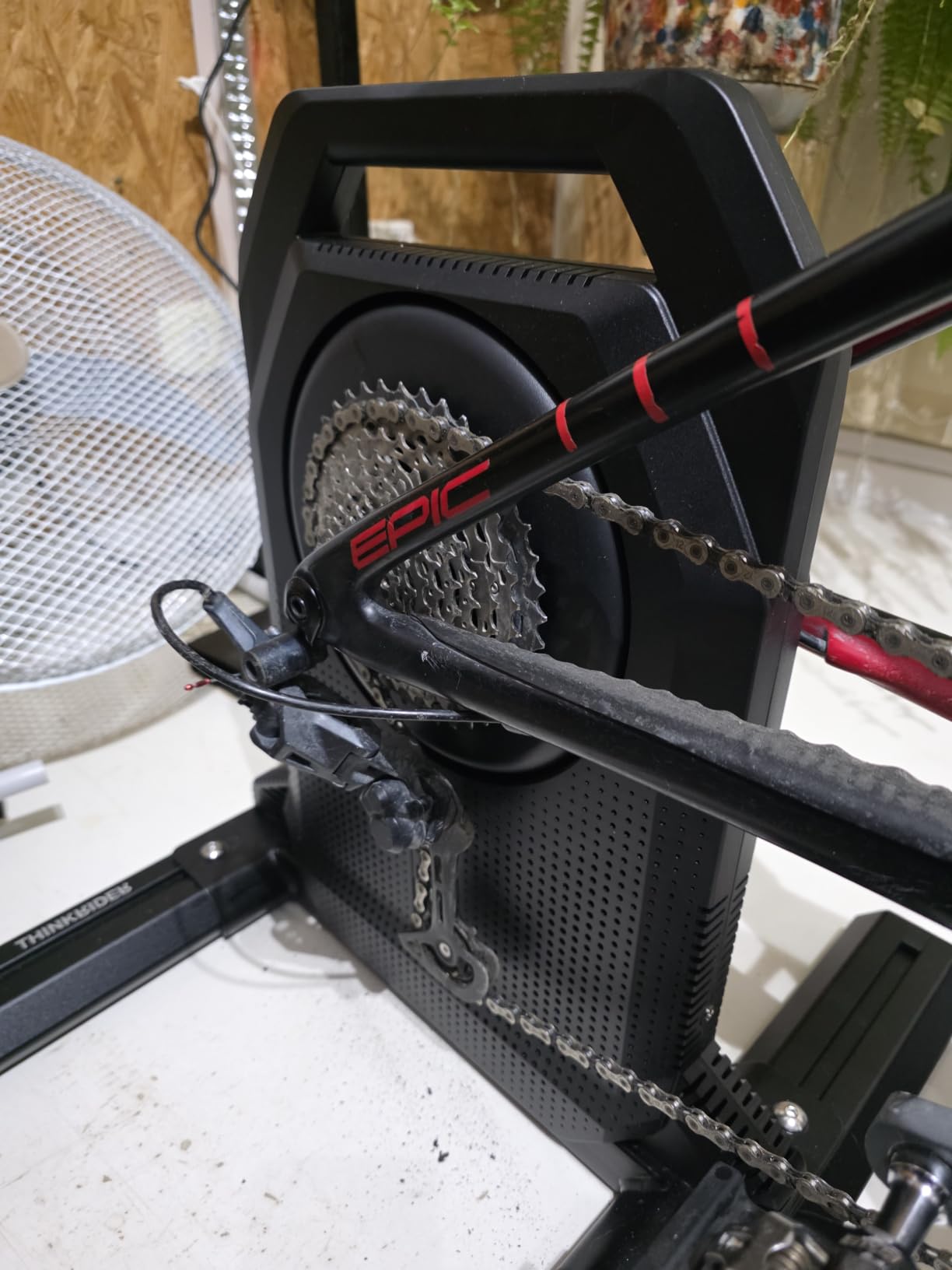
6. Elite Direto XR – Optical Torque Sensing With the Widest Cassette Support
ELITE SRL Direto XR Black Bike Trainer, Interactive, 24% Simulated Gradient, Electronic Resistance, Compatible with Gravel, Mountain, City Bikes
Optical Torque Sensor
Accuracy within 1.5 percent
Up to 24 percent climbs
40 pounds
Long body at 34 inches
Pros
- Direct drive with no belt or fan wear
- Optical torque sensor holds power within 1.5 percent
- Simulates climbs up to 24 percent
- Wide cassette and axle compatibility out of the box
- Connects over both ANT+ FE-C and Bluetooth
Cons
- Long body at 34 inches across a small room
- 40 pound frame is heavy to move
- One-star reviews are a 10 percent share
- Some axle adapters and freehubs sold separately
The Direto XR is the trainer to buy if your household runs more than one bike, or if you change bikes regularly. It ships with a freehub body compatible with Shimano and SRAM 9 to 11 speed, Shimano 12 speed road, and SRAM NX and SX Eagle 12 speed cassettes, plus adapters for 130 to 135mm quick release and 142 by 12mm thru-axle. Very few units in this group cover that many drivetrains out of the box.
The power measurement is the other reason to look here. An Optical Torque Sensor holds output within plus or minus 1.5 percent, which is tight enough for structured training and performance tracking, and the resistance simulates climbs up to 24 percent.
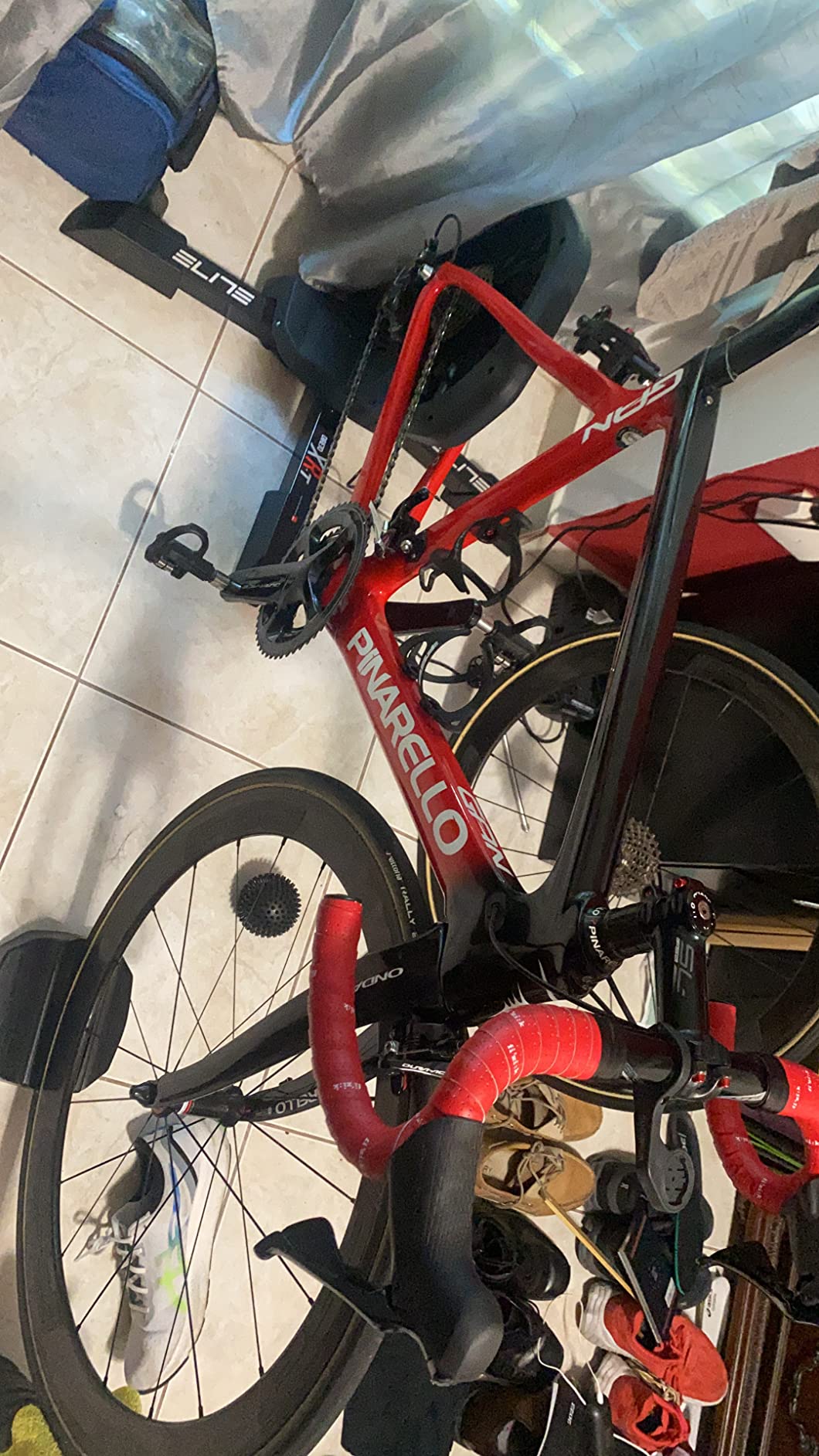
Why direct drive with no belt matters in a flat
There is no belt and no fan-driven wear in this mechanism, which means no consumable parts to replace and one less source of mechanical noise. The direct transmission gives an immersive ride feel, and reviewers rate the quiet direct-drive performance as a genuine strength rather than a marketing line.
Connectivity covers both ANT+ FE-C and Bluetooth, so it talks to Zwift, TrainerRoad, Rouvy and other popular training software. A 12-month My E-Training subscription is included.
The footprint is the apartment problem
At 34 by 26 by 22 inches and 40 pounds, this is not a casual move. It is the longest body in the list, and in a small flat that is a real commitment rather than a corner arrangement.
Its 10 percent one-star share is the second highest in the group, so the support experience is worth factoring in. The 2 year manufacturer warranty is a point in its favour against several rivals.
Who this suits and who should pass
Pick the Direto XR if compatibility is your problem to solve, if you want tight 1.5 percent power data, and if you have the floor area to give it. It suits gravel and mountain bikes as well as road, and the supplied adapters cover most axle standards.
Pass if floor space is the binding constraint, or if you are the sort of owner who will be annoyed that some axle adapters and freehub bodies are sold separately. A 34-inch footprint is a commitment that a small bedroom may not survive.

7. Wahoo KICKR V6 – Clutch Equipped Brushless Drive Over a High-Inertia Flywheel
Wahoo KICKR V6 Smart Indoor Trainer
Electromagnetic resistance
Over 2200W at 1 percent accuracy
22 kg
Large floor area needed
AXIS feet
Pros
- Near silence at zero resistance thanks to the clutch
- Over 2200W accurate to 1 percent with no calibration
- AXIS feet reproduce side-to-side road movement
- High-inertia flywheel gives the signature ride feel
- Stable 2.4GHz WiFi connection
Cons
- Needs a dedicated floor area rather than a corner
- 22 kg is awkward to shift between rooms
- One-year manufacturer warranty
- AXIS feet add movement some find unnecessary
The KICKR V6 solves a specific noise problem very well. It has a clutch in the drivetrain, and reviewers describe the result as near silence when pedalling at zero resistance. That matters in the quiet hours of a flat, when a warm-up spin should be inaudible rather than a steady mechanical hum.
Power accuracy is the standout number. Over 2200 watts of resistance accurate to within 1 percent, with an automatic calibration-free process, and the brand claims it stands up to the demands of the most powerful cyclists. Owners back the ride feel up too, crediting the high-inertia flywheel combined with KICKR AXIS feet.
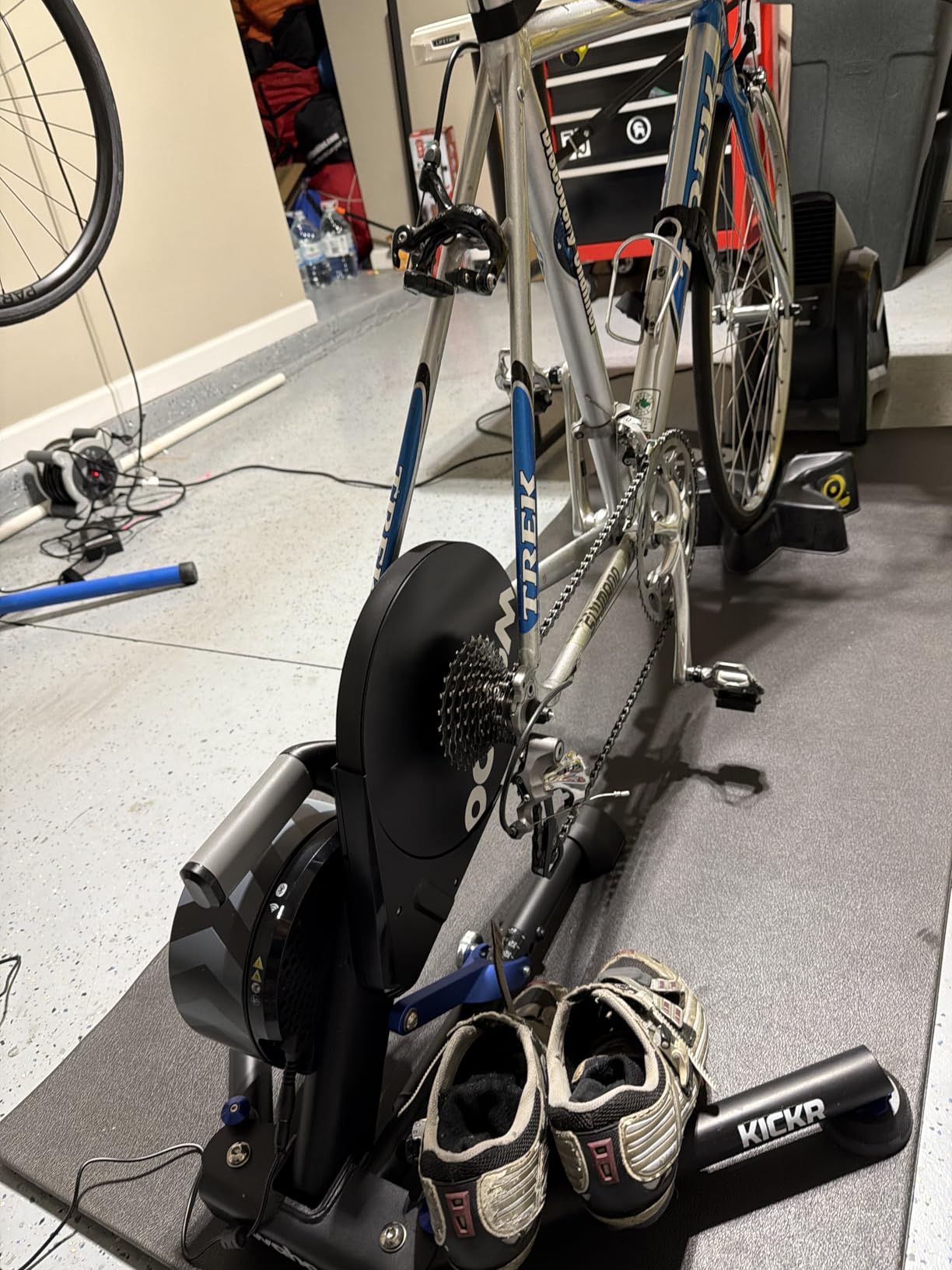
What the clutch actually changes
On a direct-drive unit without a clutch, the drivetrain is always engaged. When you ease off, the cranks keep turning with the machine and you get a faint continuous whir even at zero load. A clutch decouples the chain, so the trainer stops turning the cranks when you stop pedalling. On a quiet morning session with a sleeping household, that difference is audible and welcome.
The AXIS feet add a second benefit. They mimic the side-to-side movement of real road riding, which is both a realism upgrade and, slightly counterintuitively, a comfort upgrade because it absorbs some of the harshness out of small impacts.
Space, weight and the storage question
Here is where the V6 is awkward. At 22 kg and a listed 71 by 44 by 51 inch dimension, it needs a dedicated floor area rather than a corner. Reviewers name the weight as awkward to shift between rooms.
The warranty is one year, which is shorter than the two years offered by several rivals in this list. If you can dedicate a permanent training space and you want the quietest drivetrain behaviour available, those trade-offs are worth it. If your flat is small, they are not.
Who this suits and who should pass
Buy the V6 if you have a room you can commit permanently, you ride very high power, and you want faithful ride feel with the lowest possible idle noise. It comes with a 10-speed cassette so there is no separate cog purchase to make.
Pass if you live in a small flat, if you need to move the trainer regularly, or if warranty length matters to you. Note also that the AXIS feet add slight body movement that some riders find unnecessary for focused work, so the premium ride feel is not universally liked.
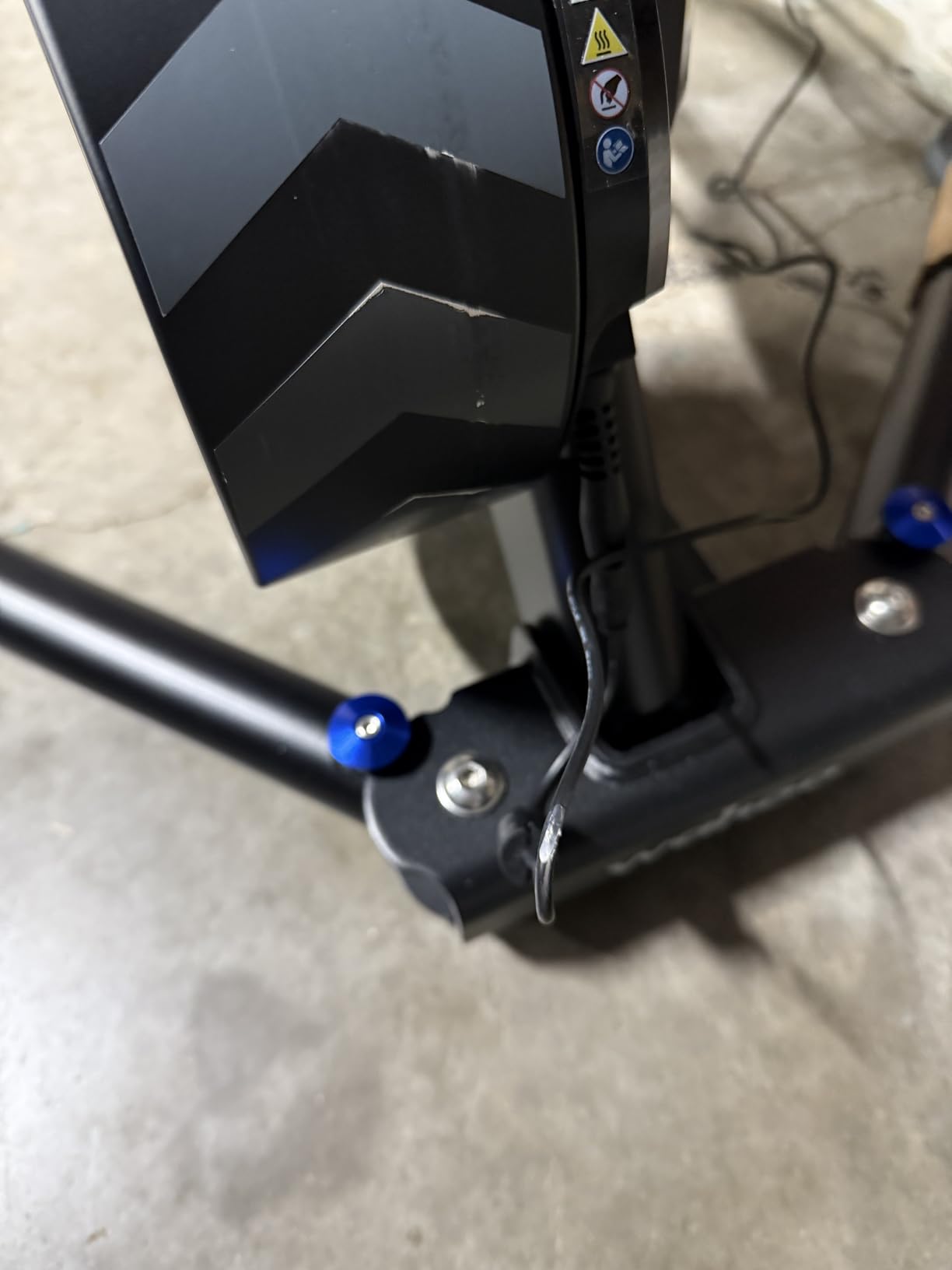
8. Garmin TacX NEO 3M – Multidirectional Motion Plates and a Virtual Flywheel
Garmin TacX NEO 3M Smart Trainer, Multidirectional Movement, Realistic Ride Fee
Magnetic resistance
25 percent gradient with descent
Accuracy within 1 percent
52 pounds
11-speed cassette pre-installed
Pros
- Motion plates give the most realistic multidirectional feel
- Virtual flywheel reproduces cobblestone and gravel
- 25 percent gradient plus descent simulation
- Power speed and cadence within 1 percent up to 2200W
- Arrives with 11-speed cassette and needs no calibration
Cons
- Very heavy at 52 pounds and needs real floor space
- Only 32 reviews so the reliability record is thin
- Highest one-star share in the group at 11 percent
- One-year limited warranty only
The NEO 3M is the most advanced ride simulation in this group, and it is also the least suited to a small apartment. That is an uncomfortable combination, but riders with the floor space to use it consistently rate the realism highly.
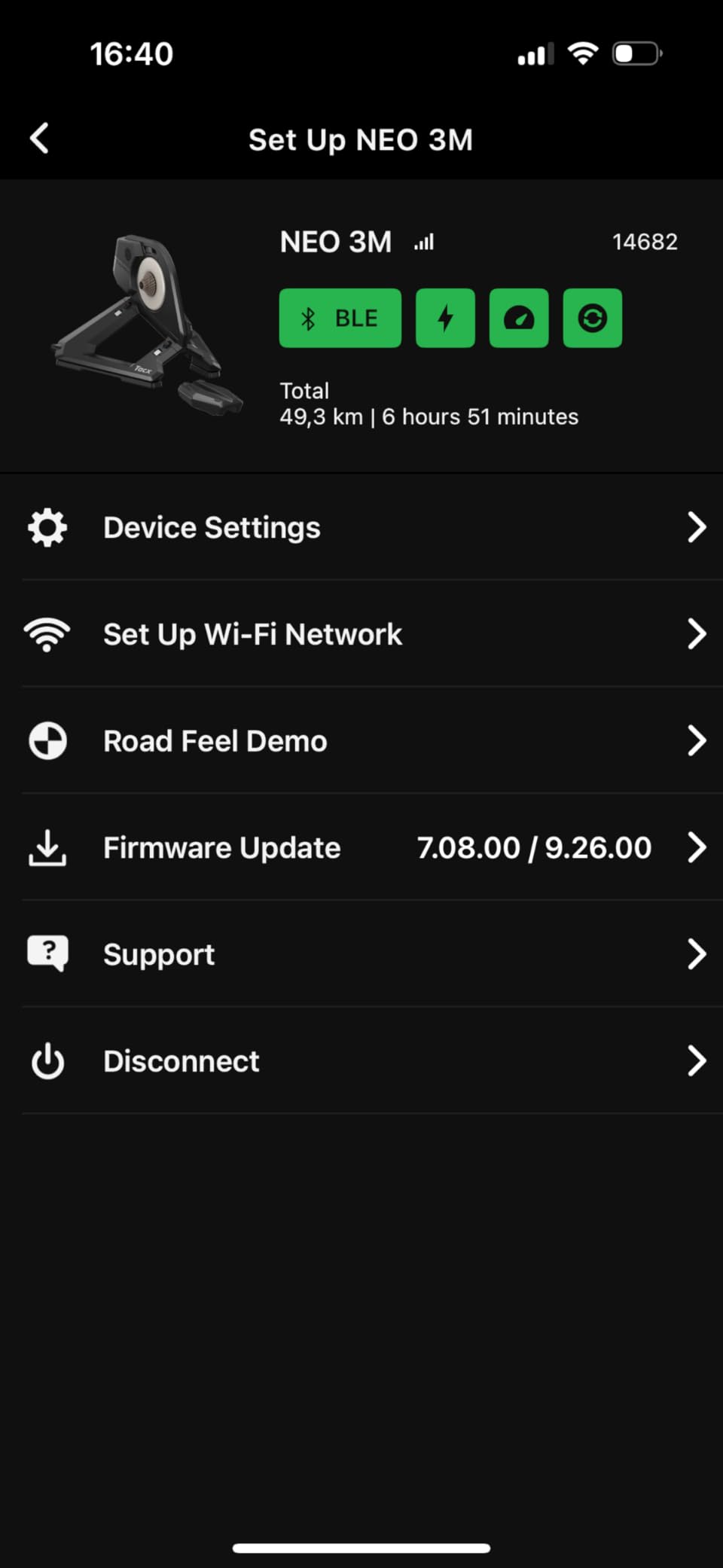
The defining feature is the pair of built-in integrated motion plates, which can be toggled on and off. When on, they give multidirectional movement that reviewers describe as the most realistic ride feel yet from Tacx. When off, you reclaim floor space and a little of that benefit. Being able to switch them off is, in an apartment context, a genuinely thoughtful design choice.
The virtual flywheel and what it does for texture
The virtual flywheel simulates the feeling of riding on different road types, including cobblestone and gravel. Rather than a purely electronic profile, this gives a tactile, mechanical component to surface variation that riders find convincing. It works alongside up to 25 percent simulated gradient plus descent simulation, so the same unit handles both texture and gradient.
Measurement is accurate within 1 percent across a broader range of power outputs than earlier models, up to 2200 watts, and the design is well balanced for stability during explosive sprints. Power, speed and cadence are all covered. Integration with TrainerRoad, Zwift and other apps is straightforward.
Why the 52-pound weight is an apartment problem
At 52 pounds, the NEO 3M is heavy, and the motion plates need genuine floor space to work. For a rider on an upper wooden floor, a machine that size moving fore and aft under load is sending real energy down into the joists. The verdict is straightforward: this is not a small-flat trainer.
There is also an evidence problem. The review base is 32 reviews, so the long-term reliability record is still settling, and the 11 percent one-star share is the highest here. The warranty is one year limited.
Who this suits and who should pass
Choose the NEO 3M if you have a dedicated training room, you want the most realistic ride available, and you ride long mountainous routes where descent simulation and 25 percent gradients matter. It arrives with an 11-speed cassette pre-installed, needs no calibration, and the onboard network adapter keeps connections stable when several trainers share a room.
Pass if you are in a small flat, on timber joists, or if you want an established long-term record before committing. The weight and the moving plates work directly against the quiet-apartment goal, whatever the motor is doing.
9. Wahoo KICKR Move – Dual-Axis Travel That Lets the Bike Move With You
Wahoo KICKR Move Smart Indoor Trainer
Electromagnetic resistance
Dual-axis movement
29 kg, the heaviest here
88 x 67 x 68 inch assembled
Lock-out mode
Pros
- Dual-axis movement lets the bike travel fore-aft and side-to-side
- Beltless direct drive keeps drivetrain noise low
- Lock-out mode gives a fixed position for intervals
- ERG Easy Ramp avoids the surge on resume
- Heaviest frame here at 29 kg so it is hard to reposition
Cons
- Assembled footprint around 88 x 67 inches
- The heaviest unit in this roundup at 29 kg
- Fore-aft motion is less rock steady in a small room
- Only 32 reviews and a one-year warranty
The KICKR Move answers a different problem: not noise, but fatigue. Its built-in dual-axis movement lets the bike travel fore and aft as well as side to side, and the brand claims that the fore-aft motion reduces fatigue and improves efficiency over a long session. For a rider doing three hours on a Tuesday evening, that is a bigger deal than a couple of decibels.
It is beltless direct drive, so drivetrain noise stays low, and there is a lock-out option for when you want a fixed, dialed-in position for structured work. ERG Easy Ramp means pausing mid-workout drops you back into the effort gradually instead of demanding a leg-busting surge to hit your numbers again.
The 29 kg frame and the widest connectivity in this group
Connectivity is the standout spec sheet entry: 2.4 GHz WiFi, up to three Bluetooth connections, a direct connect port, plus ANT+ and ANT+ FE-C compatibility. If you run multiple trainers or a mixed-device household, that flexibility removes a class of frustration that single-protocol units create.
At 29 kg it is the heaviest trainer in this list by a wide margin, and reviewers single that mass out as awkward to shift between rooms. On an upper wooden floor, both the weight and the fore-aft travel work against the downstairs neighbour. At an assembled footprint of roughly 88 by 67 inches, this also needs the most floor of anything we tested.
Who this suits and who should pass
Buy the KICKR Move if you do long endurance sessions, you have a large dedicated room, and comfort through the hours matters more to you than minimising floor transmitted vibration. Riders who dislike the floating feeling of moving trainers can lock it out, which makes it a reasonable all-round choice.
Pass if you are in a small flat. This is not a small-space product, and on an upper wooden floor the mass and the fore-aft travel both work against the downstairs neighbour. With 32 reviews and a one-year warranty, the record is short either way.
10. XPLOVA NOZA V – Torsion-Bar Feel With Rubber Feet and a Folding Front Leg
XPLOVA, NOZA V, ZWIFT Compatible, Smart Trainer, Direct Drive
Direct drive torsion bar
2200W and 18 percent tilt
Power within 2 percent
18 kg
24.2 x 23.5 x 19.9 inch
Pros
- Torsion-bar direct drive gives a lighter natural pedal feel
- Four rubber feet plus stabilisers absorb vibration
- 2200W output and 18 percent simulated tilt
- Power measurement error within 2 percent
- Folding front leg eases storage in tight rooms
Cons
- Only 30 reviews the smallest sample in the roundup
- 18 percent gradient trails the 24 and 25 percent units
- Lowest five-star share here at 64 percent
- Notable 7 percent two-star share
The NOZA V has the least rotating mass of any trainer in this list. It uses a torsion bar rather than a heavy flywheel, which means less mass to accelerate and decelerate on every stroke. Reviewers describe the result as a lighter, more natural pedal feel and specifically credit it with keeping pedal noise down.
Vibration handling is the other headline. Four rubber feet plus stabilisers on the front and rear leg are designed to absorb vibration and reduce strain on both the bike and the rider, which is precisely the mechanism an apartment dweller needs working in their favour.
Power, gradient and load fluctuation
Maximum output is 2200 watts with an 18 percent maximum tilt, and power measurement error sits within 2 percent. A larger electromagnetic motor is used to reproduce load fluctuations during climbing and downhill more smoothly, which is a subtle difference that shows up on the ride rather than on a spec sheet.
This version adds a cadence function to the previous NOZA noise level, plus vibration suppression and a folding front leg, all of which the brand describes as highly requested additions.
Storage is the apartment story here
At 24.2 by 23.5 by 19.9 inches and 18 kg, the NOZA V is one of the lighter trainers here, and the folding front leg is a genuine small-space feature. It means you can stand it more compactly in a corner or a closet than a fixed-leg trainer of similar size.
The evidence base is the smallest in the roundup at 30 reviews. Ratings are also the most middling here, with a 64 percent five-star share and a 7 percent two-star share, so treat early owner reports with some caution.
Who this suits and who should pass
Pick the NOZA V if your priority is the lightest pedal noise and the best built-in vibration absorption in this group, and you want something you can fold and store easily.
Pass if you are a climber chasing steep gradients, since 18 percent trails the 24 and 25 percent ceilings offered by the Elite and ThinkRider models. And weigh twice before buying: the smallest sample and the most mixed ratings in the group make it the least proven pick here.
How to Choose a Direct-Drive Trainer You Will Not Regret in an Apartment
Noise is a systems problem, not a spec-sheet problem. These are the decisions that actually determine whether your trainer is a delight in a flat or a source of tension with the neighbour downstairs.
How quiet is quiet: reading noise ratings honestly
Almost no bike trainer publishes a measured sound level, so when you see one, believe it. The ThinkRider X2Max is the only unit in this group quoting a figure, about 58 dB at 30 km/h, and that is a genuinely useful number because it lets you compare the trainer to your fan rather than to another trainer. Marketing language like near-silent or whisper-quiet is not comparable across brands and tells you nothing.
The other thing to understand is that decibels are logarithmic. A 3 dB increase is roughly a doubling of perceived loudness, and a drop of 10 dB sounds about half as loud. This is why a small change in motor design matters less than you would expect, and why the fan and the mat matter more.
Direct-drive vs wheel-on vs smart bike for small spaces
A wheel-on trainer presses your tyre against a steel roller. That contact point is where the high-pitched squeal comes from, and cycling community consensus is blunt about it: wheel-on units are loud enough to push people out to a garage, while direct-drive trainers are consistently described as the quiet option.
A smart bike has no drivetrain noise at all because there is no drivetrain. That is tempting in a flat, but you give up your own bike, your own fit and your own saddle, and you gain nothing in Zwift terms. A direct-drive trainer keeps your bike and its noise is mechanical rather than squealing. For most apartment riders who already own a bike, that is the better trade.
Tacx or Wahoo for an apartment: the honest split
If you are deciding between the two big names, the split is fairly clean. Wahoo tends to win on drivetrain quietness, with the clutch-equipped KICKR V6 close to silent at zero resistance, and on ride feel. Tacx tends to win on realistic road simulation and on the absolute figures at the top end, with the NEO 3M’s motion plates and virtual flywheel. For a small flat, though, the flagship units from both brands are the wrong choice on size, so the realistic comparison is the Neo 2T against the KICKR CORE 2.
Match the trainer to your floor construction
This is the step most guides skip, and it changes the recommendation more than any other. On a concrete slab with an acoustic underlay, almost any direct-drive unit in this list will be fine and you can prioritise ride feel. On timber joists, prioritise low mass, a small footprint, rubber feet and a thick mat, and avoid motion platforms entirely. In an older walk-up where floors are known to be bouncy, treat the mat as the most important purchase after the trainer.
And if you are the top-floor unit, do not assume you are safe. Vibration travels down through the joists just as readily as it travels to the ceiling below you. Being the loudest floor in the building is not a defence.
The three-layer floor isolation stack
Build it in this order, from the floor upwards. Zwift forum users specifically recommend stacking thick rubber mats under the trainer to dampen noise and catch sweat, and that advice is the right starting point.
- Base layer: a thick rubber or dense foam mat covering more floor area than the trainer footprint, ideally with a lipped edge to stop sweat reaching the boards.
- Decoupling layer (timber floors only): a plywood board laid on the mat, acting as a floating surface so the trainer does not couple directly into the joist. Without this step on a wooden floor, a mat alone only damps the airborne path.
- Trainer layer: the unit on top, positioned so both rear legs sit fully on the stack and the front wheel block is supported, not cantilevered.
Add a towel draped over the bars if you sweat heavily, and keep the fan off the deck. Sound masking from a towel is negligible, but sweat protection for your flooring is not.
Power accuracy and max wattage: how much you actually need
Accuracy figures in this group run from 3 percent on the Flux S down to 1 percent on the XXPRO and the NEO 3M, with the Direto XR at 1.5 percent. For max wattage, match it to your own peak rather than a marketing number: every extra pound of frame is a pound of floor transmitted force. The gradient ceiling matters more for most people. Ten percent on the Flux S is limiting, 18 to 20 percent is comfortable, and 24 to 25 percent reproduces real alpine routes.
Storage footprint and moving a trainer between rooms
Weight and dimensions are the two numbers apartment riders say cause the most frustration. In this group the KICKR CORE 2 at 13.6 kg and the NOZA V at 18 kg are the easiest to move, while the KICKR Move at 29 kg and the NEO 3M at 52 pounds are the hardest. Look for foldability specifically: the Neo 2T folds flat, the X2Max and the CORE 2 are compact by design, and the NOZA V has a folding front leg.
Fan noise, heat and the rest of the noise budget
Overheating indoors and fan noise are the two complaints that appear together most often in owner reports. Start at the lowest fan speed that keeps you comfortable, aim the airflow across your body rather than along the floor, and place the fan on a surface that is not the deck. A second fan is a common upgrade and usually a mistake for noise purposes, because two small fans beat one large fan at the same airflow and one large fan is the loud thing. If you already own a quiet appliance for cooling, the same placement logic applies; the reasoning is identical to how we rank the quietest dishwashers for small kitchens.
Frequently Asked Questions
What is the quietest indoor bike trainer available?
The quietest direct-drive trainer in this group is the Garmin TacX Neo 2T, whose 32 neodymium magnet resistance unit runs near-silently and folds flat for storage. The ThinkRider X2Max is the only trainer here that publishes a measured level, at about 58 dB at 30 km/h. The Wahoo KICKR V6 is the quietest at zero resistance thanks to its clutch.
Can I use a bike trainer in an apartment?
Yes, and a direct-drive trainer is the right type to use. Wheel-on units squeal because the tyre spins against a steel roller, while direct-drive units have no such contact. You should still add a thick rubber mat, and on timber joists add a plywood decoupling board above the mat, to reduce floor vibration reaching the unit below.
Is a turbo trainer noisy?
A turbo trainer is noisy in absolute terms, because you are putting a chain, a flywheel and a motor into a small room. What matters for neighbours is relative quiet: direct-drive units remove tyre squeal, so they run far quieter than wheel-on or roller setups. Fan noise often exceeds trainer noise in the room, so budget for that separately.
Which is better, Tacx or Wahoo, for an apartment?
Wahoo tends to win on drivetrain quietness, with the clutch-equipped KICKR V6 close to silent at zero resistance. Tacx tends to win on road simulation realism, with the Neo 2T and the motion-equipped NEO 3M. For a small flat, compare the Tacx Neo 2T against the Wahoo KICKR CORE 2, because the flagship units from both brands are too large.
Is it normal for a stationary bike to make noise?
Yes. A small hum from the motor and flywheel at low speed, chain noise from your bike, and a whirr while pedalling are all normal. A high-pitched squeal, grinding or a knocking sound is not normal and usually points to an alignment or cassette spacing problem. A direct-drive trainer should never squeal, because there is no tyre-on-roller contact.
Which Direct-Drive Trainer Belongs in Your Apartment?
If your priority is the quietest operation and a frame that stores out of sight, take the Tacx Neo 2T. It is the editor’s choice here because the 32-magnet unit is the least noisy drivetrain in the group and the fold-flat frame solves the storage problem that stops many people buying a trainer at all.
If you want the lowest barrier to starting and the least fuss with drivetrains, the KICKR CORE 2 is the better buy. The bundled Zwift cog and click, the integrated WiFi and the 13.6 kg weight make it the easiest unit to carry, set up and actually use week after week.
If you are noise-sensitive and want published data rather than marketing, the ThinkRider X2Max is the honest choice. It is the only trainer in this group quoting a sound level, and at about 58 dB at 30 km/h it is quiet enough to train against.
If you need steep simulated climbs and no power outlet, the ThinkRider XXPRO self-generates its electricity and reaches 25 percent gradient with 2500W of resistance. Just check your cassette and spacer needs before ordering.
Whatever you choose, buy a thick mat before you buy the trainer. In a quiet apartment the floor setup does more for your downstairs neighbour than the motor ever will, and it is a fraction of the cost.
For the wider category, our picks on direct-drive mechanisms explain the same physics on a different piece of equipment, and the principles of isolating vibration from a shared structure carry over directly.
Leave a Reply