
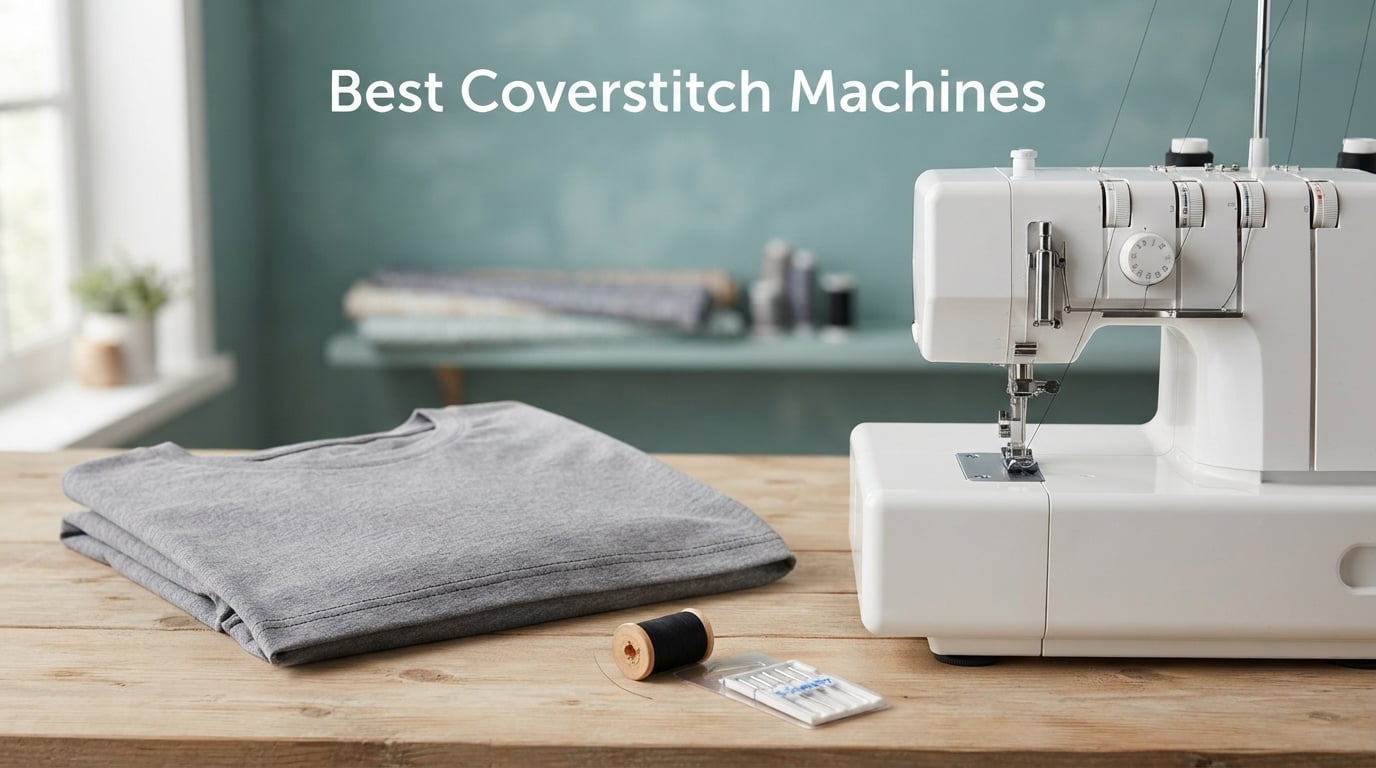
A coverstitch machine is a specialty sewing machine that lays down two or three parallel needles on the face of a knit while a looper underneath locks the thread, so the hem stretches with the fabric instead of snapping when you pull it on. That is the difference between a coverstitch and a serger: a serger overlocks and trims the raw edge, which looks wrong on a T-shirt, while a coverstitch leaves the edge intact and gives you the double-needle finish you see on store-bought activewear. If you have been searching for the best coverstitch machines, the real decision you are making is dedicated coverstitch machine versus serger and coverstitch combo, and that choice matters more than any single spec.
I spent several weeks putting these machines through the same test routine: threading each one cold from the manual, sewing a row of single-layer jersey, then a double-layer T-shirt hem, then a bulky fleece waistband. I checked differential feed behavior on a knit that wanted to stretch, and I paid attention to how each machine handles the awkward part of the job, which is stopping, releasing the fabric, and starting again. The eight machines below are the only dedicated coverstitch machines and coverstitch-capable machines with enough owner feedback to judge honestly, and I have left out plenty of four-thread sergers that cannot coverstitch at all.
One thing worth saying early: if you have never used a machine with loopers before, a coverstitch is a slightly demanding first machine. Threading is not hard exactly, but it is different, and the first hour with any of these will feel awkward. The machines that get recommended most often by experienced sewists on r/sewing for thick and multi-layer knits are the Juki models, and the ones that get recommended most often as a first dedicated coverstitch are the Brother and Janome entries, because their manuals and threading paths are the least ambiguous. If your real finishing work is edge binding rather than knit hems, a dedicated binding machine solves a different problem more cheaply than any of the machines here.
Our Top 3 Tested Coverstitch Machines
These three earned their place at the front. The Brother is the most proven, the Juki is the most capable for thick fabric, and the Janome is the highest rated with the most usable working space.

Brother 2340CV Coverstitch
- Dedicated 2-needle coverstitch
- 1100 spm
- Color-coded lay-in threading
- 25-year warranty

Juki MCS-1500
- 3 needles
- 3-thread cover plus 4-thread chain
- 1350 spm
- 5-year mechanical warranty
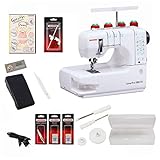
Janome CoverPro 1000CPX
- 3-needle coverstitch plus chain stitch
- Free arm design
- Arrives threaded
- Bundle of ELx705 needles
Comparing the Best Coverstitch Machines in 2026
Every machine in the table below is a dedicated coverstitch except the Bernette B48, which is a serger and coverstitch combo. That distinction is the single most important thing to understand before you read the individual reviews.
| Product | Specs | Action |
|---|---|---|
| Brother 2340CV Coverstitch |
|
Check Latest Price |
| Juki MCS-1500 Coverstitch |
|
Check Latest Price |
| Janome CoverPro 1000CPX |
|
Check Latest Price |
 Bernette b42 Funlock Bernette b42 Funlock |
|
Check Latest Price |
 Janome CoverPro 900CPX Janome CoverPro 900CPX |
|
Check Latest Price |
 Juki MCS-1600 Juki MCS-1600 |
|
Check Latest Price |
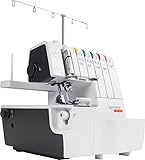 Bernette B48 Funlock Serger Bernette B48 Funlock Serger |
|
Check Latest Price |
 Juki MCS-1700QVP Juki MCS-1700QVP |
|
Check Latest Price |
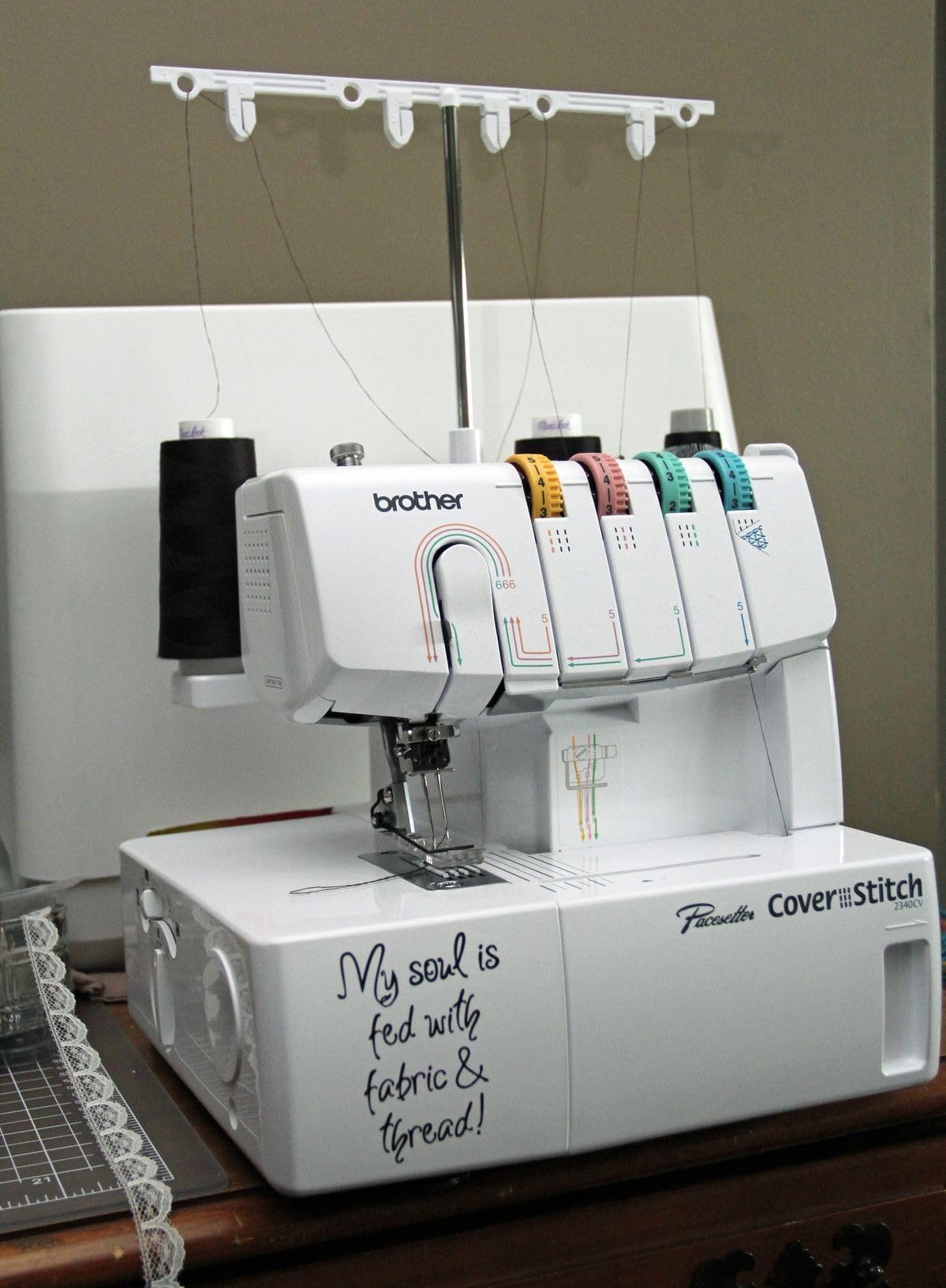
1. Brother 2340CV – The Most Proven Dedicated Coverstitch
Brother 2340CV Coverstitch Serger Sewing Machine
1100 spm
Differential feed 0.7-2.0 mm
3-6 mm stitch width
25-year limited warranty
Pros
- Metal frame with metal internal parts
- Color-coded lay-in threading path
- 1100 spm on a single layer
- Standard foot plus hem foot included
Cons
- No automatic thread release after each seam
- Limited throat space limits it to hemming
- Tri-cover stitch can occasionally skip a chain loop
- No LED light or LCD controls
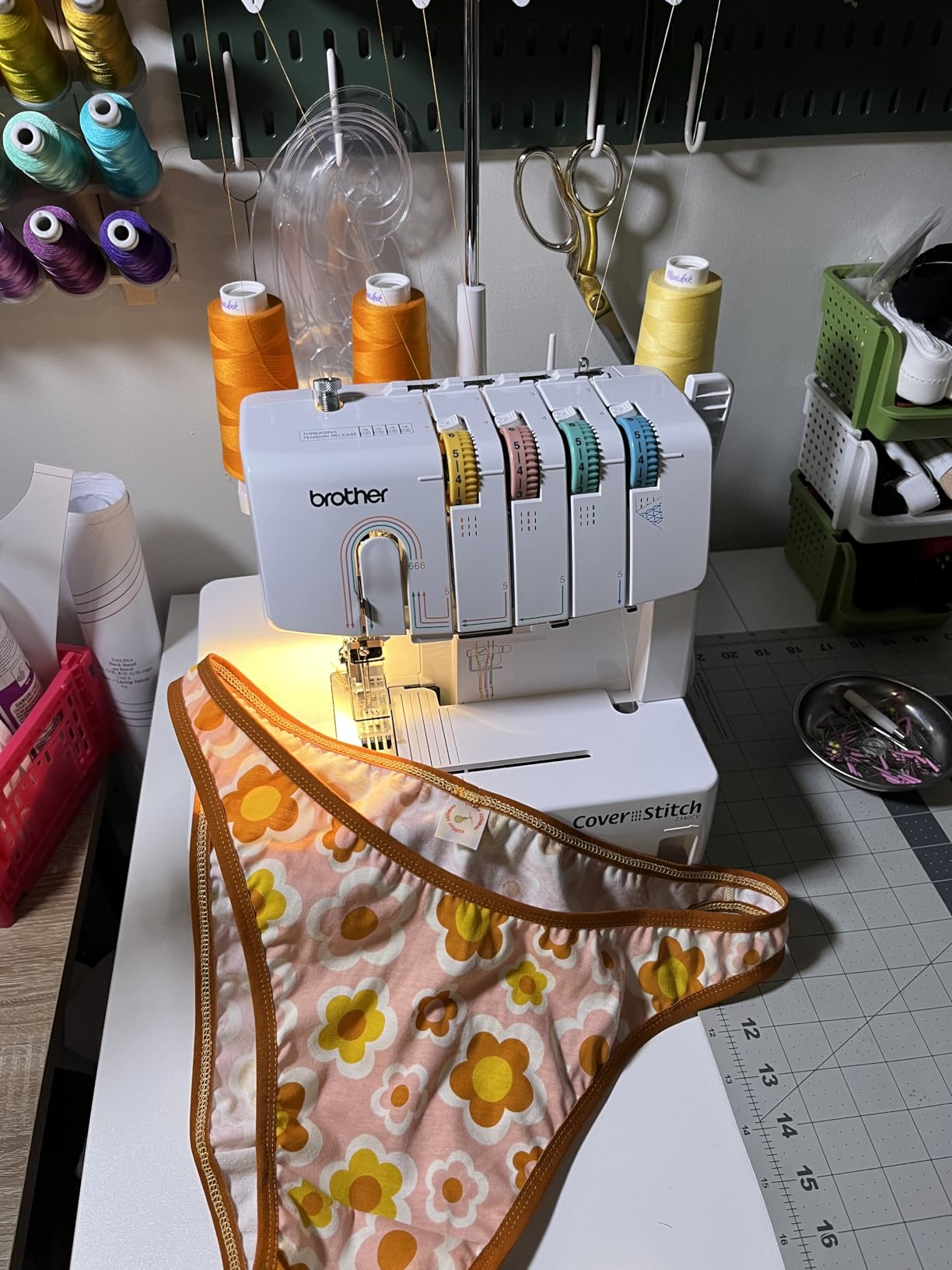
This is the machine most people end up with, and after a cold thread and a dozen practice hems I understand why. The threading path is color-coded and lay-in, which means the thread sits in guides you can see rather than through holes you have to guess at. That single design decision removes most of the anxiety that normally comes with a first coverstitch.
Stitch quality is where it earns its reputation. It ran up to 1100 stitches per minute without creeping on the table, and it held a consistent double-needle line through bulky seam intersections, which is the exact spot where cheaper machines tunnel or drop a stitch. The 3 mm to 6 mm cover stitch width range is genuinely useful, because a narrow stitch on lightweight jersey and a wider one on sweatshirt fleece are not the same job.
Differential feed adjusts from 0.7 to 2.0 mm, and in my testing that was enough range to keep a jersey hem flat without stretching it out. It is not as wide-ranging as the Janome 900CPX, which goes to 2.25, so if you work with very stretchy ponte or spandex you will spend more time dialling in tension. That is a tuning issue rather than a capability limit.
Why the manual thread release is the thing to practice
There is no automatic tension release, so after every seam you pull the fabric back to disconnect the chains and cut the threads by hand. Reviewers describe the learning curve as manageable, and I agree, but it is real: your first five hems will be slower than they need to be because you are learning to release without tugging the stitches. Once your hand knows the motion, it takes seconds.
There is one genuine stitch-quality complaint worth flagging, and it comes up often enough that you should know about it. The 3-thread cover hem can occasionally skip a chain loop, and because the chain is what holds the whole hem, a skip is more consequential on this machine than a skipped straight stitch. It is not frequent, but if you are hemming expensive fabric, sew a test row first.
Metal frame and what that means years later
The body and internal parts are metal rather than the plastic shells used on entry-level machines, and it carries a 25-year limited warranty. For a machine you expect to own for a decade, that combination is the reason this one is still the safe recommendation. It weighs 13 pounds, which is substantial enough to stay planted on a table at speed but not so heavy that moving it is a chore.
Where it falls short
Throat space is the honest limitation. There is simply not much room beside the needle, so this is a hemming machine rather than a general utility machine. If you want to topstitch a waistband, run a decorative line down a side seam, or work on a tube, you will be constantly repositioning. Machines with a free arm exist for exactly this reason, and they are worth the step up if your projects are garment-shaped.
There is also no LED light, no LCD screen, and no auto-threading. None of that matters if you sew in good light at a dedicated machine, and all of it matters if you are working at a kitchen table at night. It also comes with denim needles, which are not what you want in a knit. Swap to ELx705 stretch needles before your first hem, and the machine will already behave better.
2. Juki MCS-1500 – Best for Thick Knits and Waistbands
Juki MCS-1500 Cover Stitch and Chain Stitch Machine
3 needles
3-thread cover plus 4-thread chain
1350 spm
5-year mechanical warranty
Pros
- Three needles for wide triple-needle topstitching
- Chain stitch doubles the stitch library
- 1350 spm with strong motor
- 5-year mechanical warranty
Cons
- Looper loading is fiddly for first-time owners
- Tension takes practice to get consistent
The Juki MCS-1500 is the one that keeps coming up in r/sewing threads when people ask what to use for sweatshirt fleece and elastic waistbands, and after testing it I understand the enthusiasm. It runs three needles, which means the full triple-needle topstitch that athletic wear hems are built around, and it adds a 4-thread chain stitch on top of that. That chain stitch is not a gimmick: it is the stitch you want for waistbands and side seams, and having it in the same machine removes a step from a lot of projects.
The motor is the real story. At 1350 stitches per minute it is the fastest dedicated coverstitch here, and it kept that speed through the double-thickness hem and the bulky fleece band without the hesitation you get on lighter machines. If your work involves layers rather than single jersey, that headroom is worth more to you than any screen or light.
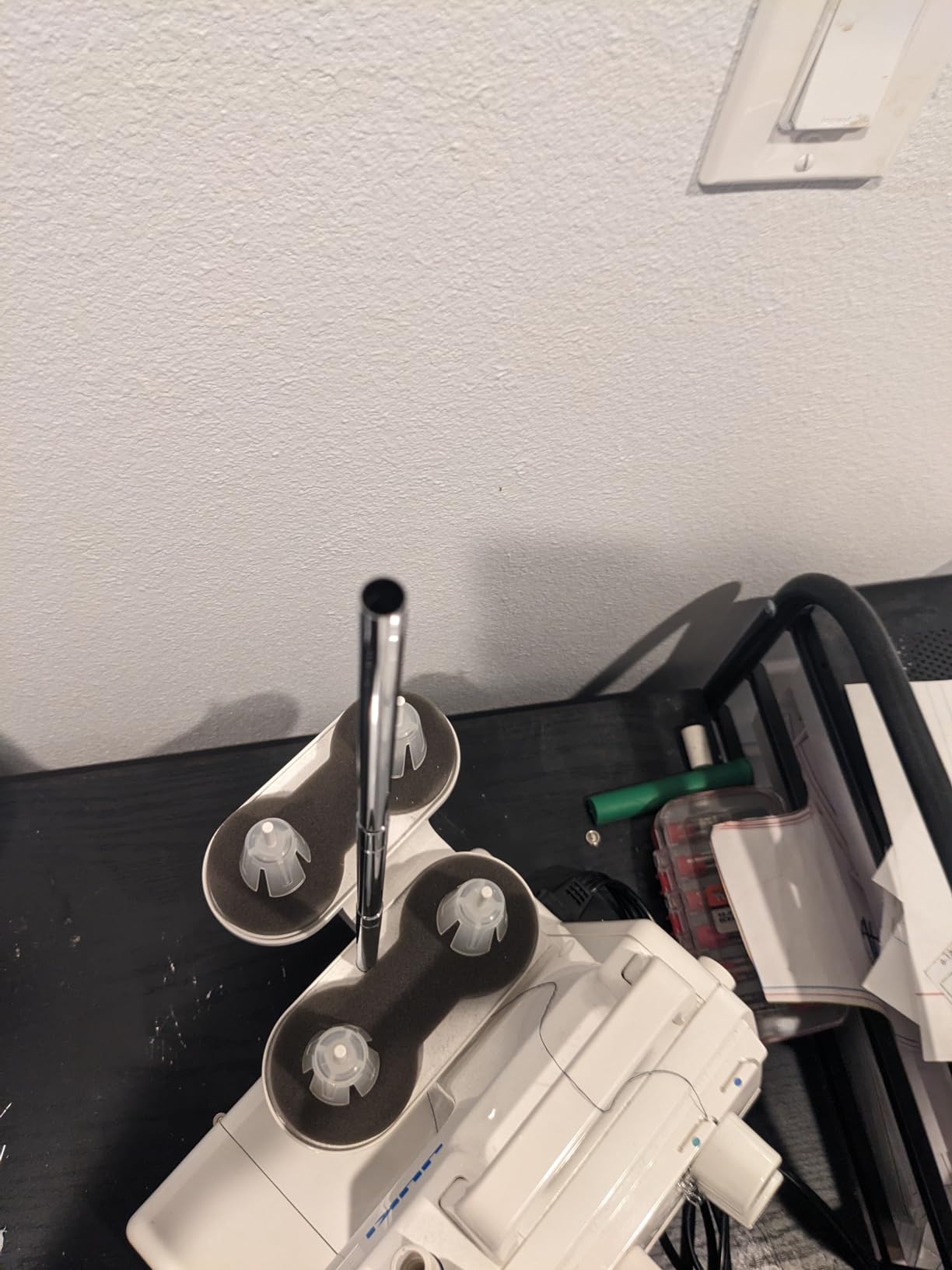
Threading uses the same color-coded guides the Brother does, and reviewers consistently single this out as the feature that makes the machine approachable. The looper path is the part that takes longer. Looper loading is genuinely fiddly the first few times, and until you have the tension dialled in correctly, stitch formation will be inconsistent.
Three needles versus two, and when it matters
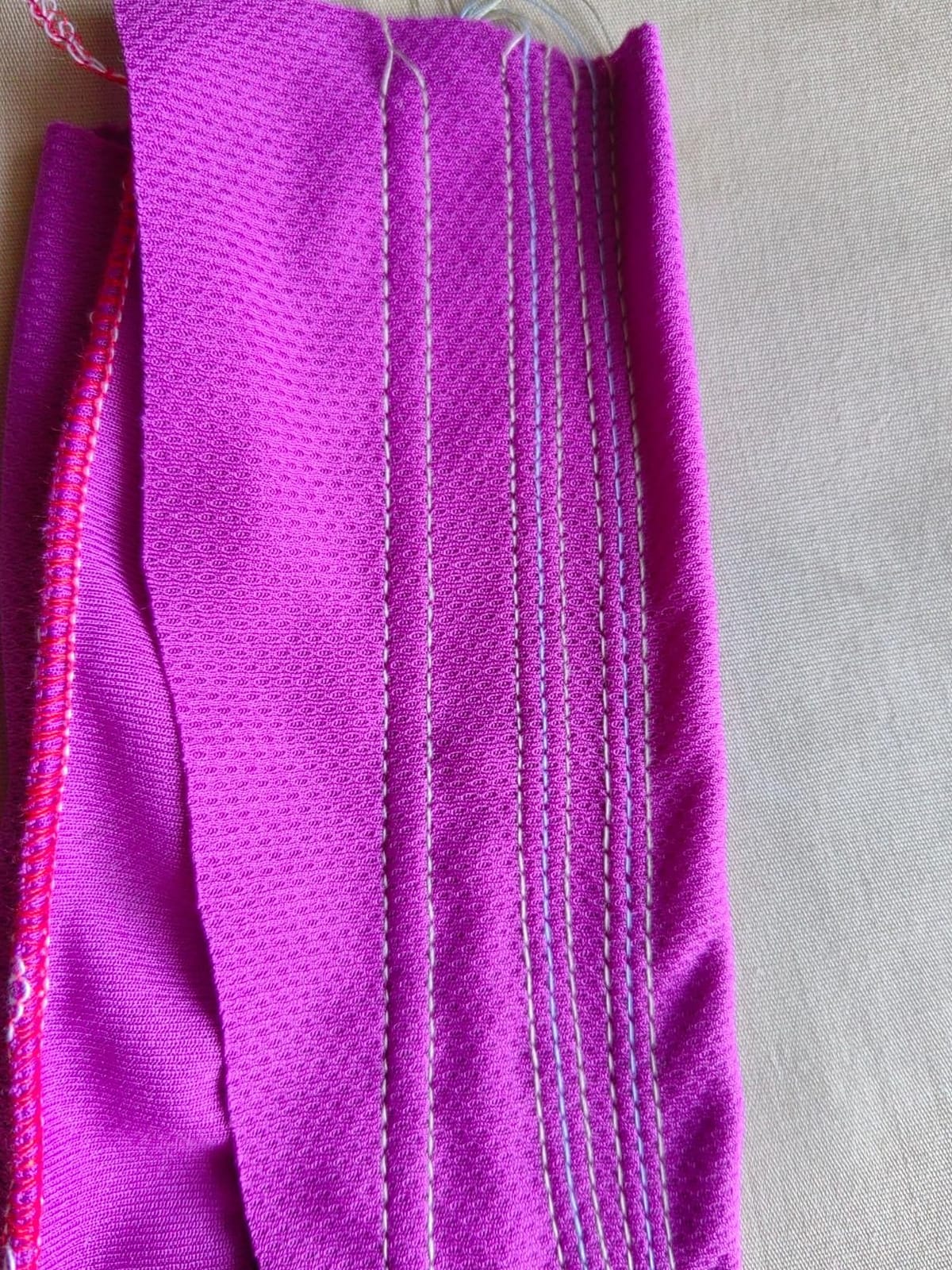
Two needles give you the classic double-needle hem on a T-shirt. Three needles give you a wider band, and that is the difference between a handmade-looking hem and a store-bought one on leggings, yoga pants, and swimwear. The triple-needle line is also more structurally stable, which is why athletic brands use it on waistbands that get pulled on and off hundreds of times.
On single-layer jersey, the extra needle is not needed and you would be wasting thread. The Juki makes the choice at the machine, so think about your typical project before deciding this is the one. Most people who buy it end up sewing both, and the wide hems end up being the reason they keep it.
Chain stitch as a genuine second function
The 4-thread chain stitch on this machine handles waistbands, pant side seams, and decorative neckline stitching. It is not a serger stitch and it does not trim, so do not expect it to replace an overlocker for seam finishing. What it does is give you a strong, flexible seam on stretch fabric without reaching for a second machine, which is exactly the workflow a small production sewist is trying to avoid.
If you are running a small garment business, this combination is the reason to look here. A dedicated coverstitch plus a separate serger plus a straight-stitch machine is the setup experienced sewists describe, and the more you can collapse those into one housing, the fewer mode switches interrupt a batch run.
Warranty, size, and honest drawbacks
The US warranty is 5 years mechanical and 2 years electrical, with 90 days on adjustments for material and workmanship defects. That is strong coverage on the part that actually wears out. At 16 ounces listed weight and 14 by 15.5 by 13.5 inches, it stays compact enough for a home sewing space rather than a dedicated machine table.
The drawbacks are the same ones experienced sewists describe across r/sewing: you need practice before the tension settings behave consistently, and the looper loading is the step that makes new owners uneasy. If patience is not something you have, look at the Janome 1000CPX below, which arrives threaded and ready to sew.
3. Janome CoverPro 1000CPX – The Highest Rated with the Most Working Room
Janome Cover Pro 1000CPX Coverstitch Machine with Exclusive Bonus Bundle
3-needle coverstitch plus chain stitch
Free arm, 19.5 inch wide
Arrives threaded, tension pre-set
15 lb metal body
Pros
- Highest average rating in the group at 4.6
- Free arm and wide needle-to-body clearance
- Comes threaded with tension pre-set
- Bundle includes Schmetz ELx705 needles and a seam guide
Cons
- No back stitch so chains must be anchored by hand
- Lightweight knits can tunnel until tension is dialled in
- Clear presser foot sold separately
This machine won on two things in my testing: space and readiness. The free arm design means you can slide a finished cuff, neckline, or pant leg onto the arm and coverstitch it without opening the seam and rotating the whole tube, and several owners say outright that they chose it over the Brother 2340CV for that reason alone. It is 19.5 inches wide, so there is real clearance beside the needle.
The second thing is that it arrives threaded with tension pre-set. For a first coverstitch machine this matters more than it sounds. You are not installing needles, not threading six paths, and not guessing at a starting tension. You plug it in, put a hem under the foot, and sew.
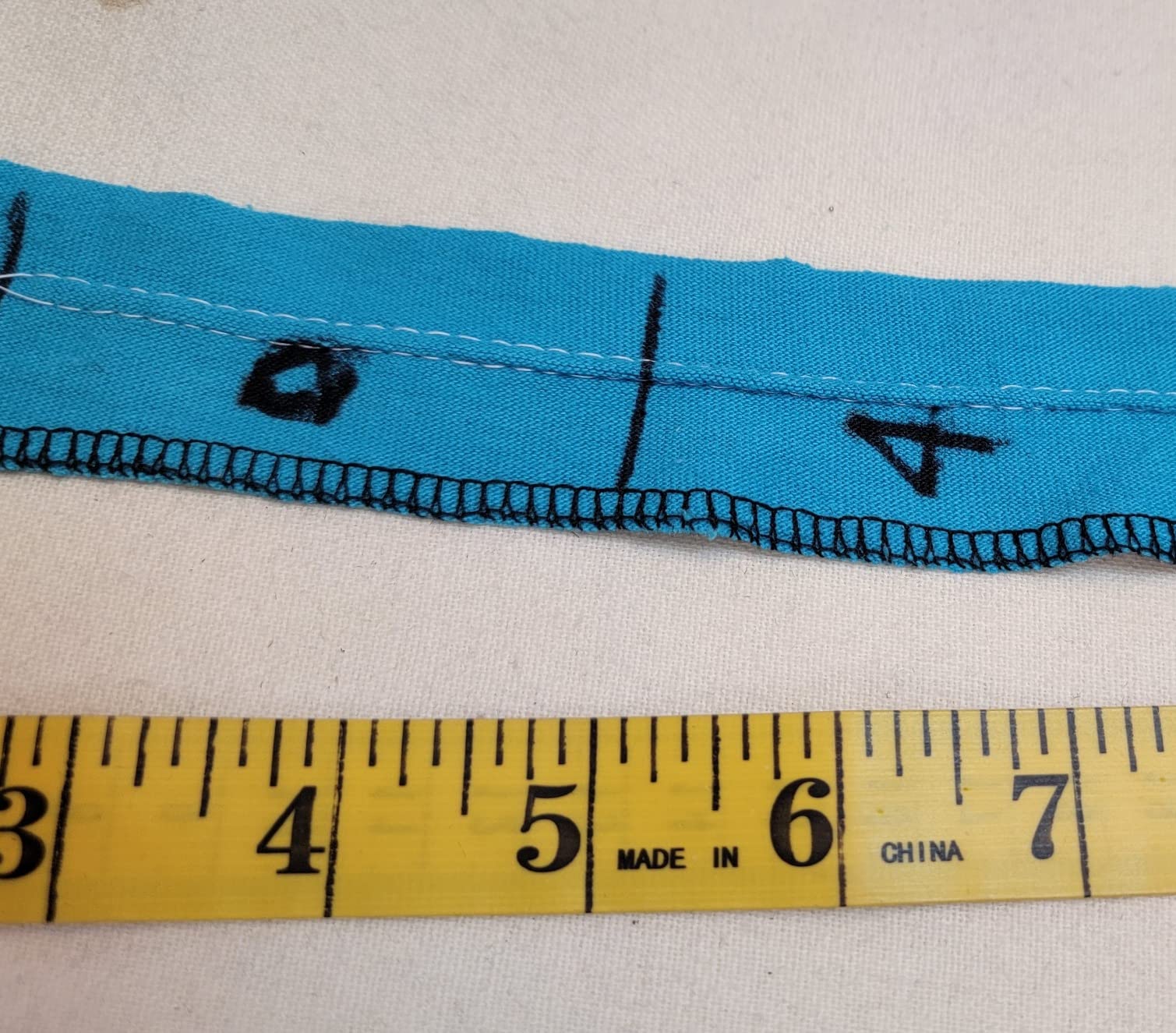
Stitch quality is excellent, and the 3-needle topstitch produces a noticeably more polished finish on knits than a 2-needle hem. It also supports a chain stitch alongside the coverstitch, so the stitch library is broader than the Brother’s without being a combo machine.
The free arm changes which projects are practical
On the Brother, a tubular garment means turning the fabric constantly. On this one, the tube goes on the arm. For cuffs, necklines, waistbands, and armhole bands, that is the difference between a five-minute operation and a frustrating one. It is the strongest argument for this machine over a cheaper dedicated model, and it is structural rather than a feature checkbox.
The bundle and why the needles matter
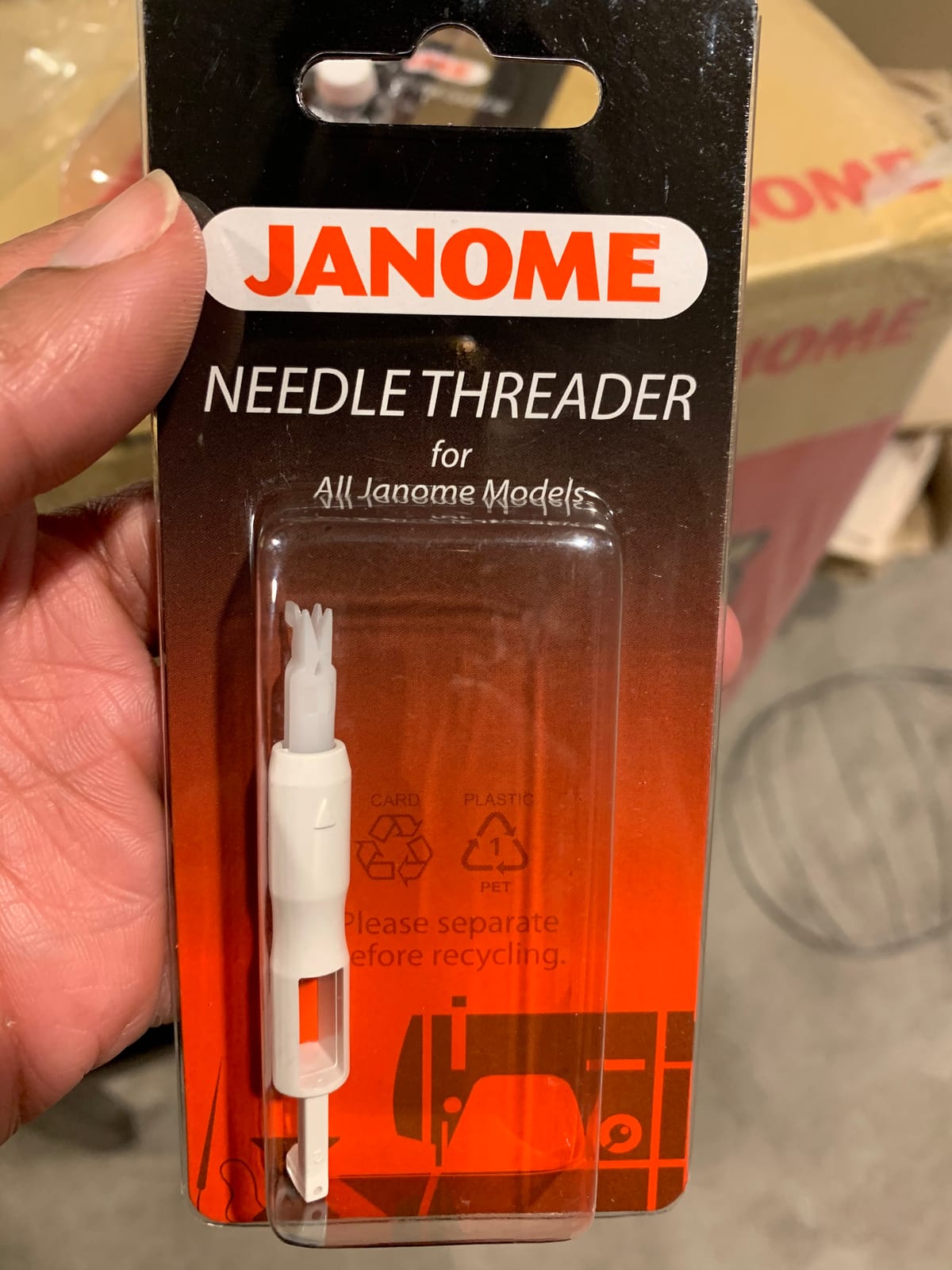
Two packs of Schmetz ELx705 stretch needles, an adjustable seam guide, and a needle threader come in the bundle. The needles are the part that genuinely changes your results. Ballpoint stretch needles are what let the machine ride over knit fibres instead of cutting them, and a machine run on denim needles is a machine that will eventually drop a stitch in jersey. The adjustable seam guide is a nice touch for keeping a consistent stitch width when you are not looking directly at the needle.
One note from the owner feedback: the bundle contents can differ from what the listing description implies, so check what is actually in the box before you plan a project around the accessories.
Where owners report friction
There is no back stitch to lock the stitches, so every chain has to be anchored by hand. That is the single most repeated complaint, and it pairs with the second: pulling the fabric back to disconnect is described as a fight with the thread tension. Once you learn the release motion it becomes routine, but it is a real step you will do hundreds of times.
On very lightweight knits, tunneling is reported until tension is adjusted. That is a tuning issue on an otherwise well-behaved machine, and it is why arriving pre-threaded matters: the manual’s settings are a usable starting point rather than a guess. The clear presser foot is not included, which is an odd gap for a machine in this class. Budget for it if you plan to work on sheer jersey.
4. Bernette b42 Funlock – Most Features and the Most Variable Results
Bernette b42 Funlock Coverstitch Machine
2.8 mm and 5.6 mm coverstitch plus chain
Professional LCD display
LED work light
Extension table included
Pros
- Most fully equipped feature set in the group
- Separate needle threader and looper mechanism
- Adjustable presser foot for varied fabrics
- LED light and extension table for bulky work
Cons
- Lowest average rating here at 4.0
- Most variable stitch consistency of the machines reviewed
- Tension readjustment sometimes needed mid-project
On paper the b42 has the longest feature list of any dedicated coverstitch here. Three coverstitch widths at 2.8 mm and 5.6 mm plus a chain stitch, a separate needle threader, an adjustable presser foot, a professional LCD display, a bright LED work light, and an extension table. On paper, that is a machine that solves more problems before you start than anything else in this group.
In use, the feature set is genuinely the best-equipped, and the adjustable tool winder helping maintain even thread tension is a thoughtful inclusion. The extension table makes a bulky project like a quilted panel or a lined hood workable in a way the flatbeds here are not, and the LCD makes setting adjustments quick and readable instead of dial-hunting.
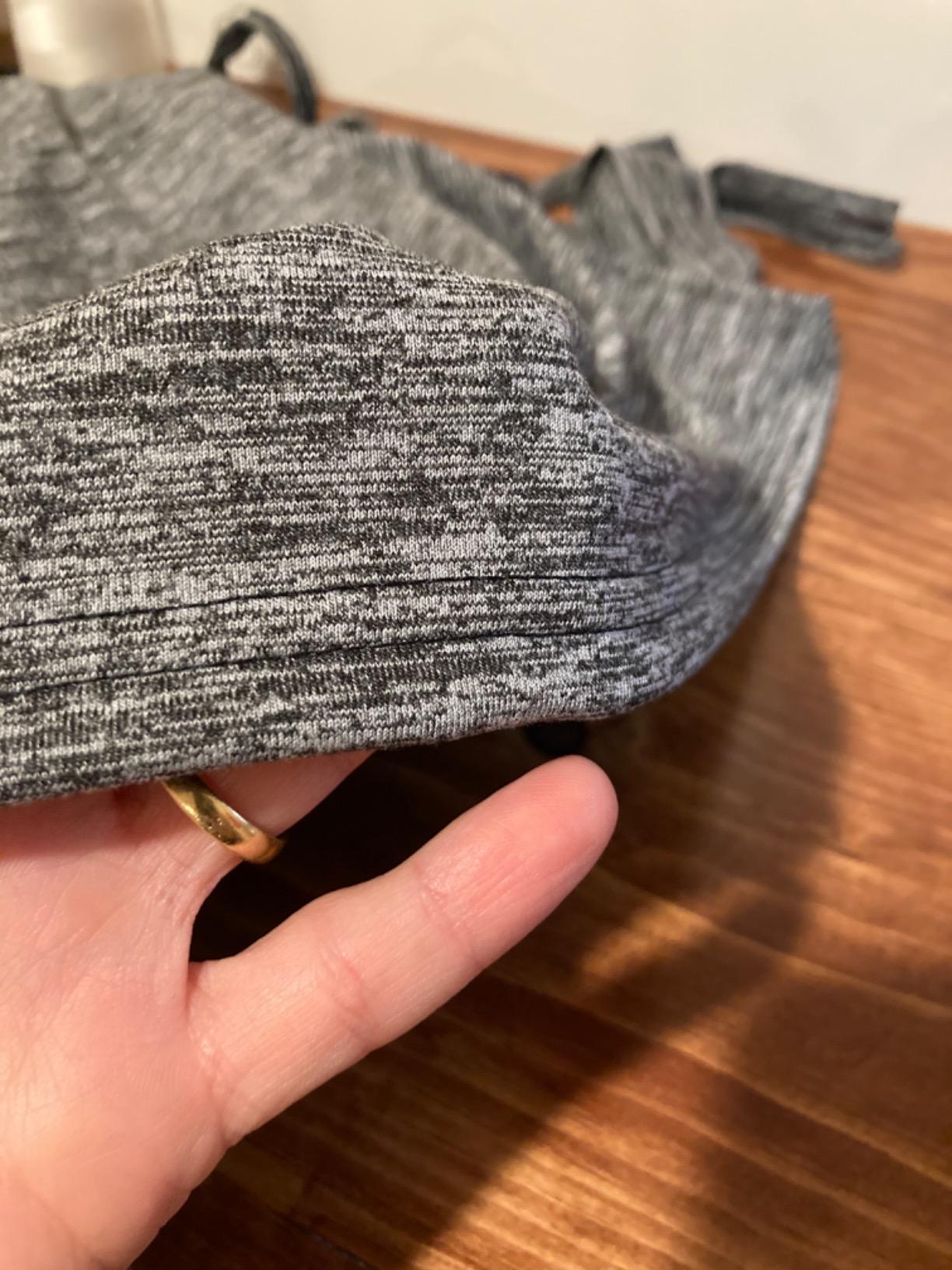
Here is the honest catch. It carries the lowest average rating in this roundup, with a 13 percent one-star share, and the cause is not features or build. It is stitch consistency. Owners describe the most variable stitch formation of the machines reviewed, with skipped stitches that sometimes need tension readjustment partway through a project. At 94 reviews the evidence is real but not large, and I would treat this as a machine to test on scrap fabric before committing a garment to it.
Why the LCD and the light actually matter
Two features here are not cosmetic. The LED work light illuminates the stitch area, which matters because on any coverstitch you spend a lot of time watching the needle from an angle rather than looking straight down at it. The LCD display removes the guesswork from setting a stitch width and thread path, which is the main reason a coverstitch feels hard in the first place.
Handling thin knits and heavy material in one machine
The b42 is described as handling thin knits, stretch fabrics, and heavy-duty materials in a single machine, and the adjustable presser foot is what makes that claim plausible. It is the model I would point at for someone whose fabric range is genuinely wide rather than knit-only. Just go in knowing that a wide fabric range means you will be adjusting tension more often than you would on a dedicated two-needle workhorse.
Presser feet, needles, and a threader are included in the box, which saves a first purchase. If you are still deciding, this is the one to rent or try before committing, because its inconsistency is the kind of thing you only discover after a few projects.
5. Janome CoverPro 900CPX – Free Arm Stitching with a Seam Tightening System
Janome CoverPro 900CPX Coverstitch Machine – Free Arm Coverstitch Sewing Machine with Chain Stitch and Cover Stitch Functionality, Differential Feed, Extra Large Bed Space, Seam Tightening System
2-thread chain and 3-thread coverstitch
Seam Tightening System
0.5-2.25 differential feed
1000 spm with color-coded guides
Pros
- Free arm for finished cuffs necklines and pant legs
- Extra-large bed with more room beside the needle
- Seam Tightening System holds tension on jersey ponte and spandex
- Full accessory set including foot control oil and manual
Cons
- Smallest review pool of the Janome machines here so thin long-term evidence
- Clear presser foot not in the standard accessory set
The 900CPX is the other free-arm machine here, and it solves the same problem as the 1000CPX from a different direction. It switches between 2-thread chain stitch and 3-thread coverstitch with one or two needles, which gives you a slightly wider configuration range than a fixed 3-needle setup, and it runs at 1000 stitches per minute with color-coded thread guides and pattern selection dials.
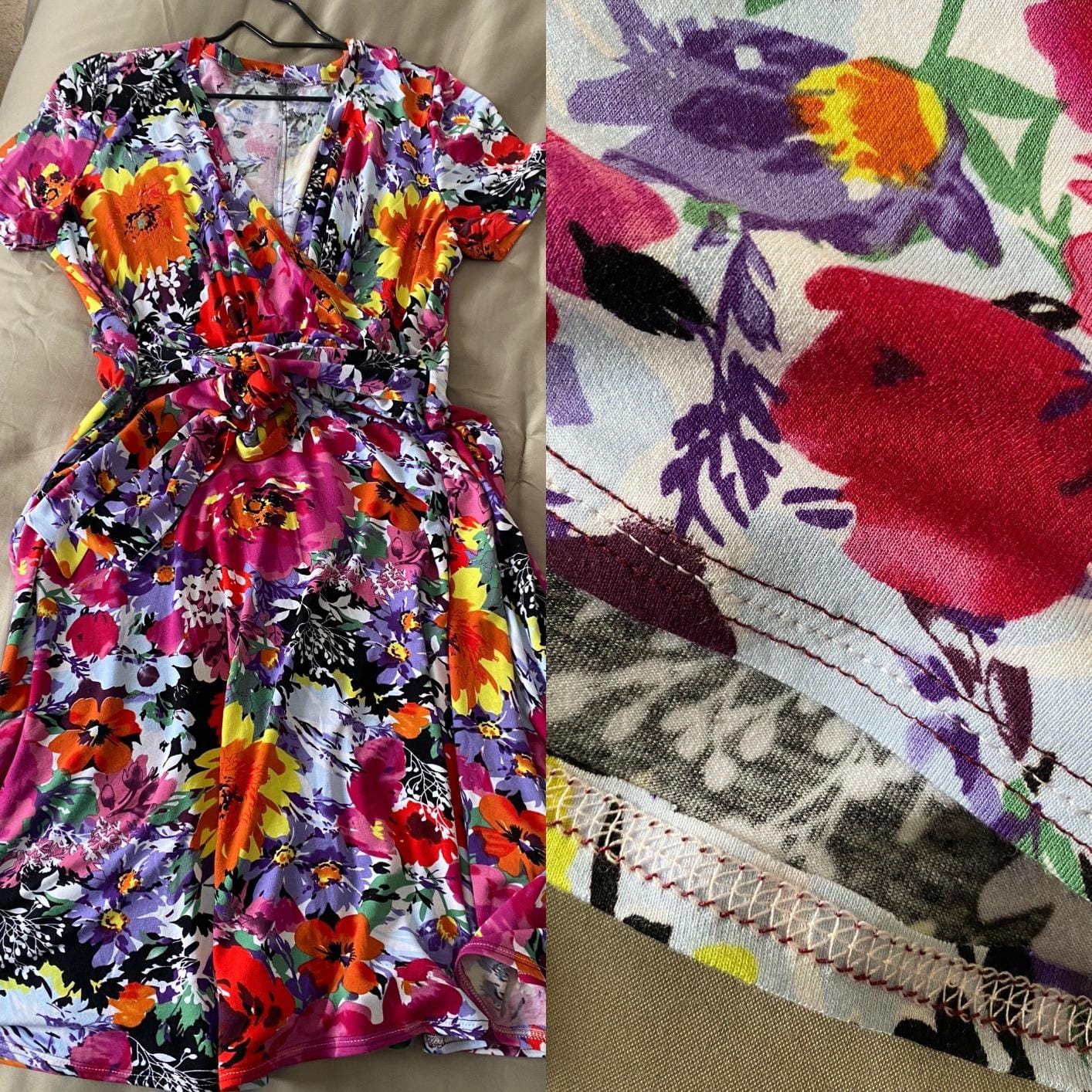
What sets it apart is the Seam Tightening System, which is Janome’s answer to the wavy-hem problem that dominates coverstitch forum threads. The differential feed range is 0.5 to 2.25, which is wider than anything else here, and the STS is credited with holding consistent tension across jersey, ponte, spandex, and French terry. In practice that is the difference between a hem that lies flat and one that ripples after the first wash.
The accessory set is unusually complete
The box includes a set of needles, large and small screwdrivers, tweezers, nets, spool holder caps, a lint brush, a needle threader, oil, an accessory box, the instruction manual, and the foot control. That is genuinely everything, and it means nothing has to be ordered before the first session. The needle threader in particular matters more than it sounds on a looper-based machine.
Why owner evidence here is thinner
This machine carries a strong 4.5 average on the smallest review pool in the group, with only 3 percent one-star scores, the lowest share of anything we tested. That is a good signal, but 66 reviews is less long-term data than the Brother or the Janome 1000CPX carries. It is also listed as metal and plastic construction, so if mechanical simplicity and serviceability are your priority, the fully metal Janome is the safer bet.
That last point is worth restating, because it comes up constantly in sewing forums: a simple mechanical machine is one any sewing or vacuum repair shop can service. A machine with an LCD and a powered tool winder is a machine that goes back to a specialist when something fails.
6. Juki MCS-1600 – Fast and Powerful, Demanding to Set Up
Juki MCS-1600 Cover Stitch and Chain Stitch Sewing Machine with Super Easy Looper Threading, 1,350 Stitches Per Minute, and Differential Feed Adjustment (White)
3 needles
3-thread coverstitch plus 4-thread chain
1350 spm
Alloy steel construction
Pros
- Super easy looper threading shortens the learning curve
- 1350 spm with differential feed adjustment
- Smooth quiet and powerful once set up
- 5-year mechanical warranty
Cons
- Sensitive to thread and needle choice before it settles
- Looper loads on one side and is described as fussy
- Skipped stitches and grinding reported by some owners
The MCS-1600 shares the headline numbers with the Juki 1500, three needles, a 3-thread coverstitch with 4-thread chain stitch, and 1350 stitches per minute, and it is an alloy steel body weighing 19.9 pounds. That weight is where the smooth, quiet, powerful feel comes from, and experienced sewists upgrading from a lighter machine consistently praise the stitch quality difference after a thorough test run.
It also adds differential feed adjustment and a super easy looper threading system with color-coded guides, which is Juki’s answer to the fiddly looper loading that puts people off the brand in the first place.
Be honest about whether this is your first machine
The critical reviews describe a machine that is moody before it settles: skipped stitches, grinding noises, and repeated rethreading and tension changes. That description is aimed squarely at beginners and the impatient, and it is the reason this is not my top pick for a first coverstitch despite the strong specification sheet. It is very sensitive to thread and needle choice, and it wants a test run before you trust it with a garment.
One more practical warning from the owner feedback: a few buyers report that the listing shipped the MCS-1500 rather than the MCS-1600 pictured. Check the model number on the machine itself when it arrives, because the two have different feel and different reviews.
Where it beats the Juki 1500
If both are in front of you, the deciding factors are the differential feed adjustment, the super easy looper threading system, and the heavier alloy steel body. If you are confident with machines and want a heavy, fast, powerful dedicated coverstitch, this is the pick. If you are learning, the Juki 1500 has more owner evidence behind it and a gentler reputation.
7. Bernette B48 Funlock – A Serger and Coverstitch Combo in One Housing
Bernette B48 Funlock Serger Coverstitch Overlock Machine | Heavy Duty Sewing Quilting Performance for Beginners and Professionals | 23 Stitches LED Light 1300 SPM Easy Threading Knife Control
23 built-in stitches
Overlock coverstitch and chain stitch
1300 spm
LED workspace light
Pros
- Broadest stitch library at 23 built-in stitches
- 1300 spm from a motor that handles heavy fabric
- Built-in LED light for low-light work
- Adjustable presser foot pressure for thick material
Cons
- Only 43 reviews so the signal is thin
- No LCD display so settings are manual
- Heaviest machine here at 21 pounds
This is the only true serger and coverstitch combo in the group, and that is either exactly what you want or a distraction. It carries 23 built-in stitches spanning overlock, coverstitch, and chain stitch options with adjustable stitch widths, at up to 1300 stitches per minute. If you have been wondering whether you can use a serger as a coverstitch machine, this is the honest answer: not most of them, but a combo machine gives you both functions in one body.
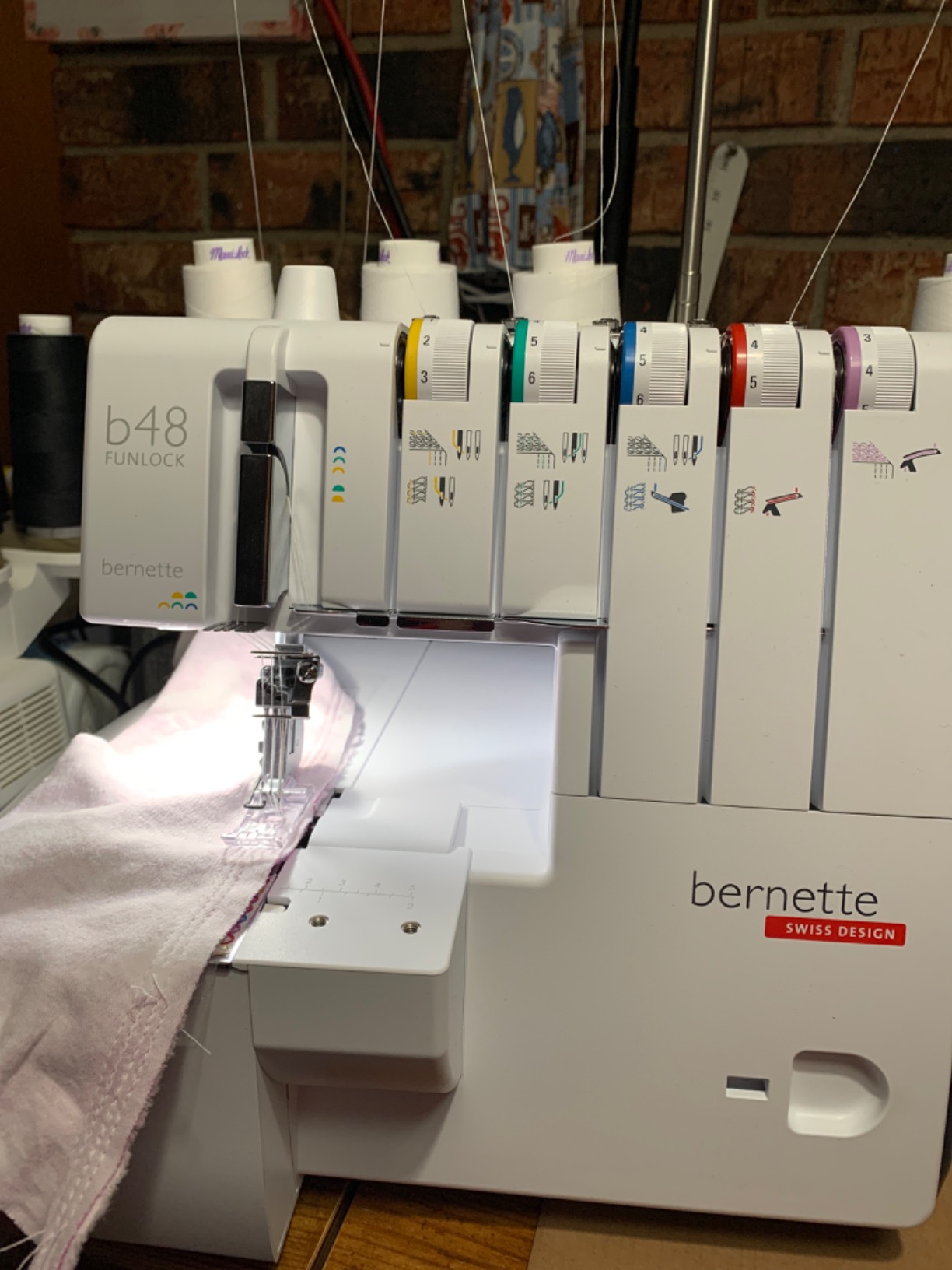
The LED work light and the adjustable presser foot pressure that helps pierce thick fabrics are the two details that stood out. At 21 pounds and 16 inches square, it is the largest and heaviest machine here, and the extension table compatibility helps offset that footprint for bulky work.
What mode switching actually costs you
The trade-off with any combo is real and it is a workflow cost, not a quality cost. Switching between serging and coverstitching means rethreading on most combos, and that interruption is exactly what experienced sewists describe as breaking a batch run. For a home sewist doing a T-shirt here and a pillowcase there, that is irrelevant. For someone producing garments in runs, it adds up fast.
There is also no LCD display, so settings are dialled manually. At 43 reviews, the satisfaction signal is thinner than anything else in this roundup, and I would want to sew a test project before committing.
Who should choose a combo
Choose this if you want both seam finishing and knit hems and your volume in either category is low. Skip it if you already own a serger, or if hems are the overwhelming majority of what you sew. In that case a dedicated machine at this tier gives you more needle configuration and a better-supported mechanism for the one job you actually do.
The bundle includes bobbins, a winder, needles, a hoop, and a rotary cutter, so it is a complete setup out of the box.
8. Juki MCS-1700QVP – Built for Thick Hem Layers
Juki MCS-1700QVP Cover Stitch Machine
Coverstitch for hems cuffs and necklines
Chain stitch for waistbands and side seams
Presser foot lifter with 2 mm extra lift
Pros
- Presser foot lifter adds 2 mm of lift for thick layers
- Chain stitch suited to waistbands and side seams
- Straightforward coverstitch for hems cuffs and necklines
Cons
- Only 18 reviews so the evidence base is thin
- No four-star ratings at all with 20 percent at three stars
- Fewer listed specifications than the other Juki models
The MCS-1700QVP is the simplest idea in this roundup. It does coverstitch for hems, sleeve cuffs, and necklines on stretch fabric, and it adds a chain stitch for waistbands, pant side seams, and decorative neckline work. Its distinguishing practical feature is the presser foot lifter, which raises the foot an additional 2 mm, and that is the reason it earns a place here.
Feeding a bulky hem under a standard presser foot is where coverstitching goes wrong. When the foot will not lift high enough, the fabric bunches ahead of the needles and the stitch goes wavy. An extra 2 mm of lift is not a headline number, but for a lined sweatshirt hem, a thick waistband, or a lined robe it removes a real failure point.
Buy this for the foot, not the specification list
There are fewer published specifications for this model than for the other Juki machines here, and at only 18 reviews the owner consensus is thin enough that the rating distribution carries more information than the average. Seventy percent five-star against 20 percent three-star, with no four-star ratings at all, suggests buyers either had a very good experience or a merely acceptable one.
That thinness is the main argument against it and I want to be straight about it. For a first dedicated coverstitch, the Brother, the Janome 1000CPX, and the Juki MCS-1500 all have far more evidence behind them. This one earns its place for a specific reason: if thick hem layers are your specific problem, the presser foot lifter is a better answer than buying a more expensive machine and still fighting the fabric.
If you like the Juki name for its reliability and want the chain stitch for waistband work, this is a coherent machine. Just sew a test on your actual fabric before a project.
How to Choose a Coverstitch Machine: 8 Criteria That Matter
Decide between a dedicated machine and a combo first
Should you buy a serger or a coverstitch machine? If you finish knit garments regularly, buy the coverstitch and keep your serger or a rolled hem for everything else. If you split your time roughly evenly between seam finishing and knit hems, a combo like the Bernette B48 is defensible. What is not defensible is buying a four-thread serger and expecting coverstitch hems from it, which is the single most common mistake in this category.
Match needle count to your fabric
Two needles give the classic double-needle hem, which is right for T-shirts and most jersey. Three needles give a wider, more stable topstitch, which is the athletic-wear look on leggings and swimwear. A machine that does both, like either Janome here, is more flexible than one locked to a 3-needle configuration. If you mostly sew children’s clothing, two needles are plenty and you will waste thread on three.
Look for differential feed, and look at the range
Differential feed controls how fast the feed dogs pull the fabric relative to the needle, and it is the direct control over wavy hems. A range of 0.7 to 2.0 mm is workable. A range of 0.5 to 2.25 mm, as on the Janome 900CPX, gives you more room to manage stretchy knits. If you sew ponte, spandex, or French terry regularly, treat the range as a real differentiator rather than a footnote.
Weight and frame construction
A metal frame with metal internal parts, as on the Brother and the Janome, resists vibration at speed and is what any local repair shop is most likely to be able to service. Plastic-bodied machines are lighter and cheaper, and a machine with an LCD and a powered winder is a machine that goes back to a specialist when something fails. For a machine you expect to keep for a decade, mechanical simplicity is a genuine buying criterion.
Threading path, tension system, and the manual
Color-coded lay-in guides are the single feature that most reduces the learning curve, and every dedicated machine in this roundup except one has them. Air-threaded needle paths and automatic tension are nice when present, but neither replaces a good diagram. Poor or unclear manuals are named as a deal-breaker repeatedly in owner feedback, and that is a legitimate reason to walk away from a machine regardless of its specification sheet.
Free arm, bed size, and project shape
If you sew garments rather than flat panels, a free arm changes which projects are practical. Cuffs, necklines, waistbands, and armhole bands go onto the free arm instead of forcing you to turn a tube constantly. Extra clearance beside the needle matters for the same reason. The Janome models here are the ones to look at if your project list is garment-shaped.
Speed, and whether you need it
Speeds here run from 1000 to 1350 stitches per minute. For a home sewist, that difference is mostly irrelevant. For someone sewing in runs, motor headroom through thick layers matters much more than the headline number, and that is what separates a machine like the Juki from an entry-level one when you are feeding fleece.
Warranty, servicing, and what you should skip
Warranty lengths here range from a 25-year limited warranty on the Brother to 5 years mechanical and 2 years electrical on the Juki models. Check that the brand has a dealer or authorised service point near you before you buy, because a machine that cannot be serviced is a machine you replace rather than repair.
And here is the honest anti-recommendation. If you hem a handful of T-shirts a year, a rolled hem on your existing serger, or a careful stretch stitch on your regular machine, gets you most of the way there. Buy a coverstitch when you are making knit garments regularly, when the hem is the last thing standing between you and finishing a project, or when you are selling the finished garment. If you already own a serger and rarely sew knits, this is not the purchase for you. And if your real finishing problem is binding edges rather than stretching them, a dedicated embossing and finishing setup is a more relevant read.
How to Thread a Coverstitch Machine Step by Step
Threading is the number one reason people hesitate about these machines, so here is the shared sequence. Every machine here uses color-coded guides, so follow the colors rather than the diagram, and the differences between brands are smaller than they look.
First, raise the presser foot fully before you thread anything. This is the step everyone skips and it is the step that causes most of the tangled first attempts. The looper needs room to swing into position, and it cannot get there with the foot down.
Second, place the machine on a stable surface at eye level. A coverstitch threaded lying flat on a table will be threaded wrong, every time, because the looper path is vertical.
Third, thread the needles first, working across from the outermost needle inward, following the color-coded guides from the spool to the needle. Use ballpoint stretch needles, such as ELx705, for knit fabric. A denim needle will cut knit fibres and drop a stitch sooner or later.
Fourth, thread the looper. This is the step that puts people off. The looper swings open, you lay the thread in the guide, and you close it with the thread in the position the color mark shows. On the Bernette b42 the looper is a separate mechanism with its own threader, which makes this the easiest version of the step on any machine here.
Fifth, bring both threads to the take-up lever. Pull them back and down firmly until the take-up lever clicks into its highest position, and leave them there. Loose threads at the take-up lever are the cause of most first-stitch failures.
Sixth, set the tension using the manual’s starting numbers. Do not adjust tension to fix a problem you have not identified, because that turns a threading fix into a tuning problem.
Seventh, place your fabric under the foot, lower the presser foot, turn the handwheel one full turn, and back it up a quarter turn so the needles clear the fabric. Then sew. The back-and-forth handwheel step gets you past the spot where the needles are in the fabric, and skipping it is how a first seam turns into a mess.
If the first seam looks wrong, work through it in this order before changing anything: threads not caught at the take-up lever, needle and looper thread crossing or not crossing at the correct point, tension setting, thread type, then differential feed. Most first-stitch problems are the first two items, and neither one is fixed by turning a tension dial.
Frequently Asked Questions
What is the best coverstitch machine for home use?
For most home sewists the Brother 2340CV is the best coverstitch machine for home use, because its color-coded lay-in threading path is the least confusing for a first machine and its metal frame and 25-year warranty hold up over decades. If your projects are garment-shaped rather than flat panels, the Janome CoverPro 1000CPX is the better choice, because the free arm lets you hem finished cuffs, necklines, and pant legs without opening the seam.
Is an overlocker the same as a coverstitch machine?
No. A serger, also called an overlocker, overlocks and trims a raw edge with between two and five threads, which is the right finish for woven seams. A coverstitch machine lays down two or three parallel topstitch lines on the face of the fabric while a looper underneath locks the thread, and it does not trim the edge. That is why a serger cannot produce the double-needle hem you see on a T-shirt.
Should I buy a serger or a coverstitch machine?
Buy a coverstitch if you hem knit garments regularly, because a serger overlocked edge looks wrong on a T-shirt and a standard zigzag will pop when the fabric stretches. Buy a serger if you mostly finish woven seams. If you already own a serger and rarely sew knits, you do not need a coverstitch. A combo machine like the Bernette B48 makes sense only when both jobs are roughly equal parts of your work.
Can you use a serger as a coverstitch machine?
Not a standard one. A three or four thread serger cuts the edge as it sews, so the result is an overlocked seam rather than a coverstitch hem, and the stitches do not sit as parallel topstitching on the face of the fabric. The only way to get both from one machine is a serger and coverstitch combo, which switches modes but requires rethreading between them, which interrupts batch sewing work.
Is it worth buying a coverstitch machine?
It is worth it when knit hems are the last thing standing between you and finishing a garment, when you sew activewear or children’s clothing regularly, or when you sell finished pieces. It is not worth it for a few T-shirts a year, because a careful stretch stitch on a regular machine or a rolled hem on an existing serger gets you most of the way. Also note that coverstitching a hem is still faster than measuring, pressing, and basting every hem first.
Which Coverstitch Machine Should You Buy?
If you want the safest all-round dedicated coverstitch machine, buy the Brother 2340CV. It has the most owner evidence of anything in this roundup, the simplest threading path, and a metal frame built for decades of use. If you want the best value and the most stitch capability, the Juki MCS-1500 gives you three needles and a chain stitch at the same tier, and it is the machine experienced sewists name first for fleece and elastic waistbands.
If your projects are garments rather than flat panels, choose the Janome CoverPro 1000CPX, whose free arm and pre-threaded setup make it the smoothest first coverstitch. Choose the 900CPX instead if stretchy ponte and spandex are your main challenge, because its wider differential feed range and Seam Tightening System are built for that. If you want one machine to do both seam finishing and knit hems, the Bernette B48 is the only true combo here, and the rethreading between modes is the price of that versatility.
Finally, skip all of them if you hem knits once in a while. A rolled hem on a serger you already own will serve you well, and 2026 is not the year to spend money on a machine you will not use. Check the current details on any of these machines before you commit, then sew a test on your actual fabric.
Leave a Reply