
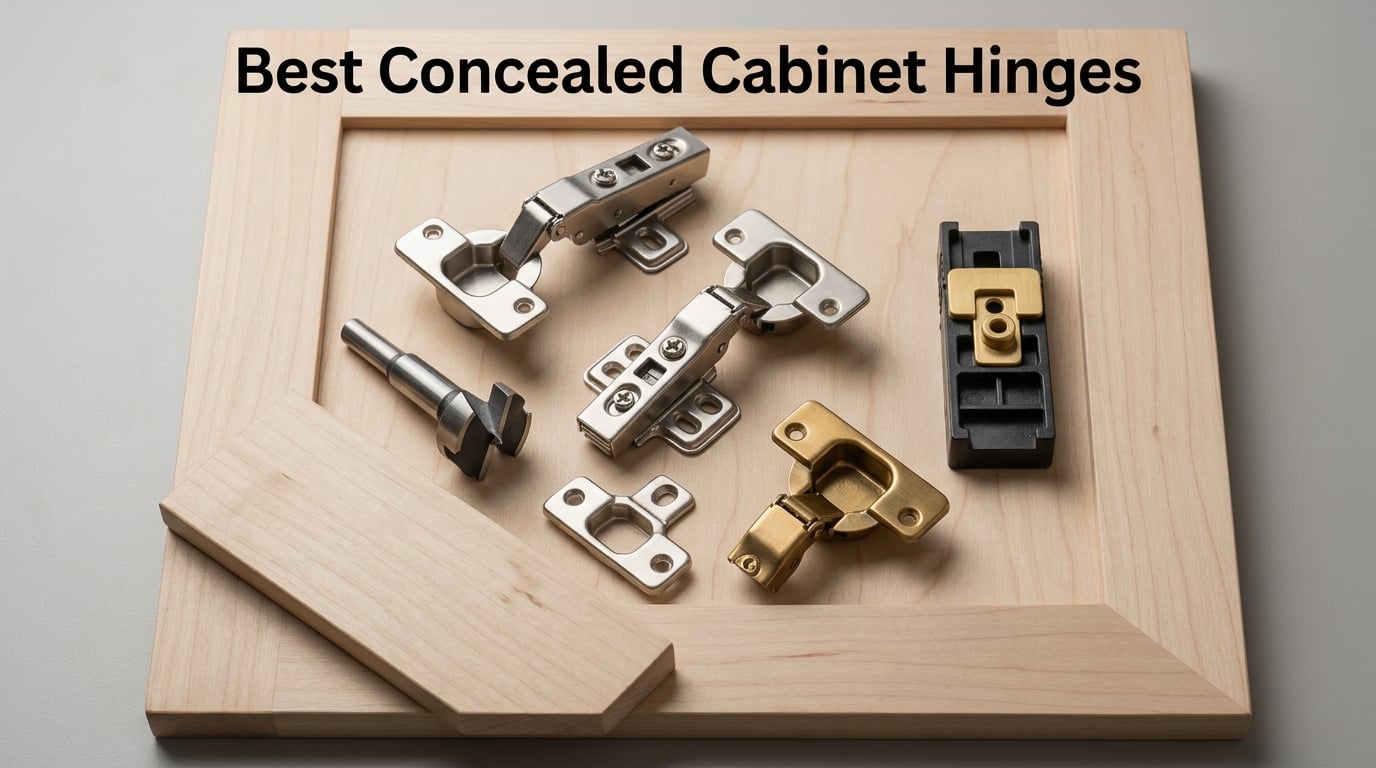
If you have ever bored a 35mm cup hole into a cabinet door that then turned out to be the wrong overlay, you already know the rule that governs this entire category: measurement decides everything, and the brand name is a distant second. That is why the best concealed cabinet hinges are not simply a ranked list of the shiniest hardware in the category. They are a set of ten options, each matched to a specific overlay size, a specific cabinet construction style and a specific closing mechanism.
I have fitted concealed hinges on frameless European kitchens and face-frame American cabinets, swapped failing hardware in rental properties, and matched old hinges to new doors often enough to know where buyers go wrong. The most common mistake is not buying a bad hinge. It is buying a perfectly good hinge for the wrong door, then discovering the cup hole is already cut and the mistake is permanent. Everything below is organized to prevent that, starting with a fast definition, then a measurement framework, then the ten hinges themselves.
Updated for September 2026. If you are still choosing hardware rather than hinges, our guides to cabinet pulls and soft close cabinet hinges cover the adjacent decisions in more detail.
Our Top 3 Concealed Cabinet Hinges Tested in 2026
Three products stood out after working through this list. The DecoBasics 50-pack is the most forgiving hinge for face-frame work because its three-way adjustment corrects more misalignment than most, and its review volume gives you a genuine long-term wear picture. The Ravinte 10-pack is the value pick, matching the same 35mm cup and 45mm screw spacing at a fraction of the cost. The Blum Compact 33 pack earns the top-rated slot because it is the only true OEM replacement in the group, rated highest by buyers who use it to restore original hardware in older kitchens.

DecoBasics 50 Pack Soft Close
- 1/2 inch overlay face frame
- 35mm cup
- 3-way adjustable
- Built-in quiet close damper
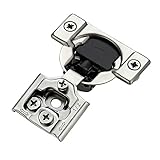
Ravinte Soft Close 10 Pack
- 35mm cup 11.6mm depth
- 45mm screw spacing
- 105 degree opening
- 3-way adjustable

Blum Compact 33 Self Closing
- 110 degree opening
- 16mm to 19mm door thickness
- Screw-on compact design
- Self-closing action
Comparing the Best Concealed Cabinet Hinges in 2026
Every hinge below uses the same 35mm boring format, so the column that actually separates them is overlay coverage, closing mechanism and adjustment range. Full overlay and half overlay differ by fractions of an inch, which is why the measurement section later in this guide matters more than any spec sheet. The Blum packs sit at the premium end on build quality and fit accuracy, while the value-tier hinges compete almost feature for feature on the specs that matter.
| Product | Specs | Action |
|---|---|---|
| DecoBasics 50 Pack Soft Close Cabinet Hinges |
|
Check Latest Price |
| Ravinte Soft Close Hinges 10 Pack |
|
Check Latest Price |
 KONIGEEHRE 20 Pack Soft Close Hinges KONIGEEHRE 20 Pack Soft Close Hinges |
|
Check Latest Price |
 Probrico 4 Pack Full Overlay Hinges Probrico 4 Pack Full Overlay Hinges |
|
Check Latest Price |
| Blum Compact 33 Self Closing 8 Pack |
|
Check Latest Price |
 Chibery 10 Pack 4D Soft Close Hinges Chibery 10 Pack 4D Soft Close Hinges |
|
Check Latest Price |
 Silverline 1/2 inch Overlay 6 Pack Silverline 1/2 inch Overlay 6 Pack |
|
Check Latest Price |
 Blum Compact BLUMOTION 20 Pack Blum Compact BLUMOTION 20 Pack |
|
Check Latest Price |
 Ravinte 50 Pack Soft Close Hinges Ravinte 50 Pack Soft Close Hinges |
|
Check Latest Price |
 HOME EDIT 1-1/4 inch Overlay 2 Pack HOME EDIT 1-1/4 inch Overlay 2 Pack |
|
Check Latest Price |
What Are Concealed Cabinet Hinges?
A concealed cabinet hinge, often called a euro hinge, hides its entire mechanism inside the cabinet. A 35mm cup is recessed into the back of the door and a mounting plate is screwed to the cabinet box, so when the door is closed only the door face and edge remain visible. The word European describes this style of construction, not the closing behaviour, so it does not guarantee soft-close operation.
That distinction trips people up more than any other. A hinge can be fully concealed and still slam shut on a spring, which is exactly what the older Blum Compact 33 design does. Soft-close is a separate feature built around a damper inside the hinge arm, and the two have nothing to do with each other. If you want quiet closing, the product listing has to say so.
The Three Types of Concealed Hinges: Full Overlay, Half Overlay and Inset
There are three types of concealed hinges, defined by how much of the cabinet box the door covers. Full overlay hinges cover roughly 5/8 to 3/4 inch of the frame, half overlay hinges cover only 1/4 to 3/8 inch, and inset hinges mount inside the frame with no coverage at all because the door sits flush within the cabinet opening. Getting this wrong is the number one reason a new door will not close flat against the box.
The trap is that the words sound like they describe door size, when they actually describe how far the door sits on top of the cabinet frame. Most American face-frame cabinets use full overlay. Frameless European kitchens usually need half overlay, and inset or shaker doors that sit inside the opening need inset hinges. None of the ten products in this roundup is an inset hinge, because inset doors are a specialty geometry and mixing them into a face-frame list would be misleading.
Measure your overlay the blunt way: close the door, then measure how much of the frame edge is visible in front of the door face. If you see about half an inch of frame showing past the door on that side, you need a half overlay hinge. If the door covers the frame almost entirely, you need full overlay.
1. DecoBasics 50 Pack Soft Close Hinges – Most Forgiving Fit for Face-Frame Doors
Decobasics 50 Pack Soft Close Cabinet Hinges – 1/2″ Overlay for Kitchen Cabinet Doors, Slow Self-Closing Concealed Hidden Hinges for Face Frame –Stainless Steel, 3-Way Adjustable & Quiet Close Damper
1/2 inch overlay
35mm cup
Face frame
3-way adjustable
Built-in damper
Pros
- Quiet soft-close action that eliminates slamming
- 3-way adjustability simplifies door alignment
- Pre-drilled holes align with standard 35mm cup boring
- Stainless steel rated for 50000+ open-close cycles
Cons
- 50-pack format is more than most single-door projects need
- Damper feel is not adjustable the way some 4D hinges allow
With close to 5,900 ratings behind it, this is the most thoroughly reviewed concealed hinge in the group, and that volume tells you something the spec sheet cannot: how the hinge behaves after years of daily use. Owners consistently point to the same two things, the silent self-closing action and how straightforward it is to get a door aligned with only three adjustment points.
It is built for 1/2 inch overlay face-frame cabinets with a 35mm cup, which is the most common geometry in American kitchens. The stainless steel body is rated for 50,000 or more open-close cycles, and the nickel-plated finish matches the satin hardware most kitchens already have.
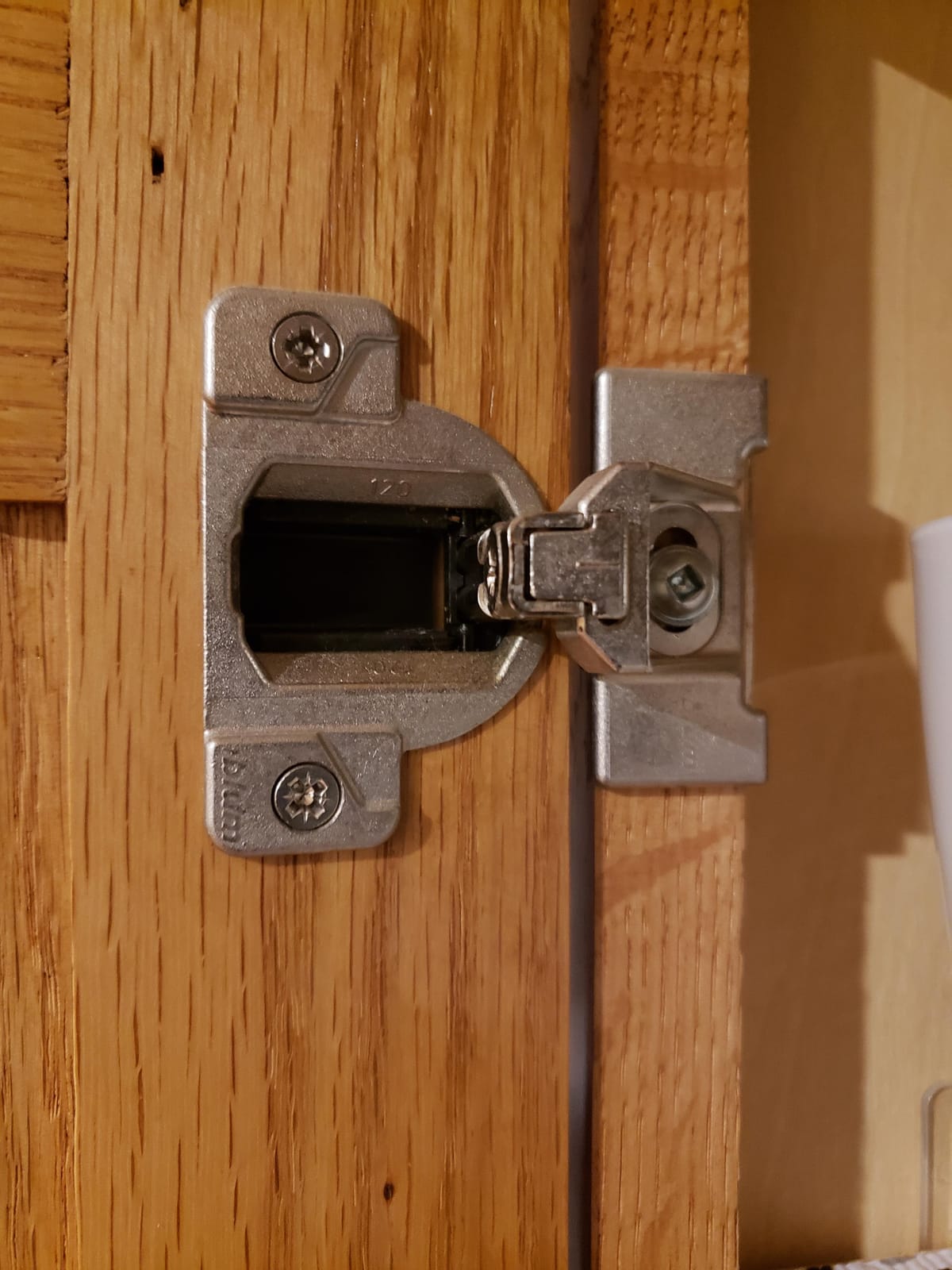
The three-way adjustment is the real differentiator. Vertical, horizontal and depth adjustment means you can correct a door that sags after the house settles without re-hanging the whole cabinet, which is the single most common complaint people have with cheaper two-point hinges. Reviewers report that installation feels forgiving even on older doors where the edges are not perfectly square.
Why the 3-Way Adjustment Matters More Than the Damper
Most hinge complaints are not about closing quietly. They are about a door that sits unevenly against the frame and will not stay square. Three adjustment axes cover the three ways a door goes wrong: it drops over time, it drifts along the rail, or it sits too deep or too shallow in the box. Once all three are corrected, the door closes flush and the soft-close action is what carries the rest of the experience.
The one caveat worth knowing is that the damper itself is not adjustable. You get a consistent slow close rather than a tunable one, so on a very light door the closing speed is fixed and there is no dial to turn.
What the 50-Pack Format Actually Costs You
At 50 hinges, this pack covers roughly 25 doors, which is a full kitchen rather than a single cabinet. That is excellent value for a whole-house soft-close conversion and awkward for a one-door repair, since leftover hinges still have a long storage life in a dry cabinet. Screws and dowels are included in the box, so there is no separate hardware trip.
If you only need a couple of doors, the same design in a smaller quantity is covered further down this list, or you can look at our soft close hinge guide for quantity planning.
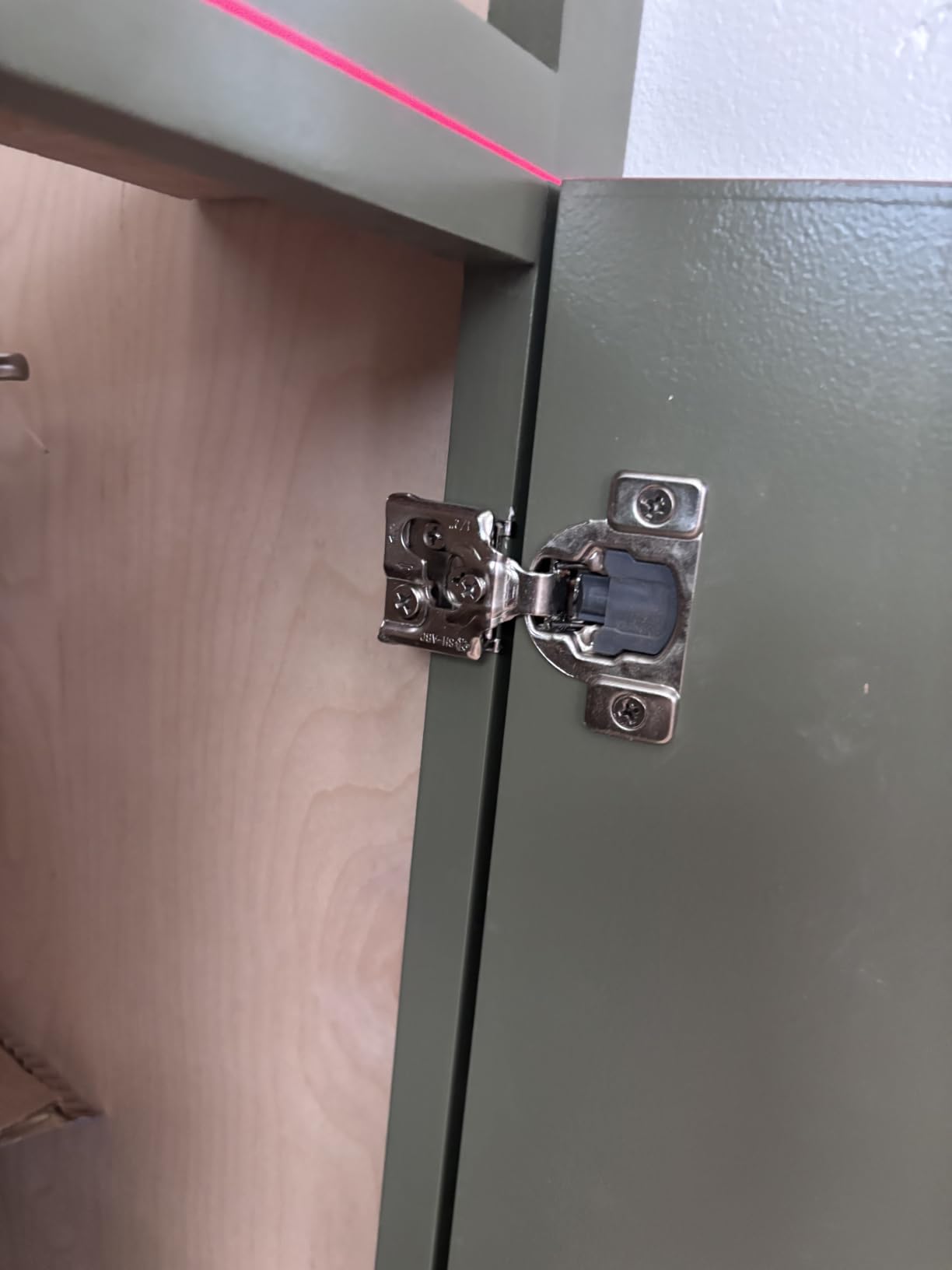
Who This Hinge Fits and Who It Does Not
This is the right pick for standard 1/2 inch overlay face-frame cabinets, including replacement of existing hinges that share the same bore pattern. It is the wrong pick for inset doors, for frameless cabinets needing half overlay, and for anyone who needs to tune closing speed door by door.
Because it is a face-mount design, the mounting plate screws to the face of the cabinet frame, which is why it does not work the same way on frameless boxes. If your cabinet has no front frame, keep reading.
2. Ravinte Soft Close 10 Pack – Best Value With Full Adjustment Specs
Soft Close Hinges for Kitchen Cabinet Hinges, 1/2 Inch Overlay, 10 Pack
35mm cup
11.6mm cup depth
45mm screw spacing
105 degree
3-way adjust
Pros
- Three adjustment points outperform many two-point hinges
- Smooth silent soft close prevents door slam
- Sturdy steel weight rather than thin stamped sheet
- Drops into existing 35mm holes for fast swap-out
- Pack includes hinges dowels and screws
Cons
- Closing speed is not adjustable and can feel slow on small doors
- Mounting screws arrive in a separate bag inside the box
- Plastic dowels come pre-threaded onto the screws
This is the hinge I recommend to people replacing hardware on a budget but who do not want to give up a third adjustment axis. Reviewers describe it as a fraction of the cost of big-box equivalents while still delivering three-point adjustment, and at 5,850 ratings it is the second most proven product here.
The geometry is mainstream: 35mm cup, 11.6mm cup depth and 45mm screw hole spacing, with a 105 degree opening angle. Those three numbers are what make it interchangeable with almost every other 35mm hinge in this list, which is a genuine advantage if you want to convert doors one at a time over several years.
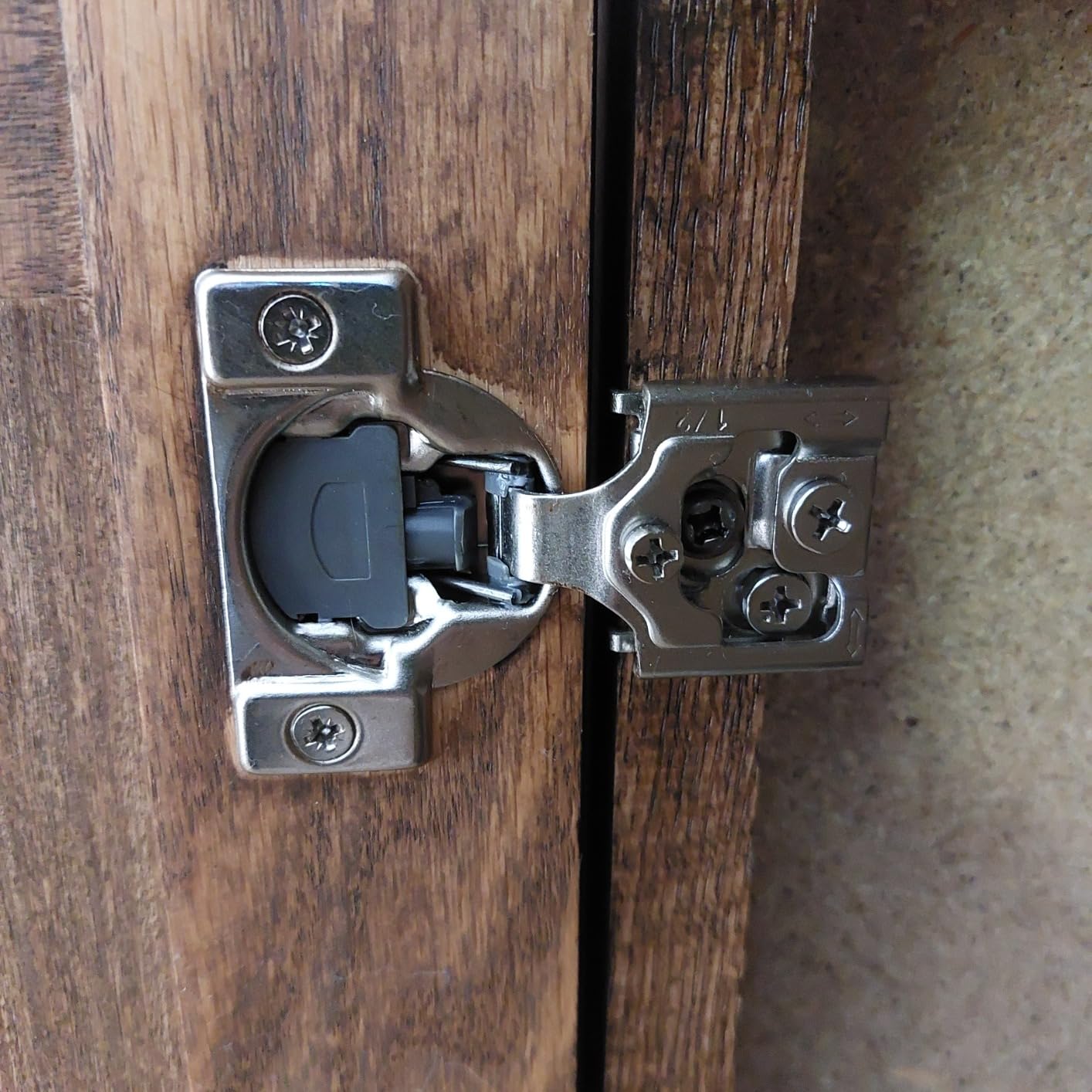
Specs That Make It a Genuine Drop-In
The 45mm screw spacing and 11.6mm cup depth are the figures to check against your existing doors before ordering. If your current holes measure 45mm apart and the cup sits roughly 11.5mm deep, this hinge drops straight in with no re-cutting, which turns a cabinet refresh into an afternoon job rather than a refacing project.
Nickel-plated steel construction gives it more substance than the thin stamped sheet used in the cheapest imports, and reviewers notice the difference in how the hinge feels under load. The 105 degree opening angle is the same figure carried by most of the value tier, so expect a door that clears most adjacent cabinets but not a tight galley run.
The Two Quirks Worth Knowing Before You Order
Closing speed is fixed, and on small light doors reviewers describe the close as noticeably slow. That is a design trade rather than a defect, but if you dislike it, the Chibery later in this list gives you an actual speed dial.
Second, the mounting screws arrive in a separate bag inside the box, and the plastic dowels are pre-threaded onto the screws so they have to be pulled off before use. Both are minor annoyances that catch people out on the first hinge and never again.
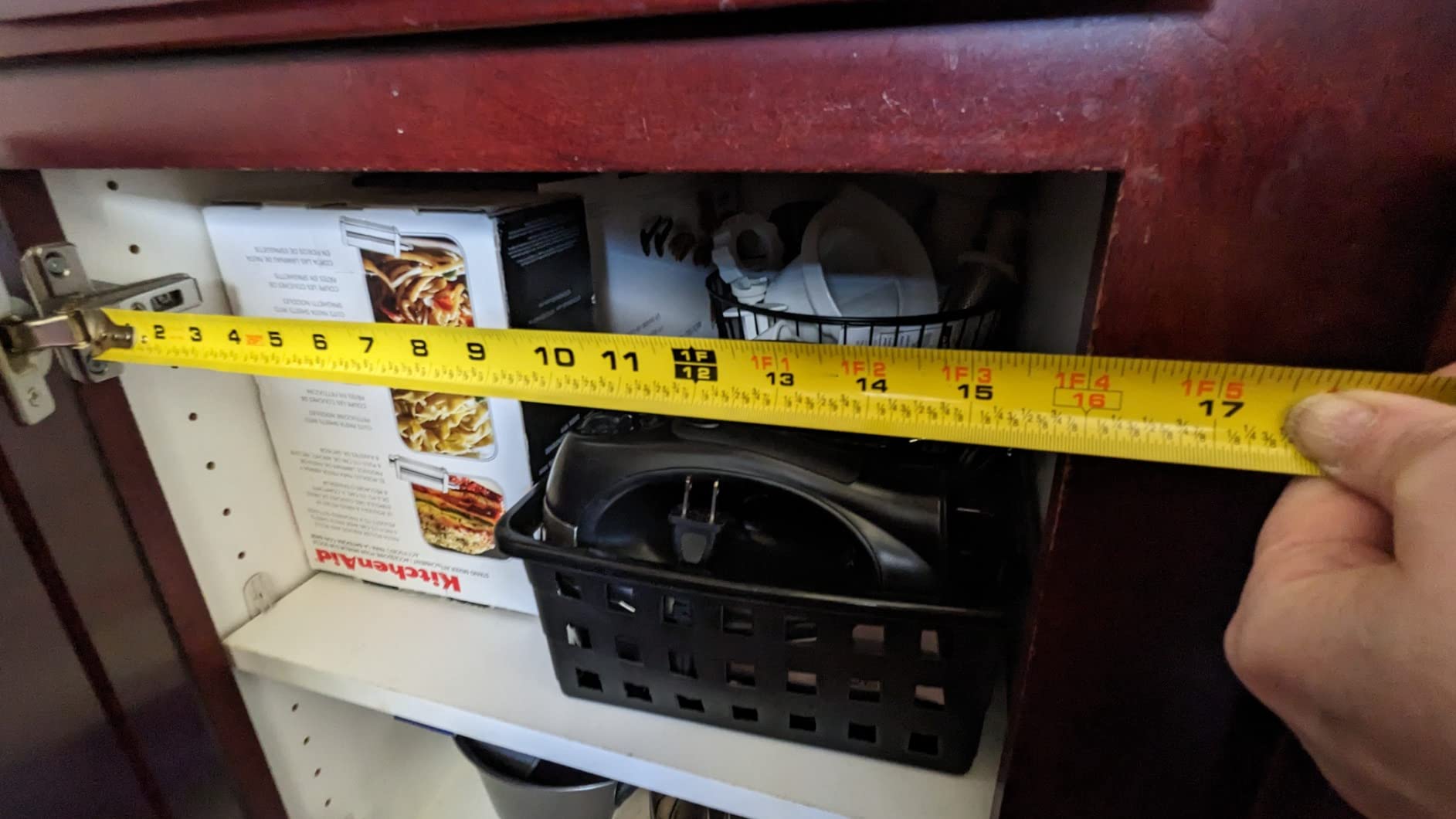
Where This One Falls Short
It is a 1/2 inch overlay face-frame hinge, so it is not the right answer for inset doors or frameless half-overlay boxes. The 10-pack quantity also covers only five doors, which is fine for a bathroom vanity but light for a full kitchen.
Buyer feedback also flags that the listing can be unclear about whether the count refers to pieces or pairs. Count the pieces, not the pairs, when you plan your door count.
3. KONIGEEHRE 20 Pack Soft Close Hinges – Widest Adjustment Range at 6-Way
20 Pack Soft Close Cabinet Door Hinges for 1/2 Inch Overlay Cupboard, 105 Degree Opening Angel, Stainless Concealed Kitchen Cabinet Hinges with Mounting Screws, Manual and Door Bumpers
6-way adjustability
35mm cup
1/2 inch overlay
Face frame and frameless
105 degree
Pros
- 6-way adjustability offers the most alignment correction in this group
- Integrated damper gives a quiet controlled close
- Works for both face frame and frameless cabinet builds
- Ships with screws manual and door bumpers
Cons
- Instructions are limited so overlay sizing must be confirmed before drilling
- Sizing mistakes are costly because the cup holes are cut into the door
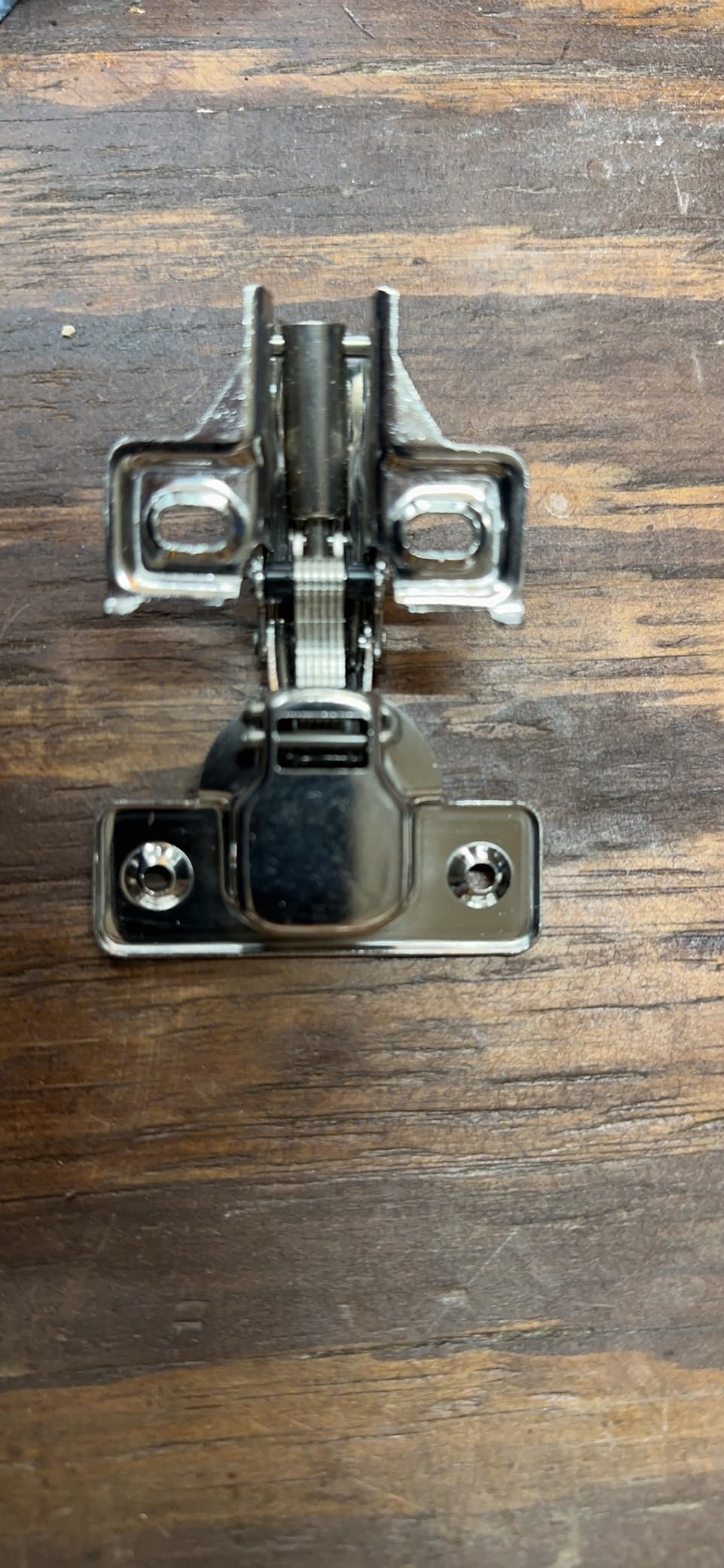
Six-way adjustment is unusual in this category, and it is the reason this hinge is worth a look even though it rates slightly below the leaders at 4.5 stars. Where a three-axis hinge moves a door left, right, up, down and in or out, a six-way mechanism splits those movements so you can correct finer errors without stacking shims behind the mounting plate.
It is also one of the few products here that explicitly works on both face-frame and frameless cabinets, which makes it a safer choice when you are not certain what your cabinet box looks like. The 35mm cup, 1/2 inch overlay and 105 degree opening angle are otherwise conventional.
What Six-Way Adjustment Actually Buys You
On older cabinets with doors that no longer line up, the value of extra adjustment shows up immediately. Instead of loosening and re-tightening the mounting plate to chase a diagonal error, you correct the two axes independently. For anyone retrofitting a house built decades ago, that is worth more than any additional soft-close refinement.
The stainless steel body with a nickel plated finish is appropriate for a kitchen, and the integrated dampening system handles the close quietly without any retrofit accessories. Door bumpers are included in the box, which is a nice touch if your cabinet frames have nowhere for a door to rest when open.
Measure Twice, Because the Cup Hole Is Permanent
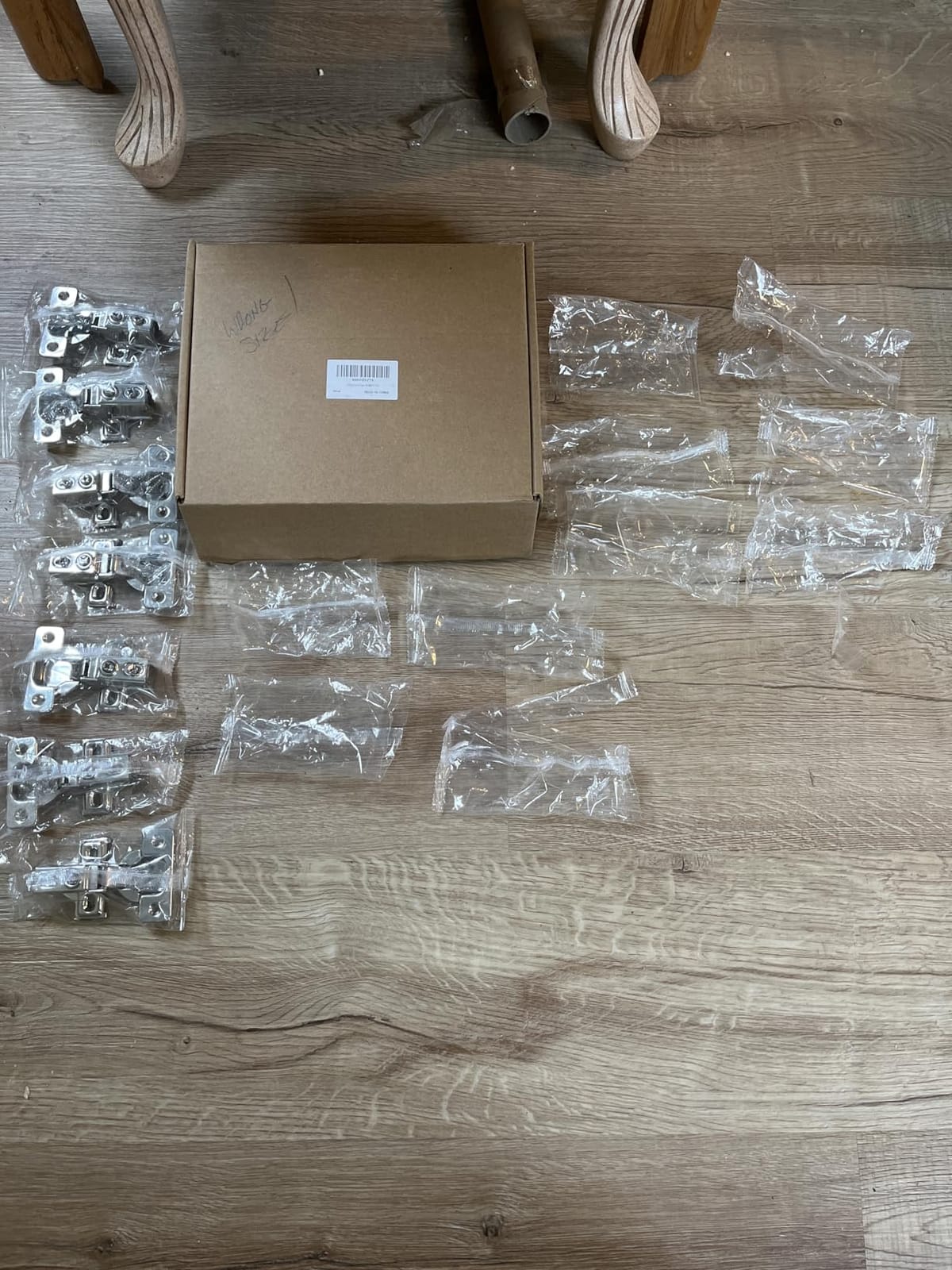
The single most common buyer complaint in the reviews is that the instructions are thin, so overlay sizing has to be confirmed independently before drilling. That is a caution about the product category rather than this hinge alone, but it is repeated often enough to be worth stating plainly: once the 35mm cup is cut, changing your mind is expensive.
Take the door off, measure the existing overlay on a door that still closes, and only then order. If the doors have already been removed, the measurement section later in this guide walks through the whole process.
Best Fit and Worst Fit
It suits standard 1/2 inch overlay doors where alignment is the main problem, and it is the safest pick here for a mixed project with both face-frame and frameless boxes. It suits neither inset doors nor half-overlay frameless kitchens, because the overlay is fixed at 1/2 inch.
At 20 hinges it covers 10 doors, a sensible amount for a single kitchen. The trade for the extra adjustment is a slightly lower average rating and less long-term wear feedback than the two leaders.
4. Probrico 4 Pack Full Overlay Hinges – Best for Matching Legacy European Hinges
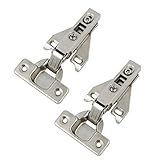
Probrico 2 Pairs(4 Pack) Kitchen Cabinet Hinges for Face Frame Cabinet, Concealed Cabinet Hinges Brushed Satin Nickel with Mounting Screws
Full overlay
35mm x 11.5mm cup
14-22mm door thickness
105 degree
Satin nickel
Pros
- Exact fit replacements for legacy MEPLA and other older hinges
- Satin nickel finish matches most existing kitchen hardware
- Plenty of adjustment range to bring doors back into alignment
- Screws and plates included so no extra hardware hunt
Cons
- No dimensional diagram or instructions so edge distance must be measured
- Some filing may be needed on older non-standard doors
- Standard self-close only with no soft-close damper
This is a replacement part rather than an upgrade, and that is exactly why it earns a place here. Owners use it to match discontinued European hinges in older kitchens where the original is no longer made, and they rate it highly for fit accuracy once the 6mm edge distance has been measured.
It is a full overlay, clip-on concealed hinge with a 105 degree opening angle and a 35mm by 11.5mm cup, fitting door thicknesses from 14mm to 22mm. The satin nickel finish is the most widely used hardware finish in American kitchens, which is why it blends in on older installs without painting.
Full Overlay Is the Default in American Face-Frame Cabinets
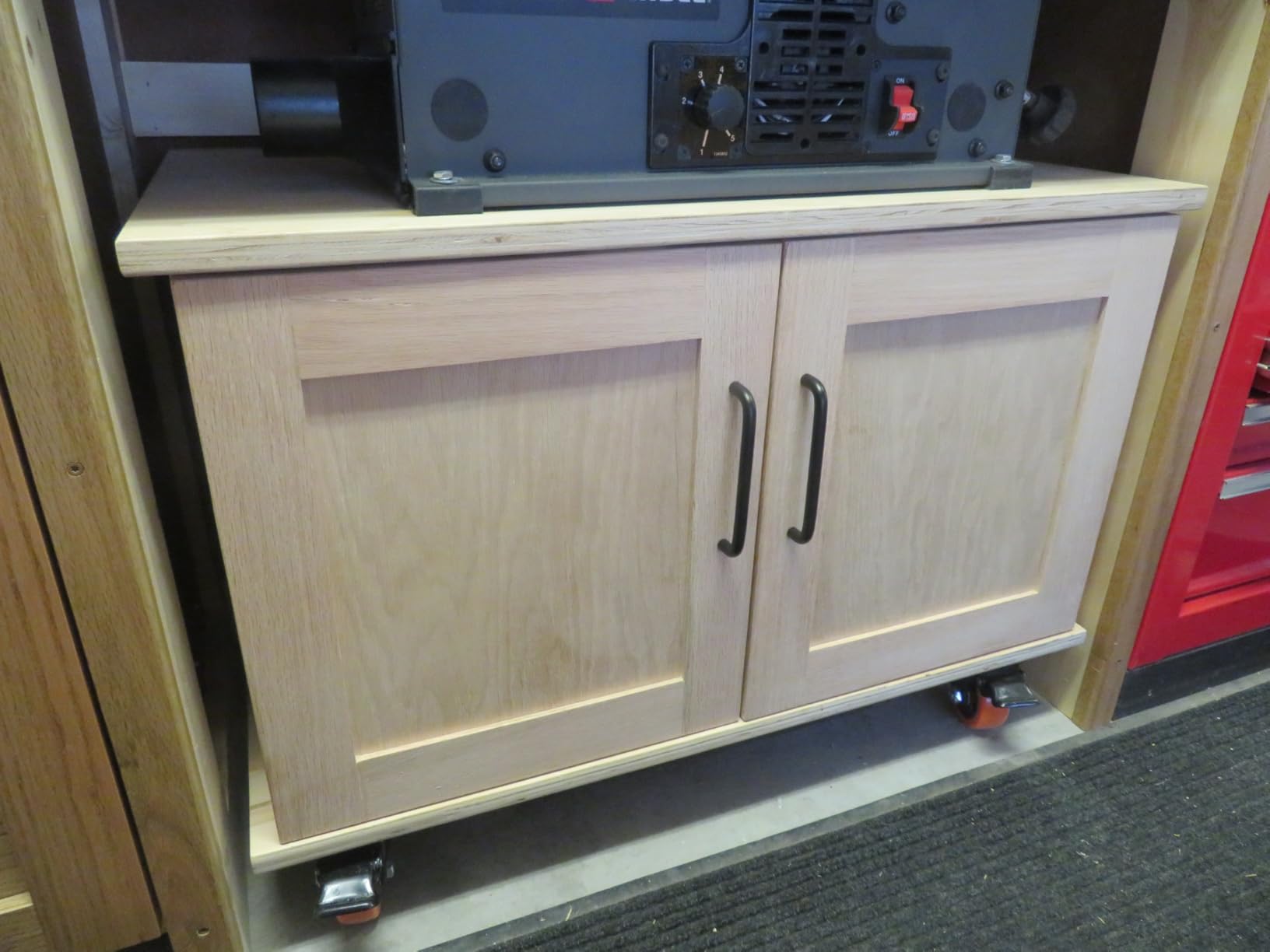
Full overlay means the door sits on top of the cabinet frame and covers it almost entirely, which is the standard in most US face-frame cabinetry. If your existing doors cover the frame, this is the geometry you need, and the 35mm cup will usually drop into holes that are already cut.
That drop-in quality is the whole point. In a kitchen with 20 to 30-year-old hinges, matching the original geometry is far easier than adapting a modern hinge to an unusual cabinet, and the mounting screws and plates are included so there is no separate hardware order.
The Self-Close Caveat Nobody Mentions
This hinge has no soft-close damper. It closes on a spring, quickly and audibly, which is the behaviour of the original hardware it replaces. If your goal is a quieter kitchen, choose one of the soft-close models instead and accept that you are changing the feel rather than restoring it.
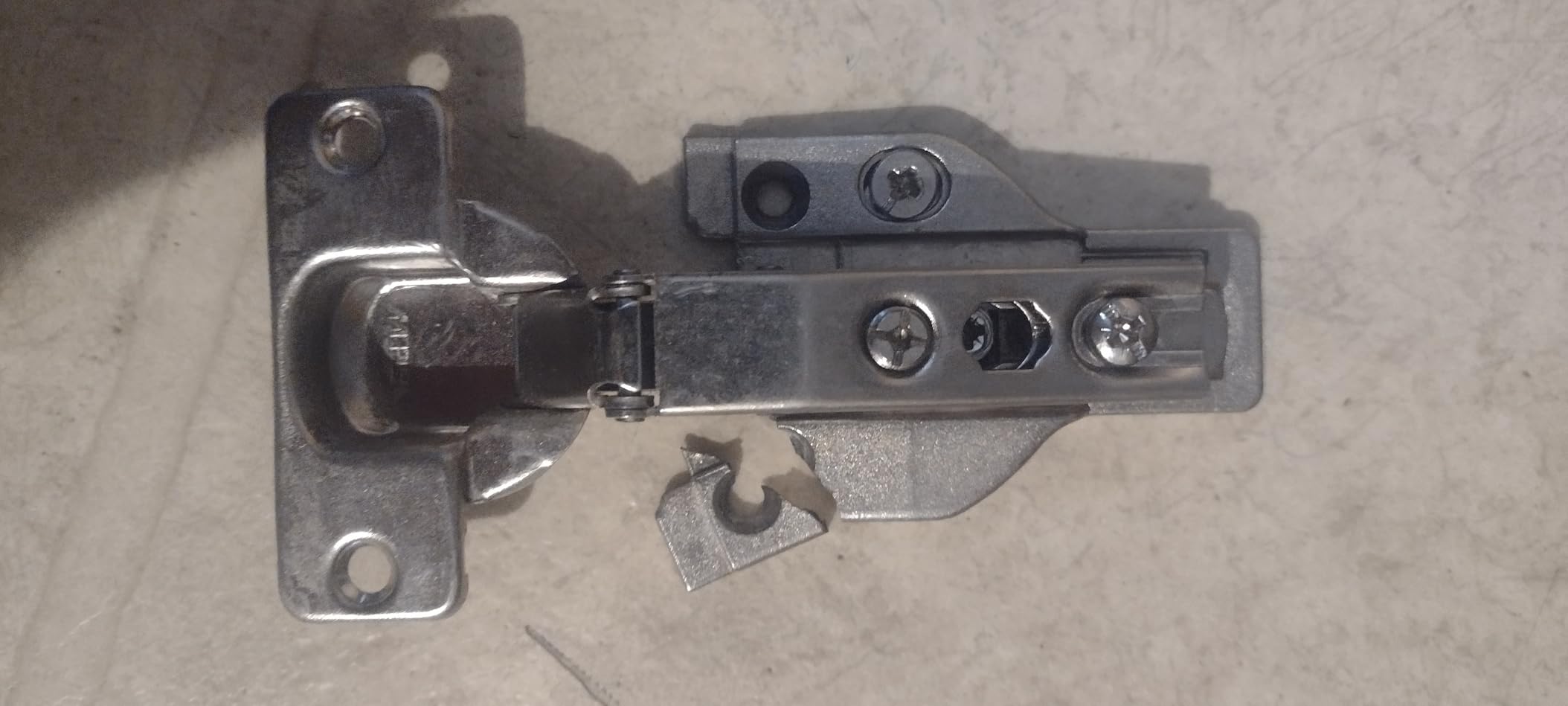
Reviewers also note that no dimensional diagram or instructions are included, so you need to measure the edge distance yourself. On older or non-standard doors, a small amount of filing may be needed before the door will seat properly.
Who Should Buy This and Who Should Not
Buy it if you are restoring a cabinet where the original hinge is discontinued, matching a legacy European hinge pattern, or replacing hardware on a full-overlay face-frame door and do not care about noise. Do not buy it for inset doors, frameless half-overlay boxes, or any project where the door cannot be trimmed to suit.
At two pairs, this covers two doors, which makes it an easy single-cabinet order rather than a bulk purchase you will have to store.
5. Blum Compact 33 Self Closing 8 Pack – Top Rated OEM Replacement
Blum 110 Degrees Screw On Self Closing Compact 33 Hinge Pack of 8
110 degree opening
Screw-on compact
16mm to 19mm door thickness
Self-closing
Pros
- Highest rating in the roundup at 4.7 stars
- Exact drop-in replacements for aging Blum Compact 33 hardware
- Quiet smooth self-closing action
- Swaps without removing the door if you work carefully
Cons
- Mounting plates are not included and must be ordered separately
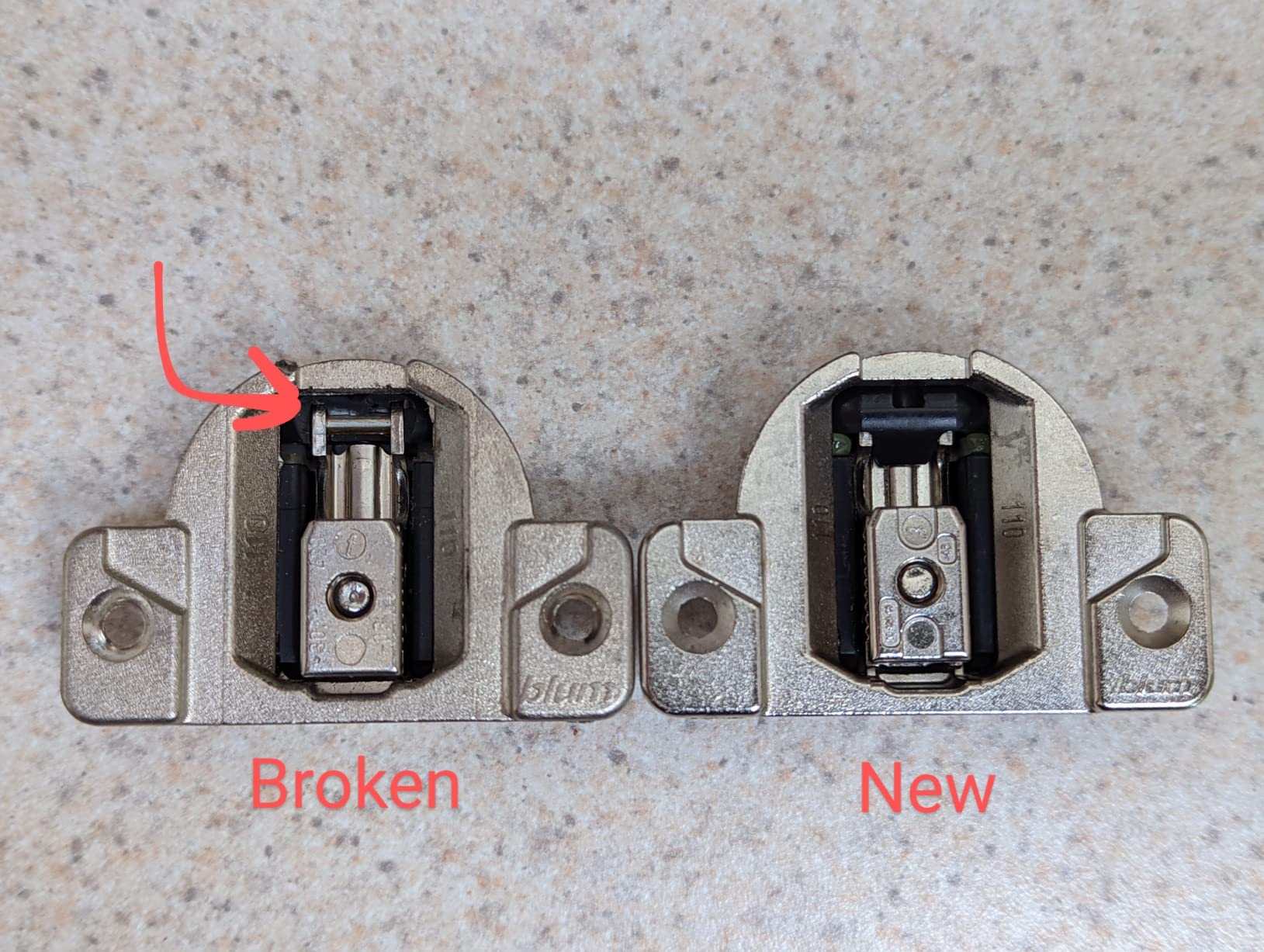
- Internal plastic components can eventually break after heavy years of use
- Screws are not included in the pack
Blum is the default professional recommendation in hardware forums, and this particular pack is the repair part rather than the flagship soft-close product. At 4.7 stars it is the highest-rated item in this roundup, and reviewers treat it as the gold standard for houses with 20 to 30-year-old Blum cabinets.
The Compact 33 opens to 110 degrees and is designed for doors between 16mm and 19mm thick. It is a screw-on design, which is a meaningful difference from the clip-on models above: the mounting plate is fixed with screws rather than pressed on, giving a more rigid connection on heavier doors.
Why OEM Replacement Beats a Modern Upgrade Here
When a Blum cabinet is failing at 25 years, the doors, the drilling pattern and the mounting plate are all designed around this hinge. Swapping in an exact replacement restores the original geometry with no re-cutting, and because the door barely moves during the swap, it can often be done without pulling the door off its hinges entirely.
The wider opening angle also helps in tight spots. At 110 degrees the door clears adjacent walls and appliances better than the 105 degree standard, and the self-closing action is described by reviewers as quiet and smooth for a spring mechanism.
Plan for Two Extra Purchases
Mounting plates are sold separately, and the screws are not in the pack. If the plates in your cabinet are still intact you can reuse them, but if they are warped from the same age as the hinges, budget for a second order before you start.
Reviewers also note that the internal plastic components have a finite service life. That is not a flaw unique to this design, but it is the main reason to consider a soft-close replacement at the same time as the hardware.
The Correct and Incorrect Use
It is right for replacing Compact 33 hardware in doors between 16mm and 19mm thick, and for anyone who wants to restore an original Blum system rather than convert to something else. Blum recommends a trial installation on thicker or profiled-edge doors, which is sensible advice if your doors are not plain square-edged slabs.
It is the wrong choice for a soft-close conversion, since this hinge has no damper, and for doors thicker than 19mm. Eight hinges cover four doors.
6. Chibery 10 Pack 4D Soft Close Hinges – Only Real Closing Speed Dial
Chibery 10 Pack 1/2″ Overlay 4D Soft Close Concealed Hinges for Face Frame Door, Adjustable Closing Speed, Smooth Slow Self Close Hinges, Satin Nickel, 105° Open Angle Stainless Steel Cabinet Hinges
35mm cup
11.5mm depth
4D adjustment
0-7 second closing speed
105 degree
Pros
- Closing speed is adjustable from 0 to 7 seconds
- 4D adjustment makes door alignment easy to dial in
- Double electroplated steel and brass base feel durable
- Dowels and self-tapping screws included per hinge
Cons
- Adjustment travel is small so measurements must be exact
- Door to hinge gap can look wide on some overlay sizes
- Occasional reports of arriving damaged or with stripped screws
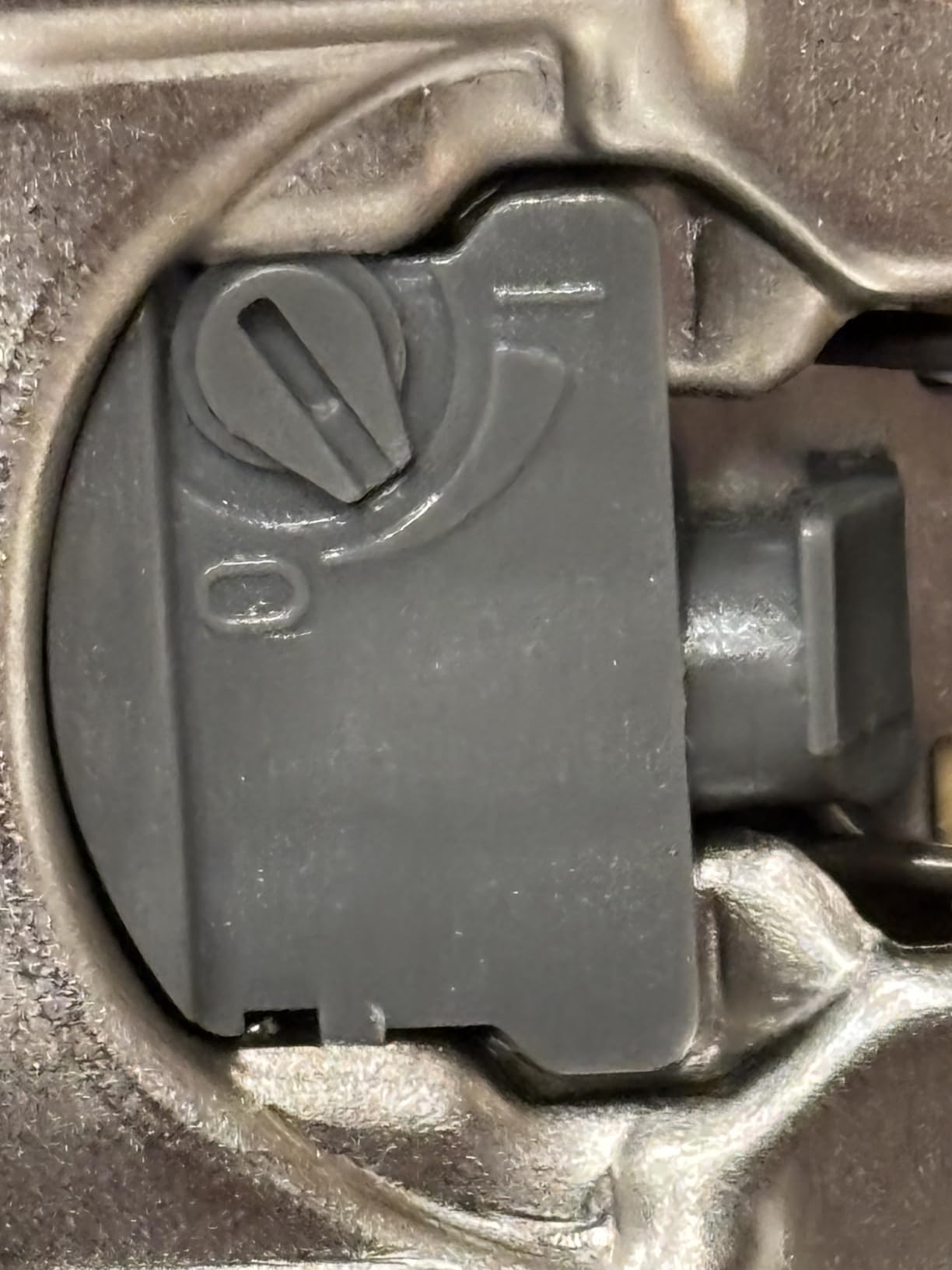
This is the only hinge in the roundup that lets you tune how fast the door closes, from zero seconds up to seven. That fourth adjustment axis is what separates 4D from the 3-way models, and it is genuinely useful in a house with both heavy pantry doors and small vanity doors using the same hinge.
It also carries a 4.7 rating, tied for the highest here, with 1,645 reviews. The build is double electroplated steel with a brass-plated bottom, and the hinge is rated for 100,000 or more cycles and has passed a 48 hour salt spray test.
Closing Speed Control Solves a Real Problem
A fixed damper is tuned for a typical door. Put it on a very light door and the close feels ponderous, because the damper slows a door that did not need slowing. Put it on a heavy door and the close can feel abrupt at the end. An adjustable close fixes both in seconds rather than forcing you to buy a different hinge per door weight.
The other three axes are vertical, horizontal and depth, the standard alignment trio. The built-in damper also carries a small soft-close angle finger protection feature, which keeps the closing arc safer on the last few degrees of travel.
Certifications and Build Details That Matter
This hinge carries ISO9001, ISO14001, BHMA, KCMA and SGS certifications, which is unusual for a hinge at this price point. The cup is 35mm with 11.5mm depth and 45mm screw spacing, matching the mainstream pattern, and the opening angle is 105 degrees.
Dowels and self-tapping screws ship with each hinge, and reviewers frequently mention that this is the set they would hand to someone installing a kitchen for the first time, because nothing has to be sourced separately.
Where the Fine Adjustment Cuts Both Ways
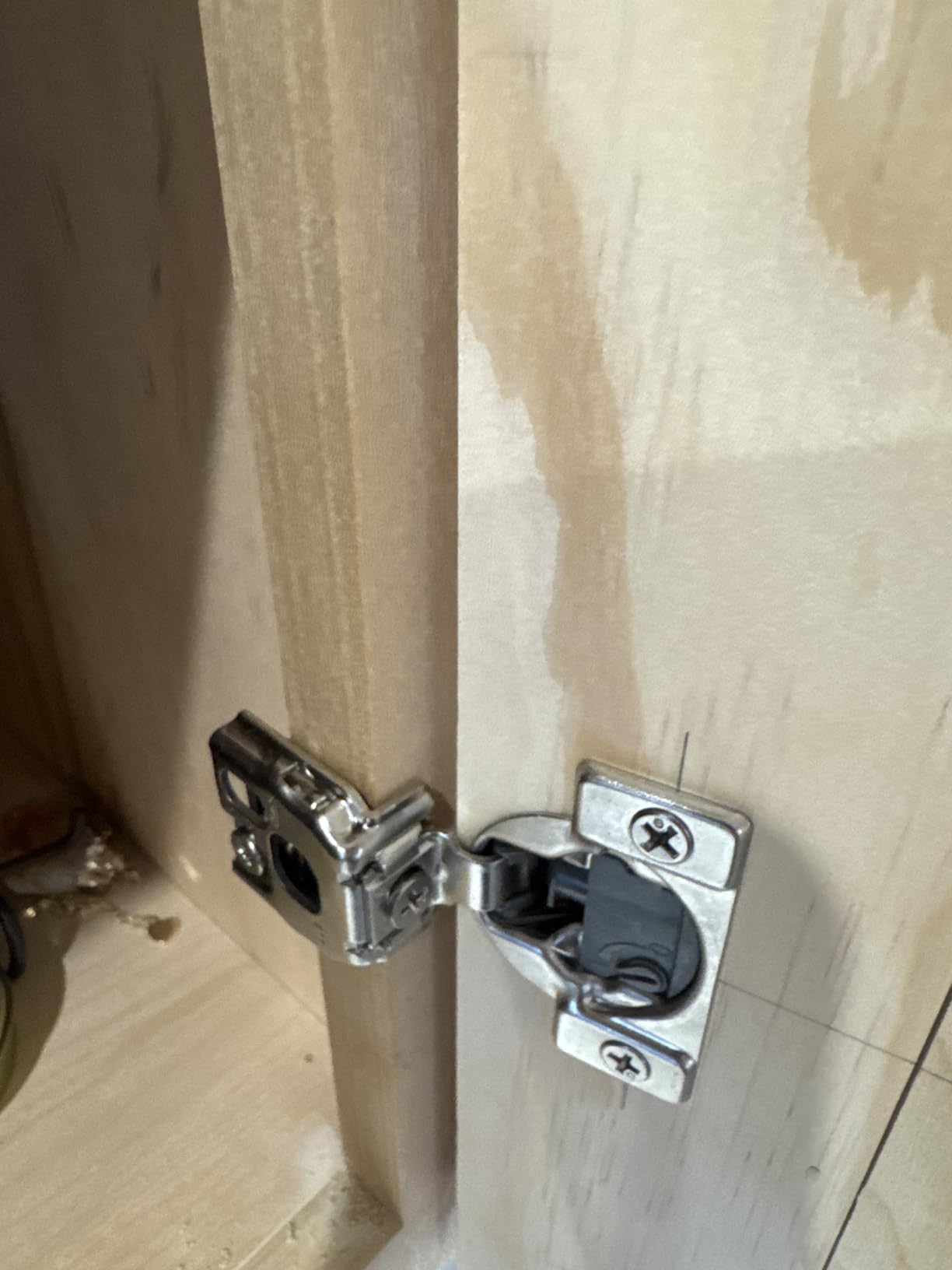
The same precision that makes the speed control useful also makes the hinge demanding. Adjustment travel is small, so the measurements have to be exact, and a door installed from loose measurements can end up with a gap that looks wide between the hinge and the door edge on certain overlay sizes.
A few reviewers report hinges arriving damaged or with stripped screws, so inspect the pack before you start cutting. It is a 1/2 inch overlay face-frame hinge, and the 10-piece count covers five doors.
7. Silverline 1/2 inch Overlay 6 Pack – Budget Self-Close for Older Cabinets
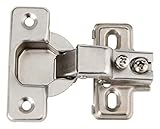
Silverline 1/2 inch Overlay Concealed Cabinet Hinges, Self-Closing Short Arm European Hinge for Face Frame Cabinets, 105Deg Opening, 35mm Cup, Screw-On Steel Hardware with Screws (6 Pack)
1/2 inch overlay
35mm cup
105 degree
Short arm screw-on
Nickel plated steel
Pros
- Inexpensive way to refresh doors without replacing cabinets
- Leaf spring has fewer failure points than twin coil springs in plastic
- Reuses existing mounting plates when offsets match
- Screws and plates included in the bundle
Cons
- Stamped steel feels light duty next to solid brass hinges
- Not ideal for high-end kitchens or very heavy doors
- May require new holes drilled on the cabinet side
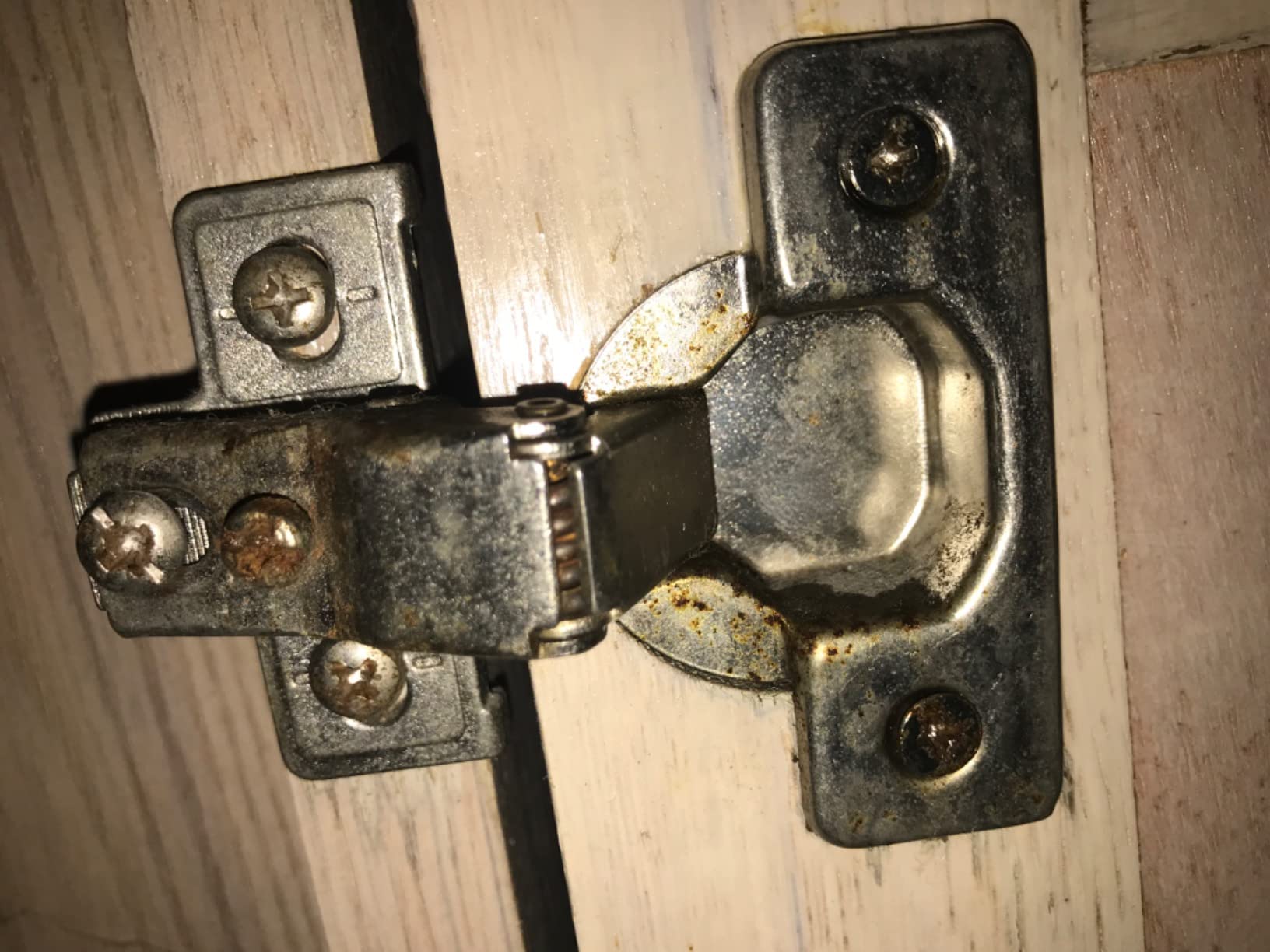
This is the functional budget option, and reviewers rate it as inexpensive and functional rather than premium. It is a favored find in older houses, including homes built in the 1970s where this hinge size is hard to source in ordinary hardware stores.
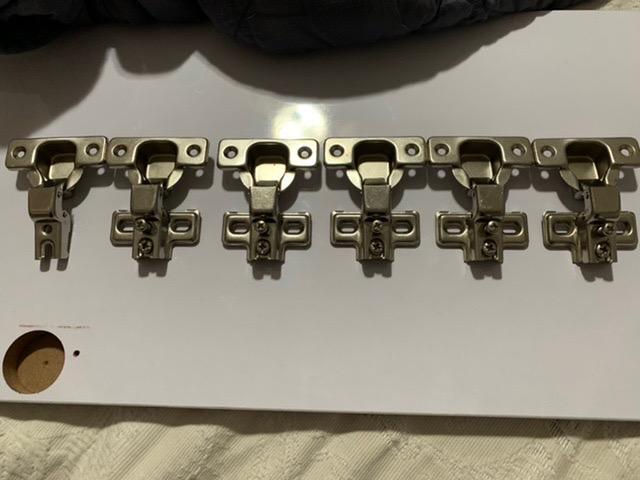
It is a short arm European screw-on hinge for face-frame cabinets with a 1/2 inch overlay, 35mm cup and 105 degree opening angle. The nickel-plated steel body fits #8 screws, which are included alongside the plates in the bundle.
The Short Arm and Why It Matters
Short arm geometry keeps the hinge body tight to the door edge, which is useful in cabinets where the door stile is narrow or where an adjacent wall limits swing. It also tends to clear the cabinet contents better than a long arm, since the mechanism occupies less of the interior.
Because it is screw-on rather than clip-on, the mounting plate is fixed mechanically. When the offsets match your existing plates you can reuse them, which is the cheapest possible door refresh. If the offsets differ, new holes are needed on the cabinet side, so check the plate position before committing.
Honest Limits of a Stamped Steel Hinge
Stamped steel is thinner than the cast or machined bodies used at the premium end, and reviewers say it feels light duty next to solid brass hinges. For very heavy doors or a high-end kitchen where the hardware is a design feature, spend more.
There is also no soft-close damper. The leaf spring mechanism has fewer failure points than twin coil springs housed in plastic, which is a genuine reliability advantage over some spring-based designs, but the door will still close audibly.
Best Used On
This suits a rental property, a utility cabinet or a mid-range kitchen where the priority is restoring function at modest cost. It is not the right choice for tall pantry doors, inset doors, or frameless half-overlay boxes.
The six-piece count covers three doors, so plan your quantity carefully. A bulk option with the same soft-close intent is covered in the Ravinte 50-pack review later on.
8. Blum Compact BLUMOTION 20 Pack – Best for Heavy Doors and Noise Reduction
Blum Compact BLUMOTION Soft-Close Face Frame Hinge, 1/2 in Overlay, 10-Pack
105 degree opening
1/2 inch overlay
19mm door thickness
BLUMOTION soft close
On-off switch
Pros
- Soft close reliably handles very heavy doors that slammed with cheaper hinges
- Activation switch turns soft close on or off per hinge
- Three-axis adjustment makes double-door alignment achievable
- Works with existing non-Blumotion Blum half inch overlay doors
Cons
- Thicker mounting profile may require shimming pull-out shelves
- Frames spring past 90 degrees to 105 and can hit adjacent walls
- Mounting pattern differs from older two-screw hinges
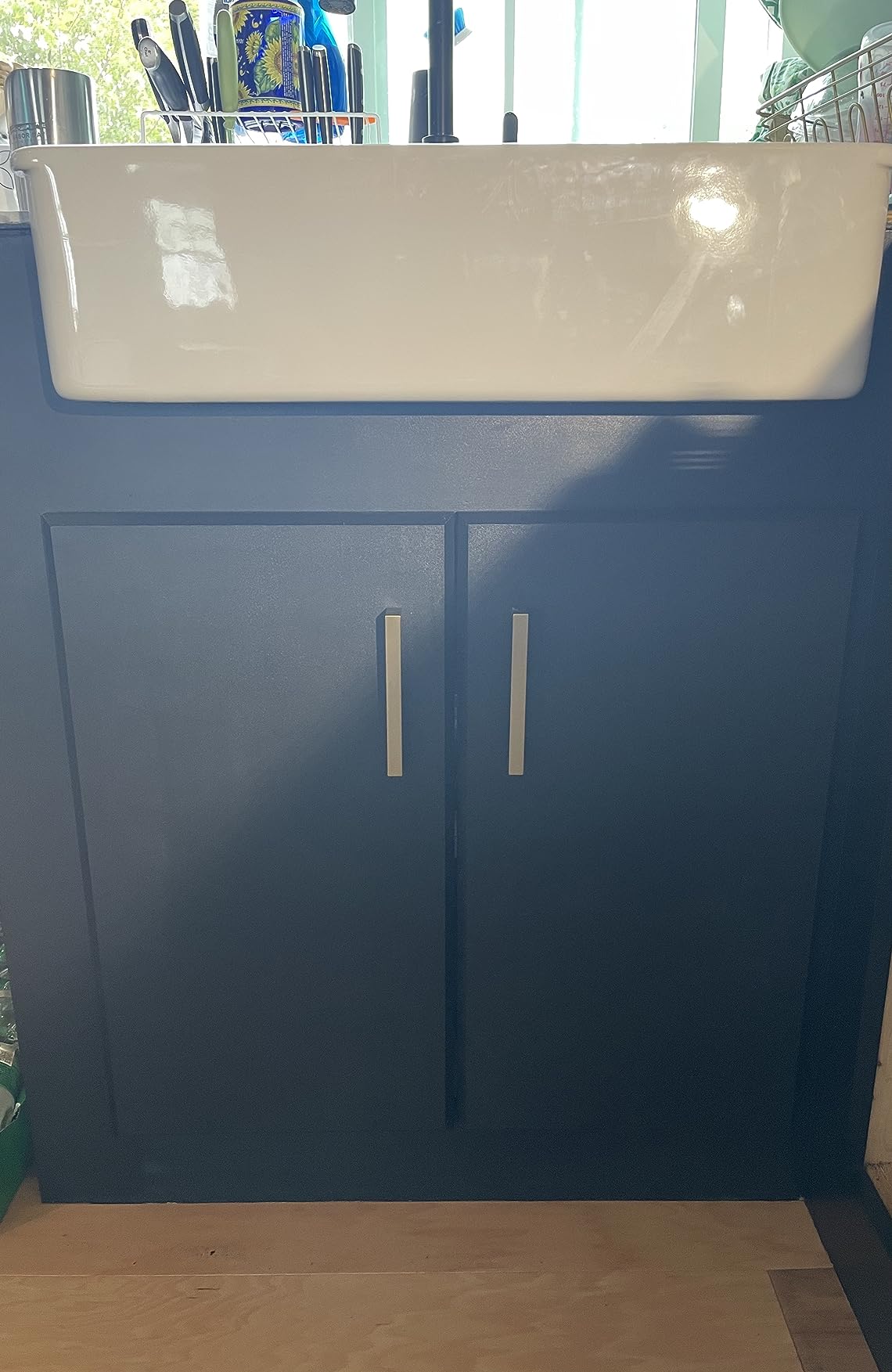
This is the premium reference point in the roundup and the top pick when weight and noise are the deciding factors. Reviewers describe a dramatic drop in slam and noise, and one owner installed all twenty hinges on a set of doors with zero failures.
The BLUMOTION system is integrated rather than retrofitted, with an on and off activation switch on each hinge. That switch is the feature professionals appreciate most: you can disable the soft close on a door that needs to spring shut for a specific reason, such as a door that must latch against a magnet catch.
Why Heavy Doors Change the Requirements
A tall pantry door weighing 40 pounds or more places a completely different load on the hinge arm than a standard base cabinet door. Cheap dampers are sized for light doors and either slam or fail to close fully under heavy weight, which is exactly what reviewers report about the cheaper hinges they replaced.
The hinge opens to 105 degrees, fits 1/2 inch overlay, and is rated for door and frame thicknesses of 19mm, which is three-quarter inch stock. Side, height and depth adjustment covers the three axes needed to align a pair of doors so the gap between them reads evenly.
Two Warnings From Real Installations
The mounting profile is thicker than builder-grade hinges, which can interfere with pull-out shelves and require shimming. Plan for that before ordering if the cabinet has internal storage.
Second, the door can spring past 90 degrees to 105 and hit an adjacent wall or appliance. Opening restrictor clips solve this and are worth fitting on any door beside a tiled wall or a tall unit. The frame mounting pattern also differs from older two-screw hinges, so a new hole may be required.
Who This Is For
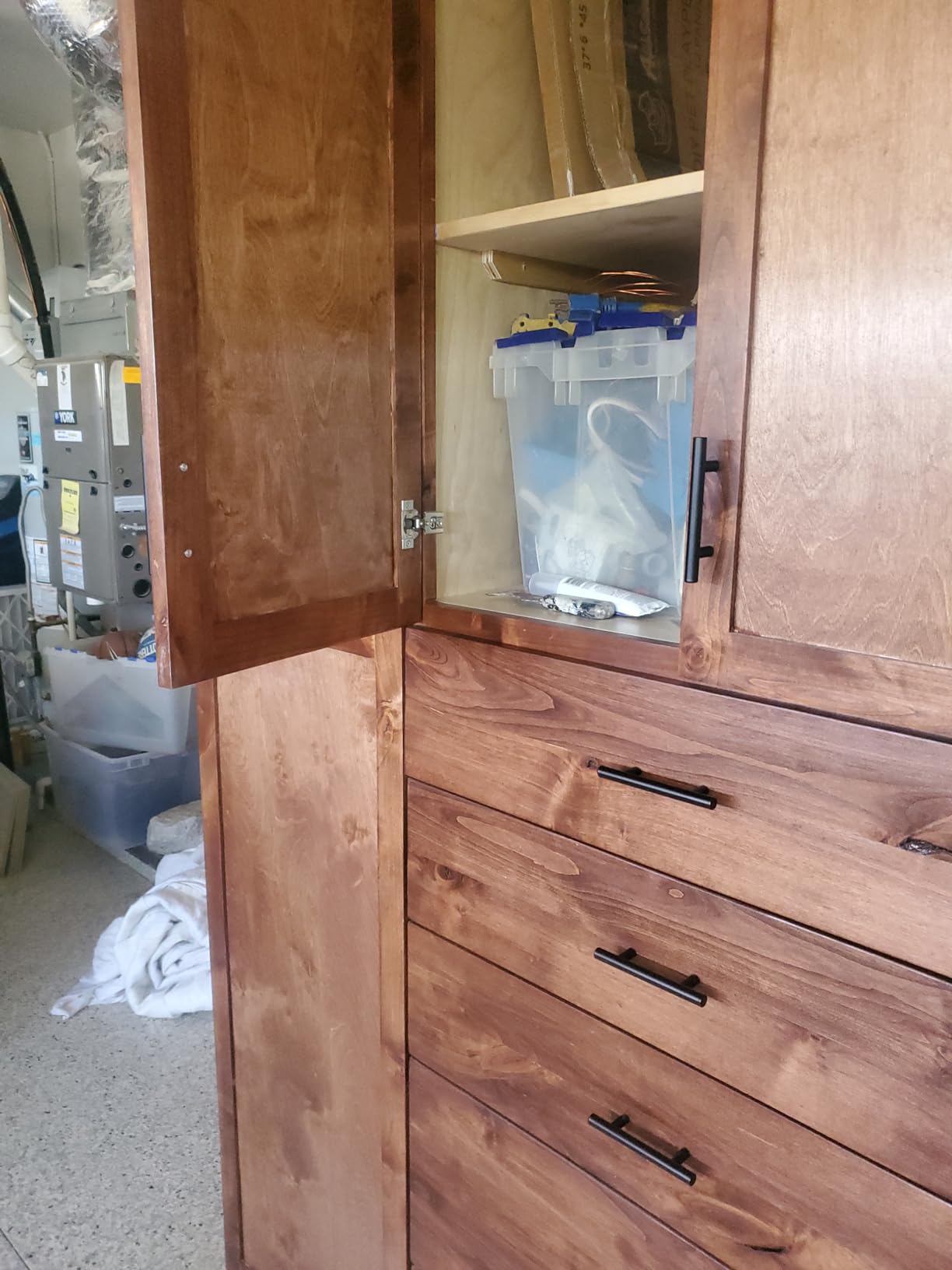
It suits heavy doors, a noise-sensitive household, and anyone already running Blum hardware who wants to upgrade to soft close without changing system. Because it works with existing non-Blumotion Blum half inch overlay doors, you can convert a kitchen one hinge at a time.
It is not for inset doors, and it is an expensive way to solve a light-duty cabinet door. The pack holds 20 hinges, which covers ten doors.
9. Ravinte 50 Pack Soft Close Hinges – Best for a Whole-House Conversion
Ravinte 1/2 Inch Overlay Soft Close Hinge Kitchen Cabinet Hinges 50 Pack
35mm cup
45mm screw spacing
11.5mm depth
105 degree
3-way adjustable
Pros
- Same 35mm cup footprint as the Ravinte 10-pack so they interchange
- Built-in damper and strong spring give long-lasting quiet operation
- 3-way adjustment is easy to perform after mounting
- Dowels screws and a screwdriver ship with the pack
Cons
- Closing speed is fixed unlike adjustable 4D models
- 50-pack count is more than a single cabinet job requires
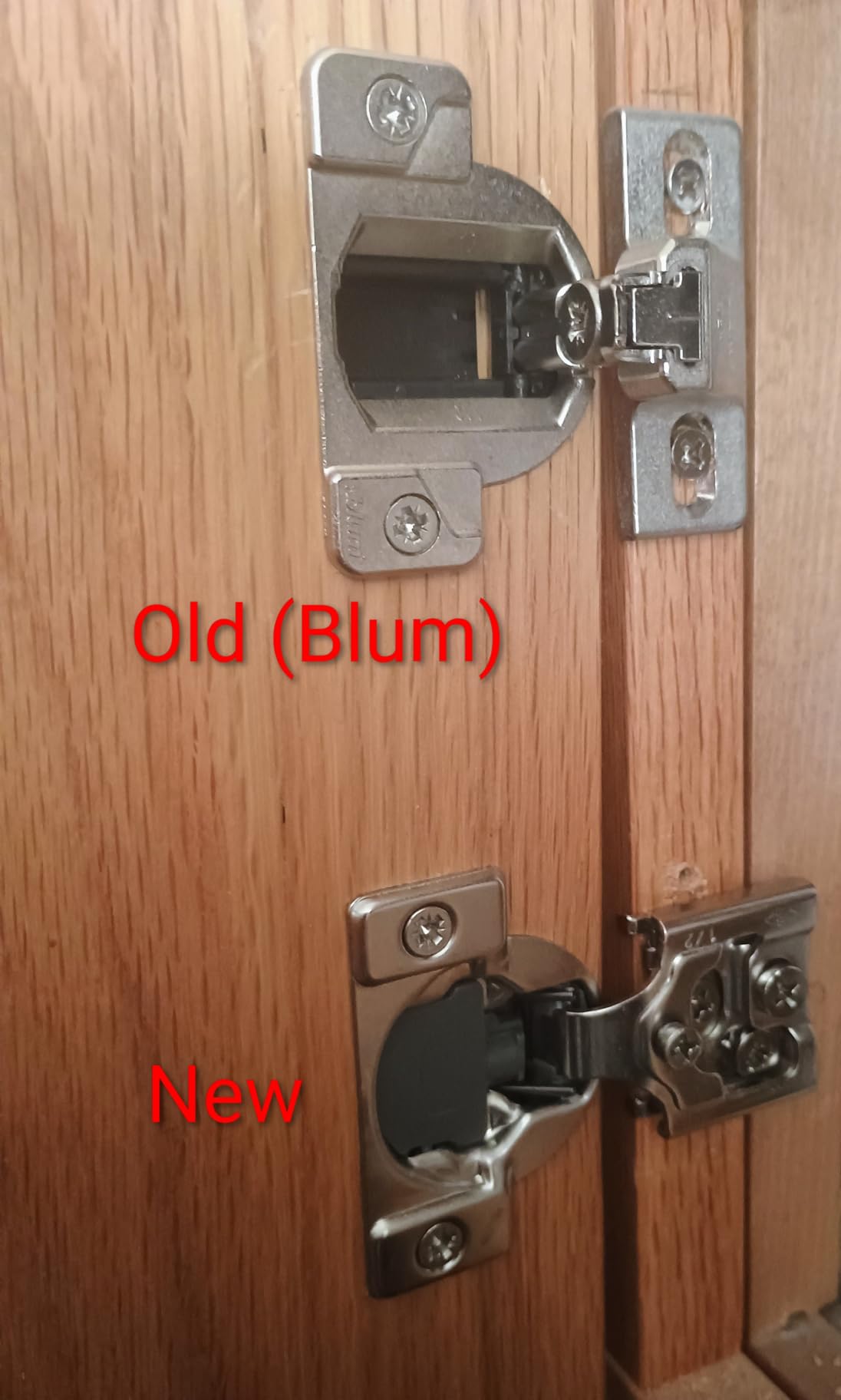
This is the bulk sibling of the Ravinte 10-pack earlier in the list, and it shares the same bore geometry exactly, which means the two are interchangeable. That matters more than it sounds: you can buy this pack for a whole-home conversion and still mix in the 10-pack later without any change to your drilling.
At 50 hinges it covers 25 doors. Buyers treat it as a house-wide soft-close project and credit the damper and spring combination for staying quiet over time rather than degrading into a slam within a few years.
Bore Geometry Details Worth Confirming
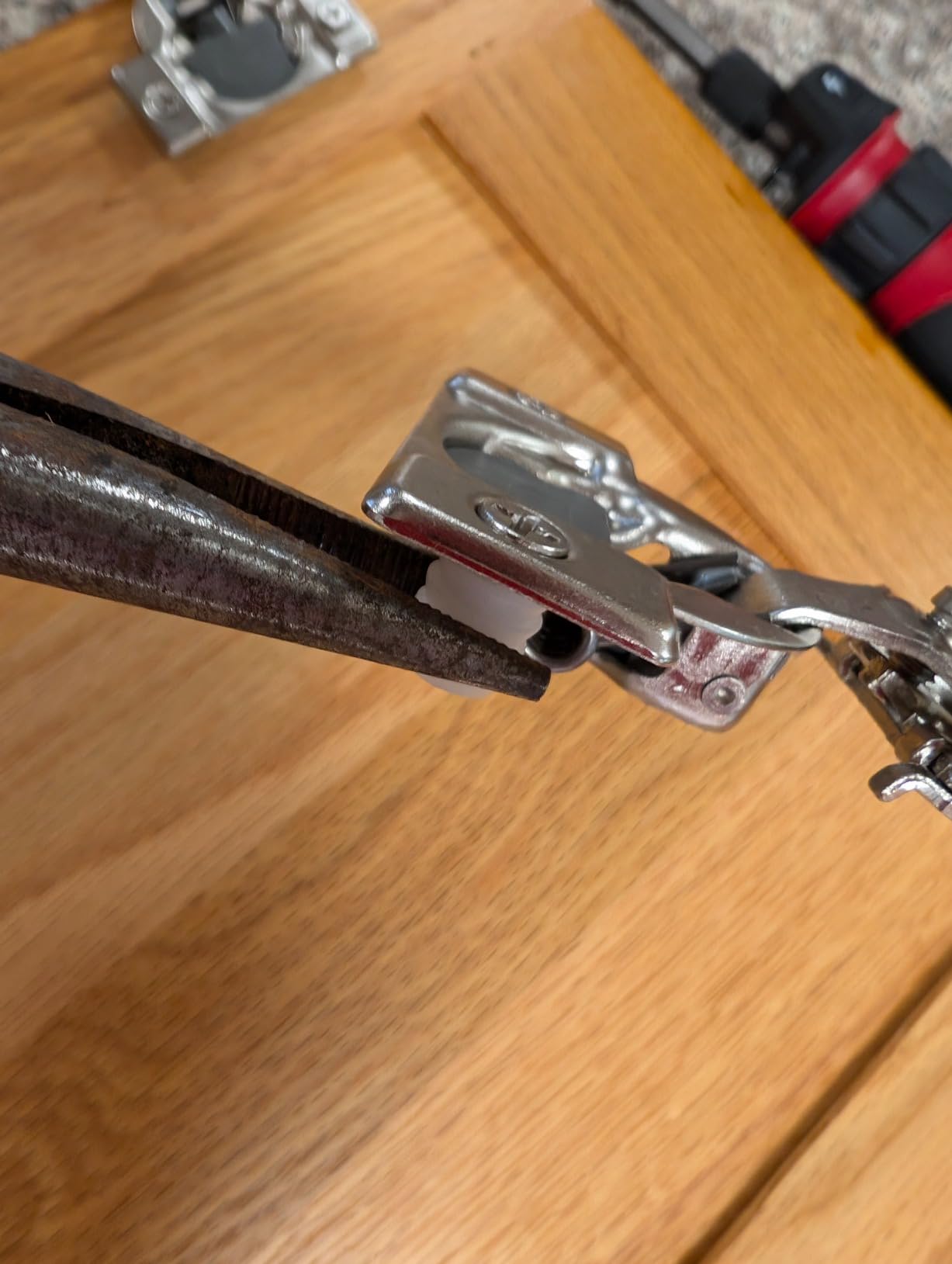
The 35mm cup boring hole sits 1/8 inch from the door edge, with 45mm screw hole spacing and an 11.5mm cup depth. Measure all three against a door that still closes correctly before ordering in bulk, because an error across 50 hinges multiplies.
It is a 1/2 inch overlay hinge for face-frame cabinets with a 105 degree opening angle, and the 3-way adjustment is straightforward to perform once the door is hung. Each hinge includes two dowels and a mounting screw, and a screwdriver is included in the pack, which removes the most common reason installation stalls halfway through.
When Bulk Is the Right Call
Buy this format if you are converting a full kitchen, a rental property or several rooms at once. The per-hinge economics improve significantly and the fixed 1/2 inch overlay suits the standard American face-frame box.
It is the wrong format for a single door, and its fixed closing speed is the limitation to know about if you have an unusually light or unusually heavy door in the same run.
Who Should Choose This
It suits a contractor or homeowner doing more than about ten doors, and anyone who values the included hardware enough to skip a separate shopping trip. It does not suit inset doors, frameless half-overlay kitchens, or a project where per-door closing speed matters.
The smaller 10-pack version covers the same geometry if your project is under ten doors.
10. HOME EDIT 1-1/4 inch Overlay 2 Pack – Best for a Single Door on a Wide Overlay
HOME EDIT 1 Pair 1-1/4 Inch Overlay Soft Close Cabinet Hinges Door Hinges
1-1/4 inch overlay
35mm cup
11.6mm depth
105 degree
Three-way adjustable
Pros
- Lowest entry price in the roundup for a soft-close pair
- Standard 35mm cup and 45mm screw spacing for broad compatibility
- Three-way adjustment keeps doors from sagging
- Package includes hinges dowels and mounting screws
Cons
- Only one pair per pack so multi-door projects need several orders
- Less review volume than the higher-priced options
This is the outlier in the roundup for a specific reason: a 1-1/4 inch overlay. Every other product here is either a half inch or a full overlay, so if your door covers more than an inch and a quarter of frame, this is the only option in the list that fits without modification.
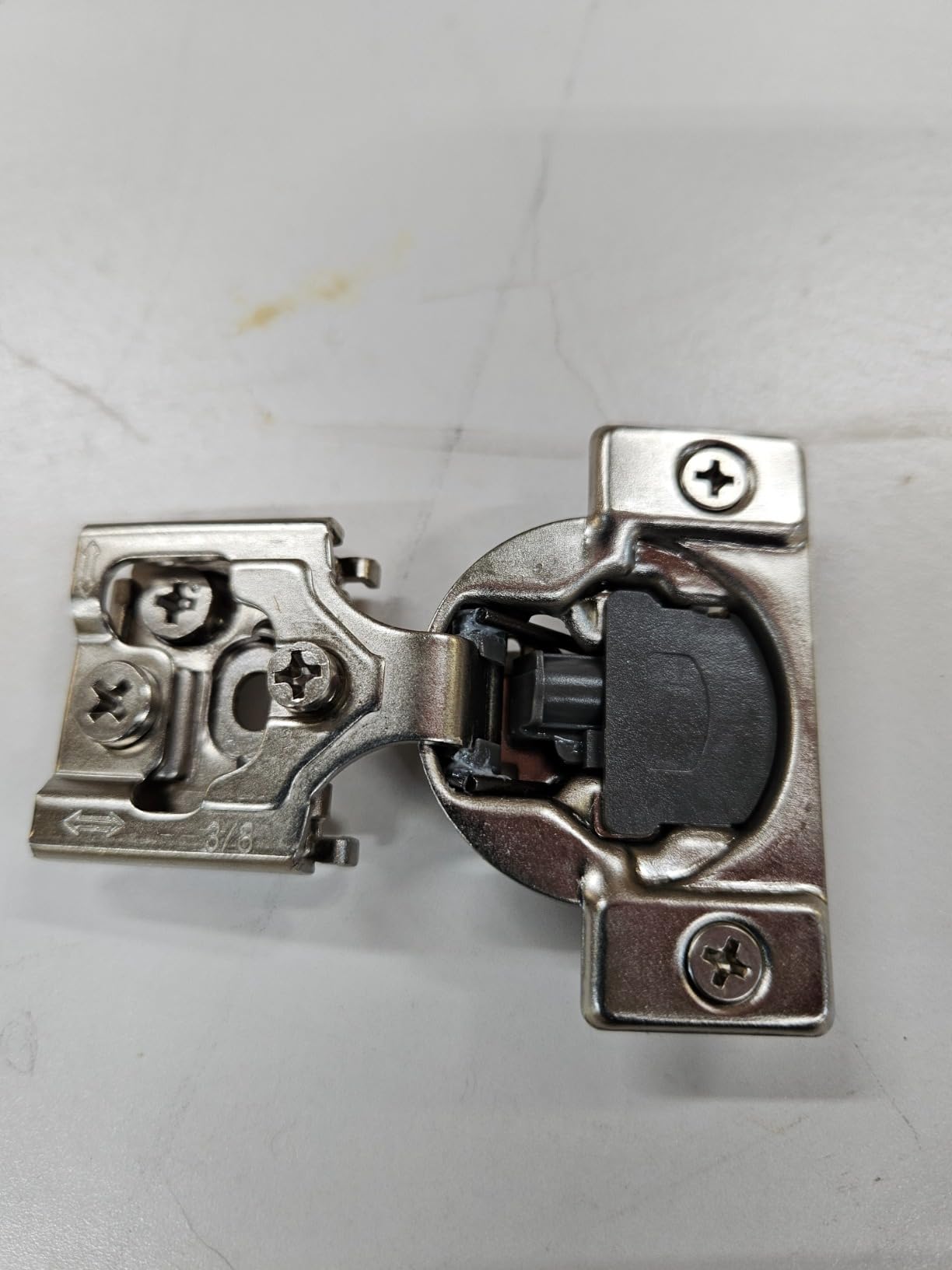
Everything else follows the mainstream pattern, with a 35mm cup, 11.6mm cup depth, 45mm screw hole spacing and a 105 degree opening angle, plus three-way adjustment to keep the door from sagging over time.
When a 1-1/4 inch Overlay Is the Right Answer
Wide overlays appear on older cabinets, on some face-frame vintage kitchen layouts, and on doors set into a thick face frame where the door was scribed to cover extra material. If you have measured an overlay wider than 3/4 inch, a standard full overlay hinge will leave the door standing proud or refuse to close.
Before ordering, confirm the measurement on a door that still swings correctly. An incorrect reading here is the classic version of the irreversible cup hole mistake, and there is no way to widen an overlay after the hinge is mounted.
What You Give Up Compared With the Leaders
At 329 reviews, this has the smallest feedback pool in the roundup, which means less long-term wear data. The rating holds at 4.6, but the number of people who have reported back after five years of daily use is much smaller.
The pack contains one pair, so a three-door project means three orders. Hinges, dowels and mounting screws are included, and the nickel-plated steel is described as tested through hundreds of thousands of cycles.

Who Should Buy This Pair
Buy it for a single door with a measured overlay wider than 3/4 inch, or as a low-cost trial pair to confirm the bore pattern before committing to a bulk pack. Skip it for inset doors, for frameless half-overlay boxes, or for a project where a single order needs to cover several doors.
If your overlay measures at or under 3/4 inch, one of the full overlay or half overlay models in this roundup is the correct pick instead.
How to Measure Your Cabinet Before You Buy a Concealed Hinge
Measurement confusion is the single most common problem people hit in this category, and it is the reason a top-ranked forum thread on this topic is literally a request for help with a cabinet that will not accept a standard hinge. Five checks will tell you everything you need.
- Confirm face-frame or frameless. Open a door and look at the front edge of the cabinet box. If you see a flat vertical strip of wood or composite that the door mounts onto, that is a face frame. If the door attaches directly to the sides of the box with no front strip, it is frameless. Face-frame cabinets need face-mount or full overlay hinges; frameless boxes need half overlay.
- Measure the overlay. Close the door and measure from the outer edge of the door to the outer edge of the cabinet box. Subtract the door thickness from that figure to get the overlay value. Anything near 3/4 inch or wider points to full overlay; a quarter inch to three-eighths points to half overlay; near zero means inset.
- Check the cup geometry if holes already exist. A standard 35mm cup with 45mm screw hole spacing and roughly 11.5mm depth will accept almost any 35mm hinge in this roundup. If your existing holes match, you are choosing on closing mechanism rather than on fit.
- Measure the door edge distance. The distance from the door edge to the centre of the cup hole is usually about 5mm to 6mm. A door with less than that will not seat without trimming, which is the situation the Probrico owners hit on non-standard doors.
- Weigh the door in your head before choosing a mechanism. Doors under about 20 inches tall and light suit almost anything. Doors above 30 inches tall, or tall pantry doors, should carry hinges rated for heavy loads and ideally an opening restrictor clip.
One more caveat worth repeating from the forum evidence: on some vintage cabinets the metal box edging sits proud of the wood frame, and the hinge body physically cannot lie flat against it. If your cabinet has a visible metal edge standing slightly above the frame surface, standard concealed hinges will not mount, and a surface-mounted or pivot hinge is the honest answer.
Face-Frame vs Frameless Cabinets: The 18mm and 16mm Hole Spacing Difference
Face-frame and frameless cabinets are not interchangeable, and the reason is a physical detail most buyers never learn until a hinge arrives and will not screw on. Frameless cabinets are drilled with system holes 18mm apart, while face-frame cabinets use 16mm spacing. A mounting plate designed for one will not line up with the other.
That is the mechanical reason face-frame hinges in this list are described as face mount. The plate sits flat on the front frame and screws into it, so the hole pattern belongs to the wood, not to a metal strip. If your cabinet has a visible front frame, that is the system you need.
The overlay question and the construction question are separate decisions, and both must be right. A frameless cabinet fitted with a face-frame hinge will not sit flat. A face-frame cabinet fitted with a half overlay hinge will leave a gap the width of the frame. Measuring both takes two minutes and prevents the two most common returns in this category.
Soft-Close vs Self-Close vs Standard: What Actually Changes
Soft-close, self-close and standard describe how the door ends its travel, and the three words are used inconsistently enough to be worth separating. Soft-close uses a damper inside the hinge arm to slow the final few inches. Self-close uses a spring that pulls the door shut quickly. Standard means the door simply swings and stops, with no assistance in either direction.
The most important correction here is the belief that European hinges are soft-close by definition. They are not. A European-style concealed hinge can be spring-driven, as the Blum Compact 33 and the Silverline both are, and it will slam just as loudly as the hardware it replaces.
What soft close does not do is solve opening clearance. A wider opening angle comes from the hinge geometry, not the damper, and soft close will not stop a door from striking a wall at 105 degrees. That is a restrictor clip problem, and the Blum BLUMOTION owners hit it repeatedly on doors next to a wall.
Retrofit dampers exist and are worth knowing about, but they are brand-specific. A damper from one manufacturer is not guaranteed to fit another manufacturer’s hinge arm, and mixing systems on a single door is a reliable way to end up with a door that closes unevenly.
Brand Tiers: Professional, Value and Budget Concealed Hinges
Blum is the professional default and the brand most experienced woodworkers name first when asked which cabinet hinges are the best, with Hettich, Salice and Grass as the accepted alternatives. For kitchens specifically, Blum remains the common answer, with the caveat that compatibility beats brand every time. Among the value tier, Guden and Anselmi are credible names, and the budget tier is a long tail of brands including Chibery, Intermat, Sensys, Stianc and Berta that forum users treat as legitimate options rather than throwaways.
Where the tiers genuinely separate is fit accuracy, build material and hardware inclusion. The Blum packs in this roundup hold the highest ratings and are the most consistent on bore geometry, and they are also the only ones where the mounting plate is a separate purchase. The value tier matches the same 35mm and 45mm patterns, so brand differences show up in the steel and the adjustment rather than in whether the hinge fits.
The practical advice forum users converge on is to match whatever brand is already in the cabinet. Experienced installers stay inside one system deliberately, because reusing existing mounting plates and hole patterns is what makes a hinge swap a short job instead of a refacing project.
Frequently Asked Questions
What are the three types of concealed hinges?
The three types of concealed hinges are full overlay, half overlay and inset. Full overlay hinges cover roughly 5/8 to 3/4 inch of the cabinet frame and suit most American face-frame cabinets. Half overlay hinges cover about 1/4 to 3/8 inch and suit frameless European kitchens. Inset hinges mount inside the frame with no coverage, for doors that sit flush within the opening.
What is the difference between full overlay and half overlay hinges?
The difference is how much cabinet frame the door covers. A full overlay hinge covers about 5/8 to 3/4 inch of the frame, so the door sits on top of the cabinet box. A half overlay hinge covers only 1/4 to 3/8 inch, so the door sits further in toward the front of the box. Choosing wrong leaves a visible gap or a door that will not close flat.
What is a euro style hinge?
A euro style hinge is a concealed cabinet hinge whose cup is recessed into a 35mm hole bored into the back of the door, hiding the mechanism inside the cabinet. The term European describes the concealed construction style only. It does not mean the hinge has a soft-close damper, which is a separate feature that must be stated on the listing.
Which brand of cabinet hinges is considered the best?
Blum is the professional default and the most commonly recommended brand in hardware forums, with Hettich, Salice and Grass as the accepted alternatives and Guden and Anselmi in the value tier. For a soft-close upgrade on a standard American kitchen, a Blum BLUMOTION hinge leads the group, while Guden and Anselmi cover the value segment well.
Can I replace standard cabinet hinges with soft-close hinges?
In most cases yes, provided the geometry matches. Measure the existing cup diameter, cup depth and screw hole spacing first, then match the overlay type. A 35mm cup with 45mm screw spacing and 11.5mm cup depth accepts nearly any modern 35mm concealed hinge. You also need to confirm face-frame or frameless, because the mounting plate systems differ.
How many concealed hinges do I need per cabinet door?
Two hinges per door is standard for doors up to about 30 inches tall and of normal weight. Taller doors, and heavy doors such as tall pantry units, need three hinges because the added hinge reduces the load on each one. Wide or heavy doors also benefit from an opening restrictor clip so the door does not strike an adjacent wall.
Which Concealed Cabinet Hinge Should You Buy?
If you want one answer for a standard American kitchen with 1/2 inch overlay face-frame doors, take the DecoBasics 50 pack. Its three-way adjustment corrects misalignment that cheaper hinges cannot, and its review volume gives you real confidence in long-term wear. If you are refreshing a cabinet on a tighter budget and want the same adjustment spec, the Ravinte 10 pack is the value pick with matching bore geometry.
If your doors are heavy and the slam bothers you most, the Blum Compact BLUMOTION is the hinge to spend on, and the activation switch is what separates it from every other soft-close option here. If you want to control how fast each door closes, only the Chibery 4D hinge gives you a dial. If you are restoring original Blum Compact 33 hardware, that pack is the correct repair rather than an upgrade.
For anything older, wider or unusual, measure first. Doors with a 1/2 inch overlay that the standard hinges do not reach, doors wider than 3/4 inch of overlay, and vintage cabinets with a metal edge standing proud of the frame all need a different answer than the one above. Get the overlay, the construction style and the cup geometry right in that order, and any of the best concealed cabinet hinges in this roundup will fit the door you actually have. If you are planning a broader kitchen refresh, our kitchen cabinet organizer guide and cabinet refinishing kit picks cover the next stage of the project.
Leave a Reply