
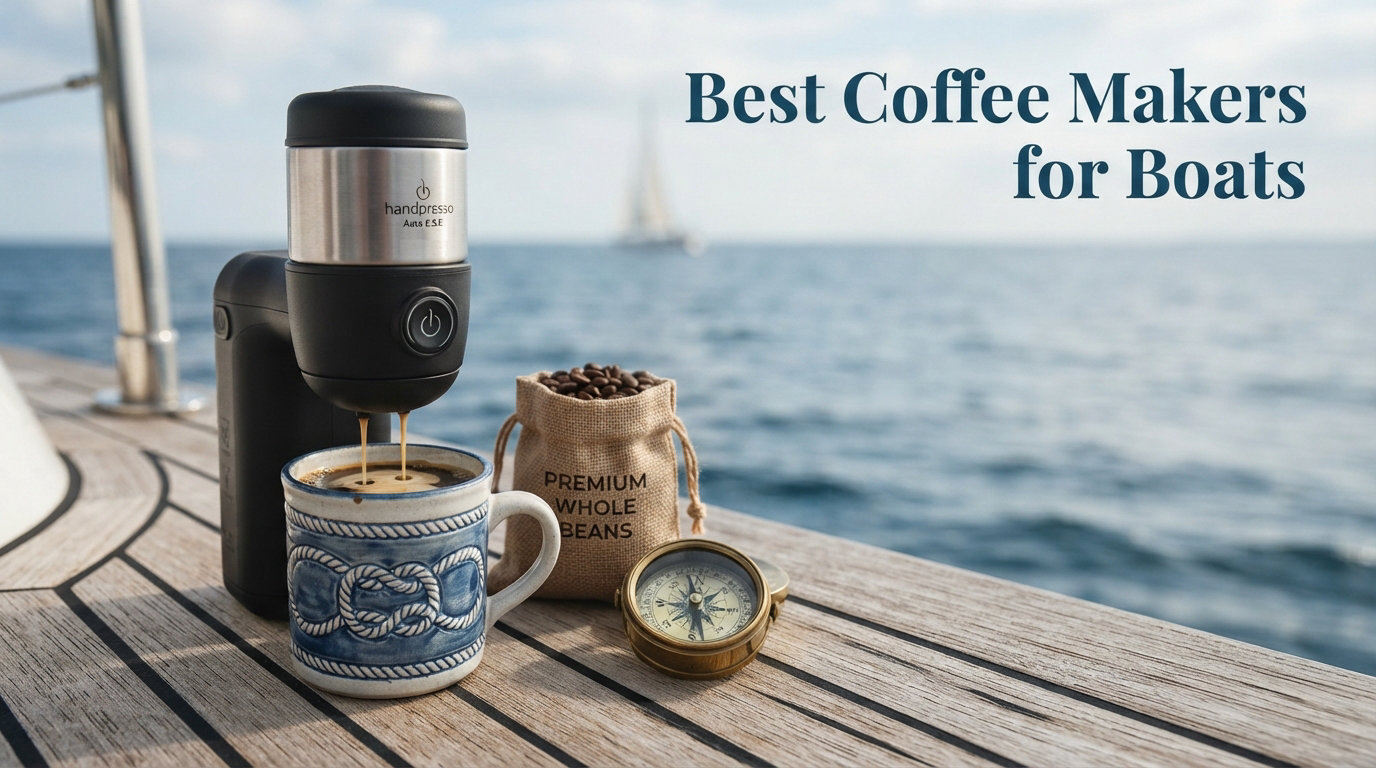
Making coffee on a boat is one of those things that separates casual weekenders from serious cruisers. After months of testing brewing methods on everything from a 25-foot sailboat to a 40-foot trawler, I learned that your kitchen coffee maker has no business on the water. Glass carafes shatter in rough seas. Electric drip brewers drain your battery bank faster than you would expect. That beautiful French press with the glass body? One hard wake and it is gone.
The best coffee makers for boats share a few traits that matter on the water: they are compact, shatterproof or at least break-resistant, easy to clean with minimal fresh water, and they do not demand a huge power draw. Some need nothing more than hot water from a kettle. Others sip from your 12-volt system or a USB power bank. The right choice depends entirely on your boat, your power setup, and how much coffee your crew drinks in a morning.
I tested all seven of these options either on my own boat or on friends’ vessels during coastal cruises. Some are manual brewers that have been around for decades because they simply work. Others represent newer self-heating tech that did not exist a few years ago. Together they cover every type of boater, from the day-tripper who wants one good espresso to the liveaboard couple who need three cups before the anchor comes up. If you want to explore current options and savings, check out our roundup of coffee maker deals to compare pricing across categories.
What I found across all this testing is that there is no single perfect boat coffee maker. There is, however, a perfect one for your specific situation. Maybe you have a gimbaled stove and want stovetop espresso. Maybe you have no stove at all and need something battery-powered. Maybe you are serving a crew of four and need volume in a single brew. I will walk you through each option with honest pros, cons, and the real-world conditions where each one earns its place on board.
Our Top 3 Coffee Makers for Boats, Tested at Sea
After logging hundreds of nautical miles with these brewers, three stood out for different reasons. The AeroPress earned our Editor’s Choice for its unmatched versatility and shatterproof build. The Vietnamese phin filter won Best Value for delivering excellent coffee at the lowest cost on this list. The OutIn Nano took Premium Pick for its self-heating, battery-powered espresso that needs no external heat source at all.
If you only have time to consider three options, start with these. Each solves a fundamentally different problem on the water.


OutIn Nano Electric Espresso
- Self-heating
- 20-bar pressure
- USB-C charging
- Nespresso compatible
The AeroPress is the one I reach for most often. It brews in under two minutes, cleans up with a quick rinse, and survives drops that would destroy a glass French press. The phin filter is what I pack when storage is truly minimal and I want something with zero moving parts. The OutIn Nano is the splurge pick for boaters who want real espresso without firing up the stove or hunting for hot water.
Comparing All 7 Boat Coffee Makers Side by Side
I put together this comparison table so you can scan the key specs before diving into individual reviews. Every product here works on a boat, but they solve different problems depending on your power situation and crew size.
| Product | Specs | Action |
|---|---|---|
| AeroPress Original |
|
Check Latest Price |
 Vietnamese Coffee Filter Phin Vietnamese Coffee Filter Phin |
|
Check Latest Price |
| OutIn Nano Electric Espresso |
|
Check Latest Price |
 Bialetti Moka Express Bialetti Moka Express |
|
Check Latest Price |
 Wacaco Minipresso GR Wacaco Minipresso GR |
|
Check Latest Price |
 STANLEY Stay-Hot French Press STANLEY Stay-Hot French Press |
|
Check Latest Price |
 Hario Skerton Coffee Mill Hario Skerton Coffee Mill |
|
Check Latest Price |
The table covers power source, capacity, and the standout feature of each option. Use it to narrow down your shortlist, then read the full reviews below for the hands-on details that actually matter on the water.
1. AeroPress Original – The Most Versatile Brewer for Small Boats
AeroPress Original Coffee Press, French Press, Pour-Over & Espresso Style
3-in-1 brewing system
10 oz capacity
Under 2 min brew
Shatterproof plastic
Pros
- 3-in-1 brewing versatility
- Shatterproof plastic body
- Under 2 minute brew time
- Easy cleanup with quick rinse
- Only 0.4 lbs total weight
Cons
- Small 10 oz per brew capacity
- Uses paper filters as consumable
- Not dishwasher safe
I have carried the AeroPress on more boat trips than any other brewer on this list. It is the one piece of coffee gear that has never let me down, whether I was brewing in a cramped cuddy cabin or on the cockpit seat at anchor. The combination of shatterproof plastic, tiny storage footprint, and genuinely excellent coffee makes it hard to beat for marine use.
At just 0.4 pounds, it tucks into any compartment on the boat. The sealed chamber design means no spills even when the vessel is rolling in a chop. Reddit users in the sailing and RV communities recommend the AeroPress more than any other single brewer, and after extended use I understand why.
3-in-1 Brewing Versatility
The AeroPress is not a one-trick brewer. By adjusting grind size, water temperature, and steep time, you can produce something close to espresso, a clean pour-over style cup, or a richer French press style brew. I found this flexibility invaluable on passages where I wanted different coffee styles on different days.
The patented air pressure system pushes water through the grounds quickly, which means less bitterness and acidity than a long steep. For boaters who care about flavor, this matters more than you might expect from such a simple device.
Shatterproof Construction for Rough Seas
Every plastic component is BPA-free and built to take abuse. I dropped mine on the fiberglass deck more than once with zero damage. Compare that to a glass French press, which is one hard tack away from becoming a safety hazard with shards in a confined space.
The trade-off is the paper filters. You get 50 in the box, and they are an ongoing consumable. Reusable metal filter options exist, and I recommend picking one up if you want to reduce waste on long cruises.
Speed and Cleanup With Limited Water
Total brew time is under two minutes, and cleanup is a matter of popping out the compressed puck of grounds and giving the chamber a quick rinse. In a marine environment where fresh water is precious, this minimal cleanup is a real advantage over French presses and moka pots that need more thorough washing.
The only real limitation is capacity. At 10 ounces per brew, it is best for solo drinkers or couples who do not mind brewing twice. If you need to serve a crew of four quickly, look at the STANLEY French Press below.
2. Vietnamese Coffee Filter (Phin) – Simplest Gravity Drip for Boats
Thang Long Vietnamese Coffee Filter Set. Also known as a Vietnamese Coffee Maker or Press 8oz. Gravity Insert. Multiple Sizes and Quantities Available
Vietnamese gravity drip
8 oz capacity
4.4 oz weight
Stainless steel
Pros
- Extremely affordable price point
- Near-zero cleanup process
- No moving parts to break
- Stainless steel construction
- Lifetime warranty included
Cons
- Slow 5+ minute brew time
- Requires fine grind coffee
- Small 8 oz capacity
Sometimes the simplest solution is the best one. The Vietnamese phin filter is a stainless steel drip brewer that has been used for generations in homes and street cafes across Vietnam. It is hands down the most affordable option on this list, and after using one for a full season I can confirm the coffee it produces is surprisingly rich and flavorful.
I started using a phin on day sails when I wanted coffee without any complicated setup. You place it over your mug, add fine-ground coffee, pour hot water, and wait. That is the entire process. No pumping, no pressing, no electricity, no stove required beyond heating water once.
Near-Zero Cleanup and No Moving Parts
The phin has four simple pieces: the brewing chamber, the gravity insert, the lid, and the strainer. There are no gaskets to degrade, no pumps to break, no glass to crack. After brewing, you dump the grounds and rinse. That simplicity is why it has become a favorite among long-distance cruisers who value reliability above all else.
Stainless steel construction means no worries about saltwater corrosion either. I left mine in a damp locker for weeks with no rust or discoloration whatsoever.
The Patience Factor and Brew Time
Here is the honest trade-off: the phin is slow. A single cup takes five minutes or more to drip through, and you cannot rush it. On a calm morning at anchor, this is a meditative ritual that many boaters actually enjoy. On a rough crossing when you want coffee immediately, it can feel frustrating.
You also need a fine grind, preferably a Vietnamese-style coffee like Trung Nguyen. If you are used to medium-coarse French press grind, you will need to adjust your coffee supply for this brewer.
Storage Footprint and Durability
At just 4.4 ounces total, the phin is the lightest option on this list by a wide margin. It fits in the palm of your hand and stores literally anywhere. I keep mine nested inside a mug in the galley cabinet and forget it is there until I need it.
The gravity insert design is easier to use than the traditional screw-down type, which is worth noting if you have tried phin filters before and found them finicky. This version just drops in and works consistently every time.
3. OutIn Nano Portable Electric Espresso Machine – Self-Heating Espresso Without a Stove
OutIn Nano Portable Electric Espresso Machine, Travel Coffee Maker
Self-heating espresso
20-bar pressure
USB-C charging
5 shots per charge
Pros
- Self-heating needs no external stove
- 20-bar pressure with genuine crema
- USB-C charging compatible with boat systems
- Works with grounds and Nespresso capsules
- Leak-proof insulated design
Cons
- Premium price point
- Only 5 hot shots per full charge
- Not dishwasher safe
The OutIn Nano represents a category that barely existed a few years ago: a truly self-contained espresso machine that heats its own water. For boaters who want real espresso without firing up the stove or carrying a separate kettle, this is the most exciting option I tested. It charges via USB-C, brews from ground coffee or Nespresso capsules, and produces shots with genuine crema.
On a boat with USB outlets wired into the 12-volt system, it is almost plug-and-play. I was skeptical of the claims until I brewed my first shot in the cockpit and watched a thick layer of crema form on top.
Self-Heating Technology on the Water
The built-in heating element takes room-temperature water to 198 degrees Fahrenheit in about 200 seconds. That means you can brew espresso with cold water straight from your tank, no kettle required. For boats without a galley stove, or for cockpit brewing where you want to keep the coffee gear outside, this is a meaningful advantage.
The catch is battery life. You get roughly five hot shots per full charge of the internal batteries. If you are a single-espresso morning person, that covers a long weekend easily. If your crew downs double shots all day, you will be recharging frequently and planning your coffee schedule around battery capacity.
USB-C Charging and 12V Compatibility
The Nano charges from any 10 to 15-watt USB-C source, which includes most 12V USB adapters found on modern boats. I charged mine from a cigarette lighter USB adapter and from a portable power bank, and both worked without issue. Charge time is a few hours from empty to full.
I recommend charging overnight or while underway with the engine running and the alternator feeding the house bank. The USB-C compatibility is a genuine advantage over older portable espresso devices that relied on proprietary chargers.
Ground Coffee and Capsule Flexibility
The 2-in-1 design accepts both loose grounds and Nespresso Original capsules. The capsule option is convenient for quick mornings with zero cleanup beyond dumping the spent pod. Ground coffee gives you better flavor, more bean options, and lower cost per cup over time.
The 20-bar pressure produces a crema layer that rivals countertop espresso machines. I was genuinely surprised by the shot quality on the first brew, and it held up consistently across multiple tests throughout the season.
4. Bialetti Moka Express – The Classic Italian Stovetop Espresso Pot
Bialetti Moka Express Iconic Italian Stovetop Espresso Maker (Natural Silver, 6 Cups)
6-cup aluminum moka pot
Stovetop heat required
0.48 lbs
Made in Italy
Pros
- Authentic Italian moka pot since 1933
- Patented safety valve for pressure relief
- Lightweight aluminum at under half a pound
- Works on gas electric and induction stoves
Cons
- Requires a stovetop heat source
- Not dishwasher safe rinse only
- Aluminum can pit in salt air
The Bialetti Moka Express is the coffee maker that competitor publications like Yachting Monthly picked as their number one choice for boats, and for good reason. This is the original Italian moka pot, invented by Alfonso Bialetti in 1933. It produces a rich, concentrated coffee that sits somewhere between drip and true espresso.
I tested the 6-cup version on a friend’s sailboat with a gimbaled propane stove. The brewing process is simple and satisfying: fill the bottom chamber with water to the safety valve, add grounds to the basket, screw it together, and set it on low heat until you hear the characteristic gurgling sound that means your coffee is ready.
Stovetop Requirements for Boat Galleys
The Moka Express needs a heat source, which means it only works on boats with a functioning galley stove. It is compatible with gas, electric, and induction stovetops, though induction requires a separate adapter plate that Bialetti sells separately.
On a gimbaled stove at anchor, it works beautifully and feels like the most traditional way to make boat coffee. Underway in rough conditions, I would be cautious about any stovetop brewing. This is an at-anchor or at-dock brewer, not a passage brewer.
Aluminum Body and Marine Durability
The traditional aluminum construction is lightweight at under half a pound, but it requires some care in a marine environment. Aluminum can pit in saltwater conditions if not rinsed and dried properly after use. After brewing in a galley near saltwater, I recommend wiping the pot dry rather than letting it air dry.
The patented safety valve is a genuine safety feature, not marketing fluff. It prevents pressure buildup that could cause the pot to spatter or spray hot coffee, which matters in a small galley space where burns are a real concern.
Capacity and Group Serving
The 6-cup size refers to small Italian espresso cups, not American mugs. In practice, it produces about 270 milliliters of concentrated coffee, enough for two moderate servings or one large cup. Bialetti makes sizes from 1 to 12 cups if you need more or less volume for your crew.
Cleanup is rinse-only with water, no dishwasher and no soap. The seasoning that builds up on the aluminum interior over time actually improves the flavor of the coffee, which sounds counterintuitive but is widely accepted among moka pot enthusiasts.
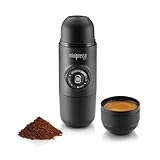
5. Wacaco Minipresso GR – Hand-Pumped Portable Espresso for the Cockpit
Wacaco Minipresso GR, Portable Espresso Machine, Compatible Ground Coffee, Hand Coffee Maker, Travel Gadgets, Manually Operated, Perfect for Camping, Hiking
Manual piston espresso
50ml per shot
0.79 lbs
No power needed
Pros
- Real espresso with genuine crema layer
- Fully manual operation needs no power
- Compact cupholder-friendly size
- Works with any ground coffee variety
- Only 0.79 lbs total weight
Cons
- Requires pre-heated water from another source
- Only 50ml per shot capacity
- Manual pumping effort required per shot
The Wacaco Minipresso is for the espresso purist who wants a real shot with crema, anywhere on the boat, with zero electricity. I took this device on a kayaking trip off the mothership and it quickly became my go-to for cockpit brewing on early mornings when I did not want to go below deck.
It works entirely on manual piston pressure. You add grounds to the basket, pour in hot water, then pump the built-in side button five to ten times to force water through the coffee at pressure. The result is a 50-milliliter espresso shot with a crema layer that genuinely surprised me the first time I used it.
Manual Piston Pressure System
The pumping mechanism is built directly into the body of the device. The semi-rotary pumping action builds pressure gradually, and you can feel the resistance increase as the shot extracts through the coffee puck. It takes about 30 seconds of steady pumping per shot.
Is it labor-intensive? A bit. But it produces better espresso than any instant or cowboy coffee method, and it requires no power at all. For off-grid purists and minimalists, the physical effort is part of the appeal and the satisfaction.
Ultra-Compact Storage Profile
At 2.76 by 2.36 by 6.89 inches and under a pound, the Minipresso fits in a standard cupholder. The pumping button collapses flush into the body when not in use, and the whole unit is completely self-contained with no loose parts to lose.
I stored mine in a drawer next to the chart table and it took up less space than a standard travel thermos. This is one of the few espresso options that works equally well on a small daysailer and a large cruising yacht.
Hot Water Dependency and Pairing
The one hard requirement is pre-heated water. You need a kettle, an immersion heater, or water from your boat’s hot water system to feed the Minipresso. Unlike the OutIn Nano, it does not heat water internally.
Pair it with a small electric kettle on shore power, or a stovetop kettle on your galley stove, and you have a complete espresso setup that weighs under two pounds total and takes up almost no storage space in the cabin.
6. STANLEY Classic Stay-Hot French Press – Insulated Brewer for Serving a Crew
STANLEY Stay-Hot French Press, 48 oz, Cream Gloss
48 oz insulated French press
4hr heat retention
18/8 stainless steel
2.5 lbs
Pros
- 48 oz capacity serves a full crew
- 4 hour heat retention without power
- Unbreakable 18/8 stainless steel
- Dishwasher safe for easy cleaning
- Stanley lifetime warranty
Cons
- Heavy at 2.5 lbs empty
- Nearly 10 inches tall for storage
- Requires more cleanup water
The STANLEY French Press solves a problem that the other brewers on this list simply do not address: volume. At 48 ounces, it brews enough coffee for a crew of four in a single batch. On a buddy’s fishing boat with three guys aboard, this was the only option that kept everyone caffeinated without round after round of individual brewing.
The double-wall vacuum insulation is the headline feature that matters on a boat. Coffee stays hot for four hours, which means you can brew once at dawn and still pour a warm cup at 9 AM. For boats where the morning routine involves anchor watches, fishing lines, and deck work, that heat retention is genuinely useful and eliminates the need for a power-drawing hot plate.
4-Hour Heat Retention on Long Mornings
Stanley’s vacuum insulation is the same technology used in their legendary thermoses and growlers. In my testing, coffee brewed at 6 AM was still pleasantly warm at 9:30 AM, though not piping hot by that point. Cold retention is rated at 9 hours for anyone who prefers cold brew on deck.
This solves the classic boat coffee problem of keeping a pot warm without a hot plate drawing battery power all morning. Brew once, set it in the cockpit drink holder, and pour as needed throughout the early hours.
Stainless Steel Construction and Weight Trade-offs
The 18/8 stainless body is unbreakable in normal use. No glass to shatter in rough seas, no plastic to crack from impact or UV exposure. This is the most physically durable brewer on the entire list, and the lifetime warranty backs that up.
The trade-off is weight. At 2.5 pounds empty, it is the heaviest option here by a significant margin. On a small boat where every ounce matters for performance, that weight adds up. It also stands nearly 10 inches tall, so measure your cabinet clearance carefully before committing.
French Press Technique on a Moving Boat
French press brewing requires a medium-coarse grind and a four-minute steep before pressing. On a stable boat at anchor, this process is straightforward and familiar. In choppy conditions or underway, the pressing action can be awkward if the boat is pitching beneath you.
Cleanup involves separating grounds from the mesh filter plunger, which uses more fresh water than an AeroPress cleanup. In water-conservative situations on smaller boats, plan your rinse water accordingly and consider rinsing with salt water first before a quick fresh water finish.
7. Hario Ceramic Coffee Mill Skerton – Manual Grinder for Fresh Grounds at Sea
Hario Ceramic Coffee Mill-Original, Black
Ceramic burr grinder
24g capacity
Detachable handle
Rust-free
Pros
- Ceramic burrs resist saltwater corrosion
- Consistent grind quality at this price
- Handle detaches for compact storage
- Easy to disassemble and clean
- Affordable entry point for fresh grinding
Cons
- Small 24g capacity per grind
- Manual grinding requires physical effort
- Glass catch jar is fragile on boats
Fresh-ground coffee makes a noticeable difference in flavor, and if you are already committed to manual brewing on your boat, a hand grinder is the logical companion piece. The Hario Skerton is the most popular manual coffee grinder on the market, and it has earned that reputation through consistent ceramic burrs at an accessible price point that works for beginners and experienced brewers alike.
I include it here not as a standalone brewer but as a companion to the AeroPress, phin filter, moka pot, or any other manual brewer on this list. If you are buying whole-bean coffee for your boat trips rather than pre-ground, this is how you grind it without electricity.
Ceramic Burrs vs Saltwater Humidity
The ceramic grinding mechanism is the key feature for marine use. Unlike steel burrs, ceramic does not rust, which matters enormously in the humid, salt-tinged air of a boat cabin. I stored mine in a locker for an entire cruising season with zero corrosion on any component.
Ceramic also produces a more consistent grind than steel at this price point, which translates directly to more even extraction and better-tasting coffee in your cup. The difference is noticeable when you switch from a cheap blade grinder to consistent burr grinding.
Manual Grinding Effort and Output
Grinding is physical work, there is no way around it. Two cups worth of coffee, about 24 grams of beans, takes a minute or two of steady cranking depending on your grind setting. It is not difficult, but it is not instant either.
The 24-gram hopper capacity means you are grinding per-brew or per-two-cups at a time. For a crew of four wanting coffee simultaneously, that means multiple grinding sessions in sequence. Consider whether that fits your morning routine before committing.
Storage and Portability on Board
The handle detaches for storage, which reduces the overall profile significantly. At 8.66 inches tall with a slim 2.83-inch diameter, it stores in most standard galley compartments without issue. The glass catch jar is the one fragile component, so pad it well in rough conditions or consider replacing it with a plastic alternative.
A rubber band wrapped around the body improves grip while grinding, a trick I learned from a barista friend. It also keeps the grinder from sliding on a wet counter, which happens more often than you might expect on a boat.
How to Choose the Right Coffee Maker for Your Boat
I will walk through the key factors that actually matter on the water, based on testing these products across multiple vessels, power setups, and sea conditions. Forum discussions from real boaters on Reddit, Cruisers Forum, and Trawler Forum consistently highlight the same pain points, so I am addressing each one directly.
Power Source: Manual, Electric, or Stovetop
The first decision is how you will heat water and whether you need electricity at all. Manual brewers like the AeroPress, phin filter, and Wacaco Minipresso need hot water from another source but draw zero power from your battery bank. Stovetop options like the Bialetti need a galley stove with propane or alcohol fuel. Electric options like the OutIn Nano need USB-C charging.
The power question matters more on a boat than anywhere else because battery capacity is finite. If you are on a small sailboat with a modest house bank and limited solar or wind charging, every watt counts. Manual brewers that only need hot water are the safest bet for power conservation, since the hot water itself can come from a kettle on the stove using propane rather than battery power.
If you have a robust 12-volt system with solar panels or a wind generator keeping the batteries topped up, the OutIn Nano becomes viable. Its USB-C charging draws modest power and you can top it up while underway. Just keep the five-shot battery limit in mind for longer trips away from shore power.
Size and Storage Constraints
Forum posts from boaters consistently mention cabinet dimensions as the dealbreaker for coffee makers. Before buying anything, measure your storage compartment in all three dimensions. The most common constraint I encountered in testing was height, with many boat cabinets limited to 8 or 9 inches of vertical clearance.
The AeroPress at 4.63 inches, the phin at under 4 inches tall, and the Wacaco at 6.89 inches all fit almost anywhere on any boat. The STANLEY at 9.53 inches and the Hario at 8.66 inches need taller cabinets or open shelf storage. The OutIn Nano at 9.06 inches is borderline for some installations, so measure twice.
Weight matters too, especially on smaller vessels where trim affects performance. The phin at 4.4 ounces and the AeroPress at 0.4 pounds are negligible additions. The STANLEY at 2.5 pounds is noticeable but perfectly acceptable on larger powerboats and trawlers with plenty of displacement.
Breakage and Safety in Rough Seas
Glass is the enemy on a boat. A shattered carafe is not just a lost coffee maker, it is a safety hazard with sharp shards in a confined, rolling space. Every product on this list avoids glass in the primary brewing path, which is intentional and important.
Stainless steel and food-grade plastic are the materials that survive marine conditions long-term. The STANLEY’s all-steel construction and the AeroPress’s shatterproof plastic are the most bombproof options. The Hario grinder does have a glass catch jar, so if you go that route, pad it well or swap it for a plastic container.
Spill resistance matters when the boat is moving. Sealed designs like the AeroPress chamber and the OutIn Nano’s leak-proof body are safest for use in any conditions. Open-top brewers like French presses should only be used at anchor or dock, never underway in rough water.
Cleanup and Water Conservation
Fresh water is a limited resource on most boats, and cleanup matters more than you might think when you are refilling tanks every few days at a marina or water dock. The AeroPress wins on cleanup efficiency: pop out the compressed puck of grounds, quick rinse, done. The phin filter is nearly as easy.
French presses and moka pots require more thorough cleaning to remove oils and grounds from mesh filters and internal crevices. Plan for a few extra ounces of fresh water per cleaning cycle. For boats with limited tank capacity, also consider that atmospheric water generators can supplement your fresh water supply on longer passages, which helps with all galley tasks including coffee cleanup.
The STANLEY is dishwasher safe, which helps if you have access to shore-side facilities with a proper galley. That is not relevant for most cruising situations, but it is a nice bonus when you are docked at a marina for a night.
Saltwater and Humidity Considerations
No competitor article I found addresses saltwater corrosion directly, so here is what I learned from a full season of testing. Aluminum components, like the Bialetti moka pot body, can pit if exposed to salt spray and not rinsed and dried promptly. Ceramic, like the Hario grinder burrs, is completely immune to corrosion. Stainless steel, used in the STANLEY and the phin filter, resists corrosion well but should still be rinsed of any salt residue.
Store your coffee gear in a dry locker away from hatches and ports that might let spray in during rough weather. A simple dry bag adds an extra layer of protection for the most sensitive items, especially electronics like the OutIn Nano. Rinse everything with fresh water after any exposure to salt spray, and dry thoroughly before storing.
Frequently Asked Questions About Boat Coffee Makers
How do you make coffee on a boat without electricity?
The best non-electric methods for boat coffee are the AeroPress (press hot water through grounds in under two minutes), a Vietnamese phin filter (slow gravity drip into your mug), a French press (steep and plunge), or a stovetop moka pot like the Bialetti. All of these require only hot water, which you can heat on a galley stove using propane or alcohol fuel. Manual brewers are preferred by most cruisers because they draw zero battery power.
Can you use a regular drip coffee maker on a boat?
You can, but it is not recommended. Standard electric drip brewers draw significant power (800 to 1500 watts), which can strain a modest battery bank and inverter system. They also typically use glass carafes that shatter in rough seas. Most experienced boaters switch to manual brewers or purpose-built portable options like the AeroPress or OutIn Nano, which are safer and more power-efficient for marine use.
What is the best coffee maker for a small sailboat?
For small sailboats with limited storage and power, the AeroPress Original is the top choice. It weighs only 0.4 pounds, stores in any compartment, brews in under two minutes, and is shatterproof. The Vietnamese phin filter is even smaller and lighter at 4.4 ounces. Both require only hot water and no electricity, making them ideal for compact galleys with modest battery banks.
How do you keep coffee hot on a boat?
Use a vacuum-insulated container like the STANLEY Stay-Hot French Press, which retains heat for up to 4 hours. Alternatively, brew into a quality insulated thermos or travel mug. Avoid glass carafes with hot plates, as they draw continuous power and are breakage hazards. For long mornings, brew once into an insulated vessel and pour as needed throughout the watch.
Are percolators good for boats?
Percolators have fallen out of favor because they tend to over-extract coffee, producing a bitter taste from repeated cycling of brewed coffee through the grounds. Modern boaters prefer French presses, AeroPress brewers, or moka pots, which offer better flavor control. Stovetop percolators do work on boats with a galley stove, but most coffee-conscious cruisers have moved on to better methods.
Which Boat Coffee Maker Is Right for You?
After testing all seven options across a full season on the water, here is how I would decide. If you want one do-everything brewer that works anywhere on any boat, get the AeroPress. If you are serving a crew and need volume plus heat retention in a single brew, the STANLEY French Press is the answer. If you want real espresso without a stove or separate kettle, the OutIn Nano is worth the investment.
For budget-conscious boaters, the Vietnamese phin filter delivers excellent coffee at the lowest cost on this list and takes up almost zero storage space. For stovetop traditionalists with a gimbaled galley, the Bialetti Moka Express remains the classic choice that has served Italian households and mariners since 1933. If fresh-ground coffee matters to your morning routine, pair any of these brewers with the Hario Skerton grinder.
The best coffee makers for boats in 2026 are the ones that match your power situation, your storage constraints, and your crew size. There is no universal winner, but there is a perfect fit for your vessel. Pick the option that solves your biggest constraint, measure your cabinet before ordering, and start brewing better coffee on the water.
Leave a Reply