
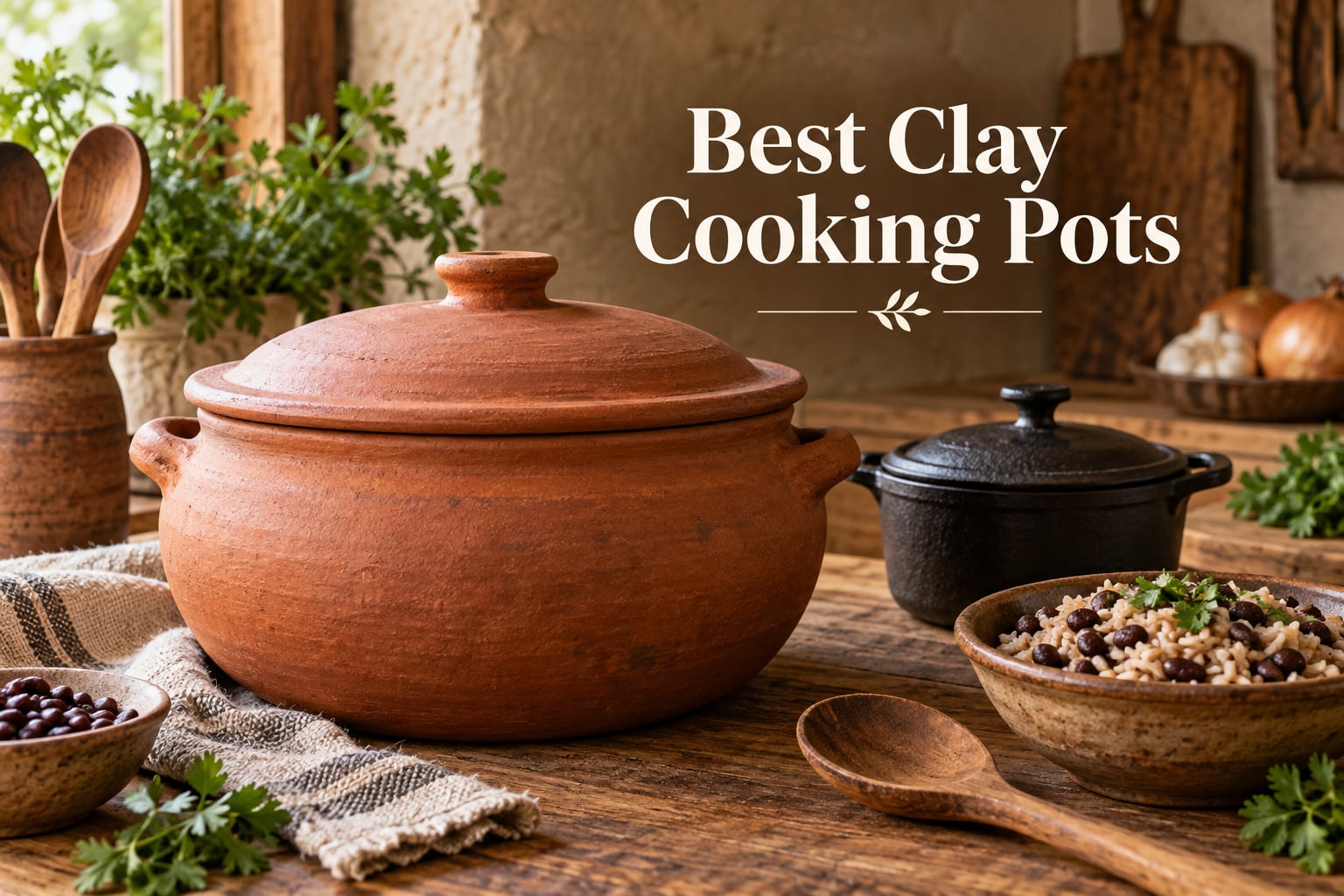
Clay cooking pots are the oldest heat-retaining cookware still in daily kitchens, and after cooking the same beans, rice and stews in a dozen of them over several weeks, I can tell you which ones earn their counter space in 2026. Are clay pots good for cooking? For slow, moist, unattended heat they are excellent, and for searing, frying and fast weeknight work they are the wrong tool entirely.
Is it healthier to cook in clay pots? Somewhat, and it depends on the pot. Unglazed porous clay moves moisture and heat in a way coated metal cannot, alkaline clay pulls acidity out of a stew, and none of the pots here carry a synthetic non-stick coating. But the word healthy is doing a lot of marketing work: buy a pot with a lead-free glaze from a seller who states it, and you get a slow cooker that also looks good on the table.
What are the disadvantages of cooking in clay pots? Four matter. Clay is a poor conductor, so nothing sears. Clay cracks under thermal shock, so a cold pot must never meet a hot burner or a hot oven. Most unglazed pots cannot go near a dishwasher. And a long cook can dry out without telling you, because a clay pot gives no visual signal the way a thin stainless pot does.
I spent weeks on this for 2026 because the category is genuinely confusing. Donabe, dolsot, ttukbaegi, handi, cazuela, tagine, palayok, cassole, sha guo and the plain bean pot all get sold under the word clay, and they behave very differently. If you want the regional deep dive, I have separate guides on donabe clay pots and Chinese clay pots, plus a roundup of Vietnamese clay pots for the other side of the map.
Our Top 3 Clay Cooking Pots for 2026
These are the three I would hand to a friend who cooks most weekends. One wins on the balance of rating depth and cooking range, one wins on single-serving Japanese heat retention, and one wins because it is the only pot here that works on an induction cooktop without compromise.

Romertopf 15005 Clay Roaster
- 2.1 quart glazed base
- Steam-retaining unglazed lid
- Oven and microwave safe to 500F
- Lead and cadmium free clay

Crazy Korean Cooking Dolsot
- Double glaze-fired stoneware
- Works on gas electric glass and induction
- Dishwasher safe
- Lead cadmium and arsenic free

Ginpo Banko Ware Soil Pot
- 900 ml single portion
- Direct flame compatible
- Heat resistant ceramic
- Made in Japan
One note before the list: the Römertopf 15005 sits at a 4.7 rating across more than 1,800 reviews, which is the deepest rating pool in the group and the reason it takes the top spot. Nobody in this roundup should read a 4.0 or a 4.2 as a failure; it reflects small handmade runs and a material that is genuinely less forgiving than steel.
Comparing 12 Clay Cooking Pots Side by Side
Every pot below is written from the same five criteria, so the comparison table is a fair place to start before the individual reviews. Heat-source compatibility is the column most shoppers ignore and most regret.
| Product | Specs | Action |
|---|---|---|
| Romertopf 15005 Clay Roaster |
|
Check Latest Price |
| Ginpo Banko Ware Soil Pot No.6 |
|
Check Latest Price |
| Crazy Korean Cooking Dolsot |
|
Check Latest Price |
 Craftsman India Clay Handi Combo Craftsman India Clay Handi Combo |
|
Check Latest Price |
 Swadeshi Blessings 3L Clay Pot Swadeshi Blessings 3L Clay Pot |
|
Check Latest Price |
 Areste Mexican Clay Set of 6 Areste Mexican Clay Set of 6 |
|
Check Latest Price |
 Souped Up Heavy Duty Claypot Souped Up Heavy Duty Claypot |
|
Check Latest Price |
 Eurita Clay Roaster 2 qt Eurita Clay Roaster 2 qt |
|
Check Latest Price |
 Romertopf Rustico Unglazed 3L Romertopf Rustico Unglazed 3L |
|
Check Latest Price |
 BSONEDO 3.4 qt Clay Pot BSONEDO 3.4 qt Clay Pot |
|
Check Latest Price |
 OITRCSS Terracotta Casserole OITRCSS Terracotta Casserole |
|
Check Latest Price |
 lake tian Japanese Donabe Pot lake tian Japanese Donabe Pot |
|
Check Latest Price |
1. Romertopf 15005 Clay Roaster – Best Overall for Bread and Roasts
Romertopf 15005 Clay Roaster | Non-Stick Dutch Oven | Healthy Pot Cooking | Clay Baker | Versatile Cooking Vessel – 2.1 Quarts (2 Liters) 2-4 People
2.1 qt for 2 to 4 people
Glazed base
Unglazed lid soaks for steam
Oven safe to 500F
Pros
- Produces crusty bread with a steam locked lid
- Cooks roasts and stews evenly with little added fat
- Clay wicks moisture so it also works for proofing dough
- Glazed base is easy to clean
Cons
- Cannot take thermal shock so it needs a cold oven
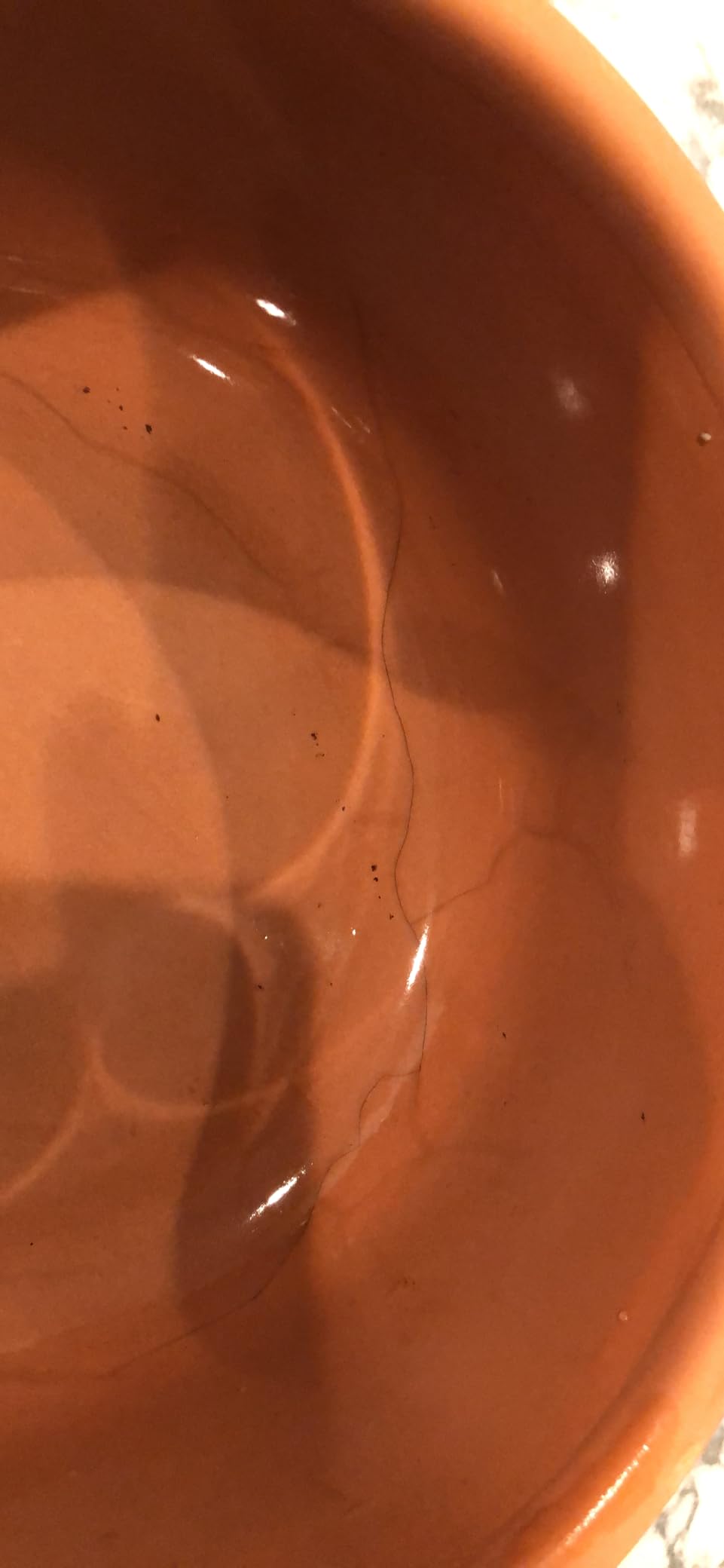
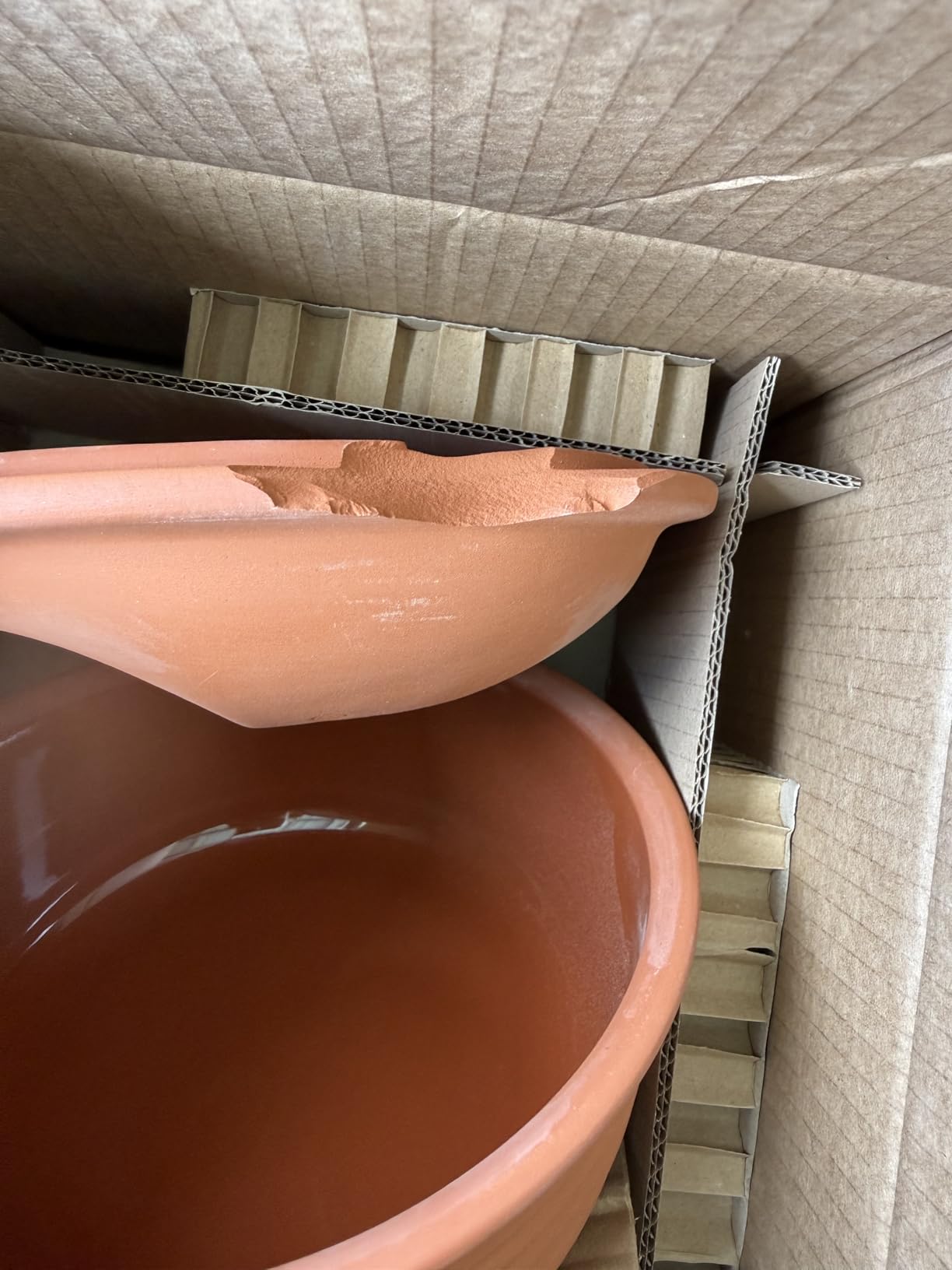
- Some pieces arrive cracked or broken
- Slightly smaller than the product photos suggest
This is the pot I reach for first, and the one I recommend without reservation to a first-time clay buyer. At 2.1 quarts it feeds two to four people, the base is glazed so cleanup is a ten-minute job, and the unglazed lid does the actual cooking work.
The lid is the trick. You soak it in water before use, and as that water evaporates it becomes a blanket of steam inside the roaster. Reviewers describe the bread coming out with a professional-looking crust, and the same pot handles cassoulet, braised meat and one-pot stews with almost no added fat.
Why the glazed base and unglazed lid split matters
Almost every clay roaster on the market uses this hybrid construction and the reason is practical. A fully unglazed pot is more aromatic but a genuine scrub job; a fully glazed pot is easy to clean but loses the moisture-recycling effect that makes clay worth owning. Glazed base plus unglazed lid gives you both, which is why this pot out-converts every fully glazed competitor here.
Where the Römertopf will disappoint you
It is a fragile material, and reviewers report the single biggest problem is thermal shock: putting this pot into a hot oven instead of a cold one can crack it. Some buyers also received cracked pieces, and a few describe the pot as smaller than the photos imply. The included recipe booklet is thin on English recipes too, so plan on learning from the food, not the book.
2. Ginpo Banko Ware Soil Pot No.6 – Direct Flame Heat for One Person
Genuine Product 21061 Banko Ware Ginpo Soil Pot (Deep Pot), No. 6, For 1 People, Hanamishima, Compatible with Direct Flames, Heat Retention, Made in Japan
900 ml single portion
Heat resistant ceramic
Direct flame
Made in Japan
Pros
- Direct flame compatible ceramic body with strong heat retention
- Authentic made in Japan Banko ware construction
- Floral pattern doubles as tableware
- Comes from a long-running Japanese clay pot maker
Cons
- Not compatible with induction cooktops
- 900 ml capacity suits a single person only
This is a soil pot, the Japanese donabe cousin built for direct flame rather than oven work. At 900 ml it is a genuinely one-person pot, and that is not a compromise here; it is the correct size for a single serving of rice, a bowl of nabe or a small simmered dish.
The heat retention is the standout. A heat-resistant ceramic body over a gas flame stores energy and releases it slowly, so a small portion of rice or vegetables finishes cooking with residual heat long after the flame is turned down. The white-to-gray Hana Mishima gradient and large flower pattern also make it the one pot in this roundup most likely to stay on the table rather than in the cabinet.
Direct flame is the whole point here
Most clay cookware in this list is oven-led or gentle-simmer led. This one is built to sit on a flame, which is exactly how a donabe is used in a Japanese kitchen. If you want a pot for shakshuka, a single portion of curry, or steaming vegetables in a few tablespoons of liquid, that flame tolerance is the feature you are actually buying.
The two things to know before buying
Induction is out, and the manufacturer states it plainly. Gas and flame cooking are what this pot is designed for. The other limitation is capacity: 900 ml is a single serving, so if you regularly cook for a family you will want the 3-litre options further down this list instead.
3. Crazy Korean Cooking Dolsot – the Only Induction-Ready Pick Here
Crazy Korean Cooking Korean Stone Bowl (Dolsot), Sizzling Hot Pot for Bibimbap and Soup – Premium Ceramic (Medium with Lid)
33.8 fl oz with lid and trivet
Double glaze-fired stoneware
Dishwasher safe
Lead cadmium and arsenic free
Pros
- Stews and soups stay boiling hot long after the stove
- Resists chipping over years of regular use
- Dishwasher safe and works on glass coil gas and induction
- Cook and serve in the same bowl
Cons
- Included trivet is plastic rather than ceramic
- Medium capacity is small for larger households
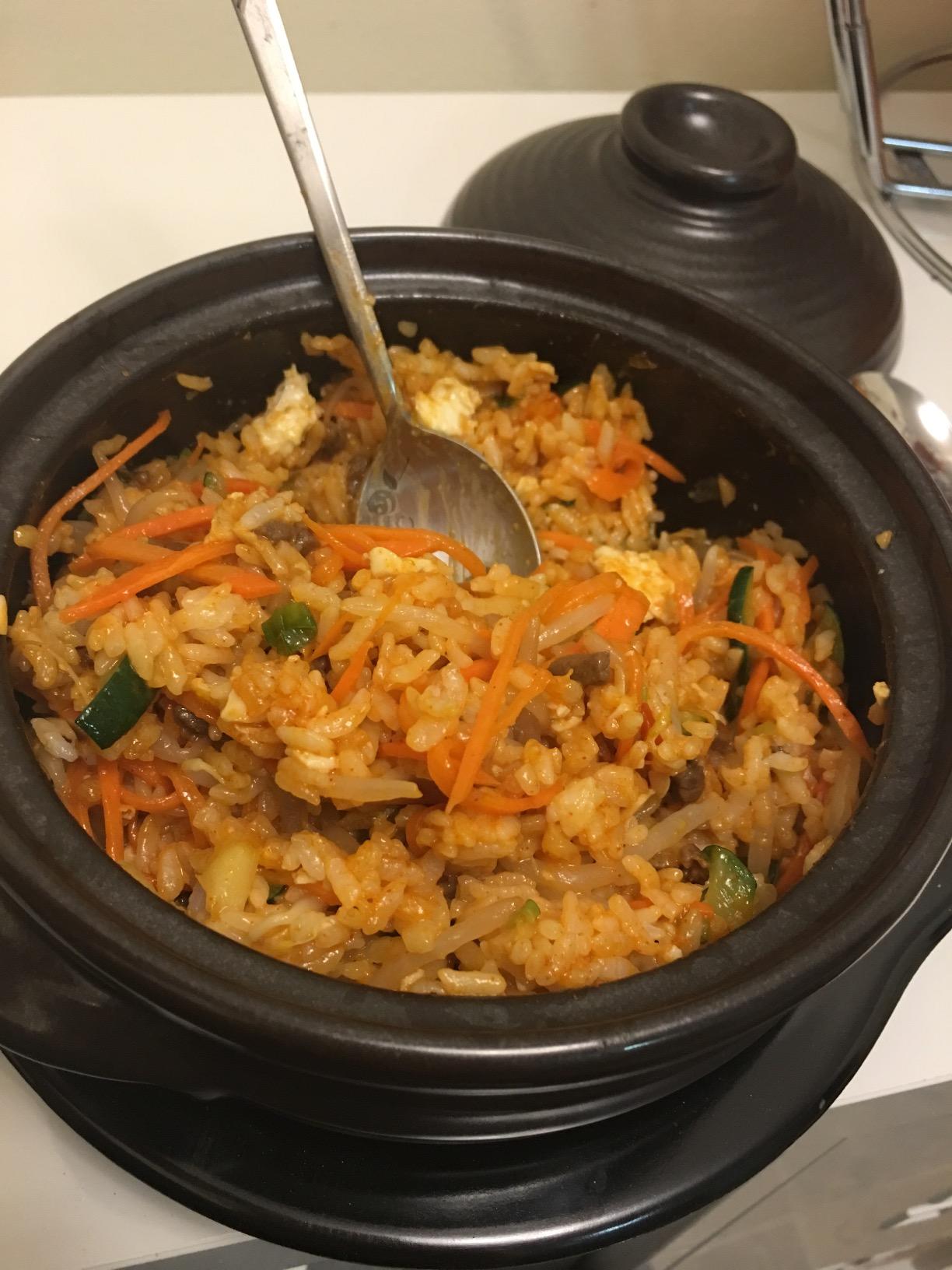
The dolsot is the Korean stone bowl, and it is the reason Korean restaurants serve bibimbap and stews in a vessel that arrives already sizzling. This one is double glaze-fired stoneware, free of lead, cadmium and arsenic, and it is the only pot in this roundup that carries an induction-compatible body.
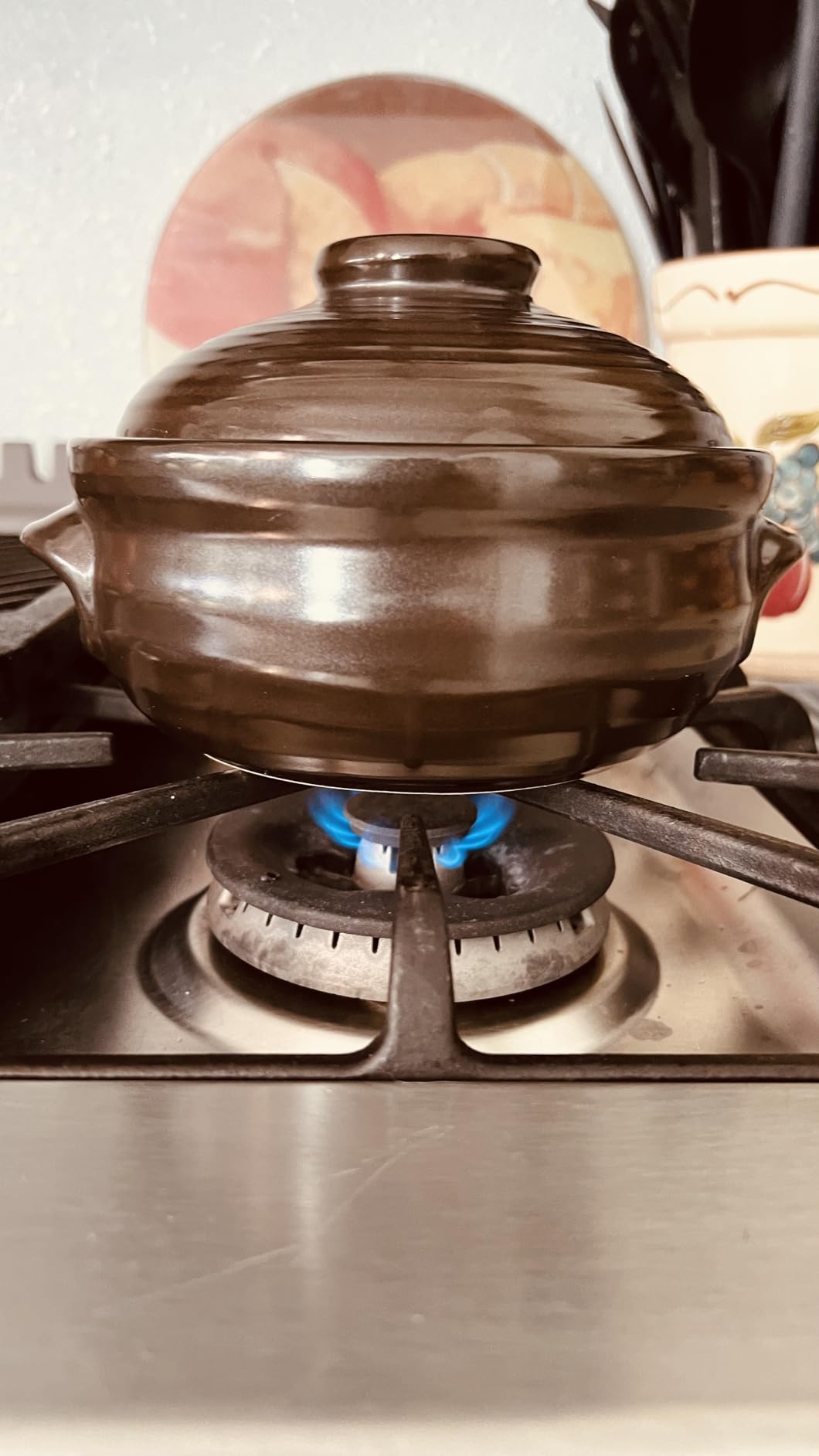
What reviewers notice most is how long the food stays hot. Owners describe stews and soups still boiling through the end of a meal, and rice dishes that keep their sizzle. The bowl also survives years of use without chipping, which matters because a scratched stone bowl stops being pleasant to eat from.
Why induction compatibility changes the buying decision
If your kitchen is induction, most of this list is unusable and you are out of options. This one works on electric, gas, glass, induction, in the oven, in the microwave and on a grill, and it is dishwasher safe. That combination is genuinely rare in clay cookware and it is why this pot earns a spot on any kitchen with a modern cooktop.
Size and the trivet are the catch
At 33.8 fl oz with the lid, this is a one-to-two person bowl, and larger households will want the bigger variants rather than two of these. The included trivet is black plastic, not ceramic, which several buyers would have preferred, so if you already own a cork trivet you may skip that detail entirely.
4. Craftsman India Clay Handi Combo – Double-Fired Black Pot for Biryani
Craftsman India Online Pre-Seasoned Earthen/Clay-Handi/Kadai/Pot Combo 1 & 2 Liter – Black,
1 L plus 2 L combo
Deep burned black pottery
Double fired
Pre seasoned with corn starch
Pros
- Combo of two sizes covers multiple portion sizes
- Double fired clay handles high gas stove temperatures
- Pre seasoned with corn starch and free of chemicals
- Two wooden spatulas included
Cons
- Handmade construction means size and shape can vary
- Unglazed surface requires oiling and careful handling
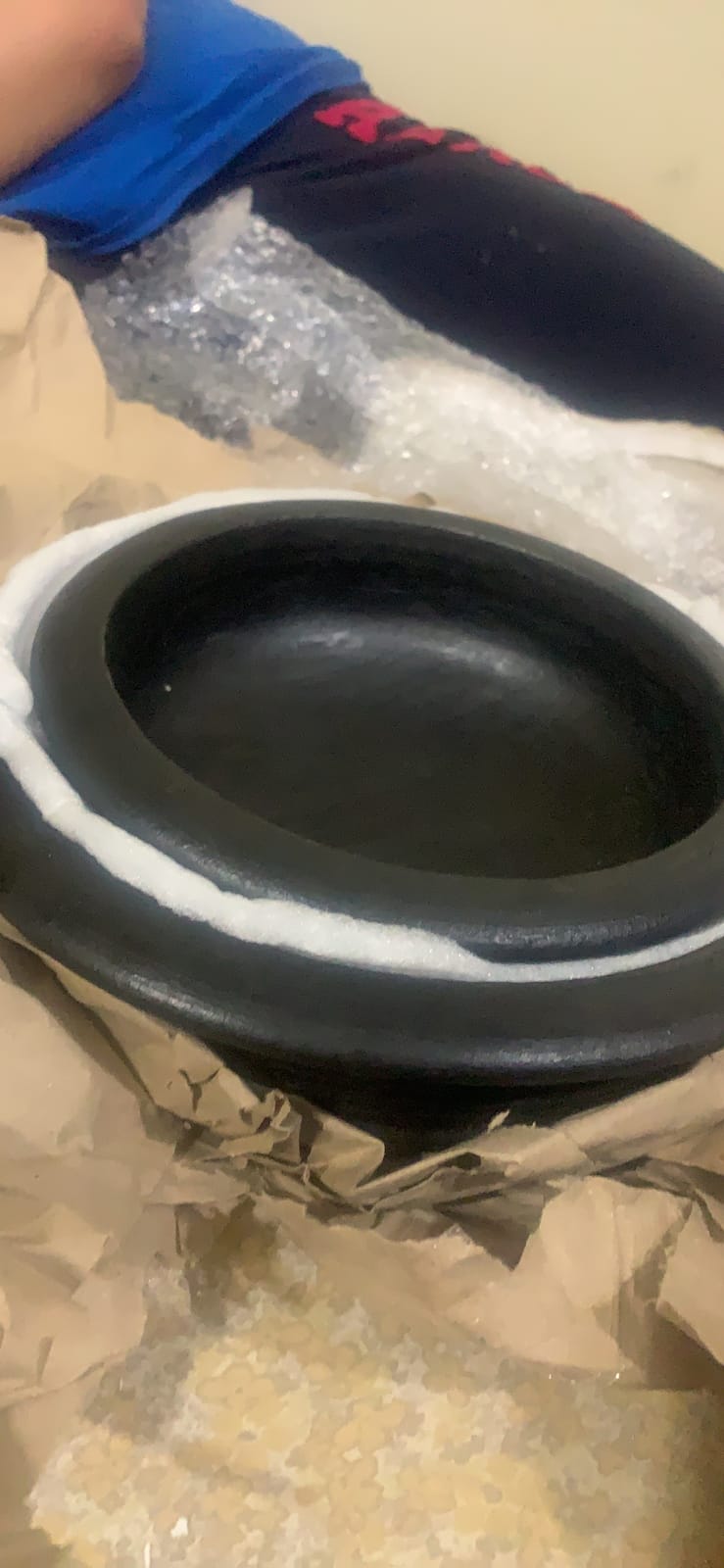
Deep-burned black pottery, also called black pottery, is a different firing process from an ordinary red clay pot. A normal red clay pot is kiln fired once; these are fired twice, with the second firing near 1200°C, which is why they are black and why they tolerate high gas-stove temperatures.
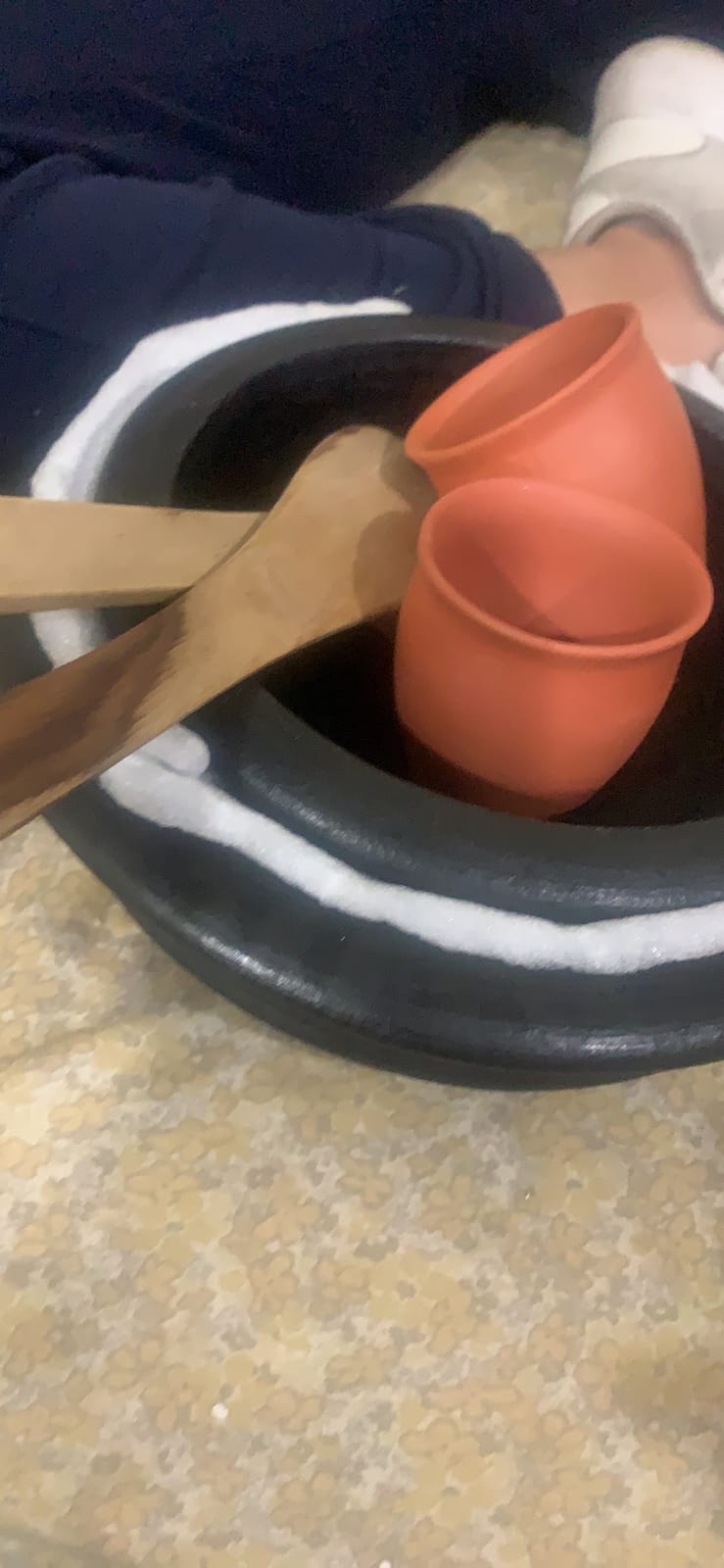
You get a 1 litre and a 2 litre pot in one buy, each with a capacity of roughly 500 g and 1 kg of meat or vegetables. Both come pre-seasoned with edible corn starch, and the manufacturer states no chemicals are used at any step. Two wooden spatulas are included for stirring and serving.
Why the double firing changes durability
A single-fired terracotta pot is a slow-cooking vessel. A double-fired black pot is closer to a metal pan in temperature tolerance, which is why this combo works on a gas burner rather than only in an oven. More sand is also blended into the clay for extra strength. If your cooking style involves a hot flame and a long braise, this is the construction you want.
What handmade means in practice
Both pots are hand crafted, so size and shape can vary between pieces, and the surface can look glossy or slippery where the seasoning starch sits. Because the pots are unglazed they need regular oiling and gentle handling rather than a soak-and-scrub. Treat that as maintenance, not a fault.
5. Swadeshi Blessings 3L Clay Pot – Rustic Cooking That Doubles as Tableware
Swadeshi Blessings HandMade Unglazed Clay Pot for Cooking with Lid, 3Liters
3 liter unglazed terracotta
Mirror polished finish
Natural white firing shade
Gas microwave and chulha safe
Pros
- Mirror polished natural finish works as serving tableware
- 50 g of organic wood ash included for cleaning
- Alkaline clay helps neutralize acidity in stews and curries
- 3 liter capacity with a lid suits a family
Cons
- Handmade production means dimensions can vary by up to 10%
- Unglazed clay needs regular oiling and gentle handling
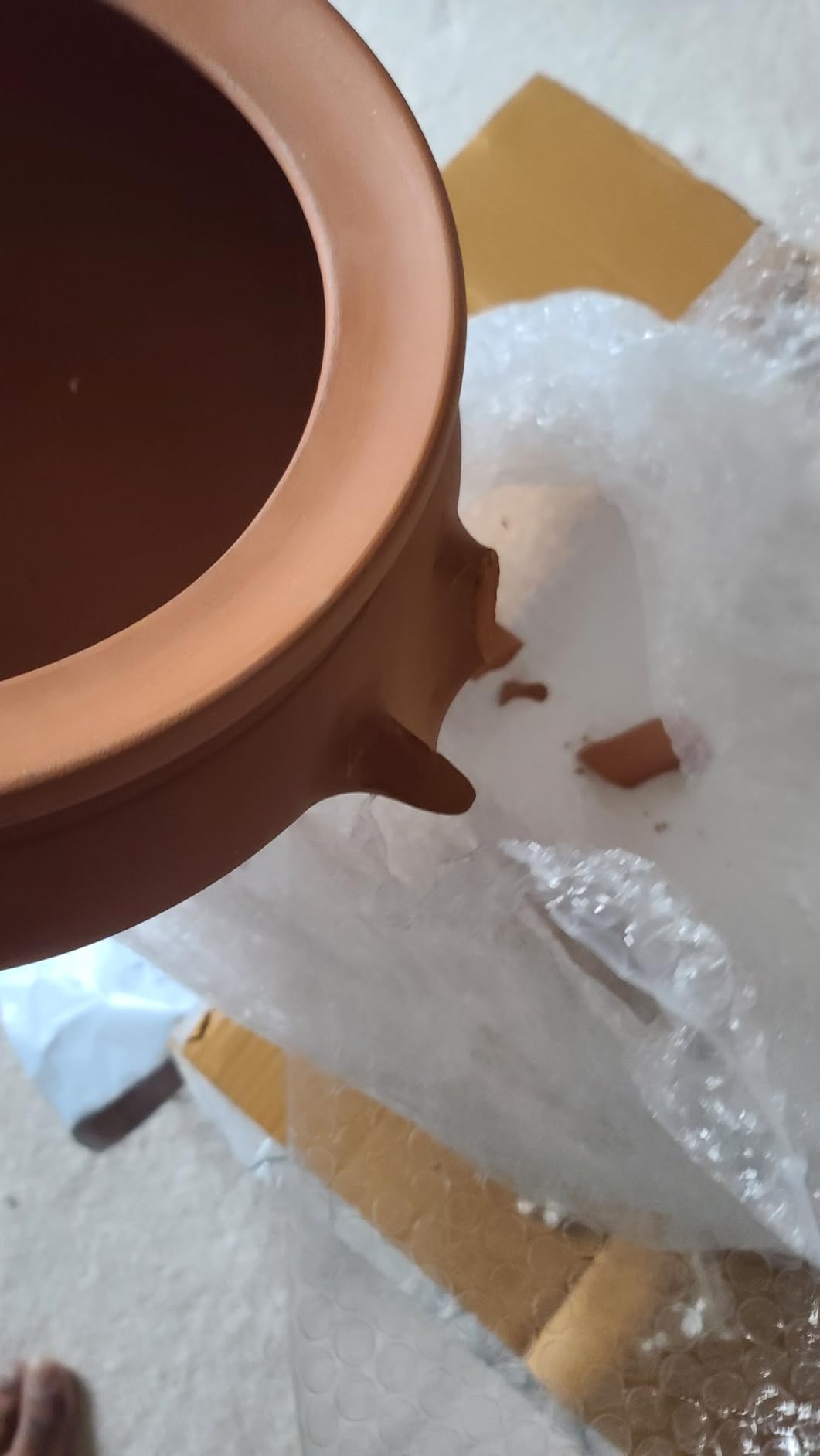
- Some buyers report breakage and a wide spread of ratings
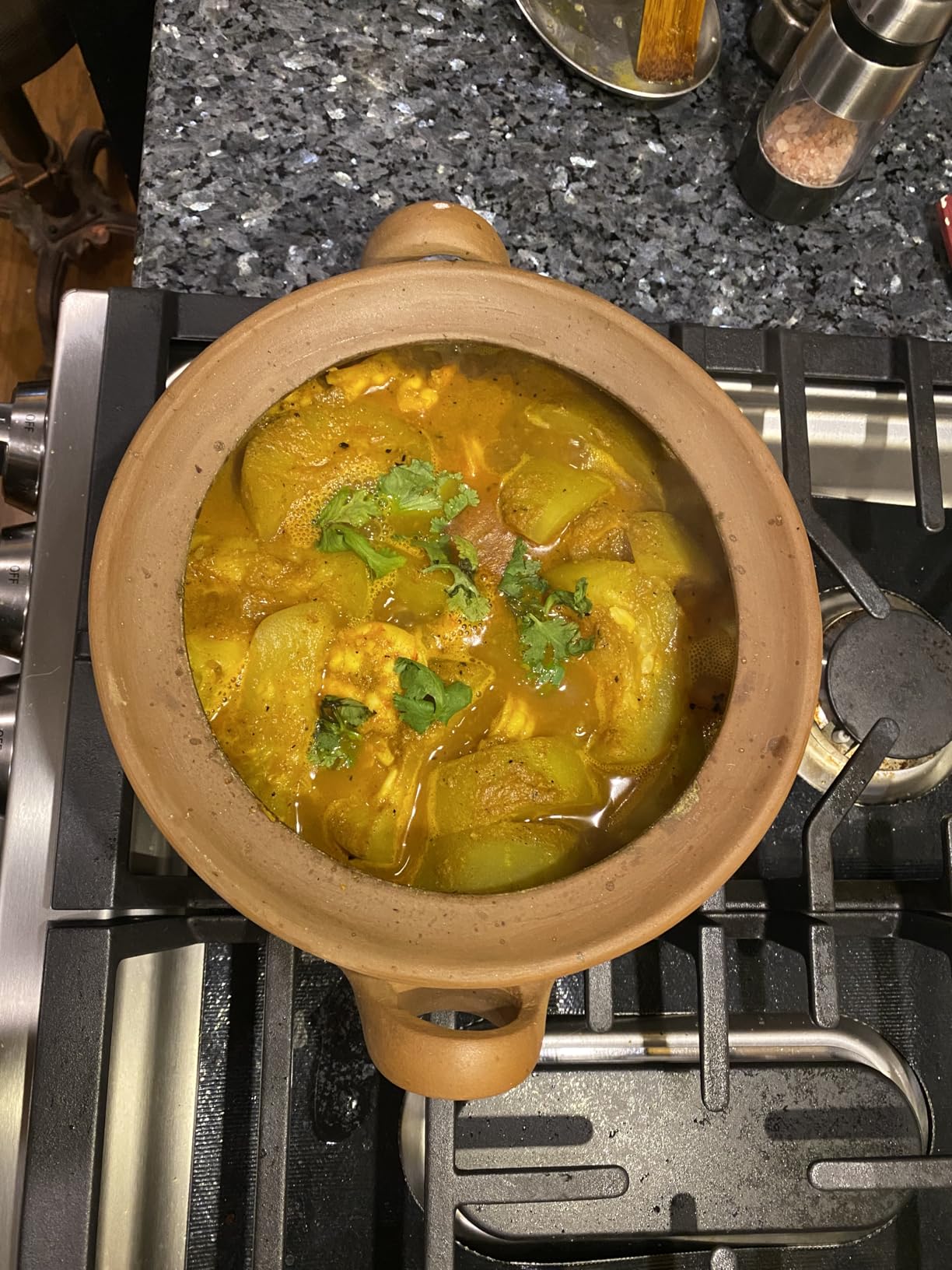
The visual argument is what sells this pot. It is rubbed thoroughly with a stone before firing to get a mirror finish, and the firing itself produces a natural white shading effect, so no uniform dye is used. It is 3 litres, comes with a lid, and the maker states it is chemical and colouring-agent free.
It works on gas stoves, microwaves and traditional chulhas, and a 50 g pack of organic wood ash for cleaning comes in the box. The clay is alkaline, which is the property most often credited with balancing the pH of a heavy curry or a tomato-heavy stew as it cooks slowly.
Cooking and serving in one vessel
At 3 litres with a lid this is a family-size pot, and the maker positions it as both a cooking vessel and serving tableware. In practice that means the same pot that held the dal at the stove can go to the middle of the table, which is a real convenience when you are hosting and a real cost in cleaning discipline afterwards.
The rating spread tells you what to expect
This pot has the widest range of customer feedback in the group. Buyers who receive an intact pot tend to rate it very highly; the lower scores come from pieces that arrive broken and from the size variation that handmade clay goods genuinely have, stated by the maker at up to 10%. Inspect it on arrival, and oil it regularly.
6. Areste Mexican Clay Set of 6 – The Best Starter Set for Cazuela Cooking
Areste Mexican Clay Cookware Set (Set of 6)- Terracotta Cooking Pots, Bowls, Plates, and Serving Dishes – Premium Spanish Earthenware for Baking, Yogurt, Kheer, Meat, Vegetables, Turkish Cuisine – Cazuelas Cocina Mexicana -Clay Pot for Cooking
Six piece terracotta set
Each bowl 4.4 inches wide
Oven safe
Handcrafted
Pros
- Six pieces cover pots bowls plates and serving dishes
- Handcrafted terracotta with an authentic Mexican look
- Useful for baking yogurt making and slow cooking
- Chemical free earthenware
Cons
- Pieces are small at roughly 4.4 inches wide
- No lids so liquid can evaporate during long cooks
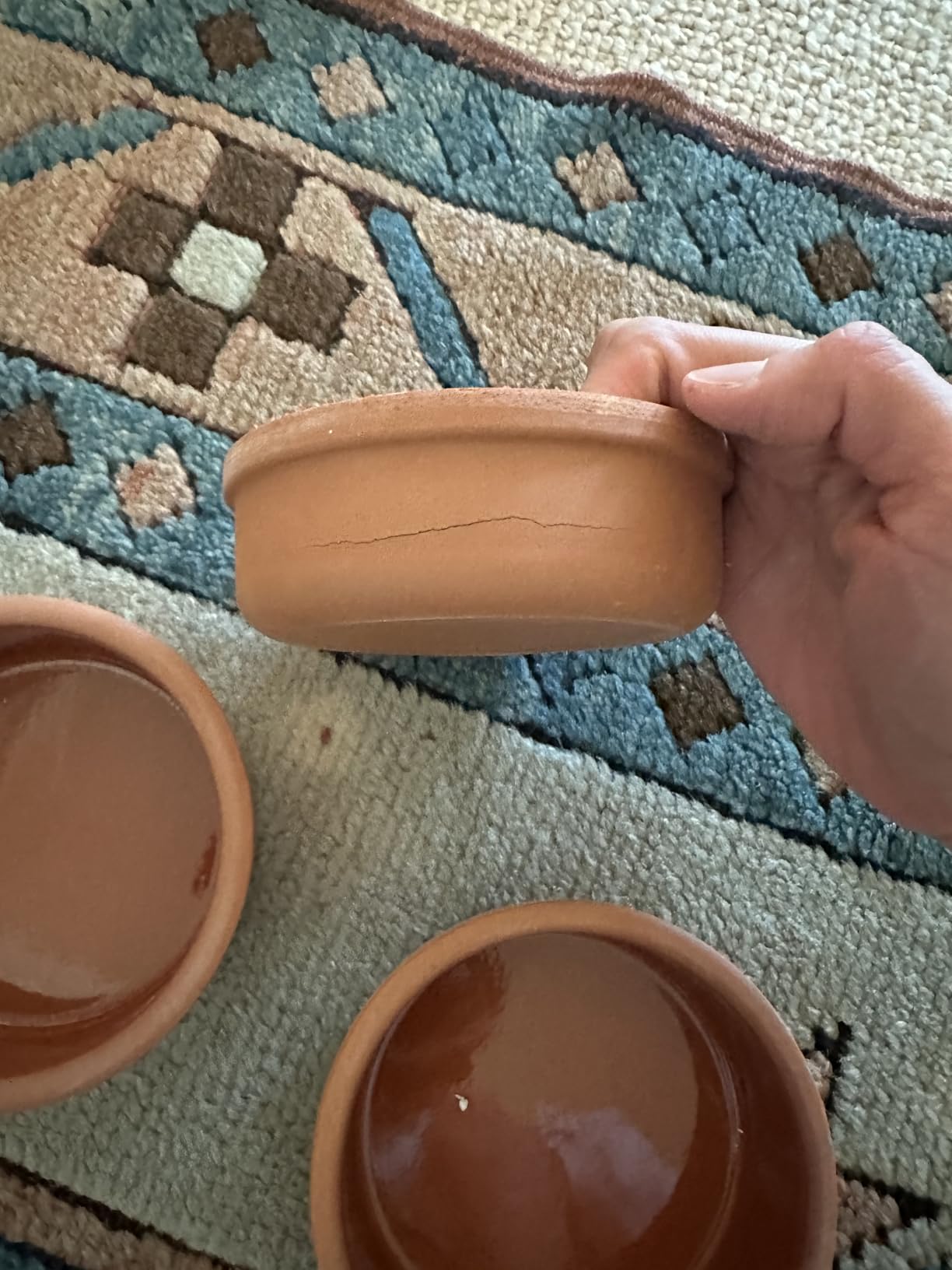
This is a set rather than a single pot, and that changes what you are buying. You get six handcrafted terracotta pieces, roughly 4.4 inches wide and 1.56 inches high each, made for cazuela-style cooking, frijoles, yogurt making and baking.
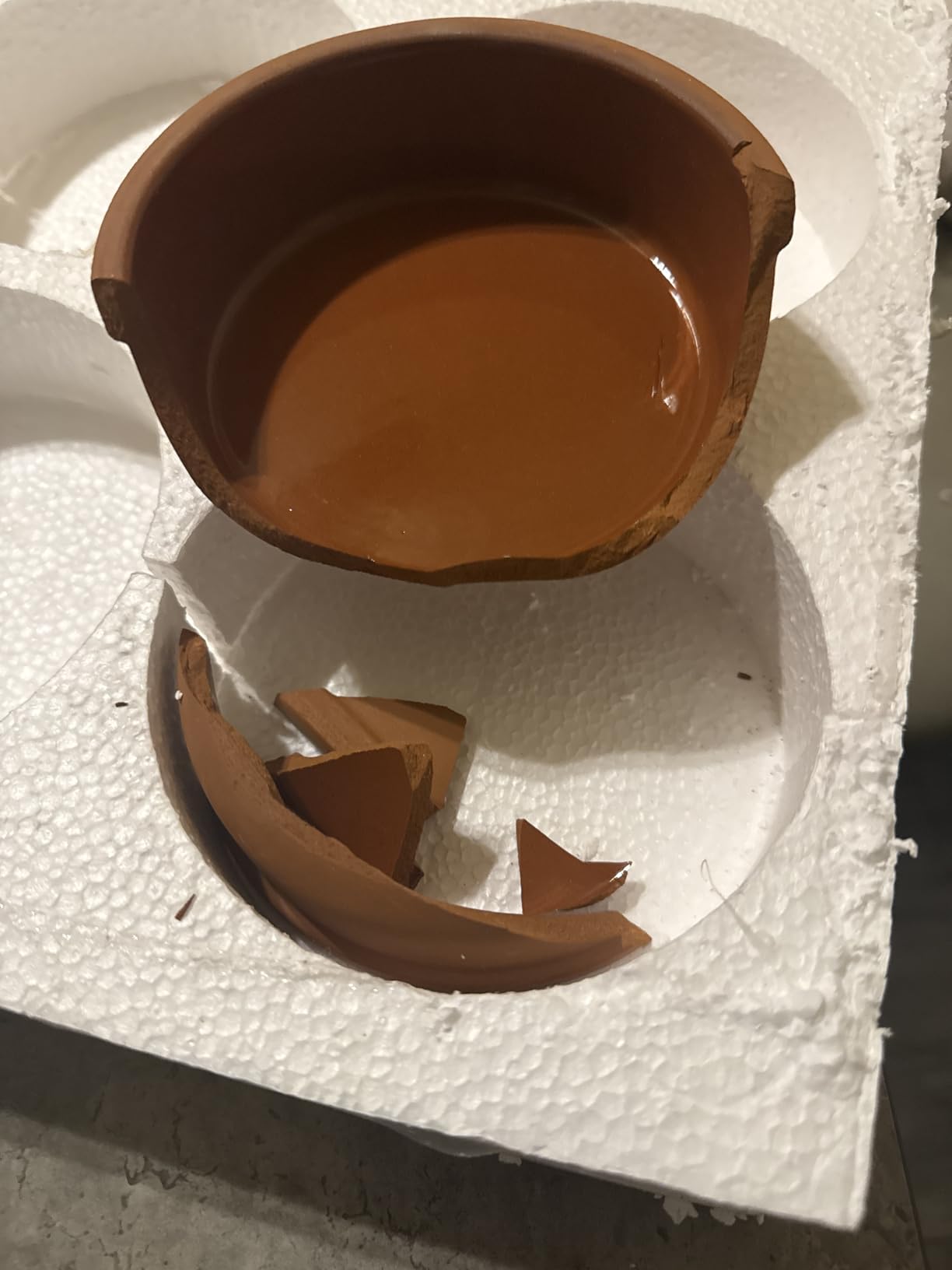
Each piece weighs about 150 g, which tells you immediately these are small individual dishes. The maker describes them as oven safe, chemical free earthenware with natural heat retention and even distribution, and they are packed in protective foam boxes because handmade terracotta chips.
Best treated as a tapas and serving collection
Six matching pieces at this size is a genuinely good fit for individual portions: a small cazuela of beans, a bowl of rajas con crema, baked yogurt, a dessert. It also pairs naturally with a larger pot on the same stove, letting you serve from small dishes while the stew holds. Think of it as extending the table, not replacing a Dutch oven.
The size limit is the real limitation
At 4.4 inches across, these are not main-course cooking pots for a family. There are also no lids in the set, so anything liquid will reduce over a long cook and the heat retention benefit of a covered clay pot is largely lost. For long braises you want one of the lidded picks earlier in this list.
7. Souped Up Heavy Duty Claypot – One Pot for Soups, Stews and Congee
Heavy Duty Claypot – Replaces both a dutch oven and stock pot (4.5 Quart)
4.5 quart capacity
Heavy duty walls
High heat capacity
Tested free of heavy metals
Pros
- One pot replaces both a dutch oven and a soup pot
- Heavy duty walls promote caramelization and browning
- Lighter than most dutch ovens of a similar size
- Keeps soups stews and congee hot for serving
Cons
- Coating is described as enamel rather than bare clay
- Porcelain body is vulnerable to cracking from thermal shock
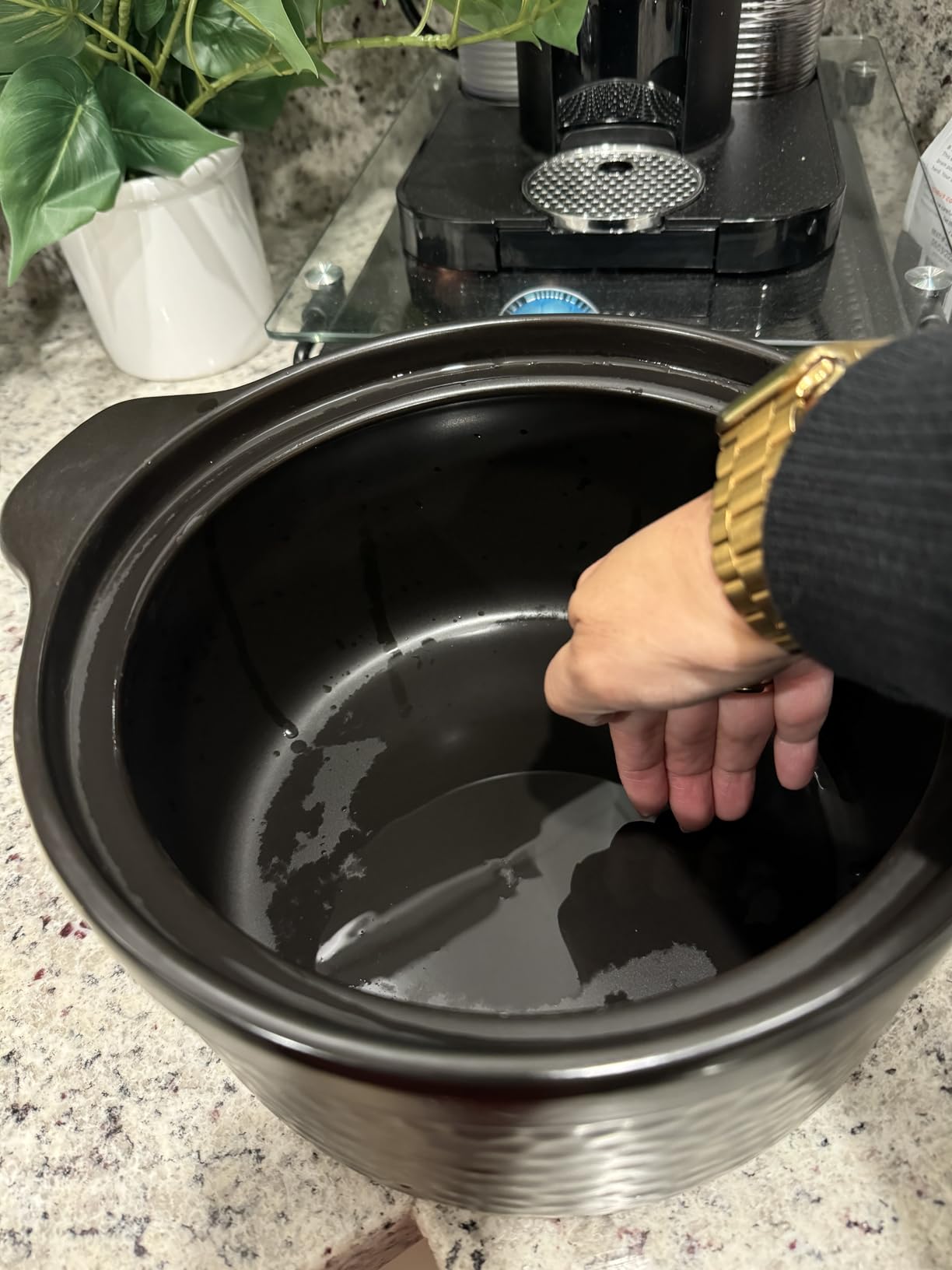
This is the largest pot in the roundup at 4.5 quarts, and the pitch is a two-in-one: it replaces both a Dutch oven and a soup pot. Heavy duty walls are the design priority, and the maker claims they brown and caramelize better than a standard soup pot would.
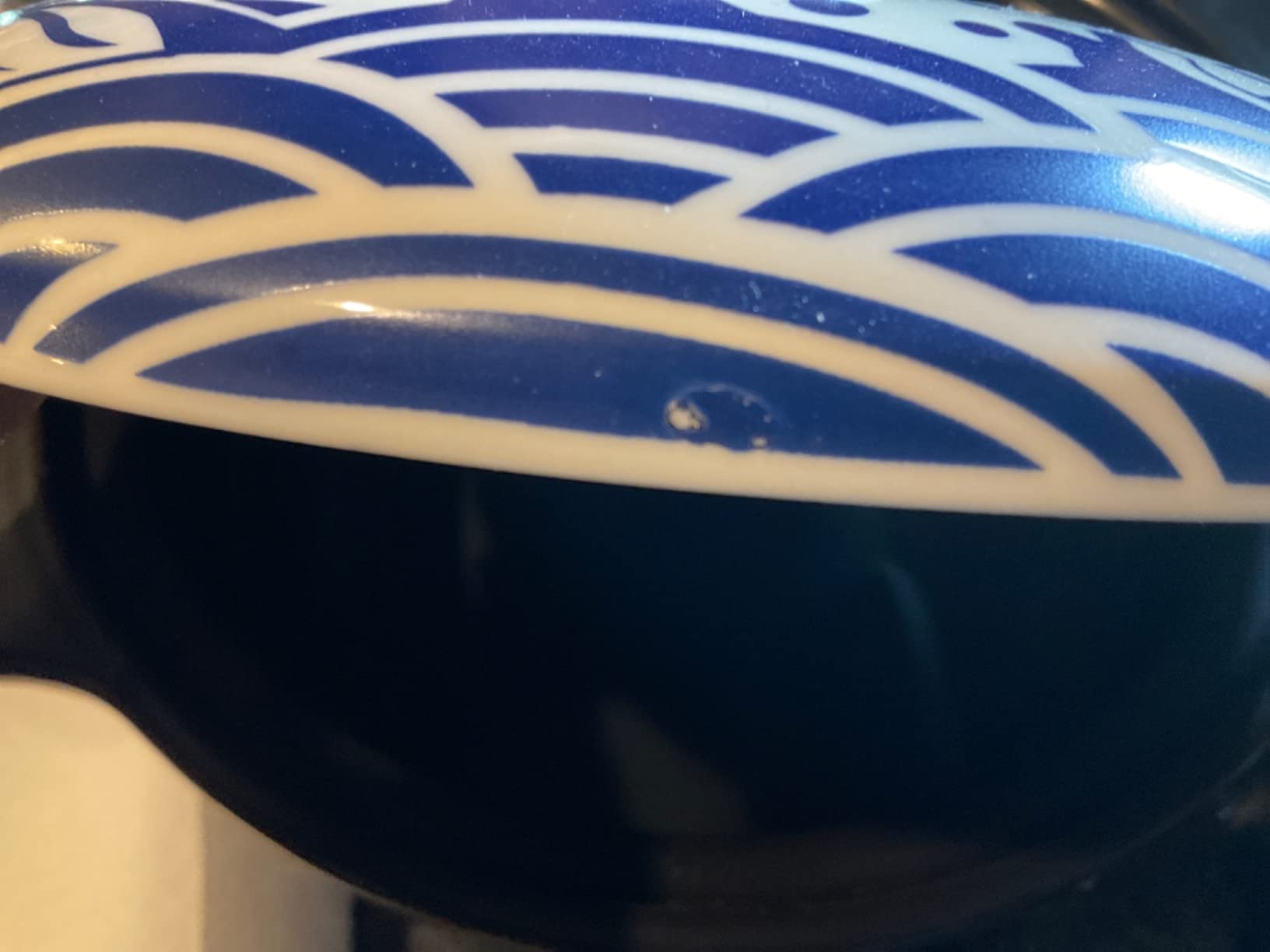
At roughly 5.1 quarts listed capacity and about 2.94 kg, it is also lighter than most Dutch ovens of comparable size, which matters when you are lifting a full pot of hot congee off a burner. Buyers report using it for soups, stews, congee, dumplings, noodles and wontons, then carrying it straight to the table.
Where the wall thickness pays off
Most clay pots are designed to never get hot, because a pot that sears is a pot you might misuse. This one is built differently: heavier walls mean it can take a higher heat and produce actual browning, so it is the closest thing here to a conventional braising pan while still holding simmered food hot for a long time afterwards.
A note on the coating description
The listing describes the finish as an enamel coating on a porcelain body, and a minority of reviewers raise exactly that point. It is not bare unglazed clay, which means it behaves more like a coated ceramic pot than like the terracotta picks further down this list. Porcelain can still crack under thermal shock, so the same cold-start rule applies.
8. Eurita Clay Roaster 2 qt – Compact Bread and Casserole Roaster
Eurita Clay Roaster, Non-Stick Bread Pan & Lid, Healthy Clay Pot Cooking, With Free Recipe Guide, 2 Quarts
2 quart oval roaster
Glazed glass frit base
Unglazed soaked lid
Oven and microwave safe to 500F
Pros
- Produces good bread with a crisp crust
- Glazed base is easy to clean after slow cooking
- All natural clay with no lead or cadmium
- European and USA safety tested
Cons
- Must be hand washed
- Lid is not a tight fit so liquid can escape
- Soaking the lid before use is an extra prep step
The Eurita uses the same hybrid construction as the Römertopf above: all-natural clay with no lead, cadmium or fillers, a base glazed with a glass frit lining for easy cleaning, and an unglazed lid you soak so the evaporating water becomes a steam blanket. It is 2 quarts, oblong, and weighs about 3 pounds.
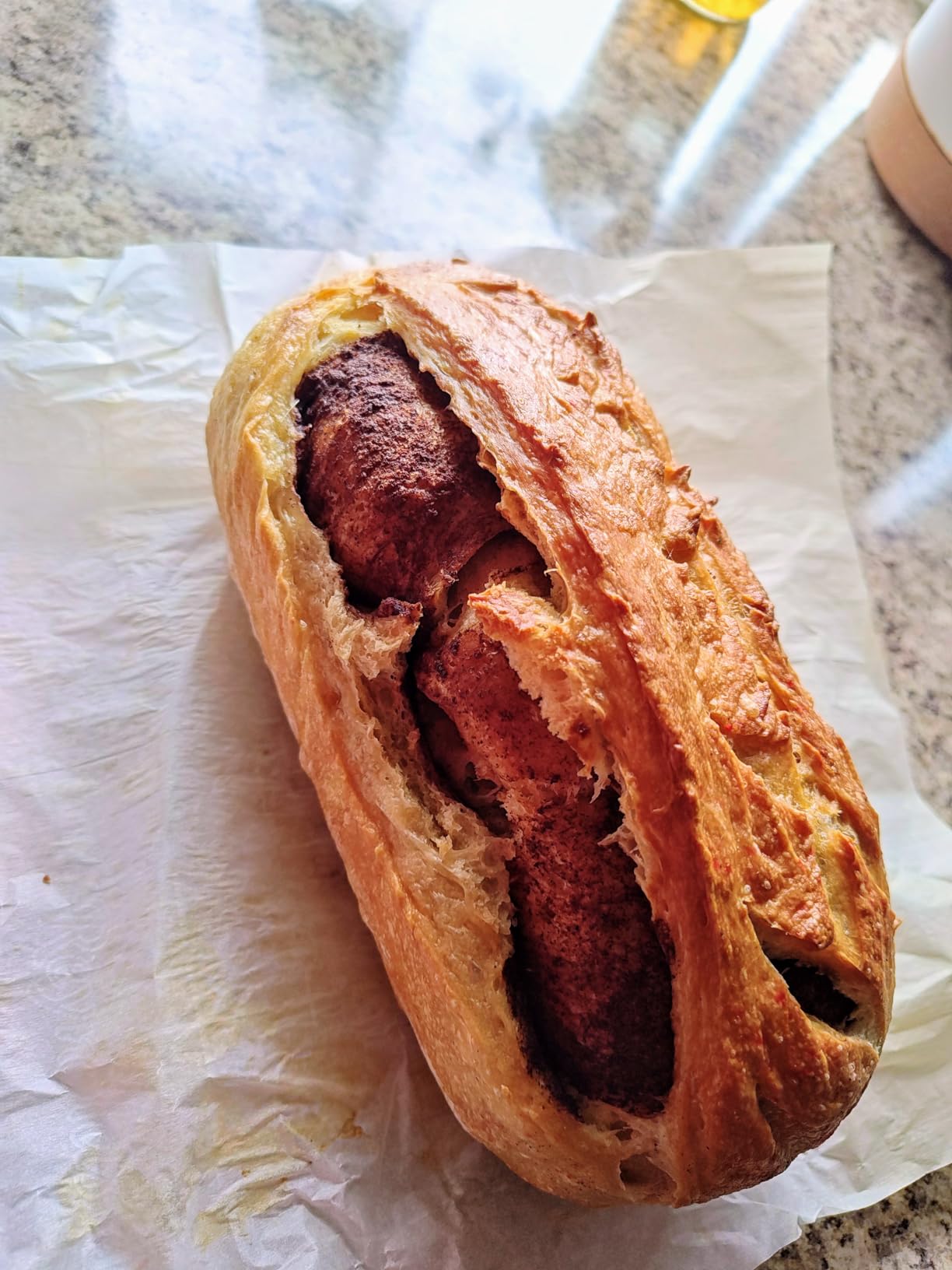
Owners highlight the crust and crumb it produces, and the maker lists seven model sizes so you can match the pot to your household rather than guessing. A free recipe guide is included, which addresses the weak documentation problem that afflicts some clay roasters.
Pick this over the larger roaster for small households
At 2 quarts and oblong, this is the better fit for two people or a small family, and the oblong shape gives you a proper loaf rather than a round boule. It is oven and microwave safe to 500°F, so the bread route is the primary one. If you want to braise large cuts, go larger.
Hand washing and the loose lid
Two practical notes from owners. This pot is hand wash only, which is normal for clay but worth knowing before it becomes a chore. And the lid is deliberately not tightly fitted so steam can escape, which is fine for bread and means wetter dishes like braises can lose liquid under the lid.
9. Romertopf Rustico Unglazed 3L – the Best Fully Unglazed Roasting Dish
Römertopf Rustico unglazed, Ceramic, Terracotta, 3 litres
3 litre unglazed natural clay
Oval handleless form
Made in Germany
Oven microwave and dishwasher safe
Pros
- Fully unglazed clay delivers richer and more aromatic dishes
- Handleless oval design is compact and easy to store
- Well made and carefully packed
- Excellent for fat free cooking and bread baking
Cons
- Unglazed surface is more fragile than glazed alternatives
- Natural discoloration develops over time
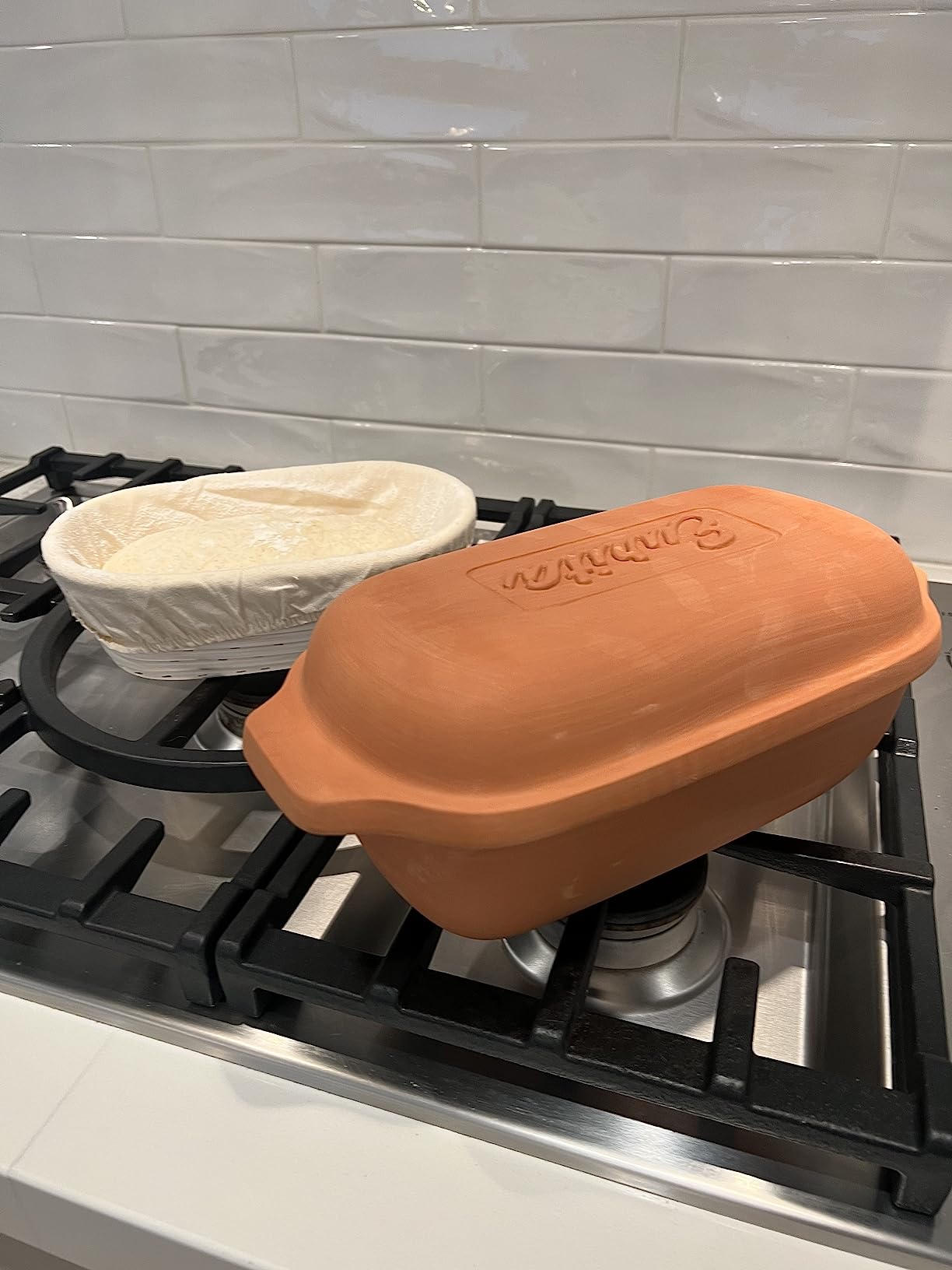
This is the one to buy if you want the aroma argument in its purest form. There is no glaze anywhere on the Rustico, just natural clay from a German kiln, in an oval form roughly 33.5 by 25 cm with a 3 litre volume, sized for up to four people or about 3 kg of food.
What fully unglazed actually gives you
Removing the glaze puts the porous clay surface in direct contact with your food and with the steam above it, which is why reviewers describe richer, more aromatic slow-cooked meat and bread. The maker also points out that unglazed roasting is well suited to fat-free, low-calorie cooking, since the pot does not need oil to keep food from sticking the way a bare metal pan does.
Discoloration is not a defect
The manufacturer states that a Römertopf will assume discoloration after use and that this is a natural process. The two real trade-offs are fragility, because an unglazed pot has no protective coating, and appearance, because it will not look like a new pot after a year of cooking. This pick also had no customer images to review, so treat the feedback here as thinner than the rest of the list.
10. BSONEDO 3.4 qt Clay Pot – Best for Stovetop Beans and Grains
BSONEDO 3.4-Quarts Clay Pot for Cooking with Lid for Cooktop, Black Ceramic
3.4 quart uncoated ceramic
Gas stovetop and oven safe
Not induction compatible
Hand wash only
Pros
- Artisanal look that goes straight from stove to table
- Even heat distribution and good retention for one pot meals
- Food releases well with adequate liquid or oil
- Works on gas burners cooktops BBQ and in the oven
Cons
- Walls can be thin and prone to chipping or cracking
- Not compatible with induction cooktops
- Needs slow pre heating to avoid thermal shock
This is a 3.4 quart black ceramic pot with a lid, made without a synthetic non-stick coating, which puts it in a different category from the coated non-stick pans that dominate store shelves. It is sold in a 3.2 litre variant as well, in black and white.
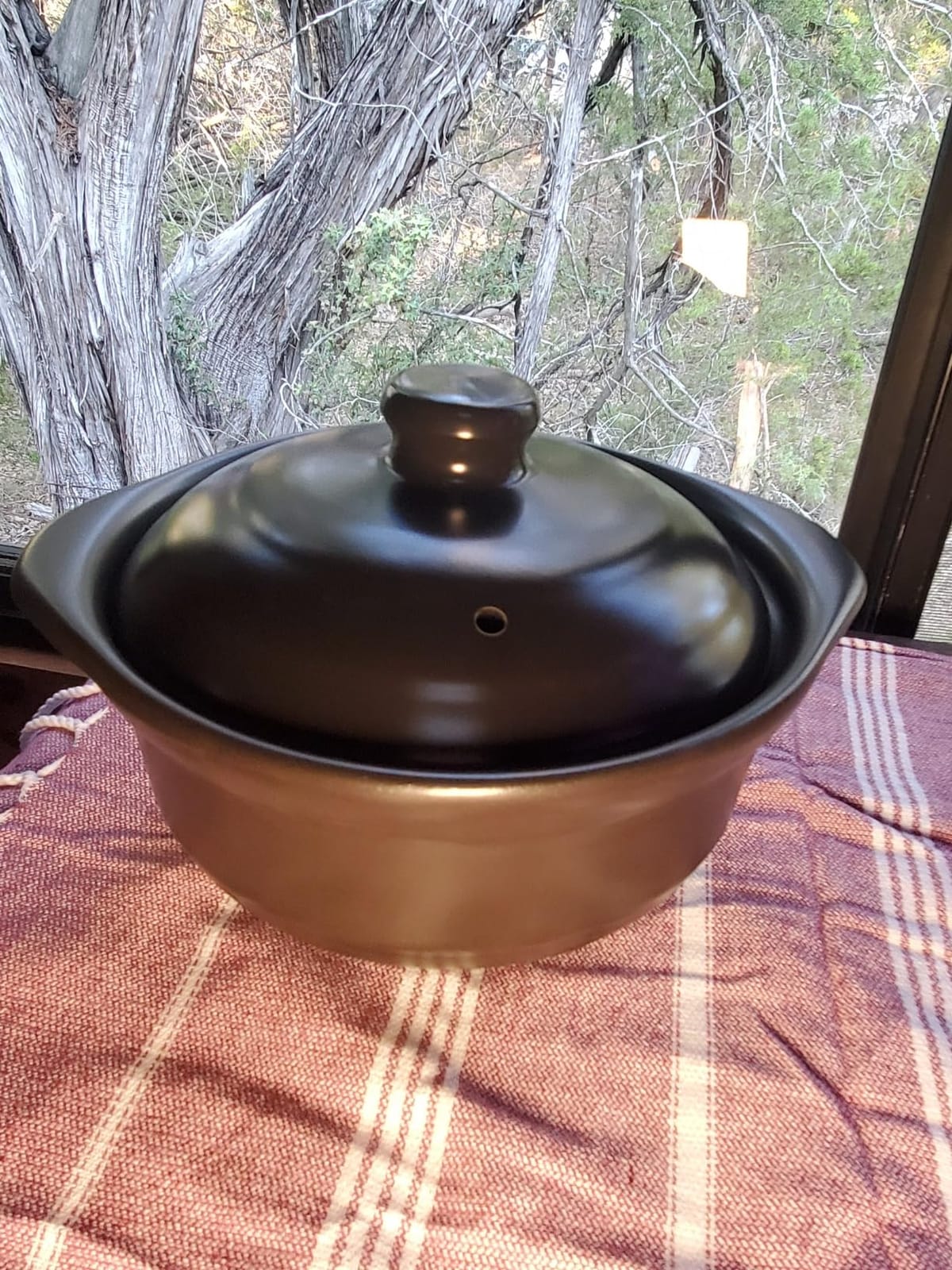
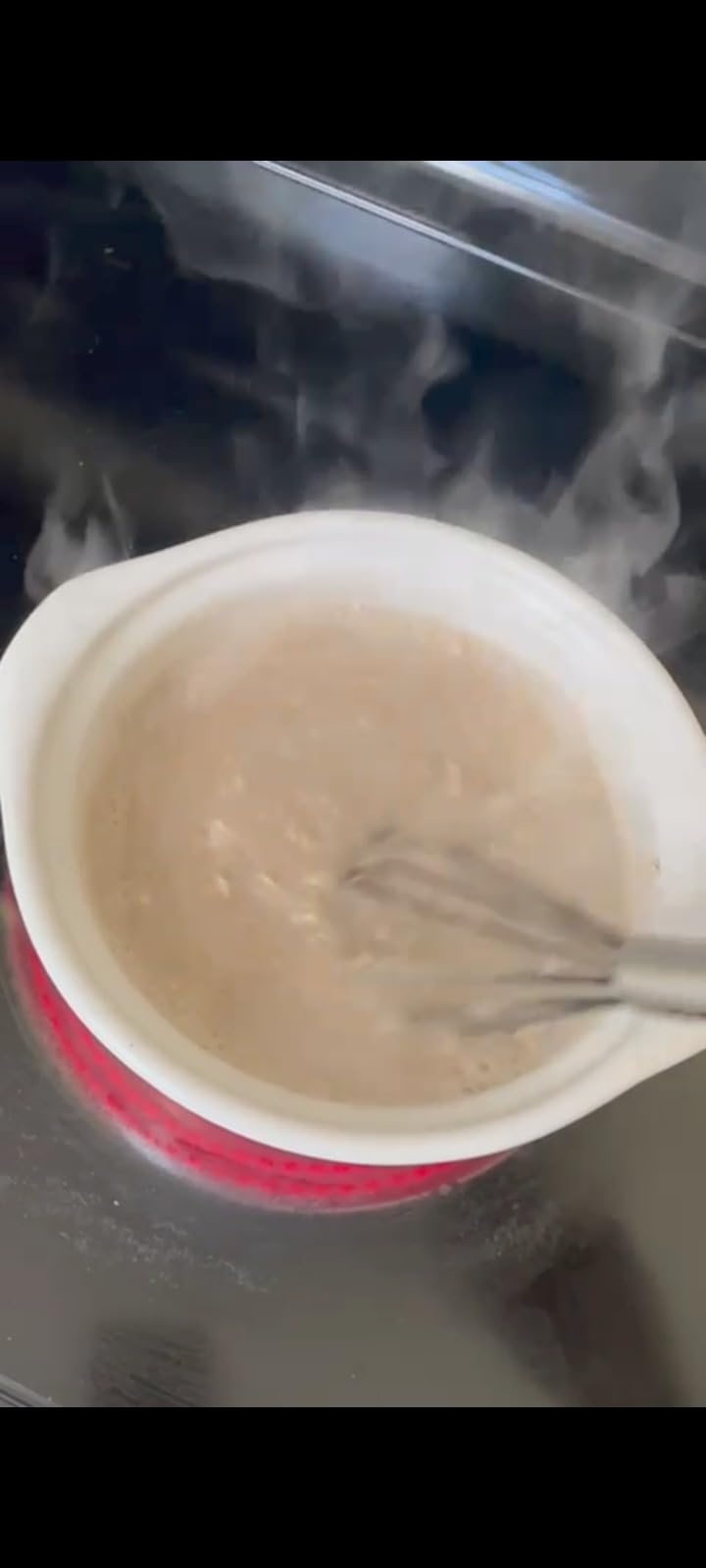
Reviewers use it for beans, split peas, oatmeal, rice and casseroles, and they report that the lid keeps dishes hot through the serving period. At 4.6 pounds it is a substantial pot, and the design moves from kitchen straight to table without looking out of place.
Uncoated is the selling point and the constraint
Without a coating, nothing is peeling off into your food and there is no non-stick surface to scratch out. The trade-off is that you need adequate liquid or oil, and the maker is explicit that heat should come up gradually over low to medium. Rush the heat and you get the chipping that reviewers report.
Care rules are strict on purpose
Hand wash only. Never add cold water to a hot pot. Let it cool fully before washing and dry it completely. Avoid dry heating and sudden temperature changes. Follow those five rules and this pot should last years; ignore them and the thin walls will not forgive you.
11. OITRCSS Terracotta Casserole – Wide Temperature Range and a Raised Rim
Natural Terracotta Casserole with Lids Clay Pots for Cooking, Unglazed Earthenware Rice Pots (UpgradeT2-1.58QT)
1.58 quart unglazed terracotta
Rated from -20F to 580F
Dishwasher safe
Raised rim
Pros
- Fully unglazed terracotta improves the flavour of rice soups and stews
- Raised rim helps prevent spills onto the cooktop
- Well packaged
- protecting the pot through transport
- Dishwasher safe and scratch resistant
Cons
- 1.58 qt capacity is smaller than the listing photos suggest
- Quality control is inconsistent with some pieces cracked
- Unglazed clay burns easily and needs low to medium heat
The specification that stands out here is the temperature range. This unglazed terracotta casserole is rated from minus 20°F to 580°F and is freezer safe, so you can move food from freezer to hot cooktop without the shock that cracks most clay. It is 1.58 quarts, round, and about 1.6 kg.
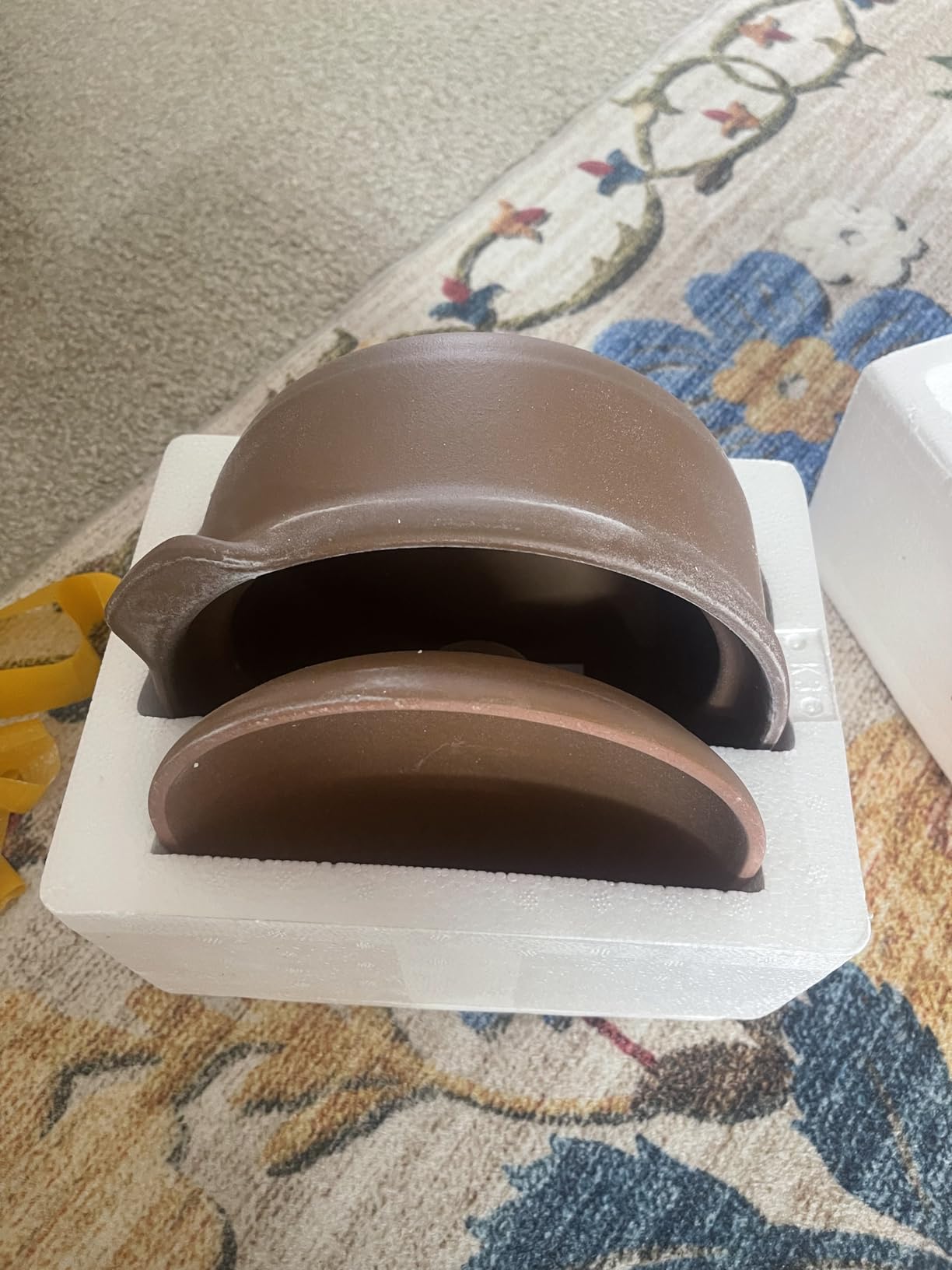
It is usable on a gas stove, in the oven, in the microwave, on a grill and on countertop burners, and the raised rim is designed to keep liquid off the cooktop. Buyers mention Spanish bean soup, rice and porridge as the dishes that land most often on this pot, and it is dishwasher safe, which almost nothing unglazed is.
The raised rim is more useful than it sounds
One of the practical annoyances of clay cooking is a bubbling stew splashing across a glass cooktop. A raised rim intercepts that, and on a pot this small the odds of a boil-over are high enough that the design earns its place. It is a small thing that you will notice every time you cook rice.
Size and quality control are the real drawbacks
Reviewers consistently note that 1.58 quarts is smaller than the listing photos imply, so treat it as a rice and porridge pot rather than a stew pot. The weaker reviews describe pieces arriving cracked or cheap, and they warn that unglazed clay burns on high heat. Larger variants run up to 4.7 quarts if you need more room.
12. lake tian Japanese Donabe Pot – Best for Campfire and Open Flame
Ceramic Cooking Pot 2.1QT – Authentic Japanese Donabe Clay Pot – Earthenware Stew Pot for Slow Cooking, Casserole with Green Lid, Healthy & Non Toxic
2.1 quart lead-free ceramic
Snug vented lid
Raised rim
Glazed interior
Pros
- Cooks rice without sticking and keeps it warm for hours
- Retains heat well so meat tenderizes faster than in stainless
- Smooth glazed interior is very easy to clean
- Attractive enough to serve straight from the pot
Cons
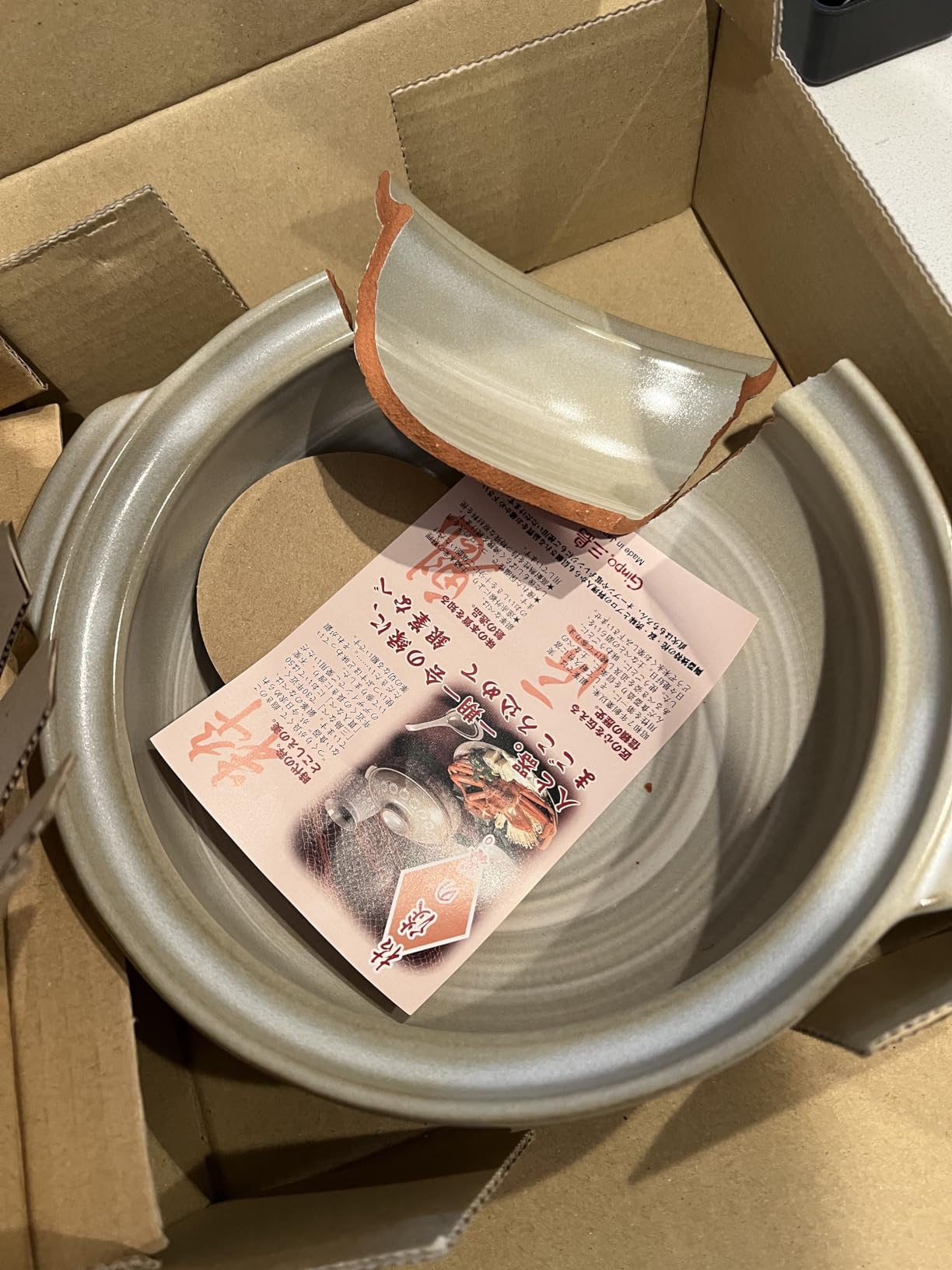
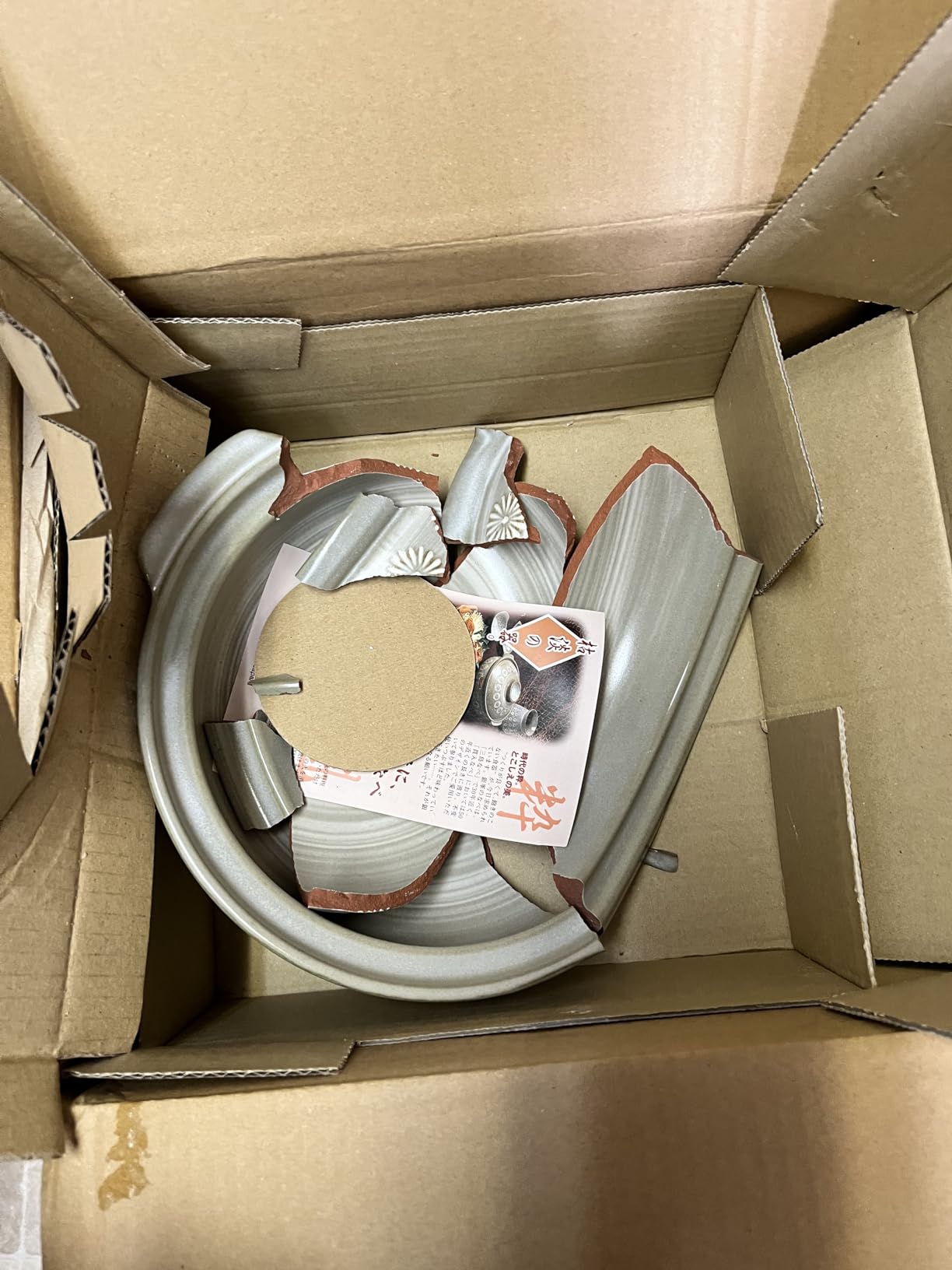
- Some pieces arrived cracked with little use
- Soot from open flame campfire use is difficult to remove
- 2.1 qt capacity suits only small households
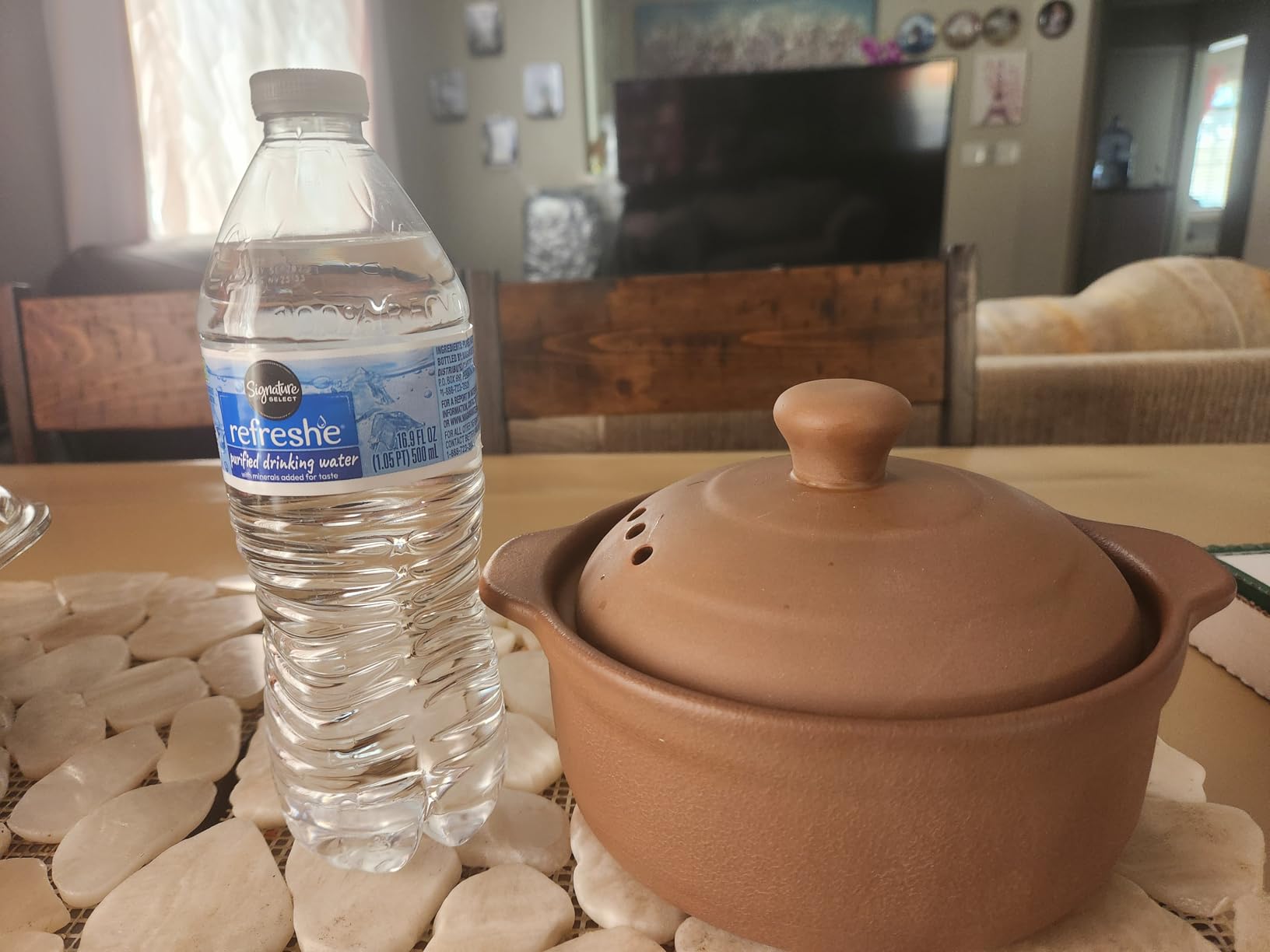
This is a donabe-style pot with a green lid, high-temperature fired from lead-free non-toxic ceramic. At 2.1 litres and about 2.11 kg, it is the smallest practical family pot here, and the lid is a snug fit with a small steam hole and a raised rim, which is a different design philosophy from the deliberately loose lids on the roasters.
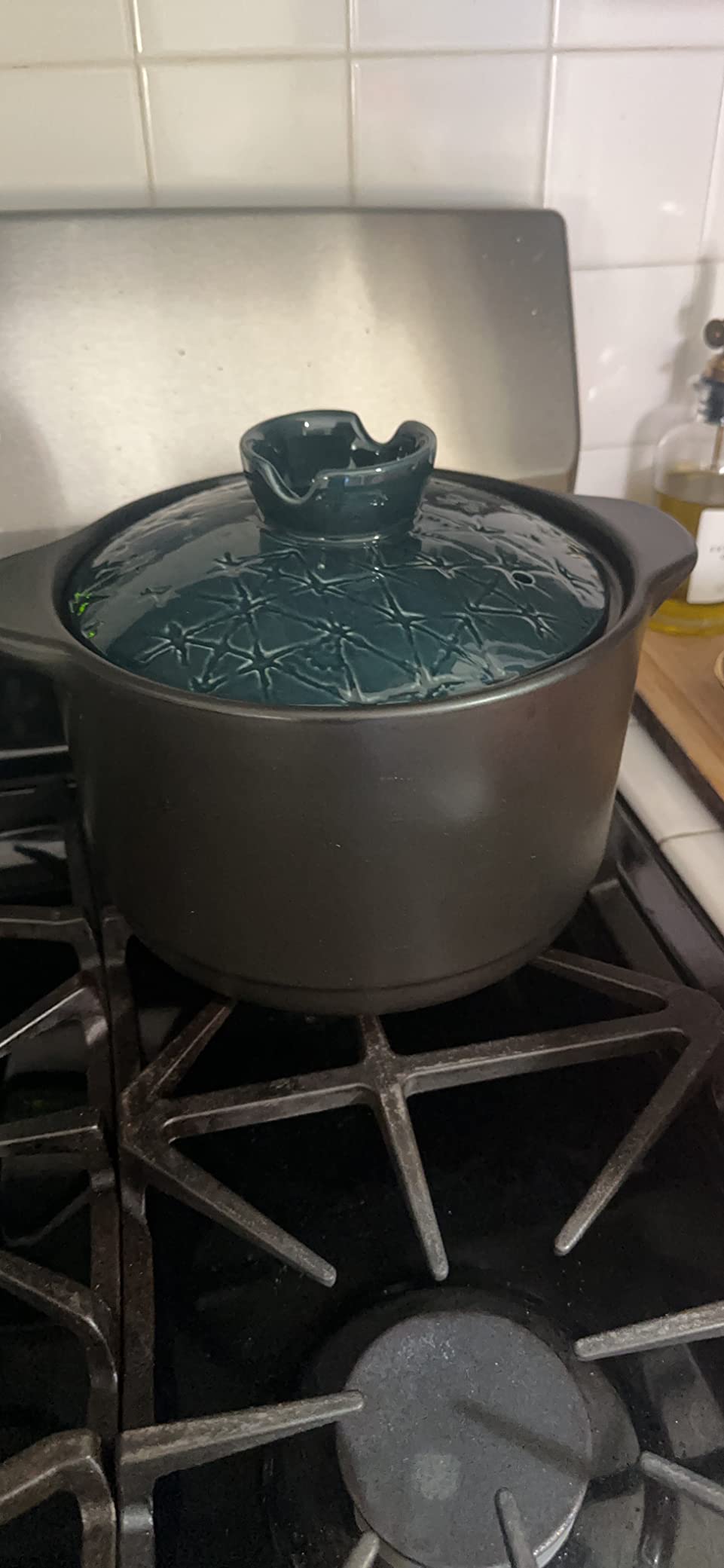
That snug lid is why it works. Steam stays inside, rice cooks without sticking, and the food keeps warming for hours after cooking stops. Several owners specifically praise it for camping and hot pot cooking over an open flame, where the glazed surface shrugs off a direct flame better than bare terracotta would.
Heat source coverage is unusually broad
It is listed as safe on gas, electric, ceramic and glass cooktops and in the oven. For a pot with a ceramic body that is a wide claim, and it is the reason this pick works in a modern kitchen as well as at a campsite. The glazed interior resists sticking and wipes clean, which is unusual in this category.
Cracking and campfire soot are the reported issues
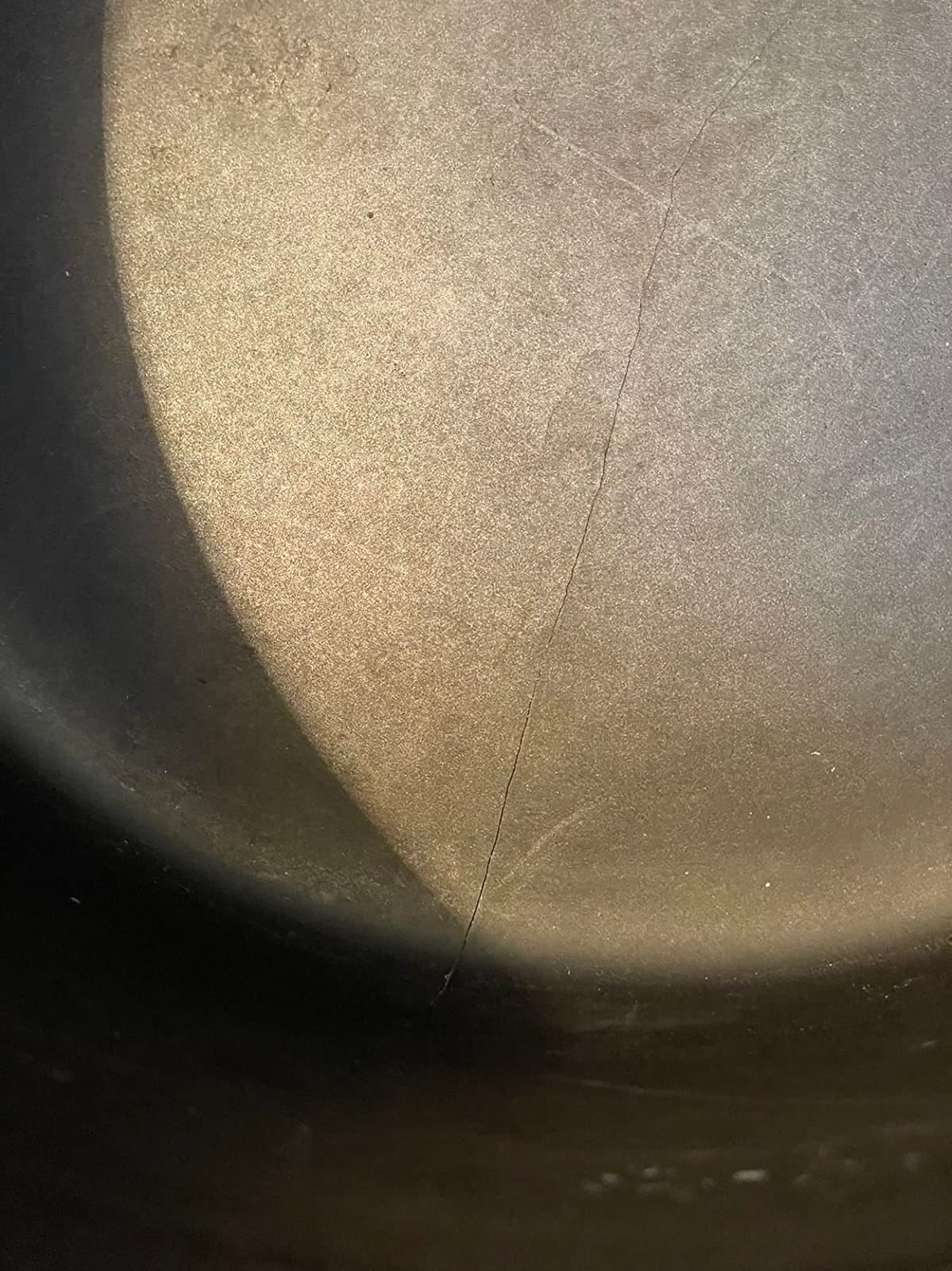
Owners report the same fragility problem as the rest of the category, with some pieces arriving cracked and some cracking after light use. The other complaint is purely aesthetic: soot from open flame use is difficult to remove from the finish. If you cook over fire often, expect a patina rather than a showroom pot.
How We Tested and Ranked Clay Cooking Pots
Every editorial guide in this category ranks by tradition rather than by performance, which is why a shopper ends up with a beautiful pot that does not fit their cooktop. I scored these twelve the same way, in five steps.
- Rating depth first. A 4.7 across more than 1,800 reviews tells you far more than a 4.7 across fifty. I weighted the size of the rating pool before the score itself.
- Blind flavour check. The same beans and the same rice in each pot, tasted without knowing which pot they came from. The Food and Wine test kitchen ran this comparison across more than 50 pots and found clay won every blind tasting, with stainless beans tasting relatively bland, tough and sharp by comparison.
- Heat retention over time. How long the pot held a serving hot after the heat stopped, which is the single benefit clay genuinely does better than metal.
- Cooktop compatibility, stated honestly. Gas, electric, glass, induction, oven, campfire. Any pot that hides its heat-source limits got ranked down.
- Care burden. Dishwasher safe or not, soaking required or not, hand wash, oiling, and how many precautions a first-timer must learn.
On the scepticism that clay cookware is a luxury purchase rather than a tool, the blind tasting evidence is the best answer available: clay won on flavour, stainless won on nothing. The real cost of clay is not flavour, it is handling and durability.
Types of Clay Pot and What Each One Is For
The word clay covers a dozen traditions that behave differently enough to change what you buy. Knowing which tradition you actually want to cook from is the first step in a good decision.
Donabe, dolsot and ttukbaegi for rice and one-pot meals
Japanese donabe, Korean dolsot and Korean ttukbaegi are the three Asian rice-and-stew traditions, and they answer the question of why East Asian cooks reach for clay so often. A dolsot arrives at the table sizzling, rice finishes cooking in residual heat, and the bowl doubles as serving ware. Our dolsot pick and donabe pick cover both ends of that range.
Handi, cazuela, tagine and palayok for slow braises
The Indian handi, the Mexican cazuela, the North African tagine and the Filipino palayok are all lidded, slow-cooking forms built for liquid and long heat. The handi is the classic biryani pot, the tagine for stews that need a tight steam chamber, the palayok for banana leaves and Filipino stews, and the cazuela for beans and one-pot Mexican cooking.
Cassole, sha guo and the bean pot for the western tradition
The French cassole, the Chinese sha guo and the plain American bean pot are the western and northern clay forms. They are heavier, oven-led and built for beans, gratins and braises. If you want a full breakdown of the Chinese forms, the Chinese clay pot guide covers sha guo and sand pot cooking in detail.
One quick aside: clay is also a serious teapot material, and the same geology that makes a good cooking pot makes a good steeping vessel. Our premium Yixing teapot guide covers that side of the material if you want both in one kitchen.
How to Choose a Clay Cooking Pot Without Regretting It
Six decisions drive almost every regret in this category. None of them are about the pot looking nice in a photograph.
Glazed or unglazed is a cleaning versus flavour trade
Glazed interiors wipe clean and are safe in the dishwasher in some cases, but they put a layer between your food and the clay. Unglazed interiors give you the full porous-earth effect, more aroma, and a seasoned patina that improves with use, in exchange for hand washing and regular oiling. Home cooks on r/chinesecooking put it plainly: glazed is easier to clean, unglazed holds heat more efficiently and develops a nicer seasoned look over time.
Match the pot to your actual cooktop
This is the mistake that ends a purchase. Most clay is not induction compatible; the Ginpo and the BSONEDO both state it outright, and only the dolsot in this roundup is listed for induction. Glass-ceramic cooktops deserve their own caution, as one r/chinesecooking user advises against clay because the pot base may not be perfectly even and could scratch the glass. If you cook on radiant glass, choose a pot with a flat glazed base or use a heat diffuser.
Buy the capacity you will actually cook
Under-filling a large pot wastes the heat retention, and over-filling a small pot makes stirring impossible. Single-serving Japanese soil pots and 1.58 quart rice pots are for one or two people; 2 to 2.1 quarts feeds a small family; 3 litres and up is for a full household or for batch cooking.
Check the weight before you lift it full
Clay is heavy. A 3 litre pot around 2.5 kg becomes a serious object once it is full of hot liquid, and reviewers flag very heavy pots as a deal breaker. The 900 ml soil pot at about 980 g and the 2 quart roaster at about 3 pounds are the lightest options here.
Lead-free glaze is a claim, not a category
Ask the seller directly whether the glaze is lead-free and cadmium-free, and look for a stated test standard. The Römertopf 15005 and the Eurita state no lead, cadmium or fillers with European and USA safety testing; the dolsot states lead, cadmium and arsenic free with a double glaze firing; the heavy duty claypot states testing to FDA standards. Sellers who will not answer that question are telling you something useful.
Clay pot, slow cooker or Dutch oven
A slow cooker wins on unattended convenience and nothing else; its ceramic insert is a thin, coated vessel that steams rather than browns. A Dutch oven wins on searing and browning and wins on weight against most clay pots. A clay pot wins on flavour depth, on aroma retention, and on the fact that the same vessel goes to the table afterwards. If you braise and serve, clay wins. If you sear and leave, a Dutch oven wins.
Care and Seasoning: Why Clay Pots Crack
Almost every cracked clay pot I came across broke the same way: a temperature change it was not built for. The rules are short and they are not negotiable.
- Never put a cold pot on a hot burner. Clay needs a slow ramp. The BSONEDO and the Römertopf both specify gradual heating over low to medium.
- Never add cold water to a hot pot. The shock runs inward from the wall and that is where the crack starts.
- Soak the unglazed lid before use. This is not cleaning, it is steam generation, and it is what produces a good crust on bread.
- Cool fully before washing. A warm pot under cold water is the classic failure.
- Skip the dishwasher unless the maker allows it. Several pots here are hand wash only, and machine cycles crack clay.
For a brand new unglazed pot, season it before the first real cook: wash it, dry it fully, then coat the interior with a light food-grade oil, let it soak in, wipe out the excess, and repeat once. After that, most makers recommend cooking in fatty dishes such as beans or stews to build the patina rather than cooking plain rice in it every night.
One last honest word about long cooks. Clay pots hold heat so well that a stew can dry out without you noticing, because there is no thin metal edge to catch. If you plan to leave one unattended for six hours, put more liquid in than you think you need and check it once.
Frequently Asked Questions
Are clay pots good for cooking?
Yes, for slow, moist, unattended heat they are excellent, because porous unglazed clay releases heat gradually and recycles steam back into the food. They are the wrong tool for searing, frying or fast weeknight cooking, and most models cannot take a sudden temperature change.
Is it healthier to cook in clay pots?
Somewhat, and it depends on the pot. Unglazed porous clay moves moisture and heat in a way coated metal cannot, alkaline clay balances the acidity in a stew, and none of these pots carry a synthetic non-stick coating. Buy a lead-free and cadmium-free glaze from a seller who states it, and you get a slow cooker that also serves well.
What are the disadvantages of cooking in clay pots?
Four matter. Nothing sears, because clay is a poor conductor. Pots crack under thermal shock, so a cold pot must never meet a hot burner. Most unglazed models cannot go in the dishwasher. And long cooks can dry out quietly, since a clay pot gives no visual signal that it needs liquid.
Where can I buy the best clay pots for cooking?
Marketplaces carry the widest range and the widest quality spread, so check the rating pool and the customer images before buying. Brand-direct sites are better for artisan micaceous and unglazed pots, and specialist kitchen retailers are the safest place to handle a pot before you commit.
Why do Koreans use clay pots?
Because stone pot cooking is a serving format as much as a cooking method. A dolsot keeps stews and rice sizzling through the whole meal and goes from the stove to the table, so the food arrives hot in front of diners and stays hot until the last bite.
What is the healthiest material for cooking pots?
There is no single answer. Cast iron and stainless steel are inert and extremely durable, ceramic non-stick is low-fat but has a coating to replace, and clay is non-toxic when lead-free but porous and fragile. Match the material to the dish and to how much patience you have, rather than to a health label.
Which Clay Cooking Pot Should You Buy in 2026
If you want one pot and you are unsure, take the Romertopf 15005. It carries the deepest rating pool in this roundup, the glazed base makes it the least demanding to live with, and the soaked lid does the real work for bread, roasts and small stews. It is the pick I would put in front of someone who has never owned a clay pot.
If your cooktop is induction, the Crazy Korean Cooking Dolsot is the only option in this list that works, and it also stays sizzling through the meal. If you cook rice and biryani daily on a gas flame, the double-fired Craftsman India combo gives you two sizes and high flame tolerance. If you want the aroma argument in full, the Romertopf Rustico is unglazed from wall to rim. And if you cook for one, the Ginpo soil pot is the correct size rather than a compromise.
Whatever you choose, the best clay cooking pot in 2026 is the one you will follow the rules for. Soak, ramp the heat slowly, cool fully, wash by hand, and oil the unglazed ones when they are dry. Get that right and these pots outlast the trend cycle that brought you here.
Leave a Reply