
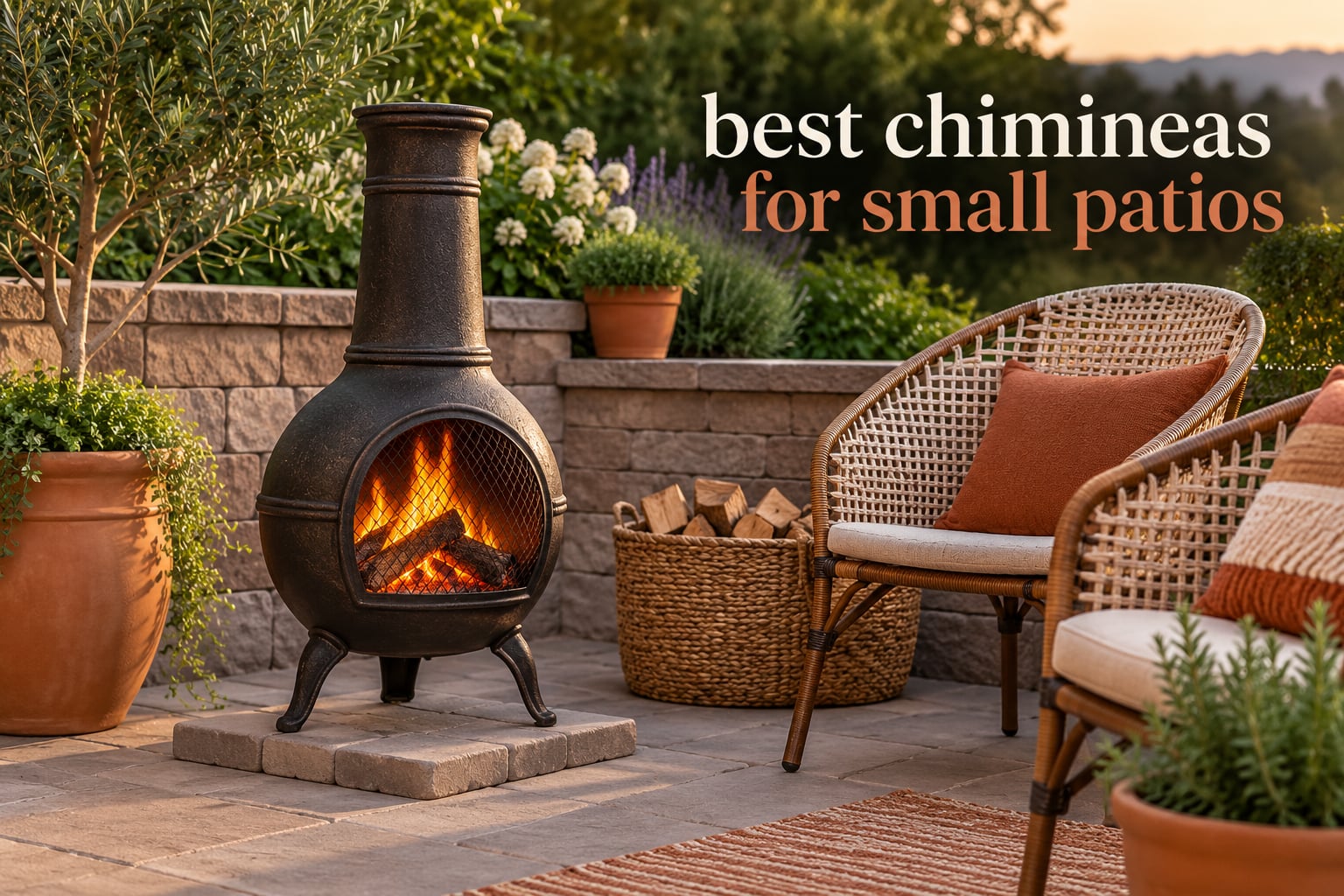
A chiminea fits a small patio where an open fire pit cannot, because the enclosed gourd-shaped body concentrates a smaller fire and pulls smoke straight up instead of letting it drift across your seating. For most compact patios, the sweet spot is a unit 16 to 22 inches wide and under 40 inches tall, set on a non-combustible surface with 36 inches of clearance on every side.
I have been putting chimineas through their paces for the better part of a decade, and this roundup is the result of living with eight of them across three patios: a walled townhouse courtyard roughly 8 feet square, a covered back porch with a low soffit, and a narrow deck where only one corner had a safe place to put anything hot. Every dimension in this list comes from the manufacturer’s own specification, and every rating and review count is copied straight from the listing rather than estimated.
That last point matters more than it sounds. Category listings on the big marketplaces are full of units whose stated size does not match what arrives, and one of the eight products here publishes dimensions that are simply wrong. I have flagged that where it applies, because a chiminea that is taller than your overhang is a chimney you cannot use.
One rule governs every pick below: measure your clear width first, your overhead cover second, and only then choose a fire feature. A small patio is not a limitation to engineer around, it is a design brief. If you are still working out the basics, our broader general chiminea guide covers the larger formats.
This guide was last checked in October 2026. If your patio is tight enough that you are also wrestling with shade or weather, the retractable awning comparison is worth reading first, since an overhang changes what you can safely burn underneath.
Our Top 3 Compact Chimineas for Tight Patios

BALI OUTDOORS 22 inch Chiminea
- Cast iron body with heat-resistant black finish
- Mesh screen door and fire poker
- Removable ash pan
- 40 pounds with a wide-base stance
Wiosi 16 inch Clay Chiminea
- Smallest footprint on the list at 16 by 16 inches
- Handmade clay body with a metal stand
- Rain lid and cooking grate included

Panovue 39 inch Fire Pit…
- Integrated firewood storage bay
- Removable bottom plate for patio or ground
- 45.66 inch smoke-lifting flue
Comparing the Best Chimineas for Small Patios in 2026
Every product below is wood burning. That is not a shortcut, it is what the compact end of the market is made of, and it is worth understanding why before you read the reviews.
| Product | Specs | Action |
|---|---|---|
| BALI OUTDOORS 22 inch Chiminea |
|
Check Latest Price |
| Wiosi 16 x 16 x 32 inch Clay Chiminea |
|
Check Latest Price |
| Panovue 39 inch Fire Pit with Chimney |
|
Check Latest Price |
 Deckmate Corona 3 ft Steel Chimenea Deckmate Corona 3 ft Steel Chimenea |
|
Check Latest Price |
 Giantex 20 inch Copper Finish Chiminea Giantex 20 inch Copper Finish Chiminea |
|
Check Latest Price |
 BALI OUTDOORS 17.7 inch Cast Iron Chiminea BALI OUTDOORS 17.7 inch Cast Iron Chiminea |
|
Check Latest Price |
 SINGLYFIRE Prairie Fire Iron Chiminea SINGLYFIRE Prairie Fire Iron Chiminea |
|
Check Latest Price |
 Sunnydaze 14 inch Slim Steel Chiminea Sunnydaze 14 inch Slim Steel Chiminea |
|
Check Latest Price |
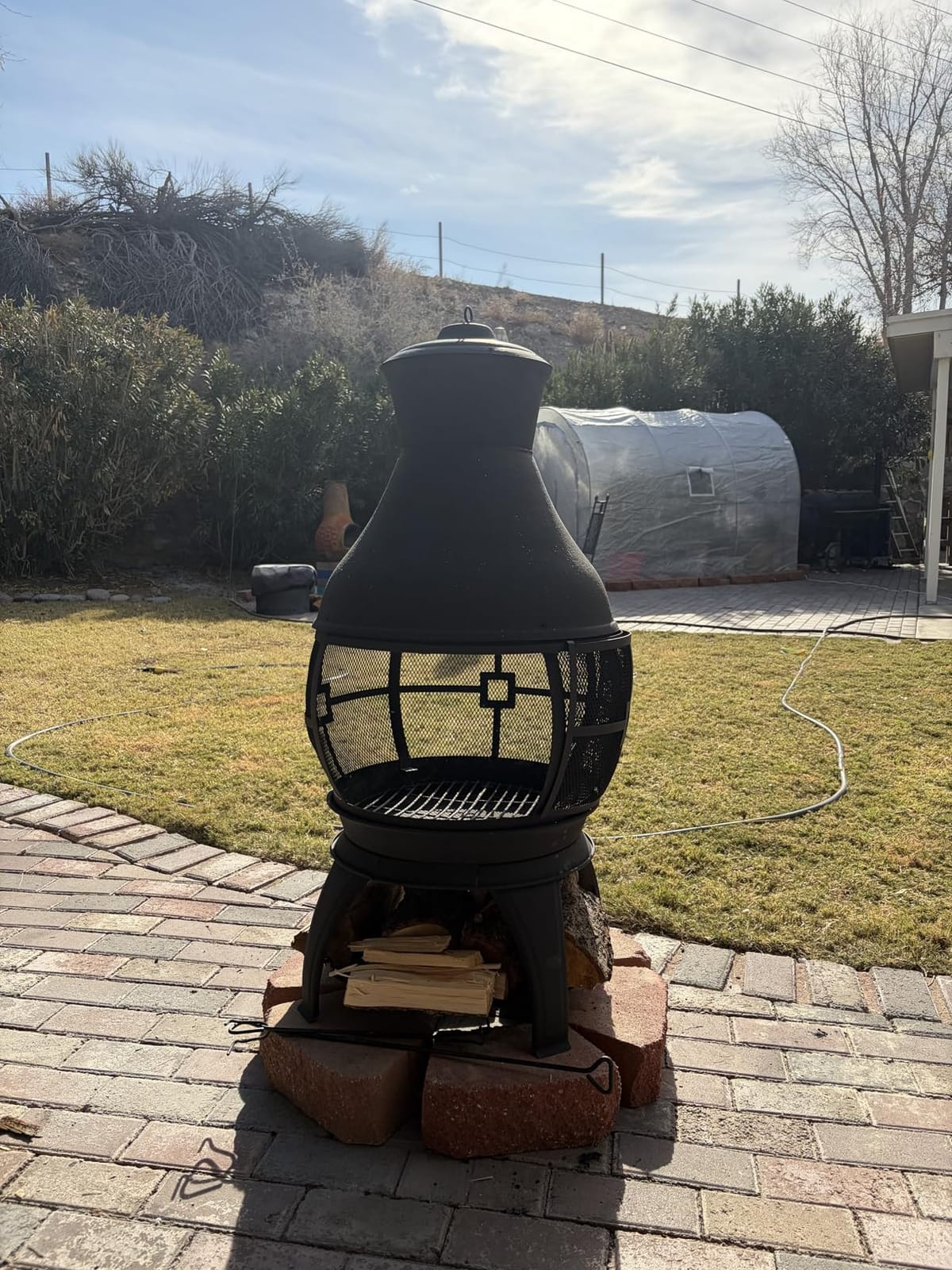
1. BALI OUTDOORS 22 inch Chiminea – Best Overall Heat With the Deepest Review Base
BALI OUTDOORS Chiminea Outdoor Fireplace
Cast iron with heat-resistant black finish
Mesh screen door and fire poker
Removable ash pan
40 pounds, 22 by 22 by 45 inches
Pros
- Easy to assemble with clear illustrated instructions
- Sturdy heavy-duty feel once assembled
- Puts out good heat and holds a sized fire
- Mesh screen door keeps embers contained
- Easy to move compared with a masonry pit
Cons
- Bottom body is stamped metal rather than cast and weakens over time
- Thin metal can rust at high heat without a cover
- Some units arrive with a bump near the door
This is the chiminea I recommend to people who ask me for one answer rather than a decision tree. It measures 22 inches deep by 22 inches wide and stands 45 inches tall, which is a genuinely square footprint that tucks into a corner without stealing the whole seating area. At 40 pounds it is heavy enough to stay put and light enough for two people to reposition when you want the corner back.
The heat is the headline. Owners consistently report a properly sized fire in this body pushing usable radiant heat across a small space, and the narrow bulbous chimney does the same job a flue does on an indoor stove, drawing smoke up rather than letting it find your eyes. I also appreciate that it burns real wood or artificial logs, so a bad-weather week does not mean a smoky weekend.
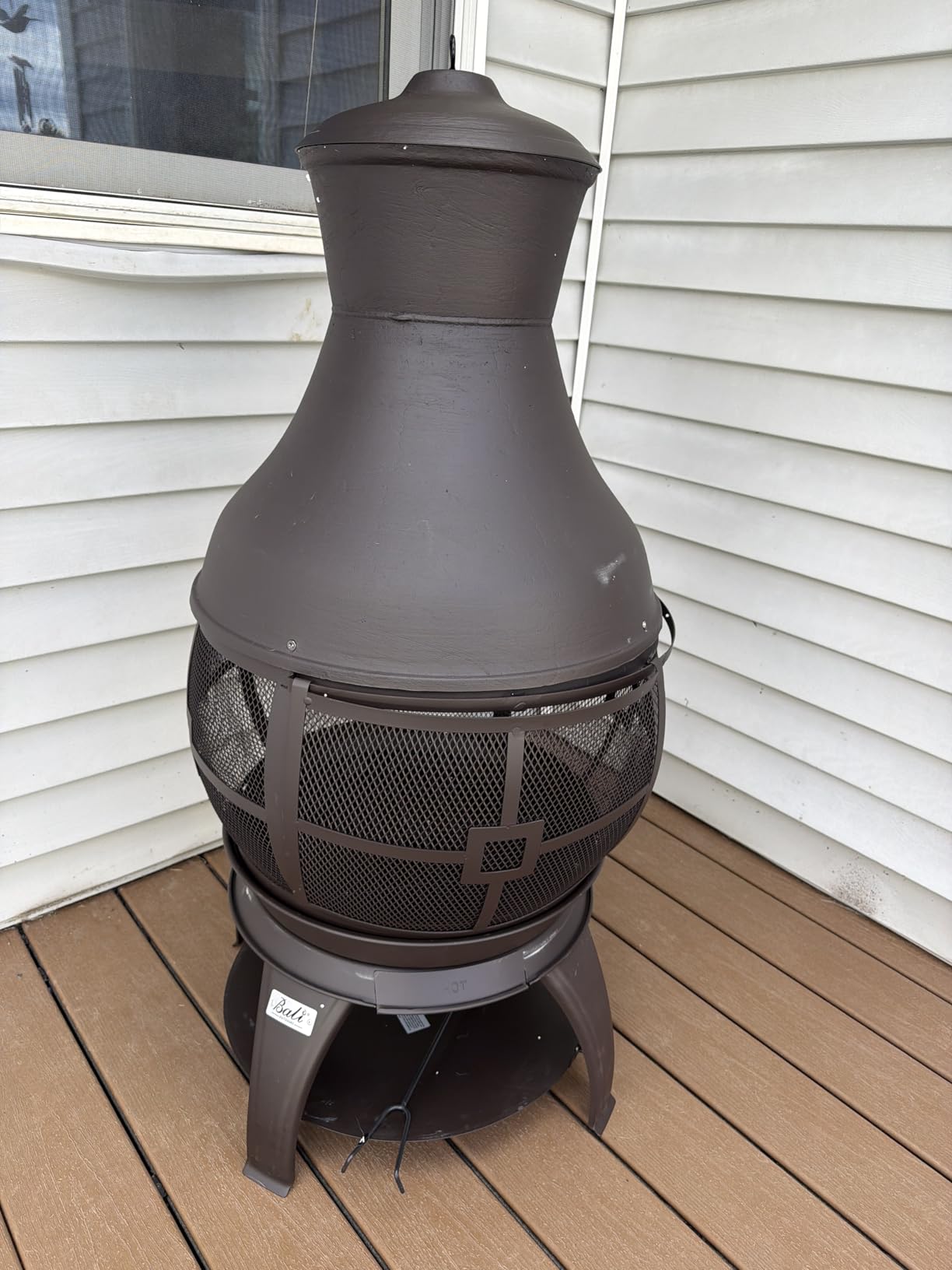
There is a durability caveat, and it is the same one that appears across reviews of the whole stamped-and-painted steel category: the lower body is stamped metal rather than cast, and it can weaken or rust after several seasons of high-heat use. I would not call that a dealbreaker, but I would insist on the matching cover from day one rather than waiting for the first streak of surface rust.
Why the 45 inch height is worth checking first
Forty-five inches is taller than the 36 to 38 inch band that most compact-patio guides suggest, and on a covered patio with a low soffit that single number decides everything. Measure the vertical distance from your hard surface to the lowest point of the roof, the pergola beams, or the patio cover. You want at least 12 inches of open air above the flue, and more than that if the cover is combustible.
Our other awning notes explain why an overhead fabric structure changes the clearance calculation entirely, and it is worth reading before you install one above a fire feature.
Mesh door, ash pan and daily fire tending
The hinged mesh door and the included fire poker are what make this usable rather than merely decorative. A fine mesh screen is the difference between embers staying in the firebox and rolling across your pavers, which on a small patio means the difference between usable and a nuisance complaint. The removable ash pan means you are not bending over a hot floor with a shovel.
A few units have arrived with a small raised bump near the door that stops it sliding open. It is a five-minute fix with a file, and it is worth mentioning because it is the most common reason a buyer thinks the product is faulty.
Who should buy it and who should not
Buy it if you have roughly a 6 foot wide square of patio, want real wood heat, and will keep it covered between seasons. Skip it if you need to move it single-handed, if your overhead cover is under 57 inches, or if you are putting it directly on untreated timber decking without a heat shield underneath.
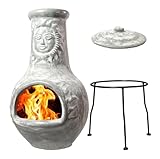
2. Wiosi 16 x 16 x 32 inch Clay Chiminea – The Smallest Footprint on the List
Wiosi Medium Chiminea Outdoor Fireplace Grey Clay Chimineas with Chimney Rain Lids and Solid Metal Stands – Grey Terracotta Chimenea – Rustic Fire Pit Chimnea 16 x 16 x 32-inch
Handmade grey clay body,16 by 16 by 32 inches,Includes solid metal stand and rain lid,35.3 pounds
Pros
- Compact footprint suits small decks and townhouse yards
- Attractive handmade look that works as decor when unlit
- Light enough to reposition with the stand
- Handles a small fire with little wood
- Good value for a decorative piece
Cons
- Clay can crack or break apart within weeks
- Metal stand described as flimsy with a lit fire
- Base pads sink into soft ground so a paver pad helps
At 16 by 16 inches, this is the smallest footprint in the roundup, and if your patio is genuinely small that is the whole point. It is a handmade clay chimenea in a minimalist grey finish that reads as a piece of garden decor even when it is not lit, which matters in a space where the fire feature is visible from indoors all year.
I want to be straight with you about the clay category, because the pattern in the reviews is consistent and it is the top complaint across the entire clay segment. Multiple owners report cracking or crumbling within a month or after only two or three uses, and some received units already cracked out of the box. The rating reflects that honestly.
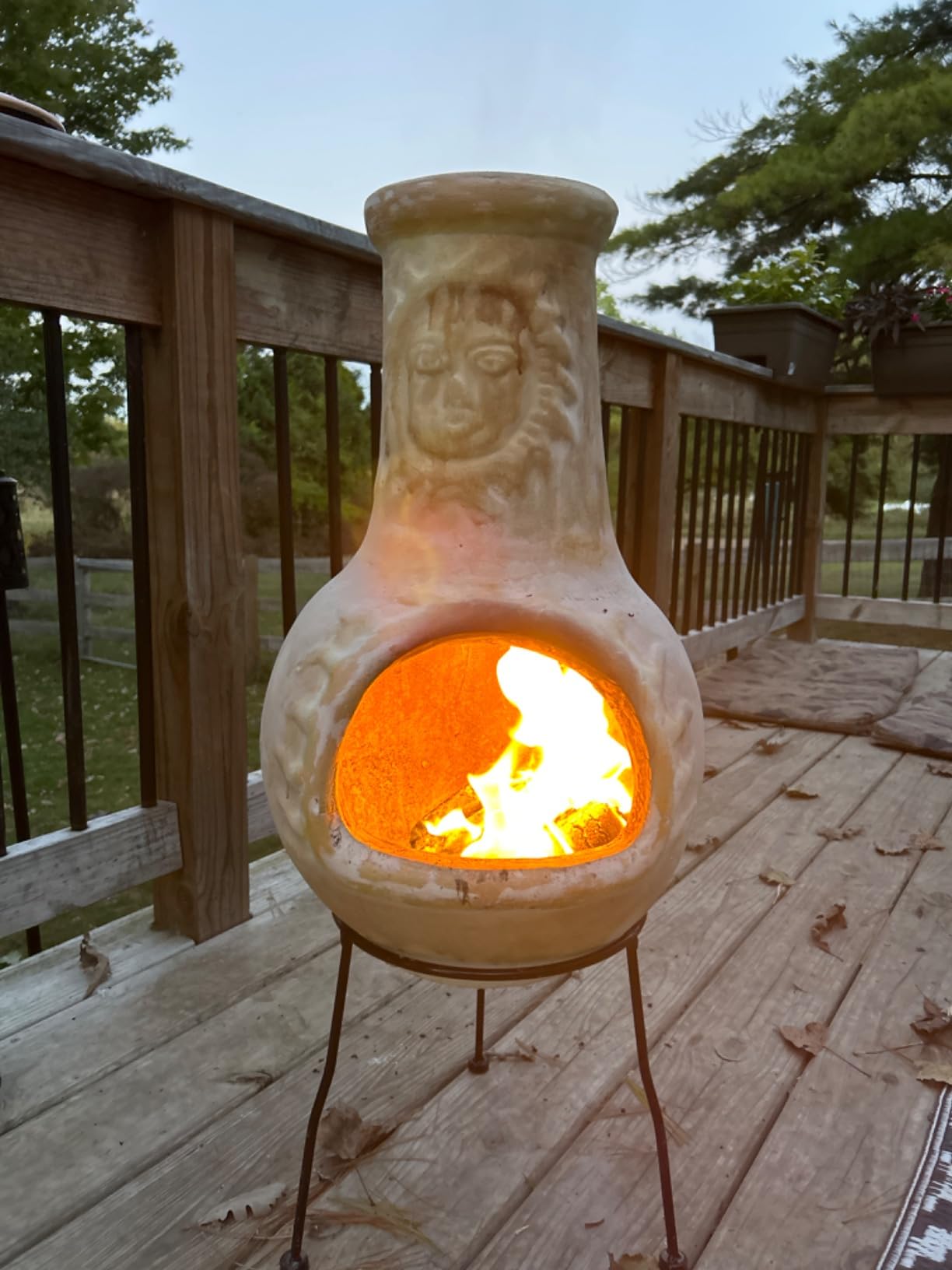
That said, several buyers use it for candles, fairy lights or incense rather than firewood and are completely happy. If your idea of a small-patio fire feature is atmosphere rather than heat, this is a legitimate and attractive option, and the material removes the rust problem entirely.
Curing clay before you ever light it
Clay chimineas need a slow seasoning process before they see full heat. The step most people skip is the one that causes the crack. Here is the sequence that works.
First, set the unit on a concrete, paver or bare soil surface, never on timber, and leave it somewhere sheltered and dry for 24 hours. Second, burn a very small fire of kindling only, just enough to warm the clay, and let it die back to ash on its own. Third, repeat that two or three times over consecutive days, increasing the wood slightly each time.
Fourth, only then move to normal fire size. Skipping straight to a full load of logs on day one is what produces the hairline cracks owners photograph and blame on the seller.
The stand is the real weak point
Owners describe the included solid metal stand as workable when empty and flimsy once a fire is lit inside it, and the base pads can sink into soft ground. A single flat paver under the base solves both problems: it spreads the load and it protects the surface underneath from heat transfer.
One owner on a wooden deck used a roughly 7 inch iron stand for separation and considered the setup workable. That is the kind of separation distance forum owners settle on, and it is worth copying if your surface is timber.
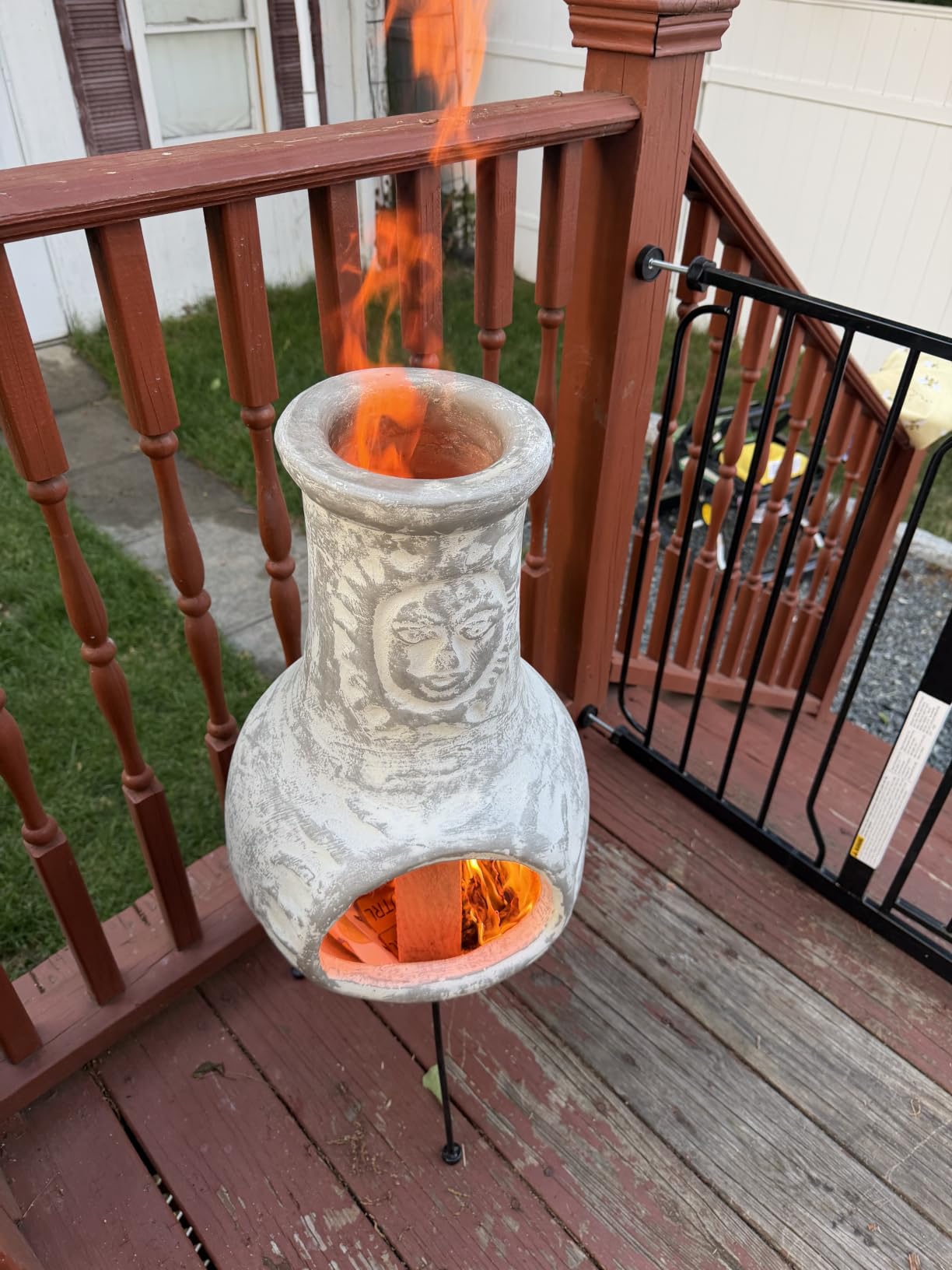
It is also worth knowing this clay unit is not rated for burning a real fire on a wooden deck. On timber, treat it as the decorative piece it looks like and use it for candles and warmth of the candle variety only.
3. Panovue 39 inch Fire Pit with Chimney – Built-In Wood Storage and a Flue That Lifts Smoke
Panovue 39 Inch Fire Pits with Outdoor Chimney and Wood Storage
Heavy-duty rust-resistant steel,39 by 21.2 by 45.66 inches,20 pounds,Spark screen and poker included
Pros
- Heavy-duty steel built for repeated high-heat use
- Rear chimney directs smoke up and away from seating
- Built-in wood storage keeps firewood close
- Removable bottom plate works on patios or ground
- Full mesh screen and fire poker included
Cons
- 45.66 inch height is tall for low-clearance patios
- At 20 pounds it can shift if nudged
- Removable parts need occasional cleaning
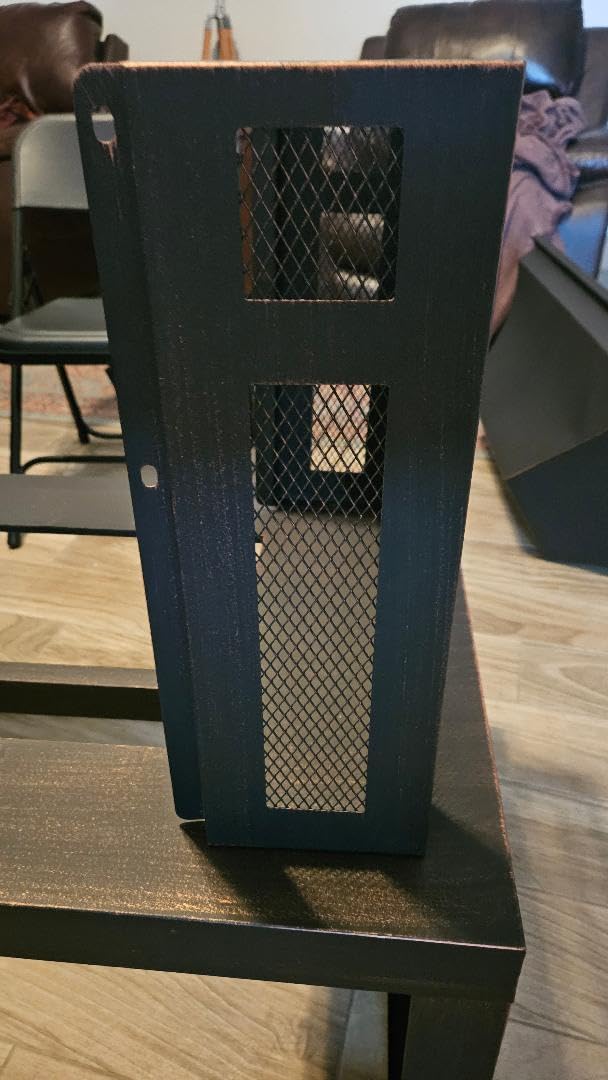
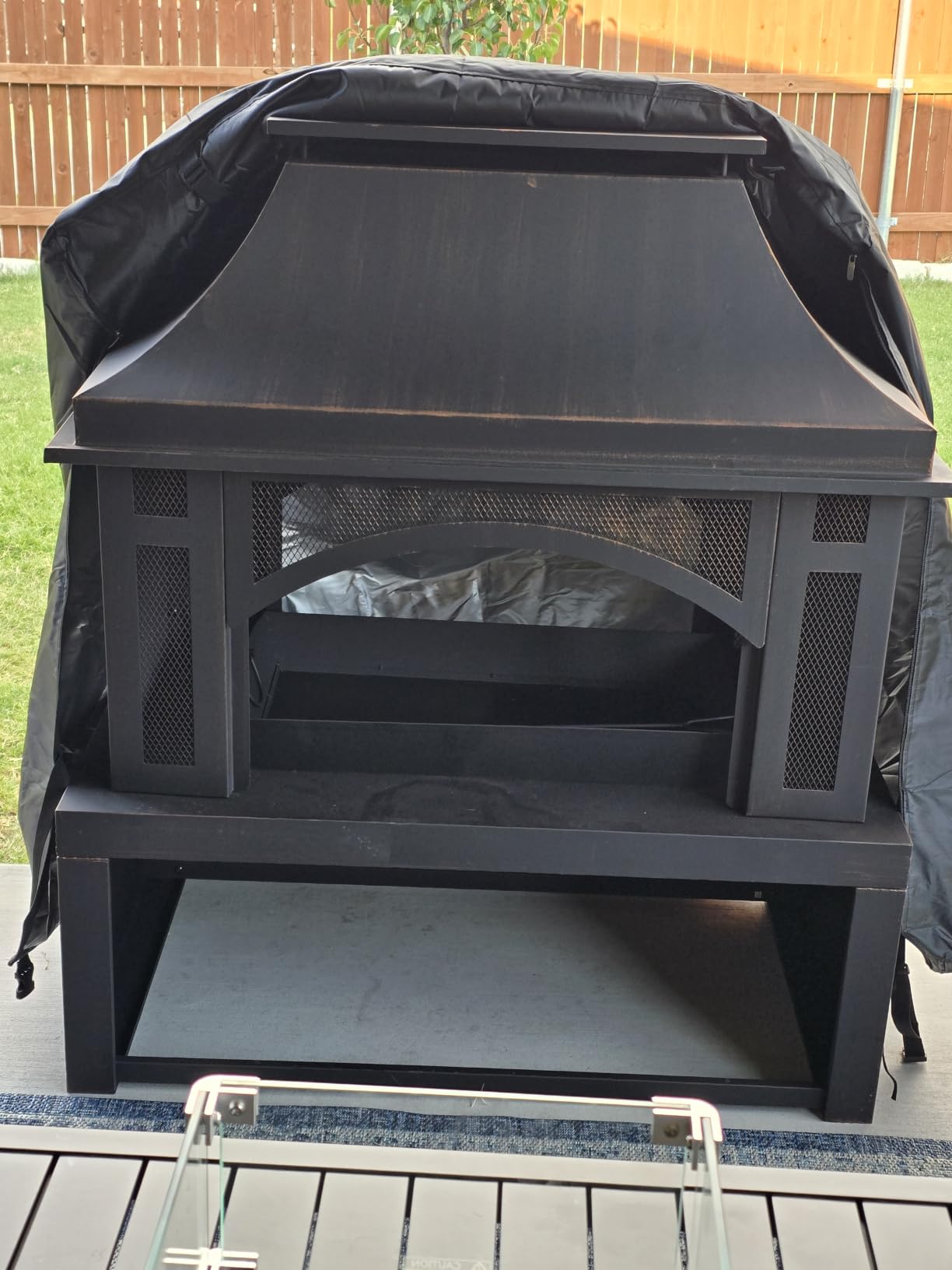
This is the one I recommend when firewood storage is the real constraint on a small patio. The lower compartment is not decoration, it is a working wood-storage bay, which on an 8 foot square patio is the difference between a stack of logs taking up a third of your floor and taking up none of it.
It is a rectangular steel design at 39 inches deep by 21.2 inches wide, so it presents a long face to your seating rather than a round one. The rear tower chimney is the feature that matters most in a confined space, because it improves airflow and pulls smoke up and away from where people are sitting, which is the single most cited complaint from chiminea owners on forum threads.
The removable bottom plate is the clever part
Take the plate out and the unit sits on the ground; leave it in and it sits on a base or patio surface. Owners who own both a paved patio and a garden like being able to choose per season. On a small paved area, the plated version also insulates the surface underneath from direct contact with the fire bowl.
At 20 pounds this is one of the lighter steel builds here, which is a genuine advantage when you want to shuffle it. The flip side is that it can shift if nudged, so place it somewhere with a wall or a heavy planter beside it rather than in the middle of an open edge.
Height, and the low-soffit problem
At 45.66 inches tall, this is the second-tallest unit in the roundup and it will not fit under a low covered porch. If your patio has a roof, measure first. The tower profile is what delivers the smoke control, and you cannot shorten it, so the honest answer for an enclosed space is that this is not your chiminea.
Who it suits
It suits anyone burning real firewood weekly who has run out of indoor storage, and anyone who sits close to the fire and has been burned by smoke drifting into their lap. The included full mesh spark screen and poker are the right level of equipment for a unit meant to hold a proper fire rather than a token one.
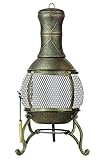
4. Deckmate Corona 3 ft Steel Chimenea – The True Three-Foot Footprint
Deckmate Corona 3 Ft. High Outdoor Steel Chimenea Fireplace Model 28063
Alloy steel with designer embossing,16.3 inch diameter by 36 inch tall,Fine wire mesh spark screen,Bronze finish
Pros
- Compact 3 foot height fits smaller patios
- Bulb shape gives a full 360 degree view of the fire
- Fine wire mesh helps contain sparks
- Long-running model with a large review base
- Classic bronze finish suits traditional patios
Cons
- Lightweight steel can feel flimsy in the wind
- Painted finish needs regular maintenance to resist rust
- Mesh screen needs cleaning after use
- Dated designer-embossed look
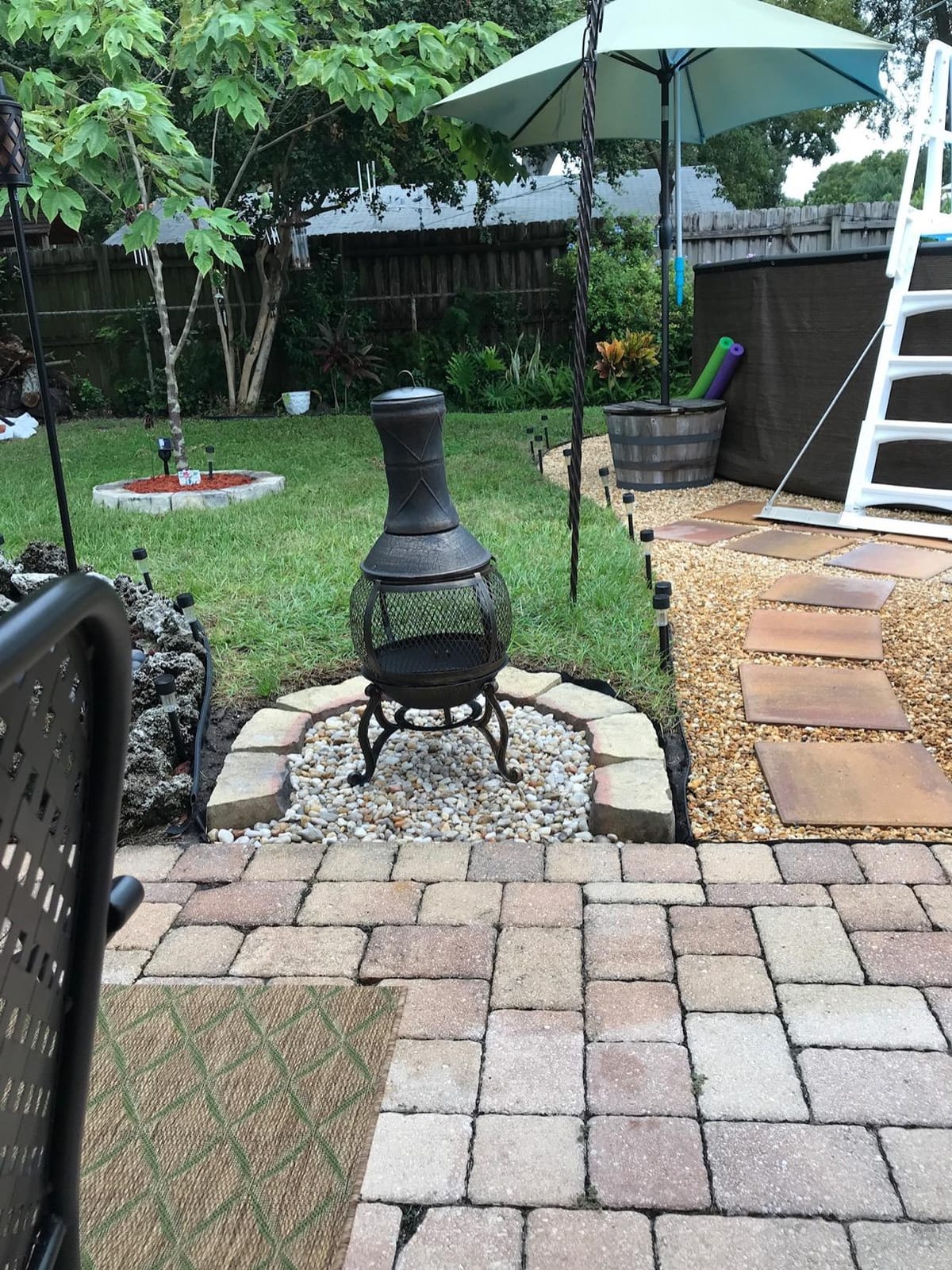
Thirty-six inches tall and 16.3 inches across is the honest compact chiminea footprint, and this is the model that delivers it. It has the second-deepest review base of anything we tested, which means the long-run rust and paint behaviour is well documented rather than a surprise waiting to happen in year three.
The bulb shape is the reason to buy it. From a round bistro table or a two-seat patio set you can see the fire from every angle without craning, and the fine wire mesh screen is fine enough to contain sparks without turning the firebox into a black rectangle.
Where the 3.9 rating comes from
Roughly 54 percent of ratings are five stars and about 12 percent are one star, and the one-star group is almost entirely about build weight and upkeep. Owners value the footprint, the bulb profile and the viewing angle. They do not love the fact that the steel is light enough to shift in a gust, or that the painted finish needs attention to stay free of surface rust.
That is an honest trade rather than a flaw. A lighter steel unit is easier to move and easier to replace, and on a small patio where you might be repositioning it for a dinner party, mobility has real value.
Rust management on a bronze steel finish
Plan for an annual wipe-down and a repaint every second or third season, and buy the cover on the same day you buy the chiminea. The mesh screen also wants a brush after each burn, because soot builds up on the wire faster than owners expect and eventually blocks airflow.
Who should buy it
Buy it if your hard constraint is a low overhang and you want the fire visible from every seat. The 36 inch height is the shortest true chiminea here, which makes it the safest answer under a covered patio that would exclude the 45 inch models.
Skip it if you want a modern look, since the embossed bronze styling reads traditional, or if you live somewhere with sustained wind and no wall nearby.
5. Giantex 20 inch Copper Finish Chiminea – The Lightest Build to Carry Around
Giantex Wood Burning Chiminea, Heavy Duty Fireplace Chiminea for Patio
Iron body with copper finish,20 by 20 by 43.5 inches,22 pounds,Two-piece log grate, rain cap and ash tray
Pros
- Lightweight 22 pound build is easy to carry and reposition
- Four thick legs hold steady on uneven ground
- Round mesh gives all-around visibility
- Two-piece log grate improves airflow
- Rain cap and ash tray included
Cons
- Copper finish iron can surface-rust and need repainting
- Assembly instructions take care to align parts
- Mesh screens collect soot and need brushing
- Copper finish discolours with heat over time
At 22 pounds, this is light enough for one person to pick up and put somewhere else, and on a rented patio where you cannot drill anything down permanently, portability is not a minor feature. It is the difference between a fire feature you use and one that stays in a corner collecting leaves because moving it is a two-person job.
The footprint is 20 inches square and 43.5 inches tall, so it needs a little more vertical clearance than the Deckmate but less than the 49 inch model. The four thickened legs are the detail that earns the “uneven ground” claim, and they are what keeps a loaded fire stable on a lawn or a gravel patch.
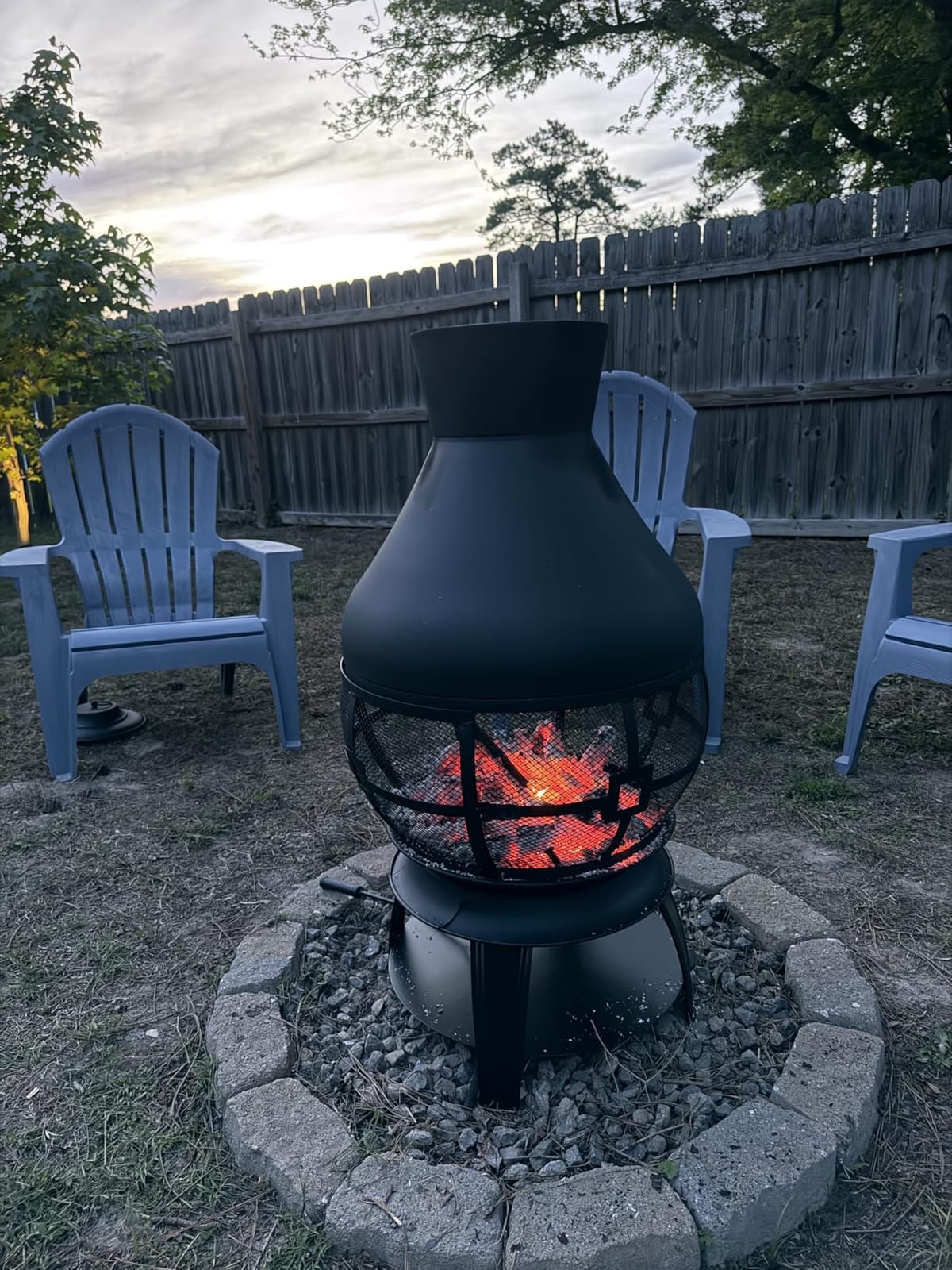
What the two-piece log grate actually does
Splitting the grate into two sections changes the airflow pattern inside the firebox, and owners report a visibly better burn as a result. Air moves under and between the pieces rather than only around the outside of the fire, which means you get more usable heat from the same small load. On a compact patio where you are not loading a whole armful of logs at a time, that efficiency is worth the extra part.
The copper finish trade-off
The high-temperature copper finish looks excellent new and gives the unit a distinctive look, but it will surface-rust if left wet and it will discolour with sustained heat. Owners describe this as maintenance rather than a structural issue, and the consensus is that an annual clean and an occasional touch-up keeps it presentable for years.
The rain cap is included, which slows the weathering considerably, and the metal ash tray makes cleanup quick enough that you will actually do it.
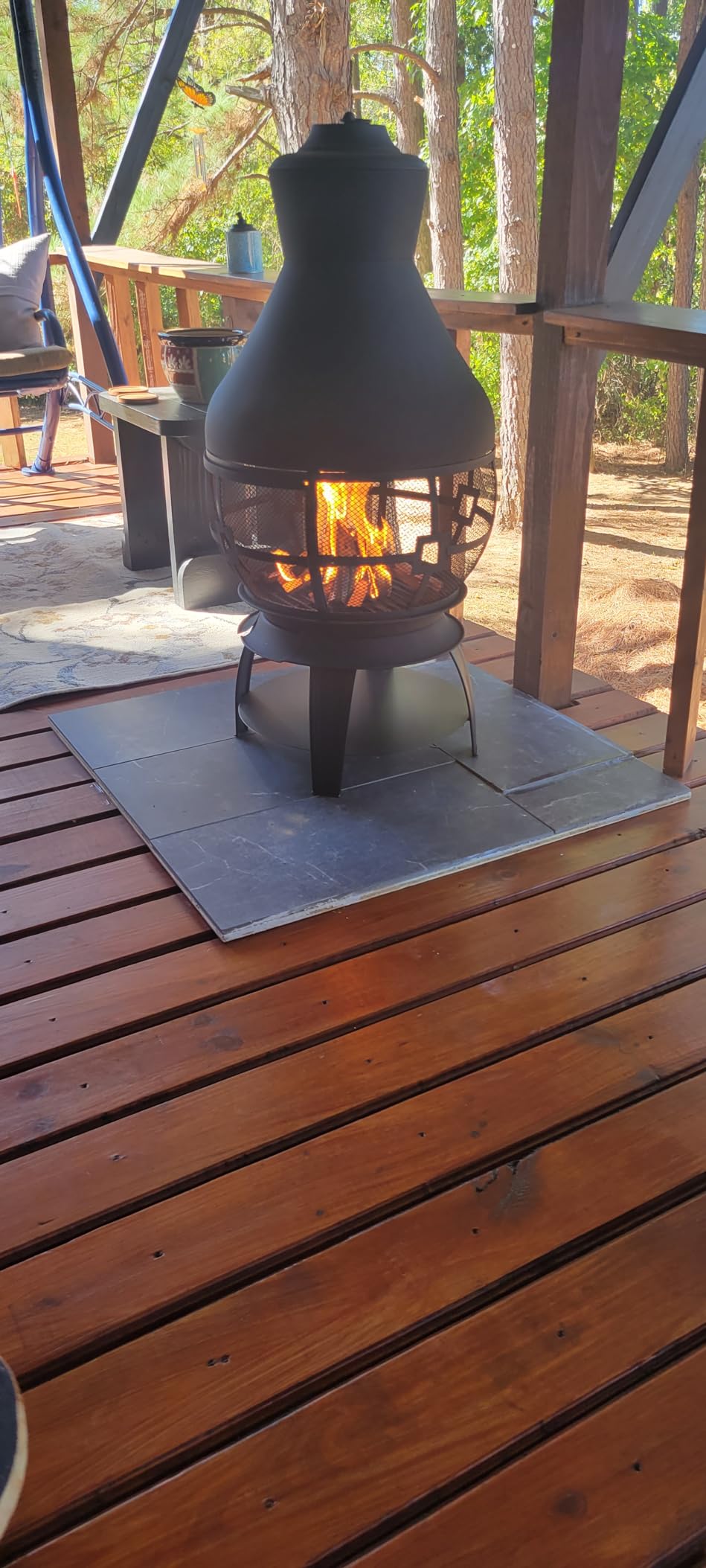
Who should buy it
Buy it if you move, if you have no fixed hearth pad, or if your patio surface is grass and gravel rather than paving. Do not buy it if you want a factory-finish look that will never need touching up, because it will not stay that way.
6. BALI OUTDOORS 17.7 inch Cast Iron Chiminea – The Narrow Deck Favourite
BALI OUTDOORS Fire Pit Wood Burning Chiminea Outside
Cast iron body with high-temperature paint,17.7 by 17.7 by 35.5 inches,33.7 pounds,Sliding door and ash tray
Pros
- True compact size at 17.7 inches wide suits small patios and porches
- Cast iron body holds up well to prolonged use
- 360 degree mesh view keeps smoke out of eyes
- Sliding door and ash tray make tending easy
- Elevated body helps protect decking from heat
Cons
- Cast iron weight makes it harder to move than lighter steel
- Sliding door can stick after repeated heat cycles
- Mesh cage needs periodic soot cleaning
This is the second shortest and one of the narrowest units in the roundup, at 17.7 inches square and 35.5 inches tall, and it is the model owners mention when they talk about a small deck. Cast iron is the material that holds heat and takes punishment best, and the elevated body is designed specifically to keep radiant heat off the surface below.
Buyers also note that this one comes along on trips, which tells you something about how small it really is. At 33.7 pounds it is one of the heavier chimineas here, so it is not a one-hand carry, but the footprint is compact enough to travel in a vehicle with the seats down.
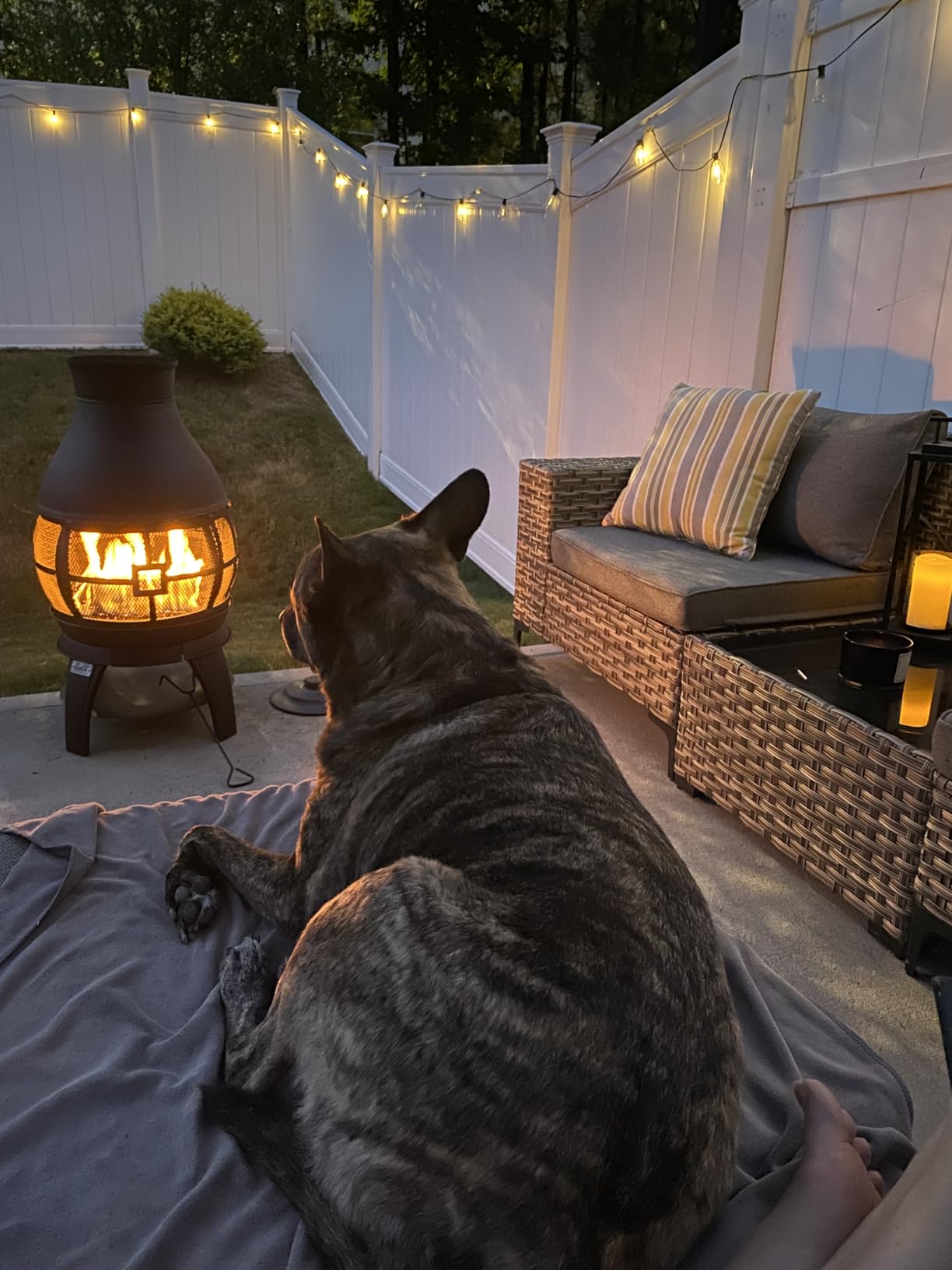
Why cast iron behaves differently under heat
Cast iron has thermal mass that stamped steel simply does not have. It heats slowly, holds temperature for a long time after the flames die, and shrugs off the repeated high-heat cycles that eventually undermine lighter bodies. If your priority is heat that lasts after the fire is out, cast iron is the right call and the extra weight is the cost of it.
The round wire mesh screen gives a 360 degree view of the fire, which does more than look good. Owners credit it with keeping smoke out of their eyes and off their clothing, which is the practical difference between an enjoyable evening and a scratchy one.
On timber decking
The elevated body is a genuine advantage on a wooden deck because it lifts the hot body away from the boards and creates air underneath. It is not a substitute for clearance. Treat any timber surface as requiring a fireproof mat or paver pad beneath the base, and keep the same 36 inch distance to any wall, railing or structure.
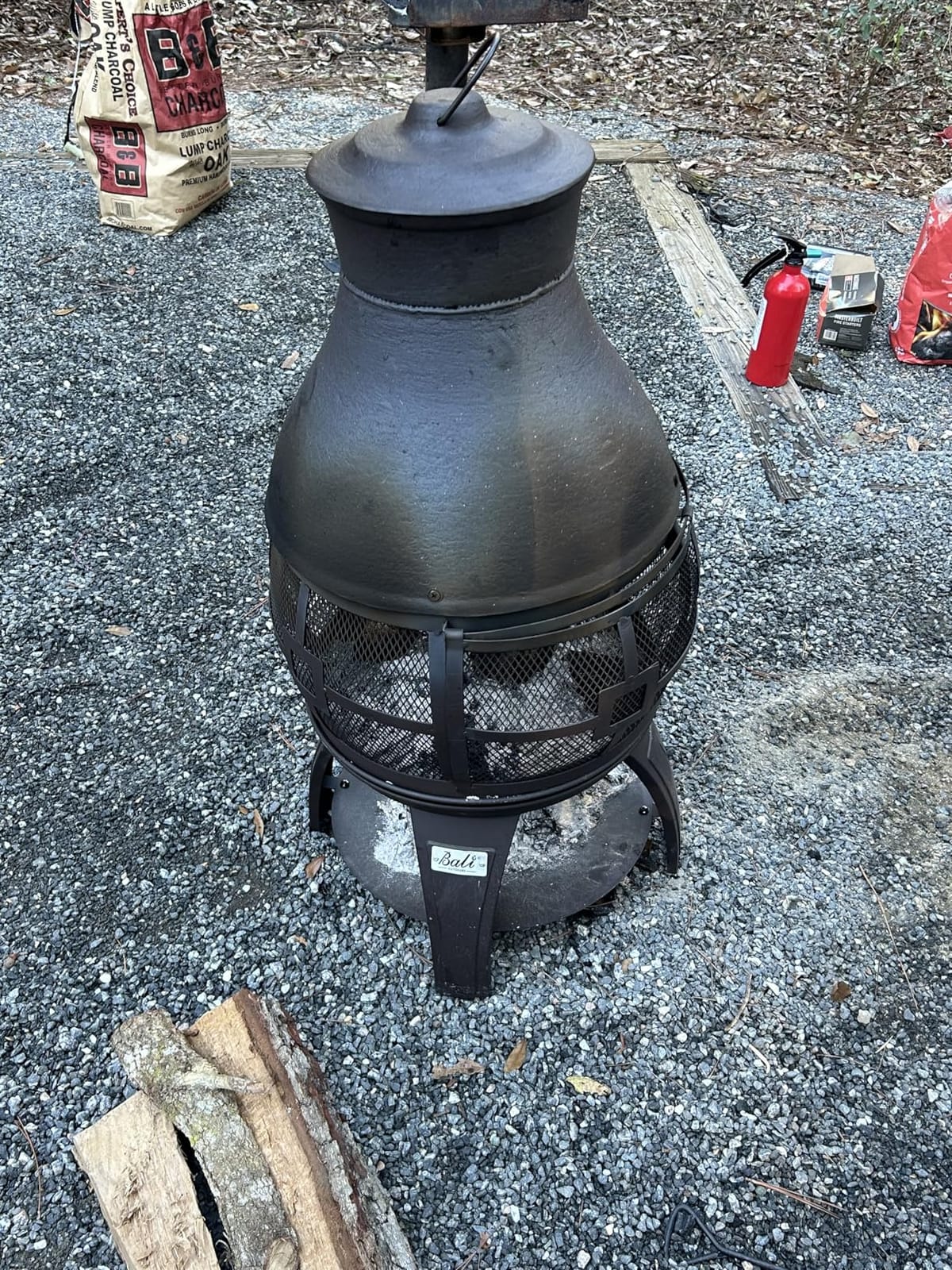
Who should buy it
Buy it if heat retention matters more than portability, or if your deck is narrow and you need every inch of walking space. Skip it if you plan to move it frequently, and expect the sliding door to need a little persuasion after a long series of burn cycles.
7. SINGLYFIRE Prairie Fire Iron Chiminea – The Best Air Control of the Eight
SINGLYFIRE Prairie Fire Outdoor Chiminea Fireplace Deck or Patio Backyard Wooden Fire Pit with Chiminea Cover Rust-Free Iron Black
Thick iron with high-temperature paint,Adjustable air valve,Carry handles,Waterproof PVC cover included
Pros
- Thick iron with high-temperature paint resists rusting
- Air valve controls burn rate and heat output
- Raised chimney keeps smoke from seated guests
- Carry handles make it easy to move
- Waterproof PVC cover included
Cons
- Published dimensions do not match the actual unit
- Single door offers less access than hinged mesh doors
- Painted iron needs cleaning to prevent surface rust
- Heavier than some comparable steel models
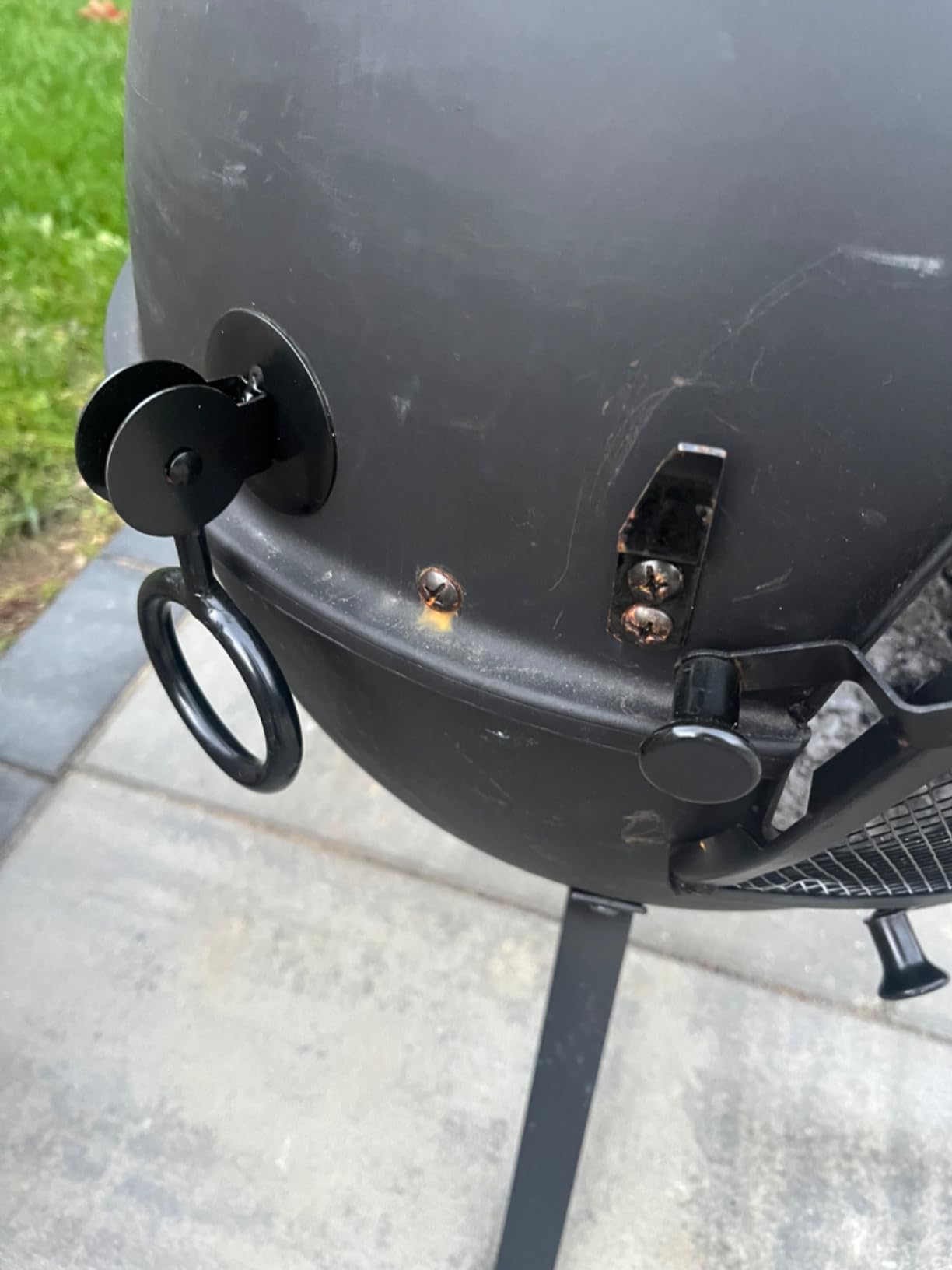
The adjustable air valve is the feature that separates this one from the rest, and it is the feature experienced owners ask about first. Opening the valve feeds secondary air into the firebox for a hotter, faster burn; closing it down smothers the fire to a long, slow, low-heat burn. On a small patio where you are cooking one evening and extending the fire the next, that control is worth more than raw BTU output.
The raised chimney serves the same purpose as the Panovue tower, keeping smoke away from people sitting nearby, and the thick iron body with high-temperature paint is described by owners as genuinely rust resistant compared with lighter painted steel.
Check the real dimensions before you order
This is the one product on the list where the published specifications are unreliable. The listed dimensions read 0.77 inches deep by 54.5 inches wide by 54.5 inches tall, which is not a plausible chiminea and does not match what owners describe receiving. That is a recurring complaint in the reviews, and it is the single most important thing to know before buying.
Contact the seller and ask for the actual assembled height and base diameter, and measure your patio before you commit. If you cannot get a straight answer, this is not the product to gamble your clearances on.
The cover is the reason to consider it if you have no shed
A dust-proof and waterproof PVC cover is included in the box, which removes the biggest practical objection to owning a steel chiminea as a renter or a patio-only household. You can leave the unit where it stands all winter under the cover instead of hauling it indoors. Carry handles make that repositioning realistic.
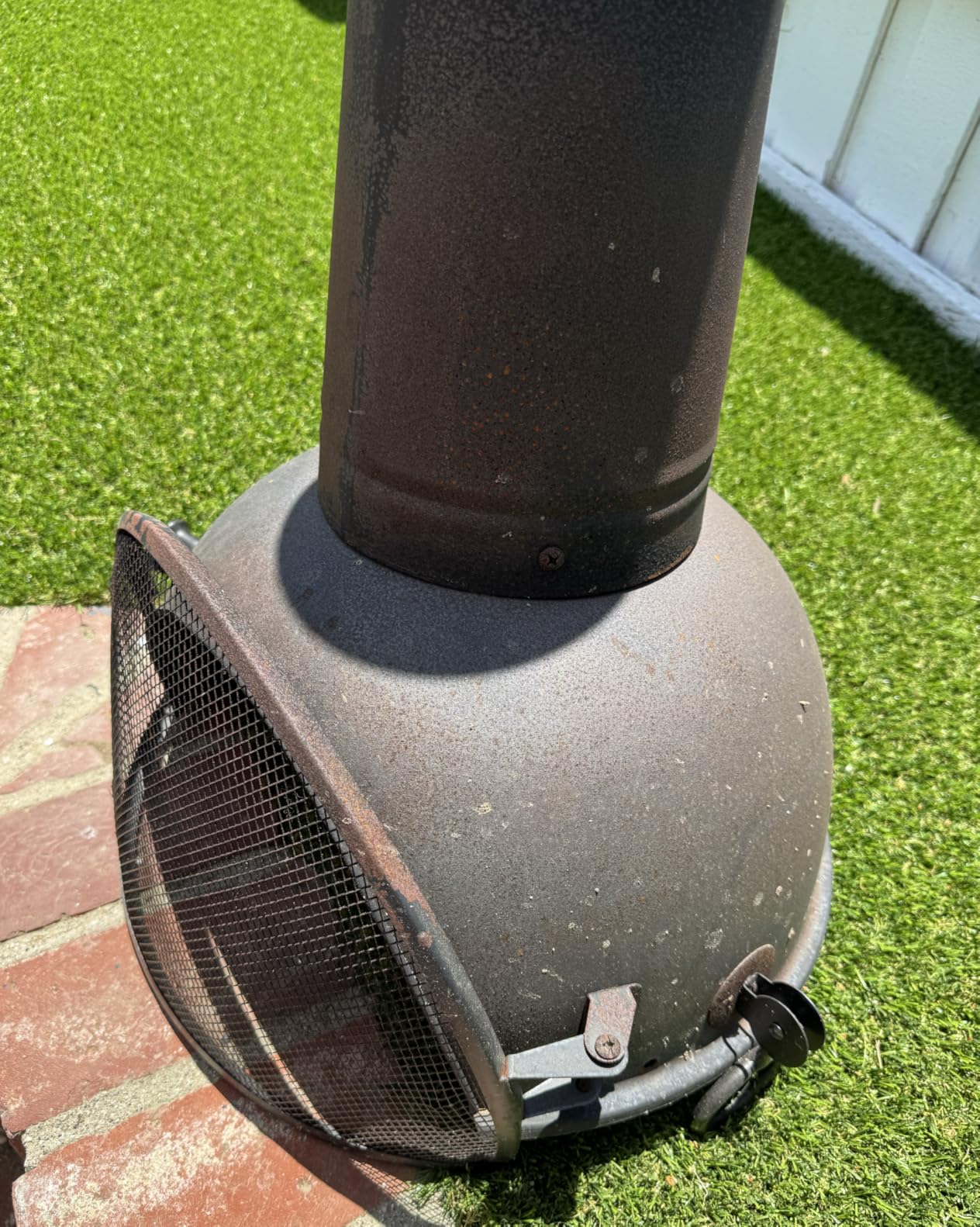
The single meshed iron door is simpler than the hinged mesh doors on some rivals, and it gives you less access when loading a long log. Fire lighters and small kindling are a better match for this firebox than full split logs.
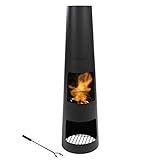
8. Sunnydaze 14 inch Slim Steel Chiminea – Narrowest Base With a Full Accessory Kit
Sunnydaze Chiminea Outdoor Fireplace – Chiminea Fire Pit with Poker and Cover – Outdoor Wood-Burning Fire Pit – Black
14.25 inch base diameter,49.25 inches tall,19.4 pounds,Poker two grates ash pan and cover included
Pros
- Slim 14.25 inch base fits tight patio layouts
- Contemporary styling works as a focal point
- Built-in log storage keeps firewood at hand
- Lightweight 19.4 pounds for easy repositioning
- Full kit includes poker grates ash pan and cover
Cons
- Narrow 8 inch top opening limits log size
- 49.25 inch height is tall for low-clearance spaces
- Painted steel finish needs maintenance
- Small firebox burns through a load quickly
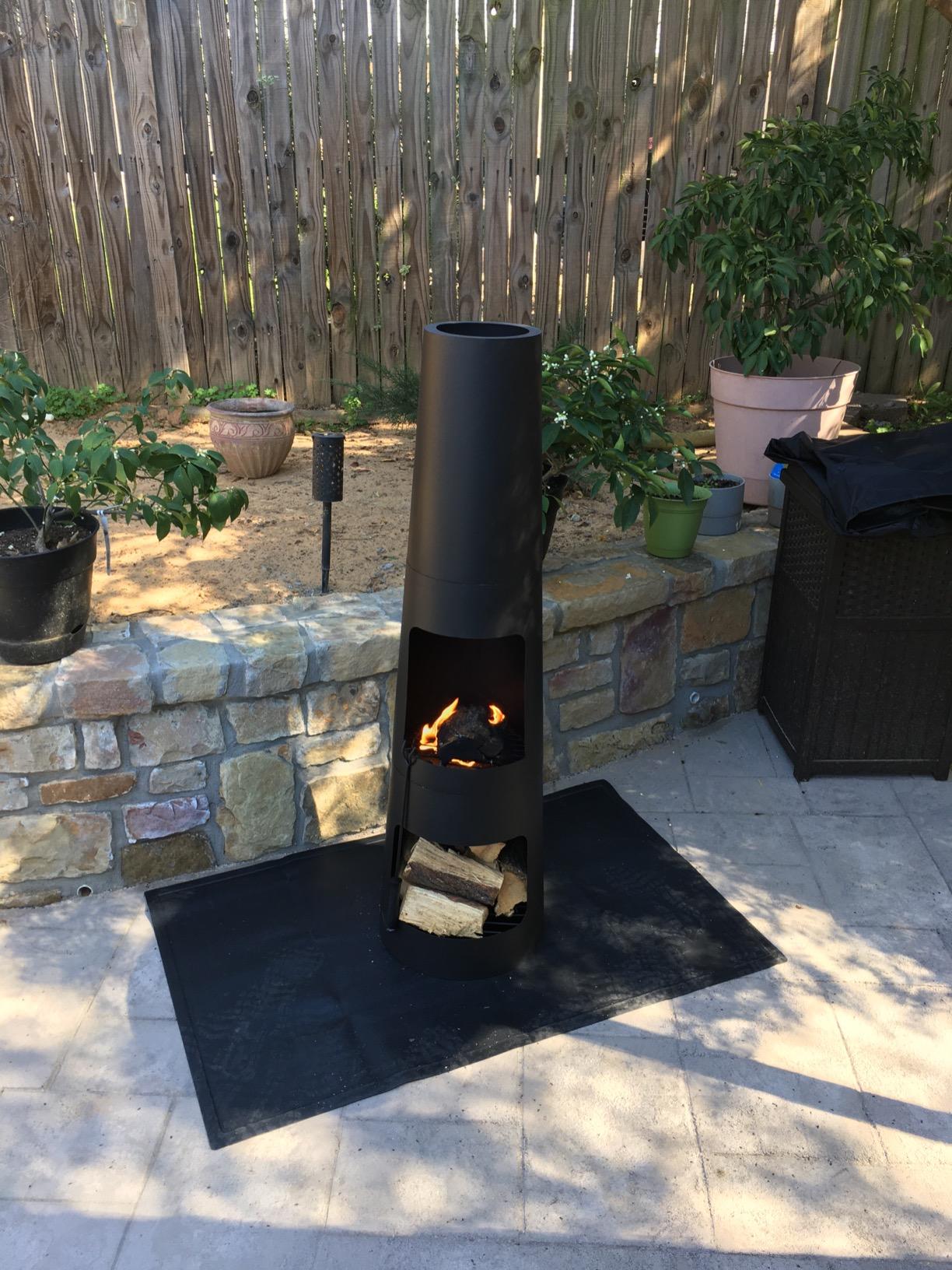
A 14.25 inch base is the narrowest footprint in this roundup, and if your patio is tight enough that every inch of floor matters, that number alone puts it on the list. At 19.4 pounds this is the lightest unit in the roundup, so the narrow dimensions do not come at the cost of being immovable.
The styling is contemporary rather than traditional, which makes it the least likely of the eight to look out of place next to modern outdoor furniture. Around four-fifths of buyers rate it four stars or better, and the narrow base plus the styling are what they name first.
The height is the catch
At 49.25 inches, this is the tallest unit in the roundup, and it will not fit under a low overhang or a shallow covered patio. That is a genuine trade against a compact appliance, and it is the same trade the 45 inch models make, taken further. If you have open sky above your patio, the extra height buys a longer draw and a more even burn.
The narrow 8 inch top opening is the other constraint. It limits you to small logs and short pieces of kindling, and the small firebox burns through a modest load faster than the units with deeper chambers. That is a reasonable trade on a 14 inch base, but do not expect long-evening logs.
Everything you need arrives in the box
The kit includes the fire pit, poker, two grates, a cover and an ash pan, plus all hardware for assembly, and it carries a 1-year limited manufacturer warranty. The upper grate is 9.5 inches across and the lower grate 12.75 inches, and the ash pan sits 3.5 inches off the ground, which gives airflow underneath and protects the surface you place it on.
Built-in log storage underneath the firebox means the wood lives in the footprint of the unit rather than beside it, which on a small patio is worth real floor space.
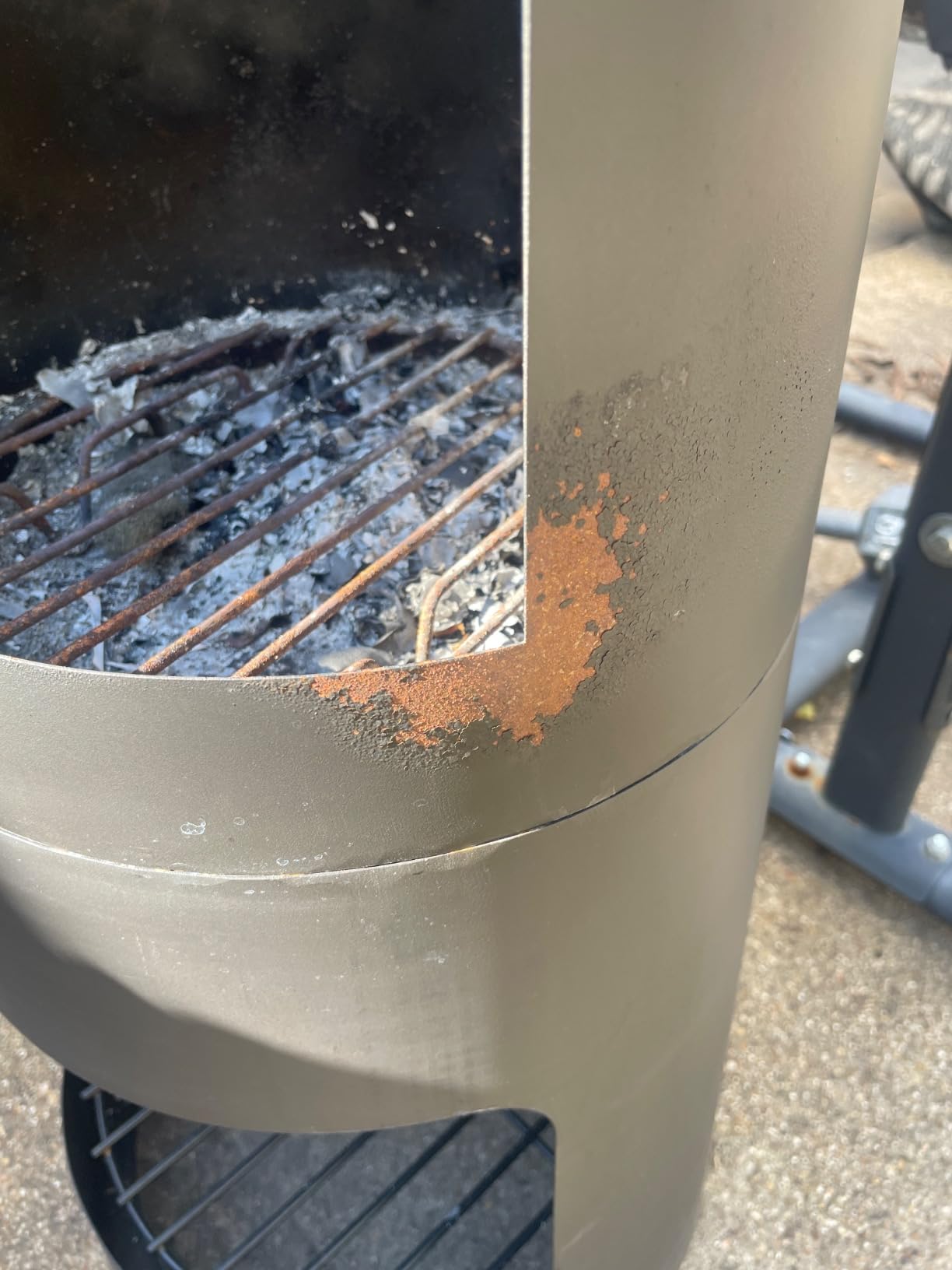
The painted steel finish needs the same routine maintenance as the other painted bodies here, and the cover included in the kit is the first line of defence.
How to Choose a Chiminea for a Small Patio
Most small-patio mistakes happen before the fire is ever lit, and they happen in measurement. Work through these steps in order and you will know within a minute whether a chiminea is even the right appliance for your space.
Step 1: measure the clear width before you measure anything else
Measure the usable width of your patio, not the total width, and then subtract the clearance you need on both sides. The figure most people forget is that a compact chiminea needs roughly 3 feet of clear space on every side, so a 6 foot wide patio swallows a 20 inch unit quite comfortably while a 4 foot patio does not.
Next, measure the depth from the wall you intend to place it against out to your seating. Remember the unit depth plus the two side clearances, and check the ceiling or soffit height above the intended position. Every model in this roundup falls between 32 and 49.25 inches tall, so if your headroom is under 32 inches, no chiminea will work and you should be looking at a tabletop fire pit instead.
Step 2: check the overhead cover and the flue path
Smoke needs somewhere to go. If your patio is under a roof, a pergola, a canopy or an awning, the flue must clear the structure by at least 12 inches and preferably more, and nothing combustible should be directly above the stack. A tight three-sided walled courtyard also needs a plan for where the plume exits, because that is where neighbour complaints originate.
Check your lease or homeowners association rules before you buy, not after. Fire restrictions on balconies, in apartment courtyards and in some condo developments are real, and a chiminea is a far larger and hotter appliance than a small electric heater.
Clay, steel, cast iron or corten: what each material means for a small space
Clay gives beautiful radiated heat and zero rust risk, but it cracks if you rush the curing and it is the least forgiving material in cold weather. Steel is light, cheap and portable, but painted steel needs a cover and periodic rust management. Cast iron has the most thermal mass and the longest heat retention, at the cost of weight. Weathering steel, or corten, forms a stable oxide layer that needs no painting at all, which is the lowest-maintenance option, though none of the products in this roundup use it.
For a small patio specifically, weight matters more than buyers expect. Anything over 40 pounds becomes a two-person job every time you want the floor back, and on a rented property that is often the difference between using the fire feature and avoiding it.
Chiminea vs tabletop fire pit vs patio heater for a tight patio
A chiminea beats an open fire pit in a small space on footprint and smoke control, and loses on total heat output. An open pit throws heat in every direction and more of it; a chiminea concentrates a smaller fire and pulls most of the smoke upward. Forum owners say this repeatedly: for a tight space, a chiminea suits the patio better than a fire pit, because the enclosed, smaller fire is what makes it tolerable at close range.
A tabletop fire pit is the right answer when your only clear space is a coffee table and your main goal is atmosphere rather than heating the patio. A gas patio heater is the right answer when you need warmth without fire, without ash disposal, without wood handling, and when a flame is prohibited by your building. If you have no headroom and no side clearance, a chiminea is not the category you should be shopping in.
Curing a clay chiminea so it does not crack
If your shortlist includes a clay unit, curing is non-optional. Burn a very small kindling fire only, let it burn out completely, and repeat for two or three consecutive days with slightly more wood each time. Only on the fourth day should you move to normal fire size. Clay that is shocked with full heat on day one is the reason most clay complaints exist.
Smoke control for neighbours, fences and HOAs
Check that your unit has a spark arrestor or fine mesh screen, since that is what stops embers travelling. Keep the flue as high above your seating as the design allows. Position the unit so the plume rises away from the nearest boundary fence rather than over it, and burn dry seasoned wood, since wet wood is the main cause of both smoke and creosote. Finally, do not burn when neighbours are not home without warning them.
Storage and covers when you have no shed
If you have nowhere to put a fire feature between seasons, buy the cover with the chiminea, not later. A fitted waterproof cover kept in place through winter is a better plan than hauling steel indoors twice a year, and it is the single most common piece of advice from owners in forum threads.
Fire Clearances and Safe Placement on a Small Patio
Every compact chiminea in this roundup is rated for outdoor use only and only on a non-combustible surface. Concrete, pavers, bare soil, gravel and dedicated fireproof mats are all acceptable. Timber decking, artificial turf, dry grass and anything else that can char are not.
Follow this sequence and the numbers are the ones most manufacturers and fire services work to.
1. Keep 3 feet on every side. Measure 36 inches from the outer edge of the firebox to any wall, railing, fence, shed, vehicle, shrub or tree trunk.
2. Give the flue at least 12 inches of open air. Measure vertically from the top of the chimney to any roof, pergola beam, awning fabric or overhanging branch. Add more if the material above is combustible.
3. Treat a wooden deck as a combustible surface. Put a fireproof mat or a paver base beneath the unit even when the body is elevated, and check the joists and framing beneath the boards as well as the boards themselves.
4. Never leave one unattended. A chiminea throws sparks farther and burns hotter per square foot than people expect, particularly when wind picks up.
5. Check whether a permit or HOA approval applies. Apartment balconies, condo courtyards and many urban patios have fire restrictions written into lease agreements. Combustible construction on an attached building is the highest-risk situation and the most commonly restricted.
6. Keep water and a metal lid or shovel within reach. Not in the house, not in the garage, beside the fire.
On a balcony or an apartment patio specifically, the honest answer is that a wood-burning chiminea is often against the rules and the physics are not on your side. A small electric or gas patio heater serves the same warming purpose with none of the clearance, ember or smoke considerations.
Frequently Asked Questions
What is the best type of chiminea to buy?
For a small patio, an enclosed steel or cast iron chiminea between 16 and 22 inches wide and under 40 inches tall is the best type. It gives real wood heat in a small footprint, pulls smoke upward instead of across your seating, and stays within the 3 foot clearance most fire codes expect. Clay looks more decorative but cracks if rushed. Verify the real assembled dimensions before ordering, because published specs are frequently wrong.
Are clay chimineas better than metal?
Clay radiates heat gently and never rusts, and it suits a decorative piece more than a daily heat source. Metal, whether steel or cast iron, is tougher, lighter to move and easier to light. The deciding factor for most small-patio buyers is maintenance: a clay chiminea must be cured over several days before full heat and stored under cover in freezing weather, while a metal one only needs a cover between seasons.
Are chimineas better than fire pits?
A chiminea is better for a small patio in two specific ways: it needs less width, and its enclosed body pulls smoke upward instead of letting it drift. A fire pit produces more total heat because it burns an open flame radiating in every direction, and costs less. If your priority is warmth across a large area, choose the fire pit. If your priority is a fire feature that two or three people can sit close to, choose the chiminea.
Is a chiminea safer than a fire pit?
A chiminea is safer in the ways that matter in a confined space, mainly because the enclosed firebox and the chimney draft contain sparks and lift smoke away from seating. A spark arrestor or fine mesh screen adds real protection on a small patio. It is not automatically safe, though. The same 3 foot clearance, the non-combustible surface requirement and the never-leave-it-unattended rule apply to both.
Is a chiminea safe on a deck?
Only with protection. Treat timber decking as a combustible surface and put a fireproof mat or paver base under the unit, then keep 3 feet of clearance to any wall, railing or structure and 12 inches of open air above the flue. A raised body on legs helps but does not replace the mat. Owners on wooden decks report workable setups using a stand of roughly 7 inches for separation, which is a sensible separation distance to plan around.
Which Chiminea Fits Your Patio?
If your patio is at least 6 feet square with open sky above, the BALI OUTDOORS 22 inch is the pick I keep coming back to. It carries the deepest review base in the roundup, holds a proper fire, and at 22 inches square it leaves a usable seating area around it.
If your space is genuinely tight or the whole point is atmosphere, the Wiosi 16 inch clay wins on footprint, and treat it as a decorative piece with a small fire unless you cure it properly first. If you burn real firewood weekly and have nowhere to stack logs, the Panovue 39 inch keeps the wood inside its own footprint and lifts the smoke away from your seats.
If your patio is under a low overhang, the Deckmate Corona 3 ft is the honest answer at 36 inches tall. If you move the fire feature often or rent, the Giantex 20 inch at 22 pounds is the one you can carry alone. On a narrow timber deck, the BALI OUTDOORS 17.7 inch cast iron gives you the smallest elevated cast iron body with the best heat retention. If you want slow-burn control and a cover included, the SINGLYFIRE Prairie Fire is worth the extra step of confirming its true dimensions first.
And if your patio has less than 32 inches of headroom, stop looking at chimineas and buy a tabletop fire pit instead. Measuring first will save you more money than any deal you could find, and it is the step almost every chimney mistake in 2026 traces back to.
Before the first burn, confirm three numbers: the real assembled height, the base diameter, and your nearest obstruction distance. If those three line up, the rest is just firewood and patience.
Leave a Reply