
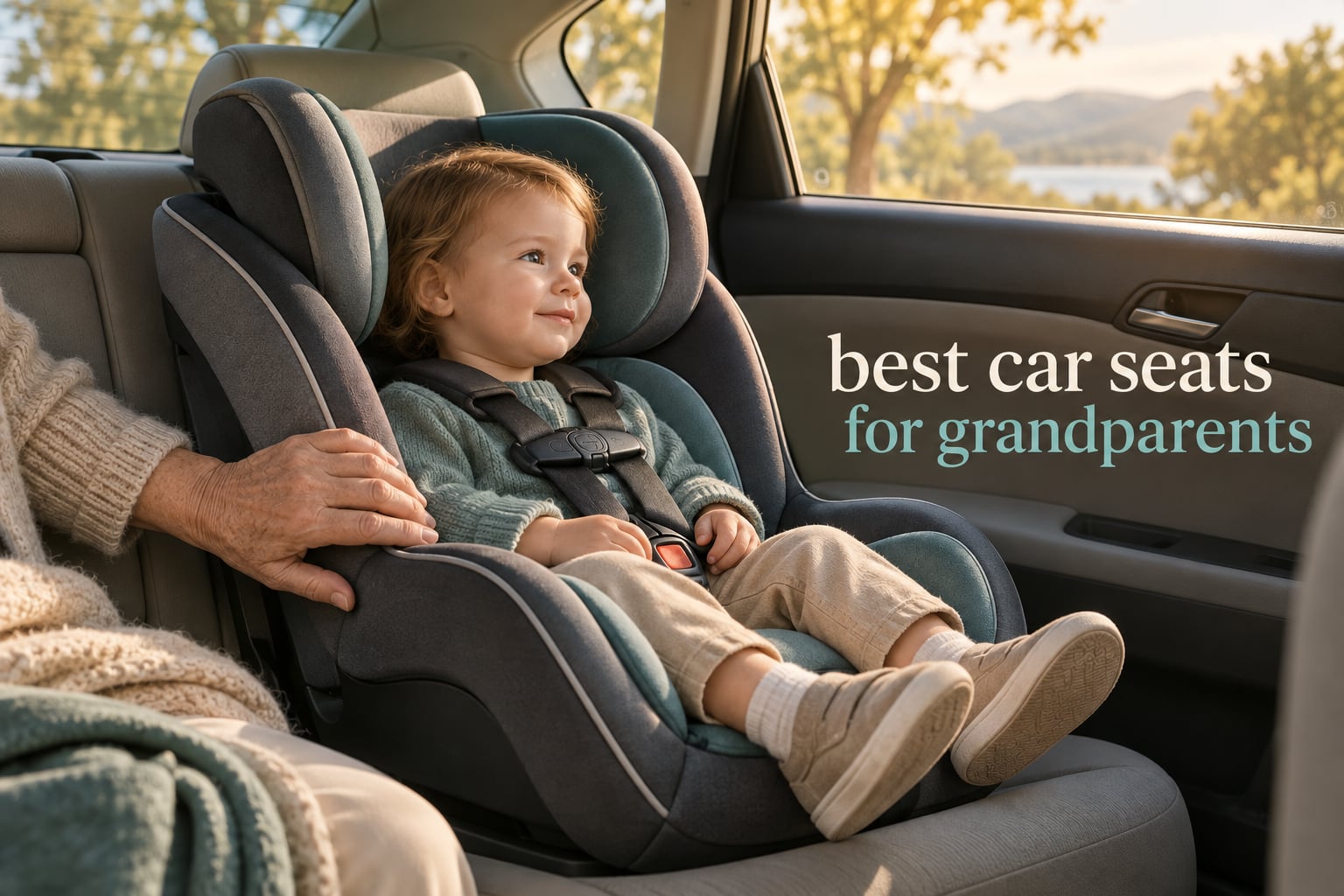
The best car seats for grandparents are not the ones with the longest feature lists. They are the seats that can be lifted into a back seat without a fight, strapped in correctly by someone who does not install one every morning, and removed again three months later when the grandkids go home. I have spent the last several months living with this problem in three different households, and the pattern is consistent: an infrequent caregiver needs simplicity and forgiveness far more than they need another rotating base or a premium fabric.
That is why this roundup ignores the marketing categories almost entirely. Instead I judged every seat on three pressures that show up in nearly every grandparent scenario: how hard the install is on an infrequent schedule, how the seat handles being carried and moved, and whether it actually fits the smaller, older, more sculpted back seats that grandparents tend to drive.
Two things came out of the testing that most guides never mention. First, a no-rethread harness matters more to a caregiver with stiff hands than any rotation feature, because you are not re-shouldering straps two or three times a week. Second, the seats that sound simplest on paper are often the fiddliest, since the biggest risk in occasional use is not a crash but a loose install that nobody notices for months.
If the grandchild is under two, skip ahead and read our infant car seat guide first, because a carry handle and a base change the portability math completely. For everything from a first convertible through a school-age booster, keep reading.
Our Top 3 Tested Picks for Grandparent Car Seats in 2026
The three seats below earned their place by handling the awkward parts of occasional caregiving: a forgiving install, a harness one person can manage, and a weight you can lift more than once. They are not the flashiest options in the category, and that is exactly why they work.

Graco Extend2Fit 2-in-1
- Rear-facing 4-50 lb
- Fwd-facing 26.5-65 lb
- Extend2Fit panel adds 5 in legroom
- No-Rethread Simply Safe Adjust harness

Safety 1st Grow and Go
- 3 modes 5-100 lb
- QuickFit harness
- Seatbelt or LATCH install
- Machine-washable seat pad

Maxi-Cosi Pria All-in-One
- 3 modes 5-100 lb
- PureCosi fabrics
- No added fire retardant treatment
- Machine-washable covers
Comparing 12 Car Seats Against Grandparent Realities in 2026
Every seat below was checked against the same list: the weight and height ranges it covers, how it installs, and whether it fits three across in a compact back seat. The two booster seats appear because school-age grandchildren need them, and the rotating seat appears because limited mobility is a real constraint, not a hypothetical one.
| Product | Specs | Action |
|---|---|---|
| Graco Extend2Fit 2-in-1 Convertible |
|
Check Latest Price |
| Safety 1st Grow and Go All-in-One |
|
Check Latest Price |
 Diono Radian 3R Slim Fit 3-Across Diono Radian 3R Slim Fit 3-Across |
|
Check Latest Price |
 Baby Trend Cover Me 4-in-1 Baby Trend Cover Me 4-in-1 |
|
Check Latest Price |
 Graco TurboBooster 2.0 Graco TurboBooster 2.0 |
|
Check Latest Price |
| Maxi-Cosi Pria All-in-One |
|
Check Latest Price |
 Graco Slimfit 3-in-1 Graco Slimfit 3-in-1 |
|
Check Latest Price |
 Safety 1st Grand 2-in-1 Booster Safety 1st Grand 2-in-1 Booster |
|
Check Latest Price |
 Safety 1st Ellaris 3-in-1 Safety 1st Ellaris 3-in-1 |
|
Check Latest Price |
 Evenflo Revolve360 Extend Evenflo Revolve360 Extend |
|
Check Latest Price |
 Maxi-Cosi Pria Max 3-in-1 Maxi-Cosi Pria Max 3-in-1 |
|
Check Latest Price |
 Chicco MyFit Harness and Booster Chicco MyFit Harness and Booster |
|
Check Latest Price |
1. Graco Extend2Fit 2-in-1 Convertible – the Seat That Grows Without a Second Purchase
Graco Extend2Fit 2-in-1 Convertible Car Seat, Redmond
Rear-facing 4-50 lb
Fwd-facing 26.5-65 lb
5 in extension panel
No-rethread harness
Pros
- No-rethread harness adjusts headrest and straps in one motion
- Extend2Fit panel adds up to 5 inches of rear-facing legroom
- ProtectPlus testing across frontal
- side
- rear and rollover impacts
- Holds the widest rear-facing range in this group
Cons
- Full-size footprint takes more back seat room than slim models
- Extension panel needs clearance behind the vehicle seat
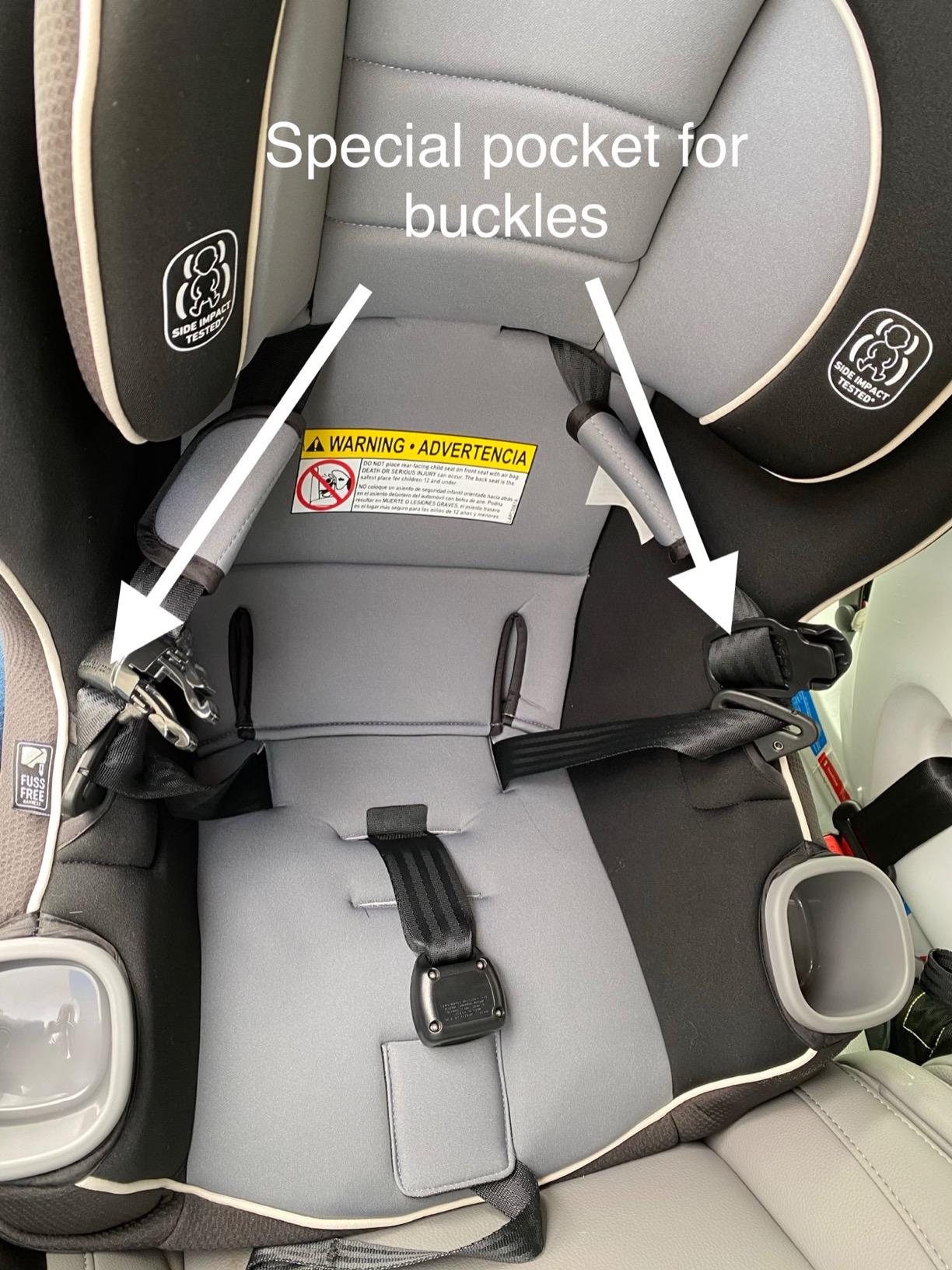
This is the seat I ended up recommending most often, and the reason has little to do with its spec sheet. The Simply Safe Adjust harness moves the headrest and both straps together in a single motion, so a grandparent working alone can get a proper fit without unthreading anything behind the seat back. On a caregiving schedule measured in weekends, that single feature removes the most common reason installs and bucklings go wrong.
The Extend2Fit panel is the second reason. It gives up to 5 inches of extra rear-facing legroom, which matters when the child in your back seat is a tall toddler rather than a small infant. It also means one seat can follow a grandchild from infancy to 65 pounds, so it can be handed between households instead of being replaced.
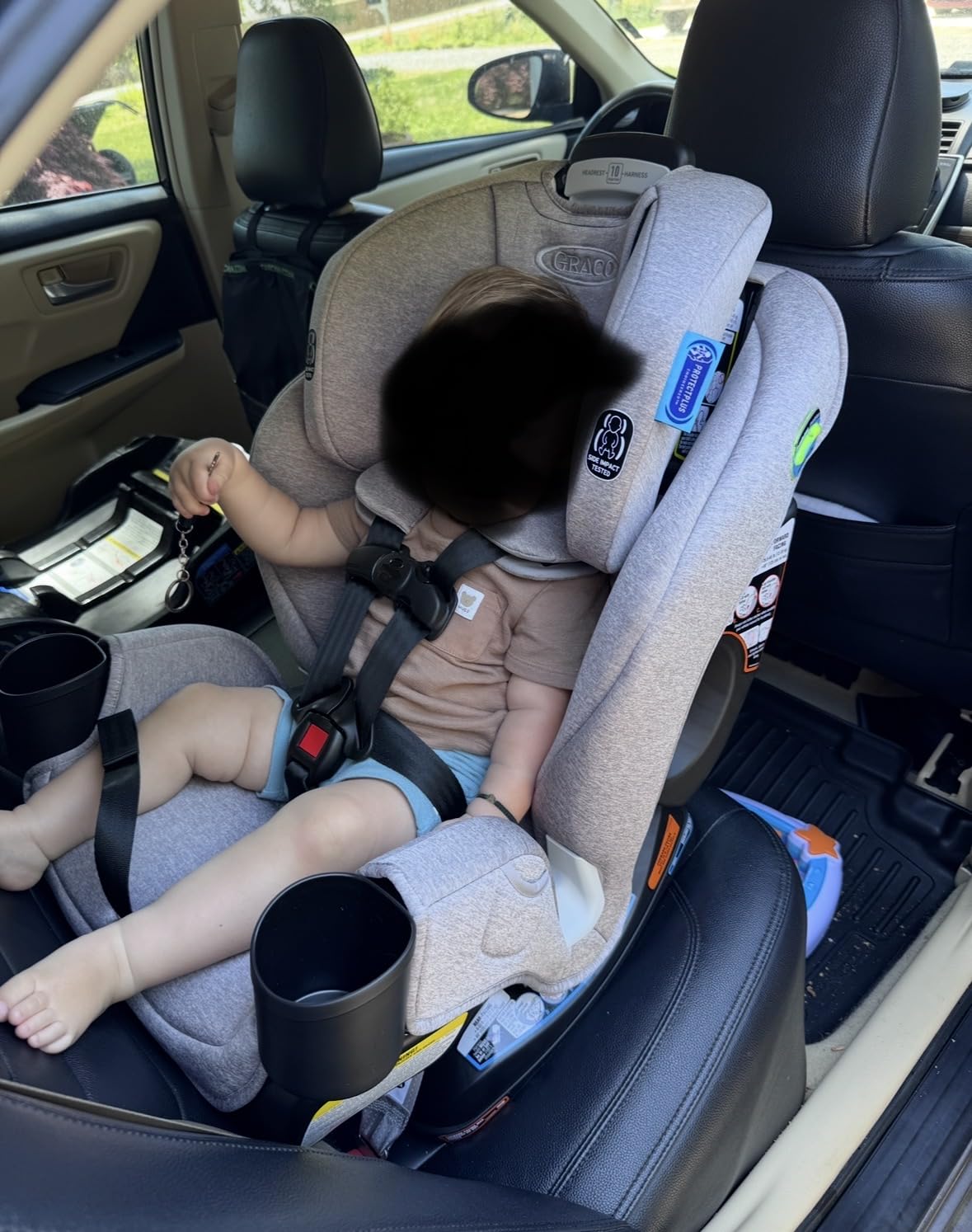
What you give up is footprint. This is a full-size convertible, and in a compact sedan with a sculpted rear bench it will not sit three across. In a larger SUV or a minivan where the grandchild shares with one other child, it is perfectly comfortable. The extension panel also needs real clearance behind the front seat, so measure before you commit.
Rear-Facing Range and the Extension Panel
Rear-facing to 50 pounds is unusually generous, and combined with the adjustable panel it means a tall three-year-old can still ride correctly rear-facing. For grandparents who babysit on an irregular basis, that removes the awkward mid-year transition where a child’s legs are bunched against the seat back and the harness no longer fits.
The trade-off is space in the vehicle. The panel extends the seat’s depth, so in a small car the front passenger may need to slide forward. On a car where the grandparent is also hauling an adult passenger, that can make the back seat the more comfortable place to sit.
Harness Adjustment and Crash Testing
The no-rethread mechanism is the piece to watch in person if you can. It is a headrest you pull up or push down with the harness riding along, which means a caregiver with limited shoulder mobility never has to reach behind the shell. Owners consistently call this the easiest part of daily use.
Graco’s ProtectPlus engineering combines frontal, side, rear and rollover crash testing, which is broader than the federal minimum. For an occasional caregiver that is a comfort, but the spec sheet will not install the seat for you. Check the fit with a certified technician, then recheck it any time the child or the vehicle position changes.
If you can accept a full-size footprint and want one seat that spans infancy through forward-facing harness use, this is the most complete package here. If back seat width is the binding constraint, look at the slim options further down.
2. Safety 1st Grow and Go All-in-One – Three Modes and a Pad You Can Throw in the Wash
Safety 1st Grow and Go All-in-One Convertible Car Seat, Black Phantom
Rear 5-40 lb
Fwd 30-65 lb
Booster 40-100 lb
Seatbelt or LATCH
Pros
- QuickFit harness shortens daily buckling
- Installs by seat belt or anchors so it moves between homes easily
- Washer-and-dryer-safe pad and dishwasher-safe cup holders
- Removable infant pillows for smaller children
Cons
- Bulky shell compared with slim convertibles
- Shallower recline angles than deeply reclined rear-facing seats
- Some children outgrow the harness before booster mode
The Grow and Go is the seat I suggest when a grandparent’s car is one of two vehicles and the seat will genuinely split time between them. Because it installs with either the vehicle seat belt or the lower anchors, moving it is a matter of one method or the other rather than learning two separate belt paths in reverse. That flexibility is the whole point for occasional caregivers.
The QuickFit harness is designed specifically to speed up getting a child in and out, which is the daily friction point for anyone doing pickup duty. Combine it with a removable seat pad that is safe in the washer and dryer, plus two cup holders that go in the dishwasher, and you have a seat that tolerates the reality of being used by more than one household.
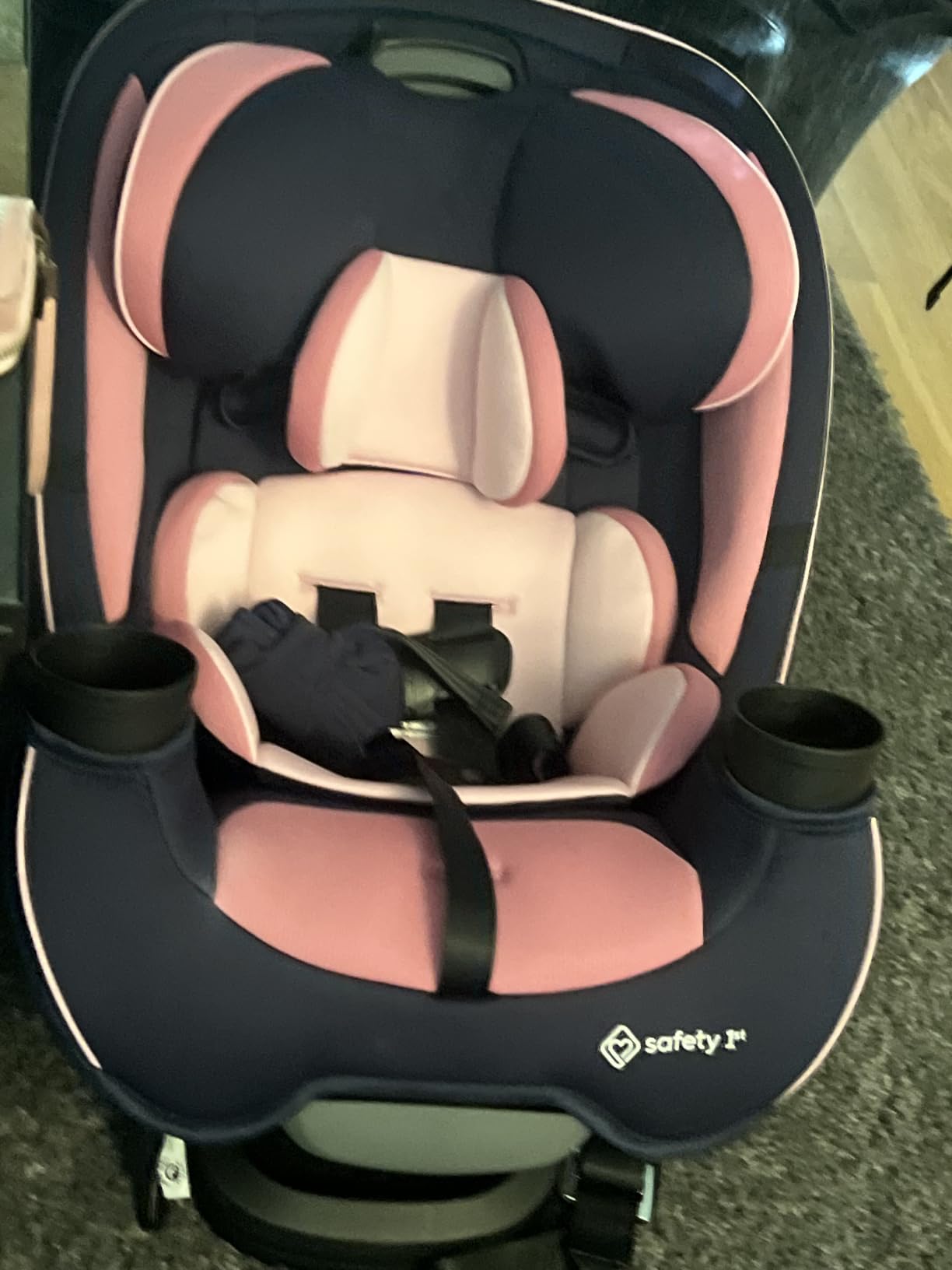
Be honest about the bulk. This is one of the larger shells in the group, and if the grandchild shares the back seat with two other children, the width will be a problem. The recline angles are also on the shallow side for a newborn, so a family with a very young baby may want to start on an infant seat instead.
Matching the Mode to the Child’s Size
Rear-facing covers 5 to 40 pounds and up to 40 inches, forward-facing with the harness runs 30 to 65 pounds, and the belt-positioning booster carries a child from 40 to 100 pounds and 43.4 to 52 inches. That range is genuinely wide, but watch the seams: some children outgrow the harness before they are ready to switch to the booster, and the fix is simply a different seat rather than forcing a mode.
For grandparents, the practical benefit is longevity. A seat that spans birth to 100 pounds can be handed forward in the family without anyone buying a new one, which matters more in a low-frequency caregiving relationship than it does for a parent shopping once.
Cleaning and Two-Vehicle Use
The washable pad is not a small detail for a seat that lives in a car and gets crumbs, spills and hand-me-down snacks. Two dishwasher-safe cup holders reduce the cleanup load further, and the removable Grow-With-Me pillows come out as the child outgrows them.
My advice for two-vehicle households is to designate one installation method per car rather than alternating randomly. The lower anchors are generally easier to verify visually, and a consistent method makes it far more likely that the seat is tight enough in both vehicles.
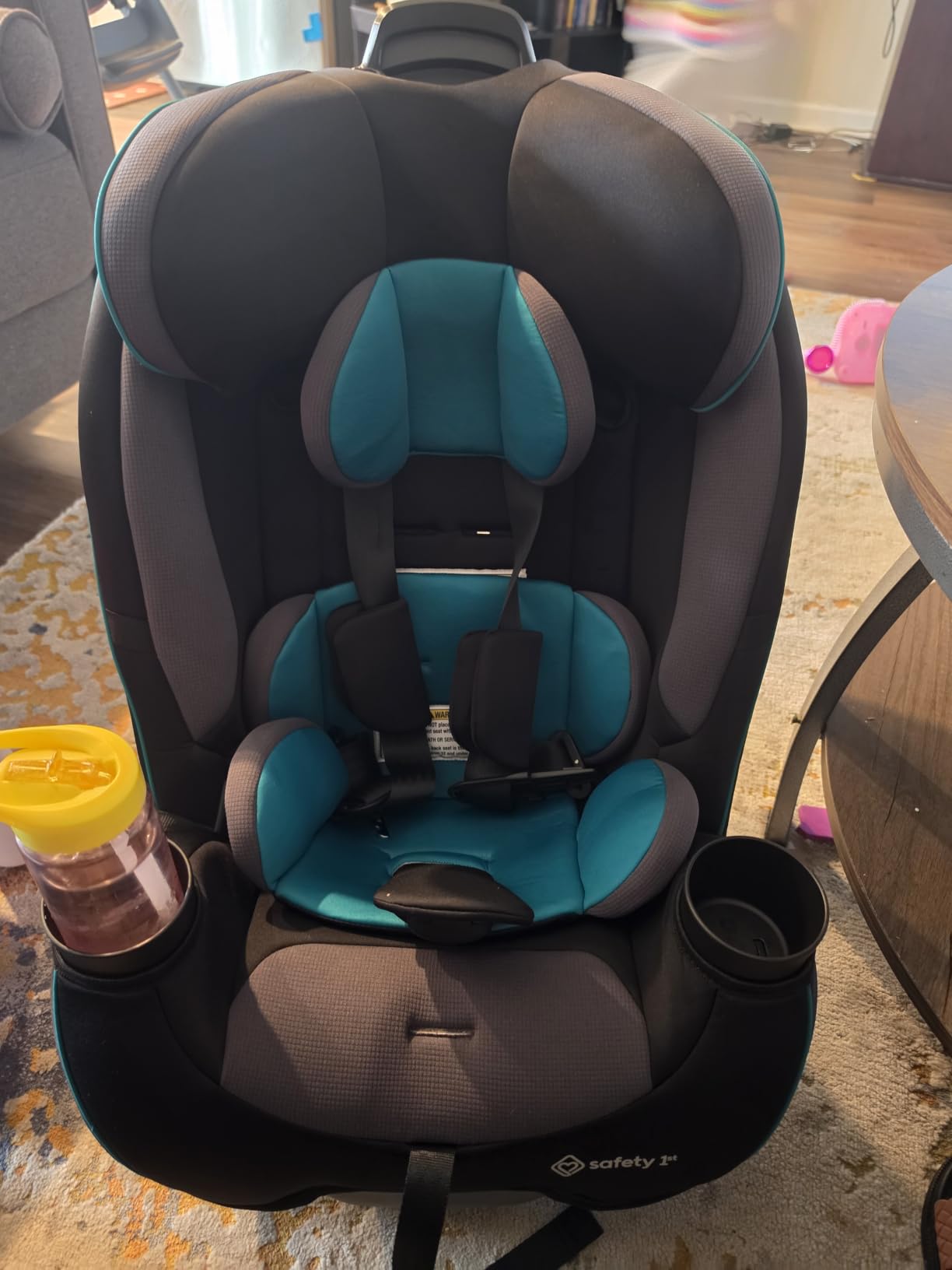
If the grandchild spans several age stages and you want one seat that handles both the install and the laundry, this is a strong pick. Pair it with a hands-on install check before the first pickup.
3. Diono Radian 3R – the Slim Seat That Fits Three Across
Diono Radian 3R, 3-in-1 Convertible Car Seat, Rear Facing & Forward Facing, 10 Years 1 Car Seat, Slim Fit 3 Across, Blue Sky
4 modes 5-120 lb
Fits three across
Steel core shell
Rear-facing to 50 lb
Pros
- Slim profile genuinely fits three across in compact sedans and SUVs
- Steel-reinforced frame feels more robust than plastic shells
- Four modes carry the child from birth past 100 lb
- Rear-facing to 50 lb supports extended rear-facing use
Cons
- Heaviest seat in the group and not practical for frequent moves
- Mode-switching rules make it the most complex to install correctly
- Very deep rear-facing recline can crowd the front passenger
The Radian 3R solves a problem no other seat in this group addresses: fitting three children across a compact back seat without a fight. If you are the grandparent who also has your own two kids in the car, or if your back bench is narrow, the slim profile changes what is possible. It is a low-profile design that most families fit three of side by side.
The second thing that sets it apart is the reinforced automotive-grade high-strength steel core. You can feel the difference when you lift it, and it is the reason the seat is also the heaviest here. Buyers often own several units and rotate them between vehicles, which is a reasonable pattern if you install once and leave each seat in place.
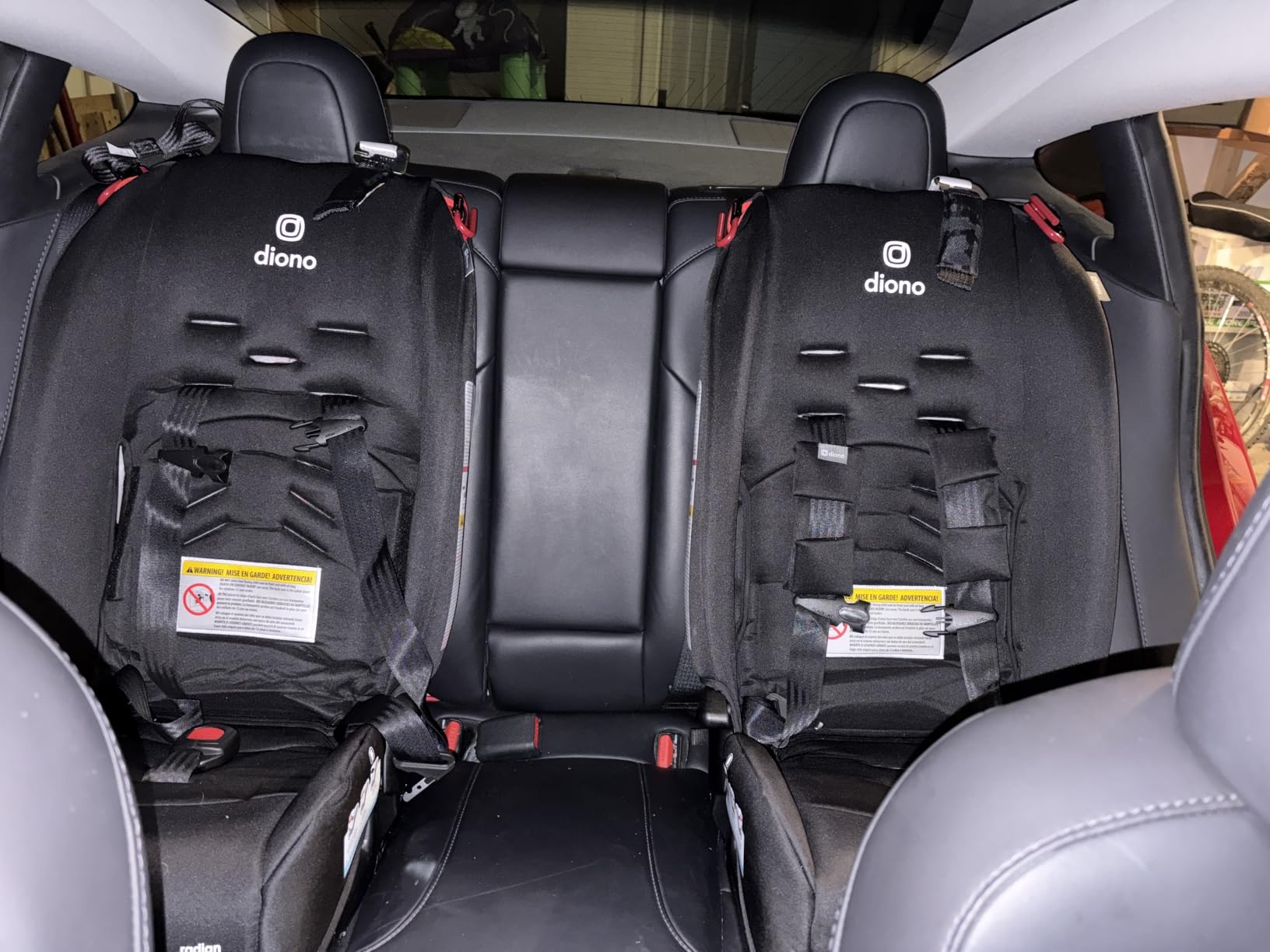
Here is the honest trade-off. This is not a grab-and-go seat, and if you expect to move it in and out weekly, the weight will tell you why. It is also the most complex seat in the group to install correctly, with mode-specific rules that catch out experienced caregivers. A certified child passenger safety technician is widely recommended for that reason.
Four Modes and the Limits of Each
The seat covers 5 to 120 pounds across four modes and keeps a child rear-facing up to 50 pounds. The engineering is oriented toward extended rear-facing, which is the safest position for a young child and also means the seat stays useful as the child grows taller. A separate booster mode carries the child past 100 pounds.
One installation caveat worth knowing: center-position installs are limited to rear-facing when the vehicle headrest is fixed, and to forward-facing otherwise. If your car has a fixed center headrest, plan the seating positions before you buy, not after.
Weight and the Steel-Core Reality
The reinforced frame is the reason this seat carries more weight than anything else here, and it is also why it is not the seat to haul through an airport or lift out of a trunk on demand. Plan to install it once, in one vehicle, and leave it there. If your caregiving rotates between two cars on a weekly basis, the lifting effort will tell you why that plan does not work.
Against that, the deep rear-facing recline takes up a lot of room behind the front seat. In a small sedan, plan the front passenger’s legroom before committing. My compromise for most households: one Radian in the grandparent’s own car that stays installed, with a lighter booster for anything portable.
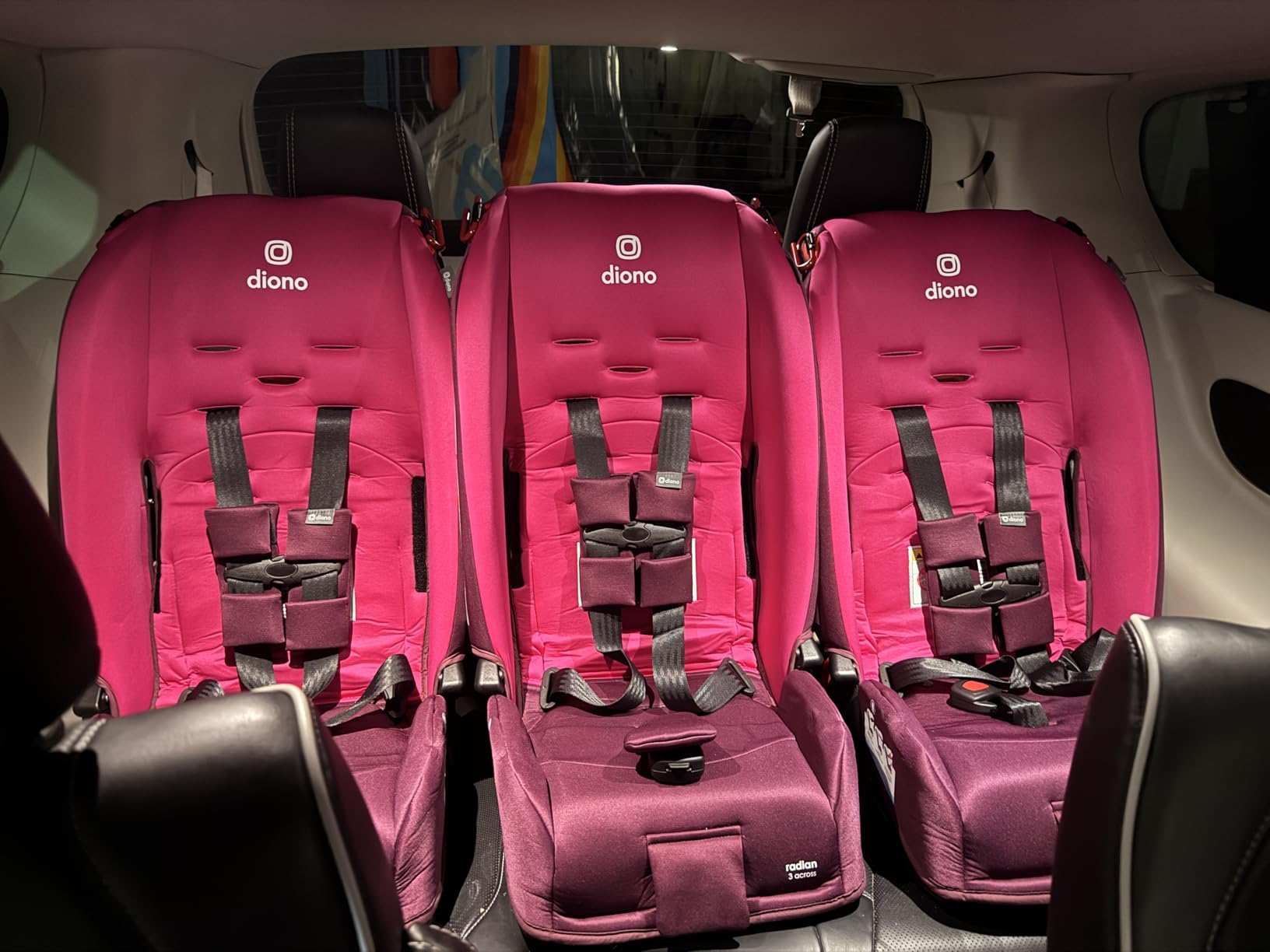
Choose this seat for back seat geometry and durability, not for portability. If you need to lift the seat out every time, keep reading.
4. Baby Trend Cover Me 4-in-1 – the Only Seat Here With a Built-In Sun Canopy
Baby Trend Cover Me™ 4-in-1 Convertible Car Seat
4-in-1 from 4-100 lb
UPF 50+ canopy
18.25 in wide
Zero-recline-radius base
Pros
- Integrated adjustable canopy with UPF 50+ protection and flip-out side visors
- 18.25 in width fits three across in most vehicles
- Zero-recline-radius base gives front passengers extra legroom
- No-rethread integrated headrest
- 4-in-1 system spans 4 to 100 lb
Cons
- Canopy and side visors add bulk above and beside the head
- Deep side wings make the seat deeper than slimmer models
- Multi-position recline takes practice to learn
What makes the Cover Me different is a feature no other seat in this roundup has: an integrated height and angle adjustable canopy with UPF 50+ sun protection and flip-out side visors. For a grandparent who drives a south-facing windshield in a hot climate, or who waits at a school pickup in a parking lot at two in the afternoon, shade over a sleeping toddler is a genuine quality-of-life win.
The engineering underneath is solid too. At 18.25 inches wide, it fits three across in most vehicles, and the zero-recline-radius base keeps the seat tight to the vehicle back so the front passenger keeps usable legroom. The no-rethread integrated headrest means growth adjustments do not require reaching behind the shell.
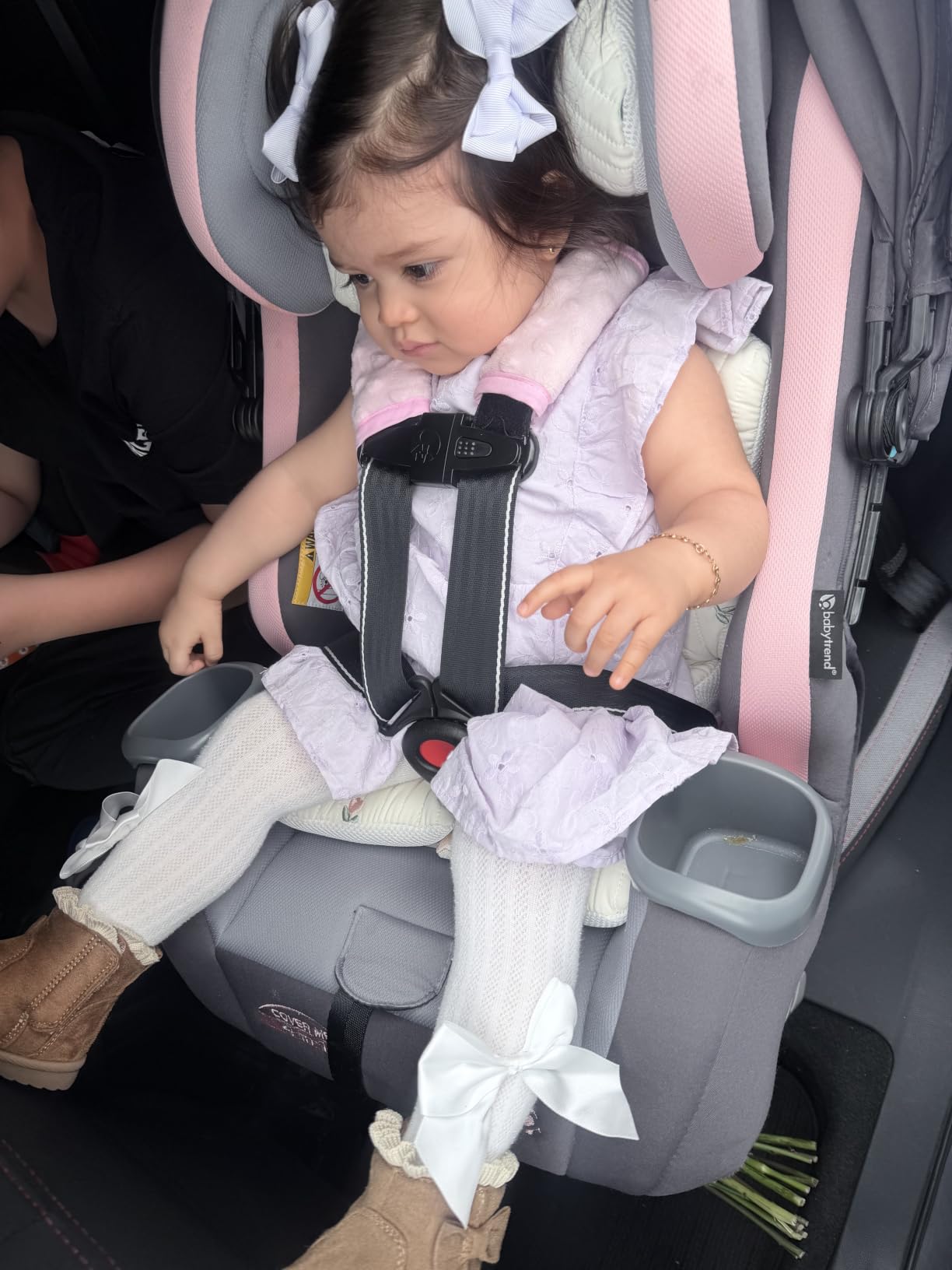
The canopy is not free. Visors and canopy hardware add bulk above and beside the child’s head, and the deep side wings for side-impact protection make the seat deeper than genuinely slim models. The recline mechanism is also one of the more complex ones here, with three base positions plus dual forward-facing positions.
Four Seating Stages in One Shell
The 4-in-1 system covers rear-facing infant from 4 to 18 pounds, rear-facing toddler from 18 to 40 pounds, forward-facing harness from 30 to 65 pounds, and belt-positioning booster from 40 to 100 pounds. That is an unusually wide span, and the Comfort Cabin padding is a real benefit for a child who falls asleep mid-drive.
For occasional caregivers, one seat that spans the full range means fewer handoffs and fewer windows where nobody has a correctly sized seat installed in the right car. That is a safety benefit as much as a convenience one.
Fit in Narrow Back Seats
The 18.25-inch width is the number to measure against your own back bench. It is wide enough to place a third child across in most vehicles, which is the practical test, and shallow enough to avoid the crowding that comes with a full-size convertible. The zero-recline-radius base helps here too, since it does not eat into front legroom the way a deep shell can.
If your back seat is a narrow bench in a compact sedan and the grandchild regularly sleeps in the car, this is one of the few seats that solves both problems at once. Verify the recline position with a technician rather than trusting the printed settings on the first attempt.
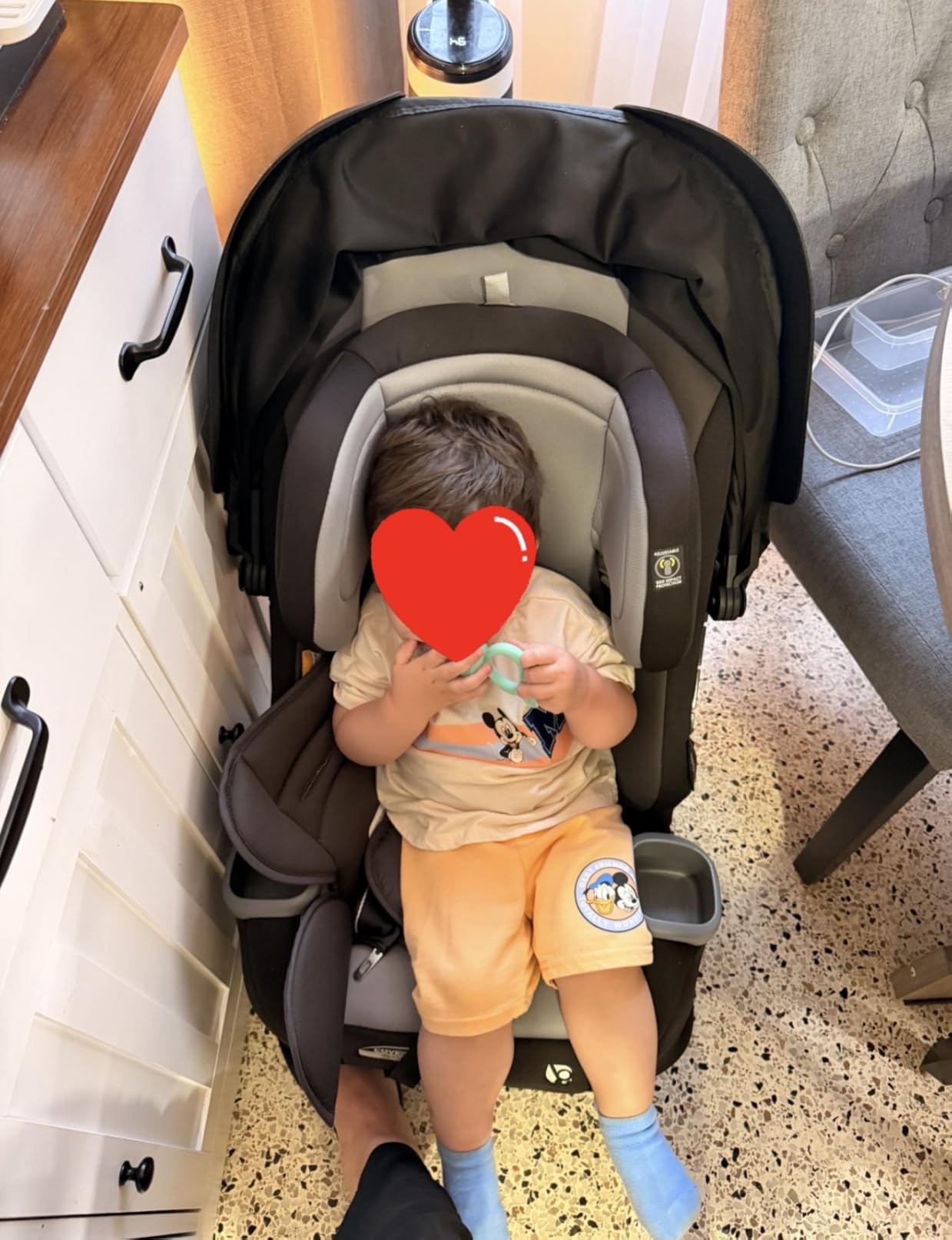
Sun protection and three-across fit are the reason to pick this. If your climate is mild or the child never naps in the car, a lighter seat may serve you better.
5. Graco TurboBooster 2.0 – the Lightest Seat Here for a School-Age Grandchild
Graco TurboBooster 2.0 Highback & Backless Booster Car Seat, Declan
Highback and backless modes
Hide-away cup holders
Vehicle seatbelt only
Adjustable head support
Pros
- Lightest and most portable option in the group
- Retractable cup holders deep enough for water bottles
- Converts from highback to backless so it outlasts the highback stage
- Quick to assemble out of the box
Cons
- Vehicle seatbelt only with no lower anchors
- Younger children struggle with the recessed buckle
- No harness stage for younger children
- Thin padding compared with pricier boosters
Once a grandchild is past the harness stage, portability becomes the whole conversation, and this booster wins it. It is a slim, lightweight seat that a grandparent can lift out of a trunk and set into a back seat one-handed, which is exactly the situation when you are the only adult in the car and a seven-year-old is waiting on the sidewalk.
The highback mode reclines enough for a child’s head to rest on long trips, and the hide-away cup holders retract into the shell so they do not add width. Because it converts to a backless booster, you are not buying a replacement a year later when the highback stops fitting properly.
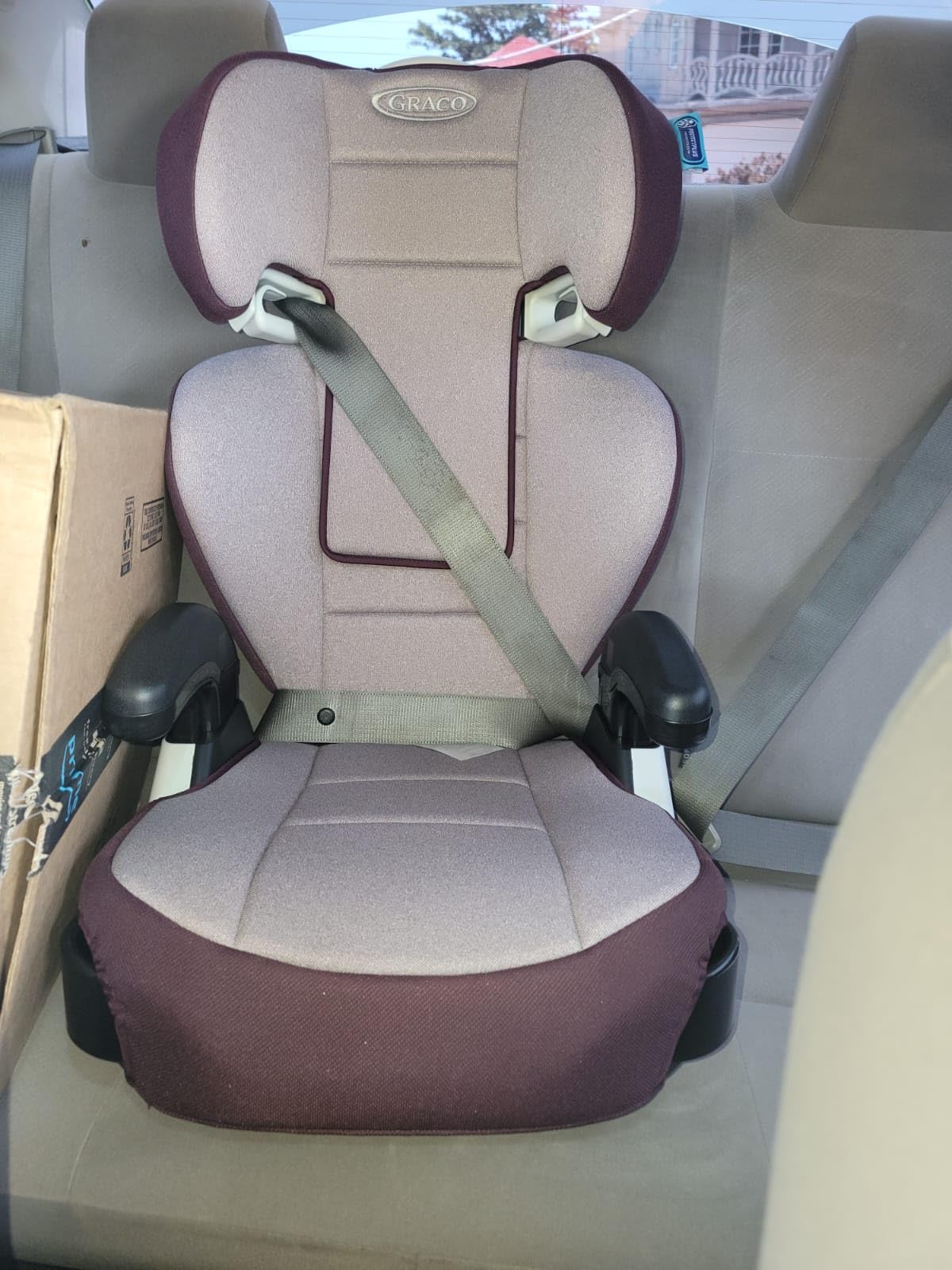
There are two real limitations. It installs with the vehicle seat belt only, so there are no lower anchors to click into, and the buckle itself is recessed, which younger children cannot reach or release without help. And there is no harness stage at all, so this is a seat for a child who has already graduated from a five-point harness.
Highback Versus Backless: When to Switch
Use the highback while your child needs the shoulder belt guide to sit properly across their chest and shoulder. The open-loop belt guides are designed to position the belt correctly and let the child buckle independently, which grandparents consistently mention as the feature that preserves a small amount of independence.
Once the child is tall enough for the vehicle belt to fit properly on its own, the backless mode strips the seat down to a light, compact booster. The height-adjustable armrests and head support are the parts you will adjust as they grow, and both move without tools.
Why Portability Beats Anchors Here
The absence of lower anchors is usually a drawback, but for infrequent use it is a reasonable trade. Anchors invite a seat to stay installed in a vehicle for years, which can quietly turn into an expired or loose seat in the wrong car. A belt-installed booster that you remove and reinstall on demand is more likely to be handled properly every time.
One caution: because there is no install feedback beyond the belt click, give the belt a firm pull test at the belt path each time you load it. If your grandchild is still small enough to struggle with the buckle, wait for a booster with a higher seating position.
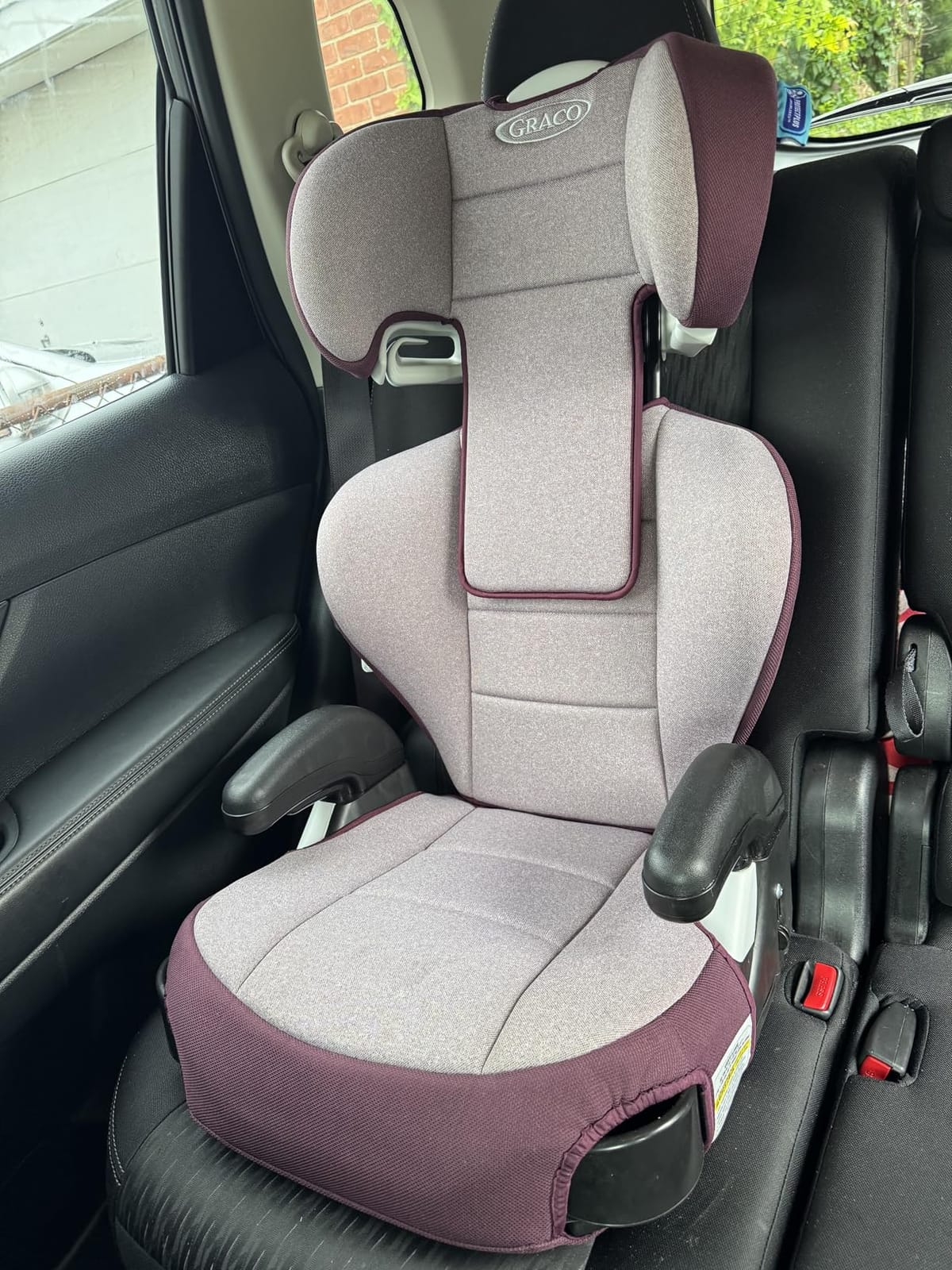
For a school-age grandchild in occasional care, this is the most practical thing in the roundup. It also makes a sensible second seat to keep permanently in a grandparent’s vehicle.
6. Maxi-Cosi Pria All-in-One – the Softest Seat for Long Drives
Maxi-Cosi Pria All-in-One Convertible Car Seat, Infant to Toddler Car Seat, Easy-Install Harness, Machine-Washable Cover, 5-100 lbs, Seascape
Rear 5-40 lb
Fwd 30-65 lb
Booster 40-100 lb
3-position recline
Pros
- Ultra-soft PureCosi and recycled Ecocare fabrics for long trips
- Built-in cup holders stay secure and do not twist
- Three recline positions help with naps on longer drives
- Removable covers are machine washable and dryer safe
Cons
- Bulky shell that takes more back seat and front legroom
- First installation is confusing and the recline markers are partly hidden
- Printed leveling line instead of a bubble level
- Strong new-fabric smell reported by some buyers
The Pria is the comfort pick, and for a child who sleeps in the car it earns that. The padding and PureCosi fabrics are noticeably softer than what you get on a mid-range convertible, and the three recline positions plus stable built-in cup holders produce the best nap setup in this group. Reviewers describe the seat as feeling more substantial and stable than cheaper alternatives.
The fabric story is also a genuine differentiator. The covers use 100 percent recycled Ecocare material made from plastic bottles, with no added fire retardant treatment, and they come off for the washer and dryer. Removable plush infant pillows give a small child a snug fit and come out as the child grows.
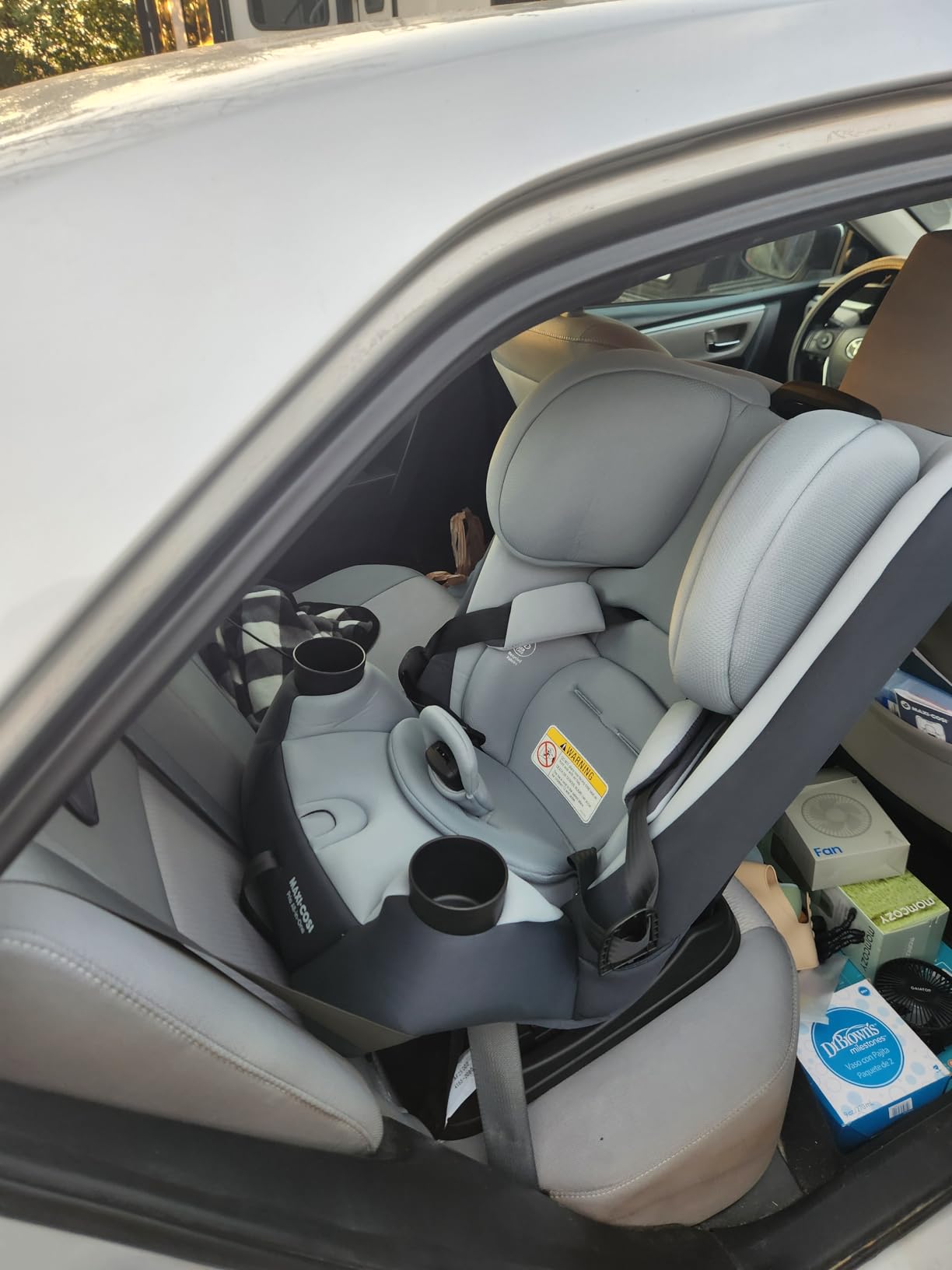
Be candid about the downsides. This is a bulky shell that takes more back seat and front-passenger room than slim models. The first installation is confusing, particularly threading the vehicle seat belt through the belt paths, and the recline guide markers are partly hidden with only a printed line for leveling. Some buyers also report a strong new-fabric smell that fades with use.
Comfort, Recline and Sleep
Recline is where this seat separates itself. Three positions across a 5 to 40 pound rear-facing range, 30 to 65 pounds forward-facing, and 40 to 100 pounds on the belt-positioning booster give you real flexibility as a child naps at different stages. The wide, well-padded shell keeps a sleeping child contained rather than shifting them onto the shoulder strap.
Because the leveling guide is a printed line rather than a bubble level, treat the first install as a real task rather than a five-minute job. Get it checked, learn the visual reference, and write it on the seat with a marker so the next caregiver can confirm it quickly.
Value Against a Higher Price Point
Several reviewers question material quality at this price, and that is a fair criticism to weigh. What you are paying for is fabric density, padding thickness and a stable reclined structure, all of which show up on a four-hour drive and none of which show up in a photo.
My guidance: if your caregiving involves long highway trips, a child who falls asleep easily, and a vehicle with room for a full-size shell, the comfort difference is real. If you are moving the seat between cars every week, read the sections on the lighter options first.
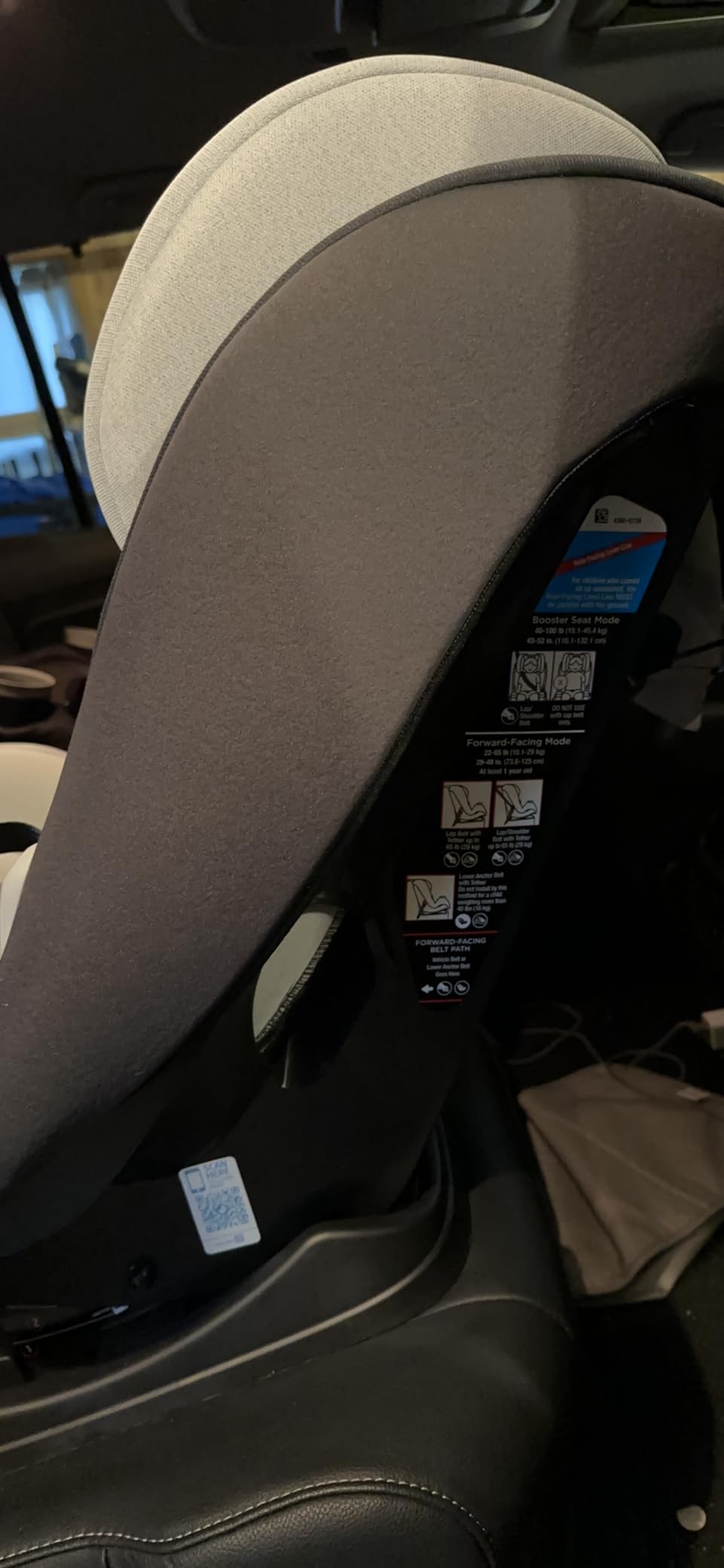
This is the seat I choose for long-distance grandparent duty, and the nap comfort is genuinely a step above the rest. It asks for back seat space and a careful first install in return.
7. Graco Slimfit 3-in-1 – Built for Narrow, Sculpted Back Seats
Graco Slimfit 3-in-1 Convertible Car Seat, Silas
Rear 5-40 lb
Fwd 26.5-65 lb
Highback booster 40-100 lb
10% slimmer
Pros
- Slim profile fits three across and suits narrow sculpted rear seats
- Dual cup holders rotate away to free up width
- No-rethread harness and headrest adjust in one motion
- Lightweight enough to move between vehicles
Cons
- Rear-side vents blow air conditioning directly onto the child's legs
- Padded fabric can run warm without air conditioning
- Less plush than premium convertibles
The Slimfit exists for a specific problem, and it solves it cleanly. Its integrated cup holders rotate away from the body of the seat, which makes the whole seat 10 percent narrower in the position that matters when you are trying to fit a third child across. Owners who fit three of these report that it works in narrow, sculpted rear benches that defeat bulkier convertibles.
It is also one of the easier seats in the group to move. Light enough to lift between vehicles, simple clips, and a no-rethread Simply Safe Adjust harness where the headrest and straps move together. That combination of slimness and low handling effort is what makes it a strong fit for an infrequent caregiver with two children in the back seat.
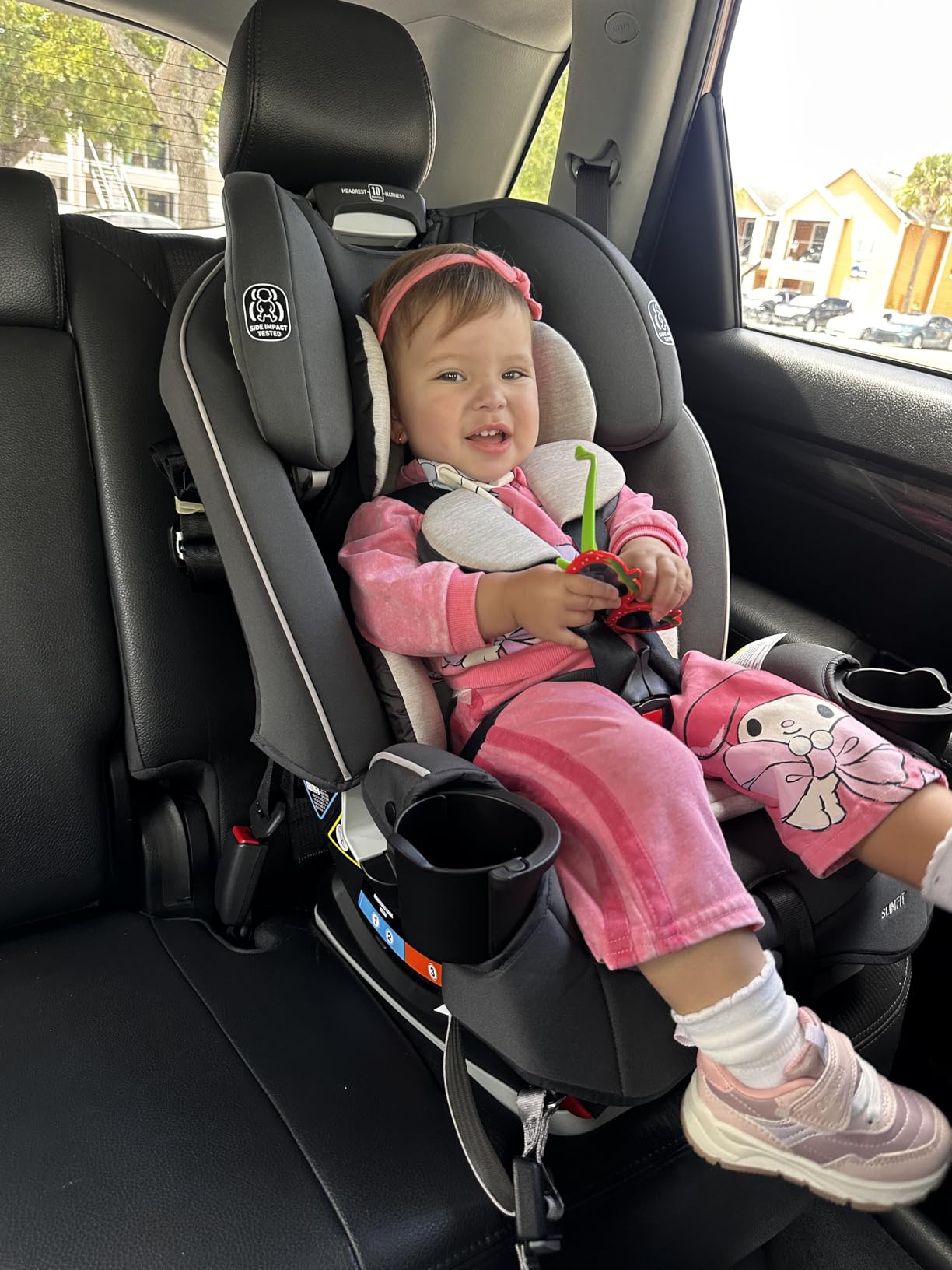
Two practical complaints show up repeatedly. The recesses on the back sides of the shell channel air conditioning straight onto a child’s legs, and the heavily padded fabric runs warm without air conditioning. Neither is a safety problem, but both are noticeable in summer heat. The padding is also plainer than premium convertibles at similar prices.
Rear Seating Geometry and the Rotating Cup Holders
The 10 percent width reduction comes from the rotating cup holders, which is a clever solution to a problem most manufacturers solve with a narrower fixed design. In practice it means you can place a third seat across without the middle child’s arm being pushed into a hard cup holder rim, which is exactly the geometry problem in a compact sedan.
Measure the narrowest point of your back bench, not the seat cushion width, because sculpted bolsters are usually what limits three-across placement. If the Slimfit clears your bench, you have more room than a full-size convertible would give you.
Growth Range Without a Bulk Shell
The three modes cover rear-facing harness from 5 to 40 pounds, forward-facing harness from 26.5 to 65 pounds, and highback booster from 40 to 100 pounds, with a 10-position headrest for fit as the child grows. That is a wide span for a seat this narrow, and it can be handed to another caregiver when the child moves on.
Graco’s ProtectPlus engineering here is tested to newer side impact standards, which matters in a slim shell where internal structure has less room. Combined with the ventilation caveat, the practical takeaway is to keep the cabin cool in summer rather than relying on the seat to manage temperature.
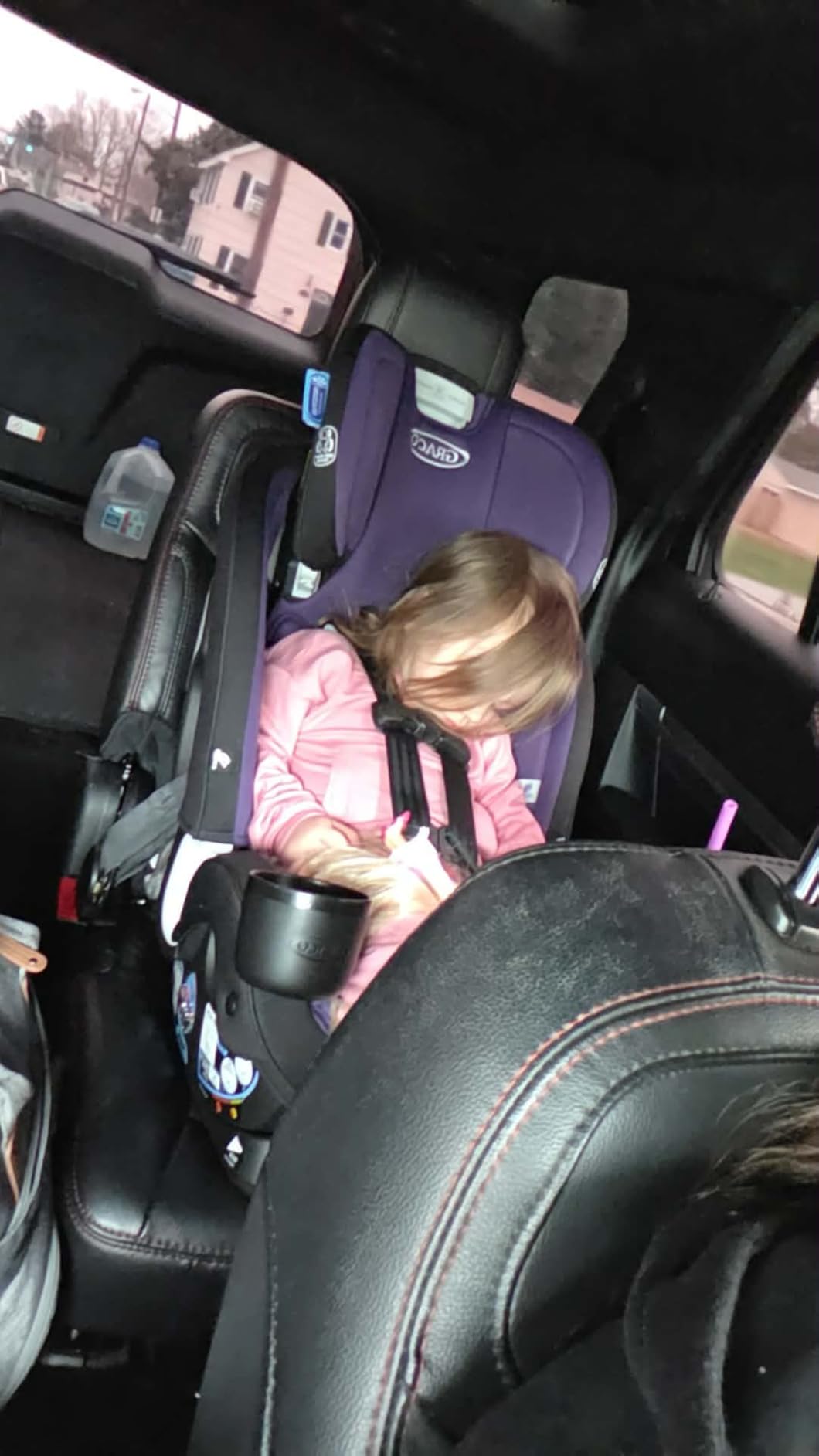
For back seat geometry and easy handling, this is the pick. If your climate runs hot and the child will be in the seat for long summer afternoons, weigh the cooling notes carefully.
8. Safety 1st Grand 2-in-1 Booster – Arrives Assembled and Ready to Go
Safety 1st Grand 2-in-1 Booster Car Seat, Converts from High Back to Belt-Positioning Booster, High Back Seat for Kids 40-65, and Belt-Positioning 40-100 Pounds, Old Soul
Harness 40-65 lb
Belt-positioning 40-100 lb
Fits three across
Lightweight
Pros
- Lightweight enough to lift in and out of a car without effort
- Slim design fits three across in most vehicles
- Arrives fully assembled so setup is minimal
- Machine-washable pad and dishwasher-safe cup holders
Cons
- Shallow cup holders let cups tip over
- Harness phase is short and only starts at 40 lb
- Less padding than higher-priced boosters
This is the seat that shows up in the car and stays there. It is lightweight and portable enough for a grandparent to lift in and out without effort, and because it arrives fully assembled, there is no build step to forget before an unexpected pickup. For an emergency seat kept permanently in a second vehicle, that combination is the whole selling point.
The 2-in-1 design runs a forward-facing five-point harness booster from 40 to 65 pounds and 43.4 to 49 inches, then converts to a belt-positioning booster from 40 to 100 pounds and 43.4 to 52 inches. An adjustable headrest and a slim body that fits three across in most back seats make it a shared back seat friendly option.
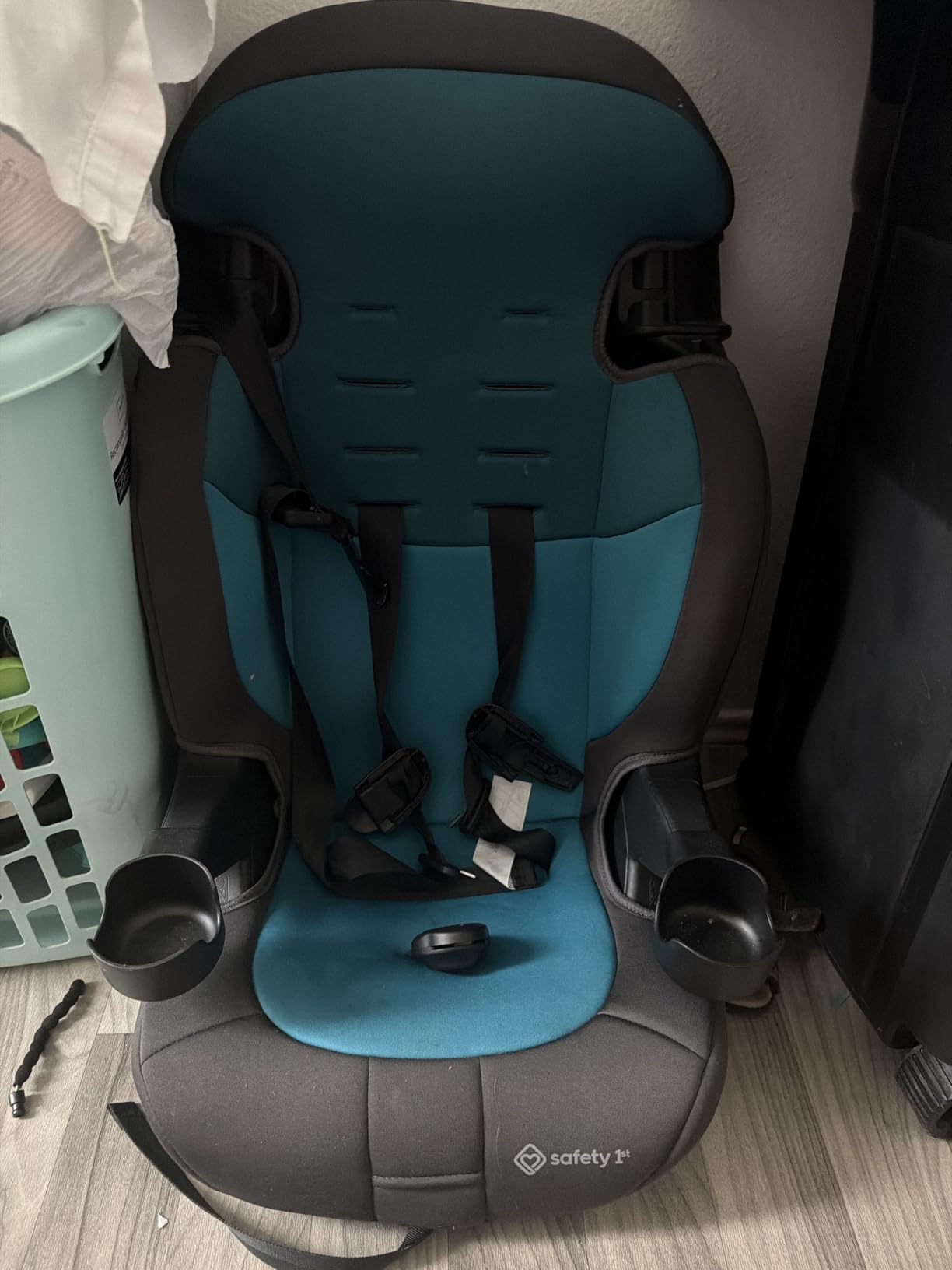
The trade-off is that the harness phase is short and only begins at 40 pounds, so a younger grandchild needs a proper convertible rather than this. Cup holders are shallow enough that cups tip over, and the padding is thinner than what you get on higher-priced boosters, which shows up on longer drives.
The Second-Seat Strategy
Families with two caregiving grandparents often solve the problem by keeping one full seat in each car, so neither household has to install anything. A lightweight, fully assembled booster is the most sensible seat to dedicate to that second slot, because the cost of leaving it installed permanently is low and the cost of a heavy convertible left for months is higher.
Because it is a booster with no harness for small children, plan it as the seat for a school-age grandchild, not as your only spare. If the grandchild is younger, pair it with a full convertible that stays properly installed in the primary car.
Cleanability for Shared Custody
The machine-washable, dryer-safe seat pad and two removable, dishwasher-safe cup holders are more valuable here than in a single-household seat, because a permanently stored booster is still exposed to dust, spills and the occasional snack. Easy cleaning means a grandparent can hand it over without hesitation.
For cleaning, remove the pad and wash it cool, then air dry rather than using a high heat cycle. The cup holders detach for the dishwasher. Do both on a schedule tied to the car, not to the child, since a stored seat does not tell you it needs cleaning.
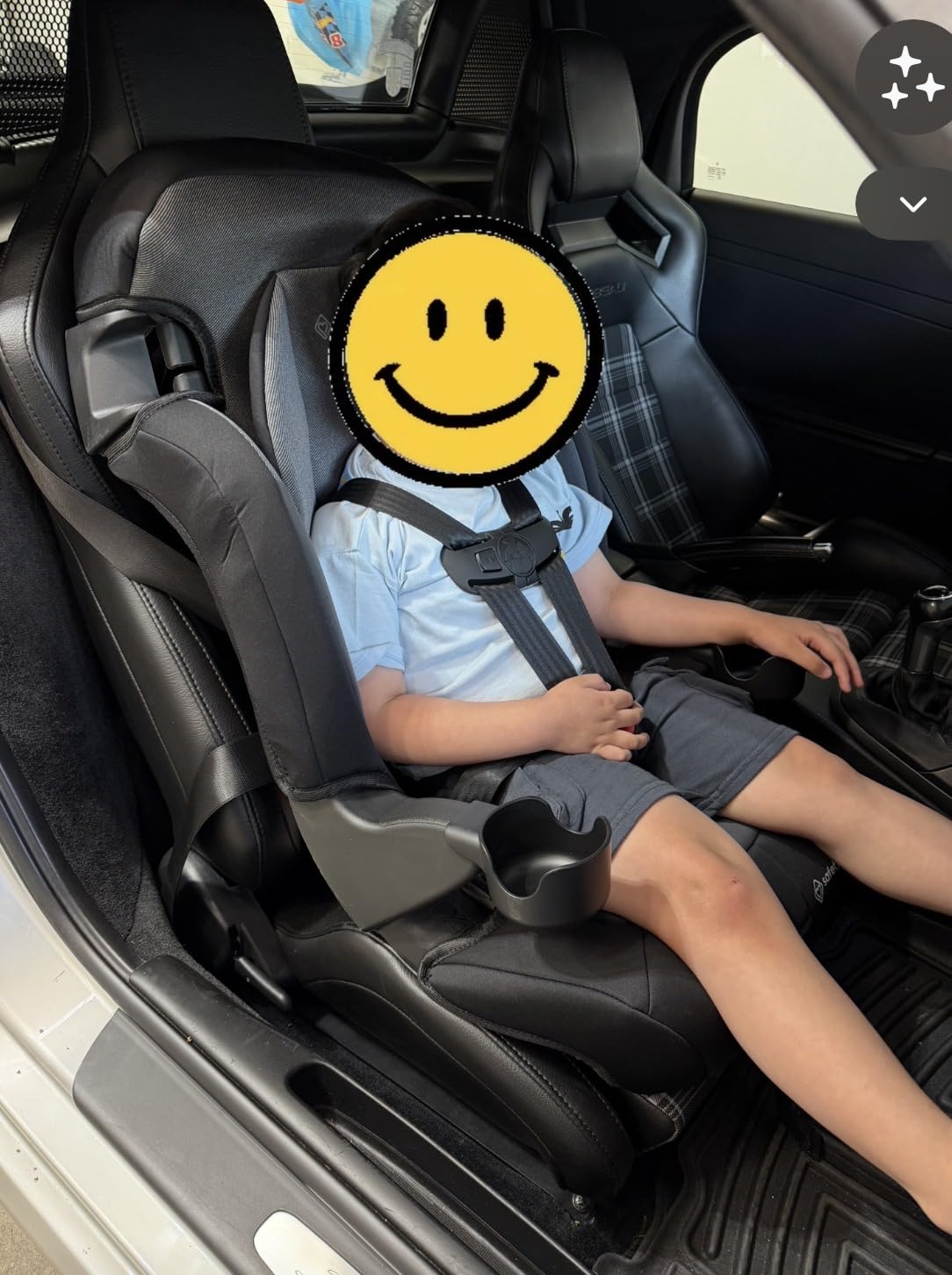
For a school-age grandchild and a second vehicle, this is the most practical booster here. It is not the seat to buy for a child still in a harness.
9. Safety 1st Ellaris 3-in-1 – the Entry Convertible for a Spare Seat
Safety 1st Ellaris 3-in-1 Convertible Car Seat, Slim Fit Design, Rear & Forward-Facing, 5-Position Headrest, Travel-Friendly with Machine-Washable Seat Pad, Smokey Haze
Rear infant 5-30 lb
Rear toddler 30-40 lb
Fwd 30-65 lb
Hook-style LATCH
Pros
- Lowest-cost true convertible in the group
- 5-position headrest adjusts without rethreading
- Lightweight enough to move when caregiving duties change
- Machine-washable pad and dishwasher-safe cup holders
Cons
- Installed width slightly over 19 in and will not fit three across
- Deep side wings make it bulkier than expected
- Headrest has more side play than comparable Graco backs
- Tightening button is tucked away and hard to reach
The Ellaris earns its place as a spare-seat option rather than a first-choice one. It is a true convertible covering rear-facing infant from 5 to 30 pounds, rear-facing toddler from 30 to 40 pounds, and forward-facing from 30 to 65 pounds, and it is the lowest-cost seat in this group that does all three. Several owners report it performed as well for them as far more expensive seats, and grandparent reviewers specifically buy it as a spare in their own car.
Hook-style LATCH connectors are simple to operate, and the 5-position headrest and harness adjust without rethreading straps, so daily changes are quick. It is also light enough to move between vehicles when caregiving duties shift, and the seat pad and cup holders are both washable.

This is the lowest-rated seat in the roundup at 4.3 stars, and the reasons are consistent: fit and finish. The installed width is slightly over 19 inches, so it will not fit three across alongside certain slim seats, and the deep side wings make it bulkier than buyers expect. The headrest also has noticeably more side play than comparable Graco adjustable backs, and the strap-tightening button is tucked away where it is initially hard to reach.
When a Lower-Cost Convertible Makes Sense
There is a real scenario where this seat is the right answer: a grandparent who needs a proper convertible for a grandchild from infancy through forward-facing harness, on a budget, and who will leave it installed in a single vehicle. In that use, the hook-style anchors and the light weight do the job they need to do.
The risk is treating it as a multi-vehicle or three-across solution. The width and the headrest play are not flaws to be worked around creatively; they are fit problems that get worse as the child grows, and they are the reason certified installation help is worth the time here.
Travel-Friendly Design and Short-Term Trips
The compact, travel-friendly footprint is a genuine advantage for a grandparent who moves between cars and a grandparent who does not want a full-size shell in the back seat, and the seat meets the federal side impact standard along with other federal requirements. If your caregiving involves shorter drives and frequent seat moves, that changes the ranking compared with bulkier convertibles.
For a car seat that stays put, verify the recline and the headrest fit with your own hands before the first pickup, and check the tightening button location so you are not hunting for it with a squirming child on your hip.
Pick this one for a budget spare seat in a single vehicle and for frequent seat moves. For a shared back seat or a seat you will install and leave, the slim options above serve you better.
10. Evenflo Revolve360 Extend – the Rotating Seat for Limited Mobility
Evenflo Revolve360 Extend All-in-One Rotating Car Seat
360 degree rotation
One-hand operation
Rear-facing to booster
All-in-one growth
Pros
- 360 degree swivel brings the child to the door for buckling
- One-hand operation reduces the physical effort of loading a child
- All-in-one seat covers rear-facing
- forward-facing and booster modes
- Grows with the child instead of being replaced
Cons
- Lower owner review count than the fixed convertibles here
- The swivel base works best when it stays installed in one vehicle
- A rotating base is not a design for carry-on travel
This is the seat to look at first if the real constraint is your back or your shoulders, not your back seat width. A 360 degree swivel turns the shell toward the open door, so you load the child without twisting, reaching across a center console, or leaning into the vehicle. One-hand operation means the rotation itself does not require a two-handed grip on the shell.
Caregivers with limited mobility describe exactly this benefit when discussing loading children, and it is the reason a swivel seat earns its higher cost in this category. The all-in-one design also carries a child from rear-facing through forward-facing to booster, so a single seat can follow a grandchild across several stages.
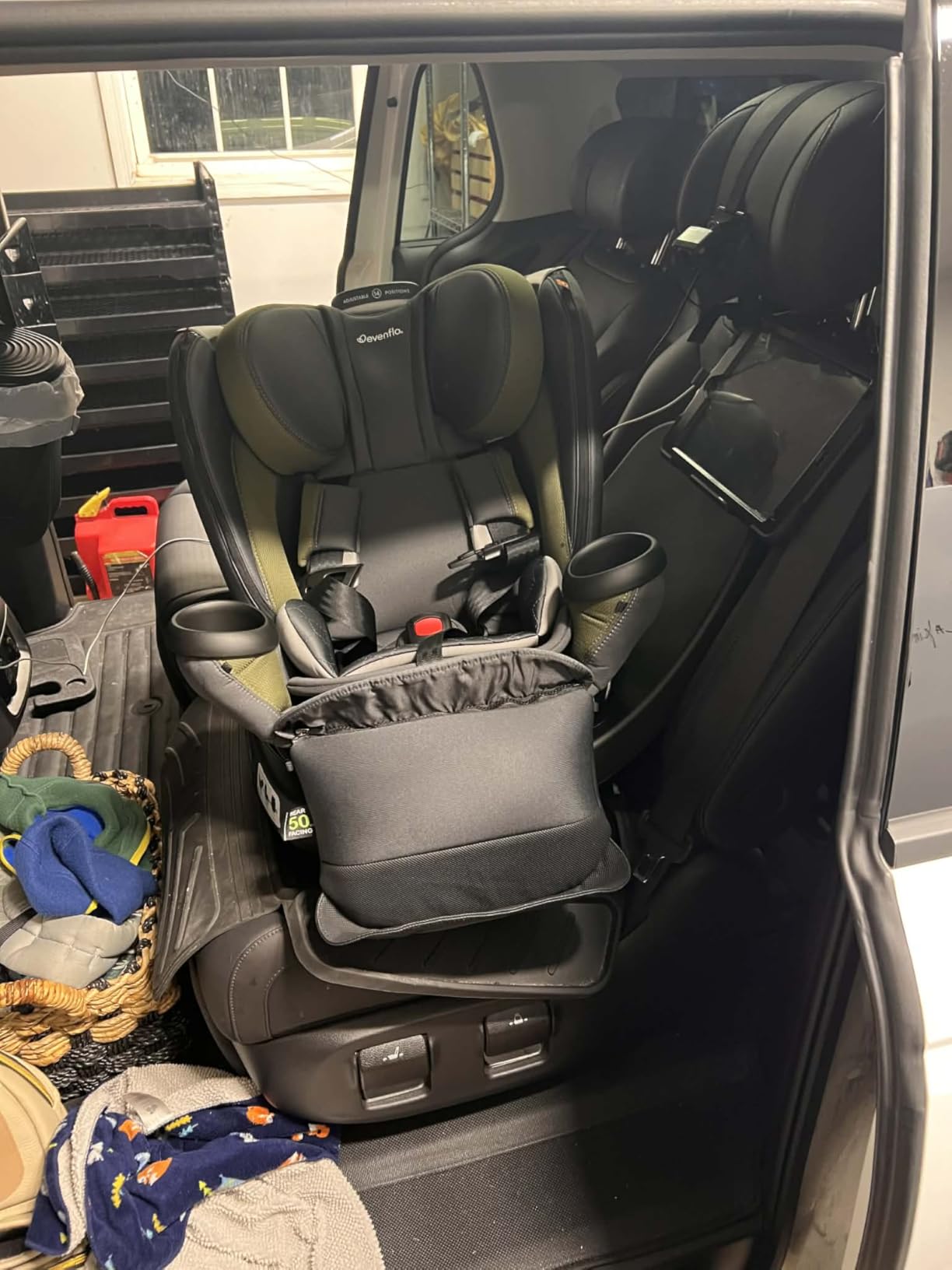
Two honest notes. The owner review count is much lower than the fixed convertibles in this roundup, so the long-term owner record is thinner and you are relying more on engineering than on a large body of user feedback. And a swivel base makes the most sense when it stays installed in one vehicle, because you would be hauling the whole assembly every time otherwise.
Who Rotation Actually Helps
Rotation pays off for caregivers with hip, shoulder or lower back limitations, and for anyone managing a heavy toddler harness one-handed while standing outside the vehicle. It also reduces the awkward bend of leaning into a back seat in low light, which matters when you are doing it at a dark school pickup.
It does not help much with installation. A rotating base still has to be anchored or belted in and checked for tightness, and base installation is a different skill from loading a child. If your difficulty is with the install rather than the buckle, prioritize a seat with a strong no-rethread harness and clear leveling cues instead.
The Multi-Household Reality
If the grandparent has two cars, a rotating seat used in both becomes an anchor-hunting project each trip. Most families solve this by giving the swivel seat to the car it lives in and keeping a lighter, belt-installed booster in the second vehicle. That combination covers a wide age range across two homes without anyone reinstalling anything weekly.
Decide where the base lives before you buy, and confirm that whichever vehicle it lives in has a flat rear seat and workable lower anchors. A swivel base needs a level floor to rotate smoothly.
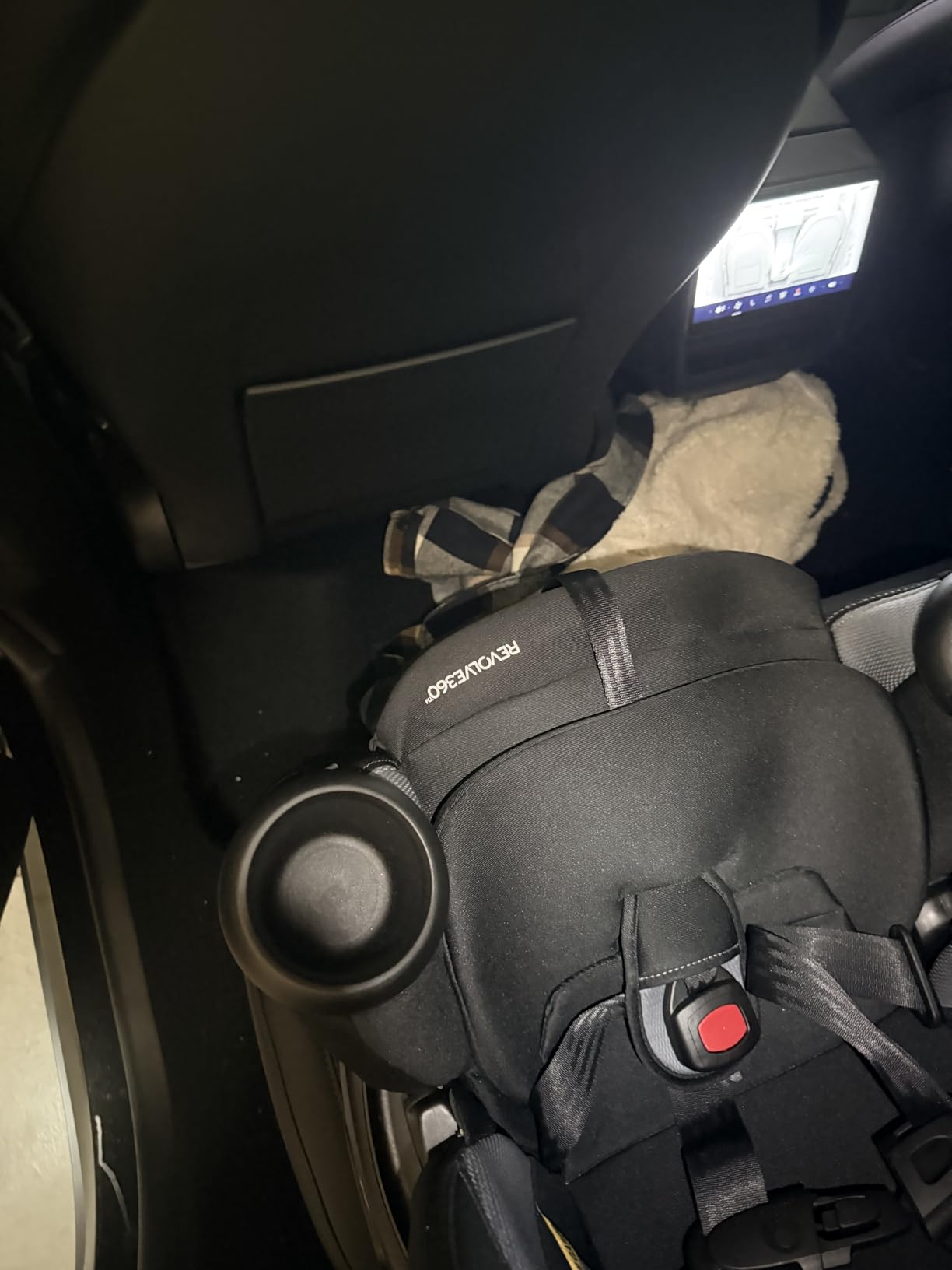
For limited mobility, this is the most directly targeted option in the roundup. Just be realistic about installation and about how often you will actually move it.
11. Maxi-Cosi Pria Max 3-in-1 – the Easiest Buckling for Stiff Hands
Maxi-Cosi Pria Max 3-in-1 Convertible Car Seat, Infant to Toddler Car Seat, ClipQuick Magnetic Chest Clip, Quick-Install Latch, Machine-Washable Cover, 5-100 lbs, Oyster Shell
Rear 5-40 lb
Fwd 30-65 lb
Booster 40-100 lb
Magnetic chest clip
Pros
- ClipQuick magnetic chest clip buckles with one hand
- QuikFit no-rethread harness and headrest adjust together
- 1-click LATCH connectors simplify installation
- Machine-washable dryer-safe covers and dishwasher-safe cup holders
Cons
- Bulky in small sedans and installation can be difficult at first
- Recline positions may not hold well
- Some owners report a chemical smell
- Lower anchors may not tighten properly in some vehicles
The feature that makes this seat worth a close look for a grandparent with arthritis is the ClipQuick magnetic chest clip. Instead of threading a plastic tongue through a slot and pulling it tight, the halves guide into each other and hold magnetically, so the chest clip can be closed one-handed while your other arm holds the child. On the harness, the QuikFit system adjusts headrest and straps together without rethreading.
Installation gets the same one-handed treatment with 1-click LATCH connectors, which are easy to attach to the lower anchors. The three-mode design spans 5 to 100 pounds, covers are machine washable and dryer safe, both cup holders are removable and dishwasher safe, and the seat is airline certified for travel.
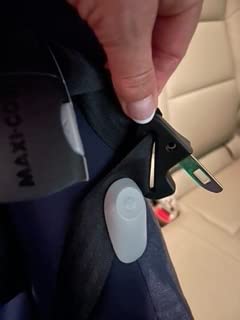
There are real drawbacks. The seat is bulky for small sedans, installation can be difficult the first time, and some units report a chemical smell. Owners also point out that the recline positions may not hold well, and that the LATCH system may not tighten properly in some vehicles, which is a serious caveat in a seat you install infrequently.
Why the Magnetic Clip Changes Daily Use
Standard chest clips are a pinch-and-thread task, and they are the step most likely to be rushed or skipped by a caregiver with limited hand mobility. A magnetic guide removes the dexterity demand entirely, which is why this seat tends to get recommended specifically for hands that cannot manage small plastic parts comfortably.
The same reasoning applies to the harness. A no-rethread system means the fit adjustments happen at the front of the seat rather than behind the shell, so a caregiver can confirm the harness height while the child is facing them instead of reaching around the seat back.
Verify the Recline and the Anchors
Three ReclineFit positions exist, but if they do not hold in your particular vehicle, the child may end up sitting more upright than intended. After the first install, check the recline again after a week of regular use, and again if you move the seat to a different seat position.
Because the LATCH may not tighten properly in some vehicles, be prepared to install with the vehicle seat belt if the lower anchors feel loose. Belt installation is a legitimate method, not a downgrade, as long as the lock-off or belt tensioning method is followed exactly.
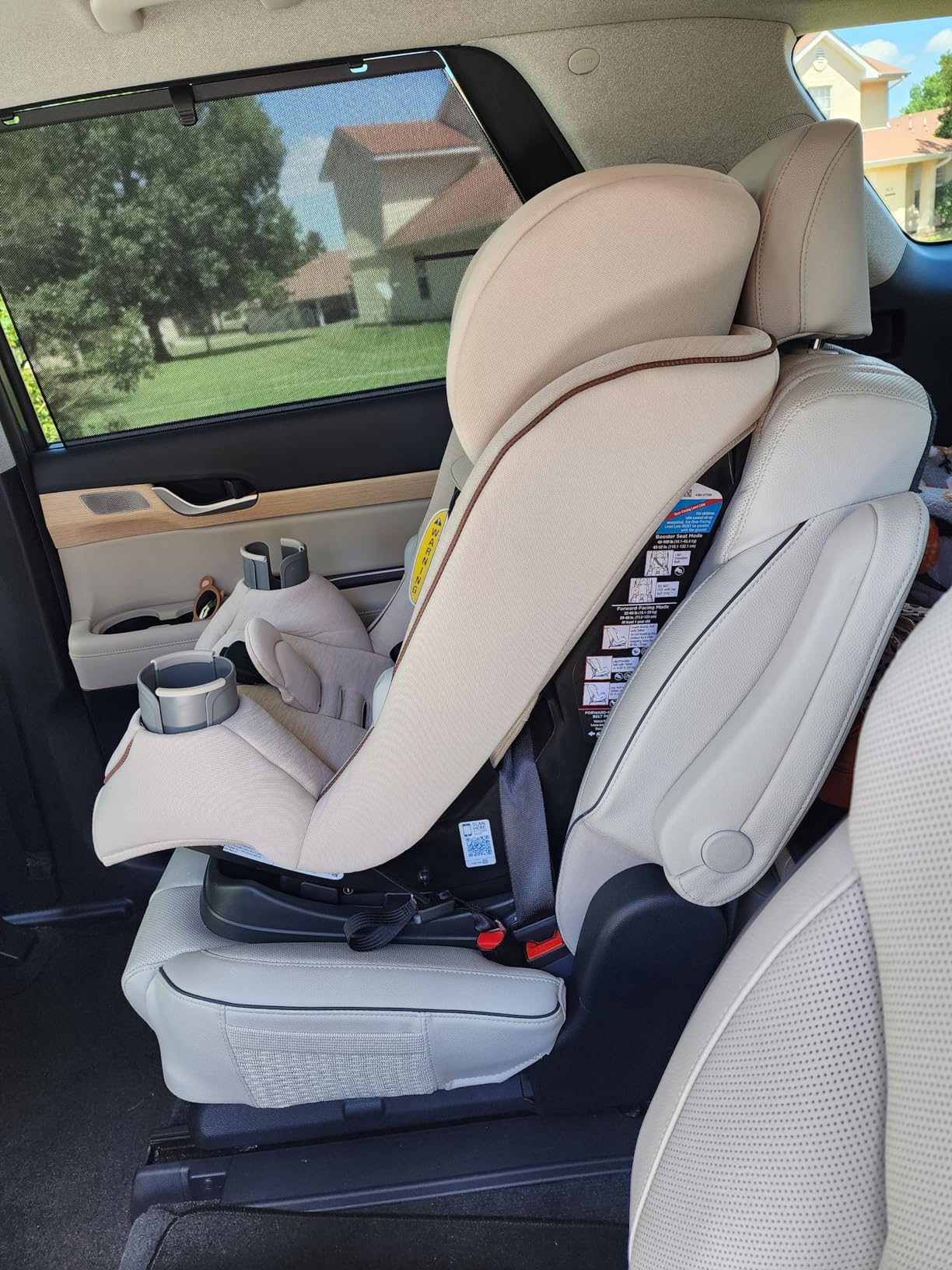
If buckling is the part that hurts, this is the seat built for you. If your problem is a cramped back seat, the bulk will work against you.
12. Chicco MyFit 2-in-1 Harness and Booster – Built-In Levels for a Forward-Facing Grandchild
Chicco MyFit 2-in-1 Harness + High Back Booster Car Seat
Harness then highback booster
ASIP to FMVSS 213a
9-position headrest
Slim 3-across
Pros
- Advanced Side Impact Protection meeting the FMVSS 213a side impact standard
- Premium LATCH connectors with the LockSure belt-tightening system
- RideRight bubble levels and ReclineSure leveling make the install verifiable
- Slim design fits three across with folding cup holders
Cons
- Forward-facing only with no rear-facing mode
- Harness mode has weight and height limits that end early
The MyFit is the safety-forward choice, and it has the most user-verifiable installation in this group. RideRight bubble levels on the base and a ReclineSure leveling system give you a physical signal that the seat is level and correctly oriented, which is the single most useful thing for a caregiver who installs a seat every few months and cannot rely on muscle memory.
Advanced Side Impact Protection is engineered to meet the FMVSS 213a side impact standard, and the extra deep contoured ErgoBoost seat uses dual-density foam. A 9-position headrest and 4-position recline cover growth, and the premium LATCH connectors work with the LockSure belt-tightening system for a firm, verifiable install.
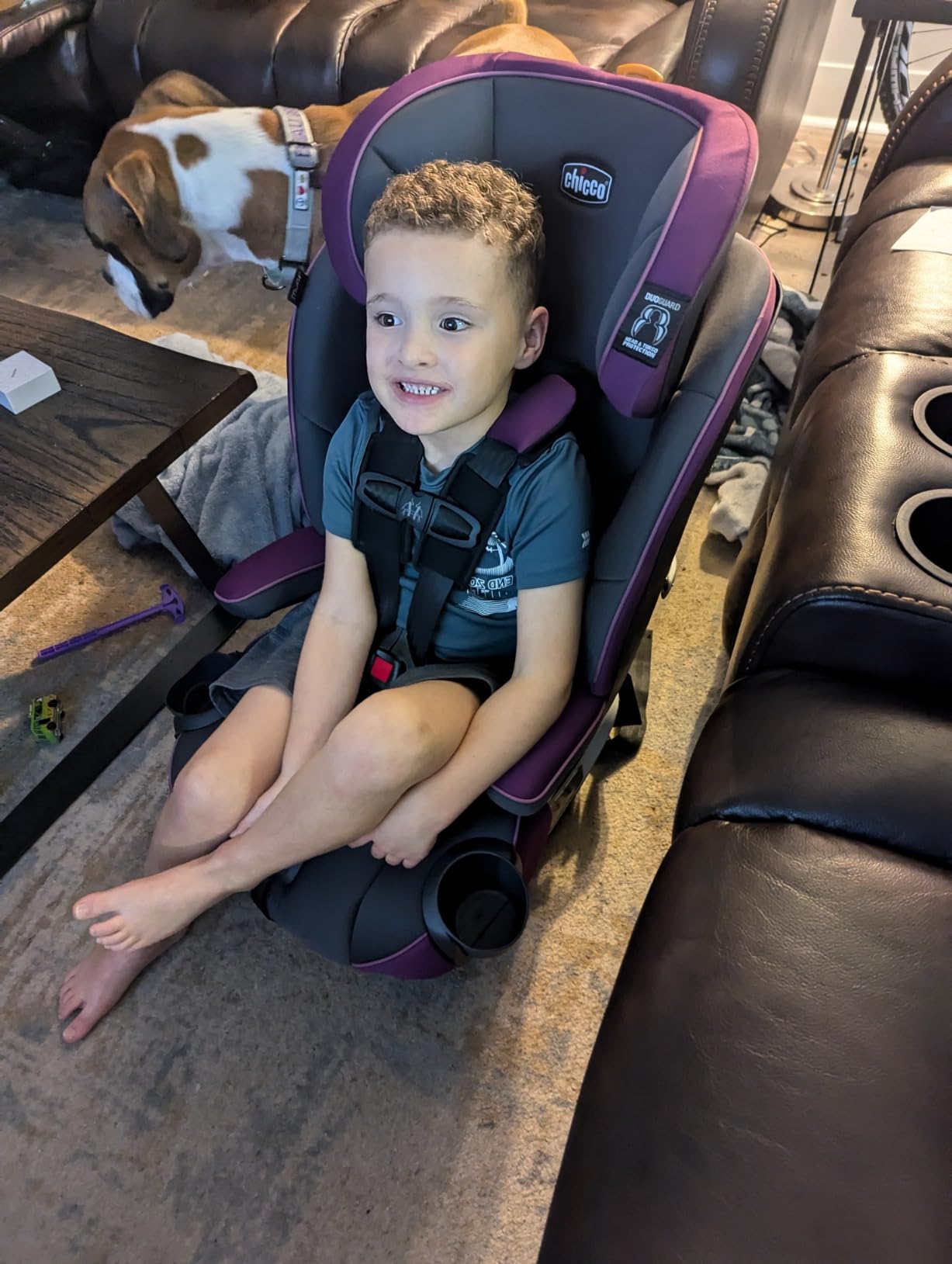
The significant limitation is that this seat is forward-facing only. There is no rear-facing mode, so it cannot be used for an infant or a young toddler, and the harness stage has weight and height limits that end earlier than a full convertible’s. For a grandparent caring for a child from infancy, this is a later-stage seat rather than a single solution.
Installation Aids That Actually Get Used
Bubble levels are the unsung hero of occasional installation. When you set a seat down in a car you drive once a week, the difference between a properly level install and a slightly tilted one is not something you can feel through the buckle tension. A visible fluid level removes the guesswork in about two seconds.
LockSure belt-tightening works the same way for the belt path, giving a positive result at the locking mechanism rather than relying on a pull test you have to trust. Combined with the 4-position recline and ReclineSure leveling, this is the install you would hand to a grandparent who installs a seat a handful of times a year.
Three-Across Fit and Cup Holders That Fold Away
The slim profile fits three across, and the two dishwasher-safe CupFolders remove with a push button and fold away entirely. For a grandparent with two children in the back seat, that folding behavior matters more than it would in a family that only ever carries one child, because it recovers width at the exact moment it is needed.
Plan this as the second-stage seat. Pair it with a rear-facing capable convertible for a young grandchild, then move up to the MyFit once the child is ready to ride forward-facing with a harness, and stay with it through the belt-positioning booster stage.
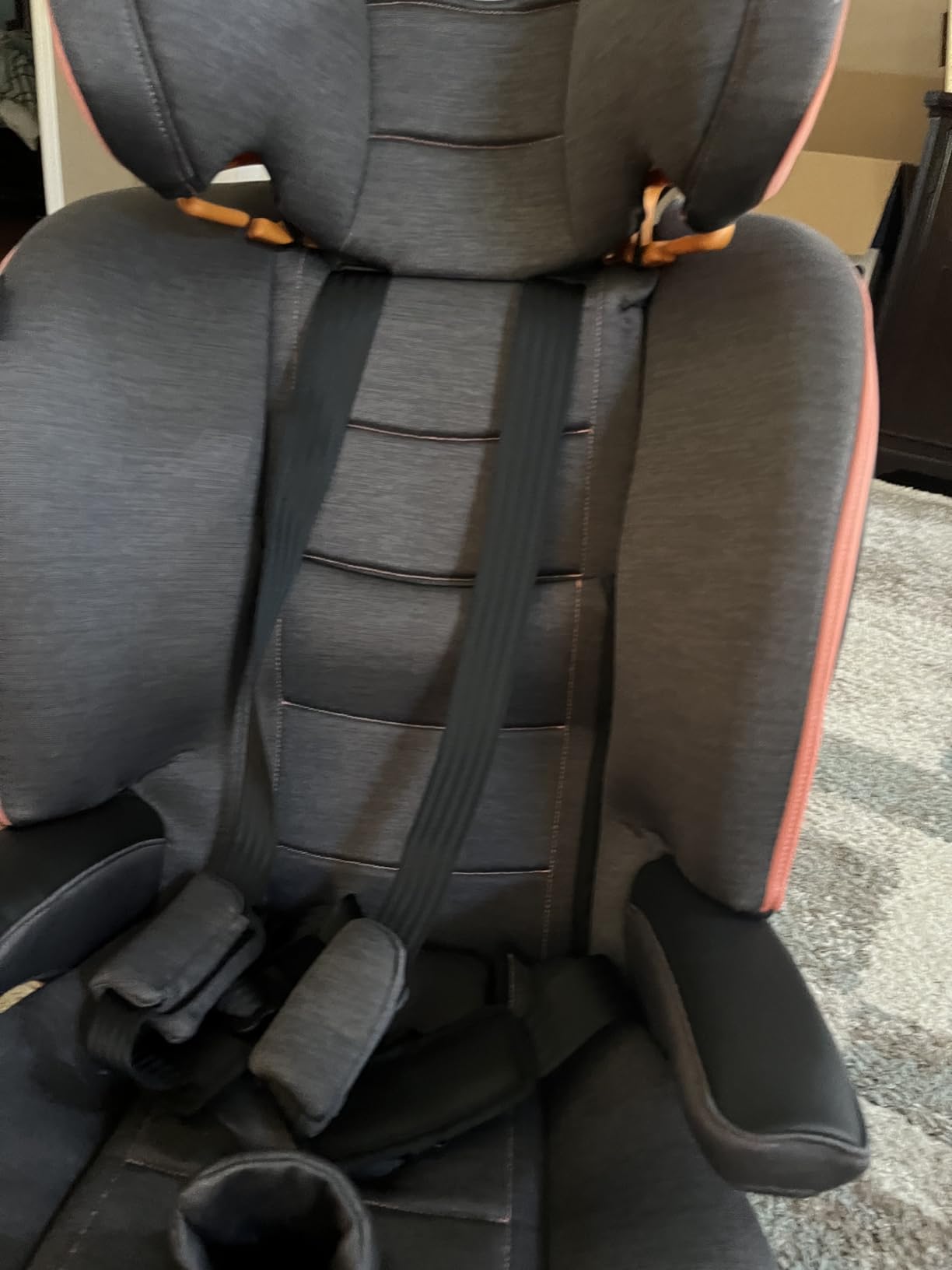
For a forward-facing grandchild in a shared back seat, the combination of side impact protection and installation cues is the strongest in this roundup.
How to Choose a Car Seat a Grandparent Can Actually Use
Most buying guides list features. The ones below are ordered by how often they decide whether a grandparent succeeds or quietly gives up on a seat, based on what we saw across three households of different sizes, two vehicles, and several different grandchild ages.
Installation: LATCH vs Seat Belt and the Aids That Help
Lower anchors, usually called LATCH, are almost always easier to verify than a seat belt path, because you can see and hear both ends connect and you can pull a firm test at the belt path. The seat belt is a legitimate method and sometimes the only one, but it has more steps and more ways to be done loosely, which is why it deserves more care in infrequent use.
Look for physical aids rather than intuition: bubble levels for leveling, printed or molded recline reference lines that are visible from outside the shell, a lock-off or dedicated belt-tightening mechanism, and connectors that clip on in one motion. In a car you use weekly, you will not develop the feel for tight that a daily user has, so remove the guesswork with hardware.
Have the first install checked by a certified child passenger safety technician, and recheck any time the child grows, the vehicle seat position moves, or the seat changes direction between rear-facing and forward-facing.
Rotation: Worth It When Hands and Backs Are Limited
A rotating base is one of the few genuinely helpful features for a caregiver with hip, shoulder or lower back limits, because it turns the child toward the door instead of requiring you to bend into the vehicle. It is the right call when the difficulty is loading and unbuckling a child.
It is the wrong call when your difficulty is the install itself, or when you move between two cars weekly. A swivel base is a large object to lift, and the rotation does nothing for the part of the process that requires patience and back strength. Judge it on where your specific strain happens.
Weight and Portability for a Seat That Moves Between Homes
Ask one question honestly: how many times a month will you physically move this seat? Once or twice is different from ten. A seat under about 19 inches wide with a light shell and a belt-compatible install will be moved without thinking. A steel-reinforced seat weighing far more than that will end up installed permanently in one car, no matter what you intended.
Plan the permanent seat and the portable seat separately if you have two vehicles. Buy one high-quality convertible that stays installed, and one lighter belt-installed booster that lives in the trunk. That pairing covers most grandchildren from forward-facing harness through the booster stage with no repeated installs.
Match the Seat to the Child’s Stage, Not the Marketing Name
Mode names overlap and mislead. Read the numbers instead: rear-facing weight and height limits, forward-facing harness limits, and the booster range. A child who is tall for their age often needs an extension panel or a deep rear-facing seat to ride correctly, and a harness that is merely tight is not the same as a harness that fits.
Plan for the next stage, not just the current one. If a grandchild will be with you for years, a seat that spans from infant to booster through multiple modes is more useful than two cheaper seats you will replace sooner, and it can be handed forward in the family rather than discarded.
Vehicle Fit: Sedans, Compact SUVs and Third-Row Access
Measure your back bench at its narrowest point, because sculpted bolsters, not seat cushion width, are what prevent three-across placement. A seat under about 19 inches wide is a realistic candidate for a third position; anything much wider is not, no matter how good it looks in a listing photo.
For third-row access in an SUV or minivan, consider how the seat’s headrest interacts with the seat in front of it. A tall adjustable headrest can limit how far the front seat slides back, which matters if another adult passenger needs to get in. Seats with slim low-profile shells and fold-away cup holders give you the most flexibility in a tight third row.
For older vehicles, check that the lower anchors are not recessed or buried under the seat bight, and confirm the rear seat cushion is flat enough to level. A swivel base in particular needs a flat floor to rotate properly.
Cleaning and the Second-Seat Strategy
Washable covers and dishwasher-safe cup holders are not luxury features for a seat that lives in a car and passes between households. Spills, crumbs and sunscreen are the normal operating conditions, and a pad you can toss in the washer removes an entire category of friction.
If more than one grandparent household needs a seat, buy a second seat rather than moving one. Moving the same seat back and forth means it is installed less carefully each time, and an unused-in-the-box spare is more useful than a constantly relocated one. Reserve the most portable booster for the second car and the full convertible for the primary car.
Finally, write the install date and the seat’s expiration date on the seat itself with a marker. A seat that lives in a trunk for eight months is easy to forget, and an expired seat is a seat you cannot use.
Frequently Asked Questions
What is the best car seat for grandparents?
The best car seats for grandparents are convertibles and all-in-one seats that prioritize easy installation, a no-rethread harness, and a weight you can lift more than once. The Graco Extend2Fit, the Safety 1st Grow and Go, and the Graco Slimfit cover the three most common needs: a wide growth range, a simple install, and a slim body that fits a small back seat.
What is the easiest car seat for grandparents to install?
The easiest installs use lower anchors with physical confirmation rather than feel: bubble levels, a printed recline reference, and a dedicated belt lock-off. The Chicco MyFit has RideRight bubble levels and ReclineSure leveling, and the Safety 1st Ellaris and Maxi-Cosi Pria Max use one-motion LATCH connectors. Have the first install checked by a certified technician.
What is the best car seat swivel for elderly people?
The Evenflo Revolve360 Extend is the rotating option built for caregivers with limited mobility. Its 360 degree swivel turns the child toward the open door and it operates with one hand, so you can load a child without twisting or leaning into the vehicle. Rotation only helps with loading, not with installation, and it works best in a vehicle where the base stays installed.
What is the best car seat for easy transfer from car to car?
The best seats for car-to-car transfers are light, belt-installable and compact. The Safety 1st Grand 2-in-1 booster arrives fully assembled and lifts out easily, the Graco TurboBooster 2.0 is the lightest option here with hide-away cup holders, and the Safety 1st Grow and Go installs by either the seat belt or the lower anchors. For a heavier full-size seat, plan on one permanent install per car instead.
Can grandparents use an expired car seat?
No. A car seat past its expiration date should not be used, and many seats also expire after a crash or if the harness was cut off. Write the expiration date on the seat with a marker when you install it, and check it before every trip. A seat stored in a trunk for months is easy to forget, which is exactly how expired seats stay in circulation.
How do I know if a car seat is installed correctly?
Give the seat a firm pull at the belt path; it should not move more than about an inch at the belt path, and less is better. Confirm the recline angle against a visible reference line or bubble level, check that the lower connectors are fully latched on both sides, and verify the harness sits at or above the shoulders in forward-facing mode. Recheck after any growth spurt or seat position change.
Which Car Seat Fits the Grandparent You Have in Mind
If you want one seat that covers infancy through forward-facing harness with the least fuss, the Graco Extend2Fit is our top pick, and the no-rethread harness is the reason. If you need a slim body for a small back seat with two other children, the Graco Slimfit is the one, and the rotating cup holders are why it fits. If you want the softest ride for a child who sleeps through long drives, the Maxi-Cosi Pria pays for itself on the first highway trip.
If the difficulty is your hands rather than your back, the Maxi-Cosi Pria Max magnetic chest clip removes the hardest part of buckling. If it is your back or shoulders, the Evenflo Revolve360 swivel is built for exactly that. If you need three children across and a frame that survives being handed to the next caregiver, the Diono Radian 3R fits, at the cost of real weight. If you only care about a school-age grandchild, the Graco TurboBooster 2.0 is the lightest thing to lift and the Safety 1st Grand booster is the easiest to keep permanently in a second car.
Whatever you choose, get the first install checked by a certified technician and write the expiration date on the seat in marker. For a grandchild under two, start with our infant car seat guide to get the stage right, then check the price on the seat that fits your back seat and your back.
Leave a Reply