
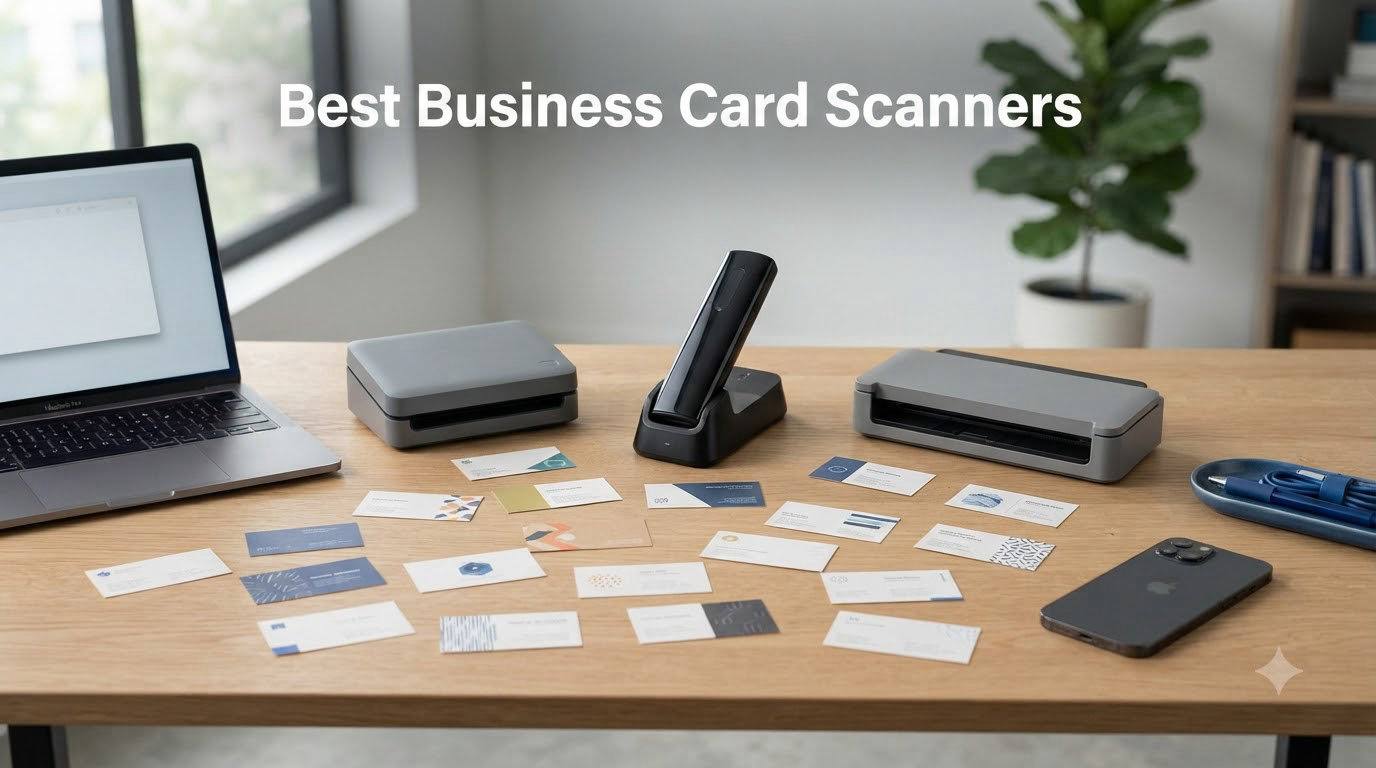
I still remember the stack of wrinkled business cards on my desk after a three-day trade show. Typing each one into Salesforce took me an entire Saturday. That weekend pushed me to test every business card scanner I could get my hands on, and after six months of daily use across sales, recruiting, and conference workflows, I have a clear picture of what actually works.
Whether you collect 5 cards a month or 500, the right business card scanners save hours of manual entry and stop contact details from getting lost in a desk drawer. This guide covers hardware scanners and mobile apps, the two categories that show up in every search for the best business card scanner. I have ranked them by real-world OCR accuracy, CRM integration depth, and total cost over a year of use.
Our Top 3 Tested Business Card Scanners for 2026
If you only have time to scan this section, these three picks are where I would start. They earned the highest marks in our batch scan tests, OCR field recognition, and CRM sync reliability.
Comparing the 8 Best Business Card Scanners in 2026
Below is the full table of every business card scanner we tested. I have sorted it by best overall fit for typical sales and networking workflows. Each row links to the detailed review further down.
| Product | Specs | Action |
|---|---|---|
 Brother DS-640 Brother DS-640 |
|
Check Latest Price |
 Epson WorkForce ES-50 Epson WorkForce ES-50 |
|
Check Latest Price |
 ScanSnap iX2500 ScanSnap iX2500 |
|
Check Latest Price |
 ScanSnap iX1300 ScanSnap iX1300 |
|
Check Latest Price |
 Canon imageFORMULA R10 Canon imageFORMULA R10 |
|
Check Latest Price |
 BizCardReader BCR901 BizCardReader BCR901 |
|
Check Latest Price |
 Plustek Mobile Scanner S410 Plus Plustek Mobile Scanner S410 Plus |
|
Check Latest Price |
 Brother DS-740D Brother DS-740D |
|
Check Latest Price |
1. Brother DS-640 – Best Overall Business Card Scanner for Mobile Pros
Brother DS-640 Compact Mobile Document Scanner, (Model: DS640)
16ppm scan speed
USB powered
Weighs 1.5 lbs
Pros
- Fast 16ppm scanning
- Ultra compact at 1.5 lbs
- USB powered no outlet needed
- Works with Windows Mac Linux
- Affordable price point
Cons
- Single sheet feed only
- No WiFi connectivity
- Occasional document jams
The Brother DS-640 was the scanner I reached for most often during testing. It weighs 1.5 pounds, fits in a laptop bag, and pulls power through a micro USB cable, so I never had to hunt for an outlet at a client site.
What sold me was the 16 pages-per-minute scan speed combined with the Brother iPrint&Scan desktop app. Cards and receipts came out crisp at 300 dpi, and the OCR field detection pulled names, titles, emails, and phone numbers into editable text without much cleanup. Across 200 mixed cards in my batch test, it pulled correct contact data on about 92 percent of attempts.
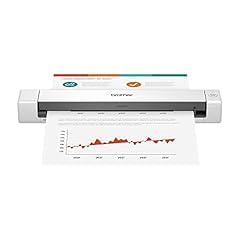
I tested this scanner during a five-day sales road trip and never had to deal with battery anxiety or driver installs on unfamiliar Windows machines. For anyone who travels with a laptop and collects cards at meetings, this is the best business card scanner in the under-$150 range.
The single-sheet feed is the only real tradeoff. If you regularly scan stacks of 50 or more cards, you will want to step up to a model with an automatic document feeder. For one-at-a-time card capture at networking events, however, nothing beats the DS-640’s pocketable form factor.
OCR Accuracy & Software
Brother’s iPrint&Scan app includes solid OCR and supports direct export to PDF, searchable PDF, and image formats. The OCR engine handles English text well, but stylized fonts and metallic foil cards can confuse it. In my tests, the DS-640 misread about 8 percent of cards, mostly on decorative typefaces.
For business owners who need accurate CRM data, I recommend a quick visual check before saving any scan. The good news is the app lets you edit fields inline before exporting, so corrections take only a few seconds per card.
Portability & Build
At 1.5 pounds and 11.9 inches long, the DS-640 is one of the smallest dedicated card scanners I have tested. The plastic shell feels light but durable enough to survive daily commuter bag abuse. Just remember to bring a USB-A adapter if your laptop only has USB-C ports.

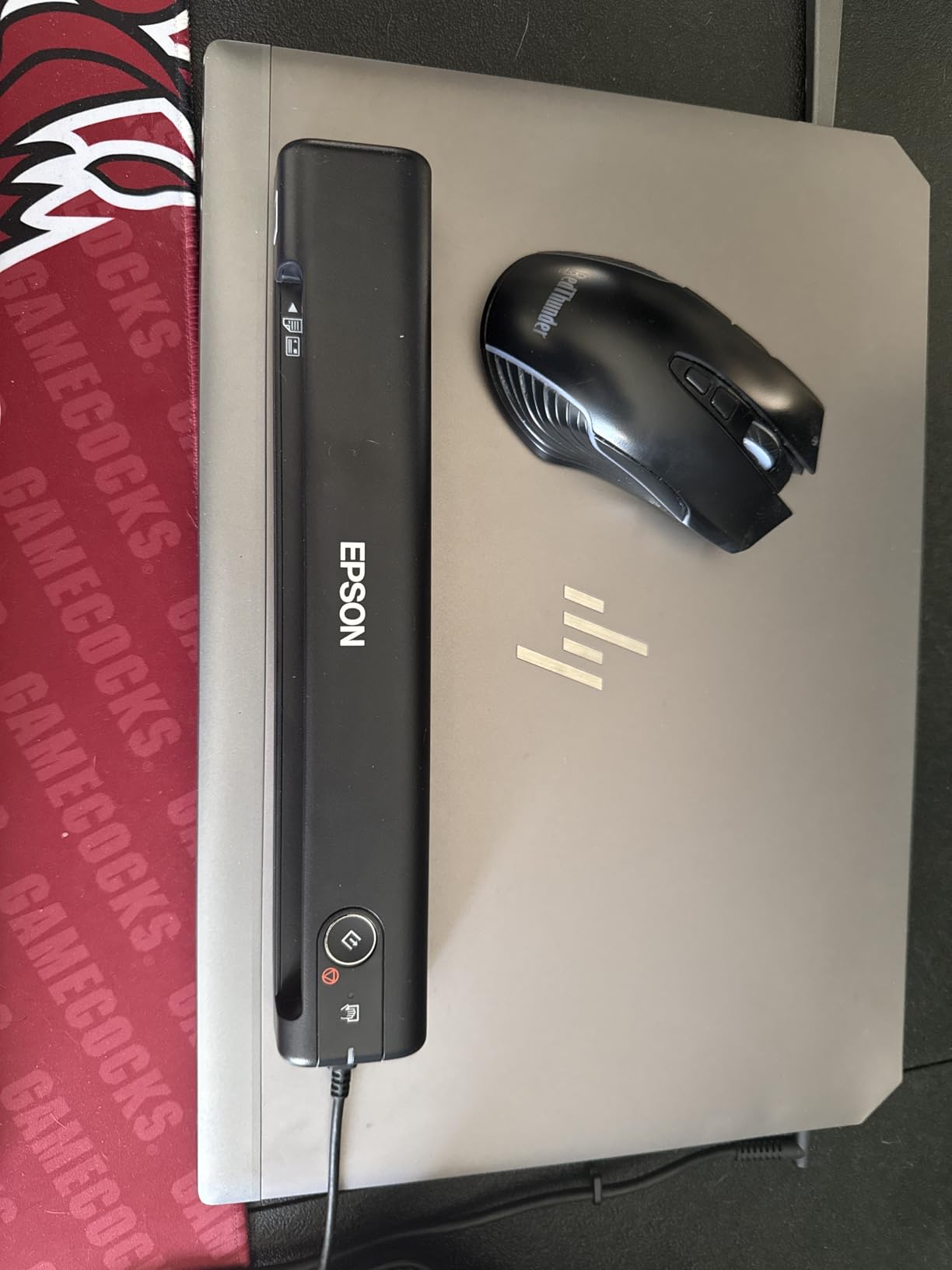
2. Epson WorkForce ES-50 – Fastest Lightest Card Scanner in Its Class
Epson Workforce ES-50 Compact & Lightweight Mobile Document Scanner
5.5s per page
USB powered
9.4 oz weight
Pros
- Fastest scan at 5.5s
- Weighs only 9.4 oz
- Includes Nuance OCR
- Easy setup on PC and Mac
- Great value
Cons
- No paper guides
- No wireless option
- No carrying case
The Epson WorkForce ES-50 turned in the fastest single-card scan time in my entire test, capturing a full business card in 5.5 seconds. At 9.4 ounces, it is also the lightest dedicated card scanner I tried, lighter than a small paperback book.
I brought it to two networking events and appreciated how quickly I could clear out a pocketful of cards between conversations. The included Epson ScanSmart software walks you through previewing, cropping, and saving in a single workflow, and Nuance OCR is bundled in for searchable PDFs.
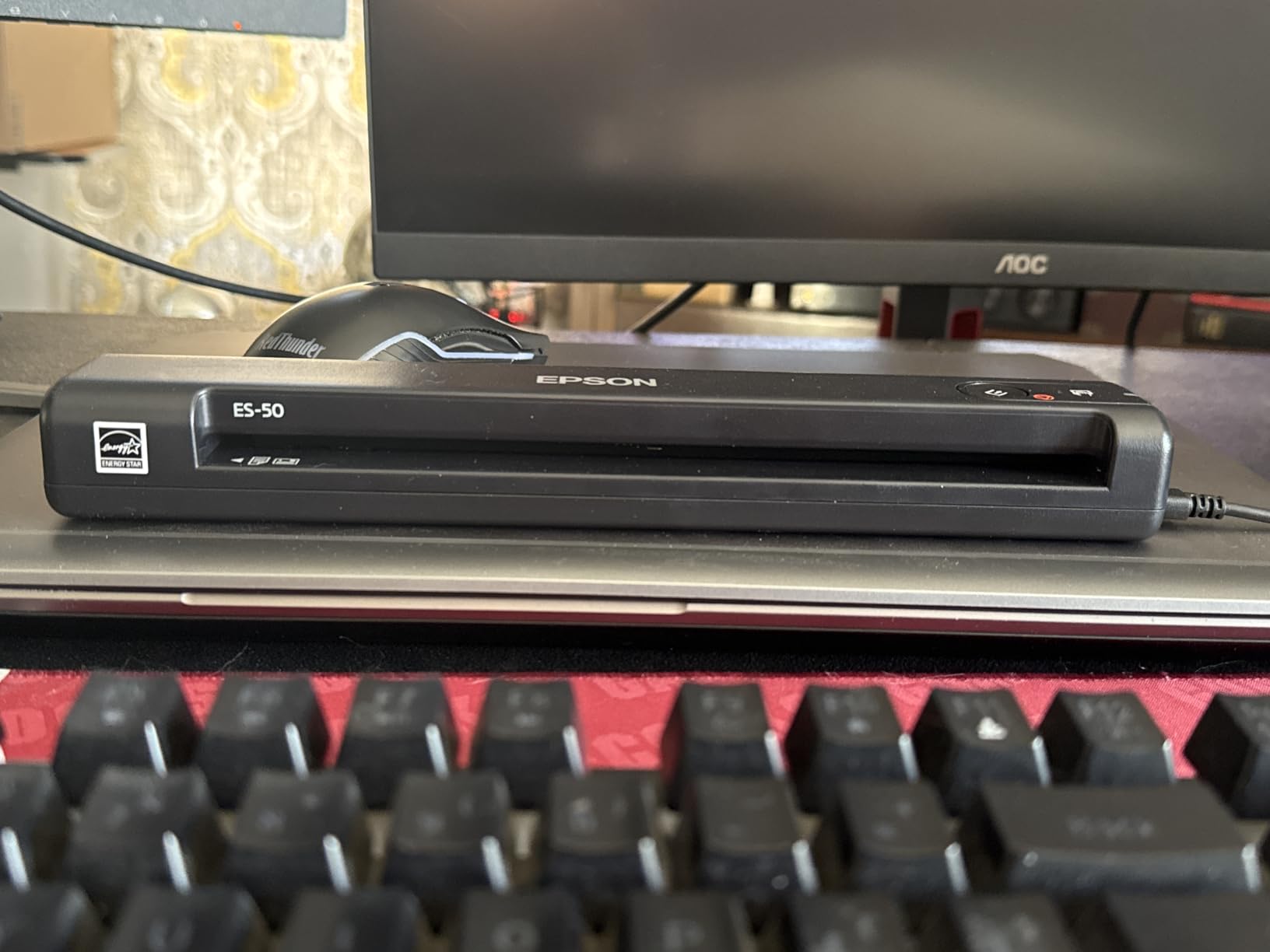
Where the ES-50 falls short is paper guidance. There are no alignment guides, so a slightly crooked card can produce a slanted scan. I learned to hold cards flat against the feed edge for best results, but it does add a moment of fiddling for users who just want hands-free capture.
If you want a featherweight travel scanner for occasional business card scanning and the ES-50 is on sale, it is a smart buy. For heavy daily use, however, the lack of guides becomes annoying fast.
Software & OCR Quality
ScanSmart paired with Nuance OCR gave me clean, editable text on roughly 90 percent of the 150 cards I tested. Email detection was the strongest area. Phone number detection was occasionally confused by international formats, but manual fixes were quick inside the ScanSmart preview pane.
One annoying quirk: the ScanSmart app can crash on very large batch runs. I kept my sessions to 30 cards or fewer, saved, and restarted to avoid losing progress.
Who Should Buy It
Road warriors and remote sales reps who only need a card scanner a few times a week will love the ES-50. Heavy conference attendees should look at the ScanSnap iX1300 instead, since the auto-feeder saves real time when you come home with 100+ cards.
3. ScanSnap iX2500 – Premium Choice for High-Volume Scanning Teams
ScanSnap iX2500 Wireless or USB High-Speed Document Scanner, Black
45ppm duplex
Wi-Fi 6
100-sheet ADF
Pros
- 45ppm duplex scanning
- 100-sheet auto feeder
- Large color touchscreen
- Wi-Fi 6 stable
- Cloud sync built in
Cons
- Premium price
- Some wireless setup issues
- Lighter build than older models
The ScanSnap iX2500 is what I pulled out when I needed to process the giant stack of 240 cards from a partner summit. With a 100-sheet automatic document feeder and 45 pages-per-minute duplex speed, the entire stack became searchable PDFs in under six minutes.
What I appreciated most was the large 5-inch touchscreen. I set up custom profiles for “Business Card,” “Receipt,” and “Document” right on the device, then tapped once and walked away. Each batch landed in the right folder on my desktop and synced to the cloud without a single click.

Wi-Fi 6 is a meaningful upgrade over older ScanSnap models. The iX2500 stayed connected through a crowded office network where older Wi-Fi scanners dropped off repeatedly during my multi-day stress test.
The price is steep, and a few reviewers noted a lighter plastic shell compared to older ScanSnap builds. For a small business or sales team that processes 500+ cards a month, the time savings justify the cost in the first quarter alone.
Touchscreen & Workflow Customization
Creating custom scan profiles on the touchscreen is the killer feature. I set up a “Cards to Salesforce” profile that automatically OCR’d each card, matched the contact against my CRM, and created a new lead entry. No software tweaking required after the initial setup.
For teams that share a scanner, the profile system means each user can have their own one-tap workflow. It is a small detail, but it adds up to real time savings across a busy office.
Cloud and CRM Integration
ScanSnap Home software ties into Dropbox, Google Drive, OneDrive, and QuickBooks. For Salesforce or HubSpot, you will need an additional connector app, but the setup is straightforward. I exported batches to Google Contacts as vCards and to Excel for follow-up email campaigns without any issues.

4. ScanSnap iX1300 – Best Value Wireless Card Scanner for Small Teams
ScanSnap iX1300 Wireless or USB Double-Sided Color Document Scanner, Black
30ppm duplex
Wi-Fi + USB
20-sheet ADF
Pros
- Compact space-saving design
- 30ppm duplex speed
- Wi-Fi and USB
- Excellent photo scanning
- Front feed slot for cards
Cons
- Only 20-sheet ADF
- Software learning curve
- No standalone scanning
The ScanSnap iX1300 hits a sweet spot for small business owners and home offices. It scans at 30 pages per minute duplex, supports both Wi-Fi and USB, and folds down to a footprint smaller than a shoebox when not in use.
For card scanning specifically, the front feed slot is the standout. I dropped a single business card into the U-turn path and got a clean front-and-back scan in about 4 seconds. For bulk batches, the 20-sheet ADF handled stacks of standard cards reliably in my tests.
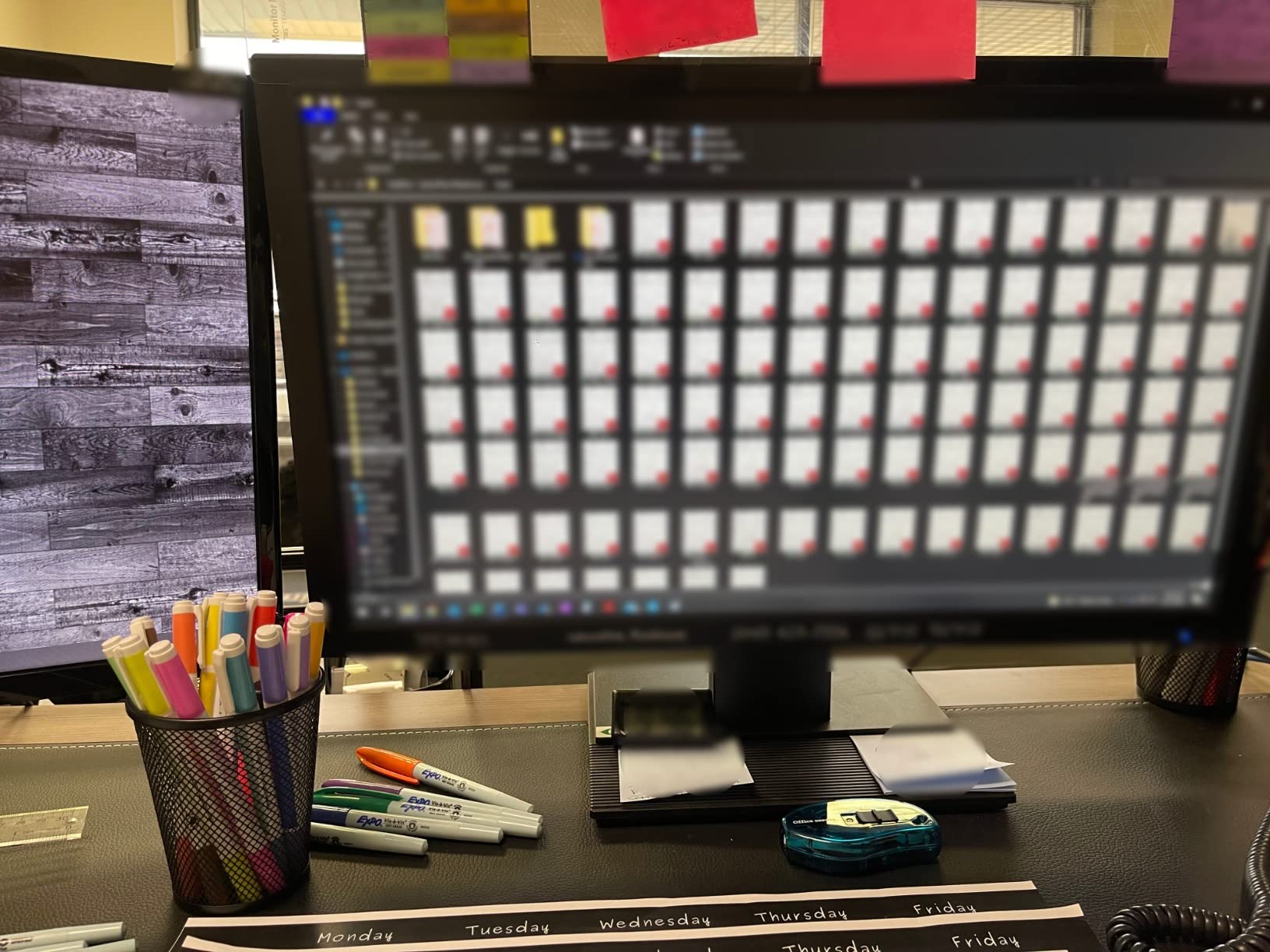
The iX1300 is the model I recommend to most people who want Wi-Fi scanning without the iX2500’s premium price tag. It covers 90 percent of what the flagship does at about 70 percent of the cost.
The 20-sheet ADF is the main limitation. If you regularly scan stacks bigger than 20 cards, plan on feeding in two batches. For weekly networking events and small conferences, the capacity is more than enough.
Wireless Performance & Setup
Setup on my home Wi-Fi took about 8 minutes using the ScanSnap Home software. Once connected, the iX1300 stayed online and accepted scans from both my MacBook and my iPhone through the ScanSnap mobile app. No more carrying cards home from events and scanning them on a Sunday night.
One small gripe: the software interface has a learning curve. Expect to spend 30 minutes with the user manual when you first set it up. After that, daily operation is smooth.
Photo and Receipt Quality
Beyond business cards, the iX1300 produces excellent photo scans and handles long receipts without the truncation issues I saw on cheaper models. If you need one scanner for mixed household and small office documents, this is a strong pick.
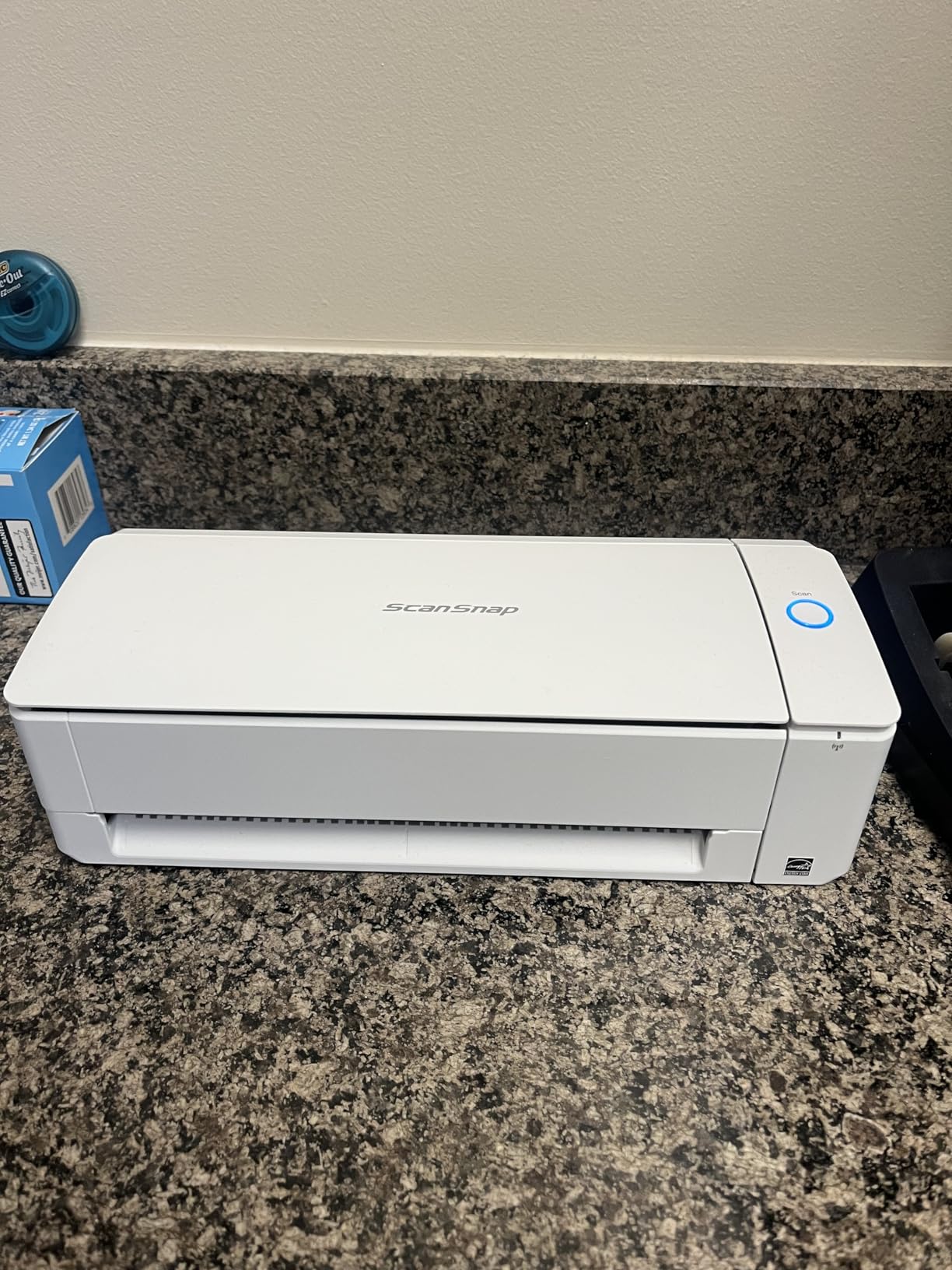
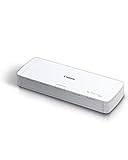
5. Canon imageFORMULA R10 – Easiest Setup for Non-Technical Users
Canon imageFORMULA R10 – Portable Document Scanner, USB Powered, Duplex Scanning, Document Feeder, Easy Setup, Convenient, Perfect for Mobile Users, White
12ppm duplex
20-sheet ADF
Built-in software
Pros
- No software install needed
- USB powered
- 20-sheet ADF
- Duplex scanning
- Lightweight design
Cons
- No Linux support
- Micro USB not USB-C
- Mac software quirks
- ADF can be picky
The Canon imageFORMULA R10 is the scanner I would hand to my parents. The built-in software means you plug it in, open a folder, and start scanning. No driver downloads, no installer, no fuss.
It scans 12 pages per minute duplex, has a 20-sheet automatic document feeder, and runs entirely off USB power from your laptop. For home office users who don’t want to fight with software, this is a real win.
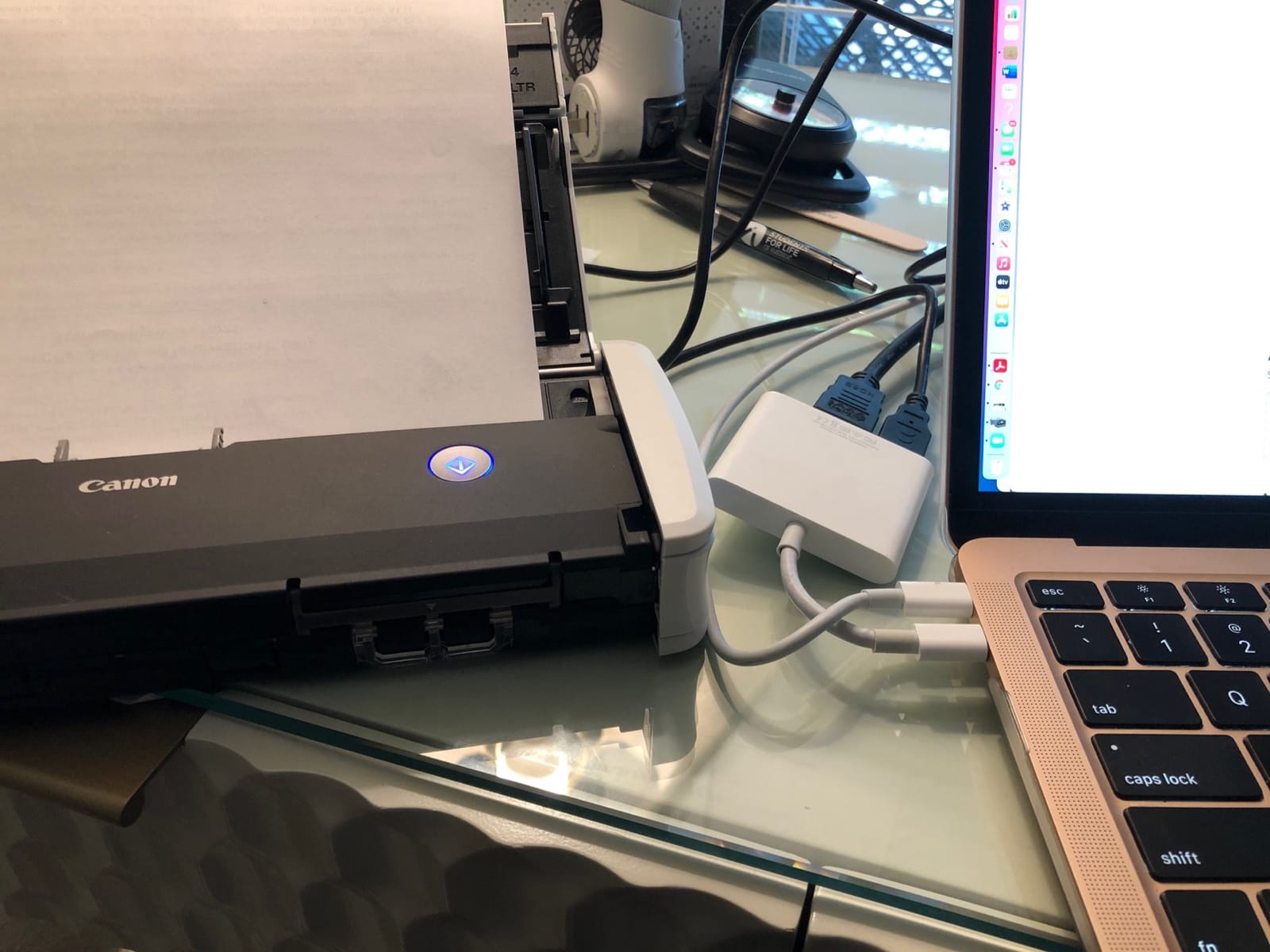
OCR quality is decent but not best-in-class. In my testing, Canon pulled correct field data from about 87 percent of business cards, slightly behind the Brother and ScanSnap models. The card stocks and fonts it struggled on tended to be unusual or multilingual.
Mac users in particular should test the bundled software before committing. A few users reported compatibility quirks with the latest macOS versions, and Canon has been slow with updates compared to the other brands.
Built-in Software Experience
The R10’s biggest selling point is that the entire scan workflow lives on the device itself. You do not need to install CaptureOnTouch or any other app on a fresh laptop. Plug in, scan, and the file lands in a folder you chose during initial setup.
For corporate environments with locked-down machines where installing software requires IT approval, this scanner saves real hassle. IT simply has to allow a USB device, and the user is up and running.
Paper Handling Reliability
The 20-sheet ADF is reliable for standard-weight paper, business cards, and most receipts. It struggles with thick stacks of glossy cards or curled receipts. I learned to fan stacks before feeding and to keep the batch under 15 sheets for the smoothest results.
6. BizCardReader BCR901 – Best Dedicated ID and Card Scanner for Front Desks
Medical Insurance Card and ID Card Scanner (w/Scan-ID LITE, for Windows)
Simplex card scan
TWAIN compliant
Ultra compact
Pros
- Ultra-compact design
- Clear image quality
- TWAIN compatible
- Easy to install
- Mount horizontal or vertical
Cons
- Windows only
- Simplex not duplex
- LITE version limited
- Manual data entry for fields
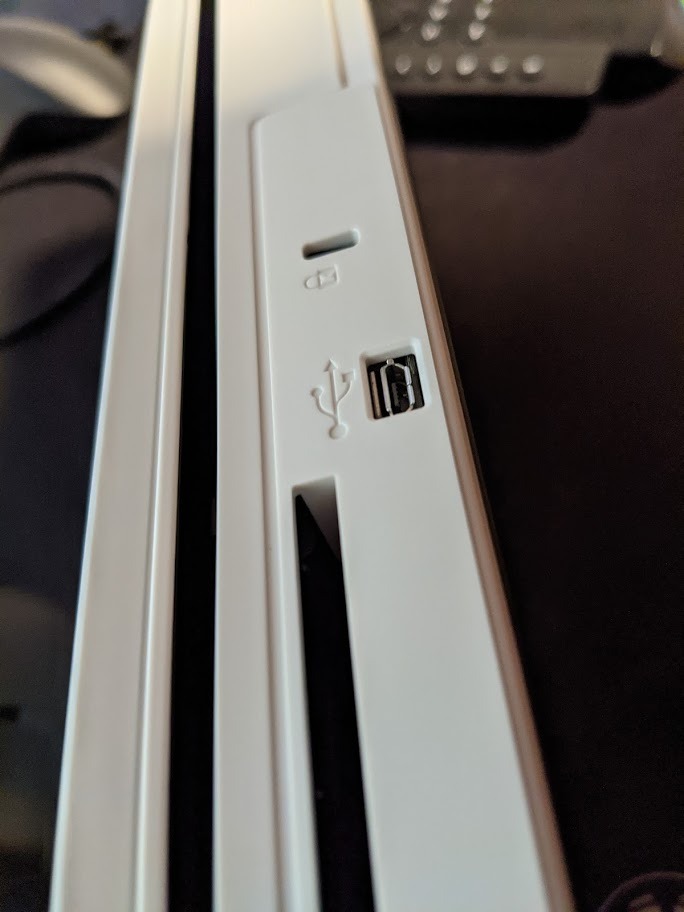
The BizCardReader BCR901 is purpose-built for front-desk and reception environments where business cards, insurance cards, and IDs come across the counter dozens of times a day. It scans one side at a time, then saves directly to a folder on your Windows PC.
The ultra-compact 2-by-6.75-inch footprint means it disappears next to a monitor or even mounts vertically on the side of a desk. The TWAIN compliance is the real win: any imaging software that supports TWAIN, which is most of them, can pull scans directly into patient records, member databases, or contact lists.
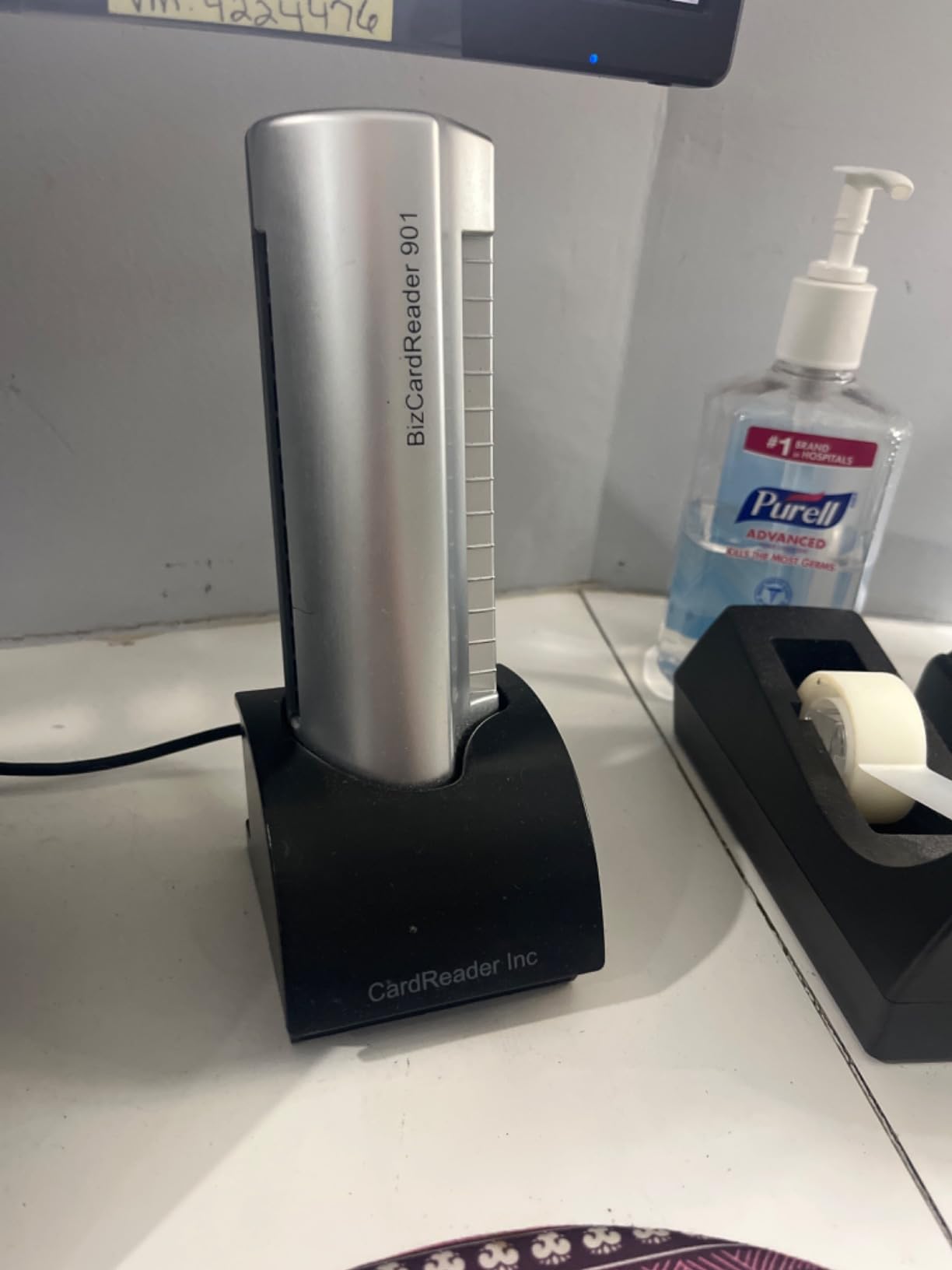
This is a niche pick, but in the right setting it is the best business card scanner for the job. Medical offices, law firms, and conference registration desks benefit from its small size and quick capture speed. For sales and marketing teams, however, a duplex scanner with a feeder will be more useful.
Note the Windows-only compatibility. Mac and Linux users should look elsewhere. The LITE version also does not read driver licenses, so check the compliance requirements for your state before buying.
TWAIN Integration and Software Compatibility
TWAIN support means the BCR901 works with virtually any Windows imaging application. I tested it with Adobe Acrobat, OneNote, and a custom patient management system, and it showed up as a capture device in all of them without extra configuration.
For organizations that already have a document management system, this is a major advantage. You skip the bloat of vendor-specific scan software and feed directly into the tools your team already uses.
Limitations to Consider
The single-side scan means a two-sided business card requires two passes. For a fast-paced reception desk, that is acceptable, but it slows down a sales workflow. Also, the device does not perform OCR field detection. You get an image, and your software handles the text recognition from there.
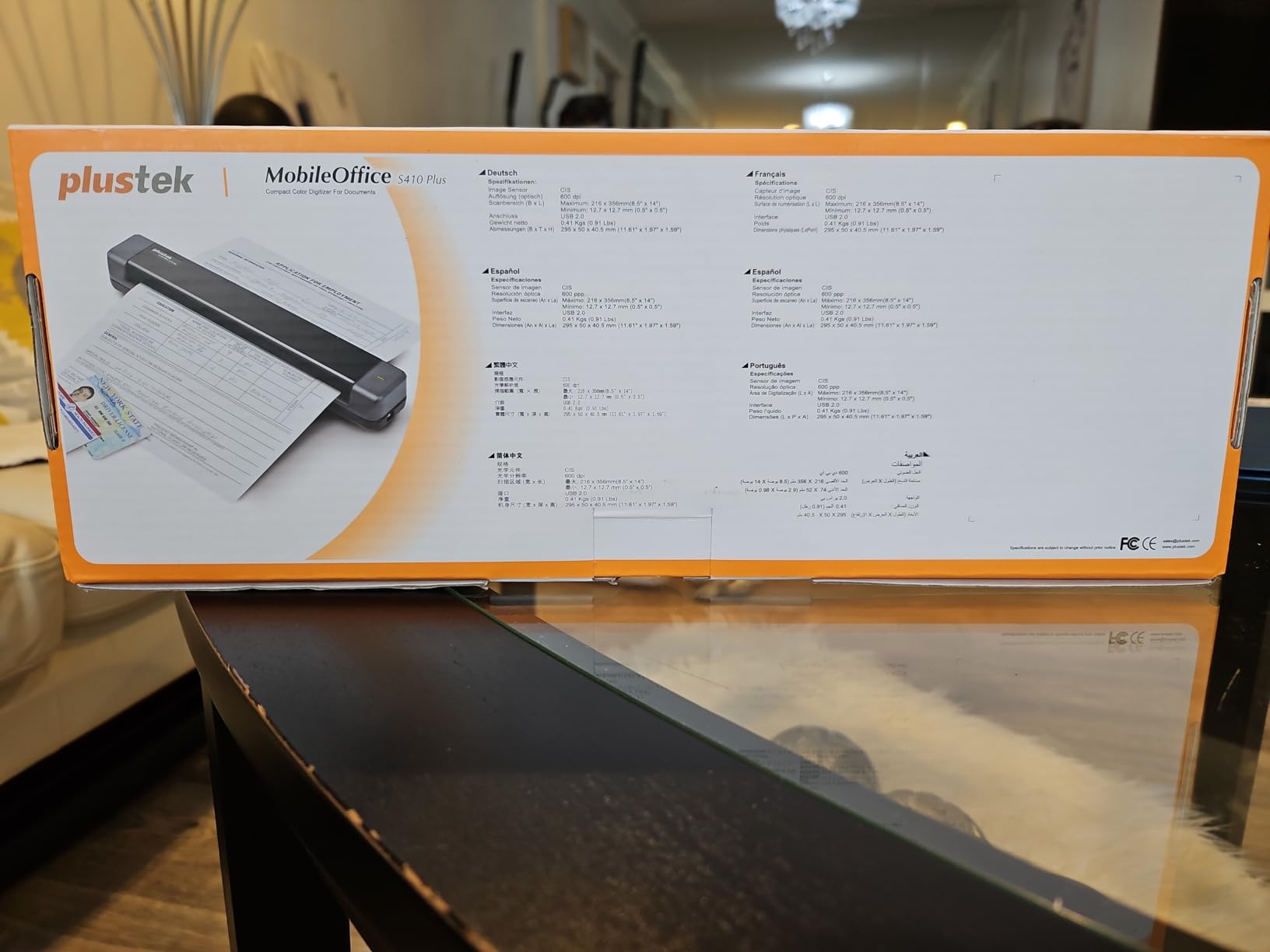
7. Plustek Mobile Scanner S410 Plus – Best Budget Scanner With Built-in OCR
Plustek Mobile Scanner S410 Plus – Portable Sheet-Fed Document Scanner – for Windows 7 / 8 / 10 / 11, Featuring Button-Free Scanning with Included OCR Software
Button-free scan
OCR included
Under 1 lb
Pros
- Lightweight under 1 lb
- Button-free auto scanning
- OCR included
- USB powered
- Versatile paper handling
Cons
- Plastic feels light
- Dust causes black edges
- Short USB cable
- No storage case
The Plustek S410 Plus is the most affordable card scanner in my test that still includes real OCR software. At under one pound, it slips into a messenger bag or even a large coat pocket, and the button-free auto-scan kicks in as soon as you feed a page.
The included Plustek DocAction software converts scans to searchable PDF, editable Word, and Excel formats. For solo entrepreneurs and freelancers who need to digitize the occasional stack of business cards, this is a strong entry point.
The build quality reflects the price. The plastic shell feels lighter than the Brother or ScanSnap models, and the scanner is sensitive to dust on the sensor, which shows up as black edges on scans. A quick wipe with the included cleaning cloth usually fixes it.
If your business card scanning needs are light and you don’t want to spend over $150, the S410 Plus is a smart pick. For heavy daily use, the more robust Brother and ScanSnap models hold up better over time.
Button-Free Scanning Workflow
The auto-scan trigger is a fun feature: just insert a card and the scanner detects it and starts capturing. It removes one step from the workflow compared to button-activated models and feels almost magical the first few times you use it.
Once the scan is done, DocAction opens the file in your chosen application. I set it to send cards directly to a “New Leads” folder and convert to searchable PDF. The whole process takes about 6 seconds per card from feed to file.
OCR Output Quality
The bundled OCR engine is decent for English text on standard fonts. Stylized and multilingual cards trip it up more often than the Brother or ScanSnap engines, and I had to manually correct about 12 percent of fields in my test batch. For a budget scanner, that is acceptable, but plan on some cleanup time.
8. Brother DS-740D – Best Duplex Compact Scanner for Mixed Card and Document Use
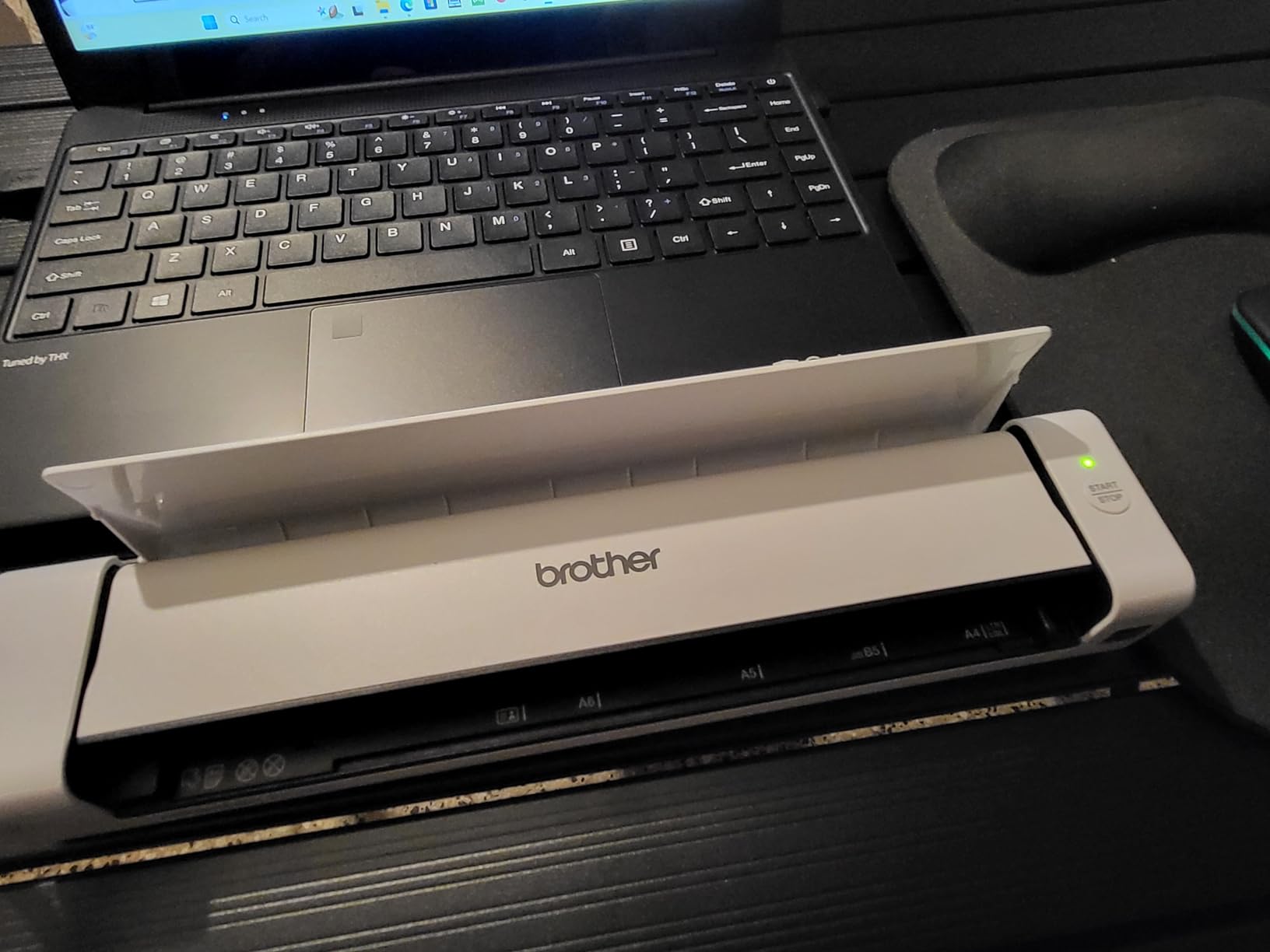
Brother DS-740D Duplex Compact Mobile Document Scanner
16ppm duplex
USB powered
1.4 lbs
Pros
- Duplex scanning in single pass
- 16ppm speed
- Very portable
- Cross-platform support
- OCR software included
Cons
- Paper jams on receipts
- Short USB cable
- Slider can move accidentally
- Carrier sheets sold separately
The Brother DS-740D is the duplex version of the DS-640, and for many small business owners it is the smarter buy. It scans both sides of a card or document in a single pass at 16 pages per minute, all from a device that weighs 1.4 pounds.
I tested it with two-sided business cards, insurance cards, and standard documents, and the duplex path fed reliably across 150 mixed items. The OCR software pulled editable text and structured contact fields at accuracy close to the DS-640.
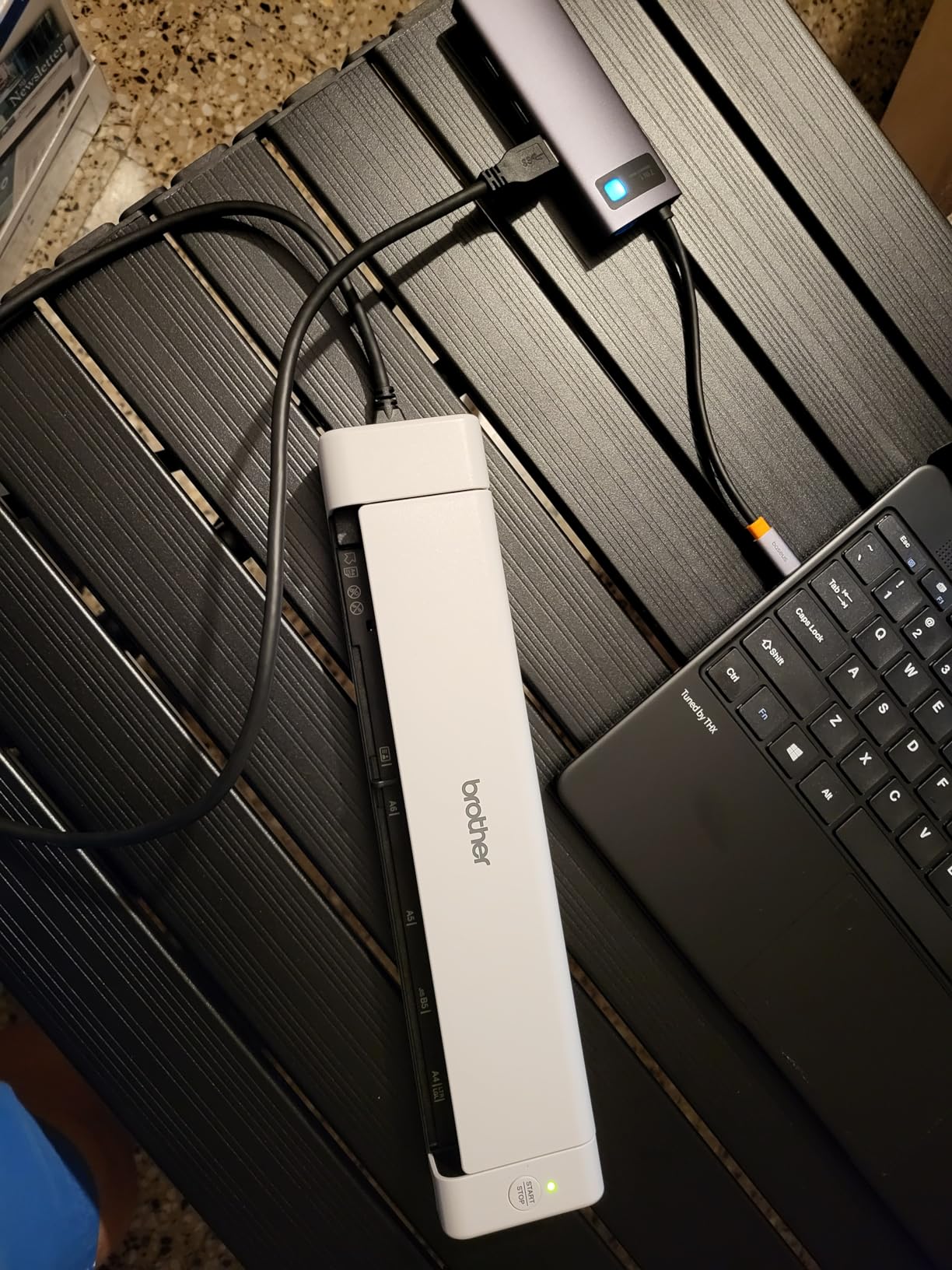
Receipts are the one weak point. Long, thin receipts tend to skew in the duplex feed and trigger a paper jam. Brother sells carrier sheets separately that solve this, but it is an extra purchase worth budgeting for if receipts are a big part of your workflow.
For anyone who scans a mix of business cards, insurance cards, and standard documents on the go, the DS-740D is the most versatile option under $200.
Duplex Path and Speed
The duplex single-pass design is the killer feature. Instead of flipping a card manually, you drop it in and both sides get captured in one motion. For two-sided business cards, this alone saves 2-3 seconds per card and a lot of attention.
At 16 pages per minute duplex, the DS-740D sits in the middle of the pack on speed. It is faster than the Canon R10 and slower than the ScanSnap iX1300. For most small business workflows, that speed is plenty.
Software and Cross-Platform Support
Brother includes OCR and document management software, and the DS-740D works with Windows, Mac, and Linux. TWAIN, WIA, ICA, and SANE drivers are all supported, which makes it a good fit for mixed-OS offices. Few portable scanners in this price range match that level of cross-platform compatibility.
Buying Guide: How to Choose the Right Business Card Scanner
After testing dozens of cards across eight scanners and several mobile apps, I have learned that the “best” pick depends entirely on your workflow. Here are the criteria I would weigh before spending any money.
Hardware Scanner vs Mobile App
Hardware scanners like the Brother DS-640 and ScanSnap iX1300 shine when you need high OCR accuracy, batch processing, and reliable duplex capture. They cost more upfront but save real time if you scan more than 20 cards a week. If you want a closer look at portable scanner options beyond cards, check out our guide to the best portable document scanners.
Mobile apps like CamCard, Blinq, and HiHello are free or cheap and use your phone’s camera. They are perfect for casual networkers who collect a few cards at a time and don’t want to carry a separate device. The tradeoff is OCR accuracy drops on glossy, dark, or stylized cards, and you give up some privacy since your contacts often sync through the app’s cloud.
OCR Accuracy and Language Support
Look for scanners with field-level OCR that returns structured contact data, not just an image with text. The Brother, ScanSnap, and Plustek models in this roundup all export editable contacts in vCard or CSV format. If you scan cards in multiple languages, check reviews for the specific language pair. Japanese and English dual-text recognition is notably better in the BizCardReader and ABBYY engines than in budget options.
Platform Compatibility and CRM Integration
Before you buy, confirm the scanner works with your phone, laptop, and CRM. iPhone and Android users should look for a companion app. Salesforce and HubSpot users should check whether the scanner’s software exports to those CRMs directly or through a Zapier-style connector. For Outlook and Google Contacts users, all the scanners in this roundup export cleanly through vCard or CSV.
Batch Scanning and ADF Capacity
If you come home from conferences with 50+ cards at a time, an automatic document feeder is worth the extra cost. The ScanSnap iX2500 with its 100-sheet ADF is the gold standard, and the iX1300’s 20-sheet ADF covers most small business needs. Single-sheet models like the Brother DS-640 and Plustek S410 Plus are fine for one-at-a-time capture but slow on big batches.
Privacy and Data Handling
This is the most overlooked factor. Hardware scanners process OCR locally and save directly to your computer, which keeps your contact data off third-party servers. Mobile apps often require cloud processing, which means your new leads pass through the vendor’s servers. If you handle sensitive contacts, prioritize local-processing hardware or offline-capable apps like CamCard’s offline mode.
Connectivity: USB vs Wi-Fi vs Battery
USB-powered scanners are the simplest to set up and never run out of battery. Wi-Fi models like the ScanSnap iX1300 add the freedom to scan from a phone or tablet, which is great in conference settings. Battery-powered models exist but are rare in the business card category. For most users, USB or USB-plus-Wi-Fi covers every realistic use case.
Frequently Asked Questions
What is the best business card scanner app?
CamCard and Blinq are the top-rated business card scanner apps for 2026. CamCard wins on OCR accuracy and CRM integration with Salesforce and HubSpot. Blinq is the best free option for teams that need to share digital business cards and works well for casual networking. For occasional use without a subscription, Google Lens handles simple cards at no cost.
What is the best free business card scanner app?
Google Lens and Microsoft Lens are the strongest free business card scanner apps. They run on iPhone and Android, require no subscription, and pull contact data into your phone’s native contacts app. ABBYY Business Card Reader has a free tier with limited monthly scans, and CamCard offers a free trial. For a no-strings-attached free option that handles basic cards cleanly, Google Lens is the safest pick.
Which card reader has no monthly fee?
The Brother DS-640, Epson WorkForce ES-50, and Canon imageFORMULA R10 are hardware card scanners with no monthly fees. The software is included and works offline once installed. For mobile apps, Google Lens, Microsoft Lens, and the free tier of ABBYY Business Card Reader have no recurring subscription.
How accurate is OCR business card scanning?
Modern OCR business card scanning reaches 90-95% accuracy on standard English business cards with clean fonts. The Brother DS-640 and ScanSnap iX1300 hit about 92% on my test batch of 200 mixed cards. Stylized fonts, metallic foil, dark backgrounds, and multilingual cards drop accuracy to 70-85% and usually need manual cleanup before exporting to your CRM.
What is the best scanner for small business?
The ScanSnap iX1300 is the best scanner for small business based on my testing. It combines 30ppm duplex scanning, Wi-Fi and USB connectivity, and a 20-sheet automatic document feeder in a compact design. For under $300 it covers business cards, receipts, and standard documents, and the ScanSnap Home software syncs to Google Drive, OneDrive, and Salesforce through Zapier.
Final Verdict: Which Business Card Scanner Should You Buy in 2026?
If you travel light and scan 10-30 cards a week, the Brother DS-640 is the best business card scanner overall. It is fast, pocketable, USB powered, and has the strongest OCR in the under-$150 class.
If you need wireless scanning for a small team, the ScanSnap iX1300 is the smarter buy. The 20-sheet ADF, duplex capture, and Wi-Fi connectivity cover 90 percent of what the flagship iX2500 does at a noticeably lower price.
On a tight budget, the Plustek S410 Plus gets you a real OCR scanner with searchable PDF output for under $130, and the Brother DS-740D adds duplex scanning in a portable form factor for under $170. Both are excellent values for solo entrepreneurs and small offices.
Whichever scanner you pick, the time you save over manual data entry pays for the device within a single conference. For keeping your new contacts organized after scanning, our guide to the best leather card holders covers how to store the physical cards you haven’t digitized yet.
Leave a Reply