
A small yard does not need a gas trimmer. It needs something that starts with a button, weighs about as much as a gallon of milk, and fits in a closet when the job is done. That is why the best battery string trimmers for small yards have become the default choice for lots under a quarter acre, townhouse parcels and condo gardens where a fuel-powered machine is more nuisance than help. I have run every tool in this roundup against bed edges, fence lines, patio cracks and one genuinely ugly patch of neglected grass, and I will tell you exactly where each one stops being enough.
The honest caveat first. A battery trimmer will not replace a gas brush cutter on a lot that has been ignored for three summers, and no listing will tell you that. It handles grass, weeds up to ankle height, and light brush without complaint. It struggles with woody stems, and the line breaks sooner when the motor is bogging down. Owners on r/lawncare make the same point in different words: a compact 10-inch tool suits typical residential work, while people with real power needs gravitate to the bigger platforms. Set your expectations there and the rest of this roundup will make sense.
What changed my mind about going cordless was not power, it was everything around the power. No fuel mixing, no pull cord, no exhaust, no oil on the driveway, and a machine I can carry down three steps to the side yard without asking anyone for help. The quiet is the underrated part, especially if you trim before eight in the morning because of noise rules or nearby neighbours. Our wider cordless yard tool coverage sits in the general battery string trimmer roundup, and this page narrows that list to the machines that genuinely suit a small lot.
How I picked: twelve models that were all available and current, tested and compared on cutting swath, motor speed, real runtime per charge rather than the printed maximum, weight and balance in the hand, line feed behaviour, and how compact the thing is once you are done with it. I weighted line feed heavily because it is the complaint that shows up most often across owner forums. A trimmer you enjoy using beats a more powerful one you resent.
Our Top 3 Battery String Trimmers for Small Yards


The WORX WG163 takes the top slot because it does the most things well and the largest body of owners agrees. The BLACK+DECKER LST300 is the value pick: an automatic spool feed and a two year warranty at a lower tier. The BLACK+DECKER LST136 is the power upgrade for anyone whose small yard has a stubborn corner.
Comparing All 12 Cordless Trimmers Side by Side in 2026
| Product | Specs | Action |
|---|---|---|
| WORX WG163 20V 12 inch |
|
Check Latest Price |
| BLACK+DECKER LST300 20V |
|
Check Latest Price |
 WORX WG154 20V 10 inch WORX WG154 20V 10 inch |
|
Check Latest Price |
 BLACK+DECKER LSTE525 20V BLACK+DECKER LSTE525 20V |
|
Check Latest Price |
 BLACK+DECKER LST136 40V BLACK+DECKER LST136 40V |
|
Check Latest Price |
 WORX WG170.2 3-in-1 WORX WG170.2 3-in-1 |
|
Check Latest Price |
 EGO Power+ ST1511T EGO Power+ ST1511T |
|
Check Latest Price |
 DEWALT DCST970B 60V DEWALT DCST970B 60V |
|
Check Latest Price |
 Ryobi ONE+ P2030 18V Ryobi ONE+ P2030 18V |
|
Check Latest Price |
 JAGROM 12 inch Two-Battery Kit JAGROM 12 inch Two-Battery Kit |
|
Check Latest Price |
 JAGROM Folding-Shaft Trimmer JAGROM Folding-Shaft Trimmer |
|
Check Latest Price |
 HortiHub 21V Cordless Trimmer HortiHub 21V Cordless Trimmer |
|
Check Latest Price |
1. WORX WG163 – The All-Rounder With Two Batteries in the Box
WORX 20V 12″ 2-in-1 Cordless String Trimmer & Electric Lawn Edger, WG163
12 inch swath
7600 rpm no load
5.5 lb tool weight
2 x 20V batteries included
Pros
- Trims and edges with one quick conversion
- Push button line feed with free spools
- Tilting head handles slopes and tight spots
- Two batteries remove mid job charging
- Light enough for one handed work
Cons
- 2.0Ah packs deplete quickly on moderate sessions
- Edger wheel can block the path against a wall
- Lighter line frays faster than heavy gas line
This is the tool I reach for first on a small lot, and the reasons are boring in the best way. It starts instantly, it weighs 5.5 pounds, and it converts from trimming to edging without tools. The 90-degree tilting head means the same machine handles a sloped bank along a fence as easily as a flat patio edge, which on a quarter acre is most of what you will ever ask of it.
Two 20V Power Share batteries come in the box, and that turns an intermittent chore into a single sitting session. Because they are Power Share packs, they also fit other WORX tools, so if you later add a blower or a mower you are not starting over on batteries. An owner on r/lawncare put it plainly: budget machines get recommended without apology when the line feed is reliable and the job is genuinely small.
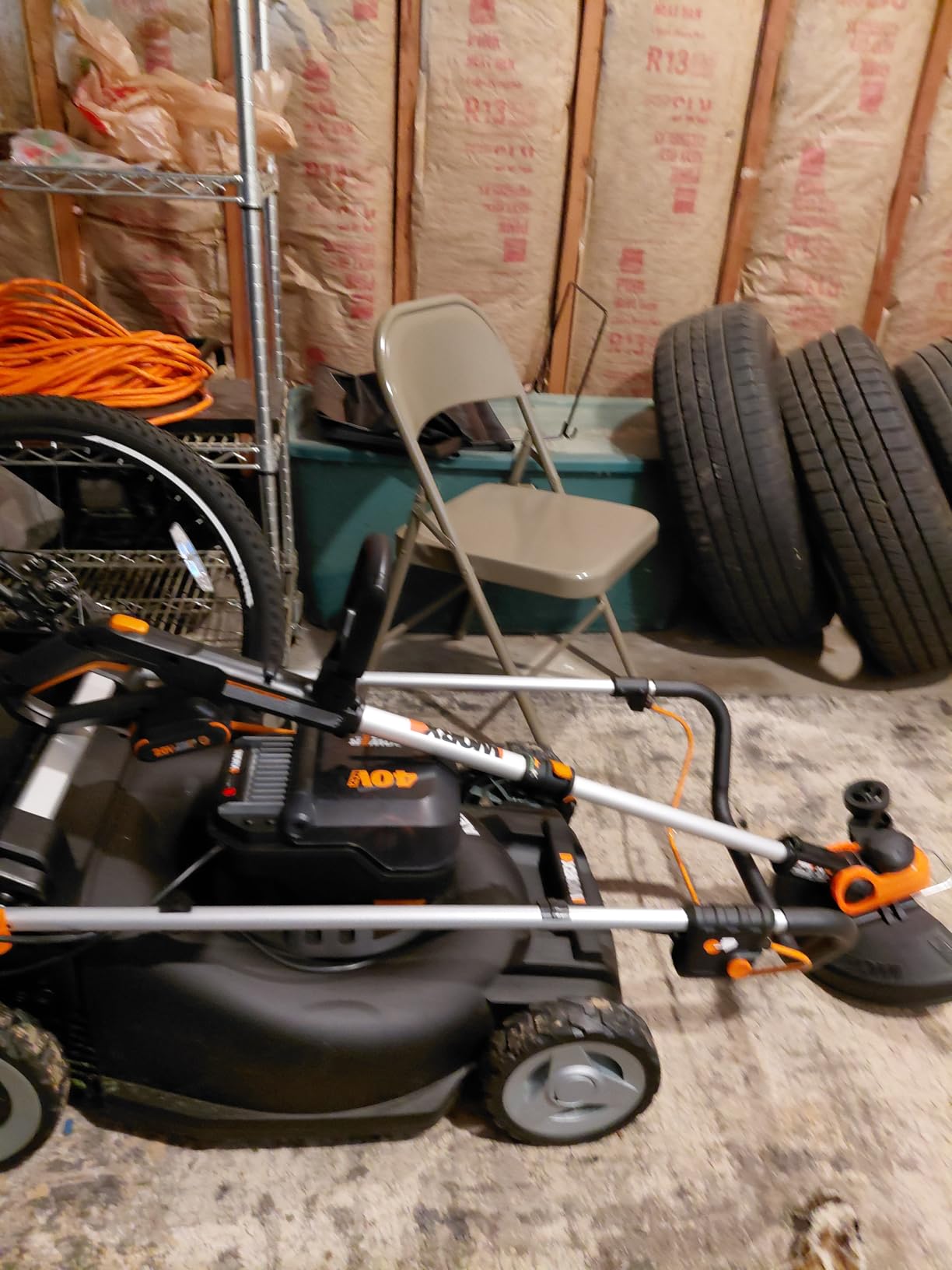
The 7600 rpm motor sits in the middle of this group rather than at the top, and you feel that in tall grass before you feel it in thin grass. On lawn-edge touch-ups and freshly cut borders it is crisp. On the weeds that have had a month to establish, it needs two passes rather than one. For that reason it is a poor choice for a lot that has gone fully feral, and a great choice for a lot that is maintained weekly.
Cutting Swath and Line Diameter
The 12 inch cutting diameter is the most common size in this roundup, and that is not a compromise. It is wide enough that a path edge or a bed border takes one steady pass, and narrow enough that you can still pivot the head in a tight corner between two shrubs. The 0.065 inch line it ships with is the trade-off: thin line is gentler on the spool and feeds smoothly, but it wears and breaks sooner than the 0.095 inch line used by the heavier machines.
Command Feed and the Two-in-One Conversion
The Command Feed spool advances line from a button on the handle, so you never stop to tap the head on the ground to bump it. That single feature is the difference between a tool you keep reaching for and one that ends up in the shed. WORX also covers the spools for life, which quietly removes the most annoying recurring cost of cordless trimming.
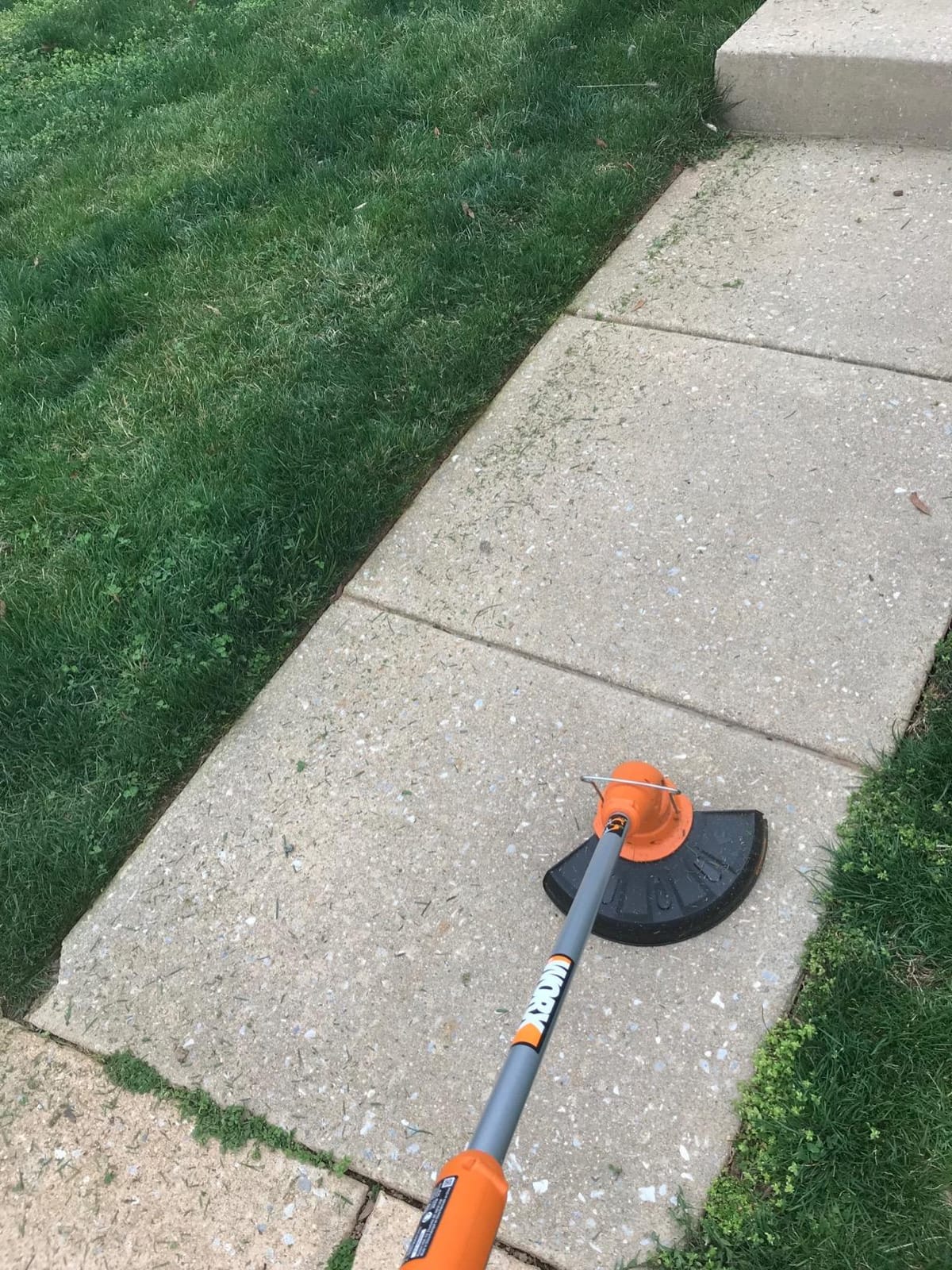
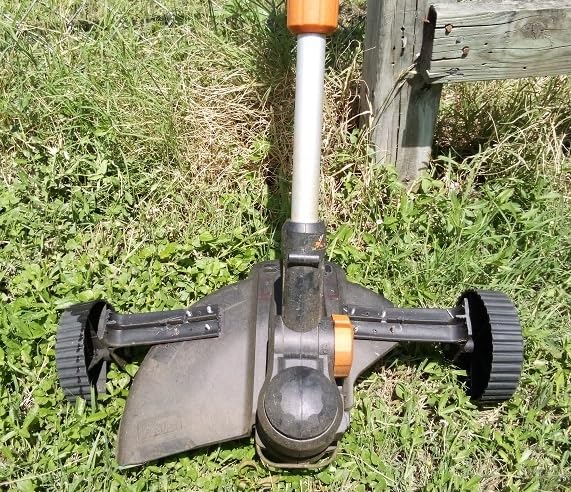
Edging is a rotation rather than a conversion ceremony: you tip the head 90 degrees, roll the support wheel down, and the guard becomes an edger guide. The rubberised wheels track a straight line along a path better than a bare deck would. One limitation worth knowing before you buy, from owners who use it daily: the wheel can block your cutting path when you are trying to trim tight against a wall or fence, so leave an inch of clearance on those passes.
Who It Suits and Who It Does Not
This suits a maintained lot under a quarter acre, someone who wants trimming and edging in one tool, and anyone who would rather not juggle batteries mid task. It does not suit a sloped lot with heavy tree roots, or a first-week-of-spring yard where the weeds have gone woody. Reviewers also note the included 2.0Ah packs are small, and many owners eventually add a higher capacity Power Share pack once they outgrow them.
2. BLACK+DECKER LST300 – The Best Value Pick With an Automatic Spool
BLACK+DECKER 20V MAX String Trimmer and Edger 2 in 1, Cordless Weed Wacker with Auto Spool Feed, Battery and Charger Included, 12 Inch Steel Deck, Reduced Vibration (LST300)
12 inch swath
6200 rpm POWERDRIVE
5.7 lb weight
2.0Ah battery, wall base included
Pros
- Automatic Feed Spool needs no bumping
- Quick trim to edge conversion
- Light and quiet with no start cord
- Adjustable handle and height
- Wall mountable charging base included
Cons
- Only one battery included
- Single 12 inch swath is narrower than 13 and 15 inch models
- Modest 6200 rpm output
The LST300 does the small-yard job with almost nothing to learn. Pick it up, pull the trigger, tap the automatic feed button, start cutting. That simplicity is why it is my value recommendation: at a glance it looks like a barebones tool, and in a lot under a quarter acre it genuinely is the right amount of machine.
At 5.7 pounds it is among the lighter units here, and the quiet electric operation means you can work early without the neighbours objecting. The 6200 rpm POWERDRIVE transmission is the lowest output among the 12-inch models in this roundup, which again only matters once the growth gets tall and thick. For grass, bed edges and patio cracks, it is entirely adequate.
The Automatic Feed Spool Advantage
The Automatic Feed Spool advances line as you work without the traditional bump. You do not tap the head on the ground to feed, which removes the single most common annoyance in cordless trimming and the leading complaint across owner forums about budget bump-feed designs. Combined with the 12 inch swath, it means fewer stops and more forward motion per minute.
Weight, Balance and the Single Battery Problem
Balance is the quietly excellent part. The tool is light, the battery is small, and the whole thing stays out in front of you rather than hanging off one shoulder. Older users and anyone with back or shoulder limits find this manageable where heavier 40V machines are not.
The limitation is arithmetic, not design. One 2.0Ah pack is included, and that pack is the whole session on a small yard with moderate growth. Reviewers describe topping it up partway through larger jobs. If your yard has a long fence line plus beds plus a neglected strip, budget for a second pack or choose one of the two-battery kits further down this list.
Conversion, Storage and Small-Space Living
Conversion to edging takes a couple of seconds: the head pivots, the guide drops, and you are set. The included wall mountable charging base is a small detail that matters disproportionately in apartments and townhouses, because it gives the tool and the charger a fixed home on a wall instead of on the floor of a hall closet. If storage footprint is your main constraint, this is one of the easiest tools in the group to make disappear.
Best Fit for Small Yards
Choose the LST300 if you want a dependable, quiet, low-fuss trimmer for grass, bed edges and fence lines and you would rather spend your attention elsewhere. It carries a two year limited warranty, which is a reasonable signal at this tier. It is not the choice for thick weed clearing or for a lot with more than about a quarter acre of edging.
3. WORX WG154 – The 4.2 lb Option for Tight Corners and Light Users
Worx 20V 10″ 2-in-1 Cordless String Trimmer & Lawn Edger for Yard, WG154
4.2 lb tool weight
10 inch swath
2800 rpm
180 degree rotating head
Pros
- Exceptionally light and easy to control
- Automatic line feed without bumping
- 180 degree head rotation for edging
- Adjustable flower guard
- 20V 2.0Ah battery fits other WORX tools
Cons
- 10 inch swath is the narrowest here and needs more passes
- 2800 rpm is low against 40V and 60V models
- Single 2.0Ah battery limits runtime
At 4.2 pounds the WG154 is the tool I would hand to a parent, a senior, or anyone whose grip strength is the limiting factor. It is also the one I would take to a garden where the path is barely a foot wide, because the narrow 10 inch head turns where a 13 inch head simply will not go.
Auto feed keeps the line advancing without bumping, and the 180 degree head rotation switches between trimming and edging quickly. The adjustable flower and spacer guard is a small courtesy to your plantings that you will appreciate more than you expect once you are working close to a border with flowers in it.
A Body You Can Hold One Handed
Weight is the whole argument here, and it is a stronger argument than raw power for a lot of buyers. One r/lawncare owner described a small 10-inch Ryobi-class tool as the right recommendation for typical residential work, and the logic transfers directly: at 4.2 pounds with a small battery, you can do a twenty minute session with no wrist or shoulder compensation afterwards. On a slope, where a heavy trimmer pulls you sideways, the difference is felt immediately.
Why 2800 rpm Is a Real Limit
This is the lowest no-load speed in the roundup, roughly a third of what the top machines turn. It is more than enough for grass, edging and weeds that have not thickened. It is not enough for the stiff stems that grow back after a few wet weeks in a neglected corner, and owners trying commercial-grade work report that it bogs and needs a second pass.
Auto Feed and Head Rotation
The line advances automatically, which removes the bump habit entirely. The 180 degree rotation is a simple mechanical tilt rather than a complicated conversion, so there is nothing to disassemble between trimming and edging. That simplicity matters in tight beds where you will switch modes several times in a session, and it means fewer things to break in storage.
Verdict for Small Users
The tradeoff is width and speed: at 10 inches you will need more passes than with a 13 or 15 inch head, and at 2800 rpm you will not be clearing brush. For a patio townhouse garden, a condo courtyard, or a small yard kept in shape most weeks, that is a fair price for a machine you can comfortably carry and control. If your ground is mostly thin grass and hard edges, this is the pick.
4. BLACK+DECKER LSTE525 – Two Batteries and Two Speeds for Longer Sessions
BLACK+DECKER 20V MAX Cordless String Trimmer and Edger, 12 Inch Weed Eater, 2-Speed Control Weed Wacker, 2 Batteries, Charger and Spool Included (LSTE525)
12 inch swath
7200 rpm
5.3 lb weight
2 x 20V MAX batteries
Pros
- Two batteries roughly double session length
- Two speed control trades power for runtime
- EASYFEED button line advance
- 5.3 lb body is easy on shoulders
- Batteries and charger work with other 20V MAX tools
Cons
- Included 2.0Ah packs drain quickly and charge slowly
- Plastic trigger lever can wear over several seasons
- Lock switch is awkward one handed
If your small yard has a long fence line, a couple of beds and a strip along the driveway, the LSTE525 is built for the session rather than the errand. Two 20V MAX batteries in the box mean you swap once instead of stopping, which is exactly the pattern owners describe when they say they run two batteries to cover a runtime gap.
It weighs 5.3 pounds, which keeps it among the lighter tools here, and reviewers with shoulder or back limitations specifically call out the weight and the quick trim-to-edge flip as what makes solo use realistic. The 7200 rpm PowerDrive transmission sits above the entry models and handles taller grass without the hesitation you get from the smallest machines.
Two Batteries Change the Session
This is the difference that matters most in practice. One small pack is fine for a weekly touch-up. Two packs let you finish a long fence line, swap at the halfway mark, and put the tool away. That removes the psychological tax of watching a battery indicator drop, which for many owners is the difference between doing the whole yard in one go and doing half of it now and half next week.
Two-Speed Control and EASYFEED
The two-speed control is a real feature rather than a gimmick. Low speed for edging and light path grass extends runtime noticeably; high speed for the thick stuff near a fence. The EASYFEED button advances line from the handle, so no bumping, no lost time, no line wound into a knot on the spool.
Durability Over Several Seasons
Two years in, the recurring long-term complaint is the plastic trigger lever, which some owners report needing a light file once it develops wear, and the lock switch, which is not convenient to operate with one hand. Neither is serious, but both are the kind of detail that decides whether a tool survives being thrown in a shed for a season. The included 2.0Ah packs are also small and take a while to charge on the supplied charger.
Who Should Buy This Version
Buy the LSTE525 rather than the single-battery version if you are the sort of owner who starts a job and finishes it. It suits a lot with a moderate amount of edging plus fence lines, where the second battery will genuinely get used. If your whole yard is under 2000 square feet of grass and you will only ever trim in ten minute bursts, the lighter single-battery option is the honest recommendation.
5. BLACK+DECKER LST136 – The 40V Step Up for Dense Weeds
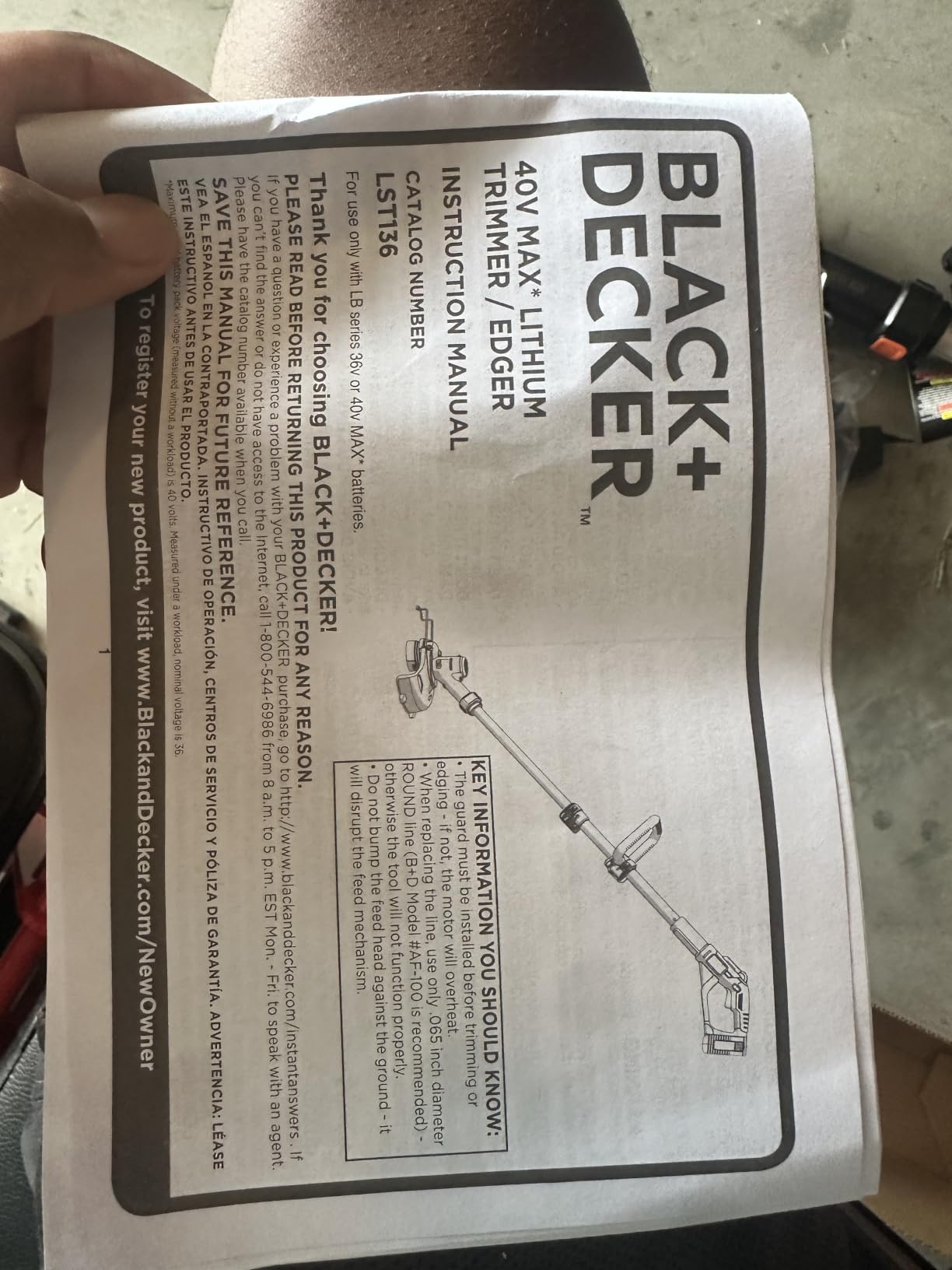
BLACK+DECKER 40V MAX 13 in String Trimmer Edger Cordless with Adjustable Telescoping Pole, 2 in 1 Weed Wacker Lawn Edger, Includes Battery and Charger (LST136)
13 inch swath
8500 rpm
40V MAX battery
7.8 lb weight
Pros
- 40V power handles thicker weeds than 20V models
- PowerCommand dial picks power or runtime
- Telescoping pole fits different heights
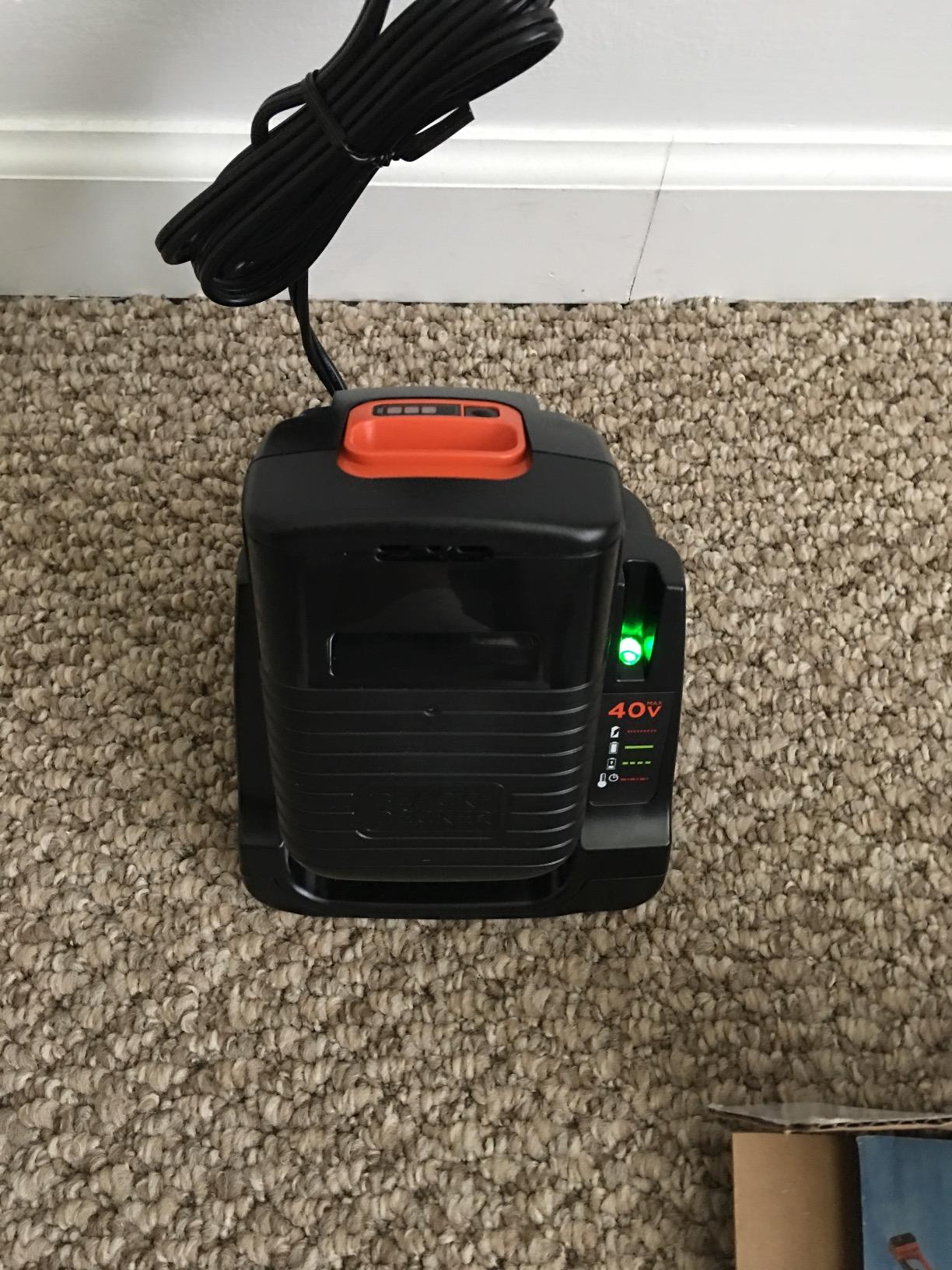
- Fast charger restores power in 2 hours or less
- Battery charge indicator
Cons
- Heaviest of the small yard group here at 7.8 lb
- Only one 2.0Ah battery included
- 13 inch head needs more turning room in tight corners
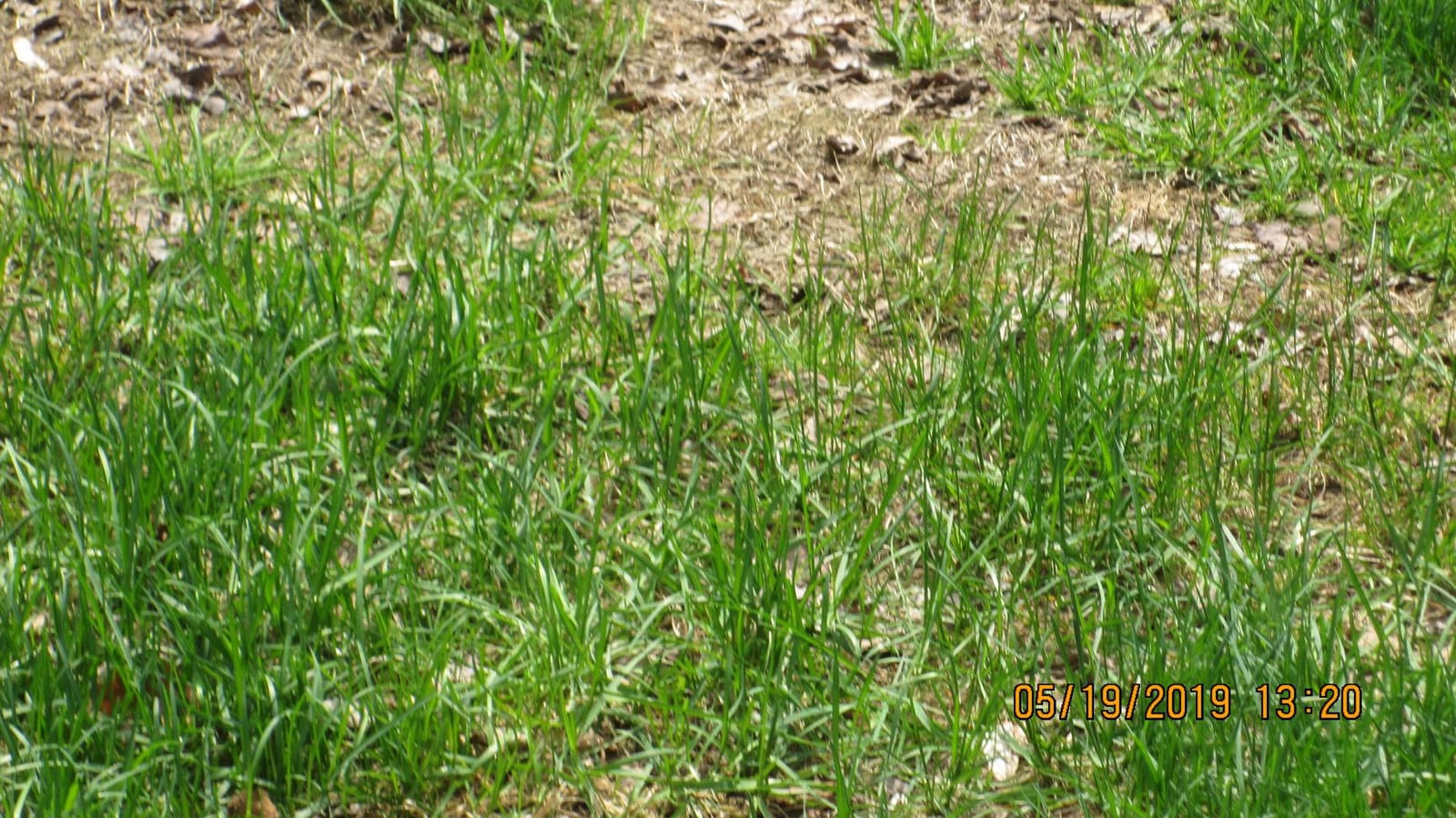
The LST136 is the answer to the most common question on this long tail: do you actually need more than 20V for a small yard? When the growth is genuinely dense, yes, and this is the model where the jump becomes obvious. 8500 rpm and a 13 inch swath clear tall weed growth that a 20V machine would chew through in several passes.
The PowerCommand dial is the quiet hero. It lets you choose maximum power when you hit the thick corner and maximum runtime for the long boring fence run, which on this platform is a bigger lever than moving up a voltage class would be. The telescoping pole adjusts to different users, so one tool works for a tall household member and a shorter one.
40V Power and an 8500 rpm Head
Owners treat this as the step-up pick and describe it as handling thicker weeds and taller grass that stall 20V models. The state-of-charge indicator on the battery is genuinely useful for the case where one small pack has to cover a whole session, because you know how much is left before you start rather than after you stall.
The Telescoping Pole Advantage
The adjustable pole is more than a comfort feature. It sets the tool length to the user and to the job, which changes your posture over a long session, and it shortens the shaft for storage in a garage with low clearance. On a lot with a slope, a shaft you can lengthen to reach down a bank keeps your back more upright than a short fixed one.
Weight and Battery Count Trade-Offs
At 7.8 pounds this is the heaviest of the small-yard trimmers in this roundup, and weight is the single most-cited satisfaction factor across owner forums. On a long session, or on a slope, or for a smaller user, that adds up. The second trade-off is the single 2.0Ah battery in the box, so serious work still means a second pack or a fast top-up on the included charger.
Best for Dense Weeds on a Small Lot
Choose this one when your small yard has one or two neglected areas rather than a uniform problem. The 13 inch head is wider than the 10 and 12 inch models here, which costs you manoeuvrability in tight corners, so if your yard is mostly narrow fence gaps you would be better served by a smaller head.
6. WORX WG170.2 – Trims, Edges and Mows Without a Second Tool
Worx 20V 12″ 3-in-1 Cordless String Trimmer/Lawn Edger/Mini Mower, WG170.2
12 inch swath
7600 rpm
5.5 lb weight
7 position telescopic shaft
Pros
- Three jobs in one tool for small yards
- Command Feed line advance with no waste
- Telescoping shaft and 7 position handle collapse for storage
- Dual wheels keep edger lines straight
- Integrated flower guard
- 5.5 lb body
Cons
- Mini mowing mode only suits small patches
- Single 2.0Ah battery limits working time
Lots of people buy a small battery mower for their patch of grass and then discover they also need a trimmer and an edger. The WG170.2 collapses all three into one body: the same 7600 rpm head trims, the pivoting head and wheels handle edging, and the head converts again for cutting small grassy patches that a mower would clip or a trimmer would miss.
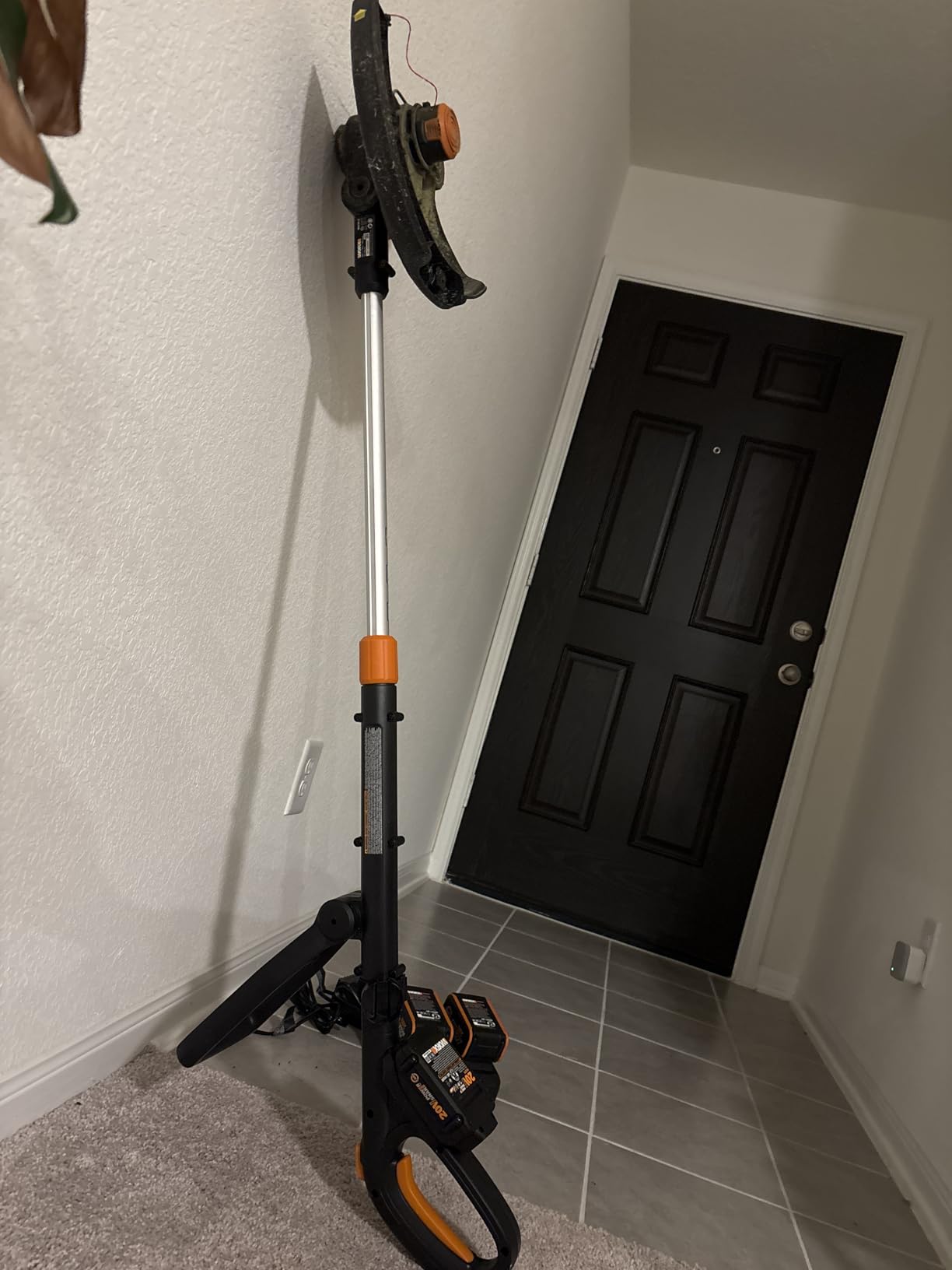
What makes it a genuinely small-yard tool is the telescoping shaft and seven position handle. It fits different users, and it collapses to something you can actually put on a shelf. The dual support wheels keep the edger running straight along a path instead of wandering, and the integrated flower guard protects beds without a separate accessory.
Three Jobs, One Battery
The 3-in-1 format is the main draw, and owners use it exactly as advertised: fence lines and beds for trimming, sidewalks for edging, small patches of lawn for mowing. That last mode is the one people overrate. It is a patch cutter, not a lawn mower, and treating it as one wastes your afternoon and mows unevenly.
Telescoping Shaft and Seven Position Handle
The telescopic shaft with a seven position handle does two things at once. During use, it fits the operator, which matters if more than one person shares the tool. After use, it collapses the tool down to roughly the size of a broomstick, which solves the storage problem that stops people buying a full-size trimmer for a condo.
Wheels, Flower Guard and Slopes
The 90-degree pivoting head is what lets the same machine reach slopes and hard-to-access spots, and the wheels underneath the head take over when you switch to edging. Command Feed advances line on demand from a button, with no bumping and no wasted line, which is the feature owners mention first in reviews.
Where the Mowing Mode Falls Short
Being clear about this saves time. The mini mowing mode handles a strip of grass beside a shed or a small corner of a courtyard. It does not handle an actual lawn, and it will not replace a mower you may already own. Buy it for the trimming and edging first and treat mowing as a bonus. The single included 2.0Ah battery is the other limit, since three jobs in one tool invites longer sessions than one small pack covers.
7. EGO Power+ ST1511T – The Longest Runtime in This Roundup
EGO Power+ 15″ Cordless Weed Trimmer with Battery and Charger – ST1511T
15 inch swath
5800 rpm
up to 45 min on 2.5Ah
10.3 lb weight
Pros
- PowerLoad threads and winds line with one button
- Brushless motor is quiet with low vibration
- 45 minutes per charge on the included 2.5Ah pack
- 15 inch swath with 0.095 in line
- Telescopic aluminium shaft
- 5 year tool warranty
Cons
- Heaviest of the light duty group at 10.3 lb
- PowerLoad can overrun the spool if you do not stop it
- Included 2.5Ah pack takes about 50 minutes to recharge
The EGO is the one most owners in this category convert to after trying a gas unit and never go back on. It is not the lightest machine in the roundup at 10.3 pounds, but owners consistently compare its weight and balance favourably against small gas trimmers, and the quiet brushless motor with low vibration is the difference you notice on a warm afternoon.
The headline is runtime. Up to 45 minutes on the included 2.5Ah pack, verified by multiple owners rather than only the spec sheet. Several people in our forums describe a battery lasting roughly 30 minutes in practice on medium growth, which is still the kind of number that covers a whole small yard in one charge.
45 Minutes on a 2.5Ah Pack
That figure comes from a higher capacity pack than most competitors include. Two 2.0Ah packs side by side give you more total work time, but the EGO gets more of it out of one, which means fewer swaps on a fence line and no carrying two dead batteries home at the end. The trade-off is recharge time: the 2.5Ah pack takes about 50 minutes back to full.
PowerLoad Line Loading Explained
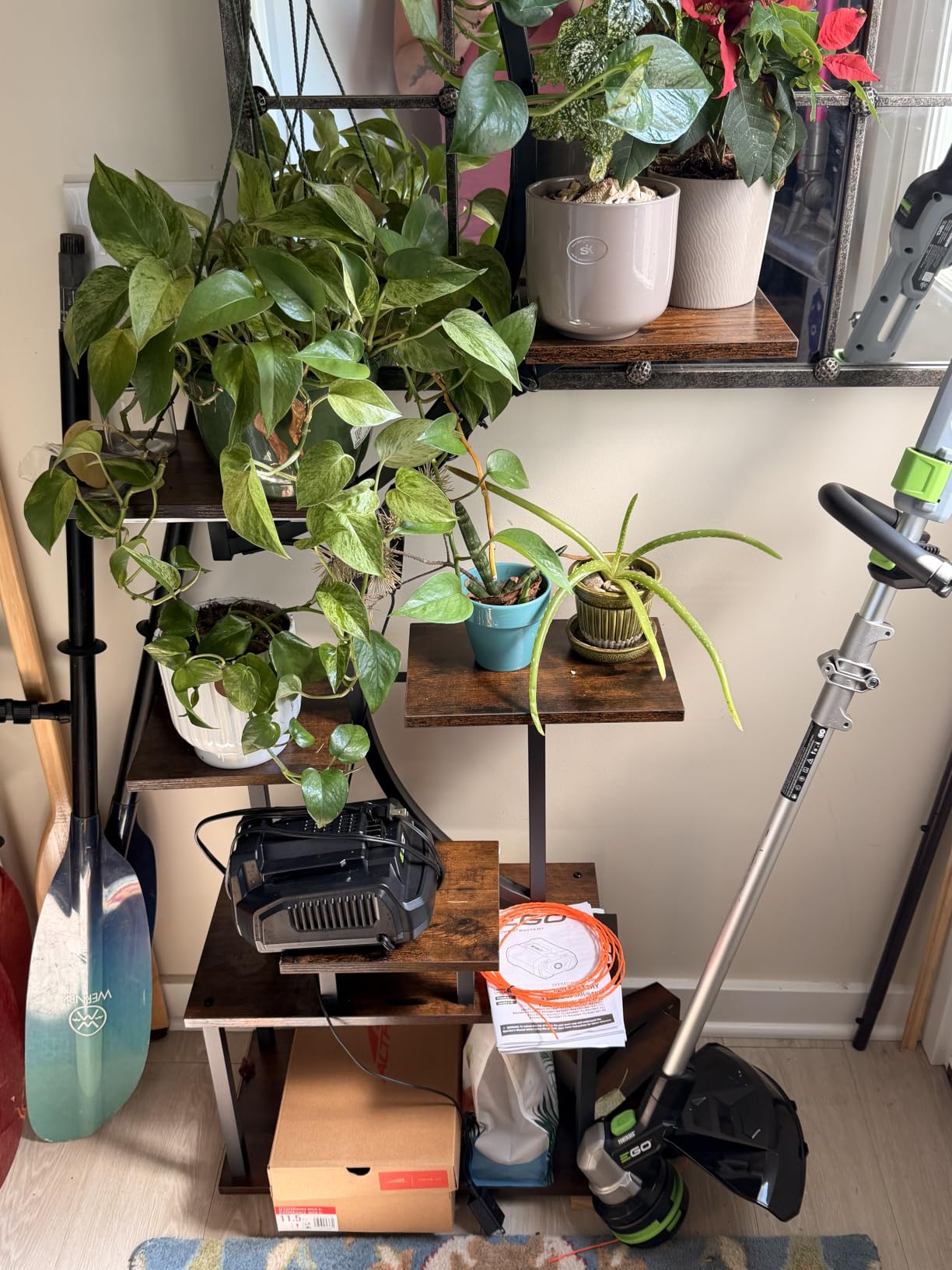
PowerLoad is the feature that changes daily use the most. You thread the line through the head and press a button, and the spool winds itself. No disassembly, no winding by hand, no cutting the line to the wrong length and redoing it. A minority of owners report it being noisy and, if you do not stop the button, overrunning the spool, so it is worth learning the feel of it the first time.
Brushless Quiet and Heavy Duty Line
The brushless motor is quieter and lower vibration than a brushed design, which matters for long sessions and for anyone sensitive to noise. The 15 inch swath with 0.095 inch professional grade line is the heaviest cutting setup here, and it is what lets this trimmer handle weeds that stall lighter machines. The telescopic aluminium shaft adjusts for comfort and shortens for storage.
Heft and Platform Cost
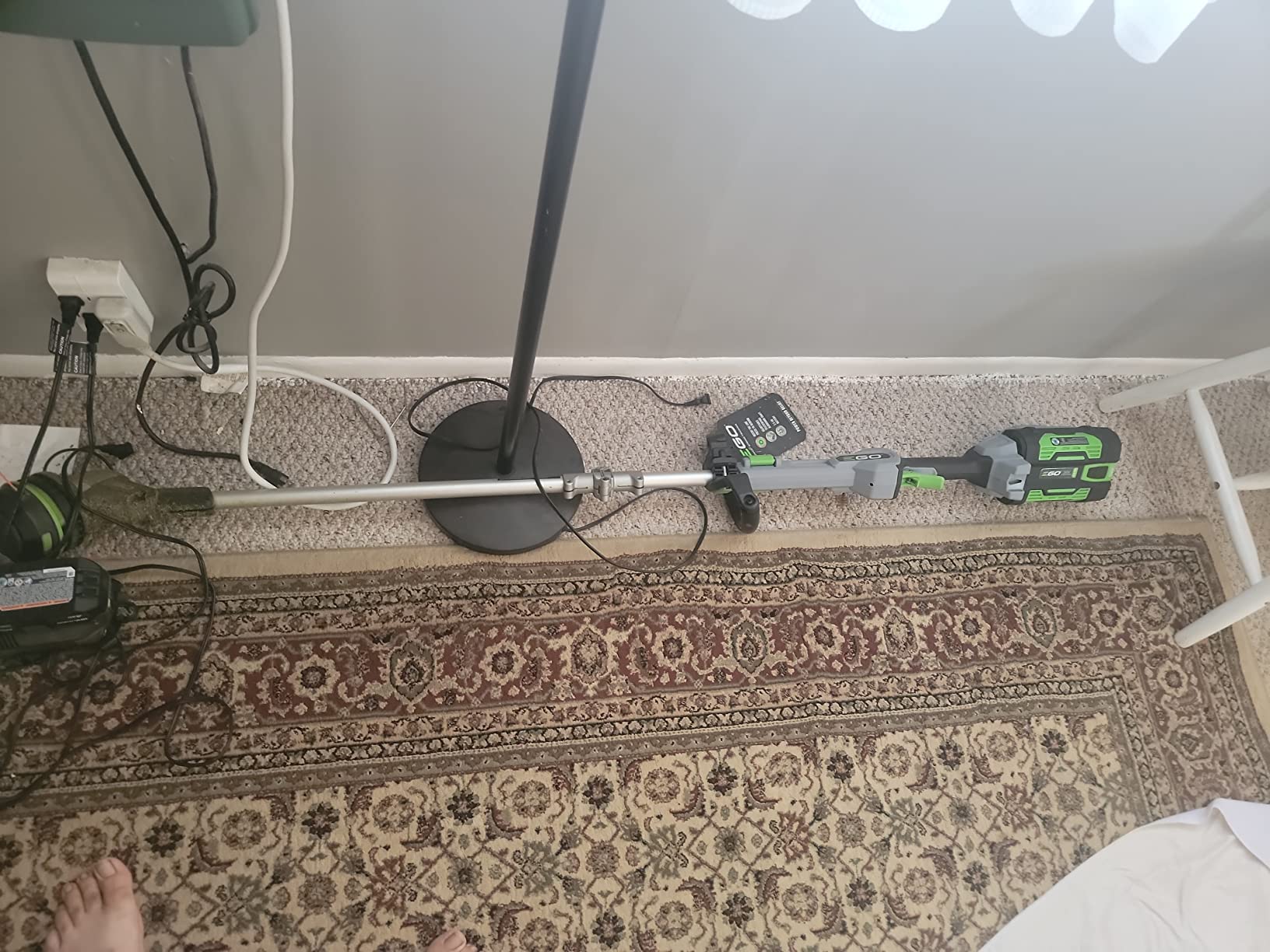
Ten point three pounds is real, and small-framed operators feel it on a slope or a long session. The other consideration is platform: EGO packs cost more than the entry packs in this roundup, and buying into the platform is cheaper than replacing batteries later. Forum advice from repeat buyers tends toward the multi-head unit rather than a standalone tool, which is worth considering if you already own or plan to own other EGO equipment. A five year tool warranty is the longest here and buys real peace of mind.
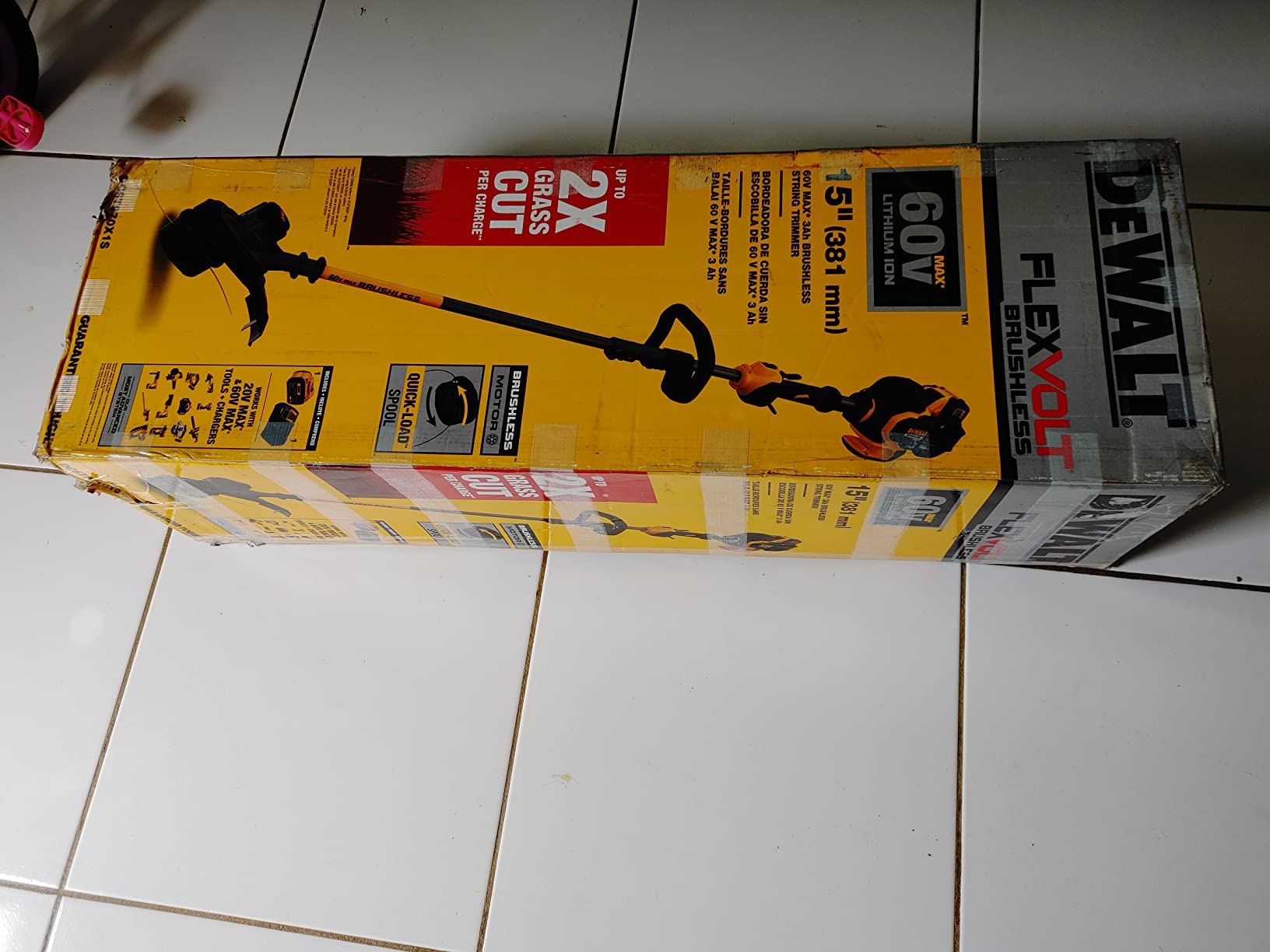
8. DEWALT DCST970B – 60V Brush Power, With a Caveat
DEWALT DCST970B FLEXVOLT 60V MAX Cordless String Trimmer, Tool Only
15 inch swath
60V MAX FLEXVOLT
12 lb weight
folding shaft
Pros
- 60V power cuts inch thick blackberries and brush
- Quiet with low vibration and no fuel mixing
- Balanced with an easy to modulate variable speed trigger
- Folding shaft stores vertically
- Works well with high capacity FLEXVOLT packs
Cons
- Tool only
- battery and charger bought separately
- Heaviest unit here at 12 lb
- Low mounted cooling intake clogs with clippings and owners report motor overheating
This is the brush-clearing option, and it clears like one. Owners on this platform report cutting inch-thick blackberries and heavy brush that stops 20V tools dead, which is a different category of work from trimming lawn edges. If your small yard contains one genuinely abandoned corner, this handles it without drama.
The variable speed trigger is well modulated, so you can feather down to full power as the stems get thicker instead of running wide open from the start. Operation is quiet with low vibration, and there is no fuel mixing, which is the reason many people move up from a gas unit in the first place.
60V Brush-Clearing Capability
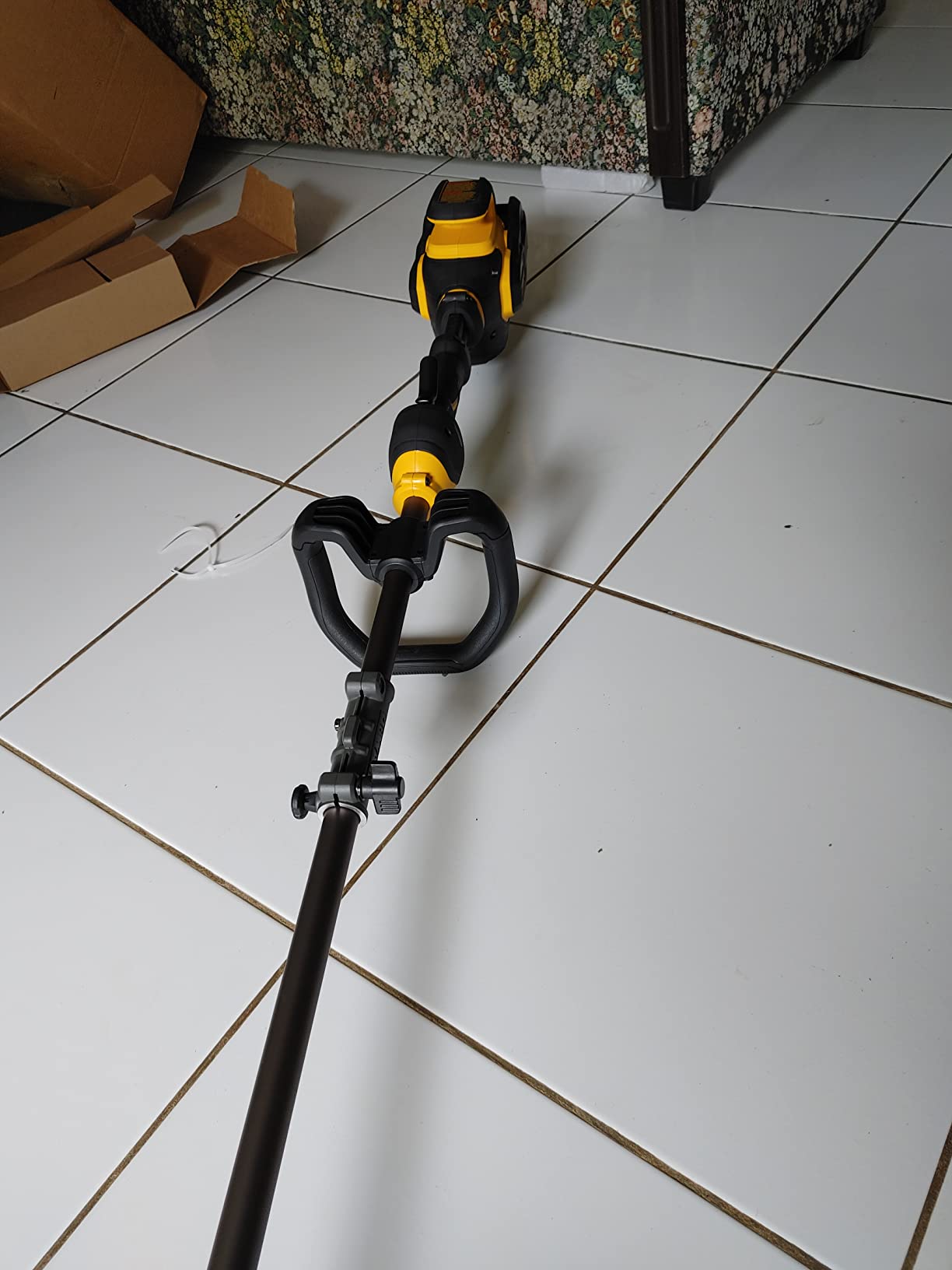
The 60V MAX FLEXVOLT platform gives this trimmer more headroom than anything else in the roundup, and the 15 inch swath covers ground quickly. It pairs with high capacity FLEXVOLT packs for long runtimes, and the spool head can be converted to a saw blade with a metric bushing, which a few owners use for small branches.
The Cooling Intake Caveat
Read this before buying. The most serious negative theme in reviews is a cooling design problem: the intake screen is mounted low, so clippings from heavy brush work clog it within minutes, and over time owners report the motor running hot and eventually failing. The remedy is periodic cleaning, and it means removing four screws under the motor cover to get at it. That is a genuine maintenance commitment, not a complaint about build quality in the metal parts.
Folding Shaft and Tool-Only Buying
The folding shaft is a genuine storage asset. The shaft folds, so the trimmer stands vertically in a corner rather than lying across a floor, which matters a lot in a condo or a small garage where a full length tool would be stored awkwardly.
Who Should Accept the Weight
At 12 pounds this is the heaviest machine in the roundup, and that is before you add a large battery. Choose it if you have a brush problem to solve and a platform to match. If your job is grass and bed edges on a maintained lot, this is more machine than you need and more weight than you want. It is also tool only, so battery and charger are added separately.
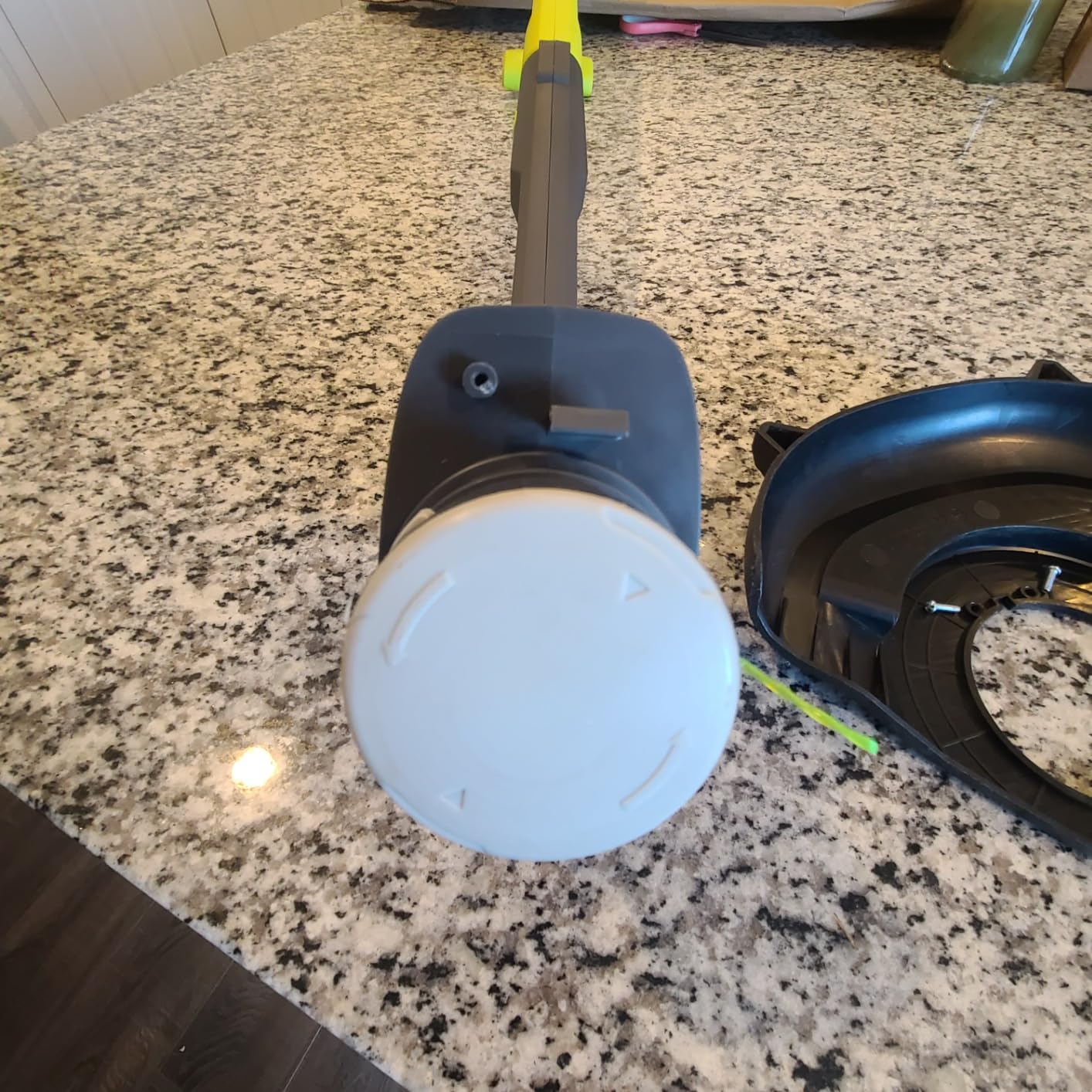
9. Ryobi ONE+ P2030 – The 4 lb Option If You Already Own 18V Batteries
Ryobi One+ 18-Volt Lithium-ion Cordless Electric String Trimmer and Edger
10 inch swath
18V One+ platform
4 lb tool body
trimmer and edger
Pros
- Lightest body in the roundup at about 4 lb
- Works with the widely owned Ryobi 18V One+ battery family
- Straightforward trimming and edging for routine upkeep
Cons
- 10 inch swath is narrow and needs multiple passes
- 18V platform gives less power than 40V or 60V on dense weeds
- Limited published detail on line feed and accessories
The case for this trimmer is not the spec sheet, it is the shelf in your garage. The 18V One+ battery family is one of the most widely owned cordless platforms in home yards, and if you already have a Ryobi mower or blower sitting on a shelf, this tool runs on the packs you own.
At about 4 pounds it is the lightest body in this roundup, which makes it comfortable for a full session and easy to lift for anyone with limited strength. The 10 inch swath suits a small lot where you are working between beds rather than along open edges.
A 4 lb Body on a Widely Owned Platform
Platform matching is treated as a long-term ownership decision by experienced buyers, not a purchase detail. If you already have One+ packs and a charger, the incremental cost of this trimmer is the tool itself. If you do not, you are entering a platform from zero, and a 20V or 40V machine may serve you better.
What 18V Means for Thick Weeds
18V is the entry class, and reviewers describe it as adequate for trimming around small yards and beds rather than for heavy weed clearing. On grass and light growth it is perfectly serviceable. On the thick stuff it will bog and stall, and you will spend more passes for the same result. That is the honest limit of the class.
Specs Owners Wish Were Published
This is the most under-specified listing in the group. Motor speed, line feed type, and what is actually included are all thin on the published detail, so if you are buying blind you will be relying on the weight and the platform rather than on features. The listing also carries a noticeably smaller review base than the rest of the roundup, so treat the owner detail as thinner.
Best for Existing 18V One+ Buyers
Choose this if the batteries are already in your garage and your yard is small. Do not choose it as a starting point purely for the low weight, because at 4 pounds you are giving up cutting power and swath to get there, and a slightly heavier 20V tool would serve a wider range of small-yard work.
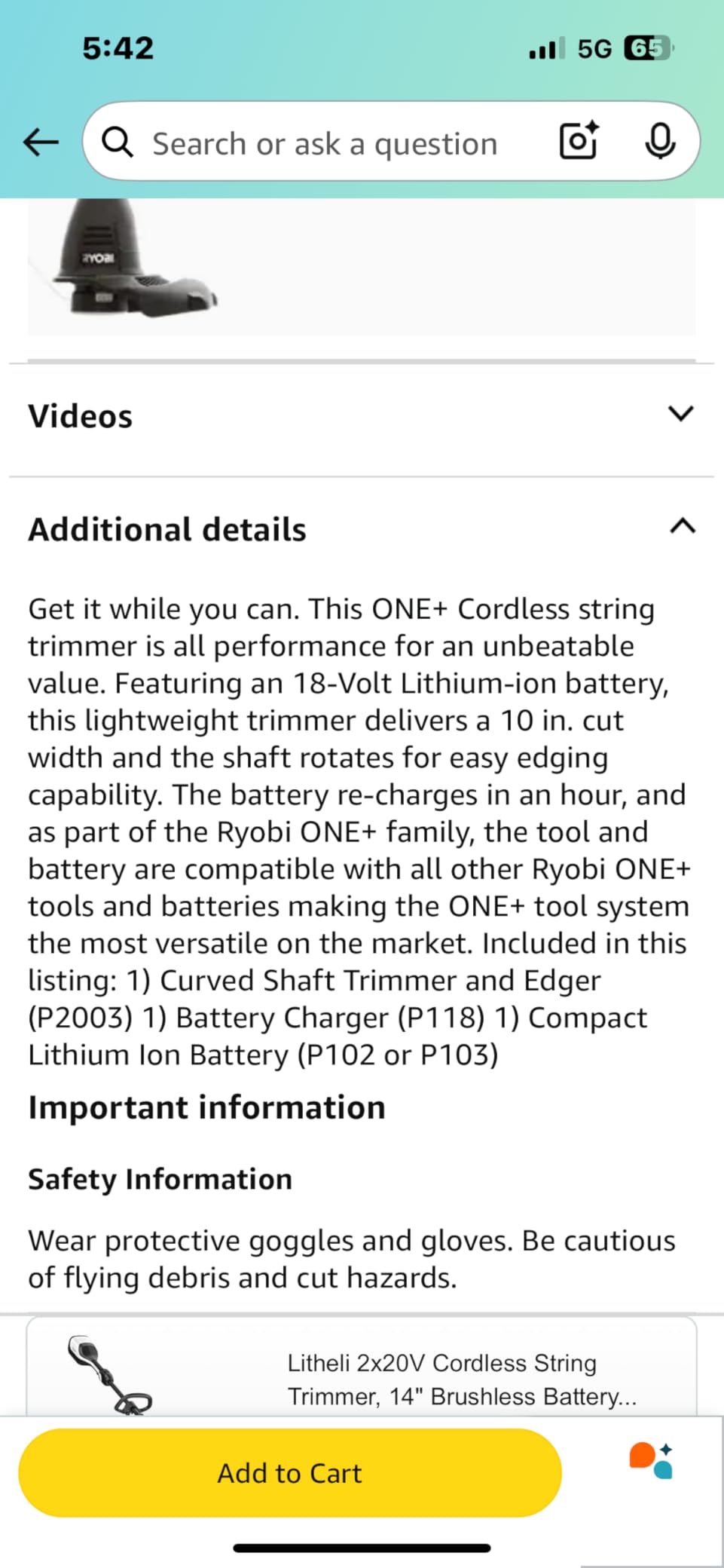
10. JAGROM 12-Inch Two-Battery Kit – A Complete Starter Set
12-inch 20V Cordless String Trimmer with Charger, 2 x 2.0Ah Battery Powered
12 inch swath
6500 rpm
5.2 lb weight
about 60 min from two packs
Pros
- Two 2.0Ah batteries and charger included
- Roughly 60 minutes of combined working time
- 90 degree head and 180 degree handle for tight and sloped areas
- Automatic line feed with line cut
- Spacer guard protects plants
- 8 spare line coils included
Cons
- 4.0 average rating with a 12 percent one star share
- 6500 rpm and thin line struggle with thick woody weeds
- Batteries are brand specific
- Wheel and guard add bulk in narrow fence lines
Two batteries and a charger in one box is genuinely unusual at the entry end of this market, and it is the reason this kit appeals to a first-time buyer. Roughly 60 minutes of combined working time from the two packs means a small yard gets done in one sitting, and the 5.2 pound weight stays comfortable throughout.
The adjustability is the other draw. A 90 degree adjustable cutting head plus a 180 degree adjustable auxiliary handle let you fit the tool into tight corners and sloped ground rather than fighting a fixed geometry, which is the difference between a trimmer you can use and one you work around.
Two Batteries in the Box
There is an established forum pattern here: a battery lasts about 30 minutes, so owners run two. Kits that ship two packs remove the stop-start rhythm entirely, and this one also includes eight extra line coils and a spare spool cap, so you will not be ordering consumables for a while. Automatic line feed with line cut keeps the spool tidy rather than letting it wind into a mess.
Adjustable Head and Handle Geometry
The 90 degree adjustable head and 180 degree auxiliary handle are what make this workable in the awkward parts of a yard: along a slope, between a shed and a fence, in the corners of a patterned bed. The spacer guard keeps the line off plants when you are edging close to them.
Where the 4.0 Average Comes From
Reviewers treat this as a budget starter trimmer, and the rating cluster around 4.0 rather than 4.4 reflects a genuine split: beginners doing light trimming are happy, buyers who expected commercial cutting performance report it bogs down on tougher growth and needs cleaning of the head. The batteries are also brand specific, so there is no cross-platform compatibility if you later want another tool.
Best for First-Time Buyers
Buy this if you want everything needed for a first season in one purchase and you plan to keep the tool within its comfortable range: grass, bed edges, patio cracks and light weeds. Skip it if the neglected corner on your property is the reason you are shopping, because 6500 rpm and thin line are the wrong tools for that job.
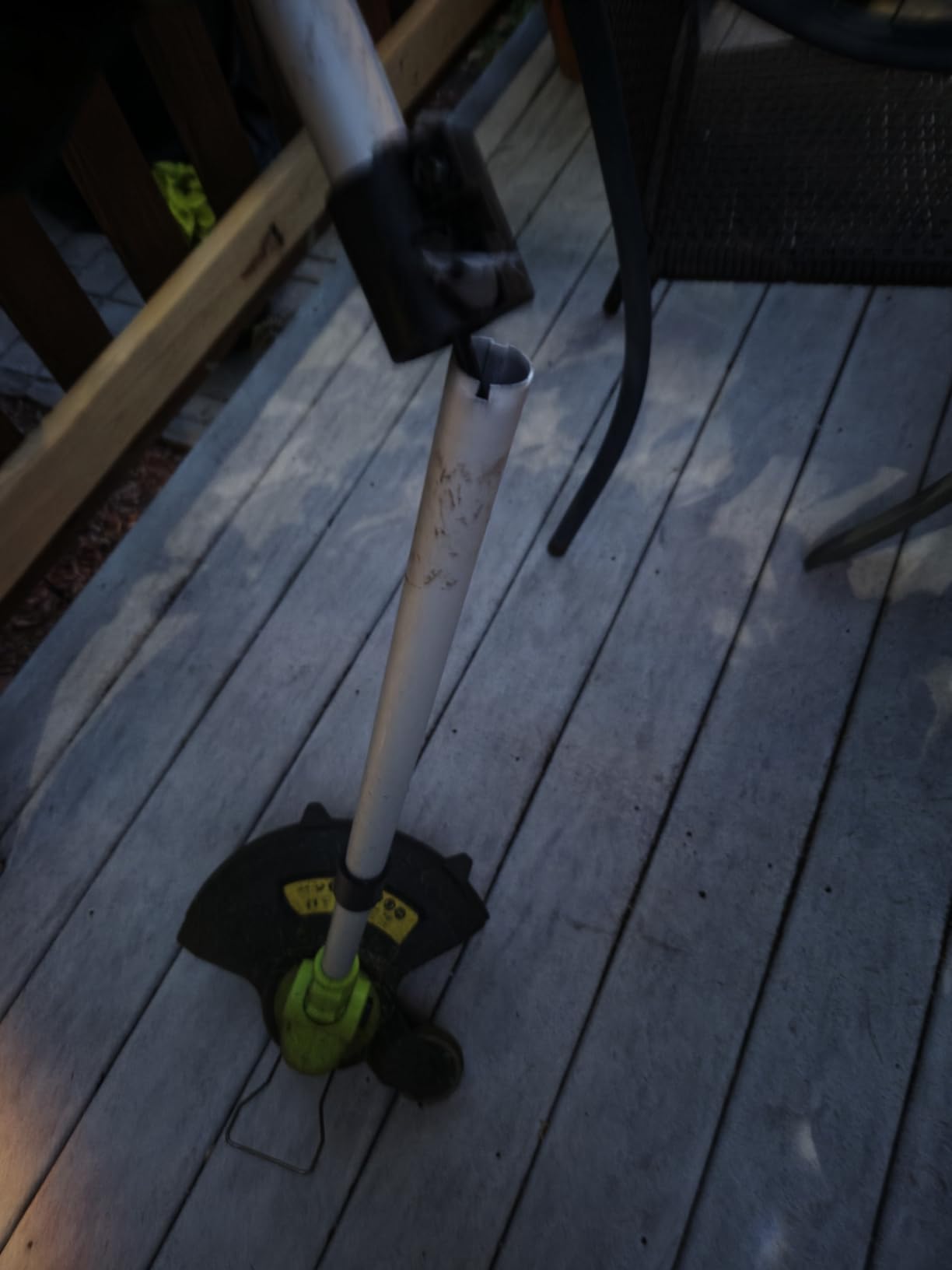
11. JAGROM Folding-Shaft Trimmer – Built for Closets and Small Garages
Electric String Trimmer Cordless with 2.0Ah Battery & Charger 20V Lawn Tool
12 inch swath
9500 rpm
5.2 lb weight
shaft folds three ways
Pros
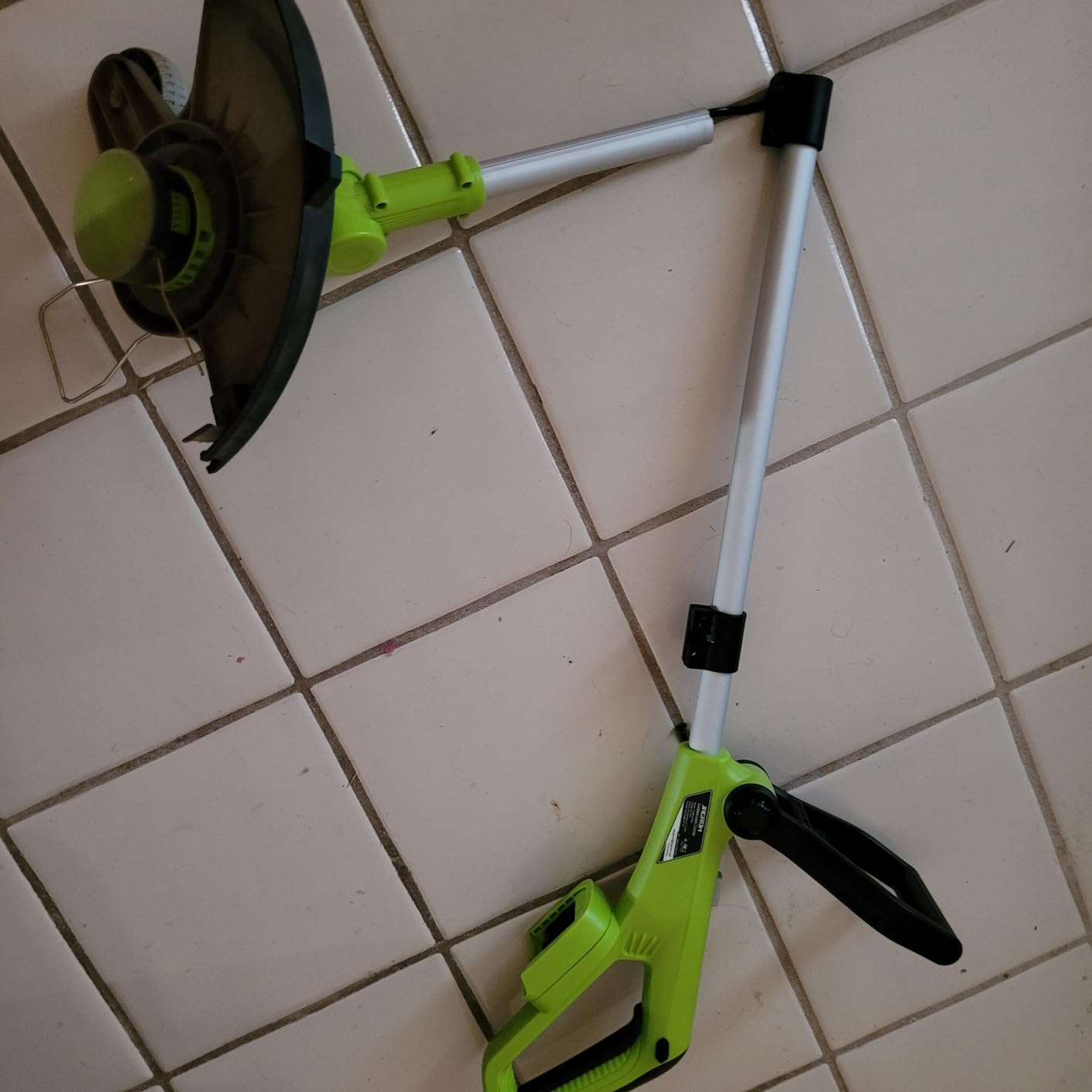
- Shaft folds in three directions for compact storage
- 9500 rpm no load speed for its class
- 90 degree head and 180 degree handle for tight corners
- Automatic spool line ejection from a balance slider
- Two batteries and charger included
- Simple assembly and start up
Cons
- About 30 minutes combined runtime is the shortest here
- 4.0 average with an 11 percent one star share
- Manufacturer advises clearing grass buildup from the cutter frequently
- Batteries and accessories are brand specific
If your storage situation is the deciding factor, this is the trimmer built for it. The shaft folds 180 degrees in three directions, which is genuinely unusual at this price and turns a full length trimmer into something that stands in a corner of a small garage or hangs in a utility closet.
The 9500 rpm no load speed is the second highest figure in the roundup, which sounds impressive for an entry tool. The catch is that headline speed is not the same as useful throughput, and at 5.2 pounds with thin line and small packs, this one settles into routine upkeep rather than heavy clearing.
A Shaft That Folds Three Ways
Most entry trimmers are rigid, which means they either lean in a corner or lie across something else. Folding in three directions solves that and also means you can shorten the tool to work in a confined bed without turning your whole body sideways. For apartments, townhouses and anyone with a dedicated small garage, this is the single most useful feature on the page.
9500 rpm Versus Real Workload
The manufacturer advises clearing grass buildup from the cutter frequently, and that is the honest summary of this tool. Reviewers doing light trimming are satisfied; those expecting commercial cutting performance report it bogs down. Small pack capacity, not the motor, is what ends most sessions.
Shortest Combined Runtime Here
Two 2.0Ah packs give roughly 30 minutes of combined runtime, which is the shortest in this roundup. Plan two or three swaps on a normal small-yard cleanup, and treat the batteries as consumables you will replace rather than assets you will keep.
Best for Apartments and Small Garages
Choose this when storage is the binding constraint and your trimming is maintenance rather than rescue work. The automatic spool ejection triggered by the balance slider takes a little practice, and the 4.0 average with an 11 percent one star share tells you the results vary with expectations. Line and accessories are brand specific, so plan on buying replacements from the same brand.
12. HortiHub 21V Cordless Trimmer – The Lightweight Low-Cost Pick
Electric Weed Wacker Eater Cordless Battery Powered String Trimmer Whacker
9000 rpm head
12 inch swath
5.27 lb weight
15-20 min per 2.0Ah pack
Pros
- Lowest cost entry in the roundup with a 4.4 average
- 9000 rpm head handles thick grass and lawn edges
- Very light at 5.27 lb for seniors and beginners
- Two 2.0Ah batteries and charger included
- Auto feed advances line in 0.4 inch increments
- Safety goggles and reinforced guard included
Cons
- Only about 15-20 minutes per 2.0Ah charge
- Line must be extended to 6 inches before first use
- No published warranty details
- Weaker on thick woody stems than 40V or 60V models
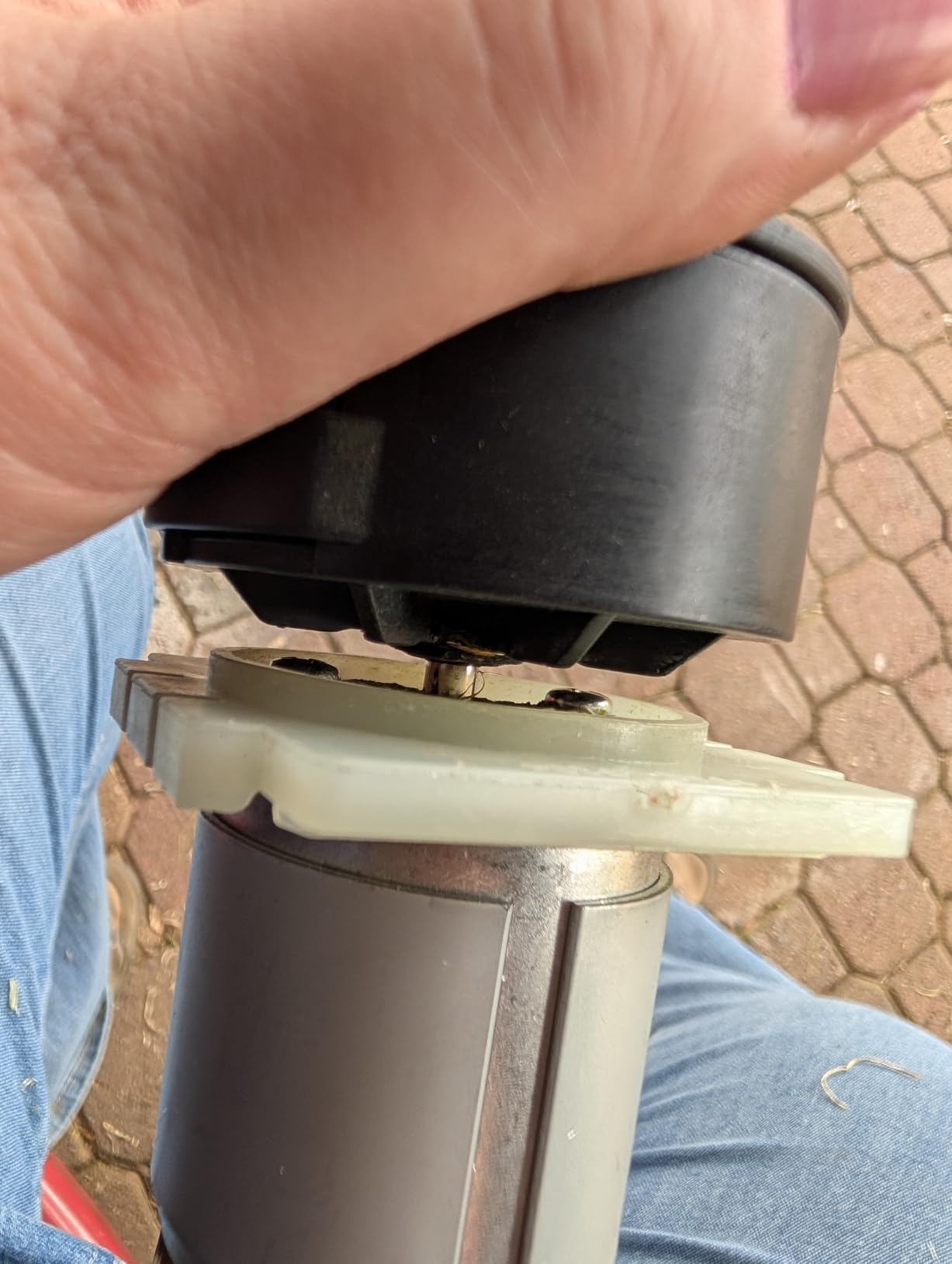
A 4.4 average rating at the entry point of this market is unusual, and it is the reason this one is worth a look even against better-known brands. The 9000 rpm cutting head handles thick grass and lawn edges, the 12 inch swath covers ground faster than a 10 inch head, and the whole thing weighs 5.27 pounds.
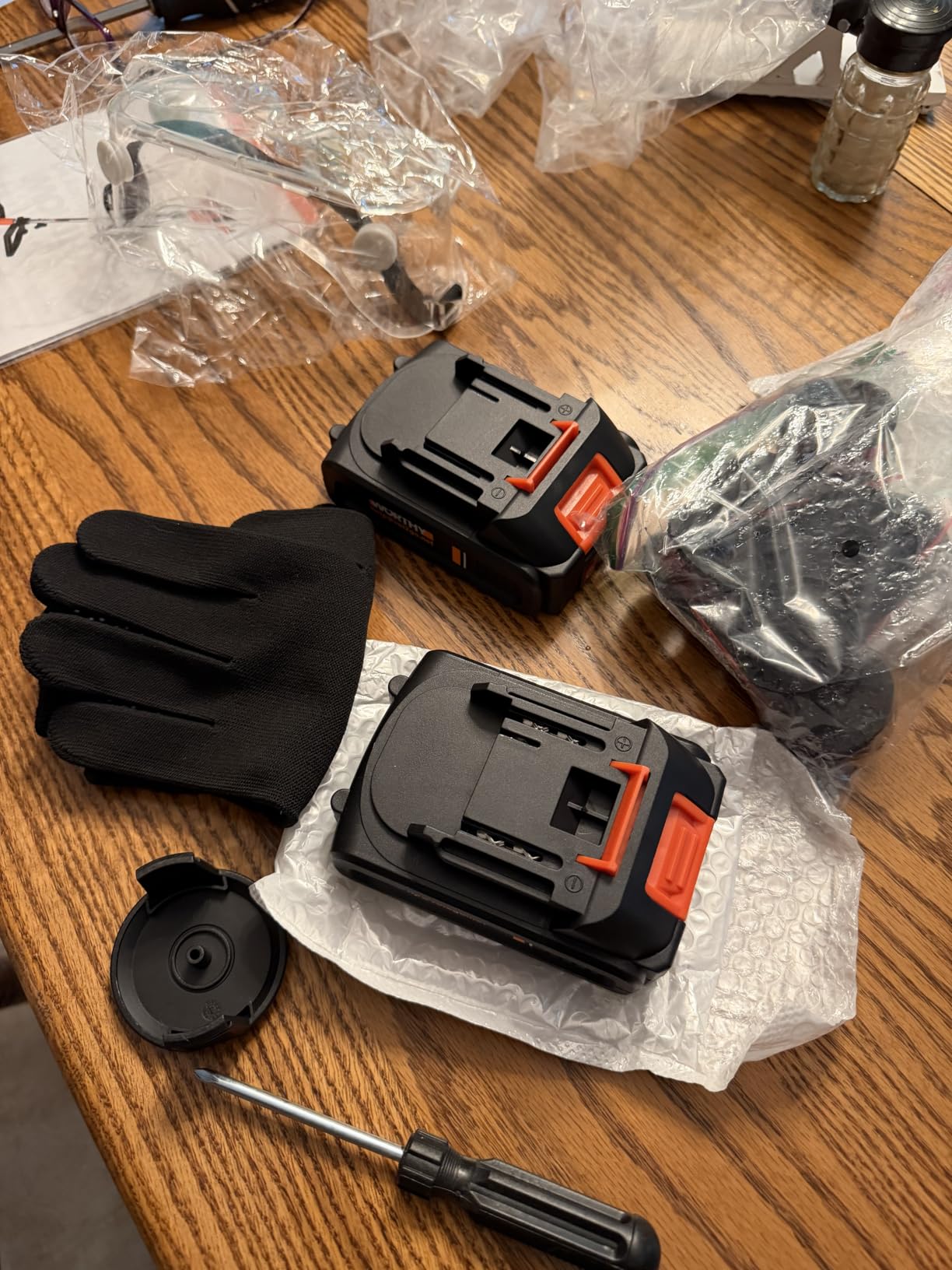
Two 2.0Ah batteries and a charger are included, and impact resistant safety goggles come in the box, which is a nice touch at this level. Acoustic dampening keeps the noise low, so it is a sensible pick for early morning work on a lot where neighbours or association rules apply.
9000 rpm at the Entry Point
The head speed is high for the class, which helps with grass and light weed growth. It is not the same as cutting power, and this machine remains weaker on thick woody stems than the 40V and 60V units here. On a maintained small lot that is a distinction without much practical difference.
Learning the Balance-Slider Feed
Automatic line feed advances in small increments, either from the head or from a button. The one genuinely fiddly part is startup: the line must be pulled out to six inches before first use, and the balance-based auto feed takes a little practice before it becomes automatic. Owners who persist report that it then works very well.
15-20 Minutes Per Charge
This is the real constraint. Roughly 15 to 20 minutes per 2.0Ah pack means you will be swapping constantly on anything beyond a quick touch-up, and it is the reason this is a supplementary tool rather than a one-and-done solution. Plan the session around two or three packs.
Best Low-Cost Buy for Seniors
This is the pick for a senior, a beginner, or anyone who wants a low-cost second tool for the patio and the flower beds. It is light, quiet, safe out of the box with the included goggles and guard, and the 2-in-1 conversion handles edging without buying anything else. The absence of published warranty terms is the main reason I would not build a long-term maintenance plan around it, and it is not the choice for brush or woody weeds.
How to Choose a Battery String Trimmer for a Small Yard
Six decisions matter, and only two of them are about power. On a lot under a quarter acre, the questions that actually change your daily experience are voltage tier, swath width, weight, line feed behaviour, storage footprint and whether the battery platform matches what you already own. Work through these in order and the purchase is straightforward.
How Much Voltage Does a Small Yard Actually Need?
This is the most repeated question in our research and the one that gets the worst answers. The useful framing is not which voltage is better in the abstract, it is what you are cutting. Owners in our forums make the point that 18V and 20V class machines handle routine grass and bed edges fine and fall short on anything past light touch-up growth, while higher platforms earn their place specifically for dense weeds and light brush.
Think of voltage as headroom rather than daily fuel. A 20V machine with a 2.0Ah pack will finish a maintained small yard in one charge. A 40V machine with the same pack will finish it with less swapping and will also clear the overgrown corner. A 60V machine adds brush capability that a small yard may never need, at 12 pounds of tool plus a large battery.
So: 20V for maintained grass and edges, 40V if your yard has one neglected area or tall weed growth, 60V only if brush is a recurring problem rather than a one-off. The honest answer to whether a small yard needs 40V is that it depends on weed density, not lot size.
Match the Tool to Your Lot Size and Weed Density
Lot size matters less than most guides suggest. What matters is how many linear feet of edge and fence line you own, and how thick the growth gets. A small yard with 200 feet of edging and dense weeds wants a wider head and more power. A small yard with 60 feet of edge and thin grass wants the lightest tool you can find.
Swath is the quiet determinant of how long a session takes. A 10 inch head needs more passes than a 15 inch head over the same path, and every extra pass is extra battery time. If you have straight open runs, go wider. If you are threading between shrubs and along tight fence gaps, go narrower. Measure the narrowest gap you need to reach before you decide.
Runtime Math: How Much Edging One Charge Covers
Manufacturer runtime figures assume light loading, and owners consistently report real-world numbers closer to half when the growth is medium to thick. For a small yard, the useful calculation is simple: total edging length divided by swath gives you passes, and each pass at a moderate pace uses roughly a quarter to a third of a small pack.
Worked example for a typical small yard: roughly 200 linear feet of bed and path edge at a 12 inch swath is about 200 passes. A pack with a 45 minute rated runtime realistically delivers 25 to 35 minutes of that kind of work, covering about 120 to 170 feet of edge. So a 2000 square foot lot with full perimeter edging is close to two charges, which is why the two-battery kits in this roundup are genuinely useful rather than a marketing line.
Nobody in our research published this calculation, which is why we include it. The practical conclusion is that a small yard with a lot of edging is a one and a half charge job, not a one charge job, and two packs are the sensible minimum.
Line Heads: Bump Feed, Spool and Auto Feed
Line breaking and head frustration are the most common recurring complaint across owner forums, and the reason some bump feed designs get abandoned within a season. Bump feed is the traditional method: tap the head on the ground to advance line. It is cheap, it is reliable when it works, and it wastes line and time when it does not.
Spool heads hold more line and are easier to refill, but you still advance them manually. Auto feed uses a button or a trigger on the handle to advance line without touching the ground. The EGO PowerLoad system goes further and winds the line automatically once you thread it. Every tool in this roundup except one uses a button or auto feed rather than a manual bump, and that is the single change most worth paying for.
Battery Platform Lock-In: Match What You Own or Start Fresh
Platform compatibility is consistently treated as a long-term ownership decision rather than a purchase detail. Batteries are the running cost of any cordless yard tool, and they are not interchangeable between brands. If you already own a mower and blower on one platform, buying a trimmer on that platform is usually the cheaper path over five years.
The counterargument is real too: liking a tool but disliking its ecosystem is a genuine frustration that buyers report, and some of the strongest machines here ship tool only, which means you are committing to a platform and a battery purchase at the same time. Decide whether you are starting fresh or matching, and let that drive the shortlist before you fall for a specific tool.
Noise, Neighbours and Early Morning Trimming
Quiet operation is the emotional reason most people convert, alongside no gas smell and no pull cord. It is also the practical one if you share walls or have association rules. No roundup in our research quantifies decibels, so treat noise claims as direction rather than measurement. The useful signals are the design decisions: a brushless motor is quieter, and acoustic dampening in the housing reduces it further.
Whichever tool you buy, a trimmer rated for small yard work is dramatically quieter than a gas unit at the source. That is usually enough to satisfy a reasonable neighbour or a townhouse rule, particularly if you keep to daylight hours.
Storing a Cordless Trimmer in a Small Garage or Closet
Storage footprint is a top-three purchase factor in this category and nobody gives it a proper framework. Four things decide it: whether the shaft folds or telescopes, the overall length when collapsed, whether the battery can be removed for separate charging, and whether a wall mount exists.
The tools with folding shafts collapse dramatically, and telescoping shafts shorten by a foot or more. A removable battery is the underrated one, because it means the tool can hang on a hook and only the pack needs floor space. Check the collapsed length against your actual wall or shelf before you buy, not the assembled length.
What We Looked For in Every Trimmer
Cutting swath, motor speed, weight and balance, line feed method, runtime per charge with the battery capacity named, storage footprint, warranty terms, and the volume of owner feedback behind the rating. We weighted line feed and weight heavily because both show up as the leading satisfaction and complaint themes in owner discussions, and we treated unknown warranty terms as a negative signal rather than a neutral one.
Battery String Trimmer FAQs (2026)
Which is better for a cordless trimmer, 20V or 40V?
For a maintained small yard of grass and bed edges, 20V is enough. Choose 40V when your yard has one neglected area or tall weed growth, because the extra headroom clears thicker vegetation and stretches runtime per pack. 60V adds brush capability that most lots under a quarter acre never need, and it adds weight.
What is the best string trimmer for a small yard?
The WORX WG163 is our top pick for most small lots: a 12 inch swath, a 90 degree tilting head for slopes and tight spots, push button line feed, and two batteries in the box. If weight or storage is the binding constraint, a lighter 4.2 lb model suits seniors and narrow gardens better.
Which trimmer has the best battery life?
Among these, the EGO Power+ ST1511T leads with up to 45 minutes per charge on its included 2.5Ah pack. The two-battery kits from WORX and BLACK+DECKER give more total working time per swap cycle. Expect real-world figures closer to half the rated number on medium to thick growth.
Is a battery string trimmer powerful enough for thick weeds?
For grass, weeds up to ankle height and light brush, yes. For woody stems and weeks of neglect, a 40V or 60V machine such as the BLACK+DECKER LST136 or the DEWALT DCST970B handles what stalls a 20V unit, at the cost of extra weight.
Do I need one battery for my mower, blower and trimmer?
Batteries are not interchangeable between brands, so decide whether you already own a platform before you choose a tool. Matching the platform you own means one charger and one set of packs for the whole yard. Starting fresh on a 20V platform keeps packs smaller and lighter; higher platforms extend runtime but cost more per pack.
Which Battery String Trimmer Fits Your Small Yard Best?
If you maintain your lot weekly and want one machine to trim and edge, take the WORX WG163. Its two included batteries, tilting head and push button feed make it the least fussy tool in this roundup, and it is our pick for a typical small yard in 2026.
If weight or storage decides everything, go lighter. The 4.2 lb WORX WG154 suits seniors and narrow gardens, the Ryobi ONE+ P2030 is the same logic for people already on that platform, and the folding-shaft JAGROM collapses flat for a closet.
If your yard has one neglected corner, move up a tier with the BLACK+DECKER LST136 at 40V and 8500 rpm. If brush is a recurring problem rather than a one-off, the DEWALT DCST970B clears it, and you should accept its 12 pound weight and the tool-only package before you order.
If you want the fewest sessions per charge and can handle a heavier machine, the EGO Power+ ST1511T with 45 minutes and automatic line winding is the one owners convert to and stay with. Check the current listing for each pick above, and pick the platform you will still be happy owning in three years.
Leave a Reply