

The best acoustic guitar strings for most steel-string players are Elixir Nanoweb Phosphor Bronze Light 12-53: the set combines a familiar light gauge, phosphor-bronze warmth, and a protective NANOWEB coating. If you want traditional uncoated tone, D’Addario EJ16 is the sensible alternative; if easy fretting matters most, D’Addario Silk & Steel EJ40 and Zager Easy Play move to lower-tension territory.
I built this guide around the facts that change the playing experience: wrap material, stated gauge, coating, core construction, sound profile, and the kind of player each set suits. I also gave extra weight to the real concerns players repeat in guitar discussions—strings going dull too fast, finger squeak, slippery coatings, sore fingertips, and uncertainty about whether a heavier gauge will upset a guitar’s setup.
For 2026, there is no single string that makes every acoustic sound its best. A dreadnought strummed hard, a lightly built vintage guitar, and a small parlor guitar ask different things from the string set, so the eight picks below cover long life, balanced everyday tone, fingerstyle softness, stable tuning, and accessible playability.
The top three choices cover long life, traditional tone, and easy playability
Choose Elixir for a coated, rich phosphor-bronze sound that is made to resist sweat and corrosion. Choose D’Addario EJ16 for the familiar warm, balanced response of a precision-wound uncoated set, or choose D’Addario Silk & Steel when a mellow voice and reduced finger noise matter more than forceful projection.

The quick comparison makes each acoustic string set easier to place
This overview keeps the decision practical: pick by feel and use first, then let material and coating refine the choice. Every set here is a six-string steel-string acoustic set; none is intended for a nylon-string classical guitar or a 12-string guitar.
| Product | Specs | Action |
|---|---|---|
| Elixir Nanoweb Phosphor Bronze |
|
Check Latest Price |
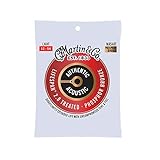 Martin Lifespan 2.0 Martin Lifespan 2.0 |
|
Check Latest Price |
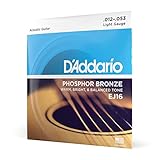 D’Addario EJ16 D’Addario EJ16 |
|
Check Latest Price |
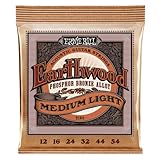 Ernie Ball Earthwood 2146 Ernie Ball Earthwood 2146 |
|
Check Latest Price |
 D’Addario Silk & Steel EJ40 D’Addario Silk & Steel EJ40 |
|
Check Latest Price |
 D’Addario XS Phosphor Bronze D’Addario XS Phosphor Bronze |
|
Check Latest Price |
 Stringjoy Naturals Balanced Light Stringjoy Naturals Balanced Light |
|
Check Latest Price |
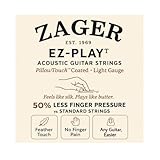 Zager Easy Play Zager Easy Play |
|
Check Latest Price |
1. Elixir Nanoweb Phosphor Bronze is the best overall choice for long-lasting comfort
Elixir, Acoustic Guitar Strings, Phosphor Bronze, NANOWEB, 6-String, 12-53
12-53 light
Phosphor bronze
NANOWEB coating
Pros
- Long-lasting coated tone
- Smooth comfortable feel
- Resists sweat and rust
- Rich full projection
Cons
- Coated feel is not for everyone
- Premium compared with uncoated
Elixir’s 16052 set is the strongest all-round answer because it starts with the common 12-53 light gauge and adds NANOWEB protection to a phosphor-bronze wrap. The stated sound profile is balanced, warm, rich, and projecting, which is a useful middle ground for chord work and picked lines.
Its 4.8 rating across more than 12,000 reviews supports the product’s reputation for lasting through sweat, humidity, corrosion, and rust. I would put it first for a player who changes strings reluctantly but does not want to trade away the full voice associated with phosphor bronze.
The NANOWEB coating targets the dull-string problem directly
The ultra-thin NANOWEB layer protects the wound strings from the contaminants that make an uncoated set lose its fresh brightness. It is a practical advantage for frequent players, warm hands, or guitars kept in variable humidity, though the smoother surface can feel slippery to players who prefer bare metal texture.
The 12-53 light gauge gives most acoustics a familiar working range
A .012 first string has enough resistance for clear strumming without moving into the stiffer feel of a medium set, while the .053 sixth string keeps the bass useful. That makes this a sound default for standard-scale dreadnoughts, jumbos, and many concert bodies that are already set up for lights.
The phosphor-bronze wrap favors warmth without sacrificing projection
Phosphor bronze is generally the more rounded choice than a fresh 80/20 bronze set, and Elixir describes this version as rich and full rather than sharp. It is a good fit when a guitar has a bright top end and you want strums to sound broad instead of brittle.
The comfortable finish suits long practice sessions
The smooth feel is not merely cosmetic: less roughness beneath the fretting hand can make repeated chord changes feel easier. Players who like a tactile, uncoated grip should try one set before committing, but the combination of comfort and protection explains why this set is widely praised in player discussions.
2. Martin Lifespan 2.0 is the balanced treated-string choice for versatile playing
Martin Authentic Acoustic Guitar Strings – Lifespan 2.0 Treated
Light gauge
92/8 phosphor bronze
Lifespan 2.0 treated
Pros
- Anticorrosion treatment
- Clean balanced sound
- Multiple gauge options
- Bronzed-steel core
Cons
- Only offered in 92/8 phosphor bronze
Martin’s Authentic Acoustic Lifespan 2.0 set takes a more traditional route to durability: 92/8 phosphor bronze and a patented anticorrosion treatment. Its published tone is well-rounded, clean, and balanced, so it belongs near the top for players who want a treated string without making longevity the only part of the decision.
More than 3,200 reviews average 4.8 stars, with feedback emphasizing consistency and lifespan. For my shortlist, this is the attractive choice for a guitarist who moves between open-chord accompaniment, flatpicked melodies, and quieter fingerstyle parts on one instrument.
The Lifespan 2.0 treatment is built around corrosion resistance
The treatment aims to extend the playable life of the string without changing the basic phosphor-bronze identity. That makes it worth considering if bare strings turn lifeless quickly in your hands, while still wanting a conventional bronze feel rather than the distinctly slick response some full coatings bring.
The 92/8 phosphor bronze blend keeps the voice clean and even
Martin specifies a 92/8 phosphor-bronze construction over bronzed-steel core wire. The useful outcome is not an extreme bass-heavy or sharply bright character; it is an even response that lets the guitar’s own body and top do more of the talking.
The light-gauge option works across common acoustic styles
Light strings are an established compromise between fretting effort and acoustic volume, and Martin also makes this line from extra light through medium. Check the gauge currently installed before changing tension: a jump to medium may call for a setup check at the nut, saddle, neck relief, and intonation.
The balanced response is suited to players who change genres
Players who switch from folk strums to singer-songwriter accompaniment do not always need a specialized string set. This one makes sense when you want clean notes and a dependable general-purpose tone instead of a deliberately soft silk-and-steel or high-tension rhythm setup.
3. D’Addario EJ16 is the best everyday uncoated phosphor-bronze set
D’Addario EJ16 Phosphor Bronze Acoustic Guitar Strings, Light 12-53 Set
12-53 light
Phosphor bronze
Hexagonal steel core
Pros
- Warm balanced tone
- Precision-wound wrap
- High-carbon steel core
- Very large review base
Cons
- No coating for extended life
D’Addario EJ16 is the straightforward reference point for players who want a standard light phosphor-bronze set without a coating. It is precision wound with phosphor-bronze wrap wire on a hexagonal high-carbon steel core, and D’Addario calls the outcome warm and balanced.
Its 4.7 rating comes from more than 38,000 reviews, the largest review base in this group. I would recommend it as the sensible first benchmark: install it, learn how your guitar responds, then decide whether you personally want longer life, lower tension, or a different tonal emphasis next time.
The uncoated construction gives a direct traditional feel
Uncoated strings let you feel the wrap texture and hear the fresh attack without a protective film between your hand and the metal. The trade-off is simple: sweat and airborne moisture can shorten that fresh phase, so regular playing may mean more frequent changes than with treated or coated sets.
The 12-53 gauge is a safe starting point for many beginners
For a steel-string guitar already equipped with lights, 12-53 is a common place to begin because it provides enough tension for a full sound while staying manageable for chord practice. New players with tender fingertips can choose lighter tension only after checking that the guitar will remain properly set up.
The hexagonal high-carbon core supports a stable wound-string profile
The core is part of how a wound string holds its wrap and transmits vibration. D’Addario’s hexagonal high-carbon steel core is paired with precision winding, a combination aimed at consistent warm, balanced tone across all six strings rather than an exaggerated treble edge.
The EJ16 set is the fair Elixir comparison for traditionalists
Elixir versus D’Addario is not a universal contest: Elixir Nanoweb is the better match for players prioritizing corrosion protection and smoothness, while EJ16 suits those who prefer uncoated feel and a classic phosphor-bronze response. Both share a light 12-53 format, so you can compare coating preference without changing gauge at the same time.
4. Ernie Ball Earthwood 2146 is the best medium-light set for projected strumming
Ernie Ball Earthwood Medium Light Phosphor Bronze Acoustic Guitar Strings, 12-54 Gauge (P02146)
12-54 medium light
Phosphor bronze
Hex high-carbon core
Pros
- Warm rich projection
- Clear strumming response
- Popular medium-light gauge
- Freshness-focused packaging
Cons
- Fewer gauge choices than some rivals
Ernie Ball Earthwood P02146 moves one small but meaningful step heavier in the bass than a 12-53 set, using a 12-54 medium-light layout. The plain strings are .012 and .016, while the phosphor-bronze wound strings run .024, .032, .044, and .054.
That formula is intended for a warm, rich sound with projection and clarity, which makes it a strong candidate for rhythm players. The 4.7 average across more than 14,000 reviews also gives the set a substantial record among players looking for a familiar, no-frills phosphor-bronze option.
The 12-54 layout adds a little bass-side authority
The .054 low E adds only one thousandth of an inch over .053, but guitarists who lean into a pick often notice the bass string’s firmer response. It can help a large-body acoustic keep low-end definition during energetic chord work without committing to a full medium set.
The hex-shaped high-carbon core pairs clarity with warmth
Earthwood strings use phosphor-bronze windings on a hex-shaped high-carbon steel core. That material combination is meant to produce warmth, but the brand also describes clear projection, a useful balance for rhythm parts that must sit behind a voice without disappearing.
The Element Shield packaging protects the set before installation
Packaging cannot stop the strings from aging after they are on the guitar, but it can help keep them fresh in the packet. This is distinct from a player-facing coating, so expect the natural feel of a conventional string once it is installed.
The medium-light tension favors confident strummers
I would choose this set for a player whose acoustic spends more time driving choruses than playing soft solo arrangements. If your guitar has high action, hand pain, or a lightly built top, do not assume a heavier bass string is automatically better; comfort and instrument setup still come first.
5. D’Addario Silk & Steel EJ40 is the best low-tension pick for fingerstyle and vintage guitars
D’Addario Silk & Steel Acoustic Strings EJ40, 6-String, 11-47
11-47 light
Silk and steel core
Silver-plated copper
Pros
- Low-tension feel
- Warm mellow tone
- Reduced finger noise
- Good for parlor guitars
Cons
- Less suited to aggressive strumming
- Lower output than firmer sets
D’Addario EJ40 is deliberately different from a standard bronze acoustic set. It combines silk and steel cores with silver-plated copper windings in a light 11-47 gauge, creating the warm, mellow character and lower tension that many fingerstyle players seek.
The product is especially relevant to parlor and vintage instruments, where a hard-driving medium set can be more tension than the player or instrument wants. Its 4.7 rating from nearly 3,900 reviews reinforces its standing as a specialized but well-regarded option rather than a novelty.
The 11-47 gauge lowers resistance under both hands
An .011 first string and .047 low E ask less fretting force than a typical 12-53 light set. That can make barre chords, bends, and long practice sessions more comfortable, but less tension also means players who strum hard may hear more rattle or find the response too soft.
The silk-and-steel design aims for a softer acoustic voice
Silk in the core construction changes the feel and helps create a gentler attack than phosphor bronze over a standard steel core. It is a thoughtful match for intimate folk parts, delicate fingerpicking, and recordings where a sharp pick click or excessive string edge is unwelcome.
The silver-plated copper windings help reduce finger noise
Finger squeak is a recurring frustration in player discussions, particularly when a close microphone catches every position change. These silver-plated copper windings and the lower-tension design are explicitly aimed at reduced finger noise, although technique still matters when recording.
The mellow response is not the right answer for every guitar
A big dreadnought used for forceful bluegrass rhythm usually benefits from more tension and stronger projection than this set prioritizes. On a smaller-body, vintage, or lightly played guitar, however, the low tension can let the instrument feel responsive without being pushed hard.
6. D’Addario XS Phosphor Bronze is the best choice for tuning stability and coated-string durability
D’Addario XS Phosphor Bronze Coated Acoustic Guitar Strings 12-53
12-53 light
XS film coating
NY Steel core
Pros
- Extended corrosion resistance
- NY Steel core
- Strong tuning stability
- Ultra-thin coating
Cons
- Premium compared with uncoated sets
D’Addario XS Phosphor Bronze takes the familiar warm, balanced 12-53 formula and adds an ultra-thin XS film coating, NY Steel core, and Fusion Twist technology. It is the choice to examine if a guitar’s tuning steadiness and string break strength matter as much as tone retention.
D’Addario states that this version has the longest life of its acoustic-string range and cites 131% better tuning stability than standard acoustic strings. Its 4.7 rating across more than 3,200 reviews makes it a credible premium coated alternative for players who do not want to abandon the D’Addario phosphor-bronze sound.
The XS film is designed to resist corrosion without heavy damping
The coating is described as ultra-thin and intended to prevent fraying and tonal dampening. Coated strings always have a feel component, but this approach is aimed at keeping more of the normal bronze response while extending the interval before sweat and grime take over.
The NY Steel core is the strength-focused part of the design
Unlike an ordinary core-wire description, NY Steel is paired here with Fusion Twist technology to support greater break strength. That is relevant to players who use energetic pick attack, tune often, or have experienced strings snapping at inconvenient moments.
The stated tuning-stability figure gives gigging players a practical reason to look closer
The 131% figure is D’Addario’s comparison with standard acoustic strings, not a promise that every guitar will remain perfectly in tune. Proper winding, stretched strings, a correctly cut nut, and stable room conditions still matter, but extra stability can reduce one variable before rehearsal or a set.
The warm balanced profile stays close to the EJ16 baseline
Players who already like the EJ16 sound but dislike its uncoated lifespan have a logical step up in this line. The gauge and phosphor-bronze material remain familiar, so the main decision is whether the coating, core technology, and stated durability solve a real problem for your playing routine.
7. Stringjoy Naturals Balanced Light is the best uncoated choice for balanced tension
Stringjoy Naturals 12-54 Balanced Light Gauge guitar strings – Phosphor Bronze Acoustic Guitar Strings – Balanced Tension & Optimal Tone for Lead, Rhythm, or Fingerstyle, Acoustic 6 String Set, 1-Pack
12-54 balanced light
Phosphor bronze
Uncoated
Pros
- Balanced-tension design
- Clear resonant sound
- Works for lead and rhythm
- Nashville crafted
Cons
- Uncoated strings need more regular changes
Stringjoy Naturals is the interesting smaller-brand entry in this group, with an uncoated phosphor-bronze balanced-light 12-54 set made for lead, rhythm, or fingerstyle. The stated hook is balanced tension: the idea is to make the set feel more even from string to string rather than simply chasing the lightest possible pull.
It holds a 4.6 rating from 532 reviews, a much smaller pool than the mass-market sets above but still meaningful. Forum conversations often call John Pearse a hidden gem; this Stringjoy set occupies a similar discovery-minded space in this roundup while remaining supported by its own verified product details.
The balanced 12-54 specification seeks even control across the set
Balanced tension does not mean every string carries identical tension, but it signals a design focus on a more coordinated feel under the fingers. For a player alternating between bass notes, melody lines, and full chords, that can be more useful than judging the whole set by the high E gauge alone.
The uncoated phosphor bronze delivers an organic traditional response
Stringjoy describes the feel as natural and the sound as clear and resonant. Since there is no coating, this is a pick for guitarists who enjoy direct contact with the string and accept that regular wiping and timely replacement are part of getting the most from that fresh tone.
The 12-54 layout serves rhythm and fingerstyle without going heavy
Like the Earthwood set, Stringjoy uses a .054 low E while retaining a .012 high E. That gives rhythm work a bit of foundation, yet it avoids the firmer top strings and greater overall tension associated with a conventional medium-gauge set.
The smaller review base calls for a personal trial rather than a blanket claim
With 532 reviews, it has less crowdsourced history than D’Addario EJ16 or Elixir Nanoweb. I would treat that as a reason to try one set on your own guitar, especially if even tension and a non-coated feel are the priorities that broad popularity cannot answer for you.
8. Zager Easy Play is the best choice for sensitive fingertips and reduced finger pressure
Zager Easy Play Acoustic Guitar Strings – Fits Martin, Taylor, Yamaha, Fender & Gibson Guitars – Easy on Fingers, Anti-Rust, Warm Rich Tone
Custom light
Coated bronze
Soft-metal core
Pros
- Reduced finger pressure
- Anti-rust coating
- Warm tone
- Compatible with major brands
Cons
- Lower rating than leading picks
- Exact gauges are not specified
Zager Easy Play is a custom-light coated bronze set made for a very clear use case: players with finger soreness, sensitive hands, or fatigue. The brand attributes the easier feel to a patented soft-metal core and says the coated bronze construction resists rust while retaining a warm, rich tone.
Its 4.4 rating from 374 reviews is lower than the other choices, so I would not present it as the default set for every guitarist. It earns its place because it directly addresses an accessibility issue that a standard 12-53 phosphor-bronze set may not solve.
The soft-metal core is intended to reduce fretting pressure
The key claim is that the core requires significantly less finger pressure, which may make basic chord practice and longer sessions less punishing. That does not replace a proper setup—high action can make any set uncomfortable—but it offers a string-based route to a softer feel.
The custom-light designation requires an extra setup check
Unlike the sets that publish precise .012-.053, .012-.054, or .011-.047 gauges, this product is labeled custom light without a listed gauge sequence in the available data. Match it against your current set carefully and listen for buzz or intonation changes after installation.
The coated bronze construction adds anti-rust protection
The coating is promoted for corrosion resistance and longer-lasting warm tone. That could appeal to players whose hands quickly tarnish ordinary strings, provided they are comfortable with a coated surface and do not expect it to feel identical to an uncoated wound string.
The wide guitar-brand compatibility does not remove the need for fit checks
Zager lists compatibility with Martin, Taylor, Yamaha, Fender, Gibson, Ibanez, Gretsch, Cordoba, and Seagull steel-string guitars. Compatibility is broad, but the right choice still depends on scale length, existing action, neck relief, and the tension your particular instrument was set up to handle.
The right gauge depends on your hands, guitar setup, and playing attack
Most acoustic players use light gauge strings in the .012 first-string range because they balance volume, body, and manageable fretting effort. A light 12-53 or 12-54 set is the sensible baseline when your guitar arrived with lights and you are not trying to solve a specific comfort or projection problem.
Extra-light and low-tension sets are best when comfort is the limiting factor
A set such as D’Addario Silk & Steel 11-47 reduces tension and can be friendlier for beginners, fingerstyle players, or people dealing with sore fingertips. The cost is less resistance under a pick and often less forceful volume, so use a light touch and check for buzzing if your action is low.
Light 12-53 sets are the all-purpose center point
Elixir Nanoweb, D’Addario EJ16, and D’Addario XS all use the light 12-53 layout. This gauge keeps strummed chords substantial and supports defined single notes, making it a sound first choice for steel-string acoustic players who want one set to cover learning, songwriting, and casual performance.
Medium-light 12-54 sets add firmness without a dramatic jump
Ernie Ball Earthwood and Stringjoy Naturals use 12-54 formats. The heavier low E can give rhythm work a more grounded response, yet the .012 top string retains the familiar feel of a light set; it is a modest move for a player wanting more bass-side stability.
Medium gauge strings should follow a setup and structural check
Mediums can reward hard strumming with more headroom, but higher tension increases the load on the neck and top. Before moving up, check your guitar maker’s guidance and consider having a qualified technician assess the nut slots, saddle, relief, action height, and intonation.
Phosphor bronze, 80/20 bronze, and coatings each change the response in different ways
All eight products here are built around phosphor bronze, bronze, or a softer silk-and-steel design; that is why this list naturally leans toward warmth and balance. Material is a starting point, not a guarantee, because the guitar’s wood, body size, pick, technique, and setup have just as much influence on the result.
Phosphor bronze is the warm, balanced choice for most acoustic players
Phosphor bronze is commonly associated with a rounder, warmer voice and good all-purpose projection. It suits the player who wants a guitar to sound full in a room, rather than selecting strings mainly for the sharp fresh brightness associated with 80/20 bronze.
80/20 bronze is the brighter alternative not represented by these eight sets
Also called brass, 80/20 bronze often starts brighter and more immediate, which can suit a dark-sounding guitar or a recording that needs extra attack. None of the analyzed sets is an 80/20 model, so this roundup cannot claim a tested product recommendation for that specific sound profile.
Coated strings trade some tactile familiarity for longer resistance to grime
Elixir Nanoweb, D’Addario XS, and Zager Easy Play use coatings or protected designs to address corrosion. Pick a coating when your strings routinely lose life fast; choose uncoated EJ16, Earthwood, or Stringjoy when the natural wrap texture and fresh attack matter more than extended service life.
Silk and steel is the specialized mellow option
Silk-and-steel construction is not simply a warmer version of phosphor bronze. It is a lower-tension, softer-response path that works best when fingerstyle, reduced noise, or a gentle vintage-instrument feel are the core requirements.
String maintenance keeps a good set from aging before its time
Wipe the strings with a clean dry cloth after playing, especially around the wound areas where sweat and skin residue settle. That small habit will not make an uncoated string permanent, but it can preserve a more consistent feel between changes.
Fresh strings need stretching and stable winding before you judge their tuning
Install each string with tidy wraps around the tuner post, bring it gradually to pitch, and gently stretch it several times before retuning. New-string intonation and tuning complaints often come from strings still settling, but persistent problems may point to the nut, saddle, tuners, or setup instead.
Change strings when tone, tuning, or feel tells you they are spent
A string set has reached the end when it sounds lifeless, feels rough or discolored, struggles to hold pitch, or no longer intonates cleanly. There is no fixed calendar schedule because sweat, climate, use frequency, coating, and playing attack vary widely between players.
Twelve-string and nylon-string guitars need their own purpose-built sets
Do not put one of these six-string steel sets on a 12-string acoustic; a 12-string needs a matched set designed for its paired courses and total tension. Likewise, classical guitars need nylon strings, not ball-end steel strings, unless the instrument maker specifically approves another design.
The most common acoustic-string questions have straightforward answers
Are Elixir strings better than D’Addario?
Neither brand is automatically better. Elixir Nanoweb suits players who want a smooth coated feel and strong corrosion protection, while D’Addario EJ16 suits players who want a traditional uncoated phosphor-bronze response. D’Addario XS is the closer coated alternative if you prefer D’Addario’s warm balanced sound.
What gauge strings do most acoustic guitarists use?
Most steel-string acoustic guitarists use light gauge strings, usually beginning with a .012 high E. A 12-53 or 12-54 set offers a practical mix of comfortable fretting, clear chords, and useful projection. Match the gauge to your guitar’s existing setup before changing tension.
Are 10s too light for an acoustic guitar?
Tens are not automatically too light, but they have lower tension and can give less volume and more buzz risk on some acoustics. They can be helpful for sore fingers or very easy playability. For most players, .011 or .012 first strings are a more typical acoustic starting point.
Which type of string is best for an acoustic guitar?
Phosphor bronze is the best all-purpose type for many acoustic players because it offers a warm, balanced sound. Choose coated phosphor bronze for longer corrosion resistance, uncoated phosphor bronze for a traditional feel, and silk and steel for low-tension fingerstyle playing.
What strings are best for an Ovation acoustic guitar?
An Ovation steel-string acoustic can usually use standard ball-end light strings if its manual and setup support them. Start with a 12-53 phosphor-bronze set such as Elixir Nanoweb or D’Addario EJ16, then move lighter only if comfort calls for it and the guitar stays free of unwanted buzz.
The final choice is simple once you decide what your hands and guitar need most
For the broadest 2026 recommendation, choose Elixir Nanoweb 12-53 when long-lasting coated performance matters most. Choose D’Addario EJ16 for an everyday uncoated baseline, Earthwood 12-54 for sturdier strumming, Silk & Steel EJ40 for low-tension fingerstyle, or Zager Easy Play when finger comfort needs to lead the decision.
Install one set that matches your current gauge, let it settle properly, and listen to the guitar in the way you actually play it. The best acoustic guitar strings are the ones that make you want to keep picking the instrument up.
Leave a Reply