
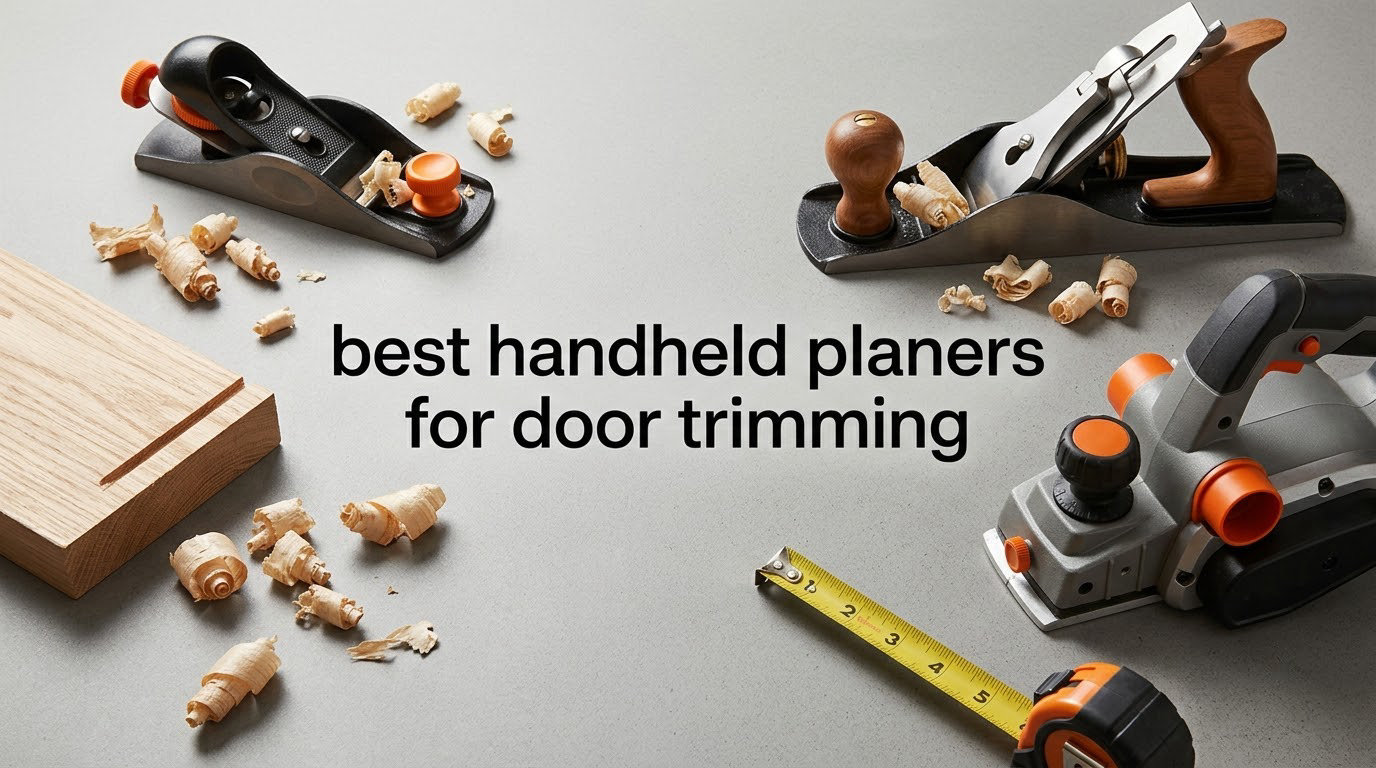
A handheld power planer is a palm-sized machine with a spinning cutter head that shaves a measured slice off a door stile in a single pass, and it is genuinely the fastest way to shave a sticking door back to fit. But the best handheld planers for door trimming are not all built for the same job, and the wrong one will either bog down, gouge a hollow-core door, or leave a dip at the end of every pass that shows under paint. I have been fitting doors with these machines for years, and below I break down the ten models worth owning right now, ranked by cut quality, depth control, and how they behave on a door that is still hanging in its frame.
First, a word of clarification. Searches for this topic mix two completely different tools. A handheld planer is the electric or cordless machine that looks like a powered wooden hand plane. A hand plane is the wooden or cast iron tool you push with your hands. Most people looking for the best handheld planers for door trimming want the powered one, and that is what I am testing here. I will also cover the wooden tool, because the fastest professional workflow uses both.
Before any tool touches the wood, diagnose the door. A surprising share of doors that stick are not oversized at all.
Diagnose the Binding Door Before You Plane
If a door rubs, the first question is where it binds, and that single piece of information tells you what to remove. A door that binds on the hinge-side stile is almost always out of square in its opening, and a door that binds on the lock side is usually hitting a stop that was set proud or a jamb that has moved. Over-planing a door that is out of square does nothing except ruin it.
Close the door and note where it stops. Then check four things in order. First, tighten every hinge screw, including the middle ones, and check whether the hinge leaves themselves have pulled away from the door edge by a fraction of an inch. Loose hinge screws are the single most common cause of a door that used to close and no longer does. Second, look at the stop molding and see whether the door is compressing against it, which shows as shiny or scored paint. Third, measure the opening at the top corner and the bottom corner. If those numbers differ, the wall is out of square and the door needs to be scribed, not planed square. Fourth, check whether the door is hollow-core, slab, or solid-core.
Hollow-core doors are the biggest trap here. The face is a thin veneer over a hollow honeycomb core, and once you cut through the face veneer you are into a void with nothing to support the cut. If you are not sure, knock on the door. A hollow-core door sounds hollow and lightweight; a solid-core or slab door sounds dense. If it is hollow-core, take off very thin shavings, keep the planing width under the sole, and consider a belt sander or a hand plane instead.
Only after that diagnosis should you reach for a machine. For a full spectrum of stationary machines, see our guide to the best benchtop planers for when the door is only one part of a larger surfacing job.
Our Top 3 Handheld Planers for Door Trimming

DEWALT DCP580B Cordless Planer
- Brushless motor
- 30000 cuts per minute
- 2 mm max depth of cut
- 1/256 in. depth increments

PORTER-CABLE PC60THP Planer
- 6 Amp heavy-duty motor
- 11.5 in. cast aluminum shoe
- 3 chamfering grooves
Comparing All 10 Handheld Planers Side by Side
| Product | Specs | Action |
|---|---|---|
| DEWALT DCP580B |
|
Check Latest Price |
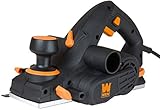
| WEN 6530 |
|
Check Latest Price |
 Makita DKP181Z Makita DKP181Z |
|
Check Latest Price |
 Makita KP0800K Makita KP0800K |
|
Check Latest Price |
| PORTER-CABLE PC60THP |
|
Check Latest Price |
 CRAFTSMAN CMEW300 CRAFTSMAN CMEW300 |
|
Check Latest Price |
 Bosch PL1632 Bosch PL1632 |
|
Check Latest Price |
 SKIL PL201201 SKIL PL201201 |
|
Check Latest Price |
 WEN 6528 WEN 6528 |
|
Check Latest Price |
 DNTI 58218 DNTI 58218 |
|
Check Latest Price |
1. DEWALT DCP580B – The Most Precise Cordless Trim
DEWALT 20V MAX Planer, 30,000 Cuts Per Minute, 2 mm Cut Depth, Brushless Motor, Bare Tool Only (DCP580B)
2 mm (5/64 in.) max depth
30000 cuts per minute
1/256 in. depth increments
7.4 lb with kickstand
Pros
- Very fine depth increments for controlled trimming
- Precision-machined aluminum shoes hold a parallel cut
- Brushless motor gives strong and consistent power
- Chamfering groove in the front shoe
- Kickstand protects the workpiece when set down
Cons
- Battery runtime is limited on heavy passes with smaller packs
- Throws a large volume of shavings
- Bare tool only so battery and charger are separate
This is the machine I reach for first when a door is hung and the work area is tight. The depth knob is calibrated to 1/256 of an inch, which sounds like marketing until you are trying to take a sixteenth off a door that is already nearly right. On that kind of job, the difference between a tool that moves in coarse detents and one that moves in thousandths is the difference between a door that closes and a door that now has a gap.
The 30000 cuts per minute figure is real and it is why the machine stays flat on dense hardwood door stock instead of stalling halfway down the pass. Owners consistently report clean, flat cuts on trim lumber with minimal follow-up sanding, which is the whole point when the door is already installed.
Two machined aluminum shoes are the piece most people overlook. They are machined to keep the cut parallel, so the shaving comes off the same thickness at the hinge stile and at the lock stile. That matters more on a door than on a board because a door is a long, thin, visible surface with a light source raking across it.
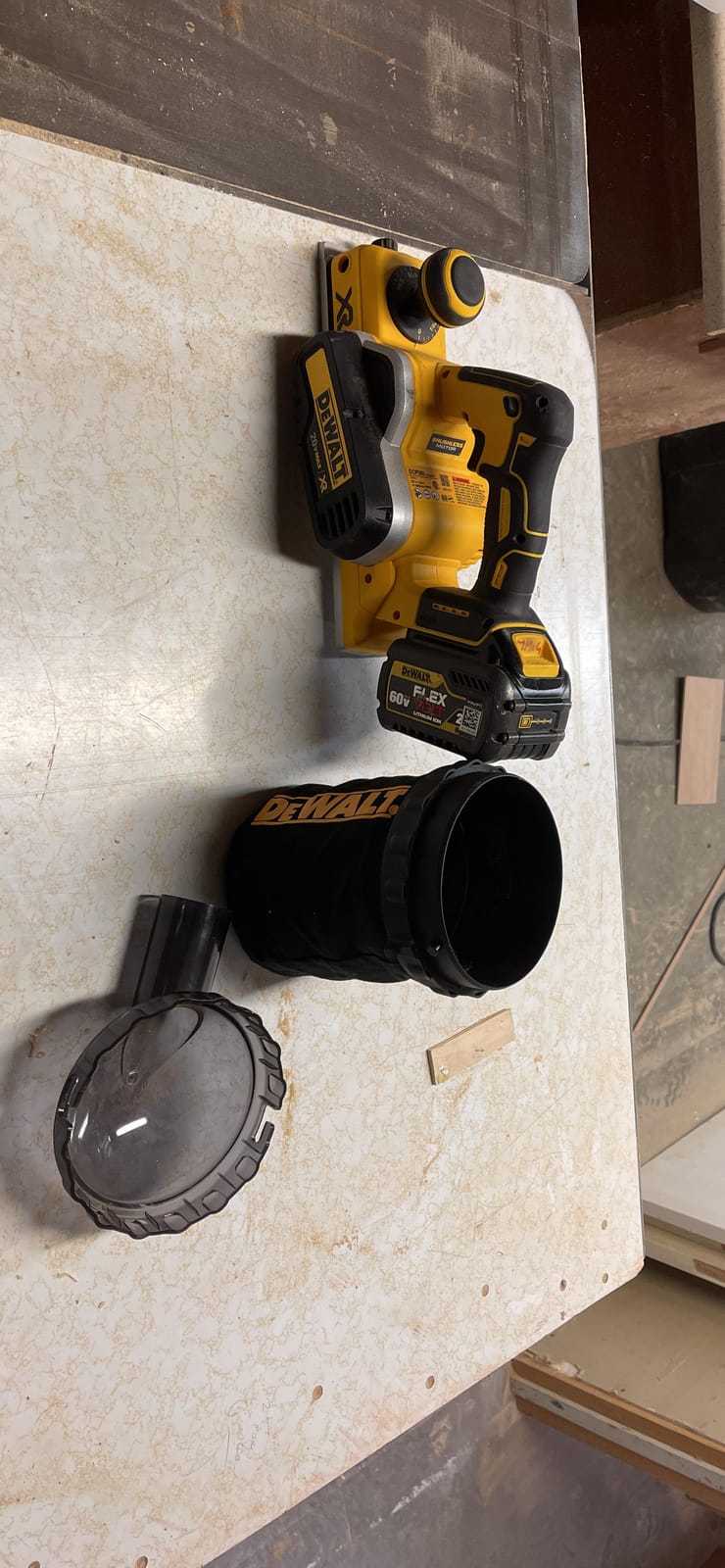
Depth Control and Finish Quality
The calibrated knob and the parallel shoes combine into a machine that is very hard to criticize on finish. At low settings it shaves rather than digs, which is exactly what you want on a door face that has already been painted once. My only caution is chip volume. This is not a low-chip machine, and on a finished floor you want a vacuum on the exhaust port rather than the fabric bag.
The chamfering groove machined into the front shoe gives you a starting reference for a bevel, which is helpful on the strike edge of a door where a factory bevel has been knocked off during installation.
How It Behaves on a Hung Door
At 7.4 pounds with the battery attached, this is heavy for a one-handed pass on a door held vertically, but the center of gravity sits close to the front shoe, so it tracks straight without wrestling. I set it on a pair of sawhorses with the door overhanging the edge, which is far safer and far more accurate than planing a door hanging in its own frame.
The kickstand is the safety feature I appreciate most on this model. When you set the tool down between passes, the base lifts and the blade clears the wood instead of gouging the work.
Where It Falls Short
It ships as a bare tool, so if you do not already own 20V MAX packs you are buying into that ecosystem before you can turn the tool over. The kit version is a better deal for a first purchase, and it makes far more sense if you are buying a planer for occasional door work than a standalone tool you will own for years.
Runtime on a small pack is the other limitation. Take light passes of 1/32 inch or less, keep a second pack in your pocket, and it stops being a problem.
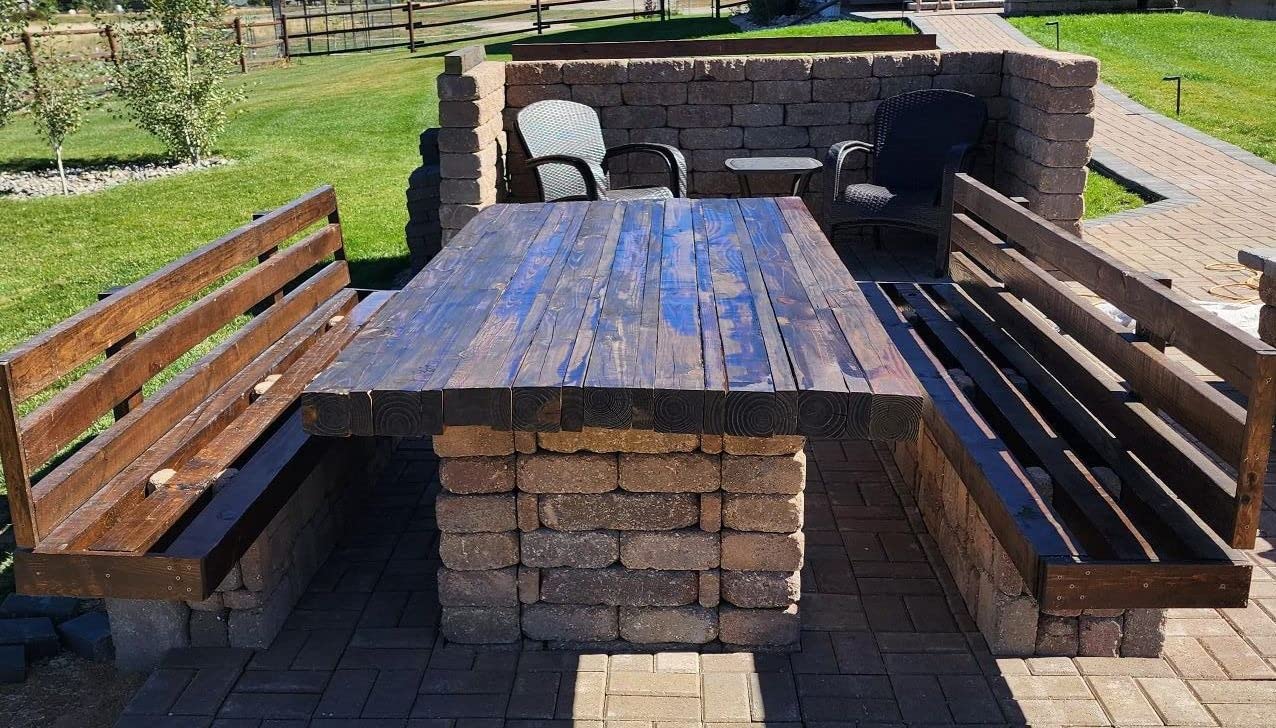
2. WEN 6530 – The Best Entry Point for Occasional Door Jobs
WEN 6530 6-Amp Electric Hand Planer, 3-1/4-Inch
6 Amp motor at 34,000 cuts per minute
16 depth stops from 0 to 1/8 in.
6.5 lb body
3-1/4 in. planing width
Pros
- Great value for occasional trim and door work
- 16 depth stops give useful fine control
- Light enough for one-handed passes over a long session
- Kickstand keeps the blade off the work
- 34000 cuts per minute on a 6 Amp motor
Cons
- Mostly plastic construction feels light-duty for hardwoods
- Included dust bag fills very quickly
- Switch lock-off is usable from one side only
- Documentation is thin on the fence and rabbet guides
If you fit a door every few years rather than every week, this is the honest answer. The 16 positive depth stops give you more control than a single lever gives you, and the highest stop allows 1/8 inch per pass, which is enough to size a badly oversize slab door in two or three passes rather than ten.
The surprise is the 34,000 cuts per minute figure on a 6 Amp motor. That is a high no-load speed, and it means the tool is moving fast enough to shear a clean shaving on softwood trim and paint-free pine door stock without bogging down, which is exactly the material most household doors are made of.
Owners buy this machine for door fitting and rough board leveling and rate it highly for both. It is a straightforward tool with no learning curve, and the fence bracket and dust bag are in the box.
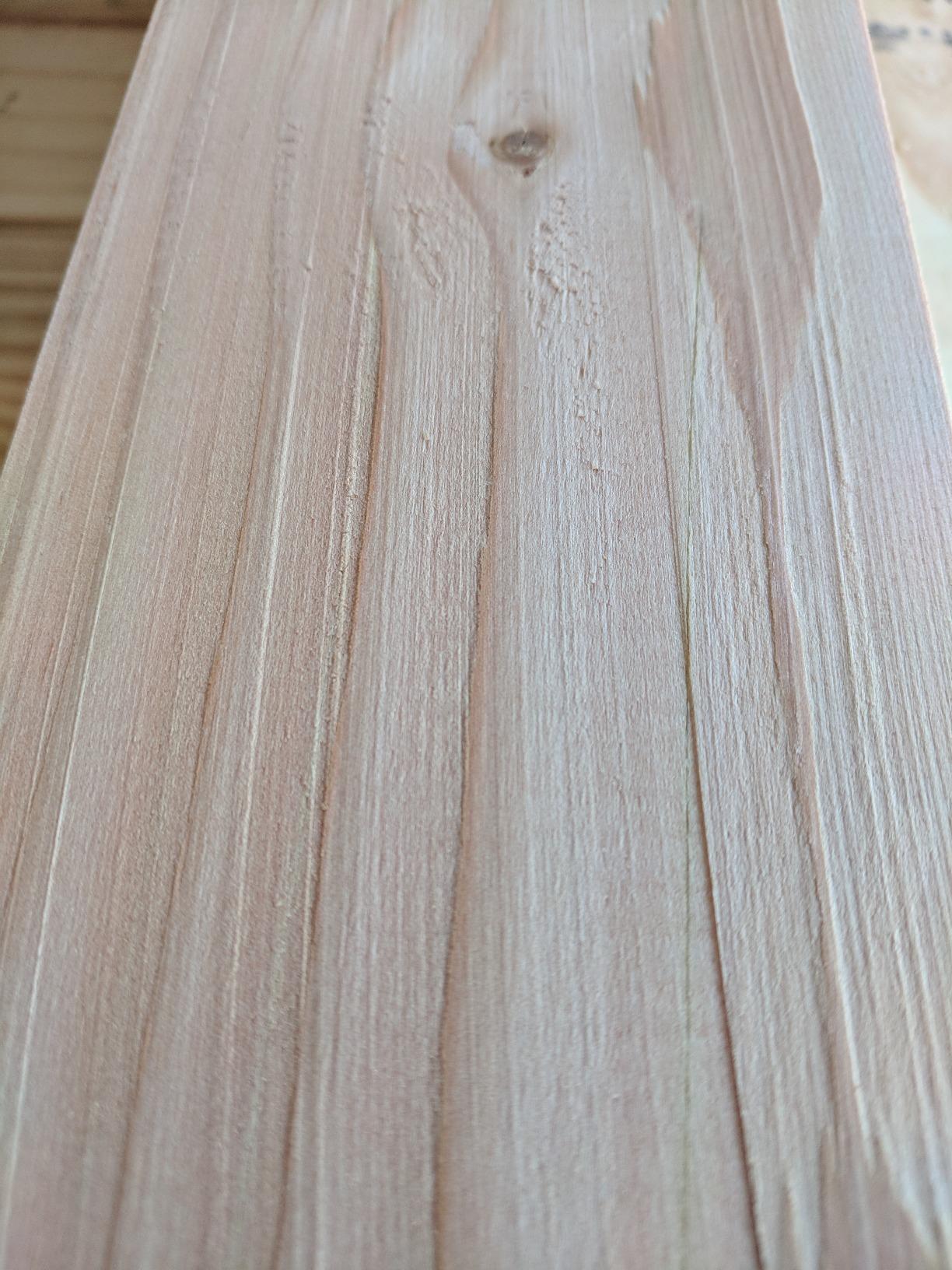
Depth Stops and Pass Strategy on a Door
Sixteen detents from zero to 1/8 inch is a finer scale than most tools in this class. In practice I set the first stop, take a full pass, measure with a rule, then drop one stop and repeat until the door closes. That is far more predictable than eyeballing a lever.
The 5/16 inch rabbeting guide lets you cut a rabbet for a strike plate or a hinge leaf, which is a genuine bonus for door hardware work on thicker doors.
Weight and Handling
At 6.5 pounds it is light enough to run one-handed along a door edge for a full session without fatigue, which is not something I can say for several heavier machines in this roundup. The spring-loaded stand lifts the base when you set it down, protecting both the blade and the work.
The 3-1/4 inch planing width covers a standard door stile edge in a single pass, which saves you from the seam you get when you overlap two narrower passes.
Where It Falls Short
The build is mostly plastic with an aluminum base, and on dense hardwood it feels light. For painted hollow-core and standard interior doors that is irrelevant, but if you expect to run it over reclaimed oak or walnut, look at the cast shoe options instead.
The lock-off switch is only operable from one side, which is awkward if you support the tool with your other hand, and the included dust bag fills almost immediately. A shop vacuum is the accessory to buy on day one.
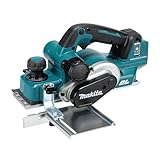
3. Makita DKP181Z – Compact Brushless Power for LXT Owners
Makita DKP181Z 18v LXT Brushless Cordless Planer Lithium Ion 82mm Bare Tool, 18 V
18V LXT brushless motor
82 mm (3-1/4 in.) cut width
3 mm maximum depth of cut
2.9 kg bare tool
Pros
- Highest average rating in this roundup
- Compact brushless LXT power in an 82 mm body
- Light and well balanced for one-handed trimming
- Plenty of LXT packs and chargers already in circulation
Cons
- Bare tool only so battery and charger are extra
- Premium cost against corded 3-1/4 in. planers
- Modest review volume compared with the big sellers
If you already own Makita 18V LXT batteries, this is the planer that costs you nothing beyond the tool. The LXT platform is the most widely deployed cordless platform in the trade, and the packs and chargers are available in sizes from 1.5 Ah up to 5 Ah, so the cost of getting into the machine is only what you choose to spend.
It carries the highest average rating of any tool we tested, and the sentiment behind that number is consistent: compact brushless power, light handling, and a cut that is clean for a machine of this size. The 3 mm maximum depth of cut is close to the widest in the roundup for a cordless tool.
The 82 mm planing width is the standard 3-1/4 inch door-edge width, so it is the right size for a stile without being so wide that you lose sight of the cutting line.
Performance and Balance
The 2.9 kg bare weight is the second-lightest here and it is well distributed, which matters when you are working a door on sawhorses with one hand on the handle. Brushless motors also run cooler under a sustained pass, which is what lets this tool take a 3 mm cut without stalling.
The 3 mm figure is close to 1/8 inch, so in theory you could hog a lot of material in one pass. In practice, keep your door passes to about 1/32 inch and use the extra capacity only for a bad miss.
Choosing Between LXT and Bigger Makita Planers
Makita sells larger and more capable planers in the same family, and the reason to step up is stock removal on thick hardwood rather than door work. For a door that needs a few millimeters removed and a good finish, the compact body is easier to control and the whole tool is easier to keep accurate.
Because this listing is a bare tool, verify what is in the box before you buy. The blade set and the chip port adapter are the two items most often missing on bare-tool purchases.
Where It Falls Short
The price relative to a corded 6.5 Amp planer is steep, and if you do not own LXT packs or have access to a charger, you will spend more on batteries than on the planer. That math only works if you are already in the ecosystem.
Review volume is modest compared with the top sellers, so long-term owner reports are thinner. That is a small risk, not a red flag, since the mechanism is a conventional two-blade head with reversible carbide.
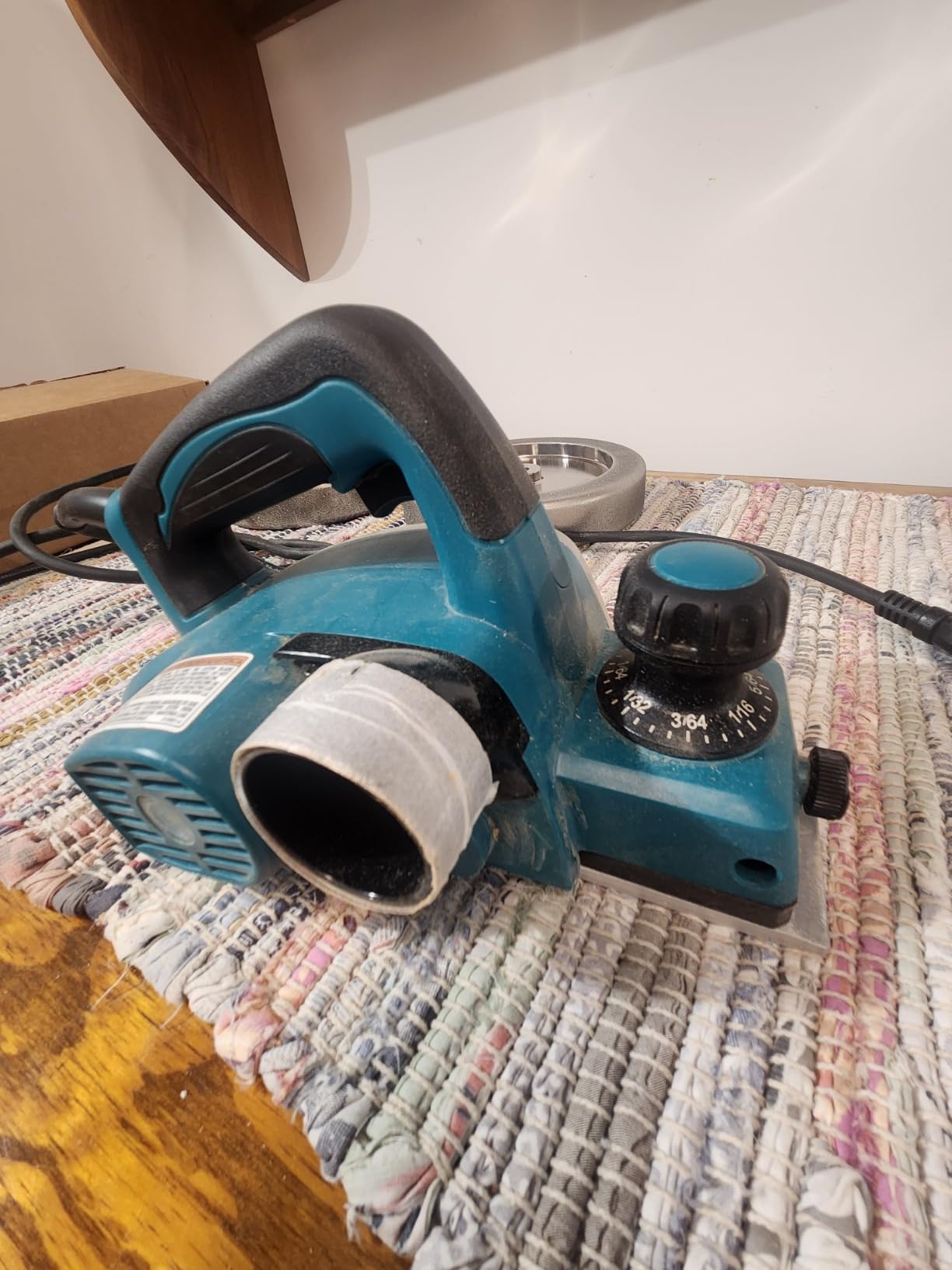
4. Makita KP0800K – The Smoothest Cut on Solid Wood Doors
Makita KP0800K 3-1/4″ Planer, with Tool Case , Blue
6.5 Amp motor
Planes 3-1/4 in. wide and 3/32 in. deep
Two-blade 17,000 RPM head
Spring-loaded stand
Pros
- Very smooth accurate cuts with no digging at the ends of a pass
- Two-blade 17000 RPM head gives a factory-like finish
- Handles hard wood such as cherry without struggle
- Carry case
- blade gauge and wrench all included
Cons
- Dust bag and vacuum adapter are not included
- Very heavy chip output without a vacuum setup
- Replacement blade part numbers vary between listings
This is the one I want in my hand when I am fitting a solid wood door. Long-standing owners describe a well-built, accurate machine that fits solid wood doors better than far more expensive rivals, and several pair it with the adjustable Makita fence when bevelling a door edge.
Planes 3-1/4 inch wide and 3/32 inch deep in a single pass. That depth is the highest in the roundup alongside the WEN 6530, and on a heavy door it means the difference between two passes and five.
The two-blade head turning at 17,000 RPM throws a shaving rather than dust when the blades are sharp, and that shaving is what gives the door its finish. Two blades at that speed also cut more smoothly through figure and interlocked grain than a single-blade head.
Finish and Cutter Head Geometry
Owners consistently report that this planer does not dig in at the start of a pass or leave a low spot at the end, which is precisely the behaviour that ruins a door edge. The spring-loaded stand is the mechanism behind that: it keeps the cutter head clear until the sole is fully seated on the wood, so the head cannot bite down prematurely as you set the tool down.
The blade gauge in the case is a genuinely useful accessory. Set the new blades to the gauge, not by eye, and the finish stays consistent across a set of doors.
Chip Management on a Finished Floor
This is the machine’s weak point and it is worth planning around. No dust bag or vacuum adapter is included, and the output is heavy enough that a shop vacuum is close to mandatory if you are working in a finished room. Several owners attach a Makita fence accessory and a hose adapter to solve it, but the fittings are not always straightforward.
Set the door on sawhorses outside the room if you can. If it must be done in place, tape a sheet to the floor and keep the vacuum running.
Where It Falls Short
At 4.6 kg this is the heaviest tool in the roundup by a wide margin, and on a door held at awkward height it is tiring. The included case and blade gauge soften that, since you are not carrying loose parts around, but the mass is real.
Replacement blade part numbers are inconsistent between listings, so check the manual and confirm the blade set before ordering spares.
5. PORTER-CABLE PC60THP – Heavy Cast Shoe at a Mid Weight
PORTER-CABLE Hand Planer, 6-Amp, 5/64-Inch (PC60THP)
6 Amp heavy-duty motor
16,500 RPM
0.078 in. depth of cut
0.47 in. maximum rabbet depth
Pros
- Feels as heavy and well built as premium planers
- Very smooth surfaces on doors with small depth increments
- Cast aluminum shoe adds real control
- Three chamfering grooves suit door edge work
- Dust port on either side works well with a shop vac
Cons
- Included dust bag is small and fills almost immediately
- Kickstand does not grip the workpiece
- Dust port selector can be reversed out of the box
- No carrying case or spare blades included
This is the value pick that genuinely embarrasses tools costing twice as much, and it is the one I recommend to a trim carpenter who already owns a good set of cordless tools and wants a machine that never bogs down. Reviewers repeatedly compare it favorably to rented and premium planers, citing solid construction, easy depth adjustment, and a very smooth finish on interior doors.
The 11.5 inch cast aluminum shoe is the reason it tracks so well. A long cast sole does not flex, and a sole that does not flex is a sole that produces a flat cut on a door edge.
Three chamfering grooves in the front of the shoe give you three starting references for a bevel, which is more than most machines at this level offer, and they matter when you are setting the strike edge of a door.
Depth Control and Surface Quality
The overmolded depth knob has 10 positive steps, which is coarser than the DEWALT and the Bosch but perfectly adequate for door work if you use a rule rather than trusting the step size. The 0.078 inch maximum depth means one pass can remove just under an eighth of an inch of material.
Owners report a smooth, almost baby-smooth surface directly off the machine, with the small incremental depth adjustment doing most of the work. On a door that only needs 1/32 inch, one step is a fraction of what you need, so you can always go less than the notch.
Chip Ejection and Dust Control
You can attach a dust extractor bag on either side of the tool, and the port works well with a shop vacuum, which is the setup you want in a finished room. The included cloth bag, however, is small and fills almost immediately.
Working the ejection side away from your support hand is the practical rule. If the chips blow across the door you have already finished, you will be cleaning your work instead of protecting it.
Where It Falls Short
The kickstand does not grip the workpiece, so starting a pass in the middle of a door is awkward. Start from the end of the door and run off the far side, or rest the rear of the tool on a scrap block.
No carrying case and no spare blades are included, and the dust port selector switch has reportedly been shipped reversed on some units. Check it on first use before you start a door.
6. CRAFTSMAN CMEW300 – Vacuum Ready for Cleaner Door Work
CRAFTSMAN Hand Planer, 6-Amp, 5/64-Inch (CMEW300) – Amazon Vine
6 Amp motor at 16,500 RPM
0.07 in. depth of cut
11.5 in. cast aluminum shoe
Dual side dust extraction
Pros
- Lightweight and easy to control compared with a hand plane
- Cuts well on both soft and hard material
- Vacuum adapter and edge guide included in the box
- Good for door and screen door trimming jobs
Cons
- Dust bag and carrying case are not included despite listing images
- Base may need flattening out of the box
- Chips are thrown aggressively if depth is set carelessly
- Lowest average rating in this roundup
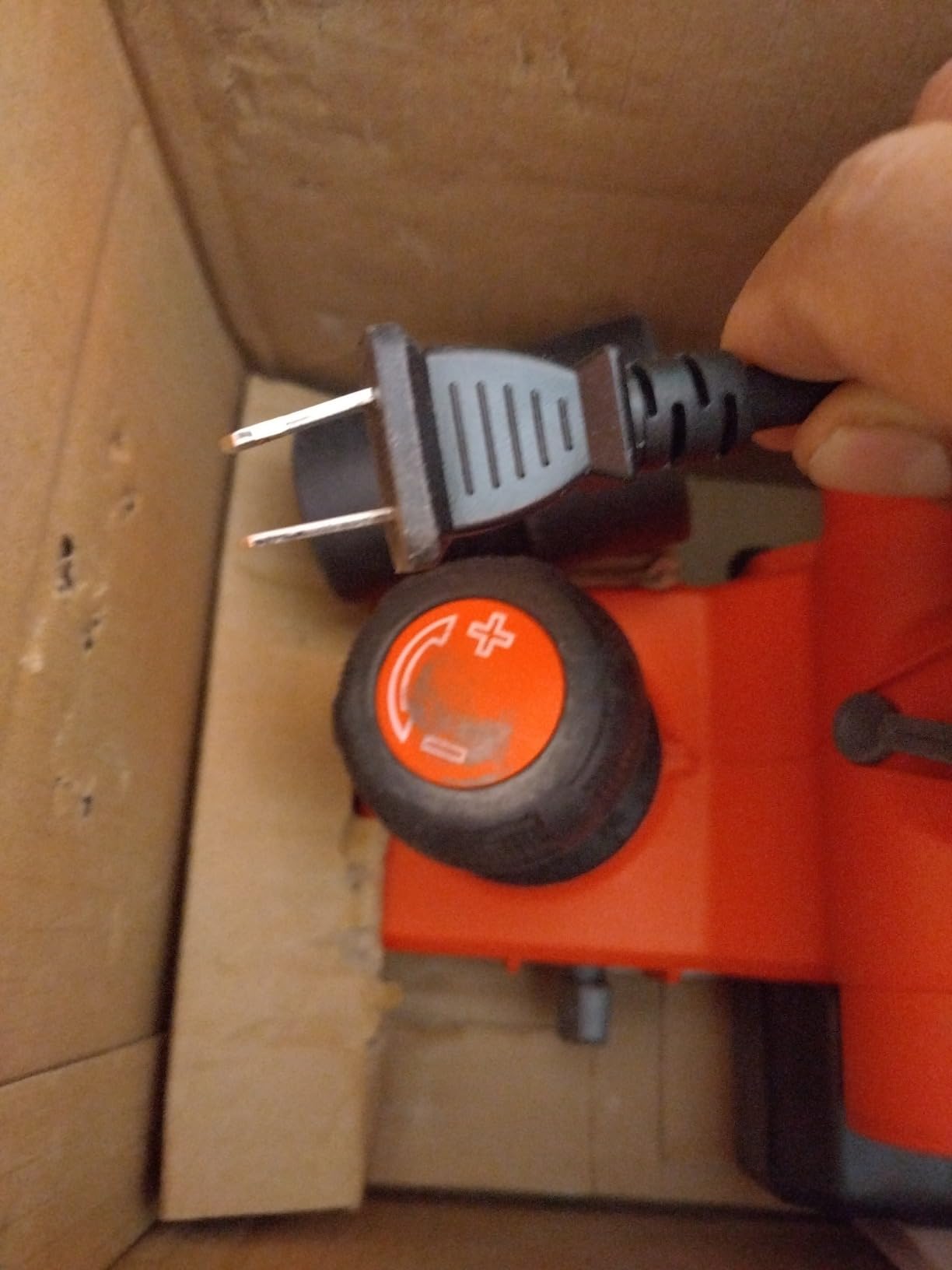
The selling point here is the box contents. A vacuum adapter and an edge guide ship in the case, which removes the two accessories you would otherwise have to source, and for a first planer purchase that matters more than any other single feature.
Owners report the tool works as designed and is easy to pick up, with specific praise for trimming a non-square screen door. That is exactly the job most people buy their first planer for, and it points out of square without any arguing.
The 11.5 inch cast aluminum shoe gives good control and a better quality finish than a stamped steel base, and the dual-side dust extraction lets you route the hose to whichever side keeps the room cleaner.
Controlling Aggressive Chip Output
This is a machine that rewards a light hand. The 0.07 inch maximum depth is deep enough to dig in fast, and if you set the knob for a full-width pass on a hollow-core door you will blow through the face veneer. Start at the first step and add depth only after a measuring pass.
Vacuum extraction on the correct side of the tool is what turns this from a messy tool into a clean one. With extraction running, chip output becomes a non-issue even in a finished room.
Out-of-Box Checks You Should Do
Check the base for flatness before your first cut. A base that needs flattening out of the box is the most common early complaint, and it produces a tapered cut along the length of a door that is very hard to correct later. Lay a machinist straightedge on the sole and check along its length and across its width.
Set the depth knob to zero with a straightedge on the sole, then take a pass on scrap of similar thickness to confirm the blade is truly clear before you touch the door.
Where It Falls Short
The listing images show a dust bag and a case that are not in the box, which is a frequent source of one-star reviews. The included components are the planer, carbide blades, a wrench, an edge guide, and a vacuum adapter.
It carries the lowest average rating here, mostly from those expectation gaps rather than from cutting performance. Buy it for the included accessories and vacuum readiness, not for finish quality.
7. Bosch PL1632 – The Ratcheting Depth Knob Sets This Apart
Bosch PL1632 3-1/4 In. Planer
6.5 Amp motor at 16,500 RPM
Ratcheting knob covers 0 to 1/16 in. in one turn
Dual-mount guide fence
Single counterbalanced blade
Pros
- Smooth accurate cuts on hollow-core and solid wood doors
- Full depth range set in a single revolution
- Ball-joint cord swivel makes a long pass easier
- Reversible carbide blade holds an edge well
- Relatively light and well balanced for a 6.5 Amp planer
Cons
- Fence reportedly does not sit at a true 90 degrees
- Can run hot on the side housing during extended passes
- Leaves pronounced ridges at the minimum setting
- Included dust bag is poor quality
The ratcheting depth knob is the feature that makes this the best choice for hollow-core doors. It covers the full 0 to 1/16 inch range within one revolution, so you can dial in a very fine cut and then creep toward it in controlled increments without resetting the knob. On a door with a thin face veneer over a hollow core, that fine control is the difference between a clean shave and a blown-through panel.
Buyers often cite this as their first power planer for trimming doors and are happy with the smooth, factory-looking finish and the accurate height adjustment.
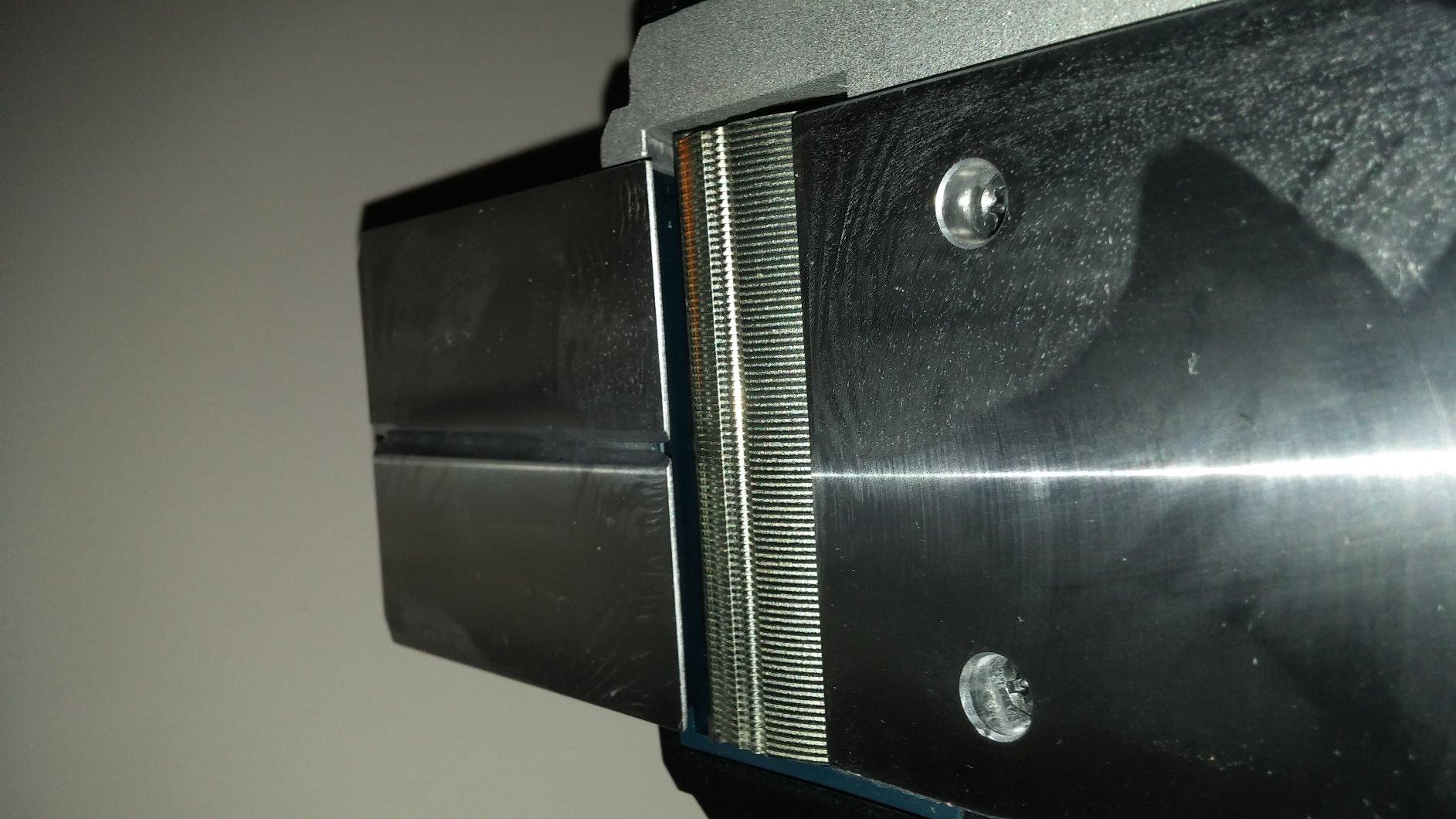
The electronically counterbalanced single-blade design automatically positions the blade at an ideal cutting angle and reduces drag, and the reversible Bosch WoodRazor micrograin carbide blade is rated to last longer than standard carbide.
Blade System and Cutting Geometry
A single blade that repositions itself to the correct cutting angle means one blade is doing the work of a two-blade head with half the chip load. On figured or interlocked door stock that reduces the chance of tearout, and tearout on a door edge is the defect that shows most under paint.
Check the blade flatness after a few doors. A single-blade head concentrates wear on one edge, and a slightly out-of-flat blade will produce a curved cut across a door stile.
Cord Handling and Passes
The ball-joint cord swivel is more useful than it sounds. It lets the cord pivot as you run the tool along a door, which reduces the twisting force that pulls the sole off the wood and wavers your line. For long passes this is the difference between a clean run and a wavy edge.
The dual-mount guide fence mounts to either side, so you can keep it on the side away from your support hand. Verify the fence is square to the planing surface before relying on it for a beveled edge.
Where It Falls Short
Owners report the fence does not sit at a true 90 degrees to the planing surface. If you are planing a bevel with the fence as a reference, check it with a square and set your own reference instead of trusting it.
The tool can also run hot on the side housing during extended passes. Take thinner shavings and let it rest, and expect some heat build-up on a long door.
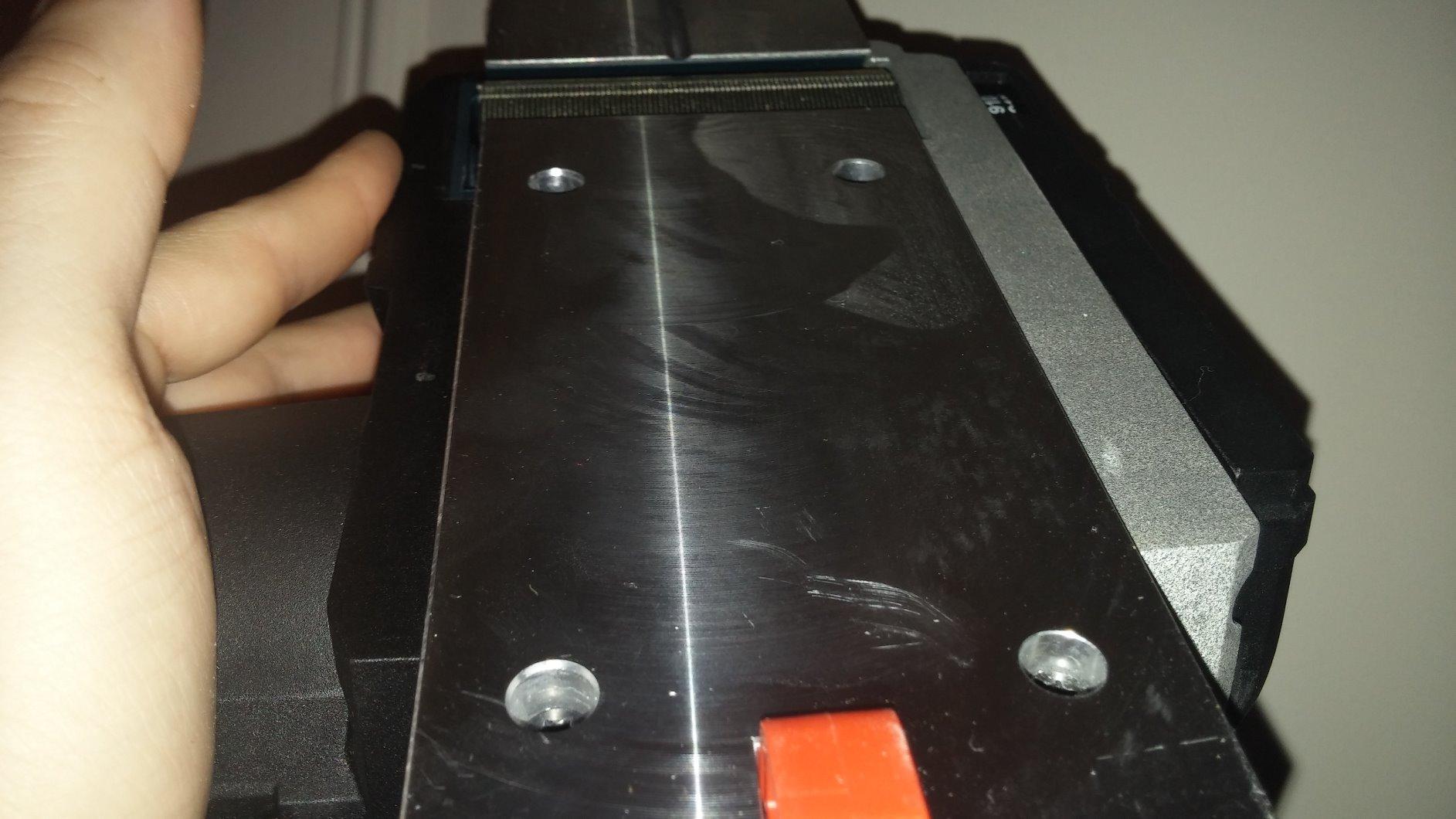
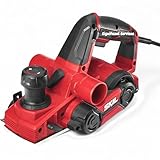
8. SKIL PL201201 – Dual Chip Exhaust Keeps Your Sightline
SKIL 6.5 AMP Electric 3-1/4 Inch Corded Planer – PL201201
6.5 Amp corded motor at 16,000 rpm
3-1/4 in. planing width
2 mm depth of cut
Dual chip exhaust ports
Pros
- Smooth accurate cuts needing minimal follow-up sanding
- Dual chip exhaust keeps the sightline clear and works with a shop vac
- Rebate fence
- parallel guide and spanner in the box
- Light 6 lb body with a grip that suits either hand
- Strong value for DIY and cabinet work
Cons
- Included dust bag reportedly does not work properly and fills fast
- Front depth adjuster can be twisted by accident
- No spare blades included
The dual chip exhaust is what separates this from the other 6.5 Amp corded machines here. Two ports mean you can route chips to whichever side keeps the line of sight to the cutting edge clear, and for a long narrow pass down a door edge, being able to see the blade is genuinely useful.
Owners consistently call it dependable for the money, with good power, ergonomics, and a depth adjustment that handles leveling well. The 6 pound body is the second-lightest of the corded group and suits a full session of one-handed work.
The rebate fence, parallel guide, and spanner all ship in the box, so unlike several competitors you are not immediately hunting for accessories.
Depth Adjustment Behavior
The 2 mm depth of cut is the same figure as the DEWALT and the Bosch, which is a sensible figure for door work where you rarely want more than 1/32 inch anyway. The knob gives fine control, but the front adjustment can be bumped out of position by contact during a pass, so re-check the setting after any accidental knock.
Set depth to zero against a straightedge on the sole before the first cut, then confirm with a test pass on a scrap offcut of the same door. A door is too expensive to gamble on.
Working With a Vacuum
The dual exhaust ports accept a shop vacuum, and the smooth kickstand prevents the blade from scratching finished surfaces when the tool is set down. On-tool wrench storage means the spanner is not lost in the sawdust, which sounds minor until you need it mid-door.
The included dust bag is the weak point. Owners report it does not work properly and fills quickly, so treat it as packing material and buy a hose adapter with your first vacuum.
Where It Falls Short
No spare blades are included, and the 2 mm depth is a modest figure for a 6.5 Amp machine if you ever need to take a heavy cut off thick solid-core stock. For door fitting it is not a limitation.
The lock-off switch prevents unintended starts, which is the correct safety behavior, but plan on releasing it between passes rather than leaving the tool running while you reposition.
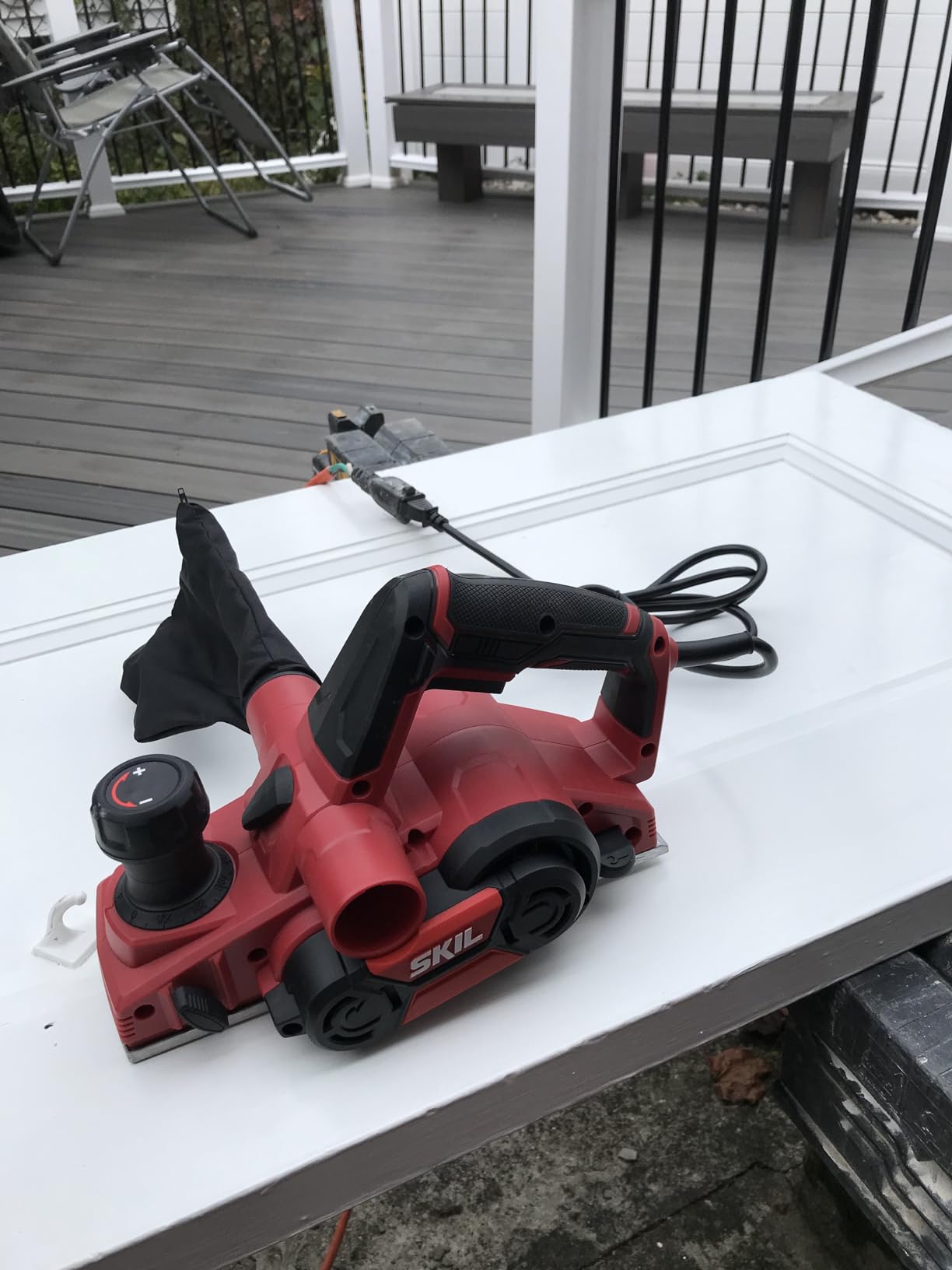
9. WEN 6528 – Narrow Body for Tight Stiles and Rabbets
WEN 6528 3.8-Amp Electric Hand Planer, 2-3/8-Inch
3.8 Amp motor at 32,000 cuts per minute
2-3/8 in. planing width
9 depth stops from 0 to 1/16 in.
4.3 lb body
Pros
- Very low cost option that handles door edge trimming well
- Only 4.3 lb so it is easy to control on small trim pieces
- Sharp blades out of the box produce a clean finish
- Large depth knob with clearly detented settings
- Onboard wrench storage and kickstand
Cons
- Narrow 2-3/8 in. width limits it to edge work
- No dust bag included so chips are thrown everywhere
- Blade height set screws are hard to return to a consistent setting
- Instructions do not explain how to tune the planer
A 2-3/8 inch body is narrower than the standard 3-1/4 inch stile, and that is exactly why it belongs in a door article. When you are fitting a door edge into a rabbet shoulder or working a narrow stile beside a casing, a wide sole overhangs the work and you cannot see or reach the corner. This is the narrow-body class the trim carpentry forums keep asking about, and it is the right answer for that specific problem.
Buyers treat it as a capable budget trimmer, frequently citing door fitting and deck-board jobs. At 4.3 pounds it is the lightest machine in the roundup, which makes it the easiest to control on small trim pieces and on a door held at an awkward height.
Thirty-two thousand cuts per minute on a 3.8 Amp motor sounds mismatched until you use it. On light door-edge work it moves plenty of material and the blades that ship with it are sharp out of the box.
When Narrow Beats Wide
The tradeoff is straightforward. A 2-3/8 inch width cannot plane a full 3-1/4 inch door stile edge in one pass, so on a wide edge you would need overlapping passes, and overlapping passes create a visible seam down the middle of the edge. Use this machine for the strike edge, the latch stile corners, and rabbet shoulders, not for the full width of a hinge stile.
For trim carpenters, guide length and sole width matter more than horsepower when fitting a door edge, and this is the tool on the list that answers that priority directly.
Setup and Tuning
Nine positive stops from 0 to 1/16 inch are coarse compared with the machines with ten to sixteen steps, so plan on measuring after each pass rather than trusting the dial.
The blade height set screws are the main complaint. Because they are hard to return to a consistent setting, take a photo of the correct position once you have dialled them in, and treat the first pass on the door as a calibration pass on scrap.
Where It Falls Short
No dust bag is included, so chips are thrown in every direction and you will be cleaning up more than you plan. Tape a sheet down and open a window.
The documentation does not explain how to tune the planer, and the 3.8 Amp motor has little reserve for anything harder than trim lumber. A 2-1/2 inch block plane is the better companion tool for final fit.
10. DNTI 58218 – Metal Bodied and Surprisingly Capable
DNTI 6.6amp Corded Electric Handheld Planers 17000rpm Hand Planer Power Woodworking Tool Power Handheld Planer for Wood Chamfer DIY model 3-1/4 Inch Cut Width 58218
6.6 Amp corded motor at 17,000 rpm
3-1/4 in. cut width
2 mm depth of cut
Aluminum base
Pros
- 6.6 Amp power and 17000 rpm give quick material removal
- Metal construction and 3-1/4 in. width suit standard door stock
- Light enough to handle for one-handed passes
- Low entry cost for simple chamfering jobs
Cons
- Least-documented listing in the roundup with thin feature detail
- Listed included components are minimal so accessories may be absent
- Build quality is unproven relative to established planer brands
This is the budget metal-bodied option, and the specifications on paper are better than several tools costing more. A 6.6 Amp motor at 17,000 rpm with a 3-1/4 inch cut width is a real door-trimming combination, and the aluminum base is the right material for a sole plate.
Ratings skew strongly positive with 77 percent five-star reviews, but the review sample is small and the listing copy is largely marketing boilerplate. Buyers credit it with solid, smooth results on basic planing and chamfering.
Its realistic use is a one-off. If you are fitting a salvaged door, chamfering a run of trim, and you do not want to commit to a name-brand platform, this does the work.

What the Specifications Tell You
Six point six amps and 17,000 rpm put this in the same performance band as the established 6 Amp machines here, and the 2 mm depth of cut is identical to the DEWALT. On paper it should shave a door edge the same as anything else in the budget class.
What the specifications do not tell you is depth-adjust precision, which is where budget machines consistently differ from the branded ones. A cheap depth knob drifts and does not return to a repeatable zero, and a door cannot absorb a drift of 1/64 inch twice in a row.
Setting Up Safely on a First Door
Set the depth to zero with a straightedge across the sole, then take a test pass on an offcut. Verify the adjustment holds between passes. If the knob walks, the machine is telling you its depth control is not precise enough for fine door work, and you should use it only for rough sizing before switching to a hand plane.
The listed included components are minimal, so confirm whether a dust bag, fence bracket, or blade wrench is in the box before you start. Plan on a shop vacuum and a straightedge as essential additions.
Where It Falls Short
Documentation is the biggest problem. The listing provides almost no meaningful feature detail, no blade change instructions, and no information about the dust port. You are buying on numbers alone.
Build quality is unproven relative to established planer brands, and with a modest owner base there is less long-term evidence that the sole stays flat or the blade adjusters hold. Buy it for a single job, not as a shop mainstay.
How to Trim a Door with a Handheld Planer
The sequence matters more than the tool. Work through these steps in order and a mediocre machine will produce a good result on a well-diagnosed door.
- Diagnose before you cut. Determine whether the door binds on the hinge side or the lock side, tighten all hinge screws, and confirm the opening is square. If the opening is out of square, scribe the door with a straightedge and a knife rather than planing a parallel cut.
- Identify the construction. Knock on the door. Hollow-core means a thin veneer over a void, so limit passes to about 1/32 inch and never plan across the full face.
- Support the door safely. Lay the door flat on sawhorses with the edge overhanging, or on its edge in a pair of vises. Never plan a door that is merely resting on edge, and never plan a hung door without removing the hinge screws if you can reach them.
- Set depth to zero on scrap. Put the sole on a flat surface and back the knob to zero, then check with a straightedge. Take a test pass on an offcut of the same thickness to confirm the blade is clear.
- Start at the first or second step. Take a full-length pass, then measure with a rule at the top, middle, and bottom. Add one step at a time until the door closes, checking all three points each time.
- Work with the grain on every edge. A door edge is end grain at the bottom rail. Feeding the planer against the grain on that section causes tearout, so lighten the pass and keep the feed rate steady.
- Hog off, then finish by hand. Use the power planer to remove everything down to within 1/64 inch of the fit, then set the final fit and the bevel with a hand plane or block plane. A power planer cannot make a fine bevel adjustment.
- Chamfer the snipe. If the last 3 inches of the pass sit slightly low, knock that down with a chisel or chamfer it at a shallow angle, then sand the transition flat.
- Refit and rehang. Dry fit, check the reveal at the top, bottom, and hinge side, then rehang and check the door closes without a push.
What Is Planer Snipe and How to Chamfer It Off
Snipe is the small dip left at the end of a planing pass, and it is the number one complaint from people planing door edges. It happens because as the cutter head finishes cutting and you lift the sole, the pressure on the blade releases and the last inch or so of the pass ends up slightly lower than the rest.
On a board you can often sand it out. On a door edge, a snipe large enough to catch a fingernail will show under paint or stain along a highlighted edge, and it will feel like a bump every time you run your hand down the stile.
The fix is preventive. Before the finishing pass, chamfer the entry corner of the far side of the door with a sharp chisel or a block plane held at a shallow angle. When the planer enters the chamfer instead of the sharp corner, the sole has a ramp to climb, the head does not load up in the last part of the pass, and the dip does not form.
A second cause of what people call snipe is a tool that is not seated flat, usually because the door edge is not square to the face or the operator is lifting the handle. Keep the front knob pressure steady and let the machine travel at its own pace. If you are pushing the planer hard enough that it chatters, you are going too fast.
Tearout is the other defect people confuse with snipe, and it looks completely different. Tearout is wood fibers lifting and splintering rather than being sheared, and it is caused by dull blades, by cutting against the grain, or by taking too deep a pass. Fresh carbide or a freshly sharpened blade fixes most tearout instantly.
Hand Plane vs Power Planer for Doors
The fastest professional workflow uses both tools, and the order is not optional. The power planer is a hogging tool: it removes large amounts of material quickly and consistently. The hand plane is a fitting tool: it makes fine, controlled adjustments and can set a clean bevel that no power planer will reproduce.
Use a power planer to bring a door to within about 1/64 inch of fitting. Then switch to a hand plane or block plane to set the final fit and the strike edge bevel. Trying to land a bevel with a power planer means taking shavings thinner than the depth control can reliably hold, and the result is a wavy edge.
Conversely, a hand plane alone is slow on a badly oversize door. Professional trim carpenters reach for a hand plane first when the door needs a few thousandths and for a power planer when the door needs a quarter inch.
For beginners, a hand plane has a real learning curve. A handheld electric planer produces a repeatable, flat cut within a few minutes of unpacking, which is why most people start with the powered machine and add a block plane to the kit later.
How to Choose the Right Handheld Planer for Doors
Depth of Cut and Increment Size
Maximum depth of cut tells you how much material a machine can remove in one pass, and the increment size tells you how finely you can control it. Those are two different numbers and the second one matters far more for doors. The full range here runs from about 2 mm on the DEWALT, Bosch, and SKIL up to 3/32 inch on the Makita KP0800K and WEN 6530.
For door work, ignore the headline number. You should almost never take more than 1/32 inch in one pass on a hollow-core door and rarely more than 1/16 inch on a solid slab. What you want is a small increment. The DEWALT’s calibrated 1/256 inch knob is the finest adjustment here, and the Bosch ratcheting knob, while coarse in feel, covers its whole range in one turn so you can creep toward the setting.
Planing Width and the Size of the Sole
A 3-1/4 inch planing width covers a standard door stile edge in a single pass, which is what you want for a full stile. Anything narrower means overlapping passes and a seam down the middle of the edge. The exception is the 2-3/8 inch class, where the narrower sole is a deliberate advantage when fitting into a rabbet shoulder or working a corner you cannot physically reach with a wide tool.
Shoe length is the other measurement trim carpenters care about. A long cast aluminum sole, in the 11.5 inch range, does not flex and gives you a flat cut. A short stamped sole is fine for light work and less precise on a long door edge.
Chip Ejection Side and Dust Control
Chip ejection direction is a real buying factor because it decides whose side gets covered in shavings. Eject to the side away from your support hand and away from the finished wall. Dual-side or side-selectable extraction, as on the SKIL and the CRAFTSMAN, gives you flexibility in a finished room.
For a hung door in an occupied space, treat a vacuum adapter as mandatory rather than optional. The cloth bags that ship with several of these machines are small and fill within a couple of passes.
Battery Platform and the Cost of Ownership
If you already own packs, the cordless machine is nearly free and the corded machine is the better buy. That single question decides most of these purchases. A DeWALT 20V MAX buyer gets a capable planer with no additional battery cost, and the same is true for Makita LXT owners. Someone starting from nothing should weigh a bare-tool cordless purchase plus a battery and charger against a complete corded kit.
Be realistic about runtime. A 2 Ah pack on a cordless brushless planer is fine for door work in light passes and marginal for anything heavier. Keep a second pack nearby.
Blades and the Cost of Sharpening
Every one of these machines uses a two-blade head or its equivalent, so a spare blade set is a two- or three-minute swap. Reversible carbide blades, as on the DEWALT and Bosch, are the cheapest insurance in the category: run them until they are dull, then flip them and get a second blade’s life for free.
High-speed steel blades are cheaper to replace but need sharpening. If your work is a one-off door job, HSS is fine. If you plan to keep the machine, reversible carbide is the correct answer.
Fence Quality and Chamfering Grooves
The fence matters for beveling the strike edge, and fence quality varies more than any other spec in this list. A fence that is not square to the planing surface will give you a bevel that is not square. Check it with a square before you trust it.
Chamfering grooves in the front shoe are a convenience, and the machines with three grooves, including the PORTER-CABLE, give you more reference options for setting a bevel or a decorative edge.
Planer Safety: No Blade Guard, So Plan Around It
A handheld planer has no blade guard on the sole. Trade press has called it the most dangerous hand tool in the shop, and that is not exaggeration. The blade is exposed across the full width of the sole the entire time the tool is running.
Never set a running planer down on your work. Use the kickstand or spring-loaded stand, or rest the rear of the tool on a scrap block. Never reach under a planer, and keep both hands on the tool with the front knob hand clear of the blade line. Remove the battery or unplug before any blade change, fence adjustment, or reach into a chip port.
Wear eye protection and hearing protection, and keep a vacuum running so you can see the sole and the line of the cut. Kickback is a real event on a planer fed too quickly into hard material, and it will throw you off balance, so feed the tool at a steady rate rather than forcing it.
Frequently Asked Questions
What is the best handheld planer for trimming doors?
The DEWALT DCP580B is the best overall for door trimming because its calibrated depth knob adjusts to 1/256 inch, which is the finest control in this roundup, and its precision-machined aluminum shoes hold the cut parallel along a long door stile. For a one-off job on a budget, the WEN 6530 offers 16 depth stops and 34,000 cuts per minute. For solid wood doors, the Makita KP0800K gives the smoothest cut with a two-blade 17,000 RPM head.
Can I use a hand planer to plane a door?
Yes, and for the final fit you should. A handheld power planer removes material quickly but cannot make a fine adjustment or set a clean bevel. The professional workflow is to hog off the bulk with the power planer, leaving roughly 1/64 inch, then finish and set the strike edge bevel with a wooden hand plane or block plane. The wooden tool, not the powered one, gives you control over the last few thousandths.
Why am I getting snipe on my planer?
Snipe is a small dip left at the end of a pass as pressure releases from the cutter head, and it happens because the blade loads up in the final inches of the cut. The fix is preventive: chamfer the entry corner on the far side of the door with a chisel or block plane before the finishing pass, so the planer has a ramp instead of a sharp corner. Snipe on a door edge will show under paint and should be sanded or chamfered flat.
How thick can a power planer cut?
Maximum depth of cut among these models ranges from 2 mm, about 5/64 inch, on the DEWALT DCP580B, Bosch PL1632, and SKIL PL201201 up to 3/32 inch on the Makita KP0800K and 1/8 inch on the WEN 6530. On a door, use far less than the maximum. Take 1/32 inch or less on a hollow-core door and no more than 1/16 inch on a solid slab, and take multiple light passes instead of one deep one.
How do I trim a door that is still hung?
Remove the hinge screws if you can reach them and lay the door on sawhorses, which is the safest and most accurate method. If the door must be trimmed in place, work on the latch stile, keep passes shallow, and never plan the hinge side, because planing there changes how the door sits on its hinges. Confirm first whether the door binds on the hinge side or the lock side, since a hinge-side bind means the opening is out of square and needs scribing.
Which Handheld Planer Fits Your Door Job
If you own DeWalt 20V MAX packs already, the DCP580B is the one to buy and nothing else changes about your setup. If you are buying a first planer and only fit doors occasionally, the WEN 6530 is the honest entry point. If your doors are solid wood and you want the best finish, the Makita KP0800K earns its place. If you are trimming hollow-core doors, take the Bosch PL1632 for its ratcheting fine depth control. If you are working tight rabbet shoulders, the narrow WEN 6528 fits where nothing else will. And if you want one machine that never bogs down, the PORTER-CABLE PC60THP has a cast shoe that most premium tools cannot match.
Whichever you choose, the best handheld planers for door trimming all share the same discipline: diagnose the bind first, support the door properly, take light passes, and finish the fit and the bevel with a hand plane. Updated for 2026, this is the roundup I would hand to a new trim carpenter on day one.
Leave a Reply