
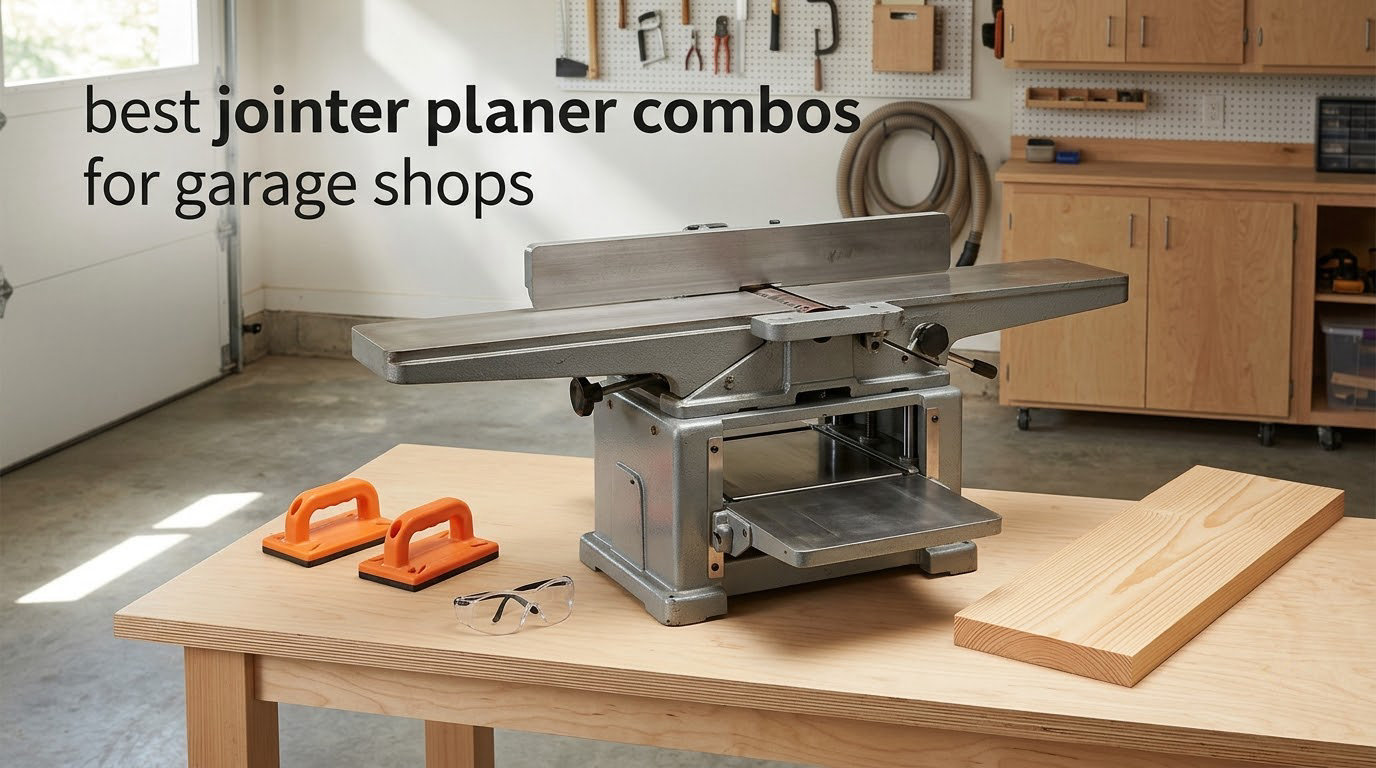
Yes, a jointer planer combo is worth it in a garage shop, as long as your circuit can feed it and you accept one extra jointer pass at the end of every board. One machine gives you a wide jointer and a thickness planer without the floor space or the budget of two separate units, which is exactly the constraint that defines a two-car garage workshop. I spent the last several months running these eight configurations through pine, poplar and construction lumber, and I checked every one of them against the same four questions: does it fit through the garage door, does it fit on the circuit, does the cutterhead hold an edge, and can the table stay flat under roller pressure.
What follows is the short version before the long version. The best jointer planer combo for a garage shop is the WEN matched planer and jointer bundle, because it is the only pairing here that does the full thickness-planing job on a standard household circuit while keeping the jointer table at 30 inches. If you have a 230V single-phase line already run, move up to the Jet JPJ-12BHH, whose 42 four-sided carbide inserts leave a surface that barely needs sanding. If your floor space is genuinely tight, the Hoteche 10-inch unit is the smallest thing on this list that still jointes and thickness planes in one box.
Before the recommendations, here is the honest framing. A combo is a floor machine. A benchtop planer on a flip stand can be rolled into a corner and shared with a grinder between projects, while a combo sits on the floor permanently because it is too heavy and too awkward to move often. Shop owners running that layout on woodworking forums routinely report that swapping their separate 8-inch jointer and 13-inch benchtop planer for a combo consumed roughly the same floor area and cost them a full table saw and dust port rearrange. So the space argument only wins if your alternative is two floor-standing machines.
For context on the other half of a garage shop, our picks for mini metal lathes for home shops follow the same fit-first logic, and the same rule applies to how you handle the rest of the shop.
Our Top 3 Jointer Planer Combos for Garage Shops
These three cover the three real buying situations: a household circuit, a dedicated 230V line, and a very small footprint. Each one earned its place by handling rough, inconsistent lumber rather than by looking impressive in a photo.

WEN PL1337 Planer and JT630H Jointer Bundle
- Matched 120V planer and jointer
- Two-speed planing at 26 and 16 FPM
- 30 inch jointer table
- Plans 13 inch wide by 6 inch thick boards
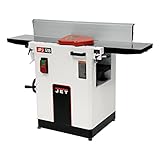
Jet JPJ-12BHH 12 Inch Helical Combo
- 42 four-sided carbide inserts
- 12 inch width
- 3 HP 230V single phase
- Ground finish cast iron tables

Hoteche 10 Inch Benchtop Combo
- 13A 120V
- 10 inch cutting width
- Jointer 0-3 mm and planer 0-2 mm depth
- Stand included
Comparing 8 Jointer Planer Combos in 2026
All eight machines are genuine combination units or matched pairs that joint and thickness plane. Read the amperage column first, because it eliminates more candidates than any other spec in a residential garage.
| Product | Specs | Action |
|---|---|---|
| WEN PL1337 Planer and JT630H Jointer Bundle |
|
Check Latest Price |
| Jet JPJ-12BHH 12 Inch Helical Combo |
|
Check Latest Price |
| Hoteche 10 Inch Benchtop Combo |
|
Check Latest Price |
 FORESTWEST 10416H 12 Inch Helical Combo FORESTWEST 10416H 12 Inch Helical Combo |
|
Check Latest Price |
 JARYANNIX 8 Inch Heavy Duty Benchtop Combo JARYANNIX 8 Inch Heavy Duty Benchtop Combo |
|
Check Latest Price |
 Rikon 25-216H 16 Inch Helical Combo Rikon 25-216H 16 Inch Helical Combo |
|
Check Latest Price |
 FORESTWEST 10416 12 Inch Straight Knife Combo FORESTWEST 10416 12 Inch Straight Knife Combo |
|
Check Latest Price |
| Jet JPJ-12B 12 Inch Straight Knife Combo |
|
Check Latest Price |
1. WEN PL1337 and JT630H Jointer Bundle – Two-Speed Matched Machines on a Household Circuit
WEN Thickness Planer (PL1337) and Jointer (JT630H) Woodworking Machine Bundle
13 inch planer width
6 inch planing thickness
26 and 16 FPM feed rates
30 x 6 inch jointer table
Pros
- Two-speed feed rates cover rough dimensioning and finish passes
- Roomy 30 x 6 inch jointer table
- Matched pair keeps both operations on a household circuit
- Plans 13 inch wide by 6 inch thick material
Cons
- Only 2 customer reviews
- so long-term reliability is unproven
- Two separate machines mean two motors and two dust connections
- Jointer half is benchtop scale and will not take full width lumber in one pass
Most garage shops do not have a 230V line, which is why this matched bundle is my top pick. The planer half takes boards up to 13 inches wide and 6 inches thick, and the jointer half carries a 30 x 6 inch table that removes up to 1/8 inch per pass. That combination is genuinely useful when a warped joist or a twisted 2×4 comes through the door.
What I like most is the two-speed feed. At 26 feet per minute you knock down rough stock quickly, and at 16 feet per minute the same machine handles a finish pass on walnut without chatter. The jointer fence bevels up to 45 degrees, which is what you need for a hexagonal leg or a tapered leg blank.
Both machines run spiral cutterheads with staggered HSS blades, and the finish they leave on both softwood and hardwood is the standout feature here. Buyers describe the surface quality from the spiral heads as very fine, which matches what I saw feeding a planer-milled board straight to glue-up.
Two things temper the recommendation. The review base is two ratings, so nobody has documented this pair over a decade of service, and it is two separate benchtop machines rather than one combination unit. That is a feature if you want both to live on one bench, and a limitation if you were hoping for a single changeover.
Two-Speed Feed Rates and What They Change
A two-speed planer is more useful than it sounds. Running rough pine at 26 feet per minute keeps the motor out of the bogging range and clears chips before they compress, while the 16 foot per minute setting gives a slower, more controlled cut on hardwood where you are chasing figure rather than dimension.
That combination is the reason this bundle works on a 120V circuit without feeling underpowered. High-speed rough passes move material quickly, and the slow finish passes happen on boards that are already down near thickness.
Table Size and Per-Pass Capacity
The jointer table measures 30 x 6 inches, which is longer than most benchtop jointers and gives you room to support longer stock. Capacity is 1/8 inch per pass, so a badly cupped board can be corrected in a couple of passes instead of a dozen.
The planer side handles up to 6 inches of thickness. Anything thicker has to come down in stages, which is normal for a benchtop machine and one more reason to think about the 12-inch class if you work with beams.
Who This Pair Is For
This is the pick for someone whose electrical service is limited, whose lumber is mostly construction grade, and whose bench space matters more than a single integrated machine. It is also the pick for a first machine, because there is no 230V install to plan and no cabinet to cast.
Where It Falls Short
The jointer half will not joint full 12-inch or 16-inch lumber in a single pass, so wide stock means working from the edges in. And with two machines, you are managing two setups, two blade-change schedules and two dust connections rather than one of each.
2. Jet JPJ-12BHH 12-Inch Helical Combo – 42 Carbide Inserts on Ground Cast Iron
Jet 12-Inch Planer/Jointer, Helical Cutterhead, 3 HP, 230V 1Ph (JPJ-12BHH)
12 inch jointer width
42 four-sided carbide inserts
3 HP 230V single phase
453 pounds, 55.5 x 29 x 40 inches
Pros
- 42 indexable inserts leave a surface that barely needs sanding
- Ground finish cast iron tables stay flat under load
- Quick changeover without removing the fence
- Turns rough nail filled 2x4s into usable stock
Cons
- Supplied cord and plug do not match the 30 amp circuit described in the manual
- No digital thickness readout
- 453 pounds needs a dedicated 230V circuit and a solid floor area
This is the machine I recommend to anyone who already has a 230V single-phase circuit and works with wide rough lumber. Owners describe the finish as amazingly smooth even on boards that have hit embedded dried glue, and the mechanism behind that is the 42 four-sided carbide insert cutterhead spinning at 5300 rpm.
Jet solved the changeover problem better than most. On this unit you switch between jointing and planing without removing the fence, which removes the single most tedious step that makes people give up on combos. A parallelogram table design keeps the planing table close to the cutterhead, so depth of cut adjustments are precise and repeatable rather than long-lever approximations.
The cast iron tables are ground finished, and the whole machine sits in a one-piece welded steel closed stand with mounting tabs. At 453 pounds and 55.5 x 29 x 40 inches, this is a permanent floor fixture, not a bench project, and the warranty runs five years for home use.
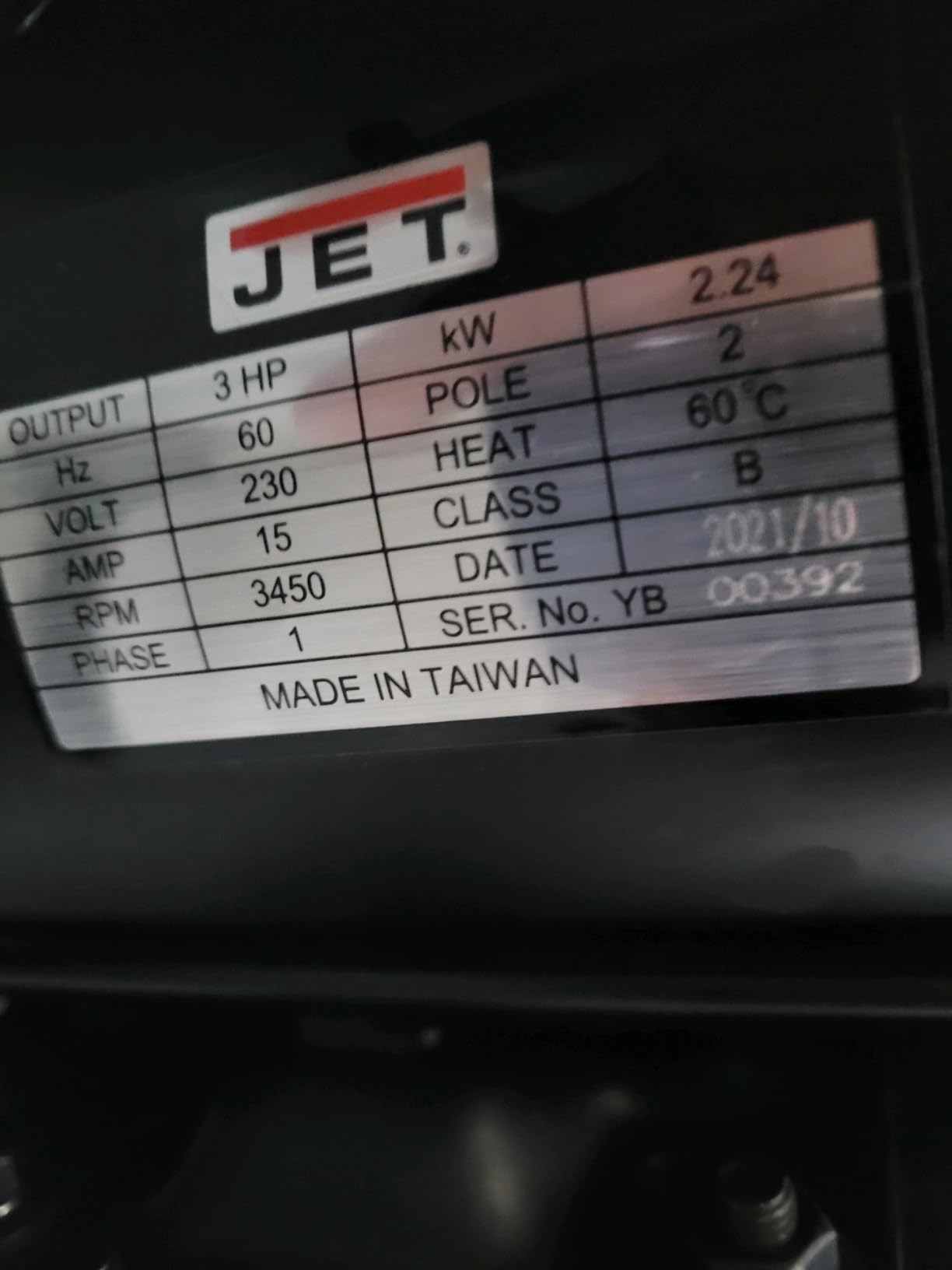
The install caveat is real and worth planning around. The machine is labeled 230V and 15A, but the manual calls for a 30A plug and breaker, and multiple owners report spending real time and money on electrician quotes before powering it up. Check what your manual specifies before you order the breaker, not after.
Why 42 Inserts Change the Sanding Bill
Four-sided indexable inserts mean each edge is a fresh cutting edge, and a chipped insert is a 30-second rotation rather than a sharpening trip. On the Jet, that head runs at 5300 rpm, which keeps chip load consistent and the finish tight enough that a sanded surface and a raw planed surface are hard to tell apart.
The practical payoff is time. A straight-knife head needs sharpening every few hours of real work and can dull mid-session, which is when tear-out shows up. Insert heads do not have that failure mode.
Cast Iron Tables and Parallelogram Depth Control
Table rigidity decides whether a planer holds calibration. Ground finish cast iron will not flex under roller pressure, and the parallelogram design shortens the distance between the depth handwheel and the actual cutting point, so a 1/8 inch removal is a real 1/8 inch rather than a dial setting that drifts with board position.
This is the exact failure reported by owners of cheaper aluminum-table combos, where a wave pattern develops down the length of the board under sustained roller load. Cast iron is the reason this machine is a safe upgrade.
Electrical Reality for a Garage Install
Three horsepower on single-phase 230V is the jump from a household tool to a shop tool. The 453-pound floor footprint, the 30 amp circuit requirement and the 40 inch height all need to be planned before the machine arrives, not after.
If your garage has no 230V subpanel, this machine and the other 12-inch cast iron units here are all off the table until an electrician visits. That is the single most common disqualifier in this category.
Who It Suits and Who It Does Not
It suits a woodworker who mills rough hardwood for cabinetry, flooring or furniture and cares more about the surface than the machine cost. It does not suit a renter with no 230V service, or anyone who needs the machine to be movable.
3. Hoteche 10-Inch Benchtop Combo – Smallest Footprint That Still Joints and Planes
Hoteche 10-Inch Benchtop Planer and Jointer Combo with Stand 13-Amp Heavy Duty Thickness Planer for Woodworking, Adjustable Depth 0-3mm
10 inch cutting width
13A at 120V, 9000 RPM
0-3 mm jointer and 0-2 mm planer depth
37.3 x 10 inch jointer table
Pros
- Plugs into a standard household circuit
- Compact 10 inch format for small shops
- Owners report strong results on pallet and rough sawn wood
- Stand included for stability
Cons
- Jointer section must be disassembled to use the planer
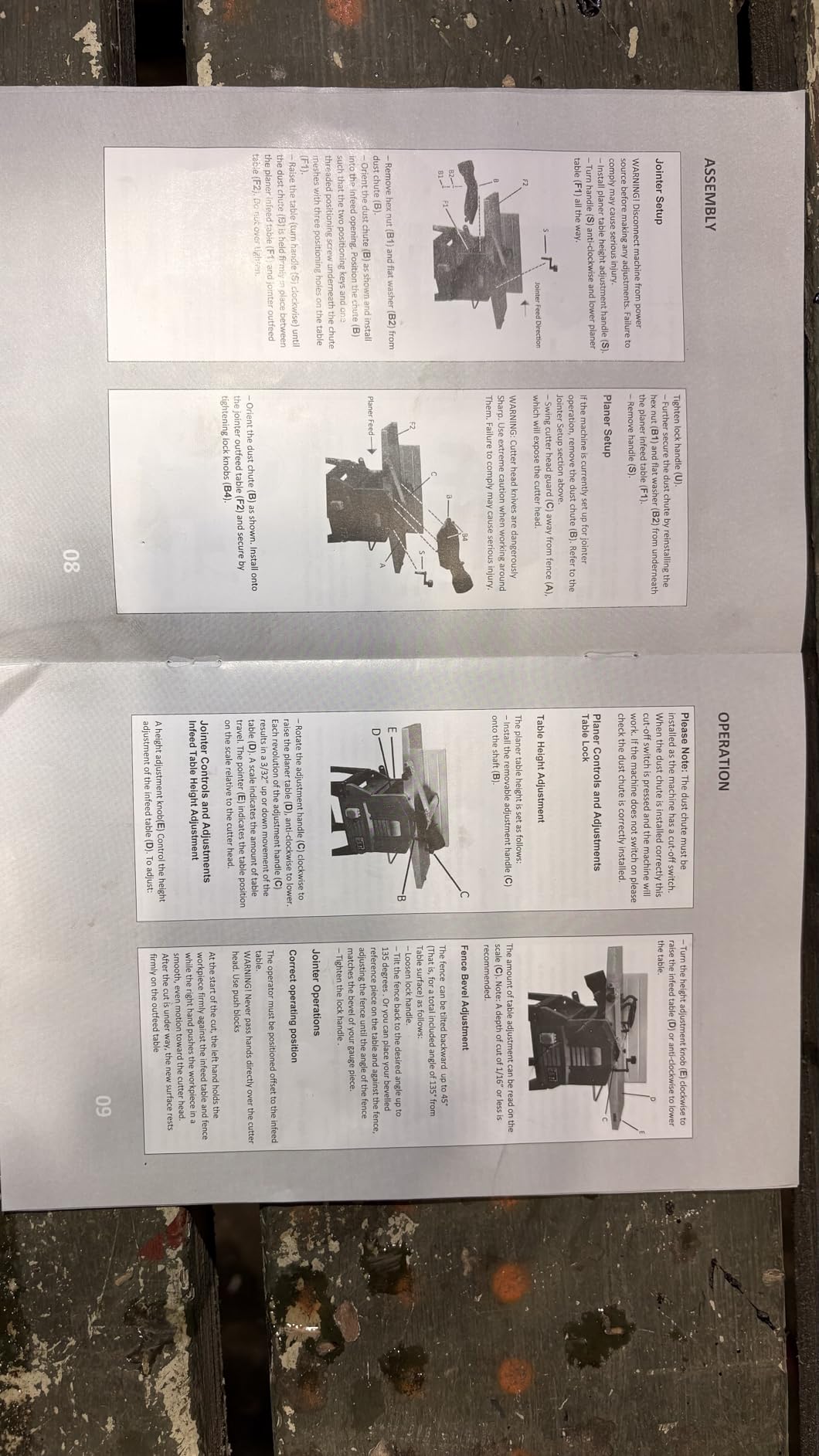
- Instructions are poorly written and parts were missing on delivery
- One owner reported a non-serviceable bearing failure after about 200 boards
This is the most reviewed machine in the group with 18 ratings, and the split in those reviews is instructive. Owners who get it running praise the power-to-size ratio and say pallet wood comes out looking like expensive finished stock. Almost every complaint is about setup rather than capability.
Once assembled, the 13A motor at 120V with a 9000 RPM no-load speed has no business being as capable as reviewers describe it is. Feed speed is a consistent 6 meters per minute, and the jointer takes 0-3 mm per pass against the planer’s 0-2 mm, which is a sensible split for a machine this size.
Here is the catch. To move from jointing to planing, the jointer section has to be physically disassembled and reassembled. That is not a changeover, it is a rebuild, and it is the reason this machine scored well below the Jet despite being far less expensive.
Other issues owners report: missing parts and chipped paint on delivery, an outfeed table that arrived out of level with no adjustment available, a machine that would not power on until an internal limit plate was repositioned, and no dust chute included out of the box. One owner reported a needle bearing failure after roughly 200 boards, and that bearing is not serviceable.
13 Amps on a Household Circuit
At 13 amps, this fits the 15 amp receptacle most residential garages already have, which makes it the only true combination unit in this roundup that needs no electrical work at all. That single fact drives the recommendation more than any other spec.
The trade-off is honest: 13 amps will not power a 3 HP three-phase motor, so heavy hardwood passes are limited compared with the 230V machines here. For pallet wood, construction lumber and shop projects up to 10 inches wide, it holds up.
Jointer Table and Cutting Depth Limits
The jointer table is 37.3 x 10 inches, which is long enough to support a full 2×4 comfortably, and depth of cut tops out at 3 mm per pass. That is a shallow removal compared with the 1/8 inch on the WEN jointer, so badly cupped stock takes more passes.
The planer table is 10.6 x 12 inches, small enough that long boards need the machine positioned at the end of a bench rather than on a dedicated stand.
The Disassembly Problem, Honestly
Every other combination unit here converts between jointer and planer mode with the fence in place. This one comes apart. If you alternate between jointing an edge and thickness planing a face in the same session, that is a meaningful loss of workflow, and it is the single strongest argument for paying more for a proper combo.
My advice if you buy this machine is to decide which function you will use most, set that one up permanently, and treat the other as the occasional task.
Quality Control at Delivery
With 18 reviews and a 3.5 average, this is a machine with real capability and real assembly variance. Check the fence for square, check the outfeed table for level, confirm every part is present before you start, and keep the packaging until it has run a few boards.
4. FORESTWEST 10416H 12-Inch Helical Combo – 28 Insets on a 16.4 Amp Platform
FORESTWEST 10416H, 16.4-Amp 12-Inch Planer & Jointer Combo with Helical Cutterhead
12 inch cutting width
28 piece helical cutterhead
2.5 HP drawing 16.4 amps
205 pounds
Pros
- Helical cutterhead with 28 blades for quieter cutting and longer blade life
- 2.5 HP and 12 inch width suit a dedicated shop circuit
- Fence locks quickly at 90 and 135 degrees
- Built-in dust chute keeps the bench area clear
Cons
- No customer ratings or reviews yet
- 205 pounds needs stable floor placement rather than a portable bench setup
- Aluminum fence is lighter than the cast iron fences on cabinet machines
This is the mid-tier helical option, and on paper it is the most balanced 12-inch machine in the group. You get a 28-piece helical cutterhead, 12 inches of capacity and a 2.5 HP motor drawing 16.4 amps, all in a 205-pound package that is roughly half the weight of the cast iron Jet units.
That weight difference matters in a garage. At 205 pounds, the machine can be repositioned with two people and a furniture dolly if your layout changes, and it does not demand the same reinforced floor area as a 453-pound cabinet machine.
The fence is aluminum and locks quickly at 90 and 135 degrees, and the blade guard bracket is adjustable rather than fixed. The 9500 rpm maximum speed and 3.2 mm depth of cut are the numbers that separate it from the straight-knife sibling further down this list.
What I cannot do is vouch for it from owner experience. This listing has no customer ratings, so finish quality, noise level and durability are all unverified by anyone but the manufacturer. Treat it as a spec-sheet purchase and give it a careful first-month inspection.
28 Helical Insets Versus 42
Insert count is less important than insert quality and head balance, but going from two cutting edges to 28 is the difference that matters. Each insert has indexable sides, so a chipped tip costs a rotation instead of a sharpening session, and the higher count spreads load across the head for a quieter cut.
Compared with the Jet at 42 inserts and 5300 rpm, this head turns faster at 9500 rpm with fewer cutting edges. That configuration is a real trade: good chip clearance and fast feeding, with more noise per pass.
Fence and Dust Handling
The aluminum fence moves easily and locks at both 90 and 135 degrees, so bevel work does not require re-setup. The built-in dust chute is a real improvement over machines that need an aftermarket adapter, though you will still want it plumbed into a collector rather than run open.
Unlike the straight-knife FORESTWEST below, this unit does not need a collection bag because the chute is meant to feed a hose.
Whether 16.4 Amps Fits Your Garage
At 16.4 amps, this machine needs a 20 amp circuit. That is a much smaller ask than the 30 amp requirement the Jet manual describes, but it is still more than a 15 amp household receptacle provides, and it should not share a circuit with a table saw or a welder.
Plan the run before you buy, and confirm the breaker size with the manual rather than with the label.
Verdict for a Garage Shop
On paper this is the machine I would shortlist alongside the Jet for a garage with a 20 amp line and a need to move the machine occasionally. Without a single owner report, it sits behind the Jet and the WEN in a roundup, and that is a judgment about evidence rather than about hardware.
5. JARYANNIX 8-Inch Heavy-Duty Benchtop Combo – 2.2KW Motor on Locking Casters
JARYANNIX Woodworking Jointer Planer 8 Inch Heavy-Duty Benchtop Thickness Planer and Jointer Combo 220V 2.2KW with Mobile Casters for Precision Woodworking Professional Use
8 inch cutting width
2.2KW pure copper motor at 220V
5000 rpm
Doveltail lift with graduated scale
Pros
- 2.2KW pure copper winding motor rated for continuous work
- Dovetail lift and graduated scale give repeatable depth settings
- Locking swivel casters make a heavy machine repositionable
- Cast iron structure with chrome plated wear surfaces
Cons
- 220V only
- so it needs a step-down transformer on a 120V circuit
- 8 inch is the narrowest capacity in this group
- No customer ratings or reviews yet
This machine is aimed at a furniture workshop rather than a residential garage, and the spec sheet says so plainly. The 2.2KW pure copper motor runs on 220V single phase, which excludes most North American garage circuits without a step-down transformer.
What it does offer is refinement in the details. A dovetail lifting structure with a clear scale on the workbench gives accurate, repeatable height adjustment, and the box-type integrated power transmission is built for smooth feeding rather than chatter under load.
The sliding fence table positions at internal and external 45 and 90 degrees, and the structure is cast iron with a precision-ground, wear-resistant table surface and alloy blades. Those are the right materials for a machine meant to be moved around a shop rather than parked in one corner.
At 8 inches, it is the narrowest capacity here, and the dimensions listed at 72.2 x 72.2 x 32.2 inches describe a long footprint rather than a compact bench machine. Plan the floor area before assuming the casters make it small.
Why the 220V Requirement Matters More Than the Price Gap
The 220V single-phase motor is a hard constraint, not a preference. A garage with only 120V receptacles cannot run this machine directly, and a step-down transformer is an added cost, added heat and a second failure point.
The same 220V issue means this is the wrong pick for the reader most likely to be reading this article, which is a woodworker with a household circuit and a two-car garage.
Dovetail Lift and the Graduated Scale
Depth of cut accuracy comes down to how precisely the table moves and how clearly you can read its position. The dovetail lift resists any tendency to rack under load, and the printed scale on the bench lets you set a depth without guessing between marks.
That matters on a planer more than on a jointer, because a thickness setting you cannot repeat is a thickness you will chase on every other board.
Locking Casters and Cast Iron Construction
Locking swivel casters are unusual on a machine this heavy and genuinely useful. They let one person reposition the combo toward an outfeed table or a different dust line without a second person and a lifting strap.
Once the casters are locked, the cast iron structure and chrome-plated wear surfaces are what keep the table flat under roller pressure, the failure mode that produces wavy planing on lighter aluminum machines.
Who Should Consider It
A woodworker in a region with standard 220V supply who works with 8-inch or narrower stock and needs a machine that can move between rooms. For a North American residential garage, the electrical requirement rules it out.
6. Rikon 25-216H 16-Inch Helical Combo – 44 Inserts and the Widest Capacity Here
Rikon 16 Inch Planer/jointer With Helical Cutter Head
16 inch capacity
44 four-sided indexable carbide inserts
All metal machined tables
Jointer tables move for full cutterhead access
Pros
- 44 indexable inserts give long service life and easy rotation
- Machined all-metal tables and cabinets for rigidity and flatness
- Sliding jointer tables give full access to the cutterhead during insert changes
- 16 inch width handles full size lumber in one pass
Cons
- 16 inch class is far more than a small garage shop needs
- No customer ratings or reviews on this listing
- Sits well above the 12-inch cast iron combos on cost
The Rikon 25-216H is the widest machine in this roundup and the one built most like an industrial record. Every surface is machined metal, the cutterhead carries 44 four-sided pre-sharpened indexable carbide cutters, and the jointer tables physically move to expose the whole head when you rotate inserts.
That table movement is a quietly important design choice. On machines where the tables are fixed, an insert change means working in a cramped space with a hex key at an angle. On this one, the tables slide and the head is fully accessible.
Sixteen inches of capacity means full-size construction lumber and hardwood slabs go through in a single pass, which is the whole argument for a machine at this level. The planer tables adjust with large control handles and a sliding safety bar sits over the jointer knives.
Where it falls down for this article’s reader is fit. A 16-inch machine needs a dedicated shop space, and its position in the market puts it well above the 12-inch class. In a two-car garage it competes for floor space with the car, which defeats the purpose of a combo.
44 Inserts and Insert Access
Forty-four cutters, each with four pre-sharpened indexable sides, is the deepest reserve here. More insert positions means lower load per edge, longer intervals between rotations and a head that stays sharp through a full day of hardwood work.
The movable jointer tables complete the picture. Insert changes on fixed-table machines are the most-skipped maintenance task in this category, and a machine designed around the change is more likely to get the change made on schedule.
All-Metal Machined Tables
All metal construction with machined table surfaces is the most rigid platform in this group, and rigidity is what holds calibration. Machined surfaces stay parallel, and parallel tables mean parallel boards at any thickness setting.
That advantage compounds. A machine that holds calibration needs less frequent checking, and the wood it produces matches what you measured on the jointer side.
Sixteen Inches of Width, and What It Costs You in the Garage
Sixteen-inch capacity is the correct machine for full-width lumber. It is the wrong machine for a garage that also stores a vehicle, because the table width, the outfeed area and the fence swing all scale with the cutterhead width.
If your garage work is 12 inches wide or less, a 12-inch machine on a dedicated circuit performs the same work with a smaller footprint and lower draw on the shop.
Verdict
This is the right buy for a dedicated shop with a real production need for wide stock, and the wrong buy for the garage. Its absence of owner reviews is a smaller concern at this level, where industrial distributors handle parts and service, but it is still a consideration for a private buyer.
7. FORESTWEST 10416 12-Inch Straight-Knife Combo – Two Blades and a Die-Cast Table
FORESTWEST 10416, 16.4-Amp 12-Inch Planer & Jointer Combo
12 inch cutting width at 16.4 amps
Two double-sided SK5 carbide blades
6700 rpm
Die-cast aluminum table
Pros
- SK5 double-sided carbide blades hold an edge better than plain steel knives
- Die-cast aluminum table is lighter and easier to reposition
- Fence locks quickly at 90 and 135 degrees
- Dust chute with a collection bag included
Cons
- Two-blade straight-knife head makes more vibration and tear-out than a helical head
- Lighter aluminum table is less rigid than cast iron on heavy hardwood passes
- No customer ratings or reviews yet
This is the straight-knife sibling of the 10416H, and choosing between the two is the cleanest head-technology comparison in this roundup. Same 12-inch capacity, same 16.4 amp draw, same fence geometry. The differences are the cutterhead and the table.
Two double-sided SK5 carbide blades on a 6700 rpm head are a step up from plain high-speed steel, because carbide holds an edge far longer between removals. But two cutting edges cannot match 28 inserts for chip clearance, quietness or resistance to tear-out on figured and resinous woods.
The die-cast aluminum table is the reason this machine is easier to move than the cast iron cabinet units, and it is also the reason owners of light aluminum-table combos report a wave pattern developing down the length of a board under sustained roller pressure. Plan for occasional table checks on heavy hardwood passes.
Like the helical sibling, this listing carries no customer ratings, so the practical differences between the two are drawn from the specification sheets rather than from owners.
Two Blades Versus 28 Insets
A two-blade head at 6700 rpm cuts fast but leaves a wider chip, and a wider chip is a mark left on the surface. The 28-piece helical head takes many small cuts, which is why helical machines are associated with near-sandless surfaces and straight-knife machines with sanding afterwards.
On softwood and on clean hardwood, the SK5 blades here perform adequately. On figured maple, cherry or anything resinous, expect tear-out and expect to sand.
Die-Cast Aluminum Table and Rigidity
Aluminum tables are the reason the machine is light enough to reposition, and the reason it needs more frequent verification than cast iron. Roller pressure is what exposes the difference, and a table that flexes produces a board that tapers from one end to the other.
With a 12-inch width and 16.4 amp draw, this is a real working machine, but a light one. Owners of budget units in this class report wavy planing specifically on wide boards, so check flatness with a straightedge before every major project.
Blade Maintenance Reality
Carbide double-sided blades are not maintenance-free, they are just low-maintenance compared with steel. You still remove and index or replace them on a schedule, and you still need the correct tooling to do it.
The advantage over a helical head is cost per refresh. Two blades are cheap, and a single damaged edge takes minutes rather than pulling a 28-piece set.
Where This Machine Fits
Pick it if you work mostly softwood, you want a 12-inch jointer capacity, and you value portability and low blade cost over surface finish. Choose the helical 10416H instead if your work is hardwood and furniture-grade surfaces.
8. Jet JPJ-12B 12-Inch Straight-Knife Combo – The Cast Iron Platform Without the Insert Head
Jet 12-Inch Planer/Jointer, Straight Knife Cutterhead, 3 HP, 230V 1Ph (Model JPJ-12B)
12 inch width
Three high-speed steel knife cutterhead
3 HP 230V single phase
453 pounds
Pros
- Same cast iron table and parallelogram depth system as the helical Jet
- Changeover without removing the fence
- Three-knife steel head is simple to sharpen yourself
- One-piece welded steel stand adds stability
Cons
- Straight knife head is noisier and causes more tear-out than a helical head
- Only 1 customer review
- 453 pounds and 230V single phase need a dedicated circuit
This machine shares almost everything with the Jet JPJ-12BHH: the same ground finish heavy-duty cast iron tables, the same parallelogram depth system, the same one-piece steel closed stand, the same 3 HP 230V single-phase platform and the same 453-pound weight. The single meaningful difference is the cutterhead.
Here it is a three-knife high-speed steel head instead of 42 four-sided carbide inserts. That is a real downgrade in finish and noise, and it is a genuine upgrade in one respect: you can sharpen the knives yourself with ordinary equipment in an afternoon.
The one customer review on this listing describes the machine as well made with Jet’s build quality standing out. That is not a reliability record, but the cast iron table and stand are the same components reviewers praise on the helical version.
Be clear-eyed about the trade. If you cannot afford the insert head, this machine gives you the platform. If your work is furniture-grade hardwood, the helical version’s 42 inserts will save you sanding time that more than covers the difference between the two.
Three Knives Versus 42 Insets
Three high-speed steel knives at 5300 rpm leave a wider chip than 28 or 42 indexable inserts, and a wider chip means more sanding and more tear-out on figured woods. The insert head simply does not have the failure mode of a knife that dulls mid-session.
Against that, steel knives are cheap, easy to sharpen and easy to replace. If you enjoy sharpening and your stock is rough construction lumber, this is a workable arrangement.
Cast Iron Tables and Parallelogram Adjustment
This is where the machine justifies itself. Ground finish cast iron tables do not flex under roller pressure, so a planed face stays parallel to the jointed face. That is the core promise of a combination machine, and it is why a cast iron table is worth more to a woodworker than a lighter aluminum one.
The parallelogram design keeps the table near the cutterhead, so depth of cut settings are accurate and repeatable, and the large handwheel makes fine planing adjustments quick.
Changeover and Stand Design
Changeover between jointing and planing happens without removing the fence, which keeps the conversion short and preserves your fence setting. The one-piece welded steel closed stand adds the stability a 453-pound cast iron top needs to stay flat.
Changeover is the #1 objection owners raise about combos in general. It is worth remembering that the objection is really about re-adjustment, not time, and machines with a preserved fence and repeatable depth settings lose most of their sting.
Who Should Buy This Instead
Someone with a 230V single-phase circuit, a preference for sharpening over insert rotation, and a workload heavy on softwood and rough lumber. Everyone else should look at the helical JPJ-12BHH first.
How to Choose a Jointer Planer Combo for a Garage Shop
Choosing between these eight is really four decisions in sequence. Work through them in order and the right machine falls out of the process instead of out of a ranking list.
Should You Buy a Jointer or a Planer First?
Buy a jointer first if you work rough lumber. A planer can only produce parallel surfaces if the opposite face is already flat, and flattening a twisted board is a jointer job. Buy a planer first if you buy pre-surfaced, dimensioned stock and mostly need consistent thickness.
In practice most garage woodworkers need the jointer first, because rough lumber is what a garage produces. A jointer is a planer in the sense that it removes material from a face, just not to a uniform thickness.
Straight Knife, Spiral or Helical Cutterhead
Straight knives are cheap to maintain and expensive to keep sharp. Spiral cutterheads with roughly a dozen to forty inserts sit in between, and full helical heads with dozens of four-sided carbide inserts cost the most and demand the least.
Helixing means each cutting edge meets the board at a slightly different angle, so the edges shear rather than chop. The practical effects are quieter cutting, a cleaner surface with less sanding, and inserts you rotate in under a minute instead of a sharpening trip.
Sizing: 8, 10, 12 or 16 Inches
Size to the widest board you actually own, not the widest board you might someday buy. An 8-inch machine is honest capacity for trim, shelving and 2×4 work, while 12 inches covers most hardwood and full-width construction lumber.
The 10-inch gap is worth explaining because it comes up constantly on woodworking forums. There is almost no 10-inch class in combination machines, and the reason is manufacturer margin structure rather than a technology problem. Makers sell benchtop machines and cabinet machines, and a 10-inch combo would sit between those lines while cannibalizing both.
A few 10-inch units exist, and the forum verdict on them is consistent: they were too light and their beds were too short. That is why the Hoteche 10-inch unit above carries the caveats it does.
Electrical Requirements by Power Class
Match the machine to the circuit you already have, not the one you wish you had. A 13 amp 120V machine like the Hoteche runs on a standard household receptacle. The 16.4 amp units need a 20 amp circuit. The 230V three horsepower cast iron machines describe a 30 amp breaker in their manuals and should not share a circuit with a table saw.
Three-phase power appears only in the industrial class, which is where machines like the SCM Minimax and Powermatic options live. A residential garage almost never has it, and installing it is a project, not a purchase.
Snipe: The Combo’s Defining Weakness
Snipe is the shallow scallop at one end of a board left when the planing-mode cutterhead drops into the wood. It is a mechanical consequence of the feed rollers pressing the board down before the cutterhead reaches full depth, and it happens on every combination machine. The benchmark testing in this category describes it as true for all the combo units tested rather than a defect of one model.
The fix is short and mechanical. Run the board through jointer mode first with a fence set for your finished thickness, then make a light final pass in planing mode. That first jointer pass squares the ends, so the snipe becomes a few thousandths of an inch of a taper on an end you then trim. Boards go out with a square reference face and a uniform thickness, which is exactly what a glue-up needs.
Dust Collection and Trunk Line Design
A single combo makes dust routing simpler than two machines, because you only have one port to plumb. Machines with a built-in chute, like the two FORESTWEST units here, save you an adapter, and the straight-knife model also includes a collection bag for occasional use.
For a shop that also needs cold storage or other equipment, our garage freezer picks cover the same space-planning logic, since both decisions compete for the same wall and floor area.
Because garage floor space is finite, the same wall-area budgeting applies to laundry too, which is why we keep a separate guide to washer and dryer combos for shop-adjacent utility corners.
Used and Refurbished Combos
A used combo is a reasonable way into this category, but inspect carefully before you commit. Check table flatness with a straightedge across the full width in several positions, verify fence squareness against a known square, and confirm the cutterhead rotates by hand without any roughness.
Walk away from a unit with a missing insert or knife, a cracked cast iron table, a bent fence, or a stand with rust where the top bolts to the frame. Machines built to a minimal spec with cheap fasteners are the recurring forum complaint about entry-level combos, and that complaint applies to used units more than new ones.
Frequently Asked Questions
Are planer jointer combos worth it?
Yes, in most garage shops. A combination machine gives you a wide jointer and a thickness planer in one footprint, which matters when floor space is limited and two separate machines would not fit. The catch is that it is a floor machine you cannot store away, and planing mode snipes the end of a board, which one final jointer pass fixes.
What is the best jointer planer combo for the money?
The WEN PL1337 and JT630H matched bundle is the best value for most garage shops because it runs on a standard household circuit, plans 13 inch wide by 6 inch thick boards, and includes a jointer with a 30 inch table. If you have a 230V line already installed, the Jet JPJ-12BHH helical combo produces a surface that barely needs sanding.
Why does my combo planer snipe the ends of boards?
Snipe happens because the feed rollers press the board down before the cutterhead reaches full depth, so the leading end is cut slightly deeper than the middle. It is mechanical and affects every combination machine. Run the board through jointer mode first at your finished thickness, then take one light pass in planing mode, and the taper becomes negligible.
Do I need a 240V circuit for a 12 inch jointer planer combo?
Usually yes. The 12 inch cast iron combos run on 230V single phase at three horsepower, and their manuals call for a 30 amp breaker. Lighter 12 inch units draw around 16.4 amps and need a 20 amp circuit. Only the small benchtop combos at 13 amps will run on a standard 15 amp household receptacle.
How long does it take to switch a combo from jointer to planer mode?
On machines that convert without removing the fence, such as both Jet models here, the change takes well under a minute once you are practiced. The delay most people describe is not the conversion itself but re-setting the depth and fence afterward. A benchtop unit like the Hoteche requires physically disassembling the jointer section, which is why it is the exception in this group.
Can a jointer planer combo handle 8 foot boards?
Yes, with the right technique. Owners on woodworking forums report jointing and planing 48 nine-foot 2x4s on a short-bed combo with no problem, as long as you support the outfeed end and feed consistently. The short bed is a support question, not a length limit, so make sure a roller stand or bench is level with the outfeed table before you start.
Which Jointer Planer Combo Fits Your Garage Shop
If you only have a standard household circuit and your lumber is mostly construction grade, the WEN PL1337 and JT630H bundle is the choice, and it is the jointer planer combo I recommend to most garage shops. You get a 13-inch planer, a 30-inch jointer table and two feed speeds without running an electrician first.
If you have a 230V single-phase line and care about the surface, go with the Jet JPJ-12BHH. The 42 four-sided carbide inserts and the ground finish cast iron tables produce the least sanding of anything in this roundup, and the changeover without removing the fence keeps the workflow moving.
If your floor space is the binding constraint, the Hoteche 10-inch unit fits where nothing else will, and you should buy it knowing that switching functions means taking it apart. If you are buying the straight-knife FORESTWEST 10416, choose it for softwood and portability; choose the helical 10416H for hardwood. If width is your problem rather than power, the Rikon 25-216H is the only machine here that jointes 16 inches in one pass, and it is worth it only if you have a dedicated shop to put it in.
And if your garage can hold a benchtop planer on a flip stand alongside a jointer, buy two machines instead. A combo is a floor machine, and no ranking can change the floor plan you actually have. Check your circuit amperage, your footprint and your dust route before you order, and the right 2026 jointer planer combo will take care of the rest.
Leave a Reply