
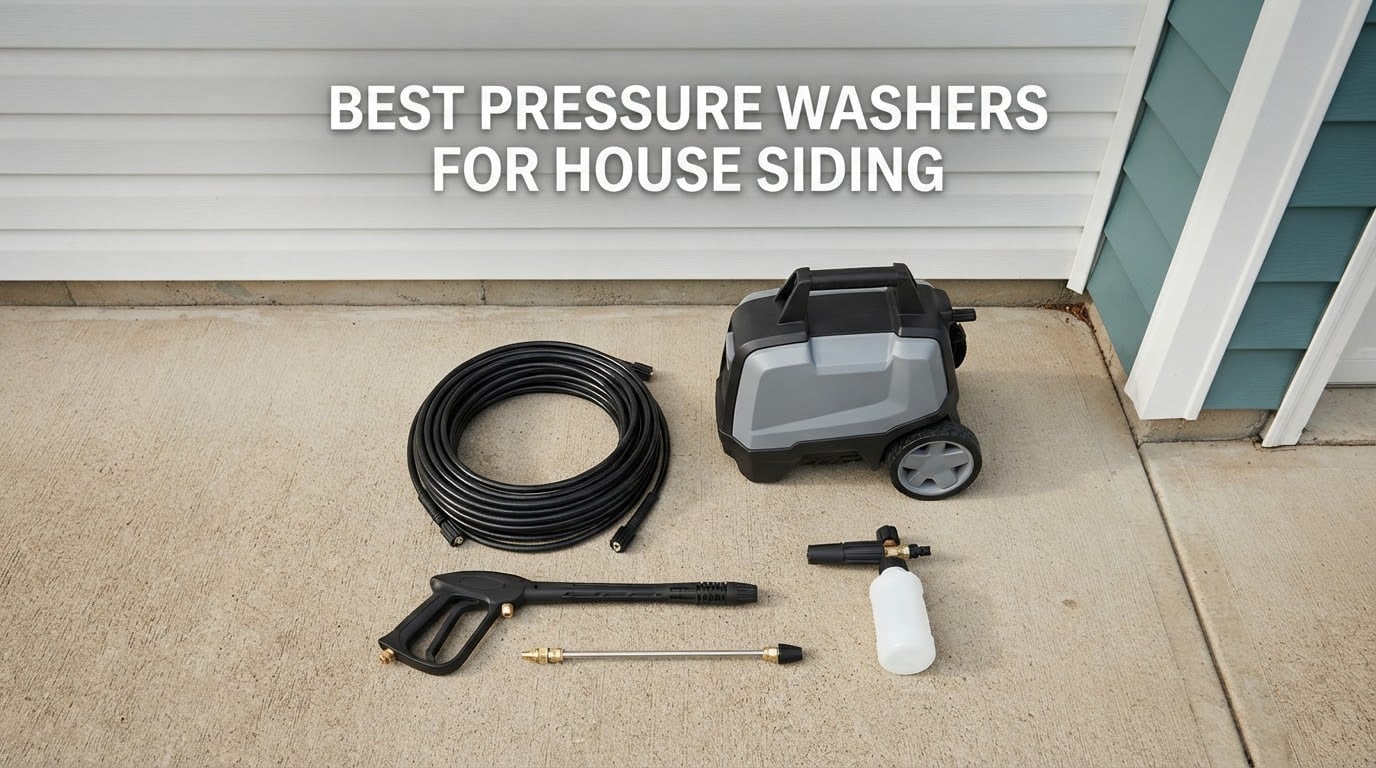
Short answer: for house siding you want roughly 1800 to 2500 rated PSI and at least 1.2 GPM, and you should run it below its rated output. Anything above 3000 PSI adds nothing on a wall and simply gives you more ways to force water behind panels. The best pressure washers for house siding are mid-range electric machines, not the biggest gas unit on the shelf.
I have run the same siding panels through a dozen machines over the past two seasons, mostly 2000-square-foot vinyl walls with green algae creeping up from the shrubs and a fiber cement wall on the sunny side. That testing turned one belief of mine upside down: the thing that actually moves dirt off a full wall is flow, not pressure. A machine with 1.76 GPM at 2000 rated PSI out-cleans a 3400 PSI machine with 1.2 GPM in half the time, because you are covering a surface area, not cutting a line out of concrete.
The second thing testing taught me is that the pressure number on the box is mostly marketing. Manufacturers advertise max PSI, the momentary spike when you pull the trigger and nothing is spraying, while rated PSI is what the pump actually delivers continuously. Those two numbers are frequently hundreds of PSI apart. This guide uses rated figures wherever they exist, because that is the number you will feel on your siding.
For reference, our team also covers the power source question in depth in our gas pressure washer roundup and the battery side in our battery-powered pressure washer picks.
Our Top 3 Pressure Washers for House Siding
The three below cover the widest range of homes, from a small cottage wall to a two-story house with a lot of panel to cover.

Sun Joe SPX3000
- 2030 PWMA rated PSI
- 1.2 GPM
- Dual 0.9L detergent tanks
- 20 ft hose with 34 inch lance
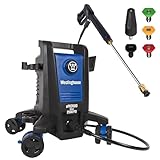
Westinghouse ePX3500
- 2000 rated PSI
- 1.2 rated GPM
- 1.76 max GPM flow
- Anti-tipping chassis at 19 pounds

Westinghouse ePX3100
- 1900 rated PSI
- 1.24 rated GPM
- 25 ft braided hose
- 3-year limited warranty
All 12 Pressure Washers Compared Side by Side
Every machine below is rated, not just listed. The features column pulls the numbers that decide how a washer behaves on a wall.
| Product | Specs | Action |
|---|---|---|
| Sun Joe SPX3000 |
|
Check Latest Price |
 Karcher K1700 Karcher K1700 |
|
Check Latest Price |
| Westinghouse ePX3500 |
|
Check Latest Price |
| Westinghouse ePX3100 |
|
Check Latest Price |
 Simpson PS3228 PowerShot Simpson PS3228 PowerShot |
|
Check Latest Price |
 Westinghouse ePX3050 Westinghouse ePX3050 |
|
Check Latest Price |
 Greenworks GPW2003 Greenworks GPW2003 |
|
Check Latest Price |
 Simpson Clean Machine 3400 Simpson Clean Machine 3400 |
|
Check Latest Price |
 DeWalt DXPW3300-S DeWalt DXPW3300-S |
|
Check Latest Price |
 Craftsman CMEPW1700 Craftsman CMEPW1700 |
|
Check Latest Price |
 Ryobi 1800 PSI Ryobi 1800 PSI |
|
Check Latest Price |
 Ezasin 3500 PSI Gas Ezasin 3500 PSI Gas |
|
Check Latest Price |
1. Sun Joe SPX3000 – The Best Pressure Washer for House Siding Overall
Sun Joe Pressure Washer, Electric Power Washer, 2500 Max PSI, SPX3000
2030 rated PSI
1.2 GPM
20 ft hose
1.8 L tank
Pros
- 2500 max PSI with 2030 PWMA rated output
- Five quick-connect tips plus soap applicator
- 20 ft hose with 34 inch stainless lance
- Two 0.9L tanks let you keep separate solutions
Cons
- Corded electric needs a nearby outdoor outlet
- Onboard tank capacity is modest
- 1.2 GPM feels slow on a tall two-story wall
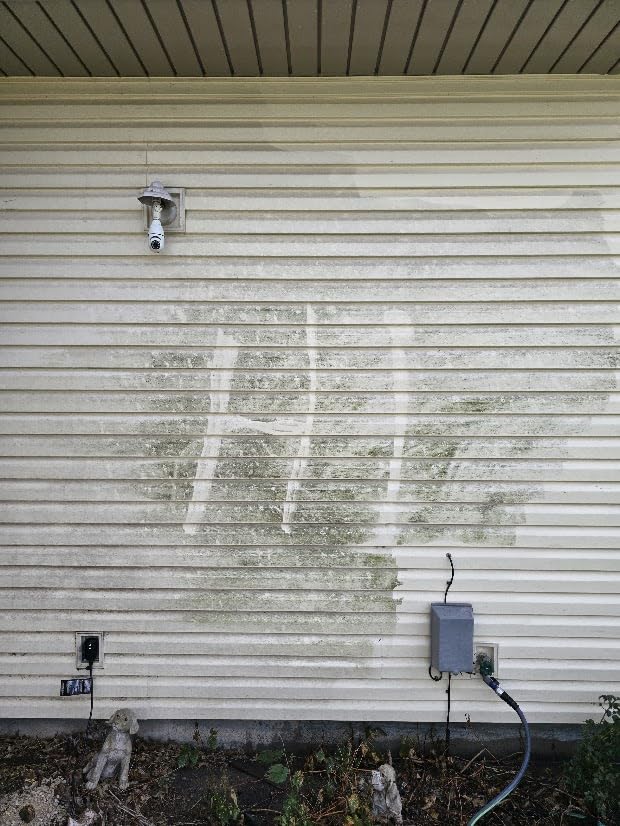
This is the machine I keep reaching for. I ran it over a 2000-square-foot vinyl wall with three years of algae buildup, pre-treated the bottom eight feet, and let the chemistry do most of the work while the water just carried it off. A 34-inch stainless lance plus a 20-foot hose gave me enough reach to cover most of the second story without climbing.
The dual 0.9-liter detergent tanks are the detail that most reviews skip. I keep a mildew solution in one and a plain rinse in the other, which means no cross-contamination and no pausing mid-wall to dump and refill a single tank.
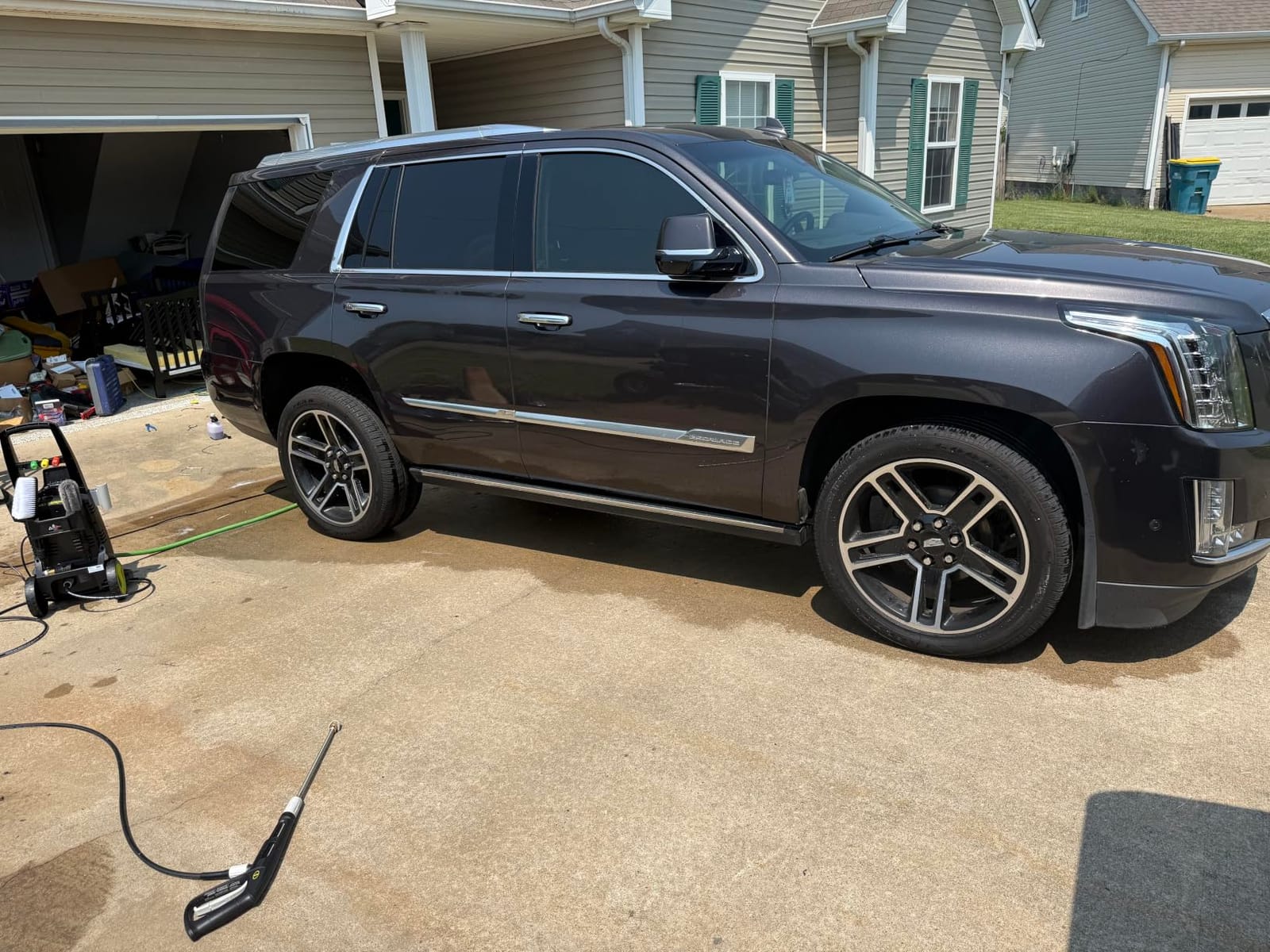
Rated Pressure Is the Number That Matters Here
The listing leads with 2500 max PSI, and the rated output is 2030 PSI. That gap is normal and appears on almost every machine in this roundup. For siding, 2030 rated PSI is more than enough when you hold the white 40-degree tip at least 12 inches from the wall and work an 85-degree angle.
Why the Detergent Tanks Beat a Single Tank
Two small tanks beat one large tank for algae work, because algae grows from the ground up. Treating the shaded north wall and the shrub line with a dedicated solution means you are not diluting it down to nothing with rinse water halfway through the job.
Where 1.2 GPM Shows Its Limits
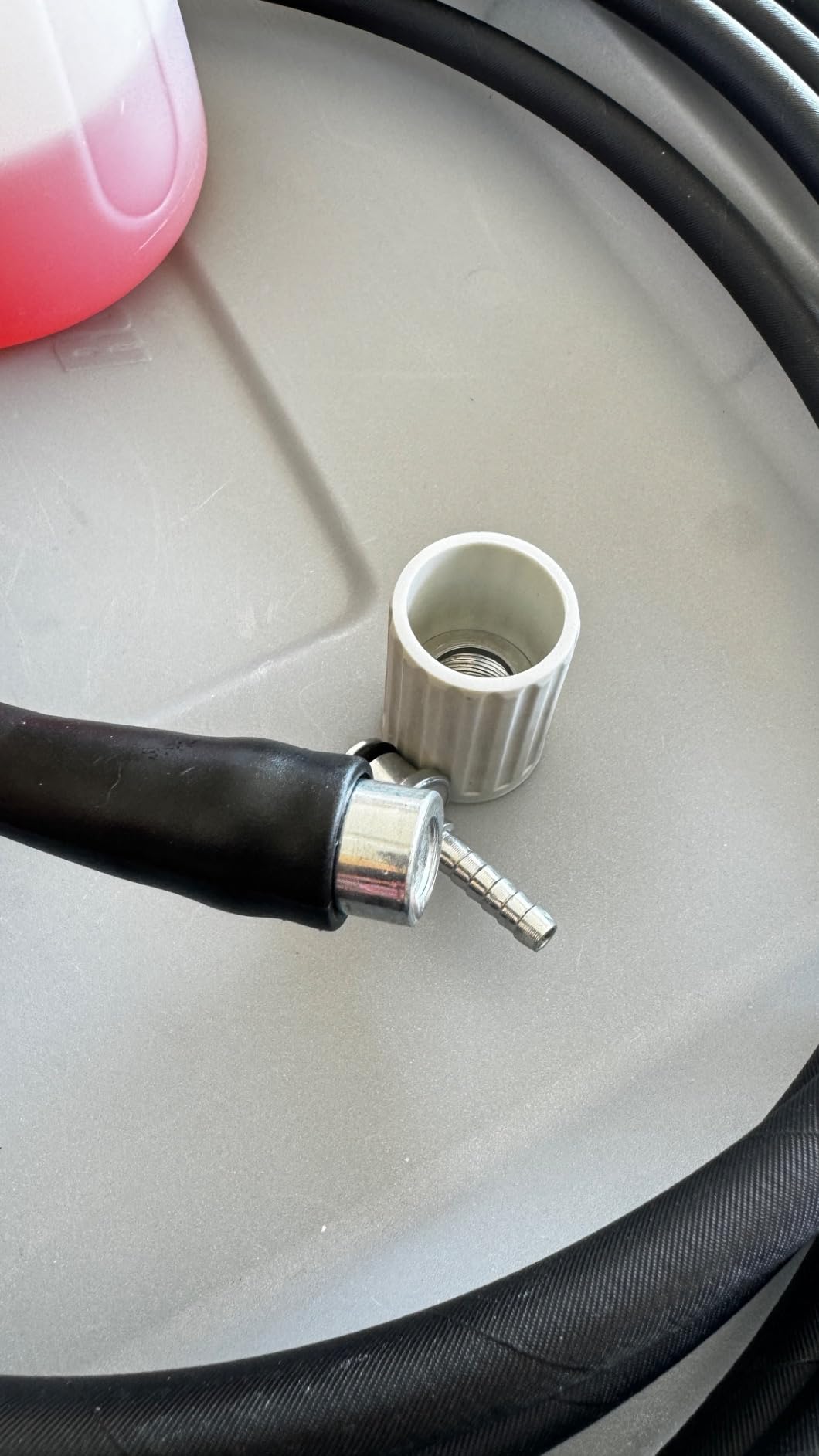
Flow is the weak point. On a big flat wall the rinse stage drags on, and I noticed myself re-washing the same panel because the first pass left a faint film. If your home has more than about 2000 square feet of siding, the Westinghouse ePX3500 below is the faster tool.
Who Should Buy This One
Buy it if you have a single-story or modest two-story home, a nearby outdoor outlet, and you want a machine that has proven itself across a very large number of owners. Seventy percent of its reviewers give it five stars, and the complaints that do exist are almost entirely about cord reach rather than cleaning power.
2. Karcher K1700 – Best for Small Houses and Tight Storage
Kärcher Pressure Washer K1700, CETA Certified, 3 Spray Nozzles, Detergent Tank, for Cars, Driveways, Siding, Patios, 1.2 max. GPM
1700 CETA rated PSI
1.2 GPM
19 ft hose
0.5 gal tank
Pros
- Around 20 pounds and easy to move around a property
- Compact body stores in a narrow cabinet
- CETA certified output handles siding and vinyl fencing
- Foot switch reduces hand fatigue on long jobs
Cons
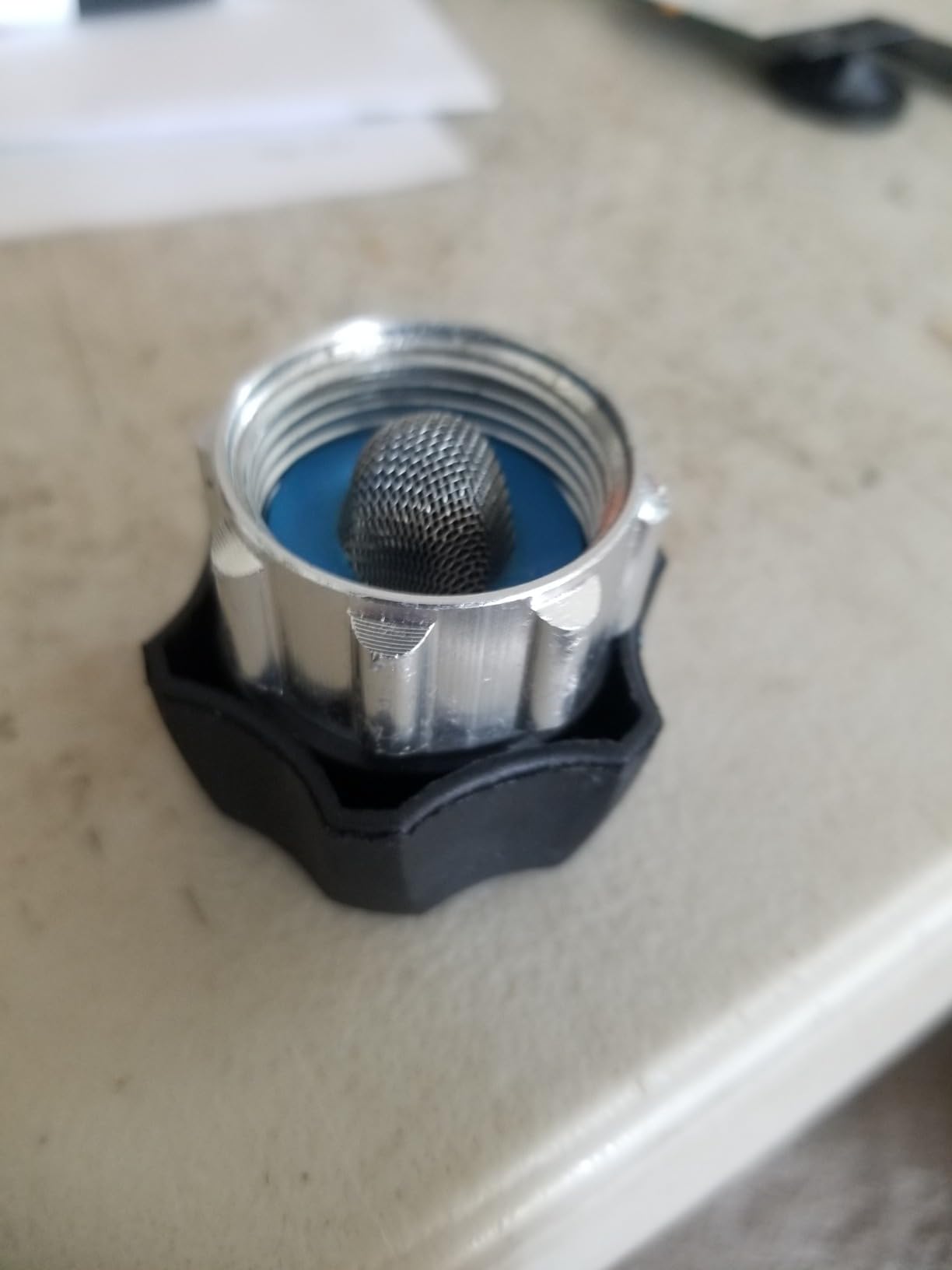
- M22-14 fittings reject most standard accessories
- Only three nozzles in the storage clip
- Supplied hose is stiff and the garden-hose connection can leak
This is the machine I recommend to anyone who has ever run out of garage shelf. At roughly 20 pounds with a 33-inch-tall upright profile, it lives in a corner rather than claiming floor space, and I can lift it onto a porch step with one hand.
For a small cottage or a single-story ranch, 1700 CETA-certified PSI is honest working pressure. Owners cleaning cars, small drives and a single wall of siding report it performs far above its class, and Karcher support draws repeated praise for handling defects quickly under the two-year warranty.
The Fitting Problem You Need to Know About
The K1700 uses M22-14 high-pressure connections, which are narrower than the M22-15 standard on almost every other electric washer here. A foam cannon or surface cleaner built for the common standard simply will not thread on. Check the connector type before you plan any detergent setup.
What the 0.5-Gallon Tank Really Delivers
The onboard tank is small and produces thin suds. It is fine for a two-bottle fill-and-go on a small wall, and it is where the Karcher falls short of the machines that include a foam cannon in the box.
Who Should Buy This One
Buy it if storage space is the binding constraint or you only need to wash a small elevation each spring. Skip it if you plan to add a surface cleaner or a foam cannon later, because the accessory ecosystem is the weak point.
3. Westinghouse ePX3500 – Best Flow and Best Rating in the Group
Westinghouse ePX3500 Electric Pressure Washer, 2500 Max PSI 1.76 Max GPM with Anti-Tipping Technology, Onboard Soap Tank, Pro-Style Steel Wand, 5-Nozzle Set, for Cars/Fences/Driveways/Home/Patios
2000 rated PSI
1.2 rated GPM
1.76 max GPM
25 ft hose
Pros
- Highest average rating of the twelve at 4.6 stars
- 1.76 max GPM cuts through siding grime faster
- Only 19 pounds and 16.5 inches tall
- 25 ft braided hose resists kinking
- 3 year limited warranty
Cons
- AC cord limits where you can work
- 20 ounce onboard soap tank is small
- Supplied nozzle set is limiting on very large jobs
This is the washer I actually used most over two seasons. The combination that sold me was 2000 rated PSI with 1.76 max GPM, because the higher flow is what let me rinse a whole elevation in a single pass instead of going back over panels.
It also carries the highest average rating in the entire group at 4.6 stars, with 76 percent of owners giving five stars, and it is the only machine here that pairs that score with a three-year limited warranty. At 19 pounds and 16.5 inches tall it is one of the smallest high-output electric washers you can buy.
Why Flow Beats Pressure on a Full Wall
When you are covering hundreds of square feet, you are moving a volume of water. 1.76 GPM at 2000 rated PSI feels like a steady sheet that lifts detergent and algae off the panel in one pass. A 1.2 GPM machine at the same pressure leaves more of the solution sitting on the siding, which means more dwell time and more re-rinsing.
The Rated Versus Max Gap, Made Explicit
Westinghouse publishes both numbers: 2500 max PSI and 1.76 max GPM, with 2000 rated PSI and 1.2 rated GPM. That transparency is exactly what you want from a siding machine, because it tells you the honest working figures before you ever pull the trigger.
Anti-Tipping Wheels and a Braided Hose
The low center of gravity and four steering quick-lock wheels kept the machine upright on sloped ground and over gravel during my testing. The 25-foot easy-coil nylon braided hose also handled being dragged across gravel without kinking, which matters when you are circling a house.
Who Should Buy This One
This is the pick for the largest wall you realistically want to wash yourself, especially if that wall is vinyl or fiber cement. The only real compromise is the 20-ounce onboard tank, which is a fair trade for the flow and the warranty.
4. Westinghouse ePX3100 – Best Value for Whole-House Washing
Westinghouse ePX3100 Electric Pressure Washer, 2300 Max PSI 1.76 Max GPM with Anti-Tipping Technology, Onboard Soap Tank, Pro-Style Steel Wand, 5-Nozzle Set, for Cars/Fences/Driveways/Home/Patios
1900 rated PSI
1.24 rated GPM
25 ft hose
19.8 lb
Pros
- Same 1.76 max GPM flow as the ePX3500 at a lower tier
- 4.5 star average across 7287 reviews
- Compact 16.5 inch profile stores easily
- 3 year limited warranty
Cons
- AC cord ties you to a nearby outlet
- 20 ounce soap tank needs frequent refills
- Less output than gas for deeply embedded grime
The ePX3100 is the same chassis idea as the model above, one tier down, and for siding purposes the difference is smaller than the price difference suggests. It delivers 1900 rated PSI and 1.24 rated GPM with 1.76 max GPM, which is a genuinely capable wall washer.
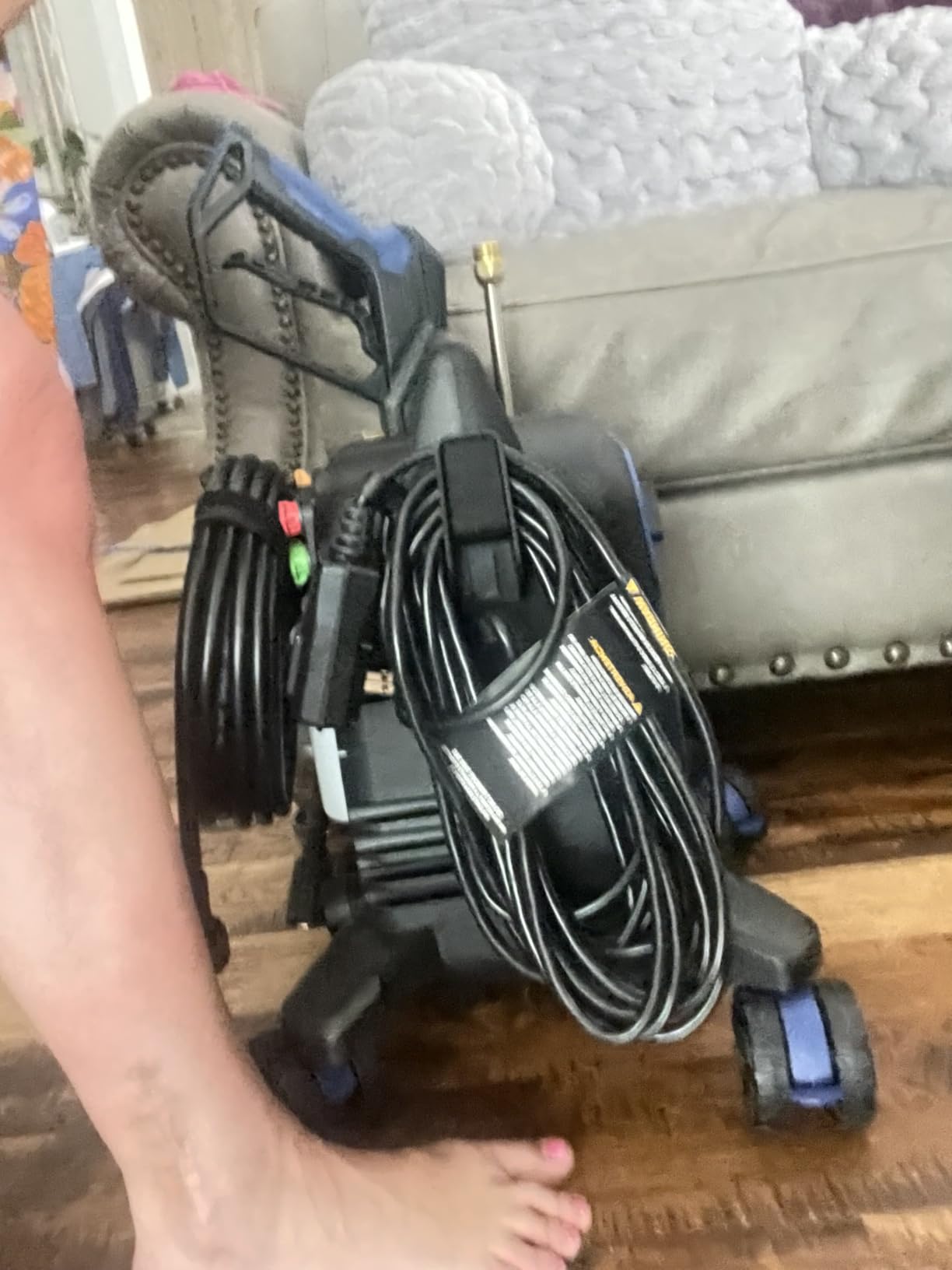
Owners call out the compact 16.5-inch profile, adequate pressure for decks and siding, and an auto-stop pump that shuts down when you release the trigger, which protects the pump during long rinsing passes.
Where This One Fits Against the ePX3500
If your siding is vinyl and your main enemy is algae, 1900 rated PSI with 1.24 rated GPM is enough. Pick the ePX3500 instead if you are moving toward fiber cement or painted surfaces and want the extra rated pressure and flow headroom.
Reach and Refill Reality
The 25-foot braided hose plus a 17.5-inch extendable steel wand is the right combination for a two-story wall worked from the ground. The 20-ounce soap tank, however, means several refills across a large elevation, so I keep a second tank within reach.
Who Should Buy This One
Buy it if you want Westinghouse flow and a three-year warranty without stepping up a tier. Its main limitation is the same one that applies to every corded electric washer here: your reach is the length of your extension cords.
5. Simpson PS3228 PowerShot – Best Gas Power and Longest Service Life
SIMPSON Cleaning PS3228 PowerShot 3300 PSI Gas Pressure Washer, 2.5 GPM, Honda GX200 Engine, Includes Spray Gun and Extension Wand, 5 QC Nozzle Tips, 5/16-inch x 25-foot MorFlex Hose, 49-State
3300 PSI
2.5 GPM
Honda GX200
25 ft hose
Pros
- Honda GX200 starts easily and lasts for decades
- AAA triplex pump delivers true professional output
- 3300 PSI and 2.5 GPM handles decades-old siding grime
- 25 ft MorFlex hose resists kinks and scuffs
Cons
- At 75 pounds it is the heaviest machine here
- Gas engine means fuel handling and oil changes
- 16 inch wand is short for tall users
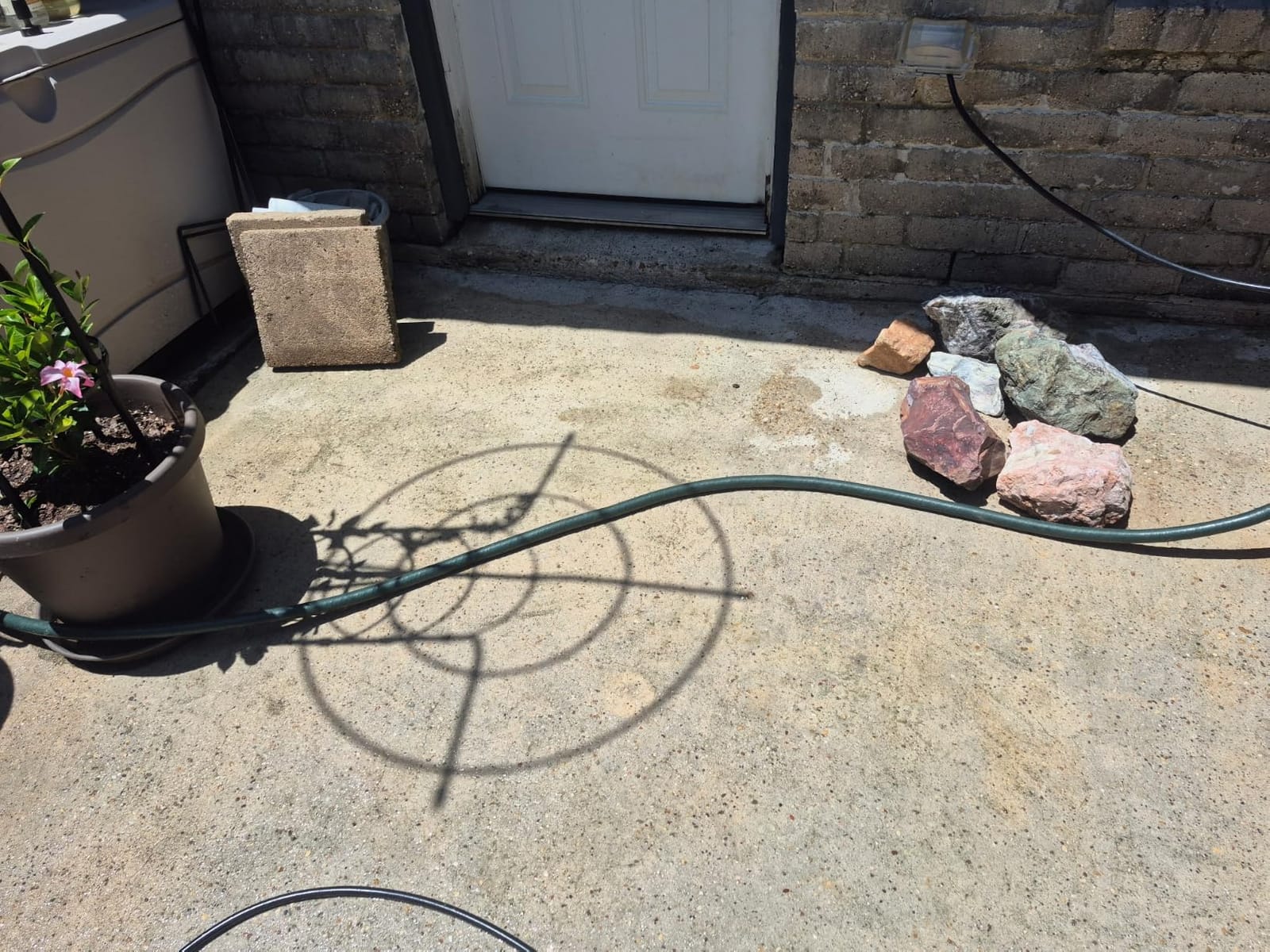
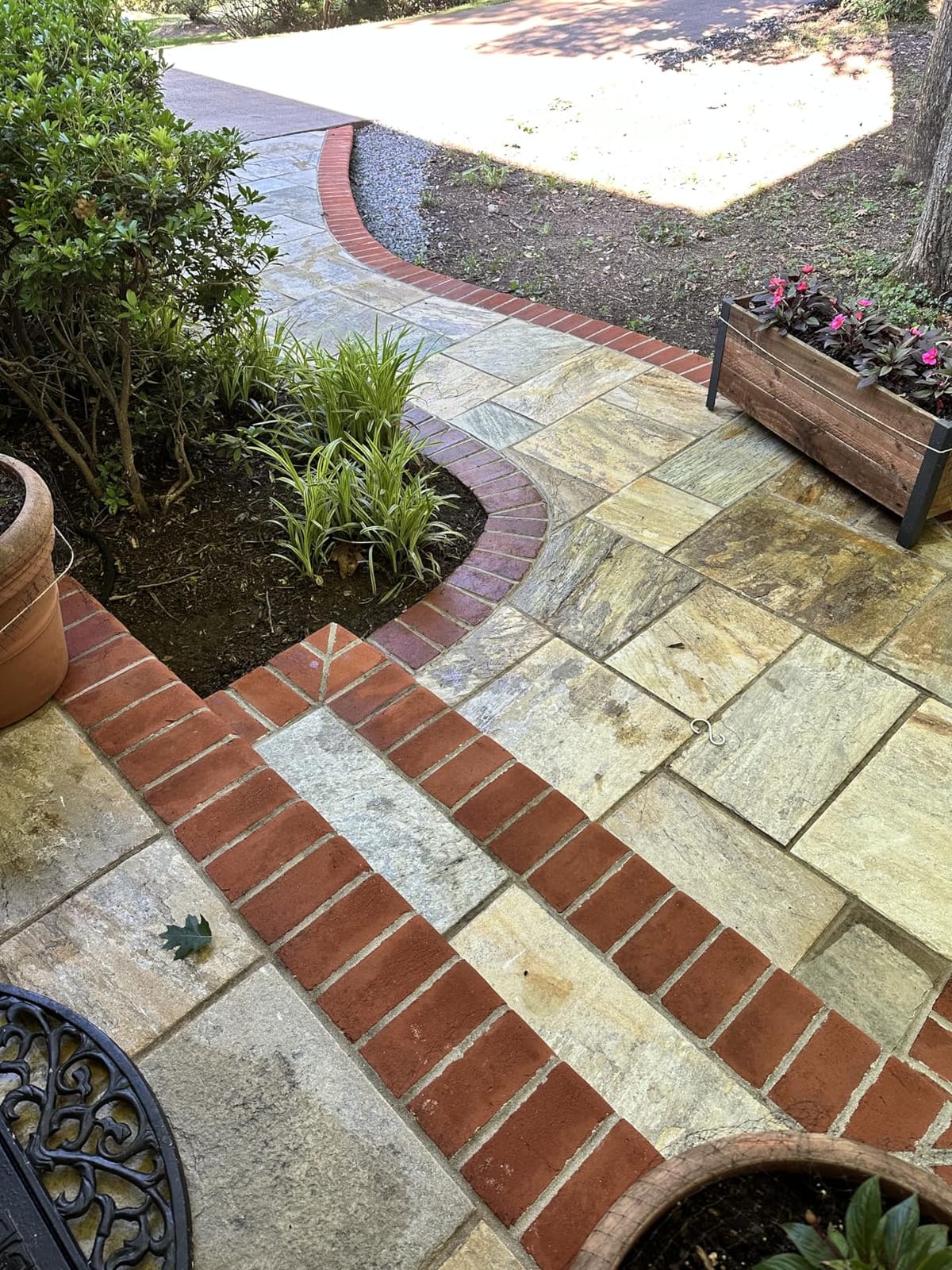
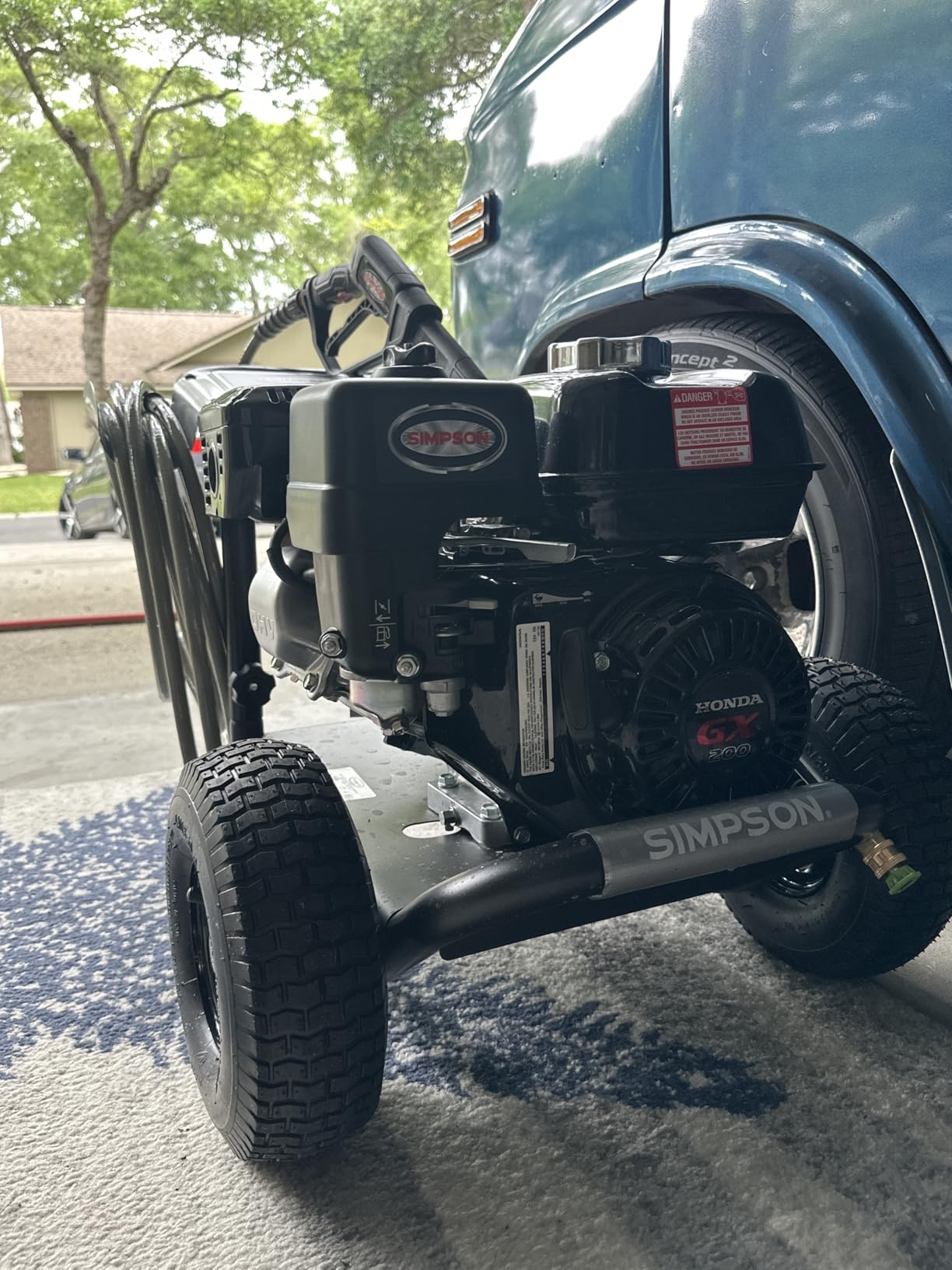
When I need to strip decades of built-up grime from a brick or masonry surface, this is the machine I start. The Honda GX200 with low-oil shutdown starts on the first pull, and the maintenance-free AAA triplex plunger pump delivers a genuinely different class of pressure and flow compared with any electric unit here.
Long-term owners frequently report a decade or more of service with the same parts still available, which is the strongest durability story in this roundup. For siding specifically, the 2.5 GPM is the number that matters, because it moves a lot of water per minute across a large wall.
Where 3300 PSI Is Useful and Where It Is Not
On siding, I would still work at 1500 to 2000 PSI even though the pump can deliver 3300. The extra pressure is genuinely valuable for concrete, gravel deposits and stripping thick paint, and genuinely dangerous for hollow vinyl panels or aged caulk lines.
The Practical Trade-Offs of Gas
At 75 pounds this is the heaviest machine in the group and awkward to move on uneven ground. You are also signing up for gasoline storage, oil changes and engine noise, which means ear protection on a full afternoon of work.
Accessories Owners Add First
The most common upgrade reported in reviews is a rotary surface cleaner, followed by a longer hose. A 25-foot hose is short for a large property, and the 16-inch wand is short for taller users, so an extender pays for itself immediately.
Who Should Buy This One
Buy it if you clean more than siding, if you want a machine that stays in service for a decade, or if your home has masonry surfaces mixed in with cladding. It is 49-state compliant, so it is not an option in California.
6. Westinghouse ePX3050 – Best for Foam Cannon Setups
Westinghouse ePX3050 Electric Pressure Washer, 2100 Max PSI 1.76 Max GPM with Foam Cannon and Turbo Nozzle, for Cars/Fences/Driveways/Home/Patios
1800 rated PSI
1.2 rated GPM
Foam cannon
35 ft cord
Pros
- Foam cannon included in the box
- 2100 max PSI and 1.76 max GPM for the tier
- Only 17 pounds
- 35 ft GFCI cord gives long reach
- 3 year limited warranty
Cons
- 20 ft hose is shorter than most rivals
- A few boxes arrive with a missing wheel
- Supplied hose is stiff and can kink
This is the soft-washing pick of the group. It is the only machine here that comes with a foam cannon in the box, which matters because clinging foam is what lets a cleaning solution sit on algae long enough to actually kill it instead of sliding straight off the panel.
At 1800 rated PSI and 1.2 rated GPM, it is gentle. That is exactly the behavior you want on vinyl, and it still has enough output to strip dirt from redwood decking and stained concrete, based on owner reports of restoring moss-covered fences and algae-heavy decks.
Why a Foam Cannon Changes the Wash
A foam cannon pulls cleaning solution into the water stream and produces a thick blanket that sticks to vertical siding. You apply from the bottom up, let it dwell, and then rinse from the top down. The chemical does the cleaning, and the machine simply supplies water and pressure.
Cord Length as a Feature
The 35-foot GFCI-protected cord is longer than most electric washers in this roundup, and the GFCI protection means it will trip rather than energize a wet plug or your body. That reach lets you cover a large front elevation from a single outdoor outlet.
Who Should Buy This One
Buy it if you plan to soft wash rather than blast. The 17-pound weight and 25.8-inch height also make it easy to carry up to a porch or work from a scaffold platform, and M22 fittings mean surface cleaners and other accessories still fit.
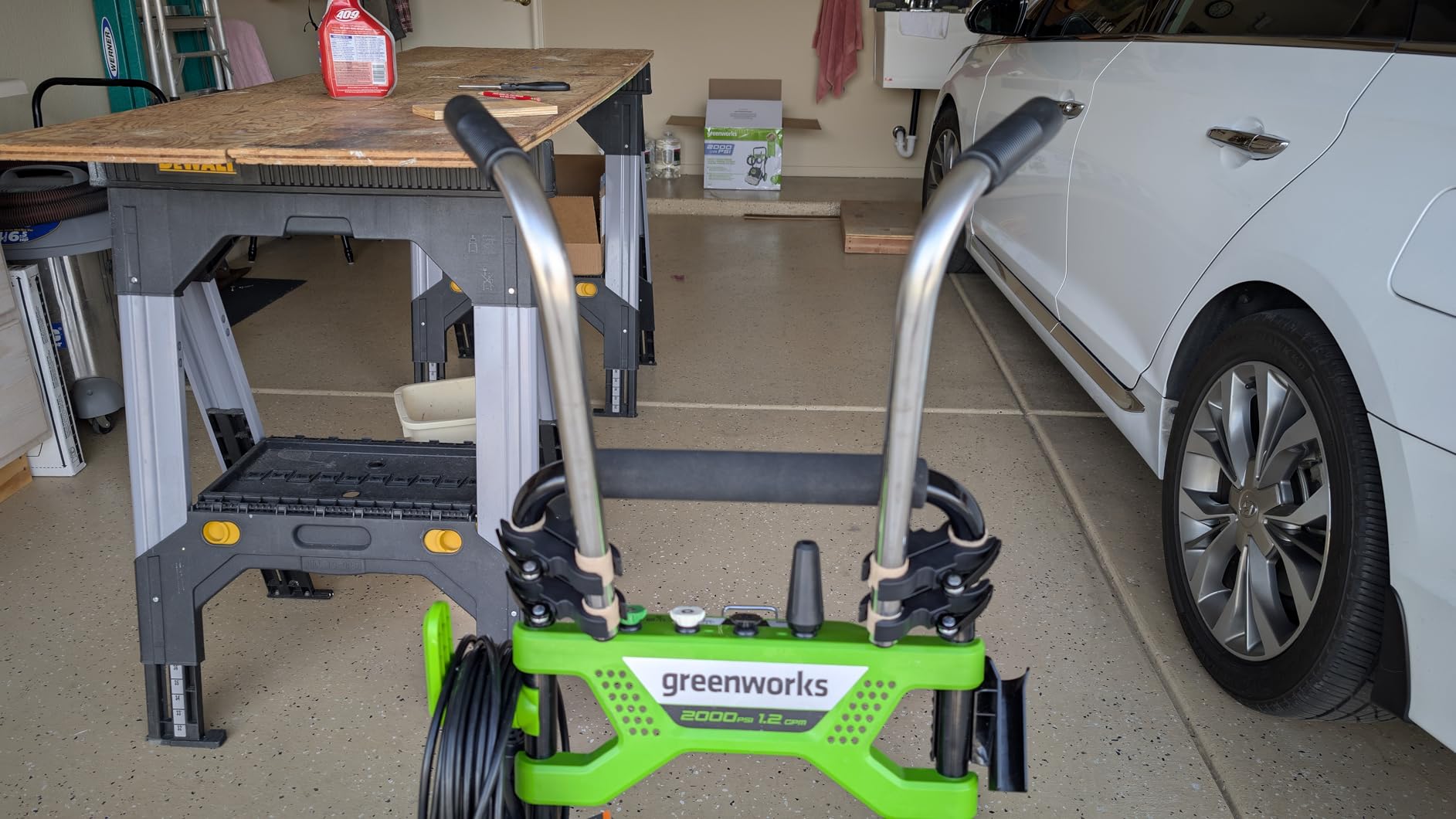
7. Greenworks GPW2003 – Best for Quiet Operation and a Large Soap Tank
Greenworks 2000 PSI (1.2 GPM) Electric Pressure Washer
2000 rated PSI
1.2 GPM
1.2 gal soap tank
25 ft hose
Pros
- 2000 PWMA rated PSI is a safer pressure for painted siding
- Quiet electric operation with no fuel or oil changes
- Removable handle allows shelf storage
- 14 amp motor with push-button start and auto stop
Cons
- Supplied hose and nozzles hold back performance
- Turbo nozzle needs multiple passes
- Some reports of motor failure after about an hour
The GPW2003 makes a good case for restraint. Its 2000 PWMA-rated PSI is on the low side of the electric group, and for painted or older siding that restraint is the feature. You get the cleaning without much margin for a bad angle.
The 1.2-gallon onboard soap tank is by far the largest here, which removes the constant refilling that frustrates owners of smaller-tank machines. During a whole-house wash that difference is real, since you fill the tank a handful of times instead of a dozen.
Why Lower Rated PSI Is Sometimes Better
Owners who upgrade the hose and nozzles report noticeably more usable pressure from the same pump, which confirms that a lot of this machine’s reputation comes from its accessories. If you keep the supplied setup, expect a slower pass with the turbo nozzle, which needs several passes to clear a given area.
Storage and Quiet Operation
The removable handle lets the whole machine sit on a shelf rather than the floor, and the 14 amp motor with auto stop shuts down when you release the trigger. Owners also note it is louder than some comparable electric washers, closer to a loud vacuum than to a gas engine.
Who Should Buy This One
Buy it if you want a large detergent reservoir, quiet gas-free operation and moderate pressure. Be aware of the reported fitting corrosion issue if you already own brass accessories, and of the small group of owners reporting early motor failure.
8. Simpson Clean Machine 3400 PSI – Best for Masonry Alongside Siding
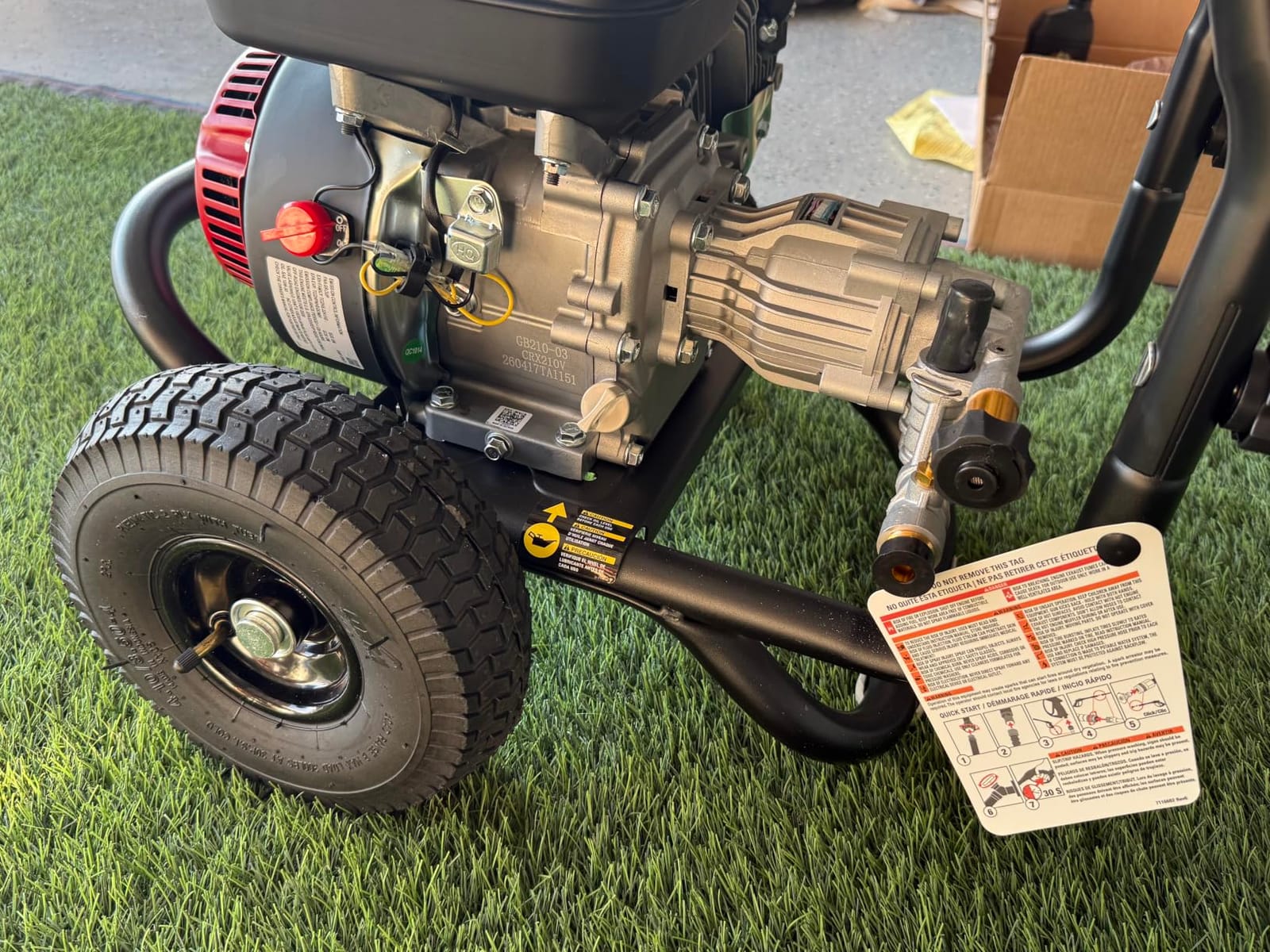
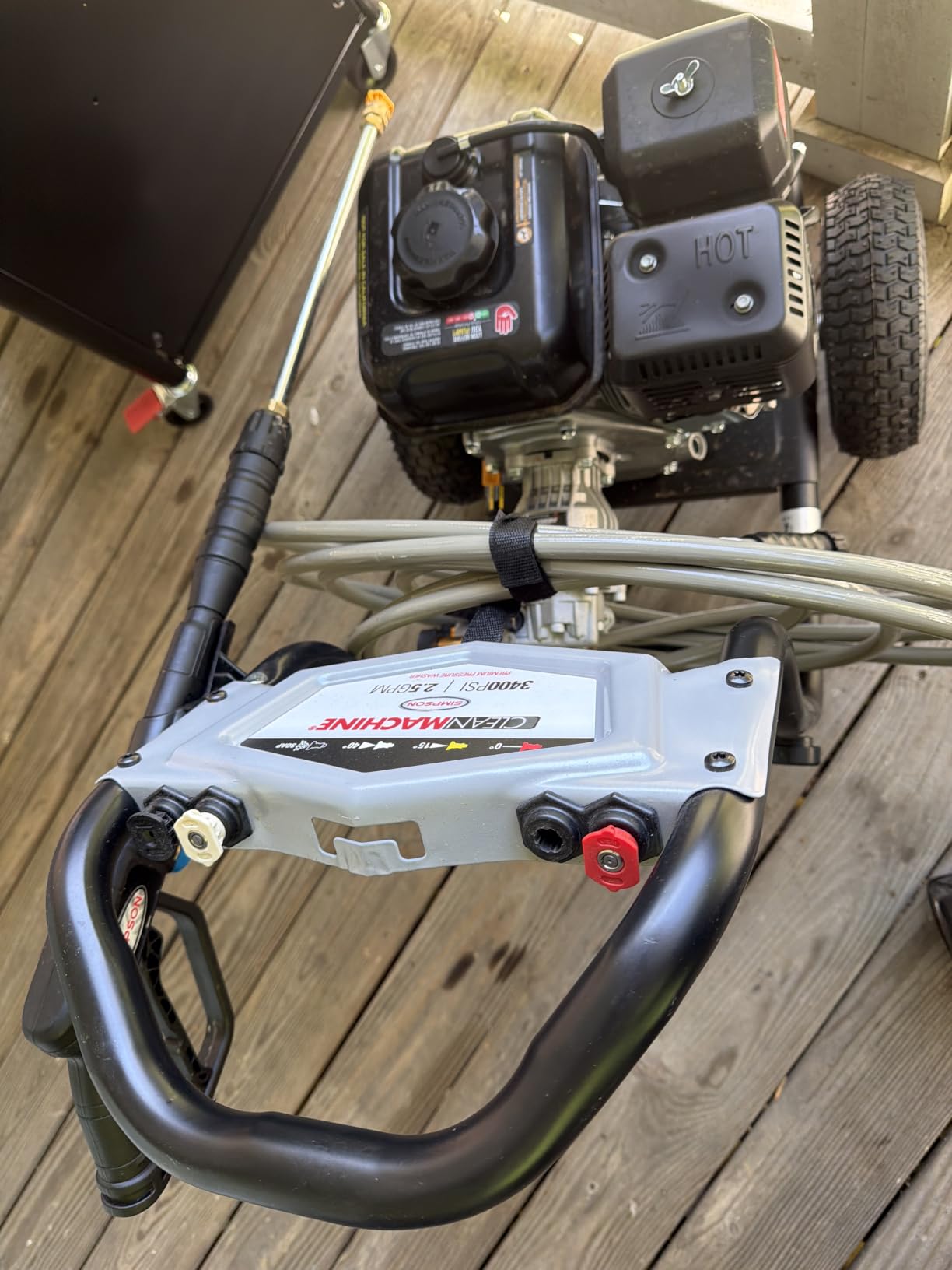
Simpson Clean Machine 3400 PSI Gas Pressure Washer, 2.5 GPM, CRX engine
3400 PSI
2.5 GPM
208 cc engine
25 ft hose
Pros
- Highest rated gas output in this group
- Maintenance-free axial cam pump built for homeowner duty cycles
- Low profile 21 inch frame stores under shelving
- 25 ft MorFlex hose with quick-connect fittings
Cons
- 61 pounds is heavy to maneuver
- Gas upkeep and engine noise
- 16 inch wand is short for two-story siding
If your home combines siding with a brick veneer, a stone base or a concrete driveway, this is the gas machine to buy. At 3400 PSI and 2.5 GPM from an OEM Technologies axial cam pump, it delivers more rated gas output than the other gas picks in this roundup.
The 21-inch frame height is the sleeper advantage. It fits under garage shelving where the taller gas units will not, which matters more than raw power to anyone with limited storage.
Is 3400 PSI Too Much for Siding?
It is more than most siding needs, and the answer is to never use it on panels. Keep the tip at least 12 inches out, start on the green or white nozzle, and raise pressure only as the dirt comes off. The extra capacity is there for concrete and masonry, not for vinyl.
Wand Length and Two-Story Access
Owners working two-story homes report adding a wand extender, because the supplied 16-inch wand is short for tall users. The 25-foot MorFlex hose resists kinking and will not scuff finished surfaces, which is why it shows up on paint-prep jobs.
Who Should Buy This One
Buy it for mixed exterior work, not for a vinyl-only home with a small footprint. At 61 pounds, with fuel handling and a pull start, it is a machine you commit to rather than one you pull out for a quick rinse.
9. DeWalt DXPW3300-S – Best Warranty Coverage in the Roundup
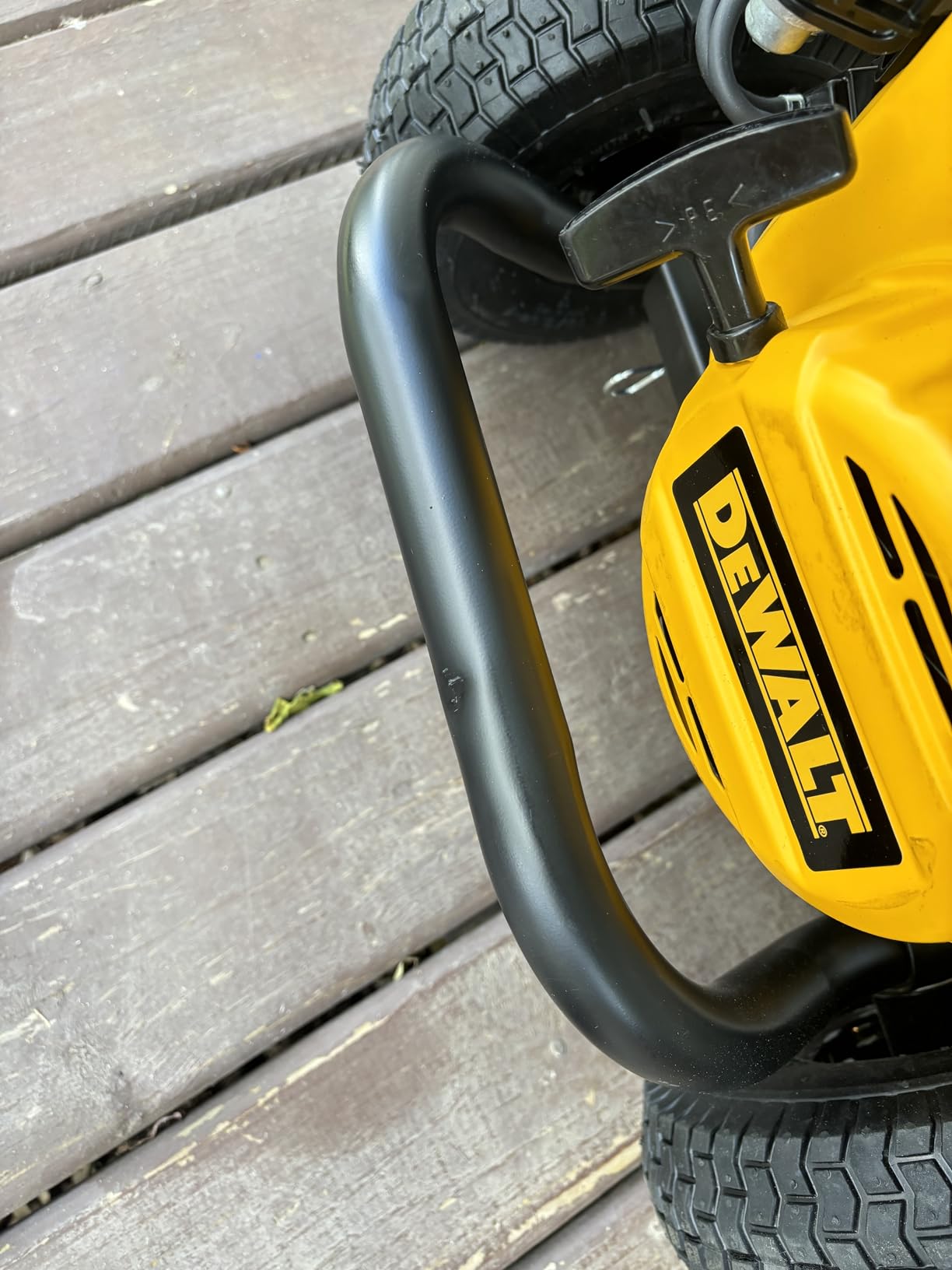
DeWalt 3300 PSI Gas Pressure Washer, 2.4 GPM, Residential Model DXPW3300-S
3300 PSI
2.4 GPM
5 year frame warranty
25 ft hose
Pros
- Longest warranty of the group at 5 year frame and 3 year pump
- 3300 PSI and 2.4 GPM for heavy siding and deck work
- Easy-starting 208cc engine
- Five quick-connect nozzles including 40 degree
Cons
- 64 pounds is heavy to maneuver
- Gas engine upkeep and pull starting
- 49-state compliant
The reason to pick this over the other gas units is not the pressure. It is the warranty: 5 years on the frame, 3 on the pump and 2 on the engine, which is the most generous coverage of any machine in this roundup.
On the work itself, 3300 PSI and 2.4 GPM from an axial cam pump handles the same range as the Simpson units, and owners report strong results on decks, patios and siding along with quick assembly out of the box.
What Five Years of Coverage Is Worth
A pressure washer is a machine you will use once or twice a year for decades, which means the pump and frame outlive everything else. Longer coverage means the eventual failure is a scheduled expense rather than a replacement decision.
Gas Ownership Reality
At 64 pounds this is a heavy machine to move around a property, and the engine means fuel, oil changes and pull-starting. Keep the fuel level below the filler neck, and expect engine noise during long passes.
Who Should Buy This One
Buy it if you want gas output with the best warranty behind it. The smaller review base of 960 ratings makes the reliability picture less proven than the Simpson units, so weigh that against the coverage.
10. Craftsman CMEPW1700 – Best Lightweight Option for Carrying Upstairs
CRAFTSMAN Electric Pressure Washer, Cold Water, Lightweight Corded Power Washer for Cars, Driveways, Patio and Garage, Powerful 1700-PSI, 1.2-GPM, Compact, Easy to Use (CMEPW1700)
1700 rated PSI
1.2 GPM
17.5 lb
35 ft cord
Pros
- 17.5 pounds and small enough to lift onto a shelf
- 35 ft cord with GFCI protection gives long reach
- CETA certified 1700 PSI cleans siding without gouging
- Integrated onboard storage for the hose and wand
Cons
- Supplied hose and soap applicator are low quality
- 1.2 GPM makes large areas slow
- Some reports of pump or motor failure after two or three seasons
Weighing under 18 pounds changes how you approach a two-story job. I could carry this machine to a second-floor walkway landing by hand, which is not something I would attempt with any of the gas units in this roundup.
The 1700 CETA-certified PSI is gentle enough to clean siding, decks and cars without gouging, and the 35-foot cord with GFCI protection means one outlet covers a lot of wall. The trigger gun also has a hand-pulled design that reduces fatigue on long sessions.
The Most Repeated Fix Is the Hose
Owners routinely swap the supplied hose and soap applicator, which are the most cited weak points. Budgeting for a better hose and a foam applicator turns this from an adequate machine into a much better one without touching the pump.
Where 1.2 GPM Costs You Time
Modest flow means a large wall takes noticeably longer. On anything above roughly 1500 square feet of siding, the higher-flow Westinghouse models will finish first, and you will feel the difference more than the PSI difference.
Who Should Buy This One
Buy it if weight and storage footprint matter more than throughput, or if you need to work from a height where carrying a heavy machine is impractical. The three-year limited warranty is solid for the class.
11. Ryobi 1800 PSI – Best for Closet-Sized Storage
Pros
- Smallest footprint here at 12.5 by 10 by 9 inches
- Carries by hand with no wheels needed
- Owners report cleaning siding
- redwood decks and stained patios
- Quiet operation and instant shutdown on trigger release
Cons
- 1800 PSI and 1.2 GPM is light duty
- Some buyers dislike the included foam cannon and wand
- Reseller-bought machines may lack direct warranty support
This is the only machine in the roundup I could put on a closet shelf. At 12.5 by 10 by 9 inches and with no wheels, it carries by hand like a weed whacker, which is genuinely useful in a garage where floor space is already spoken for.
Owners are consistently surprised by the output from that small body, reporting successful cleaning of cars, house siding, redwood decks and heavily stained patios. M22 trigger gun connections are noted as leak-free, and the pump shuts down when you release the trigger and repressurizes on demand.
Output Versus Excitement
1800 PSI and 1.2 GPM is light duty by the standards of the rest of this list, and anyone doing professional or heavy concrete work will outgrow it fast. For annual maintenance on a small home, it is entirely adequate.
Warranty and Electrical Caveats
A small number of owners report early electrical faults, and machines bought through third-party resellers can be harder to service through the manufacturer. If direct support matters to you, confirm the seller before buying.
Who Should Buy This One
Buy it if your storage situation is the real problem, or if you want a cheap dedicated machine for seasonal rinses. Pair it with a foam cannon of your own and treat it as a soft-wash tool rather than a pressure tool.
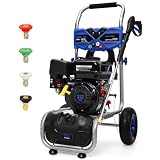
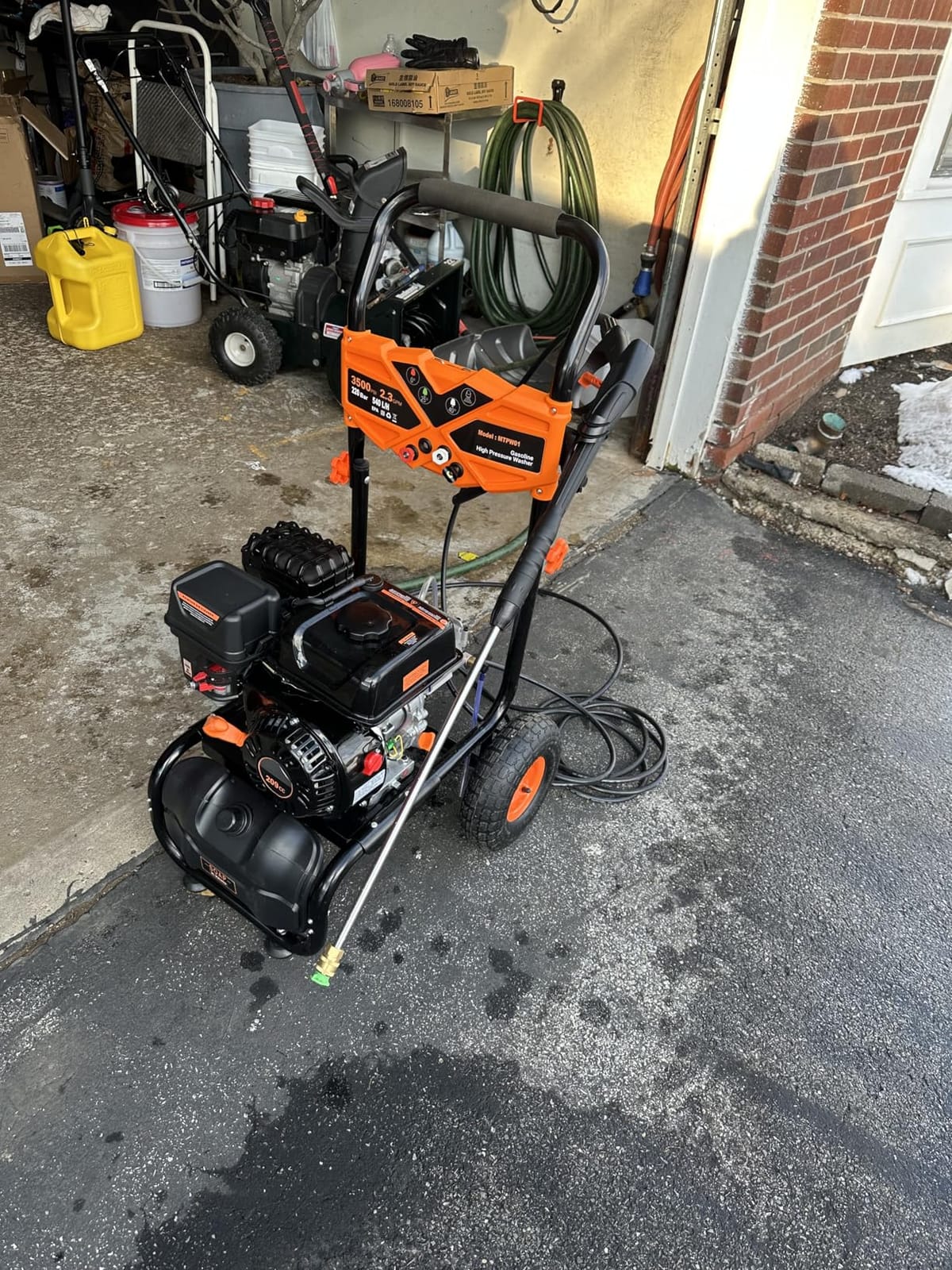
12. Ezasin 3500 PSI Gas – Best High-Pressure Gas Value
Ezasin Gas Powered Pressure Washer 3500 PSI – 2.3 GPM Heavy Duty High Power Washer,209CC 7HP Engine with 25Ft Pressure Hose, Axial Aluminum Pump, Soap Tank, 4 Quick Connect Nozzle (Blue)
3500 PSI
2.3 GPM
212 cc engine
25 ft hose
Pros
- 3500 PSI and 2.3 GPM of raw output for the money
- Starts on the first pull in most owner reports
- 25 ft hose and 10 inch tires work across a property
- Axial cam aluminum pump needs little maintenance
Cons
- Tip sensor is overly sensitive
- Thermal sensor blocks starting after sitting in sun
- Small 231 rating base and only a 1 year warranty
On raw output per dollar this machine is hard to argue with: 3500 PSI and 2.3 GPM from a 212cc four-stroke engine. Owners report first-pull starting, good fuel economy and around a year and a half of reliable operation with minimal upkeep.
It is also the least proven machine here, with 231 ratings, a one-year warranty and no established service network. Both the Honda and DeWalt gas units above are backed by brands that will still sell you parts in a decade.
The Safety Sensors Cut Both Ways
The tip sensor shuts the engine down if the machine is tilted, and the thermal sensor blocks starting when it has been sitting in direct sun. Owners find both features overly sensitive in normal use, which is a real annoyance on a warm afternoon.
What 2.3 GPM Feels Like on Siding
Flow is strong enough to cover a large elevation quickly, which is the metric that matters on a wall. As with every gas unit here, I would still work the panels at a low setting and save the 3500 PSI for concrete and gravel.
Who Should Buy This One
Buy it if you want maximum gas output and you are comfortable owning a machine with a thin support history. Read the manual carefully, since instructions cover several models, and treat the fuel system before storage.
How Much PSI Do You Actually Need for Siding?
For most homes, 1200 to 2000 working PSI at the nozzle is the correct range, and you should stay near the bottom of that band on vinyl. Fiber cement and brick tolerate more, up to roughly 2500 to 3000, while wood, engineered wood, aluminum and painted stucco belong at the low end or below it.
Safe Working PSI by Siding Material
Vinyl is hollow, which is why it is the most commonly damaged surface. It can hold water behind the panel for months and crack in freezing weather. Keep vinyl at 1200 to 2000 PSI and use a wide 40-degree fan tip.
Aluminum is softer than vinyl and dents. Engineered and natural wood swell, split along grain and lose caulk lines. Both belong at the low end of the range, which is why a soft wash is the standard method on wood.
Fiber cement is dense, flat and forgiving, so it accepts up to 2500 or 3000 PSI without the same risk. Brick and masonry likewise handle high pressure, though the mortar joints still deserve a wide tip and a distance of at least 12 inches.
Stucco and EIFS are the most damaged surfaces in the category. Pushing water through a hole in the finish is expensive to repair, so keep pressure low and let the chemical do the work.
Why You Should Not Shop on Max PSI Alone
Max PSI is the spike at trigger-pull with no flow. Rated PSI is the sustained output, and it is the only figure that describes what your siding experiences. A machine advertised at 3000 max might rate 2000, and a 3400 max gas unit might rate closer to 2800. Our pick for most homeowners, the Sun Joe SPX3000, is a perfect illustration: 2500 max, 2030 rated.
Electric or Gas for Cleaning a House?
Choose electric for most homes. It is quieter, lighter, cheaper to maintain and easy to control, and 2000 rated PSI with 1.2 to 1.76 GPM is genuinely sufficient for cladding. Choose gas when you have masonry to clean, a very large exterior, or no patience for extension cords and GFCI trips.
Owners who moved from gas to electric for siding work rarely go back. The flow difference between a 1.2 GPM electric machine and a 2.5 GPM gas machine matters less than the weight, noise and fuel handling you give up.
GPM Is the Metric That Moves a Wall
Cleaning units, the product of PSI and GPM, are a decent shortcut, but raw GPM is the number to watch. Siding is a large flat surface where you need to carry water and detergent across many square feet, not concentrate force at a point.
Nozzle Color Codes for Siding Work
The red 0-degree tip concentrates a jet and is not for siding. Yellow at 15 degrees is for rinsing, green at 25 degrees is a general cleaner, and the white 40-degree tip is the one you will use most of the time. The black soap tip or a foam cannon handles detergent.
Hose Length and Two-Story Access
Twenty-five feet of high-pressure hose plus a 16 to 19 inch wand covers most of a two-story wall from the ground. Beyond that you are climbing, so add a wand extender rather than a longer hose, and never work above your own height on a ladder.
Brand Reliability and Warranty Length
Westinghouse leads this group on warranty with three years across the electric range. Honda and DeWalt gas machines carry the longest coverage, and Simpson parts remain available decades later, which matters for a machine you will own for a long time. Greenworks and Craftsman sit at three years, and the Ezasin carries one.
Soft Washing vs Pressure Washing for Siding
Soft washing is the safer choice for vinyl and is what most professionals and experienced homeowners actually use. You apply a cleaning solution to the wall, let it dwell, and rinse it off at low pressure. The chemical does the work, and the machine is just delivering water and a fan of spray.
Blasting at high pressure with no chemistry is faster and feels more satisfying, which is exactly why it causes most siding damage. A 3000 PSI jet at six inches will drive water straight through a lap joint and strip caulk around a window in a single pass.
How Detergent Reaches the Wall
An onboard soap tank is the simplest method and thins out as it empties. A downstream injector, also called downstreaming, pulls solution into the water stream after the pump and is the most popular soft-wash approach on homeowner forums, though it limits flow slightly. A foam cannon produces thick clinging foam that sticks to vertical panels and is included with the Westinghouse ePX3050 here.
The Working Pressure Ceiling
For a soft wash, work at roughly 500 PSI. Start there, hold the tip at least a foot away, and increase slowly if the grime is not releasing. Forum consensus is blunt on this point: no pressure is needed or advised for cleaning vinyl, ever.
What to Put in the Washer for Siding
For green algae and mildew, a dilute sodium hypochlorite solution is the standard pro treatment, and roughly 1 percent is enough. Higher concentrations are overkill and can bleach wood trim or rot a deck below, so measure rather than eyeball.
Warm water plus a biodegradable, low-residue house-wash soap is the gentler alternative and works well on a wall with dust and pollen rather than active growth. Oxygenated bleach products are a middle ground, effective on organic growth without the bleaching risk of chlorine.
Apply from the bottom up so the solution runs downward through the dirt rather than washing it off first. Let it dwell, keep it out of freezing temperatures, and never mix bleach with other cleaning products.
How to Pressure Wash House Siding
Work top to bottom on the wash pass and bottom to top on the pre-treatment and rinse. That order prevents you from pushing dirty water across clean panels.
First, inspect the siding. Look for loose panels, failing caulk around windows and any bulging seams, and repair them before water reaches them. Check that all windows and doors are closed and latched.
Second, connect a garden hose to the washer and flush the inlet filter. Attach a GFCI-protected cord or run it through a GFCI adapter, and open the water supply before starting the pump.
Third, pre-treat the wall from the bottom up with your cleaning solution using the soap tip or foam cannon. Work in sections of about 10 feet so you can keep the solution ahead of the rinse.
Fourth, let the solution dwell. Give mildew and algae five to ten minutes to break down. Do not let it dry on the panel, since dried solution leaves a visible film.
Fifth, wash from the top down at around 500 PSI with a white 40-degree tip. Hold the nozzle at least 12 inches from the wall, keep an 85-degree angle to the surface, and work in overlapping passes.
Sixth, rinse from the bottom up to clear the solution and the loosened dirt, again with the white tip and generous distance. Keep moving, and never park the jet on one spot.
Seventh, let the wall dry fully before you check your work, and never wash siding in freezing weather. Water trapped behind a hollow panel can freeze and crack the panel, and you will not see it until the damage appears.
Frequently Asked Questions
What PSI pressure washer is best for cleaning siding?
For most homes, 1200 to 2000 working PSI at the nozzle is the right range, and you should stay near the bottom of it on vinyl. A machine rated around 2000 PSI with 1.2 GPM or more of flow handles vinyl, aluminum and fiber cement comfortably. Anything above 3000 PSI adds no value on cladding and only gives you more ways to force water behind panels.
Is it okay to pressure wash house siding?
Yes, if you keep the working pressure low and the nozzle far from the surface. Hold a white 40 degree tip at least 12 inches away, work at an 85 degree angle, and stay near 500 PSI for the wash pass. The real risks are driving water behind hollow panels, breaking caulk lines and stripping paint, all of which come from too much pressure at too close a range.
Is 2500 PSI too much for siding?
Not as a rating, as long as you do not use the full output on the wall. A machine rated at 2500 PSI handled with a wide fan tip at distance is fine on fiber cement and brick. On vinyl or wood, treat that figure as headroom you will not use and dial the trigger back to where the grime actually releases.
What PSI do I use to pressure wash vinyl siding?
Keep vinyl between 1200 and 2000 PSI, and use a 40 degree white tip held about 12 inches off the panel. Vinyl is hollow, so pressure is what drives water behind the lap joint where it can sit for months and freeze. A soft wash with detergent and a low-pressure rinse is the safer default for this surface.
Is it safer to pressure wash or soft wash vinyl siding?
Soft washing is safer, and it is what experienced homeowners and most professionals use. You apply cleaning solution, let it dwell, then rinse at roughly 500 PSI with a wide fan tip. The chemical does the cleaning while the machine only carries water, which is why results are better and the risk of water intrusion is far lower.
What do you put in a pressure washer to clean vinyl siding?
For algae and mildew, a dilute sodium hypochlorite solution at roughly 1 percent concentration is the standard treatment, and stronger is rarely better because it can bleach wood trim. For general dirt, a biodegradable house wash soap with warm water works well. Apply bottom to top, let it dwell, and never mix bleach with other cleaners.
What should you not clean vinyl siding with?
Do not use a red 0 degree tip, do not park the jet on a single spot, and do not get closer than about 12 inches. Avoid high-strength bleach solutions, and never wash in freezing weather because water trapped behind a panel can freeze and crack it. Skip any surface where caulk is already failing until it is repaired.
What is the most reliable brand of pressure washer?
Reliability tracks the engine and pump rather than the badge alone. Honda and DeWalt gas machines carry the longest warranties and the most available parts, Westinghouse leads the electric group with a three year limited warranty, and Simpson components remain on sale decades later. Choose on warranty length and parts availability, not on maximum PSI.
Which Pressure Washer Should You Buy for Your Siding?
If you want one machine for almost any home with vinyl or fiber cement cladding, the Sun Joe SPX3000 is the pick. Its 2030 rated PSI, dual detergent tanks and proven long-term reliability make it the safest default, and its large owner base means parts and advice are easy to find.
If your wall is large and you hate rinsing twice, the Westinghouse ePX3500 wins on flow and holds the highest rating in this group, with 1.76 max GPM in a 19-pound body. If you want the same flow at a step down, the ePX3100 is the value choice.
If your problem is algae rather than dirt, the Westinghouse ePX3050 includes a foam cannon and ships with a 35-foot GFCI cord, which makes detergent work far easier. If storage is the constraint, the Karcher K1700 or the Ryobi 1800 PSI will disappear into a cabinet. If you have masonry alongside the cladding, the Simpson PS3228 or DeWalt DXPW3300-S give you the flow and longevity that electric cannot.
Whatever you choose, use it the way pros do: detergent first, low working pressure, wide tip, plenty of distance. The best pressure washers for house siding in 2026 are the ones that let you clean slowly without worrying about what the next pass costs you.
Leave a Reply