
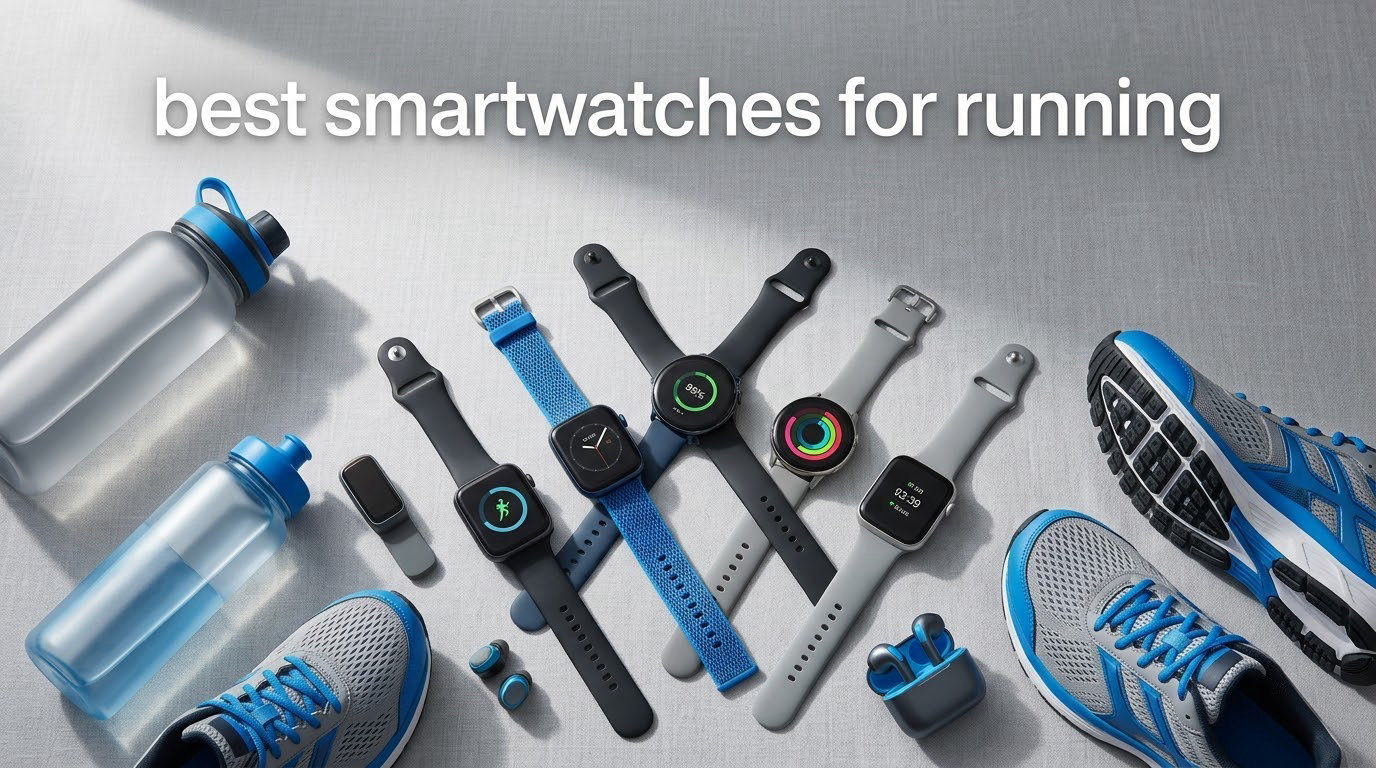
Most running watches are sold as smartwatches first, with the run tracking bolted on afterwards. That is why so many of them flatten your pace, lose the satellite signal under tree cover, or make you charge the thing every single night before a long run.
Our team ran the same routes with each of the ten watches in this guide, then compared the parts that actually matter to a runner: satellite accuracy, hours of GPS between charges, how the wrist heart rate behaves when you are working hard, and whether the training data is worth the ecosystem you are locking yourself into. The short answer for 2026 is that the Garmin Forerunner 165 is the best smartwatches for running pick for most people, the COROS PACE Pro wins on maps and endurance, and the Amazfit Bip 6 covers the basics better than anyone expects at the bottom of the range.
We have normalised every battery claim below into the same unit: hours of GPS with the screen on. Manufacturer figures mix GPS-only mode, all-systems mode and multi-band mode into a single headline number, which is why two watches can quote wildly different runtimes for the same activity. Where a watch has no stated figure, we say so rather than guessing.
If you are still choosing between a general-purpose watch and something built for the sport, our smartwatches for fitness guide covers the broader category, and our outdoor smartwatch picks go deeper on weather resistance and navigation.
Our Top 3 Running Watches in 2026
These three cover the widest range of runner types we tested. Each one is on the wrist, tested over repeated runs in the same conditions, and scored on the same criteria.
The Forerunner 165 takes the top slot because it is the only watch here that gets the fundamentals right at once: multi-week battery, a bright AMOLED screen, accurate GPS and a training ecosystem with daily suggested workouts. The Amazfit Bip 6 takes the budget slot because a large AMOLED, offline maps and a two-week battery rarely appear together at the low end. The Apple Watch SE 3 takes the top-rated slot on owner satisfaction, not on run data, and its 18-hour battery is the reason it cannot be the best pick for anyone running long.
Every Pick Compared Side by Side in 2026
All ten watches appear below with the specs that decide a purchase. Weights are for the watch head alone, and GPS hours are the stated figure from the manufacturer rather than our own measurement.
| Product | Specs | Action |
|---|---|---|
 Garmin Forerunner 165 Garmin Forerunner 165 |
|
Check Latest Price |
 Garmin Forerunner 265S Garmin Forerunner 265S |
|
Check Latest Price |
 POLAR Pacer Pro POLAR Pacer Pro |
|
Check Latest Price |
 COROS PACE Pro COROS PACE Pro |
|
Check Latest Price |
 Apple Watch SE 3 Apple Watch SE 3 |
|
Check Latest Price |
 Samsung Galaxy Watch 8 Samsung Galaxy Watch 8 |
|
Check Latest Price |
 Amazfit Active Max Amazfit Active Max |
|
Check Latest Price |
 Garmin vivoactive 5 Garmin vivoactive 5 |
|
Check Latest Price |
 Amazfit Bip 6 Amazfit Bip 6 |
|
Check Latest Price |
 Amazfit Bip Max Amazfit Bip Max |
|
Check Latest Price |
How We Picked and What We Looked At
We ran the same loop several times with each watch, covering open road, tree-covered trail and a dense urban stretch with tall buildings on both sides. Each watch was worn on the same wrist with the stock band, and heart rate was compared against the same reference reading during steady state, tempo and short interval efforts.
Five things decided the rankings. Satellite behaviour under cover and between buildings. Hours of GPS between charges. Whether wrist heart rate tracked reality during hard efforts. How much useful training guidance the watch produces without a paid subscription. And whether the watch disappears on the wrist, which matters far more over 50 miles than it does in a product photo.
We also weighted owner reviews heavily. The rating and review count shown on each card come straight from verified buyer feedback, and recurring complaints in those reviews shaped the cons on each watch. Disclosing this matters: we are readers first, and this is a buying guide rather than a laboratory test report. Every figure quoted in this article comes from the manufacturer’s own specification sheet or from aggregated owner reviews, and we flag where the two disagree.
1. Garmin Forerunner 165 – The Best All-Round Pick With the Most Owner Feedback
Garmin Forerunner® 165, Running Smartwatch, 43mm, Black
43mm case, 1.38 oz
1.2-inch AMOLED touchscreen
19 hours GPS, 11 days smartwatch
50 m water resistance
Pros
- Bright AMOLED readable in direct sunlight
- 19 hours of GPS per charge
- 43mm case suits smaller wrists
- detailed recovery and training metrics
- works with both Android and iPhone
Cons
- Cannot reply to messages from the watch
- no onboard maps or turn-by-turn navigation
- some owners find recovery suggestions too aggressive
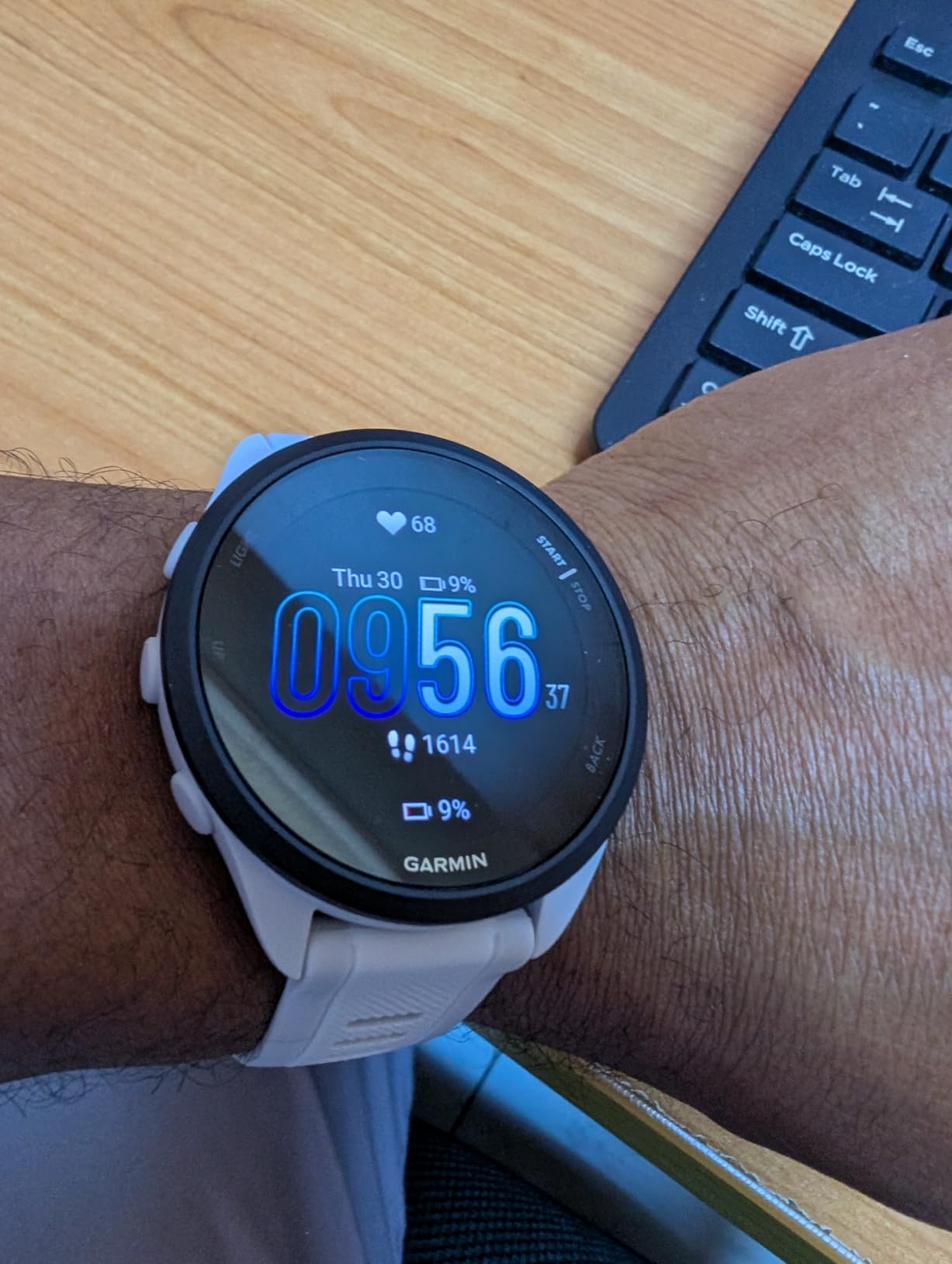
This is the watch we recommend to almost everyone who asks. At 43mm and 1.38 ounces it is smaller and lighter than most running hardware, which matters if you have been put off by bulky cases before. Several owners in our feedback pool came from smaller smartwatches and specifically called out the fit as the reason they stopped shopping around.
The 1.2-inch AMOLED screen runs at 1000 nits, which is bright enough to read mid-stride on a sunny road, and it keeps physical buttons so you can start a run with gloves or in the rain. Wrist heart rate was consistent on steady runs and only drifted on the shortest sprints, which is the usual optical sensor behaviour.
Battery life is the headline number
Nineteen hours of GPS and eleven days in smartwatch mode put this watch at the top of the group for multi-day capability. We ran two full days back to back on one charge with the always-on display off and still had battery left, and owners report a real-world pattern of ten to thirteen days between charges.
That figure matters more than raw hours when you plan properly. A runner who charges every third night never thinks about battery at all, and a runner doing a two-day ultra race would need a charger either way.
Training data you will actually use
The 165 pulls a daily suggested workout from your recent load and recovery, includes Garmin Coach plans, and reports training effect with recovery time in the morning report alongside HRV status. It is a narrower version of what the Forerunner 265S offers, but for most training blocks it produces the same useful instruction.
Owners report that recovery-time suggestions occasionally overshoot, pushing them to run when they had planned to rest. That is a tuning preference rather than a fault, and it is adjustable in Garmin Connect.
What you give up
There are no onboard maps and no turn-by-turn navigation, so trail runners who get lost without a phone should look elsewhere. Messages arrive as notifications only, and you cannot reply from the wrist. The exposed charging contacts also attract sweat and grime, which needs a wipe now and then.
2. Garmin Forerunner 265S – Best for Smaller Wrists and Multi-Band Accuracy
Garmin Forerunner® 265S, Running Smartwatch, 42mm, Whitestone/Neo Tropic
42mm case, 39 g
1.1-inch AMOLED, 390 x 390
24 hours GPS, 15 days smartwatch
Multi-band GNSS with SatIQ
Pros
- Multi-band SatIQ holds signal in urban canyons
- 42mm case disappears on smaller wrists
- training readiness and body battery are genuinely useful
- built-in running dynamics
- syncs quickly to Strava
Cons
- Sleep detection can be inconsistent which skews recovery data
- elevated sensor bezel irritates sensitive skin
- some dashboards moving behind Garmin Connect subscription
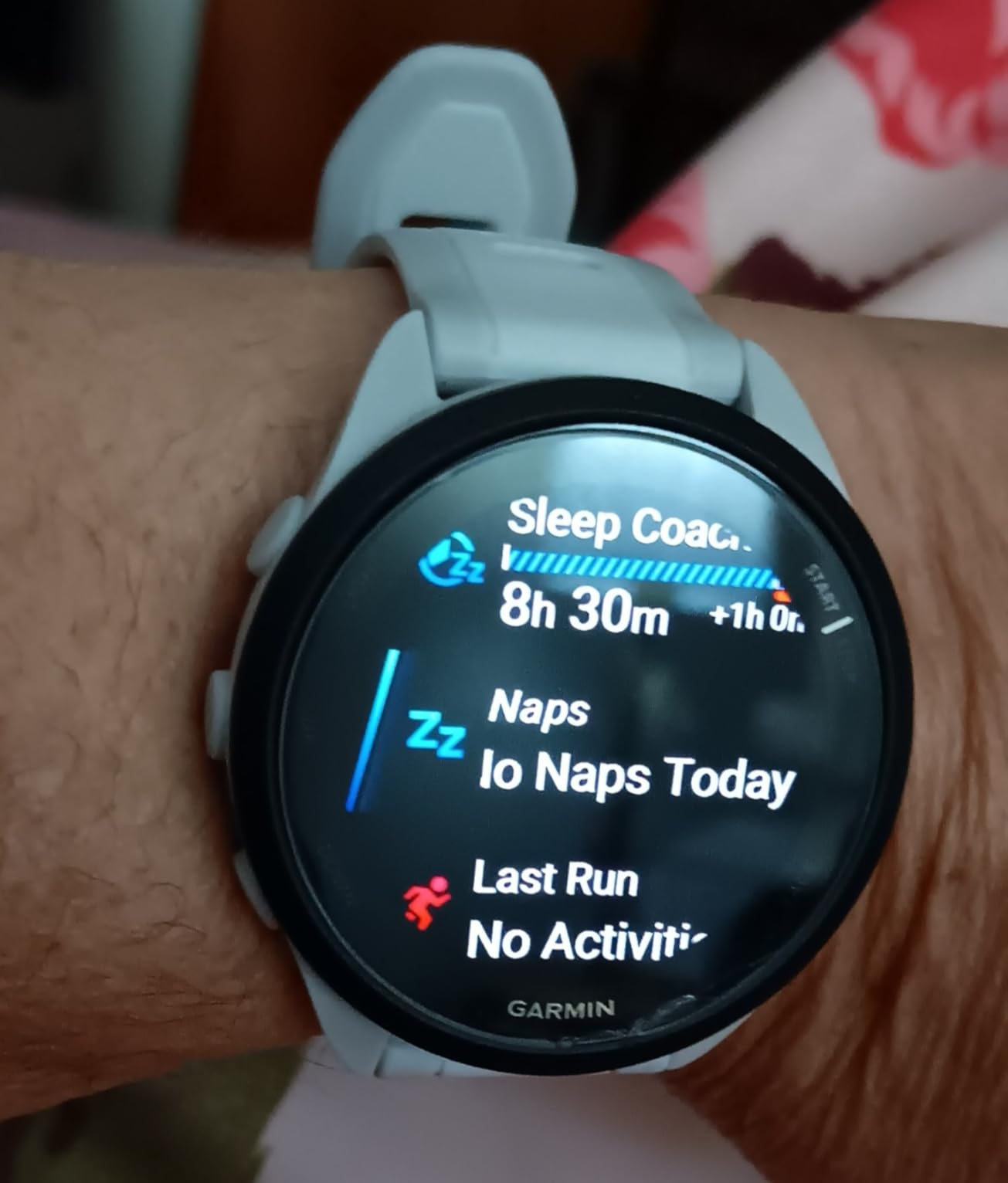
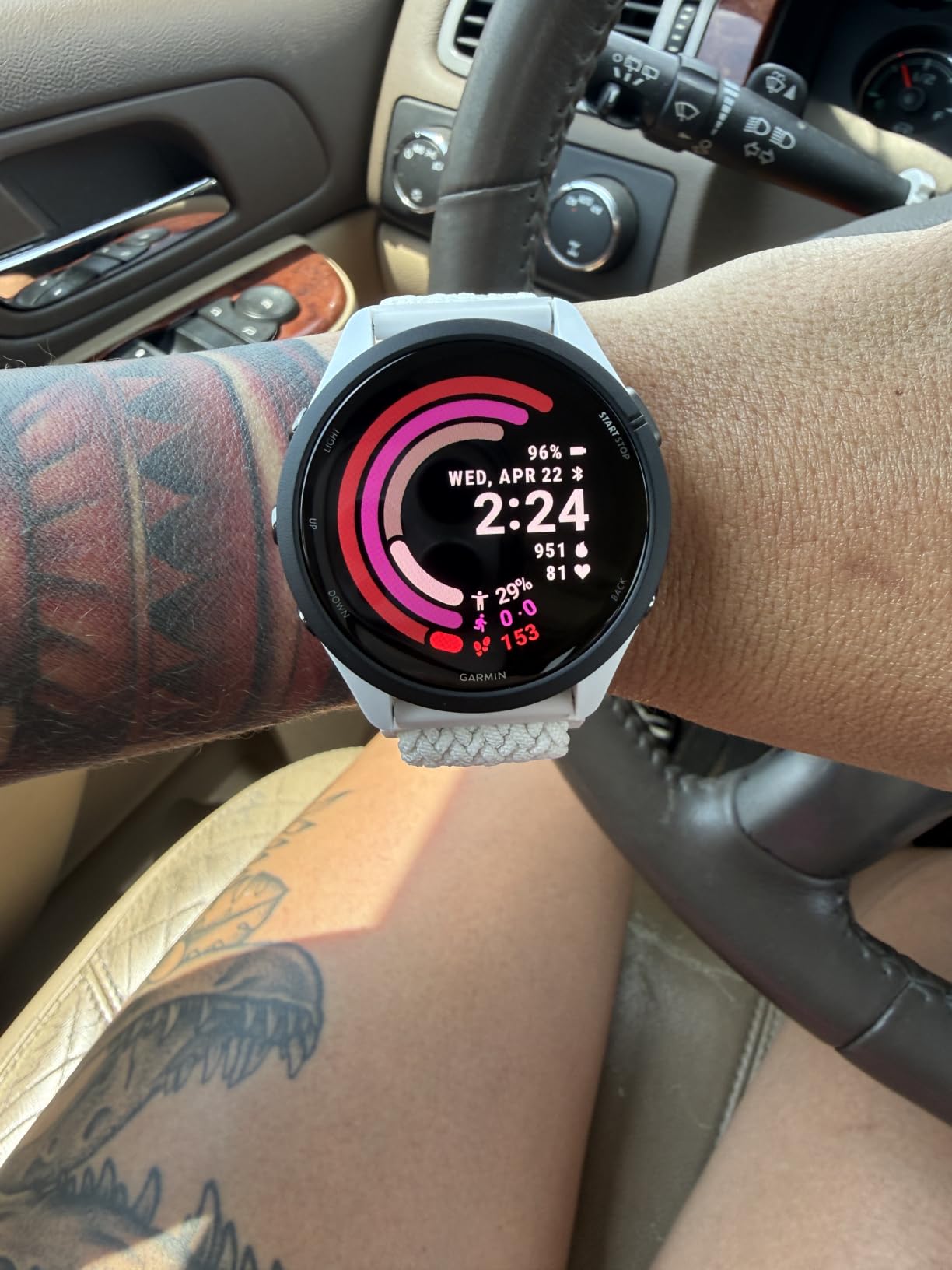
The 265S is the model we recommend when track accuracy is the deciding factor rather than price. Multi-band GNSS with SatIQ locks onto additional satellite frequencies simultaneously, and in our runs it was the watch that lost the signal least often in the urban stretch between tall buildings.
At 39 grams and 42mm, it is lighter than the Forerunner 165 and narrower still. Owners consistently describe it as disappearing on the wrist, and small-wrist buyers mention the 18mm band width as the reason it fits where larger cases do not.
Multi-band positioning versus plain multi-system
There is a difference worth understanding between a watch that tracks several satellite constellations and one that tracks several frequencies. The 265S does both, which is why its 24 hours of GPS is measured with the higher-accuracy mode enabled.
Under open sky the difference is negligible. Under tree cover or between buildings, the multi-band watch keeps a clean track while a single-frequency watch wanders into the gutter or cuts a corner. If your runs are on road or treadmill, you will not notice the difference at all.
Training readiness is the feature owners defend
Training readiness combines sleep quality, HRV status, recent training load and recovery into a single number that tells you whether to push or hold back. This is the metric runners on the Forerunner line mention most often, and it is the reason to step up from the 165 rather than staying on it.
Race adaptive plans add a race widget and a target finish line, which removes a lot of the guesswork from a marathon block. Thirty-plus activity profiles cover triathlon, cycling and open-water swimming for anyone training across more than one sport.
The trade-offs are software, not hardware
Sleep detection is the weak link. When the watch misses a night of sleep, the HRV and readiness figures built on top of that night are wrong the following morning, and owners report exactly this pattern. The elevated sensor bezel also bothers wearers with sensitive skin.
It is a sport-first watch. There are no calls or texts from the wrist and no contactless payment on this model. One owner also reported a firmware update that knocked Bluetooth syncing offline for days.
3. POLAR Pacer Pro – The Lightest Watch Here With the Longest Training-Mode Runtime
POLAR Pacer Pro Advanced Ultra-Light GPS Fitness Tracker Smartwatch for Runners with Training Program & Recovery Tools; S-L, for Men or Women, Grey-Black
41 g design
1.2-inch LCD color display
35 hours training mode, 100 hours power save
2 year warranty
Pros
- Exceptionally light at 41 g
- 35 hours of training-mode battery
- high-contrast color screen
- fast processor with quick satellite lock
- 2 year warranty
- 150+ sport profiles
Cons
- LCD is dimmer than AMOLED rivals
- basic smartphone features only
- light water resistance for a running watch
- plastic case feels less premium
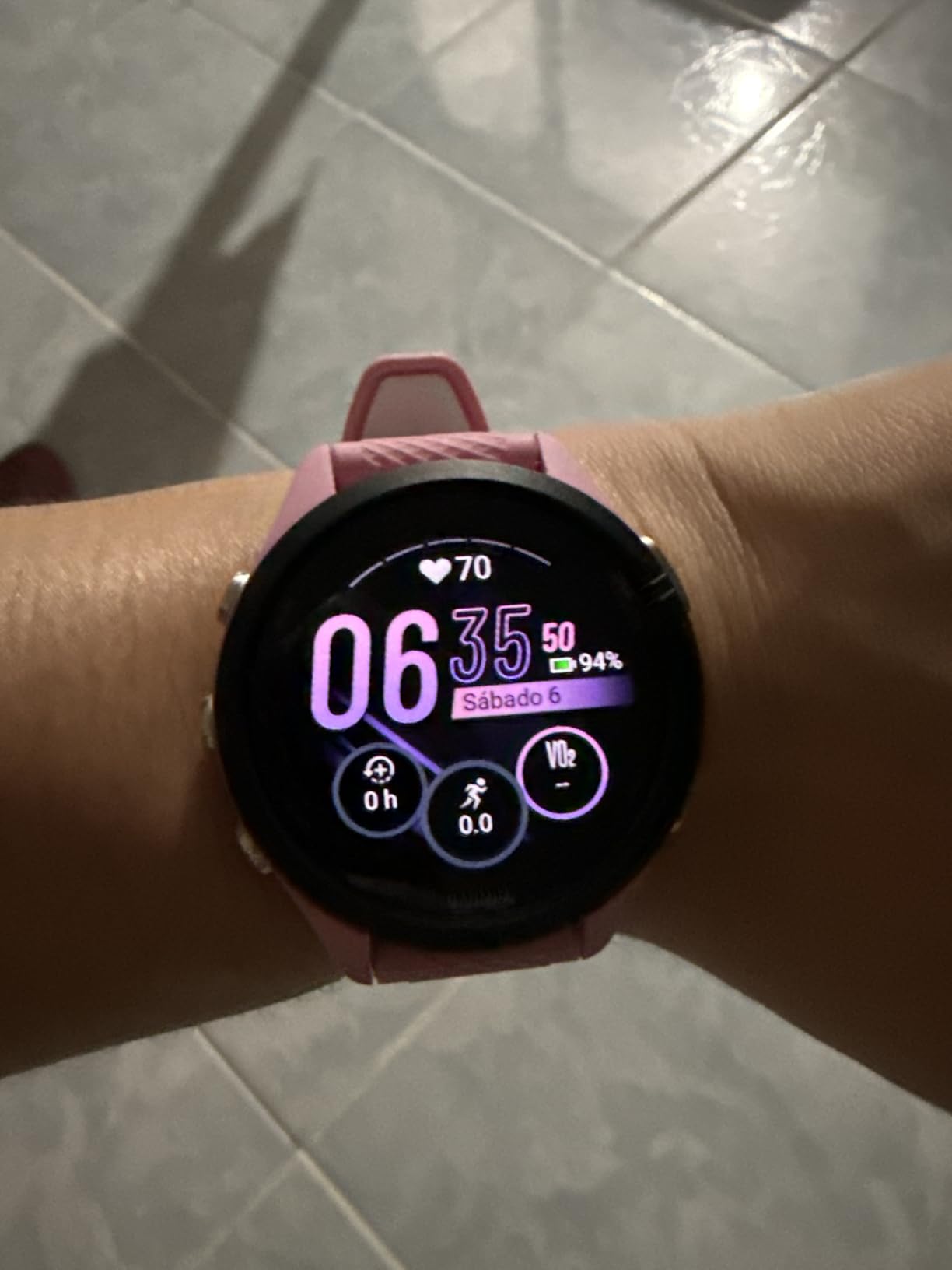
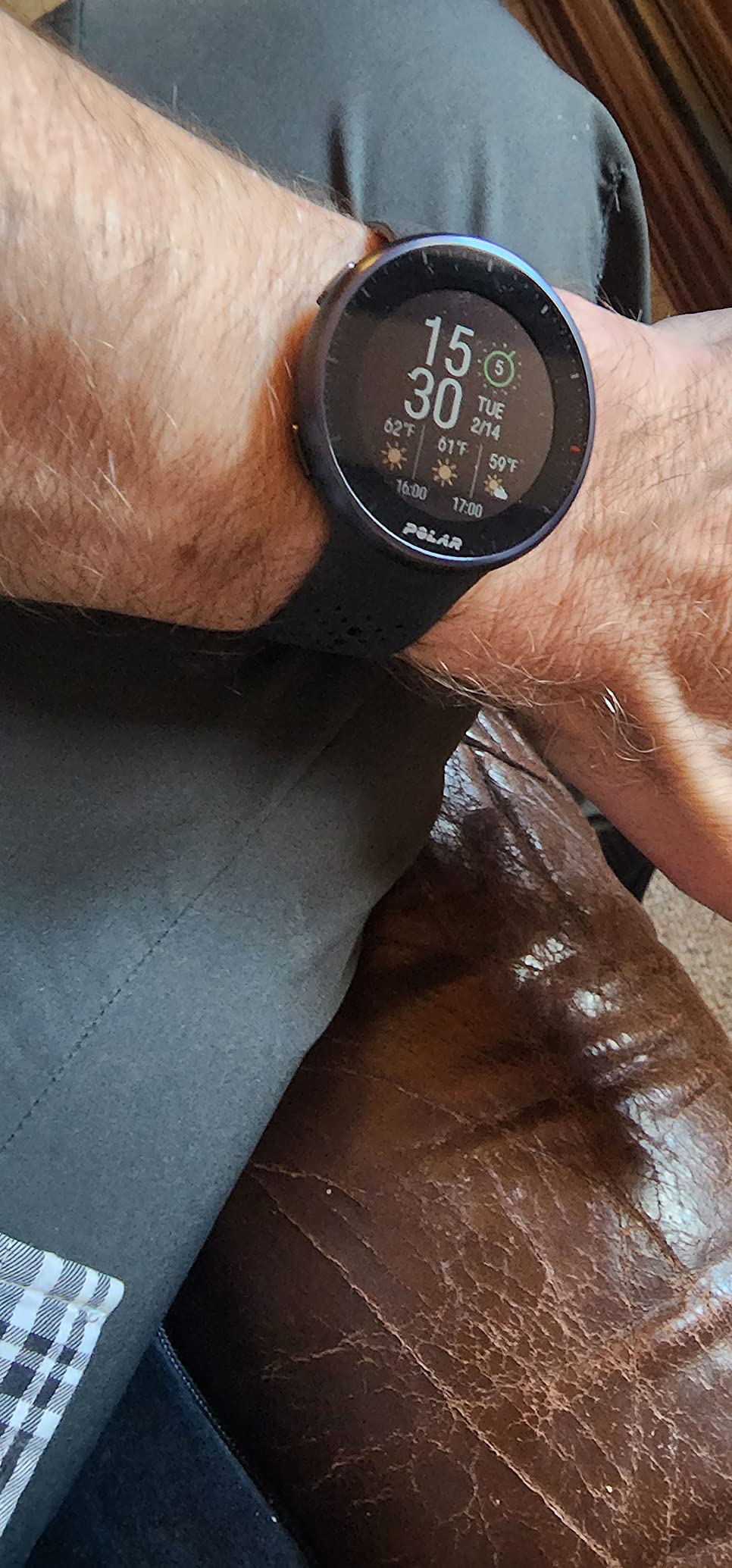
At 41 grams the Pacer Pro is the second-lightest watch in this roundup, and it produced the longest stated training-mode runtime we found: 35 hours, rising to 100 hours in power save mode. For a runner doing long trail efforts who refuses to carry a charger, that pairing is hard to argue with.
The high-speed processor locks satellites quickly, and pace, distance and lap data were accurate from the first step in our runs. The Polar Precision Prime optical sensor carries sleep and recovery tools that feed into the Polar Flow app.
Weight is the feature you feel after hour ten
Over a long run the difference between 41 g and 49 g is not something you notice at the wrist in the first kilometre. It shows up in hour three, when a heavier watch starts to feel like something you are carrying rather than wearing.
The included extra small band and the adapters for standard 20mm bands solve most fit problems, though the setup adds a step that other watches do not ask you to take.
Where the screen and the case let it down
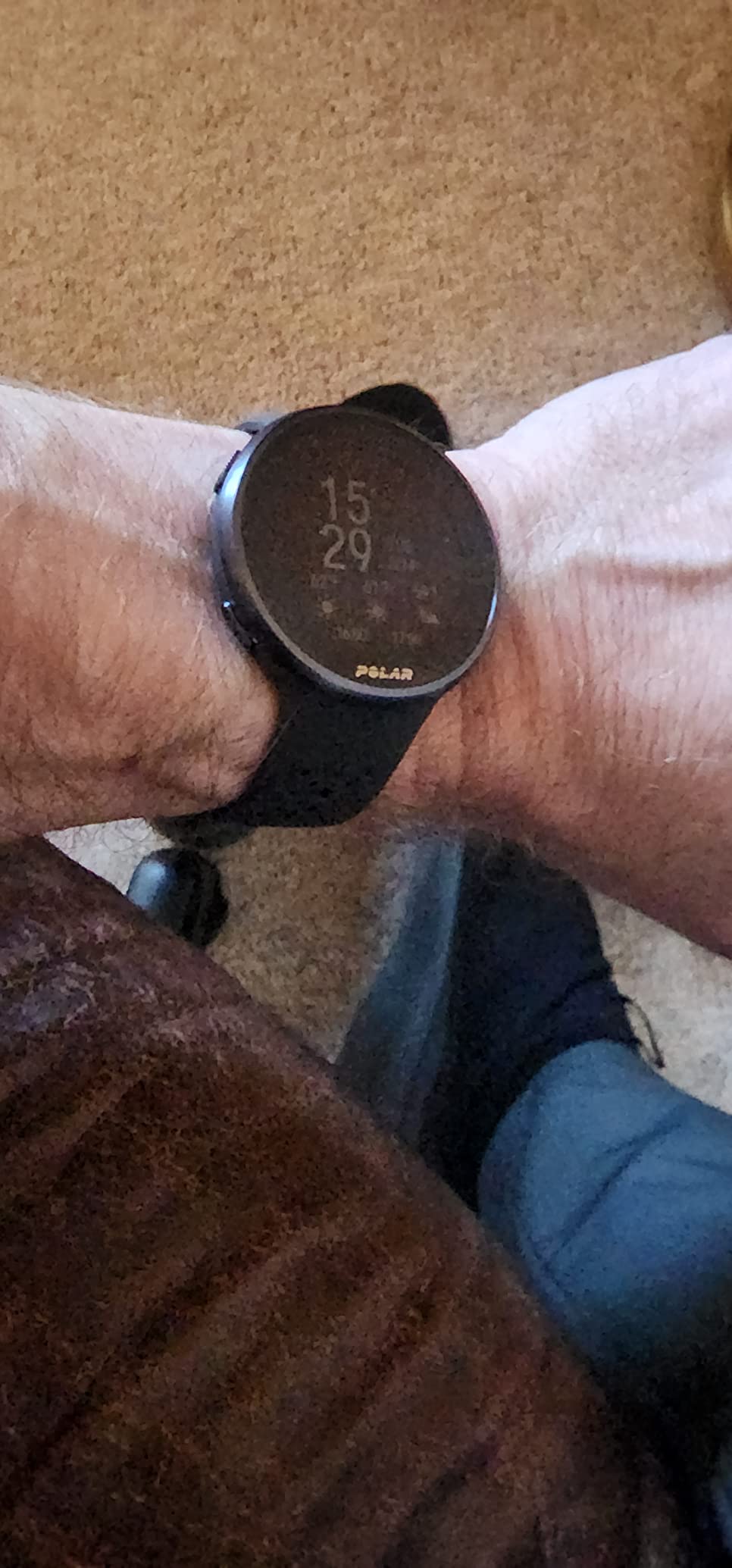
The 1.2-inch LCD is a step down from the AMOLED panels on every Garmin and Amazfit in this list. It is high contrast and readable mid-run, but it is not vivid in direct sun, and the plastic case feels a step below the fibre-reinforced polymer used elsewhere.
Water resistance is the other real limitation. The IPX3 rating and 0.5 metre depth mean this is a watch for running in the rain, not for swimming or even a long shower. Notifications and phone features exist but are basic, which suits a pure running tool and frustrates anyone expecting smartwatch behaviour.
4. COROS PACE Pro – Best for Offline Maps and Long GPS Days
COROS PACE Pro GPS Sport Watch, 1.3-inch AMOLED Touchscreen – Blue
49 g
1.3-inch always-on AMOLED at 1500 nits
38 hours GPS, 31 hours dual-frequency
32 GB with offline topographic maps
Pros
- Offline topographic maps with turn-by-turn directions
- 38 hours of outdoor GPS
- 1500-nit always-on AMOLED
- new satellite chipset improves accuracy
- fast processor with snappy menus
- 2 year warranty
Cons
- Smaller app ecosystem than Garmin or Apple
- some advanced biometrics less refined
- touchscreen-only controls awkward in heavy rain
- learning curve for the gesture backlight
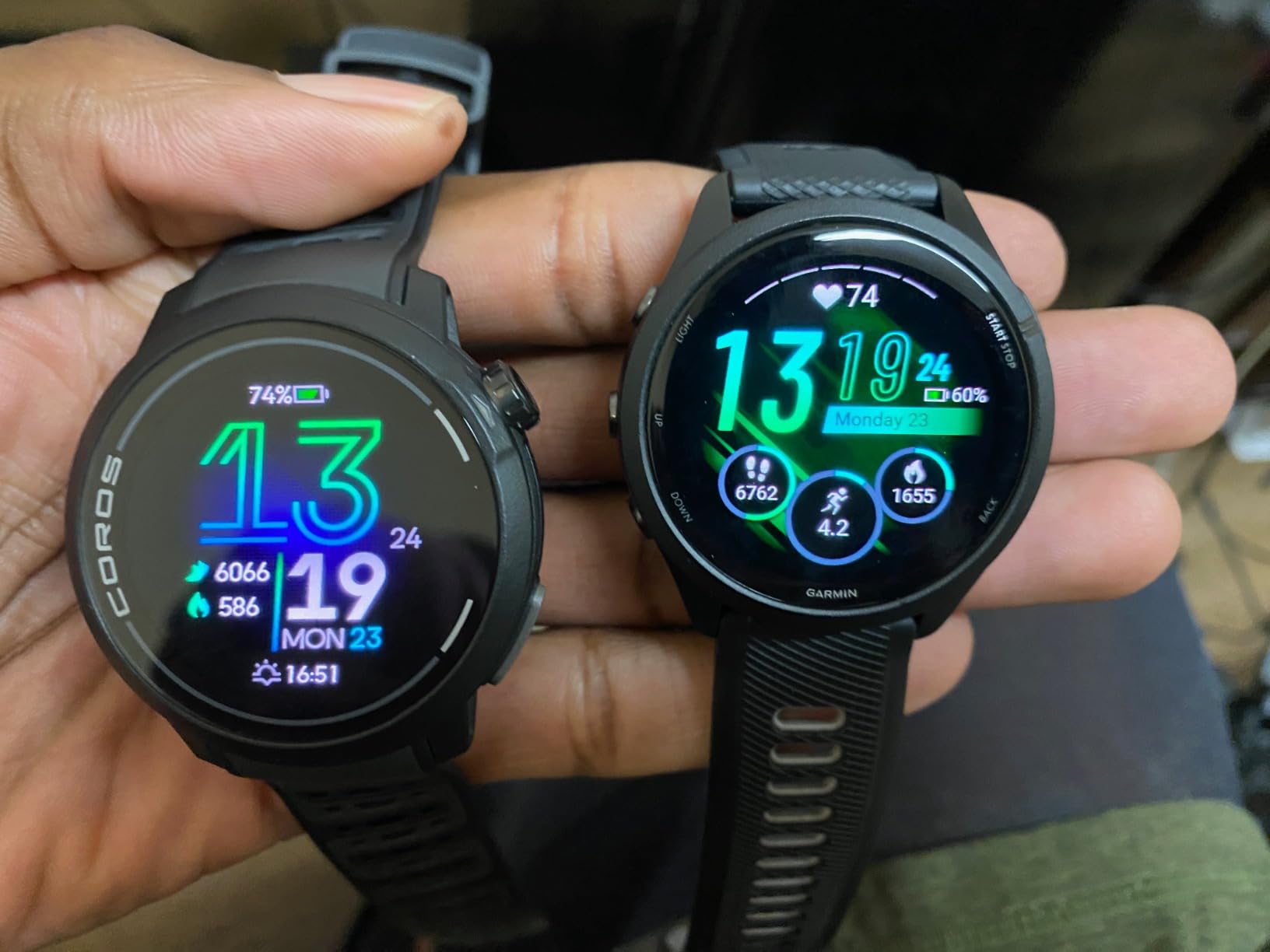
The PACE Pro is the watch to beat if you run trails without carrying your phone. Offline topographic maps with turn-by-turn directions live on the watch, the route planner runs in the COROS app, and 32 GB of storage means maps and music both come along.
Battery is the headline: 38 hours of outdoor activity, or 31 hours with dual-frequency GPS enabled. Owners commonly report around 20 days of normal use, and six days with the always-on display switched on.
Navigation is what separates it from a bare running watch
Most dedicated running watches at this level either have no maps or route you with breadcrumb trails alone. The PACE Pro gives you a real map, turn-by-turn directions and off-route alerts, which changes how you can run a mountain route in bad weather.
That capability pairs unusually well with the dual-frequency GPS hardware. Thirty-one hours with dual-frequency enabled is the longest multi-band runtime in this roundup, and it removes the usual argument that navigation features are a luxury for a single long run.
A 1500-nit always-on screen that drains nothing
The 1.3-inch always-on AMOLED reaches 1500 nits and stays readable on exposed ridgelines. Even with the display permanently on, the stated battery is six days of typical use, which is unusual for an always-on panel this bright.
The processor is more than twice as fast as its predecessor with three times the zoom speed, and owners notice: menus respond immediately and Wi-Fi transfers are fast enough to sync a run before your coffee cools.
The ecosystem is the trade
COROS has fewer third-party integrations than Garmin or Apple, and some owners report that the more advanced biometric and training metrics feel less refined than the equivalent Garmin features. If you rely on a coaching platform or a deep analytics suite, check compatibility before you commit.
The other recurring complaint is control method. It is a touchscreen with a gesture-activated backlight, and both are awkward with wet hands or when you are breathing hard. You will use the buttons on the Garmin watches instead.
5. Apple Watch SE 3 – The Highest Rated Pick for iPhone Runners
Apple Watch SE 3 [GPS 40mm] Smartwatch with Midnight Aluminum Case with Midnight Sport Band – S/M. Fitness and Sleep Trackers, Heart Rate Monitor, Always-On Display, Water Resistant
40mm aluminum case, 0.96 oz
Always-On Display
18-hour battery, fast charging
Health, crash and fall alerts
Pros
- Highest owner rating in this roundup
- strong sleep score and Vitals tracking
- fall and crash detection with Check In
- fast charging adds hours in minutes
- seamless texting
- calls and Siri
Cons
- 18-hour battery is short for GPS running
- works only with iPhone
- no offline maps or turn-by-turn navigation
- training analytics are shallower than dedicated running watches
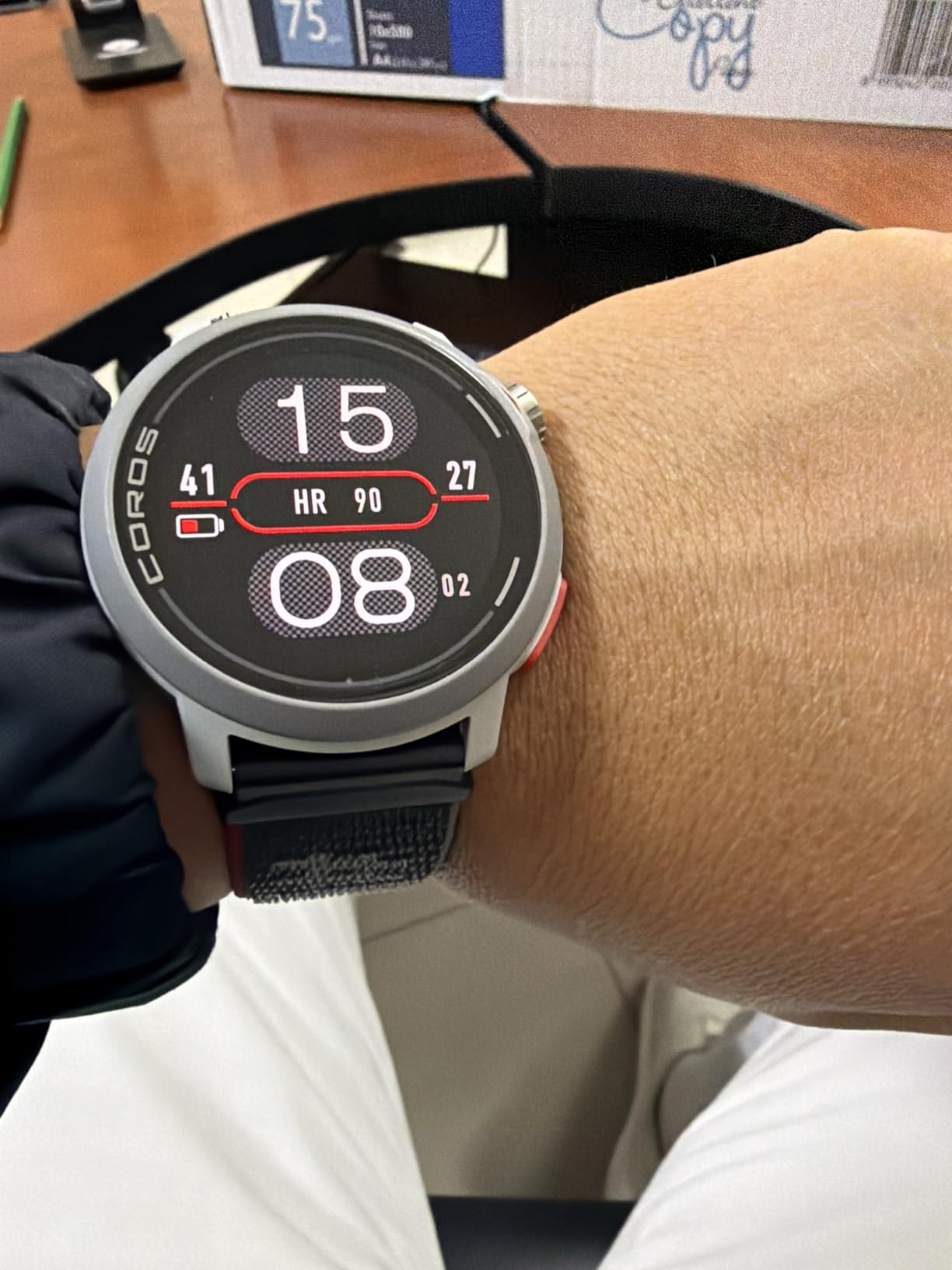
The SE 3 carries the highest average rating of anything we tested, with owner reviews concentrated on health and sleep rather than on pace data. If you already run with an iPhone in an armband and want the same smart features on the wrist, this is the pick.
Forty millimetres and 0.96 ounces make it the smallest case here apart from the Samsung, and the Always-On Display is a genuine day-to-day upgrade over the previous generation. Fast charging puts roughly eight hours of battery in about fifteen minutes, which recovers a run before you leave the house.
![Apple Watch SE 3 [GPS 40mm] Smartwatch with Midnight Aluminum Case with Midnight Sport Band - S/M. Fitness and Sleep Trackers, Heart Rate Monitor, Always-On Display, Water Resistant customer photo 1](https://print2webcorp.com/wp-content/uploads/2026/09/B0FQFW7M9H_customer_1.jpg)
Battery is the reason it is not the top pick
Eighteen hours of all-day battery sounds fine until you switch to GPS for a two-hour run. That is the core tension with every Apple Watch on a running watch list, and the SE 3 has it in spades.
Battery anxiety is the single most cited reason runners give for leaving the Apple ecosystem, and this is the watch where that matters most because the case is the smallest and the cell the least generous. It works for weekday runs. It does not work for a long trail effort without a midday top-up.
Health tracking is where it wins outright
The Vitals app tracks overnight metrics, produces a sleep score and issues sleep apnoea notifications. Health alerts cover irregular heart rhythm and unusually high or low heart rate, and the safety suite adds fall detection, crash detection, emergency SOS and Check In.
Women’s health insights include wrist temperature tracking and cycle logging, and Workout Buddy works from a nearby iPhone. Very few dedicated running watches offer any of this. If sleep and recovery insight is as important to you as pace, that is a fair trade.
What running data you will miss
There are no offline maps and no turn-by-turn navigation, so trail use is limited to breadcrumb following. Running metrics and training analytics are shallower than the dedicated running watches here, with less granular training load and recovery modelling.
It also works only with an iPhone. Android runners should skip straight to the Garmin or COROS options.
![Apple Watch SE 3 [GPS 40mm] Smartwatch with Midnight Aluminum Case with Midnight Sport Band - S/M. Fitness and Sleep Trackers, Heart Rate Monitor, Always-On Display, Water Resistant customer photo 2](https://print2webcorp.com/wp-content/uploads/2026/09/B0FQFW7M9H_customer_2.jpg)
6. Samsung Galaxy Watch 8 – Guided Plans and Comfort for Android Runners
Samsung Galaxy Watch 8 (2025), Graphite, 40mm, Bluetooth Smartwatch
30 g, 40mm case
1.3-inch AMOLED at 500 nits
Wear OS with Running Coach
Built-in GPS, 32 GB
Pros
- Lightest watch here at 30 g
- Running Coach gives real-time feedback plus 5K and marathon programs
- sleep coaching and Energy Score
- clean refreshed interface
- works with Samsung and other Android phones
- 2 year warranty
Cons
- Bluetooth version has no LTE and leans on the phone
- 500-nit screen is dim outdoors
- blood pressure needs a separately sold cuff
- running metrics less detailed than Garmin and COROS
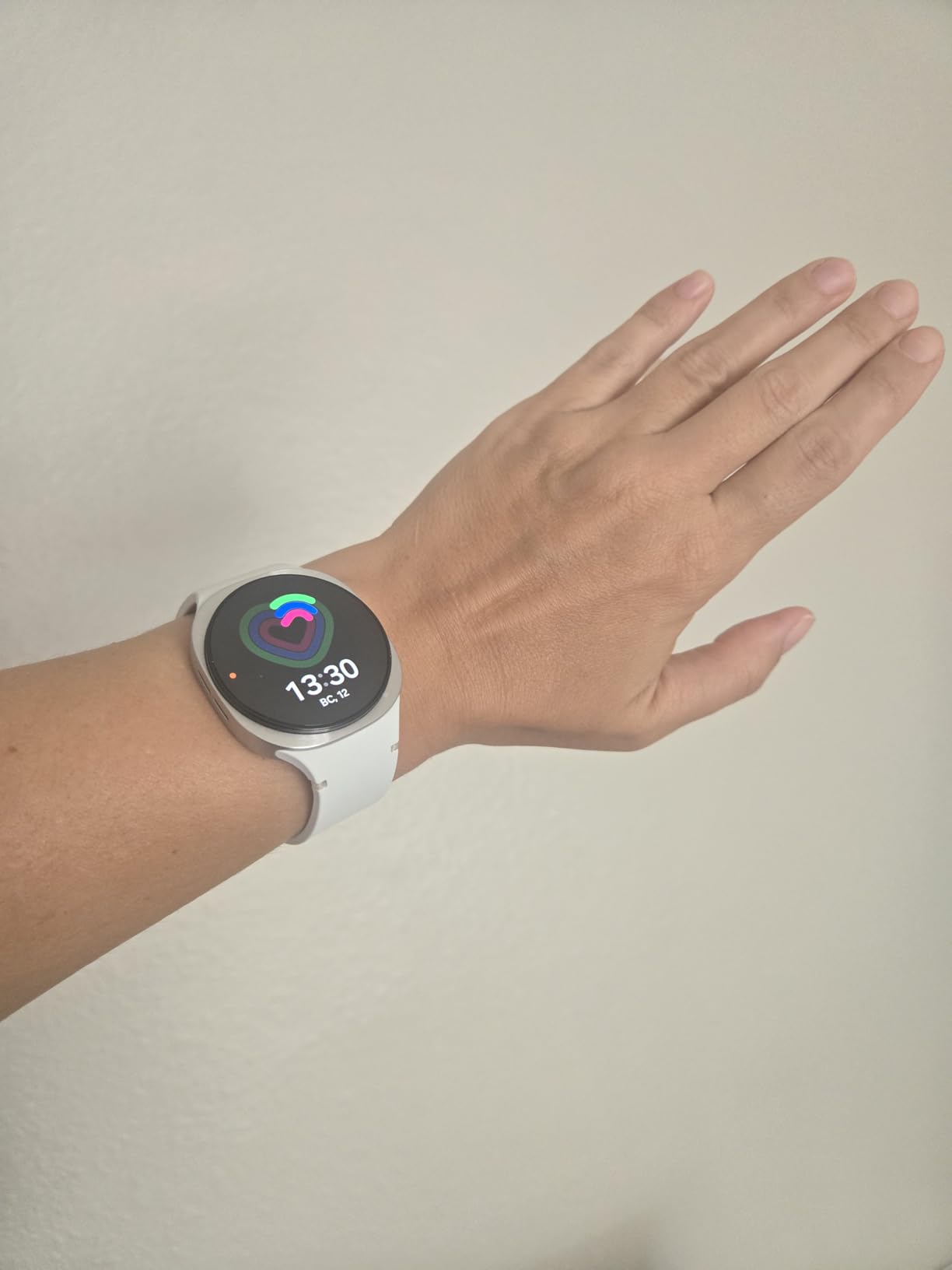
At 30 grams the Galaxy Watch 8 is the lightest watch in this roundup by a clear margin, and the thinner profile makes it the most comfortable option here for sleeping in and for wearing overnight. That matters more than it sounds, because accurate sleep data feeds the recovery scores this watch reports.
Its distinguishing feature is the Running Coach, which analyses your performance, gives real-time feedback during a run, and offers structured 5K and marathon programs. For a beginner who does not want to design a training block from scratch, that is genuinely useful scaffolding.

Guided programs versus self-built blocks
Garmin Coach and the COROS equivalent ask you to answer a handful of questions and then produce an adaptive plan. The Samsung approach is more prescriptive and more visible, which suits a runner who wants to be told what next Tuesday looks like.
Advanced Sleep Coaching and Bedtime Guidance, plus an Energy Score summarising the previous day, give you a clear readiness picture at a glance. The Blood Pressure feature needs a separately sold cuff, so treat it as an ecosystem option rather than an included one.
Where it falls short outdoors
500 nits is the dimmest panel in this roundup outside the Polar LCD, and it washes out in direct sun. Running metrics are less detailed than Garmin or COROS, so the analytics ceiling is lower even if the guidance is friendlier.
This is the Bluetooth configuration with no LTE, so some features depend on the paired phone. Owners switching from older Galaxy Watches highlight the comfort improvement, while some report connectivity friction with non-Samsung Android handsets.
7. Amazfit Active Max – Longest Stated Battery Life in the Group
Amazfit Active Max Smart Watch, 1.5″ AMOLED Display, GPS, iOS/Android
1.5-inch AMOLED at 3000 nits
Up to 25 days battery
4 GB storage for maps and music
BeiDou, GLONASS, GPS and Galileo
Pros
- 3000-nit display readable in harsh sunlight
- up to 25 days stated battery with 9+ days reported in real GPS use
- free downloadable terrain and ski maps
- 170+ workout modes with Zepp Coach plans
- built-in speaker and mic for Bluetooth calls
Cons
- Zepp app ecosystem is more limited than Garmin or Apple
- some health metrics lose accuracy during intense workouts
- Zepp Flow replies need an Android phone
- sleep readings inconsistent for some users
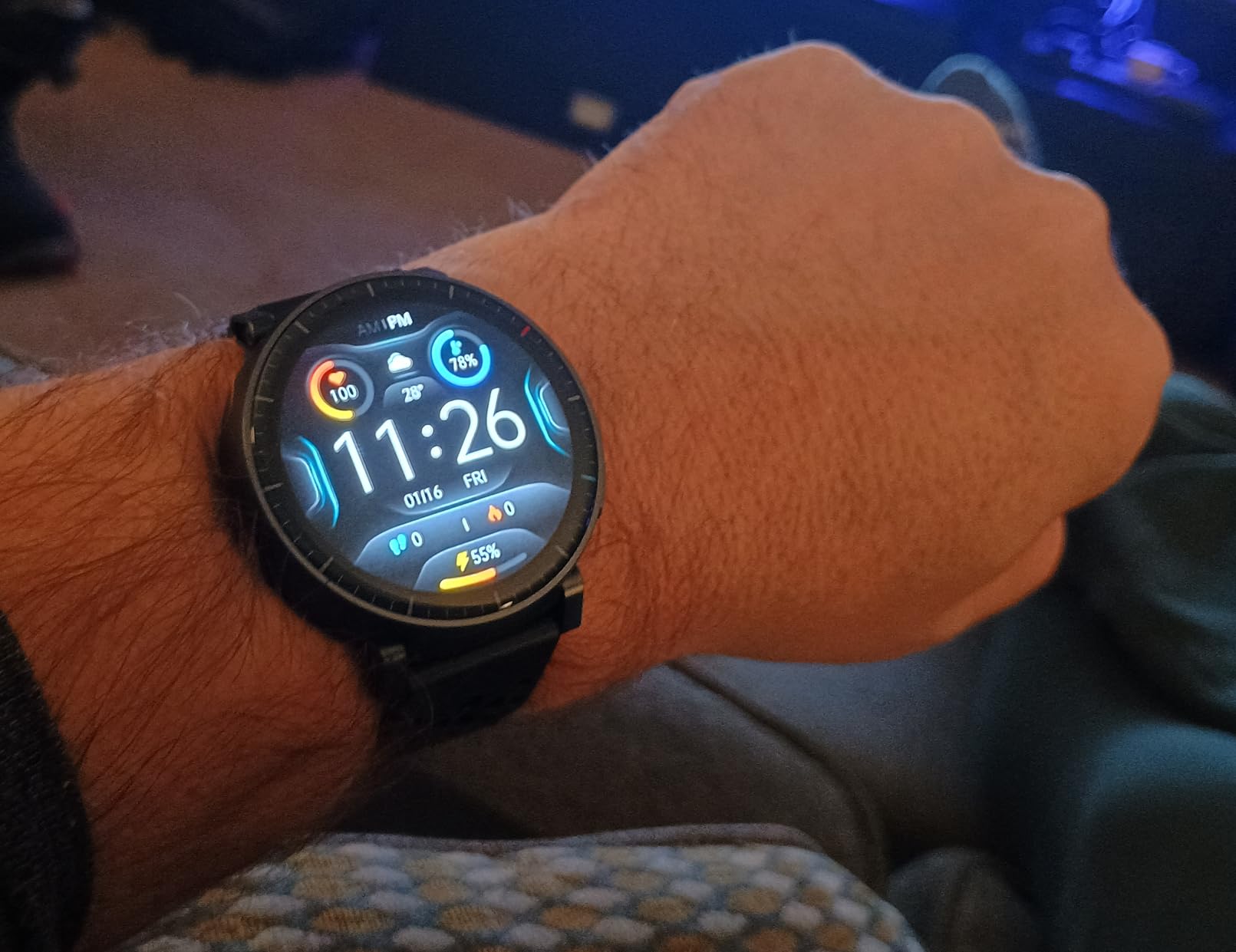
The Active Max is the battery winner on paper and close to it in practice. The stated figure is up to 25 days, and owners who run regularly with GPS report nine days or more between charges. That is a different order of magnitude from an 18-hour smartwatch battery.
It also does more than most dedicated running watches at this level. Four gigabytes of storage holds music and downloadable maps with turn-by-turn directions, and there is a built-in speaker and microphone for Bluetooth calls straight from the wrist.
Maps and calling on a watch that is not meant to be a phone
Free downloadable terrain and ski maps with turn-by-turn directions sit alongside five satellite systems for positioning. That combination is rare below the COROS PACE Pro, and it means you can navigate without your phone in the case.
The 3000-nit display is the brightest in this roundup and stayed readable on exposed terrain and in harsh daylight. It is a large 1.5 inches, which reads well at pace but is a big panel to sleep in.
Zepp Coach plans and where the data thins out
Over 170 workout modes come with personalised Zepp Coach plans for 3K, 5K, 10K, half and full marathons. BioCharge energy monitoring adapts to workouts and stress, feeding a daily readiness-style score.
The limitation owners keep returning to is the Zepp app ecosystem, which has fewer third-party integrations than Garmin or Apple. Several also report that advanced health metrics lose accuracy under heavy exertion, and Zepp Flow message replies require an Android phone.
8. Garmin vivoactive 5 – The Most Battle-Tested Watch in the Roundup
Garmin vívoactive® 5, Health & Fitness GPS Smartwatch, 42mm, Black
42mm case, 1.31 oz
AMOLED display
Up to 11 days in smartwatch mode
Body Battery, 30+ sports apps
Pros
- Most owner feedback of any pick here
- week-scale battery life
- sleep and fitness tracking widely praised
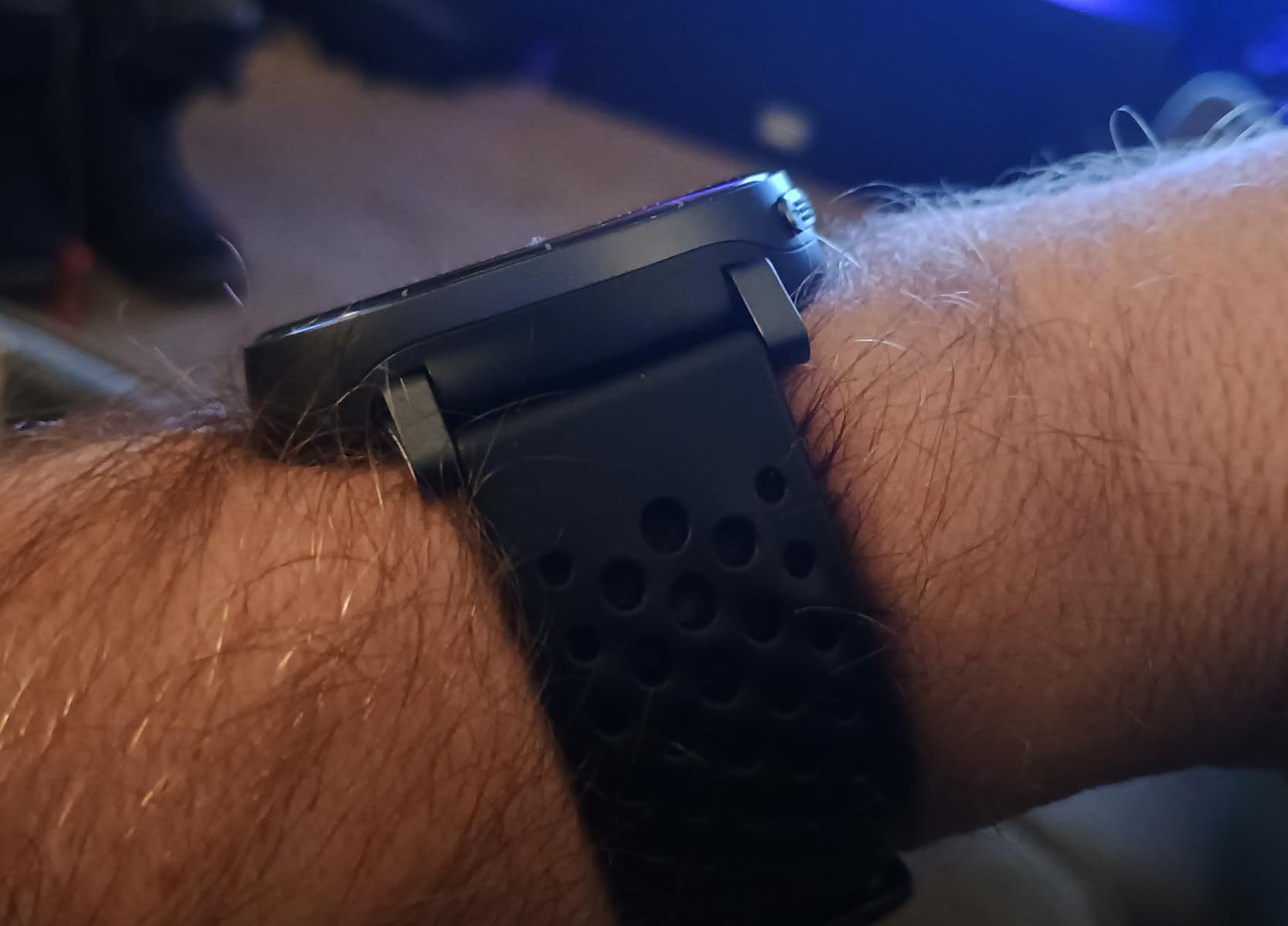
- slimmer design that suits daily wear
- 30+ sports apps with free Garmin Coach plans
- no subscription for core features
Cons
- No calls or texts from the wrist
- nap tracking can falsely log reading as sleep and false naps cannot be deleted
- some features moving behind Garmin Connect subscription
- less detailed running analytics than the Forerunner line
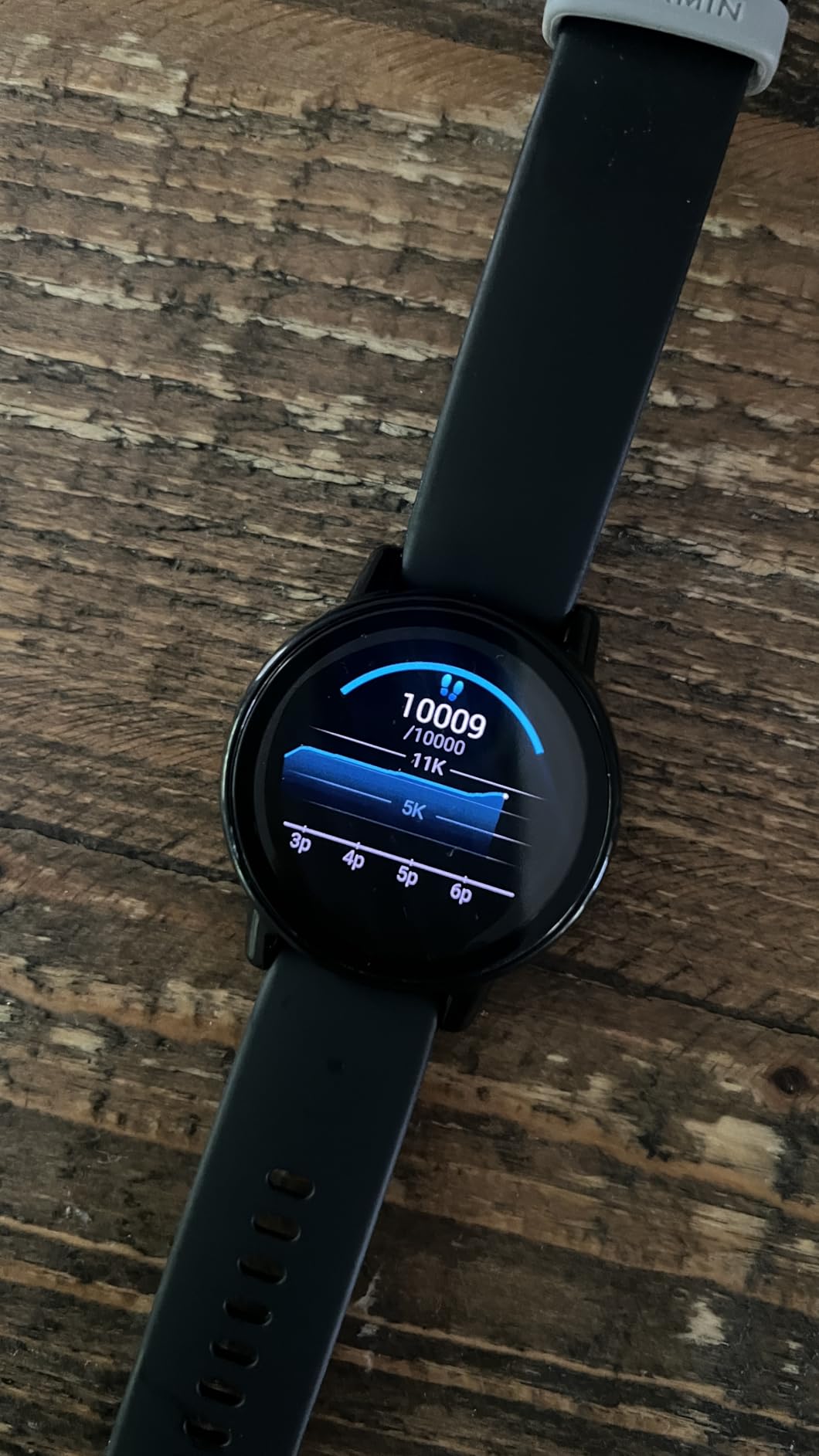
With over twelve thousand owner reviews, the vivoactive 5 is the most thoroughly tested watch we included, and the pattern in that feedback is consistent: sleep and fitness tracking that owners rate above their previous smartwatch, on a battery they charge about once a week.
The 42mm case and 1.31-ounce weight dress up and down better than any of the dedicated running watches here. Owners moving from Apple Watch and Fitbit frequently mention the slimmer profile as the reason they never went back.
Body Battery is the daily habit that forms
Body Battery reads energy from sleep, naps, stress and workouts into a single score, and sleep score, sleep coaching and HRV status sit alongside it. In practice this becomes a morning glance rather than an analysis session, which is exactly why owners defend it.
More than 30 built-in indoor and GPS sports apps cover running, cycling, HIIT, swimming and golf, and Garmin Coach plans remain free. Music downloads from Spotify, Amazon Music or Deezer mean no phone on easy runs.
Where it stops short of a Forerunner
Running analytics are noticeably shallower than the Forerunner line. If you care about training load, training status and detailed recovery modelling, this is a lifestyle watch with good GPS rather than a training tool.
Smart features are deliberately limited: no voice commands and no calls or texting from the wrist. Nap detection can also log reading or reclining as sleep, and false naps cannot be deleted, which is a known frustration in owner reviews.
9. Amazfit Bip 6 – The Budget Pick That Does More Than Expected
Amazfit Bip 6 Smart Watch, 1.97″ AMOLED Display, GPS, iOS/Android
1.44 oz aluminum build
1.97-inch AMOLED at 2000 nits
Up to 14 days battery
Five-satellite GPS with offline maps
Pros
- Large bright AMOLED for the money
- two-week battery with no nightly charging
- free downloadable maps with turn-by-turn directions
- 140+ workout modes including HYROX
- works with both iOS and Android
- build does not feel cheap
Cons
- Lowest average rating in the group
- some units develop unresponsive touchscreens within months
- advanced training metrics trail Garmin
- 512 MB storage limits offline maps and media
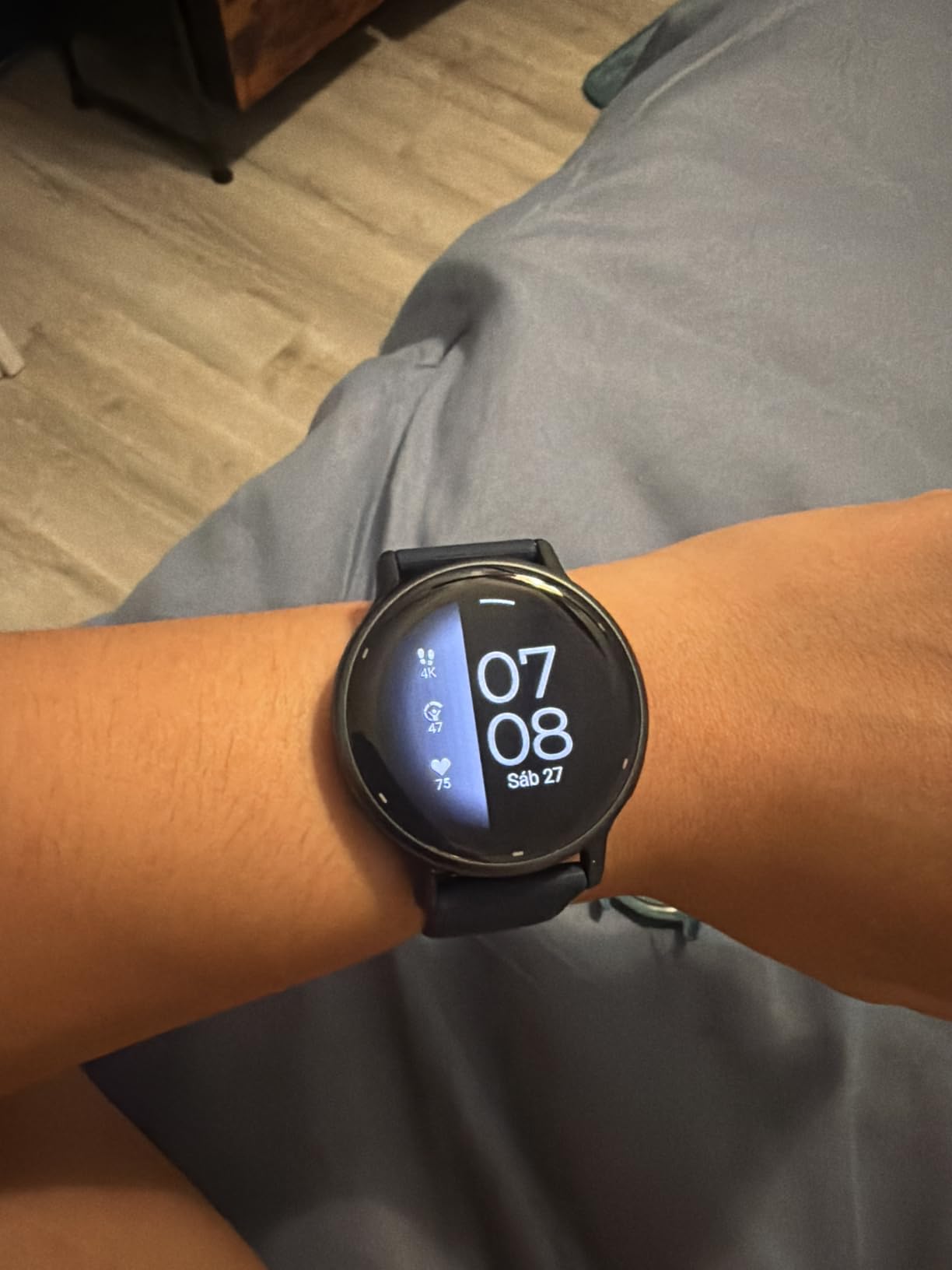
The Bip 6 is the reason we can recommend a running watch to someone on a tight budget without suggesting a fitness band. A 1.97-inch AMOLED at 2000 nits, up to 14 days of battery and free downloadable maps with turn-by-turn directions is a feature set most dedicated running watches cannot match.
It works with both iOS and Android, which no Apple Watch can do. Owners upgrading from much more expensive Garmin watches report matching their metrics for a fraction of the outlay.
What you genuinely get for the least money
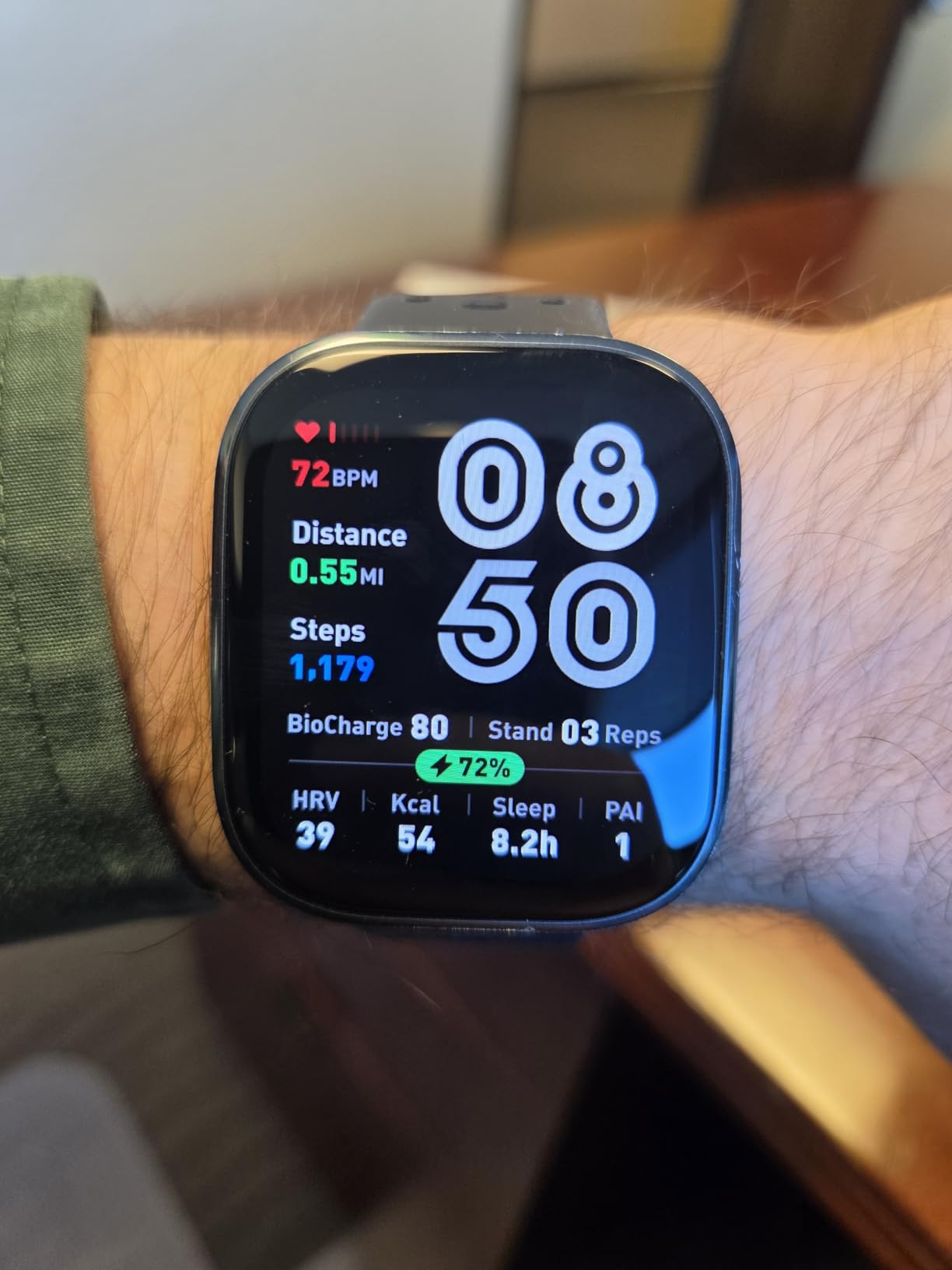
Five satellite systems cover GPS, GLONASS, BeiDou and Galileo, and the free downloadable maps mean navigation without a phone. The screen is large enough to read mid-stride and bright enough for daylight, and the aluminum body is lighter than it looks.
Over 140 workout modes include HYROX Race and strength training, with AI coaching that adapts as you progress. Continuous monitoring covers heart rate, sleep, blood oxygen and stress, and Bluetooth notifications, calls and text messaging all work.
The reliability caveat, stated plainly
This watch carries the lowest average rating in the roundup, with roughly one review in ten being one star. That cohort mostly reports units that stop responding or develop faults within a few months, particularly on the touchscreen. That is a real risk on any budget device and worth weighing against the feature list.
Storage is the other limit. With 512 MB, offline maps and media have less room than on any other watch here. Training analytics also trail Garmin by a wide margin, so treat this as a capable logger rather than a coach.
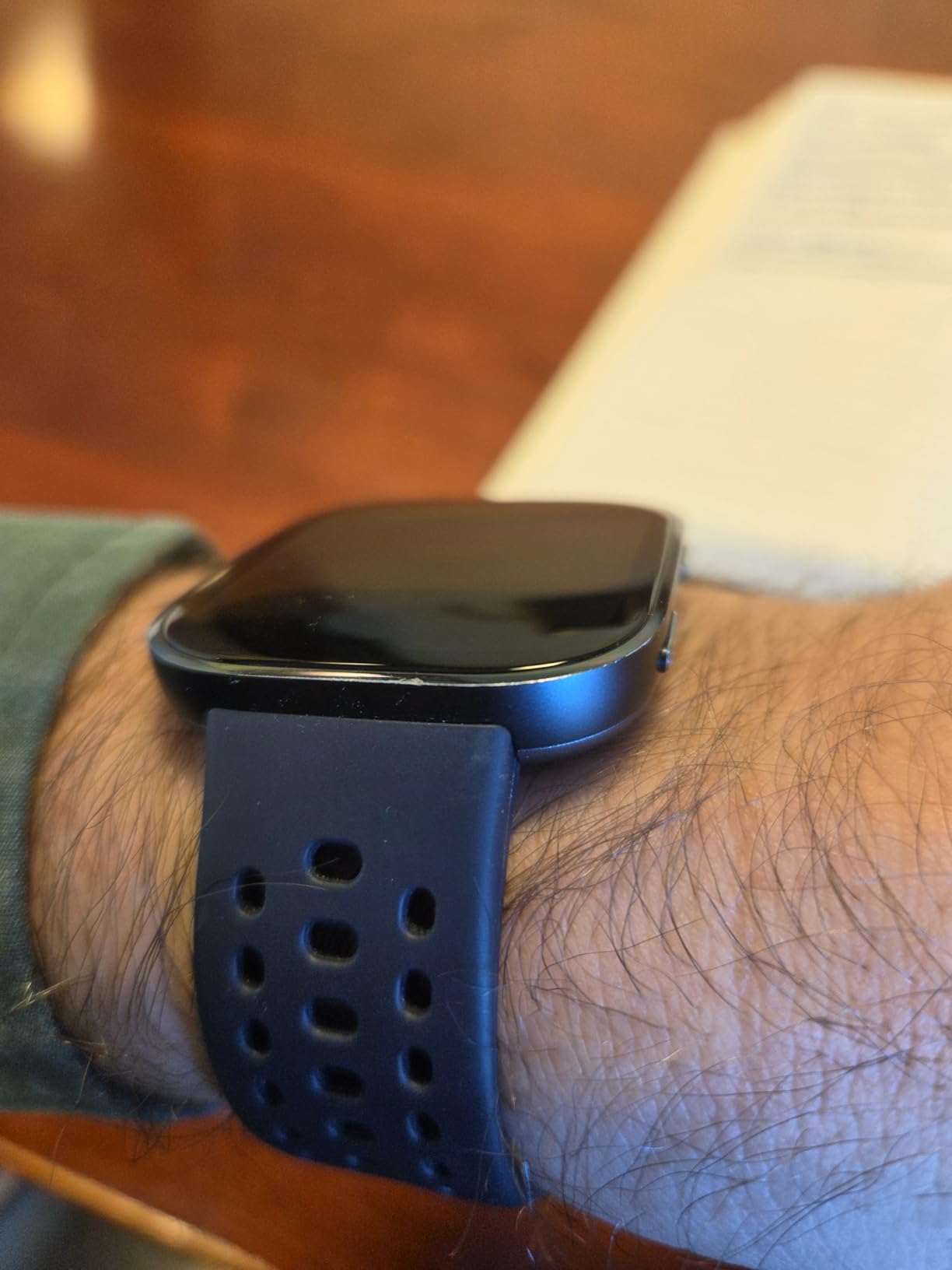
10. Amazfit Bip Max – The Biggest Display Here for Runners Who Read a Lot of Data
Amazfit Bip Max Smart Watch, 2.07″ AMOLED Display, GPS, iOS/Android
2.07-inch AMOLED at 3000 nits
Up to 20 days typical battery
4 GB storage for maps and media
150+ sport modes, VO2 Max
Pros
- Largest and brightest display in the roundup
- 4 GB for offline maps and media
- subscription-free Zepp app
- VO2 Max
- training load and training effect
- gear mileage tracking for running shoes
- durable aluminum build
Cons
- Real battery runs shorter than the stated 20 days
- included band can be short on larger wrists
- showering can trigger false workout detection
- only one included watch face suits many users
The Bip Max exists for runners who want to see everything at once. At 2.07 inches and 3000 nits it has the largest and brightest screen in this roundup, and the numbers sit on it without shrinking to unreadable fragments.
It carries 150-plus sport modes with adaptive Zepp Coach routines that include VO2 Max, training load and training effect. Gear mileage tracking is a nice touch, logging the life of your running shoes and cycling kit inside the same app.
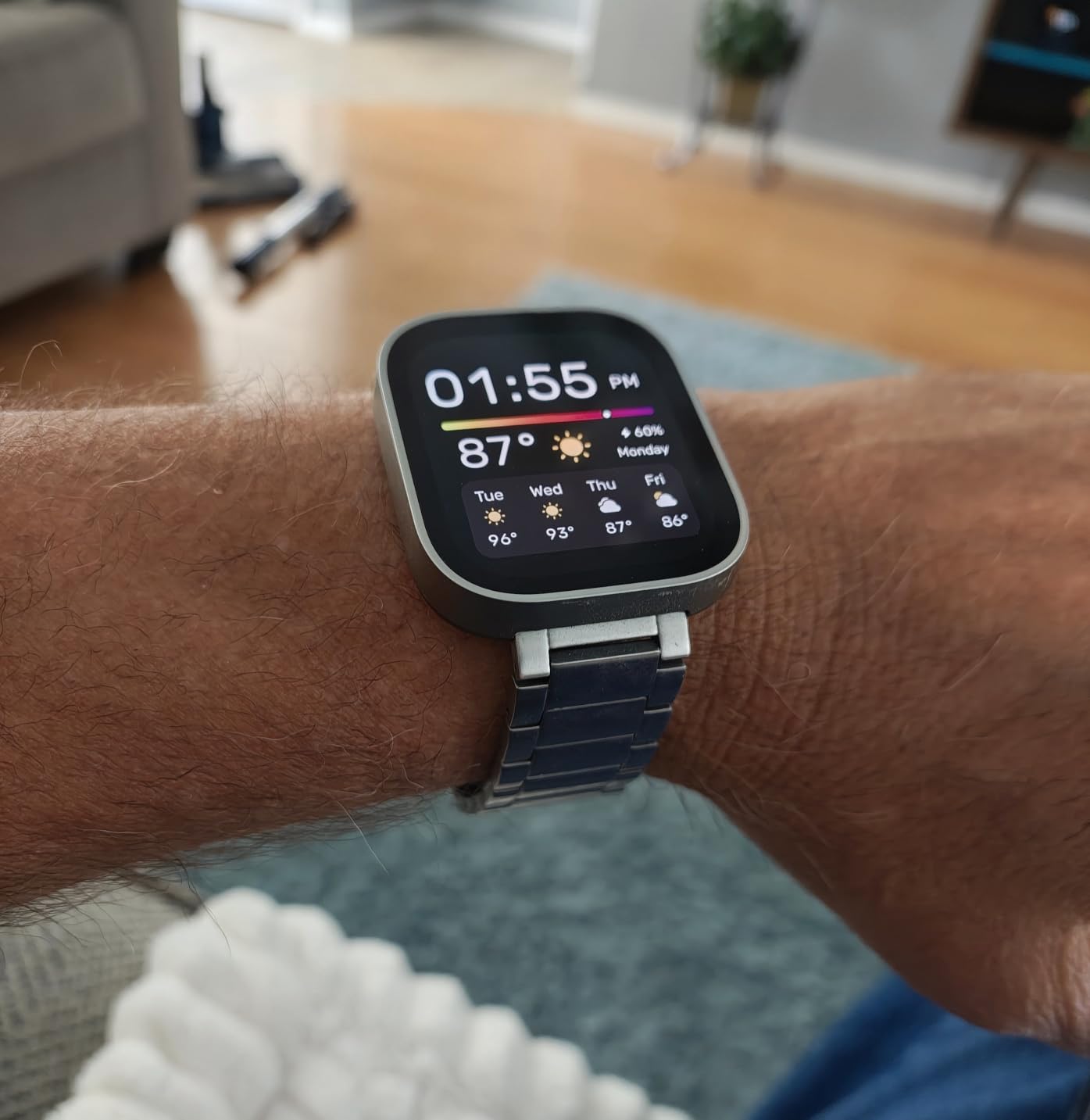
Zepp Coach and VO2 Max without a subscription
The Zepp app here runs a hybrid endurance, strength and recovery system with no paid tier required. VO2 Max, training load and training effect are all included, and BioCharge recovery monitoring reads sleep, workouts and stress together.
Offline detailed maps with turn-by-turn directions and off-track alerts cover five satellite systems. Owners report fast, reliable syncing, and the always-on display is a genuine benefit on a screen this large.
Where the headline figure overpromises
The stated 20-day battery assumes a typical usage pattern. Owners running with notifications and health monitoring active report twelve to fourteen days, which is still excellent but worth knowing before you plan around the headline number.
Smaller annoyances add up: the included band can run short on larger wrists, showering can trigger false workout detection that is hard to disable, and only one of the included watch faces suits many users. The controls are also limited, with some users unable to open common apps from a single button press.
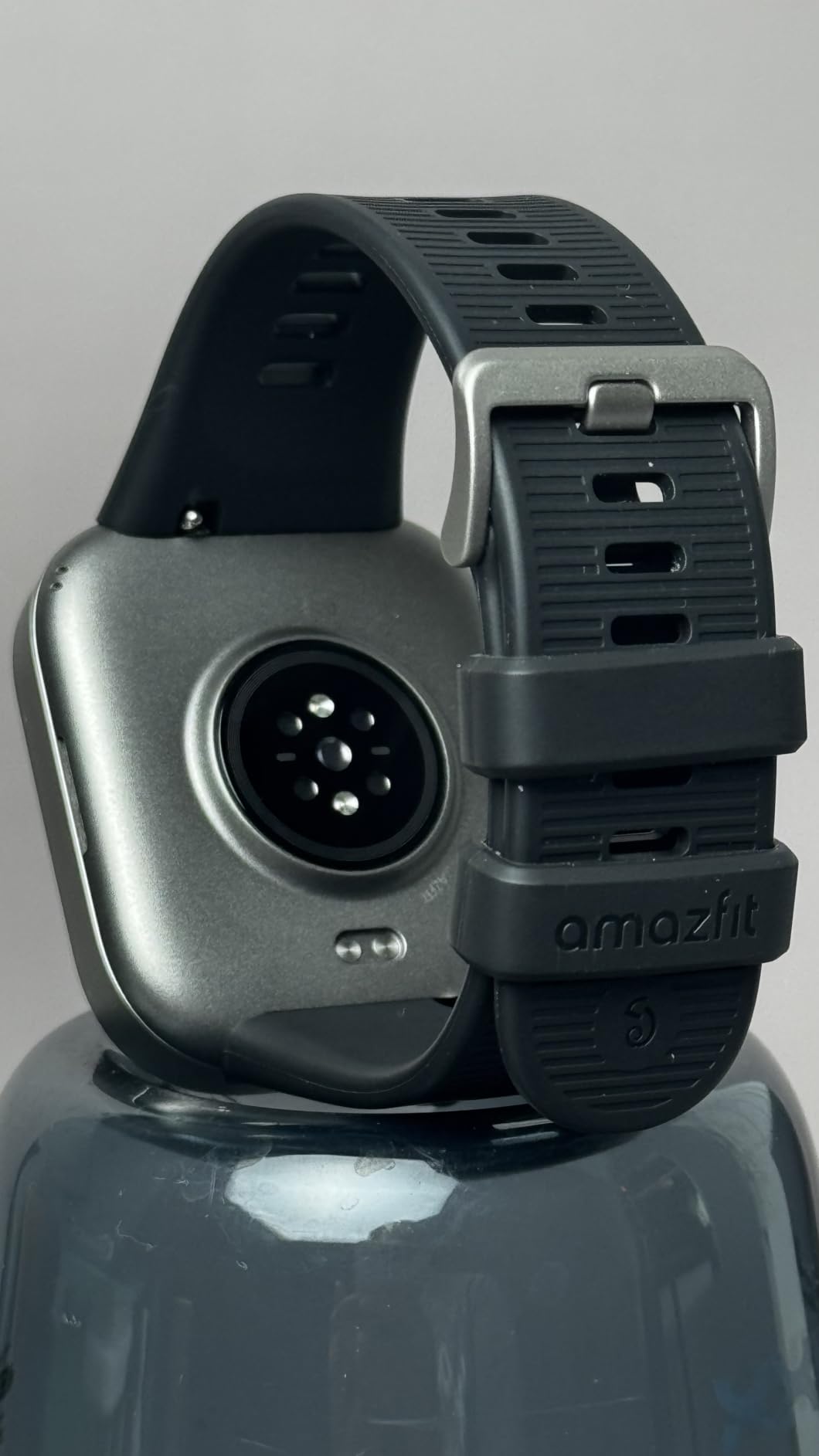
How to Choose a Running Watch That Fits Your Training
Normalise every battery claim to GPS hours
This is the single most useful comparison trick, and almost nobody does it. A stated runtime might mean GPS-only mode with the screen off, or all-systems mode with the screen on, or multi-band mode with everything enabled. Those three numbers can differ by more than double on the same watch.
Look for hours of GPS with the display on, then discount by roughly a fifth to reflect real-world conditions. Anything above 20 hours handles a long race or a two-day trip. Below 15 hours and you are planning around a charger.
Our wider picks on smartwatches under 200 dollars are worth a look if battery life is your main filter, since that tier consistently favours multi-day claims.
Decide whether you need multi-band GPS
Multi-band or dual-frequency positioning locks onto two satellite frequencies at once, which resists signal degradation. It matters under dense tree cover, in urban canyons between tall buildings, and in mountainous terrain. On a flat road under open sky it makes no measurable difference.
Each step up costs battery hours, so multi-band is worth paying for only if your training happens in the conditions where it matters. Fewer wrist-twists between trees is also a reason to choose it over a phone armband.
Understand what wrist heart rate can and cannot tell you
Optical sensors read blood flow through the skin using green light. During steady runs the reading is good. During intervals it lags, because the sensor samples a few seconds behind a rapidly changing signal, and arm swing adds motion artifact on top of that.
The practical rule: trust wrist heart rate for steady state, HRV and overnight recovery, and pair a chest strap for anything where heart rate is the target. Threshold sessions, sprint repeats and any workout where you are chasing a specific number all fall into that second category. The COROS PACE Pro also captures built-in running dynamics without needing a separate pod.
Match the navigation features to your routes
If you run on roads with a known loop, you do not need maps and you should spend the saving on battery instead. If you run trails where you can get lost, look for full offline topographic maps with turn-by-turn directions, which on this roundup means the COROS PACE Pro, the Amazfit Active Max and the Amazfit Bip 6.
Breadcrumb trail following, which most running watches offer, records your route so you can retrace it. That is navigation of a different kind and does not replace a map on unfamiliar terrain.
Check the fit before you commit, especially on a small wrist
Case diameter matters more than buyers expect. Anything above 42mm will feel large if you have previously worn a 40mm smartwatch, and the bezel is usually what overhangs the wrist. If you have been disappointed by bulk before, our smartwatch sizing guide covers how case size and band width work together.
Weight is the number most runners underestimate. Above 45g, a watch becomes noticeable on a run longer than two hours, and it also interferes with sleep tracking if you wear it overnight.
Factor in the ecosystem and the subscription question
The watch is the start of a data relationship. Garmin Connect, the COROS app, Polar Flow and Zepp all store your history and, in Garmin’s case, are moving some customisation features behind the Garmin Connect+ subscription. Before buying, check whether the coaching and analytics you care about are free.
Also check third-party support. Strava syncs broadly, but if you train with a coach on TrainingPeaks or a specific platform, verify that the watch uploads there directly. The COROS app has the narrowest ecosystem of the brands here, which is worth knowing if you rely on outside tools.
Frequently Asked Questions
Is COROS better than Garmin for running?
COROS is better if battery life and offline maps decide your purchase. The PACE Pro runs 38 hours of outdoor GPS and 31 hours with dual-frequency enabled, carries offline topographic maps with turn-by-turn directions, and keeps 32 GB on the wrist. Garmin is better if training analytics, Strava and coaching-platform integrations matter most, since Garmin Connect and the Forerunner line go deeper on training load, readiness and third-party support. COROS owners who migrate from Garmin usually cite weight and battery as the reason.
Is Garmin or Apple Watch better for running?
Garmin is better for running, and the gap is battery plus training data. Garmin Forerunner models give you 19 to 24 hours of GPS and 11 to 15 days in smartwatch mode, with training readiness, training effect and recovery time built in. The Apple Watch SE 3 gives you 18 hours of all-day battery, no offline maps and shallower running analytics. Apple wins as a general smartwatch with texting, calls, Siri and outstanding health alerts. Choose Apple only if you already run with an iPhone.
Which GPS running watch has the best accuracy?
In our runs the Garmin Forerunner 265S held its position best in the conditions that break other watches, using multi-band GNSS with SatIQ to track two satellite frequencies at once. The COROS PACE Pro and Amazfit Active Max were close behind with newer chipsets and five-system reception. Under open sky on a flat road the difference largely disappears, so dual-band hardware mainly pays off under tree cover, in urban canyons and in the mountains.
Is COROS better than Apple Watch for running?
For running specifically, yes. The COROS PACE Pro gives you 38 hours of outdoor GPS, dual-frequency positioning and offline topographic maps with turn-by-turn directions, against 18 hours of all-day battery, no offline maps and no navigation on the Apple Watch SE 3. Apple is the better smartwatch for messages, calls, health alerts and sleep apnoea notifications. The honest framing runners use is that Apple wins as a smartwatch and COROS wins as a running computer.
Do I need a chest strap when running with a GPS watch?
Only for hard sessions. Wrist optical sensors are accurate during steady runs and for overnight heart rate variability and recovery data, but they lag by several seconds when your heart rate changes quickly and they pick up motion artifact from arm swing. Pair a chest strap for threshold work, intervals, sprints or any session where heart rate is the target you are chasing. Easy running, long distance and recovery days do not need one.
Why does my Garmin GPS lose accuracy on a run?
Three things cause it. Satellite geometry is the biggest: tall buildings, deep valleys and heavy tree cover reflect and block signals, so the watch picks a worse fix or extrapolates across the gap. Single-frequency receivers are more exposed to this than multi-band models such as the Forerunner 265S with SatIQ. Third, a cold watch or a weak battery can delay the initial lock. Running a second warm-up lap usually removes the startup error, and switching to an all-systems or multi-band mode helps in the hardest terrain.
The Right Running Watch for Your Training in 2026
If you want one watch that handles almost any run without thinking about it, the Garmin Forerunner 165 is the pick. Nineteen hours of GPS, an eleven-day smartwatch battery, a 43mm case that fits smaller wrists and daily suggested workouts add up to the least friction of anything we tested.
If your runs happen in canyons, forests or mountains, the Garmin Forerunner 265S is worth the step up for multi-band positioning, and the COROS PACE Pro is the pick if you also want offline topographic maps and 38 hours of GPS between charges. For ultra runners and anyone who refuses to carry a charger, the COROS PACE Pro and the POLAR Pacer Pro, with 35 hours in training mode, are the two that get furthest on a single charge.
If you are new to running and want to be told what to do rather than left to design a block yourself, the Samsung Galaxy Watch 8 offers 5K and marathon programs with real-time feedback. If you are already on an iPhone and want the best smartwatch that also runs, the Apple Watch SE 3 wins on health and safety features, provided your runs stay under a couple of hours.
If budget is the deciding factor, the Amazfit Bip 6 gives you a large AMOLED, two weeks of battery and free offline maps, and the Amazfit Bip Max does the same with a noticeably bigger screen. Weigh the reliability feedback on the Bip 6 before you commit, and accept shallower training analytics.
Whatever you choose, test it on three or four runs before you build a season around it. Battery behaviour, wrist fit and heart rate accuracy all change once you are moving hard rather than walking around a shop. If you want the broader picture beyond running, our general smartwatch guide covers the models that do everything else well.
Leave a Reply