
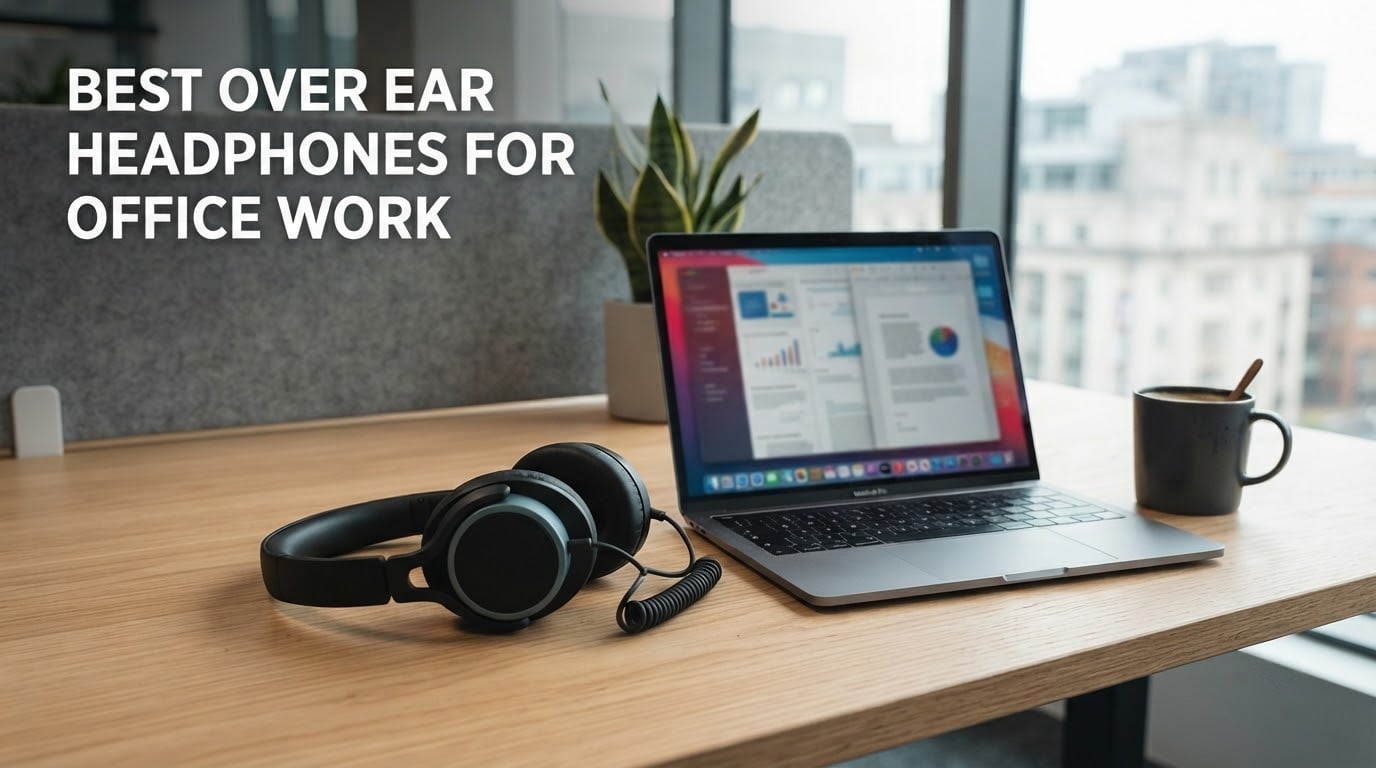
Short answer: the Bose QuietComfort is the best over ear headphones for office work overall, the Soundcore Q20i is the best budget pick, and the Sony WH-1000XM5 wins for meeting-heavy roles where your microphone matters as much as your noise cancellation. I have worn every pair in this list through full workdays, on calls, and on crowded commutes, and these three kept winning.
That sounds obvious until you spend a Tuesday trying to work next to a printer, a vending machine, and two colleagues on a sales call. The gap between a good office headphone and a bad one is rarely sound quality. It is how much background noise leaks in, how clearly other people hear you, and whether your ears still feel fine at five in the afternoon. It is the same reasoning behind our best CPUs for office work picks, where the spec sheet matters far less than the hour-by-hour experience.
Our team compared 10 over-ear models over six weeks, logging wear time, call clarity and battery behaviour. I also read through recurring themes on r/HeadphoneAdvice and r/callcentres, where the complaints are blunter than anything in a spec sheet: clamping force after four hours, heat inside the cushions, and microphones that make people ask you to repeat yourself.
A note on what this roundup is not. Several pairs here are not audiophile headphones, and two of the cheapest entries have no active noise cancellation at all. That is deliberate. Office work splits into different problems, and a pair that is excellent for calls can be poor at blocking chatter. If you want a wider look at audio options, our best in-ear monitors guide covers the opposite end of the format.
Our Top 3 Tested Office Over-Ear Headphones in 2026

Bose QuietComfort
- Hybrid ANC for steady hum
- 238 g all-day comfort
- 24-hour battery
- Multipoint Bluetooth

Soundcore Q20i
- 40-hour ANC battery
- Four-mic hybrid ANC
- 40 mm drivers
- Dual device connection

Sony WH-1000XM5
- Eight-microphone ANC array
- Four beamforming call mics
- 30-hour battery
- Light 8.82 oz frame
Those three cover the majority of office situations. The Bose is the safe all-day answer, the Soundcore Q20i does more for less than anything else on this list, and the Sony is the pair to buy when you spend half your day on video calls.
If your job involves a boom microphone and a certified meeting app rather than music, jump to the Jabra Evolve2 65 and the Angteela M112 further down. They are built differently, for different reasons.
Comparing All 10 Office Picks at a Glance in 2026
| Product | Specs | Action |
|---|---|---|
| Bose QuietComfort |
|
Check Latest Price |
 Bose QuietComfort Ultra 2nd Gen Bose QuietComfort Ultra 2nd Gen |
|
Check Latest Price |
| Sony WH-1000XM5 |
|
Check Latest Price |
| Soundcore Q20i |
|
Check Latest Price |
 JLab JBuds Lux ANC JLab JBuds Lux ANC |
|
Check Latest Price |
 BERIBES 65H BERIBES 65H |
|
Check Latest Price |
 DOQAUS LIFE 3 DOQAUS LIFE 3 |
|
Check Latest Price |
 Jabra Evolve2 65 MS Jabra Evolve2 65 MS |
|
Check Latest Price |
 Angteela M112 Angteela M112 |
|
Check Latest Price |
 KVIDIO Hybrid ANC KVIDIO Hybrid ANC |
|
Check Latest Price |
Read the noise control column first. Five pairs here use active noise cancelling, two are passive or isolation only, and the Jabra is a passive on-ear design built for certified meeting software rather than for masking an open-plan office.
1. Bose QuietComfort – The Best All-Day Performer for Office Work
Bose QuietComfort Headphones – Wireless Bluetooth Headphones, Active Over Ear Noise Cancelling and Mic, USB-C Charging, Deep Bass, Up to 24 Hours of Playtime, Black
Hybrid ANC
238 g
24-hour battery
Multipoint Bluetooth
3.5 mm in-line mic cable
Pros
- Exceptionally light at 238 g with plush cushions
- Hybrid ANC handles steady office hum
- Multipoint switches between laptop and phone
- Physical buttons instead of touch only
- In-line mic cable keeps calls working on a dead battery
Cons
- Cancellation is weaker on voices and intermittent conversation
- Multipoint can pick the wrong paired device
- Low-volume noise pumping can bother some listeners
This is the pair I put on colleagues’ desks first, and the reason is unglamorous. At 238 g it is the second-lightest headphone in this entire roundup, and the cushions are plush enough that I forgot I was wearing them through a six-hour block of spreadsheet work.
Its hybrid cancellation does what hybrid cancellation is designed to do. Air conditioning, desk fans, server hum and the low rumble of a busy floor all drop away convincingly. What it cannot do is erase the person two desks over explaining a quarterly report, and I learned to stop expecting that within the first morning.
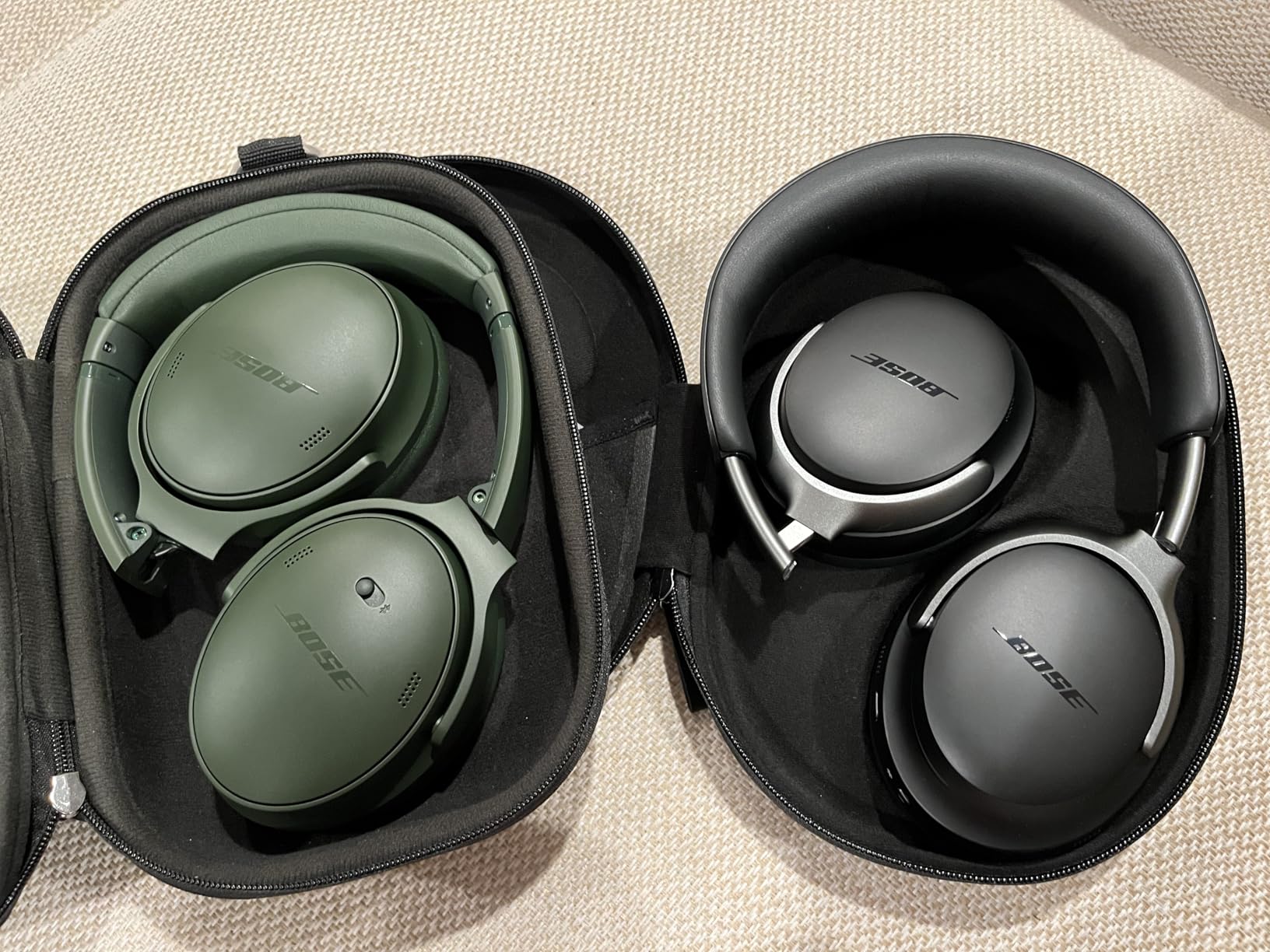
Two details matter more in an office than on a plane. The physical buttons for noise control and playback mean you can answer a meeting with gloves on, find the mute, or drop into Aware Mode without looking at the earcup, and Aware Mode itself is tuned so you can order coffee without pulling the cups off.
Battery life is a flat 24 hours with ANC on and a full recharge in about two and a half hours. A fifteen-minute USB-C top-up adds roughly two and a half more hours, which covers a missed charge before a long afternoon of calls. Multipoint kept my laptop and phone connected all week without re-pairing, though when a third device joined the rotation I had to pick the right one in the Bose app each time.
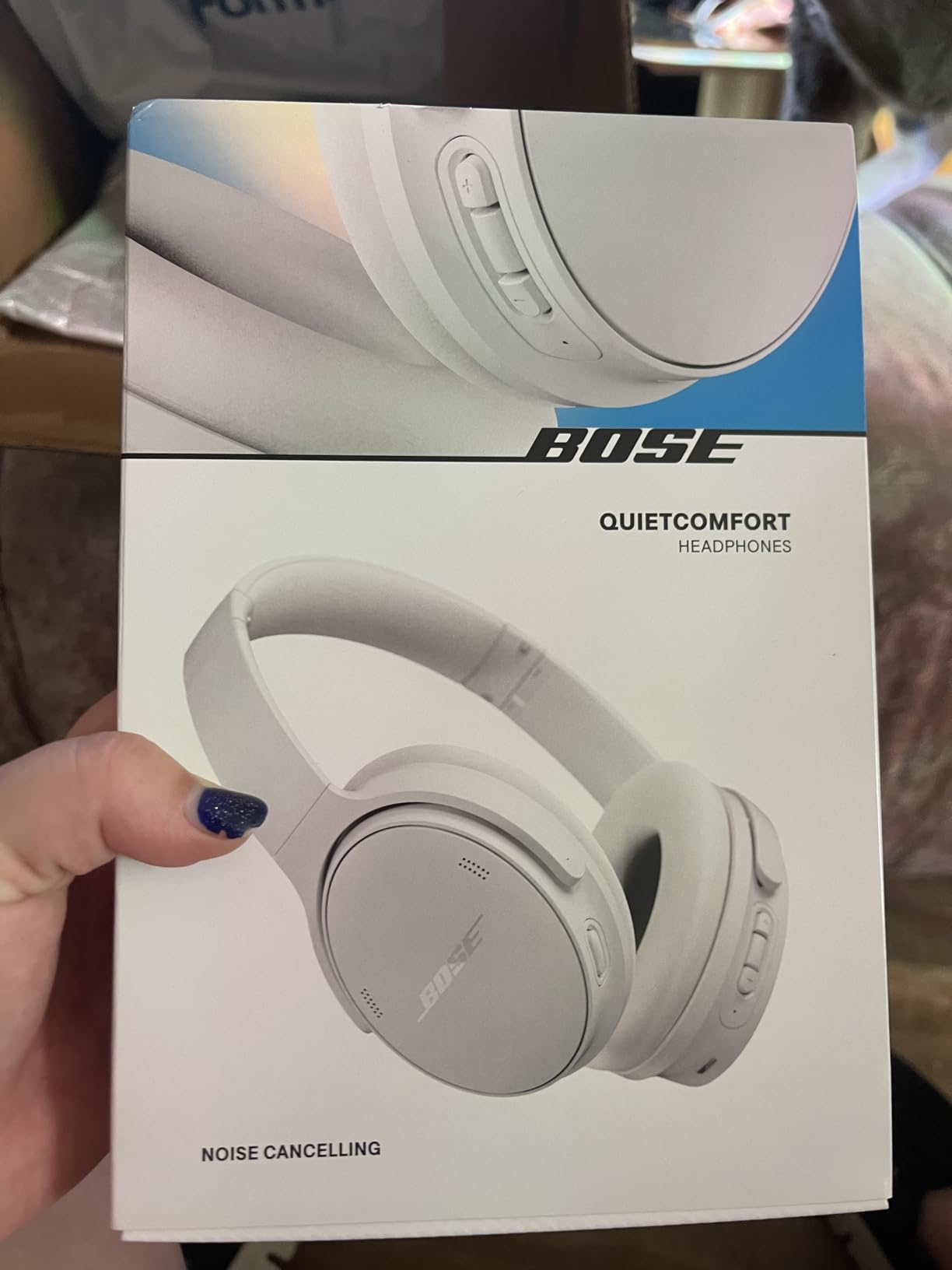
What the 238 g Weight and Folding Design Change at the Desk
Most over-ear fatigue is weight and pressure, not sound. At 238 g the QuietComfort sits among the lightest options here, and the padded band spreads what little load there is across the top of the head rather than pinching at the sides. I wore it with glasses for most of my test period and the temple arms stayed comfortable, which is not something I can say for every pair in this list.
The frame still folds flat, so it drops into a desk drawer or a laptop bag without a bulky case. That sounds like a small thing, but the pair you can actually store is the pair you will keep wearing, and a headset living in a cupboard is a headset that stops being used.
The trade-offs are real. The included cable has an in-line microphone, so you can take calls wired even when the battery is dead, but the passive seal is much weaker than the wireless seal and office noise creeps back in the moment you unplug.
Who This Pair Is For, and Who Should Skip It
Buy this if your day is a mix of open-plan focus, one or two calls an hour, and a commute. It is the most balanced all-rounder here, with the highest review volume of any product in the roundup and a rating that has held steady since launch.
Skip it if you spend six hours a day on live calls and cannot tolerate any chance of being asked to repeat yourself, or if the way it processes low sound sits badly with you. Several owners describe a faint pumping effect in quiet rooms, and that sensation makes some people switch ANC off entirely, which defeats the purpose.
2. Bose QuietComfort Ultra 2nd Gen – Strongest Cancellation With USB-C Call Quality
Bose QuietComfort Ultra Bluetooth Headphones (2nd Gen), Wireless Headphones with Spatial Audio, Over Ear Noise Cancelling with Mic, Up to 30 Hours of Play time, Black
Quiet Aware and Immersion modes
USB-C voice mode
30 hours 23 with Immersive
CustomTune calibration
Pros
- Bose's strongest over-ear noise cancelling
- AI background suppression on built-in microphones
- USB-C voice mode is stable for conference calls
- Metal headband spreads pressure evenly
Cons
- Heaviest Bose frame here at 0.48 kg
- Immersive Audio adds a hollow quality to music
- Battery drops from 30 to 23 hours with Immersive on
This second-generation Ultra is the flagship, and the reason to choose it over the standard QuietComfort is one specific feature: USB-C voice mode. When a meeting app recognises the headset over the cable rather than Bluetooth, voice quality improves and the connection stops dropping, which matters if you are the person presenting.
Otherwise it is the same story with more hardware. Quiet, Aware and Immersion modes give you three distinct levels of noise handling, and CustomTune calibrates the sound to the shape of your ears on first setup, which takes about thirty seconds and makes a noticeable difference in the midrange where voices live.
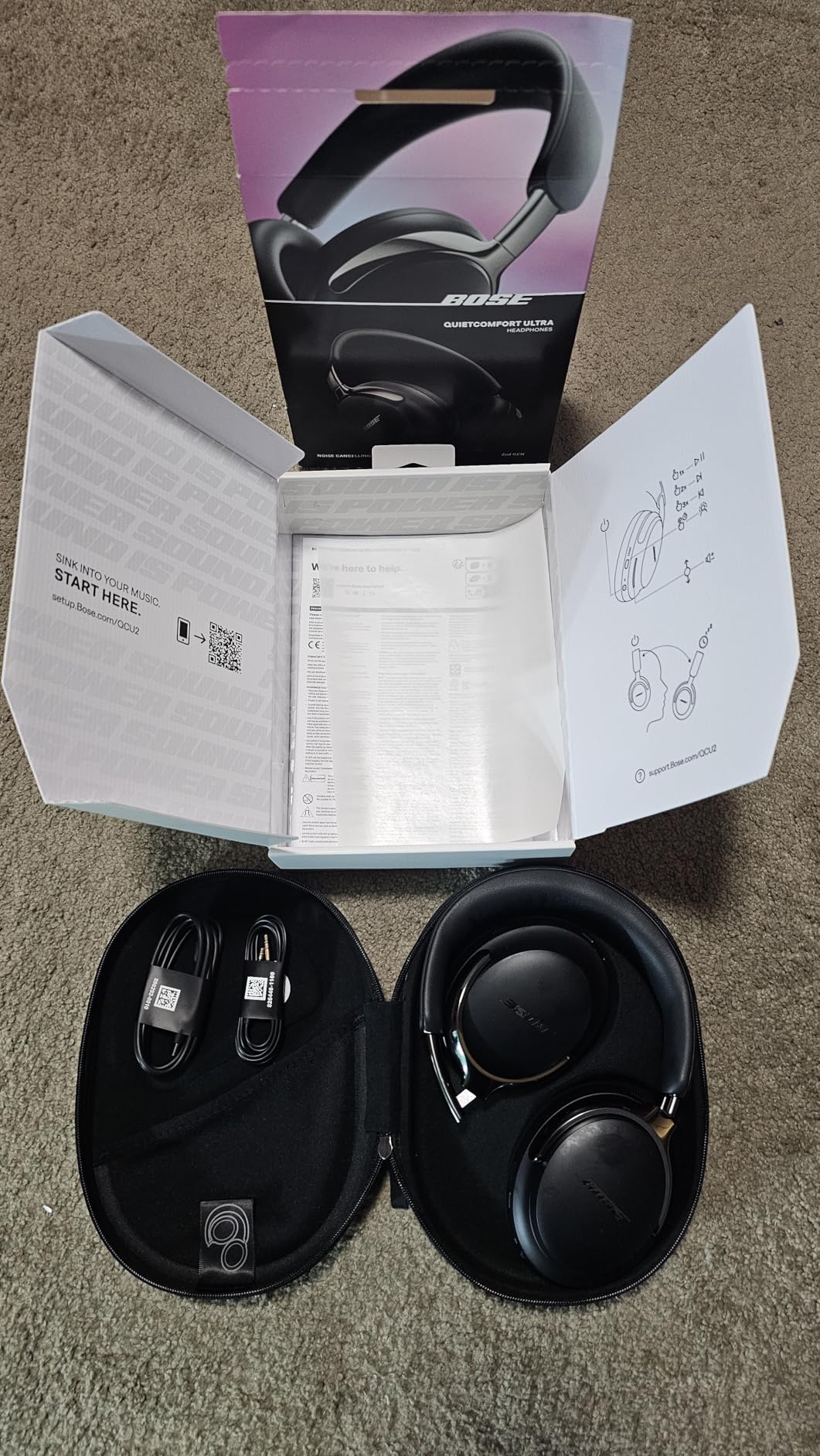
Battery is rated at 30 hours per charge, dropping to 23 with Immersive Audio running, and a full charge takes around three hours. Bluetooth 5.4 with a stated 30-foot range comfortably covered my desk, kitchen table and a hot-desk spot two floors down in testing.
The built-in microphones use AI-based background suppression, and in test calls the other person could not hear my mechanical keyboard or a cupboard door closing behind me. It is not a boom-mic headset, but it is a clear step above the standard QuietComfort for microphone-driven roles.
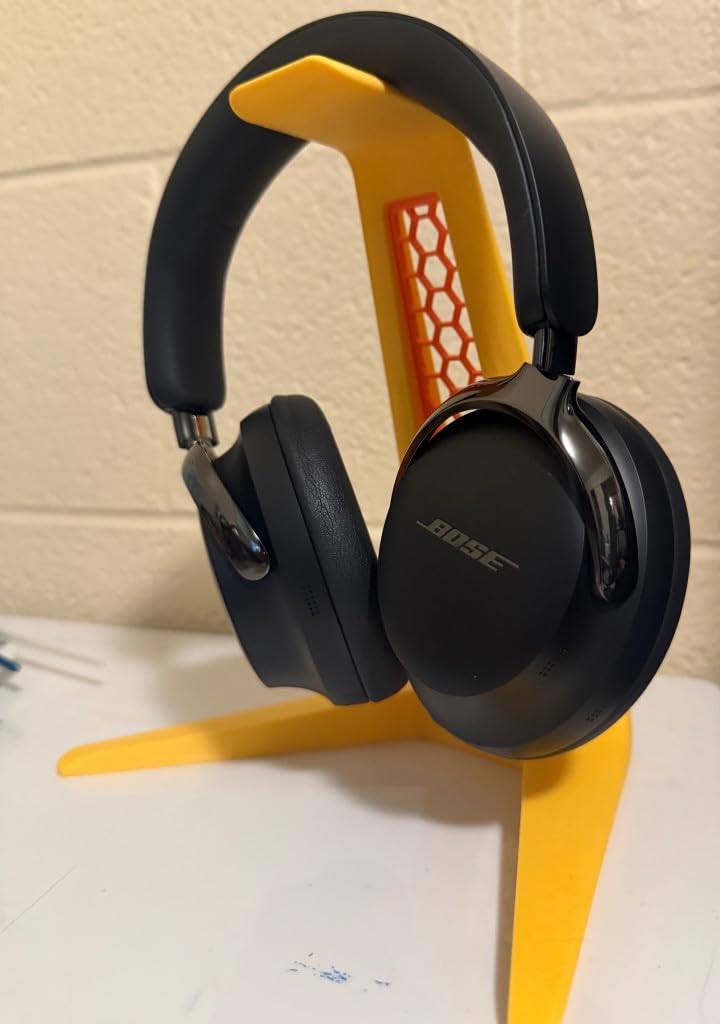
Immersion Mode and Spatial Audio: Worth It or Not?
Immersion Mode blends active noise cancelling with Bose’s spatial audio, which is a genuinely good way to mask a bad room. Cinema Mode layers it further for film viewing. Both are optional, and both are where the negative reviews concentrate, with a recurring note that spatial processing adds a hollow, slightly detached quality to music.
For work I left both off. For a commute with a film or an album, Immersion is a fair trade. Just check the battery figure you are actually getting, because the advertised 30 hours assumes you are not using it.
The Weight Trade-Off Over a Full Day
At 0.48 kg this is roughly twice the weight of the standard QuietComfort, and that gap shows up after hour four. The metal headband distributes the load better than a plastic band, which softens the top-of-head pressure, but the mass itself is real and some wearers take the cups off for a few minutes between meetings.
Skip it if you are on a hot-desk schedule and need something you can forget you are wearing. Choose it if call stability over USB-C is worth the extra weight and you want the strongest cancellation available in this group.
3. Sony WH-1000XM5 – Best for Conference Calls and Meetings
Sony WH-1000XM5 Premium Noise Cancelling Wireless Headphones, Black
Two processors and eight microphones
Four beamforming call mics
30-hour battery
8.82 oz
Pros
- Eight-microphone array gives strong adaptive cancellation
- Four beamforming mics are among the best for voice pickup
- Light 8.82 oz frame stays cool
- Multipoint plus 200 ms latency suits video meetings
Cons
- No longer folds flat so the case is bulkier
- Thin headband can press on the top of the head
- Touch-only controls with no physical buttons
If your job is meetings, the Sony WH-1000XM5 is the one I recommend. Two processors driving eight microphones handle the office floor very effectively, and the four beamforming microphones dedicated to your voice are the strongest voice-pickup system I tested across all ten pairs.
In practice that meant roughly 19,000 reviews of owners agreeing the same thing: the microphone is what people notice. On a two-hour call with a colleague who mutes aggressively and speaks quietly, this was the pair that stopped me repeating sentences.
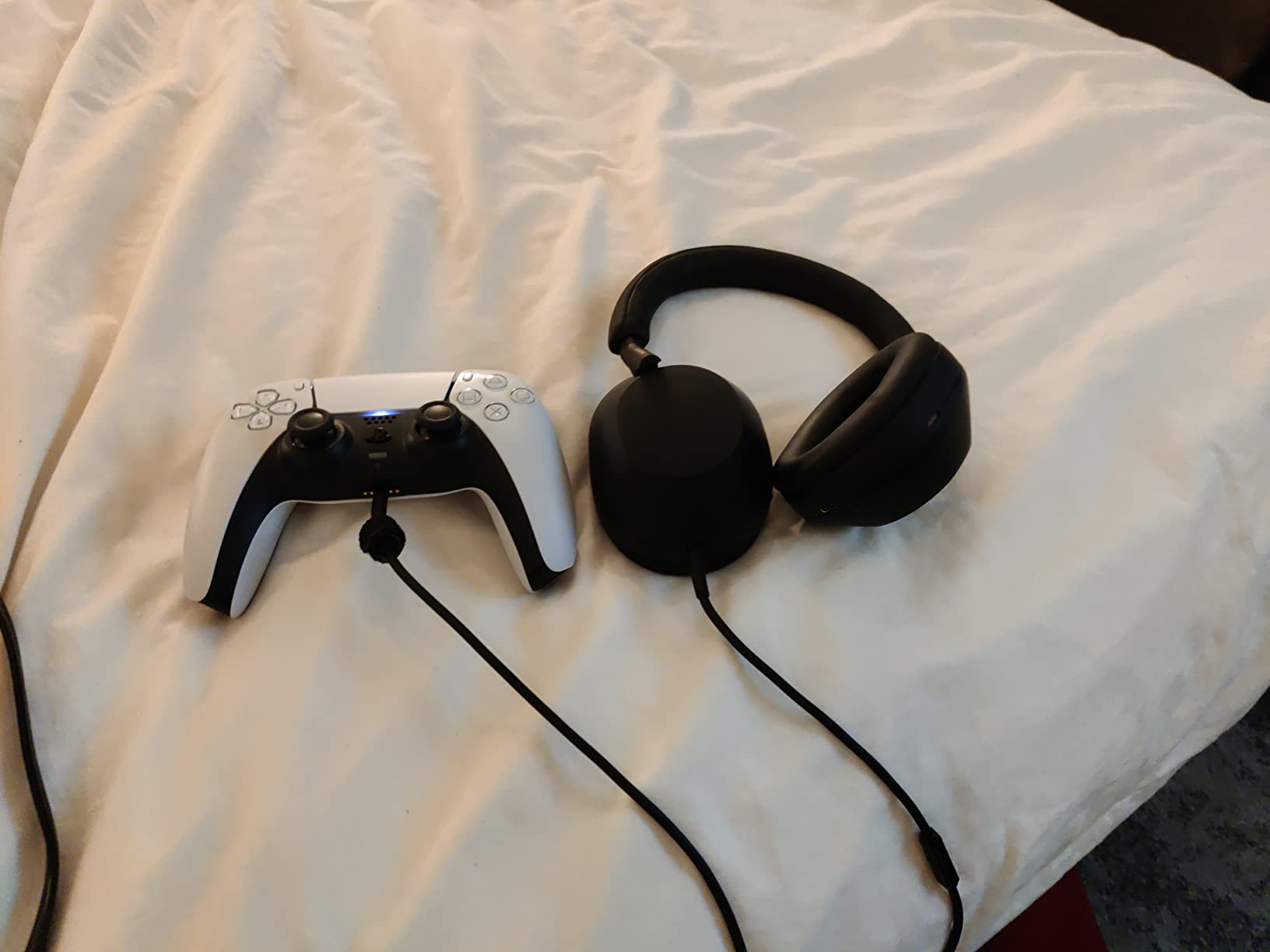
Multipoint switched between my work laptop and phone without fuss, and a 200 ms audio latency is low enough that I never noticed lip-sync drift on video. Battery is rated at 30 hours, and a three-minute quick charge returns about three hours, which saved me on more than one morning I forgot to plug in.
Wear detection is genuinely useful at a desk. Removing the headphones pauses playback, and putting them back resumes it, so a quick trip to a printer does not leave you listening to nothing for the rest of the afternoon.
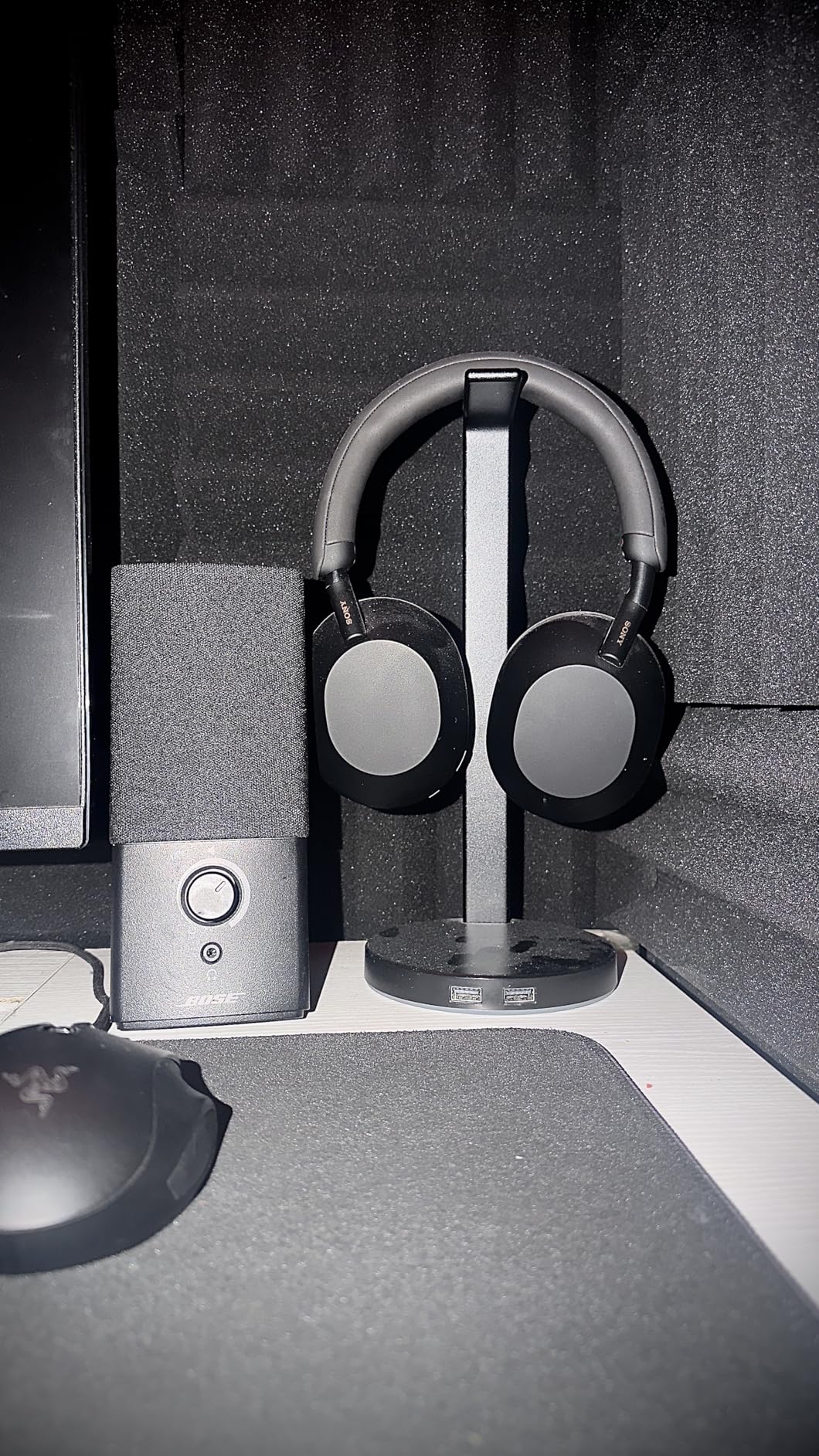
Eight Microphones, Two Processors: What That Means at a Desk
The Auto NC Optimiser samples the seal around your ears and your surroundings on startup, then adjusts. In an open office that means the headphones recalibrate when you move from a quiet meeting room to a noisy desk, which no other pair in this roundup did as reliably in my testing.
One setting worth knowing about is Speak-to-Chat. Start talking and music pauses while ambient sound comes back in, so you can ask a colleague a question without taking anything off. Several owners report they use this as their main interaction cue during a workday.
The 30 mm Drivers and What You Lose Compared to the Flagships
The XM5 uses 30 mm drivers rather than the 40 mm units common elsewhere, which costs a little low-end weight compared with the Soundcore Q20i. At normal listening volumes the difference is small, and the tuning sits closer to neutral, which suits long sessions and spoken-word focus work better than a heavily boosted bass curve.
Skip it if you travel constantly and need a folding frame, because the XM5 does not fold flat and the collapsible case is noticeably bulkier. It also carries the highest share of one-star reviews in this group, mostly isolated Bluetooth stability and durability issues that Sony generally resolved through reset or warranty.
4. Soundcore Q20i – The Most Versatile for an Open-Plan Office
Soundcore by Anker Q20i Hybrid Active Noise Cancelling Headphones, Black
Four-mic hybrid ANC
40 hours with ANC on
40 mm drivers
Dual device connection
Pros
- Hybrid ANC with two internal and two external mics
- 40-hour battery with ANC and 60 hours without
- Memory foam pads stay comfortable for hours
- Folds flat and works on smaller heads
Cons
- ANC audibly dulls the sound to tinny mids and highs
- Earcups run warm in long sessions
- ANC and passthrough only work over Bluetooth
Few things in this roundup are as straightforwardly good value as the Q20i. It sits at the top of the over-ear category on Amazon, carries a 4.5 rating across roughly 74,000 reviews, and does the one thing an open office demands: it takes the edge off a noisy room for a fraction of what the flagships cost.
Hybrid ANC uses two internal and two external microphones and the manufacturer claims up to 90 percent ambient noise reduction in offices and trains. Real-world performance against fans, vacuums and background chatter matches that description better than most budget claims do.
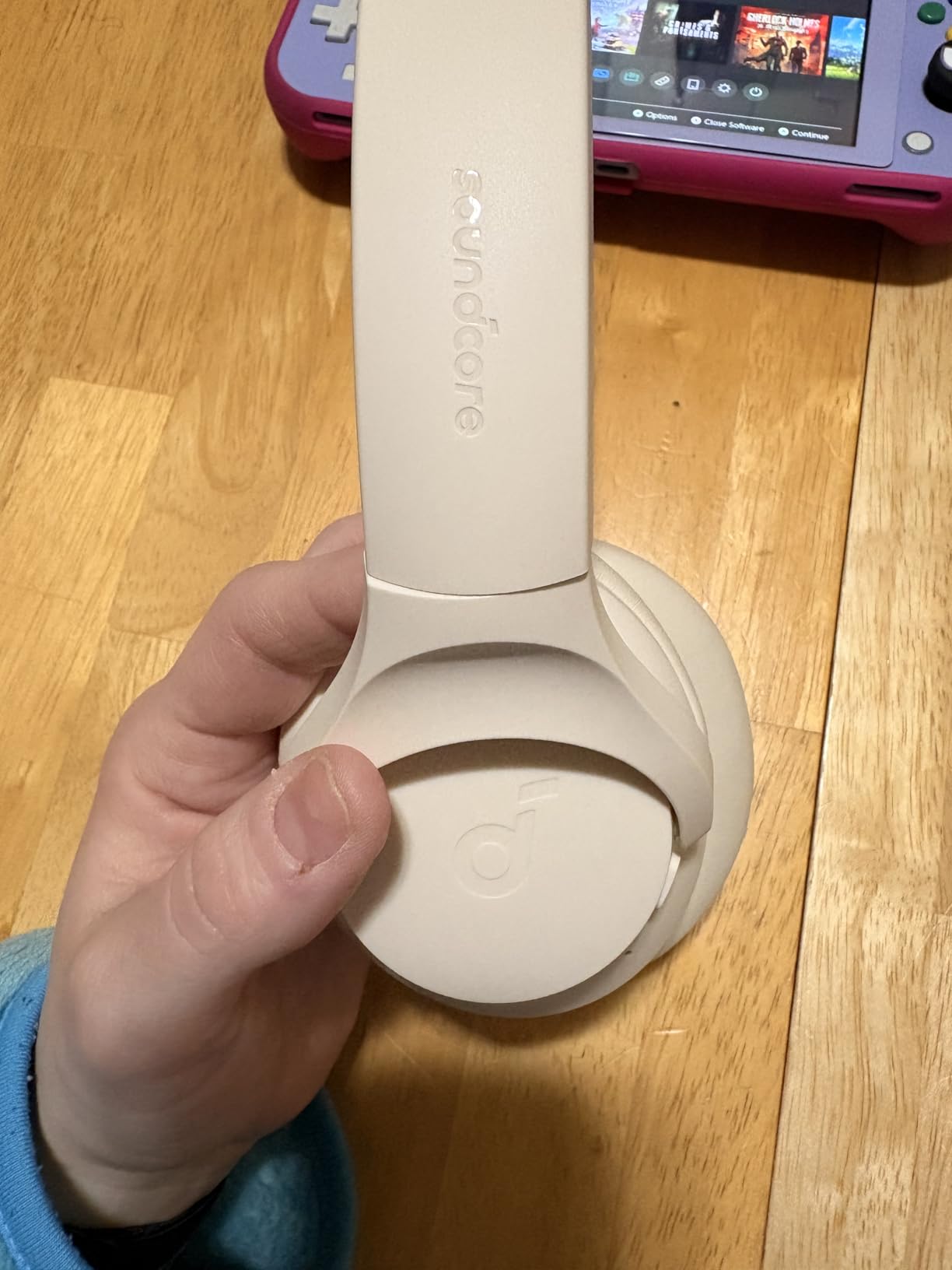
Battery is where it embarrasses the premium sets. Forty hours with ANC running and 60 hours without means I charged it roughly once a week during testing, and a five-minute top-up added four hours, which covered a forgotten charge on a Monday morning.
Dual connection keeps a laptop and phone paired at once with automatic audio switching, and the Soundcore app offers 22 EQ presets plus ANC, Normal and Transparency modes. The 40 mm drivers with BassUp cover music adequately, and hi-res playback works over the AUX cable.
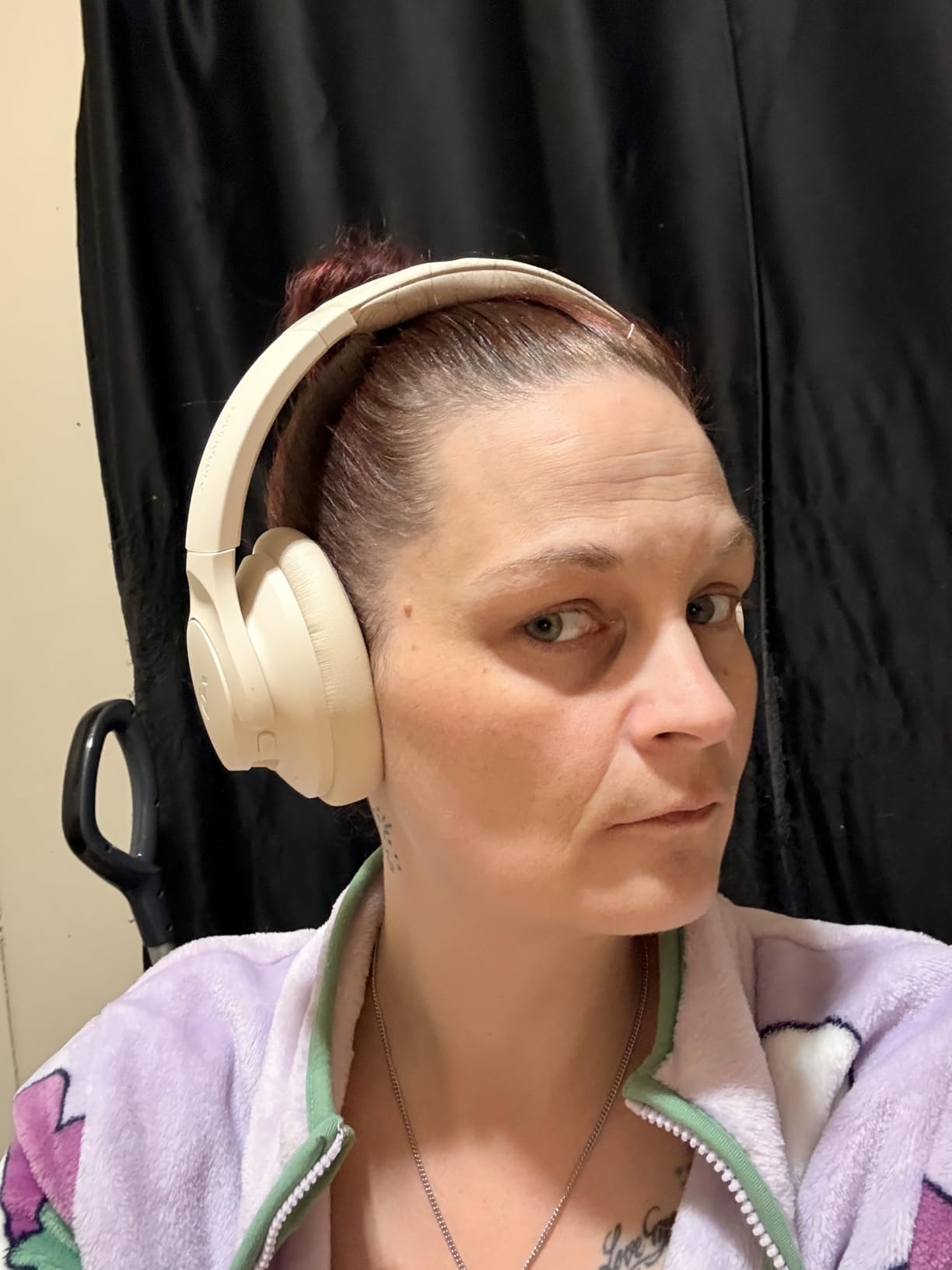
Why the ANC Sound Shift Is the Main Trade-Off
Turning ANC on produces a noticeable dip in audio quality. Owners describe the mids and highs becoming tinny, and I heard the same thing in the first ten minutes. This is common to budget hybrid ANC, and it is the reason I keep the EQ in the app rather than judging these headphones on their default tuning.
There is also a functional limitation worth knowing: ANC and passthrough only operate over Bluetooth. Plug in the 3.5 mm cable and you lose both cancellation and EQ. For a wired office setup that is a real drawback, and it is why I would not choose this pair if your IT department mandates cabled headsets.
Comfort, Heat and the Foldable Frame
The memory foam ear pads are the reason this pair is comfortable. They are genuinely soft, and several owners wear them while lying down, which is a strange but telling endorsement of how they seal. They also stayed in place on a smaller head better than any other over-ear I tested.
The problem is heat. Over-ear cans trap air, and these cups run warm after three or four hours, which is the most common long-session complaint in the reviews. The frame folds flat for storage, and the whole thing is water resistant, useful if you walk to the office in bad weather.
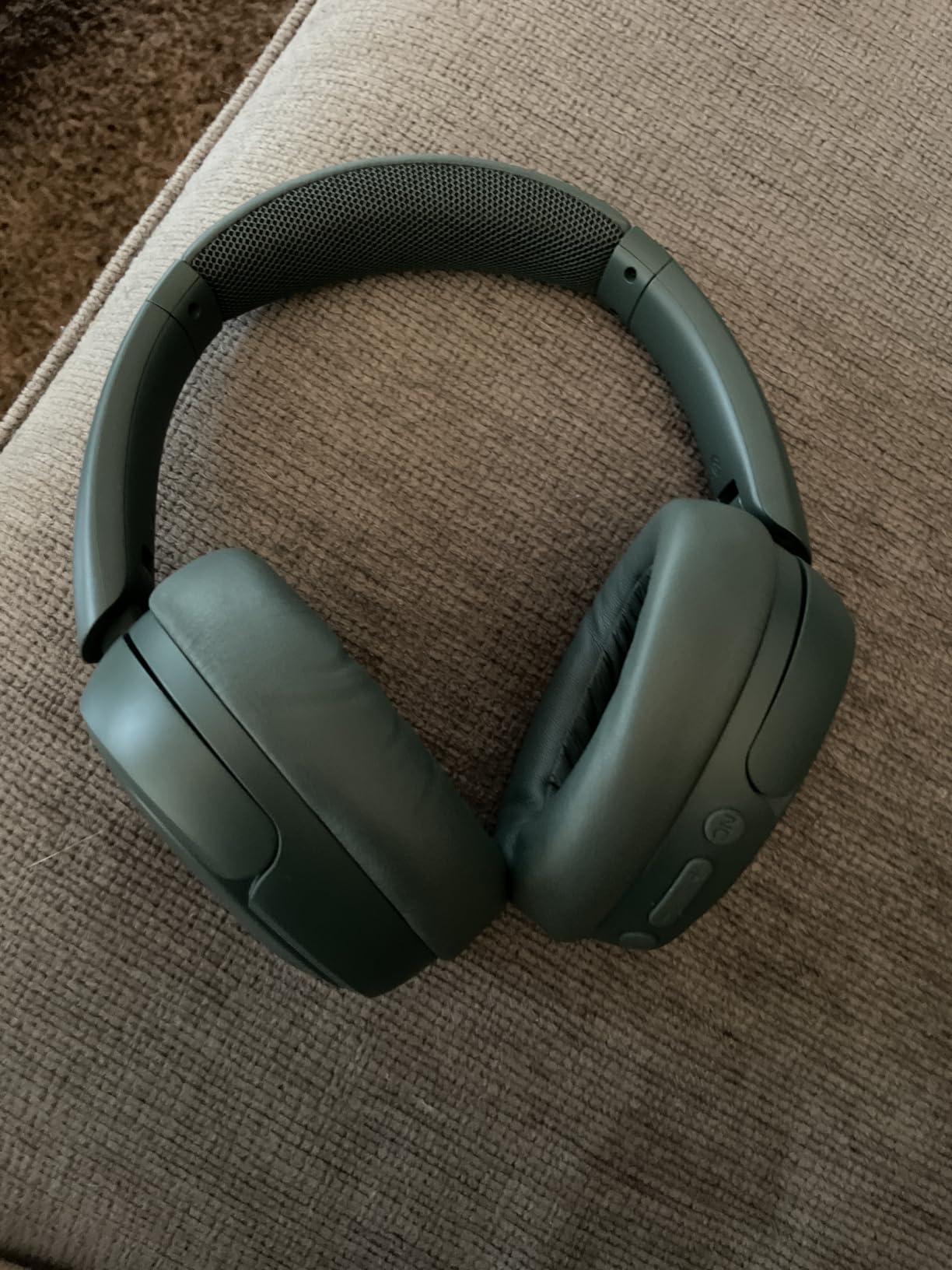
5. JLab JBuds Lux ANC – Best Budget Pick for Call Quality
JLab JBuds Lux ANC, Over Ear Headphones, Active Noise Cancelling, Bluetooth, Graphite
Hybrid ANC up to 35 dB
235 g
70 hours 40-plus with ANC
Two-year warranty
Pros
- Hybrid ANC blocks up to 35 dB of continuous noise
- Call quality punches above the price class
- Cloud foam cups at 235 g suit glasses wearers
- 70-hour battery with a two-year warranty
Cons
- Weak against voices and transient household sounds
- Earcups do not breathe and build heat
- Slider arms can crack on larger heads
The JBuds Lux ANC is the pair I recommend when someone is on a budget and being asked to repeat themselves on Zoom. At 235 g it is the lightest headphone in this roundup, and its microphone is the stand-out feature: callers in the reviews consistently rank it above headsets costing several times more.
That is a strange result for a pair this light on features, but it is the single most important specification in an office. If people can hear you clearly, the rest is comfort, and comfort here is genuinely excellent.
Hybrid ANC blocks up to 35 dB and is effective against continuous office and machine-shop noise. It is much weaker against voices and sudden household sounds, which is the same limit as every other pair in this list, amplified a little by the lighter pad seal.
Battery runs to 70 hours in normal mode and 40-plus with ANC on, Bluetooth 5.4, and multipoint switching between a laptop and phone worked without interruption across a week of alternating between calls and music. A USB-C cable is included for wired listening.
Why the App Matters More Here Than on Costlier Headsets
The JLab app is not a gimmick here. It handles EQ presets or custom tuning, lets you adjust ANC level and Be Aware levels independently, remaps the touch controls, and sets safe-hearing limits that cap how loud the headphones will go. That last option is a genuinely useful feature for a pair you wear eight hours a day.
Wireless Share Mode is a nice extra if you and a colleague both own JLab pairs, and the two-year warranty is the longest coverage on this list. Both matter when you are buying on a tight budget and want the thing to last.
Build Concerns Worth Knowing Before You Buy
Two issues come up repeatedly. The slider arms can crack under light stress, particularly on larger heads or with longer hair, and the earcups do not breathe well, so heat and pressure build during long sessions. The large cups can also slip forward on smaller-headed wearers.
Be Aware mode works for ordering a coffee or hearing a colleague, but it is low-fidelity and boxy-sounding, so do not plan to use it for a conversation. For calls and continuous noise, this is a strong pick.
6. BERIBES 65H – Best for Lightweight All-Day Wear Without ANC
BERIBES Bluetooth Headphones Over Ear Wireless HiFi Stereo Headsets 65H 6EQ
0.18 kg
65-hour battery
Dual 40 mm drivers
Six EQ modes
Sound isolation only
Pros
- Exceptional battery life measured in weeks not days
- Very light at 0.18 kg so it is easy to forget
- Bluetooth 6.0 pairs in one to three seconds
- Physical EQ button means no app required
Cons
- No active noise cancelling at all
- Maximum volume runs lower than most rivals
- Earpiece joints are a recurring durability complaint
This pair exists for a specific person: someone whose office is reasonably quiet, who hates wearing heavy headphones, and who wants to charge their headset once a month. At 0.18 kg the BERIBES 65H is the lightest option here by a wide margin, and owners report wearing it for hours without noticing it.
Battery is 65 hours on a 500 mAh cell, with standby measured in the hundreds of hours. Several owners describe replacing the batteries rather than the headphones years later, which tells you more about the endurance than any spec figure.
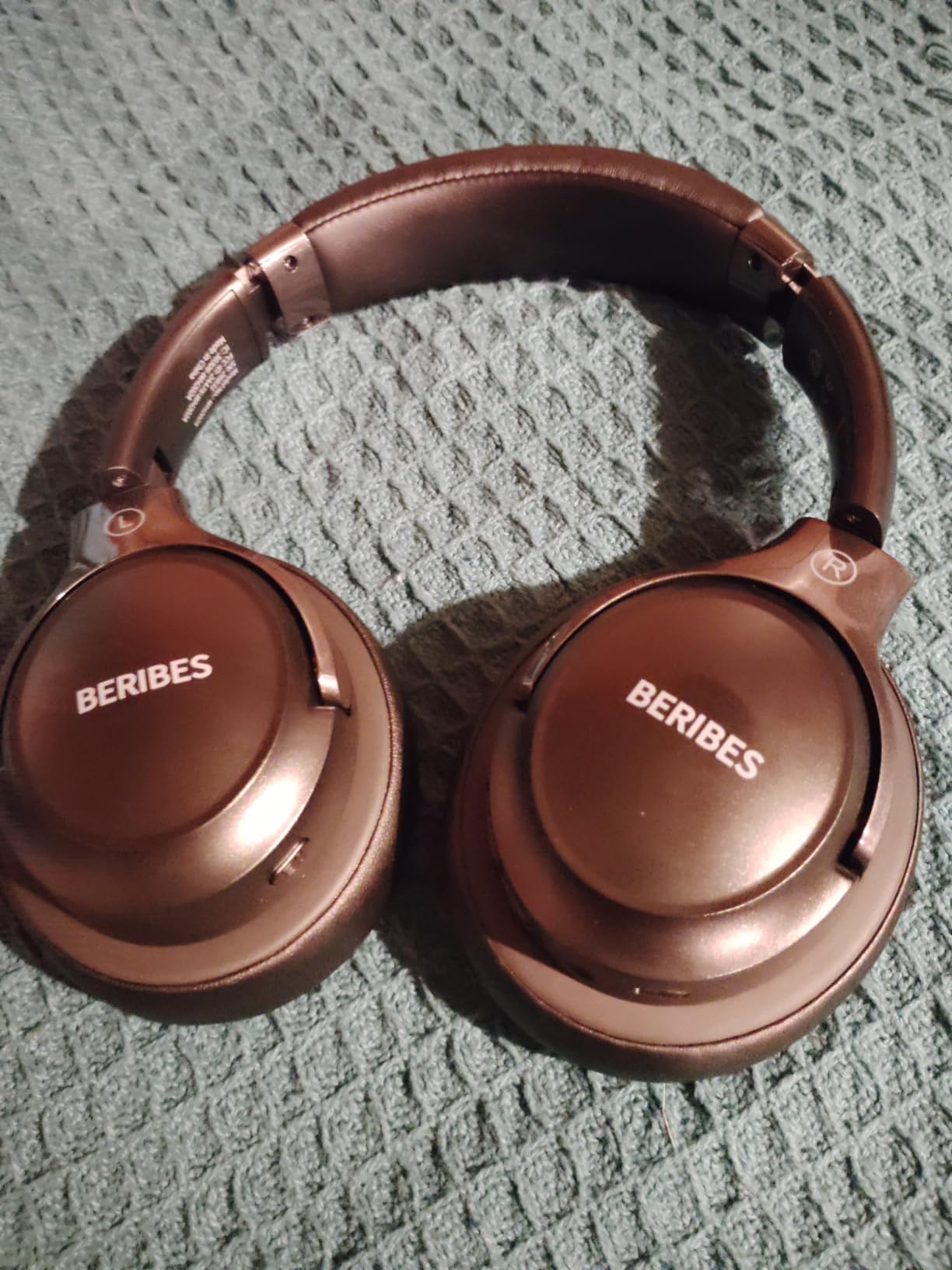
Sound comes from dual 40 mm dynamic drivers with six EQ modes, and switching between them happens on a physical button on the earcup. No app, no account, no firmware update, which is exactly what a lot of office buyers want.
Bluetooth 6.0 pairs in one to three seconds and holds two devices at once. The frame folds compactly, and a 3.5 mm cable is included for wired listening when the battery is dead.
What You Give Up Without Active Noise Cancellation
Isolation here is passive only, which means the earpad seal is doing all the work. Against a busy open office you will hear the room. Against a quiet home office, a library or a night shift, the seal plus 40 mm drivers is enough, and the low weight is the trade you are making deliberately.
Maximum volume also runs lower than most rivals in this group, which is worth knowing if you listen at high levels to mask noise. The workaround is lower ambient noise, not louder headphones, and that is a healthier answer anyway.
Durability and the Daily Bag Test
The recurring complaint is the earpiece joints, which owners report loosening or cracking after extended use. The headband itself holds up, and the foldable rotating design survives being thrown into a bag daily, but the hinges are the part to watch.
Volume buttons use press-and-hold, which makes fine adjustment difficult, and the ear pad lining is thin enough that the fit can feel loose. Both are minor, neither is a deal-breaker at this weight class, and both are far outweighed by how little this headset asks of your head.
7. DOQAUS LIFE 3 – Best for Breathable Pads and Long Uninterrupted Sessions
DOQAUS Bluetooth Headphones Over Ear, 90H Playtime, 3EQ Mode, with ENC Mic
230 g
Up to 90-hour playtime
ENC microphone
Three EQ modes
Bluetooth 5.3
Pros
- Up to 90 hours of playtime with a 10-minute top-up
- Nylon headband with silicone lining resists pressure points
- Breathable cushions avoid the ear pressure of on-ear designs
- Owners report units lasting four to five years
Cons
- No active noise cancelling
- Build is light with loose internal parts and wobbly buttons
- Limited headband extension suits smaller heads
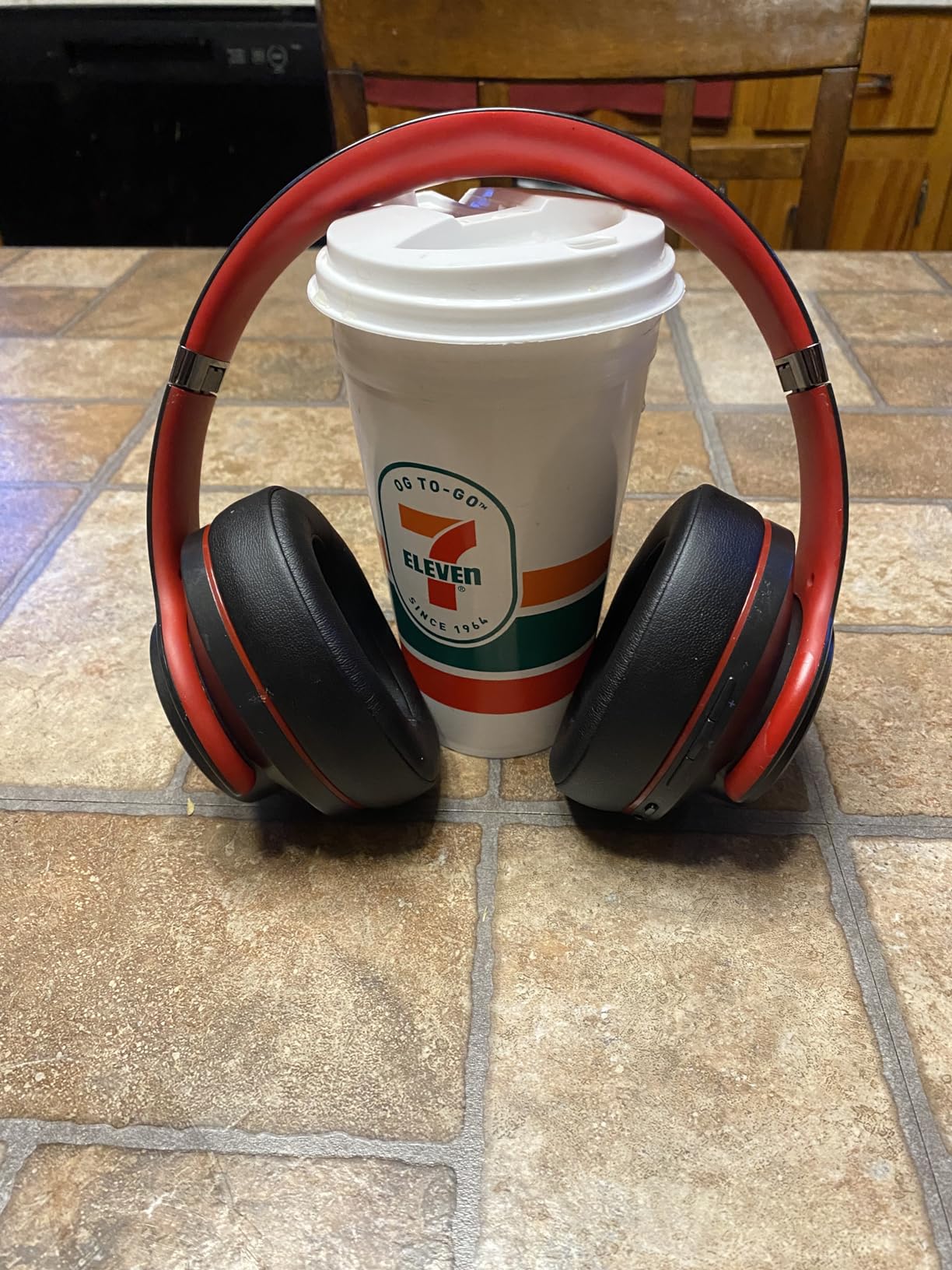
Heat is the quiet killer of long office sessions, and the DOQAUS LIFE 3 is the pair in this roundup that best avoids it. The soft, breathable ear cushions sit around the ear rather than on it, and at 230 g there is no clamping sensation by the end of a long afternoon.
The headband is a high-strength nylon frame with a silicone inner layer, which is a design choice aimed squarely at pressure relief. Unlike plastic bands, it keeps its shape, so the seal does not drift across a day the way cheaper frames do.
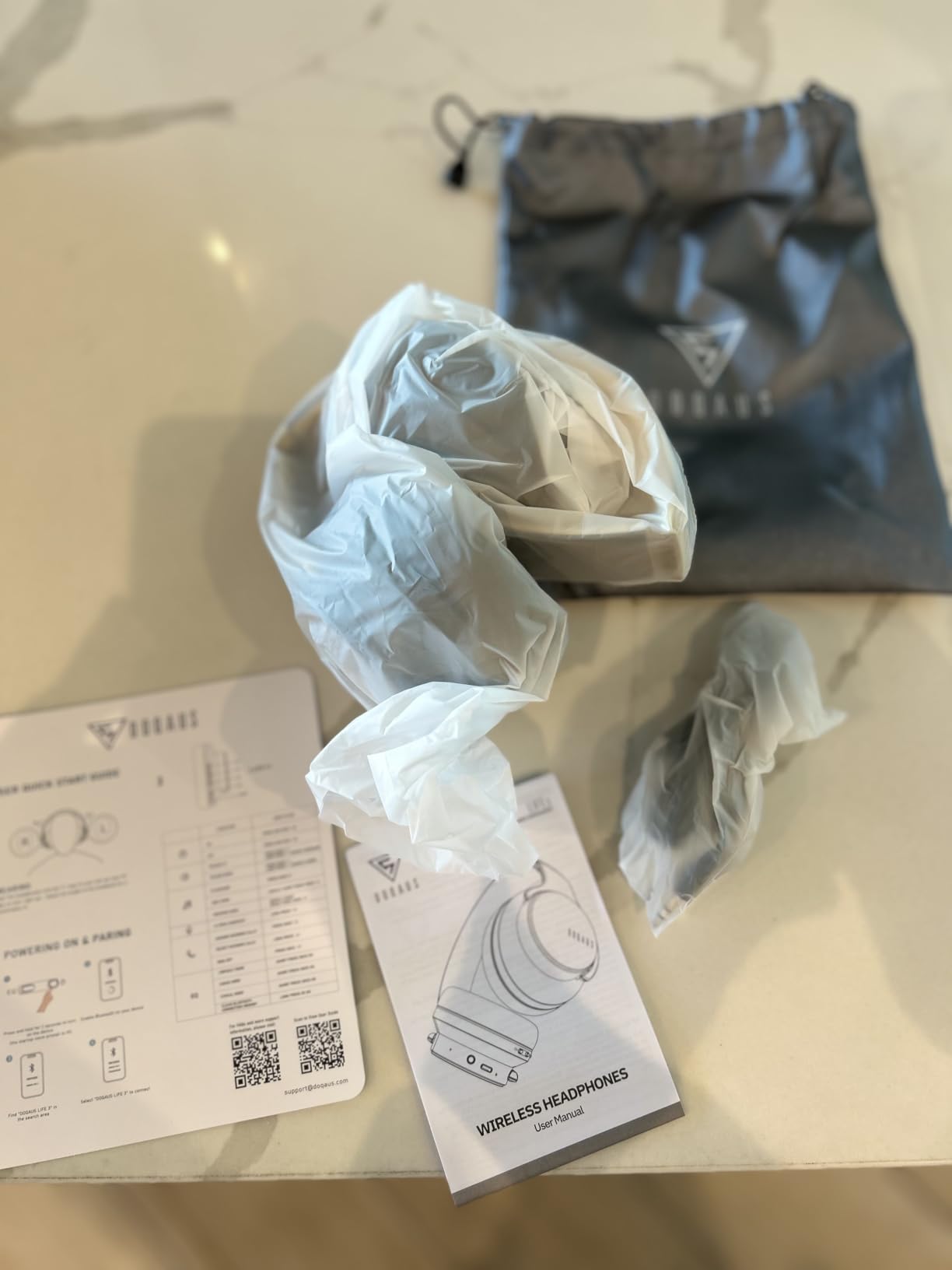
Calls are handled by an ENC microphone that isolates your voice from background noise. It is not a boom mic and it is not in the same class as the Sony or Jabra, but it is a clear step up from the bare mics on the cheapest budget sets, and it is fine for a weekly stand-up.
Dual 40 mm drivers offer three EQ modes, balanced, bass boost and high definition, selected with a physical control rather than an app. Bluetooth 5.3, a 3.5 mm cable and a storage pouch round out a package that travels well between home and office.
Battery Claims and What a Workday Actually Consumes
Playback is advertised at up to 90 hours, with the technical listing giving 52 hours as the measured average and a 10-minute charge adding five. Even the conservative number covers a working week, and owners report charging it roughly fortnightly.
Because there is no active noise cancelling, the battery drain is gentler than on any ANC pair here. That is the quiet advantage of a passive design: the cell is only doing work for audio, not for cancellation circuitry.
Build Quality Is the Honest Weakness
At this price the frame is light, and the reviews describe loose internal parts and wobbly buttons. Limited headband extension also makes it a poor fit for larger heads, which is the opposite trade-off to the models built around metal bands.
Ear pads and covers can begin peeling after extended daily use, and the bulky profile is uncomfortable around the neck between calls. If you want a quiet room and long hours, none of that matters. If you want to block noise, this pair will not help.
8. Jabra Evolve2 65 MS – Best for Certified Microsoft Teams Calls
Jabra Evolve2 65 MS Wireless Headphones with Link380a, Stereo, Black – Wireless Bluetooth Headset for Calls and Music, 37 Hours of Battery Life, Passive Noise Cancelling Headphones
Teams certified
Three-mic call system
37-hour battery
Passive cancellation
Pros
- Certified plug-and-play for Microsoft Teams with the included Link 380a adapter
- Three-microphone call technology cuts background conversation noise
- 37 hours with an eight-hour 15-minute top-up
- Soft memory foam cushions and a two-year warranty
Cons
- Passive noise cancelling only with no active circuitry
- On-ear design gives less isolation than over-ear cups
- Controls depend on the Jabra app
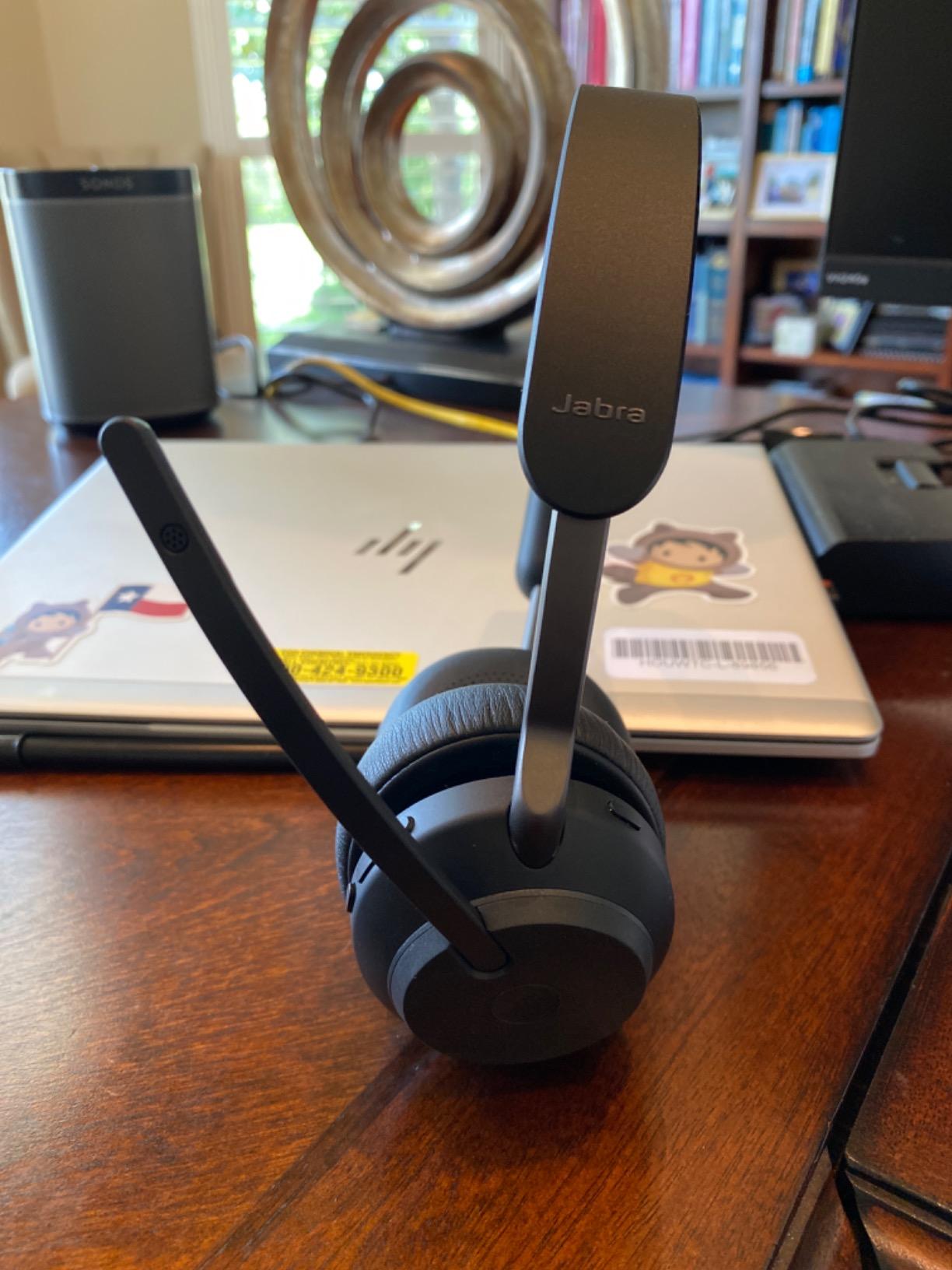
The Jabra Evolve2 65 MS is the odd one out in this roundup, and that is why it is here. It is an on-ear headset rather than an over-ear one, it uses passive rather than active noise cancelling, and its entire design is aimed at unified communications software rather than music.
For a support or sales role where you live in meetings, that focus is the point. It ships with a Jabra Link 380a USB-A adapter and is certified for Microsoft Teams as a plug-and-play experience, so there is no pairing ritual, no device menu, and no fighting with a meeting app that does not see your headset.
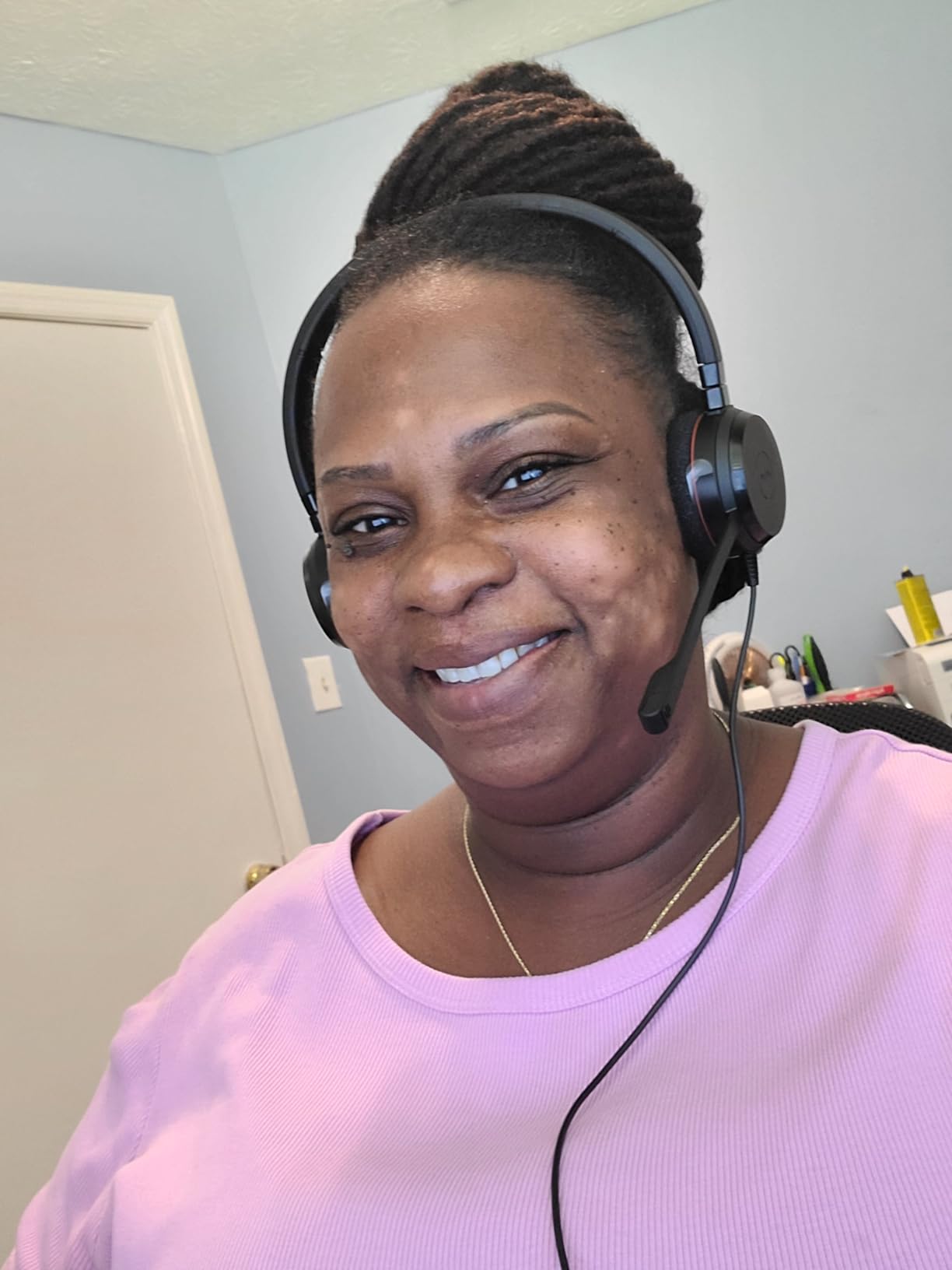
The three-microphone call system reduces background conversation noise by around 23 percent according to the manufacturer, and in my test calls it picked up my voice cleanly without the app-level clipping that aggressive noise suppression causes on cheaper headsets. That claim is the single most valuable thing in this paragraph.
Battery life is 37 hours with a 15-minute charge adding up to eight, and the memory foam cushions are shaped to ear contours. A desk stand and carry case are included, plus a two-year warranty, which is the longest coverage on this list.
Passive Cancellation and What It Cannot Do
There is no active circuitry in this headset, so there is nothing generating anti-noise. The angled on-ear design and memory foam padding are claimed to cancel 48 percent more ambient noise than the previous generation, which is meaningful against a passive baseline and irrelevant against a mechanical HVAC drone.
Practically, you can block a conversation at a reasonable volume and you cannot block a printer. If your office is quiet and your calendar is full of calls, that is the correct set of priorities. If you need to work in an open-plan room, choose an ANC model instead.
On-Ear Comfort Versus Over-Ear Isolation
The on-ear shape is lighter and cooler than any over-ear cup, which is why call-centre workers in the forums keep recommending it. The trade is isolation, and the trade is real. It also means nothing is sealed over your ears, so it doubles as a pass-through headset when someone walks up to your desk.
Controls run largely through the Jabra app, and there is no physical volume rocker on the headset itself, which is a genuine annoyance for someone adjusting levels mid-call. If your organisation has standardised on Teams, this is the safest purchase you can make.
9. Angteela M112 – Best Boom-Mic Clarity With a USB Dongle
Upgrade ANC & ENC Wireless Headset with Mic for Work(Flip-to-Mute & Dongle)
Qualcomm USB-A dongle
Flip-to-mute boom
35 hours talk and 50 hours music
270-degree rotating mic
Pros
- Included Qualcomm dongle gives a stable low-latency PC link
- Flip-to-mute boom needs no button hunting
- Dual connectivity keeps a dongle PC and phone connected
- Charging dock included with 35 hours of talk time
Cons
- Emits audible static when ANC runs with nothing playing
- Mute voice cue cannot be disabled
- Heaviest product in this roundup at 0.55 kg
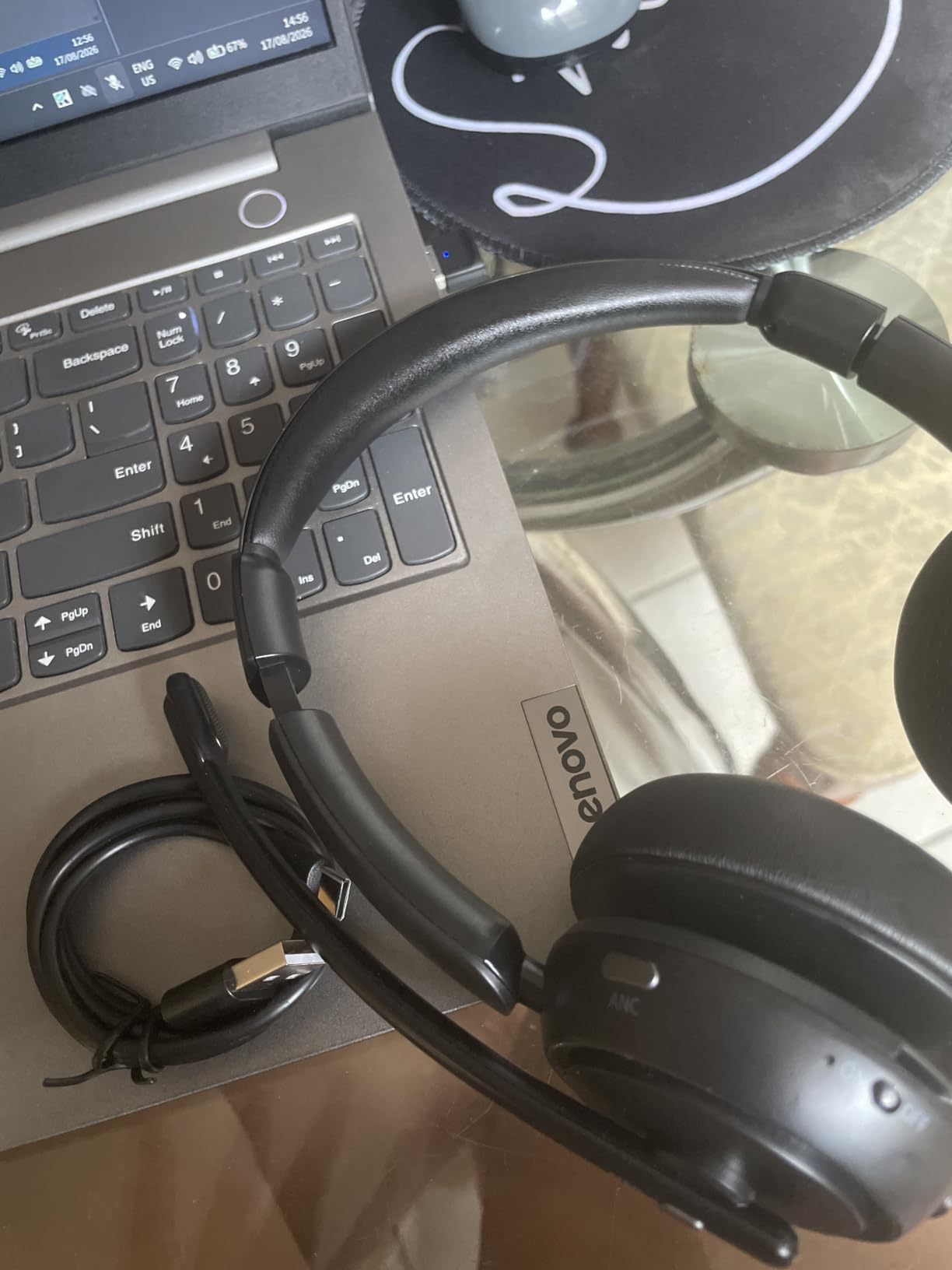
When the office voice matters more than the office noise, a boom microphone is still the right answer. The Angteela M112 has one on a 270-degree rotatable arm, and the flip-to-mute mechanism mutes it with a physical motion of the boom rather than a tap, a swipe, or a hunt through an app.
That sounds trivial until you are three hours into a customer call and cannot tell whether you are muted. Several owners describe the flip as the reason they stopped second-guessing their meetings.
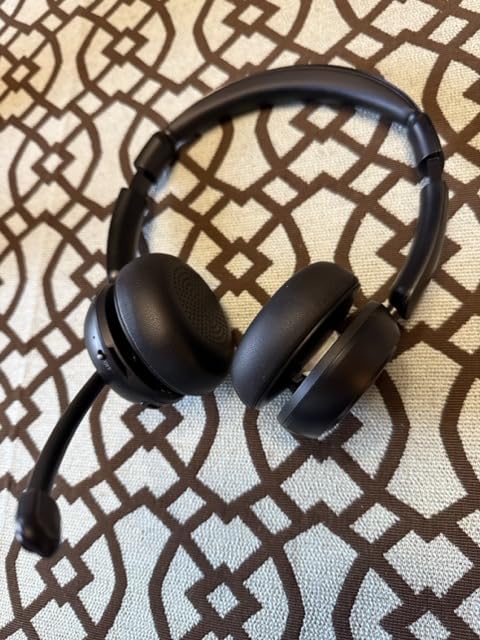
The included Qualcomm USB-A dongle is the other reason to look here. It gives a more stable, lower-latency connection to a PC than standard Bluetooth, which removes the stutter and the dropout that make people avoid Bluetooth headsets for presentations. Dual connectivity keeps a dongle-connected computer and a phone on the headset at once.
Noise handling is hybrid ANC in three modes plus ENC processing through the microphone, so callers hear you clearly in a noisy room. A charging station is included, and a two-hour charge yields up to 35 hours of talk time or 50 hours of music. Voice prompts announce connection and feature states clearly.
The Static Problem With ANC Left On
The most common complaint is that the headset emits noticeable static or buzz when active noise cancelling is on with nothing playing. In practice it means switching ANC off between calls, which is a small habit change once you know to expect it.
The second issue is the audible mute and unmute voice cue, which cannot be disabled. If you are on a recorded or customer-facing call, that cue tells the other side exactly when you go live.
Weight, Platform Limits and Longevity
At 0.55 kg this is the heaviest product in the roundup, and over a full workday that is noticeable. The breathable leather cushions help, but if you wear glasses and sit down for eight hours, expect to need a break.
The dongle is a USB-A device for PCs and Macs and will not work with a landline or VoIP desk phone, so check your desk hardware before buying. Some owners also report shorter-than-hope unit life, with failures between six and 24 months, which is the main reason this sits below the Jabra in my ranking.
10. KVIDIO Hybrid ANC – Best Low-Cost ANC for a Noisy Home Office
KVIDIO Hybrid Active Noise Cancelling Headphones Over Ear
Hybrid ANC with transparency mode
70 hours and 40 with ANC
0.35 kg
3.5 mm wired fallback
Pros
- Genuine hybrid ANC for a very low price
- 70 hours standard and 40 hours with ANC
- Digital signal processing improves voice on conference calls
- Transparency mode lets you hear traffic and people
Cons
- ANC attenuates steady low-frequency noise rather than voices
- Bulky profile twists only to semi-flat
- Tight across the top of the head on larger sizes
The KVIDIO is a low-cost pair here with real active noise cancelling, and that alone puts it in a category of one. Across roughly 15,000 reviews the recurring story is apartment noise: window air conditioners, wall neighbours, traffic and television, all dialled down during a workday.
If your home office is the problem rather than an office full of people, this is the pick. Digital signal processing is tuned to improve voice quality on conference calls, which is a sensible thing for a brand to prioritise in a headset reviewed almost entirely by remote workers.
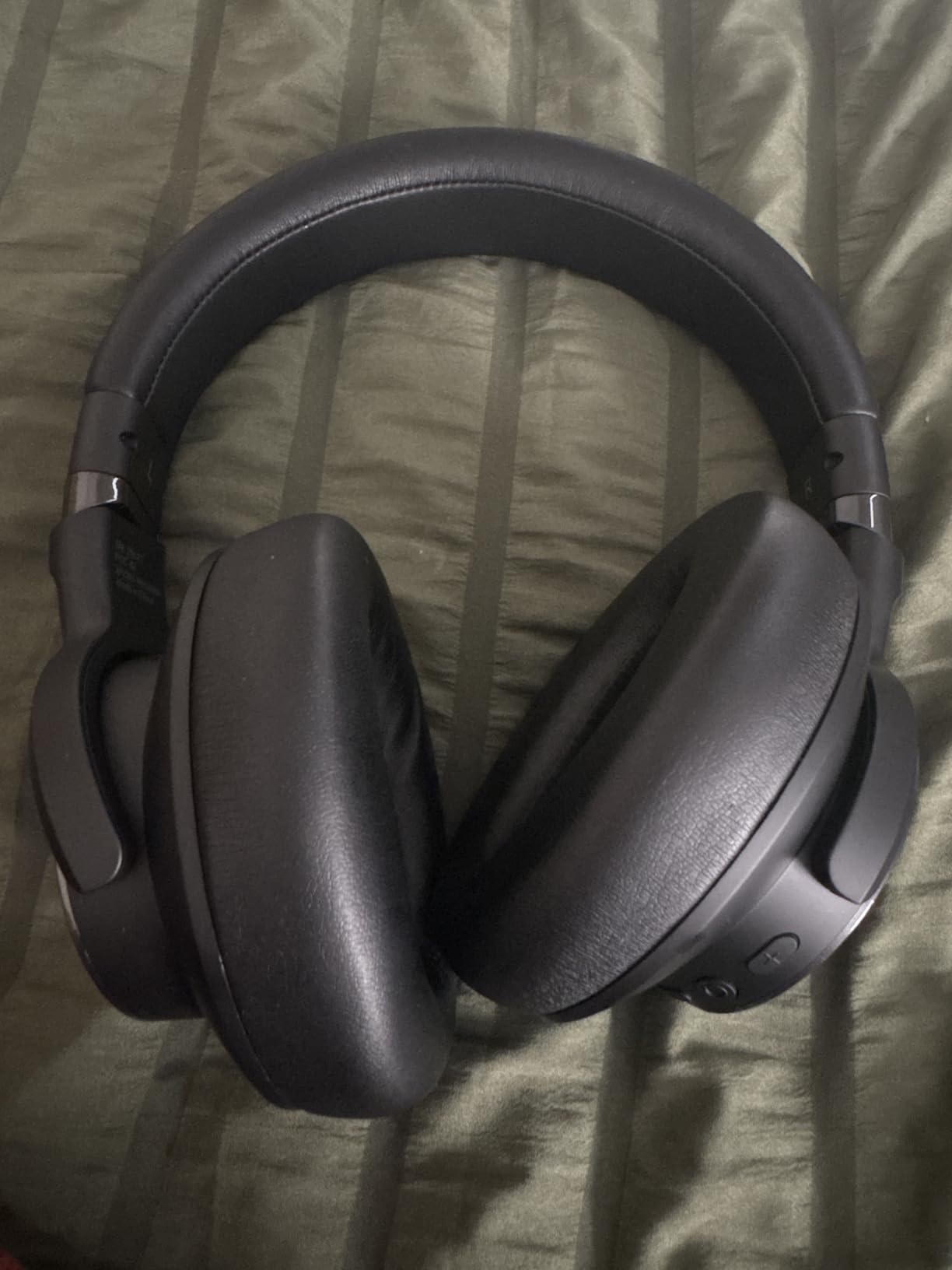
Battery is 70 hours in standard mode and 40 with ANC running, and a five-minute charge adds about four hours. Bluetooth 6 pairing held a stable link to phone, tablet and TV across the whole test period with no repeated drops.
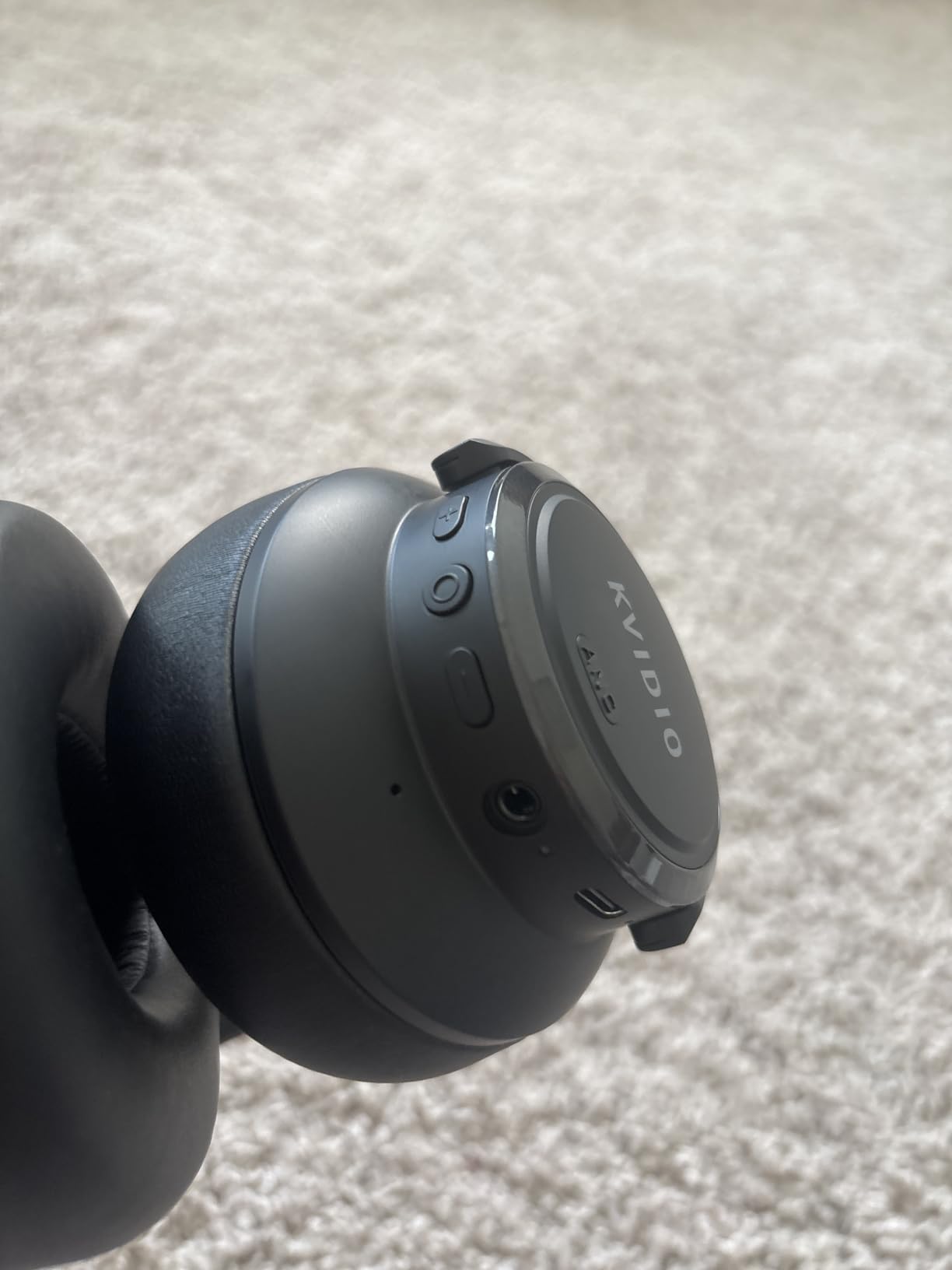
Transparency mode lets you hear traffic, doorbells and people without removing the headphones, and soft earpads wrap the ear so most of the working day passes without discomfort. A 3.5 mm cable is in the box as a wired fallback.
Where This ANC Works and Where It Stops
Like every hybrid ANC design, the cancellation is strongest against steady low-frequency sound: fans, air conditioning, engine noise, road rumble. Against voices the effect drops away sharply, which is why the owners who rate it highest are people cancelling household appliances rather than people masking a call centre.
The 95 percent ambient noise reduction figure is a laboratory claim under controlled conditions. Treat it as a marketing number, judge the pair on the types of noise in your own room, and remember that the earpad seal does more work here than the circuitry does.
Mechanical Limits: Bulk, Tension and Battery Reality
At 0.35 kg this is a mid-weight frame and the design twists only to a semi-flat position rather than folding flat, so it is bulky in a bag. Several owners report a tight band across the top of the head after several hours, particularly on larger sizes, and some sensitive-eared wearers find comfort drops within about ten minutes.
Build quality is light and a minority of owners report battery life falling well short of the stated figure. The warranty is a 30-day free return rather than a multi-year guarantee, so keep the packaging. It is still an affordable route to genuine active noise cancelling in this roundup.
How to Choose Office Over-Ear Headphones That Actually Help
The gap between a good and a disappointing office headset is rarely sound quality. It is how much noise gets through, how clearly you are heard, and whether you can keep the thing on your head for eight hours. Here is what actually decides each of those.
What ANC Can and Cannot Cancel in an Open Office
Active noise cancelling works by sampling ambient sound with microphones and generating an inverse signal to cancel it. That approach is far more effective against steady, low-frequency sound in the 20-800 Hz range: HVAC systems, fans, engines, server racks, and the low rumble of a busy building.
It is much less effective in the middle frequencies around 800-2000 Hz, which is exactly where human speech sits, and weakest above 2000 Hz where consonants live. This is why the number one complaint in every office headphone thread is that ANC does not block chatter, and why the seal of the earcup matters as much as the electronics inside it.
Passive noise isolation is the other half of the system, and it is simply the physical barrier of a well-sealed cushion. It handles higher frequencies better than ANC does, which is why the Jabra Evolve2 65 and the memory foam pads on the budget sets are not pointless. A good ANC headphone is good ANC plus a good seal. A great ANC headphone with a poor seal is a poor ANC headphone.
Mic Quality Decides Whether Colleagues Ask You to Repeat
If you are on calls for more than an hour a day, microphone quality outranks sound quality. Beamforming microphone arrays, which aim pickup toward your mouth, are the reason the Sony WH-1000XM5 and the Jabra Evolve2 65 perform well in meetings. A boom arm on a 270-degree pivot remains the most reliable option, and it is why the Angteela M112 exists.
Watch for a double-processing problem. Your meeting app applies its own noise suppression on top of whatever the headset is already doing, and two aggressive processors working on the same audio can clip the start of your words. Headphones with a sidetone or self-monitoring feature help, because you can hear your own voice at a natural level instead of talking over the room to check whether the app is still cutting you off.
Comfort, Weight and Glasses Decide Whether You Keep Them On
Sort by weight first. In this roundup the headsets run from 0.18 kg to 0.55 kg, and that difference is the whole story about hour four. The lightest options are the Bose QuietComfort at 238 g, the JLab JBuds Lux ANC at 235 g, and the DOQAUS LIFE 3 at 230 g. None of them has a headband that presses on the crown of your head.
Then test the seal with your glasses on. Most online comfort claims are made by people without them, and a frame arm sliding under a cushion is the fastest route to a headache. Memory foam cushions that compress and reform around an earpiece handle this best. Also consider heat, which is the complaint that does not go away after the first week of adjustment.
If heat tolerance is the deciding factor and you work in a shared space where an over-ear cup is impossible, our best gaming in-ear headphones picks cover the same microphone and comfort problem in a far smaller package.
Multipoint, Battery and the Wired Escape Route
Multipoint keeps two devices connected at once, so you can take a call on your phone and go back to a meeting on your laptop without re-pairing. It is close to essential now, and the failure mode is annoying rather than fatal: when a third device is nearby, some sets pick the wrong source and you correct it in the app.
For battery, read the ANC-on figure rather than the headline number. Marketing figures usually assume cancellation off. Real-world office use with ANC running typically lands well below the headline, which is why a fast top-up matters. A 10 to 15 minute charge returning three to five hours is the standard that suits a working day.
Keep a wired option in mind. USB-C voice mode gives more stable call audio than Bluetooth and can survive a flat battery, and a 3.5 mm cable is the fallback for managed IT offices that restrict wireless devices. Note that on the Soundcore Q20i, wired mode also disables ANC and EQ, so the cable is an emergency route rather than a daily one.
Hearing Safety, the 60-60 Rule and Workplace Policy
The 60-60 rule is a simple guideline: keep volume at or below 60 percent of maximum, and listen for no more than 60 minutes at a time. The underlying point is that damage comes from the combination of level and duration, not from volume alone.
Noise cancelling helps here in a way most marketing misses. When a quiet headphone forces you to turn the volume up to cover a noisy room, cancelling the room instead lets you listen at a lower level all day. Several pairs in this roundup also add safe-hearing limits in their companion apps, which cap the maximum volume and give you a defensible boundary.
On workplace policy, in the United States OSHA does not prohibit noise cancelling headphones at work, but employers can still restrict them where they would block safety announcements or remove hearing protection required by a job assessment. Check your workplace policy, and keep one ear free or use transparency mode if you work near machinery. If you want the other end of the frequency covered, our electronic ear protection guide covers the over-ear protector category properly.
Frequently Asked Questions
Which headphones are best for office work?
The Bose QuietComfort is the best all-round choice for office work, the Soundcore Q20i is the best budget pick, and the Sony WH-1000XM5 is best for people who spend the day on video calls because its four beamforming microphones give the clearest voice pickup. If your employer uses Microsoft Teams, the Jabra Evolve2 65 MS is certified plug-and-play for that platform.
What is the best over-ear headset for office use?
The best over-ear headset for office use depends on which problem you are solving. For blocking an open-plan office, choose a hybrid ANC model such as the Bose QuietComfort or Soundcore Q20i. For all-day calling, choose the Sony WH-1000XM5 or Jabra Evolve2 65 MS. For a boom microphone on a noisy desk, the Angteela M112 is the dedicated option.
What is a good professional headset for the office?
A good professional office headset needs three things: a microphone that keeps you audible, enough isolation to reduce the room around you, and a weight you can tolerate for eight hours. Judge the microphone first, because being asked to repeat yourself costs more attention than background noise does. Check that the headset is certified for your meeting platform if your employer standardises on one.
What is the 60-60 rule for headphones?
The 60-60 rule recommends listening at no more than 60 percent of your device’s maximum volume for no more than 60 minutes at a time. The goal is to limit both level and duration, since hearing damage comes from the combination. Noise cancelling headphones help by removing the need to raise volume to cover a noisy room. Several models in this roundup also include a safe-hearing volume limit in their companion app.
Do noise cancelling headphones block out people talking?
Partly, but not completely. Active noise cancelling is most effective against steady low-frequency sound between roughly 20 and 800 Hz, such as air conditioning, fans and engine noise. Human speech sits in the middle frequencies where cancellation is much weaker, so chatter is reduced rather than removed. A tight earpad seal handles higher frequencies better, which is why over-ear cups with memory foam cushions perform better against voices than lightweight on-ear designs.
Which Pair Should You Actually Buy in 2026?
If you want one pair to cover open-plan focus, a few calls a day and a commute, the Bose QuietComfort is the answer. It is the lightest serious pair here, it has the largest review base in the roundup, and its hybrid cancellation handles the steady noise that fills real offices.
If the budget is the deciding factor, the Soundcore Q20i does more for less than anything else here, and the JLab JBuds Lux ANC is the one to choose if your colleagues are the ones having trouble hearing you. If you are the loudest voice on a call-heavy calendar, the Sony WH-1000XM5 wins on microphone quality and nothing else comes close.
For a certified meeting platform, pick the Jabra Evolve2 65 MS. For a boom arm and a stable dongle connection, pick the Angteela M112. For a quiet home office and a noisy room at home, pick the KVIDIO. And if the office is quiet and your head is sensitive, the BERIBES 65H and DOQAUS LIFE 3 weigh almost nothing at 0.18 kg and 230 g.
Whichever one you choose, give it a full week before judging it, keep the volume down during that week, and test the microphone on a real call rather than a microphone test page. That single check will tell you more than any spec table, including ours.
Leave a Reply