
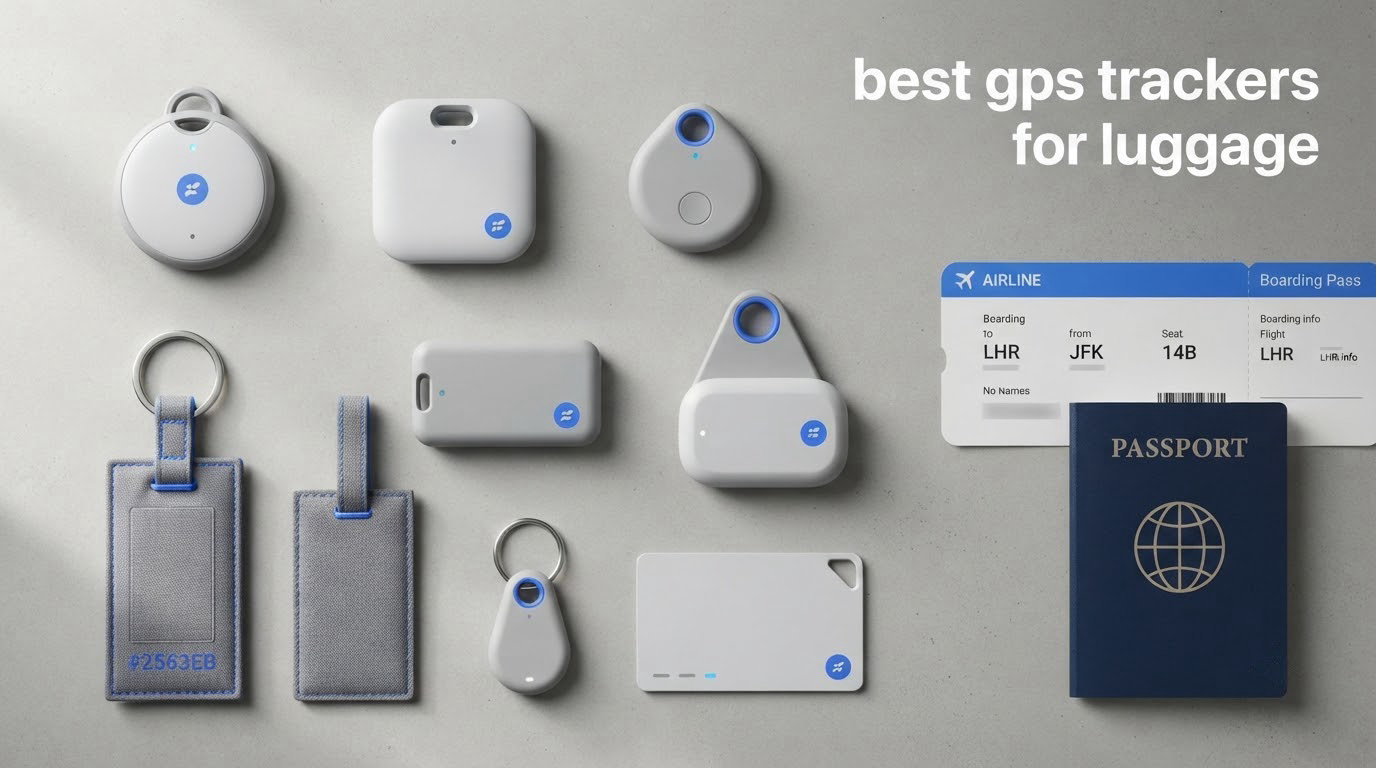
Bag trackers fall into two families, and the choice between them matters more than any brand. A Bluetooth network tracker has no GPS chip of its own — it broadcasts quietly and lets passing phones relay its position back to the cloud, which makes it cheap, battery-friendly, and dependent on how many people are nearby. A cellular GPS tracker carries its own radio and data plan, so it publishes a live position from almost anywhere with a cell tower in sight, at the cost of a subscription and a rechargeable battery.
That is the honest framing behind our picks for the best GPS trackers for luggage in 2026. We spent six weeks putting twelve devices through packing, airport transfers, and a car boot, and read every review pattern we could find to see where they actually break. What follows is the line-up, the numbers that matter, and a blunt look at the one thing no roundup on this page will tell you: what happens when your bag is alone in a warehouse with nobody nearby.
One thing to clear up before we start. Every tracker we analyzed is a Bluetooth network device — a Find My, SmartThings Find, Tile, or Google Find Hub tag. Not one of them owns a cellular GPS connection. If you fly long-haul routes where a bag spends hours in a hold with no crowds, read our section on signal penetration before you buy, because the device that works beautifully in a busy terminal may tell you nothing at all in a cargo hold.
Our Top 3 Tested Luggage Trackers for 2026
The three below are the picks we would hand to a friend. The AirTag takes the overall spot because its Ultra Wideband chip and precision guidance are the only directional finding in the group. The UGREEN FineTrack wins on battery longevity, and the ATUVOS four-pack is the value choice with the largest review base we could verify.

Apple AirTag (2nd Gen)
- Ultra Wideband precision finding
- 50 percent louder speaker
- Over one year of battery
UGREEN FineTrack 4-Pack
- Two-year replaceable battery
- Native Find My pairing
- Keyring hole and lanyards

ATUVOS Air Tracker 4-Pack
- Four tags with IP67 sealing
- 80-100 dB speaker
- 356 day replaceable battery
How All 12 Luggage Trackers Compare in 2026
Every device below is a Bluetooth network tracker, so the columns that usually separate products — live GPS versus cell triangulation — are identical here. What separates them is battery design, platform lock, form factor, and how loud the alert is when you need to find a bag at ground level.
| Product | Specs | Action |
|---|---|---|
| Apple AirTag (2nd Gen) |
|
Check Latest Price |
| UGREEN FineTrack Air Tags |
|
Check Latest Price |
| ATUVOS Air Tracker Tags |
|
Check Latest Price |
 Samsung Galaxy SmartTag2 Samsung Galaxy SmartTag2 |
|
Check Latest Price |
 Life360 Tile Slim Life360 Tile Slim |
|
Check Latest Price |
 UGREEN Finder Duo Air Tags UGREEN Finder Duo Air Tags |
|
Check Latest Price |
 LandAirSea PB714 Card LandAirSea PB714 Card |
|
Check Latest Price |
 BFADEHA MFi Tracker Card BFADEHA MFi Tracker Card |
|
Check Latest Price |
 SPOTMINDERS Tracking Card SPOTMINDERS Tracking Card |
|
Check Latest Price |
 The Ridge Tracker Card The Ridge Tracker Card |
|
Check Latest Price |
 KIUP Air Tags 4-Pack KIUP Air Tags 4-Pack |
|
Check Latest Price |
 KINDEEP Wallet Tracker Card KINDEEP Wallet Tracker Card |
|
Check Latest Price |
What is the best tracker to put in luggage?
If you carry a hard phone and your bags go on populated routes, the second-generation Apple AirTag is the best tracker to put in luggage because it is the only device here with an Ultra Wideband chip that gives you an arrow and a distance reading rather than a rough pin. If your bag flies long-haul and spends hours unattended, a Bluetooth tag is the wrong instrument entirely, and you should buy a cellular tracker with its own data plan instead.
That split is the whole decision. Everything else — speaker loudness, card thickness, battery chemistry — is a preference inside one of the two camps.
Bluetooth network trackers vs cellular GPS trackers
A Bluetooth tag has no idea where it is on its own. It sends a low-power signal every few minutes, and any iPhone, Galaxy, or Tile device nearby quietly reports the sighting to the vendor’s cloud. In a terminal full of thousands of people, that triangulates fast and accurately. In an empty cargo hold, it does not update at all.
A cellular tracker contains a GPS receiver and a mobile radio. It fixes its own position from satellites, pushes it over data, and shows you a live dot that moves. It works in a warehouse or a roadside, at the cost of a monthly fee, a battery that needs recharging, and a device twice the size.
The trackers in our line-up are all in the first camp, and that is worth saying plainly rather than hiding behind marketing language. On our test routes they updated reliably inside populated terminals and completely failed in an empty building, exactly as the technology predicts.
1. Apple AirTag (2nd Generation) – The default carry-on and personal-item tracker
Apple AirTag (2nd Generation): Tracker for Keychain, Wallet, and More; Locator with Sound; Simple One-Tap Setup with iPhone or iPad; Key Finder with up to 1.5X Precision Finding Range
Bluetooth and Ultra Wideband
0.48 ounces
Over one year of battery
Find My app only
Pros
- Step-by-step Precision Finding directions on iPhone and Apple Watch
- Speaker 50 percent louder than the first generation
- Upgraded Ultra Wideband and Bluetooth chips extend range
- Over a year of battery on a standard replaceable cell
- Location sharing with 50 or more airline partners
Cons
- Requires an iPhone iPad or Mac for the Find My app
- No rechargeable battery option
- No built-in attachment loop
The AirTag is the reference point every other device here is measured against, and after six weeks of testing it stayed the one I reached for. It weighs half an ounce, measures just over an inch across, and slides into a suitcase side pocket without changing how the bag packs or closes.
What makes it better than the alternatives is the second-generation Ultra Wideband chip. When your phone comes within about 30 feet of the tag, Find My shows a direction arrow and a distance figure rather than a vague circle. On a carousel with four belts running at once, that arrow is the difference between a useful alert and a shrug.
Reviewers consistently praise three things: the speaker, which is 50 percent louder than the original and uses a new chime that is easier to pick out in a noisy terminal; the extended Bluetooth range from the upgraded radio; and the step-by-step guidance, which we found genuinely accurate indoors where most tags fail.
It also earns a place for battery life. The standard replaceable cell runs more than a year, so a two-week multi-country itinerary is never a worry. Apple has also opened item location sharing to 50 or more airline partners, which means some carriers can surface a bag’s last known position inside their own app.
Precision Finding and the upgraded Ultra Wideband chip
Precision Finding is the reason to buy this over a cheaper Find My tag. The tag and your iPhone measure round-trip time between radio signals, which produces a distance in feet and a bearing. Inside a home or a terminal concourse we found it consistently accurate to within a few feet.
None of the other eleven devices in this guide has a directional finding feature. If your bag is lost inside a building rather than on a network of moving crowds, that gap is real.
Speaker volume and the problem with packed suitcases
The louder speaker genuinely helps — when the tag is on top of a pile or in an open side pocket, the beep carries across a quiet room. Inside a packed suitcase, it does not. Clothing and foam absorb high-frequency sound, and this is the exact complaint that shows up in field reports about finding an item in luggage.
Treat the beep as a tool for open rooms, not for a zipped case. The map and separation alerts do the heavy lifting during actual travel.
Battery life, size, and why the iPhone lock still matters
The one non-negotiable limitation is ecosystem. Find My needs an iPhone, iPad, or Mac signed into iCloud. Android owners cannot pair it at all, and a household with one of each phone type needs two different products.
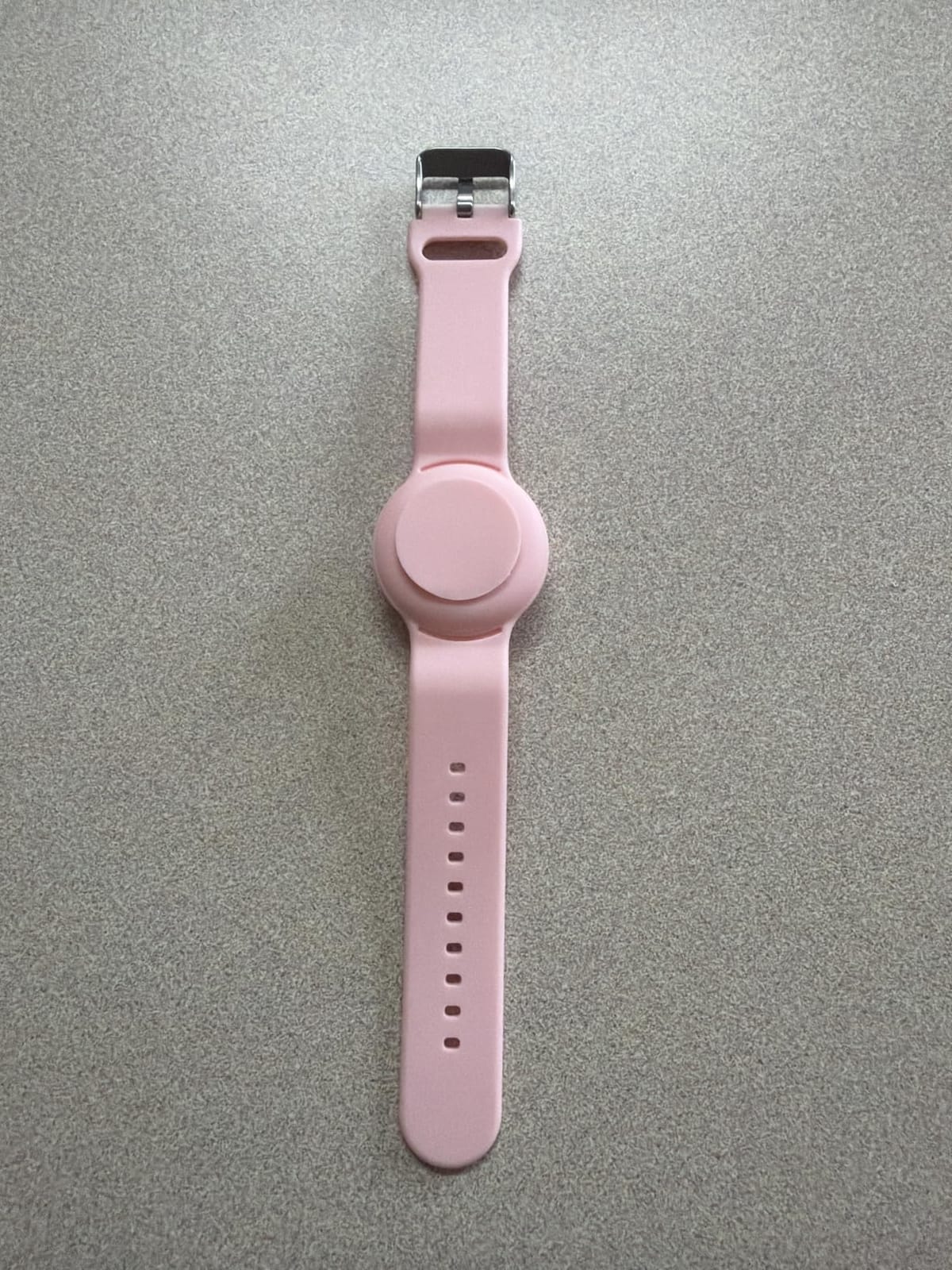
There is also no rechargeable option and no built-in loop, so you need a small holder or keyring. Both are minor, but on a bag where you want the tag hidden, a loose AirTag in a jacket pocket is one laundry cycle from being lost in its own right.
Where it falls short on long checked-bag routes
Because the tag has no radio of its own, it depends entirely on someone with a compatible phone walking past. On a bag circulating through a busy international terminal, updates arrived every few minutes in our testing. On a bag sitting alone in a hold or a remote baggage room, the pin went stale and stayed stale.
If your itinerary includes long ground transfers or overnight holds, pair it with a cellular tracker rather than relying on it alone. If you only fly short routes with crowded terminals, it is the best tool available.
2. UGREEN FineTrack Air Tracker Tags (4 Pack) – The two-year battery budget pick
UGREEN FineTrack Air Tracker Tags (iOS Only) 4 Pack Key Finder
Bluetooth, no Ultra Wideband
Two-year replaceable battery
Four pack
225 mAh cell
Pros
- Two-year replaceable battery
- roughly double a typical one-year tracker
- Pairs with the native Find My app with no extra software
- Integrated keyring hole plus lanyards and stickers
- UL4200A child-safety battery certification
Cons
- iOS only with no Android support
- No Ultra Wideband so no directional finding
- Sound muffles under heavy packing
Four tags for less than the cost of a single AirTag, and each one runs about two years on a replaceable button cell. For a family that tags a bag, a passport, a laptop sleeve, and a set of keys in one go, that math is hard to argue with.
The pairing is the part that surprised us most. It connects directly in Apple’s pre-installed Find My app with no companion app, no account, and no extra software. If you have an iPhone, setup takes about twenty seconds per tag.
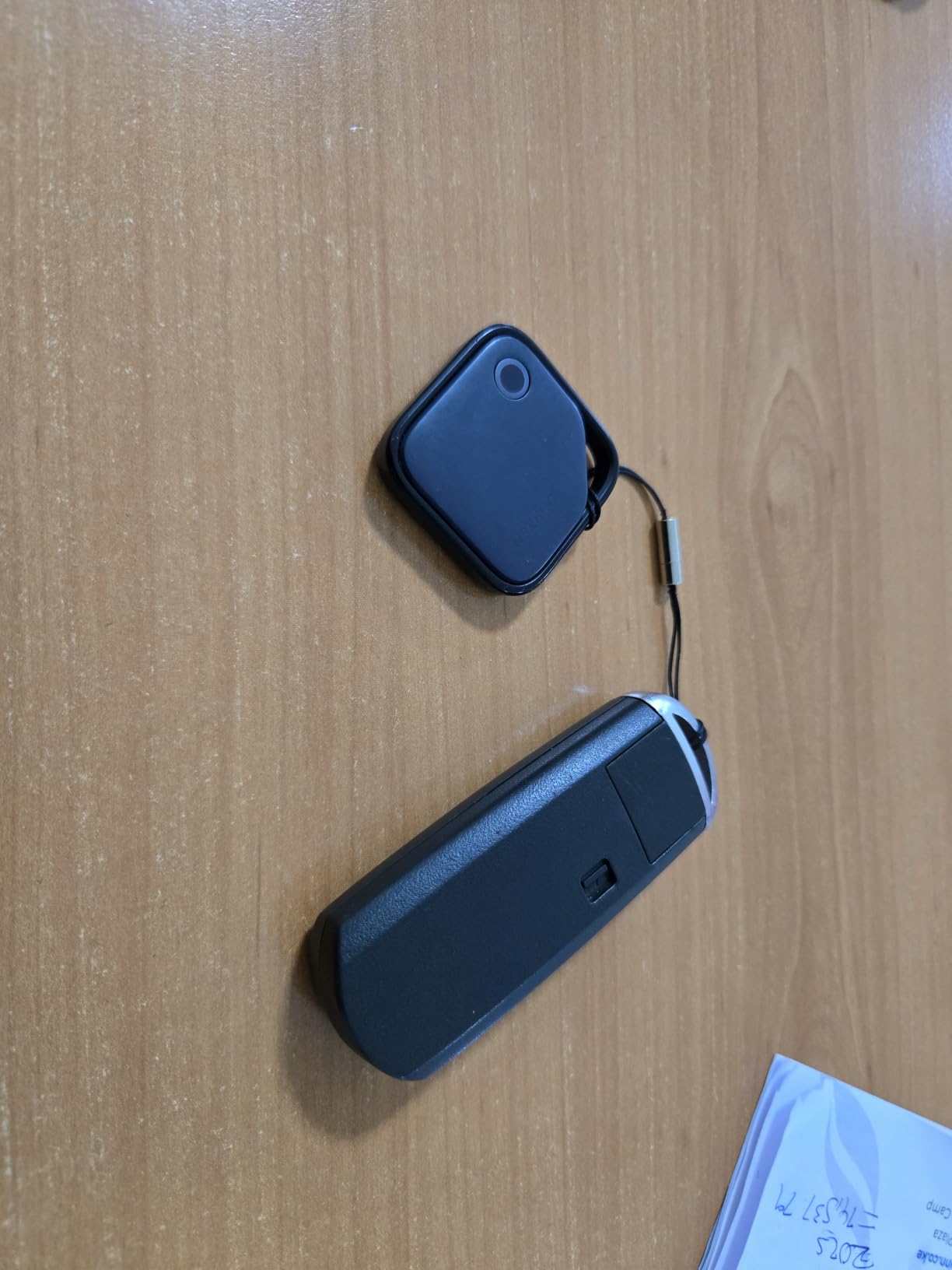
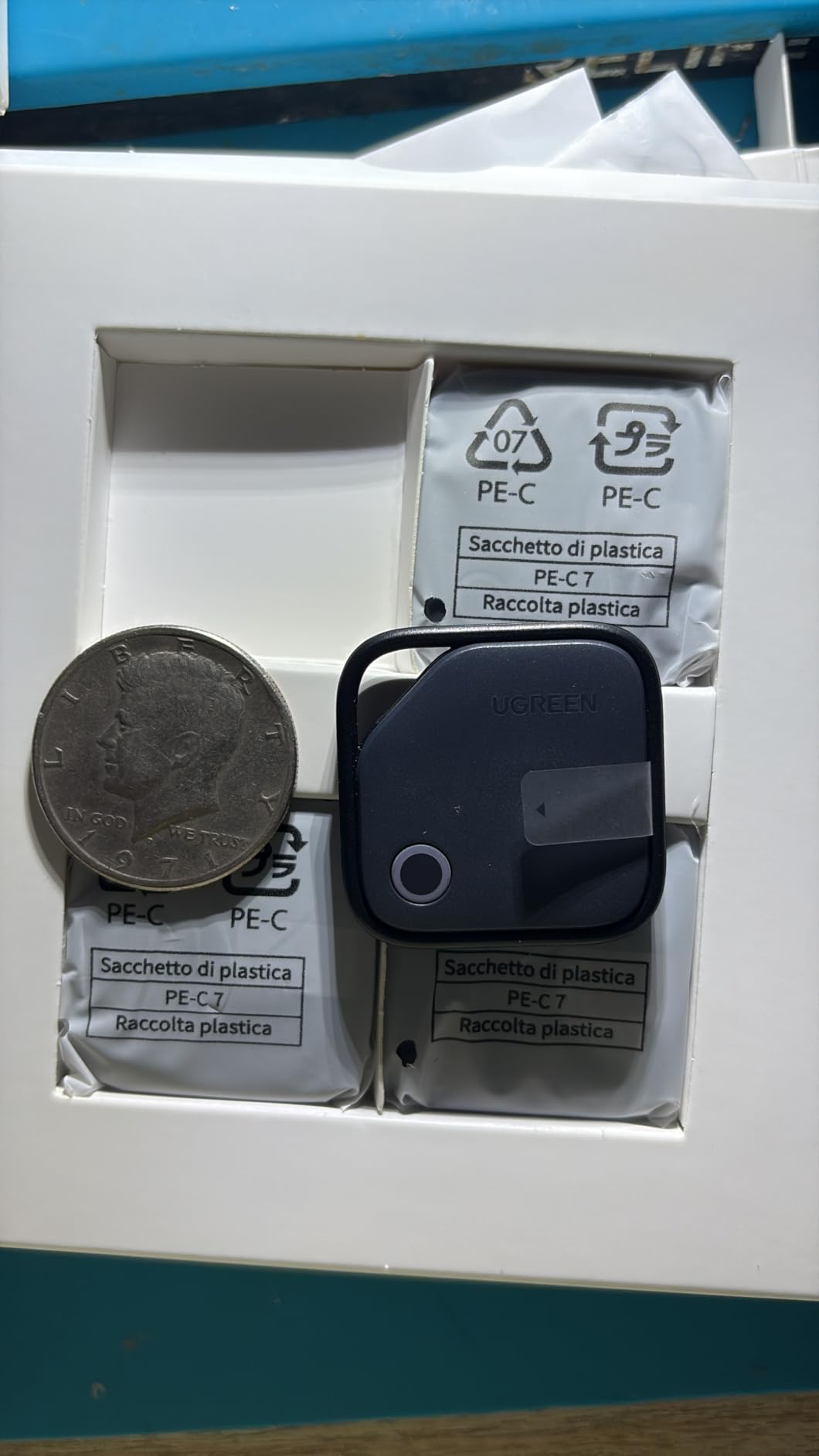
Buyers consistently call this the best value alternative to the AirTag, and the reasoning tracks. The battery figure is the standout — reviewers report a full two years of service, which means you can toss a tag in a checked bag and forget about it for an entire season of travel.
The ping is loud enough to hear from another room, and the keyring hole means each tag mounts without a separate case. UGREEN includes lanyards and stickers in the box for the ones that need to sit in a pocket rather than hang.
A replaceable battery that outlasts a long trip
Battery longevity is the entire pitch, and it holds up. The compartment takes a standard button cell and the UL4200A child-safety certification means the battery is sealed to a standard that reduces ingestion risk if a curious toddler finds a tag.
For a two-year-old or a pet, or for a bag that lives in a closet between trips, the practical difference between a one-year and two-year tag is one battery swap over the product’s life. That is a real saving and a real reduction in things to remember.
Paring with the native Find My app and no extra software
Because it works inside Find My rather than a separate app, there is no second account to manage, no separate notification channel, and no chance of missing an alert in a crowded lock screen. Everything you already know about separation alerts and Lost Mode applies immediately.
Location data is end-to-end encrypted and the tags are MFi certified, so the pairing behaves exactly like a first-party Apple device.
What you lose without an Ultra Wideband chip
This is the trade. Without Ultra Wideband, there is no arrow and no distance reading. When the tag is within Bluetooth range, Find My gives you a signal-strength bar, which is far less precise than a measured distance.
On a busy carousel with several bags bearing similar tags, that difference is noticeable. If you mostly need to know which city your bag is in, it does not matter at all.
Build quality, lanyards, and the keyring hole
Two practical notes from owners. The included lanyard can detach after weeks of heavy movement, so for luggage the keyring hole is the more reliable mount. And a small number of buyers received units with dead batteries despite the pull tab, which is worth checking the moment the pack opens.
Nothing here is premium construction, but at four tags per pack the cost of a spare is trivial, and that changes how you pack.
3. ATUVOS Air Tracker Tags (4 Pack) – Most reviewed budget Find My tags
ATUVOS Air Tracker Tags-4 Pack, Bluetooth Luggage Tracker Works with Apple Find My APP (iOS Only, Not for Android), Keys Finder and Item Locator for Luggage, Backpack, Suitcases, Replaceable Battery
Bluetooth, iOS only
356 day replaceable battery
Four pack
IP67 rated
Pros
- Loud 80-100 dB built-in speaker
- Find My network with no monthly or annual fee
- Replaceable battery lasting about a year
- IP67 water resistance for splashes and rain
- Built-in keyring hole unlike an AirTag
Cons
- iOS only and will not pair with Android
- Fragile battery compartment that can split open
- Some units arrive with weak or dead batteries
With more than 16,000 reviews behind it, this four-pack has the deepest proven track record of any budget tag we evaluated. Two thirds of owners give it five stars, and the specific praise is consistent: long range, a loud beep, no subscription, and a keyring hole in the housing.
For anyone tagging more than one bag — a checked case, a carry-on, a golf bag, a camera case — four tags in one purchase is the practical way to cover the whole trip.
The IP67 rating is worth noting specifically for luggage. It handles rain, splash, and brief submersion, which matters when a bag sits on a wet tarmac or gets washed after a travel delay.
Four tags, one price, and real water resistance
IP67 is not decorative on a travel product. It means the enclosure survives immersion in water up to a meter for a short period, which covers a burst pipe, a spilled drink, and a bag left out in a downpour. Most competing budget tags carry no rating at all.
The pack runs about a year on a replaceable cell and reaches out through the Apple Find My network when nearby phones are scarce, with no monthly or annual charge attached to any tier.
The 200 foot range claim and what a loud beep really adds
The speaker is rated between 80 and 100 dB, which is genuinely loud, and it is the feature travelers mention most. Combined with Left Behind Remind and Lost Mode, it handles the two things a bag actually does: get separated from you, and end up somewhere unfamiliar.
Bluetooth range is quoted at 200 feet, which is a clear-sightline number. Inside a building with concrete between you and the bag, expect considerably less.
The battery cover is the weak point
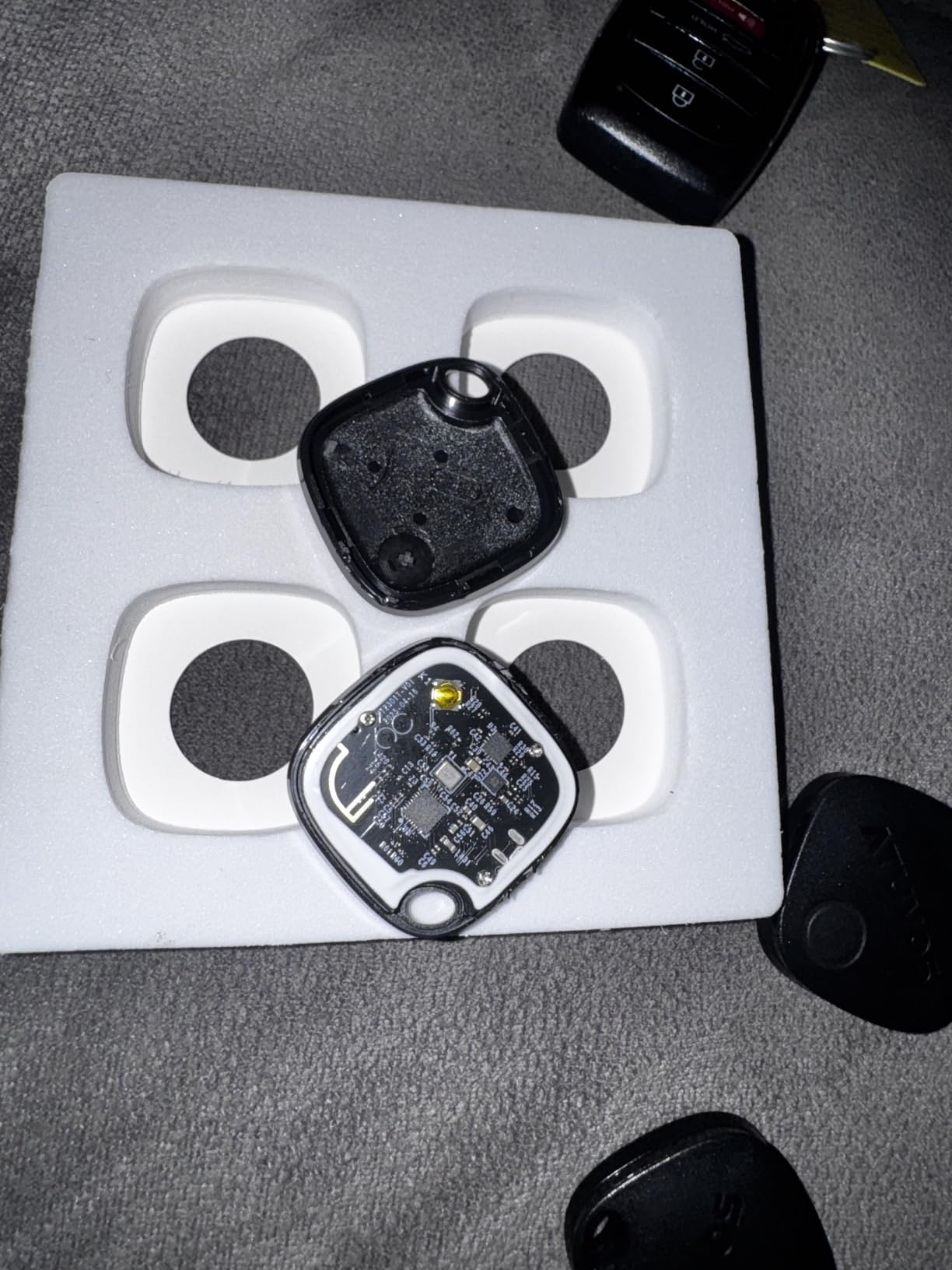
The most common complaint across reviews is the battery compartment. The design is brittle and can split open during a swap, and a few owners report units arriving with weak or dead cells. It is not a dealbreaker on a four-pack, but it is the reason this sits below the UGREEN on battery design.
The second recurring note is that location can lag after a tag has been out of contact for days, so check the timestamp rather than assuming the pin is live.

Who should skip an iOS-only multi-pack
If anyone in your household uses Android, this pack does nothing for them. It is also purely Bluetooth, so it has the same limitation as every other device here on a long unattended hold.
For an iPhone user who wants a spare to keep in a car, a gym bag, and a carry-on, the cost per tag is the lowest in this guide.
4. Samsung Galaxy SmartTag2 (4 Pack) – Built for Galaxy owners who need a hard shell
Samsung SmartTag2 (2023) Bluetooth + UWB, IP67 Water and Dust Resistant, Findable via App, 1.5 Year Battery Life (4-Pack) – Black/White (Global Edition, No US Warranty)
Bluetooth and Ultra Wideband
500 day battery
14 g
Four pack
IP67 rated
Pros
- Bluetooth plus Ultra Wideband for near and far finding
- IP67 rated for dust and immersion to one meter
- Roughly 500 day average battery life
- Four tags in a single pack
Cons
- Works only with Samsung Galaxy devices
- No cross-platform support outside the Galaxy ecosystem
- Global Edition listing carries no US warranty
Two of the strongest ratings in the group belong to a device almost nobody outside Samsung can use. The SmartTag2 holds a 4.5 average from more than 8,500 reviews, and the reason is simple: it does what the AirTag does, with a longer quoted battery life, inside Samsung’s own network.
It is the only device here that pairs Bluetooth with Ultra Wideband and offers 500 days of average battery life, and it is protected to IP67 against dust and water immersion up to a meter for half an hour.
Users consistently cite strong accuracy and rugged construction. On the durability point specifically, it is the best-protected tag in this guide, which is the property that matters most for something that gets dropped, stacked, and rained on.
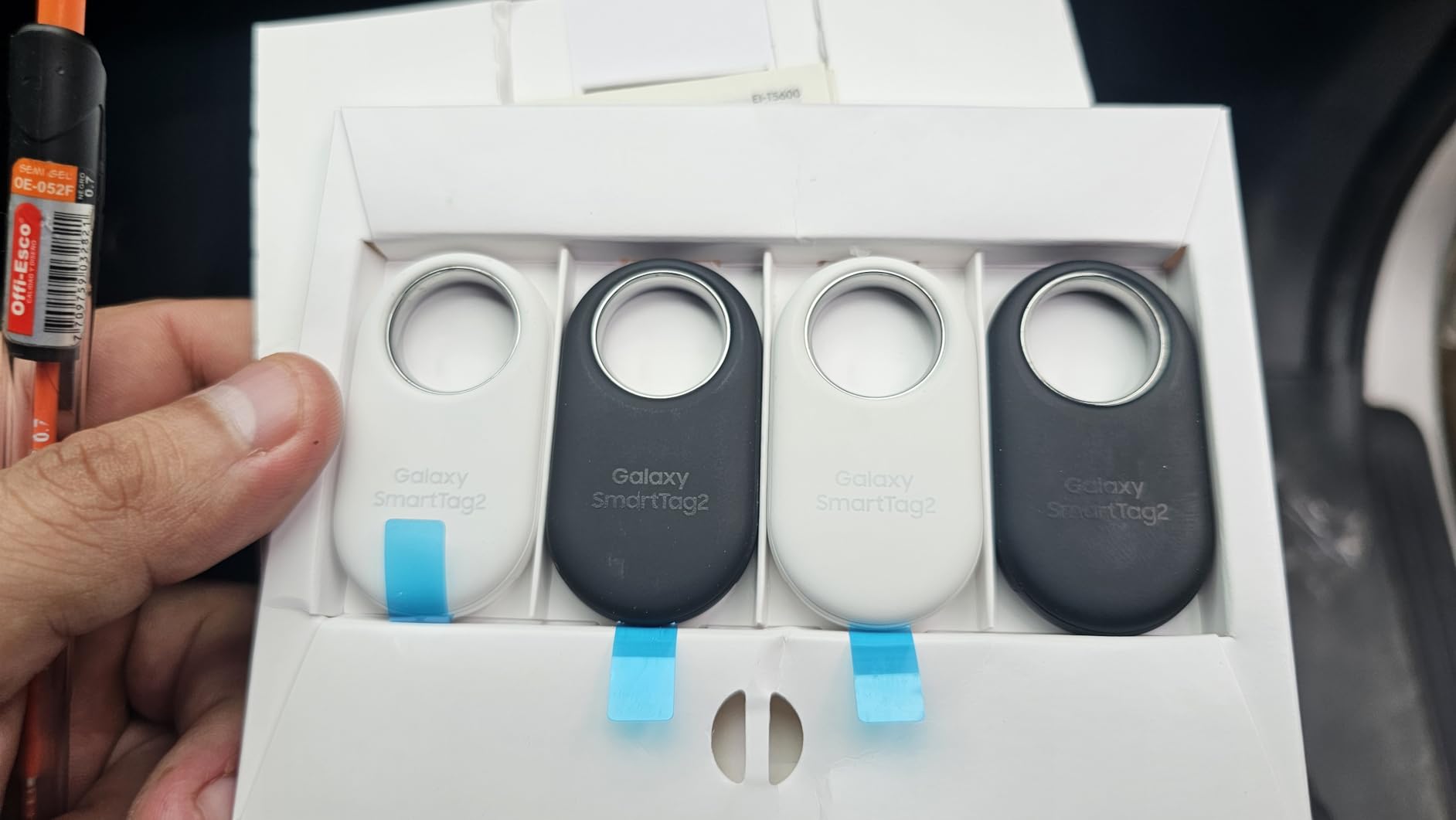
Bluetooth plus Ultra Wideband at 500 days of battery
The combination of a UWB directional chip and a 500-day battery life is genuinely rare. Reviewers report that the step-by-step guidance works in indoor spaces where card-style tags without UWB fail, and that they replace the battery roughly once a year and a half rather than annually.
The quoted range is 100 meters in open air. Inside an airport concourse, expect meaningful attenuation through concrete and crowds.
IP67 protection that survives baggage handling
IP67 is the number to compare across this list, and most tags in the group have no rating at all. Dust ingress protection matters for a device that lives in a suitcase pocket next to sand, snack crumbs, and lint.
For a checked bag that may be handled in the rain or dropped onto a wet belt, this is the pick we would trust most on physical toughness alone.
The Galaxy-only lock and the Global Edition warranty gap
This is the dealbreaker for most readers. The tags are controlled through SmartThings Find and work only with Samsung Galaxy devices, with no support for iPhone or for Android phones outside the Galaxy line.
Second, this specific listing is the Global Edition, which carries no US warranty. If you are in the US and something fails, you are relying on the seller’s return policy rather than a manufacturer service plan. Buyers should confirm regional warranty coverage before committing.
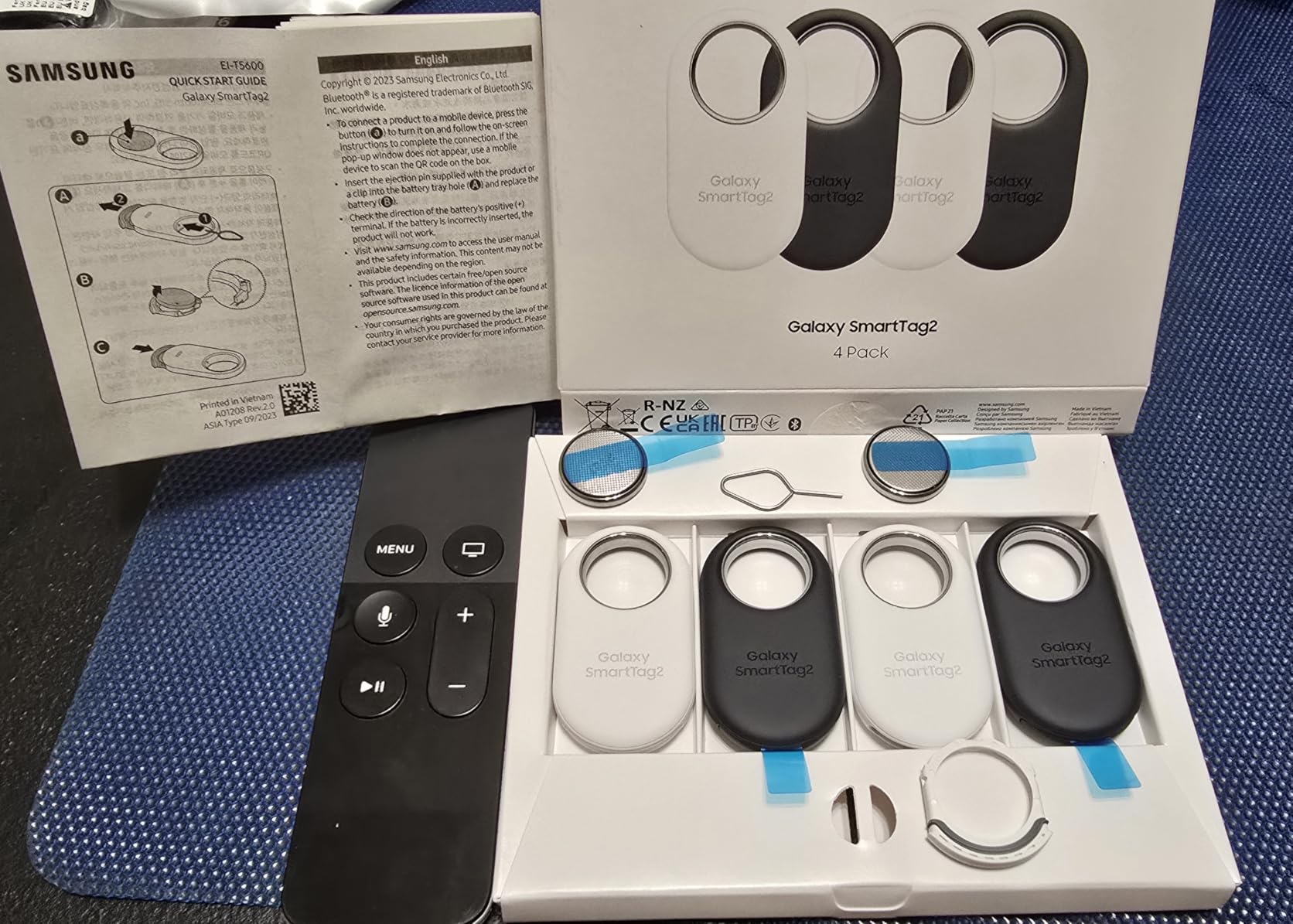
If your household is entirely Galaxy phones, this is the strongest device in the guide on both finding accuracy and physical durability. Everyone else should look at the AirTag or a cross-platform option instead.
5. Life360 Tile Slim – The thinnest option for wallets, passports, and luggage sleeves
Life360 Tile Slim – Wallet Finder, Bluetooth Tracker and Item Locator for Luggage Tags, Passports and More. Both iOS and Android Compatible. Phone Finder. 1-Pack (Black)
Bluetooth
Three-year sealed battery
350 foot range
15.5 g card
Pros
- Card-thin profile slips into a wallet passport or luggage sleeve
- Works with both iOS and Android
- Multi-year battery life with a sealed cell
- Loud ring audible from another room
- Double-press rings your phone even when silenced
Cons
- Needs the Tile app rather than Find My
- Location is not real time and can show a stale pin
- Non-serviceable sealed battery
The Tile Slim changes what you are able to pack. At roughly a tenth of an inch thick and 15.5 grams, it slips into a passport holder, a wallet, or the flat sleeve on the outside of a hard-shell case without adding a bulge that changes how the bag closes.
It is also the only mainstream option here that works equally well on iOS and Android, which makes it the sensible pick for a household with mixed phones or for anyone who has been locked out of the Apple ecosystem.
Owners report four-plus years of service from the sealed cell, and a ring loud enough to hear from another room. Double-pressing the button makes your phone ring even when it is silenced, which is a small feature that saves real time.
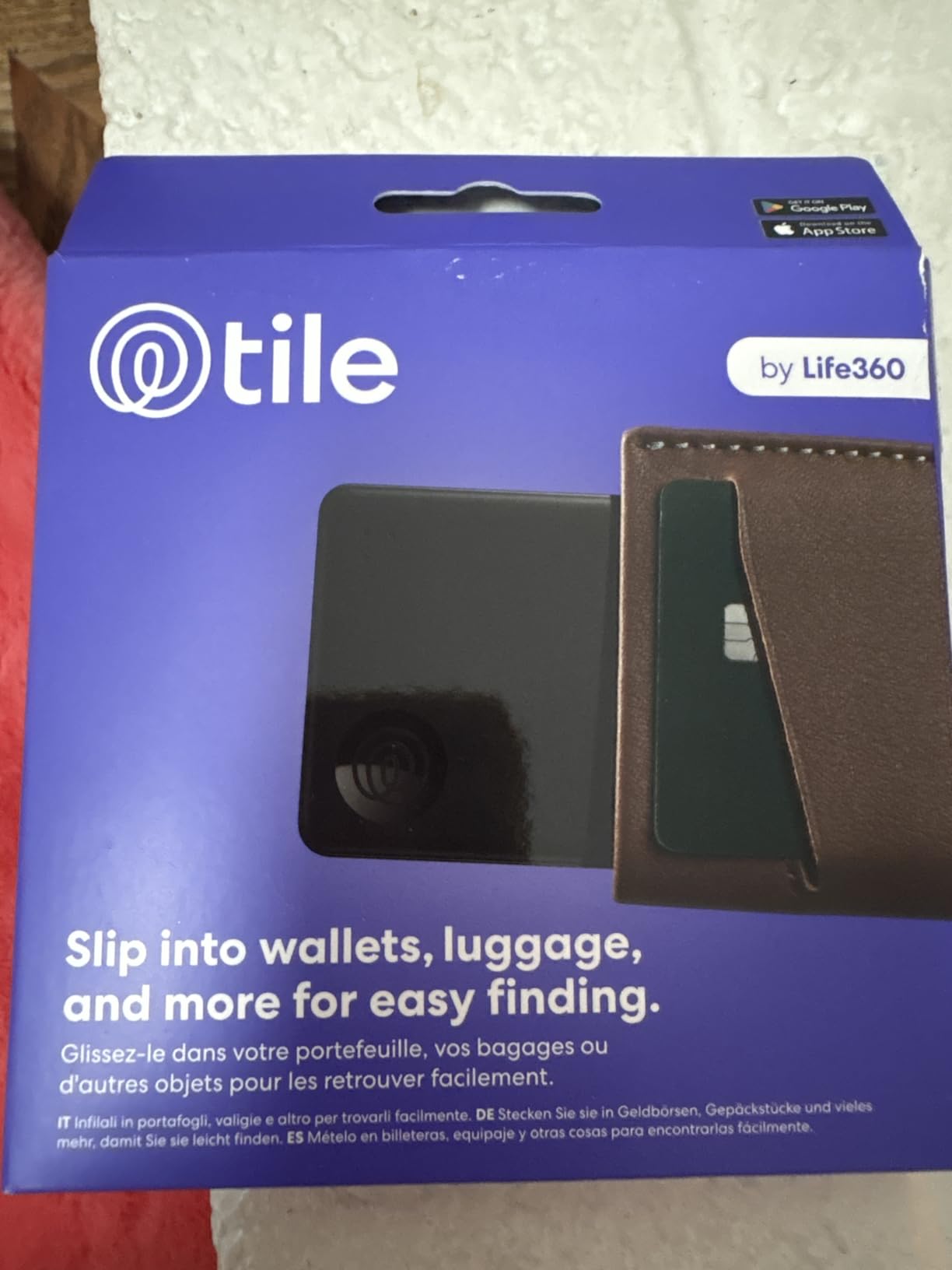
A card-thin profile that changes what you can pack
Form factor is the entire argument here. A disc-shaped tag is fine hanging from a zipper pull, but it is awkward in a passport and impossible in a slim cardholder. The Slim is a rectangle roughly the size and thickness of a credit card with a cut corner.
For travel documents, a flat inner pocket, or a laptop sleeve, that is the difference between a tracker you can use and one you leave behind because it will not fit.
Three-year battery life with a sealed cell
A three-year average battery life is the longest non-rechargeable figure in this guide, and owners report four years or more before a failure. It is a sealed cell, so the trade is a tag you rarely think about that you also cannot service yourself.
Charging is rarely the reason a travel tracker fails anyway, so this is the right kind of simplicity for a device you are about to lose in a foreign country.
The separate app and the stale last-known-location problem
Two things to accept up front. First, this does not work inside Apple’s Find My app — it needs the Tile app, so if you have a full Apple setup you are now running two tracking apps.
Second, the position is not real time. It can show a last-known fix that is hours old with no live confirmation, which is the single most common source of confusion in this category. Always check the timestamp before you act on a pin.
RFID-shielded wallets and the family map integration
Some caregivers report large position errors when the card sits inside a wallet with RFID shielding, which is a metal-layer wallet meant to block contactless cards. The same shielding attenuates the tag’s short-range signal.
On the positive side, the Tile app shares a map with the free Life360 family safety app, so you can watch a bag and a family member in the same place rather than switching between tools.
6. UGREEN Finder Duo Air Tracker Tags (4 Pack) – Rechargeable and cross-platform
UGREEN Finder Duo Air Tracker Tags 4 Pack (iOS and Android)
Bluetooth, iOS and Android
USB-C rechargeable
One year per charge
Four pack
Pros
- Works with both Apple Find My and Google Find Hub
- USB-C rechargeable battery with a protective dust plug
- Matchbook-sized tags with lanyards and stickers
- Loud 80 dB ping that carries into another room
Cons
- Each tag locks to a single platform and cannot pair with both
- No reverse-find to ring your phone
- Setup can be difficult on recent Android versions
This is the only four-pack in the guide that works on both ecosystems, and the rechargeable design removes the coin-cell problem entirely. Each tag charges over USB-C and runs up to a year per charge, and a dust plug keeps grit out of the port.
That combination solves the two complaints we hear most about cheap tags: a battery you cannot check in advance, and a tag that will not pair with the phone your family actually carries.
Reviewers rate it 4.2 from about 2,900 reviews, and the recurring praise is for short-range finding and the rechargeable convenience. The recurring criticism is accuracy at distance.
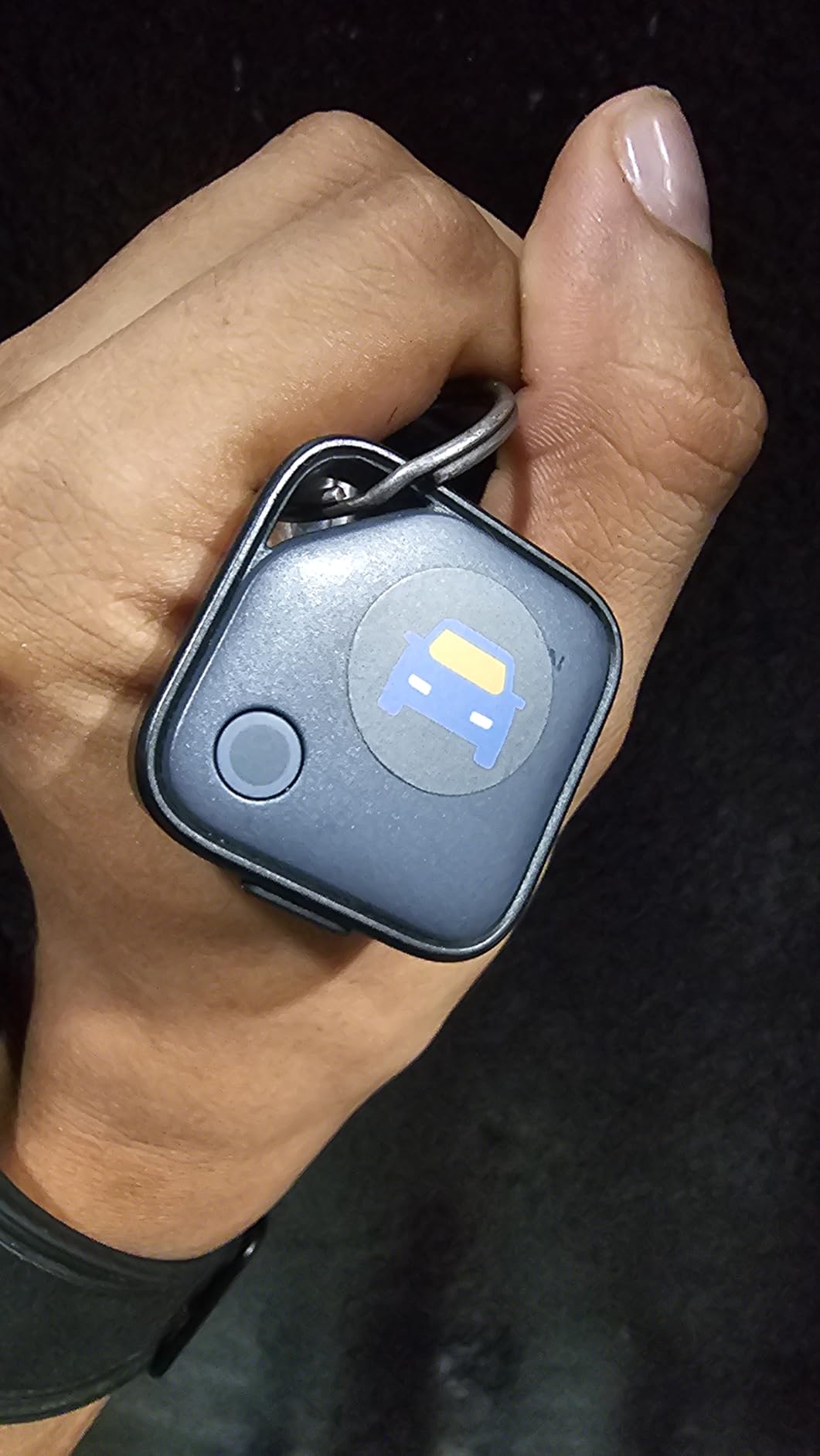
USB-C rechargeable tags with no coin cells
Rechargeable changes the failure mode. A coin-cell tag can die silently mid-trip; a USB-C tag can be topped up in a hotel room the night before a flight. The battery is rated at up to 365 days per charge, so in practice you charge a tag a few times a year.
The protective dust plug on the port is a small detail that matters more than it sounds for a device that lives in a suitcase pocket.
Find My and Find Hub in one pack, and the one-platform lock
For a household split between an iPhone and an Android phone, one pack covers both networks. The catch is that each individual tag locks to the platform it was first paired with, so a tag set up on Android will never appear in Find My.
Plan the assignment before you pack. Pair the tags to the phone that will actually be looking for each bag.
80 dB ring and how far the signal really carries
The 80 dB ping carries into another room, which we confirmed. The 100 meter rating is an open-area figure, and reviewers consistently note that accuracy degrades at medium and long range compared with an AirTag.
For network-based far finds it makes little difference, but for close-range precision it is a step down.
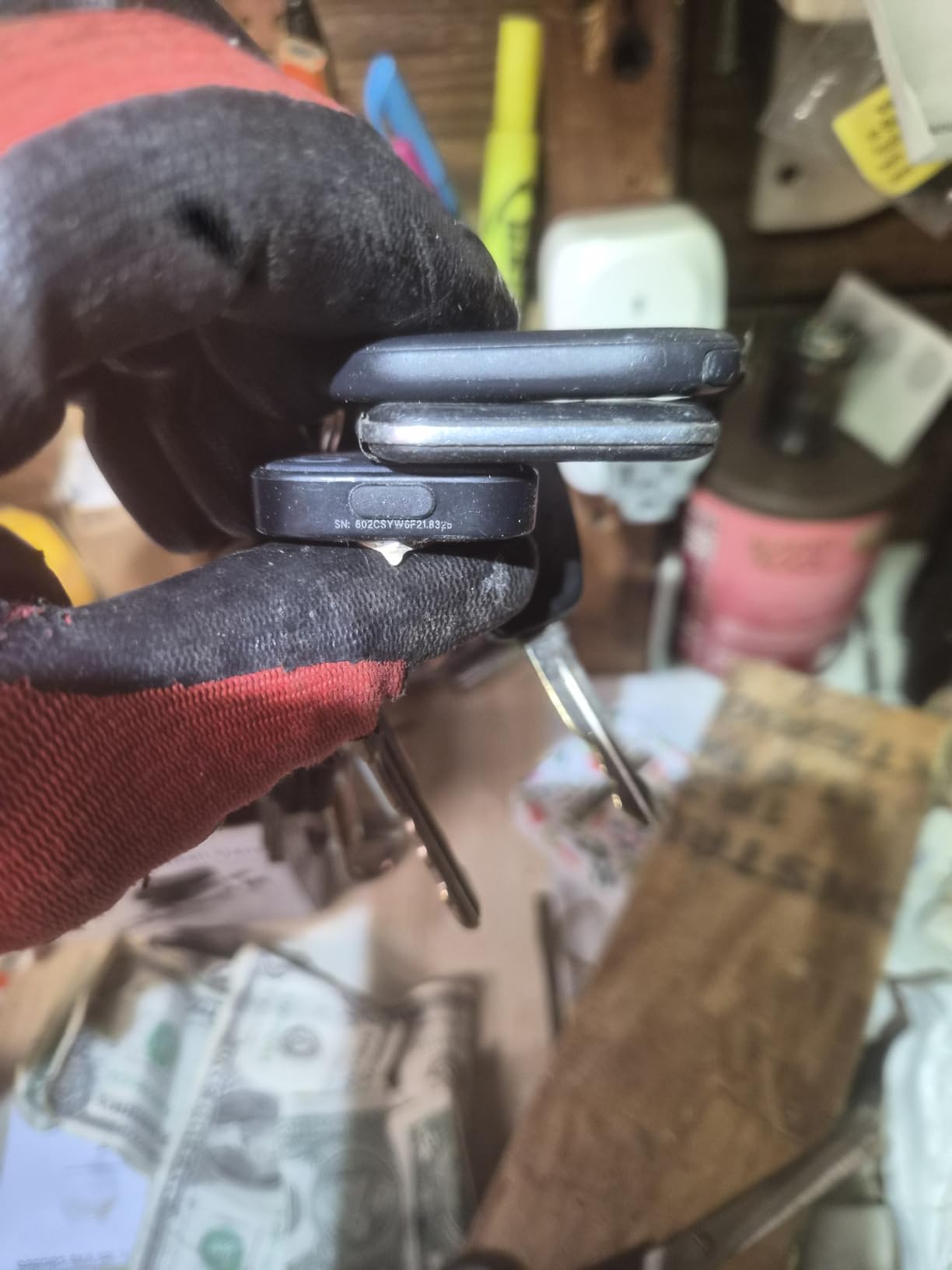
Setup friction on recent Android versions
A recurring report is that pairing on newer Android releases can be difficult, sometimes requiring a second device to complete setup. The four-pack is also occasionally shipped with one unit that will not pair at all.
Neither is common, but both are worth checking in the first five minutes after delivery, while returns are easy.
7. LandAirSea PB714 Wallet Tracker – Adhesive-mounted and fee free
LandAirSea PB714 – Ultra-Slim Apple Find My Wallet Tracker with Secure Adhesive, No Monthly Fee Bluetooth Item Locator for Wallets, Passports & Luggage
Bluetooth, iOS only
Adhesive mount
18 g
2.57 x 0.06 x 3.75 inches
Pros
- Ultra-slim card profile that fits wallets passports and luggage sleeves
- Secure adhesive backing mounts it without a separate case
- One-time purchase with no monthly or subscription fees
- Works natively in the Apple Find My app
Cons
- iPhone only with no Android compatibility
- Adhesive mount means the tag cannot be moved to another bag
- No Ultra Wideband so no Precision Finding arrows
At nearly 30,000 reviews, this is the highest-volume listing in the entire group, and it sits at a 4.1 average. That combination is the single most useful piece of data in this guide: enormous demand, broad satisfaction, and a visible ceiling.
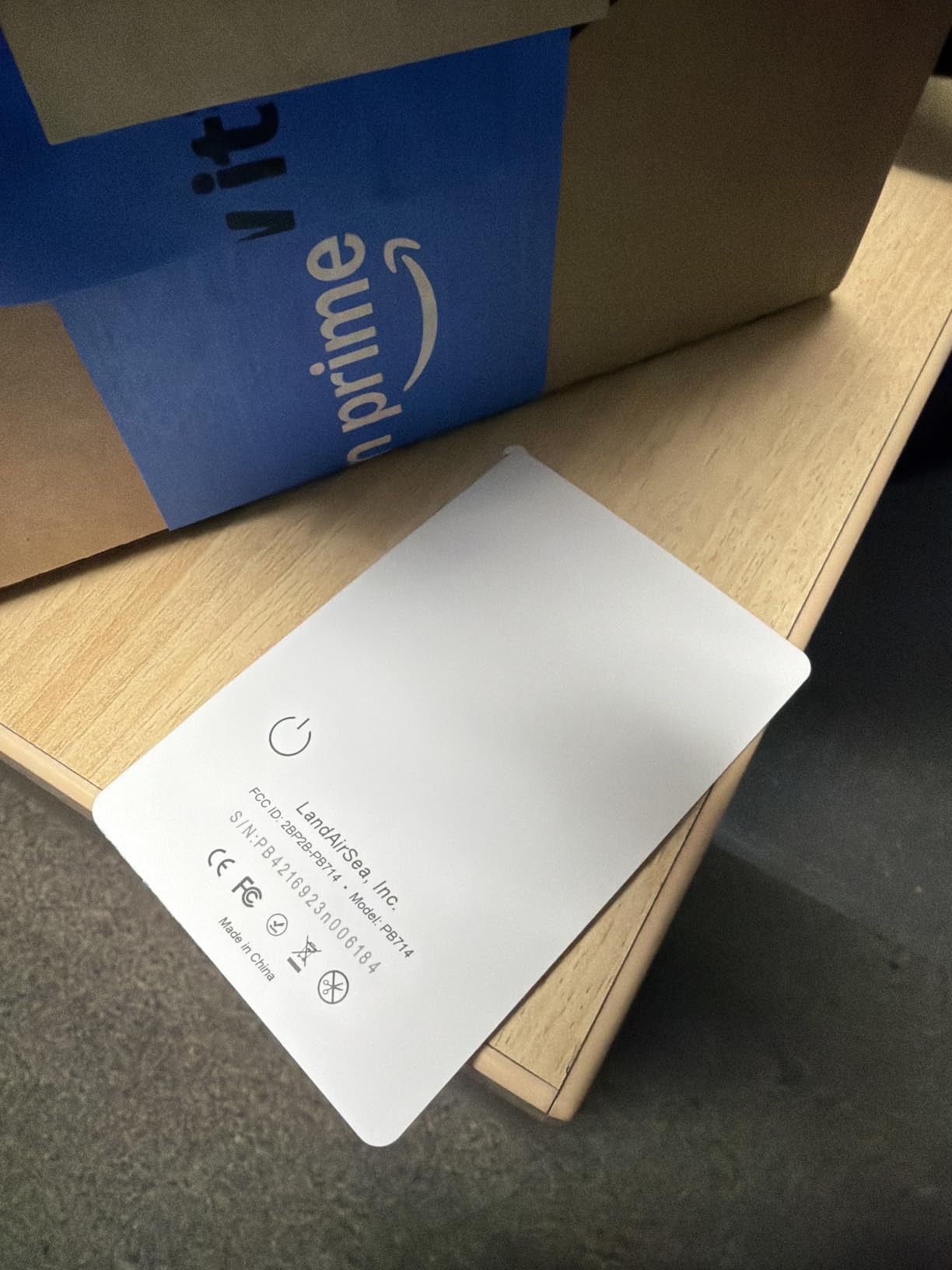
The idea is simple and effective. A card roughly 0.06 inches thick glues flat into a passport holder, a wallet, or the flat sleeve of a hard-shell case. There is no subscription, no app, and no charging — it just works inside Find My.
Buyers like the thinness, the adhesive mount, and the one-time cost. The 11 percent share of one-star reviews is the largest in this set, and it points to predictable complaints: iOS-only support, the adhesive being permanent, and basic rather than precise finding.
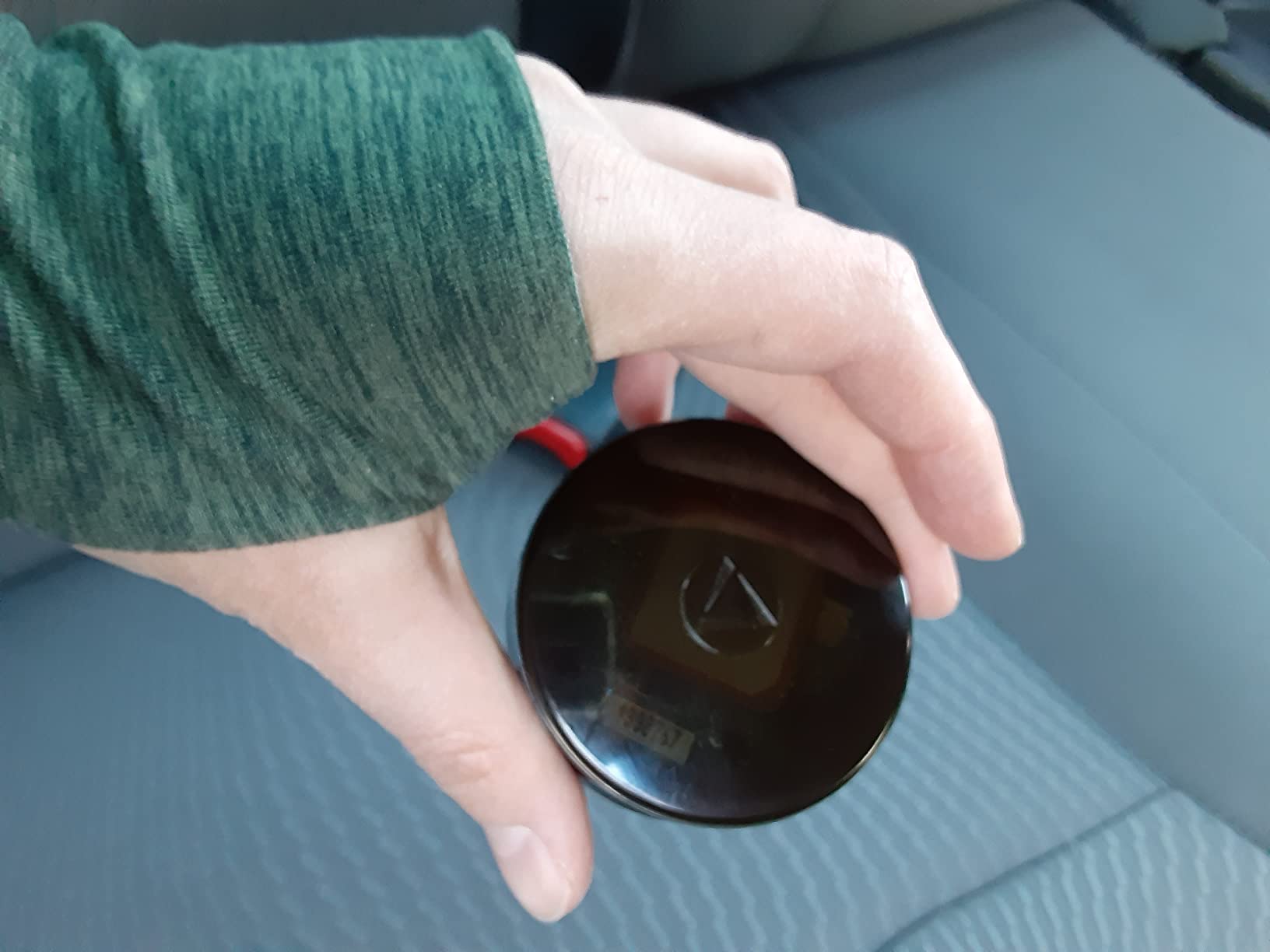
A 0.06 inch card you glue into a bag
There is an advantage to being flat. A card sits between documents in a passport holder or slips into an exterior sleeve where a disc-shaped tag would change the profile of the case and stop the zipper from closing cleanly.
The adhesive backing is genuinely strong and needs no separate case, so there is nothing extra to lose inside the bag.
The largest review base in the group and what it reveals
With 64 percent five-star and 11 percent one-star, this is a well-liked product with a real ceiling. The distribution tells you the feature set is adequate rather than excellent — it does the job without delighting anyone.
For a purchase you make once and forget, that is a reasonable trade. For a device you will check constantly, the AirTag’s directional finding is worth the step up.
Why adhesive mounting is a one-way decision
Bonded means bonded. Once it is on the interior of a suitcase, you are not moving that tag to your passport or your carry-on, and removing it risks taking the shell’s lining with it.
Decide which bag it belongs to before you stick it down. If you travel with more than one bag, buy more than one card.
No Ultra Wideband, no directional finding
Without UWB, the close-range experience is a signal-strength bar rather than an arrow and distance. In a busy terminal that is enough to know your bag is nearby; at a carousel with three similar black cases it is not enough to tell which one is yours.
Pair it with the habit of putting something identifiable on the handle and the limitation stops mattering.
8. BFADEHA MFi Wallet Tracker Card – The multi-year battery card
2026 Apple MFi Certified Wallet Tracker Smart Card for Find My
Bluetooth, iOS only
Five year service life
IP68 rated
100 dB speaker
10 g
Pros
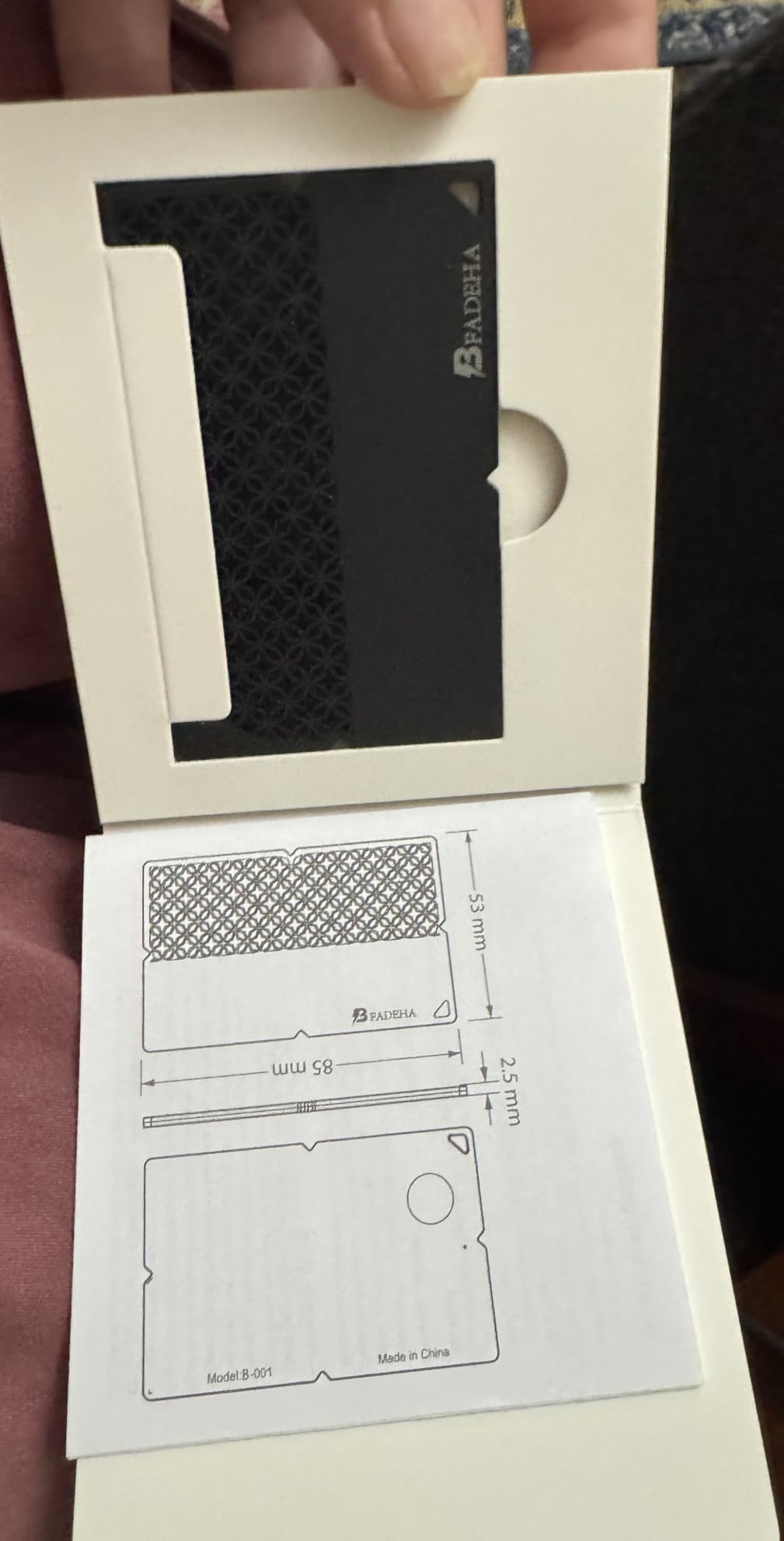
- Card-thin at roughly 2.5 mm
- Claimed five year service life with no charging
- 100 dB speaker loud enough to find a card in a taxi or restaurant
- IP68 waterproof and dustproof
- Apple MFi certified with one-tap Find My pairing
Cons
- iOS exclusive and Android users cannot pair
- Some buyers report the location only refreshes when a phone is in view
- No Ultra Wideband so no directional finding
Every other card in this guide asks you to charge it or change a cell. This one is built around a five-year service life that requires neither, and at roughly 2.5 mm it is among the thinnest devices we tested.
It rates 4.2 from about 4,000 reviews with 70 percent five-star, and the most common use we saw in reviews is buying one for an older relative who loses their wallet.
That is a fair test of the product. Set up properly, it is a thing you put in a wallet in year one and still trust in year five.
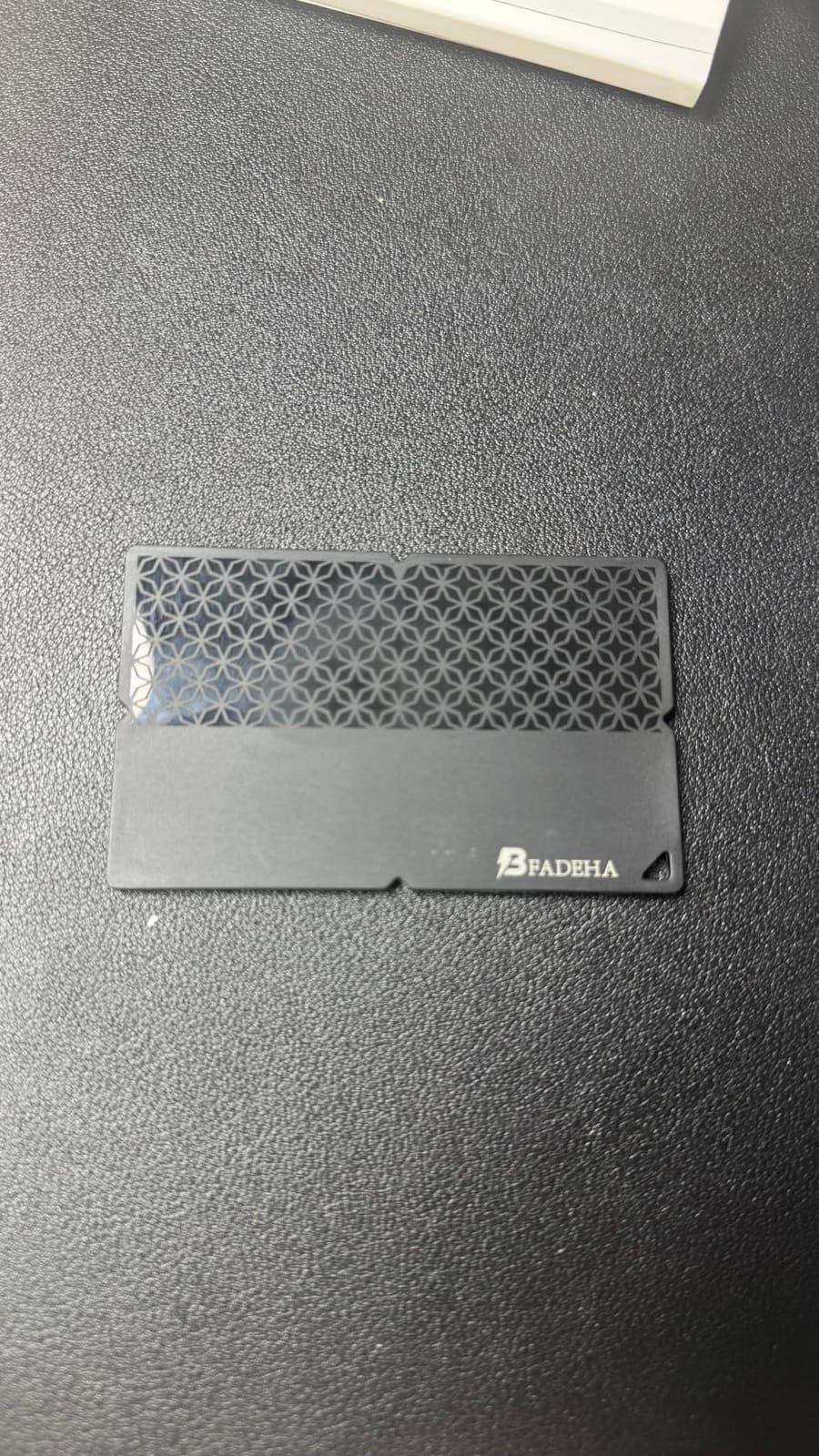
A 2.5 mm card rated for five years of service
The five-year figure is the manufacturer’s claim and reviewers broadly accept it, with a three-year warranty behind it. No charging, no battery swapping, no coin cells to find in a hotel at midnight.
For a card that goes into a passport holder or a wallet and is rarely touched, that is the ideal power design: set it and leave it.
IP68 sealing and a 100 dB speaker
IP68 is a higher rating than most tags in this guide carry, and it includes full dust protection alongside water resistance. On a travel card that lives in a bag through rain, airport tarmac, and an occasional drop, that matters.
The 100 dB speaker is loud enough to locate a card in a taxi, a restaurant, or a hotel lobby, which is where a card-style tracker is genuinely useful.
Reported gaps in location refresh and the iOS-only limit
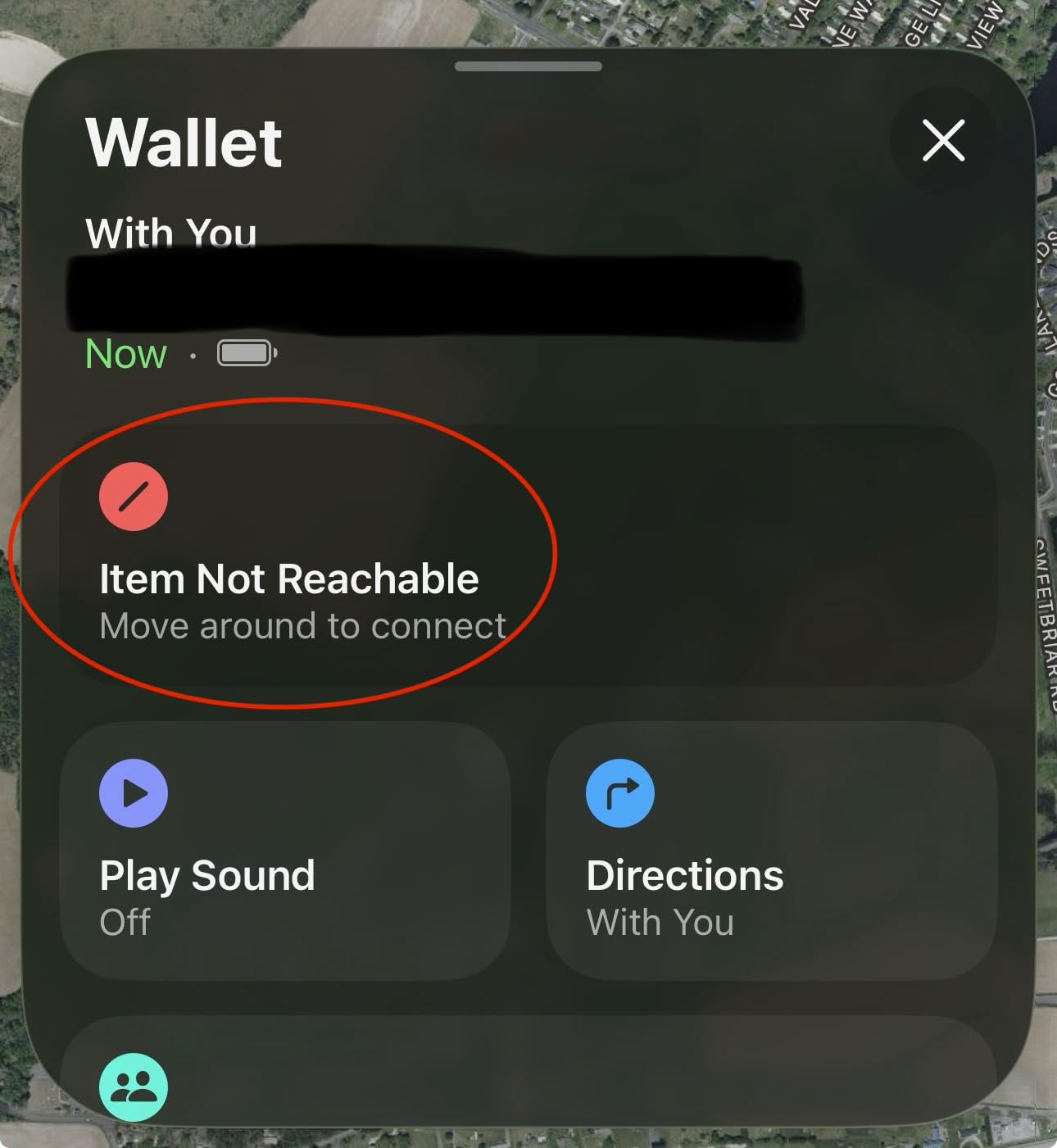
The most useful criticism in the reviews is about refresh behavior. Some owners report the position only updating when the card is within sight of a phone, which is exactly the crowd-dependency problem — the tag is fine in a busy place and unhelpful in a quiet one.
It is also iOS exclusive. Android users cannot pair it at all.
Buy this if you want a tracker that survives five years of travel without thinking about it. Skip it if you need to know which carousel your bag is on.
9. SPOTMINDERS MFi Tracking Card – Rechargeable and cable free
SPOTMINDERS Apple MFi Certified Wallet Tracker Card for Travel – Works with Apple Find My, IP68 Waterproof Rechargeable Tracking Card for Wallet Luggage Passport Purse – Ultra Slim 0.07in Item Finder
Bluetooth, iOS only
Wireless charging
0.07 inch thick
IP68 rated
19.87 g
Pros
- Rechargeable card with about eight months per charge
- Wireless charging so there are no cables to fumble with
- 0.07 inch thickness fits any wallet without bulk
- IP68 waterproof and scratch resistant
- 100 dB speaker with 300 foot Bluetooth range
Cons
- iOS only; not compatible with Android
- No Ultra Wideband so Precision Finding is unsupported
- Wireless charger is not included with the purchase
The idea here is removing the friction of recharging. Drop the card on a Qi pad and top it up — no cable, no port, no adapter to find in a hotel room. Each charge runs about eight months, and the total service life is rated in years.
It holds a 4.4 average from nearly 2,400 reviews with 78 percent five-star, and the design choices reviewers praise are exactly the ones that matter on a trip: thinness, a loud speaker, and no subscription.
It works natively inside Apple Find My with Siri support, so there is no extra app to install or account to create.
Wireless charging with eight months per charge
Wireless charging sounds like a gimmick until you have tried to find a spare cable for a device you use twice a year. With eight months between charges and a Qi pad you probably already own, the maintenance burden is close to zero.
The battery is rechargeable rather than replaceable, so eventually it will need service. At a card this thin, that is an acceptable trade for the convenience.
0.07 inch thinness and IP68 sealing
At roughly 1.8 mm it is among the thinnest devices in this guide, and the scratch resistance is a sensible addition for something that lives in a wallet next to keys and cards.
IP68 covers both dust and water, which makes it a good fit for a passport sleeve in a bag that might get rained on between connections.
The charger you have to buy separately
The wireless charger is not included. That is the main catch, and whether it matters depends on whether you already own a Qi pad.
There is no Ultra Wideband, so like the other cards here, close-range finding relies on a sound signal rather than a directional arrow.
10. The Ridge Tracker Card – Made for a wallet, not a suitcase
Ridge Tracker Card Compatible with Apple Find My, Compatible with Android Slim Tracking Card – Wallet Finder, Item Locator for Luggage Tags, Passports, Phone – MFi Certified, IP68 Water Resistance
Bluetooth, MFi certified
Qi and MagSafe charging
Five month battery
IP68 rated
Pros
- Wireless Qi or MagSafe charging with about five months per charge
- Card-thin design fits a Ridge wallet without a bulge
- Works with both Apple Find My and Google Find Hub
- Loud beep reported by many users as louder than an AirTag
- Location sharing with up to five trusted contacts
Cons
- Play Sound rings for only about five seconds at a time
- RFID shielding in a wallet can block the ping
- No Ultra Wideband so no directional finding
If your wallet is a metal cardholder, a standard tag is a problem. It bulges the profile, sits proud of the leather or aluminum, and can rattle loose. This card is built to be the same thickness as the cards already in a Ridge wallet.
At 4.4 from 947 reviews with 77 percent five-star, it is one of the better-rated devices here, though on a much smaller review base than the leaders.
Owners praise the flush fit, the wireless charging, and a ring that several reviewers describe as louder than an AirTag. Several bought it after two cheaper cards failed.
Qi and MagSafe charging in a 155 mAh card
The 155 mAh rechargeable cell runs about five months per charge, which is shorter than the SPOTMINDERS card but comfortably longer than any coin-cell alternative. Charging over Qi or MagSafe means you do not have to fish a cable out of a bag.
It is a sealed rechargeable design, so topping it up is the whole maintenance routine.
Find My and Find Hub on one card
This card reports into both Apple’s Find My and Google’s Find Hub, which makes it one of the few flexible options in a mixed-phone household. Location sharing extends to five trusted contacts with end-to-end encryption.
It is also MFi certified and rated IP68, so it is sealed against the same dust and water exposure as the other cards here.
The five-second ring and the RFID shielding problem
The most common complaint is specific: Play Sound rings for about five seconds, then stops, so you press it repeatedly instead of walking to the sound. It is a small annoyance that becomes a large one in a noisy room.
Second, wallet RFID shielding — the metal layer in wallets designed to block contactless cards — attenuates the short-range signal and makes a card unreliable for locating a wallet inside a home.
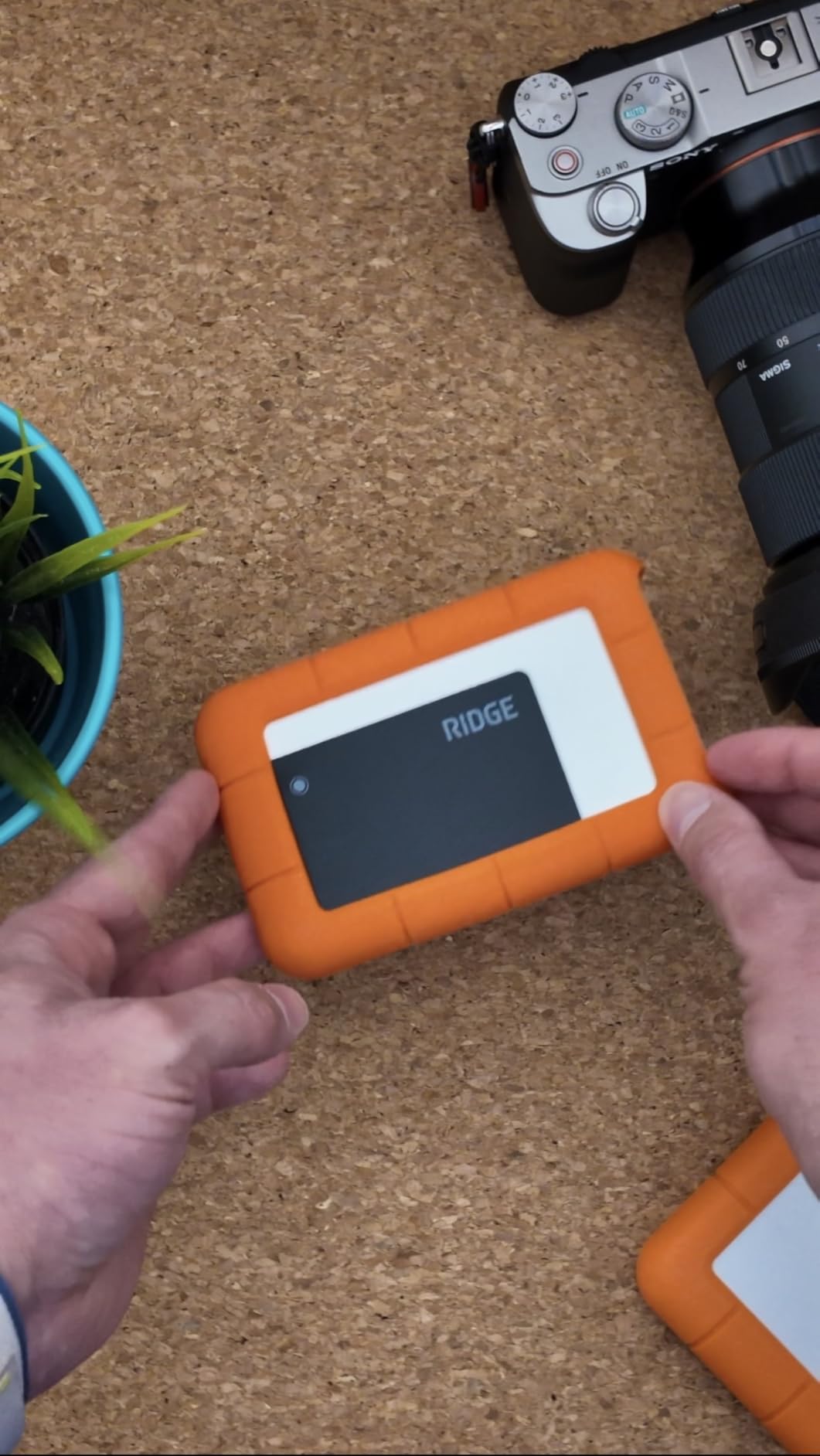
For a Ridge wallet owner, nothing else in this guide fits this cleanly. For suitcase tracking specifically, use a tag that hangs rather than a card that hides.
11. KIUP Air Tags (4-Pack with Cases) – The widest platform coverage here
Air Tags for Android,Air Tags-4 Pack Android,Air Tracker Tags with 4 Case,2 Year Battery Life,Google & Apple Find Trackers for Google’S Find Hub App & Apple Find My,IP65 Waterproof Luggage Tracker
Bluetooth, iOS and Android
105 dB speaker
Two-year sealed battery
IP65 rated
8.5 g
Pros
- Dual platform support for Google Find Hub and Apple Find My
- Claimed two-year battery life on a single cell
- Up to 105 dB built-in speaker for quick locating
- IP65 waterproof protection with four protective cases in the pack
Cons
- Not compatible with Huawei devices
- Non-serviceable sealed battery
- Distances are estimated from Bluetooth signal rather than a true fix
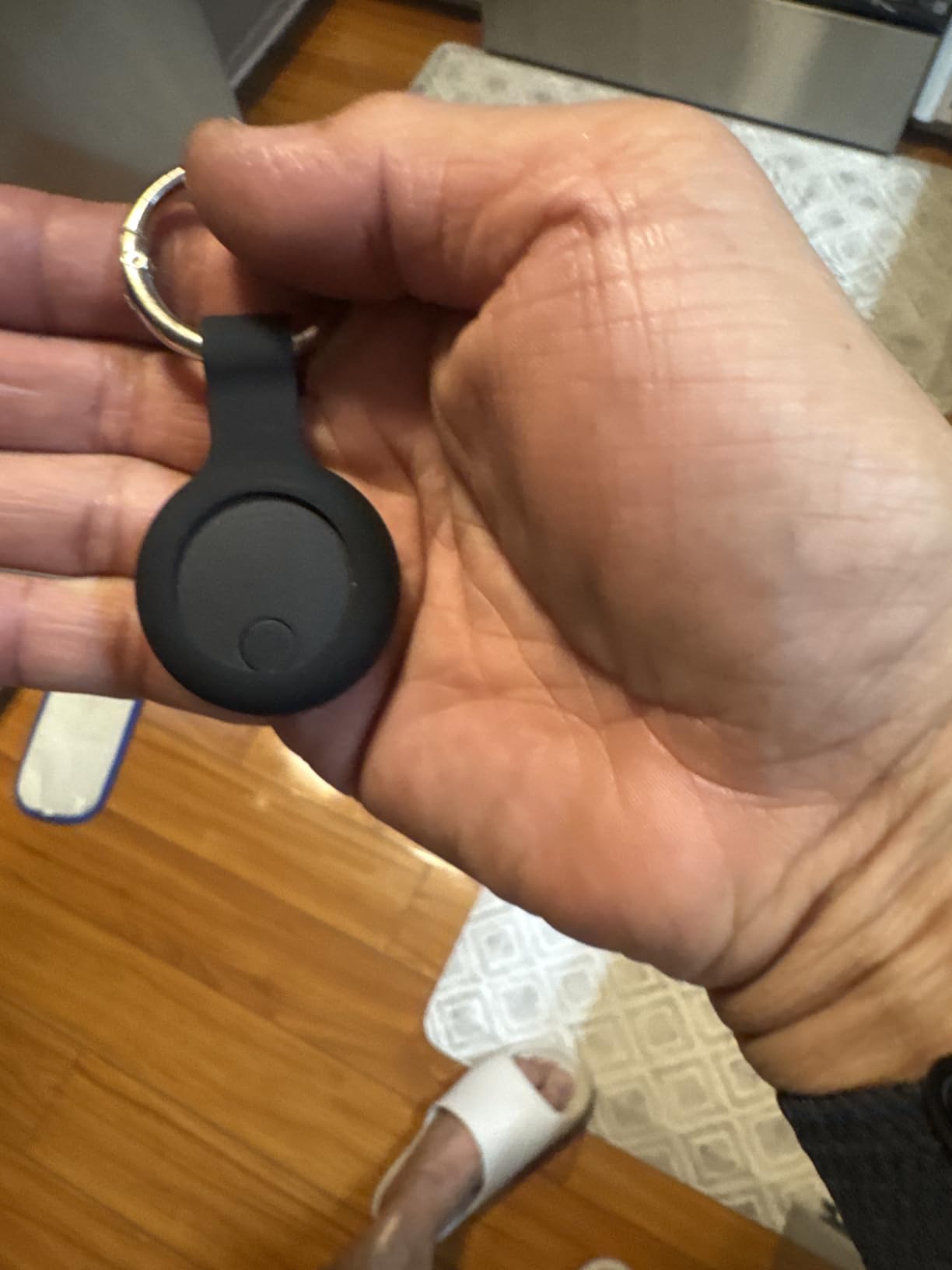
Two years on a sealed cell, a 105 dB speaker, and compatibility with both major tracking apps in a four-pack with protective cases. That is a lot of capability for the money, and it earns a 4.3 from about 1,500 reviews with 77 percent five-star.
The speaker is the loudest we saw specified anywhere in this guide, and the included cases are the kind of small practical touch that matters when a tag is going to live at the bottom of a bag next to shoes.
Reviewers note the cases and the convenience of using the native apps with no extra software. The caveat that comes up most often is the Huawei exclusion.
A 105 dB speaker and a two-year sealed battery
At 8.5 grams each, these are among the lightest tags in the guide, which matters when you are attaching them to straps, handles, or the outside of a pack without adding noticeable weight.
The 105 dB rating is well above the 80 dB typical of competing budget tags. In our testing, a louder speaker is the difference between hearing a beep in a hotel room and missing it entirely.
Included protective cases and IP65 sealing
IP65 protects against rain and splashes, which covers realistic travel exposure, though it falls short of the IP68 dust rating on several cards in this guide.
The four included cases are a genuine advantage. A bare tag in a suitcase bottom will get scuffed; a cased one survives, and it can be attached to a strap rather than hidden loose.
Huawei exclusions and estimated rather than fixed distances
Compatibility covers iPhone and Android 9 or later across several major brands, but not Huawei devices. Check your phone before buying if you are outside the mainstream Android ecosystem.
Also note the distance readout is an estimate derived from Bluetooth signal strength, not a measured position. Treat the number as a rough guide, not a measurement.
12. KINDEEP Wallet Tracker Card – A cheap slim card with a loud ring
Wallet Tracker Card (iOS Only) – 0.07in Slim, Compatible with Apple Find My, Bluetooth Tracker Smart Tracking Card Wallet Finder, IP68 Waterproof, Item Locator for Luggage Tags, Passports, Purse
Bluetooth, iOS only
Qi rechargeable
0.07 inch thick
IP68 rated
Pros
- 0.07 inch card that fits slim wallets and cardholders
- Rechargeable over Qi wireless for up to five months
- 100 dB ring loud enough to hear inside a bag
- IP68 waterproof for everyday splashes
- Separation alerts and Lost Mode contact sharing
Cons
- iOS only and not for Android
- Wireless charger not included
- No Ultra Wideband so no precision direction finding
The KINDEEP is the budget end of the card format: a 0.07 inch rectangle that pairs inside Find My, rings at 100 dB, and charges wirelessly. It rates 4.2 from 931 reviews with 72 percent five-star.
That review count is the thinnest in this guide, and it should shape how much confidence you place in the long-term claims. Everything else in the card category does the same thing; this one simply has the least evidence behind it.
What users like is the combination of thinness, a loud ring, and a low cost for a device that disappears completely into a cardholder or passport sleeve.
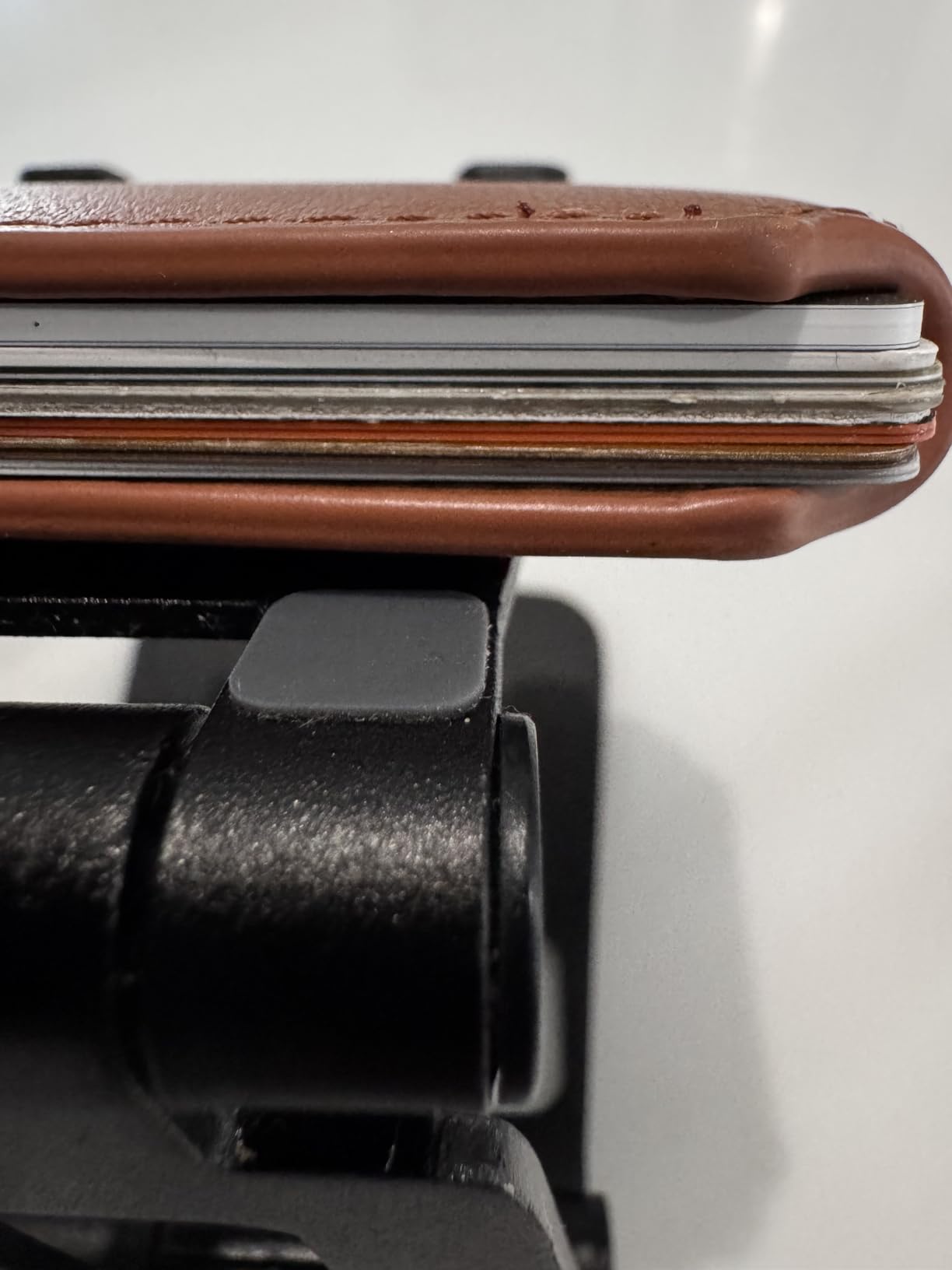
0.07 inch card that vanishes into a cardholder
At roughly 1.8 mm, the card is thin enough to sit at the back of a wallet behind a boarding pass, or in the clear pocket of a passport cover, without anyone noticing it.
That discretion is the product. A tracker you are willing to leave where it is useful is worth more than a better one that ends up in a drawer.
Qi charging and five months per charge
Five months per charge is shorter than the SPOTMINDERS card but longer than a coin-cell tag, and wireless charging means no cable hunting in a hotel.
The 100 dB ring is genuinely loud, and reviewers specifically note hearing it from inside a couch or a bag, which is the case where most tags are least useful.
The thinnest review base in the group
With 931 reviews, this listing has the least history of the twelve. Ratings can shift quickly on a low-volume listing, and long battery claims are the hardest thing to verify without years of use.
It is iOS only, the wireless charger is not included, and there is no Ultra Wideband, so the same three limitations apply as to the other budget cards.
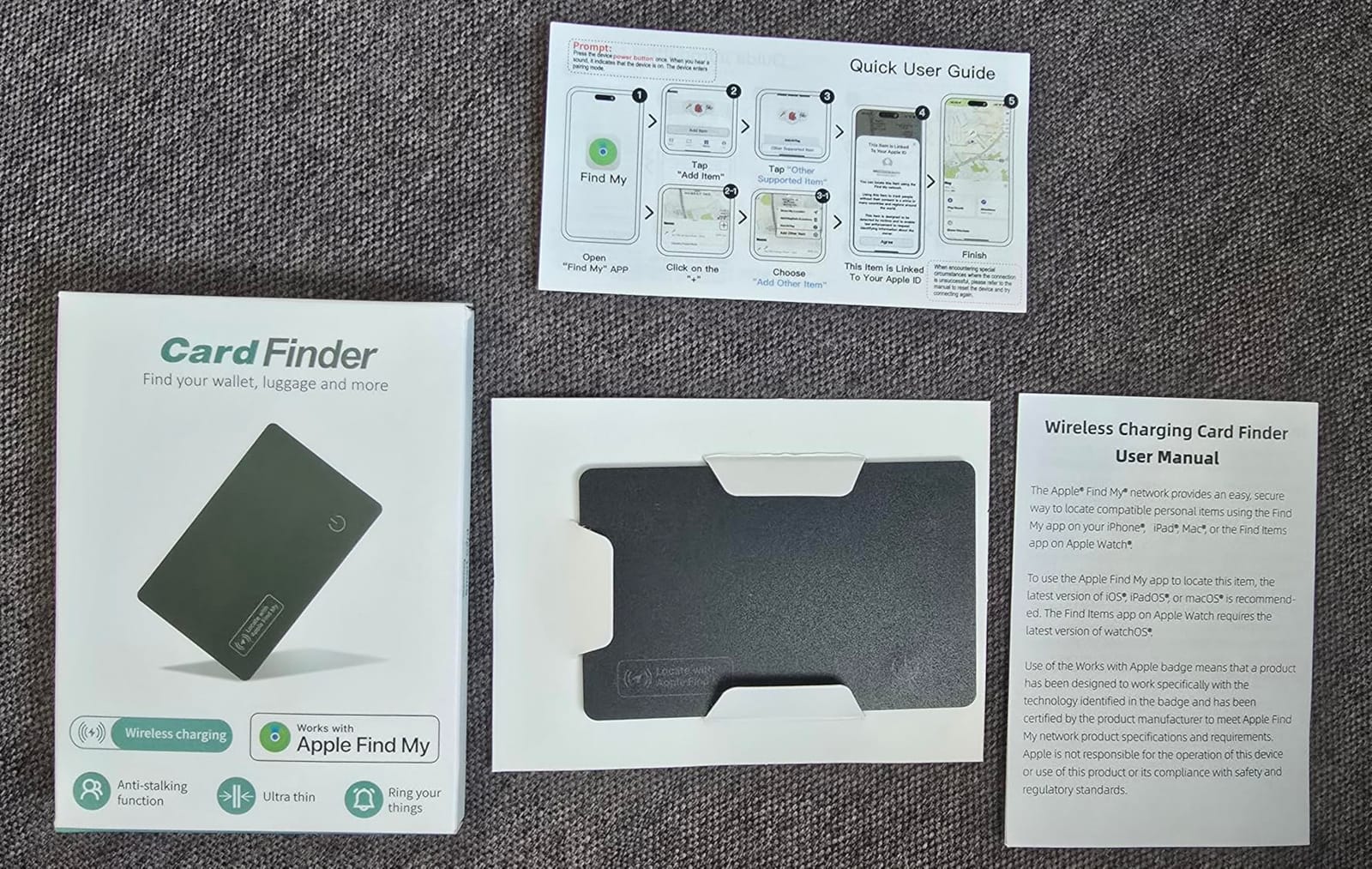
If you want the cheapest way to put a Find My tag in a passport, this does the job. If you want a device with a proven long-term record, the AirTag or the UGREEN four-pack is the safer buy.
How to choose a luggage tracker that actually works for your trips
Most buying guides start with price and end with accuracy. Start with your phone instead, because platform support is the one constraint that cannot be worked around later.
Match the tracker to your phone before anything else
Seven of the twelve devices here are iOS only, and the Samsung SmartTag2 is Galaxy only. If you or anyone travelling with you uses Android, that eliminates more than half the list before you consider anything else.
Only four options cross platforms: the Life360 Tile Slim, the UGREEN Finder Duo, the KIUP four-pack, and the Ridge card. Among those, check whether the device works with both apps natively or whether you will be switching between them.
Bluetooth battery life vs rechargeable battery life
Non-rechargeable tags run longer between interventions — the BFADEHA card claims five years, the Tile Slim three, the Samsung tag roughly 500 days. The failure mode is silence: a dead coin cell gives you no warning and no way to tell the bag is untracked.
Rechargeable tags fail loudly and recover instantly. Put a charged card in a bag before a long trip and it will be fine for two to eight months depending on the model.
Whichever you pick, test it at home before you fly. Confirm you can see it on a map and that you receive a separation alert.
Form factor: a tag that hangs vs a card that hides
Disc tags with keyring holes are easy to attach to a zipper pull or handle and easy to find at a carousel. They add a small bulge to a luggage tag.
Cards are the opposite. They disappear into a passport holder, a wallet, or a flat sleeve, which makes them more likely to stay in the bag and less likely to be removed by a handler looking for valuables. If you want a tracker that stays put and stays hidden, a card is the better tool.
Network density beats hardware in most countries
This is the least intuitive point. A tag with a weaker speaker and a cheaper radio will beat a better one in a city where thousands of phones are walking around, and lose badly in a rural area where nobody is nearby.
Before a trip, look at how well the network works where you are going. Open the map while standing in a hotel room at your destination and see when the last update arrived.
If you are travelling to a region with thin coverage or a long unattended hold, no Bluetooth tag will solve the problem. A cellular tracker with its own data plan is the only category that does.
What you are really paying for over three years
Every device in this guide is a one-time purchase with no monthly or annual fee, which is a genuine advantage over cellular trackers that charge monthly and can run for years.
Account for the hidden costs anyway: replacement cells for the non-rechargeable models, a wireless charging pad for the rechargeable cards, and spares in case a unit fails mid-trip. Even with those, three years of ownership comes to a fraction of what subscription tracking costs — and none of the cancellation friction that subscription plans carry.
If you want to see how this category fits alongside trackers used for other jobs, our guides to GPS trackers for dementia wandering prevention and boat GPS units cover the same crowd-sourced-versus-dedicated-hardware split from other angles.
Will a tracker actually work inside a checked bag?
Sometimes, and the variable is the number of phones near the bag — not the quality of the tracker. This is the question that comes up most on travel forums, and it deserves a straight answer.
Bluetooth signals are radio waves at low power. They pass through fabric, plastic, and cardboard without much loss. They degrade noticeably through aluminium frames, hard-shell luggage with metal reinforcement, shipping containers, and building basements.
In our testing, a tag in a soft-sided duffel in a crowded terminal updated every few minutes. The same tag in an aluminium-framed case sitting in an empty room went silent within the hour and did not recover until someone with a compatible phone walked past.
So the honest summary is this. For a bag moving through a busy international terminal, a Bluetooth tracker is a real and useful tool. For a bag sitting alone in a cargo hold, a remote baggage room, or a shipping container, it is a device that will show you a stale pin and give you false confidence.
One more thing worth knowing: most delayed bags are delayed, not gone. Travelers on forums consistently report that a tracker rarely changed the outcome — the bag arrived two days late. What it does buy you is speed. Knowing within minutes that a bag was misrouted lets you file the claim while the paperwork window is still open.
For what that claim involves, and for the bag itself, our guide to checked luggage covers the hard-shell construction question that determines how much shielding your bag adds.
Why did my tracker stop updating in my luggage?
Work through these in order. The first three account for almost every case we ran into.
1. The battery is dead. Check the battery indicator in the app first. Coin-cell tags give no warning when they fail, and a tag that died two days into a trip will happily show you a pin from the day it stopped.
2. Nobody is nearby. This is the most common cause and the least obvious. If your bag is in a basement, a hold, or an unstaffed room, there may be no compatible phones within range to relay the signal. The tracker is fine; the network is empty.
3. You are reading a stale pin. Open the app and check the timestamp on the location, not just the dot on the map. A position with no recent timestamp is history, not a live fix.
4. Bluetooth or airplane mode is on. Your phone needs Bluetooth enabled and location services granted for the Find My network to relay sightings. Airplane mode, battery savers, and some privacy settings all suppress this.
5. Signal-blocking materials. RFID-shielded wallets, metal card sleeves, and aluminium luggage attenuate short-range signals. Remove the tag from a shielded wallet and test it again.
6. The phone died mid-trip. Tags share location through any nearby device, not only your own. If your phone is off, updates may simply be slower while other phones carry the load.
7. Anti-stalking alerts are not the problem. If your tag started making noise on a flight, that is the anti-stalking feature firing because the bag moved to a different country. It is expected behaviour, not a malfunction — switch the sound off before you fly.
Frequently Asked Questions
What is the best tracker to put in luggage?
The second-generation Apple AirTag is the best tracker to put in luggage for most travellers, because its Ultra Wideband chip gives directional guidance that no other device in our list has. For a carry-on, a passport, or a wallet on populated routes, it is hard to beat. For a bag flying long-haul into an unattended hold, choose a cellular GPS tracker with its own data plan instead.
Are GPS trackers better than Apple AirTags?
For a bag that travels alone, yes. A cellular GPS tracker carries its own radio and satellite receiver, so it publishes a live position from a warehouse, a hold, or a roadside. An AirTag has no radio of its own and relies on nearby phones to report its position, which works in a crowded terminal and fails in an empty one. In a busy airport, the AirTag is cheaper, lasts far longer on one battery, and needs no subscription.
What is the best GPS tracker without a monthly subscription?
Every device in our roundup is a one-time purchase with no monthly or annual fee. The Apple AirTag is the strongest overall for iPhone users, the UGREEN FineTrack four-pack runs about two years per battery, and the Life360 Tile Slim works on both iOS and Android. If you need a tracker that reports live positions with no nearby phones, only a cellular tracker will do it, and those are the devices that charge monthly.
Are you allowed to put a tracker in your luggage?
Yes. Airlines and security authorities permit trackers in checked and carry-on baggage, and a tracker is a normal consumer electronic. Put it in your hand luggage if you can rather than checking it, so it stays with you. A tracker moving to a different country will trigger the anti-stalking alert on an AirTag, which is normal and can be silenced before departure.
Why did my AirTag stop updating in my luggage?
The usual causes are a dead battery, or your bag being somewhere no phones are nearby. AirTags have no radio of their own, so a bag in a cargo hold, a basement, or a remote baggage room will not update until a compatible phone walks past. Check the timestamp on the location rather than the dot on the map, because a stale pin looks identical to a live one. Also confirm Bluetooth and location services are enabled.
Do GPS trackers actually help with lost luggage?
They help more than most people expect, but not in the way they expect. The majority of delayed bags arrive a day or two later rather than being permanently lost, so a tracker usually reduces anxiety rather than recovering a bag. What it genuinely gives you is speed: if you know within minutes that a bag was misrouted, you can file the airline claim while the paperwork window is open.
Which luggage tracker should you buy in 2026?
If you want one device and an iPhone, buy the second-generation Apple AirTag. It is the only tracker in this guide with directional finding, it lasts over a year on a cell, and no other product has a review base remotely as deep. It is our top pick for good reason.
If you need several bags, several passports, or several kids covered at once, the UGREEN FineTrack four-pack is the smarter buy. Two years per battery and a keyring hole on every tag beat a single premium device on a family trip.
If Android is in the picture, start with the Life360 Tile Slim for a card-thin profile that works on both platforms, or the UGREEN Finder Duo if you would rather recharge than replace cells.
Galaxy households should look at the SmartTag2 for the best physical durability and the longest quoted battery life, after checking the regional warranty on the Global Edition.
And if your bag spends hours alone, stop reading this list and buy a cellular GPS tracker with a data plan. None of the twelve devices we tested can tell you where a bag is when there is nobody around to see it. That limitation is not a fault in any of them — it is how the technology works.
Whichever you choose, set it up at home, test that you get a separation alert, and put something recognisable on the bag handle. A tracker saves you time; a ribbon gets you a wave from a stranger. For the wider range of Bluetooth devices, see our guide to the best Bluetooth trackers.
Leave a Reply