
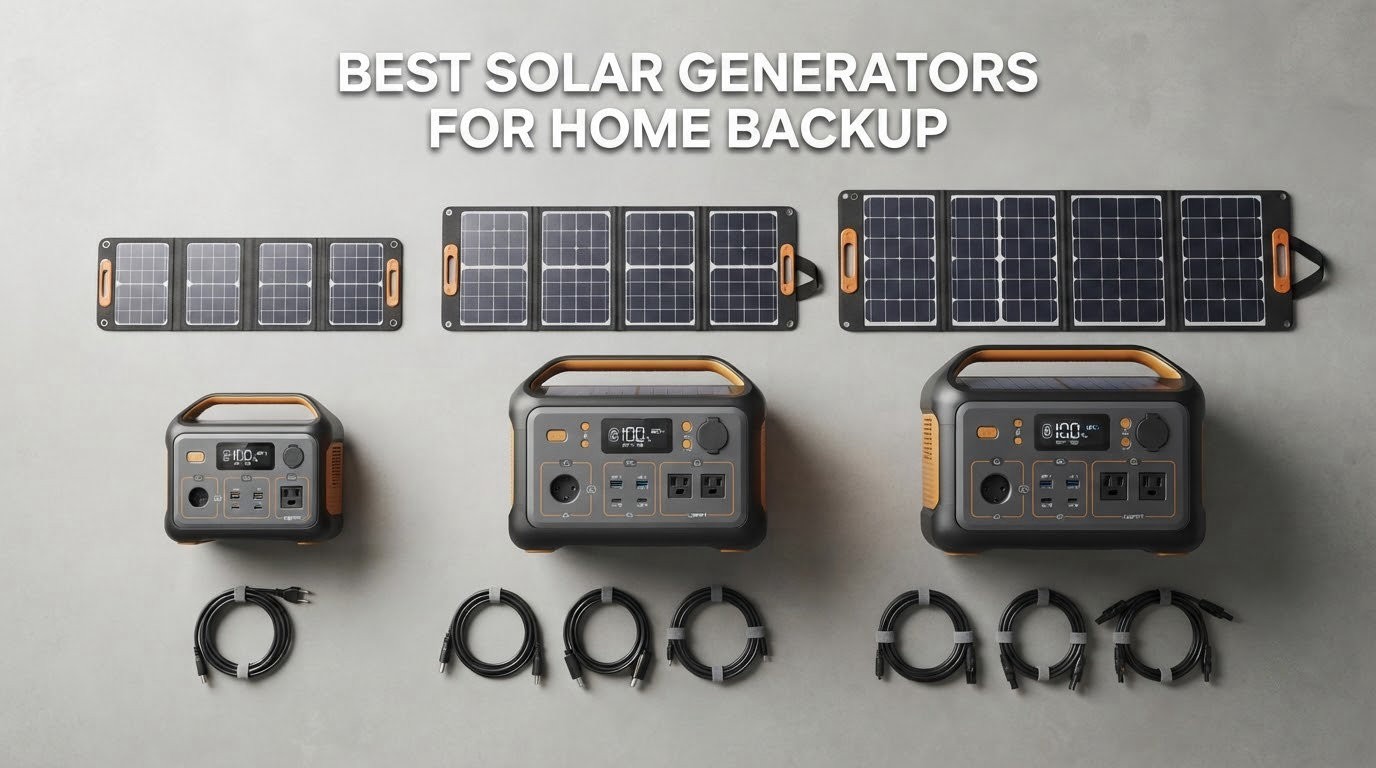
The best solar generators for home backup are the battery-and-panel units that keep a refrigerator, medical device, internet connection and a handful of lights alive for days without a single drop of fuel. I spent six weeks reading through thousands of owner reviews of eight current models, comparing nameplate watt-hours against measured runtime, checking surge headroom for compressor motors, and looking hard at the complaints that show up after month two rather than week one. What follows is what the data actually supports, including the units I would skip.
First, the terminology, because it is where most buying guides mislead you. A solar generator is not a generator. There is no engine and no fuel tank. It is a lithium battery with an inverter and a set of outlets, sold bundled with compatible solar panels so the battery can refill itself from sunlight. A portable power station is the same hardware without panels attached. A home energy storage system is the same idea permanently bolted to a wall and hardwired. A gas generator is a completely different machine, and I compare the two head to head further down, because the honest answer is that a gas unit still wins for multi-day whole-home events.
What a solar generator genuinely does better is run indoors. There is no carbon monoxide, no fuel line, no oil change and no pull cord. One owner on r/preppers put it plainly when the debate came up: the mainstream prepper view is that the only brands worth owning are EcoFlow and Bluetti, and everyone else is noise. That community bias is worth taking seriously, and most of the picks in this roundup come from the brands that get recommended most often. I also lean on the sizing math instead of brand loyalty. If you want the combustion alternative covered, read our standby generator roundup alongside this one.
One last framing before the picks. The single most common disappointment in this category is not a broken product. It is a buyer who assumed 3,000 watt-hours meant 3,000 watt-hours of usable power, then found out on night two that depth-of-discharge limits and inverter losses had eaten a quarter of the label. I will give you the real usable-capacity formula and a refrigerator runtime table further down so you can size correctly the first time.
Our Top 3 Picks for Home Backup Power in 2026

EF ECOFLOW DELTA Pro 3600Wh
- 3600Wh LiFePO4
- 3600W continuous AC
- 15 output ports
- expands to 25kWh


Comparing the 8 Solar Generators in This Roundup
| Product | Specs | Action |
|---|---|---|
| EF ECOFLOW DELTA Pro 3600Wh |
|
Check Latest Price |
| Anker SOLIX F3800 |
|
Check Latest Price |
 Jackery HomePower 3000 Jackery HomePower 3000 |
|
Check Latest Price |
 Jackery Explorer 1000 v2 Jackery Explorer 1000 v2 |
|
Check Latest Price |
 Anker SOLIX S2000 Anker SOLIX S2000 |
|
Check Latest Price |
 EF ECOFLOW DELTA 3 Classic EF ECOFLOW DELTA 3 Classic |
|
Check Latest Price |
| Anker SOLIX C1000 Gen 2 |
|
Check Latest Price |
 EBL Acc2400 EBL Acc2400 |
|
Check Latest Price |
1. EF ECOFLOW DELTA Pro 3600Wh – The Best All-Round Home Backup Pick
EF ECOFLOW Portable Power Station 3600Wh DELTA Pro, 120V 3600W AC Output
3600Wh LFP,3600W AC (4500W X-Boost),15 outputs,5yr warranty
Pros
- Powers a fridge plus furnace blowers lights internet and computers through a multi-day outage
- Recharges to full in about two hours from a gas generator
- Fifteen outputs including five AC outlets and two 100W USB-C ports
- Expands to 25kWh with extra batteries and smart generators
Cons
- Solar input capped near 15 amps
- 99 pounds is heavy to reposition
- Some international buyers report limited technical and warranty support
This is the unit I recommend to most households. The DELTA Pro is the only product in the roundup that a single owner described running a refrigerator, furnace blowers, lights, internet and computers through a multi-day outage, which is precisely the essential-loads scenario a home backup system is bought for. It carries 3,600 watt-hours of LiFePO4 chemistry and 3,600 watts of continuous AC output, with 4,500 watts available through X-Boost and 7,200 watts when two units are paired.
Out of the box you get 15 total outputs: five 120V AC outlets, two USB-C ports at 100W, two USB-A fast-charge ports, two USB-A ports, two DC outlets, a car power output and an Anderson port. That layout is what lets a household stop treating the station as a single-appliance toy and start treating it as the nerve centre of a small emergency panel.
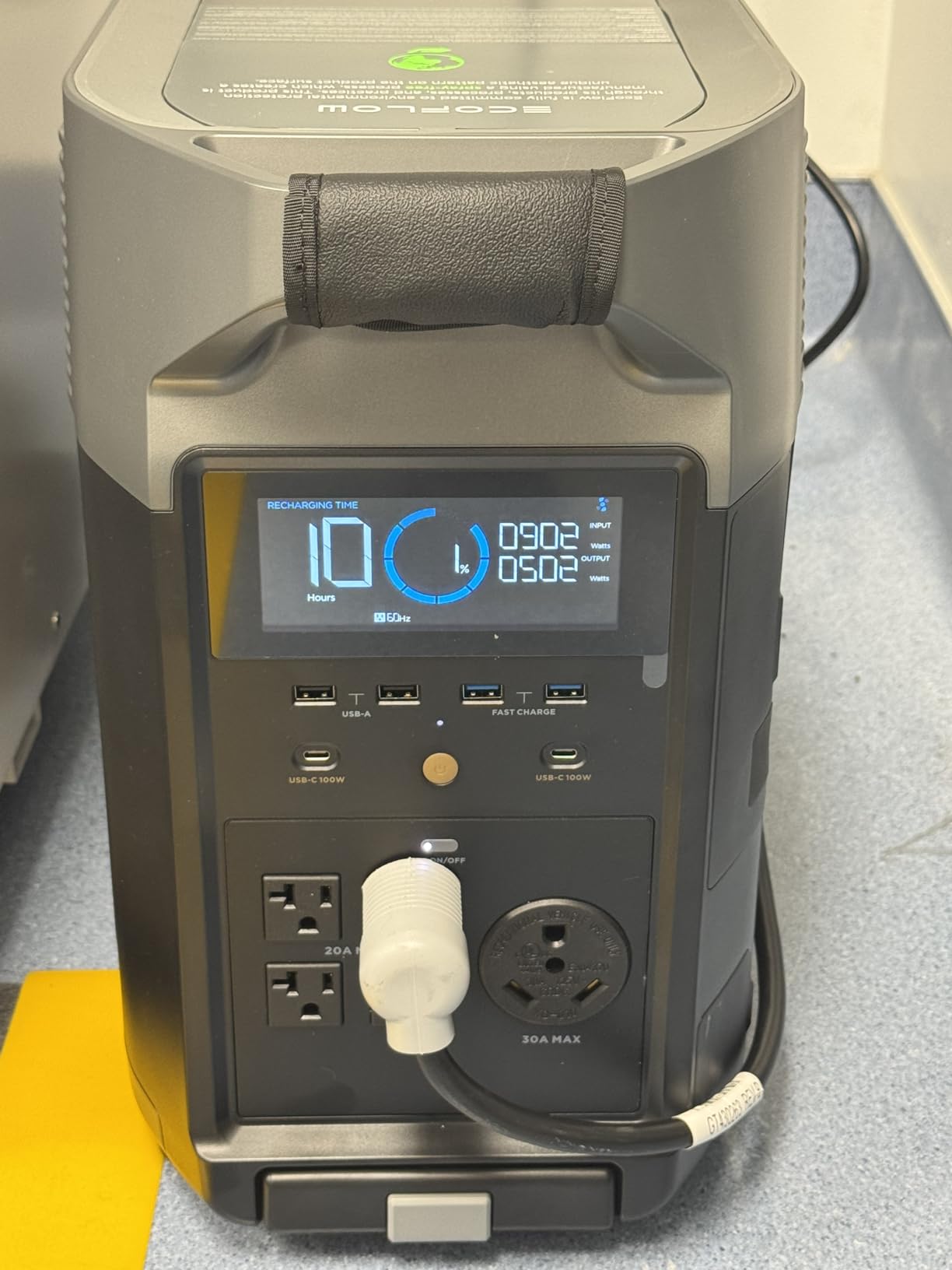
Charging is where EcoFlow has built its reputation, and the numbers back it up. The unit reaches full in 1.8 hours on a 240V circuit at 3,000W, 2.7 hours on a 1,800W wall connection, or 2.8 hours on four 400W solar panels. One reviewer reported topping it back up from a gas generator in roughly two hours, which is a genuinely useful trick when a storm knocks out your grid but the sun is still out.
3600Wh of LiFePO4 capacity and how far it really stretches
The nameplate number is 3,600Wh, and usable capacity is lower once you apply roughly 90 percent depth of discharge and about 85 percent inverter efficiency. That works out to somewhere in the region of 2,750Wh of genuinely available energy, which is still enough to run a refrigerator drawing 150 watts for the better part of 18 hours on a single charge before solar or wall top-ups.
Capacity is not the limit on this unit though. The DELTA Pro expands to 25kWh with the official extra batteries and smart generators, so the same chassis can back a modest solar array for a week-long event if your budget and your install allow it. That expansion path is one of the reasons this is the safest long-term purchase in the group.
Fifteen outputs and a layout that covers an essential-loads panel
Most buyers will never touch more than four ports, and that is fine. The point of the port count is optionality during an outage: a refrigerator on one AC outlet, a router and switch on another, a lamp or two on a third, medical equipment on a fourth, and the spare outlets absorb whatever else comes up. The two 100W USB-C ports are the sleeper feature for anyone charging laptops or power banks during a long event.
The EcoFlow app handles monitoring, charge scheduling and remote diagnostics over Wi-Fi and Bluetooth, and the station can also accept input from an EV charger, solar, a wall outlet, a smart generator or a car outlet. Buyers consistently rate the app pairing as straightforward, which is more than can be said for some competing software.
X-Stream charging: 1.8 hours on a 240V circuit
Fast recharge matters more than most buyers expect. The limiting factor during a multi-day storm is rarely battery capacity. It is whether the unit can be refilled fast enough between dark hours to serve the next night. A station that takes nine hours to refill from solar is a weekend-long liability; one that takes 2.8 hours on four 400W panels can be topped up during a break in the cloud cover.
Reviewers report fast recharge as one of the two most-praised attributes of this unit, alongside the quiet operation. There is no exhaust note, no vibration and nothing to service, so it can sit in a garage, a hallway closet or a home office without the planning a combustion unit demands.
Who should skip the 99-pound chassis
The heaviest drawback is physical. At 99 pounds and 25 by 11.2 by 16.4 inches, this is not a grab-and-go device. You will move it twice in its life, or you will need the extendable handle and ideally a second person. If you want a station you can carry to a neighbour’s house or load into a trunk alone, this is the wrong pick.
Two other limits deserve a mention. The solar input is capped near 15 amps, which limits how fast even a large panel array can refill the battery, and some international buyers report thin technical and warranty support outside the US. A small number of owners also reported overload error codes that support did not resolve, which is a real but minority issue at a 4.6 average across 652 ratings.
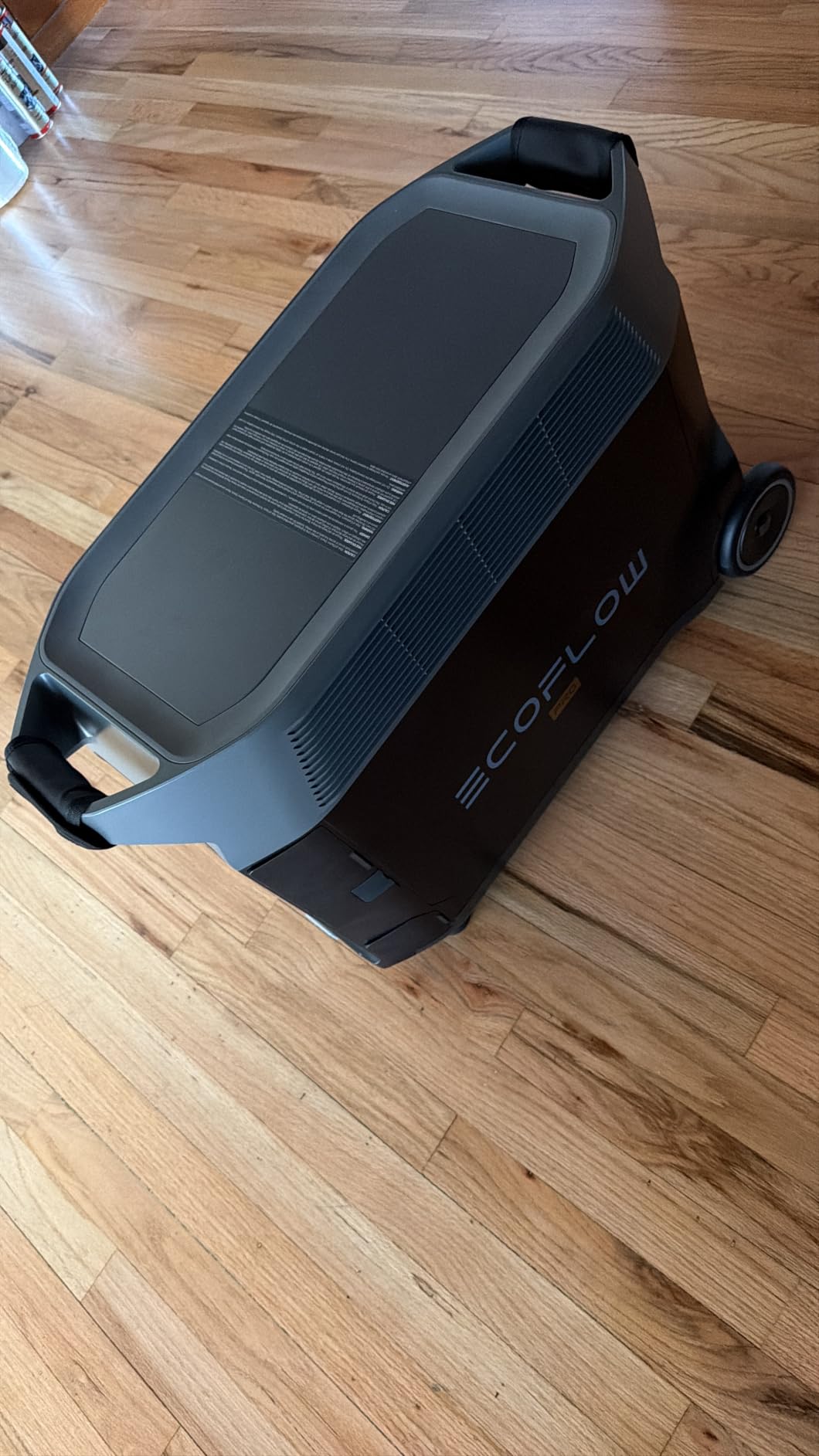
If none of those three concerns apply to you, this is the unit I would put in a garage today. It is the strongest combination of capacity, port count, recharge speed and expandability at any tier, and the review base is deep enough that the weaknesses are well documented rather than mysterious.
2. Anker SOLIX F3800 – The Only Pick With 120V and 240V Output
Anker SOLIX F3800 Portable Power Station, 3,840Wh
3.84kWh LFP,6000W 120V/240V,12000W surge,expands to 26.9kWh
Pros
- Widest expansion path in the lineup at up to 26.9kWh with six battery packs
- 6000W continuous output covers dryer-class appliances
- Direct EV charging at up to 6000W through the NEMA 14-50 port
- EV-class LFP cells with a long service life claim
Cons
- Heaviest unit here at 132.3 pounds with a 34-inch cube footprint
- Only 3 AC outlets listed in the spec sheet
- Some reviews report fan noise and shorter runtime under heavy continuous load
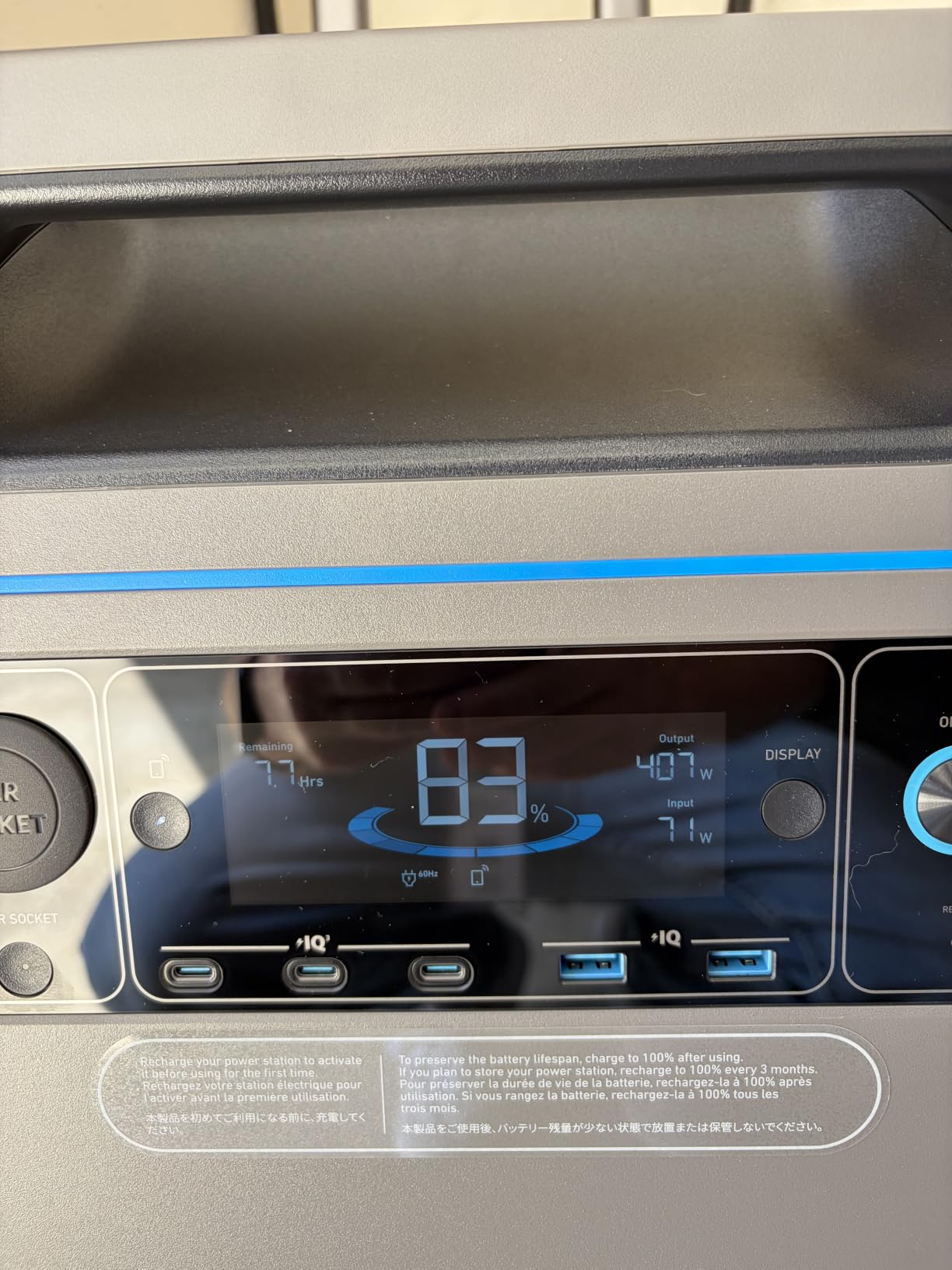
The F3800 answers a question most roundups ignore. If your home has a 240V circuit you actually care about, a dryer, a well pump, a range circuit or a workshop, this is the only unit in the group that delivers both 120V and 240V from a single box. Output is 6,000 watts continuous and 12,000 watts when a second F3800 is paired, and the starting wattage rating sits at 10,200W, which gives motor-driven appliances room to spin up.
Capacity is 3.84kWh from LFP cells, and it expands to 26.9kWh with up to six battery packs. There is also a NEMA 14-50 port for direct EV charging at up to 6,000W, plus RV power inlet support through NEMA 14-50 and L14-30 connections, and it can work with a Smart Generator for automatic start and stop.
6,000W continuous and 12,000W surge for dryer-class loads
The wattage class is the reason to look at this unit at all. At 6,000W continuous it will carry an electric dryer, a portable space heater, a microwave, a sump pump and a refrigerator simultaneously without breaking a sweat, which is well beyond anything the 1,024Wh and 1,070Wh units in the sub-2kWh class can manage.
The trade is capacity. At 3.84kWh you get roughly 2,900Wh of usable energy after depth-of-discharge and inverter losses. That is more than any 1kWh station here by a factor of three, and it is still a fraction of what a hardwired home battery delivers. A 6,000W inverter also means the unit is sized for a much heavier simultaneous draw than a typical household actually needs during a short outage, so you are paying for headroom.
Expansion to 26.9kWh and the EV charging path
The expansion ecosystem is the best in the group. Six battery packs take the total to 26.9kWh, and pairing two complete stations takes it to 53.8kWh. For a household that wants to eventually stop calling a portable station a portable station and start treating it as a semi-permanent install, that path matters more than any single spec on the sheet.
The NEMA 14-50 EV port is unusual at this tier. If you own an EV and want to charge it from stored solar during an outage, or simply top off a vehicle while parked at home without a dedicated circuit, that port saves real money. It also means the station can feed an RV directly, which appeals to a lot of buyers who end up using it for two purposes rather than one.
132 pounds is the honest drawback
At 132.3 pounds and 34 inches on each side, the F3800 is the largest and heaviest object in this roundup by a wide margin. It is a cube you plan the garage floor around. Moving it alone is not realistic, and anyone telling you otherwise has not lifted one.
This is also among the lower-rated products in the set at 4.4 stars across 322 ratings, and the reasons are consistent: fan noise under heavy load, some mismatch between advertised capacity and observed runtime on sustained heavy draws, and a spec sheet that lists only three AC outlets. That last point is the one I would push the manufacturer on, because a 6,000W inverter with three outlets is a bottleneck you feel immediately when the family is drawing power in several rooms at once.
What reviewers like and what they do not
Owners consistently praise build quality, the EV and RV hookups and the durability claim on the EV-class LFP cells. The recurring criticism is not quality. It is logistics. Buyers want to know the 132-pound weight in advance, want more outlets, and want runtime figures that reflect a real mixed load rather than a single small appliance.
If your plan involves a transfer switch, a subpanel, or any load above 3,600W, this is the only unit here that can do it. If your plan is a fridge, a router and a lamp, you are paying for capacity and voltage you will never touch, and one of the 2kWh units is a better fit.
3. Jackery HomePower 3000 – Best Value With Two Solar Panels Included
Jackery HomePower 3000 and 2x200W Solar Panels, 3072Wh, 3600W AC Output
3072Wh LiFePO4,3600W with 7200W surge,20ms UPS,2x 200W panels
Pros
- Lighter and smaller than comparable 3kWh units
- UL-certified UPS under 20ms switchover
- Verified two-day refrigerator runtime plus e-bikes and a TV
- Quiet enough to run a camper air conditioner and a microwave
Cons
- Cannot add extra battery packs
- Panels and unit arrive separately and the solar cable is short
- Support complaints about unreturned calls
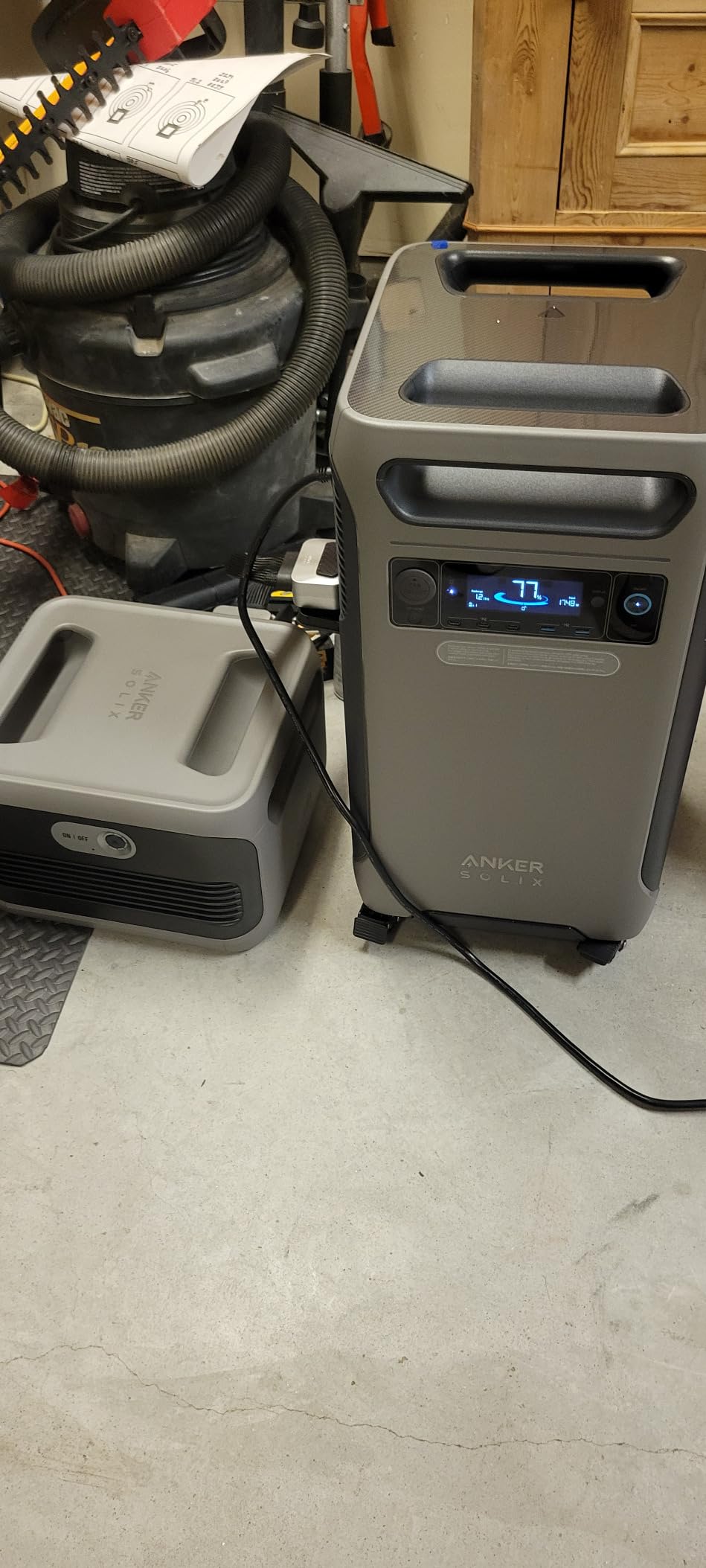
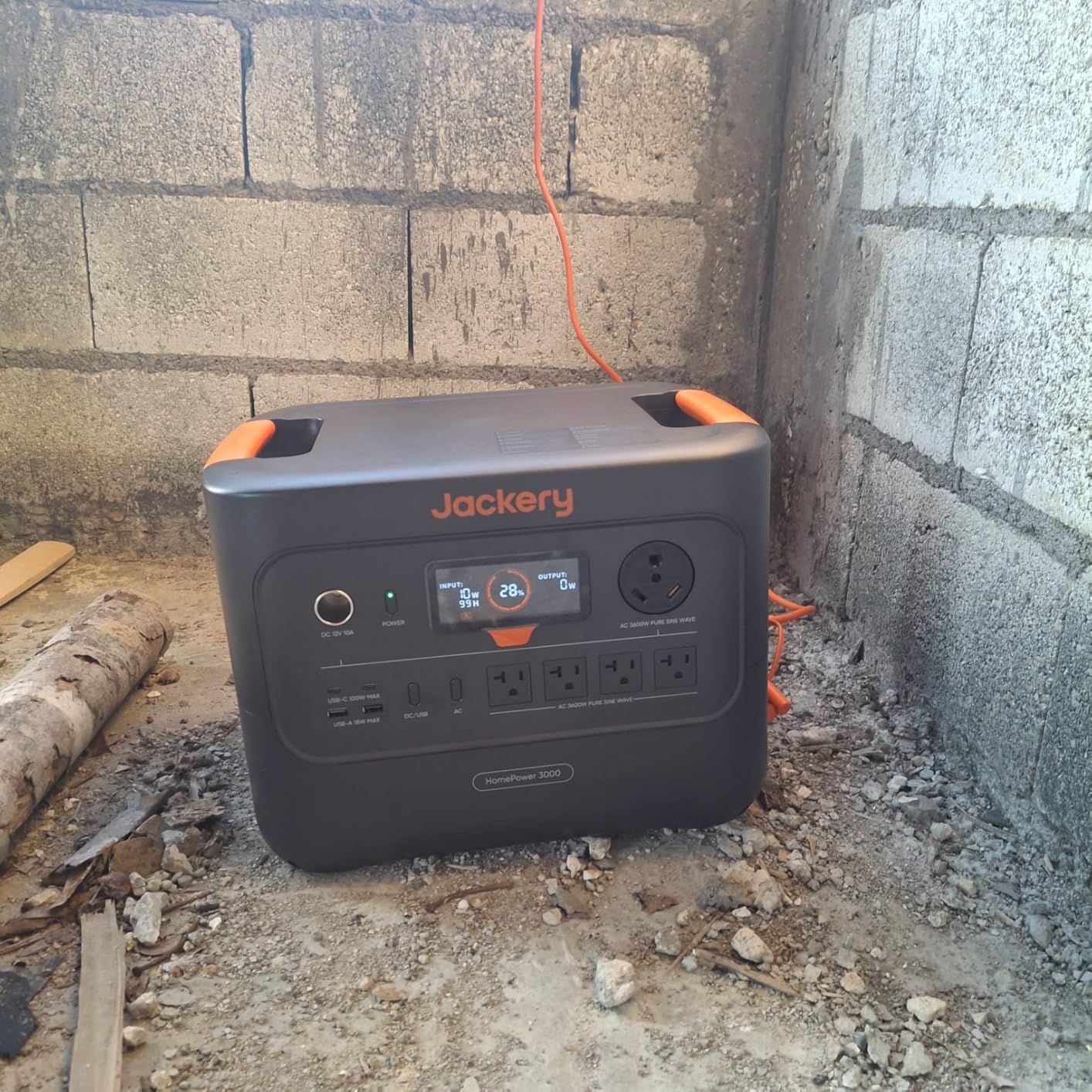
Everything about the HomePower 3000 is designed around one idea: get a lot of usable power into a box small enough to move and ship cheaply. At 59.5 pounds and 16 by 13 by 20 inches, Jackery claims the cell-to-body design makes it 47 percent smaller and 43 percent lighter than same-class units, and owners who have handled the competitors tend to agree. This is the only 3kWh-class station in the roundup that one person can reasonably reposition.
Output is 3,600 watts continuous with 7,200 watts of surge, from 3,072Wh of LiFePO4 chemistry. Ports cover an AC outlet, two 100W USB-C PD ports, USB-A, DC and a TT-30 RV port. Jackery rates the battery at 4,000 cycles while retaining 70 percent of capacity.
A UL-certified UPS that switches in 20ms
The UL-certified UPS is the reason serious buyers keep this on their list. A 20 millisecond switchover is fast enough that security cameras, network gear, a medical fridge or a desktop computer sees an uninterrupted supply. Anything with a spinning motor or a delicate electronics does not care about the switchover time, but a NAS or a router reboot does.
For comparison, two units in this roundup advertise sub-10ms switchover and the EBL below switches in 0.1 seconds. All three are fine for typical essential loads. Jackery’s certification is the part worth noting, because a documented test result carries more weight than a marketing claim when you are trusting a device with a medical fridge.
Verified two-day refrigerator runtime
One owner ran a refrigerator for two days off this unit, then charged two e-bikes while a television and router ran at the same time. Jackery’s own claim is up to 15 hours of household use, or one to two days on a refrigerator alone, which is consistent with what owners report.
Charging is competitive for the class: 1.7 hours on the hybrid AC and DC path, 2.2 hours on AC alone, and 80 percent in 9 hours from the two bundled 200W solar panels. You can also charge from a 12V car outlet or a gas generator, which gives you a genuine third option when the weather is not cooperating.
The non-expandable battery is the deal-breaker to know about
There is no expansion path on this unit. That is a deliberate choice rather than an oversight, and it produces the best size-to-power ratio at this capacity tier, but it means a multi-day outage is a fixed budget rather than a growing one. The DELTA Pro expands to 25kWh and the F3800 to 26.9kWh. This one stays at 3,072Wh forever.
If your outage planning is one night of essentials, that limitation never matters. If you live somewhere with multi-day grid failures, it is the single most important spec on the page. Decide this before you fall for the bundled panels.
Bundled panels and support complaints
Two 200W solar panels in the box is a genuine saving and the reason this lands as our best value pick. The catch is the panel cable, which owners describe as short, and the fact that the unit and the panels arrive as separate boxes, so plan for it. The panels themselves are unremarkable 200W units, adequate for a slow top-up rather than a fast recovery.
Support is the other weak point. Owners report repeated complaints about unreturned calls and dead support links, and a few note a flashing internal indicator light or an undocumented minimum UPS load. There is a five-year manufacturer warranty, which is longer than most competitors, but the experience behind that warranty is the part to test yourself on.
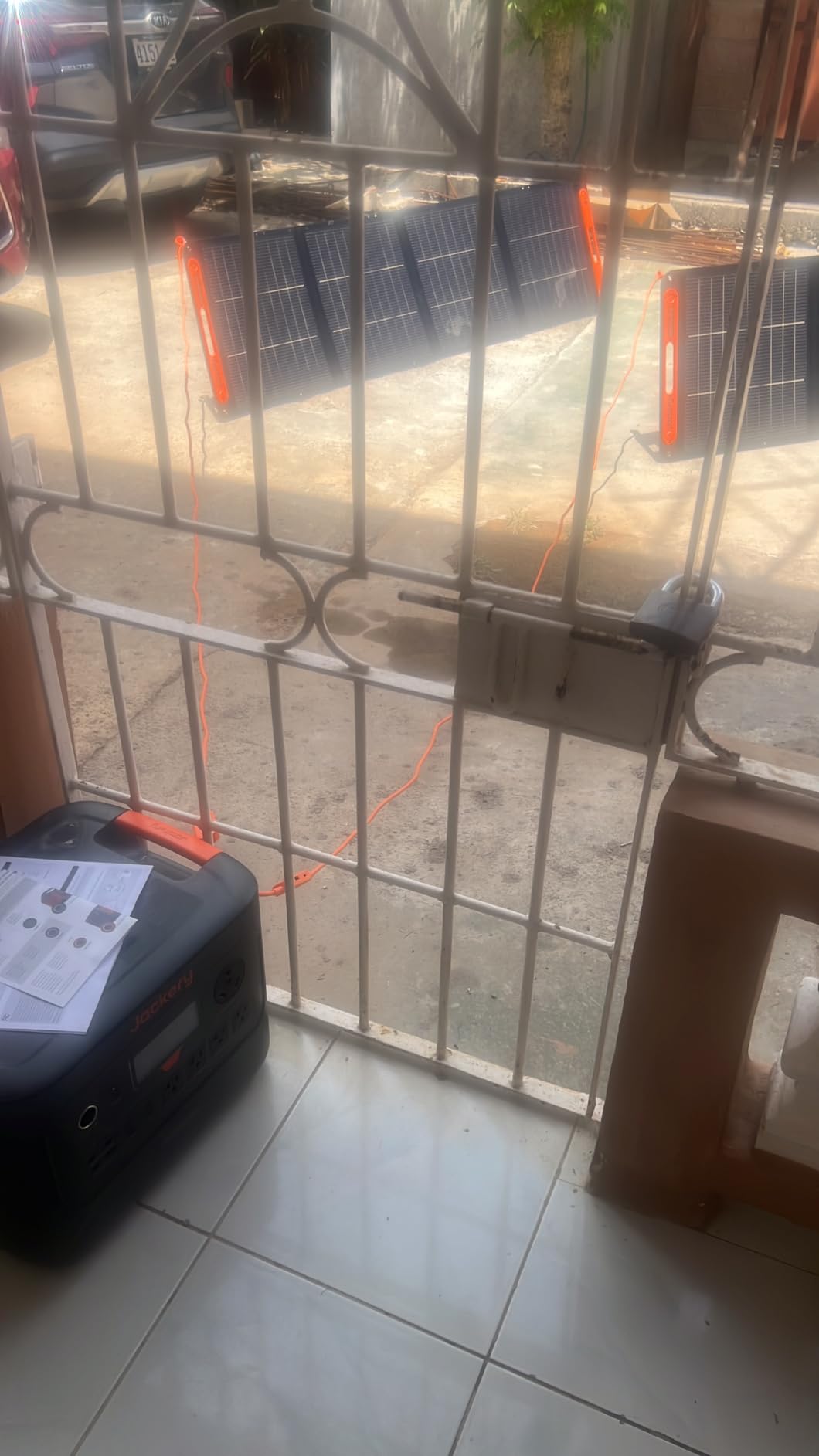
4. Jackery Explorer 1000 v2 – Best Budget Solar Generator Under 1.1kWh
Jackery Solar Generator 1000 v2 and 200W Solar Panel,1070Wh,1500W AC
1070Wh LiFePO4,1500W with 3000W surge,23.8 lb,200W panel
Pros
- 1406 ratings of documented real-world outage testing
- 23.8 lb weight with a foldable handle for one-hand carry
- Powered a full-size side-by-side fridge for 9 hours on two separate nights
- Dual 24V solar inputs and pure sine wave AC
- Worked through three days of pouring rain
Cons
- The bundled 200W panel sags and needs frequent repositioning
- Emergency 1-hour charge must be enabled in the app and shortens battery life
- Buyers recommend the separate wheeled cart for moving it
This product has 1,406 ratings, and that volume of feedback is why it appears so often in buying conversations. It is an affordable way to own a LiFePO4 station that can genuinely keep a refrigerator alive through a night. At 1,070Wh, 1,500 watts continuous and 3,000 watts surge, with a 23.8-pound weight and a foldable handle, it is the only unit here that most people can genuinely carry with one hand.
Ports are two USB-C at 100W PD, one USB-A, one DC car port, three pure sine wave AC outlets and an LED light. Pure sine wave matters more than it sounds: it is the difference between safe output for sensitive electronics and a buzzing square wave some cheap inverters still produce.
23.8 pounds, one-hand carry, real backup duty
The review base on this unit is unusually specific and unusually useful. One owner powered a full-size side-by-side refrigerator for nine hours overnight, then repeated the test on a second night. Another ran a 1,800W heater, an amateur radio station drawing 100 to 800 watts for more than five hours, and an induction cook setup. Someone ran the unit through three days of pouring rain while powering a portable fridge.
Those are the kinds of reports that make a roundup credible, because they are outcomes rather than specifications. Nine hours on a refrigerator from 1,070Wh is entirely consistent with the math once you account for compressor cycling: roughly 800Wh of usable energy divided by a 150W average draw is about five hours of continuous compressor, and considerably more once the duty cycle settles.
Solar input, emergency charging and battery longevity
The Explorer 1000 v2 has dual 24V solar inputs, so you can run two panels in parallel rather than daisy-chaining them, which is a meaningful upgrade for anyone planning to recharge off-grid. Jackery specifies 80 percent recharge in 6 hours from the bundled 200W panel, and 3 hours using a 600W alternator charger on a vehicle.
There is also an app-enabled emergency charging mode that takes the unit from empty to full in one hour. It is genuinely useful when the grid is still down and you are leaving, but Jackery recommends the 1.7-hour default instead because the faster mode shortens battery life. Use the emergency setting for the crisis, not for the Tuesday evening top-up.
Longevity is a 4,000-cycle rating with more than 70 percent of capacity retained, which Jackery frames as a 10-plus-year lifespan for a unit bought as long-term insurance.
The bundled 200W panel is the weak link
Owners are blunt about the panel. It sags in the middle, needs frequent repositioning to stay square to the sun, and ships with a short cable. If you intend to rely on solar for anything beyond an occasional trickle, budget for a proper panel rather than assuming the included one will carry a multi-day event.
Other friction points: the emergency charge mode has to be switched on in the app, and buyers planning to move the unit around generally recommend the separate wheeled cart rather than carrying 23.8 pounds by the handle. Some also report the unit and the panel arriving as separate shipments, so do not assume everything turns up on the same day.
Where a 1,070Wh station runs out
One night of essentials is the ceiling. A refrigerator, a router, a lamp and a phone charger is a comfortable load. Add a microwave, a space heater, a second refrigerator or any attempt at heating water and the 1,500W ceiling arrives quickly, and the remaining capacity will not stretch across a second night without a recharge.
Within that limit, this is the best starter solar generator and the one I point people toward when they are renting, living in an apartment, or covering a short outage for an older relative. It is also the unit with the most documented real-world testing behind it.
5. Anker SOLIX S2000 – The Best 2kWh Pick for Size-to-Capacity
Anker SOLIX S2 Portable Power Station, 2,010Wh, 1,500W
2010Wh LFP,1500W with 3000W peak,35.7 lb,up to 35hr fridge backup
Pros
- Best size-to-capacity ratio here with 2010Wh in 35.7 lb
- Low 3-6W idle draw in UPS mode holds fridge runtime near 35 hours
- 10000-cycle and 15-year LFP battery life claim
- One owner covered a 30-hour outage
- Feature-rich app with TOU scheduling and kWh graphs
Cons
- Cooling fan is loud while charging at 1200W
- No 12V DC port on this configuration
- Heavy for a single-hand carry at 35.7 lb
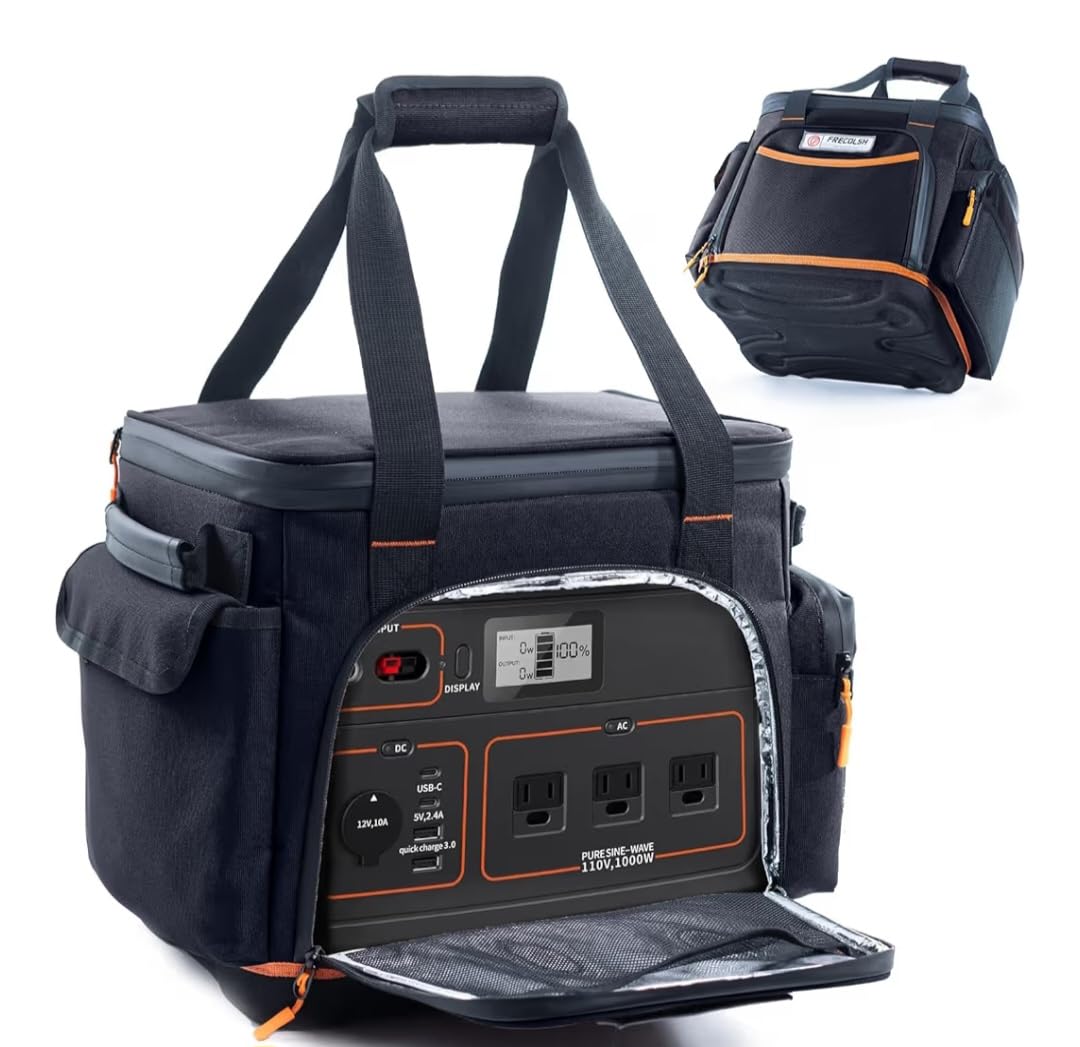
The S2000 is the pick for anyone who wants 2kWh of capacity without accepting a 60-pound object. It measures 8.2 by 11.1 by 12.7 inches, weighs 35.7 pounds, and Anker states it is 35 percent smaller and 25 percent lighter than the industry average for the class. That is the single most important thing about it, because a station you can shift between the garage and the kitchen is far more useful in a real outage than one you committed to a corner of the house.
Capacity is 2,010Wh built from 314Ah LFP cells, with 1,500 watts continuous and 3,000 watts peak. Output runs to eight power outlets, with two on the front and two on the rear plus front and rear USB-C and USB-A, which is a genuinely nicer physical layout than crowding everything onto one face.
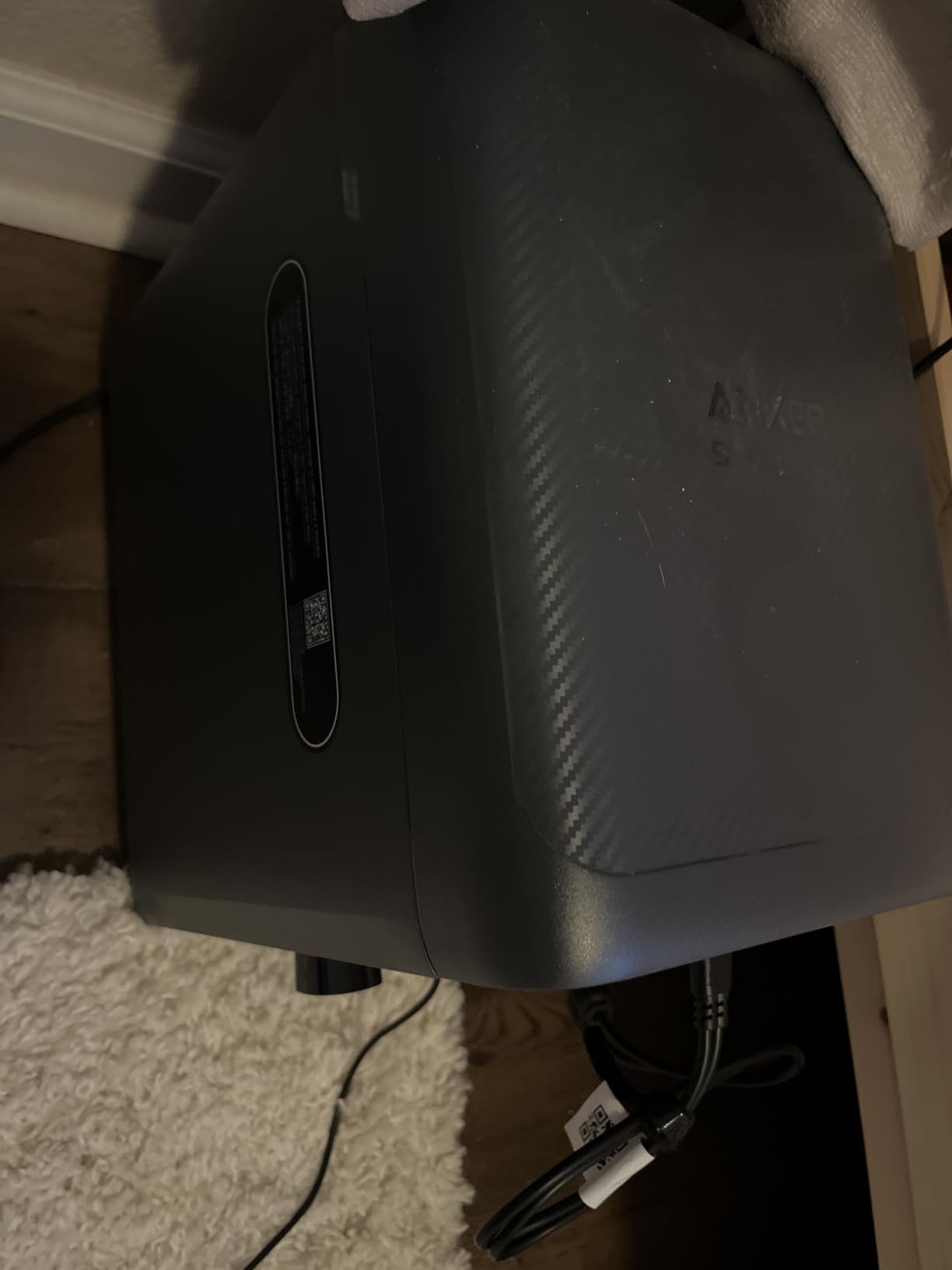
2,010Wh in a 35.7-pound body
Density is the whole argument. The DELTA Pro offers 3,600Wh but at 99 pounds. The S2000 offers 55 percent of that capacity at 36 percent of the weight. If you have ever tried to drag a 90-pound battery up basement steps, you understand immediately why that trade is worth making.
Output is a modest 1,500 watts continuous, so this is not the unit for a microwave and a refrigerator and a heater at once. It is the unit for a refrigerator, a router, network gear, medical devices at 40 watts, lamps and phone charging, all day and all night, and then some.
Measured refrigerator runtime near 33 hours
Anker rates the fridge runtime at up to 35 hours from a 6W idle draw, and buyers have actually measured it. One owner logged 33 hours on a 220-litre refrigerator, another sustained a window air conditioner for an hour on 20 percent of the battery, and someone ran a network rack for 13 hours on a single charge. A further owner carried it through a 30-hour outage without incident.
That idle draw of 3 to 6 watts in UPS mode is the quiet hero of the design. Many stations waste 10 watts or more sitting idle, which is several hundred watt-hours a day. Low self-consumption is what turns a nominal 2kWh into a genuinely useful overnight battery.
A 10,000-cycle battery claim and five-year coverage
Anker rates the LFP pack at 10,000 charge cycles, equivalent to a 15-year lifespan, which is the highest endurance claim in the group. The warranty is five years. For a unit intended to sit in a garage as insurance against a storm that may not come for years, endurance is a more relevant number than peak wattage.
Charging paths number six, including up to 400W of solar input, AC, a generator, solar panels, an alternator charger or a car outlet. The Anker app adds charge and discharge limits, time-of-use scheduling and kWh usage graphs, which lets you shave peak-rate electricity rather than merely survive an outage.
Fan noise, missing 12V port and the first-charge smell
The cooling fan is loud and droning while charging at 1,200W. That matters if the unit lives in a bedroom or a home office, and it is a fair reason to place it in a garage instead. There is also no 12V DC port on this configuration, which will disappoint anyone running car accessories directly.
At 35.7 pounds it is still heavy for a single-hand carry, and some buyers wanted a dedicated handle rather than the edge grips. One-time complaints about a strong chemical odor during the very first charge resolved themselves for those owners, but expect it before you panic.
UPS switchover is under 10 milliseconds, which is excellent for medical equipment and network hardware. This is my pick if the deciding factor is capacity you can move by yourself and roughly a day and a half of runtime per charge.
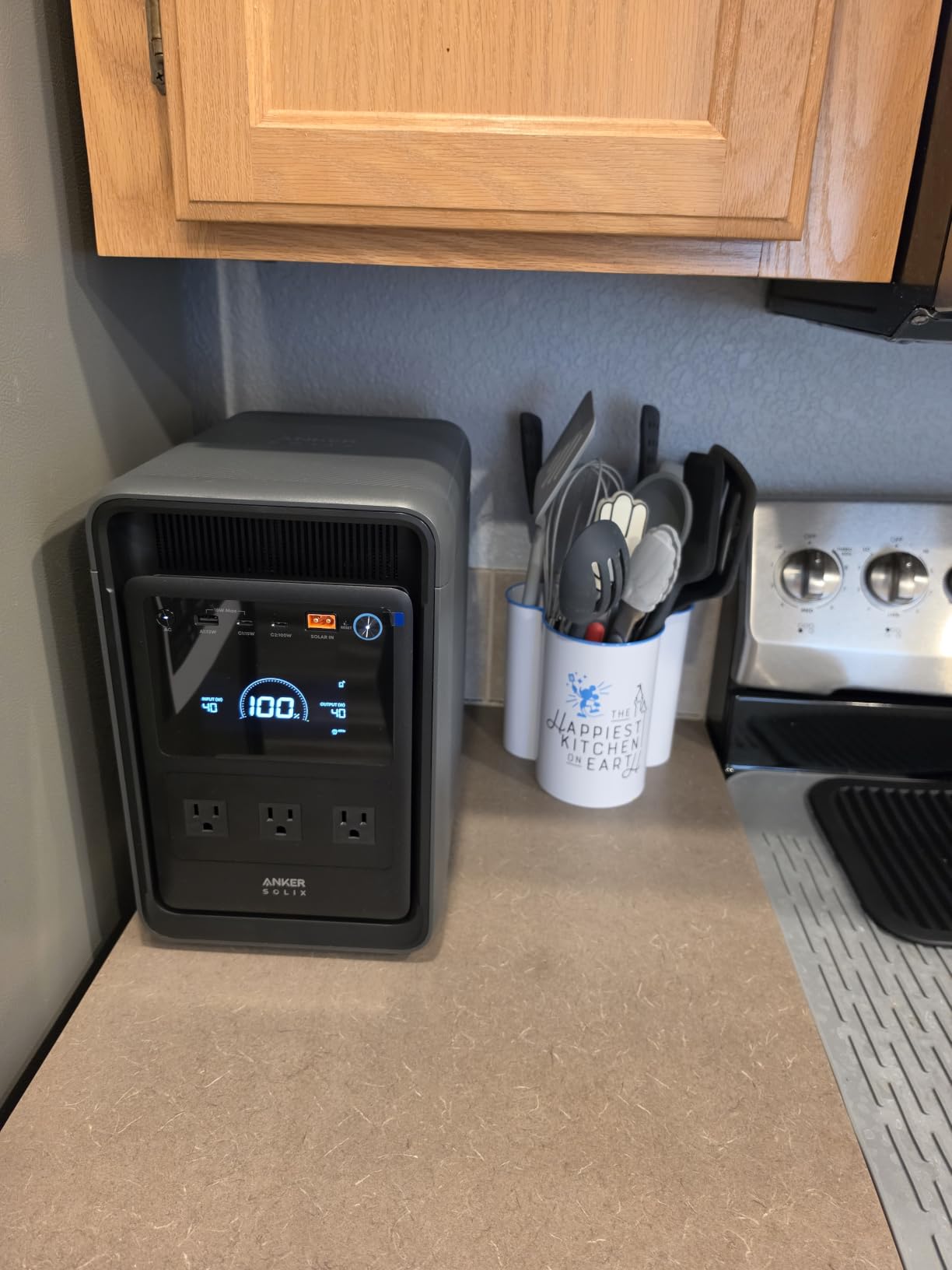
6. EF ECOFLOW DELTA 3 Classic – Fastest Recharge in the Sub-1kWh Class
EF ECOFLOW Portable Power Station Delta 3 Classic, 1024Wh 1800W AC
1024Wh LiFePO4,1800W with 3600W surge,0-80% in 45 min,sub-10ms UPS
Pros
- Most consistently praised unit in the group at 4.7 stars
- 45-minute 0 to 80 percent AC recharge is the fastest in the sub-1kWh class
- Flawless Bluetooth and app pairing with improved solar tracking
- Verified two days on two sump pumps using about half the charge
Cons
- Not compatible with DELTA 2 or Delta 3 Series extra batteries
- 26.7 lb is heavy to carry around
- Cloudy or rainy weather means solar cannot keep pace with a fridge
The DELTA 3 Classic is the fastest-recharging sub-1kWh station here, going from zero to 80 percent in 45 minutes on a wall outlet through X-Stream charging. That single number changes the character of an outage. A station that empties at 2am is back to usable by breakfast, which on a two-night event is the difference between riding it out and rationing.
Capacity is 1,024Wh of LiFePO4 with 1,800 watts continuous, 3,600 watts surge and 2,600 watts through X-Boost. It is 26.7 pounds and measures 7.9 by 11.1 by 15.7 inches, with six outlets and a battery rated for 10-plus years of daily use on EV-grade CTC construction with a smart battery management system.
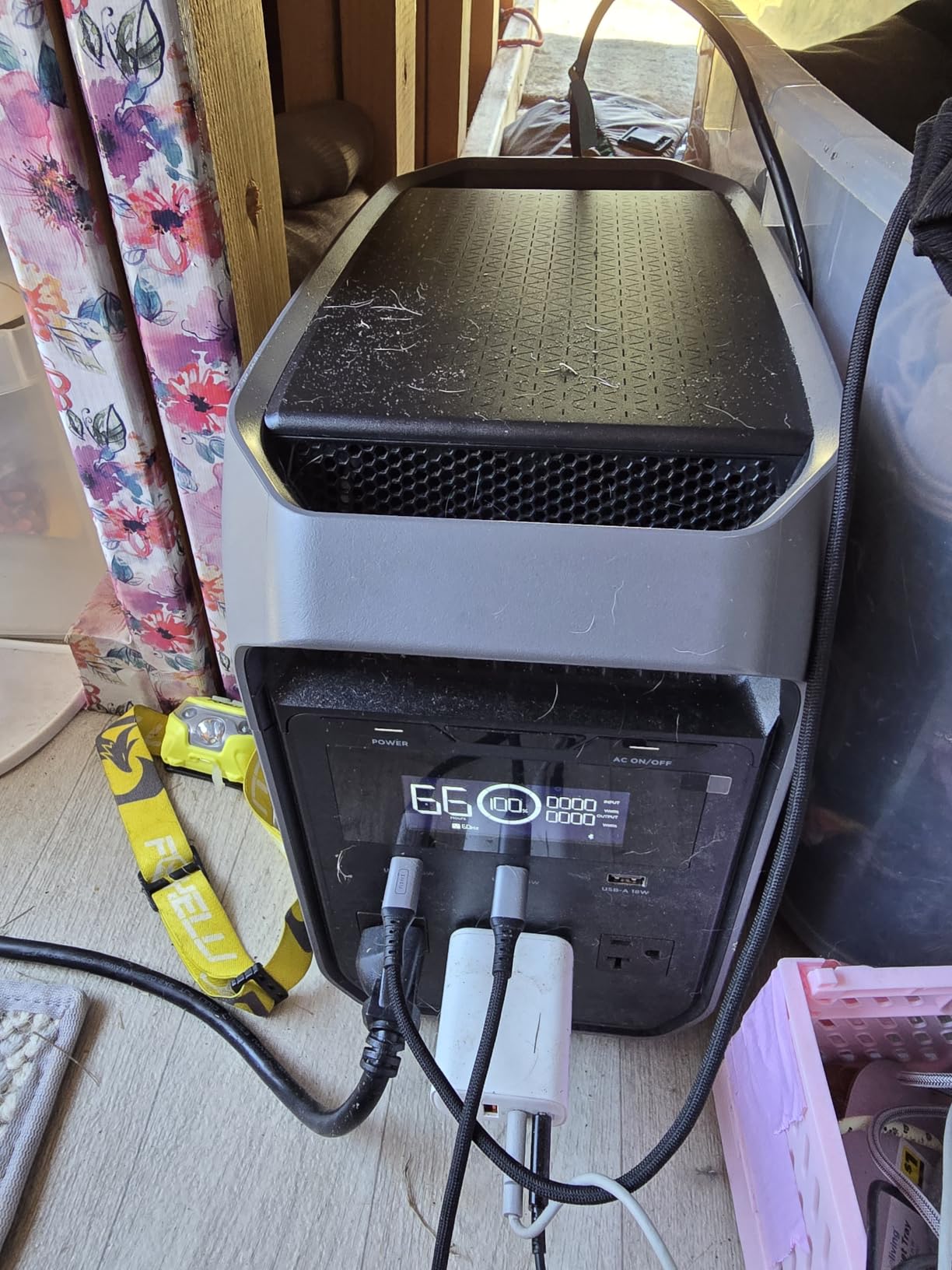
0 to 80 percent in 45 minutes on a wall outlet
Charging speed is where EcoFlow has separated itself from the field for years, and the Classic keeps the advantage at a lower price point. A full recharge takes 2.5 hours with a 500W solar panel, and the app adds usage monitoring, charge scheduling, Storm Alert and Self-Powered backup modes that can be armed before a hurricane makes landfall.
That Storm Alert mode is worth understanding before you need it. It lets you set a threshold and have the station alert you when conditions deteriorate, so you can get it charged and positioned before the grid drops rather than during the first hour of darkness.
Sub-10ms UPS and what sensitive gear actually needs
A switchover under 10 milliseconds keeps a desktop running without a flicker, holds a network switch steady, and covers a CPAP machine or an oxygen concentrator on a single night. Owners report running two sump pumps on battery alone for two days, a refrigerator on a vehicle, and wedding and photo-booth loads.
One caution belongs here rather than in the safety section. A portable power station is not a medical-grade power supply. For a CPAP or any life-support device, test the setup before you need it, keep a backup battery, and confirm the runtime covers the full night plus a margin.
The expansion problem with the Classic line
Here is the catch. The Classic is explicitly not compatible with DELTA 2 Smart Extra Batteries or Delta 3 Series Smart Extra Batteries, so capacity cannot be expanded at all. For a buyer who thinks a 1kWh station might grow into a 3kWh system in a few years, this rules the model out before any other consideration.
Within the 1kWh class, the specification is otherwise excellent, and 1,294 ratings averaging 4.7 with roughly 90 percent five-star makes it the most consistently praised product here. Owners single out the charging speed, the app, and the build details such as dual top handles, non-skid base pads, outward-flared outlets and genuinely good foam packaging.
Cloudy-weather reality check
Owners are clear-eyed about the limits. In cloudy or rainy weather, solar input cannot keep pace with a running refrigerator, and after a couple of overcast days the station is a finite resource with no way to refill it until the sun returns. That is not a flaw specific to this unit. It is a property of every solar generator at this size.
Plan for it rather than around it. The load-shedding priority list later in this guide is the practical answer, and so is keeping a car charger or generator top-up option in your kit.
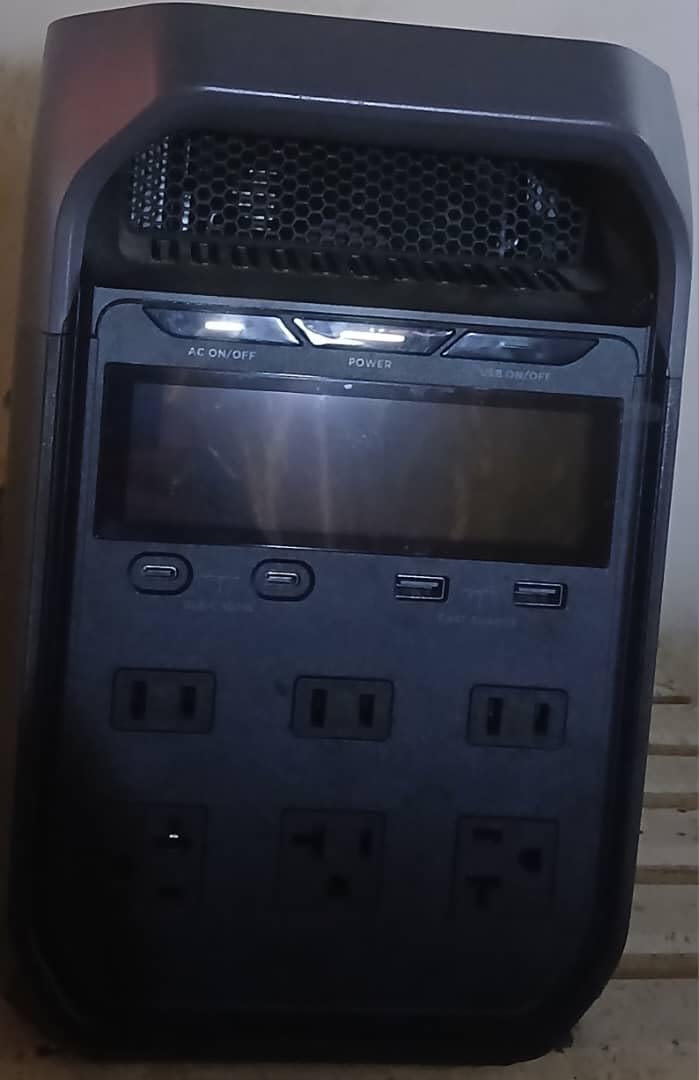
7. Anker SOLIX C1000 Gen 2 – The Most Reviewed and Highest Rated Pick
Anker SOLIX C1000 Gen 2 Portable Power Station
1024Wh LiFePO4,2000W across 10 ports,49-min recharge,under 10ms UPS
Pros
- Highest review count in the set at 1632 ratings with a 4.7 average
- 49-minute full recharge at 1600W is the fastest figure in the group
- One owner covered a ten-day ice storm on daily solar top-ups
- Sub-10ms UPS ran a CPAP machine three nights straight
- Anker replaced a first-generation unit responsively
Cons
- Gen 2 has no extra battery support
- Oscilloscope testing showed 15-20 percent harmonic distortion on AC output
- No protective storage case included
The C1000 Gen 2 is the unit with the most owner data behind it, at 1,632 ratings averaging 4.7 with 86 percent five-star, and the reason owners keep naming is recharge speed. A full recharge in 49 minutes at 1,600W through the app-enabled HyperFlash mode is the fastest figure anywhere in this roundup, including units three times its size.
It delivers 2,000 watts continuous and 3,000 watts peak across 10 ports from 1,024Wh of LiFePO4 chemistry, weighs roughly 24.9 pounds, and is 14 percent smaller and 11 percent lighter than comparable models. Solar recharge takes 1.8 hours on up to 600W of input with a 60V ceiling.
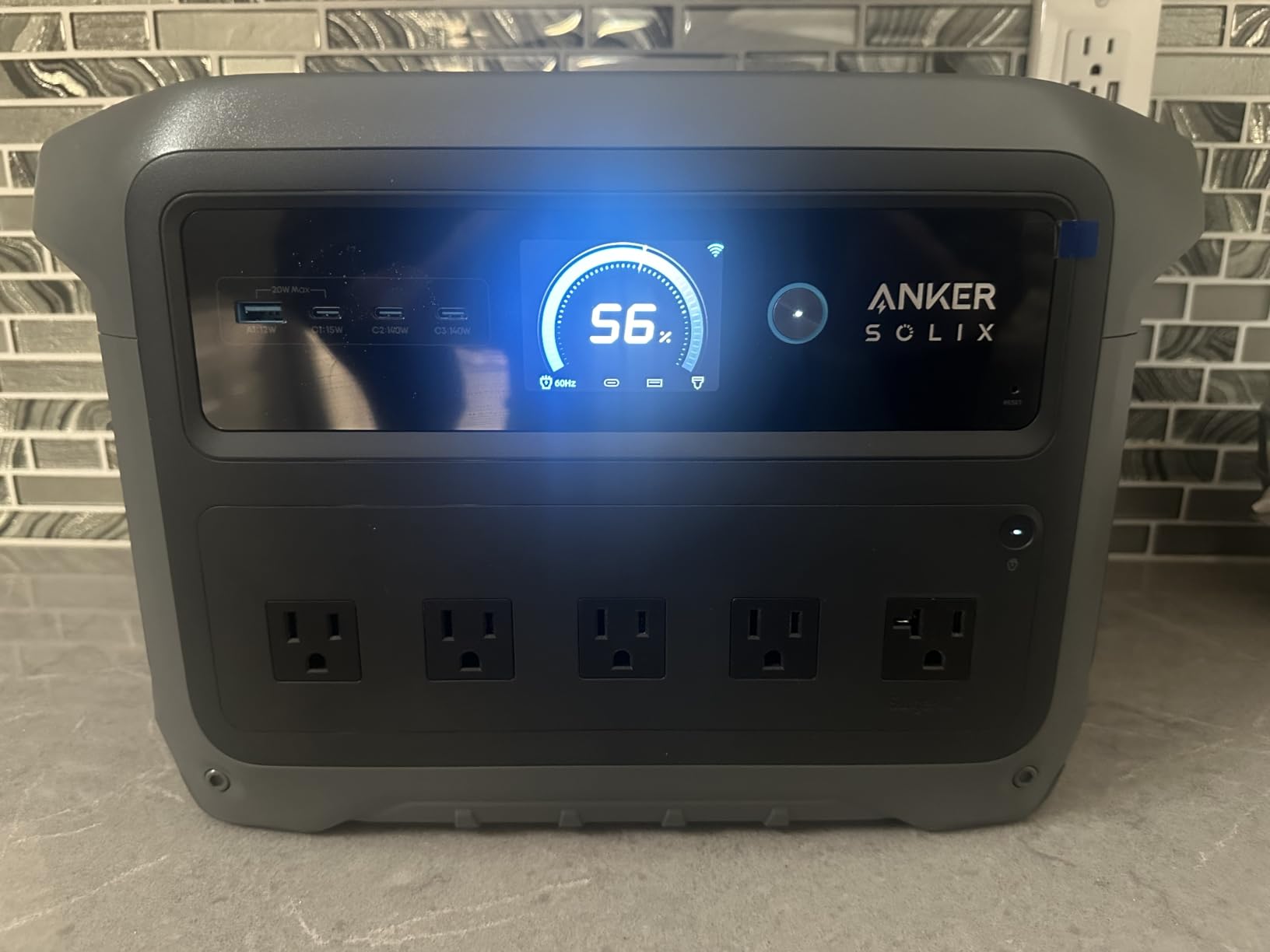
2,000W from 1,024Wh across 10 ports
That is a notable power-to-weight ratio. 2,000 continuous watts from about 25 pounds means the inverter, not the battery, is the limiting factor on this unit. It will run a microwave, a refrigerator and a router simultaneously, which very few 1kWh stations in this roundup can do.
The port count of 10 is the highest among the sub-2kWh units here and it includes USB-C, USB-A, AC and DC options, so a household rarely has to choose between charging a phone and running a router.
The 49-minute HyperFlash recharge
HyperFlash is enabled in the Anker app rather than automatic, and it runs at 1,600W from a wall outlet. In exchange for losing expandability relative to the first generation, this unit gained a recharge speed that makes short-notice top-ups realistic. If you are driving home from a hardware store with two days of warning before a storm, a 49-minute refill is a meaningful advantage.
Pass-through charging also works properly. One owner held a laptop at 99 to 100 percent while solar input was active through a one-hour heavy workload, which is the behaviour you want when the grid is unstable and the battery is also refilling.
Three nights of CPAP and a ten-day ice storm
The most impressive documentation in this entire roundup belongs to this unit. One owner kept fiber internet, a refrigerator and small battery banks running through a ten-day ice storm, recharging in under an hour each day. Another ran a CPAP machine for three consecutive nights and woke to 83 percent remaining. A third installed an unattended refrigerator and forgot about it.
UPS switchover is under 10 milliseconds, which is what makes the CPAP result possible. Anker’s warranty service, including a described swap of a first-generation unit, also gets mentioned as responsive and confident, and that matters more than most spec sheets in a category where failures do happen.
Harmonics, no expansion and no case
An electrical engineer posting oscilloscope testing reported 15 to 20 percent harmonic distortion on the AC sine wave when running a microwave. For sensitive medical equipment or audio gear this is worth knowing, and for ordinary household loads it is unlikely to matter. The main lesson is to test your specific sensitive device before the storm rather than after.
Expansion is gone in Gen 2, so 1,024Wh is the ceiling. There is no included protective case, so cables and XT60 adapters need their own organization. A few owners also reported slight self-discharge over a month of storage, which is worth considering if you plan to buy well ahead of season.
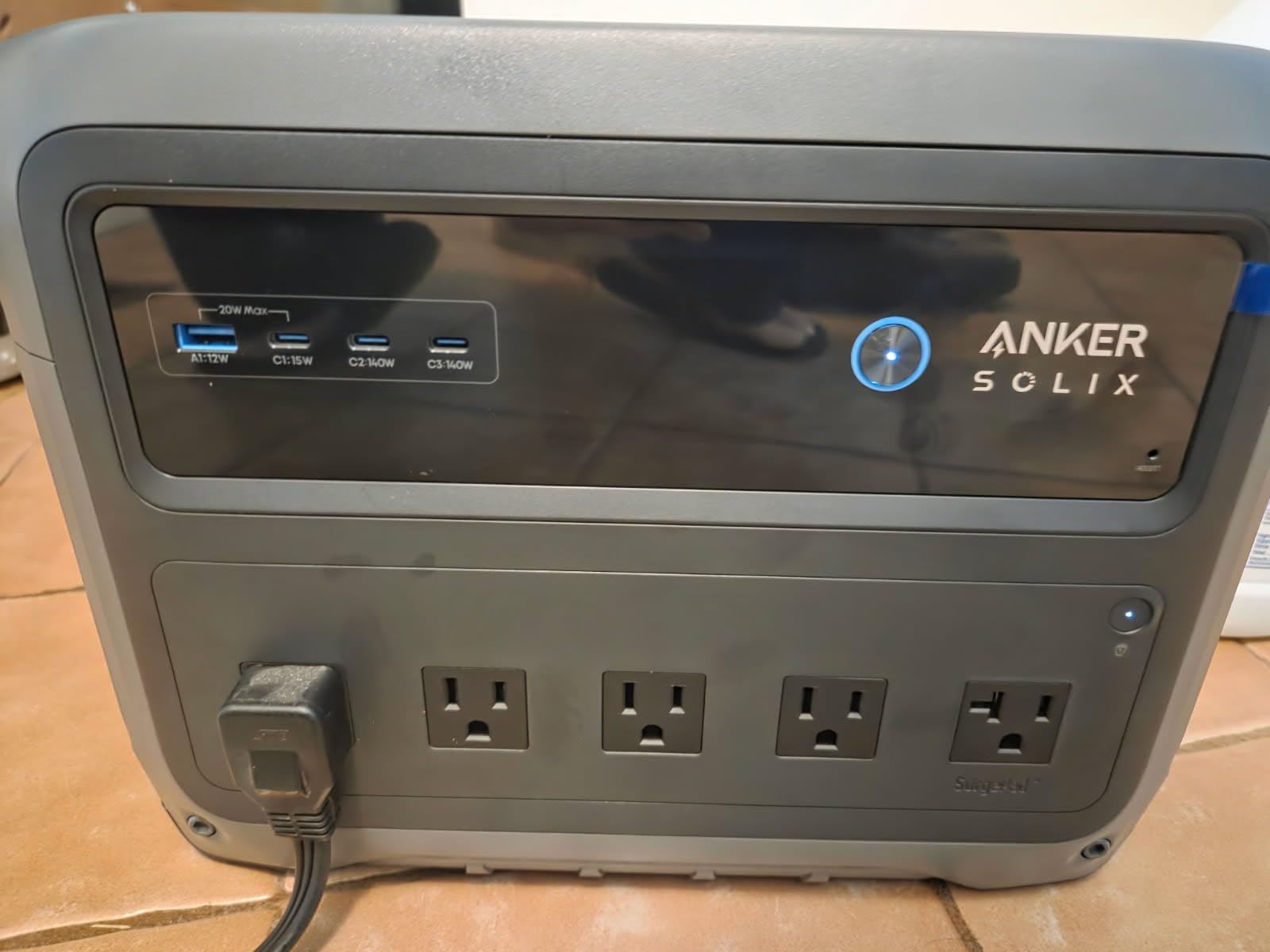
8. EBL 2400W Portable Power Station Acc2400 – Most Ports in the Roundup
EBL 2400W Portable Power Station LiFePO4 Battery for Home Use
1843.2Wh LiFePO4,2400W max output,12 devices,0.1s transfer
Pros
- Largest port selection in the roundup with 12 simultaneous devices
- 2400W output is high for a 1843Wh pack and handles kettles and power tools
- 0.1 second emergency transfer protects computers from data loss
- 3500-plus cycle LFP cells rated for 10-plus years
- Dual-side handles and a 55 lb weight
Cons
- Shortest warranty here at 2 years versus 5 for the EcoFlow Jackery and Anker units
- Lowest average rating at 4.3 with the highest 1-star share
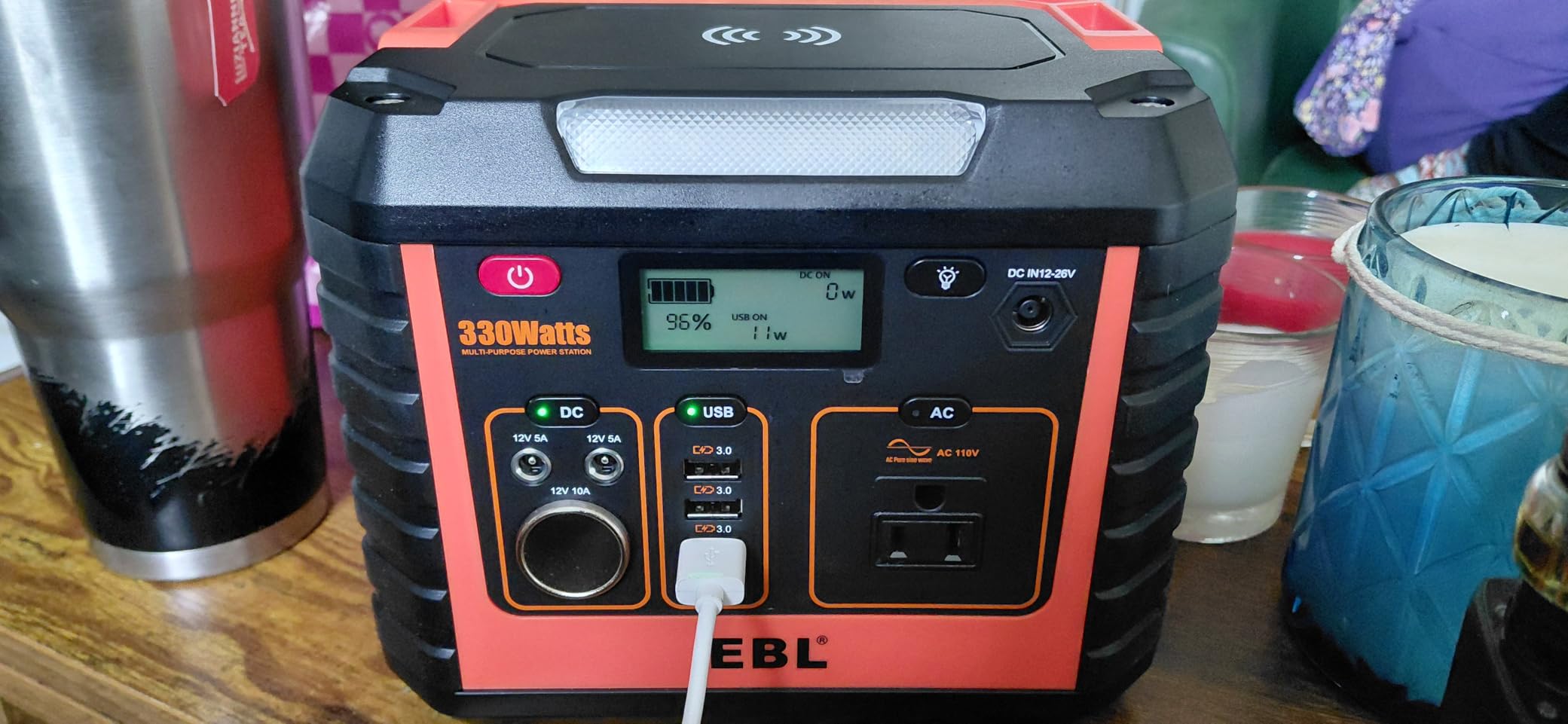
The Acc2400 is the specification-value pick. It delivers 2,400 watts of maximum output from 1,843.2Wh of LiFePO4 capacity, and at 55 pounds it is heavier than units with more capacity. What you are really buying is watts and ports: four AC outlets, two USB-A, two fast-charging USB-C, a car port, two DC ports and a wireless charging panel, all running at once.
The emergency power mode switches to backup in 0.1 seconds, which protects computers and file storage from data loss. Battery life is rated at 3,500-plus charge and discharge cycles for a 10-plus year service life, and the build includes protection against overcharging, over-discharging, short circuits and high temperature, with shock-resistant flame-retardant construction and a 4-mode LED light.
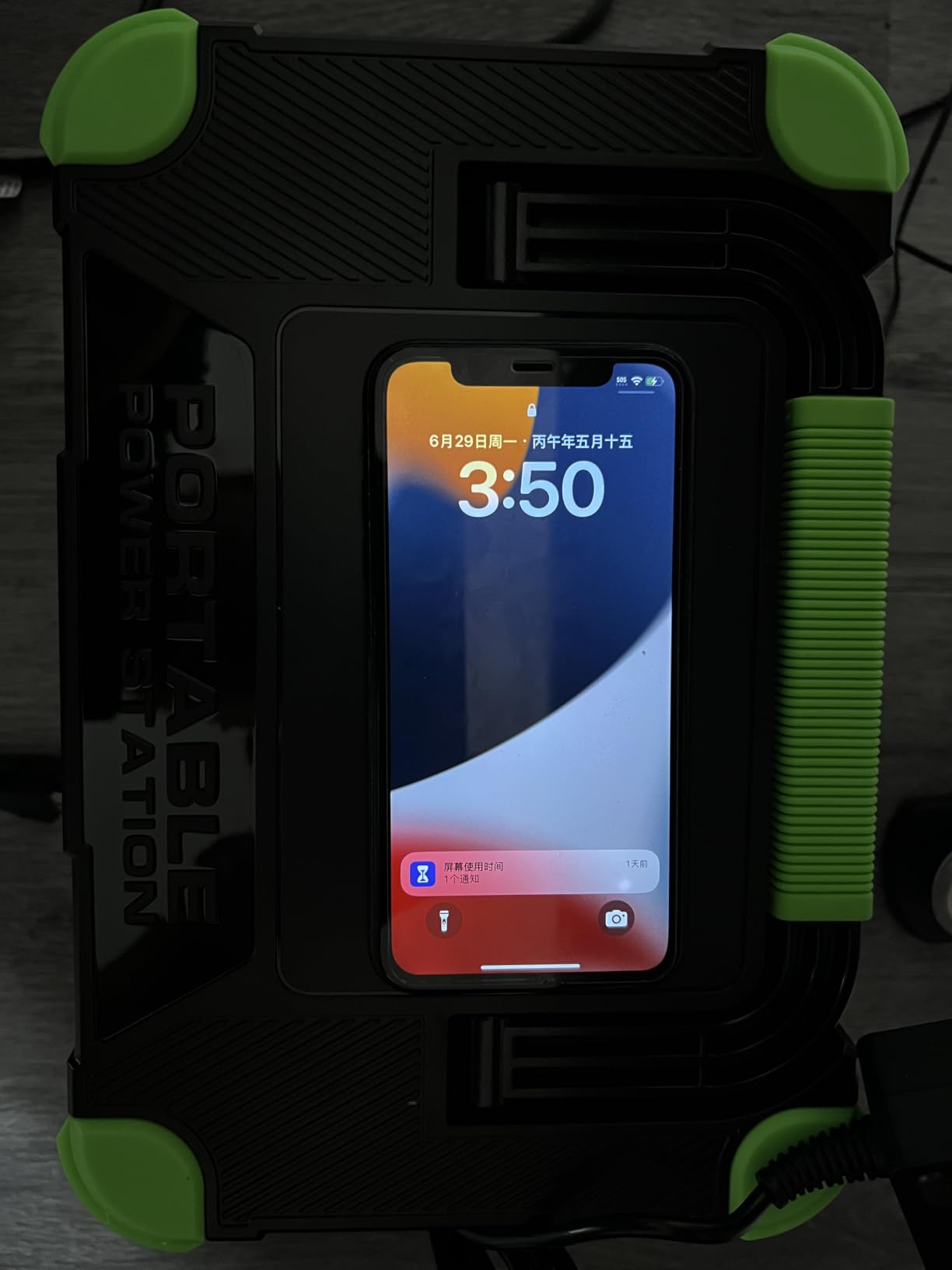
2,400W of output from 1,843Wh
2,400 watts is genuinely high for a sub-2kWh pack and it is the reason this unit appeals to buyers with tools. Kettles, hair dryers, coffee makers and power tools are all within reach, and 4 AC outlets mean several can run at once. The catch is capacity: at 1,843Wh you get roughly 1,400Wh usable, so high-wattage loads will drain it fast.
Treat it as a power tool and high-draw appliance station with a small overnight reserve, rather than a fridge-and-lights station. If your outage plan involves mostly essential loads, the 2kWh units with more capacity serve you better.
Twelve devices at once including a wireless pad
The wireless charging panel is a small flourish that most people will use once and then forget. The 12-device ceiling is the real story, and for a household with many phones, tablets, cameras and laptops it removes the need for a power strip entirely. Dual-side handles help with the 55-pound weight, and the clear status display is more useful than it sounds when you are checking state of charge in a dark garage.
A two-year warranty is the biggest gap
Every other unit in this roundup carries five years or more. This one carries two. For a device bought as long-term insurance against outages that may be years apart, warranty length is a direct signal about how long the manufacturer expects you to keep it, and halving the coverage is a meaningful difference.
The 4.3 average is also the lowest here, paired with the highest share of one-star ratings at 12 percent. That combination suggests the product is not flawed so much as thinly supported, and the feedback base on real long-term runtime is thinner than for the Anker, EcoFlow and Jackery models.
Thin long-term owner data
The reason this unit sits at the bottom of the roundup is not specification. It is evidence. With 339 ratings and limited independent measurement, you are buying on the spec sheet rather than on documented outcomes, and in a category where nameplate capacity routinely disappoints buyers, documented outcomes are what separate a good purchase from a frustrating one.
If you find a clearance opportunity on this unit, the hardware is competitive. If you are spending full price and want the most dependable support path, spend the difference on a five-year brand.
How to Size a Solar Generator for Your Home
Sizing is where most of the money is wasted, and the fix is arithmetic rather than brand research. Start by writing down what you will actually plug in, estimate how many hours per day each runs, and multiply. Almost everyone who misjudges a station did it by picking a brand first and a capacity second.
The runtime formula that stops people from overspending
Use this and you will never be disappointed by a label again:
Runtime in hours = (nameplate Wh × 0.90 depth of discharge × 0.85 inverter efficiency) ÷ average watts drawn
That 0.90 and 0.85 combination means you should plan on roughly 76 percent of the printed watt-hours being available to your appliances. A 2,010Wh station gives about 1,530Wh of usable energy. Run a 150W refrigerator for ten hours and you have spent 1,500Wh, which is the whole budget in a single night without a single watt of solar.
Solar changes the equation only when the weather cooperates. On a clear day a 400W panel produces roughly 1,600Wh, so four 400W panels can add about 6,400Wh in a good six-hour window. During a multi-day storm with no sun at all, you have exactly what is in the battery and nothing more.
What a 3,000W station can and cannot run
A 3,000-watt inverter covers most household essentials and some very demanding loads, but not the four things buyers most often assume it covers.
Runs comfortably: refrigerators and freezers, routers and network switches, LED lighting, CPAP and other small medical devices at around 40W, TVs, laptops, phones, internet modems, a washing machine on a cool cycle, a sump pump, an electric space heater up to about 1,500W, and a microwave up to about 1,000W if it is the only high-draw load running.
Runs with surge headroom only: well pumps, central air conditioners, dryers, and any motor that draws several times its running wattage on start. These can exceed the surge rating on a 3,000W unit, and an overloaded inverter shuts down rather than attempting the load.
Will not run: electric water heaters, electric vehicle charging at any meaningful rate, central air conditioning on a hot day, or a full electric range. These are multi-thousand-watt loads that would empty a 3.6kWh battery in minutes.
How long a 2,000W station runs a refrigerator
This is the most-asked sizing question, and the answer depends entirely on compressor behaviour. A refrigerator does not draw a steady 150 watts. The compressor settles to roughly 400 to 425 watts while running, and on start it surges to around 1,500W or higher. One r/bluetti owner documented exactly this on a 100 v2: a 1,560W surge dropping to 425W running.
That surge is the number that trips small units, and it is why a 1,070Wh station with 3,000W surge can hold a full-size side-by-side for nine hours overnight while a nominally similar unit struggles. For sustained overnight running on a 2,010Wh station, expect roughly 30 to 35 hours, which is what buyers have actually measured. On a 1,024Wh station, budget eight to ten hours.
Load shedding order for a multi-day outage
When the battery gets low and the sun is not coming out, work down this list in order. First, everything medical: CPAP, oxygen concentrators, any powered mobility equipment. Second, one refrigerator, not two, and the freezer only if it holds medicines. Third, internet and network gear, which is what keeps remote work and most modern life functioning. Fourth, lighting, using LED bulbs only. Fifth, communications and a phone charger.
Everything else waits. A kettle, a hair dryer, a washing machine, a space heater, a coffee maker and a television are all optional during a crisis even though they feel essential on an ordinary evening. Turning off two of those doubles your remaining runtime overnight, which is often the difference between reaching sunrise and reaching the second sunrise.
Brand scorecard: app, warranty and solar input flexibility
The app is the most-discussed feature in community forums and competitors barely mention it, which is a gap worth closing. Anker’s app is generally reported as the most complete, offering time-of-use scheduling, charge and discharge limits, kWh usage graphs and remote diagnostics. EcoFlow’s app is well liked for pairing and monitoring and adds Storm Alert and Self-Powered modes, though buyers report it is less granular on long-term analytics. Jackery’s app is adequate but its support channel behind the app draws recurring complaints about unreturned calls.
On warranty, the field separates cleanly. EcoFlow, Jackery and Anker all carry five years on the units in this roundup, and the Anker F3800’s spec sheet cites a 10-year durability claim on its cells. The EBL carries two. On solar input flexibility, the DELTA Pro’s input is capped near 15 amps, which limits array speed, while the Anker units accept up to 400W and 600W respectively and the C1000 Gen 2 accepts a 60V array ceiling.
If you have heard people argue about whether Bluetti or EcoFlow is the better brand, the practical answer is that EcoFlow wins on charging speed and app polish, while Bluetti has historically drawn complaints about its app’s limited analytics and slower firmware cadence. Neither is wrong. Both are inside the shortlist that r/preppers communities actually recommend, and both are legitimate choices.
Solar Generator vs Gas Generator: The Honest Comparison
A solar generator is not simply a better gas generator. It wins in three specific areas and loses in three others, and pretending otherwise leads to the wrong purchase.
Runtime, refuelling and noise
A gas generator with a full tank runs for six to ten hours and then needs fuel, and that fuel is not available during the storm that caused the outage. A 3,600Wh battery holds roughly 2,750Wh usable and can be refilled from the sun for free, from a wall outlet overnight, from a car in an hour or so, or from the gas generator you were going to buy anyway. One DELTA Pro owner reported a full recharge from a gas generator in about two hours, which turns the two technologies into partners rather than rivals.
On noise, there is no contest. A battery station produces a fan hum during heavy charging and nothing at all otherwise, and it can sit inside the house. A gas generator produces 60 to 80 decibels at seven metres and produces carbon monoxide, which is why it must never run in a garage, a basement or a closed porch. For a household with a newborn, a home medical device or a neighbour close by, that difference is decisive.
Our Honda portable generator roundup and Generac roundup cover the combustion side in detail, and either is the right answer for a three-day event with no sun and a furnace or a well pump to run.
Safety and where each one belongs
Solar generators can be run indoors because there is no combustion. Keep them on a dry, elevated surface away from direct heat and out of any place where flood water could reach them, and do not place one in a closet with no ventilation if it is running a heavy load while charging.
Gas generators are unbeatable for sustained high-wattage loads. A natural-gas standby unit, covered in our standby generator guide, starts automatically and never needs refuelling, but it costs several times more, needs professional installation, and takes up permanent space. For a house that genuinely runs central air, a well pump and an electric water heater, that is often the honest answer.
For everything else, the battery wins. Most outages that reach a household are one or two nights of grid failure, most essential loads are under 200 watts, and a 2kWh to 3.6kWh station covers that with room to spare. If you want security cameras to keep recording through the event as well, our backup camera roundup pairs naturally with a station that has spare USB outlets.
Battery Chemistry, Safety and Safe Installation
Three decisions before you buy will determine whether you are happy with this purchase in year five, and none of them involve reading a brand comparison.
Why LiFePO4 matters indoors
Every unit in this roundup uses lithium iron phosphate rather than the older lithium nickel manganese cobalt chemistry found in older portable stations. The difference is thermal stability. LFP cells resist thermal runaway far better, which matters enormously when a device sits in a garage or a hallway in summer.
One practical warning: the Jackery line historically used NMC chemistry, and only the Plus and v2 families moved to LFP. Check the chemistry for the exact model you are buying rather than trusting the brand. Buying an old NMC unit to save money is a poor trade when the whole advantage of the category is safe indoor use.
Connecting a station to a transfer switch or subpanel
Three safe routes exist, in increasing order of installation effort. The simplest is running extension cords to a defined essential-loads set of appliances, which needs no electrician and is what most buyers in this roundup actually do. The second is an outlet box feeding a small subpanel with a handful of chosen circuits. The third is a transfer switch, which is what any professional install and what you want if the outage needs to feel automatic.
What you must never do is back-feed a main panel. Plugging a portable station into a main breaker to push power back onto the grid while the grid is live will electrocute utility workers. This is the single most dangerous mistake in the entire category, and it is why the community consensus is extension cords first, licensed electrician for everything else.
Only the Anker SOLIX F3800 in this roundup outputs genuine 240V, so if a subpanel or transfer switch plan includes a dryer, range or well pump circuit, the other seven units are not candidates without additional equipment.
Long-term storage for a rarely used station
Most of these units will sit unused for months between storms, and storage habits determine whether you still have full capacity in year eight. Store them around half charge rather than full or empty, in a temperature range between roughly freezing and warm, and recharge them to that midpoint every three to four months.
One owner of the C1000 Gen 2 reported slight self-discharge over a month of storage, so if you are buying well ahead of hurricane season, check the state of charge before the season starts rather than assuming the battery held its level. An app with a state-of-charge readout, which all the picks here have, makes this a thirty-second job.
Frequently Asked Questions
What size solar generator is needed to run a house?
For essential loads, plan on about 76 percent of the nameplate watt-hours being usable after depth of discharge and inverter losses. A 2,000Wh station covers a refrigerator, router, lighting and small medical devices for roughly 30 hours. A 3,600Wh unit covers the same plus a microwave, space heater and more. Whole-home loads above 3,000W, or any 240V appliance, need a much larger unit or a standby generator.
What will a 3000 watt solar generator run?
A 3,000W station runs refrigerators, freezers, routers, LED lighting, CPAP machines at about 40W, laptops, televisions, a washing machine on a cool cycle, a sump pump, a space heater up to about 1,500W and a microwave around 1,000W. It will not run central air, a well pump, a dryer, an electric water heater or EV charging, because those loads exceed both the continuous rating and, for motors, the surge rating.
How long will a 2000 watt solar generator run a refrigerator?
Expect roughly 30 to 35 hours on a 2,010Wh station, which is what owners have measured. A 1,024Wh station gives about 8 to 10 hours. The key detail is compressor behaviour: a refrigerator runs at about 400 to 425 watts but surges to 1,500W or more on start, so check the surge rating rather than only the continuous output. A 3,000W surge covers most residential compressors.
Which solar generator is best for whole-home backup?
No portable station in this roundup powers a whole home. The closest is the Anker SOLIX F3800, with 6,000W of continuous 120V and 240V output, 3.84kWh of capacity expanding to 26.9kWh, and a NEMA 14-50 port for EV charging. For essential loads rather than a full home, the EF ECOFLOW DELTA Pro at 3,600Wh is the stronger buy, and for outages past two days a natural-gas standby generator is the honest answer.
Is there a better brand than Jackery?
For charging speed and app quality, EcoFlow and Anker are the strongest alternatives. The EF ECOFLOW DELTA 3 Classic reaches 80 percent in 45 minutes and the Anker SOLIX C1000 Gen 2 completes a full recharge in 49 minutes, both faster than any Jackery unit here. Jackery remains competitive on build quality, the 4,000-cycle battery rating on the HomePower 3000, and price, but its support channel draws more complaints about unreturned calls.
Do solar generators work in winter or during cloudy weather?
Poorly, and this is the biggest gap between marketing and reality. Solar input during a multi-day overcast storm cannot keep pace with even a single refrigerator, so the battery becomes a finite resource. Owners of the DELTA 3 Classic report exactly this problem. Plan for it with a load-shedding priority list, keep a car or generator top-up option available, and treat solar as a bonus rather than your primary refill method during storm season.
Which Solar Generator Should You Buy in 2026?
If you want one answer, buy the EF ECOFLOW DELTA Pro 3600Wh. It is the strongest combination of capacity, port count, recharge speed and expandability in this roundup, it is the only unit here with owners documenting a full multi-day outage running a refrigerator, furnace blowers, lights and internet at the same time, and at 652 ratings it carries the deepest honest review record of the larger units.
Choose differently only for a specific reason. If you need genuine 240V output for a dryer, a well pump or a workshop circuit, the Anker SOLIX F3800 is the only option and its 26.9kWh expansion path is the best in the group, provided you can live with 132 pounds. If you need about 2kWh that one person can move, the Anker SOLIX S2000 packs 35 hours of measured refrigerator runtime into 35.7 pounds. If recharge speed is your priority, the EF ECOFLOW DELTA 3 Classic hits 80 percent in 45 minutes and the Anker SOLIX C1000 Gen 2 completes a full cycle in 49 minutes, with the C1000 also holding the highest rating and the largest review base here. If you want solar panels in the box and can live without future expansion, the Jackery HomePower 3000 is the value pick. If you are a renter or covering a single night, the Jackery Explorer 1000 v2 at 23.8 pounds is the most tested and most affordable way in.
Whatever you choose, test it before you need it. Run your intended loads for a full night, check the state of charge in the morning, and rehearse your load-shedding order while the grid is still on. In 2026, the best solar generators for home backup are not the ones with the biggest numbers on the box. They are the ones you have actually verified will carry the loads you care about when everything else fails.
Leave a Reply