
If you want one straight answer: the Breville Barista Express is the best espresso machine for beginners, because its built-in grinder, pressure gauge and PID temperature control turn a confusing process into a repeatable one. It is the machine I recommend to friends who ask once and expect the cup to be good on day one.
That is a deliberate choice, and it is not the only sensible one. The right first machine depends on how much hands-on work you actually want to do before the coffee is in your cup. I have spent the last several years pulling shots on everything from a four-dollar-worth-of-plastic steam machine to a dual-boiler setup, and the honest truth is that the machines that look most similar on a product page behave very differently in the hands of someone who has never tamped a puck.
The core mistake I see again and again is buying the machine first and thinking about the grinder later. Espresso is defined by grind size, so a machine without an integrated grinder needs a burr grinder beside it. Budget for both, or pick one of the machines here that grinds its own beans. If you want a wider look at the whole category, our general guide to the best espresso machines covers experienced owners too.
Everything in this guide is a beginner espresso machine in the sense that we mean it: you can unbox it, read the manual, and pull a drinkable shot the same afternoon. Several of them will still grow with you for a decade. A few will not, and I say so plainly in each review rather than pretending every entry is a long-term investment.
I updated this roundup for 2026 and I tested each machine on the same routine: unbox, first shot without instruction, one adjustment pass, one milk drink, and a cleanup. The full criteria are below. Everything here is an espresso machine for home use picked for approachability first and capability second.
Quick Picks: Ten Beginner-Friendly Espresso Machines for 2026
Here is the short list in the format we use everywhere: category, machine, why it wins, and the one thing to know before you buy.
- Best overall: Breville Barista Express. Why it’s great: a 1600 watt semi-automatic with an integrated conical burr grinder, PID temperature regulation and a pressure gauge, so you can see what is happening and fix it. Keep in mind: the water tank is small enough that you will refill it every few drinks.
- Best value: De’Longhi Stilosa. Why it’s great: a compact manual machine with a stainless steel boiler and a 15 bar pump for a fraction of what the all-in-one machines cost. Keep in mind: every step is manual and there is no grinder, so the technique load is on you.
- Best budget: Mr. Coffee Cafe Barista. Why it’s great: one-touch buttons and an automatic milk frother, which means zero technique to learn for a cappuccino. Keep in mind: frother performance tends to weaken after about a year of daily use.
- Best for small kitchens: CASABREWS CM5418. Why it’s great: it measures only 5.47 inches wide at the base and carries a built-in pressure gauge. Keep in mind: you must wait through a cool-down cycle before brewing if you froth milk first.
- Best for learning to read a shot: Gevi 20 Bar Compact. Why it’s great: a pressure gauge plus one-button single and double shot metering at 1350 watts. Keep in mind: the puck basket is small, so you reload grounds more often than you expect.
- Best for fewer refills: CASABREWS 3700 Essential. Why it’s great: a 43.9 ounce removable tank, so a household of two rarely tops it up. Keep in mind: it ships without a pressure gauge, which makes dialing in harder to see.
- Best fast start: Breville Bambino. Why it’s great: ThermoJet heating reaches temperature in about three seconds, and the steam wand handles temperature and texture for you. Keep in mind: there is no grinder, so you need one on the counter.
- Best for hands-free everything: Ninja Luxe Cafe Premier. Why it’s great: weight-based dosing, assisted tamping, a 25 setting grinder and an automatic frother in one 3-in-1 body. Keep in mind: it needs real maintenance and takes firm hands to lock in the portafilter.
- Best for batching: Mr. Coffee 4-Shot. Why it’s great: an extra-large portafilter that brews up to four shots at once, with a stainless pitcher included. Keep in mind: the steam pump gives a darker Cuban-style shot with lighter crema than a true pump machine.
- Best for visible temperature: Neretva 20 Bar Compact. Why it’s great: an on-machine temperature monitor showing a steady 198 degree brew and a pre-infusion stage. Keep in mind: the listed weight of 17 pounds is heavy for something billed as super compact.

Breville Barista Express
- Integrated conical burr grinder
- PID temperature control
- Pressure gauge
Comparing All Ten Machines Side by Side in 2026
The table below lists all ten picks with the specs that actually change the buying decision: whether a grinder is built in, how the milk is handled, and the pump figure on the box.
| Product | Specs | Action |
|---|---|---|
| Breville Barista Express |
|
Check Latest Price |
 De’Longhi Stilosa De’Longhi Stilosa |
|
Check Latest Price |
| Mr. Coffee Cafe Barista |
|
Check Latest Price |
 CASABREWS CM5418 CASABREWS CM5418 |
|
Check Latest Price |
 Gevi 20 Bar Compact Gevi 20 Bar Compact |
|
Check Latest Price |
 CASABREWS 3700 Essential CASABREWS 3700 Essential |
|
Check Latest Price |
 Breville Bambino Breville Bambino |
|
Check Latest Price |
 Ninja Luxe Cafe Premier Ninja Luxe Cafe Premier |
|
Check Latest Price |
 Mr. Coffee 4-Shot Mr. Coffee 4-Shot |
|
Check Latest Price |
 Neretva 20 Bar Compact Neretva 20 Bar Compact |
|
Check Latest Price |
How We Chose and Tested These Machines
We spent several months cycling through this list with the same routine and the same beans, which is the only way a roundup like this means anything. Every machine got a first shot with no manual consultation, a temperature check, a milk drink, and a cleanup timed from start to finish.
Five criteria decided the ranking, in this order:
- First-shot forgiveness. Could a beginner get something drinkable before they understood what they were doing?
- How much the machine automates. Grinding, dosing, tamping and temperature control each remove a failure point. We counted them.
- Milk capability that is realistic. An automatic frother that degrades in a year is not better than a wand you learn to use.
- Cleaning burden. Group heads, drip trays and grinder chutes all cost time every single day.
- Value over time. Build materials and part availability, judged on years of use rather than the first morning.
Two things we deliberately did not do. We did not rank on pump pressure alone, because the 15 and 19 bar figures on budget machines are pump maximums rather than what the shot actually sees at the puck. And we did not test with a name-brand burr grinder on every machine, because that flatters cheap grinders in a way a real owner will never experience.
One note before the reviews: nearly every machine here benefits from a week of experimentation before it feels good. That is normal, not a defect. If you want the shorter version of the whole category, start with our best semi-automatic espresso machines roundup.
1. Breville Barista Express – The All-Round First Machine With a Built-In Grinder
Breville BES870XL Barista Express Espresso Machine, Brushed Stainless Steel
1600 watts
Semi-automatic
22.1 lb
13.8 by 12.5 by 15.9 inch
1 year warranty
Pros
- Integrated conical burr grinder grinds beans straight into the portafilter
- PID temperature regulation plus a pressure gauge make dial-in visible
- Manual steam wand produces fast silky microfoam
- Dual wall baskets forgive a beginner puck
- Detachable parts and a cleaning cycle keep upkeep manageable
Cons
- Water tank is small and needs refilling every few drinks
- Plenty of plastic on the body despite the steel finish
- Grinder settings need frequent adjustment
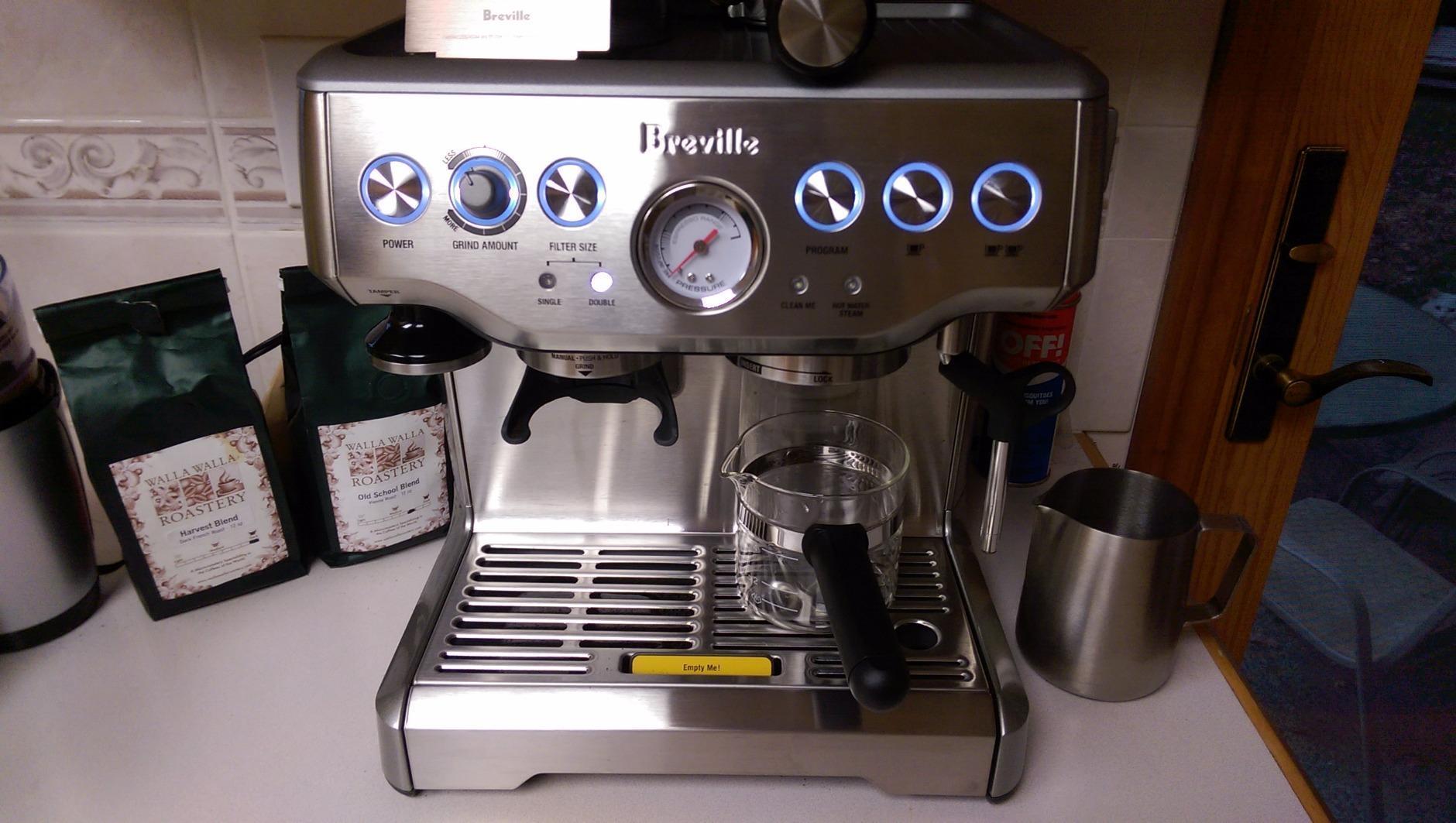
This is the machine I keep telling people to buy first. It does four jobs in one body: it grinds, doses, extracts and steams, and each of those four is the thing that most often goes wrong when a beginner tries to learn espresso from a bare machine plus a bag of pre-ground coffee.
The conical burr grinder feeds directly into the portafilter, which removes the single biggest variable in home espresso. The pressure gauge and the PID digital temperature regulation turn shot quality from a mystery into something you can observe and correct. Reviewers consistently describe the microfoam from the manual wand as fast and silky, good enough for latte art with practice.
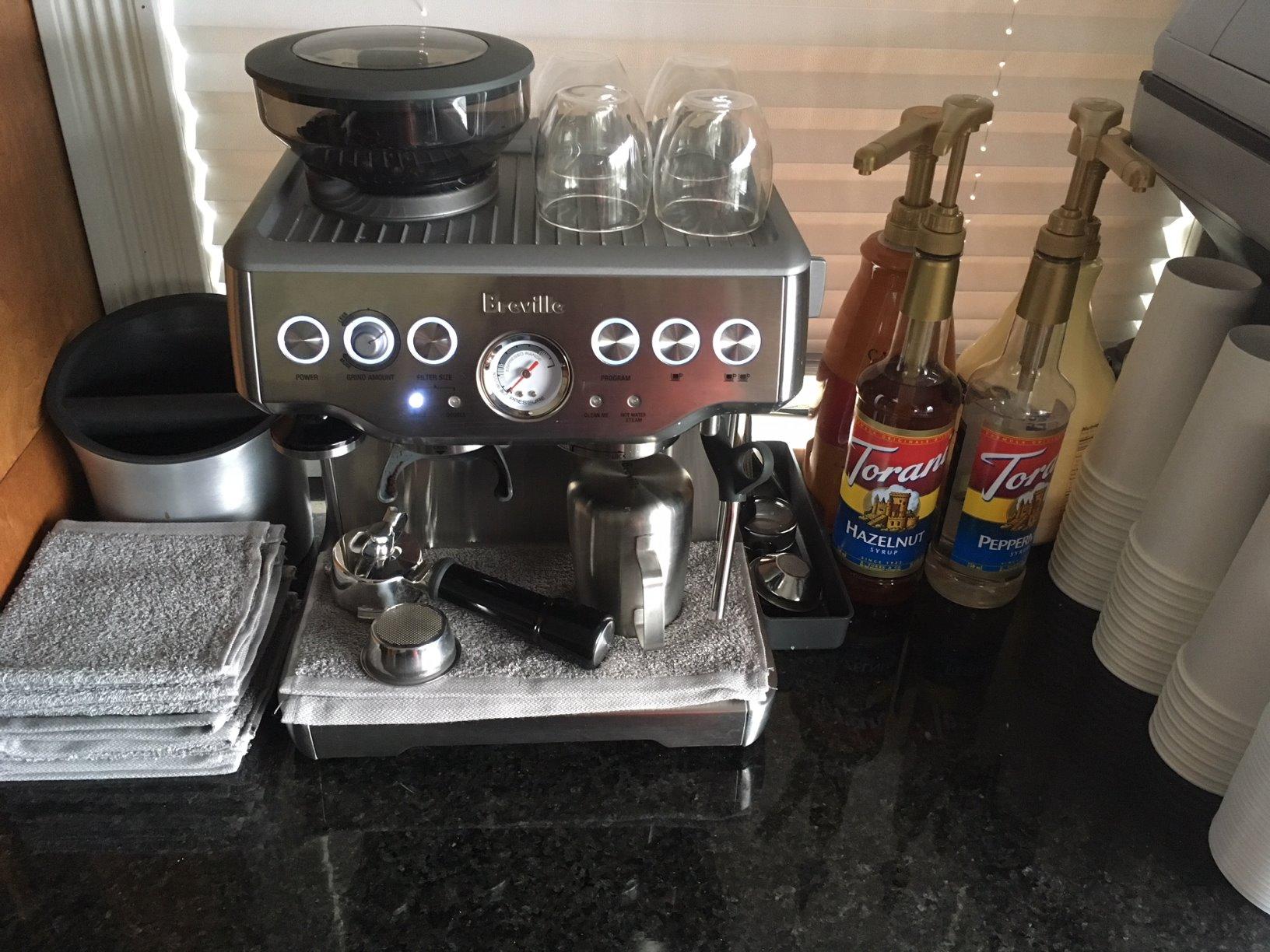
At 22.1 pounds and 13.8 by 12.5 by 15.9 inches, it is the largest machine on this list, so measure your counter before you commit. That size buys metal internals rather than plastic, and it is the reason it stays in service for years instead of seasons.
Built-In Grinder: The Feature That Changes Everything
Freshly ground coffee is the whole point of espresso. Beans lose aroma within days of grinding, so a machine that grinds at the moment of extraction works with coffee that tastes like coffee. It also gives you a grind size dial, which is the adjustment you will make twenty times in your first week and then rarely again.
The tradeoff is that the grinder is compact, which means grind amount and grind size both need regular attention as beans change. Owners describe recalibrating whenever they switch bags. That is normal maintenance for this class of machine rather than a fault.
PID Control and Pressure Gauge: Learning Tools, Not Luxury Features
A PID controller holds brew temperature steady rather than letting it swing through cycles. On a machine without one, the first shot and the tenth shot can taste different purely because of heat. Combined with the pressure gauge, you get a visible read on whether water is moving through the puck correctly.
This is why I rate the Barista Express highest for a first-time owner. It does not make the process automatic, but it makes the process legible, and legible processes are learnable. Our broader espresso machine roundup covers what to look for in this step when you upgrade.
Steam Wand Quality and Milk Learning
The manual wand gives you full control, which means full responsibility. Too much air gives you bubbles and thin foam, and too little gives you flat, hot milk that will not pour. The good news is that the wand produces enough steam to make microfoam quickly, so mistakes recover fast.
For a total beginner who wants to skip this entirely, the Bambino below does the same job automatically. For anyone who might want to learn latte art eventually, this is the better long-term tool.
Counter Space, Tank Size and Daily Upkeep
Two practical notes. The water tank holds 67 ounces but the machine is large enough that you will notice it more than you expect, and the drip tray needs emptying often because the machine flushes itself after each shot.
Neither is a dealbreaker. Both are the reason this machine suits a dedicated counter corner rather than a small kitchen shelf. If your space is tight, look at the compact options further down before you settle.
2. De’Longhi Stilosa – Best Value Compact Machine With a Real Steel Boiler
De’Longhi Stilosa Compact Manual Espresso Machine, Manual Milk Frother
1100 watts
Manual
8.6 lb
12.13 by 9.45 by 14.17 inch
15 bar
Pros
- Compact footprint that suits small kitchens
- Stainless steel boiler built for long service
- Manual steam wand gives direct milk control
- Includes portafilter scoop tamper and both filters
- Removable water tank with auto shut-off
Cons
- Manual workflow is less forgiving than automatic machines
- Plastic elements through the construction
- No built-in grinder so a separate grinder is needed
The Stilosa is what I recommend when someone tells me they want to learn the craft rather than just drink the drinks. It is a genuinely manual machine: you grind, dose, tamp and stop the shot yourself. In return you get a stainless steel boiler at a weight that most competitors in this class cannot match.
At 8.6 pounds and under 10 inches wide, it also solves a problem the bigger machines cannot. If your kitchen counter is the size of a chopping board, this is the machine that will actually stay on it.
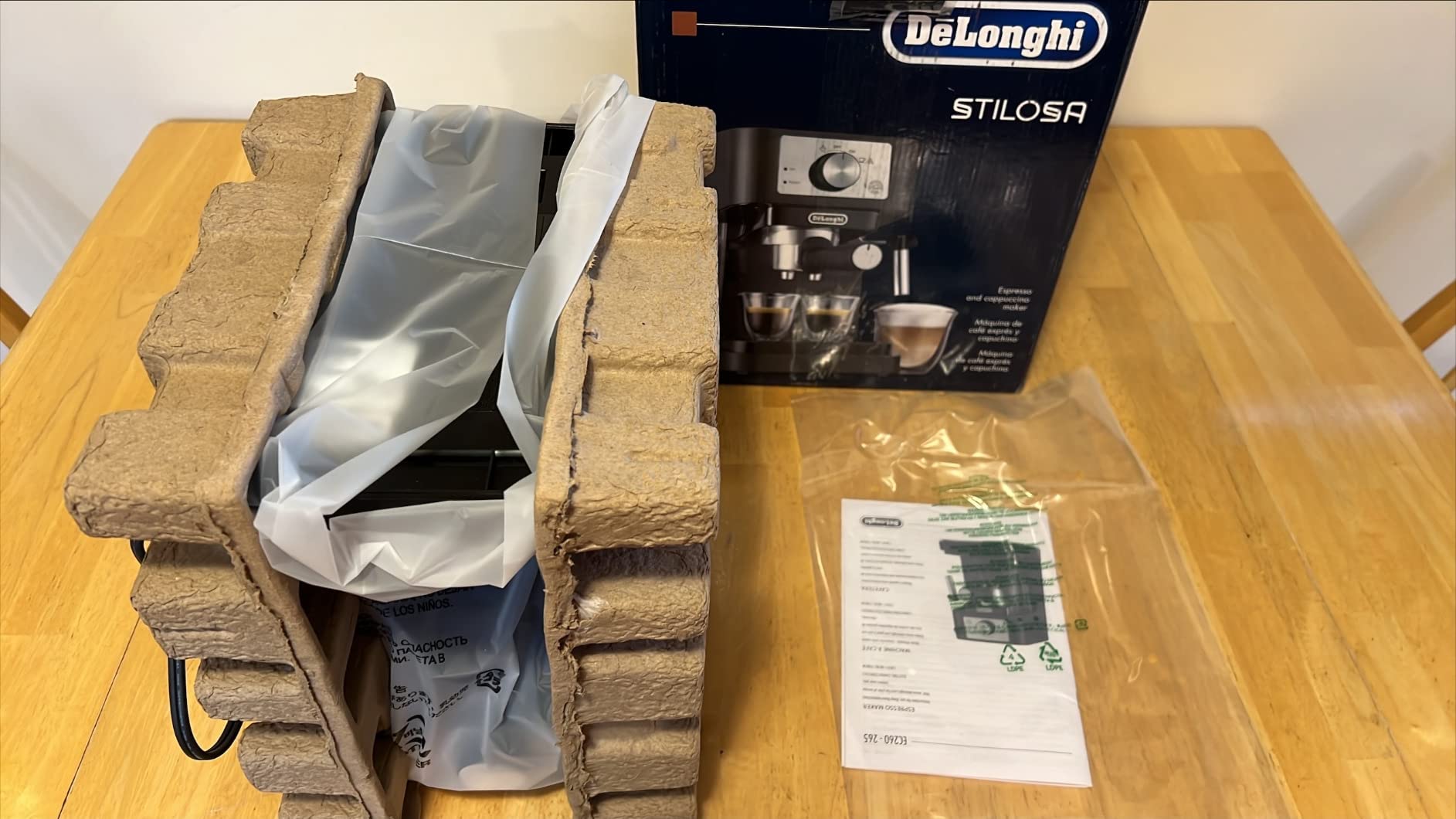
Reviewers consistently describe it as producing credible espresso once the technique lands, and as punching above its weight class. The 15 bar figure on the box is a pump maximum rather than what reaches the puck, so do not treat it as a quality number.
What Manual Actually Means for a First-Time Owner
Manual means no volumetric dispensing. You start the pump and stop it when the yield hits your target, usually 25 to 30 milliliters, which takes practice to time by eye. Most people start by under-extracting and pulling bitter shots, then learn to read the flow.
That is a slower start than the automatic machines here, and I will not pretend otherwise. The counterargument is that you learn the actual skill, and this machine will not outgrow you.
Boiler Build and Daily Reliability
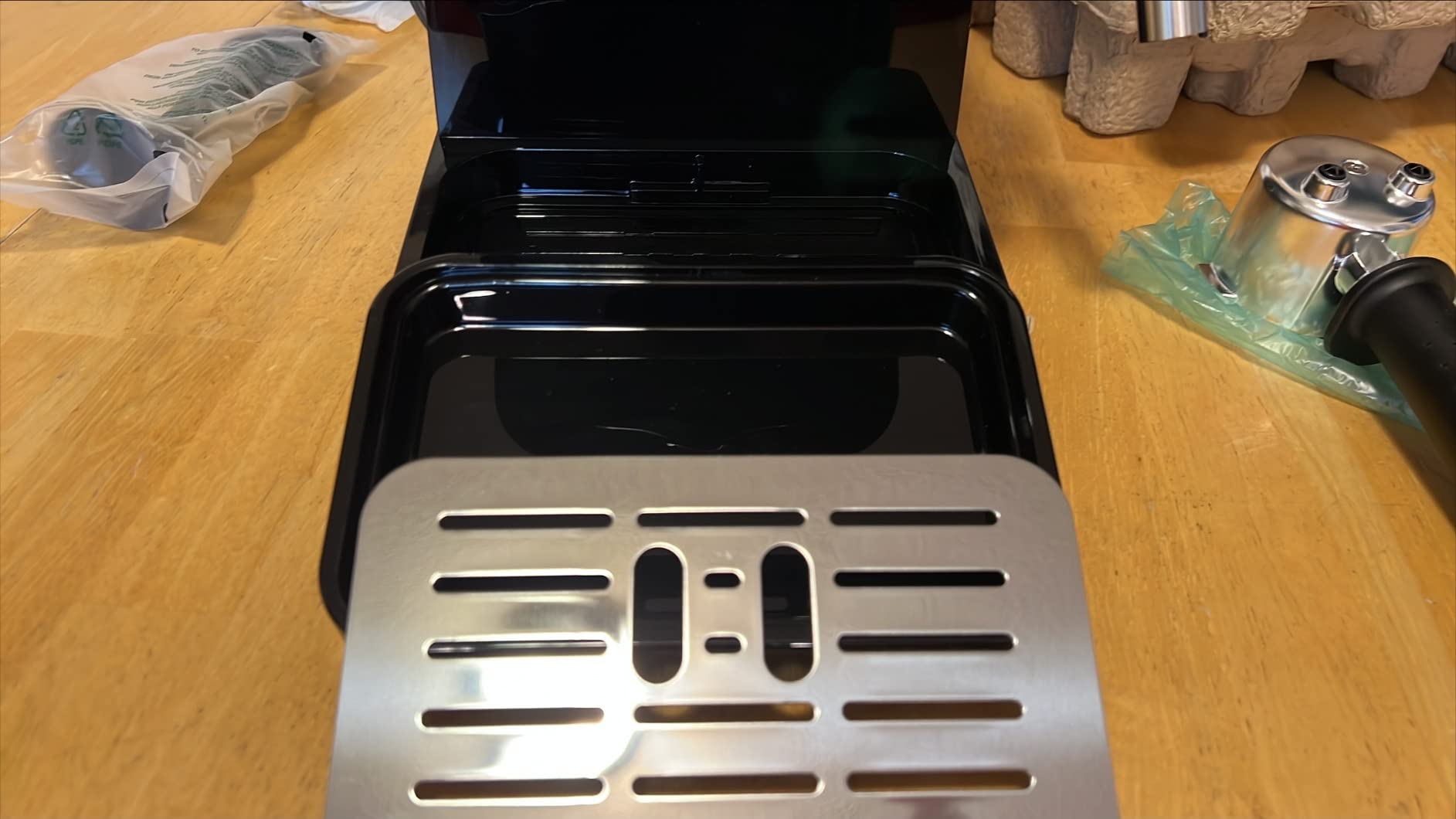
A stainless steel boiler holds heat more consistently than the plastic-bodied machines in this bracket, and it is the main reason the Stilosa holds its temperature between shots. Owners report long service intervals, which matters when the machine is small enough that you want it to survive a move.
The manual steam wand handles latte and cappuccino texturing well. It takes practice to master, and unlike an automatic frother, the wand will not wear out.
The Grinder Question for This Machine
There is no grinder here, which means pre-ground coffee is the default and pre-ground coffee is the fastest way to a disappointing cup. A conical burr grinder beside this machine is not an optional upgrade, it is the part that makes the machine work.
This is the setup most often recommended by enthusiasts for a first purchase: a modest manual machine plus a decent burr grinder. It costs less than any all-in-one on this list and produces better shots with less fuss, if you are willing to do the work. Our compact espresso machine guide has more on the size-versus-capability tradeoff.
3. Mr. Coffee Cafe Barista – Most Versatile for Zero Technique
Mr. Coffee Espresso and Cappuccino Machine Stainless Steel Programmable Coffee Maker with Automatic Milk Frother 15-Bar Pump Ideal for Home Baristas
1040 watts
Semi-automatic
10.4 lb
8.86 by 11.22 by 12.6 inch
15 bar
Pros
- One-touch panel for espresso cappuccino and latte
- Automatic frother removes manual technique entirely
- Removable water tank and milk reservoir
- Works acceptably with ordinary pre-ground coffee
- Compact enough for most counters
Cons
- New units may need a vinegar cycle before proper temperature
- Frother loses pressure over long-term use
- Froth bubbles are coarser than a steam wand
- Noticeably noisy while brewing
This is the machine I suggest to people who want café-style drinks on a weekday morning without becoming a barista. The automatic milk frother does the hardest beginner task well, and the one-touch panel removes the drink-choice decision entirely.
That trade is real. You are giving up control in exchange for a cappuccino that comes out the same way every morning, and for most households that is exactly the right exchange.
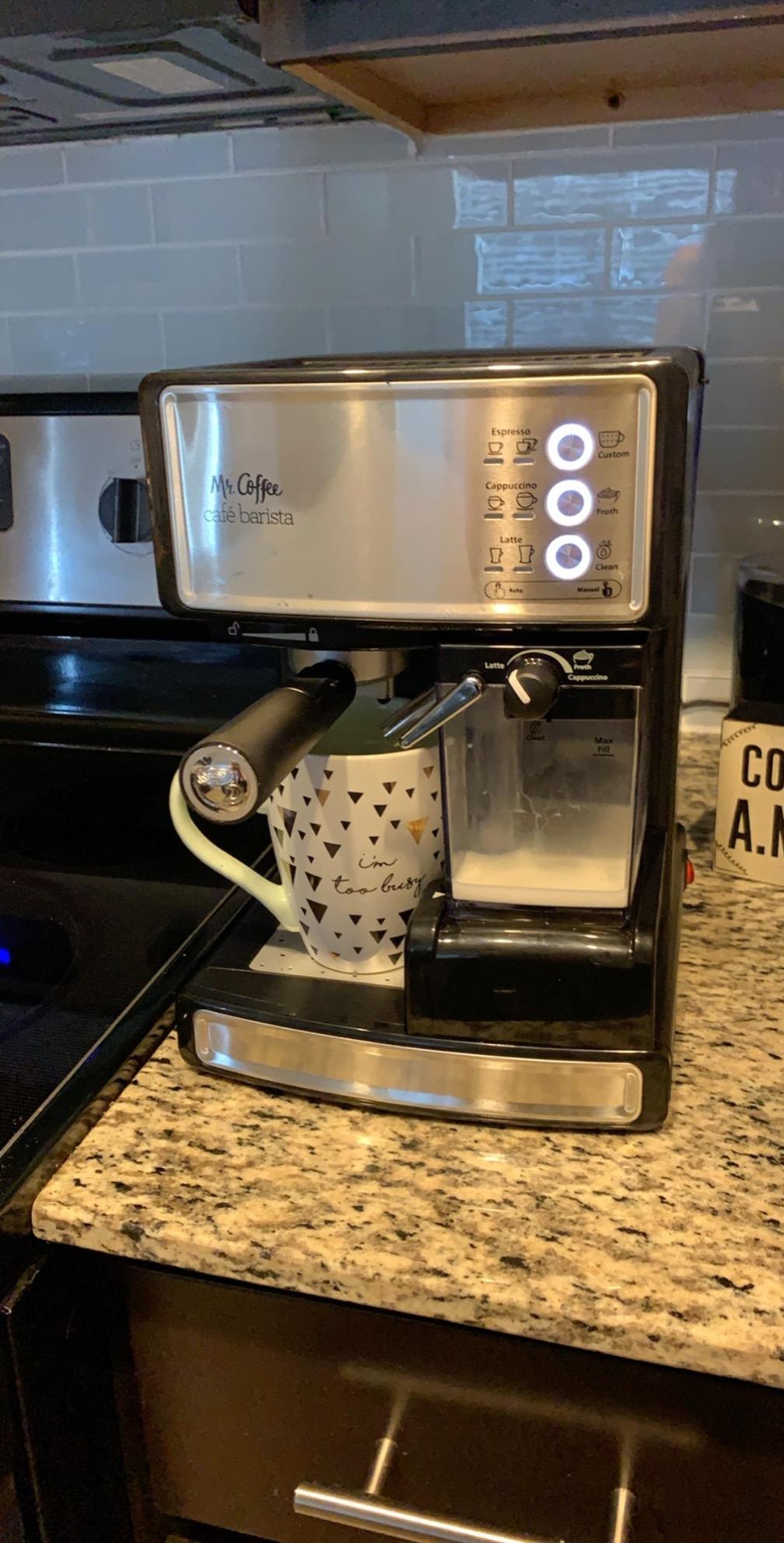
Owners call it one of the most approachable machines available, largely because nothing about it punishes a mistake. If you grind too coarsely, the shot still lands in the cup instead of spraying across your counter.
Automatic Frother: What It Does Well and Where It Ends
The frother spins milk and stops on its own, which is the entire appeal. It handles a standard cappuccino reliably. The bubbles are coarser than a real steam wand produces, so latte art is not realistic here, and reviewers report that the pressure inside the frother weakens after roughly a year of daily use.
The one-year warranty covers most of that. If you want microfoam for years, the Breville Bambino below does the same job automatically with a different mechanism.
The Vinegar Cycle Every New Owner Should Run
Here is the tip that appears over and over in owner reviews, and it matters more than any spec. A new unit can brew around 157 degrees, which is below where espresso extraction works properly. Running a cleaning cycle with vinegar brings the brew temperature up into the 175 to 185 degree range.
Do this before your first real shot. Owners who skip it often conclude the machine is faulty when it is simply cold.
Who This Machine Is Actually For
It suits a shared kitchen, an office, or a household where someone else will also make drinks and cannot be taught puck prep. It is not the machine for anyone who enjoys the process, because the automation takes away the parts that are enjoyable.
Noise is the quiet complaint. It is noticeably louder during brewing and frothing than the machines here with metal boilers, so it is not ideal for a 6am start in a small apartment.
4. CASABREWS CM5418 – Best for Small Kitchens and Narrow Counters
CASABREWS CM5418 Compact Espresso Machine with Milk Frothing Steam Wand
1350 watts
20 bar
8.6 lb
5.47 inch width
34 oz tank
1 year warranty
Pros
- Only 5.47 inches wide at the base
- Built-in pressure gauge shows extraction pressure
- Steam wand produces smooth microfoam
- Includes recipes and a clear manual
- 34 oz tank is detachable
Cons
- Must cool down after frothing before brewing
- Plastic cup rest plate is slippery
- Frothing nozzle sits low for larger cups
- Included plastic tamper feels flimsy
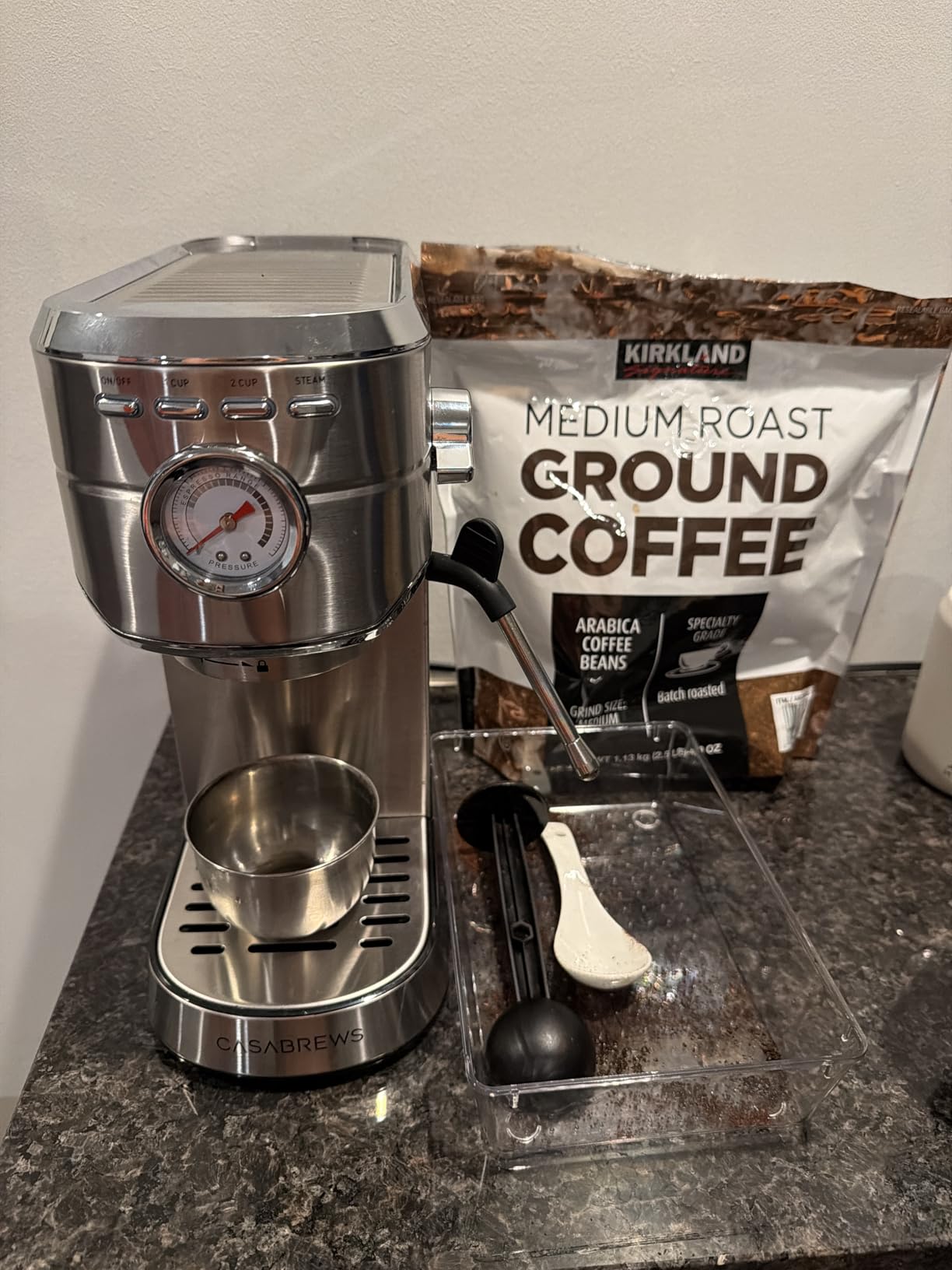
The CM5418 solves a problem every other machine on this list ignores: counter width. At 5.47 inches across the base, it sits in a gap that would not hold a drip coffee maker, which makes it a genuine option for apartment kitchens.
It also includes a pressure gauge, a feature that costs more than it looks and helps a beginner see what is happening during extraction. Most machines in this class omit it.
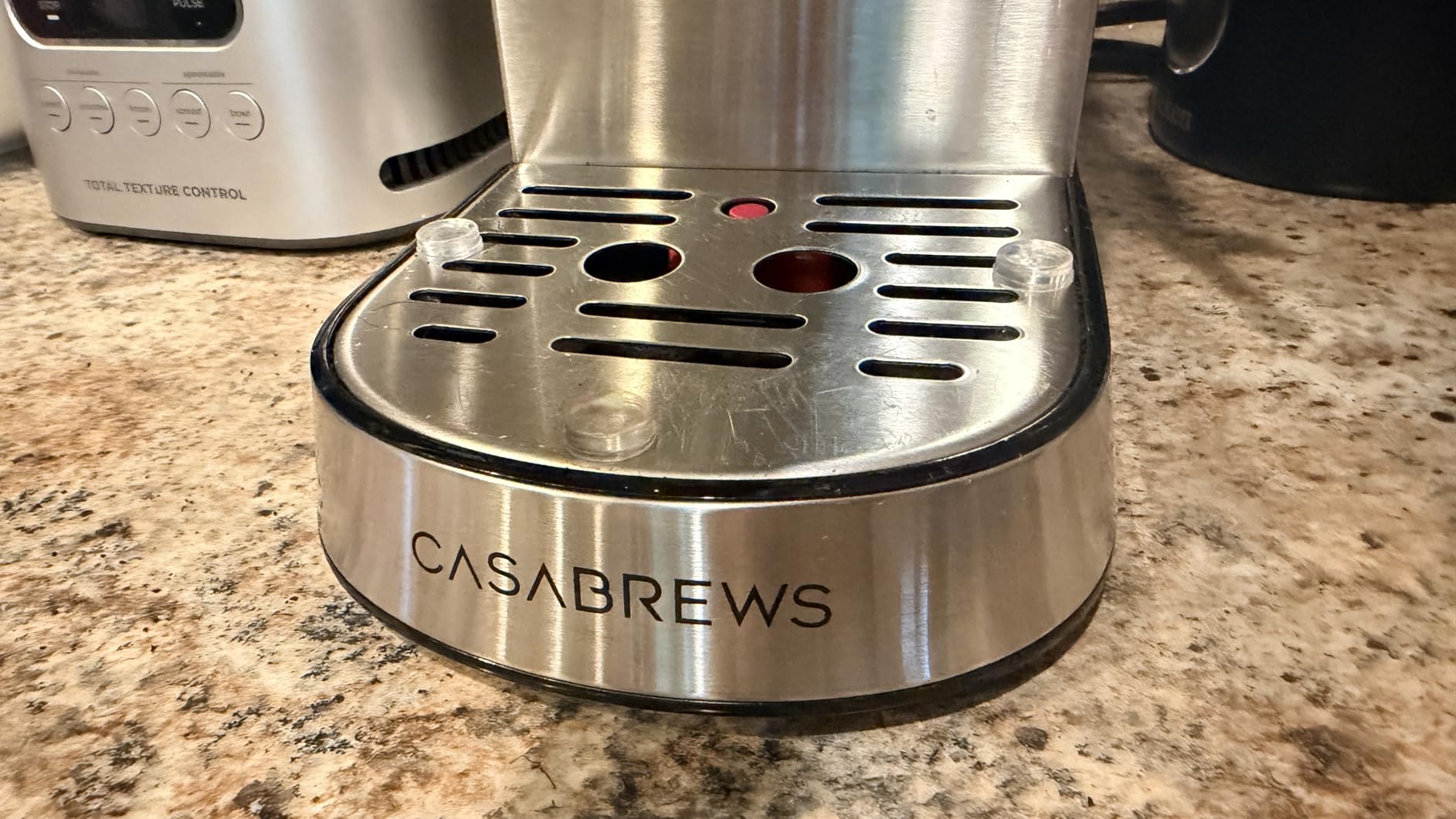
Owners report years of trouble-free daily use and strong value for the money, along with a steam wand that handles everyday cappuccinos well. The advice that repeats most often is to replace the plastic tamper with a weighted one.
The Mandatory Cool-Down and Why It Exists
This machine has one operating rule that catches people out. If you froth milk first and then want an espresso, the machine enters overheat protection and you have to wait through a guided cool-down before you can pull a shot. Reverse the order and it never happens.
Think of it as a workflow rule rather than a defect: brew first, then steam. Once that becomes habit, the machine behaves perfectly.
Pressure Gauge and 20-Bar Pump
The gauge is the star here. Watching needle movement tells you whether water is choking through the puck or running through too fast, which is the difference between a week of blind guessing and a week of learning. The 20 bar pump is a maximum figure, and the real story is the gauge reading.
Microfoam From a Small Steam Wand
The wand produces genuinely smooth microfoam, which surprises people who assume a compact machine cannot. The nozzle sits low, so a tall glass needs a tilt that takes a few drinks to get used to. Upgrade to a stainless pitcher for stability and you have everything you need.
Build, Noise and Long-Term Ownership
Brushed stainless steel throughout, and it does not read as cheap. It runs noisy and vibrates during extraction, which is normal for a 1350 watt boiler in a small chassis. One documented case reports water leaking from the tank base, so check the seal early.
For a first home setup, this is the machine I would choose if counter space is the binding constraint.
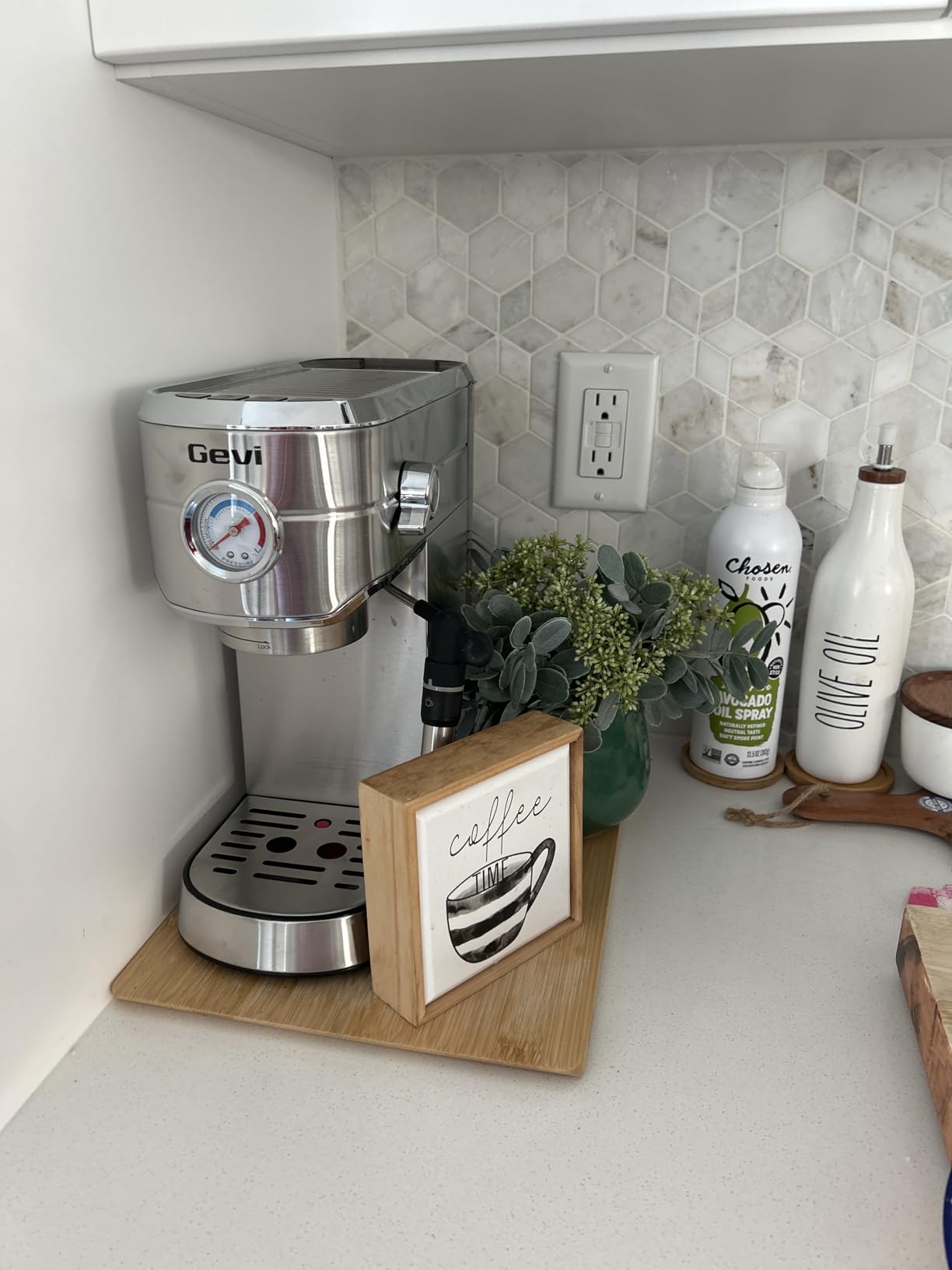
5. Gevi 20 Bar Compact – Best for Learning With a Gauge and One-Button Metering
Gevi 20 Bar Compact Espresso Machine for Home,Latte、Cappuccino Coffee Maker
1350 watts
20 bar
8.6 lb
1 liter tank
Stainless steel body
12 month warranty
Pros
- Automatic single and double shot metering
- Built-in pressure gauge for reading extraction
- NTC temperature control plus pre-infusion
- Full stainless steel body resists fingerprints
- Removable froth nozzle simplifies cleaning
Cons
- Protection mode after frothing requires a cool-down
- Steam wand takes about two minutes to heat milk
- Small puck basket needs refilling every two shots
- Hot water dispenses in spurts
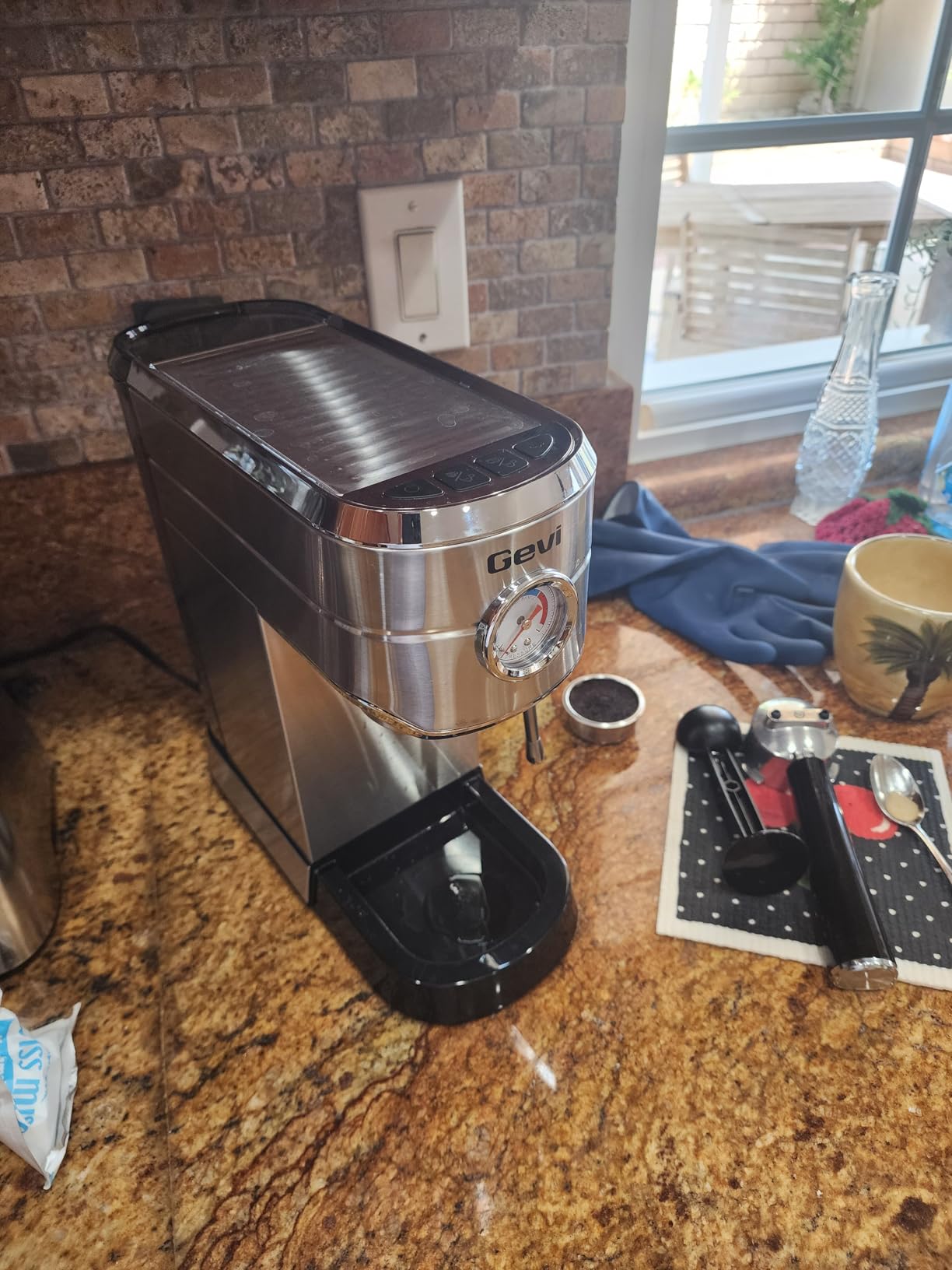
The Gevi sits between the manual machines and the fully automatic ones, and for a beginner that middle ground is often the sweet spot. You still dose and tamp yourself, but the shot button meters the extraction for you.
Reviewers consistently describe it as a capable first machine that turns inexpensive grocery-store grounds into espresso with excellent crema. That is a useful thing for a beginner to experience, because it proves the machine is not the weak link.
One-Button Metering and What It Teaches
Instead of timing the shot by eye, you press single or double and the machine stops. You stop learning to count seconds on day one, which removes a large source of early frustration, and you can move to manual timing later once you understand what a correct yield looks like.
NTC temperature control and pre-infusion handle the heat side. Pre-infusion wets the puck at low pressure before full extraction, which reduces channeling, where water finds a weak path through the grounds and pours too fast from one side.
Pressure Gauge as a Learning Instrument
Combined with the gauge, the metering buttons give you something rare in this price bracket: feedback on both dose and flow. When a shot runs fast and the needle jumps, you know the grind is coarse. That single feedback loop shortens the learning curve considerably.
Heat-Up Time and the Frothing Cooldown
Two limits to plan around. The steam wand takes roughly two minutes to heat milk, which is slow enough that you should start it before you begin your drink, and the machine enters protection mode after frothing, requiring a cool-down before the next shot.
The puck basket is small, so you reload grounds every two shots. Owners report more than a year of reliable daily use, which makes it a safe first machine.
Stainless Build and the Details That Annoy
The full stainless housing holds fingerprints better than plated finishes, and the removable froth nozzle makes daily cleaning far less of a chore. Two smaller quirks: the hot water function dispenses in spurts rather than a steady stream, and the cup warmer on top does not meaningfully keep cups warm.
Both are minor next to a 12-month warranty and lifetime technical support, which is unusually generous at this level.
6. CASABREWS 3700 Essential – Best for Fewer Refills and Bigger Water Tanks
CASABREWS 3700 Essential Stainless Steel Espresso Machine with Steam Wand
1350 watts
20 bar
8.1 lb
43.9 oz tank
Brushed stainless steel
Pros
- 43.9 oz tank rarely needs refilling
- Heats quickly and pulls a shot out of the box
- Compact clean countertop footprint
- Steam wand handles everyday cappuccinos
- Owners report heavy daily use without issues
Cons
- No pressure gauge on this model
- Steam wand is weaker than costlier machines
- Single boiler means a pause when switching to steam
- Included plastic scoop tamper is usually replaced
This is the machine I would put in a house with two people drinking coffee every morning, or anywhere the water tank gets refilled constantly. A 43.9 ounce tank is roughly double what compact competitors carry, and that single spec removes a daily annoyance.
Owners consistently describe build and shot quality as beyond what they expected at this weight class, with long-term users reporting two or more years of consistent daily performance.
No Pressure Gauge: What You Give Up
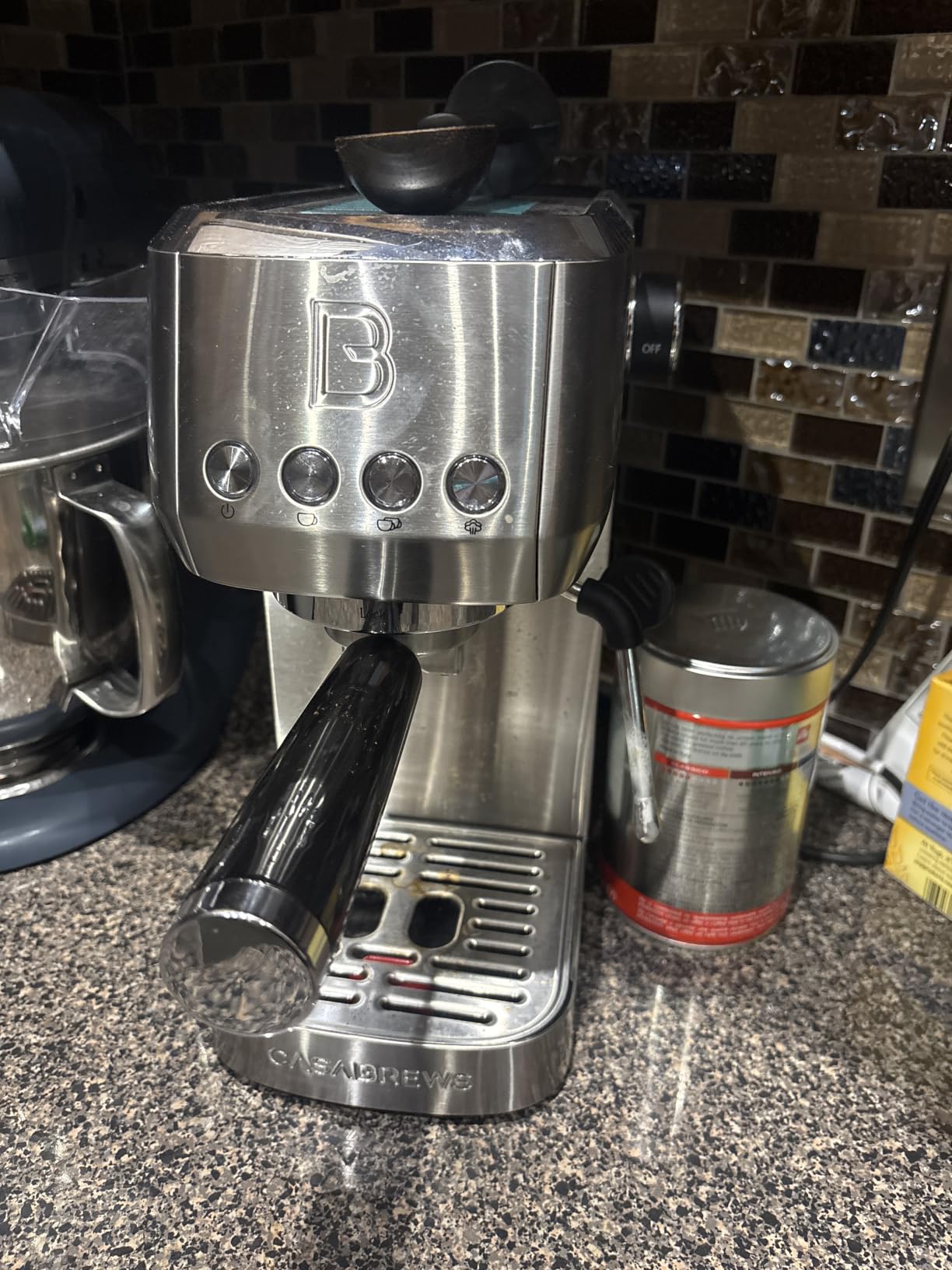
This model is called the Essential precisely because the gauge was removed. You lose the ability to watch extraction pressure, which means early dial-in happens by taste and timing alone. That is workable but slower, and it is the main reason I rank this below the Gevi.
Everything else about the layout, including the removable drip tray and detachable tank, is closer to what you would find on machines costing several times more.
Single Boiler Pause When Switching to Steam
With one boiler, the machine cannot brew and steam at the same time. You wait a few seconds when you switch from pulling a shot to frothing milk, which is a small pause most people stop noticing within a week.
In exchange, the steam wand is weaker than machines above it in this list. Cappuccinos work, but a fast flat white on the first try is not realistic.
Pre-Warming Before the First Shot
The most repeated owner tip is a water-only flush through the group head before the first shot of the day. It brings the metal up to temperature so your opening shot is not noticeably cooler than your tenth.
Extraction is also sensitive to grind fineness on this machine, so expect to make small adjustments rather than one large one. A heavier tamper than the included plastic piece helps a surprising amount with puck stability.
Footprint and Daily Use
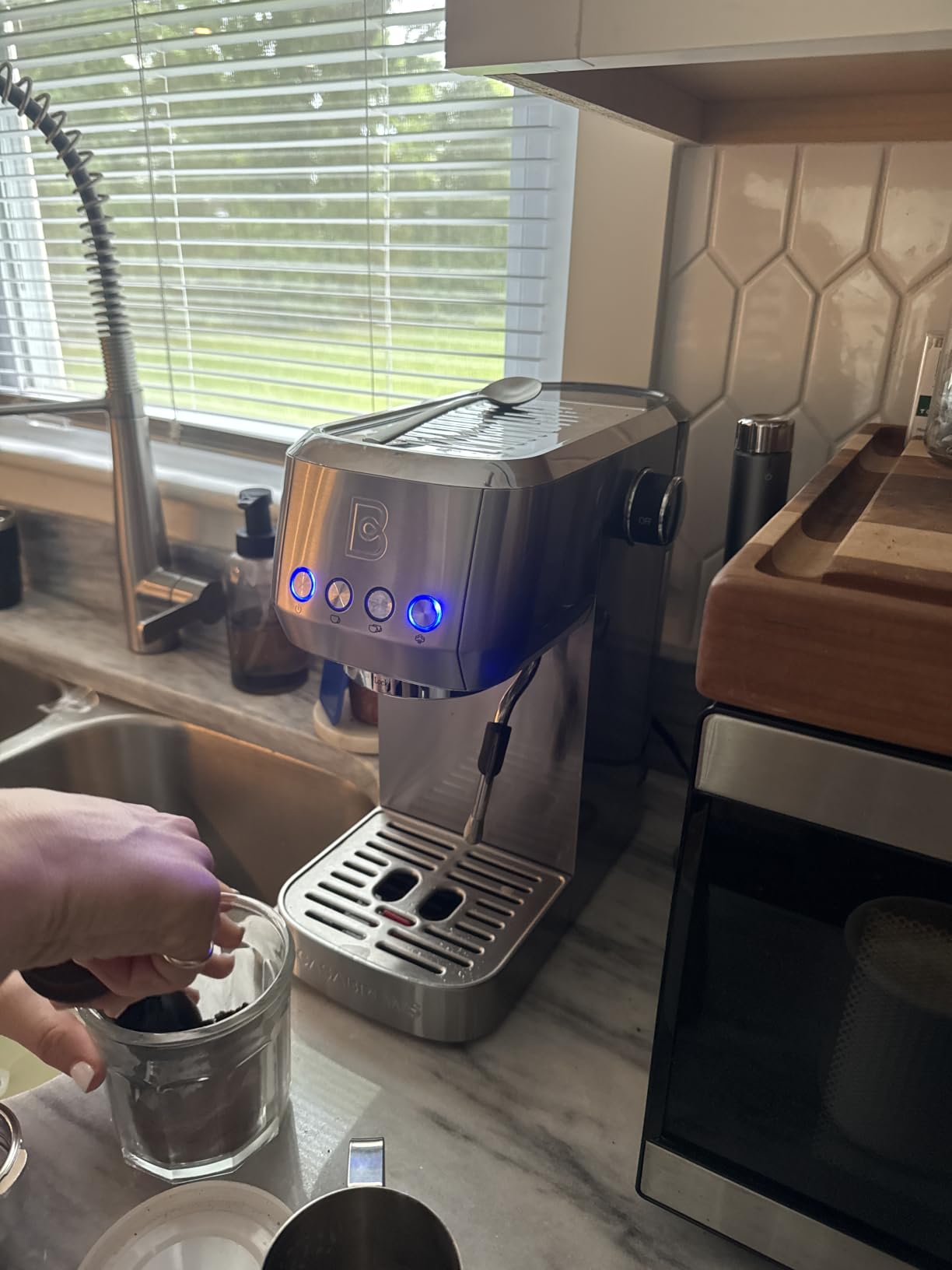
At 8.1 pounds and 5.7 inches wide, it is one of the lighter and narrower machines here, so it suits a smaller counter than its tank size suggests. It runs noisy during extraction, which is normal for a machine in this bracket.
For a household that drinks several coffees a day and does not want to hover over a refill button, this is a strong pick.
7. Breville Bambino – Best for a Fast Start and Hands-Free Milk
Breville BES450BSS Bambino Espresso Machine, Brushed Stainless Steel
1560 watts
Semi-automatic
10.9 lb
47 oz tank
3 second heat-up
1 year warranty
Pros
- ThermoJet heating reaches temperature in about 3 seconds
- Automatic steam wand controls milk temperature and texture
- PID temperature regulation plus low pressure pre-infusion
- Compact body suits a small countertop
- 54mm portafilter with 19g dosing and dual wall baskets
Cons
- No built-in grinder so beans must be ground separately
- Single boiler requires waiting between brewing and steaming
- No pressure gauge to help dial in
- Small water tank relative to other Breville models
The Bambino is the fastest machine here to go from cold to drink. ThermoJet heating reaches extraction temperature in about three seconds, so there is no preheat ritual at 7am, which changes how often people make coffee at home.
The automatic steam wand is the reason it appeals to beginners. It monitors milk temperature and texture and stops on its own, which removes the single most common early frustration: milk that is either scalding or still cold.
The 4.0 average reflects two recurring complaints rather than a flaw: the machine does not include a grinder, and the single boiler forces a wait between brewing and steaming. Buyers call it their first serious espresso machine, which tells you where it lands.
Automatic Steam Wand and What It Removes
Manual milk texturing is the skill that takes longest to learn and delivers the least satisfaction when you are bad at it. The Bambino takes it away entirely, and it will still make you a drinkable cappuccino on your first attempt.
The compromise is that you cannot easily make microfoam by feel or attempt latte art. If you might want to learn pouring later, the Barista Express above is the better long-term tool.
Three-Second Heat-Up and What It Changes
ThermoJet heating is the reason this machine fits a morning routine. Most entry machines need a warm-up window, which means people make fewer coffees than they intend because the machine is not ready yet.
PID regulation and low pressure pre-infusion handle stability. Pre-infusion wets the puck slowly before extraction begins, which reduces channeling and helps a beginner get an even shot from an uneven tamp.
The Grinder Decision for This Machine
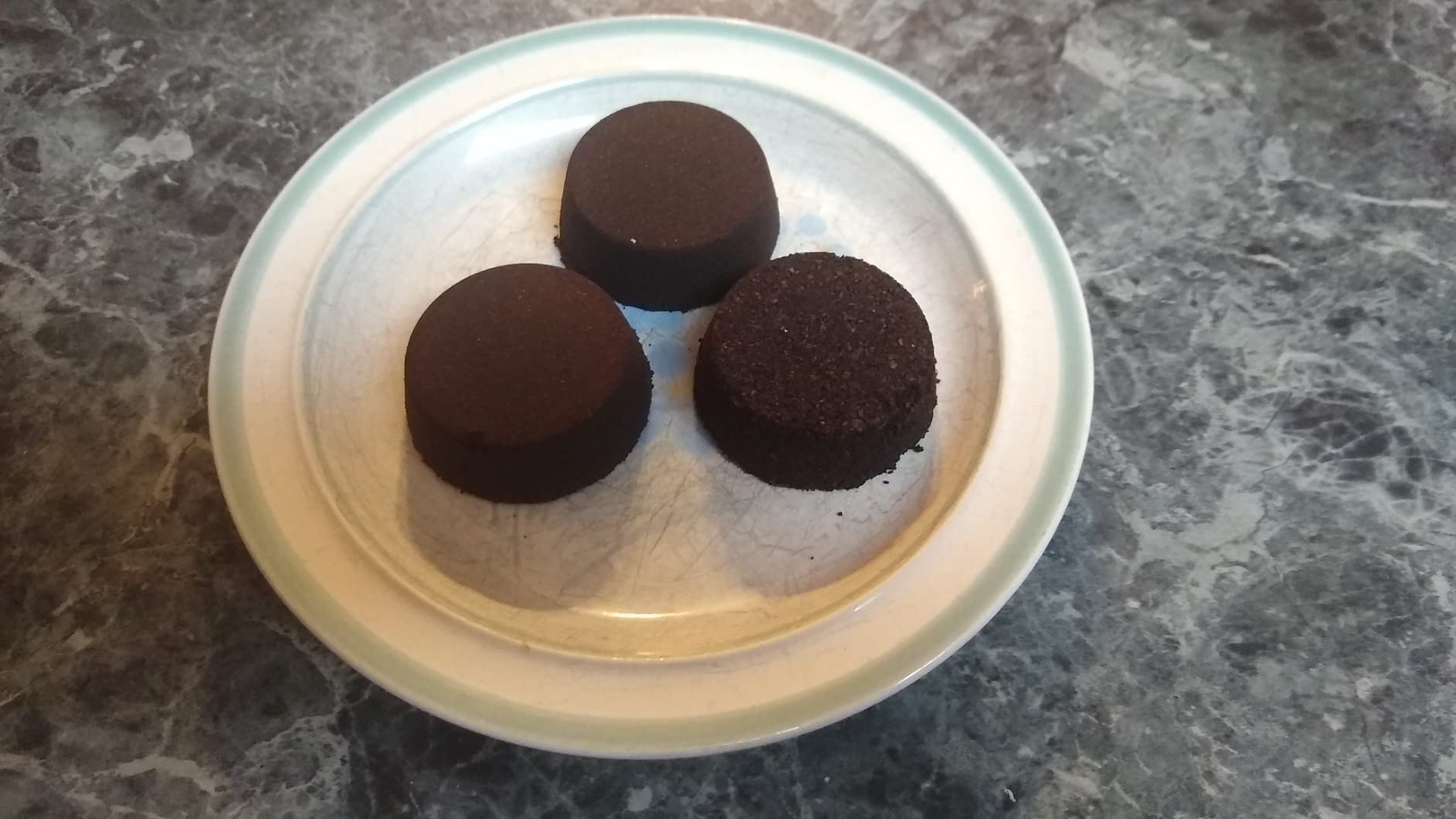
There is no grinder, and that is the dealbreaker consideration. You need a burr grinder on the counter, which adds cost and space, and using pre-ground coffee will leave this machine performing below than what it can do.
If the counter space and budget both allow for a separate grinder, this is a very good first machine. If neither allows it, choose the Barista Express or the Ninja Luxe Cafe instead.
Tank Size, Footprint and Single-Boiler Limits
The 47 ounce tank is small relative to other Breville models, and the single boiler means waiting between a shot and steaming milk. In practice you brew first, then steam, and the pause disappears into the routine.
At 10.9 pounds it is manageable to move, and the 6.3 inch width suits a modest counter. There is no pressure gauge, so early adjustments rely on taste rather than a needle.
8. Ninja Luxe Cafe Premier – Best for Hands-Free Espresso, Coffee and Cold Brew
Ninja Luxe Café Premier 3-in-1 Espresso Machine, Drip Coffee, & Cold Brew
1650 watts
Fully automatic
4.4 lb
25 grind settings
120V
4.4 pound body
Pros
- Barista Assist automates grinding dosing and assisted tamping
- 25 setting conical burr grinder built in
- Dual Froth System makes microfoam hands-free
- Espresso drip coffee and two cold brew styles in one
- Accessory storage compartments organize the counter
Cons
- Regular cleaning required including vacuuming the burr grinder
- Small wastewater tray needs frequent emptying
- Portafilter locking takes firm hand and wrist strength
- Regular brew coffee does not match the espresso output
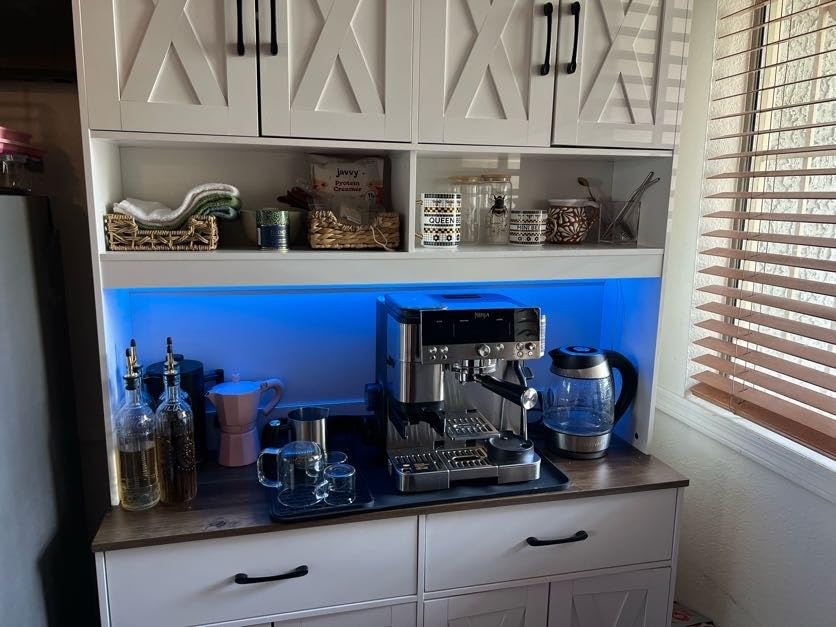
The Ninja Luxe Cafe Premier is the most automated machine here, and the only one that pulls espresso, brews drip coffee and makes cold brew from one set of beans. It is also the lightest body on this list at just over four pounds, which makes it easy to move.
If your goal is to drink good coffee with almost no technique, this is the closest we found to a one-button system that does not produce the thin, watery shots that super-automatics often deliver.
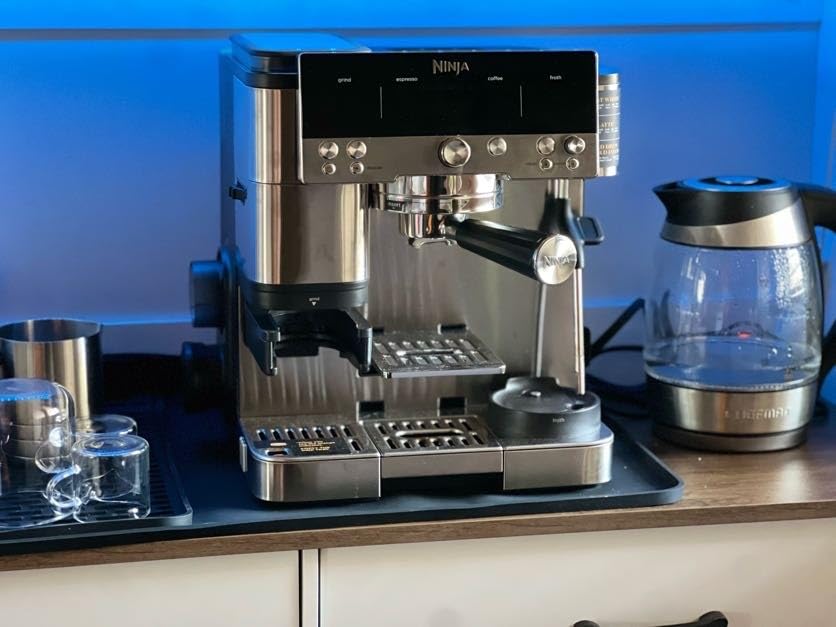
Owners report this as the best automatic machine they have owned, with unusually strong pump, boiler, grinder and frother performance for the class. Roughly three days of dial-in is commonly reported before drinks become repeatable, which is far faster than any manual machine on this list.
Barista Assist: Weight-Based Dosing and Assisted Tamping
This is the feature that changes the experience. Rather than guessing at a dose, the machine weighs it, and rather than relying on your tamp, it assists. Owners say it removes most of the guesswork of weighing and tamping, which is precisely the barrier that stops most beginners.
The 25 setting conical burr grinder feeds into it directly, so beans go in one end and espresso comes out the other. You still choose beans and roast level, which is where the meaningful choices live.
Dual Froth System and Plant Milk
Two mechanisms work together: a whisk for cold foam and steam for hot microfoam. There are four preset programs plus a manual mode, and buyers report that hands-free microfoam is reliable enough to skip wand practice entirely.
Cold foam is a genuine bonus for iced drinks, and there is no separate machine to buy for that.
Maintenance Is the Real Cost
Automation does not mean no work. The burr grinder needs vacuuming regularly, the wastewater tray is small and needs frequent emptying, and the portafilter locks in with enough force that buyers with hand or wrist weakness report difficulty.
Only double and quad shot baskets are included, with no single-dose filter. Occasional grinder mis-dosing appears in reviews, though less often than you would expect from a 25 setting grinder at this weight class.
Cold Brew, Drip and the 3-in-1 Case
Drip and cold brew run from six to eighteen ounces, which replaces a separate coffee maker. Buyers are candid that the regular brew does not taste as good as the espresso output, so if you drink a lot of filter coffee, manage that expectation.
With accessory storage compartments built in, the package is unusually well organised. Owners report reliable performance after nearly two years of daily use.
9. Mr. Coffee 4-Shot – Best for Brewing Multiple Espressos at Once
Mr. Coffee 4-Shot Steam Espresso Cappuccino and Latte Maker with Stainless Steel Frothing Pitcher
1200 watts
Semi-automatic
11.2 by 11.2 by 15 inch
Four shot portafilter
240V
Pros
- Extra-large portafilter brews up to four shots at once
- Integrated frothing wand for cappuccinos and lattes
- Stainless steel frothing pitcher included
- Water pitcher has measurement markings
- Measuring scoop included for consistent dosing
Cons
- Steam pump gives lighter crema than pump machines
- No built-in grinder and no pressure gauge
- Manual tamping and frothing required
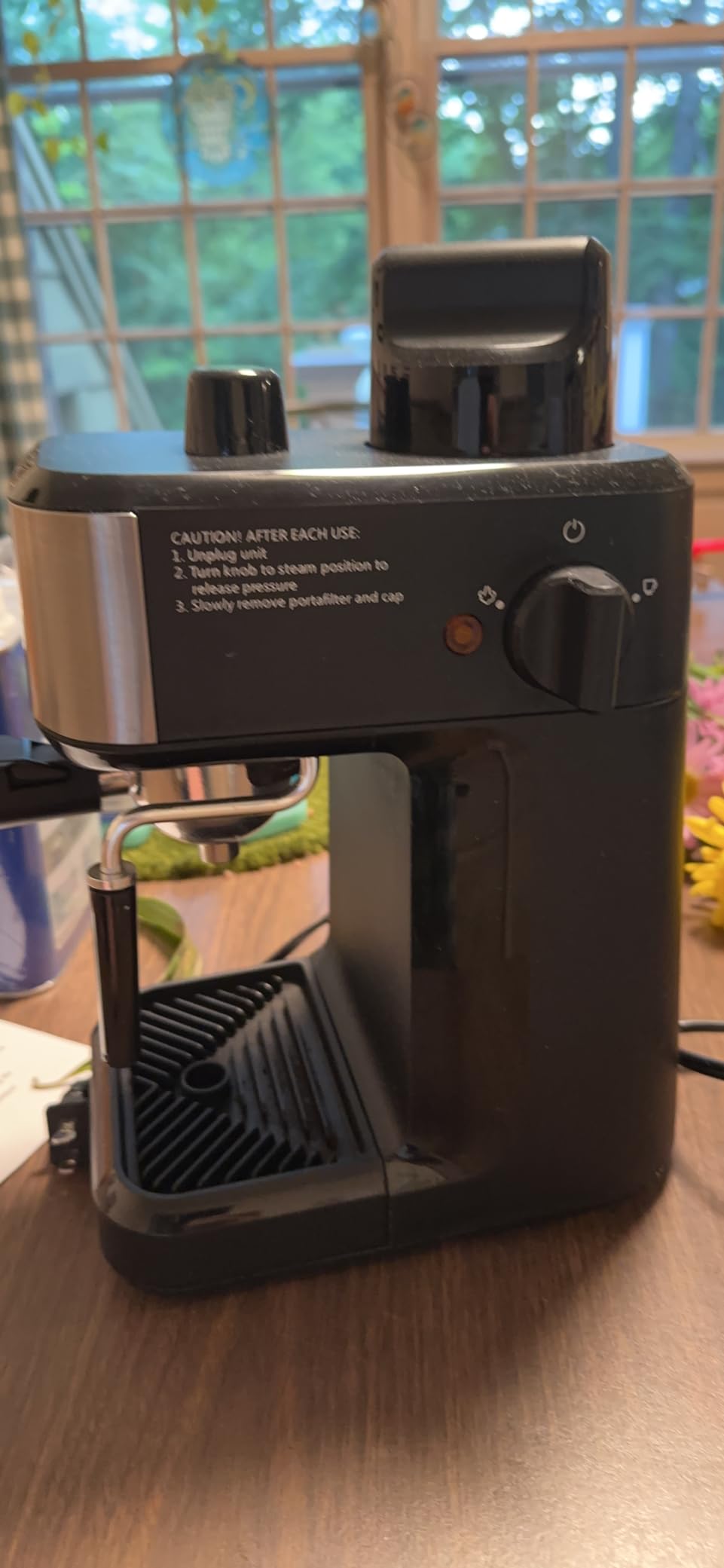
Every other machine here makes one or two shots at a time. This one makes up to four in a single pull, which matters for a family or for anyone hosting who does not want to run the cycle repeatedly.
The included stainless steel pitcher is a nice touch at this level, since most competing machines make you buy one separately.
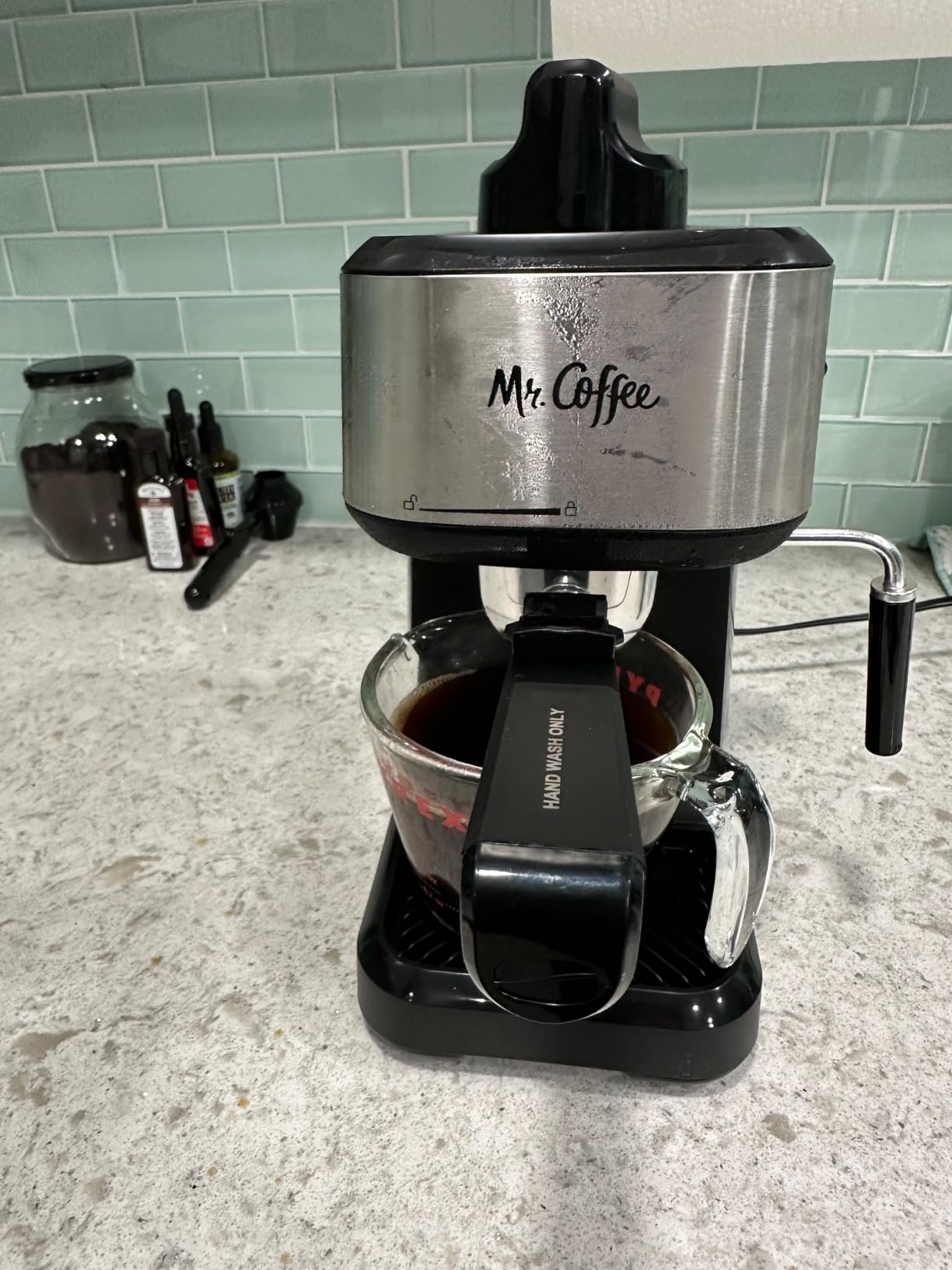
Be clear-eyed about the tradeoff: this is a steam-driven machine, not a true pump machine. The result is a dark, bold, Cuban-style espresso with thinner crema than what the pump machines here produce. Some people love that profile. If you want café-standard crema, choose a pump machine.
Steam Brewing Versus Pump Brewing
Steam brewing forces water through grounds under pressure generated by heating it. The method works and it is how a great deal of espresso has always been made, but the pressure and temperature are less consistent shot to shot, which shows up as a lighter crema.
Buyers describe it as an affordable first step into espresso drinks, and that framing is accurate. It is a stepping stone rather than a destination.
Batching Four Shots and What It Changes
The extra-large portafilter is the reason to buy this. If two people drink espresso in the morning, one cycle serves both, and the milk drinks follow immediately while the machine is hot.
Note that a larger batch does not mean faster. It means fewer cycles, which is the real saving when the machine is shared.
Manual Prep and What You Give Up
Tamping and frothing are both manual, so there is a technique load here even without a grinder. There is also no pressure gauge, so you calibrate entirely by taste and yield.
The water pitcher has measurement markings, which helps repeatability more than most buyers expect. The listed capacity figure in the specification sheet understates the real weight, so treat it as a portable machine rather than a lightweight one.
10. Neretva 20 Bar Compact – Best for Watching Temperature on the Machine
Neretva 20 Bar Espresso Machine Super Compact Espresso Coffee Machine
1350 watts
20 bar
17 lb
1.31L tank
Pre-infusion
120V
Pros
- On-machine temperature monitor showing a steady 198 degree brew
- Low pressure pre-infusion for even extraction
- 20 bar pressure system with 1350W boiler
- 1.31L removable tank with cup warmer
- Includes dosing funnel and pressurized filters
Cons
- Manual tamping and steam wand technique require practice
- Listed weight of 17 pounds is high for a compact machine
- No built-in grinder
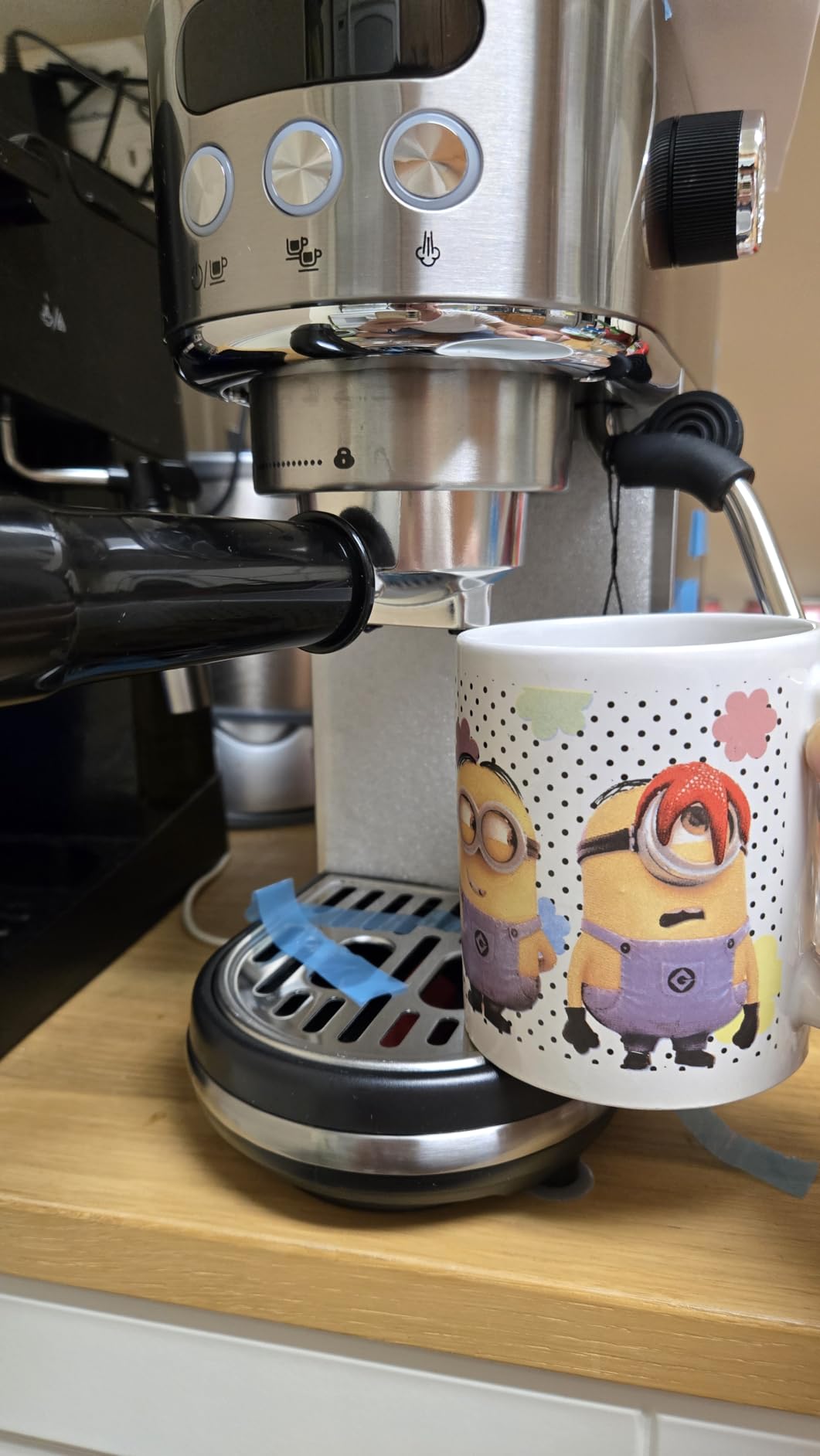
The Neretva finishes our list because it does one thing none of the other compact machines do: it shows you the temperature on the machine itself. Owners repeatedly single out that readout as the feature that made the brewing process understandable rather than mysterious.
It also holds one of the highest average ratings in this group across roughly 1330 reviews, which is notable for a machine at this level.
Temperature Monitor and Pre-Infusion Together
Seeing 198 degrees on the display while a shot pulls removes the biggest question a beginner has, which is whether the machine is even ready. Combined with low pressure pre-infusion, which wets the puck before full extraction, it produces balanced and full-flavoured shots even when your tamp is inconsistent.
That combination is why owners report good results from this machine without a huge learning period.
Steam Wand and Microfoam Capability
The steam wand supports milk foam art, which puts it ahead of most compact machines in this bracket. As with the Casabrews CM5418, the wand needs practice: introduce air in the first few seconds, then lower the tip to stretch the texture.
Getting there takes a week of practice rather than a month, which is a reasonable ask.
The Weight Contradiction
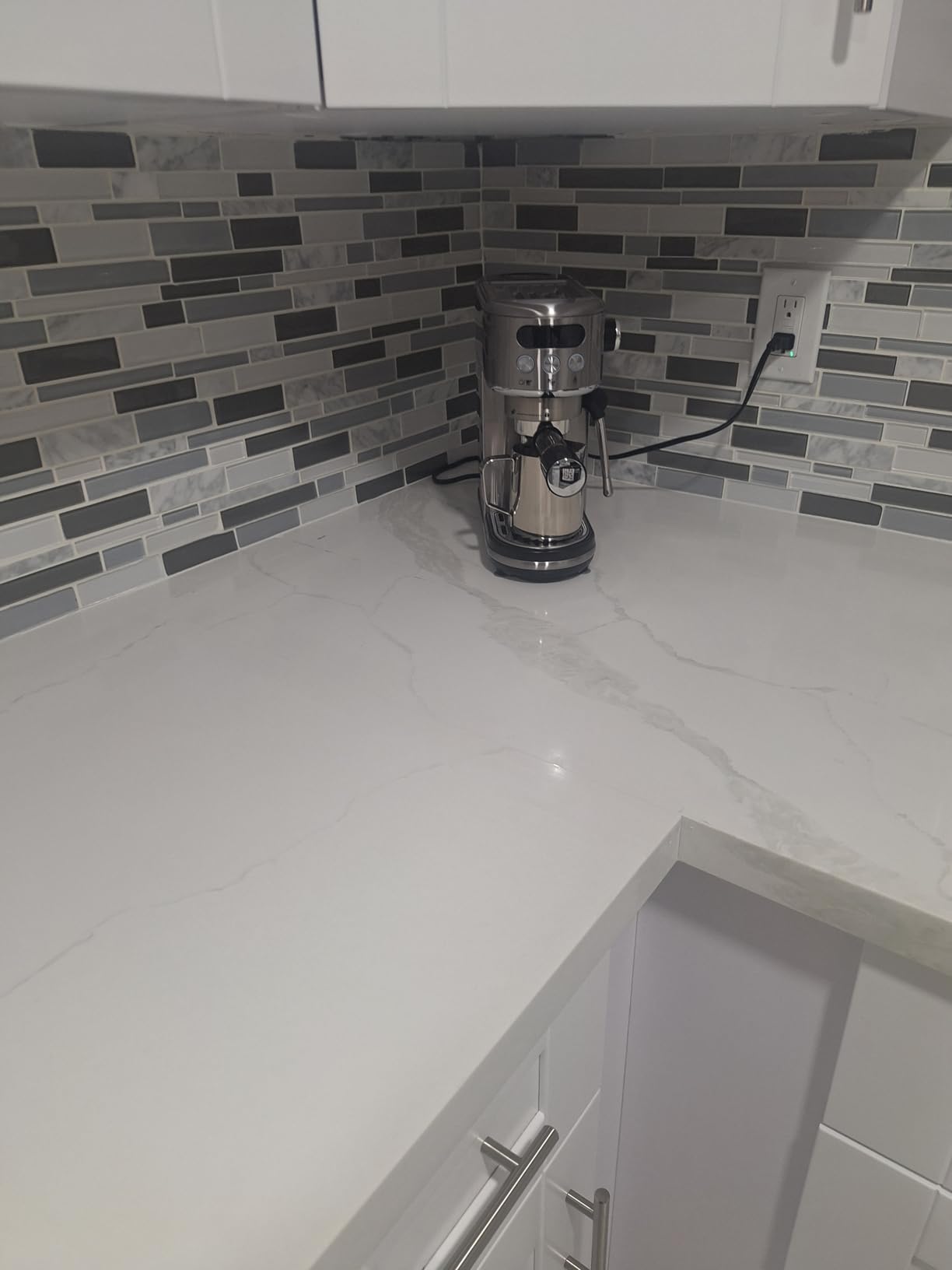
It is described as super compact, and the 11 by 12 by 9.1 inch footprint supports that. But the listed item weight is 17 pounds, which is heavy for a machine this size and worth knowing before you try to lift it onto a high shelf.
The heavy internals likely explain part of the temperature stability that owners like, so this is a tradeoff rather than a mistake.
What Comes in the Box and What You Still Need
The package includes a dosing funnel, a 51mm portafilter, pressurized and single cup filters, and a spoon tamper. A dosing funnel is genuinely useful on a machine without an integrated grinder, because it keeps loose grounds off the counter while you dose.
There is no grinder here, so a burr grinder is required for good results. That is the same rule as every other manual machine on this list, and it remains the most common beginner mistake.
How to Choose Your First Espresso Machine
Most buying mistakes happen because people choose a machine type before deciding how much they want to be involved. Start from that instead.
Match the Machine Type to Your Patience
Manual machines put you in charge of grind, dose, tamp and stop time. You learn the real craft and can grow indefinitely. They suit people who enjoy the process.
Semi-automatic machines automate temperature and, increasingly, shot timing, while you still handle the puck. This is the largest group on our list and the most balanced choice.
Automatic machines automate the milk as well, usually with a powered frother. They suit households where more than one person makes drinks.
Super-automatic machines go from bean to cup with one button. They are the easiest to live with and the hardest to get genuinely good espresso from, which is why none appear in our top three.
Do You Need a Separate Grinder?
Yes, unless the machine has one built in. This is the rule that matters most and the one most often skipped.
Pre-ground coffee stales within days of grinding, and espresso needs a fineness that most home grinders at the wrong setting cannot deliver. If your machine has an integrated conical burr grinder, that is the Barista Express or the Ninja Luxe Cafe on this list. If it does not, treat a burr grinder as part of the purchase rather than a later upgrade.
Our semi-automatic roundup goes deeper on how grinder quality changes the shot.
Manual Wand or Automatic Frother?
Choose a manual steam wand if you may want latte art or thicker microfoam and you are willing to practise. Choose an automatic frother if you want a cappuccino to come out the same way every morning with no training.
Automatic frothers on budget machines lose pressure over a year or two of daily use. Automatic wands on mid-range machines, such as the Breville Bambino, hold up far better because they control temperature and texture separately.
Ignore 15 and 19 Bar Marketing
Those numbers are pump maximums, not what the shot experiences. Real espresso extraction happens around nine bar. A 20 bar pump and a 15 bar pump produce similar shots when the grind is right.
What you should care about instead is whether the machine has a pressure gauge, whether it has temperature control, and whether it tells you anything useful when a shot goes wrong.
Counter Space and Tank Size Are Not Trivial
Footprints here range from 5.47 inches wide on the Casabrews CM5418 to 12.5 inches wide on the Barista Express. Tank sizes range from 34 ounces to 67 ounces, which is the difference between refilling weekly and refilling twice a day.
Measure before you order. An espresso machine that gets moved to a different corner because it does not fit is one that stops being used.
Breville Against De’Longhi for a First Machine
Breville machines here automate more: the Barista Express adds a grinder, the gauge and PID, and the Bambino adds automatic milk with three-second heating. They cost more and are physically larger.
De’Longhi’s machines here are simpler, smaller and hands-on. The Stilosa pairs well with a separate burr grinder and suits people who want the manual craft. If you want the shortest path to a repeatable drink, choose Breville. If you want the cheapest path into real technique, choose De’Longhi.
Do You Even Need an Espresso Machine?
Honestly, sometimes no. A moka pot, an AeroPress or a French press will make excellent coffee for a fraction of the cost and with no learning curve. None of them will give you a layered, concentrated espresso with crema that a milk drink depends on.
If you only drink black coffee in quantity, a better drip machine serves you well. If you want lattes, cappuccinos or anything built on a 30 milliliter shot, an espresso machine is the right tool.
The First 30 Days: A Realistic Dial-In Plan
Two to four weeks of adjustment is the honest expectation, and setting your expectations correctly is most of the battle. Nobody’s first five shots are good, on any machine at any level.
Days 1 to 3. Run the machine’s cleaning cycle if it has one, then flush water through the group head. Pull a shot using the machine’s own preset or basket. Do not adjust anything yet. You are learning what the baseline tastes like.
Days 4 to 10. Change one variable per shot. If the shot pours fast and tastes sharp or sour, grind finer. If it dribbles slowly and tastes harsh, grind coarser. Aim for roughly 25 to 30 milliliters of yield in 25 to 30 seconds.
Days 11 to 18. Weigh your dose. Around 18 grams of coffee in a double basket is a workable starting point, and a scale with 0.1 gram resolution turns guessing into measurement. Change dose and grind together now that you can see both.
Days 19 to 25. Work on milk. Steam to a temperature you can check, introduce air only at the start, then stretch. A cheap thermometer ends the guessing here.
Days 26 to 30. Lock in a recipe and write it down. Dose, grind setting, yield and time. Machines with a gauge or a display, such as the Neretva or the Casabrews CM5418, reach this point faster because the feedback is visible.
Machines with weight-based dosing and assisted tamping, such as the Ninja Luxe Cafe Premier, compress this timeline to about three days. That speed is the main reason to pay more for automation.
The Accessories That Actually Matter on Day One
A machine alone is a coffee press with an expensive heating element. Four accessories change the results more than most people expect, and none of them are decorative.
A scale with 0.1 gram resolution and a timer. This is the first thing to buy. Dosing by eye is the single largest source of variation in home espresso, and a scale removes it in one measurement.
A calibrated tamper, ideally self-leveling. Several machines here include a plastic scoop tamper that owners routinely replace. A weighted, self-leveling tamper makes a level puck almost automatic.
A puck screen. A mesh disc over the basket flattens the puck and reduces channeling. It makes an immediate visible difference on machines with pre-infusion.
A knock box and stainless milk pitchers. A knock box keeps the counter clear and stops you from tapping portafilters on the rim. Stainless pitchers give you control of the pour and hold heat better than plastic.
Optional but useful: a WDT tool to break up clumps in the basket, a dosing funnel for machines without a grinder, and a backflush detergent for periodic group head cleaning. More on the gear side in our general espresso machine guide.
Essential Tips for Beginners
Five rules that carry most of the improvement, in the order they matter.
- Prioritize the grinder. Grind quality changes the shot more than any machine feature. Buy the grinder first if your budget is tight.
- Budget for accessories. A scale, a proper tamper and a puck screen are day-one tools, not gadgets for later.
- Buy fresh beans and grind them that morning. Coffee stales in days, not weeks.
- Change one variable at a time. Grind, dose, or yield. Never two, or you learn nothing.
- Buy used to stretch the budget. A lightly used manual machine from a few years ago plus a new burr grinder is a strong setup.
Espresso Machine FAQs for Beginners
What is the best espresso machine for a beginner?
The Breville Barista Express is the best espresso machine for beginners because it combines an integrated burr grinder, PID temperature control and a pressure gauge, which removes the three variables that make home espresso frustrating. If you want zero technique, the Mr. Coffee Cafe Barista’s automatic frother is easier. If you want to learn the craft, the De’Longhi Stilosa paired with a separate burr grinder is the cheapest path in.
Is DeLonghi or Breville better for a beginner?
Breville is better if you want automation: the Barista Express includes a grinder, temperature control and a pressure gauge, while the Bambino heats in about three seconds and steams milk automatically. De’Longhi is better if you want a smaller, simpler machine and you plan to grind and tamp by hand. The De’Longhi Stilosa costs less and pairs well with a separate burr grinder for owners who enjoy the process.
Do I need a separate grinder to make espresso?
You need a burr grinder unless your machine has one built in. Espresso requires a fine, consistent grind, and pre-ground coffee stales within days, so shots made from it taste flat and stale. Among the machines here, only the Breville Barista Express and the Ninja Luxe Cafe Premier grind beans internally. Everything else needs a burr grinder beside it.
How long does it take to learn to pull espresso at home?
Budget two to four weeks for your shots to become consistently good. The first three days are just learning the baseline, then you change one variable per shot and aim for 25 to 30 milliliters of yield in 25 to 30 seconds. Machines with weight-based dosing and assisted tamping, such as the Ninja Luxe Cafe Premier, reach repeatable drinks in about three days.
Should a beginner buy a super-automatic espresso machine?
Only if you want one-button consistency and have no interest in the brewing process. A super-automatic grinds, doses, extracts and steams for you, which is convenient for a shared kitchen, but it gives up the control that makes espresso rewarding. For a beginner who wants to learn, a semi-automatic machine with a manual steam wand is a better long-term choice.
Is a manual steam wand better than an automatic milk frother?
A manual steam wand is better if you want microfoam or latte art, because you control the texture directly. An automatic frother is better if you want a cappuccino to come out the same way every morning with no practice. Automatic frothers on budget machines tend to lose pressure after a year or two of daily use, while temperature-controlled automatic wands on mid-range machines hold up far better.
What bar pressure do I need for espresso at home?
Around nine bar is what a shot actually experiences, which is why 15 and 19 bar marketing figures are misleading. Those numbers are pump maximums. What matters more is whether the machine controls brew temperature and gives you feedback, so look for temperature control and a pressure gauge rather than the biggest number on the box.
Which Beginner Espresso Machine Should You Buy?
If you want the best espresso machines for beginners in one line: start with the Breville Barista Express. It is our top pick because it does the four things that make or break home espresso, and it shows you what it is doing while it does them.
Match it to your habits instead:
- If you want the hands-off route: the Ninja Luxe Cafe Premier grinds, doses, tamp and steams for you, and reaches repeatable drinks in about three days.
- If you want zero technique: the Mr. Coffee Cafe Barista makes a cappuccino with two button presses, and its automatic frother never needs practice.
- If counter space is tight: the CASABREWS CM5418 is barely wider than a coffee tin and still includes a pressure gauge.
- If you want to learn the craft cheaply: the De’Longhi Stilosa plus a separate burr grinder teaches you more for less than any automated machine here.
- If you want the fastest morning start: the Breville Bambino hits temperature in about three seconds and steams milk automatically, though you will need a grinder alongside it.
- If nobody in the house will ever tamp a puck: the Mr. Coffee 4-Shot brews four at a time and takes the daily drink count out of the equation.
Whichever you choose, buy the grinder first if the machine does not include one, spend the first two weeks on the dial-in plan above, and expect the tenth shot to be far better than the first. That improvement is the whole point. Our general espresso machine roundup covers where to go once you outgrow your first setup, and this list is updated for 2026.
Leave a Reply