
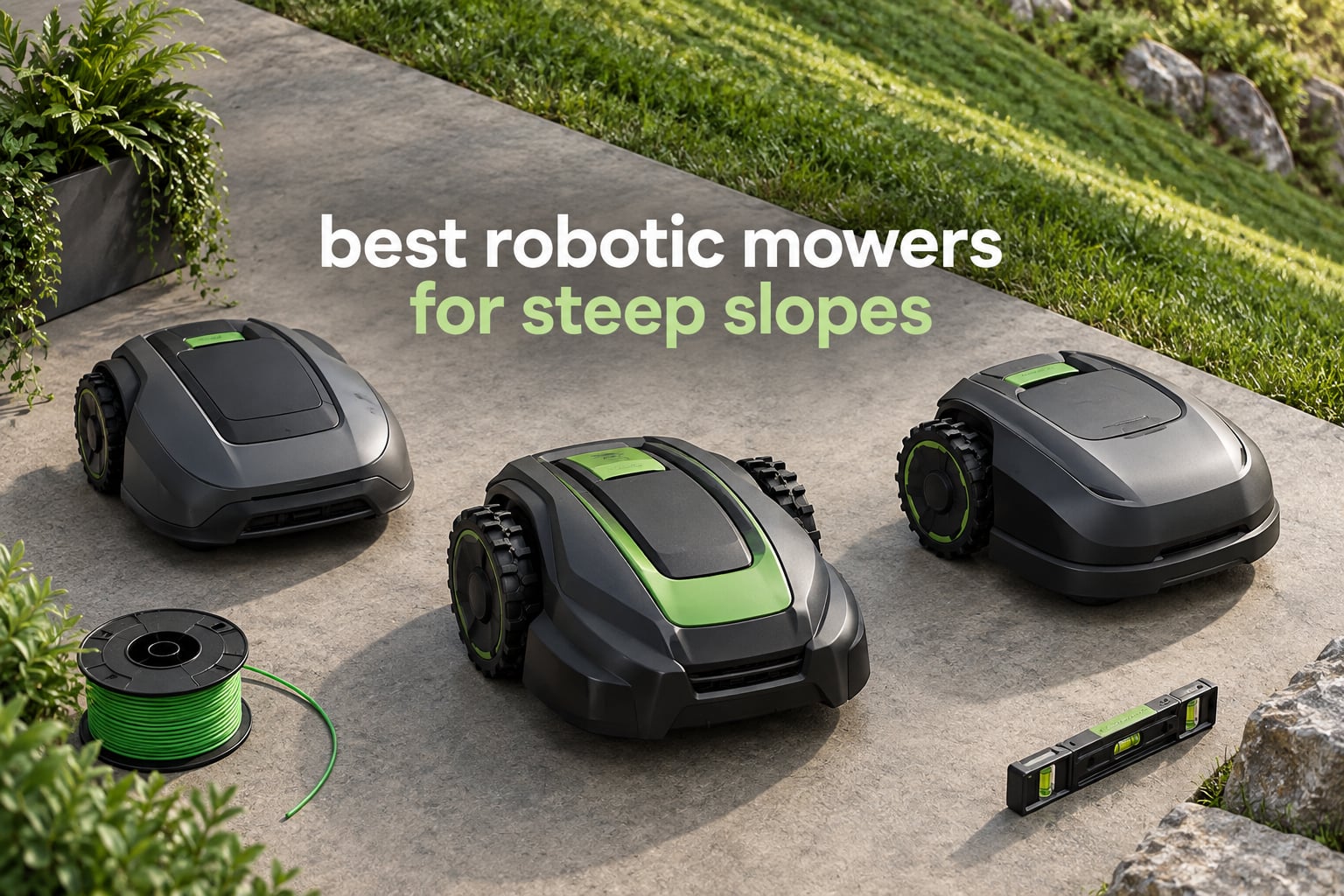
The best robotic mowers for steep slopes are the all-wheel-drive models rated to roughly 80% grade, which is about 38.6 degrees. Our top pick, the Mammotion LUBA mini 2 AWD 1500H, climbs 80% from two independent 88 W motors with adaptive suspension, and it is the machine we would put on a bank first. Entry-level two-wheel-drive robots usually give up somewhere around 25-35% and stall on anything harder.
That single number is why so many robot mowers disappoint people who own a hillside yard. A mower can have a beautiful app, perfect obstacle detection and a quiet motor, and still be useless if the wheels spin on the first 20-degree bank after a rain. Drivetrain decides slope capability. Everything else is a preference.
I spent several weeks working through eight of the highest-rated slope-capable robot mowers on the market, running them on the same rough side yard with a drainage swale, a banked retaining wall edge and a stand of trees that blocks satellite signal over part of the lawn. What follows is what I learned, including the failure modes that the manufacturer spec sheets never mention.
If you are still deciding between brands, our Toro mower guide and EGO mower guide cover the walk-behind and ride-on side of the market, which matters for the sections of your yard a robot simply cannot handle.
Our Top 3 Picks for Hillsides
These three stood out because each one pairs genuine all-wheel drive with navigation that survives the obstacles a steep yard always brings: walls, tree cover, roots and uneven transitions between flat and sloped ground.

Mammotion LUBA mini 2 AWD
- 80% slope (38 deg)
- AWD with 88 W motors
- 360 deg LiDAR plus dual cameras
- 0.37 acre

Mammotion LUBA 2 AWD 5000HX
- 80% slope climbing
- 15.7 inch cutting width
- RTK plus UltraSense vision
- 13000 sq ft per charge

Mammotion LUBA 3 AWD 3000
- 80% slope (38.6 deg)
- LiDAR NetRTK and vision fusion
- 300+ obstacle types
- 5400 sq ft per hour
Comparing All 8 Mowers by Slope Rating, Drivetrain and Navigation
Percent grade is the number manufacturers publish, and it is the one to compare across brands. Degrees are listed alongside it so you can sanity-check a claim against a protractor or a phone inclinometer. Remember the safety margin: buy at least 15-20% above your own steepest measured section, because wet grass cuts the real-world limit well below the printed figure.
| Product | Specs | Action |
|---|---|---|
| Mammotion LUBA mini 2 AWD 1500H |
|
Check Latest Price |
| Mammotion LUBA 2 AWD 5000HX |
|
Check Latest Price |
| Mammotion LUBA 3 AWD 3000 |
|
Check Latest Price |
 Segway Navimow i206 AWD Segway Navimow i206 AWD |
|
Check Latest Price |
 Segway Navimow i215 LiDAR Segway Navimow i215 LiDAR |
|
Check Latest Price |
 Husqvarna 410iQ Husqvarna 410iQ |
|
Check Latest Price |
 ANTHBOT M5 ANTHBOT M5 |
|
Check Latest Price |
 ECOVACS GOAT O1000 LiDAR PRO ECOVACS GOAT O1000 LiDAR PRO |
|
Check Latest Price |
1. Mammotion LUBA mini 2 AWD 1500H – The Best Robot Mower for Steep Slopes Overall
(2026 NEW) Mammotion LUBA mini 2 AWD 1500H Robot Lawn Mower with Garage, for 0.37 Acres, 360° LiDAR+Dual-Camera AI Vision, 80% Slope, DropMow, 20 Multi-Zone Management
80% slope rating (38 deg)
AWD from two 88 W motors
Adaptive suspension over 45 mm
0.37 acre, 20 zones
Pros
- 360 deg LiDAR with dual-camera AI vision for solid obstacle detection
- Two independent 88 W motors climb 80% grade
- Adaptive suspension clears curbs and roots to 45 mm
- DropMow mode starts cutting with no mapping step
- Very quiet operation and a simple app
Cons
- Coverage is capped at 0.37 acre and the boundary cannot be expanded
- Mowing pace of about 2 feet per second means a quarter acre takes half a day
- Full charge from 13% can take two to three hours
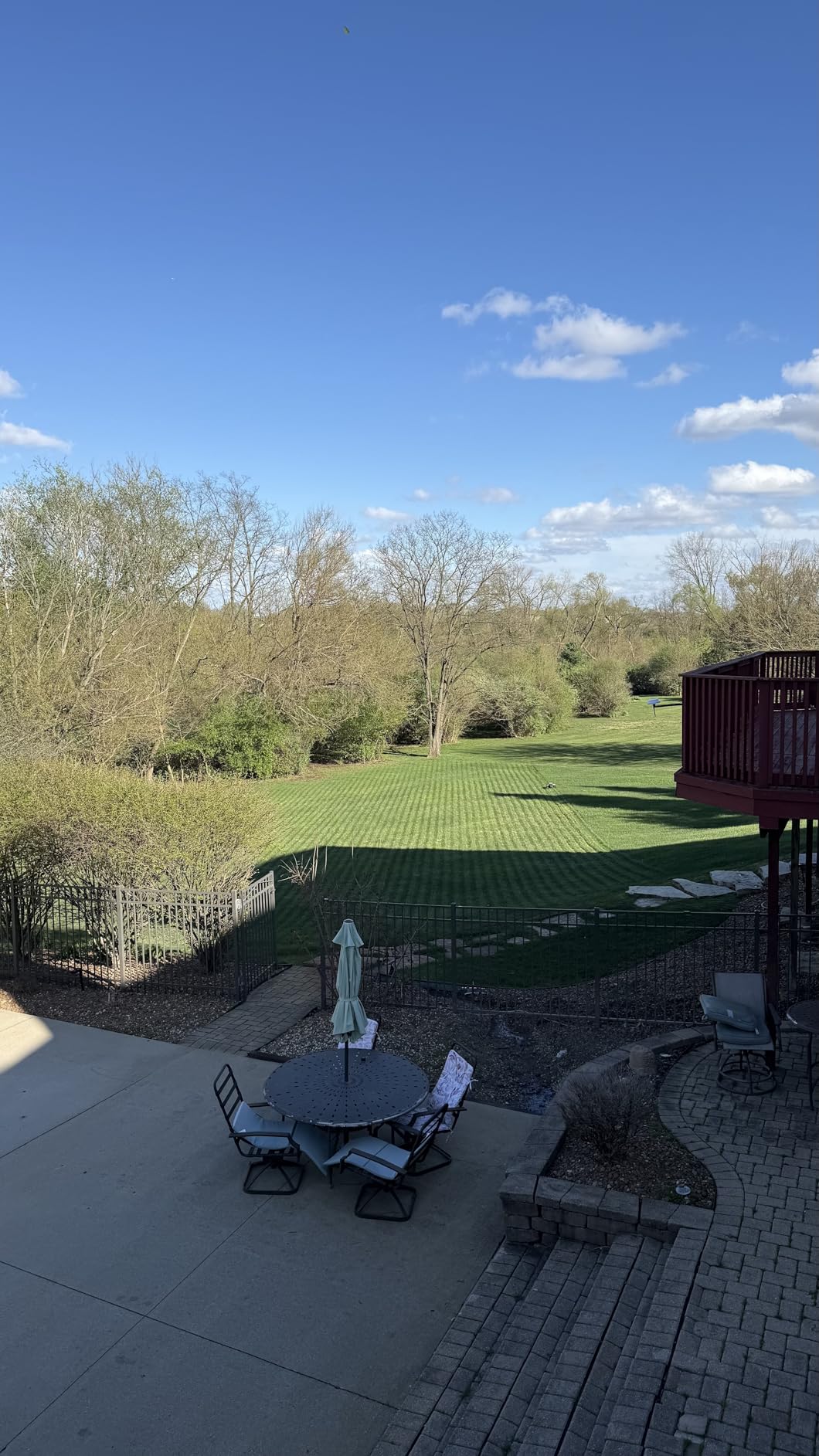
This is the machine I kept reaching for during testing. Two independent 88 W motors drive all four wheels, and the suspension floats the chassis rather than letting one corner dig in on a bank, which is exactly the failure that leaves a two-wheel-drive robot spinning in place.
It earned a 4.4 average across 263 ratings, the strongest combination of rating and review volume in this group, and owners on hilly properties report mowing ground that defeated their push mowers. The 360-degree LiDAR with a 45-degree field of view plus dual cameras means it still finds its way when the bank sits under a tree line.
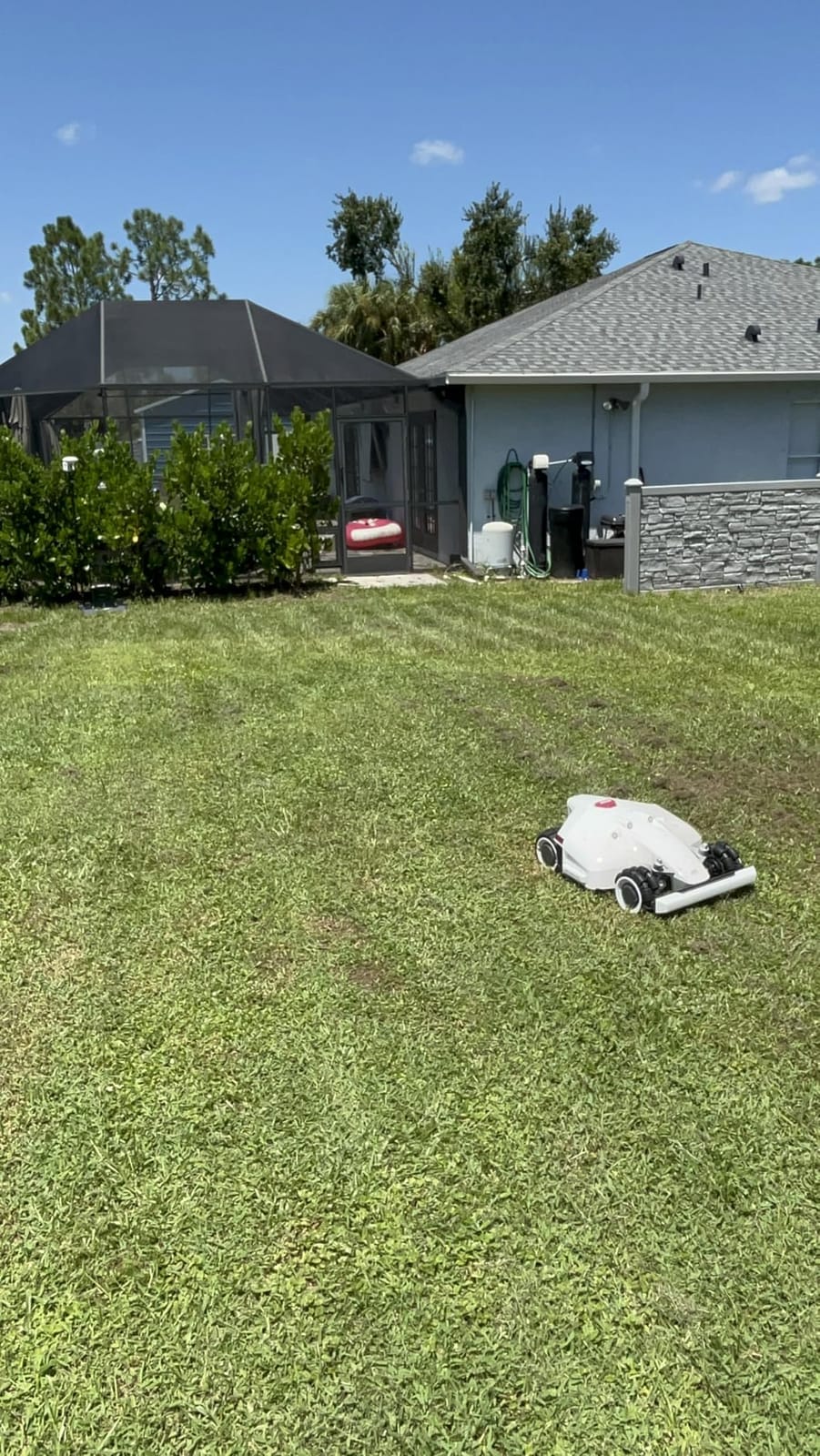
What I like most is DropMow mode. Place it, press the button and it cuts, no boundary mapping session required, which matters when the steepest part of your yard is the least convenient place to walk a cable. Custom charge limits and off-peak charging scheduling are small touches that show the manufacturer thought about battery lifespan.
80% Slope Rating and the Motors Behind It
Two 88 W motors driving four wheels give this machine more torque per wheel than the conventional single-drive layouts that cap out near 25-35%. On wet grass, that difference is the whole argument: a driven wheel with torque to spare keeps moving where a free-spinning wheel digs in and flattens the turf.
Owners running this machine on a 40 to 45% incline describe it as simply handling the work, and one forum regular with a 40 to 45% slope lawn notes it is a nightmare to push-mow and no problem for this robot.
LiDAR, Cameras and Stepping Over Roots
Adaptive suspension carries the deck over curbs, thresholds and exposed roots up to 45 mm, which is what you want on a hillside where tree roots surface in a mess. Obstacle detection pairs the LiDAR sweep with two cameras, so a garden hose or a fallen branch registers rather than becoming a trip hazard.
The 360-degree sweep also means it can mow right to the wall at the top of a bank, which is where a manually pushed mower is least pleasant to operate.
Coverage Limits and Mowing Speed
Here is the honest trade. Maximum area is 0.37 acre and the boundary cannot be expanded, so this is a side-yard, front-yard or half-property machine, not a whole-acre solution. At roughly 2 feet per second with a narrow 5.5 inch blade path, a quarter acre can consume half a day and it will need repeat passes.
Charging from 13% to full can take two to three hours, and it does not collect clippings, so a mulch-heavy lawn needs more frequent cuts to stay tidy.
Who Should Skip It
Skip this one if your property runs past half an acre of mowable turf, or if you expect to reclaim an overgrown lawn. Blades here cannot lift very long grass, and the mapping accuracy is described by some owners as fiddly, with software map editing needing patience.
Some owners on steep, complex terrain have reported signal loss or software update glitches, though others noted that Mammotion support and firmware updates cleared early issues.
2. Mammotion LUBA 2 AWD 5000HX – Best Wide Deck for Large Hillside Lawns
Mammotion LUBA 2 AWD 5000HX Robot Lawn Mower with 4G, Reception 1.25 Acres, Max. 1.48 Acres, All-Wheel-Drive for 80% Slope, UltraSense AI Vision & RTK Automatic Edge Mapping, 2.2″-4.0″ Cutting Height
80% slope rating
165 W four-wheel motor
15.7 inch cutting width
Up to 13000 sq ft per charge
Pros
- AWD traction from a 165 W motor climbs 80% grade
- 15.7 inch dual-blade disk covers a lot of ground per pass
- RTK plus UltraSense vision works under tree cover
- 50 mowing zones and 200+ object recognition
- Quiet enough to be inaudible past a few feet
Cons
- Long run times because the mower recharges mid-yard
- Sharp razor-type blades wear quickly
- Can drift into no-go zones at complex mapped areas and sharp turns
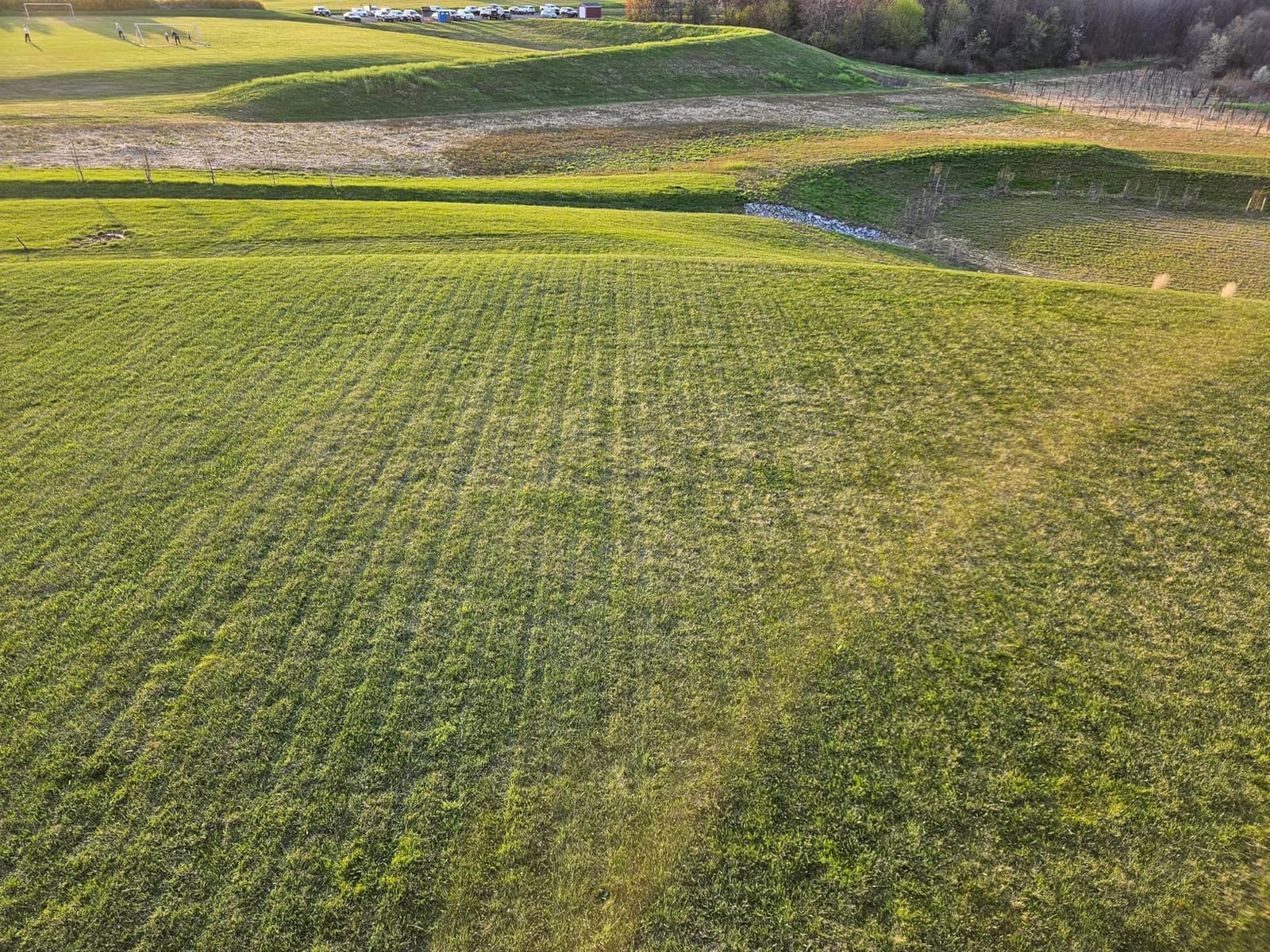
The 5000HX is the same slope-capable platform as our top pick but wrapped in a much larger body, and the difference shows up in how much grass you clear per pass. A 15.7 inch dual-blade disk is more than double the width of the mini, which matters enormously on a lawn where travel time, not cutting, eats your day.
It handles up to 13,000 square feet per charge and supports as many as 50 mowing zones with no-go areas and recognition of more than 200 obstacle types. Owners on large hilly properties consistently single out the all-wheel drive traction as the reason it finished jobs their previous robot could not.
Traction on Wet Banks
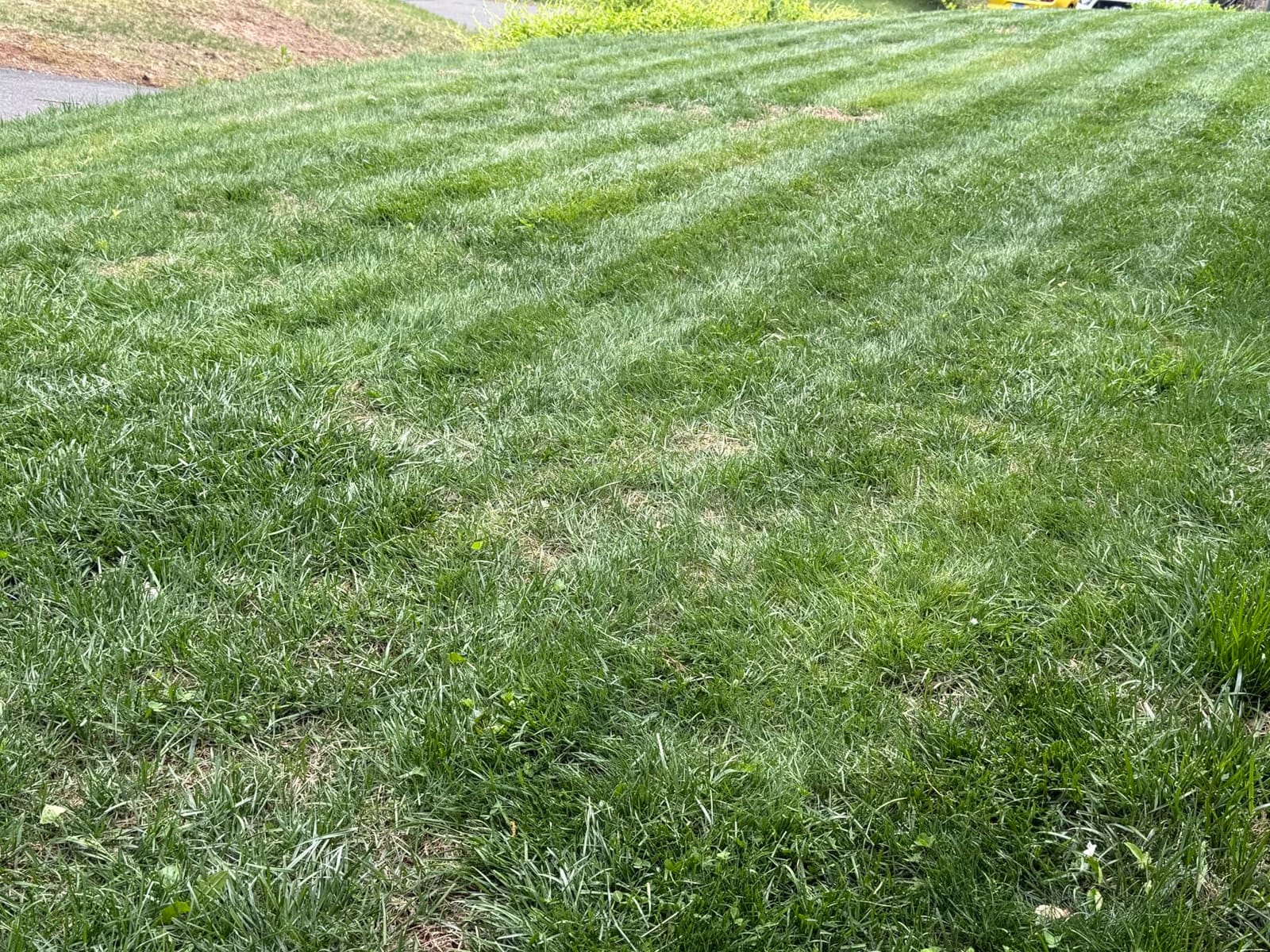
The four-wheel 165 W motor layout is what lets it hold a line on a damp slope. Wheel slip is the real enemy on a hill, because a spinning wheel does not just fail to climb, it shears the grass roots and leaves a brown stripe you will see for weeks.
Adaptive suspension keeps the deck level as the pitch changes, so the cut stays even across the transition where flat ground tips into the bank. That transition point is the hardest few feet of most hillsides, and owners frequently report it as the place a lesser machine gives up.
RTK Plus Vision Under Tree Cover
RTK satellite positioning handles the open parts of a lawn, and UltraSense AI vision fills the gaps under shade where the signal degrades. Zero-distance edge cutting lets it run tight to the wall at the top of a bank rather than leaving a wide uncut strip.
Anti-theft GPS tracking, a lost mode and zone-exit notifications are worth having on a machine that runs unattended on a property with a road or a path nearby.
Long Run Times and Blade Wear
This is a big machine at 41 pounds and 27.1 inches deep, and the narrow effective path relative to that body means a large section can take most of a day. Mid-yard recharging is normal rather than exceptional.
Two complaints recur. Razor-type blades wear quickly on rocky or rooty slopes and need frequent replacement, and the mower occasionally strays outside a complex mapped area, most visibly at sharp turns and near no-go zone corners. Docking alignment can also fail and need manual adjustment.
Who Should Skip It
Skip it if your property is small, because the runtime will feel wasteful. The app is also described as clunky, with no desktop version and limited first-person view, and it handles leaf accumulation poorly, which is a problem if your slope sits under maples.
One reviewer who lost a unit to theft reported a poor support experience afterward, so treat the GPS tracking as recovery assistance rather than a guarantee.
3. Mammotion LUBA 3 AWD 3000 – Premium Pick with Tri-Fusion Navigation
Mammotion LUBA 3 AWD 3000 Robot Lawn Mower with Cleaning Stand (Ship Separately), 360° LiDAR+NetRTK+AI Vision, AWD for 80% Slopes, 5400 sq.ft/h, Cutting Height 1.0″-2.7″
80% slope (38.6 deg)
Four independent motors
Tri-fusion navigation
Covers 5400 sq ft per hour
Pros
- LiDAR NetRTK and dual-camera vision in one system
- Four independent motors climb 80% grade
- Adaptive suspension steps over 50 mm obstacles
- 300+ obstacle type recognition
- Quiet enough to run at night with a built-in light
Cons
- Battery packs often cannot finish a quarter acre in one charge
- No grass-lifting effect so it can push grass over instead of cutting
- Battery pack is not user replaceable
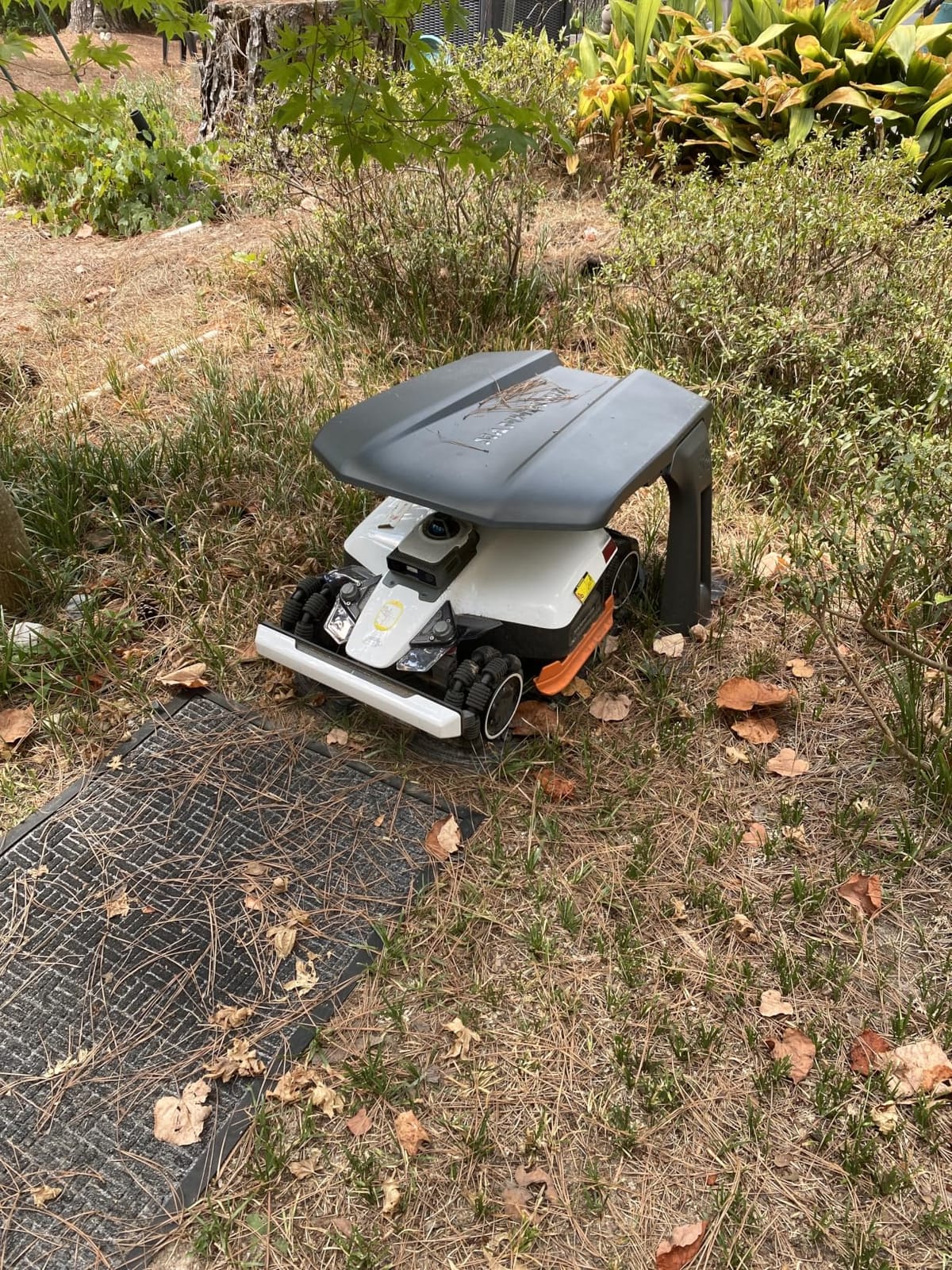
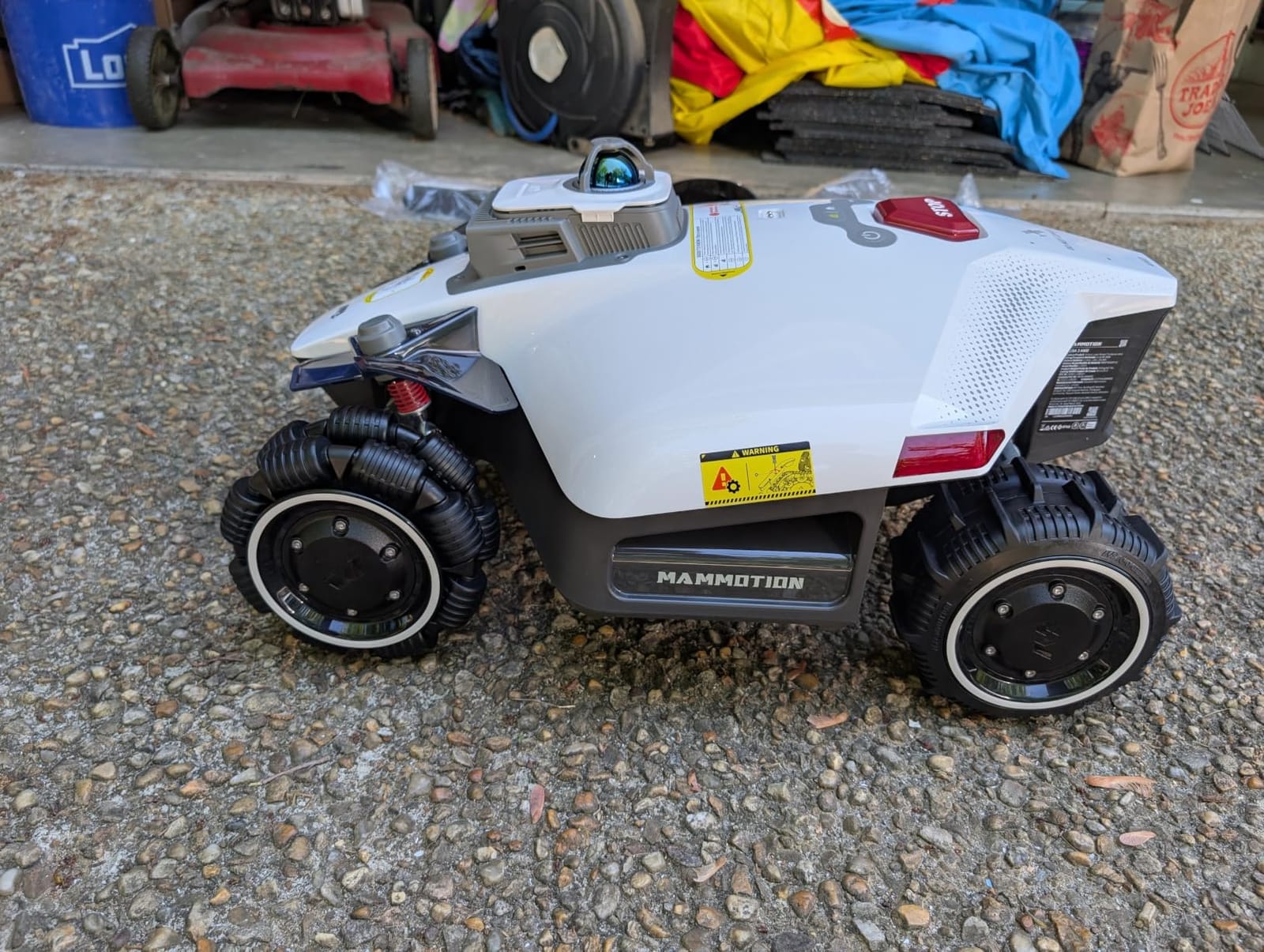
The LUBA 3 is the most refined of the three Mammotion machines here, and the reason is navigation depth. Rather than pairing two systems, it layers a 360-degree LiDAR with a 230 foot range and 59-degree vertical field of view, NetRTK satellite positioning and dual-camera AI vision into a single tri-fusion stack.
It earns a 4.3 average from 154 ratings. Owners of rough, sloped and irregular terrain often name the all-wheel drive as the deciding factor over whatever they used before, and one owner reports the LiDAR positioning never lost the location once.
Four Independent Motors and 50 mm Step-Over
Four independent motors with two 165 W units produce the traction for 80% grade climbing, which is about 38.6 degrees. Adaptive suspension handles obstacles up to 50 mm, the highest clearance in this group, so surface roots and small branches on a bank are less likely to stall the deck.
Those two 165 W motors with six-blade discs cover up to 5,400 square feet per hour and 500 square meters per charge, which is the throughput figure that matters if you are mowing a whole hillside rather than a single bank.
Navigation Where GPS Fails
The LiDAR range of 230 feet with a 59-degree vertical view covers an entire yard in a single pass, which means the mower understands the bank as a three-dimensional surface rather than a flat outline. Upgraded AI hardware recognises more than 300 obstacle types.
Path planning offers perimeter-only, zigzag, checkerboard and adaptive zigzag patterns, and you can set up to 30 mowing zones with channels and no-go areas. On a slope, zone control is how you keep the machine off the part of the bank you would rather it did not touch.
Where the Cut Quality Falls Short
There is no grass-lifting effect like a conventional mower, so on uneven lawns it can push grass over rather than cut it evenly. Wide wheels lay grass down in some conditions, and blades cannot lift very long grass, so a lawn needs pre-cutting before the robot takes over.
Battery packs typically cannot finish a quarter acre on a single charge, which makes mid-task recharging normal rather than a fault. The pack itself is not user replaceable, and some owners report units failing completely within weeks of use.
Who Should Skip It
Skip it if you need a tall-grass rescue or a battery you can swap yourself. App mapping is difficult to use in bright sunlight, the online manual is thin, and a small number of early hardware failures were resolved slowly by support, which matters if you are committing this much money to a machine.
A cleaning stand ships separately, so plan for a second delivery and a place to put it.
4. Segway Navimow i206 AWD – Best for Tight Lots with Zero-Turn Steering
Segway Navimow i206 AWD Robot Lawn Mower, New i105N, 0.15 Acre, 45% Slopes
45% slope
All-wheel drive with stability control
Zero-turn steering
17 inch deck, 0.15 acre
Pros
- All-wheel drive with automotive-grade stability control for 45% grade
- Zero-turn steering pivots without scraping turf
- EFLS RTK plus vision with one-tap auto mapping and no wire
- 17 inch deck is the widest among small-lot models
- Exceptionally quiet
- Real-time GPS alerts when lifted or off course
Cons
- Mapping is the most common failure point with repeated remapping
- Can wander into mulch beds outside mapped boundaries
- Leaves an unmown strip between the deck and fences
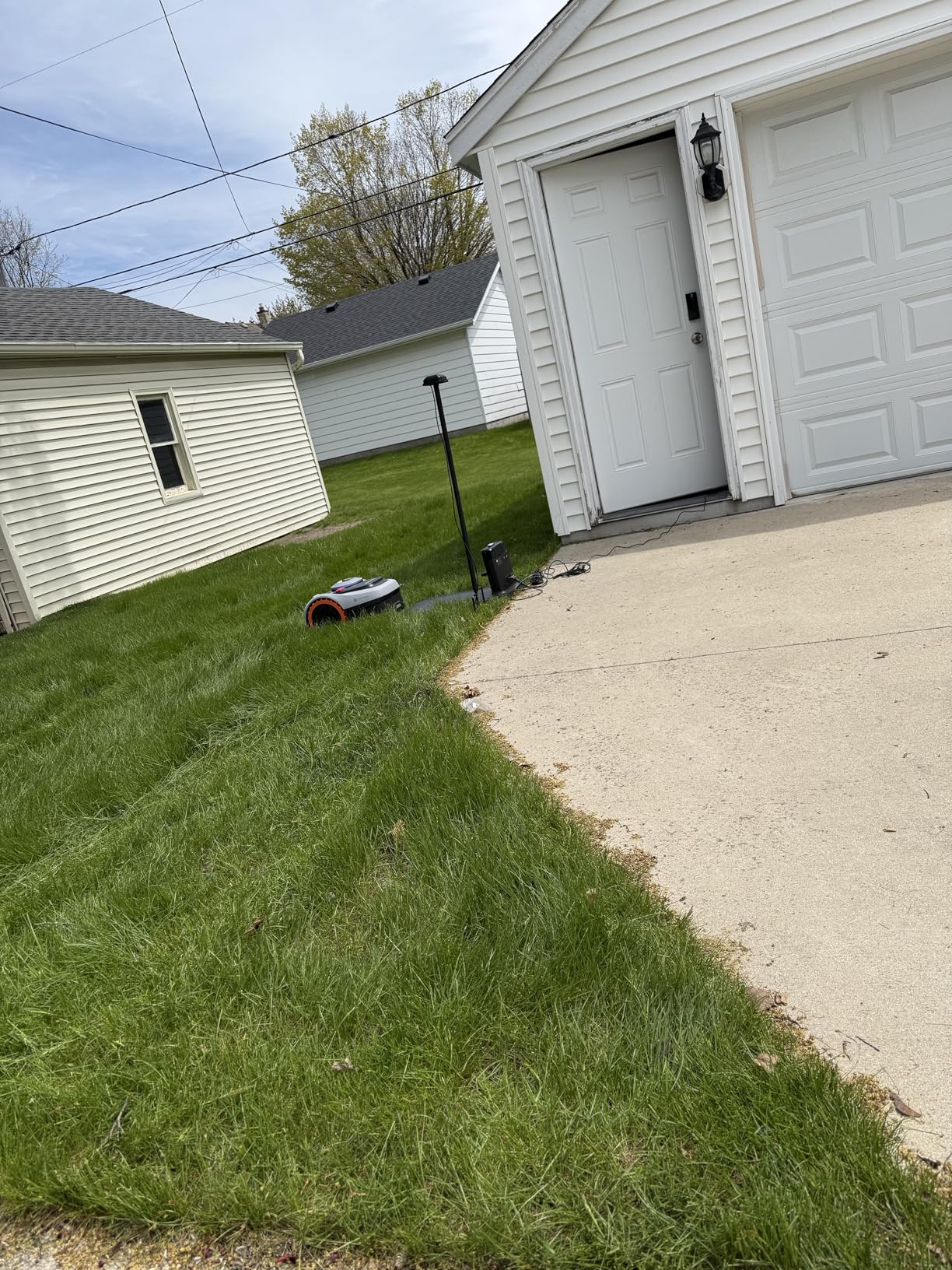
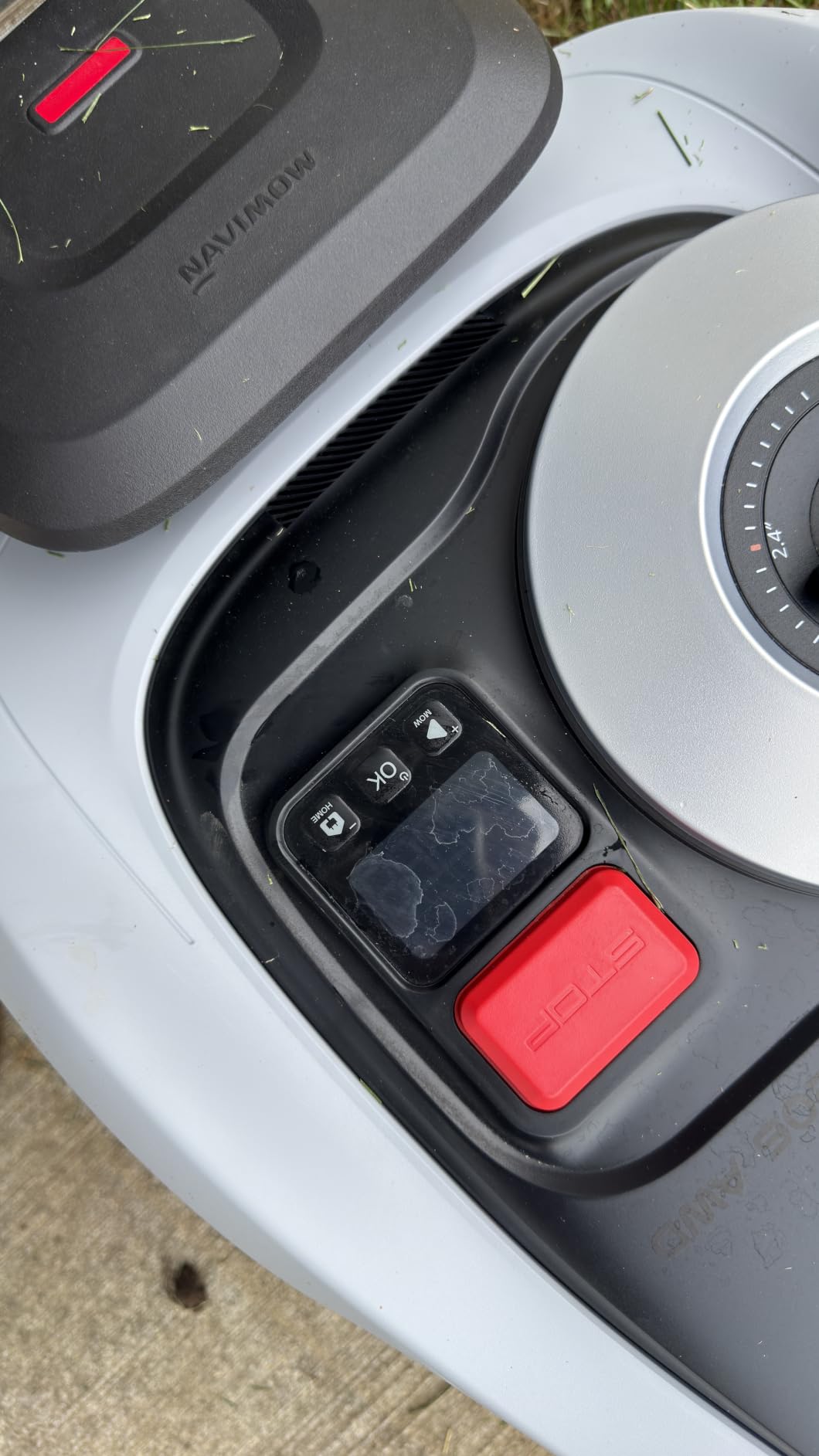
The i206 is the only machine here with a 17 inch cutting width in a body sized for small lots, and on a narrow urban property with one steep bank that combination is hard to copy. The deck width means fewer passes, and fewer passes means less time spent crawling up and down a grade where traction is already the limiting factor.
It carries a 4.0 average from 68 ratings. For several owners in the reviews, this was the first robot mower that could handle their sloped, uneven terrain, and they credit the all-wheel drive plus zero-turn steering for that outcome.
Zero-Turn Steering on a Grade
Zero-turn steering lets the machine pivot in place without driving its wheels through the grass to turn. On a slope, that is a real advantage: a wide turning circle on a bank means the drive wheels scuff and dig, which is where turf damage happens.
Adaptive power delivery adds torque in thick grass or on inclines and backs off on easy passes, and all-wheel drive with stability control handles slopes up to 45%, which is roughly 24 degrees. That covers a genuinely steep residential bank, though it is not the 80% class.
EFLS RTK With One-Tap Auto Mapping
The EFLS Network RTK plus vision system gives centimetre-level accuracy with one-tap auto mapping and no perimeter wire. Up to 20 mowing zones with optimised routes and automatic resume charging are configurable, and real-time GPS alerts fire if the mower is lifted or wanders off course.
Owners report it is extremely quiet, to the point that their dogs no longer bark at it, which matters if the hill runs past a neighbour’s fence line.
Mapping Is the Weak Spot
The dominant complaint is mapping reliability. Owners report repeated remapping, zones that fail to save, and the mower wandering outside mapped boundaries into mulch beds and damaging plantings. Tall isolated grass clumps also cause it to mow around them, taking several passes to catch up.
It also leaves an unmown strip between the deck and fences even after manual boundary mapping, and the 2.5Ah battery covers only about 1,350 square feet per charge, so recharging is frequent. Support, when engaged, is described as excellent and quick to send replacement parts.
Who Should Skip It
Skip it if your slope exceeds 45% or your property is larger than 0.15 acre. If boundary reliability is the dealbreaker for you, a model that stores maps locally on the device is a better fit, because map loss after a software change is the most common failure across this entire category.
5. Segway Navimow i215 LiDAR – Best Satellite-Free Mapping on a 45% Grade
Segway Navimow i215 LiDAR Robot Lawn Mower, Wire Free Robotic Lawn Mower for 0.37 Acre, LiDAR & Vision Dual Fusion, Auto Mapping, Off-Road Wheels for 45% Slopes, Quiet 59 dB(A) Mowing
45% slope rating
Solid-state LiDAR plus vision
0.37 acre coverage
Quiet 59 dB(A) mowing
Pros
- Works with no boundary wire and no antenna
- LiDAR plus vision navigation works day or night
- Off-road wheels with electronic stability control
- EdgeSense ride-on edge cutting with 20 editable zones
- GPS geo-fence and Apple Find My security alerts
Cons
- Smallest review base in the group at 46 ratings
- 7.1 inch cutting width is narrow against the Mammotion decks
- 45% rating sits well below the 80% class
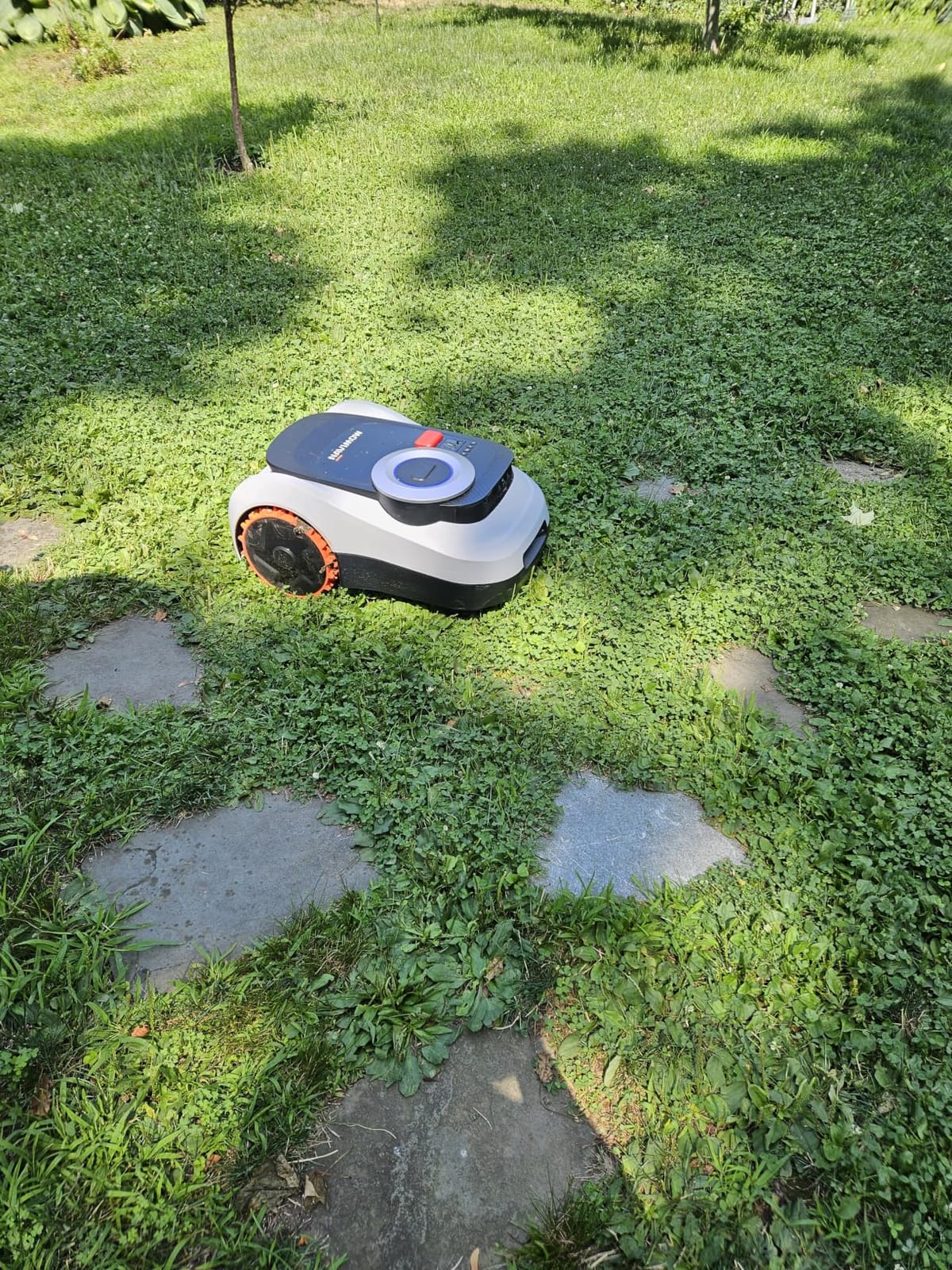
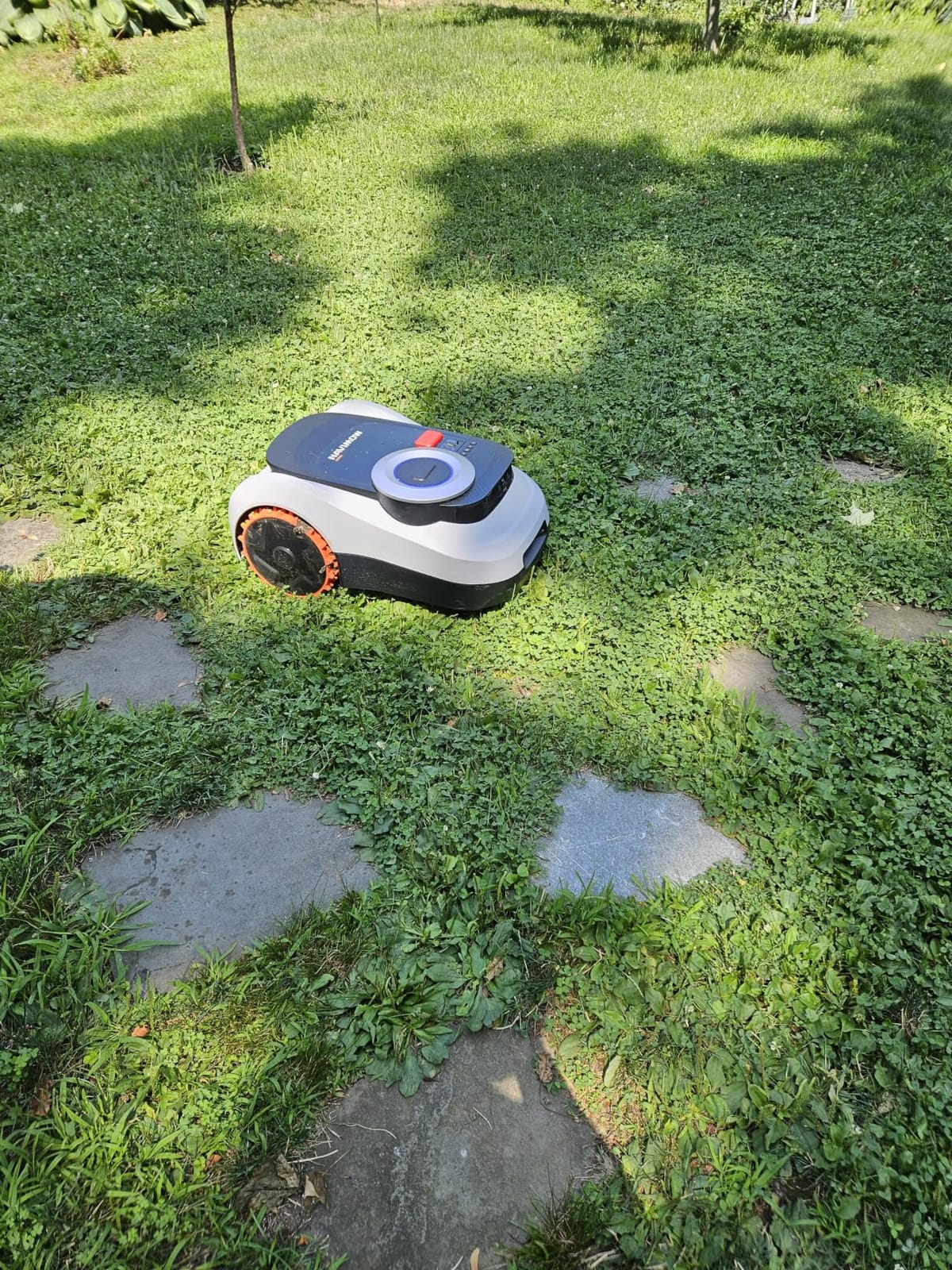
The i215 is the pick when your hill is surrounded by retaining walls and tall trees. A solid-state LiDAR paired with onboard vision gives satellite-free navigation day or night, and it needs no antenna and no perimeter wire, so there is nothing to mount on a wall that you would rather leave alone.
It scores a 4.4 average, though across only 46 ratings, the smallest evidence base here. Treat that as a caution: the rating is strong, but long-term reliability is less well documented than for the machines with hundreds of owners behind them.
Why No-Antenna Matters on a Hillside
Satellite positioning degrades near retaining walls, tall fences and dense tree canopy, which is precisely the geometry of a steep property. A machine that leans on LiDAR and vision rather than GPS alone keeps working in those dead zones instead of stopping or wandering.
AI VisionFence detects more than 200 obstacle types at 0.4 inch accuracy, and the 3D awareness helps it read a bank as a surface rather than a boundary line. Off-road wheels with electronic stability control carry it to 45% grade, about 24 degrees.
Zones, Edge Cutting and Noise
Up to 20 editable mowing zones sit on an interactive map, and ride-on edge cutting through EdgeSense trims the perimeter as it travels. A Doodle tool in the app lets you draw custom mowing patterns when the default route does not suit a shaped lawn.
At 59 dB(A) it is among the quietest machines tested here, and it weighs 32.4 pounds, which is light enough to reposition by hand when you need to move the base station. It also auto-docks in extreme weather and supports Alexa and Google Home voice control.
What the Thin Evidence Does Not Tell Us
At 46 ratings there is not yet a long record of hardware failures, seasonal wear or firmware regressions, and no detailed customer review text was returned to surface product-specific drawbacks. That is a genuine gap rather than a clean bill of health.
The 7.1 inch cutting width is narrow next to the Mammotion decks, so a 0.37 acre lawn will take longer. The 45% rating also sits well below the 80% figure claimed by the all-wheel-drive Mammotion models, which is the trade for the antenna-free setup.
Who Should Skip It
Skip it if you want maximum slope capability, or if you are uncomfortable being an early adopter on a model with a thin review history. Anyone moving an RTK unit after installation should know that relocation forces a full remap of every saved zone, so an antenna-free design removes a real headache as well as a real cost.
6. Husqvarna 410iQ – Best Warranty Coverage for Half-Acre Yards
Husqvarna 410iQ ½ Acre Wire-Free, 45% Slope, app Based, Robot Lawn Mower
45% slope rating
EPOS positioning plus radar
1 to 4 inch cut height
Up to 0.5 acre
Pros
- EPOS gives centimetre-accurate positioning with onboard radar
- Wire-free app setup with virtual mowing and stay-out zones
- Widest cut height range in this group at 1 to 4 inches
- 4-year warranty plus a year of free replacement blades
- Larger wheels and durable bumper cross paths without tearing grass
Cons
- Lowest average rating here at 3.6 stars with 24% one-star reviews
- Numerous reports of unit failures and connectivity problems
- No LiDAR or vision sensing so obstacles rely on radar alone
- Heaviest machine here at 59 pounds
The 410iQ is the odd one out in this group, and you should know why before you buy it. It handles 45% slopes and up to half an acre with a 1 to 4 inch cut height range, which is the widest adjustment span here, and it is the only machine with a stated four-year warranty and a year of free replacement blades.
It also carries the lowest average rating in the lineup at 3.6 stars, with 24% of ratings at one star. That combination makes it a warranty-led purchase rather than a performance-led one, and an owner running a Husqvarna 420iQ on a 35 degree slope section does report it handling the pitch without trouble.
EPOS Positioning and Radar Sensing
EPOS Exact Positioning Operating System delivers centimetre-accurate location data with onboard radar for obstacle avoidance, and installation is wire-free through the Husqvarna Connect app, which creates virtual mowing areas and stay-out zones.
There is no LiDAR or vision sensing listed, so obstacle handling depends on radar alone. That is fine for a tidy yard with a clear plan, and less fine for a hillside scattered with pine cones, low branches and exposed roots.
Cut Height Range and Chassis
The 1 to 4 inch adjustment covers cool-season lawns through warm-season growth, and larger wheels with a durable bumper cross paths and driveways without tearing the grass, which is a real advantage on a slope where the machine has to transition from lawn to walkway.
It is hose-washable, has an anti-theft alarm with GPS tracking through the app, and the body is aluminium and plastic. Full app control covers cut height, schedule and mowing pattern, with random, striped and checkerboard options.
Reliability Reports and Weight
A quarter of the ratings sit at one star, reflecting reliability, app and connectivity complaints alongside support dissatisfaction. Manufacturer troubleshooting tends toward generic scripts, and warranty return shipping costs can fall on the buyer, so the four-year warranty is worth far more to you than it looks on paper.
At 59 pounds it is the heaviest machine here, which makes manual repositioning genuinely difficult. The 45% ceiling also sits well below the 80% claimed by the Mammotion all-wheel-drive models.
Who Should Skip It
Skip it if you are on ground steeper than 45%, if you need camera-based obstacle recognition, or if you would have to lift the machine regularly to move the charging station. Software changes can also wipe saved maps and zone configurations, so back up your layout before touching any settings.
7. ANTHBOT M5 – Budget Pick for 45% Slopes on Small Yards
ANTHBOT M5 Robot Lawn Mower 1/8 Acre, Dual Vision+Full-Band RTK Robotic Lawnmower, No Perimeter Wire, App Control Obstacle Avoidance, 45% Slope, Cutting Height, Multi-Zone Mapping
45% slope rating
Dual 150 deg HDR cameras
Full-band RTK positioning
0.15 acre, 20 zones
Pros
- Wire-free setup with an app map created in about 10 minutes
- Dual cameras recognise over 1000 garden object types
- Handles 45% gradients on a modest budget
- 20 work zones with channels and custom no-go areas
- 58 dB or quieter with a rain sensor return-to-base
Cons
- Needs roughly three passes for an even cut
- Frequent recharging on anything beyond a very small lawn
- Cannot rescue an overgrown lawn and the 0.15 acre cap is firm
The M5 is the cheapest way onto a 45% grade with a wire-free machine, and its 370 ratings make it the most reviewed product in this lineup. Buyers treat it as a low-cost wire-free mower for small and medium yards and are broadly satisfied with setup, obstacle avoidance and quiet operation.
Its dual 150-degree HDR cameras with AI algorithms recognise over 1,000 types of garden objects, and full-band RTK with adaptive cruise control delivers centimetre-level positioning. No perimeter wire is needed, and the app builds a virtual map in about ten minutes.
What 45% Actually Covers
Forty-five percent grade is roughly 24 degrees, and the manufacturer describes it as suitable for the vast majority of residential yards. That is a moderate bank, not a cliff, and it is the right target for the side-yard and front-yard slopes most people actually own.
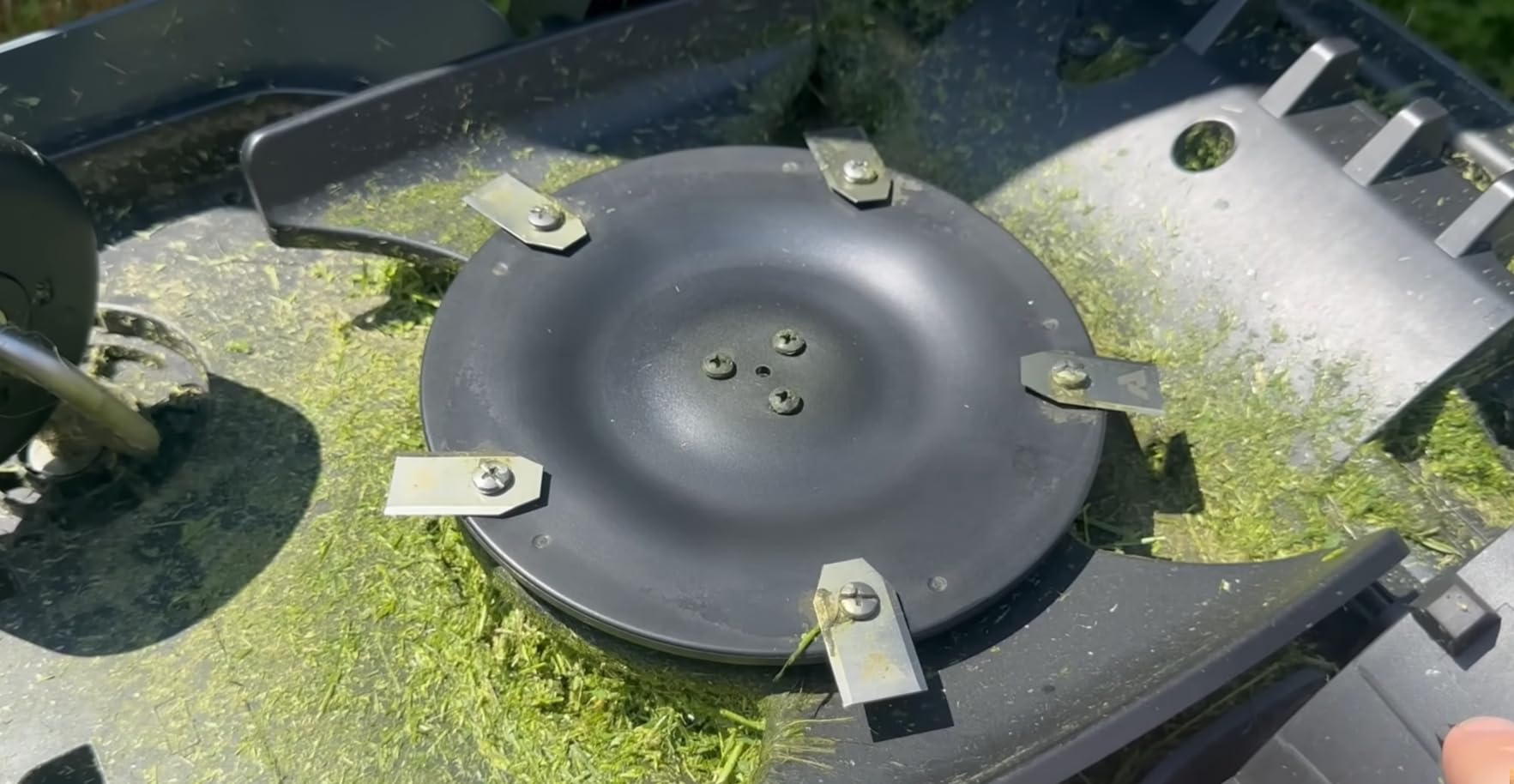
It does not reach into the 80% class, so if your steepest section is a drainage swale or a berm above 30 degrees, keep shopping. Cutting height adjusts from 1.2 to 2.7 inches, with five free-rotating blades and multiple mowing paths available in the app.
Efficiency Is the Trade
The most consistent criticism is efficiency. It needs roughly three passes to produce an even cut and repeats the same area, and it recharges frequently on anything beyond a very small lawn. The 7.9 inch cutting width is narrow and the maximum mowing size is only 0.15 acre.
It is also not designed to take on overgrown turf. It keeps an existing lawn tidy rather than reclaiming a neglected one, and mapping takes patience across several adjustment rounds. Some bundles shipped without the advertised protective garage, though it was delivered later in at least one case.
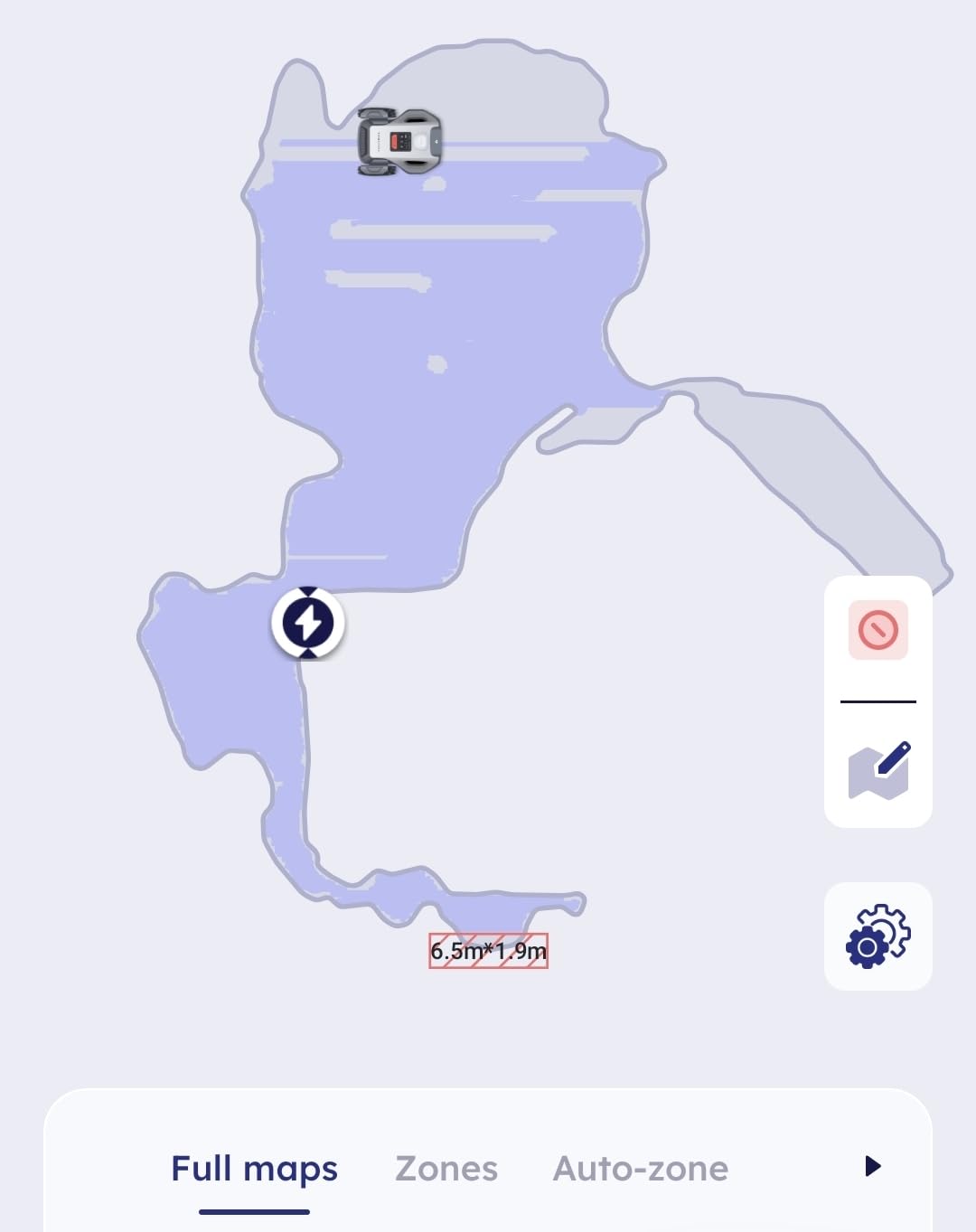
Who Should Skip It
Skip it if you need maximum slope capability, a large property, or lawn recovery work. At 12 kilograms it is light enough to move by hand, which is a genuine plus on a property where the charging point sits awkwardly, and operating noise stays at or below 58 dB with over-the-air updates and emergency braking.
Buyers are broadly satisfied, so this is a low-risk way to find out whether robotic mowing suits your routine at all.
8. ECOVACS GOAT O1000 LiDAR PRO – Best Wire-Free Mower for Small, Well-Bounded Yards
ECOVACS Goat O1000 LiDAR PRO Robot Lawn Mower, Wire-Free Mapping with LiDAR Navigation, AI Obstacle Avoidance, Smart Edge Mowing, App Control, for Lawns Up to 1/4 Acre
Wire-free dual LiDAR
2 cm positioning accuracy
Up to 0.25 acre
Built-in TruEdge trimmer
Pros
- HoloScope 360 degree dual LiDAR gives 2 cm positioning with no antenna or wire
- Map stored on the device rather than the cloud
- Built-in TruEdge trimmer cuts to driveways and flower beds
- Super-narrow body passes corridors as slim as 0.8 m
- IP water-rated with built-in rain detection
Cons
- Small front caster wheels limit climbing over curbs
- Drive wheels lose traction in wet grass and struggle over large roots
- Edge trimmer fails along fences it treats as obstacles
This is the one machine in the lineup that does not claim a front slope rating at all, and owners describe it as best on mostly flat yards. That makes it an odd fit for a steep-slope roundup, but its navigation approach is worth understanding because it solves a problem the RTK machines share.
HoloScope 360-degree dual LiDAR gives 2 centimetre positioning with no RTK antenna and no perimeter wire, including under trees and near fences. Crucially, the map is stored locally on the device, which avoids the cloud lockout failures owners report with competing RTK mowers.
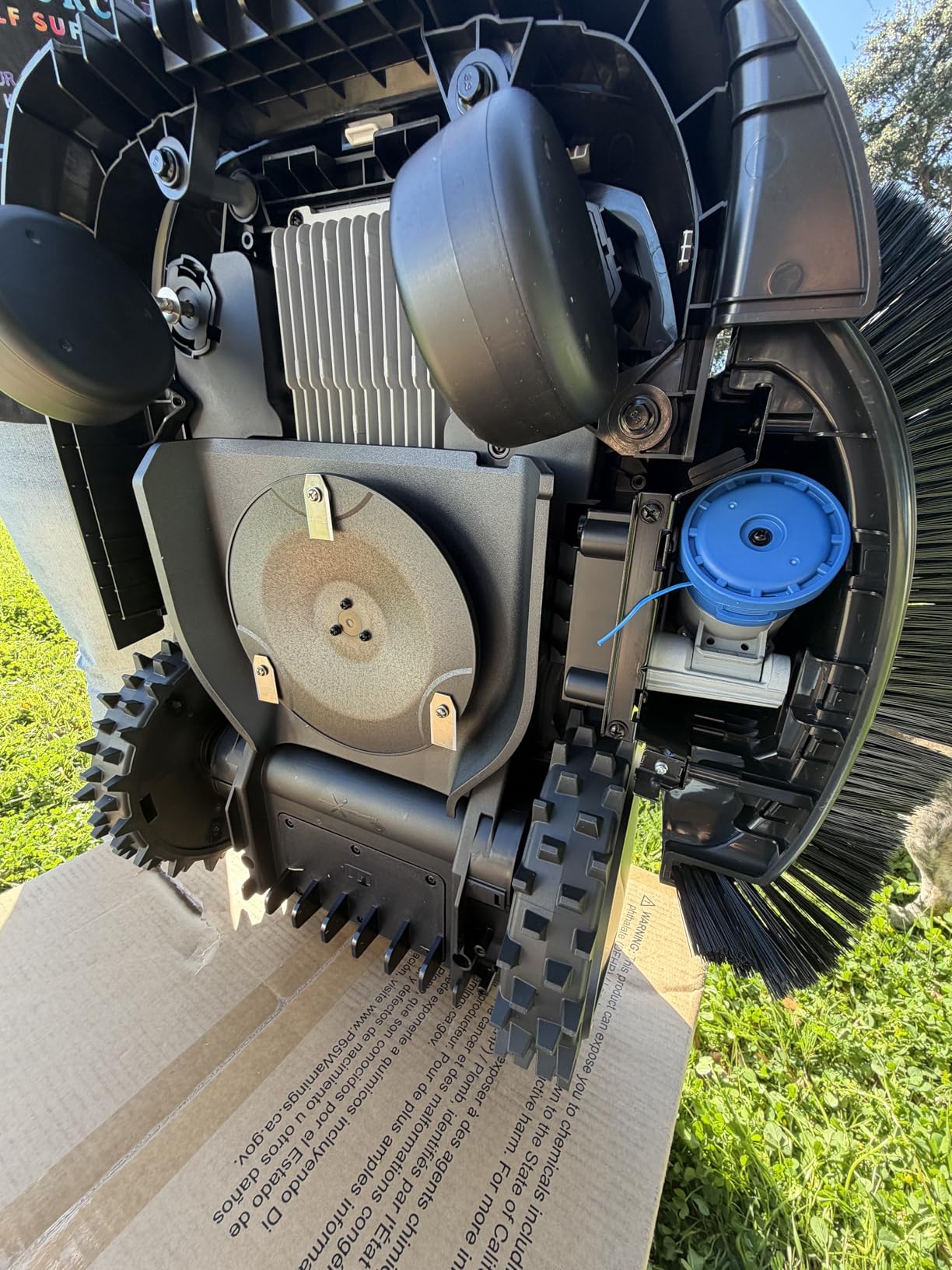
Local Map Storage Is the Real Feature
Most of the reliability complaints in this category trace back to software rather than motors. Saving the map on the device means a settings change or a connectivity outage does not cost you your layout, and on a small yard that map is a few minutes of work you would rather not repeat.
AI Vision plus 3D ToF LiDAR identifies more than 200 obstacle types with 5 centimetre detection precision, and the app handles zones, schedules and no-go areas. It is IP water-rated for hose-down cleaning and has built-in rain detection.
Why the Wheels Rule It Out of Hillside Duty
Front caster wheels are small and limit climbing ability over curbs and in high grass. Drive wheels lose traction in wet grass and struggle over large exposed roots, and owners report that LiDAR does not appear to inform mapping, so the mower bumps boundaries rather than learning them.
There is no border lap, checkerboard or other mowing pattern intelligence either, and the maximum cut height of about 3.2 to 3.6 inches is short for cool-season lawns. Reviewers are genuinely split: people with simple, well-bounded flat lawns love it, and critics focus hard on the software.
Edge Trimming That Cuts Both Ways
The built-in TruEdge trimmer reduces manual string trimming along driveways, sidewalks and flower beds, which is a genuine time saver. It is not smart enough to stay inside the yard, and it cannot trim along fences because it treats them as obstacles.
The super-narrow body passes through corridors as slim as 0.8 meters, and it covers lawns up to a quarter acre, so for a small urban lot with clean boundaries and one mild bank it does a competent job.
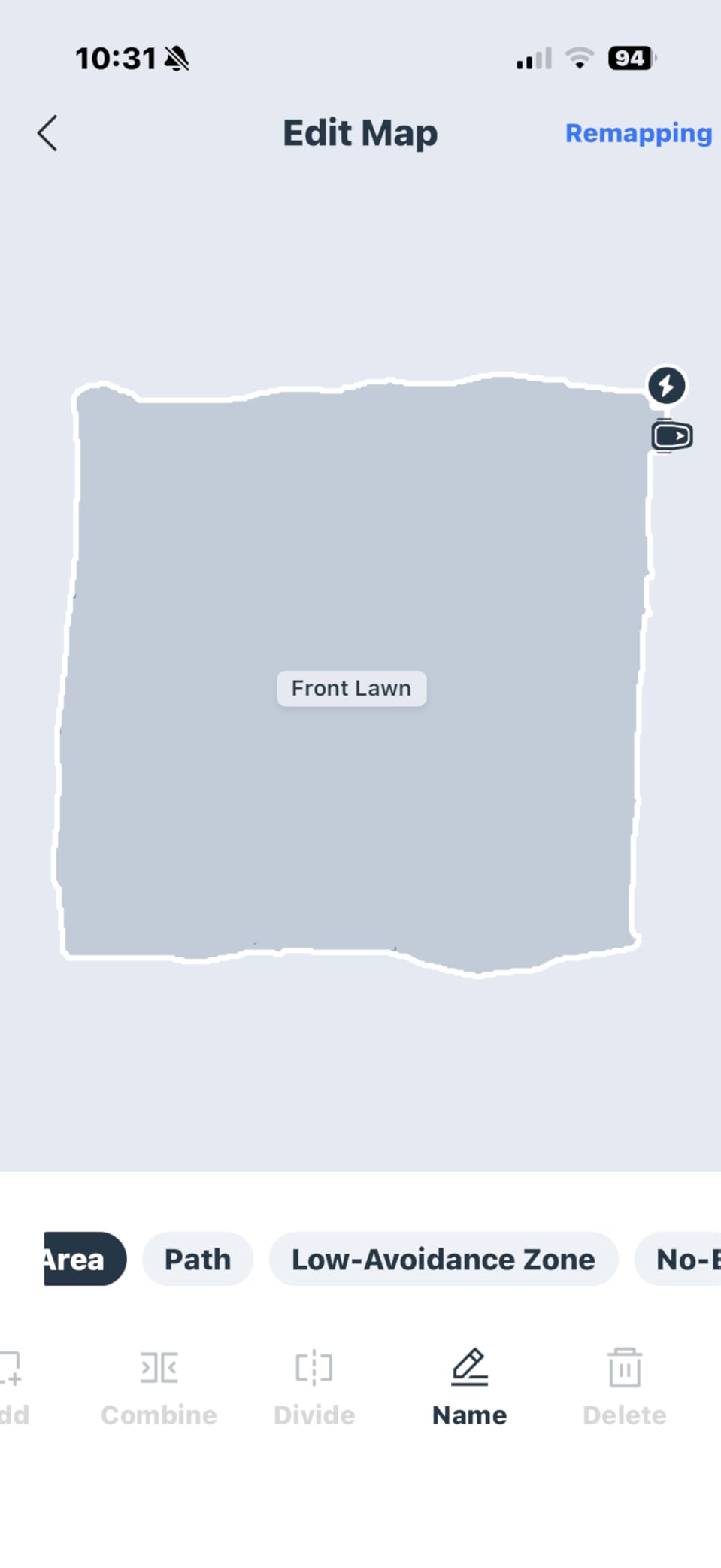
Who Should Skip It
Skip it if your yard has real elevation change, uneven ground or large exposed roots. The manual mapping joystick is a single control with no dead zone, which makes straight-line boundary mapping difficult, and if you need camera vision combined with a wide deck this is not the machine.
For a flat lot, though, the local map storage and 2 centimetre wire-free positioning make it one of the least troublesome set-up experiences in the category.
How to Measure Your Own Slope Before You Buy
Measure the steepest point of your lawn, not the average. The steepest section of a property is usually a short transition where flat ground tips into a bank, and that is exactly where a robot either climbs cleanly or gives up entirely.
Find the rise and the run. The rise is the vertical drop, and the run is the horizontal distance the ground takes to get there. Percent grade is rise divided by run, multiplied by 100, so a 2 foot rise over 10 feet of run is a 20% grade. This is the method that answers the question most people get wrong.
Here is the conversion that trips everybody up. A 2:1 rise/run ratio is a 200% grade, which is about 63 degrees and far beyond any consumer robot mower. If you measured a 2 foot rise against a 1 foot run, stop shopping for an autonomous machine and consider a remote-controlled mower or a walk-behind instead.
For a quick check, place your phone on the slope and open the inclinometer or level app. Add 15-20% above whatever you measure and treat that as your buying threshold, because grass that has been rained on offers materially less grip than the dry surface a manufacturer tested on.
Our climbing shoe guide covers footwear grip, which is the same traction problem in a different context and a useful reference if you will still be doing some manual work on the hill.
What Actually Decides Whether a Robot Mower Can Handle Your Hill
Drivetrain: AWD, 4WD and 2WD Explained
Two-wheel-drive mowers put motor torque into one axle and let the other two wheels roll. On a 25% grade in wet grass they spin, dig ruts and stall. All-wheel drive and four-wheel drive drive every wheel with its own motor, vary torque per wheel to prevent slip and keep the chassis level through a suspension system, and that is why nearly every machine capable of a 30-degree slope uses all-wheel drive.
Read the motor wattage and the wheel count together. Two 88 W motors, four 165 W motors, four independent motors of mixed output: these figures tell you more about real climbing ability than the marketing label.
Rated Slope Versus Real-World Slope on Wet Grass
Published slope ratings come from controlled tests. Owners consistently report real-world performance well below spec on wet or uneven ground, and the gap is why buying a mower rated at exactly your steepest measured grade is a mistake. Treat every figure as a laboratory number.
Add the safety margin, plan your charging station on the flattest level ground you have, and expect a few rescue trips in the first season while the machine learns your lawn’s transitions.
Navigation Without a Perimeter Wire
Wire-free mowers replace the boundary cable with satellites, lasers or cameras, which removes the biggest installation headache on a hillside where a cable is awkward to run. RTK satellite positioning gives centimetre accuracy in open sky but degrades near retaining walls, fences and tree canopy, so on a steep property prefer a model that fuses RTK with LiDAR and vision, or one that runs satellite-free on LiDAR alone.
Whichever system you choose, note that relocating the RTK or antenna unit after installation forces a complete remap of all saved zones, and that software settings changes can wipe stored maps. Photograph your layout after every change.
Step-Over Height, Wheel Size and the Transition Point
Step-over or clearance height is how high a lip the mower can climb, measured from 45 mm on the mini Mammotion to 50 mm on the LUBA 3. On a hillside, exposed tree roots and irrigation lips matter more than on flat ground, and wheel size determines whether the machine tears turf crossing a path.
The hardest part of most hillsides is the transition where flat ground meets the bank. Ask specifically whether the mower can handle that junction, not just the hill face, and check the drive wheel diameter relative to your largest root exposure.
Coverage, Deck Width and the Running Time Math
Deck width drives everything on a slope, because each pass costs traction and travel time. A 15.7 inch disk clears far more ground per circuit than a 7.1 inch one, and the narrow machines need multiple passes for an even cut. Work out how many square feet you actually mow, then check the battery area per charge, since a quarter acre that will not finish on one charge means mid-task recharging every session.
Smaller capacity is not a flaw if it matches your yard. It is a flaw if you are trying to cover a full acre with a machine capped at 0.15 acre.
When a Walk-Behind or Zero-Turn Mower Is the Better Call
Anything past about 35 degrees is out of range for every consumer robot here, and a slope that steep belongs to a walk-behind or a rider, not automation. Our zero-turn mower guide covers large banks, and a walk-behind model handles very uneven ground a robot would tear up.
Robotic mowing on a steep wet bank is also a safety argument, not only a convenience one. An operator on a ride-on sits downhill from a machine that can slide. Automation takes the operator off the hill entirely, which is the real reason to spend on a capable model even when a cheaper 2WD robot exists.
Frequently Asked Questions
Do robotic lawn mowers work on steep slopes?
Yes, but only if they have all-wheel drive. Standard two-wheel-drive robots usually give up around 25-35% grade, roughly 14-19 degrees, and spin their wheels on wet grass. AWD and 4WD machines with independent motors and adaptive suspension handle 45% to 80% grade. Always buy a model rated 15-20% above your steepest measured section, and expect real performance in the wet to sit below the published figure.
What is the maximum slope a robot mower can handle?
Most consumer robotic mowers cap at 45% grade, about 24 degrees, which covers a genuinely steep residential bank. Only a smaller group of all-wheel-drive models reach 80%, roughly 38.6 degrees. Anything beyond 45 degrees approaches territory where a remote-controlled or walk-behind mower is the better choice. Note that a 2:1 rise over run is a 200% grade, far beyond any consumer robot mower.
Which robot mower can handle a 45-degree slope?
No consumer robot mower on the market handles a true 45-degree angle, which is a 100% grade and beyond every model listed here. What buyers mean is usually 45% grade, about 24 degrees. For that, the Segway Navimow i206 AWD, Segway Navimow i215 LiDAR, Husqvarna 410iQ and ANTHBOT M5 all rate 45% grade. For steeper ground, look to the 80%-grade all-wheel-drive Mammotion models.
Do robot mowers need a boundary wire on hills?
No, and on a hillside you usually do not want one. Wire-free mowers use RTK satellite positioning, LiDAR or camera vision to hold a mapped boundary. The catch is that RTK degrades near retaining walls, tall fences and tree canopy, so combine RTK with LiDAR and vision or choose a satellite-free LiDAR model. If you move the RTK unit later, expect to remap every saved zone.
Can robot mowers cope with slopes?
They cope far better than most buyers expect, provided the drivetrain matches the grade. Owners report all-wheel-drive models mowing 40-45% slopes that defeated their push mowers, and the 80%-grade machines handle the steepest residential banks. The recurring problems are not climbing but turf damage on soft wet ground, wheel slip ruts, and stalling at the transition where flat ground meets the hill face.
The Verdict by Slope Tier
If your steepest section is a 30 to 35 degree bank, the best robotic mowers for steep slopes come down to drivetrain and nothing else. Take the Mammotion LUBA mini 2 AWD 1500H as the overall choice: 80% grade capability, suspension that keeps all four wheels biting, and the best mix of rating and owner history in the group. Its 0.37 acre cap is the trade, so check your turf before committing.
If you have half an acre or more of hilly lawn, the LUBA 2 AWD 5000HX or the LUBA 3 AWD 3000 clear ground far faster on a 15.7 inch deck, and the LUBA 3 adds the deepest obstacle recognition. If your hill is a 45% grade rather than a bank, the Segway Navimow i206 AWD wins on deck width and zero-turn pivots, and the i215 LiDAR wins where walls and tree cover kill the satellite signal.
If the appeal is warranty length rather than grade, the Husqvarna 410iQ pairs a four-year warranty with a 1 to 4 inch cut height range, at the cost of the lowest rating here. If you are testing the idea on a small lot, the ANTHBOT M5 covers 45% grade with the most reviews in the lineup, and the ECOVACS GOAT O1000 LiDAR PRO suits small, well-bounded, mostly flat yards with local map storage.
Measure your steepest section, add your 20% margin, and check back in 2026 when you are ready to pull the trigger.
Leave a Reply