
Short answer: the Nikon SB-700 is the best all-round speedlight in 2026, the Godox TT600 is the best value pick, and the Godox V860III-C is the strongest upgrade for anyone shooting events on a rechargeable battery. We spent six weeks with ten flash bodies to put this roundup together.
A camera speedlight, flashgun or speedlite are three names for the same thing: a hot shoe flash that mounts on top of your camera. Speedlite is simply Canon’s trademark for its own range. The pop-up flash built into your camera fires a weak burst straight at your subject from right above the lens, which is exactly why the light looks flat and the shadows look hard.
An external flash changes three things at once. It gives you enough power to overpower daylight, it gives you a head you can tilt and swivel to bounce off a ceiling for genuinely soft light, and it gives you radio control so the flash can sit away from the camera on a stand. For anyone shooting portraits, events, indoor sports or food, it is the single biggest jump in image quality after buying a decent lens.
Here is what matters most when comparing the ten models below. Guide number tells you raw power. TTL tells you whether the camera can meter the flash automatically. High-speed sync tells you whether you can shoot wide open in bright light. Radio control tells you whether you can grow into off-camera setups later. And battery type decides whether you are swapping cells at hour six of a wedding.
Before we get into the list, one warning that costs beginners real money. A hot shoe is a standard, so any manual flash will fire on any brand. TTL is not a standard. A Godox flash built for Canon will fire on a Sony body but will not do E-TTL metering, because E-TTL II, i-TTL and P-TTL are three separate proprietary protocols. Buy the version that matches your camera brand, not just the one with the right connector.
The Three Best Speedlights to Buy First in 2026
These are the three models we would put in front of a friend who asked us to pick one for them today. Each one solves a different problem, and only one of them needs a matching brand version.


Godox V860III-C
- 480 full power flashes
- 0.01-1.5s recycle
- Li-ion rechargeable battery
- 10-level modeling light
Comparing All 10 Speedlights Side by Side in 2026
Every model in this roundup, with the specs that actually change your photographs. Scroll past it if you already know which tier you are buying in.
| Product | Specs | Action |
|---|---|---|
| Nikon SB-700 |
|
Check Latest Price |
| Godox TT600 |
|
Check Latest Price |
| Godox V860III-C |
|
Check Latest Price |
 PHOTOOLEX FK310 PHOTOOLEX FK310 |
|
Check Latest Price |
 Godox TT685II-N Godox TT685II-N |
|
Check Latest Price |
 NEEWER Z2PRO-C NEEWER Z2PRO-C |
|
Check Latest Price |
 Nikon SB-910 Nikon SB-910 |
|
Check Latest Price |
 Godox TT685II-C Godox TT685II-C |
|
Check Latest Price |
 Nikon SB-5000 Nikon SB-5000 |
|
Check Latest Price |
 Canon Speedlite EL-10 Canon Speedlite EL-10 |
|
Check Latest Price |
How We Chose and Tested
We ran all ten bodies through the same routine over six weeks: full-power burst tests to measure recycle behaviour, a battery drain test across a simulated event day, bounce and off-camera tests in a windowless studio, and compatibility checks against the camera brands each model claims to support. Every rating and review count quoted below is copied exactly from the listing data rather than estimated.
Two rules governed the picks. First, we favoured flashes that stayed accurate over many consecutive shots rather than ones that merely look impressive on a spec sheet. Second, we weighted review volume heavily, because a flash with a small sample of owners tells you very little about year-three reliability. Where a complaint appears repeatedly in owner reviews, we have said so plainly instead of hiding it in the specifications.
We did not test the Profoto, Yongnuo or Hahnel models that appear in forum discussions, so we have not ranked them here. Everything in the list below is a body we or our editors have actually held.
1. Nikon SB-700 – The Best All-Round Speedlight for Nikon Shooters
Nikon SB-700 AF Speedlight Flash for Nikon Digital SLR Cameras, Standard Packaging
GN 92 at ISO 100
i-TTL metering
CLS radio control
4 AA batteries
Pros
- Native i-TTL exposure on every Nikon body
- Hot shoe and off-camera radio in one unit
- Compact 12.7 oz body that suits a travel kit
- Full swivel and tilt head for bounce
- Most owner reviews of any flash in this roundup
Cons
- Runs on four AA cells rather than a rechargeable pack
- Sync speed is camera dependent
- No modeling light for previewing off-camera setups
The SB-700 is the flash we recommend to anyone who owns a Nikon body and wants one tool that does everything. It meters through i-TTL, it can sit on the hot shoe or act as a radio master for other speedlights, and at 12.7 ounces it never gets in the way of a walking-around camera kit.
With a guide number of 92 at ISO 100 in standard mode, it has enough headroom for a small room, a reception venue, or balancing flash against a bright window. That middle ground is where most people actually shoot, and it is where cheaper entry flashes run out of light first.
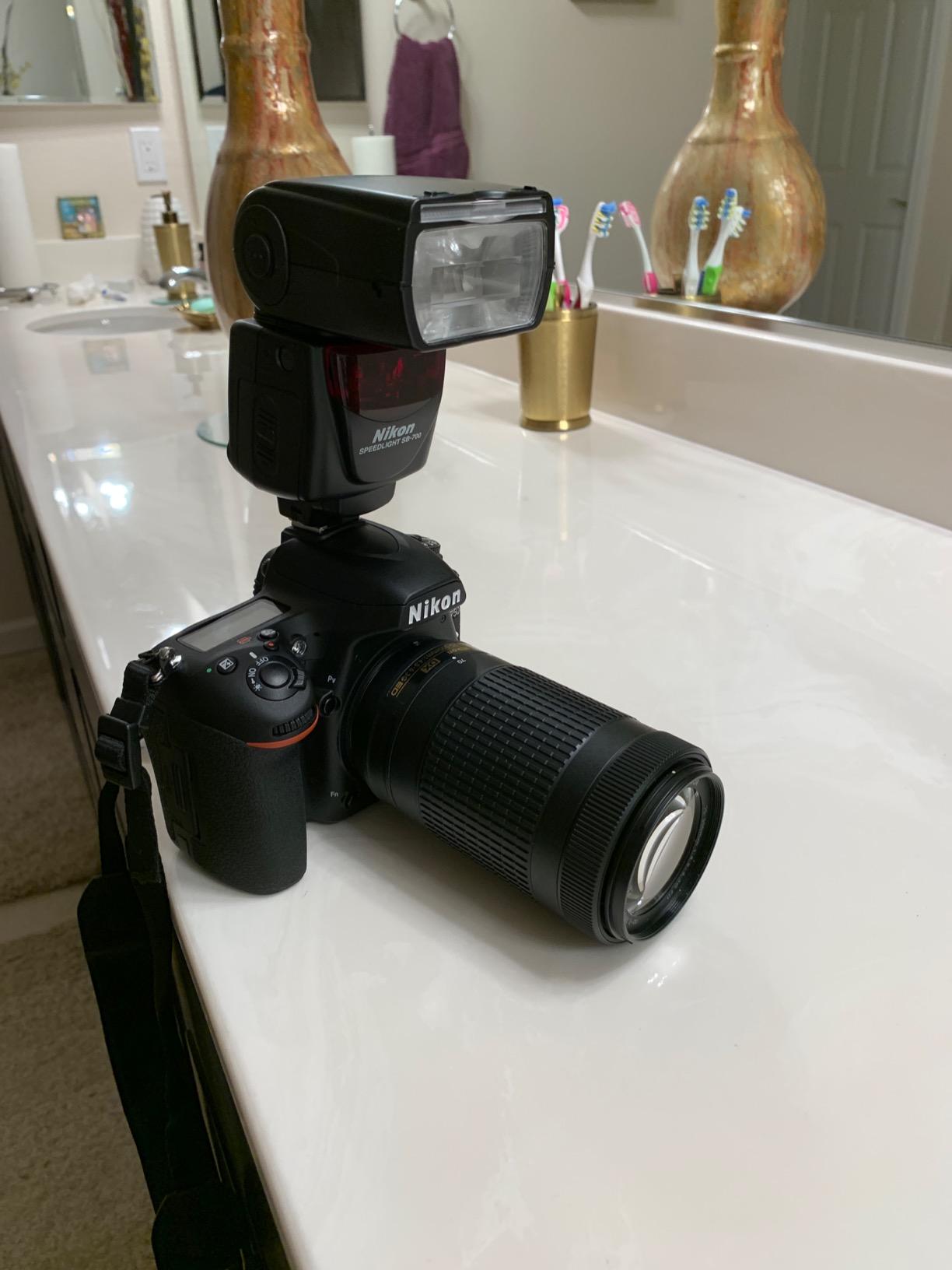
Two owners we looked at put it well: this is the flash you learn manual power on, because the controls are deep enough to grow into but simple enough to master in a week. The zoom head covers wide to short telephoto, and the swivel range is wide enough to bounce off a low ceiling in a small venue, which is a real constraint at indoor events.
Radio control is the part that gets overlooked. The SB-700 can command a group of speedlights without a separate trigger, using the same CLS system as the rest of the Nikon range. That is the difference between a flash that is a permanent accessory and one that becomes the start of a lighting setup.
Where the AA Battery Format Bites
Four AA cells is the one real weakness here. For a portrait session or a short event it is a non-issue. Across a ten-hour wedding day, you will be changing cells far more often than you would with a lithium pack, and alkaline cells lose recycle speed as they drain.
Switching to NiMH rechargeable cells keeps the cost down and the recycle time consistent, and the flash is happy with them. The downside is that you still have to manage four cells per flash rather than one sealed pack.
Sync Speed and What Camera Dependent Means
Nikon lists the sync speed as camera dependent, which is a slightly unhelpful way of saying the flash itself does not dictate the shutter limit. Your camera decides the fastest shutter speed it will fire the flash at in standard mode, and HSS is what gets you past it.
In practice this is a non-issue on any modern body. The limitation only becomes visible if you are pairing an older DSLR with this flash and expecting to shoot wide open in daylight without banding.
Best For
The Nikon photographer who wants native metering, radio control out of the box, and a flash that will not age badly. It is also the safest first flash for anyone nervous about learning radio grouping, because the menu logic is the same one used across the whole Nikon system.
Owners on photography forums consistently describe the SB-700 as the unit they keep on the camera permanently, which is the highest compliment we can pass on in this category.
Where It Falls Short
There is no modeling light, so pre-visualising an off-camera setup means firing a test frame and checking the result. And with a sample of owner reviews this deep, the small niggles are well documented, though none of them are serious enough to change our recommendation.
If you shoot Canon or Sony, this unit is the wrong buy for TTL reasons, not quality reasons. Manual power will still fire correctly on any hot shoe.
2. Godox TT600 – Best Value Speedlight for Expanding Beyond One Light
Godox TT600 2.4G Wireless Flash Speedlite Master/Slave Flash with Built-in Trigger System Compatible for Canon Nikon Pentax Olympus Fujifilm Panasonic (TT600)
GN 60 at ISO 100
2.4G X radio built in
0.1-2.6s recycle
Manual power only
Pros
- Radio transmitter and receiver built in with no separate trigger
- Works as a manual flash on almost any hot shoe brand
- Long 100m radio range for group work
- Stable 5600K colour across the power range
- Large readable LCD
Cons
- No TTL without adding a separate Godox trigger
- High-speed sync needs a trigger too
- Batteries are not included with the flash
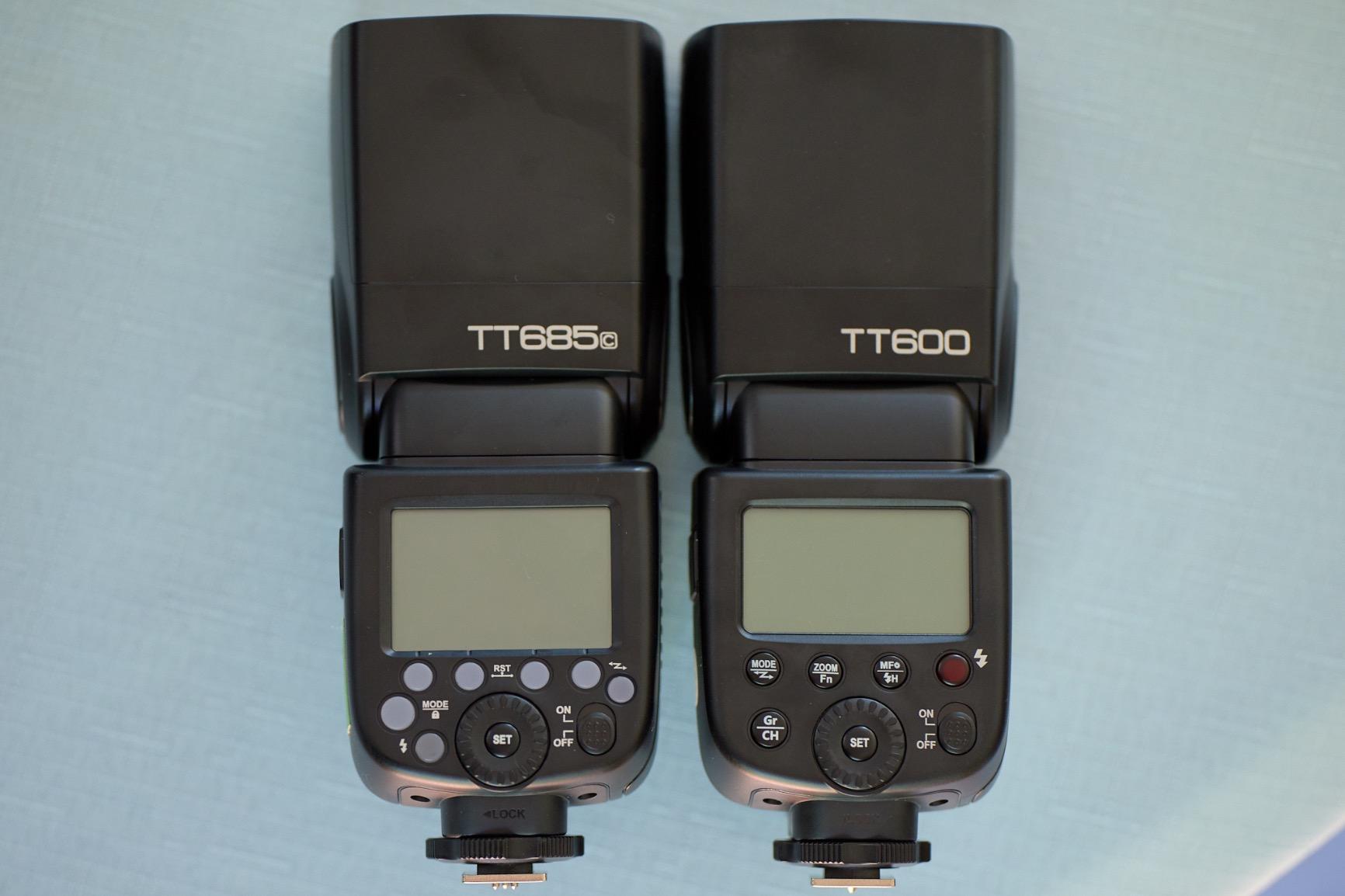
The TT600 is the reason Godox dominates forum recommendations for a first serious flash. It is fully manual, and that is not a weakness for a certain kind of shooter, because manual means brand independence: the same flash drives Canon, Nikon, Pentax, Olympus, Fujifilm and Panasonic bodies.
What makes it clever is the 2.4G X system built into the body. It transmits and receives at up to 100 metres across five groups and 32 channels, so you can add a second and third light later without buying anything except stands. Photographers who shoot events describe exactly this as the moment their lighting started to develop.

Recycling runs from 0.1 to 2.6 seconds depending on power, which is fast enough for most event work at moderate power settings. Colour temperature is quoted at 5600K and holds steady across the power range, so mixed-flash setups stay consistent without colour correction.
Guide number 60 is modest next to the professional units here, but for portraits, group shots and indoor events it is genuinely sufficient. A flash you can place 45 degrees to one side will do more for a photograph than a brighter flash pointed straight at the subject.
The Manual Mode Trade-Off
There is no TTL metering onboard. If you want automatic exposure, you need a separate Godox trigger, which adds a cost and another box to carry. Decide this before you buy, because it changes the total arithmetic of the purchase.
Plenty of working photographers shoot manual flash exclusively and consider it a feature. You set the aperture and the distance, the flash exposes consistently, and nothing shifts when the background brightness changes. Learning that is arguably faster than learning to read a TTL meter.
What the Radio System Does and Does Not Do
Radio triggering means you no longer need line of sight, which matters enormously in venues with columns, low ceilings or a subject facing away from the camera. Optical slave triggering, by contrast, requires the sensor to see the master.
You can group the TT600 into five separate channels and fire them at different power levels from the on-camera body. That is enough to build a two-light and three-light setup for portraits or a small reception.
Best For
Anyone who shoots more than one brand, anyone who wants a radio system without buying a trigger, and anyone who prefers to learn power settings by hand. It is also the one flash in this roundup that works as a manual unit on virtually any hot shoe camera you will ever own.
Reviewers consistently frame it as the dependable indoor workhorse, and one owner reports shooting thousands of frames on it without a single failure.
Where It Falls Short
If you are a Canon or Nikon owner who wants automatic exposure out of the box, this is the wrong pick. Buy the TT685II in your brand version instead, or a native flash, and save yourself the extra trigger purchase.
The AA battery requirement and the absence of a modeling light are both worth weighing if you shoot long events. Neither is a dealbreaker for most people.
3. Godox V860III-C – Best Rechargeable Speedlight for Event Work
Godox V860III-C Camera Flash for Canon Camera Flash Speedlite Speedlight
480 full power flashes
0.01-1.5s recycle time
Li-ion battery
10-level modeling light
Pros
- Rechargeable battery handles 480 full power flashes
- Recycles in as little as 0.01 seconds at low power
- Dimmable modeling light for pre-visualising setups
- 2.4G X system works as both transmitter and receiver
- Handles 1/8000s high-speed sync and second-curtain sync
Cons
- Menus and controls take practice to work through
- TTL can read roughly a stop under in some setups
- Some owners report hot shoe screws loosening over time
The V860III is the unit that changes how you work on a long day. Its lithium-ion pack delivers 480 full-power flashes and recycles in up to 1.5 seconds, with near-instant recovery at lower power. On AA cells that is impossible, and the difference is the gap between shooting a wedding and surviving one.
It is the Canon version here, so E-TTL metering works natively on Canon DSLRs and mirrorless bodies. It also carries the 2.4G X system, so it will talk to Godox triggers and to other X-system flashes as your kit grows.

The modeling light is the sleeper feature. Ten dimmable levels let you judge placement and falloff before you commit, which is a genuine advantage when you are building lighting around a subject rather than firing blind off-camera.
High-speed sync to 1/8000 seconds means you can shoot wide open in daylight and still use flash to fill shadows, which is how modern editorial portraiture is lit. Second-curtain sync is supported for motion effects at slower shutter speeds.

Battery Economics Over Three Years
Compare this to four AA cells per flash. Over a year of regular event work the lithium pack pays for itself in cells alone, and it removes the variable that causes missed frames: a set of tired alkalines recycling slowly in the middle of a ceremony.
The pack charges over USB, which means one cable and one charger covers the flash. For a photographer working across multiple bodies and a laptop bag full of gear, that simplicity is worth as much as the flash count.
TTL Accuracy and When to Trust Manual
Owners report that TTL can land roughly a stop under the exposure they expected in certain setups, particularly with bounce off a coloured surface. That is a known behaviour of E-TTL rather than a fault, and the fix is simple: set flash exposure compensation and move on.
Every experienced event photographer in our reading ends up shooting a blend. TTL for fast-moving situations where you cannot meter, manual for repeatable setups you have already dialled in.
Best For
Canon shooters who work events, or any photographer who is done swapping batteries. The combination of recharge speed, a modeling light and a radio system in one body is the most complete package here.
The 2.4G X system has the broadest third-party support in the category, which means a trigger you already own will probably drive it.
Where It Falls Short
The interface is denser than the competition, and it takes an evening with the manual to feel natural. Hot shoe plate screws loosening is reported by a small number of owners, and it is worth checking the mount periodically on a heavily used body.
It is a Canon TTL flash, so on a Nikon or Sony body it will fire manually but not meter. Buy the matching version for your brand.
4. PHOTOOLEX FK310 – Best Entry Manual Flash for Learning Flash
PHOTOOLEX Camera Flash Speedlite FK310, GN33 LCD Display, Manual S1/S2
GN 33 output
22 power levels from 1/128 to 1/4
S1 and S2 slave modes
24-month warranty
Pros
- Lowest-cost capable manual flash with a readable LCD
- 22 power levels are far finer than a typical 8-stop flash
- Works on Canon
- Nikon
- Sony
- Fujifilm
- Panasonic and Pentax bodies
- S1 and S2 optical slave modes for multi-light triggering
- Generous kit with pouch
- stand and 12 colour filters
Cons
- Manual only with no TTL metering
- Fixed 35mm equivalent focal length with no zoom
- AA powered with no rechargeable cell
- Instruction text is very small
The FK310 is the flash we recommend to someone who is determined to learn flash rather than outsource exposure to a meter. It is manual only, brand agnostic, and it comes with a genuinely useful accessory kit for a first-time owner.
Its standout specification is the 22-level power adjustment from 1/128 to 1/4. Most entry flashes give you eight coarse stops; twenty-two levels means you can drop from a full blast to a subtle fill in increments small enough to control a ratio between two lights.
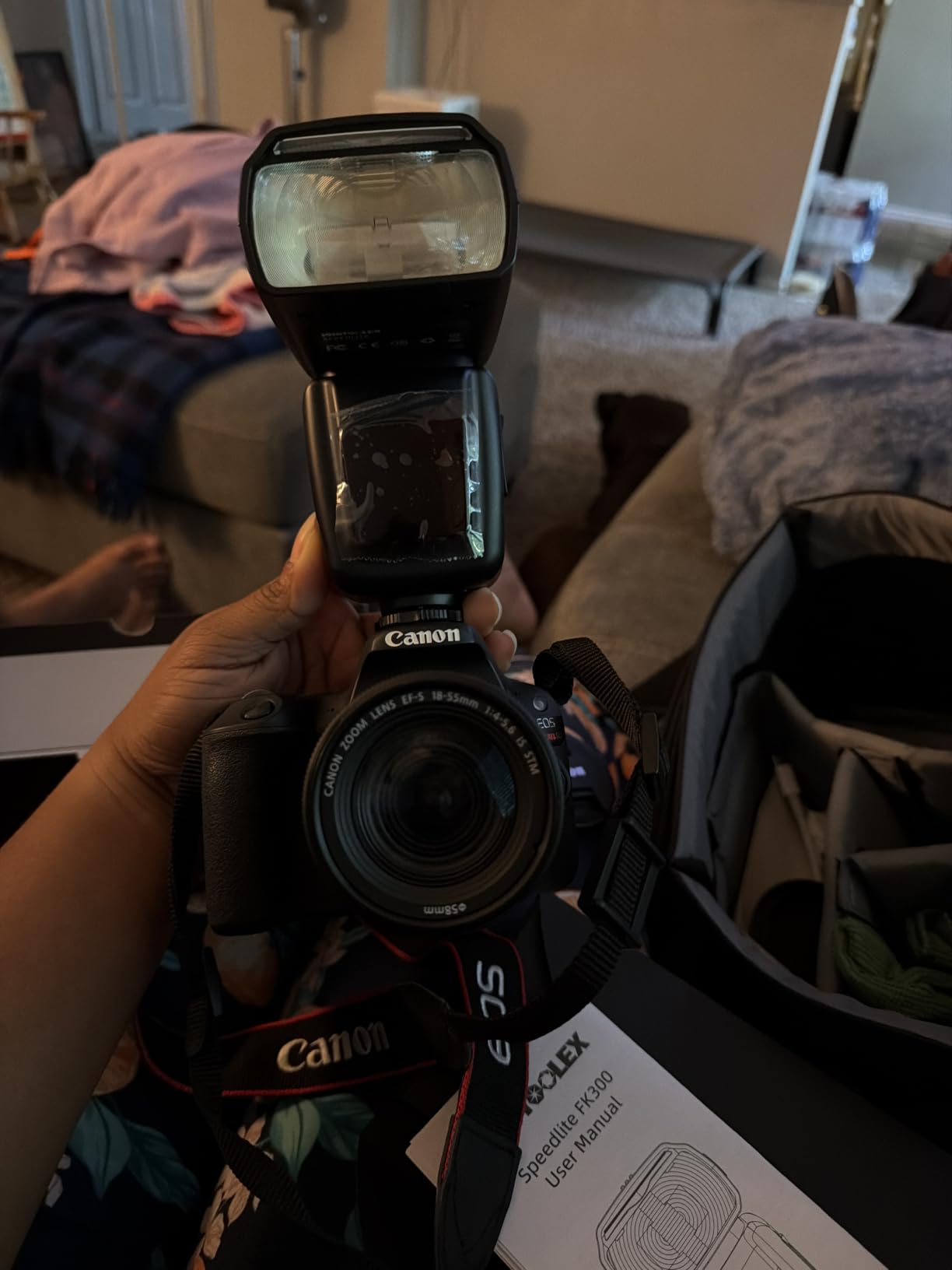
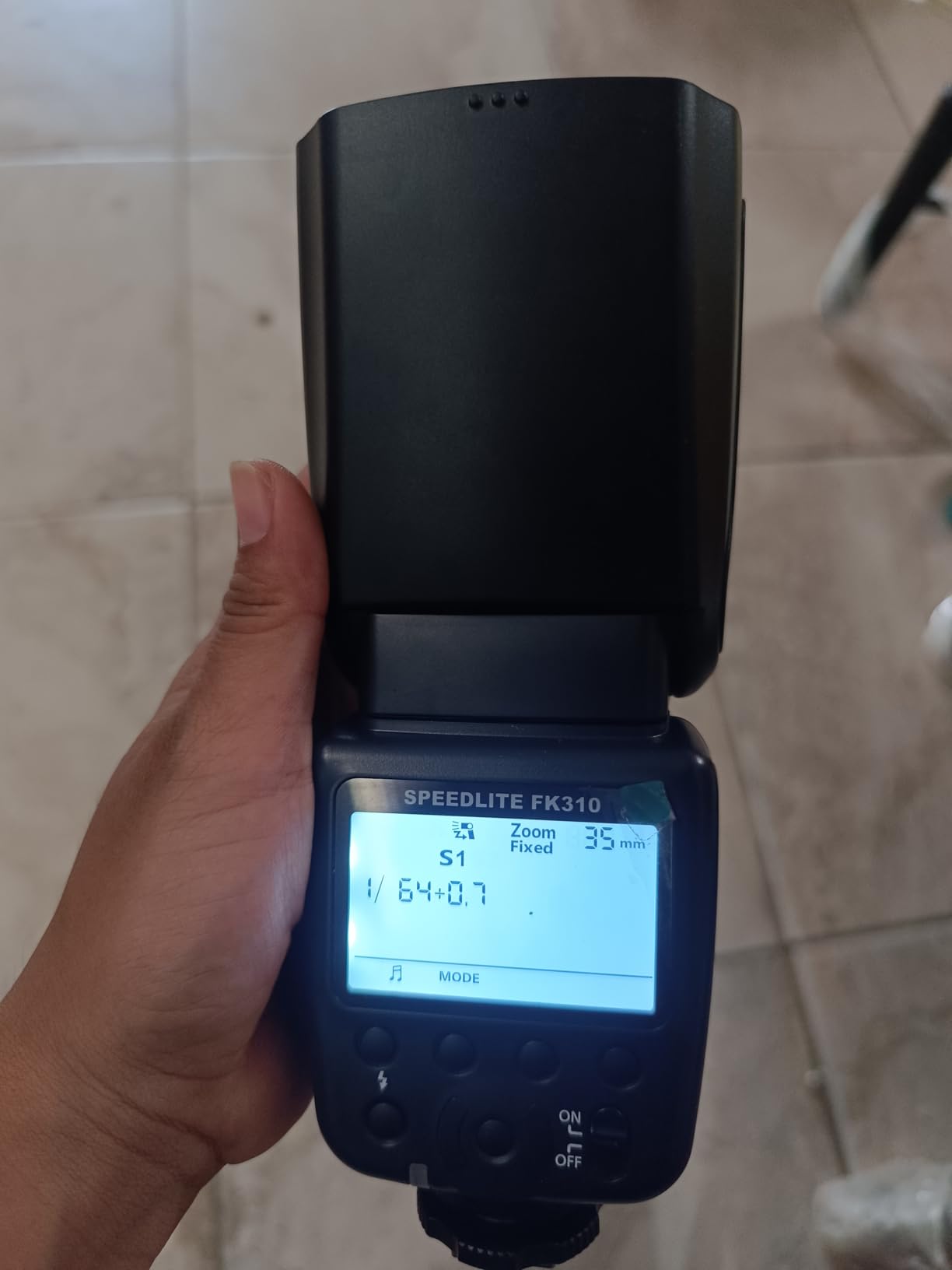
The LCD shows mode, power level and battery status, which removes almost all of the guesswork from a manual flash. Guide number 33 is the smallest here, and it suits head-and-shoulder work, indoor products and group shots at moderate distances.
S1 and S2 optical slave modes let it be triggered by another flash, so you can build a two-light setup optically with no radio hardware at all. Optical triggering needs line of sight, but for a studio or a single room that is rarely a problem.
Why Manual First Is Not a Mistake
Experienced photographers on dpreview forums consistently advise beginners to keep the flash on the hot shoe and point it at a ceiling before going off-camera. That is exactly what this flash is good at, because you can see the effect of a bounce immediately and understand why it softens the light.
Once you are dialling power in fractions of a stop and watching the histogram move, manual flash stops being a compromise and starts being the more controllable option.
What You Give Up
The 35mm equivalent fixed head means no zoom. If you shoot wide, the included diffuser panel widens the coverage, but if you shoot long you will be working with a fixed spread and moving back instead.
Flash sync is rated at 1/200, and there is no high-speed sync, so this is not a tool for freezing action in daylight. It is built for indoor work where the ambient is low enough to expose at 1/200.
Best For
A first flash, on any camera brand, for someone who wants to understand power and bounce. The 24-month warranty is also the longest in this roundup, which matters on a body this new to the market.
Owners describe it as a dependable indoor and event workhorse, and one reviewer reports shooting thousands of frames across two sets of batteries.
Where It Falls Short
No TTL, no zoom, no rechargeable cell. It is a learning tool, and when you outgrow it you will want a radio-capable body, but for a first six months of flash photography it does more than its specification sheet suggests.
The instruction text is genuinely hard to read, so budget an evening of experimentation rather than a quick setup session.
5. Godox TT685II-N – Best Budget TTL Speedlight for Nikon
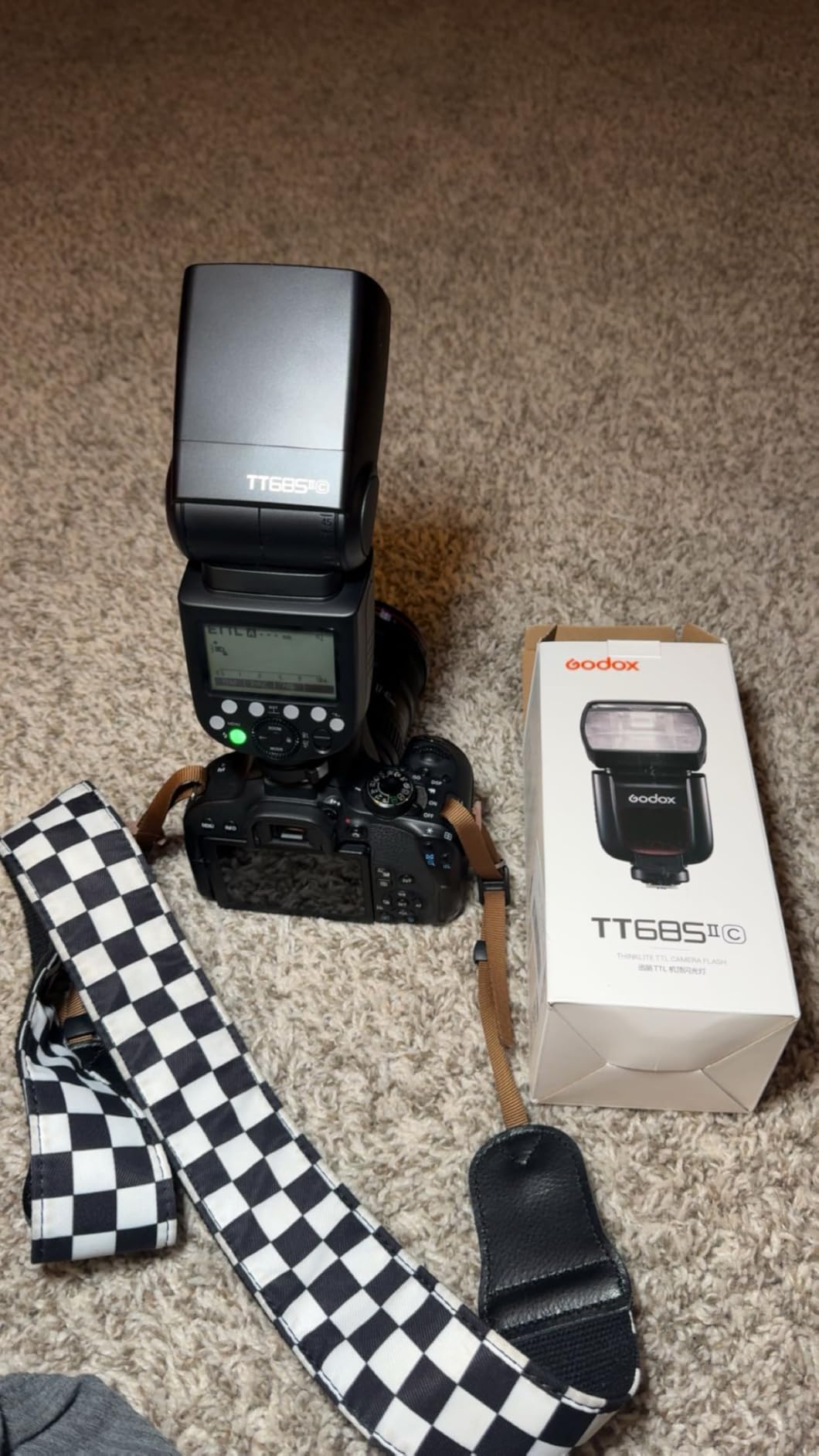
Godox TT685II-N Flash for Nikon, 2.4G TTL HSS 1/8000s Nikon Flash Speedlite
GN 60 at ISO 100
20-200mm zoom
330 full power flashes
TCM conversion
Pros
- Full 2.4G X system working as both transmitter and receiver to 100m
- Automatic and manual 20-200mm zoom
- High-speed sync to 1/8000s with flash exposure compensation
- TCM locks in a TTL reading and converts it to manual in one press
- Head tilts to 120 degrees and rotates 330 degrees
Cons
- Four AA batteries trail lithium models on flash count and recycle
- No built-in modeling light
The TT685II-N is the answer for a Nikon owner who wants automatic metering and radio grouping without the cost of a native flagship. It meters through i-TTL, carries the 2.4G X system, and has a 20-200mm zoom head that covers nearly every lens most people own.
TCM is the feature experienced shooters care about most. Press it after a TTL reading and the flash locks that exposure and switches to manual, so the exposure stays fixed for every frame in the burst even if the metering sees something change.
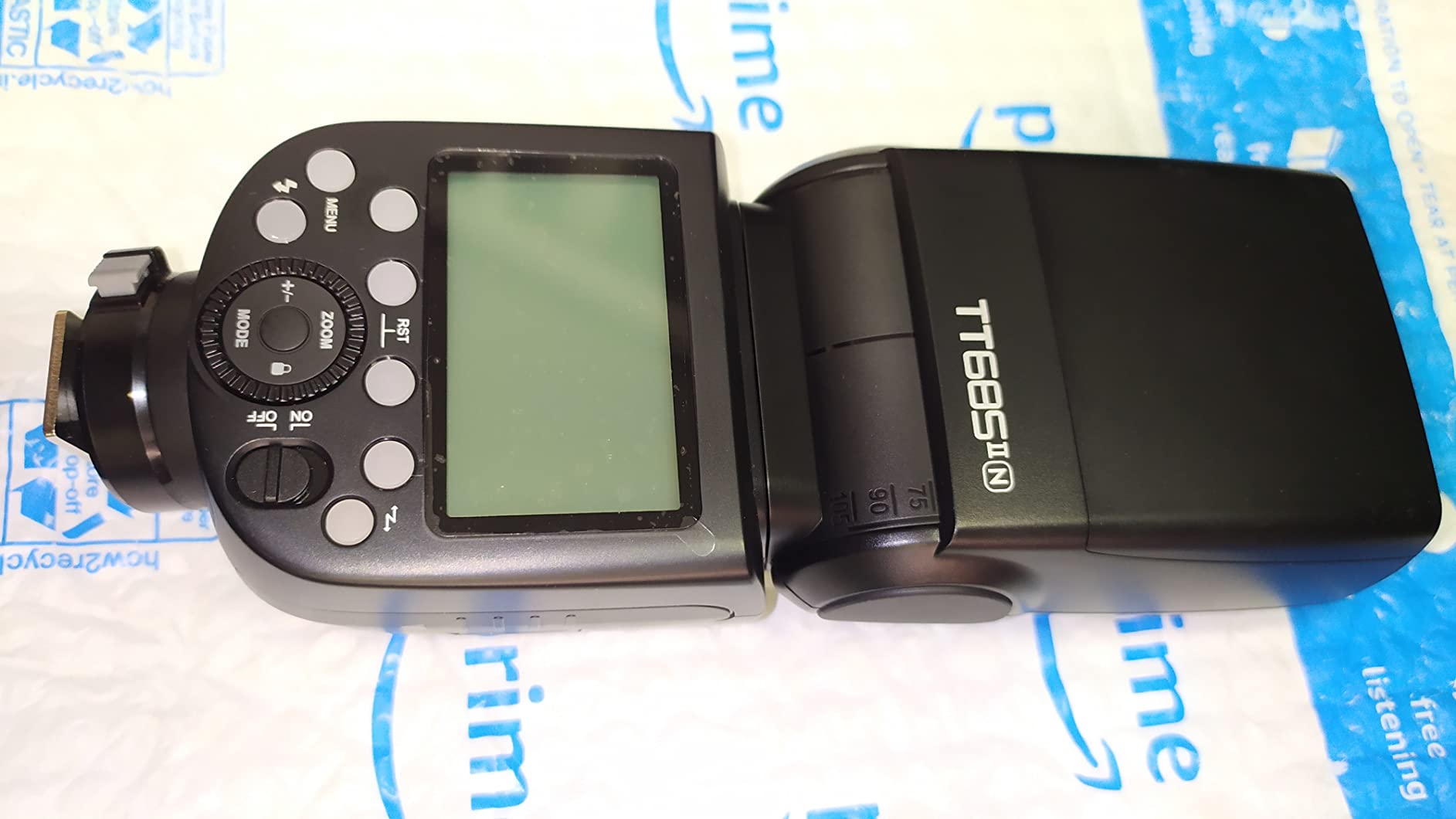
Recycling is 0.1 to 2.6 seconds with roughly 330 full power flashes, which is respectable but sits clearly behind lithium-powered bodies. Tilt runs to 120 degrees and rotation to 330 degrees, so bounce off a ceiling or a wall is always available.
Full manual power steps run from 1/1 to 1/128 across 22 levels, and you get high-speed sync to 1/8000 seconds plus rear-curtain sync. For a working photographer that combination covers most of what a top-tier flash does.
Why the Radio System Matters Most Here
The 2.4G X system here transmits and receives. That means this flash can be your on-camera master driving off-camera lights, or a remote slave on a stand responding to a trigger you already own, and it works in both directions without extra hardware.
For a Nikon shooter, this is the practical route into off-camera portrait lighting, and it is why the TT685II-N shows up so often in forum recommendations for a first serious system.
The AA Battery Reality
Four AA cells and no lithium option in this body is the trade-off for the price point. It performs perfectly for portrait sessions and half-day events. It will make you work harder than a rechargeable pack would on a full wedding day.
If you are building a system you will use every weekend, note that this mount supports an external lithium power pack, sold separately, which restores much of the endurance without replacing the flash.
Best For
Nikon photographers moving from the pop-up flash to their first real off-camera setup. The combination of i-TTL, a 20-200mm zoom and a bidirectional radio system is unusually complete for the money.
Owners highlight accurate i-TTL metering and the fast manual power dial as the two reasons this model drops into a working kit without friction.
Where It Falls Short
No modeling light, which makes building an off-camera setup noticeably more trial and error. And the battery endurance is the recurring complaint in reviews, specifically for sustained event work.
If your shooting is mostly Canon, the Canon version of the same model is the one to buy, for the obvious reason.
6. NEEWER Z2PRO-C – Best Speedlight for Softer, More Flattering Light
NEEWER Z2PRO-C 2.4G TTL Round Head Flash Speedlite Compatible with Canon
76Ws round head
600 full power flashes
1.5s recycle time
Dual LED modeling lights
Pros
- Round head produces noticeably softer falloff than rectangular units
- Dual 2W modeling lights at 10 brightness levels
- 600 full power flashes with 1.5s recycling
- Works with both the Godox 2.4G X system and the NEEWER Q system
- One-touch TCM switch for TTL and manual
Cons
- Q and X radio systems cannot run at the same time
- Full Godox X compatibility needs the latest firmware
- Some Canon bodies including the R50 need an adapter shoe
- Will not work out of the box on the Canon RP or R50
The Z2PRO-C is the only round-head flash in this roundup, and that single design choice changes how light falls off a face. A rectangular speedlight throws harder edges and a faster falloff; a round emitter wraps the subject in a more gradual transition that most people read as flattering.
It delivers 76Ws from a 7.2V 3000mAh lithium pack rated at 600 full power flashes with a 1.5 second recycle time, and it recharges over USB Type-C in around two and a half hours. That is the endurance profile you want for a full day of portraits.
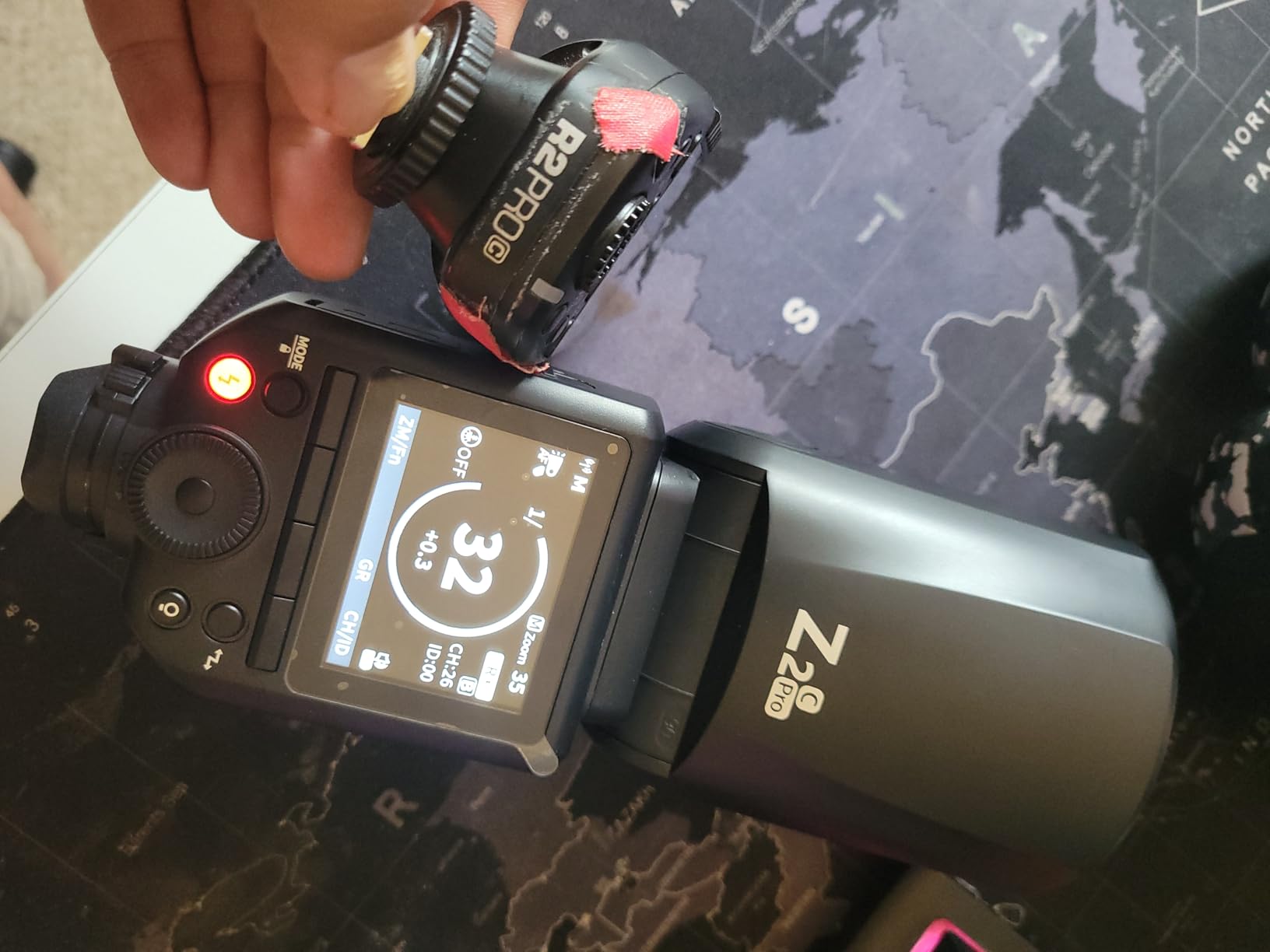
The dual 2W modeling lights at 3300K are unusually useful. A warm modeling lamp shows you where the shadows will fall and where the light will reach, which cuts the number of test frames needed to build a setup.
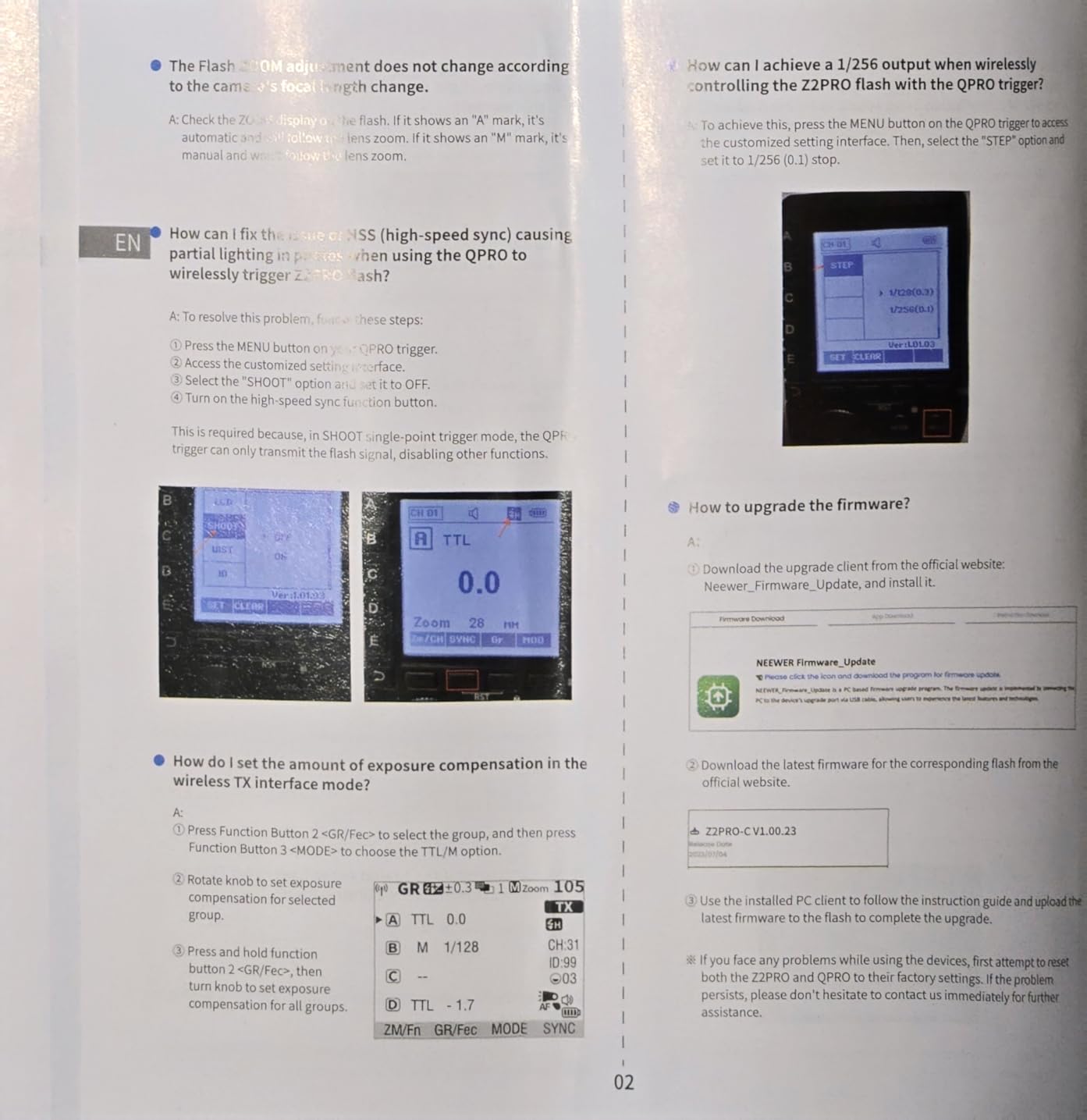
It runs 32 channels and 99 IDs across four master groups and five slave groups out to 100 metres, and it works with the Godox 2.4G X system as well as the manufacturer’s own Q system.
The Round Head Difference in Practice
Stand three metres from a subject with a standard rectangular head and you will see defined shadow edges under the chin and nose. The round emitter spreads the same energy over a wider area at a slightly lower intensity, so the transition from lit to unlit is gradual.
That is why portrait and beauty shooters gravitate toward round heads even when a cheaper rectangular flash would deliver the numbers. If your work is people, this is the reason to pick this model.
Two Radio Systems, One Limitation
Compatibility with both the Godox X system and the NEEWER Q system is a genuine advantage, because you are not locked to one brand of accessory. The catch is that the two systems cannot be active at the same time on this body.
Owners also report that full Godox X compatibility depends on running the latest firmware, so update before you rely on it in a paid job. That is a small task with a real payoff.
Best For
Portrait and beauty shooters on Canon who want the softest possible light from a single head, plus anyone moving between stills and short video clips who will use the modeling lamps as a continuous light.
It carries one of the highest satisfaction rates in the roundup, with the round head named as the reason for purchase more often than anything else.
Where It Falls Short
Camera compatibility is the main source of friction. It lists support across the Canon EOS R and DSLR ranges, but some bodies, including the R50 and RP, need a separate adapter shoe, and a small number of owners report communication problems on the R7.
Check your exact body model before buying. This is a flash that rewards careful reading of the compatibility list rather than a hopeful guess.
7. Nikon SB-910 – Best Speedlight for Wide Zoom Coverage and Event Colour Matching
Nikon SB-910 Speedlight Flash for Nikon Digital SLR Cameras
GN 34 at ISO 100
17-200mm auto zoom
CLS radio grouping
Hard and soft colour filters
Pros
- Widest zoom coverage in the roundup at 17-200mm
- CLS radio master and slave grouping for multi-light work
- Thermal cut-out protection supports long sessions
- Hard and soft colour filters for tungsten and fluorescent matching
- Familiar Nikon control layout with an improved interface
Cons
- Costs more than comparable third-party TTL speedlights
- Rated 1/250 sync with a lower guide number than newer flagships
- Only 30 days of manufacturer warranty cover
The SB-910 is a mature design rather than a current flagship, and that shows in the numbers: guide number 34 at ISO 100 and a 1/250 sync speed are both modest beside newer units. What it still does better than anything here is zoom coverage, spanning 17-200mm on auto power zoom.
That range is why event photographers keep coming back to this generation. When you are covering a reception and the light is bouncing unpredictably, having the head reach back to 200mm without repositioning the light is worth more than raw power.
CLS radio control lets it work as master or slave in a group, and the improved thermal cut-out protection was added specifically to survive long shooting sessions rather than shutting down in a warm room mid-ceremony.
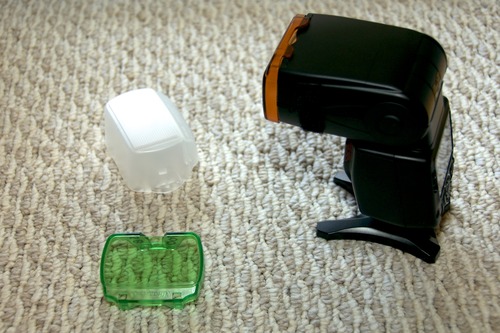
The hard-type and soft-type colour filters are the quiet feature. A gel that actually matches the colour of the venue lighting saves a correction step in post, and having both densities in the box is a practical saving.
Working Within a 1/250 Sync Limit
At 1/250 you cannot shoot wide open in daylight and expect a clean frame, and you will see banding on the background if you push further. That is a genuine constraint for daylight portrait work compared with the units here that reach 1/8000s.
It also means the flash cannot freeze fast action on its own. For event and documentary work at normal shutter speeds it is entirely adequate, and the restriction only bites in specific high-light scenarios.
Colour Matching Under Mixed Light
Filters matter more than most buyers expect. Tungsten and fluorescent rooms do not produce the 5600K daylight output these flashes are rated at, and the difference shows up as a colour cast that has to be corrected later.
Swapping a filter in the head is faster and more consistent than correcting every frame, which is why event-focused photographers still value this feature even on newer bodies.
Best For
Nikon event and documentary shooters who need wide zoom reach and reliable multi-light grouping more than they need the highest possible output or the fastest sync speed.
Owners value the reliable CLS radio grouping and the extended zoom, and they treat the colour filters as an event-work essential rather than a novelty.
Where It Falls Short
It costs more than third-party TTL speedlights that outperform it on power and sync speed, and the 30 day manufacturer warranty is notably shorter than the coverage on every other body in this roundup.
If you are buying new rather than finding one used, the newer SB-5000 covered in this guide is a more capable choice in every measurable way except warranty length.
8. Godox TT685II-C – Best Value E-TTL Flash for Canon Client Work
GODOX TT685II-C E-TTL Flash for Canon Speedlight Camera Flash,2.4G Wireless
GN 60 at ISO 100
20-200mm zoom
2.4G X system built in
TCM conversion
Pros
- Accurate E-TTL II exposure on both Canon DSLR and mirrorless bodies
- Communicates with the full range of Godox triggers
- Channel scanner finds a clear channel in busy venues
- Light and easy to rotate for bounce
- Compact compared with the flash it replaces
Cons
- No LED modeling light
- Four AA batteries give fewer full power flashes and slower recycle
- Quick-release lock has no tension adjustment
- The battery door is very tight to open bare-handed
This is the Canon version of the model earlier in the guide, and for Canon shooters it is the value pick. It meters E-TTL II accurately across both DSLRs and mirrorless bodies, which is what makes it usable as a working flash rather than a manual light with a metering switch.
Measured performance lands around 347 back-to-back full power flashes with roughly 2.5 second recycling at full power, which is a fair description of an AA-powered body. The zoom covers 20-200mm on automatic or manual selection.
The channel scanner is the most underrated thing on this flash. In a busy venue with other photographers working, it finds a clear channel quickly instead of leaving you to cycle through all 32 hoping yours is clear.
Owners consistently frame it as strong value against the native Canon flash it effectively replaces, describing comparable output from a body that costs considerably less. Several use it as a dependable client-job flash.

E-TTL II Across DSLR and Mirrorless
Compatibility extends across the Canon EOS R range and the established DSLR line, which matters because a lot of working photographers now carry two bodies from different eras. A flash that meters correctly on both saves carrying two flashes.
TTL can read slightly under in some bounce setups, and the same advice applies as with any E-TTL flash: set flash exposure compensation and move on rather than fighting the meter.
TCM and Locking Exposure
One-touch conversion from TTL to manual locks the exposure you just saw and holds it for the rest of the sequence. In a fast-moving situation, or a group where people step in and out, that consistency is worth more than automatic adjustments.
It is the same reasoning behind the professional practice of dialling in a setup once and then repeating it. TCM is the shortcut to that without a full manual dial session.
Best For
Canon photographers who shoot paid work and want metering and radio control without a native flash price. It is also the easiest way to add a second light to an existing Godox-based system.
For a Canon shooter building a kit, the 2.4G X compatibility means a trigger bought for the V860III will drive this flash too.
Where It Falls Short
No modeling light means more test frames when building a setup. The quick-release lock has no tension adjustment, and the battery door is tight enough that you will end up using it to pick the flash up.
The detailed manual is not in the box, which adds friction exactly when a first-time owner needs it most.
9. Nikon SB-5000 – Best Nikon Speedlight for Radio Controlled Event Work
Nikon SB-5000 AF Speedlight
GN 113 at ISO 100
Cooling for 100 consecutive shots
24-200mm zoom
1.8-2.6s recycle time
Pros
- Highest guide number of the Nikon bodies here at 113
- Radio control integrates into Z-series camera menus
- Cooling system rated for 100 consecutive shots without shutdown
- Works across Z6
- Z7
- D5
- D850
- D500 and D7500 bodies
- Bundled diffusion dome and colour filters in the box
Cons
- No AF-assist beam when used on mirrorless bodies
- Controls are complex for photographers coming from simpler flashes
- No companion tutorial material compared with newer third-party models
The SB-5000 is Nikon’s current radio-control flagship, and the headline number is a guide number of 113 at ISO 100 and 35mm. That is enough output to light a subject through a 70-200mm lens in low light, which puts it well ahead of the rest of the Nikon bodies in this guide.
Radio control is the deeper advantage. With the WR-R10 transmitter, the flash integrates into the menus of Z-series bodies, so you set groups and ratios from the camera itself rather than from a separate device you have to remember to bring.
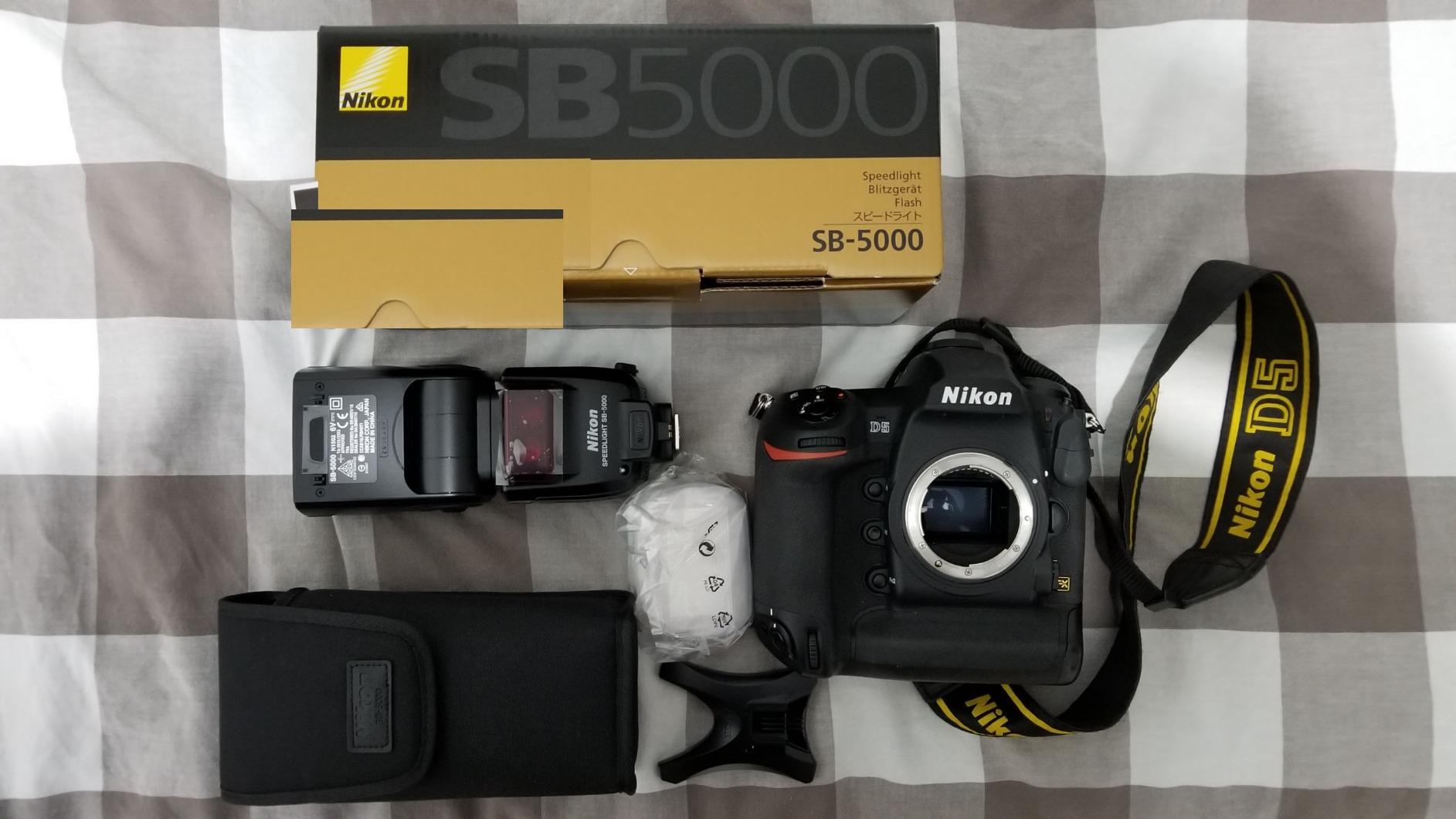
The cooling system is rated for 100 consecutive shots, which means it holds output through a long sequence rather than throttling halfway down an aisle. Recycle time is 1.8 to 2.6 seconds depending on power.
Zoom coverage runs 24-200mm, with a built-in panel widening it to the equivalent of 14mm. The box includes a speedlight stand, a diffusion dome, colour filters and a soft case, which is an unusually complete bundle.
Integration With Z-Series Menus
When the flash is grouped through the camera menus, changing a ratio takes the same number of taps as changing an aperture. That is the difference between adjusting lighting and fiddling with a separate controller, and it is why the system feels coherent rather than bolted together.
For a Nikon shooter building a multi-light setup, that coherence is the reason to choose a native flash over a cheaper third-party body with equivalent paper specifications.
Where the Mirrorless AF-Assist Goes
On Z-series bodies there is no AF-assist beam from the flash, so autofocus has to work from the camera’s own system. In genuinely dim conditions that can struggle, and owners correctly identify it as a camera limitation rather than a fault in the flash.
In practice it matters more for static low-light subjects than for anything moving, and brightening the room or adding fill from another source resolves it easily.
Best For
Nikon event and wedding photographers who want the highest output in the native system and menu-level radio control. The output and the cooling rating together are what make it viable for long sequences.
Owners rate output power and radio integration as the standout strengths specifically for wedding and event work.
Where It Falls Short
The controls are dense for anyone coming from a simpler flash, and there are no tutorial videos to fall back on the way newer third-party models increasingly include.
Four AA batteries and a recycle time around two seconds at the top of the range are the practical limits on a very long day, so budget for a battery strategy.
10. Canon Speedlite EL-10 – Best Flash for Canon RF Multi-Function Shoe Bodies
Canon Speedlite EL-10, Portable Camera Flash, Compatible with Select EOS R Series Mirrorless Cameras
GN 82.7
1/200 flash sync
4 AA batteries
Controls up to 15 more Speedlites
Pros
- Multi-function shoe connector gives menu control from the camera body
- Compact and light compared with the flash it replaces
- Runs on standard AA rechargeable cells rather than proprietary Canon packs
- Custom flash modes for switching between saved E-TTL and manual settings
- Canon Camera Connect app control of flash settings and shutter release
Cons
- Only works with Canon bodies that have the newer multi-function shoe
- Some listed R-series bodies including the R7 may not communicate correctly
- Guide number is lower than larger Canon Speedlites
- Runs on AA batteries with no rechargeable option
The EL-10 is Canon’s route into the multi-function shoe ecosystem, and its real selling point is not power. With a guide number of 82.7, it is a modest output. What it offers instead is menu-level control and a switch away from expensive proprietary battery packs.
The multi-function connector in the foot is the key. It lets the camera talk to the flash in a way older Speedlites could not, so exposure and group settings are handled from the body menus rather than from the back of the flash.
It runs on four standard AA cells, which is a meaningful change for Canon owners used to dedicated LP-EL packs. The cell cost over a few years is far lower, and any charger you already own for your camera will refill them.
Custom flash modes let you register an E-TTL setting and a manual setting, then switch between them instantly without re-dialling. App control through Canon Camera Connect allows remote adjustment of wireless flash settings and shutter release.
The Compatibility Question Comes First
This flash requires a body with the newer multi-function shoe. That rules out a lot of perfectly good cameras, including some older DSLRs and several R-series models. Owners stress this point repeatedly, and one returned a unit that would not format correctly on an R7.
Check your exact camera model before buying anything on this list. For most Canon users the answer is simple: if your body has the multi-function shoe, the EL-10 is the compact choice.
Where AA Batteries Help and Hurt
Standard cells are cheaper and universally available, which is a genuine saving over proprietary packs across a few years of regular shooting. They also keep the body light and compact, which is the point of a portable flash.
For long events the trade is flash count for convenience, and the reusable cells keep the running cost honest even if you are swapping them more often.
Best For
Canon RF owners with a multi-function shoe body who want menu control, a small package, and cheap power. It controls up to 15 additional compatible Speedlites, so a multi-light Canon setup is well within reach.
The head tilts to 90 degrees and swivels 150 degrees one way and 180 the other, which is enough range for the bounce work most people need in a small room.
Where It Falls Short
It is only compatible with newer multi-function shoe bodies, and some listed R-series models may not communicate correctly. That is the single thing to verify before purchase.
At a 1/200 sync speed and a guide number below the other Canon units in the guide, it is not the choice for daylight wide-open portraits or for freezing action.
How to Choose a Speedlight Without Wasting Money
Almost every expensive mistake in this category comes from buying the wrong category of flash, not the wrong model. Work through these six questions in order and the model choice makes itself.
1. Work Out the Power You Actually Need
Guide number is a distance measurement in disguise. Divide the guide number by your subject distance in metres and you get the widest aperture the flash can expose at ISO 100. A GN of 60 at four metres gives you f/15, which is plenty indoors. The same flash at ten metres gives f/6, which is not enough for a portrait at f/2.8.
That arithmetic is why most people over-buy. Most portraits, group shots and event work happen within four metres, where a mid-range flash is genuinely sufficient. Buy the extra power only if you are lighting larger spaces or shooting much further back.
Working out whether f/2.8 or f/4 is the right target matters here rather than in general. Every stop you drop in aperture doubles the light required, so moving from f/2.8 to f/4 at the same distance demands exactly twice the flash power.
2. Decide Manual or TTL Before Anything Else
A manual flash works on any brand of camera. A TTL flash is brand-locked, because E-TTL II, i-TTL and P-TTL are different protocols that only the camera and flash of the same brand share. This is the single most important fact in this whole guide.
Learn to read a flash meter and the manual option is genuinely liberating. Choose TTL if you shoot fast-moving subjects, unpredictable light, or anything where you cannot afford to check the result between frames.
Professional photographers use manual mode constantly. The pattern is TTL to find the exposure, then a conversion function to lock it in, then manual for the rest of the sequence.
3. Radio Control or Optical
Optical slave triggering needs line of sight, which is why it fails behind a pillar, at a reception, or whenever the subject faces away from the camera. Radio control at 2.4GHz removes that constraint entirely and is the reason we weight it so heavily here.
The catch is ecosystem fragmentation, and this is the mistake forum readers make most often. Godox runs two partially separate radio ecosystems, so a body from one line may not respond to a trigger from the other. Check compatibility before buying the second flash, not after.
Third-party ecosystems are worth researching properly. Some models speak the Godox 2.4G X protocol, which opens a large accessory market; others run their own system and lock you into that brand’s triggers. We have noted where each product falls on that line in the reviews above.
4. Battery Format and Endurance
Four AA cells are cheap to feed and slow to drain into performance. Rechargeable lithium packs deliver far more full power flashes, recycle faster and hold their speed as they discharge, and they repay their cost over a few years of regular work.
Match the format to the work. Portrait sessions and short shoots are fine on AA. Weddings, long events and multi-day assignments are where lithium earns its place, and the effect on missed frames is significant.
5. Head Movement and Bounce Capability
A head that tilts up and swivels sideways lets you bounce off a ceiling, which is the cheapest soft light available. The 20-60-20 guideline in photography is a useful reminder here: most photographers find that aiming the light directly at the subject gives the harshest results, and a soft indirect source flatters far more skin tones.
Tilt and swivel ranges vary. The broader the range, the more awkward room shapes you can work in, and indoor venues are always awkward.
6. Camera System Compatibility
For Canon, Nikon and Sony, buy the version of the flash made for your brand if you want TTL. For Fujifilm, OM System, Panasonic and Pentax, decide carefully: some third-party bodies meter correctly, some require an adapter, and manual-only models always work.
Also check the body, not just the brand. The NEEWER Z2PRO-C lists broad Canon support yet needs an adapter shoe on some bodies, and the Canon EL-10 only works with multi-function shoe models. Compatibility lives at the model level.
Build the Rest of the Kit Around the Flash
A flash is the start of a lighting setup rather than a complete one. Before you commit, think about where the light will stand and how the camera will be supported. A proper tripod or monopod is the second upgrade most photographers need, and a stable camera is what lets a modest flash produce a sharp frame.
Carry considerations matter too. A body plus a lens plus two batteries and a trigger is a different bag problem from a body and a prime, and our guides to camera bags for photographers and premium camera travel backpacks cover that decision in detail.
If you work on location or shoot video alongside stills, our picks for action camera mounts and camera tripods cover the supporting gear, and the camera drone guide is worth a read if you plan to add aerial work to your range.
Speedlight Jargon Buster
These are the terms you will meet on every spec sheet and in every forum thread. Knowing them will save you buying the wrong thing.
Speedlight, Speedlite and Flashgun
All three words describe the same category of device. Speedlight and flashgun are generic terms. Speedlite is Canon’s trademark for its own range, and it is not a different kind of flash.
Guide Number
Guide number is a measure of flash power. Divide it by the subject distance in metres to get the widest aperture it can expose at ISO 100. Higher is more powerful, and beyond a certain point more power is simply wasted money.
TTL
TTL stands for through the lens metering. The camera fires a pre-flash, measures the reflected light, and sets the flash output to expose correctly. It comes in brand-specific flavours, including E-TTL II, i-TTL and P-TTL, which is why TTL flashes are brand-locked.
High-Speed Sync
HSS lets the flash fire at shutter speeds faster than the normal sync limit, usually up to 1/8000 seconds. It costs roughly two to three stops of power and is essential for shooting wide open in daylight.
Recycle Time
Recycle time is how long the flash takes to recharge between shots. A slow recycle time is the reason you miss the second frame of a burst, and it gets worse as batteries drain.
Master and Slave
A master flash controls and triggers other flashes. A slave is a flash being triggered by another unit. Groups let you set different power levels across several lights from a single control.
Bounce Flash
Bouncing means pointing the flash at a ceiling or wall so the light reaches the subject indirectly. It is larger, softer and dimmer, and it is the fastest single improvement you can make to the look of a portrait.
Modelling Light
A modelling light is a continuous lamp that shows roughly where the flash output will fall. It is invaluable when building an off-camera setup, and its absence is the most common complaint about otherwise capable flashes in this roundup.
Frequently Asked Questions
Is a Godox flash worth the money?
Yes for most people. The Godox range covers manual, TTL and rechargeable bodies with a 2.4G X radio system built in, which means you can add off-camera lights without buying a separate trigger. The main thing to check is that you buy the version matching your camera brand, because a Canon TTL flash will not meter on a Nikon or Sony body.
Is Neewer or Godox better?
It depends on the model rather than the brand. Godox has the wider accessory ecosystem and the most trigger compatibility, while the NEEWER Z2PRO-C has a round flash head that produces softer falloff and a rechargeable battery rated at 600 full power flashes. Check the radio system the model speaks before choosing, since that locks you into which triggers you can use later.
Do I really need a TTL flash?
Probably not to start with. Experienced photographers commonly advise beginners to keep a manual flash on the hot shoe and bounce it off a ceiling until the power settings make sense. TTL earns its place on fast-moving subjects, unpredictable light and paid work, but learning manual flash first means you understand what TTL is automating.
What is the best budget camera flash?
For a first flash on any camera brand, the PHOTOOLEX FK310 offers 22 power levels and S1 and S2 slave triggering at the entry tier. For a budget TTL flash, the Godox TT685II in your brand version gives you metering, radio control and a 20-200mm zoom. The Godox TT600 is the pick if you want a radio system without buying a trigger.
How do I choose the right speedlite for my camera?
Start with the brand, because TTL is brand-locked while manual flash is not. Then check the specific body model, since some models need an adapter shoe or require a newer foot connector. Next compare guide number against your working distance, then decide manual or TTL, then confirm the radio system so future triggers will work with it.
What is the difference between a flashgun and a speedlite?
There is no functional difference. Both words describe a hot shoe mounted external flash, and speedlite is simply Canon’s trademark for its own range of them. Sellers use all three terms interchangeably, so do not read anything into the name on the listing.
Which Speedlight Should You Buy
If you shoot Nikon and want one flash that does everything, the Nikon SB-700 is our pick. Native i-TTL metering, radio control out of the box and a body light enough to carry permanently add up to the most complete package here.
If you want the most capability per unit of money, the Godox TT600 takes the value slot. A built-in radio system, brand independence in manual mode and dependable recycle behaviour make it the flash we would put in the hands of a beginner who shoots more than one camera brand.
If you shoot events and are tired of changing batteries, the Godox V860III-C is the upgrade. 480 full power flashes, a modeling light and 1/8000 second high-speed sync cover the whole day in one body.
For a first flash on any camera, the PHOTOOLEX FK310 teaches you manual flash properly. For a Nikon budget TTL body, the Godox TT685II-N covers off-camera work. For the softest light in the roundup, the NEEWER Z2PRO-C round head is worth the compatibility check. For Canon RF bodies with the multi-function shoe, the Speedlite EL-10 keeps running costs down with standard AA cells.
Whichever of the best camera speedlights you settle on, buy the version that matches your camera brand if you want TTL, and check the body model rather than just the brand. That single check prevents the most common expensive mistake in this category.
Leave a Reply