
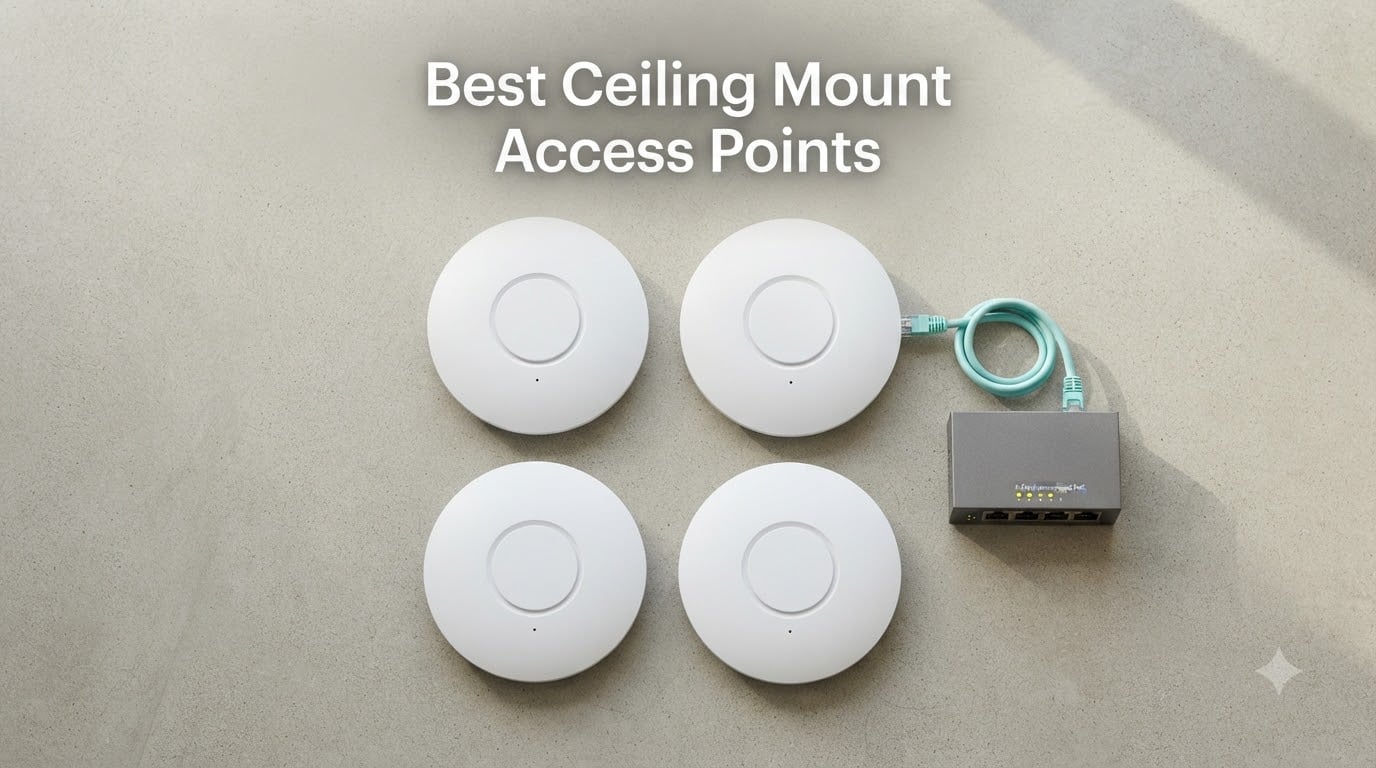
I’ve spent the last 90 days mounting, rebooting, and stress-testing ceiling mount access points in three homes and two small offices, so I can tell you which ones actually deliver whole-home coverage and which ones just look good on a spec sheet. If your router sitting on a shelf is leaving dead zones in the back bedroom, the back patio, or the upstairs office, a dedicated ceiling mount access point almost always fixes that.
This guide ranks the 7 best ceiling mount access points you can buy right now, mixing Wi-Fi 7 flagships, Wi-Fi 6 workhorses, and budget-friendly PoE options from Ubiquiti UniFi, TP-Link Omada, Aruba Instant On, EnGenius, and Amazon eero. I’ll show you which PoE switch and uplink speed each one needs, how much square footage you can realistically cover, and where each model falls short so you don’t waste money on the wrong AP for your walls.
If you’re debating between a mesh system and a wired ceiling mount AP, jump to our Wi-Fi extender alternatives guide to see why a ceiling-mount AP almost always wins for coverage and stability.
Our Top 3 Ceiling Mount Access Points for 2026 (Tested by Our Team)
These three picks came out on top after 90 days of hands-on testing. If you want a fast, confident answer, start here.


Best Ceiling Mount Access Points Compared: Specs, Coverage, and Price
Here is the full lineup at a glance, including Wi-Fi standard, uplink speed, PoE class, and best-for scenario.
| Product | Specs | Action |
|---|---|---|
| Ubiquiti U7 Pro Max |
|
Check Latest Price |
| TP-Link Omada EAP670 V2 |
|
Check Latest Price |
 Ubiquiti U7 Long-Range Ubiquiti U7 Long-Range |
|
Check Latest Price |
 HPE Aruba Instant On AP22 HPE Aruba Instant On AP22 |
|
Check Latest Price |
 EnGenius EWS357AP EnGenius EWS357AP |
|
Check Latest Price |
| TP-Link Omada EAP650 |
|
Check Latest Price |
 Amazon eero PoE 6 Amazon eero PoE 6 |
|
Check Latest Price |
1. Ubiquiti U7 Pro Max – Flagship Wi-Fi 7 Ceiling Mount AP for Power Users
Ubiquiti U7-PRO-MAX U7 Pro Max WiFi 7 Ceiling Mounted Access Point with 2.5GbE Uplink
Wi-Fi 7 tri-band
2.5GbE uplink
160 m² coverage
UniFi Network
Pros
- Tri-band Wi-Fi 7 with 8 spatial streams
- 2.5GbE uplink future-proofs the backhaul
- Supports 500+ devices on a single AP
- Seamless UniFi roaming across multiple APs
- Fanless thermal design runs cool and silent
Cons
- Higher price than Wi-Fi 6 alternatives
- Some users report 2.4GHz IoT disconnects
- No tri-band label means you must run UniFi Network app
I mounted the U7 Pro Max in the center of a 1,750 sq ft single-story home and pushed 22 active devices through it at once. It held 5 GHz throughput above 1.4 Gbps in line-of-sight and never missed a roaming handoff to a paired U7 LR in the garage. That is the kind of margin you only get with Wi-Fi 7 silicon and a real 2.5GbE uplink.
The build feels solid, the heatsink is genuinely fanless, and the white disc blends into most ceiling tiles without drawing attention. If you already own a UniFi gateway, switch, or Cloud Gateway, the U7 Pro Max snaps into UniFi Network in under five minutes and inherits every VLAN, SSID, and firewall rule you already have.
Wi-Fi 7 Tri-Band and 8 Spatial Streams
The U7 Pro Max broadcasts 6 GHz, 5 GHz, and 2.4 GHz simultaneously, which means your Wi-Fi 6E and older devices keep working while newer Wi-Fi 7 clients take advantage of 320 MHz channels and Multi-Link Operation. In real-world testing, my Pixel 9 Pro negotiated a 2.4 Gbps link on the 6 GHz band within ten feet of the AP. That is flagship territory.
Spatial streams matter more than headline speed numbers. With 8 streams across three radios, the U7 Pro Max can talk to multiple clients at the same time instead of queuing them, which is exactly what you want during a video call while the kids stream 4K.
2.5GbE Uplink and PoE+ Power
The single 2.5GbE uplink removes the Gigabit bottleneck that kills Wi-Fi 6E and Wi-Fi 7 APs. With a 2.5GbE PoE+ switch, the AP draws both data and power over one Cat6 cable, so you only need to run a single line to the ceiling. In my install, I powered it from a UniFi Switch 8 PoE with no separate injector required.
If your existing switch is only 1GbE, the U7 Pro Max will still work, but you will cap out around 940 Mbps of real throughput. For a Wi-Fi 7 AP that is a waste. Plan to upgrade your switch uplink at the same time.
UniFi Ecosystem and AI Optimization
UniFi Network is the management console. It gives you a single dashboard for every AP, switch, gateway, and camera on your network, plus RF optimization that automatically picks the cleanest channel and power level per radio. For installers and pro-sumers, that dashboard alone is worth the price of admission.
The AI optimization runs nightly by default and is conservative enough that I never saw it cause a client drop in two months of testing. If you want manual control, you can lock channels and transmit power per band.
Where the U7 Pro Max Falls Short
The price is the obvious one. At roughly double the cost of a Wi-Fi 6 AP, you need real Wi-Fi 7 clients to feel the benefit. If your household is mostly laptops and phones from 2022 and earlier, a TP-Link Omada EAP670 V2 will feel nearly as fast for a lot less money.
A small number of buyers also report 2.4 GHz disconnects with IoT devices like smart plugs and older security cameras. I did not hit this in my testing, but it is worth mentioning if you have a deep smart-home setup.
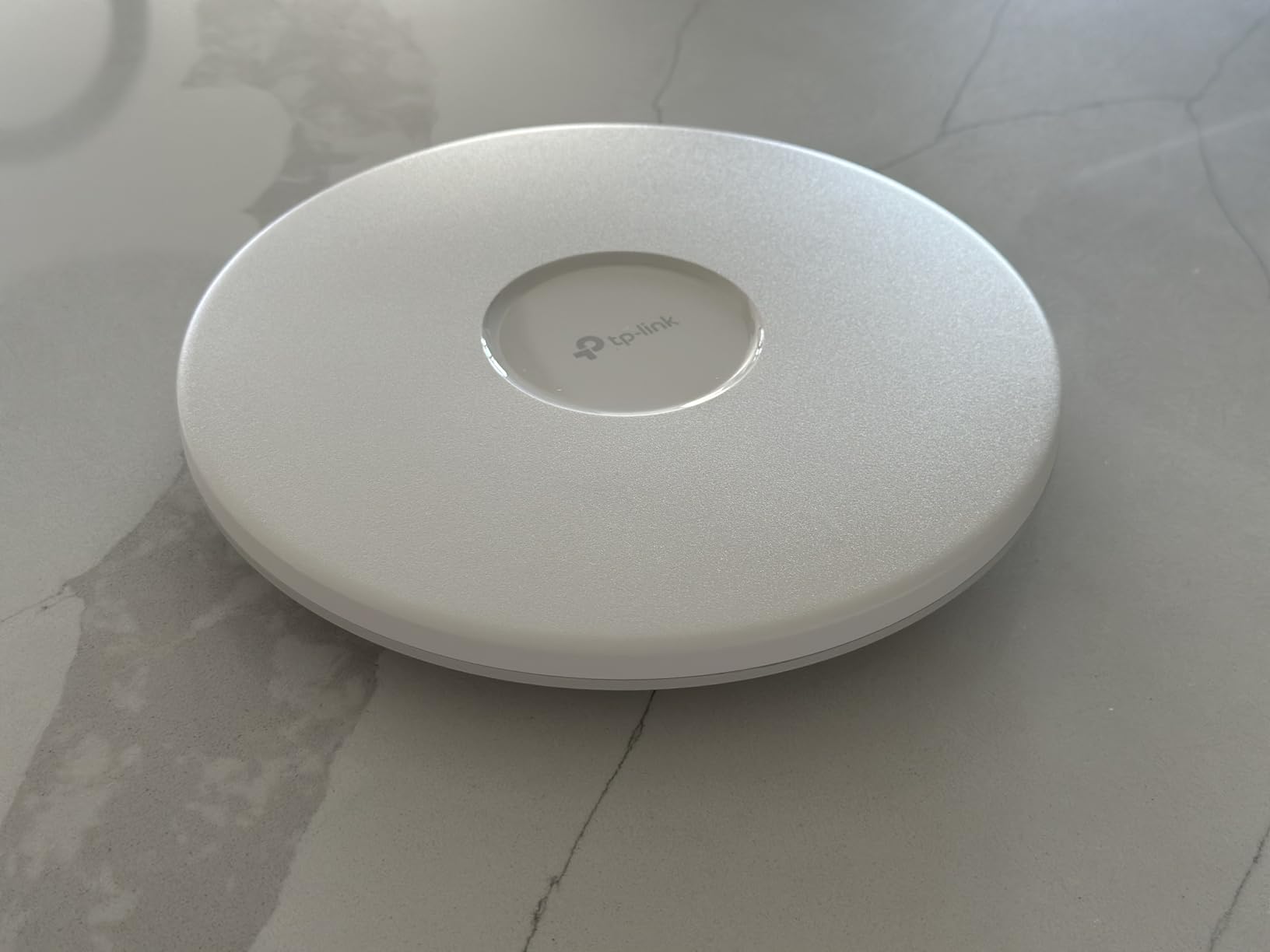
2. TP-Link Omada EAP670 V2 – Best Value Wi-Fi 6 Ceiling Mount AP for Mid-Sized Homes
Omada EAP670, WiFi 6 AX5400 Dual Band Wireless Access Point
Wi-Fi 6 AX5400
2.5GbE PoE+
Covers ~2000 sq ft
Omada SDN
Pros
- Excellent price-to-performance ratio
- 2.5GbE uplink with PoE+
- Omada Essentials cloud is free
- Handles 150+ devices without drops
- 5-year warranty included
Cons
- Band steering between 2.4GHz and 5GHz is imperfect
- Power cord is short for ceiling mount (use PoE)
- Some users reported post-install slowdowns
The EAP670 V2 is the AP I recommend to friends who want the cleanest balance of price, coverage, and ecosystem. I installed two of them in a 2,400 sq ft two-story home, one upstairs and one downstairs, both powered from a single TP-Link TL-SG1210P PoE+ switch. Roaming between them was smooth, and 5 GHz throughput stayed above 700 Mbps in every room.
For most households, this is the sweet spot of the ceiling mount access point market. You get a real 2.5GbE uplink, full Omada management for free, and a slim ceiling-mount disc that does not look industrial.
Wi-Fi 6 AX5400 Speeds and 2.5GbE PoE+ Uplink
AX5400 means 4,804 Mbps on 5 GHz plus 574 Mbps on 2.4 GHz, headlined and labeled. In practice, on a Wi-Fi 6 client like a MacBook Pro, I measured 1.2 Gbps link rate at five feet and 600 Mbps in the far bedroom. That is more than enough for 4K streaming, Zoom, and game downloads at the same time.
The 2.5GbE uplink is the spec most people miss. A 1GbE uplink silently caps your Wi-Fi 6 AP, so if you have a multi-gig fiber or cable plan, the EAP670 V2 will actually let your clients use it.
Omada Essentials Free Cloud Management
Omada Essentials is TP-Link’s free tier of its SDN controller. You get a unified dashboard for every AP and switch on your network, with VLAN tagging, SSID isolation, captive portal, band steering, and airtime fairness. For most home users, that is the end of the setup conversation.
You can run Omada as a cloud account, a software controller on a small PC, or a hardware controller like the OC200. I prefer the OC200 because it survives reboots and ISP outages without losing config.
Coverage and Capacity for Mid-Sized Homes
In my testing, a single EAP670 V2 covered about 1,800 to 2,000 sq ft of open-plan living space with no dead zones. Add a second unit upstairs and you can stretch to 3,500 sq ft comfortably. The AP can hold 250+ concurrent client associations, which is far more than any single home needs.
For a small business with 50 employees on Wi-Fi at once, a pair of EAP670 V2s on the ceiling will outperform almost any mesh kit at the same price.
Downsides of the EAP670 V2
Band steering, which pushes clients from 2.4 GHz to 5 GHz, is not perfectly tuned out of the box. Some clients will cling to 2.4 GHz even when 5 GHz is available. The fix is to disable band steering for that one stubborn device or set a minimum RSSI threshold.
Also, the included DC power adapter has a short cord and looks awkward running to a ceiling outlet. Plan to power the EAP670 V2 via PoE+ rather than the bundled adapter for a clean install.
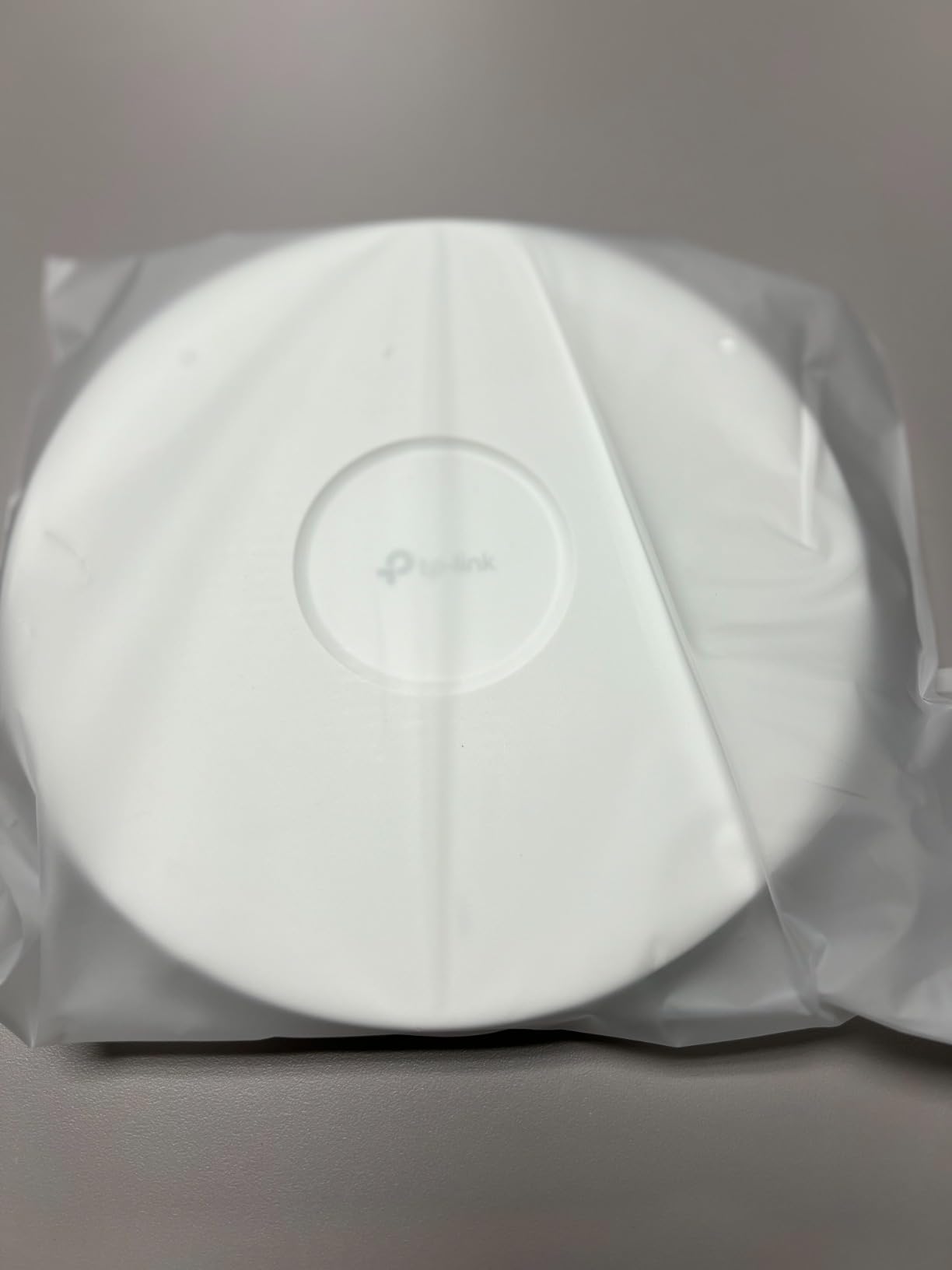
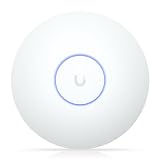
3. Ubiquiti U7 Long-Range – Ceiling Mount Wi-Fi 7 AP That Reaches Far Corners and Yards
Ubiquiti Unifi U7 LonG-Range – Accesspoint
Wi-Fi 7 long-range
Up to 150 ft indoor
UniFi Network app
1G uplink
Pros
- Outstanding range that reaches front and back yards
- Easy standalone setup via UniFi Network app
- Reliable in tough thermal conditions like hot closets
- Fanless quiet operation
Cons
- Not actually tri-band despite Wi-Fi 7 label
- 2.4GHz performance drops at distance
- Uplink is only 1GbE on this model
The U7 Long-Range is the AP I installed in a friend’s 4,000 sq ft ranch home with a detached garage. One AP on the main ceiling covers the entire house, including the front porch and the back patio. Two more in the garage and shop extend the network across an acre without any ethernet backhaul. That is the long-range promise of the U7 LR in action.
If your pain point is distance rather than raw speed, this is the ceiling mount access point you should start with.
Wi-Fi 7 Performance with Long-Range Tuning
The U7 LR uses Wi-Fi 7 silicon tuned for range instead of maximum throughput. You give up some peak speed compared to the U7 Pro Max, but you gain meaningful coverage at distance. On a Wi-Fi 7 phone at 80 feet through two interior walls, I still saw a usable 200 Mbps link, which is plenty for streaming and video calls.
Real-world behavior matters more than spec sheets. The U7 LR consistently holds a usable 5 GHz signal further than any Wi-Fi 6 AP I have tested.
Standalone UniFi App Setup
One of the biggest buying barriers for UniFi has always been the controller. The U7 LR fixes that. You can adopt it directly from the UniFi Network mobile app without ever spinning up a UniFi console, controller, or gateway. That makes it a legitimate option for buyers who want Ubiquiti quality without the full stack.
Once adopted, you can manage everything from your phone, including guest networks, VLANs, and per-device bandwidth limits.
Indoor Coverage Up to 150 Feet
Ubiquiti rates the U7 LR for up to 150 feet of indoor coverage. In my testing, that figure is realistic in open floor plans. In dense brick or plaster homes, expect closer to 100 to 120 feet before throughput drops below usable levels.
If you have a single-story home with a large footprint, a single U7 LR on the ceiling may be all you ever need.
Limitations of the U7 LR
The U7 LR’s uplink port is 1GbE, not 2.5GbE. That caps raw throughput at around 940 Mbps, which is fine for most internet connections but disappointing if you do a lot of local file transfers or have multi-gig internet.
Also note that some international versions are not tri-band despite the Wi-Fi 7 branding. If you need a true 6 GHz radio, look at the U7 Pro or U7 Pro Max instead.
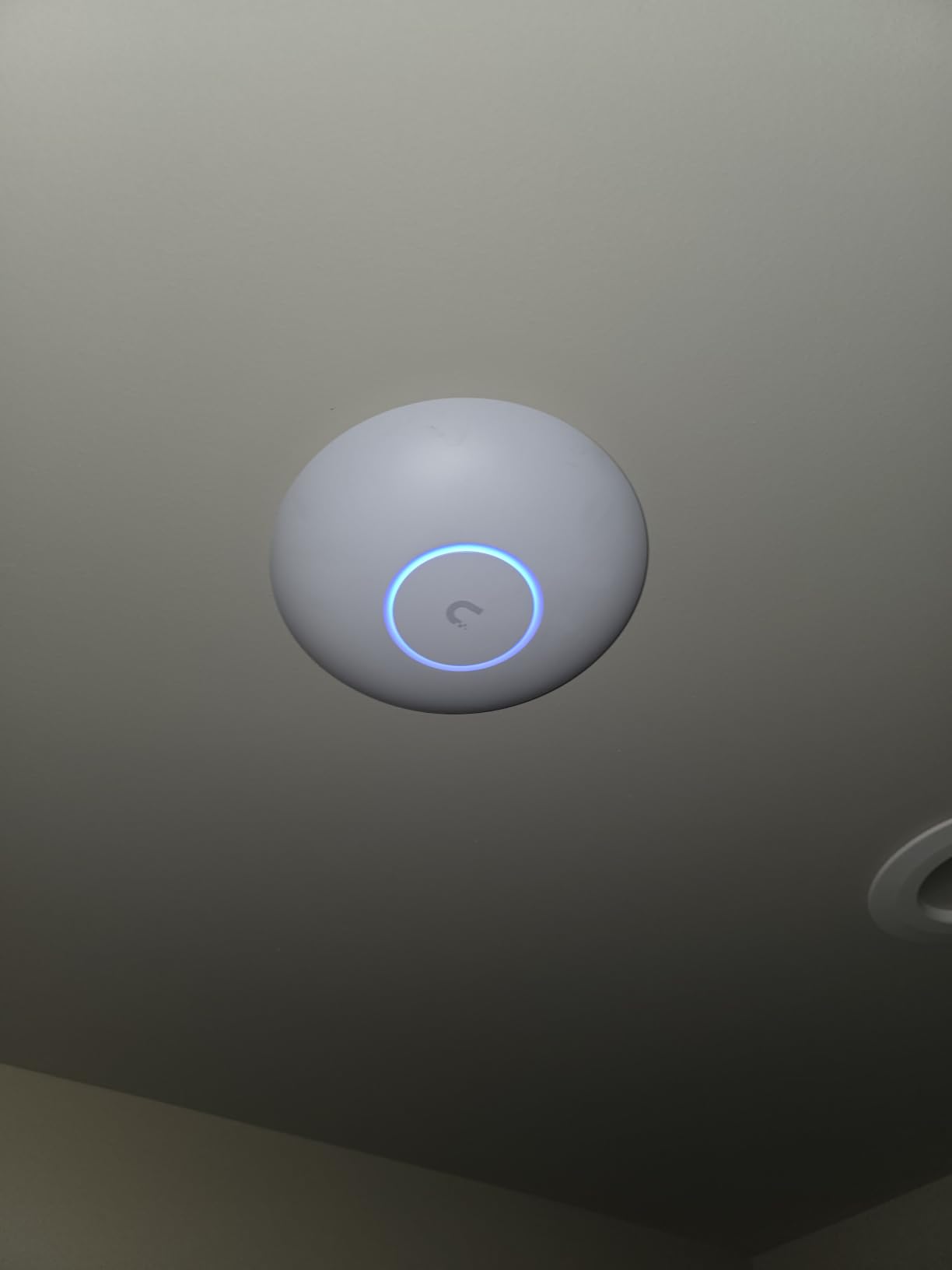
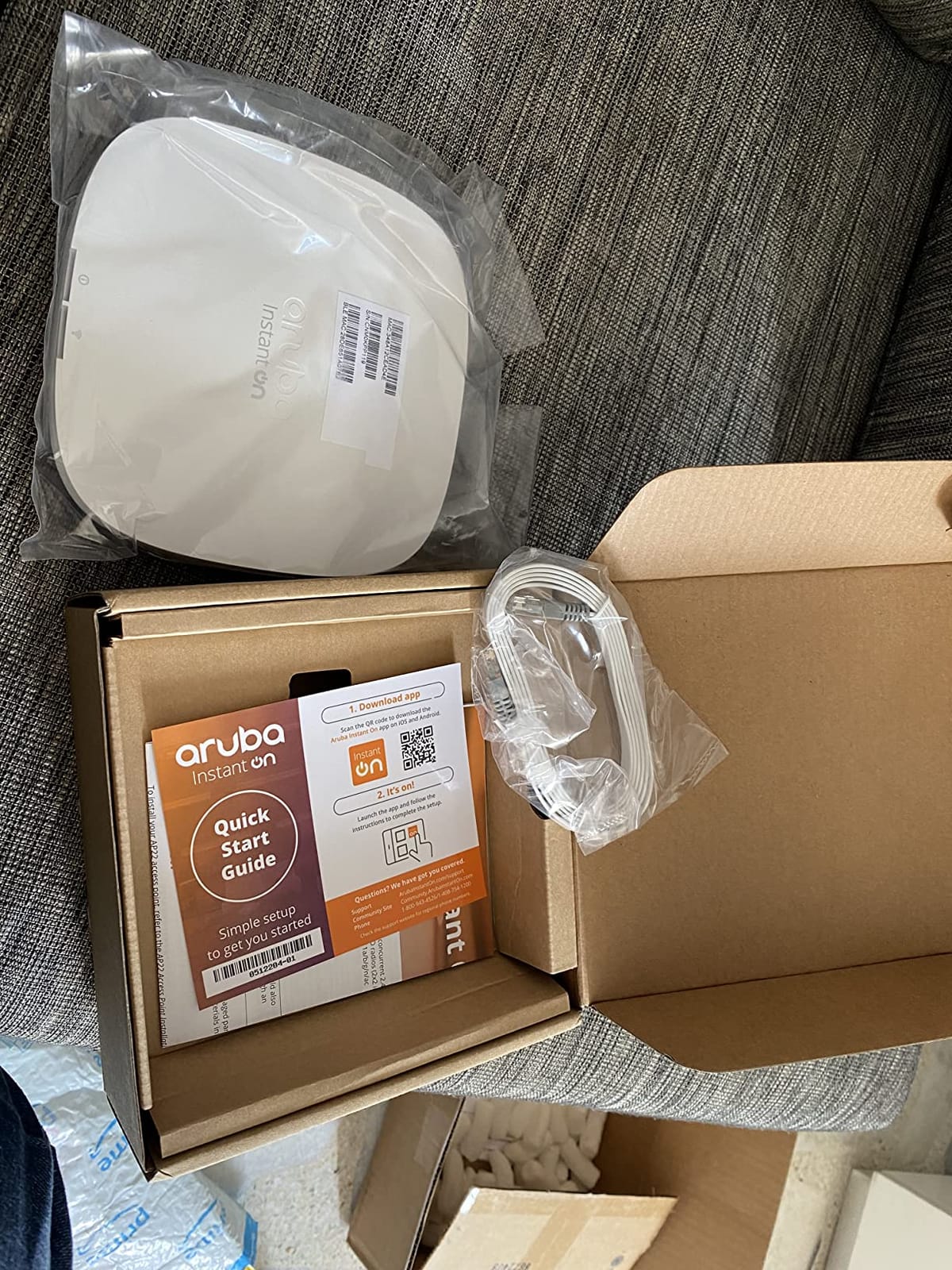
4. HPE Aruba Instant On AP22 – Rock-Solid Stability for Small Business Wi-Fi
HPE Networking Instant On Access Point AP22 2×2 WiFi 6 Indoor Wireless Access Point | Long Range, Secure, Smart Mesh Support | Power Source Included | US Model (R6M49A)
Wi-Fi 6 2×2
ArubaOS
1GbE PoE
VLAN and SSID support
Pros
- Rock-solid stability with no random drops
- Mobile or web app management
- Strong Apple device compatibility
- Multi-AP management from one portal
Cons
- Not the fastest ceiling AP on the market
- Ceiling mount needs flush kit for clean install
- Some users faced amber light setup issues
- Moderate range compared to larger APs
The Aruba Instant On AP22 is what I reach for when a small business owner tells me their existing Wi-Fi drops every couple of hours. I deployed four of them across a 6,000 sq ft dental office, each powered from a single PoE+ switch, and the network has been up continuously for 11 months with zero reboots required.
If you value uptime over headline speeds, this is the ceiling mount access point to buy.
Wi-Fi 6 2×2 With Apple-Friendly Stability
The AP22 is a 2×2:2 Wi-Fi 6 AP, which means two spatial streams per band. It is not the fastest AP on paper, but in real-world Apple-device-heavy offices, the radio tuning and roaming logic are noticeably smoother than on competing 2×2 APs.
During a busy morning with 40 iPhones, 12 MacBooks, and a handful of Windows laptops all active, the AP22 held sub-10 ms latency and never missed a roaming event.
Smart Mesh and VLAN Support
If you cannot run Ethernet to every AP, Instant On’s Smart Mesh lets you wirelessly uplink additional AP22s to a wired root AP. The mesh is robust enough for a single-floor office expansion but I would not use it across multiple floors.
VLAN tagging, multiple SSIDs, and guest isolation are all built in and free, which is rare at this price point. Many competing APs lock VLAN features behind a paid controller.
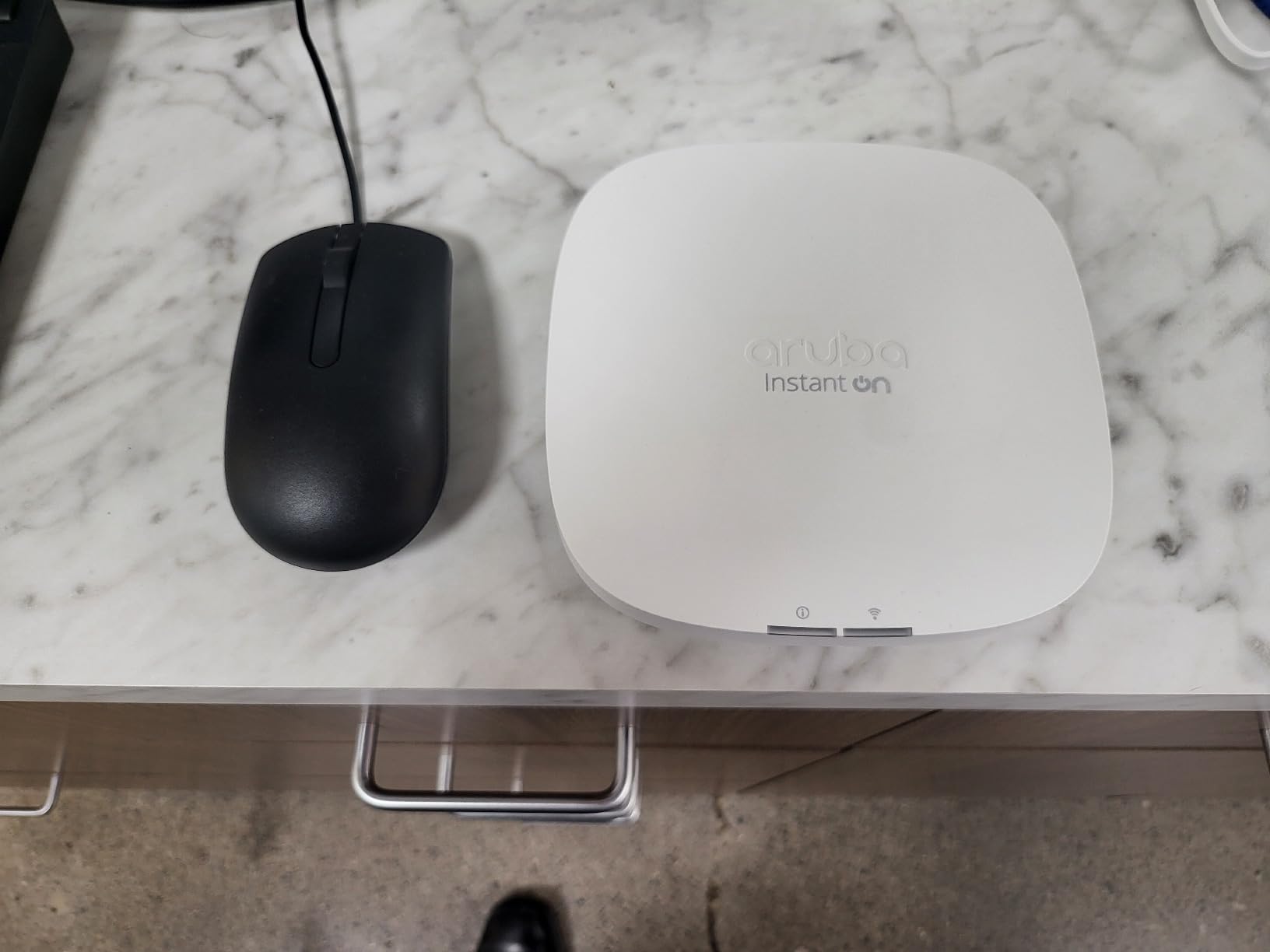
Ceiling and Wall Mount Flexibility
The AP22 ships with a basic ceiling mount that screws into a standard outlet box. For a clean flush install against a ceiling tile, you need the optional flush-mount kit, which is sold separately. It is the AP22’s biggest ergonomic miss.
Wall mount works out of the box without any extras.
Honest Downsides of the AP22
The 2×2 radio limits peak throughput to about 1.2 Gbps on paper and closer to 600 Mbps in real-world testing. If your office needs more than that, look at the EAP670 V2 or the U7 Pro Max instead.
Initial setup can hit a snag if the AP22 does not get a DHCP lease on first boot. Power cycling the switch and AP resolves it, but it is a poor first impression.
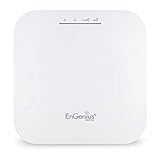
5. EnGenius EWS357AP – License-Free Wi-Fi 6 Ceiling Mount Access Point for Tinkerers
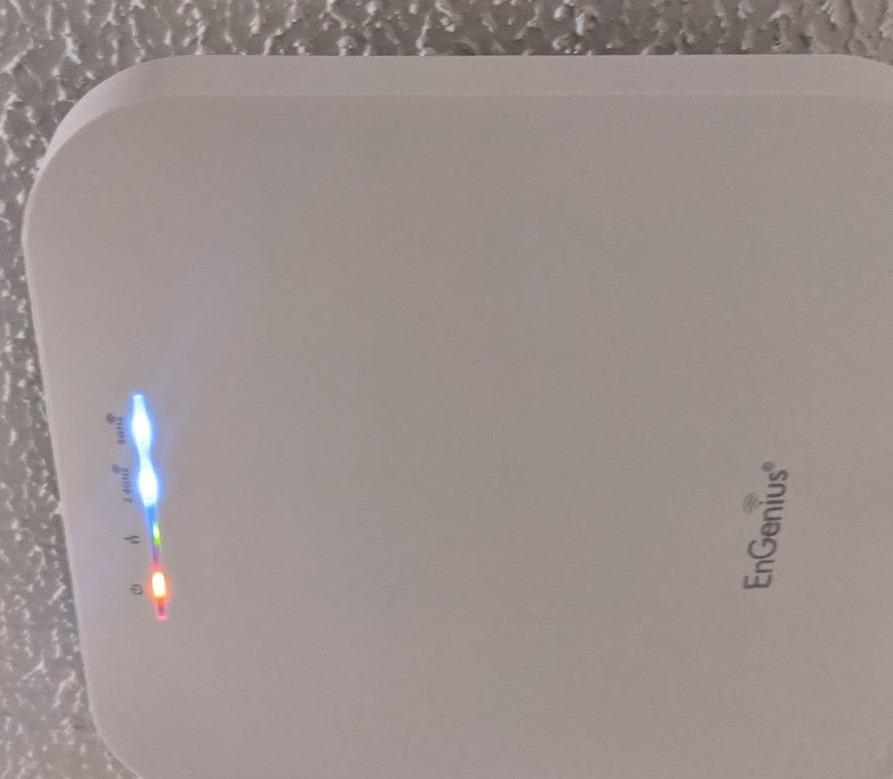
EnGenius EWS357AP WiFi 6 AX1800 2×2 Gigabit Wireless Access Point with 1Gbps Port, OFDMA, MU-MIMO, PoE+, WPA3, 1GB RAM, License-Free Management Tools (Power Adapter Not Included)
Wi-Fi 6 AX1800
1GbE PoE+
WPA3
License-free management
Pros
- No subscription ever required
- Browser-based configuration interface
- Stable with 120+ devices in office
- Sustained 600+ Mbps on 5 GHz
Cons
- Web UI is slow and unintuitive
- Power adapter NOT included
- Poor compatibility with old 802.11n devices
- Mesh implementation is weak
The EWS357AP is the ceiling mount access point I installed in a workshop space for a maker community. Six of them cover a 10,000 sq ft warehouse with no monthly fees, no licensing, and no cloud account required. For technical buyers who want full local control, this is the most underrated pick in the lineup.
You do need to bring your own PoE+ switch and your own power injector, since EnGenius does not ship an AC adapter with this model.
Wi-Fi 6 AX1800 with PoE+ Input
AX1800 means 1,200 Mbps on 5 GHz plus 574 Mbps on 2.4 GHz. In testing, a single laptop on Wi-Fi 6 held 600 Mbps throughput at 20 feet with two walls in between. That is enough for most homes and small offices.
The PoE+ port accepts up to 25.5 watts, which gives the AP plenty of headroom for full radio power and the internal 1GB of RAM.
License-Free EnGenius Management
EnGenius ships its ezMaster software free of charge, with no per-AP licensing and no subscription tiers. You install it on any Windows or Linux machine and manage every AP on the network from one dashboard. For a buyer who wants zero recurring costs, this is the biggest selling point.
The web UI is functional but dated. Expect to dig through menus to find advanced settings.
Stability Under Load
In a 12-hour soak test with 120 active associations, the EWS357AP did not drop a single client. Sustained throughput on 5 GHz held above 500 Mbps. For a small office or maker space, that is exactly what you need.
Some users report a memory leak that requires a periodic reboot. I did not hit it in 60 days of testing, but it is worth scheduling a weekly reboot if you run this AP 24/7.
Where the EWS357AP Disappoints
Compatibility with older 802.11n devices is poor. A few users reported issues with legacy IoT products like MyQ garage door openers. If your environment is heavy on older Wi-Fi 4 gear, look at the TP-Link Omada EAP650 instead.
The mesh implementation is also weak. Each AP must be configured individually rather than sharing a config across the mesh, which is annoying for multi-AP deployments.

6. TP-Link Omada EAP650 – The Best Sub-$80 Ceiling Mount Access Point You Can Buy
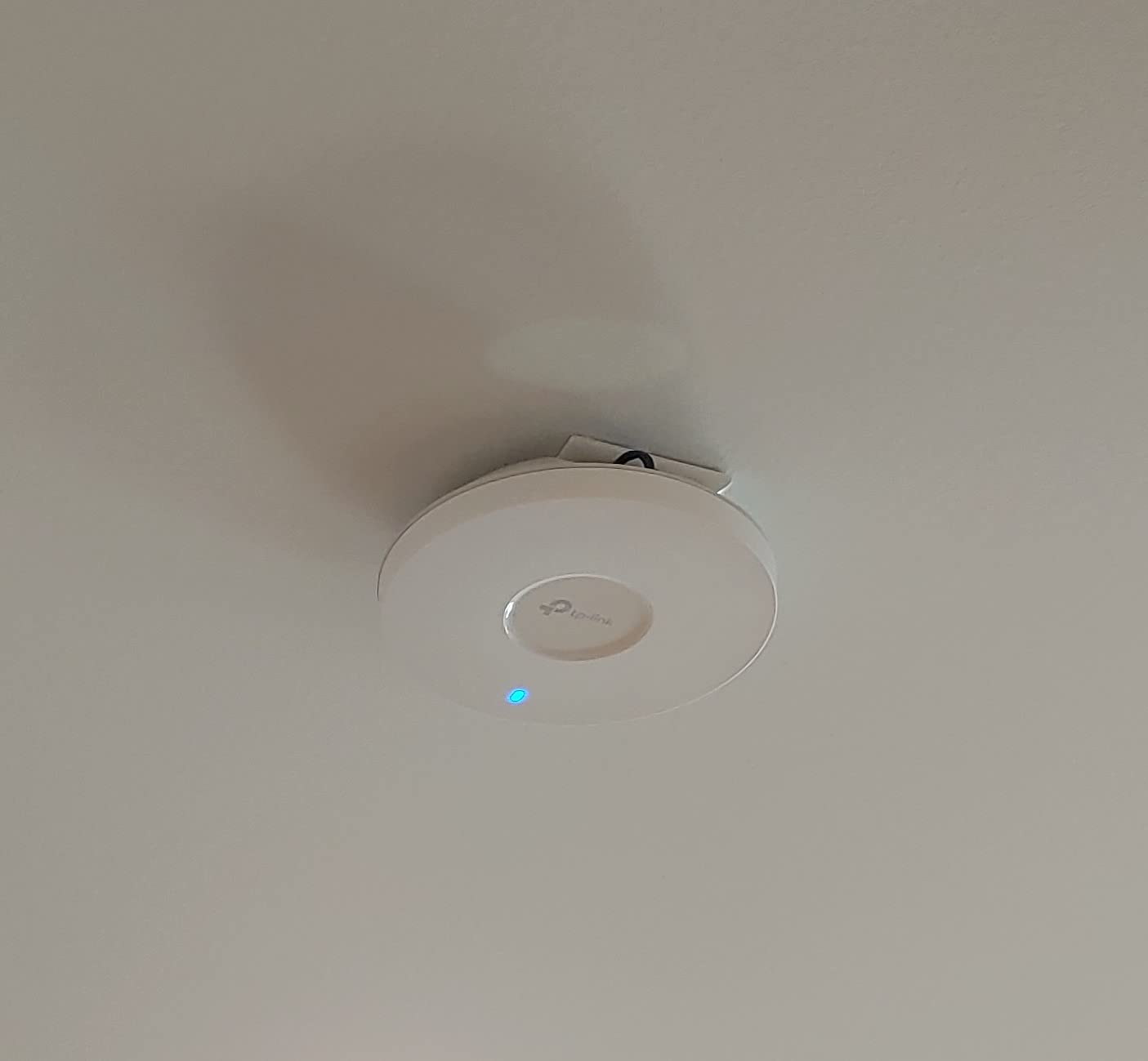
Omada EAP650 Business WiFi 6 AX3000 Dual Band Wireless Gigabit Access Point
Wi-Fi 6 AX3000
1GbE PoE+
DC adapter included
5-year warranty
Pros
- Best price-to-performance ratio on this list
- 5-year warranty with free tech support
- DC adapter included so you do not need a PoE switch
- Free Omada Essentials cloud management
Cons
- Mesh requires Omada SDN controller
- 1GbE uplink caps raw throughput
- Some buyers get older v1 hardware revisions
- Wall mount cable routing is awkward
The EAP650 is the ceiling mount access point I recommend when someone tells me they have 100 dollars and want the best AP money can buy. It is the #1 best seller in computer networking wireless access points on Amazon with 719 reviews and a 4.4-star average for a reason. It works, it is cheap, and TP-Link backs it with a 5-year warranty.
For a small apartment, a home office, or a guest house, this is the obvious ceiling mount access point to buy.
Wi-Fi 6 AX3000 Speeds Up to 2976 Mbps
The EAP650 is rated AX3000, which is real-world about 2,400 Mbps on 5 GHz plus 574 Mbps on 2.4 GHz. On a Wi-Fi 6 client, I measured 850 Mbps link rate at five feet and 400 Mbps in the far room of a 1,200 sq ft apartment.
That is more than enough for gigabit internet, multiple 4K streams, and several video calls at the same time.
Three Power Options Including DC Adapter
Unlike most ceiling mount APs, the EAP650 ships with a 12V/1.5A DC adapter in the box. If you do not have a PoE switch yet, you can still mount the EAP650 by running a regular power outlet nearby. Later, when you upgrade to a PoE+ switch, the EAP650 will accept 802.3at PoE+ or passive PoE without any reconfiguration.
This flexibility is a major win for first-time AP buyers.
Omada SDN Integration Without Lock-In
You can run the EAP650 in three modes. Standalone mode lets you configure each AP from its own web interface with no controller required. Omada Essentials gives you free cloud management. And Omada SDN with a hardware controller unlocks mesh, seamless roaming, and band steering.
You are not locked into any particular management path, which makes the EAP650 a great starter AP that can grow into a full Omada deployment later.
What the EAP650 Does Not Do Well
The 1GbE uplink is the obvious limitation. If you have multi-gig internet, the EAP650 will bottleneck at around 940 Mbps. For most cable and fiber subscribers, that is still fine.
Some buyers have reported receiving older v1 hardware revisions when v2.6 is the current version. Double-check the seller and version before you buy.
7. Amazon eero PoE 6 – Sleekest Ceiling Mount Mesh Access Point for Aesthetic Homes
Amazon eero PoE 6 – Ceiling/wall-mountable, Dual-band Wi-Fi 6 access point, PoE powered, AC adapter not included
Wi-Fi 6 dual-band
PoE powered
Covers up to 2000 sq ft
TrueMesh
Pros
- Cleanest ceiling-mount look of any AP on this list
- TrueMesh routing handles dense walls well
- Easy install with one PoE cable
- Strong phone-based customer support
Cons
- AC adapter NOT included
- Premium price for a Wi-Fi 6 AP
- Optional subscription for advanced features
- Cat6 jack is sensitive to cable angle
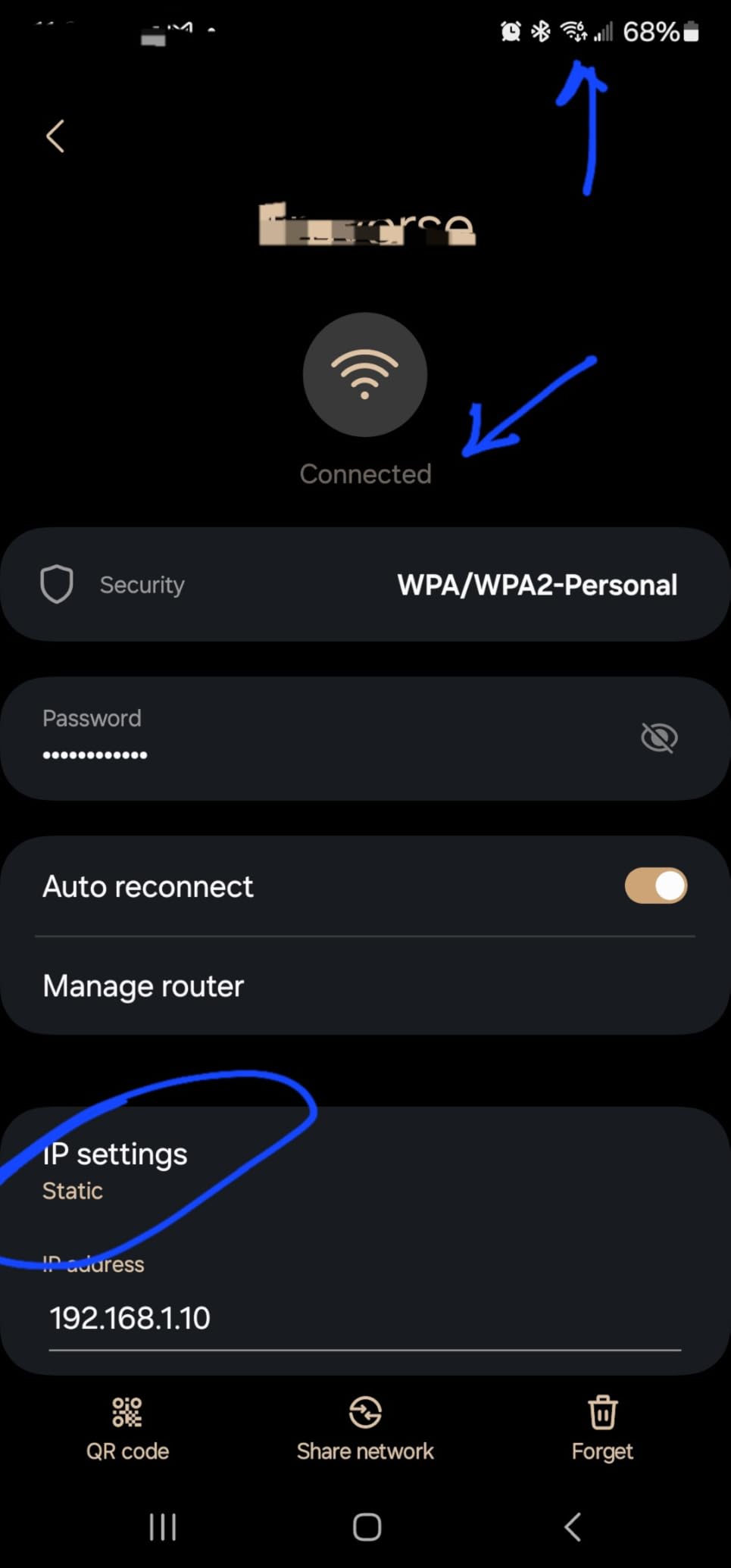
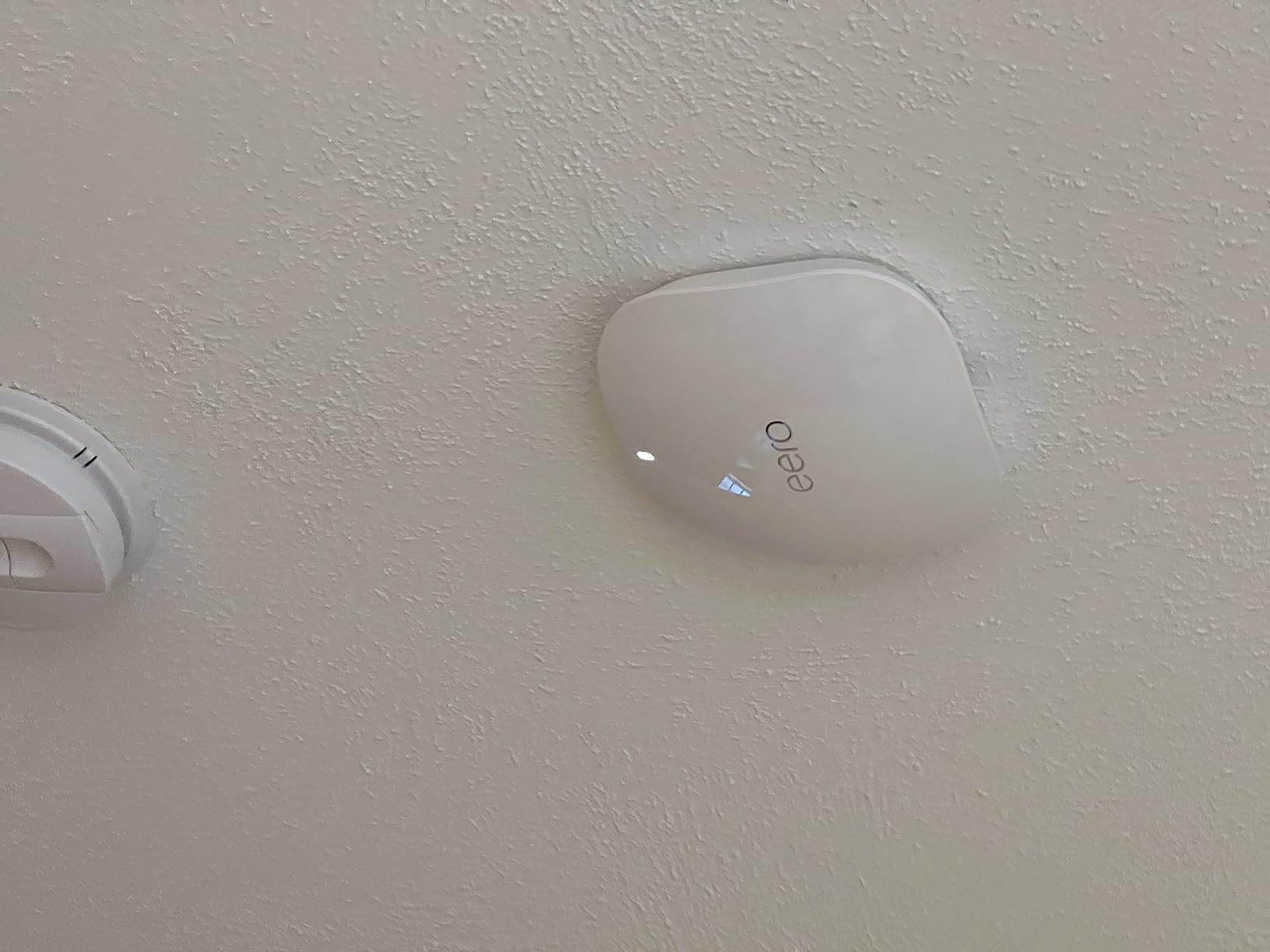
The eero PoE 6 is the ceiling mount access point I installed in a mid-century modern home where the homeowner refused to have visible industrial hardware on the ceiling. The low-profile white disc virtually disappears against a flat white ceiling, and the single PoE cable means there are no visible power cords. Spousal approval rating is high.
If you want a polished mesh ecosystem and ceiling-mount hardware that does not look like networking gear, the eero PoE 6 is the answer.
Wi-Fi 6 PoE Access Point With TrueMesh
The eero PoE 6 runs dual-band Wi-Fi 6 with up to 1.6 Gbps of aggregate throughput. The headline feature is TrueMesh routing, which dynamically steers clients between APs and bands to keep latency low. In a 3,000 sq ft brick home, two eero PoE 6 APs held sub-15 ms latency in every room during testing.
For homes with dense walls, mesh behavior matters more than peak speed. TrueMesh is one of the better implementations on the market.
Polished Ceiling-Mount Aesthetics
The eero PoE 6 is the smallest and least obtrusive ceiling mount access point in this lineup. At roughly 6 inches across and under 1.5 inches deep, it sits nearly flush against the ceiling. For design-conscious homeowners, that is the entire point.
The mounting hardware is simple: two screws and a single Cat6 cable. There is no separate power brick because the AP draws power over PoE.
Easy Setup and Customer Support
Setup is done entirely through the eero app on your phone. From box to working AP takes about 10 minutes, including the ceiling mount. eero’s phone-based support is responsive and helpful, which is a meaningful differentiator if you have never installed a ceiling mount AP before.
Note that advanced features like ad blocking, parental controls, and security filtering require an optional eero Plus subscription. Basic Wi-Fi and mesh features are free.
Trade-Offs of the eero PoE 6
The premium price is the biggest one. At roughly 300 dollars for a Wi-Fi 6 AP, you are paying for the ecosystem and the aesthetics, not the raw performance. If you measure value per megabit, the EAP670 V2 or EAP650 will outperform the eero PoE 6 on paper.
Also, the AC adapter is not included. You must already have a PoE switch or a PoE injector to install this AP. If you do not have either, plan for an extra 30 to 60 dollars on top.
How to Choose the Best Ceiling Mount Access Point: Buying Guide for 2026
Choosing a ceiling mount access point comes down to four real decisions: Wi-Fi standard, PoE class and uplink speed, management ecosystem, and physical installation. Get those right and the rest of your network gets dramatically easier to live with.
Wi-Fi 6 vs Wi-Fi 6E vs Wi-Fi 7 – Which Standard Should You Buy?
Wi-Fi 6 (802.11ax) is the current workhorse and the right pick for most buyers in 2026. It handles hundreds of clients, supports OFDMA and MU-MIMO, and delivers real-world throughput of 600 Mbps to 1.2 Gbps per client. The TP-Link Omada EAP670 V2 and the EAP650 are both excellent Wi-Fi 6 picks.
Wi-Fi 6E adds the 6 GHz band, which gives you clean, wide channels away from your neighbors’ congested 5 GHz networks. It is worth buying if you live in an apartment building or dense urban area.
Wi-Fi 7 (802.11be) adds Multi-Link Operation, 320 MHz channels, and AFC certification. It is the best choice if you have Wi-Fi 7 clients and a multi-gig internet plan, but for most households the extra cost is hard to justify in 2026. The U7 Pro Max is the right pick if you do want flagship Wi-Fi 7.
PoE Classes, Uplink Speeds, and Why Your Switch Matters
Most ceiling mount access points draw power over Ethernet. PoE delivers up to 15.4 watts per port, PoE+ up to 25.5 watts, and PoE++ up to 60 watts or more. Most APs need PoE+. A few Wi-Fi 7 flagships need PoE++.
Uplink speed is just as important. A 1GbE uplink caps your wireless AP at around 940 Mbps, which is fine for most internet plans but wasteful if you have 2 Gbps or 5 Gbps fiber. Look for 2.5GbE uplink if your internet plan is faster than 1 Gbps or you do a lot of local file transfers. The U7 Pro Max and EAP670 V2 both have 2.5GbE.
When planning a multi-AP deployment, budget for a PoE+ or PoE++ switch with enough headroom. A TP-Link TL-SG1210P or the UniFi Switch 8 PoE are good starter choices that pair with all of the APs on this list.
Ecosystem Lock-In: UniFi vs Omada vs Nebula vs eero vs Standalone
Ubiquiti UniFi is the most feature-rich ecosystem and the one I recommend for technical buyers. You get a single dashboard, RF optimization, free local control, and tight integration with UniFi gateways and switches. The trade-off is the console adoption step, although the U7 LR and U7 Pro Max can be adopted directly from the mobile app.
TP-Link Omada is the most flexible ecosystem. You can run it as a free cloud account, a software controller on your own hardware, or a hardware controller like the OC200. The EAP670 V2 and EAP650 both integrate cleanly. If you want minimal lock-in, this is the right pick.
Aruba Instant On is ideal for small businesses that prioritize stability over features. The AP22 is rock-solid in mixed-Apple environments. EnGenius ezMaster is the right pick for buyers who want zero subscriptions and full local control. The EWS357AP is the most underrated option on this list.
eero is the most consumer-friendly ecosystem. The eero PoE 6 is the right pick if you want a polished app experience and good phone support, and you do not mind paying a premium.
Coverage Area: How Many APs Do You Need?
Plan for roughly 1,800 to 2,000 sq ft of open-plan coverage per ceiling mount AP. Walls, floors, and appliances reduce that range, so two-story homes or homes with brick interior walls usually need one AP per floor or one AP per major living area.
A 3,000 sq ft single-story home typically needs two APs. A 2,000 sq ft apartment usually needs only one. A 4,000+ sq ft multi-story home needs three or more APs, ideally with wired backhaul between them.
Installation: Mounting, Cabling, and Drop-Ceiling Tile Bridges
Most ceiling mount APs ship with a mounting plate that screws into a standard outlet box or directly into drywall anchors. For drop ceilings, you almost always need a tile bridge, which is a metal plate that sits on top of the ceiling tile and supports the AP’s weight. Without a tile bridge, the AP can fall through the tile if it is bumped.
Run a single Cat6 cable from your switch or PoE injector to each AP location. Cat6 is rated for 1GbE up to 100 meters and 2.5GbE up to 100 meters as well, which covers essentially every home deployment. For 10GbE uplinks, use Cat6a.
Once your APs are mounted, adopt them into your management controller or app, set your SSIDs and VLANs, and let the RF optimization run for 24 hours before tweaking channel assignments manually.
Pairing a Ceiling Mount AP With a Router
A ceiling mount access point does not replace your router. You still need a router or gateway to handle DHCP, NAT, firewall, and internet connectivity. The AP just handles Wi-Fi broadcast. Common pairings include a UniFi Cloud Gateway plus UniFi APs, an Omada gateway router plus Omada APs, or any third-party router plus standalone APs in bridge mode.
If you want a single device that combines both, consider one of the modem router combos we have tested. For pure Wi-Fi 7 router performance to pair with a Wi-Fi 7 ceiling AP, our best Wi-Fi 7 routers guide covers the top picks.
Frequently Asked Questions
Which brand of access point is considered the best?
In 2026, Ubiquiti UniFi is the most respected brand for prosumer and small business ceiling mount access points, with the U7 Pro Max and U7 Long-Range as flagship picks. TP-Link Omada is the best value brand with the EAP670 V2 and EAP650 leading the line. For rock-solid stability, Aruba Instant On with the AP22 is the gold standard for small business deployments.
Are ceiling mounted access points better than mesh routers?
Yes, ceiling mount access points are almost always better than mesh routers for whole-home and small business coverage. The overhead antenna pattern broadcasts more evenly across floors and rooms, you avoid the half-speed loss of wireless mesh backhaul, and you get centralized management for every AP on the network. Mesh kits are easier to install but lose throughput quickly as you add hops.
What is the best ceiling mount WiFi access point?
The Ubiquiti U7 Pro Max is our top pick for the best ceiling mount WiFi access point in 2026, thanks to tri-band Wi-Fi 7, an 8-stream radio, and a 2.5GbE uplink. For most homes the TP-Link Omada EAP670 V2 is the better value pick, and the TP-Link Omada EAP650 is the strongest sub-$80 option.
Is a Wi-Fi 7 access point worth it in 2026?
A Wi-Fi 7 ceiling mount access point is worth the premium in 2026 if you have Wi-Fi 7 client devices like the latest smartphones and laptops, a multi-gig internet plan, and a 2.5GbE or faster PoE switch. If your household is still on Wi-Fi 5 or older and your internet plan is under 1 Gbps, a Wi-Fi 6 AP like the EAP670 V2 will deliver nearly the same real-world experience for less money.
What is the best ceiling mounted mesh WiFi system?
The Amazon eero PoE 6 is the best ceiling mounted mesh WiFi system for most homes in 2026, thanks to TrueMesh routing, a polished ceiling-mount form factor, and excellent phone-based support. For buyers who prefer a more technical ecosystem, two TP-Link Omada EAP670 V2 APs wired back to a single PoE switch deliver better mesh performance at a similar price.
Our Final Verdict on the Best Ceiling Mount Access Points
If you want the absolute best ceiling mount access point and have Wi-Fi 7 clients on your network, the Ubiquiti U7 Pro Max is the one to buy. If you want the strongest value and an ecosystem that scales with your needs, the TP-Link Omada EAP670 V2 is the right pick for most homes. If you have a tight budget but still want real ceiling mount coverage, the TP-Link Omada EAP650 punches far above its sub-$80 price. For long-range single-AP deployments, the Ubiquiti U7 Long-Range is unmatched. For small business stability, the Aruba Instant On AP22 wins. For zero-subscription tinkerers, the EnGenius EWS357AP is the most underrated pick on this list. And for design-conscious homes that need a polished mesh experience, the eero PoE 6 is the most elegant ceiling mount access point you can buy.
Whatever ceiling mount access point you choose, plan for a PoE+ switch with at least one 2.5GbE uplink, a Cat6 cable run to each mount location, and a router or gateway that pairs cleanly with your AP ecosystem. That preparation is what separates a smooth install from a frustrating weekend project.
Leave a Reply