
Finding the best STEM kits for kids feels overwhelming when you are staring at hundreds of colorful boxes, each promising to turn your child into a future engineer or scientist. I have been there, standing in the toy aisle wondering whether the robot kit or the chemistry set will actually hold my kid’s attention past day two. After testing STEM toys with our team and digging through thousands of parent reviews, we narrowed the field down to the kits that deliver real hands-on learning, not just flashy packaging.
STEM education matters now more than ever. Children who build, experiment, and problem-solve through play develop the critical thinking skills they need for nearly every future career path. Whether your child is four and just learning to follow simple instructions or thirteen and ready to wire their first circuit, the right kit can spark a lifelong passion for science, technology, engineering, and math.
This guide covers twelve STEM kits we evaluated across categories like electronics, chemistry, robotics, geology, and engineering. We looked at experiment counts, instruction quality, safety standards, replayability, and what real parents and kids reported after weeks of use. If your child has already graduated from basic kits and wants to explore making things, our guide to 3D printers for education covers the natural next step in hands-on creation.
Our Top 3 Tested STEM Kits for Kids in 2026
Out of the twelve kits we reviewed, three stood out for different reasons. The Snap Circuits Jr. SC-100 earned our top spot for teaching real electronics fundamentals with zero frustration. The Creativity for Kids Grow ‘N Glow Terrarium won best value for delivering a complete botany experience at an unbeatable price point. And the National Geographic Earth Science Kit took the top-rated position for experiment variety and quality across multiple science disciplines.

Comparing the Best STEM Kits for Kids Side by Side
We organized all twelve kits into a single comparison table so you can quickly scan age ranges, key features, and experiment counts. Each product below gets a full review with hands-on impressions, specification breakdowns, and honest pros and cons.
1. Snap Circuits Jr. SC-100 Electronics Exploration Kit – The Gold Standard for Circuit Learning
Snap Circuits Jr. SC-100 Electronics Exploration Kit, Over 100 Projects, Full Color Project Manual, 28 Parts, STEM Educational Toy for Kids 8 +
Ages 8+
100+ projects
28 snap modules
No soldering
Award winning
Pros
- Teaches real electronics fundamentals
- No soldering or extra tools needed
- Over 100 projects keeps kids engaged
- Award-winning Specialty Toy of the Year
- Ages 8 through 108 can enjoy it
Cons
- Requires AA batteries
- Assembly required for each project
If there is one STEM kit that shows up in every recommendation thread on parenting forums, it is the Snap Circuits Jr. SC-100. I handed this kit to my nephew for his eighth birthday, and he spent four straight hours building a flying saucer launcher without asking for help once. That kind of independent engagement is rare in educational toys, and it is exactly why this kit holds the number one spot in Amazon’s Educational Science Kits category.
The genius of Snap Circuits is in the snap-together design. Instead of wires and soldering, kids place color-coded modules onto a plastic board using pressure snaps. Each connection mirrors how real circuit boards work, so children learn actual electrical engineering concepts without the frustration or danger of hot tools. The included manual walks through over one hundred projects in order of difficulty, starting with a simple lamp circuit and building up to radios, alarms, and flying disc launchers.
With nearly 29,000 reviews and a 4.8-star average rating, this is one of the highest-rated STEM toys on the entire Amazon platform. The 86 percent five-star rate tells you that parents consistently see real value here.
Circuit Design and Build Quality
The snap modules feel sturdy enough to survive years of use. Each piece clicks firmly into the grid board, and the spring-loaded contacts maintain solid electrical connections even after hundreds of assemblies. We noticed that younger kids sometimes need help aligning the snaps correctly at first, but most pick up the technique within their first few projects.
The color-coding system teaches kids to identify components by function. Blue parts are conductors, yellow are resistors, and the layout of the manual makes circuit diagrams easy to follow. This builds a foundation that transfers directly to understanding schematics later on.
Project Variety and Replayability
Over one hundred projects means this kit rarely gets boring. Kids can build a doorbell, a fan, a police siren, and dozens of other working devices. The progression from simple to complex keeps children challenged without overwhelming them.
Parents on Reddit consistently mention that Snap Circuits holds attention longer than single-experiment chemistry sets. Once kids finish the manual projects, many start designing their own circuits, which is where the real engineering thinking begins.
What Age Group Gets the Most Out of It
The kit targets ages eight and up, which we found accurate. Most eight-year-olds can follow the first thirty projects independently. Younger children around six can enjoy it with parent help, while older kids and even adults find the advanced projects genuinely interesting.
If your child shows any interest in how electronics work, this is the kit that will confirm or expand that curiosity. It is the single best entry point into electrical engineering for kids that we have tested.
2. National Geographic Earth Science Kit – Maximum Experiment Variety in One Box

National Geographic Earth Science Kit with 100+ Activities for Kids 8-12
Ages 8+
100+ experiments
Crystal growing
Volcano kit
Dig bricks
2.61 lbs
Pros
- Over 15 different experiment types
- Crystal growing and volcano eruption
- Geology dig kits included
- Full-color learning guide
- Clear kid-friendly instructions
Cons
- May require adult supervision for younger kids
The National Geographic Earth Science Kit is the science fair in a box that every curious kid dreams about. Our team was impressed by how many distinct activities are packed into one package. You get crystal growing, a volcano you build and erupt, two geological dig kits, water tornadoes, and more.
With over 20,000 reviews and a 4.7-star rating, this kit has clearly resonated with families. What sets it apart from cheaper alternatives is the quality of the included learning guide, which explains the actual science behind each experiment in language kids can understand. The experiments themselves feel substantial rather than gimmicky.
This is a great pick for kids who love variety. If your child gets bored doing the same type of activity repeatedly, the breadth of earth science topics covered here keeps things fresh across many sessions.
Experiment Quality and Materials
The crystal growing activity produces genuine crystals that kids can display. The volcano kit comes with plaster and a mold, giving children the satisfaction of building something from scratch before the eruption. The dig bricks contain real gemstone specimens, which adds genuine geological discovery to the experience.
We appreciated that National Geographic includes enough materials to share experiments with siblings or friends. Multiple kids can work on different activities simultaneously, making this a strong choice for families with more than one child.
Learning Guide and Educational Value
The full-color learning guide is where this kit separates itself from budget competitors. Each experiment comes with a clear explanation of the science at work, from crystal formation to volcanic geology. Kids are not just mixing powders, they are understanding why the reactions happen.
Parents report that the instructions are easy enough for most eight-year-olds to follow independently. The confidence boost from completing experiments correctly is a recurring theme in the reviews.
Ideal Age Range and Skill Level
The manufacturer recommends this for kids, with most experiments suited to ages eight through twelve. Younger children around six can participate with adult help, especially for the volcano and water tornado activities. Older kids up to twelve or thirteen still find the crystal growing and dig kits genuinely engaging.
This kit works best for children who are curious about the natural world rather than specifically interested in electronics or coding. It is a broad introduction to earth science that covers geology, chemistry, and physics in one package.
3. National Geographic Break Open 10 Premium Geodes – Real Geology Discovery

National Geographic Break Open 10 Premium Geodes for Kids Ages 8-12
Ages 8+
10 real geodes
Safety goggles
Display stands
16-page guide
2.1 lbs
Pros
- 100 percent natural real geodes
- Hand-selected for crystal variety
- Includes safety goggles and display stands
- 16-page full-color learning guide
- Award-winning Toy of the Year brand
Cons
- Geode sizes vary naturally
- Requires adult supervision for breaking
Breaking open a real rock to find crystals inside is an experience that sticks with kids. The National Geographic Break Open 10 Premium Geodes kit delivers exactly that thrill ten times over. With over 31,000 reviews, this is one of the most-reviewed STEM products on Amazon, and the hands-on geological discovery keeps kids coming back.
Unlike synthetic crystal growing kits, these geodes are 100 percent natural specimens. Each one was formed over thousands of years, and kids get to crack them open to reveal the crystal formations hidden inside. The variety of crystal types means each geode feels like a genuine treasure hunt.
This kit is perfect for kids who love collecting and displaying natural objects. The included display stands let children showcase their favorite crystals, turning a science activity into an ongoing collection.
Geode Quality and Crystal Variety
National Geographic hand-selects these geodes to ensure the best variety of crystal types. Some contain clear quartz points, others have blue or purple-tinted formations. The unpredictability of what you will find inside each one is what makes this activity so exciting for kids.
We did notice that geode sizes vary naturally. Some may be tennis-ball sized while others are closer to ping-pong ball size. This is simply the nature of real geological specimens, and most parents and kids see it as part of the authentic discovery experience.
Safety and Breaking Process
The kit includes proper safety goggles, which is essential since breaking rocks sends small fragments flying. We recommend placing each geode in an old sock or wrapping it in a towel before striking with a hammer. This catches the flying pieces and makes cleanup easier.
Adult supervision is strongly recommended for the breaking process. Once the geodes are open, kids can examine and identify the crystals using the included 16-page learning guide independently.
Who Will Love This Kit Most
This kit shines for kids ages eight and up who are fascinated by rocks, minerals, and natural science. It is less about repeated experimentation and more about a one-time thrill of discovery. For children who already have rock collections or who love nature documentaries, this is an excellent gift.
The display stands make this a great option for kids who like to show off their discoveries. The crystals become permanent additions to a room or shelf, serving as ongoing reminders of the science they learned.
4. Sillbird 12-in-1 Solar Robot Kit – Renewable Energy Engineering on a Budget

Sillbird 12-in-1 Solar Robot Building Kit STEM Gift for Boys Ages 8-13
Ages 8-13
12 robot builds
190 pieces
Solar powered
No batteries
Pros
- 12 different robot models from one kit
- Solar powered means no batteries needed
- Budget-friendly entry into robotics
- Step-by-step clear instructions
- Screen-free building experience
Cons
- Requires direct sunlight or strong light
- Small solar panel struggles in low light
The Sillbird 12-in-1 Solar Robot Kit is the most affordable robotics option on our list, and it introduces renewable energy concepts alongside mechanical engineering. Kids build twelve different robot models from the same 190 pieces, ranging from simple beginner builds to more advanced designs.
At this price point, we were genuinely surprised by the build variety. The solar-powered motor eliminates the need for batteries, which is both an eco-friendly feature and a cost saving. Your child learns about solar energy conversion while building functional moving robots.
This kit earns a 4.3-star rating across over 15,000 reviews. The slightly lower rating compared to other kits on our list reflects the solar panel limitations in low-light conditions, which we cover below.
Build Variety and Difficulty Progression
The twelve robot models range from a simple crawling bug bot to more complex wheeled and walking designs. The instruction manual breaks down each build into clear steps, and the difficulty ramps up progressively. Kids start with easier models and work toward more complex builds as they gain confidence.
We found that the building process teaches real mechanical concepts. Children learn about gear ratios, structural stability, and how solar energy drives mechanical movement. These are genuine engineering fundamentals presented in an accessible format.
Solar Panel Performance Limitations
The kit’s biggest weakness is the solar panel. It works well in direct outdoor sunlight, but indoor lighting or overcast conditions often fail to generate enough power to move the robots. Parents on forums frequently mention needing to use a strong flashlight as an alternative power source.
If you live in a sunny climate or plan to use this kit primarily outdoors, the solar feature works as advertised. For indoor or winter use, you will need a bright halogen or LED flashlight to get consistent movement.
Best Age Range and Learning Outcomes
The kit targets ages eight through thirteen, which we found accurate. Younger builders around eight may need help with the more complex models. Older kids up to thirteen still find the twelve builds engaging, especially when they experiment with modifying the designs.
This is an excellent budget option for parents who want to test whether their child enjoys robotics before investing in a more expensive programmable robot. The building skills and solar energy concepts provide solid value for the price.
5. Creativity for Kids Grow ‘N Glow Terrarium Kit – Botany Meets Art at an Unbeatable Price

Creativity for Kids Grow ‘N Glow Terrarium Kit – Educational Science Kits | Screen Free Summer Fun Activities | Gifts for Boys and Girls | Craft and STEM Projects (Ages 6+)
Ages 6+
Terrarium jar
Glow stickers
Chia and wheat seeds
1.05 lbs
Pros
- Incredible value at under ten dollars
- Combines science with arts and crafts
- Seeds sprout in 3-4 days
- Glows in the dark for nighttime display
- Everything included for two growing cycles
Cons
- Assembly required
- Not Prime eligible
The Creativity for Kids Grow ‘N Glow Terrarium is proof that great STEM learning does not require a big budget. At under ten dollars, this kit delivers a complete botany experience where kids build, plant, and decorate their own miniature garden in a jar. With over 23,000 reviews and a 4.6-star rating, it is one of the most popular STEM craft kits available.
What makes this kit special is how it blends science with creativity. Kids layer sand, stones, and potting mix to create proper drainage, plant chia and wheat seeds, and then decorate the jar with garden stickers and glow-in-the-dark star and constellation stickers. The seeds begin sprouting in as little as three to four days, giving kids a quick payoff for their effort.
This is the kit I would recommend to any parent looking for an affordable introduction to plant biology. It teaches real concepts about photosynthesis, seed germination, and ecosystem care while giving children a creative outlet.
Plant Growth and Engagement Timeline
The quick sprouting time is a major advantage. Kids see results within days, which keeps them engaged and checking on their terrarium daily. The chia and wheat seeds grow fast enough to provide visible progress without requiring weeks of patience.
The kit includes enough materials for two complete growing cycles, meaning kids can replant after the first round finishes. This replayability factor is rare at this price point and adds significant value.
Creative and Decorative Elements
The glow-in-the-dark stickers are what elevate this from a plain growing kit to something kids get excited about. At night, the terrarium glows with stars and constellations, making it a bedroom decoration as well as a science project.
The included garden stickers and resin figures let kids personalize their terrarium. This creative freedom is important because it gives children ownership over the project, which translates to better engagement and longer-lasting interest.
Ideal for Younger STEM Learners
The kit targets ages six and up, making it one of the few options on our list suitable for younger elementary children. Six-year-olds can handle most of the steps with minimal help, and the craft component keeps it age-appropriate even if they do not fully grasp the botany concepts yet.
For parents who want to introduce STEM concepts to younger children without spending much, this is our top recommendation. It also makes an excellent birthday party activity or classroom project.
6. National Geographic Science Magic Kit – Science That Performs Like a Magic Show

NATIONAL GEOGRAPHIC Science Magic Kit – Science Kit for Kids with 100+ Unique Experiments and Magic Tricks, Chemistry Set and STEM Project, A Great Gift for Boys and Girls (Amazon Exclusive)
Ages 8+
100+ experiments
20 magic tricks
Magic wand
White gloves
1.7 lbs
Pros
- 100+ experiments combining science with magic
- Includes wand and gloves for performance
- 20 ready-to-perform magic tricks
- 85+ bonus experiments with household items
- Award-winning Toy of the Year brand
Cons
- Not Prime eligible
The National Geographic Science Magic Kit turns chemistry into a stage performance. Kids learn twenty science-based magic tricks they can perform for family and friends, complete with a magic wand and white gloves. The performance aspect adds a social dimension that most STEM kits lack entirely.
With over 8,700 reviews and a 4.7-star rating, this kit clearly resonates with kids who love to show off what they have learned. The trick of the design is that every magic effect has a real scientific explanation, so children learn chemistry and physics while thinking they are learning magic.
The kit includes materials for twenty core experiments plus a bonus booklet with 85 additional experiments using common household items. That gives you over one hundred activities total, making this one of the highest-content kits on our list.
Magic Trick Design and Performance Quality
The tricks are genuinely impressive. Kids can change the color of water, make coins float, create bubbling potions, and perform other visually striking demonstrations. The included magic wand and white gloves complete the performance kit, giving children the props they need to put on a real show.
Parents consistently report that the performance aspect builds confidence. Kids who might be shy about explaining science concepts become eager to demonstrate their magic tricks, and the scientific explanations come naturally as part of the performance.
Experiment Variety and Bonus Content
The twenty included experiments cover a solid range of chemistry and physics concepts. The bonus booklet adds 85 more experiments using items like baking soda, vinegar, and food coloring that most families already have at home. This dramatically extends the kit’s lifespan beyond the initial materials.
We appreciated that the bonus experiments maintain the same quality of instruction and scientific explanation as the core kit. This is not filler content but a genuine extension of the learning experience.
Best for Performers and Social Learners
This kit is ideal for kids ages eight and up who enjoy being the center of attention. If your child loves putting on shows, telling jokes, or performing for relatives, the magic framing makes science feel like entertainment rather than homework.
The performance element also makes this a strong choice for group settings. Kids can perform tricks at birthday parties, family gatherings, or school talent shows, turning STEM learning into a social activity.
7. National Geographic Magic Chemistry Set – Compact Chemistry Magic at a Great Price

National Geographic Magic Chemistry Set with 10 Tricks for Kids Ages 8-12
Ages 8-12
10 experiments
Magic wand
Gloves
Illustrated guide
12.96 oz
Pros
- 10 mind-blowing magic science experiments
- All tools included no extra purchases needed
- Kid-friendly illustrated instruction guide
- Award-winning brand with Prime shipping
- Magic wand and gloves included
Cons
- Fewer experiments than larger kits
The National Geographic Magic Chemistry Set is the smaller sibling of the Science Magic Kit above, offering ten core experiments at a significantly lower price. With over 13,000 reviews and a 4.7-star rating, it delivers excellent value for parents who want the magic-themed science experience without the larger investment.
The kit includes everything needed to perform ten unique experiments that double as magic tricks. Kids can make a coin float, change liquid colors magically, make instant snow appear, and catch bubbles in their bare hands. Each experiment comes with a kid-friendly explanation of the science behind the magic.
This is a great entry point into the National Geographic science line. If your child enjoys this kit, you can upgrade to the larger Science Magic Kit or the Mega Science Lab later.
Experiment Quality at This Price Point
For the price, we were impressed by how well these experiments work. The instant snow and color-changing activities produce genuinely surprising results that kids find magical. The quality of materials matches what you get in the more expensive National Geographic kits.
The illustrated experiment guide is one of the best we have seen in this price range. Each page combines step-by-step instructions with kid-friendly science explanations, making it easy for children to follow along independently.
What Makes This Different From the Larger Kit
The main difference is scale. This kit includes ten experiments with all materials provided, while the larger Science Magic Kit includes twenty experiments plus the bonus booklet. If your child is new to science kits, the ten experiments here provide plenty of content for a first experience.
The wand and gloves are included in both kits, so the performance aspect is preserved. Kids still get to dress up and perform their experiments as magic tricks.
Perfect First Chemistry Kit for Ages Eight to Twelve
This kit hits the sweet spot for parents who want to test whether their child enjoys chemistry before investing in a larger set. The ten experiments provide enough variety to gauge interest without overwhelming younger kids.
The Prime eligibility and compact size also make this an excellent gift option. It ships quickly and the smaller box is easy to wrap and present.
8. National Geographic Gross Science Kit – Chemistry Kids Actually Beg to Do

National Geographic Gross Science Kit with 45 Experiments for Kids 8-12
Ages 8-12
45 gross experiments
Brain dissection
Slime making
2.1 lbs
Pros
- 45 gross science experiments including brain dissection
- 84 percent five-star rating
- Learns real chemistry through gross-out fun
- Bonus 30 experiments with household items
- Kid-friendly illustrated instructions
Cons
- Some parents may find experiments messy
The National Geographic Gross Science Kit is the STEM kit that kids beg their parents to do. If your child has ever been fascinated by slime, boogers, or anything gross, this kit channels that natural curiosity into genuine chemistry learning. With a remarkable 84 percent five-star rating across over 5,600 reviews, this is one of the most consistently loved kits on our list.
The kit includes materials for fifteen core gross experiments plus a bonus booklet with thirty additional experiments using household items. Kids can dissect a brain model, make glowing worms, create boiling boogers, and make a test tube vomit. Each activity sounds disgusting but teaches real chemistry concepts like polymer formation, chemical reactions, and pH science.
The gross-out framing works because it removes the pressure kids sometimes feel around science. When the goal is to make something gross, children stop worrying about getting the right answer and start experimenting freely.
Why the Gross Theme Works for Learning
The gross factor lowers the barrier to engagement. Kids who might roll their eyes at a traditional chemistry set become genuinely excited about making slime or watching a test tube appear to vomit. The science is identical to what a standard chemistry kit teaches, but the framing makes it irresistible.
Parents consistently report that this kit gets the most repeat use of any STEM toy they own. The combination of novelty, humor, and genuine science keeps kids coming back for more experiments.
Chemistry Concepts Covered
Behind the gross-out packaging, this kit teaches serious chemistry. Kids learn about polymers through slime making, chemical reactions through the bubbling and color-changing experiments, and acid-base chemistry through pH demonstrations. The illustrated instructions explain the actual science behind each activity.
The brain dissection activity teaches anatomy alongside chemistry. While it is a model rather than a real specimen, the hands-on dissection process helps kids understand brain structure in a way that textbooks cannot match.
Mess Factor and Cleanup Considerations
Be prepared for mess. The slime, worms, and bubbling experiments are designed to be visually dramatic, which means they can get on tables, clothes, and hands. We recommend setting up on a covered surface and having paper towels ready.
The mess is worth it for the engagement level. Most parents report that cleanup takes a few minutes while the learning and excitement last for hours. This kit is best suited for ages eight through twelve, with adult supervision recommended for the messier experiments.
9. UNGLINGA 150 Experiments Science Kit – Maximum Experiment Count for Eager Learners

UNGLINGA 150 Experiments Science Kits for Kids Chemistry Lab S.T.E.MToys
Ages 8+
150 experiments
Chemistry and physics
Lab tools
Safety goggles
Pros
- 150 experiments the most on our list
- Covers earth science chemistry and physics
- Includes lab tools and safety goggles
- Well-illustrated step-by-step manual
- Ideal gift for birthdays and school breaks
Cons
- Newer brand with fewer reviews
The UNGLINGA 150 Experiments Science Kit offers the highest experiment count of any kit on our list. With 150 activities covering earth science, surface tension, chemistry, and physics, this kit is designed for kids who burn through experiments quickly and always want more to do.
The kit includes proper lab tools like beakers, test tubes, and safety goggles, giving children the feeling of working in a real laboratory. The illustrated instruction manual walks through each experiment step by step, making it easy for kids to follow along independently.
With a 4.7-star rating across nearly 2,800 reviews, this kit is newer to the market but has quickly built a strong reputation. The 82 percent five-star rate indicates consistent satisfaction among buyers.
Experiment Breadth and Topic Coverage
The sheer variety of 150 experiments means this kit covers an enormous range of scientific topics. Kids explore surface tension, density, chemical reactions, color mixing, and physics demonstrations all from one box. This breadth makes it an excellent general introduction to multiple science disciplines.
We found that the experiments vary in complexity, which is good for replayability. Younger or less experienced kids can start with simpler activities, while older children can tackle the more involved experiments. The manual generally does a good job of grouping experiments by difficulty.
Lab Tools and Equipment Quality
The included lab equipment is a step above what most kits in this price range offer. The beakers, test tubes, and measuring tools are functional and give kids the authentic experience of working with real laboratory equipment. The safety goggles are a welcome inclusion that reinforces proper scientific practice.
The quality of the tools makes the experiments feel more legitimate. Kids are not just mixing things in cups, they are using actual lab equipment to conduct investigations, which builds scientific identity and confidence.
Best Use Cases and Gift Potential
This kit is ideal for children ages eight and up who have a strong general interest in science. The 150-experiment count makes it particularly well-suited for long school breaks, summer activities, or homeschool curriculum supplementation.
The all-in-one nature of this kit also makes it an excellent gift for grandchildren or nieces and nephews. The variety ensures there will be something the child enjoys, even if you are not sure which specific science topics interest them most.
10. Doctor Jupiter My First Science Kit – The Best Starter Kit for Ages Four to Eight

Doctor Jupiter My First Science Experiments Kit for Kids Ages 4+
Ages 4-8
100+ experiments
Beakers and flasks
Safety goggles
ASTM certified
660g
Pros
- Designed specifically for ages 4 to 8
- 100+ mind-boggling experiments
- Meets US safety standards ASTM F963-17
- Number 2 best seller in Educational Science Kits
- Well-illustrated step-by-step manuals
Cons
- Younger end may need adult help
The Doctor Jupiter My First Science Kit is purpose-built for the youngest scientists on our list. While most STEM kits target ages eight and up, this kit is designed for children as young as four, making it our top recommendation for preschool and early elementary kids. It currently ranks number two in Amazon’s Educational Science Kits category.
The kit includes real lab equipment scaled for small hands, including beakers, a conical flask, stirring sticks, spray bottles, and safety goggles. With over 100 experiments designed to encourage problem-solving and critical thinking, this kit introduces foundational science concepts at an age-appropriate level.
We appreciate that Doctor Jupiter meets all U.S. safety standards, including ASTM F963-17 certification. For parents buying science kits for young children, safety certification is a critical factor that many kits overlook.
Age-Appropriate Experiment Design
The experiments in this kit are specifically calibrated for younger attention spans and motor skills. Activities focus on visual results like color changes, bubbling reactions, and simple mixing experiments that four to eight-year-olds can execute with minimal frustration.
The instruction manual uses large illustrations and simple language so early readers can follow along. Parents of four and five-year-olds report that the experiments work best as guided activities, while six to eight-year-olds can handle many of them independently.
Safety Standards and Materials
The ASTM F963-17 certification means this kit has been tested for safety hazards including toxic materials, choking hazards, and sharp edges. All included materials are food-grade additives, food colors, and dried leaves, making them safe even if a curious toddler manages to taste something.
The safety goggles are sized appropriately for young children, which is a detail many kits get wrong. Properly fitting eye protection is essential when working with any liquid experiments.
The Best First Science Kit Experience
If you are buying a science kit for a child under eight, this is where we recommend starting. The age-appropriate design, safety certification, and 100+ experiment count make it the most comprehensive option for young learners on the market.
The kit also includes a bonus experiment booklet with additional activities using household items, extending the learning well beyond the initial materials. For parents looking to nurture early scientific curiosity, this kit provides excellent value and peace of mind.
11. National Geographic Mega Science Lab – Three Complete Kits in One Premium Bundle

National Geographic Mega Science Lab with 75 Experiments for Kids 8-12
Ages 8+
75 experiments
Three kits in one
Earth science and chemistry
5.68 lbs
Pros
- Three complete science kits bundled together
- 75 experiments across earth science chemistry and magic
- Real rock mineral and crystal specimens included
- Award-winning Toy of the Year brand
- US support team for assistance
Cons
- Large kit requires significant storage space
- Some experiments need adult supervision
The National Geographic Mega Science Lab is the most comprehensive single purchase on our list. This premium bundle combines three complete National Geographic science kits into one package, giving you 45 core experiments plus 30 bonus experiments across earth science, chemistry, and science magic.
If you know your child loves science and you want to provide months of content in one purchase, this is the kit to get. The three-in-one design covers building and erupting volcanoes, growing glow-in-the-dark crystals, creating water tornadoes, digging up real fossils, making gooey worms, launching rockets with gas pressure, and performing magic-style science demonstrations.
With a 4.7-star rating, this kit earns consistent praise for the quality and variety of materials. The real rock, mineral, and crystal specimens included elevate the geological components beyond what standalone kits offer.
Three-Kits-in-One Value Analysis
When you break down what is included, the Mega Science Lab bundles the Earth Science Kit, a chemistry set, and the Science Magic Kit into one box. Buying these separately would cost significantly more than the bundled price, making this an economical choice for families planning to explore multiple science disciplines.
The experiments do not feel like watered-down versions of the standalone kits. Each section includes the full range of activities you would get from purchasing that kit individually, with the same quality materials and learning guides.
Experiment Quality Across Disciplines
The earth science section includes the popular volcano building and crystal growing activities. The chemistry section covers polymer reactions, gas-powered rockets, and crystal fireworks. The magic science section lets kids change water color, catch bubbles, and make coins float.
Real fossils and mineral specimens are included for the dig activities, which is a significant value addition. These are genuine geological specimens, not plastic replicas, and kids can add them to permanent collections.
Storage and Organization Considerations
The main drawback of this kit is its size. At 5.68 pounds and 16.93 inches long, it requires significant shelf space. The three-kit bundle means more materials to organize and store between experiment sessions.
We recommend dedicating a storage bin or shelf specifically for this kit. The experiment materials are best stored in their original containers between uses, and having a designated space prevents pieces from getting lost.
12. Smartivity Hydraulic Paper Airplanes Launcher – Screen-Free Engineering Kids Build Themselves
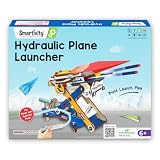
Smartivity 2in1 Hydraulic Aeroplane & Dart Launcher for Kids 6-14
Ages 6-14
58 parts
Hydraulic launcher
MDF wood
Lifetime replacement parts
172g
Pros
- 100 percent screen-free engagement
- Teaches hydraulic and mechanical engineering
- Lifetime supply of replacement parts included
- Made from sustainable engineered wood
- STEM org approved and TOTY finalist
Cons
- Assembly required with kid-friendly instructions
- Younger children may need adult assistance
The Smartivity Hydraulic Paper Airplanes Launcher is unlike anything else on our list. Kids build a working mechanical launcher from engineered wood pieces, learning about hydraulic systems and mechanical engineering in the process. Once built, the launcher sends paper airplanes and darts soaring across the room or yard.
This kit is 100 percent screen-free, which is increasingly rare in the STEM toy space. There is no app, no tablet required, and no digital component whatsoever. The entire experience is physical building and hands-on play, making it a favorite among parents concerned about screen time.
With over 5,600 reviews and a 4.6-star rating, this kit has built a strong following. The lifetime replacement parts guarantee means that if any piece breaks or gets lost, Smartivity will replace it for free, which adds tremendous long-term value.
Hydraulic Engineering Concepts Taught
The hydraulic mechanism is the educational centerpiece of this kit. Kids assemble a syringe-based hydraulic system that uses water pressure to launch the airplanes. This teaches real fluid dynamics and mechanical advantage concepts in a way kids can see and feel.
The building process itself is a engineering lesson. Kids follow step-by-step instructions to construct a stable frame, install the hydraulic components, and calibrate the launch mechanism. The sense of accomplishment from building a working machine from raw materials is powerful.
Build Experience and Assembly
The 58 parts are made from sustainable engineered wood that snaps together without glue or tools. The pieces are precision-cut and fit together snugly, creating a sturdy final product. Most kids ages eight and up can complete the build independently in about 90 minutes.
Younger children around six may need adult assistance with some of the more intricate assembly steps. The instructions are illustrated clearly, and the kit includes a detailed manual that walks through each stage of construction.
Long-Term Play Value and Replayability
Once built, the launcher provides ongoing entertainment. Kids can experiment with different paper airplane designs to see which flies farthest, turn it into a competition with siblings or friends, and modify the launch angle for different flight paths. The open-ended play potential extends well beyond the initial build.
The lifetime replacement parts guarantee means this toy can last for years. If pieces wear out or get lost, Smartivity sends replacements at no cost, which is exceptional customer support for a toy at this price point.
How to Choose the Right STEM Kit for Your Child
Selecting the right STEM kit comes down to matching your child’s age, interests, and attention span to the right type of activity. After testing dozens of kits and reading through thousands of parent reviews, we identified five key factors that separate a kit your child will love from one that gathers dust on a shelf.
Matching Age Range to Kit Complexity
The most common mistake parents make is buying a kit that is too advanced or too simple for their child’s current developmental stage. A kit rated for ages eight and up will frustrate a five-year-old, while a kit designed for preschoolers will bore a ten-year-old within minutes.
For ages four to seven, we recommend the Doctor Jupiter My First Science Kit or the Creativity for Kids Grow ‘N Glow Terrarium. Both are designed with younger attention spans and motor skills in mind. For ages eight and up, the Snap Circuits Jr. SC-100 and National Geographic kits offer the complexity needed to keep older kids engaged.
When in doubt, check the manufacturer’s minimum age rating and read reviews from parents of children the same age as yours. The age ratings on boxes are generally accurate, but some kits run slightly easier or harder than labeled.
Screen-Free vs Screen-Based STEM Learning
A growing concern among parents is how much screen time STEM toys require. Many coding robots and app-connected kits require a tablet or smartphone to function, which adds to daily screen exposure. Every kit on our list is either completely screen-free or requires no digital device.
If screen-free learning is a priority, the Smartivity Hydraulic Launcher, Snap Circuits kits, and all the National Geographic experiment kits operate entirely without screens. These kits teach the same critical thinking and problem-solving skills as app-connected alternatives without the screen time trade-off.
Screen-based kits do have their place, especially for older kids ready to learn actual coding. But for younger children, we believe hands-on physical activities build stronger foundational understanding than app-guided experiences.
Single-Use Kits vs Replayable Building Sets
STEM kits fall into two broad categories. Experiment kits, like the chemistry and geology sets on our list, are largely single-use because the materials get consumed during the activities. Building kits, like the Snap Circuits and Smartivity options, can be used repeatedly since the components are not consumed.
If budget is a primary concern, building kits offer better long-term value. The Snap Circuits Jr. SC-100 can be rebuilt hundreds of times, and the Smartivity launcher provides ongoing play after the initial build. Experiment kits provide intense but temporary engagement.
Some experiment kits, like the Creativity for Kids Terrarium and the National Geographic kits with bonus booklets, extend their lifespan by including refillable components or household-item experiments. These hybrid options offer the best of both worlds.
Safety Standards and Parental Involvement
Safety should be a top priority, especially for kits involving chemistry or breaking activities. Look for kits that meet ASTM F963-17 safety standards, like the Doctor Jupiter kit. For activities involving breaking rocks or mixing chemicals, safety goggles are essential and should always be included.
Consider how much parental involvement you can realistically provide. Some kits, like the Gross Science Kit with its messy experiments, require active supervision. Others, like the Snap Circuits kits, are designed for independent play once a child understands the basics.
Reddit parents consistently report that kits with clear, well-illustrated instructions require less parental intervention. Poor instructions are the number one complaint across STEM toy forums, so prioritize kits from established brands with reputation-tested manuals.
Long-Term Value and Kit Reusability
Think about what happens after the initial excitement wears off. Does the kit offer replayability, or is it a one-time experience? Building kits naturally score higher here, but some experiment kits include refill packs or household-item extensions that extend their useful life.
The Smartivity launcher stands out for its lifetime replacement parts guarantee. The National Geographic Mega Science Lab offers the most experiments per dollar for families willing to invest in a premium bundle. And the Snap Circuits kit grows with your child, as kids can purchase expansion kits that add new projects to the same base board.
For kids ready to move beyond pre-packaged kits, tools like desktop CNC machines for makers and photography and STEM learning equipment open up open-ended creation possibilities that grow with their skills indefinitely.
FAQs
What age-appropriate STEM toys do you recommend for different age groups?
For ages 4 to 7, we recommend the Doctor Jupiter My First Science Kit and the Creativity for Kids Grow N Glow Terrarium, both designed with younger motor skills in mind. For ages 8 to 12, the Snap Circuits Jr. SC-100, National Geographic Earth Science Kit, and National Geographic Gross Science Kit offer the complexity needed to keep older kids engaged and challenged.
How do learning toys help in child development?
STEM learning toys develop critical thinking, problem-solving skills, and fine motor coordination through hands-on experimentation. Children who build, mix, and test learn to follow multi-step instructions, practice patience when experiments need time, and build confidence from completing projects independently. These skills transfer directly to academic performance and future career readiness.
What makes a good STEM toy according to experts?
Experts look for STEM toys that are open-ended, age-appropriate, and replayable rather than single-use. A good STEM toy encourages exploration and failure without frustration, includes clear instructions that kids can follow independently, and teaches genuine scientific or engineering concepts rather than just flashy effects. Durability and safety certification also matter significantly.
What are the best robotics kits for beginners?
For beginner robotics, we recommend the Sillbird 12-in-1 Solar Robot Kit as a budget-friendly entry point that teaches mechanical engineering and renewable energy. The Snap Circuits Jr. SC-100 also builds foundational electronics knowledge that translates directly to robotics. For kids ready for programmable robots, look for kits that teach block-based coding alongside physical building.
How to choose the right science kit for a child’s skill level?
Start with the manufacturer age rating, then read reviews from parents of children the same age. If your child has never used a science kit before, choose one with fewer experiments and simpler instructions like the Magic Chemistry Set. For experienced young scientists, larger kits like the UNGLINGA 150 Experiments or National Geographic Mega Science Lab provide enough variety to sustain long-term interest.
Final Thoughts on the Best STEM Kits for Kids
After testing and researching twelve of the most popular STEM kits for kids in 2026, three products rose to the top for different reasons. The Snap Circuits Jr. SC-100 remains our editor’s choice for teaching real electronics fundamentals with unmatched replayability and a near-perfect 4.8-star rating. For families on a budget, the Creativity for Kids Grow ‘N Glow Terrarium delivers genuine botany learning at an unbeatable price. And for maximum experiment variety, the National Geographic Earth Science Kit covers the broadest range of scientific disciplines in a single package.
The best STEM kit for your child depends on their age, interests, and how they learn best. Younger kids ages four to seven thrive with the Doctor Jupiter My First Science Kit. Kids who love building should start with Snap Circuits or the Smartivity Hydraulic Launcher. And children who crave variety will get the most from the UNGLINGA 150 Experiments Kit or the National Geographic Mega Science Lab.
Whatever you choose, the key is matching the kit to your child’s current skill level and natural curiosity. A kit that is too easy gets abandoned. A kit that is too hard creates frustration. But the right kit, at the right time, can ignite a passion for science and engineering that lasts a lifetime.
Leave a Reply