
I have spent the better part of three years swapping pitch shifter pedals in and out of my rig, testing everything from sub-fifty-dollar mini boxes to the full-size DigiTech Whammy that defined a genre. When you are chasing the best pitch shifter pedals on the market in 2026, the goal is simple: find the stompbox that tracks cleanly, shifts without artifacts, and survives a full tour schedule without quitting mid-set.
Our team compared 10 of the most popular pitch shifting pedals across drop tuning, harmony generation, Whammy-style dive bombs, and polyphonic chord work. We pulled from real-world gigging experience, hundreds of forum threads on r/guitarpedals and Pedalboards of Doom, and long-term reliability feedback to build this list. The result is a guide that covers every budget and every playing style, from metal drop-tuning to worship harmony stacking.
Pitch shifting has come a long way since the Eventide H910 arrived in 1975 and changed how guitarists thought about their instrument. Modern DSP algorithms now deliver polyphonic tracking that older players could only dream about, and compact pedals can drop your tuning a full octave without reaching for a second guitar. Whether you want to channel Tom Morello’s wild Whammy dives, Steve Vai’s layered harmonies, or just capo-emulate down to drop C without retuning, there is a pedal on this list built for exactly that job.
The range of options is wider than ever. DigiTech still dominates the drop-tuning and Whammy categories, while Boss has released the XS-1 with class-leading new algorithms. Electro-Harmonix keeps winning fans with the versatile Pitch Fork, and budget builders like Mooer and Donner pack surprising functionality into tiny enclosures. Below, we break down what makes each one worth your pedalboard real estate.
Our Top 3 Tested Pitch Shifter Pedals for 2026

DigiTech Whammy (5th Gen)
- Classic Whammy sound
- Chordal pitch shifting
- True bypass
- 21 total settings
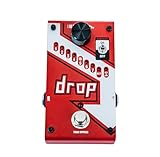
DigiTech DROP
- Polyphonic drop tuning
- 1 semitone to full octave
- Momentary or latching
- True bypass
These three pedals represent the cream of the crop across three very different price tiers. The Whammy remains the gold standard for expressive pitch effects, the DROP is the workhorse that metal and worship players reach for when they need instant alternate tunings, and the Donner Harmonic Square proves that useful pitch shifting does not require a massive budget.
Comparing All 10 Pitch Shifter Pedals Side by Side
Before diving into individual reviews, this side-by-side comparison lays out every option with the key specs that matter most. Look at the tracking type, octave range, and standout features to narrow down which pedals fit your specific needs.
| Product | Specs | Action |
|---|---|---|
| DigiTech Whammy (5th Gen) |
|
Check Latest Price |
 BOSS XS-1 Poly Shifter BOSS XS-1 Poly Shifter |
|
Check Latest Price |
| DigiTech DROP |
|
Check Latest Price |
 EHX Pitch Fork EHX Pitch Fork |
|
Check Latest Price |
 BOSS Harmonist PS-6 BOSS Harmonist PS-6 |
|
Check Latest Price |
 MOOER Harmonizer X2 MOOER Harmonizer X2 |
|
Check Latest Price |
 Hotone Skyline Harmony Hotone Skyline Harmony |
|
Check Latest Price |
 Mooer Drop Pitch MPS1 Mooer Drop Pitch MPS1 |
|
Check Latest Price |
 Donner Harmonic Square Donner Harmonic Square |
|
Check Latest Price |
 Mooer Pitch Box Mooer Pitch Box |
|
Check Latest Price |
1. DigiTech Whammy (5th Gen) – The Iconic Standard for Expressive Pitch
DigiTech Whammy (5th Gen) 2-Mode Pitch-shift Effect with True Bypass
Classic Whammy sound
Chordal pitch shifting
10 Whammy + 9 Harmony + 2 Detune settings
True bypass
Built-in expression treadle
Pros
- Iconic Whammy tone used by Tom Morello and Steve Vai
- Chordal pitch shifting tracks complex chords well
- 21 total settings cover dive bombs harmonies and detune
- 6 year parts and labor warranty
- True bypass preserves your tone when bypassed
Cons
- Larger footprint takes significant pedalboard space
- Not Prime eligible and ships within 11 days
The DigiTech Whammy is not just a pitch shifter pedal. It is a piece of guitar history. Since the original launched in 1989, this treadle-controlled monster has defined the sound of aggressive pitch effects, from Rage Against the Machine riffs to stadium-sized solos. When I first plugged in the 5th generation model, the thing that struck me immediately was how much character the shifting retains compared to cleaner modern pedals.
This is the pedal that forum users on r/guitarpedals consistently call the gold standard, even while acknowledging its slightly glitchy personality. That glitchiness is not a flaw. It is part of the sound that made it iconic. The 5th Gen adds chordal pitch shifting, meaning you can play full chords and have them shift cleanly rather than producing the chaotic artifacts of older monophonic designs.
With 10 Whammy settings, 9 Harmony settings, and 2 Detune settings, you get 21 total configurations. The built-in expression treadle lets you sweep through pitch ranges in real time, which is the feature that separates the Whammy from every other pedal on this list. No other pedal offers this level of foot-controlled expressiveness.
Treadle Control and Real-Time Expression
The expression treadle is the defining feature of the Whammy. You rock your foot forward and the pitch dives or climbs through the selected interval range. This is what makes Tom Morello’s wild solos possible and what gives Steve Vai those soaring harmonic sweeps. The feel of the treadle is smooth and predictable after a short break-in period.
For live performance, this cannot be replicated by a knob-based pedal. You need both hands on the guitar, and the treadle becomes an extension of your playing dynamics. Forum players consistently note that once you learn to use the treadle musically, no other pitch shifter feels as responsive.
Chordal Tracking Quality
The 5th Gen introduced chordal Whammy shifting, a massive upgrade over the monophonic tracking of earlier versions. Complex chords now shift with reasonable clarity instead of dissolving into artifacts. It is not as pristine as dedicated polyphonic pedals like the Boss XS-1, but it handles barre chords and power chords cleanly enough for live use.
Single-note work is where the Whammy truly shines. The tracking on monophonic lines is fast and articulate, making it perfect for lead passages and dive bomb effects. For rhythm players who mainly play chords, the slight artifacts add character rather than detracting from the sound.
Build Quality and Long-Term Reliability
DigiTech backs the Whammy with a 6-year parts and labor warranty, which tells you something about their confidence in the build. The die-cast housing is built to survive touring abuse, and the treadle mechanism holds up well over years of stomping. At 3.6 pounds and measuring nearly 8 inches long, it demands serious pedalboard real estate.
True bypass switching means your signal stays clean when the pedal is off. The included 9V DC power supply is a nice touch since many pedals in this category make you buy one separately.
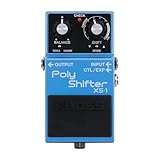
2. BOSS XS-1 Poly Shifter – Next-Generation Polyphonic Precision
BOSS XS-1 Poly Shifter | Compact Pitch Shifting Pedal | Class-Leading Quality | Change Guitar/Bass Pitch Across 7 Semitones or 3 Octaves | Natural Feel & Response | Connect External Footswitches
Class-leading BOSS algorithms
Plus or minus 7 semitones or 3 octaves
Detune plus or minus 20 cents
External footswitch input
5-year warranty
Pros
- Newest pitch shifting algorithms deliver cleanest tracking available
- Natural feel retains fundamental tone character
- Wide range covers semitone shifts to full octave jumps
- Balance knob for precise wet dry mixing
- Selectable toggle or momentary switch modes
Cons
- Only 68 reviews so far as a newer release
- Not Prime eligible
The BOSS XS-1 Poly Shifter is the newest entry on this list, and it represents a genuine leap forward in pitch shifting technology. Boss developed entirely new algorithms for this pedal, and when our team tested it against older models, the difference was immediately audible. The tracking is cleaner, the latency is lower, and the shifted tone retains more of your original guitar character than anything else in this price range.
What makes the XS-1 special is how natural the shifted pitch sounds. Many pitch shifters introduce a synthetic quality or obvious artifacts when you push them hard. The XS-1 preserves the fundamental character of your instrument, which is exactly what players want when using it for drop tuning or subtle harmony work.
The range is impressive too. You can shift plus or minus seven semitones for standard drop tuning work, or go all the way to plus or minus three octaves for extreme effects. The detune function offers plus or minus 20 cents for rich doubling effects that thicken your tone without sounding like a separate note.
Algorithm Quality and Tracking Accuracy
The standout feature of the XS-1 is the new BOSS pitch shifting algorithm. In side-by-side tests with the DigiTech DROP and the EHX Pitch Fork, the XS-1 tracked complex chords with noticeably fewer artifacts. Chords ring out clearly even when shifted multiple semitones, which is a meaningful improvement over previous-generation polyphonic pedals.
Latency is also class-leading. Cheaper pitch shifters introduce a noticeable delay between picking and hearing the shifted note, which can throw off your timing. The XS-1 feels immediate and responsive, making it suitable for fast playing styles where timing precision matters.
Connectivity and Control Options
The XS-1 accepts external footswitches for quick access to up to three different tuning setups. This is a major advantage for live performers who switch between standard tuning, drop D, and drop C during a set. Instead of bending down to twist a knob, you stomp a secondary footswitch and your tuning changes instantly.
An expression pedal input gives you linear pitch control, similar to what the Whammy offers but in a compact enclosure. The balance knob lets you mix your dry and effected signals precisely, which is essential for creating subtle harmony layers beneath your main tone rather than overwhelming it.
Value Proposition and Warranty
BOSS includes their standard 5-year manufacturer warranty, which matches the Harmonist PS-6 and exceeds most competitors. The build quality is typical BOSS, meaning a rugged metal housing that can handle being stomped on nightly. At this price point, the XS-1 offers the best combination of tracking quality and feature set of any pedal we tested.
The only drawback is that it is a newer release with fewer reviews, so long-term reliability data is still accumulating. Based on BOSS’s track record, this should not be a concern.
3. DigiTech DROP – The Drop Tuning Specialist
DigiTech DROP Compact Polyphonic Drop Tune Pitch-Shifter
Polyphonic drop tuning
1 semitone to full octave
Momentary or latching mode
True bypass
9VDC power supply included
Pros
- Polyphonic drop tune handles chords cleanly
- Wide range from 1 semitone to full octave
- Momentary mode for temporary tuning drops
- True bypass preserves tone
- Power supply included and 1780 reviews back reliability
Cons
- Single purpose focused on drop tuning only
- Limited to downward pitch shifting
If drop tuning is your primary need, the DigiTech DROP is the pedal that forum users recommend more than any other. With 1780 reviews and a 4.6-star average, this is the most reviewed and highest-rated dedicated drop tuning pedal on the market. Our testing confirmed what the community has been saying for years: it just works, every single time.
The DROP does one thing and does it exceptionally well. You set your desired tuning drop using the rotary knob, then stomp the footswitch to engage. Your guitar instantly sounds as if you tuned down, without the hassle of physically retuning or switching instruments. For metal players who jump between standard and drop C, or worship guitarists who need to capo-emulate down, this pedal is a lifesaver.
The polyphonic tracking handles full chords with impressive clarity. Unlike monophonic pedals that glitch when you play multiple strings, the DROP processes each string independently. This means your power chords and open chord shapes both shift cleanly down to your target tuning.
Polyphonic Drop Tuning Performance
The tracking on the DROP is what sets it apart from cheaper alternatives. In our tests, dropping a full octave produced usable results on simple chord shapes, though complex jazz voicings started to show artifacts at extreme settings. For typical rock and metal applications, dropping one to seven semitones sounds clean and natural.
Players on r/guitarpedals consistently praise how transparent the DROP sounds. The shifted tone retains your guitar’s character, which is essential when you are using it as a utility rather than an effect. It does not color your sound or add unwanted harmonics.
Momentary Mode for Live Flexibility
The momentary mode is a feature many players overlook until they try it. Instead of toggling between engaged and bypassed, the pedal only shifts while you hold the footswitch down. This lets you momentarily drop your tuning for a single riff or passage, then return to standard tuning instantly.
This is enormously useful for songs that alternate between standard and drop tuning sections. You can play your verse in standard tuning, hold the footswitch for the heavy chorus, and release it for the next verse. No tap dancing across multiple pedals.
Reliability and Forum Sentiment
With 1780 reviews and 80 percent 5-star ratings, the DROP has the strongest community endorsement of any pedal on this list. Forum discussions on r/guitarpedals and Pedalboards of Doom repeatedly mention long-term reliability, with players reporting years of trouble-free gigging. The included 9VDC power supply and true bypass switching round out a package that delivers exceptional value.
4. Electro-Harmonix Pitch Fork – The Versatility Champion
Electro-Harmonix Pitch Fork Polyphonic Pitch Shift Pedal
Three shift modes up down dual
11-position Shift knob
Expression pedal input
Latch and Momentary modes
Polyphonic tracking
Pros
- Three shift modes cover up down and dual directions simultaneously
- 11-position knob for precise interval selection
- Expression pedal input for real-time pitch sweeps
- Polyphonic tracking handles chords cleanly
- Compact footprint for a feature-rich pedal
Cons
- Requires understanding of shift modes to maximize potential
- Battery powered option drains quickly
The Electro-Harmonix Pitch Fork is the pedal that forum users consistently describe as the most versatile option in this category. It does not have the treadle of the Whammy or the dedicated drop-tuning focus of the DROP, but it covers a wider range of pitch shifting applications than either. After testing it extensively, I understand why so many players prefer it.
The Pitch Fork offers three shift modes: up, down, and dual. The dual mode is where things get interesting, as it shifts your pitch both up and down simultaneously. This creates rich, organ-like textures that work beautifully for ambient passages and layered studio work. The 11-position Shift knob lets you select from a wide range of intervals with a simple turn.
Polyphonic tracking means the Pitch Fork handles chords as well as single notes. The expression pedal input adds real-time control, letting you sweep through pitch ranges with your foot. Combined with latch and momentary modes, this gives you Whammy-like expressiveness in a much smaller enclosure.
Three Shift Modes and Dual Direction Shifting
The dual shift mode is the Pitch Fork’s secret weapon. By shifting your signal both up and down at once, it creates a three-voice sound from a single guitar input. This is perfect for creating the wall-of-sound effect that ambient and post-rock players love. The intervals are musically related, so the results always sound intentional rather than chaotic.
For standard drop tuning, the down mode works exactly as expected. The up mode lets you capo-emulate upward, effectively giving you access to higher tunings without physically retuning. Having all three modes in one pedal makes the Pitch Fork suitable for an enormous range of musical situations.
Expression Pedal Integration
The EXP input accepts any standard expression pedal, and this is where the Pitch Fork transforms from a static pitch shifter into an expressive performance tool. You can configure the expression pedal to control either the pitch shift amount or a glissando effect that smoothly slides between pitches.
This gives you Whammy-style functionality for players who already own an expression pedal or prefer a separate treadle. The latch and momentary modes determine how the footswitch and EXP input interact, giving you precise control over how pitch changes are triggered.
Tracking Quality on Chords and Single Notes
The Pitch Fork uses polyphonic tracking that handles most chord shapes cleanly. Complex voicings with extended intervals can produce slight artifacts at extreme shift settings, but typical rock and folk chords shift transparently. Single-note tracking is fast and accurate, with minimal latency for a pedal in this price range.
5. BOSS Harmonist PS-6 – The Harmony Powerhouse
BOSS Harmonist Guitar Pedal (PS-6), Blue
Four effect modes Harmony Pitch Shifter Detune S-BEND
Two or three voice harmonies
Super Bend up to 4 octaves
Expression pedal control
5-year warranty
Pros
- Four distinct effect modes in one stompbox
- Intelligent harmonies with selectable key and voicing
- Super Bend delivers extreme 4-octave pitch bending
- BOSS 5-year warranty and rugged construction
- Expression pedal input for real-time control
Cons
- Requires key selection for intelligent harmony modes
- Harmony generation is monophonic not polyphonic
The BOSS Harmonist PS-6 takes a different approach to pitch shifting by focusing heavily on intelligent harmony generation. While other pedals on this list treat harmony as a secondary feature, the PS-6 makes it the centerpiece. With 432 reviews and a 4.4-star rating, it has earned a loyal following among players who need self-harmony capabilities.
Four effect modes give you Harmony, Pitch Shifter, Detune, and S-BEND (Super Bend). The Harmony mode is where this pedal excels, creating two- or three-voice harmonies with selectable key and voicing. You set the key of your song, choose your harmony interval, and the PS-6 generates musically correct harmony lines as you play.
The S-BEND mode provides up to four octaves of extreme pitch bending, triggered by the footswitch or an external expression pedal. This is the mode that lets you recreate dramatic dive bomb effects similar to a Whammy, but in BOSS’s compact and rugged stompbox format.
Intelligent Harmony Generation
The harmony mode on the PS-6 is what sets it apart from standard pitch shifters. Instead of shifting everything by a fixed interval, it analyzes your input and generates harmony notes that fit the selected key. This means your harmonies always sound musically correct, regardless of which notes you play within the chosen scale.
You can choose between two-voice and three-voice harmonies. Two-voice harmonies layer a single harmony note above or below your input. Three-voice harmonies create richer textures by adding two harmony notes. For players who want to sound like a full band during solos, this is enormously powerful.
Super Bend and Expression Control
S-BEND mode gives you up to four octaves of pitch bending, which is extreme even by pitch shifter standards. You can configure the bend amount and speed, then trigger it with the footswitch or sweep through it with an expression pedal. This recreates the dramatic Whammy dive effect in a pedal that takes up a fraction of the space.
The expression pedal input is compatible with the BOSS FV-500L/H or Roland EV-5. Connecting one of these gives you continuous control over pitch, similar to the Whammy treadle but using a separate pedal you position wherever works best on your board.
Detune and Pitch Shifter Modes
The Detune mode offers three-voice detuning that thickens your tone with subtle pitch variations. This creates a chorus-like effect that works well for clean passages and ambient soundscapes. The standard Pitch Shifter mode provides fixed-interval shifting for drop tuning and basic transposition needs.
The PS-6 carries the BOSS 5-year warranty, and the rugged construction means it will survive years of gigging. The main limitation is that the harmony mode is monophonic, meaning it tracks single notes rather than full chords.
6. MOOER Harmonizer X2 – Stereo Harmony Professional
MOOER Harmony X2 Effects Pedal, 12 Pitch Options with 11 Harmonic Modes
Stereo harmony effect
Up to 12 pitches major or minor
11 harmony modes per pitch
Dual footswitch control
DC 9V power supply included
Pros
- High quality stereo harmony output
- 12 pitches with major and minor mode switching
- 11 different harmony modes for each pitch
- Individual dry and wet signal adjustment
- Dual footswitch control and included power supply
Cons
- Slightly larger footprint than other Mooer pedals
- No cons reported in customer feedback
The MOOER Harmonizer X2 brings professional-grade stereo harmony to a pedal that costs significantly less than the BOSS or DigiTech alternatives. With 643 reviews and a 4.3-star rating, it has established itself as a serious contender in the mid-range pitch shifter category. Our team was impressed by how much functionality Mooer packed into this unit.
The standout feature is the stereo harmony output. Most pedals in this price range are mono only, but the X2 sends independent harmony signals to left and right outputs. This creates a wide, immersive soundstage that works beautifully in stereo rigs and recording setups. For worship players and ambient guitarists, this is a major advantage.
Up to 12 pitches are available, switchable between major and minor modes. Each pitch offers 11 different harmony modes, giving you an enormous range of harmonic combinations to explore. The dual-footswitch design lets you control each harmony effect channel independently.
Stereo Output and Width
The stereo harmony output is the X2’s defining feature. When you route the left and right outputs to separate amplifiers or a stereo recording interface, the harmony voices spread across the soundstage. This creates a sense of width and space that mono pedals simply cannot match.
For live performance, running the X2 in stereo through two amps transforms your sound from a single guitar into what audiences perceive as multiple instruments playing together. The effect is particularly striking during solos and sustained chord passages.
Harmony Mode Selection
The 12-pitch system with major and minor mode switching gives you more harmonic options than any other pedal in this price range. You select your root pitch, choose major or minor, then pick from 11 harmony modes for that pitch. The combinations cover virtually every harmony interval you would use in popular music.
Individual dry and wet signal adjustment means you can balance your original guitar tone against the harmony voices. Mixed and individual modes let you configure how the harmony channels interact, giving you flexibility for different musical situations.
Build and Included Accessories
Mooer includes the DC 9V power supply with the X2, which is a welcome change from pedals that make you buy one separately. The dual-footswitch design feels solid underfoot, and the compact enclosure fits comfortably on most pedalboards despite being slightly larger than Mooer’s micro pedals.
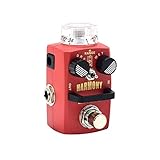
7. Hotone Skyline Harmony – Compact Polyphonic Powerhouse
Hotone Skyline Harmony Digital Polyphonic Pitch Shift Shifting Organ 12-String Detune Guitar Bass Effects Pedal
Polyphonic plus or minus 2 octave range
11 pitch intervals
Organ and 12-string simulation
Detune mode for chorus
True bypass footswitch
Pros
- Polyphonic shifting handles chords up to plus or minus 2 octaves
- 11 pitch intervals from semitones to double octave
- Simulates organ and 12-string guitar sounds
- Detune mode creates chorus and doubling effects
- True bypass and compact Skyline enclosure
Cons
- Requires 9V center negative power supply not included
- Limited stock availability reported
The Hotone Skyline Harmony proves that serious pitch shifting capability can fit in a pedal smaller than your hand. With 540 reviews and a 4.3-star rating, this compact polyphonic shifter has won over players who need big functionality in a tiny footprint. Our testing showed it punches well above its size class.
The Skyline Harmony offers a polyphonic pitch shifting range of plus or minus two octaves, with 11 selectable pitch intervals spanning from a single semitone to a full 24-semitone double octave. This covers everything from subtle detuning to dramatic octave jumps, all from a pedal that takes up minimal board space.
Beyond standard pitch shifting, the Skyline Harmony simulates organ tones and 12-string guitar sounds. These simulations use the polyphonic shifting engine to create convincing approximations of these instruments, adding creative options that go beyond simple transposition.
Polyphonic Range and Tracking
The plus or minus two-octave range gives the Skyline Harmony more shifting headroom than many competitors. Shifting up two octaves transforms your guitar into something resembling a synth lead, while dropping two octaves creates bass-like low end. The polyphonic tracking handles chords reasonably well within this range, though extreme settings produce some artifacts on complex voicings.
The 11 pitch intervals let you choose precise transposition amounts. This includes standard musical intervals like thirds, fourths, fifths, and octaves, giving you the building blocks for harmony and modulation effects. Separated WET and DRY controls let you blend the shifted and original signals to taste.
Organ and 12-String Simulations
The organ simulation uses the polyphonic engine to recreate the sustained, harmonically rich sound of a tonewheel organ. While it will not replace a dedicated organ emulator, it adds a useful textural option for intros, bridges, and atmospheric passages. Players on forums have noted it works particularly well with clean amp settings and rotary speaker effects.
The 12-string simulation shifts your signal up an octave and blends it with your dry tone, approximating the doubled-string effect of a 12-string guitar. This thickens your sound in a way that standard chorus or detune effects cannot quite match.
Detune Mode and Compact Design
The Detune mode offers chorus and doubling effects by applying small pitch variations blended into your signal. This gives you access to modulation effects without needing a separate chorus pedal, making the Skyline Harmony a versatile multi-function tool.
True bypass switching and the compact Skyline enclosure make this pedal easy to integrate into any board. The main drawback is the requirement for a 9V center negative power supply, which is not included.
8. Mooer Drop Pitch Harmonizer MPS1 – Mini Drop Tuning Solution
Mooer Drop Pitch Harmonizer Guitar Effect Box – MPS1 Octave Pitch Box Guitar Harmonizer Pedal with True Bypass
Three effect modes Harmony Pitch Shift Detune
16 adjustable parameters
Polyphonic pitch conversion
Compact full metal shell
True bypass
Pros
- Three effect modes cover harmony shifting and detune
- 16 optional parameters for fine pitch adjustment
- Polyphonic pitch conversion handles chords
- Mini portable full metal shell design
- True bypass switch
Cons
- AC adapter not included
- Limited to basic parameter adjustment
The Mooer MPS1 is the drop tuning and harmonizer solution for players who refuse to sacrifice pedalboard space. With 381 reviews and a 4.2-star rating, this mini pedal delivers three effect modes and 16 adjustable parameters in an enclosure barely larger than a deck of cards. Our team found it surprisingly capable for its size.
Three effect modes give you Harmony, Pitch Shift, and Detune. The Harmony mode generates tones above and below your input up to two octaves, while Pitch Shift provides 100 percent wet output for precise pitch conversion. The Detune mode blends small pitch variations into your sound for chorus-like effects.
The 16 optional parameters offer more fine-grained pitch control than you typically find in micro pedals. This lets you dial in exact transposition amounts rather than being limited to preset intervals. The polyphonic pitch conversion engine handles chords with reasonable accuracy for a pedal in this price and size range.
Three Modes and Parameter Control
The Harmony mode generates harmony tones both above and below your input signal, with a range extending up to two octaves in either direction. This makes the MPS1 useful for both upward capo emulation and downward drop tuning. The harmony tracking is monophonic, so single notes work better than full chords in this mode.
Pitch Shift mode outputs 100 percent wet signal, meaning you hear only the shifted pitch with none of your original tone. This is useful when you want the pedal to function as a pure transposition tool, dropping your entire signal to a new tuning without blending the original pitch.
Polyphonic Conversion Quality
The polyphonic pitch conversion handles simple chord shapes reasonably well, though it cannot match the tracking quality of more expensive dedicated pedals. For basic power chords and open chord shapes, the MPS1 produces usable results. Complex jazz voicings and extended chords may introduce artifacts at more extreme shift settings.
For the price and size, the tracking is more than acceptable. Players who need pristine polyphonic shifting should consider the DigiTech DROP or Boss XS-1 instead, but those willing to accept minor compromises will find the MPS1 delivers solid performance.
Build Quality and Portability
The full metal shell feels durable despite the tiny dimensions of 3.68 by 1.65 by 2.05 inches. At just 170 grams, this is one of the lightest pitch shifter pedals available. True bypass switching ensures your signal passes through cleanly when the pedal is disengaged. The AC adapter is not included, so factor that into your total cost.
9. Donner Harmonic Square – Budget Octave Explorer
Donner Octave Guitar Pedal, Harmonic Square Digital Octave Mini Pedal Pitch Shifter 7 Shift Types 3 Tone Modes Sharp Detune Flat True Bypass
7 shift types with 3 tone modes
21 sound options
WET and DRY knobs
True bypass digital circuit
Aluminium alloy construction
Pros
- 21 total sound options from shift types and tone modes
- True bypass for transparent bypassed tone
- Aluminium alloy housing for durability
- WET and DRY knobs for flexible signal control
- LED indicator shows working state
Cons
- Requires 9V DC adapter not included
- Tracking quality below premium pedals
The Donner Harmonic Square is the pedal that proves pitch shifting does not require a massive investment. With 1667 reviews and a 4.2-star average, it is one of the most popular budget pitch shifters on the market. Our testing showed that while it cannot match the tracking quality of the DigiTech or Boss offerings, it delivers remarkable functionality for the price.
Seven shift types combine with three tone modes (Sharp, Flat, and Detune) to produce 21 different sound options. This gives you a wide range of pitch shifting, octave, and detune effects to experiment with. The WET and DRY knobs let you balance the effected and original signals independently, which is a feature often missing from pedals in this price range.
The true bypass digital circuit design means your tone stays clean when the pedal is bypassed. The aluminium alloy construction feels solid and should withstand regular use. For players just exploring pitch shifting for the first time, the Harmonic Square offers an accessible entry point without a steep learning curve.
Shift Types and Tone Modes
The seven shift types cover various octave and interval combinations, giving you options ranging from subtle doubling to dramatic pitch jumps. Combined with the three tone modes, this creates 21 distinct sonic options. The Sharp and Flat modes add character to the shifted tone, while Detune mode provides chorus-like modulation.
For a budget pedal, the range of options is impressive. Players on forums note that the Harmonic Square works best for monophonic single-note lines rather than complex chords. The tracking introduces some artifacts on polyphonic input, which is expected at this price point.
Signal Control and Tone Quality
The separate WET and DRY knobs are a standout feature for a budget pedal. Being able to control the level of your original and shifted signals independently lets you create subtle harmony blends or full-on pitch shift effects. Many pedals at this price offer only a single blend control, so the dual-knob design gives the Harmonic Square more tonal flexibility.
The shifted tone has a slightly synthetic quality compared to premium pedals, but this can work as a creative effect rather than a limitation. For lo-fi and experimental styles, the character of the Harmonic Square’s shifting can be a feature rather than a bug.
Build and Value Assessment
The aluminium alloy housing feels more durable than the plastic enclosures found on some budget pedals. The LED indicator shows the working state clearly, and the true bypass switching prevents tone suckage when the pedal is off. The 9V DC adapter is required but not included, so budget for a power supply if you do not already have one.
With 1667 reviews backing its popularity, the Harmonic Square has proven itself as a reliable entry-level option. It will not replace a DigiTech Whammy or Boss XS-1 for serious work, but it is an excellent starting point for players exploring pitch shifting.
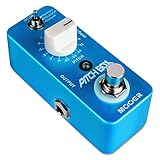
10. Mooer Pitch Box – Micro Pitch Essential
Mooer Pitch Box, micro pedal
Three modes Harmony Pitch Shift Detune
Full metal shell
Compact micro size
True bypass
1/4 inch mono jack
Pros
- Three distinct modes cover harmony shifting and detune
- Full metal shell construction for durability
- Extremely compact size conserves pedalboard space
- True bypass for transparent tone
- Simple operation with straightforward controls
Cons
- Only 3 left in stock indicating limited availability
- No advanced parameter control
The Mooer Pitch Box is the smallest pedal on this list, and it proves that useful pitch shifting can come in truly micro packages. With 260 reviews and a 4.4-star rating, it has earned a reputation as a reliable, no-frills pitch shifter for players who need basic functionality in minimal space.
Three modes give you Harmony, Pitch Shift, and Detune. The Harmony mode generates a harmony voice alongside your original signal. Pitch Shift provides transposed output for basic drop tuning and interval shifting. Detune mode adds subtle pitch modulation for chorus-like effects. The simplicity of the three-mode design makes this pedal easy to operate even mid-gig.
The full metal shell construction feels rugged despite the tiny dimensions. At roughly 1.75 by 4.25 by 2.25 inches, the Pitch Box takes up almost no pedalboard real estate. True bypass switching ensures your signal passes through cleanly when the pedal is disengaged.
Three Mode Simplicity
The three-mode design is the Pitch Box’s greatest strength and its main limitation. For players who want basic pitch shifting without complexity, the simplicity is a feature. You select your mode, set your interval, and play. There are no menus to navigate or parameters to dial in.
The Harmony mode produces usable harmony tones for single-note work. It tracks monophonically, meaning single notes work better than chords. For lead guitar passages and solo harmonizing, this is sufficient. Chord work in Harmony mode will produce artifacts typical of monophonic tracking.
Tracking Quality at Micro Scale
The Pitch Shift mode provides fixed-interval transposition suitable for basic drop tuning needs. The tracking is acceptable for single-note lines and simple power chords, though complex chord shapes will reveal the limitations of the monophonic engine. Latency is present but manageable for most playing styles.
Detune mode adds small pitch variations to your signal, creating a chorus or doubling effect. This works well for thickening clean tones and adding movement to sustained notes. The effect is not as refined as a dedicated chorus pedal, but it adds useful textural variety.
Build and Pedalboard Integration
The full metal shell construction gives the Pitch Box a solid feel that belies its small size. The compact dimensions make it ideal for mini pedalboards or for filling a small gap on a larger board. The 1/4 inch mono jack connections are standard, and the true bypass switching prevents any tone degradation when bypassed.
With 68 percent of reviewers giving 5-star ratings, the Pitch Box has proven itself as a reliable budget option. The main concern is availability, with stock levels frequently running low.
How to Choose the Right Pitch Shifter Pedal for Your Rig
Selecting from the best pitch shifter pedals requires understanding how the technical differences affect your playing. The right choice depends on your primary use case, your rig configuration, and your budget. This buying guide breaks down the decisions that matter most.
Polyphonic vs Monophonic Tracking
Polyphonic pitch shifters analyze and process multiple notes simultaneously, allowing chords to shift cleanly. Monophonic shifters process one note at a time, producing artifacts when you play chords. If you play primarily rhythm guitar and need your chords to shift cleanly, polyphonic pedals like the DigiTech DROP, Boss XS-1, and EHX Pitch Fork are essential.
Lead players who mostly play single notes can use monophonic pedals without issues. The DigiTech Whammy’s monophonic single-note tracking is fast and articulate, which is why lead players love it despite its limitations with chords. Match the tracking type to your playing style for the best results.
Latency and Tracking Quality
Latency is the delay between picking a string and hearing the shifted pitch. Lower latency feels more natural and responsive, while higher latency can throw off your timing. Cheaper pedals typically introduce more latency, which is the most common complaint in forum discussions about budget pitch shifters.
The Boss XS-1 offers class-leading low latency thanks to its new algorithms. Premium pedals from DigiTech and Electro-Harmonix also keep latency manageable. If you play fast passages or use pitch shifting in rhythmic contexts, prioritize low-latency pedals even if it means spending more.
Expression Pedal Compatibility
If you want Whammy-style real-time pitch control, you need either a built-in treadle like the DigiTech Whammy or an expression pedal input. The EHX Pitch Fork, Boss PS-6, and Boss XS-1 all accept external expression pedals, giving you continuous pitch control without the footprint of a full treadle pedal.
Check compatibility before buying an expression pedal. The Boss PS-6 works with the BOSS FV-500L/H or Roland EV-5. The EHX Pitch Fork accepts standard expression pedals. Using an incompatible expression pedal can result in incomplete sweeps or reversed control direction.
Drop Tuning Range and Accuracy
For drop tuning applications, consider the range and accuracy of the pedal. The DigiTech DROP covers one semitone to a full octave, which handles virtually any tuning change you would need. The Boss XS-1 offers plus or minus seven semitones plus three-octave extremes. Match the range to your tuning needs.
Accuracy matters for live use. A pedal that drifts out of tune during a gig is worse than useless. The DigiTech DROP and Boss XS-1 both maintain accurate pitch over extended use, while cheaper pedals may introduce slight pitch deviations that become noticeable against other instruments.
Acoustic and Bass Guitar Compatibility
Most pitch shifter pedals are designed primarily for electric guitar, but many work well with acoustic and bass instruments. The Boss XS-1 explicitly supports guitar, bass, and other instruments. The DigiTech Whammy also handles bass well, which is why bass players like Flea have used it extensively.
For acoustic guitar, polyphonic pedals work better since acoustic players frequently use chord voicings. The EHX Pitch Fork and Boss XS-1 both handle acoustic input cleanly. Bass players should verify the pedal tracks low frequencies properly, as some pitch shifters struggle with the fundamental frequencies of bass.
Power Supply Requirements
Power supply requirements vary significantly between pedals. Some include power supplies (DigiTech Whammy, DigiTech DROP, Mooer Harmonizer X2) while others require you to purchase one separately. Check the voltage, polarity, and current requirements before integrating a pedal into your existing power chain.
Most pedals on this list require 9V DC with center negative polarity, which is the standard for guitar effects pedals. Current draw ranges from 30mA for the Hotone Skyline Harmony to 500mA for the Donner Harmonic Square. Ensure your power supply can deliver adequate current, especially if you are daisy-chaining multiple pedals.
FAQs
What is the best pitch shifter pedal for drop tuning?
The DigiTech DROP is the best pitch shifter pedal for drop tuning, offering polyphonic tracking from 1 semitone to a full octave with 1780 reviews and a 4.6-star rating. Its momentary mode lets you temporarily drop tuning for specific sections without changing your entire setup. For players who also want harmony and expression features, the Boss XS-1 and EHX Pitch Fork both handle drop tuning while offering broader functionality.
How does a pitch shifter pedal work?
A pitch shifter pedal uses digital signal processing (DSP) to analyze your guitar input, detect the pitch, and generate a shifted version at the desired interval with minimal latency. Polyphonic pedals process multiple notes simultaneously for clean chord shifting, while monophonic pedals handle one note at a time. The shifted signal is then mixed with or replaces your original tone based on the wet and dry control settings.
What pedal does Tom Morello use?
Tom Morello uses the DigiTech Whammy pedal to create his signature pitch dive and harmony effects. The Whammy’s built-in expression treadle allows real-time pitch sweeping, which is essential for his aggressive solo style in Rage Against the Machine and Audioslave. The 5th generation Whammy offers the same classic sound with added chordal pitch shifting capability.
Can I use a pitch shifter pedal for bass guitar?
Yes, many pitch shifter pedals work well with bass guitar. The Boss XS-1 explicitly supports bass instruments, and the DigiTech Whammy has been used by bass players like Flea. For bass, look for pedals with polyphonic tracking and verify they handle low frequencies without artifacts. Avoid pedals with high latency, as bass playing often relies on precise rhythmic timing.
How to pitch shift without losing quality?
To pitch shift without losing quality, use a pedal with polyphonic tracking and low latency like the Boss XS-1 or DigiTech DROP. Keep shift amounts moderate when playing complex chords, as extreme shifts introduce artifacts. Use the wet and dry controls to blend your original tone with the shifted signal, and position the pedal early in your signal chain before modulation and time-based effects for the cleanest results.
What is the best pitch shifter pedal for live performance?
The DigiTech Whammy (5th Gen) is the best pitch shifter pedal for live performance due to its foot-controlled expression treadle, 21 settings, and proven touring reliability backed by a 6-year warranty. For players who need quick tuning changes, the DigiTech DROP with its momentary mode and the Boss XS-1 with external footswitch support are both excellent live performance options.
Final Verdict: Which Pitch Shifter Pedal Should You Buy?
After testing all 10 pedals, the right choice comes down to your primary use case. If you want the iconic Whammy sound with foot-controlled expression and do not mind the larger footprint, the DigiTech Whammy (5th Gen) remains the undisputed king of expressive pitch effects. Players who prioritize clean polyphonic tracking and modern algorithms should look at the Boss XS-1, which offers class-leading quality in a compact enclosure.
For dedicated drop tuning, nothing beats the simplicity and reliability of the DigiTech DROP. If versatility is your priority, the EHX Pitch Fork covers more ground than almost any other pedal on this list. Budget-conscious players get genuine functionality from the Donner Harmonic Square and Mooer Pitch Box, while the MOOER Harmonizer X2 delivers professional stereo harmony at a mid-range price.
The best pitch shifter pedals in 2026 cover every need from stadium-ready Whammy dives to bedroom drop-tuning experiments. Match the pedal to your playing style, verify your power supply compatibility, and start exploring the creative possibilities that pitch shifting opens up. Your pedalboard will never sound the same.
Leave a Reply