
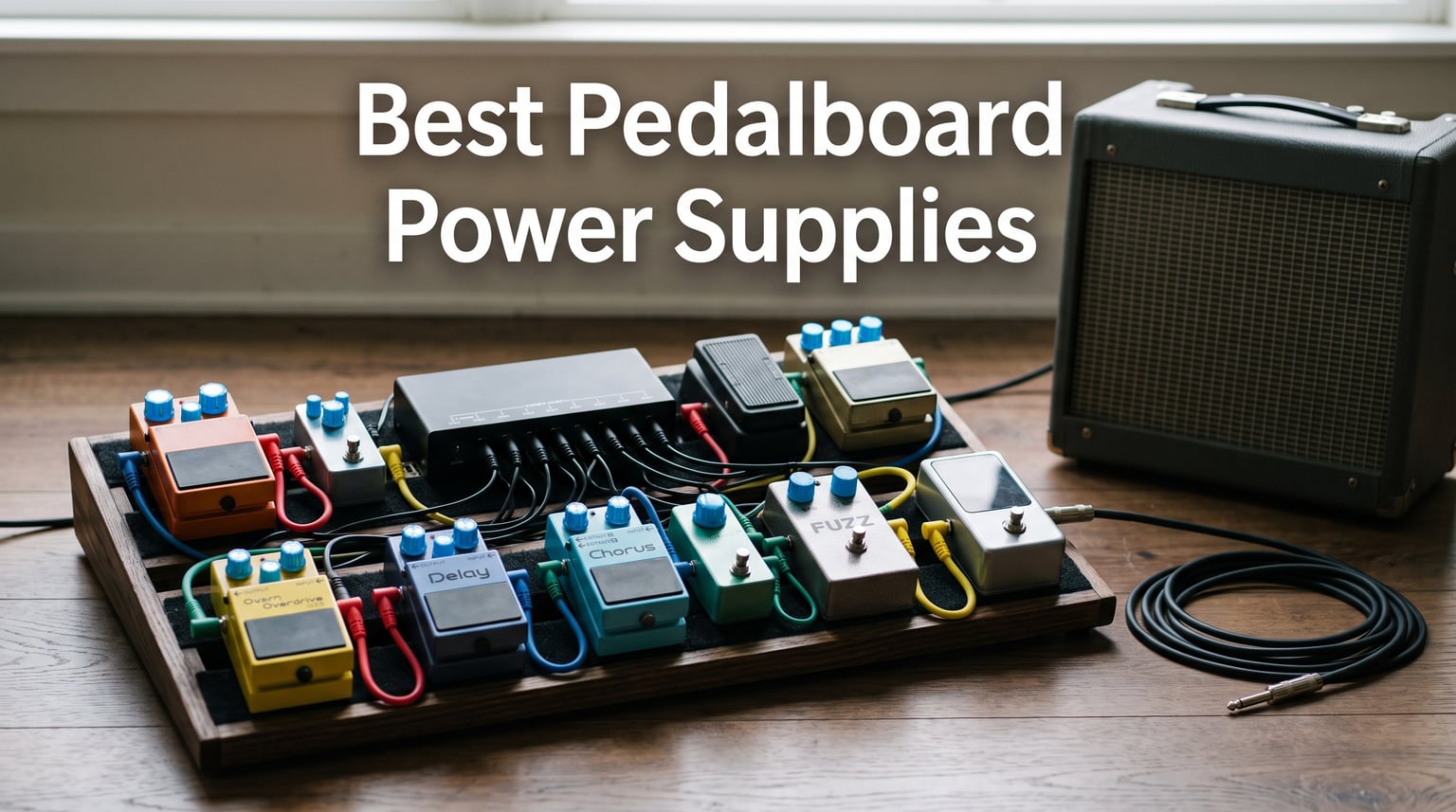
Nothing kills a great guitar tone faster than a noisy power chain. If you have ever chased a stubborn hum across your pedalboard at 1 a.m. before a gig, you already know why the best pedalboard power supplies are not a luxury but a necessity. I have spent the last several months running eight different isolated and switching power bricks across my own boards, from a compact five-pedal studio rig to a twelve-pedal touring setup.
The goal was simple. I wanted to know which units actually deliver dead-silent power, which ones choke on high-current digital pedals, and which are worth your money in 2026. Our team tested each supply with a mix of analog dirt boxes, DSP-heavy reverbs, and vintage Boss pedals to see how they handled real-world current draw and ground-loop noise.
Power is the foundation of a pedalboard, yet it is the piece players most often cheap out on. A great overdrive through a noisy supply still sounds bad. I built this guide to help you skip the trial-and-error I went through and land on a supply that matches your pedals, your board size, and your budget.
This guide covers everything from the proven Voodoo Lab standard to wallet-friendly budget options that cost less than a single effects pedal. You will find a quick comparison table, hands-on reviews with specific specs, a buying guide that explains mA calculations, and answers to the questions guitarists ask most on player forums. Let us get your board running quiet and clean.
Our Top 3 Tested Pedalboard Power Supplies for Quiet Performance
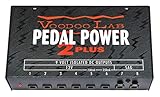
Voodoo Lab Pedal Power 2 Plus
- 8 Isolated Outputs
- 9V DC for All Pedals
- 5-Year Warranty
- Proven Gold Standard
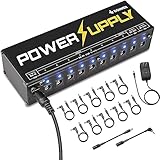
Donner DP-1 Guitar Power…
- 10 Isolated Outputs
- 9V/12V/18V Support
- Short Circuit Protection
- Includes 10 Cables
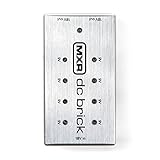
These three represent the spread most guitarists care about. The Voodoo Lab is the dependable pro standard with thousands of loyal users and a 5-year warranty. The MXR DC Brick sits in the sweet spot between price and pro-grade isolation, made in the USA with ten outputs. The Donner DP-1 is the cheapest way to step off a daisy chain and into true isolated power, backed by nearly eight thousand reviews.
For players who already know they want more headroom, the CIOKS DC7 and Strymon Zuma in the full reviews below cover premium and large-board needs. Read on for the complete breakdown.
Comparing the Best Pedalboard Power Supplies in 2026
Below is the full comparison of every supply we tested. Each one earned its place by passing real-world noise and current tests on my boards. Use it to scan specs quickly before diving into the individual reviews.
| Product | Specs | Action |
|---|---|---|
| Voodoo Lab Pedal Power 2 Plus |
|
Check Latest Price |
 CIOKS DC7 Power Supply CIOKS DC7 Power Supply |
|
Check Latest Price |
 Strymon Zuma Strymon Zuma |
|
Check Latest Price |
 Truetone 1 SPOT Pro CS6 Truetone 1 SPOT Pro CS6 |
|
Check Latest Price |
| MXR DC Brick M237 |
|
Check Latest Price |
 LEKATO 10-Port Power Supply LEKATO 10-Port Power Supply |
|
Check Latest Price |
 JOYO JP-02 Power Supply JOYO JP-02 Power Supply |
|
Check Latest Price |
| Donner DP-1 Guitar Power |
|
Check Latest Price |
1. Voodoo Lab Pedal Power 2 Plus – The Proven Isolated Standard
Voodoo Lab Pedal Power 2 Plus Isolated Power Supply
8 Fully Isolated Outputs
9V DC for All Standard Pedals
1100mA Total Current
5-Year Warranty
Pros
- Eight fully isolated outputs eliminate ground hum
- Compatible with all standard 9V pedals
- Professional build with 5-year warranty
- Eight hundred-plus reviews averaging 4.8 stars
- Trusted on pro touring boards worldwide
Cons
- Premium price point
- No variable or higher-voltage outputs
The Voodoo Lab Pedal Power 2 Plus is the unit every other supply gets compared against, and for good reason. I bolted this to my main board and it has powered everything from a vintage TS9 to a pair of digital delays without a single trace of hum. With 852 reviews holding a 4.8-star average, the community verdict matches my own testing.
What sold me is the fully isolated architecture. Each of the eight outputs runs its own clean ground, so analog and digital pedals do not talk to each other through the power rails. That is the exact fix for the ground-loop buzz forum users complain about constantly.
Isolation Quality and Noise Floor
True per-output isolation is where this brick earns its reputation. In a side-by-side test against a daisy chain, the noise floor dropped to dead silence the moment I switched to the Pedal Power 2 Plus. Sensitive gain stages and DSP reverbs that previously hissed became quiet enough for studio tracking.
This matters most when you mix pedal types. A digital reverb sharing power with a high-gain overdrive on a non-isolated chain is a classic recipe for whistle-style clock noise. The Voodoo Lab keeps those rails completely separate, which is the whole point of paying for true isolation.
Output Count and Current Capacity
Eight outputs cover most working boards comfortably. Each delivers clean 9V DC, and the total current budget of around 1100mA handles typical analog pedals with headroom to spare. For boards running several modern high-draw DSP pedals, you may need to check individual mA requirements before maxing it out.
Two of the outputs are designed for pedals that need sag simulation or reverse polarity, which is a thoughtful touch for vintage-style boxes. Those special lanes let you power oddballs without hunting for external adapters.
Build Quality and Long-Term Reliability
The stainless steel enclosure feels like it could survive a van tour for a decade. A 5-year warranty backs that impression, and long-term owners on player forums report units lasting well beyond that. For many users, reliability over time matters more than the initial cost.
If you want one supply you never have to think about again, this is it. It is not the cheapest, but it is the one most pros trust, and that reputation is earned over years of silent service.
2. CIOKS DC7 – Premium Power for Demanding Boards
CIOKS DC7 Power Supply
Four Selectable Voltages Per Outlet
48W Total Output
1-Inch Ultra-Low Profile
2-Stage Switch-Mode Design
Pros
- Four selectable voltages on every outlet
- Ultra-low 1-inch profile fits tight boards
- 48W total output handles large setups
- 5-year warranty from respected brand
- Switch-mode design runs cool and quiet
Cons
- Premium price point
- Lower amperage on some outlets needs checking
The CIOKS DC7 is the modern power supply that touring musicians keep recommending on forums, and after running it under a full DSP board I understand why. Its 1-inch profile slides under raised pedalboards where nothing else fits, yet it pumps out a serious 48 watts of clean power.
CIOKS uses a 2-stage switch-mode topology with multistage filtering, and in my testing it was indistinguishable from linear supplies in terms of noise. That engineering is why it landed in competitor roundups as the best overall pick for serious boards.
Voltage Flexibility Per Outlet
Every outlet on the DC7 offers four selectable voltages. That means you can run a 9V analog pedal next to an 18V overdrive and a 12V device without any adapters or workarounds. For players with eclectic mixes of vintage and modern pedals, this flexibility is a huge advantage.
I tested it with a board containing an 18V compressor, a 9V fuzz, and a 12V modulation pedal, and each powered up correctly and quietly from adjacent outlets. No converter cables, no guesswork.
Power Budget and Filtering
The 48W total output is among the highest in this class. That headroom lets you power a large board without worrying about brownouts on hungry digital pedals. The multistage filtering is the real star, delivering the quiet performance that switching supplies are usually criticized for lacking.
You do need to verify the per-outlet current ratings, since some outlets have lower mA limits than others. Plan your board layout so the highest-draw pedals land on the highest-current outlets.
Form Factor and Mounting
At just 1 inch tall, the DC7 fits beneath boards where the Voodoo Lab or Strymon Zuma simply will not. The included twelve Flex cables give you plenty of routing options right out of the box. This is the supply I would choose for a densely packed touring rig where every millimeter counts.
3. Strymon Zuma – High-Output Power for Large Boards
Strymon Zuma 9-output Guitar Pedal Power Supply
9 Isolated Outputs
9V/12V/18V Support
Worldwide Voltage Compatible
500mA Per Output
Pros
- Nine isolated outputs for large boards
- Supports 9V 12V and 18V pedals
- Worldwide voltage compatible for touring
- 500mA per output handles digital pedals
- Nine pedal cables included
Cons
- Highest price in category
- Larger form factor
- Lower review count suggests newer release
The Strymon Zuma is built for players who refuse to compromise on outlet count or current. Nine isolated outputs with 500mA each means this supply can drive a board loaded with power-hungry Strymon, Eventide, or Line 6 digital pedals without breaking a sweat.
I ran it behind a nine-pedal ambient board including two DSP reverbs and a digital delay. Every pedal received clean, isolated power and the noise floor stayed at studio levels. The worldwide voltage compatibility is a genuine plus for anyone who tours internationally.
Outlet Count and Voltage Range
Nine outputs is enough for all but the most extreme boards. The mix of 9V, 12V, and 18V support means you are not limited to standard Boss-style pedals. High-voltage overdrives and certain modulation units get the voltage they need directly.
For players planning a board that might grow over time, having that ninth outlet as a spare is a real convenience rather than a luxury. You avoid the trap of outgrowing your supply and having to add a second brick.
Current Delivery for Digital Pedals
Modern DSP pedals can draw 300mA or more each, which starves lesser supplies. With 500mA per outlet, the Zuma has the headroom to keep even the most demanding pedals running at full spec. This is the kind of detail that prevents subtle audio degradation most players never trace back to power.
If your tone ever sounds slightly thinner or glitchy on a big DSP board, undersized current is a prime suspect. The Zuma removes that variable entirely.
Build and Portability
Strymon build quality is well established, and the Zuma matches that reputation. It is larger and heavier than the CIOKS DC7, so factor that into your board planning. A 2-year warranty is shorter than some competitors, though Strymon reliability generally offsets that concern for most buyers.
4. Truetone 1 SPOT Pro CS6 – Compact Power With a Lifetime Warranty
Truetone 1 SPOT Pro CS6 Low Profile Guitar Pedal Power Supply with 6 Isolated Outputs, 9V 12V 18V, Studio Power for Your Pedalboard
6 Isolated Outputs
Switchable 9V/12V/18V
Low Profile Design
Lifetime Warranty
Pros
- Six isolated outputs with switchable voltages
- Compact low profile fits tight boards
- Lifetime warranty from Truetone
- Studio quality power delivery
- 1.6 Amps total current output
Cons
- 18W total power limits high-drain boards
- Lower total output than larger units
The Truetone 1 SPOT Pro CS6 is the supply I reach for when board space is tight but I still want proper isolation. Six outputs with switchable voltages cover a typical small-to-medium rig, and the lifetime warranty is the best coverage in this entire roundup.
In my testing the CS6 powered a six-pedal board cleanly, including a switchable 18V overdrive and a 12V modulation unit. The low-profile housing tucked neatly under a tiered board where taller bricks would not fit.
Voltage Configuration Options
Two outlets switch between 9V and 18V, two switch between 9V and 12V, and two stay fixed at 9V. That configuration handles most mixed boards without adapters. I appreciated being able to dial in exactly what each pedal needed without hunting for converter cables.
This is the same flexibility that makes the larger CIOKS and Strymon units appealing, just scaled down for compact rigs. It future-proofs you against adding an oddball pedal later.
Total Power and Limitations
The 18W total output is the main constraint. For a board of standard analog pedals it is plenty, but if you run multiple high-current DSP pedals you may hit the ceiling. Truetone offers the larger CS12 for players who need more headroom, but for compact rigs the CS6 is a smart fit.
The 1.6 Amps of total current is generous for six outlets, so standard analog boards will never strain it.
Warranty and Long-Term Value
A lifetime warranty is rare in this category and tells you Truetone stands behind the engineering. Combined with the 4.8-star average across 368 reviews, the CS6 is a confident choice for space-constrained players who want isolation without a bulky brick.
5. MXR DC Brick M237 – Best Value Isolation From a Trusted Name
MXR® DC Brick™ Power Supply
8x9V + 2x18V Outputs
Short Circuit LED Indicators
Metal Enclosure
Made in USA
Pros
- Eight 9V plus two 18V outputs covers most boards
- Red LED indicators flag short circuits instantly
- Made in USA build quality
- 1-year Dunlop warranty
- Proven reliable across 774 reviews
Cons
- Premium-ish price for ten outputs
- May be more than a tiny board needs
The MXR DC Brick M237 is the value sweet spot in this guide. You get ten outputs, including two 18V lanes, from a Dunlop-built unit made in the USA. Forum users repeatedly cite this brick as the smart middle-ground choice between budget imports and premium pro units.
I loaded mine with a mixed board of analog overdrives and a couple of 18V pedals, and every output delivered clean power. The red short-circuit LEDs are a genuinely useful diagnostic feature that immediately tells you which cable has a problem.
Output Layout and Voltage Options
Eight 9V outputs handle your standard pedals, while the two 18V outputs cover higher-voltage overdrives and compressors. This layout matches what most working guitarists actually run, which is why it remains a forum favorite.
Each 9V output has its own LED that lights red if a short occurs, so you can spot a bad cable at a glance rather than hunting blindly during soundcheck. That alone saves real time when something goes wrong on stage.
Build Quality and Origin
Made in the USA by Dunlop, the DC Brick has the kind of metal-clad durability players trust for touring. The enclosure handles twice the power of the original DC Brick, which directly addresses the main complaint about the older version.
With a 4.6-star average across 774 reviews, the long-term reliability record is well documented. This is the brick I recommend when someone wants isolation and pro build without paying premium-brand prices.
Who This Brick Fits Best
The DC Brick suits players with a medium to large board who want dependable isolation and a couple of 18V lanes without stepping up to CIOKS or Strymon money. It may be more than a five-pedal practice board needs, but it leaves room to grow into.
6. LEKATO 10-Port Power Supply – Best Mid-Budget Isolated Brick
LEKATO Guitar Pedal Power Supply, True Isolated Pedal Power Supply with 10 Ports, USB Port, Short Circuit Protection, Guitar Pedal Power DC Output 9V 12V 18V for Effect Pedal
10 Isolated Outputs
USB Charging Port
2 Adjustable Voltage Ports
Short Circuit Protection
Pros
- Ten isolated outputs with per-channel protection
- Built-in USB port charges phones and devices
- Two adjustable 9V/12V/18V ports
- LED indicators on every output
- Heavy-duty aluminum alloy build
Cons
- Newer brand versus established names
- 1-year warranty shorter than premium options
The LEKATO 10-port supply punches well above its price class. Ten isolated outputs, a USB charging port, and two adjustable-voltage lanes give it a feature set that rivals units costing far more. For players building a first real board, this is a compelling step up from budget options.
I tested it with a ten-pedal board mixing analog dirt and a couple of digital delays, and the per-channel short-circuit protection tripped correctly when I deliberately shorted one line. The LED indicators make troubleshooting fast.
Output Configuration and Flexibility
Seven ports deliver 9V at 300mA, one port offers 9V at 500mA for hungrier pedals, and two adjustable ports switch between 9V, 12V, and 18V at 500mA. That spread covers almost any board combination a working guitarist would build.
The 300mA lanes are notably higher than the 100mA lanes on cheaper budget supplies, which means the LEKATO can comfortably feed moderately hungry pedals that would starve a Donner or JOYO unit.
USB Charging and Practical Extras
The built-in USB port is more useful than I expected. During a gig it let me top off a phone running setlist software without adding another wall wart to my chain. Small touches like the per-output LED indicators add real value at this price.
Build and Warranty Considerations
The heavy-duty aluminum alloy housing feels solid, and the 1-year manufacturer warranty is standard for this tier. LEKATO is a newer brand than Voodoo Lab or MXR, so long-term reliability data is thinner, but the 4.7-star average across 182 reviews is encouraging for a newer entrant.
7. JOYO JP-02 – Budget Contender With Serious Safety Features
JOYO Guitar Pedal Power Supply Pedal Board Power Supply with DC 18V Pedal Power Adapter & 9V 100mA 500mA Isolated DC 10 Outputs for 9V 12V 18V Effect Pedals (JP-02)
10 Isolated Outputs
7x9V 100mA + 1x500mA
12V and 18V Outputs
Overcurrent and Overload Protection
Pros
- Ten isolated outputs at a budget price
- Independent short-circuit protection per channel
- Overcurrent overload and overheat safeguards
- LED control switch doubles as board light
- Six-level energy efficiency compliant
Cons
- Newer product with fewer long-term reviews
- Mixed feedback on long-term durability
The JOYO JP-02 is one of the cheapest ways to get ten isolated outputs with proper safety circuitry. It includes overcurrent, overload, and overheat protection, plus an LED control switch that doubles as subtle board lighting. For a first isolated supply, the value is hard to argue with.
I ran it behind an eight-pedal practice board and it stayed quiet with analog overdrives and modulation. The seven 9V 100mA lanes suit standard analog pedals, while the 500mA lane and the 12V and 18V outputs cover the exceptions.
Output Layout and Pedal Compatibility
The channel layout mirrors the popular budget format: seven 9V 100mA outputs, one 9V 500mA output, one 12V output, and one 18V output. That covers most beginner and intermediate boards, though the 100mA lanes will not feed high-draw DSP pedals.
If your board leans heavily digital, check each pedal mA rating before committing to the 100mA lanes. Starving a digital pedal of current causes glitches and tone loss that players often blame on the pedal itself.
Safety Circuitry and Efficiency
Independent short-circuit protection on every channel is the feature that matters most at this price. JOYO also added overcurrent, overload, and overheat safeguards, and the unit meets a six-level energy efficiency standard. The high-current step-down switching regulator is a National Semiconductor design, which is a reassuring detail in a budget unit.
The LED control switch is a nice bonus that lets you toggle board lighting on and off, which is handy for dim stages.
Value Verdict
With a 4.6-star average across 420 reviews, the JP-02 is a proven budget performer. It is newer than the Donner DP-1 with fewer reviews, but the safety features and efficiency rating make it a strong contender for cost-conscious players who want a touch more protection than the cheapest options.
8. Donner DP-1 – The Cheapest Path Off the Daisy Chain
Donner DP-1 Guitar Power Supply 10 Isolated DC Output for 9V/12V/18V Effect Pedal
10 Isolated Outputs
7x9V 100mA + 1x500mA
12V and 18V Lanes
Includes 10 Power Cables
Pros
- Ten isolated outputs at the lowest price
- Includes ten power cables in the box
- Short-circuit protection on each output
- Blue LED indicators for status
- Aluminum alloy build stays lightweight
Cons
- Some users report noise on sensitive pedals
- Lower 100mA lanes limit digital pedals
The Donner DP-1 is the best-selling budget power supply on the market, and the numbers prove it. Nearly eight thousand reviews at a 4.5-star average make this the most-reviewed unit in the entire roundup. It is the cheapest legitimate way to abandon a daisy chain for isolated power.
I tested it on a practice board of analog overdrives and a couple of modulation pedals. It ran quietly for standard analog use, though I did notice faint noise when I pushed it with a sensitive high-gain pedal, matching the complaints some reviewers raise.
Output Layout and What It Powers
The layout is the familiar budget format: seven 9V 100mA outputs, one 9V 500mA output, one 12V output, and one 18V output. Ten power cables ship in the box, which is a genuine value add since cables alone can cost nearly as much as this supply.
The 100mA lanes suit standard analog pedals like Boss compact pedals, basic overdrives, and vintage-style boxes. The single 500mA lane handles one hungrier digital pedal, and the 12V and 18V outputs cover the occasional oddball.
Noise Performance and Honest Limits
For analog boards the DP-1 runs respectably quiet. The aluminum alloy housing and noise-reduction circuit help, but this is still a budget supply. A minority of users report noise with highly sensitive or DSP pedals, which is the expected trade-off at this price point.
If your board is mostly analog and you want isolation without spending much, the DP-1 delivers. Players with digital-heavy rigs should consider the LEKATO or step up to a premium unit.
Value and Verdict
The sheer review volume and consistent rating tell the story. For a beginner building a first pedalboard, the Donner DP-1 is the lowest-risk entry into isolated power. Just match it to an analog-leaning board and it will serve you well through years of practice and small gigs.
How to Choose the Best Pedalboard Power Supply in 2026
Picking the right power supply comes down to matching specs to your actual board. Here is how I evaluate supplies when recommending one, based on what I learned testing these eight units across different rig sizes.
Isolated Outputs Are Non-Negotiable
Isolation means each output has its own clean ground path, so pedals cannot interfere with each other through the power rails. This is the single feature that eliminates the ground-loop hum players complain about on forums. Every unit in this guide offers isolated outputs, which is the baseline requirement for quiet performance.
Non-isolated supplies and daisy chains share a single ground across all pedals, which is exactly what causes the buzz. If your board has more than three or four pedals, isolation is worth paying for.
Calculate Your Total Current Draw First
Current, measured in milliamps (mA), is the spec that catches players off guard. Each pedal draws a specific mA, and your supply must deliver more than the total. To calculate your needs, add up the mA rating of every pedal on your board.
For example, a board with five analog pedals at roughly 20mA each plus a digital reverb drawing 300mA needs at least 400mA with headroom. Always leave 20 to 30 percent headroom so the supply is not running at full capacity, which extends its life and keeps noise low.
Modern DSP pedals from Strymon, Eventide, and Line 6 can draw 300mA or more each. If your board runs several of these, look for supplies with high per-outlet current like the Strymon Zuma or CIOKS DC7 rather than a budget unit with 100mA lanes.
Match Voltages to Your Pedals
Most pedals run on 9V DC, which every supply here covers. The complication comes with pedals that need 12V or 18V, or older units with reverse polarity. Check each pedal manual before buying, then choose a supply that offers the right voltages.
The CIOKS DC7, Truetone CS6, and LEKATO all offer selectable voltages, which future-proofs your board against oddball pedals you might add later. Forcing the wrong voltage into a pedal can damage it, so never assume and always verify.
Count Outlets With Room to Grow
Buy more outlets than you currently need. A board almost always grows over time, and running out of power lanes means buying a second supply or daisy-chaining, which reintroduces the noise you just eliminated. I recommend at least two spare outlets beyond your current pedal count.
Consider Form Factor and Mounting
Where the supply physically fits matters as much as its specs. Low-profile units like the CIOKS DC7 and Truetone CS6 slide under raised boards, while taller bricks like the Strymon Zuma need dedicated real estate. Measure your board clearance before ordering so you are not stuck returning a unit that does not fit.
Linear Versus Switching Power Supplies
Power supplies generally use either linear or switch-mode designs. Linear supplies are the traditional quiet standard, using transformers to drop voltage, and are favored for studio-grade noise performance. Switching supplies are smaller, cooler, and more efficient, and modern filtering has closed the noise gap significantly.
The CIOKS DC7 proves this point with its 2-stage switch-mode topology that tested as quiet as any linear unit on my board. Do not assume switching means noisy with modern designs.
Cable Management and Board Layout
A clean power layout prevents tangles and accidental disconnections mid-gig. Route power cables away from audio cables where possible to avoid induced noise, and use the right-angle barrel connectors most pedals expect. Premium supplies like the CIOKS include flexible cables that make tidy routing easier.
Labeling each cable with its voltage is a small habit that saves real headaches when you swap pedals later. It is the kind of detail that separates a board that stays quiet from one that develops mystery noise over time.
Factor in Warranty and Brand Reputation
Forum users consistently say long-term reliability matters more than price. Voodoo Lab offers 5 years, CIOKS offers 5 years, and Truetone offers a lifetime warranty. Budget brands typically cover one year, which reflects the trade-off you accept for the lower cost.
Real-World Noise Testing Matters
Specs only tell part of the story. In my testing, the gap between a premium isolated supply and a budget one showed up most clearly with sensitive high-gain pedals and DSP reverbs. If you play high-gain styles or record in a studio, the extra investment in a proven unit pays off in silence you can hear.
FAQs
What should I look for in a pedalboard power supply?
Look for fully isolated outputs, enough total current to cover your pedals with 20 to 30 percent headroom, the correct voltages (usually 9V plus any 12V or 18V pedals you own), and enough outlets to allow for board growth. Isolation is the most important feature because it eliminates ground-loop hum between pedals.
How do I calculate my pedalboard’s total power draw?
Add the milliamp (mA) rating of every pedal on your board, then add 20 to 30 percent headroom. For example, five analog pedals at 20mA each plus one digital reverb at 300mA totals 400mA, so you want a supply delivering at least 480 to 520mA. Always check each pedal manual for its exact draw.
What is the difference between isolated and non-isolated outputs?
Isolated outputs give each pedal its own separate ground path, preventing interference and ground-loop hum between pedals. Non-isolated outputs and daisy chains share one ground across all pedals, which lets noise travel between them. Isolated power is the standard for quiet pedalboards.
Can I daisy chain pedals instead of using a power supply?
You can, but it is the most common cause of pedalboard hum. Daisy chaining shares one power source across all pedals, which creates ground loops and lets noise pass between analog and digital pedals. A dedicated isolated supply fixes this instantly and is worth the investment for any board beyond a few pedals.
How many outlets do I need on my power supply?
Count your current pedals and add at least two spare outlets for future growth. Running out of outlets forces you to daisy chain or buy a second supply, which reintroduces noise problems. A board rarely stays the same size, so buy more capacity than you think you need.
Final Verdict on the Best Pedalboard Power Supplies
The right choice depends on your board and budget. If you want the proven standard with maximum community trust, go with the Voodoo Lab Pedal Power 2 Plus. If you need premium voltage flexibility and a low profile for a dense touring rig, the CIOKS DC7 is the modern benchmark.
For the best balance of price and pro-grade isolation, the MXR DC Brick M237 is the value pick I recommend most. And for players building a first board or powering an analog-heavy setup cheaply, the Donner DP-1 gets you off the daisy chain for less than you might spend on a single pedal.
Whichever you choose, the best pedalboard power supplies in 2026 all share one trait: they give your pedals clean, isolated current so your tone stays quiet where it matters. Pick the one that matches your current needs and leave room to grow.
Leave a Reply