
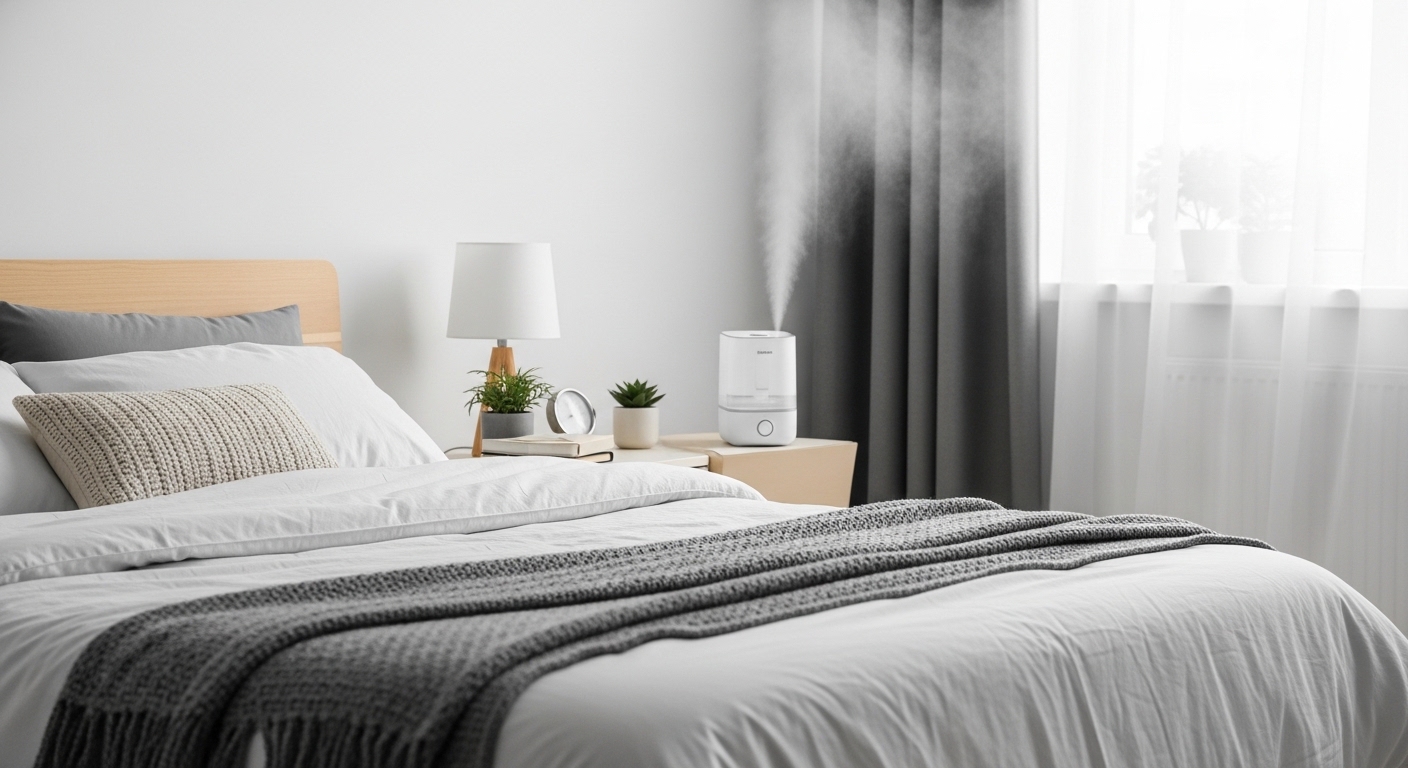
The ideal distance to keep your humidifier from your bed is about 3 feet. This sweet spot lets you enjoy the benefits of added moisture without risking damp bedding or over-humidification right where you sleep. Place it on an elevated surface like a nightstand or dresser positioned 2-3 feet off the floor for optimal mist distribution throughout your bedroom.
Proper humidifier placement matters more than most people realize. Put it too close and you might wake up with damp pillowcases or even experience respiratory issues from breathing in concentrated moisture. Position it too far away and you may not get the relief from dry air that you need for comfortable sleep and better skin hydration.
I’ve spent years testing different humidifier setups in my own bedroom, talking with dermatologists, and researching real user experiences. The 3-foot guideline consistently emerges as the most practical recommendation that balances effectiveness with safety. Let me walk you through exactly how to position your humidifier for the best results.
Why Humidifier Placement Matters?
Getting your humidifier placement right affects everything from sleep quality to furniture longevity. When you position a humidifier correctly, the moisture disperses evenly throughout the room instead of concentrating in one spot. This creates a comfortable sleeping environment that helps with dry skin, allergies, sinus congestion, and that morning scratchy throat feeling.
Poor placement leads to real problems. I’ve seen cases where humidifiers placed too close to beds caused pillowcases to become noticeably damp after just a few hours of running. Others have reported waking up with condensation on their bedside tables or even noticed warping of wooden furniture from constant moisture exposure. One Reddit user in the r/SkincareAddiction community mentioned their skin improved dramatically after moving their humidifier from directly beside their pillow to the recommended 3-foot distance.
The science backs this up. Humidifiers work by releasing water vapor into the air, and this vapor needs space to circulate. When you place a humidifier right next to your bed, you’re creating a microclimate of excessive humidity that can actually worsen respiratory issues instead of helping them. Proper placement ensures the moisture mixes with room air before reaching you, providing gentle hydration rather than a concentrated blast of humidity.
How Close Should A Humidifier Be To Your Bed?
The 3-foot distance recommendation isn’t arbitrary. This measurement comes from testing and real-world experience about how moisture disperses in typical bedroom environments. At 3 feet away, the humidifier’s output has enough space to mix with surrounding air and distribute evenly while still being close enough to benefit you directly during sleep.
Placing your humidifier closer than 3 feet creates risks. The immediate area around the device becomes over-humidified, which can lead to damp bedding, condensation on your nightstand, and even promote mold growth in corners or behind furniture. I’ve personally experienced waking up to a noticeably damp pillow after leaving my humidifier running all night just 2 feet from my head.
Going much farther than 3-4 feet reduces effectiveness. The moisture disperses too much before reaching you, especially if you have ceiling fans or good air circulation in your bedroom. One user on r/sleep reported that moving their humidifier to the opposite corner of their room (about 8 feet away) completely eliminated the benefits they were getting for their dry throat and congestion.
Small rooms present an exception. If you’re working with a studio apartment or tiny bedroom where 3 feet isn’t possible, you can compensate by running the humidifier on a lower setting and ensuring good cross-ventilation. Several Reddit users in small living spaces report good results placing the unit as close as 2 feet when using the lowest mist setting and cracking a window slightly.
Best Bedroom Placement Options
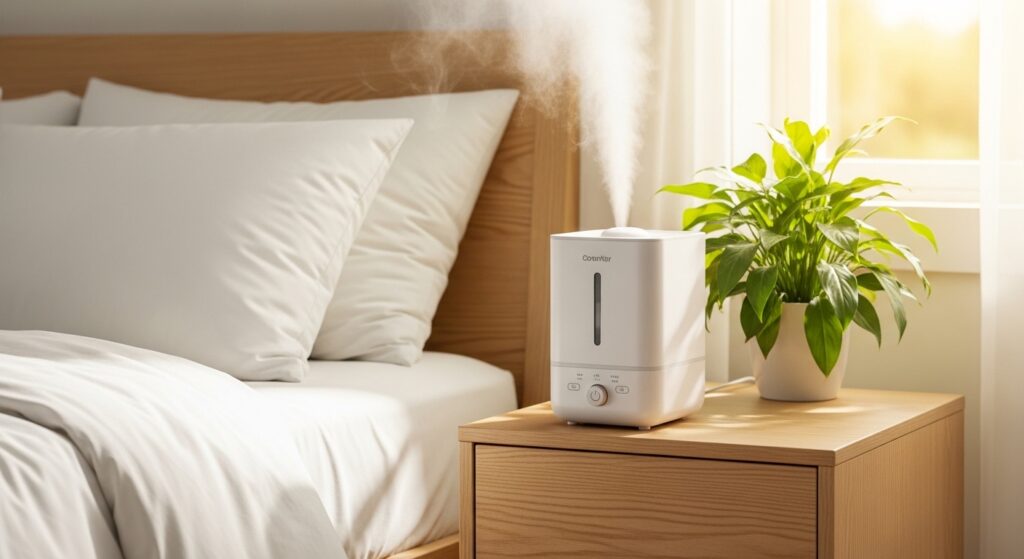
Your nightstand is often the most convenient spot for a humidifier. It’s typically already positioned near your bed and provides the elevated surface that’s crucial for proper mist distribution. When placing on a nightstand, ensure it’s on the side away from where you typically sleep to minimize direct mist exposure to your face. The surface should be level and moisture-resistant—avoid wood finishes that might warp from prolonged exposure to humidity or condensation.
A dresser across the room works exceptionally well for larger bedrooms. This placement allows the moisture more distance to disperse before reaching your sleeping area, creating more even humidity throughout the entire space. Dressers are typically sturdier than nightstands and less likely to be affected by occasional water drips or condensation. I’ve found this setup ideal for master bedrooms where the extra distance actually helps with more consistent humidity levels.
Other elevated surfaces can work depending on your room layout. A sturdy shelf, bookcase, or even a dedicated humidifier stand can serve the purpose if positioned at the right height and distance. The key is ensuring the surface is stable, water-resistant, and positioned so the mist can circulate freely. Avoid placing your humidifier on wobbly tables, upholstered surfaces, or anything that could be damaged by moisture.
Central positioning in the room often yields the best results. If your bedroom layout allows, placing the humidifier in the middle of the room (or as close to center as possible) helps distribute moisture more evenly to all corners. This is particularly effective for larger bedrooms or shared sleeping spaces. One user reported significantly better results after moving their humidifier from a corner to a central location, even though it was the same distance from the bed.
Why Elevated Surface Is Critical?
Placing your humidifier 2-3 feet off the floor isn’t just a suggestion—it’s essential for proper operation and safety. When elevated, the mist has room to circulate and mix with room air before settling. Floor placement causes moisture to concentrate near the ground, which can damage flooring, create slip hazards, and reduce the humidity benefits where you actually need them (at breathing level while sleeping).
Elevation dramatically improves mist dispersion. A humidifier on a nightstand or dresser releases moisture into the air where it can circulate throughout the room. The same unit on the floor creates a localized humid zone near ground level while the upper portion of your room remains dry. This difference becomes obvious when you wake up with dry sinuses despite your humidifier running all night on the floor.
Floor placement creates specific problems. Carpet and rugs can absorb moisture from the humidifier, leading to mold and mildew growth that’s difficult to detect until it becomes a serious issue. Hardwood floors can warp from prolonged exposure to humidity. Even tile floors can become slippery and hazardous when condensation accumulates. I’ve seen photos on interior decorating forums showing permanent floor damage from humidifiers placed directly on carpeting.
Safety considerations make elevation even more important. Floor-positioned humidifiers are more accessible to children and pets, creating tipping hazards and potential electrical risks. Elevated placement keeps cords and water reservoirs out of reach while still delivering the humidification benefits you need. For households with kids or animals, nightstand or shelf placement becomes non-negotiable for safety reasons.
Cool Mist vs Warm Mist Placement
Cool mist humidifiers offer more flexibility in bedroom placement. Since they don’t heat the water, you can position them slightly closer to your bed without safety concerns. Ultrasonic and evaporative cool mist models work well at the 3-foot recommended distance, but some users report good results as close as 2 feet when using lower settings. The cooler mist is generally less concentrated and disperses more quickly than warm mist output.
Warm mist humidifiers require more caution with placement. Because they heat water to create steam, these models should maintain the full 3-foot distance or even slightly more. The steam output is more concentrated and takes longer to disperse, which means over-humidification happens more easily if placed too close. Warm mist units also pose a burn risk if positioned where they could be knocked over, making stable, elevated surfaces essential.
Your specific needs should influence the type you choose and where you place it. Cool mist models are generally recommended for year-round use and are safer for children’s rooms. Warm mist humidifiers can feel more comfortable in cold weather and may help slightly with congestion, but they require more careful positioning. Consider your climate, room temperature, and personal preferences when deciding between types and determining placement.
Many users find cool mist humidifiers work best for bedroom use regardless of placement. The consistent output and safety advantages make them ideal for overnight use. If you prefer warm mist for the comforting heat factor, consider placing it slightly farther away (4-5 feet) and allowing extra time for the room to humidify before bedtime.
Where To NEVER Place Your Humidifier?
The floor or carpet should never be your humidifier’s home. As mentioned earlier, floor placement causes moisture to concentrate at ground level where it can damage flooring materials and create slip hazards. Carpet is particularly problematic because it traps moisture and creates an ideal environment for mold and mildew growth. Multiple users on home maintenance forums have reported discovering mold under carpets after months of floor humidifier use.
Keep your humidifier away from wooden furniture and decor. Constant exposure to humidity can warp wood, damage finishes, and cause swelling that ruins furniture. One Reddit user shared photos of a ruined antique dresser after placing a humidifier directly on it for several months. Even if the surface is elevated, ensure it’s moisture-resistant or protected with a waterproof tray.
Electrical sockets and wires need significant distance from humidifiers. Water and electricity don’t mix, and even well-designed humidifiers can leak or produce condensation that creates shock hazards. Maintain at least 3-4 feet of distance from any electrical source, and never place a humidifier where it could drip onto outlets, power strips, or extension cords. This is non-negotiable for safety.
Your electronics deserve protection from humidity. Televisions, computers, tablets, and phones can all be damaged by prolonged exposure to high moisture levels. The metal components can corrode, and screens can develop internal condensation that causes permanent damage. Keep your humidifier well away from your nightstand tech charging station and any other electronics in your bedroom.
Children and pets need protection from humidifiers. Curious hands and paws can knock over units, creating water spills and electrical hazards. The 3-foot distance rule applies here too—place humidifiers where small children and pets can’t reach them, and consider the extra stability of a dresser versus a smaller nightstand in households with active kids or animals.
Baby Room and Nursery Guidelines
Nursery humidifier placement requires extra attention to safety. For baby rooms, cool mist humidifiers are the only recommended type—warm mist models pose burn risks that aren’t worth taking around infants. Place the humidifier at least 3-4 feet from the crib, and ensure it’s on a stable surface well out of reach of curious toddlers as they grow more mobile.
Baby rooms benefit from consistent humidity monitoring. Infants are more sensitive to both dry air and over-humidification, making it crucial to maintain the ideal 30-50% humidity range. Place a hygrometer near the crib (but away from the direct humidifier output) to monitor levels throughout the night. Several pediatric nursing resources recommend checking humidity levels at least twice daily when first establishing your nursery setup.
Consider placement relative to airflow and vents. Avoid placing baby humidifiers directly under air vents or fans, which can create uneven humidity distribution. Also avoid placing them where the mist might blow directly toward the crib, even at a distance. The goal is gentle, even humidity throughout the entire nursery space.
Small Room Solutions
Studio apartments and tiny bedrooms present unique challenges. When you can’t achieve the full 3-foot distance, compensate by using lower humidity settings and ensuring good air circulation. One effective strategy is placing the humidifier near a window or doorway where moisture can disperse into a larger area rather than concentrating in your immediate sleeping space.
Cross-ventilation becomes your friend in small spaces. Crack a window slightly or run a fan on low to help circulate moisture and prevent the over-humidification that happens easily in compact rooms. Multiple users in small living situations report good results combining lower humidifier settings with natural airflow to maintain comfortable humidity levels without the damp feeling that can occur in tight spaces.
Consider using a smaller capacity humidifier designed for your room size. Large humidifiers in small rooms inevitably create humidity issues regardless of placement. A properly sized unit will maintain appropriate moisture levels without requiring you to keep it excessively far away in a space where that’s not possible.
Using a Hygrometer for Best Results
A hygrometer is essential for optimizing your humidifier placement. This simple device measures humidity levels and tells you whether your current setup is achieving the ideal 30-50% range for comfort and health. Without one, you’re essentially guessing whether your humidifier is working properly or creating problems you can’t see yet.
Place your hygrometer away from direct humidifier output for accurate readings. The best spot is near your bed but not in the direct path of the mist—this tells you the humidity level where you’re actually sleeping. Check readings at different times of day to understand how your setup performs during changing conditions and seasons.
Adjust your humidifier placement and settings based on hygrometer readings. If levels consistently exceed 50%, move the unit farther away or reduce the output setting. If humidity stays below 30%, you may need to move it slightly closer or increase the setting. This data-driven approach takes the guesswork out of humidifier placement and helps you find the optimal configuration for your specific space and needs.
Most users are surprised by what their hygrometer reveals. I’ve talked to people who thought their humidifier wasn’t working, only to discover their room was actually at 55% humidity—too high for comfort and potentially problematic. Others found they weren’t getting enough moisture despite running the unit all night. Monitoring removes the mystery and lets you dial in perfect conditions.
Where is the best place to put a humidifier in the bedroom?
The best bedroom humidifier placement is on a nightstand or dresser positioned 3 feet from your bed and 2-3 feet off the floor. This elevated surface allows proper mist dispersion while keeping the unit close enough to provide benefits for dry skin, congestion, and comfortable sleep.
Is it okay to sleep beside a humidifier?
Sleeping right beside a humidifier is not recommended. Placing it too close (less than 2-3 feet) can cause over-humidification near your face, damp bedding, and potential respiratory issues from breathing concentrated moisture. The recommended 3-foot distance provides benefits without these risks.
Does a humidifier need to be right by your bed?
No, a humidifier doesn’t need to be right next to your bed to work effectively. The 3-foot recommended distance actually provides better results because it allows moisture to circulate and disperse evenly throughout your sleeping space rather than concentrating in one spot.
How far should you sleep away from a humidifier?
Aim to sleep approximately 3 feet away from your humidifier. This distance allows the moisture to mix with room air and disperse evenly while still providing the benefits of added humidity for dry air symptoms like congestion, dry skin, and scratchy throat.
Can I use tap water in my humidifier?
While tap water works in most humidifiers, distilled or demineralized water is recommended. Tap water contains minerals that create white dust buildup and can promote bacteria growth. If using tap water, clean your humidifier more frequently and consider using a demineralization cartridge.
Final Thoughts
The 3-foot distance guideline for humidifier placement from your bed exists for good reason. This positioning strikes the ideal balance between effectiveness and safety, allowing moisture to disperse properly while still providing relief from dry air symptoms. Combined with elevated placement 2-3 feet off the floor on a nightstand, dresser, or other stable surface, you’ll maximize benefits while minimizing risks.
Proper humidifier placement transforms your sleep environment. You’ll wake up with less congestion, softer skin, and that comfortable feeling in your throat and nose that comes from well-humidified air. The key is finding the right spot in your specific bedroom and using a hygrometer to verify you’re maintaining the ideal humidity range of 30-50%.
Experiment with placement within these guidelines to find what works best for your space. Every bedroom is different—room size, airflow, furniture layout, and even ceiling height can affect optimal positioning. Start with the 3-foot elevated placement recommendation, monitor your results with a hygrometer, and adjust slightly based on how you feel and what the readings tell you. Your perfect humidifier setup is waiting to be discovered.
Leave a Reply