
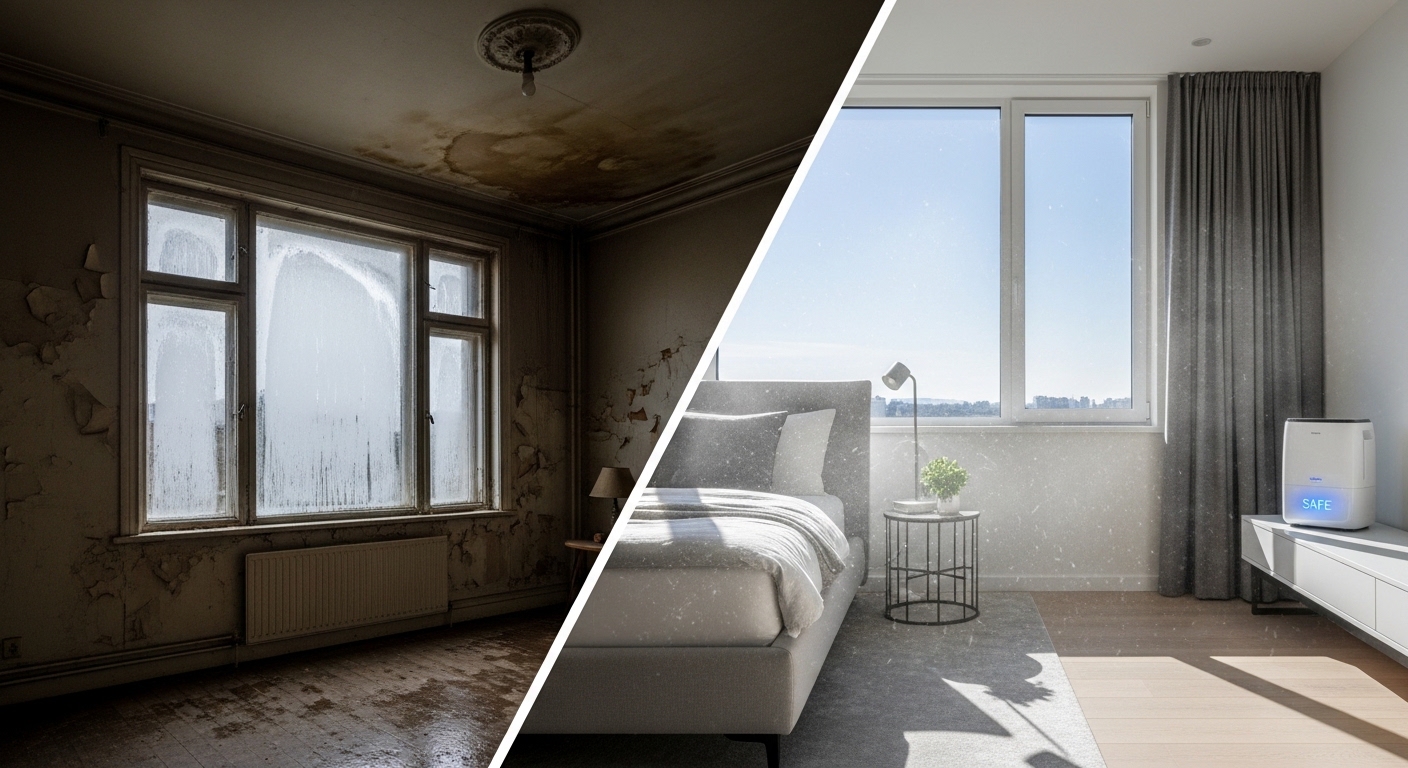
Excess humidity turns your comfortable living space into a damp, musty environment that promotes mold growth and damages your belongings. Learning how to dehumidify a room effectively protects your health and preserves your home’s structural integrity. I’ve spent years testing various moisture-control methods in different climates and room conditions, and I’ll share what actually works.
High humidity isn’t just uncomfortable—it’s a serious problem. When indoor moisture levels consistently exceed 60%, you create the perfect breeding ground for mold, dust mites, and bacteria. This triggers allergies, aggravates asthma, and can even cause respiratory infections. Your furniture, electronics, and clothing suffer too, as moisture warps wood, corrodes metal, and creates that distinctive musty odor that’s hard to eliminate.
The good news is you don’t always need expensive equipment to solve this problem. In this guide, I’ll walk you through proven methods to reduce humidity, from quick fixes to long-term solutions, so you can enjoy a drier, healthier home regardless of your budget or living situation.
Signs Your Room Has Too Much Moisture
Before treating the problem, you need to confirm humidity is the culprit. These warning signs indicate your room’s moisture levels are too high. Condensation on windows is the most obvious indicator—if you regularly see water droplets or fogging on glass surfaces, your indoor humidity is likely above 50%. The same applies to cold water pipes; if they’re constantly sweating, moisture is accumulating in your air.
That persistent musty smell doesn’t go away with air fresheners. It’s actually mold spores and mildew thriving in damp conditions. Check corners, behind furniture, and along baseboards for dark spots or fuzzy growth. Peeling paint or wallpaper, warping wood furniture, and rust on metal items are also red flags. Perhaps most telling is how the room feels—if it’s consistently muggy, sticky, or just feels heavy to breathe in, humidity is your enemy.
For precise measurement, a hygrometer costs less than $15 and instantly tells you your relative humidity percentage. Anything above 55% needs attention, and levels exceeding 65% require immediate action to prevent mold growth and structural damage.
How to Dehumidify a Room: Top 8 Methods
1. Use a Dehumidifier (Most Effective)
A dedicated dehumidifier remains the gold standard for moisture control. These machines pull humid air over cold coils, causing water to condense and collect in a tank, then release drier air back into the room. For a standard bedroom, a 30-50 pint unit works well. Larger spaces like basements may need 70-pint capacity. I’ve tested dozens of models, and the difference between a damp room and a comfortable one is literally night and day within hours of running one.
Place your dehumidifier centrally with at least 12 inches of clearance on all sides for airflow. Close windows and doors in the room being treated. Most units have a built-in hygrometer—set your target to 45% for optimal comfort and mold prevention. Expect to empty the water tank daily in very humid conditions, or connect a drain hose for continuous operation.
2. Improve Ventilation and Air Circulation
Stagnant air traps moisture. Moving air evaporates moisture faster and distributes it more evenly. Start by opening windows on opposite sides of your room to create cross-ventilation. Even 15 minutes of fresh air exchange significantly reduces humidity. This works best when outdoor air is drier than indoor air—typically early morning or evening in summer, and surprisingly, even during winter when cold air holds less moisture.
Ceiling fans and portable fans are your allies. Set ceiling fans to rotate counter-clockwise in summer to push air down and create cooling evaporation on your skin. For dehumidification, position fans near problem areas like damp corners or recently watered houseplants. Box fans in windows work as exhaust systems, pushing humid air outside and drawing drier air in. This method costs virtually nothing but makes a noticeable difference in air quality.
3. Run Your Air Conditioner
Your AC is secretly a dehumidifier. Air conditioners remove moisture as they cool, making them highly effective humidity fighters during hot, humid months. Set your thermostat to 72-74°F for optimal dehumidification without excessive energy costs. Each degree lower increases moisture removal but also energy consumption.
If you have a central AC system, run the fan setting to “auto” rather than “on.” The auto setting allows the coil to drain between cycles, preventing moisture from being redistributed. For window units, ensure they’re tilted slightly downward outdoors so condensed water drains properly. Many modern AC units have a “dry” or “dehumidify” mode specifically designed to remove moisture without significantly cooling the space—perfect for spring and fall when you need humidity control but not temperature reduction.
3. Use Moisture Absorbers and Desiccants
For small spaces like closets, bathrooms, and cabinets, moisture absorbers work surprisingly well. These products typically contain calcium chloride or silica gel, which naturally attract and trap water from the air. DampRid is the most recognizable brand, but generic versions work equally well. Place one unit per 100 square feet in problem areas.
DIY alternatives are effective and budget-friendly. Fill a sock with non-clumping kitty litter, rock salt, or silica gel packets and place it in damp areas. Baking soda in an open container absorbs moisture while neutralizing odors—replace monthly. These passive methods won’t solve severe humidity problems but are excellent supplements alongside other approaches, especially in enclosed spaces where dehumidifiers can’t reach.
5. Fix Leaks and Water Intrusion
Continuing moisture sources will sabotage all your dehumidification efforts. Inspect pipes under sinks, around toilets, and near water heaters for slow drips. Even minor leaks release surprising amounts of water vapor into the air. Check windows during rain—water seeping through frames or pooling on sills indicates seal failure that needs addressing.
Groundwater is a hidden enemy in basements and ground-floor rooms. Look for damp spots on walls after rain, efflorescence (white mineral deposits), or crumbling concrete. These signs indicate water seeping through foundation walls. Interior and exterior waterproofing, proper gutter maintenance, and grading soil away from your foundation are essential fixes. Without addressing these sources, your room will remain humid regardless of other measures.
6. Adjust Daily Habits
Many humidity problems are self-inflicted. Everyday activities release惊人的 amounts of moisture. Cooking releases 2-3 pints of water per hour into the air. Always use range hood fans when cooking, and keep pots covered. Even better, cook with lids on and use the microwave when possible—it produces far less moisture than stovetop cooking.
Showers are major humidity generators. A 10-minute shower releases approximately half a pint of water into your bathroom air. Always run exhaust fans during and for 20 minutes after showering. If your bathroom lacks a fan, open a window or keep the bathroom door open and run a portable nearby. Shorter showers with cooler water help too. Avoid air-drying clothes indoors—hanging wet laundry releases moisture continuously for days. If you must dry clothes inside, do it in a ventilated area with a dehumidifier running.
7. Use Houseplants Strategically
Plants naturally release moisture through transpiration, but some actually help reduce humidity. Certain plants absorb moisture through their leaves and release it during photosynthesis. Peace lilies, Boston ferns, spider plants, and English ivy are excellent choices. A single peace lily can absorb significant moisture from the air while purifying toxins.
However, overwatering houseplants creates the opposite problem. Water in soil evaporates continuously, contributing to indoor humidity. Water plants only when the top inch of soil is dry, and ensure pots have drainage holes. Group moisture-loving plants together in one room rather than distributing them throughout your home, making humidity control easier. For maximum benefit, place plants near windows where they receive adequate light for photosynthesis while helping manage humidity.
8. Add Heat When Appropriate
Here’s a counterintuitive fact: heating air can lower relative humidity. Warm air holds more moisture than cold air, so heating your room increases its moisture capacity without adding water. This reduces relative humidity percentage even though the actual moisture content stays the same. In winter, raising your thermostat a few degrees can make a noticeable difference in how damp your room feels.
However, this doesn’t remove moisture from your home—it just makes the air capable of holding more. When that warm air eventually cools (such as at night or in uninsulated areas), the moisture condenses on cold surfaces. Use heating as a temporary comfort measure alongside other moisture-reducing strategies. Electric space heaters work well for targeted spot treatment in particularly damp corners or rooms.
Room-Specific Dehumidification Tips
Bedroom
Bedrooms accumulate surprising moisture from breathing alone. Each person releases approximately half a pint of water vapor per night while sleeping. Two people in a closed bedroom significantly increase humidity. Always leave bedroom doors open during the day to promote air circulation, or crack a window if weather permits. Avoid placing your bed directly against exterior walls, which are cooler and more prone to condensation. Use moisture-wicking bedding materials like cotton or bamboo rather than synthetic fabrics that trap moisture. If you wake up with condensation on windows or damp walls, your bedroom needs better ventilation or a small dehumidifier running at night.
Bathroom
Bathrooms are humidity ground zero. Every shower creates a tropical environment that can spread throughout your home. The solution is simple but often neglected: always run exhaust fans. Not just during your shower, but for 20-30 minutes afterward. Most bathroom fans are woefully inadequate—upgrade to a model rated for your bathroom’s square footage (at least 50 CFM for a typical bathroom). If your bathroom lacks a fan, install one—it’s the single most effective humidity control investment you can make. Keep towels spread out to dry rather than folded, and fix dripping faucets immediately. For windowless bathrooms, a small dehumidifier or moisture absorber is essential.
Kitchen
Cooking generates substantial moisture through steam and evaporation. Your range hood is your first line of defense—use it every time you cook, even for simple tasks like boiling water. For maximum effectiveness, turn on the fan 5 minutes before you start cooking and leave it running for 15-20 minutes after you finish. Cover pots with lids to trap steam, and use the microwave whenever possible. Avoid drying dishes on a rack in open air—dishwashers with heat-dry cycles are better for humidity control. If you don’t have a dishwasher, hand-dry dishes with a towel immediately after washing. Keep kitchen windows cracked when weather permits, and consider a small dehumidifier if you cook frequently without adequate ventilation.
Basement
Basements present unique challenges due to groundwater contact and poor air circulation. Start with the basics: ensure gutters direct rainwater at least 10 feet away from your foundation, and grade soil so it slopes away from the house. Seal cracks in foundation walls with hydraulic cement, and consider applying waterproof paint or membrane to interior walls. A dedicated basement dehumidifier is usually necessary—choose one with continuous drain capability so you don’t have to empty tanks manually. Improve air circulation with box fans or install a small exhaust fan to exchange air with upper floors. Avoid storing cardboard or paper directly on concrete floors—use pallets or shelving to allow air flow beneath items.
How Long Does It Take to Dehumidify a Room?
Time expectations vary dramatically based on room size, initial humidity level, and method used. A properly sized dehumidifier can reduce humidity from 75% to 50% in a standard bedroom within 4-6 hours. Natural methods like ventilation and moisture absorbers take longer—typically 24-48 hours to notice significant improvement. Persistent problems like groundwater seepage may require weeks of continuous treatment combined with structural repairs.
Patience is key. Monitor humidity daily with a hygrometer to track progress. If levels plateau, you’ve likely reached the capacity of your current method and need to add additional strategies. For severe cases or ongoing problems despite your best efforts, professional assessment may identify hidden moisture sources or recommend more powerful solutions.
When to Call a Professional?
Sometimes DIY methods aren’t enough. If you see visible mold growth covering more than 10 square feet, professional remediation is safer and more effective. Mold this extensive indicates deeper problems that surface cleaning won’t solve. Persistent dampness despite multiple dehumidification strategies suggests hidden water intrusion—plumbing leaks behind walls, foundation cracks, or roofing issues that require professional detection and repair.
Unexplained health symptoms like chronic coughing, worsening allergies, or frequent respiratory infections in household members may indicate mold or air quality issues requiring professional assessment. If your home experiences sudden humidity changes after weather events, storms, or nearby construction, a professional can identify and address new moisture sources. Finally, if humidity problems persist despite following all recommendations for more than two weeks, professional equipment and expertise can identify what you’re missing and provide lasting solutions.
Ideal Humidity Levels for Every Room
Not all rooms need the same humidity level. This quick reference shows optimal ranges for different spaces in your home:
| Room | Ideal Humidity | Why It Matters |
|---|---|---|
| Living Room | 40-50% | Comfort, mold prevention |
| Bedroom | 40-45% | Better sleep, reduced allergens |
| Bathroom | 40-50% | Mold prevention, surface protection |
| Kitchen | 40-50% | Food preservation, comfort |
| Basement | 30-45% | Prevent structural damage, mold |
| Closets | 30-40% | Protect clothing, prevent mildew |
Natural vs Electric Dehumidification: Pros and Cons
| Method | Pros | Cons |
|---|---|---|
| Dehumidifier | Fast, effective, precise control | Energy cost, noise, maintenance |
| Ventilation | Free, improves air quality | Weather dependent, slower |
| Moisture absorbers | Inexpensive, no electricity | Limited capacity, slow, replacement needed |
| AC unit | Dual purpose (cooling + dehumidifying) | Seasonal, energy intensive |
| Houseplants | Decorative, air purifying | Slow, limited capacity, care required |
Health Considerations
Humidity directly impacts respiratory health. For individuals with COPD, asthma, or allergies, maintaining proper humidity levels is crucial for symptom management. The EPA recommends keeping indoor humidity between 30-50% to minimize allergens while maintaining comfort. Too little humidity (below 30%) causes dry skin, irritated sinuses, and increased susceptibility to respiratory infections. Too much (above 60%) creates ideal conditions for mold, dust mites, and bacteria that trigger asthma attacks and allergic reactions.
If you have respiratory conditions, dehumidification isn’t just about comfort—it’s a health necessity. However, be cautious with dehumidifier use if you have severe allergies or asthma, as some units can redistribute allergens if not cleaned regularly. Choose models with easy-to-clean filters and wash coils according to manufacturer recommendations. Always address mold problems promptly—visible mold spores are just the tip of the iceberg, and professional remediation may be necessary for extensive growth.
Should you use a dehumidifier if you have COPD?
Yes, dehumidifiers are highly recommended for COPD patients. High humidity above 60% makes breathing more difficult and can exacerbate COPD symptoms. Keeping humidity between 40-50% reduces airway irritation and makes breathing easier. However, ensure your dehumidifier is cleaned regularly to prevent mold or bacteria growth that could worsen respiratory symptoms.
What draws moisture out of a room?
Several methods effectively draw moisture from air: dehumidifiers use cold coils to condense water vapor; desiccants like calcium chloride, silica gel, and rock salt absorb moisture through chemical attraction; ventilation replaces humid indoor air with drier outdoor air; air conditioners remove moisture as a byproduct of cooling; and heating increases air’s moisture capacity, reducing relative humidity percentage.
Is 70% humidity in a room too high?
Yes, 70% humidity is too high and creates serious problems. At this level, mold can grow within 24-48 hours on susceptible surfaces. Dust mites thrive above 50% humidity, and bacteria proliferation increases dramatically. You’ll likely feel sticky and uncomfortable, experience musty odors, and see condensation on windows and pipes. Immediate action is needed to reduce humidity below 60% to prevent property damage and health risks.
How to get rid of humidity in your room without a dehumidifier?
Effective alternatives include: improving ventilation by opening windows and running fans; using your air conditioner which naturally removes moisture; placing moisture absorbers like calcium chloride or baking soda in problem areas; fixing any water leaks or sources of moisture intrusion; reducing moisture-generating activities like long showers and indoor clothes drying; adding houseplants that absorb moisture; and using heating to increase air’s moisture capacity during colder months.
Conclusion
Learning how to dehumidify a room properly transforms your living environment from a damp, unhealthy space into a comfortable, mold-free home. Start by identifying your specific humidity problem with a hygrometer, then implement the methods that match your situation and budget. For most people, a combination of improved ventilation, moisture source reduction, and either a dehumidifier or AC unit provides the most effective solution.
Remember that humidity control is an ongoing process, not a one-time fix. Monitor your humidity levels regularly, especially during seasonal changes, and adjust your approach as needed. Persistent problems may require professional assessment to identify hidden moisture sources or recommend more powerful solutions. The investment in proper dehumidification pays dividends in improved health, preserved property, and everyday comfort. Your home should feel fresh and dry—anything less means there’s work to do.
Leave a Reply