
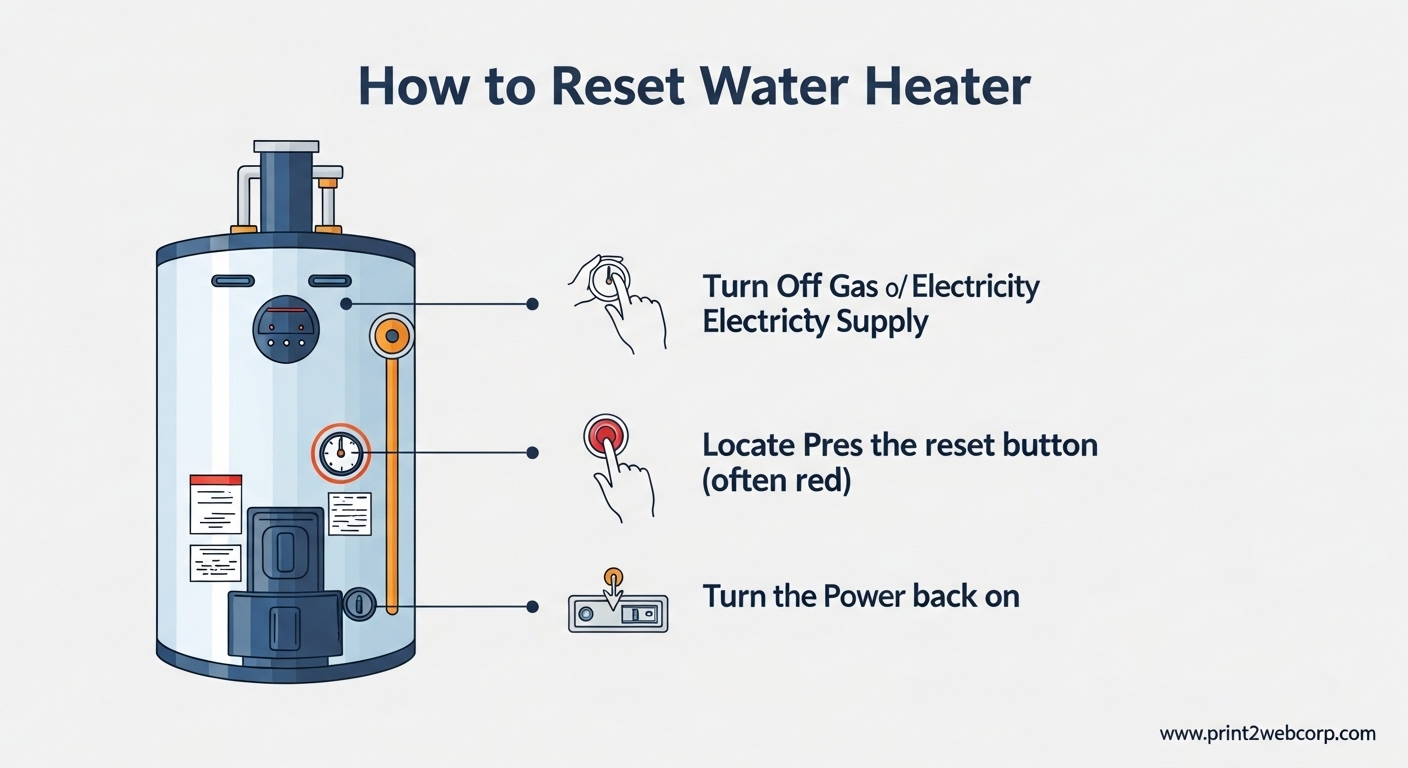
You wake up to an ice-cold shower, or worse, no hot water at all. It’s frustrating, but before you call a plumber, there’s a simple fix you can try yourself. Learning how to reset water heater units safely can save you time, money, and a service call. Most water heater reset issues are straightforward DIY fixes that take just minutes.
This guide covers both electric and gas water heaters, with step-by-step instructions, safety precautions, and troubleshooting tips from real homeowners and HVAC professionals. I’ve compiled insights from plumbing forums and service technicians to help you diagnose and fix the problem.
What Is the Water Heater Reset Button?
The reset button on your water heater is a safety device called a high limit switch or ECO (Energy Cut Off) switch. It’s designed to cut power to the heating elements when the water temperature becomes dangerously high, typically around 180°F. This prevents scalding injuries and protects your water heater from damage.
When the reset button trips, it pops out from its normal position, breaking the electrical connection to the heating elements. You’ll usually find it behind an access panel on the side of the tank, often hidden beneath an insulation pad. The button is typically red and clearly labeled “reset.”
This safety mechanism exists for your protection. A tripping reset button indicates something is wrong with your water heater’s operation. It could be a faulty thermostat, a bad heating element, sediment buildup, or an actual overheating situation. Resetting the button without addressing the underlying issue will only cause it to trip again.
Signs Your Water Heater Needs a Reset
The most obvious sign is having no hot water when you need it. If you turn on the hot tap and only get cold water, the reset button may have tripped. Sometimes you’ll still have lukewarm water, but it never gets as hot as usual.
On electric water heaters, you might notice the reset button has popped out from behind the access panel. Some models have a visible indicator light that flashes when the button has tripped. Gas water heaters with electronic displays may show an error code.
Inconsistent water temperature is another red flag. If your hot water goes from scalding to cold without any changes to your usage patterns, the high limit switch may be cycling on and off. This repeated tripping is a sign of a larger problem that needs attention.
Safety Precautions Before Resetting
Critical safety warning: Always turn off the power supply before attempting any water heater repair. For electric units, flip the dedicated circuit breaker to the off position at your electrical panel. For gas water heaters, turn the gas control valve to the “pilot” or “off” setting.
Wait at least 30 minutes after turning off the power before attempting to reset the button. The tank may still be hot, and you could get burned. Many users on plumbing forums report needing to wait 1-2 hours for the tank to cool down enough for the reset button to engage properly.
Use a non-contact voltage tester to verify the power is off before touching any electrical components. Never bypass or disable the reset button or any other safety feature. If you smell gas or notice water leaking around the unit, leave the area immediately and call a professional.
How to Reset an Electric Water Heater
Follow these steps to reset your electric water heater safely and effectively:
Step 1: Turn off the power. Locate your electrical panel and find the double-pole breaker dedicated to your water heater. Flip it to the off position. If you’re unsure which breaker it is, turn off the main breaker to be safe. Verify power is off with a non-contact voltage tester.
Step 2: Locate the access panel. Electric water heaters typically have one or two access panels on the side of the tank. The upper panel contains the upper thermostat and reset button. Some models also have a lower panel for the lower thermostat. Remove the panel screws and set aside the cover.
Step 3: Find the reset button. Behind the panel, you’ll see insulation. Carefully push aside the insulation pad to reveal the thermostat and reset button. The reset button is usually red and located near the thermostat. If it’s tripped, it will be visibly popped out.
Step 4: Press the reset button. If the button won’t push in, the tank may still be too hot. Wait another 30 minutes and try again. When it’s cool enough, press the button firmly until you feel or hear it click. This indicates it has reset successfully.
Step 5: Replace the panel and restore power. Put the insulation back in place, reattach the access panel, and tighten the screws. Flip the circuit breaker back on. Wait 60-90 minutes for the water to heat up, then test your hot water at a tap.
How to Reset a Gas Water Heater
Gas water heaters have a different reset process than electric models. The reset function is typically integrated into the gas control valve rather than being a separate button.
Method 1: Gas control valve reset. Locate the gas control valve on the front of the water heater near the bottom. Turn the dial to the “pilot” position. Press and hold the pilot button (usually a small button near the dial) for 60-90 seconds. This allows the gas to flow and the thermocouple to heat up. Release the button and turn the dial back to your desired temperature setting.
Method 2: Temperature dial cycling. Some gas water heaters can be reset by cycling the temperature dial. Turn the dial to its lowest setting, wait 10 seconds, then turn it to the highest setting. Repeat this process 5-7 times, ending on your desired temperature. This can reset the control board on newer models.
Method 3: Pilot light relighting. If your pilot light has gone out, you’ll need to relight it. Follow the manufacturer’s instructions printed on the side of the tank. This typically involves turning the dial to “pilot,” pressing a button, and using a long lighter to ignite the pilot flame. Hold the button for 60 seconds after lighting, then release and turn the dial to “on.”
What to Expect After Resetting
After successfully resetting your water heater, you won’t have instant hot water. The tank needs time to heat the water back up to your set temperature. Electric water heaters typically take 60-90 minutes to fully recover. Gas models heat faster, usually in 30-45 minutes.
Test your hot water at the tap closest to the water heater first. Let it run for a full minute to get an accurate temperature reading. The water should reach your normal hot temperature. If it’s still lukewarm after the recovery time, the reset may not have worked, or there’s another issue.
Monitor your water heater over the next few days. If the reset button trips again within 24-48 hours, you have an underlying problem that needs professional attention. Occasional tripping after a power surge or storm is normal, but frequent tripping indicates a faulty component.
What If the Reset Button Won’t Work?
If the reset button won’t push in, the tank may still be too hot. This is a common issue reported by homeowners on DIY forums. The high limit switch won’t reset until the water temperature drops below approximately 120°F. Give it more time to cool down, then try again.
If the button presses in but trips again immediately when you restore power, you likely have a faulty thermostat or a shorted heating element. A bad upper thermostat is the most common culprit. The thermostat is stuck calling for heat, causing the water to overheat and trip the safety switch.
A failed heating element can also cause repeated tripping. When an element burns out and shorts against the tank, it continuously draws power and overheats the water. This requires replacing the faulty element. Some homeowners report success replacing both elements simultaneously to prevent future issues.
Visible damage behind the access panel is a serious warning sign. If you see burnt or melted wires, scorch marks on the thermostat, or a discolored reset button, stop immediately. These are signs of electrical arcing and potential fire hazards. This situation requires professional repair.
Grounding issues can cause mysterious reset problems. Some users on plumbing forums discovered that poor electrical grounding was causing their water heater to trip repeatedly. If your home’s grounding system is inadequate or corroded, stray electrical currents can trip the safety switch. This requires an electrician to diagnose and fix.
Brand-Specific Reset Button Locations
Different water heater brands place their reset buttons in different locations. Knowing where to look can save you time and frustration:
Rheem: The reset button is typically behind the lower access panel. Remove the panel, push aside the insulation, and you’ll find it on the thermostat. Rheem models often have a visible indicator light that flashes when the button has tripped.
Whirlpool: Most Whirlpool electric water heaters have the reset button behind the upper access panel. It’s integrated into the upper thermostat assembly. Some newer Whirlpool models have error codes displayed on a small screen that can help diagnose the problem.
AO Smith: Look for the reset button behind the upper access panel on AO Smith electric models. It’s usually a red button on the thermostat. Gas models will use the gas control valve reset method described earlier.
Bradford White: The reset button is located behind the upper access panel on electric models. Bradford White often uses a distinct orange-colored reset button that’s easy to spot once you remove the panel.
Preventing Future Reset Issues
Regular maintenance can prevent many reset button problems. The most common cause of overheating is sediment buildup in the bottom of the tank. Minerals from hard water settle and form a layer that insulates the heating elements, causing them to work harder and overheat. Flush your water heater tank annually to remove this sediment.
Check your thermostat settings periodically. If the temperature is set too high (above 140°F), the water may occasionally trigger the high limit switch. The Department of Energy recommends setting your water heater to 120°F for both safety and efficiency.
Consider installing a water softener if you have hard water. This reduces mineral buildup and extends the life of your heating elements and thermostat. Many homeowners on DIY forums report that adding a water softener eliminated their frequent reset issues.
Schedule a professional inspection every 2-3 years. A technician can test the heating elements, check thermostat operation, and identify potential problems before they cause a complete failure. This preventive maintenance is far cheaper than emergency repairs or replacement.
When to Call a Professional
Some water heater problems are beyond DIY repair. If the reset button continues to trip after you’ve replaced the thermostat and heating elements, there may be a wiring issue or a problem with the tank itself. Professional diagnosis is necessary to determine if repair or replacement is the better option.
Visible signs of damage require immediate professional attention. Burnt wires, melted components, water leakage around the tank, or a burning smell are all serious warning signs. Don’t attempt to operate a water heater with these symptoms.
Gas water heaters with suspected gas leaks should never be serviced by homeowners. If you smell rotten eggs or hear hissing near your gas water heater, evacuate the area and call your gas company or a licensed plumber immediately. Gas leaks are life-threatening emergencies.
If your water heater is over 10-12 years old and experiencing frequent problems, replacement may be more cost-effective than repeated repairs. Most water heaters last 8-12 years. A unit that’s approaching or past this age and needs major repairs is probably better off replaced.
Frequently Asked Questions
How do I reset my hot water heater?
Turn off the power at the breaker, remove the access panel, push aside the insulation, press the red reset button firmly until it clicks, replace the panel, and restore power. For gas water heaters, turn the dial to pilot and hold the button for 60-90 seconds.
Do you have to turn off the breaker to reset a water heater tank?
Yes, absolutely. Always turn off the circuit breaker before accessing any electrical components on your water heater. Working on energized electrical components can cause serious injury or death. Verify power is off with a non-contact voltage tester before proceeding.
How do I get my hot water heater to work again?
Start by checking that the circuit breaker hasn’t tripped and the gas supply is on. Then locate and press the reset button behind the access panel. If the reset button won’t stay pressed or trips repeatedly, you may have a faulty thermostat or heating element that needs replacement.
How long does it take for water to heat up after reset?
Electric water heaters typically take 60-90 minutes to fully recover and heat the tank to your set temperature. Gas water heaters heat faster, usually in 30-45 minutes. Test your water at the closest tap after this recovery period to verify it’s working properly.
What causes the reset button to trip?
The reset button trips when water temperature exceeds safe limits (around 180°F). Common causes include a faulty thermostat, shorted heating element, sediment buildup, or a stuck gas valve. Power surges and lightning strikes can also trip the button. If it trips repeatedly, diagnose and fix the underlying cause.
Conclusion
Learning how to reset water heater units is a valuable DIY skill that can save you time and money. Most reset issues are simple fixes you can handle yourself with basic tools and proper safety precautions. Remember to always turn off the power first, wait for the tank to cool, and investigate why the button tripped in the first place.
Occasional tripping after a power surge or storm is normal. But frequent reset issues indicate a deeper problem that needs attention. Don’t ignore repeated tripping, as it’s a warning sign from your water heater’s safety system. Address the root cause promptly to prevent more serious problems.
When in doubt, call a professional. Water heaters involve high voltage, high temperatures, and (for gas models) flammable fuel. There’s no shame in hiring a licensed plumber or HVAC technician for repairs beyond your comfort level. Your safety is worth more than the cost of a service call.
Leave a Reply